Month: January 2016

  • Djokovic beats Federer to reach Australian Open final

    Djokovic beats Federer to reach Australian Open final

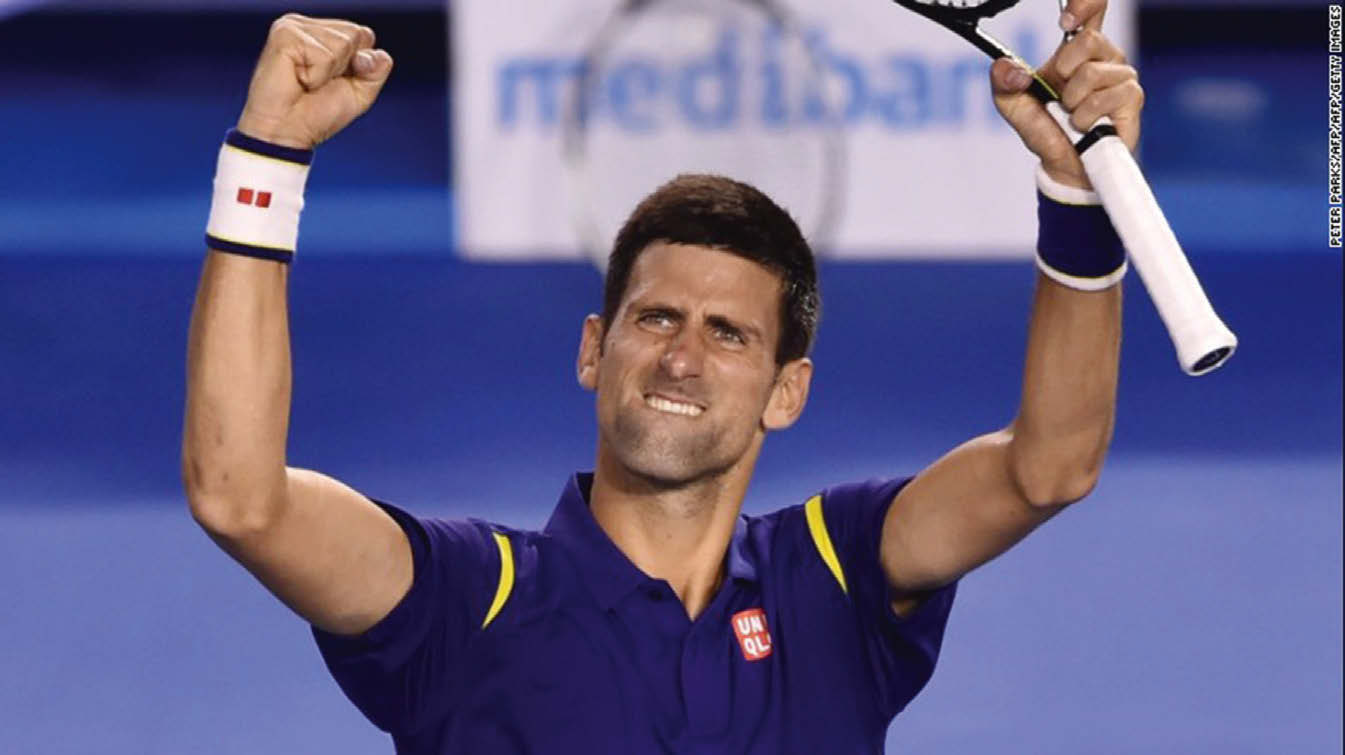
    MELBOURNE (TIP): Champion Novak Djokovic foiled a stirring fightback from Roger Federer to defeat the Swiss 6-1, 6-2, 3-6, 6-3 at the Australian Open on January 28 and charge into a fifth successive Grand Slam final.

    Storming to a two-set lead within an hour, Djokovic appeared destined to complete a stinging humiliation but the net-rushing Federer responded brilliantly in the third as a partisan crowd roared him on at a flood-lit Rod Laver Arena.

    In a fourth set rivened by tension, Djokovic took Federer’s serve in the eighth game, benefiting from a lucky netcord that gave him a crucial break point, and served out the match to love in two hours and 19 minutes.

    “Definitely I’ve played an unbelievable first two sets but that’s what is necessary against Roger,” Djokovic said courtside after setting up his sixth final at Melbourne Park against either Andy Murray or Milos Raonic.

    “I knew he was going to be aggressive and try to mix up his pace and come to the net.

    “I executed everything perfectly. A two-set lead is more comforting but it was a battle in the end.”

    Djokovic continued his Grand Slam mastery of the 34-year-old Swiss, having beaten him in six of their previous seven matches at the majors, including last year’s Wimbledon and U.S. Open finals. The head-to-head record between the pair has now also swung symbolically in Djokovic’s favour, with the Serb edging ahead 23-22 in their 45 matches. The record 15th Grand Slam encounter between the pair was billed as a blockbuster but threatened to be a one-sided rout.

    The 15,000 spectators barely had time to settle in their seats before Djokovic had sewn up the first set in 22 breathtaking minutes.

    Usually a thing of beauty, Federer’s backhand was a liability early on and he dropped serve for a second time with an unforced error after repeatedly coming off second best in the baseline rallies.

    Djokovic was bullet-proof and crunched a huge serve down the ‘T’ to clinch the first set and send the 17-time Grand Slam champion back to his chair frowning. The horror show quickly resumed for the Swiss, who was broken in the third game to love and again in the fifth. The set lasted scarcely 30 minutes.

    As the players returned to court, the crowd clamoured for a Federer comeback, and the Swiss rallied to pressure the Serb’s serve in an epic sixth game.

    Djokovic saved three break points but finally folded with a fourth as a net-rushing Federer forced a passing shot wide.

    Serving at 5-3 for the set, Federer’s wife Mirka could not watch as the Swiss battled to close it out but Djokovic fired a forehand long on the third set point to raise thunderous cheers from the terraces.

    A rain-break only raised the tension as the players waited for the roof to close and then resumed to doggedly hold serve.

    Trailing 4-3 on serve and under pressure, Federer made a desperate rush forward and Djokovic’s shot clipped the net, the deflection causing the ball to whistle past the Swiss’s racquet.

    Federer threw caution to the wind by attempting a second-serve serve-and-volley but Djokovic blasted a marvellous cross-court return to capture the decisive break.

    Closing out the match with a string of booming serves, Djokovic was left celebrating another memorable victory as he stood one win away from a record sixth title at Melbourne Park.

    (Reuters)

  • Usain Bolt drops 2020 hint, targets new 200m record

    Usain Bolt drops 2020 hint, targets new 200m record

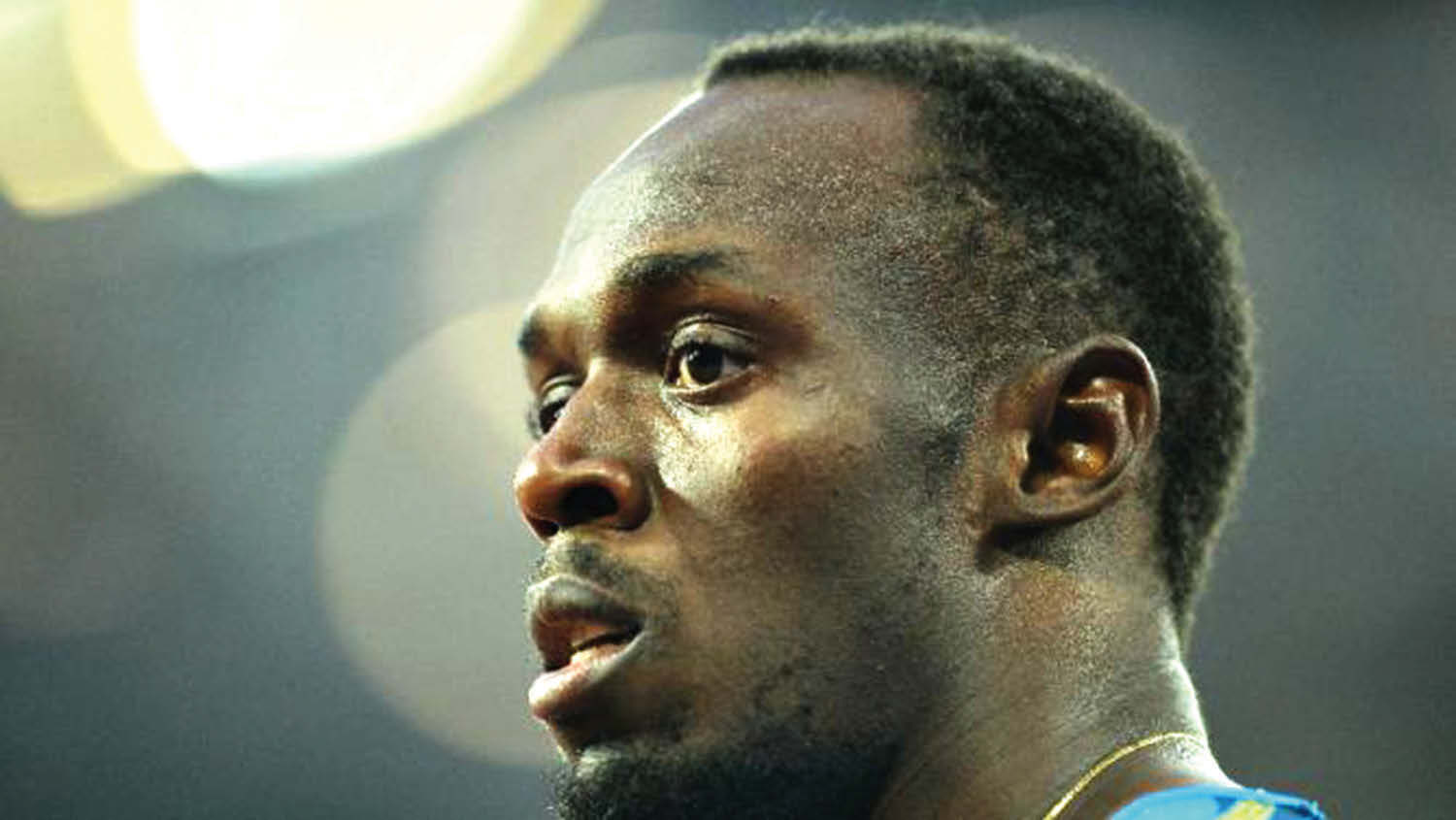
    KINGSTON (TIP): Usain Bolt says he has considered the possibility of extending his remarkable sprinting career to the 2020 Olympics — but is targeting a history-making new world 200m record at this year’s Rio de Janeiro games first.

    The Jamaican sprint star has repeatedly said he plans to hang up his spikes after the 2017 World Championships in London, bringing the curtain down on a record-breaking career that has included six Olympic gold medals.

    However the 29-year-old told Television Jamaica in an interview aired on Sunday that his coach Glen Mills had suggested he was capable of running in a fourth Olympics if he chose to.

    “The coach says I can go on to even the next Olympics in 2020,” Bolt said.

    “But I’m not gonna say what I’m gonna do. My coach says I should stop talking about it all the time, let’s just go through these two years and see what happens.”

    Pressed further on the possibility of an Olympic swansong in Japan, Bolt added: “We’ll see. The older you get, the harder the training gets.

    “So 32, 33, 34, it’s going to be a lot of work — if I feel I can do it I’ll definitely try. But for me I want to retire on top of my game.

    “I don’t want to continue if I know I’m not going to push myself hard enough.”

    Bolt said he had taken on board advice from US sprint great and former Olympic 200m and 400m champion Michael Johnson as he mulled his future.

    “I asked Michael Johnson — I said ‘Why did you retire, when you were dominating?’. He said ‘Listen, I’ve done everything in the sport, I was on top, why should I continue?’,” Bolt revealed, adding he did not want to emulate NBA legend Michael Jordan, who returned unsuccessfully after retiring.

    “He left the sport when he was great and he came back and made a small mockery of his career a little bit,” Bolt said.

    (AFP)

  • Viswanathan Anand bounces back with easy win

    Viswanathan Anand bounces back with easy win

    GIBRALTAR (TIP): Former world champion Viswanathan Anand shrugged off his first round draw to score a resounding victory over Matthias Bach of Germany in the second round of the Masters section of Tradewise Gibraltar Chess festival, here on January 29. Having drawn the first round against Hungarian Woman Grandmaster Szidonia Vajda Lazarne, Anand expectedly found the rhythm and had no troubles whatsoever in registering his first victory in the tournament.

    Interestingly, Anand and his second in three world championships – Grandmaster Surya Shekhar Ganguly -had both drawn the first round. While Anand had drawn with Lazarne, Ganguly was held to a draw by Bach. As luck would have had it, Ganguly played against Lazarne in the second round and scored an easy win while Anand outclassed Bach. It was mostly business as usual in the second round with most of the top stars sailing through over lesser opposition. International Master Anurag Mahamal however had a surprise in store for veteran Grandmaster Pia C Ramling of Sweden as the Indian went on to score his second victory on the trot. The biggest upset of the day was recorded by Swede Erik Blomqvist who defeated Li Chao B of China, rated above 2750.

    With eight rounds still to come in the 185000 Pounds Sterling prize money tournament, there are as many as 42 players with a perfect score. This group includes the defending champion and top seed Hikaru Nakamura of United States and second seed Maxime Vachier-Lagrave of France. On a day when P Harikrishna was held to a surprising draw by Natalija Zhukova of Ukraine, some higher ranked Indians scored fine victories and maintained a clean slate.

    SP Sethuraman, Abhijeet Gupta, MR Lalith Babu and Sandipan Chanda moved up to two points defeating Miguel Santos Ruiz of Spain, Neef Maximilian of Germany, Ben Artzi Ido of Israel and Sarasadat Khademalsharieh of Iran respectively. The second highest rated Indian woman player Grandmaster Dronavalli Harika also continued with her winning ways and downed Thomas Paehtz of Germany while V Vishnu Prasanna was the other Indian to move to two points at the expense of Norwegian Christiansen Johan-Sebastian. Anand picked his pace at will from the black side of a reverse Benoni, Anand got swift advantage with perfect manoeuvres in the early middle game and won a pawn by exerting pressure. The rest was easy as the Indian ace won in 32 moves. Ganguly was even quicker as he capitalised on a blunder by Lazarne to win in just-16 moves from the black side of a French defense game.

    Important and Indian results round 2 

    Fodor Tamas Jr. (Hun, 1) lost to Hikaru Nakamura (Usa, 1); Maxime Vachier-Lagrave (Fra, 2) beat Valentina Gunina (Rus, 1); P Harikrishna (1.5) drew with Natalija Zhukova (Ukr, 1.5); Erik Blomqvist (Swe, 2) beat Li Chao B (Chn, 1); Radoslaw Wojtaszek (Pol, 2) beat JamesTarjan (Usa, 1); Laurent Fressinet (Fra, 2) beat Prasanna Rao (1)

  • Sania-Dodig enter Australian Open mixed doubles semifinals

    Sania-Dodig enter Australian Open mixed doubles semifinals

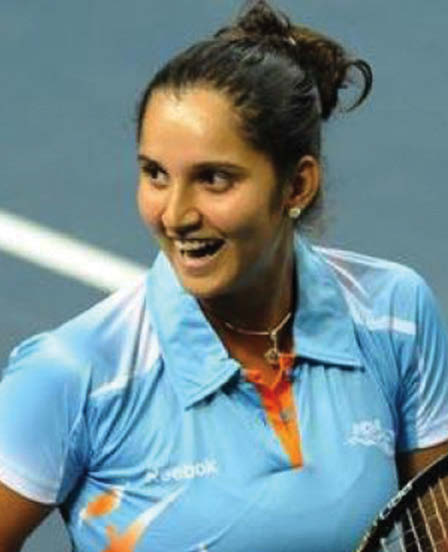
    MELBOURNE (TIP) : India’s tennis star Sania Mirza and her Croatian partner Ivan Dodig entered the mixed doubles semifinals at the Australian Open after posting straight-set win over defending champions Leander Paes and Martina Hingis on January 28. Sania and Dodig took exactly one hour and 10 minutes to get the better of Indo-Swiss pair of Paes and Hingis 7-6(1) 6-3 in the quarterfinal encounter.

    The top seeded Indo-Croat pair will next face fifth seeds Elena Vesnina and Bruno Soares for a spot in the summit clash.

    Sania and Dodig got off to a sluggish start but fought back brilliantly to take the first set in 44 minutes in a one-sided tie-breaker, where the Indo-Croat pair just blew away their opponents.

    The second set turned out to be much easier for Sania and Dodig as one break of serve was enough for them to walk away with the set and the match.

    Sania is also in contention in the women’s doubles event, where she reached the final partnering Hingis.

    The Indo-Swiss combination will take on Czech seventh seeds Andrea Hlavackova and Lucie Hradecka in the final to earn their eighth title on the trot.

    In fact, this will be Sania’s first women’s doubles final here. Her previous best here was in 2012 when she reached the semis with Russian Elena Vesnina

    (AP)

  • BRIJ BHOOMI VRINDAVAN

    BRIJ BHOOMI VRINDAVAN

    Vrindavan is one of the most widely-visited pilgrimage spots for Hindus in the country. It is situated in the state of Uttar Pradesh on the banks of the River Yamuna. The holy town of Vrindavan has a very rich and ancient history associated with the Hindu god, Lord Krishna. It is said to be the place where Lord Krishna spent his childhood and adolescence in the forests and there are many popular myths and folklore that revolve around Vrindavan and the ancient town itself.

    Vrindavan is also one of the most prominent sites for the international Krishna devotees’ association ISKCON. Vrindavan is situated right next to Mathura, its twin holy city, associated with Lord Krishna’s kingdom. Vrindavan is peppered with many a beautiful temple devoted to the religion of Lord Krishna.

    Places to See in Vrindavan

    Govind Dev temple

    The Govind Dev Temple in Vrindavan, built in the 16th century by Raja Man Singh is an excellent example of medieval Indian architecture. The building of this temple is closely associated with the famous Vaishnavite preacher and poet, Rupa Goswami. It is an astonishingly beautiful seven storey temple dedicated to Govind Dev, another name for Lord Krishna. The temple has an imposing facade, looking like a European cathedral because of the pillars and colonnades. It is made of red sandstone and is currently in a state of considerable decay, with the main puja related activities having shifted to a smaller temple behind the main structure.

    Krishna Balaram Temple (ISKCON)

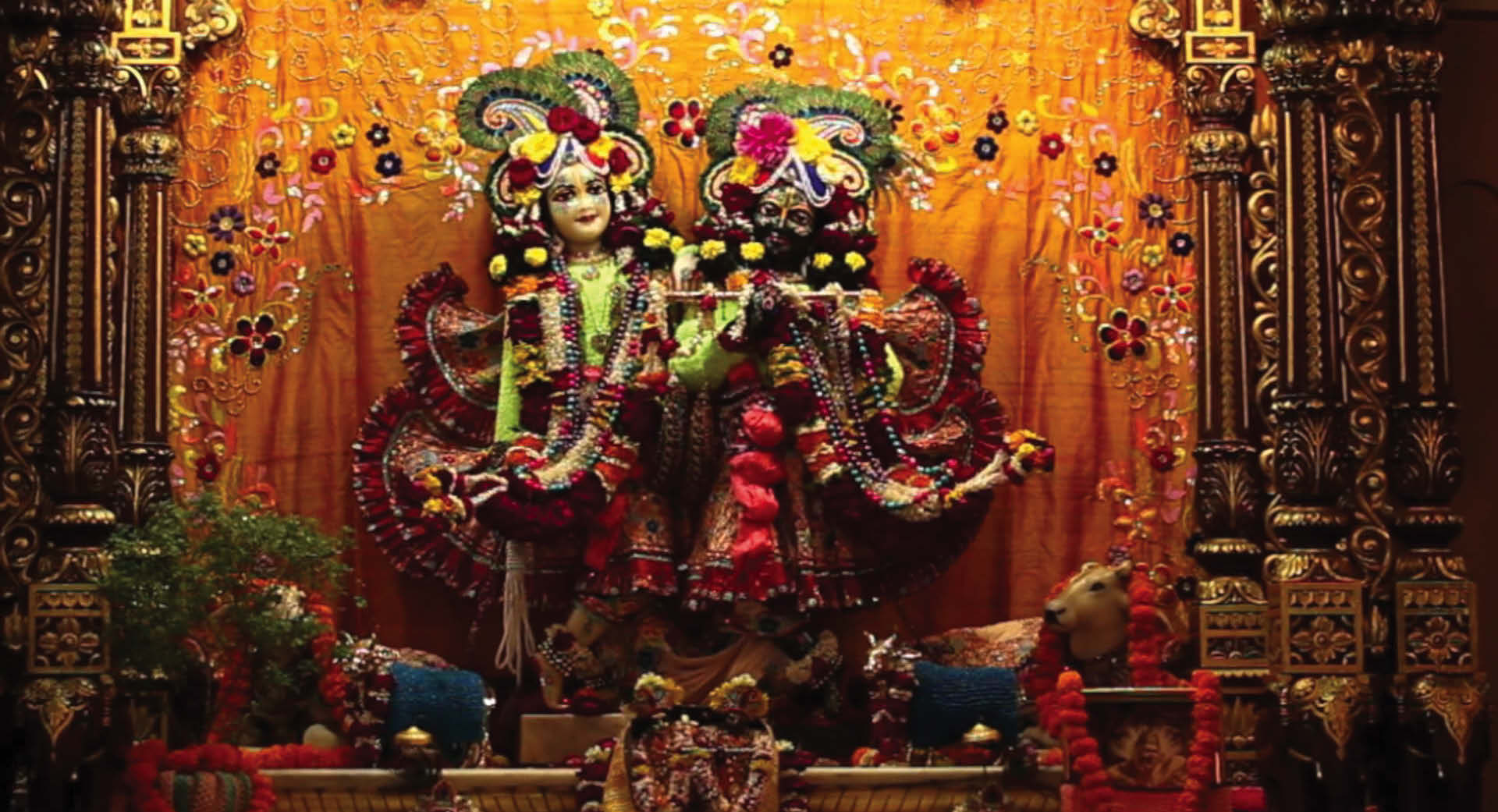
    The Krishna Balaram Temple was established in 1975 under the aegis of ISKCON, an international Krishna Consciousness religious group. The Krishna Balaram Temple is one of the most beautiful temple complexes in the city of Vrindavan and is seen as the spiritual and religious center of the worldwide Hare Krishna movement. It has three temples within the complex, one belonging to Sri Gaura Nitai, one to Lord Krishna and Balaram and the third to Sri Radha and her milkmaids, Vishaka and Lalita. The temple is alive through the year with its many celebrations commemorating every aspect and step of Lord Krishna’s life.

    Bankey Bihari Temple

    The Bankey Bihari Temple of Vrindavan is one of the most auspicious temples in the town, established in the Mughal times by Swami Haridas, the guru of Tansen, the famed court singer of the Mughal emperor Akbar. The temple earns its name from the bent posture of the Krishna idol within the main chamber, an idol with a history. This idol is supposed to have been made according to the image of Lord Krishna that Swami Haridas saw in a dream. The temple is one of the most thronged sites in town and during the Jhulan Utsav, the temple administration brings out many gold and silver swings for the jhulan rituals with a lot of pomp.

    Madan Mohan Temple

    The Madan Mohan Temple is one of the oldest temples in the town of Vrindavan and it sees many pilgrims visiting all through the year. It is a site that is closely linked to the life of Sri Chaitanya Mahaprabhu, one of the most important personalities within the Vaishnavite thought. Situated near the Kali Ghat, the Madan Mohan Temple is said to have been built by one Kapur Ram Das from Multan on the advice of Sanatan Goswami, a saint and follower of Chaitanya Mahaprabhu. The original idol of Madan Mohan had been shifted to Karoli, Rajasthan, under the rule of the Mughal king, Aurangzeb and now a replica of the original image is worshipped at the temple.

    Shahji Temple

    The Shahji Temple, built in the mid-nineteenth century by the two brothers from Oudh, Shah Kundan Lal and Shah Phundan Lal, is another important and prominent temple in the town of Vrindavan. The temple is dedicated to the deity Sri Thakur Radha Raman Ji and receives a steady flow of pilgrims all across the year. One of the main attractions of this temple is one of the richly carved verandahs, which has the portraits of the two founders and their families beautifully carved into the floor – an unusual characteristic of a Hindu temple. The temple also has many rich carvings over the walls and ceilings inside.

    Rangaji Temple

    Built in 1851, the Rangaji Temple is one of the more unusual temples of Vrindavan because of its South Indian style architecture with an impressive gopuram. The deity in the temple is called Sri Ranganatha and is represented as sleeping on the Shesh Nag. The imposing Dhwajastambha within the temple premises is very famous. The temple sees a great influx of tourists during the Brahmotsav in spring, where devotees pull the ropes of the chariot of the god. The annual Jalvihar festival is also another main attraction of the Rangaji Temple, when devotees from all over the country participate in the ritual bathing of the idol.

    Tourist Destinations

    The important towns in Brij Bhoomi, all closely associated with Krishna’s life are worth a visit. Most fall on or near the Yamuna River.

    Mathura

    Mathura is just 15 kilometers away from Vrindavan. The town is prominent as the birthplace of Krishna. The Keshava Deo temple is built on the Krishna Janamsthan.

    Govardhan

    Govardhan is 25 Kilometers from Mathura, off the state highway. The Giriraj hill, a narrow sandstone hill, is famously associated with Lord Krishna who is said to have held it on the tip of his finger for seven days.

    Barsana

    Nineteen Kilometers north of Govardhan, the town of Barsana, said to be the village of Lord Krishna’s beloved consort Radha is a popular destination.

    The town on the foot of a hill has a number of temples dedicated to Radha and Krishna.

    Radhakund

    Radhakund is a large lake, five kilometers north of Govardhan. A large fair is held here on Ahoi Ashtami.

    Gokul

    Across the Yamuna, a few kilometers from Mathura, this town was the place where Lord Krishna was brought by Vasudeva.

    Nandgaon

    The home of Krishna’s foster father Nand, this town is eight kilometers from Barsana. The temple of Nand Rai atop a hill is one of many others here.

    Mahavan

    The town is famous for the large shrine of Mathuranath. Mahavan is 14 kilometers from Mathura, on the bank of the river Yamuna.

  • SAKAT CHAUTH

    SAKAT CHAUTH

    Sakat Chauth Vrat is observed on the fourth day of Krishna paksha, (the fading phase of moon) in the month of Magha according to Hindu lunar calendar. This year Sakat Chauth will fall on January 27, Thursday in 2016.

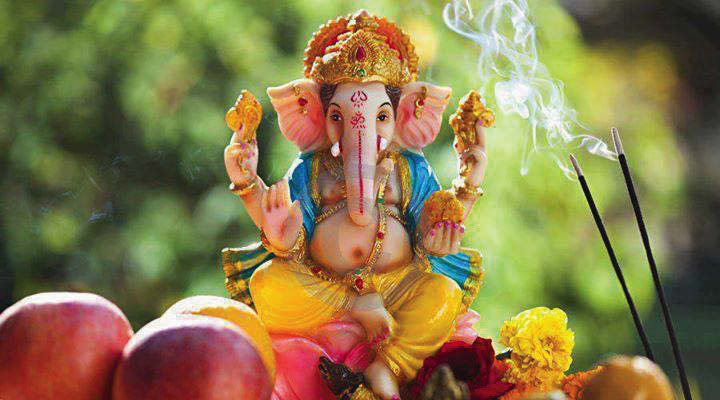
    Sakat Chauth is also called Ganesh Chauth or Tilkuta Chauth. Lord Ganesha and the Moon God are worshiped on Sakat Chauth. This vrat is mainly observed in North India and this day is celebrated as Tilkut Chauth.

    A full day fast is observed on this day. It is believed that fasting on Sakat Chauth removes all obstacles from life and Ganesha blesses his devotees with health, fortune and good children.

    Sakat Chauth Vrat Method

    On this day, married women who are observing the fast wake up early and take a bath, after which they wear new clothes, clean up the place of worship and chant “Om Ganeshaaya Namah” mantra 108 times. During the day devotees observe a fast. However milk, tea and fruits are allowed.

    In the evening a Mandap is decorated in which Ganesha idol is placed. The idol is decorated with flowers and Doorva (grass) and desserts prepared with sesame seeds (til) and jaggery are offered to Ganesha. These special sweets are called “Naivaidya”. At the end of this puja, the Ganesha arti is sung. Some people keep the Prasad of this puja in front of the Ganesha idol for all night and share it with family members next morning.

    The Moon god is also worshiped on this day. At night, after the moonrise, Arghya is given to the moon and after hearing the Sakat Chauth katha, the fast is broken. If the moon is not visible due to rain and clouds, the puja is performed according to the moon rise time.

    Tilkut is a traditional Indian sweet made with sesame seeds and jaggery. After offering some tilkut and modak to Ganesha, devotees distribute it as prasad (holy offering) to their friends and family members.

    Married women pray for health, wealth and well-being of their children. Fasting on Sakat Chauth is considered very auspicious. Mothers observe fast on this day so the hurdles from the life of their kids are removed.

    Significance of Tilkut on Sakat Chauth

    Sesame seeds are a great source of many valuable elements such as protein, calcium, phosphorous and magnesium. The black sesame seeds are very beneficial as well and jaggery is a great source of iron and calcium .The mixture of both produce body heat, increase our immunity and prevents us from the bad effects of the cold climate.

    Similarly Doorva (grass) is also considered good for detoxification of body. A healthy mind resides in a healthy body. With a healthy mind one can overcome all the hurdles and obstacles in life. This is the real meaning of offering Tilkut and Doorva to Lord Ganesha.

    Legend of Sakat Chauth

    According to the belief, there was a family in which 2 brothers and their wives lived together. The elder one was rich and younger one was poor. Elder brother’s wife was greedy and very cruel, but the wife of the younger brother was a devotee of Ganesha .On the day of Sakat Chauth, she performed puja but she had nothing to offer to Ganesha, so she asked the elder brother’s wife for some food, but that cruel lady insulted her and didn’t give her anything. The younger wife was very sad and tired so she went to sleep.

    At night Lord Ganesha visited her home and blessed her with a lot of gold and diamond jewellery. When the greedy wife of the rich brother saw this, she also repeated the same procedure and invited Ganesha. But the angry Ganesha did not please and cursed her lot. The greedy lady realized her mistake, she could gain good fortune only after worshiping Ganesha with full devotion on Sakat Chauth. Ever since then people started worshiping Lord Ganesha on Sakat Chauth to get blessings from him.

  • MAUNI AMAVASYA

    MAUNI AMAVASYA

    In the year 2016, Mauni Amavasya will be celebrated on 8 February. On this day, Sun and Moon enter into Capricorn sign because of the transit. This day is also celebrated as the birthday of Manu Rishi. Hence, this day is known as Mauni Amavasya.

    The significance of this amavasya increases when the yoga for Capricorn, Sun and Moon is formed. Taking bath in holy rivers on this day is believed to give fruitful results.

    Significance of Maun Fast on Mauni Amavasya

    According to some scholar, Maun Vrat should be observed on this day. Maun (silent) Vrat means to control all our senses. People take the resolution of Maun Vrat for a day, or a month, or for one year. It depends on a person for how long he wants to observe silence. Taking bath in holy rivers, along with fasting is considered very auspicious. Hence, a person should observe Maun Vrat and then have a bath. After completing the bath etc. A person observing Maun fast should go to a peaceful place and perform mediation. This purifies the mind of an individual. The soul gets connected with Lord. On the day of Mauni Amavasya, a person can perform homas, donations etc. after bathing and meditations. By doing so the sins are removed and people get relief from enemies. On Mauni Amavasya, bathing in holy rivers give virtues that are obtained by performing hundred thousand Rajasuya Yagna. Its benefits are equal to Ashwamedha Yagya.

    The Amavasya and Purnima of Magh Masaare celebrated as a festival on this day. The places where Amrit was dropped, during Samudra Manthan between Gods and demons are considered sacred for having bath.

    Significance of Mauni Amavasya

    On the day of Mauni Amavasya, a person should person mediation and donate things as per his capacity. Those who are not able to take bath in holy rivers or any other pilgrim, should wake up early in the morning, complete his routine work and have a bath at home itself. He can even take bath in a nearby river. As per the scriptures, the water of rivers become as pure as Ganga Jal on this day. Silence should be observed while bathing and meditation. On this day a person should avoid performing  wrong works and try to make his mind strong. He should focus on activities that can help him to keep his mind peaceful and make the body strong.

    After this, person should worship Brahma Dev and perform the Gayatri Japa. Donations should be done with faith and chanting of mantra. The donations include giving of cow, gold, clothes, bed and other useful things.

    Rituals during Mauni Amavasya

    The devotees get up early on the day of Mauni Amavasya to take holy dip in the Ganges at sunrise. If a person cannot visit any pilgrimage destination on this day, he/she must add little Ganga ‘jal’ to the bathing water. It is widespread belief that while taking bath, one must remain quiet. On this day devotees also worship Lord Brahma and recite the ‘Gayatri mantra’.

    After finishing the bathing ritual, devotees then sit down for meditation. Meditation is a practice that helps to concentrate and attain inner peace. On the day of Mauni Amavasya any wrong actions must be avoided.

    Some of the devotees observe complete ‘mauna’ or silence on the day of Mauni Amavasya. They abstain from speaking all day long and only meditate to attain the state of oneness with self. This practice is known as ‘Mauna Vrat’. If a person cannot keep, mauna vrat, for the complete day, he/she must maintain silence until finishing the puja rituals.

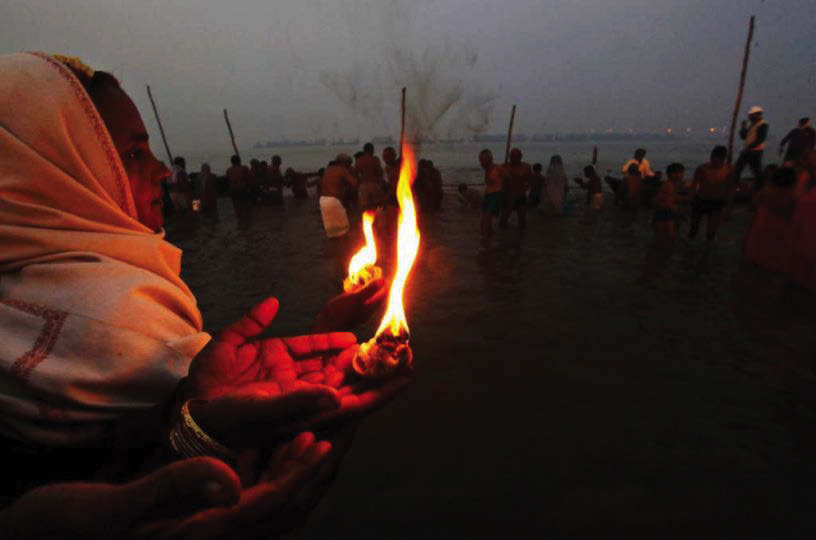
    On the day of Mauni Amavasya, thousand of Hindu devotees along with the ‘kalpavasis’ take a holy dip in ‘Sangam’ at Prayag and spend the rest of the day in meditation.

    In the Hindu religion, the day of Mauni Amavasya is also appropriate for relieving pirtu dosh. People offer ‘tarpan’ to their ‘pitrs’ or ancestors to seek forgiveness and attain their blessings. On this day people offer food to dog, crow, cow and kusht rogi.

    Offering charity is another important ritual for the day. ‘Magha’ is an important month in the Hindu calendar. On this day people donate food, clothes and other essentials to the poor and needy people. There is also a ritual of offering sesame (til) oil to Shani Dev.

  • CHINA SHARES TUMBLE AGAIN, TAKING LOSSES TO $2 TRILLION

    CHINA SHARES TUMBLE AGAIN, TAKING LOSSES TO $2 TRILLION

    SHANGHAI (TIP): Chinese shares fell sharply again on Wednesday after plunging in the previous session, taking losses in 2016 to nearly 25 percent or 13 trillion yuan ($2 trillion).

    The benchmark Shanghai Composite Index was down 3 percent in afternoon trade, having tumbled 6.4 percent on Tuesday to its lowest close since Dec. 1, 2014.

    The CSI300 index of the largest listed companies in Shanghai and Shenzhen was down 2.4 percent.

    China markets began the year with a series of precipitous falls and a sharp depreciation in the yuan currency, and selling pressure has persisted as economic data confirmed slowing growth and deteriorating business conditions, hammering investors’ confidence in stocks. Gu Yongtai, analyst at Cinda Securities, said the prospect of investors having to sell stocks they bought with borrowed money in order to cover margin calls has also hurt sentiment.

    “There’s fear that stock price falls would trigger margin calls, which then adds further pressure on prices, although the actual amount of forced liquidation is not as big as people would imagine,” Gu said.

    Four listed companies suspended trading in their shares on Wednesday, saying their major shareholders, who have pledged shares as collateral, face margin calls and would seek ways to avoid forced liquidation.

    “If the market continues to fall, equity pledging-related selling pressure could increase significantly, putting further pressure on the stock market,” said Gao Ting, the Head of China Strategy with UBS Securities.Trading volumes have thinned, making price moves even more volatile, as many investors have given up on Chinese stocks since last summer, when shares crashed 40 percent.

    Beijing intervened to stem that rout and orchestrate a recovery of sorts, but anyone who mistook that for a bottom and bought back in will be nursing losses again. China’s woes have also damaged risk appetite in global markets, which have also been hit by tumbling oil prices.

    Stocks on Wall Street were given a lift overnight as crude prices bounced back over the $30 mark overnight on hopes of output cuts. Oil had a 12-year low last week due to oversupply and concerns about faltering global growth.

    Investors across the world will hang on whether the market chaos of the last few weeks and concerns over China’s slowing economy might blow the U.S. Federal Reserve off its proposed course of gradual interest rate hikes.

    The Fed is expected to leave interest rates unchanged later on Wednesday and acknowledge that turmoil in financial markets threatens its upbeat view of the U.S. economy, leaving the chances of a March hike diminished but alive.

  • Maruti Q3 net up 27% on sales, cost reduction

    Maruti Q3 net up 27% on sales, cost reduction

    NEW DELHI (TIP): Maruti Suzuki reported a 27% growth in net profit in the quarter ending December 31, 2015 on the back of higher sales and cost reduction initiatives. Earnings in the period stood at Rs 1,019 crore against Rs 802 crore in October-December 2014.

    The company, which recently launched a new car ‘Baleno’ compact, said net sales volume in the period was up 15% at 3.74 lakh units, including 31,187 units through exports, which grew 9%. Sales revenue of the company (net of excise) stood at Rs 14,768 crore, showing a year-on-year growth of 20%.

    “Higher volumes, material cost reduction initiatives and favourable foreign exchange contributed to profit during the quarter,” the company said. Maruti Suzuki’s stock closed the day at Rs 4,093 on the Bombay Stock Exchange, down 0.4% in a nearflat market.

    The company plans to drive in a new mini SUV ‘Vitara Brezza’ over the coming months and will showcase the vehicle at the Delhi Auto Expo which begins in the first week of February. Net profit in the nine months of the fiscal (April-December 2015) stood at Rs 3,438 crore, showing a growth of 42%. Net sales volume in the period moved up by 13% at 10.7 lakh vehicles, while sales revenue grew by 17% at Rs 41,421crore.

  • Patanjali eats into Colgate’s toothpaste market share

    Patanjali eats into Colgate’s toothpaste market share

    MUMBAI (TIP): Patanjali Ayurved, the home-grown foods-to-FMCG player that recently took on Swiss multinational giant Nestle by launching its own noodle brand, is eating into the market share of another MNC giant, Colgate Palmolive, in the toothpaste segment.

    Haridwar-based Patanjali Ayurved, run by yoga guru Baba Ramdev, has garnered a 4.5% market share in the toothpaste segment, a report by Kotak Institutional Equities said. In comparison, in the last one year, Colgate Palmolive, the sector leader, has lost its market share by 60 basis points (100 basis points = 1 percentage point) to 57.3%. In an attempt to boost market share, Patanjali Ayurved is beefing up its main toothpaste brand, Danta Kanti, with variants like medicated, advance and junior.

    After Colgate’s October-December quarter results on Wednesday, several brokerages have flagged competition from Patanjali Ayurved as a threat to MNC giants in the toothpaste segment. Prabhudas Lilladher, a domestic brokerage house, cut Colgate’s earnings estimates for the next three years by 4-10%because of the threat from Patanjali Ayurved.

    Toothpastes and noodles are not the only segments which excite Patanjali Ayurved as it is also taking on MNCs  like Glaxo SmithKline Consumer, Mondelez and Johnson & Johnson by launching its own health food drinks and baby care products. In a recent report on the Indian consumer segment, Deutsche Bank analysts Manoj Menon and Gaurav Bhatia said that emergence of Patanjali Ayurved as a serious player in the segment as it gains scale and market share, “its competitors, such as Colgate (toothpaste), Britannia, ITC (biscuits, dairy), Dabur (Honey, chywanprash), Nestle (Maggi, packaged foods) etc., will be starting to take notice of the strong growth delivered by Patanjali and its expansion into new categories.”

    In a report, Edelweiss had said Patanjali’s PowerVita will provide competition to all health food drink companies like Mondelez and GSK Consumer. It is also planning to launch products like baby oil, talcum powder, baby soap, shampoo etc.

  • BANK OF JAPAN INTRODUCES NEGATIVE INTEREST RATE TO BOOST ECONOMY

    BANK OF JAPAN INTRODUCES NEGATIVE INTEREST RATE TO BOOST ECONOMY

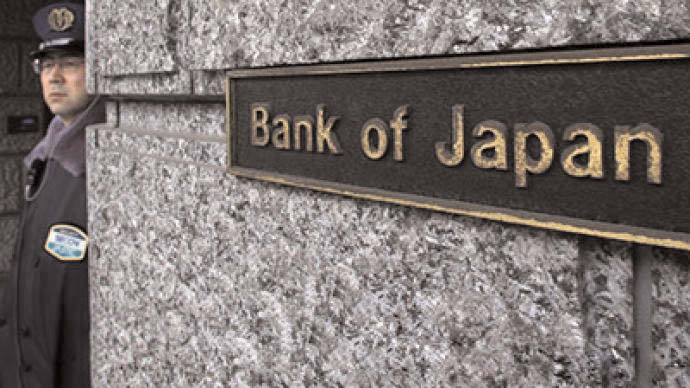
    TOKYO (TIP): The Bank of Japan on January 29 introduced a negative interest policy in a move to boost a stumbling recovery in the world’s third-largest economy.

    The central bank said it is imposing a 0.1 percent fee on some deposits left with the central bank, effectively a negative interest rate. It hopes that will encourage commercial banks to lend more and stimulate investment and growth. The move had an immediate impact on financial markets. Japan’s benchmark Nikkei 225 stock index, which had been down about 0.8 percent at midday, shot higher. The Japanese yen slid, with the U.S. dollar rising to 120.40 yen from about 118.50 earlier in the day.

    The BOJ said in a statement that it would divide banks’ deposits into three tiers, with categories earning positive, zero and negative interest rates.

    It said the policy would continue as long as needed to achieve an inflation target of 2 percent. In the meantime, the BOJ pushed back its timeframe for achieving that goal from late 2016 to mid-2017.

    Earlier Friday, data showed Japan’s core inflation rate for 2015, excluding volatile food prices, at 0.5 percent.

  • Need to relook at method of calculating GDP growth: Rajan

    Need to relook at method of calculating GDP growth: Rajan

    MUMBAI (TIP): Reserve Bank of India (RBI) governor Raghuram Rajan on Thursday revived the debate on the method of calculating gross domestic product (GDP), saying there are problems as it only talks about growth and leaves out a wider context.

    “On the point about GDP, there are also problems with the way we count GDP… Sometimes we get growth when people move to a different area but we have to ensure that when people move, they do something that is value adding (to the economy)… We do lose some, we gain some and what is the net, let us be careful about how we count that,” Rajan said while addressing students at the 13th convocation ceremony of the Indira Gandhi Institute of Development Research.

    Rajan illustrated his point by saying that if two mothers were to take care of each other’s children and pay each other for that work, there would be some growth in GDP due to the sum of their earnings. However, this growth would not add anything to the economy.

    The new methodology of calculating GDP, which was launched in January last year, relies on linking economic activity to market prices instead of the earlier method of basing it on the cost of production. While the new method is reflective of the trend used in most countries, the shift in calculation fuelled criticism as it showed a sharper economic recovery last year; the old method would have indicated stagnation.

    Rajan highlighted the importance of examining whether GDP growth reflects jobs in the economy. “Let’s be careful how we count and how we improve our accounting of GDP, which is something we have to think about as we go forward. “A good job is the best form of inclusion but also difficult to create conditions for jobs. Of course we need infrastructure, roads, marketing of small business products…,” the RBI governor said, adding, across the world, governments are looking for new models because the effects of technology and globalisation have an impact on employment. Economies should also move subsidies away from capital and towards subsidising labour. “Trying to incentivise employment of labour, especially employment which will add skills to labour, is extremely important,” Rajan said. Pranab Bardhan, professor of graduate school at the department of economics, University of California, Berkeley, who was the guest of honour at the ceremony, said 30% of India’s youth is neither in the workforce nor in education, the largest in top 10-15 economies. This means that these young people are not immediately employable, which is one of the biggest hurdles in percolation of economic growth to the entire population, Bardhan said.


  • THE ANTIPODE: FLY FROM LONDON TO NEW YORK IN 11 MINUTES

    THE ANTIPODE: FLY FROM LONDON TO NEW YORK IN 11 MINUTES

    NEW DELHI (TIP): Charles Bombardier, the man behind the concept aircraft Skreemr which could travel at Mach 10, has now unveiled the Antipode, a hypersonic jet that he claims will cover the distance between London and New York in a mind-boggling 11 minutes.

    ANTIPODEBombardier, who is affiliated with the Canadian aircraft company Bombardier Inc, says the Antipode can reach Mach 24, twice the speed of the Skreemr and 12 times faster than the Concorde. In theory, he claims it can carry 10 people for a distance of up to 20,000km in less than an hour.

    Last year, the Canadian engineer designed the Skreemr, a four-winged scramjet that he claimed could carry 75 passengers at speeds of up to Mach 10.

    One Mach averages 1195km/hour, a speed equal to that of sound. An aircraft flying at Mach 2 is flying at twice the speed of sound, in the air.

    On his website, Bombardier says the Antipode can be an ideal business or military aircraft to fly senior officers anywhere in the world in almost no time.

    Antipode, he says, will be an aircraft with rocket boosters attached to its wings, which would propel the plane to 40,000 feet and help it reach Mach 5, before they separate and fly back to base.

    After that, the supersonic combustion engine will be ignited, shooting the jet up to a speed of Mach 24.

    To avoid overheating at such speeds, the jet will use NASA’s Long Penetration Mode concept, by which nozzles on the nose and wings would use the air flowing through to cool down the surface temperature of the plane.

    Interestingly, the images of the Antipode concept have been created by Abhishek Roy, the founder of Lunatic Koncepts, a design lab based in India. Roy has also created the renderings for the Subrocket car and the Korbiyor autonomous electric hearse concept.

  • STEM CELL CURE FOR DIABETES A REALITY: STUDY

    STEM CELL CURE FOR DIABETES A REALITY: STUDY

    BOSTON (TIP): Diabetes may soon be cured after scientists have managed to halt the condition in mice for six months, thanks to the use of insulin-producing cells that had been generated from human stem cells.

    Experts from US hospitals and institutions, including Harvard University, managed to transplant cells into mice, which immediately began producing insulin.

    The team was also able to show they could prevent the cells being rendered useless by the body’s own immune system, which was effectively “switched off”, thanks to scientific work. It means a cure for type 1 diabetes – which affects 400,000 people in the UK – could be much closer. Scientists are now working to replicate the results in humans with the condition. The findings build on the news at the end of 2014 that experts had discovered how to make huge quantities of insulin-producing cells.

    The man who led that breakthrough – Harvard Professor Doug Melton, who has been trying to find a cure for the disease since his son was diagnosed with type 1 diabetes as a baby – also worked on the new studies.

    The human islet cells used for the new research were generated from human stem cells developed by Professor Melton.

    “Encapsulation therapies have the potential to be groundbreaking for people with type 1 diabetes.

    “These treatments aim to effectively establish long-term insulin independence and eliminate the daily burden of managing the disease for months, possibly years, at a time without the need for immune suppression,” said Juvenile Diabetes Research Foundation (JDRF) vice-president of discovery research, Julia Greenstein.

    Source: PTI

  • Internet traffic may soon travel at the speed of light

    Internet traffic may soon travel at the speed of light

    LONDON (TIP): Scientists expect that, for the first time, the internet traffic could travel at the speed of light, while being completely open and programmable courtesy of revolutionary internet technologies.

    The current internet infrastructure is unable to support independent development and innovation at physical and network layer functionalities, protocols and services, while at the same time supporting the increasing bandwidth demands of changing and diverse applications.

    The research introduces new concepts of open source optical internet enabled by optical white box and software defined network technologies.

    “These technologies will hide complexity of optical networks and open them up for traditional programmers and application developers to create new type of internet applications taking advantages of speed of light,” said Reza Nejabati, from University of Bristol in UK.

    “New internet technologies frequently emerge, but most of them rarely result in new and revolutionary internet applications,” he said.

    “The technologies suggested could pave the way for the creation of new internet services and applications not previously possible or disruptive,” Nejabati said.

    “The technologies could also potentially change the balance of power from vendors and operators that are monopolising the current internet infrastructure to wider users and service providers,” he said.

    Source: PTI

  • MICROSOFT ADDS REAL TIME CO-EDITING IN BOX AND DROPBOX WITH MS OFFICE

    MICROSOFT ADDS REAL TIME CO-EDITING IN BOX AND DROPBOX WITH MS OFFICE

    Microsoft has announced a new set of integrations with Dropbox primarily aimed at offering more productivity and features while on the move.

    Starting Wednesday, Office subscribers will be able to work on documents, spreadsheets and presentations in real-time shared within Box and Dropbox.

    With these new set of integrations, Dropbox users will able to edit documents at the same time when using Office Online, allowing co-workers or users to be more productive while working on a project. To do so, just open a compatible file with Office Online via Dropbox.com. Once the file users wish to work on is open, they can start working on that a particular file simultaneously and see what changes are being made in real-time. Users can also make comments for chatting among themselves and any changes made are automatically saved in Dropbox.

    In addition, Office for iOS now also offers the same functionality with support for real-time co-editing directly from Box. Microsoft adds that the feature will also be rolled out to other cloud providers in the near future which include Edmodo, Egnyte and ShareFile.

    Besides the co-editing feature, Microsoft has also announced that Box and DropBox will soon be integrated with Outlook.com. This would essentially allow Outlook users to send attachments and saved files straight to Dropbox, Box and OneDrive. However, the company hasn’t specified an exact date as to when it’ll be available for users.

    “In the coming weeks, users of the new Outlook.com can attach files from Dropbox, Box and OneDrive right from their inboxes and they have the option to send these files either as traditional attachments or as cloud-based links,” Microsoft’s corporate vice president for the Office team Kirk Koenigsbauer, wrote in a blog post.

  • Zika reaches Europe: Visitors to S America test positive for virus

    Zika reaches Europe: Visitors to S America test positive for virus

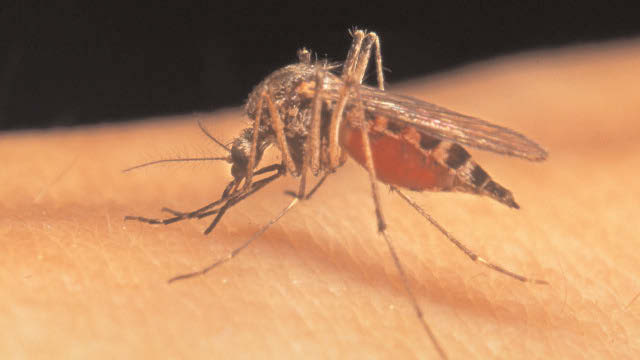
    Denmark and Switzerland on Wednesday joined a growing number of European countries to report Zika infections among travellers returning from Latin America, where the mosquito-borne virus has been blamed for a surge in birth defects. “A Danish tourist who travelled to Central and South America was diagnosed on his return with the Zika virus,” a hospital in eastern Denmark said in a statement late on Tuesday. The Danish patient was a young man who was expected to make a full recovery, the head of Aarhus hospital, Lars Ostergaard, told public broadcaster DR.

    Two people returning to Switzerland from Haiti and Colombia were also diagnosed with the virus, the Swiss Federal Office of Public Health said. Neither was pregnant and neither required hospital care, the statement said.

    Health watchdogs in a string of European countries meanwhile said they had recorded Zika cases dating back to as early as March 2015. The Netherlands confirmed 10 cases and Britain five, all among people returning from South America.

    In Italy, the Spallanzani National Institute of Infectious Disease said four cases were recorded in March 2015, while in Portugal, the health ministry said on Wednesday that five Portuguese had been infected. All eight had been travelling in Brazil. A woman in the Swedish capital Stockholm was diagnosed with the virus in July 2015, the Swedish Public Health Agency confirmed on Wednesday. “The symptoms were treated and the woman recovered,” said Karin Tegmark Wisell, head of microbiology at the health agency.

    Health officials in Helsinki say that a Finnish tourist was infected by the Zika virus after visiting the Maldives last summer. Epidemiologist Jussi Sane at the National Institute for Health and Welfare says it was a minor infection and the man was well and had been allowed home soon after being treated by doctors in June 2015.

    In Moscow, health minister Veronika Skvortsova said the Russia authorities had been “monitoring (Zika) since it appeared. Now we are working on controlling it as soon as any strange strains appear, to have domestic medication for prevention and treatment”.

    Source: Reuters

  • GLUTEN-FREE DIET IS A BIG FAT LIE

    GLUTEN-FREE DIET IS A BIG FAT LIE

    Gluten-free diet has become the new fad among the health conscious, especially those with an athletic bent of mind. Many aspiring sportsmen forsake gluten in their diets for superior performance but a new study suggests that the benefits of a gluten free diet are greatly exaggerated.

    More than 1000 athletes took part in a study published in Medicine & Science in Sports & Exercise last year which indicated that 41% of them followed a gluten-free diet. Only 13% of them, however, had been medically diagnosed with some form of allergy to gluten, indicating that most of them followed the diet mostly because of its purported health benefits, reported the New York Times.

    The study, conducted by Dana Lis, a PhD candidate from Australia made an attempt to understand whether gluten, a protein found in bread, rye and barley, had any influence on the body at all.

    Many participants in the study told researchers that they believed the diet would help them avoid digestive problems. Some estimates suggest that 90% of athletes, especially those who take part in endurance sports, experience some form of gastrointestinal problems after a workout.Lis devised an ingenious solution to solving this problem. She developed two sports bars, both indistinguishable in taste but with one of them containing gluten. Then, she invited cyclists to take part in an experiment where they would be fed random bars for one week each, neither the researchers nor the participants having any idea about which bar they were consuming.

    The participants were asked to fill daily questionnaires about any gastrointestinal problems they may be facing. At the end of each week, they were put through a strenuous time trial session to test their athletic performance.

    The results, surprisingly, showed no real differences. “An athlete’s nutrient intake and timing are so critical to performance,” Dana Lis concluded. “I hope that people learn to be more objective in terms of what they hear and read about gluten-free diets and nutrition in general.”

    Of course, the study was small-scale and short term. Whether the results change over the course of a longer testing period remains to be seen.

    Source: HT


  • Selfies can reveal if you’re in a romantic crisis

    Selfies can reveal if you’re in a romantic crisis

    Are you going through a rocky and failed romantic relationship? Check if you have suddenly started uploading more selfies on the social media.

    According to researchers from Florida State University, more selfies an individual posts on the social media site Instagram, the greater the likelihood he or she might experience conflict in romantic relationship.

    “The results show that body image satisfaction can be detrimental to Instagram users’ romantic relationships, especially when users’ body image satisfaction is promoted in the form of Instagram selfie posts,” explained lead author Jessica Ridgway and assistant professor Russell Clayton.

    The duo teamed up to examine the predictors and consequences associated with Instagram selfie posting.

    With an online survey of 420 Instagram users between the ages of 18 to 62, the researchers found that Instagram selfie posting is associated with and predicted by an individual’s overall body image satisfaction.In other words, those who think they look good are more likely to post selfies.

    However, Instagram selfie posting behaviours were found to be associated with increased Instagram-related relationship conflict.

    The researchers defined Instagram-related conflict as jealousy and arguments occurring due to either or both partners’ Instagram selfie posting behaviours.

    Not surprisingly, Instagram-related conflict was found to be associated with increased negative romantic relationship outcomes, which were defined as emotional or physical infidelity, breakup and divorce.

    Source: IANS

  • SAY ‘I LOVE YOU’ WITHOUT UTTERING A WORD

    SAY ‘I LOVE YOU’ WITHOUT UTTERING A WORD

    Try these gestures that show you care and why they’re more meaningful to the guy in your life.

    Complete attention

    When the male brain sees you checking your iPhone during dinner, it interprets that as ‘I’m not important. That’s because men’s brains evolved to do one thing at a time while filtering out all other stimuli. Even though women function differently (you know firsthand how well you multitask), your man will appreciate you focusing solely on him. It says, ‘You are my priority, and I love you.

    Cook something special

    That old adage is true: The best way to a man’s heart may be through his belly. Knowing what he likes to eat without having to ask him demonstrates how well you know him.

    Dress up for him

    Dolling up sends the message that you still want to look good for him, no matter how long you’ve been together. Men’s brains are wired to respond to visual cues more than women’s brains. Seeing you in that sexy dress shows him you desire him. And a scarlet number may work best because ladies in red are an aphrodisiac to men.

    Take care of yourself

    Shedding stress, eating right, exercising and even pampering yourself may sound like treats for you, but they’re also ways to show you love him. This communicates, ‘I want to have a long, wonderful life with you’. What better motivation is there to get healthy?

    Compliment your man

    Throughout time, men have had to fight and provide to attract and keepwomen — and they aren’t afraid to pull out the masculinity measuring sticks when potential competitors come around. Let your husband know you think of him the way he’d love to be seen: As a provider, problem-solver, handyman, sex stud and knight in shining armor. When he pops the lid on the jam jar with ease, mention that you enjoy having such a strong man around. He’ll beam—and chalk it up as a reason you chose him over all those other guys.

    Take his advice

    Your man wants to feel like an important part of your world. On top of that, he’s a hard-wired problem-solver. Ask for his opinion on how to approach the boss for a raise, and you prove you trust and value his judgment.

    Say thank you

    Next time your husband drives the kids to school or takes out the trash, express your gratitude. Giving thanks will improve his attitude and infuse your relationship with a feel-good energy.

    A warm hug

    Instead of a quick peck before running out the door, choose a lingering embrace. Hug for at least seven seconds. It’s a long time, but there’s something about that number where the hold ends up really giving him something.

    A quickie

    Making love for an hour is nice, but once in a while, have sex for just a few minutes. Although women get that loving feeling with a rise in oxytocin (what you release during that post-coital cuddling session), men feel it with an increase in dopamine, the chemical they release during sex which stimulates the mental pleasure-and-reward center.

    Source: TOI

  • Saudi Arabia urged to make more of its human rights successes by foreign office minster Tobias Ellwood

    Saudi Arabia urged to make more of its human rights successes by foreign office minster Tobias Ellwood

    RIYADH (TIP): A government minister has urged Saudi Arabia to do a “better job” of trumpeting its human rights successes during an official visit to the country, less than a month after it carried out the mass execution of 47 people.

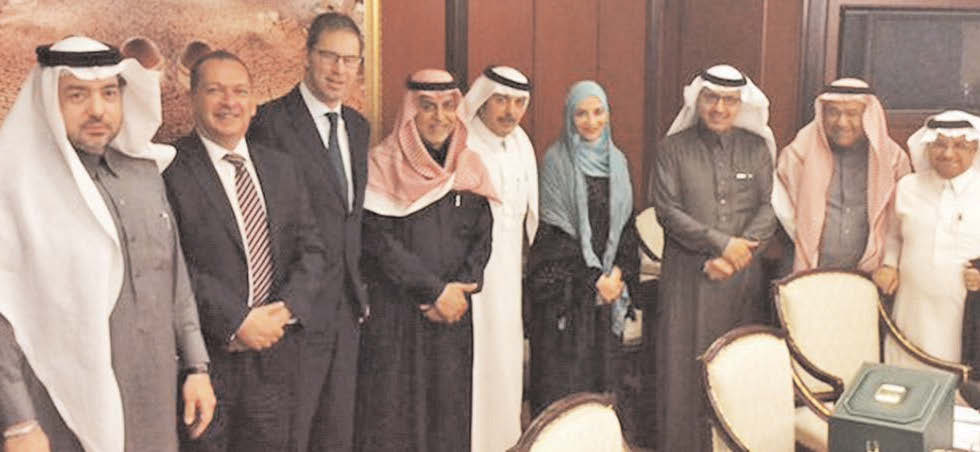
    Tobias Ellwood, the Foreign Office minister for the Middle East, made the comments on Monday as he and other British delegates addressed Saudi Arabia’s National Society for Human Rights in the capital Riyadh, The Independent understands.

    Leading human rights organisations described Ellwood’s remarks as “astonishing”, pointing out that Saudi Arabia was currently presiding over a surge in executions and engaging in a brutal military campaign in Yemen that may be breaking international laws.

    During the visit, which was not publicised by the Foreign Office, Ellwood was told that Saudi Arabia had introduced a series of reforms, such as allowing women to vote in municipal elections.

    In response, he told his hosts that they needed to improve the way they promoted their human rights successes, according to people present at the meeting.

    Accounts of the meeting that appeared in three Saudi media outlets claimed that Ellwood went even further, saying that people in Britain were unaware of the “notable progress” made on human rights by the Saudi regime.

    An article in the daily newspaper Al Watan read: “Tobias Ellwood revealed the ignorance of the British to the notable progress in Saudi Arabia in the field of human rights, confirming throughout the visit of a British FCO delegation… that he had expressed his opinion regarding the human rights situation in Saudi Arabia before the British Parliament, and that the notable progress in this area has been obscured.”

    However, a Foreign Office spokesman strongly denied that Ellwood had used those words. “We do not recognise these remarks,” he said. “Ellwood raised our human rights concerns in all of his meetings in Riyadh… The Government will continue to raise our concerns in public and private.

    “The minister was very clear that despite some recent incremental progress – such as December’s municipal elections… in which women were allowed to stand and vote in -further progress still needed to be made.” A press release issued by the National Society for Human Rights said Ellwood had been joined at the private meeting by Simon Collis, the British Ambassador, who stressed the importance of creating partnerships between human rights organisations in the two countries.

    The chairman of the society, Dr Mofleh bin Rabiean Qahtani, told Ellwood he was concerned that some high profile individual cases were being “exploited, generalised and circulated” in order to discredit Saudi Arabia’s reputation, the press release said.

    Recent cases which have drawn international condemnation include that of Raif Badawi, the liberal writer sentenced to 10 years in jail and 1,000 lashes for promoting free speech, and Ali al-Nimr, who was sentenced to death at the age of 17 for taking part in a pro-democracy protest.

    Nimr’s uncle, the Shia cleric Sheikh Nimr al-Nimr, was among 47 people killed by Saudi Arabia earlier this month as part of the country’s biggest mass execution for more than 30 years. It has since emerged that two of those killed were minors at the time they were arrested.

    Human rights groups have criticised Ellwood’s comments. “As Tobias Ellwood must surely realise, there’s one very easy way for Saudi Arabia to gain a better human rights reputation – and that’s by genuinely reversing the ongoing crackdown,” said Amnesty International UK’s head of policy and government affairs Allan Hogarth.

    “Saudi Arabia needs to release prisoners of conscience… to end rampant executions… and to ensure that the rights of women and repressed groups are properly respected.”

    Maya Foa, of the human rights organisation Reprieve, added: “These comments are astonishing. The Saudi authorities have a bad reputation on human rights because of their appalling human rights record – not because of bad PR.

    Ellwood told MPs earlier this month that Saudi Arabia was “making small progress” on human rights, but added that the Government still had serious concerns.

    (AFP)

  • How the Zika virus spread around the world

    How the Zika virus spread around the world

    NIGERIA (TIP): The World Health Organisation has called an emergency meeting to address the spread of the mysterious Zika virus, as health experts warned the outbreak is ballooning at an “extremely alarming” rate.

    The disease has been linked with a birth defect known as microcephaly, which sees children born with abnormally small brains, as well as a neurological syndrome that can cause paralysis.

    Margaret Chan, the director-general of the WHO, said board members would meet on Monday 1 February to establish if the Zika virus should be declared an international emergency.

    And an official at the organisation’s office for the Americas, where the disease has spread to 23 countries in a matter of months, said we can “expect three to four million cases”.

    HOW THE DISEASE SPREAD

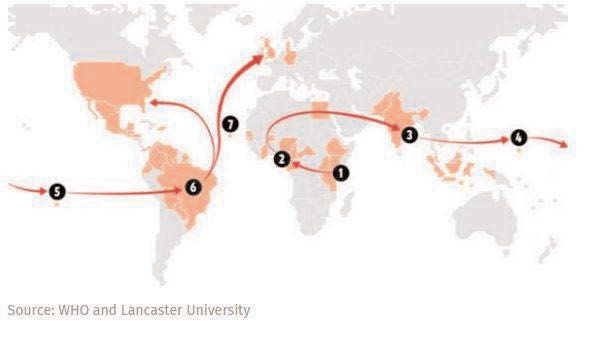
    Though it is possible the Zika virus originates in South East Asia, it was first documented in Uganda in 1947 (marked by (1) in the map above) in the antibodies of local people, meaning they had been exposed to it in the past.

    It spread throughout Africa, with the first live case recorded in a human patient in Nigeria a decade later around 1960 (2). The outbreak only threw up around a dozen confirmed cases.

    In 1966, the first case was confirmed in South East Asia, and in the late 1970s it was documented in Pakistan, India, Malaysia and Indonesia (3).

    The first official epidemic was on the isolated island of Yap, Micronesia, in 2007 (4). It affected almost 200 members of the island’s small population, making it a relatively major crisis.

    It hit French Polynesia in 2013, with a huge outbreak of 35,000 cases (5). Some led to instances of Guillain-Barre syndrome and paralysis, while recent retrospective research suggests there was also a corresponding spike in microcephaly.

    In 2014, around the time of the football World Cup, Zika arrived in northern Brazil (6). Some suggest it could have been brought over during the World Canoeing Championships in Rio around the same time, an event which involved a large number of Pacific Islanders.

    It spread slowly through Brazil for around a year, before the WHO reported the first outbreak outside the country – Colombia – on 21 October 2015.

    Other countries then followed quickly, with transmission reported in Suriname, El Salvador, and Guatemala by the end of November.

    In early December, the disease spread to Mexico for the first time, raising concerns in the US, as well as to Paraguay, Venezuela and Panama.

    By the start of January, Honduras, Puerto Rico, French Guyana and Martinique in the Caribbean had cases.

    And in the past week or so, cases have been confirmed in Guyana, Barbados, Ecuador, Bolivia, Haiti and the Dominican Republic.

    A handful of isolated cases have been reported locally in the US, the UK, Denmark and now Germany (7) -though experts stress these are all travel-related and full outbreaks in these countries are unlikely.

    And meanwhile, there have been several thousand cases of Zika reported in Cape Verde of West Africa since September. It is not known for certain whether these were imported there from mainland Africa or from fellow Portuguese-speaking Brazil. If the latter is the case, the disease has circumnavigated the globe – and could legitimately be described as a pandemic.

    WHY IS IT ONLY ‘ALARMING’ NOW?

    In most patients, the Zika virus has relatively minor flu-like symptoms which subside without much incident in no more than a week. It has a lower mortality rate than winter flu, and seems limited to equatorial areas with high numbers of the Aedes biting mosquito.

    Yet the unprecedented Brazil outbreak which began in 2014 has corresponded with a sudden spike in cases of microcephaly – 3,893 cases as of last week, more than 30 times greater than any other period since 2010.

    Speaking to The Independent, University of Lancaster lecturer and virologist Dr Derek Gatherer said we know so little about the virus largely because its normal symptoms are so mild.

    “We don’t even know exactly what time during pregnancy women are most at risk, beyond knowing what time the brain develops,” he said. “The effects could even come from before conception – that’s why we have to be so cautious with advice.”

    The WHO says that while a direct causal relationship between the Zika virus and more serious complications has not been confirmed, it is “strongly suspected”.

    “The possible links, only recently suspected, have rapidly changed the risk profile of Zika from a mild threat to one of alarming proportions,” she said.

    WILL IT SPREAD TO THE UK, US OR REST OF EUROPE?

    In theory, the WHO has warned that the virus has the potential to spread over the entire of the Americas with the exception of Canada.

    Isolated cases related to travel to and from Latin America have been reported in the US, Britain, Denmark and Germany.

    Dr Gatherer said that the Aedes mosquito, which carries the disease, occurs in southern Europe from Spain to France, Italy and Greece, and outbreaks there are possible.

    But these would likely be limited in the number of transmissions, and the disease almost certainly won’t spread in more temperate climes like the UK where the Aedes mosquito doesn’t live.

    “There’s a real North-South divide here between poor and rich countries,” he said. “The disease has been in Mexico since the start of December but it seems to have stopped at the American border, almost as if it hasn’t been allowed across.

    (AP)

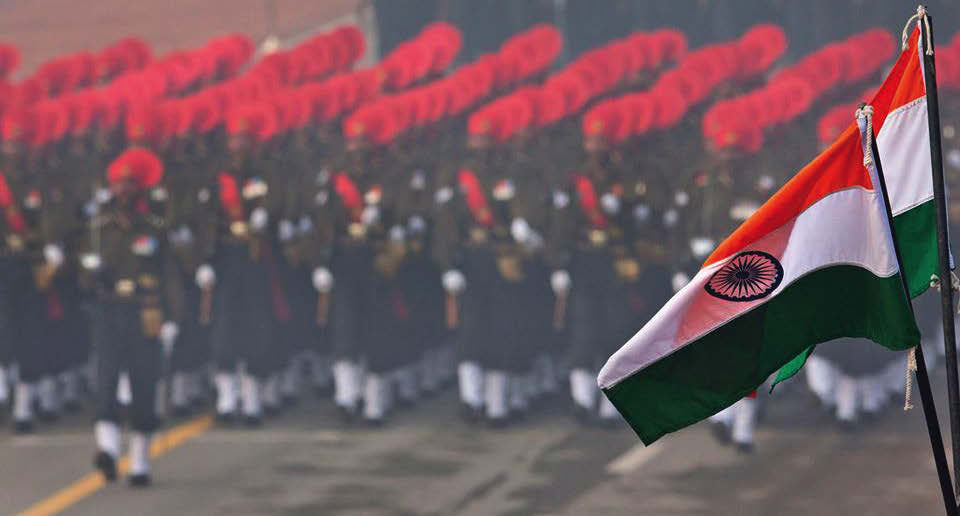
  • AMID TIGHT SECURITY, INDIAN STATES CELEBRATE REPUBLIC DAY

    AMID TIGHT SECURITY, INDIAN STATES CELEBRATE REPUBLIC DAY

    Vibrant parades and colorful programs highlighting the culture and achievements of states marked Republic Day celebrations across the country, which passed off peacefully amid tight security. The governors hoisted the Tricolour in the state capitals, and delivered speeches highlighting issues of immediate concern. An account of how various states marked the day:

    Jammu and KashmirRepublic Day celebrations, held amid massive security clampdown, were peaceful. For the second consecutive year, the Tricolor was unfurled by bureaucrats as the state is under Governor’s rule. The biggest function in the Valley was at Srinagar’s Bakshi Stadium.

    The Valley, though, observed a complete shutdown on a strike called by separatists. Shops and establishments were also shut.

    There were celebrations along the border, too. Indian and Pakistani troops along the LoC exchanged sweets at three places.

    Assam

    Hoisting the national flag in Guwahati, Chief Minister Tarun Gogoi asked fugitive ULFA leader Paresh Baruah to eschew violence and return to the mainstream. He hoped that with the repatriation of ULFA general secretary Anup Chetia, the ongoing peace talks with the Centre would be expedited. The CM said that while 13 extremist outfits had already laid down their arms, and discussion with these groups was progressing in a positive direction, Baruah should also follow suit.

    Arunachal Pradesh

    Governor J P Rajkhowa hoisted the flag at Indira Gandhi Park in Itanagar and called for a corruption-free administration. “Let us join hands to fight the menace of the hydra-headed monster called corruption, otherwise good governance will be a far cry,” he said. Rajkhowa laid emphasis on constitution of Lokayukta on priority basis.

    Gujarat

    Stunts on motorbikes and horseback, contingents of police and armed forces, cultural performances and a train of floats showcased the state during Republic Day celebrations near Somnath Temple in Gir Somnath district. Governor O P Kohli unfurled the flag in the presence of Chief Minister Anandiben Patel. The program was held outside Gandhinagar, a trend started by former CM Narendra Modi.

    Bihar

    Governor Ram Nath Kovind said that the rule of law and communal harmony prevailed in the state. “A check has been imposed on organised crime and this will continue in the future,” Kovind said in Patna’s Gandhi Maidan, adding the state has adopted a policy of zero tolerance on corruption.

    Punjab & Haryana

    In Chandigarh, Governor Kaptan Singh Solanki unfurled the national flag, while Punjab Deputy Chief Minister Sukhbir Singh Badal presided over the function at Bathinda as Chief Minister Parkash Singh Badal was indisposed.

    West Bengal

    In Kolkata, Governor K N Tripathi hoisted the Tricolor and took salute at the march past of armed forces and police forces at Red Road. A colourful parade and procession with decorated tableaus portraying the state’s culture and heritage were the highlights of the programme.

    Andhra Pradesh

    Governor E S L Narasimhan hoisted the national flag at Hyderabad and Vijaywada. Narasimhan outlined the state government’s vision to eliminate social and economic disparities.

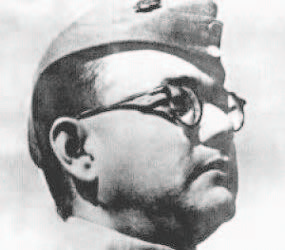
  • NETAJI SC BOSE FILES – Nephew trashes crash theory

    NETAJI SC BOSE FILES – Nephew trashes crash theory

    A day after a batch of 100 files on Subhas Chandra Bose was declassified, indicating that successive governments at the Centre were of the opinion that Netaji had died in an aircrash in August 1945, Ardhendu Bose, a nephew of the freedom fighter, has rubbished the plane crash “theory”, calling it a cover-up created by Japan to help him escape.

    “There was no plane crash. The British government created the propaganda (of crash). It (the crash theory) was a cover-up created by Japan to help Netaji,” Ardhendu said. He said the Taiwanese government, and British and US intelligence reports have all stated that there was no plane crash on August 18, 1945.

    Ardhendu’s father Sailesh Chandra Bose was Netaji’s younger brother.Talking about Prime Minister Narendra Modi’s move to make documents on Netaji public, Ardhendu told The Indian Express Sunday that it was part of the Prime Minister’s wider plan to urge other countries to release their classified files on Netaji.

    He said the papers declassified Saturday threw little light on Netaji’s mysterious disappearance, adding that the Bose family believes there is not much information even in the remaining files waiting to be made public in India. Specifying that the family believes Jawaharlal Nehru wanted to “wipe out the memory of Subhas Bose and INA” due to their “rivalry”, Ardhendu said, “I guess lot of files have been destroyed that implicate (Nehru), and that say he (Netaji) did not die in a plane crash.”

    Source: The Indian Express

  • Pentagon defends use of Russian engines

    Pentagon defends use of Russian engines

    WASHINGTON: Senior Pentagon officials have sought to defend the use of Russian-made rocket engines to send US military satellites into space, telling exasperated lawmakers they are moving quickly to end the practice and rely on American-made rockets for the launches.

    But Air Force secretary Deborah James and Pentagon acquisition chief Frank Kendall failed to stem sharp criticism from several members of the Senate Armed Services Committee who view Russia as the chief geopolitical threat to the United States.

    Led by the committee chairman, Republican Senator John McCain, they said using the Russian engines enriches President Vladimir Putin’s inner circle and puts US national security in jeopardy.

    McCain, his voice rising at times, asked James and Kendall if they knew the names Sergey Chemezov and Dmitry Rogozin. Both are Russians targeted by US sanctions, he said, yet their positions in Russia’s space and defense industry allows them to personally profit from the sales of the Russian RD-180 engines. Each engine costs roughly USD 30 million.

    “So we now have senior Russian politicians, friends of Vladimir Putin, that are making tens of millions dollars in the pass-through money that is paid for the Russian rocket engines,” McCain said. He asked James whether she found that disturbing.

    “Yes,” James responded, although she said she couldn’t be certain whether any Russian officials were directly benefiting from the sales.

    Disengaging from use of the Russian engines is a priority but also far more complicated than it appears, James said. She recommended a stockpile of 18 of the RD- 180s until an equally capable American-made space launch vehicle can be tested and fielded.

    James also said she asked senior Pentagon officials yesterday to work with other federal agencies to ensure that purchase of the engines does not conflict with US sanctions.

    The Pentagon has actively tried to undermine the committee’s direction to limit that risk and end the use of the Russian RD- 180 engines by the end of this decade, McCain said. He also blamed the US contractor that acquires the engines, United Launch Alliance, and two senators who support the company, Richard Shelby, a Republican, and Dick Durbin, the No 2 Senate Democrat, for thwarting the committee’s instructions.