Month: January 2016

  • Chinese sonar vessel to join search for missing Malaysian jet

    Chinese sonar vessel to join search for missing Malaysian jet

    SYDNEY (TIP): China is set to join the underwater search for a Malaysia Airlines passenger jet missing for almost two years by providing a sonar-equipped vessel by the end of February, Australia’s deputy prime minister Warren Truss said on January 29.

    Malaysia Airlines Flight MH370 disappeared with 239 people on board during a flight from Kuala Lumpur to Beijing in March 2014, sparking one of the greatest mysteries in aviation history.

    The Chinese vessel Dong Hai Jiu 101 was offered to Prime Minister Malcolm Turnbull in November and will be deployed to join search operations in the southern Indian Ocean, where the plane is believed to have gone down in March 2014.

    At the time, China valued its contribution to the search at A$20 million ($14.2 million).

    The Australian-led underwater search is one of the most expensive ever conducted. An initial hunt along a rugged 60,000-sq km (23,000 sq miles) patch of sea floor off the coast of Perth cost A$120 million but yielded no sign of the plane.

    The presence of Dong Hai Jiu will take to four the number of vessels scouring a search area that has been expanded to 120,000 square km (46,330 square miles) of ocean floor.

    The vessel is expected to leave Singapore for Australia on Jan. 31 and commence operations towards the end of February.

    The sonar system onboard Dong Hai Jiu 101 will be operated by Phoenix International Holdings and Hydrospheric Solutions. Both companies have previous experience in the search for MH370.

    Earlier this week, Australian authorities said they had lost a deep-water sonar detector that was being used in the search.

    A piece of the plane washed up on the French island of Reunion in the Indian Ocean in July 2015 but no further trace has been found.

    On Saturday, a piece of suspected plane wreckage was found off the east coast of southern Thailand but aviation experts and Thai officials said it was unlikely to belong to MH370.

    (Reuters)

  • Gallantry awards 2016

    Gallantry awards 2016

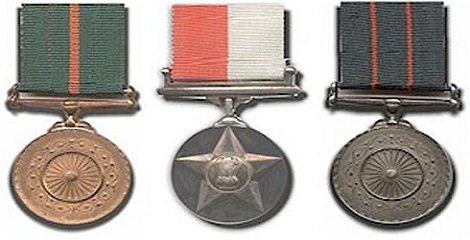
    NEW DELHI (TIP): President Pranab Mukherjee has conferred the country’s highest peacetime gallantry award Ashok Chakra to Lance Naik Mohan Nath Goswami posthumously.

    On the eve of 67th Republic Day celebrations President has approved 365 Gallantry awards and other Defence decorations to Armed Forces personnel and others. It includes one Ashoka Chakra, 4 Kirti Chakras and 11 Shaurya Chakras.

    Awardees are:

    Ashok Chakra

    Lance Naik Mohan Nath Goswami (Posthumous). He belonged to 9 PARA (Special Force) and laid down his life while fighting LeT militants in Kupwara district of Jammu and Kashmir.

    Kirti Chakra

    Subedar Mahendra Singh of 9 PARA (Special Force).
    Sepoy Jagdish Chand (Posthumous) of 546 DSC Platoon.

    Shaurya Chakra

    Colonel Santosh Mahadik (Posthumous) of 41 Rashtriya Rifle (PARA). Major Praphul Kumar Bhardwaj of 12 PARA (Special Force). Major Sandip Yadav of 55 Rashtriya Rifle (Armed). Major Anurag Kumar of 9 PARA (Special Force). Lieutenant Harjinder Singh of 3 KUMAON. Naik Satish Kumar (Posthumous) of 21 Rashtriya Rifle (Guards). Naik Kheem Singh Mehra of 21 KUMAON. Sepoy Dharma Ram (Posthumous) of 1

    Rashtriya Rifle (MAHAR). Kirti Chakra is the second highest peace time gallantry award i.e. awarded for valour, courageous action or self-sacrifice away from the field of battle. Shaurya Chakra is third highest peace time gallantry award generally awarded for counterinsurgency operations and actions against the enemy during peace-time.


  • Meet India’s bravehearts

    Meet India’s bravehearts

    NEW DELHI (TIP): National Bravery Award-winning boys and girls drew applause from the audience at the Republic Day parade here for saving human lives in dangerous situations.

    As 23 out of the 25 award winners were driven in a jeep at the parade.

    From a 16-year-old who fought off a tiger to a 13-year-old who lost his life while trying to save his friend from drowning, three girls and 22 boys showed incredible bravery in the face of dangerous situations.

    Bharat Award, the highest of the National Bravery Awards, has been posthumously awarded to Gaurav Kawduji Sahastrabuddhe from Maharashtra who sacrificed his life during an attempt to save four of his friends.

    Shivansh Singh, who lost his life while undertaking a valiant effort to save his friend from drowning in Sarayu river was also awarded posthumously.

    The prestigious Geeta Chopra award has been given to eight-year-old Shivampet Ruchitha of Telangana who displayed exemplary valour in saving two lives when a train hit her school bus.

    Sixteen-year-old Arjun Singh was honoured with Sanjay Chopra Award for displaying outstanding bravery in fighting off a tiger to save his mother. Ramdinthara (15) of Mizoram, who saved two persons from electrocution, was awarded Bapu Gaidhani Award, along with Rakeshbhai Shanabhai Patel (13) of Gujarat and Aromal SM (12) from Kerala.

    While Rakeshbhai saved a boy who accidentally fell into a deep well, Aromal rescued two women from drowning.

    Other recipients of the bravery awards are Kashish Dhanani (Gujarat), Maurice Yengkhom and Chongtham Kuber Meitei from Manipur, Angelica Tynsong (Meghalaya), Sai Krishna Akhil Kilambi (Telangana), Joena Chakbraborty and Sarwanand Saha (Chhattisgarh) and Dishant Mehndiratta (Haryana). Beedhovan, Nithin Philip Mathew, Abhijit KV, Anandu Dillep, Muhammad Shamnad (all from Kerala), Mohit Mahdenrda Dalvi, Nilesh Revaram Bhil, Vaibhav Ramesh Ghangare (all from Maharashtra), Abinash Mishra (Odisha) and Bhimsen from Uttar Pradesh were also given the award.

  • 4 Indian Americans Nominated To Democratic Convention Standing Committees

    4 Indian Americans Nominated To Democratic Convention Standing Committees

    Four eminent Indian-Americans, including two women, have been nominated to the Democratic Party’s 2016 Convention Standing Committees which would formally announce its candidate for the presidential polls.

    Smita Shah
    Smita Shah

    Topping the list of Indian-Americans is Smita Shah, president and CEO of Chicago-based Spaan Tech, who has been nominated as vice chair of the Rules Committee.

    Shefali Razdan Duggal
    Shefali Razdan Duggal

    One of the top fund raisers for President Barack Obama and now Hillary Clinton, California-based Shefali Razdan Duggal has been nominated a member of the Rules Committee.

    Dr Sreedhar Potarazu
    Dr Sreedhar Potarazu

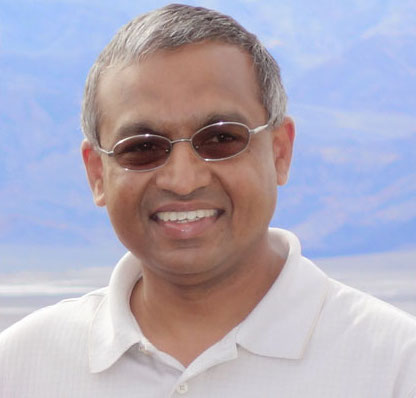
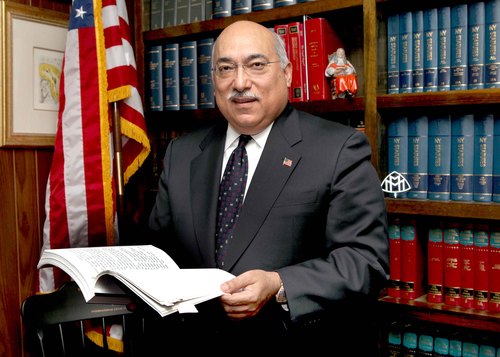
    Renowned ophthalmologist and entrepreneur, Dr Sreedhar Potarazu has been nominated to the Credentials Committee, according to the list released by the Democratic National Committee (DNC) Chairwoman Debbie Wasserman Schultz.

    Saif Khan
    Saif Khan

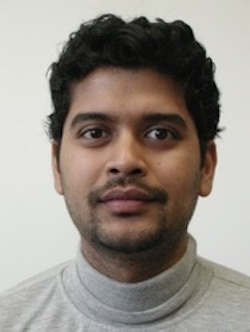
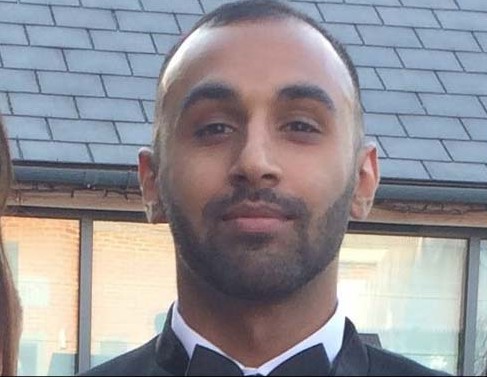
    Saif Khan, an Iraq war veteran who had served as a Combat Engineer in the Iraqi city of Mosul as part of Operation Iraqi Freedom, was nominated to the Rules Committee. He hails from Mysore and currently lives in Washington, DC.

    DNC rules provide for the Chair to appoint 75 Party Leader and Elected Official Members to the three Convention Standing Committees to be held in Philadelphia in July, which would formally announce party’s presidential candidate.

    These Party Leader and Members serve in addition to and together with the over 160 members that are elected in every state to those same committees.

    “This slate represents the great variety of perspectives, backgrounds, and experiences that make up our party. We wanted to make sure that the diversity of our party was reflected at the highest levels in terms of race, gender, age and geography,” Ms Schultz said.

    A Clinton White House staffer, Ms Shah was a delegate at the 1996 and 2004 Democratic National Conventions and was on the DNC’s Rules Committee in 2000 and 2004.

    In 2012, she become the first Indian-American to serve as a Democratic National Convention parliamentarian.

    Ms Duggal is a presidential appointee to the US Holocaust Memorial Council, which supervises the United States Holocaust Memorial Museum, for a term expiring in January 2018.

    She is one of the top fund raiser for the Clinton campaign and also serves on the National Finance Committee for Hillary for America, Clinton’s 2016 presidential campaign.

    Dr Potarazu is the founder of VitalSpring Technologies Inc., a privately held enterprise software company focusing on providing employers with applications to empower them to become more sophisticated purchasers of health care.

    Saif Khan is the Founder & Managing Director of Khanections. He is one of the founders of American Veterans Committee and a member of the American Legion, Iraq and Afghanistan Veterans of America and a life member of the Veterans of Foreign Wars.


    (CORRECTION: An earlier version of this article incorrectly referred to Mr. Saif Khan, as a Pakistani-American appointment to one of the Democratic Convention Standing Committees. This version has been corrected – 01/27/2016 – 12:09:30 PM EST.)

  • Indian-Led Scientists’ Team Discover Why Comet Appears Black

    Indian-Led Scientists’ Team Discover Why Comet Appears Black

    A study by an international team from Europe and the US led by an Indian planetary scientist has resolved one of the mysteries that baffled astronomers.

    Astronomical studies have shown that several small bodies – Centaurs and Trans-Neptunian Objects (TNOs) – in the outer solar system are having surfaces that are extremely dark but the origin of this colour had remained unclear.

    Centaurs estimated to number around 44,000 are minor planets with diameters larger than one kilometre. And TNOs are similar objects at a distance farther than Neptune, the most distant planet in the solar system.

    Now, in a report published in the International Journal of Astrobiology, Chaitanya Giri, who led the research from the Max Planck Institute for Solar System Research in Germany, and co-workers claim to have found why these objects appear dark.

    They say they have obtained experimental evidence that the darkness of these objects is due to presence on their surfaces of highly ‘carbonized’ organic material analogous to ‘Titan tholin’ — a substance first synthesized in the late 1970s in the laboratory of Carl Sagan and another Indian scientist Bishun Khare at Cornell University to simulate the atmosphere of Saturn’s moon ‘Titan’.

    “We investigated the chemical structure and composition of ‘Titan tholin’ using multiple analytical techniques such as laser desorption, mass spectrometry, Raman spectroscopy and field-emission scanning electron microscopy,” Mr Giri told IANS in an email.

    “The investigation led to the discovery of novel graphitic structural components within the larger macromolecular structure of Titan tholin,” he said.

    “Like the dark appearance of coal, our research indicates that the graphite within the Titan tholin-like material on Centaurs and TNOs contributes to their extreme darkness.”

    According to Mr Giri, since Centaurs and TNOs are progenitors of comets, “the darkness of comet’s surface can also be attributed to similar material.”

    For instance comet “67P/Churyumov-Gerasimenko”, which was visited by Europe’s Rosetta space mission in 2014, “was extremely dark,” said Mr Giri, who was a co-investigator in the mission.

    Mr Giri, who is currently with Japan’s Earth Life Science Institute at the Tokyo Institute of Technology, says the findings of this research will have far-reaching implications.

    “For astronomers and planetary scientists, the prospect of complex organic material present on several objects in our Solar System is striking,” he said.

    Astronomers might further use “Titan tholin” to study the surfaces of exoplanets (that are planets beyond our solar system) and planetary scientists could probe into the role of tholin-like material in shaping up organic-rich atmosphere and geology of several solar system objects.

    “Chemists could further explore the exotic conformations in which ultra-complex organics exist in the universe and biologists would further probe whether such organics play any role in origin of life on Earth,” he added.

    Giri noted that in the past few years, interest in the small Solar System bodies had been on an ascent.

    “Besides Europe’s Rosetta mission, NASA’s Dawn mission to dwarf planet Ceres and the New Horizons mission to dwarf planet Pluto all have given us glimpses to our yet unexplored and enormously diverse Solar System.”

    Mr Giri said the “Titan tholin” for his study was synthesized at the NASA Ames Research Center while chemical investigations were carried out at the Max Planck Institute for Solar System Research, NASA Goddard Space Flight Center, and at the Universities of Maryland (US), Nice (France) and Goettingen (Germany).

  • Sikh Thrown Out Of Donald Trump’s Rally for Holding ‘Stop Hate’ Banner, Says Would Continue Protest

    Sikh Thrown Out Of Donald Trump’s Rally for Holding ‘Stop Hate’ Banner, Says Would Continue Protest

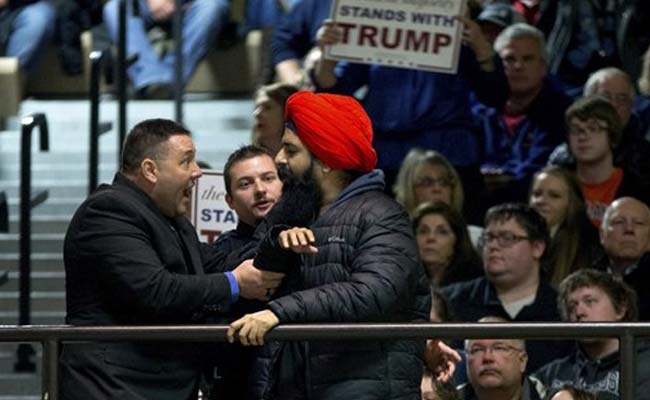
    WASHINGTON:  A turbaned Sikh, Arish Singh, was forced out of Donald Trump’s election rally in Iowa after he protested the Republican presidential frontrunner’s anti-Muslim speeches with a ‘Stop Hate’ banner.

    The protest started when Donald Trump was speaking about the twin-tower terrorist attack in New York. (AP Photo)
    The protest started when Donald Trump was speaking about the twin-tower terrorist attack in New York. (AP Photo)

    Mr. Singh started his peaceful protest impromptu, when Mr Trump was addressing an impressive campaign rally on Sunday, Jan 24, with his signature anti-Muslim speech.

    Arish Singh is a former editor of a local newspaper ‘Little Village’ and a comedian. He was thrown out of a Trump rally for displaying the banner.

    The protest started when Mr Trump was speaking about the twin-tower terrorist attack in New York.

    “We have radical Islamic terror going on all over the place, all over the world, and we have a president that won’t say it,” he said.

    “When planes fly into the World Trade Centre, and into the Pentagon, and wherever the third plane was going. When people are shooting their friends in California, when they’re shooting their friends,” Mr Trump said.

    As the Sikh raised his banner, he waved his hand and said ‘Bye. Bye. Goodbye’.

    “He wasn’t wearing one of those hats was he? And he never will, and that’s OK because we got to do something folks because it’s not working,” Mr Trump said as the sole Sikh protester was taken out of the rally amidst chanting of ‘USA, USA, USA’ by his supporters.

    Mr Trump is campaigning in Iowa ahead of the next week’s crucial caucus.

    Latest polls showed that he has taken a lead over his nearest Republican rival Ted Cruz. Iowa Caucus on February 1 is considered crucial as it would set the trend for the rest of the presidential primaries over the next few months.

    Arish Singh, a former editor of a local newspaper 'Little Village', was thrown out of a Trump rally in Iowa.
    Arish Singh, a former editor of a local newspaper ‘Little Village’, was thrown out of a Trump rally in Iowa.

    Singh has said that he plans to take his peacful protests to other rallies of the real-estate tycoon

    “I am a not a Muslim. But you don’t have to be a Muslim to stand against anti-Muslim bigotry,” Mr Singh, a resident of Chicago, tweeted yesterday afternoon.

    “I did interrupt him. I did say, ‘why do you give shelter to white supremacists. Why do we have white supremacists robocalling in Iowa?’ I did say that as we dropped the banner,” Mr Singh told the publication in an interview.

    Mr Singh said that he decided to interrupt the speech due to a series of remarks by Mr Trump – such as his suggestion that the US ban all Muslim immigrants – which have coincided with a rise in incidents of xenophobia and bigotry against Sikhs and Muslim Americans.

    While Mr Trump has not attacked Sikhs directly, Mr Singh pointed to a series of hate-crimes perpetuated against Muslim Americans over the past months.

    It is part of the Sikh tradition to stand up to injustice, regardless of where it might manifest, he said, adding that he plans on protesting during Trump’s rally in Iowa City.

    When Mr Singh saw that white supremacists began robo-calling in Iowa in support of Trump, he said that was the “last straw,” Little Village reported.

    “I don’t really care about Trump himself or his political party, but this sort of movement that he’s emboldened – this sort of fascistic element that genuinely identifies with fascism, that’s willing to commit hate-crimes – that’s something that’s real that needs to be confronted, and you can’t just let that go without comment, and I think that’s kind of how it’s been treated,” Mr Singh said.

    Mr Singh said he was not sure, if Mr Trump in his comment in hat was trying to make any kind of slur against him.

    “Whether he was trying to make any kind of slur against me is kind of irrelevant. It’s clear what his politics are as far as ostracizing and scapegoating people for their background. I think he’s left no real mystery there,” Mr Singh said.

    “I believe we’re banned from the premises for a year,” Mr Singh said.

  • Indian American Sikh Jailed For 82 Years after extradition from India

    Indian American Sikh Jailed For 82 Years after extradition from India

    A 30-year-old Indian man has been sentenced to 82 years in jail by a US court for killing a compatriot and wounding another during a festival at a Sikh sports complex in Sacramento in 2008.

    Sacramento Superior Court Judge Richard Sueyoshi on Friday sentenced Amandeep Singh Dhami to 82 years to life in state prison for killing Parmjit Singh, 26, and wounding Sahibjeet Singh, one of Parmjit’s associates on August 31, 2008, The Sacramento Bee reported.

    Mr Dhami managed to flee the festival grounds after the broad-daylight shooting, but a second shooter, Gurpreet Singh Gosal, 28, was captured and handed over to police by locals.

    Gosal was sentenced to 25 years to life in state prison after trial for second-degree murder and firing a weapon in the course of a murder for his role in the shooting.

    Mr Dhami fled the US to India for five years. He was arrested in Jalandhar, Punjab, on local charges by Indian authorities and was extradited to California in 2013 to face charges of second-degree murder and attempted murder.

    A Sacramento Superior Court jury in June last year convicted Mr Dhami of the charges.

    Prosecutors said Mr Dhami and Mr Gosal sought out Parmjit and his men at the festival grounds as payback for a tussle with members of his crew at a San Jose nightclub days earlier. The fight had been the latest in a long-standing feud between the rival camps, the paper quoted prosecutors as saying.

    “At his trial, prosecutors depicted Mr Dhami as a low-level, but violent, gangster who boasted of his exploits in rhymes and on social media where his moniker was ‘Mista Killafornia’,” the paper said.

    Prosecutors said Mr Dhami and Mr Gosal were armed with three handguns and about 250 rounds of ammunition when they climbed out of their Lincoln Navigator in the festival’s parking lot.

    Sacramento County Deputy District Attorney Anthony Ortiz called Mr Dhami “a hardcore gangster armed for war”, it said.

    Mr Dhami took the stand at trial, testifying that he and Mr Gosal went to the festival to mend fences after the incident at the San Jose nightclub, but were armed in case of an ambush. Mr Dhami said he envisioned a meeting of “two gangsters who could work things out,” before shots rang out.

  • Indian-Origin Cottalango Leon Wins Oscar for scientific and technical achievement

    Indian-Origin Cottalango Leon Wins Oscar for scientific and technical achievement

    The 44-year-old technician of Indian roots Cottalango Leon has been chosen for this year’s Oscar for scientific and technical achievement.

    The Indian American has won the award under the ‘Scientific and Technical Achievements’ category for the design, engineering and continuous development of Sony Pictures Imageworks.

    The academy award recognises the collaborative tool he and his two team members developed for Sony. Dubbed as “itview” the software makes review of movie segments by artists at various levels a lot easier during film making.

    “It feels good. We started in 1996 and I was the main contributor for eight years. Often actors used to tell us they loved our product though commercial software is available,” Mr Cottalango, a software engineer, told NDTV from Los Angeles.

    Born in Tamil Nadu’s Tuticorin district, Mr Cottalango grew up in Coimbatore. He moved to the US to pursue his Masters in 1994.

    There’s excitement at his hometown Coimbatore. His mother L Rajam, a retired teacher, said: “It’s a proud moment for us when the world recognises my son’s contribution. We are ordinary people. Both me and my late husband were teachers.”

    Unlike the regular academy awards for films, awardees in this category would receive just a certificate.

    The Academy of Motion Picture Arts and Sciences will present 10 scientific and technical achievements during its annual Scientific and Technical Awards Presentation on February 13.

    The main Oscar Award ceremony will take place on February 28, 2016.

  • Indian-Origin British Citizen Deported From US Due To ‘Skin Colour’

    Indian-Origin British Citizen Deported From US Due To ‘Skin Colour’

    A UK-based Indian-origin man who had travelled to the US from London on a business trip has alleged that he was held for 13 hours by the immigration officials and was deported because of his skin colour.

    Amreet Surana, who works for a UK security company, was held in Detroit while trying to catch a connecting flight to the firm’s branch in Arizona.

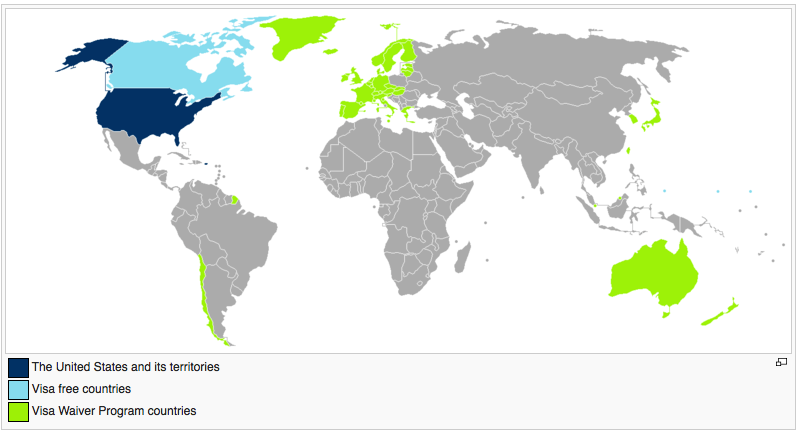
    The 24-year-old said that he had the relevant Electronic System for Travel Authorisation (ESTA) form, which allows citizens of 38 countries, including most of Europe, to travel to the US without a visa.

    “I believe I was profiled because of my appearance,” Mr Surana told the BBC.

    The US Customs and Border Protection (CBP) has not specified the reason for Mr Surana’s deportation but say that the ESTA did not guarantee a traveller would pass US border checks.

    Mr Surana, from Leicestershire in the Midlands region of England, said that he was stopped when he landed at Detroit Airport from Heathrow on January 17 and then sent to be interviewed by immigration officials.

    He told them he worked as an international business manager for Nottingham-based Octavian and was visiting its US branch in Phoenix.

    “In the space of 20 minutes they concluded that I was an illegal immigrant working in America, denying a US citizen a job,” Mr Surana claimed.

    “I was threatened with fraud, I was threatened with banishment from the US and imprisonment. You feel dehumanised to the extent that you feel like a piece of dirt on the floor,” he said.

    He was then allegedly held for 13 hours, during which time his photograph and fingerprints were taken, and his belongings searched.

    He was allowed to sleep in an unused interview room but was given little food or water, he claimed.

    “The whole experience was traumatic, frightening, embarrassing, stressing and haunting for me and my family. I have never had a criminal record. I have an education and an international executive job. I wish this on nobody, he said.

    In a statement, CBP said that it “firmly denies any claims that a traveller can be subject to an admissibility interview because of racial profiling.

    “CBP is charged with inspecting all travellers regardless of nationality, race, sex, religion, faith or spiritual beliefs. Accusations of lengthy detentions by CBP are also incorrect.

    “CBP officers offer food and water before boarding a return flight within eight hours of the traveller’s arrival into the United States,” the statement said.

  • Hot Yoga Guru Bikram Choudhury Fined $924,000 In Sexual Harassment Suit: Report

    Hot Yoga Guru Bikram Choudhury Fined $924,000 In Sexual Harassment Suit: Report

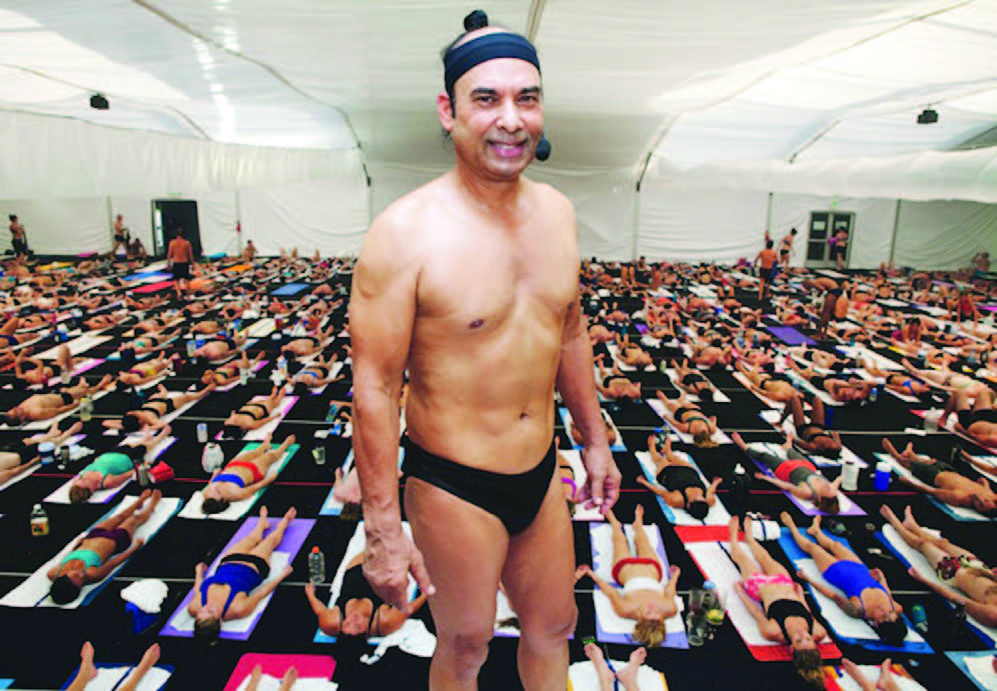
    The founder of the Bikram yoga practice, Bikram Choudhury, was ordered to pay $924,500 on Monday, Jan 25, to a former legal adviser who said she was fired for investigating sexual misconduct charges against her employer, media reported.

    Minakshi Jafa-Bodden, the former personal attorney of celebrity hot yoga guru Bikram Choudhury, was awarded compensatory damages by a Los Angeles jury for claims of discrimination, retaliation and of suffering sexual harassment herself, The Los Angeles Times reported.

    During the trial, Choudhury had dismissed the accusations and said Jafa-Bodden was let go because she did not have a license to practice law in the United States, the Times and other media reported.

    Choudhury published a book in 1979 with descriptions, photographs and drawings of his signature 26 postures and two breathing exercises yoga sequence, which is practiced in a room heated to 105 degrees Fahrenheit (41 degrees Celsius).

  • Indian-Origin Fraud Hindu Monk To Be Arraigned On Sexual Assault Charges

    Indian-Origin Fraud Hindu Monk To Be Arraigned On Sexual Assault Charges

    WASHINGTON:  An Indian-origin businessman claiming to be a Hindu monk who performed healing rituals has pleaded not guilty after being ordered to stand trial on charges of sexually assaulting three women.

    The Los Angeles County Deputy District Attorney Maren Dermody said yesterday Swami Gokula Nanda of West Hills California was ordered to stand trial on December 4 last year for six counts of sexual battery by fraud, three counts of sexual penetration by foreign object and two counts of sexual battery.

    Mr Nanda, 63, is scheduled for a pretrial hearing on February 29 at the Los Angeles County Superior Court, Torrance Branch, a media release said yesterday.

    Owner of Hari-Om India Market in Santa Clarita in California, Mr Nanda was arrested on May 13 following allegations that he sexually assaulted female clients in Torrance and Santa Clarita.

    He was released in July on a USD 100,000 bail pending further court proceedings.

    According to testimony at the preliminary hearing, Mr Nanda sexually abused the victims while claiming to be a Swami by performing healing rituals at various locations, including his Eastern medicine store in Santa Clarita and a park in Torrance between April 2011 and April 2015.

    He faces a possible maximum sentence of 19 years in state prison if convicted as charged.

    The case remains under investigation by the Torrance Police Department.

    According to his Facebook page, Mr Nanda studied at Sivananda Ashram at Vedanta Forrest Academy.

    He hails from Kalapathara in Orissa.

  • 14,000 Indians Overstayed In US In 2015

    14,000 Indians Overstayed In US In 2015

    WASHINGTON:  Over 14,000 of the 8.8 lakh Indians who travelled to the US on visitor or business visa in 2015 overstayed in the country, according to official figures.

    The data provided by the Department of Homeland Security (DHS) said that 14,348 Indians overstayed in the US in 2015.

    In 2014, of the 7.6 lakhs Indians who were supposed to leave the country before the expiry of their B1-B-2 visas, 11,653 of them overstayed in the US, it said.

    Overstaying means a non-immigrant who was lawfully admitted to the US for an authorised period but stayed or remains in the country beyond his or her lawful admission period.

    According to the “Entry/Exit Overstay Report” released by the DHS, in fiscal 2015, of the nearly 45 million non-immigrant visitor admissions through air or sea ports of entry that were expected to depart last year, 527,127 individuals overstayed their admission, for a total overstay rate of 1.17 per cent.

    In other words, 98.83 per cent had left the US on time and abided by the terms of their admission, the report said.

    The report does not include student on F-1 visa or those who arrived on work visas like H-1B.

    In FY 2015, of the nearly 45 million nonimmigrant visitor admissions through air or sea ports of entry that were expected to depart in FY 2015, DHS determined that 527,127 individuals overstayed their admission, for a total overstay rate of 1.17 per cent.

    In other words, 98.83 per cent had left the US on time and abided by the terms of their admission.

    The report breaks the overstay rates down further to provide a better picture of those overstays that remain in the US beyond their period of admission and for whom CBP has no evidence of a departure or transition to another immigration status, DHS said in a statement.

    At the end of FY 2015, the overall Suspected In-Country Overstay number was 482,781 individuals, or 1.07 per cent.

    Due to further continuing departures by individuals in this population, by January 4, 2016, the number of Suspected In-Country overstays for FY 2015 had dropped to 416,500, rendering the Suspected In-Country Overstay rate as 0.9 per cent, it said.

    In its report, DHS said a number of countries with ties to terrorism had significant numbers of nationals still in the US accounted for by the federal government: 1,435 from Pakistan, 681 from Iraq, 564 from Iran, 440 from Syria, 219 from Yemen, 219 from Afghanistan, and 56 from Libya.

  • SHILLONG: SCOTLAND OF EAST

    SHILLONG: SCOTLAND OF EAST

    The city of Shillong has a lot to offer —from museums, cafés and markets that are perfect for those evening strolls, to old-school cathedrals and lakes (yes, in the middle of the city).

    What to see – Living Root Bridge

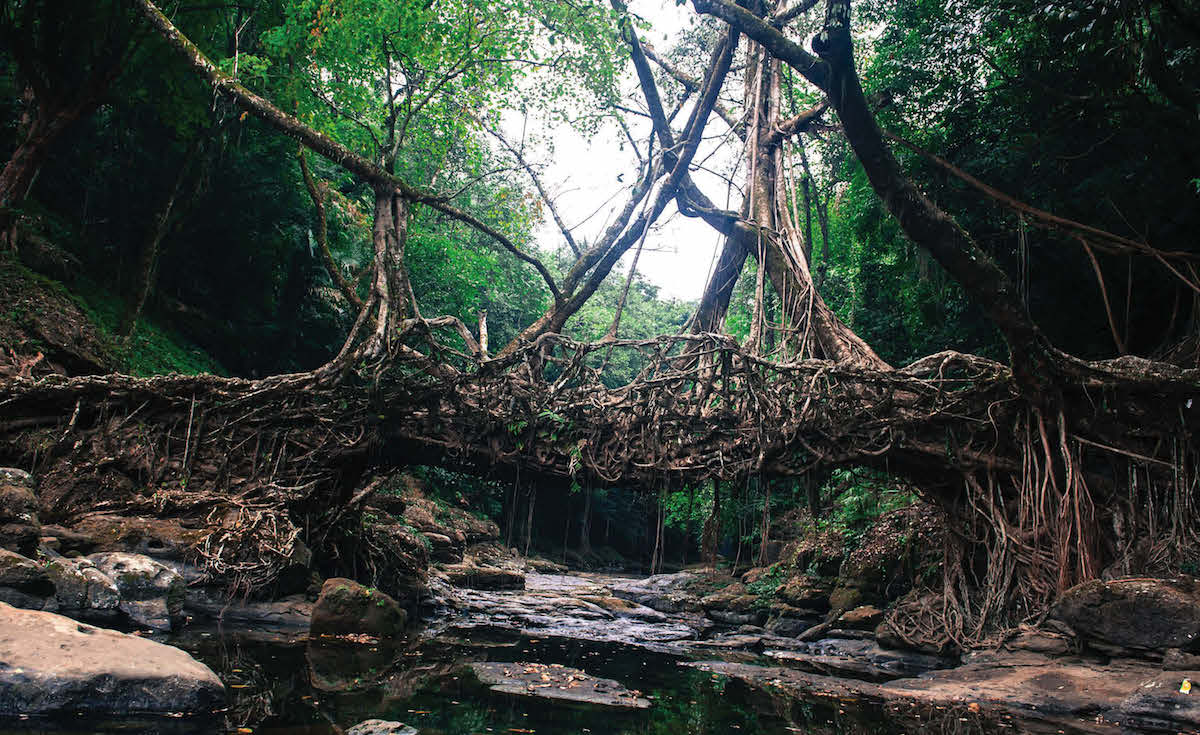
    In Meghalaya, bridges aren’t built, they are grown. The Living Root Bridge is an example of that. About a two-hour drive from Shillong, near Mawlynnong, the bridge is made of sturdy roots and is often used by villagers. While this bridge is a popular tourist attraction because of its accessibility, the one situated in Cherrapunji is not for the weak-hearted; it involves trekking down over 3,000 steps.

    SHILLONG- SCOTLAND OF EAST1Mawlynnong

    You’ll pass through this village on your way to the Living Root Bridge. We suggest making a pit stop here, on your way back.

    The village is very clean and the people from the village are friendly and welcoming. Walk through the tiny lanes and make it a point to check out the neatly-divided residential areas, small drainage canals built along the huts and the bamboo dustbins installed every few meters. Make it a point to grab a meal at the local shacks; these offer a peek into the cuisine from the state. A vegetarian meal here consists of plain dal, rice and a curry, and a non-vegetarian meal is usually chicken cooked with bamboo shoots and served with rice and spicy pickle.

    Dawki, Umngot River

    Crystal clear water is not just an expression, but a reality at Dawki. Passing through the India-Bangladesh border, the Umngot River makes for an ideal spot for camping and barbecues, or just to laze around. Take a boat ride (priced at `400 per hour) along the river and go nuts gawking at the large pebbles on the river bed. Yes, you can see through the water — even 15ft deep at some places.

    SHILLONG- SCOTLAND OF EAST

    Mawphlang Sacred Forest

    The Khasi Hills have many forests that have been preserved by local religious sanctions, which means that these forests cannot be harmed or tampered with. “Don’t even dare picking up a leaf as a souvenir,” instructed our guide. About 25km from Shillong, this sacred forest is an ideal spot for nature lovers, and those who are looking for a moment of peace and quiet. Dense trees, orchids and butterflies are in abundance, and so are religious stones that stand tall in the forest.

    Where to stay

    Aerodene – This charming homestay is part of a restored bungalow built in Assamese and Chinese style, with walls in pastel shades and wooden flooring. Run by the charming and helpful Sharlene, Aerodene is perfect for those who like to soak into local culture and enjoy the slow-paced life. Though the homestay is quaint, it boasts of all modern amenities like Wi-Fi, LCD TVs, room heaters, a mini library and yoga classes for guests.

    Lakkhotaa Lodge – Built by a couple who are Feng Shui practitioners, this lodge can be a perfect spot for those looking to channelise their zen energies. The food menu is conceptualised by a Le Cordon Bleu pass-out and offers continental fare.

    Where to eat

    Café Shillong – A popular haunt with the locals, Café Shillong hosts regular gigs over the weekends. In fact, Lou Majaw (who organises the famous annual Bob Dylan festival in the city) is a regular here. Order a warm cup of coffee or dig into the Khow Suey here, while you listen to some good old rock ‘n’ roll. Another dish worth mentioning is the Shillong Noodles served with smoked pork, a local delicacy.

    City Hut Dhaba – Situated close to the main square at Police Bazaar, City Hut Dhaba is popular with the tourists. The menu boasts of a mix of Indian and Chinese favourites including Manchurian, momos and wantons. However, the restaurant’s best feature is its quaint, yet vintage-y vibe.

    Royal Heritage Tripura Castle – Built in the 1920s by the royal family of the Manikya Dynasty of Tripura, the castle houses The Rice Court, a multi-cuisine restaurant and Café Shillong Heritage that is often a preferred venue by the elite for weekend gigs with barbecue. The castle also offers luxurious rooms to stay.

  • Mehbooba Mufti and the start of another Kashmir crisis

    Mehbooba Mufti and the start of another Kashmir crisis

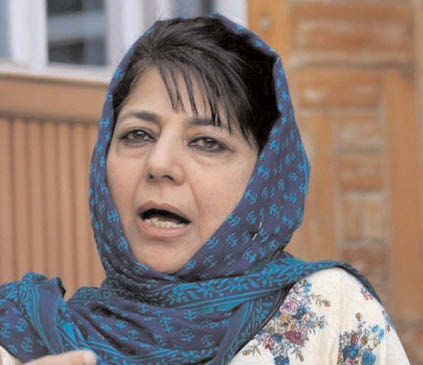
    SRINAGAR (TIP): Jammu and Kashmir is again facing a political crisis following the death of chief minister Mufti Mohammad Sayeed on 7 January.

    His daughter and heir apparent Mehbooba Mufti has so far declined to take the oath as the new Chief Minister of J&K, pushing the state under federal rule.

    In the 2014 state assembly elections, the BJP won 25 seats in the Hindu-dominated Jammu region, while Mr. Sayeed’s People’s Democratic Party (PDP) won 28 in predominantly Muslim Kashmir.

    It seems she does not want to continue with the tricky coalition with Bharatiya Janata Party (BJP) where her father was “not treated well” by Prime Minister Modi and the BJP in the last 10 months of the coalition government.

    Limited options are making BJP nervous – This is the first time it has ever ruled in Kashmir, and it cannot afford to be out of power given that its position in Jammu has weakened in the past few months.

    But can the PDP drop the BJP?
    Analysts say the PDP’s options are also very limited – even if it joined hands with the Congress party (which has 12 seats) and a few independent candidates, such a coalition would be vulnerable, given the state’s dependence on the federal government.

    Party insiders say that Mehbooba Mufti was against the alliance with the BJP

    “I will take my own time. The Agenda of Alliance is there but I will make sure that I am able to fulfil Mufti Sahab’s dreams, especially his dreams about political issues and development,” she was quoted as saying.

    “I don’t mind if I get consumed in it for the welfare of the people and also for the essence of the agenda.”

    While it is not clear yet whether Ms Mufti will stick to the Agenda of Alliance with “more commitments” from Delhi, the political future of the state is uncertain.

    But to be in power is the compulsion for both the PDP and BJP, which are fast losing ground in their respective constituencies.

  • A government “of, by and for” the people exists in India

    A government “of, by and for” the people exists in India

    Sixty- six years ago, on January 26, 1950, India’s Constitution came into force – replacing far away England’s Government of India Act of 1935.

    That India chose Dr. Ambedkar to give birth to the legal architecture that would unleash every Indian’s best urges while minimizing their worst – a durable compact between India’s citizens and their government – is perhaps the best compliment any nation can bestow upon a single individual to do the job that took all of America’s best in Philadelphia in 1789 after a tumultuous 1776.

    Plato, the cherished author of the Republic, laid out a Greek merit-based caste system – albeit, it was never so labeled. While reasonable minds can differ if India borrowed from Plato, or Plato borrowed from India, the simple fact is that Plato and the Indian caste system are inseparable. What is also true is that rules without individual flexibility become rigid and unfair – which is why we have the noble judiciary toiling to fashion justice, one case at a time. India’s caste system over the thousands of years robbed India and all Indians of the right to be really proud – for within the Indian society was a system that denigrated the individual based upon status, not merit or ability as Plato envisioned and perhaps as India originally thought. Hat tip to Justice Scalia’s Originalist constitutional philosophy.

    Along came India’s Thomas Jefferson and Ben Franklin rolled into one – a man educated at Columbia University – a man who took the United States Constitution, clarified by Supreme Court precedents, both lofty and slavery-sinful, and unleashed upon India humanity’s then best humanistic covenant – by and between the people, and with their government. He even included “sunset clauses” for remedial benefits, as in affirmative action, believing 50 years before Justice Sandra Day O’Connor did in providing that affirmative actions must sunset in 25 years – as they offend the Equal Protection Clause.

    The wisdom that is embedded in Constitutions is worthy of hot debate, on a perpetual basis, if citizens wish their aggregate view to find voice in judicial decrees safeguarding societal compacts. In a republic, it is always the noble judiciary that safeguards a nation’s soul – even as the two political branches, executive and legislative, give utterance to the views of the citizenry.

    For those who marvel at India, a successful secular democracy with an economy that harnesses the American Dream as if it had been dreamt by every Indian in technicolor, it should not fail comprehension that India paid the heavy price in blood to Lord Cornwallis for his loss to General George Washington or that America’s Founding Fathers created the template for India’s constitution through the learned, wise, courageous and tempered Dr. Ambedkar.

    It is India’s pride that every religion has found her soil to be both welcoming and fertile – in fact, for several millennia, India was the freest market for ideas – merely mortal and superbly divine. That many a religion sprouted there or sought shelter there is pretty remarkable too.

    Dr. Ambedkar’s ultimate gift is that Indians and their elected representatives can have robust disagreements – without fear of suppression or punishment – thereby making every Indian an owner of his or her government. What Abraham Lincoln promised at Gettysburg – a government “of, by and for” the people exists in India.

    As an American lawyer, I take partial ownership of India’s Constitution with great pride; as an Indian-American, I take great pride in America’s exceptionalism – after all there is a natural alliance between United States and India, one that was decreed by patriots in both nations seeking to live free forever.

    So to everyone who loves Abraham Lincoln – behold over a billion people living peacefully under law and who dare to own their government.

    While Sureshbhai Patel’s case was lost, something I predicted a year ago given the anemic lawsuit filed and the municipality’s clever liability avoiding chess move of firing Parker, it’s not America’s fault – after all right here in America, we won Krittika Biswas, withdrawal of frivolous charges against Ambassador Prabhu Dayal, forcing Ambassador Nancy Powell into retirement given her core misconduct in the Devyani mess, and completely protected India’s sovereignty by winning dismissals of cases against Indian Congress party and Mrs. Sonia Gandhi. Unlike Sureshbhai, we held New York City liable for Krittika’s loss of her federal civil rights. The fault lies not in our stars, but in ourselves for not knowing the law in a nation of laws.

    Happy Republic Day!

  • SYMBOLISM BEHIND THE FORM OF #SHIVA

    SYMBOLISM BEHIND THE FORM OF #SHIVA

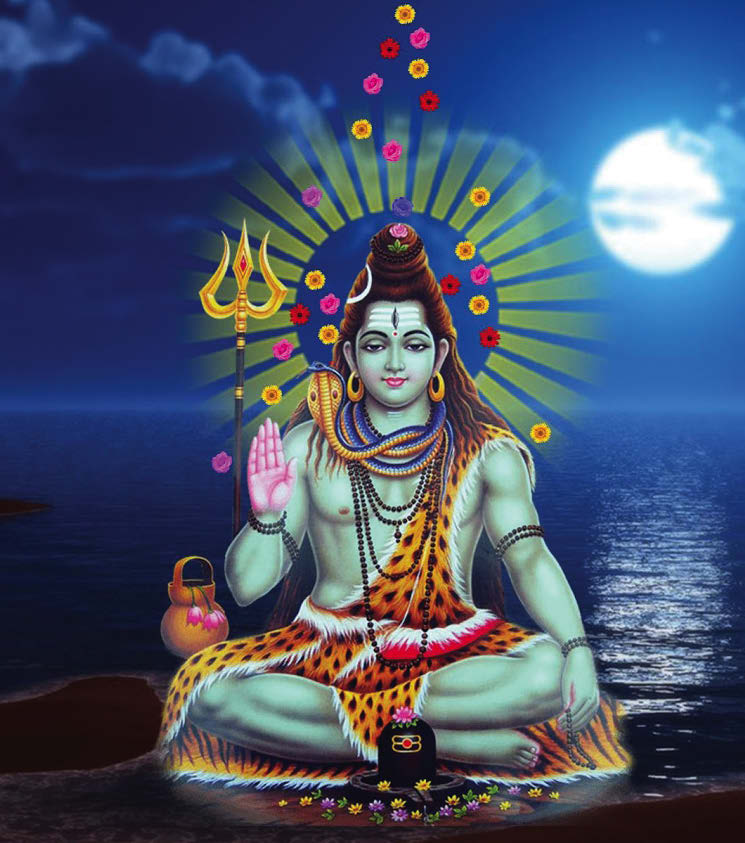
    Significance of Crescent Moon on Lord Shiva’s Head

    Shiva Tattva is where there is no mind and the moon signifies the mind. When there is no mind then how can this ‘no mindedness’ be expressed and how can anybody understand it? You need a little bit of the mind to understand, experience and to express.

    The no-mind, infinite consciousness requires that little bit of mind to express itself in the manifest world. So, to express that inexpressible, that little mind (crescent moon) is on the head.

    Wisdom is beyond the mind, but it needs to be expressed with a tinge of mind and this is symbolized by the crescent moon.

    Significance of Lord Shiva’s Damru

    Damru symbolizes the Universe which is always expanding and collapsing. From an expansion it collapses and then it re-expands, this is the process of creation.

    If you see your heartbeat, it is not just one straight line but it is a rhythm that goes up and down. The whole world is nothing but rhythms; energy rising and collapsing to rise again. So the damru signifies that. Look at the shape of the damru, from expansion it collapses and again expands.

    The darmru is also a symbol of sound. Sound is rhythm and sound is energy. The whole universe is nothing but a wave function, it is nothing but rhythms. What does quantum physics say? It says the same thing – the whole universe is nothing but rhythms. It is just one wave (Adviata). So the damru signifies the non-dual nature of the universe.

    Significance of Serpent around Lord Shiva’s Neck

    A state of samadhi where there is nothing, just the inner sky of consciousness, is Shiva; where there is alertness and no action. To describe this alertness they put a snake around Shiva’s neck. So the serpent is a symbol of alertness.

    In the state of meditation when the eyes are closed, it gives the impression that the person is sleeping, but he is not asleep, he is alert. To express this state of consciousness, a snake is shown around Lord Shiva’s neck.

    Significance of Lord Shiva’s Trishul (Trident)

    Trishul represents the three aspects of consciousness – waking, dreaming and sleeping, and it represents the three gunas –satva, rajas and tamas. Holding a trishul (Trident) signifies that Shiva (the divinity) is above all the three states – waking, dreaming and sleeping, yet is the upholder of these three states.

    The divinity is beyond the three gunas, but it holds the three gunas together. The divinity is beyond the three gunas, but it holds the three gunas together.

    Shul means problems or suffering. Trishul means that which destroys all kind of suffering.

    THREE TYPES OF PAIN THAT ARISE IN LIFE:

    1. Aadibhautik (physical)
    2. Aadhyaatmik (spiritual) and
    3. Aadidaivik (ethereal)

    What relieves you from all the problems and suffering is the trishul. And it is in the hand of Shiva.

    Significance of Ganga flowing from Lord Shiva’s Head

    Ganga means knowledge; knowledge that purifies your soul. Head is always the symbol of knowledge. Heart is the symbol of love.

    If Ganga were to be love, it should have come out of the heart of Lord Shiva. It is coming out of the head, because it simply means knowledge.

    Knowledge is liberating, knowledge brings freedom, knowledge is purifying. All these are the characteristics of knowledge. Knowledge is also movement; motion. So Ganga (knowledge) has to come out of Lord Shiva’s (the divinity’s) head.

    Significance of Lord Shiva’s Third Eye

    The third eye is associated with alertness and awareness.

    Significance of Shiva’s Blue Body

    Blue means like the Sky. Blue signifies all pervading, infinity which has no limits. It has no shape. Shiva does not have a body. Shiva was never a person at all. To symbolize the unfathomable, the infinite Divinity and to make that Divinity comprehensible to people, the ancient Rishis made a form.

    Knowledge has no shape but it infiltrates each and every particle of the universe.

    The whole world is filled with Shiva –whose body is in the whole universe.

    Significance of Shiva Linga

    Lingam means identification, a symbol through which you can identify what the truth is, what the reality is. What is not visible but yet can be identified by one thing, that is lingam.

    When a baby is born, how do you know whether the baby is a male or female? Only through one part of the body can you identify whether this baby is a boy or a girl. That is the reason the genital is also called lingam.

    Similarly, how do you identify the Lord of this Creation? He has no form! So then they said that there should be a sign to identify Him. So the sign, by which you identify both the male and female forms, combining them both to form one single symbol to identify the Lord who has no form or identity; who is all pervading in this entire Brahmanda (Creation), is Shiva Lingam.

    Shiva Linga is very ancient, in fact most ancient. From the form, you go to the formless, through the Shiva Linga. It is a symbol that is the representation of the cosmos and the creator of the cosmos, as one.

    It is the Shiva and the Shakti, the two principles in the creation. The silent un-manifest and the dynamic manifestation together are represented as Shiva Linga. Shiva Linga is not just Shiva, but the completion of the total Supreme Consciousness.

    Significance of Nandi (Bull) – Vehicle of Lord Shiva

    Bull has been used as a symbol of dharma (righteousness) from a long time, throughout the world. Lord Shiva riding on the bull simply means that when you are righteous and truthful, the infinite consciousness, the innocent consciousness is with you.

    Significance of Shiva Tandav

    The whole creation is the dance of one consciousness (Shiva). The one consciousness danced and manifested into a million species in the world. So this infinite creation is the dance of Lord Shiva or Shiva Tandav. The whole world is a place of Shiva.

    Significance of Kailasa – The Abode of Shiva

    The abode of Shiva is in Mount Kailasa, and the smashana (the cremation ground).

    Kailasa means ‘where there is only celebration’, and smashana is where there is only void. The Divinity dwells in the void as well as in celebration. And in you there is void, in you there is celebration.

    Significance of Chanting ‘Om Namah Shivaya’

    Om Namah Shivaya is one of the very powerful mantras. It builds the energy in your system and clears the environment. Mantras are those energizing sounds which help to uplift the consciousness.

    Om Namah Shivaya, these words are very important because ‘Na’, ‘Ma’, ‘Shi’, ‘Va’, ‘Ya’, these five letters indicate the five elements –Earth, Water, Fire, Air and Ether.

    Om is the sound of the universe. Om means peace and love.

    So when there is peace, love and harmony in all the five elements then there is bliss and there is joy! Mantras are greater than the power of the horoscope. Whatever be the effects of the planets, you can remove them by chanting Om Namah Shivaya.

  • Indian Republic’s Progress in 66 Years

    Indian Republic’s Progress in 66 Years

    As India celebrates its 67th Republic Day, it is important to look at some of the country’s achievements and areas for improvement. Such an endeavor would lead to an assessment of the country’s progress till date and course correction in the days ahead.

    There are several areas where considerable progress has been made. These include strategic affairs and security, politico-legal democratic governance as well as society and economy. In no way does it mean that the progress has attained the ideal but the fact remains that India has improved significantly and performed rather well overall since it attained independence.

    In the strategic affairs and security domain, India has moved ahead but has had limited success. India has been able to emerge as a regional power in Asia backed by its economic, military and nuclear capabilities. On the internal security front, approximately one in every six districts is Maoist-dominated that causes a massive internal security challenge. The challenges include communication breakdown between the government and the governed.

    67TH REPUBLIC DAY1In the sphere of politico-legal and democratic governance, significant achievements have been made. From 54 political parties in the 1951 general election, India had moved up to 464 in the 2014 general election. It shows a deepening of the democratic process. There have been periods of darkness threatening India’s democratic institutions at certain moments in post independent India. These for an example include the imposition of emergency and curtailment of press freedom in the period 1975-77. But India’s institutions like the free press and an independent judiciary have ensured that India remains a society based on rule of law. India’s democratic institutions and framework have ensured stability even in periods of political chaos. Another achievement that barely gets mentioned is that India has been able to keep out the military from the democratic process. It also shows prudence on the part of military generals and defence personnel. Challenges now and for the future include ensuring greater transparency, accountability and independence in the broad framework of checks and balances on which India’s democratic framework rests. Also, resolving administrative issues and attitudinal issues like pendency in courts and apathy of the governing class remain a challenge threatening the rule of law and democratic governance.

    On the socio-economic front, the country started out with a ‘command and control’ economy. It meant centralized planning and a very big public sector but soon there were inefficiencies and labour issues. That resulted in a move towards a more open liberalized market driven model of the economy starting in the 1980s and culminating in the 1991 reforms. Post this, the economy has seen greater private and foreign participation and seen the emergence of a new middle class. The transformation in the physical, digital and banking sectors has been nothing short of revolutionary.

    India’s Gross National Income (GNI) at constant prices has increased more than 35
    times from Rs.2.92 lakh crore in 1950-51 to Rs.105.28 lakh crore 2014-15. Similarly, the per capita income at current prices has risen from a paltry Rs.274 In 1950-51 to a decent Rs.88,533 in 2014-15. Foodgrain production grew from 50.8 million tonnes in 1950-51 to an estimated 264.77 million tonnes in 2014-15 that indicates more than a five-fold increase and the fact that India is food secure for the time being. It was made possible with rapid advances in agricultural technology. The green revolution and white revolution are well known, and recently a solar powered ‘saffron’ revolution is now being envisaged on similar lines for energy security. Advances in healthcare and education levels have also been observed. The life expectancy at birth has almost doubled from 36 years in 1951 to 66 years in 2011 due to the availability of better medicines, access to improved healthcare facilities and improved overall well-being. Similarly, diseases like smallpox and polio have been eradicated. In education, the number of universities and colleges has gone up from a minuscule 27 universities and 578 colleges in 1950-51 to an estimated 712 universities and 36,671 colleges in 2014. Similarly, literacy rates have almost quadrupled from 18.3 percent of the population in 1951 to 73 percent in 2011.


  • ARCHITECT OF INDIA’S CONSTITUTION DR. BHIMRAO AMBEDKAR

    ARCHITECT OF INDIA’S CONSTITUTION DR. BHIMRAO AMBEDKAR

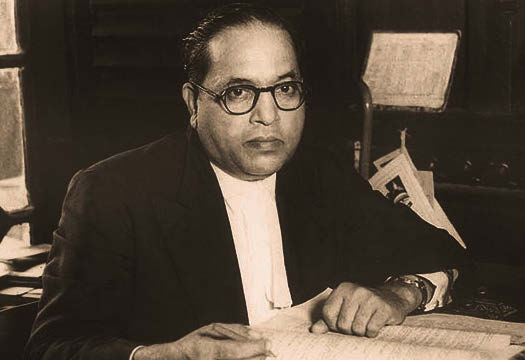
    Dr B R Ambedkar, popularly known as Babasaheb Ambedkar, was one of the architects of the Indian Constitution. He was a well-known politician and an eminent jurist. Ambedkar’s efforts to eradicate the social evils like untouchablity and caste restrictions were remarkable. The leader, throughout his life, fought for the rights of the dalits and other socially backward classes. Ambedkar was appointed as the nation’s first Law Minister in the Cabinet of Jawaharlal Nehru. He was posthumously awarded the Bharat Ratna, India’s highest civilian honor in 1990.

    “Unlike a drop of water which loses its identity when it joins the ocean, man does not lose his being in the society in which he lives. Man’s life is independent. He is born not for the development of the society alone, but for the development of his self.”

    Bhimrao Ambedkar was born to Bhimabai Sakpal and Ramji on 14 April 1891 in Madhya Pradesh. He was the fourteenth child of his parents. Ambedkar’s father was a Subedar in the Indian Army and posted at Mhow cantonment, MP. After the retirement of his father in 1894, the family moved to satara. Shortly after, his mother passed away. Four years later, his father remarried and the family shifted to Bombay, where he cleared his matriculation in 1908. His father Bhimabai Sakpal died in Bombay, in 1912.

    Ambedkar was a victim of caste discrimination. His parents hailed from the Hindu Mahar caste, which was viewed as “untouchable” by the upper class. Due to this, Ambedkar had to face severe discriminations from every corners of the society. The discrimination and humiliation haunted Ambedkar even at the Army school, run by British government. Fearing social outcry, the teachers would segregate the students of lower class from that of Brahmins and other upper classes. The untouchable students were often asked by the teacher to sit outside the class. After shifting to Satara, he was admitted to a local school but the change of school did not change the fate of young Bhimrao. Discrimination followed wherever he went. In 1908, Ambedkar got the opportunity to study at the Elphinstone College. Besides clearing all the exams successfully Ambedkar also obtained a scholarship of twenty-five rupees a month from the Gayakwad ruler of Baroda, Sayaji Rao III. Political Science and Economics were the subjects in which he graduated from the Bombay University in 1912. Ambedkar decided to use the money for higher studies in the USA.

    “Political tyranny is nothing compared to the social tyranny and a reformer who defies society is a more courageous man than a politician who defies Government.”

    After coming back from the US, Ambedkar was appointed as the Defense secretary to the King of Baroda. Even, there also he had to face the humiliation for being an ‘Untouchable’. With the help of the former Bombay Governor Lord Sydenham, Ambedkar obtained the job as a professor of political economy at the Sydenham College of Commerce and Economics in Bombay. In order to continue his further studies, in 1920 he went to England at his own expenses. There he was awarded honor of D.Sc. by the London University. Ambedkar also spent few months at the University of Bonn, Germany, to study economics. On 8 June, 1927, he was awarded a Doctorate by the University of Columbia.

    After returning to India, Bhimrao Ambedkar decided to fight against the caste discrimination that almost fragmented the nation. Ambedkar opined that there should be separate electoral system for the Untouchables and lower caste people. He also favored the concept of providing reservations for Dalits and other religious communities.

    Ambedkar began to find ways to reach to the people and make them understand the drawbacks of the prevailing social evils. He launched a newspaper called
    “Mooknayaka” (leader of the silent). It was believed that, one day, after hearing his speech at a rally, Shahu IV, an influential ruler of Kolhapur dined with the leader. The incident also created a huge uproar in the socio-political arena of the country.

    In 1936, Ambedkar founded the Independent Labor Party. In the 1937 elections to the Central Legislative Assembly his party won 15 seats. Ambedkar oversaw the transformation of his political party into the All India Scheduled Castes Federation, although it performed poorly in the elections held in 1946 for the Constituent Assembly of India.

    “For a successful revolution it is not enough that there is discontent. What is required is a profound and thorough conviction of the justice, necessity and importance of political and social rights.”

    Ambedkar objected to the decision of Congress and Mahatma Gandhi to call the untouchable community as Harijans. He would say that even the members of untouchable community are same as the other members of the society. Ambedkar was appointed on the Defense Advisory Committee and the Viceroy’s Executive Council as Minister for Labor. His reputation as a scholar led to his appointment as free India’s first, Law Minister and chairman of the committee responsible to draft a constitution.

    Bhimrao Ambedkar was appointed as the chairman of the constitution drafting committee. He was also a noted scholar and eminent jurist. Ambedkar emphasized on the construction of a virtual bridge between the classes of the society. According to him, it would be difficult to maintain the unity of the country if the difference among the classes were not met.

    In 1950, Ambedkar traveled to Sri Lanka to attend a convention of Buddhist scholars and monks. After his return he decided to write a book on Buddhism and soon, converted himself to Buddhism. In his speeches, Ambedkar lambasted the Hindu rituals and caste division. Ambedkar founded the Bharatiya Bauddha Mahasabha in 1955. His book “The Buddha and His Dhamma” was published posthumously.

    On October 14, 1956 Ambedkar organized a public ceremony to convert around five lakh of his supporters into Buddhism. Ambedkar traveled to Kathmandu to attend the Fourth World Buddhist Conference. He completed his final manuscript, “The Buddha or Karl Marx” on December 2, 1956.

    Since 1954-55 Ambedkar was suffering from serious health problems including diabetes and weak eyesight. On 6 December, 1956 he died at his home in Delhi. Since, Ambedkar adopted the Buddhism as his religion, a Buddhist-style cremation was organized for him. The ceremony was attended by hundreds of thousands of supporters, activists and admirers.

  • INDIA CELEBRATES 67TH REPUBLIC DAY

    INDIA CELEBRATES 67TH REPUBLIC DAY

    [vc_row][vc_column][vc_column_text]India celebrates 67th Republic Day on January 26. One of the three national holidays in India, Republic Day is celebrated with great pomp and show throughout the nation each year.

    [/vc_column_text][vc_images_carousel images=”56849,56848,56846,56845,56843,56842,56841″ img_size=”large” speed=”1500″ autoplay=”yes” wrap=”yes”][/vc_column][/vc_row][vc_row][vc_column][vc_column_text]Preparations begin almost a month before for the actual day. A massive parade is held which reflects a touch of modernity in the display of might and technology and the capabilities of growth in various sectors. While the parade symbolizes the power and force, the different regional tableaus reflect the cultural themes and motifs. Republic Day has a very significant place in the Indian history as India became a Republic from a British Dominion on this very day. Browse through the following lines to know all about the history and origin of Republic Day.

    India became independent from the British Rule on 15th August, 1947. However, the country did not have its own constitution and wholly depended on the modified colonial Government of India Act, 1935. Also, India was headed by King George VI, until the adoption of the Indian Constitution in 1950. Prior to this, the seeds of a republican nation were sowed by Pt. Jawaharlal Nehru in the Lahore session at the Indian National Congress at the midnight of 31st December, 1929 – 1st January, 1930.

    The tri-color flag was unfurled by the nationalists present who took a pledge to celebrate “Purna Swaraj” (complete Independence) Day every year on 26th January, while continuing to fight for the establishment of a Sovereign Democratic Republic of India. The independence was achieved in 1947 while the professed pledge was redeemed on 26th January, 1950.

    The Indian Constituent Assembly was called together on 9th December, 1946, where a committee was formed. Dr. B.R. Ambedkar became the chairman of the committee, who along with the other members drafted the Constitution. The Indian Constitution included 395 Articles and 8 Schedules. The Constitution was adopted by the Constituent Assembly on 26th November, 1949. In the following year on 26th January, 1950, the Constitution of India came into force and became a sovereign democratic republic of India, 894 days after the withdrawal of British Rule in 1947, which is why, it is said that India achieved its true independence on this day. Next, elections were held and Dr. Rajendra Prasad was elected as the first President of free India.

    He took the oath at the Durban Hall in the Government House, which was followed by the Presidential drive along the five-mile route to the Irwin Stadium. He unfurled the National Flag at the stadium. This transition of India into a sovereign democratic republic nation is indeed a historical event. The two-decade long journey, right from the conceptualization of the dream in 1930 to its actual realization in 1950, is certainly worth a grand celebration. Today, the Indian Constitution is the longest in the world, consisting of 397 articles and 12 schedules, providing a single citizenship for the whole nation. The national holiday is celebrated with festivities and patriotic fervor across the whole nation.

    Republic Day Parade

    The grandeur of the Republic Day of India is visible in the grand parade that is held along Rajpath, beginning from Raisina Hill near the Rashtrapati Bhavan (President’s Palace) and moving on to Rajpath past India Gate and proceeding to the Red Fort.

    The occasion witnesses the presence of the President, the Prime Minister and several other high-ranking officials of the country. The parade starts with the arrival of the President of India, who is escorted by a group of bodyguards on horses. Next, the Prime Minister of India offers wreaths at the Amar Jawan Jyoti at the India Gate in memory of the martyrs of the Indian army. The national flag is unfurled by the President of India, who is also the Commander-in-Chief of the Indian Armed Forces. This is succeeded by the cheerful tune of the National Anthem and a 21-gun salute. Led by three different divisions of the armed forces viz: Navy, Army and Air Force; the Republic Day Parade has all of them displaying their might along the Rajpath, saluting the President. The Armed Forces staff performs motorcycle rides whereas the staff of the Indian Air Force performs flying parade in fighter planes.

    The rich and colorful culture of India is showcased in the parade of the Republic Day. Traditional as well as cultural performances are given by professionals belonging to different regions. School children in picturesque costumes also participate in the display of different aspects of the glorious history of the country on this big day.

    The real heroes of the nation are honored with the bravery awards and medals. National Awards are given to children for selfless sacrifice and bravery.

    A row of IAF jets marks the end of the grand celebration, leaving behind a trail of colored smoke. It bids goodbye to the gathered audience by lavishing rose petals on them.

    Beating the Retreat Ceremony

    The Republic Day celebration ends officially with the Beating the Retreat ceremony, which is held on the 29 January every year. The event symbolizes retreat after a day on the battlefield and features remarkable performances by the Indian Air Force, the India Navy, and the Indian Army. Held at the Raisina Hill, New Delhi, Beating the Retreat Ceremony has its tickets available at the same outlets as the Republic Day Parade.

    Highlights of 2016 Republic Day Celebrations

    • French President Francois Hollande will be the Chief Guest at the Republic Day Parade on January 26, 2016.
    • The Republic Day Parade will be shorter by at least 15 minutes. Government is planning to hold a 90-minute parade instead of the nearly two hours one. This is done to cut down the number of marching contingents in addition to clubbing together the mechanized ones. The tableaux would also be held for less time.
    • The Action Plan for Start Up India, Stand Up India will be launched for introducing multiple opportunities for the youth of India. Cleanliness in surrounding areas and for statues of great personalities would also be ensured.
    • The topic “our duties” will be discussed in schools, colleges and other places.
    • Beating the Retreat would have Indian music infused with martial tunes.
    • All tableaux and music bands will be showcased for three days – till January 29 at the Red Fort to allow more people to participate.
    • Number of Army’s marching contingents will be reduced from 8 to 6.
    • Number of Navy’s marching contingents will be reduced from 3 to 2.
    • The Air Force will be putting up a single marching contingent.
    • Six central para-military forces will be putting up 3 marching contingents instead of one contingent individually.
    • The Indian Navy will showcase “Make in India” and hence put up models of the indigenously made aircraft carrier INS Vikrant along with the indigenously made submarine INS Kalvari.

    The entire nation comes alive with patriotic fervor on this day, but the principal celebration of the Republic Day takes place in the national capital, New Delhi from 9 a.m. and continues for about three hours. This historic occasion becomes a national festival with the involvement of people from all over the country. The day symbolizes the unity of the nation as it brings together people from different castes, creed, religions and regions to celebrate the day with the pride of being an Indian.

    The celebration takes place at the Rajpath with great enthusiasm and pride, which can be experienced by any individual as the Republic Day Parade is a ticketed event. The tickets for the same can be bought a couple of weeks before the event.

    Apart from the grand celebrations in the capital, the Republic Day is also celebrated in different parts of the country at different levels, such as in cities, district headquarters, panchayats, schools and offices.[/vc_column_text][/vc_column][/vc_row]

  • Rajinikanth, Vinod Rai among list of probable Padma awardees for 2016

    Rajinikanth, Vinod Rai among list of probable Padma awardees for 2016

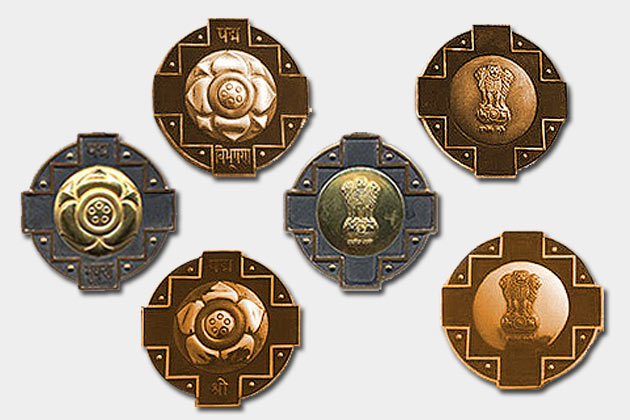
    NEW DELHI (TIP): The list of the prestigious Padma awardees is ready. As per practice, these awards are announced on Republic Day. These awards are given in three categories, viz., Padma Vibhushan, Padma Bhushan and Padma Shri.

    The award seeks to recognize distinguished and exceptional service in all fields such as art, literature and education, sports, medicine, social work, Science and engineering, public affairs, civil service, trade and industry etc.

    The current list contains 120 names across the three categories.

    List of probable awardees

    Vinod RaiVinod Rai – Retired IAS officer and former Comptroller and Auditor General of India, Vinod Rai is credited with being the face of the anti-corruption movement in India for his scathing reports on allocation of coal blocs and 2G licenses.

    R C Bhargava – R C Bhargava is the former CEO and current Chairman of Maruti Suzuki Ltd, one of India’s largest automobile manufacturers.

    Cherukuri Ramoji Rao – Ranoji Rao is head of the Ramoji Group which owns Ramoji Film City, Eenadu newspaper, ETV, Priya Foods and Ushakiran Movies.

    Ashok Malik – Ashok Malik is a New Delhi-based senior Indian media person and columnist. He holds a position as senior fellow at the Observer Research Foundation and writes for a number of national and international publications.

    Pushpesh Pant – A noted Indian academic, food critic and historian, he retired as a professor of International relations from the Jawaharlal Nehru University, Delhi and is one of India’s leading experts on International Relations.

    Sri Sri Ravi ShankarSri Sri Ravi Shankar – He is a humanitarian leader, a spiritual teacher, and an ambassador of peace. Her spreads his vision of a stress-free, violence-free society through The Art of Living.

    Pallonji Shapoorji Mistry – He is an Irish Indian construction tycoon and chairman of Shapoorji Pallonji Group. Forbes estimates his wealth at US$16.3 billion as of November 2015. With his 18.4% stake in Tata Sons, he is the single largest shareholder in the Tata Group.

    Dilip Sanghvi – Dilip Shanghvi is the founder and managing director of Sun Pharmaceuticals and one of the richest persons in India. As per the 2015 Forbes real time ranking, he is the richest Indian having surpassed Mukesh Ambani on the list.

    Mahesh Chandra Mehta – He is a public interest attorney and has been recognised for his persistent fight against pollution-causing industries in courts. He was awarded the Goldman Environmental Prize in 1996 and the Ramon Magsaysay Award for Asia for Public Service in 1997.

    Ujjwal Nikam – A lawyer by profession, Nikam is an Indian Public Prosecutor and has been involved in several high profile cases including the 1993 Bombay bombings, the Gulshan Kumar murder, the Pramod Mahajan murder and the 2008 Mumbai attacks.

    Barjinder Singh Hamdard – He is the managing editor of the Punjabi newspaper Daily Ajit. He has also been a member of India’s upper house, Rajya Sabha.

    Ram Vanji Sutar – A sculptor by profession and has created more than fifty monumental sculptures in the last forty years of his career. The government bestowed upon him the Padmashri Award in 1999.

    Jaya Jaitly – A politician, social worker and former president of the erstwhile Samata Party. Became active in politics after the 1984 Sikh riots and joined the Janata Party. Jaitly and George Fernandes later went on to form the Samata Party.

    Prof Panjab Singh – A noted academician, Professor Singh is a former vice-chancellor of the prestigious Banaras Hindu University.

    Dr. Praveen Chandra – A leading cardiologist and Chairman of Interventional Cardiology at Medanta – The Medicity, Gurgaon, India, he is proficient in a lot of new devices and technologies.

    Dr. Pradeep Chowbey – A pioneer in the cadre of laparoscopic surgeons in India, he was one of the first to perform Laparoscopic cholecystectomy in North India. He serves as Joint Managing Director, Chief – Surgery & Allied Surgical Specialities and Director – at Max Healthcare Institute Ltd.

    Prof. D S Gambhir – Considered an icon in the field of Clinical as well as Interventional Cardiology in India. He currently serves as the Group Director of Cardiology, Kailash Group of Hospitals, New Delhi & Noida, and Director of Cardiology, Kailash Hospital & Heart Institute, Noida.

    Piyush Pandey – India’s premiere adman, Piyush is an award-winning co-executive chairman and national creative director of Ogilvy & Mather India and vice-chairman of O&M Asia-Pacific. He has several successful ad campaigns to his credit.

    Dhirendra Nath Bezbaruah – A senior journalist and former President of The Editors’ Guild of India, Bezbaruah was Editor of ‘The Sentinel’, a popular newspaper of the northeast.

    Shri Tejomayananda – Swami Tejomayananda is the current Head of Chinmaya Mission Worldwide. He has been associated with the Chinmaya mission since 1993.

    RajinikanthRajinikanth – The Tamil movie star did not restrict himself to regional cinema. He debuted in the year 1975 with a Tamil movie and since then he has done movie in Bollywood, Telugu, Kannada, Malayalam, Hollywood and Bengali films as well. Apart from being a superstar whose movies run houseful, Rajinikanth philanthropic deeds prove why he is a real hero as well. Recently, on his 65th birthday on 12th December he called off celebrations to mourn the loss Chennai faced due to floods. He is likely to be honoured with the Padma Vibhushan.

    Anupam KherAnupam Kher – He will be conferred with the Padma Bhushan. Anupam Kher is one of the few acclaimed Bollywood actors who have made their mark across the globe. He has featured in many Hollywood movies. Apart from acting in plays and movies, Anupam is a strong voice of India. He is an active participant in political debates and quite recently took it upon him to narrate the plight of Kashmiri Pandits in almost every eminent news channel of the country.

    Priyanka ChopraPriyanka Chopra – Bollwyood’s desi girl Priyanka Chopra won lauds from every corner of the globe with her debut American TV series ‘Quantico’. With this thriller, Priyanka became the first Bollywood actress to play the protagonist in an American show. She bagged the People’s choice award for best debutant.

  • Student’s suicide: No let up in protest at Hyderabad varsity

    Student’s suicide: No let up in protest at Hyderabad varsity

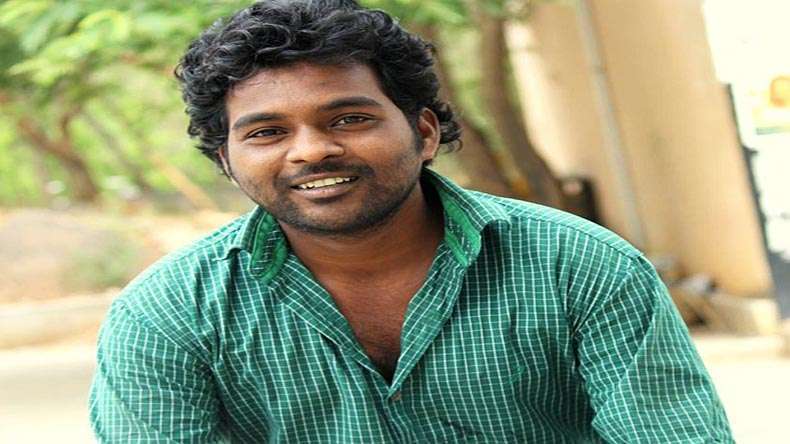
    HYDERABAD (TIP): There was no let up in protests by students at University of Hyderabad, demanding ouster of Vice Chancellor P. Appa Rao over the suicide of a Dalit research scholar as indefinite strike by seven of the protestors continued on January 22.

    The revocation of suspension of four Dalit students by the executive council of the central university failed to pacify the students, who say that their prime demand is the resignation of the vice chancellor and action against him, two central ministers and others responsible for the suicide of Rohith Vemula.

    The Joint Action Committee (JAC) for social justice, an umbrella organisation of 14 student groups, continued the protest for the fifth consecutive day, ignoring the appeal by the vice chancellor to return to classes and help resume normalcy on the campus.

  • TO APPEASE CRITICS, MODI LIKELY TO REJIG CABINET WITH NEW TALENT

    TO APPEASE CRITICS, MODI LIKELY TO REJIG CABINET WITH NEW TALENT

    NEW DELHI (TIP): Prime Minister Narendra Modi may look to press the reset button on his leadership this spring to reinvigorate stalled economic reforms and appease critics, eyeing a mix of tried and tested allies and fresh blood, senior government sources said.

    The government has overseen rapid economic growth but failed on tax and land reforms, and the euphoria that met Modi’s 2014 election triumph has given way to investor disillusionment; stocks have erased all of their gains since he won power.

    The ruling Bharatiya Janata Party (BJP) faces a crucial election test in the most populous state of Uttar Pradesh in 2017 that it probably needs to win if it wants to hold on to power nationally in 2019.

    “Modi needs to identify new talent and bring changes in his government. It will be too late if he fails to do it now,” said veteran newspaper editor and commentator Shekhar Gupta.

    With an eye on Uttar Pradesh, Modi looks set to keep Amit Shah on as BJP president, the sources said, extending his closest aide and election campaign manager’s tenure by three years when it expires at the weekend.

    But finance minister Arun Jaitley, responsible for delivering the Modi message to international investors, may move to defence after he delivers his annual budget in late February, sources said.

    Jaitley, 63, has failed to push through a major tax reform and critics have faulted his stewardship over India’s $2 trillion economy, which is growing fast but not creating enough jobs to employ an expanding workforce.

    A spokesman for Modi declined to comment on the move and an official in Jaitley’s office said he had no knowledge of a possible reshuffle.

    Moving Jaitley to defence, a post he also held in the early months of the Modi government, could better suit the veteran corporate lawyer and keep the strategically important portfolio in trusted hands.

    It would also open the way for power and coal minister Piyush Goyal to take the finance portfolio, while underperformers in other minor posts may be weeded out.

    A central minister and two BJP officials said Goyal, 51, was being groomed for his next big role, and a white paper on banking was recently shared with him to seek his inputs. A Goyal aide denied all knowledge of an impending promotion.

    Goyal is a good communicator and has often travelled abroad with Modi, but lacks political and electoral experience.

    The ex-investment banker has turned around state-run Coal India, tackled chronic power shortages and backed renewable sources of energy.

    Those are key wins for Modi, whose provision of 24/7 electricity as chief minister of Gujarat state helped him become prime minister.

    “Goyal is doing a fine job – he has brought a lot of energy to the coal and power sector,” said Rajiv Kumar, senior fellow at the Centre for Policy Research in New Delhi.

    “But I’m not sure he can do justice to the complex finance portfolio,” he said. “Goyal, with his micro orientation, might struggle to get to grips with multi-dimensional and serious macroeconomic issues facing the country.”

  • Supreme Court agrees to review challenge to Obama immigration action

    Supreme Court agrees to review challenge to Obama immigration action

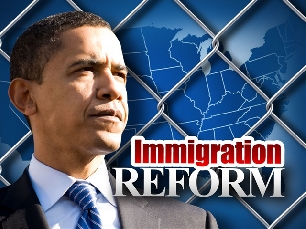
    WASHINGTON (TIP): The Supreme Court on Tuesday, January 19, agreed to review a challenge to President Obama’s plan to shield more than 4 million illegal immigrants from deportation, a unilateral executive action he took in 2014 to bypass the Republican-led Congress.

    The justices said they will consider undoing lower court orders that blocked the plan from taking effect in the midst of a presidential campaign. The case will be argued in April and decided by late June, about a month before both parties gather for their nominating conventions.

    The dispute will be one of the centerpiece cases of the court’s current term. Obama’s executive action was blocked by lower courts after Texas and 25 other Republican-governed states sued to stop it, contending he exceeded his presidential powers under the U.S. Constitution.

    The administration said Texas and the other states don’t even have the right to challenge the plan in federal court. The lower courts decided that Texas does have the right, or standing, to sue because at least 500,000 people living in Texas would qualify for work permits and thus become eligible for driver licenses, the cost of which are subsidized by the state. “Texas would incur millions of dollars in costs,” the state said in its brief to the Supreme Court.

    The nine justices will review a November ruling by the New Orleans-based 5th U.S. Circuit Court of Appeals that upheld a February 2015 decision by U.S. District Judge Andrew Hanen in Brownsville, a city along the Texas border with Mexico, to halt Obama’s action. The justices also said they would consider whether Obama exceeded his authority under federal laws and the Constitution.

    “President Obama’s executive actions rely on well-established constitutional authority, and I have full confidence that the Supreme Court will rule that these programs can be implemented,” Senate Minority Leader Harry Reid said in a statement.

    Democratic presidential candidate Hillary Clinton also voiced her support for Obama’s policy tweeting “action should be upheld so families can stay together and live without fear of deportation.”

    But Republican presidential candidate Marco Rubio responded to the Supreme Court review news on Twitter, saying “I’m confident SCOTUS will agree Obama executive orders are unconstitutional,” adding “regardless, as president, I will end them.”

    With some of his major legislative initiatives suffocated by Republican lawmakers, the Democratic president has resorted to executive action to get around Congress on issues including immigration, gun control and the Obamacare healthcare law. The most recent executive action came this month when he acted unilaterally to expand background checks for certain gun purchases.

    His executive actions have antagonized Republicans who accuse him of unlawfully taking actions by executive fiat that only Congress can perform.

    The future of the estimated 11 million immigrants living in the country illegally has been much discussed by Republican and Democratic presidential candidates. Clinton has pledged to go further than Obama to protect large groups of immigrants from deportation.

    Republican candidate Donald Trump has proposed deporting all people who are living in the U.S. illegally, an idea embraced by some of his rival GOP candidates but dismissed by others. Obama said he was spurred to act on his own by Congress’ failure to pass comprehensive immigration legislation. An earlier program that is not being challenged, Deferred Action for Childhood Arrivals, shields immigrants brought to the country illegally as children. More than 720,000 young immigrants have been granted permission under that program to live and work legally in the United States.

    The White House also has shifted its enforcement actions to focus on criminals, those who pose a threat to national security or public safety, and recent border-crossers.

    The change means that people who are here illegally but who are not otherwise violating the law are less likely to face deportation. About 235,000 people were deported in the federal fiscal year that ended Sept. 30, according to the Department of Homeland Security. That was the smallest number since 2006 and a 42 percent drop since a record high of more than 409,000 in 2012.

    Still, the administration drew criticism from Democrats and immigration advocates for raids this month that resulted in the arrest of more than 120 immigrants from Central America who came to the country illegally since 2014. Those recent arrivals are not among immigrants who would benefit from Obama’s plan.

    The immigrants who would benefit from the administration’s plan are mainly the parents of U.S. citizens and lawful permanent residents.

    Those eligible to avoid deportation under Obama’s action would be able to work legally and receive some federal benefits. States were not required to provide any benefits. The order expanded on a 2012 program that provided similar relief for people who became illegal immigrants as children.

    The case is one of the most important the Supreme Court will decide this term, along with a challenge to a restrictive Texas abortion law. It could have repercussions beyond immigration because it would set a precedent for the circumstances under which states can sue the federal government over a whole range of executive actions. Future presidents, Republican or Democratic, could face new constraints on their power if the states win.

    If the court sides with the Obama administration, Obama would have until his term in office ends in January 2017 to implement the immigration plan. With the U.S. presidential election looming in November, it would be up to the next president to decide whether to keep it in place.

  • United States begins Implementation of Changes to the Visa Waiver Program

    United States begins Implementation of Changes to the Visa Waiver Program

    WASHINGTON (TIP): The United States began, January 21, implementing changes under the Visa Waiver Program Improvement and Terrorist Travel Prevention Act of 2015 (the Act). U.S. Customs and Border Protection (CBP) welcomes more than a million passengers arriving to the United States every day and is committed to facilitating legitimate travel while maintaining the highest standards of security and border protection. Under the Act, travelers in the following categories are no longer eligible to travel or be admitted to the United States under the Visa Waiver Program (VWP):

    Nationals of VWP countries who have traveled to or been present in Iran, Iraq, Sudan, or Syria on or after March 1, 2011 (with limited exceptions for travel for diplomatic or military purposes in the service of a VWP country).

    Nationals of VWP countries who are also nationals of Iran, Iraq, Sudan, or Syria.

    These individuals will still be able to apply for a visa using the regular immigration process at our embassies or consulates. For those who need a U.S. visa for urgent business, medical, or humanitarian travel to the United States, U.S. embassies and consulates stand ready to process applications on an expedited basis.

    Beginning January 21, 2016, travelers who currently have valid Electronic System for Travel Authorizations (ESTAs) and who have previously indicated holding dual nationality with one of the four countries listed above on their ESTA applications will have their current ESTAs revoked.

    Under the new law, the Secretary of Homeland Security may waive these restrictions if he determines that such a waiver is in the law enforcement or national security interests of the United States. Such waivers will be granted only on a case-by-case basis. As a general matter, categories of travelers who may be eligible for a waiver include:

    Screen Shot 2016-01-22 at 6.59.34 PMIndividuals who traveled to Iran, Iraq, Sudan or Syria on behalf of international organizations, regional organizations, and sub-national governments on official duty:

    • Individuals who traveled to Iran, Iraq, Sudan or Syria on behalf of a humanitarian NGO on official duty;
    • Individuals who traveled to Iran, Iraq, Sudan or Syria as a journalist for reporting purposes;
    • Individuals who traveled to Iran for legitimate business-related purposes following the conclusion of the Joint Comprehensive Plan of Action (July 14, 2015); and
    • Individuals who have traveled to Iraq for legitimate business-related purposes.

    Again, whether ESTA applicants will receive a waiver will be determined on a case-by-case basis, consistent with the terms of the law. In addition, we will continue to explore whether and how the waivers can be used for dual nationals of Iraq, Syria, Iran and Sudan.

    Any traveler who receives notification that they are no longer eligible to travel under the VWP are still eligible to travel to the United States with a valid nonimmigrant visa issued by a U.S. embassy or consulate. Such travelers will be required to appear for an interview and obtain a visa in their passports at a U.S. embassy or consulate before traveling to the United States.

    The new law does not ban travel to the United States, or admission into the United States, and the great majority of VWP travelers will not be affected by the legislation.

    An updated ESTA application with additional questions is scheduled to be released in late February 2016 to address exceptions for diplomatic- and military-related travel provided for in the Act.

    Information on visa applications can be found at travel.state.gov.

    Current ESTA holders are encouraged to check their ESTA status prior to travel on CBP’s website at esta.cbp.dhs.gov.

  • Walmart to close 154 stores, 269 worldwide in a major restructuring

    Walmart to close 154 stores, 269 worldwide in a major restructuring

    NEW YORK (TIP): Walmart, the world’s largest retailer has announced that it is closing 269 stores, including 154 in the United States. The other big chunk is in its challenging Brazilian market.

    The stores being shuttered account for a fraction of the company’s 11,000 stores worldwide and less than 1 percent of its global revenue. Walmart Stores Inc. said the store closures would affect 16,000 workers, 10,000 of them in the U.S. Its global workforce is 2.2 million, 1.4 million in the U.S. alone.

    The store closures will start at the end of January 2016.

    The announcement comes three months after Walmart Stores Inc. CEO Doug McMillon told investors that the retail giant would review its fleet of stores with the goal of becoming more nimble in the face of increased competition from all fronts, including from online rival Amazon.com.

    “Actively managing our portfolio of assets is essential to maintaining a healthy business,” McMillon said in a statement. “Closing stores is never an easy decision. But it is necessary to keep the company strong and positioned for the future.”