Month: January 2016

  • $9 Million Lawsuit For Airline That Removed Sikh, Muslim Passengers

    $9 Million Lawsuit For Airline That Removed Sikh, Muslim Passengers

    NEW YORK:  A Sikh man along with his four friends were kicked out from an American Airlines flight allegedly because their appearance made the captain uneasy, claims a $9 million lawsuit against the airline.

    Shan Anand, a Sikh, along with three other friends, were ordered off the Toronto -New York flight from last month based upon their perceived race, colour and ethnicity, according to a CNN report.

    Mr Anand’s other friends – a Bangladeshi Muslim and an Arab Muslim – were identified only by their initials WH and MK.

    Mr Anand and his friend Faimul Alam switched seats with strangers after boarding, so they could sit next to WH and MK.

    Several minutes later, a white woman flight attendant asked WH to get off the plane, according to the lawsuit, which was filed yesterday in Brooklyn Federal Court.

    When they asked the flight crew why they were being removed, the flight attendant told them to exit “peacefully” and “demanded” they return to the gate and await further directions, the lawsuit said.

    “It basically made me feel like a criminal,” WH said, adding: “It was like I was put on a pedestal where everyone is pointing at you. I was frightened that they were frightened.”

    It was only after the plane took off that an airline agent told the men “they could not board because the crew members, and specifically the captain, felt uneasy and uncomfortable with their presence on the flight and as such, refused to fly unless they were removed from the flight,” the report said.

    The flight took off, leaving the four men behind. “They said it was protocol,” Mr Anand said.

  • UK Proposes Visa Fee Hike To Hit Indian Techies

    UK Proposes Visa Fee Hike To Hit Indian Techies

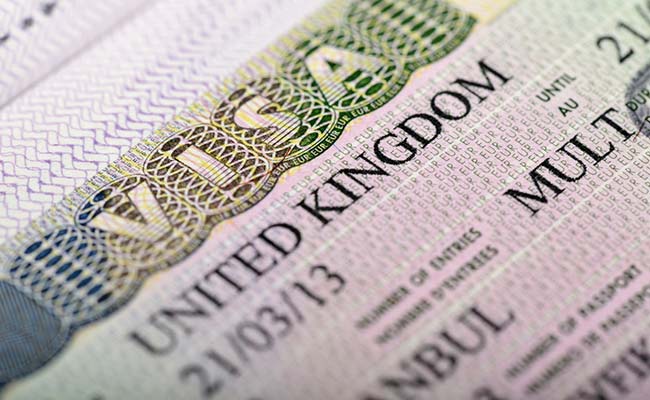
    LONDON:  Companies in the UK hiring non-European Union workers like Indians are expected to face a new 1,000 pound annual surcharge per employee.

    The UK’s Migration Advisory Committee (MAC) used the Indian information technology sector as an example in its latest set of recommendations to call for a review of the country’s intra-company transfer (ICT) route under the Tier 2 visa regime.

    “(Immigration) is not serving to increase the incentive to employers to train and upskill the UK workforce. Ready access to a pool of skilled IT professionals in India is an example of this,” the migration panel report said in its findings.

    “We did not see any substantive evidence of long-standing reciprocal arrangements whereby UK staff are given the opportunity to gain skills, training and experience from working in India,” it said.

    The new up-front charge of 1,000 pounds for each skilled non-EU migrant will apply per year, so a three year visa would carry a surcharge of 3,000 pounds for each employee.

    The migration committee believes by increasing the cost of hiring from abroad, the new surcharge would encourage employers to invest in training British workers instead.

    A UK Home Office spokesperson said, “We are grateful to the migration advisory committee for its report. We are considering its findings and will respond in due course.”

    As part of a series of measures to cut employee numbers under the Tier 2 system by 20 per cent a year, the committee also recommended the salary threshold for these workers entering Britain be raised from 20,800 pounds to 30,000 pounds.

    Its recommendations are expected to be adopted by the government soon.

    According to migration data, Indian skilled workers were given the largest number of visas under Tier 2 in the year ending September 2015 and Indian IT workers accounted for 90 per cent of visas issued under the ICT route.

    The committee noted that “some of the heaviest users of the intra-company transfer route are Indian companies, and the top ten employers using the intra-company transfer route are all largely employing IT workers from India”.
    “The evidence indicates that multinational companies with a presence in India have developed a competitive advantage in delivering IT projects in the UK. They have developed a delivery model, whereby significant elements of projects are delivered offshore in India, taking advantage of the fact that Indian salaries are lower than in the UK for equivalent workers,” it said.

  • UN announces first-ever High-Level Panel on Women’s Economic Empowerment

    UN announces first-ever High-Level Panel on Women’s Economic Empowerment

    Davos 21 January – UN Secretary-General Ban Ki-moon has announced the first-ever High-Level Panel on Women’s Economic Empowerment to provide thought leadership and mobilize concrete actions aimed at closing economic gender gaps that persist around the world.

    The Panel will provide recommendations for the implementation of the 2030 Agenda for Sustainable Development to improve economic outcomes for women and promote women’s leadership in driving sustainable and inclusive, environmentally sensitive economic growth. It will provide recommendations for key actions that can be taken by governments, the private sector, the UN system and other stakeholders, as well as policy directives needed to achieve the new targets and indicators in the Sustainable Development Goals which call for the economic empowerment of women. The panel is backed by the United Kingdom, the World Bank Group and UN Women.

    “The empowerment of the world’s women is a global imperative,” said UN Secretary-General Ban Ki-moon. “Yet despite important progress in promoting gender equality, there remains an urgent need to address structural barriers to women’s economic empowerment and full inclusion in economic activity. If the world is to achieve the Sustainable Development Goals, we need a quantum leap in women’s economic empowerment.”

    The Co-Chairs of the Panel are Luis Guillermo Solis, President of Costa Rica, and Simona Scarpaleggia, CEO of IKEA Switzerland. They will be joined by the leaders of the International Monetary Fund, World Bank Group, UN Women and a diverse range of eminent gender and equality actors, economics experts, academics, trade union leaders, business and government representatives from all regions. The Panel will be supported by an independent Secretariat, hosted by UN Women with backing from the UK Government.

    UK International Development Secretary Justine Greening, a founding member of the Panel, welcomed its launch. She said: “I am hugely proud to be a part of this Panel. Investing in girls and women isn’t just about basic human rights, it’s about fully unlocking the potential of half the world’s population. The UK is already at the forefront of this effort. At the Department for International Development I have put improving the lives of girls and women at the very heart of our work and Britain is successfully leading the fight against FGM and child marriage, as well as getting girls into school and women into jobs. Strong economies need the contribution of everyone—including women—and this panel will spearhead a movement to put women’s economic empowerment on the global agenda like never before.”

    Jim Yong Kim, World Bank Group President, also a founding member of the Panel, stated: “The World Bank Group is strongly committed to gender equality, which is integral to ending poverty and boosting shared prosperity. Our new Gender Equality Strategy puts a much sharper focus on economic empowerment.” He added: “No society, community or economy can achieve its full potential—or meet the escalating challenges of the 21st century—until all its people can achieve theirs. We are pleased to partner with the UK’s Department for International Development and the United Nations in convening this important panel, whose work will accelerate progress towards the goals we share.”

    The High-Level Panel will help tackle gender gaps in economic opportunities and outcomes which persist around the world, building on the growing evidence and recognition by governments and the private sector that women’s economic empowerment has a multiplier effect and boosts whole economies. Research shows that women invest their income back into their families and communities, including in health and education. McKinsey Global Institute estimates that if women in every country were to play an identical role to men in markets, as much as US$28 trillion would be added to the global economy by 2025.

    Yet women continue to earn less, have fewer assets, bear the burden of unpaid work and care and be largely concentrated in vulnerable and low-paying activities. Women spend more than twice as much time on unpaid care and domestic work as men and women on average are paid 24 per cent less than men globally for the same work. Moreover, 75 per cent of women’s employment in developing regions is informal and unprotected. These gaps constrain women’s rights and hinder economic growth and productivity. Significantly scaled up actions and political will are required to ensure that governments, development organizations and others invest in the economic empowerment of women for the benefit of whole societies.

    The High-Level Panel will have its inaugural meeting during the 60th session of the Commission on the Status of Women at the United Nations in March 2016. A series of regional consultative meetings will also take place, and the Panel’s first report with action-oriented recommendations will be issued in September 2016.


    UN Women is the UN organization dedicated to gender equality and the empowerment of women. A global champion for women and girls, UN Women was established to accelerate progress on meeting their needs worldwide. For more information, visit www.unwomen.org

  • Indian American 7-Eleven Store Owner Gets $1 Million For Selling Record Jackpot Ticket

    Indian American 7-Eleven Store Owner Gets $1 Million For Selling Record Jackpot Ticket

    WASHINGTON:  An Indian-origin convenience store owner in the US has become a celebrity overnight after he sold one of the three Powerball winning lotteries with a record jackpot of $1.6 billion.

    Lottery officials confirmed one jackpot-winning ticket was sold at Balbir Atwal’s store located at Chino Hills in California. Two others were sold in Tennessee and Florida.

    Mr Atwal received a $1 million cheque as retailer bonus for selling the winning ticket.

    Mr Atwal said he was surprised to learn his store was one of the lucky ones, calling the group of revellers “a big family.” “I didn’t believe it and then I looked at it carefully again,” Mr Atwal said.

    City officials described Mr Atwal as a cornerstone in the community, after he was among the first business owners to set up shop in the city after its incorporation.

    Mr Atwal said he planned to give a part of his winnings to charity and share the rest with his employees and family. “This is a land of opportunity,” said Atwal.

    “Anybody who comes, you will achieve your dreams.” Mr Atwal came to the US from Punjab, India in the early 80s, and opened four 7-Eleven stores, including the Chino Hills location about 24 years ago.

    “I 100 per cent believe he deserves this,” Sonia Atwal, one of his three daughters, was quoted by NBC News as saying.

    “He pretty much set his foot here and helped our family make it- the American dream.” Shortly after the announcement on Wednesday, a huge crowd packed the 7-Eleven chanting “Chino Hills” to celebrate the historic win in the usually-quiet suburb city of about 75,000 residents.

    Although the large group did not win big, they said it was exciting to know the winner was from their community. “We’re all just very excited that one of us could be the winners, and it’s just very exciting for everyone,” Delaney Gurol said.

    More than 30 media trucks were parked outside the Chino Hills store to cover the event.

    It was not immediately known who the winning ticket was sold to, and lottery officials said he or she had one year from Wednesday to come forward.

    In addition to the winning jackpot tickets, lottery officials said eight tickets that won $2 million were sold in seven states, and 73 that netted $1 million were sold in 23 states.

    The jackpot on Wednesday was not just the largest in Powerball history, New York State lottery officials said, but also the largest of any lottery game in the United States. The jackpot started at $40 million on November 7 and rolled over 19 times, with no one matching all six numbers.

  • India-China DGMO hotline soon

    India-China DGMO hotline soon

    NEW DELHI (TIP): A hotline between the director general of military operations (DGMO) in Indian and Chinese armies is likely to come up within months.

    “Surveys were carried out to set up the hotlines between the two DGMOs. It should happen in the coming months,” Army chief Gen Dalbir Singh Suhag said in his annual press conference on the eve of the Army Day.

    Establishing an exclusive telephone link between the two top Army officers is considered one of the confidence building measures between the two armies that fought a bitter war in 1962. Last year, two new border personnel meeting (BPM) points at Daulat Beig Oldie in Jammu & Kashmir and Kibithu were made operational. Another BPM point in the Barahoti plains is under the active consideration. “Bilateral relations are improving, which is evident from many high-level exchanges in the last one year,” said Gen Dalbir Singh. However, there is no slow down on raising the mountain strike corps, a specialised force to launch offensive strike in mountainous terrain like the Sino-Indian border areas.

  • NIA sniffs link between Dinanagar, Pathankot terror attacks

    NIA sniffs link between Dinanagar, Pathankot terror attacks

    NEW DELHI (TIP): The National Investigation Agency (NIA) has found similarities in the Pathankot terror attack and last year’s July 27 Dinanagar attack in which militants had attacked a police st-ation. To probe it further, the agency has asked the Punjab police to provide details of the Dinanagar case.

    Three heavily-armed militants in Army fatigues, believed to have infiltrated from Pakistan, had on July 27 last year sprayed a moving bus with bullets and stormed a police station in Dinanagar, Gurdaspur, killing eight people, including a superintendent of police, before being killed in the counter-offensive. The case is being probed by the Punjab police.

    Punjab’s deputy chief minister Sukhbir Singh Badal had refused to hand over the Dinanagar case to the NIA, which is probing the Pathankot attack.

    Terrorists had attacked the Pathankot Indian Air Force base on the intervening night of January 1 and 2.

    They were killed in a counter-operation by Indian forces that lasted for about three days and also claimed the lives of seven security personnel.

    The federal investigative agency may again seek to take over the Dinanagar probe as well since there has not been much headway in the investigation conducted by the Punjab police.

    Meanwhile, Gurdaspur SP Salwinder Singh is reportedly giving conflicting statements about his abduction after which it has been decided that he will be confronted with his cook Madan Gopal and Somraj, the caretaker of the Panj Peer dargah which Salwinder said he had visited on the day of his kidnapping.

    The sources said that the confrontation was necessitated after conflicting statements were emerging from all the three and added that a final decision on whether to conduct a polygraph (lie detector) test on Salwinder or the others will be done after Friday’s questioning. While Salwinder has been questioned for the last four days, Gopal and Somraj recorded statements for the first time.

  • BJP RESTLESS OVER PDP’S ‘NEW’ CONDITION

    BJP RESTLESS OVER PDP’S ‘NEW’ CONDITION

    NEW DELHI (TIP): The Peoples Democratic Party’s (PDP) dilly-dallying on Jammu and Kashmir government formation despite seven-day state mourning ending on Wednesday, has left the BJP in a tizzy. The BJP leaders have been maintaining that there are no new conditions from the party except the common minimum programme agreed between the coalition partners to run the government. But, some statements coming from the PDP leaders, though not alarming, have in-between uncharitable comments that has triggered worries among BJP leaders. PDP leader Naeem Akhtar, who is close to Muftis, talked about review of the agenda of governance of the ten-month old coalition government to ascertain how much of it is reflected on the ground.

    Akhtar said in Srinagar that “an agenda of alliance was drafted…it has to be implemented”. At the same time, he insisted that a review was required for implementation of “the common vision of the PM (Modi) and Mufti Sahab regarding J&K”.

    Akhtar pointed out developing smart cities and return of power projects to assess  progress of development projects in the state.

    BJP leaders assess this statement as an indication of reshuffle of development portfolios which are mostly held by BJP ministers, starting from deputy chief minister Nirmal Singh who is minister for power, housing and urban development.The BJP had kept these ministries under a power sharing formula because it wanted to keep a check on pilferage of funds coming from the Centre besides taking credit of developing the Muslim dominated state bordering Pakistan.

  • RAJASTHAN VILLAGE TENSE AS DALIT BRIDE WANTS GROOM TO RIDE A MARE

    RAJASTHAN VILLAGE TENSE AS DALIT BRIDE WANTS GROOM TO RIDE A MARE

    Barmer (TIP): When she became the first girl from her family to become a graduate, 25-year-old Neetu Meghwal wished that her groom came riding a mare, something that no Dalit in her village had dared to do.

    Now a constable with the Central Industrial Security Force (CISF) and posted at Bangalore airport, she shared the dream with a cousin who wrote to the chief minister’s office about Neetu’s wish.

    Soon, her wish reached the National Commission for the Schedules Castes (NCSC) that asked district authorities to take necessary steps.

    Cousin Laxman Sariyala said he alerted authorities because he knew upper castes villagers would not allow a Dalit to ride a mare during a wedding procession.

    Rajasthan has witnessed violent incidents in the past, especially in Bhilwara and some parts of Alwar and Jaipur where Dalit grooms were assaulted for riding a mare during weddings.

    “She studied with us in Pali and has been the only girl among five siblings to get educated and a government job. Her four brothers are daily wage labourers in Goa and a younger sister is illiterate. She had the will to break caste stereotypes but it looks very difficult.” His fears came true. Neetu’s wish has triggered tension in her native village, Khimda, near Somesar railway station, 350km from Jaipur.

    Khimda has around 400 households; 30% of them belonging to the scheduled caste. Most Dalits work as farmhands in fields of rich farmers.

    A day before her wedding, police took a written undertaking from the family that it doesn’t want Neetu’s groom to ride a mare — considered a traditional prerogative of the village’s upper caste inhabitants whose grooms come on horseback to the wedding venue, mostly the bride’s home. A mare is preferred because it is considered auspicious.

    Elder brother Champa Lal said the family didn’t want the groom to ride a mare during bindoli, a ritual where he takes a round of the village. “We want to follow the old tradition where groom comes with the marriage procession, not riding a mare,” he said.

    Neetu’s phone was switched off on Thursday. Mahavir Mevada, a resident, said the bride told him she was scared but keen that her groom rode a mare.Police dismissed allegations of pressure from upper caste villagers. Sanderao police station SHO Amarlal Meena said the family didn’t feel any threat and was assured protection if the groom came riding a horse.

  • USIBC names two new vice chairs to push India trade

    USIBC names two new vice chairs to push India trade

    WASHINGTON (TIP): The US-India Business Council (USIBC) has named Punit Renjen, CEO of Deloitte Touche Tohmatsu Limited (Deloitte Global),and Edward Monser, President of Emerson, as USIBC Vice Chairs to further build on US-India relationship.

    The leading business advocacy organization comprised of 350 top-tier US and Indian companies advancing US-India commercial ties recently appointed former Cisco CEO John Chamber as USIBC Chairman.

    Chambers, immediate past USIBC Chairman and CEO of MasterCard Ajay Banga, and Edward Monser, will embark on the USIBC Chairman’s Executive Mission to India in mid-February, and also participate in the inaugural Make in India week.

    “I believe that there are tremendous opportunities this year to build on the US-India relationship,” said Monser. “With India’s push for advancement across industries, and initiatives like Make in India gaining momentum, I see several channels for collaboration, exchange of ideas, and exchange of technology between the two countries.”

    “I am optimistic about the continued trajectory of US-India relations and the positive impact this will have, not only for our two countries, but indeed for the world,” said Punit Renjen.

    “In growing the exchange of talent between our two countries and further opening channels for increased trade and investment, we will be able to deepen innovation, create high-quality jobs and fuel our industries’ global competitiveness for the 21st century.”

    Congratulating the “two great business leaders,” USIBC President Mukesh Aghi said: “Together, with our combined experience, we can tackle some of the most difficult challenges on both sides.

    “We have already seen the expansion of FDI into the media and entertainment, single brand retail, and defense sectors. Indian states are also actively reaching out to investors here in the US, showcasing the power of competitive federalism.

    High on the priority list this year includes the passage of the Goods and Services Tax and land acquisition reform in India, as well as growing the manufacturing sector in order to consolidate India’s presence as a key player in the global economy.”

    Chambers said the two new appointees “have done great work in promoting trade between our two countries” and “Our job for this year is to build on this momentum and shape and further the Council’s priorities.”

    “We still have challenges ahead and there are areas we must discuss, however, I am positive we can do so in a way that befits our community and our leaders’ ambitions.”

    IANS

  • Implications of the Iran-Saudi Confrontation

    Implications of the Iran-Saudi Confrontation

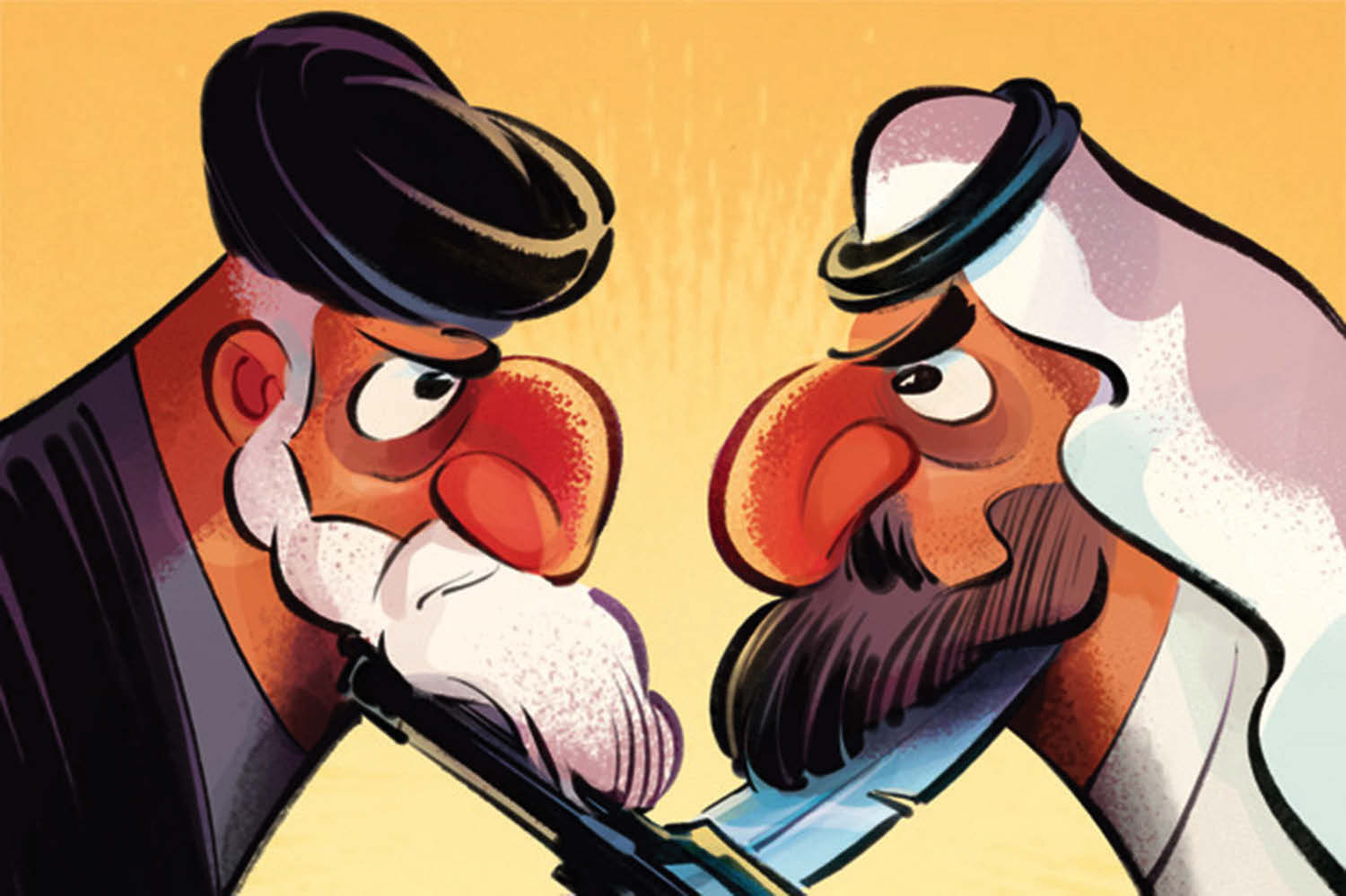
    2016 has begun with a sudden escalation of tension between Iran, the leading Shia power, and its regional rival, Saudi Arabia, the leading Sunni power. Such escalation, unless addressed, can have serious adverse consequences for regional stability and peace and also for the efforts under way to bring to an end the war in Yemen and the wars in Syria. It might also have an impact on oil prices, by either accelerating the fall in prices or inflating them.

    Let us look at the basic facts. On 2 January, Saudi Arabia announced that it had executed 47 persons, all Saudi citizens except for a Chadian and an Egyptian. The most prominent person executed was Nimr al-Nimr, 57, a Shia leader who had never advocated violence against the Saudi state. He had spoken out for the rights of the Shias who are concentrated in the eastern part of the kingdom. Incidentally, oil is also concentrated in the same region. It is difficult to take seriously the official Saudi assertion that Nimr-al-Nimr was a terrorist.

    Nimr, arrested in 2012, was sentenced to death in 2014. King Abdullah, the previous ruler, was apparently reluctant to permit Nimr’s execution. King Salman, 80, ascended the throne in January 2015. He has had a stroke and is believed to have delegated powers to his nephew Mohammed bin Nayef, 55, the Crown Prince, and Mohammed bin Salman, 30, the Deputy Crown Prince and Defense Minister. The Defense Minister is believed to be a hard-liner and is probably the main force behind the decision to intervene militarily in Yemen. The intervention begun in March 2015 faces an uncertain future and it might not prove as successful as anticipated in Riyadh.

    Saudi Arabia has accused Iran of being behind the Houthi rebels. But, so far, no evidence has been brought forward pointing to Iranian involvement. Most observers are of the view that the Houthis revolted because of grievances against the newly adopted constitution and that they succeeded in dislodging President Hadi only because of support from the previous President, Saleh. But even more than the troubles in Yemen, it was the US-Iran nuclear deal that infuriated Riyadh, which was under the wrong impression that Iran could be treated as a pariah forever. Despite Saudi opposition, the US went ahead with the Iran nuclear deal. And Saudi Arabia got slightly disenchanted with its American ally. Earlier, following the fall of Saddam Hussein, the Shias had taken over political power in Iraq, which increased Iran’s regional clout. Saudi Arabia fears that, with the nuclear deal, Iran’s clout will increase even more and that this is likely to pose a serious threat to it.

    It was Jordan’s King Abdullah who some time back spoke of a ‘Shia crescent’ led by Iran posing a danger to the Sunnis. Perhaps, it was an unnecessary coinage and in any case it was adopted by Iran’s neighbors and the West with much alacrity.

    The ‘Shia crescent’ is supposed to include the Alawite regime of Basher al Assad in Syria and the Lebanese Hezbollah. One of the main reasons for Saudi Arabia’s insistence on the exit of Assad from power is his closeness to Iran.

    Riyadh broke off diplomatic relations following the attack on its Embassy in Tehran and its Consulate General in Mashhad. The Saudi missions desperately requested for protection from the Iranian Foreign Office, but no protection was given. Attack on an embassy is always unpardonable whatever the provocation. But the key question is: Did Riyadh expect that it could execute Nimr without provoking adverse reaction in its own eastern region and elsewhere in the region?Anyone familiar with the region could have told Riyadh of the perilous consequences of executing Nimr and branding him as a terrorist. Washington pointed out the dangers, but Riyadh ignored the warnings and concluded that a tough message to Tehran was in the best interest of the kingdom. Is it the case that Riyadh had correctly anticipated the likely outrage in Tehran and elsewhere and still went ahead as it wanted to provoke Iran into doing things that might unravel the nuclear deal?If there was any such calculation it was a wrong assessment of the ground realities.

    How much support can Riyadh expect in its confrontation with Tehran? Within the Gulf Cooperation Council (GCC), there is no unanimous support. Bahrain has broken off diplomatic relations and broken air links with Iran, UAE has downgraded relations, and Kuwait has merely recalled its ambassador. Qatar and Oman have not followed the Saudi lead and are unlikely to do that going by their past behavior. Riyadh has cut off trade and air links, though it has added that pilgrims from Iran can come. We do not know whether Iranian pilgrims will go to Saudi Arabia in big numbers. But the Saudis might be worried that trouble-makers might be among the pilgrims. There is potential for trouble when and if Iranian pilgrims are subjected to extra security checks.

    Outside the GCC, Sudan broke off relations with Iran, and Egypt has lent support to Saudi Arabia. But, given the lack of strong support within the GCC, such outside support does not count much. Washington has embarked on damage control, but as of now its clout in Riyadh is not rising. Unless the military intervention in Yemen is proved to be a disaster, and it might take time and more deaths in Yemen for that to happen, the current toll being 6,000, Riyadh is unlikely to look at any course correction.

    What are Iran’s options? The Shias in Bahrain and in eastern Saudi Arabia can be encouraged to revolt. Tehran can send military assistance to the Houthis. At present, we do not know whether Iran will exercise any of these options. Incidentally, Nimr never sought support from Iran and wanted to fight for the Shias without involving foreign powers. Iran has the option to watch the disarray within the GCC and do what it can to deepen it as subtly as possible. Iran might as well watch the rather concealed succession battle in Riyadh. The GCC itself was established as Saudi Arabia and its neighbors felt threatened by the 1979 Iranian Revolution. Ayatollah Khomeini had condemned hereditary monarchies as incompatible with Islam.

    Coming to oil, usually any political tension in West Asia pushes prices up as speculators seek profit. This time, prices did go up marginally for a while before coming down. Iran had threatened to interfere with the movement of oil tankers in the past. But it is unlikely to threaten such a course of action this time around. Its primary focus is upon getting rid of the sanctions and to revive its economy. It may not even engage in an oil war with Saudi Arabia by flooding the market with oil. In the past, even during the Iran-Iraq war and Iraq’s occupation of Kuwait, OPEC has met and conducted business almost insulated from politics. In any case, the clout of the 13-member OPEC accounting for one-third of world oil production has decreased following the surge in US production.

    What will be the impact of the Tehran-Riyadh confrontation on Syria? The UN Security Council passed Resolution 2254 on 18 December 2015 authorizing the Secretary General to take the lead for a political, negotiated resolution of Syria’s plight. The process is supposed to start in early January. For long, Saudi Arabia had resisted Iran’s participation in the talks on Syria. It was only recently that the US, after great efforts, succeeded in making Saudi Arabia consent to Iran’s participation. However, Riyadh made uncomplimentary comments on Iran after the meetings. For sound diplomatic reasons, the Saudi Permanent Representative to UN Abdullah al-Mouallimi has announced that the confrontation will not affect the talks on Syria and that Riyadh is prepared to work with Tehran. Since Riyadh has branded Tehran as a sponsor of terrorism, it is difficult not to ignore the incoherence in Saudi public pronouncements. All told, there is a distinct probability that the Syrian political process will be adversely affected by the confrontation. The same can be said about the UN-sponsored efforts for a political solution in Yemen.

    How might the confrontation affect India? For India, both Saudi Arabia and Iran are valuable partners and there is no question of choosing one against the other. Indian diplomacy should not find it difficult to navigate in the troubled waters and take care of India’s interest.

    In the chess game between Iran and Saudi Arabia, the former is in a better position. Saudi Arabia might need to attend to course correction sooner or later. Iran is going to have Parliamentary election in weeks and the conservatives opposed to President Rouhani’s opening to the West might have been behind the attack on the Embassy. But the Government should not have permitted such an attack. It is doubtful whether the US or any other power can do much to de-escalate the mounting tension between Tehran and Riyadh. Probably, the confrontation might have to get worse before it gets better. But a war is unlikely.

  • Economic crisis is not far away

    Economic crisis is not far away

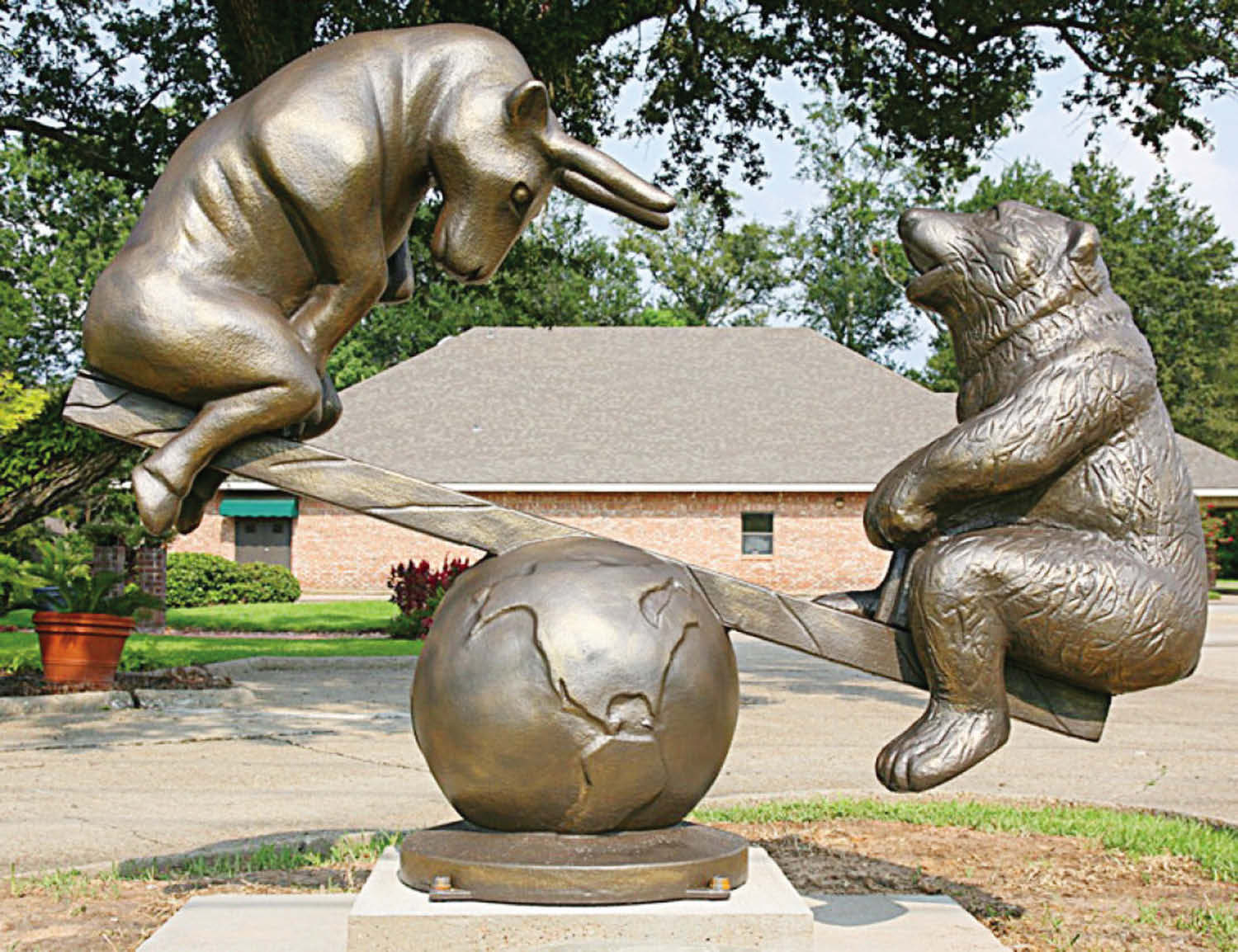
    The next financial crisis is coming. It’s just a matter of time – and we haven’t finished fixing the flaws in the global system that were so brutally exposed by the last one.

    Massive monetary policy stimulus has rekindled growth in developed economies since the deep recession that followed the collapse of Lehman Brothers in 2008; but what the IMF calls the “handover” to a more sustainable recovery – without the extra prop of ultra-low borrowing costs – has so far failed to materialize.

    Meanwhile, the cheap money created to rescue the developed economies has flooded out into emerging markets, inflating asset bubbles, and encouraging companies and governments to take advantage of unusually low borrowing costs and load up on debt.

    “Balance sheets have become stretched thinner in many emerging market companies and banks. These firms have become more susceptible to financial stress,” the IMF says.

    Meanwhile, the failure to patch up the international financial system after the last crash, by ensuring that banks in emerging markets hold enough capital, and constraining risky borrowing, for example, means that a new Lehman Brothers-type shock could spark another global panic.

    VOLATILITY IN STOCKS AROUND THE WORLD

    Jan 13, 2016: Asian shares have tumbled after a heavy sell-off on Wall Street added to nervousness among investors.

    Japan’s Nikkei 225 was down more than 4% at one point – dropping below 17,000 for the first time since September – before closing down 2.7% at 17,240.95.

    US shares had fallen by more than 2% as oil prices continued to decline and worries grew over prospects for US company earnings.

    Weak economic data from Japan also dented investors’ confidence.

    Government data showed that core machinery orders fell 14.4% in November from the previous month.

    The orders were down for the first time in three months in the world’s third largest economy.

    Plunging oil prices

    Brent crude prices, meanwhile, fell 0.9% to $30.05 a barrel after earlier hitting a fresh 12-year low of $29.73.

    Bernard Aw, market strategist at trading firm IG, said oil prices would not see much recovery this year amid a supply glut.

    “Oil prices should continue to remain low, where a sustained pick-up is expected only in the third quarter of 2017,” he said in a note on Thursday.

    Australia’s S&P/ASX 200 share index ended 1.6% lower at 4,909.40, despite the release of better-than-expected employment data.

    The unemployment rate in the country was 5.8% in December, with fewer jobs lost than economists were expecting.

    The country lost 1,000 new jobs, as against expectations of 10,000.

    In South Korea, the benchmark Kospi index closed down 0.9% at 1,900.01 after its central bank kept interest rates unchanged for the seventh consecutive month.

    Hong Kong’s Hang Seng index ended the day down 0.6% at 19,817.41.

    Investors were spooked by Wednesday, Jan 13, sharp falls on Wall Street, when the Dow Jones and S&P 500 fell 2.2% and 2.5% respectively.

    There are fears that the continuing low crude price reflects a slowdown in some economies and could weigh on growth in emerging markets, many of which rely on oil revenues.

    Jan 13, Russia’s Prime Minister, Dmitry Medvedev, warned tumbling oil prices could force his country to revise its 2016 budget.

    He said that the country must be prepared for a “worst-case” economic scenario if the price continued to fall.

    Oil and gas projects worth $380bn have been postponed or cancelled since 2014 as companies slash costs to survive the oil price crash, including $170bn of projects planned between 2016 and 2020, according to a report from energy consultancy Wood Mackenzie.

    Mainland shares recover

    The Shanghai Composite index was the only bright spot in the region, reversing early losses to close up nearly 2% at 3,007.65.

    Regulators had announced late on Wednesday that they had stepped up monitoring share-selling by listed companies’ major shareholders.

    The securities commission also said that its transition to a US-style registration system for listings would be a gradual process and not lead to a surge in initial public offerings (IPOs).

    The announcement was the latest in a series of measures to support the market after heavy losses since last week.

    Elsewhere in the region, Indonesia’s Jakarta composite index closed down 0.5% at 4,513.18 points. The index had fallen more 1.7% earlier as multiple bomb blasts rocked the capital city on Thursday.

    Indonesia’s central bank continued its meeting throughout the attacks and cut its benchmark interest rate to 7.25%from 7.5%. The bank’s move is in an attempt to give its struggling economy a boost and comes despite a weakening currency.

    Jan 14, 2015: US stocks have closed higher, but European markets have continued to suffer from worries over oil prices and economic growth.

    The three main US indexes all gained between 1.4% and 2%, lifted in part by a 2% rise in the US oil price.

    Earlier in London, the FTSE 100 closed 0.7% down, while the main Frankfurt and Paris indexes fell 1.7%and 1.8% respectively.

    Those falls followed a heavy sell-off in some Asian markets.

    The pound hovered close to five-and-half-year lows against the dollar.

    Alongside the rise in the price of US West Texas Intermediate crude, Brent oil also rose in afternoon trading. The price was up 2.5% to $31.03 a barrel, having briefly drifted below $30 on Wednesday.

    The falls in European shares followed overnight losses in Asia. Japan’s Nikkeiindex closed down 2.7%, having dropped more than 4% at one point.

    Hong Kong’s Hang Seng eased off two-and-a-half-year lows to finish down 0.6%. The Shanghai Composite, which has endured torrid trading in recent months, was one of the few bright spots, rebounding nearly 2%.

  • Twitter sued by U.S. widow for giving voice to Islamic State

    Twitter sued by U.S. widow for giving voice to Islamic State

    FLORIDA (TIP): A Florida woman has sued Twitter for allowing the social media platform to be used by Islamic State (ISIS) militant group to spread its messages all over the world.

    Twitter is being sued by the widow of an American killed in Jordan who accuses the social media company of giving a voice to Islamic State, adding to the pressure to crack down on online propaganda linked to terrorism.

    Tamara Fields, a Florida woman whose husband Lloyd died in the Nov. 9 attack on the police training center in Amman, said Twitter knowingly let the militant Islamist group use its network to spread propaganda, raise money and attract recruits.

    Lawyers specializing in terrorism said Fields faces an uphill battle, though the case could lead to more calls for social media companies such as Twitter and Facebook Inc to take down posts associated with terrorist groups.

    In her complaint filed on Wednesday, Jan 13, Fields said San Francisco-based Twitter had until recently given Islamic State, also known as ISIS, an
    “unfettered” ability to maintain official Twitter accounts.

    “Without Twitter, the explosive growth of ISIS over the last few years into the most-feared terrorist group in the world would not have been possible,” according to the complaint, which was filed in the federal court in Oakland, California.

    Fields wants Twitter to pay her triple damages for violating the federal Anti-Terrorism Act by having provided material support to terrorists.

    Her lawyer said he believes it is the first case in which a social media company is accused of violating that law.

    “While we believe the lawsuit is without merit, we are deeply saddened to hear of this family’s terrible loss,” Twitter said in a statement about the civil lawsuit. “Violent threats and the promotion of terrorism deserve no place on Twitter and, like other social networks, our rules make that clear.”

  • Fortune Magazine apologizes to Hindus for cover depicting Bezos as Lord Vishnu

    Fortune Magazine apologizes to Hindus for cover depicting Bezos as Lord Vishnu

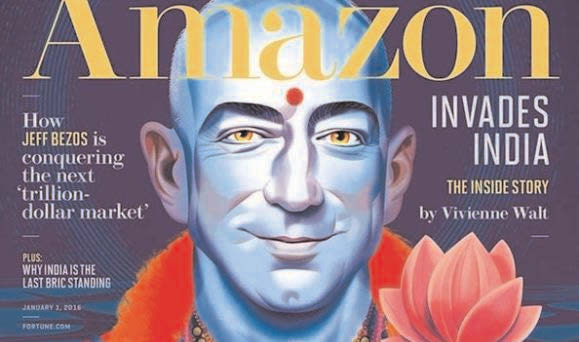
    NEW YORK (TIP): American business magazine Fortune has apologized for juxtaposing image of Amazon.com President Jeff Bezos as the likeness of Lord Vishnu over the cover of its January one international edition, which upset the Hindus.

    Hindu statesman Rajan Zed, who spearheaded the protest campaign on this issue saying that it trivialized their venerated deity, has thanked the Fortune and its editor Alan Murray for showing maturity and responsibility and understanding the feelings of the community.

    Statement from Murray, titled “Apology for Fortune’s January international edition cover” and posted at Fortune.com, says: “The cover of Fortune’s January 2016 international edition featured an illustration of Amazon CEO Jeff Bezos as a Hindu deity. Neither the artist nor the editors of Fortune had any intention of parodying a particular deity or of offending members of the Hindu faith. It is clear that we erred and for that, we apologize.”

    Zed, who is President of Universal Society of Hinduism, calling it an unnecessary dragging of a Hindu deity to prove their point of view, had urged Fortune to issue a formal apology.

    In a statement in Nevada today, Rajan Zed suggested Fortune and other media companies worldwide to send their senior executives and editors for training in religious and cultural sensitivity so that they had an understanding of the feelings of the customers and communities.

    Zed pointed out that Hindus understood that the purpose of Fortune in this case apparently was not to denigrate Hinduism, but casual flirting like this sometimes resulted in pillaging serious spiritual doctrines and revered symbols and hurting the devotees. Humor was a part and parcel of Hindu society, but there were certain convictions in every tradition, which were venerable and not meant to be taken lightly.

    Rajan Zed said that Lord Vishnu was a highly revered major deity in Hinduism meant to be worshipped in temples or home shrines and not to be used indecorously or thrown around loosely in reimagined versions for dramatic effects.

    How a mortal could be depicted as Lord Vishnu, who is the director of our destinies, Zed asked and added that inappropriate usage of Hinduism concepts and symbols for pushing selfish agenda or mercantile greed was not okay.

    Rajan Zed stressed that Hinduism was the oldest and third largest religion of the world with about one billion adherents and a rich philosophical thought and it should not be taken frivolously. No faith, larger or smaller, should be ridiculed at.

    Zed stated that Hindus welcomed media companies to immerse in Hinduism but taking it seriously and respectfully and not just for improper showing of Hindu symbols and concepts to advance their commercial or other agenda. Hindus were for free speech as much as anybody else if not more. But faith was something sacred and attempts at misusing it hurt the devotees. Media companies should be more sensitive while handling faith related subjects and sacred symbols.

    This Fortune cover page is headlined as “Amazon INVADES INDIA” (How JEFF BEZOS is conquering the next ‘trillion-dollar market’) and created by Sydney (Australia) based illustrator Nigel Buchanan; whose clients include The Wall Street Journal, MTV, The New York Times, etc. Interestingly, a Fortune article was headlined “Sacrilege”, when The Economist ran a cover in 2010 with an image of Steve Jobs with a halo.

    Lord Vishnu is “preserver” in the Hindu triad with Lord Brahma and Lord Shiva as the aspect of the Supreme. He has ten incarnations to establish dharma (divine law). Moksh (liberation) is the ultimate goal of Hinduism. There are about three million Hindus in USA.

  • Advisory for Indian Students traveling to the United States of America

    Advisory for Indian Students traveling to the United States of America

    NEW YORK (TIP): In continuation of an Advisory issued on 23 December 2015 in connection with instances of denial of entry by the US Immigration authorities to Indian students having valid student visas to pursue studies in two educational institutions, namely, Silicon Valley University at San Jose and Northwestern Polytechnic University, Fremont, government of India, on December 30th issued another advisory.

    The advisory notes that there have been further cases of denial of entry to Indian students holding valid visas to pursue studies in other US educational institutions. Some Indian nationals traveling on business/tourism/work visas have also been deported. The US Government has conveyed that the decision to deny entry to these students is not because of the corresponding institutions being “black-listed” but based on the assessment made by the US immigration authorities of individual applicants. According to the US Government, the deported persons had presented information to the border patrol agent which was inconsistent with their visa status.

    Government of India continues to remain closely engaged with the US Government on this subject. We have strongly emphasized the need for the US authorities to honor the visas issued by their own Embassy/Consulates.

    Meanwhile, it is reiterated that all Indian students seeking admission in US educational institutions should do due diligence to ensure that the institutions to which they are seeking admission have proper authorization and capacities. Apart from travel documents, the students should also carry all required documentation regarding their study plans, housing, financial support, healthcare arrangements etc. and be prepared for admission (entry to the US) interviews with U.S. immigration officials. Similarly, all Indian nationals traveling to the US on other visas are also advised to carry the necessary supporting documentations regarding place of stay, financial support, medical arrangements, sponsorship details etc.

  • ‘Arts 4 Peace Awards 2016’ Announced Amidst Hollywood Attendees

    ‘Arts 4 Peace Awards 2016’ Announced Amidst Hollywood Attendees

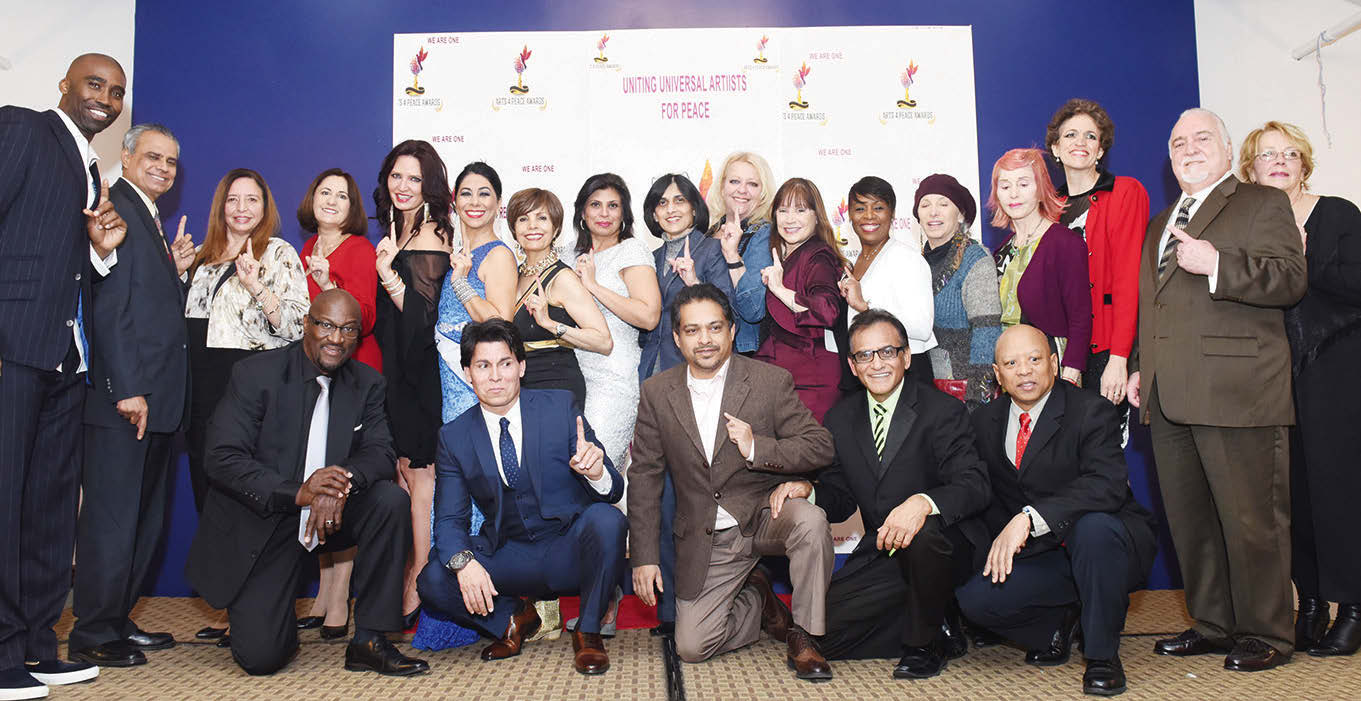
    EDISON, NJ (TIP): Arts for Peace Awards Organization launched the Arts 4 Peace Awards 2016 on Tuesday, January 5th, 2016 hosted by the Edison Hotel in Edison, NJ.

    Arts 4 Peace AwardsArts 4 Peace Awards  are the first ever collective celebration of the arts of every culture around the world. The purpose of these awards is to demonstrate to each nation how vitally important their culture is to the whole fabric of our world. Despite diversity & different cultures, it is through art that we can experience these cultures as one person with one creative mind and heart.

    Arts 4 Peace Awards’ vision is to provide opportunities to artists of all ages  spanning seven continents, who will be sponsored locally and celebrated globally.

    The awards have been created by Ms. Munni Irone of Beverly Hills. Known as the Beverly Hills Queen, Munni is the founder & president of the Awards. It is Ms. Munni’s desire to create a world that works for everyone with no one left behind. “Art is the way that we can experience the oneness between us all,” said Ms. Irone. “I believe these awards will not only serve to lift up these wonderful artists and their cultures, but collectively this will lift the cooperation between all nations”, she added.

    This historic global peace movement will launch in India in March 2016, with the lighting of the Arts for Peace Torch. As in the Olympic tradition, the flames from the torch will then light up the world as the awards ceremonies will take place over the following three months in each of the seven continents.

    The finalists from all the participating countries of each continent will compete for their finalist positions for their continent. These elite finalists will have the honor to compete at the grand culminating event in Hollywood in November 2016. These distinguished winners will be top artists in each of the categories from around the world. The winners will receive cash prizes and scholarships and be invited as dignitaries and judges for the finale.

    The awards will be given for master works that best represent a message of peace  in the following categories: Dance, Music, Sculpture, Painting, Film, Martial Arts and Culinary Art. Each category will have separate divisions for entry nominated by someone or submitted directly by the artist.

    The kickoff party took place with peace ambassadors from various countries & ethnic backgrounds in attendance, including several celebrities from Hollywood and other International platforms. Among the International ambassadors who attended were Dawn Diaz, Karen Hoyos, Jackie Melikian, Mark Geroux, Javid Pymani, Tehrah Taylor, Pepper Jay, Rebecca Holden, Joel Diamond, Ewart Chin, Rosalyn Kahn, Keith Mitchell, Anna Radoyce ‘Chef Anina’, Carmelita Pittman, Helene Abrams, David Giller, James Pasqual Bettio, Richard Anteau, David Young, Carol Froehlich-Hull, Jaweria Khan and several others.

    The event kicked off by a welcome address by Nutan Kalamdani who is the Global Media Ambassador for the Awards & Niti Sunder who is the Chief Global Coordinator. Niti Sunder has been working on the project since last year, when the project was announced. She spoke briefly and addressed the guests.

    This was followed by a sensational performance by Singer & Actress Rebecca Holden, who was introduced by her husband the renowned Music Producer Joel Diamond. One may recall seeing Rebecca in the famous series Knight Rider, ABC’s General Hospital, Remington Steele, Three’s Company, Taxi, and many more.

    Aarti Sunder addressed the gathering briefly, which was followed by an impromptu dance performance by 2 young artists. Aarti Sunder & Nisha Kalamdani have been nominated as the Youth Ambassadors for the Arts 4 Peace Awards.

    Mukesh Kashiwala the Vice President for the Awards welcomed all the distinguished guests and gave a brief about the awards. He also expressed his thanks to the sponsors, media and other supporters. Several dignitaries & media members including Upendra Chivukula, Dr. Sudanshu Prasad, Dr. Sinha and Sunil Hali conveyed their wishes and support to the team. The India launch of Arts 4 Peace Awards will be supported by Trans Media Awards, Rashmi Kamdar, Dr Navin Mehta, Piyush Patel, Pradip Vakil & Pranav Amin, all of whom have offered their generous support to this prestigious project. Mr Kashiwala and his team are currently working on the infrastructure for the Arts 4 Peace Awards. They plan to add more categories in the future and involve more youth in the project.

    Munni Irone also expressed her gratitude to all the ambassadors present at the launch. She further spoke of her vision for these awards and how she wishes for them to be as big as the Oscars, if not bigger, with all nations coming together on a single platform to promote peace in the world through arts. She also answered few questions from the media.

    The evening continued with motivational speeches from Dawn Diaz, Karen Hoyos, both of who are celebrity life coaches. The highlight of the evening was electrifying performances by Grammy Nominee Tehrah Taylor whose ‘Phoenix Rising’ enthralled the guests & won the hearts of each & every one present.

    Others who performed were opera singer Carol Froehlich-Hull, award winning artist Carmelita Pittman, Songwriter Shane & Grammy Nominee David Young.

    It was the first time ever in New Jersey that such an elite group of extraordinary talent from Hollywood & various other places, came under one roof. It was a long night before the curtains were drawn, but every guest left with a smile on their face and wanting for more.

  • Friends Cast coming together for special on NBC

    Friends Cast coming together for special on NBC

    NEW YORK (TIP): The cast of the hit sitcom Friends are to reunite for a two-hour special, according to US broadcaster NBC.

    The actors behind Rachel, Monica, Phoebe, Joey, Chandler and Ross have all signed up for the special, a tribute to director James Burrows.

    Burrows helmed numerous episodes of the program and has just celebrated directing his 1,000th TV program.

    But NBC entertainment chairman Robert Greenblatt suggested the six Friends may not appear together.

    “I’m hoping all six will be in same room at the same time,” he told reporters. But he added: “I’m not sure we can logistically can pull it off.”

    Fans of the show have been hoping for more than a decade to see Jennifer Aniston, Courteney Cox, Lisa Kudrow, Matt LeBlanc, Matthew Perry and David Schwimmer back on screen together, but previous attempts have fallen short.

    The program ended in 2004, 10 series and a decade after it premiered on US screens. It made international stars of its little-known cast, winning a slew of awards and a huge audience in the process.

    As well as Friends, Burrows was behind the camera for several of America’s much-loved sitcoms, including Cheers, Frasier, and The Bob Newhart Show.

    The two-hour show is expected to feature cameos, sketches and appearances connected to the various series the 75-year-old has worked on over the years.

    The special is scheduled to be broadcast on 21 February on NBC.

  • Gratitude to Martin Luther King, Jr

    Gratitude to Martin Luther King, Jr

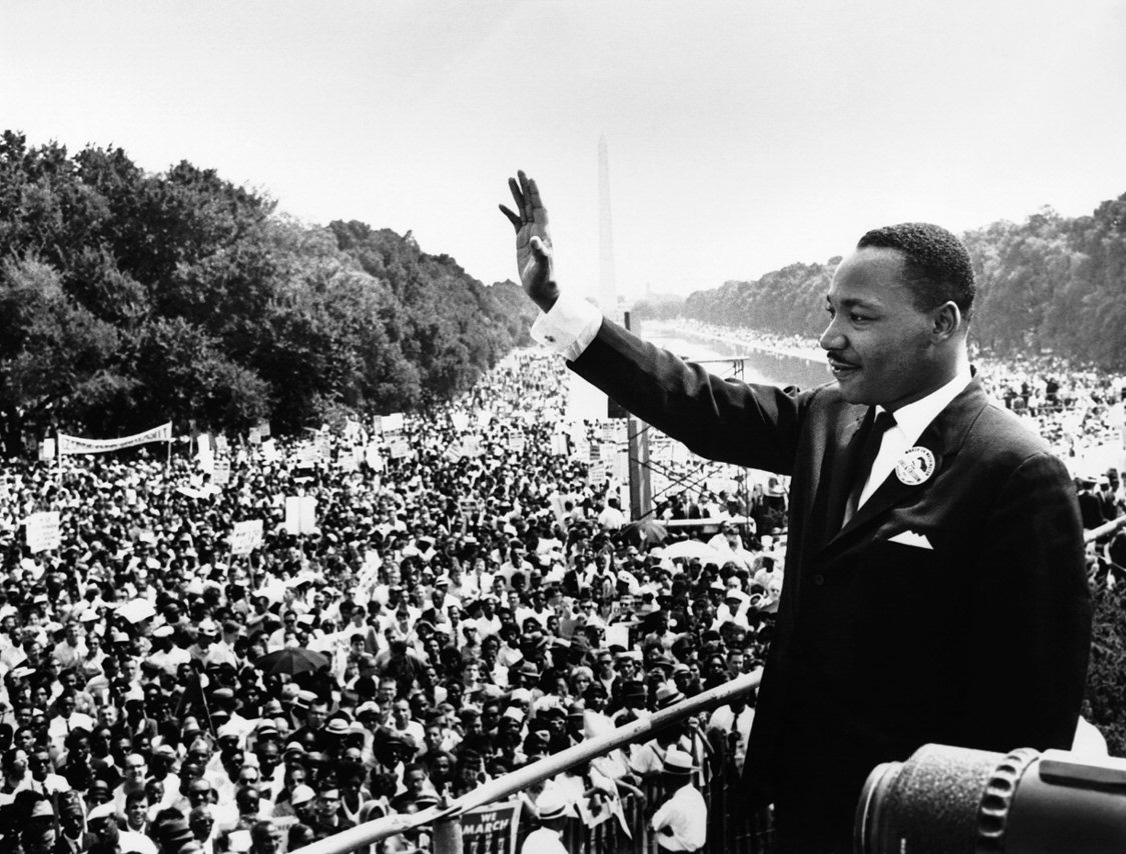
    Firstly, we the people owe a great deal to Rev. Martin Luther King Jr.  A majority of us Americans were living with a sense of guilt, a sense of being rotten the way we treated our fellow men and women.    His struggle has liberated us from such pain, and has brought freedom to the oppressed Black Men and women, we still have ways to go, but go we will.

    Secondly, we the people appreciate the white majority to have stood up for what was right – and join MLK on the steps of Lincoln Memorial to let the administration know what was morally right needs to become the law of the land.

    Thirdly, we appreciate the African American community for enduring the humility and non-violently appealing to the morality of the nation and bring about the change that was needed.

    Fourthly, we the immigrant Americans, particularly the non-whites would not have made it to America, had it not been for the Civil rights acts that MLK caused to happen. All of us non-white Americans owe our success to MLK and we need to pray for his soul today.

    Fifthly, as Indian Americans, we appreciate MLK, who saw the value in Mahatma Gandhi’s’ non-violent methods to turn the oppressors around to see the futility in their approach. In MLK’s own voice – https://www.facebook.com/cspanhistory/videos/880821915364690/

    Sixthly, as Muslim Americans, we are deeply committed to building a cohesive America, where no American has to feel alienated, apprehensive or fearful of the fellow Americans. We are committed to the safety and security of America.

    Seventhly, I invite my fellow Americans to take time to reflect on the bottom line work of all the great spiritual masters and civic leaders in creating such societies, and share your favorite quote of MLK.

    God bless Martin Luther King Jr., and God bless America!

    Mike GhouseMike Ghouse : The author is a community consultant, social scientist, thinker, writer, news maker, and a speaker on Pluralism, Interfaith, Islam, politics, terrorism, human rights, India, Israel-Palestine and foreign policy.


    “Today, as we honor an inspirational and exemplary leader in the fight for equality, we must continue in Dr. Martin Luther King Jr.’s legacy making sure that every person in this country is treated equally. From opening our doors to recent immigrants looking for a better opportunity, to ensuring that workers are getting paid a fair wage and putting forward policies to uplift all New Yorkers, we must renew our commitment to creating the kind of world Dr. King envisioned. The City Council stands with our city’s labor unions in the fight to provide a living wage for all New Yorkers and will continue to dedicate our work in making Dr. King’s dream a reality.”

    Melissa Mark-Viverito

    Speaker, New York City Council


  • Al Jazeera America to shut down its America TV channel

    Al Jazeera America to shut down its America TV channel

    WASHINGTON (TIP): Al Jazeera America will shut down its news channel despite spending heavily to break into the US market.

    Al Jazeera CEO Al Anstey said the business model “is simply not sustainable in light of the economic challenges”.

    Launched in 2013 vowing to be a more serious and in-depth alternative to CNN and Fox News, the Qatar-based broadcaster spent millions of dollars hiring top US journalists but struggled to bring viewers to its news programs

    The network replaced Current TV, a network founded by former US Vice President Al Gore, for around $500 million.

    Al Jazeera promised to expand its coverage of the US online after the channel shuts down in April.

    Politico notes that the channel reached an average of 19,000 viewers each day in 2015, far fewer than its competitors.

  • Kejriwal inked during Odd-Even success rally

    Kejriwal inked during Odd-Even success rally

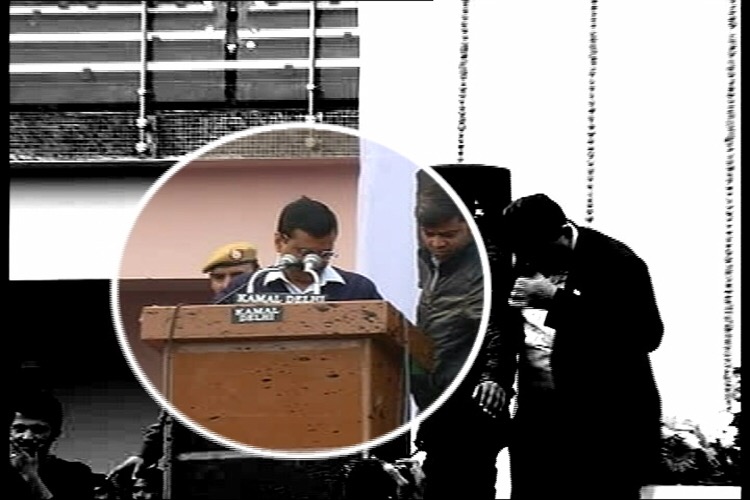
    In an unexpected drama at Delhi’s celebratory rally for the Odd-Even plan, a woman threw ink at Delhi Chief Minister Arvind Kejriwal today, as he took the stage to address a gathering at Chhatrasal Stadium in the national capital.
    Delhi Police later identified the woman as a member of a group called Aam Aadmi Sena. 
    The chief minister was also heckled by the woman, who was apparently a part of the crowd at the event, and is reportedly a relative of an auto-rickshaw driver. Sources said that she held grievances regarding the CNG scam and the Auto-Permit scam. 
    However, Kejriwal, remained unperturbed about the whole incident and continued with his speech during the rally which was organized to celebrate the successful implementation of the Odd-Even scheme. He also asked the volunteers to not manhandle her and said that her complaint would be heard by the government. 
    Interestingly, AAP leader Kapil Mishra directly blamed the BJP for this attack and tweeted, “Dear BJP last time when u did it, people of Delhi have replied u back in style. U attack on AK, people will punish u.”  

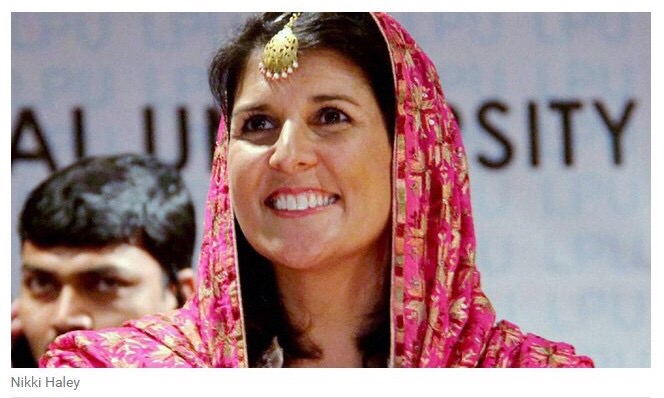
  • Indian American political Star : Reverse Swing: Nikki of America

    Indian American political Star : Reverse Swing: Nikki of America

    Nikki Haley is a breath of fresh air; she is a moderate Republican representing the mainstream GOP values, that none of the current front line GOP candidates are able to articulate. I have used the word moderate because the right leaning Republicans do not value any one supporting immigration, religious freedom, liberty and freedom.
    They are usually anti-immigrants, anti-gays, bomb-every-country, and anti-anyone-who-is-not-a-Christian. They are war mongers and have destroyed America during the Bush years, the Indians may not have felt the pinch, but nearly 43 Million Americans lost their jobs, businesses were shut down, anti-Indian (job taken away) sentiment grew, homes were foreclosed… divorces were on rise. War is an enterprise of evil men.

    I sincerely hope, she gets to be nominated as VP, she will change the course of the dialogue and bring some sense on the campaign trail, to set herself up for 2020. The Hannity’s and other conservative talk show hosts like her – for only one reason – she went against Obama in relocating Boeing to her state. Once they hear “whole” of her, they may not like her as much. If you recall, Chris Christie was a star, just because, simply because he welcomed Obama to help his state during the devastating floods, he was cursed by the Republicans. Rush Limbaugh calls a good Republican is one who hates Obama.

    Way back when she was in Dallas to inaugurate Mahatma Gandhi statue, I wrote, ” Nikki Haley must be a moderate Republican like me, even though she is billed as a conservative Republican. She sounds like Obama with inclusiveness, a trait missing among the conservative Republicans and acutely deficit with regular Republicans.”

    Well, I am not a Republican anymore after 30 years of being one, but chose to go independent, because I want to support the candidates who are good for America and my loyalty is to America and American values and not any party. At one time independents were less than 10%, now it has grown to be a clear third.

    The article says, “Desis have a “Bobby and Nikki problem”, and it goes beyond the peculiar Indian-American rejection of conservatism. Their hatred of Jindal stems largely from his public statements that he is “American”, not “Indian-American”. Thin-skinned Indians misinterpret this as a rejection by Jindal of his Indian-ness, as opposed to seeing it as a pitch for an America that’s free of ethnic pigeonholes.”

    Tunku has opened a new window for Indians to consider, that is, “seeing it (Jindal’s approach) as a pitch for an America that’s free of ethnic pigeonholes.” Most of us did not see it that way, but glad to look at it in that manner. However, I am still trying to understand Jindal, here we are, proud of him as a fellow Indian and he does not want the Indian in his American descriptor and that is disappointing. He should proudly say, which most of us say, that no one can take the Indian out of me.

    Wonder if the BJP members of Indian Americans are fond of the Republican Party? As both of them have similar attitudes towards society, and those who differ with them. They are conformists and not free thinkers.

    Ms Haley is Indian-American, and Christian, and a political star.

    The article concludes, “But let’s remember that Nikki Haley is American and lives in America, and has the right to convert to any faith she fancies. It is no one else’s business but hers. Those who argue otherwise are primitive bigots who need to get a life.”

    Yes, every human should be free to believe whatever the hell he or she wants to believe, and eat, drink and wear what pleases him or her.

    Mike GhouseMike Ghouse : The author is a community consultant, social scientist, thinker, writer, news maker, and a speaker on Pluralism, Interfaith, Islam, politics, terrorism, human rights, India, Israel-Palestine and foreign policy.

  • TomTom’s new Spark watches to playback music, have GPS

    TomTom’s new Spark watches to playback music, have GPS

    NEW DELHI (TIP): TomTom, the Amesterdam-based technology company, is all set to return to India with another set of its smartwatches after exactly a year.

    The company had launched its GPS fitness watches with heart-rate monitors on January 21 last year at a starting price of Rs. 12,999. The company had justified its launches stating that the wearables category was growing in India with people becoming more concerned about their health. The company didn’t break out any specific sales figure of its previously launched devices in India.

    The watches were sold in exclusive partnership with e-tailer Flipkart.

    The new series showcased in IFA Berlin last year, called Spark and also to be sold at Flipkart, will be priced between Rs.13,999 and Rs.25,999. The Spark watches will come with music playback ability, GPS and heart rate monitors.

    The first of the three variants to be launched on Thursday will not come with the music playback option while the other variants will house all the three with the top end coming with a HP smartwatch bundle.

    The Spark will be the first of its kind smartwatch to have independent music playback letting users forget the smartphone at home. Although it cannot stream music, users can feed songs to the memory of the watch via a software bundle available separately for iOS and Windows.

    It will also be interesting to see how the company copes up with the rapidly changing market in India. While wearables like that of TomTom (which helps excercise, track activity and lets you read notifications) are getting cheaper and smaller, TomTom’s last launches were a little heavy and were impossible to be worn throughout the day without getting a numb wrist.

    Recently, foreign top players like Fitbit and Jawbone have entered India inspite of the world market making a shift towards smartwatches rather than simple activity trackers. Gartner’s research director Vishal Tripathi also had an interesting take about the wearables market.

    “Although the market is growing, it is still at a nascent stage. TomTom has lesser brand value than Apple or a Fitbit and hence will be tough for them to capture the market here. The high price of the product and the music playback feature can be the best differentiator,” he said adding that a lot of people are still depending on apps to measure their runs and fitness activities.

    Source: HT

  • GOOGLE SEARCH TO NOW SPORT ANIMAL SOUNDS

    GOOGLE SEARCH TO NOW SPORT ANIMAL SOUNDS

    NEW DELHI (TIP): Google Search has been including a lot of features to make its search engine easier, intuitive and fun to use.

    After launching the image search option, now the California-based Internet major is bringing animal sounds to its search engine. Under the new ‘animal sounds’ search, users can now ask, by either talking to the Google app on their phone or typing “What sound does the duck make?” And the search will throw back a picture of a duck and play a recording of the sound they make.

    According to Google, there are 19 animal sounds —ape, cat, cow, dog, duck, elephant, horse, lion, moose, owl, pig, raccoon, rooster, sheep, tiger, turkey, turtle, bowhead whale, humpback whale and zebra. The company also said that these sounds were all recorded from live animals.

    “The animals included are a combination of the top searched for animals in Google and animals with some of the most iconic sounds,” it said in a statement adding that the Search will work for Android, iOS and the Web.

  • SKYPE FOR WINDOWS IS ALSO A DIGITAL TRANSLATOR

    SKYPE FOR WINDOWS IS ALSO A DIGITAL TRANSLATOR

    Next time you wan to talk to someone in Chinese Mandarin, English, French, German, Italian, Portuguese, or Spanish, just call them on Skype.

    Or text in 50 different languages and the recipient will receive the texts in their default languages even if it’s Hindi or Urdu.

    The feature first caught our attention in 2014 when it was beta. But now, anyone using Skype on a Windows PC can use it. This is Skype’s attempt to break the language barrier by making multi-lingual conversations not just possible but as seamless as they can be. Voice and Text translations work in real time with the app acting as a translator. Without a third person involved, the conversations can stay as natural as possible.

    While other messaging apps are busy adding features like bots, Gadgets360 reports that company has already seen a 400% increase in calls since the feature launched, with English and French being the most popular pair.

  • Sugary drinks can up dangerous ‘deep’ fat

    Middle-aged adults who drink sugary beverages like soda and coke every day are likely to have higher amount of a particular type of body fat that may affect diabetes and heart disease risk, a new study has found.

    The data showed that among middle-aged adults, there was a direct correlation between greater sweetened beverage consumption and increased visceral fat.

    Visceral fat or “deep” fat wraps around a number of important internal organs such as the liver, pancreas and intestines, which may boost Type-2 diabetes and heart disease risk. This type of fat affects how our hormones function and is thought to play a larger role in insulin resistance -which may boost Type-2 diabetes and heart disease risk.

    “There is evidence linking sugar-sweetened beverages with cardiovascular disease and Type-2 diabetes,” said lead author Caroline Fox, special volunteer with US National Institutes of Health (NIH).

    “Our message to consumers is to follow the current dietary guidelines and to be mindful of how much sugar-sweetened beverages they drink. To policy makers, this study adds another piece of evidence to the growing body of research suggesting sugar-sweetened beverages may be harmful to our health,” Fox added.

    For the study, a total of 1,003 participants with an average age 45 answered food questionnaires and underwent CT scans at the start and the end of the study to measure body fat changes.

    They were ranked into four categories: non-drinkers; occasional drinkers; frequent drinkers; and those who drank at least one sugar sweetened beverage daily.

    Over a six-year follow-up period, independent of the participants’ age, gender, physical activity, body mass index and other factors, they found visceral fat volume increased.

    Source: IANS

  • CUT DOWN ON SITING TIME TO CURB HEART DISEASE RISK

    CUT DOWN ON SITING TIME TO CURB HEART DISEASE RISK

    If you are suffering from obesity, reducing the time spent on watching television or playing computer games may be as important as doing exercise to reduce the risk of diabetes and heart diseases, suggests new research.

    Sedentary behaviour is associated with poor cardiovascular health and diabetes in adults with severe obesity, independent of how much exercise they perform, the study said.

    According to the researchers, the findings could be used to design and test programmes for adults with severe obesity that emphasise reducing time spent sitting, rather than immediately working toward increased moderate- to vigorous-intensity physical activity or exercise, such as brisk walking.

    “Adults with severe obesity often have difficultly following national guidelines to participate in at least 30 minutes per day of moderate- to vigorous-intensity physical activity for health benefits,” said lead author Wendy King, associate professor at University of Pittsburgh in the US.

    “Our findings suggest that replacing sedentary behaviour, like watching television or sitting at the computer, with low-intensity physical activities, such as light housework or going for a casual stroll, may improve cardio-metabolic health in this population,” King added.

    For the study, the researcher followed 927 patients participating in a prospective study of patients undergoing weight-loss surgery at one of 10 different hospitals across the US.

    For every hour per day participants spent in sedentary bouts of at least 10 minutes, their odds of having diabetes increased by 15 percent, metabolic syndrome by 12 percent and elevated blood pressure by 14 percent.

    “These findings indicate the importance of investigating sedentary behaviour as a distinct health risk behaviour, not simply lack of moderate- to vigorous-intensity physical activity, among adults with severe obesity,” King pointed out.

    Source: TOI