Month: March 2016

  • Efforts on to use bamboo to rebuild post-quake Nepal

    Efforts on to use bamboo to rebuild post-quake Nepal

    KATHMANDU (TIP): In an effort to address Nepal’s post-earthquake housing crisis, a new initiative is underway to harness the Himalayan country’s abundant bamboo resource to rebuild its devastated communities and promote sustainable livelihoods.

    On April 25, 2015, a massive earthquake left around 1,500 people dead and over 300,000 Nepalese homeless. Over 730,000 structures affected by the quake are now in need of upgrading, an official said.

    The initiative is funded by the Common Fund for Commodities (CFC) and implemented by the International Network for Bamboo and Rattan (INBAR) in partnership with the Nepal government, the International Centre for Integrated Mountain Development (ICIMOD), and ABARI, a research and design firm that promotes the use of natural material in contemporary design practices.

    The current CFC project will build 150 homes and 10 transitional schools by May 2016.

    The project has got government validation, including approval for the bamboo-based school design.

    “Building schools with bamboo is both climate-smart and economically viable. This bamboo-based school design promotes the use of local materials, integrates traditional values and can help strengthen the local economy,” said Madhav Karki of ABARI.

    The sustainable use of Nepal’s bamboo forests spread over 63,000 hectares will help generate local employment, reduce vulnerability to future quakes as bamboo has higher tensile strength than steel and greater compressive strength than concrete, remove the need for imports as construction material will be sourced locally, and protect foreign currency reserves.

    A national workshop on ‘Bamboo for Sustainable Post-Disaster Reconstruction in Nepal’ was held in Kathmandu on Tuesday, which emphasised the importance of bamboo in reconstruction efforts to stakeholders ranging from ministers and government officials to industry experts and representatives of non-governmental organisations and civil society.

    During the workshop, participants highlighted various post-disaster programmes currently undertaken in Nepal and discussed potential opportunities to scale up and incorporate CFC project models into larger post-disaster reconstruction programmes.

    “The sustainable use of bamboo in reconstruction efforts can help Nepal build back better,” said Basanta Shrestha, director of strategic cooperation at the ICIMOD.

    He also highlighted the Centre’s ongoing support to earthquake recovery and reconstruction through the development of an integrated information platform, support to hazard mapping and assessments, development of a framework for resilient livelihoods in quake-affected areas, and setting up a ‘smart mountain community’ model village.

    (IANS)

  • Pakistan minister rules out roll-back of nuke programme

    Pakistan minister rules out roll-back of nuke programme

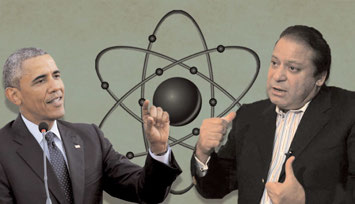
    ISLAMABAD (TIP): Pakistan’s finance minister on March 3 said that his country will never roll back its nuclear programme despite financial hardship and threat of mounting external debt.

    Ishaq Dar was briefing the Senate, the upper house of parliament, on the country’s economy.

    The Express Tribune reported that Dar dismissed reports about Pakistan bartering away its nuclear arsenal.

    “We did not start this (nuclear) programme to roll it back. This is a programme of our security, and it is a national responsibility to protect it. All political parties of Pakistan share the ownership of our nuclear programme,” he said.

    “Even if our debts swell to USD 100 billion or USD 100 trillion, we will not roll back our nuclear programme,” he said.

    He referred to a 2008 article in Wall Street Journal headlined ‘Let’s Buy Pakistan’s Nukes’ in which the author asked Western donors to agree on a USD 100 billion economic package in exchange for eliminating Pakistan’s nuclear stockpile, currently said to be the world’s fastest growing.

    He mentioned another article which suggested the ever-ballooning debt may lead Pakistan to compromise on its national security assets.

    Dar’s forceful statement came after US secretary of state John Kerry pressed Pakistan at this week’s strategic dialogue in Washington to reduce its nuclear arsenal.

    Dar did not mention Kerry’s statement but Senate chairman Raza Rabbani asked Adviser to Prime Minister on foreign affairs sartaj Aziz to brief the house on the issue.

    Aziz had urged the US not to contribute to “strategic imbalance in South Asia” by aiding India.

    (PTI)

  • Suicide bomber kills at least 10 in eastern Afghanistan

    Suicide bomber kills at least 10 in eastern Afghanistan

    JALALABAD (TIP): At least 10 people were killed and over 40 injured when a suicide bomber blew himself up near a market in Afghanistan’s eastern province of Kunar today, officials said.

    “A suicide bomber riding a motorcycle detonated his explosives in a market in Asadabad the provincial capital, 10 people were killed and over 40 were injured.” Ghani Mosamem, spokesman for the provincial governor told AFP.

  • BUDGET SPECIAL UNION BUDGET 2016-17 | JAITLEY FOCUSES ON RURAL INDIA, SOCIAL WELFARE

    BUDGET SPECIAL UNION BUDGET 2016-17 | JAITLEY FOCUSES ON RURAL INDIA, SOCIAL WELFARE

    RURAL INDIANEW DELHI (TIP): Finance minister Arun Jaitley unveiled what appeared to be a pro-poor budget on February 29, announcing higher spending in the rural economy to fire demand.

    But the minister also promised to pursue economic reforms, including winning approval for a goods and services tax and a new bankruptcy law, to keep India expanding as the world’s fastest growing major economy in his second full budget.

    He announced record investments in a rural job generating scheme as well as higher spending to boost irrigation as part of efforts to facedown looming crisis in the rural economy.

    Jaitley announced two schemes to promote organic farming and said 28.5 lakh hectares will be brought under an irrigation scheme under the Pradhan Mantri Krishi Sichai Yojana.

    Jaitley said a dedicated long-term irrigation fund will be created in NABARD with a corpus of Rs 20,000 crore.

    “The total allocation for agriculture and farmers’ welfare is Rs. 35,984 crore,” Jaitley said, and added: “The government will allocate Rs 5,500 crore for a crop insurance scheme.”

    “The government will reorient its intervention in farm and non-farm sectors to double the income of farmers by 2022,” Jaitley said, echoing Prime Minister Narendra Modi’s pledge to focus on the wellbeing of the agrarian community.

    The ruling NDA dispensation has been criticised by opposition parties, especially the Congress, for allegedly being ‘pro-industrialist’ and ‘anti-poor’.

    Shares of rural and agriculture companies were trading sharply up on measures suggested in the Budget speech. Jaitley also said a unified agriculture market e-platform will be dedicated to nation on birthday of Dr. BR Ambedkar. “We had to work in an unsupportive global environment and obstructive political atmosphere,” Jaitley said, in an apparent dig at the Opposition.

    The finance minister has the job to make India regain its spot as an investors’ darling as well as signal long-term economic reforms without hurting the country’s vast consuming class.

    “We must strengthen firewalls against risks through structural reforms, rely on domestic market so that growth does not slow down,” Jaitley said.

    The government will undertake nine-point reforms, including steps to ensure ease of business in governance, fiscal discipline to ensure benefits for people, the minister said.

    In his budget speech, Jaitley announced a new initiative to provide subsidised cooking gas to BPL families.

    “I am presenting this budget when the global economy is in serious crisis… We converted difficulties and challenges to an opportunity.

    “Indian economy has held its ground firmly,” Jaitley said as he began his speech.

  • HIGHLIGHTS | BUDGET SPECIAL | UNION BUDGET 2016-17

    HIGHLIGHTS | BUDGET SPECIAL | UNION BUDGET 2016-17

    Rs 1,000 crore allocated for new EPF (Employees’ Provident Fund) scheme

    Rs 38,500 cr allocated for MNREGA in 2016-17, the highest ever if entire amount is spent

    Rs 2.87 lakh crore will be given as grants-in-aid to village panchyats and municipalities to boost rural economy

    Govt to spend Rs 850 crore in a few years on animal husbandry, cattle and livestock breeding

    States will be encouraged to take up decentralised procurement of foodgrains

    Record agri credit target of Rs 9 lakh crore in 2016-17 set

    Rs 19,000 crore allocated for Pradhan Mantri Gramin Sadak Yojana in 2016-17. In all, Rs 27,000 cr after state contribution

    Rs 2.87 lakh crore to be given grant-in-aid for gram panchayats and municipalities; it is quantum jump of 228%

    Rs 60,000 crore for recharging of ground water recharging

    Govt will work for passage of insolvency and bankruptcy laws. We will undertake significant reforms

    Govt will enact a law to confer benefits on deserving sections on Aadhaar platform

    Next financial year will cast an additional burden due to implementation of 7th Pay Commission and OROP

    CPI inflation was 9.4% in the last 3 years of previous government. It has come down to 5.5% now

    Growth has acclerated to 7.6% in 2015-16 notwithstanding contraction of global exports

    Our external situation is robust, CAD has declined to $14.4 bn this year, will be 1.4% of GDP at the end of fiscal

  • Budget high on rhetoric, low on action in social sector

    Budget high on rhetoric, low on action in social sector

    NEW DELHI (TIP): Finance minister Arun Jaitley’s budget speech focused on the social sector more than before, but it failed to reflect amply in fund allocation to key ministries such as education, health, poverty alleviation and women and child development.

    Budget high on rhetoricThe argument put forth was that Rs 64,144 crore more was allocated to states for 2016-17 as compared to the previous budgetary estimate and the additional money would be spent on the welfare of people. Another reason was that 31 of the 64 Centrally Sponsored Schemes were transferred to the states and, therefore, that money was reflected in the Central plan outlay.

    That argument, however, falls flat, as the states will have to dole out more to seek Central funds under ‘core schemes’ such as Sarva Shiksha Abhiyan and the Integrated Child Development Scheme — because in October 2015, the Centre reduced its share in these schemes and passed on the burden to the states.

    The new funding mechanism that came into force last year showed that spending on vital sectors such as education and health had fallen. Only 4% of the funds earmarked for health was spent by September 2015, according to an analysis by Accountability Initiative. In the case of education, it was 34%. Even in schemes such as social security and midday meal, where the Centre has committed to continue with higher funding, allocation has virtually remained the same or gone down as compared to the previous year.

    In case of social security for poor senior citizens and widows, Rs 2,426 crore was allocated, a dip from Rs 3,385 crore for 2015- 16, but the FM presented it as an increase by comparing it with a revised estimate for 2015-16 — which was Rs 1,558 crore. The most deprived sections of society too got Rs 1,375 crore less than in last year’s budget.

    These are just are a few of the many instances when budgetary estimate for the next fiscal was compared with revised estimate for the current financial year to show higher allocation. There was more rhetoric than action for the social sector in the budget, documents show.

    Jaitley mentioned “farm” 42 times in his speech, but the increase in allocation to the agriculture ministry was largely because of accounting change. The farm loan interest subvention, introduced by the UPA government, was the responsibility of the finance ministry, but the Rs 15,000 crore allocation was transferred to the agriculture ministry this year, resulting in its budget looking good. There was, of course, the Prime Minister’s stamp on the budget with the Swachh Bharat campaign getting a 150% hike — the highest among all social sector schemes.

    Source: HT

  • Budget Special | Here is list of what becomes expensive and cheaper

    Budget Special | Here is list of what becomes expensive and cheaper

    NEW DELHI (TIP): Finance Minister Arun Jaitley announced a host of changes in the tax structure in the Budget for 2016- 17 that made cars, cigarettes and air travel expensive, while footwear, solar lamps and routers are slated to be cheaper.

    Jaitley on Monday imposed up to 15 per cent excise duty on all tobacco products.

    Additional levy of Krishi Kalyan cess on all services, activities including eating out and payment of bills will also become more expensive. We take a look at things that became expensive and chepaer post-budget announcements:

    What become expensive

    0.5 per cent Krishi Kalyan Cess on all taxable services with effect from 1st June, 2016 which will increase all services bills like – telephone, restaurant, school fees etc

    Increase in price for luxury cars – The budget has imposed a tax collected at source of 1 % on purchase of luxury cars exceeding value of INR 10 lakhs. Further, an Infrastructure cess has been levied as below –

    1 per cent: Petrol/LPG/CNG driven motor vehicles of length not exceeding 4m and engine capacity not exceeding 1200cc

    2.5 per cent: Diesel driven motor vehicles of length not exceeding 4m and engine capacity not exceeding 1500cc

    4 per cent: Other higher engine capacity motor vehicles and SUVs and bigger sedans

    Tobacco and Tobacco Products

    Branded readymade garments and made up articles of textiles of retail sale price of Rs 1000 or more

    Waters, including mineral waters and aerated waters, containing added sugar or other sweetening matter or flavored

    Precious metals & Jewellery

    Aluminum foil

    Air Travel

    Plastic bags and sacks

    Ropeway, cable car rides

    Imported imitation jewellery

    Industrial solar water heater

    Legal services

    Lottery tickets

    Traveling by hiring stage carriage

    Hiring of packers & movers

    E-reading devices

    Instruments for VoIP (Voice over Internet Protocol)

    Imported Golf Cars

    Gold bars

    What becomes cheaper

    Footwear

    Solar lamp

    Router, broadband modems and set top boxes, Digital video recorder and CCTV cameras

    Hybrid electric vehicles

    Sterilised dialyser

    Low cost houses with less than 60 sq mt carpet area

    Hiring of folk artists for performance

    Refrigerated containers

    Pension plans

    Microwave ovens

    Sanitary pads

    Braille paper

    “I am presenting the budget when the global economy is in crisis,” Jaitley said in his opening remarks, adding that India, however, remained the bright spot in this gloom, turning difficulties into opportunities.


  • BUDGET SPECIAL | UNION BUDGET 2016-17 | BUDGET REACTIONS

    BUDGET SPECIAL | UNION BUDGET 2016-17 | BUDGET REACTIONS

    “This Budget is pro-village, pro-poor, pro-farmer. The main focus is to bringing about qualitative change in the country. There will be a big change in the lives of common people. Several steps have been taken for the farmers. The most important is Pradhan Mantri Krishi Yojana.”

    – Narendra Modi, Prime Minister of india

    “The thrust of the budget is towards strengthening rural and agriculture sectors and boosting employment-generation…. There is a lot of focus on agriculture. There is a proposal to double farmers’ income by 2022. Families will get health insurance of Rs 1 lakh for free. This is a big step…. More than Rs 2000 crore will be spent on giving LPG connection to 1.5 crore families and it will help rural women in a big way.”

    – Amit Shah, BJP president

    “Unfortunately, what was needed to be done has not been done. Biggest challenge which we face today is in employment and agriculture sectors. There is not anything on that.”

    – Kamal Nath,Congress leader

    “The government has painted a very broad and general picture and it has to be seen how everything works out in practice.”

    – Shashi Tharoor, Congress MP

    “In totality it is going to shrink the economy. Markets have given the budget a thumbsdown.”

    – Manish Tewari, Congress leader

    “Modi govt walks the talk. Thank you Modiji and Arun Jaitley ji for giving a visionary budget in difficult times. Congrats for changing direction of budget speech from small geographic & sectoral announcement to broad focus plan. The social sector spending is not only increased but planned in targeted direction to ensure the quality of expenditure and outcome. The huge infra spending will create jobs and fuel growth while target of doubling farm income will change the future of the nation.”

    – Devendra Fadnavis, Maharashtra CM

    “The budget is for everybody. Budget has been provided for infrastructure like ports, rail, airports. In the health sector, for poor people, upto Rs one lakh cost of hospitalisation will be borne by the government. This is a progressive and visionary budget.”

    – Prakash Javadekar, Union Minister

    “India is a country where agriculture holds a prime place but it is after years that this has been reflected in a budget which gives priority to farmers as well as weaker sections. This budget is one which will also lead to empowerment of the youth.”

    – Mukhtar Abbas Naqvi, Union Minister

    “It is good that the budget has focussed on real areas, noting that at the same time it also has many things for the corporates. The overall philosophy has to take something from the super-rich for the benefit of the poor which is alright. Finance Minister has maintained fiscal discipline while also making provisions for measures like Pay Commission, OROP and road and transport investment. By these measures, the boost which we wanted in the economy will be possible.”

    – Yashwant Sinha, BJP leader

    “There is no relief for the common people in the budget. However, relief has been given to industrialists. The long-pending demand of waiving farmers loan has also not been considered. They criticised MNREGA and Aadhaar. The UPA government gave Rs 40,000 crore to MNREGA. This (the budget allocation) is not a big thing. If you compare the wages that have increased, then it is important. It is not important how much total allocation has increased. If it was Rs 100 a day, then we gave Rs 40,000 crore. Today the wages have become Rs 150. This is natural that the man-days will be reduced. You are seeing only the money part, but not the physical part.”

    – Mallikarjun Kharge, Congress leader

    “This is not a populist budget and that’s not easy because the global scenario has been difficult. Fiscal deficit is important because that is the single most important factor due to which the country rating is determined. When Moody and other research and rating companies rate the country, they look at the fiscal deficit. And that impacts inflation, rupee exchange rate, so that I think takes a lot of courage. From macro-economic point of view, this is a big step. All the massive allotments made for rural infrastructure, irrigation and farm sector as well as national infrastructure, cutting of red tape are growth oriented. I think it’s a good sign.”

    – Baijayant Panda, BJD leader

    “The budget is development-oriented. It is in the interest of poor, farmers, and youth. There is special focus on agriculture, infrastructure, rural development, education and social sectors.”

    – Ram Vilas Paswan, LJP leader

    “It is a common man’s budget as all the priorities have been included to cater to the needs of the ‘aam aadmi’. It is the budget of the farmers. It will give impetus to socio-economic developmentand will prove to be a historic budget in the days to come.”

    – Raman Singh, Chhattisgarh CM

    “As with the previous two budgets, this budget of the Modi govt is again full of hollow promises and slogans. The numbers just don’t add up. FM says Budget is about fulfilling
    ‘desires & dreams’ but it has no vision. The dead certainty from it is of a shrinking economy. Increasing cess hurts the common man, with indirect tax collections proposed to be up by Rs 20,600 cr. Direct tax proposals are down by Rs 1,060 cr. This means more burden on common people as indirect taxes are inflationary. So there will be no expansion in domestic demand.”

    – Sitaram Yechury, CPI-M general secretary

    “The budget has nothing for farmers in distress who are are committing suicides. Farmers are reeling under huge debt. Loans of industrialists have been waived but not that of farmers. Nothing for middle class in this budget. Modi govt cheated middle class which votes for them. BJP vowed to bring back black money through enforcement, not through amnesty schemes. This is what Chidambaram also did. What is the difference? There’s nothing for the treatment of farmers.”

    – Arvind Kejriwal, Delhi CM

    “It’s a pro-poor, pro-farmer, welfare and growth-oriented budget. The Budget will surely help de-stress the distressed rural sector. The proposals to set apart Rs 9 lakh crore for farm credit; Rs 5,500 crore for crop insurance scheme; dedicated irrigation fund worth Rs 20,000 crore under NABARD; highest ever compensation in case of crop loss under the “Prime Minister Fasal Bima Yojana” and allocation of Rs 412 crore for encouraging organic farming would open new opportunities for the farmers.”

    – Manohar Lal Khattar, Haryana CM

  • Cheap agriculture loans to cushion impact of weather shocks, droughts

    Cheap agriculture loans to cushion impact of weather shocks, droughts

    NEW DELHI (TIP): Farmers can continue to get cheap farm loans with finance minister Arun Jaitley raising the target for loan disbursal to them to Rs 9 lakh crore.

    Special focus has been given to ensure adequate and timely flow of credit to farmers, Jaitley said, adding, “Against the target of Rs 8.5 lakh crore in 2015-16, the target of agricultural credit in 2016-17 will be an all-time high of Rs 9 lakh crore.”

    An aggressive farm credit policy is aimed at putting cash into stressed farmhands and cushioning the impact of weather shocks and crippling droughts.

    In fact, the target for farm loan disbursal has been raised consistently. For example, in 2010-11, the loan target was raised by more than 15% at Rs 3.75 lakh crore, as against Rs 3.25 lakh crore in 2009-10.

    To reduce the burden of loan repayment on farmers, the finance minister said a provision of Rs 15,000 crore has been made in the budgetary estimate of 2016-17 towards interest subvention.

    Jaitley said the government has provided a path-breaking crop insurance scheme — Prime Minister Fasal Bima Yojana — for which Rs 5,500 crore has been allocated for effective implementation in 2016-17.

    The new farm insurance scheme does away with clumsy procedures of existing plans that are so complex that they have only served to chase farmers away. Only about 5% farmers take insurance in areas where it is available, a low penetration that shrivels farm incomes during droughts, hailstorms and unseasonal rains.

    The new scheme fixes farmers’ share of premium at 1.5% for winter-sown crops and 2% for summer-sown crops. For cash crops and horticulture crops, it is 5%. The rest will be borne by the government. This is cheaper than current rates.

    Source: HT

  • Mexico says won’t pay for Trump’s ‘terrible’ border wall

    Mexico says won’t pay for Trump’s ‘terrible’ border wall

    MEXICO CITY (TIP): There is no way Mexico would fund Donald Trump’s “terrible” plan to build a wall along its border with the United States if the Republican front-runner wins the US presidential election, the Mexican finance minister said.

    Trump, the New York billionaire developer and former reality television star, sparked outrage in Mexico when he vowed to force Latin America’s second largest economy to pay for a wall along the southern US border to stem the flow of illegal immigration and drugs.

    In a televised interview late on Wednesday, finance minister Luis Videgaray categorically rejected the proposal.

    “Under no circumstance will Mexico pay for the wall that Mr. Trump is proposing,” he said. “Building a wall between Mexico and the United States is a terrible idea. It is an idea based on ignorance and has no foundation in the reality of North American integration.”

    Trump has accused Mexico of sending rapists and drug runners across the US border and has vowed to increase fees on some Mexican visas and all border crossing cards as part of a broader plan to force Mexico to pay for the wall.

    Former conservative Mexican presidents Felipe Calderon and Vicente Fox have compared Trump to Adolf Hitler while fears of a Trump presidency have helped stoke a spike in the numbers of immigrants trying to enter the United States.

  • Man given ‘wrong keys’ by hotel sues after getting into bed with nine-year-old girl

    Man given ‘wrong keys’ by hotel sues after getting into bed with nine-year-old girl

    MISSOURI  (TIP): A man is suing a hotel for handing him the wrong keys to his room in a mix-up that saw him climb into bed with a nine-year-old girl -and eventually lose his highly paid job.

    Daniel Hughes is filing a lawsuit against the Ritz-Carlton hotel in Missouri claiming staff handed him the key without checking his identification, which led to him getting into bed with the child.

    He was subsequently taken to court on allegations of child abuse, according to the St Louis Post Dispatch.

    Although he was later acquitted of three counts of child molestation and one count of statutory sodomy, Hughes says he lost a $480,000-a-year job – projected to rise to more than $1 million by this year – in the process.

    His lawsuit against the hotel, and its owners Maritz, Wolff and Co, claims hotel staff failed to conduct “any reasonable and customary key-security precautions that are standard within the hotel industry, and particularly within the luxury hotel market to which the Ritz Carlton belongs”.

    The case itself, which took place in 2011, was described by St Louis jurors as “difficult”, according to the St Louis Dispatch.

    Hughes, then 42, was staying at the hotel for a business conference and was believed to have consumed about 13 drinks when he confused his hotel room numbers and tried his key on the wrong door.

    Believing it not to be working, he returned to the hotel reception where staff gave him a key to the room he said was his – but which in fact had a nine-year-old girl sleeping inside. He then got into bed with her.

    Members of the jury were asked to decide whether the girl’s claim that he had touched her inappropriately could be proven or not. Neither of his claims that he thought she was a young woman he had met earlier, and that he was intoxicated, were legitimate defences for the act, jurors were instructed.

    However, prosecutors were unable to prove he had touched the girl and the jury cleared him.

    Defence attorney Scott Rosenblum told the St Louis Post Dispatch: “The whole case, at the end, was left in my view to just massive speculation and innuendo, and that’s not enough.”

    Hughes settled a lawsuit filed by the girl’s parents for$50,000 in 2014 and filed the new lawsuit against the hotel two weeks ago.

    The Independent has contacted the Ritz Carlton Hotel and Maritz, Wolff and Co in St Louis for comment. (The Independent)

  • Special visa for SAARC businessmen from April

    Special visa for SAARC businessmen from April

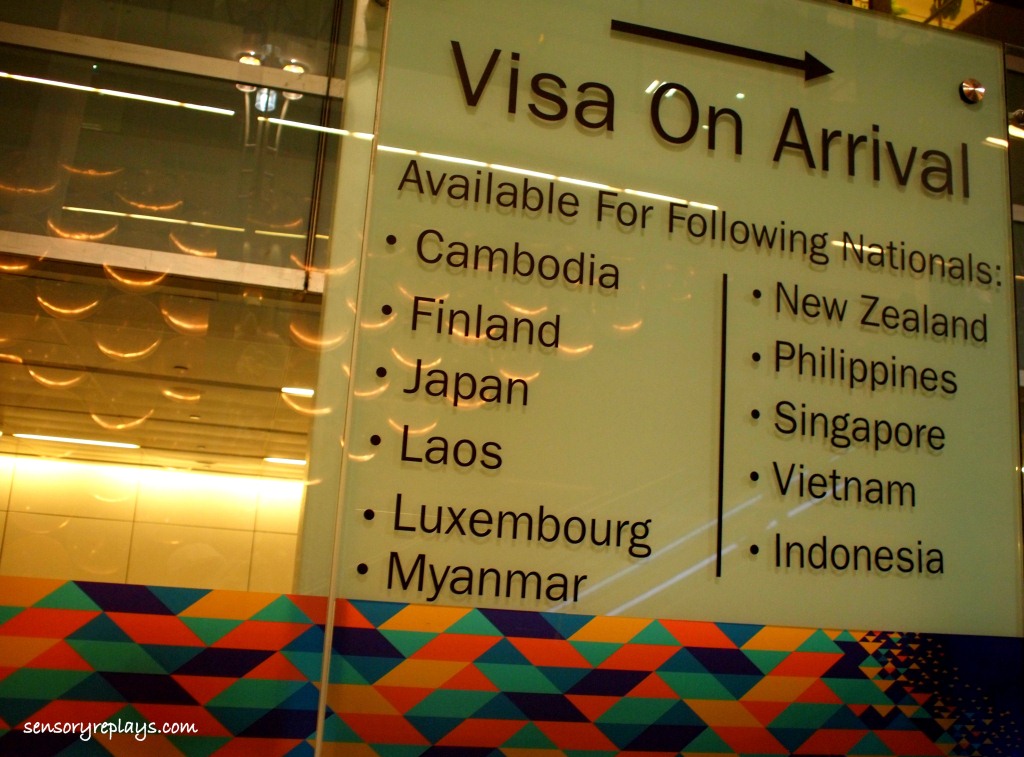
    NEW DELH: India is all set to issue multi- city, multiple-entry business visa to businessmen of SAARC nations including Pakistan, beginning April 1, 2016.

    The business visa, to be called ‘India Business Card’ is expected to be granted for up to five years or less, as per the requirement. “Printing of the ‘India Business Card’ has been ordered in the India Security Press in Nashik. We are planning to launch it by April 1,” a senior Home Ministry official said.

    There will be some special conditions for businessmen from Pakistan. But no visa conditions will apply for those from countries like Sri Lanka, Bangladesh and Maldives. Nationals from Bhutan and Nepal do not require a visa to enter India.

    Pakistani entrepreneurs should run an enterprise worth one crore Indian rupees and have an annual income of at least 10 lakh Pakistani rupees to apply for a three-year multiple entry card. Also, the applicant should be a member of any Chamber of Commerce in Pakistan recognised by India.

    Currently, they are eligible for grant of multiple-entry business visa for a maximum period of one year and can only travel to 10 places. Under the new scheme Pakistani entrepreneurs will be exempted from reporting at the local police station.

    Prime Minister Narendra Modi had, during the SAARC summit in Kathmandu in 2014, announced business visas with 3-5 years’ validity for citizens of all SAARC nations.

  • Change in command of US-Nato forces in Afghanistan

    Change in command of US-Nato forces in Afghanistan

    KABUL, AFGHANISTAN (TIP): US Army General John W “Mick” Nicholson has taken command of US and Nato forces in Afghanistan, inheriting America’s longest war and a vicious insurgency.

  • Alexandra Andresen: 19-year-old teenager and the world’s youngest billionaire

    Alexandra Andresen: 19-year-old teenager and the world’s youngest billionaire

    OSLO (TIP): For most people, becoming a billionaire is a dream that will never come to fruition before they die.

    That knowledge makes Alexandra Andresen’s entry onto the Forbes billionaires list all the more hard to swallow.

    The Norwegian teenager, 19, is estimated to be worth a staggering $1.2 billion, making her the youngest billionaire in the world. Her 20-year-old sister Katharina is also worth $1.2bn thanks to the 42.2 per cent of the Ferd Holding company she and her sister both own.

    Her father transferred the stock to his daughters in 2007 but still maintains control of the company.

    Who is she?

    Andresen is the daughter of Johan Andresen, a Norwegian investor from Oslo.

    Aged 11, Andresens studied at the Forres Sandle Manor boarding school in Fordingbridge for a year before continuing her education in Oslo, according to The Telegraph.

    She is now studying social science at Amsterdam University College and shows no signs of moving towards becoming an active owner of the family company.

    She is also a sponsored dressage rider who dedicates much of her Instagram to her horses. Her equestrian passion takes centre stage in her life and after winning three dressage championships, Andresen is now focusing on her professional riding career. She told Eurodressage in 2015: “This is what I want to do the rest of my life, ride!”

    She is believed to be in a relationship with Joachim Tollefsen, a 24-year-old professional mixed-martial-arts fighter.

    Where does her family’s money come from?

    Tobacco. The family were involved in the tobacco industry with their brand Tiedemanns until 2005 before selling their stake to Skandinavisk Tobakskompagni for almost $500 million. Now, the Ferd investment company predominantly manages hedge funds.

    Why is she famous now?

    Andresen’s name has entered headlines recently because of her status as the youngest billionaire in the world. However, she lived in relative obscurity until the age of 17, when Norwegian authorities begin publishing annual tax return figures.

    What does she do with her money?

    “I actually save all the time, I have always done,” Andresen told Ferd’s corporate magazine in 2015.

    “I save when I get my weekly allowance, and I save the cash prizes I win in competitions or if I get money as a gift for my birthday. It means I can buy myself things I really want, like a bag or a pair of shoes, without having to ask mum or dad for money.”

    (AP)

  • Laser weapons to shoot down drones, missiles on cards

    Laser weapons to shoot down drones, missiles on cards

    WASHINGTON (TIP): The US military is “very close” to developing laser weapons for use on the battlefield, an army official has revealed. Speaking at a House of Representatives committee, military technology secretary Mary J Miller said the army was aiming to have the weapons deployed as early as 2023.

    Once developed, the weapons would be used to shoot down missiles, drones and even artillery shells as they move through the sky.

    Before laser weapons can be used in battle, however, they’ll need to go through stringent tests and trials so soldiers can get to grips with them.

    Speaking to the committee, Miller said: “Lasers have been promised for a long time, but they’ve never held up and delivered what was asked for. So the operators are rightfully skeptical, which is why you see the (armed) services taking the lasers out in operational environments and letting them be used by operators so they can understand what the capabilities are,” she said.

    In the meantime, less-powerful laser weapons will be rolled out “relatively soon,” so members of the military can gain some experience before using the more deadly weapons.

    Some laser weapons have been tested before, and the technology is already in use in some branches of the American armed forces.

    Also speaking at the committee, David Walker, a US air force technology official, said American planes equipped with lasers were flying “every day,” using them as “infrared countermeasure systems” designed to protect against incoming missiles.

    Part of the military’s attraction to laser weapons is their low cost.

    While the systems may take millions to develop, a single shot on the battlefield would cost around £1, according to Popular Science — far less than the price of a single missile, which can stretch into the tens of thousands of pounds. If laser weapons make it into the theatre of war in the 2020s, they’ll only target incoming projectiles or unmanned vehicles for the forseeable future, since the use of directed energy or blinding laser weapons against people is restricted by the Geneva Conventions.

    (AP)

  • Pakistan’s Hand in the Rise of International Jihad

    Pakistan’s Hand in the Rise of International Jihad

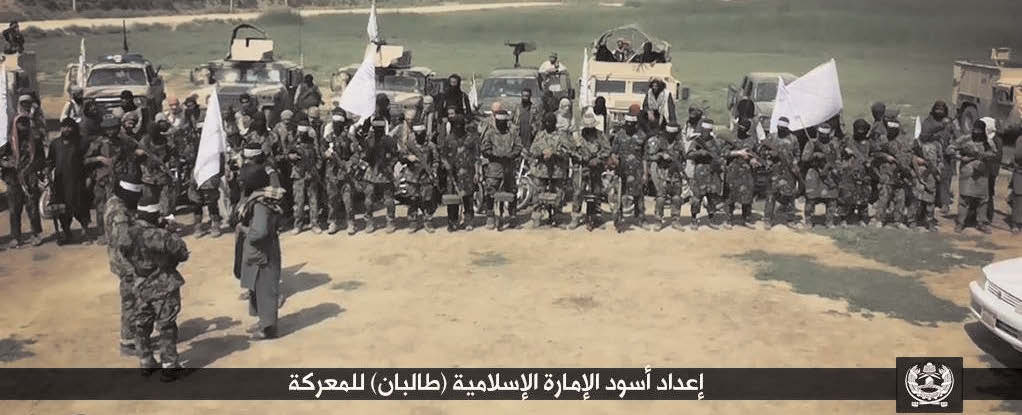
    Resident Ashraf Ghani of Afghanistan has warned in several recent interviews that unless peace talks with Pakistan and the Taliban produce results in the next few months, his country may not survive 2016. Afghanistan is barely standing, he says, after the Taliban onslaught last year, which led to the highest casualties among civilians and security forces since 2001.

    “How much worse will it get?” Mr. Ghani asked in a recent television interview. “It depends on how much regional cooperation we can secure, and how much international mediation and pressure can be exerted to create rules of the game between states.”

    What he means is it depends on how much international pressure can be brought to bear on Pakistan to cease its aggression.

    Critics of the Afghan leadership say it’s not Pakistan’s fault that its neighbor is falling apart. They point to the many internal failings of the Afghan government: political divisions, weak institutions, warlords and corruption.

    But experts have found a lot of evidence that Pakistan facilitated the Taliban offensive. The United States and China have been asking Pakistan to persuade the Taliban to make peace, but Afghanistan argues that Islamabad has done nothing to rein in the Taliban, and if anything has encouraged it to raise the stakes in hopes of gaining influence in any power-sharing agreement.

    This behavior is not just an issue for Afghanistan. Pakistan is intervening in a number of foreign conflicts. Its intelligence service has long acted as the manager of international mujahedeen forces, many of them Sunni extremists, and there is even speculation that it may have been involved in the rise of the Islamic State.

    The latest Taliban offensive began in 2014. United States and NATO forces were winding down their operations in Afghanistan and preparing to withdraw when Pakistan decided, after years of prevarication, to clear Taliban and Al Qaeda fighters from their sanctuary in Pakistan’s tribal area of North Waziristan.

    The operation was certainly a serious endeavor – Taliban bases, torture chambers and ammunition dumps were busted, town bazaars were razed and over one million civilians were displaced.

    But the militants were tipped off early, and hundreds escaped, tribesmen and Taliban fighters said. Many fled over the border to Afghanistan, just at the vulnerable moment when Afghanistan was assuming responsibility for its own security. Ninety foreign fighters with their families arrived in Paktika Province that summer, to the alarm of Afghan officials.

    Further along the border in Paktika Province, Taliban fighters occupied abandoned C.I.A. bases and outposts. A legislator from the region warned me that they would use the positions to project attacks deeper into Afghanistan and even up to Kabul. Some of the most devastating suicide bomb attacks occurred in that province in the months that followed.

    Meanwhile, in Pakistan, the Haqqani network, the most potent branch of the Taliban, moved from North Waziristan into the adjacent district of Kurram. From there it continues to enjoy safe haven and conduct its insurgency against American, international and Afghan targets.

    Pakistan regards Afghanistan as its backyard. Determined not to let its archrival, India, gain influence there, and to ensure that Afghanistan remains in the Sunni Islamist camp, Pakistan has used the Taliban selectively, promoting those who further its agenda and cracking down on those who don’t. The same goes for Al Qaeda and other foreign fighters.

    Even knowing this, it might come as a surprise that the region’s triumvirate of violent jihad is living openly in Pakistan.

    First, there’s Sirajuddin Haqqani, the leader of the Haqqani network, and second in command of the Taliban. He moves freely around Pakistan, and has even visited the Pakistani intelligence headquarters of the Afghan campaign in Rawalpindi.

    Then there is the new leader of the Taliban, Mullah Akhtar Muhammad Mansour, who has openly assembled meetings of his military and leadership council near the Pakistani town of Quetta. Since he came to power last year, the Taliban has mounted some of its most ambitious offensives into Afghanistan, overrunning the northern town of Kunduz, and pushing to seize control of the opium-rich province of Helmand.

    Finally, Al Qaeda’s leader, Ayman al-Zawahri, enjoys sanctuary in Pakistan – one recent report placed him in the southwestern corner of Baluchistan. He has been working to establish training camps in southern Afghanistan. In October, it took United States Special Operations forces several days of fighting and airstrikes to clear those camps. American commanders say the group they were fighting was Al Qaeda in the Indian Subcontinent, a new franchise announced by Mr. Zawahri that has claimed responsibility for the killings of bloggers and activists in Karachi and Bangladesh, among other attacks.

    Pakistan denies harboring the Taliban and Al Qaeda, and points out that it, too, is a victim of terrorism. But many analysts have detailed how the military has nurtured Islamist militant groups as an instrument to suppress nationalist movements, in particular among the Pashtun minority, at home and abroad.

    Perhaps most troubling, there are reports that Pakistan had a role in the rise of the Islamic State.

    Ahead of Pakistan’s 2014 operation in North Waziristan, scores, even hundreds, of foreign fighters left the tribal areas to fight against President Bashar al-Assad in Syria. Tribesmen and Taliban members from the area say fighters traveled to Quetta, and then flew to Qatar. There they received new passports and passage to Turkey, from where they could cross into Syria. Others traveled overland along well-worn smuggling routes from Pakistan through Iran and Iraq.

    The fighters arrived just in time to boost the sweeping offensive by ISIS into Iraq and the creation of the Islamic State in the summer of 2014.

    If these accounts are correct, Pakistan was cooperating with Qatar, and perhaps others, to move international Sunni jihadists (including 300 Pakistanis) from Pakistan’s tribal areas, where they were no longer needed, to new battlefields in Syria. It is just another reminder of Pakistan’s central involvement in creating and managing violent jihadist groups, one Pakistani politician, who spoke on the condition of anonymity when talking about intelligence affairs, told me.

    This has been going on for more than 30 years. In 1990, I shared a bus ride with young Chinese Uighurs, Muslims from China’s restive northwest, who had spent months training in Pakistani madrasas, including a brief foray into Afghanistan to get a taste of battle. They were returning home, furnished with brand-new Pakistani passports, a gift of citizenship often offered to those who join the jihad.

    Years later, just after Osama bin Laden was found and killed in Pakistan, I interviewed a guerrilla commander from the disputed region of Kashmir who had spent 15 years on the Pakistani military payroll, traveling to train and assist insurgents in Bosnia, Chechnya, Kashmir and Afghanistan.

    In 2012 I came across several cases where young clerics, fresh graduates from the Haqqania madrasa in Pakistan, returned to their home villages in Afghanistan, flush with cash, and set about running mosques and recruiting and organizing a band of Taliban followers.

    I visited that madrasa in 2013. It is the alma mater of the Afghan Taliban, where many of the leaders of the movement were trained. The clerics there remained adamant in their support for the Taliban. “It is a political fact that one day the Taliban will take power,” Syed Yousuf Shah, the madrasa spokesman, told me. “We are experts on the Taliban,” he said, and a majority of the Afghan people “still support them.”

    The madrasa, a longtime instrument of Pakistani intelligence, has been training people from the ethnic minorities of northern Afghanistan alongside its standard clientele of Pashtuns. The aim is still to win control of northern Afghanistan through these young graduates. From there they have their eyes on Central Asia and western China. Pakistani clerics are educating and radicalizing Chinese Uighurs as well, along with Central Asians from the former Soviet republics.

    No one has held Pakistan to account for this behavior. Why would Pakistan give it up now?

  • Readers thank New York State Senator Leroy Comrie

    Readers thank New York State Senator Leroy Comrie

    Dear Editor:

    Leadership comes in many forms, and when a State Senator stands up for us, we must stand with him.

    Recently, New York State Senator Leroy Comrie sponsored legislation that would direct the Queens County Board of Elections to provide language assistance in Bengali, Punjabi and Hindi. This is important because the South Asian community is growing in New York, we vote, and our lives matter.

    Thank you Senator Comrie!  I call on all my Desi brothers and sisters to call your state senator to express you support for NYS S06772. New York State Senate Capitol Switchboard number is (518) 455-2800

    Sincerely,

    Heta I. Patel, hetahynes@gmail.com

  • A star is born | Kanhaiya Kumar loads the rhetorical dice

    A star is born | Kanhaiya Kumar loads the rhetorical dice

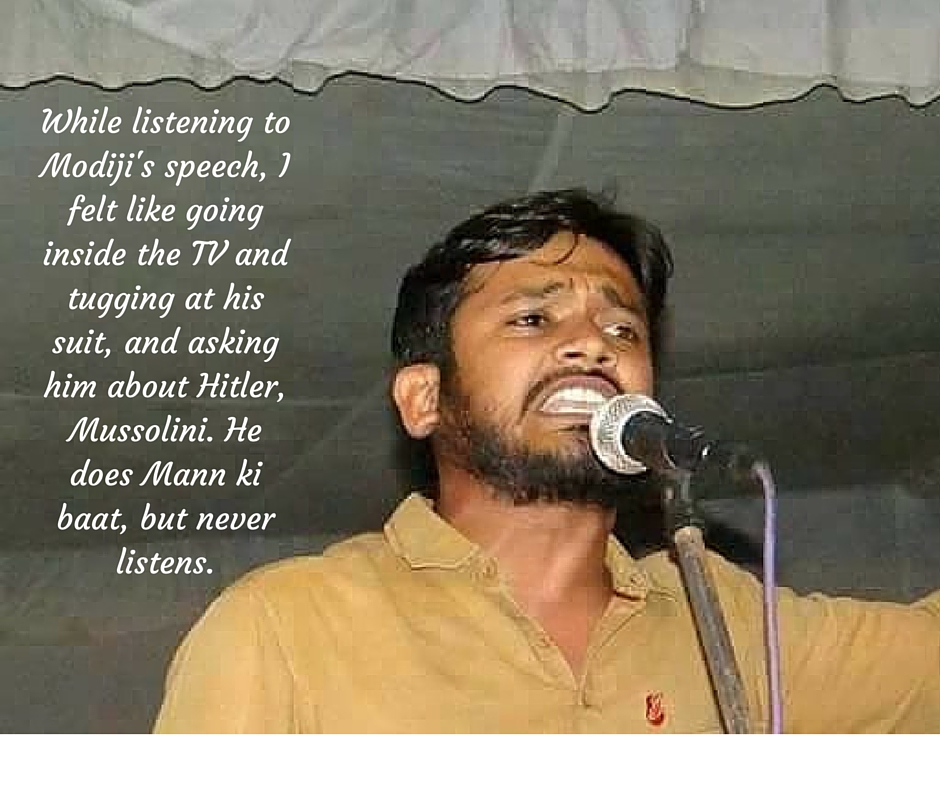
    New information technology has become a great leveler. Just as it allows the jihadis to have their violent message registered across national boundaries, it also enables an Anna Hazare to hobble down political establishment. The same technology was used by the RSS-inspired security establishment to make a ‘seditious’ villain out of JNU student union president, Kanhaiya Kumar; the same technology has now been deployed by Kanhaiya and his friends to mount a counter-offensive. On Thursday afternoon, Kanhaiya emerged from jail, and, on Thursday night, he emerged as a star, a new voice of young India, boldly unintimidated and brilliantly unapologetic, staggeringly rhetorical.

    Suddenly, this otherwise un-prepossessing young man from Bihar has come to symbolize two struggles: one personal and immediate, and second, long-term and ideological. His arrest by an overzealous Delhi Police on a ‘sedition’ charge brought into sharp focus the question of freedom of speech. That fundamental freedom has now been sought to be trifled with, as per the political preferences of the ruling party of the day. The judiciary, thankfully, remains sufficiently independent to ensure that the Kanhaiya Kumars across the land are not robbed of their autonomy to think critical thoughts, even disturbing thoughts.

    Then, Kanhaiya Kumar represents the long-term struggle over this country’s soul. On the one hand, there is the RSS-BJP combine, armed with its Hindutva ideology; on the other, are voices, ideas and groups which refuse to accept the Hindutva-laced prescriptions and proscriptions. Because the BJP is the ruling party, the Hindutva forces feel empowered to insist on defining how this country would conduct itself, what the citizens would be allowed to believe and say. The ruling combine wants to shut down all arguments, or allow only those arguments it approves of. This arrogant interpretation of the ruling elites of its minatory right is being contested. This is both natural and desirable. Natural because India has travelled so far on the road to democracy that it would not countenance any ruler or his policemen to round up any inconvenient voice; desirable because democratic principles, indeed insist on dissent and criticism as a healthy antidote to overweening power structure. Kanhaiya Kumar’s Thursday performance was a reaffirmation of that right to speak up to the authority.

    (Tribune, Chandigarh) 

  • Republican party has two weeks to get rid of Donald Trump

    Why are we asking this now? On Super Tuesday, Donald Trump took a large stride nearer towards the Republican nomination when he won seven of the eleven states where Republicans were voting. Senator Ted Cruz one three states, and Marco Rubio just one. For those within the Republican establishment who who hate and despite Trump – and there are plenty -there has been the sudden realisation that the real estate mogul may be poised to seize the party’s nomination.

    What is the evidence of an anti-Trump rebellion?

    Why don’t they like Trump?

    Why is it so hard to a viable alternative to Trump?

    What about Ted Cruz?

    What about a brokered convention?

    How likely is it that Trump is going to be stopped?

    The problem for the haters of Trump is that the more they do to stop him, the more it helps him. He and his supporters like nothing more than an opportunity to claim that big Washington money is out to stop him. For those who don’t like the idea of Nominee Trump, it may be all too late.

    (The Indepdendent)

  • US Court Favors Sikh Religious Rights in Armed Forces

    US Court Favors Sikh Religious Rights in Armed Forces

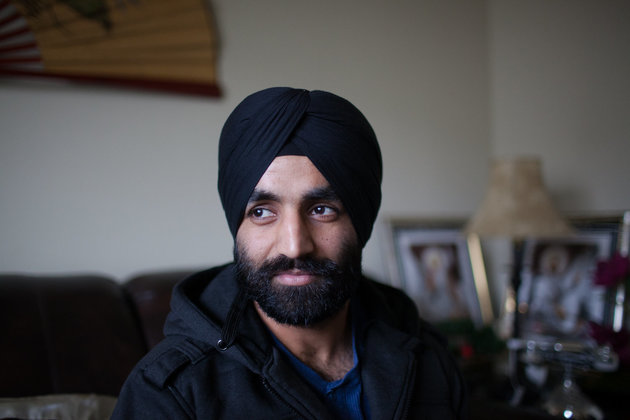
    WASHINGTON (TIP): Upholding the religious freedom rights of Sikhs in the US armed forces, an American court has ruled in favor of a decorated Sikh Army Captain who had demanded that the military accommodate his articles of faith and abandon its impromptu discriminatory testing. Captain Simratpal Singh, 28, in a lawsuit filed against the Department of Defense demanded the US military accommodate his articles of faith and dump the discriminatory testing.

    “Thousands of other soldiers are permitted to wear long hair and beards for medical or other reasons, without being subjected to such specialized and costly expert testing of their helmets and gas masks,” Judge Beryl A Howell swiftly ruled in Captain Singh’s favor last evening.

    The US Department of Defense, which had granted and then extended Captain Singh’s temporary religious accommodation until March 31 this year, remains scheduled to make a final decision on Singh’s permanent accommodation by that deadline.

    Captain Singh, who is a West Point graduate, Ranger, and Bronze Star Medal recipient, has successfully passed the safety tests required of his unit.

    “The US Constitution and the Religious Freedom Restoration Act make it crystal clear that Captain Singh’s right to practice his faith and serve in our military are not mutually exclusive,” said Amandeep Sidhu, Partner at law firm McDermott Will & Emery that represented Captain Singh.

    “We are grateful that the court is on the right side of religious freedom with its ruling, which begs the question: does the world’s largest employer really want to be on the wrong side of history?” he said.

    The testing that the military planned to impose on Captain Singh is not required of any other soldiers, even the tens of thousands with medical or religious accommodations, and including previously accommodated Sikhs, he said.

    Given that Captain Singh has passed the standard safety tests, further testing would clearly be discriminatory, he claimed.

    “We have been advocating for the simple, straightforward, equal right to serve for years, and held onto the belief that the military would correct this injustice once they realized their mistake,” said the Sikh Coalition’s Legal Director, Harsimran Kaur.

    “The military’s treatment of Captain Singh, a decorated soldier, makes it clear that they deliberately want to squash diversity and religious freedom in their ranks; that is not something that any court, or American, should ever tolerate,” Ms Kaur said.

  • Indian American Anu Jain wins admiration at Fine Art and Photography Exhibition – “Truth & Beauty”

    Indian American Anu Jain wins admiration at Fine Art and Photography Exhibition – “Truth & Beauty”

    MINEOLA, NY (TIP): As part of the National Women’s Heritage Month celebrations, Nassau County Comptroller George Maragos presented a Fine Art and Photography Exhibition on 2nd March at the Theodore Roosevelt Executive Legislative Building in Mineola, New York. The exhibition’s title “Truth & Beauty” was inspired, probably, by the famous English poet John Keats’ Ode on a Grecian Urn’ wherein the poet says: ‘Beauty is truth, truth beauty, —that is all / Ye know on earth, and all ye need to know.”

    Anu Jain poses with her award in front of her entries in the exhibition
    Anu Jain poses with her award in front of her entries in the exhibition

    The success of the exhibition can be judged from the number of artists participating in the two main categories-Art and Photo. Fifty-five distinguished female artists and photographers participated. The paintings at the Exhibition were done in both water color and oil and included portraits and landscape.

    Anu Jain is flanked by Nassau County Chief Deputy Comptroller James Garner (right) and Dilip Chauhan, Director, South East and Asian Affairs in the office of Nassau County Comptroller
    Anu Jain is flanked by Nassau County Chief Deputy Comptroller James Garner (right) and Dilip Chauhan, Director, South East and Asian Affairs in the office of Nassau County Comptroller

    Anu Jain, the only Indian American artist showcased two of her paintings -” Freedom-the Beauty of Life” in oil on canvas and the other,” Jesus”. She made the community proud with her work and got accolades and recognition from not only fellow artists and organizers but from a large number of guests from Indian-American community which included community leaders, prominent businessmen and leading media personalities.

    Anu Jain, as other artists, took in a stride the challenge of entering the world of art in a large format that expressed the feminine spirit- a moment in the life of a woman- Past, Present and Future – with one dominant figure as the main focus.

    A group of participants in the Women’s History Month Art and Photography Exhibition- “Truth & Beauty”.
    A group of participants in the Women’s History Month Art and Photography Exhibition- “Truth & Beauty”.

    Many of the pieces of artwork presented depicted a global outlook on women’s issues and concern in a realistic style while others were Semi-abstract and symbolic, inviting the viewers to add their own interpretation.

    The esteemed panel of judges was asked to score based on each participant’s excellence in the chosen art medium, expression of the theme and total presentation. The panel of judges included professors of art from finest local universities as well as renowned award winning artists and photographers. The invited judges included Robert Carter, Notable Artist; Emi Gomez, LIU Post Department of Art Professor; Kellyann Monaghan, Adelphi Professor; Gabriel Marques, Notable Artist; Catherine White, Renown Artist; and Xio Xiomaro, Notable International Photographer.

    The curators included Carla Hall D’Ambra and Minna Dun.

    The event was attended by over 200 guests. The host, Nassau County Comptroller George Maragos was conspicuous by his absence. His Deputy Chief James Garner filled the bill. Also present was Dilip Chauhan, Director, South East and Asian Affairs in the office of Nassau County Comptroller.

    Jostyn Hernandez, Director of Communications, Nassau County Comptroller’s Office was kind enough to provide a list of winners just in time to include in the report.

    Winners in the Students category
    Winners in the Students category

    Student: 1st – Samantha Hofsiss; 2nd – Brianna Purdue; and Honorable Mention – Teresa Langone

    Art: 1st – Joanne Von Zwehl; 2nd – Katherine Trunk; 3rd – Shenna Vaughan; and Honorable Mention – Nicole Franz

    Photo: 1st – Jennifer Shea; 2nd – Jennifer Formica; 3rd – Michell C. Delmonte-Synnott; and Honorable Mention – Marzena Grabczynska

  • Purno Sangma, political legend from northeast, dead

    Purno Sangma, political legend from northeast, dead

    Purno Agitok Sangma, that legendary politician from Meghalaya, nay the northeast, who once controlled the proceedings of the Lok Sabha as its Speaker, is no more . It is difficult to associate this vibrant personality, gifted with wit and humour, with death and its stillness.

    His name is familiar to every Indian, yet he came from an obscure village called Chapahati in West Garo Hills. Sangma with his never-say-die spirit struggled his way up the political ladder, going on to become the presidential candidate in 2012 although he knew that he was up against a formidable foe–the Congress party.

    Sangma’s baptism in politics was through the Indian National Congress. He was anointed vice president of the Youth Congress in Meghalaya in 1973, two years after the state took birth. His political skills were honed by Meghalaya’s first chief minister Capt Williamson Sangma, a veteran in his own right.

    He fought the 6th Lok Sabha election in 1977 from Tura constituency, which was virtually his pocket borough. He never lost a single election hence, whether for the Lok Sabha or the state assembly. Sangma was MP for nine terms with brief stints in state politics during 1988-90 and 2008-12. As we all know, he held the reins of several key ministries.

    Ironically, Sangma entered state politics with the idealism of one who wanted to change the political history of Meghalaya.

    Little did he know that state politics does not lend itself to dynamic changes such as the one he nurtured then, which was to purge Meghalaya of corruption and to do away with the politician-contractor-engineer nexus. Land acquisition had become a huge business for the land mafia. Land compensation far exceeded the actual cost of the road.

    Sangma exhorted villagers that if they wanted roads, they should donate land to the government. This made him very unpopular. Sangma’s own party colleagues abandoned him and his government.

    So disillusioned was he with state politics that he resigned his MLA seat and went back to central politics in 1991, only to return in 2008 to contest as an NCP candidate.

    Sangma won that election and ensured the win of 14 NCP candidates. But he still could not become chief minister. He headed the Planning Board and helped prepare a plan document for Meghalaya after consulting experts from various fields, including famed economist NJ Kurian.

    As is the political history of Meghalaya, the government of which Sangma was a part was toppled in 2010 by the Congress. A frustrated Sangma again returned to central politics. The current chief minister, Mukul Sangma, remained PA Sangma’s chief political rival.

    His sons who too were in state politics have carried forward this animosity, thereby depriving Meghalaya of the best brains to add to its political capital.

    Every icon has feet of clay, we are told. Sangma’s attempts to create a political dynasty did not go down well with the people of Garo Hills. His sons Conrad Sangma, who graduated from the Wharton School of Business, and James Sangma, who passed out of a media school in the UK, and his daughter Agatha, who did her masters in environmental science, were all pushed into politics; in the case of Agatha, it could be said, much against her natural inclination.

    Conrad was finance minister between 2008 and 2010 and proved his mettle but lost the 2013 elections. His brother James continues as an MLA in the opposition.

    Sangma often recalled his own naivety in agreeing to move the anti-Sonia Gandhi campaign in 2004. When the plot was hatched, there were several senior Congressmen who pushed him to lead the charge. Sangma trusted them and even believed Sonia Gandhi would step down voluntarily because of the internal pressure.

    As it turned out, the Congress split and the NCP was born. Some senior members of the Congress virtually let him down. But that is politics. The “tribal” instinct in Sangma could not read the signs of the times.

    Sangma’s proclivity to change parties also took a toll. People were no longer ready to jump fences with this veteran politician. The Congress benefited from this and Sangma had no other option but to align with the BJP. He continued to nurse a fond hope that the BJP would award him with a ministry, considering his vast experiences. But that remained only a dream.

    Source: HT

  • USIBC endorses Indian Budget as Attractive

    USIBC endorses Indian Budget as Attractive

    WASHINGTON (TIP): American companies, either those with a foothold or who are planning to set foot in India, are bullish on the latest budget presented by the Modi government, business advocacy group U.S.-India Business Council has said.

    “We talked to some of our members on the feedback, and they have been bullish about the budget itself. I feel that its investment in infrastructure, in trying to provide ease of doing business and providing certain tax certainties is good for U.S. investors,” Mukesh Aghi, USIBC president, told PTI in an interview Feb. 29.

    Aghi said the annual budget presented by Union Finance Minister Arun Jaitley maintains the fiscal deficit at 3.5 percent from 3.9 percent and gives international investors an assurance that India can provide discipline among emerging markets.

    Referring to the fact that foreign direct investment in India is up by 40 percent, Aghi, who was recently in India for the Make in India summit in Mumbai, said the move sent a positive signal to the global market.

    “The sentiment (on India among U.S. companies) is on the positive side,” Aghi said in response to a question, hoping that this would bring much greater American investment to India.

    U.S. companies have made $15 billion worth of FDI in India in the last 18 months and are expected to invest another $27 billion this fiscal year, he said, adding that with the latest budget, this figure is expected to go up.

    The infrastructure sector and food retail industry provide a lot of opportunities for investment, he said. Allowing 100 percent FDI in the marketing of food produced in India will likely bring in new investors who will provide the needed manufacturing and retail jobs, he said.

    “This will help farmers increase sales, spur investment in cold chain and storage infrastructure to make sure food is better preserved, and bring new and diverse food products to a larger percentage of the Indian population than ever before,” Aghi said.

    The USIBC president also lauded the Union Finance Minister for creating an investment-friendly climate even as he said U.S. firms are expecting to roll out of the Goods and Services Tax, which can be a “game changer” for the country’s economy.

    “Tax reforms presented in this budget are unprecedented and lay the road map to creating an attractive environment for foreign investors. U.S. companies are still eager for the implementation of GST that has the potential to be a game changer for the economy. This is also an inclusive budget -one that creates opportunities for increasing domestic demand,” Aghi said.

    “The message is that U.S. companies are very bullish on India,” Aghi said, adding that the large section of U.S. FDI in India is going into the IT sector and manufacturing environment.

    Responding to a question, he said USIBC members feel India could move a bit faster on the corporate tax reduction. The American corporate sector, he noted, is looking forward to the intellectual property policy coming out. “I would say a big chunk of the issues were addressed (in the budget),” he said.

    “Yes, we have made progress. But the issue is we should benchmark every state with let’s say Singapore or Hong Kong. We should not measure states within India with each other. We need to raise the bar,” he said.

  • SONIKA VAID LEADS ON, MAKES TO FINAL CUT OF 8 OF AMERICAN IDOL CONTESTANTS

    SONIKA VAID LEADS ON, MAKES TO FINAL CUT OF 8 OF AMERICAN IDOL CONTESTANTS

    Sonika Vaid, American Idol contestant and the first Indian-American to reach this far in the national singing competition, Thursday night advanced to the next round of the contest.

    Vaid has continued to surprise us throughout American Idol 2016, both with her often bold song choices and her ability to actually pull them off. Not many singers are willing to take on Celine Dion during a reality TV singing competition, for example. But Sonika went there and did that, and it ended up being a really great performance.
    Out of 10 contestants, two were eliminated. Eight advanced, including 20-year-old Vaidya. Two more contestants will be eliminated in next week’s episode.

    Vaid sang “Since U Been Gone” by Kelly Clarkson.

    Harry Connick, Jr. and Jennifer Lopez said Vaid’s voice was fantastic but her physical performance needed work.

    All eyes have been focused on Vaid, who has impressed judges of the competition, the audience and especially the Indian-American community.

    The 20-year-old Vaid is an Indian-American whose parents came to the United States as kids. She is a summer resident of Martha’s Vineyard, MA, and a 2013 graduate of Weston High School, Weston, MA. Currently, she is a sophomore at William Smith College in New York.

  • Cell-based immunotherapy may help treat brain cancer, claim Researchers, including one of Indian-origin

    Researchers, including one of Indian-origin, have shown that a next-generation cell-based immunotherapy may offer new hope in the fight against the most aggressive form of brain cancer called glioma. Despite improvements in surgical procedures, chemotherapy, and radiotherapy, this type of brain tumour is still notoriously hard to treat — less than 10 percent of patients survive beyond five years. Cell-based immunotherapy involves the injection of a therapeutic anticancer vaccine that stimulates the patient’s immune system to attack the tumour. Thus far, the results of this type of immunotherapy have been mildly promising. However, Abhishek Garg and colleagues from the KU University of Leuven (KU Leuven) in Belgium have now found a novel way to produce more effective cell-based anticancer vaccines. The researchers induced a specific type of cell death in brain cancer cells from mice. The dying cancer cells were then incubated together with dendritic cells, which play a vital role in the immune system.

    The researchers discovered that this type of cancer cell killing releases ‘danger signals’ that fully activate the dendritic cells. ‘We re-injected the activated dendritic cells into the mice as a therapeutic vaccine,’ one of the researchers Patrizia Agostinis, professor at KU Leuven, explained. ‘That vaccine alerted the immune system to the presence of dangerous cancer cells in the body. As a result, the immune system could recognize them and start attacking the brain tumour,’ Agostinis noted. Combined with chemotherapy, this novel cell-based immunotherapy drastically increased the survival rates of mice afflicted with brain tumours. Almost 50 percent of the mice were completely cured. For the sake of comparison: none of the mice treated with chemotherapy alone became long-term survivors.