Month: March 2016

  • LOK SABHA PASSES AADHAAR BILL IN ORIGINAL FORM

    LOK SABHA PASSES AADHAAR BILL IN ORIGINAL FORM

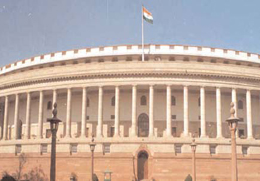
    NEW DELHI (TIP): Aadhaar is set to receive statutory backing after Parliament passed a bill that will make the unique identification project the central plank for delivering government subsidies and welfare benefits.

    Only the President’s signature is now required for the bill to become law, which will enable the government to reset the subsidy regime and deliver state benefits directly to their intended beneficiaries, plugging leakages.

    The money will go into the bank or post-office accounts of beneficiaries linked to the 12-digit biometric identity number provided by the Unique Identification Authority of India (UIDAI).

    Late on Wednesday evening, the Lok Sabha rejected five amendments proposed by the Rajya Sabha earlier in the day and passed the bill in its original form.

    The lower House passed the Aadhaar (Targeted Delivery of Financial and Other Subsidies, Benefits and Services) bill, 2016, as a money bill on Friday.

    A money bill cannot be rejected by the Rajya Sabha, which can only suggest changes the Lok Sabha is free to reject. The ruling National Democratic Alliance is vastly outnumbered by the opposition in the upper House.

    The opposition has voiced concerns that the privacy of individuals may be compromised by Aadhaar and that a provision that allows the government to access the biometric information in cases pertaining to national security may be misused.

    The amendments to the bill moved by Congress MP Jairam Ramesh sought to replace the term ‘national security’ with ‘public emergency and public safety’ and limit the use of Aadhaar to delivery of subsidies. He also suggested that the use of Aadhaar be made optional so that subsidies can be accessed even without the unique identity number.

  • Supreme Court directs Punjab to maintain status quo SYL canal

    Supreme Court directs Punjab to maintain status quo SYL canal

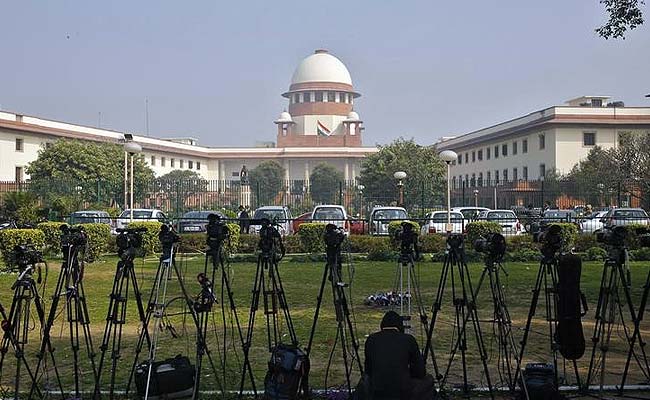
    NEW DELHI (TIP): In a setback to Punjab, the Supreme Court on March 17 directed maintenance of status quo on land meant for Sutlej-Yamuna Link (SYL) canal after Haryana alleged that attempts have been made to alter its use by levelling it. The apex court in its interim order also appointed Union Home Secretary and Punjab’s Chief Secretary and Director General of Poloce (DGP) as the ‘joint receiver’ of land and other property meant for the SYL canal till the next date of hearing on March 31. A five-judge Constitution Bench headed by Justice A R Dave passed the order with a hard-hitting observation that “an effort is made to make execution of the decree of this court unexecutable and this court cannot be a silent spectator.”

    It passed the order on an urgent application moved by Haryana Government submitting that Punjab Assembly on March 14 passed a bill against the construction of contentious SYL canal providing for transfer of proprietary rights back to the land owners free of cost. Senior advocate Shyam Divan said the bill awaiting Governor’s assent would negate the apex court’s 2004 decree calling for unhindered construction of the canal which will provide share of its water to Haryana. He referred to newsreports with photographs that JCB and earthmoving equipments have been arranged for levelling the land in the Punjab part of the canal and sought ad-interim protection by appointing the ‘court receiver’ and restraining the publication of the assent to the bill in gazette notification.

    Haryana’s application was opposed by senior advocates Ram Jethmalani and Rajeev Dhawan, appearing for Punjab, who submitted that the apex court has only advisory jurisdiction and cannot pass interim orders as there was no prima facie case made out and the arguments of the opposite side was based on media reports. However, Dhawan’s submission on media reports did not cut much ice with the bench, which shot back “do you think that what has been stated in the newspapers is incorrect?” ”You could have done something on Monday (the day the bill was passed in Punjab Assembly)”, the bench said adding that if anything happens in between “we will modify our order.”

  • SUSHMA SWARAJ WRAPS UP FRUITFUL NEPAL VISIT

    SUSHMA SWARAJ WRAPS UP FRUITFUL NEPAL VISIT

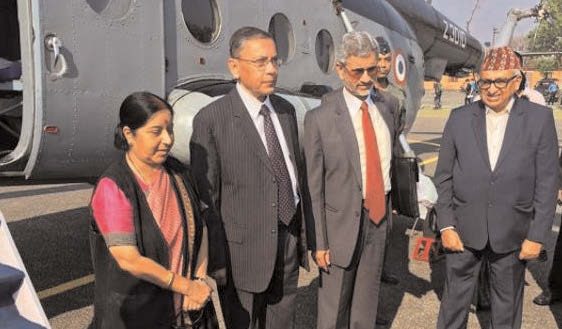
    POKHARA (TIP): External affairs minister Sushma Swaraj left Pokharan on Friday after attending the SAARC ministerial meeting in Nepal.

    Swaraj also held the first bilateral meet with her Pakistani counterpart after the Pathankot terror attack.

    After wrapping up her three-day visit, Swaraj left Pokhara on an Mi17 chopper for Gorakhpur, Uttar Pradesh from where she will head to Delhi on a special flight.

    She announced on Thursday that a Pakistani Joint Investigation Team (JIT)?will arrive in India on March 27 to probe the Pathankot terror attack.

    The assault figured very high in the over 20-minute meeting between Swaraj and Pakistani counterpart, Sartaj Aziz, the first political-level engagement between the two sides after the January 2 terror attack on an Indian Air Force base in Pathankot.

    Swaraj accepted Pakistan’s invitation for Prime Minister Narendra Modi to visit Islamabad for the SAARC Summit, to be held from November 9-10 this year.

    She pitched for unleashing “collective strength” of SAARC, underlined the need for a South Asian Economic Union with greater connectivity and progress on pending agreements.

  • Police horse’s leg amputated to save his life, BJP worker held

    Police horse’s leg amputated to save his life, BJP worker held

    DEHRADUN (TIP): Police horse Shaktiman, which was subjected to a brutal attack during a BJP protest here on Monday, had his injured hind leg amputated in an emergency life-saving surgery on March 17 even as a party worker was arrested.

    The surgery was conducted at a veterinary hospital here by a team of doctors led by surgeon Feroze Khambatta, hours after Army doctors from Pune opined that one of the hind legs of the horse that was fractured will have to be amputated as the animal might lose its life by tomorrow due to spread of gangrene from the wound.

    “The surgery has gone as planned,” Uttarakhand DGP B S Sidhu said tonight after a limb of the horse, which was still in pain and could not stand on its feet, was removed, three days after the attack that sparked an outrage and led to an FIR being filed against BJP MLA Ganesh Joshi.

    “The surgery was basically necessitated by the fact that the blood supply has ceased to the portion of multiple fractures and it was essential for saving the life of the animal. We got the best possible surgeon in the country to perform the surgery and we hope he will be able to survive,” Sidhu said.

    Stating that Shaktiman will take a month to recover from the surgery, Sidhu said that in the meantime he will be given temporary prosthetic aid in the form of artificial legs which will be tailor made to his specifications.

  • May act if Sikh jokes are commercially exploited: Supreme Court

    May act if Sikh jokes are commercially exploited: Supreme Court

    NEW DELHI (TIP): The Supreme Court on March 17 agreed to hear on April 5 the plea of the Shiromani Gurdwara Parbandhak Committee (SGPC) along with other petitions seeking ban on circulation of jokes about the Sikh community and said it may act if people are commercially exploiting the jokes. A bench comprising chief justice TS Thakur and justice UU Lalit said that the fresh plea of the SGPC would be tagged along with other pending matters on the issue and will be heard together.

    During the brief hearing, the bench asked advocate Satinder Singh Gulati, appearing for the SGPC, to point out the areas where sub-judicial orders can be passed. “Tell us which are the areas where we can do something. We will certainly look into it if entire community is feeling harassed,” the bench said, adding that it may pass some orders if circulation of such jokes is being commercially exploited.

    The counsel for SGPC said, “A stereotype has been created and Sikhs are being discriminated (against) in society because of a particular language and religion.” The bench asked the lawyer to give suggestions and assured him that it will certainly look into them.

    Earlier, on a separate plea by the Delhi Sikh Gurdwara Management Committee (DSGMC) against jokes on Sikhs, the apex court had observed that there was a need for sensitising the society from the formative stages.The Supreme Court, which had asked for suggestions from the committee, had said it can stop jokes when they are circulated for a commercial purpose and it would examine the framing of guidelines to stop circulation of racist or communal jokes in the cyber world.

  • Minority panel issues notice to JNU over prof’s remarks on Dalits, Muslims

    Minority panel issues notice to JNU over prof’s remarks on Dalits, Muslims

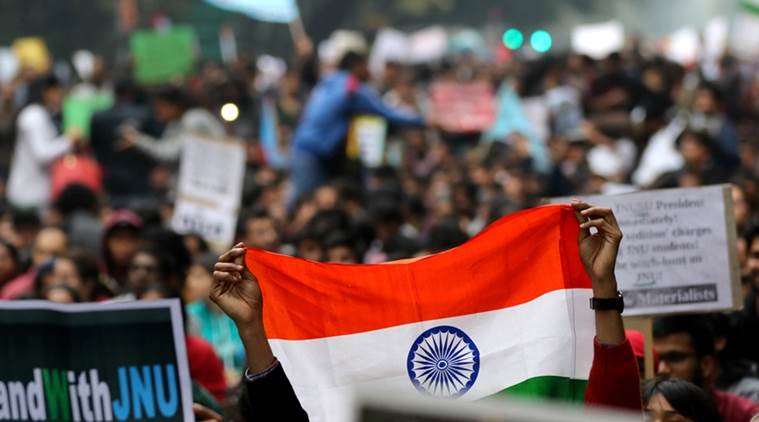
    NEW DELHI (TIP): The National Commission for Minorities has issued a notice to JNU authorities over a professor’s alleged remarks calling Dalits and Muslim teachers “anti-national”, days after the National Commission for Scheduled Caste issued a similar notice.

    Amita Singh, who is the chairperson of the varsity’s school of governance has made the alleged comments in an interview to a web portal.

    “A complaint has been received by the National Commission for Minorities regarding derogatory remarks by professor Amita Singh. You are hereby requested to submit the facts and information and the action taken on allegations/matter within five days of this notice,” the letter sent to the JNU Vice Chancellor said.

    The varsity administration has already asked Singh to clarify her remarks after the VC had received a letter from the National Commission for Scheduled Castes on March 8.

    On being asked by the interviewer “how many teachers and students in JNU are anti-national” in her interview to the website, the professor had said, “Teachers are hardly 10 but they portray as if everybody is with them.

    You think a teacher in an institution like JNU would be so stupid as to back anti-national slogans? These are just five or six persons and they are Dalits and Muslims. They have their grudges.”

    The faculty member talks about anti-national activities in JNU, the family background of students’ union president Kanhaiya Kumar and another student Umar Khalid.

    The teacher had also alleged about foreign funding to anti-nationals while claiming that Bijnore, from where one of the arrested JNU student hails, is a “den of terrorism and Islamic State.”

  • Jat quota agitation: Ex-Haryana CM Hooda’s aide arrested

    Jat quota agitation: Ex-Haryana CM Hooda’s aide arrested

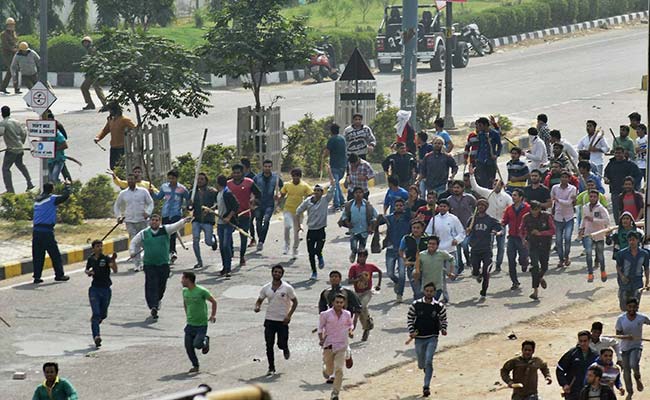
    ROHTAK (TIP): Former Haryana chief minister Bhupinder Singh Hooda’s close assistant Virender Singh, who was booked for sedition and criminal conspiracy on charges of inciting violence during the Jat agitation, was arrested on March 17, police said.

    “We have arrested Virender Singh. He will be produced before court and we will be seeking his custodial interrogation,” Rohtak superintendent of police Shashank Anand said.

    Singh was political adviser to Hooda during his 10-year tenure as chief minister. He, however, claimed before reporters that he had voluntarily surrendered at the SP’s office.

    “I am a law abiding citizen. I have not done anything wrong and the truth will come out,” he said.

    The arrest came after the Rohtak district court on Tuesday denied him anticipatory bail.

    Singh along with others was booked last month under various sections of the IPC, including sedition, after an audio clip surfaced in which he was purportedly heard talking to a khap leader in order to allegedly incite violence during the Jat community’s reservation stir.

  • What Donald Trump gets right, and very wrong, about China

    What Donald Trump gets right, and very wrong, about China

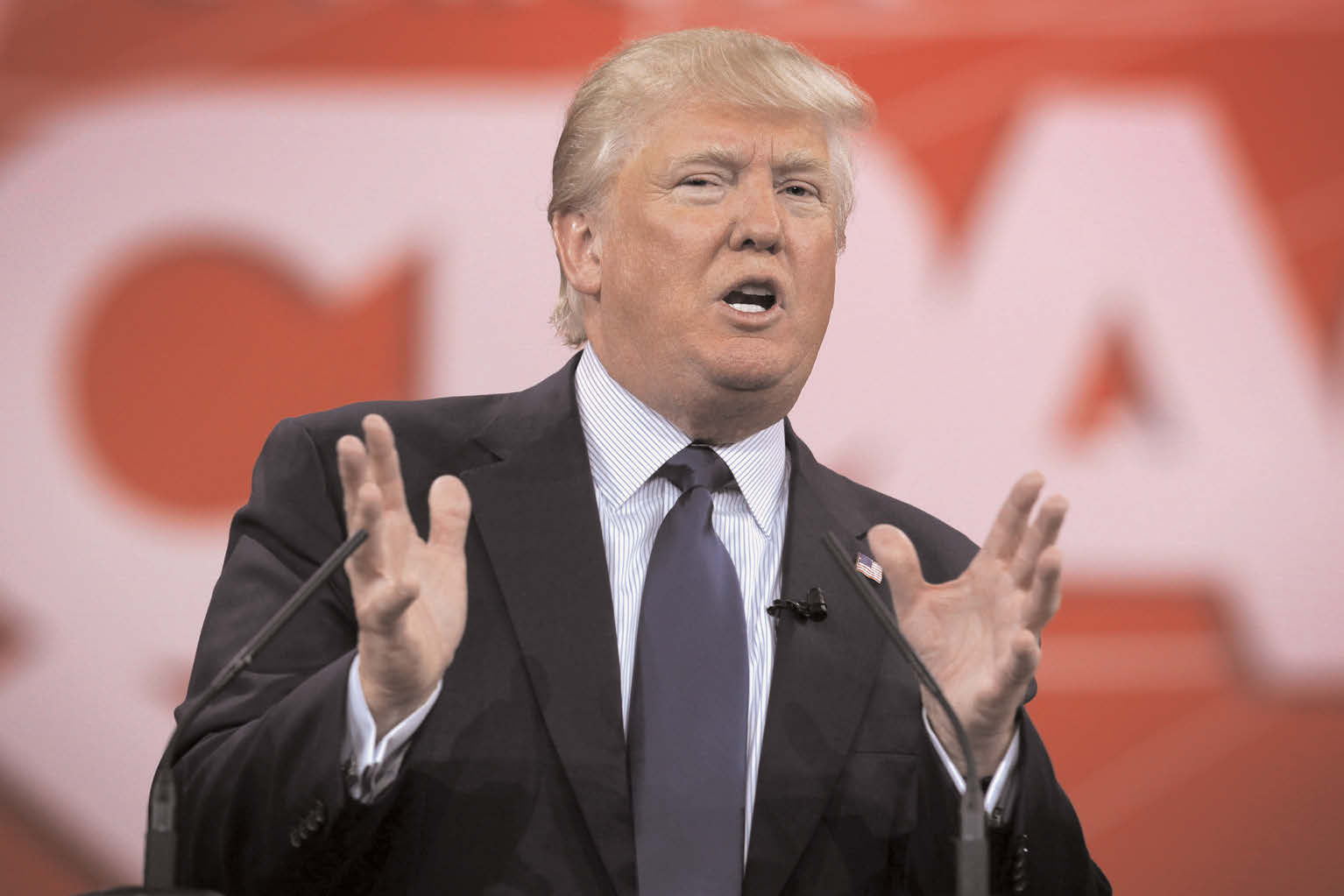
    NEW YORK (TIP): If there is one thing Donald Trump seems sure about, it is that the United States is getting a raw deal from China.

    To people who spend time studying the United States’ economic relationship with China, Trump’s accounting of its dysfunctions contains both legitimate, accurate complaints and elements that completely misstate how things work between the world’s largest and second-largest economies.

    “They’re killing us,” Trump has said in many debates, rallies and television appearances. He has threatened to put a 45 percent tax on Chinese imports “if they don’t behave.”

    If you take Trump’s comments at face value, as president he would try to renegotiate a complex set of ties that has pulled hundreds of millions of Chinese out of dire poverty, made a wide range of goods available to American consumers at more affordable prices and contributed to the decline of US manufacturing.

    Here is a reality check on Trump’s arguments. (It’s also a way to understand the economic relationship between the countries.)

    The trade deficit “We have very unfair trade with China. We’re going to have a trade deficit of $505 billion this year with China.” — Trump

    America’s trade deficit with China was $338 billion last year, and there’s no reason to think it would swing by as much as Trump suggests in 2016 — but what’s $167 billion among codependent trading partners? (Trump seems to be conflating the China number with the$505 billion total American trade deficit in 2014, which was first reported to be that much.)

    The central point, that the US imports a lot more from China than it exports, is correct. To put it a bit differently, from 1999 to 2015 annual imports from China rose by $416 billion. In the same span, US exports to China rose by $145 billion.

    That said, many economists would argue that a trade balance shouldn’t be viewed as a simple scorecard in which the country with the trade deficit is the loser and the one with the surplus the winner.

    So the question isn’t whether there is a persistent, large trade deficit between the United States and China, but why. And that leads to another arm of Trump’s argument, and one of the stronger ones.

    China market access“I have many friends, great manufacturers, they want to go into China. They can’t. China won’t let them.” — Trump

    It’s not that American multinational companies — heavy industry, technology or finance — can’t do business in China. Rather, their executives complain of Chinese government restrictions that they see as arbitrary, unpredictable and highly favorable to domestic companies — so much so that in practice they are either shut out or can’t make money in China.

    Doing business in China typically requires a partnership with a Chinese company, and that often means sharing crucial intellectual property that can enable the partner to become a competitor down the road. The rules of engagement can change capriciously, especially for US and European companies, rendering major investments worthless.

    US business interests have a long list of complaints: that the Chinese government uses its enforcement of anti-monopoly rules to favor its domestic businesses; that the government subsidizes exports through tax rebates and other practices; that automakers can set up factories within China only as part of joint ventures and face stiff tariffs in trying to sell cars made in the United States.

    The US government has pushed China on these “market access” issues for years. But the situation seems to be growing worse, at least in the opinion of US executives. The American Chamber of Commerce in China regularly surveys its members about business conditions, and this year 57 percent of executives surveyed named “inconsistent regulatory interpretation and unclear laws” as a top problem, up from 37 percent in 2012.

    Currency manipulation?“They are the single greatest currency manipulator that’s ever been on this planet.” — Trump

    Trump’s complaint about China’s devaluation of its currency has a long, bipartisan tradition. It is also out of date.

    It is true that China intervenes in currency markets to influence the price of its renminbi against the dollar. And it is true that a decade ago, both the US government and independent economists tended to think that the interventions served to depress the currency, in the Chinese government’s deliberate effort to make its exports more price competitive.

    But a lot has changed in the last decade. The renminbi was allowed to rise sharply from roughly 2006 to 2015, and is up 23 percent from a decade ago.

    And since last summer, China has let the currency drop some, but that appears to be an example not of manipulation, but of letting the price of the currency fall closer to the rate that reflects China’s fundamentals given the country’s slowing economy. The International Monetary Fund has argued that the renminbi, also known as the yuan, is no longer undervalued.

    “At least in 2006, 2007 or 2008, the yuan was undervalued — now it’s probably not,” said Derek Scissors, a resident scholar at the American Enterprise Institute and chief economist of China Beige Book, an information service.

    Indeed, the Chinese government has been trying to restrict capital from flowing out of the country to stop the renminbi from falling any further. It would seem that the Chinese government and Trump are, for the moment at least, on the same side.

    Manufacturing decline “What will happen if they don’t behave, we will put on a tax of some amount, and it could be a large amount, and we will start building those factories and those plants. Instead of in China, we’ll build them here.” — Trump

    Trump’s broader argument is that a generation of unfair economic relations with China (and also Mexico, Japan and others) is a primary cause of the troubles of US workers.

    Mainstream economists are more sympathetic to this view now than they were even a few years ago. Traditional trade theory holds that the losers from global trade —factory workers who lose their jobs when that factory moves overseas — are more than compensated by other opportunities created by a more efficient economy.

    New scholarship suggests that the pain from globalization in certain geographic locations may be longer-lasting. One study found that Chinese imports from 1999 to 2011 cost up to 2.4 million American jobs.

    That said, it’s easy to assign too much of the blame for the collapse of manufacturing employment to China or trade more broadly. Hundreds of millions of workers across the globe — many of whom were in dire poverty a generation ago — have become integrated into the world economy. That’s a lot of competition, all in a short span, for US factory workers.

    At the same time, factory technology has advanced so that a company can make more stuff with fewer workers. The number of manufacturing workers in the US has been declining as a share of all jobs nearly continuously since 1943, and the total number of manufacturing jobs peaked in 1979; China’s trade with the United States didn’t really take off until the 1990s.

    In other words, trade has been an important economic force over the last few decades, and the deepening of the United States’ ties with China is one of the most important developments in global economics of the last generation. But to look at China as the sole force affecting the ups and downs of US workers misses the mark.

  • US faces major Zika virus outbreak risk in summer: Study

    US faces major Zika virus outbreak risk in summer: Study

    NEW YORK (TIP): The conditions in a number of US cities will become favourable for a possible Zika virus outbreak during peak summner, warns a new research.

    The Aedes aegypti mosquito, which is spreading the virus in much of Latin America and the Caribbean, will likely become increasingly abundant across much of the southern and eastern US as the weather warms, the study said.

    “This research can help us anticipate the timing and location of possible Zika virus outbreaks in certain US cities,” said lead author of the study Andrew Monaghan from US National Center for Atmospheric Research (NCAR).

    “While there is much we still don’t know about the dynamics of Zika virus transmission, understanding where the Aedes aegypti mosquito can survive in the US and how its abundance fluctuates seasonally may help guide mosquito control efforts and public health preparedness,” Monaghan noted.

    Summertime weather conditions are favourable for populations of the mosquito along the East Coast as far north as New York City and across the southern tier of the country as far west as Phoenix and Los Angeles, according to specialised computer simulations by the researchers.

    Spring and autumnl conditions can support low to moderate populations of the Aedes aegypti mosquito in more southern regions of its US range. Wintertime weather is too cold for the species outside southern Florida and southern Texas, the study found.

    By analyzing travel patterns from countries and territories with Zika outbreaks, the research team further concluded that cities in southern Florida and impoverished areas in southern Texas may be particularly vulnerable to local virus transmission.

    The results were published in the journal PLOS Currents: Outbreaks.

    First identified in Uganda in 1947, the Zika virus has moved through tropical regions of the world over the past decade. It was introduced into Brazil last year and spread explosively across Latin America and the Caribbean, with more than 20 countries now facing pandemics.

    Monaghan, however, stressed that even if Zika establishes a toehold in the mainland United States, it is unlikely to spread as widely as in Latin America and the Caribbean. This is partly because a higher percentage of Americans live and work in air-conditioned and largely sealed homes and offices.

  • US presidential candidate Cruz appoints Islam critics as advisers

    US presidential candidate Cruz appoints Islam critics as advisers

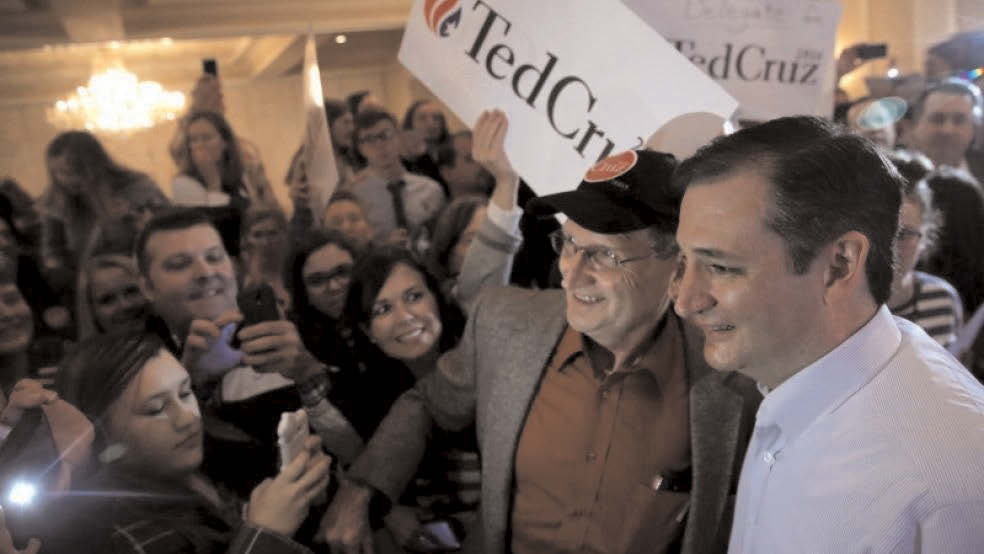
    NEW YORK (TIP): Ted Cruz, Donald Trump’s closest rival in the Republican race for the White House, named his national security advisers on Thursday, including former staffers of President Ronald Reagan and members of a think tank that has been called an anti-Muslim “hate group” by a civil rights organization.

    Announcing the team in a statement, Cruz said he would reverse what he described as the weakening of the United States in a dangerous world, singling out militant Islamist groups in the Middle East and North Africa as his focus.

    Among the most recognizable names on the US senator’s list of 23 advisers was Elliott Abrams, who served in the administrations of both Reagan and President George W. Bush and is a senior fellow at the Council on Foreign Relations.

    But the list of advisers drew more attention for its inclusion of several critics of Muslims. Among those were Frank Gaffney, a former official in the Reagan administration, and at least two other members of a think tank Gaffney founded, the Center for Security Policy.

    The center’s reports argue that hundreds of thousands of American Muslims support Islamist violence in the United States and that there is a conspiracy to erode the US legal system by elevating sharia, the Islamic legal code.

    The Southern Poverty Law Center, a civil rights organization that monitors US extremist groups, has labeled the Center for Security Policy a “hate group” and Gaffney a “notorious Islamophobe.”

    Gaffney did not respond to a request for comment, but a spokesman pointed to online essays where Gaffney has rejected such criticism, saying his group is a defender of civil liberties against “Islamic supremacists.”

    “Do you mention any of the other 22 members of the advisory coalition?” Brian Phillips, a Cruz spokesman, said in an email, declining to respond to questions about the criticisms made against Gaffney and his think tank.

    The Council on American-Islamic Relations (CAIR), a Muslim rights group, urged Cruz, a Christian, to reconsider having Gaffney and others who have made anti-Muslim remarks as his advisers, saying it suggested the candidate entertained “anti-Muslim bigotry”.

    Besides Gaffney and his think-tank colleagues, CAIR said Cruz should drop William Boykin, a retired US Army lieutenant general who has said the government should be allowed to ignore the US Constitution to pass laws limiting Muslims’ right to freedom of speech and religion.

    Some of Cruz’s other advisers have been critical of anti-Islamic rhetoric, including Abrams and Mary Habeck, another former Bush adviser; both have said Islam should not be demonized.

    Another adviser is Katherine Gorka, president of the Council on Global Security, a group that produces research on Islamist violence, who said in an email that Cruz “understands the vital role that America’s military strength plays across the globe but without wanting to engage the US in expensive democracy-building adventures.”

    TRUMP-CRUZ SHOWDOWN

    Trump, a 69-year-old billionaire businessman from New York, has surged to the front of the once-crowded Republican field, drawing support from voters by proposing to temporarily ban Muslims from entering the United States for fear they might secretly be members of violent Islamist groups. Trump cited research by Gaffney’s group in announcing the plan last year.

    Cruz, a 45-year-old Texan, is seeking to keep Trump from winning an outright majority of delegates as states vote for party nominees in the coming months, and to wrest the nomination from him at the party’s national convention in Cleveland in July.

    Conservatives who think Trump strays too far from Republican ideology continued to plot openly to thwart him at or before the convention.

    Erick Erickson, a conservative blogger, said in a statement that he joined a meeting of “grassroots conservative activists” from around the country in Washington on Thursday. He said they made plans to appoint an as-yet-unnamed candidate at what they hope will be the first contested Republican convention since 1948, where a complicated system of ballot rules would come into effect.

  • Consulate Welcomes the New Consul General Ambassador Riva Ganguly Das

    Consulate Welcomes the New Consul General Ambassador Riva Ganguly Das

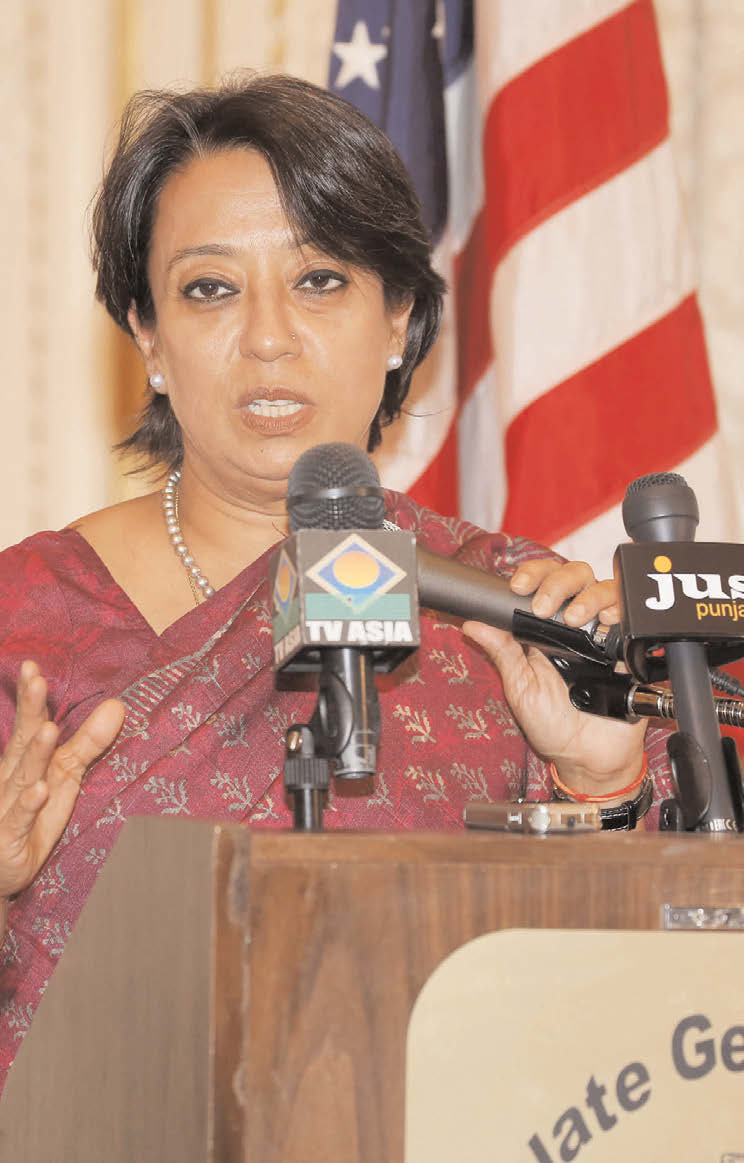
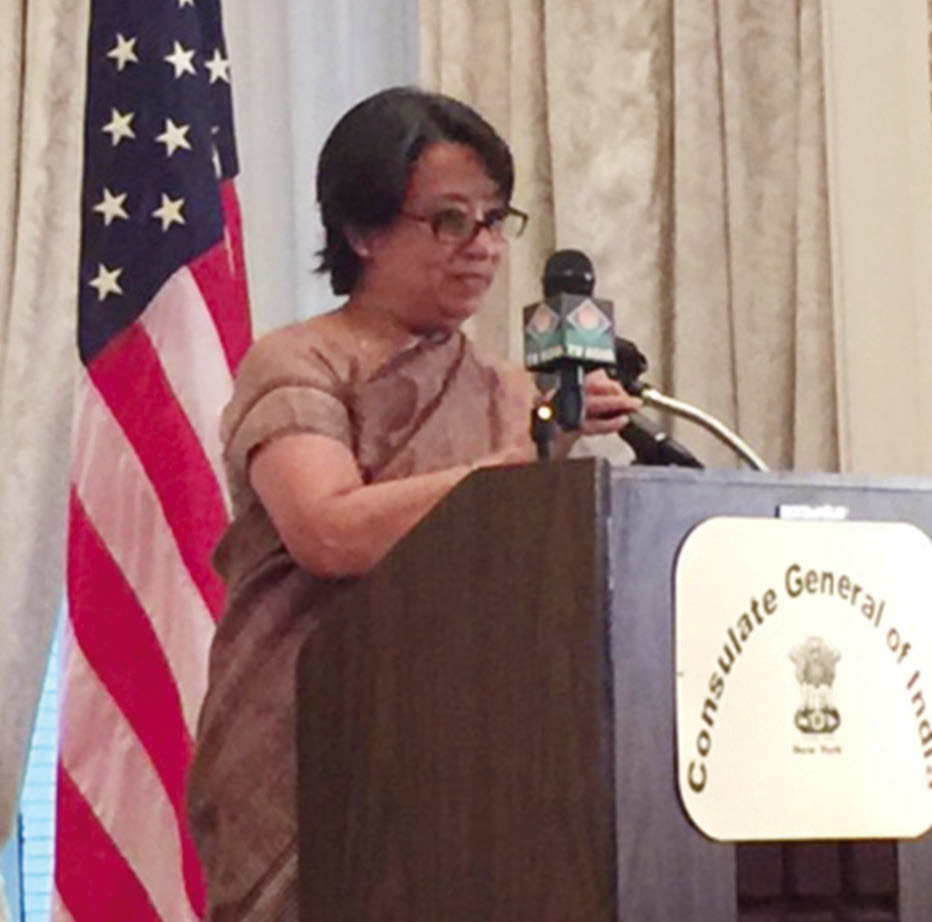
    NEW YORK CITY (TIP): Deputy Consul General of India in New York Dr. Manoj Mohapatra hosted a reception with the community to welcome the new Consul General, Ambassador Riva Ganguly Das on Saturday March 12, 2016 in the Consulate’s ballroom.

    Introducing the new Consul General, Manoj Mohapatra who has been holding the fort for about a month, after the transfer of the Consul General Ambassador Dnyaneshwar M Mulay to Delhi, said that prior to joining the post of Consul General of India in New York, Ambassador Das was Ambassador of India to Romania, Albania & Moldova with residence in Bucharest.

    A large number of prominent guests including dignitaries which included Permanent Representative to the United Nations Ambassador Syed Akbaruddin, Special Advisor to the U.N. Ambassador Vijay Nambiar, Former PR Ambassador Hardeep Puri, Ambassador Mrs. Lakshmi Puri, Assistant SecretaryGeneral of the United Nations and Deputy Executive Director of UN Women, the United Nations Entity for Gender Equality and the Empowerment of Women, attended the event.

    Deputy Consul General Dr Mohapatra introduced and welcomed the Consul General, followed by remarks from a number of guests. Those who spoke on the occasion included Ambassador Syed Akbaruddin, Vijay Nambiar, H.R. Shah, Sudhir Parikh, Yashpal Soi, Prof. Indrajit S Saluja and Dr. Seema Jain.

    Speaking on the occasion, Ambassador Das said she was overwhelmed by the warm welcome and assurances of support. She said she understood well the formidable challenges she has before her, given the vast territorial jurisdiction of the New York Consulate and the large number of the Indian American community. She spoke of the high volume of work- nearly 1000 documents a day-but added quickly the Consulate was not daunted by the work. She said she would deal with issues and challenges.

    Ambassador Das underscored the importance of working together. She appealed to the gathering to extend their support to the Consulate for the best services.

    The Consul General had a special word of appreciation for her deputy Manoj Mohapatra about whom she said she depended on him for a lot of her work.


  • Obama nominates Merrick Garland as Replacement to Justice Scalia in Supreme Court

    Obama nominates Merrick Garland as Replacement to Justice Scalia in Supreme Court

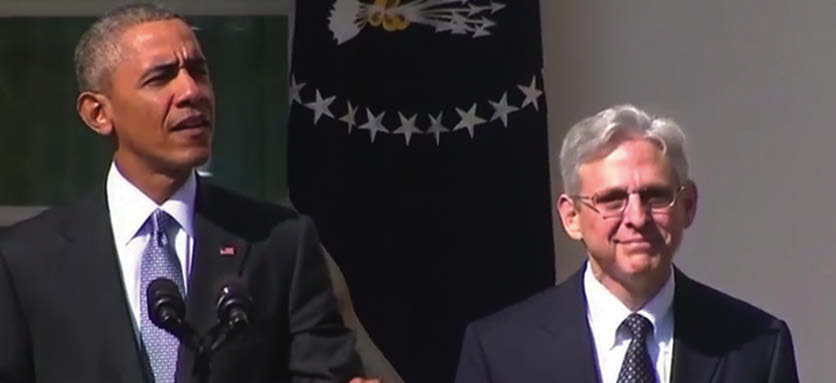
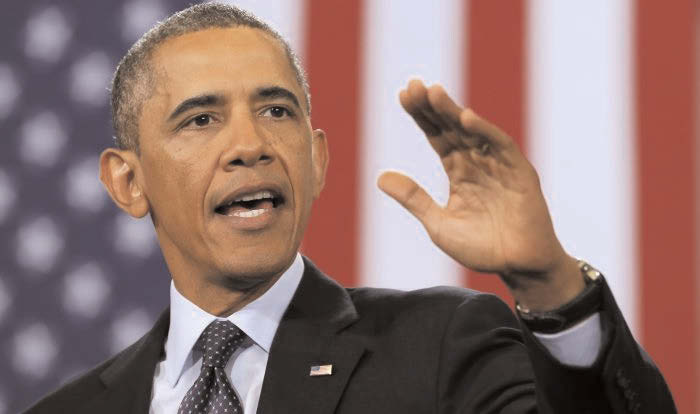
    WASHINGTON (TIP): Much to the chagrin of the Republicans who have vowed to block any replacement for the late Justice Antonin Scalia until a new president takes over, President Barack Obama, on Wednesday, March 16, nominated Judge Merrick Garland, who is respected across political lines.

    CNN comments that GOP leaders, caught in the undertow of an election in which the conservative grass-roots are already in revolt, immediately renewed their refusal to consider Garland, 63, saying their reservations were not personal but motivated by a desire for the American people to weigh in on Scalia’s replacement. The showdown is even more fraught than most Supreme Court fights, since Obama’s choice could tilt the ideological balance of the court away from conservatives — possibly for years.

    In a speech in the evocative ceremonial surroundings of the White House Rose Garden, Obama praised Garland as “one of America’s sharpest legal minds,” making a case that he was so eminently qualified for the job in terms of legal learning, experience and temperament that any attempt to ignore his appointment could only be the result of base political motivations.

    “I have selected a nominee who is widely recognized not only as one of America’s sharpest legal minds, but someone who brings to his work a spirit of decency modesty, integrity, evenhandedness and excellence,” Obama said. These qualities and his long commitment to public service have earned him the respect and admiration from leaders from both sides of the aisle.”

    Senate Republicans do not plan to vet or have hearings on Garland, let alone a vote on his nomination. Obama and Democrats argue that with 10 months left in his term, there is plenty of time for the Senate to take up and confirm a new justice. The gravity of Obama’s announcement on Wednesday was part of an attempt to pressure Republicans, especially senators with an eye on their own legacies or those who face tough re-election fights, to peel away from their leadership.

    But Senate Majority Leader Mitch McConnell and the GOP chairman of the Senate Judiciary Committee, Chuck Grassley of Iowa, have both expressed little leeway in their determination to forgo hearings for Obama’s nominee.

    “The American people may well elect a president who decides to nominate Judge Garland for Senate consideration,” McConnell said Wednesday. “The next president may also nominate someone very different. Either way, our view is this: Give the people a voice in the filling of this vacancy.”

    Garland, the chief judge for the U.S. Court of Appeals for the District of Columbia Circuit, has been on short lists before. An appointee of President Bill Clinton, Garland is a graduate of Harvard and Harvard Law School. As a Justice Department lawyer, he supervised investigations in the Unabomber case as well as the Oklahoma City bombing.

    His voice cracking with emotion, Garland called Obama’s decision to nominate him “the greatest honor of my life.”

    “For me, there could be no higher public service than serving as a member of the Supreme Court,” Garland said.

    Obama’s announcement amplifies the ongoing political battle over the precedent and propriety of considering a Supreme Court nomination amid a heated presidential election.

    Trump on Supreme Court: ‘The next president should make the pick’

    New York based eminent attorney Ravi Batra commented on the nomination to The Indian Panorama. “President Obama honored his Oath to support & defend the Constitution by nominating a legal luminary – Merrick Brian Garland to J. Scalia’s seat. The Senate must give the nominee a fair hearing, as part of its Advice& Consent Clause obligation.

    Majority Leader McConnell’s announced intention to ignore the nomination is a violation of his Oath, and an impeachable offense, and subjects Majority Leader to legal liability. It is a shame that this is occurring when the seat being filled was graced by the Prince of the Law, Originalist and strict constructionist, J. Scalia.

    While I would have loved to have Sri nominated, to pay down America’s debt of honor to India from Boston Tea Party in 1773 going forward, still CJ Garland, with a longer life, actually has a longer and more documented history of dedicated public service and is an honor to our Republic that he has been so nominated.”

  • Mangano Hosts Israeli Deputy Consul General Amir Sagie

    Mangano Hosts Israeli Deputy Consul General Amir Sagie

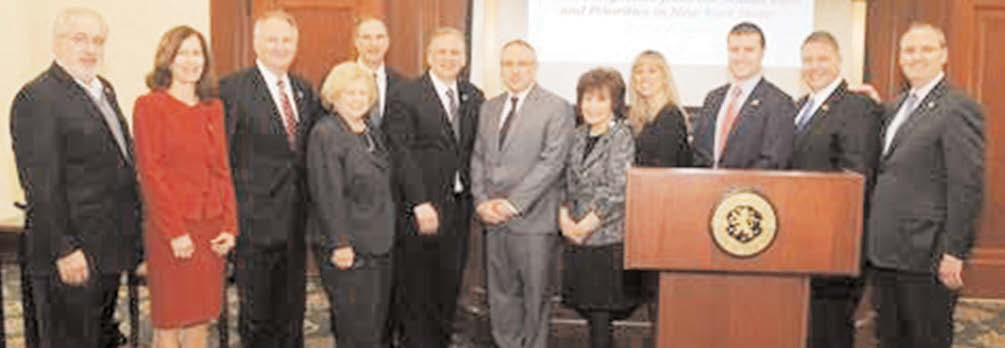
    MINEOLA, NY (TIP): Nassau County Executive Edward P. Mangano and the Jewish Community Relations Council of Long Island hosted Israeli Deputy Consul General Amir Sagie on March 16, 2016 in the Theodore Roosevelt Executive and Legislative Building.

    “I was pleased to join my fellow colleagues in government to host Israeli Deputy Consul General Amir Sagie here in Nassau County,” said County Executive Mangano. “I thank the Jewish Regional Council of Long Island and the Consulate General of Israel in New York, for organizing such a wonderful and informative presentation concerning Israel.”

    “On behalf of the Nassau Legislature and the Jewish residents of our County, I am grateful to host Deputy Consul General to Israel Amir Sagie as he discusses international security, which is a topic of great concern for all of our residents,” said Presiding Officer Norma L. Gonsalves.

    Amir Sagie is the Deputy Consul General of Israel in New York. As Deputy Consul General in New York, Israel’s largest mission in the world, he coordinates the political work of the Consulate in the tri-state area, developing relations with national, state and local officials. He maintains regular contact with experts involved in major foreign policy and strategic issues at think tanks and universities across the region. He also acts as the liaison for the Foreign Ministry with the national and local leadership of the Jewish Community based in New York. In addition, he coordinates interfaith dialogue and outreach nationally for the Foreign Ministry and its missions in the United States.

  • Obama moves to implement US sanctions on North Korea

    Obama moves to implement US sanctions on North Korea

    WASHINGTON (TIP): US President Barack Obama signed an order Wednesday implementing UN-backed sanctions on North Korea after a nuclear test and missile launch this year, as Pyongyang promised reprisals.

    The White House said Obama had signed an executive order targeting the volatile hermit state’s energy, financial and shipping assets.

    The measures were agreed to at the United Nations in response to the January 6 nuclear test and February 7 ballistic missile launch.

    “The order is not targeted at the people of North Korea, but rather is aimed at the government,” said the document signed by Obama.

    Among the entities targeted are the “propaganda and agitation department” of the Workers’ Party of Korea and mining firms that provide the regime with much-needed revenues.

    The US treasury department estimates that coal revenues alone generate over $1 billion a year for the government of Kim Jong-Un.

    In response to the UN sanctions and a US-South Korean drill, Kim has already ordered an upcoming nuclear warhead test and multiple ballistic missile launches.

    US officials say the threats are concerning, but fit a pattern of sabre rattling by the regime.

    Analysts and diplomats have said that loopholes in the UN sanctions leave room for China, Pyongyang’s key economic supporter, to continue business as usual.

    In 2014, China accounted for more than 90 percent of North Korea’s $7.61 billion in total trade, according to the latest available figures from South Korea’s state-run Korea Trade-Investment Promotion Agency.

    In response to Obama’s executive order, Beijing said Thursday that it “opposes any country’s unilateral sanctions.”

    “We have stressed that the unilateral actions taken by any country must not undermine the lawful rights and interests of China,” foreign ministry spokesman Lu Kang told a regular briefing.

    On Wednesday, North Korea jailed a 21-year-old American student.

    Otto Warmbier was sentenced to 15 years’ hard labor for stealing a propaganda banner from a hotel.

    White House spokesman Josh Earnest accused Pyongyang of using US citizens as “pawns to pursue a political agenda” and called for his release.

    “We strongly encourage the North Korean government to pardon him and grant him special amnesty and immediate release,” Earnest said.

    “The allegations for which this individual was arrested and imprisoned would not give rise to arrest or imprisonment in the United States or in just about any other country in the world.”

    In announcing the sentence, state news outlet KCNA said Warmbier had committed his offense “pursuant to the US government’s hostile policy” toward North Korea.

  • RANA Spring Festival on March 26 Promises to Lift Visitors’ Spirits

    RANA Spring Festival on March 26 Promises to Lift Visitors’ Spirits

    LONG ISLAND, NY (TIP): Rajasthan Association of North America have invited all Indians residing in the Tri-State area to the Spring Festival Celebrations on Saturday March 26, 2016 at Hotel Hilton, Long Island Huntington, Melville NY 11747 from 2.30 pm onwards.

    Under the inspired leadership of President Naveen C Shah, RANA has successfully organized the Rajasthan Mahotsav – Festival of Festivals 2015 with over 3000 attendees from the Indian community, complete with a grand parade featuring elephants, horses and camels to various dance & musical performances showcasing the variety and depth of Indian culture. The Deepavali celebrations in November 2015 was another monumental sensation with over 600 people packing the Grand Ballroom at the Long Island Marriott and were entertained by the sensational music trio from India – Dhwani.

    In his address to the Community Leaders at the kick-off meeting held recently, Naveen C Shah mentioned that RANA has proven that we can celebrate all our festivals on one common platform. We want to continue this practice this year by organizing the Spring Festivals Celebrations.

    A press release issued by RANA says, “Our program for the 2016 SPRING FESTIVALS Celebrations includes a Fashion Show event showcasing the attire of different states from India by top fashion designers, a segment on Wedding Day Attire by Community members and cultural performances. This will be followed by a Kavi Sammelan featuring renowned poets and satirists from India, emceed by the incomparable Shailesh Lodha. We expect over 1000 people to attend the event.

    “RANA is committed to promote the rich culture of India by observing many traditional festivals and celebrating them in North America periodically. We expect people from all Communities – Rajasthani’s, Gujarati’s, Punjabi’s and all other Indian Communities to attend the day’s events and partake of the celebrations. RANA aims at bringing about harmony and celebrating the festivals of India jointly with other communities to foster the spirit of brotherhood and comradeship.”

    Tickets cost only $75 each and include Lunch, Afternoon Tea & Snacks, Dinner and entrance to the Fashion Show, Cultural Entertainment, Kavi Sammelan & Exhibitions area.

    RANA President Naveen C Shah said, “We would like to extend an invitation to Indians from all communities to come celebrate the Spring Festivals like it is celebrated in India -complete with Traditional Cuisine, Color, Pomp & Pageantry, Music, Fashion Show, Cultural Entertainment and Kavi Sammelan with a promise to relive the Glory of Indian festivals in New York.”

    RANA is a non-profit, tax-exempt organization under section 501 (c) (3) of Internal Revenue Code, incorporated in the state of New York.

    The Board of Directors include Beena Kothari Sneha Shah Ajay K Jain Ravi Jargad Ravi Lashkery Ajey Jain, MD Shashi Shah, MD Narendra Hadpawat, MD Vinod Jain, Animesh Goenka, Mahesh Maheshwari, Dashrath Dugar, RajeshShah, SudhirSachdev, Vinod Sancheti, MD Nimmi Mehta, and Neelima Goyal

    For more information, please visit our website www.ranausa.org or contact rajesh.lalwani@navikacapital.com for more details.

  • Isha Vyas Elected President of the Association of New Jersey Cultural & Historic Agencies

    Isha Vyas Elected President of the Association of New Jersey Cultural & Historic Agencies

    PERTH AMBOY, NJ (TIP): The Middlesex County Office of Culture and Heritage announced February 1 that Isha Vyas, Division Head of Arts and History Program Services, has been elected President of the Association of New Jersey Cultural & Historic Agencies.

    “I am honored to accept the position of the President of this Association,” said Isha Vyas. “This is a wonderful opportunity and a huge responsibility. I look forward to working with all the leaders of the Cultural and Historic agencies from all 21 counties to further the mission of this important organization.”

    Former president of the Association and Chair of the Artpride New Jersey Foundation, Mary Eileen Fouratt said: “As a past president I’m thrilled that Isha Vyas has stepped up to be the new President of the ANJCHA. As a leader of one of the largest and most effective County Cultural & Heritage Agencies, she is well equipped to lead this group of leaders from the 21 counties.”

    The Association’s mission is the education, coordination and communication of the activities of member agencies to serve the historic and arts communities. Established in 1993, members include the Cultural and Historic Agencies of each of the 21 New Jersey Counties.

    “The work of the county agencies is so critical to our communities, bringing high quality and affordable arts, history and cultural events, supporting artists and arts groups and contributing to our local economies,” Fouratt said. “I look forward to continuing to work with Isha and seeing where her ideas take this organization.”

    “Isha’s influence has really allowed our Culture and Heritage Office to thrive and grow, and I know she will excel in bringing that same influence to other counties throughout our state,” said Middlesex County Freeholder Director Ronald G. Rios. “On behalf of the Board of Chosen Freeholders, I would like to offer our congratulations to Isha and wish her the best of luck in this new endeavor.”

    “When you look at the high quality of Middlesex County’s own Culture and Heritage programming, it’s easy to see why Isha was chosen as president of this Association,” said Freeholder Kenneth Armwood, Chair of the County’s Business Development and Education Committee. “She deserves our congratulations as well as thanks for the continuing excellence of her contributions.”

    Vyas has been treasurer of the organization since 2012. Additionally, she is the Vice President of the Board of Trustees of Woodbridge Township Public Libraries; a member of the New Jersey State Historical Records Advisory Board and a trustee of Advocates of New Jersey History.

    For more information, please go to the Middlesex County website at www.co.middlesex.nj.us.

  • US says ISIS committing genocide in Iraq, Syria

    US says ISIS committing genocide in Iraq, Syria

    WASHINGTON (TIP): US secretary of state John Kerry on Thursday determined that the Islamic State group is committing genocide against Christians and other minorities in Iraq and Syria, as he acted to meet a congressional deadline.

    Kerry’s finding does not obligate the United States to take additional action against ISIS jihadists and does not prejudge any prosecution against its members.

    A day after the state department said Kerry would miss the deadline, Kerry said he had completed his review and determined that Christians, Yazidis and Shia groups are victims of genocide and crimes against humanity by ISIS militants. The house earlier this week passed a nonbinding resolution by a 393-0 vote condemning ISIS atrocities as genocide.

    “In my judgment Daesh is responsible for genocide against groups in territory under its control” Kerry said, using the Arabic acronym for the Islamic State group.

    He outlined a litany of atrocities that he said the jihadists had committed against people and religious sites, as well as threats. “Daesh is genocidal by self-acclimation, by ideology and by practice.”

    Saying that he was “neither judge nor prosecutor nor jury,” Kerry added that any potential criminal charges against the extremists must result from an independent international investigation. Kerry said the US would continue to support efforts to collect evidence and document atrocities.

    While his determination does not carry such weight, Kerry said he hoped that groups he cited as being victimized would take some comfort in the fact that the “the United States recognizes and confirms the despicable nature of the crimes committed against them.”

    Lawmakers and others who have advocated for the finding had sharply criticized the State Department’s initial disclosure Wednesday that deadline would be missed. US officials said Kerry concluded his review just hours after that announcement and that the criticism had not affected his decision.

    On Thursday, representative Jeff Fortenberry, the author of the bill, commended Kerry’s decision.

    “The United States has now spoken with clarity and moral authority,” Fortenberry, said in a statement. “I sincerely hope that the genocide designation will raise international consciousness, end the scandal of silence, and create the preconditions for the protection and reintegration of these ancient faith communities into their ancestral homelands. Christians, Yezidis, and others remain an essential part of the Middle East’s rich tapestry of religious and ethnic diversity.”

  • A Win for the Front-Runners

    A Win for the Front-Runners

    Hillary Clinton, the Democratic front-runner and Donald Trump, the Republican front-runner have won some crucial primary victories in Florida, Ohio, Illinois, North Carolina and Missouri. Marco Rubio, a much-touted candidate by the Republican Party leaders and the media, who was defeated in his own state of Florida, where he won only in his own county. He has now suspended his campaign. It is no surprise that he lost, as he was nothing but an empty suit.

    On the Democratic side, Hillary had a clean sweep in the southern states. With the addition of the big states like Ohio, Illinois and Florida, she now has almost a commanding lead. Donald Trump cannot claim such an advantage.

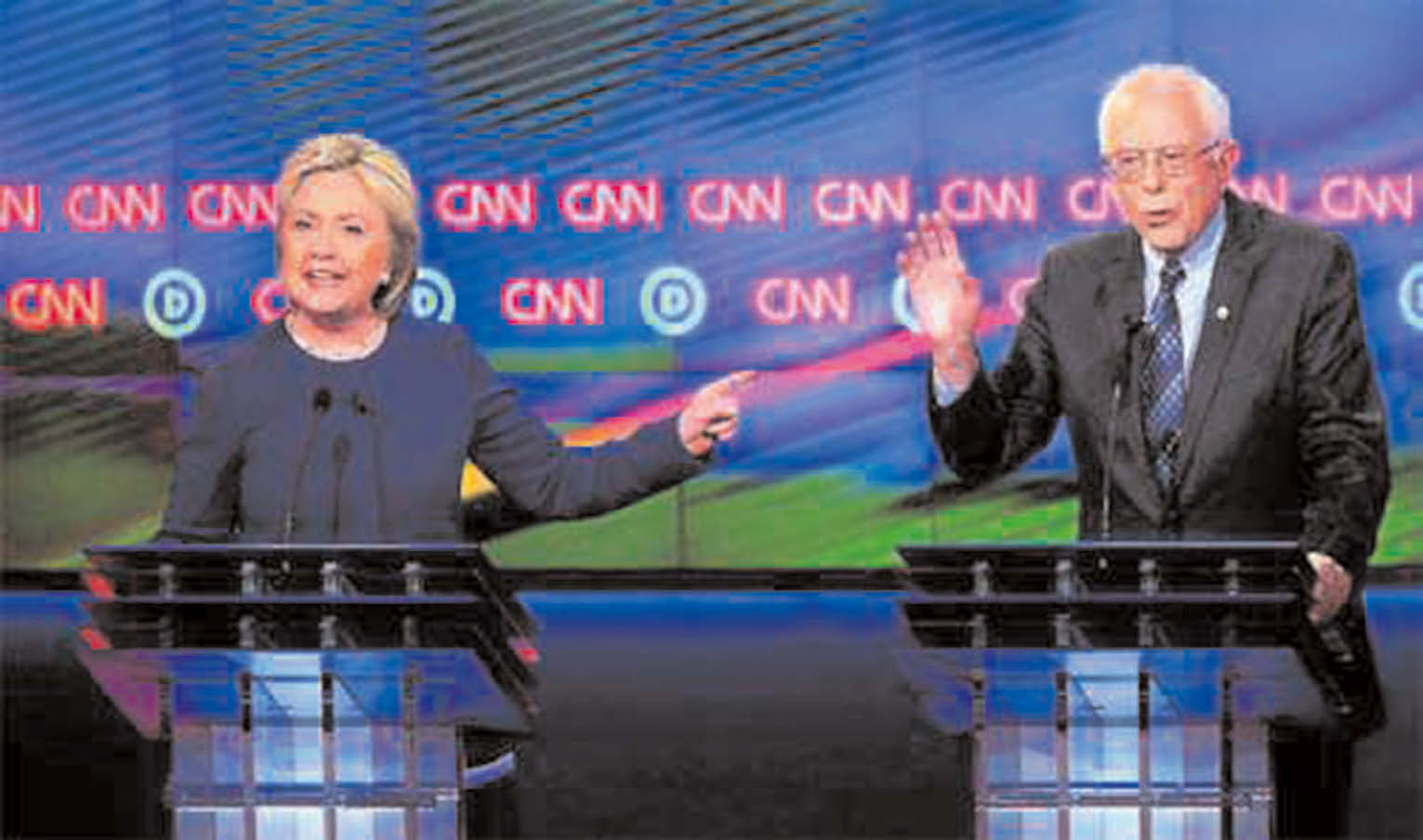
    Hillary’s rival, Bernie Sanders, is trailing behind and is not expected to reach the minimum number of the delegates required to secure the nomination, which is now easy for Hillary. But he has posed a challenge to the Democratic front-runner. On the side of the Grand Old Party (GOP), it is a strange spectacle. Though the front-runner, Trump, has emerged victorious in many states, the Republican leadership is not happy, as Trump is a threat to the establishment which might not have envisaged that Trump, who had never actively participated in active politics, would get so much support from the voters.

    The New Yorker has defied the imagination and now is the leader among the three contenders. All this is indicative of the pervading disillusionment of the supporters of the Republican Party.

    The leaders and those near to them were initially confident about the candidacy of Jeb Bush, former Ohio Governor. But internally he had several enemies and the Republican voters had enough of Bush.

    After the demise of Jeb’s campaign, the Republican leadership stood behind Rubio. He had nothing to offer to the voters. He was talking about the 21st century but his views were that of the 19th century. Trump savaged him, retaliating Rubio crossed all norms of decency and used foul language.

    Republicans are not happy with Ted Cruz, the senator from Texas. He has no friends in the Party and in the Senate. He calls them the “Washington Cartel”. Both Cruz and Rubio are the products of the Tea Party, which is the cause of the present dissentions and decline of the Republican Party.

    Sanders is able to pose a challenge to Hillary Clinton, because, though 74 years old, he represents the angry age group between 18 and 35, of present-day America. Of course, they are mainly White. These young people feel that they have been neglected and have not benefited by the creation of new wealth.

    They are also angry that the CEOs of the big companies are awarded millions even when they fail the companies. Sanders says that he has a message and would not withdraw from the race. But he does not seem to want to analyses his message in light of the reality. He criticizes the Wall Street and wants the state ownership of those institutions. But state ownership is also not above board. Clement Attlee, when he was the Prime Minister of UK, once observed that people like Harold Laski had written books on the grammar of politics but were ignorant of the practice of politics. Sanders’ speeches remind us of Attlee’s observations.

    The young African-Americans and Latinos are not visibly so inclined as are the Whites and that is why Sanders’ crowd generally is white. He has failed to get the support of the blacks, who overwhelmingly support Hillary. She even gained about 80 per cent in some black constituencies. That is because she and her husband kept a constant personal contact with blacks and the Latinos. Bill Clinton, while president, had implemented some measures which were beneficial to the blacks.

    After Obama had won the presidential race handsomely, the Republican Party stalwarts decided to take steps to reform the party, to make it more inclusive and diverse. But the report to that effect was put aside. Instead, the most reactionary new element, the Tea Party, got hold of the GOP, which is why the last seven years have witnessed the disruptive record of the Republican Party. Now, the Party leadership is praying and plotting to stop the front-runner, Trump, from getting the required number of delegates and the nomination. They want to bring in their chosen candidate. That may split the party. The Republican Party is in a fix. It does not want either Trump or Cruz and the third candidate, Kasich, has won nowhere, except in Ohio, his own state. The Republican party in the House and the Senate, unmindful of the changes in the world, is still obsessed with the cold war politics and so all the while talks about dominating the world. The American people, themselves, by and large are tired of the war. President Obama’s slow withdrawal of the troops from several theatres of war is welcomed by them. The American leadership has to rise to the occasion and adjust to the changing world which wants cooperation and exchange of ideas and not lectures and least of all orders. The refugee problem has been handled by Europe itself and it has not asked for help and guidance from America.

    The Democratic Party also has its problems. The recent campaign for the primaries has revealed several drawbacks of the party and its leadership. The rise of Sanders, who has no party base, shows the party leadership is docile. Sanders is not a winnable nominee but no other candidate has come forward. Hillary Clinton would win the nomination, but ordinary voters all the while would be worried of her credibility gap. She had changed her positions every now and then. Moreover, the fund-raising craze of the Clinton family foundation has no limit, which is also a problem. At the moment people are not happy with any of the candidates. Most people are fed up with the politicians.

  • Cutting the cost of Citizenship in the Immigration Capital of the World

    Cutting the cost of Citizenship in the Immigration Capital of the World

    For centuries, countless immigrants, including the 3.5 million that today call New York Citytheir home, have brought culture, ideas, innovation, and an entrepreneurial spirit to neighborhoods across the five boroughs, building communities and embedding themselves in the social fabric of the City.

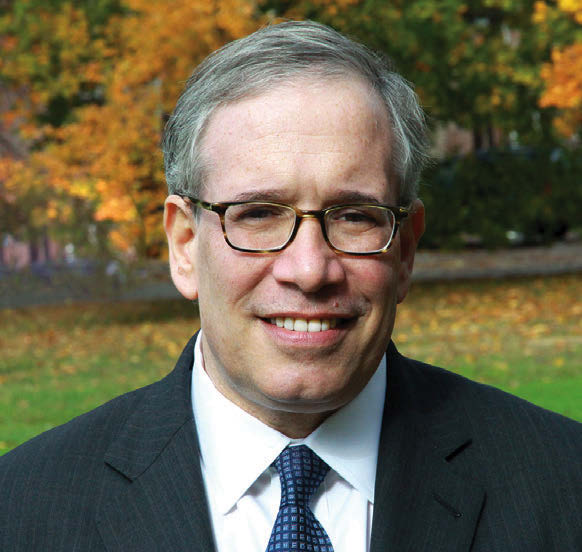
    For every immigrant, becoming a citizen in the country where you live and contribute is a great and proud accomplishment. However, as a new report from my office finds, the costs of achieving citizenship have soared in recent years, creating significant barriers for many of the City’s 670,000 legal permanent residents eligible for naturalizationthroughout the five boroughs: 217,000 in Queens, 208,000 in Brooklyn, 117,000 in The Bronx, 106,000 in Manhattan and 19,000 in Staten Island.

    Since 1989, the citizenship application fee through the United States Customs and Immigration Service (USCIS) has spiked from$60 to $680 – an increase of 500 percent accounting for inflation.

    These fees are amplified by additional costs that can run into the thousands of dollars, including the cost of English classes (typically around $400 per week for group lessons) and consultations with immigration lawyers (fees can run as high as$1,500). As a result, it comes as no surprise that many would-be applicants cite financial barriers as the main reason why citizenship remains out of reach for them.

    The inability of immigrants to secure citizenship not only hurts their families, but our economy at large. Immigrants who naturalize in New York City experience increases in annual incomes of up to $3,200, boosting wages for individuals and promoting economic growth in our neighborhoods.

    As the City’s independent watchdog, I work every day to make sure all New Yorkers have the same opportunity to secure gainful employment and support their families. That’s why we need to be making it easier, not harder to secure citizenship.

    New Immigrants pledge allegiance
    New Immigrants pledge allegiance

    Today, 95 percent of the USCIS operating budget is funded through fees. Congress should directadditional resources to USCISin order to reduce, or even eliminate, application fees for becoming a citizen. In addition, USCIS should improve its fee waiver process, which is designed to offer full fee waivers to households below 150 percent of the poverty line, but is confusing and inconsistently applied. Lastly, USCIS should research alternative payment options, including a staggered payment system that enables eligible immigrants to pay fees on an installment plan.

    However, we can’t wait for Washington to act. Here in the ImmigrantCapital of the World, we have to set the example by developing public private partnerships to offer more citizenship assistance services where immigrants work; increasing funding for English and civic lessons for adults; and exploring tax credits to incentivize employers to subsidize immigration applications.

    We already know that citizenship is a crucial step towards economic security in the United States. Now’s the time to make it truly possible for all Americans.

  • The Fight For $15

    The Fight For $15

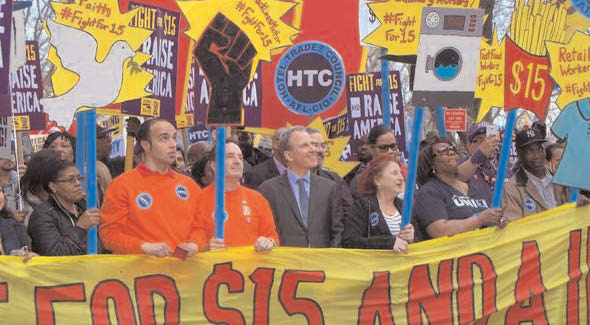
    The benefits of a hike would go beyond those who receive it. For each dollar the minimum wage is increased, economists estimate it boosts consumer spending by $2,800 per affected household. A minimum wage hike can stimulate the economy”, says the author.

    Support is growing across New York State for increasing the minimum wage to $15 an hour. More than two-thirds of New Yorkers agree that working men and women need a raise. The Legislature should give them one, or Gov. Cuomo should take action.

    The reasons to increase the minimum wage are as clear as they are compelling. Paying a fair wage is a statement of our basic values. When we allow our fellow New Yorkers to work full-time and live in poverty, we are sending a message that we do not value them.

    And when we permit large employers to force taxpayers to foot the bill for major costs of doing business – by offering food stamps and other state benefit programs so workers can provide for their families – we send a message that New York is willing to subsidize companies that pay poverty wages. As one study revealed, more than 50% of low-wage workers are on public assistance, costing state and local taxpayers approximately $9 billion over the past two years.

    Let’s be clear: The minimum wage affects more than just high-school kids looking to make a few extra dollars. According to official state Department of Labor statistics from February, half of all workers earning less than $15 per hour are 35 or older. In New York City, 80% of minimum-wage workers are over age 25.

    According to the Economic Policy Institute, statewide, 53% of minimum wage workers are women and 50% are people of color.

    The benefits of a hike would go beyond those who receive it. For each dollar the minimum wage is increased, economists estimate it boosts consumer spending by $2,800 per affected household. A minimum wage hike can stimulate the economy.

    And recent history shows that a minimum wage hike is not a “job-killing tax.” Quite the opposite. In 2014, more than a dozen states – including New York – increased their state minimum wage. In the months that followed, these states experienced higher rates of employment growth than the national average, according to analyses by economists at Goldman Sachs and the Center for Economic and Policy Research.

    Nor is $15 an arbitrary number, as some suggest. As one analysis showed, if the minimum wage had just kept up with inflation since 1970, it would nearly match the governor’s five-year phase-in plan, which would raise the pay floor to that level in New York City by 2018 and in other parts of the state by 2021.

    We can address this problem in one of two ways. The Legislature can enact an across-the-board increase. Or, under state law, the commissioner of the Department of Labor can convene a wage board to examine conditions in a specific occupations and determine whether an increase in wages is necessary because current wages are inadequate to provide for workers and their families.

    Last year, New York convened a wage board to address the woefully low wages for fast-food workers. Over two months, the board heard testimony from employees, employers and industry experts, and reviewed statistics and studies describing the conditions in the industry.

    When confronted with the harsh reality of what it is like to live on poverty wages and work in the fast-food industry, the wage board voted to raise the minimum wage for fast-food workers at large chains to $15 per hour. As a result, as many as 200,000 fast food workers will earn a true living wage by 2021.

    There are many other industries – from home-care to retail -where the current minimum wage is inadequate. It is time to send the simple message that all New Yorkers deserve a fair day’s pay for a fair day’s work.

    Gov. Cuomo can use his power to create more wage boards to critically examine whether workers in other occupations face similar conditions and therefore deserve a similar raise. But the best solution is for the legislature to pass a law this session raising the state’s minimum wage to $15 per hour for all workers.

  • Bharat Mata ki jai

    Bharat Mata ki jai

    The rather intriguing debate over what it means to be nationalistic – or variably, a patriot – that started with RSS chief Mohan Bhagwat declaring that all Indians are Hindus, and was given a far Left turn in JNU, finally seems to have arrived at a consensus. A nationalist is one who can ‘spontaneously’ chant “Bharat Mata ki jai”. For some freshly self-anointed priests of nationalism, that is the only definition. The Shiv Sena believes citizenship should be decided by that. Waris Pathan – a Maharashtra MLA of the All India Majlis-e-Ittehad-ul Muslimeen (AIMIM) and a worthy follower of his maverick party chief Asaduddin Owaisi -has been suspended by a unanimous, even if patently illegal, resolution of the Maharashtra Assembly for refusing to give this proof of his nationalism.

    Asaduddin Owaisi may be forging his AIMIM as a perfect counterfoil to the RSS, but the Congress supporting the resolution in the Maharashtra Assembly is proof that the country may be perilously close to giving in to the easiest-to-sell far-right nationalistic ideology. If you can’t beat them, join them. The Maharashtra Speaker said the action against Pathan followed the ‘sentiment’ of the House. When perceptions matter, they have to matter on all sides. It is not the words ‘Bharat Mata’, but the idea behind it that is sought to be conjured in certain quarters, that makes some among the minorities wary. Forcing someone to do something itself raises a red flag. In any case, if a person is accused of being anti-national, it is for the prosecutor to prove the guilt, not for the suspect to demonstrate his innocence.

    Sober political leadership demands that the “nationalist” rhetoric be reined in before it gets totally out of hand. India is a fragile democracy. It is a dangerous game to allow narrow ideas and narrower men to deplete and disrupt our social harmony. The road to harmony in India is not to be paved with a steamroller of a single definition of nationalism but must be cemented with accommodation and cooption. Assimilation will follow, all it needs is patience.

  • An Evening with the Artists at the Indian Consulate Art Exhibition

    An Evening with the Artists at the Indian Consulate Art Exhibition

    Art ExhibitionNEW YORK CITY (TIP): The Consulate General of India. organized an evening of Art Exhibition by Mr. Nayan Mitra followed by speech on “Meditations and Arts” by Ms. Nilima Madan on Friday, March 11, 2016 in the Consulate’s ballroom. The program was attended by a large number of Indian community members

    Riva Ganguly Das - Art ExhibitionThe program started with singing of Guru Mantra followed by Durga Stuti, an Orrisi dance. Consul General Ambassador (Mrs) Riva Ganguly Das welcomed the attendees. Mr. Nayam Mitra spoke about his Art work, the inspiration and what it means to him, followed by a speech on Meditation and Arts by Ms. Nilima Madan.

    Nayan Mitra and Mrs. Nilima Madan at a Q & A at the event.
    Nayan Mitra and Mrs. Nilima Madan at a Q & A at the event.
  • Consul General Riva Ganguly Das bats for Hindi

    Consul General Riva Ganguly Das bats for Hindi

    NEW YORK CITY (TIP): “Think in Hindi before you prepare your document in Hindi”, India’s newly appointed Consul General Ambassador Riva Ganguly Das would like her staff to think in Hindi in order to present better documents in the official language of India. The Consul General was speaking on the occasion of kick-off of the Third International Hindi Conference 2016 at an event held at the Consulate Ball Room on March 14.

    “We are doing a lot of work in Hindi. If we think in Hindi we can produce more accurate documentation”, she explained pointing out her support to the cause of Hindi. Emphasizing the commitment of Government of India for promoting Hindi, the consul general said that more opportunities for Hindi learning should be created. She elaborated upon a diverse Hindi program conducted by Indian Council for Cultural Relations, a Ministry of External Affairs initiative that supports Hindi scholars in various countries around the world.

    The conference is scheduled to be held from April 29 to May 1 at the Consulate Ball Room.

    India's Consul General Ambassador Riva Ganguly Das (third from left) officially launched the Third Intenational Hindi Conference 2016. Also seen with her are (from left) Purnima Desai, Ashok Ojha and Upendra Chivukula (second from right)
    India’s Consul General Ambassador Riva Ganguly Das (third from left) officially launched the Third Intenational Hindi Conference 2016. Also seen with her are (from left) Purnima Desai, Ashok Ojha and Upendra Chivukula (second from right)

    Mrs. Sushma Swaraj, Minister of External Affairs, Government of India,sent a message for the success of the conference. Ashok Ojha, coordinator of the conference, explainedthat the theme of the conference was, “Hindi Language: A Democratic Voice of Complex Issues in Education, Literature, Arts and Media”. According to Ojha Sweden based Hindi scholarHeinz Werner Wesslerhas agreed to deliver his key-note address at the inaugural event on April 29.

    Ojha requested conference participants to register online through the link: http://www.hindiconferenceamericas.com/re gister/ He said that a Kavi Sammelan is scheduled on April 30, the second day of the conference. A Humorous Hindi Play, ‘UdanKhatola’, and a story session, ‘Kahani Manch’, will also be held during the conference.

    Dance exponent Rimly Roy presenting a performance based on Ravindra Sangeet
    Dance exponent Rimly Roy presenting a performance based on Ravindra Sangeet

    A number of speakers including Dr. Susham Bedi of Columbia and CUNY, Dr. Seema Khurana of Yale, and Dr. Rakesh Ranjan of Columbia, spoke at the kick off event. According to Khurana she will prevail upon Yale to host the conference in 2018. Others who spoke in favor of Hindi included Prof. Indrajit Saluja, Mrs. Purnmia Desai, head of Shikshayatan cultural organization, Col Veerendra Tavathia and media professional Sunil Hali.

    A cultural presentation by danseuse Rimli Roy and a poem recitation was performed at the function.


  • North Korea fires Ballistic Missile into Sea

    North Korea fires Ballistic Missile into Sea

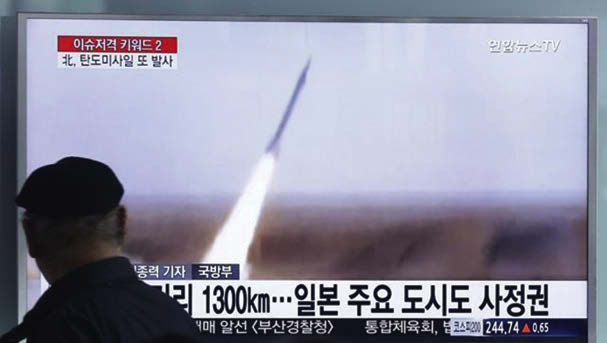
    SEOUL, SOUTH KOREA (TIP): North Korea defied U.N. resolutions by firing a medium-range ballistic missile into the sea on Friday, Seoul and Washington officials said, days after its leader Kim Jong Un ordered weapons tests linked to its pursuit of a long-range nuclear missile capable of reaching the U.S. mainland.

    South Korea’s Joint Chiefs of Staff said in a statement that the missile fired from a site north of Pyongyang flew about 800 kilometers (500 miles) before crashing off the North’s east coast.

    The Joint Chiefs of Staff said it wasn’t known what type of missile was fired, but a South Korean defense official, requesting anonymity citing department rules, said it is the first medium-range missile launched by the North since April 2014 when it fired two.

    A senior U.S. defense official said the Pentagon can confirm the missile launch, saying it appears to be a Rodong missile fired from a road-mobile launcher. The official said the test violated multiple U.N. Security Council resolutions that ban North Korea from engaging in any ballistic and nuclear activities.

    South Korea’s Joint Chiefs of Staff said later Friday its surveillance equipment detected the trajectory of a suspected second missile fired from a site where the North’s confirmed first launch occurred. A Joint Chiefs of Staff statement said the object later disappeared from South Korean radar at an altitude of 17 kilometers (10 miles) and that it was trying to find out if a missile had been fired or anything else was captured by the radar.

    Friday’s launch came amid a heightened international standoff over the North’s weapons programs in the wake of its nuclear test and long-range rocket launch earlier this year.

    In recent weeks, North Korea threatened pre-emptive nuclear strikes against Washington and Seoul and test-fired short-range missiles and artillery into the sea in response to tough U.N. sanctions imposed over its nuclear test and rocket launch. The North says it needs nuclear weapons to cope with what it calls U.S. military threats.

    On Tuesday, North Korea’s state media said Kim had ordered tests soon of a nuclear warhead and ballistic missiles capable of carrying warheads. Kim issued that order while overseeing a successful simulated test of a re-entry vehicle aimed at returning a nuclear warhead into the atmosphere from space so it could hit its intended target, according to the North’s Korean Central News Agency.

    This led South Korean analysts to suspect that the North would likely fire a missile soon to test the re-entry technology. Some analysts also predicted the North might fire a missile carrying an empty warhead, which contain trigger devices but lack plutonium or uranium, to see if those warhead’s parts can survive the high pressure and temperatures upon re-entry into the atmosphere and if they could detonate at the right time.

    Outside experts said it is a key remaining technology that North Korea must master to achieve its goal of developing a long-range missile capable of hitting the U.S. mainland. South Korean defense officials said earlier this week that North Korea had yet to develop the re-entry technology, so it still does not have a functioning intercontinental ballistic missile. It was not clear if Friday’s launch was meant to test a re-entry vehicle or other weapons technologies or was just intended as a show of force against Washington and Seoul.

  • Russia begins withdrawing Forces from Syria

    Russia begins withdrawing Forces from Syria

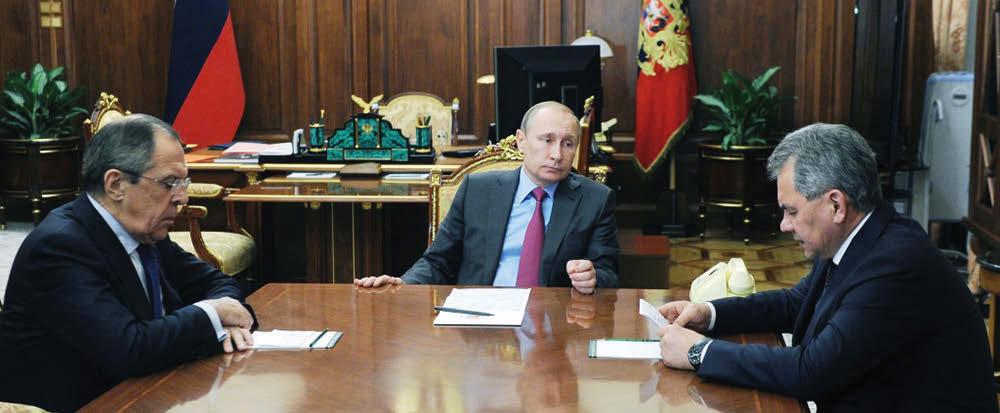
    MOSCOW (TIP): Russia began withdrawing its forces from Syria in a move that will leave the Syrian government to fend for itself to a much greater extent — but with a greatly strengthened hand in negotiations over the country’s future.

    The first group of Russian planes left Hmeymim air base in Syria on Tuesday, March 15 morning, the Russian Defense Ministry said.

    Russia’s surprise announcement Monday that it would begin withdrawing its forces from the conflict came as suddenly as its devastating airstrike campaign that started in September.

    But Syria’s government was not caught unawares by the move, a senior official said.

    “We were not surprised because the decision was made in coordination and consultation with us,” Bouthaina Shaaban, senior adviser to Syrian President Bashar al-Assad, said.

    “We knew beforehand that this is what was going to be announced because the Russians came here to achieve certain jobs, and we and they agreed that most of the jobs have been achieved.”

    In terms of “fighting terrorism,” she said, “they’ve done a great job and they will continue in fighting terrorism, but there are some tasks which have been completed, and therefore the Russian and Syrian leadership agreed that it is appropriate now to withdraw some of the planes or forces.”

    Russian President Vladimir Putin announced the withdrawal Monday, saying that “the task that was assigned to the Ministry of Defense and the armed forces as a whole has achieved its goal.”

    But critics said that Moscow’s stated goal of fighting terrorist groups such as ISIS in Syria did not accurately reflect the reality of its military actions in the war-ravaged nation.

    They point to the bombings of civilian areas as evidence that Russia has been more interested in helping Assad eliminate his opposition.

    Syrian opposition welcomes Russian drawdown

    Asked whether the Russian withdrawal signaled a case of “mission accomplished,” Shaaban replied, “Hundreds of villages have been liberated, many towns have been liberated from armed gangs, huge parts of Syria have been liberated.”

    She said Russia’s Defense Ministry had said the “war against terrorism will continue. And we are happy also to see Russian-American coordination in fighting terrorism.”

    Russia’s steps were “the right steps toward a political settlement and also toward a continuation of fighting terrorism,” she continued.

    Putin’s announcement came as Syrian peace talks resumed Monday in Geneva, Switzerland, in which members of the Syrian regime and opposition are meeting indirectly through a mediator to try to forge a path to peace.

    Speaking on the sideline of the talks Tuesday, Syria’s main opposition group, the High Negotiations Committee, said it welcomed the Russian drawdown.

    “What really keep(s) Assad in power now, what keep(s) crimes until this moment, is the presence of the Russian forces there,” opposition group spokesman Salim al-Muslet told reporters.

    “I believe if they (are) serious about pulling out … it will be an end to crimes in Syria and will help us to put an end to terrorism there in Syria.”

    Putin “should put pressure on Assad to accept (the) outcome” of the Geneva talks, he said.