Month: May 2016

  • India, Iran seal Chabahar Port deal, talk terror

    India, Iran seal Chabahar Port deal, talk terror

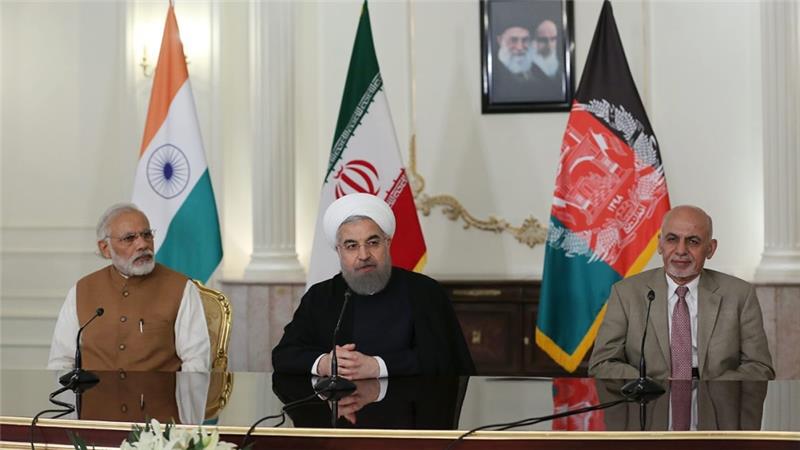
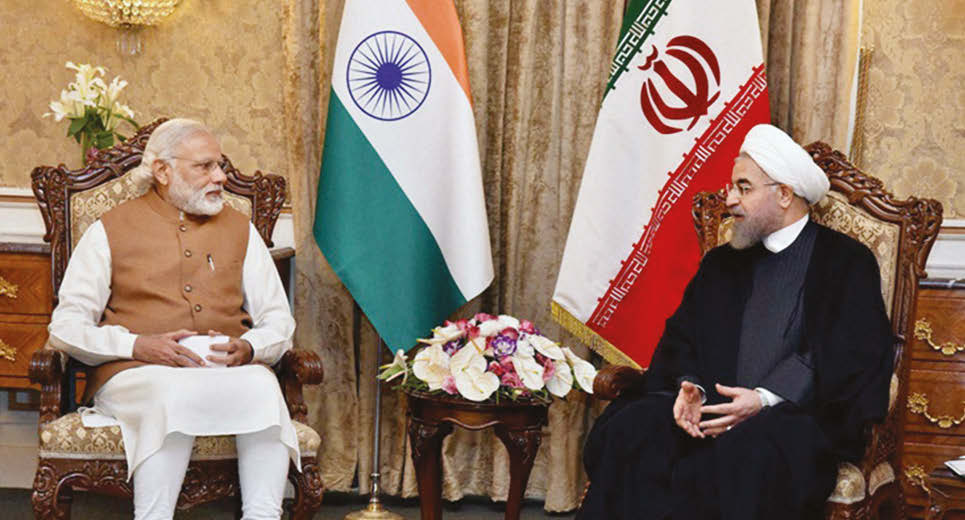
    TEHRAN (TIP): Under the ornate chandeliers inside Saadabad palace’s atrium, Iranian President Hassan Rouhani by his side, Prime Minister Narendra Modi on May 23 quoted a Persian couplet by Mirza Ghalib to describe India’s ties with Iran: “Once we make up our mind, the distance between Kaashi and Kaashan is only half a step.”

    Looking on with a broad smile was Iranian Foreign Minister Javad Zarif and other officials standing behind the two leaders. This scene captured in a nutshell what the day’s meeting between Modi and Rouhani had achieved. Minutes earlier, India and Iran signed the “historic” Chabahar port agreement, which has the potential of becoming India’s gateway to Afghanistan, Central Asia and Europe. Later, Afghanistan President Ashraf Ghani joined the two leaders and a trilateral transit agreement was signed.

    The two sides did not stop there. Mindful of the threat to peace and stability in the region, they also agreed to cooperate on “intelligence-sharing” to combat “terrorism”, “drug trafficking” and “cyber crime”. “Due to the importance of stability and security in the region, especially in countries like Afghanistan, Iraq, Syria and Yemen, a big problem called terrorism is running rife and rampant in the region. The two countries discussed political issues as well, and how they can cooperate on intelligence-sharing, their fight against terrorism and extremism, and how they can contribute towards peace and stability in the region,” Rouhani said. Modi, who told Rouhani that “leadership and the clarity of your vision have deeply impressed me”, said, “India and Iran also share a crucial stake in peace, stability and prosperity of the region. We also have shared concerns at the spread of forces of instability, radicalism and terror in our region. We have agreed to consult closely and regularly on combating threats of terrorism, radicalism, drug trafficking and cyber crime. We have also agreed to enhance interaction between our defense and security institutions on regional and maritime security.”

    However, the centerpiece of their talks was Chabahar port, described by Rouhani as “strategic” at least twice. “Considering the fact that Iran is very rich in energy and the fact that India possesses very rich minds, so considering that they have a strategic port, the port of Chabahar, various important industries like the production of aluminum, petro chemicals, steel are the ones on which (the two countries) can have vast cooperation,” he said. With all the investments that are going to be made in the development of Chabahar port and considering the credit lines that are going to come from India, Rouhani said that “this very strategic port can very well turn into a very big symbol of cooperation between the two great countries”. However, Rouhani, mindful of Pakistan’s sensitivities, made it clear, “Today’s agreement is not against any other country.” He added that other countries are also welcome to participate in the initiative to develop Chabahar. Modi, without mentioning Pakistan, said, “Today, the watch-words of international ties are trust not suspicion; cooperation not dominance; inclusivity not exclusion. This is also the guiding philosophy and driving spirit of the Chabahar agreement.” Modi said the bilateral agreement to develop the port and related infrastructure, along with availability of about $500 million from India for this purpose, is an “important milestone”. “This major effort would boost economic growth in the region,” the PM said. Making a pitch for improved economic ties, Rouhani said, “This visit comes at a time when we have managed to conclude the nuclear deal and at a time when sanctions are gone… the ground is prepared more than ever for furthering our economic cooperation…” “Today, we have this chance to develop relations further to be even more beneficial to the people of our two countries,” he said. In this context, the Iranian President pointed out the challenges arising out of banking channels, which is preventing India from paying the full $6 billion of past dues from oil exports. Modi, on his part, said that India and Iran are not new friends. “Our dosti is as old as history,” he said.

    “We can never forget that Iran was among the first countries to come forward in support when an earthquake struck my state, Gujarat, in 2001. Similarly, India is proud to have stood with the people of Iran during your difficult times. I compliment the leadership of Iran for their far-sighted diplomacy,” Modi said. The two sides signed a total of 12 of agreements on economy, trade, transportation, port development, culture, science and academic cooperation. In this context, Rouhani said, “Since India has made many advancements in new and high technologies, like ICT, biotech, nanotech and aerospace, today we made a decision to bring our academics, universities, technological and scientific partners closer to each other.” Earlier in the day, Modi was accorded a ceremonial welcome at the Saadabad palace’s Jomhouri building. Rouhani hosted a lunch and then they moved to the palace’s Talar building where they, along with Ghani, signed the trilateral transit pact.

  • Second Innings for Mamata Banerjee as WB Chief Minister

    Second Innings for Mamata Banerjee as WB Chief Minister

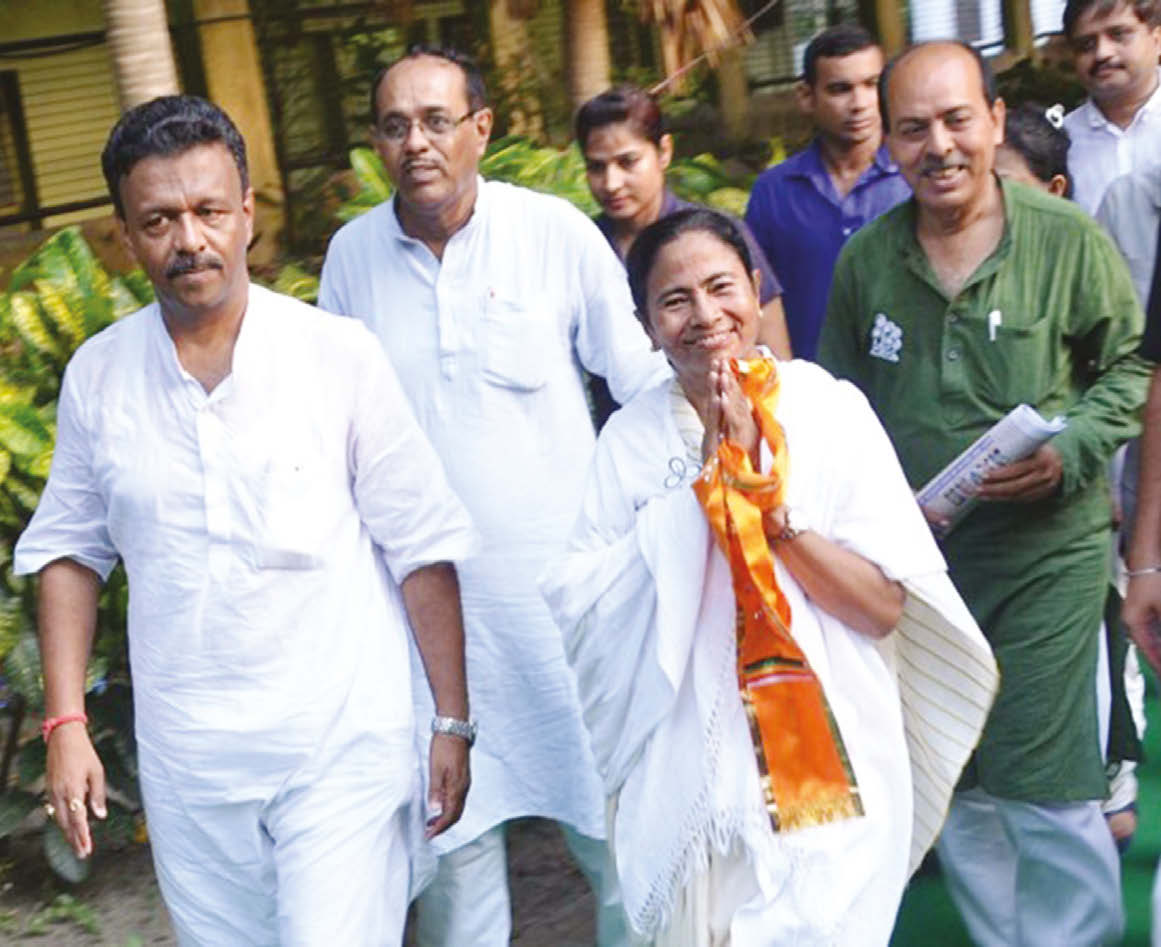
    KOLKATA (TIP): The Trinamool Congress chief Mamata Banerjee was sworn in as the Chief Minister of West Bengal on Friday, May 27, thus beginning her second stint in the once-Left dominated State.

    She had already submitted her recommendations on council of Ministers to Governor Keshari Nath Tripathi. Forty-one ministers, including 17 new faces, were sworn in along with her in batches at a function at Red Road in Central Kolkata.

    Her council of ministers include five Minister of States (Independent Charge) and 8 Ministers of State (MOS). “There will be representation from all districts, except Malda. In Malda we don’t have any representation,” Ms. Banerjee had said. Darjeeling and Malda are the two districts where the Trinamool failed to open its account.

    Union Finance Minister Arun Jaitley and Minister of State for Urban Development Babul Supriyo attended Friday’s swearing- in ceremony.

    On Thursday, her Tamil Nadu counterpart Jayalalithaa extended her good wishes to Ms. Banerjee.

    Over 30,000 guests attended the event. Most of roads reaching central areas of the city were diverted resulting in traffic chaos as the cabinet is took oath in the main arterial road connecting south to central Kolkata.

  • Trump has the numbers for GOP Nomination. What next?

    Trump has the numbers for GOP Nomination. What next?

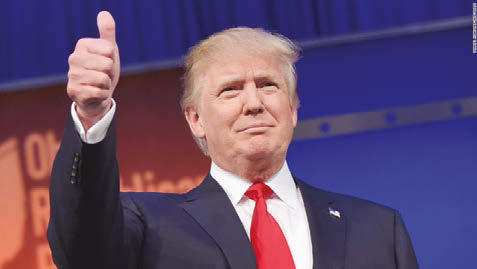
    WASHINGTON (TIP): Donald Trump, on May 26, reached the number of delegates needed to clinch the Republican nomination for president, completing an unlikely rise that has upended the political landscape and sets the stage for a bitter fall campaign.

    Trump was put over the top in the Associated Press delegate count by a small number of the party’s unbound delegates who told the AP they would support him at the convention. Among them is Oklahoma GOP chairwoman Pam Pollard.

    “I think he has touched a part of our electorate that doesn’t like where our country is,” Pollard said. “I have no problem supporting Mr. Trump.”

    It takes 1,237 delegates to win the Republican nomination for president. Trump has reached 1,238. With 303 delegates at stake in five state primaries on June 7, Trump will easily pad his total, avoiding a contested convention in Cleveland in July.

    Trump, a political neophyte who for years delivered caustic commentary on the state of the nation from the sidelines but had never run for office, fought off 16 other Republican contenders in an often ugly primary race.

    Many on the right have been slow to warm to Trump, wary of his conservative bona fides. Others worry about Trump’s crass personality and the lewd comments he’s made about women.

    Trump’s path to the Republican presidential nomination began with an escalator ride.

    Trump and his wife, Melania, descended an escalator into the basement lobby of the Trump Tower on June 16, 2015, for an announcement many observers said would never come:

    The celebrity real estate developer, who had flirted with running for office in the past, would announce that he was launching his campaign for the GOP presidential nomination.

    That speech set the tone for the candidate’s ability to dominate the headlines with provocative statements, insults and hyperbole. He called Mexicans “rapists,” promised to build a wall between the U.S. and Mexico and ban Muslims from the U.S. for an indeterminate time.

    He put down women based on their looks. And he unleashed an uncanny marketing ability in which he deduced his critics’ weak points and distilled those to nicknames that stuck.

    “Little Marco” Rubio, “Weak” Jeb Bush and “Lyin’ Ted” Cruz, among others, all were forced into primarily reacting to Trump. They fell one-by-one — leaving Trump sole survivor of a riotous Republican primary.

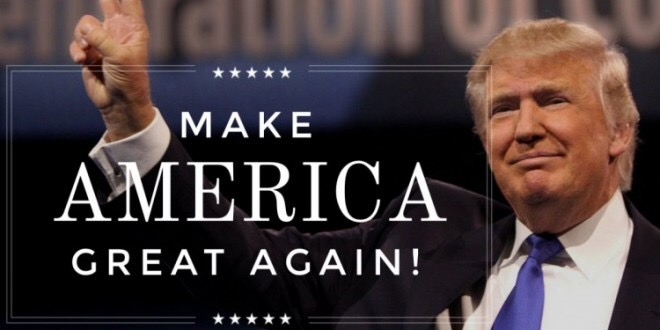
    His rallies became must-see events and magnets for free publicity. Onstage, he dispensed populism that drew thousands of supporters, many wearing his trademark “Make America Great Again” hat and chanting, “Build the wall!”

    The events drew protests too– with demonstrators sometimes being forcibly ejected from the proceedings.

    One rally in Chicago was cancelled after thousands of demonstrators surrounded the venue and the Secret Service could no longer vouch for the candidate’s safety.

    All the while, Republican leaders declared themselves appalled by Trump’s rise. Conservatives called the onetime Democrat a fraud. But they failed, ultimately, to block him. Republican leaders slowly, warily, began meeting with Trump and his staff. And he began winning endorsements from a few members of Congress.

    As with other aspects of his campaign, Trump upended the traditional role of money in the race.

    Trump, 69, the son of a New York City real estate magnate, had risen to fame in the 1980s and 1990s, overseeing major real estate deals, watching his financial fortunes rise, then fall, hosting “The Apprentice” TV show and authoring more than a dozen books.

  • Kannada film actor Harshika Poonacha in New York

    Kannada film actor Harshika Poonacha in New York

    The young and beautiful Harshika Poonacha was in New York and her host Bharat Goradia chose to organize for the leading lady of many popular Kannada films a press conference on May 23 at Senior Care Center of Bobby Kumar in Hicksville.

    In her exclusive conversation with The Indian Panorama editor Prof. Indrajit S Saluja she expressed her admiration for America and Americans. She said it was her second visit to America and she had visited quite a few locations. She said given an option she would like to stay and work in the US.

    Ms Poonacha recalled that she was 15 and studying for her High Schoolin Bengaluruand was with her friends at a coffee shop when a gentleman (she learnt later he was Ramesh, a film maker) approached her with an offer to give her a lead role in a Kannada film he was planning. She thought it was just a ploy of the man to entice her. He said he wanted to make a film on changes young school children undergo.However, soon she learnt that the man was genuine and that his offer was a professional one. That was the beginning of her film career. The incident took place in 2008. And the film -PUC- was released in 2010.

    Harshika is flanked by her host Bharat Goradia (left) and Bobby Kumar (right)
    Harshika is flanked by her host Bharat Goradia (left) and Bobby Kumar (right)

    Harshika said she has since acted in15 films which means an average of 2 films a year. She has worked till now in South movies only. She has worked in 12 Kannada, 2 Telugu and 1 Tamil film. However, she said she was waiting for an opportunity to do a couple of Hindi films. Though there are some offers, she said, she wanted a big launch and was not interested in run of the mill roles.

    For her performance in the movie Tamastu, based on the subject of terrorism, Harshika received the Karnataka State Films Award. Her next big film which has not yet been titled is directed by the famous director Sunit Kumar Desai and is to be released in the next few months.

  • India in Global Economy

    India in Global Economy

    Dr. Subramanian Swamy who was elected to the Rajya Sabha recently by the BJP gave an enlightening talk in the Capital on “India in Global Economy”. The program was organized by the Delhi Study Group (a socio-political-cultural NGO) led by President Vijay Jolly, Ex. Delhi MLA who in his welcome speech praised the fiscal policies of Prime Minister Modi during its 24 months of NDA rule in India. Dr. Swamy is a politician (a 6 time Member of Parliament) and economist and now again a Rajya Sabha MP. He was the President of the Janata Party until he merged on with Bharatiya Janata Party (BJP). He has served as a member of the Planning Commission of India and was a Cabinet Minister in the short-lived Chandra Shekhar government. Dr. Swamy attended Hindu College, University of Delhi, from where he earned his Masters Honours degree in Mathematics. He then took his master’s degree in Statistics from the Indian? Statistical Institute, Kolkata. He then went to study at Harvard University, where he received a PhD in Economics in 1965. In 1963, while he was a doctoral student at Harvard, he worked at the United Nations Secretariat in New York as an Assistant Economic Affairs Officer. He subsequently worked as a resident tutor at Lowell House at Harvard university.? His knowledge, expertise and experience in the economic, legal and educational fields along with his oratory skills have endeared him to audiences.? He often makes free, frank, fearless remarks and supports it with evidence without flaws. “India in Global Economy ” was the topic of the day. The program was attended by diplomats, journalists, bureaucrats and people from various walks of Life. He spoke eloquently as always. “India is the third largest GDP in the World and the second largest in population-the second largest GDP Country is China and the first largest is the United States. ” Dr. Swamy went on to elaborate “There are 2 ways for India to participate in the global economy.

    One way is the way the Chinese have-they have skilled, cheap labor so they took semi-processed goods from east Asia and added value to it, processed it and sold it to Europe and America. Earlier the East Asian countries like Taiwan, North Korea, Japan etc. used to directly export to the United states and Europe but their laborbecame expensive so they were looking for a “labor cheap country” and China was ready. So if we look at it China has a deficit with east Asia and a huge profit with Europe and America. That is how China’s economic growth has propelled.? One of India’s biggest strength is our Agriculture. Even today our agricultural products are the cheapest in the world. Rice, wheat, fruits, vegetables are all very cheap compared to international market prices. Why don’t we export all this? because of lack of infrastructure. We need to have good packaging and see that agricultural produce is packed hygienically then the transportation, freight and all this has to be very efficiently done. We lack infrastructure for all this. We produce in one acre of land? only 1/6th that of Japan -1 Indian cow produces only 200 liters of milk per year but 1 Israeli cow produces 1000 liters of milk per year. The plus with India is that India can do agriculture all 12 months of the year. America, Europe, China all have snowfall 5 months of the year but this country is god-gifted where we can produce all 12 months and grow 3 crops a Year.?120 million hectares are agricultural land – the largest in the world and on top of that we have the labor force which is young. 50% of our population is below the age of 20. But what is going to transform India is not more capital or more labor but the real thing we need in our country- and that is the lesson of economics- is innovation and how to overcome obstacles. So if one were to say what is the truth about India -it is this enormous potential and this enormous legacy that we were one of the most developed countries once upon a time. The average income of people from India abroad is more than the average American/ Japanese/South Korean and so on, because our professionals take to work “like ducks to water” and they are most sought after today. Google, Microsoft etc. now have Indian as their heads. So this huge human potential needs to be exploited and exploited and utilizedefficiently.” Sound economic perceptions and advice?perhaps- is anyone listening?


    (Sheila Chaman specializes in Media, Communication and Social service)

  • It’s Official – Trump has the numbers for GOP Nomination 

    It’s Official – Trump has the numbers for GOP Nomination 

    Earlier today, May 26, Donald Trump  reached the number of delegates needed to clinch the Republican nomination for president, completing an unlikely rise that has upended the political landscape and sets the stage for a bitter fall campaign.

    Trump was put over the top in the Associated Press delegate count by a small number of the party’s unbound delegates who told the AP they would support him at the convention. Among them is Oklahoma GOP chairwoman Pam Pollard.
    “I think he has touched a part of our electorate that doesn’t like where our country is,” Pollard said. “I have no problem supporting Mr. Trump.”
    It takes 1,237 delegates to win the Republican nomination for president. Trump has reached 1,238. With 303 delegates at stake in five state primaries on June 7, Trump will easily pad his total, avoiding a contested convention in Cleveland in July.
    Trump, a political neophyte who for years delivered caustic commentary on the state of the nation from the sidelines but had never run for office, fought off 16 other Republican contenders in an often ugly primary race.
    Many on the right have been slow to warm to Trump, wary of his conservative bona fides. Others worry about Trump’s crass personality and the lewd comments he’s made about women.

    Trump’s path to the Republican presidential nomination began with an escalator ride.
    Trump and his wife, Melania, descended an escalator into the basement lobby of the Trump Tower on June 16, 2015, for an announcement many observers said would never come: The celebrity real estate developer, who had flirted with running for office in the past, would announce that he was launching his campaign for the GOP presidential nomination.
    That speech set the tone for the candidate’s ability to dominate the headlines with provocative statements, insults and hyperbole. He called Mexicans “rapists,” promised to build a wall between the U.S. and Mexico and ban Muslims from the U.S. for an indeterminate time.
    He put down women based on their looks. And he unleashed an uncanny marketing ability in which he deduced his critics’ weak points and distilled those to nicknames that stuck. “Little Marco” Rubio, “Weak” Jeb Bush and “Lyin’ Ted” Cruz, among others, all were forced into primarily reacting to Trump. They fell one-by-one — leaving Trump sole survivor of a riotous Republican primary.
    His rallies became must-see events and magnets for free publicity. Onstage, he dispensed populism that drew thousands of supporters, many wearing his trademark “Make America Great Again” hat and chanting, “Build the wall!”
    The events drew protests too– with demonstrators sometimes being forcibly ejected from the proceedings.
    One rally in Chicago was cancelled after thousands of demonstrators surrounded the venue and the Secret Service could no longer vouch for the candidate’s safety.

    All the while, Republican leaders declared themselves appalled by Trump’s rise. Conservatives called the onetime Democrat a fraud. But they failed, ultimately, to block him. Republican leaders slowly, warily, began meeting with Trump and his staff. And he began winning endorsements from a few members of Congress.
    As with other aspects of his campaign, Trump upended the traditional role of money in the race.
    Trump, 69, the son of a New York City real estate magnate, had risen to fame in the 1980s and 1990s, overseeing major real estate deals, watching his financial fortunes rise, then fall, hosting “The Apprentice” TV show and authoring more than a dozen books.
    Source – AP

  • Indian American Neera Tanden Appointed To Democratic Party’s Policy Panel

    Indian American Neera Tanden Appointed To Democratic Party’s Policy Panel

    Democratic National Committee Chairwoman Debbie Wasserman Schultz announced the appointment of the party Platform Drafting Committee’s 15 members who will draft its policy agenda for the November presidential election.

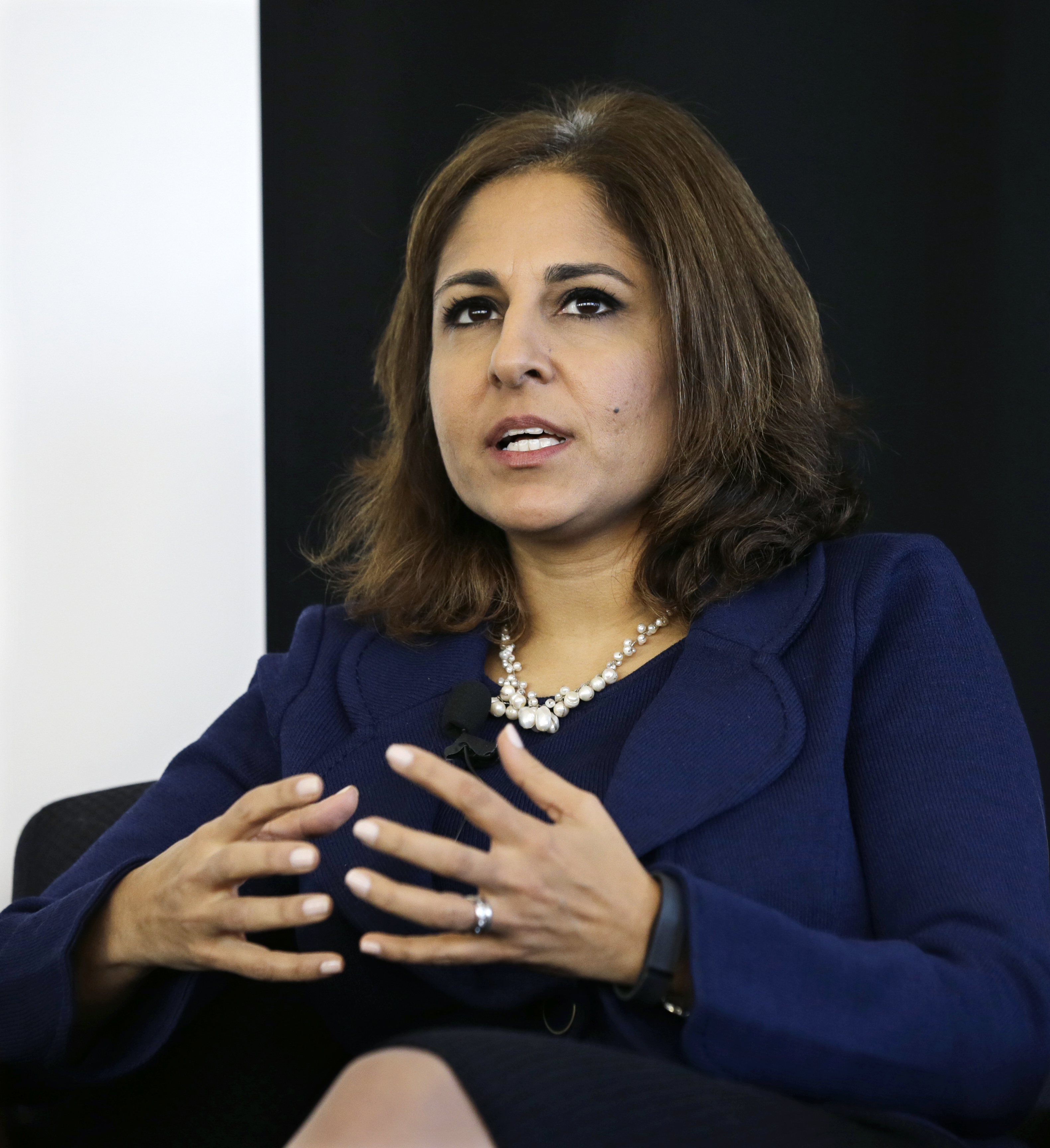
    Among the members is Indian American Neera Tanden, 45, who has been a long-time associate of Democratic presidential front-runner Hillary Clinton, is being touted as a potential cabinet member if Clinton is elected as the US president in the November general elections.

    The panel is responsible for developing and managing the process through which the platform is established which is similar to the election manifesto parties have in India.

    Tanden, the president of the Center for American Progress (a top US think-tank), has served as a Clinton surrogate and worked as policy director for Clinton’s presidential campaign in 2008. She was a key protagonist in developing President Barack Obama’s healthcare reform proposals – the Affordable Care Act – during her tenure in the Obama administration.

    U.S. Democratic Party
    U.S. Democratic Party

    “We are delighted to bring together this talented group of Democrats. These individuals represent some of the best progressive thinking from across the nation. I am confident that the members of this committee will engage Americans in a substantive dialogue of ideas and solutions that will inform our Party Platform,” Democratic National Committee Chairwoman Debbie Wasserman Schultzshe said.

    Congressman Elijah Cummings has been appointed as chair of the drafting committee.

    The committee’s members are Rep. Elijah Cummings, Howard Berman, Paul Booth, Carol Browner, Rep. Keith Ellison, Rep. Luis Gutierrez, Rep. Barbara Lee, Bill McKibben, Deborah Parker, State Rep. Alicia Reece, Bonnie Schaefer, Ambassador Wendy Sherman, Neera Tanden, Dr. Cornel West, and James Zogby.

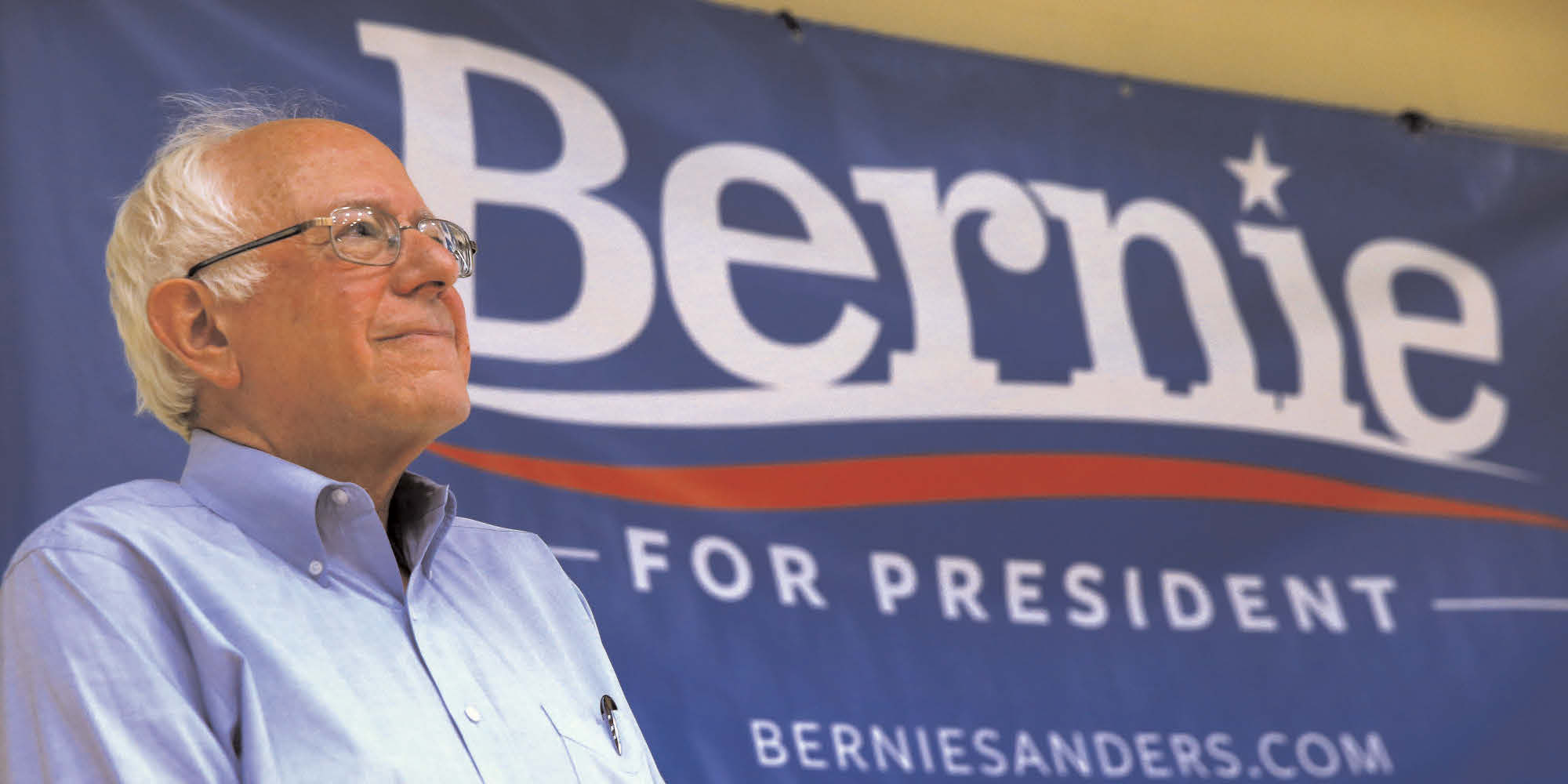
    Sanders said he was satisfied with the way the committee’s seats were distributed.

    “We believe that we will have the representation on the platform drafting committee to create a Democratic platform that reflects the views of millions of our supporters who want the party to address the needs of working families in this country and not just Wall Street, the drug companies, the fossil fuel industry and other powerful special interests,” he said in a statement.

    Clinton campaign press secretary Brian Fallon also said their camp is happy with the fact that Sanders will have more input in the party platform.

    “We’re pleased that the upcoming Democratic Convention will ensure supporters of Senator Sanders are well represented in the drafting of the party’s platform,” Fallon said. “The Democratic Party historically has been a big tent, representing a diverse coalition, and Hillary Clinton is committed to continue welcoming different perspectives and ideas.”

  • Myanmar’s Rohingya Muslims still waiting for Democracy

    Myanmar’s Rohingya Muslims still waiting for Democracy

    Aung San Suu Kyi was awarded the Nobel Peace Prize in 1991 for her “non-violent struggle for democracy and human rights”. Back then, she was a campaigner for those things, spending a total of 15 years under house arrest.

    She knows what it’s like to have rights and freedom taken away.

    But now that she is in perhaps the ultimate position of power in Myanmar, there is no sign that she is going to defend the rights of people who have been detained simply because of who they are.

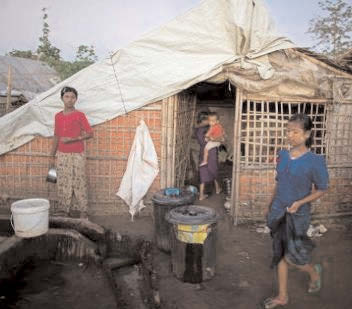
    Tens of thousands of Muslims, mainly Rohingya, have been kept in camps in western Myanmar’s Rakhine State for almost four years since their homes and communities were attacked.

    They were horrific events that were fanned by a powerful, nationalist Buddhist agenda – alive and well today – and it’s a movement Aung San Suu Kyi seems afraid of upsetting.

    After decades of campaigning against the previous military regime, her National League for Democracy party won last November’s general election and, even though the constitution prevents her from becoming president, she made it clear that she would be in charge and gave herself the title of State Counsellor.

    Her choice of Religious and Cultural Affairs Minister raised eyebrows. Thura Aung Ko is a former army general and was a deputy in the same ministry under the previous military-backed government. And, so far, the new government isn’t sending any signals that it will adopt a policy to give rights to Rohingya who, in Myanmar, are widely regarded as illegal immigrants from neighbouring Bangladesh.

    On his first day on the job in the new administration, Thura Aung Ko gave a media interview in which he said that Muslims and Hindus were “associate citizens”, referring to the 1982 citizenship law that places people into three categories depending on their status.

    He then visited leaders of a nationalist Buddhist movement who regularly spew anti-Islam rhetoric. It’s not known what was discussed at the meeting but it sent a bad message, something Aung San Suu Kyi herself has also been guilty of.

    In April, the United States embassy in Yangon released a statement, offering their condolences for people who were killed when a boat sunk off Rakhine State. The people onboard were Rohingya and that’s exactly what the US statement called them.

    That led to protests outside the embassy by people who refuse to recognise the term Rohingya because it’s not one of the official ethnic minority groups in Myanmar.

    The response from Suu Kyi? Government officials sent a letter to the US ambassador and other diplomats urging them to refrain from using the word Rohingya.

    Yes, it’s very early days in the life of the new government and there are many problems in this country to solve. Yes, the plight of the Rohingya is a very complex issue. Yes, the new government is talking about new laws to safeguard religious freedom and to get tough on hate speech.

    But it’s not enough.

    Here’s what we also know: Around 100,000 people have been living in squalid conditions for almost four years. They have no rights and many have died in a desperate attempt to leave. Over the past year though, the number of departures fell, partly because people wanted to see what the new government would do for them.

    What Aung San Suu Kyi has at her disposal now is the power to speak out. Words can be powerful. They can offer hope. Particularly when they come from someone who built her name on a fight for freedom and rights.

    But when it comes to the Rohingya, there has been nothing but silence; meaning for them, hope is already fading so early in Myanmar’s new democracy.

  • 62% metropolitan Indians give Modi govt a thumbs up | TOI Survey

    62% metropolitan Indians give Modi govt a thumbs up | TOI Survey

    NEW DELHI: Two years into its term, the Narendra Modi government has been rated by 62 per cent of metropolitan Indians as having done a good or very good job in a survey done exclusively for TOI and reported by TOI.

    It is to be noted that people who said government has done a poor or very poor job has risen from 9 per cent in 2015 to 16 per cent this year.

    Modi himself was perceived by nearly half the respondents to the survey (47 per cent) as a strong leader with intent who was being handicapped in delivering on that intent by those around him, a perception that could explain the slightly lower ratings.

    This also fits in with the finding that just over half (51%) felt that the strength of Brand Modi had eroded since 2014, though about one in five felt it had actually become stronger.

    As was the case a year ago, the Swachh Bharat programme remains the most popular of the various initiatives launched by this gover nment, with 42 per cent picking it as the best. Make In India came in a distant second at 13 per cent.

    The failure to create enough jobs was seen as the government’s biggest failing

    with 43 per cent choosing this. Interestingly , the next biggest failing was seen as an overly confrontationist attitude towards the opposition.

    Responses to the government’s performance on two related areas – black money and corruption – were interestingly different. The government was perceived by just over a quarter of the respondents as having reduced corruption. About 40 per cent said it had made no difference and 23% felt corruption had in fact worsened. On black money, however, there is a less sceptical view that came across.

    While 40 per cent said the government had not kept its prom ise on black money, a little over a third felt a good beginning had been made and 15 per cent suggested that the promise had been fully kept.

    More than two-thirds of those polled approved of the government’s foreign policy initiatives and over three-fourths felt the Pakistan policy was either courageous or realistic. Barely one in five expressed the opinion that it was blinkered by ideology. The China policy had similar approval ratings.

    Less than half of the respondents were willing to give the government any or all of the credit for inflation coming down. About 24 per cent said government efforts had kept prices in check and another 22% said both international factors and government efforts had played a part. About 35 per cent said it was entirely due to international factors and one in five insisted that inflation hadn’t come down at all.

    The expectations from the government in its third year not surprisingly mirror these perceptions with job creation emerging as the top priority , followed by tackling farmers’ woes, curbing inflation and boosting the economy .

    The survey was conducted by IPSOS, a global market research company in India’s eight biggest cities – Delhi, Mumbai, Kolkata, Chennai, Bangalore, Hyderabad, Pune and Ahmedabad. The 1,348 people polled were aged 18 to 45 and from socio-economic categories (SEC) A and B.

  • Italian marine allowed to return home until trial by SC

    Italian marine allowed to return home until trial by SC

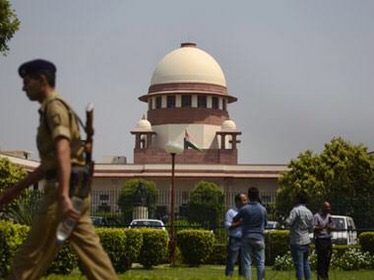
    26th May, NEW DELHI: The Supreme Court has allowed an Italian marine, accused of killing two Indian fishermen, to return to Italy.

    The court also ordered Salvatore Girone, the marine, to not attempt to influence witnesses or destroy evidence in the case upon his return to Italy.

    In addition, the court asked the Italian ambassador to give an undertaking that he would bring Girone back to India to face trial when the time comes.

    The Supreme Court ruled that Girone can return to Italy while the United Nations tribunal decides on a jurisdictional issue between India and Italy.

    The apex court had earlier allowed another marine Massimiliano Lattore – also accused of the murder of the fishermen – to return to his country on health grounds.

    His stay there was recently extended by the apex court until September 30.

  • Hillary Clinton’s email nightmares are back and are likely to get much worse

    Hillary Clinton’s email nightmares are back and are likely to get much worse

    As the former Secretary of State, Hillary Clinton struggles to lock down the Democratic presidential nomination, her infamous email controversy is back.

    The State Department’s inspector general recently released its report on the email practices of Clinton and a number of other past secretaries of state.

    The report badly complicates Clinton’s past explanations about the server and whether she complied fully with the laws in place governing electronic communication. And it virtually ensures that Clinton’s email practices will be front and center in Donald Trump’s fusillade of attacks against her credibility and honesty between now and Nov. 8.

    The inspector general, in a long awaited review obtained Wednesday, May 25, by The Washington Post in advance of its publication, found that Clinton’s use of private email for public business was “not an appropriate method” of preserving documents and that her practices failed to comply with department policies meant to ensure that federal record laws are followed.

    The report says Clinton, who is the Democratic presidential front-runner, should have printed and saved her emails during her four years in office or surrendered her work-related correspondence immediately upon stepping down in February 2013. Instead, Clinton provided those records in December 2014, nearly two years after leaving office.

    For a candidate already struggling to overcome a perception that she is neither honest nor trustworthy, the IG report makes that task significantly harder. No one will come out of this news cycle — with the exception of the hardest of the hard-core Clinton people — believing she is a better bet for the presidency on May 25 than she was on May 23.

    Clinton remains blessed that Republicans are on the verge of nominating Donald Trump, a candidate whose numbers on honesty, trustworthiness and even readiness to lead are worse — and in some cases, far worse — than hers. But Trump’s task of casting her as “Crooked Hillary” just got easier.


    Here are the most critical parts of the State Department inspector general report on Clinton’s email use as reported by Washington Times:

    The State Department’s independent watchdog released an 83-page report Wednesday to lawmakers concluding that Hillary Clinton’s email practices did not comply with department policies.

    Below are some of the most revealing parts of the findings:

    1. The report concludes that Clinton’s use of a personal email account was “not an appropriate method.” This knocks down a key argument made in Clinton’s defense — that because she had emailed State Department officials on their government accounts, records of her communications were preserved.

    imrs.php.jpg

    2. In January 2011, there were two hacking attempts on the Clinton email system in one day. An adviser to President Bill Clinton tried to shut down the server each time.

    imrs.php.jpg

    3. There were warnings issued to senior State Department officials that hackers were targeting personal email accounts. Below, an excerpt from a March 11, 2011, memo written by the assistant secretary of diplomatic security.

    imrs.php.jpg

    4. The audit also covered Clinton’s aides, some of whom did not cooperate when asked to respond to a questionnaire about email use. Some of the aides used their personal email accounts extensively for official business.

    imrs.php.jpg

    5. The package of emails turned over by Clinton was “incomplete.”

    6. IT security officials were concerned about Clinton’s use of personal email and held meetings to discuss the need to preserve records and security. One staff member said the security director said the email system had been approved by state’s legal staff. The IG did not find evidence that the department’s legal adviser had reviewed or approved Clinton’s email system. 

    Another staff member who raised issues was told that their mission was “to support the Secretary, and instructed the staff never to speak of the Secretary’s personal email system again.”

    7. The report also criticizes Colin Powell’s handling of official emails during his tenure as secretary of state, saying it was also “not an appropriate method” for preserving emails that are part of the federal record. When asked to defend her email system, Clinton has said that her predecessors also used personal accounts.


    But the report also notes that by the time Clinton became secretary of state, the guidance on email use was much more detailed, suggesting that pointing to Powell is not an entirely fair comparison.

    imrs.php.jpg


  • Ambassador Richard Verma Visits Bhopal

    Ambassador Richard Verma Visits Bhopal

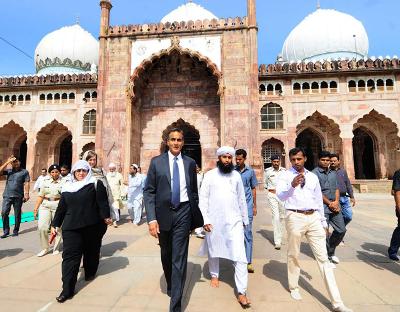
    United States Ambassador to India, Richard R. Verma, visited Bhopal on May 25, 2016 for his first official visit to the state of Madhya Pradesh.

    During his visit, Ambassador Verma met with the Honorable Chief Minister Shivraj Singh Chouhan to discuss U.S.-India cooperation, including investment opportunities for U.S. companies and clean energy initiatives.

    The Ambassador also met Chief Secretary Anthony De Sa, and Minister for Commerce, Industry and Employment, Public Sector Undertakings, Sports and Youth Welfare, Religious Trusts and Religious Affairs, Ms. Yashodara Raje Scindia.

    In addition to his official meetings, Ambassador Verma met religious leaders and students at Taj-ul-Masajid, the largest mosque in India.  “This stunning mosque is a symbol of India’s architectural treasure and represents the richness of India’s cultural heritage,” said Ambassador Verma.  “Among India’s strongest assets are its diverse religious communities, and it was very special to spend some time learning about the work and education that takes place here at the Taj-ul-Masajid.”

    Later in the day, Ambassador Verma visited the “Gauravi” One Stop Crisis Center and interacted with staff and survivors gender-based violence (GBV).  At the Center, Ambassador Verma learned about joint efforts by civil society groups and government to address and counter GBV issues.  “The Gauravi Center does absolutely incredible work,” said the Ambassador.  “The collaboration between the government and NGO are commendable, and I applaud their work to address gender based violence.”

    Ambassador Verma also spent time with students at the “Parvarish” Museum School, which was founded in 2005 by the NGO Organization for Awareness of Integrated Social Security (OASIS) to serve slum children.  Ambassador Verma interacted with current students and several program graduates who are now in college.  During his interactions, Ambassador Verma stressed the need for these students to continue working towards their goals.  “It was a joy to interact with the students at Parvarish,” said the Ambassador.  “The engaging, hands-on learning environment made me think anew about innovative options for meeting educational needs.  To see the good and important work going on at Parvarish was truly inspirational.”

    The U.S. Consulate General in Mumbai looks forward to deepening and broadening its partnership with Bhopal and Madhya Pradesh across all sectors: more two-way trade and investment, along with greater collaboration in health, science, and clean energy.

    USAmbIndia - Bhopal visit1 - Image Coutesy Getty Images / Hindustan Times
    Image Coutesy Getty Images / Hindustan Times

    USAmbIndia - Bhopal visit - Image Coutesy Getty Images / Hindustan Times
    Image Coutesy Getty Images / Hindustan Times
  • India, Iran and Afghanistan sign trade corridor deal

    India, Iran and Afghanistan sign trade corridor deal

    India, Iran and Afghanistan have signed a tripartite agreement to turn the Iranian port of Chabahar into a transit hub bypassing Pakistan, which has been the only route for war-stricken Afghanistan to the Indian Ocean.

    “The agreement can change the course of history in this region,” Indian Prime Minister Narendra Modi said on Monday, May 23, during his visit to Tehran.

    The accord, which calls for joint investments, will significantly boost the role of the under-tapped port of Chabahar. Once the project is realised, it will connect India to Afghanistan and central Asia, while Kabul will get an alternate route to the Indian Ocean.

    India has agreed to finance the development of the port as a regional hub, as Modi sought to revive economic ties with Tehran after the lifting of sanctions.

    Modi also met Iranian officials including supreme leader Ayatollah Ali Khamenei and President Hassan Rouhani which was termed by him as “a new chapter in our strategic partnership”.

    Modi and Rouhani oversaw the signing of a memorandum of understanding for the provision of a  $500m line of credit.

    “Today is an important and historical day of development of relations between the three countries,” Rouhani said in a televised speech, seated between the two other leaders.

    “From Tehran, New Delhi and Kabul, this is a crucial message … that the path to progress for regional countries goes through joint cooperation and utilising regional opportunities.”

    The deal is crucial for the landlocked Afghanistan, as it changes the geopolitics of the region and is seen as a way out of its dependency on Pakistan.

    Alternate route will leave China & Pakistan red faced 

    The tripartite deal is likely to upset China, the greatest economic rival of India in Asia, and Pakistan, which has been the only transit route for Afghanistan to the Indian Ocean.

    Chabahar is not very far from the Pakistan port city of Gwadar, which is being developed by China.

    The volume of trade between Iran and India in the past 11 months reached $9bn, according to Iran’s official IRNA news agency.

    Tehran was New Delhi’s second largest oil supplier until 2011-12, when the sanctions cut its dependence on Iranian oil.


    Advantage India | If Chabahar is realized it would be the kind of alternate route that would really not cause much comfort and happiness for China and Pakistanand will give India access to Afghanistan and central Asia.

    1) Where is Chabahar? 

    The port of Chabahar is located in southeastern Iran in the Gulf of Oman. It is the only Iranian port with direct access to the ocean.

    2) What does the pact entail and what are India’s plans for Chabahar? 

    • India will develop and operate the Chabahar port. India Ports Global, a recently formed port project investment arm of the shipping ministry and a joint venture between the Jawaharlal Nehru Port Trust and the Kandla port, will invest $85 million in developing two container berths with a length of 640 metres and three multi-cargo berths.
    • The contract is for 10 years and extendable. It will take 18 months to complete phase one of the port construction. The first two years of the contract are grace period which means India doesn’t have to guarantee any cargo for the port.
    • From the third year, India will facilitate 30,000 TEUs (Twenty Foot Equivalent) of cargo at the port. The quantum will rise to 2,50,000 TEUs by the 10th year.

    3) Is that all?

    No. State run railway body IRCON International will set up a railway line at Chabahar to move goods right up to Afghanistan. The 500-km rail link between Chabahar and Zahedan will link Delhi to the rest of Iran’s railway network.

    Also, part of the agreement is a free trade zone where a total investment of ₹1 lakh crore is envisaged. Indian companies would set up a range of industries from aluminium smelter to urea plants in the region. State-owned NALCO will set up an aluminium smelter while private and co-operative fertiliser firms are keen to build urea plants.

    India will also supply $400 million of steel rails to Tehran. There are plans of a fertilizer plant through a joint venture with the Iran government. Securing hydrocarbon sources is a priority for India as Delhi and Tehran would look to expand the basket in the coming years.

    4) Why is it so important for India? 

    No other international port has seen the level of involvement and enthusiasm from Chabahar as India. The port will make way for India to bypass Pakistan in transporting goods to Afghanistan using a sea-land route. At present, Pakistan does not allow India to transport through its territory to Afghanistan. It has, however, recently allowed some Afghan shipments to come to India.

    This will also give momentum to the International North-South Transport Corridor of which both are initial signatories along with Russia. Iran is the key gateway in this project. It entails the ship, rail, and road routes for moving freight between India, Russia, Iran, Europe and Central Asia. The route primarily involves moving freight from India, Iran, Azerbaijan and Russia. The objective of the corridor is to increase trade connectivity between major cities such as Mumbai, Moscow, Tehran, Baku, Astrakhan etc.

    It would counter Chinese presence in the Arabian sea through the support to Pakistan in developing Gwadar port. It can be used to station security vessels for merchant ships off the African coast apart from giving the country a foothold in the western Arabian Sea, which is important as many of its energy imports pass through the route.

    5) India has been making efforts to finalise this deal. What took it so long and what is the history?

    The port was partially built by India in the 1990s. An initial pact to build the Chabahar port was first inked during the Atal Bihari Vajpayee’s government in 2003, but the deal slipped through during subsequent years.

    Negotiations only intensified after nuclear deal between P5 + 1 (the UN Security Council’s five permanent members — China, France, Russia, UK and US — plus Germany) and Iran last year. But reaching the deal was far from smooth and differences cropped up over ownership as Tehran’s Port Authority introduced role of private player in the process. After several rounds of negotiations between India’s consortium ofJNPT, Kandla Port Authority and Iranian authorities, the contract was deemed ready for signing.


  • India successfully tests first reusable mini space shuttle prototype

    India successfully tests first reusable mini space shuttle prototype

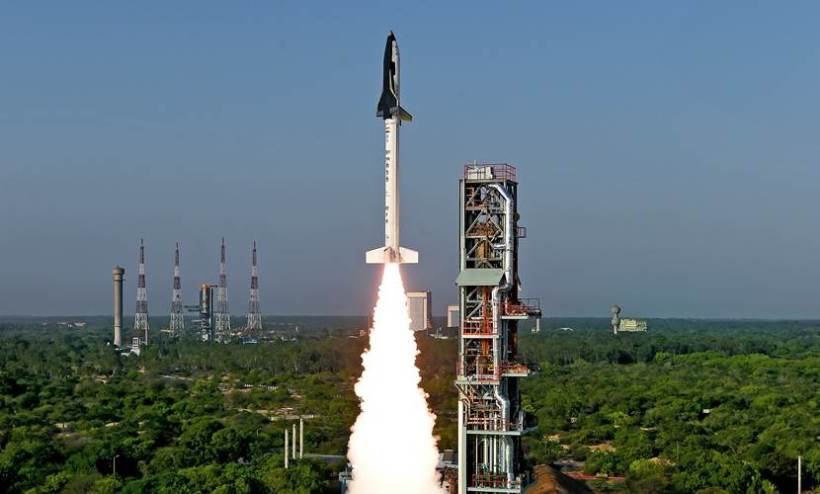
    India’s space agency ISRO has launched a rocket from its facility north of Chennai carrying an experimental spacecraft it hopes will mark an important step towards the country’s first re-usable space shuttle.

    “We have successfully accomplished the RLV mission as a technology demonstrator,” ISRO spokesman Devi Prasad Karnik told reporters.

    The $14m Reusable Launch Vehicle, or RLV-TD, which is around the size of a minibus, was lifted to an altitude of 70km before re-entering the Earth’s atmosphere, exposing it to temperatures of up to 3,000C.

    One-sixth the size of the planned shuttle, this test flight was also designed to see if the shuttle could glide and navigate at speeds of up to 6000kmph, before attempting a landing on the sea in the Bay of Bengal.

    The test mission was an important step towards developing a full-scale, reusable shuttle to send up satellites.

    The shuttle is not expected to come into service for at least 15 years but ISRO hopes the technology will reduce costs and make access to space more affordable.

    In 2014 India celebrated putting a spacecraft into orbit around Mars, a mission costing just $73m, a tenth the amount NASA and the European Space Agency spent on their missions to the red planet.

    It also made India the first Asian nation to do so, and the first country to do it on its first attempt.

    ISRO is planning further tests of the technology, including the supersonic scramjet engine it hopes will power the craft.

    Global race 

    The race to develop re-usable space vehicles is being led by private US space companies SpaceX, Blue Origin and Sierra Nevada Corp, which has developed the Dream Chaser shuttle, expected to begin resupply missions to the International Space station in 2019.

    Until now, only the US, USSR, Europe and Japan have successfully launched space shuttles.

    The most famous and successful of these was NASA’s space shuttle, a mainstay of its space programme, flying 135 missions over 30 years.

    Since it was decommissioned in 2011 the Boeing has been testing another, much smaller shuttle for the US Air Force.

    The X-37B Orbital Test Vehicle is currently on its third unmanned flight and has been in orbit for the past year.

    Its secret activities have provoked speculation that it is a spy satellite or being tested to deliver weapons from space, both claims the Pentagon has denied.

  • Government approves country’s first-capital goods policy

    Government approves country’s first-capital goods policy

    India Inc today welcomed the government’s approval to the country’s first-ever policy for the capital goods sector, terming it is the “need of the hour” and said the thrust on demand creation, technology depth and exports will help address the challenges faced by the sector.

    The government gave its nod to India’s first-ever policy on capital goods that intends to make the country a world-class hub and looks to create over 21 million additional jobs by 2025.

    The decision was taken at a meeting of the Cabinet chaired by Prime Minister Narendra Modi here.

    “The Policy’s thrust on demand creation, technology depth and exports will go a long way to address the challenges and issues that the sector is currently going through.

    “Actualization of these key focus areas will surely add speed and vigour in aligning efforts towards development of capital goods sector and hence  contribute to India’s manufacturing growth story,” CII Director General Chandrajit Banerjee said.

    “India has the potential to be the net exporter of capital goods as against the net importer currently. National Capital Goods Policy is definitely the need of the hour, which will provide the much needed impetus to the sector and will go a long way in achieving  the objectives of Make in India,” Ficci President Harshvardhan Neotia said.

    The policy envisions increasing the share of capital goods in total manufacturing activity to 20 per cent by 2025, from 12 per cent at present.

    It also seeks to facilitate improvement in technology depth across sub-sectors, increase skill availability, ensure mandatory standards and promote growth and capacity building of MSMEs.

    It aims to increase direct domestic employment to at least 5 million from the current 1.4 million and indirect employment to 25 million from the current 7 million by 2025, potentially providing an additional employment to over 21 million people.

    To create an ecosystem for globally-competitive capital goods sector, the policy bats for devising a long-term, stable and rationalised tax and duty structure.

    It also advocates adoption of a uniform Goods and Services Tax (GST) regime ensuring effective GST rate across all capital goods sub-sectors with a view to ensuring a level-playing field.

  • Delhi buses to have panic buttons; notification on June 2 | Women Safety

    Delhi buses to have panic buttons; notification on June 2 | Women Safety

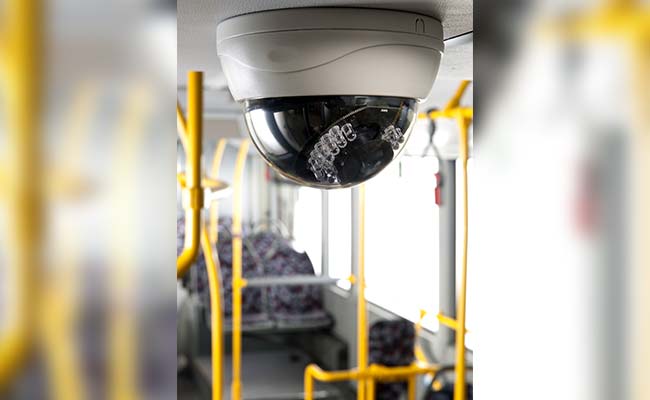
    It will be mandatory for public transport buses to install emergency buttons, CCTV cameras and vehicle tracking devices to ensure safety of women commuters and the government will issue notification on these norms on June 2, Union Minister Nitin Gadkari said today.

    “To ensure safety of women after the unfortunate Nirbhaya incident, we have decided to make it mandatory for public transport buses to install emergency panic buttons, CCTV cameras and GPS-enabled vehicle tracking devices,” the Road Transport and Highways Minister said.

    After launching a pilot project under which Rajasthan State Road Transport Corporation will run 10 luxury and 10 ordinary roadways buses fitted with emergency buttons and CCTV cameras, Gadkari said that a notification to have such devices in all public transport buses across the country will be issued on June 2.

    “We are looking at installation of panic buttons, CCTV cameras and other devices at the manufacturing stage itself,” he said on the sidelines of the event.

    Bulk purchase of such items will bring down the cost of the devices, he added.

    The ministry had issued these draft rules earlier this month under the Motor Vehicles Act and had sought comments from stakeholders including vehicle manufacturers.

    Under the proposed notification, transport vehicles with a seating capacity of over 23 passengers will mandatorily have CCTV cameras that will be connected to the global positioning system and will be monitored by the local police control room.

    Gadkari said that in case of any untoward event a woman passenger would be able to press the emergency button which in turn will transfer the information to the nearest local police station via the GPS.

    Once the emergency signal is triggered, the CCTV cameras will start displaying live footage of the bus at the central control room. Besides, if a vehicle deviates from its prescribed route (monitored through the GPS devices), the system will start sending signals tracking its movement to the control room

  • Kiran Bedi appointed as Lieutenant Governor of Puducherry

    Kiran Bedi appointed as Lieutenant Governor of Puducherry

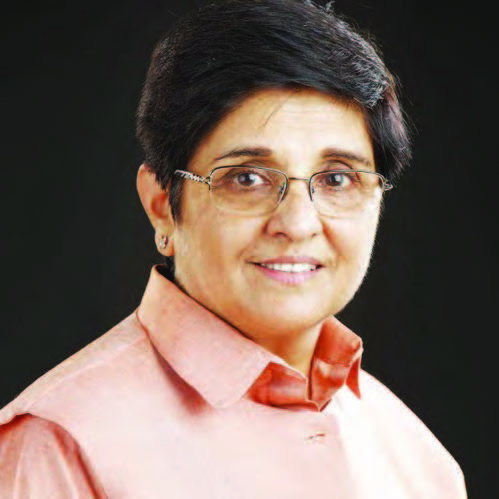
    BJP leader and former IPS officer Kiran Bedi was today appointed as Lt Governor of Puducherry, a post which was under the additional charge of Lt Governor of Andaman and Nicobar Island for nearly two years.

    A Rashtrapati Bhawan communique said “the President has been pleased to appoint Ms Kiran Bedi, to be the Lt. Governor of Puducherry with effect from the date she assumes charges of her office.”

    “I look forward to giving every bit of myself to the responsibility. I am there for the benefit of the country. I am here to give my best every day, each day. I am grateful for the government’s decision. They trusted me,” said 66-year-old Bedi, who is the country’s first woman IPS officer and who had led the BJP campaign for the 2015 Delhi Assembly polls without any success,

    The appointment came three days after the Congress-DMK alliance won 17 seats in the 30-member state Assembly. AIADMK, which contested the elections on its own, won four seats while BJP could not get even a single seat.

    The LG post in the Union territory had been lying vacant after the Narendra Modi Government had sacked UPA nominee Virendra Kataria on July 12 barely a year after he had been appointed. Lt Governor of Andaman and Nicobar Island Lt Gen Ajay Singh had been given additional charge of Puducherry.

    Born on June 9, 1949, Bedi had led the BJP campaign in the 2015 Delhi Assembly elections but had to face the worst defeat in her maiden political innings with Arvind Kejriwal-led AAP winning 67 of the 70 seats.

    An IPS officer of 1972 batch, Bedi had sought voluntary retirement from the service in 2007. She was then posted as Director General, Bureau of Police Research and Development.

    A sports lover and an author, Bedi is a recipient of Ramon Magsaysay Award as well as UN Medal for outstanding service. She was one of the pioneers of anti-corruption crusade in 2011 along with Anna Hazare and Kejriwal against the then UPA government.

    She also earned a law degree at Delhi University in 1988 and a PhD from IIT Delhi’s Department of Social Sciences in 1993.

  • Obama confirms Taliban leader Mullah Akhtar Mansour’s death in US strike

    Obama confirms Taliban leader Mullah Akhtar Mansour’s death in US strike

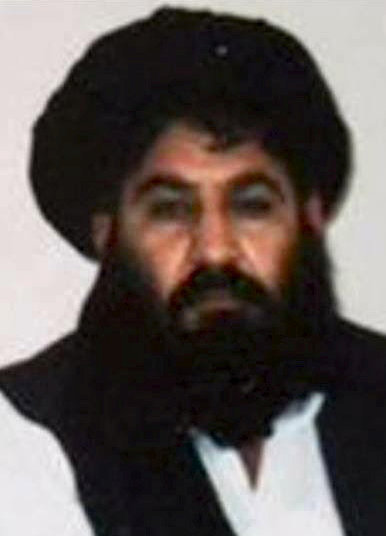
    President Barack Obama confirmed Taliban chief Mullah Akhtar Mansour was killed in a US air strike, hailing his death as an “important milestone” in efforts to bring peace to Afghanistan — but the strike was also an illustration of the tangled relationship between Washington and Islamabad.

    Saturday’s bombing raid, the first known American assault on a top Afghan Taliban leader on Pakistani soil, marks a major blow to the militant movement, which saw a new resurgence under Mansour.

    “He is an individual who as head of the Taliban was specifically targeting U.S. personnel and troops inside of Afghanistan who are there as part of the mission I have set to maintain a counterterrorism platform and provide assistance,” Mr. Obama said during a news conference in Hanoi, Vietnam. Killing Mullah Mansour, Mr. Obama said, sent a message that “we’re going to protect our people.”

    “We have removed the leader of an organisation that has continued to plot against and unleash attacks on American and Coalition forces, to wage war against the Afghan people, and align itself with extremist groups like Al-Qaeda,” the US president said in a statement.

    To many outside experts, it sent an equally powerful message to Pakistan.
    “The administration is no longer worried about blowing up anything,” said Vali Nasr, a former State Department official who worked on Pakistan. “This is literally carrying out an operation, not against an Arab terrorist leader, but against a Pashtun ally of Pakistan, inside Pakistani territory.”

    On Monday, May 23, the Pakistani Foreign Ministry summoned the American ambassador, David Hale, to lodge a protest for what it said was a “violation of Pakistan’s sovereignty.” The killing would obstruct multiparty efforts to negotiate a settlement between the Taliban and the Afghan government, it said.

    Obama, who is on a three day visit to Vietnam, said Mansour had rejected efforts “to seriously engage in peace talks and end the violence that has taken the lives of countless innocent Afghan men, women and children.”

    He called on the Taliban’s remaining leadership to engage in peace talks as the “only real path” to ending the attritional conflict.

    Mansour was elevated to the leadership of the Taliban in July 2015 following the revelation that the group’s founder Mullah Omar had died two years earlier.

    He was killed on Saturday near the town of Ahmad Lal in Pakistan’s south western Balochistan province, when missiles fired from a drone struck the car he was travelling in.

    It was believed to be the first time the United States has targeted a senior Taliban figure in Pakistan.


  • Diabetic diet tips for the busy Indian-Americans

    Diabetic diet tips for the busy Indian-Americans

    The first thing that comes to your mind after being diagnosed as a diabetic is, ” What do i eat ? ” ” What is carbohydrate?” and ” what is low glycemic index food ? ” .  well we would make the answer simple for you in this Type 2 Diabetic diet plan for Indians (1500 calories)

    Diabetes control is governed by following the right diabetic diet. What to eat and what not to eat is important for Diabetes control and diabetes cure or diabetes reversal.  

    These are the top 15 diabetes diet tips from diabetologists and nutritionists. Even if you are pre-diabetic or borderline diabetic, or diabetes is part of your family, it is important to follow a diabetic diet to prevent diabetes.

    Diabetes diet for Indians should have the ratio of 60:20:20 for carbs, fats and proteins. Health experts say, “Per day calorie intake should be between 1,500-1,800 calories with a proportion of 60:20:20 between carbohydrates, fats and proteins, respectively.”

    Diabetes diet should “have at least two seasonal fruits and three vegetables in a diet plan.”

    Though dry fruits may seem like a healthy snack, it is not a good option for diabetics, as the fructose can spike your sugar level. Go for fresh fruits rather than dry fruits for diabetes control (but there are some restrictions… we’ll come to it). But you can still opt for nuts as a healthy snack.

    The doctor shares his recipe for diabetes diet for Indians:

    – One teaspoon of methi seeds soaked overnight in 100 ml of water is very effective in controlling diabetes.
    – Drink tomato juice with salt and pepper every morning on an empty stomach.
    – Intake of 6 almonds (soaked overnight) is also helpful in keeping a check on diabetes.

    Rekha Sharma, President and Director of Indian Dietetic Association, shares some major diabetes diet pointers that one should follow at home or at a restaurant.

    Whole grains, oats, channa atta, millets and other high fibre foods should be included in the meals . If one feels like consuming pasta or noodles, it should always be accompanied with vegetable/sprouts.

    Milk is the right combination of carbohydrates and proteins and helps control blood sugar levels. Two servings of milk in a daily diet is a good option.
    Diabetes Control: Diabetic Diet Tips

    High fibre vegetables such as peas, beans, broccoli and spinach /leafy vegetables should be included in one’s diet. Also, pulses with husk and sprouts are a healthy option and should be part of the diet.

    Pulses are important in the diet as their effect on blood glucose is less than that of most other carbohydrate containing foods. Vegetables rich in fibre help lowering down the blood sugar levels and thus are healthy.

    Good fats such as Omega-3 and monounsaturated fats (MUFA) should be consumed as they are good for the body. Natural sources for these are canola oil, flax seed oil, fatty fish and nuts. These are also low in cholesterol and are trans fat free.

    Fruits high in fibre such as papaya, apple, orange, pear and guava should be consumed. Mangoes, bananas, and grapes contain high sugar; therefore these fruits should be consumed lesser than the others.

    Small frequent meals:

    A large meal gives rise to higher blood sugar in one’s body, therefore it is essential to take small frequent meals to prevent both higher and very low blood sugar values and keep them constant. Small in between snacks can be dhokla, fruit, high fibre cookies, butter milk, yogurt, upma/poha with vegetables etc.

    A person with diabetes should follow a diet which is low in carbohydrates, high in fibre and contains adequate amounts of proteins, vitamins and minerals; and avoid fatty foods and sweets . He/she should also take frequent small meals (5 meals pattern).

    What not to do:
    Artificial sweeteners can be used in cakes and sweets for diabetic people (in moderation).
    Have lots of fluid.
    Limit intake of alcohol.

    Should you have non-veg?

    In non-vegetarian diet, seafood and chicken can be taken rather than red meat as red meat contains higher amount of saturated fats. Also, patients with  high cholesterol should avoid egg yolk and red meat.

    The diabetes diet for Indians includes carbohydrates, proteins and fats. As always, a balanced and planned diet can build and improve personal health. A controlled diabetes diet may seem like a drag and bore, but a good cook can add life to a diet. Time to call up mom and experiment with diabetes diets!

    Read more on Health, Diet & Fitness on  www.theindianpanorama.news/health

    • SIX STATES LOST SINCE 2014, DOUBTS GROW OVER RAHUL’S LEADERSHIP

      SIX STATES LOST SINCE 2014, DOUBTS GROW OVER RAHUL’S LEADERSHIP

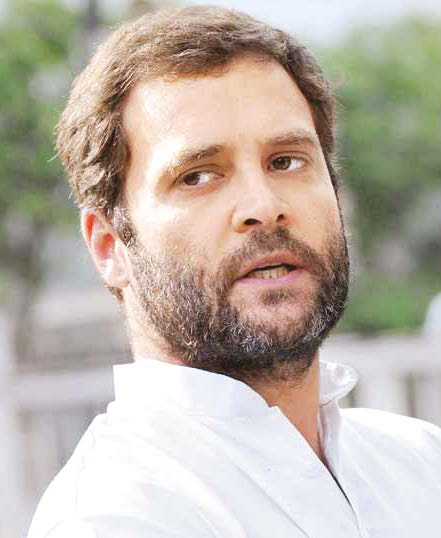
      NEW DELHI (TIP): Rahul Gandhi made no effort to suppress his glee when he strolled out to meet the media after BJP lost the Bihar election by a mile to the Nitish-Lalu-Congress grand alliance last November. This is a win, he said, for “bhaichara” and PM Modi should listen carefully to what the country is saying.

      On May 19 (Thursday), a reported bout of Chikungunya spared Rahul the trouble of having to offer a sound bite. Congress’s tally falling from 163 to 115 MLAs in five states with 824 MLAs speaks for itself. Even in Puducherry, the battle went down to the wire. Congress now has governments only in Karnataka, Uttarakhand, Himachal, Manipur, Meghalaya and Mizoram. The defeats in Assam and Kerala bring the debate over Rahul’s taking formal charge of Congress into sharp focus, reflecting an intense desire in the party rank and file, even among those not exactly enamoured of his political style, that he accept the party president’s mantle and be done with it.

      Barring Bihar, the question mark over Rahul’s leadership is getting bigger as Congress shows no signs of electoral revival two years after being reduced to 44 MPs in Lok Sabha. If Congress needed a firm signal from Rahul, this is the moment. Decisions to align with the Left in the ‘Bharat Mata’ debate and later in West Bengal polls failed to unsettle BJP or dent either regional rival Mamata Banerjee.

      While he did not take command, as was widely propagated by his confidants, after Congress landed on the winning side in the Bihar ‘grand alliance’, the pressure has only grown. After all, rebels like Himanta Biswa Sarma in Assam -a key player in BJP’s success in the northeastern state -left Congress in a huff, claiming that Rahul treated him shabbily and was more interested in playing with his dog than discussing issues of the state when the two had met in Delhi.

      Rahul’s political style seems to be a significant issue as he has been unable to work with opposition leaders. Allies like Sharad Pawar and Lalu Prasad would rather deal with Congress president Sonia Gandhi. His decision to follow “grassroots feedback” in allying with the Left has earned him the wrath of Trinamool Congress which he decided to spurn.

      In Tamil Nadu, G K Vasan, son of the late Congress grandee G K Moopanar, formed his own outfit. In Uttarakhand, the nine rebel MLAs who nearly brought the government down, felt slighted by the high command. In Punjab, veteran leader Amarinder Singh almost walked out of the party . As internal dissent mounted, Congress found itself under a massive onslaught over corruption in the AgustaWestland deal and the charge of framing Hindu accused in the Malegaon blasts.Under his directive, Congress stalled passage of the Modi government’s key reform, the GST bill, but slowly , the blockade is wearing thin.

      The truth is that Rahul is calling the shots in Congress. All decisions are taken by him have his imprimatur. The roping in of Nitish strategist Prashant Kishor for UP and Punjab elections is a big indicator, especially as the move has ruffled Congress functionaries. So far, AICC has clarified that Kishor will not decide organisational matters.There is no hiding the fact that Bhupinder Singh Hooda, was in the dark when Kuldeep Bishnoi’s Haryana Janhit Party was merged with Congress in Haryana. Bishnoi is the son of Bhajan Lal, who was a byword for Congress for decades. Rahul also put his foot down to ensure Tarun Gogoi stayed on as Assam chief minister even after BJP won seven of the state’s 14 Lok Sabha seats in 2014. The “old guard” had advised his replacement with Sarma, the man who ultimately ended up helping BJP win the assembly polls.

      Rahul also nudged Congress into stitching an alliance with the Left in Bengal despite entreaties from Trinamool not to do so. If, as he said when anointed vice-president in 2013, that power is a chalice of poison, then it is time to down it. Some in Congress see Rahul’s ascension as a case of noblesse oblige, but most agree the question needs to be settled either way soon.

    • “I’m answerable to the public, to you, the voters” Nassau County Comptroller George Maragos

      “I’m answerable to the public, to you, the voters” Nassau County Comptroller George Maragos

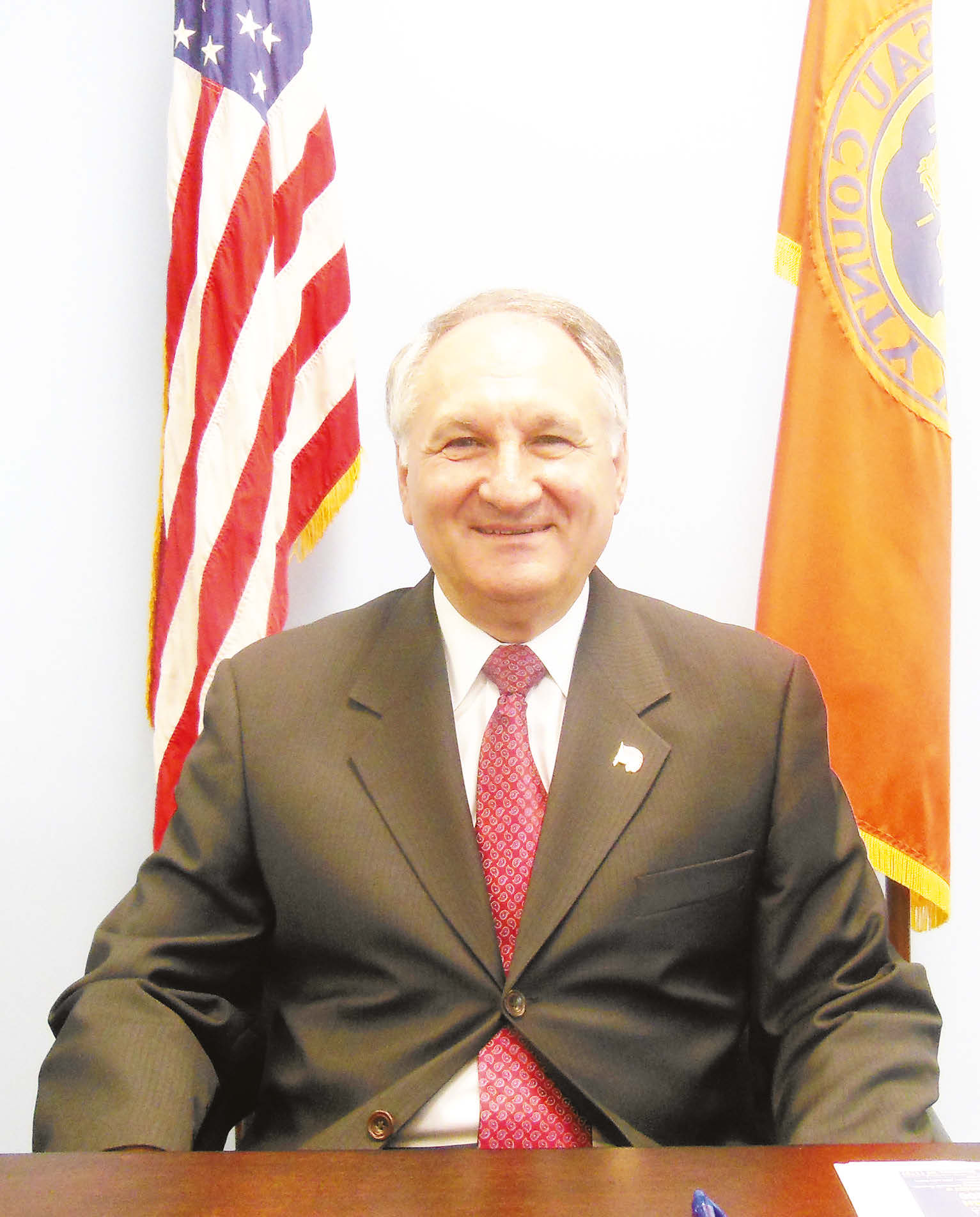
      More often than not Mr. Maragos has been caught in controversies, much because of the nature of his job. Recently, he was embroiled in a running argument with Nassau County Police Chief over his audit report which took the Police department to task for having exceeded the budgetary provisions. Well, that’s the job of the Comptroller, as he said in the interview he gave to The Indian Panorama on May 3, to ensure tax payer’s money is spent wisely.

      Here are excerpts from the interview

      TIP: You took over in 2010?
      M. That’s right

      TIP: And you are the 13th comptroller of Nassau County?
      M: I don’t know if 13 is considered a lucky number or not. But it is number 13.

      TIP: So, you have a wonderful background of Finance; you come from that background?
      M: Yes

      TIP: And this particular position requires to be dealing with Finance only?
      M: No it’s a multi-discipline position like any other senior position in government or in Private Industry. It requires a wide range of skills and talent. This is the Comptroller’s office. There is a large administrative responsibility to manage the office. There’s a lot of accounting and package management that goes with it Finance is very important to control the expenditures to ensure that the county has cash flow, works wisely and cost-effectively but also delivers for the community; make sure that the government and all these agencies are running efficiently; money is spent wisely and they deliver services.

      TIP: Somehow or the other, it’s a very huge responsibility. Nassau County I believe is one of the biggest counties?
      M: Yes. It’s one of the biggest counties but if we were a state we would be about the 33rd biggest We were ranked 33 of all the states. We are bigger than Rhode Island; we are bigger than the state of Delaware, some examples

      TIP: That’s interesting.
      M: you can go down the line; and our budget is more than 3 billion dollars.

      TIP: Sorry for interrupting you. But in terms of budget, do you think you’re bigger than any other state?
      M: Yes. That’s how we measure. In terms of budget and population, as I said we were ranked 33. So we would be bigger than about 17 other states.

      TIP: that gives you a much bigger stature than the comptroller of a state?
      M: Absolutely. We don’t compete with California, Texas or Florida though.

      TIP: One of the greatest responsibilities that probably you shoulder, and you were mentioning so many things. But you said money is to be spent wisely. What do you mean by that?
      M: Well to have the maximum benefit to our residents, in terms of Public Safety services that we provide; maintaining our roads; our infrastructure; makingsure street lights work; we have a fair business environment; provide incentives to business to stay here’ to relocate here. Those are big responsibilities that require significant expenditures of our funds. To provide clean water, some of the basic security, clean water sewage-that we all take for granted. Those are very costly services.

      TIP: If I’m not mistaken, and please correct me if I’m, you don’t have any legislative powers as comptroller?
      M: That’s correct

      TIP: And it is the policies framed by the legislature that you implement?
      M: That’s correct

      TIP: So how do you say that it is the job of the Comptroller to ensure that water is properly given, proper taxes are there? What do you mean by that?
      M: Well the comptroller’s office does not make policies. We don’t say how to spend the money; what are the public priorities. That is up to the county executive and the legislature. But once they decide that they are going to spend (we have 300 billion dollars in expenditure) and they say that we’re going to spend hundred billion dollars on police services, then it’s my responsibility to manage the budget to ensure that the police department stays within its budget and they do a relatively good job in terms of keeping the crime low. That is our responsibility to manage and report. We don’t manage the police department but we have the authority and responsibility to oversee how they spend the money; how they spend it as intended by the legislature and that they operate efficiently and we have low crime. If we are not meeting those objectives, it is our responsibility to go in an audit, find out why and report back to the legislature and the county executive.

      TIP: Do you think you can describe yourself a man with a whip?
      M: Yes; sometimes a whip and a whip stick.

      TIP: That’s where audit comes
      M: That’s where audit comes.

      TIP: I think that is one of the primary jobs of the Comptroller?
      M: It is one of the primary jobs, yes. But the comptroller’s office has functions beyond. Besides audit function we have, as part of our audit function, subpoena power similar to the District Attorney’s. We have an accounting department to monitor and manage the budget for all departments. Then we pay all the bills. All the claims that come through this office will be audited and approved and paid by the Comptroller’s office. We approve the contracts. So, although the County Executive Office submits the contract, the legislature votes on approving those contracts, we are part of the approval process as well. And in some cases even if the county executive estimated the contract, the legislature has approved it we can reject it because we find it’s not good value for the payment and the milestones and performance requirements are clearly defined.

      TIP: But that objection can be overruled by the legislature?
      M: No. They cannot. Actually we have a situation now where we are saying that you want to spend 1.5 million to buy a little app. We think that you can have that app developed in-house or have an outside software firm develop it for 25000 dollars or something like that. So we are refusing that purchase order. We are separate, like almost a third branch of the government.

      TIP: You have that kind of Independence?
      M: Yes. That’s why I am elected. The Comptroller is independently elected from the county executive and the legislature.

      TIP: But you’re answerable to the legislature?
      M: No. I’m not. I’m answerable to the public, to you, the voters. That is a huge difference.

      TIP: Are you not bound by what the legislature decides to do with the spending?
      M: you know I am bound to execute what they vote in terms of approving funding for me. The Comptroller’s office cannot spend money without the legislative approval. But once they decide they want to spend a billion dollars on public safety I need to accept that and make sure that that money is well-spent in terms of contracts that are issued in terms of police overtime. That all the factors that go into maintaining Public Safety, the systems are in place. We manage the payroll; we manage personal benefits. That’s all done in the Comptroller’s office.

      TIP: So what I understand is that you oversee that the funds are ethically used
      M: Yes, and we get value.

      TIP: And that is why sometimes there are issues, like in your latest audit report on the police you took objection to so much money being spent on overtime and you said that there was some kind of a mismanagement kind of thing?
      M: Yes. We pointed that out that they have been consistently, year after year, been exceeding the budget for overtime. And furthermore, we found that there were no processes in place for the management to be aware that a precinct was, let’ssay, using excessive overtime and there was no feedback mechanism for the management to know. And furthermore there were no clear directives as to how overtime should be managed at the precinct level resulting in year over year of overspending on overtime.

      TIP: Well, Mr. Maragos, it’s a question I’m addressing to you to know. Overtime came to be paid because there were not enough hands to perform the duties. So, do you think, as a comptroller, it is better to give employment to more people to avoid overtime which means more than the normal hourly wages. I believe when it is overtime, one gets paid more than the normal hourly wage.
      M: Yes.

      TIP: At the same time, why is it necessary to give them overtime, because probably there are not enough hands?
      M: You see, that is the responsibility of the commissioner. To manage the police force.

      TIP: You find him deficient?
      M: Right so it’s up to him to say look I anticipate I have fifteen hundred officers. Ok, maybe that’s too few or too many. Ok. But that’s what I’m going to have. During this year I’m going to need X dollars in salaries. And I’m going to need Ydollars in overtime. It’s his decision. He is the manager. But once he decides that this is the people that I’m going to have and this is the amount I’m going to spend on over time we expect him to live within the budget. We’re not going to tell him how many officers he should have. He needs to tell the legislature. That he needs X number of officers. To maintain a certain level of public safety and maintain crime law. That’s his job. But once he makes those statements, as a manager he signs up to them. And we expect them, as a comptroller, as an oversight, as a watchdog to live within the commitments that he makes. That’s true in any business, and even the most basic of management responsibilities. To manage within certain guidelines and achieve those results with those guidelines. And normally in business you know that you normally do. Budget conservatively. Promise conservatively. Make conservative goals and try to exceed them. So we want them to do better. But as a minimum, we expect him to do what he promised to do. In terms of managing the budget, interms of the number of resources and stuff that he’s going to need to achieve a certain level of public safety.

      Part Two : https://apple.news/ASS9nB_HYQcyK0dgsHxbajg or theindianpanorama.news/united-states-america/need-powerful-ec…ptroller-maragos/

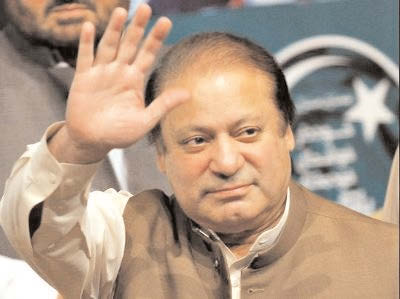
    • Pak PM breaks ground for Pak-China Optical Fibre Cable project in PoK

      Pak PM breaks ground for Pak-China Optical Fibre Cable project in PoK

      ISLAMABAD (TIP): Prime Minister Nawaz Sharif May 20 broke ground for the USD 44 million Pakistan-China Optical Fibre Cable project in PoK’s Gilgit-Baltistan region which will provide an alternate telecommunication route between the two countries.

      The project is part of the ambitious USD 46 billion China-Pakistan Economic Corridor (CPEC), which passes through the Pakistan-occupied Kashmir (PoK), linking western China to the strategic Gawadar port in southern Pakistan via a network of roads, railways and communication systems.

      The Optical Fibre Cable project will be completed in two years and Special Communication Organisation will lay 820-kilometre-long cable from Rawalpindi to Khunjrab, Radio Pakistan reported.

      On completion, the project will provide an alternate telecommunication route between Pakistan and China.

      Sharif also inaugurated the CPEC patrolling police headquarters in the Gilgit-Baltistan region.

      The force comprising 300 personnel and 25 vehicles, gifted by China, will ensure safe and smooth flow of traffic on the 439-kilometre chunk of the 3,000-kilometre CPEC project. The CPEC passes through the restive Balochistan province. Pakistan is readying a special force of 4,000 security personnel to protect Chinese nationals working at various projects in Punjab province, including the CPEC project.

      Already more than 17,000 security personnel from the army and other security forces have been engaged to ensure fool-proof security to Chinese nationals. (PTI)

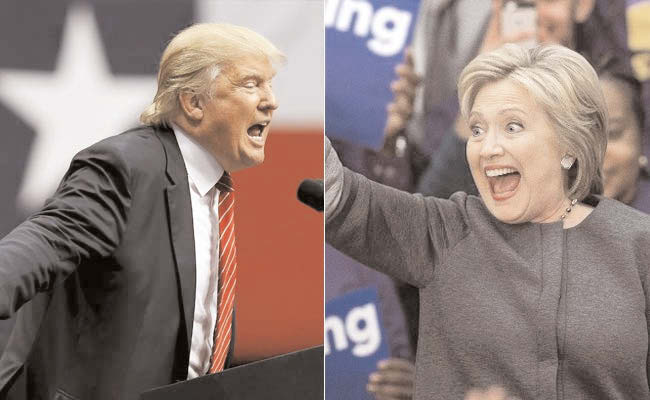
    • Donald Trump beats Clinton in new poll

      Donald Trump beats Clinton in new poll

      WASHINGTON (TIP): Presumptive Republican presidential nominee Donald Trump has for the first time edged out his Democratic rival Hillary Clinton in a latest poll even as majority of respondents have an high unfavorable opinion of both the aspirants.

      This is for the first time in a poll that Trump is seen ahead of Clinton, albeit within a margin of error.

      Fox News, in its latest national polls, found that Trump has the support of 45 per cent of the potential general election votes, while Clinton has the support of 42 per cent.

      Trump emerged as the presumptive nominee of the Republican party after winning the Indian elections early this month.

      He is the only GOP candidate left in the race, which early this year was crowded with 16 more White House aspirants including well established Senators and Governors.

      Clinton, however, is yet to clinch the nomination as her sole rival Senator Bernie Sanders from Vermont is giving a tough fight by winning a number of States and preventing her from acquiring enough delegate to become the presumptive nominee.

      Sanders, according to the Fox News, is still ahead of Trump.

      In a hypothetical match up, Sanders has support of 46 per cent of the respondents as against 42 per cent for Trump, Fox News said.

      However, a key highlight of the latest poll is the high unfavorable view of both Trump (56 per cent) and Clinton (61 per cent).

      Earlier Clinton’s negative rating was 58 per cent and Trump’s was at 65 per cent. “The standard for unpopular presidential candidates has been Jimmy Carter and Ronald Reagan in 1980, but we have two new champions,” said Republican pollster Daron Shaw, who conducts the Fox News Poll with Democratic pollster Chris Anderson.

      “Clinton and Trump rate lower than disastrous candidates like Mondale or Dole,” he said. Trump leads Clinton by 55 to 31 per cent among whites.

      On the other hand Clinton has a commanding lead over Trump when it comes to black (90 to seven per cent) and Hispanics (62 to 23 per cent).

      Fox News had surveyed 1021 registered voters between May 14-17.(PTI)

    • Osama bin Laden poster signed by SEAL Team 6 sells for $100,000

      Osama bin Laden poster signed by SEAL Team 6 sells for $100,000

      HOUSTON (TIP): A “wanted” Osama bin Laden poster, signed by US Navy SEAL Team 6 which carried out the raid in Pakistan to kill the then al-Qaeda chief, has been auctioned for a whopping $100,000 here.

      Before Admiral William McRaven took over the chancellor’s office at the University of Texas, he oversaw one of the most daring raids in modern military history —the assault on Osama bin Laden’s compound in Abbottabad, Pakistan.

      The raid, recounted in a number of books, articles and the Hollywood blockbuster “Zero Dark Thirty,” saw a squad from the Navy’s elite SEAL Team 6 sweep into the 9/11 mastermind’s hiding place to kill the terrorist leader.

      The admiral’s personal Osama “wanted” poster, signed by SEAL Team 6, was auctioned off for $100,000 at a Houston dinner on Tuesday.

      “(The photo was a) reminder to all of us that this was guy we were looking for from 2004,” McRaven was quoted as saying by the Houston Chronicle.

      “It’s a USD 10 poster in a seemingly priceless frame,” he said.

      Later, Perrin asked the former commander of US Special Operations Command why he insisted on a proper burial for Osama.

      “As evil as he was, it’s all the more important to do the right thing,” McRaven replied to thunderous applause.

      The event raised more than USD 840,000 for Texas Children’s Cancer Center. Osama was killed in the US Navy SEALs raid on May 2, 2011. (PTI)

    • Clinton Sanders split wins as they slug it out to bitter end

      Clinton Sanders split wins as they slug it out to bitter end

      WASHINGTON (TIP): Hillary Clinton and Bernie Sanders split primary wins in Kentucky and Oregon respectively on May 15 as they continued an internecine electoral slugfest that is driving Democratic Party grandees to despair.

      Party stalwarts fear the prolonged intra-party fracas, which is now getting bitter, is starting to cost the party campaign time, money, and votes, even as the Republican Party begins to rally around Trump after he worsted his rivals, and has pretty much wrapped up the nomination. Trump himself has started taunting Hillary Clinton for not being able to shake off Sanders.

      But the 72-year old self-professed socialist Senator from Vermont is just refusing to fade out despite trailing Clinton by a huge margin in the race towards the 2383 delegates needed to win the Democratic nomination. On Tuesday, he notched up another impressive in the liberal state of Oregon (54.5-45.5) while narrowly losing Kentucky by only a few thousand votes to Clinton (46.8-46.3).

      The win did little to change the delegate count because of the way the system is designed, with the party establishment awarding pledged delegates proportionally to votes secured, and the un-pledged delegates leaning heavily towards Clinton, leaving her 2291-1528 ahead.

      But Sanders has refused to back down. He has promised to take the fight all the way to California, among the last state to primary on June 7 (on the day Prime Minister Modi is scheduled to arrive in Washington DC), leaving the Democratic party with the enervating prospect of seeing another three weeks of bloodletting, even as Trump and the Republicans get their act together.

      In fact, the tension within the Democratic Party has increased even as Sanders’ chances of winning the nomination, despite the massive popular grassroots support he has, is decreasing.

      Over the weekend, Sanders’ supports erupted in anger when the Nevada Democratic Party began awarding delegates to Clinton, accusing party stalwarts of rigging the system.

      Chaos and vandalism followed at the meeting keynoted by Clinton surrogate Barbara Boxer, a retiring California Senator who is also related to her, with some Sanders’ supporters accused of issuing death threats to party veterans favoring Clinton.

      Sanders called the allegations “nonsense” even as he reveled in massive public adulation on the west coast where he will make his last stand.

      Some of his supporters concede that he has only a theoretical chance now of winning the nomination (he has to win 855 of the 946 delegates still in play, which means he has to beat Clinton by something like 85-15 in the remaining primaries), but they want him to remain in the fray if only to influence the Clinton platform (manifesto) with the outside chance she may draft him as her running mate (or cabinet colleague if she wins, as Obama did with Hillary).

      But current feud is driving party stalwarts crazy because it is distracting them from also recapturing the Senate, where the Republicans have a 54-46 advantage, but Democrats see many vulnerable GOP candidates in the 34 Senate races (one-third of the Senate also goes to polls on Nov.8)

      “If Clinton can’t put Sanders away, can she beat Trump?” was the headline of one oped, among the many that reflected on whether the lack of fervor and passion among her flock, unlike that exhibited by supporters of Sanders and Trump, would be her undoing. (PTI)