Month: June 2016

  • OPERATION BLUESTAR: 32 YEARS ON, PAINFUL SCARS REMAIN

    OPERATION BLUESTAR: 32 YEARS ON, PAINFUL SCARS REMAIN

    It’s often described as a watershed moment in Indian history-the government of the day ordering a military assault on Sikhism’s holiest shrine, unleashing a chain of events that included a rare revolt in the disciplined Indian Army and the assassination of then Prime Minister Indira Gandhi followed by sectarian violence.

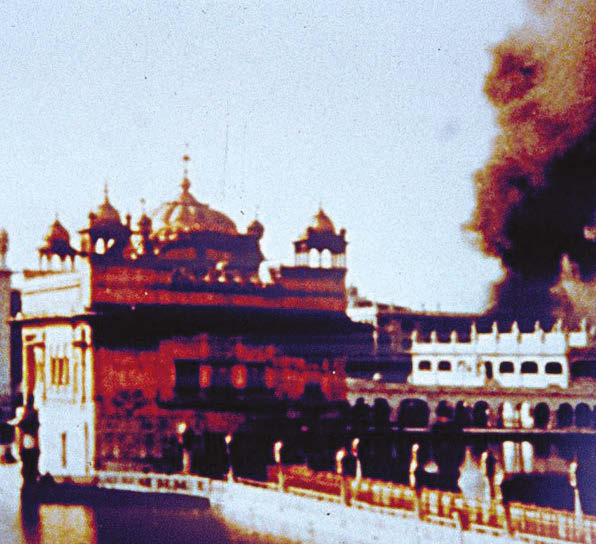
    After 32 years of Operation Bluestar-the military code name for the mission to reclaim the Golden Temple in-from a group of armed Sikh militants led by Jarnail Singh Bhindranwale who had called for the creation of a separate Sikh state of Khalistan.

    More than three decades on, the Golden Temple reveals the existence of physical and psychological scars that seared the psyche of the Sikh minority in India. Deep holes created by high-velocity bullets and shells slamming into marble and brick still pockmark some walls and stairwells of the temple complex that sees thousands of visitors walking through its portals every day.

    Kulwant Singh, a volunteer at the Golden Temple, readily points out the bullet holes and parts of a collapsed façade as reminders of the army assault. Though born five years after Operation Bluestar, Singh has heard innumerable details of the assault from his elders. “Each detail I have heard is etched in my mind,” he says. When asked if he has forgiven the state for the assault, he shrugs.

    The in-charge of a museum inside the temple complex says he lived through the moments that still evoke a complex mix of emotion that include grief, anger and humiliation. In 1984, he was a member of the All India Sikh Student Federation (AISSF), which also supported the call for a separate Sikh state.

    On 5-6 June, he says he was in the langar (community kitchen) area. He brushes off questions about how he survived those heart-stopping hours. “The main thing is I survived; it’s all thanks to the almighty.”

    The community kitchen is a long rectangular building that lines one side of the amrit sarovar (pool of nectar) that surrounds the Golden Temple, also known as Harmandir Sahib. The devout reach the temple following the parikrama, or square pathway, that circumscribes the sacred pool in a clockwise direction. Connecting the pathway with the Hari Mandir is a marble causeway. The other buildings that line the sides of the sarovar include the museum, a library which had old texts and manuscripts and the Akal Takht (throne of the immortal) that stands in front of the causeway leading to the Harmandir Sahib.

    He recalls that Bhindranwale and some of his supporters moved into a sarai (hostel) in the temple complex some time in 1982. Bhindranwale was not yet regarded as a terrorist though his influence was growing across Punjab. He was a “charismatic preacher” with an arresting personality, “over 6ft tall, with mesmerizing eyes, a fiery preacher who could draw crowds,” he says. “When he set out to do something, he did it. There were some bus drivers who he heard were under the influence of alcohol in Sirhind (in Fategarh district). The sant (Bhindranwale) called them in and spoke to them. They immediately quit, such were his persuasive skills,” he recalls.

    “We will always be proud of him,” says Gurpura Singh. That there is a cenotaph inside the temple complex dedicated to Bhindranwale is testimony that Gurpura Singh is not alone in his beliefs.

    The museum has among its exhibits a portrait gallery of martyrs of the faith. The lineup includes Bhindranwale, Bhai Amrik Singh, head of the AISSF, and major general Shabeg Singh, a veteran of the 1971 India-Pakistan War, dishonorably dismissed from the Indian Army and who later joined Bhindranwale.

    From all accounts, it was Shabeg Singh who planned the defense of the temple complex-fortified bunkers inside strategically located towers and heights, marked-out sniper positions, laid-out communication lines and positioned men armed with light machine guns in underground passages who took out Indian army commandos as they launched the assault on the night of 5 June.

    Bhindranwale grew in stature after he took on the state government following the 1981 assassination of Lala Jagat Narain, founder of the Punjab Kesari group. Bhindranwale was arrested in the case and then let off for want of evidence, catapulting him from murder suspect to a hero within the space of a month, notes Ramachandra Guha in his book “India After Gandhi”.

    Emboldened, he began speaking of a separate Sikh state, after having earlier called Sikhs slaves in India. There are reports that he also turned to Pakistan for help. This rang alarm bells in Delhi. The central government reached out to its arch foe the Akali Dal on its long pending charter of demands-making Chandigarh the capital of Punjab, declaring Amritsar a holy city, a greater share of the waters of the rivers Beas and Sutlej and greater autonomy for the state-first put together in 1973.

    The talks did not lead anywhere. In the meantime, Bhindranwale was courted by the Akalis, who saw him as a threat to their influence, say news reports. Bhindranwale’s brother Harcharan Singh Rode says Akali leader Gurcharan Singh Tohra invited Bhindranwale to stay at the sarai inside the temple complex in the early 1980s. Bhindranwale moved into the Akal Takht in December 1983 when he was convinced that the government would launch an operation to evict him.

    A report in the latest issue of Caravan magazine says Indira Gandhi was opposed to a military operation to clear the temple complex, but arguments presented by her advisors who included her elder son Rajiv and army general K. Sundarji persuaded her.

    Noted journalist and author Kuldeep Nayar says he “suspects” that Rajiv and his close advisers persuaded his mother on the grounds that a military operation would help the Congress win elections that were due in Punjab. “Mrs Gandhi consulted me about the operation through one of her confidantes. I said clearly that the military should not be sent in… This advice was not taken,” Nayar says.

    On the night of 5-6 June, Sohan Singh and Gurpura Singh recall they were in the langar area when Operation Blue Star was launched. On 2 June, Gurpura Singh says a curfew was imposed in the state, which meant that “those like me who were inside the complex could not go out. They also cut off communications links and stopped traffic.”

    The next day, being the martyrdom day of Sikhism’s fifth guru Arjan Dev who died in the early 17th century, the authorities relaxed the curfew to allow people inside.

    “As a result, there were many hundreds of people inside the temple. Many of those inside the temple were killed when on the morning of 4 June, there was firing without any warning. There was total chaos as people began desperately to seek safety. The worst casualties were among the women and children,” says Gurpura Singh. The museum has two boards listing more than 700 people it says were killed in the temple complex on 4 June by the firing.

    “The fact that they (Indian Army and government) started the operation on the day of the guru’s martyrdom shows they did not care for us or our sentiments,” says 58-year-old Satbir Singh, a hardware store owner in Amritsar. “We Sikhs have shed blood for this country.”

    The late Sikh historian and author Khushwant Singh talks of the “notable role” played by the Sikh peasantry in helping Indian troops on the front line in the 1965 war with Pakistan in an essay in the book The Punjab Story.

    The bodies of Bhindranwale and Shabeg Singh were discovered in the Akal Takht, narrates lieutenant general K.S. Brar in his book Operation Blue Star: The True Story.

    Thirty one-year-old Jagjit Singh, a resident of Amritsar, says that though he was just a year old when Operation Blue Star took place, “I feel angry when I think about it. Those who lived through it must have felt much worse, which is why Mrs Gandhi was killed (by her Sikh security guards) in revenge. We (Sikhs) have always avenged our insults,” he says. Gandhi’s assassination was followed by a massacre of Sikhs across North India, something the government of the day did little to stop.

    News of the damage to the Akal Takht also triggered a revolt in sections of the Indian Army. According to Brar’s book, just 3% of the army, a majority of whom were young and unseasoned, were involved in these revolts and mutinies.

    Nayar says that Sikhs felt all the more insulted by Operation Blue Star and the sectarian violence “as they felt this happened as they are in minority.” The 2001 census pegs the number of Sikhs at less than 2% of India’s billion plus population.

    Jaskiran Singh, a professor of defence and national security studies at Punjab University, is of the view that “it was Operation Blue Star and the violence that followed, that militancy grew in Punjab. It took almost a decade to quell it.”

    Three decades on, tensions between Hindus and Sikhs triggered by Operation Blue Star are gone, says Ashutosh Kumar, a professor of political science at Panjab University.

  • Humanicy in collaboration with United Nations Organizes a Charity Football Match

    Humanicy in collaboration with United Nations Organizes a Charity Football Match

    NEW YORK (TIP): “Humanicy”, with United Nations in association with All Stars FootballClub (ASFC) team, Skill India and Sports Authority of India are initiating a Football match between “MEMBERS OF PARLIAMENT vs ALL STARS FOOTBALL CLUB” on Saturday, 11th June, 2016 at Jawaharlal Nehru Stadium, New Delhi. The 50% of the proceeds received from sale of Tickets would be donated to “Skill India” and or “Swatchh Bharat Abhiyan” and promoting Football in India.

    Shri Rajiv Pratap Rudy, Minister of State- Skill Development & Entrepreneurship (Independent Charge) & Parliamentary Affairs and Secretary (Administration) -Constitution Club of India and Shri Prasoon Banerjee, MP- Howrah, Arjun Awardee – Football have endorsed this programme have decided to Mentor this Football Match. Humanicy is also inviting Prime Minister Shri Narendra Modi and Mr Ban Ki-Moon, Secretary-General of the United Nations to attend and grace this occasion.

    Speaking to Journalists, Producer and DirectorBunty Walia, the Team’s Chief Co-ordinator stated that “Abhishek Bacchan, Ranbeer Kapoor and various Film Stars of ASFC team are participating in this event. Supporting a good cause has always been the main motto of ASFC”.

    Dr Raj Bhayani, CMD of Pranira International Private Limited and Shri Bhasker Prakash, Managing Director of Adhunik Art Gallery Private Limited who are members of Managing Committee for supporting PM’s various Abhiyans emphasized that, “It’s a non-political programme where Members of Parliament from all parties are participating and all are eager to work for Prime Minister’s various initiatives on Swatch Bharat and Skill India Abhiyans”. Dr Raj Bhayani and Shri Bhasker Prakash have been instrumental in bringing everyone together to implement the plan.

    Adv Arvind Rajpoot, this Events chief co-ordinator between all MP’s and Film Stars stated that “it was a humungous task to co-ordinate between film stars and MP’s. But finally we made it. We are also trying to rope in Sachin Tendulkar in his role as an MP to match Filmstars”. HUMANICY Trustee, Mr Suneet Singh, is co-ordinating between Government and UN Humanicy confirmed that “Danial Craig’ is coming to see this match”.

    The MP’s side team are also equally loaded with Stars. Actor MP Manoj Tiwari has confirmed to play from MP’s side and so has MP Babul Supriyo. The match will be a star-studded and politician studded night which shall be followed by Gala Dinner of all Who’s Who on 11th June, 2016 at a leading 5 star hotel.

    A formal press conference shall be held soon towards last week of May, 2016 and Ticket bookings shall start on 1st June, 2016

  • PHOBIA | MOVIE REVIEW

    PHOBIA | MOVIE REVIEW

    STORY: After an unfortunate incident Mahek () starts suffering from agoraphobia, the fear of places and situations that may cause pain or embarrass her. Initially her psychologist tries therapy, but due to repeated panic attacks; her boyfriend Shaan (Satyadeep Mishra) gets her a place of her own so that she can face her fears. Determined to beat it, Mahek starts on a positive note but soon begins to notice weird things in the house. Is she imagining it or something truly amiss with the place?

    PHOBIA
    PHOBIA


    CAST: Radhika Apte @radhika_apte, Satyadeep Mishra, Yashaswani Dayama
    DIRECTION: Pawan Kripalani
    GENRE: Horror | DURATION: 1 hour 53 minutes | Rating : 3


    REVIEW: Watching a horror film that has no chudail, no exorcist, no graveyards and no ugly make-up is almost like a breath of fresh air. Finally some can scare people without using the quintessential paranormal props. Director Pawan Kripalani does a fine job of weaving the story of a woman who is overpowered by her phobia. The credit here truly goes to Radhika Apte. She makes you buy into her world of eerie laughter, black cats, a cut finger amidst ice cubes and the story of a dead woman who had lived in her house before and had mysteriously gone absconding. Her agony and her helplessness look palpable as she takes us through her disturbing world.

    The film makes no pretenses. The point blank title gives away its plot. And yet, it is cleverly deceptive, leaving you in the lurch guessing what happens next. The macabre is built with beauty and makes you stare at every element suspiciously. From gloomy paintings to old diaries and a forsaken vintage ring, there is mystery in everything. The heavy background score and slow zooms are aptly used to build fear.

    The only downside is that the writers fail to see the script till the end. In the second half, its flow gets restless. The chills are fewer and logic lapses are too many. Why would friends and family decide on keeping Mahek alone or why would anyone keep a knife next to her during therapy?

    But these are minor glitches in this thrilling fare. In the end, Phobia is an unnerving movie that plays skillfully on the fear of the unknown.

  • COMPARISONS WITH KATRINA HAVE FINALLY STOPPED: ZAREEN

    COMPARISONS WITH KATRINA HAVE FINALLY STOPPED: ZAREEN

    @zareen_khan is feeling ‘ecstatic’ nowadays. Reason: she’s no longer being called a Katrina Kaif lookalike – a tag that stuck to her ever since she made her debut in ‘Veer’ (2010) opposite Salman Khan .

    “I am ecstatic that the comparisons to Katrina have stopped,” the actress in an interview to a daily. “Everyone comes here to make their own identity. Katrina is a beautiful woman and works very hard. It is a privilege to be compared to her. If I didn’t belong to the industry, I would be happy but as a professional, I don’t want to live under anyone’s shadow.”

    She also said that she does not meet her mentor @BeingSalmanKhan due to their busy schedule. “I will always be grateful to him,” said Zareen , elaborating, “If I am an actor today, I owe every bit of it to him. But he is a busy person. I don’t randomly call him for little things but if I am stuck, I know he is always there to help me.”

    The actress also evaded questions on @BeingSalmanKhan‘s marriage to Iulia Vantur. “Honestly, I have no idea. I don’t speak to him on a daily basis but if he has found the woman he wants to marry, like the entire country, I am looking forward to his wedding too,” she said.

  • PEOPLE THOUGHT I WAS SNOBBISH: @AnushkaSharma

    PEOPLE THOUGHT I WAS SNOBBISH: @AnushkaSharma

    @AnushkaSharma is known for speaking her mind. In an interview with HT, she revealed how she cannot be pretentious.

    “If I am honest and straightforward as a person, I can’t suddenly become someone else. I’ve never pretended to be someone I’m not, nor have I said things I don’t understand. I’ve not shied away from speaking my mind or owning up to things. That’s the way I’ve led my life and have been brought up”, she said.

    Speaking of the repercussions, she added, “There was a time when people in the industry thought I was snobbish. I’ve always been socially awkward. I wasn’t a very outgoing person, so some people probably took that as me being a snob and aloof. But because I’ve not changed over time, people have accepted me the way I am.”

  • JULIA ROBERTS TO BE NAMED WOMAN OF THE DECADE

    JULIA ROBERTS TO BE NAMED WOMAN OF THE DECADE

    Oscar-winning actress @JuliaRoberts will be named the Woman of the Decade at the Spike Guys Choice Awards next month. The 48-year-old ‘Pretty Woman’ star will receive the award at the 10th annual event that will take place in Culver City , Los Angeles , reported Female First.

    In the past, the award show has honoured winners based on one year, but for its 10th edition, Spike Guys Choice is widening its scope and looking over the whole decade. Others, who will receive awards at the ceremony include Pitch Perfect’s Anna Kendrick , Ben Affleck and Matt Damon.

  • Aggressive China triggers Asia arms race

    Aggressive China triggers Asia arms race

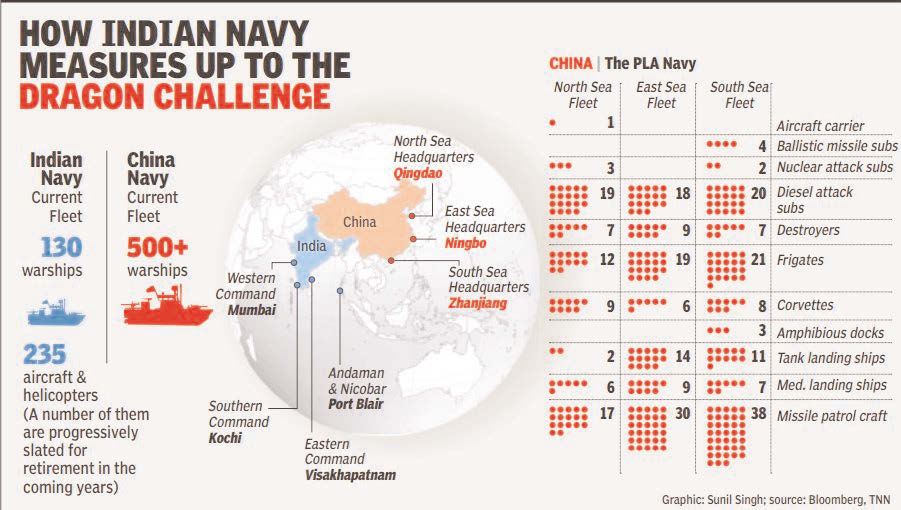
    BEIJING (TIP): Global defence contractors are circling for business in Asia, with countries from Australia to Vietnam upgrading and adding everything from submarines to fighter jets as China expands its military reach.

    According to consultancy IHS Jane’s report, the combined defence budgets in the Asia-Pacific region will grow from $435 billion last year to $533 billion in 2020, furthering a shift in global military spending away from Western Europe and North America toward emerging markets, especially in Asia. The figure will put Asia-Pacific on par with North America, which is expected to account for a third of global defence spending by then, from almost half now.

    The report attributes the rise to growing tensions in the South China Sea. “A number of the South China Sea’s littoral states appear to be responding to China’s more assertive stance in the region and there is no sign of this trend coming to an end,” Janes’ principal analyst, Craig Caffrey, said in the report. China had the region’s biggest defence budget at $146 billion last year, according to the government. Jane’s said it expects China’s budget to rise by about 5% to $233 billion by 2020.

    While military spending in Asia is coming off a low base – especially in Southeast Asia -and remains a small proportion of gross domestic product, nations that for years relied on old and at-times outdated ships and planes are starting to renovate their fleets. “There is a wide-ranging need for modernization across most of the armed forces in the region,” said Dan Enstedt, chief executive officer of Saab Asia Pacific, whose products include submarines, missiles, radars and fighter jets. “There are many examples of old and obsolete equipment fleets that are unable to keep pace with changing national security needs.”

    Military outlays in Asia and Oceania -which includes Australia and New Zealand -grew 5.4% in 2015, outpacing a 1% rise in global spending, according to the Stockholm International Peace Research Institute. Indonesia boosted spending last year by 16%, the Philippines by 25% and Vietnam by 7.6%.

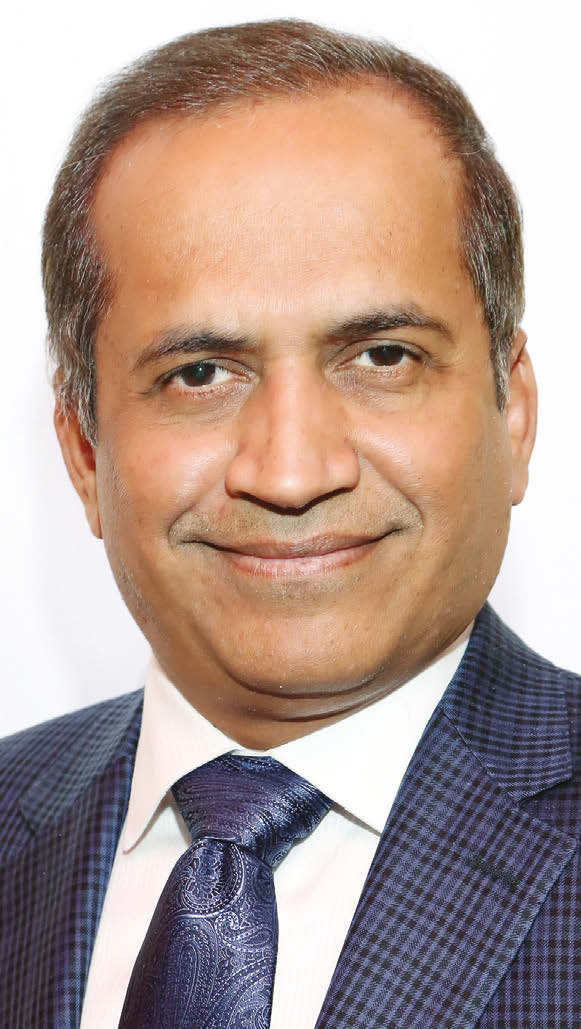
    Much of the spending is on air and naval capacity amid China’s assertiveness in the East China Sea, where it claims islets contested by Japan, and the South China Sea, where its land reclamation programme has spooked other claimants. “The growth of China’s national power, including its military modernization, means China’s policies and actions will have a major impact on the stability of the Indo-Pacific,” according to Australia’s Defence White Paper published in February.

    A quarter of Australia’s defence investment over the next decade will be devoted to maritime capabilities.

    China triggers Asia arms race 2US President Barack Obama’s recent trip to Vietnam may lead to business opportunities, as he lifted a four-decade ban on the sale of lethal weapons. The US embassy has hosted two defence contractor symposiums in Hanoi, attended by companies including Boeing Co. and Lockheed Martin Corp. Doug Greenlaw, a vice president at Lockheed, said in an interview in February that Asia is at the core of the company’s strategy. “The economies in Asia are growing faster than in the rest of the world – that tends to really drive security spending, so we see Asia as a growth market,” Greenlaw said. “We have great partnerships with the countries across Asia.”

    Still, much of the spending comes off a low base. The Philippines spent 1.3% of GDP last year, up from 1.1% in 2014, according to Sipri, while Vietnam was largely flat at 2.3% of GDP.

    China’s outlays were 1.9% of its economy, well below US expenditure last year of 3.3% of its economy.

    Thailand may be one growth center this year. Defence spending will increase 7.3% and account for 7.6% of the overall budget, the Bangkok Post reported last month. On Thailand’s shopping list: 12 MI-17 transport helicopters from Russia, and four South Korean-made T-50 TH training aircraft.

    Australia in April awarded an A$50 billion ($36 billion) contract for 12 submarines to France’s DCNS Group, in one of the world’s biggest defence deals. The government is considering tenders for nine warships worth A$35 billion and a A$3 billion deal for 12 offshore patrol vessels.

    Indonesia, Japan, China, Vietnam, Singapore, Pakistan and Vietnam are building or buying submarines. Pakistan last year agreed to buy eight diesel electric submarines from China for an undisclosed price.

    The greater reach of China’s air force is helping driving sales of planes. China has deployed combat aircraft on Woody Island in the disputed Paracel chain.

    India needs dozens of warplanes after it scaled back a big order for Dassault Aviation SA’s Rafale jets to 36. Though no quantity has been announced, Boeing, Lockheed Martin and Saab have made pitches to build combat planes in India. About a third of India’s 650 fighter jets are more than 40 years old.

  • India internet market only bright spot globally: Mary Meeker Report

    India internet market only bright spot globally: Mary Meeker Report

    BENGALURU (TIP): Mary Meeker, a venture capitalist and internet guru, famous for her seminal predictions made annually through her info-packed reports on the state of the internet, said India is the only market which is seeing internet users grow as opposed to other countries. Meeker, a partner at Silicon Valley venture capital powerhouse, Kleiner Perkins said India internet user base increased 40% against 33% from a year ago while all other major markets like US and China stagnated.

    Meeker while releasing her trademark report ‘Internet Trends 2016’ at tech portal Recode’s Code conference said India had 277 million internet users with a 22%penetration. The presentation also pointed out that India has pipped US in terms of internet user base and now trails behind only China. India had a user penetration of about 22%. China reached 668 million internet users with a growth of only 6% last year compared to 7% growth a year ago. While India’s internet user base had grown 33% in 2014 and it is the only country to have witnessed accelerated growth last year.

    Contrast that to the global internet user base which grew only 9% in 2015 reaching 3 billion. “New internet users are going to be harder to find,” Meeker, said while presenting the report. The other big theme, in Meeker’s report was the slowdown in smartphone shipments globally with just 10%growth down from 28%. Asia-Pacific is the largest contributor in terms of global users of smartphones with a 52% share inching up from 34% in 2008. In terms of smartphone cost, India clocked the lowest average per unit at $158.

    Meeker said that video ads online seem to be ineffective as majority of them, as much as 81%, mute those video ads while 93% consider using ad blocking software, the report even as internet advertising grew 20% to $60 billion in US.

    In terms of most consumed apps, the report mentioned that people on an average install over a dozen apps on their smartphones, but significantly, 80% of their time is consumed by three apps. For example, Facebook, Chrome and YouTube are the top three apps in US but globally it is Facebook, WhatsApp and Chrome.

    Messaging apps are also continuously growing with more expressive form of communication than simple text exchanges which is largely dominated by Whatsapp, Facebook and WeChat, Meeker’s report posited.

  • ‘DON’T CARE ABOUT PRICES’: OPEC TO KEEP OIL GUSHING, FAILS TO AGREE ON CEILING

    ‘DON’T CARE ABOUT PRICES’: OPEC TO KEEP OIL GUSHING, FAILS TO AGREE ON CEILING

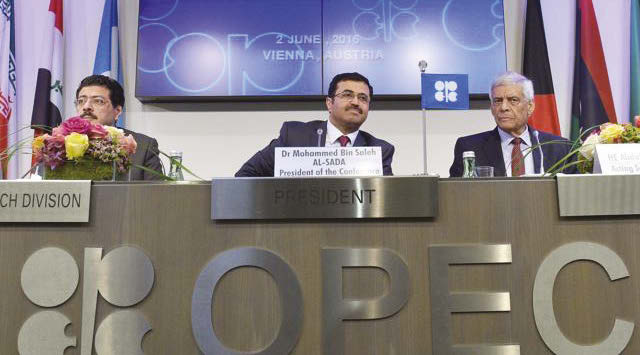
    VIENNA (TIP): OPEC decided on June 2 to keep oil gushing after a moderate recovery in the crude eased the pressure to limit output, with Saudi Arabia saying the cartel is “very satisfied” with the market.

    A final statement from the Organization of the Petroleum Exporting Countries after a meeting in Vienna made clear that the 13-nation group had not set a new output target.

    It said that since its last meeting in December, “crude oil prices have risen by more than 80 percent, supply and demand is converging and oil and producer stock levels in the OECD have recently shown moderation.”

    This was echoed by kingpin Saudi Arabia’s energy minister, newly appointed by the kingdom’s dynamic new deputy crown prince, expressing confidence that the recovery in the oil prices would continue.

    “Everybody is very satisfied with the market. The market is rebalancing as we speak,” said Khaled al-Falih said at the start of the bi-annual gathering.

    Traditionally OPEC, which pumps around a third of the world’s oil, has cut production to boost falling prices.

    But in the most recent drop, tumbling from over $100 in 2014 to close to $25 in January, OPEC — driven by Riyadh — has changed tack, keeping oil flowing to maintain market share and squeeze competitors.

    It has taken some time — straining even Saudi Arabia’s finances, to say nothing of on-the-brink OPEC member Venezuela — but the tactic now appears to be working at last.

    Non-OPEC output is falling and prices last week briefly broke above $50 for the first time in six months.

    While oil prices fell after the OPEC meeting, they shot higher after US inventory data showed signs of stronger than expected demand.

    In late afternoon London deals, Brent North Sea crude for August delivery gained 42 cents to $50.14 per barrel.

    New York’s West Texas Intermediate (WTI) crude for July rose 24 cents to
    $49.25, compared with Wednesday’s closing level.

    Animosity between Saudi Arabia and Iran — bitter regional OPEC rivals engaged in proxy conflicts in Syria and Yemen — means that any agreement to cut output is highly unlikely in any case.

    Since Iran’s 2015 nuclear deal entered into force in January and sanctions were lifted, Tehran has aggressively ramped up output, and is unwilling to stop now.

    “A doubling of exports of Iranian oil has had no negative impact on the market and has been absorbed well,” Iranian Oil Minister Bijan Zanganeh said Wednesday.

    A group production target of 30 million barrels per day — in any case flouted, currently around 32 million bpd — was abandoned at OPEC’s last meeting in December.

    On Thursday Zanganeh said that setting a collective OPEC ceiling “means nothing” without agreeing production quotas for members.

    “We’re not now in a position to talk about putting a ceiling, because the strategy and our assessment of the strategy is working, the market is reacting very positively,” said Suhail al-Mazrouei, United Arab Emirates oil minister.

    Saudi Arabia is undergoing change with the powerful young Deputy Crown Prince Mohammed bin Salman, 30, seeking to revamp the country’s economy to reduce dependence on oil.

    His “2030 Vision” includes a partial floatation of national oil giant Aramco and creating a gargantuan sovereign wealth fund. This week it pumped $3.5 billion into Uber.

    This conflict between the Saudis and the Iranians — soothed by the price recovery — could return with a vengeance if oil prices dip again, however, for example on the back of a stronger US dollar.

    This worries poorer OPEC members, not least Venezuela, racked by severe food shortages and inflation projected to hit 700 percent in 2016.

    This is unlikely to sway the Saudis, however.

    “We don’t care about oil prices — $30 or $70, they are all the same to us,” Prince Salman said in an interview with Bloomberg published in April.

    One thing which could perhaps smooth the waters was the appointment on Thursday of Nigeria’s Mohammed Barkindo as new OPEC secretary general, replacing Abdalla El-Badri of Libya.

  • Sahara properties to be auctioned at Rs 722 crore reserve price

    Sahara properties to be auctioned at Rs 722 crore reserve price

    NEW DELHI (TIP) : Tasked by markets regulator Sebi to sell land parcels of Sahara, HDFC Realty will e-auction on July 4 five properties owned by the beleaguered group at a reserve price of Rs 722 crore.

    HDFC Realty has been asked to auction a total of 31 land parcels at Rs 2,400 crore, while SBI Cap has been tasked to auction another 30 land properties with an estimated market value of about Rs 4,100 crore.

    The Securities and Exchange Board of India (Sebi) roped in HDFC Realty and SBI Cap after being asked by the Supreme Court to initiate the process of selling Sahara properties whose titles have been deposited with it by the group.

    Following a go-ahead from the Court, the two entities have put in place a mechanism to auction these properties.

    In a public notice issued on Thursday, HDFC Realty said it will e-auction as many as five land parcels on July 4 between 11 am and 12 pm. These properties will fetch around Rs 722 crore at reserve price.

    These properties are located in Andhra Pradesh, Tamil Nadu, Madhya Pradesh, Chhattisgarh and Uttar Pradesh. The assets being sold include agricultural non-agri land.

    Interested bidder can inspect these land parcels on June 10. As per the court directions, these properties cannot be sold at less than 90% of circle rates.

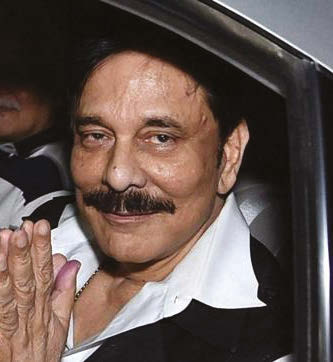
    After spending two years in jail, Sahara chief Subrata Roy is currently out on parole. He was sent to jail on the orders of the Supreme Court in a long running dispute with Sebi.

  • SEBI MOOTS NEW NORMS FOR WAREHOUSES IN COMEX SPACE

    SEBI MOOTS NEW NORMS FOR WAREHOUSES IN COMEX SPACE

    MUMBAI (TIP): In an attempt to make the commodity derivatives trading safer for investors, Sebi has come out with a consultation paper on how comexes should deal with warehouses registered with them. It has specified minimum standards for warehouses which want to be part of the commodity derivatives space in the country.

    Among the areas which the proposed regulations will cover include financial parameters like equity capital and networth, track record of promoters and real time access of stored commodities for exchanges.

    In India, warehouses—which play an important role in the commodities trading space that include the spot as well as derivatives trading—are regulated by Warehousing Development and Regulatory Authority. However, since these facilities play an important role in the commodity derivatives space, which has been under Sebi’s regulatory purview since September 2015, it wants to have stricter norms that will define how comexes deal with warehouses, Rajeev Kumar Agarwal, whole time member, Sebi, said.

    Sebi has proposed that promoters of warehouses which will store multiple commodities should have a net worth of at least Rs 50 crore. while the ones which will store a single commodity the required net worth will be Rs 25 crore. The minimum equity capital for the company owning these warehouses should be Rs 10 crore. Warehouses should also have a minimum security deposit of Rs 50 lakh.

    The promoters, directors and the top officials of the warehouses should be a ‘fit and proper’ person under Sebi rules and should not have any record of violations of securities laws in the previous three years.

  • Banned Pak cricketer Danish Kaneria appeals to BCCI for help

    Banned Pak cricketer Danish Kaneria appeals to BCCI for help

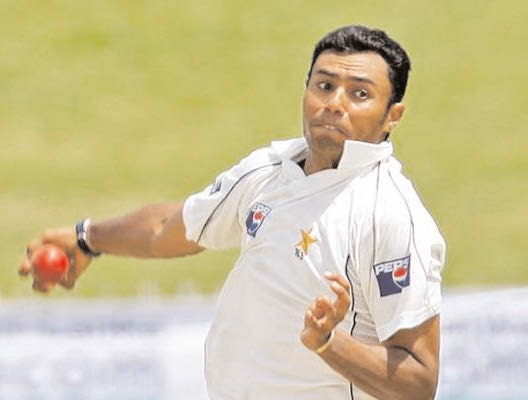
    MUMBAI (TIP): When you meet a legspinner who’s taken 261 wickets in 61Tests (I’d have taken at least 500 if I was still playing, he says), you’d want to talk to him about his art, the mystique of which has always fascinated connoisseurs of cricket. Unfortunately, when you sit with Danish Kaneria -Pakistan’s fourth-highest wicket-taker (and the most successful spinner ever), the topic centres around just one thing -fixing, a charge which destroyed his career, for good perhaps.

    For the past four years, ever since the 35-year old was banned by the England and Wales Cricket Board (ECB) for life for allegedly indulging in spot-fixing in a NatWest Pro40 game while playing for Essex against Durham, Kaneria has been fighting a vain battle to ‘restore his honour’ and return to the game but has received ‘little help’ from the Pakistan Cricket Board (PCB) and the International Cricket Council (ICC).

    The leggie is currently in India on a “religious trip.” Only the second Hindu to play for Pakistan after Anil Dalpat, Kaneria has so far visited Shirdi, Trimbakeshwar, Siddhivinayak, Mahalaxmi and Mumbadevi temples during his visit. “I plan to go to the land of my forefathers, Surat too,” Kaneria tells TOI during an exclusive interview

    There’s speculation brewing k home that the tainted cricket back home that the tainted cricketer now wants to move to India for good. “This is such loose talk. I’ve received so much love in Pakistan, it is just that the PCB has discriminated against me. If I wanted to seek asylum here, why would I leave my kids behind in Karachi. I’ve come here with my mother and wife,” he shoots off. He does see a ray of hope emerge from this trip too. “I’ve got so much love from India every time I come here. Though I’m not scheduled to meet any BCCI officials, I won’t mind meeting them on this trip. I appeal to the Indian board to help me out, because they’ve the power to do so,” he pleads.

    Kaneria turns emotional while reliving his ordeal ever since his fellow Essex teammate Murray Westfield (a fast bowler) named him as the man who introduced him to Anu Bhatt, an Indian bookie, during an ECB trial in 2012. Westfield pleaded guilty to the charge and was let off, while Kaneria was banned for life for not admitting to his alleged “match irregularities.”

    “The trial was launched two years after the Scotland Yard cleared me. It was biased against me, since they (ECB) seemed to have struck a deal with Westfield to protect him.” Kaneria adds, “During the trial, when I told them that my father was suffering from cancer, the ECB attorney said ‘we don’t care whether your father lives or dies.’ Such was their attitude.” The PCB toed the line of ECB, and banned me too. Ironically, the (in)famous spot-fixing scandal of 2010 in England came after I was pulled out of the Pakistan team at ECB’s insistence, despite having provided the PCB all documents to prove my innocence. Salman Butt , Mohammad Asif and Mohammad Aamir were supposed to ambassadors of the game, but look at what they did,” he says, while slamming the move to end the bans of the trio.

  • French Open: It’s Paes-Hingis vs Sania-Dodig in mixed doubles final

    French Open: It’s Paes-Hingis vs Sania-Dodig in mixed doubles final

    NEW DELHI (TIP): Indian tennis stars Leander Paes and Sania Mirza set up mixed doubles final at the French Open after winning their respective semi-final matches in Paris on June 2. Paes and Sania also played their last eight matches earlier in the day.

    Paes with his Swiss partner Martina Hingis scored a fighting 6-3, 3-6, 10-7 victory over sixth seeds Edouard Roger-Vasselin-Andrea Hlavackova to reach the final. The unseeded Indo-Swiss pair defeated fifth seeds Elena Vesnina and Bruno Soares in the quarter-finals.

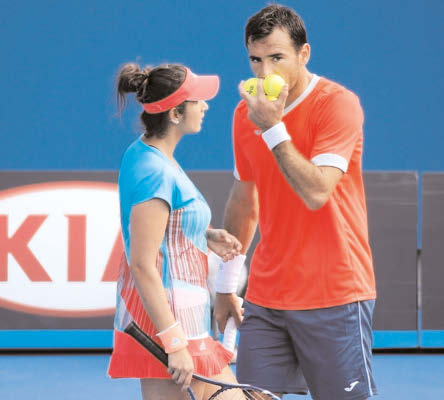
    Sania along with her Croatian partner Ivan Dodig overcame a gruelling battle against the third seed duo of Kristina Mladenovic and Pierre-Hugues Herbert before emerging victorious 4-6, 6-4, 12-10.

    The second seed pair of Sania and Dodig recorded victory over Yung-Jan Chan and Max Mirnyi 6-1, 3-6, 10-6 in their quarter-final on June 2. (AP)

  • Djokovic, Murray have history on minds in Paris

    Djokovic, Murray have history on minds in Paris

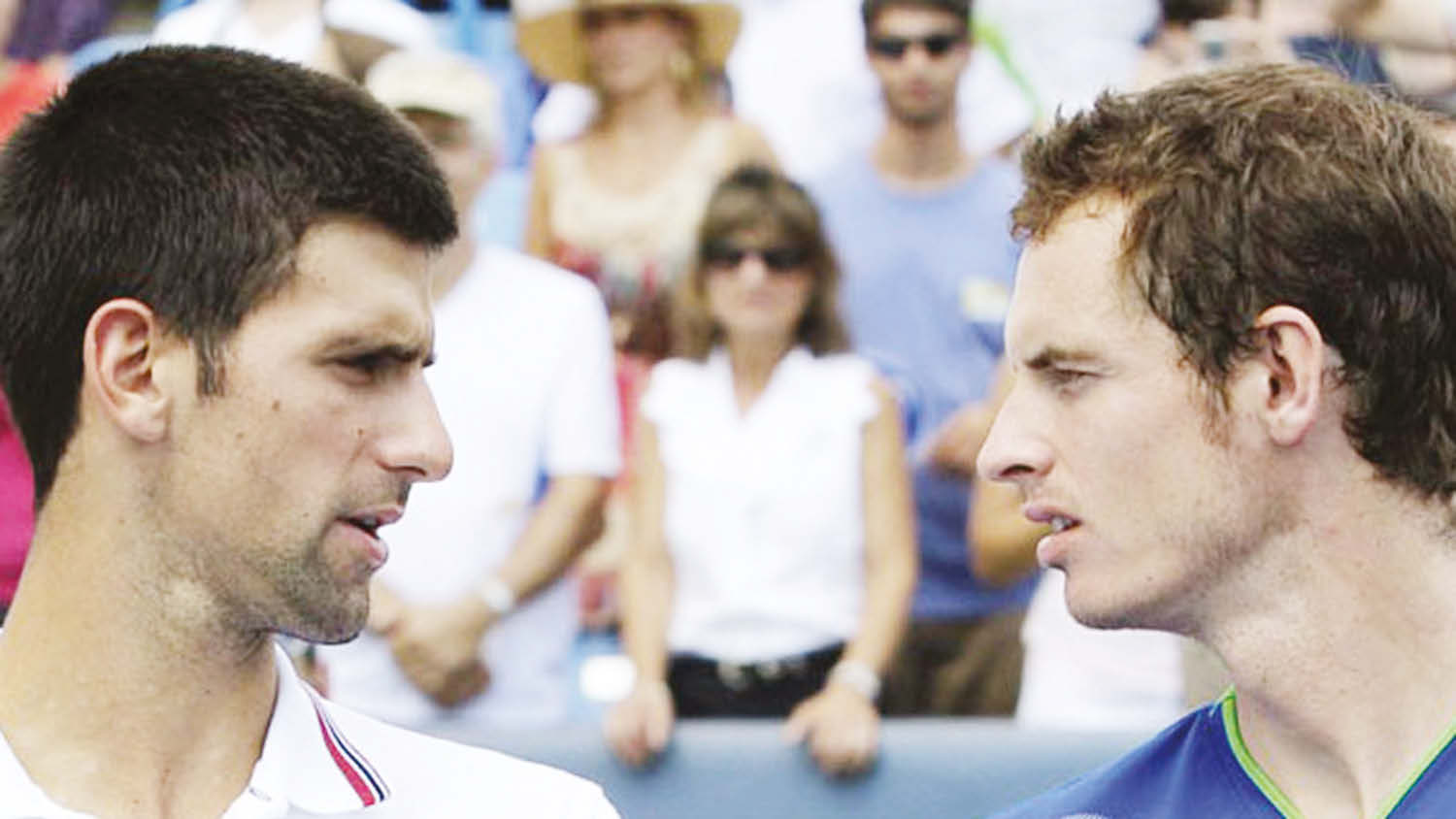
    PARIS (TIP): Novak Djokovic faces young gun Dominic Thiem in the French Open semi-finals june 3 while Andy Murray tackles defending champion Stan Wawrinka looking to become the first British man in the final for 79 years.

    World number one Djokovic, a three-time runner-up, is still seeking a maiden Roland Garros crown to secure a career Grand Slam. The 29-year-old top seed, who already holds the Wimbledon, US and Australian Open titles, will start as overwhelming favourite.

    He has defeated Thiem in straight sets in their only two career meetings. Djokovic will be playing in his 30th Grand Slam semi-final and eighth in Paris. Austrian 13th seed Thiem is into his first at the majors as he finally realises the potential which was spotted during his days when he used to lift tree-trunks to beef up his physique.

    “I’m sure he’s very motivated to show himself and others that he deserves to be at the top and compete for the biggest titles,” said Djokovic. “He plays with a lot of speed, with a lot of power. I’m sure he’s going to give it all in semis. But I have something to fight for, as well.”

    Thiem is one of a generation of players long-tipped to succeed the likes of Djokovic, Murray, Roger Federer and Rafael Nadal. Djokovic won the first of his 11 majors at Australia in 2008 as a 20-year-old. Thiem, 22, has yet to make the breakthrough to a final at the Slams. But he is one of the in-form players in 2016 with his 41 match wins second only to Djokovic’s 42.

    He also has a season-best 25 wins on clay, a run which included a victory over Federer in Rome and the title in Nice.

    “It’s going to be unbelievably tough against Novak,” said Thiem. “He’s on a different level than all the other players, but still I’m in good shape and the match starts at 0-0.”

    Murray also has history on his mind as he aims to be the first British man since Bunny Austin in 1937 to reach the final. The world number two is in the habit of shrugging off the weight of expectations with his 2012 US Open and 2013 Wimbledon triumphs.

    “I think at this stage of my career to do things that I have never done before is nice,” said three-time semi-finalist Murray who is two matches away from becoming the first British man to win in Paris since Fred Perry in 1935.

    Murray’s Paris campaign was almost scuppered at the first hurdle when he had to fight back from two sets down to defeat 37-year-old Radek Stepanek. He then needed another five sets to beat French wildcard Mathias Bourgue, the world 164. Since then, Murray has been relatively untroubled, seeing off big-servers Ivo Karlovic and John Isner in straight sets before defeating home hope Richard Gasquet from a set down.

    He has even seen the torrential rain act in his favour. Having played his last-16 match against Isner on Sunday, he didn’t return to the courts until Wednesday to face Gasquet before enjoying a free Thursday. In comparison, Djokovic played his last-16 round over two days on Tuesday and Wednesday and beat Tomas Berdych in his delayed quarter-final on Thursday.

    Murray won’t under-estimate Wawrinka who stunned Djokovic in last year’s final. The 31-year-old Swiss is the oldest semi-finalist in Paris since Jimmy Connors in 1985. Murray leads their head-to-head 8-7 but Wawrinka has won their last three meetings.

  • Indonesia Open: Saina enters quarters; doubles teams knocked out

    HYDERABAD (TIP): Two days after struggling against a lower ranked opponent Saina Nehwal was in full flow on Thursday as she breezed past Fitriani Fitriani of Indonesia 21-11, 21-10 to advance to the quarterfinals of the Indonesia Open Super Series Premier in Jakarta on June 2.

    However, the doubles teams disappointed suffering straight game losses. Seasoned campaigners Jwala Gutta and Ashwini Ponnappa , who are ranked 14 in the world, proved no match to Chinese pair of Yaqiong Huang and Jinjua Tang 9-21, 18-21. The World No. 25 team took just 33 mins to oust the Indians. Later, men’s doubles outfit of Manu Attri and Sumeeth Reddy fared poorly against sixth seeds Sung Hyun Ko and Baek Cheol Shin 18-21, 13-21. Saina now needs to come up with her best show, where she will face World No.1 Carolina Marin of Spain.

    The bottom-half of women’s singles witnessed an upset as Tai Tzu Ying of Chinese Taipei put it across Olympic champion and third seed Li Xuerui of China 2118, 21-18. Five-time world and two-time Olympic champion Lin Dan was stunned in the second round of men’s singles. The Super Dan was shocked by Indonesian youngster Jonatan Christie 12-21, 12-21.

  • CHINNAMASTA: THE GODDESS WITHOUT A HEAD

    CHINNAMASTA: THE GODDESS WITHOUT A HEAD

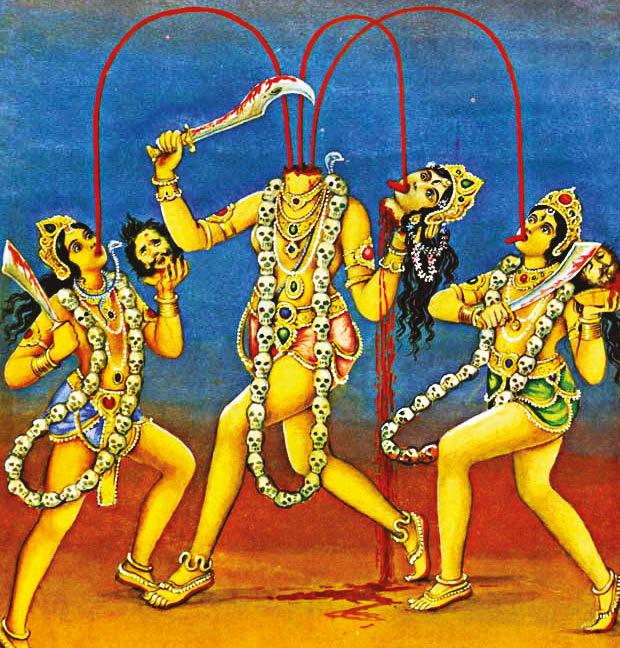
    The text of the Gupta Lalitambika desribes Goddess Chinnamasta as follows: “She who is the embodiment of virtue, love, humanness, anger, valiancy, terror, odiousness, mysticism, humor and tranquility all put together.” It is quite a neat description of the Goddess. The name by itself connotes ‘one with the severed head’. She is refered as Prasanda Chandika and comes 6th in line of the ten Mahavidyas. There is mention of the Goddess in not only Hindu texts but also Buddhist Tantric scriptures. She is also called Vajreshwari and is likened to the thunderbolt of Lord Indra. Her eyes are expressive and some devotees also call her Indrani. Those who follow her become inspired and courageous.

    Significance of Mahavidya Chinnamasta 

    She is known to help the activation of the Manipur chakra in the human body. As the chakra gets started a white odorless smoke is emitted. A triangle and a lotus emerge. It also brings forth the images of Rati and Manmata who are just above the white lotus. Manmata has his back on the white lotus and Rati is positioned just above him. The image also depicts Cinnamasta standing on the chest of Manmata. She has a head in her hand. Her neck shows three sprays of blood spouting out (symbolizing the flow of prana through Ida, Pingala and Sushumna Nadis). One spray of blood is towards her friend Dakini and the other is for Varninini. The third one, which is green and yellowish, is gaseous in nature. It assumes an ultra violet shade and comes out of her mouth. This gas is spread all across the universe. It intersperses with all living beings and touches their lives.

    The Devi is harsh on her self as she sacrifices her head. As she has immense self-control she is considered a yogi of the finest order. Since she is able to sacrifice her own head it means she is capable of spiritual advancement.

    She is called a pure Yogini. This is why she is called by names like Vajra Yogini, supreme Dakini or Para Dakini. Those who wish to get empowered with the occult worship her ardently. Her left foot is positioned in a manner that shows she is ready to move or is always ‘on the go’. In her hand she also carries a knife along with the severed head. A serpent is around her neck and she has three eyes. Despite all her fearsome features she is considered satvik and very feminine. Once she blesses the devotee he is protected for life.

    Legends

    Since there are not many available texts on her and also by way of reference quite a lot has disappeared in antiquity, nevertheless through art she is well depicted. As one of the forms of Kali many fear her. In Tantric Buddhist texts she is refered as Vajrayoni and the form of Tara. Those who follow the Tibetan tantric system believe that her ability to hold her head in sacrifice shows the highest spiritual authority. Her not being dead, and walking is also amazing as mentioned in the Tibetan Tantra scriptures. This also signifies the enlighment from risen Kundalini, and complete freedom from ego.

    We need to get rid of all kinds of false identifications and emotions. We have to go beyond the limitations and break free. She teaches us to remove fear, self pity and also forget the pain of death. Her being naked means she wants us also to be free from being bound by ego and false designations.

    As a Mahavidya she wears a garland of skulls and a necklace of bones around her neck. She ties the snake on her neck like a yajnopavita or a sacred thread. It is gruesome to see that she has cut off her head and is carrying it in her hand. While she is standing with the severed head on Rati and Manmata, the backdrop is equally terrifying. There is thunder and lighting all around. She is in a state of amansaka (not dead). She is now free of all human emotions and characteristics. She is still happy and sees it all with her three eyes. The place where the event is happening is a cremation ground. There are jackals that are around but are not interested in the event.

    There is another image of the Mahavidya where she is sitting on the chest of Shiva with her severed head. She is also called the red hibiscus and she is like the rising sun. She is usually in red and at times blue. In another image she is riding the lion with her severed head. The rest of the features of the Mahavidya remain the same. In the oldest tradition she stands naked like a Digambari. There is no illusion of the body or attachment towards it. With her in such images there is hardly any reason for her devotees to fear life or death. They are also stripped of illusion. Her acts are heroic in nature. She is in bliss and not in pain.

    Maa Chhinamastika as Chintapurni

    Another Legend states that, Devi transformed into Chandi to kill the demons. Mata killed the demons and brought victory to the Devas. But, Ajaya and Vijaya who were Mata’s aides were not satisfied as they wanted more blood. Mata cut her forehead and offered them her blood.

    Maa Chhinamastika Jayanti: Appearance day of Maa Chhinamastika is known as Chinnamastika jayanti. It is celebrated on Shukla paksha chaturdashi in Vaisakh month. This year it comes on Saturday, 25th May 2013. This day is celebrated with great passion and devotion. Special puja and arrangement are made in Mata’s oldest temple at Jharkhand.

    Maa Chinnamasta the “Kundalni Shakti”

    Maa Chinnmasta helps in awakening the kundlani shakti, the main spiritual energy in each human body. It is assured that the Kundalni Shakti moves upward very forcefully through sushumna nadi from muladhar chakra to sahastrar chakra in top of the head with such a force that it blows her head out. The blood coming out from the throat applies the upward flowing kundlani breaking all granthis i.e. Brahmgranthi, Vishnugranthi, Rudragranthi which makes a person sad, ignorant and weak. The severed head is
    “consciousness”. The three blood streams is the flow of nectar when kunlani unites with Shiva in Sahastrar Chakra, which is yogi called Maithun Kriya. Those who do the chakra dhyan sadhna can understand better.

    There are several places in India where it is said that sati’s head fell over there, that is why she is worshipped as Chinnamasta.

    1. Chintpurni temple in Himachal Pradesh 2. Temple at Bishnupur, West Bengal 3. Ramnagar near Varanasi 4. The most powerful Chinnamasta temple is in Jharkhand, in Rajrappa where devotees are not allowed after 5.30 pm in the evening because of super natural powers roaming around temple complex after evening. 5. There is also one in Kamakhya temple complex in Assam, where, on each Wednesday, there is a long que for people for worshipping and giving sacrifices of goats.

    For getting rid of “RAHU” grah (planet)’s bad effects, the puja of Chinnamasta is must. Some knowledgable pandits also recommend deity puja for KETU shanti.


  • NASA tries again to inflate spare room in space

    NASA tries again to inflate spare room in space

    WASHINGTON (TIP): Nasa tried again Saturday to inflate an add-on room at the International Space Station, after the first attempt ran into problems due to too much friction.

    Efforts to inflate the flexible habitat, known as the Bigelow Expandable Activity Module (Beam), got under way at about 9am.

    Space scientists monitoring the expansion at mission control in Houston, Texas, early Saturday expressed optimism that they were having early success this time around, as images on Nasa television showed the module slowly expanding after receiving three initial bursts of air.

    “Beam (is) continuing to slowly expand,” said Nasa spokesman Daniel Huot.

    “Everything going smoothly so far this morning, seeing good expansion both along the length and the diameter of BEAM. The pressure is well within what was expected.”

    Nasa is testing expandable habitats astronauts might use on the Moon or Mars in the coming decades. Operations to expand the module were led by Nasa astronaut Jeff Williams. A first attempt on Thursday was not successful. Nasa said that after a series of leak checks and other preparations, space station astronauts will enter the habitat through the station’s Tranquility module.

  • NEW METHOD TO CREATE 3D NANOPARTICLES FROM DNA

    NEW METHOD TO CREATE 3D NANOPARTICLES FROM DNA

    BOSTON (TIP): Scientists have developed an algorithm that uses DNA strands to automatically build 3D nanoparticles, which may be used in a range of applications such as vaccines, gene editing tools and memory storage. Researchers can build complex, nanometre-scale structures of almost any shape and form, using strands of DNA. However, these particles must be designed by hand, in a complex and laborious process.

    This has limited the technique, known as DNA origami, to just a small group of experts in the field.

    Unlike traditional DNA origami, in which the structure is built up manually by hand, the algorithm starts with a simple, 3D geometric representation of the final shape of the object, and then decides how it should be assembled from DNA, according to Mark Bathe, associate professor at Massachusetts Institute of Technology (MIT), who led the research. The technique may be used to develop nanoparticles for a much broader range of applications, including scaffolds for vaccines, carriers for gene editing tools, and in archival memory storage.

    “The paper turns the problem around from one in which an expert designs the DNA needed to synthesize the object, to one in which the object itself is the starting point, with the DNA sequences that are needed automatically defined by the algorithm,” Bathe said. “Our hope is that this automation significantly broadens participation of others in the use of this powerful molecular design paradigm,” he said.

    The algorithm first represents the object as a perfectly smooth, continuous outline of its surface. It then breaks the surface up into a series of polygonal shapes. Next, it routes a long, single strand of DNA, called the scaffold, which acts like a piece of thread, throughout the entire structure to hold it together.The algorithm weaves the scaffold in one fast and efficient step, which can be used for any shape of 3D object, Bathe said.

    “That step is a powerful part of the algorithm, because it does not require any manual or human interface, and it is guaranteed to work for any 3D object very efficiently,” he said.

  • Alibaba app lock turns your selfie into a password

    Alibaba app lock turns your selfie into a password

    Chinese giant Alibaba Group has launched Privacy Knight, an app-lock with ‘face-lock’ feature that will help users protect their privacy from intruders.

    Using Privacy Knight, users will be able to unlock their protected apps through a 1-second-selfie, Alibaba said in a statement.

    “Face Lock is set to change the way people protect their privacy. It’s the next big thing after fingerprint lock,” Ebrahim Popat, Country Manager of 9Apps, an Android Marketplace within Alibaba Mobile Business Group, said.

  • Google yourself to control your personal privacy settings

    Google yourself to control your personal privacy settings

    Soon, all you’ll need to do is Google yourself if you’re wondering how deeply Google has been digging into your digital life.

    In coming weeks, a shortcut to personal account information will appear at the top of Google’s search results whenever logged-in users enter their own names in the query box.

    The feature is part of an update to the “My Account” hub that Google introduced a year ago to make it easier for people to manage the privacy and security controls on the internet company’s services. While Google isn’t making any additional information available, it is making it easier to find.

    The link to personal accounts will appear at the top right of the listings for searches done on personal computers and at the top of requests entered on smartphones.

    Google is making the change because it learned that many users doing a “vanity search” under their name wanted a quicker way to find out what the company knew about them, as well as to see how they are depicted on various sites across the internet, said Guemmy Kim, a Google product manager.

    A new feature on Google’s mobile app will also quickly take users to their account information with a spoken request. All that will be required are the words: “OK Google, show me my Google account.” This option initially will only be available in English.

    People have become more interested in managing their digital profiles as a confluence of search engines, smartphones and online social networks makes it easier to track where they are, what they’re doing and what they’re thinking. Revelations about government agencies’ online surveillance programs also has heightened interest in privacy protection.

    Google uses the data collected by its search engine, Gmail and other services to analyze people’s interests and habits to show them ads about products most likely to appeal to them. Those ads generated $67 billion in revenue last year, providing most of the money that fuels Google’s parent company, Alphabet Inc.

    In addition to providing quicker ways to get to personal account information, Google also is introducing a “Find Your Phone” tool that’s designed to protect data stored on a device, as well as help locate it if it’s lost or stolen. The tool will work on Apple’s iPhone, as well as devices running on Google’s Android software. It’s meant to supplement the device-tracking and security features already built into the iPhone and the Android operating system.

  • People will be on Mars in 9 years, says SpaceX CEO

    People will be on Mars in 9 years, says SpaceX CEO

    RANCHOS PALOS VERDES, CALIF (TIP): SpaceX CEO Elon Musk says if things go according to plan people will be on Mars just nine years from now.

    During an interview on Wednesday at the Code Conference in southern California, Musk said that “we should be able to launch people in 2024, with arrival in 2025.”

    Musk also says he plans to go to space himself in about four to five years, but only into orbit around Earth.

    Musk also runs Tesla Motors, which has been at the forefront of self-driving car technology. He says he sees Apple as more of a competitor than Google in the autonomous vehicle market, but suggests they may be too late to compete with Tesla.

    He believes Apple will go into volume production of the cars no sooner than 2020.

  • HYDROGEN SIGNAL FROM REMOTE GALAXY ‘DETECTED’

    HYDROGEN SIGNAL FROM REMOTE GALAXY ‘DETECTED’

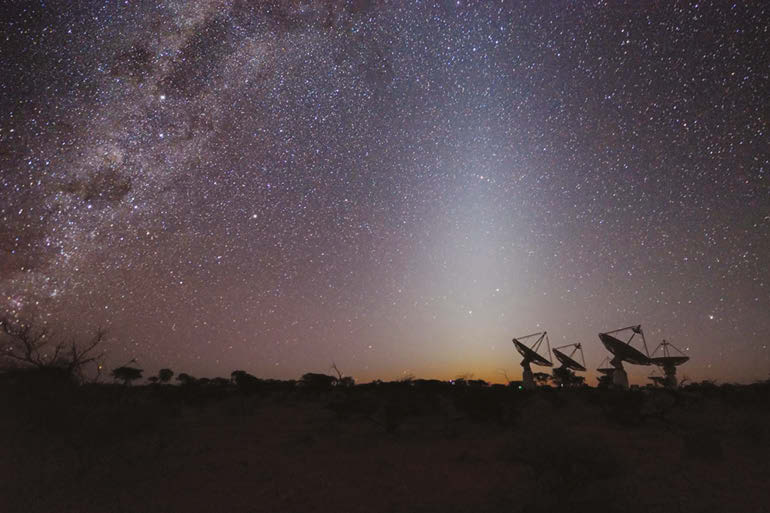
    NEW DELHI (TIP): Using the Very Large Array (VLA), located in New Mexico, US, an international team of scientists has detected a faint signal emitted by hydrogen gas in a galaxy more than five billion light years away. This incredible measurement is almost double the previous record of distance.

    “These signals would have begun their journey before our planet even existed, and after five billion years of travelling through space without hitting anything, they’ve fallen into the telescope, and allowed us to see this distant galaxy for the very first time,” said lead author, Ximena Fernandez from Rutgers University in US.

    The team found that the distant galaxy would have contained billions of young, massive stars surrounded by clouds of hydrogen gas.

    As the most abundant element in the universe, and the raw fuel for creating stars, hydrogen is used by radio astronomers to detect and understand the makeup of other galaxies.

    However, until now, radio telescopes have only been able to detect the emission signature of hydrogen from relatively near galaxies.

    “Due to the upgrade of the VLA, this is the first time we’ve been able to directly measure atomic hydrogen in a galaxy this far from Earth,” Fernandez said.

    This success for the team comes after the first 178 hours of observing time with the Karl G. Jansky Very Large Arra radio telescope for a new survey of the sky called the ‘COSMOS HI Large Extragalactic Survey’, or CHILES for short. Once it’s completed, the CHILES survey will have collected data from more than 1,000 hours of observing time.

    “A question we hope to answer is whether galaxies in the past had more gas being turned into stars than galaxies today. Our record breaking find is a galaxy with an unusually large amount of hydrogen,” she said.

    In a new approach, members of the team including Dr Attila Popping from International Centre for Radio Astronomy Research and the ARC Centre of All-sky Astrophysics
    (CAASTRO) in Australia are working with Amazon Web Services to process and move the large volumes of data via the ‘cloud’.

    “For this project, we took tens of terabytes of data from the VLA, and then processed it using Amazon’s cloud-based servers to create an enormous image cube, ready for our team to analyse and explore,” Dr Popping said.

    Professor Andreas Wicenec, head of the Data Intensive Astronomy team at the International Centre for Radio Astronomy Research, said that the limiting factor for radio astronomers used to be the size of the telescope and the hardware behind it. “It is fast becoming more about the data and how you move, store and analyse vast volumes of information,” he claimed.

    “Big science needs a lot of compute power – right now we’re designing systems to manage data for several large facilities around the world and the next generation of radio telescopes, including China’s 500m radio telescope, the Square Kilometre Array and the SKA’s pathfinder telescopes that are already up and running in outback Western Australia.” Professor Wicenec continued.

  • Smoking puts you at increased risk of oral diseases

    Smoking puts you at increased risk of oral diseases

    Puffing cigarettes can increase the likelihood that certain bacteria will not only set up camp but will build a fortified city in the mouth and fight against the immune system, thereby making you vulnerable to oral diseases, new research suggests.

    Bacteria can form biofilms on most surfaces including teeth, heart valves and the respiratory tract.

    Biofilms are composed of numerous microbial communities often made up of complex, interacting and co-existing multispecies structures.

    “Once a pathogen establishes itself within a biofilm, it can be difficult to eradicate as biofilms provide a physical barrier against the host immune response, can be impermeable to antibiotics and act as a reservoir for persistent infection,” said one of the researchers David Scott from University of Louisville School of Dentistry in the US.

    “Furthermore, biofilms allow for the transfer of genetic material among the bacterial community and this can lead to antibiotic resistance and the propagation of other virulence factors that promote infection,” Scott noted.

    One of the most prevalent biofilms is dental plaque, which can lead to gingivitis – a gum disease found in almost half the world’s population — and to more severe oral diseases, such as chronic periodontitis.

    Bacterial biofilms also can form on heart valves resulting in heart-related infections, and they also can cause a host of other problems, the researchers said.

  • RUN FOR BETTER BONES, SAY RESEARCHERS

    RUN FOR BETTER BONES, SAY RESEARCHERS

    Exercises, such as running, that put bones to greater use, improve their health better than those (like cycling) that do not exert so much strain on them, finds a new research.

    “Normal human beings need to exercise moderately to maintain health. However, those at risk of weaker bones need to take up running rather than swimming or cycling,” said lead author Giovanni Lombardi from Istituto Ortopedico Galeazzi in Italy.

    The researchers measured glucagon, leptin and insulin — hormones involved in regulating metabolism — as well as levels of osteocalcin and P1NP (proteins associated with bone formation) in 17 trained runners before and after a 65-km mountain ultramarathon run.

    They compared it to the hormones and bone constituents of twelve adults of the same age who did not run the race but did low to moderate physical exercise.

    Increasing glucagon levels indicate an energy demand, whilst increasing insulin and leptin levels indicate adequate or excessive energy levels, the researchers stated. The findings showed that the ultramarathon runners had higher levels of glucagon and lower levels of leptin and insulin when finishing the race as compared to the control group.

    The falling levels of insulin ultramarathon runners lead to similarly falling levels of both osteocalcin and P1NP— suggesting that athletes may be diverting energy from bone formation to power the high-energy demands of their metabolism.

    However, the runners also had higher P1NP levels at rest compared to controls, suggesting that they may divert energy from bones during racing but also have a net gain in bone health in the long-term.

    Running exerts a higher physical load on bone than swimming or cycling, it could be that these forces stimulate bone tissue to signal to the pancreas to help meet its energy needs in the long-term, the researchers explained.

    “Our work has shown that bones aren’t just lying idle, but are actively communicating with other organs and tissues to drive the body’s energy needs,” Lombardi said.

  • Stay indoors or in clean surroundings if you have high blood pressure

    Stay indoors or in clean surroundings if you have high blood pressure

    If you have high blood pressure, you must avoid exposure to polluted air as much as possible, suggest researchers who have found air pollutants to be responsible for high BP.

    Lead researcher Tao Liu, from Guangdong Provincial Institute of Public Health in China said they have discovered a significant risk of developing high blood pressure due to exposure to air pollution.

    He warned that people should limit their air exposure on days with higher pollution levels, especially for those with high blood pressure, and that even very short-term exposure can aggravate their conditions.

    The meta-analysis found high blood pressure was significantly associated with short-term exposure to sulfur dioxide (SO2), which mainly comes from the burning of fossil fuel and PM2.5 and PM10 and the long-term exposure to nitrogen dioxide (NO2), which is produced from combustion, and PM10.

    Researchers from American heart association also pointed out that the high blood pressure is a major risk factor for cardiovascular disease and stroke.