Month: June 2016

  • PAINKILLERS MAKE PAIN WORSE

    PAINKILLERS MAKE PAIN WORSE

    Do you pop a painkillers at the slightest discomfort? Well, you shouldn’t because it can have devastating consequences of making pain worse and longer lasting, warns new research.

    The findings could explain the explosion of painkiller addiction in the past few decades.

    “We are showing for the first time that even a brief exposure to opioids can have long-term negative effects on pain,” said lead researcher Peter Grace, assistant research professor at University of Colorado Boulder in the US.

    The researchers found that opioids like morphine paradoxically cause an increase in chronic pain in lab rats.

    The results suggest that the recent escalation of opioid prescriptions in humans may be a contributor to chronic pain, Grace said.

    The study showed that just a few days of morphine treatment caused chronic pain that went on for several months by exacerbating the release of pain signals from specific immune cells in the spinal cord. “We found the treatment was contributing to the problem,” Grace noted.

    The study, published in the journal Proceedings of the National Academy of Sciences, showed that a peripheral nerve injury in rats sends a message from damaged nerve cells to spinal cord immune cells known as glial cells, which normally act as “housekeepers” to clear out unwanted debris and microorganisms.

    The first signal of pain sends glial cells into an alert mode, priming them for further action. When the injury was treated with just five days of opioids the glial cells went into overdrive, triggering a cascade of actions, including spinal cord inflammation.

    The team discovered that the pain signals from a peripheral injury combined with subsequent morphine treatment worked together to cause a glial cell signalling cascade.

    The cascade produces a cell signal from a protein called interleukin-1beta (IL-1b), which increases the activity of pain-responsive nerve cells in the spinal cord and brain.

    That can cause increases in pain duration lasting several months.

    “The implications for people taking opioids like morphine, oxycodone and methadone are great, since we show the short-term decision to take such opioids can have devastating consequences of making pain worse and longer lasting,” Linda Watkins, professor at University of Colorado Boulder, said.

    “This is a very ugly side to opioids that had not been recognised before,” Watkins noted.

  • FACE PACKS TO GET RID OF SUN  TAN

    FACE PACKS TO GET RID OF SUN TAN

    It’s blazing hot in Chennai. Despite the heat we have to step out for work and for other activities. It is natural that our skin would get tanned when exposed to this scorching heat. Apart from applying sunscreen lotion you can also try out these face packs to help remove the tan. City-based skin care expert Vasundhra Ravi gives us six homemade face packs that will keep your skin looking fresh this summer.

    Barley pack

    Grind 30 grams of barley with 20 grams of khus khus. Mix this powder with five drops of lemon juice and a few drops of rose water to make a smooth paste. Apply this paste on the exposed areas. Leave the pack on for half-anhour and wash your face with cold water.

    Dal pack

    Take two tablespoon of tuvar dal, two tsp green gram dal, two tsp cucumber seeds, two tsp channa dal. Grind all these into a fine powder. Add two pinches of kasturi manjal and two tsp cucumber juice to this powder and make a paste. Apply this on the tanned areas. Leave it for half-an hour and wash it.

    Fruit pack

    Soak 10 grams of dry raisins and two dates in 50 ml tea decoction for two hours.Then grind this into a smooth paste.Add a tsp of papaya pulp, apply the mix on face, neck and other exposed areas. Rinse after 10 minutes.

    Orange pack

    Dry orange peel (mandarin orange) and powder it. Take a tsp of this powder and add one tsp curd, a tsp Multani mitti, and one tsp sandal paste. Add a little water and mix it into a fine paste. Apply the paste on the tanned areas and leave it on for 20 minutes.Wash off with water.

    Aloe vera pack

    Mix two tsp of aloe vera pulp, three tsp tomato juice, one tsp Multani mitti and one tsp sandal paste. Apply on tanned areas. Leave on for 15 minutes, pat on cold milk. Leave on for five minutes and then wash off with water.

    Potato pack

    Mix one tsp potato juice (grate and squeeze), one tsp tomato pulp and two tsp green gram flour. Apply this mixture all over the tanned areas. Leave it on for 20 minutes and wash.

  • Huge blaze at Tata Steel plant in UK

    Huge blaze at Tata Steel plant in UK

    LONDON (TIP): A huge blaze involving thousands of litres of oil broke out at a Tata Steel plant in the UK on June 2 but there were no reports of any injuries.

    The fire at the Aldwarke Lane plant in Rotherham, in the South Yorkshire region of England, was contained by this morning.

    A Tata Steel spokesperson said the fire had broken out as part of the steel making process.

    “The men are well trained in reacting to these situations and the response was very good and people were safe,” he said.

    “The fire is now contained and the emergency services are leaving the site and we are assessing the damage and the clean-up operations that need to occur,” the spokesperson added.

    People living in the area were advised to keep their doors and windows closed due to the amount of smoke in the area.

    South Yorkshire Fire said the blaze broke out about 1 am (local time) but has now been contained.

    The service said the site had been evacuated and there were no reports of any injuries. An investigation into the cause of the fire is now underway, South Yorkshire Fire said. At the height of the blaze, 10 engines were reported at the scene.

  • Missing Japanese boy Yamato Tanooka found alive after six days

    TOKYO (TIP): The 7-year-old Japanese boy who went missing nearly a week ago after his parents left him in a forest as punishment was found unharmed on June 3, police said, in a case that had set off a nationwide debate about parental disciplining.

    The boy, missing since Saturday, was found Friday morning by a soldier in a military drill area on the northernmost main island of Hokkaido. The boy identified himself as Yamato Tanooka (Tah-noh-oh-kah), the name of the boy who went missing, police said.

    Kyodo News service reported that the boy told police he had been in the drill area for several days after walking alone in the forest. NHK TV said his parents identified their son, who was taken to a hospital by helicopter for checkups.

  • WANT TO HAVE BETTER SEX ON HOLIDAY? LEAVE YOUR PHONE AT HOME

    WANT TO HAVE BETTER SEX ON HOLIDAY? LEAVE YOUR PHONE AT HOME

    If you are planning some steamy sex sessions during the next holiday with your partner, better leave your smartphone at home, or at least turn it off while you take a break from your gruelling routine, suggests new research.

    A survey of 2,000 people by a leading condom brand, Durex, has found that while 50 percent of the people expect better sex with their partner during holiday, more the 60 percent return home disappointed. And the culprit is the phone, according to the study.

    While 40 percent of the people said they refrained from making the first move due to phone use by partner, 72 respondents even admitted to using phones during sex!

    The findings showed that sex life of those under 35 was more affected by phone and social media use.

    Over a quarter admitted that checking phones on holiday can cause rows.

    Relaxing by the pool or the beach might seem the optimum time to switch off and relax, but almost half of the respondents said they uses phones/tablets at this time as well –women being the main offenders, with 27 percent more admitting to it than men.

    To see if these stats were truly reflective of modern relationships, Durex invited real couples on the holiday of a lifetime as part of a filmed social experiment dividing them into couples with and without tech.

    This experiment too confirmed that “digital distraction” interfered with couple’s sex lives.

    “Holidays used to be a time to relax and reconnect with our partners,” Volker Sydow, global director at Durex, said in press release

    “However, this experiment has shown us that growing reliance on portable technology for entertainment and affirmation, even when on holiday, is blocking our chance to refresh our relationships,” Sydow noted.

    Conducting accompanying scientific research in response to the survey findings, Sharif Mowlabocus from Centre of Sexual Dissidence at University of Sussex found that rather than identifying the bedroom as a romantic setting, many couples spoke about the hotel bedroom as a location for intense devise use, due to the free WiFi access.

    Mowlabocus also indicated that for couples, there is evidence that “the use of a device by one partner encourages device use by the other partner”, thus exacerbating the issue.

  • King Tut’s dagger made from meteorite, say researchers

    King Tut’s dagger made from meteorite, say researchers

    CAIRO (TIP): The iron blade of an ornate dagger buried in Egypt with King Tutankhamen probably came from a fallen meteorite, researchers have determined — a form of metal so prized by ancient Egyptians that they called it “iron from the sky.”

    The dagger, which was discovered in the folds of the wrapping around the mummified boy king, has long intrigued historians and archaeologists for its great beauty — it has a gold and crystal handle, and an ornate sheath— and because ironwork was rare in ancient Egypt.

    Using X-ray fluorescence spectrometry, Italian and Egyptian experts found that the blade’s composition of iron, nickel and cobalt was an approximate match for a meteorite that landed in northern Egypt. The result “strongly suggests an extraterrestrial origin” for the blade, according to their results published this week in the journal Meteoritics and Planetary Science.

    The finding could add to secrets unlocked from an ancient tomb that is still a source of global fascination almost a century after its discovery by the English archaeologist Howard Carter in 1922. The dagger was found in 1925.

    Earlier studies, in the 1970s and 1990s, examined whether the blade came from a meteorite but they were inconclusive or disputed. Newer technology allowed the Italian and Egyptian team, led by experts from Polytechnic University of Milan, the University of Pisa in Italy and the Egyptian Museum in Cairo, to perform new tests that, they say, appear to settle the matter.

    Comparing the composition of the dagger with meteorites that landed within a radius of 1,250 miles, they found a close similarity with one that hit the seaport city of Marsa Matruh, 140 miles west of Alexandria, on the Mediterranean coast. That finding may help explain why, from the 13th century B.C., Egyptians started using a hieroglyph that translates as “iron from the sky,” the paper said.

    “The ancient Egyptians, in the wake of other ancient people of the Mediterranean area, were aware that these rare chunks of iron fell from the sky,” it said.

    The intense attention paid by experts to Tutankhamen’s tomb has not always been matched by staff members at the rundown Egyptian Museum. In January the government said eight people at the state-run museum were being disciplined for their role in a botched repair job that caused minor but lasting damage to King Tut’s golden burial mask. The repair job was an attempt to correct the damage caused by workers who had accidentally knocked the beard from the 3,300-year-old artifact in August 2014 as they repaired a light fixture in its display case. Tutankhamen has recently become the focus of renewed interest after a British Egyptologist, Nicholas Reeves, promoted a tantalizing theory that behind the king’s burial chamber lies the long-sought tomb of Queen Nefertiti. Other archaeologists, however, strongly dispute that idea, and say nothing of any significance is concealed in the walls of the burial chamber.

  • Aung San Suu Kyi to lead committee for Rohingyas

    Aung San Suu Kyi to lead committee for Rohingyas

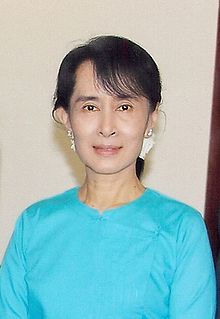
    NAY PYI TAW (TIP): Nobel laureate and Myanmar .s State Counselor Aung San Suu Kyi will chair a new committee dedicated to promoting peace and development in Rakhine state, where the persecuted Rohingya Muslim minority lives, officials said on June 1.

    The founding of the committee was announced a week after the US Secretary of State, John Kerry, urged Suu Kyi, who is also the country’s foreign minister, to promote human rights after a meeting in which both discussed the situation of the Rohingya minority.

    The committee will include 19 more members of the new Cabinet, according to the state newspaper Global New Light of Myanmar.

    Among other matters, it will be responsible for coordinating the activities of UN agencies and international NGOs working in the area.

    These organizations work, albeit with restrictions, in the area to assist the Rohingyas , a minority living in Myanmar for centuries, who are not recognized as Burmese citizens but are considered Bengali immigrants.

    About 120,000 of them are confined in 67 camps and suffer all kinds of restrictions since the outbreak of sectarian violence in 2012 between this minority and the Buddhist majority in the region, which caused at least 160 deaths, EFE news reported.

    In March, just days before handing over power, the former government lifted the state of emergency imposed since then in Rakhine where the Rohingyas have limited freedom of movement and access to education, and suffer the confiscation of their property.

  • Deadly floods wreak havoc in Germany and France

    Deadly floods wreak havoc in Germany and France

    SIMBACH AM INN, GERMANY (TIP): At least nine people have been killed in floods that have wreaked havoc in Germany and France, trapping people in their homes and forcing rescuers to row lifeboats down streets turned into muddy rivers.

    In Paris, officials were putting up emergency flood barriers on Thursday along the swollen river Seine after days of torrential rain — including near the Louvre , home to priceless works of art.

    The force of the water swept away the entire stock of a sawmill in the German town of Simbach am Inn, leaving huge stacks of splintered wood blocking the streets of the devastated town.

    On one street, passers-by were greeted by the surreal sight of a car parked vertically against the wall of a house, pushed there by the floodwaters. Many other vehicles lay flipped over in roads blanketed by mud.

    The dead in Simbach include three women from the same family — a mother, grandmother and daughter — who had been trapped in their house.

    “The water was so quick that practically no residents had the time to run away,” police spokesman Armin Angloher said.

    Police said a man’s body had also been found in a house in Simbach, while an 80-year-old woman was found dead in Julbach a few kilometres away. Her house had collapsed under the weight of the floodwaters.

    The deaths bring the toll from the floods to nine, including four others were killed earlier this week in the southern German region of Baden-Wuerttemberg region.

    Four others are missing, a police spokesman in Bavaria state told AFP.

    “We fear the worst,” he said, adding that divers have been sent to search for the victims.

    German Chancellor Angela Merkel told a press conference: “I am crying for the people who have lost their lives in these floods. I am by the side of families who have been plunged into this devastation.”

    – Worst floods in a century – Some towns in central France are suffering their worst floods in more than a century, with more than 5,000 people evacuated since the weekend.

    Forecaster Meteo France described the situation as “exceptional, worse than the floods of 1910”, when even central Paris was flooded.

    Some 24,400 homes were without power in the Paris region and the Loiret, provider Enedis said, while the floods forced the shutdown of one of the capital’s main commuter train lines.

    The torrential rains have also hit the French Open tennis tournament, washing out play earlier in the week, leaving players hoping to reach the finals facing a heavy schedule of matches.

    In central Paris, riverside tourist paths were flooded, and the water was washing around a replica of the Statue of Liberty. Rescuers in the Paris suburb of Longjumeau were paddling up streets in lifeboats, while in the town of Montargis, only the tops of cars could be seen peaking above the surface.

    About 200 people had to spend the night in a gymnasium in Nemours south of Paris and Prime Minister Manuel Valls, visiting the flooded town’s a crisis control centre, said at least 2,000 more people needed to be evacuated.

    “The situation remains tense and difficult in several areas. We still have many concerns.”

    Sylvette Gounaud, a local shopworker, said she had seen nothing like this in 70 years living in the town.

    “The centre of town is totally under water, all the shops are destroyed,” she said.

    An 86-year-old French woman was reported killed in the floods after her body was found in her inundated home south of Paris, but it now appears that she died several days ago, police said.

    In the Loire Valley , floodwaters were lapping at the Chateau of Chambord, causing a watery reflection of the much-visited 16th century castle.

    Schools and roads have also been flooded in Austria in recent days, though the waters have now receded.

    – More rains forecast – But forecasters in both Germany and France were warning of more torrential downpours in the next 24 hours.

    The severe weather began at the weekend with lightning strikes which left several children in Paris and western Germany fighting for their lives.

    In Simbach, the waters had subsided largely subsided by noon on Thursday, leaving only the town’s main artery still flooded.

    Grim-faced residents were examining the damage, trying to shovel mud out of their ruined homes.

    Many local businesses have been ravaged by the floodwaters and by the trunks of wood that rushed down from the saw-mill, smashing into their store-fronts.

  • Alice Through The Looking Glass | MOVIE REVIEW

    Alice Through The Looking Glass | MOVIE REVIEW

    STORY: Alice Kingsleigh (Mia Wasikowska) returns to the Underland through a giant mirror. After reuniting with the madcap characters (White Rabbit, Cheshire Cat, and of course the Mad Hatter, to name a few) she learns that in order to recuperate an ailing Hatter (Johnny Depp), she must travel back in time to save his family. But the past cannot be changed.

    REVIEW: Though the sequel to Tim Burton’s Alice in Wonderland (2010) is visually stunning, it lacks the quirky gothic twist that Burton lent to the franchise. His unique imagination and live-action take on Lewis Carroll’s children’s classic put it on a pedestal.

    James Bobin’s fairly enjoyable but conventional adaptation lacks the individuality of its predecessor. While it presents Alice as a spunky young woman sailing high seas and exploring the world, the story then shifts focus on the time machine madness, which seems tedious eventually.

    The film tries to bite off more than it can chew as it’s also an origin story of sorts, where we are told why the Red queen (Helena Bonham Carter) is perpetually angry.

    However, despite the dramatic content driven by the cliched time travel tropes, ‘Through The Looking Glass’ manages to transport you to the magical world. If 3D escapism is all you seek, Bobin certainly doesn’t disappoint. Novelty on the other hand is a different story.

    Sadly, Depp doesn’t have much to do here as Alice is the real hero – his saviour. Mia is spectacular as usual and so is Helena. Sacha Baron Cohen as the man-machine version of Time is entertaining and so are his robotic helpers (the Seconds, who can join forces and become Minutes then Hours). Anne Hathaway gets lost in the crowd.

    When compared to Burton’s work, this one pales in comparison. If you haven’t seen his film, you are bound to find this wondrous, a journey worth taking for sure.

  • LINDSAY LOHAN GOES PUBLIC WITH NEW RUSSIAN FIANCE

    LINDSAY LOHAN GOES PUBLIC WITH NEW RUSSIAN FIANCE

    Actress Lindsay Lohan has made her first public appearance since she reportedly became engaged to Russian boyfriend Egor Tarabasov .

    The 29-year-old actress attended a private screening of Disney sequel ‘Alice Through the Looking  Glass’ at London’s Bulgari Hotel with the shipping heir, reported Contactmusic.

    The ‘Mean Girls’ star wore a black and white Temperley London dress with black platform sneakers, while Egor rocked the casual look with a white T-shirt and denim jacket.

    Lohan also posed for photos with her boyfriend, alongside fashion designer Alice Temperley, who designed her outfit.

  • We are serious in promoting Minority and women in businesses: George Maragos – Nassau County Comptroller

    We are serious in promoting Minority and women in businesses: George Maragos – Nassau County Comptroller

    More often than not Mr. Maragos has been caught in controversies, much because of the nature of his job. Recently, he was embroiled in a running argument with Nassau County Police Chief over his audit report which took the Police department to task for having exceeded the budgetary provisions. Well, that’s the job of the Comptroller, as he said in the interview he gave to The Indian Panorama on May 3, to ensure tax payer’s money is spent wisely.

    contractsHere is the concluding part of the interview. 

    TIP: Are you planning to be the next County Executive?

    M: I have no plans right now. You know I think it’s too early.

    TIP: When do you think would be the right time for you to decide?

    M: September /October. If I want to run again. What I want to run for. My term is up at the end of 2017.

    TIP: And if you decide to run, would it be for the county executive or for some other position?

    M: I haven’t decided. I don’t know what the climate is going to be like the political climate I don’t know what my attitude is going to be may be have Iwould have had enough of government go back into the private sector of our maybe do some nonprofit work out. I don’t know. Depends.

    TIP: Anyway I mean that was good to hear about your vision and I am happy to note that you really. I will go through this in detail and if I have a question I will just send it later on to you.

    M: Of course.

    TIP: But you were a very successful businessman. And what made you to come to the politics?What was it?

    M: Well I was asked to run. I think because of my success I was always a private, a very private person. Very introverted. Minded my own business. You know so it was kind of a shock. That when I was asked if I would consider running. And initially my reaction was, given my background, I said if I decide to run in politics mu goal would be to run for state controller, forexample. But then the party convention says well why don’t you try first at the local level. See what happens and see if you like it and then you know if you’re successful and then we’ll see what the future holds. And so I said. That’s fine I’ll give it a shot.

    Mr. George Maragos with seniors at a Seniors Center 1TIP: I have to just ask you what are your views on what are you planning to do for equal opportunities to all and at the same time special opportunities for minorities? I am not saying women, minorities.

    M: Ok. We highlighted in that demographic study. The county’s populationhas grown to over thirty-five percent minority. The South Asian community we noted in the last twelve years grew from one percent of the population to about eight percent of the population- phenomenal growth. We looked at the historic performance. And the county was spending only about seven to eight percent towards minorities. Even though we had this aspirational goal. And we said we have to do better. We have to as a minimum meet our aspirational goal of sixteen percent. And attempt to do even better. So now it seems that the whole community and the political system is very serious behind promoting Minority and women in businesses.

    TIP: So it is not on the basis of ethnicity only, it is on the basis of gender also.

    M: That’s correct. You know the county’s demographic have changed. The demographics of the police department do not reflect the community. You know they have about eight percent of minorities and women in the police department versus thirty-five percent minorities in our community. And they need to make a much stronger and concerted effort. You know to increase that number. To better reflect the community.

    TIP: So do you think there are enough facilities, welfare measures for seniors given the number of so many people above the age of fifty-five and sixty here?

    M: We go around and I don’t hear very many complaints.I know the county has a very strong outreach program for veterans and seniors and so do the towns. We have. You know a commissioner for veteran’s affairs. We fund a number of non-profits that provide quite a few services to seniors and veterans.

    TIP: You have already spoken about the minorities and that takes care of multi-racial issues also. You have received quite a few honors for your work. What is the honor that you most prize or what is the kind of recognition that you most prize? I know you have received so many recognitions over the years but what is the best you think?

    M: You know. Obviously I have received excellence in financial reporting every year. But I think the most important you know to me is when I go out and meet people. You know. And you know they’re satisfied with the work that we do.

  • Indonesia detains hundreds demanding release of political prisoners

    Indonesia detains hundreds demanding release of political prisoners

    JAKARTA (TIP): Indonesian police on June 1 detained more than 300 demonstrators who were demanding the release of political prisoners in restive Papua province, a rights group said.

    Veronica Koman of the Jakarta-based Indonesian Legal Aid Institute said about 40 separatists are currently jailed in the province. A low-level insurgency for an independent Papua has continued since the region was transferred from Dutch to Indonesian rule in the 1960s.

    Koman said peaceful protests occurred in the towns of Sentani and Wamena, and in Manado, the provincial capital of North Sulawesi. A total of 336 demonstrators were detained, she said. Local police spokesman Lt. Col. Patridge Renwarin confirmed that rallies took place in Sentani and Wamena. He said a total of 207 demonstrators were interrogated before being released in the two towns.

    “We just questioned them because many joined the rallies without being aware of their intention,” Renwarin said.

    He added that more than 1,000 people also demonstrated in Jayapura, the provincial capital of Papua, but said they dispersed peacefully.

  • Volume 10 Issue 21 | New York

    Volume 10 Issue 21 | New York

    10 years
    Celebrating 10 Years of The Indian Panorama

    Print Edition

    Reimagined for the Web 

    Volume 10 Issue 21 ~ NY ~ June 03

    Volume 10 Issue 21 ~ NY ~ June 03


    Introducing Home Delivery Subscription:

    As a home delivery subscriber to The Indian Panorama, you enjoy the convenience and reliability of having the printed newspaper delivered to you first thing in the morning every Saturday.

    This incredible offer is available for 2016 at an introductory price of $5 per month (including shipping & handling – US Only). To know more email subscriptions@theindianpanorama.news

    Your subscription includes free Digital Access to www.theindianpanorama.news at no additional charge.


    Advertise with The Indian Panorama 

    Place your advertisement or message in The Indian Panorama and let us start delivering your best customers to you.

    For advertisers, The Indian Panorama has no rivals. Connect with our Advertising Sales team in order to learn more about who reads TIP and how your brand can connect with our audience.

    Our main print coverage is in New York, New Jersey, Connecticut, Dallas / Fort Forth among other major cities of The United States.

    The Indian Panorama is the 2nd most visited website by NRI’s & Indian Americans for Asian News, Immigration, Diaspora News in the United States much ahead of other newspapers like DesiTalk, NewsIndiaTimes, India Abroad, The Indian Express, South Asian Times etc (Source: Alexa Rankings)

    ranking
  • Trump temperamentally unfit to hold President’s office: #HillaryClinton

    Trump temperamentally unfit to hold President’s office: #HillaryClinton

    SAN DIEGO, CA (TIP): In one of the most striking speeches of her political career, Hillary Clinton dispensed with the sober diplo-speak that has characterized her previous national security addresses and went straight for the jugular, unleashing a series of biting attacks on Trump.

    In the spirit of President Lyndon Johnson’s notorious “Daisy” nuclear blast ad targeting Barry Goldwater’s temperament in 1964, Clinton warned that Trump should not be let anywhere near the nuclear codes because he could start a war when somebody “got under his very thin skin.”

    “He’s not just unprepared — he’s temperamentally unfit to hold an office that requires knowledge, stability and immense responsibility,” Clinton said during the speech in San Diego, California, days before Tuesday’s primary in the Golden State effectively concludes the primary season and confirms her as the presumptive Democratic nominee over Vermont Sen. Bernie Sanders.

    Trump fired back while speaking at a rally in San Jose, California, Thursday night.

    “I watched Hillary today and it was pathetic. It was so sad to watch,” Trump said, calling it a “political speech” that had nothing to do with foreign policy.

    “It was a pretty pathetic deal,” he added.

    The speech marked a significant moment in Clinton’s campaign, as it was the first real signal of the tactics and attitude she will use to take on Trump and offered a preview of what are likely to be fierce clashes between the rivals at a trio of presidential debates later in the year. It demonstrated the kind of sardonic, unrestrained humor that she often shows in private interactions with friends and reporters but has refrained from displaying in public.

    It also appeared to be aimed at Democrats who are spooked by recent polls showing a tight race between Clinton and Trump, and who fear her often-criticized campaigning skills won’t keep up with Trump’s volatile and highly effective off-the-cuff style.

    And when she argued that Trump’s lack of knowledge on foreign policy and temperament would put at risk decades of Republican and Democratic foreign policy advances, she appeared to be making a pitch for disgruntled national security conservatives who feel unable to put their trust in the Republican nominee.

    Yet the strategy has its risks, as pretty much all of Trump’s GOP primary rivals who tried to take on Trump couldn’t survive his return fire. The question is whether Clinton will be more effective. She might be helped by not waiting until the last minute like the Republicans did — seeking to define Trump early in the minds of the general election audience.

    She attempted to convince voters that Trump’s ideas are a mix of “bizarre rants, personal feuds and outright lies.” She lambasted his “bragging” approach to foreign policy based on a string of “nasty tweets” and accused him of harboring a “bizarre” affinity for authoritarian leaders like Russian President Vladimir Putin, the Communist rulers of China and North Korean dictator Kim Jong-Un.

    “We cannot put the safety of our children and grandchildren in Donald Trump’s hands. We cannot let him roll the dice with America,” Clinton said.

    At one point, Clinton imagined Trump composing nasty tweets to respond to her speech. And the combative Republican standard-bearer did not disappoint.

    “Bad performance by Crooked Hillary Clinton! Reading poorly from the teleprompter! She doesn’t even look presidential!” the presumptive GOP nominee wrote as her address ended.

    In another tweet, Trump added: “Crooked Hillary no longer has credibility – too much failure in office. People will not allow another four years of incompetence!”

    But taking a page from Trump’s book, Clinton’s speech contained a string of zingers meant to ridicule the presumptive presidential GOP nominee and render him an unacceptable choice for president.

    “He says he has foreign policy experience because he ran the Miss Universe pageant in Russia,” Clinton said. “The stakes in global statecraft are infinitely higher and more complex than in the world of luxury hotels.”

    She added: “I will leave it to the psychiatrists to explain his attraction to tyrants” before taking aim at Trump’s claim that being a global business tycoon equips him with significant global knowledge.

    “You know, there’s no risk of people losing their lives if you blow up a golf-course deal,” she said. “But it doesn’t work like that in world affairs.”

    “He also says, ‘I know more about ISIS than the generals do, believe me.’ You know what? I don’t believe him,” Clinton said, drawing cheers from her partisan audience of around 250 people.

    Aides said that Clinton never intended the speech to be a formal foreign policy address but rather to deliver a stinging rebuke of Trump. After watching and reading Trump speeches carefully, Clinton gave an outline of what she wanted to say at the beginning of last week, and speechwriters Megan Rooney and Dan Schwerin worked with foreign policy advisers Jake Sullivan and Laura Rosenberger on the first draft, two campaign aides told CNN.

    For the last few days, they’ve been going back and forth with Clinton to streamline it. Originally, there was more of her own foreign policy, but it was sharpened over last week to include far more Trump.

    She spent her coast-to-coast plane ride Wednesday revising the speech with Rooney. Clinton kept working on the specific language right up right before the speech, and a story about Navy SEALs protecting civilians during the 2011 operation that killed Osama bin Laden was a final addition.

    In terms of policy, much of what she talked about — including her views on NATO, trade and Russia — has already been rolled out in previous, more conventional foreign policy speeches.

    But she did focus on the more controversial aspects of the foreign policy that he has laid out.

    “This is a man who said that more countries should have nuclear weapons, including Saudi Arabia. This is someone who has threatened to abandon our allies in NATO, the countries that work with us to root out terrorists abroad before they strike us at home,” Clinton said.

    “He believes we can treat the U.S. economy like one of his casinos and default on our debts to the rest of the world, which would cause an economic catastrophe far worse than anything we experienced in 2008,” she continued. “He has said that he would order our military to carry out torture.”

    Clinton’s speech laid out the parameters for what is likely to be a furious foreign policy debate in the general election. It is a feud that will allow her to take aim at Trump’s alleged inexperience and lack of knowledge but will also require her to defend what Republicans see as deep vulnerabilities in her own foreign policy record.

    Those liabilities include the aftermath of the NATO intervention in Libya, in which she played a dominant role and which left behind a dangerous failed state and a terror haven, as well as the Obama administration’s “reset” of relations with Russia, which critics say was naïve and ineffective.

    Clinton must also confront accusations that she negligently put American national security at risk by using a personal email server for her official business when she served as secretary of state.

    Trump has already made his own attempt to obliterate Clinton’s foreign policy credentials.

    “She doesn’t have the temperament to be president. She’s got bad judgment. She’s got horribly bad judgment,” Trump said last week. “If you look at the war in Iraq, if you look at what she did with Libya, which was a total catastrophe.”

    The likely Democratic nominee closed out her speech with a preview of how she will respond to such attacks — by turning the heat back on Trump and his perceived lack of qualifications to be president.

    “Imagine Donald Trump sitting in the Situation Room, making life-or-death decisions on behalf of the United States. Imagine him deciding whether to send your spouses or children into battle. Imagine if he had not just his Twitter account at his disposal when he’s angry, but America’s entire arsenal,” she said.

    “Do we want him making those calls — someone thin-skinned and quick to anger, who lashes out at the smallest criticism?” she asked rhetorically. “Do we want his finger anywhere near the button?”

    (Source: CNN)

  • UCLA Gunman Identified as Indian-American Techie Mainak Sarkar

    UCLA Gunman Identified as Indian-American Techie Mainak Sarkar

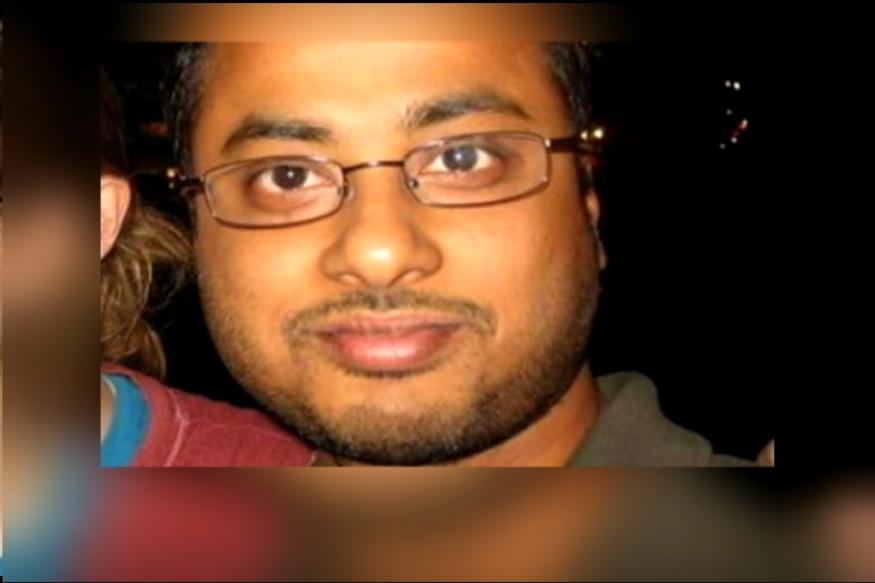
    LOS ANGELES, CA (TIP): The gunman who killed a UCLA professor has been identified as his former doctoral student Indian-American Mainak Sarkar, who had accused him of stealing his computer code and giving it to someone else, a media report said.

    Mainak Sarkar, an alumnus of IIT-Kharagpur, shot and killed professor William Klug in a small office in University of California Los Angeles (UCLA) before killing himself on Wednesday, June 1, The Los Angeles Times reported, citing sources.

    The shooting prompted a complete lockdown of the campus and deployment of hundreds of police officers as well as federal agents.

    All university classes were cancelled on Wednesday. The lockdown was lifted shortly after noon. Some 43,000 students are enrolled at the UCLA campus, according to its website.

    Klug, 39, was an associate professor of mechanical and aerospace engineering and had been the target of Mainak Sarkar’s anger on social media for months, the paper said.

    He accused the professor of stealing his computer code and giving it to someone else, it said.

    “William Klug, UCLA professor is not the kind of person when you think of a professor. He is a very sick person. I urge every new student coming to UCLA to stay away from this guy,” Mainak Sarkar wrote on March 10.

    “He made me really sick. Your enemy is my enemy. But your friend can do a lot more harm. Be careful about whom you trust,” he wrote.

    In his doctoral dissertation, submitted in 2013, Mainak Sarkar had expressed gratitude to Klug for his help and support, the paper said. “Thank you for being my mentor,” he wrote.

    Before enrolling at UCLA, Mainak Sarkar earned a master’s degree at Stanford University, according to his LinkedIn page.

    In 2000, he graduated from the Indian Institute of Technology, Kharagpur with a degree in Aerospace Engineering.

    He also had a stint as a research assistant at the University of Texas and worked as a software developer.
    After UCLA, Mainak Sarkar worked remotely as an engineering analyst for an Ohio-based rubber company, Endurica LLC where he worked until August 2014.

    Reportedly, Sarkar had also killed his ex-girlfriend Ashley Hasti in Minnesota a day before the UCLA shooting.
    They had broken up and had stopped being friends on Facebook.

  • 2002 Gujarat communal riots: 24 convicted for massacre of Muslims

    2002 Gujarat communal riots: 24 convicted for massacre of Muslims

    Lack of evidence cited by judge for clearing 36 of involvement in communal violence in Ahmedabad in Gujarat state then led by present Prime Minister of India

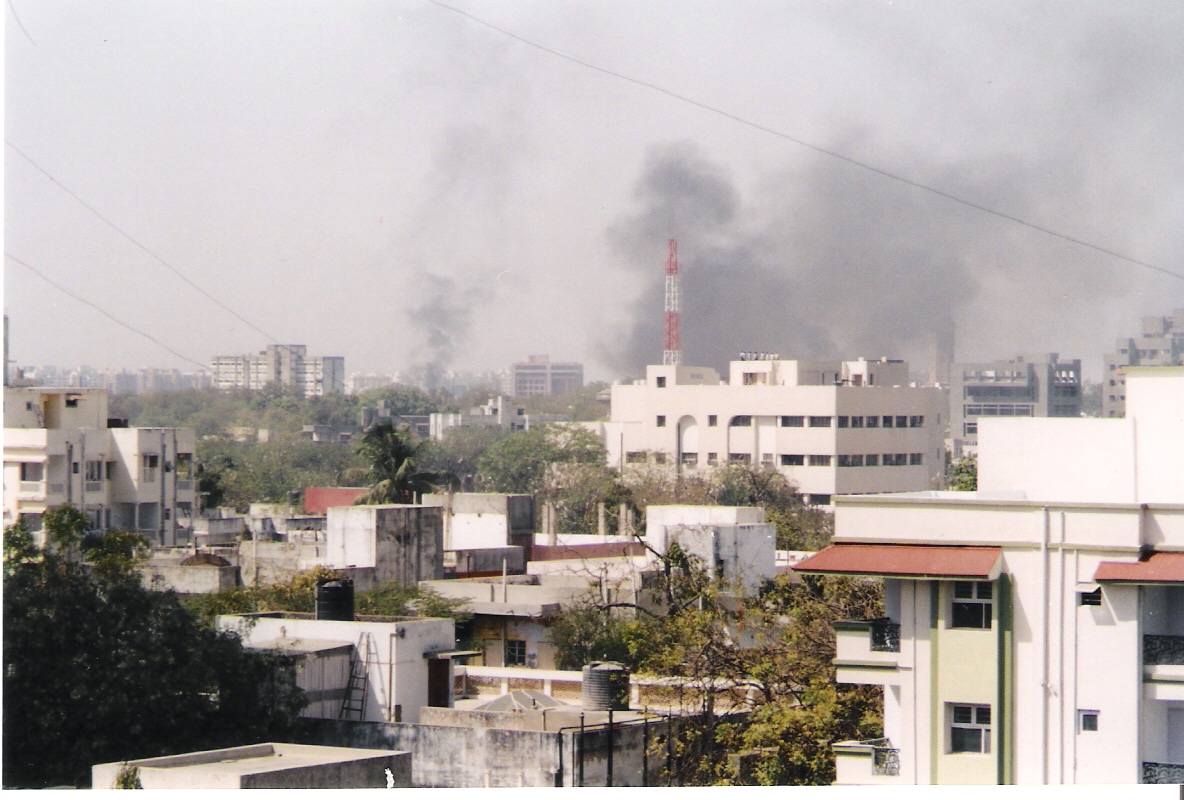
    NEW DELHI (TIP): 14 years after the horrendous massacre, 24 people were found guilty on Thursday, June 2, 2016 of brutal murder of 69 Muslims during the 2002 communal riots that ripped through Gujarat.

    Judge PB Desai acquitted 36 people for lack of evidence, including a police inspector and a midranking official in the Bharatiya Janata Party, led by Mr. Modi.

    Erda, the then police inspector of the Meghaninagar police station, was arrested in 2002 by a Supreme Court-appointed Special Investigation Team.

    He had been accused by survivors of not stopping the rioters from entering the Society.

    Among those also acquitted was sitting BJP Municipal official, Bipin Patel, who was also seen as one of the main antagonists when the massacre happened.
    Prosecutors were seeking life in prison for all accused.

    “I am happy 24 accused were convicted but sad that 36 others have been acquitted. This is incomplete justice and I will fight till the end,” Zakia Jafri, whose husband was killed in the massacre, told reporters.

    More than 300 witnesses gave evidence during the years-long trial, which began in 2009 but was delayed by legal challenges and several of the original accused died.

    Prosecutors had been seeking life in prison for all of the accused for storming the Gulbarg Society complex and killing the Muslims who were hiding there.

    Among those killed at the complex was former opposition Congress lawmaker Ehsan Jafri, whose widow, Zakia, claims he repeatedly called police for help but none came.

    The violence was triggered by the death of 59 Hindu pilgrims in a train fire on 27 February 2002 that was initially blamed on Muslims.

    Hindus bent on revenge rampaged through Muslim neighborhoods in some of India’s worst religious riots since independence from Britain and partition in 1947.

    More than 100 people have already been convicted over the riots, including one of Modi’s former state ministers who was jailed for instigating some of the killings.

    The trial over the massacre only began after the supreme court in 2009 ordered a reinvestigation into some of the worst incidents of the riots.

    But one year later the same court issued a stay on any final verdict from the trial after a petition was filed seeking an inquiry into whether Modi and others played a role in the violence.

    The court only lifted its order last year when a lower court upheld a rejection of the petition.

    The riots have long dogged Prime Minister Modi who was chief minister of Gujarat in 2002, and is still accused by rights groups of tacitly supporting the rioters. Even United States did not issue Travel Visa to Mr. Modi until he became the Prime Minister in 2014.

  • 47-year-old Sikh man shot dead in New Jersey: family suspects hate crime

    47-year-old Sikh man shot dead in New Jersey: family suspects hate crime

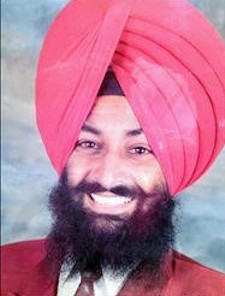
    NEWARK, NJ (TIP): A Sikh man was shot dead at his gas station in Newark, New Jersey, May 30th, in an incident described as a hate crime by his family, who believe he was killed because of his religion.

    Police said they found Davinder Singh, the 47-year-old victim who came to the US from India 25 years ago, unresponsive at his gas station on Monday. He was pronounced dead at a hospital.

    His son, Jatinder Singh, told a TV news network, “There was no robbery, no struggle, no confrontation. I don’t know what else it could be other than a hate crime.”

    His father had just stepped out of office to get some fresh air when a man “came up to my dad, pointed a gun and shot him point-blank”, Jatinder said.

    Police have not yet called the shooting a hate crime.

    Sikhs have been the target of many hate crime incidents since the September 11, 2001 terror attacks, most of them men mistaken for people from the Middle East for their turban. More than 300 incidences of hate crimes against Sikhs have since been reported, according to the Sikh Coalition. Below is a list of hate crimes and bias incidents against Sikhs since 9/11.

    Sept. 15, 2001 — Mesa, Ariz.: Four days after the infamous attacks of 9/11, Balbir Singh Sodhi, a 49-year-old Sikh, is shot and killed outside the gas station he owned by Frank Silva Roque.
    When police approached to arrest him, Roque said, “I’m a patriot and an American. I’m American. I’m a damn American.”

    Nov. 18, 2001 — Palermo, N.Y.: Three teens burn down Gobind Sadan, a gurdwara (Sikh temple) in New York, because they thought it was named for Osama bin Laden.

    Dec. 12, 2001 — Los Angeles, CA: Surinder Singh Sidhi, a liquor store owner in Los Angeles who took to wearing an American flag turban after 9/11 out of fear of being attacked, is beaten in his store by two men who accuse of him of being Osama bin Laden.

    Aug. 6, 2002 — Daly City, CA: Sukhpal Singh, brother of Balbir Singh Sodhi, who was the first Sikh murdered following 9/11, is shot while driving his cab.

    May 20, 2003 — Phoenix, Ariz.: Fifty-two-year-old Sikh immigrant and truck driver Avtar Singh is shot in his 18-wheeler while waiting for his son to pick him up. As he is being shot, he hears someone say: “Go back to where you belong.”

    Aug. 5, 2003 — Queens, N.Y.: Members of a Sikh family are beaten outside of their home by drunk individuals yelling, “Go back to your country, Bin Laden.”

    Sept. 25, 2003 — Tempe, Ariz.: Sukhvir Singh, a 33-year-old convenience store owner, is stabbed to death by Bruce Phillip Reed. It is not labeled as a hate crime. Representatives of the Phoenix Sikh community issue a statement that says, in part, “Together we can help others to evolve past hate and fear by continuing to organize to reach out to others with increased understanding, respect, and support. May our collective prayer be that God preserve and protect the honor of all people, our nation, and our world.”

    March 13, 2004 — Fresno, Calif.: Gurdwara Sahib, a local Sikh temple, is vandalized with graffiti messages: “Rags Go Home” and “It’s Not Your Country.

    July 12, 2004 — New York, N.Y.: Rajinder Singh Khalsa and Gurcharan Singh, cousins on their way to dinner at a restaurant, are beaten by two drunk white twentysomething men. The attackers describe Gurcharan’s turban as a “curtain.” When Rajinder tries to intervene, saying that Sikhs are peaceful, he is beaten unconscious and suffers a fractured eye socket, among other injuries.

    May 24, 2007 — Queens, N.Y.: A 15-year-old student has his hair forcibly cut by an older student at his high school. The scissor-wielding 17-year-old showed the Sikh a ring inscribed with Arabic, saying, “This ring is Allah. If you don’t let me cut your hair, I will punch you with this ring.” Afterward, he cuts the younger boy’s hair. A main pillar of the Sikh faith compels followers to keep their hair uncut.

    May 30, 2007 — Joliet, Ill.: A decorated U.S. Navy veteran of the Gulf War, Kuldip Singh Nag is approached by a police officer outside of his home for an expired vehicle registration tag. The officer reportedly assaults Nag with pepper spray while hurling expletive-laced anti-immigrant statements.

    Jan. 14, 2008 — New Hyde Park, N.Y.: A 63-year-old Sikh, Baljeet Singh, has his jaw and nose broken when attacked outside his temple by a man who lived next-door. David Wood, the attacker, had apparently disturbed members of the gurdwara in the past.

    Feb. 28, 2008 — Bryan, Texas: A Sikh man is assaulted in a Wal-Mart parking lot. Though the assailant called him a terrorist, punched him in the face and head and knocked his turban off, the Sikh man does not suffer major injuries.

    June 5, 2008 — Queens, N.Y.: A ninth grade Sikh is attacked by another student, who tried to remove his patka, or under-turban, and had a history of bullying the boy.

    June 5, 2008 — Albuquerque, N.M.: A vehicle belonging to a Sikh family is defaced with the message “F*** Allah!” and a picture of male genitalia.

    Aug. 4, 2008 — Phoenix, Ariz.: Inderjit Singh Jassal is shot and killed while working at a 7-Eleven. No clear motive is found.

    Oct. 29, 2008 — Carteret, N.J.: A Sikh man, Ajit Singh Chima, goes for a walk in his neighborhood. He is attacked by a man who casually leaves the scene afterward. Nothing is stolen.

    Jan. 30, 2009 — Queens, N.Y.: Three men attack Jasmir Singh outside of a grocery store. Racial slurs are heard. A broken glass bottle is used. Singh loses vision in his left eye.

    Nov. 29, 2010 — Sacramento, CA.: Harbhajan Singh, a cab driver, is attacked by passengers, who call him Osama bin Laden. Singh believes the attackers, who were later convicted, would have killed him.

    March 6, 2011 — Elk Grove, CA.: Two elderly Sikh men in traditional garb, out for a daily afternoon walk, are shot and killed. The perpetrator is not found.
    May 30, 2011 — New York, N.Y.: Jiwan Singh, an MTA worker and the father of Jasmir Singh, who was assaulted in early 2009 in Queens, is attacked on the A train and accused of being related to Osama bin Laden.

    Feb. 6, 2012 — Sterling Heights, Mich.: A gurdwara (Sikh temple) is defaced with graffiti that includes a gun and references to 9/11.

    Aug. 5, 2012 — Oak Creek, Wis.: A gunman is shot dead by police after he opened fire in a gurdwara during Sikh prayer services, killing six.

    In the outrage following the killing of six Sikhs at a Wisconsin gurudwara in 2012 by a white supremacist, the FBI has begun tracking hate crimes against the community.

    FBI is the lead investigating agency in hate crimes, defined as traditional offences like murder, arson, or vandalism with “an added element of bias”.

    Meanwhile, Davinder Singh was cremated, according to Sikh traditional rites, June 2. A large number of community attended the cremation.

  • Nihar Janga, just 11, wins Scripps National Spelling Bee Contest

    Nihar Janga, just 11, wins Scripps National Spelling Bee Contest

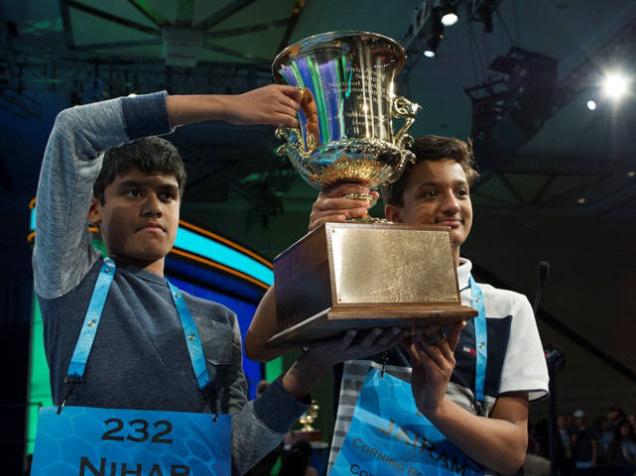
    Nihar Janga, at age 11, made record by becoming the youngest winner of the bee on record at the annual Scripps National Spelling Bee, which ended in a tie for the third consecutive year, with Jairam Hathwar and Nihar Janga declared co-champions after a rollercoaster finish. Jairam, 13, is the younger brother of 2014 co-champion Sriram Hathwar.

    “I’m just speechless. I can’t say anything,” Nihar said as he hoisted the trophy. “I mean, I’m only in fifth grade.” The 11-year-old breezed up to the microphone with confidence, and most of his words, he knew right away. He looked like the strongest speller onstage, stronger even than his eventual co-champion, 13-year-old Jairam Hathwar, a blue-chip speller whose older brother hoisted the trophy two years ago.

    Nihar, from Austin, Texas; and Jairam, from Painted Post, New York, were declared co-champions. It was the third year in a row that the bee ended in a tie. Scripps made the bee, broadcast on ESPN, tougher after two consecutive ties, forcing the last two spellers to get through three times as many words as in years past.

    Bee organizers insisted they’d be OK with another tie, but they changed the rules to make it less likely. Instead of a pre-determined list of 25 “championship words” for the final three spellers, the bee instead forced the top three to go through up to 25 rounds. And the difficulty of the words could be adjusted as necessary.

    Third-place finisher Snehaa Kumar of Folsom, Calif,, bowed out in the first championship round. Nihar and Jairam had to spell 24 words apiece before it was over. Nihar and Jairam have grown close over the past year, communicating mostly online. They chatted while others were spelling, high-fived after their words and embraced after they won. The timing of Nihar’s misses was almost too perfect to believe, and Nihar denied afterward that he misspelled on purpose. He said he just didn’t know the words.

    “I wanted to win, but at the same time, I felt really bad for Jairam,” he said. Both were inspired by their favorite athletes. As the confetti fell, Nihar crossed his arms in homage to Dez Bryant’s touchdown celebrations. The Dallas Cowboys receiver responded with a congratulatory tweet.

    Jairam, whose dad takes him to play golf when he’s had enough spelling practice, channeled his favorite player, Jordan Spieth. “When he hits a bad shot, he always bounces back, on the next shot or the next hole,” Jairam said. “When I missed those two words, I didn’t let them get to my head, and I just focused on the next word.”

    This was the 89th bee, and while Scripps’ records from early years are incomplete, the youngest known champion was Wendy Guey, who won 20 years ago at age 12. The last to win in his first attempt was Pratyush Buddiga in 2002.

    Nihar said he didn’t feel pressure to become the youngest winner for two reasons. First, he never expected to win. Second, most of the crowd’s attention was on an even younger speller: 6-year-old Akash Vukoti. “He did pretty good for a first-grader,” Nihar said. “He’s going to go places.”

    Nihar and Jairam’s parents are immigrants from south India, continuing a remarkable run of success for Indian American spellers that began in 1999 with Nupur Lala’s victory, which was later featured in the documentary “Spellbound.” The bee has produced Indian American champions for nine straight years and 14 out of the last 18.

  • Ro Khanna confident of winning Primary in California

    Ro Khanna confident of winning Primary in California

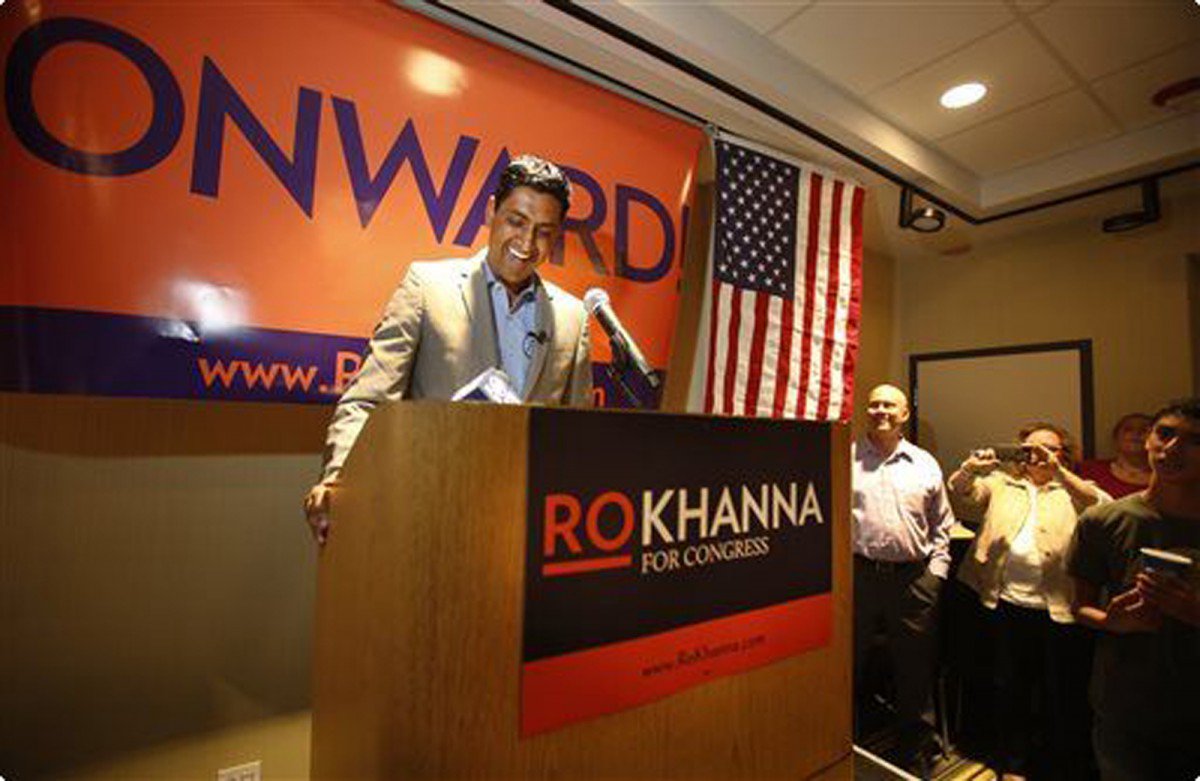
    Ro Khanna is in a pitched battle against an eight-term Democrat, who has been in public office for 35 years, is confident of winning the California’s 17th Congressional District Primaries on June 7.

    According to a San Francisco Bay Area CBS affiliate, KPIX polls, the already hotly-contested race for the highly contested seat may be tighter than expected. Honda is said to have had 31 percent sup port and 25 percent polled for the challenger Ro Khanna, shrinking the lead to 6 percent. In 2014, Honda outpaced Khanna by 20 percentage points.

    Ro Khanna is a Lecturer in Economics at Stanford University and was part of the Obama Administration. He is running for Congress against Mike Honda in Silicon Valley and seen by Roll Call and Politico as likely to win.

    Several Indian Americans are running for local, state, congressional and other seats throughout California in the June 7 primary, keep reading The Indian Panorama for regular updates.

    Honda, who is now entrenched in an ongoing ethics investigation by the House Ethics Committee, had narrowly beat the Indian American attorney from Fremont, Calif., in the 2014 race for the same seat. “Congressman Honda and his office gave special favors to donors,” Khanna said in the KPIX report. “So it started as this investigation about the mingling of staff but it became something much worse.”

    Throughout the campaign, Khanna has steadfastly turned away donations from lobbyists, corporations and Political Action Committees, signing a pledge in refusal of their money. That comes at a cost, with funding increasingly hard to come by, Khanna said in the report. He added that only nine people running for federal offices throughout the country are doing what he is doing.

    Despite that, Khanna has outraised Honda and holds nearly $2 million in the bank while Honda, needing to spend much of his raised money on legal fees, has roughly $800,000 cash in hand. Khanna has been endorsed by many who previously sided with Honda in 2014, such as California Secretary of State Alex Padilla and San Jose Mayor Sam Liccardo. President Barack Obama abstained from making an endorsement, previously having endorsed Honda.

    “The difference between this cycle and last is Ro Khanna now has a new line of attack, and he was only within striking distance last election,” said one Bay Area Democrat who has not endorsed in the race. “It’s going to be close.”

    Santa Clara County District Attorney Jeff Rosen, a Khanna supporter, believes that Silicon Valley voters are paying close attention to the Honda ethics probe. “For the people that come to this Valley to start businesses, they know the big competitive advantage is the rule of law, transparency, honesty, a level playing field and merit — not who you know,” Rosen said. “It’s merit that rises to the top, and Ro is a person of merit.”

    Khanna, who spent a couple of years in Washington as a deputy assistant secretary in Obama’s Commerce Department, lost to Honda last cycle by just 3.6 percentage points. But for Khanna, the son of Indian immigrants, there is a risk of going too negative this time around.

    Meanwhile, it was ironic that some members of the Indian American community gathered at the Zutshi home on May 15 for a “meet and greet” event supporting Mike Honda. The event was cohosted by state Senator Bob Wieckowski, Toni Shellen and Jeevan Zutshi. “Unlike his competitor, a perennial candidate, Mike Honda has a fabulous record of service,” Jeevan Zutshi told the gathering.

    His views were echoed by other Indian Americans present who felt that Indian American candidates must not run against those who have served the Indian American community for decades, according to a press release. Other activists who spoke were Tara Sreekrishnan, Jean Holmes, Henry Hutchins, Tejinder Dhami, Bridgette Hendrikson and Kameshwar Eranki.

    California’s 17th Congressional District includes much of California’s Silicon Valley cities such as Sunnyvale, Cupertino and Santa Clara, as well as north San Jose, Milpitas, Fremont and Newark. Khanna and Honda are expected to have a rare intraparty battle in November, with both progressive candidates expected to advance past California’s June 7 primary, in which the top two candidates move on to the general election regardless of party.

  • Bharatiya Temple & Cultural Center (BTCC) of Greater Lafayette, Indiana concludes installation of murtis

    Bharatiya Temple & Cultural Center (BTCC) of Greater Lafayette, Indiana concludes installation of murtis

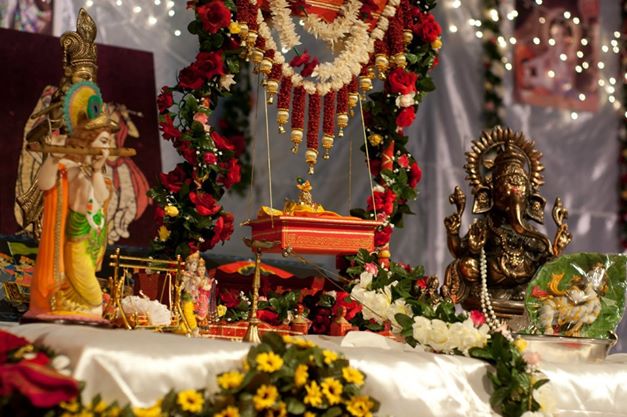
    Bharatiya Temple & Cultural Center (BTCC) of Greater Lafayette in West Lafayette (Indiana, USA) has completed traditional installation of statues of Hindu deities. BTCC, which formally opened in 2012, now reportedly has statues of ShivParivar, VishnuParivar, VenkateswaraParivar, RamParivar, RadhaKrishna, Ganesh, Lakshmi, Saraswati and Kartikeya; in addition to Navagrahas.

    Besides daily aarti, Bharatiya Temple & Cultural Center; whose mission includes “To promote friendship and goodwill among people of all religions”; also conducts festivals, havans, yoga, meditation, discourses on Bhagavad Gita, cultural programs, balvihar and bhangra classes, community lunches, charitable activities, etc. 

    Meanwhile, Hindu statesman Rajan Zed, in a statement in Nevada today, commended efforts of BTCC leaders and area community for realizing this Hindu temple complex.

    Rajan Zed, who is President of Universal Society of Hinduism, further said that it was important to pass on Hindu spirituality, concepts and traditions to coming generations amidst so many distractions in the consumerist society and hoped that this temple would help in this direction.

    Zed stressed that instead of running after materialism; we should focus on inner search and realization of Self and work towards achieving moksh (liberation), which was the goal of Hinduism.

    Bhavin Shah, Surya Dwadasi and Padma Subramaniam are President, General Secretary and Treasurer respectively of BTCC; whose goal includes providing “avenues for religious, humanitarian, cultural and educational resources to the community”.  Hinduism is the oldest and third largest religion of the world with about one billion adherents. There are about three million Hindus in USA.

  • GOPIO launches another chapter for New Jersey | GOPIO-North Jersey

    GOPIO launches another chapter for New Jersey | GOPIO-North Jersey

    GOPIO International has elected to reach out Indian Diaspora Community through its chapters. New Jersey has a large Indian Diaspora Community and there is only one chapter, GOPIO Central Jersey based in Edison serving the New Jersey Indian community.

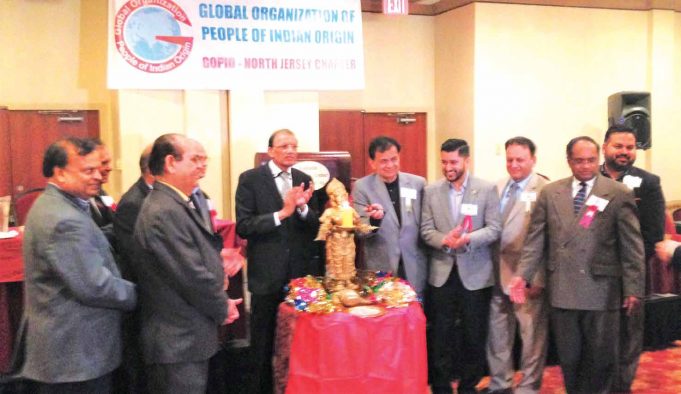
    According to GOPIO Vice President Ram Gadhavi, GOPIO has plans to expand in other areas of New Jersey. With that objective, GOPIO officially launched inaugurated a second chapter GOPIO-North Jersey on Sunday, May 22nd at the Fairbridge Hotel, East Hanover, New Jersey.

    Chapter President Dhiraj Solanki welcomed guests and said that the chapter will reach out Indian Diaspora (NRI/PIO) community and involve youth and young professionals in the chapter activities.

    The chief guest was India’s Deputy Consul General in New York Dr. Manoj Kumar Mohapara who welcomed the formation of new chapter and promised to work closely with the new chapter on issues of Indian community in North Jersey.

    “The consulate has improved the response and turnaround time for visa, passport and OCI cards services, because of feedback from GOPIO Chapters and GOPIO International,” said Dr. Mohapatra.

    “When GOPIO brings any matter to us, we look at it and work on it right away,” said Dr. Mohapatra. “With a population 1.8 million NRIs/PIOs in the Northeast Region, the consulate can provide better service only with the help of organizait6ons such as GOPIO,” Dr. Mohapatra added.

    New Jersey Assemblyman from district 33 Raj Mukherji praised GOPIO for the services provided to 380k Indian Diaspora community residing in New Jersey. Mukherji called upon the community to be proactive in the political process.

    Former Deputy Speaker of New Jersey State Assembly Upendra Chivukula who is currently the Commissioner on the New Jersey Board of Public Utilities said that when GOPIO recognizes a person, Govt. of India notices it and the recipients are likely candidates for receiving Pravasi Bharatiya Samman. Chivukula congratulated the organizers for opening a chapter in North Jersey.

    GOPIO-Founder President Dr. Thomas Abraham said that unlike other India association, GOPIO chapters will be involved in civic affairs and service to the local communities. GOPIO motto is “Think Globally and Act Locally.”

    Community leader and TV Asia Chairman H.R. Shah, GOPIO Vice President Ram Gadhavi and GOPIO International Coordinator for North America Dr. Rajeev Mehta and GOPIO Coordinator for TriState New York area Lal Motwani were also present at the inauguration ceremony. GOPIO Silicon Valley President Ashok Bhatt, GOPIOCentral Jersey President Dinesh Mittal and GOPIO-CT President Shelly Nichani showed their support by attending the inauguration ceremony. GOPIO-North Jersey Vice President Rajul Shah served as the MC while the chapter Secretary Ahi Adukia gave the vote of thanks.

    For more information on GOPIO-North Jersey Chapter, contact its president Dhiraj Solanki at  973-714-5249, dnsolanki@hotmail.com or Vice President Rajul shah at 908-327-0605, rajulpshah@aol.com.
  • Indian-origin Dr. Sanjay Gupta second most popular doctor in US

    Indian-origin Dr. Sanjay Gupta second most popular doctor in US

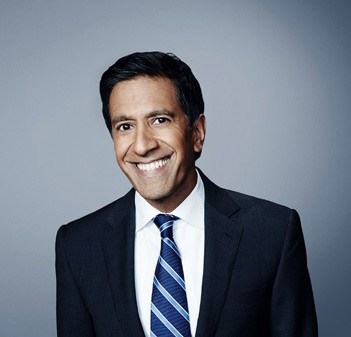
    Indian-American neurosurgeon, Dr. Sanjay Gupta, 47, who is also the chief medical correspondent for CNN with several Emmys under his belt, has emerged as the second most popular doctor in the US on Twitter, with over two million followers on the microblogging website, a new study has found.

    The #DocsOnTwitter study by researchers at Augustana University in the US analysed tweeting habits of medical professionals in the country from 2006 to 2015.

    Gupta, with 2,031,428 followers on Twitter, serves as associate chief of the neurosurgery service at Grady Memorial Hospital in Atlanta, Georgia and as assistant professor of neurosurgery at the Emory University School of Medicine.

    ”We just wanted to see how doctors are engaging with other people on Twitter,” Paige Schwitters, an Augustana student who contributed to the report, was quoted as saying by ‘argusleader.com’. The group worked with internet research firm BrightPlanet to evaluate Tweets and break the accounts down by age and gender.

    The researchers analysed about 3.4 million tweets and sorted through 4,500 users. The most followed Twitter accounts belonged to celebrities, public figures or TV personalities.

    The top three followed doctors on Twitter are: Dr. Drew Pinsky (@drdrew) with 3.18 million followers, Dr. Gupta (@drsanjaygupta) who has 2.03 million followers, followed by Dr. Asa Andrew (@drasa) with 1.03 million followers. Drew with 3,183,017 followers, is an American boardcertified internist, addiction medicine specialist and a media personality.

    Gupta is best known as the chief medical correspondent for CNN (joined 200 and has won multiple Emmy awards. He also uses his Twitter account primarily for professional use, giving his opinions and medical advice.

    “Gupta, a practicing neurosurgeon, plays an integral role in CNN’s reporting on health and medical news for all of CNN’s shows domestically and internationally, and contributes to CNN.com,” according to his biography mentioned in CNN.

    “His medical training and public health policy experience distinguishes his reporting from war zones and natural disasters, as well as on a range of medical and scientific topics, including the recent Ebola outbreak, brain injury, disaster recovery, health care reform, fitness, military medicine, and HIV/AIDS,” it added.

    Researchers  to determine when and how physicians were most likely to use Twitter. The study also shows doctors are using Twitter on the go and are less likely to use the micro blogging site for legal reasons. Many avoid announcing their personal business on social media because of rules for patient privacy and insurance, according to the report.


  • Indian-American Scientist Arnab De Wins Springer Theses Award

    Indian-American Scientist Arnab De Wins Springer Theses Award

    NEW YORK (TIP): An Indian-American scientist has received the prestigious Springer Theses Award in recognition for his outstanding research in which he developed transgenic mice to study a critical tumor-suppressor called A20.

    Arnab De’s thesis was nominated by New York’s Columbia University. Before this, De, who has also developed peptide-based prodrugs as therapeutics for diabetes, had received the Young Investigator Award at the American Peptide Symposium.

    The thesis prize is awarded by Springer, a leading global publisher of renowned scientific journals and books, to recognize outstanding PhD research.

    Internationally top-ranked research institutes select their best thesis annually for publication in the book series: “Springer Theses: Recognizing Outstanding PhD research”.

    Additionally, winners also get a cash prize of 500 euros. The research work was highlighted by the European Molecular Biology Organization (EMBO) Reports.

    Only research considered to be of ‘fundamental relevance to a general readership’ is chosen to be highlighted by EMBO.

    Mr. De has dedicated his PhD thesis to cricketing legend Sachin Tendulkar and his alma mater, Kolkata’s Presidency University.

    Mr. De said: “Two things that have influenced me the most is sports and education. This thesis is dedicated to Sachin Tendulkar not only for the cricketing joy he provided me, but also for being a constant source of inspiration to all Indian youth.”

    Ole John Nielsen (University of Copenhagen), who shared the 2007 Nobel peace Prize as a member of the Intergovernmental Panel on Climate Change along with US vice president Al Gore, had in 2012 described the Springer award as an “insanely great honor”.

  • Indian American Doctor-Scientists Honored with 2016 Young Physician-Scientist Award

    Indian American Doctor-Scientists Honored with 2016 Young Physician-Scientist Award

    WASHINGTON (TIP): The American Society for Clinical Investigation recently named five Indian American doctors with its 2016 Young Physician-Scientist Award.

    The ASCI Council Young Physician-Scientist Awards, initiated in 2013, recognizes young physician-scientists who are supported by NIH K awards or similar significant career-development awards, are early in their first faculty appointment, and have made notable achievements in their research.

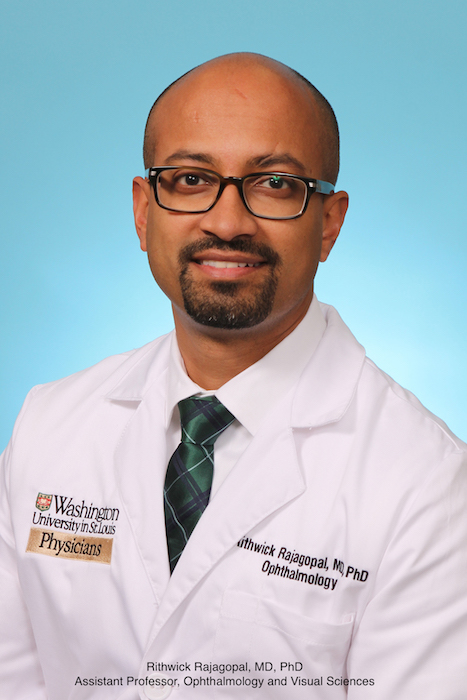
    The Indian American recipients are Ravi Karra of Duke University, Rithwick Rajagopal of Washington University School of Medicine, Amy Sanghavi Shah of Cincinnati Children’s Hospital Medical Center, Ravi Shah of Beth Israel Deaconess Medical Center, and Nikhil Wagle of the Dana-Farber Cancer Institute.

    Karra is an assistant professor at the Duke University School of Medicine.

    Rajagopal is an assistant professor in the ophthalmology and visual sciences at the Washington University School of Medicine in St. Louis.

    Amy S. Shah is a board-certified pediatric endocrinologist whose research focuses on the risk factors that contribute to early atherosclerosis. She is an assistant professor at the University of Cincinnati Department of Pediatrics.

    Ravi Shah is a cardiologist in BIDMC’s Cardiovascular Institute and an instructor in medicine at Harvard Medical School.

    Wagle is a medical oncologist at the Dana-Farber Cancer Institute and instructor in medicine at Harvard Medical School.

    For more information and complete list of awardees please visit https://www.the-asci.org/ypsa/2016-awardees

  • 2 Indian-Origin Women in Forbes’ Self-Made American Women List

    2 Indian-Origin Women in Forbes’ Self-Made American Women List

    NEW YORK (TIP) | #WomenPower : Two Indian-origin women have featured on the Forbes’ annual list of America’s 60 wealthiest and most successful self-made women entrepreneurs who have “crashed ceilings through invention and innovation”.

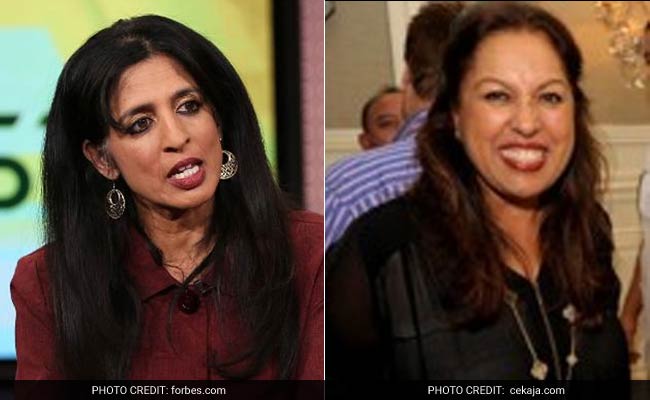
    India-born Neerja Sethi, who co-founded IT consulting and outsourcing firm Syntel with her husband Bharat Desai, is ranked 16th on ‘America’s Richest Self-made Women’ list while president and CEO of Arista Networks Jayshree Ullal (55) is ranked 30th.

    According to Forbes, the richest self-made woman in America is Diane Hendricks, the owner of ABC Supply, the largest wholesale distributor of roofing and siding in the country. Hendricks is now worth USD 4.9 billion, USD 1.2 billion more than last year when she was ranked second.

    The second annual tally of America’s wealthiest, most successful self-made women includes 60 trailblazers — 10 more than last year.

    The 60 women, who are worth a combined USD 53 billion, have created some of the nation’s best known brands such as Gap and Spanx, while a number of them have also helped build some of the most successful companies in tech, including Facebook, eBay and Google.

    Ms Sethi (61) has a net worth of USD 1.1 billion. Her company employs more than 25,000 people and boasts a recent market cap of USD 3.6 billion.

    She is currently the vice president of corporate affairs; a role she has had since the company’s inception. She also sits on the board of directors alongside her husband, who remains the chairman.

    Born in London, raised in New Delhi, Ullal has a net worth of USD 470 million. She became president and CEO of Arista Networks in 2008, when it had no revenues and fewer than 50 employees. The company reported USD 838 million in revenue in 2015, after going public in June 2014.

    “She took slightly more than an engineering team doing some good technology and turned it into the thriving network switch company it is today,” says Arista co-founder David Cheriton.

    Other notable names on the list include TV czar Oprah Winfrey, who moved up three spots to number two and has a new worth of USD 3.1 billion. Facebook’s chief operating officer Sheryl Sandberg’s fortune is now USD 1.4 billion, up a third from a year ago making her one of the year’s biggest gainers.

    Sandberg, who bagged the role eight years ago, has helped oversee the company’s market capitalization grow by a staggering USD 328 billion.

    The youngest person in the ranks is 26-year-old singer and pop icon Taylor Swift, who made her debut at number 60 with a net worth of USD 50 million, thanks to her 1989 World Tour, which grossed a quarter of a billion dollars last year.

    Among the other notable fresh faces were Carolyn Rafaelian on the 22nd spot, founder of jeweler brand Alex + Ani and actress-turned-entrepreneur Jessica Alba occupying the 42nd spot.

    The list also includes Hewlett Packard CEO Meg Whitman (6), designer Tory Burch (19), singer Madonna (25), Yahoo CEO Marissa Mayer (33), singer Celine Dion (37) and pop icon Beyonce (56).

    Altogether, 16 of the most successful self-made women made their fortunes in fashion or retail, more than any other sector.

    Technology was second with 13, but six of those were C-Suite executives hired at technology companies in the early days, meaning only seven founded their businesses, Forbes said.