Month: June 2016

  • Tom Lantos commission to hold hearing on human rights violations in India during Modi trip

    Tom Lantos commission to hold hearing on human rights violations in India during Modi trip

    NEW YORK (TIP): Sant Gupta, an alum of IIT Delhi, based now in Virginia, and who has worked for the cause of #Hinduism and inter-faith dialogue for many years in the US, has lambasted a hearing organized by the Tom Lantos Human Rights Commission (TLHRC) that intends to examine the current state of human rights in India, challenges to fundamental freedoms, and opportunities for advancement, at Capitol Hill, on June 7th, to coincide with the visit of Indian Prime Minister Narendra Modi.

    Sant Gupta lambasts hearing on Capitol Hill, scheduled on June 7th.

    The hearing, organized by the Tom Lantos commission, named after the late congressman, is titled ‘Challenges & Opportunities: The Advancement of Human Rights in India’. The panel for the hearing has the following individuals listed: Jeff King, President, International Christian Concern; John Sifton, Asia Advocacy Director, Human Rights Watch; Musaddique Thange, Communications Director, Indian American Muslim Council; and T. Kumar, Asia Advocacy Director, Amnesty International.

    In an e-mail detailing the hearing, the commission wrote that “a wide variety of serious human rights concerns persist” in India.

    “Despite Constitutional provisions abolishing the legal existence of “untouchable” or Dalit castes and tribes, the caste system remains deeply ingrained within Indian society, leading to ongoing discrimination. Dalit communities, which make up a quarter of India’s population, are also disproportionately at risk of suffering from another major human rights concern in India, that of human trafficking. Tens of thousands of individuals, including children, are believed to be trafficking annually within India for the purposes of commercialized sexual exploitation or forced labor,” the e-mail said.

    It added: “Religious minorities also face growing challenges. According to the U.S. Commission on International Religious Freedom’s most recent report, “In 2015, religious tolerance deteriorated and religious freedom violations increased in India. Minority communities, especially Christians, Muslims, and Sikhs, experienced numerous incidents of intimidation, harassment, and violence, largely at the hands of Hindu nationalist groups.

    “Meanwhile, a large number of international non-governmental organizations supporting a range of causes, including human rights, have been added to government watch lists or had funding cut off by Indian officials. These actions, coupled with perceived crackdowns on groups or individuals critical of the Indian government, have many concerned that the rights to freedom of speech and freedom of association are being increasingly curtailed.”

    The hearing, the e-mail said, will “examine these and other issues, while seeking to provide concrete recommendations for how U.S. policy makers can most effectively encourage the protection of human rights given the strategic importance and continued growth of the U.S. – India bilateral relationship.”

    Gupta, who emigrated to the US over four decades ago, and works as a Business Development Executive for the federal government, has expressed his displeasure with the hearing. Gupta has over the years served on the executive Board of the World Hindu Council of America, and supports organizations like Life in Yoga Institute, Hindu American Foundation and Indian American Forum for Political Education.

    In an e-mail sent to the commission, in response to the hearing, a copy of which is with The American Bazaar, Gupta, said: “…TLHRC want to embarrass the PM Modi with this sham display of its biased, distorted and distasteful character. You quote USCIRF who in turn will quote you in their hearings and reports. This a classical circular argument to reinforce already established verdict. Neither of these entities have any interest to be fair, seek the truth or being helpful to those whom you pretend to assist.”

    Gupta came down hard upon not just the commission, but the entire Congress, too.

    “No wonder the US Congress has such a low approval rating among American public. Hope, you will stop wasting American tax $$ and do something good for the people here. Your actions amount to interfering in the internal affairs of other countries and jeopardizing good India-US relationship which will benefit both countries.”

    He also noted that “IAMC (Indian American Muslim Council) is a well-known Hindu and India hater. To give them stage is a poor reflection on TLHRC about their inability or lack of desire to hear multiple points of view to really convey the truth. And the Christian representative will probably cry about the untold (and in many cases unsubstantiated) atrocities committed by Hindus especially since Modi came to power. Somehow, there is little expectation of fairness from the representative of Amnesty International when it comes to conveying concerns of Hindus. So, the deck is stacked up against Modi, Hindus and India. And you expect no one to see through it!!”

    Gupta also wrote: “It appears that one of the primary goals of TLHRC is to build up atrocity literature against Hindus and India. Sooner it repurposes its mission better it would be for the genuine Human Rights.”

    He then asked some questions of the organizers: “Would you hold hearings on:

    “1. Deceptive and immoral practices by various Christian denominations in India for conversion. They pray on human vulnerability and take undue advantage of their plight while denigrating their way of life, religion and civilization. Any attempts to expose or stop such illegal practices is promptly labeled by USCIRF and your commission as Hindu Nationalists, Hindu Fundamentals and many other derogatory terms.

    “2. The hatred and disharmony spread by Muslims organizations, Madrassas or Mosques in India and elsewhere in the world. Please do not immediately label me as Islamophobic. Radical Islam is causing harm to the Western countries.”

    Gupta ended his e-mail with these strong words: “How can a body like TLHRC be so blatantly political and a constructive force for change? You have no business to be in such business.”

    Modi is scheduled to be in Washington, DC, on June 8-9, at the invitation of President Barack Obama.

  • British Airways plane evacuated at Newark International airport after phone threat

    British Airways plane evacuated at Newark International airport after phone threat

    NEWARK, NJ (TIP): US media reports that two threats made by a male caller proved unfounded.

    The flight, carrying 206 passengers and 13 crew, landed at Newark Liberty International Airport at around 13:00 local time (17:00 GMT).

    Passengers were evacuated from the plane and luggage removed. Police at the airport later said nothing harmful was found on board.

    Customs officials continued checking the luggage but the aircraft was given the all-clear.

    A spokesman for the Port Authority of New York and New Jersey, the airport’s operator, said they had released the plane to British Airways.

    Port Authority received the threat about the plane at around 10:00 local time (14:00 GMT), when it was already in the air.

    ABC television reports that the two separate threats now appear to have come from the same person.

    No arrests are reported to have been made and the investigation is ongoing.

  • Beyond Gulbarg Massacre

    Beyond Gulbarg Massacre

    Lumpens’ patrons remain unrebuked

    Fourteen years after a Hindu mob felt emboldened enough to set afire an entire Muslim neighborhood, called Gulbarg Society, in Ahmedabad, some kind of justice has been promised by a court. Reports suggest that at least 24 persons stand convicted and will be punished. Among the victims of the mob’s murderous fury was Ehsan Jafri, a former member of Parliament. Against heavy odds and with remarkable fortitude and courage, his widow, Zakia Jafri, persisted all these years in seeking punishment for those who were responsible for the mayhem and murder. Her dogged fight tested the Indian judicial system and its commitment to ensure that the lawful order would not be allowed to be trifled with, whatever be the provocation and whosoever be the perpetrator. Her fight became a cause célèbre for every law-abiding citizen. The Thursday verdict would be a very small consolation to the victims but it could go some way towards restoring the primacy of the law.

    The court has rejected the argument that the massacre was the result of a conspiracy. For three days many areas in Ahmedabad and other parts of Gujarat were hosting their murderous dramas. Mob violence has its own laws of momentum. This is what had happened during the recent Jat agitation in Haryana.

    If at all there was a conspiracy, it can only be located in the politically-driven decision to let the mobs rule the streets. And, the armed lumpens were indeed allowed to roam the streets of Ahmedabad, unchecked, unchallenged and unrestrained, as they zeroed in on the hapless minority community. The Gujarat government, then headed by @NarendraModi, simply failed to perform its rajdharma to provide safety and security of life to all citizens, irrespective of caste, creed or religion. The then Union Home Minister, L.K. Advani, a self-styled later day avatar of Sardar Patel, could never demand — leave alone, enforce — accountability from the state government in Gandhinagar for its failure to live up to its constitutional responsibilities. Neither Nitish Kumar nor Mamata Banerjee nor Omar Abdullah felt sufficiently agitated to walk out of the Vajpayee Cabinet. Even Atal Bihari Vajpayee allowed calculations of party interests to override his own conscience. The Gulbarg massacre and other horrible tales of horrible violence were used to create a new politics of intimidation and polarization.

  • THE IMPULSE TOWARDS TRANSCENDENCE

    THE IMPULSE TOWARDS TRANSCENDENCE

    REACHING BEYOND THE EGO-PERSONALITY

    The desire to transcend the human condition, to go beyond our ordinary consciousness and personality, is a deeply rooted impulse that is as old as self-aware humanity. We can see it at work in the magically charged cave paintings of Southern Europe and, earlier still, in the Stone Age burials of the Middle East. In both cases, the desire to connect with a larger reality is expressed. We also encounter that desire in the animistic beliefs and rites of archaic Shamanism, and we see its flowering in the religious traditions of the neolithic age—in the Indus-Sarasvati civilization, and in Sumer. Egypt, and China.

    But nowhere on Earth has the impulse toward transcendence found more consistent and creative expression than on the Indian peninsula, the civilization of India has spawned an almost overwhelming variety of spiritual beliefs, practices, and approaches. These are all targeted at a dimension of reality that far eclipses our individual human lives and the orderly cosmos of our human perception and imagination. That dimension has variously been called God, the Supreme Being, the Absolute, the (transcendental) Self, the Spirit, the Unconditional, and the Eternal.

    Diverse thinkers, mystics, and sages—not only of India but from around the world—have given us a plethora of images or explanations of the ultimate Reality and its relation to the manifest universe. All, however, are in agreement that God, or the Self, transcends both language and the mind. With few exceptions, they are also unanimous in making three related claims, namely that the Ultimate:

    1. is single– that is, an undivided Whole complete in itself, outside which nothing else exists;

    2. is of a higher degree of reality than the world of multiplicity reflected to us through our senses; and

    3. is our highest good (nihshreyasa; Latin: summum bonum), that is, the most desirable of all possible values.

    Additionally, many mystics claim that the ultimate Reality is utterly blissful. This bliss is not merely the absence of pain or discomfort, nor is it a brain-dependent state. It is beyond pain and pleasure, which are states of the nervous system. This goes hand in hand with the insistence of mystics that their realization of the transcendental Identity is not an experience, as ordinarily understood. Such adepts simply are that Reality. Therefore, in connection with this highest accomplishment on the spiritual path I prefer to speak of God- or Self-realization as opposed to mystical experience. Other terms used are “enlightenment” and “liberation”.

    India’s spirituality, which goes by the name of Yoga, is undoubtedly the most versatile in the world. In fact, it is hard to think of any metaphysical problem or solution that has not already been thought of by the sages and pundits of ancient or medieval India. The “sacred technicians” of India have experienced and analyzed the entire spectrum of psychospiritual possibilities—from paranormal states to the unitive consciousness of temporary God-realization to permanent enlightenment (known as sahaja-samadhi, or “spontaneous ecstasy”).

    The methods and lifestyles developed by the Indian philosophical and spiritual geniuses over a period of at least five millennia all have one and the same purpose: to help us break through the habit patterns of our ordinary consciousness and to realize our identity (or at least union) with the perennial Reality. India’s great traditions of psychospiritual growth understand themselves as paths of liberation. Their goal is to liberate us from our conventional conditioning and hence also free us from suffering, because suffering is a product of our unconscious conditioning. In other words, they are avenues to God-realization, or Self-realization, which is an utterly blissful condition.

    God, in this sense, is not the Creator God of deistic religions like Judaism, Islam, and Christianity, Rather, God is the transcendental totality of existence, which in the nondualist schools of Hinduism is referred to as brahman, or “Absolute”. That Absolute is regarded as the essential nature, the transcendental Self, underlying the human personality. Hence, when the unconscious conditioning by which we experience ourselves as independent, isolated egos is removed, we realize that at the core of our being we are all that same One. And this singular Reality is considered the ultimate destination of human evolution. As the modern yogin-philosopher Sri Aurobindo put it:

    We speak of the evolution of Life in Matter, the evolution of Mind in Matter; but evolution is a word which merely states the phenomenon without explaining it. For them seems to be no reason why Life should evolve out of material elements or Mind out of living form, unless we accept the Vedantic solution that Life is already involved in Matter and Mind in Life because in essence Matter is a form of veiled Life, Life a form of veiled Consciousness. And then there seems to be little objection to a farther step in the series and the admission that mental consciousness may itself be only a form and a veil of higher states which are beyond Mind. In that case, the unconquerable impulse of man towards God, Light, Bliss, Freedom, Immortality presents itself-in its right place in the chain as simply the imperative impulse by which Nature is seeking to evolve beyond Mind, and appears to be as natural, true and just as the impulse towards Life which she has planted in certain forms of Matter or the impulse towards Mind which she has planted in certain forms of Life…Man himself may well be a thinking and living laboratory in whom and with whose conscious co-operation she wills to work out the superman, the God.

    Or shall we not say, rather, to manifest God?

    The idea that the impulse toward transcendence is a primary and omnipresent, if mostly hidden, force in our lives has been vocalized by a number of eminent transpersonal Psychologists, notably Ken Wilber. He speaks of this force as the “Atman project”.
    Development is evolution; evolution is transcendence…and transcendence has as its final goal Atman, or ultimate Unity Consciousness in only God. All drives are a subset of that Drive, all wants a subset of that Want, all pushes a subset of that Pull – and that whole movement is what we call the Atman project: the drive of God towards God. Buddha towards Buddha, Brahman towards Brahman, but carried out initially through the intermediary of the human psyche, with results that range from ecstatic to catastrophic.

    The impulse toward transcendence is thus intrinsic to human life. It manifests itself not only in humanity’s religio-spiritual search but also in the aspirations of science, technology, philosophy, theology, and art. This may not always be obvious, especially in those areas that, like contemporary science, are anxious to deny any associations with metaphysical thought, and instead pay homage to the twin idols of skepticism and objectivity. Nevertheless, as perceptive critics of the scientific enterprise have pointed out, in its passionate quest for knowledge and meaning, science is merely usurping the supreme place that was once accorded to religion and theology.

    Today, the metaphysical roots of science are rendered visible especially by quantum physics, which undermines the materialistic ideology that has been the creed of many, if not most. Scientists for the past two hundred years. In fact, avantgarde physicists like David Bohm and Fred Alan Wolf have formulated broad quantum-physical interpretations of reality that converge in many respects with traditional Eastern ideas about the structure of the world: The universe is a single and ultimately unimaginable- sea of energy (“quantum foam”) in which differentiated forms – things – appear and disappear, possibly for all eternity. Gary Zukav writes:

    Quantum mechanics, for example, shows us that we are not as separate from the rest of the world as we once thought. Particle physics shows us that the “rest of the world” does not sit idly “out there”. It is a sparkling realm of Continual creation, transformation, and annihilation. The ideas of the new physics, when wholly grasped, can produce extraordinary experiences. The study of relativity theory, for example, can produce the remarkable experience that space and time are only mental constructions!

    It is clear from the work of such creative scientists as those mentioned above that science, like every other human endeavor, harbors within itself the impulse toward transcendence. Rightly, John Lilly called science a “simulation of God”. What Lilly meant by this phrase is this: We humans try to describe and understand ourselves and the world that apparently surrounds us. In doing so, we create models of reality and programs by which we can maneuver in our conceptualized, simulated worlds. All the while, however, we are pushed – or pulled – to reach beyond our models and programming, beyond our mind.

    If we look upon science and technology as forms of the same impulse toward transcendence that has motivated India’s sages to explore the inner universe of consciousness, we can see many things in a radically new perspective. We need not necessarily regard science and technology as perversions of the spiritual impulse, but rather as unconscious expressions of it. No moral judgment is implied here, and we can simply set about introducing a more comprehensive and self-critical awareness into the scientific and technological enterprise. In this way, we can hope to transform what has become a runaway obsession of the left brain into an authentic and legitimate pursuit in service of the whole human being and the whole of humankind.

    In Rabindranath Tagore’s delightful work Gitanjali, there is a line that sums up our modern attitude, which is one of dilemma: “Freedom is all I want, but to hope for it I feel ashamed”. We feel ashamed and awkward because we feel that the pursuit of spiritual freedom, or ecstasy, belongs to a bygone age, a lost worldview. But this is only a half-truth. While certain conceptions and approaches to spiritual freedom are clearly antiquated, freedom itself and its pursuit is as important and relevant today as it has ever been. The desire to be free is a timeless urge and concern. We want freedom, or abiding happiness, but we seldom acknowledge this deep-seated wish. It remains on the level of an unconscious program, secretly motivating us in all our undertakings—from scientific and technological ingenuity to artistic creativity, to religious fervor, to sports, to sexuality, to socializing., and, alas, also to drug and alcohol addiction. We seek to be fulfilled, made whole or happy by all these pursuits. Of course, we find that whatever happiness or freedom we gain is frustratingly ephemeral, and we take this as an incentive to continue our ritual quest for self-fulfillment by seeking further stimulation.

    Today, however, we can take encouragement from the new vision embodied in quantum physics and transpersonal psychology, and boldly raise this urge to the level of a conscious need. In that event, the unrivaled wisdom of the liberation teachings of India and the Far East will assume a new significance for us, and the present-day encounter between East and West can fulfill itself.

    (Excerpted from Yoga Tradition by George Feuerstein, Ph.D.) 

  • Our Karmic Confusion on #Pakistan

    Our Karmic Confusion on #Pakistan

    Modi has displayed great skill in moving ‘forwards and backwards’

    In the first two years of his term Prime Minister Narendra Modi @narendramodi has devoted time, energy and attention to the conduct of foreign policy. He has sought to enlarge India’s influence through frequent interaction with his global peers in bilateral meetings. Modi’s participation in international and multilateral conferences has conveyed the country’s position in impressive, though pragmatic, interventions. In this largely successful canvas there is a one major dark spot: utter confusion that has prevailed in the pursuit of the nation’s Pakistan policy.

    The stated premise of Modi’s Pakistan policy was recently reiterated by him in a written response to the Wall Street Journal. He said, inter alia,

    “There can be no compromise on terrorism. It can only be stopped when all support to terrorism, whether state or non-state, is completely stopped. Pakistan’s failure to take effective action in punishing the perpetrators of terrorist attacks limits the forward movement in our ties.”

    “In my view, our ties can truly scale great heights once Pakistan removes the self-imposed obstacle of terrorism in the path of our relationship. We are ready to take the first step, but the path of peace is a two-way street.”

    There can be no quarrel with this position or the principle contained in Modi’s comment. These have been the stated policy of all governments since Pakistan made the use of terror an essential ingredient of its security approach to India. The problem lies not in the enunciated principle and position but in not following them. It is also in compromising with their obvious logic in the country’s diplomacy towards Pakistan. While diplomacy has to retain, at all times, a measure of flexibility, abrupt U-turns, somersaults or verbal contortions do not constitute the stuff of flexibility. This is especially so when there are no objective reasons to indicate a change in the prevailing realities of a relationship or the regional or international context.

    The objective reality is that the Pakistan army continues to control that country’s India policy. The elected leadership, including the Prime Minister, has little capacity to change its thinking. If it had, Pakistan would have agreed to begin a process of cooperative interaction with India, including in the areas of trade and connectivity. None of that has taken place and yet Modi, like his predecessors, proceeded to follow a “flexible” approach. The Generals have remained unmoved and through their actions have demonstrated so. Yet Modi has ignored all that and gone “forwards and backwards”. How has that process unfolded in the past two years?

    Modi invited Prime Minister Nawaz Sharif to his swearing-in ceremony in May 2014. Nawaz Sharif, ignoring the reservations of the Generals, came to Delhi. The two Prime Ministers decided that the Foreign Secretaries would meet to consider how to take the relationship forward. The Generals reacted to Nawaz Sharif’s decision to visit Delhi by sponsoring an attack on the Indian Consulate-General in Herat, Afghanistan, just before Modi assuming office. The bravery of the ITBP security detachment prevented a major disaster. This was the Generals’ signal to both Prime Ministers: they should not be ignored.

    Just before the then Foreign Secretary Sujatha Singh was to travel to Pakistan in August 2014, the Pakistan High Commissioner in Delhi met the Hurriyat leadership despite the last-minute warning from the Indian side. Modi rightly called off the visit on the ground that, irrespective of India looking the other way in the past, it would no longer accept the projection of the Hurriyat as a party in the Jammu and Kashmir issue. A red line was correctly drawn but such an approach requires patience and perseverance.

    A month later at the UN Modi signaled to Pakistan that all issues had to be settled bilaterally and terrorism had to be abandoned. Again these were words in keeping with India’s basic approach. However, while the Generals showed no change, Modi sent Foreign Secretary Jaishankar to Islamabad in March 2015 to explore ways to take the relationship forward.

    In July 2015 Modi met Nawaz Sharif in Ufa, Russia. They decided that bilateral interaction should begin and the two National Security Advisers should meet in Delhi to discuss all aspects of terror. Jammu and Kashmir found no mention in the Ufa joint statement. This angered the Generals who insisted that discussions should not be only on terror and that Pakistan would not accept a veto on the meeting with the Hurriyat in Delhi. The visit of the Pakistani NSA was called off and strong words were exchanged. Soon afterwards Pakistan appointed a retired and well-regarded General, Nasser Janjua, as its NSA. For some inexplicable reason Indian policy-makers construed Janjua’s appointment as an indication of the army changing course and wanting to improve relations with India. There was simply no evidence of the Generals of wanting to do so.

    It was this assessment that led to the activity of December 2015 when the Ufa decisions were set aside and the NSAs, accompanied by the Foreign Secretaries, met in Bangkok. This was immediately followed by External Affairs Minister Sushma Swaraj going to Islamabad to attend the Heart of Asia conference on Afghanistan. On its sidelines, India and Pakistan decided to begin a Comprehensive Bilateral Dialogue Process with a meeting of the two Foreign Secretaries to work out its modalities.

    On the Christmas day Modi made a stop-over visit to Lahore to meet Nawaz Sharif. This was a flamboyant gesture of goodwill but that aspect escaped the Generals who brushed it aside not only as of no enduring value to bilateral ties but also one that required a reminder that they are the bosses in Pakistan. The Pathankot attack followed and despite the brave front, Modi was severely embarrassed. In Pathankot’s immediate aftermath an effort was made to save the Modi initiative by projecting that Pakistan was serious in investigating the Pathankot conspiracy. Special emphasis was given to the visit of the JIT. Even while it was in India the Generals responded by levelling charges of espionage and terrorism against retired naval officer Kulbhushan Jadhav, and worse, sought to target the Indian NSA in this concoction.

    Thus the Generals’ hostility towards India remains single-minded and abiding. However, Modi’s response has been vacillating like that of his predecessors. Besides, Pakistani terrorism is not considered a strategic challenge by the Indian political and strategic establishment. As long as Indian policy-makers continue with the present approach, the Generals will not change. The focus has to be on ensuring that the Generals modify their India policy. That will not be achieved either through hope or considering that the NIA’s visit — should it take place — will be the mark of a successful Pakistan policy.

    (The author is a former Secretary, Ministry of External Affairs)
  • Naperville to host India Independence Day Parade and Celebrations

    Naperville to host India Independence Day Parade and Celebrations

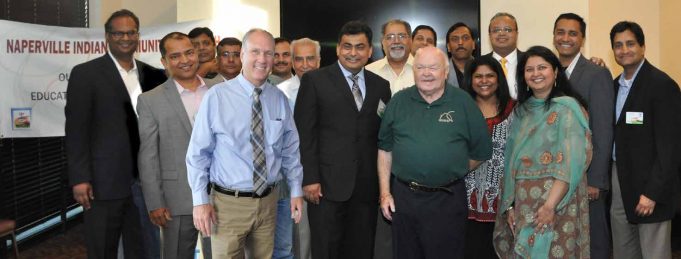
    Indian Community Outreach and The City of Naperville will be hosting the second grand India Day Parade and Celebration on August 14, 2016 (Sunday) to mark the 70th anniversary of India’s independence. Several thousand people from Chicago and the suburbs are expected to attend the parade and event to be held in downtown Naperville.

    The India Day Parade will serve as a showcase of India’s rich and diverse culture, with more than 100 floats organized by Indian cultural, local business and political organizations. Spectators will be treated to a rich variety of Indian cuisine, ethnic arts, apparel, and jewelry. This event has the distinction of being the 2nd India Day Parade backed by any city in Midwest America.

    The event is being organized by the Indian Community Outreach Organization (ICO) in association with the City of Naperville. The ICO is a non-partisan and a not for profit organization whose mission is to preserve and promote the cultural heritage and contributions of Indian Americans while promoting their integration in the growth of Naperville. Its chairman Krishna Bansal has been appointed by, and reports to the Mayor of Naperville.

    Bansal said he and his team are excited to have the ICO organize this pioneering event. “Indian Americans are now a significant part of Naperville’s population in both numbers and impact,” he said. The community, which saw a dramatic growth since the nineties, now comprises over 10 percent of the suburb’s total population. Moreover, with the recent influx of information tech-nology workers and other professionals from India, over 70 percent are first generation immigrants.

    Viral Shah, board member and treasurer of ICO described several South Asian community leaders, restaurants, businesses and cultural organizations have come forward to support the event. While Naperville Mayor Steve Chirico and Consul General of India in Chicago, Dr. Ausaf Sayeed, will be chief guests, Sunidhi Chauhan, Indian’s sensational singer will be the Parade Marshal.

    Chirag Jani, board member of ICO and lead of event logistics explained that parade will begin in Downtown Naperville at 5:00 PM and end at Knoch Park, 724 S West St, Naperville, IL 60540 where the celebration will kick off. The final route details are being worked out with the City of Naperville. While providing outline of the event, he emphasized this to be an excellent opportunity for local businesses and groups to partner, participate and gain visibility.

    The parade may be seen as a symbol of the rapid growth of the Indian American community in the Chicago suburbs. Among the other dignitaries attending are the state and local elected representatives and prominent leaders of the Naperville community.

    The hip and happening Bollywood singing sensation, Sunidhi Chauhan, with several big hit under her belt, will present a number of soulful melodies on August 14, 2016, at 5.00 PM, and capture the hearts of music lovers of #Chicago. She will be supported by a state-of-the art orchestra. It is an once-in-a-lifetime opportunity for her fans considering the fact that the entry to the concert will be FREE.

    Additional information about the parade and celebration including applications to participate in the parade and celebrations as well as sponsorship is available on www.napervilleindian.com


  • Trump Fueling ISIS Recruitment Effort: Gen. Hayden

    Trump Fueling ISIS Recruitment Effort: Gen. Hayden

    NEW YORK (TIP): Donald Trump has damaged American security, says former CIA and NSA director Gen. Michael Hayden in an interview with The Guardian.

    “The jihadist narrative is that there is undying enmity between Islam and the modern world so when Trump says they all hate us, he’s using their narrative,” Hayden said. “He’s feeding their recruitment video.”

    Trump has proposed a temporary ban on all Muslim immigration amid fears Islamic State (ISIS) terrorists could be embedded in groups of Syrian refugees and has said he would quickly defeat the terrorist group if elected.

    The Somali terror group Al Shabab and ISIS both have released videos featuring Trump, Talking Points Memo reports.

    Trump’s proposal for “a total and complete shutdown of Muslims entering the United States” following San Bernardino shootings was featured in Al Shababs’ video, while ISIS included his comments that Brussels had become “a horror show.”

    Former Secretary of State Hillary Clinton said months ago that Trump’s words were being used in ISIS recruitment videos, but at the time only her husband and others were seen in such videos. Last week, she said she had been right all along.

    “I knew it was already going on, but it wasn’t public yet,” Real Clear Politics quoted Clinton as saying.