Month: June 2016

  • Supporting India’s Entry to the Nuclear Suppliers Group

    Supporting India’s Entry to the Nuclear Suppliers Group

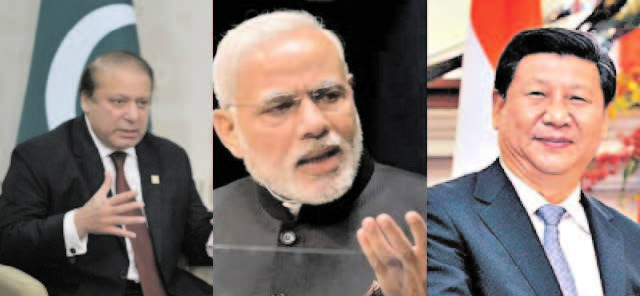
    The Nuclear Suppliers Group (NSG) is a 48-nation exclusive export control regime dedicated to curbing nuclear arms proliferation while promoting safe international nuclear commerce for civil nuclear energy. After receiving a country-specific waiver for the India-United States Civil Nuclear Agreement from the NSG in 2008, most western nations advocated for India’s inclusion into the NSG, even Russia has expressed unconditional support for India. The sole outlier for the major powers remains China, though China could benefit from supporting India’s membership.

    Instead, China has spearheaded a diplomatic campaign to thwart India’s entry into the NSG. Doubling down on efforts to link India with China’s all-weather friend Pakistan, China has grasped at rationales to prevent India’s NSG membership.

    China has articulated three main pseudo-arguments against India’s entry into the NSG. The first is that India is not a signatory to the Treaty on the Non-Proliferation of Nuclear Weapons (Non-Proliferation Treaty, or NPT) of 1968 and allowing India to join does not comport with the greater non-proliferation agenda. Also, India’s entry might disturb the strategic balance in the Indian sub-continent, further encouraging Pakistan to take more desperate measures to seek strategic parity with India. Lastly, China argues that the NSG should be based on specific criteria, rather than selectively choosing suitable nations for entry.

    On all three counts, China is using clever sophistry to block India’s long overdue entry into the NSG. Whereas the roots of China’s obstructionist view stems from China’s strategic insecurity and fears of another rising Asian nation in the international geo-political theatre.

    Let us discuss China’s pseudo-arguments point by point. France’s NSG membership, in 1975, despite not being a signatory of the NPT until 1992, thus creating precedence for a non-signatory of NPT becoming a member of the NSG. China’s second argument, again fallacious, attempting to adjoin Pakistan’s nuclear program with that of India. Pakistan’s aggressive assertions regarding the potential use of tactical nuclear weapons against India, is a vast departure from India’s peaceful and defensive nuclear posture. Particularly considering India’s need for nuclear energy to support a burgeoning economy and population, and to minimize the use of fossil fuels to support current climate change initiatives.

    In addition to France, there are only four countries that are non-signatories to the NPT: India, Israel, Pakistan and South Sudan. North Korea, having withdrawn from NPT is obviously not a candidate for NSG. Israel and South Sudan are not seeking NSG membership, leaving just India and Pakistan. India and Pakistan have starkly contrasting non-proliferation records. Pakistan and China’s nuclear cooperation lacks a great deal of transparency, and is obviously a mix of civilian AND military applications, which should be cause for alarm.

    China worried about growing India-U.S. strategic cooperation, sees Pakistan as a mechanism to contain India in a perpetual regional conflict. China provided Pakistan with 50 kg of free weapons grade HEU and allowed Pakistan to test its first nuclear weapon of Chinese design in 1990 at China’s own Lop Nor nuclear test range.

    Essentially, China is a rising hegemon that can not countenance a rising India, systematically placing roadblocks to India’s entry into the diplomatic world, commensurate with India’s size and economic maturity. The time has come for the 5th generation leadership of communist to do the prudent thing by diplomatically supporting India’s entry into the NSG. China should remember that India had supported communist China’s entry into the UNSC as a permanent member in 1971 despite having bilateral border issues. Diplomatic hegemony by China cannot arrest a rising India’s entry to NSG, UNSC, APEC or any other international body. Continued attempts to limit India’s participation in the international community will actually cause China harm rather than goodwill

    China was a brotherly country to India until the occupation, and eventual annexation, of Tibet. The following attack on India in 1962 is still ingrained in the minds of the international community. India’s industrial base and growing economy is on pace to rival that of both the United States and China. If China wants the 21st century to be remembered as an Asian century, China must learn to recognize and accept India’s vital role.

    China as a nation must do some self-introspection regarding its hegemonic behavior and expansionist policies since 1949. China has no allies worth naming on the twin issues of its imperialistic behavior in the East and South China Seas. Peoples’ Republic of China can gain immense goodwill from a peaceful and rising India if it stops obstructing India’s entry into the NSG on June 24th 2016 in Seoul, South Korea.

    (The author is the President of the Council for Strategic Affairs, New Delhi, India)

  • It’s Time for Summer Leisure and Learning!

    It’s Time for Summer Leisure and Learning!

    Summertime brings opportunities to cheer on friends at neighborhood baseball games, visit a local playground or community pool, venture to the beach or enjoy a block party. After a school year full of hard work, leisurely activities are important for us all. As parents, grandparents, aunts, uncles and caretakers we must also encourage innovative and fun ways to continue learning this summer.

    Time and time again, researchers and advocates attribute some of the achievement gap to summer learning loss. Students can lose months of academic knowledge during the summer, impacting our most vulnerable communities. As caretakers, we must build a drum-beat of reading, writing, and exploring. A great way to start is by checking out NYC Reads 365 or asking your child’s teacher for a summer reading list.

    New York City’s cultural institutions offer children and teens a wide range of either low cost or free summer activities during the long summer days. I enjoy visiting the American Museum of Natural History and The New York Hall of Science with my grandchildren and learning with them. They love robotics and STEM, which can provide countless hours of enjoyment while developing their critical thinking and analytical skills in a creative way.

    A museum, Botanical Garden, zoo, historical burial ground, or public library are all great ways to explore your child’s interests, get extra support, and help them retain what they learned during the school year.

    Setting aside time for daily independent reading and writing during down time at a family vacation or before heading to a playdate can make all the difference and help cultivate and foster a child’s imagination. In my role as a grandmother, I am insistent that my grandchildren write or read daily- no matter where we are or what we are doing on that particular day, I carve out time for learning.

    In one way or another, as parents and caretakers we play a vital role and have so much to offer that can inspire our children. Some of my most treasured memories include listening to my father’s stories about his native country Spain. He would weave his real life experiences with a war torn country which ignited my passion for reading and led me to where I am today. I strive to channel my father’s love for storytelling with my own grandchildren, which always ends with fruitful and candid conversations of the world we live in today.

    Showing our children the fruits of being a lifelong learner can also be a transformative way to lead by example. We can also continue or restart our own education through the DOE’s Office of Adult and Continuing Education (OACE) where there is a variety of basic education and vocational classes for adults over the age of 21. During the summer months hundreds of classes for adults will be available completely free of charge. For more information, stop by any of our Registration locations or visit http://oacenyc.org/.

    Teaching our kids to value reading and writing purely for oneself, to encounter new worlds, to learn new information, and to be inspired will lead to a greater success in school and beyond. So whether it’s for you, your children or a nephew, learn about the fun summer learning opportunities in your community, borough, and city. Have a fun and safe summer!

    Here are just a few family friendly resources and places to visit this summer free of charge:

    The African Burial Ground National Monument  https://www.nps.gov/afbg/index.htm Socrates Sculpture Park http://www.nycgo.com/museums-galleries/socrates-sculpture-park

    The National Museum of the American Indian http://nmai.si.edu/visit/newyork/Brooklyn Children’s Museum (free every Thursday, 12-2 pm) http://www.brooklynkids.org/
    NYC Reads 365
    http://schools.nyc.gov/Academics/NYCR eads365 New York Public Library – Summer Reading Challenge 2016 http://www.nypl.org/events/summer/rea ding-challenge For a full list of museums that are either always free, free on specific days of the week or free for select hours visit http://www.nycgo.com/articles/free-nyc-museums

  • Lost Between Both Worlds: Why Afghan Sikhs, Hindus are Leaving ‘Home’

    Lost Between Both Worlds: Why Afghan Sikhs, Hindus are Leaving ‘Home’

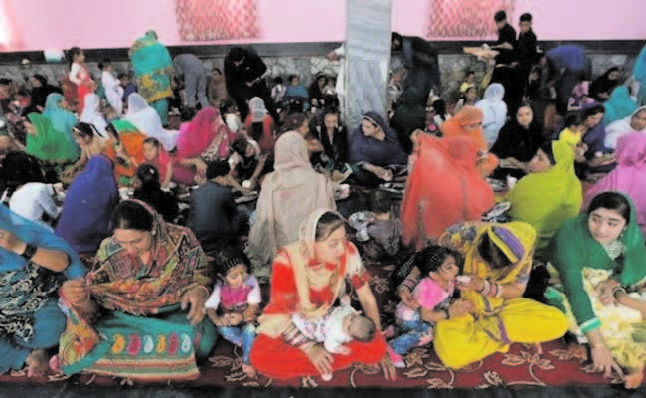
    On a bright day in downtown Kabul, Jagtar Singh Laghmani was in his traditional herb shop when a man turned up, drew a knife and told him to convert to Islam or he would cut his throat. Only bystanders and other shopkeepers saved his life.

    The incident earlier this month was the latest attack on a dwindling community of Sikhs and Hindus in Afghanistan, the country struggling with growing insecurity caused by an Islamist insurgency and economic challenges.

    Once a thriving minority, only a handful of Sikh and Hindu families remain. Many have chosen to flee the country of their birth, blaming growing discrimination and intolerance.

    “This is how we begin our day – with fear and isolation. If you are not a Muslim, you are not a human in their eyes,” said Jagtar Singh, speaking in his tiny shop in the bustling center of Kabul. “I don’t know what to do or where to go.”

    For centuries, Hindu and Sikh communities played a prominent role in merchant trade and money lending in Afghanistan, although today they are known more for medicinal herb shops.

    According to Avtar Singh, chairman of the national council of Hindus and Sikhs, the community now numbers fewer than 220 families, compared with around 220,000 members before the collapse of the Kabul government in 1992.

    Once spread across the country, the community is now mainly concentrated in the eastern provinces of Nangarhar, Ghazni, and the capital Kabul.

    Although Afghanistan is almost entirely Muslim, its constitution, drawn up after US-led forces drove out the Taliban government in 2001, theoretically guarantees the right of minority religions to worship freely.

    But as the conflict drags on, Avtar Singh said conditions were worse than under the Taliban, which imposed strict Islamic laws, staged public executions and banned girls from schools.

    Hindus and Sikhs had to wear yellow patches that identified them in public, but were otherwise seldom bothered.

    “The good old days have long gone when we were treated as Afghans, not as outsiders,” Avtar Singh said from a temple in Kabul, all the while keeping an eye on visitors using monitors linked to security cameras.

    “Our lands have been taken by powerful figures in the government, especially by the warlords. We are facing threats, and this small community is getting smaller and smaller every day,” he added.

    Last week, dozens of Hindu and Sikh families left Helmand, where Taliban insurgents, who have a presence in much of the southern province, sent a letter demanding 200,000 Afghani ($2,800) a month from the community.

    Jagtar Singh Laghmani, 50 at his traditional herb shop in Kabul
    Jagtar Singh Laghmani, 50 at his traditional herb shop in Kabul

    HOSTILITY Tensions have surfaced in Qalacha, an area on the outskirts of Kabul where the Sikh and Hindu community owns a high-walled crematorium.

    As the capital has expanded in recent years, the neighborhood has become densely populated and some newer residents oppose Hindu and Sikh cremations, a practice foreign to Muslims, who bury their dead.

    “When they burn the body the smell makes our family sick and we don’t want this to happen here,” said Ahmad Timor, a Muslim resident in Qalacha.

    The Sikhs say local Muslim hardliners have stirred up hostility against them, and the community now requires police protection for their funeral rituals.

    “They throw stones and bricks at us, at the bodies of the dead, whenever there is a funeral,” said Avtar Singh, pointing to a newly built house next to the crematorium.

    Dahi-ul Haq Abid, deputy minister for Haj and religious affairs, said the government had done what it could to improve the livelihood of Hindus and Sikhs.

    “We agree that conflicts pushed them out of the country, but their condition is not as bad as they claim,” Abid added.

    “We have allocated them a place to burn their bodies because inside the city people complained about the smell, but they did not agree,” he told Reuters.

    Harassment is also common Jasmeet Singh, eight, stopped going to school because of what he said was daily harassment. He and other children from the community now either go to private schools or study inside the temple.

    “While I was at school, other students were making fun of me. They were removing my turban, hitting me and calling me Hindu and kaffir (infidel),” said Jasmeet Singh, as other boys nodded their heads in agreement.

    Increasing numbers of Sikhs and Hindus have moved to India, but some say they remain foreigners wherever they go.

    “When we go to India, we are known as Afghans, but when we are here, we are seen as outsiders even if we are native Afghan,” said Baljit Singh, a shopkeeper in Kabul. “We are lost between both worlds.”

  • CUNY Journalism School to Receive $1 Million Grant from the Mayor’s Office of Media and Entertainment

    CUNY Journalism School to Receive $1 Million Grant from the Mayor’s Office of Media and Entertainment

    NEW YORK CITY (TIP): NYC Mayor’s Office of Media and Entertainment (MOME) Commissioner Julie Menin and J-School Dean Sarah Bartlett will hold a press event on Monday, June 27 at 12:00 Noon at the City University of New York’s CUNY Graduate School of Journalism (CUNY J-School) in Manhattan, to announce a $1 million grant from MOME to the CUNY J-School to help New York’s vast network of community and ethnic media outlets stay competitive in the current media landscape, and bring them further into the digital age.

    Combined circulation of these daily and weekly publications reaches 4.5 million people — more than half of the city’s population — yet many of these outlets struggle to survive in a world of tech-driven journalism. The grant will allow the CUNY J-School’s Center for Community and Ethnic Media to create new, affordable courses in subjects such as social media, video storytelling, podcasting, and broadcast techniques. The CUNY J-School’s broadcast facility will also be renamed the “Made in NY Broadcast Center” in recognition of MOME’s support of the school and commitment to local and ethnic media.

  • East Meets West Concert at the Indian Consulate

    East Meets West Concert at the Indian Consulate

    NEW YORK CITY (TIP): The Consulate of India, New York in association with “Salon De Virtuosi”, presented the annual ‘East Meets West’ concert at the Consulate’s Ballroom on the evening of June 17, 2016.

    Ms. Charlotte White, founder of “Salon de Virtuosi”, an organization aimed to support emerging artists by providing them performance opportunities, speaking on the annual presentation in the Consulate admired India’s culture and traditions and mentioned about her long standing relations with India extending to over seven decades.

    Representing the West in the concert was the Aeolus String Quartet, the Graduate Resident String Quartet at the Julliard School. They have won numerous prizes and competitions and are known for their “smoothly meshed technique with a sense of spontaneity and discover”.

    The East was represented by Pt. Barun Kumar Pal, recognized Hansaveena artist from India whose music incorporates the blend of Veena, Sitar and Sarod and the brilliant DibyarkaChatterjee, a young and promising Tablaplayer. Both Pt. Barun Kumar Pal and DibyarkaChatterjee mesmerized the audience with their Ragas.

    The musical evening concluded with aesthetically pleasing fusion of Eastern and Western music filling the atmosphere with unity of sound and it received standing ovation from the audience.

  • BRONX UNEMPLOYMENT  DROPS TO 6.1%

    BRONX UNEMPLOYMENT DROPS TO 6.1%

    NEW YORK (TIP): The Bronx’s unemployment rate has fallen to one of its lowest numbers ever, according to newly released statistics from the New York State Department of Labor.

    The unemployment rate in The Bronx dropped to 6.1 percent in May 2016, down from 6.6 percent in April 2016 and 7.8 percent in May 2015. This is the lowest unemployment rate the borough has seen since Bronx Borough President Ruben Diaz Jr. first took office in May 2009, topping last month’s previous all-time low. The total number of Bronxites employed also remains high, 567,500, with nearly 100,000 more Bronx residents employed today than when Borough President Diaz took office seven years ago. In addition, just 37,000 Bronx residents are currently unemployed, the lowest number of Borough President Diaz’s tenure.

    “We are always looking to continue to build on the results that have helped decrease unemployment in our borough to record lows,” said Bronx Borough President Ruben Diaz Jr. “We will refuse to stay complacent as we seek to lower the unemployment rate even further, create new jobs, strengthen our existing businesses and grow our local economy. I want to thank all of our elected officials, community boards, business community, non-profits, neighborhood leaders and our more than 1.4 million residents. Everyone can be proud of these efforts.”

    The Department of Labor’s statistics can be found at http://labor.ny.gov/stats/pressreleases/prlaus.shtm.

    Since Borough President Diaz took office in 2009, The Bronx has seen more than $9.4 billion in total development, which has led to the creation of thousands of new jobs. In addition, a partnership announced by Governor Andrew Cuomo announced in August 2014 between the New York State Department of Labor and the Bronx Overall Economic Development Corporation, as part of the “NY Works,” program is placing Bronx residents in these jobs, helping to ensure that new development here benefits everyone, especially Bronxites.

  • INOC, USA hosts Benny Behnan

    INOC, USA hosts Benny Behnan

    NEW YORK (TIP): Indian National Overseas Congress, USA hosted Benny Behnan, a prominent Congress leader and Ex-MLA from Kerala at an informal get-together in Jamaica Estates, New York. The event provided a great opportunity to the leaders of the INOC and Kerala Chapter, in particular, to take stock of the recent defeat of the UDF in Kerala election and exchange views primarily from an NRI perspective. Mr. Behnan was accompanied by his wife Shirley. It should be noted that a number of Kerala Chapter leaders were in Kerala campaigning for the UDF candidates and learned a great deal about the sentiments of those who went to the polls. Zach Thomas (Vice-Chairman-INOC), Jose George (Treasurer-INOC), Thomas Mathew (Vice-Chairman, Kerala Chapter), Santhosh Nair (General Secretary, Kerala Chapter) were among those who were active in Kerala during the election.

    George Abraham (Chairman-INOC), Mohinder Singh Gilzian (President-INOC) and Harbacahn Singh (Secretary-General-INOC) briefed Benny on the INOC activities.

    Jayachandran (President- Kerala Chapter), U.A. Naseer (General Secretary- Kerala Chapter), Jose Jacob (Treasurer- Kerala Chapter), Leela Maret (Vice-President, Kerala Chapter), Rev. Wison Jose, Rev. Itty Abraham, Oommen Koshy and Gracy James also participated in the ensuing discussions primarily focusing on  the causes and effects of the Congress Party’s  losses and the rebuilding efforts. Most of the gathering felt that the allegations of corruption, Security concerns of the minorities from the RSS cadre and party disunity etc. have all contributed to the debacle. The discussions were frank and open and Benny Behnan promised to convey the expressed concerns to the leaders.


  • GOPIO 2016 Biennial Convention and Conference: June 24 & 25

    GOPIO 2016 Biennial Convention and Conference: June 24 & 25

    NEW YORK CITY (TIP): GOPIO International, the Global Organization of People of Indian Origin (www.gopio.net), is holding its 27th Anniversary Celebrations and GOPIO Biennial Convention 2016 in New York, USA at the World’s Fair Marina and Marriott LaGuardia Hotel on June 24-25, 2016. The theme of the conference is “Strengthening Connections between India and the Global Indian Diaspora through Business and Technology,” and will provide an opportunity to connect and network with people of Indian origin worldwide.

    Delegates from over 25 countries are expected to attend the convention which starts on Friday, June 24 with an inauguration and welcome reception from 7.00 p.m. to 10 p.m. at 1 World’s Fair Marina, Flushing, New York. The Chief Guest is Ambassador Arun Singh, Indian Ambassador to the US from Washington, DC. Other Honored Guests are Guyana Prime Minister and First Vice President Moses V. Nagamootoo, Congressman Gregory Meeks and Queens Borough President Melinda Katz. On behalf of GOPIO, Lal Motwani, Convener, and Co-Conveners Dr. Asha Samant, Kenny Desai, Shelly Nichani, Nohar singh and Jayant Baxi extend their invitation to join in for this biennial international GOPIO Convention 2016.

    On Saturday June 25 a full day GOPIO conference will be held at the New York LaGuardia Marriott Hotel (102-05 Ditmars Blvd., East Elmhurst, New York) from 9 a.m. to 5:30 p.m. There will be 9 sessions to deliberate on the Global Indian Diaspora; evaluate GOPIO’s progress in 27 years; network, exchange ideas, and connect with PIO/NRI delegates from around the world.

    The conference, organized by Dr. Thomas Abraham, Chairman, Conference Committee and Founder President, GOPIO International, will consist of an inaugural main tent session followed by four Diaspora related topics in each of two tracks: (1) Business and Technology ventures and opportunities and (2) Social, Political, Gender and Health challenges. The keynote speaker will be Raj Jaswa, former President of TiE Silicon Valley and director and trustee of TiE International, technologySerial entrepreneur, and an Adjunct Professor at several Universities.

    GOPIO International President Niraj Baxi invites all PIOs (People of Indian Origin) and NRIs (Non Resident Indians) to avail of this opportunity to attend, saying, “The conference will evaluate, assess, debate, discuss and deliberate on the current critical issues of interest and concern that confront over 25 million people of Indian origin, living in countries outside of India.”  Conference sessions listed below are open to all with pre-registration.

    ● Make in India – Diaspora role
    ● Major Issues of Indian Diaspora
    ● Indian Diaspora Promoting Medical and Pharmaceutical Industries
    ● Diaspora Indian Women Forum -Empowering Diaspora Indian Women
    ● Diaspora in Hospitality and Convenience Foods
    ● Diaspora Writers Form
    ● Promoting Diaspora Entrepreneurship, Technology and Business
    ● Health and Wellness of the Indian Diaspora

    The conference will end with a concluding presentations session from the Session Chairs, namely, Prakash Shah, Dr. Rajeev Mehta, Nitin Shah, Dr. Neerja Arun Gupta, Viresh Sharma, Sudha Parekh, Dr. Asha Samant, Jagdish Lodhia, Ram Gadhavi. A Presentation of Resolutions will be made by Dr. Rajeev Mehta, Chairman Resolution Committee and GOPIO International Coordinator for North America, Piscataway, NJ, USA.

    The 27th Anniversary celebrations will conclude with a Grand Finale Banquet and Recognition of Businesses and Entrepreneurs with Social Responsibility from 7 p.m. to 11 p.m. at the World’s Fair Marina. The Chief Guest will be Ambassador Riva Ganguly Das, Consul General of India, New York. With gratitude, GOPIO acknowledges support of Platinum Sponsors Embassy National Bank, State Bank of India, Labidco Port Services Ltd; Gold sponsors Dr. Asha Samant and Kenny Desai; and Silver Sponsors Bank of Baroda, Adani North America, S.S. White Technologies Inc. and Dr. Praveen Chopra.

    For Convention registration and sponsorship opportunities, contact: Convention Convener Lal Motwani at lmotwani@verizon.net or call the following numbers: 516-581-3332, 516-616-0233 or 203-329-8010.

    About GOPIO International: GOPIO is a non-partisan, not-for-profit, secular organization. GOPIO’s volunteers are committed to enhancing cooperation and communication between NRIs/PIOs, building bonds, friendships, alliances, and the camaraderie of citizens and colleagues alike. GOPIO volunteers believe that when they help network the global Indian community, they facilitate making tomorrow a better world for the Indian Diaspora. GOPIO publishes a very informative monthly newsletter. Interested persons can receive free of charge at www.gopio.net or by request email to: gopio-intl@sbcglobal.net or by calling +1-818-708-3885 (USA).

  • Chancellor Fariña announces 63 high schools to offer new advanced placement courses for 2016-17 through AP for all

    Chancellor Fariña announces 63 high schools to offer new advanced placement courses for 2016-17 through AP for all

    Carmen Fariña
    Schools Chancellor Carmen Fariña says: “AP for All is a critical part of bringing equity and excellence to all our high schools”.

    NEW YORK (TIP): Schools Chancellor Carmen Fariña has announced that this fall, 63 high schools will offer new Advanced Placement courses, including 35 that offered no AP courses during the 2015-16 school year. The expansion comes in the first full year of the AP for All Initiative, one of the eight initiatives in Mayor de Blasio’s Equity and Excellence agenda. The goal of AP for All is to increase college readiness among New York City students; research has shown that the rigor of these courses and exams better prepare students for college. Through AP for All, 75 percent of high school students will have access to at least five AP classes by fall 2018 and all high school students will have access by fall 2021. The initiative will cost $51 million annually when fully scaled in fall 2021, and about $21 million for the 2016-17 school year.

    The 63 selected high schools currently offer few or no AP courses and have demonstrated readiness to begin offering additional AP coursework. They include 20 high schools in the Bronx, 22 in Brooklyn, 15 in Manhattan, and six in Queens. Among the 63 high schools, 39 schools across 12 high school campuses will utilize a “campus model,” sharing courses with co-located schools to provide increased opportunity across the school building. In 2016-17, the 63 high schools will offer 118 additional AP courses, including 52 in STEM subjects.

    “AP for All is going to expand rigorous, challenging coursework at all of our high schools, and the first expansion to 63 high schools represents exciting progress,” said Mayor Bill de Blasio. “This is a critical part of our work towards equity and excellence for all New York City public school students, across all our neighborhoods and boroughs.”

    “AP for All is a critical part of bringing equity and excellence to all our high schools, and this expansion will make a real difference for students at 63 schools next year,” said Schools Chancellor Carmen Fariña. “Through our Equity and Excellence agenda, we are laser-focused on putting all our students on the path to college and careers, and I look forward to the work ahead of us.”

    Administrators and teachers from the selected high schools will receive rigorous, subject-specific professional development this spring and summer, including an AP Summer Institute, and ongoing workshops and support provided by the DOE and external partners throughout the 2016-17 school year. Additionally, 750 students from these high schools have been invited to participate in a new two-week summer enrichment session to prepare them for greater success in new AP courses. AP for All students will also receive support throughout the school year, including weekend study sessions providing up to an additional 20 hours of learning, review, and opportunities to take practice AP exams.

    As part of AP for All, the DOE has also identified over 100 schools for pre-AP support starting this spring and continuing through the 2016-17 school year. These high schools offer few or no AP courses, and also need additional support to strengthen student and teacher readiness. The pre-AP support will focus on strengthening student instruction across high schools, and identifying and providing professional development to potential AP teachers for the 2017-18 school year and beyond.

  • India Association of long Island Honors Achievers at Gala Dinner

    India Association of long Island Honors Achievers at Gala Dinner

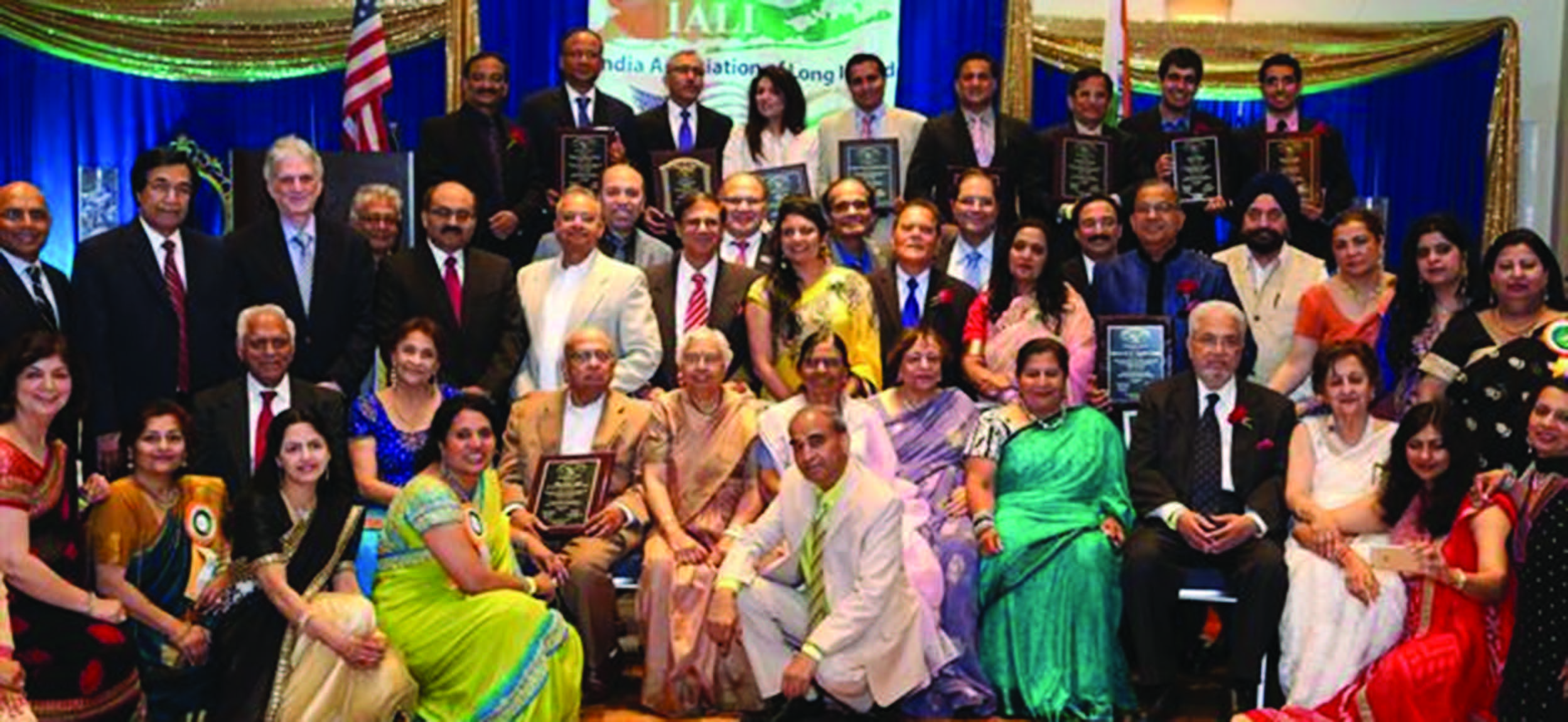
    MELVILLE, NY (TIP): India Association of long Island (IALI) honored a couple of achievers at the 37th annual gala dinner on Saturday, June 18th. Those who were honored included Dr. Vaijnath Chakote, Dr. Abhay Malhotra, Dr. Dev Ratnam, Dr. Gaddam D. Reddy, Mrs. Usha and Dr. Parveen Chopra, Dr. Avtar Josen, Padma Shri Pandita Tripti Mukherjee, Mrs. Malati and Harshad K. Shah, Mr. Peter Bheddah, Ritwik Rudra and Akash Wasil.

    It was a pleasurable evening at #Hilton #Huntington with a lot of entertainment for the guests who numbered around 400. A number of captivating dance performances made the long hours enjoyable.

    In her address, President of #IALI, Mrs. Beena Kothari spoke of the long strides the association had taken as a community organization. She spoke about the various activities of the association and identified members who contributed to a string of successes. She took the opportunity to congratulate and thank honorees, the media and her team.

  • Elderly Indian American couple in Illinois charged with $40 million bank fraud

    Elderly Indian American couple in Illinois charged with $40 million bank fraud

    OAK BROOK, IL (TIP): An Indian American couple from Oak Brook, Illinois, Pethinaidu Veluchamy and his wife, Parameswari Veluchamy, who owned First Mutual Bancorp of Illinois and other financial entities intentionally hid cash and assets from creditors after defaulting on $40 million in personal and corporate loans, according to an indictment returned in federal court in Chicago, on Wednesday, June 22.

    PETHINAIDU VELUCHAMY and his wife, PARAMESWARI VELUCHAMY, were the principal shareholders of First Mutual Bancorp of Illinois Inc., a holding company for Mutual Bank. In June 2009, according to the indictment, the couple defaulted on personal and corporate loans totaling $40 million.

    The following month, Mutual Bank was shut down by federal regulators. Prior to the shutdown and continuing until at least November 2015, the couple hid millions of dollars in assets by falsifying documents, moving money into domestic and foreign bank accounts, and directing employees to destroy financial records, the indictment states.

    According to the indictment, the couple also transferred cash to their two adult children, with nearly $8.5 million going to one and more than $10.1 million to the other.

    The 12-count indictment was returned yesterday in U.S. District Court in Chicago. It charges Pethinaidu Veluchamy, 70, with four counts of bank fraud, two counts of destroying records to obstruct a bankruptcy proceeding, two counts of making a false statement under oath in a bankruptcy proceeding, and one count of making a false statement in an application for a U.S. passport. Parameswari Veluchamy, 65, is charged with four counts of bank fraud, two counts of destroying records to obstruct a bankruptcy proceeding, one count of making a false statement under oath in a bankruptcy proceeding, and one count of making a false statement in an application for a U.S. passport.

    Arraignments in federal court in Chicago have not yet been scheduled.

    According to the charges, Pethinaidu Veluchamy caused his relatives to obtain legal judgments against him for loans for which he knew he was not personally liable, so that he could later assert those liens as superior to a bank creditor’s anticipated judgments. In a 2011 deposition in a separate court case, Pethinaidu Veluchamy fraudulently claimed that certain funds transferred to his adult children represented indemnity obligations for their investments in First Mutual Bancorp, according to the indictment. He produced a document to support this claim, but when questioned about the timing of the creation of the document, Pethinaidu Veluchamy claimed the computer he had used to create it crashed in a snowstorm, according to the indictment.

    The indictment was announced by Zachary T. Fardon, United States Attorney for the Northern District of Illinois; and Michael J. Anderson, Special Agent-in-Charge of the Chicago Office of the Federal Bureau of Investigation.

    Each count of bank fraud is punishable by up to 30 years in prison and a $1 million fine. Destroying records to obstruct a bankruptcy proceeding carries a maximum sentence of 20 years. The maximum sentence for making a false statement under oath in a bankruptcy proceeding is five years, while making a false statement in an application for a U.S. passport is punishable by up to ten years.

  • Indian American Republican Abhay Patel to run for Senate from Louisiana

    Indian American Republican Abhay Patel to run for Senate from Louisiana

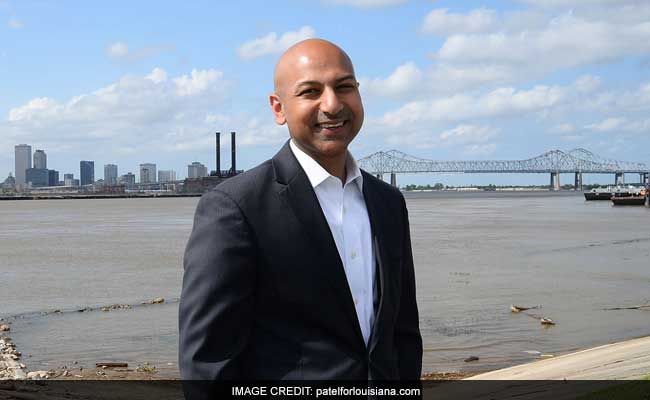
    NEW ORLEANS (TIP): 40-year-old Indian-American economic development professional has declared his candidacy for the US Senate from Louisiana.

    Abhay Patel, from New Orleans, is one of the six Republicans to have entered into this race the seat of which has been vacated by Senator David Vitter who announced last year that he would not seek re-election for the seat.

    Currently, the Vice President of business development for the New Orleans Business Alliance, Mr. Patel is a former Wall Street investment banker who at one time raised in excess of USD 30 billion for transactions like Hertz’ acquisition of Dollar Thrifty.

    “I’m not a career politician. I’m a businessman who learned about hard work and sacrifice by watching my immigrant parents,” Mr. Patel said yesterday while announcing his candidature.

    “Over my career, I’ve advised some of our nation’s most important companies, led economic development and promoted the overall growth of our local, state and national economy,” he said making his case to the people of Louisiana.

    Observing that for Louisiana to thrive, however, Washington must get out of the way, he said the US Constitution was written to control the size and scope of the federal government, but today Washington controls every aspect of American life.

    “I am a Republican who will fight tirelessly to defend our Constitution and to ensure that the people of Louisiana have the power to control our own destiny,” said Mr. Patel, whose parents are immigrants from India.

    In an interview to a media outlet, Mr. Patel said that he wants to improve India-US relationship.

    “India is fast becoming one of our closest allies and it is important that we continue to grow this burgeoning relationship,” he said.

    “With China to its east and Pakistan, Afghanistan, and Iran to its west, India’s geography makes the nation a critical partner in helping the US and its allies achieve regional and global stability and security.

    “In addition, the US can benefit from India’s rising economy, bringing new opportunities in trade, investment, and technology,” Mr. Patel said.

  • Death of a Singer – Guest Comment OP/ED

    Death of a Singer – Guest Comment OP/ED

    Amjad Sabri, a celebrated qawwali singer, is the latest victim of the Taliban’s war on plurality in Pakistan. The Tehreek-e-Taliban Pakistan, which has claimed responsibility for Sabri’s murder in Karachi on Wednesday, has said the group considers his music blasphemous. The reason lies in the Taliban’s own ideological moorings. Qawwali is part of a Sufi tradition that binds not only Muslims across South Asia, but people of other faiths too. It is indeed the most vibrant iteration of the subcontinent’s syncretism. The TTP, steeped in an extremist, fundamentalist approach to religion and society, has long made known its displeasure against both music and the Sufis. Being part of the well-known Sabri family tradition, Amjad clearly was a target. His murder is also in line with the new tactical use of violence by the TTP. Of late, the group has turned its focus from large-scale attacks in public places to targeted killings. A day before Sabri was shot, an Ahmadi doctor was killed in Karachi. Last month, a rights activist who was critical of Islamist extremism met the same fate.

    Be it large-scale attacks or targeted killings, the goal remains the same. The TTP wants to inflame sectarian passions that it could exploit to find recruits among the radicalised sections. Such attacks could also trigger fear among the public, particularly among critics of the Taliban brand of Islam, and create security challenges to the authorities. Unlike major attacks in public places, targeted killings are unlikely to attract a massive security crackdown on militants. The TTP may have learnt this lesson after the 2014 Peshawar school massacre, which forced the Pakistani security establishment to turn against the militants. In the ensuing battle the TTP was badly weakened, though its capacity to strike is still formidable. It remains a threat to both the Pakistani state and society. The question is whether the authorities have an effective counter-strategy to stop them. Fighting radicalisation is key to this. But the increasing use of the controversial blasphemy law under the watch of the state betrays reticence, or fear, on the part of politicians and institutions in fighting radicalisation. Even Sabri had faced a blasphemy case two years ago over his songs. Second, Karachi is known for violent crimes. Though there was a government sweep in 2013, militant groups are clearly still active in the city. Third, the Pakistan army’s approach towards the Taliban is complicated. It is fighting the TTP on the Pakistani side, but maintains good ties with the Afghan Taliban on the other side of the border.

    This dual approach is self-defeating in any meaningful fight against extremism.

  • Indian-Origin MIT Researcher Develops Phone-Based Eye-Tracking System

    Indian-Origin MIT Researcher Develops Phone-Based Eye-Tracking System

    BOSTON (TIP): Researchers led by an Indian-origin scientist have developed a software that can turn any smartphone into an eye-tracking device, a discovery that can help in psychological experiments and marketing research.

    In addition to making existing applications of eye-tracking technology more accessible, the system could enable new computer interfaces or help detect signs of incipient neurological disease or mental illness.

    Since few people have the external devices, there’s no big incentive to develop applications for them.

    “Since there are no applications, there’s no incentive for people to buy the devices. We thought we should break this circle and try to make an eye tracker that works on a single mobile device, using just your front-facing camera,” explained Aditya Khosla, graduate student in electrical engineering and computer science at Massachusetts Institute of Technology (MIT).

    Khosla and his colleagues from MIT and University of Georgia built their eye tracker using machine learning, a technique in which computers learn to perform tasks by looking for patterns in large sets of training examples.

    Currently, Khosla says, their training set includes examples of gaze patterns from 1,500 mobile-device users.

    Previously, the largest data sets used to train experimental eye-tracking systems had topped out at about 50 users.

    To assemble data sets, “most other groups tend to call people into the lab,” Khosla says.

    “It’s really hard to scale that up. Calling 50 people in itself is already a fairly tedious process. But we realized we could do this through crowdsourcing,” he added.

    In the paper, the researchers report an initial round of experiments, using training data drawn from 800 mobile-device users.

    On that basis, they were able to get the system’s margin of error down to 1.5 centimeters, a twofold improvement over previous experimental systems.

    The researchers recruited application users through Amazon’s Mechanical Turk crowdsourcing site and paid them a small fee for each successfully executed tap. The data set contains, on average, 1,600 images for each user.

    The team from MIT’s Computer Science and Artificial Intelligence Laboratory and the University of Georgia described their new system in a paper set to presented at the “Computer Vision and Pattern Recognition” conference in Las Vegas on June 28.

  • Indian American Star hedge fund manager found dead in apparent suicide a week after arrest

    Indian American Star hedge fund manager found dead in apparent suicide a week after arrest

    NEW YORK (TIP): Hedge fund manager Sanjay Valvani was found dead on Monday, June 20 night in an apparent suicide, less than one week after the star investor was arrested on insider-trading charges.

    Sanjay, 44, was found unconscious on the bedroom floor at home in the upscale neighborhood of Brooklyn Heights with a slash wound to his neck late on Monday afternoon, a police spokesman told AFP.

    He was found by his 44-year-old wife. The knife and a brief, handwritten note were recovered at the scene. A medical examiner will determine the official cause of death, police said.

    His defense lawyers Barry Berke and Eric Tirschwell called his death “a horrible tragedy that is difficult to comprehend.” They paid tribute to Valvani as a loving father, husband, son and brother.

    “We hope for the sake of his family and his memory that it will not be forgotten that the charges against him were only unproven accusations and he had always maintained his innocence,” they said.

    Valvani surrendered to police last Tuesday in connection with an alleged 2005 to 2011 scheme to obtain confidential information from the Food and Drug Administration about pending drug approvals to trade in pharmaceutical securities.

    The Securities and Exchange Commission alleged that he reaped unlawful profits of nearly USD 32 million for hedge funds investing in health-care securities by insider trading on tips he received.

    He was charged on five counts, including security and wire fraud. The most serious charges carried a maximum sentence of 20 years if he had been convicted.

  • Sling TV and DISH Announce Landmark Agreement with Zee

    Sling TV and DISH Announce Landmark Agreement with Zee

    ENGLEWOOD, CO (TIP):  Sling TV and DISH have announced a long-term renewal agreement with Asia TV USA, Ltd., part of the “Zee” group from India and a leading provider of South Asian programming. In addition to renewing the 10 Zee-branded channels already offered on Sling TV and DISH, the new agreement includes the addition of 27 new Zee channels such as &TV, Living Foodz, Zee Bangla, Zee Tamizh and Zee Cinema HD.

    As part of the agreement, Sling TV and DISH will be the exclusive providers in the U.S. of Zee’s premium on-demand library, which includes movies and over 400 additional popular video titles.  Over time, Sling TV will become the exclusive over-the-top (OTT) provider in the U.S. for all but one of Zee’s South Asian channels. In the coming months, Zee will transition viewers from its direct-to-consumer services to Sling TV or to authenticated access only.

    “Our agreement with Zee enables us to provide a vast amount of entertainment to fans of South Asian content, while also giving customers a more streamlined way to access and enjoy both linear and on-demand content,” said Chris Kuelling, senior vice president of programming for Sling TV and DISH. “Zee shares our goal of growing the South Asian market, and together we are able to better serve this community, as well as the other language groups served by Zee.”

    “DISH has been a natural partner and ally for the last 18 years, and Sling TV is by far the most comprehensive OTT service available to our target audience” said Sameer Targe, business head, Zee Americas.  “The U.S. is a mature pay-TV market and operating a direct-to-consumer business can be a low or negative margin initiative, so it made good business sense to align our growth strategy by expanding our offerings and partnering with Sling TV as our chosen OTT platform.”

    To broaden the options available to fans of South Asian content, Sling TV and DISH are launching a new “Hindi Gold Pack,” which will contain all of the Zee Hindi channels, plus other leading Hindi channels. In addition, &TV, one of the most requested Hindi channels by current Sling TV and DISH customers, will be added to the existing lineup. Zee’s on-demand content will be available at no additional charge to DISH and Sling TV subscribers with the Hindi Gold Pack.

    As part of the agreement, DISH and Sling TV will also add two Spanish-language channels, Z Living Español and Zee TV Español, and two Brazilian channels, Zee TV Portuguese and Z Living Portuguese, to their respective line-ups.  The new Spanish channels can be found on DISH in the DishLATINO Clasico, DishLATINO Dos, DishLATINO Plus and DishLATINO Max packages, and the Best of Spanish TV package on Sling Latino.

    Zee Alwan and Zee Aflam, two popular Arabic channels, will also launch in the DISH Arabic Super Elite and the Arabic Mosaic Pack on Sling TV.

    More information on Sling TV’s international packages can be found here, and information on Sling Latino packages can be found here. Details of DISH’s packages can be found here.

  • Brexit: UK votes to leave EU in historic referendum

    Brexit: UK votes to leave EU in historic referendum

    LONDON (TIP): The UK has voted to leave the European Union after 43 years in a historic referendum.

    Leave won by 52% to 48% with England and Wales voting strongly for Brexit, while London, Scotland and Northern Ireland backed staying in the EU. Turnout UK-wide was 72%.

    UKIP leader Nigel Farage hailed it as the UK’s “independence day” but the Remain camp called it a “catastrophe”.

    The pound fell to its lowest level against the dollar since 1985 as the markets reacted to the results.

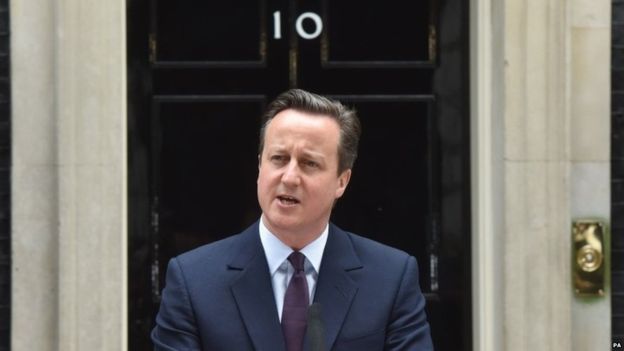
    UKIP leader Nigel Farage - who has campaigned for the past 20 years for Britain to leave the EU - told cheering supporters "this will be a victory for ordinary people, for decent people". British Prime Minister David Cameron who was a votary of Remain has announced he would resign by October.
    UKIP leader Nigel Farage – who has campaigned for the past 20 years for Britain to leave the EU – told cheering supporters “this will be a victory for ordinary people, for decent people”.

    The referendum turnout was 71.8% -with more than 30 million people voting – the highest turnout at a UK election since 1992.

    Wales and the majority of England outside London voted in large numbers for Brexit.

    Labour’s Shadow chancellor John McDonnell said the Bank of England may have to intervene to shore up the pound, which lost 3% within moments of the first result showing a strong result for Leave in Sunderland and fell as much as 6.5% against the euro.

    UKIP leader Nigel Farage – who has campaigned for the past 20 years for Britain to leave the EU – told cheering supporters “this will be a victory for ordinary people, for decent people”.

    Mr. Farage – who predicted a Remain win at the start of the night after polls suggested that would happen – said Thursday 23 June would “go down in history as our independence day”.

    He called on Prime Minister David Cameron, who called the referendum but campaigned passionately for a Remain vote, to quit “immediately”.

    Britain would be the first country to leave the EU since its formation – but a leave vote will not immediately mean Britain ceases to be a member of the 28-nation bloc.

    That process could take a minimum of two years, with Leave campaigners suggesting during the referendum campaign that it should not be completed until 2020 – the date of the next scheduled general election.

    There has been a mixed reaction to Britain’s Leave decision globally. International reaction has been coming in as the UK votes to leave the European Union.

    Martin Schulz, president of the European Parliament: “We respect the result. We have clarity for the UK to go its own way.

    “Now is the time for us to behave seriously and responsibly. David Cameron has his responsibilities for his country, we have our responsibilities for the future of the EU. You can see what is happening to sterling on the markets. I don’t want the same thing to happen to the euro. ”

    Geert Wilders, Dutch Freedom Party leader: “Hurrah for the British! Now it is our turn. Time for a Dutch referendum!”

    Marine Le Pen, leader of the Front National in France: “Victory for freedom! As I have been asking for years, now we need to have the same referendum in France and in the countries of the EU.”

    Malcolm Turnbull, Australian prime minister: “The impact on Australia immediately, directly, from a legal point of view, will be very limited because it will take some years for the United Kingdom to leave the European Union, to negotiate an exit. However, we’ve seen already large falls on stock markets and there will be a degree of uncertainty for some time.”

    Frank-Walter Steinmeier, German foreign minister: “The news from Britain is really sobering. It looks like a sad day for Europe and Britain.”

    As at the time of writing this report there was no comment from Indian leaders.

  • Supreme Court Tie a Jolt to Obama Immigration Policy

    Supreme Court Tie a Jolt to Obama Immigration Policy

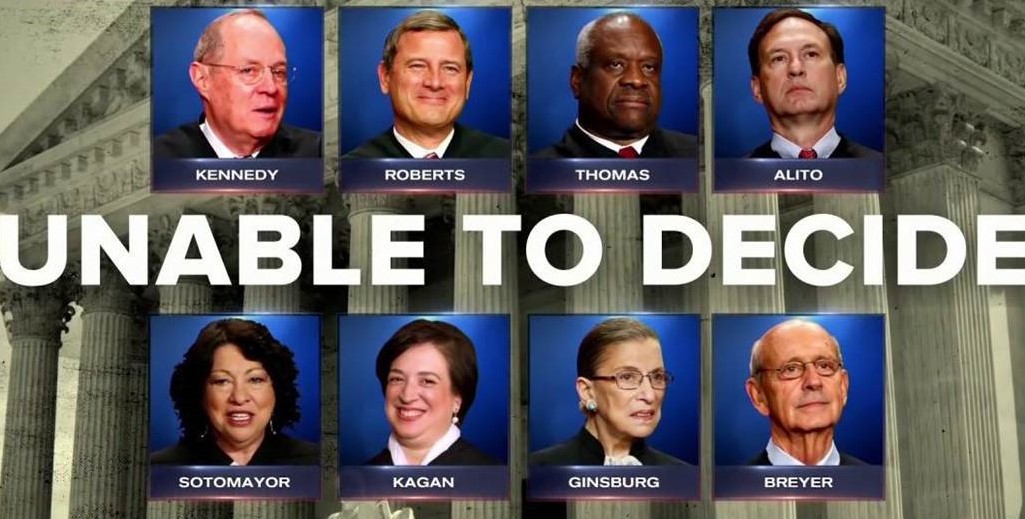
    WASHINGTON (TIP): The U.S. Supreme Court split 4-4 Thursday, June 23 over a challenge to President Barack Obama’s immigration policy, a result that prevents the administration from putting the program into effect during the rest of his term.

    The split was reflected in a one-sentence statement from the court: “The judgment is affirmed by an equally divided Court.”

    Announced in late 2014, the policy sought to shield more than 4 million people — mostly Latinos — from deportation. But lower courts blocked its implementation after Texas and 25 other states sued, claiming the president had no power to order the changes.

    The ruling deals a blow to both a White House that has used executive measures to push forward immigration reform in the wake of congressional inaction and to Obama, who has sought to rewrite a legacy that had some in Latino activist circles calling him “the deporter-in-chief.”

    There have been more than 2 million deportations in Obama’s tenure.

    The president on Thursday stressed that people who have been in the country for a long time and are otherwise law abiding will remain lower deportation priorities.

    He added that the tie was “heartbreaking” for millions of immigrants.

    Of those who opposed his executive actions, the president said: “I guarantee you at some point, every one of us has somebody in our background who people didn’t want coming here.”

    However, the tie “takes us further from the country we aspire to be,” Obama added.
    And ultimately, the president said, the nation has a choice to make.

    “We’re going to have to make a decision about whether we are a people who tolerate the hypocrisy of a system where the workers who pick our fruit or make our beds never have the chance to get right with the law — or whether we’re going to give them a chance, just like our forebears had a chance, to take responsibility and give their kids a better future,” he said.

    The death of Justice Antonin Scalia left the Supreme Court evenly divided on the issue. Thursday’s tie vote means the justices were unable to announce a ruling, an outcome that leaves in place the lower court rulings against enforcing the plan.

    The lack of a decision by the Supreme Court, Obama said, is a direct result of Congress failing to confirm his Supreme Court nominee, Judge Merrick Garland, to the bench.

    Under the proposal, adults in the United States illegally could remain if they meet certain residency requirements and have children who are American citizens or lawful permanent residents. It would also expand another program, now in effect, that allows young people to stay in the country if they were brought here under age 16.

    With 11 million undocumented migrants living in the U.S., the administration argued that it’s impossible to deport everyone here illegally. The policy was based on setting priorities — concentrating on criminals and terrorists and deferring removal for others who have established ties to the U.S.

    It would not offer permanent legal status but would defer for three years any effort to seek deportation for those qualified.

    The states argued that Congress has never given presidents a blank check for granting lawful status to people here illegally. They said the policy would do far more than simply abandon removal proceedings by converting illegal presence into lawful status and granting permission to seek work permits.

    Sixteen other states urged the justices to let the policy take effect.

    Thursday’s tie vote does not strike down the Obama proposal. In bringing the case to the Supreme Court, the government sought authority to begin enforcing the policy while the lawsuit brought by the states works its way through the lower courts.

    That process will play out for at least another year, and the next president would decide whether to continue defending it in court. Presumptive Democratic nominee Hillary Clinton has vowed to expand the program, but her GOP rival Donald Trump has said he would abandon it.

    House Speaker Paul Ryan, a Republican, applauded the effect of the split vote.

    “This is a win for the Constitution, this is a win for Congress,” he said. “Presidents don’t write laws, Congress writes laws.”

  • International Day of Yoga celebrated at the UN

    International Day of Yoga celebrated at the UN

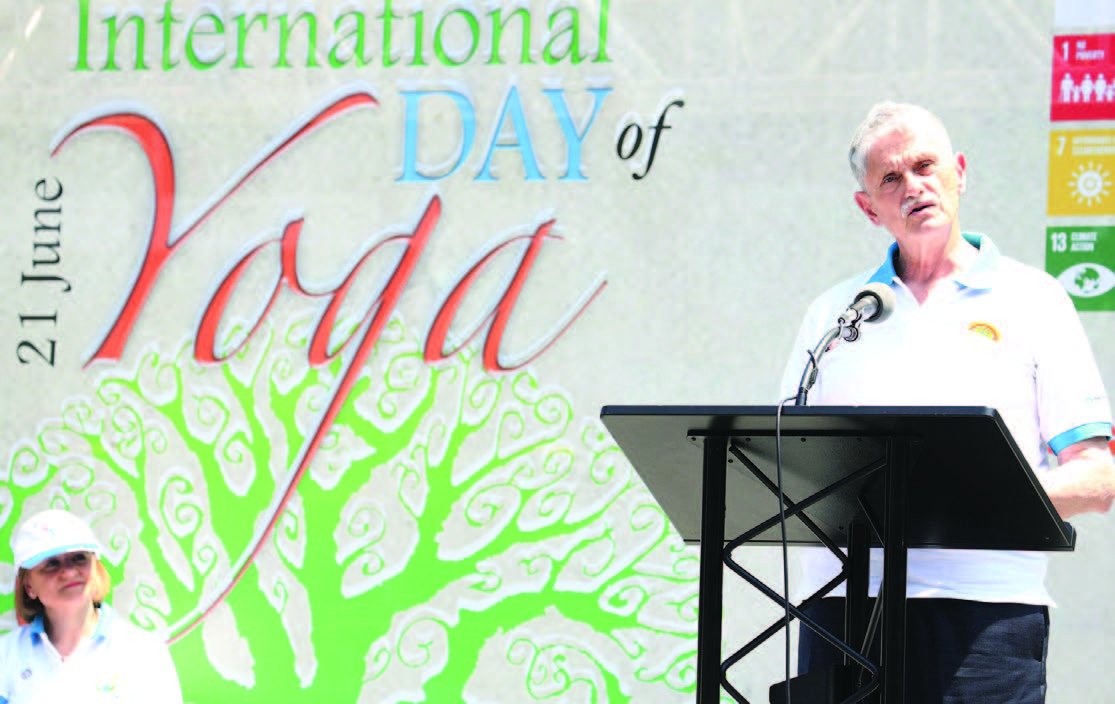
    UNITED NATIONS (TIP): The Second International Day of Yoga was celebrated at the United Nations June 21, 2016. Speaking on the occasion, India’s Permanent Representative to the United Nations, Ambassador Syed Akbaruddin said the celebration of IDY at the UN “has a special resonance” since it was here that the summer solstice was chosen for the IDY. He felt pleased to state that a record number of nationalities-135- were represented at the Yoga Day celebrations. He extended a hearty welcome to all.

    United Nations Secretary General Ban ki-Moon in his message said, “This year’s observance of the International Day of Yoga highlights the important role healthy living plays in the realization of the Sustainable Development Goals, adopted last year by all 193 United Nations Member States.”

    Sadhguru teaching Yoga at the International Yoga Day celebrated on 21st June 2016 | Photos / Mohammed Jaffer-SnapsIndia
    Sadhguru teaching Yoga at the International Yoga Day celebrated on 21st June 2016 | Photos / Mohammed Jaffer-SnapsIndia

    In his Video message PM Narendra Modi described Yoga as “invaluable gift of ancient India”.

    The External Affairs Minister Sushma Swaraj said, “We all are participants in this great celebration of health and spirituality”.

    Mogens Lykketoft, President of the 70th session of the United Nations General Assembly described Yoga as a union of mental, physical and spiritual faculties.

    Ms. Cristina Gallach, UN Under-Secretary-General for Communications and Public Information and the Yoga Guru Sadhguru also spoke on the occasion. Sadhguru gave lessons in Yoga.

    A large number of diplomats participated. India's PR to the UN, Ambassador Syed Akbaruddin is seen here doing Yoga with fellow diplomats
    A large number of diplomats participated. India’s PR to the UN, Ambassador Syed Akbaruddin is seen here doing Yoga with fellow diplomats
  • Nuclear Suppliers Group Meeting Ends:  No Decision on India’s Entry

    Nuclear Suppliers Group Meeting Ends: No Decision on India’s Entry

    NEW DELHI (TIP): In what may be interpreted as a diplomatic setback for India, the NSG meeting in Seoul ended Friday, June 24, without taking a decision on India’s entry into the group. It was not unexpected, given the earlier Chinese statement that the issue of India’s entry into the exclusive club was not on the agenda. Ahead of the discussions, China’s top negotiator told reporters that the country “won’t back India or Pakistan” until Non-Proliferation Treaty (NPT) rules are followed.

    Ambassador Wang Qun, Director General, arms control division at the Chinese Foreign ministry said: “The NSG won’t discuss Indian membership yet. Many differences are there on admitting non-NPT members.” He called it a matter of principle.

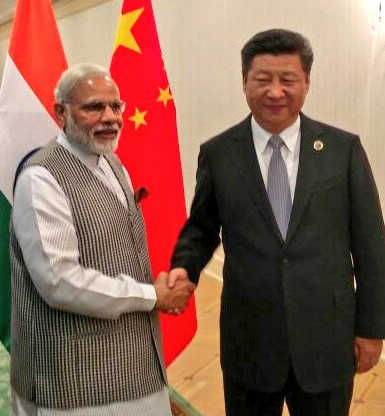
    China’s statement followed Prime Minister Narendra Modi’s meeting with Chinese President Xi Jinping on the sidelines of a multilateral summit in Tashkent on Thursday, June 23.

    Requesting a “fair and objective assessment” of India’s bid, PM Modi had said New Delhi’s case should be judged on its own merits and that China should contribute to an emerging consensus in Seoul.

    Sources say Switzerland has also raised objections to the process of including non-NPT states like India. It was one of the countries that had supported India after PM Modi’s visit.

    Brazil, Austria and Ireland have also raised concerns on the “processes” and questioned how a non-NPT signatory can be admitted to the NSG, which controls access to nuclear technology. Brazil’s objections are a worry for India since it is a key ally.

    A marathon three-hour post-dinner NSG meeting in Seoul on Thursday had ended in a deadlock over India’s membership.

    China has been unrelenting in its opposition, harping on the need to have a criteria for non-NPT countries like India and clubbing India’s case with that of Pakistan for which it is batting.

    About 300 participants from 48 member countries attended the meeting in Seoul.

  • Mehbooba pushes for India, Pakistan reconciliation

    Mehbooba pushes for India, Pakistan reconciliation

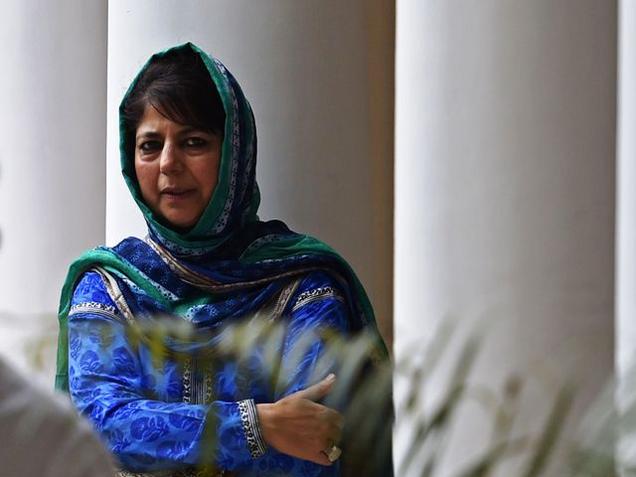
    CHAMLIYAL BORDER (TIP): Batting for revival of the India-Pakistan reconciliation process to bring about peace in Jammu & Kashmir, chief minister Mehbooba Mufti on June 23 said if hostilities between the two neighbours can become news, why cannot cultural bonhomie.

    “I wonder if hostilities can become news between the two neighbours, why can’t such cultural bonhomie,” she told reporters here.

    Mehbooba joined thousands of devotees from the two countries at the shrine of Baba Chamliyal near the international border (IB) in Ramgarh sector of Samba district on the occasion of the annual mela (fair) of the mystic saint.

    MP Jugal Kishore Sharma, state industries minister Chander Parkash Ganga and state tourism minister Priya Sethi accompanied the chief minister.

    Mehbooba said given its socio-religious significance, Chamliyal could become the hub of a new movement for reconciliation in the region.

    “I hope our good intentions are reciprocated by our neighbour,” she said, emphasizing on people-to-people contact between the two countries “to remove mistrust and create a congenial atmosphere for dialogue and reconciliation”. The PDP leader said like “siblings locked in an endless rivalry”, India and Pakistan have bickered for well over six decades.

  • AT A STROKE, PSLV C-34 LOBS 20 SATELLITES INTO ORBIT

    AT A STROKE, PSLV C-34 LOBS 20 SATELLITES INTO ORBIT

    CHENNAI (TIP): India took a big leap in space technology on June 22 when Indian Space Research Organization (ISRO) used its workhorse PSLV-C34 to inject 20 satellites including 17 foreign satellites into orbit in a single mission and set a new record on Wednesday.

    The 320-tonne Polar Satellite Launch Vehicle (PSLV-C34) took off on its 36th flight at 9.26am from the Satish Dhawan Space Centre with 20 satellites including its primary payload Cartosat-2 series, which provides remote sensing services, and earth observation and imaging satellites from US, Canada, Germany and Indonesia. It was also 14th flight of PSLV in ‘XL’configuration with the use of solid strap-on motors.

    Cartosat-2 was placed in orbit at 9.44am. With Cartosat-2 weighing 727.5kg, PSLV lifted off a total of 1,288kg in to space and began placing the satellites into orbit about 17minutes later.

    In the final stages of the mission, ISRO also demonstrated the vehicle’s capability to place satellites in different orbits. In the demonstration, the vehicle reignited twice after its fourth and final stage and moved further a few kilometres into another orbit.

    ISRO scientists said the demonstration is for their next mission when they are planning to inject satellites in different orbits using a single rocket.

    ISRO set a world record for the highest number of satellites launched in a single mission when it placed 10 satellites in a PSLV on April 28, 2008. Nasa in 2013 placed 29 satellites in a single mission and Russia in 2014 launched 33 satellites in one launch.

    In December 2015, when PSLV-C29 injected six Singapore satellites in to orbit, ISRO conducted a major experiment where the fourth stage was reignited and switched off after the satellites were placed in orbit.

    ISRO scientists said, the vehicle had been pre-programmed for today’s launch to perform tiny manoeuvring to place the 20 satellites into polar sun-synchronous orbits with different inclinations and velocities. It ensured that the satellites were placed with enough distance to prevent collision.

    ISRO began launching foreign satellites on board PSLV in May 1999. Since then, it has gained popularity, as it launched foreign satellites successfully using PSLV by charging only 60% of the fee charged by foreign space agencies. It has so far launched 57 foreign satellites.

  • INTERNATIONAL YOGA DAY | INDIA DOES ASANAS IN TANDEM WITH PM MODI

    INTERNATIONAL YOGA DAY | INDIA DOES ASANAS IN TANDEM WITH PM MODI

    CHANDIGARH (TIP): Millions of Indians on June 21 morning stretched and twisted their bodies and performed breathing exercises to celebrate the second International Yoga Day, with Prime Minister Narendra Modi in Chandigarh urging people to de-link the ancient Indian practice from their religious beliefs.

    MODI SHOWS THE WAY

    “Yoga is not a religious activity. Many people do not understand yoga completely. It is not what you will get from yoga, but what is important is what you will give to yoga and what all (ailments) will it rid you off,” he said early morning. Modi is a keen yoga enthusiast on whose proposal the UN marked June 21 to be celebrated as the International Yoga Day every year.

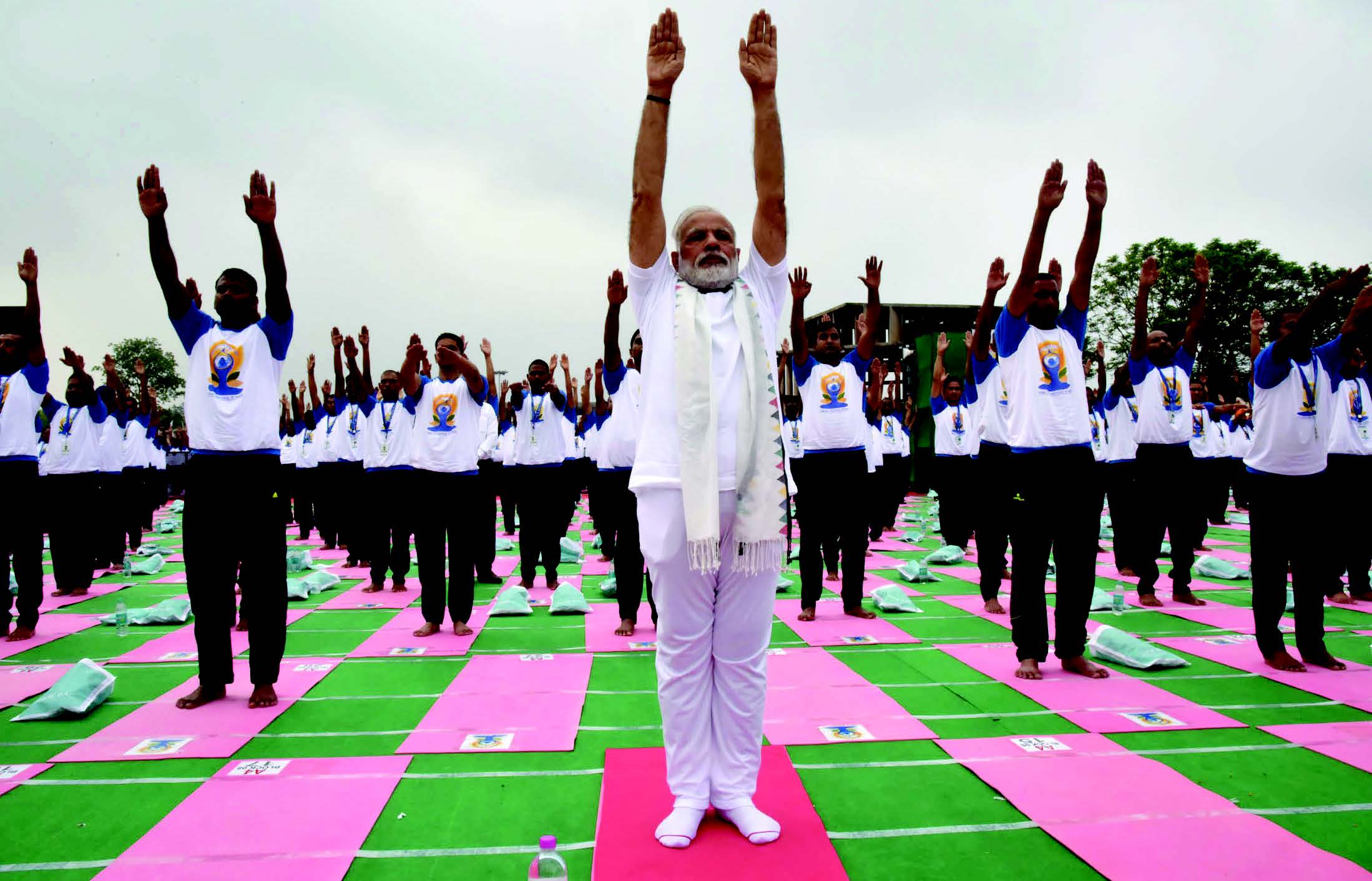
    Modi, in a white T-shirt and a payjama with a stole around his neck, led from the front in Chandigarh’s Capitol Complex. Stretching on a mat and staring at the overcast Chandigarh skies, he himself performed the asanas among the crowd of over 30,000 yoga enthusiasts.

    INDIA CELEBRATES WITH WORLD

    Mass yoga events were held in schools, public places, lawns of residential localities and office complexes across thousands of Indian villages, cities, and towns — from the deserts of Rajasthan to eastern planes and from the Himalayan heights to high seas — on naval warships — down south. The celebrations of the day and yoga performances even went high up in the sky at 35,000 feet above Earth on some morning flights. In the run-up to the celebrations, the government had created a huge hype to popularize the event, asking people to organise ceremonies for mass participations.

    CELEBRATIONS ACROSS INDIA

    In Delhi, as the morning sun broke through the overnight clouds, tens of thousands of its residents performed asanas. Over 10,000 people gathered at Central Park in the heart of Connaught Place and the circular road around it, making it one of the largest yoga events in the city.

    It rained heavily in Mumbai but that did not deter lakhs of school and college students and men and women of all ages from doing yoga exercises in many parts of the city and suburbs.

    The Indian Navy in Mumbai completed a three-week long capsule to train 25 personnel and popularise yoga among thousands of its sailors and civilians while over 2,000 took part in a yoga programme at Kohli Grounds.

    Tamil Nadu capital Chennai also saw thousands of people performing yoga. The navy marked the day with its officers and personnel performing yoga on INS Adyar.

    INDIA DOES ASANAS 2In Jammu and Kashmir, scores performed yoga exercises and the main function was held at the Maulana Azad Stadium in Jammu. Similar functions were held in Srinagar and Leh and Kargil towns of the Ladakh region.

    In Himachal Pradesh, the day was observed amid cloudy conditions and yet thousands did asanas in hundreds of camps across the state.

    In Left-ruled Kerala, the day sparked a controversy as Health Minister K.K. Shailaja was irked by Sanskrit kirtans rendered at an event. She pointed out that yoga doesn’t belong to any particular religion and is also practised by atheists.

    Celebrations were also held in Rajasthan, Madhya Pradesh, Odisha, Bihar and northeastern states.

    High up in the sky, budget airline SpiceJet conducted practice sessions on all its two-hour morning flights. It was a special 10-minute ‘Upa-Yoga’ onboard capsule for its passengers and crew. The participants performed while seated. The special asanas are believed to help activate joints, muscles and energy systems to overcome jetlag, fear of flying and breathing difficulties.

  • After CEA, Swamy hits out at another bureaucrat

    After CEA, Swamy hits out at another bureaucrat

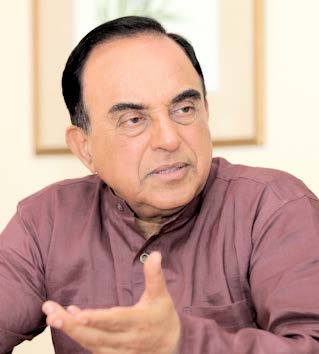
    NEW DELHI (TIP): BJP MP Subramanian Swamy on June 23 appeared to target Economic Affairs Secretary, Shaktikanta Das, which prompted Finance Minister Arun Jaitley to call it an “unfair and false” attack. Hurling veiled charges at Das, Swamy, in a morning post on his Twitter handle, said there is a “property deal case pending against him (Das) for assisting PC (Congress leader P Chidambaram) swallow Mahabalipuram prime locations”.

    The Rajya Sabha member demanded that Das, an IAS officer of the 1980 batch, be repatriated to Tamil Nadu, his home cadre.

    Jaitley, who is on a five-day official trip to China, tweeted: “An unfair and false attack on a disciplined civil servant in the finance ministry”.

    The finance minister had earlier stated that political leaders should refrain from taking on officers restrained by their office compulsions.

    Das is the latest among the senior bureaucrats and technocrats Swamy has targeted of late, which is turning out to be an embarrassment to the BJP.

    On Wednesday, Swamy took on Chief Economic Advisor Arvind Subramanian, demanding that he be sacked for taking an anti-India position on the Intellectual Property Rights issue at the United Nations. He had also charged Subramanian with encouraging the Congress party to take a stiff stand on the GST Bill, which is still pending in Parliament.

    Jaitley had defended Subramanian saying the CEA enjoyed “full confidence” of the government and his advices on several occasions had been of “great value”. When asked to comment on Jaitley and the BJP not endorsing his views on Subramanian, Swamy said, “Let him (Jaitley) say what he wants… I have nothing to do with what Jaitley says. I can talk to the party President or the Prime Minister.” “Will talk to them when required, right now it’s not needed as I have said what I had to say,” he insisted.

    An unrepentant Swamy added to his Wednesday’s rant against the CEA and said he was willing to “suspend” his attack on Subramanian provided the government still considers him
    “patriotic” despite his “anti-India stand”.

  • STUNG ONCE, BHAGWAT SAYS HE NOW AVOIDS SPEAKING ON QUOTA ISSUES

    STUNG ONCE, BHAGWAT SAYS HE NOW AVOIDS SPEAKING ON QUOTA ISSUES

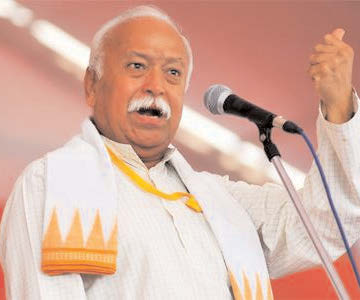
    NAGPUR (TIP): “Kuchh karne jao to virodh karne wale bahot hote hain, (if you set out to to do something, you often meet stiff resistance),” said RSS chief Mohan Bhagwat here on June 23, indirectly referring to the hue and cry over his pre-Bihar election interview in which he spoke of the need to check if the benefits of reservations were reaching the poor.

    Bhagwat was addressing a convention of Matang community here on Thursday. Matangs are a backward community seeking reservation. “Now I avoid speaking on the issue,” said the RSS chief ruefully. “RSS does not run the government, nor does it interfere in its working. But the Prime Minister and the chief minister (of Maharashtra) are swayamsevaks and I hope they will help you,” he said, while assuring Matangs that if he gets a chance, he would take up the community’s demand for quota with them.

    The Sarsanghachalak said RSS was relentlessly working towards building an egalitarian society. “There should be no discrimination among Hindus and none should be barred from entering a temple, the water resources and crematorium should be common for all… In the Sangh, we train swayamsevaks in such a way that they see only a Hindu and not caste and community,” Bhagwat said. “Had the faith been weak, it would have been wiped out by now. It is only our indifference that creates barriers and encourages conversions,” he said.