Month: July 2016

  • Why Use the Terror Tag Arbitrarily?

    Why Use the Terror Tag Arbitrarily?

    The frightful and bloody hours of Friday night (July 22) and Saturday morning in Munich and Kabul – despite the 3,000 miles that separate the two cities – provided a highly instructive lesson in the semantics of horror and hypocrisy. I despair of that generic old hate-word, “terror”. It long ago became the punctuation mark and signature tune of every facile politician, policeman, journalist and think tank crank in the world.

    Terror, terror, terror, terror, terror. Or terrorist, terrorist, terrorist, terrorist, terrorist.

    But from time to time, we trip up on this killer cliché, just as we did at the weekend. Here’s how it went. When first we heard that three armed men had gone on a “shooting spree” in Munich, the German cops and the lads and lassies of the BBC, CNN and Fox News fingered the “terror” lever. The Munich constabulary, we were informed, feared this was a “terrorist act”. The local police, the BBC told us, were engaged in an “anti-terror manhunt”.

    And we knew what that meant: the three men were believed to be Muslims and therefore “terrorists”, and thus suspected of being members of (or at least inspired by) Isis. Then it turned out that the three men were in fact only one man – a man who was obsessed with mass killing. He was born in Germany (albeit partly Iranian in origin). And all of a sudden, in every British media and on CNN, the “anti-terror manhunt” became a hunt for a lone “shooter”.

    One UK newspaper used the word “shooter” 14 times in a few paragraphs. Somehow, “shooter” doesn’t sound as dangerous as “terrorist”, though the effect of his actions was most assuredly the same. “Shooter” is a code word. It meant: this particular mass killer is not a Muslim. Now to Kabul, where Isis – yes, the real horrific Sunni Muslim Isis of fearful legend – sent suicide bombers into thousands of Shia Muslims, who were protesting on Saturday morning at what appears to have been a pretty routine bit of official discrimination.

    The Afghan government had declined to route a new power line through the minority Hazara (Shia) district of the country – a smaller electric cable connection had failed to satisfy the crowds – and had warned the Shia men and women to cancel their protest. The crowds, many of them middle-class young men and women from the capital, ignored this ominous warning and turned up near the presidential palace to pitch tents upon which they had written in Dari “justice and light” and “death to discrimination”.

    But death came to them instead, in the form of two Isis men – one of them apparently pushing an ice-cream cart – whose explosives literally blew apart 80 of the Shia Muslims and wounded at another 260. In a city in which elements of the Afghan government are sometimes called the Taliban government, and in which an Afghan version of the Sunni Muslim Islamic State is popularly supposed to reside like a bacillus within those same factions, it wasn’t long before the activists who organized the demonstration began to suspect that the authorities themselves were behind the massacre. Of course, we in the West did not hear this version of events. Reports from Kabul concentrated instead on those who denied or claimed the atrocity. The horrid Islamist Taliban denied it. The horrid Islamist Isis said they did it. And thus all reports centered on the Isis claim of responsibility. But wait. Not a single report, not one newscast, referred to the Kabul slaughter as an act of “terror”. The Afghan government did. But we did not. We referred to the “suicide bombers” and the “attackers” in much the same way that we referred to the “shooter” in Munich.

    Now this is very odd. How come a Muslim can be a terrorist in Europe but a mere “attacker” in South-west Asia? Because in Kabul the killers were not attacking Westerners? Or because they were attacking their fellow Muslims, albeit of the Shia Muslim variety?

    I suspect both answers are correct. I can find no other reason for this weird semantic game. For just as the terrorist identity faded away in Munich the moment Ali Sonboly turned out to have more interest in the Norwegian mass murderer Anders Breivik than the Caliph Abu Bakr al-Baghdadi of Mosul, so the real Isis murderers in Kabul completely avoided the stigma of being called terrorists in any shape or form.

    This nonsensical nomenclature is going to be further warped – be sure of this – as more and more of the European victims of the attacks in EU nations turn out to be Muslims themselves. The large number of Muslims killed by Isis in Nice was noticed, but scarcely headlined. The four young Turks shot down by Ali Sonboly were subsumed into the story as an almost routine part of what is now, alas, the routine of mass killing in Europe as well as in the Middle-East and Afghanistan. The identity of Muslims in Europe is therefore fudged if they are victims but of vital political importance if they are killers. But in Kabul, where both victims and murderers were Muslim, their mutual crisis of religious identity is of no interest in the West; the bloodbath is described in anemic terms. The two attackers “attacked” and the “attacked” were left with 80 dead – more like a football match than a war of terror. It all comes down to the same thing in the end. If Muslims attack us, they are terrorists. If non-Muslims attack us, they are shooters. If Muslims attack other Muslims, they are attackers. Scissor out this paragraph and keep it beside you when the killers next let loose – and you’ll be able to work out who the bad guys are before the cops tell you.

    (The author, an English writer and journalist from Maidstone, Kent is currently Beirut correspondent of The Independent)

  • India: Investing in a Child’s Early Years for a Stronger Economy

    India: Investing in a Child’s Early Years for a Stronger Economy

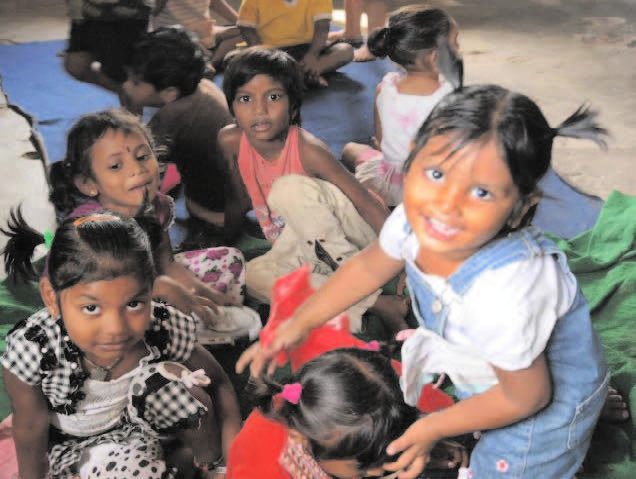
    India has the world’s largest number of young people, and 1 million of them enter the workforce every month. It is critical to the nation’s success that young Indians are well-nourished, skilled, and prepared to contribute to the global economy. This preparation must begin the in first 1,000 days of life (i.e., from pregnancy through the first 2 years of life) by affording proper nutrition, opportunities for early learning, and a safe environment; however, less than 2% of children in India have these basic needs met. Consequently, growth is stunted in many children, and studies have shown that this can lead to irreversible consequences on brain development. Early nutritional intervention can increase wages in adulthood by 5-50%, and preventing stunted growth can boost India’s gross domestic product (GDP) by 4-11%

    These issues have been tackled in recent years by programs that have been put in place to help improve living conditions and nutrition as well as to support mothers and young children, including the Integrated Child Development Services Scheme (ICDS) and the National Health Mission (NHM). The World Bank aims to support government programs and to facilitate cooperation of the 1.3 million village nutritional centers (i.e., aanganwadi centers) with local primary schools, as an additional 2 years of preschool education can greatly benefit adult income. World Bank is also investing $1.5 billion in the Clean India Initiative to help address stunting in Indian children via better sanitation, which is important to implement in conjunction with supplemental nutrition. Self Help Groups, supported in part by World Bank, are projected to result in improved nutrition in 1.5 million households over the next 5 years in Bihar, Andhra Pradesh, and Telangana; the program will reach other states through the National Rural Livelihoods Project.Investing in the health and enrichment of the youngest members of Indian society is critical to help the country fulfill its potential as a great contributor to the global workforce and economy.

    (Source: The World Bank, June 29, 2016)

  • Guns cheaper than smartphones in Pakistani tribal town

    Guns cheaper than smartphones in Pakistani tribal town

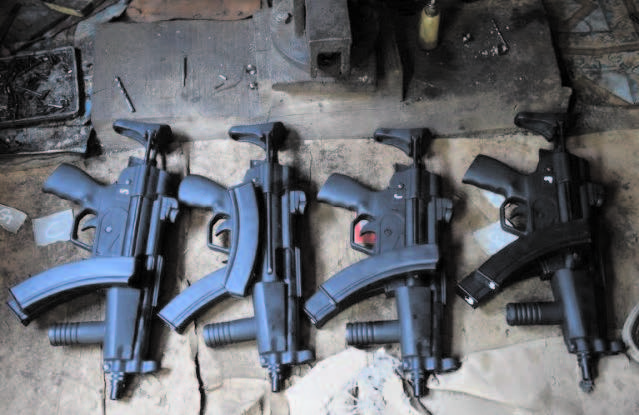
    DARRA ADAMKHEL (TIP): Gunfire echoes through a dusty northwest tribal town, the soundtrack to Pakistan’s biggest arms black market, where Kalashnikovs welded from scrap metal are cheaper than smartphones and sold on an industrial scale.

    Darra Adamkhel, a town surrounded by hills some 35 kilometres (20 miles) south of the city of Peshawar, was a hub of criminal activity for decades. Smugglers and drug runners were common and everything from stolen cars to fake university degrees could be procured.

    This generations-old trade in the illicit boomed in the 1980s: The mujahideen began buying weapons there for Afghanistan’s battle against the Soviets, over the porous border.

    Later, the town became a stronghold of the Pakistani Taliban, who enforced their strict rules and parallel system of justice — infamously beheading Polish engineer Piotr Stanczak there in 2009.

    Now Darra is clean of all but the arms, yet the gunsmiths in the bazaar say the region’s improved security and authorities’ growing intolerance for illegal weaponry are withering an industry that sustained them for decades.

    “(The) Nawaz Sharif government has established checkpoints everywhere, business is stopped,” said Khitab Gul, 45.

    Gul is known in Darra for his replicas of Turkish and Bulgarian-made MP5 submachine guns, one of the most popular weapons in the world, widely used by organisations such as America’s FBI SWAT teams.

    The MP5 can retail for thousands of dollars. Gul’s version, which comes with a one-year guarantee, costs roughly 7,000 rupees, or $67 — and, he claims, it works perfectly.

    Gul then puts on a demonstration, test-firing his MP5 in the small outer yard of his workshop — first the single shot mode, then firing in a burst.

    A Darra-made Kalashnikov, Gul says, can sell for as little as $125, cheaper than most smartphones. “The workers here are so skilled that they can copy any weapon they are shown,” he explains.

    “In past 10 years I have sold 10,000 guns, and had zero complaints,” he claims.

    In Gul’s sweltering workshop, employees shout over the roar of electrical generators as they expertly cut and drill through metal brought from the shipyards of Karachi, far to the south on the Arabian Sea.

    The main bazaar which cuts through the town used to hold nothing but tiny gun shops crammed together, their gleaming wares displayed openly on racks as customers test-fired into the air above. Trade was illegal, unlicensed and unregulated, but long tolerated by authorities with little power in the tribal areas between Afghanistan and Pakistan, where militants once operated with impunity. Residents, for their part, viewed the market as legitimate in an area dominated by Pashtun traditions, where gun culture is deeply embedded in male identity.

    But in recent years, the military has cracked down on extremism, particularly in the tribal areas, and security is the best it has been since the Pakistani Taliban were formed in 2007.

    Every second or third shop in Darra now sells groceries or electronics instead of weapons, the gunsmiths lament. The Wild West atmosphere is fading as the town embraces modern conveniences.

    Before the crackdown Gul’s workshop — just one of hundreds in the town –could produce more than 10 weapons a day, he says.

    Now they only produce four. “Demand has decreased,” he says.

    Gunsmiths put the blame squarely on the Pakistani government and military, particularly checkpoints on the way to Darra halting customers who once travelled to the town openly.

    Foreigners have been banned for security reasons.

    The military has not yet objected to the gun market in Darra directly, but residents say they have had to give sureties that they will not harbour militants, and a half-hearted attempt at licensing is now also being made.

    “I have been working here for 30 years but now I have no work to do,” says Muzzamil Khan, sitting idle outside his workshop. “I am ready to sell my lathe machine.”

    Muhammad Qaisar, making cartridges at his shop in the main bazaar, said at one point there had been up to 7,000 shops there — but now almost half have closed.

    If the government does not change its policies, he says, “I fear… Darra will be finished”.

    Darra trade union leader Badam Akbar confirmed that some 3,000 shops have closed, and said skilled workers are attempting to learn new trades. “Nothing is left in this bazaar now,” he says.

    (AFP)

  • Pakistani campaign looks to drag Indian celebs into Kashmir row

    Pakistani campaign looks to drag Indian celebs into Kashmir row

    NEW DELHI (TIP): A Pakistani organization has launched a graphic online campaign on the Kashmir issue, attempting to drag Indian celebrities into the controversy by using their morphed images. The campaign comes at a time when senior figures of the Pakistan government continue to spark controversy with their comments on the tension in Kashmir over the killing of terrorist Burhan Wani.

    The campaign claims to be aimed at raising attention to the use of pellet guns against violent protestors by security forces in Kashmir. It portrays a number of Indian celebrities with battered faces, and carries a message questioning their silence on the Kashmir issue.

    Those dragged into the controversy by the campaign include cricketer Virat Kohli and film personalities Amitabh Bachchan, Shah Rukh Khan, Kajol, Alia Bhatt, Saif Ali Khan and Hrithik Roshan. It also takes a shot at Prime Minister Narendra Modi, cricketer Virat Kohli and Facebook chief Mark Zuckerberg. The campaign, by the organization called Never Forget Pakistan, however made no bones of its intentions, demanding a plebiscite in Kashmir. (PTI)

  • Hillary makes history as Dem nominee

    Hillary makes history as Dem nominee

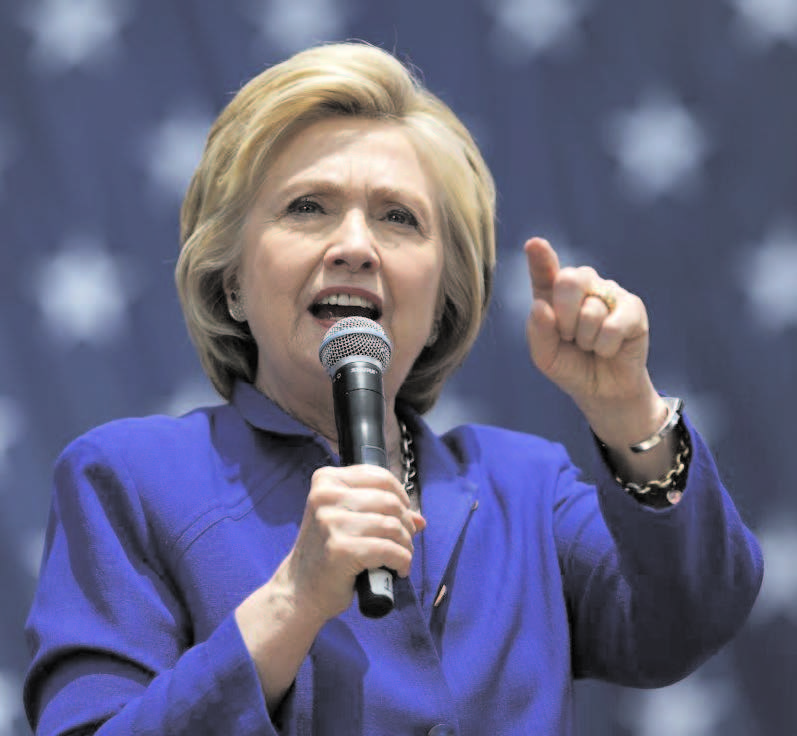
    PHILADELPHIA: The US is just one step shy of electing its firstever female President. Already , Hillary Clinton has made history, with the Democratic Party formally nominating her on Tuesday as their presidential candidate -the first woman in the country’s 240-year modern, democratic existence to become the standard-bearer of a major political party .

    “I can’t believe we just put the biggest crack in that glass ceiling yet,” Clinton told party loyalists. “If there are any little girls out there who stayed up late to watch, let me just say: I may become the first woman president, but one of you is next,” she added.

    The momentous occasion came with theatre worthy of a vibrant, raucous and transparent democracy . An epic intraparty battle concluded on the floor of the Democratic National Convention when Hillary’s socialist rival Bernie Sanders formally ceded the fight after pacifying his diehard supporters with a roll call vote so their choice and voice could be heard and recorded. Then, Sanders himself proposed Hillary Clinton’s nomination with acclamation by delegates.

    Six hours later former President Bill Clinton, famed for his silver-tongued oratory , deployed his gift for storytelling to draw a compelling portrait of a spouse who was at once a driven policy wonk, a tireless activist and a fabulous mother who now deserved her place in the political sun. In a 45-minute address, he cited numerous in stances of how she wrought policy changes as a lawyer, a senator and as secretary of state, calling her the “real deal” and contrasting her energy and intellectual heft with an opponent who has no record of public service and no ideas, and who he suggested was a “cartoon alternative”.

    “She is still the best darn changemaker I have ever known,” the man who could be America’s First Gentleman told the party flock -still boiling with skeptics.

    Among them was actress Susan Sarandon, a Bernie supporter, who like many of his camp followers believe the Clintons are a dodgy couple who are part of an old order that will maintain a status quo in which the elites rip off ordinary people while pretending to work for them. (PTI)

  • Wild animals evacuated because of fire return home in LA

    Wild animals evacuated because of fire return home in LA

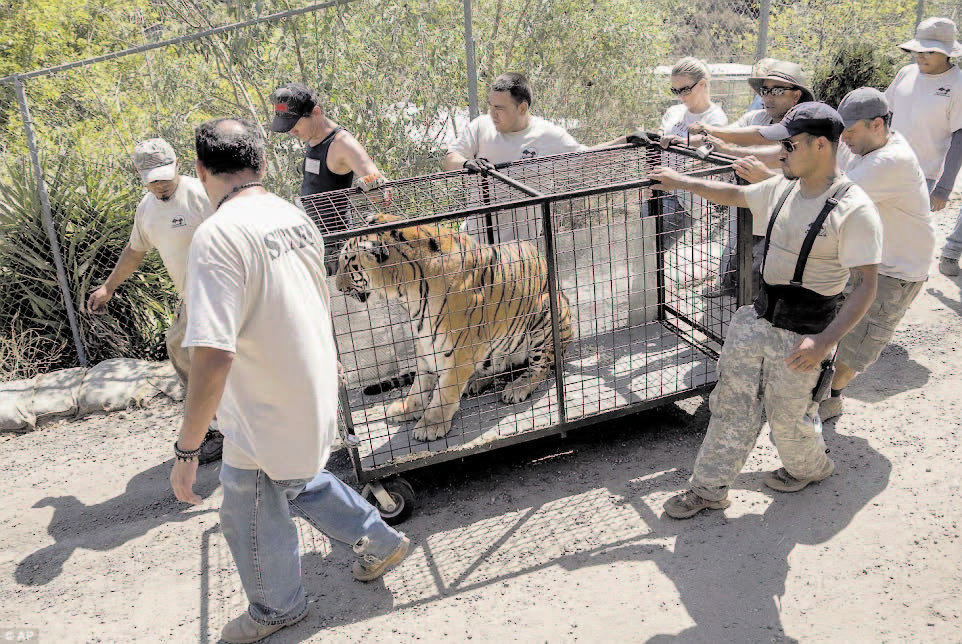
    SYLMAR, UNITED STATES (TIP) : Kuba the tiger paces in his cage, pawing at the metal floor and growling. He’s in a bad mood.

    A huge wildfire in suburban Los Angeles forced his evacuation Friday from Wildlife Waystation, an animal reserve.

    It was only the second time in 50 years that this had happened.

    Now, under a grueling sun, Kuba and the other critters were headed home.

    “You have to stay behind the fence. Kuba got too hot. He’s not so happy about what’s going on,” warns Martine Colette, founder of the reserve tucked away in the mountains of Angeles National Park, about a 45 minute drive from Los Angeles.

    It is home to hundreds of wild animals: big cats, monkeys, bears, exotic birds, wolves, zebras and more.

    The so-called Sand fire scorched 150 square kilometers (58 square miles) of forest and brush, killed one person and destroyed 18 buildings including some on a ranch that served as sets for movies and TV shows.

    The return home to the animal refuge unfolded Wednesday.

    Each cage was hoisted off a truck by around six people, then taken on a cart towards the animal’s enclosure, where they were released.

    Some needed a nudge. “Tessa, come on, baby girl,!” an employee yells to a female Bengal tiger.

    Tessa does not budge, then suddenly jumps out of the cage into her fenced off pen and scurries off to seek cover.

    Nearby, bears lounge around in their cages, monkeys swing and parrots squawk. A lion named Ibsik watches stoically from a wooden perch.

    – Animals are ‘philosophical’
    The fire not only forced the evacuation of some 20,000 people in this rural region some 50 kilometers (30 miles) from Los Angeles but also that of hundreds of animals: horses and cattle from many ranches, and wild animals from reserves and companies that provide them for shooting movies in Hollywood.

    Eric Weld, a friend of Colette, runs Hollywood Animals, which supplies animals for flicks.

    At first he took in some of the animals evacuated from Waystation. But when the winds shifted and the flames started coming his way, he had to send them packing again.

    “I said, ‘I hate to be a bad host but you’ll have to go somewhere else,’” Weld said as he helped carry the cages.

    Shambala Preserve, an animal sanctuary founded by actress Tippi Hedren and located not far from the town of Sylmar, narrowly escaped being forced to evacuate its animals. The Hollywood Reporter had reported that most of its animals were in fact moved. “You see, you smell, you know what it is and you’re frightened,” said Colette, who has been crazy about wild animals since she was a child.

    “But people in this facility are not going to spend a lot of time being frightened. They have work to do,” said Colette, 74, who had to deal with this crisis shortly after having undergone knee surgery.

    Using social media, she mobilized friends, employees and volunteers to move the animals to safety.

    At first the “animals smell and they get a little uncomfortable. But then they settle down and they’re OK. Animals are very philosophical,” she said.

    The hurried departure cost $100,000. “There’s never enough money. I beg, I borrow, I raise money, I put up some of my own money,” said Colette.

    Some of her animals have come from far away.

    A tiger named Jodi was donated by an animal protection group in Ireland, and there are chimpanzees supplied by research institutes.

    She said many animals come from regular people who think it is cool to adopt, say, a lion cub until it grows and starts destroying their home.

    “Some people adopt a chimp because it looks like a baby. Until it grows,” Colette said. And then they cannot cope with the creature.

    “This business brings very strange people, very, very strange, actually very scary people,” she said. (AFP)

  • Transgender activist makes history at Democratic convention

    Transgender activist makes history at Democratic convention

    PHILADELPHIA (TIP): Sarah McBride on July 28 became the first openly transgender person to address a national US political party convention, telling Democrats that White House nominee Hillary Clinton “understands the urgency” of the fight for equality.

    “My name is Sarah McBride and I am a proud transgender American,” the beaming rights activist told cheering delegates on the fourth and final day of the Democratic National Convention that anointed Clinton as the party’s flagbearer.

    “Hillary Clinton understands the urgency of our fight,” she said. “She will work with us to pass the equality act, to combat violence against transgendered women of color, and to end the HIV-AIDS epidemic once and for all.”

    Transgender people have seen their cause advance in recent years, notably this April when a US Circuit Court of Appeals recognized that transgender Americans are protected under federal laws banning sex-based discrimination.

    The issue has become a political flashpoint in several states including North Carolina, prompting lawmakers to take sides on whether communities or institutions can forbid transgender people from using the bathrooms of their gender identity.

    In June after a lengthy review, the Pentagon said it was ending the ban on transgender people being able to serve openly in the US military.

    “Despite this progress, so much work remains,” said McBride, who noted that she came out as transgender while serving as the student body president at her college.

    “Today in America, LGBTQ people are still targeted by hate that lives in both laws and in hearts. Many still struggle just to get by, but I believe that tomorrow can be different.”

    McBride was introduced at the convention by Sean Patrick Maloney, an openly gay member of the US House of Representatives.

    “You know, it’s a beautiful thing when your country catches up to you, and when your basic rights, and your very family are on the line,” Maloney said. (AFP)

  • This US Democrat mimicked Donald Trump and drove Twitter crazy

    This US Democrat mimicked Donald Trump and drove Twitter crazy

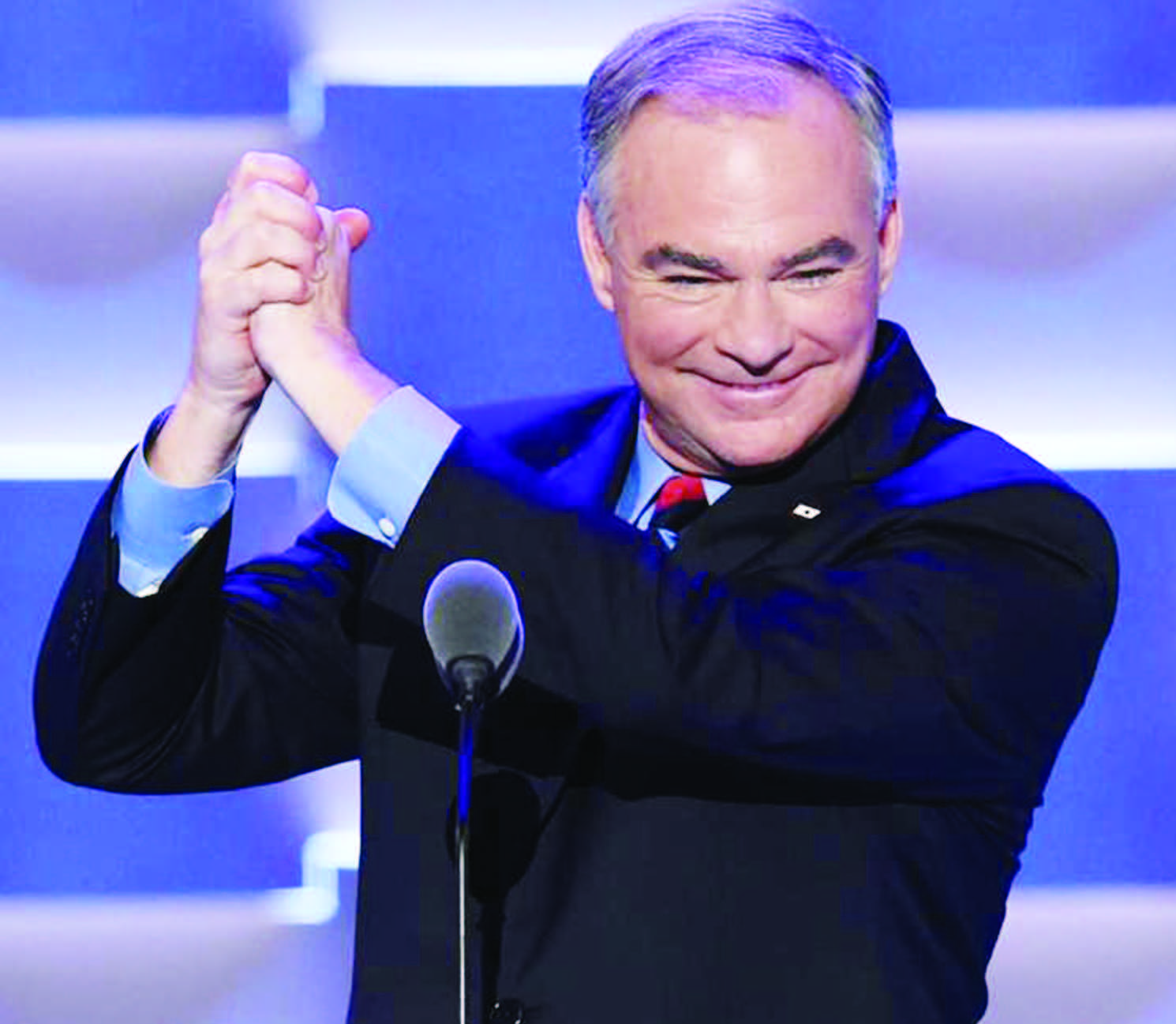
    NEW DELHI (TIP): The unlikely star of Day 3 of the US Democratic National Convention was Tim Kaine.

    Who? Precisely. People are not likely to ask that question again. That’s because Kaine, who is Hillary Clinton’s pick for the post of US Vice President, became a rage on Twitter. Within an hour of his speech at the convention on Wedneday night Philadelphia time, there had been more than 200,000 tweets about him, CBS News estimated.

    In his speech, Kaine mimicked and demolished Republican Presidential nominee Donald and threw in Spanish colloquialisms, all in a down-home, quasi-goofy delivery style that had Twitterati in splits and that inspired dozens of ‘dad jokes’.

    “The dad joke is a delicate thing. Part knowing humour, part lack of humour, it’s only requirement is that it ellicits not a laugh from its audience but the annoyed response: “Daaaaaaaaad”, according to a description in British newspaper The Telegraph.

    Kaine repeatedly mocked Trump’s use of the phrase “believe me.”

    “You know who I don’t trust? Donald Trump. The guy promises a lot. But you might have noticed, he has a habit of saying the same two words right after he makes the biggest promises. You guys know the words I mean? ‘Believe me,’ ” Kaine said. (PTI)

  • 15-hour mega jam in UK as France ups border checks

    15-hour mega jam in UK as France ups border checks

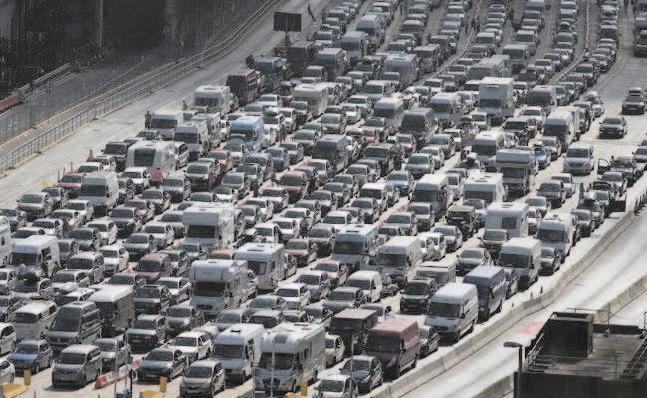
    DOVER (TIP): British holidaymakers spent hours sweating in their cars as 15-hour queues snaked back from the port of Dover on July 23 due to heightened entry checks by French border police.

    Stationary vehicles tailed back up to 12 miles (19 kilometres) inland from Dover, on England’s southeastern tip.

    The peak summer holiday getaway season and what Dover port officials said was a lack of French border control staff combined with the increased security to create the mammoth queues.

    Dover is Britain’s main ferry port to continental Europe, with Calais in northeastern France 21 miles (33 kilometres) away across the Channel.

    A multiple sclerosis sufferer travelling to Germany for stem cell treatment was among those forced to spend the night in their vehicles.

    What should have been a straightforward journey to Dover turned into a 20-hour ordeal for 50-year-old Tanya Cudworth, who was travelling to a Frankfurt clinic.

    She told the Press Association news agency that her experience was “absolutely horrendous”.

    “Nineteen hours in the car has obviously aggravated my symptoms,” she said.

    “During the day it was so hot and there was nowhere near enough water and at night… you couldn’t sleep because you had to keep moving forward.

    “We didn’t get any water until 3am and I saw women with babies, young families and people with pets with no water. It’s shocking that more wasn’t done to get it to people.”

    People were advised to bring food and drink supplies, while Sikh humanitarian organisation Khalsa Aid delivered bottles of water and snacks.

    “We met a lot of young families with children, mostly people going on holidays,” said founder Ravi Singh, 46.

    “People didn’t know what was going on. “People were very, very frustrated and pulling their hair out.

    “It was a very miserable day for many people.”

    Dover port authorities said French border control booths had been “seriously understaffed overnight”.

    British border officials were drafted in to help their French colleagues.

    “We recognise the security pressures that French law enforcement organisations are under at Dover,” said a British government spokeswoman.

    “There has been extraordinary disruption in the Dover area today but safety is paramount.”

    Highways England, which runs the road network, said the delays were due to “heightened security checks to keep the travelling public safe following the recent attacks in France”.

    By 5 pm (1600 GMT) Sunday, the local Kent Police force said traffic had returned to normal levels, with delays down to around 30 minutes.

    Xavier Czerwinski, a senior official from the Pas-de-Calais area, said: “The situation is exceptional because it’s the weekend when Britons make the great getaway to the continent.

    “Given the European context and the prolonged state of emergency, officers are obliged to check every vehicle rigorously.” (AP)

  • Nusra chief in Syria announces break with al-Qaeda

    Nusra chief in Syria announces break with al-Qaeda

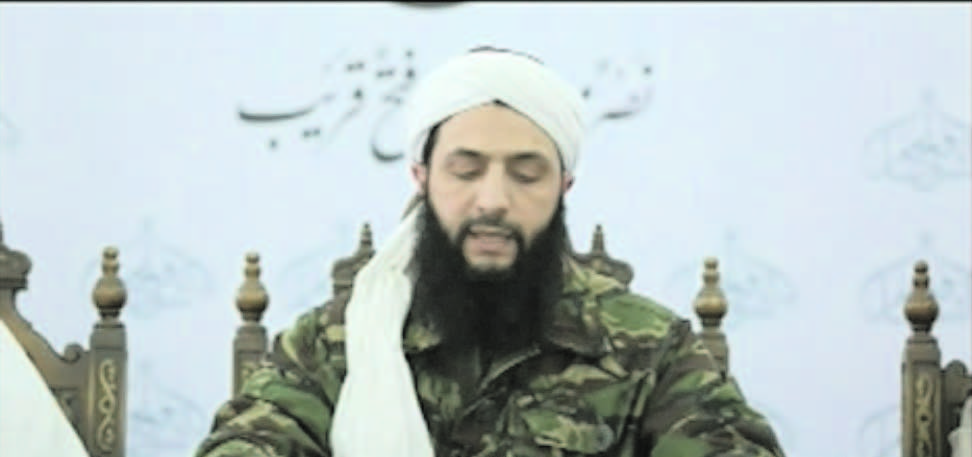
    BEIRUT (TIP): The Syrian branch of al-Qaeda, Al-Nusra Front, announced on July 28 it was breaking ties with the global terror network, in a video showing its leader Abu Mohamad al-Jolani for the first time.

    The footage broadcast by Al-Jazeera news channel follows several days of online chatter over a split between al-Qaeda and its Syria affiliate, a main rival of the Islamic State jihadist group from which it wants to distance itself as a target of foreign air strikes.

    Appearing in public for the first time, Jolani said Al-Nusra would change its name to Jabhat Fateh al-Sham (Front of the Conquest of Syria) and unify ranks with other mainstream fighters in Syria.

    “We decided to stop operating under the banner of Al-Nusra and to set up a new front, called Jabhat Fateh al-Sham,” said Jolani.

    Clad in military fatigues and wearing a turban, the bearded Jolani expressed his gratitude to “the commanders of al-Qaeda for having understood the need to break ties”.

    And he vowed the new group would “have no links whatsoever with foreign parties”.

    Analysts said Al-Nusra aims to rebrand and defend itself as it comes under increased pressure after Moscow and Washington agreed to step up joint efforts against jihadist groups.

    Last week, US Secretary of State John Kerry and his Russian counterpart Sergei Lavrov said they had agreed “concrete steps” to save a failing Syria truce and tackle jihadists like Al-Nusra and IS.

    But with the amicable break from al-Qaeda , Jolani “can now call upon a broad spectrum of armed groups in Syria to agree to unite initiatives that will by necessity be heavily influenced by Nusra itself”, said analyst Charles Lister.

    In the brief recording, Jolani, who was flanked by two bearded men, said the split from al-Qaeda was aimed at “protecting the Syrian revolution”.

    He also pledged to unite ranks with other fighters in order to “liberate Syria from the oppressors”.

    “We hope to form a unified body, based on the shura (Islamic law), uniting the masses of the people of Al-Sham, liberating their lands, giving victory to their faith and upholding their testimony of faith,” he said.

    Lister said that one of the men sitting beside Jolani was a veteran al-Qaeda leader he identified as Ahmed Salameh Mabrouk.

    “Al-Qaeda is playing a critically important role in shaping this development and their thinking and strategizing will remain crucial for this new Jabhat Fateh al-Sham movement,” he said. (AFP)

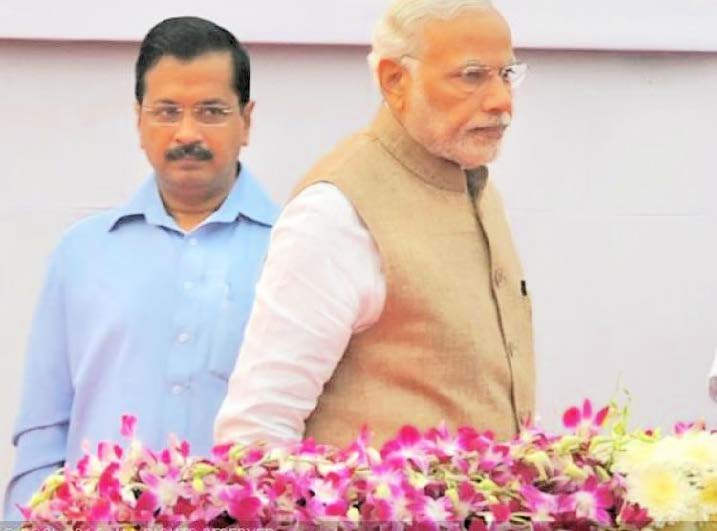
  • PM Modi may get me killed: Delhi CM Arvind Kejriwal

    PM Modi may get me killed: Delhi CM Arvind Kejriwal

    NEW DELHI (TIP): Prime Minister Narendra Modi may “get me killed”, Arvind Kejriwal said on July 27, unleashing one of the most severe attacks on him as the Delhi Chief Minister wondered if the country was in “safe hands”.

    Referring to series of arrests of AAP MLAs and workers in the last one-and-a-half years, Kejriwal dubbed Modi to be the “mastermind” behind the “cycle of oppression” against them and that he was hell bent on “vanquishing” the party.

    Calling the current period to be “very critical”, Kejriwal sought to remind AAP volunteers, MLAs and Delhi Government Ministers that things will get worse in the coming days and exhorted them to “leave” if they are not strong enough.

    “I want to tell all the volunteers, MLAs and Ministers that this is a very critical period. You think over it, talk to your families. This is going to get worse in the coming days.

    “He (Modi) can go to any extent and may get us killed. He may get me killed as well. Talk to your families and see if you are ready for the ultimate sacrifice. All the MLAs will anyway have to go to jail. If you are ready, then stay with us or if you have weaknesses, then leave,” he said.

    “Modi has lost all sense of proportion and is hell bent on vanquishing the AAP,” Kejriwal said in a nearly 10-minute-long video message posted online.

    Kejriwal, who has called Modi a psychopath and coward in the past, said the country would be in danger if the Prime Minister starts taking decisions guided by “no rhyme or reason but anger”.

    “For me, the biggest reason to worry is the fact that if a country’s PM starts taking decisions in anger then the country will be in danger. Who knows he might be doing the same when it comes to many such decisions.

    “The important question is whether the country is in safe hands or not? Important thing is not the arrests of our MLAs. Is the country in safe hands ?” he asked.

    The Delhi Chief Minister referred to arrests of 10 MLAs, income tax raids on one legislator and attempts to disqualify 21 MLAs through “false allegations”.

    “You must have seen the attempts to crush the AAP. 10 MLAs have been arrested, IT raid has been conducted on one, and attempts are being made to disqualify 21 MLAs through false allegations of office-of-profit.

    “This is like a cycle of oppression. I was wondering why is this happening. People question as to why I blame Modiji. I want to know who is the mastermind behind the raids by CBI, IT etc. Someone has to be the mastermind behind them. Who is the mastermind?

    “Amit Shah, Modiji, PMO. All of them are together. Shah is doing it on Modiji’s prodding but it is happening from one source.

    “Insiders say that Modiji is extremely angry with us and he is not thinking logically about it. Because daily arrests make no logic. Especially when all of them get bail within days and they could not prove a thing.

    “He is not using his brain while dealing with us. Few people say he has been unable to digest the good work in Delhi, others say the defeat in Delhi, while the rest say it is due to the support we are getting in Punjab, Goa and Gujarat,” the Delhi CM said.

    Kejriwal said Modi, in his “relentless pursuit” for power, had taken the route of “crushing” his opponents as he and the BJP have “failed” to fulfill a single poll promise, thus angering various sections of the society.

    The AAP chief claimed that Modi was “frustrated” as he has failed to crush the courage of AAP despite putting the entire government machinery after it.

    “He unleashed the ACB, police, CBI, IT after AAP. But he could not crush our courage. We have refused to bend. So he is frustrated and does not know what to do next.

    “There are two ways to capture power. One is to do good work like us. But BJP and Modiji have failed in all the fronts. All sections of the society are angry including the dalits, minorities, farmers, jewellers and the youth,” he said.

    Kejriwal said Congress’ “silence” had also got to do with Modi’s attempts to muzzle voice of the Opposition.

    “The second way is to crush your opponents. And he is doing it now. He has crushed all the parties. Do you ever see the Congress raising its voice? Or any other party? Dalits have been crushed. Rohith Vemula was crushed. Youth was crushed,” he said.

    Kejriwal said India’s “souring” relations with its neighbours such as Nepal and Pakistan was also due to Modi’s inconsistency.

    “The more I think about this, the less I am being able to sleep. Is it the reason India’s age-old relations with Nepal has soured, or with Pakistan?

    “You went to say happy birthday (to Nawaz Sharif), then called ISI, then you blame them (Pakistan). So many flipflops. We can see many such decisions being taken based solely on anger which is dangerous for the country,” he said.

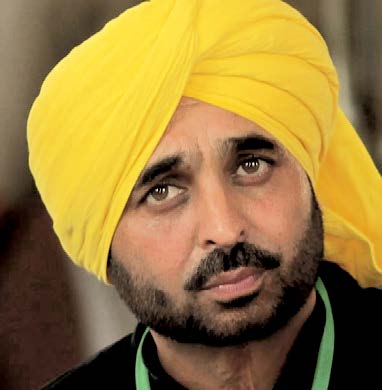
  • AAP MP’S RESPONSE STUMPS HOUSE PANEL

    AAP MP’S RESPONSE STUMPS HOUSE PANEL

    NEW DELHI (TIP): Controversial Aam Aadmi Party (AAP) lawmaker Bhagwant Mann on July 28 (Thursday) questioned the rationale of constituting a Parliamentary committee to probe his act of filming his way into Parliament.

    Mann appeared before the nine-member committee Bhagwant Mann constituted by Speaker Sumitra Mahajan on Thursday and submitted a five-page letter in which he apologised for his actions. But Mann reiterated his demand for expanding the ambit of the committee to summon Prime Minister Narendra Modi, and at the same time asserted that the probe should be wound up.

    “We have given him two more days to clear his confusion or contradiction and correct his written response to the committee,” said Kirit Somaiya, chairman of the probe committee.

    In his deposition before the committee, Mann sought to raise the issue of the prime minister “compromising” on national security by allowing a Pakistani investigation team to visit Pathankot airbase, which came under terror attack in January. “You stick to your statement. Your action has made Parliament security vulnerable,” a committee member told Mann. The committee also strongly disapproved of Mann treating the incident “casually”. The AAP member has been asked to appear before the committee on Monday at 3 pm when he may be subjected to cross-questioning by the members.

    Earlier in the day, Mann had sought permission of the committee to bring along a lawyer to argue on his behalf. The plea was rejected by the committee after due consultation with the Speaker.

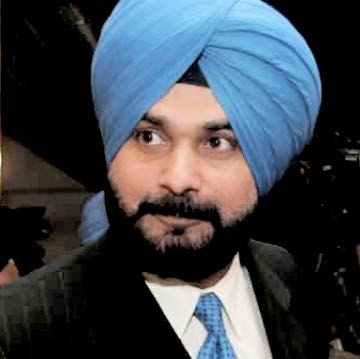
  • NAVJOT SIDHU LIKELY TO JOIN AAP ON I-DAY EVE,  CAMPAIGN FOR PUNJAB POLL

    NAVJOT SIDHU LIKELY TO JOIN AAP ON I-DAY EVE, CAMPAIGN FOR PUNJAB POLL

    NEW DELHI (TIP): Former Bharatiya Janata Party lawmaker Navjot Singh Sidhu is likely to join the Aam Aadmi Party on August 14 and plunge into the campaign for the Punjab assembly elections from the next day, party sources said on July 28 (Thursday).

    The cricketer-turned-politician, who stunned his Navjot Singh Sidhu party on July 19 by suddenly resigning from Rajya Sabha to which he had been nominated just two months ago, will be one of the AAP’s chief campaigners in Punjab. However, he will not be named its chief ministerial candidate, a member of the party’s top body, the Political Affairs Committee (PAC), told HT.

    Sidhu, who is in Mumbai, was not available for comment.

    The move is seen as a symbiotic boost for the AAP, and the three-time Amritsar MP and his legislator wife, who will follow suit.

    For days after he quit Rajya Sabha, Sidhu remained incommunicado. On the day of his resignation, his wife Navjot Kaur Sidhu – who is a BJP MLA in Punjab and chief parliamentary secretary – said it implied he had quit the party. When Sidhu finally surfaced and made a brief statement to the media on July 25, neither did he say he quit the BJP nor clarify on where he was headed.

    Instead, he used the opportunity to say that he quit because he was asked to stay away from Punjab.

    “Rashtra dharma (duty towards the nation) is the most superior. How can Navjot Singh Sidhu stay away from his motherland,” Sidhu said in his brief appearance before the media in New Delhi, where he did not field questions. “No party in this world is above or greater than Punjab … If it comes to choosing between my family, my party and Punjab, I will choose Punjab a hundred times.” Delhi chief minister and AAP chief Arvind Kejriwal tweeted after Sidhu’s July 24 press conference: “Sidhu wud hv spoken against drugs, if he went to Punjab. BJP prevented him. Who was BJP trying to protect? Shocking (sic).” Source: HT

  • Dalit couple beheaded in UP for failing to pay debt of Rs 15

    Dalit couple beheaded in UP for failing to pay debt of Rs 15

    LUCKNOW (TIP): A Dalit couple was hacked to death in Uttar Pradesh on July 28 ( Thursday) for not repaying a loan of Rs 15.

    The incident occurred at Lakhani Mahaitipuri village in Mainpuri district, about 300 kilometres from here.

    According to the police, a few days ago, Bharat Singh, a labourer, had bought some eatables from a shop and had promised to make the payment later. The shop owner, Ashok Kumar, had been pressurising Singh to clear the dues. On Thursday, Kumar intercepted Singh while he was on his way to work in a field and asked for the money. Singh told him that he did not have the money and promised to clear the dues soon. An infuriated Kumar took out an axe and attacked Singh several times. Singh’s wife Mamata Devi came his rescue, but was attacked too. The couple, who had sustained severe injuries , , died before they could be taken to the hospital, sources said.

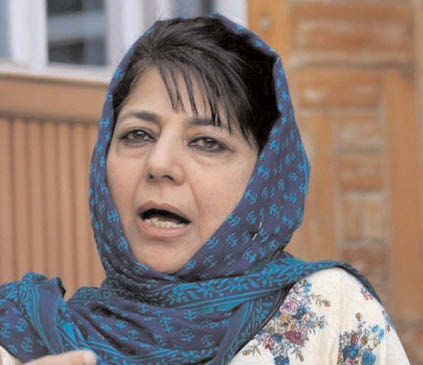
  • SECURITY FORCES WERE UNAWARE OF WANI’S PRESENCE: MEHBOOBA

    SECURITY FORCES WERE UNAWARE OF WANI’S PRESENCE: MEHBOOBA

    SRINAGAR (TIP): Jammu and Kashmir Chief Minister Mehbooba Mufti on July 28 claimed that the security forces were unaware of Hizbul Mujahideen commander Burhan Wani’s presence at the scene of the July 8 encounter.

    “How can one know everything about every encounter?” Mehbooba asked. “As far as I know, what I heard from the police and the army, who said they only knew that there were three militants inside the house but did not know who they were,” she said.

    The chief minister told reporters that had the security forces known about Wani’s presence inside the house in Kokernag area of South Kashmir’s Anantnag district, it would have been possible to keep the situation “from turning to what it is today.” “I feel if they knew, perhaps we would not have such a situation when the overall situation in the state was improving, so it could have been a chance,” she said.

    The police and intelligence agencies are saying that they did not know who was there, she said.

    The chief minister said the government did not get enough time to make arrangements to contain the situation, unlike when Parliament attack convict Afzal Guru was hanged in 2013.

    “When Afzal Guru was hanged, (then chief minister) Omar (Abdullah) knew, so he made all the arrangements before-hand. We knew nothing and we came to know suddenly. But, despite that, we tried to impose curfew so that children do not come out,” she said.

    Violence has rocked the Valley since July 8, when Wani was killed in an encounter, leaving 47 people dead.

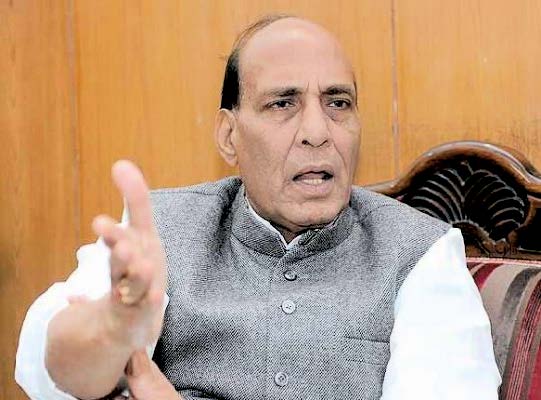
  • AMID INDIA-PAK TENSION, RAJNATH SINGH TO VISIT ISLAMABAD NEXT WEEK

    AMID INDIA-PAK TENSION, RAJNATH SINGH TO VISIT ISLAMABAD NEXT WEEK

    NEW DELHI (TIP): Home minister Rajnath Singh will visit Islamabad on August 3 and 4 to attend the meeting of home ministers and interior ministers of South Asian Association for Regional Cooperation (Saarc)?nations.

    This will be the first visit by a top Indian political functionary to Pakistan after the January 2 Pathankot airbase attack carried out by militants believed to be from across the border.

    It also comes at a time ties between the two nuclear-armed neighbours are seeing a chill in the aftermath of the killing of Hizbul Mujahideen commander Burhan Wani.

    Kashmir has been on the boil since the death of 22-year-old Wani on July 8 in an encounter in southern Kashmir. His death sparked violent protests in the Valley that killed more than 40 people and wounded hundreds.

    Pakistani leaders have criticised India over the Kashmir unrest, and the country observed on July 20 a “black day” to protest against the killings. The move drew angry reaction from India, which accused Islamabad of interfering in New Delhi’s internal affairs and backing terrorism.

    Sources said the home minister may have bilateral meetings with Pakistani politicians during the visit.

    At the 13th Saarc Summit held in Dhaka in November 2005, the heads of states decided that Saarc interior/home ministers will meet annually preceded by a meeting of the interior/home secretaries to strengthen counter-terrorism cooperation.

    “As far as the home minister’s visit to Islamabad is concerned, he will leave on August 3 and come back the next day,” said a home ministry official.

    Singh is likely to take up with the Pakistani leadership the issue of a reciprocal visit of the National Investigation Agency (NIA) to Islamabad for the Pathankot probe. A Pakistani joint investigation team visited India earlier this year, and the NIA shared the details of its investigation with it.

    A week before the Pathankot attack that killed seven securitymen, Prime Minister Narendra Modi made a brief stopover in Lahore while returning to India from Afghanistan and Russia. Three weeks before Modi’s visit, external affairs minister Sushma Swaraj visited Pakistan for a conference. Source: HT

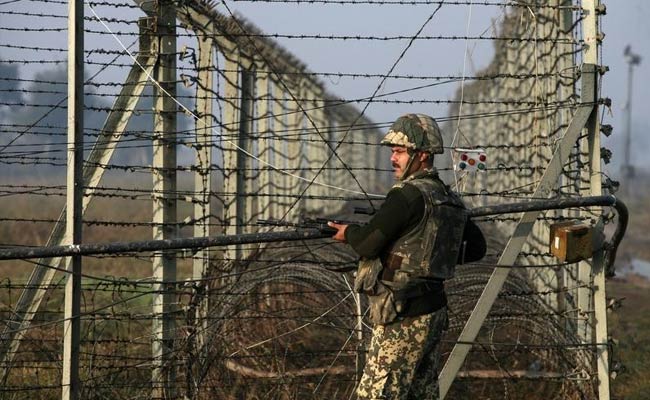
  • BSF, PAKISTAN RANGERS HOLD TALKS IN LAHORE TO DISCUSS BORDER ISSUES

    BSF, PAKISTAN RANGERS HOLD TALKS IN LAHORE TO DISCUSS BORDER ISSUES

    NEW DELHI (TIP): Ahead of home minister Rajnath Singh’s visit to Pakistan for SAARC interior minister and home minister conference, the Border Security Force and Pak Rangers met in Lahore for three days — from July 25 to July 28 — to discuss several issues related to ceasefire violations, infiltration and drugs smuggling.

    The BSF delegation was led by Director General K K Sharma and the Pakistan delegation was led by Director General Pakistan Rangers (Punjab), Major General Umar Farooq Burki.

    A BSF statement said that “the meeting was held in a cordial atmosphere and with a spirit of cooperation. It was agreed that since the last such meeting in Delhi in September 2015, there has been a greater adherence to ceasefire along the International border.”

    K K Sharma stressed during the meeting the importance of vigilance against cross border infiltration to prevent terrorist activities and check smuggling in narcotics.

    Both sides discussed ways to strengthen measures to coordinate border patrolling on their respective sides of the border and address each other’s concerns in a time bound manner.

    The Joint Record of Discussion charting a future route map of cooperation between the two border guarding forces was also signed on Thursday.

    BSF has invited DG Pakistan Rangers (Punjab) to visit India for the next round of the bi-annual talks.

    “The talks ended on an optimistic note with both sides agreeing on constant endeavor to maintain peaceful and tranquil borders,” said a BSF statement.

  • MAHADAYI AGITATION TURNS VIOLENT IN KARNATAKA

    MAHADAYI AGITATION TURNS VIOLENT IN KARNATAKA

    BENGALURU (TIP): Normal life was thrown out of gear in several districts across north Karnataka as the ongoing agitation for Mahadayi waters took a violent turn on Thursday.

    While angry mobs attacked government offices and set two police jeeps on fire, two students attempted suicide by consuming poison to protest the Mahadayi Water Dispute Tribunal’s interim order against release of 7.56 tmc ft of water to Karnataka for the Kalasa-Banduri canal project.

    Worst affected were Gadag, Hubbali, Dharwad, Haveri, Belagavi along with parts of Vijaypura and Bagalkot districts as all commercial activity and logistics came to a standstill. Police had to resort to lathicharge as several places to quell angry mobs that were going on a rampage; more than a dozen persons are said to have been injured in the police action and over 50 protestors have been taken in custody. Rasta-roko demonstrations were also staged in the southern parts of the state such as Bengaluru, Kolar, Chikkaballapur, Bengaluru Rural and Ramanagara districts by farmer groups and Kannada activists.

    With the agitators blocked National Highway-4 at Hubbali and Dharwad in the morning the Goan government announced a temporary suspension of its bus operations to the state. In Nargund town, two students — Nandish Mathad and Channabasava Charntimath — attempted suicide during a public demonstration. Violence erupted in Navalgund with the agitators settting ransacking a BSNL office and setting three vehicles including two police jeeps on fire.

    While the agitation against the tribunal’s interim order grew stronger in north Karnataka with the activists demanding resignations of Karnataka MPs, a mud-slinging match broke out among the three political parties — Congress, BJP and the JDS.

    Taking off from Karnataka CM Siddaramaiah’s statement (made before he left Brussels to see his ailing son) that the tribunal should have released 7.56 tmc ft of Mahadayi water to meet the drinking water needs of twin cities of Hubbali-Dharwad and Gadag, rural development and panchayat raj minister HK Patil said: “We have been seeking water that would flow into the sea, but this was not considered by the tribunal. People will get angry when attention is not paid to ground reality and truth. We have not got justice from the tribunal.” Stating that the tribunal’s order was not final and was questionable, Patil said: “We will explore all legal options including going to the Supreme Court against the tribunal’s order.”

    Source: TOI

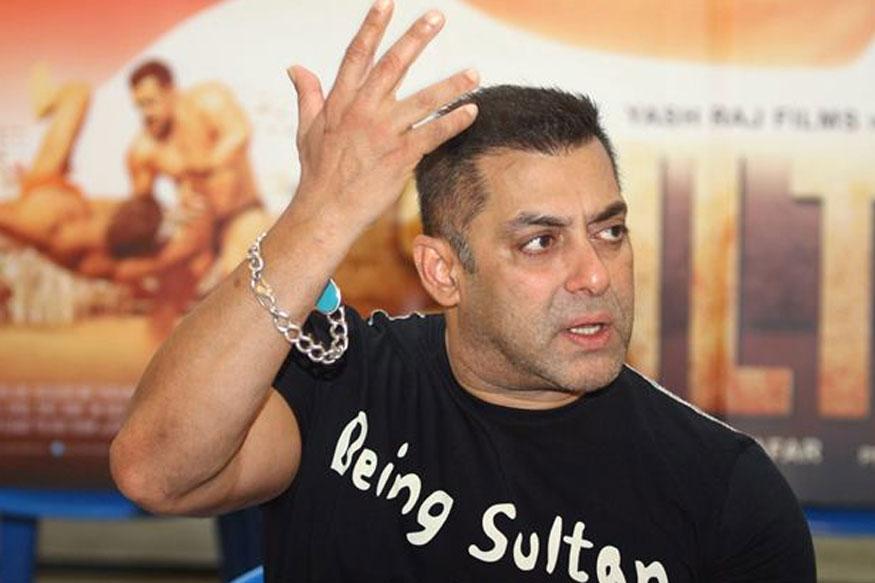
  • Chinkara poaching case: Rajasthan govt to appeal against Salman Khan’s acquittal

    Chinkara poaching case: Rajasthan govt to appeal against Salman Khan’s acquittal

    NEW DELHI (TIP): The Rajasthan government Thursday offered protection to a key witness in the chinkara poaching case, and decided to appeal against Salman Khan’s acquittal in the Supreme Court, news channel NDTV reported.

    The key witness in the poaching case Harish Dulani, who resurfaced on Wednesday, told media that he was forced into hiding after receiving threats. Dulani added that he stands by his statement made in the court against Salman.

    “I have said what I wanted to say in courts. I was a driver with them for a week. I was threatened and hence I went out (of Jodhpur). I just need protection…I said what I wanted to say in courts, now I don’t want to comment on it. Yes, I stand by my statement and if court summons me, I will go. When was I missing?” Dulani said.

    Dulani informed the Forest Department about the alleged chinkara poaching and recorded his statement before a magistrate. A lower court convicted Salman in 2006 in the poaching case, but its verdict was overturned by the Rajasthan High Court earlier this week over lack of evidence.

    Dulani claimed he was appointed as Salman’s driver during a film shooting in 1998, but the gypsy was being driven by Salman at the time of the alleged poaching. The defence counsel told court that Dulani is an unreliable witness and his earlier statement be struck down.

  • Indian-Americans in spotlight at democratic convention

    Indian-Americans in spotlight at democratic convention

    The growing clout of Indian-Americans in US politics came to spotlight as three leaders from the community took the center stage at the ongoing Democratic National Convention that anointed Hillary Clinton as party’s presidential nominee

    Neera Tanden
    Neera Tanden

    Neera Tanden in her political debut at the national stage of the Democratic party, made a strong case for Clinton as the next president of the US

    Ami Bera
    Ami Bera

    Ami Bera, an Indian-American Congressman, in his brief appearance said: “As the only South Asian member of Congress, as a member of the Foreign Affairs Committee, I support Hillary Clinton because she is the only candidate that understands the complexity of the world and is prepared from day one to lead America.”

    Raja Krishnamoorthi
    Raja Krishnamoorthi

    Raja Krishnamoorthi, an Indian-American Democratic Congressional candidate from Illinois, has been introduced as one of the party’s emerging leaders during the convention.

  • Tim Kaine Accepts Vice-Presidential Nomination

    Tim Kaine Accepts Vice-Presidential Nomination

    Democrats gathered in Philadelphia formally selected Tim Kaine as their US vice-presidential candidate, completing the party’s ticket for the November election. Kaine, a 58-year-old senator from the battleground state of Virginia, was nominated by voice vote

    The tickets are now set for both parties: Hillary Clinton and running mate Kaine for the Democrats, with Republicans Donald Trump and running mate Mike Pence, both of whom were nominated last week and their party’s convention in Cleveland.

    With working-class roots and a spotless record both as Virginia governor and senator, he is seen as helping Clinton garner support among reluctant independent male voters-although at the risk of alienating the party’s progressive left wing.

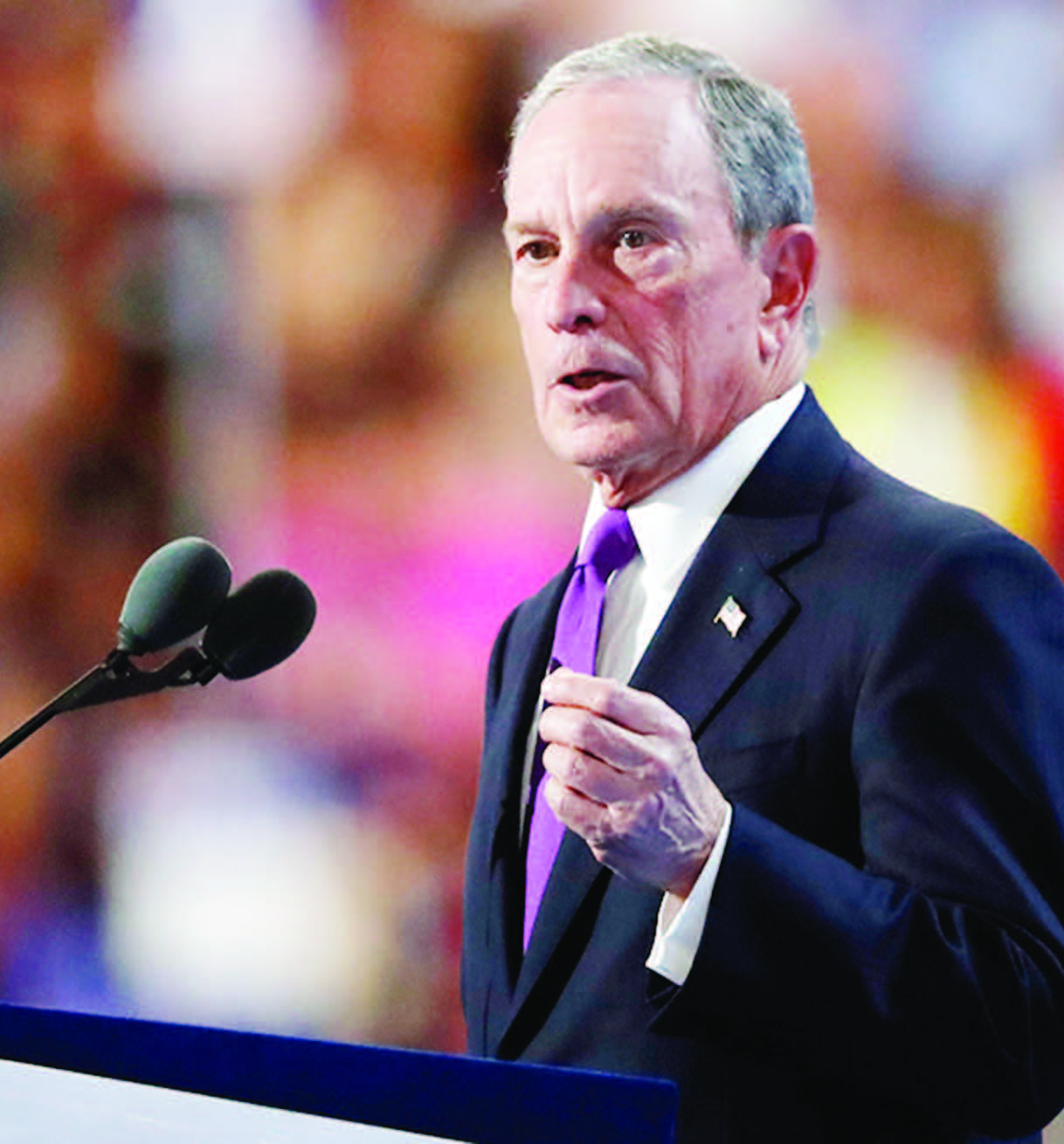
  • Prez Trump? God help us: Bloomberg to voters

    Prez Trump? God help us: Bloomberg to voters

    Independent former New York mayor Michael Bloomberg told divided Americans it was time to unite behind Hillary Clinton in order to defeat “demagogue” Donald Trump

    “Trump says he wants to run the nation like he’s running his business? God help us,” Bloomberg, who like Trump is a billionaire businessman, told the Democratic National Convention in Philadelphia

    “I’m a New Yorker, and I know a con when I see one.” He issued stinging rebukes to Trump, describing him as singularly unfit for the presidency and calling his business plan “a disaster in the making.”

  • NOT 5, PREPARE 15-YR DEVELOPMENT PLAN: PM TO NITI AAYOG

    NOT 5, PREPARE 15-YR DEVELOPMENT PLAN: PM TO NITI AAYOG

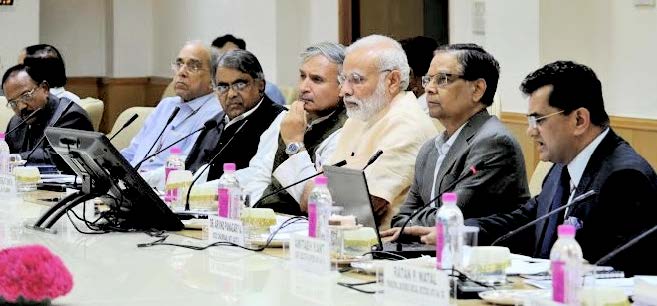
    NEW DELHI (TIP): Prime Minister Narendra Modi on Thursday called upon Niti Aayog to create a 15-year development plan, setting the stage for discontinuing the five-year plan system, a sixdecade old Soviet-era relic.

    “The time for incremental change that was the norm across the world for quite some time, is now over,” Modi said while interacting with Niti Aayog members on Thursday.

    “Main prayog karne wala insaan hoon. Mujhme prayog karne ki himmat hain ( I am willing to experiment),” The Prime Minister said.

    Stating that the current age requires “transformational change,” Modi said that historically Indian policymakers had tended to lament its constraints rather than play to its strengths. “Judicious and intelligent application of India’s natural and human resources, would be at the heart of this change,” an official statement said.

    Niti Aayog vice-chairman Arvind Panagariya said the Right to Education Act and the National Rural Employment Guarantee Act, two flagship schemes of the UPA government, along with a “poorly targetted and leaky public distribution system”, were hurting India’s development potential.

    Modi said the “intentions (niyat) of policymakers are even more important than the policies (niti) themselves.”

    Niti Aayog, a newly formed policy think-tank, replaced the 60-year old Planning Commission last year.

    India’s farm sector requires not just raising productivity, but also policies to push growth in the rural economy, underlining the importance of food processing, warehouse development and technology inputs, the Prime Minister added. The country has been grappling with rising pulses prices, a primary source of protein for millions, over the last two years.

    “The Prime Minister called for a long-term strategy to deal with the pulses shortage, which can reduce India’s import-dependence,” said Ramesh Chand, agriculture expert and Niti Aayog member. “The Prime Minister asserted that the government has the courage and the ability to deliver transformational change for bettering the lives of the people,” Niti Aayog CEO Amitabh Kant said.

    When asked whether the development plan will be approved by the NITI Aayog governing council, Panagariya said no decision has been taken. The Council is headed by the Prime Minister with all chief ministers on its board. According to the earlier practice, fiveyear plans were approved by National Development Council, headed by the Prime Minister.

    It is speculated that the government will likely terminate the five-year plan system after the end of the 12th Plan in 2017, bringing down the curtains on a policy framework inspired by the Gosplan-aided industrialisation of the erstwhile Soviet Union. Source: HT

  • INDIA’S FOREIGN DEBT-GDP RATIO LOWEST AMONG 83 EMS

    INDIA’S FOREIGN DEBT-GDP RATIO LOWEST AMONG 83 EMS

    MUMBAI (TIP): At 23% in 2015, India had one of the lowest foreign debt-to-GDP ratios among 83 emerging market (EM) countries, although it had risen from 17% in 2005. Even among the Asian countries covered in an analysis by global ratings major Moody’s Investors Service, compared to an average debt-to-GDP ratio of 47%, India’s was less than half that number.

    China’s external debt-to-GDP ratio is still the second-lowest globally at 13% of GDP in 2015. The lowest is Nigeria with 3.3%.

    According to the report, India experienced the second largest increase in external debt between 2010 and 2015. “India had $474 billion in external debt as of 2015, representing 16% of the Asia-Pacific region’s total debt. India’s external debt has grown two to three times slower than China’s, at a five-year annual average rate of 8.4% and a 10-year annual average rate of 13.4%.

    As a result, the external debt-to-GDP ratio in India has risen from 17% in 2005 to 23%in 2015, but is still one of the lowest globally,” it noted. The analysis also found that the BRIC nations block owns 37% of all emerging market external debt. In dollar terms, as of end-2015, China represented 17% of total emerging market external debt, Brazil 8%, Russia 6%, and India another 6%.

  • SERVICE TAX DEPARTMENT TO RE-AUCTION MALLYA JET

    SERVICE TAX DEPARTMENT TO RE-AUCTION MALLYA JET

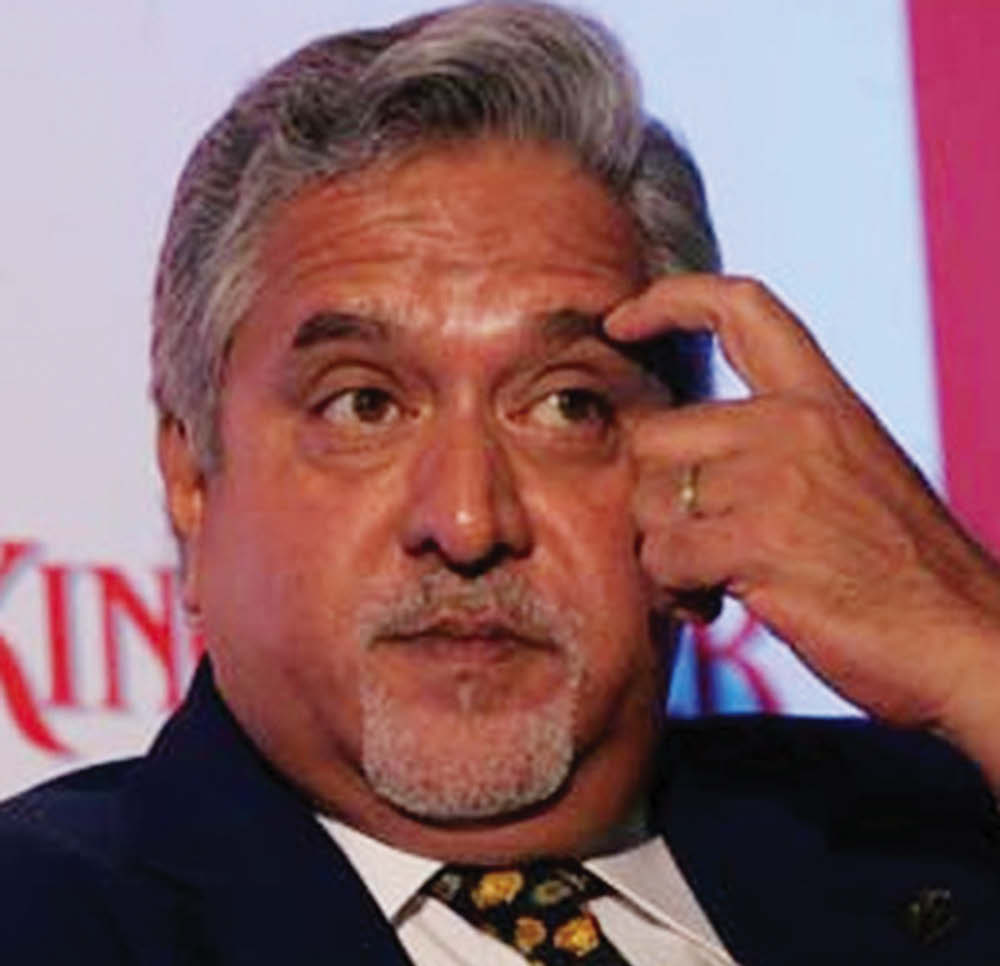
    MUMBAI (TIP): Having failed to get a good valuation in the first attempt to auction the luxury jet of embattled businessman Vijay Mallya last month, the service tax department will re-auction it on August 18, possibly at a lower reserve price.

    The earlier attempt at its auction had received a bid of Rs 1.09 crore as against the then reserve price of Rs 152 crore.

    The result of the e-auction, which will be conducted by the department’s auctioneer MSTC, will be out on the same day evening, a service tax department official told PTI today.

    The joint pricing committee, which comprises five members, including one additional commissioner of the department and officials from the Directorate General of Central Excise Intelligence, is yet to take a decision on lowering the reserve price.

    The committee has to decide the reserve price at least two days ahead of the auction as per the requirement of MSTC.

    On June 30, the department had rejected the sole bid of Rs 1.09 crore offered by the United Arab Emirates-based aviation support firm Alna Aero Distributional Finance Holdings, against a reserve price of Rs 152 crore.

    “The department will go in for a fresh round of auction of the personal jet of Mallya to recover the dues amounting to around Rs 1,000 crore,” the official said.

    The department has already taken opinions from two valuers so far on the value of the luxury jet. One of them is Ceejay Leasing, the US-based firm which had supplied the luxury aircraft to Mallya, who has been absconding court orders and other regulators and investigating agencies since early March.

    The department had on July 25 held a meeting wherein everyone concerned was requested to make the forthcoming auction a success.

    The meeting was attended by officials from the MSTC, Mumbai airport, Ceejay Leasing and the legal consultants, the city-based AZB Partners. Source: PTI