Month: July 2016

  • BJP on a collision course with Dalits: Gujarat, Mumbai and now UP

    BJP on a collision course with Dalits: Gujarat, Mumbai and now UP

    NEW DELHI (TIP): If atrocities on Dalits in Bharatiya Janata Party-ruled Gujarat and a massive rally to protest the demolition of Ambedkar Bhavan in Mumbai on July 19 (Tuesday) weren’t enough, the party on July 20 (Wednesday) had to remove a senior figure in its Uttar Pradesh leadership for making derogatory comments about Bahujan Samaj Party (BSP) chief Mayawati. The series of controversies related to Dalit issues have come as the party has begun a big campaign to win the state in the polls slated for early 2017. Led by Prime Minister Narendra Modi and party head Amit Shah, it has been making a lot of effort to reach out to Dalit voters.

    On Wednesday, however, a video clip of comments by one of its UP vice-presidents, Dayashankar Singh, went viral on a social networking site. The issue also rocked Rajya Sabha proceedings (Mayawati is a member of the House) in the afternoon, which had already been adjourned several times since morning, when members of the Congress, BSP and Trinamool Congress trooped into the well of the House, to protest the incidents in Gujarat. Finding itself in a corner, the BJP first dismissed Singh from all party posts and later expelled him. Mayawati said the nation should hold the BJP responsible if there were spontaneous countrywide protests.

    P J Kurien, deputy chairman of the Rajya Sabha, said the House unanimously condemns the comments. The Congress and BSP’s understanding in pushing the government on the defensive on the issue was noteworthy. In her speech, Mayawati said the BJP dreamt of winning UP but could not digest the fact that her party was a strong contender. She thanked other parties for their support and said she herself had never made any personal attacks on other leaders but fought on ideological issues. “Dalits will never forgive BJP for this. We have seen what happened in Gujarat and a minister who had likened Dalits to dogs in January continues to be in the Union council of ministers,” she said, in a reported reference to alleged remarks by former army chief and Minister of State for External Affairs V K Singh.

    On the government’s behalf, Arun Jaitley, finance minister and leader of the House, apologized to Mayawati. Few in the Rajya Sabha had any inkling of Singh’s comments. After the second adjournment on the Gujarat issue in the post-lunch session, most members had stayed on, waiting for the House to be reconvened at 3 pm. It was then that a Trinamool member showed the clip to a BSP member, who showed it to Mayawati. She consulted party colleague Satish Chandra Mishra, who then alerted the Congress.

    The Trinamool’s Derek o’Brien and Mishra joined the huddle, with opposition leader Ghulam Nabi Azad. A strategy was soon devised, with Azad leading the attack when the House reconvened. Later, it was adjourned for the day. It is slated to discuss the atrocities against Dalits on Thursday. In the Lok Sabha, which also saw the opposition protest against Dalits being assaulted for skinning a cow, with coalition partner Lok Janshakti Party joining briefly, Home Minister Rajnath Singh said the PM was “very sad and hurt” by the incident.

    Later, social justice minister Thawarchand Gehlot and Minister of State for Finance Arjun Ram Meghwal, both Dalits, held a press conference to stress that the State government had moved swiftly to punish the guilty.

  • China’s Clear Message to India

    China’s Clear Message to India

    On July 19, the Chinese Foreign Ministry spokesman dropped his usual reticence to unilaterally comment on the escalating crisis within the Kashmir Valley, in which nearly 50 people have been killed in the violence so far following the death of Hizbul Mujahideen commander Burhan Wani.

    “China has taken note of relevant reports. We are equally concerned about the casualties in the clash, and hope that the relevant incident will be handled properly,” Chinese Foreign Ministry spokesman Lu Kang said in remarks posted on the Foreign Ministry website.

    So as Chinese State Councillor and Special Representative on the Sino-Indian boundary dispute Yang Jiechi comes to Delhi next month to take forward the 20th round of talks with National Security Advisor Ajit Doval, both sides are hoping they will separate the ongoing bitterness from the business on the ground.

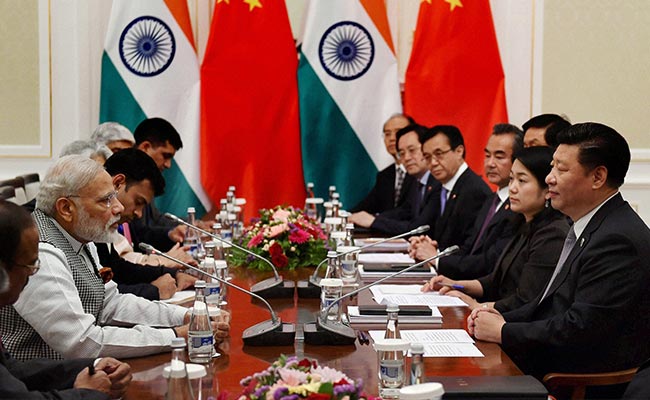
    Prime Minister of India Narendra Modi and Chinese President Xi Jinping met in Tashkent in June this year Photo courtesy PTI
    Prime Minister of India Narendra Modi and Chinese President Xi Jinping met in Tashkent in June this year
    Photo courtesy PTI

    Certainly, Delhi would like the Chinese to drop its objections to its application to become a member of the Nuclear Suppliers Group. The US has promised to hold a plenary meeting of the NSG to reconsider India’s application before the year is out, and Delhi doesn’t want the Chinese to play spoilsport again.

    But the truth is that the Indian establishment still doesn’t fully understand the length to which the Chinese are prepared to go to deny India membership of the NSG. Not only does Beijing not want to see Delhi on the same page as itself, because it believes it is a much more powerful nation compared to India – certainly, its economy is five times larger – it also wants to be seen as a big power which is ready to shape the world in its own image.

    In this image, Pakistan is not only a special friend and all-weather ally, it is also chief lackey.

    Make no mistake, China’s refusal of India’s application at the NSG and its commentary on the Kashmir dispute are being made for two reasons. First, Beijing wants an acknowledgement that it is a ranking Asian power, and second, it wants India back on the same plane as Pakistan.

    If the world has to hyphenate two Asian countries, believe the Chinese, the hyphenation has to be between India and Pakistan, not between Delhi and Beijing. The Americans are trying to sell India the latter dream, say Chinese analysts. They hope to debunk this as soon as possible.

    That is why China is laying such store by “procedure” at the NSG – even when it is ready to trash the recent judgement of The Hague-based Permanent Court of Arbitration which debunked Chinese claims to the South China Sea.

    The need to be seen as a big maritime and land power is driving President Xi Jinping’s policy. Senior Chinese Communist party leaders such as the aforesaid Yang Jiechi and former state councilor in charge of foreign affairs in the Central Committee (and also a former Special Representative on the border talks) Dai Bingguo have been fielded in recent weeks to explain to worldwide audiences why Beijing will not abide by the Arbitration verdict in favor of the Philippines.

    In fact, Beijing’s assertiveness has already frightened the Philippines and further divided ASEAN. Robert Duterte, recently elected President of the Philippines has said that he will walk back from the bitterness with China. Other ASEAN nations such as Laos and Cambodia are also willing to bend before China.

    Even South Korea, a major non-NATO ally of the US, capitulated to China’s arms control negotiator Wang Qun at the NSG plenary in Seoul last month, when Wang insisted that procedure must be followed for new applications to the NSG, such as India’s.

    Chinese President Xi Jinping with his Pakistan counterpart Mamoon Hussain and Prime Minister Nawaz Sharif
    Chinese President Xi Jinping with his Pakistan counterpart Mamoon Hussain and Prime Minister Nawaz Sharif

    Wang’s insistence that such “procedure” cannot be “discriminatory” means that either India must sign the Nuclear Non-Proliferation Treaty – a demand that External Affairs Minister Sushma Swaraj rejected in parliament – or that Pakistan’s application to the NSG must also be accepted as the same time as India.

    Certainly, the Chinese have recently begun to manifest a much tighter embrace with Pakistan. Islamabad has been an all-weather friend and ally for decades, but India was becoming a much larger economy, and China saw great advantages in pursuing greater opportunities for trade with India.

    But over the last few years, China’s involvement in Pakistan’s economy has grown by leaps and bounds. The China-Pakistan Economic Corridor (CPEC) is an integral part of President Xi’s beloved One Belt, One Road project, and he has promised to invest as much as $46 billion in it.

    At the same time, as Prime Minister Modi moved much closer to America – at last count becoming a major defense ally of the US – it seemed as if Delhi was joining hands with other democracies in the region to “contain” China.

    On May 18, four ships of the Navy’s eastern fleet – including two guided-missile stealth frigates armed with supersonic anti-ship and land attack cruise missiles, a fleet tanker and a guided missile corvette – sailed towards the South China Sea and the North-Western Pacific for two and a half months. The deployment ended in June with the joint naval “Malabar” exercises off the coast of Okinawa in Japan (a US base is located there), in which the US Navy and Japanese self-defense forces also took part.

    Certainly, China’s unusual commentary on Kashmir marks a new inflection point in its relations with India. One school of thought in Beijing believes that Delhi must learn to live with China’s rising power, including with the decision to build the CPEC through Pakistan-Occupied Kashmir (PoK). After all, this school says, India has learnt to live with the Karakoram Highway that was built in the 1970s, which also passes through PoK.

    As China becomes more powerful, an ambitious faction in Communist Party circles has started believing that Beijing must get ready to play a bigger role in the resolution of the Kashmir dispute. Pakistan is already a good friend, says this school, and Aksai China is already controlled by China. Why not help resolve the Kashmir dispute too?

    Of course, Beijing knows that any mention of Kashmir will be enough to rile the Indian government – especially when Pakistan marked yesterday as “Black Day,” in an effort to commemorate the crisis in the Valley.

    As for Prime Minister Modi, he must be taught a lesson if he dares to believe that India can be equal to Asia’s foremost power. “This is China’s not-so-subtle way of putting India in its place,” said an observer of China, who spoke on the condition of anonymity.

    As Yang Jiechi wends his way to Delhi next month for boundary talks with Ajit Doval, the Indian side will certainly hope to have a heart-to-heart chat with him. It’s another matter whether or how much the Chinese leader will listen – or whether he will just smile softly as Xi Jinping did with Modi, when the latter asked him for support for India’s application to the NSG.

    (The author, Jyoti Malhotra, is a freelance journalist with special passion for dialogue and debate across South Asia)

  • Let us stand by our soldiers in Kashmir

    Let us stand by our soldiers in Kashmir

    A few days ago, a picture was posted on Facebook showing a young CRPF jawan lying on the ground being kicked by gloating hooligans who believe they have the right to treat our security forces as such, and are the answer to Kashmir’s problems. That was for me a case of “enough is enough”.

    These hooligans seem to believe that India will succumb to their macho instincts. By now they should have realized that Kashmir is a part of India, as Maharaja Hari Singh had signed the Instrument of Accession on August 18, 1947, long before they were born. That was then the condition laid down for all Indian princely states, and that signature made Kashmir an integral part of India, notwithstanding the regular hiccups from Pakistan or from their sympathizers in the Valley.

    Recently, a mobile patrol of 14 RR near Bandura was attacked. Tomorrow it may be some other military establishment. The headquarters of 5 Corps at Srinagar was attacked in the past. The pattern is consistent, when military activity is curtailed or subdued, militancy rises. History has on so many occasions shown us that unless the writ of the government is firmly established, negotiations are futile.

    This phenomenon of the Valley turning out for a militant’s funeral will happen and will grow unless the government acts. The past is full of incidents which have strengthened militancy through appeasement. We today have Mehbooba Mufti as the Chief Minister, whose penchant for playing with fire is well established. We had militants being released in the past for her sister Rubaiya Sayeed; the first act of appeasement. Her father, Mufti Mohammad Sayeed, was then the Union Home Minister. We then had the Delhi-Kathmandu flight hijacked to Kandahar in 1999. Three prominent militants in custody were released, including Maulana Masood Azhar of the Jaish-e-Mohammad. This was followed by an attack on our Parliament in December 2001, with Azhar being the mastermind. Appeasement only leads to the strengthening of the militants’ morale, while demoralizing that of one’s own forces

    It was after the failure of Zulfiqar Ali Bhutto’s Operation Gibraltar in 1965, that the ISI escalated its involvement in Kashmir. When the holy relic of the Prophet was stolen in Srinagar in 1964 and riots broke out, all that was required to quell the riots were four Punjab Armed Police battalions. Look at the force level today? This is not the fault of the Army or the other security forces, but a confused Kashmir policy that has brought the current situation to the fore. The Army can contain a situation to a point, it is then for the Government of India (GoI) to take whatever political initiatives are required. The trouble is that before the Army brings Kashmir to the point necessary for negotiations, dabbling commences and the first casualty is the Army itself.

    Those who do not have any experience of counter-insurgency operations seem to comment the most and do untold harm to the system. These are not riots, as the PDP MP, Muzaffar Baig, would make us believe by quoting a Supreme Court ruling, but full-fledged insurgency. This procedure is not possible in a full-fledged battle and I believe, has not been the intention in the SC’s judgment.

    The Army must be allowed to bring militancy under control to a point where those professing it realize that the time has come to talk. Yes, people will die in the ensuing action, then so be it. Kashmir is Indian territory. If those owing allegiance to Pakistan’s ISI continue to create instability, then they must face the music. The Burhan Wanis may be the glamour boys for many, to India they are the perpetrators of violence and separatism. Let them not live with a mistaken belief that they have the upper hand.

    The Government of India must allow freedom of action to the Army. The directive must be just one: “Bring a situation in the state where the writ of India runs and not that of the ISI”. Yes, in the ensuing clashes collateral damage will take place. No soldier likes such action. He is trained to face the enemy, not protecting his back against treacherous elements. We have had this experience in Nagaland, Manipur etc. The British army considered their Northern Ireland commitment prior to peace with the IRA, in the same light. It was the IRA which finally decided to talk peace when they could not face growing military pressure.

    In such situations, the government must support any military action taken. Unfortunately, this has not been the situation. For instance, in Budgam when a car broke through a military checkpoint in November 2014, the soldiers manning the post opened fire, as was their duty. One officer and eight jawans were court-martialed and imprisoned. Penalizing soldiers for doing what was expected of them is unacceptable. It is for the Chief and his Northern Army Commander to stand by their men in the difficult duty they are performing and not succumb to political pressures. A patrol was mobbed in the Qazigund area and an effort was made by the mob to snatch weapons from the soldiers, the patrol had to open fire to extricate itself, in which one man and two women were killed. The Army says it “deeply regretted” the incident and an inquiry has been ordered. This is ludicrous. Are we becoming an army of girl guides? What would have happened to the patrol leader had they managed to snatch the weapons? It seems the current policy is that you are wrong if you do and you are also wrong if you don’t – an absurd situation.

    In the late 1950s, my battalion was in Nagaland. The orders were that no Naga would be dressed in khaki and would carry a weapon. One day, in the early morning mist an NCO-led patrol came across a Naga in khaki with what looked like a weapon (it was a staff). When challenged, he panicked and ran and the patrol opened fire killing him. It so happened, his daughter worked in the PMO. In the rumpus that followed, the PM demanded the battalion be disbanded. The Army Chief, General Thimmaya, refused to comply. He stood by his battalion and his NCO. Here we are today still serving the country. This is what the Army expects from our Chief and our Army commanders. It would be appropriate to end with a quote from President Obama’s statement on the recent violence against the police in Baton Rouge, Louisiana: “I want to be clear: there is no justification for violence against law enforcement. None. These attacks are the work of cowards who speak for no one. They right no wrongs. They advance no causes”. This in full applies to Kashmir.

    (The author, Capt. Amarinder Singh, the Congress MP from Amritsar, is a military historian)

  • 50 Lakh Reward For Dayashankar’s Tongue | Jannat Jahan

    50 Lakh Reward For Dayashankar’s Tongue | Jannat Jahan

    Following Dayashankar’s “prostitute” remark targeting Former Uttar Pradesh Chief Minister Mayawati, BSP Chandigarh Unit Chief Jannat Jahan has offered a reward of 50 lakh to anyone who gets her Dayashankar’s tongue.

    In a statement he made on July 20, Dayashankar had compared BSP supremo with a prostitute saying, “Even a prostitute fulfils her commitment after she is paid. But Mayawati sells party tickets to anyone who paid her the highest amount. If someone gives her Rs 1 cr for a ticket she will give it to other person who is offering Rs 2 cr. Mayawati has become worse than a prostitute and abandons the ideals of Kanshi Ram.”

    A public outcry followed the incident and which led to Dayashankar’s removal as BJP UP Vice President.

    An FIR was lodged against him under section 153A,504,509 IPC and 310 under the SC/ST act.

  • Pakistan Shouldn’t Glorify Terrorism: Shashi Tharoor

    Pakistan Shouldn’t Glorify Terrorism: Shashi Tharoor

    On Thursday, July 21, Congress MP Shashi Tharoor regarded Sartaj Aziz’s statement over Kashmir unrest as a disappointing one.

    Advisor to the Pakistan Prime Minister on Foreign Affairs, Sartaj Aziz said that Pakistan is drawing people’s attention for a solution to the Kashmir dispute. He sent letters addressed to UN and OIC, prompting them to bring Indian atrocities to people’s attention.

    In his statement, he described slain Hizb-ul-Mujahideen militant Burhan Wani “as an icon of the resistance movement in Kashmir.”

    “Disappointing statement. Pakistan shouldn’t glorify terrorism when it affects India,” Shashi Tharoor commented on Sartaj Aziz’s statement.

  • Republicans Boo Off Ted Cruz For Not Endorsing Trump

    Republicans Boo Off Ted Cruz For Not Endorsing Trump

    Ted Cruz, Donald Trump’s former rival, was booed off the Republican top stage on Wednesday night after he withheld his endorsement of the New York billionaire as the nominee.

    “Stand, and speak, and vote your conscience, vote for candidates up and down the ticket who you trust to defend our freedom and to be faithful to the Constitution,” Ted Cruz said at the party’s convention, instead of urging Republicans to rally behind Trump, reports Xinhua news agency.

    The language, which echoed statements from the ‘Never Trump’ movement, triggered boos and chants of “Trump! Trump!” from the audience.

    “We’re not fighting for one particular candidate or one particular campaign,” Cruz said.

    “We deserve leaders who stand for principle, unite us all behind shared values, cast aside anger for love. That is the standard we should expect, from everybody.”

    Cruz left the stage putting on a brave face, wrapping up his remarks and thanking the audience while Trump entered the venue and gave his formal rival a thumbs-up, sarcastically venting his anger.

    Cruz came second to Trump during the Republican primaries.

    The two men have shared a notoriously hostile rapport following a primary battle that grew uncharacteristically nasty, with Trump labelling Cruz a “liar”.

    On the final day of Cruz’s campaign in May, he charged Trump with being “a pathological liar”, “a narcissist” and “utterly immoral”, the Guardian reported.

  • Deepika Padukone-Fawad Khan Feature In Manish Malhotra’s Persian Story At ICW 2016

    Deepika Padukone-Fawad Khan Feature In Manish Malhotra’s Persian Story At ICW 2016

    Ace fashion designer Manish Malhotra on Wednesday night opened the India Couture Week 2016 at the Capital’s Taj Palace Hotel. Malhotra showcased his latest collection “The Persian Story” at the event with two show stoppers Deepika Padukone and Fawad Khan.

    Exhausted after a grand show, three months of hardwork has manifested into a spectacular show! With my muse of ‘The Persian Story’ @deepikapadukone & @fawadkhan81 #ICW2016 #manishmalhotralabel#ThePersianStory #manishmalhotraworld @mmalhotraworld @thefdci @hazoorilaljewellers
    Exhausted after a grand show, three months of hardwork has manifested into a spectacular show! With my muse of 'The Persian Story' @deepikapadukone & @fawadkhan81 #ICW2016 #manishmalhotralabel #ThePersianStory #manishmalhotraworld @mmalhotraworld @thefdci @hazoorilaljewellers
    Exhausted after a grand show, three months of hardwork has manifested into a spectacular show! With my muse of ‘The Persian Story’ @deepikapadukone & @fawadkhan81 #ICW2016 #manishmalhotralabel #ThePersianStory #manishmalhotraworld @mmalhotraworld @thefdci @hazoorilaljewellers
  • Hyderabad Man Murdered Allegedly By Indian Roommate In US

    Hyderabad Man Murdered Allegedly By Indian Roommate In US

    HYDERABAD (TIP): A young man from Hyderabad was stabbed to death allegedly by his roommate in the US.

    Sankeerth, 25, was found murdered in his room in Austin, Texas late on Monday.

    The police have detained one of his roommates, Sai Sandeep Goud, and are questioning him.
    The two had fought, another roommate of Sankeerth told the police.

    Sankeerth, who came to the US a little over two years ago, had started working in Austin three months ago after completing his Master of Science programme.

    Sai Sandeep Goud reportedly checked into his room early this month through a consultancy. Two others shared the room.

    Sankeerth’s father G Vijaykumar, a government employee, and mother Ramadevi, learnt about the death of their son yesterday.

    Relatives say efforts are on to bring the body home by the weekend.

  • NYCEDC Seeks New Tenant for Hunts Point Food Distribution Center

    NYCEDC Seeks New Tenant for Hunts Point Food Distribution Center

    New York City Economic Development Corporation (NYCEDC) today announced the release of a Request for Proposals (RFP) from qualified food manufacturing, wholesale and/or distribution companies to lease 2.18 acres including a built 27,000 square foot industrial space in the Hunts Point Food Distribution Center (HPFDC) in the Bronx. RFP respondents should submit proposals that will assist in bolstering economic growth within the HPFDC and will generate quality food-related industrial sector jobs that benefit the wider Bronx community. The full RFP is available here.

    “We committed $150 million dollars to make Hunts Point Market a more modern and resilient job hub for the people of the South Bronx,” said Mayor Bill de Blasio. “Today we’re make good on that commitment, by investing in the Fish Market so we can bring attract a new business and even more good jobs to Hunts Point.”

    “The continued expansion of job-intensive food manufacturing and distribution businesses in Hunts Point exemplifies the de Blasio administration’s commitment to building a sustainable and resilient 21st century economy that expands business opportunities and creates jobs that help New Yorkers thrive,” said NYCEDC President Maria Torres-Springer.

    “We welcome any Request for Proposals (RFP) that will help in the continued growth of Hunts Point and the entire Bronx,” said Bronx Borough President Ruben Diaz Jr. “The Bronx is the home to perhaps the largest food market in the world, employing thousands of Bronxites and residents from all over the region. Finding more tenants for the Hunts Point Food Distribution Center (HPFDC) not only creates and maintain jobs for The Bronx, it will reduce the cost to consumers by bringing food manufacturers and distributors closer to the food source while also providing restaurants with fresher products. This proposal will also ease the economic burden on those existing companies doing business at the market. This could be a victory for both the New York City consumer and for our Bronx business sector in the Hunts Point neighborhood, and my office will continue its efforts to drive new business growth in The Bronx at not only this market, but in every corner of the borough.”

    “The opportunity for another business to locate in the New Fulton Fish Market and the jobs and economic growth this creates are welcome additions in the South Bronx,” said Councilmember Rafael Salamanca. “We are very proud that a much of our region’s fresh foods come from right here in Hunts Point, and we know that any new additions to the Hunts Point Market will only add to its success.”

    “The new RFP at The New Fulton Fish Market in Hunts Point will provide the opportunity for a tenant from the food distribution industry to create jobs and help grow our local economy. This new tenant will help to create living wage jobs opportunities for low-income and disadvantaged workers, including through contracting for minority and women-owned businesses. I encourage all qualified businesses to apply and help bring more economic opportunity to the Bronx through inclusive initiatives like this one,” said Congressman José Serrano.

    “I am delighted to hear that additional city owned space is being made available to food manufacturers and distributors in Hunts Point.  The Bronx is quickly becoming a magnet for food related industries due to the proximity of the largest food market in the world as well as easy access to interstate highways.  This effort will add to our growing work force.  Everybody wins!” said Marlene Cintron, President of the Bronx Overall Economic Development Corporation.

    “We welcome our new neighbor and look forward to our working together on matters of mutually beneficial growth and development for our businesses” Richie Klein, President The New Fulton Fish Market Cooperative At Hunts Point, Inc.

    The HPFDC industrial park is comprised of wholesale food distribution businesses and other food-related enterprises, providing excellent access to regional highway and rail networks that make it one of the City’s best-positioned industrial locations. The available space is a portion of a modern food facility built in 2005; the remainder of the facility is home to the HPFDC’s New Fulton Fish Market (NFFM). The RFP site will be fully separated from the NFFM’s occupied space by an internal demising wall and has a private parking lot with separate egress/ingress enclosed within a chain-linked fence.

    Release of this RFP is the first phase of Mayor de Blasio’s commitment towards investing $150 million to fortify and modernize the Hunt Point Market infrastructure over the next 12 years.

    Respondents should be a food-related industrial use compliant with New York State Agricultural and Markets law and must demonstrate financial capacity to pay market rental rates for the space and their pro-rated share of any related operating expenses and capital expenditures at the premises. Respondents’ proposed use should not directly compete with the NFFM’s on-site comparison shopping of wholesale fish and seafood. Proposals must include provisions to minimize negative environmental impacts on the Hunts Point residential community and industrial area.
    As part of the City’s efforts to expand economic and workforce opportunities, responses to this RFP must comply with a comprehensive workforce and procurement program that supports communities and helps create job opportunities, especially those that enable low-income New Yorkers to participate in the City’s economic growth. This includes the utilization of NYCEDC’s HireNYC program for disadvantaged workers, as well as contracting goals for minority and women-owned business enterprises (MWBE), and requirements with respect to living wage and prevailing wage, as applicable.  The selected respondent will enter into a direct lease with the City.

    Responses to the RFP are due on September 23, 2016. Information about a site visit can be found on the RFP website. NYCEDC will conduct a site visit for potential respondents at 9:00 a.m. August 9, 2016.  For information on the latest real estate development and procurement opportunities available throughout all five boroughs, click here.

    About NYCEDC

    New York City Economic Development Corporation is the City’s primary vehicle for promoting economic growth in each of the five boroughs. NYCEDC’s mission is to stimulate growth through expansion and redevelopment programs that encourage investment, generate prosperity and strengthen the City’s competitive position. NYCEDC serves as an advocate to the business community by building relationships with companies that allow them to take advantage of New York City’s many opportunities. Find us on Facebook or follow us on Twitter, or visit our blog to learn more about NYCEDC projects and initiatives.

  • KATRINA TO DEBUT SOCIAL MEDIA ON 33RD BIRTHDAY

    KATRINA TO DEBUT SOCIAL MEDIA ON 33RD BIRTHDAY

    Bollywood actress Katrina Kaif will be celebrating her 33rd birthday on July 16 with her family and close friends. Reports state that the birthday will be a quiet one as the actress isn’t someone who throws huge parties.

    Katrinia’s mother, her sisters (they have flown down to Mumbai to be with the birthday girl), and her friends from the industry Alvira Khan Agnihotri, Karan Johar, Ayan Mukerji, Ali Abbas Zafar, Kabir Khan and his wife Mini Mathur, Sidharth Malhotra and her manager Reshma Shetty are among the ones expected to be in attendance.

    According to reports in dailies, the gathering will be happening at the actress’s posh Bandra apartment, where she continues to live post her breakup with Ranbir Kapoor. The actress has reportedly moved on and intends to spend her special day with people who she cares for.

  • PRIYANKA CHOPRA’S PUNJABI PRODUCTION TO HAVE COMING-OF-AGE STORY

    PRIYANKA CHOPRA’S PUNJABI PRODUCTION TO HAVE COMING-OF-AGE STORY

    PRIYANKA CHOPRAActress Priyanka Chopra’s production house, Purple Pebble Pictures (PPP), has begun working on its first Punjabi feature film, which will be a coming-of-age drama. The yet-untitled movie features Punjabi star Amrinder Gill in the lead role. “It is a young boy’s coming-of-age story of unknowingly discovering his true identity. The film is already on floors with Amrinder Gill. It will be shot in various locations in India, including Punjab, and then in Canada as well,” a spokesperson said.

    “Purple Pebble Production’s Punjabi film is not ‘Ek Onkar’ and it is yet untitled. A formal announcement of the title will be made soon,” the spokesperson added. The film has been directed by Karan Guliani, who has also penned the story with Ambadeep Singh. Priyanka’s mother Madhu Chopra will be producing the project. The 33-year old actress, who began shooting today for the second season of her American TV show ‘Quantico’, will be in the US shooting for the show till December. “She will be there till the end of the year. She might come here in between as she has some commitments including brand endorsements and all,” a source said.

  • Kangana working on dates for Pakistani cultural event

    Kangana working on dates for Pakistani cultural event

    Actress Kangana Ranaut has been invited for a cultural event in Pakistan and is reportedly working on the dates to attend it. The ‘Tanu Weds Manu’ star has been invited for an event called School of Tomorrow International Education & Cultural Festival that will be held between November 4-6 in Lahore.

    A source close to Kangana told IANS: “Kangana is keen to attend this conference and her manager is figuring the dates.”

    Organised by Beaconhouse School System, this year the festival will focus on the rapidly growing influence of geopolitics and global security, digital technologies, media, art and culture, environment and the changing needs of society on the shape of schools in the 21st century. Kangana, who is holidaying in Manali, has taken some time off before starring in her next movie with filmmaker Hansal Mehta.

    Source: IANS

  • PARINEETI CHOPRA: I AM A FAT-TO-FIT STORY

    PARINEETI CHOPRA: I AM A FAT-TO-FIT STORY

    Having been on a weight loss spree, actress Parineeti Chopra felt the pressure of Bollywood to be in shape but she is now happy to be fit. “There are women who are pregnant or are dealing with post pregnancy weight, or teenagers who are obese, from across the world, (they) want to know my story. I am a fat-to-fit story,” Parineeti told reporters at a song launch event.

    PARINEETI“I have struggled with my weight. I was big and unhealthy, not chubby. I took it upon myself to work towards this. There was pressure of Bollywood to bring me on right part.” The 27-year old actress now eats and sleeps well. “I am fit now. People need to be fit no matter what size they are. I was big and unfit. There are dancers in New York who are big but flexible. It took me a year-and-half to reach here.”

    The ‘Daawat-e-Ishq’ actress was away from the screen for quite sometime and now post her weight-loss break, she is all charged up. “Of course, I missed (being onscreen). When I entered the film industry I did four films back-to-back as everyone was used to seeing me onscreen. I am not filmy as these (star kids) guys. I come from a different discipline and I have lived my life in a different way. I needed that emotional break. I wanted to settle down.” Parineeti feels the break helped her sort out her priorities. Source: PTI

  • JENNIFER ANISTON: I AM NOT PREGNANT, WHAT I AM IS FED UP

    JENNIFER ANISTON: I AM NOT PREGNANT, WHAT I AM IS FED UP

    Actress Jennifer Aniston slammed the false pregnancy rumors in an essay she wrote for a news portal.

    In essay titled ‘For the Record,’ Aniston brought out her frustration at being constantly hounded and stalked by paparazzi, who bother her endlessly, reported The Huffington Post.

    “For the record, I am not pregnant. What I am is fed up. I’m fed up with the sport-like scrutiny and body shaming that occurs daily under the guise of ‘journalism,’ the ‘First Amendment’ and ‘celebrity news’,” the actress wrote.

    Speculation recently flared up in June that Aniston was pregnant after paparazzi pictures surfaced from her vacation in the Bahamas with husband Justin Theroux.

    The ‘Friends’ star asserted that women “are complete with or without a mate, with or without a child. We get to decide for ourselves what is beautiful when it comes to our bodies.”

    “This past month in particular has illuminated for me how much we define a woman’s value based on her marital and maternal status. Source: PTI

  • JULIANNE MOORE FEELS POSITIVE FOR HOLLYWOOD

    JULIANNE MOORE FEELS POSITIVE FOR HOLLYWOOD

    Actress Julianne Moore says she is feeling positive about there being ‘changes happening’ for women in Hollywood. The 55-year-old ‘Still Alice’ star is confident the industry is going in the right direction and says the important thing is to increase the number of women in filmmaker roles, reported Female First.

    “There are definitely changes happening. This movie is indicative of that. When you talk about diversity in film, the only way you’re able to achieve it is by broadening the diversity of the creators, the writers and directors,” she said.

    “You don’t say to a bunch of guys, ‘Hey, you should write some more stories about women, as our experiences are so subjective. My husband (filmmaker Bart Freundlich) writes his own stories; he doesn’t write stories about women. That’s not where his creative impulse comes from.

  • BOOST YOUR IMMUNITY WITH PROBIOTICS AND AYURVEDA

    BOOST YOUR IMMUNITY WITH PROBIOTICS AND AYURVEDA

    Too many late nights in a row, stressful environments, hurried meals and fast food binges could harm your immune system.

    Experts in ayurveda say that the demands of a hectic lifestyle create an imbalance in the digestive system causing accumulation of toxins — ama. And with this, comes constipation, diarrhoea, gas problems, fatigue and lack of immunity.

    Ayurveda to the rescue

    Ayurveda, one of the world’s oldest medical systems aims at the protection of aayu or life, through therapeutics, meditation and other measures for enhancing the physical, mental, social and spiritual harmony.

    Balancing the doshas

    Ama, the end-product of improper digestion and the ill-effects of a hectic lifestyle affects the balance of the Tridoshas (Vata, Pitta and Kapha). These doshas are important in controlling the body’s functioning. Ayurveda aims to get rid of this ama, calm the doshas to balance them to their original states thereby correcting disorders and maintaining body health.

    According to ayurveda, about 85 per cent of diseases are due to improper digestion at the gastrointestinal level. Ama plays a key role in inducing disease due to its interaction with the doshas and thus facilitates itself (ama) to adhere to areas in the human body to which it did not belong. Classic examples of such scenarios are — cholesterol in the arteries and calcification of the joints, arthritis, constipation, lack of energy and lethargy etc.

    Having probiotics can help

    Satva Ksheera, a probiotic, is a supplement of gut-friendly bacteria that naturally occur in the intestines. Adding a supplement restores the balance of the bacteria in the gut, improves digestion and absorption of food and inhibits growth of bad bacteria.

    Why you need probiotics

    Probiotics contribute to the health of the gastrointestinal tract and overall health of an individual. This health promoting property can be greatly elevated when administered along with proper herbs. Probiotics and ayurveda together can help to maintain the natural balance of doshas without any side-effects

  • HIV PATIENTS WITH UNDETECTABLE VIRUS UNLIKELY TO INFECT PARTNER

    HIV PATIENTS WITH UNDETECTABLE VIRUS UNLIKELY TO INFECT PARTNER

    When drugs for human immunodeficiency virus (HIV) suppress the virus in the blood to very low levels, patients are unlikely to infect their partners during condomless sex, suggests a new study.

    After following nearly 900 heterosexual and gay couples for an average of 16 months, researchers found no evidence that uninfected partners became infected after condomless sex with an HIV-positive partner with viral suppression.

    This good news bolsters the role of HIV treatment as a form of prevention, said lead author Dr. Alison Rodger, of the University College London.

    “I think the big push now should be to expand testing, getting people diagnosed and get them on treatment,” Rodger told Reuters Health.

    Past studies have suggested that the risk of passing the virus to an HIV-negative person was low for people with low levels of HIV in their blood because of antiretroviral therapy (ART).

    One study, involving mostly heterosexual couples, found people who started taking ART early in their infection were 96 percent less likely to pass HIV to a partner, compared to people who delayed treatment.

    But participants in that study regularly used condoms, which also reduce the risk of transmission, Rodger and her colleagues write in JAMA.

    The new study, conducted in 14 European countries, involved couples with one HIV-positive partner and one HIV-negative partner who had unprotected sex with each other. In the HIV-positive partner, the viral load had to be less than 200 copies per milliliter of blood.

    Overall, the 548 heterosexual and 340 gay couples reported about 60,000 unprotected sex acts during the study.

    While 11 of the HIV-negative study participants became HIV positive, those infections could not be traced back to the HIV-positive partner. Laboratory testing showed the new infections were different from the virus in the HIV-positive partners.

    About 33 percent of gay participants and 4 percent of heterosexual participants who were HIV-negative at the start of the study reported condomless sex with other partners, the researchers write.

    Past research, Rodger said, suggests the risk of transmission is very low among heterosexual couples in which the HIV-positive partner has undetectable levels of the virus in their blood.

    But there was very little data on men in sexual relationships with other men, Rodger said, adding that more research is needed on the risk of transmission during condomless anal sex. “We think the risk from condomless anal sex is low, but we need to ensure we have a couple years of follow up to give more precise estimates,” she said. The new study is very reassuring but has some limitations, said Dr. Eric Daar, an HIV expert who wrote an editorial accompanying the new study.

  • Common medications can make heart failure worse

    Common medications can make heart failure worse

    Many prescribed medications, over-the-counter drugs, and herbal products can cause or worsen heart failure, so it’s important for patients to tell doctors about everything they’re taking.

    So says a new scientific statement from the American heart Association (AHA).

    Heart failure is the leading cause of hospitalization for people 65 years of age and older, and the average heart failure patient takes an average of seven prescription medications per day.

    More than a third of heart failure patients also take herbal supplements, two thirds take vitamins, and seven out of eight use over-the-counter medications.

    Dr. Robert L. Page II, a coauthor of the AHA statement, told Reuters Health by email, “When a patient takes at least four medications the risk for a drug-drug interaction increases to 38 percent; this number increases to 82 percent when patients are taking seven or more medications, which many patients with heart failure do.”

    The combination of multiple prescriptions, called polypharmacy, and multiple illnesses makes heart failure patients particularly vulnerable to drug interactions that can lead to hospitalization or even death.

    To help avoid these consequences, the AHA has created a comprehensive guide to the prescription medications, over-the-counter (OTC) medications, and complementary and alternative medicine products that could worsen heart failure. The scientific statement also offers a host of recommendations aimed at reducing polypharmacy.

    “Patients with heart failure should always contact their primary care provider and their healthcare provider who is managing their heart failure if any new prescription, OTC, or herbal supplement is started or stopped,” Page said.

    “Patients with heart failure need to ‘know’ their medications-the brand/generic name, the indication (the reason you’re taking them), the dose, and frequency.”

    “Also,” he said, “patients need to understand that just because something is ‘natural,’ it is not always safe. Therefore, patients should always talk to their heart failure providers before starting any herbal supplement.”

    Dr. Kumar Dharmarajan from Yale University School of Medicine, New Haven, Connecticut agrees. He told Reuters Health, “Patients may be surprised to learn that commonly used OTC medications to treat pain and heartburn can lead to fluid retention and worse symptoms. Patients may also be surprised to learn that many herbal products can affect the metabolism of their heart failure medications in potentially dangerous ways.”

    “Patients should not assume that OTC and complementary medicines are safe just because they are available without a prescription,” he said. “They should consult with their physicians before starting or changing medications.”

  • HERE IS WHY AND HOW TO PROTECT YOUR SMARTPHONE DATA

    HERE IS WHY AND HOW TO PROTECT YOUR SMARTPHONE DATA

    The Pokemon Go app update doesn’t add new capabilities but fixes the privacy issues besides squashing some bugs. While the app can manage to get most of your information from the camera and GPS location, it also managed to get access to your Gmail and Google Drive too —even though it didn’t need to. This isn’t the first time an app has managed to get access to more information than you’d like it to. Flashlight apps have been known to take over the phone’s internet access, gain access to private files and even the camera. Why would an app whose function is to only control the flash on your smartphone need all this? Either to use it as a bot for DDOS attacks or spy on you.

    If you’re on anything other than Android Marshmallow or iOS, it is unlikely that you can do much about it, but here’s a guide to keep a check on what app is being more nosy than it should.

    iOS – Firstly, you can be careful about what you click on. When you open an app for the first time, it will ask you for access to things like camera, contacts, location and notifications. Only give permissions to the things that you deem necessary for it to function.

    If want to keep a check on the permissions you’ve already given to apps, navigate to the Privacy section in settings. This will let you activate or deactivate the access to information or data stored on your iPhone or other iOS devices.

    Android Marshmallow and newer Android 6.0 onwards, apps ask for permission when they are about to access things like files, camera or location. So, give access only if you think it is necessary.

    Otherwise, you can always navigate to the settings app, select apps, tap on permissions, choose the app concerned and use the permissions section to grant or deny access to particular data or information on the phone.

    Android Lollipop

    While Android Lollipop isn’t great at handling permissions, installing the app AppOps lets you monitor the access that you’ve given to apps and revoke them at any time. Since all the apps get access to whatever they ask for at the time of installation, it becomes far more necessary of your Android smartphone is older than Marshmallow.

    Google Data

    Visit myaccounts.google.com and select Security. Now click on the Get Started option under the Security Check-up. Provide the information you are requested for till you get to the point where you can disable access to apps that are less frequently used and manage the permissions apps have to your data on Gmail, Photos and Drive.

    Facebook

    You can manage which apps have access to your Facebook data by simply navigating to the settings in the Facebook website from the drop down menu on the top right. Then simply hover the mouse cursor over an app to edit or remove the access it has.

    Twitter

    When you’re in your settings section on the website, select the Apps tab from the list on the left and then simply “Revoke access” from apps linked to the social network.

  • FOR THE FIRST TIME, SCIENTISTS TO SEQUENCE GENES IN SPACE

    FOR THE FIRST TIME, SCIENTISTS TO SEQUENCE GENES IN SPACE

    CAPE CANAVERAL (TIP): Given her background in researching some of the deadliest pathogens on Earth, including Ebola, colleagues of newly arrived astronaut Kate Rubins had expected her to want to do “crazy science fiction” on the International Space Station.

    Instead, Rubins pushed for carefully controlled experiments with a mix of a bacteria, a common virus and mouse cells, all already repeatedly sequenced and safe for testing in the space station’s closed-loop environment.

    Rubins, a trained microbiologist who arrived at the space station on Saturday, will be using the samples to put Oxford Nanopore’s MinION sequencer – a pocket-sized DNA sequencer – through its paces.

    The tests are intended to prove whether the technology can be used to understand microbes in the space station, to scan fellow astronauts for genetic changes that could diagnose illness, and in future missions, potentially to test samples from Mars and elsewhere for signs of DNA-based life.

    One of the first things the scientists need to prove is just how well the machine operates in microgravity.
    “Technology behaves differently up here. Fluids behave differently up here,” Rubins said in an interview with Reuters on Thursday from the International Space Station.

    The MinION sequencer, which is about half the size of a smartphone, operates fundamentally differently from current DNA sequencers, said Sarah Wallace, a microbiologist at the National Aeronautics and Space Administration’s Johnson Space Center in Houston.

    With most sequencers, scientists put in a sample and it runs for 24 to 48 hours, then stops. The station’s sequencer displays its analysis as it works.

    “Within minutes of loading your sample, you’re starting to get the sequence data back … so how long it runs is based on the scientific question you’re asking,” Wallace said.

    The MinION DNA sequencer is among the nearly 4,900 pounds (2,223 kg) of cargo scheduled to be launched to the station on Monday aboard a SpaceX Dragon capsule.

    It will be the first use of the machine in space, Wallace said in a news briefing on Wednesday.

    Currently, samples from space must be frozen and flown back to Earth for analysis.

    “We don’t get to analyze everything that is happening to human beings and to cells in real time,” Rubins said.

    In the future, Rubins would like to use the DNA sequencer to learn more about potential colonies of microbes that have taken up residence in the station’s water system and elsewhere aboard the orbiting laboratory.

    “We’ve got wonderful clean water, but we’ve got a water system that’s been up here for 15 years. Do we have any microbes living in the system?” Rubins said.

    If all checks out, the DNA sequencer could be used to help diagnose illness in astronauts on the space station and understand whether any disease-causing microbes are susceptible to antibiotics, helping to conserve valuable medications that cannot be readily restocked.

    The device joins a suite of other diagnostic instruments aboard the station, including a polymerase chain reaction, or PCR, device that can test single genes.

    “These kinds of small, portable genomic technologies are going to let us look, in real time, at what’s actually happening to bone degradation, for example. What’s happening to your immune system, what’s happening to a population of microbes that you bring up in a culture flask?” Rubins said.

    Testing the DNA sequencer in space also could pave the way for its use in remote or resource-poor areas on Earth.

    “This kind of device is something you would use in the developing world, you could use this in an outbreak situation, you could use this in a clinic where you don’t have a lot of resources to buy a full-scale sequencer but you can enable some kinds of diagnostic tests in really resource-poor settings,” Rubins said.

    Rubins said the space station is an “amazing place” to test device performance when power and data processing capabilities are limited.

    “We have to engineer devices that are going to work in space stations. Those same things are going to work in the most remote regions on Earth,” Rubins said.

  • NASA’s Juno spacecraft beams first pictures from Jupiter

    NASA’s Juno spacecraft beams first pictures from Jupiter

    PASADENA (TIP): NASA’s Juno spacecraft has sent back the first pictures since arriving at Jupiter.

    An image released Tuesday shows Jupiter surrounded by three of its four largest moons. The picture was taken on Saturday when the Juno spacecraft was circling 3 million miles away. Even at that distance, Jupiter’s Great Red Spot- a centuries-old atmospheric storm- was visible.

    Juno entered orbit around Jupiter last week after a five-year journey. It’s on a 20-month mission to map the giant planet’s poles, atmosphere and interior.

    During the approach, the camera and instruments were powered off as a precaution as Juno braved intense radiation. The instruments were turned back on several days after the arrival.

    Scientists have said close-ups of Jupiter won’t come until next month when Juno swings back around.

  • Twitter now supports large GIFs

    Twitter now supports large GIFs

    Twitter has increased its animated GIF (graphics interchange format) size limit from 5MB to 15MB if uploaded on the web from a desktop, a media report said on Tuesday.

    However, the 5MB photo limit stays the same, along with the GIF limit, for mobile uploads on Twitter.

    But the micro-blogging website now allows for GIFs three times the size if they are uploaded on the web from a desktop computer.

    The update has not made its way to Tweet Deck which remains perennially behind the times when it comes to Twitter engineering improvements, The Verge reported.

  • LAFARGE INDIA SELLS ASSETS TO NIRMA FOR$1.4 BILLION

    LAFARGE INDIA SELLS ASSETS TO NIRMA FOR$1.4 BILLION

    NEW DELHI (TIP): Swiss cement giant LafargeHolcim on Monday announced agreement for sale of its assets in Lafarge India to soaps and chemicals maker Nirma for $1.4 billion (about Rs 9,400 crore).

    “LafargeHolcim announces it has entered into a letter of agreement with Nirma Ltd subject to approval by Competition Commission of India (CCI) for the divestment of its interest in Lafarge India for an enterprise value of approximately $1.4 billion,” it said in a statement.

    Ahmedabad-based diversified group Nirma has presence in soaps, detergents, salt, soda ash, caustic soda, cement, packaging, etc. It has 12 manufacturing facilities in India and the US and has a turnover of over Rs 7,300 crore.

    The agreement, part of the building material major’s 3.5 billion Swiss franc (about $3.6 billion) divestment plan, is key to get approval of the fair trade regulator CCI for the multi-billion dollar merger between Lafarge and Holcim that was announced last year.

    “The proceeds from the divestment will be used to reduce debt further,” the world’s largest cement maker said. Lafarge India operates three plants and two grinding stations with a total capacity of around 11 million tonnes per annum (MTPA). It also markets aggregates and manufacturers ready-mix concrete. LafargeHolcim CEO Eric Olsen said: “This agreement is an important step in our 3.5 billion Swiss franc divestment programme. With this deal, two-thirds of the programme has been secured and the remainder of the program is well on track.

    We are confident that we will meet our target by the end of this year. With the proposed buyer we have found the right partner who will be able to develop the business further in the interest of all our stakeholders.”

    In February, LafargeHolcim said it has received a revised order from CCI for the divestment of its interest in Lafarge India, including three cement plants and two grinding stations with a total capacity of around 11 MTPA.

    “The proposed transaction is an alternate remedy for the merger of the group’s legacy companies and now forms part of the company’s 3.5 billion Swiss franc divestment target in 2016,” it had said.

    The Swiss giant, with presence in 90 countries, will continue to operate in India through its subsidiaries ACC and Ambuja Cements with a combined capacity of over 60 MTPA.

    On the status of global divestment programme, it said LafargeHolcim has already completed the sale of business in South Korea and signed an agreement to divest its minority shareholding in Saudi Arabia.

    The group has also expanded joint-venture with SNI, its historical partner in Morocco, by merging Lafarge Ciments Maroc and Holcim Maroc to create LafargeHolcim Maroc.LafargeHolcim employs 1,15,000 employees globally and has an annual turnover of about $30 billion.

  • BAN CASH TRANSACTIONS OF ABOVE RS 3 LAKH, MAKE IT ILLEGAL: SIT ON BLACK MONEY

    BAN CASH TRANSACTIONS OF ABOVE RS 3 LAKH, MAKE IT ILLEGAL: SIT ON BLACK MONEY

    NEW DELHI (TIP): The Special Investigation Team (SIT) on blackmoney has recommended ban on cash transactions of above Rs 3 lakh and restricting cash holding with individuals to not more than Rs 15 lakh to curb illegal wealth in the economy.

    The SIT headed by Justice MB Shah (retd), submitted its fifth report to the Supreme Court on methods to curb black money in the economy.

    The panel felt that large amount of unaccounted wealth is stored and used in form of cash.

    “Having considered the provisions which exist in this regard in various countries and also having considered various reports and observations of courts regarding cash transactions the SIT felt that there is a need to put an upper limit to cash transactions,” an official statement said.

    SIT recommended a total ban on cash transactions above Rs 3 lakh and “an Act be framed to declare such transactions as illegal and punishable under law.”

    It also felt that, given the fact of unaccounted wealth being held in cash which are further confirmed by huge cash recoveries in numerous enforcement actions by law enforcement agencies from time to time, the cash transaction limit can only succeed if there is a limitation on cash holding.

    “SIT has suggested an upper limit of Rs 15 lakh on cash holding,” the statement said.

    In case any person or industry required holding more cash, it may obtain necessary permission from the Commissioner of Income Tax of the area, the panel opined.

    SIT suggested amending the Black Money (Undisclosed Foreign Income and Assets) and Imposition of Tax Act, 2015, by incorporating the provision that “undisclosed foreign income and assets would vest in the Union of India”.

    “Once it is held that under the law, property vests in Union of India, the person who is holding the said property outside the country shall have to prove that it was acquired legally and/or held after obtaining necessary permission from the RBI,” it said.

    Citing the recent disclosure in the Panama Papers Investigation, the panel was of the opinion that unless there is the deterrent provision, it would be difficult to get back the stashed money outside the country.

    Stating that in some of the Panama cases it is contended by the assessees that they have obtained the permission from RBI before depositing the amount in foreign countries, SIT said such information is not given by the assessees to the Income Tax authority.

    “Hence, it is suggested that before investing any amount or purchasing any property outside the country, the assessee must inform the concerned jurisdictional Commissioner of Income Tax Department of the State.

    “It should be made clear that even if the permission of RBI is not required for investing or purchasing the assets outside the country, the assessee must inform the concerned jurisdictional Commissioner of Income Tax Department of the State, before investing or purchasing the assets outside the country,” it said.

    The SIT in its report suggested that there should be a provision under the Income Tax Act that any transaction involving more than Rs 3 lakh shall be “invalid and illegal and would be a punishable offence, if amount is not paid by account payee cheque or account payee bank draft or use of electronic clearing system through a bank account.”

    Limits on cash transactions would discourage white collared criminals or harden criminals from money laundering and dealing in unaccounted / black money, it said. “This would also discourage corruption to some extent.”

    “May be that corrupt persons would find out ways and means by accepting the gold or ornaments or constructed premises. However, it would prevent to a large extent funding of terrorism and organised crimes and transferring unaccounted money from one destination to other through Angadias or by any other method,” it said.

    Also, cash withdrawal of more than Rs 3 lakh from any bank account in a day should consider as a suspicious activity and the concerned bank should report it to Financial Intelligence Unit (FIU) & the concerned Income–tax Department, it said.

    SIT said limitation on the cash transaction can succeed only if there is limitation for cash holding. Maximum limit, it said, may be fixed between Rs10 to 15 lakh.

    “In addition, starting from the next year, all banks including co–operative banks be directed to notify any income or withdrawals of more than Rs 3 lakh to the Directorate General of Income Tax (Investigation) Authorities of the State and to the FIU,” it suggested.