Month: September 2016

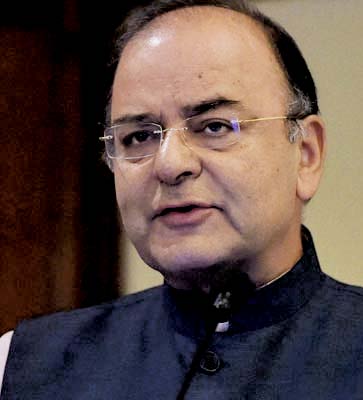
  • TAX DODGERS MUST COME CLEAN OR FACE ACTION,  SAYS ARUN JAITLEY

    TAX DODGERS MUST COME CLEAN OR FACE ACTION, SAYS ARUN JAITLEY

    MUMBAI: The Income Declaration Scheme (IDS), 2016, which closes on September 30, offers a chance to come clean, or else one must be ready to face consequences, indicated Union finance minister Arun Jaitley on Thursday. IDS provides an opportunity to persons who have not paid full taxes in the past to declare their undisclosed domestic income and assets, against a payment of tax, surcharge and a penalty aggregating to 45%.

    There will also not be a second window for disclosure of foreign black money, he said, referring to the declaration scheme which was available in 2015.

    Detection of tax evasion is easier with improvement in technology, and implementation of GST will also help.

    “Thus, as we advance over the years, not only is it morally and ethically correct to pay taxes, but it is also safer,” said Jaitley.

    Speaking at a seminar organised jointly by Ficci and the Institute of Chartered Accountants of India (ICAI) he said, “I am quite conscious of the fact that India is still a society where paying tax is not exactly an exciting or popular proposition.”

    Even as rates have been rationalised and the path towards a more liberal tax regime continues, tax evasion exists.

    Pointing to the gap between the tax collections (both direct and indirect) of roughly Rs 16 lakh crore and government expenditure of Rs 19 lakh crore, he asked the audience to think what would the figure of collection be if there was no evasion.

    After having cautioned about the consequences of not coming clean under IDS, the FM appealed to people’s conscience. “A country like India needs to spend to bridge the inequality between rural and urban areas, we need to spend on human resources, on infrastructure as a whole, on healthcare and education and on various social expenditure.

    We borrow, leaving the next generation in debt,” he said. “If many did not indulge in evasion, would India have the resources to spend where we are not spending? The obvious answer is yes,” he emphasised.

  • STAR 30 TIMES MORE MASSIVE THAT SUN DISCOVERED

    STAR 30 TIMES MORE MASSIVE THAT SUN DISCOVERED

    LONDON (TIP): Scientists have identified a young star in the Milky Way located almost 11,000 light years away from Earth and 30 times more massive than our Sun, which could help understand how the most massive stars form.

    The star is still in the process of gathering material from its parent molecular cloud, and may be even more massive when it finally reaches adulthood, researchers said.

    Led by a team at the University of Cambridge, researchers identified a key stage in the birth of the massive star, and found that these stars form in a similar way to much smaller stars like our Sun – from a rotating disc of gas and dust.

    In our galaxy, massive young stars -those with a mass at least eight times greater than the Sun – are much more difficult to study than smaller stars.

    This is because they live fast and die young, making them rare among the 100 billion stars in the Milky Way, and on average, they are much further away.

    “An average star like our Sun is formed over a few million years, whereas massive stars are formed orders of magnitude faster – around 100,000 years,” said John Ilee from Cambridge’s Institute of Astronomy, the study’s lead author.

    “These massive stars also burn through their fuel much more quickly, so they have shorter overall lifespans, making them harder to catch when they are infants,” Ilee said.

    The protostar that researchers identified resides in an infrared dark cloud – a very cold and dense region of space which makes for an ideal stellar nursery.

    However, this rich star-forming region is difficult to observe using conventional telescopes, since the young stars are surrounded by a thick, opaque cloud of gas and dust.

    Using the Submillimetre Array

    (SMA) in Hawaii and the Karl G Jansky Very Large Array (VLA) in New Mexico, which use long wavelengths of light to observe the sky, researchers were able to ‘see’ through the cloud into the stellar nursery itself.

    By measuring the amount of radiation emitted by cold dust near the star, and by using unique fingerprints of various different molecules in the gas, the researchers were able to determine the presence of a ‘Keplerian’ disc – one which rotates more quickly at its centre than at its edge.

    “This type of rotation is also seen in the solar system – the inner planets rotate around the Sun more quickly than the outer planets,” said Ilee.

    “It’s exciting to find such a disc around a massive young star, because it suggests that massive stars form in a similar way to lower mass stars, like our Sun,” he said.

    From these observations, the team measured the mass of the protostar to be over 30 times the mass of the Sun.

    In addition, the disc surrounding the young star was also calculated to be relatively massive, between two and three times the mass of our Sun.

    The study was published in the journal Monthly Notices of the Royal Astronomical Society.

  • Facebook makes trending news feature more automated

    Facebook makes trending news feature more automated

    Facebook is further automating its “trending” stories feature, a move that will scale back human input to prevent personal bias from influencing which stories get highlighted.

    The social media giant will rely more heavily on an algorithm to operate the feature — which lists what news or events are hot topics — no longer requiring people to write descriptions, according to a Facebook blog post.

    The feature prompted controversy earlier this year, with critics alleging that Facebook’s news curators were deliberately omitting stories from politically conservative outlets, allegations the company denied.

    Facebook said relying more heavily on software will allow the feature to cover a wider scale, while lessening the risk that personal bias could manipulate the list of trending topics.

    “We looked into these claims and found no evidence of systematic bias,” Facebook reiterated in its blog post Friday, but added that “making these changes to the product allows our team to make fewer individual decisions about topics.”

    With the change, instead of seeing story summaries in the trending list, users will simply see topics and the number of people talking about them.

    Letting a cursor hover over a topic will show “an automatically selected original news story with an excerpt pulled directly from the top article itself.”

    Humans will still be involved in the process to ensure that topics are real-world news and not based on an internet trend like #lunch.

    Facebook in May made changes aimed at keeping political bias out of its “trending” stories list even though an internal investigation revealed no evidence that it was an issue.

    “Our investigation has revealed no evidence of systematic political bias in the selection or prominence of stories included in the Trending Topics feature,” Facebook general counsel Colin Stretch said in a letter responding to a query from Republican US Senator John Thune, who chairs the commerce committee.

    “In fact, our analysis indicated that the rates of approval of conservative and liberal topics are virtually identical in Trending Topics.”

    Facebook updated terminology in its guidelines to be clearer and gave reviewers refresher training that emphasized content decisions may not be based on politics or ideology, the letter said.

    The review team became subject to more oversight and controls, and Facebook stop relying on lists of external websites and news outlets to assess the importance of topics in stories.

    “We’ve built Facebook to be a platform for all ideas,” Facebook founder Mark Zuckerberg said on his social network page after a meeting at the company’s California headquarters to discuss the allegations about anti-conservative bias.

  • AIR-BREATHING ROCKET ‘SCRAMJETS’ ITS WAY  INTO SPACE

    AIR-BREATHING ROCKET ‘SCRAMJETS’ ITS WAY INTO SPACE


    CHENNAI (TIP): Indian Space Research Organisation (Isro) has successfully tested two `air breathing’ scramjet engines as the first step to perfect a futuristic technology to launch missiles, inject heavier satellites in orbit, and fly astronauts at hypersonic speed. If fitted to a spaceplane, the engine can cut down inter-continental travel time and fly people in just an hour across the globe to New York.

    The engine, which use oxygen from the atmosphere to provide propulsion along with Hydrogen stored in the rocket, was developed at Rs 35crore. During the five minute test on Sunday, the scramjet engine auto-ignited and burned fuel for five seconds at an altitude of 20km after taking off on two RH-560 (Rohini) sounding rockets at Satish Dhawan Space Centre, Sriharikota. Vikram Sarabhai Space Centre (VSSC) director K Sivan said, “We have got good results. It is only a baby step, but an important step, towards developing the full fledged technology. We need to determine what should be our next step, to demonstrate which aspect of the technology”.

    It will take up to three decades and more test flights to have a fully developed scramjet engine in a launch vehicle. Scramjet engines are different from conventional rocket engines that carry fuel (hydrogen) and oxidiser (oxygen) to propel a rocket. The hypersonic engine, with its air breathing propulsion system, would carry only liquid hydrogen as fuel and takes oxygen from the atmosphere which it touches supersonic speed to burn the fuel for propulsion. The engine, which will propel vehicles at hypersonic speed, will reduce rocket weight by half, increase its efficiency, cut down the cost and enable carrying heavier payload.

    Isro will conduct a lot more experiments with the engine including tests at different speeds and fine-tuning use of new materials like Inconel (an alloy of nickel, chromium and iron) and a carbon-carbon composite. “Sunday’s test of autoigniting the scramjet engine was similar to lighting a match during a cyclone,” said Sivan. After the rocket reached an altitude of 7km, the first stage broke off and fell into the Bay of Bengal. When the second stage, to which two scramjet engines were fixed, auto-ignited, the rocket had reached 20km altitude at Mach 6 (7408.8kmph) and the flame sustained for five seconds, burning the fuel.

    By successfully testing a twin-scramjet engine, India has joined an elite group of countries like US, Japan, China, Russia and Europe that has demonstrated the technology which can be used to make a spaceplane. Isro’s immediate plan, however, is not to make a spaceplane. It is looking to integrate the engine with a reusable launch vehicle which is under development. There is a plan to design and develop a new vehicle that may look like a plane for the engine as it cannot be used in existing launch vehicles. While scramjet technology is not a replacement for cryogenic engines and will only be a supplement, Isro is also looking to develop a technology using air-breathing propulsion system where the air flow into the engine is compressed, converted into liquid oxygen and stored for use as fuel by the rocket after it leaves the atmosphere.

    Source: TOI

  • Mother Teresa sainthood on Sunday

    Mother Teresa sainthood on Sunday

    Vatican City (TIP): Affectionately called the “saint of the gutters” during her lifetime, Mother Teresa of Calcutta will be made an official saint of the Roman Catholic Church on Sunday (September 4), just 19 years after her death.

    A Nobel Peace Prize winner, Mother Teresa was one of the most influential women in the Church’s 2,000-year history, acclaimed for her work amongst the world’s poorest of the poor in the slums of Kolkata. Hundreds of thousands of faithful are expected to attend the canonization service for the tiny nun, which will be led by Pope Francis in front of St Peter’s basilica.

    The Church defines saints as those believed to have been holy enough during their lives to now be in Heaven and able to intercede with God to perform miracles. She has been credited with two miracles, both involving the healing of sick people.

    Although criticised both during her life and following her death, Mother Teresa is revered by Catholics as a model of compassion who brought relief to the sick and dying, opening branches of her Missionaries of Charity (MoC) order around the world. “Even in popular culture she’s identified with goodness, kindness, charity,” said Father Brian Kolodiejchuk, the MoC priest who campaigned for her sainthood.

    Her critics view her differently, arguing she did little to alleviate the pain of the terminally ill and nothing to stamp out the root causes of poverty.

    In 1991, the British medical journal the Lancet visited a home she ran in Kolkata for the dying and said untrained carers failed to recognise when some patients could have been cured. Kolodiejchuk said her detractors missed the point of her mission, arguing that she had created a place to comfort people in their final days rather than establish hospitals. “We don’t have to prove that saints were perfect, because no one is perfect,” he said. In her adopted India, Mother Teresa has been accused of looking to convert the destitute to Christianity, something her mission has repeatedly denied.

    The Rashtriya Swayamsevak Sangh (RSS), the umbrella right-wing Hindu organisation that helped create the ruling Bharatiya Janata Party, also accuses Mother Teresa of revelling in the misery of others.

    “As a resident of Kolkata, I feel insulted to see its poverty being glorified by the MoC. As a Hindu nationalist, I also feel that Christianity is not the only way of salvation,” said Jishnu Bose, the RSS spokesman in the city.

    But Mother Teresa still has legions of supporters in India, including Prime Minister Narendra Modi. “All her life she worked to serve poorer sections of Indian society. When such a person is conferred with sainthood, it is natural for Indians to feel proud,” Modi said on Sunday in a radio broadcast. Source: Reuters

  • Doctors stop baby’s heart for 15 hours to do life-saving surgery

    Doctors stop baby’s heart for 15 hours to do life-saving surgery

    LONDON (TIP): A nine-month-old baby in the UK, born with a large hole in his heart and faced certain death has survived a marathon surgery when doctors stopped his tiny heart for 15 hours for a life-saving procedure.

    Nathan Byrne is now the smiling picture of health, British media reported on August 29.

    Without complex surgery, which saw his thumb-nail sized heart stopped for 15 hours, he would not have lived beyond six months, Scottish newspaper ‘Daily Record’ reported.

    Surgeons told parents, Lesley Condie and David Byrne, Nathan would be in surgery for seven hours, but complications saw the procedure take more than double that time.

    A remarkable fight for life followed countless complications but the youngster, who spent time on a life support machine, has amazed medics and his family.

    Mum Lesley, 28, said: “To look at him, you would never know what he’s been through. He has so much energy and never stops smiling. It is amazing he still does that, considering all that he has been through.”

    Nathan had a rare condition called tetralogy of fallot – which also causes a narrowing of the the pulmonary artery. Every time doctors tried to take the tot, then three-and-a- half-months-old, off the machine that kept him alive during surgery his heart and lungs stopped working.

    To give his organs a chance to recover Nathan was attached to a machine that circulated his blood outside of his body.

    The baby also had to be starved for 10 days after an infection left his bowel on the verge of busting.

    Nathan alsp had to contend with blood clots on his brain, which caused countless seizures lasting between four and 45- minutes.

    When Nathan went into surgery he was so ill that his parents were told not to leave.

    It was 11 days later, on Mother’s Day, that Lesley was finally able to hold her baby again.

    His chest had been left open for seven days as his heart was so swollen.

    It was three months before the tot was eventually allowed to return home with his family.

    Lesley, from Lanarkshire, Scotland, said: “For six or seven weeks, we couldn’t see an end to it. Then one morning we came in and he just looked different. He still had the ventilator taped to his mouth but he tried to smile and I knew he was going to come off it.” (PTI)

  • China says developing new type of long-range bomber

    China says developing new type of long-range bomber

    BEIJING (TIP): China is developing a new long-range bomber, the head of the Chinese air force was quoted as saying in state media on Friday, the latest move in its ambitious military modernisation programme.

    China has already improved its ability to strike at targets far from home and there will be further improvements in the future, the Global Times quoted air force chief Ma Xiaotian as saying at an air force open day.

    “We are now developing a new generation of long-range bomber, and you’ll see it in the future,” Ma said, according to the paper, without elaborating.

    China has been ramping up research into advanced new military equipment, including submarines, aircraft carriers and anti-satellite missiles. This has rattled nerves regionally and in Washington as China takes a more muscular approach to territorial disputes in places such as the South China Sea.

    The air force, which has for years relied on large numbers of Chinese copies of Russian aircraft, is now also developing its own stealth fighters. In July, it put into service a new, domestically developed large transport aircraft.

    Ma said the air force had entered into a “transformation” stage, changing its focus from quantity to quality, the report said. (Reuters)

  • Recalling Mother Teresa’s Grace

    Recalling Mother Teresa’s Grace

    Mother Teresa sainthoodMother Teresa will be canonized on September 4. The world seems to be converging at the Vatican to witness the historic occasion. President Obama has announced the presidential delegation for the ceremony. India, too, is participating. India’s Foreign Minister, Mrs. Sushma Swaraj will lead the Indian government’s delegation to the sainthood ceremony of Blessed Mother Teresa of Calcutta, on September 4 in the Vatican. The official spokesman of the foreign ministry, Vikas Swarup made the announcement at a press conference. “In view of eh importance that we attach to this very significant event – the canonization of Mother Teresa – let me tell you, the government of India’s delegation will be led by the Honorable External Affairs Minister herself,” Swarup told journalists. He noted that the composition of the delegation is being finalized and its members will be announced in due time.

    Prof. Indrajit S Saluja leaving the dais after welcoming Mother Teresa, seen sitting (third from right). Bishop Symphorian Keeprath is to her right
    Prof. Indrajit S Saluja leaving the dais after welcoming Mother Teresa, seen sitting (third from right). Bishop Symphorian Keeprath is to her right

    Ashutosh, the spokesperson of the Aam Aadmi Party (AAP) which heads the government of the National Capital Territory of Delhi said that Chief Minister Arvind Kejriwal will be travelling to the Vatican as he has accepted the invitation of Missionaries of Charity to attend the event. The Delhi chief minister met Mother Teresa in 1992, who asked him to work with the Missionaries of Charity in Calcutta, now called Kolkata. He remained there for several months, before joining the Indian Revenue Service. Earlier in May, Mamata Banerjee, chief minister of West Bengal state said she has accepted the invitation of the Missionaries of Charity in Kolkata to attend the ceremony in the Vatican.

    The whole world, as I said earlier is converging at the Vatican.

    My thoughts go back to January 27th, 1980. Mother Teresa had come to Ludhiana, Punjab where I was a college lecturer. She had visited the town to inaugurate Missionaries of Charity’s new home in Salem Tabri neighborhood on Jalandhar Byepass.

    A few days before she arrived, I received a call from Father Kurian Muttathupadam who was then Director Principal of the Sacred Heart Boys School, which was run under the Diocese of Jalandhar. Father Kurian told me about Mother Teresa’s coming visit and asked me to welcome her on behalf of the citizens of Ludhiana. I was overwhelmed with joy at the prospect of getting an opportunity to be in the gracious company of a wonderful soul. I kept counting the days. I kept rehearsing my speech which was to be brief. I was only to extend Mother a welcome and speak briefly about the noble work she and her organization -Missionaries of Charity -were doing. Even though I was trained to speak ex tempore on any subject under the Sun and for long periods, here I was framing, reframing my sentences.

    Mrs. Gurdarshan Kaur watches as her husband Prof. Saluja as he kisses the hands of Mother Teresa.
    Mrs. Gurdarshan Kaur watches as her husband Prof. Saluja as he kisses the hands of Mother Teresa.

    And then on the 27th January, 1980, Mother Teresa arrived at the venue to inaugurate the new house for Missionaries of Charity and the inmates which I faintly recall, would have been around 20. And I am told now there are a hundred inmates who include sisters, destitute women and children.

    It was a huge gathering, mainly of Catholic Christians who had come not only from Ludhiana but also from neighboring towns of Phillaur, Phagwara, Jalandhar, Nakodar, Kapurthala, Jagraon, Moga, Khanna, Chandigarh etc. to catch a glimpse of Mother Teresa.

    The Bishop of Diocese of Jalandhar Bishop Symphorian Keeprath and several priests were present, as was my dear friend Father Kurian who unfortunately died a year ago. I was invited to speak. In fact, I was the only person to speak, besides the Bishop and Mother Teresa herself. After I made a brief speech I came down from the dais and sat in the front row with my lovely wife Gurdarshan Kaur. The two of us listened to Mother’s message. She spoke of importance of compassion and love. Her message was simple and clear. God has created all in His own image and we all are His children. As such, we must love one another.

    Later, Mother went around meeting people. When Gurdarshan and I got our opportunity to be with her, I held her small, tender hands and kissed them, even as my wife looked on. I remember Mother uttering blessings and then she moved on.

    Little did I know then that Mother Teresa would one day be a Blessed one, that one day, she will be canonized. I feel so elated to think that I touched the tender, sift, loving small hands of a great soul. I feel her presence whenever I think of her. I rejoice in her canonization.

    Mother Teresa with orphans in Kolkata. She will become "St. Teresa of Calcutta" in a Sept. 4 canonization ceremony led by Pope Francis
    Mother Teresa with orphans in Kolkata. She will become “St. Teresa of Calcutta” in a Sept. 4 canonization ceremony led by Pope Francis

    Mother Teresa was widely known as a living saint as she ministered to the sick and the dying in some of the poorest neighborhoods in the world. Although some people criticized her for not also challenging the injustices that kept so many people so poor and abandoned, her simple service touched the hearts of millions of people of all faiths.

    Born to an ethnic Albanian family in Skopje, in what is now part of Macedonia, she went to India in 1929 as a Sister of Loreto and became an Indian citizen in 1947. She founded the Missionaries of Charity in 1950.

    Shortly after she died in 1997, St. John Paul II waived the usual five-year waiting period and allowed the opening of the process to declare her sainthood. She was beatified in 2003.

    After her beatification, Missionary of Charity Father Brian Kolodiejchuk, the postulator of her sainthood cause, published a book of her letters, “Mother Teresa: Come Be My Light.” The letters illustrated how, for decades, she experienced what is described as a “dark night of the soul” in Christian spirituality; she felt that God had abandoned her. While the letters shocked some people, others saw them as proof of her steadfast faith in God, which was not based on feelings or signs that he was with her.

    The date chosen for her canonization is the eve of the 19th anniversary of her death and the date previously established at the Vatican for the conclusion of the Year of Mercy pilgrimage of people like her who are engaged in works of mercy.

    Affectionately known as the “saint of the gutter” for her unconditional love for the poor, abandoned and the marginalized, she earned several international honors, including the Nobel Peace Prize in 1979.

  • Netaji Subhas Chandra Bose Died in Plane Crash, Says 60-Year-Old Japanese Report

    Netaji Subhas Chandra Bose Died in Plane Crash, Says 60-Year-Old Japanese Report

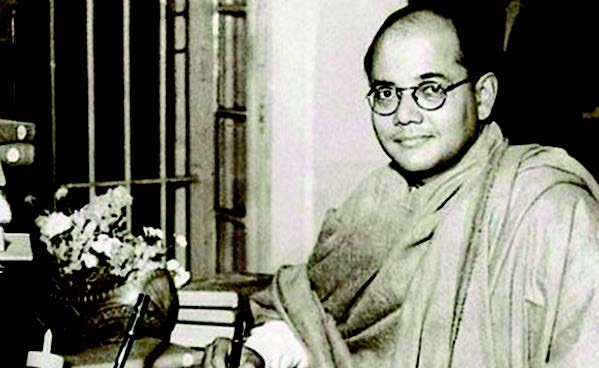
    LONDON (TIP): A classified 60-yearold Japanese government document on Netaji Subhas Chandra Bose’s death made public today concludes that the legendary freedom fighter died in a plane crash in Taiwan on August 18, 1945, backing the official version. Bosefiles.info, a UK website set up to document evidence on the circumstances surrounding Netaji’s death, said, September 2, this is the first time the report titled

    ‘Investigation on the cause of death and other matters of the late Subhas Chandra Bose’ has been made public because it remained classified by Japanese authorities and was kept a secret by the Indian government. “The report was completed in January 1956 and submitted to the Indian embassy in Tokyo, but since it was a classified document, neither side released it,” the website says.

    The seven-page report in Japanese and a 10-page translation in English reaches the conclusion that Netaji met with an air crash on 18 August, 1945 and died at a Taipei hospital the same evening.

    “Immediately after taking off, the airplane in which he (Bose) rode fell to the ground, and he was wounded,” the report notes in its ‘Outline of the result of the investigation’.

    It further records that at “about 3.00 pm he entered the Nanmon Branch of Taipei Army Hospital”; and that at “about 7.00 pm he died”.

    The findings also state that on “August 22, he was cremated (at the Taipei Municipal crematorium)”.

    In a more detailed description of the incident, the report says: “After the plane had taken off and risen about 20 meters above the ground, one petal of the three-petaled propeller of the left wing was suddenly broken, and the engine fell off. “The airplane, subsequently unbalanced, crashed into ballast piles, beside the strip of the airport” and “was wrapped in flames in a moment.

    Mr. Bose, wrapped up in flames, got off the plane; Adjutant Rahmin (Colonel Habibur Rehman) and other passengers exerted themselves to take his clothes off… his whole body was seriously wounded by burns.”

    The Japanese government report on the death of Netaji, who was 48 years old then, backs the Shah Nawaz Khan-led inquiry instituted by the then Indian Prime Minister Jawaharlal Nehru, which had investigated the matter later in 1956, according to a press release issued by the website.

  • Arvind Kejriwal sacks Sandeep Kumar: Skeletons keep tumbling out of Aam Aadmi Party’s cupboard

    Arvind Kejriwal sacks Sandeep Kumar: Skeletons keep tumbling out of Aam Aadmi Party’s cupboard

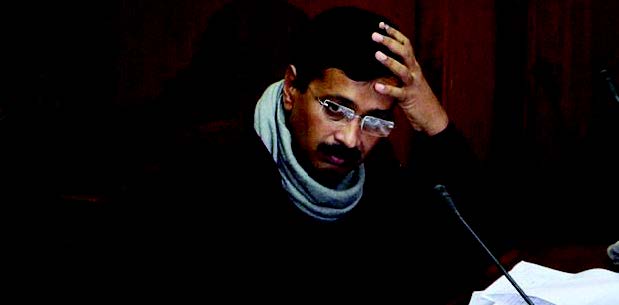
    NEW DELHI (TIP): Was Delhi Chief Minister Arvind Kejriwal always aware of the dubious background of certain legislators and chose to turn a blind eye until shamed publicly by the media?

    Why did he choose people with such credentials to represent Aam Aadmi Party (AAP), whose USP has been honesty?

    The latest is Delhi’s Women and Child Development Minister Sandeep Kumar, who was sacked on August 31 evening by the CM after receiving an

    ‘objectionable’ CD, in which the minister was purportedly shown in a

    ‘compromising position with two women’.

    Prior to this, two other ministers —Jitender Singh Tomar and Asim Ahmed Khan — in Kejriwal’s Cabinet had met a similar fate in 2015 on the charges of fake degrees and bribery respectively.

    “Within an hour of receiving the CD at his residence in Civil Lines, the CM sacked Sandeep Kumar, after having a high-level meeting with senior leaders. It’s a very unfortunate incidence and the CM didn’t hesitate to take strong action, which will be a message for others,” an AAP source said.

    On 14 February, 2015, when Kejriwal after taking oath, promised an unprecedented, honest government to the people of Delhi, he wouldn’t have envisaged that quite a few of his legislators would have skeletons in their cupboards to embarrass him.

    The decision to remove the minister was taken at a high-level meeting and the announcement was made by Kejriwal himself through a tweet.

    “Received ‘objectionable’ CD of minister Sandeep Kr. AAP stands for propriety in public life. That can’t be compromised. Removing him from Cabinet wid immediate effect,” Kejriwal tweeted.

    The surprising part of this unfortunate episode is that unlike in the case of the other minister —Jitendra Singh Tomar, who resigned after his arrest in the bogus degree case— 36-year-old Kumar was not in the list of AAP candidates against whom the former leader and co-founder of AAP Prashant Bhushan had raised questions about their dubious reputation and referred the matter to party’s internal Lokpal.

    That red flag against a dozen leaders turned out to be the bone of contention between Kejriwal and the duo —Yogendra Yadav and Prashant Bhushan— which ultimately led to the expulsion of the latter in 2015.

    But, with time moving ahead, skeletons are tumbling out of AAP’s cupboard

    The ‘bogus degree’ issue of the law minister had snowballed into a major political controversy in April, with the opposition parties demanding the minister’s sacking. But, what amazed the opposition was Kejriwal’s stoic silence on the entire controversy and not taking any action. The minister resigned only after the police arrested him in June.

    Delhi’s Food & Civil Supplies minister Khan was sacked on charges of serious corruption, after a series of audio clips surfaced in public domain.

    Similarly, there are many other AAP legislators with various charges against them, who could further embarrass Kejriwal and AAP. However, none of the sacked ministers has been expelled from the party.

    “Three of the six ministers of Kejriwal government have already been sacked. One for forgery, second for bribery, whereas the third for adultery. But all three of them not only continue to be members of AAP, they also enjoy a status in the party. What stops Mr Kejriwal from removing them from the party? Does AAP act only when the misdeed committed by its legislators becomes undeniable and indefensible?” questioned Anupam, national executive member of Swaraj Abhiyan, an AAP splinter group.

    The critics see this impromptu action of Kejriwal as a ‘face-saving exercise’ ahead of the upcoming Punjab Assembly polls.

    “Ahead of Punjab election, Kejriwal has been compelled to sack the minister in order to save party’s image and project a good one, which otherwise has received a beating due to controversies and breakups in the state. The latest is the removal of the convener of Punjab AAP, Sucha Singh Chottepur,” Sardar Singh, an ex-AAP volunteer from Punjab remarked.

    State BJP president Satish Upadhyay tweeted, “So Kejriwal had this sex CD for 15 days & sacked Sandeep Kumar only whn CD reached Media.”

    But, Kejriwal’s action this time has got support from Delhi Commission for Women — a statutory body of the Delhi government.

    DCW chairperson Swati Maliwal tweeted immediately after Kumar was sacked, “Acts of Sandeep Kumar shocking and unfortunate. Such people don’t deserve to be Minister, yet alone WCD Minister! Good Govt has sacked him.”

    HERE ARE SOME AAP MLAs UNDER THE SCANNER

    • ?          Akhilesh Pati Tripathi (Model Town): Six cases registered against him. Booked for molesting and misbehaving with a woman and rioting. Arrested in November, 2015.
    • ?          Manoj Kumar (Kondli): Cases of land grabbing, outraging a woman’s modesty and hurt filed against him. 4 FIRs registered at three east Delhi police stations. Arrested after 14 months in July, 2015.
    • ?          Mahinder Yadav (Vikaspuri): Various charges including rioting and assaulting public servant during a protest seeking action against an alleged sexual offender. Arrested on 29 January.
    • ?          Naresh Balyan (Uttam Nagar): Liquor bottles found from building allegedly owned by relative of this Uttam Nagar MLA ahead of polls. Balyan questioned.
    • ?          Somnath Bharti (Malviya Nagar): Former Delhi law minister. Case of attempt to murder, domestic violence, cheating registered on his wife Lipika Mitra’s complaint. Two other cases registered in connection with the Khirki raid in which African women were manhandled. Arrested in September 2015. Out on bail.
    • ?          Kartar Singh Tanwar (Chhatarpur): Under Income Tax lens. The I-T department reportedly found unaccounted income worth Rs 130 crore from Tanwar in August.
    • ?          Surinder Singh ‘commando’ (Delhi Cantt): Booked for making casteist remarks against an New Delhi Municipal Council sanitary inspector belonging to schedule caste and obstructing him and other NDMC employees from performing government duty. Arrested and got bail from court.
    • ?          Rakhi Birla (Mongolpuri): Booked for assault a government employee in 2014.
    • ?          Somdutt (Sadar Bazar): FIR against him and supporters for assaulting a person.
    • ?          Sanjeev Jha (Burari): Booked for rioting, injuring police personnel. Six volunteers were arrested
  • New Delhi, Washington to advance talks on building six nuclear reactors

    New Delhi, Washington to advance talks on building six nuclear reactors

    NEW DELHI (TIP): India and the US on Tuesday agreed to move forward on building six nuclear reactors and discussed ways to enhance cooperation in the field of atomic power and space.

    John Kerry, US Secretary of State, who is here for the 2nd Indo-US Strategic and Commercial Dialogue (S&CD), said his country would want its civil nuclear cooperation with India to take shape in setting up of reactors.

    “We have agreed now to move forward on six WestingHouse nuclear reactors which will provide energy for six million Indians, not to mention the enormous number of jobs (it will create).

    “Our civil nuclear cooperation will bring affordable clean energy to tens of millions of Indian households as we move closer in the use of safe, modern latest generation nuclear power,” Kerry said.

    Under the Indo-US nuclear cooperation agreement signed in October 2008, two US companies would build 12 atomic reactors, each with a capacity of 1000 MWs.

    However, the US has often raised concern about hurdles faced by American companies over a series of issues.

    Its major concerns like the liability clause in the Civil Liability for Nuclear Damage Act, 2010 has already been addressed and talks between the WestingHouse Co, which will build six reactors, and the Indian side are on, sources said.

  • PoK would’ve been ours if left to us: Indian Air Force chief

    PoK would’ve been ours if left to us: Indian Air Force chief

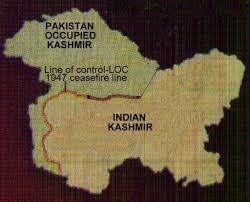
    NEW DELHI (TIP): Air Chief Marshal Arup Raha today indicated that Pakistan-occupied Kashmir (PoK) would have been India’s had the country gone for a military solution rather than taking a “moral high ground”. He rued that air power was not fully utilised by the Indian Government till the 1971 India-Pakistan war.

    Recalling the post-1947 era when hordes of raiders, supported by the Pakistan government and military, tried to overrun Jammu and Kashmir, he said  it was IAF’s transport planes that had helped soldiers and equipment to reach the battleground.

    “At that time we went to the United Nations for a peaceful solution. But the problem persists and Pakistan-occupied Kashmir remains a thorn in our flesh even today,” Raha said.

    PoK has recently witnessed violent protests. Prime Minister Narendra Modi, in his Independence Day speech, had spoken of rights violations in PoK and Balochistan.

    “We have been reluctant in use of power, specially aerospace power. Air power in deterring our adversaries, or deterring a conflict and when involved in a conflict, which we have been drawn into several times in the past, we did not apply ourselves adequately in achieving the end state after the conflict,” the IAF Chief said while speaking at a seminar here.

    He said India’s security environment had been vitiated and that aerospace power would be required to deter a conflict in the region as well as ensure peace. “We have been governed by high ideals and we did not follow a very pragmatic approach, to my mind, to security needs. To that extent, we did ignore the role of the military power to maintain a conducive environment,” Raha said. The IAF Chief said the only time when air power was fully utilised was during the 1971 war. “But the situation has changed. We are ready to use air power to defend ourselves and deter a conflict,” he added.

  • RSS defamation case: Stand by what I said, ready to face trial, says Rahul Gandhi

    RSS defamation case: Stand by what I said, ready to face trial, says Rahul Gandhi

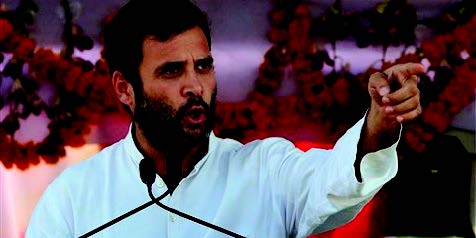
    NEW DELHI (TIP): Congress vice-president Rahul Gandhi on September 1 told the Supreme Court that that he stood by his remarks blaming the Rashtriya Swayamsevak Sangh (RSS) for the assassination of Mahatma Gandhi.

    The Congress leader further said that he was ready to face a trial before a Maharashtra court which had issued a summons to him as an accused in the defamation case.

    Gandhi’s lawyer Kapil Sibal told the Supreme Court: “I stand by each and every word. I will never take my words back. I stood by it yesterday, I stand by it today and I will stand by it in future. I am ready to go to trial.”

    Rahul withdrew a petition before the apex court that had sought quashing of the defamation proceeding in a Maharashtra trial court.

    The bench of Justice Dipak Misra and Justice Rohinton Fali Nariman allowed the petition to be withdrawn but did not grant Rahul Gandhi an exemption from appearing before the trial court.

    When the matter came up before the bench, the counsel appearing for an RSS functionary who has filed the complaint, said he had instruction that the matter can be put to an end if Rahul gave another clarificatory statement that he never intended to say that RSS was behind the assassination.

    Senior advocate UR Lalit, appearing for the RSS functionary, submitted that such a statement was needed from Rahul, as in the last 60 years, whenever there was an election, Congress made an attempt to blame RSS for the killing of the Father of the Nation.

    “Whenever and wherever there is an election, RSS is maligned,” he said.

    Lalit also said if Rahul was not willing to express his bonafide saying he had not intended to accuse the RSS for the assassination, he could show that the sequence of his sentences used in the election rally were such that RSS was his target.

    However, the submission was opposed by Sibal who said the statement made by the opposite side was like a political speech and cannot be accepted by the apex court.

    As the bench was not inclined to entertain Rahul’s plea, Sibal said he preferred to withdraw the appeal filed by the Congress leader against the Bombay High Court judgement refusing to quash the case and summons issued to him by the trial court.

    The bench allowed his plea and declared the Special Leave Petition filed by Rahul as “dismissed as withdrawn”.

    The bench also said the trial court would go into the case without being influenced by any of the observations made by the apex court and the High Court during the various hearings before them.

    RSS activist Rajesh Kunte filed the defamation case against the Congress leader over his remarks at a 2014 election rally in Bhiwandi, Maharashtra, that people associated with the RSS killed Mahatma Gandhi.

    On August 24, Rahul had told the Supreme Court that he had never blamed RSS as an institution for killing Mahatama Gandhi but persons associated with it were behind the assassination. On a subsequent day, Rahul said he stands by his comments and will never stop fighting the “hateful and divisive agenda” of the RSS.

    He buttressed his stand by citing paragraphs from his affidavit filed in the Bombay High Court, while challenging the summons issued to him as an accused for his alleged defamatory statement.

    Sibal cited the affidavit filed before the High Court and said that Rahul had only accused certain people of RSS and not the organisation as the killer of Mahatma Gandhi.

    The court had asked Lalit, appearing for Rajesh Mahadev Kunte, Secretary of Bhiwandi Unit of RSS and the complainant, to take instructions on the option of disposing of the matter.

    Lalit had informed the court that he would take instruction as to whether the statement, given in the affidavit, is taken on record, then the petition can be disposed of or not.

    Kunte, secretary of Bhiwandi unit of RSS, had alleged in his complaint that Rahul told in an election rally at Sonale on March 6, 2014 that the “RSS people killed Gandhiji”.

    The case is pending before a magisterial court in Bhiwandi in Maharashtra’s Thane district.

    He had alleged that the Congress leader had sought to tarnish the reputation of RSS through his speech.

  • Gujarat eyes tourism  investment worth  Rs 8000 cr at IITIS

    Gujarat eyes tourism investment worth Rs 8000 cr at IITIS

    NEW DELHI (TIP): Gujarat Tourism is offering 32 tourism projects to attract private investments at the forthcoming Incredible India Tourism Investor’s Summit (IITIS) to be held from September 21-23 in New Delhi.

    The total estimated value of the projects is around Rs 8,000 crore which includes innovative projects with global appeal like Dev Ni Mori Buddhist tourist site development (Rs 1,200 crore), Sant Nagari, highlighting lives and contributions of India’s saints (Rs 600 crore), Giant Wheel at Sabarmati Riverfront (Rs900 crore) etc.

    J. Haider, Principal Secretary-Tourism, Government of Gujarat, says, “Gujarat will be a key partner State at IITIS. We will highlight around Rs 8,000 crore worth of projects in the summit. These will include major religious tourism projects like Dev Ni Mori, Sant Nagari and others. At the same time, we will be putting forward modern tourism projects like the Giant Wheel at Sabarmati Riverfront, Global Village, Mini India at Adalaj in Ahmedabad, cruise tourism, aero sports etc.”Haider further informed that the state government aims to take up all these projects on Public Private Partnership (PPP) mode.

  • Scientific co-operation between India & US seeks to have greater social impact

    Scientific co-operation between India & US seeks to have greater social impact

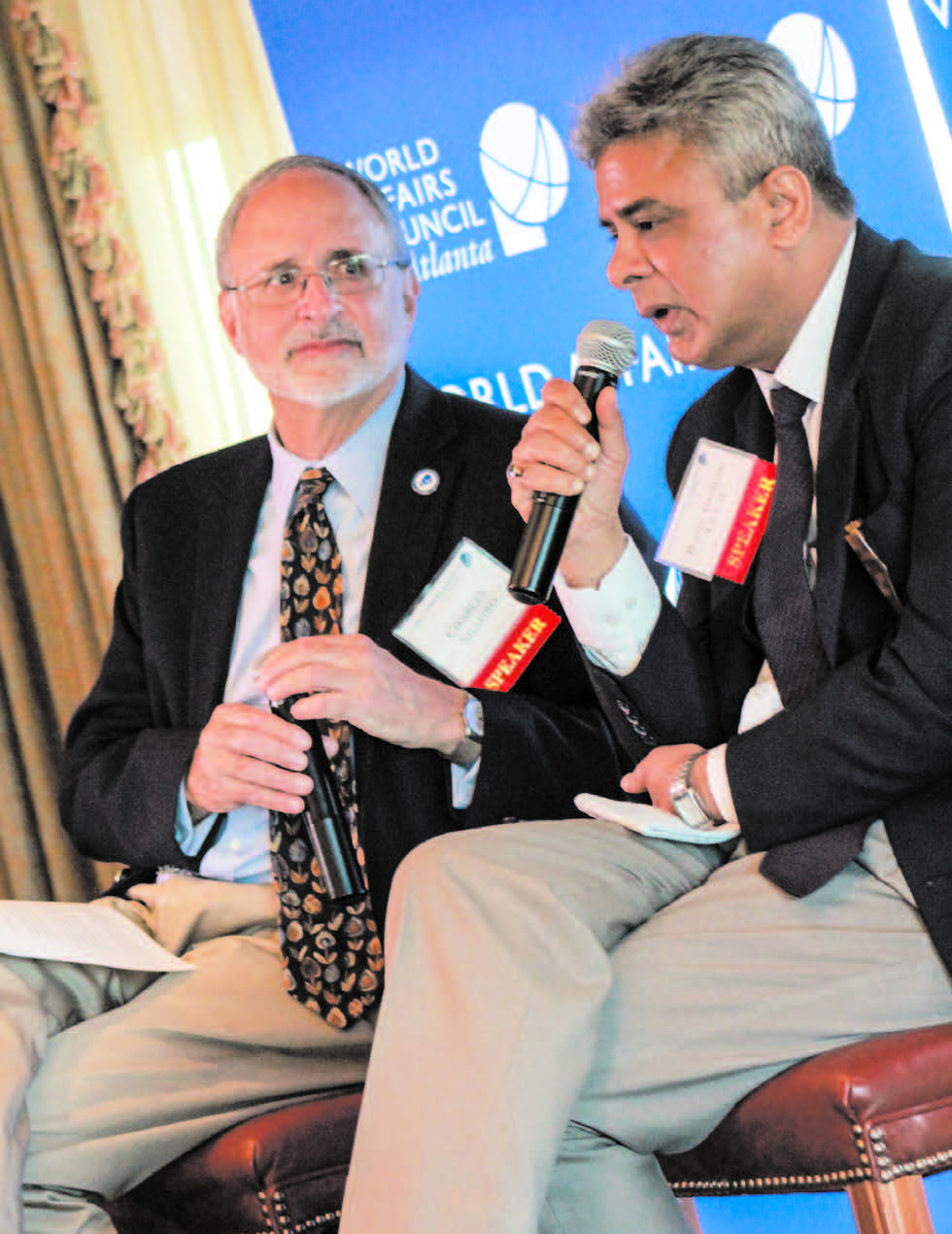
    ATLANTA (TIP): The World Affairs Council of Atlanta and the American India Foundation [AIF] hosted, August 18, Dr. Rajeev Tayal, Executive Director of the Indo-US Science & Technology Forum [IUSSTF] for a breakfast presentation at the City Club of Buckhead in Atlanta. Set against the backdrop of the ever-increasing science and technology co-operation between India and the United States, Dr. Tayal delved into a range of issues including the start-up climate in India, the innovation landscape and how IUSSTF is striving to be an enabler of new ideas. In a Q&A format with Ambassador Charles Shapiro, World Affairs Council President, Dr. Tayal discussed how targeted investments can have a societal impact in India, the United States and beyond.

    Dr. Tayal highlighted the success of the Forum saying, “We have been able to connect about 25,000 scientists on both sides. This bridging has been one of our biggest successes. Half a dozen products have just reached the market.”  He added,” “We are good value for money. We take care of educational and research activities, support bilateral workshops. Both parties (US & India) deliberate on scientific issues. We support virtual centers which provide unique opportunities for people to work and collaborate together.”

    India’s Consul-General Nagesh Singh who was present on the occasion said, “There are nearly 50 tracks of dialogue happening across the two countries. There is a greater acceptance of the importance of knowledge-sharing on both sides as we see scientists working at key research institutions. We are pleased to host Dr. Tayal in Atlanta and put the spotlight on the niche areas that IUSSTF is working on to strengthen the science and technology partnership between the two countries.”

    IUSSTF is a nodal agency established under an agreement between the Governments of India and the United States, is an autonomous, not for profit society in India, co-funded and co-governed by both the governments. Dr. Tayal pointed out that, “Although there are several other bi-lateral arrangements similar to this, the India-US engagement has been the most vibrant. We support the last-mile coverage of the R&D value chain.”  He quoted examples of medical devices to address several health issues like diabetes, and a low-cost knee joint that is a collaborative effort between Stanford University and a hospital in Jaipur, Rajasthan, India. IUSSTF does not patent these innovations nor control the intellectual property and leaves it to the innovators.

    Chair of the AIF Atlanta Chapter Dr. Amitabh Sharma welcomed the gathering highlighting the role of AIF in nurturing an environment of collaboration and shared learning especially in the context of addressing the larger social issues of access to education, public health and skilling young people.

    Other key people in attendance included Tarun Mohindra, Counsellor, Science and Technology, Embassy of India, Georgia Tech Professor Suman Das, Arun Rai from Georgia State University and Shailesh Patel from the Chugh Firm.

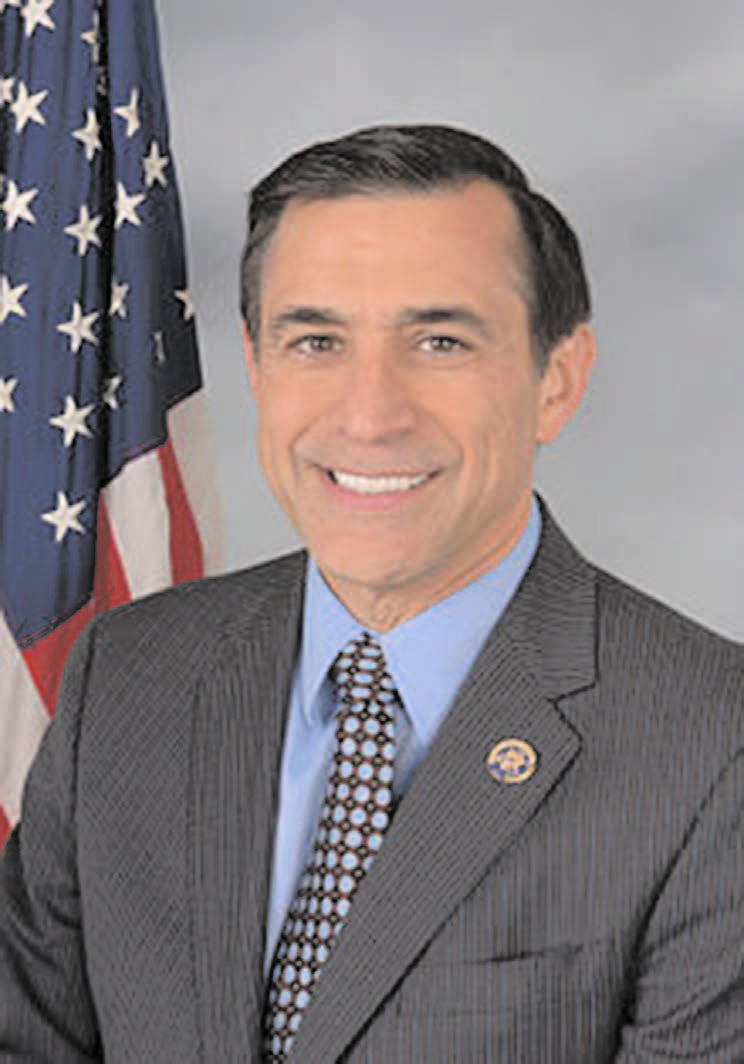
  • Rep. Darrell Issa Introduces Bipartisan Bill to Thwart #H-1B Abuse

    Rep. Darrell Issa Introduces Bipartisan Bill to Thwart #H-1B Abuse

    WASHINGTON (TIP): With the topic of U.S. jobs filled by foreign workers fanning the heat of the presidential campaign, Rep. Darrell Issa introduced, August 31, a bipartisan legislation designed to close loopholes in the H1-B temporary visa program to ensure that only the most highly skilled foreign applicants can work in the United States.

    The “Protect and Grow American Jobs Act” bill, H.R. 5801, led by Issa, was introduced with support from the entire San Diego congressional delegation, industry stakeholders and immigration policy leaders, including Congressman Lamar Smith, R-Texas, according to a statement released by Issa’s office.

    U.S. Rep. Darrell Issa is proposing to change certain exemptions that allow companies to hire more foreign workers when qualified U.S. candidates are not available.

    “First and foremost, this bill is about protecting American jobs,” Issa said in a statement.

    The program ensures American companies can attract the best talent worldwide, he said. “Unfortunately, in recent years, this important program has become abused and exploited as a loophole for companies to replace American workers with cheaper labor from overseas,” he said.

    “The bill we’ve put forward is simple, bipartisan and will go a long way to fixing one of the many problems with our broken immigration system,” he added.

    Issa pointed to what he called abuses by Southern California Edison, the Rosemead-based utility, one of many U.S. companies hiring foreign workers under the H-1B program.

    Last year, federal officials investigated two outsourcing firms used by the company to hire foreign workers and found no wrongdoing. The company’s hiring practices came under scrutiny in 2014, after Edison announced it would lay off hundreds of workers, including information technology employees. Critics charged some of those workers were replaced by foreign hires.

    Issa’s bill seeks to change certain exemptions to a cap on the visas as they apply to employers with more than 15 percent of their employees on H-1B visas.

    The employers are required to attest they are unable to fill their positions with qualified U.S. workers when they seek more of the H-1B visas.

    But companies can bypass the “attestation” requirement if the foreign workers have a master’s degree or higher, or is paid more than$60,000 per year.

    Issa proposes doing away with the master’s degree exemption, and raising the salary cap from $60,000 to $100,000, thus making it harder for companies to add to their H-1B employees.

    A large share of H1-B visas goes to workers from India. Shikha Bhatnagar, director of the South Asian Network in Artesia, opposes the bill and argues there’s a demand for foreign workers.

    “It is my impression that there is a need for bringing in qualified tech professionals from overseas,” she said.

    Some H-1B visa critics don’t think the bill goes far enough. John Miano, co-author of a book that takes aim at the program, said lawmakers don’t want to impose too many restrictions on the visas.

    “There is too much money being made here,” said Miano. “There is a chain of people making money off replacing Americans with foreign workers.”

    Miano said since the exemptions in question apply only to companies with a share of H-1B workers above 15 percent, the impact of the bill if it passes would be limited.

    The federal government limits the number of H-1B visas to 65,000 each fiscal year. But another 20,000 can be exempted from the cap if the foreigners hold a U.S. master’s degree or higher.

    Colleges and universities, related nonprofits and government research organizations can also petition for exemptions from the 65,000 limit when hiring H-1B employees.

    Attempts to reform the H-1B program have been pushed by both Republicans and Democrats who argue that the visas allow companies to pay lower wages to foreign workers while displacing U.S. workers.

    Issa’s bill, which would be taken up by the GOP-controlled House, has seven co-sponsors, including four Democrats.

  • AT LEAST 12 KILLED, 52 WOUNDED IN BLASTS IN PAKISTAN

    AT LEAST 12 KILLED, 52 WOUNDED IN BLASTS IN PAKISTAN

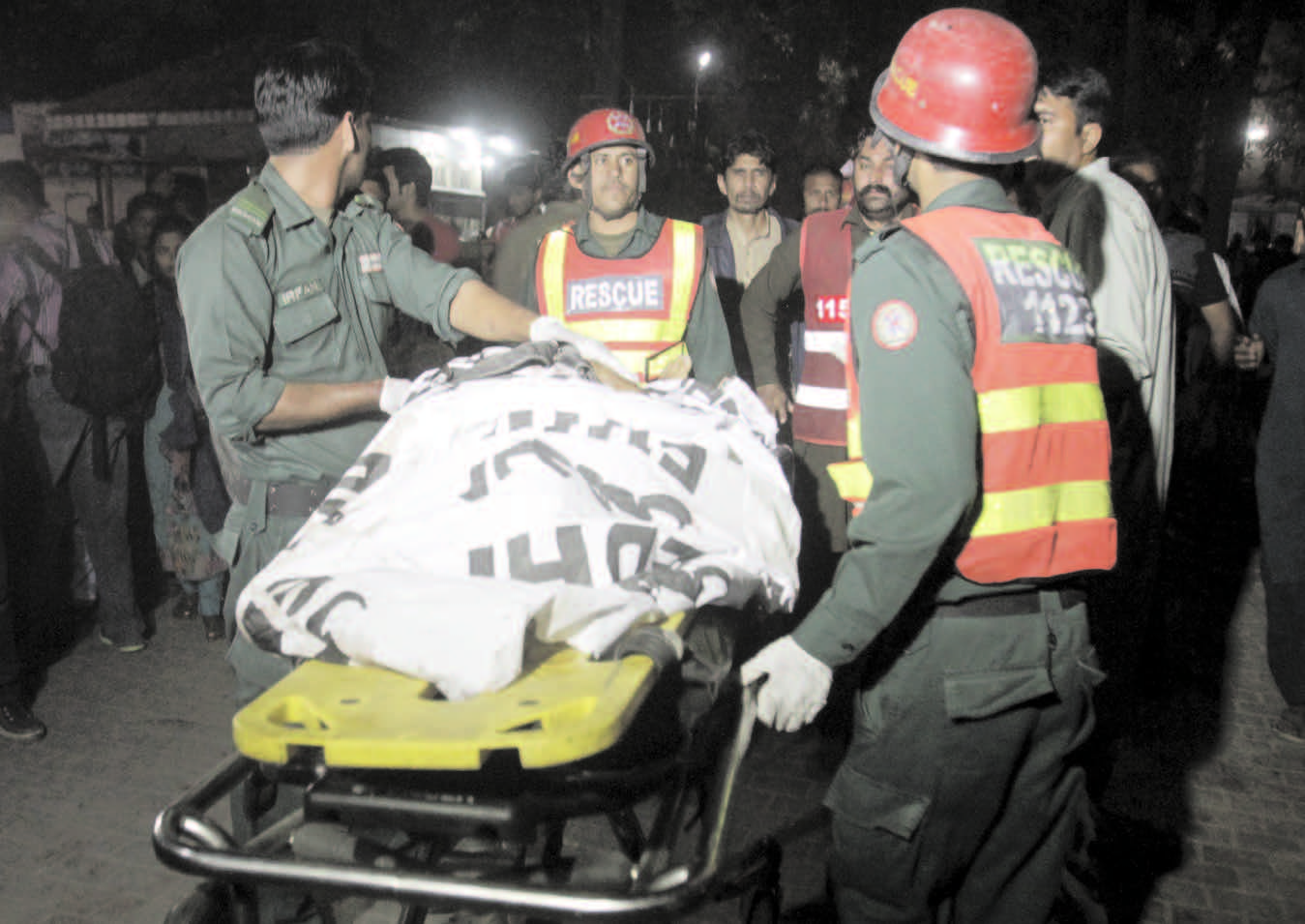
    PESHAWAR (TIP): At least 12 people were killed and 52 wounded when two bomb blasts were detonated outside a district court in northwestern Pakistan on September 2, a rescue official said.

    “So far we recovered 12 bodies of the lawyers, police personnel and civilians. Besides this, we rescued 52 injured, including lawyers, police personnel and civilians from the spot,” Haris Habib, chief rescue officer in the city of Mardan in Khyber Pakhtunkhwa province, where the blasts took place, told Reuters.

    Earlier, At least one civilian and four suspected militants were killed in a Christian neighbourhood in Pakistan’s Peshawar.

    The Pakistani Taliban faction Jamaat-ur-Ahrar on Friday claimed responsibility for a suicide attack on a Christian neighbourhood in northwestern Pakistan where at least one security guard was killed.

    Taliban spokesman Ehsanullah Ehsan said there were “several deaths” in the attack on the neighbourhood near Warsak Dam, in the Khyber tribal region, 20 km (12 miles) northwest of the city of Peshawar.

    The military said four attackers wearing suicide vests and carrying firearms were killed. (Reuters)

  • Maldives issues arrest warrant for ex-president Mohamed Nasheed

    Maldives issues arrest warrant for ex-president Mohamed Nasheed

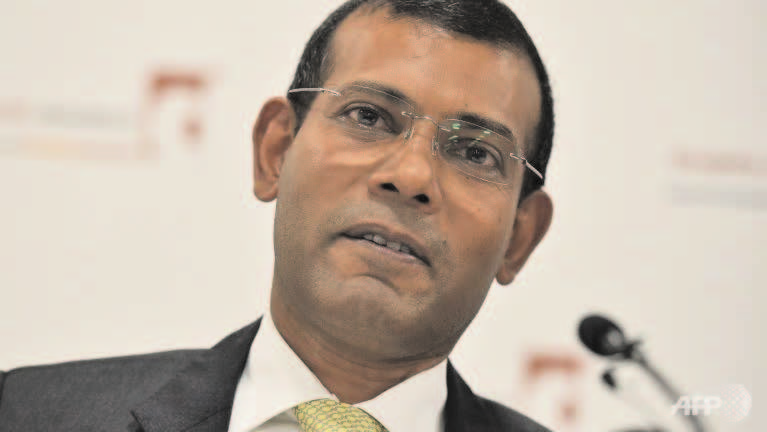
    COLOMBO (TIP): The Maldives announced on September 1 it is seeking former president Mohamed Nasheed’s arrest for failing to return to the troubled archipelago to complete a prison sentence after receiving medical treatment in Britain.

    Nasheed, the Maldives’ first democratically elected president, recently won political asylum in Britain after being granted permission to travel there for treatment while serving the sentence for a terror-related offence.

    “A court order (has been) issued for arrest of former president Mohamed Nasheed,” the government said in a statement, issued after Nasheed flew to neighbouring Sri Lanka.

    “The Maldives correctional service is seeking to have him brought back to serve the remainder of his 13-year sentence,” the statement said, without detailing how it planned to seek his return.

    Opposition sources said Nasheed has been meeting Maldives opposition groups in Sri Lanka in recent days to hatch a plan to topple the archipelago’s president Abdulla Yameen.

    Nasheed was among members of several exiled opposition groups meeting in Colombo, two people in Nasheed’s Maldivian Democratic Party have told AFP.

    The Maldives has been gripped by political turmoil since Nasheed was forced to resign in 2012, denting its image as a paradise for upmarket tourists.

    The international community has mounted fierce criticism against what they say is Yameen’s unlawful jailing of Nasheed and other opponents. Nasheed, a climate change activist who was also imprisoned during the three-decade rule of former strongman Maumoon Abdul Gayoom, was elected president in 2008. He rose to international prominence when he hosted a cabinet meeting underwater to draw attention to the threat global warming posed to the atoll nation’s existence.

    But he was forced to resign in February 2012 after a mutiny by police and troops, which followed protests over the arrest of a top judge for alleged corruption, as well as for politically motivated rulings. (AFP)

  • Bangladesh top court upholds death sentence of war criminal

    Bangladesh top court upholds death sentence of war criminal

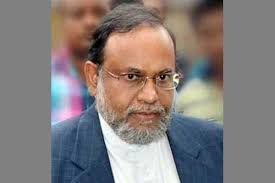
    DHAKA (TIP): Bangladesh’s top court on August 31 rejected a final appeal by the leader of an Islamist party against a death sentence over atrocities committed during the 1971 war of independence, lawyers said, meaning he could be hanged at any time.

    The verdict comes as the Muslim-majority nation suffers a series of militant attacks, the most serious on July 1, when gunmen stormed a cafe in the capital, Dhaka, and killed 20 hostages, most of them foreigners.

    In March, the Supreme Court upheld the death penalty for Mir Quasem Ali, 63, a media tycoon and key financier of the Jamaat-e-Islami party, for murder, confinement, torture and incitement to religious hatred during the war to separate from Pakistan. The war crimes tribunal set up by Prime Minister Sheikh Hasina in 2010 has sparked violence and drawn criticism from opposition politicians, including leaders of the Jamaat-e-Islami, who say it is victimising her political opponents.

    (PTI)

  • Rajapaksa’s brother indicted by anti-graft commission

    Rajapaksa’s brother indicted by anti-graft commission

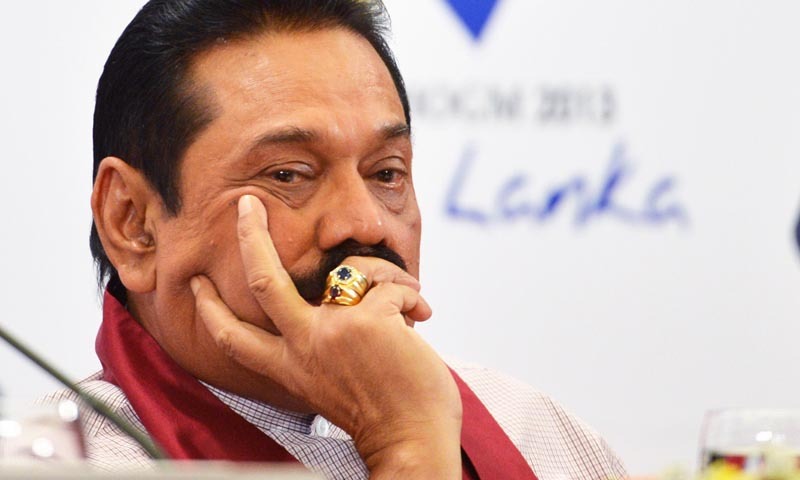
    COLOMBO (TIP): The brother of former President Mahinda Rajapaksa was among eight persons against whom the Sri Lankan graft commission filed a corruption case on for causing a loss of nearly US$ 75 million to the country.

    Gotabhaya Rajapaksa, 67, was the powerful secretary to the Ministry of Defence under his brother’s rule. He and seven others were implicated in the case they had caused a loss of over 11 billion Sri Lankan rupees (USD 74.93 million) to the state.

    The floating armory was seized by the police after Rajapaksa lost the presidential election in January, 2015 and the operation was later handed back to the navy.

    The Rajapaksa family has faced many cases of alleged wrongdoings during the decade when they were in power. They have dubbed all cases as politically motivated to extract revenge from them.

    (PTI)

  • Malaysia confirms first case of Zika in woman who visited Singapore

    Malaysia confirms first case of Zika in woman who visited Singapore

    KUALA LUMPUR (TIP): Malaysia on September 1 reported its first suspected case of Zika, a 58-year-old woman believed to have contracted it in neighbouring Singapore where more than 100 cases have been confirmed.

    The Malaysian woman had made a brief trip in late August to visit her daughter, who lives in Singapore and has already been confirmed as having the Zika virus, Malaysia’s health ministry said in a statement.

    After returning to her home near the Malaysian capital, Kuala Lumpur, the 58-year-old woman fell ill and was diagnosed with “suspected” zika, based on a urine test. Full confirmation via blood tests is pending.

    “The source of infection is suspected to have occurred in Singapore,” the statement said.

    The Aedes mosquito-borne Zika, which has been detected in 67 countries and territories including hard-hit Brazil, causes only mild symptoms for most people, such as fever and a rash.

    But pregnant women who catch it can give birth to babies with microcephaly, a deformation marked by abnormally small brains and heads.

    Tropical Malaysia, which already has struggled in recent years to control the spread of Aedes-borne dengue fever, has been bracing for Zika after Singapore last weekend reported a surge in cases.

    In an update on Wednesday, Singapore authorities said the number of infections there had risen to 115.Malaysia’s health ministry said five other Malaysians who live and work in Singapore were among the city-state’s cases.

    The ministry said Malaysia was intensifying monitoring at border points and ramping up mosquito-control measures across the country, such as fogging with pesticides.

    It called on Malaysians to do all they can to eliminate potential mosquito breeding sites such as standing water and to seek early medical attention if they have Zika symptoms, especially if they have visited outbreak areas such as Singapore. “From the first reported case of Zika, we can conclude that it is rather easy to get infected by the virus when visiting places that (have an) outbreak, including Singapore,” it said. (AFP)

  • Indian Americans Raj and Bharti Shah in collaboration with the Johns Hopkins Center Debut Mobile Clinic in Maharashtra

    Indian Americans Raj and Bharti Shah in collaboration with the Johns Hopkins Center Debut Mobile Clinic in Maharashtra

    MARYLAND (TIP): Indian American owned health care informatics company CTIS led by its founders Raj and Bharti Shah, have collaborated with the Johns Hopkins Center for Clinical Global Health Education and Byramjee Jeejeebhoy Government Medical College to equip and dispatch a custom-designed mobile health care services van to Maharashtra, India.

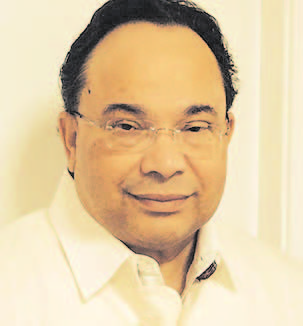
    Raj (above) and Bharti Shah (in post below) facilitated dispatch of a custom-designed mobile health care services van to Maharashtra, India.
    Raj (above) and Bharti Shah facilitated dispatch of a custom-designed mobile health care services van to Maharashtra, India.
    Raj (left) and Bharti Shah (right) facilitated dispatch of a custom-designed mobile health care services van to Maharashtra, India.
    Bharti Shah

    The mobile clinic, the parties say, is designed to address the fact that India assumes a large burden of chronic and infectious diseases, leading the world in deaths related to tuberculosis, cervical cancer and diabetes, and ranking third in the number of people with HIV.

    Equipped with a $100,000 donation from CTIS and the Shahs, the mobile clinic features advanced laboratory equipment for disease diagnoses, including a GeneXpert rapid TB diagnostic system. The van includes other modern care and treatment capabilities, including mobile radiology equipment.

    While mobile clinics sponsored by corporate hospitals and charity organizations have been deployed in Maharashtra primarily to provide health care in rural areas, the group behind this effort say it is novel, in that it will strategically enhance community outreach for tuberculosis screening, research and care, and provide wellness services.

    Johns Hopkins Center for Clinical Global Health Education Director Robert Bollinger, M.D., M.P.H., says the support from the Shahs will lead to improvements in health and wellness in Maharashtra, as well as provide a model for innovative health research, care and wellness for the rest of India.

  • Indian American doctor in California arrested for providing opioids in exchange for sex acts

    Indian American doctor in California arrested for providing opioids in exchange for sex acts

    SAN DIEGO, CA (TIP): Physician Naga Raja Thota, 62, a pain specialist with an office in El Cajon, was arrested Wednesday, August 31, morning and charged with distributing oxycodone and other highly addictive drugs without any legitimate medical purpose in exchange for sex acts, as reported by voiceonline.

    The doctor was taken into custody by San Diego Drug Enforcement Administration agents at his practice. The complaint said at least two young women received prescriptions for opioids without a legitimate medical purpose on numerous occasions in exchange for sex acts. The complaint also shows a pattern in which sexually-explicit texts are exchanged by the doctor and the women, followed by prescriptions written for them by Thota.

    According to the complaint, one victim said she met Thota when she was hospitalized for withdrawal symptoms for Hydrocodone and Alprazolam. Thota agreed to treat her but documented that his treatment was for pain even though this victim did not suffer from any medical condition that caused chronic or ongoing pain. This victim also stated that Thota kept increasing the dosage. This victim, who was 20 years old when she met Thota, said she felt that if she did not submit to sexual acts with Thota he would not have provided her with additional opioid prescriptions. After being exposed to greater dosage levels of opioids by Thota, the young woman started using an even stronger opioid – heroin.

    “Prescription drug abuse and overdoses have reached alarming levels,” said U.S. Attorney Laura Duffy. “We are going after doctors who abuse their power to prescribe and exploit the desperation of addicts for their own gratification.” “Doctors who exploit patients are the worst kind of predators.” said DEA San Diego Special Agent in Charge William Sherman. “DEA recognizes the trust the citizens of San Diego place in their doctors. We will continue to ensure that physicians who are abusing that trust by bartering sex for prescriptions will be arrested and prosecuted.”

    If anyone has information regarding other victims or if you believe you were victimized by Dr. Thota, contact DEA at (858) 616-4100 and ask for the Diversion Duty Agent.

  • First Indian-American Councilman Takes Office in Woodbridge, New Jersey

    First Indian-American Councilman Takes Office in Woodbridge, New Jersey

    WOODBRIDGE, NJ (TIP): On August 14, at the Annual India Day parade, a member of the Asian Indian community was sworn in to serve the Fourth Ward on the Woodbridge Township Council.

    Woodbridge is the state’s sixth-largest municipality by population, with just over 100,000 residents, a quarter of which are of Asian descent.

    The Fourth Ward includes the Iselin and Menlo Park Terrace sections of the Township, home to a large concentration of Asian Indians.

    Virbhadra “Viru” Patel was sworn into to replace James Major as the Fourth Ward’s Councilman just five days after his Major’s resignation took the Township by surprise.

    “It is such an honor to be sworn in on India Square together with so many of my fellow South Asian Americans,” was quoted as saying in MyCentralJersey.com.

    Patel joins the Council, not after winning an election, but rather following a temporary appointment by the Democratic Party.

    By law, when an elected official resigns in the middle of their term, their party’s organization get to propose three potential temporary replacements, and the Township Council gets to pick from them.

    By the time Major announced his resignation on August 9, the Woodbridge Democratic Organization had already proposed Janice Kassner, Daniel Osborne, and Patel.

    Within minutes, the Township Council unanimously selected Patel, on a motion made by Councilman Pete Dalina.

    According to Patel’s Facebok page, he’s a former Senior Transportation Specialist at NYC DOT, a former Civil Engineer at Frederic R Harris Inc. He holds a master’s degree in Traffic & Transportation Engineering from the NJ Institute of Technology.

    Patel’s rise to power coincides with the Indian-American community’s increasing political influence in Woodbridge. As we reported, two-thirds of the candidates seeking seats on the Township’s school board in the November election are South Asian.

  • Yet another hate crime – A Queens businesswoman: Nazma Khanam killed

    Yet another hate crime – A Queens businesswoman: Nazma Khanam killed

    QUEENS, NEW YORK(TIP): In what apparently is a hate crime, a previous life was lost in Queens. Nazma Khanam, a businesswoman died after she was attacked in Jamaica Hills.

    Mayor Bill de Blasio condoling her death said: “The murder of Nazma Khanam, a respected Queens businesswoman and the aunt of a New York City police officer, is a grave loss for our entire city. We mourn with her family and friends.

    “We are reminded, yet again, that we must work tirelessly for peace. Violence against one Muslim New Yorker is violence against all New Yorkers. We must keep fighting the divisive rhetoric that has too frequently made our Muslim neighbors targets of hostility.

    “While the NYPD and District Attorney do not yet know the motive behind this tragedy, all angles are being explored and the NYPD Hate Crimes Unit is involved in the investigation. I have no doubt that the investigation will be thorough and impartial, and that it will exhaustively examine every avenue that could lead to the family and community receiving the justice they deserve.”

    Assemblyman David Weprin issued the following statement in response to the death of Nazma Khanam.

    “I am saddened to hear news of the death of Nazma Khanam following yesterday’s deplorable attack in Jamaica Hills. Our community is one that stands together against each and every possible bias incident, and together we mourn the passing of one of our neighbors. I send my condolences to the family of Nazma Khanam and urge the New York Police Department to investigate this attack as a possible hate crime against the Muslim American community.”