Month: September 2016

  • Polls Tighten in US Presidential Race

    Polls Tighten in US Presidential Race

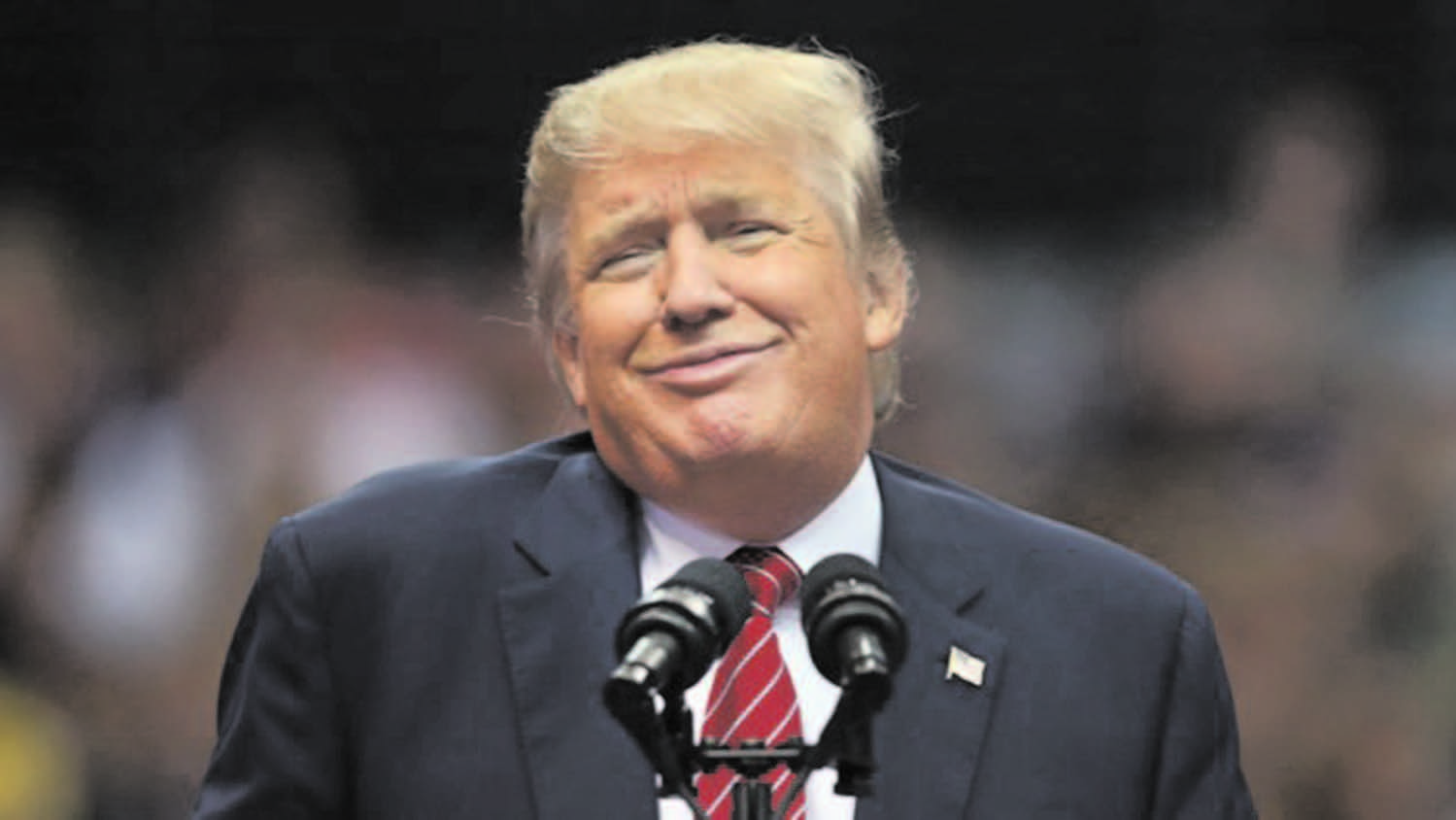
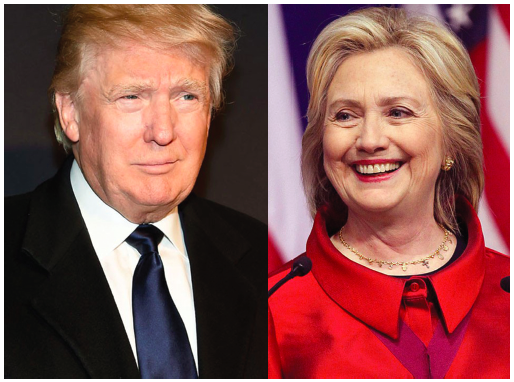
    NEW YORK (TIP): Hillary Clinton opened her largest margin on Aug. 9, when she had a 7.6 percentage point advantage over Donald Trump, the Republican nominee, in the RealClearPolitics average of national polls. At the time, she was consistently reaching 50 percent support.

    But Clinton’s lead has shrunk since then, to 4.3 points in the RealClearPolitics average, and she’s fallen short of the 50 percent mark in the last six national polls. She has settled into the mid-40 percent range, presenting an opportunity for her Republican rival.

    But despite the improving picture for Trump, Clinton remains the favorite to win.

    She holds a 4.3-point advantage nationally over Trump in the RealClearPolitics average of polls and leads almost across the board in the battleground states that will decide the election.

    Trump’s path to the necessary 270 electoral votes is exceedingly narrow, with a handful of swing states – Colorado and Virginia among them -already appearing out of reach.

    And while the GOP nominee is running competitively in Florida and Ohio, Trump must also win Pennsylvania, which looks like a steep climb.

    For Trump, the deficit in polling has at least reached a level he can overcome as he enters the post-Labor Day sprint.

    Clinton is being dragged down by awful favorability ratings, which have prevented her from running away with the race.

    “It’s not in the bag for her yet,” Patrick Murray, the polling director at Monmouth University, told The Hill.

    An NBC News-SurveyMonkey poll released Tuesday found Clinton’s lead falling from 6 points earlier this month to 4 points. In that survey, Trump reduced Clinton’s lead among independents by half, from 8 points to 4 points.

    Trump has also closed the gap in Reuters-Ipsos and Monmouth polls released this week, although he still trails by 3 points and 7 points, respectively.

    Pollsters interviewed by The Hill say that Clinton’s polling bounce after her party’s national convention was aided and perhaps magnified by Trump’s feud with the family of a slain U.S. solider.

    They see a race returning to an equilibrium in which Clinton holds a statistically significant advantage, but opportunities exist for Trump to win over Republican holdouts and independents.

    “They’re both hitting ceilings of support because of their hugely negative favorability ratings,” said GOP pollster David Winston. “The challenge is figuring out how to get people who don’t like them at all to get out and vote for them.” Electoral experts agree that the map looks favorable for Clinton.

    Forecasting models from the University of Virginia’s Center for Politics and Frontloading HQ have Clinton winning 347 electoral votes, which would be slightly better than President Obama’s showing against Republican Mitt Romney in 2012.

    Both models have Clinton running the table on the battleground states Obama won in 2012, plus winning in North Carolina, where Romney narrowly prevailed.

    Several swing states appear to have gotten away from Trump.

    Polls show Clinton leading by double digits in Colorado, Wisconsin and Virginia. Clinton is ahead by 9 points in the only poll of New Hampshire released this month.

    Furthermore, Trump only leads by 1 or 2 points in Missouri and Arizona, states that traditionally have been safely in the Republican column. Trump and Clinton are locked in a virtual tie in Georgia, which has gone red in presidential races for the last 20 years.

    Things look better for Trump in Nevada, Iowa and North Carolina. He trails in all three, but is within the polls’ margins of error.

    The election is likely to hinge on Florida, Ohio and Pennsylvania – and pollsters say Trump must win all three.

    In Florida, Clinton leads by 2.7 points in the RealClearPolitics average, down from 4.5 points in early August.

    In Ohio, Clinton’s lead in the RealClearPolitics average is 3.8 points, down from a 5-point advantage in recent weeks. An Emerson University survey released on Monday found the nominees tied at 43 percent.

    Pennsylvania will be the toughest state of the group for Trump. Clinton leads there by 8 points in the RealClearPolitics average.

    An Emerson survey put Clinton’s lead at only 3 points there on Monday, but pollsters will need more data like it before they see the state getting more competitive.

    A Monmouth poll released on Tuesday found Clinton ahead by 8 points in the Keystone State, which is more in line with most other recent surveys.

    Clinton also holds an 8-point lead in Michigan, another Rust Belt state that Trump has circled as potentially fertile ground for his populist pitch. An Emerson survey released on Monday found Clinton ahead by only 5 points there, while a Suffolk University poll released this week put her lead at 7 points.

    “Clinton’s battleground advantage is formidable,” said UVA Center for Politics analyst Geoffrey Skelley. “Trump basically needs to run the table on the swing states that are favorable for him right now, plus win in Ohio, Florida and Pennsylvania. He’ll need his fortunes to improve for that to happen. It’s a tough route.”

    One task for Trump is shoring up votes in his own party.

    Clinton routinely receives support from more than 80 percent of Democrats polled, but the latest Reuters/Ipsos survey found Trump with only 73 percent support from likely Republican voters.

    Romney got 93 percent GOP support in 2012 and still lost by almost 4 points nationally.

    Pollsters say the deficit among Republican voters is largely due to white, college-educated women, a group that traditionally leans conservative but has rejected Trump so far.

    Trump also needs to improve his standing among independent voters, which Romney won by 5 points in 2012.

    The Trump campaign has argued that his support is being underestimated in polls because those being interviewed have been reluctant to admit they plan on casting a ballot for the controversial candidate.

    Pollsters interviewed by The Hill aren’t ready to make that leap yet.

    “It’s an interesting theory, but there’s no data to support it,” said Winston.

    Some pollsters actually believe Clinton’s level of support is being underestimated.

    Third-party candidates – Libertarian Party nominee Gary Johnson and Green Party nominee Jill Stein – have been pulling more support away from Clinton so far. But few believe either third-party candidate will pull as much support as they’re currently getting in the polls on Election Day, potentially adding to Clinton’s total.

    In 2012, Obama outperformed his standing in the polls by virtue of his superior get-out-the-vote operation.

    Clinton will have the money and ground game advantage over Trump in 2016, potentially setting her up to match Obama’s showing.

    “The thing that could throw all this off is that we’re looking at an ahistorical election,” Murray said. “We’ve never seen two candidates who are this unpopular. That’s the wild card.”

  • Donald Trump changes tone on Immigration; says deportations to start immediately after he is sworn in

    Donald Trump changes tone on Immigration; says deportations to start immediately after he is sworn in

    PHOENIX (TIP): Those expecting Republican presidential nominee Donald Trump to soften his stance on Immigration had better be prepared to hear a harsher and shriller tone from him, notwithstanding his statement a few days ago that he could soften his stand on the issue.

    “On Day One, I am going to begin swiftly removing criminal illegal immigrants from this country — including removing the hundreds of thousands of criminal illegal immigrants that have been released into US communities

    under the Obama-Clinton administration,” Trump said in Phoenix, Wednesday, August 31, a day after his visit to Mexico.

    Trump’s Democratic rival Hillary Clinton served as secretary of state during President Barack Obama’s first term in office. The next president will be sworn in on January 20.

    “I am going to build a great border wall, institute nationwide e-verify, stop illegal immigrants from accessing welfare and entitlements and develop an exit-entry tracking system to ensure those who overstay their visas are quickly removed,” Trump warned. The billionaire real estate magnate and former reality TV host — in a white baseball cap — said that “If we don’t enforce visa expiration dates, then we have an open border. It’s as simple as that.”

    “A vote for Trump is a vote to have a nation of laws, a vote for Clinton is a vote for open borders,” he stressed.

    Trump also has sought to court black votes, promising to help African Americans find jobs. “Every time an African-American citizen, or any citizen, loses their job to an illegal immigrant, the rights of that American citizen have been totally violated,” he argued.

    Details of Trump’s immigration policies remain scant. He rallied much of his primary support with a controversial hardline tone against illegal immigrants and his plan to build a wall on the Mexican border.

    Some of his advisors are now reportedly urging him to tone down his signature policy priority.

  • Madhya Pradesh Chief Minister Shivraj Singh Chouhan meets Community

    Madhya Pradesh Chief Minister Shivraj Singh Chouhan meets Community

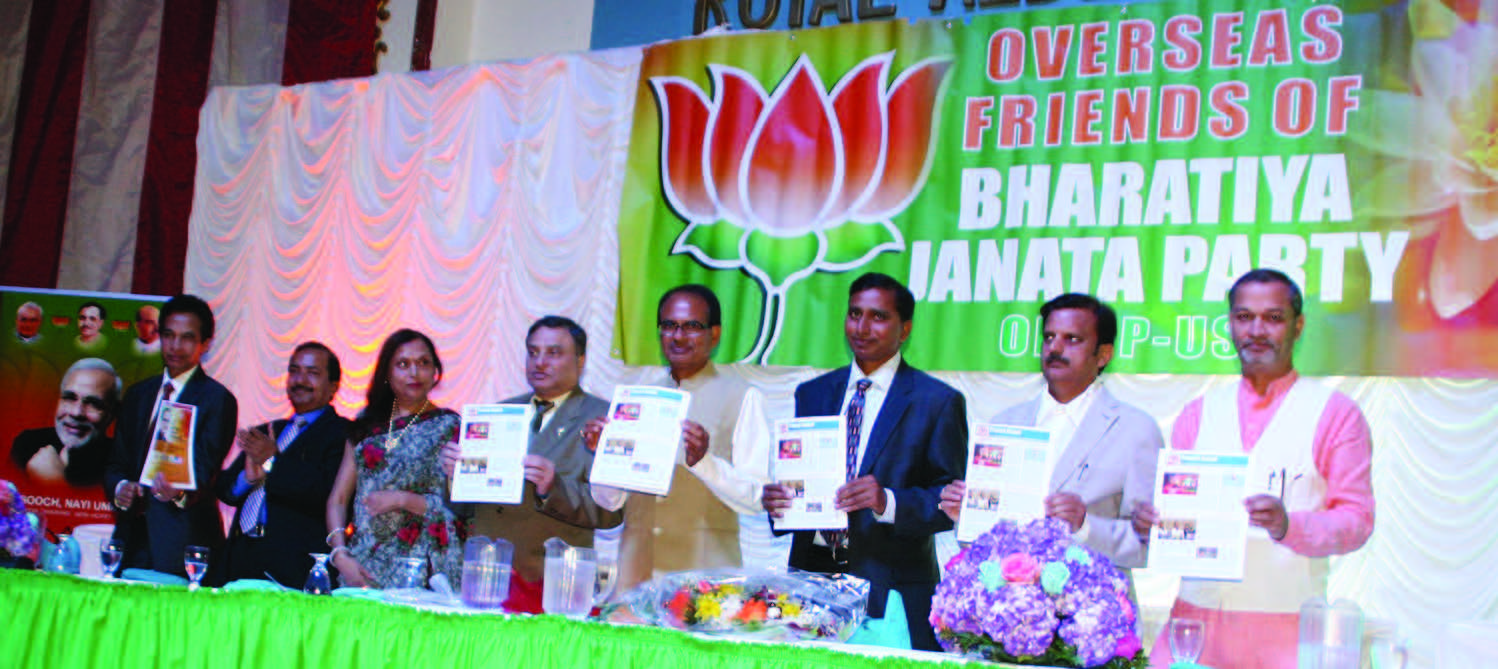
    EDISON (TIP): The meet and greet program organized by Overseas Friends of Bhartiya Janata Party (OFBJP-USA) in honor of Shivraj Singh Chouhan, Chief Minister of Madhya Pradesh was a great success with hundreds of enthusiastic BJP supporters, friends of Madhya Pradesh and NRI’s thronging the venue to listen to their beloved chief minister who has transformed Madhya Pradesh into one of the top performing states in all fields.

    Anand Jain (NJ Co-Convener, OFBJP) welcomed the audience and the chief guest. After the traditional lighting of the lamp and rendition of United States and Indian national anthems, attendees observed a moment of silence in the memory of the departed BAPS Pramukh Swami Maharaj.

    Krishna Reddy (President, OFBJP) briefly described various activities of OFBJP. He mentioned that OFBJP is actively engaged with various organizations in taking up the issues NRI’s face here with the right channel and help find solutions to them. OFBJP has embarked on the path of reaching to NRI’s regularly through its monthly newsletter which would be later inaugurated by the CM of MP. He invited the audience to connect with OFBJP as it is the best platform available to serve our motherland and also to work for the welfare of the Indian diaspora.

    Addressing a huge gathering Shivraj Singh Chouhan said that he was very happy to be amongst the NRI’s and humbled by their love for the mother India. Wherever Indians went they were successful and the fact that we have a big presence in Silicon Valley and one in every six American visits a doctor of Indian origin for treatment speaks volumes of our success here. India under the able leadership of Shri Narendra Modi is marching ahead and has become a bright spot among the world economies in a short span of two years. We have left China behind with 7.4% growth rate and policy paralysis is a thing of the past. After Modi government took over the country especially the youth are brimming with confidence.

    Madhya Pradesh (MP) a state once called a sick and backward state is one of the top performing states in the country now. The state has shown double digit growth consistently and had won awards not only during the current NDA rule but also during UPA regime. The state has good road connectivity, 24×7 power, good law and order and stability, and a government that is working round the clock for the welfare of its people.

    There was a time over a decade ago when people would have to be happy for getting electricity for few hours a day but now with more than 16k Megawatt capacity the state not only provides 24×7 power to its households and industries but also sells excess power to other neighboring states. The state had already realized our ex-PM Shri Atal Bihari Vajpayee’s dream of river interconnectivity by connecting most of its major rivers like Narmada, Shipra and others and help bring over 16 lakh hectares of land under irrigation.

    The state of MP is first in implementing many welfare schemes for its poor and for the girl child. Having realized the alarming difference in the sex ratio of males vs females in the state, we implemented Ladli Lakshmi Yojana, a scheme under which the state deposits Rs. 30,000 when a girl child is born and as she grows and pursues her education few more increments of money are deposited and finally at the age of 21 the family gets around 2 lakh rupees. This is in addition to providing all the necessary things for the education of girl child, like school uniform, books, and bicycles. Madhya Pradesh is the first state to have implemented 50% of reservation to women in its local bodies. We are a state that practices woman empowerment in every walk of life and standing as a role model for other states in India.

    The state of Madhya Pradesh has become a best destination for investment with its stable law and order and good governance; and has already attracted investments worth few lakh crores. The state already has land-banks from which land can be allotted for industries in short span of time. Indore has become a fast growing industrial city. The state government also promotes

    entrepreneurship by giving loans to its youth without any guarantee from parents or anyone else. Several Universities have been started; many Technical institutes have been modernized to impart skill development to its youth. The state supports the entrepreneurs with Technology, Marketing and Finance which has become a paradigm shift in the model of good governance.

    The state exhibited a glimpse of its effective governance and tourism during the Simhastha Kumbh Mela held this year. Over 8 crore people came to the town of Ujjain, a small town with a population of 7 lakh and on the last day of the event over 1 crore 20 lakh pilgrims took a holy dip. The event passed off peacefully and the best of the facilities were provided to all the visiting devotees. The state government is going a step further and researching into things that would make its people happy and started a Department for Happiness which comes up with its report and the state tries to implement its suggestions.

    Shivraj Singh Chouhan emphasized that BJP is a party with a difference and nationalism is its core ideology. During the recent BJP Chief Ministers meet, the party came up with a proposal to implement policies and projects that will ensure food, clothing, housing, education, cleanliness and medical treatment for all the under privileged sections of their respective states. This is on the lines of the principle of Antyodaya and Integral Humanism of Late Deen Dayal Upadhyaya which considers poorest of the poor as gods and their upliftment is of the foremost importance to the party. He reiterated that the party is committed to ensure the benefits of development reach the last man in the social strata. Just as a Narendranath Dutt (Swami Vivekananda) who a century ago preached the ancient Hindu concept of Vasudaiva Kutumbkam (The whole world is a family), we currently have another ‘Narendra’ in the form of Shri Narendra Modi who is striving hard to take India to the pinnacle of glory (Vishwaguru) and very soon world will realize the true potential and power of India.

    Mr. Chouhan congratulated the Indian diaspora for their achievements and contributions in the fields of IT, Medical and other sectors here in US. He invited the NRI’s to share their ideas, knowledge and promised that the government of MP will extend help in every possible way if they come to invest in the state. He appealed to the NRI’s to visit the state not just as an investor but as a tourist too to visit world famous Khajuraho, Sanchi, Mahakahal, wild life sanctuaries, tiger reserves and enjoy the hospitality of one of fastest growing states of India. Mr. Chouhan’s speech was marked by several rounds of applause throughout and he received a standing ovation after his speech.

    Earlier, Rajendra Shukla (Minister for Industries, Madhya Pradesh) spoke briefly about the benefits of investing in Madhya Pradesh and how the state has transformed into a best performing state under the able leadership of Shivraj Singh Chouhan. The state has all the things needed for investment like power, roads, infrastructure and best of all a government that would work with the investors to help setup their industries. He appealed to the NRI’s to choose MP as an investment and tourist destination and thanked them for the love and affection shown by them towards India and Madhya Pradesh.

    During the program, Shivraj Singh Chouhan officially launched the OFBJP monthly newsletter published by the OFBJP External Communications team lead by Adapa Prasad and Aravind Modini which would carry articles, news, and analysis about the achievements of Modi and other BJP state governments and local OFBJP activities. This newsletter would eventually take the message of good governance in India and the positive work done by OFBJP here in USA to the lawmakers, think-tanks, other Indian organizations and OFBJP members. Bhushan Tadepalli (National Council member, OFBJP) had the honor of introducing Shivraj Singh Chauhan to the audience.

    (Based on press release issued by External Communications Cell, OFBJP-USA)

  • US trade deficit hits $44.5 billion, biggest in 10 months

    US trade deficit hits $44.5 billion, biggest in 10 months

    WASHINGTON (TIP): The US trade deficit increased to the highest point in 10 months, driven up by a big rise in imports of oil and Chinese-made computers, cell phones and clothing.

    The deficit rose to $44.5 billion in June, 8.7 percent higher than a revised May deficit of $41 billion, the commerce department reported on Friday. It was the biggest gap between what America sells abroad and what the country imports since a $44.6 billion deficit last August.

    Exports, which have struggled this year because of the strong dollar and global weakness, edged up 0.3 percent to $183.2 billion. Imports rose a faster 1.9 percent to $227.7 billion, led by a 19.4 percent jump in petroleum imports.

    The politically sensitive deficit with China increased to $29.8 billion, the highest in seven months.

    A wider US trade deficit acts as a drag on growth because it means the nation is earning less on overseas sales of US exports while spending more on imported products.

    America’s deficit with China was up 2.5 percent to the highest level since a deficit of $31.3 billion last November. Through the first six months of this year, the deficit with China, the largest with any country, is running 6.5 percent above the same period in 2015, putting it on track to set another annual record. Republican presidential nominee Donald Trump, seeking to tap into the economic anxiety of Americans who have seen jobs disappear in an increasingly global economy, has accused the Obama administration of failing to protect U.S. workers from unfair trade practices in China and other countries.

    Trump has said he would exit from the North American Free Trade Agreement with Canada and Mexico if it were not renegotiated, kill the pending Trans-Pacific Partnership trade agreement and take a more aggressive approach with China, including charging the country as a currency manipulator.

    The US Chamber of Commerce, normally an ally of Republicans on trade, contends that Trump’s approach would cost 3.5 million US jobs and result in higher prices for American consumers and a weaker economy.

    Through the first six months of this year, the deficit is 2.3 percent below the same period in 2015, a year in which America’s deficit in goods and services trade rose 2.1 percent to $500.4 billion. The lower deficit so far this year reflects the fact that while U.S. exports are down, the value of imports is down by a larger amount, reflecting in large part lower oil prices.

  • Indian-Americans Hindus in California denied a Temple

    Indian-Americans Hindus in California denied a Temple

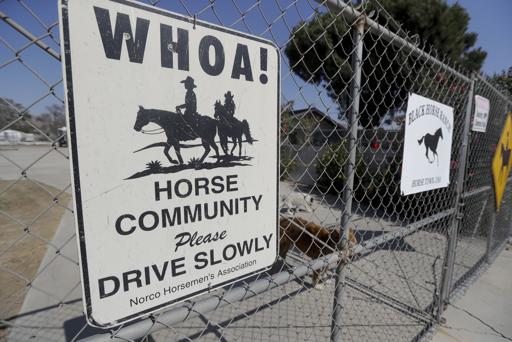
    CALIFORNIA (TIP): A Southern California city has rejected plans for a proposed Hindu cultural center (religious temple) mainly because officials say the large, domed building doesn’t fit in with its Old West-style motif.

    The decision last month by the city of Norco has riled some Indian-Americans who say the move was discriminatory.

    Local leaders celebrate that rural, equestrian lifestyle and are protective of it. Those who build must ensure their property includes Western architectural features such as a metal roof or overhang.

    But some Indian-Americans are questioning the sincerity of that standard after the City Council rejected a proposal for a Hindu cultural center on a hilltop partly on grounds that the large, domed building wouldn’t fit in. They think the decision — which came after residents urged the city to keep its culture and questioned why proponents chose the site — is discriminatory.

    Dr. Krupali Kaneyalal Tejura, a radiation oncologist who grew up in nearby Corona and works at an area hospital, got involved in the debate because she was offended by those who argued the center didn’t fit.

    “How does a community or a city decide it doesn’t fit in with their lifestyle? How far does this go?” she asked.

    “We turn down a lot of businesses. If they don’t want to have a Western theme, guess what? They don’t get built,” Mayor Kevin Bash said, adding the center also was too big for such a steep lot and there were drainage concerns.

    Norco’s 26,000 residents are tucked among the vast suburbs south and east of Los Angeles. Once overwhelmingly white, the area has seen a surge in Hispanics and, more recently, Asians.

    Southern California’s Indian population is relatively small — accounting for only 1 percent of the population in a four county-area spanning Los Angeles and its southern and eastern suburbs — and is spread out across different cities.

    But census data show the community has grown in recent years, especially in Riverside County, where Norco is located. There is a Sikh temple in Norco inside a grange hall-turned-church and a Hindu temple in the neighboring county, and Indian movies are shown at a Corona theater.

    The controversy over the proposed cultural center has focused attention on how Norco can keep its Western theme and rural lifestyle while incorporating newcomers, and how those who arrive in the city can adapt to their surroundings while retaining their culture.

    Manu Patolia, who proposed the project, said he is willing to ditch the domes and revamp the design of the 25,000-square-foot #Swaminarayan Gurukul center, which would host Indian language classes for children and yoga for the community at large.

    “I went around and took some pictures in Norco, and I showed them: Please tell us which one is the Western one that we can follow,” Patolia said.

    Patolia started laying out the changes for councilmembers but was told a revised project would need to go back to city planners for review. He said he is now weighing his options for the property, which he bought in the hopes of building the center.

    City officials said the project not only lacks Western-styled architecture but could cause drainage and parking problems. They note they’ve pressured businesses ranging from veterinarians to Bob’s Big Boy — whose mascot dons a city-funded cowboy hat — to get Western or get out.

    Maintaining that look and feel is critical to drawing visitors and investments in horse-related businesses, Bash said. Its rural vibe is what drew many residents to the Riverside County city in the first place. As the suburbs grew more crowded and urban, people sought a quieter place where they could ride horses and keep chickens in their backyards.

    What makes Norco a prime spot for any community center or hub is its proximity to freeways that cut across the region. The Indian-American community’s diverse cultures and religious traditions add to the demand for centralized locations where people can congregate, said Karthick Ramakrishnan, associate dean of University of California, Riverside’s School of Public Policy.

    Since the vote, Tejura said she has been dismayed by residents’ comments bashing Hindus in online community chat groups.

    She remembers as a child being shuttled by her father more than 20 miles each way to Indian dance classes and taking Gujarati language classes in the back of an area bowling alley. Virtually the only local restaurant options were burgers and Mexican food.

    Dave Vadodaria, who lives in nearby Orange County, said the center would help keep alive Hindu teachings and culture as the children of Indian immigrants grow up American. Born in Uganda, he said, he had to work to reconnect with his Hindu culture after attending school in England.

    “People are mingling with different parts of the world. People are seeing different cultures. You can’t just close your doors,” said Vadodaria, who owns an electronics business.

    “We are eating fusion food these days, Indian-Chinese, Indian with American. Everything is becoming fusion,” he said. “Why can’t it become a fusion community?”

  • Indian-American Rep. Mary Thomas Narrowly Loses Florida Congressional Primary

    Indian-American Rep. Mary Thomas Narrowly Loses Florida Congressional Primary

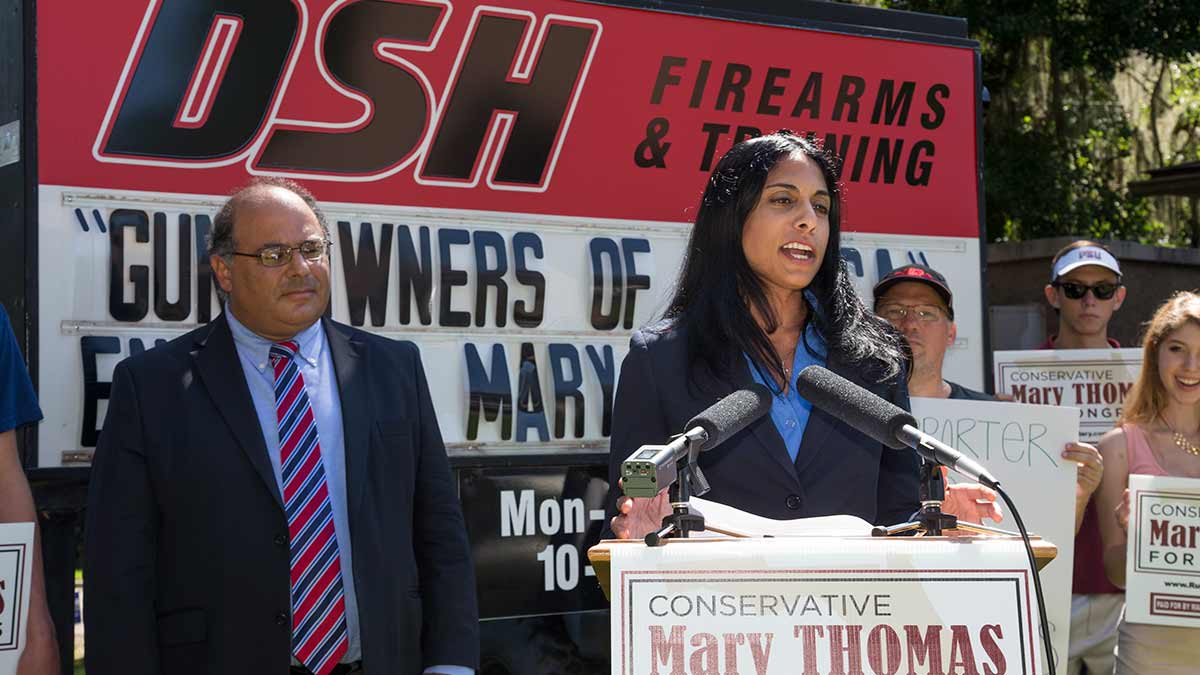
    Florida (TIP): Indian-American Mary Thomas, @MaryThomasEsq, a government attorney in Florida, narrowly lost her bid to enter the US House of Representatives in the closely contested Florida Republican Congressional primary.

    38-year-old Mary Thomas, lost the party’s primary in Congressional District 2 of Florida, by just 1700 votes, to surgeon Neal Dunn.

    “Congratulations to our next Congressman Neal Dunn. Together we will work to Make America Great Again. Thank you to our many volunteers” Ms Thomas tweeted.

    7wR9kYmI

    @MaryThomasEsq


    Luke’s mom. John’s wife. Conservative candidate for Congress. FSU Law & Scott Administration Alumna. Living the American dream! 


    Her parents arrived in America from India in 1972. The Thomas family eventually settled in Pinellas County, where they started a successful small business.

    Born in Charleston, South Carolina, Ms Thomas has been a member of Governor Rick Scott’s administration since he was sworn into office in January 2011.

    She currently serves as the General Counsel at the Department of Elder Affairs where she manages and oversees the legal department of an agency that administers a USD 900 million budget.

    Neal Dunn, a businessman and surgeon, claims he is a conservative, but has fundraised for a Democrat and lied about being a lobbyist. He also advocated for expanding Medicaid in Florida and doesn’t think Obamacare should be immediately repealed.

    Mary Thomas, meanwhile, wanted to stop Common Core, immediately repeal Obamacare, and supported term limits. She was endorsed, amongst others, by the conservative Club for Growth, House Freedom Caucus chair Jim Jordan, R-Ohio (A, 94%), and the pro-life Susan B. Anthony List. Dunn was endorsed by House Majority Leader Kevin McCarthy, R-Calif. (F, 38%) and supported by the ESA Fund, the same establishment PAC that targeted Tim Huelskamp in Kansas this year.

  • Indian-American stabbed his wife gets probation; Due To Family’s Hindu Culture

    Indian-American stabbed his wife gets probation; Due To Family’s Hindu Culture

    HOUSTON:  A 46-year-old Indian-origin man in the US who stabbed his ‘overweight’ wife twice in the abdomen has been spared a prison sentence because the judge agreed that his family would face “ostracism” as part of their Hindu culture.

    Navinkumar Patel, 46, of Shawnee, Kansas City, was arrested in late June 2015 after he stabbed his wife in the abdomen at Lawrence’s Super 8 Motel, 515 McDonald Drive, which he owns. He pleaded no contest to felony charges of attempted second-degree murder and criminal threat in March.

    The cultural considerations weighed into his sentencing decision for Patel, Douglas County District Judge Robert Fairchild was quoted as saying by the local newspaper LJWorld.

    Patel’s attorney John Kerns called the case “unusual to say the least”.

    Kerns, told the judge that in the Hindu culture of Patel’s family, his wife and children would suffer if he were sentenced to prison. They would essentially be “ostracised,” he said.

    “The cultural part of it is very significant in this case,” Judge Fairchild said. He sentenced Patel to probation but will not announce the terms until next month.

    In court, the doctor who evaluated him, Bradley Grinage, testified that Patel suffers from bipolar disorder, an illness that was exacerbated by alcohol addiction.

  • Indian American IIT-Alumni @AjeiGopal Named CEO Of ANSYS

    Indian American IIT-Alumni @AjeiGopal Named CEO Of ANSYS

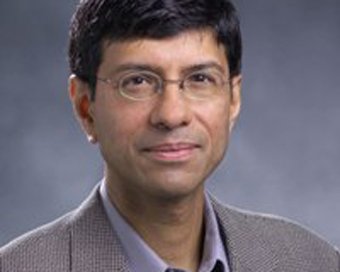
    Indian American Ajei Gopal has been named CEO of US-based software firm ANSYS that produces engineering simulation software used for testing product designs across a wide spectrum of industries including rockets and wearable technology.

    Ajei Gopal, 54, is an IIT Bombay alumnus and software industry veteran, will become the CEO of Pennsylvania-based ANSYS with effect from January 1 next year.

    Mr Gopal, a 25-year technology industry veteran who has served as a member of the ANSYS Board since 2011, has been appointed President and Chief Operating Officer of the company effective immediately and will continue to serve on the Board.

    James Cashman, who has served as ANSYS’ Chief Executive Officer since 2000, will become Chairman of the Board of Directors, effective from January 2017.

    ANSYS said Mr Gopal has extensive management and business development experience at large software and technology companies. He has held leadership roles at companies including Symantec, Hewlett-Packard and IBM.

    Mr Gopal has served as interim president and COO at California-based technology company Symantec, leading the company through the recruitment of a permanent CEO.

    He was senior vice president and general manager at Hewlett-Packard from 2011 and has worked at IBM from 1991 to 2000.

    He began his career as a member of the technical staff at Bell Communications Research.

    Mr Gopal has 23 US patents to his name and has a doctorate in computer science from Cornell University and a bachelor’s degree from the Indian Institute of Technology Bombay.

    The company said having Mr Gopal on board is “a huge win for ANSYS”.

    “I have no doubt that his outstanding leadership, unique perspective and appreciation for ANSYS’ culture, people and organiSation make him the right choice to serve as our next leader during this exciting time,” Mr Cashman said.

    Mr Gopal said he was “honoured” to lead ANSYS.

    “…I am committed to building on our standard of excellence and pushing the boundaries of innovation to help customers solve their most complex design challenges,” he said.

    Ronald Hovsepian, who currently serves as Chairman of the ANSYS Board, said Mr Gopal brings a “proven track record, expertise managing the scale and complexity of a global multi-billion dollar company and critical skills in software strategy, engineering, product management and development”.

    Headquartered in Pennsylvania, ANSYS has more than 75 strategic sales locations throughout the world with a network of channel partners in over 40 countries.

    ANSYS develops, markets and supports engineering simulation software used to predict how product designs will behave in real-world environments.

  • RSS, BJP and India’s Independence Struggle

    RSS, BJP and India’s Independence Struggle

    “Even during the British times, the Congress party would not have faced so much adversity that we, our dedicated workers, have gone through in 50-60 years,” Prime Minister Narendra Modi said at the event of laying the foundation stone of the BJP’s new party headquarters in New Delhi.

    Congress response to the latest Modi swipe was swift and sharp. The senior spokesperson for the Congress party, Anand Sharma, responded during an urgently called press conference: “It does not behoove the Prime Minister of India to lower the dignity of his office by making a statement which is factually incorrect and an insult to the freedom fighters. It is a shocking untruth that the Prime Minister has publicly uttered. He has made a shocking comparison, trivializing the freedom struggle, insulting our national heroes for which he must not only withdraw that shameful statement but apologize.”

    Ever since the ascendance of BJP to the center of power in New Delhi two years ago, it appears that a carefully crafted strategy is in place to appropriate icons and legacies that the party is sorely lacking. It is as if the party is so embarrassed by the lack of pedigree that they are even willing to go out and create some history of their own. With unlimited resources at their disposal, they get hold of some hired hands that are ready to scan every nook and corner to find any missing comma or invisible gaps in crumpled pieces of history to recreate a story to fit their narrative.

    The recent efforts to diminish the contributions of Jawaharlal Nehru to the development of a modern India and to redefine Sardar Patel’s role during the independence struggle and to recast him as anything but pluralistic is quite evident to all keen observers of the fast moving political dynamics in the country. One may also witness the rush by the ruling class to embrace Ambedkar as one of their own while engaged in policies that continue to marginalize the Dalit community – all part of a public relations campaign to build a new image for the party and its faithful.

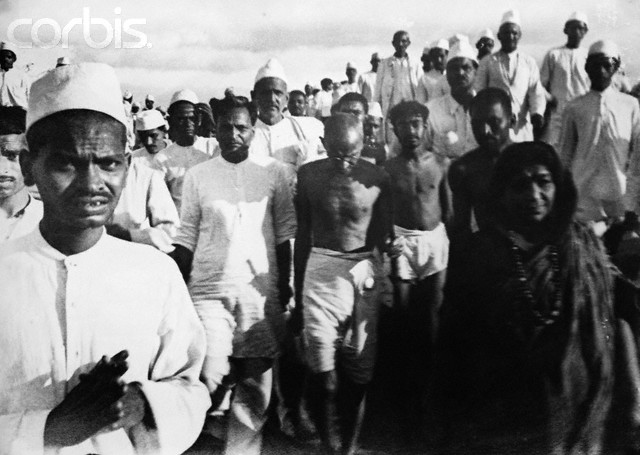
    Despite their best efforts, RSS has failed miserably in proving that they have played any meaningful role to liberate India from the British colonialism. On the contrary, RSS only tried to disrupt the anti-imperialist struggle of the people of India. In 1930, Mahatma Gandhi had called upon the people to break different laws as part of the resistance to the British rule. In the context of these efforts, Gandhiji himself launched the famous Salt Satyagraha. However, Dr. K.B. Hedgewar, the founder of the RSS, sent information down to his cadre not to participate in the Satyagraha.

    The historical records show that Hedgewar himself participated in the Satyagraha in an individual capacity. However, he had an ulterior motive in doing so. According to his biography published by RSS, “Dr. Saheb had the confidence that with a freedom-loving, self-sacrificing and reputed group of people inside with him there, he would discuss the Sangh with them and win them over for its work.”

    It became quite evident to the Congress leaders that Hedgewar went to jail not because he was committed to the freedom struggle but rather to break and disrupt the ranks of the Congress cadres who were united under the non-cooperation movement regardless of their religious affiliations. To thwart the sectarian and communal influence over the cadre, the All India Congress Committee passed a resolution in 1934 forbidding Congress members from becoming members of RSS, the Hindu Mahasabha, and the Muslim League.

    The tradition of RSS keeping aloof from the freedom struggle that started by the founder Hedgewar continued under his successor M.S. Golwalker. As a matter of fact, he took it a step further by religiously complying with all the instructions from the government, disbanding RSS military department and not cooperating with the ‘Quit India’ movement.

    Golwalker was also vehemently opposed to the very concept of a ‘Secular State’. In ‘We. Or our nationhood defined’, Golwalker praised the Nazi campaign against Jews and Gypsies and stated categorically that it was “a good lesson for us in Hindustan to learn and profit by.” He also excoriated the Chinese for eating pigs, dogs, and rats and said: “Such men cannot be expected to have human qualities.”

    Shyama Prasad Mukherjee, the founder of the Bharatiya Jan Sangh which evolved into today’s Bharatiya Janata Party (BJP), wrote a letter to the Bengal Governor Sir John Hobart as to how to respond to the ‘Quit India’ movement. In his letter dated July 26, 1942, he wrote: “Let me now refer to the situation that may be created in the province as a result of any widespread movement launched by the Congress. Anybody, who during the war, plans to stir up mass feeling, resulting in internal disturbances or insecurity, must be resisted by any Government that may function for the time being.”

    Then there was a mercy plea by Veer Savarkar, leader of the Hindu Mahasabha to the British Government that “if he is released, then he would be loyal to the British Government and was also ready to serve it.” He also opposed the ‘Quit India’ movement and asked Hindus to stay active in the war effort and not to disobey the government.

    The words and deeds of these erstwhile leaders of RSS and BJP clearly indicate that they were not only non-participants in the freedom struggle where hundreds of people were risking their lives on a daily basis but also collaborators who supported the British on critical occasions. The British acknowledged that the RSS had “scrupulously kept itself within the law, and refrained from taking part in the disturbances that broke out in August 1942.”

    It is quite a sad day when a prime minister of India belittles the sufferings of the freedom fighters under the courageous leadership of Mahatma Gandhi and Jawaharlal Nehru while asserting that BJP faced much more adversity during the post-independence era compared to the Congress party during the freedom struggle. Political discourse is often riddled with hyperbole. However, the memory of those who have paid the ultimate sacrifice for freedom deserves much more gratitude and respect from all of us.

    If we would like to take a peek into the individual and collective sacrifices, there would be a page to write: Pandit Nehru was sent to jail about nine times and spent a total of 3,259 days; Mahatma Gandhi served time in prison for a total of 2,338 days, and that is equivalent to 6.4 years. Conventional histories have counted, at the minimum, about 100,000 Indian soldiers who were slaughtered in severe reprisals by the British forces desperate to impose order. Also, the death toll at the Jallianwala Bagh massacre alone was around 1,000. Then there was the famine in the East that was exacerbated by British ruthlessness and took millions of lives. Even Ghadar, the first organized movement of overseas Indians, who primarily lived in Canada and the United States, played a role in the struggle for independence for their homeland, and many hundreds paid the ultimate price with their lives.

    If the ‘adversity’ Modi refers to is the ban on the RSS after the assassination of Gandhiji, one needs to pay attention to Sardar Patel, the first Union Home Minister, who wrote to Golwalker on September 11, 1948, commenting on the RSS activities: “As regards to RSS and Hindu Mahasabha, our reports do confirm that as a result of the activities of these two bodies, particularly the former (RSS) an atmosphere was created in the country in which such ghastly tragedy became possible”.

    Patel’s letter continued as follows: “Apart from this, their opposition to the Congress, that too of such virulence, disregarding all considerations of personality, decency or decorum, created a kind of unrest among the people. All their speeches were full of communal poison. It was not necessary to spread the poison and enthuse the Hindus and organize for their protection. As a final result of the poison, the country had to suffer the sacrifice of the valuable life of Gandhiji. Even an iota of sympathy for the Government or the people no more remained for the RSS. In fact, the opposition grew. The opposition turned more severe when the RSS men expressed joy and distributed sweets after Gandhiji’s death. Under these conditions, it became inevitable for the government to take action against RSS”.

    If the erstwhile Jan Sangh was kept at bay by other secular political parties till the late 70s, Patel’s letter clearly shed light on why it happened. I honestly doubt that if it were not for the Emergency rule imposed by Indira Gandhi, the Jan Sangh would have been rehabilitated so quickly and become the force that it is today.

    The BJP, undoubtedly, is the biggest beneficiary of the stable institutions built by the Congress Party, under the stewardship of Gandhi and Nehru, which paved the way for the preservation of democracy and the rule of law. The BJP is the guardian of those institutions now, with little or no investment, and Indians everywhere would like to see them protected and preserved for generations to come!

    (The author, George Abraham, is a former Chief Technology Officer of the United Nations and Chairman of the Indian National Overseas Congress, USA)

  • Setting out for New Friends

    Setting out for New Friends

    A Modi doctrine on Pakistan is now visible after two years of Pakistan policy vacillations. It basically has old elements which are newly interpreted.

    First is ‘zero tolerance to terror’, which even the Vajpayee government espoused. The Congress in opposition ridiculed it, arguing that a dialogue with Pakistan could not be made so contingent as that would give terrorists veto on the normalization process.

    In power, the Congress discovered that dialogue and terror could indeed not subsist if the attack caused widespread loss. Neither of the two governments, however, could devise a counter-strategy to deter future attacks. This was because military options ran into the nuclear conundrum i.e. retaliation could lead to nuclear holocaust. The Vajpayee government retaliated when Parliament was attacked in December 2001 by mass troop mobilization. The Manmohan Singh regime cancelled parleys after coordinated train bombings in Mumbai, a copy of similar strikes in London and Madrid, caused massive carnage. Dialogue was resumed only when a new counter-terrorism mechanism was established.

    The Modi government is trying to break out of this catch-22 situation by lowering the threshold of terror tolerance. The Pathankot attack did not cause significant loss of life or assets. But because the planning and abetting was traced to Pakistan, the arrest and prosecution of perpetrators was made an additional precondition to dialogue.
    Second, is the new approach to the Hurriyat. It is to have no role in India-Pakistan parleys. Again, past Indian governments have scowled at Pakistan using the Hurriyat as a co-interlocutor. Now, any blatant contact with the Hurriyat during India-Pakistan parleys would be a deal breaker.

    India reasons that Pakistan cannot determine the representatives of J&K people when they have elected the government of the state.

    Why should not India have the serving Chief Minister in attendance when talking to Pakistan instead of, or in addition to, the Hurriyat?

    Third, is the Modi government’s alacrity in bringing on record, what was whispered in the past, regarding Sino-Pak activities in Gilgit-Baltistan. This would now be on the agenda of talks with both countries, particularly when China itself has conceded in the past in Article 6 of the 1963 Sino-Pakistan border agreement that all understandings were subject to settlement of the Kashmir issue between India and Pakistan.

    The doctrine got the Prime Minister’s imprimatur in his Red Fort Independence Day speech. It played well domestically, with social media in a tizzy over the new assertiveness. But there are international ramifications for which the government is calibrating its diplomacy. Besides UN Secretary General Ban Ki-moon, who has to issue homilies on peace and security, even the US is beginning to lean on India. The Organization of Islamic Conference (OIC) is getting proactive and Pakistan is unleashing a major diplomatic offensive by dispatching two dozen envoys to plead its case over Kashmir. Pakistan senses an opportunity with the widespread protests in the Valley and the approaching session of the UN General Assembly in September.

    But both nations have domestic imperatives too. In Pakistan, despite the chief of army staff, Gen Raheel Sharif, announcing retirement when his three-year term ends in November, speculation is rife about an extension. PM Nawaz Sharif would prefer a new appointee as the incumbent has developed an overpowering persona. A strong pitch on Kashmir helps Sharif regain legitimacy that his long medical absence and lackluster performance has dented. The Obama administration may favor a transition too, as the US appears tired of the Pakistan army’s role in Afghanistan. Newly anointed Taliban leader Mullah Mansour’s killing by a US drone and the US urging India to give military assistance to Afghanistan convey a policy shift, transitory though it may be.

    The Modi government likewise faces crucial elections in Punjab, with extreme anti-incumbency and UP, where the BJP must score to justify having won there a quarter of its total seats in Parliament. Then, come the elections in Gujarat, which paved Modi’s path to Delhi. What if the Patel agitation, Dalit ire and ineffective successors to Modi cost BJP its ‘model’ state? It is thus not the polls in magazines today, but in states tomorrow that will determine his political standing. Some well-heeled ambassadors in town are quizzing Indian analysts if fueling tension with Pakistan is not a precursor to actual hostilities.

    The Modi government’s twin strategy thus is to woo select Muslim nations to counter Pakistani offensive as well as to bolster Muslim votes in UP. Newly drafted Minister of State MJ Akbar spent a week in Lebanon, Syria and Iraq, including a pilgrimage to the shrine of Hussain at Karbala. Besides the outreach to the Shia crescent that Iran dominates, the BJP eyes the Shia vote in UP, realizing that Sunnis will largely vote to defeat them. But the UN Security Council has begun examining the use of chemical weapons by the Assad regime in Syria. Akbar may have bitten more than India can diplomatically chew.

    Punjab was also covered when Akbar sought help to locate three dozen-odd, mostly Punjabi/Sikh, workers from around Mosul. Minister Sushma Swaraj has been for two years assuring their families that they were alive when the disarray of the IS and military pressure on them makes it highly unlikely that those non-Sunni stragglers can be alive among them. However, in Punjab, it covers the Akali/BJP flanks. Akbar also elicited support from Syria on India’s Kashmir position. ‘Secular’ Muslim nations are a rarity in today’s world.

    President Abdel Fattah el-Sisi of Egypt is another leader holding out against the Muslim Brotherhood and radical Islam. He began his India visit on August 31. For decades, President Hosni Mubarak was unable to visit and receive an honor conferred by India. But Egypt, the heart and mind of the Arab world, is today worth cultivating again. Many nations stand ready to reconfigure around the idea of religious tolerance and cohabitation, much as once the non-aligned movement cohered around the belief in strategic independence and post-colonial South-South inter-dependence.

    But the new outreach to ‘secular’ Muslim nations can only work if Modi aligns his domestic politics with his foreign policy. Merely milking the latter for domestic electoral reasons would be short-sighted and alienate both new and old friends.

    (The author, KC Singh, is a former Secretary, Ministry of External Affairs)

  • CRY invites people to join the 2016 Walk to take a step forward and help fulfill children’s dreams

    CRY invites people to join the 2016 Walk to take a step forward and help fulfill children’s dreams

    NEW YORK (TIP):  CRY, Child Rights and You America Inc. (CRY America), a 501(c)(3) non- profit that works towards ensuring children their basic rights to live, learn, grow and play will host the 13th CRY Walk for Child Rights across 16 cities. The annual walk brings together people from varied walks of life, who feel passionately for children’s cause. The event provides them a platform to help children secure a better future and reinforces the belief that the ability to change lives lies within each one of us.

    Walkers and runners alike, across New York, San Diego, New Jersey, Boston, Philadelphia, Orange County, Bay Area, Atlanta, Pheonix and Raleigh are invited to participate in 5k walks and runs along with 1k kids dash. Events across cities will include fun activities for both adults and children like yoga, Bollywood dancing, jugglers, music, food stalls and face painting. The participants will also be able to buy funky CRY merchandise like T shirts to support the cause for child rights.  The annual event is not just a space for families to have an outing but also to support and ensure opportunities are provided to all children and bring lasting change in their lives. The CRY Walk series commences on September 11 at Irvine, Orange County and concludes on November 13 at Bay Area.

    The national sponsors of the Walk 2016 are Star TV, TV Asia, Air India, Stratus, Shani International, Mera Sangeet and India Abroad. We appreciate the generous support of our event sponsors, media sponsors and donors in enabling this event.  The volunteers, fundraisers and team leaders across 16 cities who have relentlessly worked to organize this event in aid of underprivileged children, deserve a special mention.

    Speaking about the event, Shefali Sunderlal, President, CRY America said, “Only when children are given the right opportunities, do they realize their full potential, aim for their dreams and achieve them. Raising awareness and fund support by participating in CRY Walk is a step forward in ensuring that children get these opportunities and a chance at a healthy, successful life.”

    CRY America has thus far ensured that 618,915 children living across 3,084 villages and slums have access to education, healthcare and are protected from violations through support to 70 Projects in India and the USA.

    “The continued support of our donors and volunteers has helped us uphold children’s rights. It is this support and belief in our work which propels us and will allow us to ensure many more children get access to quality education, health services, essential nutrition and are protected from child labor, child marriage, abuse, and discrimination”, Sunderlal concluded.

    About CRY America:

    CRY, Child Rights and You America Inc. (CRY America) is a 501c3 non profit that is driven by its vision of a just world in which all children have equal opportunities to develop to their full potential and realize their dreams. With the support of over 25,153 donors and 2,000 volunteers, CRY America has impacted the lives of 618,915 children living across 3,084 villages and slums through support to 70 Projects in India and USA.

    For more information about CRY America or CRY Walk 2016, visit www.america.cry.org, email support@cryamerica.org or call 6179591273.


  • Scientific co-operation between India & US seeks to have greater social impact

    Scientific co-operation between India & US seeks to have greater social impact

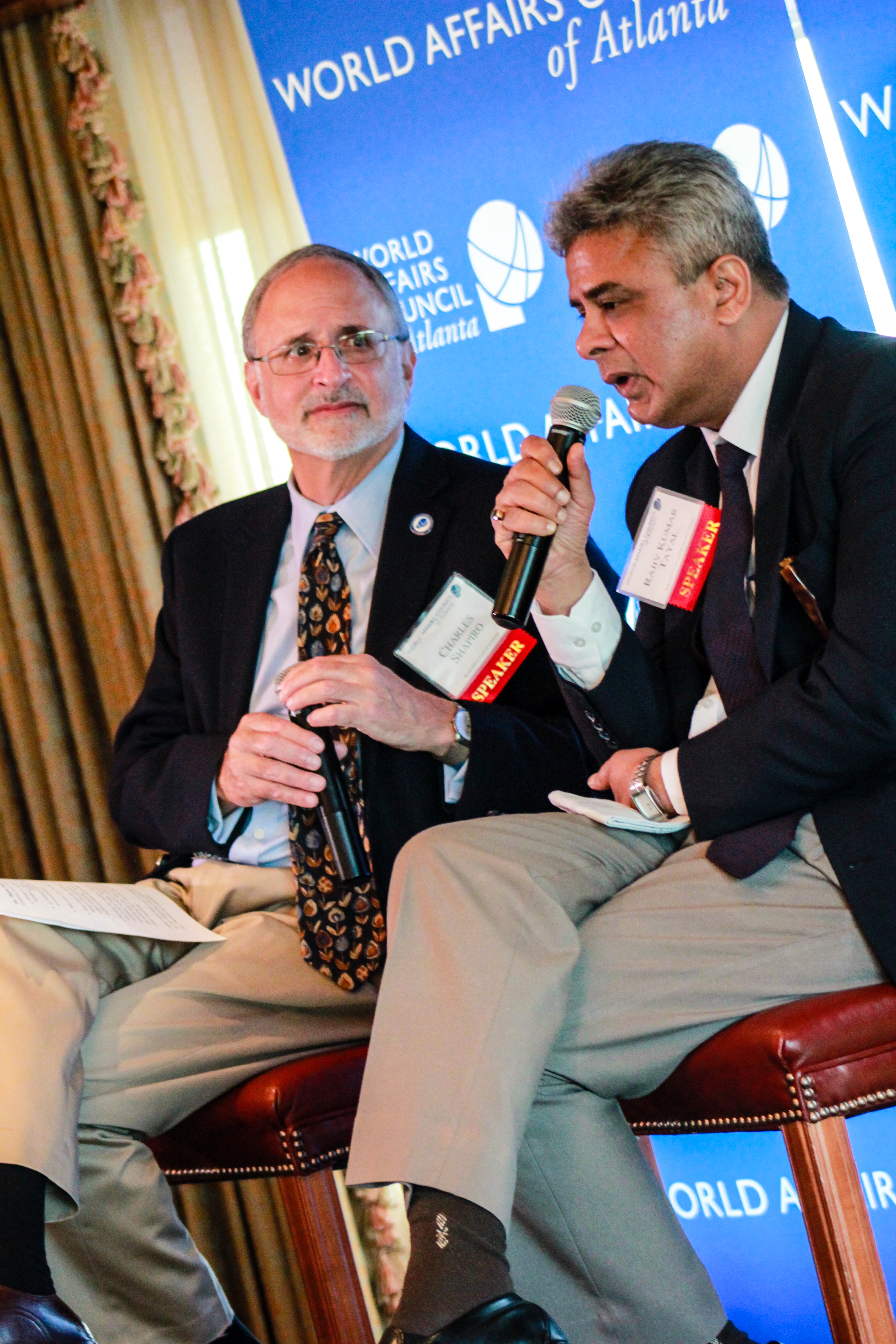
    ATLANTA (TIP): The World Affairs Council of Atlanta and the American India Foundation [AIF] hosted, August 18, Dr. Rajeev Tayal, Executive Director of the Indo-US Science & Technology Forum [IUSSTF] for a breakfast presentation at the City Club of Buckhead in Atlanta. Set against the backdrop of the ever-increasing science and technology co-operation between India and the United States, Dr. Tayal delved into a range of issues including the start-up climate in India, the innovation landscape and how IUSSTF is striving to be an enabler of new ideas.

    India and U.S. Partners in Innovation-32In a Q&A format with Ambassador Charles Shapiro, World Affairs Council President, Dr. Tayal discussed how targeted investments can have a societal impact in India, the United States and beyond.

    Dr. Tayal highlighted the success of the Forum saying, “We have been able to connect about 25,000 scientists on both sides. This bridging has been one of our biggest successes. Half a dozen products have just reached the market.” He added,” “We are good value for money. We take care of educational and research activities, support bilateral workshops. Both parties (US & India) deliberate on scientific issues. We support virtual centers which provide unique opportunities for people to work and collaborate together.”

    India’s Consul-General Nagesh Singh who was present on the occasion said, “There are nearly 50 tracks of dialogue happening across the two countries. There is a greater acceptance of the importance of knowledge-sharing on both sides as we see scientists working at key research institutions. We are pleased to host Dr. Tayal in Atlanta and put the spotlight on the niche areas that IUSSTF is working on to strengthen the science and technology partnership between the two countries.”

    IUSSTF is a nodal agency established under an agreement between the Governments of India and the United States, is an autonomous, not for profit society in India, co-funded and co-governed by both the governments.

    Dr. Tayal pointed out that, “Although there are several other bi-lateral arrangements similar to this, the India-US engagement has been the most vibrant. We support the last-mile coverage of the R&D value chain.” He quoted examples of medical devices to address several health issues like diabetes, and a low-cost knee joint that is a collaborative effort between Stanford University and a hospital in Jaipur, Rajasthan, India. IUSSTF does not patent these innovations nor control the intellectual property and leaves it to the innovators.

    Chair of the AIF Atlanta Chapter Dr. Amitabh Sharma welcomed the gathering highlighting the role of AIF in nurturing an environment of collaboration and shared learning especially in the context of addressing the larger social issues of access to education, public health and skilling young people.

    Other key people in attendance included Tarun Mohindra, Counsellor, Science and Technology, Embassy of India, Georgia Tech Professor Suman Das, Arun Rai from Georgia State University and Shailesh Patel from the Chugh Firm.

  • Obama Names Presidential Delegation for Canonization of Mother Teresa

    Obama Names Presidential Delegation for Canonization of Mother Teresa

    WASHINGTON (TIP); President Barack Obama has announced the designation of a Presidential Delegation to attend the Canonization of Mother Teresa in Vatican City on September 4.

    Lisa Monaco, Assistant to the President for Homeland Security and Counter terrorism, will lead the delegation and members of the delegation include Kenneth Hackett, U.S. Ambassador to the Holy See, Department of State; Suzy George, Deputy Assistant to the President and Executive Secretary and Chief of Staff, National Security Council, Sister Donna J. Markham, President and CEO, Catholic Charities USA and Dr. Carolyn Y. Woo, President and CEO, Catholic Relief Services.

  • 14th Pravasi Bharatiya Divas (PBD) in Bengaluru from January 7-9, 2017

    14th Pravasi Bharatiya Divas (PBD) in Bengaluru from January 7-9, 2017

    NEW YORK (TIP): The Pravasi Bharatiya Divas is a Convention organized to connect the Government of India and State Governments of India to its Overseas Indian Diasporas. The PBD Convention provides a platform for the Indian Diaspora to engage with the Government of India and acquaint themselves about policies, developments and opportunities of contemporary India.

    The 14th PBD Convention will be held from 7 – 9 January 2017 in Bengaluru.

    The participants can register themselves through the portal that also gives all the information and details about the event: https://pbdindia.gov.in/

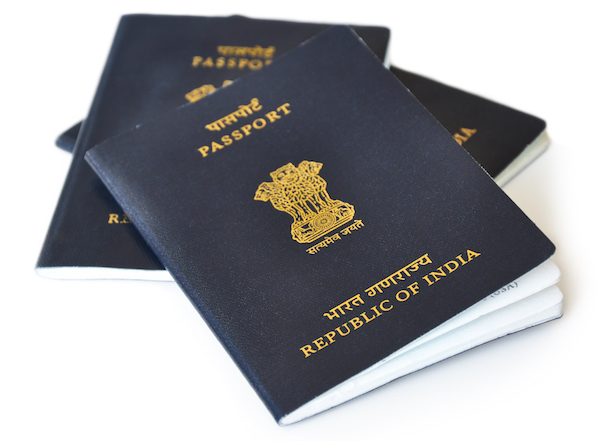
  • An Opportunity to buy Indian Residency with Investment of INR 10 Crore

    An Opportunity to buy Indian Residency with Investment of INR 10 Crore

    NEW DELHI (TIP): Foreign investors bringing in at least Rs. 10 crore capital will be eligible for residency status, easier visa regime and employment for family members among other benefits under a new policy approved by the Union Cabinet on Wednesday, August 31, to attract more overseas funds.

    “A certain threshold if you invest in India, then there will be availability of visa, the availability of the right to purchase assets, the availability of employment for family members, there is a detailed policy that has been approved by the Cabinet today”, Finance Minister Arun Jaitley said after the Cabinet meeting, chaired by Prime Minister Narendra Modi, in New Delhi, August 31.

    The scheme however will not be applicable to Pakistani citizens, Union Minister Venkaiah Naidu tweeted.
    The scheme is expected to encourage foreign investment in India and facilitate the Make in India program. Under the scheme, suitable provisions will be incorporated in the Visa Manual to provide for the grant of permanent residency status to foreign investors.

    An official statement said permanent residency status will be granted for a period of 10 years with multiple entries. This can be reviewed for another 10 years if the holder has not come to adverse notice.

    The scheme will be applicable only to foreign investors fulfilling the prescribed eligibility conditions, his or her spouse and dependents.

    “In order to avail this scheme, the foreign investor will have to invest a minimum of Rs. 10 crore to be brought within 18 months or Rs. 25 crore to be brought within 36 months.

    Further, the foreign investment should result in generating employment to at least 20 resident Indians every financial year,” the statement said.

    The permanent residency status will be granted for a period of 10 years initially with multiple entry facility, which can be renewed for another 10 years.

    The status will serve as a multiple entry visa without any stay stipulation and holders will be exempted from the registration requirements.
    This status holder will be allowed to purchase one residential property for dwelling purpose. The spouse/ dependents will be allowed to take up employment in private sector (in relaxation to salary stipulations for Employment Visa) and undertake studies in India.

  • Air India (AI) to launch a direct international flight between Chandigarh and Singapore

    Air India (AI) to launch a direct international flight between Chandigarh and Singapore

    CHANDIGARH (TIP): “Singapore is a potential destination. Air India will launch a direct flight between Chandigarh and Singapore,” Air India Express CEO K Shyam Sundar said here, August 25.  He, however, did not divulge the timeline.

    “Air India MD Ashwani Lohani will make an announcement about the flight on September 15 at Chandigarh,” he said.

    Sundar said Air India Express, a low-cost carrier and subsidiary of flag carrier Air India, will operate its first direct international flight from Chandigarh airport to Sharjah on September 15.

    The flight will operate on Mondays, Thursdays and Saturdays. “Air India Express will be the first carrier to operate an international flight from Chandigarh,” he said.

    Air India Express has inducted three new aircraft in its fleet this year and will induct three more next year.

    It currently operates about 350 flights per week of which flights on the India-UAE routes account for 275 flights per week.


  • Two out of 5 kids are out of school: UNICEF

    Two out of 5 kids are out of school: UNICEF

    UNITED NATIONS (TIP): UNICEF has issued a new data analysis that shows in the 10 countries with the highest out-of-school rates, 40 per cent of children – 18 million – are not accessing primary education.

    The analysis comes at a time when millions of children around the world are preparing to go back to school.

    In the top 10 countries with the highest rates of children missing out on primary education, nearly 2 in every 5 children – 18 million – are out of school, UNICEF said

    Liberia is home to the highest proportion of out-of-school children with nearly two-thirds of primary-aged children not accessing school. The second highest is South Sudan, where 59 per cent of children are missing out on their right to a primary education and 1 in 3 schools is closed due to conflict.

    Afghanistan (46 per cent), Sudan (45 per cent), Niger (38 per cent) and Nigeria (34 per cent) also feature in the top 10 countries with the highest primary out-of-school rates, painting a clear picture of how humanitarian emergencies and protracted crises are forcing children out of school.

    The UNICEF data analysis, which comes as millions of children return to school this month, highlights the extent of an education crisis affecting countries already blighted by conflict, prolonged periods of drought, flash floods, earthquakes and high rates of extreme poverty.

    UNICEF fears that without education, a generation of children living in countries affected by conflict, natural disasters and extreme poverty will grow up without the skills they need to contribute to their countries and economies, exacerbating the already desperate situation for millions of children and their families.

    Education continues to be one of the least funded sectors in humanitarian appeals. In 2015, humanitarian agencies received only 31 per cent of their education funding needs, down from 66 per cent a decade ago. Despite a 126 per cent increase in education requirements since 2005, funding increased by just 4 per cent. Moreover, education systems equipped to cope with protracted crises cannot be built on the foundations of short-term – and unpredictable – appeals.

    During the World Humanitarian Summit, held in May 2016, a new global funding platform, Education Cannot Wait, was launched to bridge the gap between humanitarian interventions during crises and long-term development afterwards, through predictable funding.

    Though not one of the top 10 countries with the highest rates of out-of-school children, Syria is home to 2.1 million school-age children (5-17) who are not in school. An additional 600,000 Syrian children living as refugees in the surrounding region are also out of school.

    Recent, reliable data from countries including Somalia and Libya are not available either from administrative or survey sources partly due to the continuing conflicts.

    “For countries affected by conflict, school equips children with the knowledge and skills they need to rebuild their communities once the crisis is over, and in the short-term it provides them with the stability and structure required to cope with trauma. Schools can also protect children from the trauma and physical dangers around them. When children are not in school, they are at an increased danger of abuse, exploitation and recruitment into armed groups,” said UNICEF Chief of Education Jo Bourne.

  • Brooklyn Judge Sues Borough Democratic Party over Refusal to Endorse

    Brooklyn Judge Sues Borough Democratic Party over Refusal to Endorse

    NEW YORK (TIP): A Brooklyn judge is suing the borough’s Democratic Party and its judicial screening committee, which did not endorse her for reelection to the bench, claiming that members of the committee defamed her by leaking to the media that the committee found her unqualified for another term.

    Brooklyn Supreme Court Justice Laura Jacobson, who has been on the bench for 25 years and who also serves as an acting surrogate in Brooklyn, was seeking election to another 14-year term on the Supreme Court.

    In July, the New York Post published an article quoting unnamed sources who said that the screening committee, which rarely recommends against keeping a sitting judge on the bench, determined that Jacobson was not qualified for reelection.

    The sources said that an “abnormal” percentage of the judge’s decisions had been reversed on appeal, that she lacks work ethics and that “she’s not the brightest bulb in the courthouse.”

    In a lawsuit filed Friday in the Eastern District, Jacobson alleges that the leak was made as retribution for decisions that made her fall out of favor with Brooklyn’s “Democratic political machine.”

    Specifically, she alleges, she is being punished for reducing the amount of counsel fees paid to Steven Finkelstein, who is both a member of the screening committee and counsel to the Brooklyn Public Administrator, who Jacobson said was charging excessive fees.

    Jacobson says she also ran afoul of the party’s bosses in 2014 when she granted a temporary restraining order to block the State University of New York from selling Long Island College Hospital over the objections of Frank Carone, a partner at Abrams, Fensterman, Fensterman, Eisman, Formato, Ferrara & Wolf who represented SUNY at the time.

    Jacobson also denied that her decision had been reversed on appeal 57 times throughout the past decade, as the Post reported, citing the anonymous sources, saying that an “infinitesimal” number of the 4,000 orders she has issued since 2006 have been reversed by a higher court.

    In addition to the Brooklyn Democratic Party and the screening committee, the parties named in Jacobson v. Kings County Democratic County Committee, 16-cv-4809, include party chair Frank Seddio, who recently became president of the Brooklyn Bar Association; and Martin Edelman, a Manhattan attorney who chairs the screening committee. The Post is not a party to the suit.

    Jacobson seeks $5 million for damages and attorney fees and a preliminary injunction calling on Frank Seddio to disband the screening committee.

    Ravi Batra of the Law Offices of Ravi Batra, who is representing Jacobson, said the defendants' alleged conduct toward his client is part of a larger effort to erode judicial independence. "Without judicial independence, the separation of powers regime doesn't work," Batra said.
    Ravi Batra of the Law Offices of Ravi Batra, who is representing Jacobson, said the defendants’ alleged conduct toward his client is part of a larger effort to erode judicial independence.
    “Without judicial independence, the separation of powers regime doesn’t work,” Batra said.

    In a statement emailed to the Law Journal, Bob Liff, a spokesman for the Brooklyn Democratic Party said the selection committee is independent and that members are selected by various bar associations.

    “Party leaders have no control over, and are not privy to, the committee’s deliberations and decisions,” Liff said.

    Carone also serves as counsel to the party’s executive committee, which cannot endorse a candidate for the bench unless the screening committee deems them qualified for the position. Jacobson’s name was not included on the screening committee’s report to the executive committee on the fitness of judicial candidates, and thus it was not formally informed as to whether it found her qualified.

    Carone said in an interview that Jacobson briefly presided over the case she cites, New York State Nurses Association v. New York State Department of Health, 5814/13, as an ex parte judge.

    With respect to Jacobson’s lawsuit, Carone said that when the parties are served with subpoenas they plan to move to dismiss the suit and file counterclaims for defamation.
    “All you have in this complaint is innuendo and smear campaign,” Carone said.

  • Secretary Kerry’s visit: India unfurls its big power vision

    Secretary Kerry’s visit: India unfurls its big power vision

    The military agreement signed with the US (LEMOA) has stolen all the thunder in two recent high-level interactions with the US. The spin seems to make the agreement the epitome of Indo-US ties because of its outsized political weight. The Americans had actually offered a palette of four military agreements. India had earlier signed the end-user verification agreement which is theoretically more intrusive. The real test of Indo-US strategic closeness will be the other two military agreements that have been opposed by the Indian military.

    But the LEMOA, despite its strategic ordinariness, has created a climate of freshness in Indo-US ties. Its timing should give India considerable political capital when a new US President takes office. In India, US Secretary of State John Kerry uttered platitudes on terrorism that India likes to hear but Sushma Swaraj also evoked a phrase that is music to American ears — India’s willingness to be a net provider of security to the region. In other words, it means the Indian military will rise to the occasion in case of any trouble in the region. In the diplomatic world of give and take, US President Barack Obama has already assured US backing to India’s renewed quest for Nuclear Suppliers’ Group membership.

    That is not all. Kerry’s surprise suggestion of an India-US-Afghanistan trilateral can bring New Delhi back into the Kabul game. It also suggests increasing American exasperation with Pakistan that has been reflected in the US holding back funds for F-16 fighter jets as well as $300 million in military aid. And in a reminder to the world that India should not be hyphenated with Pakistan, India stood up to its G-20 stature when Sushma Swaraj reminded the Americans about the pending transfer of $100 billion to developing countries to battle climate change. The agreement for joint Indo-US research in the Arctic may not turn many heads but this will be the arena for resource grab in the coming decades. Taken together — net provider of security, NSG, Afghanistan, climate change and the Arctic — signal India’s long-term vision on the world stage in the coming years.

  • English no longer a must to drive a cab in NYC

    English no longer a must to drive a cab in NYC

    NEW YORK (TIP): People who hope to drive New York City’s famous yellow cabs must pass tests on such details as driving rules and where they can pick up passengers. But gone are the days when it was necessary to have proficiency in English.

    A new law that streamlines licensing requirements for different kind of drivers has done away with the longstanding English proficiency test for taxi drivers, which supporters say will eliminate a barrier to the profession for immigrants, who make up 96 per cent of the 144,000 cabbies in the city.

    It’s also a recognition of how technology has transformed the business. Many drivers now rely on computer navigation programs, rather than verbal directions, to reach a destination. For-hire drivers for app-based services such as Uber, for example, never had to take an English test.

    But critics, including some drivers, are giving a side-eye to the idea that a good command of English is no longer considered a basic requirement for a job that involves communicating with passengers and reading street signs.

    “If you’re going to work in this country serving the population which is majority made up of American citizens that speak English, you probably should learn how to speak English,” said Tanya Crespo, who was visiting Manhattan from Newport, North Carolina.

    Kathy Amato, a tourist from Baltimore, said she wouldn’t ride in a taxi with a driver who couldn’t speak her language.

    “They should speak English because we’re in New York City,” she said.

    New York City’s taxi and for-hire drivers are already an international bunch, hailing from 167 countries, according to the Taxi and Limousine Commission, which currently offers its licensing tests in English, Spanish, Bengali and Urdu.

    Hacks formerly went through one of two licensing processes, depending on what class of car they drove.

    One was for the yellow cabs that passengers can hail on the street. Drivers of those vehicles, which mostly operate in Manhattan and at the airports, had to take an education course and an English proficiency test.

    The other licensing process covered drivers of for-hire cars, the dominant form of taxi in the “outer boroughs” of Brooklyn, the Bronx, Queens and Staten Island.

    Those rides are dispatched by telephone, or, in recent years, by mobile phone app. For those drivers, an English test wasn’t required.

    Drivers for the different types of cars not only took different types of tests, but they also tended to come from different countries.

    Among yellow cab drivers, 24 per cent were born in Bangladesh, 10 per cent in Pakistan and 8 per cent in India, according to city statistics. English is widely spoken as a second language in all three places, all formerly part of the British Empire.

    But among the traditional for-hire livery car drivers, 50 per cent were born in the Dominican Republic, where people speak Spanish.

  • GENERAL MOTORS RECALLS CHEVROLET CRUZE CARS

    GENERAL MOTORS RECALLS CHEVROLET CRUZE CARS

    CHENNAI (TIP): Voluntary recalls are becoming quite common in the Indian automobile market particularly as more and more car companies are aligning their recall systems with global recalls.

    The Takata airbag problem has led to several rounds of recalls in India in tandem with global recalls while other companies have been proactive in recalling vehicles which may have faced tech problems in other markets and the latest to join the ranks is General Motors India.

    The company on Thursday undertook a “voluntary product recall for a limited range of its Chevrolet Cruze vehicle where some vehicles have experienced loss of ignition or engine stall at low vehicle speeds,” it said in a statement.

    The recall affects Chevrolet Cruze vehicles manufactured between model years 2009 and 2011.

    “The inspection and recommended repairs or replacement are estimated to take no more than one hour and the affected Chevrolet Cruze customers will be asked to take their vehicles to their nearest Chevrolet service dealership for inspection with a prior appointment,” said the statement.

    “If we foresee a potential issue, we ensure that it is corrected as soon as possible, as part of our commitment to customer satisfaction. This is a voluntary recall and, as far as we are aware, does not affect the safety of the vehicle but we want to make sure that our customers experience the right performance from their vehicles,” said Markus Sternberg, vice-president -aftersales, General Motors India.

    The company is working closely with its service network to make the entire inspection and correction exercise as smooth as possible with an option of pick up and drop to a residential address.

  • NEW SRI LANKA CONSTITUTION COULD BE PRESENTED IN PARLIAMENT BY NOVEMBER

    NEW SRI LANKA CONSTITUTION COULD BE PRESENTED IN PARLIAMENT BY NOVEMBER

    COLOMBO (TIP): Sri Lanka’s new draft Constitution could be presented in Parliament before the next budget which would be announced by mid-November this year, Foreign Minister Mangala Samaraweera has said while hoping that it will celebrate the country’s diversity.

    “We hope to be able to present that (Constitution) in parliament before the next budget,” Samaraweera said while addressing a gathering in Point Pedro in the northern province on Sunday.

    The 2017 government budget is expected to be presented in Parliament mid-November.

    It was important to recognize the religious diversity in Sri Lanka in formulating the new Constitution, Samaraweera said.

    “We have been busy creating or placing a foundation for a new Sri Lanka based on the three pillars of democratization, reconciliation and development,” the minister said. The process of finalizing the new Constitution is underway and it will hopefully celebrate the diversity of the country, he said. Samaraweera said, it is time to come to terms with the fact that Sri Lanka is a multi-racial, multi-religious, multi-lingual country. The Maithripala Sirisena government had set in the process of making a new Constitution since January this year. A 21-member steering committee consisting of parliamentarians from across all political parties has been set up. The aim is to replace the existing 1978 constitution. In the new Constitution, the Prime Minister will hold the supreme executive power. (PTI)

  • US imposes sanctions on ‘Putin’s bridge’ to Crimea

    US imposes sanctions on ‘Putin’s bridge’ to Crimea

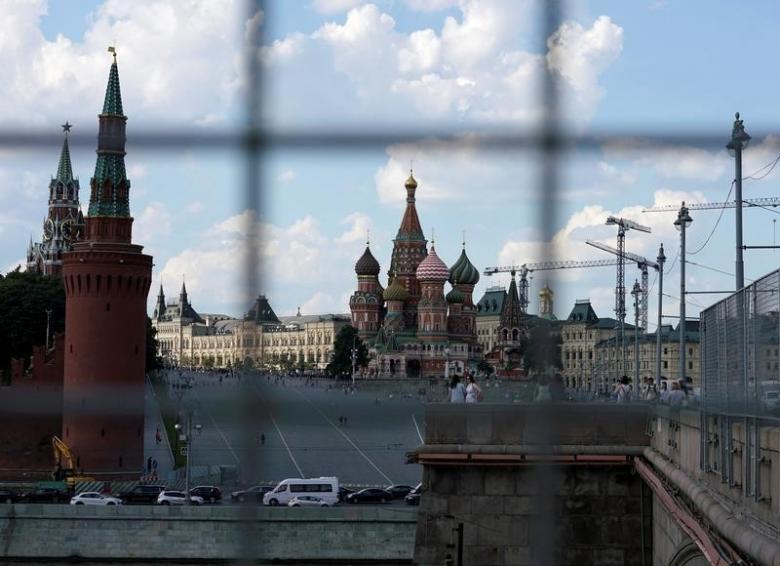
    MOSCOW  (TIP): Companies building a multi-billion dollar bridge to link the Russian mainland with annexed Crimea, a project close to the heart President Vladimir Putin, were targeted by the United States in an updated sanctions blacklist on September 1.

    The US Department of the Treasury added dozens of people and companies to the list, first introduced after Russia annexed the Crimean peninsula from Ukraine in 2014 and expanded over its support for separatist rebels in the east of the country.

    As well as multiple subsidiaries of Russian gas giant Gazprom and 11 Crimean officials, the Treasury named seven companies directly involved in the construction of the 19 km (11.8 miles) road-and-rail connection across the Kerch Strait, dubbed “Putin’s bridge” by some Russians.
    Chief among those were SGM-Most, a subsidiary  of lead contractor Stroygazmontazh which is already under U.S. sanctions and sub-contractor Mostotrest, one of Russia’s biggest bridge builders.

    “Treasury stands with our partners in condemning Russia’s violation of international law, and we will continue to sanction those who threaten Ukraine’s peace, security and sovereignty,” said John Smith, acting director of the Treasury’s Office of Foreign Assets Control, which levies sanctions.

    The Russian Foreign Ministry was not immediately available for comment, but Moscow has previously said sanctions levied over its actions in Ukraine undermine efforts to resolve the conflict.

    Set to be the longest dual-purpose span in Europe when completed, the Kremlin sees its 212-billion rouble ($3.2 billion) bridge as vital to integrating Crimea into Russia, both symbolically and as an economic lifeline for the region. Putin has called the undertaking an historic mission.

    But the project has had to contend with Western sanctions since the construction contract was handed to Stroygazmontazh last year, a firm controlled by Arkady Rotenberg, a close ally of Putin’s and his former judo partner.

    Rotenberg is already under U.S. sanctions because of his links to the Russian leader, which the Treasury says have helped him win billions of dollars in state contracts. He cannot raise capital in the West or hire Western sub-contractors to help his firm complete the project.

    Officials linked to the bridge’s construction say they have all the skills, equipment and supplies required to build it without Western help.

    “The sanctions will not affect the construction of the bridge,” Crimea Bridge infocentre, the organization responsible for communications about the project, said in a statement on Thursday. “The contractor has all the resources necessary for the timely completion of the project.”

    Rotenberg and his brother Boris have denied getting help from the Russian leader for their businesses.

    Gazprom did not reply to a request for comment.

    The restrictions on the energy giant and its subsidiaries prevent US firms or citizens from providing goods or services supporting the firm’s deepwater, arctic offshore, or shale oil projects.

    (Reuters)

  • NYC Department of Small Business Services offers Free Services to Businesses

    NYC Department of Small Business Services offers Free Services to Businesses

    NEW YORK CITY (TIP): The NYC Department of Small Business Services offers free services to help businesses start, operate, and expand in New York City.

    We have trained business specialists located throughout the five boroughs who can help you access financing assistance, legal advice, learn how to sell to the government, recruit new employees, and navigate government rules and regulations.

    Take advantage of the free business services: nyc.gov/nycbusiness

    About the Department of Small Business Services
    The Department of Small Business Services (SBS) makes it easier for businesses in New York City to start, operate and expand by providing direct assistance to business owners, fostering neighborhood development in commercial districts and linking employers to a skilled and qualified workforce. For more information on all of SBS’ services, go to www.nyc.gov/sbs.