Month: September 2016

  • AIA Deepavali on 2nd October at South Street Seaport

    AIA Deepavali on 2nd October at South Street Seaport

    NEW YORK CITY (TIP): The Association of Indians in America, NY Chapter (#AIA-NY) is celebrating its 29th Annual #Deepavali Festival at the South Street Seaport in New York City on Sunday October 2nd, 2016 from 12 noon till 7pm, culminating with a spectacular display of Live Fireworks.

    This event is one of the largest in the tri-statearea, attracting approximately 75,000 – 100,000 people from all backgrounds and walks of life.

    Deepavali meaning ‘A row of lamps’ is also popularly known as Diwali, or ‘Festival of Lights’ and signifies thetriumph of ‘Good over Evil’. The event will be a full day extravaganza celebrating tradition, culture andoneness with numerous food & clothing vendors, corporate booths, a children’s area, health kiosk,performances and activities for the whole family including a live grand display of fireworks illuminating theNew York City skyline.

    North America’s biggest Urban South Asian star Mickey Singh will be performing LIVE alongside DJ Ice. Withover half a million fans online and releases under some of the biggest labels such as Eros International, TSeries,Zee Music & Speed Records to name a few, Mickey Singh is definitely a treat to watch on stage.

    Hollywood’s newest and youngest star, Neel Sethi of Disney’s “The Jungle Book” will be meeting andinteracting with audiences at the Children’s Area. The highly sought after inter-collegiate dance competition, Naach Inferno enters its 3rd year as it showcases dances fusing both East and West cultures. Presented by LifeOK & Star Plus, the competition will be telecasted globally. USA’s premier and largest Indian dance academy, Arya International will make sure the entire audience learns some Bollywood moves and participates in ourOpen Dance Floor! Numerous local performing arts schools and academies will also be showcasing theirtalents on both of our stages throughout the day.

    This year, Deepavali also marks the birthday of MahatmaGandhi. There will be a special tribute for Gandhiji along with an Essay & Drawing Competition for the youthto showcase the importance and meaning of Peace. The event culminates with a VIP Hour which has in thepast been attended by the Governor & Mayor of New York and many other dignitaries. Live Fireworks fromthe East River illuminating the New York City skyline will serve as the Grand Finale.

    This year, support from sponsors such as CheapOAir.com, Qatar Airways, Toyota, Pepsi, New York Life, SwanClub, MoneyGram, Kotak Mahindra, New York Life, HAB Bank, Navika Capital, Star Plus, Sony Entertainment,Jus Punjabi, TV Asia amongst many others have helped made this event possible.

    The Association of Indians in America (AIA) is one of the oldest not-for-profit organization of Asian Indians inAmerica founded on August 20, 1967. It is the grassroots national organization of Asian immigrants in theUnited States. With chapters and membership spread across the United States of America, AIA represents thehopes and aspirations of those immigrants who are united by their common bond of Indian Heritage andAmerican Commitment.

    For more info, visit atwww.theaiany.org.

    (Press Release)

  • America Tamil Sangam honors NYPD Captain

    America Tamil Sangam honors NYPD Captain

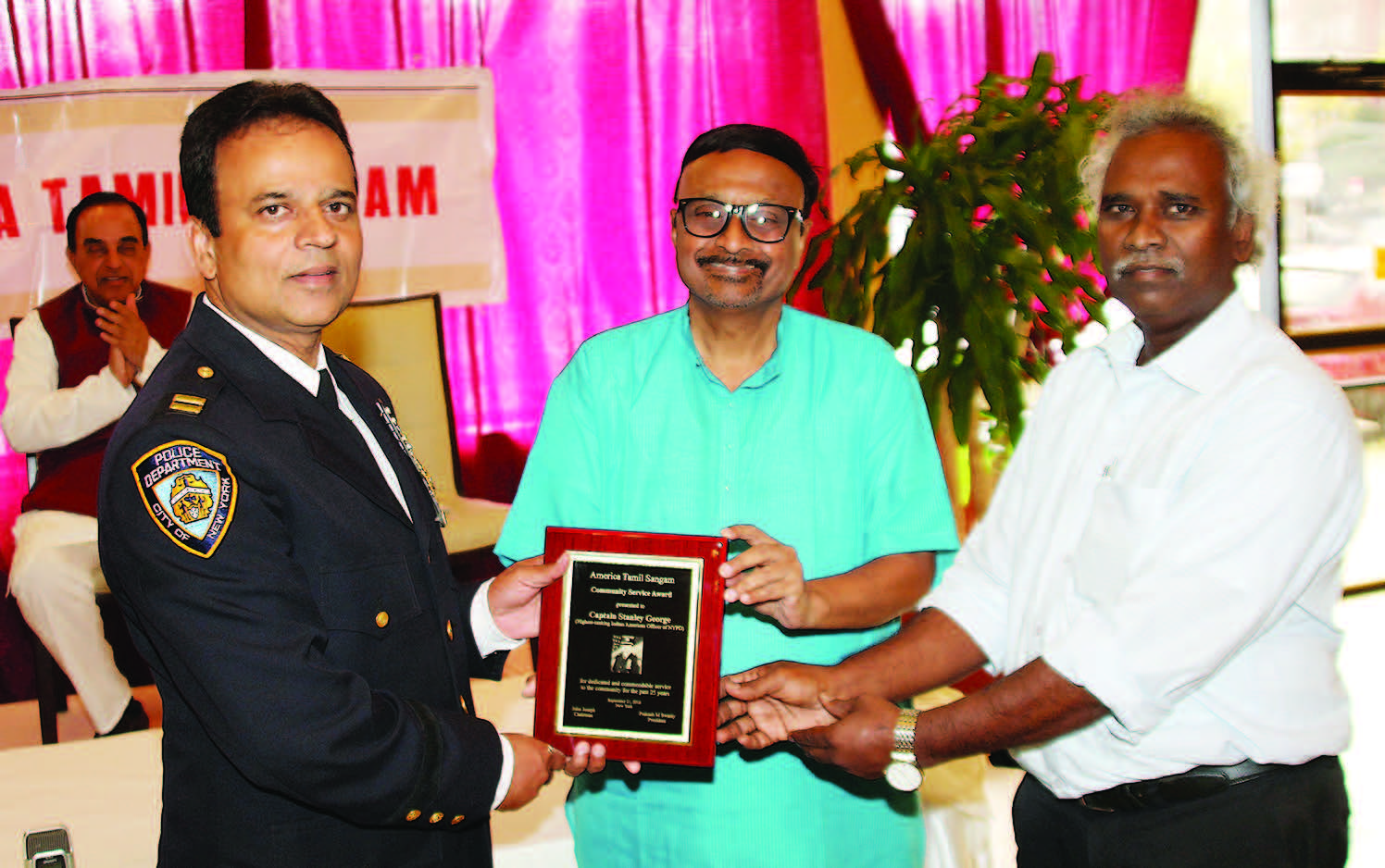
    NEW YORK (TIP): Captain Stanley George, the highest ranking Indian American in the New York Police Department (NYPD) was presented with Community Service Award by the America Tamil Sangam in recognition of his stellar help to the Indian community.

    Prakash M Swamy president and John Joseph, chairman of the Sangam presented the award to George. The NYPD is the largest municipal police department in the World. Captain is the highest rank; one can achieve through in the NYPD. The citation read Captain George has been a tremendous source of help for our Indian community in the United States as well as in India. He has been a Police Officer for 25 years. During these years, he has assisted hundreds of our people in their time of need. He is certainly a strength, voice and refuge for the Indian Community at large. Captain George is a highly decorated officer with many accolades.

    Former President APJ Abdul Kalam honored him at New York. He was recognized by the Nassau County for his invaluable services during the 911 disaster. He received “the man of the year” award from the Kerala Center twice. He was also a recipient of Pravasi Kerala Award in 2010. Many cultural, civic and religious organizations such as Federation of Indian Associations, Jackson Heights Merchant Association, the Desi Society, the Assemblies of God and Greater New York Malayalee Community have honored him in the past.

    He was born in Kerala and finished High School before migrating to the United States. He pursued his studies at Baruch, majoring in Accounting.He started his career in the NYPD as an Accountant before joining the force. He is married to Beena and together they have two children.

  • Oyster Bay ends concessions agreements at two town facilities

    Oyster Bay ends concessions agreements at two town facilities

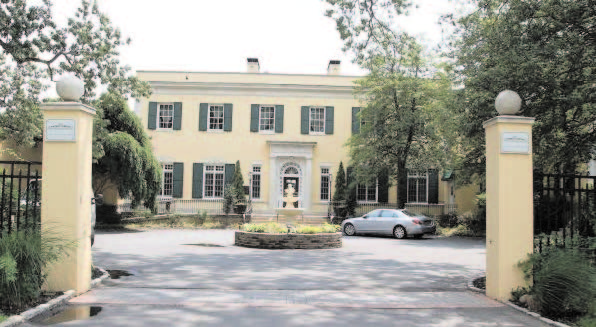
    HICKSVILLE, NY (TIP): A Newsday report says that Oyster Bay has terminated its concessions agreements at the town-owned Woodlands catering hall and Tobay Beach with companies formerly owned by indicted restaurateur Harendra Singh, a Town spokeswoman said Tuesday, September 20.

    “We were trying to work out or negotiate a termination agreement throughout the summer,” spokeswoman Marta Kane said. “That was unsuccessful.”

    Meanwhile, Newsday reported that Former Harendra Singh concessions investors want to remain. Some of the investors who have been operating the concessions at Oyster Bay’s Woodlands catering hall and Tobay Beach want to continue even after being terminated by the town, their lawyer said Tuesday.

    On Monday, the town notified the investors that their concessions agreements were being terminated due to defaults on payments in 2015. On Tuesday, investor Ravinder Chopra and his attorney Ed Troy of Greenlawn met with Jonathan Sinnreich of Sinnreich Kosakoff & Messina LLP, Oyster Bay’s outside attorney, and town parks commissioner Frank Nocerino.

    “The town issued letters allegedly terminating the concession agreements,” Troy said outside Sinnreich’s Central Islip office afterthe meeting.

    The purpose of the roughly 30-minute meeting was “for us to present facts that mitigate against them doing so,” Troy said.

    He said his clients still wanted to be involved with the operations as concessionaires though “not as presently constituted” but declined to get into further details.

    The companies running the concessions – S.R.B. Convention & Catering Corp. and SRB Catering Inc. -were taken over from indicted restaurateur Harendra Singh by a group of investors known to include Ravinder Chopra, Manoj Narang and Jagadeesan Poola. Harendra Singh faces a January trial on chargesincluding bribery and tax fraud.

    The details of the takeover are unclear and Troy advised Chopra not to answer questions from a reporter about whether Singh’s wife Ruby still had a stake in the companies.

    Asked whether the concessionaire was in arrears in its payments to the town, Troy said, “that’s an issue that’s in dispute.”

    Sinnreich said in an interview that his role was limited to preparing requests for proposals for the concessions and referred questions about the town’s negotiations with the investors – which have been ongoing all year – to attorney Jonathan Pickhardt of Manhattan-based Quinn Emanuel Urquhart & Sullivan LLP.

  • Attorney General Schneiderman announces criminal charges against SUNY Polytechnic President

    Attorney General Schneiderman announces criminal charges against SUNY Polytechnic President

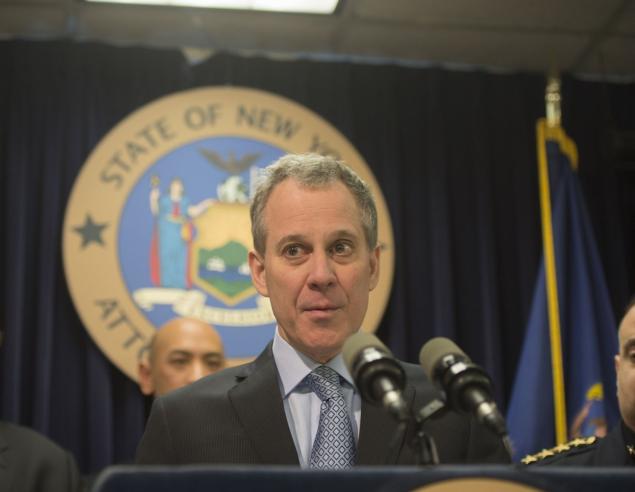
    NEW YORK (TIP): Attorney General Eric T. Schneiderman announced the filing of a felony complaint charging two individuals for a scheme to rig the bidding process for three multimillion-dollar contracts. Alain Kaloyeros, 60, of Slingerlands, the President of #SUNY Polytechnic Institute, has been charged with three felony counts of Combination in Restraint of Trade and Competition. Joseph Nicolla, 59, of Schenectady, the president of Columbia Development, has been charged with one felony count of Combination in Restraint of Trade and Competition.

    The felony complaint alleges that Kaloyeros steered, or agreed to steer, the awarding of contracts to handpicked companies, including Nicolla’s Columbia Development.

    “The charges filed today outline a blatant and brazen abuse of taxpayer dollars and the public trust,” said Attorney General Schneiderman. “This self-serving scheme alleged in the complaint was particularly egregious because it was aimed at enriching powerful people at the expense of the state’s public university system. We will continue to hold public officials accountable and ensure that all officials are held to the same high standard of integrity that New Yorkers deserve.”

    Kaloyeros is scheduled to be arraigned in Albany City Court on Friday, September 23rd. Nicolla is scheduled to be arraigned on Monday, September 26th.

    If convicted on all charges, Kaloyeros faces a maximum sentence of 4 to 12 years in prison. If convicted on all charges, Mr. Nicolla faces a maximum sentence of 1.3 to 4 years in prison.

    According to the felony complaint, Kaloyeros, a government official, engaged in an ongoing scheme to direct the contracts for government financed projects to favored companies, including Nicolla’s company, Columbia Development. Rather than use a fair and competitive process to award contracts, Kaloyeros allegedly improperly used the Request for Proposal process to award certain contracts for the construction of facilities for SUNY Poly.

  • Putin Tightens his Grip

    Putin Tightens his Grip

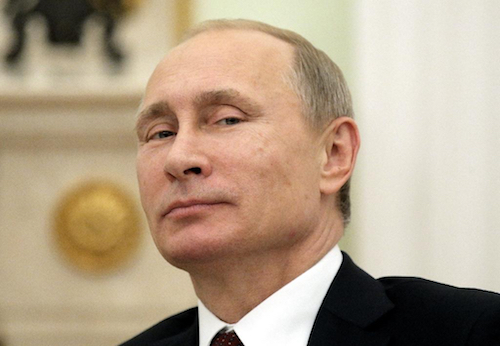
    The outcome of Russia’s parliamentary election was never in question. The United Russia party of President Vladimir Putin has dominated the political landscape ever since it was founded in 2001.

    Even so, the margin of the victory was unexpected. The September 18 elections were held against the backdrop of a protracted economic crisis, tensions between Russia and the West, and a war of attrition in the country’s neighbourhood. Lower oil prices and western sanctions have hit ordinary Russians hard.

    Russia’s economy contracted by 3.7 per cent last year and is expected to shrink further by 0.7 per cent this year. Conventional wisdom suggests that economic hardships trigger anti-incumbency sentiment. But in Mr. Putin’s Russia just the opposite has happened. When the results were declared, his party won more than three-quarters of the 450-member Duma.

    The Communist Party and the Liberal Democratic Party have retained some presence in the national Parliament, while the Yabloko and the Parnas, the two liberal parties critical of the Kremlin, failed to even enter the Duma. This could partly be because of the lack of a united opposition in Russia. The Communists and Liberal Democrats are hardly opposition parties, and agree with the Kremlin on most policy decisions.

    The anti-Kremlin parties have failed in, or been hindered from, building a broad base among the electorate. Alexey Navalny, the leader of the popular anti-government protests of 2011, has been barred from contesting elections. Boris Nemtsov, another popular opposition leader, was shot dead last year in Moscow. At present, there is no opposition leader in a position to challenge the personality cult of Mr. Putin.

    In any case, memories of the anarchic pre-Putin era may still be prompting Russians to stick by him. Mr. Putin is largely credited with fixing the economy and providing a stable political leadership to the country. Under his watch, Russia has come out of its self-imposed strategic retreat and started playing an active global role. Russia’s annexation of Crimea from Ukraine and a combative foreign policy in Syria and elsewhere have proved popular among his domestic constituents. But the Russian economy continues to be heavily dependent on energy exports. If crude oil prices remain low for long, economic pain will persist. Though the muscular foreign policy is popular at home, Moscow has had to pay a heavy price for it. Whatever Mr. Putin had done in his first and second terms to rebuild ties with Europe, particularly with Germany, lies in a shambles in the wake of the Ukraine crisis. If Mr. Putin wants to rebuild Russia as a credible global power, a persistent economic crisis and a stormy neighbourhood are not going to help.

    (The Hindu)

  • A PIROUETTE ON PAKISTAN

    A PIROUETTE ON PAKISTAN

    In February this year, shortly after the attack in Pampore, Jammu and Kashmir, a diplomat belonging to a ‘friendly’ country delicately asked an unusual question. His Foreign Ministry headquarters were asking if they should send a message condemning the terrorist attack in which three Army men, two Central Reserve Police Force personnel and a civilian had been killed in a siege which bore resemblance to the Pathankot attack a month before. The problem, he explained, was that the Indian government itself was making no statements on the incident, and he wasn’t sure if statements of support were welcome or not. A few days after the Pampore incident on February 20, the Ministry of External Affairs had sought to play it down, saying only that the matter was “still being investigated”. Eventually, the Pampore incident, despite the obvious strains of evidence linking it to Pakistan-based groups that officials on the ground pointed to, was buried. At the time, the Indian and Pakistani National Security Advisers (NSAs) were still talking to each other “regularly”, said the government, and a Pakistani investigation team was coming to Pathankot airbase to survey evidence.

    It is only now, after the Uri tragedy of September 18, that India has brought up the number of attacks and attempted infiltrations across the Line of Control (LoC) this year. “Seventeen such attempts have been interdicted at or around the LoC, resulting in the elimination of 31 terrorists and preventing their intended acts of terrorism,” Foreign Secretary S. Jaishankar told Pakistan High Commissioner Abdul Basit when he summoned him on Wednesday. In fact, there have also been more than 20 attacks on security force installations in Jammu and Kashmir in the past two years, including the Pampore attack; another 15 were foiled.

    The incident with the diplomat only serves as a small indicator of how confusing the government’s moves on Pakistan have been, even to close watchers and friendly governments. In fact, India’s moves on Pakistan in the past few years have been a series of such missteps, misperceptions and a complete misunderstanding of the Pakistani responses to them.

    Missing the signs

    To begin with, the on-again, off-again dialogue process that began with Prime Minister Narendra Modi’s grand gesture of inviting his Pakistani counterpart Nawaz Sharif to his swearing-in ceremony is perplexing. When the government called off talks between the Foreign Secretaries over the Pakistan High Commissioner’s talks a few months later with the Hurriyat leadership, it played the move as the drawing of a “redline”. But in a turnaround in March this year, that redline was erased, and the government posed no objection to the High Commissioner meeting the Hurriyat a few days before the Foreign Secretary-level talks in Delhi. What the government failed to notice between those two dates in 2014 and 2016 was a hardening of the Pakistani military’s position on the India policy. Another missed sign was the clear targeting of NSA Ajit Doval, India’s main interlocutor with Pakistan, by the military establishment’s propaganda wing, as the mastermind of terror attacks in Pakistan.

    As a result, when Mr. Modi met Mr. Sharif in Paris and suggested restarting talks beginning with NSA Doval and the newly appointed Pakistani NSA Gen. Nasser Khan Janjua, it was far from a match made in heaven. For his part, Mr. Doval was viewed with deep suspicion by Pakistan. Indian government officials drew false comfort as they viewed Gen. Janjua as a “military man” with the ear of Pakistan Army Chief Gen. Raheel Sharif. But they should have asked more closely about Gen. Janjua’s nebulous role in the Pakistani power structure, as he seemed to only be deputed for relations with India: when Prime Minister Sharif went to Saudi Arabia, Gen. Sharif to Afghanistan, and Foreign Affairs Adviser Sartaj Aziz to the U.S., Gen. Janjua was nowhere in the picture.

    Neither war-war nor jaw-jaw

    Yet the government pressed on with the initiative with Pakistan, and both External Affairs Minister Sushma Swaraj and Mr. Modi have paid visits to Pakistan. They both gave the same message: this time they would not allow terrorism to derail talks between the two countries. “We want to ensure we are not provoked by saboteurs who want to stop the dialogue process,” Ms. Swaraj told Parliament about the government’s new plans with Pakistan. Yet provoked they were, and the government took another turn, calling off the Foreign Secretary-level dialogue process shortly after the Pathankot attack in January. NSA talks, however, persisted and led to the curious precedent that saw Pakistani intelligence operatives get access to look at the very base India accused their groups of attacking. Through every attack from Pakistan, the government has flipped and flopped, explaining itself unconvincingly to even its well-wishers.

    There is enough evidence to show that Ms. Swaraj’s instincts were correct. Nothing upsets the elements of the Pakistani establishment that carry out terror attacks against India more than a consistent dialogue process, and in the past too, it is when India and Pakistan have come closest to a breakthrough that their attack is the hardest. The last few years, however, have seen neither what Winston Churchill famously called jaw-jaw (talks), nor has there been an outright war-war, and it’s that situation of disorder that empowers those destructive elements the most.

    Not setting the agenda

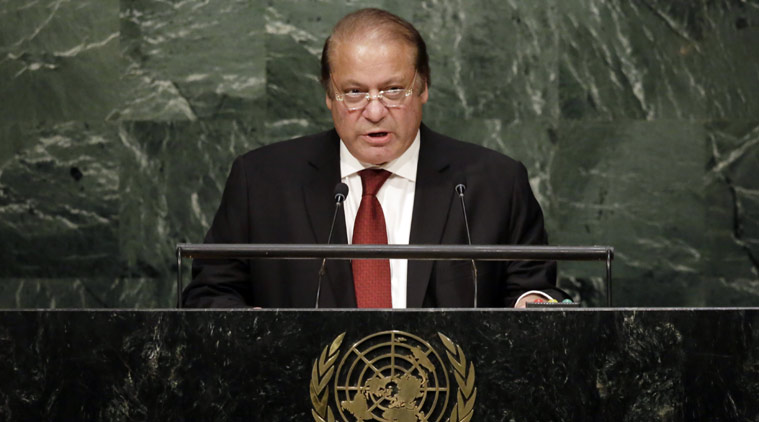
    Equally confusing are the steps the government has taken on the international stage. At the G20, ASEAN and East Asian summits, and every possible international forum, Prime Minister Modi has made statements about Pakistan’s link to the violence in Kashmir. Yet the government rejoiced this week when UN Secretary General Ban Ki-moon omitted any references to Kashmir, saying this reaffirms India’s traditional position that it is a bilateral, not international, issue. The damage is twofold: not only does this allow Pakistan to set the agenda for India at international fora as Mr. Sharif’s speech calling Kashmir an “intifada” did, it also gives rise to ambiguities on the status of Kashmir that other countries draw upon.

    Meeting Mr. Sharif this week, U.S. Secretary of State John Kerry, for example, expressed “strong concern with recent violence in Kashmir – particularly the Army base attack”, and then added the “need for all sides to reduce tensions”, as if there was some equivalent responsibility for both India and Pakistan. Similarly, France issued a statement condemning the Uri attack, but also called for a resolution of the Kashmir dispute, drawing a link between the two that India would like to avoid.

    Finally, there is an inconsistency between the government’s rhetoric and the actions it is prepared to take in the wake of an attack. Initial indications after the Uri attack suggest the government and the armed forces are not in favor of a “knee-jerk” air strike or cross-border raids at this point. It is counterproductive to issue statements on “befitting punishment” to Pakistan or exchanging a tooth for a full set of dentures if the plan is to exhaust diplomatic options first.

    The truth is, the world understands India is the victim, and Pakistan the perpetrator of terror. While the government keeps producing evidence of each attack it traces to the Jaish-e-Mohammed and the Lashkar-e-Taiba, as it has done post-Uri as well, the obvious evidence should be the original case against them: that JeM leader Masood Azhar was exchanged for hostages during the IC-814 hijack in 1999, and Hafiz Saeed has been identified by at least three people involved in the 26/11 Mumbai attacks of 2008 as its mastermind, and is wanted not just by India but the UN as well. If that’s not enough for Pakistan, nothing will ever be, and the fact that both terrorists roam freely and run flourishing empires within the country should be enough to show Pakistan’s complicity. But until India builds a coherence in its own strategy, and unity in focus and purpose, it will continue to face such challenges from across the border, as well as comforting but empty words of solidarity from the rest of the world.


    (The author is a columnist and can be reached at suhasini.h@thehindu.co.in)

  • Pakistan’s bogus claims exposed by own media in disastrous day

    Pakistan’s bogus claims exposed by own media in disastrous day

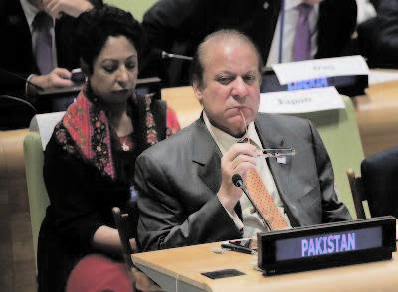
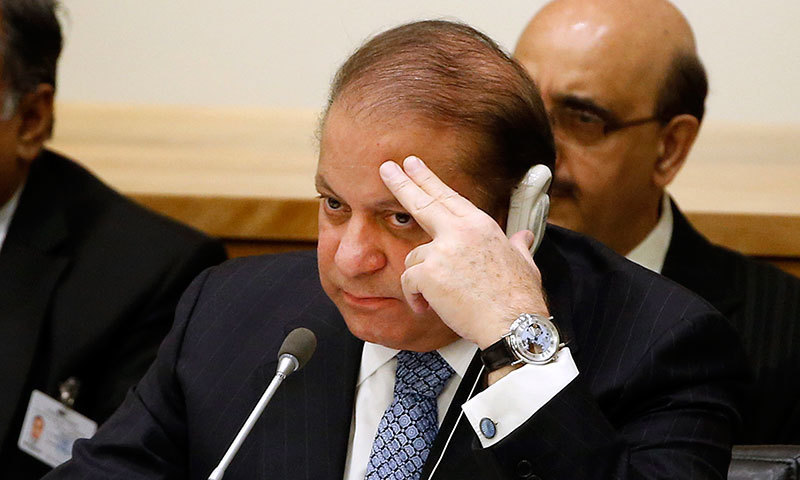
    WASHINGTON (TIP): She meant to say Nawaz Sharif’s ADDRESS before the UN General Assembly, but given all the tawdry drama surrounding it, ”actress” was indeed more appropriate.

    An embarrassing flub on social media by Pakistan’s UN Envoy Maleeha Lodhi, after she tweeted ”Entering the UN for the PM’s ACTRESS to the GA” set the tone for a disastrous day for Pakistan in New York after it tried to up the stakes against India over the ”Kashmir issue.”

    It wasn’t the only boo-boo. Pakistani officials were publicly called out for bluffing about talks by the United Nations, United States, and its own, and only, ally China, as it tried to construct a phony narrative on the Kashmir issue.

    It ended with a brutal take down by New Delhi, which sent a junior diplomat to call Pakistan a ”terrorist state” and other sulfurous insults seldom heard in the general assembly.

    Pakistan’s own media called out the country’s bluff by reporting that Prime Minister Nawaz Sharif media team ”concealed some important matters deliberately by issuing fragmentary handout about the meeting” with Secretary of State John Kerry.

    While a press release issued by the PM’s media team ”tried to give an impression that only the Kashmir issue was discussed in the meeting,” it turned out that Sharif was given an earful by Kerry, including asking Pakistan to stop giving safe havens to terrorists and to cap its nuclear arsenal.

    These remarks were censored by the largely plaint and often ISI media cell controlled Pakistani press.

    More snubs followed after China distanced itself from self-serving Pakistani claims about its support on the Kashmir issue. ”The issue of Kashmir is an issue leftover from history. Our stance on that is consistent.

    We hope that parties concerned will pursue a peaceful settlement through dialogue,” a Chinese spokesman said when asked about Pakistani claims, reported with overheated language about ”iron brother” forever to go with other popular formulations about ties being ”sweeter than honey, higher than mountains, deeper than oceans” etc.

    There were similar brush offs from the U.N Secretary General Ban ki Moon, who simply tweeted about ”Meeting P.M. H.E. Mr. Muhammad Nawaz Sharif, Prime Minister of the Islamic Republic of Pakistan” without confirming claims from the Pakistani side that he had expressed shock at situation in Kashmir etc., — claims meant ostensibly for domestic consumption in Pakistan.

    Sharif has brought along a huge media contingent from Pakistan who are briefed twice a day with fictional accounts of Pakistan’s grand success in UN, even as some independent (and rebellious) sections of the media are calling out the serial disappointments.

    Both Ban-ki Moon and President Obama did not make any reference to the so-called ”Kashmir issue” in their remarks and instead obliquely urged Islamabad to end its proxy wars and engage with India without resort to violence.

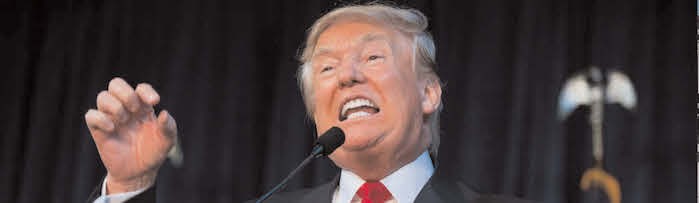
    Sharif may in fact have to return to Islamabad without meeting Obama (none was scheduled till the time of writing), and inasmuch as Pakistan thinks he is a lame duck president, its prospects don’t look particularly attractive under a Hillary Clinton administration or a Trump White House. Back home in Pakistan, the country’s defense minister Khawaja Asif, who has threatened to use tactical nuclear weapons on Pakistan’ s own soil if India captures Pakistani territory, continued to make a fool of himself.

  • Wells Fargo fires whistleblowers & low-level employees in an attempt to tackle Fraud Accounts Scandal

    Wells Fargo fires whistleblowers & low-level employees in an attempt to tackle Fraud Accounts Scandal

    NEW YORK (TIP): Wells Fargo admitted to firing 5,300 employees for engaging in these shocking tactics. The bank earlier this month paid $185 million in penalties and has since apologized.

    CNNMoney reports that is hearing from former Wells Fargo workers around the country who tried to put a stop to these illegal tactics and got fired for doing so.

    One such account published by CNNMoney quotes Bill Bado, a former Wells Fargo banker in Pennsylvania who was fired for refusing to follow phony account on the pretext of “Tardiness” at work.

    Bado had refused orders to open phony bank and credit accounts. The New Jersey man had called an ethics hotline and sent an email to human resources in September 2013, flagging unethical sales activities he was being instructed to do.

    HR official describes ‘retaliation’

    One former Wells Fargo human resources official even said the bank had a method in place to retaliate against tipsters. He said that Wells Fargo would find ways to fire employees “in retaliation for shining light” on sales issues. It could be as simple as monitoring the employee to find a fault, like showing up a few minutes late on several occasions.

    “If this person was supposed to be at the branch at 8:30 a.m. and they showed up at 8:32 a.m, they would fire them,” the former human resources official told CNNMoney, on the condition he remain anonymous out of fear for his career.

    It’s possible Wells Fargo could face legal consequences for any retaliation that occurred against employees who called the ethics line.

    “It is clearly against the law for any company (or executives of such companies) to try to suppress whistleblowing,” Harvey Pitt, former chairman of the SEC, told CNNMoney in an email.

    Retaliating against whistleblowers is a major breach of trust. Ethics hotlines are exactly the kind of safeguards put in place to prevent illegal activity from taking place and provide refuge to employees from dangerous work environments.

    Wells Fargo CEO John Stumpf made precisely that point when he testified before angry Senators.

    “Each team member, no matter where you are in the organization, is encouraged to raise their hands,” Stumpf told lawmakers. He mentioned the anonymous ethics line, adding, “We want to hear from them.”


    The Other side

    One former employee was fired after flagging issues directly to Stumpf, according to Senator Bob Menendez.

    At the Senate hearing, Menendez read the New Jersey woman’s 2011 email to Stumpf, where she described improper sales tactics she felt were “wrong.”

    “Did you read that email?” Menendez asked Stumpf.”I don’t remember that one,” Stumpf replied.”Okay, well she was fired. … So much for the safe haven,” Menendez said.

    Elizabeth Warren also unleashed a verbal barrage at Wells Fargo CEO John Stumpf on Tuesday, Sep 20, calling the embattled bank boss “gutless” and demanding he step down.

    “You should resign…You should be criminally investigated,” Warren told Stumpf during a fiery one-sided exchange at the Senate Banking Committee’s Wells Fargo hearing.

    “If you have no opinions on the most massive fraud that’s hit this bank since the beginning of time, how can it be that you get to continue to collect a paycheck?” Warren asked Stumpf.

    Warren slammed Stumpf for failing to fire any senior executives linked to the scandal, while Wells Fargo’s aggressive sales tactics helped pump up the bank’s stock price.

    “You squeezed your employees to the breaking point so they would cheat customers and you could drive up the value of your stock and put hundreds of millions of dollars in your own pocket,” Warren added.

    Several senators also spoke about the plight of the mostly 5,300, low-level employees who were fired related to the scandal.

    In response, Wells Fargo spokeswoman said: “We do not tolerate retaliation against team members who report their concerns in good faith.” She emphasized that employees are encouraged to immediately report unethical behavior to their manager, HR representative or 24-hour ethics line.

    Stumpf has apologized for the scandal and on Tuesday admitted the bank didn’t do enough to stop improper sales. He also detailed new steps to try to assess and limit the damage, including expanding an internal search for fake accounts by two years.

  • ‘Maybe you don’t believe Donald Trump is a bigot. Or a racist. Or a xenophobe.

    ‘Maybe you don’t believe Donald Trump is a bigot. Or a racist. Or a xenophobe.

    NEW YORK (TIP): Jmmy Fallon ruffles Donald Trump’s hair and everyone giggles while he thanks himself for putting an end to the “birther movement” and lying about who started it and making yet another veiled threat at Hillary Clinton.

    Are you serious? Why does no one hold any of them accountable for the vile things they say? We just roll our eyes and let them get away with it.

    Yes, we all are sick of Washington too.

    I’m tired of them all squabbling like children and making sweet deals for themselves, but Donald Trump is not the solution. I don’t care about his policy ideas or his tax plan. I don’t care that he isn’t a politician. I don’t care about his businesses. I don’t care about his health. I care about the way he treats people who are already marginalized in our society.

    All Trump does is breed hatred and divisiveness and his children are just as awful as him.

    Forget for a moment Hillary Clinton’s remark the other day that “half” of Trump’s supporters belong to a “basket of deplorables.” The Democrat later expressed regret for the broad generalization but stuck to her assertion that Trump offers a safe haven for the hateful.

    There is no perfect way to quantify how many Trump fans fit the description.

    Trump has taken a hard line against immigrants who come to the U.S. illegally from Mexico. When he launched his campaign last year, he characterized most as violent criminals, allowing only that “some” might be “good people.”

    Trump also has promised to make Mexico pay for completion of a border wall separating the two countries.

    The New York businessman cited that proposal a few months ago when he asserted that a federal judge hearing a civil suit involving the now-defunct Trump University was biased because of his Mexican heritage.

    It strikes me, though, that Trump, whether he means to or not, has fostered a hostile moment in our politics when his supporters feel entitled to racially denigrate others.

    There are not two sides to racism.

    (Source: From The Social Media – Facebook)

  • URI ATTACK: ARMY STRENGTHENS OPERATIONAL READINESS ALONG LOC

    URI ATTACK: ARMY STRENGTHENS OPERATIONAL READINESS ALONG LOC

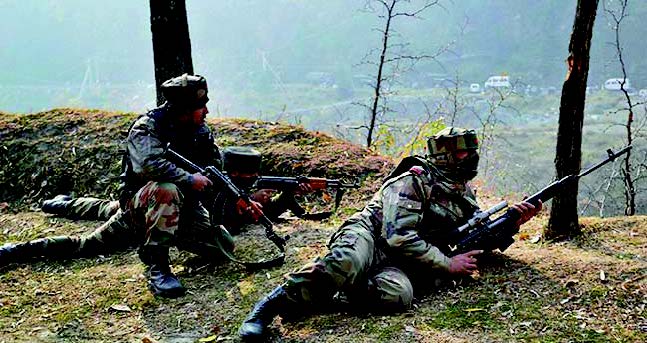
    NEW DELHI (TIP): The Army continues to steadily upgrade its “operational readiness” all along the 778-km Line of Control, with redeployment of troops and some “forward movement” of ammunition and fuel dumps, even as it “refines” a variety of contingency plans in conjunction with the IAF.

    The Army has made a series of presentations to Prime Minister Narendra Modi, including one in its military operation directorate with detailed maps and sand-models on Tuesday night. “There have been other top-level meetings over the last two days, including with national security adviser Ajit Doval, to discuss the operational situation along the LoC as well as the military options available to turn the heat up on Pakistan,” said a source.

    Though “retributive covert or overt strikes” on terror-training camps and other targets in Pakistan are on the table, sources said they will only be undertaken with “cold calculation” with clear objectives in mind if diplomatic measures do not get desired results.

    “All military contingency plans have risks involved, and therefore have risk-mitigation measures factored in. But the government has to decide which plan should be rolled out, with what resources and what timelines,” said a source.

    But an all-out war is clearly ruled out with no large-scale troop mobilization, akin to Operation Parakram in the aftermath of the Parliament attack in December 2001, being initiated as of now. With India “thickening” its operational posture along the LoC, Pakistan too has shored up its border defences, including reinforcing its artillery positions.

    India’s options for “limited but punitive strikes” range from concentrated firepower assaults with 155mm artillery guns, Smerch rockets and BrahMos supersonic cruise missiles to “surgical air strikes” by fighter jets to take out known terror camps through precision-guided munitions.

    “There is the option for cross-border raids, shallow ones by infantry Ghatak Platoons and deeper ones by Para-Special Forces,” said a source. The Army has already also moved two additional brigades into the south Kashmir and other areas to strengthen the counter-infiltration and counter-terrorism grids in the region, which has made more troops available for the LoC.

    An all-out war with Pakistan is clearly ruled out with no large-scale troop mobilization, akin to Operation Parakram in the aftermath of the Parliament attack in December 2001, being initiated as of now. With India “thickening” its operational posture along the LoC, Pakistan too has shored up its border defences, including reinforcing its artillery positions.

  • Congress too slams Nawaz Sharif

    Congress too slams Nawaz Sharif

    #Congress too slammed Pakistan Prime Minister Nawaz Sharif for his Kashmir rant and glorifying terrorist Burhan Wani at the UN and said External Affairs Minister Sushma Swaraj should give a strong and a befitting reply when she addresses the world body on Monday.

    The main opposition party said the government should build a strong and factual case for India in front of the International community and wanted Prime Minister Narendra Modi to consult all political parties before deciding on “concrete and tangible steps” in the wake of the Pakistani onslaught.

    “Conspiratorial omission to Uri Attack in his speech is a public admission of guilt by Pakistan, of its direct involvement in this act of cowardice. There was nothing new in his address, except glorification of terrorists and extremism which Pakistan has adopted as ‘state policy’,” Congress’ chief spokesman Randeep Singh Surjewala said here.

    In “glorifying” a terrorist like Burhan Wani, a Hizbul Mujahideen commander who was killed in an encounter with security forces on July 8, Sharif only reiterated where his and his country’s sympathies and support lies, he added.

    “The international community must now understand fully that it is not only terrorists in Kashmir that Pakistan supports but its state policy is to provide an umbrella support and sustenance to all those who wreck havoc across the world, including in France, Bangladesh, USA,Britain and Belgium……,” he added.

    “We are confident that an already wary international community has seen through Pakistan’s vile designs”, he said.

    Surjewala ridiculed Sharif’s claim of an ‘intifada’ (uprising) in the Kashmir valley and said his “conspiratorial omission” to Uri Attack is a public admission of guilt.

    “In citing ‘intifada’ in Kashmir, Nawaz Sharif looks like that emperor who plays flute while his entire country, right from Khyber to Balochistan to Sindh is up in a violent intifada against his nation state,” the Congress leader said.

    Describing Pakistan as a ‘renegade state’ that has emerged as the ‘central processing unit’ (CPU) of global terror, he said in what has now become habitual, Sharif again invoked Kashmir at a multilateral forum, despite Pakistan being a signatory to the Shimla Accord.

  • NAWAZ SHARIF SPOKE LIKE SUPREME COMMANDER OF HIZBUL AT UNGA: BJP

    NAWAZ SHARIF SPOKE LIKE SUPREME COMMANDER OF HIZBUL AT UNGA: BJP

    NEW DELHI (TIP): The  BJP on September 22 (Thursday) demanded that Pakistan be declared a terrorist state, alleging that its Prime Minister Nawaz Sharif spoke like the “supreme commander” of Hizbul Mujahideen and openly campaigned for terrorists at UN General Assembly.

    The RSS also attacked Pakistan for committing atrocities in Baluchistan, Sindh and Pakistan-Occupied-Kashmir (PoK) and said its misadventure in Kashmir, where it is making Kashmiris kill their own people, will bring destruction to Pakistan.

    “Nawaz Sharif at the United Nations yesterday was at his pathetic best. He talked not like the supreme commander of Pakistan, but he talked like the supreme commander of Hizbul Mujahideen.

    “It clearly shows that there is no need for any further explanation. Pakistan should straight away be declared a terrorist state,” BJP general secretary Ram Madhav said.

    He said Sharif was openly campaigning for one of his terror commanders Burhan Wani of Hizbul Mujahideen.

    “It is so pathetic to see the Prime Minister of Pakistan campaigning for the cause of UN designated terror organization,” he said.

    Madhav also said that India has already given a befitting response to Pakistan at the diplomatic level and would respond accordingly to its Uri misadventure at various levels.

    RSS leader Indresh Kumar said thousands of people have been killed in Baluchistan, Sindh and Pakistan-Occupied Kashmir and lakhs have been displaced there and all this would prove costly for Pakistan.

    “Pakistan is trying to get Kashmiris killed by Kashmiris. Nawaz Sharif’s tune on Kashmir is not in sync and Pakistan’s misadventure in Kashmir will lead to its own destruction,” he told PTI.

    He said Baluchistan refused to be with Pakistan from the day it became independent and Nawaz Sharif should answer as to why they should not get independence.

    “Pakistan is suppressing people there and committing atrocities on them, with more than one lakh killed and 6 to 7 lakh displaced. Sindh is also demanding independence for many years now. Thousands have been killed there and many more thousands held captive and displaced.

  • Cauvery water row: Defiant Karnataka heads for constitutional crisis

    Cauvery water row: Defiant Karnataka heads for constitutional crisis

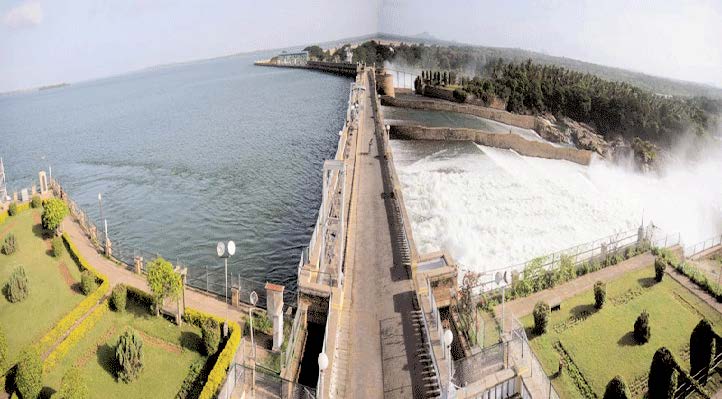
    BENGALURU (TIP): A constitutional crisis is brewing with Karnataka preparing to defy the latest Supreme Court order directing it to release 6,000 cusecs of Cauvery water per day to Tamil Nadu till September 27.

    The special legislature session on Friday is expected to adopt a resolution that the SC order cannot be implemented as it’s contrary to public interest. By projecting it as a legislature-judiciary confrontation, Siddaramaiah hopes to escape the charge of contempt of court.

    Many in Karnataka are astonished at the Centre’s silence. “The Centre cannot be a bystander just because the issue is before SC. PM Narendra Modi should step in to prevent a constitutional crisis. It’s his duty to protect the federal structure,” says former advocate-general Ravi Varma Kumar.

    Former advocate general B V Acharya says: “I don’t know what’s going to happen at the session, but the state is certainly heading for a constitutional crisis. I just hope the Centre acts.”

    The Karnataka government cannot be held responsible for holding the session, Ravi Varma Kumar adds, since it had no other option. “I hope the legislature demonstrates what really prompted them to hold the session. Whatever decision is taken, it cannot be seen as an act of defiance but as the helplessness of a state ravaged by an unimplementable court order.”

    A senior lawyer, who doesn’t want to be named, observes that the resolution passed at the session holds the key. “If Karnataka defies the SC order, there are serious risks for several such river-sharing agreements. Tensions between Karnataka and Tamil Nadu will grow since both states are feeling the pressure. The Centre, therefore, cannot allow the current developments to set an unhealthy precedent.”

    Another legal expert says:”If the legislature decides to defy the SC order and passes a resolution, they should ensure it’s carefully phrased. Outright defiance of SC may boomerang and set an extremely dangerous precedent. Tamil Nadu will be hoping Karnataka makes a mistake so the state can be hauled up again.” Karnataka law and parliamentary affairs minister T B Jayachandra refused to comment on the implications of deferring the release of water. “We will discuss such aspects at the session and arrive at a consensus. I hope that legislators will stand united.”

  • Woman in UK tells armed robber: Not now, I’m having a cuppa

    Woman in UK tells armed robber: Not now, I’m having a cuppa

    NEW DELHI (TIP): When a Punjabi woman is having tea, there’s nothing that can stop her from finishing her cuppa.

    So, when Karamjit Sangha, a 49-year-old Punjabi woman in the UK, was threatened by a robber, she unbashedly asked him to wait for her to finish a freshly brewed cup of tea. Sangha owns a News and Booze store in England’s Hull.

    When the robber demanded cash from Sangha, holding a 7-inch long knife, Sangha was not terrified. On the contrary, she was as calm as one can possibly be.

    And then, not only did she not give him the money, she also managed to scare him away with her chutzpah.

    “He told me to give him all the money but I was relaxed. I told him I was having a cup of tea. He demanded I put it down and give him the money. I said ‘OK’ and picked up the craft knife and waved it at him. I wouldn’t have hurt him but it was enough to scare him. He started shaking and then he ran off,” Hull Daily Mail quoted Sangha as saying.

    The incident, says the Hull Daily Mail, was recorded on CCTV and the robber was convicted to five years of jail for attempted robbery and possession of knife. After the sentence was delivered, Sangha said, “This sentence is fantastic. Something like this has never happened to me before. But people shouldn’t feel sorry for me, they should feel sorry for him. He just got scared and that was it,” the report quoted her.

    (PTI)

  • Refugees in Greece live in ‘appalling conditions’: Amnesty

    Refugees in Greece live in ‘appalling conditions’: Amnesty

    ATHENS (TIP): Most of the roughly 60,000 refugees and other migrants stranded in Greece are living in “appalling conditions” and face “immense and avoidable suffering,” rights group Amnesty International said in a report on Sept 22 slamming Europe’s response to the refugee crisis.

    The group criticized Europe for failing to fulfill commitments to relocate refugees from the countries they entered, saying only 6 percent, about 4,000 people, of the 66,400 relocations promised over two years have taken place. “Our latest research has found that two years into the refugee crisis in Greece, refugees and asylum-seekers in Greece are … living in fear and uncertainty for the future,” Giorgos Kosmopoulos, an Amnesty International researcher on refugees and migrants’ rights, said. “The European Union, a bloc of 500 million people, cannot offer dignified conditions to a number of people that is relatively small.”

    Amnesty called on Greece to improve conditions and on European countries to speed up the relocation process, saying it would take 18 years at the current rate to fulfill their existing pledges.

    After more than a million refugees and migrants reached European countries last year, the EU reached an agreement with Turkey in March to limit the flow.

    Under the deal, people arriving on Greek islands from the Turkish coast face deportation back to Turkey unless they successfully apply for asylum in Greece. The agreement, combined with Balkan border closures, has led to a dramatic fall in the number of people reaching Greece.

    Government figures show 92 people arrived on Greek islands in a 24-hour period on Wednesday and Thursday, compared to the thousands who were arriving each day at this time last year.

    However, the border closures also have trapped tens of thousands of people in Greece. With asylum applications taking months to process, the rate of return to Turkey is low.

    Other European countries, meanwhile, have failed to take in the numbers of refugees they had committed to accept.

  • Pro-Putin party wins Russian parliamentary election

    Pro-Putin party wins Russian parliamentary election

    MOSCOW (PTI): Allies of Russian President Vladimir Putin comfortably won a parliamentary election, early results showed on Monday, but low turnout suggested a softening of enthusiasm for the ruling elite 18 months before the next presidential election.

    The ruling United Russia party won 51 percent in Sunday’s election, according to a preliminary central election commission tally after a quarter of the votes had been counted.

    That would allow the party, which was founded by Putin and benefits from his popularity, to extend its dominance in the lower house of parliament, or Duma. An exit poll also had United Russia as the overwhelming winner.

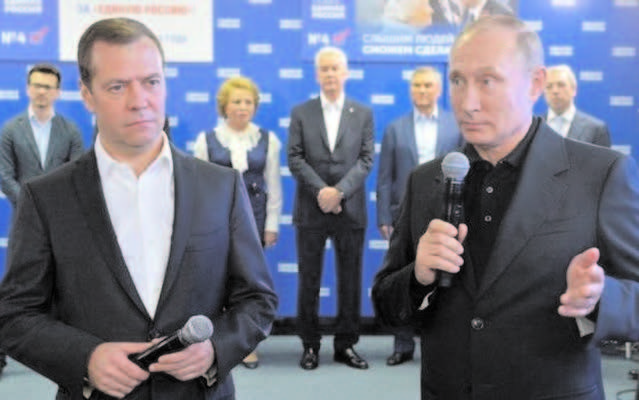
    Putin, speaking to United Russia campaign staff a few minutes after polling stations closed on Sunday night, said the win showed voters still trusted the leadership despite an economic slowdown made worse by Western sanctions over Ukraine.

    Putin’s aides are likely to use the result as a springboard for his own campaign for re-election in 2018, though he has not yet confirmed that he will seek another term.

    “We can say with certainty that the party has achieved a very good result; it’s won,” Putin said at the United Russia headquarters, where he arrived together with his ally, Dmitry Medvedev, who is prime minister and the party’s leader.

    Alluding to the spluttering economy, which is forecast to shrink this year by at least 0.3 percent, Putin said: “We know that life is hard for people, there are lots of problems, lots of unresolved problems. Nevertheless, we have this result.” Other parties trailed far behind United Russia.

    According to the incomplete official vote count, the populist LDPR party was in second place with 15.1 percent, the Communists were in third on 14.9 percent and the left-of-centre Just Russia party was fourth with 6.4 percent.

    All three of those parties tend to vote with United Russia on crunch issues in parliament, and avoid direct criticism of Putin.

    In the last election for the Duma, in 2011, United Russia won 49 percent of the vote.

    There were some reports of voting irregularities. Reuters reporters at one polling station in the Mordovia region of central Russia witnessed several people casting their ballot, then coming back later and voting again. Election chiefs said were was so far no evidence of large-scale cheating.

    After the last election, anger at ballot-rigging prompted large protests in Moscow, and the Kremlin will be anxious to avoid a repetition of that.

    Turnout down

    Election officials said that as of 6 p.m. Moscow time, two hours before polling stations in the capital closed, turnout was 39.4 percent, substantially down on the 60 percent turnout at the last parliamentary election.

    There was some evidence of voter apathy during the day on Sunday as people went to polling stations across Russia’s 11 times zones, stretching from the Pacific Ocean to the Baltic Sea.

    A taxi driver in Ufa, just over 1,350 km (840 miles) east of Moscow, told a Reuters reporter that voting “was like urinating into a blocked toilet.” “Why bother?,” said the man, who gave his first name as Ilysh. Yan Gaimaletdinov said he deliberately spoiled his ballot paper when he went to his local polling station in the village of Knyazevo, near Ufa. “I didn’t vote for anyone: I don’t play with assholes,” he said.

    Commenting on the turnout, Putin, at the United Russia campaign HQ, said it was “not as high as we saw in previous election campaigns, but it is high.”

    Reflected glory

    United Russia benefits from its association with 63-year-old Putin, who after 17 years in power as either president or prime minister, enjoys a personal approval rating of about 80 percent, opinion polls show.

    Most voters do not see any viable alternative to Putin and his allies, and they fear a return to the chaos and instability of the 1990s, the period immediately after the collapse of the Soviet Union, if his rule ends.

    Many voters are persuaded by the Kremlin narrative, frequently repeated on state TV, of the West using sanctions to try to wreck the economy in revenge for Moscow’s seizure of Crimea, the Ukrainian region it annexed in 2014.

    Yevgeny Korsak, a 65-year-old pensioner in the city of Saransk, 600 km (375 miles) south-east of Moscow, said he had voted for United Russia “because it is strong and powerful.”

    Putin has said it is too early to say if he will go for what would be a fourth presidential term in 2018. If he did and won, he would be in power until 2024, longer than Soviet leader Leonid Brezhnev, the longest-serving Soviet leader aside from Joseph Stalin.

    Liberal opposition politicians, the only group openly critical of Putin, failed to get over the five percent threshold needed for party representation in the Duma, the early results showed. Some of their candidates could still make it into parliament in constituency races.

    The election is the first time that voters in Crimea are helping decide the makeup of the Duma.

    That has angered the Ukrainian government and there were scuffles between Ukrainian nationalists and police outside the Russian embassy in Kiev on Sunday after a few nationalists tried to stop Russian citizens from voting there.

  • Just do it: Chinese city tells cadres to set example and have second child

    Just do it: Chinese city tells cadres to set example and have second child

    SHANGHAI (TIP): With China facing a demographic crisis of stalling birth rates and a fast-ageing population, one city has taken a novel approach: a direct call to action aimed at young government officials to lead the way and have a second child.

    The government of Yichang city in central Hubei province posted an open letter calling for young cadres to have more children to stem a slide in birth rates in the city which has started to hit economic growth.

    China’s demographic time-bomb has become increasingly urgent of late as the country faces its slowest economic growth in a quarter of a century, with a sluggish manufacturing sector hit by a dearth of cheap labor due in part to a shrinking workforce.

    “Young cadres have to take the lead having a second child, while elder cadres should urge them on,” the letter said, citing the need to bolster the city’s working population and raise a fertility rate that has fallen below one child per woman. “If things continue as they are, it will bring huge risk and damage to our city’s economic and social development, as well as the livelihood of our families,” said the letter, stamped by official departments including the city’s health bureau. China last year said it would ease family planning restrictions to allow all couples to have two children after decades of a strict one-child policy, a move aimed at relieving demographic strains on the world’s second largest economy.

    Beijing has loosened the rules over the last few years in the face of concerns the strict policy was leading to a shrinking workforce unable to support a fast-growing elderly population. By around the middle of this century, one in every three Chinese is forecast to be over 60. “The low birth rate has aggravated the risk of the one-child policy, led to an ageing population, a shortfall in the labour force, and lagging urbanisation, which hits the city’s labour productivity and overall competitiveness,” the letter said. The open letter, picked up by domestic media late on Sept 21 but dated September 13, has received a mixed response.

  • ‘MARSQUAKES’ MAY PRODUCE ENOUGH HYDROGEN TO SUPPORT LIFE

    ‘MARSQUAKES’ MAY PRODUCE ENOUGH HYDROGEN TO SUPPORT LIFE

    WASHINGTON (TIP): Rocks formed by the grinding together of other rocks during earthquakes are rich in trapped hydrogen, and similar seismic activity on Mars may produce enough hydrogen to support life, a new study has claimed.

    Researchers, including those from Yale University in the US, studied rock formations around active fault lines in the Outer Hebrides, off the coast of Scotland.

    “Previous work has suggested that hydrogen is produced during earthquakes when rocks fracture and grind together. Our measurements suggest that enough hydrogen is produced to support the growth of microorganisms around active faults,” said Yale geologist Sean McMahon, first author of the study.

    While humans and other animals get their energy mainly from the reaction between oxygen and sugar, bacteria use a wide array of alternative reactions to obtain energy.

    The oxidation of hydrogen gas, for example, generates enough energy for bacteria deep in the Earth’s subsurface.

    “Mars is not very seismically active, but our work shows that ‘Marsquakes’ could produce enough hydrogen to support small populations of microorganisms, at least for short periods of time,” McMahon said.

    “This is just one part of the emerging picture of the habitability of the Martian subsurface, where other sources of energy for life may also be available,” said McMahon.

    “The best way to find evidence of life on Mars may be to examine rocks and minerals that formed deep underground around faults and fractures, which were later brought to the surface by erosion,” he said. “Nasa has plans to measure seismic activity on Mars during its 2018 InSight mission, and our data will make those measurements all the more interesting,” said John Parnell from the University of Aberdeen in Scotland, co-author of the study along with Nigel Blamey of Brock University in Canada.

  • INDIA TO LAUNCH EIGHT SATELLITES IN TWO ORBITS ON SEPTEMBER 26

    INDIA TO LAUNCH EIGHT SATELLITES IN TWO ORBITS ON SEPTEMBER 26

    CHENNAI (TIP): India on September 26 morning will launch its weather satellite #SCATSAT-1 and seven other satellites – five foreign and two domestic -with its Polar Satellite Launch Vehicle (#PSLV) rocket, said an official of Indian space agency on Thursday.

    According to Indian Space Research Organization (#ISRO) the PSLV rocket with eight satellites is expected to blast off at 9.12 a.m. on Monday from its rocket port in Sriharikota in Andhra Pradesh.

    The rocket’s main cargo will be the 377 kg SCATSAT-1 for ocean and weather related studies which will be placed into a 720 km polar sun synchronous orbit, the official, who didn’t want to be identified told IANS.

    According to ISRO, SCATSAT-1 is a continuity mission for Oceansat-2 scatterometer to provide wind vector data products for weather forecasting, cyclone detection and tracking services to the users.

    The satellite carries Ku-band scatterometer similar to the one flown onboard Oceansat-2.

    The mission life of the satellite is 5 years.

    The five foreign satellites are from Algeria, Canada and US and the two from Indian universities/academic institute satellites will be placed into a 670 km polar orbit.

    This is the first mission of PSLV in which it will be launching its payloads into two different orbits.

    The multiple burn technology was first tested by ISRO while flying its PSLV rocket on December 16, 2015

    Launching of multiple satellites with a single rocket is nothing new for ISRO and it has been doing that for several years. The challenge, however, is to launch several satellites at different orbits with one rocket, but the ISRO already did so successfully when the PSLV ejected out six Singaporean satellites on December 16, 2015.

    The PSLV rocket is a four stage/engine rocket powered by solid and liquid fuel alternatively.

    “Restarting a rocket engine soon after it is shut off is a critical technology that has to be mastered. Once a rocket engine is activated, then the heat generated is very high. The trick is to cool it down in the space and to restart it at a short gap,” an industry expert had told IANS.

    “This is entirely different from switching on and off the communication satellite’s engines in the space. The interval between two restarts of a communication satellite engine will be in days. But in the case of restarting a rocket engine, the time gap will be in hours,” the expert added.

    “By that time the rocket’s engine has to be cooled down. This part of the experiment is very critical,” he explained.

  • How to Get Rid of Stress

    How to Get Rid of Stress

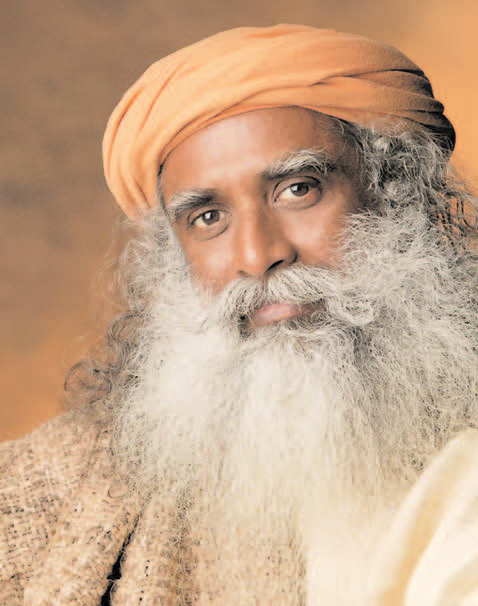
    Oscar-award winning filmmaker Shekhar Kapur asks Sadhguru about stress, who looks at the shift we need to engineer within ourselves in order to get rid of stress.

    Shekhar Kapur: Since I’m having the chance to interview you, I know people will say, “Well, why didn’t you ask about how to get rid of stress?” Is there a definition that we can assign to the idea of stress?

    Sadhguru: When I first went to the United States a few years ago, wherever I went, everybody was talking about “stress management.” I really didn’t get this because in my understanding, we manage things which are precious to us – our business, our family, our money, our wealth, our children. Why would anyone manage stress? It took me a while to understand that people have concluded that stress is a part of their lives.

    Manage yourself, not your stress Stress is not a part of your life. Stress is just your inability to manage your own system. Stress happens not because of the nature of your work. The Prime Minister is complaining of stress; the peon is also complaining of stress. In between, every other person is saying his job is stressful. And those who are unemployed also find their situation stressful. So you are suffering your job – if I get you fired, will you be joyful?

    Shekhar Kapur: No

    Sadhguru: No. So stress is obviously not about your job, isn’t it? It is just that you do not know how to manage your body, your mind, your emotions, your energy, your chemistry – you do not know how to manage anything. You are functioning by accident, so everything is stressful. If you get into a car where if you turn the steering wheel one way, the car goes in the opposite direction, you’ll be stressed, isn’t it?

    Shekhar Kapur: Yeah.

    Sadhguru: Right now, that’s the kind of mechanism you are driving. Without understanding anything about it, just by chance, you are blundering through life – so you will be stressful. Stress is not because of the nature of the activity that you are performing or because of life situations. Stress is simply because you do not know how to manage your own system. What is stressful for one person, someone else breezes through -isn’t it so?

  • Google launches AI-integrated chat app Allo

    Google launches AI-integrated chat app Allo

    NEW DELHI (TIP): Internet search giant Google on Sept 21 (Wednesday) launched a new instant messaging (WhatsApp-like) platform named Allo that comes with Google Assistant integrated which can simplify small tasks for users and provide convenience while chatting or sharing files with a contact.

    Allo’s launch comes close at heels after Google launched its slow-networks adaptable video chat application named Duo. The Mountain View-headquartered company had showcased both the apps at the annual Google I/O conference this year.

    Here’s everything you need to know about it, including how it works and why you may use it:

    What is Google Allo?

    Google describes Allo as a messaging up for Android and iPhone users. But it does a lot more than just allow you to send messages to other people. It’s a smart messaging app in that it has the power of Google built-in and can apparently learn over time. Although the interface is similar to any chat application, the integration of the artificial intelligence takes Allo’s productivity and ease of use to a new level.

    How does Google Allo work?

    Similar to WhatsApp, Allo is based on your phone number, so you can use it to send text messages to anyone in your phonebook – not just other Allo users. Apart from that, Google at the I/O had highlighted three aspects of Allo that make it unique: Expression, Google Assistant, and Security.

    Expressions or using Allo

    During a demo at Google I/O, Google showed how you can use Allo to keep in touch with people. It looked like any other messaging app; chats appeared as bubbles, with one person’s chat bubbles appearing on one side in a certain colour, and another person’s chat bubbles appearing on the opposite side, and you could scroll up and down to see the entire threaded conversation.

    Like Facebook Messenger – you could send stickers, which Google said were sourced from artists around the world. You could also send emoji. But one of the hottest features is something called Whisper or shout. This will let you slide up or down on the send button to change the size of your reply, meaning there’s no need to write in caps all the time when you’re angry.

    Continuing with this theme of giving you more ways to express yourself, Allo offers a feature called Ink that lets you get creative with photos. You can doodle on them, for instance. Allo also took the Smart Reply feature from Google’s Inbox app, so now you can quickly respond while on the go. If someone asks if you want to grab dinner, Allo might serve up responses like “I’m in” or “I’m busy”.

    Allo also uses machine-learning and natural language processing in order to suggest replies on the fly, meaning it can anticipate what you want to say next and how you might say it. The more you use Allo, the better your suggestions become. And they will always be unique to you. However, because messaging isn’t just about texts, replies also contain stickers and emoji.

    You’ll even see smart reply options when someone send you a photo. Allo can understand the content and context of photos, thanks to Google’s computer vision capabilities. If someone sends you a photo of pasta, you will see smart replies that include mentions of pasta, yummy, or whatever. The idea here is that assistive technology can help you communicate with little to no effort.

    Google Assistant

    Google Assistant is Google’s latest iteration of a virtual assistant. It’s considered an upgrade or an extension of Google Now. During the main keynote at Google I/O 2016, Google’s CEO, Sundar Pichai, demoed Google Assistant and said he wanted people to experience “an ongoing two-way dialog” with the virtual assistant. Keep in mind this virtual assistant trend kicked off in 2011, when Apple introduced Siri.

    For instance, let’s say you are chatting with a friend who wants to eat French food for dinner. Google Assistant will then proactively suggest French restaurants nearby at the bottom of the app’s messaging window.

  • WANT TO EARN EXTRA BUCKS? TRY THESE APPS

    WANT TO EARN EXTRA BUCKS? TRY THESE APPS

    NEW DELHI (TIP): Is your pocket money falling short and are you not able to meet your daily expenses?

    Well, here are some apps for youngsters than can help you get those extra bucks.

    CoutLoot

    The service allows people to buy and sell authentic fashion from your own closets. It takes care of the entire value chain, from free doorstep pickups, sanitizing and ensuring authenticity to deliveries and returns so that the buyer and seller only have to focus on what to sell and what to buy to replace their style staples.

    Blogmint

    The app is a platform where influencers – both on Twitter and blogs – could list themselves and get paid for their tweets and blogs promoting a brand.

    Beck Friends

    This start-up allows travellers the opportunity to earn some extra money during trips.

    Zapak.com: This app provides people the opportunity to make money by testing games and finding faults in them.

  • The Shallows – MOVIE REVIEW

    The Shallows – MOVIE REVIEW

    STORY: Nancy Adams (Lively), a medical student, decides to take a break and head out on a surfing vacation in Mexico. Her chosen spot is idyllic and gorgeous as far as beaches and blue waters go. The dream holiday turns into a nightmare when she finds herself in the feeding grounds of a great white shark. Although she is stranded only 200 yards from shore, survival proves to be the ultimate test of will, requiring all of Nancy’s ingenuity, resourcefulness and fortitude.

    REVIEW: The Shallows, at first, seems like an almost languid and tranquil vacation movie. We have Nancy, who is an avid surfer in search for the perfect wave, finding a sea of serenity in her perfect vacation spot. She sits out on the beach, gazing at the distant horizon while overhead an albatross circles lazily amidst azure skies. Nancy Skypes her family, saying how happy she is. Then without much further ado, she grabs her surfboard and heads into the brine. A few fellow lug-headed surfers make fun of her American accent, thinking that she is just another clueless tourist. Little do they know that she is better qualified than any of them in survival skills – let alone being an excellent swimmer – being a med student.

    CAST: Blake Lively, Óscar Jaenada, Brett Cullen, Sedona Legge, Diego Espejel, Chelsea Moody, Angelo Josue Lozano Corzo, Sully ‘Steven’ Seagull DIRECTION: Jaume Collet-Serra GENRE: Thriller DURATION: 1 hour 26 minutes
    CAST: Blake Lively, Óscar Jaenada, Brett Cullen, Sedona
    Legge, Diego Espejel, Chelsea Moody, Angelo Josue Lozano Corzo, Sully ‘Steven’ Seagull
    DIRECTION: Jaume Collet-Serra
    GENRE: Thriller
    DURATION: 1 hour 26 minutes

    Thanks to the frankly excellent cinematography by Flavio Labiano, you will find yourself feeling the very same sense of anxiousness and urgency that Nancy herself feels as she is stranded on a craggy rock, with nature’s most voracious and merciless predator circling the waters around her. The irony is that she can see the shore and safety, but to get to it, would amount to a herculean task. Mention must be made of the evocative film score courtesy composer Marco Beltrami (Hurt Locker, The Wolverine, Woman In Black, Resident Evil to name a few) that really adds to the edge-of-your-seat fear factor in this film.

    Okay, Collet-Serra has taken a few liberties (read: many gratuitous close-ups of Lively’s pert posterior) here but all said and done, this is without a doubt the actress’ most daring and challenging role to date. Blake Lively, take a bow. You rock.

  • Parched – MOVIE REVIEW

    Parched – MOVIE REVIEW

    STORY: A widow, Rani (Tannishtha), a childless woman, Lajjo (Radhika) and a sex worker Bijli (Surveen) from a village in a North Western Region in India are victims of age-old traditions like child marriage, physical abuse, alcoholic husbands and social apathy. Will they be able to break the shackles?

    parchedREVIEW: Leena Yadav’s Parched takes you into a disturbing and thought-provoking territory. Even as it cleverly intertwines the stories of the three protagonists all of who have had a raw deal in life, it simultaneously puts the spotlight on how there is still an India where a woman is treated as a sex object; where her only role is to serve her man. Rani who was married off at 15 to an alcoholic Shankar has been widowed for 17 years and has to fend for herself and her callous son.

    Lajjo, a village beauty, is declared ‘barren’ by her drunken husband and is subjected to physical abuse each day. Lajjo and Rani often seek solace in each other’s company. When they get a break from making handicrafts, their rozi-roti, they bond with a sex worker called Biji (Surveen), who’s had it rough for no fault of hers. The common ground for their bonding is a need for love, sex and compassion in that order.

    The film addresses how there is nothing shameful about a woman’s need for sex or ownership of her body. As the village women talk about their carnal desires, you empathise. Like last week’s matinee offering Pink, you raise a toast to the director for raising some hard-hitting questions on the double standards of society. When Bijli asks, How come there are only abuses of the MC, BC variety or gaalis named only after women and none after men, you applaud. Frankly, like the film suggests, perhaps it is time to coin expletives after men too.

    Academy-Award winning cinematographer, Russell Carpenter has captured the arid landscape beautifully. Parched is a roadmap for our oppressed female population who have been victims of a misogynist mindset for eons.

    Tannishtha and Radhika are terrific, but it is Surveen who your heart bleeds for.

  • SONAKSHI: ACTRESSES ARE CONSTANTLY BEING JUDGED

    SONAKSHI: ACTRESSES ARE CONSTANTLY BEING JUDGED

    Actress Sonakshi Sinha says one of the downsides of her profession is that they are constantly being judged.

    sonakshi“Unfortunately, people who are in the limelight are always being judged. This is one of the downsides of our profession that as an actress we are constantly being judged. For me, I am somebody who has always been confident in my own skin and not pay too much attention on what people think about me,” said Sonakshi.

    The daughter of star couple Shatrughan Sinha and Poonam Sinha added: “If you get into that pressure, you will go mad. It’s better to be yourself, work hard and move ahead.”

    The actress also feels that now is the right time to be an actress in the film industry.

    “Wonderful roles are being written keeping women in mind. Films are being made with a woman as the protagonist. The pay disparity is decreasing; they are getting their dues. Right now is a good time to be in the industry,” the 29-year-old said.