Month: September 2016

  • Indian Billionaire Reaches $110 Million Settlement With Australian Bank

    Indian Billionaire Reaches $110 Million Settlement With Australian Bank

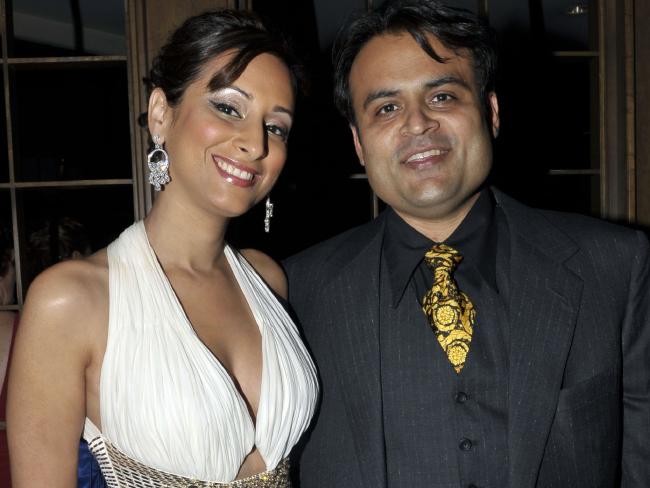
    Melbourne: One of Australia’s biggest banks reached a settlement with an Indian couple today who sued the company for $1.9 billion.

    Pankaj and Radhika Oswal alleged that Australia and New Zealand Banking Group (ANZ) short-changed them $580 million when selling the couple’s majority stake in Burrup Fertilisers after the company went into receivership, Xinhua news agency reported.

    ANZ said the terms of the settlement were confidential but the deal with the Oswals meant the bank would take a $110 million hit to its bottom line this year.

    A spokesperson for the Oswals said the couple, who also settled a tax bill with the Australian Taxation Office (ATO) worth an estimated $76.4 million, would be leaving Australia.

    “They’re very satisfied with the settlement. They were very pleased to be able to put the facts before the court and they’re pleased that it’s over,” the spokesman said in a statement on Thursday.

    “They won’t be staying in Australia. They are now planning their futures.”

    “The ($110 million) does not reflect the size of the settlement but the Oswals are bound by confidentiality to not disclose the details.”

    Shayne Elliott, CEO of ANZ, said that the settlement does not mean the bank has accepted guilt.

    “ANZ does not accept many of the claims made in court and we completely reject the allegations made against our staff,” Elliott said in a statement to shareholders.

    “However, we believe the settlement is the right decision for shareholders bearing in mind the residual risks in a case of this size and complexity.”

    The Oswals’ spokesman said it was “curious” that the bank would be willing to pay a significant amount of money to stop allegations that it claimed were untrue.

    The Oswals were forced to abandon the construction of their Perth mega-mansion, dubbed “the Taj on the Swan” due to its position on the Swan River, in 2010.

    A local council announced in September that the 6,600 sq.mt house, which the couple planned to spend $53 million to build, would be demolished and turned into road-building material.

  • Balochis, Indians protest against Pakistan outside UN

    Balochis, Indians protest against Pakistan outside UN

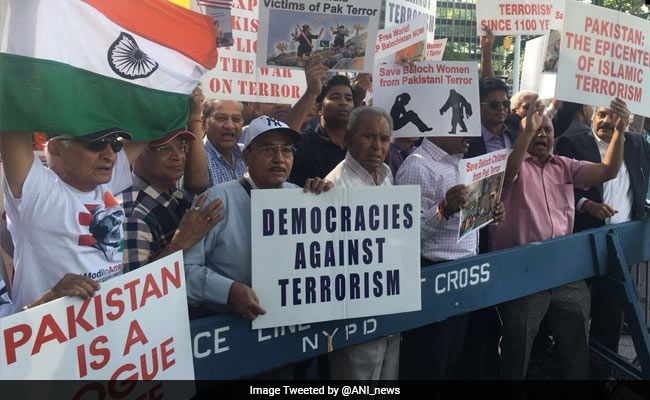
    United Nations: Several Baloch and Indian activists held large-scale demonstrations outside the UN headquarters here while Pakistan Prime Minister Nawaz Sharif addressed the UN General Assembly as they were joined by other groups demanding that it stop “exporting” terror into India.

    The protestors converged across the street from the world body’s headquarters to condemn atrocities and human rights violations by Pakistan just as Mr Sharif was addressing the General Debate of the General Assembly.

    The crowd shouted slogans of ‘Free Balochistan’, ‘Down Down Pakistan’, ‘Save World from Pakistan Terror’ as they waved banners and placards that read ‘US Government stop giving funds to Pakistan’, ‘Kashmiri Hindus are Humans, Wake up to their sufferings’, ‘Remove Pakistan from the UN’, ‘Stop Atrocities in Pakistan-occupied Kashmir’ and ‘Killing Fields of Pakistan – Sindh and Balochistan’.

    “Pakistan is a terror state and does not want the people of Balochistan to live in peace,” Ahmar Musti Khan, founder of the American Friends of Balochistan told Press Trust of India.

    He said Pakistan and its leaders are committing crimes against the residents of Kashmir, demanding that the country stop “exporting terror and let its neighbours live in peace”.

    He added the Pakistani leadership should respect the right to self determination of the Baloch people.

    Mr Khan said the Baloch people are “indebted” to Prime Minister Narendra Modi “for speaking out for Balochistan’s right and the right of the Baloch people to be the masters of our own destiny”.

    He slammed the Pakistani army for its brutalities against “innocent Balochis”, saying “the Pakistan Army is ISIS in uniform”.

    The Baloch National Movement (BNM) condemned the Pakistani atrocities and the ‘ongoing military operations’ in Sindh and Balochistan.

    “Baloch and Sindhi people appeal to the freedom loving citizens of America and the world to support our demands for freedom, peace, and justice. We, the victims of Pakistani state aggression and crimes against humanity, want to tell the world that ‘Pakistan is a nuclear-armed terrorist state’ and must be stopped,” the group said.

    Condemning the “barbaric” terror attack on the Uri camp in Kashmir and Pathankot air base, BNM said such attacks are part of Pakistan’s policy of “aggression, employing terrorist methods and outfits to escalate war in the region”.

    It said the Baloch people are grateful for the support extended by the Indian Prime Minister at “such a critical juncture when our nation is struggling to be free from the illegal military occupation of Pakistan since 1948”.

    Jayesh Patel, the former President of the Overseas Friends of BJP, said Pakistan should stop terrorism against India, saying countless innocent lives have been lost due to attacks in Kashmir, mostly recently on the army base in Uri that killed 18 soldiers.

    “The families of our soldiers are the worst sufferers,” he said.

  • Business Chiefs, Lawmakers Back Cheaper UK Visa For Indians

    Business Chiefs, Lawmakers Back Cheaper UK Visa For Indians

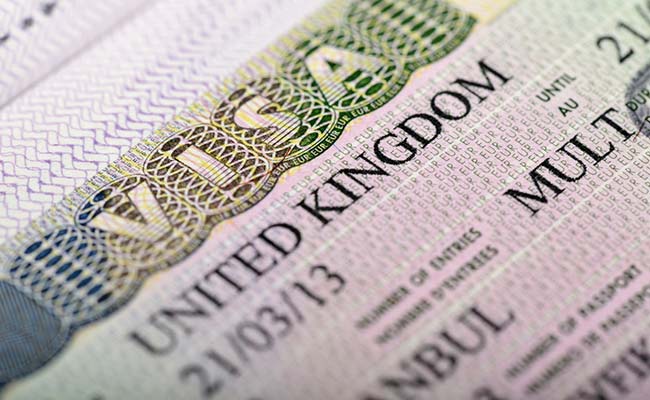
    London:  Over 50 leaders from the world of business and politics in Britain and India have backed a campaign for the UK to extend its new 87-pound two-year visitor visa to Indian nationals.

    In a letter created by the UK’s Royal Commonwealth Society’s and published in ‘The Daily Telegraph’ today, the signatories call for a pilot visa scheme offered to China in January 2016 to be extended to Indian visitors, who still have to pay 330 pounds for a two-year visa or 87 pounds for six months.

    “In the last decade, the UK’s market share of India’s outbound tourists has halved despite the Indian market growing at 10 per cent each year and a burgeoning middle class.”

    “If the UK maintained its share, it would be welcoming over 800,000 Indian visitors annually – adding almost half a billion to the UK economy and creating 8,000 new jobs,” reads the letter, which has been signed by Chandrajit Banerjee, Director-General of the Confederation of Indian Industry (CII); Lord Karan Bilimoria, chairman of Cobra Beer; Indian-origin Labour MP Virendra Sharma, chair of the Indo-British All Party Parliamentary Group; among others.

    “The strength of the UK-India relationship today must also reflect in a stronger visa regime. This policy suggestion for a two-year UK visa for Indian nationals could provide a big boost to tourism, and comes at a very opportune time as 2017 is declared the UK-India Year of Culture,” said Mr Banerjee.

    The letter comes after the Royal Commonwealth Society (RCS) released a report in July in partnership with leading aviation, tourism and industry groups outlining the sound case for visa reform.

    The report’s author, Tim Hewish, Director of Policy and Research at the Royal Commonwealth Society, said: “This letter demonstrates the broad support for reform of the UK-India visitor visa scheme across tourism, aviation, business and politics.

    “We urge the UK government to listen to these individuals as leaders in their field and proactively discuss this proposal with the Indian government without delay.”

    France has leapfrogged the UK as the most visited European nation by Indians, attracting 500,000 visitors from the subcontinent in 2015.

    The letter highlights that “visa reform would support ease of doing business, make the UK more attractive to Indian leisure tourists and help reunite the diaspora with visiting family”.

    The RCS report, released soon after the Brexit vote, had warned that in light of the UK’s recent decision to leave the EU, it is now more vital than ever that the UK strengthens its ties with India and sends a strong message that it welcomes Indian visitors and is open for business.

  • Reliance Defence Wins Rs 300 Cr Naval Warship Refit Order

    Reliance Defence Wins Rs 300 Cr Naval Warship Refit Order

    Reliance Defence has won a contract for the refit of three naval warships at its facility at Pipavav in Gujarat, sources said. The value of the order is pegged at Rs 300 crore.

    The refit of the three warships — identified as survey ship INS Jamuna, fleet tanker INS Deepak and patrol vessel INS Savitri — is expected to be completed by April next year. The first refit will get completed shortly, the sources added.

    The latest order comes close on the heels of the Anil Ambani Group company bagging a Rs 920-crore contract for building 14 fast patrol vessels for the Indian Coast Guard to primarily assist in anti-smuggling and anti-terrorism operations.

  • Could Have Been Mistaken For New York Bombing Suspect: Sikh ‘Hero’

    Could Have Been Mistaken For New York Bombing Suspect: Sikh ‘Hero’

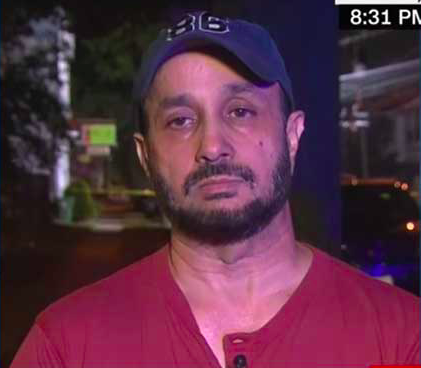
    New York: The Sikh-American who helped police capture the man wanted for the weekend bombings in New York and New Jersey, said he feared he might have been mistaken as the perpetrator because of the misconceptions about his faith.

    Harinder Singh Bains, 51, said he does not like being called a hero for accurately identifying 28-year-old Ahmad Khan Rahami, the Afghan-born American man behind the bombings.

    Asserting that he is “what America looks like,” Mr Bains said he did what any other American would have done.

    “When I heard about the attacks and realised the suspect was sleeping in a doorway across the street, I did what any American would do. I called the police. I’m not a hero. The police are heroes; the EMTs are heroes; everyone who is working to bring New York and New Jersey together today is a hero,” Mr Bains, who owns a bar in Linden, told reporters.

    He said as a Sikh-American, he understand that “I could have been mistaken for the perpetrator. My faith teaches me justice and tolerance for all and I know that I’m lucky to live in a community that shares this view.”

    Mr Bains, who had emigrated from Chandigarh in 1996, stressed that after any attack, Americans should target people based on evidence of their role in the crime and not because of their faith or their country of origin or their accent.

    “I came to this country from India 20 years ago to create a better life for my family. I am a father of four and a proud American citizen. I am also what America looks like,” he said.

    Mr Bains said America is strongest when all Americans stand together in the face of violence “intended to divide us.”

    On the morning of September 19, Mr Bains unlocked the door of his deli when he noticed Rahami sleeping in a vestibule next to a tavern across the street.

    He later recognised Rahami’s face from television reports following the failed attacks and contacted police.

    When police arrived, Rahami allegedly shot an officer in the abdomen and began a shoot-out with police that led to his arrest.

    Mr Bains had earlier said he thought Rahami “looked very familiar” and “exactly” like the “guy” whose picture is being shown on TV channels.

    “I kept wondering is he the same guy,” Bains has said adding he then asked a friend of his who visited him that Rahami looked exactly like the person whose pictures were being circulated by law enforcement agencies in connection with the bombing.

    Mr Bains then called the police but didn’t not immediately tell them that Rahami was in front of his store.

    He initially told the police that there is a “guy in front of his bar who looks a little suspicious and does not look good to me” and that the police should come and check.

    The police then came within five minutes and all the while Mr Bains kept an eye on Rahami as he had a strong feeling he is the same person wanted for the bombings.

    “I’m just a regular citizen doing what every citizen should do. Cops are the real heroes, law enforcement are the real heroes,” Mr Bains has said.

  • China distances itself from reports of Premier Li Keqiang backing to Pakistan on #Kashmir

    China distances itself from reports of Premier Li Keqiang backing to Pakistan on #Kashmir

    Beijing, Sep 22 (PTI) China today distanced itself from Pakistani media reports which claimed that Premier Li Keqiang had conveyed Chinas backing to Pakistan on the Kashmir issue during his meeting with Prime Minister Nawaz Sharif.

    “Premier Li Keqiang of the State Council met with Pakistani Prime Minister Nawaz Sharif on September 21 in New York. They exchanged views on bilateral relations as well as international and regional issues of common interest,” Chinese Foreign Ministry Spokesman Lu Kang said when asked about reports that Li extended support to Pakistans stance on Kashmir.

    “The issue of Kashmir is an issue left over from history. Our stance on that is consistent. We hope that parties concerned will pursue a peaceful settlement through dialogue,” Lu said when asked about the Pakistani media reports.

    Pakistans Dawn News reported that China endorses Pakistans stance on Kashmir and Li had assured that China would continue to support Pakistans stance on Kashmir.

    Li, while meeting Prime Minister Sharif on the sidelines of UN General Assembly, was quoted by the daily as saying, “We support Pakistan and we will speak for Pakistan at every forum.”

    Similar reports were carried by other Pakistani media like Geo TV claiming Chinas backing as Sharif made unsuccessful attempts to shore up support for Pakistans rhetoric on Kashmir.

    China also voiced concerns over the rising tensions in Kashmir after Uri attack and sought “effective” measures from New Delhi and Islamabad to ensure the safety of foreigners, including the Chinese, working on the USD 46 billion China Pakistan Economic Corridor (CPEC).

    Asked whether China is concerned about safety of hundreds of its personnel working on CPEC amid reports that Pakistan has cancelled flights to areas in Pakistan-occupied Kashmir (PoK) due to “air space restrictions” in the wake of Uri terrorist attack, Lu said, “the Chinese side is concerned about the tension in Kashmir”.

    “We hope that parties concerned will exercise restraint, peacefully resolve difference through dialogue, avoid escalating tension and work jointly for peace and stability of the region,” he said.

    About the concerns of safety of Chinese workers, Lu said, “We also hope that effective means will be taken by parties concerned to ensure the safety and normal life of local people and citizens from other countries including China”.

    Lus comments came in the backdrop of a sense of disquiet here over Pakistan escalating tensions in Kashmir as Beijing faces a complex situation over CPEC — one of its biggest overseas projects. India has lodged repeated protests over the project which passes through PoK.

  • Chinas outbound investment exceeds FDI in 2015: Report

    Chinas outbound investment exceeds FDI in 2015: Report

    Beijing, Sep 22 (PTI) For the first time, Chinas outbound investment has exceeded the Foreign Direct Investment (FDI) it received, official data for 2015 showed today, as the cash- rich Communist giant looks for new overseas avenues to invest capital amid slowing growth in the worlds second largest economy.

    Chinas outbound direct investment (ODI) hit an all-time high of USD 145.67 billion in 2015, exceeding the USD 135.6 billion in FDI it received, making it a net capital exporter for the first time, said Zhang Xiangchen, deputy international trade representative with Chinas Ministry of Commerce (MOC).

    It is the worlds second-largest source of outbound investment, exceeded only by the United States, he said.

    The investment in the countries implementing its Silk Road initiative soared 38.6 percent year on year, the data showed.

    Investment in One Belt and Road (Silk Road) countries stood at USD 18.93 billion and represented 13 per cent of the countrys ODI last year, said Zhang.

    Zhang told reporters at a news conference that One Belt and Road investment is essential to the fast development of Chinas ODI.

    The One Belt and Road initiative, proposed by President Xi Jinping in 2013, refers to the Silk Road Economic Belt and the 21st Century Maritime Silk Road — a trade and infrastructure network connecting Asia with Europe and Africa along ancient trade routes.

    As of July, Chinese enterprises had established 52 economic cooperation zones in the countries while paying USD 900 million in taxes and creating nearly 70,000 local jobs, the data said.

    The MOC said earlier the One Belt and Road Initiative had boosted business cooperation between Chinese and foreign firms.

    During the first eight months of 2016, nearly 4,000 engineering contracts were signed by Chinese companies in 61 countries along the routes, with combined contract value of 69.82 billion US dollars.

    China needs to fully take advantage of the international market and resources as its economy and companies transform, said Zhang, adding that Chinese firms are keen to become active players in global innovation, manufacturing and the market.

    Chinas economy grew at its slowest pace in a quarter of a century last year and the country is looking for new foreign avenues for investing its surplus capital in order to boost its falling growth.

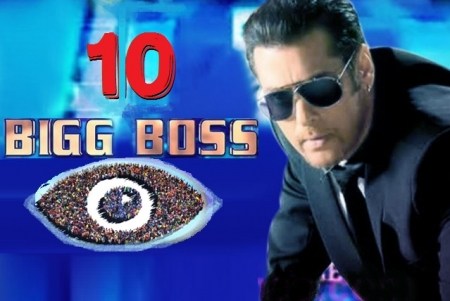
  • Bigg Boss Season 10 To Begin From October 16, Here Is All You Need To Know

    Bigg Boss Season 10 To Begin From October 16, Here Is All You Need To Know

    The wait for brand new season of the famous reality television show, Bigg Boss 10 will finally be over in October.

    According to reports, the new season of the show will hit the screens on October 16.

    With opening Bigg Boss house for the common man for the first time, the show has fallen into the list of much awaited programmes of 2016.

    According to reports, the program will be on-air every Monday to Fridayat 10:30 pm.

    List of the contestants will also be out on the premiere night.

    In past ten years the TV show has gained popularity in India. There are nine seasons that are already broadcasted. The Big Boss house is a well decorated house. That usually has one or two bedrooms, kitchen, activity area, gym,swimming pool and a big garden.

    Below is list of probable contestants of bigg boss 10:

    • Sana Saeed
    • Shiney Ahuja
    • Kabir Bedi
    • Radhe Maa
    • Sunil Grover
    • Rahul Raj Singh
    • Nakshatra Bagwe
    • Armaan Jain
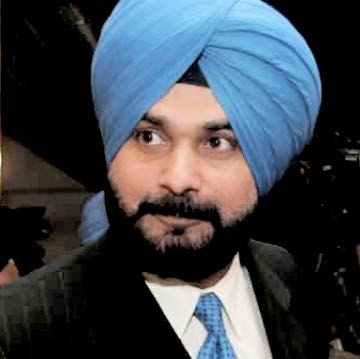
  • Navjot Singh Sidhu Bids Adieu To ‘The Kapil Sharma Show’

    Navjot Singh Sidhu Bids Adieu To ‘The Kapil Sharma Show’

    Former cricketer Navjot Singh Sidhu has reportedly left ‘The Kapil Sharma Show’.

    Sidhu, who recently created a new party, has decided to jump into politics with both feet. He has already recorded all of his shows scheduled till September 30th and has bid adieu to the cast.

    The news has come as a shock to his fans as Sidhu is adored by many.

    The show will now look for a replacement however, whoever they are, they have some huge shoes to fill.

  • Pakistan Stock Markets Plunge Fearing Indian Retaliation After Uri Attack

    Pakistan Stock Markets Plunge Fearing Indian Retaliation After Uri Attack

    Pakistani stock markets witnessed a sharp decline on Thursday as reports of an imminent strike from India are speculated.

    The Karachi Stock Exchange (KSE) on Thursday closed at 39,771 points, noting a decline of 569 points. Dawn reports indicate that small investors, who contribute to a major portion of the market, ran in panic resulting in an overall 1.41% fall.

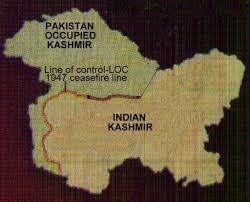
    Arif Habib, former Karachi Stock Exchange chairman stated that this panic was caused by the hype created in Pakistani media about the recent terror attack in Uri, Jammu and Kashmir. Many channels broadcasted that Indian troops had moved forward towards the Line of Control (LoC).

    It was reported on Wednesday that Pakistan International Airlines (PIA) had stopped blocked flights to the Gilgit-Baltistan region which added more fuel to the rumours.

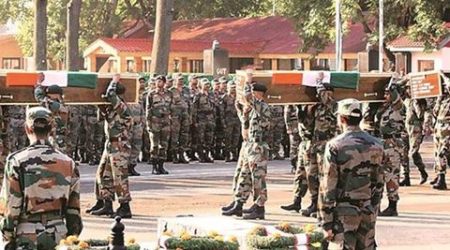
    The Indian subcontinent continues to be tense ever since the terrorists stormed an army camp in Uri on Sunday where 18 Indian soldiers were martyred.

    India on Thursday called Pakistan a “terrorist state” and accused it of carrying out “war crimes” against Indians through its “long-standing policy” of sponsoring terrorism, hours after Pakistan Prime Minister Nawaz Sharif raked up Kashmir issue at the UN General Assembly session.

    In a strong rebuttal, India said the terrorists designated by the UN continued to roam Pakistan’s streets freely and operate with State support.

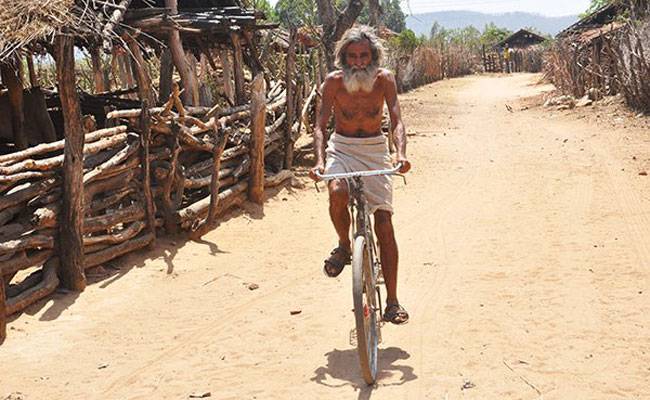
  • Ex-Professor Of Raghuram Rajan At IIT Delhi, Has Been Living With Tribals For 32 Years!

    Ex-Professor Of Raghuram Rajan At IIT Delhi, Has Been Living With Tribals For 32 Years!

    Alok Sagar, a former IIT professor, who used to teach Ex-RBI governor Raghuram Rajan, has been living in a remote village of Madhya Pradesh for 32 years.

    Sagar, who has an bachelor’s and a master’s engineering degree from IIT Delhi, used to teach at IIT Delhi back in the 1980s after completing a PhD from Houston University in Texas.

    Sagar soon quit his job at IIT, leaving his bright career behind, to help the underprivileged sections of the society.

    Following his resignation, Sagar moved to a remote village in Madhya Pradesh where he helped tribals in Betul and Hoshangabad districts.

    26 years ago, Sagar moved to Kochamu, a village with a population of 750, where he helped in the betterment of the environment, planting over 50,000 trees himself!

    Sagar shares the belief that India’s problems are ones that are to be fixed at the grassroot level

    The Hindustan Times reported him saying, “In India, people are facing so many problems, but people are busy proving their intelligence by showing their degrees rather than serving people.”

    Sagar, who prefers to lay low, came under the spotlight during the Ghodongari assembly elections. When locals grew suspicious of Sagar, local authorities asked him to leave, following which, Alok revealed his identity, which were then verified.

    A once reputed professor at one of the leading universities, now lives humbly, owing only three sets of kurtas. Alok now spends most of his days distributing seeds to villagers, working for the advancement of the poverty-stricken.

  • Shocking! Brutal Man Repeatedly Throws Step Daughter In Pool; Jailed For 100 Yrs

    Shocking! Brutal Man Repeatedly Throws Step Daughter In Pool; Jailed For 100 Yrs

    In a shocking incident, a man was caught on CCTV drowning his three-year-old step daughter in a swimming pool at a hotel in Mexico.

    • Man was filmed repeatedly throwing the little girl into a swimming pool
    • Sickening murder took place in August 2015, and shocked South America 
    • Family were staying at a hotel in Morelia, Mexico, when it happened
    • The girl’s mother was asleep in their hotel room at the time 
    • Stepfather, identified as Jose David N,. held her under water at one point
    • He has been jailed for aggravated homicide, without a chance of parole 

    In the video the girl child can be seen battling to keep herself afloat. The little girl, however, died a short while later.

    The stepfather has been arrested and awarded 100 years in prison.

    WARNING: CONTAINS GRAPHIC CONTENT

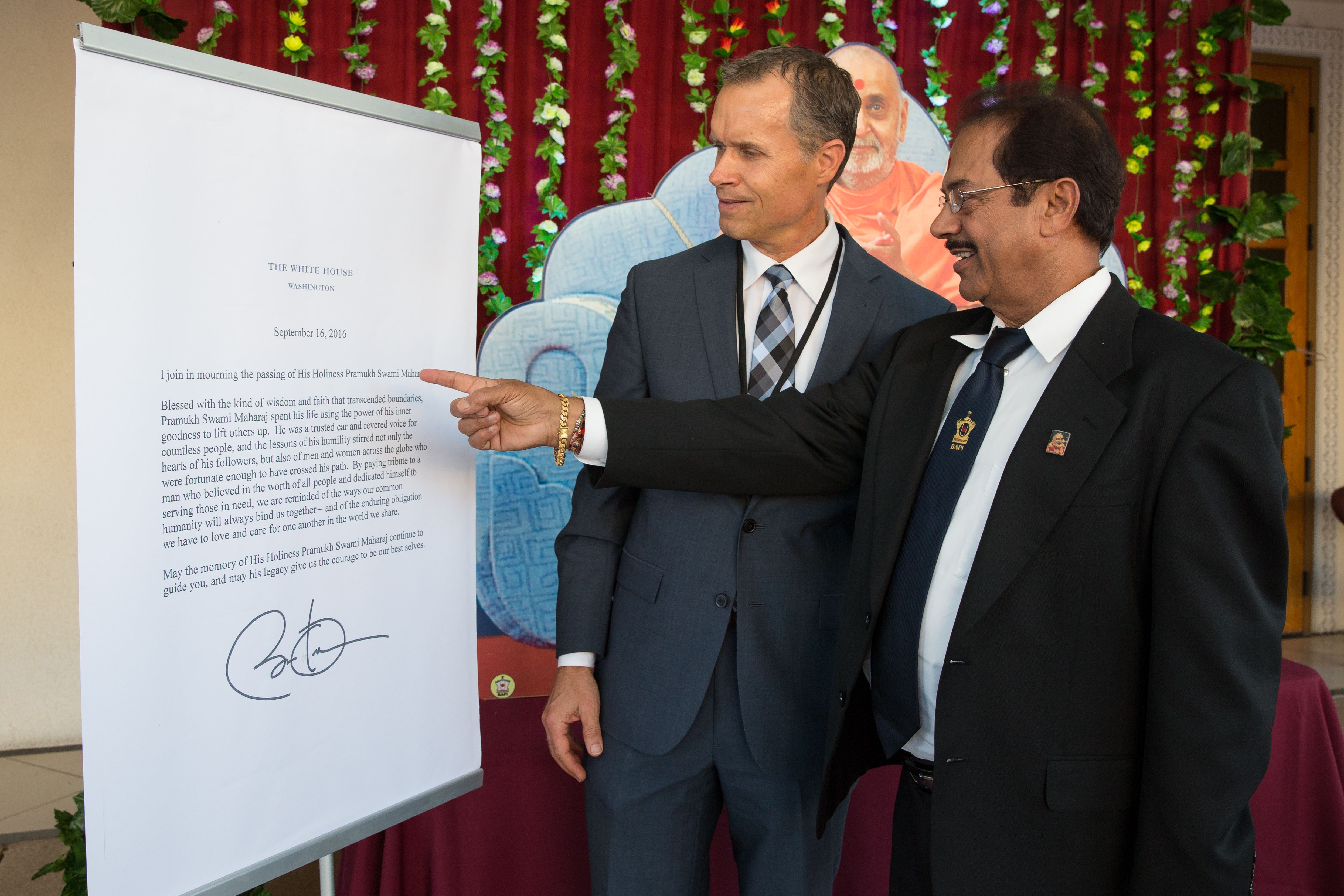
  • President Barack Obama Shares Tribute for Pramukh Swami Maharaj

    President Barack Obama Shares Tribute for Pramukh Swami Maharaj

    Chicago IL: Over 90 BAPS Swaminarayan Sanstha Mandir’s across the United States held tribute assemblies honoring the life and work of their late Hindu spiritual leader, His Holiness Pramukh Swami Maharaj.

    Community leaders, diverse religious figures, and public officials joined BAPS devotees in mourning this loss.

    President Barack Obama shared a personal message with BAPS tribute assemblies, “By paying tribute to a man who believed in the worth of all people and dedicated himself to serving those in need, we are reminded of the ways our common humanity will always bind us together.” President Obama lauded the late spiritual leader of BAPS by noting that Pramukh Swami Maharaj “was a trusted ear and revered voice for countless people, and the lessons of his humility stirred not only the hearts of his followers, but also of men and women across the globe who were fortunate enough to have crossed his path.”

    President Obama’s statement reflected Pramukh Swami Maharaj’s role as a father, teacher, mentor, friend, advisor, and ally – he was a spiritual guide who empowered people to live morally upright lives rooted in devotion that would transform their character, attitudes, and outcomes to provide greater happiness for both themselves and their families.

    “May the memory of His Holiness Pramukh Swami Maharaj continue to guide you, and may his legacy give us the courage to be our best selves”, concluded the President’s personal message. Former Secretary of State Hillary Clinton and Former U.S. President Bill Clinton also shared their thoughts on the late leader’s legacy, “Pramukh Swami didn’t just teach virtues – he lived them every day… His example helped his followers find more harmony – both with others, and within themselves. And we hope that humanity will build upon his legacy for generations to come.”

    His Holiness Pramukh Swami Maharaj Ji
    His Holiness Pramukh Swami Maharaj Ji

    Pramukh Swami Maharaj lived by his simple but profound message, “In the joy of others lies our own.” This principle served as the core of his spiritual leadership. He had a tremendous capacity to extend his concern and support to those who sought his guidance and refuge. He counseled persons from all parts of the world, of different religions and languages, taking the time to understand their concerns and offering them solutions that would improve their personal and emotional well-being. From addiction, to illness, and even loss, Pramukh Swami Maharaj would guide, console and pray for their well-being.

    Prime Minister of India, Narendra Modi addressed devotees before Pramukh Swami Maharaj’s final rites, saying, “His Holiness Pramukh Swami Maharaj was a stalwart among humans who embodied compassion and humility…Today you have lost a Guru, but I have lost a father.”

    Born on December 7, 1921, Pramukh Swami Maharaj was initiated as a swami (Hindu ascetic) on January 10, 1940. In 1950, at the age of 28, he became the administrator and President of BAPS. Upon the passing of his guru His Holiness Yogiji Maharaj in 1971, Pramukh Swami became the spiritual leader and steadfastly led the organization for the next 45 years, expanding BAPS throughout the world. His legacy of over 1,100 mandirs is matched only by his extensive humanitarian work, including building numerous charitable schools as well as hospitals, and mobilizing volunteers in response to natural disasters. Most recently, through community walkathons, volunteers helped The Nature Conservancy plant 70,000 trees throughout North America.

    Pramukh Swami Maharaj’s life and spirituality has left an indelible mark on countless devotees, who will continue living his life’s message under the guidance and leadership of His Holiness Mahant Swami Maharaj (Keshavjivandas Swami), the sixth spiritual successor of Bhagwan Swaminarayan and leader of the BAPS Swaminarayan Sanstha.

    Photographs and Press release by: Asian Media USA

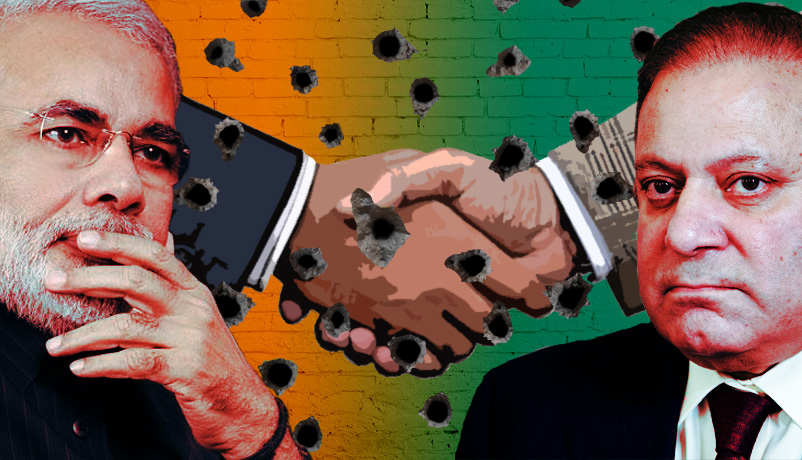
  • Indo-Pak Relations Since Narendra Modi Took Over As PM: A Timeline

    Indo-Pak Relations Since Narendra Modi Took Over As PM: A Timeline

    MAY 26, 2014: Narendra Modi first signaled a new approach to Pakistan when he invited his Pak counterpart Nawaz Sharif – and other SAARC leaders – to the swearing in of the new government in May 2014, an unprecedented move for any Indian Prime Minister.

    JULY 2014: Barely two months after this move, Pakistan responded with at least 19 ceasefire violations in the Jammu and Kashmir sector.

    NOVEMBER 27, 2014: The two Asian-leaders met in Kathmandu at the South Asian Association for Regional Cooperation (SAARC) summit and shook hands, but did not hold any bilateral talks.

    NOVEMBER 28, 2014: Ahead of Modi’s election rally in Udhampur and Poonch, militants infiltrated into Arnia district of Jammu and disrupted his rally. The aftermath of the scuffle resulted in the killing of 4 fidayeens by Indian security forces. The encounter also claimed the lives of 3 soldiers and 3 civilians.

    DECEMBER 5, 2014: Three-days ahead of Modi’s visit to Srinagar and Anantnag, 11 jawans were killed in series of grenade attacks by terrorists.

    JULY 10, 2015: On the sidelines of the SCO Summit in Ufa, the leaders reinstated their commitment to restart the dialogue process, which took had ground to a halt after the Mumbai attacks OF 26 November, 2008.

    JULY 17, 2015: A few days before a scheduled meeting in New Delhi between India’s National Security Adviser Ajit Doval and his Pakistani countepart Sartaj Aziz, Three Pakistani terrorists attacked a bus and police station in Gurdaspur, Punjab killing seven Indian nationals. This led to the calling off of the talks.

    AUGUST 5, 2015: Two Lashkar-e-Taiba armed terrorists attacked a Border Security Force (BSF) convoy in Udhampur, Jammu and Kashmir. One terrorist from Pakistan, identified as Mohammad Naved was caught alive while the other was killed.

    AUGUST 22, 2015: Sartaj Aziz, member of Pakistan’s National Security Agency, cancelled his visit to New Delhi, blaming India’s refusal to allow a meeting with Kashmiri separatist parties.

    AUGUST 25, 2015: Around 900 border ceasefire violations on India-Pakistan Border with 19 jawans and 34 civilians having lost their lives ever since Modi came to power.

    Consequently, India called off secretary level talks to be held in Islamabad after Pakistan High Commissioner Abdul Basit met with Hurriyat separatist leaders from Kashmir.

    SEPTEMBER 19, 2015: Pakistan marines opened fire on two Indian boats off the Gujarat coast with five Indian fishermen onboard. One Indian fisherman, Iqbal Abdul Bhatti was killed.

    NOVEMBER 24, 2015: The Pakistan Maritime Security Agency apprehended 18 Indian fishermen along with 3 of their boats in Arabian sea near Jakhau port in Kutch district.

    NOVEMBER 30, 2015: In the wake of Climate Change Conference in Paris, the two leaders reiterated their commitment to the dialogue process.

    DECEMBER 2015: in the first week of December, Indian and Pakistani delegations led by Doval and Aziz, respectively, finally met in Bangkok.

    The Ministry of External Affairs of India said the discussions covered peace and security, terrorism, Jammu and Kashmir, and other issues, including tranquillity along the Line of Control.

    DECEMBER 8, 2015: External Affairs Minister Sushma Swaraj met Sharif and Aziz ahead of the annual Heart of Asia conference in Islamabad. Easing the deadlock, talks were focused on resumption of the composite dialogue process.

    DECEMBER 25, 2015: On his way back from Kabul, PM Modi rattled he status quo by making an unscheduled stop in Lahore to attend Nawaz Sharif’s granddaughter, Mehrun Nisa’s wedding at Sharif’s Raiwind palatial residence.

    The main components of the surprise-meet centred on modalities of bilateral comprehensive dialogue; the two leaders announced that foreign secretaries would meet on January 15, 2016 to chart the course for resumption of dialogue.

    JANURAY 2, 2016: Barely a week later, the Indian Air Force base in Pathankot, Punjab — 50 kilometres from the militarised border between the two countries — was attacked at 3 am by 4 suspected Pakistani terrorists, killing 6 Indian defense personnel.

    MARCH 29, 2016: A India-Pakistan Joint Investigation Team (JIT) visits Pathankot to investigate the alleged terror-attack on the airbase.

    APRIL 4, 2016: Days after it returned, Pakistani media reports say JIT report found that India has staged the encounter to defame Pakistan.

    APRIL 7, 2016: Pakistan High Commissioner announces suspension of India-Pakistan peace dialogue process.

    APRIL 26, 2016: Indian and Pakistani foreign secretaries S Jaishankar and Aizaz Ahmad Chaudhry respectively discussed all outstanding issues, with India seeking to keep the focus on terrorism and Pakistan underlining Kashmir as the core issue.

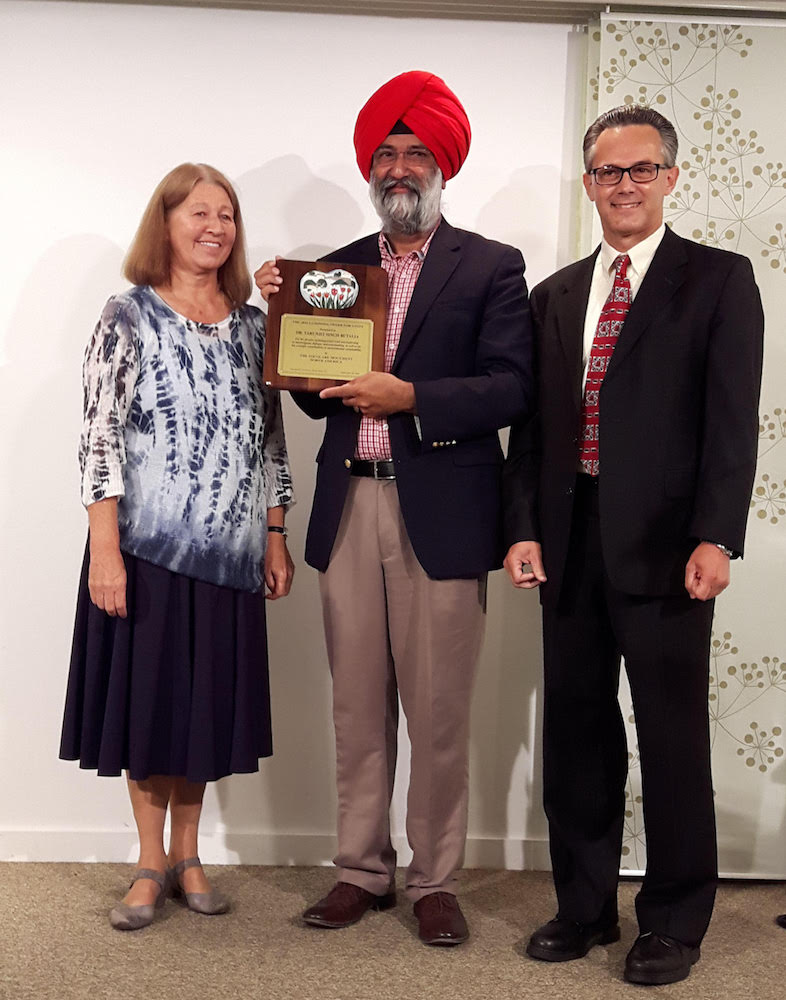
  • Dr. Tarunjit Singh Butalia received the 2016 Luminosa Award for Unity for his commitment to peace-building and dialogue

    Dr. Tarunjit Singh Butalia received the 2016 Luminosa Award for Unity for his commitment to peace-building and dialogue

    “Unity, dialogue, communion” – these three words describe the heart of the mission of the Focolare, and these three words sum up the commitment  of  Dr. Tarunjit Singh Butalia, a faculty member at The Ohio State University, Columbus, Ohio. Therefore, his nomination for the 2016 Luminosa Award, was a perfect match, as several speakers mentioned at the award ceremony held Sunday, September 18, in the Focolare’s little city of Mariapolis Luminosa in Hyde Park, New York.

    “Your decade-long tireless effort in building bridges on various levels between members and leaders of different religions deserves our admiration and deepest appreciation,” wrote Focolare President Maria Voce, congratulating Butalia. She continued, “We feel solidarity and fraternal ties with you and the Sikh community in promoting, together with others, peace and care for our common home.”

    Butalia is one of the pioneers in Catholic-Sikh relationships in the U.S. He was invited by Pope Benedict XVI to the October 2011 prayer ceremony, commemorating the 25. Anniversary of the first World Day of Prayer for Peace in Assisi, Italy, on October 27, 1986. He is a trustee of the Sikh Council for Interfaith Relations, Parliament of the World’s Religions, North American Interfaith Network, and a special advisor to Religions for Peace – USA.

    The Luminosa Award is not just one of many projects of the Focolare, but an expression of the essence of what Focolare is about: “a love capable of becoming dialogue and relationship,” said Antonio Vallejo, co-director of Mariapolis Luminosa, quoting the words of Focolare founder Chiara Lubich at a 2004 interfaith meeting in London. Speaking on behalf of the Focolare in North America, he emphasized Chiara’s firm belief that in today’s world, there can’t be peace without universal brotherhood, and religions play a crucial role in rebuilding peace.

    Upon receiving the award, Butalia expressed his gratitude, saying, “I am more humbled than honored… victory always belongs to God.” He remembered how his contacts with the Focolare in Columbus, Ohio, through the Interfaith Association of Central Ohio, started with an invitation to dinner, and soon he was participating in Focolare interfaith picnics and summer gatherings: “The friendship developed into trust.”

    In his acceptance speech, he emphasized that faith always has a special role in the American society, a nation of immigrants. However, while former waves of immigrants seamlessly assimilated after a few generations, many immigrants from the last 50 years – like Muslims, Buddhists, Sikhs, Hindus, Jain and Baha’i’s – want to maintain their religious identity. “They have brought their faith with them to our nation, and for the better,” making the U.S. the most diverse nation in the world.

    Thinking of this context, he shared several steps to help open one’s mind in favor of dialogue. First, recognize that one’s faith is not the only true one. Also, he suggests that people consider the failure of the concept of America as a “melting pot” where differences are regarded as not important. “Our differences can’t be sacrificed for the sake of unity,” he said.

    Instead, he said that the “tossed salad model” recognizes pluralism, where each part maintains its identity and yet remains part of the harmonious whole. “We have to focus on building relationships,” he said. While this is not yet unity, “we are at the point where we can honestly talk about our differences and celebrate them.”

    Butalia proposes to take a step further than the Golden Rule (“Do to others as you would want them to do to you,” see Mt 7:12). He calls this version the “Platinum rule”: “Do to others as they would want you to do to them,” moving beyond the assumption that other people would like to be treated the way that you would like to be treated yourself.

    He then invited the 130 participants of the Award ceremony to “listen more than we speak” and to never compare “the best in our religion with the worst of the other.” While acknowledging that racial inequality still exists in our nation, he said, “Dr. Martin Luther King debunked racial superiority once and for all … but faith superiority still exists in many of our faith traditions.” Referring to Islamophobia, Butalia remembered that all religions are interdependent on each other and that we have to stand up against discrimination against any faith. “We are only as secure as the least among us,” he said. Closing, he quoted a verse translated from the Siri Guru Granth Sahib, the Sikh scripture, as “No one is an enemy, none a stranger. I get along with all.”

    The award ceremony was preceded by the 7th Catholic-Sikh retreat, organized by the Secretariat of Ecumenical and Interreligious Affairs of the U.S. Conference of Catholic Bishops and the Sikh Council for Interfaith Relations. Twenty-five representatives of the Catholic Church and the Sikh American community gathered at Mariapolis Luminosa to get to know each other in a deeper way. “This meeting was a great example for the kind of dialogue called for by Pope Francis, which is the dialogue of friendship,” said Dr. Anthony Cirelli, Director of the Secretariat of Ecumenical and Interreligious Affairs. The main focus is on building a network of relationships between the Sikh American and the Catholic Church. The retreat’s participants came from various parts of the U.S.

    The Luminosa Award for Unity has been sponsored by the North American Focolare Center for Education in Dialogue since 1988. Past recipients include the late Cardinal John O’Connor, Archbishop of New York; Norma Levitt, former president of Religions for Peace (RFP) and honorary president of Women of Reform Judaism; Rev. Nichiko Niwano, President of the Japanese lay Buddhist organization, Rissho Kosei-kai; His Royal Highness Lukas Njifua Fontem, King of the Bangwa People of Cameroon; and Imam Warith Deen Mohammed, American Muslim leader.


    For more information and pictures, please contact Susanne Janssen, Living City Magazine, 845-229-0230, ext. 183, or livingcity.ed@livingcitymagazine.com


  • India calls Pakistan a terrorist state in furious Right of Reply at UN

    India calls Pakistan a terrorist state in furious Right of Reply at UN

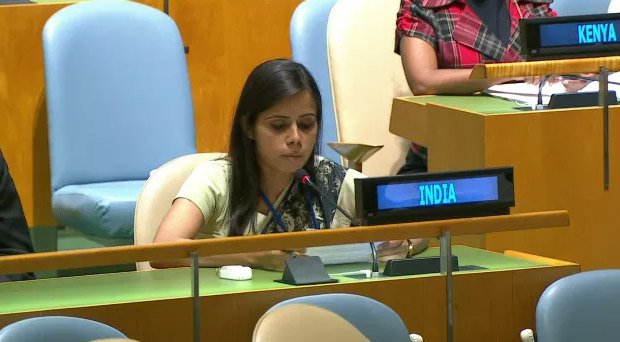
    WASHINGTON: Replying to Nawaz Sharif’s statement at the General Debate of 71st UNGA,  India’s First Secretary Eenam Gambhir (Follow her on Twitter @ Eenam Gambhir @eenamg)  directly took on Pakistan calling it a terrorist state and a global epicenter of terrorism.

    “The worst violation of human rights is terrorism. When practiced as an instrument of state policy it is a war crime,” said Gambir in India’s right of reply to Prime Minister Nawaz Sharif’s speech, in which he had raised the human rights situation in Jammu and Kashmir.

    Gambhir’s response to what she described as Pakistan’s “long tirade” about the situation in J and K, expressed earlier in a speech by the country’s prime minister Nawaz Sharif, was short, furious, and unprecedented in its intensity and descriptions.

    It also indicated a new Indian resolve to have Pakistan formally designated a nuclear proliferating terrorist state based on Islamabad’s use of terrorism as state policy and evidence of its nurturing of terror groups.

    Reminding the UN of how so many terrorist attacks, including that on 9/11 in U.S., led to Pakistan, she said, “The land of Taxila, one of the greatest learning centres of ancient times, is now host to the Ivy League of terrorism.” There was a specific reference to the hunt for Osama bin Laden leading to Abbottabad, Pakistan, where he was found and killed next to a Pakistan military garrison. Several other major terrorists including Mullah Omar, Ramzi Yousef, and Khalid Shaikh Mohammed, not to speak of numerous foot soldiers, including last week’s New York bomber, have found refuge and inspiration in Pakistan.

    “It attracts aspirants and apprentices from all over the world. The effect of its toxic curriculum are felt across the globe,” Gambhir explained, as India for the first time brought to the world’s attention the fallout of Pakistan’s nurturing of terrorist groups that the U.N itself has recorded and proscribed.

    “It is ironical therefore that we have seen today the preaching of human rights and ostensible support for self-determination by a country which has established itself as the global epicentre of terrorism,” she added in a reference to Sharif’s remarks on Jammu and Kashmir.

    More humiliation followed as Gambhir also raised the issue of the international aid to Pakistan being diverted for terrorism, raising the possibility that New Delhi will now begin a campaign to cut off assistance on which Islamabad subsists.

    IMF Chief Christine Lagarde is expected to go to Pakistan shortly in what will be the first visit by a top executive in a decade as Pakistan’s economy spirals down.

    “What we see in Pakistan, Mr. President, is a terrorist state, which channelizes billions of dollars, much of it diverted from international aid, to training, financing and supporting terrorist groups as militant proxies against it neighbors,” the Indian Rep told the UN, many of whose members give aid that enables Pakistan to survive.

    “Terrorist entities and their leaders, including many designated by the UN, continue to roam its streets freely and operate with State support. With the approval of authorities, many terrorist organizations raise funds openly in flagrant violation of Pakistan’s international obligations,” Gambhir told them.

    India also took aim at the internal tensions in Pakistan, calling it a “country with a democracy deficit.”

    “In fact it practices terrorism on its own people. It extends support to extremist groups, it suppresses minorities and women and denies basic human rights including through draconian laws,” Gambhir told UN delegates, in what is just a warm-up to External Affairs Minister Sushma Swaraj’s speech expected later in the week.

    In one short sentence, the Indian representative told the U.N, including many OIC and Arab monarchies and dictatorships that profess support to Pakistan on the Kashmir issue, but are also victims of terrorism: “As a democracy India is firmly resolved to protect all our citizens from all acts of terrorism in Jammu and Kashmir. We cannot and will not allow terrorism to prevail.”

    She also reminded them that India’s (and Pakistan’s) neighbors (which include Muslim-majority Afghanistan, Bangladesh, and Iran) suffer the consequence of Pakistan’s state-sponsored terrorism, even as its consequence had spread well beyond the region.

    Terrorists inspired, facilitated, and trained in Pakistan have struck throughout the world, including in New York, London, San Bernardino, and Brussels, among other cities.

    The Indian representative also ridiculed Sharif’s talk of nuclear restraint and peace, reminding the U.N that Pakistan’s “nuclear proliferation record is marked by deception and deceit.”

    Click here to read the statement made in its entirety (Courtesy –  Permanent Mission of India to the UN)

  • Angelina Jolie & Brad Pitt File For Divorce #Brangelina

    Angelina Jolie & Brad Pitt File For Divorce #Brangelina

    One of Hollywood’s highest profile marriages has come to an end, after actress Angelina Jolie sought to divorce husband Brad Pitt, who said he was “saddened” but the well-being of their kids matter the most now.

    Angelina filed for divorce from the actor, 52, on Monday after just two years of marriage, thought they’ve been together since 2004, citing irreconcilable differences.

    She also released a statement addressing the divorce. “This decision was made for the health of the family,” her attorney said. “She will not be commenting at this time, and asks that the family be given their privacy during this difficult time.”

    Breaking his silence, Brad said the well-being of their kids “matter the most now”.

    Happier Times
    Happier Times


    “I am very saddened by this but what matters most now is the well-being of our kids,” Pitt said in a statement released to PEOPLE magazine.

    “I kindly ask the press to give them the space they deserve during this challenging time.”

    According to court documents obtained by PEOPLE, Jolie has asked for physical custody of the couple’s shared six children – Maddox, Pax, Zahara, Shiloh, Vivienne and Knox – and is requesting that Pitt be granted visitation rights.

    “Both Brad and Angelina care very much about their kids and there is sadness on both sides,” a source close to the situation tells PEOPLE.

    Another source close to the couple told PEOPLE: “The divorce is a complete shock. They have definitely spent more time apart this year, but it’s still a shock. They just celebrated their wedding anniversary together.”

    Sources told TMZ the real reason for divorce was substance abuse & anger : “Angelina reached her breaking point last week over Brad’s consumption of weed and alcohol, and combined with what she says are Brad’s anger issues … his interactions with the kids created a deal breaking problem for her”.

  • ‘Senator from Punjab’: How Hillary Clinton Masterminded a Global Scheme to Replace American Workers

    ‘Senator from Punjab’: How Hillary Clinton Masterminded a Global Scheme to Replace American Workers

    • Hillary Clinton co-founded the Senate India Caucus, which anti-offshoring advocates say champions “issues important to India, including outsourcing and H-1B and L-1 visas.”
    • Clinton in 2005: “I am delighted to be the Senator from Punjab as well as from New York.”
    • Clinton has called for nearly doubling the controversial H-1B guest worker program—suggesting that American workers lack the skills to fill American jobs. She has also defended the cheap labor practices of an Indian outsourcing firm, to which the Clinton Foundation has financial ties: “We are not against all outsourcing; we are not in favor of putting up fences,” she said.
    • Shortly after the CEO of HCL—the Indian firm that helped lay off 250 American Disney workers in Orlando— called American tech graduates “unemployable”, Bill Clinton delivered a speech to HCL to the tune of nearly a quarter of a million dollars at Disney World in Orlando.
    • Reports note that Clinton has repeatedly “telegraphed” her support for a globalized world to the Indian community. At a conference of 14,000 Indian Americans, Bill Clinton extolled the virtues of “open borders, easy travel, easy immigration”.
    • In 2007, Barack Obama slammed “Hillary Clinton (D-Punjab)’s personal, financial and political ties to India… It’s all about the money,” his campaign wrote.

    At a 2006 fundraiser, Hillary Clinton jokingly told donors that she could “easily” see herself as the elected representative of foreign citizens in the Indian region of Punjab.

    As Indian Abroad reported at the time: “At the fundraiser hosted by Dr Rajwant Singh at his Potomac, Maryland, home… Clinton began by joking that, ‘I can certainly run for the Senate seat in Punjab and win easily,’ after being introduced by Singh as the Senator not only from New York but also Punjab.”

    It was apparently a line Clinton used more than once. The Sikh Council writes that at a 2005 event in the U.S. Senate, Clinton said: “I am delighted to be the Senator from Punjab as well as from New York.”

    The statement prompted the campaign of her then-opponent Sen. Barack Obama to call the New York Senator “Hillary Clinton (D-Punjab)” in a memo circulated to reporters— implying that Clinton represents foreign nations and foreign citizens rather than her own American constituents.

    The memo was titled, “HILLARY CLINTON (D-PUNJAB)’S PERSONAL FINANCIAL AND POLITICAL TIES TO INDIA,” and it extensively detailed Clinton’s willingness to put the needs and interests of foreign corporations and foreign workers in India ahead of the needs of the American people.

    The Obama campaign wrote:

    The Clintons have reaped significant financial rewards from their relationship with the Indian community, both in their personal finances and Hillary’s campaign fundraising. Hillary Clinton, who is the co-chair of the Senate India Caucus, has drawn criticism from anti-offshoring groups for her vocal support of Indian business and unwillingness to protect American jobs… Hillary Clinton has taken tens of thousands [of dollars] from companies that outsource jobs to India. Workers who have been laid off in upstate New York might not think that her recent joke that she could be elected to the Senate seat in Punjab is that funny.

    Indeed, while these revelations have received scant to virtually-no coverage by corporate media this election cycle, Clinton has an astonishingly long record of promoting Indian corporations and foreign workers at the direct expense of American workers.

    Most notably, Clinton has extensive ties to corporations responsible for some of the most egregious anti-American worker labor practices: namely, the India-based Tata Consultancy Services (TCS) and HCL.

    These India-based IT firms specialize in outsourcing and offshoring and are among the top H-1B and L-1 visa employers in the United States. Together HCL and Tata have stolen tens of thousands of U.S. jobs from American workers all across the country. HCL and Tata are responsible for the layoffs of workers from Disney, Southern California Edison, Northeast Utilities, Xerox, University of California, Siemens, and countless others.

    A review of Clinton’s record shows that she has not only defended and enabled these corporations’ anti-American worker business model, but she has also pushed to expand it— calling for substantial increases to the number of low-wage workers admitted on guest worker visas and suggesting that American workers lack the requisite skills to fill U.S. jobs.

    Interestingly, both companies have given money to the Clintons either via donations to the Clinton Foundation or paying Bill Clinton to deliver speeches.

    As the Obama campaign wrote in 2007 about Clinton’s ties to India, “It’s all about the money.”

    Tata

    As the Washington Post has reported, Tata has given tens of thousands of dollars to the Clinton Foundation:

    Although foreign nationals cannot contribute to U.S. campaigns, Clinton has won campaign support from the Indian American community, records show… Tata Consultancy Services contributed between $25,000 and $50,000 to the Clinton Foundation, and Ratan Tata, then chairman of the Tata Group, was a speaker at the Clinton Global Initiative conference in 2010.

    Tata is also a participant in the Clinton Foundation’s STEM education program.

    The Clinton’s ties to the Indian corporation extend back for over a decade.

    In 2003, then-Senator Hillary Clinton was widely-credited for recruiting and helping Tata open a software development center in Buffalo, New York.

    As a press release issued by Tata, announcing the opening, stated: “The deal was the brainchild of Senator Hillary Rodham Clinton.”

    A year before the announcement, Clinton had courted executives from Tata and other Indian businesses—giving them a tour of the region. Clinton was so instrumental to the deal that the company even flew her to Buffalo to join Tata’s CEO, Subramaniam Ramadorai, for the announcement of the company’s opening.

    Even at the time, Clinton’s decision was a controversial one.

    Five days before Clinton and Tata announced the Buffalo opening, Tata came under fire for helping a Siemens unit in Lake Mary, Florida lay off its American workers and forced them to train their lower-wage foreign replacements brought in on guest worker visas.

    As Bloomberg reported less than a week before the announcement of Tata’s Buffalo opening, “Siemens made no bones about the cost-cutting nature of the layoff.” Bloomberg noted that one of the foreign replacements, “who speaks halting English,” allegedly earned just one-third of the original American employee’s $98,000 a year salary.

    Yet despite public outrage over Siemens and Tata’s anti-American worker business model, Clinton forged ahead with Tata’s opening in Buffalo.

    “The event signaled that Clinton, who portrays herself as a fighter for American workers, had aligned herself with Indian American business leaders and Indian companies feared by the labor movement,” the Los Angeles Times reported in 2007.

    Mike Emmons, one of the American Siemens workers who was axed and replaced by a foreign worker, said that he was in touch with Clinton’s staff as all of this was happening. Yet shortly after Emmons had reached out to Senator Clinton seeking representation and protection for his colleagues from Tata’s job theft, Emmons was forced to watch as Clinton celebrated Tata at its grand opening in Buffalo.

    In July of 2016, Emmons decided to speak out in response to Clinton’s claim that she finds it “heartbreaking” when American workers are forced to train their foreign replacements. In an op-ed titled, “Don’t Believe Clinton’s Crocodile Tears Over Lost American Jobs,” Emmons denounced Clinton’s “preference for foreign guest workers over qualified Americans.” Emmons pointed specifically to Clinton’s long history of supporting expansions to the H-1B program and her support for legislation “that would have weakened the already laughably feeble ‘protections’ currently in place to prevent Americans from being displaced by guest workers.”

    “For me, the issue is personal. I am a tech worker who was replaced by a foreign guest worker,” Emmons wrote. Emmons said that as he struggled to afford medical care for his handicapped daughter and as he watched his former colleagues struggle to make ends meet, he decided:

    I could not remain silent… I reached out to elected office-holders across the country, including Hillary Clinton, who had been elected Senator from New York in 2000. Shortly after I reached out to Senator Clinton’s office, I saw that she attended the grand opening of a Tata regional office in Buffalo, New York… If Hillary Clinton truly was heartbroken about Americans being forced to train their foreign replacements, she had ample opportunity to do something about it when she was in office. I for one have good reason not to trust that she will do the right thing if elected [president].

    “Tata has been responsible for destroying tens of thousands of American jobs and depressing the wages of countless more,” said IT labor expert and Howard University Professor Ron Hira, who was a professor at the Rochester Institute of Technology at the time of Tata’s opening in Buffalo.

    Hira said that Clinton’s actions “enabled” Tata’s anti-American worker business model:

    These guest workers are imported by Tata because they are cheaper than American workers. Over the ten-year period FY2005-14, Tata imported an incredible 27,193 H-1B guest workers. We don’t know how many L-1 workers it imported but it’s likely more than 10,000. That’s at least 27,193 jobs that American workers should have been hired for or in many cases were already doing (workers at Siemens, Northeast Utilities, and Southern California Edison) and got replaced by an H-1B worker. Those are high wage jobs that pay more than $85k to American workers… Why would anyone court a company whose business model is based upon destroying American jobs? It’s the height of irrationality to think that destroying American jobs is effective economic development policy… By giving Tata her repeated endorsements she enabled these very practices.

    Indeed, in a 2004 interview with then-CNN host Lou Dobbs, Clinton defended Tata’s controversial practices, insisting that they brought jobs to Buffalo. “Well, of course I know that they outsource jobs, that they’ve actually brought jobs to Buffalo. They’ve created 10 jobs in Buffalo,” she said. “You know, outsourcing does work both ways.”

    IT expert and UC Davis professor Norm Matloff mocked Clinton for her remarks. “Yeah, 10 whole jobs!” Matloff wrote at the time. “Tata imports thousands of H-1Bs, and offshores untold numbers of jobs, but hey, they created 10 new jobs in the U.S.!”

    Matloff further pointed out that it was unknown whether those “10 whole jobs” were even given to American workers, noting that Tata may very well “have filled those 10 jobs with H-1Bs.”

    Most remarkably, during her interview with Dobbs, Clinton declared, “We are not against all outsourcing; we are not in favor of putting up fences.” Her remarks were reported by the Times of India in an article titled, “Clinton Stands Up For Tata, Outsourcing”.

    During a 2005 trip to India, Clinton again reportedly defended the Tata deal, insisting that it represented the type of cooperation that would “help prevent the kind of negative feelings that could be stirred up by” by critics of globalization. While on foreign soil, she called critics of the global marketplace, presumably American workers who have been victims of globalization, “short-sighted.”

    Around the same time, Clinton was pushing policies that would expand the displacement of American workers. In 2006, Clinton backed Ted Kennedy’s immigration plan which would have nearly doubled the cap on H-1B visas per year. In 2007, Clinton specifically called for increasing the pool of foreign workers available to corporate employers. “I also want to reaffirm my commitment to the H-1B visa program and to increase the current cap,” Clinton reportedly told a conference of Indian workers in Silicon Valley, whom she addressed via satellite. “Foreign skilled workers contribute to greatly to our US technological development,” Clinton told the group.

    In contrast to the “foreign skilled workers” Clinton said she wants to import to the U.S., Clinton suggested that Americans workers lack the necessary skills to fill U.S. jobs. Without citing any evidence to support her argument—and, indeed, disregarding all of the evidence that would prove her statement to be demonstrably false—Clinton suggested that American workers’ skills are not “in line with the jobs.”

    “There’s no shortage of talented, hardworking people in the United States—we just need to get the skills more in line with the jobs,” Clinton said amid her call for increasing the importation of foreign workers.

    This statement is remarkable given the fact that the American workers who Tata replaced—workers like Mike Emmons at Siemens—already had skills that were “in line” with the job they were filling. In fact, the American workers already filling those jobs were more skilled than their foreign replacements, as evidenced by the fact that the American workers had to spend weeks training their foreign lower-wage replacements.

    Experts have shown that there’s actually a surplus of labor in the tech labor market and have explained that this the reason IT workers have not seen a pay raise since Bill Clinton’s administration. Despite these realities, Clinton chose to parrot the debunked talking point that there is a shortage of skilled laborers while addressing a conference of Silicon Valley employers in 2007. Clinton told the crowd that, if elected President, she would address the concerns of Silicon Valley CEOs, who want a larger pool of foreign workers.

    “I have had countless meetings with people from the Silicon Valley and in Silicon Valley bemoaning the shortage in the skills that are needed,” Clinton said.

    Clinton said that across the country there are jobs that American workers are not filling—not just tech jobs, but blue collar jobs as well. Clinton suggestedthat this is because workers do not have the skills for the jobs: “I hear that across the country. There are auto mechanic jobs we cannot fill today. Thousands of them, making 50, 60, 70 thousand dollars. There are airline mechanic jobs that we can’t fill — there are so many jobs that we can’t get the right mix between the person and the skill and the job.”

    “We need to do more and we have to also recognize the shortage that exists now,” Clinton added. “So I am reaffirming my commitment to the H1B visa and increasing the current cap. Let’s just face the fact that foreign skilled workers contribute greatly to what we have to do in being innovators…Yes, increase the cap.”

    Interestingly, despite the fact that Clinton has struggled to defend her controversial support for doubling H-1B visas in the past, Computer World’s Patrick Thibodeau notes that in this election, “the H-1B visa is not mentioned in her immigration platform, her tech policy platform or in the just-released draft platform for the Democratic party.”

    HCL 

    In addition to Tata, Clinton is also tied to HCL— the firm that helped Disney World in Orlando, Florida lay off 250 American tech workers and forced them to train their lesser-skilled foreign replacements brought in on H-1B visas.

    Interestingly, Bob Iger, the Disney CEO who presided over the firing and replacement of hundreds of American workers, is also a Hillary Clinton supporter. In August, Iger hosted a big-ticket Hollywood fundraiser for Clinton at the home of billionaire entertainment mogul Haim Saban in Beverly Park, a gated community above Beverly Hills.

    Iger serves as a co-chair of an open borders lobbying firm that has advocated for the type of expansions to the foreign worker H-1B program that Clinton has championed.

    The Disney workers who suffered H-1B job theft are planning on filing a discrimination lawsuit against Disney based on the contract between Disney and HCL. The Disney workers’ attorney told Breitbart that they made discrimination claims under the Title VII of the Civil Rights Act. The claims include discrimination based on national origin (the displaced workers were American/non-Indian, while their replacements were reportedly Indian nationals).

    Indeed, in 2009, HCL caused a stir when its Chief Executive, Vineet Nayar, said that American tech grads are “unemployable”. As Daily Tech reported at the time:

    Mr. Nayar, speaking before an audience of business partners in New York City, blasted American tech grads as ‘unemployable’.  He elaborated that he views American tech grads as inferior to those from India, China, and Brazil as the Americans only want to ‘get rich’ and dream up ‘the next big thing. He says students from countries like India, China, and Brazil are more willing to put the effort into ‘boring’ details of tech process and methodology… Mr. Nayar also complains about the cost of training Americans.  He says that most Americans are simply ‘too expensive’ to train.

    The comments sparked outrage amongst the American tech community.

    Yet just a few months after HCL’s then-CEO described American tech graduates as inferior to Indian tech grads, former President Bill Clinton accepted an invitation to speak at the company for a hefty fee. After Nayar’s anti-American tech worker comments, Clinton ultimately wound up delivering two paid speeches to HCL for a total of $375,000. The first speech was in April of 2010 and the second was in November of 2011.

    Clinton delivered his November 2011 to HCL at Disney World in Orlando, Florida.

    Almost exactly three years later, 250 American workers at that very same location at Disney World in Orlando Florida were informed that they would be replaced with Indian workers that HCL had helped bring into the country on H-1B visas.

    As one employee explained, the American workers were gathered together at a meeting with a top Disney executive. Many of the workers— who had been described as “top performers”— thought the meeting was to recognize their contributions to the company, or was about a potential promotion, or a bonus of some kind. Some employees even thought the company was throwing them a surprise party. Instead, the Disney executive reportedly informedthem, “all of you in this room will be losing your jobs in the next 90 days… Your jobs have been given over to a foreign workforce. In the meantime, you will be training your replacements until your jobs are 100 percent transferred over to them and if you don’t cooperate you will not receive any severance pay.” Tears streamed down employees faces, others completely broke down and were “crying out loud,” “one employee was murmuring ‘no, this can’t be’ as they were marched out of the room.”

    Ninety days later, as one employee found himself living on unemployment payments, he spoke of the “sleepless nights” that accompanied the pressure of trying to provide for food and shelter for his family. He spoke of the feeling of alienation that accompanied the “huge influx’ of foreign workers whose presence transformed the composition of the company overnight. “A foreign language was suddenly being spoken throughout the building hallways,” the worker said. He said he felt “betrayed” and described the “humiliat[ing],” “disgraceful” and “demoralizing” experience as he had no choice but “to watch a foreign worker completely take over my job.”

    “I’ve spoken to thousands of American families whose lives have been destroyed by this business model,” said the Disney workers’ attorney, Sara Blackwell, who runs an organization that represents high-skilled American workers who have been replaced by low-wage foreign guest workers.

    “American workers tend to have a very emotional reaction to being forced to train their replacements,” Blackwell explained.

    They know that they are being sold out. And they feel as though they are contributing to the death of the American tech workforce by training their replacements, but they’ve been forced to do it in order to get their severance pay, which they need so that they can pay their mortgage, and feed their families. Workers tell me that they feel physically sick as they’re forced to train their replacements. They go home and vomit; they cry every single night; they go into counseling; they’re admitted to hospitals; there are divorces; we’ve seen two suicides as a result of these cheap labor practices. And when the workers are officially let go and can’t find work, that kind of emotional distress drives a lot of them to homelessness, a lot of them move in with their older parents. It has single-handedly destroyed American families by the thousands.

    “Hillary Clinton is by far the worst person we could have in the White House,” Blackwell added. “If Hillary wins, there will be no protections for these American workers. They will have no voice.”

    India’s Favorite Senator

    The Obama campaign memo hitting Clinton’s ties to India also emphasized that “in 2004, Clinton co-founded and became the co-chair of the Senate India Caucus which was coordinated by the U.S. India Political Action Committee (USINPAC).”

    According to the Los Angeles Times, the USINPAC “cites the Tata deal as one of Clinton’s top three achievements as a senator– and evidence of a turnabout, in its view, from her past criticism of outsourcing. ‘Even though she was against outsourcing at the beginning of her political career,’ the USINPAC website says, ‘she has since changed her position and now maintains that offshoring brings as much economic value to the United States as to the country where services are outsourced, especially India.’”

    Information Technology Professionals Association of America (ITPAA)— an anti-offshoring advocacy group that labeled Clinton a “weasel” in 2005 for her embrace of anti-American worker labor practices—described Clinton’s India caucus as “a group of senators that supports issues important to India, including outsourcing and H-1B and L-1 visas.”

    A blog post on the CWA union’s website warned that Clinton’s India Caucus represents, “the first time in the history of the U.S. Senate that a country-focused caucus has been constituted.” The CWA post urged readers to “check if your U.S. Senator is a member of the caucus. If Yes, WRITE and object to the H-1B Visa Program and OFFSHORE OUTSOURCING OF AMERICAN JOBS!”

    Indeed, as the Los Angeles Times reported, in her effort to “woo” wealthy Indian Americans donors, Clinton has repeatedly “telegraphed” her support for a globalized world, including the benefits of “open borders” and outsourcing.

    Clinton is successfully wooing wealthy Indian Americans, many of them business leaders with close ties to their native country and an interest in protecting outsourcing laws and expanding access to worker visas. Her campaign has held three fundraisers in the Indian American community recently, one of which raised close to $3 million, its sponsor told an Indian news organization… Her campaign continues to telegraph — sometimes in front of Indian American audiences — that she sees benefits to a globalized world. Three weeks ago, her husband drew applause at a conference of 14,000 Indian Americans in Washington as he extolled the benefits of “open borders, easy travel, easy immigration.” He said the outsourcing debate bothered him because it failed to acknowledge the contributions of Indians who settled in the U.S. The same day, he headlined a fundraiser at the conference for his wife’s campaign.

    While then-Senator Obama—who as President pushed policies to expand the displacement of American workers through large-scale foreign worker programs—eventually apologized for the memo’s “caustic tone,” his campaign’s message was unmistakably clear: a Hillary Clinton Presidency would not represent the interests of American workers, but would instead represent the desires of wealthy donors and foreign corporations.

    While Clinton’s record on these issues were apparently a topic of discussion during the 2008 election, it is perhaps interesting that in the 2016 election—which has been so driven by the issues of trade, immigration, national sovereignty, and opposition to globalization— Clinton’s history on this issue has received so little attention. It remains to be seen whether Clinton will be asked about her controversial positions on these subjects during next week’s debate.

  • Indian Bar Owner Helped Catch New York Bombing Suspect Ahmad Khan Rahami

    Indian Bar Owner Helped Catch New York Bombing Suspect Ahmad Khan Rahami

    An Indian bar owner helped catch Afghani American Ahmad Khan Rahami, the man accused in the weekend bombings in New York and New Jersey in which 29 people were wounded.

    Harinder Bains helped police capture Ahmad Rahami who is a suspect in New York bombing
    Harinder Bains helped police capture Ahmad Rahami who is a suspect in New York bombing

    Indian-American attorney Ravi Batra told Media: “It turns out that the Chelsea Pressure Cooker Bomber suspect, a naturalised citizen, is caught by another immigrant, an Indian-American hero Sikh.”

    Harinder Bains saw Rahami sleeping in the doorway of his bar in New Jersey around 9 am on Monday, a hoodie pulled over his head.

    Mr Bains said he thought it was “some drunk guy” but when he woke him, he recognized him as the man whose face had been flashed on repeat as the bombing suspect.

    The businessman had just seen Rahami while watching TV news on his laptop. He walked to his other store across the street and called the police.

    “I’m just a regular citizen doing what every citizen should do. Cops are the real heroes, law enforcement are the real heroes,” said Mr Bains, who, news reports said, was being praised as a “#hero“.

    Ahmad Khan Rahami
    Ahmad Khan Rahami

    When the police came, Rahami pulled out a gun and started firing, shooting an officer in the chest. Rahami made a dash for it and shot at a police car, leaving another policeman injured.

    The chase ended when the 28-year-old suspect was shot multiple times. He was taken away on a stretcher.

    Mr Bains’s bar is about 5 km from where the New Jersey police had found a backpack containing bombs.

    Indian-American attorney Ravi Batra told the Press Trust of India: “It turns out that the Chelsea Pressure Cooker Bomber suspect, a naturalised citizen, is caught by another immigrant, an Indian-American hero Sikh.”


    Ahmad Khan Rahami connection to the bombings

    • Investigators first identified Rahami Sunday afternoon through a fingerprint, according to a senior law enforcement official. A cell phone connected to the pressure cooker also provided some clues, the official said.
    • Investigators “directly linked” Rahami to devices from New York and from Saturday’s explosion in New Jersey, FBI Assistant Director in Charge William Sweeney said Monday, sep 19. He declined to provide details about the evidence, citing the ongoing investigation.
    • According to multiple officials, investigators also believe Rahami is the man seen on surveillance video dragging a duffel bag near the site of the New York explosion, and the location where police eventually found a suspicious pressure cooker four blocks away.
    • Rahami’s last known address was in Elizabeth, New Jersey, the FBI says. That’s the same city where a backpack with multiple bombs inside was found Sunday night, but so far authorities haven’t publicly said whether they believe Rahami is linked to those explosives. Sources say they believe he is.


    Who is Ahmad Khan Rahami 

    • The 28-year-old was born in Afghanistan and is a naturalized US citizen, according to the FBI.
    • He traveled to Afghanistan multiple times, according to law enforcement sources. He was questioned every time he returned to the United States, as is standard procedure, but was not on the radar as someone who might have been radicalized, one official said. Another official said Rahami traveled overseas a good bit, visiting other countries.
    • Rahami spent several weeks in Kandahar, Afghanistan, and Quetta, Pakistan in 2011, according to a law enforcement official who reviewed his travel and immigration record. Quetta is considered a stronghold of the Taliban. While there he married a Pakistani woman, in July 2011.
    • Upon his return to the United States, he had to go through secondary screening because he visited an area of Pakistan known for its Taliban presence, according to the official. At that time, he told immigration officials he was visiting family and attending his uncle’s wedding and renewing his Pakistani visa.
    • Two years later, in April 2013, Rahami went to Pakistan and remained there until March 2014, the official said. Two other law enforcement officials confirmed to CNN that Rahami went to Pakistan for approximately a year.
    • His brother Mohammad traveled to Pakistan around the same time. Mohammad posted on Facebook at the time that while in Quetta they had heard seven bomb blasts over 24 hours at one point, according to CNN’s review of the page. Another posting during the trip is a photo of his brother Ahmad.
    • During that time the official says Ahmad traveled by car to Afghanistan as well. When he returned to the United States he was once again taken into secondary questioning and told officials he was visiting his wife, as well as his uncles and aunts. The official said each time he was taken to secondary screening, he satisfied whatever concerns immigration officials had.
    • The official says he was petitioning to bring his wife to the United States. He filed the paperwork in 2011 and it was approved in 2012. But the official said it was unclear if she ever came to the United States.
    • In 2014 Rahami contacted Congressman Albio Sires’ office from Islamabad, Pakistan saying he was concerned about his wife’s passport and visa. It turned out her Pakistani passport had expired and the consulate wouldn’t give her an immigrant visa until the passport was renewed, Sires said.
    • Once the passport was renewed she found out she was pregnant and they told her they wouldn’t give a visa until she had the baby, Sires said. They also told her when she had the baby they had to get an immigrant visa for the baby. At point Rahami claims the consulate told him to go back to Karachi, but he claimed it was too dangerous to go there. The congressman doesn’t know what happened after that.
    • Investigators are looking into whether he was radicalized overseas before returning to the United States in 2014, according to the official. On Monday, law enforcement said so far there is no indication he was on their radar before the weekend.
    • The law enforcement official says Ahmad Rahami became a naturalized US citizen in 2011. He first came in January 1995, several years after his father arrived seeking asylum. The official says Rahami was given a US passport in 2003, while a minor, and again in 2007 after he said he lost his first one.

    School and family in the United States

    • He majored in criminal justice at Middlesex County College in Edison, New Jersey, school spokesman Tom Peterson said. Rahami attended the college from 2010-2012 but did not graduate.
    • Rahami’s family lives above First American Fried Chicken in Elizabeth, the city’s mayor says. The family has a history of clashes with the community over the restaurant, which used to be open 24 hours a day, Mayor Chris Bollwage said. Investigators searched the building Monday, Bollwage said.
    • The Rahami family alleged discrimination and harassment in a lawsuit filed against the city and its police department in 2011, arguing that officials conspired against them by subjecting them to citations for allegedly violating a city ordinance on hours of operation.
    • The suit alleged that police officers and city representatives had said “the restaurant presented a danger to the community.” It also accused a neighboring business owner of saying, “Muslims make too much trouble in this country” and “Muslims don’t belong here.” The defendants, including police officers and city officials, denied the allegations.>
    • Bollwage said Monday the 2012 ruling on the case favored the city, adding that the family’s restaurant was “disruptive in the city for many, many years.”
    • In a Facebook post Monday, a family member asked for privacy.

    “I would like people to respect my family’s privacy and let us have our peace after this tragic time,” wrote Zobyedh Rahami, who’s believed to be Ahmad Rahami’s sister.

    A photo of the pressure cooker police found in New York.
    A photo of the pressure cooker police found in New York.
  • The deadly #URI Ambush | India blames Pakistan

    The deadly #URI Ambush | India blames Pakistan

    At least 17 troops were killed in a pre-dawn ambush by militants in Kashmir on Sep 18.

    An attack of a suicidal nature, sponsored and launched from across the LoC was expected any time before the Pakistan prime minister’s speech at the UN General Assembly.

    Heavily armed militants crossed the “line of control” with Pakistan before launching an early Sunday raid on the Indian army’s 12th brigade infantry base housing hundreds of soldiers in Uri, west of the region’s main city of Srinagar.

    Indian General Ranbir Singh said all four gunmen were “foreign terrorists” and that initial information suggested they were part of militants group Jaish-e-Mohammed, which is based in Pakistan. He added that the gunmen were carrying “some items that had Pakistani markings.”

    The assailants were killed, but there were more casualties on the Indian side. “We salute the sacrifice of 17 soldiers who were martyred in the operation,” the army said in a statement. It said 25 troops were injured, some of them airlifted for medical treatment.
    The garrison was hosting more troops than usual, as one battalion was in the process of handing over field duties to another one. As a result, a large number of soldiers were accommodated in tents and temporary shelters. Most of the victims of the Sunday raid died when their tents caught fire.
    Pakistan’s Role Evident: Indian Home Minister Rajnath Singh called an emergency meeting of top defense officials and blamed Pakistan for the attack.

    “I am deeply disappointed with Pakistan’s continued and direct support to terrorism and terrorist groups,” he said.

    The minister also canceled a diplomatic trip to Russia and the United States that was due to start on Monday.

    “Pakistan is a terrorist state, and it should be identified and isolated as such,” Singh said on Twitter.

    Islamabad denied involvement in the attacks.

    “India immediately puts blame on Pakistan without doing any investigation. We reject this,” Pakistani Foreign Ministry spokesman Nafees Zakaria told the Reuters news agency.

  • Indian-Americans Urge US To Designate Pakistan A ‘Terror Sponsor State’

    Indian-Americans Urge US To Designate Pakistan A ‘Terror Sponsor State’

    The Indian-American community has asked the US government to designate Pakistan a state sponsor of terrorism and impose sanctions on it following the terror attack in Uri that killed 18 soldiers.

    “Enough is enough. It is time that Pakistan be designated as a state sponsor of terrorism,” said Jagdish Sewhani president of American India Public Affairs Committee.

    Referring to various unilateral peace initiatives of Prime Minister Narendra Modi after coming to power in May 2014 including the invitation of his Pakistani counterpart Nawaz Sharif to his swearing in ceremony and Lahore visit last December, Mr Sewhani said Islamabad had interpreted these overtures as India’s weakness.

    “Leaders of Pakistan need to understand the price they might have to pay for their continuing support to terrorist activities in India,” Mr Sewhani said, adding that both the Obama administration and the US Congress needed to send a strong message to Pakistan by declaring it a state sponsor of terrorism and impose sanctions on it.

    “The ability of groups such as Jaish-e-Mohammad to operate freely and with impunity in Pakistan are a direct indication of state sponsored terrorism by the country’s intelligence services and military apparatus,” said Samir Kalra, senior director and Human Rights Fellow at the Hindu American Foundation.

    The foundation said the attack was allegedly carried out by Jaish-e-Mohammad, a Pakistan-based terrorist group and a US designated Foreign Terrorist Organisation, believed to receive military and logistical support from the Pakistani army.

    “Since 1989, a militant insurgency supported by Pakistan’s Inter-Services Intelligence agency has left thousands of Hindus dead, and has driven out more than 350,000 people from the Kashmiri Pandit community from the Kashmir Valley,” it alleged.

    “It is time for the US to take a serious look at the foreign military assistance to Pakistan and how those resources are being diverted to cross-border terrorism and other nefarious activities,” said Indian National Overseas Congress, USA.

    “We join the civilised people everywhere in condemning this dastardly attack across the border from Pakistan and offer our condolences and prayers to families of those who have paid the ultimate sacrifice with their lives,” said George Abraham, chairman, INOC, USA.

    “We also call upon Pakistan to stop exporting terrorism and return the region to relative peace and tranquility,” Abraham said.

    Eighteen soldiers were killed and over a dozen others injured as heavily armed terrorists stormed a battalion headquarters of the force in North Kashmir’s Uri town early Sunday.

    Four terrorists involved in the terror strike were killed by the Army.

  • 2 Indians, 1 Indian-American Among 17 UN Young Leaders

    2 Indians, 1 Indian-American Among 17 UN Young Leaders

    Two Indians and an Indian American are among 17 people selected for the inaugural class of UN Young Leaders for Sustainable Development Goals for their leadership and contribution to end poverty, fight inequality and injustice, and tackle climate change by 2030.

    Trisha Shetty, 25, is the founder and CEO of ‘SheSays’, a platform she launched last year to educate, rehabilitate and empower women to take direct action against sexual assault in India.

    Ankit Kawatra, 24 founded ‘Feeding India’ in 2014 to address the issues of hunger and food waste, particularly by distributing excess food from weddings and parties to the needy.

    Indian-American Karan Jerath, 19, invented a ground- breaking, sub-sea wellhead capping device that contains oil spills at the source as a solution in the aftermath of the BP deepwater horizon oil spill – the largest marine oilspill in US history, near his home in Texas.

    UN Secretary-General Ban Ki-moon said the 17 young change-makers are a “testament to the ingenuity of youth and I congratulate them for their exceptional leadership and demonstrated commitment to the Sustainable Development Goals”. ‘SheSays’ uniquely provides tools and resources for women, including access to legal, medical and psychological support.

    “I decided to do something when I realised that I could go online to find information about restaurants, but for victims of sexual abuse, there was nothing,” Ms Shetty said.

    Ms Shetty and her team work with established institutions across the education, entertainment and healthcare sectors to build a network of support that recognises all levels of sexual abuse and provides the necessary means to fight it, according to a statement on the young leaders by the office of the UN Secretary-General’s envoy on Youth.

    So far, the organisation has successfully engaged more than 60,000 young people through educational workshops and Ms Shetty is now focussed on achieving the Sustainable Development Goal (SDG) of gender equality.

    Ms Kawatra’s organisation has a network of over 2,000 volunteers in 28 cities in India for rescuing and redistributing excess food to help feed people in need. The organisation has served over one million meals to date and aims to reach 100 million by 2020.

    Mr Kawatra, who quit his corporate job at 22, said he decided to focus on tackling food waste and hunger in India when at an Indian wedding he was “appalled” by the amount of food going waste in a country where 194 million are undernourished.

    The idea behind his organisation was to collect excess food from parties, events and weddings and re-distribute to people in need and it is now eyeing reaching zero hunger.

    Speaking at a UN event, Mr Kawatra said he was “honoured” to be selected as a UN Young Leader, a role which will give “me an opportunity to further advocate global development goals that need to be achieved for a better planet and also raise India’s concerns and social challenges all over the world”.

    Mr Jerath, a scientist and innovator, was born in India, raised in Malaysia and moved to the US at the age of 13. When the BP oil spill happened 30 minutes away from his home in Texas, Mr Jerath says he was determined to take action. “I realized that much smaller spills are happening on a daily basis and negatively affecting our oceans and environment. I had to find a solution,” he said.

    While still in high school, he invented a device that contains oil spills at the source. The patent-pending device can collect oil, gas and water gushing from a broken well on the seafloor, providing an effective, temporary solution in the case of an unforeseen subsea oil spill.

    For his invention, Mr Jerath won the ‘Young Scientist Award’ at the Intel International Science and Engineering Fair’s 2015 competition, and was selected as the youngest honoree on this year’s Forbes 30 Under 30 Energy list.

    Other leaders are Anthony Ford-Shubrook from the UK, a lifelong advocate for disability rights and access, Kenya’s Rita Kimani, co-founder of a social enterprise that connects unbanked and underserved smallholder farmers to credit, women’s rights activist Safaath Ahmed Zahir from Maldives.

    Shougat Nazbin Khan from Bangladesh who established a digital school for children from underprivileged communities in Bangladesh and Tunisian-Iraqi writer Samar Samir Mezghanni who has written over 100 short stories for children and published 14 books.

    The inaugural class, selected from over 18,000 nominations from 186 different countries, will support efforts to engage young people in the realisation of the SDGs and will have opportunities to engage in UN and partner-led projects.

    The initiative will also contribute to a brain trust of young leaders supporting initiatives related to the SDGs.

    The young leaders have been recognised for their leadership and contribution to the achievement of the 2030 Agenda for Sustainable Development, which includes a set of 17 Goals to end poverty, fight inequality and injustice, and tackle climate change by 2030.

    UN Secretary-General’s Envoy on Youth Ahmad Alhendawi unveiled the inaugural class of UN Young Leaders for the SDGs at the Social Good Summit in New York yesterday. The flagship initiative of the Office of the Secretary-General’s Envoy on Youth comes against a backdrop of increasing efforts by the UN to engage young people in its efforts to achieve the SDGs.

    “We are proud to announce this group of young global citizens who are already transforming their communities. At the same time, the selection process was an important reminder of the great potential and talent of so many young people around the world, who are making immense contributions to peace, development and the achievement of the Sustainable Development Goals,” Mr Alhendawi said.

    The Young Leaders Initiative is powered by the Office of the UN Secretary-General’s Envoy on Youth and is part of the Global Youth Partnership for Sustainable Development Goals, launched in 2015 and housed in the Envoy’s Office.

    From food to fashion to micro-finance, the UN Young Leaders for the SDGs, aged 19-30 years old, come from many different backgrounds, represent every region in the world and inspire all of us to achieve the goals.

  • A look at how J&K has faced Terror

    A look at how J&K has faced Terror

    The deadly attack on an Army Administrative Camp in Jammu & Kashmir’s Uri is the biggest terror attack in the last decade.

    Starting at around 4:30am, Sep 18, the attack martyred the lives of 18 soldiers and injured 19 others.

    Here are the big numbers to know in terms of Pakistan-backed terrorist attacks in Jammu & Kashmir over the years:

    14,732: The number of Indian civilians killed in Pakistan-backed terrorist violence in Jammu and Kashmir since 1988

    6,232: The number of Indian Security Force Personnel martyred in Pakistan-sponsored terrorist attacks in Jammu and Kashmir since 1988

    623: The number of Indian security personnel martyred because of Pakistani terrorists in Jammu and Kashmir in the last decade

    454: The number of civilian deaths in the last decade in Jammu and Kashmir because of Pakistan-sponsored terrorist attacks

    104: The number of Indian Security Force Personnel martyred in terrorist attacks by Pakistan infiltrated terrorists in 2015 and 2016

    63: The number of security personnel martyred this year alone in terrorist violence in the Valley. Additionally, at least 8 civilians have been killed in the first 9 months of the year.

    Here’s a look at the major terror attacks since February 2016:

    February, 2016:

    • February 4: Three terrorists were killed by security forces in Hajan area, Bandipora District after they tried to infiltrate into India. The forces recovered three bodies of the terrorists, three AK-47 rifles, one UBGL and large number of IEDs and ammunition from the encounter site.
    • February 13: Two jawans were injured in an encounter in Chowkibal forest area of North Kashmir’s Kupwara District. Five LeT terrorists, who attempted to infiltrate into India from across the border, were neutralised by the security forces.
    • February 21-22: Army gunned down three terrorists holed up in an EDI building in Pampore area of Pulwama district. Five army jawans were martyred in the 48 hour long gunbattle. A civilian also lost his life after coming under fire of terrorist bullets.

    March, 2016:

    • March 2: Three Hizbul terrorists were gunned down in an overnight encounter in Tral area of  Pulwama district. Three AK rifles were recovered from the scene of the gun battle.

    April, 2016:

    • April 2: Three LeT terrorists were killed in an encounter with security forces in Lolab in Kupwara district. The terrorists were said to be from Pakistan.

    May, 2016:

    • May 7: Three Hizbul Mujahideen terrorists were killed in a joint encounter by the Police and Indian Army during a search operation in Panzgam village of Pulwama District. Three weapons were recovered from the encounter site.
    • May 21: Five JeM terrorists, including their commander, were killed after they tried to infiltrate into Jammu and Kashmir from Pakistan. A joint operation was launched by the Indian Army and the J&K Police in Dragmulla area in Kupwara district. Two Army personnel were injured in the attack.
    • May 26: Army foiled an infiltration attempt in Nowgam sector of Handwara along the LoC in Kupwara district and killed three terrorists in the operation.

    June, 2016:

    • June 3: Three BSF personnel were martyred and seven others critically injured after terrorists from across the border ambushed the security personnel convoy near Bijbehara on Srinagar-Jammu National Highway in Anantnag district. The terrorists fired indiscriminately at a bus that was ferrying personnel between two posts. Hizbul Mujahideen claimed responsibility for the attack.
    • June 16: Four heavily armed terrorists were gunned down after the Army foiled a major infiltration bid along the LoC in Tanghdar sector of Kupwara district. One Army personal was martyred in the attack.
    • June 23: Three militants were killed in a gunfight that raged at Waterkhani in Drugmulla area in Kupwara District.
    • June 25: Eight paramilitary jawans were martyred and 20 others injured when terrorists attacked their convoy at Frestbal near Pampore. The terrorists fired indiscriminately at the CRPF bus and also deflated its tyres. The terrorists were later gunned down in an encounter. The Lashkar-e-Toiba claimed responsibility for the attack.

    July, 2016:

    • July 16: Three Pakistani terrorists affiliated to the LeT were gunned down after they tried to infiltrate into India from the LoC in Sabjian sector, Poonch district. The supplies that were recovered from them had a Pakistan marking.
    • July 26: Four terrorists were killed and one terrorist was apprehended alive by security forces in Nowgam sector near the LoC in Kupwara district.
    • July 30: Two soldiers were martyred and two terrorists were killed after the Indian Army foiled an infiltration bid along the LoC in Nowgam sector in Kupwara district.

    August, 2016:

    • August 8: Three BSF personnel were martyred and two army personnel were injured in an encounter after security forces foiled an infiltration bid along the LoC in Macchil sector in Kupwara district. One terrorist was gunned down by the forces.
    • August 15: Terrorists opened fire on security forces in Nowhatta area of Srinagar on India’s Independence Day. One CRPF commandant was martyred and 11 CRPF personnel were injured in the attack. The brave commandant gunned down two terrorists before he was shot at in the neck. Five terrorists were killed in a separate encounter along the LoC in Uri sector in Baramulla district as the Army foiled a major infiltration bid.
    • August 17: JeM terrorists ambushed an army convoy in Khwajabagh in Baramulla district. Two army personnel and a policeman were martyred and three SF personnel were injured .

    September, 2016:

    • September 11: Four terrorists were gunned down after the Army foiled three infiltration attempts by terrorists. A huge cache of arms and ammunition was recovered from the slain terrorists.
    • September 18: 17 jawans were martyred and 19 others injured after terrorists targeted an administrative base of the Army in Uri sector of Jammu and Kashmir. Four terrorists were killed by the security forces. Combing operations are underway

    (With inputs from www.satp.org)

  • Jimmy Carter: US politics causing division, must improve

    Jimmy Carter: US politics causing division, must improve

    ATLANTA (TIP) – Jimmy Carter says American politics is at an “all-time low” but “is bound to get better” following the November elections.

    The former U.S. president spoke Wednesday night at Emory University in Atlanta during the 35th annual town hall he’s held with freshmen students. Carter is a distinguished professor at the university, and the nonprofit he founded is an affiliate of the school.

    Carter, who is 91, fielded questions on immigrants’ role in America, the presidential election and how much he slept while president.

    Asked what advice he’d give first-time voters, Carter jokingly said he considered responding “abstain.” But ultimately, he advised those who “want to be like me” to vote for Democrats.

    He expressed concern about deep divisions in the country but said history shows those can be healed.

  • Trump a ‘National Disgrace’

    Trump a ‘National Disgrace’

    Colin Powell called Donald Trump a “national disgrace” who is “in the process of destroying himself” in an email to a former aide that has been hacked and leaked online.

    The former Secretary of State, who led the State Department under Republican President George W. Bush, confirmed the emails were authentic to NBC News, adding that “the hackers have a lot more.”

    Much of the content of these emails was first reported by the website BuzzFeed which quotes Powell in one email from June 17, 2016, to Emily Miller, a journalist and former aide of Powell’s. He wrote that Trump “is in the process of destroying himself, no need for Dems to attack him.”

    In another email Powell describes Trump’s birther crusade as a “racist” movement that incorrectly suggests Obama was born in a foreign country.

    “Yup, the whole birther movement was racist,” Powell wrote. He also said Trump wanted to know whether Obama is a Muslim. “As I have said before, ‘What if he was?’ Muslims are born as Americans everyday.”

    In a separate email, with the subject line “racism,” Powell wrote, “There is a level of intolerance in parts of the Republican Party.”

    BuzzFeed reports that it obtained the emails from the website DCLeaks.com, which is suspected of having ties to Russian cyberspies. The private cybersecurity firm ThreatConnect has reported its suspicion that DCLeaks is a Russian-backed operation, linked to the notorious hacker Guccifer 2.0, who on Tuesday released more data stolen from the Democratic National Committee.

    The conservative news outlet Daily Caller also reported tonight that two years of Powell emails have been stolen, from June 2014 to August 2016.