Month: November 2016

  • 4 killed in house collapse in China

    4 killed in house collapse in China

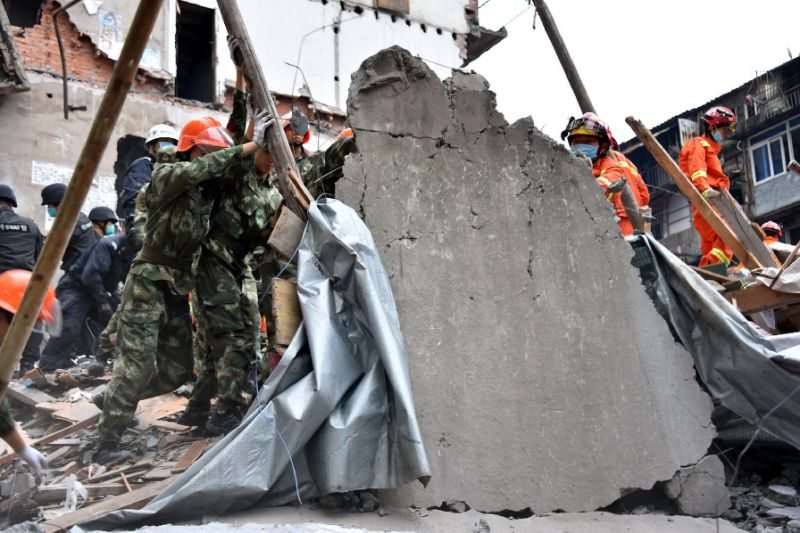
    BEIJING (TIP): Four persons were killed and two others injured when a house collapsed in central China’s Henan Province, local officials said on Nov 10.

    Six persons were trapped in the debris when a house under construction collapsed at 2:30 pm (local time) on Thursday in an economic and technological development zone in Zhangxingzhuang village, Xinxiang City, state-run Xinhua news agency reported.

    All the six were rescued and admitted to hospital but four of them died as of this morning, the report said, quoting the officials. An investigation into the incident is underway.(PTI)

  • UK to take 2nd look at Indian student visas

    UK to take 2nd look at Indian student visas

    NEW DELHI (TIP): The UK government has agreed to take a second look at the student visa issue as PM Theresa May met her Indian counterpart Narendra Modi.

    Indian students going to the UK to study have fallen by half in the last few years largely because the UK has restricted avenues of post-study employment.

    “Prime Minister May noted that there remained no cap on overall numbers of international students studying at recognized educational institutions in the UK, that Indian students would continue to be welcome and that the UK Home Secretary had recently announced her intention to consult on changes to the UK student visa regime,” May noted.

    (PTI)

  • NASA SPACE TELESCOPES REVEAL A BROWN DWARF

    NASA SPACE TELESCOPES REVEAL A BROWN DWARF

    WASHINGTON (TIP): In a first-of-its-kind collaboration, Nasa’s Spitzer and Swift space telescopes joined forces to reveal a brown dwarf – thought to be the missing link between planets and stars, with masses up to 80 times that of our solar system’s most massive planet, Jupiter.

    The discovery of this brown dwarf, with the unwieldy name OGLE-2015-BLG-1319, marks the first time two space telescopes have collaborated to observe a microlensing event — when a distant star brightens due to the gravitational field of at least one foreground cosmic object, Nasa said in a statement on Thursday.

    “We want to understand how brown dwarfs form around stars, and why there is a gap in where they are found relative to their host stars,” said Yossi Shvartzvald from Nasa’s Jet Propulsion Laboratory, Pasadena, California, and lead author of a study published in the Astrophysical Journal.

    Spitzer and Swift observed the microlensing event after being tipped off by ground-based microlensing surveys, including the Optical Gravitational Lensing Experiment (OGLE).

    By combining data from these space-based and ground-based telescopes, researchers determined that the newly discovered brown dwarf is between 30 and 65 Jupiter masses.

    They also found that the brown dwarf orbits a K dwarf, a type of star that tends to have about half the mass of the sun.

    “In the future, we hope to have more observations of microlensing events from multiple viewing perspectives, allowing us to probe further the characteristics of brown dwarfs and planetary systems,” co-author of the study Geoffrey Bryden Jet Propulsion Laboratory.

  • BREAST CANCER CAN HAVE SYMPTOMS OTHER THAN LUMP

    BREAST CANCER CAN HAVE SYMPTOMS OTHER THAN LUMP

    About one-sixth of women (17%) diagnosed with breast cancer visit a doctor with a symptom other than a lump, which is the most commonly reported symptom, new research has found.

    Breast cancer symptoms, other than a breast lump that may be a sign of cancer— known as ‘non-lump’ symptoms —include nipple abnormalities, breast pain, skin abnormalities, ulceration, shape abnormalities and an infected or inflamed breast.

    “Our research shows around one in six women diagnosed with breast cancer have symptoms other than a breast lump. These women are more likely to delay going to the doctor compared to women with breast lump alone,” said Monica Koo from University College London (UCL).

    “It’s crucial that women are aware that a lump is not the only symptom of breast cancer. Diagnosing cancer earlier really is key in order to increase the chances of survival,” Koo suggested.

    In the study, researchers from UCL examined the data of more than 2,300 women diagnosed with breast cancer in England in 2009-2010.

    They found that, although most women with breast cancer sought help quickly, those with ‘non-lump’ symptoms were more likely to delay going to their doctor compared with women with a breast lump alone. Women with both a breast lump and ‘non-lump’ symptoms were also more likely to delay seeking help.

    “This research shows that, all too often, women are delaying going to their doctor with symptoms of breast cancer. This could be because people are simply unaware that breast cancer can present in many different ways, not just through the presence of a lump,” added Karen Kennedy, Director of the The National Cancer Research Institute (NCRI) — a UK-based research organisation.

    The study was presented at the 2016 National Cancer Research Institute (NCRI) Cancer conference in Liverpool, recently.

  • Scientists working on solution to deal with Drones Threats

    Scientists working on solution to deal with Drones Threats

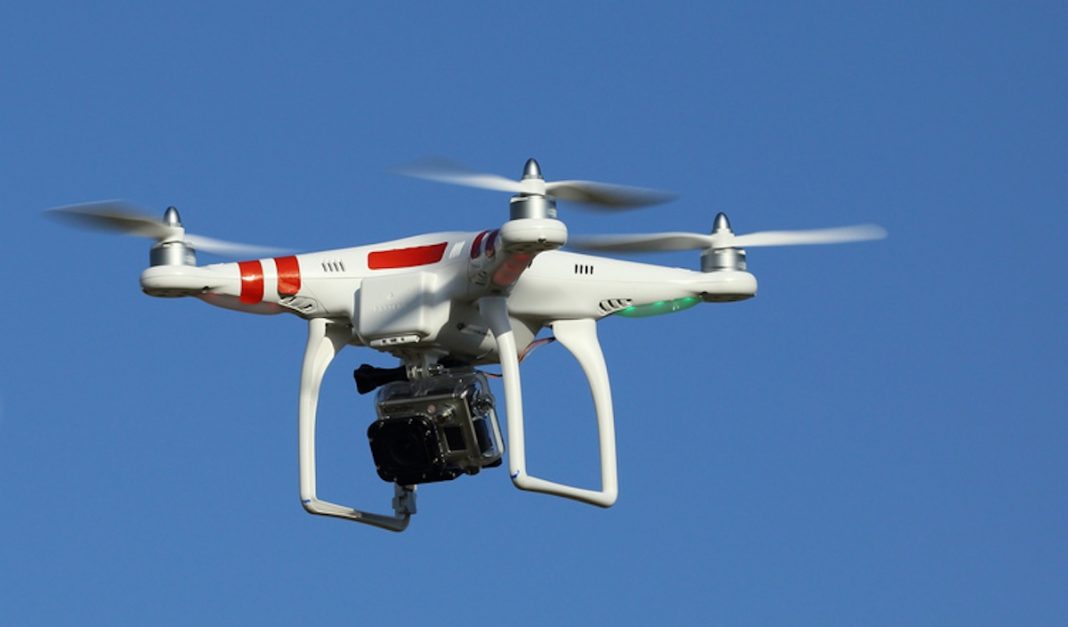
    BENGALURU (TIP): The threat perception is real. Late in 2015, the Intelligence Bureau (IB) had issued alerts of drone attacks in Delhi. Last month, Mumbai airport was put on high alert after a pilot spotted an unmanned aerial vehicle (UAV), popularly called drone.

    But agencies in India don’t have a concrete solution. Unlike shooting down an enemy fighter aircraft over no man’s land, bringing down a drone using fire power in cities isn’t an option. Also, that there can be no ‘hot pursuit’ (where a missile follows a target emitting carbon or thermal energy) with these vehicles not emitting any carbon, poses a challenge.

    A technological solution, thereby, is the only option and scientists from the Indian institute of Science (IISc) and the National Institute for Advanced Studies (NIAS) in Bengaluru, including noted scientist and former member of the Scientific Advisory Council to Prime Minister, Prof Baldev Raj, are trying to develop the same.

    From ways of trying to intercept the drones and bring them down using, what one scientist termed “anti-drone” drones, to building a system that can remotely identify these objects, a host of ideas are on the drawing board.

    The scientists are keen on developing a system using that could remotely identify the flying objects using electromagnetic waves—UAVs piloted remotely use radio waves (invisible electromagnetic waves) for control— and then either disabling them or, safe-land them.

    Confirming the developments at IISc and NIAS, Additional Director General Police (crime and technical services) Bhaskar Rao, said: “Drones are increasing in numbers, becoming a serious concern across India. Therefore, we thought that an early solution needs to be available with us given the growing threat perception. The scientists, have committed to finding us a solution after a two-day meet.” The DGCA’s draft regulation on UAVs has remained on paper for more than two years now, with the local police still dealing with the issue in an ad hoc manner. Rao said, the punishment for flying a drone without permission now is only a negligible fine A senior intelligence officer said: “The issue is that you can assemble a drone using materials available in the open market here. And mounting of payloads (sensors used for surveillance or something that could strike) is also not too difficult. We need to know how to ground these things without collateral damage.”

    He also pointed out that these objects are still classified as toys that can be checked in and brought into the country. “A lot of these things are brought in from China and southeast Asia. As long as it is in the right hands, the concern is only of them flying in areas they shouldn’t by mistake. But there is almost no certain way of knowing who is flying this and from where (immediately).”

  • CYBERATTACK HIT FIVE TOP RUSSIAN BANKS: KASPERSKY

    CYBERATTACK HIT FIVE TOP RUSSIAN BANKS: KASPERSKY

    MOSCOW (TIP): A massive cyberattack has hit at least five of Russia’s largest banks, Moscow-based internet security giant Kaspersky said on Thursday.

    The country’s largest lender, state-controlled Sberbank, said it had been hacked into on Tuesday but managed to neutralise the attack automatically without disturbing its operations.

    Kaspersky said in a statement that the distribution of denial attacks (DDoS) began Tuesday at 1830 IST and targeted “the websites of at least five well-known financial institutions in the top 10” in Russia. The attacks were still continuing today. Most lasted around one hour but the longest lasted almost 12 hours, Kaspersky said.

    DDoS attacks involve flooding websites with more traffic than they can handle, making them difficult to access or taking them offline entirely.

    These attacks saw as many as 660,000 requests being sent per second using a network of more than 24,000 hijacked devices located in 30 countries. More than half the devices were in the United States, India, Taiwan and Israel, Kaspersky said.

    Contacted by AFP, Russia’s central bank confirmed that it had identified

    “attacks on a number of large banks,” describing their intensity as “medium” and saying they did not disrupt access to banking services.

    It said the attacks used botnets made up of the “Internet of things” –electronic devices such as CCTV cameras or digital video recorders plugged in to offices and homes worldwide. A senior executive at Sberbank, Stanislav Kuznetsov, told Interfax news agency that the bank had suffered 68 such attacks this year and that the latest was among the biggest.

    Kaspersky said that DDoS attacks

    “have long been one of the most popular instruments used by criminals to attack businesses.” Such attacks have grown more frequent in recent years with the development of online banking but also in the context of heightened tensions over the crisis in Ukraine with attackers targeting the sites of the Kremlin and NATO. Most recently Washington accused Russia of using cyberattacks against the Democratic Party to attempt to disrupt this week’s presidential election. Source: AFP

  • Efforts on to build consensus on sticky GST issues, says finance minister Arun Jaitley

    Efforts on to build consensus on sticky GST issues, says finance minister Arun Jaitley

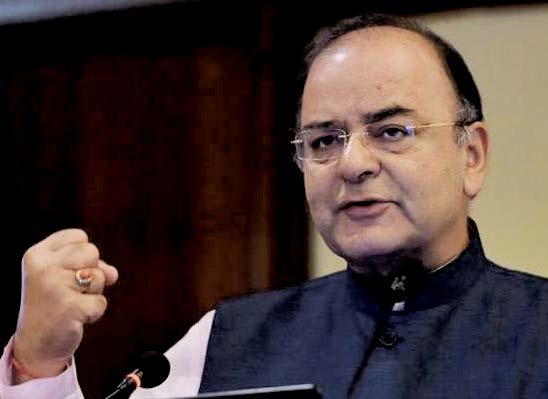
    NEW DELHI (TIP): Finance minister Arun Jaitley on Thursday said the Centre is making all efforts to build consensus on sticky issues, especially on jurisdiction of assessees, to ensure GST rollout from April 1, 2017.

    “We are making all efforts to introduce GST from April 1, 2017. GST has to be implemented latest by September 16, 2017, and if it is not implemented by then, then states will not be able to collect their share of taxes, and hence there is not enough scope to further delay the decision,” he said.

    Inaugurating the two-day Economic Editors’ conference, Jaitley said the government has covered a lot of distance for implementation of the Goods and Services Tax (GST) and it does not want to resort to voting to decide on any issue at the GST Council meeting.

    “We have already sorted out 10 issues. The issue of dual control still remains, there is no reason why we will not be able to work out a reasonable solution on this,” he said.

    The all powerful GST Council, which is chaired by the Union Finance Minister and has representations from state, has already decided on a four-tier rate structure — 5, 12, 18 and 28 per cent — with a cess over and above the peak rate for luxury and demerit goods.

    “One of the objects has been that, since the GST council is a federal decision making process and the manner in which it functions in the initial years will lay down the precedent for the future rather than resorting to voting and division in every small issue. We have been trying to discuss, re-discuss and then reach a consensus and so far most of the major issues we have been able to resolve through consensus,” Jaitley said.

    The issue of dual control, which deals with who will control which set of assessees under GST, has been holding back the negotiations. Jaitley and his state counterparts will meet on November 20 to work out a “political solution” on the issue and the GST Council will formally take up the issue on November 24-25.

    “Only the last stages (of decision making) remain and I do hope we (GST Council) are able to resolve that through a larger consensus also. And this form of functioning of the Council where discussion and consensus is a preferred option, is a precedent we are trying in a federal decision making body to establish,” Jaitley said.

    He added that reforms are going on in the direct tax structure and other areas. “If you have seen from the Insolvency Bill to the GST and now the decisions in the GST Council, our preferred option has been consensus and we hope to utilise that preference itself,” the Finance Minister said.

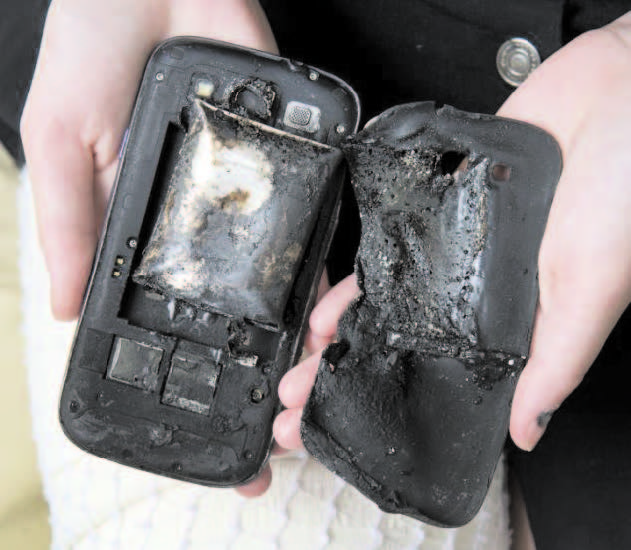
  • WHY ARE SO MANY SMARTPHONES EXPLODING?

    WHY ARE SO MANY SMARTPHONES EXPLODING?

    Twitter has been lately abuzz with consumers crying foul about their exploding smartphones.

    The latest casualty was a Reliance LYF smartphone owned by a Kashmiri youth. Tanvir Sadiq, who is political secretary to the National Conference, took to Twitter to put up pictures of the burnt device and say he and his family had a narrow escape.

    Another consumer also took to Twitter to report about his burnt OnePlus One, and said the phone exploded while it was being charged. In fact, Indian aviation regulator DGCA banned Samsung phones on flights two months ago after reports of Note 7 blasts followed by a Note 2 explosion.

    But why are smartphone batteries exploding now? Scientists and researchers seem to point in the direction of heat/thermal management on the device and also high usage of devices these days.

    A lithium-ion battery is a kind of rechargeable battery that uses different materials, one holding positive ions and the other holding negative ions. Called the cathode and the anode respectively, these ions move one way when charging, and back again when discharging — being used.

    These two layers — or conductors —are never supposed to touch; so manufacturers insert separators to keep them apart. The chemical reaction that makes batteries work creates heat. Overcharging the packs — or charging them too fast — can lead to fires.

  • Farewell large USBs? Apple might do it again with Macs after 3.5 mm jack drop

    Farewell large USBs? Apple might do it again with Macs after 3.5 mm jack drop

    Apple has done it once and it might do it again! The Tim Cook-led company in spite of global anxiety and fear dropped the adored 3.5 mm headphone jack.

    The company was warned even before the speculated drop of the jack that its sales of iPhones would take a hit as consumers were so used the jack and its convenience.

    But what did Apple do other than dropping the jack? It put in a splitter/converter (3.5 mm to lighting jack converter) free of cost along with the iPhone box so that consumers could use thier headphones along with the new smartphones. It also came out with Air Pods — a wireless device that doesn’t need a jack at all.

    Hence, would it be very far fetched to think that it can go ahead and ditch the USB ports and replace them with Type-C ports? All logic seems to point that way along with Apple’s innovation cycle.

    Leaked photos suggest that Apple has replaced the function keyboard bar with an OLED bar and also has the design thinner. An older USB port needs more space and is unfit for a sleeker design. This suggests that Apple might have included the USB Type-C jack. Rumours suggest that the PCs will carry four USB Type-C ports.

    But this speculative news is causing anxiety for users as the new iPhones also don’t have the Type-C USB jacks. It is our best guess that Apple might include a similar splitter (USB to USB Type-C) to help suppport iPhones.

    However, Apple has dropped parts in the past to make the notebooks slimmer. It has already ditched the CD/DVD port earlier with previous generations of MacBooks. The removal of the USB ports is expected to make the device slimmer, have space for the new OLED bar and the touch ID button, experts said.

  • DOLLAR, MEXICAN PESO, STOCKS TOPPLE AS DONALD TRUMP CLOSES IN ON WHITE HOUSE

    DOLLAR, MEXICAN PESO, STOCKS TOPPLE AS DONALD TRUMP CLOSES IN ON WHITE HOUSE

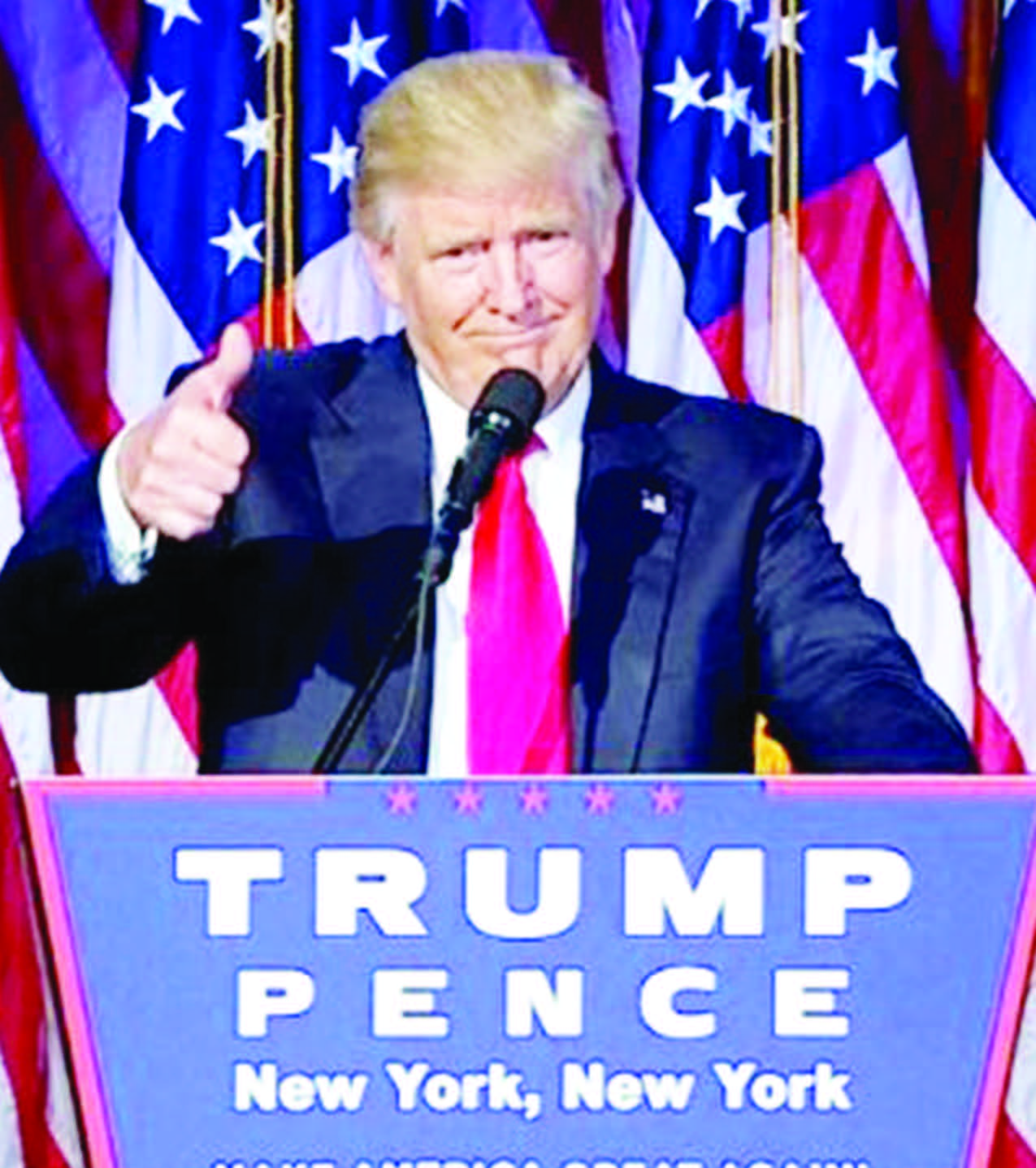
    SYDNEY (TIP): The US dollar sank and stocks plummeted in market mayhem on Wednesday as investors faced the real possibility of a shock win by Republican Donald Trump that could upend the global political order.

    European shares looked set to follow with losses of more than 4 percent as every new TV network projection in the US election showed the race to be far closer than anyone had thought, sending investors stampeding into safe-haven assets.

    Sovereign bonds, the Japanese yen and gold surged while the Mexican peso went into near free-fall in chaotic trading.

    “Markets are reacting as though the four horsemen of the apocalypse just rode out of Trump Tower,” said Sean Callow, a forex strategist at Westpac in Sydney.

    “Or at least 3 of them – it might be 4 when the prospect of a clean sweep of Congress sinks in.”

    As of 0525 GMT, Trump had 244 electoral votes to Clinton’s 215, with networks projecting the winner in 42 of the 50 states and the District of Columbia. It takes 270 to win.

    Several other key swing states were still too close to call.

    US stock futures dived 5 percent at one point, worse than the carnage caused by the British vote to leave the European Union in June that wiped trillions of dollars off world markets.

    Investors fear a Trump victory could cause global economic and trade turmoil and years of policy unpredictability, discouraging the Federal Reserve from raising interest rates in December as long expected.

    Fed fund futures were even starting to toy with the idea of a cut in rates next year <0#FF:> and it was possible the Bank of Japan, the European Central Bank and others might be forced to ease policy yet further.

    South Korean authorities were thought to have intervened to steady their currency, and dealers wondered if central banks globally would step in to calm nerves.

    Japan’s top currency diplomat signaled Tokyo’s readiness to intervene if necessary as the surging yen threatened to snuff out its fragile economic recovery.

    “Lightning appears to have struck twice as Trump is set for an unexpected victory, following the shock Brexit vote earlier in the year,” said Geoffrey Yu, head of the UK Investment Office at UBS Wealth Management.

    “For markets, what happens to Fed Chair Janet Yellen will be crucial. The impact of her future will be felt globally,” he added. Trump and Republicans have criticized the Fed for keeping rates low for so long.

    The scale of the scare was clear in the Mexican peso, which plunged more than 13 percent against the dollar in the biggest daily move in two decades. There was speculation Mexico’s central bank would have to raise rates on Wednesday to try and stabilize the currency. The peso has become a touchstone for sentiment on the election as Trump’s trade policies are seen as damaging to its export-heavy economy. The risk of a global trade war likewise hammered currencies across Asia, with the Australian dollar leading the rout. The story was very different against the safe-haven yen, with the US dollar shedding 2.7 percent to 102.60 yen. The euro jumped 1.7 percent to

    $1.1218. Source: Reuters

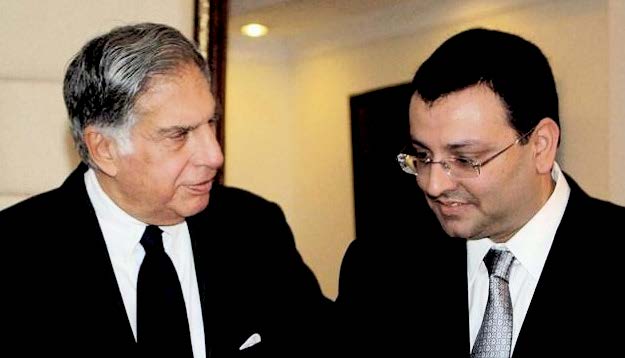
  • Tatas replace Cyrus Mistry as TCS chairman, new battle begins

    Tatas replace Cyrus Mistry as TCS chairman, new battle begins

    MUMBAI (TIP): Tata Sons made its first move on Thursday to wrest control of group companies by replacing Cyrus Mistry and nominating veteran Ishaat Hussain as the chairman of TCS, the conglomerate’s most-profitable company.

    The Mumbai-based business empire –which is in the news following last month’s dramatic removal of Mistry as chairman — called for an extraordinary general meeting (EGM) of shareholders to remove Mistry as director of Tata Consultancy Services.

    Sources close to Mistry called the move “hasty and pre-meditated” with little regard to the due process of law.

    Lawyers that HT spoke to said that Tata Sons — the holding company of the$103 billion empire — may have been guided by concerns that Mistry is likely to increase his control over various group companies.

    Incidentally, the shareholding structure of the Tata group companies is such that Tata Sons has a lone representative on the boards of individual firms.

    A comprehensive statement from Tata Sons, following its communication on replacing the TCS chairmanship, indicates this concern.

    The strongly worded statement pointed at Mistry’s “ulterior objective” and alleged he was trying to gain control of Indian Hotels Co (IHCL) –which runs the famous Taj hotel chain across India — with the support of independent directors.

    Tata Sons said Mistry “cleverly” ensured he was the only Tata Sons representative on IHCL’s board to

    “frustrate Tata Sons’ ability to exercise influence and control”

    “In hindsight, the trust reposed by Tata Sons in Mr Mistry… has been betrayed by his desire to seek to control main operating companies of the Tata group,” the document read.

    Tata Sons shocked the corporate world last month when it removed Mistry as chairman. The move sparked a war of words between the two camps with the ousted chairman saying he faced interference from Ratan Tata, who he replaced in 2012. The Tatas have dismissed the charge and accused Mistry of poor performance.

    The bitterness was evident in Thursday’s statement, where Tata Sons said it acted in good faith and didn’t anticipate Mistry’s “devious moves” and didn’t inform other group company directors about its “dissatisfaction” with Mistry at the Tata Sons level.

    “However, we will now do whatever is required to deal with this situation.”

    The Tatas referred to the developments at Indian Hotels, where, prior to a scheduled board meeting, independent directors issued a statement endorsing Mistry’s leadership. The statement was a sharp rebuttal for Tata Sons that was citing Mistry’s alleged non-performance as the principal reason for replacing him at Tata Sons.

    Commenting on the Tata Sons move to replace him as chairman of TCS, sources close to Mistry said TCS sent the notice to exchanges on his replacement without even a board resolution. The sources added that company laws allowed Tata Sons to only nominate a chairman, who had to then be appointed by the board.

    “Nothing of this nature was done. In pre-mediated haste, by a letter of the same date, TCS has directly gone on to announce that Mistry stands replaced,” they said.

    The sources said the “hasty actions” appear to have been done at night and announcement to the stock exchange happened at 8 am.

    “Cloak-and-dagger machinations with little regard to due process of law have come to define the angry strategy of the Ratan Tata camp,” they said.

  • Play cricket or compensate for damages: Najam Sethi

    Play cricket or compensate for damages: Najam Sethi

    LAHORE (TIP): Pakistan have demanded financial compensation from both the Board of Control for Cricket in India (BCCI) and the International Cricket Council (ICC) for the losses incurred following India’s refusal to play the neighbouring country, Najam Sethi, the Pakistan Cricket Board (PCB) executive committee chairman, confirmed on November 9.

    “We have mentioned it clearly to BCCI and ICC in recent meeting that either India should play cricket with Pakistan or compensate us for damages,” Sethi was quoted as saying by the Dawn. “We have also demand compensation from ICC as the PCB is suffering financially because of non-fulfilment of the BCCI’s commitment to play cricket series with Pakistan,” he added.

    BCCI had signed a Memorandum of Understanding (MoU) with the PCB in 2014 in which both involved had agreed to play six bilateral series between 2015 and 2023. However, the political turmoil between the countries played its part in the countries not wanting to play each other. So much so, Anurag Thakur, the BCCI president, even requested the ICC not to place the two sides in the same group during global tournaments.

    The India board had sought consent for a limited-overs series against Pakistan in Sri Lanka last December, however, the Indian government did not grant the same, due to which it was eventually canned.

    The last time India and Pakistan played a full Test series was before the terror attacks in Mumbai in 2008. (PTI)

  • How Russia uses Interpol to pursue its enemies

    How Russia uses Interpol to pursue its enemies

    VILNIUS, LITHUANIA (TIP): Facing trial in Russia over the theft of a street-art drawing valued by its creator at $1.55, Nikita Kulachenkov, a Russian forensic accountant involved in anticorruption work, fled to Lithuania to avoid what he decided was a doomed battle against trumped-up charges.

    What he did not realize was that Russia’s reach these days extends far beyond its borders. Arriving in Cyprus from Lithuania in January to join his mother for a holiday, Kulachenkov was stopped at airport passport control, questioned for hours by immigration officials and then taken in handcuffs to a police detention center.

    “They told me there was a problem with Russia and kept asking me what crime I had committed,” Kulachenkov recalled. Cypriot immigration and police officers seemed as mystified as he was, he said, by a note in their computer systems that described him as a wanted criminal requiring immediate arrest.

    The wanted notice had been put there in August last year by Russia, where the theft of millions and even billions of dollars by the politically connected goes mostly unpunished but where the alleged theft of a street sweeper’s all-but-worthless drawing has been the focus of a lengthy investigation involving some of the country’s most senior law enforcement officials.

    The arrest demand, known as a “diffusion,” had gone out to Cyprus and 50 other countries through the international police organization, Interpol. It had not been endorsed by Interpol, which is “strictly forbidden” by its Constitution from any action of a “political character,” but nonetheless labeled the 34-year-old anticorruption activist as a criminal in databases around the world.

    Determined to punish domestic opponents who flee abroad, as well as non-Russians whose lives and finances it wants to disrupt, Moscow has developed an elaborate and well-funded strategy in recent years of using —critics say abusing — foreign courts and law enforcement systems to go after its enemies.

    Some countries, including Russia, “work really hard to get Interpol alerts” against political enemies, said Jago Russell, the chief executive of Fair Trials International, a human rights group in London, because “this helps give credibility to their own prosecution and undermines the reputation of the accused.”

    “It is also potentially a good threat to use against people still in the country: ‘You may be able to leave, but don’t assume you will be safe,’” he added.

    The efforts have often fallen flat in the end, but have succeeded in tying up their targets in legal knots for months and years.

    Acting on a Russian request, a British court, for example, froze the worldwide assets of Sergei Pugachev, a former close friend of President Vladimir Putin’s who fell out with the Kremlin in a squabble over property and fled to Britain, then France.

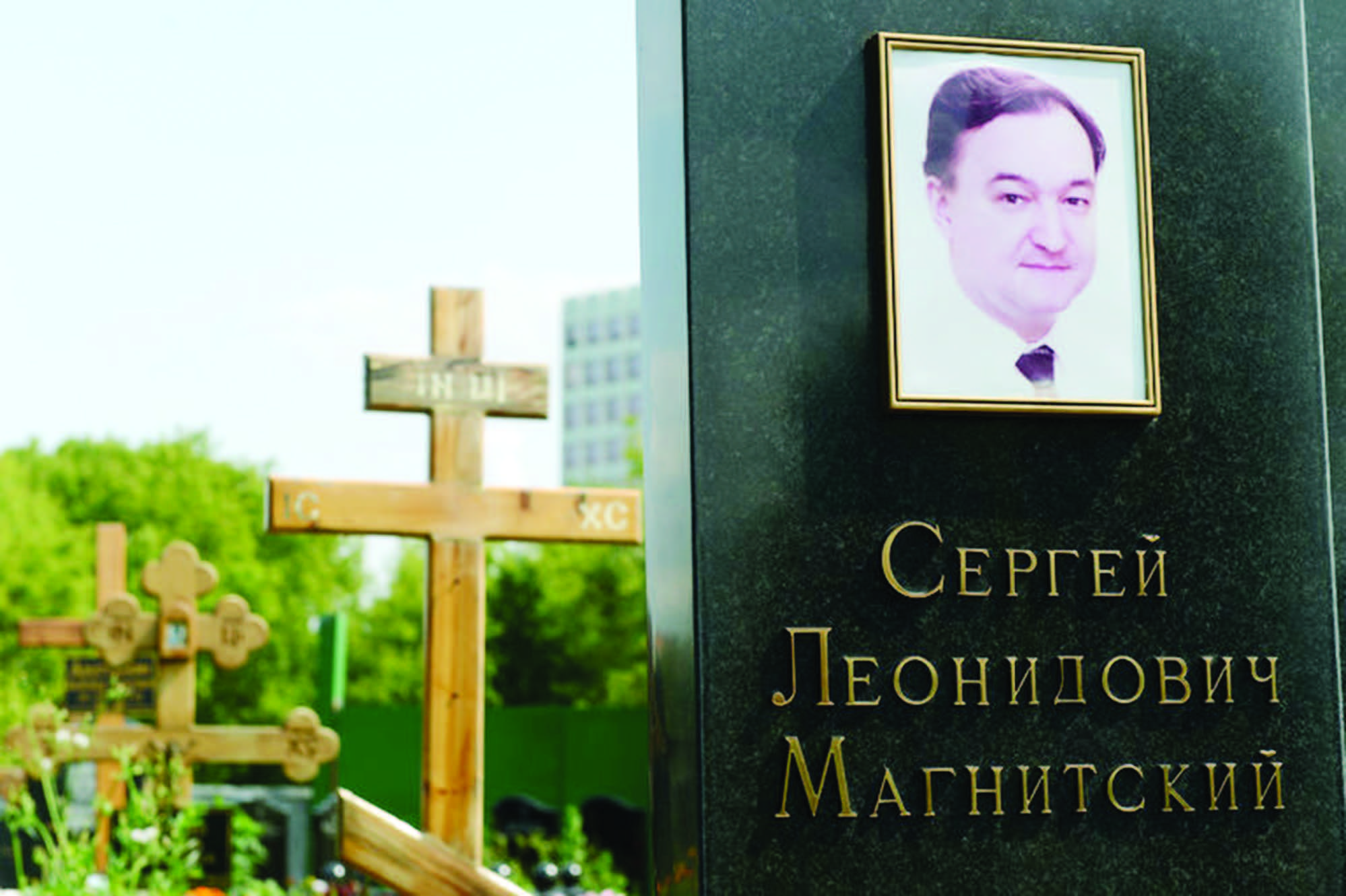
    Russia has also used British courts and Interpol to pursue what many Western governments view as a vendetta against William F. Browder, an American-born British citizen. Browder was convicted in absentia in Russia of tax fraud after he fled to London and mounted an international campaign against Russia over the killing of his jailed Moscow lawyer, Sergei Magnitsky.

    Browder defeated a libel case in 2013 brought in London by a Moscow police officer whom the financier had accused of involvement in a fraud uncovered by Magnitsky. But he faces a new fight as Russia seeks to get British courts to find and freeze his assets and enforce a civil judgment against him in Russia.

    The only winners in most such cases are expensive lawyers, for whom pursuing Russia’s foes in foreign courts has become a highly lucrative business.

    Russia pushed three times between 2012 and 2015 to get Interpol to issue arrest orders against Browder. Having failed each time to convince the police organization that it did not have political motives, it announced this summer that it would try yet again.

    “The Russians try stuff a hundred times, and sometimes it works,” Browder said. “They can fail 99 times, but the 100th time it could work. For them, that makes it all worthwhile.” He described the practice as “lawfare.”

    Based in Lyon, France, and comprising 190 countries, Interpol defines its role as enabling “police around the world to work together to make the world a safer place.” It has often done this, allowing police forces to share information about the whereabouts of mafia bosses, murderers and other criminals, and to secure their arrest.

    But the Interpol membership of nations —like Russia, Iran and Zimbabwe — that routinely use their justice systems to persecute political foes has stirred worries that wanted notices can be easily misused. In September, the congressional Tom Lantos Human Rights Commission heard a litany of complaints about abuse from experts and victims of Interpol notices during a discussion of how to reform the police organization’s system of so-called red notices.

    Interpol issues such notices, which amount to an international arrest warrant, at the request of a member country seeking help in catching a fugitive who has fled abroad. Interpol’s computer system also circulates diffusions like the one against Kulachenkov. These are less formal than red notices, but are also used to request the arrest or location of an individual, or information, in relation to a police investigation.

    Interpol does not release figures for how many red notices or other arrest alerts are issued through its computer system by each member country, but the number of people identified in Interpol’s databases as wanted criminal suspects has risen sharply in recent years.

    In 2004, Interpol issued just 1,924 red notices at the request of member countries. Last year, it issued 11,492, as well as 22,753 diffusions.

    As a result of one of those, Kulachenkov spent nearly three weeks in a Cypriot jail while the authorities in Cyprus reviewed a request from Moscow that he be sent to Russia to stand trial in a case that even Russia’s prosecutor general had initially ruled was not worth pursuing.

    The drawing he is accused of stealing was done by Sergei Sotov, a street sweeper and artist who had left it and other examples of his work hanging on railings around Vladimir, a city east of Moscow. The street sweeper made no complaint to the police when the drawing disappeared, and said he was glad that someone liked his work. (NYT service)

  • Indian Americans comment on Presidential election

    Indian Americans comment on Presidential election

    Since Sep-Oct 2015 I have been writing on social media that “This election is not about Trump or Republican party or Democratic party. This is about the future of every American. This is an historic, unprecedented and exciting movement as well as a fight in which Trump on behalf of the American voters has challenged; The Elite, The Power Brokers, The Lobbyist, The Billionaire Donors Club & their dubious Super PAC’s financed with dirty money, The Foreign Lobbyist like AIPAC and The Carrier Politicians like Hillary Clinton; collectively called “The ESTABLISHMENT”.

    After Mr. Trump won the election:

    Americans should be thankful to Mr. Trump for his enormous contribution to the future of America by putting a spotlight on the corruption in Washington D.C. Incidentally only 4% Voted for Trump from this city owned by The Elite, The Power Brokers, The Lobbyist, The Foreign Lobbyist like AIPAC, The Billionaire Donors Club & their dubious Super PAC’s financed with dirty money and The Carrier Politicians like Hillary Clinton; collectively called “The ESTABLISHMENT”.

    Under Trump’s Presidency all the Americans must join to make America Great Again!

    Please remember the words of Adam Smith, “No society can surely be flourishing and happy, of which the far greater part of the members are poor and miserable”. Only together we can make America Great Again. – Dave Makkar


    Ashook Ramsaran, a former President of GOPIO comments: “While the results of the elections are not the outcome many of us in USA and worldwide were expecting, we Americans have high regard and respect for peaceful elections, orderly transition of power and rule of law which Hillary Clinton so selflessly espoused in her concession speech. The US constitution and the institutions provide necessary guidelines for continuity, checks and balances, and limits to prevent abuse of power. We are hopeful that the new president select wise and experienced cabinet members and advisers to instill confidence and address the many urgent domestic and international issues at hand”.

  • Donald Trump will tilt towards India: Pak observers

    Donald Trump will tilt towards India: Pak observers

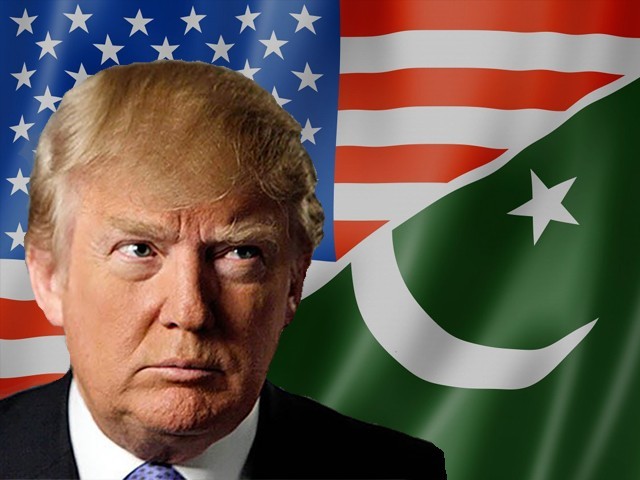
    ISLAMABAD (TIP): Republican Donald Trump’s election as US President has come as cold comfort for Pakistan where many believe that he would further precipitate American tilt towards India. His anti-Muslim rhetoric and business ties to India are signs that his administration could favour New Delhi, analysts said.

    “America will not abandon Pakistan, but definitely, Trump will be a tougher president than Hillary Clinton for Pakistan. I think India will have a better and smoother interaction with the US under Trump than Pakistan,” said analyst Hasan Askari Rizvi.

    Despite working as strategic partners in the south Asian region for decades, relations between Islamabad and Washington have never been free of suspicion. The US accusations that Pakistan harbours terrorists and the killing of al Qaeda chief Osama bin Laden and Taliban chief Mullah Akhtar Mansur on Pakistani soil further increased this mistrust.

    In an interview in April this year, Trump had termed Pakistan a “vital problem” for the United States “because they have a thing called nuclear weapons”, adding, “They have to get a better hold of the situation.” Trump also reportedly hinted at seeking help from India and other nations to address the “problem” of nuclear-armed Pakistan.

    What Trump had said about Pakistan’s nuclear and strategic programme, is already the policy of US administration. President Obama had pressed Pakistan to limit its nuclear and strategic missile programme. With Trump getting into the Oval Office, this pressure is expected to increase.

    Grace Shelton, US consul general in Karachi, told a Pakistani channel that Trump’s election did not signal a drastic policy change. “Our foreign policy is based on national interest and does not change when the government changes,” Shelton told Geo News.

    Prime Minister Nawaz Sharif wasted no time in congratulating Trump. “Your election is indeed the triumph of the American people and their enduring faith in the ideals of democracy, freedom, human rights and free enterprise,” he said in a statement. (PTI)

  • THOUSANDS MARCH TO PROTEST TRUMP VICTORY

    THOUSANDS MARCH TO PROTEST TRUMP VICTORY

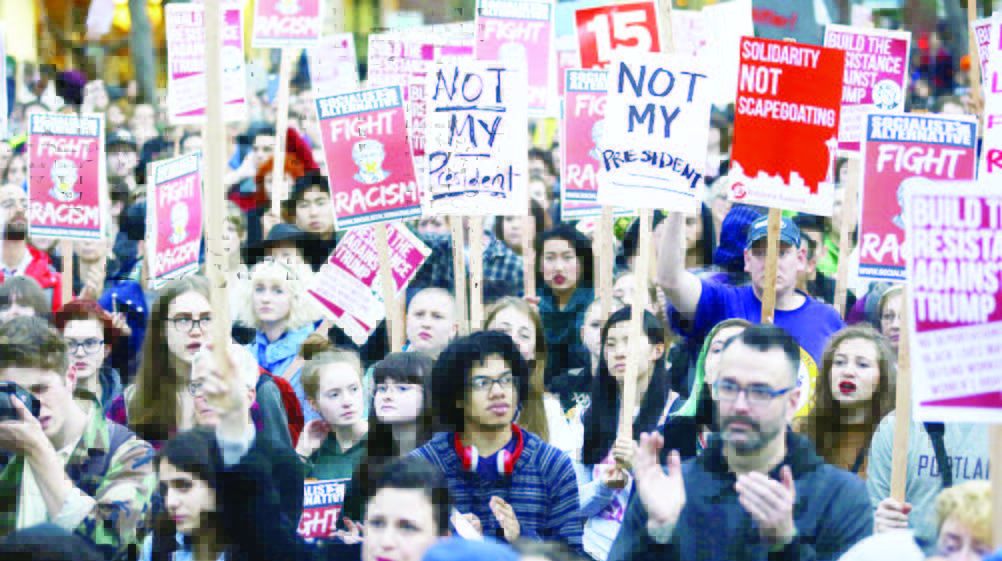
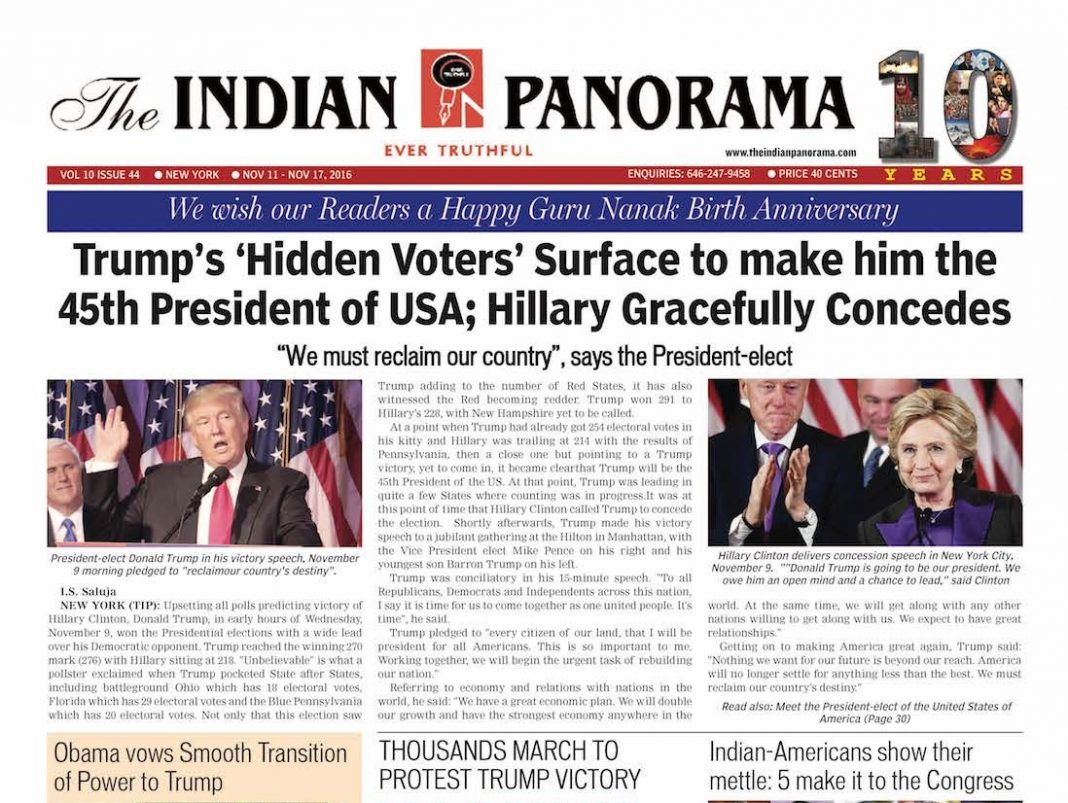
    NEW YORK (TIP): The day after the election victory of President-elect Donald Trump, protesters took to the streets in cities across the country, expressing anger and resistance. Thousands marched in New York, Los Angeles, Boston, Chicago, San Francisco, Philadelphia, Seattle, Washington DC, Portland, Ore, St. pau, Minn. and more, chanting and carrying signs. Tens of thousands filled the streets in at least 25 USA cities to protest Donald Trump’s victory. In some major cities, the protests continued Thursday too.

    Thousands of anti-Donald Trump protesters shut down 5th Avenue in front of Trump Tower as New Yorkers react to the election of Trump as president of the United States on November 9, 2016.
    Thousands of anti-Donald Trump protesters shut down 5th Avenue in front of Trump Tower as New Yorkers react to the election of Trump as president of the United States on November 9, 2016.

    The protests ranged from peaceful candlelight vigils to more destructive demonstrations, particularly in California, where freeways were shut down and cars and effigies burned in Oakland and L.A. The protesters’ point: that Trump, with his history of racist and sexist rhetoric, does not represent the American people. That’s true in some ways. Though there is no question that Trump’s election is legitimate, he won-as many other presidents have won-by very narrow margins, and he is currently losing the popular vote after securing the Electoral College. Though that fact might be painful to millions of Americans, they can take this comfort: Split and troubled as it’s been, their nation has not changed.

    In New York City about 5,000 people protested his victory outside Trump Tower near the busy intersection of 57th Street and Fifth Avenue and blasted his campaign rhetoric about immigrants, Muslims and other groups. They included pop star Lady Gaga, a staunch Hillary Clinton supporter.

    Taxis, city buses and passenger vehicles stood at a standstill as the protesters clogged streets in Manhattan. At least 15 protesters at Trump Tower were arrested Wednesday, November 9 night for disorderly conduct, New York police said.

    In Washington DC protesters from the group Avaaz displayed a “Better Than Bigotry” sign outside the White House. Hundreds took to the streets carrying signs saying “Nasty Women Fight Back” and “White Males for Equality for All.” Activists chanted, “No Trump, no KKK, no fascist USA,” as they marched downtown to the Trump International Hotel.

    Protesters in Chicago walk during a protest Republican president-elect Donald Trump on November 9, 2016
    Protesters in Chicago walk during a protest Republican president-elect Donald Trump on November 9, 2016

    In Chicago, protesters marched down Lake Shore Drive toward the Trump Tower. They gathered near the Trump International Hotel and Tower holding signs with messages such as “Love Trumps Hate,” “Not My President.” Chicago Police said five people were arrested in Chicago over the course of the protest.

    Demonstrators gather to protest a day after President-elect Donald Trump's victory, at a rally outside Los Angeles City Hall in Los Angeles, California, on November 9, 2016
    Demonstrators gather to protest a day after President-elect Donald Trump’s victory, at a rally outside Los Angeles City Hall in Los Angeles, California, on November 9, 2016

    In Los Angeles protesters burned Donald Trump effigy where more than 1,000 protesters rallied outside Los Angeles City Hall. Later in the night, hundreds marched onto the busy 101 Freeway, which brought the highway to a complete standstill. About 2,000 protesters shouted angrily in downtown Seattle, chanting “Not My President” and “No Racist USA.” In Oregon, dozens of people blocked traffic in downtown Portland and burned American flags.

    Among the demonstrators earlier on Wednesday were hundreds of high school and college students who walked out of class in cities including Seattle, Phoenix and San Francisco’s Bay Area. Many college students and faculty leaders took to social media to announce support groups and even postponed exams.

  • Mayor Bill de Blasio offers to work with Trump on conditions

    Mayor Bill de Blasio offers to work with Trump on conditions

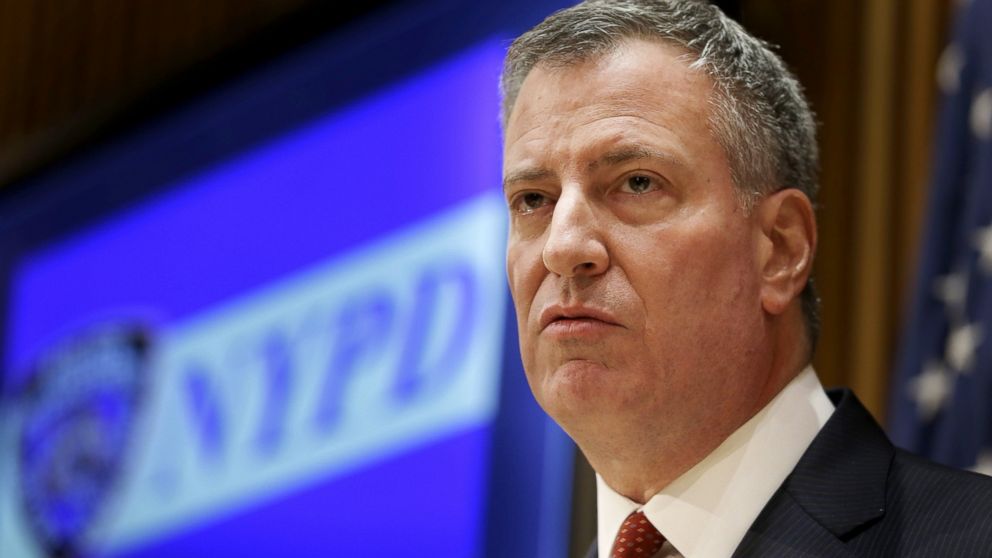
    NEW YORK CITY (TIP): Mayor Bill de Blasio, November 10 said that he was clear about the areas that he was prepared to work with President-elect Trump on for the good of the people of New York City. ” If President-elect Trump follows through on a vision of creating new jobs and rebuilding our infrastructure, if he follows through on the vision of ending trade deals that are bad for American workers, if he follows through on a vision of closing the carried interest loophole and creating the kind of tax reform that will put resources in the hands of the federal government to invest back in our cities and back in our nation, we’ll work with him and do everything we can to help him achieve those goals.’, the Mayor said.

    Continuing the subject, he said, “Now, let’s state the obvious, there are other areas that are of real concern where if President-elect Trump were to follow through on his platform, there would be obvious disagreements and obvious conflict with my values and with the values of the clear majority of New Yorkers and the needs of New Yorkers. That certainly includes in immigration – any threat to deport people here in our city, any efforts to undermine reproductive rights for the women of New York and for the women of America, any effort to derail Obamacare and take away health insurance from so many people who have struggled to get it and so many more New Yorkers who would have been eligible if Obamacare continued. These are all examples of where we’re going to fight to protect the interests of New York City – certainly as well in affordable housing and public housing – another area where it’s crucially important that the federal government remain committed to the people of this city.

    It’s important – just to put all this into perspective, because unlike, I would say, most elections that we’ve experienced, there are huge question marks about which elements of his platform he’ll follow through on, which he may not. There might be a different shape to his plans and that which said previously. I think it’s good to have an open mind and an open hand, but it’s also good to remember that some of the vision he portrayed on the campaign trail could well be taken literally by President-elect Trump and by his administration. We cannot, in any way, underestimate that challenge”.

  • Indian-Americans show their mettle: 5 make it to the Congress

    Indian-Americans show their mettle: 5 make it to the Congress

    WASHINGTON (TIP): Indian-Americans created history in US Congressional politics with one of them becoming the first to be elected to the Senate and four others winning seats in the House of Representatives.

    Pramila
    Pramila Jayapal from Washington

    While Kamala Harris was elected from California to the Senate, Pramila Jayapal from Washington, Raja Krishnamoorthi from Illinois and Ro Khanna from California are going to join Ami Bera, who was re-elected from California in the House of Representatives.

    kamlaCalifornia’s Attorney General Kamala Harris created history by becoming the first Indian- American Senator in the US Congress by defeating Loretta Sanchez. The democrat politician and lawyer was elected California’s Attorney General in 2010 and was re-elected in 2014. Harris, the daughter of an Indian mother who emigrated from Chennai in 1960 and a Jamaican American father, is the first female, the first African-American, and the first Indian-American attorney general in California.

    A financial analyst by profession, Pramila Jayapal has also created history, by becoming the first Indian American woman to be elected to the US Congress from Washington state’s 7th District. Born in Chennai, she moved to the U.S in 1982. She started her political career through campaigns for the rights of immigrants, women, and workers. She was recognized by the White House as a “Champion of Change” for her work for immigrant community.

    Raja Krishnamoorthi from Illinois
    Raja Krishnamoorthi from Illinois

    Raja Krishnamoorthi, a technology entrepreneur who had advised President Barack Obama on economic issues when he was a Senator, also served as Illinois state Deputy Treasurer and an Assistant Attorney General on special assignment to fight corruption. He defeated Republican Peter DiCianni in Illinois’s 8th District. Democrat Krishnamoorthi is the fourth Indian American to be elected to the US House of Representatives.

    Ro Khanna
    Ro Khanna

    Rohit Ro Khanna, a former federal Deputy Assistant Commerce Secretary, defeated sitting Congressman Mike Honda on his second try. Khanna had also challenged Honda in 2014, losing to him by just four percentage points. He received donations and endorsements from big tech names involved in companies such as Yahoo, Google, and Facebook.

    Ami Bera
    Ami Bera

    Amerish Babulal “Ami” Bera, a physician who has been the U.S. Representative for California’s 7th congressional district since 2013, had come under a cloud after his 83-year-old father, Babulal Bera, was found guilty of illegally funding his son’s election campaign and sentenced to a year in prison. Prosecutors, however, cleared Ami Bera of involvement in his father’s crime and he beat the odds to defeat his Republican rival Scott Jones.


  • Obama vows Smooth Transition of Power to Trump

    Obama vows Smooth Transition of Power to Trump

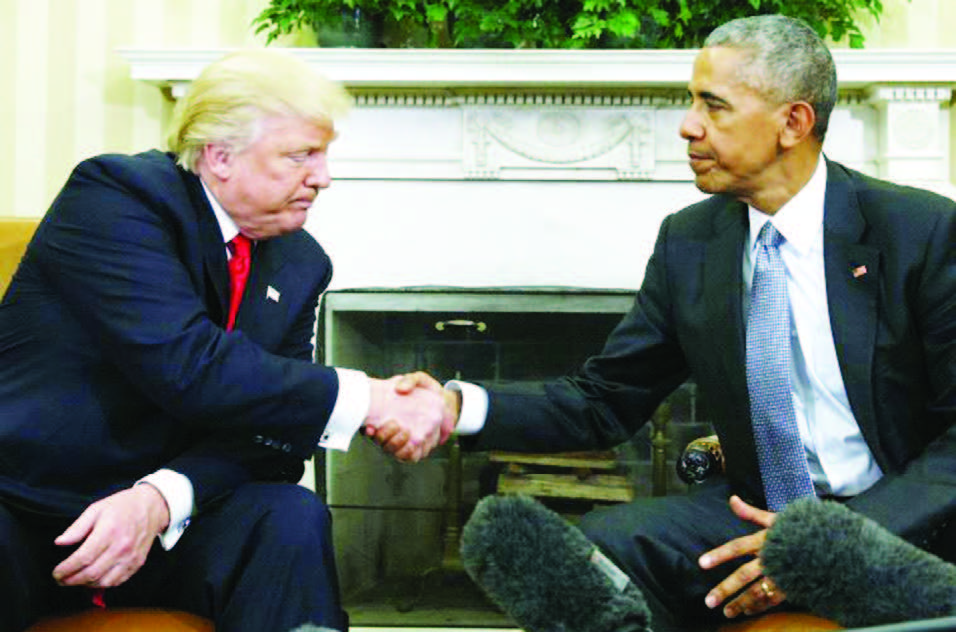
    WASHINGTON (TIP): President Barack Obama hosted, November 10, his successor Donald Trump at the White House to discuss smooth transition of power.

    Trump, 70, flew from New York on his private jet and landed at Reagan National Airport, just outside the nation’s capital.

    He broke from protocol and barred journalists from travelling with him to cover his first meeting with Obama.

    The president-elect was accompanied by his wife, Melania, who had a separate meeting with First Lady Michelle Obama. Melania was given a tour of the White House.

    The meeting between the President and the President-elect, originally to last 30 minutes, took 90 minutes during which the two discussed a variety of issues. Obama said his main task now would be a smooth transition of power. Trump was appreciative of Obama about whom he twice said, “He is a very good man”.

    However, nobody missed to notice the lack of warmth between the two who have been fiercely critical of each other. Donald Trump had questioned Obama’s birth in the US and has vowed to show the door to Obamacare, a legacy which Obama desired to leave. And Obama has repeatedly alleged that Trump is unfit to be the Commander in chief of the country.

    No love lost there.

  • India beat China 2-1 to win Women’s Asian Champions Trophy

    India beat China 2-1 to win Women’s Asian Champions Trophy

    SINGAPORE (TIP): The Indian women’s hockey team lifted its maiden Asian Champions Trophy after Deepika Thakur struck in the final minute to give her team a thrilling 2-1 win over China in the final on Nov 5.

    Deepika slotted the rebound in from a penalty corner in the 60th minute of the game to give her team a memorable victory.

    Earlier, Deep Grace Ekka converted a penalty corner to take India into the lead in the 13th minute before China equalised in the 44th minute through a field goal from Zhong Mengling.

    The welcome result for the Indian women’s team comes days after men beat Pakistan to reclaim the Asian Champions Trophy in Kuantan, Malaysia.

    India’s best finish in the Women’s Asian Champions Trophy came in the last edition in 2013 when it finished runner-up to Japan. It had finished third in the inaugural edition in 2010.

    Having learnt from their group stage encounter, India refused to let China take early control of the ball, closing them down high up the pitch, often intercepting their passes and constantly putting pressure by hunting in packs.

    When in possession, the Indian eves held their nerve and passed the ball around neatly to penetrate China’s circle.

    This slightly different approach to their game compared to Friday helped them earn India’s first PC of the game in the 13th minute.

    An innovative set-piece saw Deep perfectly send the ball past the Chinese keeper for the early lead.

    Going into the second quarter, India kept up the pressure by playing disciplined hockey, keeping their calm only to deny the Chinese a chance to equalise.

    However, the third quarter saw China’s Mengling Zhong penetrate the Indian circle to score a quick field goal. But the Indian eves were unrelenting and were playing the kind of hockey that had China on the backfoot. (PTI)

  • Vijender to defend WBO Asia Pacific title on December 17

    Vijender to defend WBO Asia Pacific title on December 17

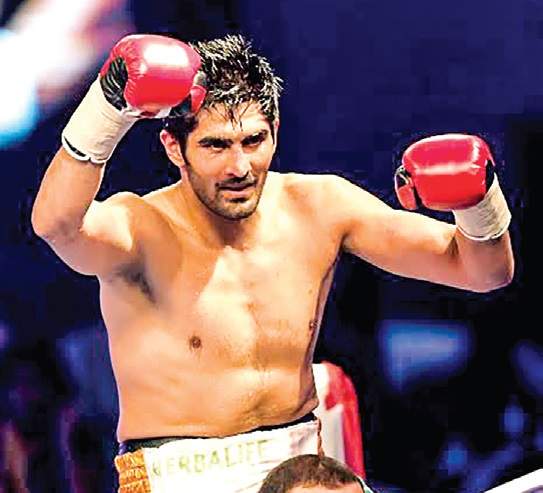
    NEW DELHI (TIP): Indian boxing star Vijender Singh will defend his WBO Asia Pacific super middleweight title on December 17 on home turf but the opponent for the clash will be decided later.

    “Vijender will be seen defending his WBO Asia Pacific Super Middleweight Champion title on 17th December 2016, at the Thyagaraj Stadium, New Delhi,” Vijender’s India promoters Infinity Optimal Solutions said in a release.

    The fight night will also see top Indian boxers, including Akhil Kumar and Jitender Kumar, make their pro-boxing debut. The names of these boxers and their international opponents would be revealed soon.

    Till date, Vijender has a record of 7 out of 7 wins with 6 knockouts in 27 rounds. The Haryana-dasher had won the title in front of delirious home fans in the capital.

    Commenting on his next fight, Vijender said, “I have been in Manchester, UK for the last two months, training hard for my next fight. My trainer has been giving me high intensity training sessions, which has made my punches more powerful than before.

    “I am ready to fight anybody as suggested by the World Boxing Organisation (WBO). I am confident that I will be able to defend my title with as much pride as I won it. I am looking forward to 17th December 2016, and hope to repeat history,” he added.

    Neerav Tomar, Promoter, IOS Boxing Promotions, added, “After the fantastic response from the last fight, we are going to be back with more power and more action this winter. We are hoping for a bigger and better event. I am confident that Vijender will put up an excellent show and will defend his title.” Vijender’s UK-based promoters Queensberry Promotions’ Francis Warren said the India boxer’s career has been peaking perfectly. (PTI)

  • Djokovic congratulates Murray for becoming World No. 1

    Djokovic congratulates Murray for becoming World No. 1

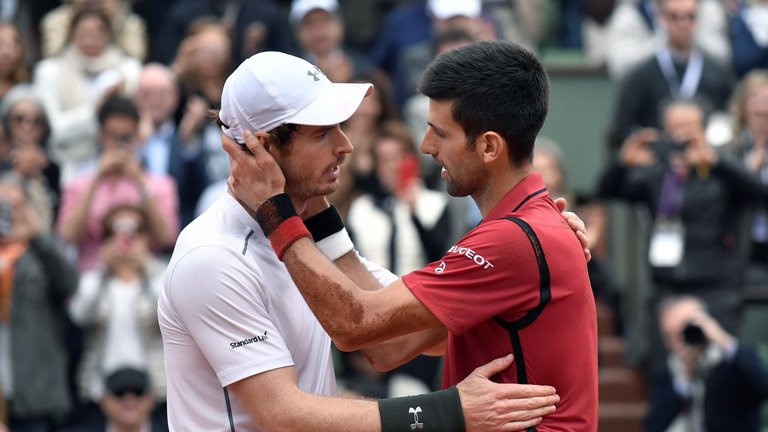
    LONDON: Serbian Novak Djokovic has congratulated his successor Andy Murray after the Scotsman dethroned him as the World No.1 men’s tennis player.

    Djokovic was removed from the No.1 spot for the first time in 122 weeks.

    “Congratulations Andy Murray! Very well deserved and hard fought milestone,” Djokovic wrote on his Facebook page on Monday.

    Murray claimed the top spot last Sunday (6 November) by winning his eighth title of the year at the Paris Masters.

    His elevation ensured he will be the top seed in the season-ending World Tour Finals in London.

    Djokovic began the year strongly with wins at the Australian Open and the French Open but has suffered an alarming dip in form recently.

    It allowed Murray to take advantage of his form loss and claim the summit spot in the rankings.

    Djokovic praised Murray for his relentless pursuit but said he is looking forward to the November 13 starting London tournament to regain his form.

    “Your dedication and passion has paid off, and I am really happy to be in the same era with you! As to all my fans, thank you for being there for me. I am working hard and will see you all in London! I am always game when it comes to good challenges and final 8 is exactly that. See you in a few days,” he wrote. (IANS)

  • Sharapova to return as UN goodwill ambassador in April

    Sharapova to return as UN goodwill ambassador in April

    UNITED NATIONS (United States) (TIP): Maria Sharapova will once again be a UN goodwill ambassador when her doping ban expires in April and she returns to international tennis competition, a UN statement said on Nov 10.

    The United Nations had suspended Sharapova’s role as goodwill ambassador in March after she failed a drug test, putting a hold on a nine-year partnership with the UN Development Programme.

    “UNDP was glad to learn that Maria Sharapova can return to the sport she loves sooner than expected and we will lift the suspension of her role as our goodwill ambassador once the reduced ban expires in April 2017,” said a UNDP spokesperson.

    “We understand that Ms. Sharapova will be focused on resuming her tennis career and we look forward to discussing her role and engagement with UNDP at an appropriate date.”

    Last month, the Russian star’s 24-month ban for testing positive for meldonium was cut to 15 months by the Lausanne-based Court of Arbitration for Sport.

    Sharapova, 29, had admitted using meldonium for 10 years to help treat illnesses, a heart issue and a magnesium deficiency.

    As a goodwill ambassador, Sharapova has been active in helping recovery efforts after the 1986 Chernobyl disaster.

    The tennis sensation has made visits to Belarus and donated $100,000 to support youth projects in rural areas that suffer from the after-affects of the Chernobyl nuclear accident.

    Sharapova’s family fled the city of Gomel in Belarus in 1987 after the Chernobyl disaster, moving to Siberia where the tennis star was born.

    The family lived in Nyagan, Siberia for two years and then moved to Sochi on the Black Sea where Sharapova took her first tennis lessons. (AP)