Month: November 2016

  • Racist Post calls Michelle Obama ‘ape in heels’

    Racist Post calls Michelle Obama ‘ape in heels’

    The director of a West Virginia development group and a mayor are under scrutiny after a racist post about first lady Michelle Obama attracted a backlash and prompted calls on social media for both women to be fired.

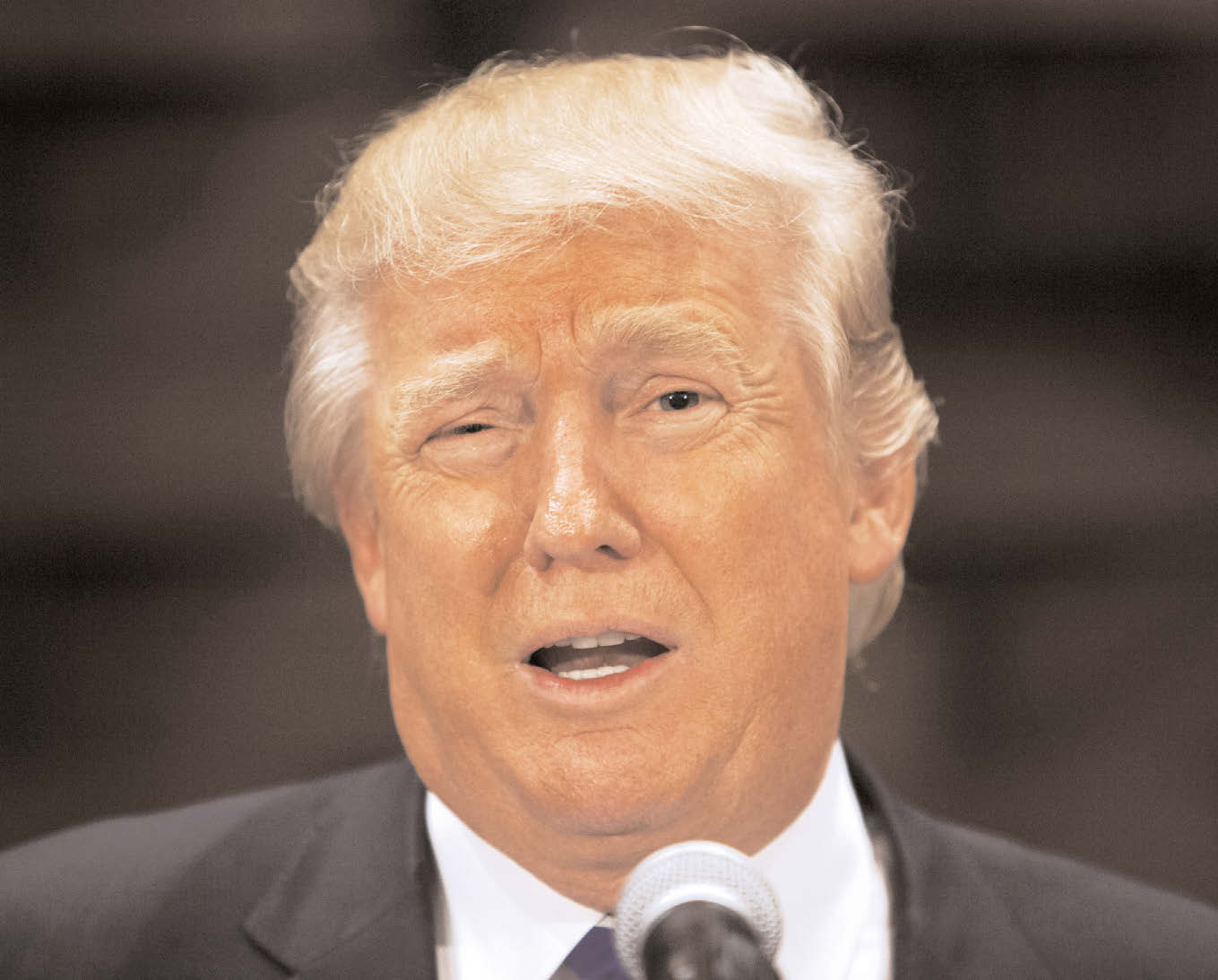
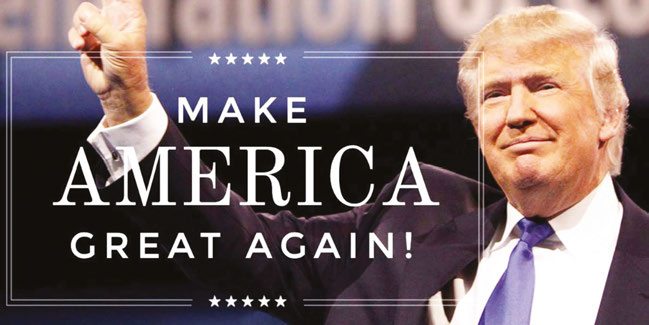
    Clay County Development Corp director Pamela Ramsey Taylor made the post following Donald Trump’s election as president.

    Her post said, “It will be refreshing to have a classy, beautiful, dignified First Lady in the White House. I’m tired of seeing a Ape in heels.”

    Clay Mayor Beverly Whaling responded, “Just made my day Pam.” It was shared hundreds of times on social media.

    A call to the Clay County Development Corp went unanswered and Whaling didn’t immediately return a telephone message today.

  • Pakistan Must Take More Effective Action Against Terror Groups – Obama

    Pakistan Must Take More Effective Action Against Terror Groups – Obama

    WASHINGTON: Pakistan “can and must” take more effective action against terror groups operating from its soil as no state should allow its territory to be used to launch attacks into another, the White House has said.
    “While recognising the sacrifices of the people and the security forces of Pakistan in fighting some militant and terrorist networks — a fight which we support — President (Barack) Obama has emphasised that Pakistan “can and must” also take more effective action against terrorist groups operating from its soil,” a senior White House official said yesterday.
    “The President has made it very clear that no state should allow its territory to be used by terrorists to launch attacks into another state, and we will continue to engage on this issue,” he said in response to a ‘We the People’ online petition that was signed by a record 665,769 people.
    The petition asked the Obama administration to declare Pakistan as a State Sponsor of Terrorism, as desired by a bill introduced in the US House of Representatives by two Congressmen Ted Poe and Dana Rohrabacher.
    “Since the bill cited by the petition remains in draft, we will not comment on it here,” he added. Meanwhile, the State Department has also refused to comment on the bill.
    “I am not going to get into a discussion about that. We routinely discuss with our Pakistani counterparts the importance for continued focus and energy on the counter-terrorism efforts and the terrorism threat, particularly along that spine between the two countries.
    “Our focus on this and the focus that we want to see Pakistan expend on it, that is not going to change,” State Department Spokesman John Kirby said.
    The State Department, he said, has seen comments made by the incoming administration on counter-terrorism.
    “I have seen some comments that they have made about a counter-terrorism focus. That is for them to address.
    “Nothing changes about our focus on the importance of regional, collaborative and effective counter-terrorism operations and to our interest in seeing all the countries in the region likewise expend a great deal of energy and effort and leadership on that. I just cannot speculate about the future and I would not do that,” Kirby added. 

  • Trump’s Meeting With Indian Real Estate Partners creates Conflict of Interest Panic

    Trump’s Meeting With Indian Real Estate Partners creates Conflict of Interest Panic

    A top American daily has raised questions over the recent meeting between Donald Trump and his Indian business partners, saying the President-elect could use his position to advance his business interests.

    “Washington ethics lawyers said that a meeting with Indian real estate partners, regardless of what was discussed, raised conflict of interest questions for Mr Trump, who could be perceived as using the presidency to advance his business interests,” The New York Times said in a news article yesterday.

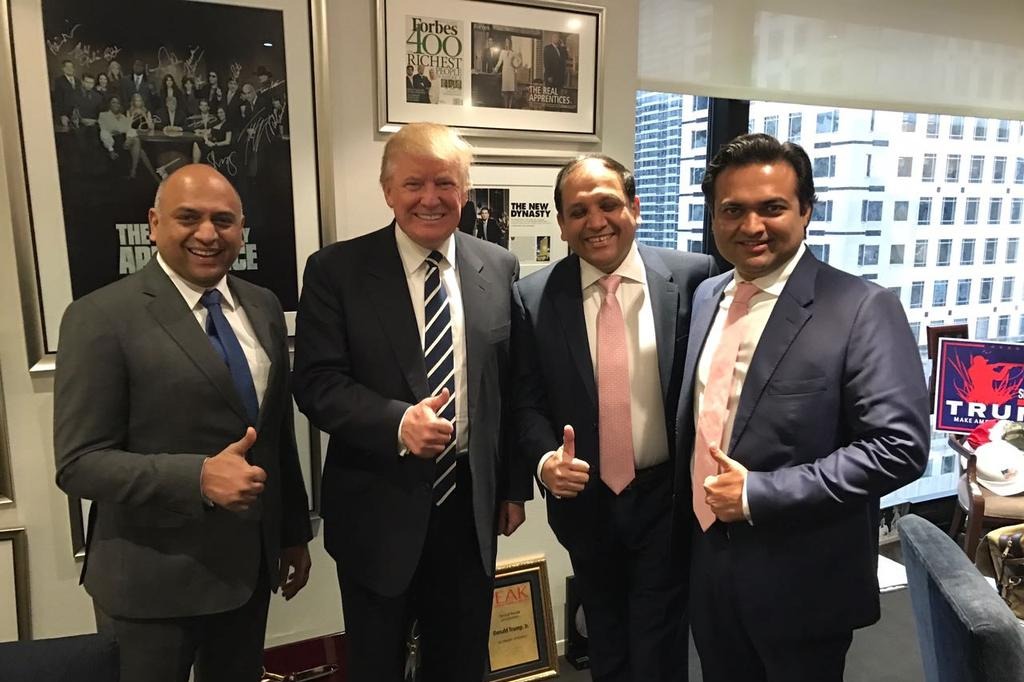
    Three Indian executives – Sagar Chordia, Atul Chordia and Kalpesh Mehta – had met Trump in New York last week. The three said that they have discussed expanding their partnership with the Trump Organisation now that Trump is President-elect.

    “It was not a formal meeting of any kind,” Breanna Butler, a spokeswoman for the Trump Organisation told The New York Times, which has been at loggerheads with Trump for the past several months during which Trump has accused the daily of negative reporting about him.

    “There may be people for whom this looks O K. But for a large part of the American public, it is not going to be O K.

    His role as President-elect should dictate that someone else handles business matters,” Robert L Walker, former chief counsel of the Senate Ethics Committee, who advises corporations and members of Congress on government ethics issues told the daily.

    “Donald Trump’s children and son-in-law have been deeply involved in the transition and selecting who will be part of his administration,” said Noah Bookbinder, the executive director of Citizens for Responsibility and Ethics.

    “At the same time they are deeply involved in the business. There does not seem to be any sign of a meaningful separation of Trump government operations and his business operations,” he said.

    The Trump Organisation said the family was moving to try to formally separate Trump from his family’s business ventures.

    “Mr Trump is not going to have dealings in the day-to-day business of that organisation,” Butler said.

  • Indian-Origin Sentenced To Prison For Helping ISIS in Chicago

    Indian-Origin Sentenced To Prison For Helping ISIS in Chicago

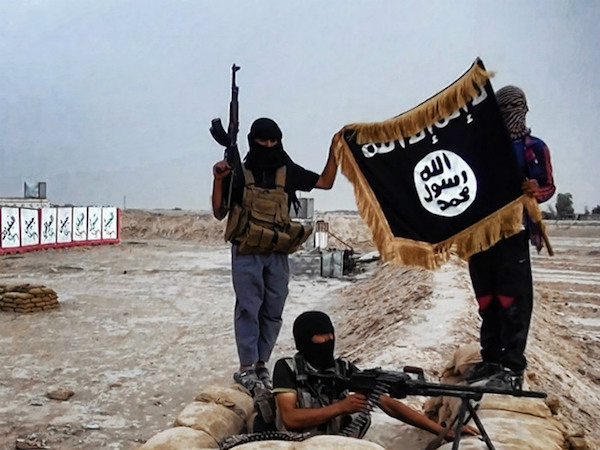
    An Indian American man who tried to go to Syria with his teenaged brother and sister to join the ISIS terror organisation has been sentenced in Chicago to 40 months in prison.

    Mohammed Hazra Khan, 21, became on Friday the first person of Indian origin to be convicted and sentenced in the US for ISIS connections.

    The sentencing hits the news just after the victory of Republican Presidential candidate Donald Trump, who had called for intensive investigation of Muslim immigrants and, controversially, suggesting that if necessary their immigration should be stopped temporarily till a mechanism for heightened scrutiny was in place.

    Federal Judge John J Tharp sentenced Khan, who had admitted in court last year to the charges of providing support to the ISIS and trying to go abroad to join it, Mary B McCord, the Acting Assistant Attorney General for National Security, said in a statement.

    The judge in the Northern Illinois federal court also ordered that for 20 years after his release, Khan should undergo intensive supervision that includes “violent extremism counselling” and a mental health treatment programme, she added.

    Khan was arrested by anti-terrorism officers two years ago while trying to leave the US from Chicago’s O’Hare Airport, she said. He was 19 years old at the time of his arrest.

    Khan’s brother, who was 16 years old in 2014, and sister, who was 17, were also stopped at the airport but did not face any charges and were let go after officials questioned them.

    Khan is an American citizen born in New York. But his family had immigrated from India and lived in the Chicago area, The Chicago Tribune reported quoting his lawyer Thomas Anthony Durkin.

    In a Tribune picture taken outside the courtroom, Khan’s mother, Zarine, was seen wearing a hijab and his father, Shafi, a long beard. The newspaper said that Khan wore a skullcap inside the court.

    ABC News reported that last year, his mother had publicly asked ISIS leaders to “leave our children alone” and asserted: “The venom spewed by these groups and the violence committed by them find no support in the Quran and are completely at odds with our Islamic faith.”

    Durkin told the judge that Khan did not intend to wage war against the US but was naive and only wanted to join an Islamic caliphate and live according to Muslim doctrine, according to the Tribune.

    Tharp did not buy the argument. The Tribune reported that the judge said: “Mr. Khan set off to join and aid a terrorist organization that believes it is appropriate, indeed believes it is holy, to kill anyone who disagrees with its religious dogma.”

    Tharp referred to the behaviour of ISIS and told Khan that “instead of a public beheading, you have been given a public trial,” ABC News reported.

    Khan could have been sentenced to 15 years, but the prosecutors asked for only five years because he had cooperated in other prosecutions and the judge gave the even more lenient sentence of 40 months.

    With the two years he spent in custody and remission for good behaviour, he would eligible to be free to join college next year, ABC News said.

    The Tribune said that according to prosecutors, Khan helped with investigations against an ISIS terrorist and recruiters and had also offered to testify against a British ISIS recruiter, Mizanur Rahman.

  • US Records Highest Increase in Students from India

    US Records Highest Increase in Students from India

    A record 165,918 Indians were studying in the US during academic year 2015-16, a rise of 25 per cent over the last year, making it the second leading country of origin among international students in America, according to a report released today.

    “This was the highest absolute increase of students ever and followed the previous year’s record growth,” according to the 2016 Open Doors Report on International Educational Exchange.

    For the second year in a row, India has accounted for the largest growth of international students in America with the number of foreign students in US universities surpassing one million for the first time during the 2015-16 academic year.

    The Open Doors report is published annually by the Institute of International Education in partnership with the US Department of State’s Bureau of Educational and Cultural Affairs.

    “The new report indicates there were a record 165,918 students from India, a 25 per cent increase on the year before, making it the second leading country of origin among international students in the United States,” it said.

    The US hosts more of the world’s 4.5 million globally mobile college and university students than any other country in the world, more than double the number hosted by the UK, the second leading host country, the US Embassy here said in a statement, quoting from the report.

    China remains the top sending country, with almost twice the number of students in the US as India, but India’s rate of growth and absolute increase outpaced China’s, said the latest reports of Open Doors Report on International Educational Exchange data released by the Institute of International Education (IIE) in partnership with the US Department of State’s Bureau of Educational and Cultural Affairs.

    “In 2015-16, there were nearly 69,000 more international students in US higher education compared to the previous year,” it said.

    “Higher education continues to be the bedrock of our people to people ties. More students from India studied in the United States than ever before – at all levels – and I am especially pleased to see the record back-to-back, year-on-year growth in student numbers,” US Ambassador Richard Verma was quoted as saying in the statement.

    “With efforts such as our Passport to India initiative, we are also seeing the number of American students in India beginning to grow,” he added.

    India accounts for one out of every six international students in the US. Approximately three-fifths of Indian students are at the graduate level and three-fourths are in the STEM fields (science, technology, engineering, and mathematics).

    Open Doors also reports that over 313,000 US students received credit last year for study abroad during 2014-15, an increase of nearly three per cent over the previous year.

    “India is ranked 13th among the top 25 destinations of US study abroad. The number of US students going to India to study for academic credit at their home university in the US decreased by 3.2 per cent to 4,438, although this number has remained relatively flat across the last five years at 4,500,” the report said.

    Students from the top three countries of origin – China, India, and Saudi Arabia – now represent approximately 53 per cent of the total enrollment of international students in the United States, the report said.

  • Indian-American Couple Charged With Human Trafficking In California

    Indian-American Couple Charged With Human Trafficking In California

    An Indian-American couple has been indicted on human trafficking charges related to forced labour of foreign nationals primarily from India, authorities have said.

    A federal grand jury charged Satish Kartan, 43, and his wife Sharmistha Barai, 38, with conspiracy to commit forced labour and the commission of forced labour.

    Mr Kartan has also been charged with fraud in contacting foreign labour and Ms Barai with benefiting from forced labour, the Department of Justice said on Thursday.

    If convicted, each defendant faces a maximum sentence of 20 years in prison and a $250,000 fine.

    The couple from California were arrested on October 21, on a criminal complaint and were released on bond with special conditions that prohibit them from hiring any non-relatives to perform domestic services or child care work for them. The arraignment is scheduled for November 21.

    According to court documents, between February 21, 2014, and October 3, 2016, Mr Kartan and Ms Barai hired workers from overseas to perform domestic labour in their homes in Albuquerque, New Mexico; Stockton and elsewhere in the US.

    In advertisements seeking workers on the internet and India-based newspapers, the couple made false claims regarding wages and duties of employment, federal prosecutors alleged.

    “Once the workers arrived at the defendants’ residences, Mr Kartan and Ms Barai forced them to work 18 hours a day with limited rest and nourishment. The defendants did not pay wages and used force, physical restraint and coercive conduct to get the workers to perform the labour and services,” it said.

    The indictment alleges that Mr Kartan and Ms Barai struck one worker on multiple occasions, including in one incident where Mr Kartan grabbed her hands and caused them to be burned over the flames of a gas stove.

    Moreover, the indictment alleges that the defendants failed to pay another worker and told her that they would call the police if she tried to leave.

    When she was ultimately able to arrange to be picked up from the defendants’ house, Mr Kartan refused to provide her with the access code to the gated community so that her ride could not enter, the court papers alleged.

  • Indian-American Woman Politician Threatened For Calling Anti-Trump March

    Indian-American Woman Politician Threatened For Calling Anti-Trump March

    An Indian-American woman politician in the US has received hundreds of angry emails and phone calls, some telling her to “go back to India”, after she called for a nation-wide protest against President-elect Donald Trump.

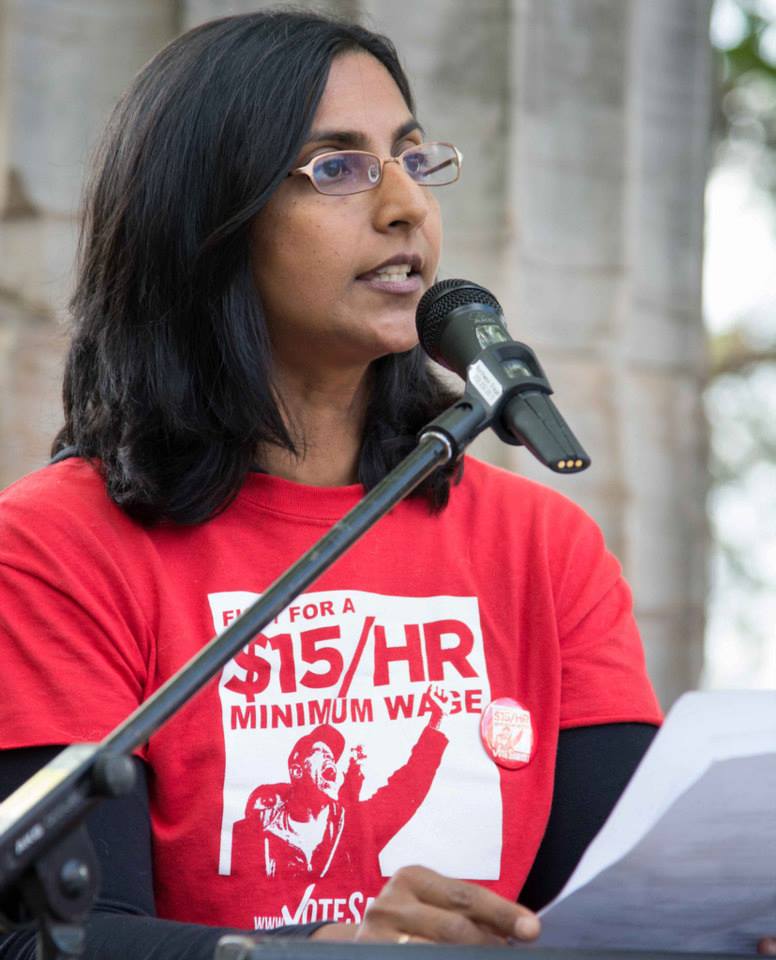
    Kshama Sawant, a Seattle Councilwoman is one of the few socialist office holders in the US, has been receiving “vicious threats and racist comments” after she appealed her supporters to publicly protest against the inauguration of Trump as the 45th president of the US in January, media reports said.

    “Join me, I appeal to you,… Let’s have a massive protest and tell America we do not accept a racist agenda and let’s make sure that on Inauguration Day, on the 20th and 21st of January, let’s do a nationwide shutdown and occupy inauguration,” Ms Sawant said at a post-election press conference at Seattle City Hall on November 9.

    The video of her press conference has gone viral on the social media. As a result, her office has been receiving all kinds of threatening messages.

    “I will come and tattoo a swastika on your head and on that bitch’s head,” a (Ms Sawant) staffer was told on phone, Council spokesperson Dana Robinson Slote told Q13 News in an email.

    “Go back to India bitch,” another email read. “I am tired of being shamed because I’m a white male. You automatically think I’m a racist. How about you go the (expletive) back to India or wherever you came from?” another email said.

    “Ever stop to think we see (Obama) as a racist? But we carried on and lived to fight another day. Stop being such a cry baby bitch and go hang yourself.”

    In 2013, Ms Sawant made history to become the first socialist elected in Seattle in 100 years by winning a City Council seat.

    Post general election, she has called her movement as “Build the resistance against Trump.”

  • Nikki Haley Elected Vice Chair Of Republican Governors Association

    Nikki Haley Elected Vice Chair Of Republican Governors Association

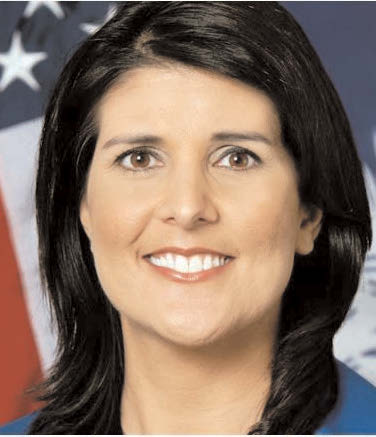
    Washington: Indian-American South Carolina Governor Nikki Haley has been elected Vice Chair of the powerful Republican Governors Association. 44-year-old Haley’s elevation to this position came amid reports that she is being considered for the position of secretary of state by President-elect Donald Trump.

    After the November 8 general elections, Republican Governors are now in charge of 33 States, something that has not happened in 94 years.

    Wisconsin Governor Scott Walker was elected Chair and Haley, the daughter of Indian immigrants, Vice Chair of the Republican Governors Association (RGA) for the year 2017. Yesterday, Haley met with Trump, 70.

    “Haley was pleased to meet with President-elect Trump. They had a good discussion, and she is very encouraged about the coming administration and the new direction it will bring to Washington,” Rob Godfrey, her deputy chief of staff said.

    “Haley’s strong leadership will be a major asset to the RGA in the upcoming year. She has worked tirelessly for the people of South Carolina, to make every day a great day for her constituents, and that is just the kind of determination the RGA expects of its leaders.

    “Her experience and insight will be integral to the success of our governors and candidates as we enter 2017,” outgoing RGA chair Governor Susana Martinez said.

    Haley said Republican governors are making a difference, delivering results to the people of their states, and the party’s record-breaking majority shows that the RGA knows what it takes to elect effective leaders.

    “I look forward to working with Governor Walker, a trusted friend and colleague, to recruit strong candidates and build on RGA’s historic progress in the months ahead,” she said.

    In an op-ed on CNN, South Carolina’s popular columnist Issac Bailey wrote Haley is perfectly positioned to do what many believed Hillary Clinton would have.

    “#NeverTrumpers have reason to admire her. Trump supporters have reason to embrace her and she has an opening with voting populations who have long been sceptical of the GOP (Republican party) and are now even more so because of Trump. Nobody should be mocking her now. Secretary of state or not, Haley could be a future political titan in a political party that finds itself with unprecedented levels of national power and internal chaos,” Bailey wrote.

    Haley could give Trump something to brag about and his supporters, desperate to deny the bigotry upon which their hero rose to national political prominence, something to point to, his willingness to appoint a woman from a minority group who did not cow to him during the election cycle, Bailey added.

  • Indian-American Amul Thapar On Donald Trump’s List For Supreme Court Judge Nominees

    Indian-American Amul Thapar On Donald Trump’s List For Supreme Court Judge Nominees

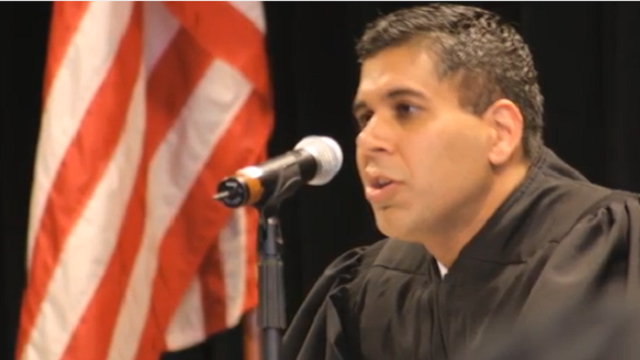
    Washington: Amul Thapar, an Indian-American jurist, may be nominated as a Supreme Court judge by US President-Elect Donald Trump.

    Mr Thapar’s name figured in Mr Trump’s second list of individuals who would be considered for the nomination of a Supreme Court judge. The list was announced on September 23. The nomination list now assumes significance since Mr Trump, as the 45th president of the United States, would be in a position to nominate the three Supreme Court judge.

    At present, Mr Thapar holds the position of US District Court Judge for the Eastern District of Kentucky.

    Venezuelan-born Federico Moreno, 64, who sits in the US District Court for the Southern District of Florida is the only other minority candidate to be shortlisted.

    The first Article II Judge of South Asian origin, he was nominated to this position by the former Republican president George W Bush.

    “He has taught law students at the University of Cincinnati and Georgetown. Thapar has served as an Assistant US Attorney in Washington and the Southern District of Ohio,” the Trump Campaign said.

    Immediately prior to his judicial appointment, Judge Thapar was the US Attorney for the Eastern District of Kentucky. Judge Thapar received his law degree from the University of California, Berkeley.

    “This list is definitive and I will choose Justices of the United States Supreme Court only from it,” Trump had said in September while releasing the list.

    “I would like to thank the Federalist Society, the Heritage Foundation and many other individuals who helped in composing this list of twenty-one highly respected people who are the kind of scholars that we need to preserve the very core of our country and make it greater than ever before,” he said.

    Born in Detroit, Michigan, in 1969, Mr Thapar was nominated by George W Bush on May 24, 2007, to a seat vacated by Joseph M Hood. He was confirmed by the Senate on December 13, 2007, and received commission on January 4, 2008.

    Mr Thapar has also served as an Adjunct Professor at Georgetown University Law Center, and was an Adjunct Professor at the University of Cincinnati College of Law, where he taught Federal Criminal Practice. He graduated from the renowned Boalt Hall School of Law of the University of California after receiving his undergraduate degree from Boston College.

  • Donald Trump Will Build Greater Relations With India: US-India Political Action Committee

    Donald Trump Will Build Greater Relations With India: US-India Political Action Committee

    Donald Trump should begin work to kick-starting the economy, enforcing immigration laws and tackling terrorism in Asia, a US-India political action committee has said, as it expressed confidence that the US will have “greater relations” with India under his presidency.

    The US-India Political Action Committee (USINPAC) congratulated Trump on winning the 2016 Presidential race and commended efforts of all Indian-American supporters who canvassed and fund raised for this successful campaign.

    USINPAC Indiana Chair and Chair for Asians for Trump- Pence Campaign Raju Chinthala described Trump’s election win as “historical” in American history, saying “he has changed major political system in USA. He will be a great president and will build greater relations with India.”

    Assuring the support of Indian-Americans to a Trump administration, USINPAC Chairman Sanjay Puri said Trump “must work on kick starting the economy, tackling ISIS and terrorism in Asia. The Indian-American community congratulates President Trump on such a decisive win and pledges to work with the new administration.”

    RNC National Committee woman from California Harmeet Kaur Dhillon said Trump’s “stunning” victory “heralds a new era of opportunity and promise” for all Americans, which will naturally benefit Indian-Americans.

    With Trump’s penchant for hiring the best talent, Ms Dhillon expressed confidence that many prominent Indian-Americans will be inducted into the new administration.

    “As a diverse community, Indian-Americans can expect the new President to focus on lowering regulatory burdens, reducing taxes on individuals and corporations, focusing on jobs and growth for America before other countries, enforce the laws of the United States, including its immigration laws, and keep our nation safe from harm,” Ms Dhillon said.

    Ms Dhillon added that the country’s leaders have failed to put the nation first, enabling foreign nations to perceive America as weak.

    The committee said foreign policy challenges for Trump will include eliminating ISIS, renegotiating the NATO treaty, reconfiguring US relations with Russia and the war in Syria and illegal immigration.

    “President Trump now has the mandate to navigate the party to the future with a mix of conservatism and populism,” it said.

    The political action committee focuses on the over 3.2 million Indian-Americans and works on issues that concern the community. It supports candidates for local, state and federal office and encourages political participation by the Indian- American community.

  • Indian-American Kamala Harris’s rejects Trump’s Racism and xenophobia policies

    Indian-American Kamala Harris’s rejects Trump’s Racism and xenophobia policies

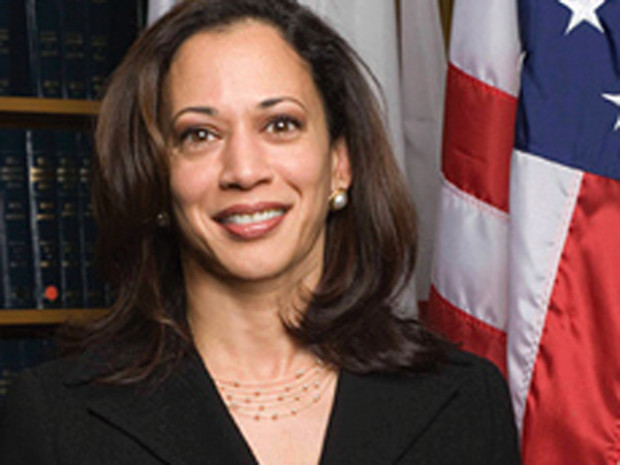
    Washingron: Indian-American Kamala Harris, who scripted history by winning a Senate seat, has said she would open a battlefront against President-elect Donald Trump’s anti-immigration policies, saying “we must reject racism and xenophobia in our politics”.

    Kamala Harris would be sworn in as US Senator on January 3.

    “I recognise that Tuesday’s election has made millions of people in this country feel powerless and afraid of what is to come,” Ms Harris, 52, said in an email sent to her supporters launching a signature campaign against Trump’s policies on immigrants.

    Ms Harris, the first Indian-American elected to the Senate from California, described Trump’s immigration policies like mass deportations and wall along the US-Mexico border as “absolutely unrealistic” at a news conference in California.

    A two-term Attorney General of California, she would be sworn in as US Senator on January 3.

    “Our diverse movement and the responsibility the people have granted me in this office comes into play. We have the power to give a voice to the voiceless in Washington as we advance an agenda rooted in justice and equality, she said.

    “It is no secret that there exists two divergent directions for our country to take on immigration reform and the treatment of our immigrant communities, both documented and undocumented.

    “One side believes it is okay to demagogue immigrants, has proposed unrealistic plans to build a wall, and is promising to break up families by deporting millions of people. The other side believes in respect, justice, dignity and equality as part of an approach to bring millions of people out of the shadows,” she said.

    Ms Harris said she want every immigrant family in this country as well as the new Trump administration to know exactly where she stands on immigration reform.

    “We must reject racism and xenophobia in our politics as we work to protect our immigrants through real reforms. Right now is a time to bring people together. To unite our country around the common values and ideals that actually make us great. Demagoguing or outright attacking communities of colour is not a real plan, it is a recipe for disaster.

    “What we must do is rededicate ourselves to the fight for who we are and build a coalition that is ready to join that fight because we are stronger when we are inclusive,” Ms Harris, whom President Barack Obama had described as fearless, said.

    Ms Harris has already talked with her future Democratic colleagues about “banding together” to protect immigrants from what she described as the draconian immigration proposals of the President-elect, Los Angeles Times reported.

    “I intend to fight for a state that has the largest number of immigrants, both documented and undocumented. We must bring them justice and dignity and fairness through comprehensive immigration reform. I intend to fight for ‘Black Lives Matter’ and to ensure truth, transparency and trust in our criminal justice system and to fight for a woman’s access to healthcare and reproductive rights,” she added.

  • Cashless is painful: Address the panic in the street

    Cashless is painful: Address the panic in the street

    Post-demonetization, the country is in a state of economic convulsion.

    To keep it from turning into a social seizure, the government has appealed to patriotic fervor, raising every notion from the soldier’s suffering to the promise of a clean and bright financial future for the country. The poor are celebrating and the rich are losing sleep, the Prime Minister has formulated. The reality is that after a few days of initial excitement, the consequential enormity of the decision to demonetize is beginning to set in, both within the government and the masses, the poor included.

    There are many who support the decision in principle but say the implementation should have been better planned. That is perhaps an unreal expectation, given the very nature of the operation. The requirement of surprise necessitated that implementation-level government hands could not be involved. A lot of the planning is thus happening in real time, as the scheme moves along. Therefore, the government is constantly finessing the cash withdrawal, which only adds to the confusion and panic. Small trade has dropped drastically, daily-wage earners in the unorganized sector are missing out on employment, vegetables are rotting, farm cooperatives have been rendered inoperative for the time being, and the huge majority that was yet to enter the banking system is at its wit’s end on how to exchange their old currency.

    Social media, often taken as a barometer of national sentiment, has largely given a thumbs-up to the scheme. But this could be misleading, because the middle and lower middle classes that inhabit this space have alternative means of survival. The rich, who run the economy, and the rural poor are only yet forming their opinion based on their felt experience, which may not be very pleasant. The government will do well to pay heed to every section. The woeful lack of currency and means of its distribution have betrayed a lack of planning. Given the official haphazardness, who can feel assured that the implications for the long term -projected to be positive – have been calculated accurately? Tomorrow will be understood only when the dawn comes.

  • North Korea slams South’s deal with ‘sworn enemy’ Japan

    North Korea slams South’s deal with ‘sworn enemy’ Japan

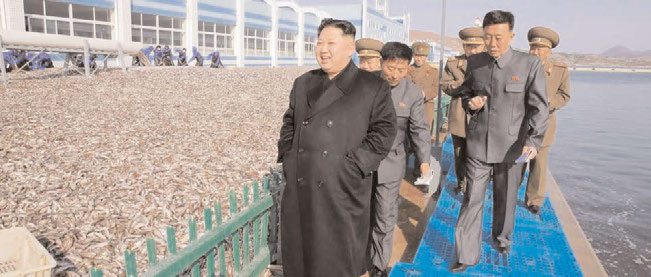
    SEOUL (TIP): North Korea lashed out on Nov 17 at a new South Korea-Japan intelligence-sharing accord, accusing Seoul of a gross act of betrayal with the “sworn enemy” of the Korean people.

    The deal to share defence intelligence — largely driven by the growing threat of the North’s nuclear and missile programmes — was reached and provisionally signed in Tokyo on Monday.

    It was a controversial move in South Korea, where the legacy of Japan’s harsh 1910-45 colonial rule of the Korean peninsula is a deep well of anti-Japanese sentiment and a belief that Tokyo has never properly atoned for the abuses of that era.

    Tensions between South Korea and Japan are welcomed and even encouraged by North Korea, which seizes any opportunity to drive a wedge between the two key US military allies in the region.

    A spokesman for the Korea Asia- Pacific Peace Committee in Pyongyang called the intelligence agreement a “hideous act of treachery aimed to stifle fellow countrymen in the north in league with the sworn enemy of the nation”. (AFP)

  • A Day of giving Thanks that changed over time: Food, Festivities, Parade, and Many More

    A Day of giving Thanks that changed over time: Food, Festivities, Parade, and Many More

    Thanksgiving, one of the biggest festivals in the US and Canada (observed on fourth Thursday of November in US and second Monday of October in Canada), was originally celebrated as a day of giving thanks for the blessing of the harvest and of the preceding year. It has a deep-rooted history of religious and cultural traditionsthat also reflects the foundation of America – a land of immigrants with secular values.

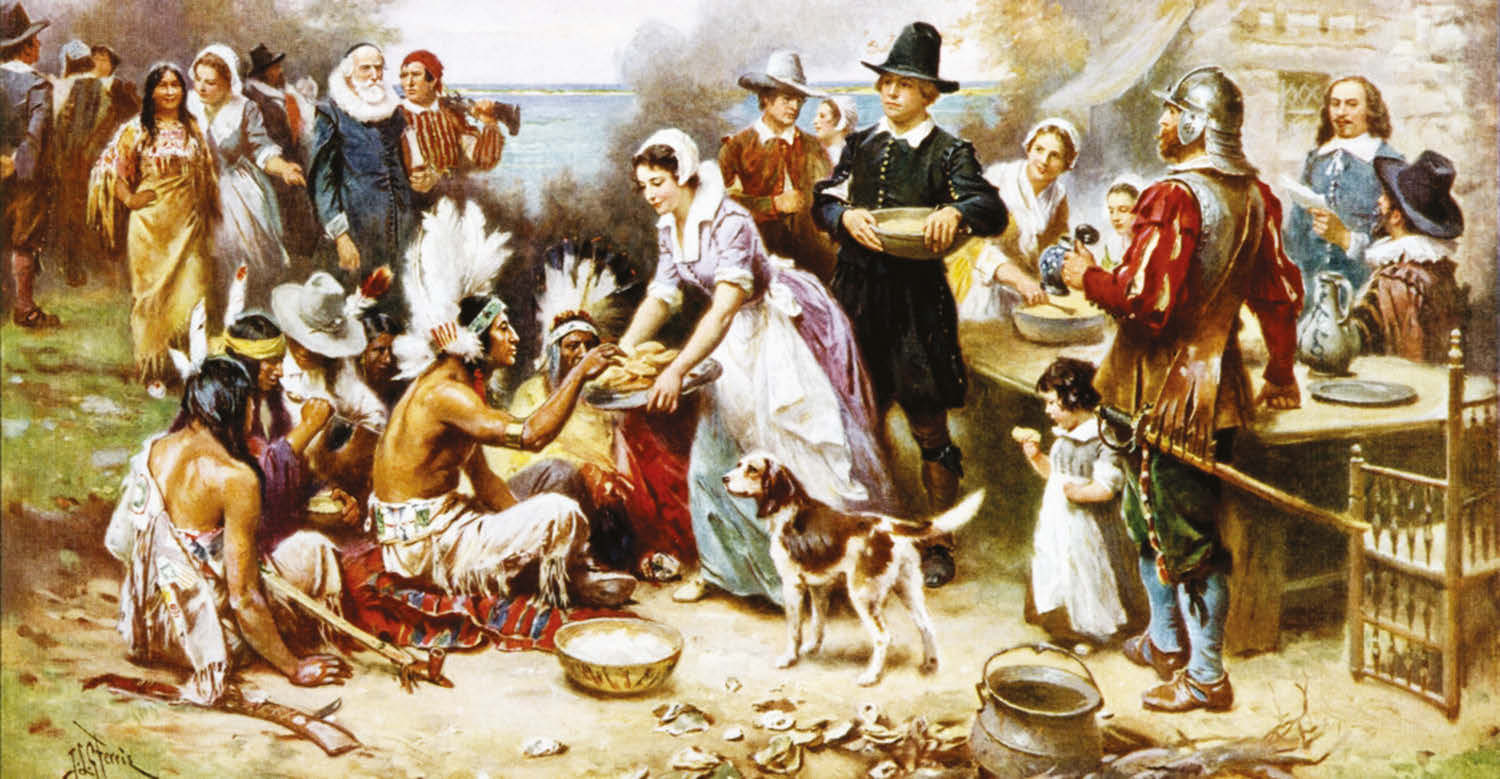
    Thanksgiving holiday’s history in North America is rooted in English traditions dating from the Protestant Reformation.In 1621, the Plymouth colonists and Wampanoag Indians shared an autumn harvest feast that is acknowledged today as one of the first Thanksgiving celebrations in the colonies. For more than two centuries, days of thanksgiving were celebrated by individual colonies and states. It wasn’t until 1863, in the midst of the Civil War, that President Abraham Lincoln proclaimed a national Thanksgiving Day to be held each November.

    In September 1620, a small ship called the Mayflower left Plymouth, England, carrying 102 passengers-an assortment of religious separatists seeking a new home where they could freely practice their faith and other individuals lured by the promise of prosperity and land ownership in the New World. After a treacherous and uncomfortable crossing that lasted 66 days, they dropped anchor near the tip of Cape Cod, far north of their intended destination at the mouth of the Hudson River. One month later, the Mayflower crossed Massachusetts Bay, where the Pilgrims, as they are now commonly known, began the work of establishing a village at Plymouth.

    In November 1621, after the Pilgrims’ first corn harvest proved successful, Governor William Bradford organized a celebratory feast and invited a group of the fledgling colony’s Native American allies, including the Wampanoag chief Massasoit. Now remembered as American’s “first Thanksgiving”-although the Pilgrims themselves may not have used the term at the time-the festival lasted for three days.

    During the American Revolution, the Continental Congress designated one or more days of thanksgiving a year, and in 1789 George Washington issued the first Thanksgiving proclamation by the national government of the United States.

    In 1817, New York became the first of several states to officially adopt an annual Thanksgiving holiday. In 1863 at the height of the Civil War Abraham Lincoln in a proclamation entreated all Americans to ask God to “commend to his tender care all those who have become widows, orphans, mourners or sufferers in the lamentable civil strife” and to “heal the wounds of the nation.”He scheduled Thanksgiving for the final Thursday in November, and it was celebrated on that day every year until 1939, when Franklin D. Roosevelt moved the holiday up a week in an attempt to spur retail sales during the Great Depression. Roosevelt’s plan, known derisively as Franksgiving, was met with passionate opposition, and in 1941 the president reluctantly signed a bill making Thanksgiving the fourth Thursday in November.

    In the United States, certain kinds of food are traditionally served at Thanksgiving meals
    In the United States, certain kinds of food are traditionally served at Thanksgiving meals

    Though the tradition of giving thanks to God is continued today in many forms,in many American households, the Thanksgiving celebration has lost much of its original religious significance; instead, it now centers on cooking and sharing a bountiful meal with family and friends. In the United States, certain kinds of food are traditionally served at Thanksgiving meals.Turkey, a Thanksgiving staple so ubiquitous it has become all but synonymous with the holiday, today nearly 90 percent of Americans eat the bird. Other traditional foods include stuffing, mashed potatoes, cranberry sauce and pumpkin pie.

    Thanksgiving is also synonymous with charity. Communities often hold food drives and host free dinners for the less fortunate. Volunteering is a common Thanksgiving Day activity. The Salvation Army enlists volunteers to serve Thanksgiving dinners to hundreds of people in different locales.

    Parades have also become an integral part of the holiday in cities and towns across the United States. Presented by Macy’s department store since 1924, New York City’s Thanksgiving Day parade is the largest and most famous, attracting some 2 to 3 million spectators along its 2.5-mile route and drawing an enormous television audience. It typically features marching bands, performers, and elaborate floats conveying various celebrities. The float that traditionally ends the Macy’s Parade is the Santa Claus float, the arrival of which is an unofficial sign of the beginning of the Christmas season.

    Thousands line the streets of Manhattan to watch the Macy's Thanksgiving Day Parade
    Thousands line the streets of Manhattan to watch the Macy’s Thanksgiving Day Parade

    In modern America, for many, Thanksgiving Day means shopping. The day after Thanksgiving, often called Black Friday, traditionally indicated the beginning of the annual promotional frenzy. With promotional offers and discounts, the big stores used to be flooded with people. But in recent years that picture has changed a lot with increasing popularity of online shopping. Last year more people shop online than in stores on Thanksgiving Day – 41 million vs. 34.6 million. They also favor online shopping on Black Friday: 75.3 million vs. 74.2 million. Online spending increases 25% on Thanksgiving and 14% on Black Friday. In-store spending drops 10% from the previous year.

    Keeping its tradition, Thanksgiving reflects the changing face of Today’s America.

  • A test of American Character: Trump insurgency will not melt away

    A test of American Character: Trump insurgency will not melt away

    In his masterly study, ‘The American Character’, first published in 1944, Professor D.W. Brogan had spoken of how “the American experience” had bred, among other attitudes, a preference for “the temper of the gambler” in the new settlers in North America.

    In the 2016 presidential contest the Americans abundantly gave in to that temper of the gambler when they voted in as President a man who defied every known parameters of eligibility, competence and character. The rest of the world may find this gamble distasteful but Donald Trump did devise a campaign that catered to the Americans’ visceral fears and anxieties.

    Simply put, Trump is truer to the American character than his rivals and adversaries.

    In the 1956 edition of The American Character, Professor Brogan had explained and elaborated why the Americans fell for Senator McCarthy and his manic witch-hunting: “He (McCarthy) was, obviously, a symptom of the uneasiness with which the average American watched a world get out of hand and dangerous to a degree that the human race had never known.” McCarthy had tapped into those fears of the Americans and he was particularly successful because he was also appealing to “a tradition of rural radicalism”, which, according to Brogan, included “a faintly concealed anti-Semitism.” Trump had managed to ignite all the ancient and dormant prejudices and passions that rural Americans had long nurtured. Persistently and consistently, his campaign kept honing in on the under-educated, under-employed white male voter and his ugly resentments. And, now we know for sure that very, very many Americans had never cured themselves of those dark attitudes and reflexes of the early 1950s.

    Perhaps another way to understand the 2016 American presidential vote is to see it as a joyful rolling back of the post-Watergate morality. When the Americans kicked Richard Nixon out of the White House, they settled for a comfortable assumption that they have exorcised themselves of all the low cunning and baser instincts that man had come to represent. The Democrats/liberals/the “Rockefeller Republicans all strutted that “decency” and “openness” and “truthful” had been restored as core values in the working of the United States government at home; and, they asserted that “human rights” and “democracy” and “dissent” should be the guiding principles of American foreign policy. The policy elites among the Republicans and the Democrats behaved as if they had stumbled upon the magic potion that would cure their domestic politics of all its deficiencies as well as entitle them to preach to the other nations how to conduct themselves, at home and abroad. That post-Watergate morality eventually turned sour, especially for the white Americans.

    Openness brought in too many immigrants who became too ubiquitous as they excelled and outpaced the white Americans in the competitive arenas across the American society and economy. That was not all. The “professional politicians” and their accomplices in the media and entertainment industry had conspired to elect a black man to the White House in 2008. That, dear sir, was nothing but a blasphemy. And, now they wanted a woman to be the “Commander-in-Chief.” No way. That would not be allowed to pass.

    The Americans are obviously tired of political correctness. They seem to be particularly tired of liberals and their fashionable sentimentalities. The liberals themselves have not always behaved honorably or honestly; hence, Ms Clinton’s all too obvious “trust deficit.” More than that trust deficit was the “I-am-like-that-only-and- you-have-to-take-it-or-leave it” attitude that, apparently, did not impress that many voters, not even the women voters. On the other hand, Trump did not allow himself to be cramped within the confines of the party system and its corrupted political morality; he mounted an insurgency -first, in the Republican Party and then in the United States at large.

    Each presidential election becomes an occasion to revisit what kind of society the Americans want, or should be allowed to have. The quintessential American character has reasserted itself. They are happy to fall for the resentful nationalism that Donald Trump doled out to them. Take a sample. Two days before the vote, on Sunday, Trump was in Minnesota telling a crowd: “To be a rich nation, we must also be a safe nation, and you know what’s going on here. The whole world knows what’s happening in Minnesota. Here in Minnesota, you’ve seen first-hand the problems caused with faulty refugee vetting, with large numbers of Somali refugees coming into your state without your knowledge, without your support or approval, and with some of them then joining ISIS and spreading their extremist views all over our country and all over the world.” And, then, he hopped over to Michigan, which has a sizeable Arab population, and told his supporters how the same faulty refugee vetting had “put your security at risk” and how “it puts enormous pressure on your schools and your community resources.” Both these states, traditionally inclined to vote for the Democratic column, ended up witnessing very close contests.

    Each presidential election also reaffirms old fault-lines as well as introduces new ones. The Trump campaign got its seemingly indefatigable energy from thinking of itself as a movement, out to overthrow the established order; the “religious right” lined up its fanatical exertions behind the Trump banner. The conundrum, then, becomes how will the new President accommodate and appease this worked-up fringe; as a matter of fact, the “fringe” is perfectly within its right to think of itself as the new “center.”

    Donald Trump cannot possibly pretend that these inspired mad caps did not provide a substantial push to his journey to the White House; nor can he abandon them or ignore their preference in making key appointments and then in crafting policies. Were he now to move to the “mainstream” and “center”, he would not only invite the charge of political dishonesty and intellectual duplicity but he also run the risk of invoking their fury.

    Donald Trump’s victory is not just a negative vote, aimed at preventing that “crooked Hillary” and her equally unlovable husband from coming anywhere near close to the White House; it is a positive vote, tapping the white Americans’ raw anger, promising to rewrite the Washington rule-book to suit the American character.

    It is not that this presidential vote has changed America overnight. The change had been in the making for some time. The vote clearly means that the Americans have abandoned their engagement with liberal imagination that began in 2008. The Obama experiment has left a bad taste in the American mouth. The Americans were itching to go back to the roots. The 2016 contest has merely re-aligned the presidential politics with the American society and its passions and prejudices.

    (The author is the chief editor of the Tribune group of newspapers)

  • MARS SURFACE TOO DRY TO BE HABITABLE: SCIENTISTS

    MARS SURFACE TOO DRY TO BE HABITABLE: SCIENTISTS

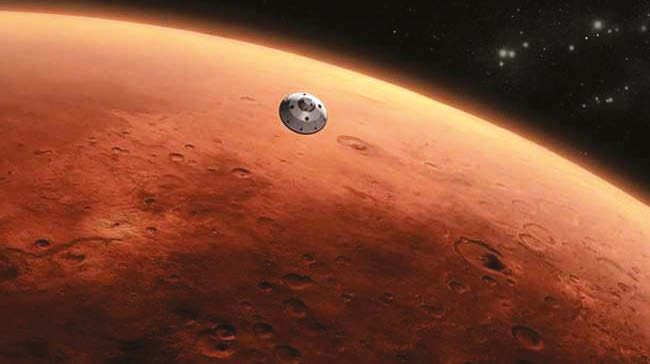
    LONDON (TIP): Mars is a primary target in the search for life outside Earth, and liquid water is the most important pre-requisite for life. But a team of international researchers has found that Mars is incredibly dry, and has been that way for millions of years.

    “Evidence shows that more than three billion years ago Mars was wet and habitable. However, this latest research reaffirms just how dry the environment is today,” said Christian Schroder, Lecturer at the University of Stirling in Britain

    “For life to exist in the areas we investigated, it would need to find pockets far beneath the surface, located away from the dryness and radiation present on the ground,” Schroder, who is also science team collaborator for NASA’s Mars Exploration Rover Opportunity mission, noted.

    The discovery, published in the journal Nature Communications, provides vital insight into the planet’s current environment and shows how difficult it would be for life to exist on Mars today.

    Using data from the Opportunity mission, the scientists examined a cluster of meteorites at Meridiani Planum — a plain just south of the planet’s equator and at a similar latitude to Gale crater.

    The researchers calculated a chemical weathering rate for Mars, in this case how long it takes for rust to form from the metallic iron present in meteorites.

    This chemical weathering process depends on the presence of water. It takes at least 10 and possibly up to 10,000 times longer on Mars to reach the same levels of rust formation than in the driest deserts on Earth and points to the present-day extreme aridity that has persisted on Mars for millions of years, the study said.

    A study published last year, which used data from the Curiosity Rover investigating Gale crater on Mars, suggested that very salty liquid water might be able to condense in the top layers of Martian soil overnight.

    “But, as our data show, this moisture is much less than the moisture present even in the driest places on Earth,” Schroder explained. Source: IANS

  • DRDO SCIENTISTS DEVELOP SURVEILLANCE UAV FOR ARMED FORCES

    DRDO SCIENTISTS DEVELOP SURVEILLANCE UAV FOR ARMED FORCES

    HYDERABAD (TIP): Heralding a new era in the indigenous development of Unmanned Aerial Vehicle (UAV), DRDO on Wednesday successfully carried out the maiden flight of TAPAS 201 (RUSTOM – II), a Medium Altitude Long Endurance (MALE) UAV.

    The test flight took place from Aeronautical Test Range (ATR), Chitradurga, 250 km from Bangalore. Chitradurga is a newly developed flight test range for the testing of UAVs and manned aircraft.

    The flight accomplished the main objectives of proving the flying platform, such as take-off, bank, level flight and landing. TAPAS 201 has been designed and developed by Aeronautical Development Establishment (ADE), the Bangalore-based premier lab of DRDO with HAL-BEL as its production partner.

    The UAV weighing two tonnes was piloted (external and internal) by the pilots from the Armed Forces. It is also the first R&D prototype UAV which has undergone certification and qualification for the first flight from the Center for Military Airworthiness & Certification

    (CEMILAC) and Directorate General of Aeronautical Quality Assurance (DGAQA).

    TAPAS 201, a multi-mission UAV is being developed to carry out the Intelligence, Surveillance and Reconnaissance (ISR) roles for the three Armed Forces with an endurance of 24 hours. It is capable of carrying different combinations of payloads like Medium Range Electro Optic (MREO), Long Range Electro Optic (LREO), Synthetic Aperture Radar (SAR), Electronic Intelligence (ELINT), Communication Intelligence (COMINT) and Situational Awareness Payloads (SAP) to perform missions during day and night.

    According to an official release, the development of UAV immensely contributes towards the Make-in-India initiative as many critical systems such as airframe, landing gear, flight control and avionics sub-systems are being developed in India with the collaboration of private industries. Defence Electronics Application Laboratory (DEAL) of DRDO has developed the data link for the UAV. Rustom- II will undergo further trials for validating the design parameters, before going for User Validation Trials. Source: TOI


  • New fitness tracker can tell you how much muscle, fat is your body made of

    New fitness tracker can tell you how much muscle, fat is your body made of

    GPS and navigation equipment and mapping devices producer TomTom on Wednesday launched a new Rs 13,999 activity tracker, TomTom Touch, along with two other products to penetrate the Indian GPS fitness watch market.

    According to the company, the lesser-priced TomTom Touch, comes with a new body composition analysis technology which is not available on any other fitness device available in the market.

    “Obesity is considered the core of many diseases. With Body composition analysis right at your wrist, it will be a great indicator of your overall well being and knowing your body composition changes. Now with this innovation, we’re making technology more accessible to everyone. So will our focus on fitter India,” Hitesh Ahuja, country manager, TomTom India, said, adding that India has the third most obese population in the world.

    “With the push of a button, TomTom Touch fitness tracker measures the percentage of body fat and muscle mass in the body. Until now, this metric has been available with dedicated scales or expensive technology. The launch of TomTom Touch fitness tracker now makes BCA more accessible to a broader audience,” Ahuja explained.

    The TomTom Touch fitness can be worn 24-7 and includes functions like tracking steps, sleep, all day heart-rate, calories burned. It also comes equipped with a sports mode for running, cycling or hitting the gym and also shows up smartphone notifications. Source: HT

  • Now apps to help you track ATMs, banks and post offices with cash

    Now apps to help you track ATMs, banks and post offices with cash

    Having trouble with cash or liquidity lately due to demonetisation exercises floated by the government? Worry not, as help is around the corner.

    Several app developers are working on new ways to help customers lay their hands on cash as quickly as possible and save them the trouble of looking for an ATM with cash.

    One such app is the Walnut app, which was originally designed to help users track their expenses. However, via a blog post, the app developer informed users that they had made a new feature available which could help users track ATMs with cash.

    Based on the ATM usage of more than 1.8 million subscribers of the app, Walnut not only points towards a functional ATM but also provides information about the length of queues at the ATM and the time it was last active.

    While green pins on the map interface inside the app means that the ATMs are currently active, orange pins denote that the ATMs were recently active and grey pins means that ATMs were last active in the last few days.

    “You can also help your friends and other people around you by sharing the location and queue status of a functional ATM. Every time you visit an ATM and successfully withdraw cash, we’ll send you a push notification to tell us the queue status at the ATM. We’ve also made it simple to share information about

    #ATMwithCash with your friends on WhatsApp, Facebook, Twitter and other social channels,” the blog post explained adding that the “more the number of Indians that use the app, the more improved the accuracy of the feature.”

    Walnut is not alone. Another app called Cashnocash also uses crowdsourcing mechanisms to help users track ATMs, banks and post offices with cash availability. Cashnocash, which went live on Monday, is founded by Manjunath Talwar and Abhijit Kansas and has data of over 4,000 ATMs in the country. The app-makers claim that nearly 8,000 people have already used the app.

    Talwar and Kansas reportedly said that they had approached banks for data on ATMs but were declined. They also said that they were talking to companies such as Hitachi, Secure One and CMS to get more data on ATMs to help more consumers.

    All the apps work mostly in the same format. When a user logs on to the website/app and searches for ATMs in a region, the result shows up a series of ATMs with cash and wait time. This helps other people logging into the app. However, there might be instances where several ATMs without information might show up as they might not have been used so far.

    Another such app is CMS’ own app named CMS ATM Finder. The Finder app provides information on ATMs managed by CMS. The site lets you choose your state and city and the list shows ATMs that are up and running. The site also allows the option to notify CMS if a particular ATM is shut or out of cash. CMS says if it is notified about an ATM not functioning or has run out of cash, it will take action quickly.

  • WhatsApp launches video calling to take on Google Duo, Skype

    WhatsApp launches video calling to take on Google Duo, Skype

    WhatsApp will launch video calling service on its app, a move that will help the popular messaging platform compete with the likes of Skype, Apple’s FaceTime and the recently launched Google Duo.

    The new feature will be rolled out to WhatsApp’s over one billion users over the next few days.

    “This has been in the works for some time and we are glad that we are launching the service from India, which has our largest userbase. Like voice calls, video calls are also going to be dynamic i.e. depending on the quality of network, the video will adjust accordingly,” WhatsApp Head of Business Neeraj Arora said.

    He added that like text and voice calling features, video calls will also be encrypted end-to-end to ensure safety and privacy of its users.

    “With the new update, users simply can choose between a voice or a video call and go ahead with the call,” he said.

    Arora did not give any estimates about the volume of video calls WhatsApp expects to facilitate in the coming days.

    In June, WhatsApp had announced that its platform saw over 100 million voice calls are made every day.

    “In line with the user base, India is one of the most active voice calling countries for us,” he added.

    Facebook-owned WhatsApp has almost become the default messaging application for people in countries like India and Brazil.

  • INDIAN AUTO INC CAN GENERATE 6.5CR NEW JOBS BY 2026: KENICHI AYUKAWA

    INDIAN AUTO INC CAN GENERATE 6.5CR NEW JOBS BY 2026: KENICHI AYUKAWA

    NEW DELHI (TIP): Indian automobile industry can contribute over 12 per cent to the country’s GDP and generate around 6.5 crore additional jobs over the next decade, a top Maruti Suzuki India official said.

    “Our vision is that over the next decade, the Indian automobile sector must contribute in excess of 12 per cent of the country’s GDP. We (auto industry) want to create nearly 65 million additional jobs by 2026,” Maruti Suzuki India Managing Director and CEO Kenichi Ayukawa said at an event here.

    Currently, the automobile industry is contributing 7.1 per cent to the GDP of India and around 3.2 crore people are employed directly and indirectly by the sector, he added.

    Ayukawa said in the last ten years, the total investment by the automobile industry in the country has been to the tune of 35 billion dollars.

    “Our responsibility towards the communities where we are operating also increases. It’s our duty to develop a sustainable, mutually beneficial and inclusive socio-economic ecosystem,” he said.

    He added that in order to grow the industry, we will have to focus on areas like congestion, air pollution, global warming and road accidents.

    “Our aim is to be among the top three global automobile markets. This will only happen if we create safe, efficient and environment-friendly vehicles,” Ayukawa said. Seeking more focus of the government on licensing norms and enforcement of road safety rules in the country, he added that such initiatives would help to achieve a more purposeful impact on the society.

    “Without robust licensing norms and enforcement, efforts of the industry in driving training falls short,” Ayukawa said. He added that long before the new Companies Act asked corporates to invest in CSR, many of its members had been already engaged in various CSR initiatives.

    “We have been specially focused in the fields of village development, skill training, safeguarding the environment and road safety. Now the time has come when we all get together as one entity to draft and implement an ‘Industry Social Responsibility Plan’ so that we can have a bigger positive impact,” he said.

  • NISSAN’S ELECTRIC CAR  ON ITS WAY TO INDIA

    NISSAN’S ELECTRIC CAR ON ITS WAY TO INDIA

    BENGALURU (TIP): Japan car maker Nissan on Wednesday said that it is working on bringing the much-awaited electric car Nissan Leaf to India, but declined to put a date on it as it believes that issues relating to tax and infrastructure in the country are yet to be sorted out.

    Arun Malhotra, managing director, Nissan India told FE that the company will launch the product at an opportune time. “We are ready, but there are some issues relating to government taxation and infrastructure. At this point of time, it does not make business sense to launch, you will have to wait and watch,” he said.

    The car company claimed that it has the pedigree and the necessary R&D might to launch Leaf in India and the team in Chennai is on the ‘back-end job’, not only for Indian market, but also for other overseas markets. Nissan Leaf is a compact five-door hatchback electric car manufactured by Nissan and introduced in Japan and the United States in December 2010, followed by various European countries and Canada in 2011.

    As of September 2016, the Nissan Leaf is the world’s all-time best selling highway-capable all-electric car with almost 240,000 units sold since 2010.

    Malhotra said as part of its plan to have a bigger play in the domestic market , Nissan will be rolling out Nissan GT-R on December 2, in Mumbai. Nissan had in September announced the start of pre-booking for the 2017 Nissan GT-R in India. The new GT-R was unveiled at the New York International Auto Show in March this year . “It is going to be an engineering marvel,” he quipped.

    Elaborating on the future plans, he said that the focus will be to increase the network and sales. Besides, number of products has to be scaled up.

    Malhotra said that the senior management of the company has already announced that between now and 2021, it will introduce 8 new models in India across Nissan and Datsun brands. Nissan Motor India reported domestic sales of 6,108 vehicles in October2016 versus 3,246 units sold in the same month a year ago. Source: FE


  • JPMorgan to pay over$250 million in China bribery case

    JPMorgan to pay over$250 million in China bribery case

    NEW YORK (TIP): JPMorgan Chase & Co will pay more than $250 million to settle allegations by the US government that it had hired children of Chinese decision makers to win business, a source familiar with the matter told Reuters.

    The bank will pay roughly $200 million combined to the Securities and Exchange Commission and the Justice Department and more than $50 million to the Federal Reserve, the source said.

    There will not be any individual prosecution at this time, the source said.

    The SEC opened an investigation into JPMorgan in 2013 over the hiring. The Justice Department opened a parallel investigation around the same time.

    Investment banks have a long history of employing the children of China’s politically connected. While close ties to top government officials are a boon to any banking franchise across the world, they are especially beneficial in China, where relationships and personal connections play a critical role in business decisions.

    The SEC, JPMorgan and the Justice Department all declined to comment.

    The settlement was first reported by Bloomberg. It will end a probe into whether the bank’s hires violated US anti-bribery laws, Bloomberg said.

  • Mistry avoids face-off, skips  two Tata board meetings

    Mistry avoids face-off, skips two Tata board meetings

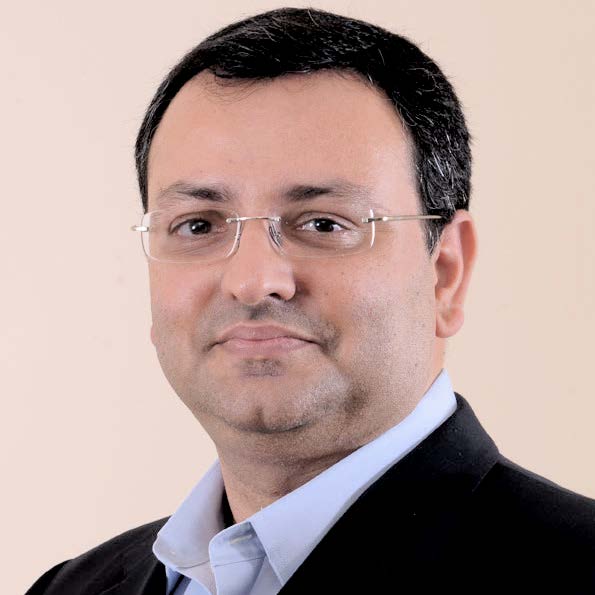
    Mumbai: Cyrus Mistry on Thursday skipped two crucial board meetings, of Tata Sons and Tata Consultancy Services (TCS), his first such absence since he was ousted as chairman from both companies.

    The board of directors of Tata Sons did not discuss issues linked to Mistry, Tata executives said. However, at the TCS meeting, which was chaired by Ishaat Hussain, it was decided that the company will convene an extraordinary meeting (EGM) on December 13 to remove Mistry as a director from its board. On November 10, Tata Sons had said Hussain will replace Mistry as TCS chairman.

    TCS is the first company from the Tata Group to fix the EGM date. In the next few weeks, boards of Tata Steel, Tata Motors, Indian Hotels and Tata Chemicals will also consider convening similar EGMs. Despite opposition from parent company Tata Sons, Mistry remains chairman in these four group firms. To remove Mistry from boards of listed Tata companies, a majority of shareholders have to agree. In Tata Motors, Indian Hotels and Tata Chemicals, independent directors have supported Mistry’s continuance as chairman while in Tata Steel, the six independent directors were divided for and against him. It remains to be seen how shareholders factor in the views of these directors.

    Mistry’s dismissal as Tata Sons chairman and attempts to remove him from other group companies has raised questions about governance practices at the Tata Group.

    “It’s (the TCS EGM) the most regrettable step by the Tatas and murder of corporate governance as till date they have not spelt out why Cyrus was replaced as chairman,” said Anil Singhvi, chairman, ICan Advisors. Singhvi wondered how directors who had come on board recently and were yet to acquaint themselves with the group’s businesses, had agreed to go along with the decision to replace Mistry. Singhvi’s reference was to Venu Srinivasan, Ajay Piramal and Amit Chandra who had joined Tata Sons months before Mistry’s removal.

    Barring Mistry, Thursday’s board meeting, which was Hussain’s first as chairman of TCS, was attended by all the directors with Ron Sommer and Clayton Christensen joining in via videoconference.

    After the TCS board meeting, Hussain and the company’s MD & CEO N Chandrasekaran attended the Tata Sons board meet chaired by Ratan Tata that lasted for nearly two hours. This was Chandrasekaran’s first board meet as a Tata Sons director. Source: TOI

  • BILLIONAIRE WARREN BUFFETT INVESTS IN 4 US AIRLINES

    BILLIONAIRE WARREN BUFFETT INVESTS IN 4 US AIRLINES

    NEW YORK (TIP): Warren Buffett’s Berkshire Hathaway Inc on Monday said it has bought shares in the four biggest US airlines: American Airlines Group Inc, Delta Air Lines Inc, Southwest Airlines Co and United Continental Holdings Inc.

    The investments mark an unexpected reversal for Berkshire, which has avoided the airline sector for nearly two decades after a troubled investment in the former US Air Group, a forerunner to American. They also expand Berkshire’s bet on the US economy, and in particular transportation. Berkshire already owns the BNSF railroad and the NetJets luxury plane unit, and in January paid $32.1 billion for aircraft parts maker Precision Castparts.

    According to a regulatory filing, Berkshire as of Sept. 30 owned 21.8 million American shares worth $797 million, 6.3 million Delta shares worth $249.3 million, and 4.5 million United shares worth$237.8 million.

    Buffett told CNBC television that Berkshire later invested in Southwest, and was disclosing that stake to avoid misleading investors into believing he was avoiding the carrier.

    It is unclear whether Buffett or one of his deputies, Todd Combs and Ted Weschler, invested in the airlines.

    Shares often rise when investors perceive that Berkshire has given them its imprimatur.

    Buffett usually handles larger Berkshire investments such as Kraft Heinz Co, Wells Fargo & Co, Coca-Cola Co and International Business Machines Corp.

    His Omaha, Nebraska-based conglomerate also owns roughly 90 companies such as BNSF, Geico car insurance and Dairy Queen ice cream.

    The airline investments are “really important for investor confidence” in that sector, said Adam Hackel, an airline analyst at Imperial Capital LLC in New York.

    Berkshire did not respond to requests for comment.

    In after-hours trading, American shares rose 3.8 percent, Delta 3.4 percent, Southwest 3.3 percent and United 2.2 percent.

    US airlines have benefited in recent years from lower fuel costs, labor peace, higher fees from checked bags and other once-free services, and reduced competition through mergers.

    Such factors helped the four largest US carriers post a record$21.7 billion combined profit in 2015, and command more than two-thirds of the domestic market. Source: Reuters