Month: November 2016

  • President-elect Trump on Immigration

    President-elect Trump on Immigration

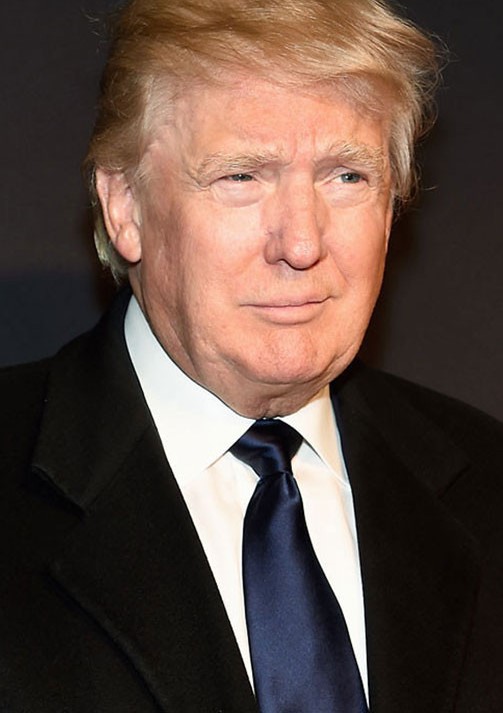
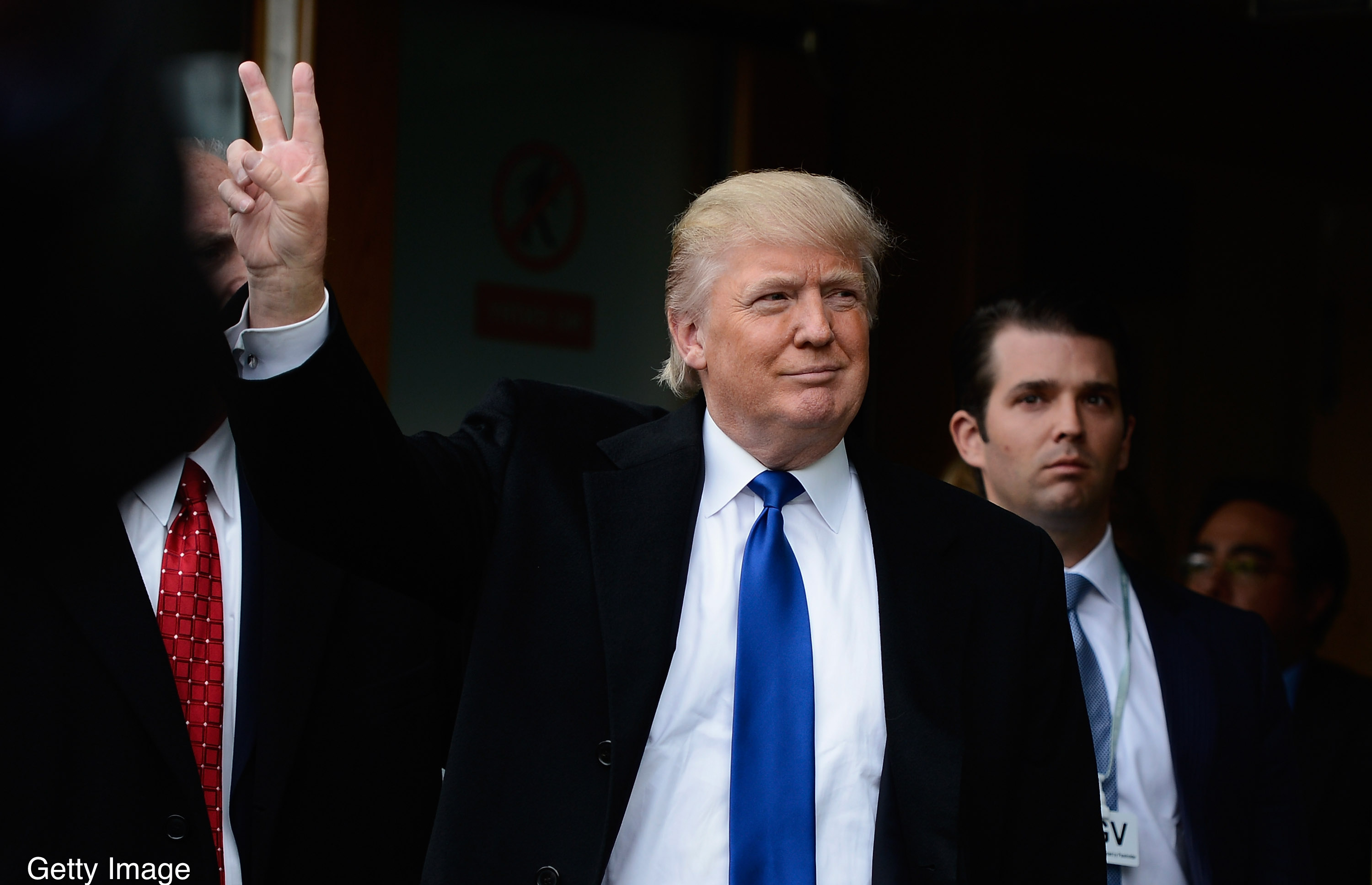
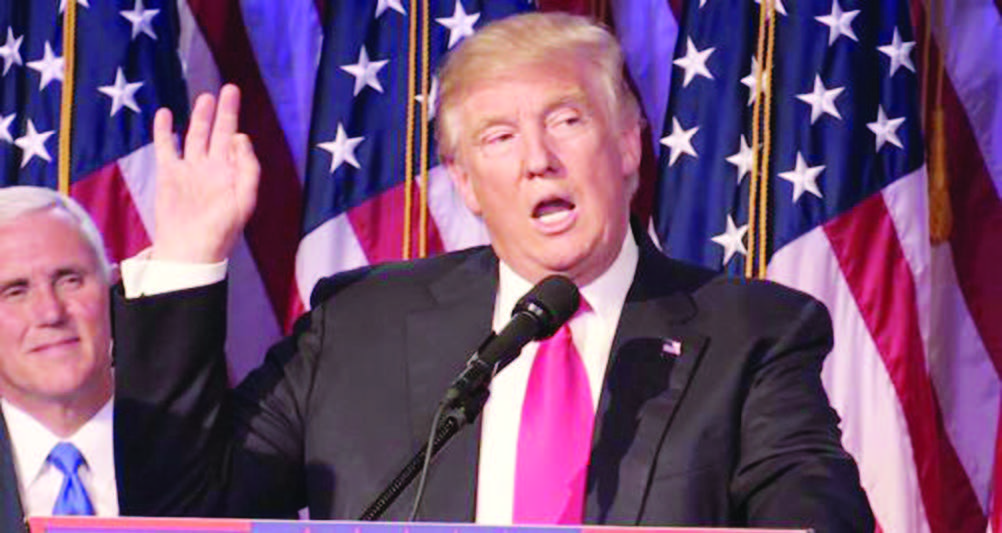
    The 45th President-elect Donald Trump is ready to take the oval office on January 20th 2017, much to every one’s surprise! Among many firsts he holds, Donald Trump is the first President to hold anti-immigration position in contemporary history. It is speculated that his policies will not only affect the illegal immigrants but also skilled workers. We discuss some of his campaign promises below which he promises to turn into memorandums and executive orders on his first few days as the President.

    Deportations of illegal Immigrants: Trump plans to immediately deport 2-3 million undocumented immigrants with criminal backgrounds. He will then focus on deporting law abiding illegal immigrants.

    DACA: Trump could unilaterally revoke deportation protections created under the Deferred Action for Childhood Arrivals program, which was created to protect young undocumented immigrants under Obama’s executive memorandum. This will affect about 800,000 people who were brought to the U.S as children and stayed here illegally and under the order issued by President Obama were given authorizations to work in the country after approval.

    Refugee Programs: The President has a broad, unilateral discretion to admit number of refugees in to the country. The Obama administration increased the number of refugees to 110,000 in 2017 and Trump has repeatedly decried that. He could drop the total number of refugees to zero. The State Department says Syrian refugees could undergo strictest back ground checks.

    NAFTA: Trump has made it clear to renegotiate or completely scrap NAFTA, North American Free Trade Agreement. He describes this agreement as the worst trade in the US history that has caused loss of jobs and wage stagnation to the U.S. This will immediately affect people working on the TN visa and on trade deals with companies such as Ford and General Motors. He also pledges to withdraw from trans Pacific Partnership.

    H-1B visa system: Trump’s proposals on legal immigration is something that the tech industry may not have ever seen before. The most anticipated outcome will be restricted, limited and harder to get visas. The American companies may have to go through more hoops to prove that there is not an American to do the job and hence should hire foreign workers.

    Post elections, not only U.S but countries all over the world are speculating President-elect Trump’s action once he takes oath to the office.

    Read More on Ahluwalia Law Offices’s Website

  • Indian American Teenager in Arizona Indicted on Cyberattack Charges

    Indian American Teenager in Arizona Indicted on Cyberattack Charges

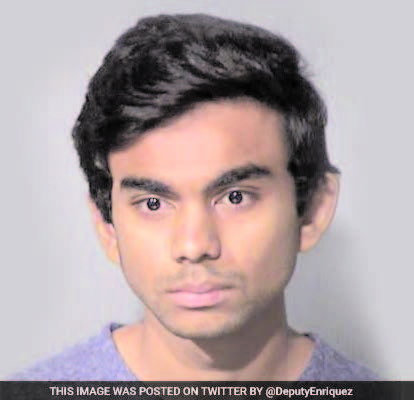
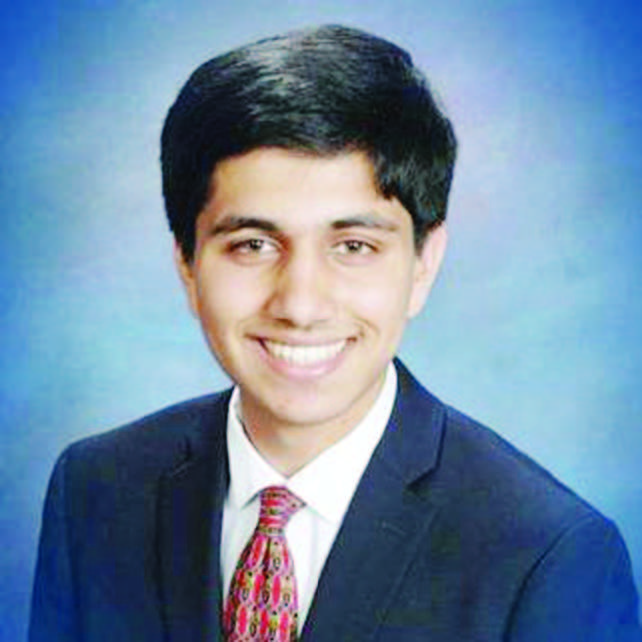
    PHOENIX, AZ (TIP): Indian American Meetkumar Hiteshbhai Desai, 18, is facing four felony counts of computer tampering, according to the Arizona Attorney General’s Office.

    Desai was arrested Oct. 27 after multiple agencies, including Surprise and Peoria police and the Maricopa County Sheriff’s office, reported an influx of emergency call hang-ups between Oct. 24 and Oct. 26.

    According to a sheriff’s office statement, more than 100 hang-up 911 calls were recorded within a few minutes late Oct. 25.

    Investigators traced the calls and discovered they originated from a link posted to Twitter, according to the statement.

    The link was to a site named “Meet Desai” and its domain was hosted out of San Francisco. When the link was clicked, it continually called 911 and would not let the caller hang up, the sheriff’s statement said.

    The volume of calls had the potential to shut down 911 service across Maricopa County, the sheriff’s office said.

    The teen told authorities his intent was to make a non-harmful, yet annoying bug that was meant to be funny, officials said.

    After being approached by an online friend with a bug, Desai altered the bug to include pop-ups, prompts to open email apps and activate an iOS device automatic telephone dialing.

    The teenager wrote all the coding in the bug.

    Desai, who admitted to an interest in programs, bugs and viruses that he could manipulate and change, told detectives that Apple Inc. would pay and credit him for discovering such bugs and viruses.

    The Indian Panorama had earlier reported the arrest of the teen.

  • Indian American Sandeep Kothary opens a new fusion Indian restaurant in Atlanta

    Indian American Sandeep Kothary opens a new fusion Indian restaurant in Atlanta

    NEW YORK CITY (TIP): Sandeep Kothary, owner of Indian restaurant Tabla , announced opening of a new Indian American fusion food restaurant in Midtown Atlanta, Inman Park, Atlanta on Nov. 8.

    Named Amara, which means “eternal” in Hindi, the new food joint has 3,700-square-foot space, with design and decor similar to Tabla. It will seat roughly 150 people, and the kitchen will turn out “Indian-inspired American fare.”

    Amara is located at 870 Inman Village Parkway. It has an open kitchen, a glass-backed bar and a patio. “The dishes are reflective of new, modern American sensibilities folded in with the bold flavors of India,” the restaurant’s website says.

    Award-winning Chef Bhavesh Patel is known for creating memorable dining experiences. His unique creative flair and passion for food is seen in Amara’s presentation and tastes. Focusing on flavor, Patel starts with the freshest seasonal ingredients combining them with aromatic spices to create an approachable, yet exceptional meal.

    The restaurant is open Tuesday through Thursday from 5 -10 p.m., Friday and Saturday from 5 – 11 p.m. and Sunday from 5 – 9 p.m. It is closed on Monday.

  • Indian-origin Sikh boy shot dead in Sacramento, CA

    Indian-origin Sikh boy shot dead in Sacramento, CA

    SACRAMENTO (TIP): Police in Sacramento, California, are investigating the death of Gurnoor Singh Nahal, a 17-year-old Sikh-American high school student found dead in the garage of his family’s home following reports of a shooting, according to media reports.

    Gurnoor Singh Nahal, a 17-year-old Indian-origin Sikh high-school student was shot dead when he was returning home from work at his father’s retail store at 10.30 pm on November 8. The family does not suspect anything was taken and cannot understand why Gurnoor was shot.

    “We cannot imagine it. We are lost,” his uncle Tejinderjit Singh was quoted as saying by the CBS Local News.

    Nahal’s grandmother found him lying in the garage. She said he cried for help, but it was too late.

    “She heard it and it was very loud and I think when she heard that, she came out and then she saw him,” Singh said. Gurnoor was supposed to graduate this spring.

  • UK’s ‘Red Arrows’ put up spell-binding acrobatic show at AFA Dindigal

    UK’s ‘Red Arrows’ put up spell-binding acrobatic show at AFA Dindigal

    HYDERABAD (TIP): The Royal Air Force Aerobatic Team of the United Kingdom put up a splendid show at the Air Force Academy, Dindigal on Nov 17. The Red Arrows also met their Indian counterparts during a visit to Hyderabad, as part of a global tour.

    “The visit allowed a rare opportunity for the Red Arrows to be joined by officers from the Indian display team -the Suryakiran. Pilots from the Indian team flew in the back seats of the Red Arrows’ aircraft as passengers during a practice display at the airfield,” the Royal Air Force said in a note.

    It was a chance for the officers to exchange experiences of flying, with both teams operating the Hawk fast-jet. An aircraft from each team was positioned nose-to-nose on the ground too – providing a unique backdrop for a team photograph.

    The activities in Hyderabad, which also included a reception hosted by the British Deputy High Commission, celebrated the close links between the United Kingdom and India, especially across defence, aerospace and engineering.

    British Deputy High Commissioner Andrew McAllister said, “We are privileged to welcome the Red Arrows, who have thrilled, inspired and delighted audiences the world over, with over 4,800 displays in their 52 years.

    “The Suryakirans and the Red Arrows both fly the Hawk aircraft, showcasing how the best of British engineering is also contributing to the Make in India initiative,” he said.

    The practice display on Wednesday was performed in front of 200 school children, who watched the 24-minute aerobatic show at the Air Force Academy.

    On Thursday, more than 3,000 people, including military officers, diplomats, business leaders and students, watched a public display – complete with the Red Arrows’ trademark Diamond Nine formation and red, white and blue smoke trails.

    India is the only country where the Red Arrows are performing a display in two different locations as part of the 60-day tour to the Asia-Pacific and Middle East regions.

    Squadron Leader David Montenegro, Team Leader of the Royal Air Force Aerobatic Team and Red 1, said: “The Red Arrows’ colourful, dynamic aerial display of precision, formation aerobatics are a vivid showcase of British engineering, teamwork and creativity. I know these qualities and constant pursuit of excellence are shared with our colleagues and counterparts in the Indian Air Force,” he said.

    Both the Suryakiran and the Red Arrows fly the Hawk aircraft, which is both a British and now Indian success story. “The Red Arrows are honoured to be in Hyderabad as part of our overseas tour and to have the opportunity to meet members of the Suryakiran, display to the invited audience and, once again, to support the important, close links between the UK and India across business, education and defence,” he said.

    Meeting the Suryakiran was also a reunion, with some of the 2016 Red Arrows team having instructed a number of the Indian pilots, training on the Hawk at RAF stations in the UK.

    Squadron Leader Praveen, team pilot with the Suryakiran, said: “It is great that both instructors and pupils are reunited as ambassadors for our respective nations.”

    Last month, the Red Arrows performed an aerial salute to the Indian Air Force on Air Force Day at Hindon.

    The team’s ground crews also toured schools and universities in New Delhi to talk about education and training opportunities in the UK.

    The occasion came shortly before the first ever India-UK TECH Summit, which highlighted excellence and collaboration between India and the UK in innovation and technology.

    The Red Arrows’ twin visits to India form part of a major 60-day tour of the Asia-Pacific and Middle East regions -the team’s biggest overseas exercise in a decade.

    Departing on the next leg of the tour on Friday,the team is due to perform flypasts or displays in Pakistan, Oman, Bahrain, Abu Dhabi and Kuwait before returning to the UK in early December.(PTI)

  • Five teens rob Queens Rite Aid, take off with more than $1,000 worth of merchandise

    Five teens rob Queens Rite Aid, take off with more than $1,000 worth of merchandise

    NEW YORK (TIP): Five teens robbed a Queens Rite Aid of more than $1,000 of merchandise, police said Wednesday, November 16. The thieves stormed a Rite Aid on Cross Bay Blvd. near 161st Ave. in Howard Beach around 9:30 p.m. Oct. 27, cops said.They ransacked the store of around $1,350 worth of merchandise, according to officials. Before leaving, one of the teens warned a clerk against following them, claiming he was armed with a knife.

    The band of thieves fled the store in a white Cadillac EscaladeCops released a surveillance video that shows the teens entering the store, and are asking the public’s help identifying them.

    They are all described as men between the ages of 16 and 20, according to officials.

    Anyone with information is asked to call CrimeStoppers at (800) 577-TIPS.

  • Modi Carpet Bombs 80% Indians to Recover 3-5% Black Money

    Modi Carpet Bombs 80% Indians to Recover 3-5% Black Money

    It is very surprising why Team Modi ignored the very basic fact that the 1% of richest Indians own 53% of country’s wealth. Further the 5% of richest own 68.6% of country’s wealth, while the top 10% have 76.3%. On the other hand, 53.7 percent of the population(or 650 million)poor own princely 4.1% of the nation’s wealth.

    I wish Modi should have done a “Surgical Strike” to recover black money by raiding all the business premises and residences all over India of the 5,275 “willful defaulters” – together, they owe India’s banks INR 56,521 Crore. And all big business houses like Ambani, Adani, Tata, Birla, Sun Pharma, Jindal etc. etc. should have also been raided by the enforcement directorate. To be politically incorrect, Modi should have raided every political party’s premises and every politician’s homes, businesses, offices and vacation homes. It is an open secret that 67% of income of the 6 National Parties comes from unknown sources as well as from foreign lobbyists.

    India’s corporate houses owe the PSU Banks Rs 5 Lakh crore out of this about Rs 1.4 Lakh crore are owed by just 5 companies only. Gautam Adani, the mentor or big supporter of Modi, his group alone owes Rs 72,000.00 crore. In last 2-3 years Adani Group’s net worth has gone up by a whopping 85%! Incidentally the entire crop loan of all the farmers of India is also Rs 72,000 crore. All these corporate houses are cooking books and people who are controlling them are living a very lavish life that includes most expansive real estates, private islands, big fat weddings, Jets, luxury yachts and big fleets of luxury cars besides tons of gold and diamond jewelry as well as single dress/sari costing Rs. 2-3 crores. The investigators could have found numerous “Shell Companies” stashed with black money in India & abroad; used for bribing politicians, bureaucrats, judges, and law enforcement officials and for their personal luxuries.

    Cyrus Mistry, the ousted Chairman of Tata Sons, is already spilling beans how Ratan Tata along with Niira Radia, the famous lobbyist, was using corporate jets for their personal work, how Ratan Tata increased the cost of PR for the company from Rs40crore to Rs 60 crore by hiring Arun Nanda’s Redefussion. Mistry has also accused Ratan Tata of making questionable investment decisions in favor of his friends’ companies to cause massive losses to Tata sons.

    This figure was about Rs 30 crore in 2015. Mistry also accused Ratan Tata for allowing directors to draw additional parallel commission from group companies.

    Modi will not do a “Surgical Strike on Black Money” involving the premier corporate houses and the willful defaulters because these people spent Rs 32,000.00 crore on Modi’s campaign for 2 years to install him as Prime Minister of India in 2014.

    This is very disturbing how could the Team Modi ignore some of the other very important facts before embarking on “Carpet Bombing” as the Supreme Court of India has said about the so called “Surgical Strike on Black Money”.

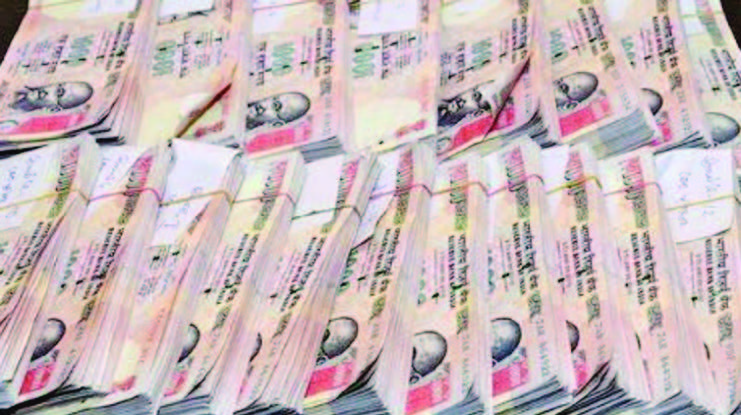
    Out of the total cash in circulation, 86% are in large denomination like Rs 500 &Rs 1000 bills because with Rs 100 bill practically you cannot buy anything in India. Some economists have questioned the decision of introduction of Rs 2,000 bill. They say, if the policy is aimed to force people into the banking system, why the government issued a higher denomination bill -presumably an even more convenient vehicle for black money transactions? May be Team Modi wanted to make life easier for their campaign donors by introducing the higher denomination bills. The weight of Rs 1 crore in Rs 1000 notes is 12 Kg and for Rs 2000 notes it will be 6 Kg only, causing no inconvenience for an adult to carry even hiding in his body!

    Less than 35% people have access to banks and post offices in India. If one takes into account the Income Tax raids data for last 2 years, the cash component is only 6%including Jewelry. That black money is mainly invested in real estate, benami bank accounts, gold, silver and diamond. Those who are well educated and at the upper end of the wealth spectrum, have invested their black money to buy most expensive furniture, fine arts, paintings, rare scotch whiskey and wines also.

    The informal sector in India accounts for about 45 per cent of the GDP and employs nearly 80 percent of the population. About 80 percent of the people in the country have already been deprived of their livelihoods for more than a week and there are no signs that the normalcy can return even in next 2-3 weeks.

    Practically entire rural economy is in bad shape especially commodity business of production and distribution for variety of reasons including lack of education, lack of faith in banking and very limited access to banking. After Team Modi failed to push their Land Acquisition Act for the benefit of Indian and foreign corporate houses, they allowed FDI in food distribution in 2016 budget to pave the way for the big corporations to control Food Production and Supply Business.

    First, allowing FDI in food business was an assault on the rural economy and sovereignty of India. India has already given up the control on communication to foreigners and with FDI in food distribution it will put the entire nation at the mercy of foreign companies. Team Modi’s land acquisition act to control the rural economy has failed and this latest “Carpet Bombing in the name of Black Money” will paralyze the rural economy and pave the way for FDI/Foreign corporations to control the rural economy and food distribution of India.

    Already Modi has made a special place for himself in India’s history as he will be known as the first Prime Minister who put his hands in people’s mouth to take out the food they were eating and took away their profession of skinning dead animals. His anti-poor acts in the name of Cow and Hinduism was an assault on the poor of India that includes more Hindusthan other minorities.

    Team Modi has failed miserably in last 2 years on their promises of free speech, jobs, equal rights, education for all, universal healthcare, infrastructure and freedom to practice religion of one’s choice. By demonetizing Rs 500 and Rs 1000 notes aka doing “Carpet Bombing in the name of recovering Black Money” on the 80% of the population, Team Modi is depriving them of their livelihood. This is violation of Article 21 that guarantees Fundamental Right, “Right to life and personal liberty”. Even the SC, in its landmark judgement in 1985 in Olga Tellis and others Vs the Mumbai Municipal Corporation case said: “No person can live without the means of living, that is the means of livelihood. If, the right to livelihood is not treated as a part of constitutional right to life, the easiest way of depriving a person of his right to life would be to deprive him of his means of his livelihood to the point of abrogation.”

    Lastly, Team Modi completely forgot about the NRIs who supported them big time during 2014 elections and for bringing hired crowd for Modi’s rallies in New York, London, Sydney and other foreign cities. There is no provision for them to go to a PSU Bank’s foreign branch to convert old currency notes into new. Especially the NRIs who do not travel much to India and got Indian currency after paying in with their hard earned foreign currency, have no recourse to get back their money. May be these NRIs can use the old currency notes to make garlands for the central ministers and PM Modi’s future visits to their countries.

    (The author is a social activist and a regular contributor to the columns of The Indian Panorama. He can be reached at davemakkar@yahoo.com)

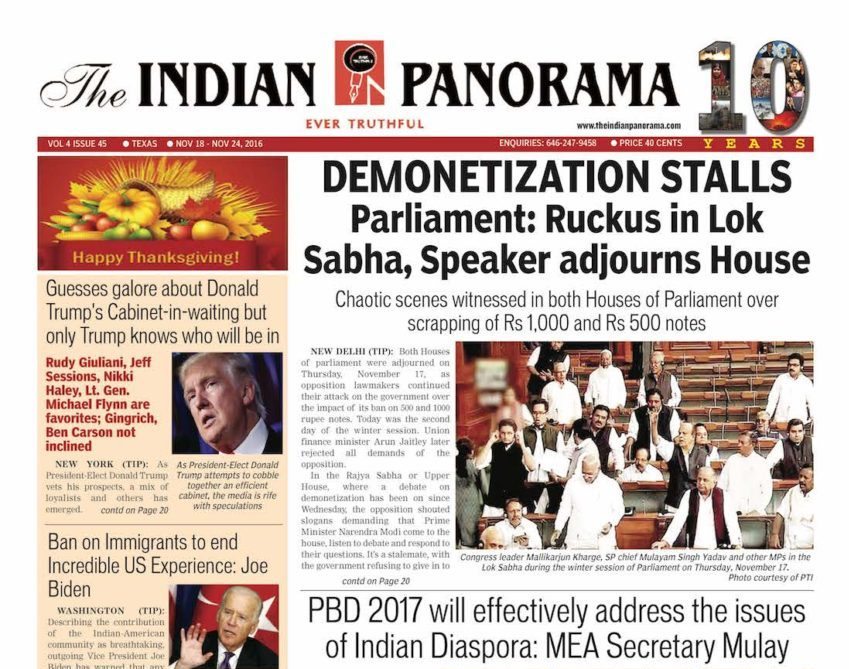
  • DEMONETIZATION STALLS Parliament

    DEMONETIZATION STALLS Parliament

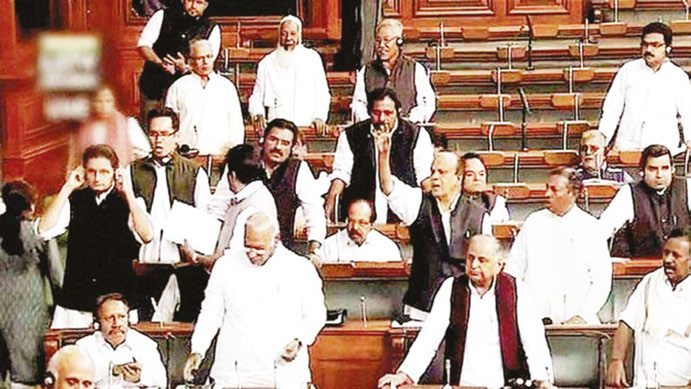
    Chaotic scenes witnessed in both Houses of Parliament over scrapping of Rs1,000 and Rs 500 notes

    NEW DELHI (TIP): Both Houses of parliament were adjourned on Thursday, November 17, as opposition lawmakers continued their attack on the government over the impact of its ban on 500 and 1000 rupee notes. Today was the second day of the winter session. Union finance minister Arun Jaitley later rejected all demands of the opposition.

    In the Rajya Sabha or Upper House, where a debate on demonetization has been on since Wednesday, the opposition shouted slogans demanding that Prime Minister Narendra Modi come to the house, listen to debate and respond to their questions. It’s a stalemate, with the government refusing to give in to that demand. Finance Minister Arun Jaitley will reply to the debate, in which a united opposition has attacked the government over what they call “economic anarchy”.

    In the Lok Sabha, which did not function yesterday after obituaries, opposition parties have moved 21 adjournment motions, which seek to put aside regular work to debate and vote on the notes ban. Speaker Sumitra Mahajan said she would allow the debate but not until lawmakers stopped shouting. When that did happen, she adjourned the Lower House for the day. “We are ready to discuss any issue, there is nothing to hide. We want the Congress to clarify, are they with the government decision or not? You’ve got every right to make demands, and the government will reply to it all,” said senior union minister Venkaiah Naidu this morning.

    ‘There is no question of a rollback of the government’s cash clean-up move,’ Finance Minister Arun Jaitley said, rejecting the Opposition’s demand of a probe by a Joint Parliamentary Committee into the alleged leak of information to BJP units and “friends of BJP” on notes ban. Regarding the opposition’s other demand, that the Prime Minister respond to the debate, Mr. Jaitley said it was the prerogative of the party and government to decide who would reply. Opposition parties, except for the Trinamool Congress, have not demanded that the government withdraw the notes ban, but have criticized the manner in which it was implemented causing hardship to common people who have had to queue up for hours at banks amid a cash crunch. Ministers speaking in the debate said the radical step was taken in national interest to end corruption and black money. No honest taxpayer would lose a single rupee, while those with unaccounted wealth would suffer, as would terror organizations that had been choked by the currency ban, they said.

    Before the winter session began PM Modi had said he was counting on “good debates” on key issues and hopes the opposition will cooperate to support key legislation like taking the next steps to introduce the national Goods and Services Tax or GST, the biggest tax reform in decades.


  • Guesses galore about Donald Trump’s Cabinet-in-waiting

    Guesses galore about Donald Trump’s Cabinet-in-waiting

    BUT ONLY TRUMP KNOWS WHO WILL BE IN

    NEW YORK (TIP): As President-Elect Donald Trump vets his prospects, a mix of loyalists and others has emerged.

    Names being floated for top Cabinet positions include: Alabama Sen. Jeff Sessions and Arkansas Sen. Tom Cotton for Defense secretary; Texas Rep. Mike McCaul for Homeland Security secretary; and former New York City Mayor Rudy Giuliani, former U.N. Ambassador John Bolton, and Governor Nikki Haley for secretary of state. Here is a list of likely contenders, as on November 17. The list has been prepared on the basis of information gathered from various sources in media and the Trump transition team. The Indian Panorama does not lay claim to the list being exhaustive or perfect.

    Secretary of State: Former New York City Mayor Rudy Giuliani; Former U.S. Ambassador to the United Nations John Bolton; Senate Foreign Relations Committee Chairman Bob Corker; Richard Haass, president of the Council on Foreign Relations.

    South Carolina Gov. Nikki Haley is also being considered for the post.

    Treasury secretary: Steven Mnuchin, a 17-year-veteran of Goldman Sachs; House Financial Services Chairman Jeb Hensarling; JPMorgan Chase Chief Executive Jamie Dimon.

    Secretary of Defense: Alabama Sen. Jeff Sessions; Former George W. Bush National Security Adviser Stephen Hadley; Sen. Tom Cotton (R-Ark.);Former Sen. Jim Talent (R-Mo.); Clinton CIA director Jim Woolsey and Sen. Kelly Ayotte (R-N.H.)

    Attorney general: Kansas Secretary of State Kris Kobach; Rep. Trey Gowdy (R-S.C.); Florida Attorney General Pam Bondi

    Interior secretary: Robert Grady, a George H. W. Bush White House official with ties to New Jersey Gov. Chris Christie; Forrest Lucas; Sarah Palin; Mead Treadwell, the former lieutenant governor of Alaska; Former Republican Rep. Richard Pombo; Former Arizona Gov. Jan Brewer; Oklahoma Gov. Mary Fallin; Wyoming Rep. Cynthia Lummis; and Oklahoma oilman Harold Hamm.

    Agriculture secretary: Sid Miller, the current secretary of agriculture in Texas; Governor Sam Brownback of Kansas; former governors: Dave Heineman (Nebraska), Sonny Perdue (Georgia) and Rick Perry (Texas); Charles Herbster, a Republican donor; Mike McCloskey, a dairy executive in Indiana; Bruce Rastetter, a major Republican donor in Iowa, and Kip Tom, a farmer.

    Commerce secretary: Billionaire investor Wilbur Ross, a Trump economic adviser is Trump’s leading contender for the job.Dan DiMicco, the former CEO of steelmaker Nucor Corp and a Trump trade adviser, is another possibility, though he is expected to be tapped as U.S. Trade Representative.

    Labor secretary: Victoria Lipnic — the Commissioner of the Equal Employment Opportunity Commission since 2010 who also served as an assistant secretary of Labor for employment standards from 2002 until 2009 — is the most likely candidate for Labor Secretary. A possible private sector pick is Andrew Puzder, chief executive of CKE Restaurants, the parent company of Carl’s Jr., Hardee’s, Green Burrito and Red Burrito.

    Health and Human Services secretary: Rep. Tom Price (R-Ga.), the chairman of the House Budget Committee and an early Trump backer, is being considered for Secretary of Health and Human Services.Former Louisiana Gov. Bobby Jindal is another possible candidate for the job.

    Housing and Urban Development secretary: Names being circulated include Pam Patenaude, the president of the J. Ronald Terwilliger Foundation for Housing America’s Families, former Massachusetts Sen. Scott Brown and former New York Rep. Rick Lazio (R).

    Transportation secretary: Rep. John Mica (R-Fla.); James Simpson, the former commissioner of New Jersey’s Department of Transportation and the former head of the Federal Transit Administration during the George W. Bush administration; and Mark Rosenker, the former chairman of the National Transportation Safety Board.

    Energy secretary: Continental Resources CEO Harold Hamm, an Oklahoma billionaire who has been a friend of Trump’s for years; Rep. Kevin Cramer (R-N.D.), a Trump energy adviser; venture capitalist Robert Grady; James Connaughton, a former utility executive; and Kristine Svinicki, the sole Republican on the Nuclear Regulatory Commission

    Education Secretary: Indiana Rep. Luke Messer; William Evers, a research fellow at the Hoover Institution; Tony Zeiss, a former president of Central Piedmont Community College; Michelle Rhee, an education reform activist who formerly served as the chancellor of Washington D.C.’s public schools; Former Indiana Gov. Mitch Daniels, now the president of the Purdue University System; Gerard Robinson a fellow at the American Enterprise Institute focused on education policy; Tony Bennett, the former Florida Commissioner of Education and the former Indiana Superintendent of Public Instruction; Wisconsin Gov. Scott Walker; Hanna Skandera, the New Mexico Secretary of Education; and  education activists Betsy DeVos and  Kevin Chavous.

    Veterans Affairs secretary: House Veterans’ Affairs Chairman Jeff Miller

    Homeland Security secretary: House Homeland Security Chairman Mike McCaul; Rep. John Katko (R-N.Y.), the chairman of the Homeland Security Committee’s transportation security panel; David Clarke, the conservative Sheriff of Milwaukee County, Wis.

    Environmental Protection Agency administrator: Mike Catanzaro, a George W. Bush-era EPA official; Jeff Holmstead, another former Bush EPA official; Venture capitalist Robert Grady, who was an environmental adviser for George H.W. Bush; Myron Ebell, a climate skeptic who is running the EPA working group on Trump’s transition team; Joe Aiello, director of the New Jersey Department of Environmental Protection’s Division of Environmental Safety and Quality Assurance; Carol Comer, the commissioner of the Indiana Department of Environmental Management, who was appointed by Mike Pence; and Leslie Rutledge, the attorney general of Arkansas and a lead challenger of EPA regulations in the state.

    Director of the Office of Management and Budget: Eric Ueland, a veteran Republican Capitol Hill aide and top staffer on the Senate Budget Committee who is working on Trump’s transition team, is a possible candidate to lead the OMB. Former Oklahoma Sen. Tom Coburn is also seen as a potential OMB chief.

  • Luminaries, activists and artistes come together to spotlight life-changing interventions on ending the pandemic of violence against women and girl

    Luminaries, activists and artistes come together to spotlight life-changing interventions on ending the pandemic of violence against women and girl

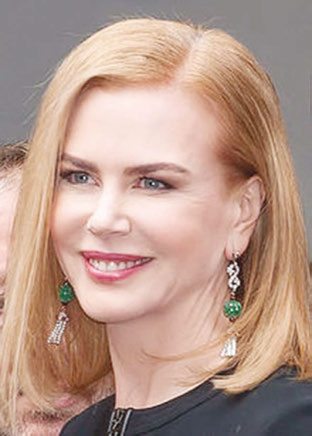
    NEW YORK (TIP): Celebrating 20 years of vital work to end violence against women and girls, the UN Trust Fund to End Violence against Women (UN Trust Fund) hosted its fund-raising gala last night, showcasing a range of innovative interventions that are working to end the pandemic globally. Co-hosted by UN Women Executive Director Phumzile Mlambo-Ngcuka and Oscar-winning actress and UN Women Goodwill Ambassador Nicole Kidman, the packed high-profile event brought together gender rights activists, UN officials and the private sector, spotlighting beneficiaries and their life-changing work across the world.

    “Tonight we celebrate the essential work done by the UN Trust Fund, paying tribute to our grantees, whose success stories embody the resilience of women and girls in the face of violence,” said Phumzile Mlambo-Ngcuka, UN Women Executive Director. “We know that these vital investments in initiatives to end violence have high returns and have already made a difference to millions of women and girls. But there is a great deal more to do to scale up prevention and increase appropriate services, and that needs more funding so that we can bend the curve down and bring the scourge of violence against women to an end,” she added.

    Violence against women and girls is now part of the public discourse much more than ever before, along with significant progress in legislation and grassroots efforts to address the issue. Yet, it continues to be a gross human rights violation of pandemic proportions. Today, one in three women worldwide have experienced physical or sexual violence-mostly by an intimate partner. The UN Trust Fund to End Violence against Women is the only global grant-making mechanism dedicated to eradicating all forms of violence against women and girls. Managed by UN Women, on behalf of the UN system, during the last 20 years, more than 400 organizations have been supported by the UN Trust Fund with results that indicate sustained resources and dedicated work can lead to the prevention and elimination of violence against women and girls. Focusing on prevention of violence, implementation of laws and policies, and improving access to vital services for survivors, the UN Trust Fund has spent the past 20 years focused exclusively on funding life-changing programs for millions of women and girls.

    “I am here because I support the UN Trust Fund and I applaud and celebrate its 20 years of making a difference,” said Nicole Kidman, UN Women Goodwill Ambassador. “When I became UN Women’s Goodwill Ambassador 10 years ago, my first mission took me to Kosovo, where I met with women and girls who had survived violence. That was when I first understood what the work of the UN Trust Fund means. I saw first-hand the real difference it makes in lives of women and girls: They found shelter for themselves and their children. They received counseling to overcome the horrific trauma of rape during the war that had ravaged the Balkans. They were supported to make a living and stand on their own. It was a life-changing experience for me and one that has inspired me ever since. This is why, as UN Women’s Goodwill Ambassador, I see my role as that of an advocate to end violence against women and girls.”

    During the event, Mrs. Ban Soon-taek, Patron of the UN Women for Peace Association, a key supporter of the UN Trust Fund, was presented with the UN Trust Fund’s Orange Heart, for her outstanding efforts to end violence against women and girls.

    Moderated by NBC journalist Richard Lui, with an Honorary Host Committee comprised of actors and actresses Sir Patrick Stewart, Danai Gurira, Ruth Wilson, Gillian Anderson, and Kelly LeBrock as well as luminaries such as Kweku Mandela, the event brought together 300 people at the Loeb Boathouse in New York’s Central Park, who heard moving stories of impact and change from beneficiaries of UN Trust Fund-supported projects.

    Stories of change underlined the high-profile event. Award-winning journalist Ann Curry interviewed seventeen-year-old Aiturgan Dzholdoshbekova from?Kyrgyzstan, who recounted how a local UN Trust Fund-supported project to prevent bride-kidnapping became a beacon of light and hope for her, and transformed her life.

    “We are very happy to be in a school free from violence. We were able to change the situation of girls in our families and in our schools,” said Dzholdoshbekova. “The boys have started to understand the issue and are advocating [with us]. The school has become a safe space where we can be happy, educate and develop ourselves,” she adds.

    Tommy Clark, the Founder and CEO of South African NGO Grassroots Soccer and a grantee of the UN Trust Fund, was also interviewed by Ann Curry live onstage and spoke about an?innovative sports-based intervention?to empower girls and prevent HIV and gender-based violence.

    Renowned theatre actress Nehassaiu deGannes narrated the inspirational stories of two other beneficiaries-a?woman in Gambia?who will no longer subject her daughter to Female Genital Mutilation, a harmful traditional practice that affects at least 200 million girls today; the other a girl in?Cambodia?who feels safer at her work in a factory.

    The gala also saw the official launch of ?the Orange Label, the result of a partnership between the UN Trust Fund and the UK-based prestigious London College of Fashion, which aims to adorn a variety of products and engage small and large scale companies around the world. Designed by students of the college, the Orange Label will be used as a brand for cause-related marketing initiatives to benefit UN Trust Fund supported programs. Through the fashion and associated industries, the Label will connect the private sector and UN Trust Fund supported programs in joint efforts to prevent and end the pandemic of violence against women and girls.

    The evening concluded with a high-powered rendition of the song?Rise, performed by Jayna Brown, a young musician who was recently a semi-finalist on the hit TV show,?America’s Got Talent. ?Guests rose to showcase their support and commitment to enable the UN Trust Fund to continue their life-changing work.

    Donations to the UN Trust Fund can be made by text, or via the website.
    Background information: The UN Trust Fund to End Violence against Women

    The UN Trust Fund is the only global grant-making mechanism dedicated to eradicating all forms of violence against women and girls globally. Supporting over 400 organizations over the past 20 years, UN Trust Fund grantees show that with sustained resources and dedicated work, violence against women and girls can be prevented and eliminated. Focusing on prevention of violence, implementation of laws and policies and improving access to vital services for survivors, the UN Trust Fund has spent the past 20 years funding life-changing programs for millions of women and girls. The UN Trust Fund is managed by UN Women on behalf of the UN system.

    Website: http://untf.unwomen.org/en UN Women is the UN organization dedicated to gender equality and the empowerment of women. A global champion for women and girls, UN Women was established to accelerate progress on meeting their needs worldwide. For more information, visit www.unwomen.org. UN Women, 220 East 42nd Street, New York, NY 10017, New York. Tel: +1 646 781-4400. Fax: +1 646 781-4496.

  • Djokovic says restructuring Davis Cup is ‘no brainer’

    Djokovic says restructuring Davis Cup is ‘no brainer’

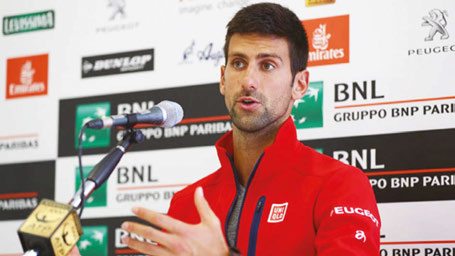
    LONDON (TIP): Novak Djokovic says changing the format of the Davis Cup is a “no brainer” and has repeated his plea to the International Tennis Federation to make structural changes to the team event.

    “This format is not working for the top players… because it’s just completely at the wrong time in the schedule,” world number two Djokovic told reporters at the ATP World Tour Finals on Thursday. “If you go back … five, six years, you see the amount of the top players that played at the later stages of the Davis Cup (has gone down), you see that it lost value.”

    Currently the Davis Cup is run throughout the year with the World Group first round immediately after the Australian Open, the quarter-finals on the back of Wimbledon and the semi-finals hot on the heels of the US Open.

    Even the final is the week after the Tour Finals, posing a dilemma for a player involved in both.

    Djokovic led Serbia to the title in 2010 but has played two ties in the last two years, the same as Spain’s Rafael Nadal.

    Roger Federer, nursing a back injury, pulled out of playing in the title match of the 2014 Tour Finals just a week before helping Switzerland to win the team competition in 2014. However, his Davis Cup participation before and after 2014 has been sporadic. Britain’s Andy Murray is the exception amongst the big guns, shouldering an enormous burden for his country in recent years, including winning the trophy almost single handedly last year in Belgium.

    Djokovic said the format should be streamlined.

    “Of course, they have to change,” he said. “The only way to work, is once a year, (dedicate) one or two weeks, have a round-robin format, four, five, six groups, have teams play in different locations, then come together in one location and play a knockout stage, quarter-finals, semi-finals, final four, whatever. It’s a no-brainer. “I think they should cut it down to two days, best-of-three. Have two singles and one doubles, those kind of things.” ITF president David Haggerty has voiced his support for a change to the organisation’s blue riband team event, pitching the idea of a “final-four” showdown at a neutral venue.

  • Wayne Rooney defended after drinking apology

    Wayne Rooney defended after drinking apology

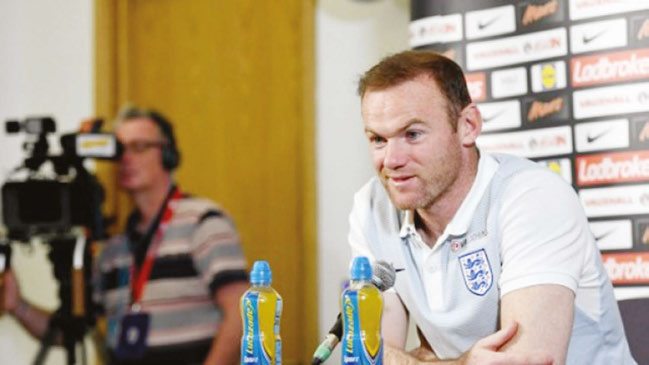
    LONDON (TIP): Wayne Rooney has apologised after “inappropriate” photos of him at a hotel party were released but the England captain has been defended by Liverpool boss Jurgen Klopp who said all the games greats “drank like devils”.

    Rooney was thrown into the spotlight after The Sun tabloid alleged the Manchester United forward drunkenly gatecrashed a wedding at England’s hotel in Watford, north of London, on Saturday.

    Media reports said up to 10 other England players who separately went to a London nightclub have also been spoken to.

    Rooney started England’s 3-0 World Cup qualifying win over Scotland on Friday, but suffered a knee injury that ruled him out of Tuesday’s 2-2 friendly draw at home to Spain.

    A statement issued on Rooney’s behalf, said: “Naturally Wayne is sorry that pictures taken with fans have been published today.

    “Although it was a day off for the whole squad and staff, he fully recognises that the images are inappropriate for someone in his position.”

    The statement said Rooney had spoken to Southgate and FA technical director Dan Ashworth “to unreservedly apologise”.

    “He would like to further extend that apology to any young fans who have seen these pictures.”

    An FA spokesperson said:” All England personnel have a responsibility to behave appropriately at all times. We will be reviewing our policy around free time whilst on international duty.”

    Rooney’s representatives have indicated that he believes he has been an unfair victim of the incessant media glare around top footballers.

    A Rooney spokesman said: “As he has always been, Wayne was happy to sign (autographs), pose for photos and chat with guests.

    “It is sad that one or two of them have now sought to turn Wayne’s friendly good nature to their advantage.”

    And Liverpool boss Klopp also said the episode was not serious.

    “I know we’re all on the sunny side of life, we earn a lot of money and do the job we love, but at the end maybe it comes as a surprise that we are also human beings too,” Klopp told a team press conference.

    “These boys, this generation, is the most professional generation of footballers – not only in England, but England, too, that there has ever been.

    “All the guys, all the legends we love and admire they drank like devils and smoked like crazy, but they were still good players. No one does it any more. I don’t know anyone now.”

    England’s interim manager Gareth Southgate was adamant that Rooney had not been left out of the Spain game as a disciplinary measure.

    “Wayne picked up an injury in the game (against Scotland) on Friday,” said Southgate. “He couldn’t train on Sunday and that’s it.”

    Southgate, who is still waiting to hear whether he will get the England job full time, said he would review players’ free time.

    “Over the last few years, the players have been allowed to go home during a period of time,” Southgate told reporters after England’s 2-2 friendly draw with Spain at Wembley.

    “They trained Saturday morning and they trained again on Sunday afternoon, and I gave the players a period of time off (in between). I’m not aware of anything else.

    “There were lots of changes we made to routines. Some things we thought we should keep the same and I’ll have to review (it) — or maybe I won’t have to review! Someone will have to review it.”

    Rooney was recalled by Southgate for the win over Scotland, having been dropped for England’s goalless draw in Slovenia, after winning back his place in the United first team.

    His status with both club and country appears uncertain as concerns grow over the 31-year-old’s waning powers.


  • Fast track: Armaan Ebrahim, Mira Erda and Rohit Khanna

    Fast track: Armaan Ebrahim, Mira Erda and Rohit Khanna

    NEW DELHI (TIP): Armaan Ebrahim, Rohit Khanna and Mira Erda come from different backgrounds and different parts of the country and race different vehicles across different platforms, but the three racers have two things in common: they believe that motorsports in India is on the rise and they’re doing their individual bit to keep that upwards movement.

    Armaan, 27, is the son of former F3 champion Akbar Ebrahim – he’s been around cars since he was a toddler – and was crowned India’s Motorsports Man of the Year in 2015. Rohit, 35, is a banker by profession whose passion for fast cars has taken him across the country and earned him many podium finishes. And Mira, all of 16, is a special talent with many junior level titles to her name, determined to inspire girls to get behind the wheel.

    The three racers spoke to TOI Sports ahead of this weekend’s 19th JK TYRE-FMSCI National Racing Championship at the Buddh International Circuit in Greater Noida, where the winners will be confirmed.

    I always had the passion for speed, I started out early and made it to the circuit in the early 2000s. I’ve been there since, seen a lot of faces in and out but its a lovely feeling to be back on the track with buddies I’ve grown up with.

    From the circle that we’ve raced with, Armaan has been one name, of course. Then there’s Narain [Karthikeyan] and Karun [Chandhok] who’ve been inspirations. Internationally, Ayrton Senna and Michael Schumacher are two big names I really idolized. I started racing when I was very young, just nine years old. My father was the role model and the one who encouraged me to get into racing.

    Obviously I got exposed to racing at young age. Not many kids get to go to the circuit when they’re three of four years old and watch their fathers race. And which young boy doesn’t like to play with cars? But it was never planned. I used to love to sit on my father’s lap and drive, but the actual move to become a professional driver did not happen until 2003 when we got the professional karts to India. Until then, for kids in India there was only recreational karting and the Indian national championship. Once professional cars came in, I went and had my first go but it was out of chance. It wasn’t planned. I ended up winning that and the rest, as they say, is history. From there I went to Malaysia and asked my father whether he felt I could take this up as a profession and see where it goes. Luckily, my parents were very supportive and we took that chance and we’ve gone with the wave.

    I was 13. Not as young as Mira (laughs), but at that time professional karting was really young in India. Our generation was about 13-14 then, but over the years kids have been given a whole new opening.

  • Indian American Viru Patel elected with a landslide victory

    Indian American Viru Patel elected with a landslide victory

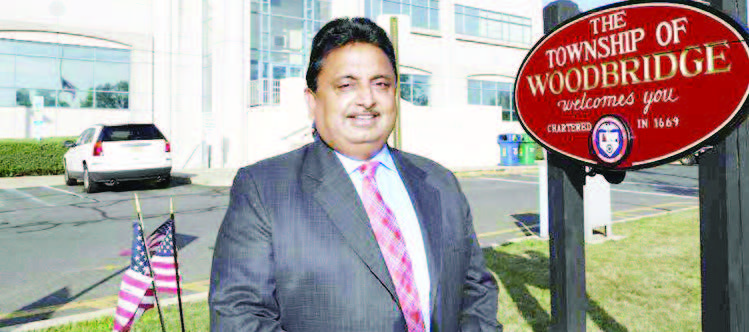
    WOODBRIDGE, NJ (TIP): Viru Patel was nominated on August 14, 2016 to serve the 4th ward council seat which became open due to the resignation of former councilman, Jim Major. Viru Patel, who has served 20 different organizations for more than 25 years, has served on the council ward for the last three months as an interim councilman. In order to complete the remainder of the one year term, he filed his re-election application in early October.

    Viru Patel got 4,151 votes and his opponents, Mrs. Kalamdani as an Independent, received 336 votes and the Republican candidate, Rupasinghe, got 1,600 votes.

  • Indian Americans speak up their mindthrough social media about ‘New America’

    Indian Americans speak up their mindthrough social media about ‘New America’

    NEW YORK (TIP): Just one day after Donald Trump’s stunning win, which is ‘shocking’ to thousands including Indians, the Indian community in America took it to social media to express their anxiety over the New America as news of barefaced racism from around The US has started to emerge.

    Manik Rathee, an Indian origin Google employee based in Silicon Valley tweeted his experience at a gas station.”As I’m stopped at a gas station this morning, a group of guys yell over: “Time to get out of this country, Apu!” tweeted Manik.

    “Man, I’m a light-skinned Indian guy. I’m not a small dude. I dress in professional work attire. I speak English. This is our America now”, he further tweeted.

    Another worrying case of racism was reported as a reply to Manik’s tweet by Dustin that says,”A student of mine reported that her Muslim neighbors woke up to a sign that said “You can leave now.” Also in the Bay Area.”

    Saira Khan shared another shocking incident that happened in New York. “One of my mom’s Muslim female students came in crying because someone grabbed her and told her now she has to leave the country.” She got this message from her close friend. “Donald Trump’s America”, tweeted Saira.

    Many Indians expressed their worries on FaceBook also.

    Sowmya Ramanan, an IT professional who leaves in Kansas wrote “While many Republican policies are probably good, especially those related to immigration, for high skilled immigrants like me and million others, I just can’t digest that He is the face of that party and this country. That thought is still sinking in. Right now, I still feel sick in the stomach and feel terrible. ‘Orange’ is the new color on this block now!!! America, I hope you know what you have done and are ready to face it! It is not the Republican party that worries me….it is HIM.”

    Alaudin Ullah – a Bangladeshi American actor and playwright from New York wrote, “I have a Muslim name. I’m brown. I can’t change my name and don’t want to bleach my skin. I’m now prey to racist predators given free reign to annihilate me and my people. Welcome to the new America where racists run the asylum.”

    Another New Yorker Nila Bhowmick said it is the saddest day of her life. “Today is the saddest day for me as a woman, a mother, a person of color, an American citizen and above all a human being. By making Donald Trump our next President, we have said YES to RACISM, YES to BIGOTRY, YES to SEXISM and above all YES to a DIVIDED country! I recall the pride and jubilation I felt the first time I voted as a citizen in 2008 and voted for our FIRST AFRICAN-AMERICAN PRESIDENT BARACK OBAMA! I was looking forward for my daughter to cast the vote in her first election since she turned 18 and VOTE FOR OUR FIRST WOMAN PRESIDENT. Sadly, America is not ready to make history again and we are not STRONGER TOGETHER this morning”, Nila wrote on her FB post.

    Hindustan Times editor-in-chief Bobby Ghosh, former International Editor of The Time had a strong point that he explained in his column in HT “Trump is bad for India because he is bad for his own country, and the wellbeing of the US is now closely connected to our own. There is every indication that his leadership will harm American interests, at home and abroad. Even the attempt to keep some his more outlandish promises – to build a wall along the border with Mexico; to tear up defense treaties with NATO, Japan and Korea; to reverse policies designed to forestall climate change – will weaken the US, just when India’s ties to it are at their strongest.”

  • WORLD LEADERS REACT TO  TRUMP’S TRIUMPH

    WORLD LEADERS REACT TO TRUMP’S TRIUMPH

    NEW YORK (TIP): The reaction of world leaders has been a mixed one. They were pleased and shocked at Donald Trump’s stunning victory over Hillary Clinton, to become the 45th President of America. Major world leaders, many of whom had publicly criticized Trump, however, expressed their wish to work with him.

    India’s Prime Minister Narendra Modi tweeted his thanks to Trump for “the friendship hearticulated towards India” during his campaign. “We appreciate the friendship you have articulated towards India during your campaign”, tweeted Modi.

    Canadian Prime Minister Justin Trudeau said, “We look forward to working very closely with President-elect Trump, his administration, and with the United States Congress in the years ahead.”

    Congratulating Trump, U.K.’s Prime Minister Theresa May said she looked forward to working with him. “Britain and the United States have an enduring and special relationship based on the values of freedom, democracy and enterprise. We are, and will remain, strong and close partners on trade, security and defense.

    Australia’s Prime Minister Malcolm Turnbulltook to twitter to express hopes of a strong relationship to continue. “The Aus Gvt congratulates President Elect Trump. With our shared, enduring national interests, our relationship will continue to be strong.”

    Russia’s President Vladimir Putin reportedly “expressed confidence that the dialogue between Moscow and Washington, in keeping with each other’s views, meets the interests of both Russia and the U.S.,” Russia Today reported.

    Chinese President Xi Jinping reportedly phoned Trump to congratulate him. “I place great importance on the China-U.S. relationship, and look forward to working with you to uphold the principles of non-conflict, non-confrontation, mutual respect and win-win cooperation,” Jinping said, according to Fortune.

    On a different note, French President Francois Hollande, whohad openly endorsed Hillary Clinton, said Trump’s victory marks the start of “a period of uncertainty.” “This new context requires that France be strong,” he said, in a televised address. “What is at stake is peace, the fight against terrorism, the Middle East and the preservation of the planet.”

    Describing Germany’s partnership with the U.S. as “a foundation stone of German foreign policy”, German Chancellor Angela Merkel has offered Trump “close cooperation” on the basis of shared trans-Atlantic values that she says include respect for human dignity regardless of people’s origin, gender or religion.

    Scotland’s First Minister Nicola Sturgeon released a statement saying that while the election did not have the outcome she hoped for, “it is the verdict of the American people and we must respect it”.”The ties that bind Scotland and the U.S. – of family, culture and business – are deep and longstanding and they will always endure.”

    Calling Trump a “True friend of the State of Israel” Israeli Prime Minister Benjamin Netanyahu said, “I am confident that president-elect Trump and I will continue to strengthen the unique alliance between our two countries and bring it to ever greater heights.”

    Palestinian President Mahmoud Abbas said in a statement that he “Congratulates the elected American president, Donald Trump, and hopes that peace will be achieved during his term”.

    Iran’s foreign minister Mohammad Javad Zarifwas quoted by media as saying that any US president “Should have a correct understanding of realities of the world and our region and face them realistically.”

    Japanese Prime Minister Shinzo Abe said, “As a very successful businessman with extraordinary talents, you not only made a great contribution to the growth of the US economy, but now as a strong leader, you have demonstrated your determination to lead the United States.”

    United Nations Secretary-General Ban Ki-moon said, “In the aftermath of a hard-fought and often divisive campaign, it is worth recalling and reaffirming that the unity in diversity of the United States is one of the country’s greatest strengths. I encourage all Americans to stay true to that spirit.”

    NATO Secretary-General Jens Stoltenberg said, “It is important that the Transatlantic bond remains strong” and that “US leadership is as important as ever.”

    European Union Council President Donald Tusk and his Commission counterpart Jean-Claude Juncker said that, despite Trump’s campaign talk of protectionism and isolationism, both sides “should consolidate the bridges we have been building across the Atlantic.” They have also invited Trump to visit the 28-nation bloc to assess transatlantic ties.

  • Clinton Couldn’t Win Over White Women: But they split along educational lines

    Clinton Couldn’t Win Over White Women: But they split along educational lines

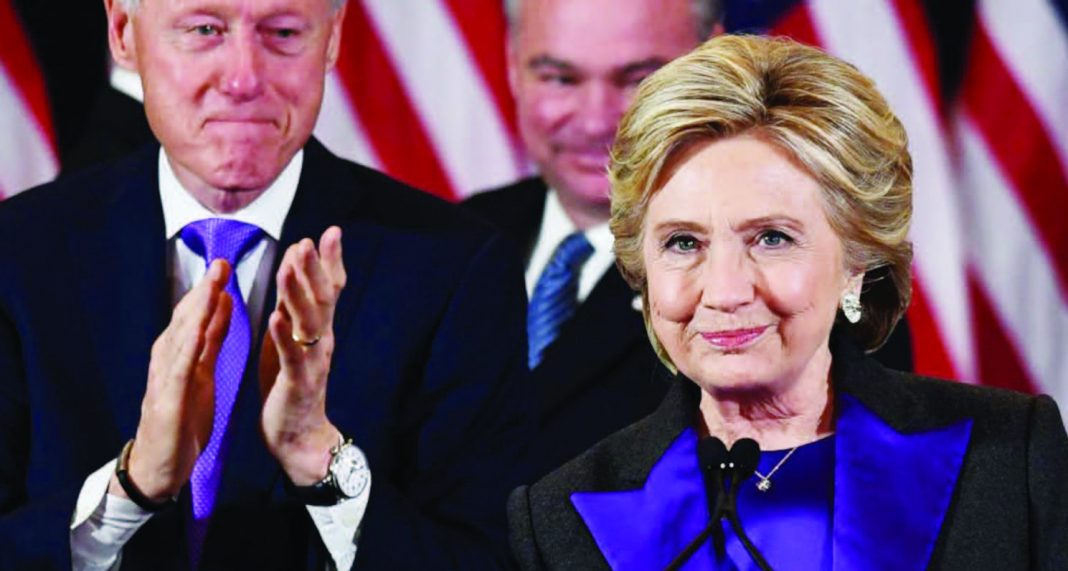
    Suffragette white. Hillary Clinton wore it in the biggest moments of her campaign: when she clinched the Democratic primary, when she accepted her party’s nomination, when she made her final debate appearance. The subtle sartorial symbolism was paired with the more explicit campaign message of Clinton as a tireless striver for women and families. Throughout these many months, the Clinton team made it clear that they believed her historic candidacy had the potential to sway portions of the electorate, most especially women voters. They were counting in no small part on the support of sisterhood. But Clinton’s stunning loss Tuesday night showed that issues of culture and class mattered more to many American women than their gender. The sisterhood, as real sisterhood tends to be, turned out to be riddled with complications.

    Preliminary exit poll results show that while she won women by 12 points overall (Trump won men by the same margin, a historic gender gap),1 Clinton lost the votes of white women overall and struggled to win women voters without a college education in states that could have propelled her to victory. I wrote Tuesday night about Clinton’s collapse in the Midwest -she saw Ohio, Wisconsin and probably Michigan slip away, all states President Obama won in 2008 and 2012 – and this appears to be in part because of her performance among voters who don’t have a college degree, including women. In Michigan, Trump won those women along with white men, their support for him drowning out white, college-educated women’s votes for Clinton. She won that demographic by 10 points, but these women account for only two in 10 Michigan voters.

    In Iowa, a state Obama also won in 2008 and 2012, the class-tinged tale was much the same. White women without a college degree account for just over a quarter of voters in the state, and while Obama won them by 17 percentage points in 2012, Clinton and Trump split their support. Trump won the state by 10 percentage points. Although Clinton didn’t outright lose women, their relatively anemic support for her in key states played a role in her Electoral College demise. Preliminary exit polls Tuesday showed that her loss in Florida was driven, in part, by her poor performance among women in the state. She won them with only a 4-point margin, compared with 16 points in Colorado; 13 in New Hampshire and Pennsylvania; 11 in Michigan and Georgia; 10 in Wisconsin; and 8 in North Carolina.

    While Democrats were banking on the hope that Trump’s crass comments and myriad allegations of sexual harassment would turn off women, there were glimmers of the coalition of women supporters that we saw forming last month after the release of the “Access Hollywood tape” in which he made lewd comments about groping women. At the time, a Morning Consult poll found that Trump had nearly equal support among Republican men and women, and numbers showed that the Republican faithful – men and women – were supporting their nominee at rates similar to what we’ve seen in past presidential elections. In other words, they were treating Trump like a run-of-the-mill Republican nominee; Republicans, men and women, wanted to see their guy win. The issues raised by Trump’s conduct toward women did not seem to drive women to the polls in unusual numbers. Overall turnout among women was only 1 percentage point higher than in 2012.

    (Source: Five Thirty-Eight: Clare Malone is a senior political writer for FiveThirtyEight. @claremalone)

  • ‘Not my President’: Political reconciliation in US will be a miracle

    ‘Not my President’: Political reconciliation in US will be a miracle

    Just type the word “why” in Google and it suggests “Why did Trump win?” The world wants to know that, and none more than the Americans themselves. The predicament for the majority of the US citizens is confounded by the knowledge that Hillary got a slightly higher number of popular votes. And the actual number of people who wanted her to win was perhaps more by a greater margin. She has thus lost due to two vote-related reasons: One, the electoral-college system that gave the presidency to Trump despite her lead in vote share; two, fewer Democrat voters take the pain of casting the vote.

    The disbelief among American voters is thus not just an emotional response but has a mathematical edge to it. Given the bigotry, misogyny, and vilification of minorities that the man with zero governance experience sold to the richest democracy of the world, it will require a miracle for the country to universally accept their new President. For now, there is no evidence of such a miracle. Thousands have turned up in streets in cities across America in a spontaneous expression of outrage, shouting “Not my President”. The great American stage may well be set for an open season of hate. Trump supporters were not as vocal thus far. But now that their champion has proved himself at the polls, there is a sense of validation of his cussed repudiation of everything that the American “experiment” stands for. There are policemen in the street wearing a Trump badge on their uniform!

    An election may well be a greater reflection on the voter than the candidate. And that is what makes the scene scarier. What Trump is, has been known all along – not a man the average American would want to be around his family. The question is why people still voted for him. The US election has just proved yet again that the “liberal” space exists only as long as the economy is rising. Britain and India were only examples that preceded it. (Tribune, India

  • U.S. Presidential Election: It was mostly about ‘the forgotten man’

    U.S. Presidential Election: It was mostly about ‘the forgotten man’

    The election of Trump is mostly about the economy and jobs, and it is also about the “forgotten man” whom the establishment looked down with disdain. When someone came along and listened to their voices and connected, a tectonic shift has taken place in America: a Trump presidency!”, says the author. 

    A pre-election poll suggested that 72% of the people who surveyed had the opinion that the country is on the wrong track. Mr. Donald J. Trump who detected that anger among the electorate and tapped it to win the Presidency is on the way to the White House. It is a historic victory that stunned the ‘Political Class’ in this country and the Globalists around the world.

    The recently concluded campaign for the Presidency was characterized as one of the most acrimonious in history and vitriolic in tune that has brought disrepute and scorn upon the candidacies of Mr. Trump and Mrs. Clinton; one is described as misogynist, xenophobic, sexist and racist and the other as deeply corrupt and untrustworthy.

    Obviously, the polls were wrong, and projection models turned out to be flawed. The pundits in the media who were veterans of previous presidential campaigns got it totally wrong as well. Defying all predictions, American voters swept Republicans to power, handing the GOP the White House, the Senate and the House in a wave very few who saw it coming. Academia will now spend the coming weeks and months studying just how and why everyone missed it!

    What has gone wrong? Peggy Noonan of Wall Street Journal wrote months before the election, ‘the rise of Donald Trump is directly attributable to “protected” Americans dismissing the needs of “unprotected” ones. Noonan who was a speechwriter for President Reagan defined the protected class as not only wealthy Americans but also financially successful people in Government, Media, Hollywood, and Wall Street and Tech sector with strong careers. They have money; they live in nice neighborhoods and ‘they can pretty much do anything and they are insulated’.

    “The protected make public policy and the unprotected live in it” Noonan added. In other words, unprotected Americans with less money, less access to good schools and less opportunity than the ‘Elites’ ( also dubbed as ‘Establishment’), who mostly live in rural and suburban America are left to fend for themselves without help from either Democrats or Republicans.

    The protected class, the types of Think Tanks, Career Politicians, Bureaucrats and Lobbyists continued to make policies that have enormous negative consequences on the lives of the average American, and it appears to have goneon for so long and that it finally reached a boiling point. In short, the story is that Trump, the Republican nominee, was able to tap into that feeling of alienation and succeeded.

    Undoubtedly, the election of Trump is also viewed as a rebuke to the Technocratic driven policies, increasing centralization of power in Washington and unchecked Immigration policies that are heavily favored by the Democrats. Obamacare has become a hot button issue towards the end of the campaign as soaring costs of premium was seized upon as an issue by opponents and used it to sway a significant number of voters in the Blue States to go Red.

    It has been said that in every election, people ultimately vote with their pocket book and there is no wonder then, the economy and the jobs were trending as top priority issues for the electorate. Trump was able to hammer home the issue that the loss of manufacturing jobs from the Rust Belt States was directly attributable to the Trade deals like NAFTA and promised to renegotiate to make it more of a ‘Fair Trade’ than ‘Free Trade.’

    The failures of the Obama-Clinton foreign policies loomed large over the discourse of the election debates as well. Trump has questioned the wisdom of spending Trillions of dollars in foreign wars where America gained few advantages while wreaking havoc in the regions, especially in the Middle East, and creating millions of refugees fleeing their homes. A case in point is the US support for the Al-Nusrah Front in Syria, an offshoot of Al-Qaida that is fighting for the overthrow of the President Bashar al-Assad. The atrocities committed by ISIS against Christians, Yezidis and other minorities in the region and the threat of terrorism from these Islamic groups at home remained top concerns to many voters across the nation.

    People of faith have also witnessed increased hostility and scorn from the ruling class in Washington and reacted strongly with greater mobilization and participation that certainly cushioned a Trump victory. The vacant seat in Supreme Court and its future direction also weighed heavily on this conservative segment of the electorate.

    The United States has been the leading proponent of globalization but the recent Brexit decision and the Trump election clearly point to a re-thinking on the part of the voters in both countries. An upswing of nationalism based on culture and sovereignty was apparently a hidden component that might have energized the largely white middle class, especially in rural America to go and vote for a change in this election cycle. However, it is unfair to characterize this whole group as ‘basket of deplorables’ though some elements who support racism and anti-immigrant policies might be part of the entire equation.

    Despite the torrent of criticisms from all quarters, the United States is still considered the lone superpower in the world and a beacon to millions who value democracy, freedom, and justice. However, it is also viewed now as a nation in decline. With 90 million people, out of work and 50 million people on Government assistance and 20 Trillion dollars in debt and with anemic growth in GDP and no real income growth for the middle class in last several years, the country was ready for a change.

    In summary, the election of Trump is mostly about the economy and jobs, and it is also about the ‘forgotten man’ whom the establishment looked down with disdain. When someone came along and listened to their voices and connected, a tectonic shift has taken place in America; a Trump presidency!

    (The author is a former Chief Technology Officer of the United Nations and

    contributes regularly to the columns of The Indian Panorama. He can be reached at gta777@gmail.com)

  • The double whammy: Demonetization and Trump together have spelled out the challenge ahead

    The double whammy: Demonetization and Trump together have spelled out the challenge ahead

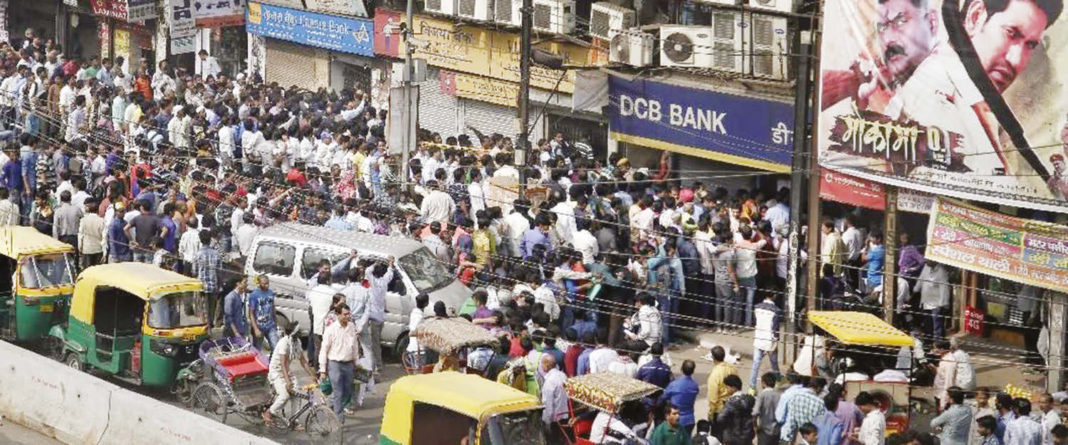
    The immediate impact of demonetization was on the stock market and the Indian rupee. Futures of markets in the US lurked lower, unaware of what Trump presidency meant for existing global trade, security and financial structures that the US led the creation of post World War II. Indian Finance Minister assured television audience that check can be used in lieu of cash. This displayed the government’s alienation from the tribulations of ordinary citizens. Marie Antoinette, on the eve of French Revolution, had similarly opined that if people did not have bread they could eat cake. To illustrate, returning from television studios in Noida one encountered MCD’s minion rejecting a 500 rupee note from my taxi driver, who in turn would not part with his 100 rupees which he needed for lunch. Naturally, neither was willing to settle for a check.

    First arises the question about the timing of demonetization. Pakistan has been pumping fake currency into India for years, but its extent has never been huge. It could be tackled by slowly replacing existing notes by those having higher security features. Also, doing it mid-week, followed by three banking holidays, precipitated the panic. Worse shall be the dislocation in rural economy, cash-based daily wage informal sector and taxes and tolls being collected under duress for public infrastructure, like the example above.

    The whisper in television studios was that this second ‘surgical strike’ is the result of the benefits of the first dissipating due to the OROP fiasco after the suicide of Subedar Grewal. The looming Uttar Pradesh election gives the government boasting rights about curbing black money, besides at one stroke wrecking the money war chests of opposition parties. It seems the government did not anticipate Donald Trump’s win and ensuing market turmoil, perhaps transient, multiplying the normal disruption that demonetization would cause. The double whammy’s effects will take some time to play out.

    On the US presidential election, a day ago when asked by television anchor to guess the outcome, I hedged saying it was difficult to assess Trump’s success or failure as he was creating a new electoral alliance based not on traditional party lines but by dredging the economic fears and racial hatred of the white middle class. In his victory speech, he called them ‘the forgotten men and women’. Trump has won after an absolutely no-holds barred contest that was more about the personal failures and foibles of the two candidates than their policies. The director of the Federal Bureau of Investigation, having a Republican background, by his untimely intervention both broke Hillary Clinton’s momentum and then gave her relief when the focus had shifted away from Trump’s sexual indiscretions or even misdemeanors.

    What makes Trump appear a threat to existing geo-economic order is the sheer esoteric nature of his economic and foreign policy pronouncements during the campaign. A lot of them do not even square with the traditional policies of the Republican Party. For instance, he condemns all trade agreements, including the North American Free Trade Agreement (NAFTA), which has integrated the Mexican and Canadian economies with that of the US. On foreign policy, he has advocated a retreat from US ‘exceptionalism’ which has been the bedrock of the US world view that it was US’ mandate as the custodian of liberty and freedom to fix things abroad pursuing those ideals. Trump instead negates that by preaching ‘America first’.

    Thus, the world awaits clarity on what part of his electioneering was noise and which is the core. His incessant praise of Russian President Vladimir Putin, hints of diminishing commitments to allies in Asia, like Japan and the Republic of Korea, and threatening to abandon the nuclear deal with Iran are troubling signs of erratic thinking, ill behoving the leader of the most powerful country of the world. In his victory speech, he did, in a phrase Americans use, walk back some of the rhetoric. He sought partnership and not confrontation with nations abroad and added that he would engage all nations that are ‘willing to get along with us’.

    Interestingly, for the first time, a coalition emerged dubbing itself Hindu Americans for Trump. They invited him to a temple in New Jersey to a town largely inhabited by Indians of Gujarati origin. Is it a sign that PM Narendra Modi had unleashed a subtle outreach using the RSS and Gujarati links? If so, it is a welcome move. India will have to watch carefully how Trump spells out his outreach to East Asia, including China; Europe, including Russia; and West Asia, principally Iran. India and Pakistan would come lower on his list of priorities.

    On the side of trade and economics, India has to monitor his policy on visas, taxing of companies that outsource and other protectionist steps that may have for India both challenges and opportunities. He may be a new entity, but Trump Incorporated has had real estate links in Mumbai and Pune. He is also at heart a transactional businessman whom India can cut a deal with as he carries little baggage of Cold War links to Pakistan. Crucial will be for PM Modi to quickly engage him to develop a chemistry and craft a shared vision for Asia of the future. President Barack Obama leaves many issues unsettled – India’s membership of the UN Security Council as permanent member, Nuclear Suppliers Group, etc. Trump has to be sold a vision of how the economies of India and US can grow better together than apart. The ‘Made in India’ will have to be redesigned as made in both.

    (The author is a former Secretary, Ministry of External Affairs, Government of India)

  • Demonetization stunt: Drama as farce

    Demonetization stunt: Drama as farce

    The August 14, 2014 issue of the The Hindu carried a feature indicating that the National Institute of Public Finance and Policy (NIPFP) had submitted to the Finance Ministry, in December 2013, a confidential report on estimates of black money held in India and abroad by Indians. The report apparently suggested that – driven largely by the higher education sector, real estate transactions, and incomes from mining – the size of the black economy could be as large as three-fourths the size of the country’s Gross Domestic Product. The then Finance Minister, we are told, did not place the report in Parliament. As far as one can ascertain, neither has the present Finance Minister.

    In the light of this record, it is hard to stomach the notion that the Prime Minister’s dramatic address to the nation on the evening of November 8 is indeed, as he claimed, “…a fight against black money (and) corruption…”. It is even harder to understand how the measures announced (such as they are) constitute an endorsement of the advertisement that “this government is dedicated to the poor.” The specific measures, as it happens, are rather short on detail and long on rhetoric. From what one can understand, the scourges of “black money”, terrorist funding, and the circulation of counterfeit high-denomination currency notes (Rs 500 and Rs 1,000 notes) are to be effectively countered by abruptly declaring that these currency notes are no longer legal tender. However, these currency notes can be exchanged, within a finite period, for newly-minted higher-denomination notes in banks by declaring one’s holdings of these notes, after identifying oneself by means of generally accepted documents of identity, such as PAN cards, Aaadhaar cards, ration cards, and so on.

    There are a number of difficulties one faces in coming to grips with the objectives of this scheme. First, it is hard to know what to make of the Prime Minister’s assurance that “your money will remain yours. You need have no worry on this point.” Taken literally and at face value, this suggests that no one runs the risk of actually being questioned about possession of suspiciously large quantities of large-denomination notes. In such an event, we are speaking of “fighting black money” through the declaration of a general amnesty which converts ‘black’ into “white” by simple fiat, that is, by the exchange of old notes for newly minted ones.

    But surely, this cannot be quite right – for then why should anyone hesitate to declare all their high-denomination notes? Apparently, after all, one does need to “worry on this point”. Presumably, people with unnaturally large quantities of high-denomination notes ought to be genuinely worried about identifying themselves as being in possession of such quantities, since their identities will, one imagines, be passed on by banks to the income-tax authorities. But then, what is an unnaturally large quantity? Is there a threshold level? Is that level variable across people or the same for all? In either case, how is it to be identified? And if one is found with holdings in excess of the threshold, presumably there will be a penalty levied on the offender. What is the rate of this penalty?By what principles is it to be determined?There is no clarity (nor, as far as one can tell, information) on these questions. If there is, indeed, no cause for “worry”, then we are speaking of an amnesty; if there is cause for worry, then worried people will simply not declare their ‘excess’ holdings of large-denomination notes, which will, effectively, have been just straightforwardly driven into non-existence. There is no question, in such a scheme, of recovering unaccounted money, money owed to the state by defaulting on legitimate taxes.

    There is a further complication to reckon with here. Bank account-holders with “small” or “below-threshold” holdings of high-denomination notes could “safely” exchange their low-denomination notes for “high” notes held by potential offenders, for a premium on their “low” notes. As an “honest” fellow in possession of high-denomination notes well in deficit of the specified threshold, I am in a position (if I should so choose) to, for example, exchange four 100-rupee notes, one 50-rupee note, one 20-rupee note, and one 10-rupee note (Rs 480 in all) for a 500-rupee note held by a fellow who is desperate to jettison his high-denomination notes. I can keep on doing so till I reach the threshold level. (The rate of exchange would depend on the threshold and the penalty specified by the monetary authorities.) The demonetization scheme under review could thus lead to the emergence of a nice little market for low-denomination notes.

    Is this supposed to be an attack on the black economy? The unaccounted economy is a composite of holdings of under-valued real estate; over-invoicement and under-invoicement of imports and exports respectively; hawala transactions; holdings of gold; possession of consumer durables; and numbered accounts in banks in overseas tax-havens. The drama of “the fight against black money” which we are invited to witness (and digest) is the heroic battle against that proportion of “excessive” high-denomination notes in all currency notes which are held as a proportion of all forms in which unaccounted wealth and income are held in this country!

    What of the costs of this demonetization scheme? Consider the hardship to which honest people are being put in the cause of this drama. Ordinary people having to queue up in banks to declare and exchange their (meagre) high-denomination notes for new ones; poor people without bank accounts in unhappy possession of high-denomination notes (we are speaking of a country with a low banks/population ratio); the stresses and strains of a banking system which is already under duress and now has to cope with the sudden pressure of dealing with the demonetization scheme; the distinct possibility that low-denomination notes may not be available with banks in sufficient quantities to deal with the demand for them; the requirement that very large numbers of blameless common people have to be inconvenienced, if not harassed, in order to sustain a poorly-thought out scheme of dubious benefit.

    What we are dealing with is a supposed implementation of an unfulfilled election promise on combating the problems of the unaccounted economy; and possibly an attempt at curtailing the distribution of money to the electorate by opposition parties in a time of important Assembly elections. It is hard to see this farcical demonetization drama as anything like a serious and sincerely-intended “fight against black money and corruption”, even if we, the people, are invited to feel privileged that we are being asked to make sacrifices in the cause of this splendid and self-denying initiative.

    Post-Script: After this piece was written, it has been clarified that the threshold is Rs 10 lakh, beyond which an individual is subject to investigation; if found defaulting on tax, the tax, together with a 200 per cent penalty, will be recovered from the offender.

    (The author is a well- known economist)

  • GURU NANAK, THE FIRST MASTER OF THE SIKHS

    GURU NANAK, THE FIRST MASTER OF THE SIKHS

    Shri Guru Nanak Dev Ji is the first Master of the Sikhs, a 25 million community which has its origin in Punjab State of India where the most Sikhs live, inhabits almost all parts of the world. The Sikh population in the USA is roughly 500,000. There are another half a million Sikhs in Canada.

    Guru Nanak Dev Ji, the founder of Sikhism and the first of the 10 Gurus of the Sikhs, was born in the village of Talwandi. Sri Guru Nanak Dev Ji was born on 15th April 1469. However, Sikhs now celebrate this auspicious event each year on the full moon day in November. Thus the date changes from one year to the next. He was born into a Bedi Kshatriya family in the village of Rai Bhoi di Talwandi. It’s now called Nankana Sahib. These days there is Gurdwara Janam Asthan at this place. Guru Nanak Dev Ji was born to mother Tripta Devi and father Mehta Kalu. Guru Nanak’s father was a patwari working for Rai Bular Bhatti. His full name was Mehta Kalyan Das Bedi. Guru Nanak Dev Ji had one elder sister called Bebe Nanaki. She was the first to recognise Nanak as an enlightened Soul.

    Guru Nanak from an early age seemed to have acquired a questioning and enquiring mind. He refused as a child to wear sacred thread called Janeu, saying instead that he would wear the true name of God in his heart for his protection. He reasoned that the thread could be broken, soiled, burnt or lost and could not offer any security at all. At age seven, his father, Kalu Mehta, enrolled him at the village school. As a child Guru Nanak astonished his teacher by describing the implicit symbolism of the first letter of the alphabet. In Persian or Arabic it is a straight stroke, resembling the mathematical version of one. He described it as denoting the unity or oneness of God.

    Other childhood sakhis refer to strange and miraculous events about Guru Nanak. In one account Rai Bular witnesses a poisonous cobra shielding the child Nanak’s head from the harsh sunlight. The young Nanak enjoyed the company of holy men and engaged them in long discussions about the nature of God. Nanak married Sulakhni, of Batala, and they had two sons, Sri Chand and Lakhmi Das. His brother-in-law Jai Ram obtained a job for him in Sultanpur as the manager of the government granary. One morning, when he was twenty-eight, he went as usual down to the river to bathe and meditate. It was said that he was gone for three days. His clothes were found on the bank of a local stream called the Kali Bein. The townspeople assumed he had drowned in the river; Daulat Khan had the river dragged, but no body was found. Three days after disappearing, Guru Nanak reappeared, staying silent. The next day, he uttered the words: “There is no Hindu and no Musalman.” This pronouncement was substantial as it referred to the day and age in which Guru Nanak lived: Hindus and Muslims of India constantly and bitterly fought each other over the issue of religion. The Guru meant to emphasize that, ultimately, in the eyes of God, it is not religion that determines a person’s merits, but one’s actions.

    Travels

    Guru Nanak is widely acknowledged to have made four major journeys, spanning thousands of kilometres. The first tour being east towards Bengal and Assam, the second south towards Tamil Nadu, the third north towards Kashmir, Ladakh, and Tibet, and the final tour west towards Baghdad, Mecca and Medina on the Arabian Peninsula. At Mecca, Guru Nanak was found sleeping with his feet towards the Kaaba mosque. Kazi Rukan-ud-din, who observed this, angrily objected. Guru Nanak replied that it is not possible to turn his feet in a direction that did not have God or a house of God. The Kazi understood that the meaning of what the Guru was saying was “God is everywhere”. The Kazi was struck with wonder.

    Personal Life

    As a householder, Nanak continued to carry out the mission of his life to lead people on the true path to God, to dispel superstition, to bring people out of ritualistic practises, to lead them directly to follow Gurbani without the need for priests and clergy, and to restrain and guard against the five thieves within –Pride, Anger, Greed, Attachment and Lust. The Guru witnessed the Mughal invasion of India, and saw the horrors inflicted upon the common people by the invaders. Though a pacifist, Guru Nanak did not hesitate to speak up against injustice:

    The kings are ravenous beasts, their ministers are dogs.

    The Age is a Knife, and the Kings are Butchers.

    In this dark night of evil, the moon of righteousness is nowhere visible.

    Teachings

    Among the many philosophical foundations laid by Guru Nanak, his characterization of God is most recognizable. It forms the opening lines of Guru Granth Sahib. The translation is as follows:

    There is but One God, The Supreme Truth; The Ultimate Reality, The Creator, Without fear, Without enemies, Timeless is His image, Without Birth, Self Created, By His grace revealed.

    Guru Nanak’s teachings can be found in the Sikh scripture Guru Granth Sahib, as a vast collection of revelatory verses recorded in Gurmukhi. Guru Nanak describes the dangers of the Egotism and calls upon devotees to engage in worship through the word of God. The word of God, cleanses the individual to make such worship possible. Guru Nanak warned against hypocrisy and falsehood saying that these are pervasive in humanity. Through popular tradition, Guru Nanak’s teaching is understood to be practised in three ways:

    VAND CHHAKKNA: Sharing with others, helping those with less who are in need

    KIRAT KARNA: Earning/making a living honestly, without exploitation or fraud

    NAAM JAPNA: Chanting the Holy Name and thus remembering God at all times (ceaseless devotion to God)

    Guru Nanak put the greatest emphasis on the worship of the Word of God (Naam Japna). The crux of his teaching was

    “Equality of Humans” without distinction of caste or creed. Guru Nanak preached against discrimination and prejudices due to race, caste, status, etc. He didn’t only preached these concepts he also took practical steps to acheive it. He started the institution of langar, where people have to sit together to eat without any distinction.

    Guru Nanak believed in equality of men and women. He elevated the position of women by spreading this message: “From woman, man is born; within woman, man is conceived; to woman he is engaged and married. Woman becomes his friend; through woman, the future generations come. When his woman dies, he seeks another woman; to woman he is bound. So why call her bad? From her, kings are born. From woman, woman is born; without woman, there would be no one at all. O Nanak, only the True Lord is without a woman.” Besides rejecting the Hindu caste system, idolatry, and ritualism, Guru Nanak preached universal equality. In consistence with his message of equality, Guru Nanak scorned those who considered women to be evil and inferior to men by asking: Why should we call her inferior, when it is she who gives birth to great persons?

    Last years

    As the end approached Guru Nanak would frequently test the devotion of his sons and nearest followers and in doing so demonstrate their state of mind to one another. There were numerous such occasions and one particular devotee, Bhai Lehna, rose to eminence because he never faltered in his faith in Guru Nanak. Guru Nanak appointed Bhai Lehna as the successor Guru, renaming him as Guru Angad, meaning “one’s very own” or “part of you”. Shortly after proclaiming Bhai Lehna as the next Guru, Nanak died on 22 September 1539 in Kartarpur, at the age of 69.

    Guru Nanak was revered by both Hindus and Muslims. This is crystallised when on his deathbed they both quarreled about whether his body should be cremated as per the Hindu tradition or buried as per Islamic tradition.

  • Indian origin Manan Shah named national finalist in 2016 Siemens Competition

    Indian origin Manan Shah named national finalist in 2016 Siemens Competition

    SAN JOSE (TIP): The Siemens Foundation recently announced that an Indian American student at San Jose, Calif.-based Harker School, is one of the winners of its 2016 Siemens Competition.

    Manan Shah’swork “Deep Learning Assessment of Tumor Proliferation in Histopathological Images for Categorical and Molecular Breast Cancer Severity and Diagnosis” -earned him top individual honors and a$3,000 scholarship for developing a computational model that will help pathologists more rapidly and accurately assess the severity of breast cancer tumor growth and spread.

    Shah now moves on to the final stage of the competition in Washington, D.C., which will take place in early December. A total of $500,000 in scholarships will be distributed to winners, and two contestants will be awarded the top prize of $100,000

    “These students are truly amazing,” said David Etzwiler, CEO of the Siemens Foundation. “They are presenting cutting-edge, advanced research that is addressing some of the most critical issues facing our world today.”

    The Siemens Competition, launched in 1999 by the Siemens Foundation, was established to increase access to higher education for students who are gifted in STEM and is based on the culture of innovation, research and educational support that is the hallmark of Siemens. This competition, administered by Discovery Education, seeks to recognize and hopefully build a strong pipeline for the nation’s most promising scientists, engineers and mathematicians.

    The Siemens Foundation announced on Oct. 20 that Harker senior Manan Shah and juniors Randy Zhao and Rajiv Movva were named regional finalists in this year’s Siemens Competition. These three students will compete in November for a chance to move on to the final stage of the competition in Washington, D.C. One of the country’s most prestigious science competitions, the Siemens Competition rigorously evaluates individual and team research projects submitted by high school students and awards more than $600,000 in scholarships through regional and national events.

    Earlier this week, 19 Harker students were named Siemens semifinalists, the most of any school in California. More than 1,600 projects were submitted for the 2016 competition, and 498 students were named semifinalists. Harker’s semifinalists make up 3.8% of the total.