Month: December 2016

  • The Expanding Horizons of Pravasi Bharatiya Divas over the Years

    The Expanding Horizons of Pravasi Bharatiya Divas over the Years

    Pravasi Bharatiya Divas (PBD) is celebrated on 9 January every year to mark the contribution of Overseas Indian community in the development of India. January 9 was chosen as the day to celebrate this occasion since it was on this day in 1915 that Mahatma Gandhi, the greatest Pravasi, returned to India from South Africa, led India’s freedom struggle and changed the lives of Indians forever.
    PBD conventions are being held every year since 2003. These conventions provide a platform to the overseas Indian community to engage with the government and people of the land of their ancestors for mutually beneficial activities. These conventions are also very useful in networking among the overseas Indian community residing in various parts of the world and enable them to share their experiences in various fields.
    During the event, individuals of exceptional merit are honored with the prestigious Pravasi Bharatiya Samman Award to appreciate their role in India’s growth. The event also provides a forum for discussing key issues concerning the Indian Diaspora.
    The 14th Pravasi Bharatiya Divas Convention will be held from 7 to 9 January, 2017 at Bengaluru in Karnataka. The theme of 2017 PBD is “Redefining Engagement with Indian Diaspora”. It will see close to 3000 Non-Residential Indians (NRI) and PIO delegates from across the world.

    PBD was not the same in the initial years compared to what it is today. Over the years it has changed in better directions with new initiatives and ideas. It became more focused on achieving its goal to engage the diaspora in much productive ways. The first three PBDs had no tag line. The fourth edition in Hyderabad for the first time came with a tag line – : Coming Together, Working Together.
    The interactions with the community also increased with more interactive plenary and working sessions. Specific sectors were targeted for investment opportunities. All these initiatives successfully created a true ‘Local platform for Global Indians.’


    Here is a look at the previous Pravasi Bharatiya Divas celebrations:

    Year 2003: The first PBD was held in New Delhi.

    The topics of the main plenary sessions were

    ‘India and the Diaspora – Forging a Constructive Relationship’

    Science and Technology in India – Networking for Excellence’

    The Global Business Matrix and the Indian Diaspora

    Prominent Speakers included – Deputy Prime Minister LK Advani, Dr. L. M. Singhvi, Rajya Sabha MP and Chairman, Organizing Committee of PBD, Mr. Yashwant Sinha, External Affairs Minister.

    Year 2004: The second PBD was also held in New Delhi. The topics of the main plenary sessions were

    India and the Pravasi Bharatiyas: Policies for Productive Engagement


    Diaspora Youth and India: Blueprint for Engagement


    Globalization, Indian Economy and the Diaspora


    India and the Diaspora: Vision 2020

    Education Synergies between India and the Diaspora


    Prominent Speakers included – Deputy Prime Minister LK Advani, Yashwant Sinha, External Affairs Minister, Arun Jaitley, Minister of Commerce and Industry, Industrialist Mukesh Ambani

    Year 2005: The third PBD was held in Mumbai, Maharashtra. The topics of the main plenary sessions were

    India: A hub for Globalization


    New Initiatives for the Diaspora


    Disaster Management and Rehabilitation


    India and generation Next

    Prominent Speakers included – P Chidambaram, Minister of Finance, Raghuram Rajan, Economic Counsellor and Director Research Dept, IMF, Industrialist Ratan Tata

    Year 2006: The fourth PBD was held in Hyderabad, Andhra Pradesh.

    Theme: Coming Together, Working Together

    The topics of the main plenary sessions were

    Defining a Diaspora Agenda


    India: The Knowledge Powerhouse


    Diaspora collaboration in Healthcare

    Remittance services

    This was the first time that an Interactive Plenary session with all state was held.

    Prominent Speakers included – P Chidambaram, Minister of Finance, Oscar Fernandes, MOS (IC), Dr. Mohanbir Sawhney Professor of Marketing, Kellogg School, USA

    Year 2007: The fifth PBD was held in New Delhi.

    Theme: Rooting for the Roots

    The topics of the main plenary sessions were:

    Challenges of development in the Global context

    Developmental Challenges of the States: Partnership Opportunities


    How to get US $1.5 trillion of capital investment: The resource hurdle for development


    Leveraging Technology for Development


    Planning for development – How to include the Indian Diaspora


    There were many working sessions as well including one on ‘GOPIO: Engaging PIOs in India’s Development.’


    Prominent Speakers included Kamal Nath, Minister for Commerce and Industry, Sam Pitroda, Chairman of Knowledge Commission, Asook Ramsara, Secretary General, GOPIO


    Year 2008: The sixth PBD was again held in New Delhi.

    Theme: Engaging the Diaspora: The Way Forward

    The topics of the main plenary sessions were:

    Social Development Challenges in India – Health and Education


    Investment and Infrastructure


    Trade & Business Opportunities


    Developmental Challenges of the States: Partnership Opportunities


    Diaspora Philanthropy: Empowerment of Rural Women


    Couple of Concurrent sessions was also held.


    Prominent Speakers included Pranab Mukherjee, Minister of External Affairs, Gujarat Chief Minister Narendra Modi, Lord Karan Billimoria


    Year 2009: The seventh PBD was held in Chennai, Tamil Nadu.

    Theme: Engaging the Diaspora: The Way Forward

    The topics of the main plenary sessions were:

    India as an Emerging Power: The Diaspora Factor


    Reflections on Current Economic Crisis: Diaspora Concerns


    Indian Diaspora: Preservation of Language and Culture


    The number of Regional working sessions increased to seven.

    Prominent Speakers included Pranab Mukherjee, Minister of External Affairs, Ashwin Patel Chairman, Asian American Hotel Owners Association, Thomas Abraham Chairman, GOPIO International

    Year 2010: The 8th PBD was held in New Delhi.

    Theme: Engaging the Diaspora: The Way Forward

    The topics of the main plenary sessions were:

    Interaction with Union Ministers: Diaspora – Role and Expectation


    Interaction with PIO Ministers and Dignitaries: Diaspora – Interest and Concerns


    Session with Chief Ministers: Skills Development


    Prominent Speakers included Pranab Mukherjee, Minister of Finance, Renu Khator Chancellor and UH President, University of Houston, Prof Jagdish Bhagwati, Columbia University

    Year 2011: The 9th PBD was held in New Delhi again.

    Theme: Engaging the Global Indian

    The topics of the main plenary sessions were:

    Engaging Young Overseas Indians

    Opportunity India: Interaction with Union Ministers

    Investment opportunities in the North Eastern Region

    Interaction with Chief Ministers on Inclusive Growth

    Prominent Speakers included Vayalar Ravi, Minister of Overseas Indian Affairs, USA based filmmaker Mira Nair, Ruby Dhalla Member of Parliament, Canada

    Year 2012: The 10th PBD was held in Jaipur, Rajasthan.

    Theme: Global Indian – Inclusive Growth

    The topics of the main plenary sessions were:

    Inclusive Growth: Two Decades of Economic Liberalization


    Business Session: Partnering for Prosperity


    Global Indian: State initiatives and Opportunities


    Prominent Speakers included Preeta Bansal Noted Attorney and Former Senior Obama Administration Official, Dr Thomas Abraham Founder, GOPIO, Dr Shashi Tharoor, MP


    Year 2013: The 11th PBD was held in Kochi, Kerala.

    Theme: Engaging Diaspora – The Indian Growth Story

    The topics of the main plenary sessions were:

    India’s Growth: Greater Opportunities


    Heritage and Diaspora

    Engaging Young Overseas Indians


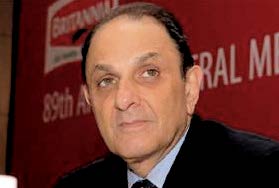
    Prominent Speakers included Hotelier Sant Singh Chatwal, Naval Bajaj President, Indo Canada Chamber of Commerce

    Year 2014: The 12th PBD was held in New Delhi.

    Theme: Engaging Diaspora – Connecting across Generations

    Year 2015: The 13th PBD was held in Gandhinagar, Gujarat.

    Theme: Apna Bharat Apna Gaurav: Connecting Across Generations

    South African Foreign Minister Maite Nkoana-Mashabane attended that year’s Pravasi Bharatiya Divas, commemoration to mark the return of Mahatma Gandhi from South Africa 100 years ago. The chief guest of the 13th PBD was Guyana President Donald Ramota.

    In 2015, The External Affairs Ministry decided to revise and re-energize the format of the annual Pravasi Bharatiya Divas Convention. Accordingly, it was decided that the PBD Convention will be held bi-annually and that, in the intervening year, smaller, outcome-based PBD conferences will be organized in New Delhi on issues of concern to the Indian Diaspora and the Government. The 14th PBD was held in New Delhi 7-9 January, 2016.

  • Ajay Batra bereaved: Young son Arvin dies in a car accident

    HICKSVILLE, NY (TIP): IVSTV owner and community activist Mr. Ajay Batra lost his young son, Arvin Batra who met with a fatal car accident Saturday, December 24 morning, in Hicksville, Long Island.

    Arvin Batra, well known for his accomplishments in Bollywood Dances, TV Shows and Cultural Programs was a rising star of the Indian American community.

    According to available information, Arvin Batra was travelling with a friend Hamza Rizvi at the time of accident. Originally, there were three travelers. But the third one was dropped at his place just about five minutes before the accident took the life of both Hamza and Arvin. Hamza was driving the car at the time of the accident.

    It has been reported that the car the deceased were traveling in skidded, probably because of a slippery road and hit against a tree. The car went up in flames. A lady reportedly saw the two young men trying to smash the window glass and struggling to come out. But the glass did not appear to break. And the doors may have been locked.

    The crew of the first Fire Engine which arrived were not able to rescue the young men because by the time they were on the job, the car engine exploded. All that remained was the charred car body and within, the burnt bodies of the unfortunate young men.
    Both the Batra and the Rizvi family are in a state of shock. They are only waiting now for the dead bodies to arrive home after being released by the hospital and police.

    The death of the two young men has sent shock waves in the South Asian community in Long Island.

    A large number of Indian American community members visited Mr. Ajay Batra‘s home in Hicksville to condole the death of the promising young man. Many from the Indian American community as also a large number from Pakistani community visited Mr. Rizvi to share the family’s grief over the tragic and untimely death of Hamza.

    The funeral is expected to take place either on Monday or Tuesday.

    The address for Mr. Ajay Batra is 9 Arpad Street, Hicksville, NY and for Mr. Rizvi, it is 13 Cambridge Ave. Bethpage, NY.

  • FACEBOOK IS STILL THE ‘BIGGEST ENEMY’ OF YOUR SMARTPHONE BATTERY

    FACEBOOK IS STILL THE ‘BIGGEST ENEMY’ OF YOUR SMARTPHONE BATTERY

    According to Avast Software’s latest study into app use and performance drain, Facebook still tops the charts. What’s more, thanks to the impact of Instagram (6th place), Pages Manager (9th) and Facebook Messenger (10th), the company actually has four apps in the top 10.

    “These app performance charts are a great example of helping users understand how they can manage their app usage thoughtfully in order to get the most out of their devices, without limiting enjoyment of their favorite apps,” said Gagan Singh, SVP and GM Mobile Business, Avast.

    Avast puts together its quarterly charts by using anonymous data from 3 million Android handsets globally and by focusing only on the apps that are installed directly from Google Play and that are installed on at least 50,000 handsets in the sample. “Our research helps us identify all of the challenges our customers are facing in using their mobile devices and allows us to provide useful insights and advice [to consumers and developers],” said Singh.

    The top 10 list was compiled based on the apps that launch when a phone starts up and that have the biggest overall impact — i.e., data and storage use as well as battery drain.

    And while Facebook is still top, in at second place is a new entry, musical.ly, the lip syncing app. It can drain a Samsung Galaxy S6 battery completely in just two hours but, more worryingly, watching 25 clips a day via a 3G or 4G connection could add up to 3GB of data over a month.

    Avast points out that this could be a shock to parents as the app is aimed at teens who usually don’t pay the monthly network bills.

    Other new entries include WhatsCall — a Skype competitor that is always on is in fourth place — and the app for popular UK newspaper the Daily Mail debuts in fifth.

    Still there’s also good news. A host of previously resource-heavy apps have dropped out of the charts altogether thanks to some serious improvements. They include WhatsApp, SoundCloud, WeChat, ChatOn and the BBC iPlayer.

    Source: AFP


  • SUPERCLUSTER OF GALAXIES NEAR MILKY WAY FOUND

    SUPERCLUSTER OF GALAXIES NEAR MILKY WAY FOUND

    MELBOURNE (TIP): An international team of astronomers has found one of the universe’s biggest superclusters of galaxies near the Milky Way.

    Researchers, including those from Australian National University (ANU), said the Vela supercluster, which had previously gone undetected as it was hidden by stars and dust in the Milky Way, was a huge mass that influenced the motion of our galaxy.

    “This is one of the biggest concentrations of galaxies in the universe, possibly the biggest in the neighbourhood of our galaxy, but that will need to be confirmed by further study,” said professor Matthew Colless from the ANU Research School of Astronomy and Astrophysics.

    “The gravity of the Vela supercluster may explain the difference between the measured motion of the Milky Way through space and the motion predicted from the distribution of previously mapped galaxies,” said Colless.

    Colless used the Anglo-Australian Telescope to measure distances for many galaxies to confirm earlier predictions that Vela was a supercluster.

    He also helped to estimate the supercluster’s effect on the motion of the Milky Way. The research involved astronomers based in South Africa, Australia and Europe. Two new Australian surveys starting in 2017 will confirm the size of the Vela supercluster.

    “The Taipan optical survey will measure galaxy distances over a bigger area around Vela, while the WALLABY radio survey will be able to peer through the densest parts of the Milky Way into the supercluster’s heart,” Colless said.

    The research was published in the journal Monthly Notices of the Royal Astronomical Society. Source: PTI

  • Robot gives rare glimpse under Antarctic sea ice

    Robot gives rare glimpse under Antarctic sea ice

    SYDNEY(TIP): An underwater robot has captured a rare glimpse beneath the Antarctic sea ice, revealing a colourful world filled with coconut-shaped sponges, dandelion-like worms, pink algae and spidery starfish.

    The Australian Antarctic Division (AAD) took footage on a camera attached to a Remotely Operated Vehicle sent down by scientists through a small hole drilled in the ice as they recorded the acidity, oxygen, salinity and temperature of the seawater.

    “When you think of the Antarctic coastal marine environment, the iconic species such as penguins, seals and whales usually steal the show,” AAD biologist Glenn Johnstone said Wednesday. “This footage reveals a habitat that is productive, colourful, dynamic and full of a wide variety of biodiversity, including sponges, sea spiders, urchins, sea cucumbers and sea stars.” These species, recorded near Australia’s Casey research station, live in water that is -1.5 degrees Celsius (29.3 degrees Fahrenheit) year round and covered in 1.5 metres (nearly five feet) of sea ice for 10 months of the year.

    “Occasionally an iceberg may move around and wipe out an unlucky community, but mostly the sea ice provides protection from the storms that rage above, making it a relatively stable environment in which biodiversity can flourish,” he said. Scientists are in Antarctica working on better understanding the impact of acidification on Southern Ocean sea-floor communities under increasing carbon dioxide emissions.

  • Spot lies, fake news and propaganda on #Facebook

    Spot lies, fake news and propaganda on #Facebook

    The Pope has endorsed Donald Trump for president.A Washington, DC, pizzeria is a front for a child sex abuse ring. George Soros will “bring down” the US by funding “black hate groups.” These are just some examples of viral stories circulated on social media recently that are completely untrue. Facebook on Thursday announced some steps it’s taking to stop the spread of such “fake news” on its huge social network.

    This includes working with outside fact-checking organizations and drying up financial incentives to what it calls the “worst of the worst” spammers that traffic in made-up stories. But there are basic things news readers can do themselves to spot fake news. And if you want, you can report them to Facebook, which can flag stories for fact-checkers to evaluate.

    Check the source

    Some hoax sites, designed to draw you in for advertising revenue, feature designs that resemble legitimate, well-known websites. Such “spoofing” can be quite effective _ but there are often telltale signs to indicate their true nature.

    For example, you should be vary of articles on sites whose addresses, or URLs, that end in “com.co,” writes Melissa Zimdars, a communications professor at Merrimack College whose own list of “fake news” sites went viral.(She has since taken it down and published a more general guide .) You can also check the website’s “about” page, its list of contacts, and other stories and photos on it. Poke around a little; if things look less-than-official, you’re probably on a spoof site.

    Grammar and emotions

    Random use of ALL CAPS? Lots of exclamation points? Does it make sense when you read it out loud? Can you imagine a TV newscaster reading it out loud? Is there something just off about it? Does it sound very angry, inflammatory, emotional? None of these are good signs.

    Poke around for other coverage

    If a story is real and really big, you will likely (though not always) see some version of it from multiple sources. Is it on sites like ABC News, The Associated Press, the New York Times, or other places you have heard of ? Is it featured in your local newspaper, the one printed on actual paper?

    Let’s put it this way: If the pope actually endorsed Trump, you’d see it everywhere.

    Sources, sources, sources

    Anonymous sources can appear in legit as well as made-up news stories. But Googling the people who are named in a story is a good way to check whether the story itself is real. They might have a LinkedIn profile, or appear in other news stories, for example. Someone says they are a university professor? Google the name of the university. Is it a health study on a new cure for cancer? Look it up.

    On Facebook

    Facebook users often share articles without reading them. Don’t be that person.

    Instead, click on the link and read the story before hitting the “share” button. If you believe a story someone shared is fake, you can post a comment, or report it to Facebook for outside fact-checking by clicking on the gray arrow on the upper right corner and selecting “report this post.” You’ll get an option for “It’s a fake news story.”

    • Source: AP
  • MESSENGER APP GETS NEW POWERFUL CAMERA

    MESSENGER APP GETS NEW POWERFUL CAMERA

    To help make conversations better, Facebook on Friday launched a new, faster and easier-to-use camera with art and special effects in its Messenger app that will be rolled out globally over the coming days.

    “We have seen that the way people are messaging is becoming much more visual. In fact, over 2.5 billion emojis, photos, stickers and videos are sent every day on Messenger,” the company said in a blog.

    “In some ways the camera is now replacing the keyboard. As more people use Messenger in their everyday lives, we wanted to make it faster, simpler and more fun to send photos and videos. So we built the new Messenger camera,” Facebook said.

    The new camera is quicker than previous versions which makes it easier for users to capture and share moments as they happen.

    Whether you are already in a conversation or have just opened up the app, you will see the shutter button centre in the screen. A tap takes photo and a long press records a video. The social media giant also introduced new art and special effects. “We are especially excited to debut 3D masks and special effects, which make it super easy to apply an artistic filter to your full screen photo and to turn your world into a work of art,” the company said.

  • HOW INDIA LOBBIED MOODY’S FOR RATINGS UPGRADE, BUT FAILED

    HOW INDIA LOBBIED MOODY’S FOR RATINGS UPGRADE, BUT FAILED

    NEW DELHI (TIP): India criticised Moody’s ratings methods and pushed aggressively for an upgrade, documents reviewed by Reuters show, but the US-based agency declined to budge citing concerns over the country’s debt levels and fragile banks.

    Winning a better credit rating on India’s sovereign debt would have been a much-needed endorsement of Prime Minister Narendra Modi’s economic stewardship, helping to attract foreign investment and accelerate growth.

    Since storming to power in 2014, Modi has unveiled measures to boost investment, cool inflation and narrow the fiscal and current account deficits, but his policies have not been rewarded with a ratings upgrade from any of the “big three” global ratings agencies, who say more is needed.

    Previously unpublished correspondence between India’s finance ministry and Moody’s shows New Delhi failed to assuage the ratings agency’s concerns about the cost of its debt burden and a banking sector weighed down by $136 billion in bad loans.

    In letters and emails written in October, the finance ministry questioned Moody’s methodology, saying it was not accounting for a steady decline in the India’s debt burden in recent years. It said the agency ignored countries’ levels of development when assessing their fiscal strength.

    Rejecting those arguments, Moody’s said India’s debt situation was not as rosy as the government maintained and its banks were a cause for concern, the correspondence seen by Reuters showed.

    Moody’s and one of its lead sovereign analysts, Marie Diron, declined to comment on the correspondence, saying ratings deliberations were confidential. India’s finance ministry did not respond to requests for comment.

    Arvind Mayaram, a former chief finance ministry official, called the government’s approach “completely unusual”.

    “There was no way pressure could be put on rating agencies,” Mayaram told Reuters. “It’s not done.”

    Debt burden, bad loans

    India has been the world’s fastest growing major economy over the past two years, but that rapid expansion has done little to broaden the government’s revenue base.

    At nearly 21 percent of gross domestic product (GDP), India’s revenues are lower than the 27.1 percent median for Baa-rated countries. India is rated at Baa3 by Moody’s, the agency’s lowest notch for debt considered investment grade.

    A higher rating would signify to bond investors that India was more creditworthy and help to lower its borrowing costs.

    While India’s debt-to-GDP ratio has dropped to 66.7 percent from 79.5 percent in 2004-05, interest payments absorb more than a fifth of government revenues.

    Moody’s representatives, including Diron, visited North Block, the colonial sandstone building in the Indian capital that houses the finance ministry, on September 21 for a discussion on a ratings review.

    The atmosphere at the meeting with economic affairs secretary Shaktikanta Das, one of the ministry’s most senior officials, and his team was tense, according to an Indian official present, after Diron had told local media the previous day that a ratings upgrade for India was some years away.

    On September 30, Moody’s explained its methodology to Indian officials in a teleconference.

    Lobbying for an upgrade

    Four days later, the finance ministry sent an email to Diron questioning Moody’s metrics on fiscal strength. The government cited the examples of Japan and Portugal, which enjoy better ratings despite debts around twice the size of their economies.

    “Given that countries are on different stages of economic and social development, should countries be benchmarked against a median or mean number (as is done by Moody’s)” the email asked.

    In India’s case, “while the debt burden lowered significantly post 2004, this did not get reflected in the ratings”, the ministry argued.

    New Delhi urged Diron to look at improvements in the factors – better forex reserves and economic growth -that Moody’s had considered when handing India its last ratings upgrade in 2004.

    In a reply the next day, Diron said that, not only was India’s debt burden high relative to other countries with the same credit rating, but its debt affordability was also low.

    She added that a resolution to the banking sector’s bad loan problems was “unlikely” in the near-term.

    In a last-ditch effort on Oct. 27, Economic Affairs Secretary Das sent a six-page letter to Singapore-based Diron, addressed to Moody’s New York headquarters. Source: Reuters

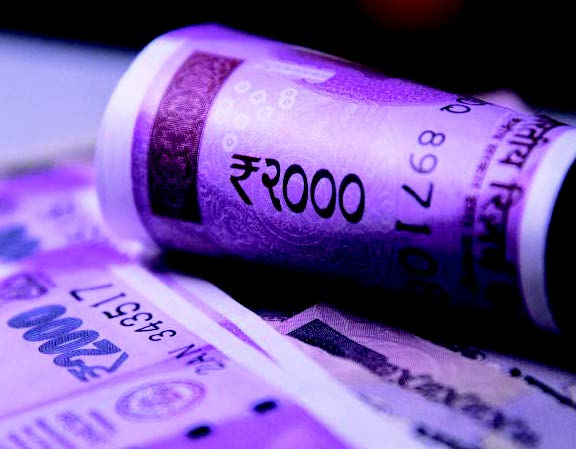
  • Multiple deposits of scrapped notes allowed till Dec 30: RBI

    Multiple deposits of scrapped notes allowed till Dec 30: RBI

    MUMBAI (TIP): Reserve Bank of India on Thursday clarified that account-holders can make multiple cash deposits in withdrawn currencies till December 30. RBI had on Wednesday reversed an earlier directive requiring banks to question customers who deposit scrapped notes worth more than Rs 5,000. The circular had also insisted that all future cash deposits be made in one go.

    While Wednesday’s notification withdrew the condition that banks question depositors, it was silent on whether multiple deposits would be allowed. On Thursday, RBI updated its `frequently asked questions’ on demonetisation where it clarified that deposits can be made more than once.

    “Specified Bank Notes (scrapped notes) can be deposited in cash deposits machines/cash recyclers or at bank branches more than once till December 30, 2016. At bank branches, customers should use separate pay-in-slips for depositing SBNs and other legal tender,” RBI said.

    Bankers had gone on nationwide protests against RBI’s directive which put the onus of ensuring compliance on bank officials. According to the circular, deposits of scrapped notes above Rs 5,000 could be accepted only if the customer gave a `satisfactory explanation’ on why he or she could not deposit funds for so long. Also the explanation was to be recorded in the presence of two bank officials. Many banks had stopped accepting deposits above Rs 5000 completely while others rejected deposit statements on the grounds that the explanation was not satisfactory. Source: TOI

  • NUSLI WADIA VOTED OUT FROM POSITION AS A TATA MOTORS DIRECTOR

    NUSLI WADIA VOTED OUT FROM POSITION AS A TATA MOTORS DIRECTOR

    NEW DELHI (TIP): Nusli Wadia was voted out of his position as an independent director of Tata Motors.

    More than 70% of Tata Motors shareholders voted in favour of the resolution to remove Wadia, The Economic Times (ET) reported.

    The voting took place on Thursday (December 22) at an Extraordinary General Meeting (EGM) in Mumbai that began at 3 pm. All the Nusli Wadia  board directors except Wadia were present.

    Ahead of the EGM, Tata Sons raised its up stake in Tata Motors buying 1.73% of the company at a premium to the market price in a Rs 2,500-crore block deal on December 13, ET said.

    Although Wadia wasn’t present at the meeting, he left a four page note, which was read out by the company secretary at the EGM.

    In the letter, he explained his absence from the EGM saying that that he has chosen to not attend the meeting as recent meetings by other Tata companies have been

    “inappropriately and shamefully stage managed” by controlling the entry into the hall as also in the selection and choice of speakers. This, Wadia wrote, has never been seen before in Indian corporate history.


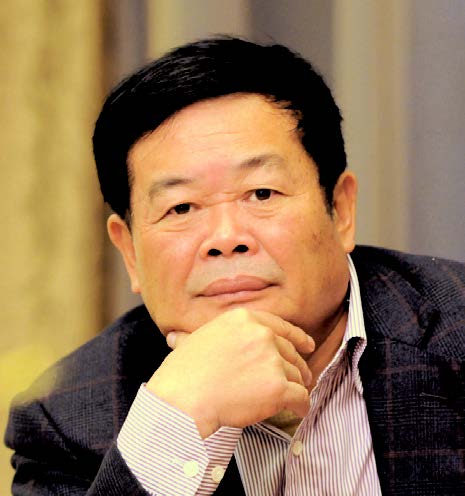
  • China tycoon Cao Dewang moves jobs to US, citing high taxes at home

    China tycoon Cao Dewang moves jobs to US, citing high taxes at home

    SHANGHAI (TIP): A Chinese auto glass tycoon has caused a stir by shifting part of his empire to the United States and setting up a factory in Ohio, citing high taxes and soaring labour costs at home.

    Cao Dewang’s $600-million investment comes after Donald Trump threatened to declare Beijing a currency manipulator and slap 45 percent punitive tariffs on Cao Dewang Chinese imports to protect American jobs.

    The 70-year-old tycoon’s decision to open a glass factory in the eastern American state of Ohio in October – a rare case of jobs being exported from China to the US – triggered an outpouring of criticism on social media.

    The phrase “Cao Dewang has escaped” became a hot topic, generating nearly 10 million views on the Twitter-like Weibo microblog and many comments urging China to “not let Cao Dewang run away”.

    Cao’s Fuyao Glass Industry Group – a supplier to big names including Volkswagen and General Motors – claims to be the biggest exporter of auto glass in the world, reporting 2.6 billion yuan ($370 million) profits last year.

    Cao defended himself in an interview with the Beijing News Wednesday, saying he “did not run and will not run. The centre of my business is in China because I’m Chinese”.

    “I’m a business man and I’m doing business in the US,” he said. “I’m merely reminding the government” that taxes and labour costs are too high.

    In an interview with the state-owned China Business News last week, Cao said the country was home to the

    “world’s highest taxes” and that the manufacturing industry suffered under taxes 35 per cent higher than those imposed by the US.

    Cao is a high-school dropout who began building his fortune as a salesman for a local glassmaker.

    The Fuyao group owns production lines in nearly a dozen Chinese cities including the capital Beijing and the commercial hub Shanghai. It also has a factory in Russia, according to its website.

    Defending Cao’s remarks, the Communist Party mouthpiece the People’s Daily said Thursday that the fact that “entrepreneurs dare to raise problems means (they) still hold confidence in China’s economy”.

    Cao’s comments reflect “strong personal feelings” but they touch on “some of the deep conflicts and problems in China’s economy”, it said. Source: AFP

  • Indian eves clinch bronze in U-18 hockey Asia Cup

    Indian eves clinch bronze in U-18 hockey Asia Cup

    BANGKOK (TIP): Sangita Kumari scored twice as India blanked Korea 3-0 to clinch a bronze medal in the 4th Women’s Under-18 Asia Cup hockey tournament on December 22.

    Sangita scored in the 55th and 58th minutes after Ritu had put India ahead in the 45th minute in the bronze-medal play-off.

    The two teams played out a goal-less first half, with India content with dropping deep and relying on the counter to create opportunities.

    Korea earned several penalty corners but failed to convert from any, as India’s defence closed them down perfectly.

    The best chance of the half, however, fell to India as a defensive mistake in Korea’s circle saw the ball came to Sangita Kumari who took a shot across the goal with Mahima also waiting for an opportunity. The weight on the pass was too much though as the chance went wide.

    India took the lead minutes after the break as Ritu scored the opener off a penalty corner. A few minutes later, some brilliant interplay between Lalremsiami and Sangita saw the latter’s shot stopped on the line illegally as India won a stroke. Manpreet Kaur’s attempt from the spot was, however, denied by Korean goalkeeper Lee Da Bom.

    The Indian eves kept applying pressure and in the 55th minute, Lalremsiami showed great vision to send an inch perfect pass to Sangita, who cut past two defenders to slot the ball into the goal and extend India’s lead.

    The third goal came off a similar route, Sangita scoring her second of the game in the 58th minute.

    From there on, India took firm control of the game, and despite a late Korean penalty corner, they held strong to march to a 3-0 win and secure a bronze medal.

    For their creditable bronze-winning performance, Hockey India announced cash rewards of Rs 1 lakh for each player and Rs 50,000 for each of the support staff.

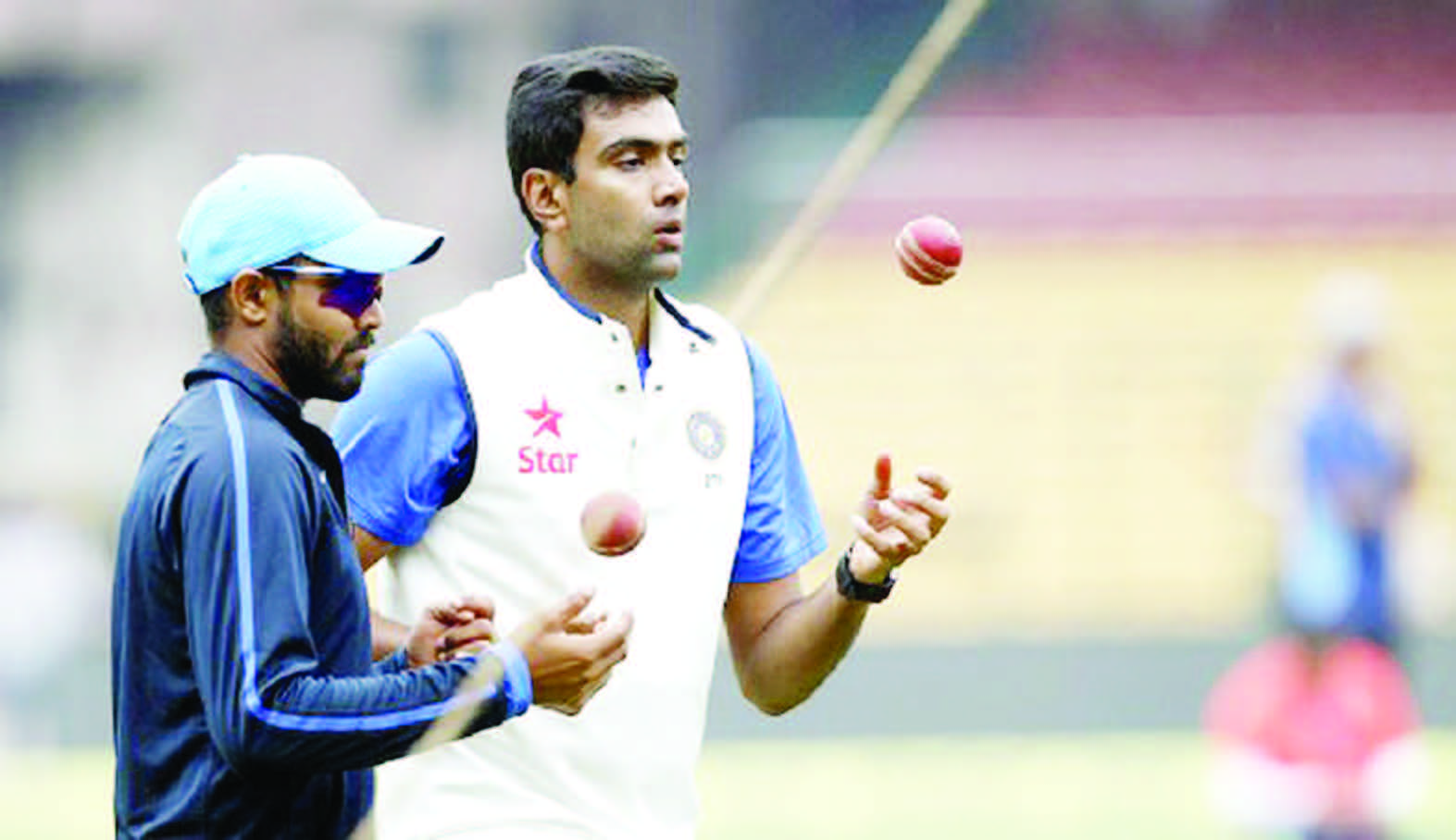
  • Ashwin rewarded with wages of spin

    Ashwin rewarded with wages of spin

    CHENNAI (TIP): It was late August and R Ashwin was playing a T20 game against West Indies in Florida. On a small ground, the Indian bowlers had conceded 245, with Ashwin finishing with 2-39 off three overs.

    A commentator asked him at the end of the innings if he was worried about his recent “indifferent form” in the shortest version of the game. Ashwin looked straight at the commentator with the smile still intact and said: “It’s surprising to hear about my indifferent form. As far as I am concerned, I feel I have been the No. 1 strike bowler for my team in the shorter version.”

    That’s Ashwin for you – a man with extreme self-belief who never stops backing himself at difficult times. A cricketer’s life is a topsy-turvy ride with a bad day in office lurking round every corner. In an age of extreme scrutiny, anything that is not top drawer gets magnified, but Ashwin’s biggest strength is that he never loses faith in himself. Forget the numbers, it has been spoken of time and again -it’s the man of steel behind the smiling face that makes Ashwin the No. 1 cricketer.

    The first half of 2016 didn’t indicate that he would end up with the Sir Garfield Sobers Trophy. Ashwin had bowled a crucial no-ball in the semi-final of the T20 World Cup against West Indies that fetched a wicket. Lendl Simmons stayed on and ensured India’s ouster from the tournament where they were overwhelming favourites. By the offspinner’s own admission, he felt that the entire nation was pointing finger at him for the defeat. It can break many careers, but not Ashwin’s.

    He let the storm die down -he knew there was a West Indies tour followed by a couple of home series coming up. And what he has done since then will probably become Indian cricket folklore. He has smashed one record after another, scored runs at crucial junctures and even making Kapil Dev say, “Ashwin is better than me as an all-rounder.”

    But that’s only part of the story. The Ashwin saga of 2016 is of a man who is at the peak of his creative powers. India have produced many offspinners in recent times. There have been quite a few who have been successful as well, but hardly anyone who makes the art of spin bowling look beautiful. No wonder, L Sivaramakrishnan says, “Ashwin purely deserves the award for reviving the art of spin bowling at the highest level.”

    Take the recently-concluded Chepauk Test against England for example. He was closing in on a record -that of the fastest to 250 wickets in Tests – ahead of Dennis Lillee.

    But the record didn’t happen and Ashwin went for 217 runs with one wicket to show. But anyone who has followed the Test would know how well the Chennai boy bowled.

    The flight, the loop, the subtle changes of pace -it was an exhibition of an artist at work on a dead pitch. A catch was dropped off him in the first over of the fifth day, but it was Ashwin who created the pressure at one end as Ravindra Jadeja ran away with the rewards.

    The Ashwin-Jadeja combo is a crucial cog in the Chennai man’s success story. They are vastly different characters -one is the erudite intellectual, the other a bit of a maverick. But when it comes to performing on the field, the way they complement each other is a treat. “Ask Ashwin and he will tell you how big a role Jadeja plays in Ashwin taking the wickets,” Virat Kohli said the other day after India won at Chepauk. While Jadeja stifles at one end with his nagging line and length, it’s Ashwin who expresses himself with his subtle variations which makes life difficult for batsmen. “You know, I won’t mind captaining these two together,” Alastair Cook explained how difficult it is to play the two together.

    While Jadeja isn’t much of a thinker, Ashwin’s mind seems to be a laboratory of ideas. Talk to him during a break in international cricket and he will invariably tell you he is working on some new idea. It can be a new delivery or a new method to get the star opposition batsman out. He will never say it before the series, but Ashwin invariably targets the No. 1 batsman in the opposition ranks.

    That’s why it’s Kumar Sangakkara who falls to him time and again when India play Sri Lanka, Kane Williamson when it’s New Zealand or Joe Root when it’s England. Unlike many in his profession, Ashwin loves watching the game even when he is not playing it -at times he is an enthusiast and a cricketer rolled into one.

    The other crucial element that has worked wonders in favour of Ashwin is Kohli’s rise to Test captaincy. Just after a Test match against Bangladesh in Dhaka, Ashwin had said: “Even if Kohli errs, it will be on the attacking side.”

    The statement showed that the two are on the same page and Kohli has given him the freedom to express himself. The fact that the skipper promoted him to bat at No.6 in Tests was also a boost, not just in his batting but to his entire approach as a cricketer.

    Ashwin started believing that he could realize his own potential. And how well he has done it in 2016!

  • Paes-Bhupathi rollercoaster part II?

    Paes-Bhupathi rollercoaster part II?

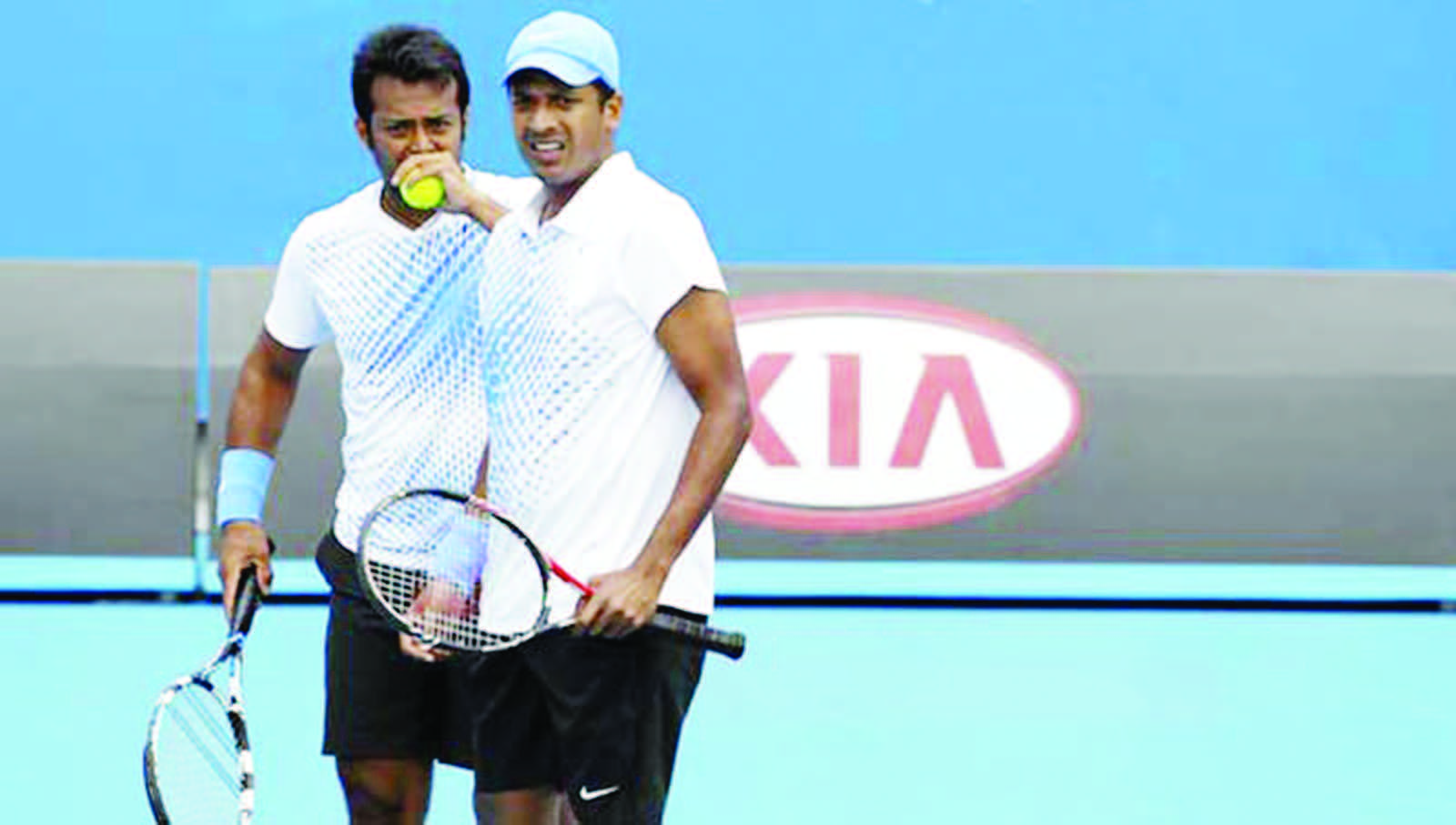
    PUNE (TIP): The scintillating partnership that took Indian tennis to dizzying heights is set to return in a new avatar as Mahesh Bhupathi was on Thursday appointed the non-playing captain of the Davis Cup team for 2017-18.

    Bhupathi, the former World No. 1 doubles star who won three men’s doubles Grand Slam titles with Leander Paes and one more with Belarussian Max Mirnyi, will take over the reins of the Indian team from April and will be at the helm till December 2018.

    Incumbent Anand Amritraj, whose term comes to an end December 31, has been given an extension till the AsiaOceania Group 1 tie against New Zealand to be held here from February 3 to 5. Zeeshan Ali will continue as coach of the team that comprises Yuki Bhambri, Ramkumar Ramanathan and Saketh Myneni besides Paes.

    Myneni and Paes are expected to play doubles in the Pune tie. How Bhupathi and Paes get along will be keenly watched. The two have had a ‘blow-hot blow-cold’ partnership with the most recent memory being their bickering over who should partner Rohan Bopanna at the London Olympics in 2012.

    But their bonding at its best has given some memorable moments to Indian sport. And despite some vitriolic verbal exchanges over the years, the two have mutual respect for each other. It is this undying chemistry between the two that the All India Tennis Association seems to be banking on as it plans to build a team for the future.

    “Both Leander and Mahesh have given a lot to Indian tennis. Both get along well with the younger players and we felt that Mahesh should be given a chance,” AITA chief executive Hironmoy Chatterjee said on Thursday. “Besides, he has immense experience in Davis Cup, which plays a big part,” he added.

    Bopanna dropped

    The national selection committee, which met in New Delhi on Thursday, decided to leave out Bopanna for the February tie. The reasons for Bopanna’s omission were both tennis and non-tennis.

    Besides the return of Bhambri, the team’s performance against New Zealand when they clashed in Christchurch last year as well as Bopanna’s stormy relationship with Paes were considered while finalising the team. SP Misra, the chairman of selectors, also said that picking three singles players would be the norm going forward.

    “In the last match against New Zealand, the combination of Rohan and Saketh lost the doubles rubber. Whereas, Leander and Saketh played an incredible match against Spain (in the World Group playoff this September),” Misra said. “Both Bopanna and Saketh are left-court players. And when you don’t gel well… not to mention that we will be sacrificing a singles player in the process. The AITA executive committee has made it a norm that in future we should be fielding three singles and one doubles player,” Misra added.

    So, despite Bopanna being ranked higher at 29 as against Paes’ 59, the question arose as to who will partner the 43-year-old veteran. Though Myneni and Ramkumar are India No. 1and 2 players, Bhambri, who was ranked as high 88 late last year, could get the nod for the opening singles. “It will be the captain’s call on that day,” Misra said.

  • Indiaspora Gala to celebrate ‘Fab Five’ Indian-Americans

    Indiaspora Gala to celebrate ‘Fab Five’ Indian-Americans

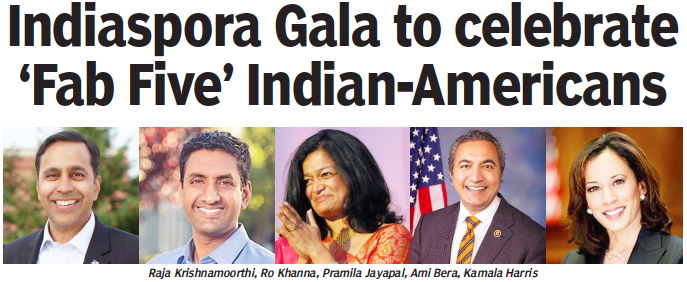
    WASHINGTON (TIP): USIBC and Indiaspora will host a Leadership Conference and Gala January 3 at Washington, DC to celebrate the “Fab Five” Indian-Americans who were recently elected / re-elected to the US House and Senate, namely Reps.-elect Raja Krishnamoorthi, Ro Khanna and Pramila Jayapal; Rep. Ami Bera; and Sen.-elect Kamala Harris.

    The event will spotlight the Indian-American community as it progresses “From Success to Significance” while also highlighting Indian culture. Members of the incoming Presidential Administration and Members of Congress from both parties will be invited to this bipartisan event.

    1,000 leading Indian-Americans from all walks of life, and eminent people from India, are expected to attend the Conference and Gala. Among them will be about 200 senior political officials (Senators, Congressmen/women, Governors, Ambassadors and Mayors) from various parts of the country.

    The evening Gala will feature Michelin Star Indian-American cuisine. Music, dancing and entertainment will fill the ballroom as part of this celebration! Premium “Sapphire” guests will gain access to a special lounge where they can rub shoulders with elected officials and other VIPs.

  • Najeeb Jung Quits as Delhi Lieutenant Governor:  Political Circlesare Surprised

    Najeeb Jung Quits as Delhi Lieutenant Governor: Political Circlesare Surprised

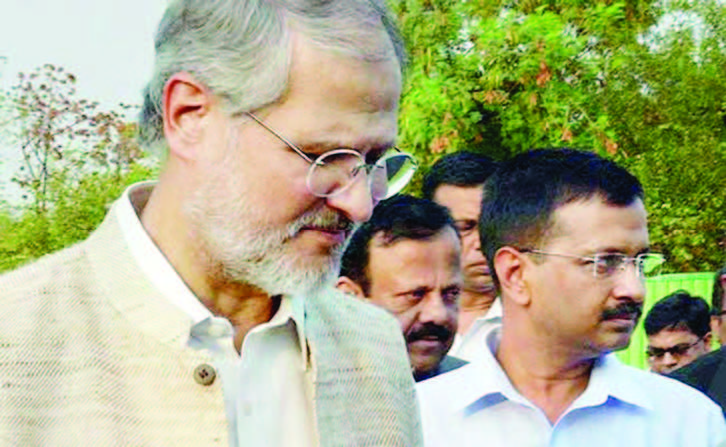
    NEW DELHI (TIP): New Delhi could not have a more surprising news than the one that Najeeb Jung resigned as the Lieutenant Governor of Delhi, with 18 months left in his tenure, saying he wants to return to his “first love, academics”.

    Jung’s three years in office were dogged by his constant power tussle with Chief Minister Arvind Kejriwal and his Aam Aadmi Party (AAP) government.”Sh Jung’s resignation is a surprise to me, my best wishes in all his future endeavors.(sic)” Mr Kejriwal tweeted.

    Jung’s adviser Ajai Chaudhari said he was shocked too. “He resigned since he had personal reasons. He said he has worked for 45 years, now he wants to spend time with family and his grandchildren,” Chaudhari told mediapersons.

    Sources close to Jung claimed it was not a sudden decision and he had been thinking of quitting for some months.

    An undated letter of Jung, however, has surfaced in which he has written to Union Home Secretary Rajiv Mehrishi that he would be on a private visit to Goa from December 25 to January 1. The letter, news agency Press Trust of India reported, also said the Delhi Chief Secretary will keep in touch with Jung “about important developments” and when needed, seek Mehrishi’s advice.

    A statement from Jung’s office said he thanked “the people of Delhi for all their support and affection, especially during the one year’s President Rule in Delhi, when he got unstinted support from them and which in turn helped run the administration in Delhi smoothly and effortlessly. ”

    He also thanked Kejriwal, who accused him of acting as the Centre’s agent.

    Kejriwal’s deputy Manish Sisodia said in a statement.

    AAP leader Kumar Vishwas commented that Jung probably “was controlled elsewhere” and that he had no choice in the way he navigated a hostile relationship with the elected government in Delhi.

    Jung is a former bureaucrat and Vice Chancellor of the Jamia Millia Islamia University.

    AAP alleges that as the center’s representative in Delhi, Jung used his veto to strike down several Delhi government decisions in recent months.

    Earlier this month, the Supreme Court had observed that “an elected government should have some power to run, otherwise the government cannot function.”

    The center and Jung said because Delhi is not a state, the Lieutenant Governor has special powers, an argument accepted by the Delhi High Court which, in August, ruled against Kejriwal. The court said that Jung is the administrative head of the capital and has to sign off on government decisions. Kejriwal challenged that verdict in the Supreme Court, which will hear his appeal in January.

    Meanwhile, aspirants for the job have begun lobbying for the position. A former Police Commissioner of Delhi is also being mentioned as a candidate.

  • Ashwin named ICC Cricketer of the Year, Test Player of the Year

    Ashwin named ICC Cricketer of the Year, Test Player of the Year

    NEW DELHI (TIP): India off-spinner R Ashwin has claimed the top ICC awards for 2015-16, having been named the ICC Cricketer of the Year and the Test Cricketer of the Year. Ashwin is the third Indian, after Sachin Tendulkar and Rahul Dravid, to win the Sir Garfield Sobers Trophy for Cricketer of the Year.

    Ashwin, currently the top-ranked Test bowler, had picked up 48 wickets and scored 336 runs in eight Tests during the ICC’s voting period from September 2015 to 2016, in addition to 27 wickets in 19 T20Is. In 2016 alone, he picked up 72 wickets in 12 Tests and became the second-fastest bowler to 200 wickets during the Kanpur match against New Zealand.

    Ashwin said he was overwhelmed by the recognition. “It’s a bit overwhelming and it is yet to sink in completely. At the same time, I was expecting to land one but to end up with two awards was extremely special,” he said. “To be bracketed alongside Rahul Dravid and Sachin Tendulkar is indeed a matter of great pride.

    “I want to dedicate this award to my family who have been a pillar of strength. And not to forget all my teammates and coach Anil Kumble who push me to give my best with their support and guidance.” The off-spinner rated his 7 for 83 in the Antigua Test against West Indies as the performance he enjoyed the most. That haul helped India to an innings-and-92-run win, and he finished the series as the leading wicket-taker with 17 dismissals. Another performance Ashwin rated highly was his knock of 118 in the first innings in St Lucia, which helped rescue India from 126 for 5 to 353. They went on to win the match by 237 runs. It was also Ashwin’s fourth Test hundred.

    South Africa wicketkeeper-batsman Quinton de Kock was named ODI Player of the Year. De Kock has been South Africa’s leading run-getter in ODIs since September last year, and tallied 793 runs in 16 ODIs during the voting period. Overall, since September 2015, he has scored 1175 runs in 22 matches in the format, with five centuries and three fifties, ahead of senior batsmen like Faf du Plessis, AB de Villiers and Hashim Amla. One of de Kock’s most prolific phases came between October 2015 and February 2016, when he scored four centuries in six innings during the tour of India and the home series against England. He enjoyed the same form in the longest format, with five successive fifty-plus scores between August and November 2016. De Kock is the second South Africa player after AB de Villiers to win the award.

    West Indies all-rounder Carlos Brathwaite’s match-defining 34 not out off 10 balls in the World T20 final against England earlier this year was named the T20 Performance of the Year. The all-rounder, who took over as the T20 captain in August, sealed a second World T20 title for West Indies by slamming four successive sixes to end a chase of 156 in Kolkata. Bangladesh seamer Mustafizur Rahman was named Emerging Cricketer of the Year, having notched up impressive performances since his international debut in April 2015. The first Bangladesh cricketer to win an annual ICC award, Mustafizur picked up eight ODI wickets and 19 T20I wickets in the voting period.

  • ISIS social-media channels distributed a holiday attack list of churches in the US

    ISIS social-media channels distributed a holiday attack list of churches in the US

    NEW YORK (TIP): The Islamic State published the names and addresses of thousands of churches in the United States and called on its adherents to attack them during the holiday season, according to a message posted late-night Wednesday, December 21, in the group’s “Secrets of Jihadis” social media group.

    A user going by the name of “Abu Marya al-Iraqi” posted an Arabic-language message calling “for bloody celebrations in the Christian New Year” and announced the group’s plans to utilize its network of lone wolf attackers to “turn the Christian New Year into a bloody horror movie.”

    The series of messages appeared in a pro-ISIS group on Telegram, which also provides manuals for the use and preparations of weapons and explosives for aspiring assailants. The information, distributed in a number of posts, was all previously available online and includes a public directory of churches across all 50 states. (Vocativ does not publish specific information found in lists like these.)

    In another group post, a member summoned “the sons of Islam” to target “churches, well-known hotels, crowded coffee shops, streets, markets and public places,” and shared a list of addresses in the United States, as well as in Canada, France and the Netherlands.

    In New York, security measures have been heightened in view of the threat.

  • Embassy of India Celebrates Hanukkah

    Embassy of India Celebrates Hanukkah

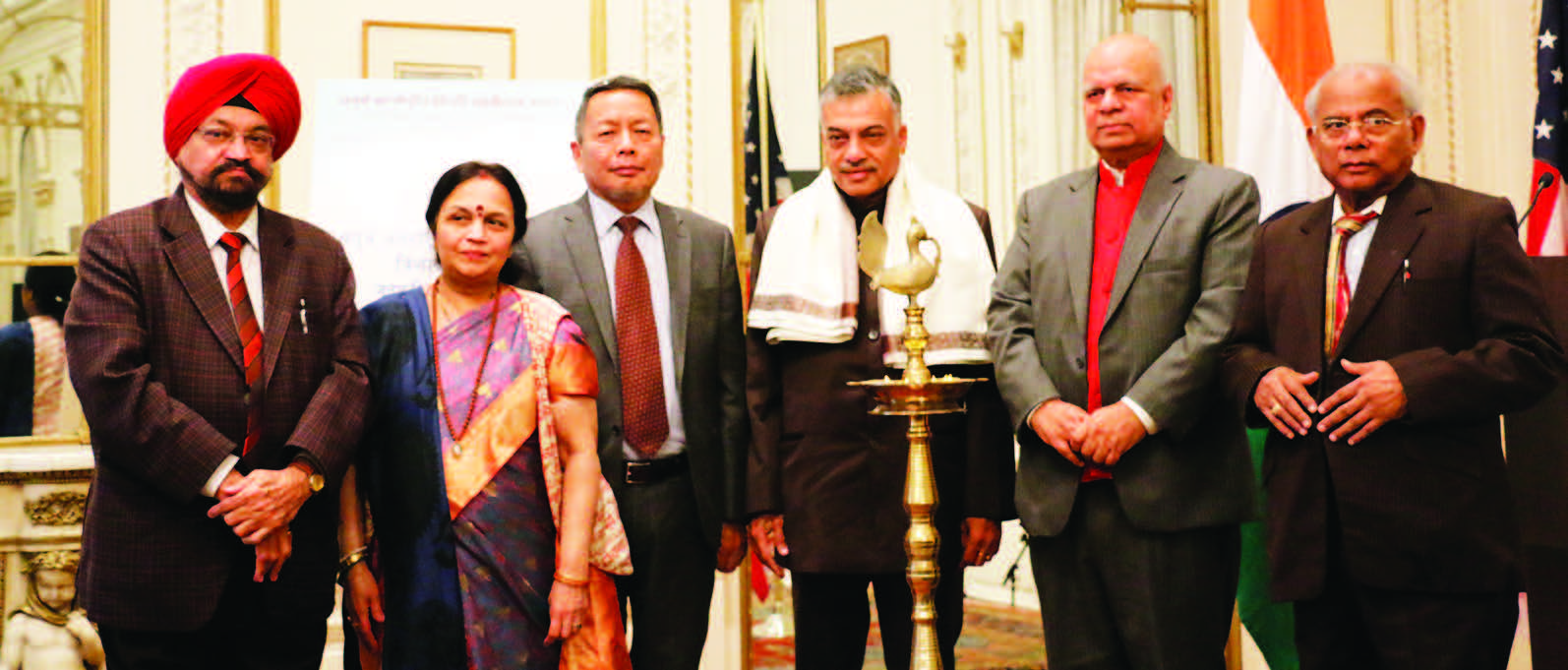
    WASHINGTON (TIP): Embassy of India organized celebration of the Jewish festival of Hanukkah at Indian Ambassador Navtej Sarna’s residence on December 19, 2016. The event was attended by around 200 guests including leading members of the Jewish community, representatives from US Administration, Congressional staff, business, think-tanks and media. The event has been held at the Indian Embassy for the last 15 years. Following the lighting of the Menorah, Ambassador Sarna evoked the rich and historic Jewish tradition in India and the continued deepening of bilateral ties as reflected in the recent high-level exchanges of visits. In his remarks,

    Ambassador Ron Dermer, Ambassador of Israel to the US described the gathering as a celebration of the remarkable history of both our nations. He noted the truly unique ability of both Israel and India to balance the currents of globalization while preserving their identity. Also, both countries face the threat of terrorism.

    Mr. Stanley Bergman, Honorary President of American Jewish Committee recalled his growing years in South Africa where they celebrated Diwali and Hanukkah together. Congressman-elect from Maryland, Jamie Raskin emphasized that this was a celebration of freedom and democracy. Other speakers referred to the strengthening India-US relationship based on democratic traditions and human values.

  • The Fourth International Hindi Conference at Vishakhapatnam kicked off in New York

    The Fourth International Hindi Conference at Vishakhapatnam kicked off in New York

    NEW YORK CITY (TIP): More than two hundred Hindi scholars and professionals from around the world will participate in the three-day Hindi conference scheduled to be held from January 6 to 8, 2017 in Vishakhapatnam, India.

    An announcement about the conference was made by Ashok Ojha, chief coordinator and president of Hindi Sangam Foundation, a US based educational and cultural organization, which has joined hands with GITAM University, Vishakhapatnam, and a host of US and India based institutions to hold the Fourth International Hindi Conference (http://www.gitam.edu/).

    Speaking at the Kick-Off meet held at the Consulate General of India, New York, on Friday, December 9, Ojha said, “The Fourth International Hindi Conference aims to create a bridge between the pedagogical experts of the Hindi language taught to speakers of other languages (THSOL) in India and particularly in the non-Hindi speaking areas of India, and the pedagogical experts and instructors in the USA and the rest of the world, including the South Asian diaspora (Canada, England, Mauritius, Fiji, etc.), where Hindi is mostly taught as a heritage language as well as a foreign language.”

    Mr. Ojha said that about a dozen leading Hindi scholars from US universities, including New York University, Columbia, Duke, City University of New York, Pace and Pennsylvania State University are travelling to Vishakhapatnam to attend the conference. He added that the conference theme is: “Teaching Hindi To Other Language Speakers (THSOL): Pedagogical Perspectives, Language Planning and Program Development.”

    Dr. Lakshmi Prasad Yarlagadda, Padma Bhushan Awardee and former Rajya Sabha member attended the event as the chief guest of the event. Dr. Yarlagadda, who is also the Chairman of the Organizing Committee of the conference, informed the audience that E. S. L. Narasimhan, Governor of Andhra Pradesh, will inaugurate the conference on January 6 while Mr. Prakash Jawadekar, India’s HRD Minister has agreed to attend the Valedictory event of the conference on January 8, 2017.

    Mr. L. T. Ngaithe, Consul, Consulate General of India, presided over the Kick off meeting. He praised the organizers for diligently working to promote Hindi in USA and around the world.Thanking the Consulate General of India for its continued support to promote Hindi in USA Mr. Ojha, who is also the president of Hindi Sangam Foundation, said, “The Consulate General of India has been supporting the cause of Hindi since the First International Hindi Conference, which was organized at the New York University in 2014. It was followed by the second International Hindi conference at Rutgers University, NJ, in 2015 and the third conference was held in April-May 2016 at the Consulate General of India premises.”

    Professor Rakesh Ranjan of Columbia University said, “The conference at Vishakhapatnam will provide a unique forum for a dialogue among Hindi scholars and administrators and will allow for partnerships and project collaborations to be formed with the goal to expand, enrich and promote further the field of Hindi education.”

    Other speakers included Dr. Bijoy Mehta, Chairman, Hindi Sangam Foundation, Mrs. Purnima Desai, Vice-Chair of the foundation, Professor Susham Bedi of City University of New York, and Professor Indrajit Saluja, Editor, Indian Panorama.

    Details of the Fourth International Hindi Conference, 2017 may be viewed on its website:

    http://www.hindiconferenceamericas.com/

  • Pravasi Bharatiya Divas 2017: Redefining Engagement with Indian Diaspora

    Pravasi Bharatiya Divas 2017: Redefining Engagement with Indian Diaspora

    “I personally extend my warm greetings to you. Please do come. This day is being celebrated in your honor. This day is dedicated to overseas Indians who, through heroic achievements, have made a mark in the world. We also dedicate this day to all overseas Indians who through their hard work have kept India’s flag flying high”. Sushma Swaraj, External Affairs Minister.

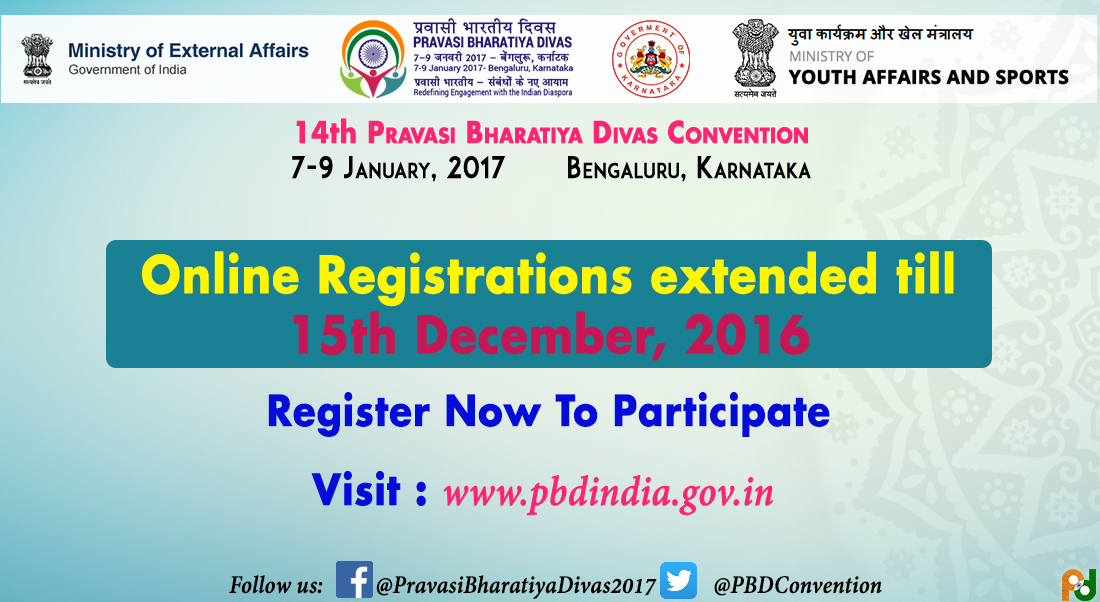
    • Register online for participating in the 14th Pravasi Bharatiya Divas Convention
    • Last Date for Registration: 22 December, 2016.
    • Special Discounts in Registration Fees for Young Delegates and Group Registrations

    Pravasi Bharatiya Divas (PBD) is celebrated on 9 January every year to mark the contribution of Overseas Indian community in the development of India. January 9 was chosen as the day to celebrate this occasion since it was on this day in 1915 that Mahatma Gandhi, the greatest Pravasi, returned to India from South Africa, led India’s freedom struggle and changed the lives of Indians forever.

    PBD conventions are being held every year since 2003. These conventions provide a platform to the overseas Indian community to engage with the government and people of the land of their ancestors for mutually beneficial activities. These conventions are also very useful in networking among the overseas Indian community residing in various parts of the world and enable them to share their experiences in various fields.

    During the event, individuals of exceptional merit are honored with the prestigious Pravasi Bharatiya Samman Award to appreciate their role in India’s growth. The event also provides a forum for discussing key issues concerning the Indian Diaspora.

    The 14th Pravasi Bharatiya Divas Convention will be held from 7 to 9 January, 2017 at Bengaluru in Karnataka.The theme of 2017 PBD is “Redefining Engagement with Indian Diaspora”. It will see close to 3000 Non-Residential Indians (NRI) and PIO delegates from across the world.

    The PBD Convention features Plenary Sessions; an Exhibition; Cultural programs and provides an opportunity to interact with other Overseas Indians, Policy makers, Political leadership and others. The highlight of the PBD convention is the inaugural address by the Prime Minister. Chief Ministers of several states also participate and address the delegates on opportunities available in their respective states. The last day of PBD features the valedictory address by the President of India, who will also confer the Pravasi Bharatiya Samman Awards on Overseas Indian for their achievements and contribution both in India and abroad. 

    Objectives of PBD 2017:

    • PBD 2017 will focus on the theme “Redefining the engagement with the Indian Diaspora”.
    • To strengthen Diaspora engagement and provide a platform for networking with the Diaspora.
    • To recognize the Diaspora’s contribution to India and know their expectations and concerns.
    • To deepen engagement with young Diasporas, to help them know more about their roots.

    Dr. António Costa, Prime Minister of the Republic of Portugal has accepted an invitation from Prime Minister Shri Narendra Modi, to be the Chief Guest at the 14th Pravasi Bharatiya Divas Convention. He will participate in the inaugural session of the PBD Convention on 8 January and address the delegates.

    Mr. Michael Ashwin Satyandre Adhin (36 years), Vice President of the Republic of Suriname will be the Special Guest at the Youth Pravasi Bharatiya Divas (PBD) to be held on 7 January. He will address the young overseas Indian delegates at the inaugural session of the Youth PBD, along with Minister of External Affairs Smt Sushma Swaraj and Minister of State for Youth Affairs and Sports Shri Vijay Goel. Youth Pravasi Bharatiya Divas is a platform to connect with the youth, the new generation of Pravasis growing up all over the world, confident, aspirational and transcending the old boundaries of caste and class. The government is keen to enable young Diaspora to know more about their roots and the place from where their fathers or forefathers originated. They can discover many features of India, its tradition, rich art and culture and also many facets of contemporary India.

    The Government has put in place many schemes and programs to connect with the young Diaspora.

    The ‘Know India Program’, conducted every year, familiarizes Indian Diaspora youth with India and KIP provides an exclusive forum for students and young professionals of Indian origin to visit India, share their views, expectations and experiences and to bound closely with contemporary India. 35 editions of KIP have been held so far.

    In 2015 “Bharat Ko Jaano” quiz online was launched for young overseas Indians in which we saw enthusiastic participation of young NRIs and PIOs. The final round of quiz will be held in Delhi on 2nd October 2016.

    The Youth PBD is the flagship initiative for our engagement with young Diaspora and provides forum to discuss issues and concern to Young Diaspora. The delegates of the Youth PBD will have the opportunity to interact with young Indian students pursuing programs in Bengaluru, and network with them. They will visit the Exhibition at the PBD conventions which showcases the government achievements in various sector, flagship programs, state governments’ initiative and policies; Indian corporate sectors and craft and cultural bazaar. In the evening of 7th January, the young delegates will enjoy an enthralling cultural performances organized by the state government of Karnataka. Youth PBDs overseas Indian delegates can also participate in the PBD convention on 8th January.

    The Youth PBD 2017 will focus on “Redefining engagement with the Indian Diaspora”. Nearly 300-400 overseas Indian youth are expected to participate in the Youth PBD, including nearly 150 PIOs who will be visiting India for the Know India program. The Youth PBD in 2017 will include plenary sessions on:

    1. Problems faced by Indian students abroad.
    2. Problems faced by NRI students in India.
    3. Startups and Innovation which have a social impact in India.

    In a message addressing the NRIs, Minister of External affairs, MsSushmaSwaraj said, “I personally extend my warm greetings to you. Please do come. This day is being celebrated in your honor. This day is dedicated to overseas Indians who, through heroic achievements, have made a mark in the world. We also dedicate this day to all overseas Indians who through their hard work have kept India’s flag flying high.”

    Chief Minister of Karnataka Shri Siddaramaia said in a message, “Pravasi Bharatiya Divas is the largest gathering of overseas Indian Community in India. It is an important platform for the government of India to hear the views of the diaspora, have a direct dialogue with them and inform them about opportunities to contribute to their country of origin.”

    Register online for participating in the 14th Pravasi Bharatiya Divas Convention

    Last Date for Registration: 22 December, 2016.

    Special Discounts in Registration Fees for Young Delegates and Group Registrations

    For further information, please visit www.theindianpanorama.news  and www.pbdindia.gov.in

  • Cupertino selects Savita Vaidhyanathan as first Mayor of Indian origin

    Cupertino selects Savita Vaidhyanathan as first Mayor of Indian origin

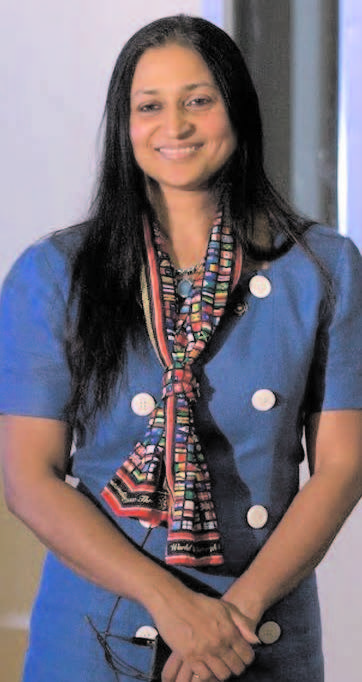
    CUPERTINO, CA (TIP): Savita Vaidhyanathan became first Indian-American mayor of Cupertino. She took over for Barry Chang during a Dec. 8 public hearing. Vaidhyanathan is also the first woman mayor of the city since Kris Wang served in 2010. Her first term will end in 2018.

    “This is definitely a very momentous moment in my life,” Vaidhyanathan told a packed house at community hall. “I have several people to thank for this, and many of them are in this room, and my father, who is not here but is watching from heaven above. He instilled in me the confidence that I could do anything I set my heart to as long as I put the hard work in.” she said she is looking forward to continuing to work with residents in the community.

    Savita has been a Cupertino resident for over 19 years. She has been deeply involved in several community activities in the city. She took classes at De Anza College and graduated with an MBA from San Jose State University. She has worked as a high school Math teacher, an officer in a commercial bank, and in non-profit management.

    She is a former president of the Rotary Club of Cupertino, which is a powerful civic force, and served on the De Anza College Commission and the West Valley Community Services board. In 2005 she organized the city’s first Festival of Lights Diwali celebration, which now attracts thousands each year to celebrate intercultural understanding. She wants to create more housing for seniors and more teen centers and youth-friendly hubs

  • Frank Islam and Debbie Driesman Foundation to fund fellowship for Indian journalists

    Frank Islam and Debbie Driesman Foundation to fund fellowship for Indian journalists

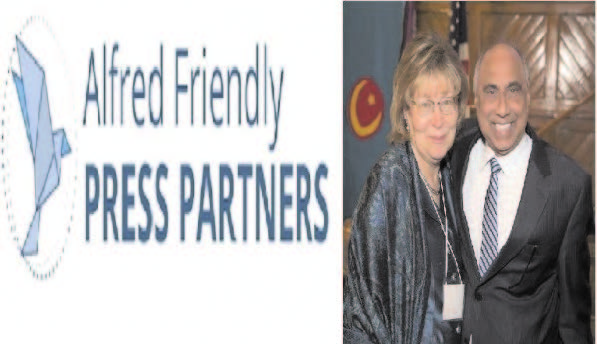
    WASHINGTON (TIP): The Frank Islam & Debbie Driesman Foundation started by Indian-Ameican Frank Islam and his wife, Debbie Driesman, will partner with Alfred Friendly Press Partners (AFPP) to fund a fellowship for a mid-career journalist from India in 2017 for six months. The fellowship will be administered by AFPP, which has so far trained 300 journalists from the developing world. The Frank Islam & Debbie Driesman Fellow will work in a major newsroom in Washington, DC, for five months after undergoing a five-week training at Missouri School of Journalism in Columbia.

    “The Frank Islam and Debbie Driesman Foundation is proud to join hands with Alfred Friendly Press Partners to fund a fellowship for a mid-career journalist from India,” said Frank F Islam, President of the Frank Islam & Debbie Driesman Foundation, in a statement. “Debbie and I consider the fellowship as a strategic investment in free press. Over the past three decades, AFPP has trained 15 world class journalists from India who have gone on to become leaders in the field. It is our earnest belief that the FIDD Fellow will continue that tradition,” he said.

    “We are especially delighted to welcome Frank Islam and Debbie Driesman to our fold. Family is the reason that we’ve been able to train more than 300 journalists in 90 different countries for over 30 years,” said Randall D Smith, President of the Alfred Friendly Press Fellowships.

    A candidate who has three years of professional experience as a journalist and employed as a journalist by an independent news media organization in India can apply for the fellowship, the foundation said.

    During the roughly six-month program, the FIDD Fellow will:

    Gain experience in reporting, writing, editing, and editorial decision-making that will enhance professional performance;

    A practical understanding of the function and significance of the free press in American society;

    Have a firsthand knowledge of the industry’s technological advances; and Transfer knowledge to colleagues at home in India.