Month: January 2017

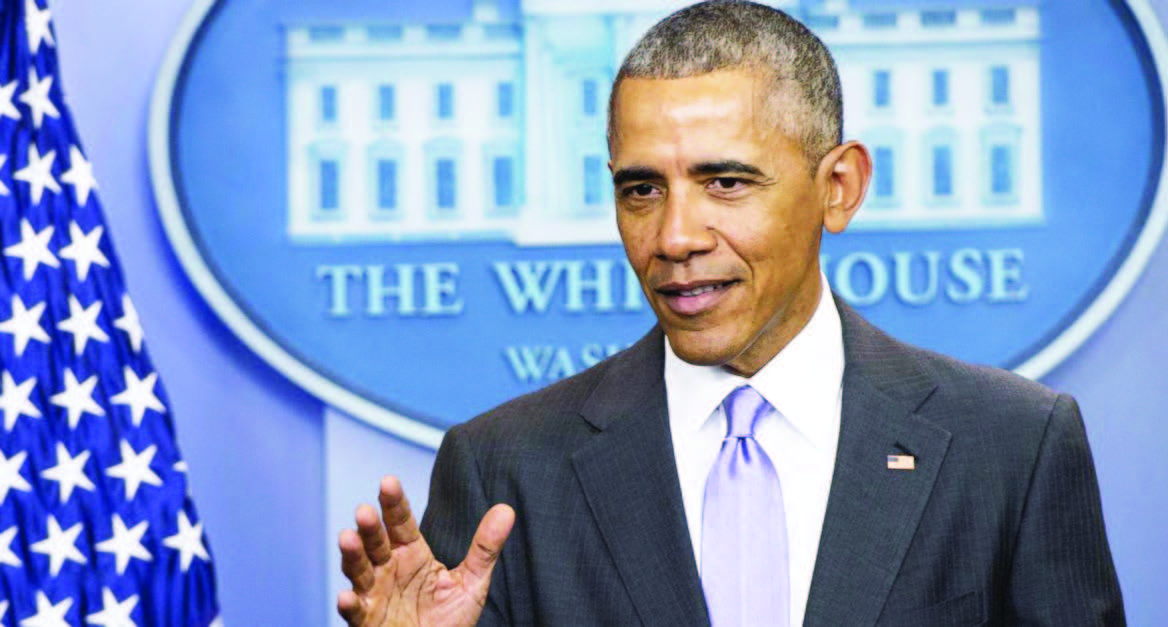
  • Optimistic Obama: ‘We’re going to be OK’

    Optimistic Obama: ‘We’re going to be OK’

    WASHINGTON (TIP): In his parting message before Donald Trump took over, President Barack Obama assured Americans that “we’re going to be OK” but vowed to protect US’ “core values” and speak up against issues like discrimination, muzzling of press freedom and rounding up of young immigrants.

    “At my core, I think we’re going to be OK,” Obama said as he concluded his final news conference at the White House. “We just have to fight for it, work for it, and not take it for granted,” he said.

    Obama said he has given his best advice to his successor Trump to whom he passed on the baton January 20. “I have offered my best advice, counsel about certain issues both foreign and domestic,” Obama said, describing his conversations with the President-elect.

    “And my working assumption is, is that having won an election opposed to a number of my initiatives and certain aspects of my vision for where the country needs to go, it is appropriate for him to go forward with his vision and his values. I don’t expect that there’s going to be enormous overlap,” he said.

    He said now his priorities would be to do some writing, spend some time with his two daughters and Michelle. “I want to do some writing, I want to be quiet a little bit and not hear myself talk so darn much. I want to spend precious time with my girls,” he said.

    However, he said any effort to enforce systematic discrimination, erode voting rights, muzzle the press or round up young immigrants, would cause him to speak out.

    During the campaign, Trump vowed to ban Muslims from entering the United States and deport millions of illegal immigrants.

    After Trump’s victory in the November 8 presidential elections, Obama has met his successor only once, but the two leaders have spoken over phone quite frequently with the last one being reported to be on Monday.

    Obama said it may be that on certain issues, once Trump comes into office and he looks at the complexities of how to, in fact, provide healthcare for everybody-something he says he wants to do or wants to make sure that he is encouraging job creation and wage growth in this country, “that may lead him to some of the same conclusions that he arrived at once I got here”.

    Asked for a commenton his relations with his successor, Obama said: “I won’t go into details of my conversations with President-elect Trump. They are cordial. At times, they’ve been lengthy and they’ve been substantive. I can’t tell you how convincing I’ve been. I think you’d had to ask him whether I’ve been convincing or not,” he said when asked about the details of his conversations.”

  • President Trump begins his work

    President Trump begins his work

    WASHINGTON (TIP): Immediately after taking oath, January 20, President Donald J Trump issued an executive order to minimize the Economic Burden of The Patient Protection (Obamacare) and Affordable Care Act, Pending Repeal.

    By another order, he granted a waiver to General James Mattis, his nominee for Secretary of Defense, clearing his way to assume the office.

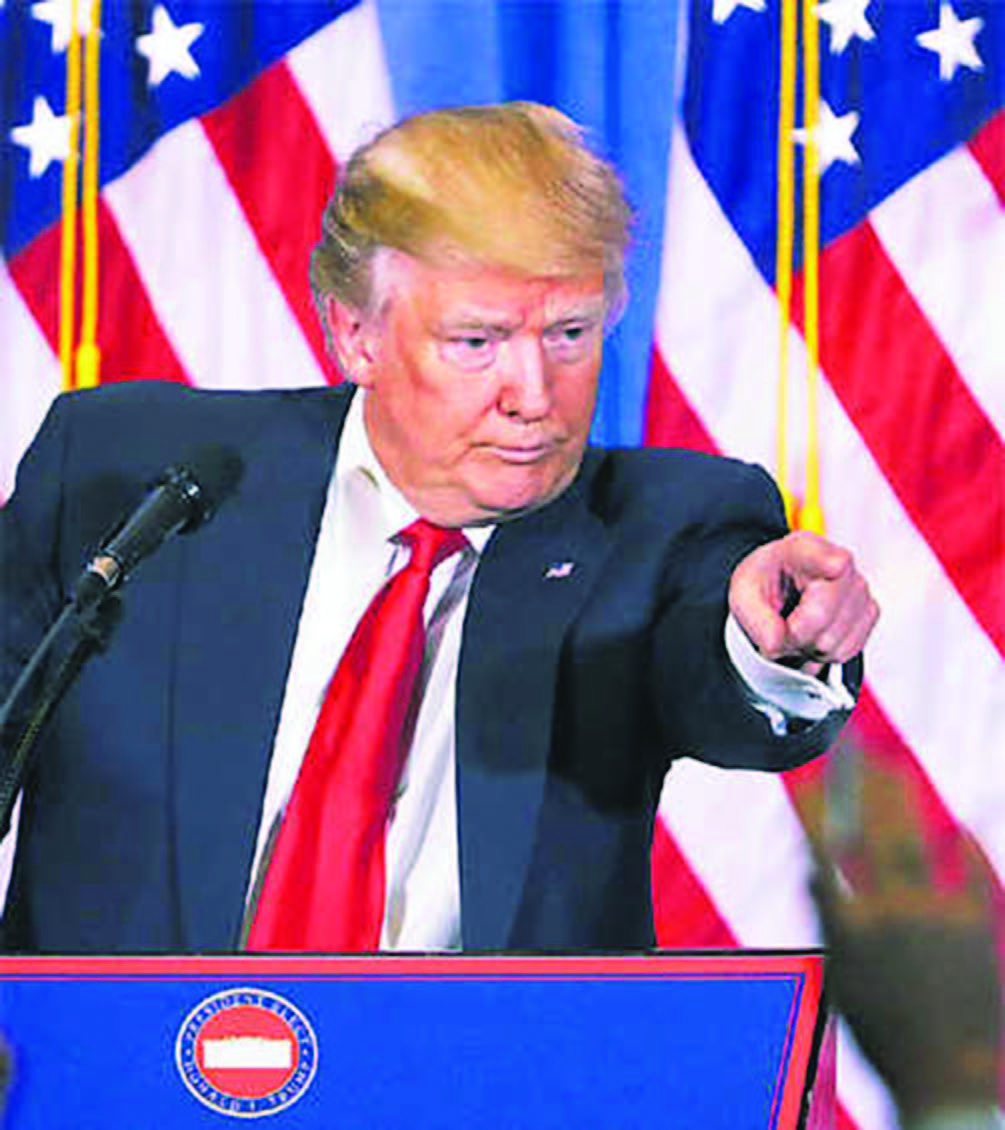
  • The wilderness of mirrors – The allegations against Donald Trump, and the press conference that followed, will surely affect his presidency.

    The wilderness of mirrors – The allegations against Donald Trump, and the press conference that followed, will surely affect his presidency.

    Jim Angleton would have loved this. Angleton, admired and despised in equal measure, was the legendary (or notorious) CIA director of counterintelligence in the 1960s and 1970s, who spent those years in a Captain Ahab-like search for a Soviet mole in the Agency. He described the universe in which he operated as a “wilderness of mirrors.” Welcome to the crazy, cross-reflecting world of Donald Trump, Russia and Election 2016.

    Amid the latest flurry of allegations – ranging from “perverted sexual acts” in the presidential suite of Moscow’s Ritz Carlton hotel to claims that Moscow had been “playing” Trump for five years and that Russia’s intelligence services and Trump operatives were in cahoots throughout the campaign – one thing above all must be remembered: not one whit of it has been confirmed. It all may sound superficially plausible, given Trump’s record lewd remarks about women, his dogged refusal to accept evidence of Russian cyber-meddling in the campaign, and his slashing attacks on the US intelligence agencies who produced evidence of that cyber-meddling. But nothing in the dossier, as far as we know, has been corroborated, despite the best efforts of the FBI and CIA, and digging by the American media who, it now emerges, have known about this for months.

    That, of course, may change. Something may be corroborated. In which case, all bets are off, and who knows what might happen. This was already the most extraordinary election ever: the new allegations raise it to the level of the utterly incredible. Nothing like this has occurred before.

    The nearest parallel is probably the “October Surprise” conspiracy theory that top Reagan campaign officials had secret contacts abroad with America’s sworn enemy Iran during that month in 1980, to delay the release of the Tehran Embassy hostages until after the election. But these claims were never remotely proven. The Trump affair also involves reputed meetings between his staffers and Russians in Prague and Moscow. But it has broader, far more alarming dimensions.

    The most worrying claims are not so much salacious goings-on in a Moscow hotel room – even if they were confirmed, Trump has already raised that bar so high – but that his operatives had colluded with Russia throughout the campaign, and that the Kremlin had been cultivating him for years. That would make him the Manchurian Candidate to end all Manchurian Candidates. Again, to repeat, these allegations are precisely that: all unproven claims that no one has yet managed to substantiate.

    The Kremlin itself has denied the claims, not that that means anything. Fact or fiction, this entire affair works to Russia’s advantage Trump, meanwhile, has dismissed the whole thing as “fake news”. “Russia has never tried to use leverage over me,” he said during a tweet barrage. “I HAVE NOTHING TO DO WITH RUSSIA – NO DEALS, NO LOANS, NO NOTHING!” Was this Nazi Germany, he wondered.

    Remember too that the allegations emanated from the dark world of opposition research, where truth is an infinitely malleable commodity. They are, we are told, the result of work by a former British MI6 officer who had worked in Moscow and now heads a political consultancy. He was first hired by anti-Trump Republicans, then by Democrats. That the findings were appended to the top-secret dossier distributed to Trump, Obama and a handful of top Congressional officials was apparently because his work, and the sources he used, had proved credible in the past. But then again, nothing is as it seems. His Russian informers had every motivation to exaggerate and lie. The more trouble they could cause in the 2016 election, the better. True, nothing has been proved, but then again, it can be equally hard to prove a negative, that nothing happened. Such is the wilderness of mirrors in which America finds itself now, just nine days before the inauguration – and that’s why the affair may be so damaging, not just to Trump, but to the country.

    Throw a heap of mud, and some inevitably will stick. Opponents of Trump will now find further reason to dislike him. This new firestorm will complicate the confirmation hearings of top appointees like the Secretary of State-in-waiting, the former ExxonMobil CEO Rex Tillerson, already accused of having too cozy a relationship with the Kremlin. It increases the likelihood of a bipartisan Congressional select committee probe into the imbroglio, a full-scale investigation that so far has been resisted by Mitch McConnell, the Senate majority leader.

    Worst of all, it can only further poison Trump’s relations with the US intelligence community, the same agencies who will be advising him at a moment’s notice on North Korean missile strikes and – yes – malign Russian behavior in Eastern Europe, the Middle East and elsewhere.

    Trump surely has a point when he asks what on earth these agencies were doing by taking seriously a hodge-podge of unsubstantiated smears and committing it to paper, in a town in which everything leaks. “An absolute disgrace,” he called it at his press conference.

    If Trump believes the intelligence community were part of a last-ditch effort to delegitimize his election by an establishment which still can’t accept him, then who can blame him? But then again, he also has himself to blame. No one has done more to promote phony news than Donald Trump, starting with his embracing of the birther nonsense about Barack Obama, and continuing through the myriad falsehoods that studded his campaign. And if there’s a factual vacuum around Trump, then that largely reflects his refusal to publish his tax returns, as well as his slowness until now in tackling conflict of interest issues involving his multi-billion-dollar businesses, managed through an opaque private company. This is a story you can read any number of ways. Welcome to the wilderness of mirrors.

    (Source The Independent)

  • China frets and fumes: The latest Agni V test has not  gone down well with the neighbor

    China frets and fumes: The latest Agni V test has not gone down well with the neighbor

    When India first tested its three-stage Intercontinental Ballistic Missile Agni V on April 20, 2012, China’s reaction was remarkably restrained. “China and India are both emerging powers.

    We are not rivals, but cooperative partners. We should cherish the hard-earned momentum of cooperation,” Liu Weimin, China’s foreign ministry spokesperson, said, adding that “the two countries have a sound relationship. During the (recent) 4th BRICS meeting, the leadership of the two countries agreed on a consensus to further strengthen cooperation.” Even the normally aggressive Chinese government mouthpiece, The Global Times, was relatively restrained, asserting: “India should not overestimate its strength. Even if it has missiles that could reach most parts of China that does not mean it will gain anything from being arrogant during disputes with China. India should be clear that China’s nuclear power is stronger and more reliable. For the foreseeable future, India would stand no chance in an overall arms race with China.”

    When India conducted the fourth and final pre-operational test of Agni V on December 26, 2016, China’s reaction the next day was belligerent and hostile. The Chinese foreign ministry spokesperson, Hu Chunying, referred to the UN Security Council Resolution 1172 of June 6, 1998, issued after nuclear tests by India and Pakistan. The resolution called on India and Pakistan to immediately stop their nuclear weapons development programs; to refrain from weaponization and the deployment of nuclear weapons; to cease the development of ballistic missiles capable of delivering nuclear weapons and end any further production of fissile material for nuclear weapons. Hu also asked India to spell out its “intentions”. China seemed to have forgotten that the Security Council Resolution Hu referred to was a “Chapter 6” resolution, which was not binding on India. The reaction of The Global Times was vicious. Referring disparagingly to India’s economic potential and pointedly equating India with Pakistan, it observed: “Currently, there is a vast disparity in power between the two countries and India knows what it would mean, if it poses a nuclear threat to China.” Responding to China’s assertion that India’s missile program adversely affected nuclear stability in South Asia, India’s spokesman Vikas Swarup noted: “India’s strategic autonomy and growing engagement contribute to strategic stability.”

    There are a number of reasons for the change in the Chinese reactions to Agni V missile tests between 2012 and 2016.

    China militarily seized the Scarborough Shoal, located within the Exclusive Economic Zone of the Philippines, in 2012. It thereafter, contemptuously rejected a verdict of the UN tribunal which declared its maritime boundary claims along its so-called “Nine Dotted Line” as a violation of international law. The tribunal thereby held China’s territorial claims on Vietnam, the Philippines, Indonesia, Malaysia and Brunei, as similarly being in violation of international law. China has, in the meantime, converted a large number of rocks across the South China Sea into islands, where it has based missiles, armed personnel and military aircraft, using its military might.

    The Obama Administration took virtually no action in response to Chinese belligerence against the Philippines – a longtime military ally. Worse still, the US recently acquiesced in the seizure of one of its unmanned underwater vehicles close to the Philippines. Chinese belligerence is paying off. President Duterte of the Philippines has quietly acquiesced to Beijing’s territorial demands. ASEAN countries like Malaysia, Brunei, Thailand and Cambodia are following suit. Myanmar is being pressured by China, by permitting Chinese territory to be used by armed ethnic groups from Myanmar’s bordering Shan and Kachin states.

    It is clear that a belligerent China is no longer prepared to tolerate any challenges to its dominance and hegemony across Asia. Agni IV, currently operational, with a range of 4,000 km, can hit targets in southern China, while Agni V, with a range of 5,500-8000 km, can hit even at the farthest points in China. The submarine-launched Sagarika missile, currently operational, has a range of 750 km. Its variants – under development -can hit across China from the Bay of Bengal. China, in turn, has transferred the designs and knowhow of the Shaheen range of missiles to Pakistan. These missiles can hit targets across India. Moreover, Karachi and Gwadar will be used, not only to base the eight submarines China is supplying to Pakistan, but also serve as bases for Chinese nuclear and conventional submarines that are now venturing increasingly into the Indian Ocean. The range of missiles being developed by India clearly signals to China that it will find any effort to use Pakistan as a nuclear proxy against India very costly and perhaps unaffordable. Agni V is virtually invulnerable as it is mobile and housed in canisters.

    New Delhi needs to be far more active in insisting that a comprehensive nuclear dialogue with China is essential for strategic stability across Asia. China is loathe to enter into such a dialogue as it evidently wishes to not formally accord recognition to India’s nuclear weapons status, even as it peddles nuclear weapons and ballistic missile designs and materials to Pakistan, while helping Pakistan to develop both uranium and plutonium-based nuclear weapons. These transfers to Pakistan are in total disregard of China’s responsibilities under the nuclear Non-Proliferation Treaty. India has been far too defensive and avoided exposing the Sino-Pakistan nuclear/missile nexus in important world capitals, notably Washington, London, Paris, Moscow and Tokyo. A far more determined effort on this score would be necessary once the Trump Administration assumes office and settles down to looking at the world.

    Within Asia, Chinese hubris and arrogance would need far closer consultations and dialogue with countries like Japan, Vietnam and Indonesia. There appears to be a sentiment growing slowly in Tokyo that in the face of Chinese territorial and geopolitical ambitions, Japan should review its nuclear policies. The incoming Trump Administration has also indicated that allies like Japan need to do more to defend themselves, rather than depend excessively on the US. A nuclear-armed Japan can certainly play a key role in moderating Chinese behavior and hubris. This is an issue that needs to be looked at carefully. All this has to be combined with a vigorous dialogue with China, which includes maintenance of peace and tranquility along our borders, expanding equitable trade and economic ties and promoting peace and stability across the entire Indo-Pacific Region.

    (The author is a career diplomat)

  • Farewell, President Obama: A passionate reminder of US liberal values

    Farewell, President Obama: A passionate reminder of US liberal values

    Soaring oratory and strong emotions marked the farewell speech of the 45th US President, Barack Obama, 10 days before his successor is sworn in. The tradition dates back to President George Washington, reflecting the concerns of the outgoing leaders. President Obama, speaking in his hometown Chicago, strongly batted for his legacy, when he said: “By almost every measure, America is a better, stronger place” than when he was elected the first black President of the US in 2008. Expectedly, he listed out his achievements, domestic – tackling recession, revitalizing the automobile industry, creating new jobs – and international – establishing diplomatic relations with Cuba and the Iran nuclear deal.

    What also came through in this elegant address was his worry about the state of the country after a toxic election. “Democracy is threatened whenever we take it for granted,” said the US President even as he regretted that “race remains a potent and often divisive force in our society.” Much is wrong with politics in America, from low turnouts to naked partisanship. “I reject discrimination against Muslim Americans,” he said, underlining the need to combat religious discrimination.

    President Obama has reminded the world of liberal values, multiculturalism and economic inclusiveness at a time when narrow-minded nationalism seeks to reverse the gains of the past several decades. He leaves office with a reputation of being an honorable and decent man, untarnished by personal scandals. In many ways he represented an aspirational vision of America, but one that was disconnected from the wide underbelly of the voting public that was successfully tapped by his successor. Obama created history with his election, he made history while in office, and going by what he said at his farewell speech, he may not be ready to become history just yet. He remains a powerful voice that we need to hear.

    (Tribune, India)

  • Pravasi Bharatiya Divas closes; engagement extremely substantive, says government

    Pravasi Bharatiya Divas closes; engagement extremely substantive, says government

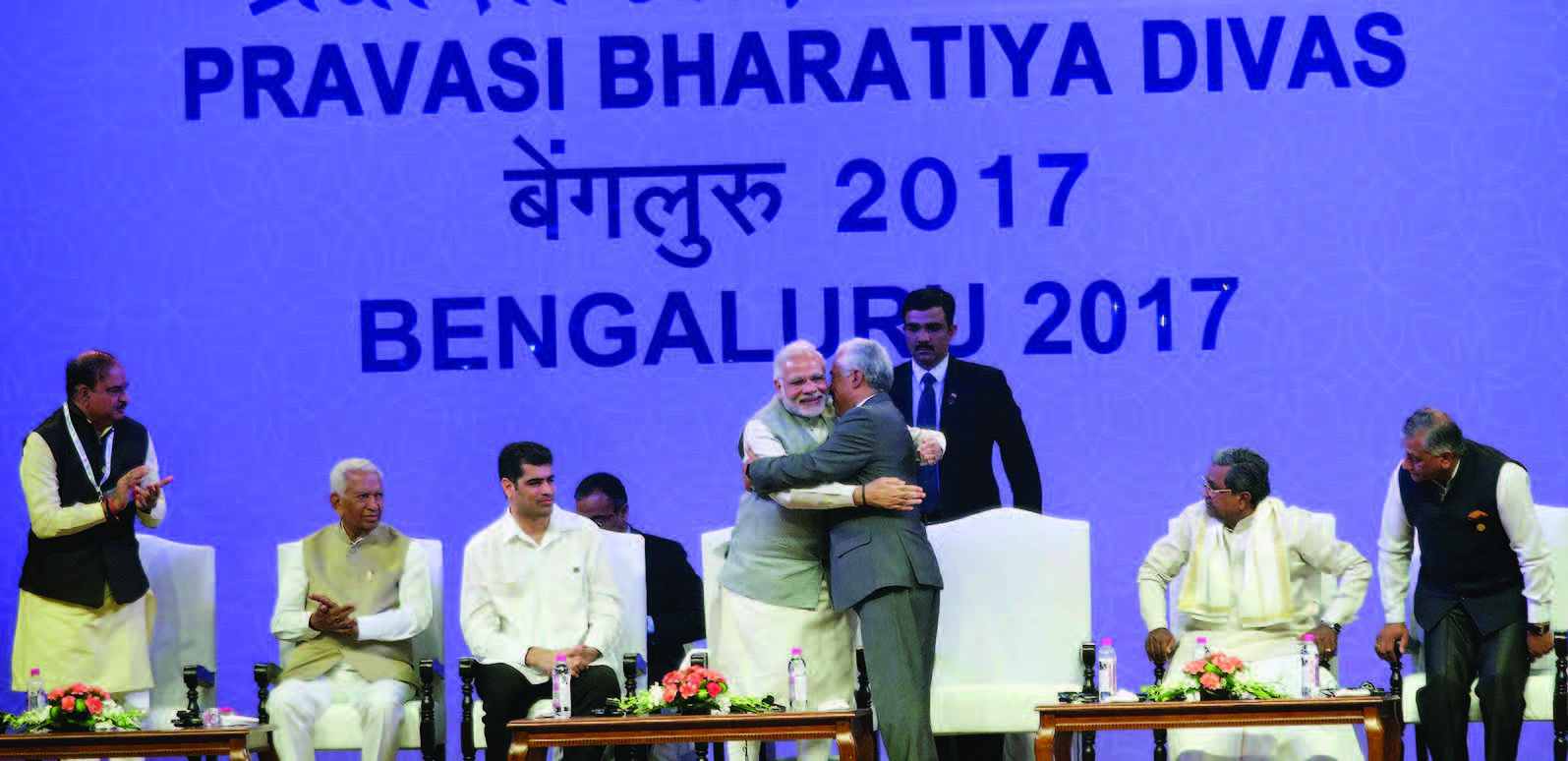
    BENGALURU (TIP): The three-day 14th Pravasi Bharatiya Divas, a mega meet of the Indian disapora which saw its largest convergence, came to an end in the IT city on Monday, January 9, with the government saying the PBD engagement was “extremely substantive” and outcome oriented.

    “This year we have had a very large gathering, we have had more than 7200 people who registered, we have had more than 2000 people who came from abroad”, Minister of State for External Affairs General VK Singh told reporters.

    “The general impression that we get after talking to people is that this time we were able to attract much larger crowd whether they were at the sessions or at the exhibition area,” he said.

    Pointing out that for the first time all the space for the exhibition was sold out, he said, “I’m quite sure with this as the marker we will have to work very hard for the next Pravasi Bharatiya Divas in 2019.

    PBD is held with an aim to provide a platform to overseas Indians to engage with the government on issues of concern to the diaspora and to explore opportunities for investment in India and contribution to the country of their origin.

    The event, launched by the Vajpayee government in 2003, also provides an opportunity to the overseas Indians to network with other overseas Indians residing in various parts of the world. It continued as an annual event till 2015 when the government decided to make it biennial.

    Singh said the format was changed so that in the intervening year, issues concerning pravasis could be addressed in great detail to ensure better results.

    As per this, ten different issues were discussed last year by panels that had pravasis as well as Indian experts and recommendations were made.

    “In this event, we have presented the recommendations and asked more suggestions so that we finalize the recommendations and convert them into executables …”

    Calling it a great initiative, Singh said action taken report on all the other recommendations had been made.

    Speaking on behalf of the Karnataka government, partner state for PBD 2017, Industries Minister RV Deshpande said Karnataka also takes pride that it had hosted the largest ever PBD since inception and thanked union government for providing the opportunity to project the state as a destination for investment and a hub for innovation and science.

    Singh said most of the problems that were raised during the PBD were from Gulf countries and Malaysia, because there is a large labor force there.

    “Our aim has been to find a solution to the issue, most of them were of generic nature and those that can be solved by discussion with their ambassador,” he said.

    “Take away (from this event), in the coming years a greater emphasis will be given on ensuring that government schemes, programs outreach programs of the MEA goes out in a bigger manner to all the countries,” Singh said.

    Stating that PBD engagement has been extremely substantive, outcome oriented, with wide ranging issues been discussed, Secretary- MEA (OIA and CPV) Dnyaneshwar Mulay said it was a different format altogether and people were extremely positive about the format.

    He said “attendance was extremely good, the economic engagement has been one of the important aspects of this PBD …; economic engagements whether it is startups, innovation, human resource development all these aspects were discussed.”

    To a question that out of 7,200 people who registered, only 2000 people had come from abroad, Singh said it was wrong to perceive it that way as many pravasis who had already come for holidaying attended the event along with their families.

    On the commemorative for the event like the stamp that was released last year, Vikas Swarup, spokesperson of the Ministry of External Affairs said this year a select compilation of Prime Minister’s speeches on foreign policy issues in 2014-15 had been made, the forward for which has been written by President Pranab Mukherjee.

    On investments that government expects after the PBD, Singh said the event itself was not to attract investment, but to facilitate and showcase opportunity for investment.

    Endorsing Singh, Deshpande said PBD was to understand the grievances of pravasis and to know about the steps taken by the government, “not that on itself it garners investments, but it provides an opportunity to market state like ours.” (Source PTI)

  • INDIANS SCORE BIG WITH QUEENS AMBASSADOR AWARDS

    INDIANS SCORE BIG WITH QUEENS AMBASSADOR AWARDS

    QUEENS, NY (TIP): A borough wide search by the Times Ledger Newspapers identified five members of the Indian Community who merited the Queens Ambassadors Award “Honoring immigrants who make Queens great” which will be bestowed on January 26, 2017 at the Gala Dinner and Awards Ceremony to be held at LaGuardia Plaza Hotel in Queens. They are Harbachan Singh, Malini Shah, Dr. Uma Mysorekar, Dr. Dheeraj Kamalam and Jagir Singh Bains.

    Harbachan Singh is a former Chairman of the United Nations Headquar ters Committee on Contracts and since his retirement has been a community activist in Queens for the past several years. He serves or served as a President of several organizations including the Sikh American Friendship foundation, the Queens Civic Congress, the Saul Weprin Democratic Club, the Holocaust Center at the Queens borough Community College and on the Boards of Queens Borough President’s General Assembly, Queens District Attorney’s Advisory Council, Committee Chair of Community Board 8 and First Vice President of Queens Hospital Center’s Advisory Board. His activity involves giving testimony at the NYC Council Hearings, addresses at Churches and government agencies or institutions and fighting for the Queens residents vis a vis the authorities especially on quality of life issues. He is a recipient of numerous accolades and awards for his work and contribution.

    Ms. Malini Shah is a well -known community leader who is currently President of her diamond company, Difference Inc. In addition to running a successful jewelry business, Malini is the founder of Nritya Kala Kendra, Inc., a cultural organization dedicated to preserving and promoting the ancient and modern arts of India.

    Through classes, workshops, lectures, visiting artist programs, Nritya Kala Kendra presents numerous educational programs all around New York City and abroad. She has spent more than 30 years teaching children in some of India’s most prestigious schools, including the Modern School, one of India’s most distinguished educational institutions, sat on the Advisory Board of Queens Museum, Queens. She also serves as cultural ambassador and a community icon, and has traveled extensively all over the world for festivals sponsored by Indian Tourism Development, and the Indian Council for Cultural Relations. At present, she serves and volunteers as a Community and Cultural Liaison for Council Member Paul Vallone. She also Volunteers and serves as representative for NYC Speaker Melissa Mark-Viverito to the Museum of Arts and Design Board of Trustees in Manhattan. Malini also serves on The Cinton Democratic Club, Executive Board as Membership Chair. Malini has received many prestigious awards such as “Jewel of India Award. City Council Citations, “Outstanding Mother Award” by C.A.P.S.C, Hind Ratan Award for Outstanding Service, Positive Indo-American Image Award. Leadership in the Arts and Culture from Assemblyman Nick Perry,” Exceptional women Award” to name a few.

    Malini lives with her husband, Niles Shah, in Queens. Mr. Shah also shares his wife’s love of community service and has actively helped the community by assisting and supporting those who want to make a difference.

  • Four Indian Americans chosen for Presidential Early Career Awards for Scientists and Engineers

    WASHINGTON (TIP): On January 9, President Barack Obama named 102 scientists and researchers including Four Indian-Americans as recipients of the Presidential Early Career Awards for Scientists and Engineers (PECASE), the highest honor bestowed by the United States Government on science and engineering professionals in the early stages of their independent research careers.

    The ‘Fab Four’ Indian scientists are Pankaj Lal from Montclair State University, Kaushik Roy Chowdhury from Northeastern University, Manish Arora from Icahn School of Medicine at Mount Sinai and Aradhna Tripati from University of California, Los Angeles.

    ‘I congratulate these outstanding scientists and engineers on their impactful work,” President Obama said. “These innovators are working to help keep the United States on the cutting edge, showing that Federal investments in science lead to advancements that expand our knowledge of the world around us and contribute to our economy.”

    Pankaj Lal, PhD, is an associate professor in the Department of Earth and Environmental Studies and associate director PSEG Institute for Sustainability Studies, Montclair State University. He undertakes integrative, interdisciplinary research that explores interconnections among society and the environment.

    Kaushik Roy Chowdhury is Associate Professor in the Electrical and Computer Engineering Department at Northeastern University and Faculty Fellow of the College of Engineering. He was earlier Assistant Professor in the same university from 2009-2015.

    Manish Arora, B.D.S., M.P.H., Ph.D., is the Director of Exposure Biology at the Senator Frank Lautenberg Environmental Health Sciences Laboratory in the Department of Preventive Medicine. Dr. Arora is an environmental epidemiologist and exposure biologist.

    Aradhna Tripati is Associate Professor. Department of Earth and Space Sciences, Department of Atmospheric and Oceanic Sciences, Institute of the Environment and Sustainability at University of California, Los Angeles.

    The Presidential Early Career Awards highlight the key role that the Administration places in encouraging and accelerating American innovation to grow the economy and tackle greatest challenges.

    The awards, established by President Clinton in 1996, are coordinated by the Office of Science and Technology Policy within the Executive Office of the President. Awardees are selected for their pursuit of innovative research at the frontiers of science and technology and their commitment to community service as demonstrated through scientific leadership, public education, or community outreach.

  • Indian American Surgeon donates $500K for new ER at Richmond University Medical Center

    Indian American Surgeon donates $500K for new ER at Richmond University Medical Center

    NEW YORK (TIP): Philanthropist and orthopedic surgeon Dr. Krishne Urs recently donated $500,000 to Richmond University Medical Center for its emergency department construction project.

    Dr. Urs’ pledge, which will go toward the medical center’s $65 million project, was made during a ceremony in the hospital’s MLB conference room. Daniel Messina, president and CEO of the hospital, accepted the donation from Dr. Urs, and thanked him for his generosity.

    Dr. Urs received his medical degree with distinction from the University of Mysore in India. He arrived in New York City in 1962 and studied to become an orthopedic surgeon. Dr. Urs began his practice at St. Vincent’s Medical Center –

    – now Richmond University Medical Center — in 1970. From 1986 to 2001, he served as chief of orthopedic surgery at St. Vincent’s Medical Center.

    Having more than 57 years of diverse experiences, especially in orthopedic surgery RY, Dr. Urs affiliates with many hospitals including Richmond University Medical Center, Staten Island University Hospital, and cooperates with other doctors and specialists in medical group Amboy Medical Practice.

  • Indian American to be the host of ‘Saturday Night Live’

    Indian American to be the host of ‘Saturday Night Live’

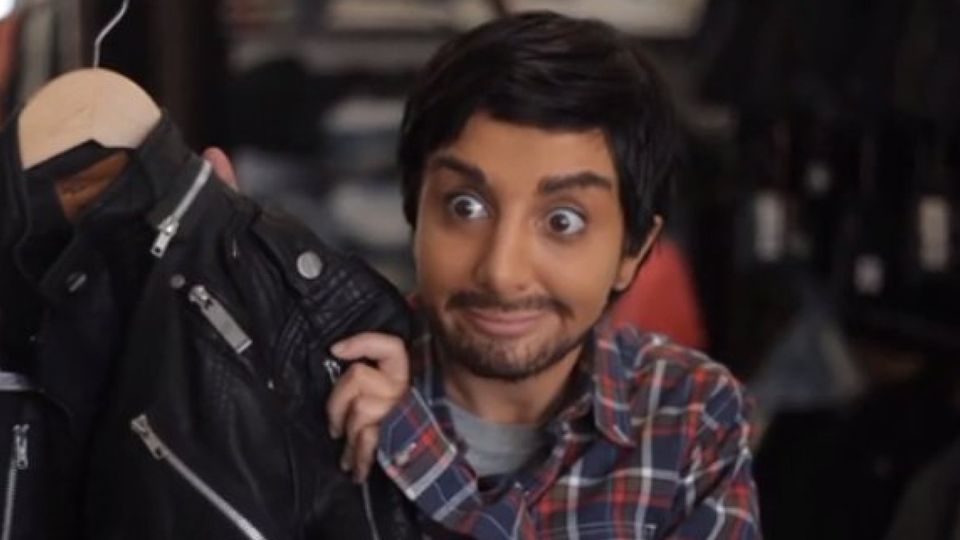
    NEW YORK (TIP): Indian-American comedian and television star Aziz Ansari is all set to make his hosting debut on NBC’s “Saturday Night Live” on January 21, becoming the comedy sketch show’s first host of South Asian descent.

    The news comes on the heels of a big year for 33-year-old Ansari. The stand-up comic and television star won his first Emmy for outstanding writing for a comedy series after earning a total of four nominations for his Netflix series “Master of None”, The Washington Post reported.

    His nomination for outstanding lead actor in a comedy series was the first for an Indian American.

  • Sikh Doctor Files Religious Discrimination Lawsuit

    Sikh Doctor Files Religious Discrimination Lawsuit

    NEW YORK (TIP): The Sikh Coalition filed a lawsuit on December 27 in the U.S. District Court for the Middle District of Tennessee on behalf of Dr. Jaswinder Pal Singh. The suit alleges that Dr. Singh – an observant Sikh physician and father who keeps a religiously mandated turban and beard – was denied a neurology job after the employer and recruiter inquired into his religious appearance.

    The suit further alleges that as part of the 2014 hiring process, the employer, Premier Medical Group, P.C., and its recruiter, Arthur Marshall, Inc., expressed interest and concern about the way Dr. Singh looked. Although in phone interviews the recruiter praised Dr. Singh’s credentials, he was abruptly denied further interviews after he submitted photographs of himself, along with additional information on Sikhs and Sikhism. The job then remained vacant.

    “It was very clear to me that I was denied employment because of my ethnic background and religious appearance,” said Dr. Singh. “I contacted the Sikh Coalition because nobody is better at holding companies accountable for their discrimination.”

    In 2015, the Sikh Coalition represented Dr. Singh in filing a charge of discrimination with the Equal Employment Opportunity Commission (EEOC). After the EEOC issued a right to sue notice, we established a legal partnership with the reputable Tennessee plaintiff attorney, Douglas B. Janney III., to file the anti-discrimination lawsuit against the employer, Premier Medical Group, and its recruiter, Arthur Marshall.

    “Whether you are a doctor in Tennessee or a truck driver in California, we will always protect and defend your right to practice your faith fearlessly,” said Sikh Coalition Legal Director, Harsimran Kaur.

    In November 2016, the Sikh Coalition announced a massive legal victory on behalf of four Sikh truck drivers who were denied jobs by one of the largest trucking companies in America. This new lawsuit, on behalf of Dr. Singh, seeks to secure a court order requiring that both defendants implement anti-discrimination policies, practices and training to ensure that they do not discriminate against any future applicants.

    “No Sikh in any job or profession should ever be denied employment because of their religion,” said Dr. Singh. “By speaking out and taking action, I know that we will continue to hold employers directly accountable.”

  • Indian-American in Texas seeks re-election to US city Council seat

    Indian-American in Texas seeks re-election to US city Council seat

    SUGAR LAND, TX (TIP): Harish Jajoo, a licensed professional engineer and small business owner, has served on the city council since 2011.An Indian-American engineer is seeking re-election for the post of the mayor of a city in Texas that has 35 per cent Asian population. Harish Jajoo, a City Councilman in Texas, lost out in his quest to become the mayor of Sugar Land city to Joe Zimmerman last year, pledged to the city’s residents to remain an independent voice for the Indian Americans there.

    “I have lived in Sugar Land for 32 years. It is where I raised my family, built my life and came to admire its people and to value their friendship,” Jajoo was quoted as saying by the Fort Bend Star newspaper.

    “As a member of city council, I have always worked to be a clear voice for conservative principles and fiscal responsibility,” he added.

    “My single goal for Sugar Land has been to see that progress and tradition receive equal attention as we build our city together,” Jajoo said. “Our community’s values are my values and as Texans we all know that family and community come first in our lives. That has been my guiding principle on council.”

    Jajoo, a licensed professional engineer and small business owner, has served on the city council since 2011.

    Founded as a sugar plantation in the mid 1800s and incorporated in 1959, Sugar Land is located in Fort Bend county, some 30 kilometers southwest of Houston.

    The county’s Asian population has grown more quickly than any other group, according to a 2013 report by Stephen Klineberg, sociology professor at Rice University and his colleague Jie Wu.

  • Indian Consulate in New York celebrates Pravasi Bharatiya Divas

    Indian Consulate in New York celebrates Pravasi Bharatiya Divas

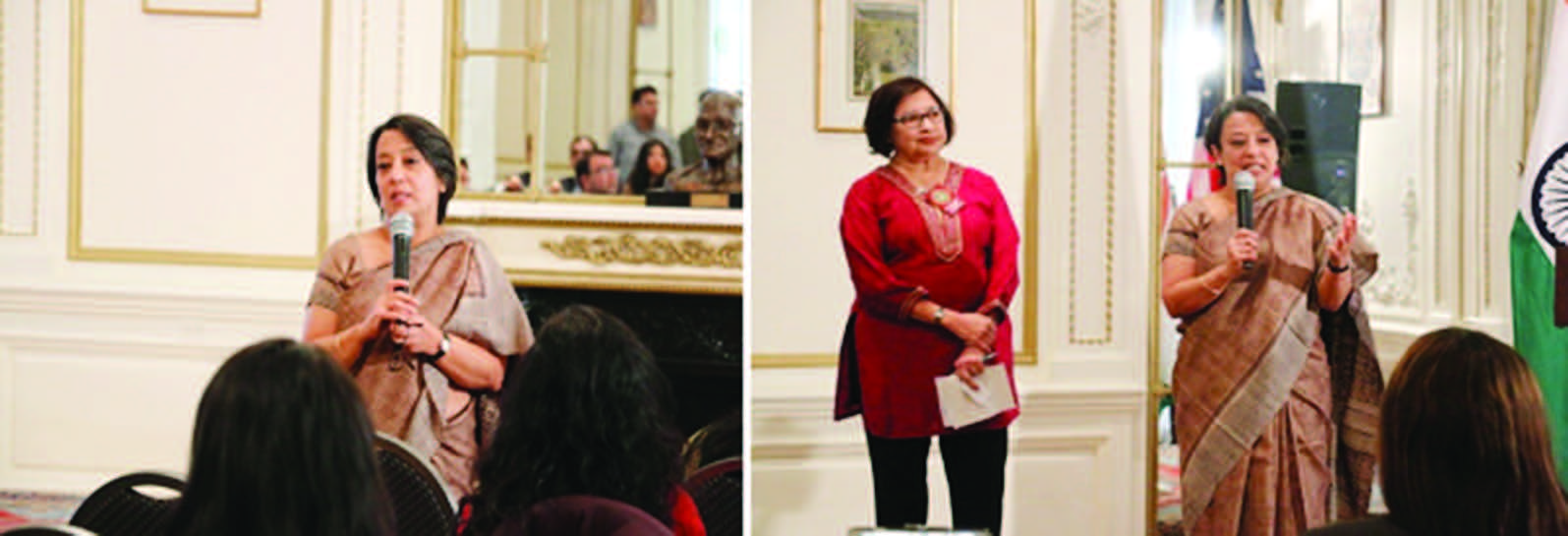
    NEW YORK CITY (TIP): The Consulate General of India, New York in association with AIA (Association of Indian Americans) celebrated Pravasi Bharatiya Divas 2017 (PBD 2017) at its premises on Saturday 8, January 2017. A large number of people including Ms. Letitia James, Public Advocate for New York and prominent leaders of the Indian American Community attended the event. Ms Suhma Kaushik, poet recited a poem from ‘Radhika’ by Dr. Om Prakash Gaur, Pravasi, her father.

    Welcoming the participants, Consul General Ambassador Riva Ganguly Das mentioned about the highlights of PBD and said Indians residing in US have increased in numbers to about 3.8 million and have been contributing richly to the USA, representing the best of Indian culture, ethos and values.

    A short film on PBD as well as the speech of Hon’ble Prime Minister, Shri Narendra Modi on PBD Conference, Bengaluru was shown to the audience. In her remarks, Public Advocate Ms. Letitia James spoke of the enormous contribution of the Indian American community to US. There was a lively interactive session at which young people participated actively. Several new suggestions to increase interaction between the community and the Consulate were also made. A large number of members of media were also present.

  • Six Indian Americans honored with Pravasi Bharatiya Samman

    Six Indian Americans honored with Pravasi Bharatiya Samman

    BENGALURU (TIP): Nisha Desai Biswal, Assistant Secretary of State, Department of State, community activist Dr. Sampatkumar Shivangi; community activist Ramesh Shah, environmental engineer Hari Babu Bindal, philanthropist and organizer of Modi’s historic Madison Square Garden event in 2014, Dr. Bharat Barai; and the founder and former president of Vishwa Hindu Parishad of America, Dr. Mahesh Mehta are the six Indian Americans who received 2017 Pravasi Bharatiya Samman Awards (PBSA) from President Pranab Mukherjee on January 9 at Bengaluru.

    Dr. Sampat S. Shivangi is a renowned Indian American leader. A street in Mississippi is named after him in recognition of his contributions to the progress and welfare of the community. He was the first Indian American to be appointed for the top health post, the Chairman of the Mississippi Department of Mental Health, in 2014. Dr. Sampat Shivangi was the advisor to the US Secretary of Health and Human Services in the presidential regime of George W. Bush. He is the founder and president of the American Association of Physicians of Indian-origin in Mississippi. The CEO of US Info Systems of Mississippi, he is one of the trustworthy confidantes of Prime Minister Narendra Modi.

    One of the recipients of the Pravasi Bharatiya Samman Awards, India-born and Chicago-based Dr. Bharat Barai is the director of oncology department at Methodist Hospitals in Indiana. He got a mention in the Guinness Book of World Records as the longest serving member of a State Medical Licensing Board in the US. He is a community activist and philanthropist too. He treats uninsured, disadvantaged patients and works to reduce medical expenses for them. Known for his unconditional community services, personal integrity and professional excellence, Dr. Bharat Barai is also in Prime Minister Narendra Modi’s coterie of close associates.

    Another Indian American awardee of the Pravasi Bharatiya Samman, Dr. Mahesh Mehta is the founder of Vishwa Hindu Parishad of America. He also founded the Hindu Heritage Foundation of America, Friends of India Society International, India Quality Group and several other organizations. He has many widely published articles on socio-cultural, socio-economic and socio-political aspects to his fame. ‘Hindu Philosophy in Action’ is the latest from Dr. Mahesh Mehta’s repertoire of books and journals. Dr. Mehta is a cofounder and director of Hindu University of America in Orlando, Florida.

    Nisha Desai Biswal is an Assistant Secretary of State for South and Central Asian Affairs among the six Indian American recipients of the Pravasi Bharatiya Samman Awards 2017. She helms the United States’ foreign policies and external affairs in India, Bhutan, Nepal, Sri Lanka, Maldives, Bangladesh and other countries in central Asia. Under her distinguished leadership, the US Department of State ensures and enhances human security and national security in south and central Asian nations. Based in Washington DC, Nisha Desai Biswal leads the US’ bilateral consultations with Central and South Asia to deepen ties with those Asian nations.

    The Pravasi Bharatiya Samman Award (PBSA) is the highest honor conferred on overseas Indians. PBSA is conferred by the President of India as a part of the Pravasi Bharatiya Divas Conventions organized annually since 2003 on Non-Resident Indians, Persons of Indian Origin or an organization or institution established and run by the Non-Resident Indians or Persons of Indian Origin in recognition of their outstanding achievements both in India and abroad.

    The 14th edition of the Pravasi Bharatiya Divas (PBD) Convention was held in Bengaluru from 7-9 January, 2017. The Pravasi Bharatiya Samman Awards were conferred by the Hon’ble President at the PBD Convention on 9 January, 2017 in the valedictory session of the Pravasi Bharatiya Divas celebrations in an impressive ceremony.

    A 11-member Jury-cum-Awards Committee, with Hon’ble Vice-President as Chairman and Hon’ble External Affairs as Vice-Chairman and nine other distinguished members from various walks of life, considered the nominations for the Pravasi Bharatiya Samman Awards, 2017 and had unanimously thirty nominees.

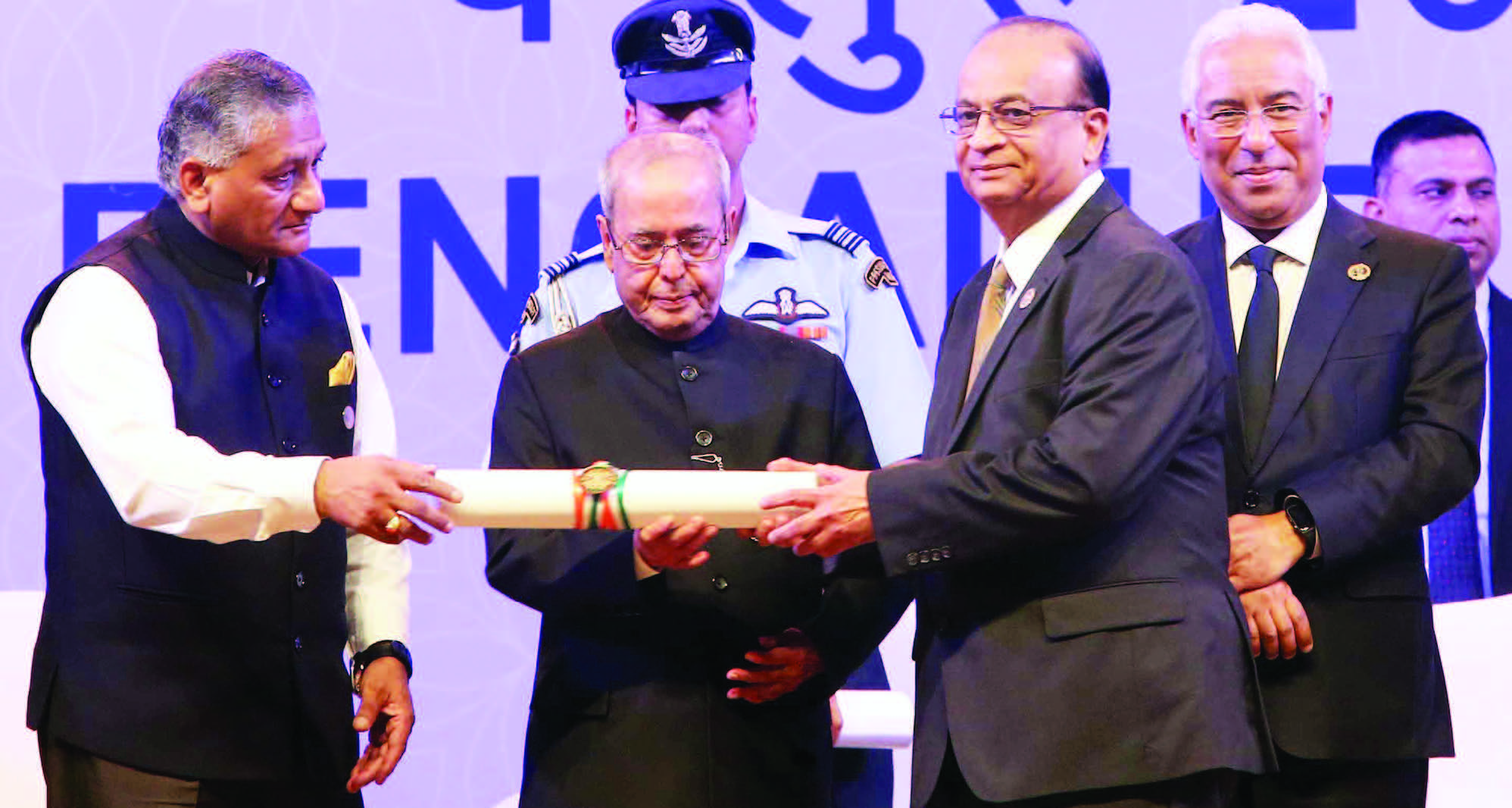
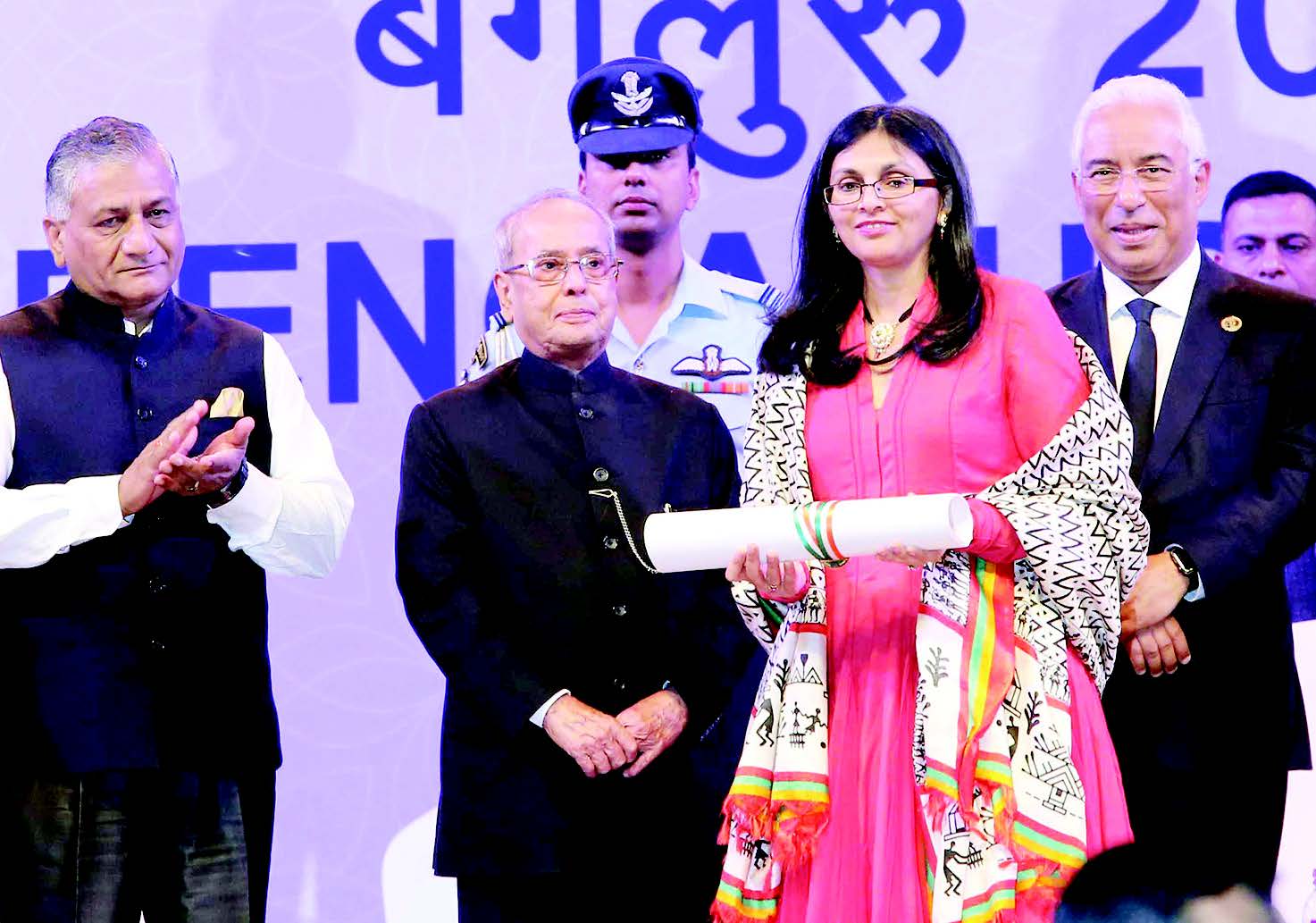
    President Pranab Mukherjee conferred Pravasi Bharatiya Samman on Nisha Desai Biswal, US Assistant Secretary of State. Seen in the picture, from L to R: General VK Singh, Minister of State for External affairs, President Pranab Mukherjee, Nisha Desai Biswal with her honor scroll and Luiss Da Costa, Prime Minister of Portugal who was also conferred the honor. Photo/Jay Mandal on assignment
    President Pranab Mukherjee conferred Pravasi Bharatiya Samman on Nisha Desai Biswal, US Assistant Secretary of State. Seen in the picture, from L to R: General VK Singh, Minister of State for External affairs, President Pranab Mukherjee, Nisha Desai Biswal with her honor scroll and Luiss Da Costa, Prime Minister of Portugal who was also conferred the honor. Photo/Jay Mandal on assignment

    Nisha Desai Biswal delivered the acceptance speech on behalf of the awardees.

    The list of thirty awardees is as follows:

    1. Gorur Krishna Harinath Australia Community Service
    2. Rajasekharan Pillai Valavoor Kizhakkathil Bahrain Business
    3. Antwerp Indian Association Belgium Community Service
    4. Nazeer Ahamed Mohamed Zackiriah Brunei Community Service
    5. Mukund Bhikhubhai Purohit Canada Business
    6. Nalinkumar Sumanlal Kothari Djibouti Community Service
    7. Vinod Chandra Patel Fiji Social Service
    8. Raghunath Marie Antonin Manet France Arts & Culture
    9. Lael Anson E. Best Israel Medical Science
    10. Sandip Kumar Tagore Japan      Arts & Culture
    11. Ariful Islam Libya Community Service
    12. Tan Sri Dato Dr. Muniandy Thambirajah Malaysia Education and Community Service
    13. Hon’ble Pravind Kumar Jugnauth Mauritius Public Service
    14. 14 H.E. Mr. Antonio Luis Santos da Costa Portugal Public Service
    15. Raghavan Seetharaman Qatar Business Management
    16. Zeenat Musarrat Jafri Saudi Arabia Education
    17. Singapore Indian Association Singapore Community Service
    18. Carani Balaraman Sanjeevi Sweden Medicine
    19. Susheel Kumar Saraff Thailand Business
    20. Winston Chandarbhan Dookeran Trinidad & Tobago Public Service
    21. Vasudev Shamdas Shroff United Arab Emirates Community Service
    22. India Social and Cultural Centre, AbuDhabi United Arab Emirates Philanthropy and Community Service
    23. Hon’ble Priti Patel United Kingdom Public Service
    24. Neena Gill United Kingdom       Public Service Service
    25. Hari Babu Bindal USA Environmental Engineering
    26. Bharat Haridas Barai USA Community Service
    27. Nisha Desai Biswal USA Public Affairs
    28. Mahesh Mehta USA Community Service
    29. Ramesh Shah USA Community Service
    30. Sampatkumar Shidramapa Shivangi USA Community Leadership.


  • PBD 2017 Concludes on a note of greater engagement between the government of India and the Diaspora

    PBD 2017 Concludes on a note of greater engagement between the government of India and the Diaspora

    ‘Indians abroad are ambassadors of our culture’: President Mujherjee

    BENGALURU (TIP): The three-day Pravasi Bharatiya Divas convention came to an end on Monday, January 9, with the President Pranab Mukerjee delivering valedictory address and conferring Pravasi Bharatiya Samman on 30 NRI’s which included the Chief Guest at the PBD, Prime Minister of Portugal Luiss Santos DaCosta, who has his roots in Goa, and Nisha Desai Biswal, US Asstt Secretary of State, On the occasion, President also released a Book of Prime Ministers speeches abroad.

    President Pranab Mukherjee praised the Centre’s efforts of extracting thousands of Indians from difficult situations across the globe during Bengaluru’s Pravasi Bharatiya Sammelan, says overseas Indians are ambassadors of the country’s culture abroad.

    Non-Resident Indians (NRIs) from the US led the list of 30 persons conferred the Pravasi Bhartiya Samman awards by President Pranab Mukherjee.

    The first award was received by Portugal Prime Minister Antonia Luiss Santos Da Costa for his contribution in the field of public service.

    As per the list, six awards were given to NRIs from the US, the highest in the list, while two each to those from the UK and UAE.

    One award each was given to NRIs from 20 countries, including Australia, France, Canada, Israel, Libya, Fiji, Brunei, Singapore, Portugal and others.

    Among the NRIs from the US, Hari Babu Bindal was honored for his contribution in the field of environment engineering, Nisha Desai Biswal for public affairs, Sampat Kumar Shidramapa Shivanagi for community leadership, while Mahesh Mehta, Ramesh Shah and Bharat Haridas Barai were awarded for their contribution in the field of community service. Neena Gill and Priti Patel from the UK were honored for their contribution in the field of public service.

    In the list of NRIs from the UAE, Vasudev Shamdas Shroff and one organization Indian Social and Cultural Centre were awarded.

    In the field of business, Rajasekharan Pillai Valavoor Kizhakkathi from Bahrain, Mukund Bhikhubhai from Canada and Susheel Kumar Saraff from Thailand were honored.

    In the field of medical science, Lael Anson E Best from Israel and Carani Balaraman Sanjeevi were selected.

    Sandip Kumar Tagore from Japan was awarded for his contribution in the field of arts and culture, while Muniandy Thambirajah from Malaysia and Zeenat Musarrat Jafri from Saudi Arabia were honored for education and community service. In the field of public service, Pravin Kumar Jugnauth from Mauritius and Winston Chandarbhan Dookeran from Trinidad were honored. Vinod Chandra Patel from Fiji was selected for his contribution in the field of social service.

    The theme of this year’s PBD is “Redefining engagement with Indian diaspora”. A record 8,000 delegates from 30 countries participated in the three-day event. Prime Minister Narendra Modi lauded the Indian diaspora across the world as he addressed people at the 14th Pravasi Bharatiya Diwas 2017 in Bengaluru on Sunday.

    He added that Indian diaspora has made invaluable contribution to our economy and the government aims to change brain drain to brain gain through its policies. Prime Minister Narendra Modi thanked the persons of Indian origin for their support to government’s initiative against black money and corruption.

  • President Obama delivers Nostalgic and Hopeful Farewell Address in Chicago

    President Obama delivers Nostalgic and Hopeful Farewell Address in Chicago

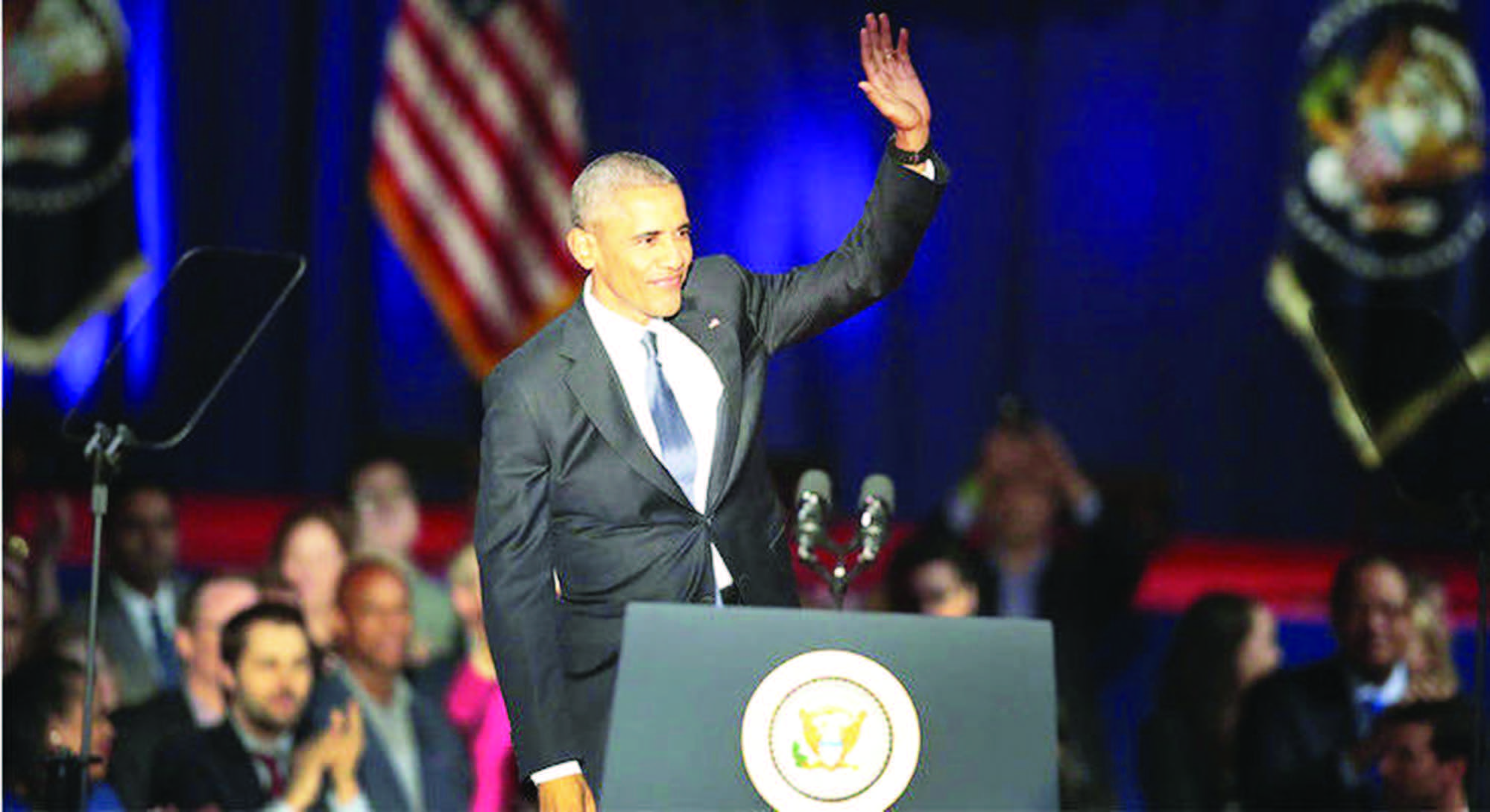
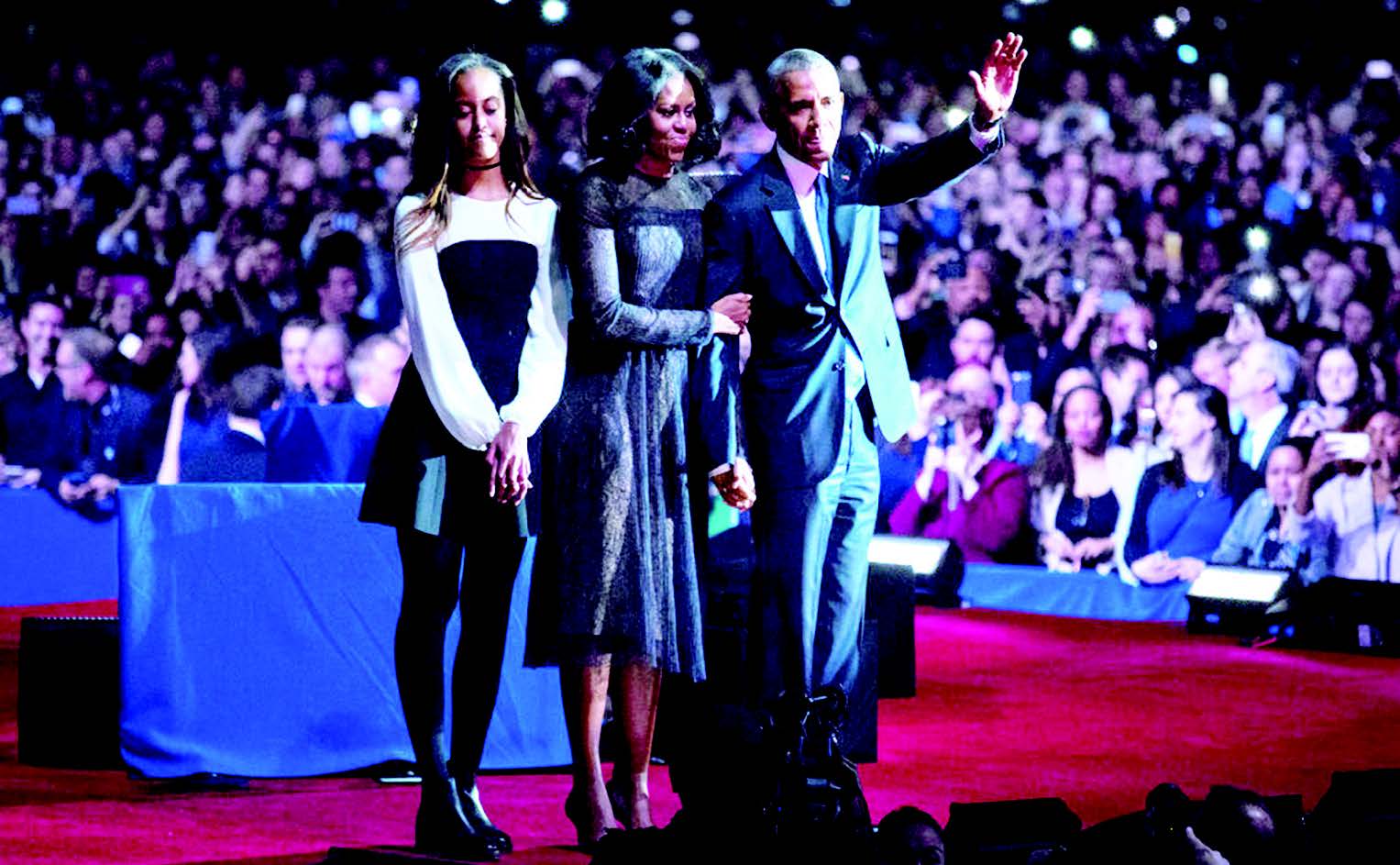
    An emotional President Barack Obama with the First Lady Michelle Obama and their daughter Malia Obama at his farewell address to the nation from McCormick Place in Chicago, January 10, Obama dwelt on the challenges before America’s democracy and sought to give a message of hope to American. “Let’s be vigilant. But not afraid”, he said.

    CHICAGO (TIP): President Barack Obama became nostalgic while delivering his Farewell Address in Chicago on January 10, 2017. Joined by first lady Michelle Obama, daughter Malia, and Vice President Joe Biden, the president credited Chicago for playing a crucial role in his life. “I first came to Chicago when I was in my early 20s, still trying to figure out who I was; still searching for a purpose to my life’, said Obama. “. It was on these streets where I witnessed the power of faith, and the quiet dignity of working people in the face of struggle and loss. This is where I learned that change only happens when ordinary people get involved, get engaged, and come together to demand it.”

    Noting the increasing partisanship that marked his tenure as president, Obama warned another threat to democracy was the trend of people becoming “so secure in our bubbles that we start accepting only information, whether true or not, that fits our opinions instead of basing our opinions on the evidence is out there.”

    Obama mentioned the incoming president only once by name. “I committed to President-elect Trump that my administration would ensure the smoothest possible transition, just as President Bush did for me. Because it’s up to all of us to make sure our government can help us meet the many challenges we still face.”

    President Obama delivered his Farewell Address in Chicago on January 10, 2017. Watch it here:

    Here is an unedited transcript of President Obama’s remarks, as provided by the White House.

  • Andy Bhatia elected president of FIA Tri-State

    Andy Bhatia elected president of FIA Tri-State

    NEW YORK (TIP): Noted community activist Andy Bhatia has been elected president of the Federation of Indian Associations in New York, New Jersey and Connecticut, which organizes the largest India Day Parade in New York City. Andy took charge on January 1 along with a new team comprising of Srujal Parikh (executive vice president); Alok Kumar (vice president); Chhavi Dharayan (secretary); Jatin Patel (joint secretary); Himanshu Bhatia (treasurer); Anand Patel (immediate past president), promising that an all out effort will be made to expand the activities of the organization.

    Andy Bhatia is the president of American Sales and Marketing Partners LLC, who has extensive experience in the airline/travel industry. He retired as Area Sales Manager for Air India in New York, where he worked for nearly 35 years, both in the field and at the North American Headquarters in various capacities.

    He has served in the FIA in various capacities for several years. For a quarter of a century, he actively participated in organizing the India Day Parade and Diwali Festival in New York City and Diwali Mela in Jackson Heights, among other community events in the Tri-State area on behalf of Air India.

    He was honored thrice by the FIA and the National Federation of Indian Associations (NFIA.)

    He is credited with conceptualizing and launching the ‘Know India Seminars’ in USA and Canada which were attended by more than 6000 American travel agents to qualify as India tourism specialists. He also formulated the concept of selling co-op tours by agents in non-conflicting sales territories to increase tourist bookings to India.

    He was instrumentalin launching a bi-monthly India Travel newsletter and the Traveler’s India magazine.

    He continues to be engaged in the industry as a consultant and serves as a member of several travel trade associations including the Pacific Asia Travel Association’s New York Chapter and the American Society of Travel Agents, Airline Sales Managers Association and SKAL International.

    Andy worked at the Public Relations and Development Office at the University of Bridgeport as executive secretary of the Committee on Informal Education. He chaired the Halsey International Scholarship Program consisting of community support groups representing sixteen countries including India’s Shastri Scholarship Committee.

    Organizations including the Gujrati Samaj USA, City Council of New York, and Jackson Heights Merchants Association too honored him.

    He was also selected for the Paul Harris Fellowship Award of Rotary International for International Relations in 1998. The travel industry honored him several times.

    Another honor he cherishes was the WICC Radio Station’s Community Service Salute (1971, 1974) for community service in the Greater Bridgeport area. He was also honored by the Rotary Club of Bridgeport with the Outstanding Young Man of America award (1971 and 1974) for leadership qualities when he was a student.

    The Indian Panorama honored him with Excellence Award.

  • Nikki Haley’s confirmation hearing for US envoy to United Nations next week

    Nikki Haley’s confirmation hearing for US envoy to United Nations next week

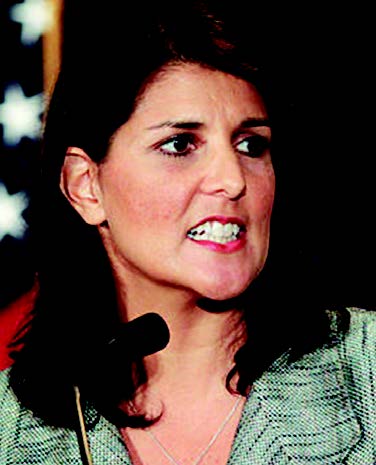
    NEW YORK (TIP): Indian-American South Carolina Governor Nikki Haley would appear before a Congressional panel for her confirmation hearing for the post of US Ambassador to the UN on January 18, an official has said.

    If confirmed, Haley, 44, the daughter of Indian immigrants, would be the first-ever Indian-American to serve on a Cabinet rank position in any presidential administration in the US.

    Senator Bob Corker, chairman of the Senate Foreign Relations Committee, said in a statement that the nomination hearing to consider Haley to be US Ambassador to the United Nations will be held on January 18.

    Haley, who will replace Samantha Power at the UN if confirmed, has already created history by becoming the first women Indian-American Governor of a US State.

  • Amitabh Bachchan honored by US Embassy for TB awareness

    Amitabh Bachchan honored by US Embassy for TB awareness

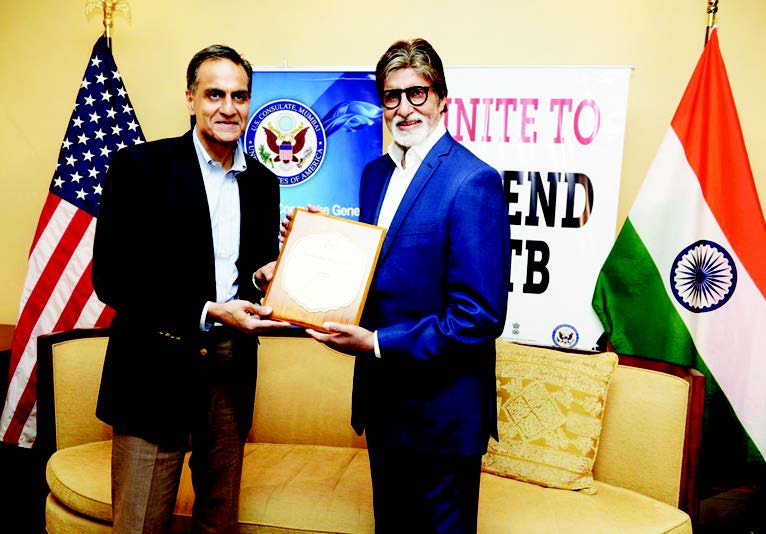
    NEW DELHI (TIP): Megastar Amitabh Bachchan has been honored by the US Embassy to acknowledge his immense contribution to the India-US ties on tuberculosis. The award was presented on January 8 by US Ambassador to India Richard R Verma to the 74-year-old actor, who himself is a TB survivor and brand ambassador for the cause.

    After receiving the award, Bachchan went live on Facebook with Verma to discuss the cooperation between the two nations to spread awareness about the much-feared disease.

    Remembering his first encounter with Verma, Bachchan said that they have been associated since 2015, when the latter was awarded the Padma Vibhushan.

    Bachchan adds, “Within a week later, I received a letter from the ambassador (citing that) … We are looking at doing something about tuberculosis in India. Would you be kind enough to entertain in joining this effort? And I readily agreed.” The “Pink” actor also said that it was embarrassing that India is the largest carrier of TB in the world.

    Recounting his “Kaun Banega Crorepati” days, when he experienced excruciating pain in the spine, he said, “I survived on 8-9 painkillers every day. In 2002, it was discovered in a general investigation that I was suffering from the tuberculosis of the spine.”

    Bachchan added, “Without immodesty, I can say that if it (TB) can happen to me it can happen to anyone. If it is detected in time, there is a cure.” The actor was especially impressed with the involvement of women in spreading awareness and busting myths about the disease under this initiative. He said that it was inspiring how they fought both with the disease and fear of alienation due to the social stigma about the disease.

    On giving the award to Bachchan, Verma said, “We are proud to give you this award for your leadership and everything that you have done.”

    The US ambassador also said that the US government has been working with the Indian government for over 20 years on tuberculosis.

    “Over USD 100 million have been invested… we have treated over 15 million people with our Indian partners, saved millions of lives from the disease,” he added. (PTI)

  • A Path to College and Careers for all Children

    Navigating the college process can be challenging for students and their families. As the first person in my family to go to college, I know how stressful this process can be. As Chancellor, getting every student on the path to college regardless of their home language or zip code and graduating a productive citizen is at the heart of what I want to accomplish. In support of this effort, across the City today we are celebrating College Awareness Day.

    Now in its second year, College Awareness Day promotes a college-going culture across all New York City schools and encourages students to consider a wide range of college and career options. And now as part of the DOE’s first College and Career Month, 250 high schools are participating in career exploration events and activities. This means schools will be visiting companies and non-profit organizations to shadow professionals, and inviting alumni and recent college students to discuss college and career planning with students. We are also hosting the first-ever citywide Summer Enrichment Fair on January 28, where high school students and families can learn about summer employment opportunities and participate in career skills and planning workshops. Educators across the City are helping students understand that going to college is attainable with hard work and determination and families should can overcome the financial considerations, geographical barriers, or other roadblocks.

    College Awareness Day is part of College Access for All, one of Mayor de Blasio’s Equity and Excellence for All initiatives. Through College Access for All, every middle school student will have the opportunity to visit a college campus by 2018 and every high school student will have the resources and support to develop an individual college and career plan by 2019. For the first time this spring, every high school junior can take the SAT free of charge during the school day and we’ve also eliminated the CUNY application fee for low-income students applying for college, removing a significant financial barrier for families.

    Early Conversations and planning around college and careers are critical, and helping our youngest learners see higher education as attainable begins with raising greater awareness of what college is and why it matters. We are laying this groundwork early, by building on our promise of Pre-K for All, working toward universal literacy in 2nd grade by 2026, and expanding bilingual programs in classrooms as early as pre-K. Every student must have the opportunity to pursue their dreams, and we are making unprecedented investments to make that a reality – especially for students who are new immigrants, just learning English, and will be the first in their family to go to college.

    Every day can be College Awareness Day across the City. Our schools will continue to share information with students and families about college and career readiness as the school year moves forward. By making a clear path to college and career for everyone, we are going to make a real difference in our City and country. I encourage all educators to share their college experience with students and continue the college conversation today. Additional information about College Awareness Day and College and Career Month are available at: http://schools.nyc.gov/Offices/OPSR/Caree rExplorationMonth.htm. Together we can eliminate obstacles and make the path to college and careers for all a reality.

  • Notebandi not enough to end corruption

    Notebandi not enough to end corruption

    By Beena Kothari - President, India Association of Long Island Email: beena.kothari@gmail.com
    By Beena Kothari – President, India Association of Long Island Email: beena.kothari@gmail.com

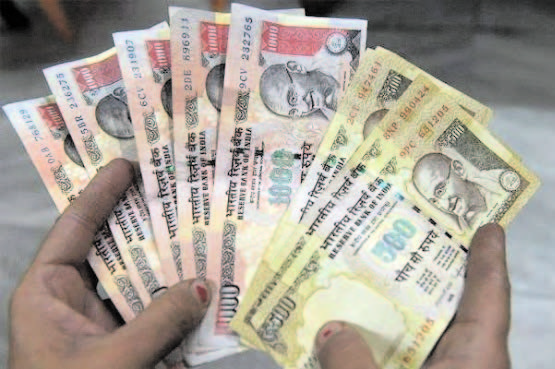
    The historic decision of Nov 9, 2016 to demonetize currency notes of Rs. 500/1000, which represents 86 %of the total currency in circulation, was ‘overdue’ since the last time in 1978.

    Many reports suggest that it has resulted in shrinking the size of the parallel economy and black money tremendously, at the least by 20%. and likely to be more in the coming year as follow up measures indicate .The business of counterfeit currency  is almost 80,000 crores which has been pumped by ISI and our enemies  has been badly hit  and almost stopped for now. The terror funding by the enemies across the border and the illegal mafia activities, communal riots, human trafficking, including Naxalites activities have been extremely reduced for the time being. The huge inflow of the cash money into the banks thus into the economy, has resulted into loan interest rates going down and lowering the cost of doing business and making more affordable the products.

    It is well known that many political parties are the biggest hoarders of the black money. Now, we may see a better election process and the fair practices in the upcoming assembly elections in a more democratic ways. The cash deposits of over 14 lakhs crores after this move which will very positively impact Indian economy and improve the GDP by at least 1.5%. People are becoming hopeful that there is likely increase in public expenditure due to more tax collections which govt. will be spending on infrastructure, health, education, social welfare schemes and creating job opportunities.

    The demonetization move has been seen as a “Masterstroke” by many among us. Is it a Masterful enough?

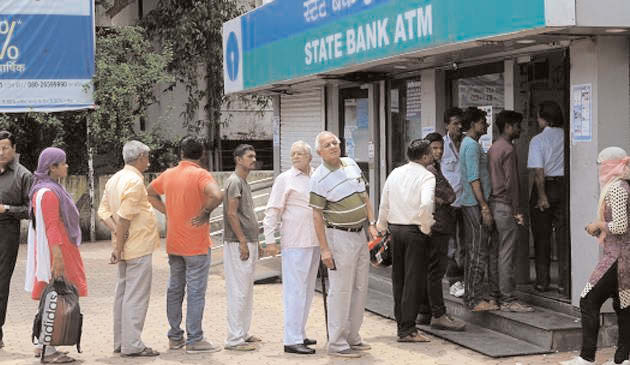
    This mammoth tasks lacked in the great detailed planning as seen by the long queues at the banks for many weeks and the empty ATMs. It caused public inconvenience in many medical emergencies and health issues, the wedding seasons was also around the corner. In rural area, the banking structure was not sound enough to support this transition. As 90 % of the Indian economy is on cash, this cash crunch has the worst impact in the service sector and would continue for more months .Ongoing period is high activity for agriculture is a major concern and have felt the big pinch. There is a fear of return of “inflation” contrary to the fundamentals that it should go down after demonetization. So we could see short-term pain for India’s economic trajectory but eventual long-term gains for Indian economy.

    “Black money is not synonymous with corruption; it is rather one of several symptoms of corruption”. This intervention is a one-time draining of this current stock of black money but unless the root causes of corruption are removed, corruption will continue. It is sort of like a dialysis, more of a short term cleaning up than a solution of the problem. It needs to be repeated periodically. More enforcements   and tightening of the laws and regulations is required on ongoing basis to get rid of the menace of the corruption.

    Digitization provides equal access to education and communication. Digitization also ensures that the public goods and services are reaching people cost effectively and timely in an efficient manner. Whether it is banking, railways or even Public distribution system or any public utility service, it makes their delivery faster and easier to keep track with. People can now do almost everything online, to apply for a PAN card, passport and to book a railway ticket or pay bills they no longer need to stand in long queues. There is also an online grievance system for almost every service and therefore people’s problems are now better attended because everything is now recorded, monitored and tracked. We have even seen People directly tweet the grievance to the concerned minister, the role of Smt. Sushma Swaraj, MEA Minister is exemplary outstanding and extra ordinary and getting it resolved promptly. So with this another value of democracy, service for the people is effectively implemented. Digitization is truly strengthening and enhancing the Indian democracy and widening its scope for betterment of common man. Digitization is the way to advance.

  • Demonetization was a dishonest promise

    Demonetization was a dishonest promise

    A cost-benefit analysis of demonetization needs to take into account the inconvenience caused and the millions of man days lost in queues and lay-offs.

    The honorable Prime Minister promised the people an India of their dreams after 50 days in lieu of their cooperation. And people gave full cooperation by standing in long queues outside banks from dawn to dusk, just to withdraw their own money, and that too in rationed amounts. Despite the chaos continuing even after the completion of the 50-day ‘grace period’, for God’s sake let us not doubt the ‘good’ and ‘honest’ intentions of our worthy Prime Minister. At the same time, we must appreciate the unprecedented and remarkable patience and cooperation people have extended. This has been publicly acknowledged by the Prime Minister. Now it is the turn of Narendra Modi, the all-powerful Prime Minister, to deliver as promised.

    Did Modi really know what people desired, or did he simply wrap his political motives as the desire of the people? Or was it a move to cover up for the failure of the much touted promise of bringing back the black money stashed in foreign banks. Diverting peoples’ attention from the unfulfilled promise and almost negligible achievement on black money might be another reason behind demonetization. Let us leave it to the judgement of the people and history. It is often said that everyone is good until he proves otherwise, and the PM, too, must be given the opportunity.

    Nonetheless, even as black money and corruption are very important issues, poverty, unemployment/underemployment and social security are the more important concerns of people. Often, politics in India is being done in the name of the poor, as seen in the “garibi hatao” slogan of the then all-powerful PM, Indira Gandhi, in the late 1960s. “Garib” and “garibi” are still there, but Indira Gandhi won the Parliament elections with a thumping majority. Let us hope that demonetization is above such politics.

    One immediate outcome of demonetization has been the non-functioning of Parliament, a heavy cost for a poor nation and loss of precious time of our elected representatives. Both the ruling alliance and the Opposition blamed each other. It was politics versus politics, while each side accused the other of playing politics. The NDA has labelled the political opposition as well as all others critical of demonetization as supporters of corruption and black money, as if everybody in the ruling alliance was honest and others dishonest. This is being used as a powerful weapon to disarm the Opposition and critics and to change the entire narrative. The fact, however, is that all political parties resort to corrupt practices to finance and win elections. Once in power, they shower benefits on their financers and supporters, and thereby promote the culture of crony capitalism.

    The poor and common people get swayed by the illusion that perhaps they will be benefited, but in the process only enter a still greater illusion of ‘achhe din’ and the India of their dreams. Every time clever politicians conjure up new dreams and mange to remain in power themselves. Competitive political populism and blame games are an integral part of the grand design to fool the people. Something similar seems to be at work behind the demonetization exercise.

    The common man is in the illusionary wait to see some ‘big’ amount deposited in his bank account as a result of demonetization. The Prime Minister himself has advised the Jandhan account holders not to give back the black money deposited in their accounts. Sadistic pleasure may be another source of the common man’s satisfaction, in the sense that he is happy that rich peoples’ money would be confiscated. The real issues and concerns of the common people, meanwhile, continue to remain unattended and their sufferings seem to be unending.

    While making the ‘bold’ and ‘historic’ announcement (no less than a ‘surgical strike’) to the nation on the night of November 8, the Prime Minister stated three overt objectives of the demonetization decision: eliminating black economy; eradicating corruption; and curbing counterfeit money and thereby eliminating terrorism. But the million-dollar question remains: Can demonetization really achieve these objectives?It is impossible to obtain an affirmative answer through any logic or imagination.

    The simple reason is that there is no correlation between demonetization and the generation of black money; demonetization and corruption; and demonetization and counterfeit currency/terrorism. In the absence of any correlation, how can demonetization achieve the stated objectives? As a matter of fact, demonetization is neither a necessary nor a sufficient condition to achieve the above mentioned objectives. Nonetheless, demonetization may create some temporary deterrent in the minds of the people who are indulging in corruption and generation of black money.

    A cost-benefit analysis of demonetization needs to take into account the inconvenience and the millions of man days lost in queues and lay-offs (particularly in the unorganized / informal sectors) caused so far and in the months to come. In a consumption-led growth model, whenever consumption falls, production is adversely affected, which in turn leads to lay-offs and unemployment. It eventually results in a reverse investment multiplier (one unit decline in investment leading to a multiple decline in income), leading to lower income generation and often to a recessionary phase. In that case the economy shall have to struggle hard to stage a comeback.

    If Modi is really interested in curbing the black economy and corruption, then a systemic and social solution is needed. Corruption and the amassing of unaccounted-for wealth are ingrained in the psyche of the people; it is this greed that needs to be addressed. Everybody, especially in the tax collection machinery and the government, knows the sources of black money/economy, and laws are in place to curb it. Confiscation of ill-gotten money and wealth and effective implementation is sine qua non.

    A digital and cashless economy may provide a solution in the long run, but first we must have the enabling infrastructure in place, and then people need to be prepared, especially the poor and illiterate in the remote and rural areas, to get accustomed to that. The kind of ‘surgical operation’ and shock therapy being undertaken currently may cause more harm than good. It is difficult to believe that Modi is not aware of all this.


  • SBI STARTS NEW YEAR WITH RATE CUT WAR

    SBI STARTS NEW YEAR WITH RATE CUT WAR

    NEW DELHI (TIP): State Bank of India on Jan 2 (Monday) unleashed a rate war by cutting its home loan rates by 0.9%, betting big on mass migration from other banks, while also maintaining the largest ever spread to ensure increased profitability.

    The move by the market leader – SBI is India’s largest commercial bank – is expected to push other banks to follow suit, which could lead to a sharp reduction in interest rates on loans for homes and products, which in turn would stir stagnant sales in real estate and consumer goods. SBI said it expects its loan growth to rise by 1-2%.

    From January 1, 2017, SBI is offering interest rates of 8.65% for home loans of up to ?75 lakh. The cut is based on a reduction in the marginal cost based lending rate (MCLR), which it brought down to 8% from 8.90% on Sunday. MCLR is the new method to calculate rates, replacing the earlier base rate system.

    The cut was necessitated by the surplus liquidity that flowed into banks after the government cancelled old notes of ?500 and ?1,000. Typically, a cut in MCLR enables banks to offer lower loan rates to new borrowers.

    Although only 10% of existing loan products of SBI are based on MCLR, the bank’s premise is that Monday’s cut would bring in new customers.

    Going a step forward, SBI also announced new products. “We will bring out the SBI bridge loan, for people who want to upgrade, but are unable to sell their existing house,” SBI chair Arundhati Bhattacharya said.

    The interest rates on such loans will be at 10.45% for the first year and 11% after that. The borrower has to find a buyer for the existing house within two years, Rajnish Kumar, SBI’s managing director, explained.

    There is also an ‘Insta top up’ loan for existing home loan borrowers, where in a day, the bank offers top-up on existing loans, provided the borrower meets the condition of having a credit score of 700 or higher; the loan amount would be 5% of the home loan.

    These top-up loans will attract interest of 1% above MCLR, or around 9%. The measures are to boost home loan growth, which has been lagging at about 15% to 16%, post-demonetisation, from the previous 20% growth.

    To keep profitability, a concern that rattled stock markets which sold bank shares heavily on Monday, SBI has increased the spread – the difference between MCLR rate and the loan rate where banks earn profit – from 0.25% to 0.65%. That is why though the bank cut MCLR to 8%, the home loan borrower will have to pay 8.65% interest.

    “At this point this is what we could afford. It is based on our strategy and not on risks… we will see how this works. If competition is high, we may change it later,” Bhattacharya said.

    About 10% of the total retail loans and 40% of corporate loans are linked to MCLR. “Our point is that borrowers can move to MCLR. People may not have seen the advantage. Maybe now they will see,” Bhattacharya said.

    Borrowers can shift from Base Rate to MCLR by paying a switch-over fee of 0.5%. Interest rates on car loans will range from 9.10-9.25%. Car loans grew in December, even better than pre-demonetisation and the year-ago period. Source: HT