Month: February 2017

  • Varun removed as BJP’s star campaigner in UP polls

    Varun removed as BJP’s star campaigner in UP polls

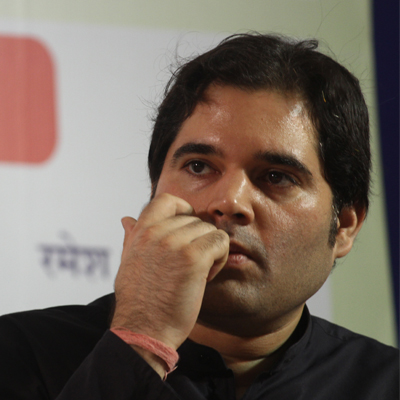
    NEW DELHI (TIP): BJP MP Varun Gandhi is conspicuous by his absence in the Uttar Pradesh polls. His cold war with party chief Amit Shah has left him out of the list of star campaigners yet again.

    Varun has not visited his own Lok Sabha constituency of Sultanpur after the announcement of the Assembly poll schedule, despite figuring in the party’s second list of campaigners for the third and fourth phase of polling; his constituency goes to polls on Monday.

    In a move that has caused great embarrassment to the party, Varun delivered a lecture in Indore on Tuesday, where he questioned the Modi government’s outreach to farmers. He said the farmers continue to commit suicide.

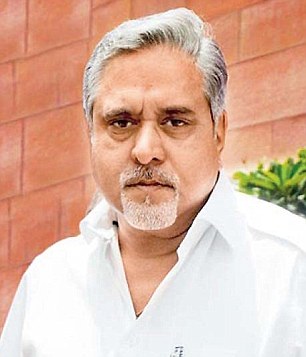
    He also criticised the government’s inability to do something substantial about absconding loan defaulter Vijay Mallya.

  • INDIA MAY HAVE TO WAIT LONG TO GET MALLYA BACK

    INDIA MAY HAVE TO WAIT LONG TO GET MALLYA BACK

    NEW DELHI (TIP): With the UK legal system providing enough safeguards to industrialist Vijay Mallya take advantage of, India may have to wait long to get him extradited.

    Though India and the UK have a bilateral Extradition Treaty in place since 1993, it is unlikely to help New Delhi in expediting the process.

    The UK recently made it clear that it would strictly go by its Extradition Act, 2003, while determining if Mallya should be sent back.

    Just days after New Delhi formally requested London to extradite Mallya to stand trial in loan default and money laundering cases, he was seen at Silverstone in the UK at the launch of a new racing car by his Formula One team –Sahara Force India.

    Media reports quoted Mallya saying that he felt safe in the UK, notwithstanding India’s attempts to extradite him.

    A source in New Delhi said what Mallya must be relying upon was the complexity of the UK’s legal system, which would make it difficult to get him back.

    Legal process

    The Extradition Act, 2003, of the UK puts the nations requesting the British government for extradition of fugitives into two categories – Category 1 for members of the European Union and Category 2 for India and other nations which has an extradition arrangement with it.

    A team of British government officials met their counterparts in the Indian government here on Monday and Tuesday and explained the complexities of the UK legal system.

    Another source said though UK officials agreed to act fast on India’s request to extradite Mallya and 15 other fugitives, they underlined that little could be done to speed up the judicial process.

  • Kejriwal sets eyes on three BJP-ruled states

    Kejriwal sets eyes on three BJP-ruled states

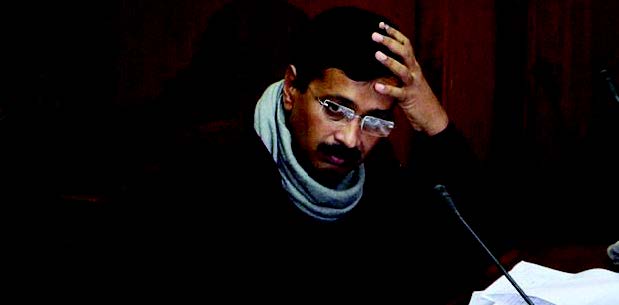
    NEW DELHI (TIP): Aam Aadmi Party’s (AAP) national convener and Delhi chief minister Arvind Kejriwal has called a meeting of state in charges on Saturday to discuss the party’s national plan post-Punjab and Goa elections.

    AAP will focus on the assembly elections in Gujarat later this year and Madhya Pradesh and Chhattisgarh next year, party sources said.The Aam Aadmi Party launched a multi-pronged attack against the BJP accusing it of engineering violence at Delhi’s Ramjas college to communally charge the Uttar Pradesh election and its governments in Gujarat and Chhattisgarh for unleashing police brutalities on farmers and tribals.

    On a day the party’s highest decision making body — the political affairs committee —met to firm up the plan, AAP leaders in Delhi also raked up the issue of an alleged spy racket in MP in which a local BJP leader was arrested.

    Party leader Kumar Vishwas accused the BJP along with its affiliate, the Akhil Bharatiya Vidyarthi Parishad — Rashtriya Swayamsewak Sangh’s student wing, of fomenting violence at Delhi University in the last two days.

    “ABVP’s actions in Delhi University are triggered by the BJP’s impending defeat in UP,” Vishwas said. “They are trying to communalise the election,” he added. Party leader Gopal Rai, who is in charge of Gujarat, MP and Chhattisgarh led a delegation of farmers from Gandhinagar and tribals in Bastar to the National Human Rights Commission against alleged police atrocities.

  • With 82 seats, BJP makes gains in BMC polls, finishes 2 short of Shiv Sena’s tally

    With 82 seats, BJP makes gains in BMC polls, finishes 2 short of Shiv Sena’s tally

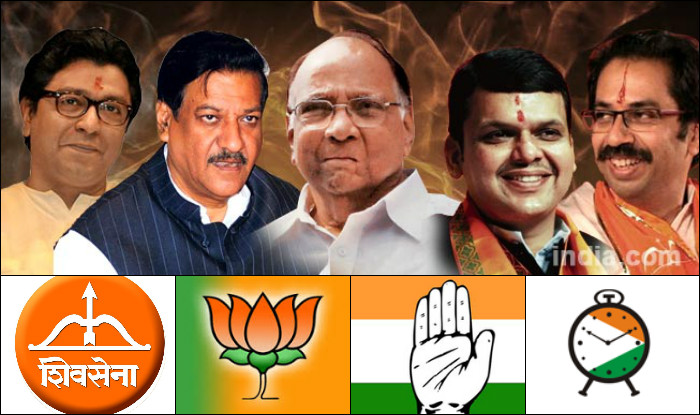
    MUMBAI (TIP): The Shiv Sena on Thursday (February 23) emerged as the largest party in the Brihanmumbai Municipal Corporation (BMC) elections with 84 seats, but the BJP, which made massive gains, said it could take control of the civic body with the backing of independents.

    Shiv Sena activists celebrated earlier in the day as it appeared it was set to take control of the BMC, but at the end it finished with just 84 of the 227 seats. The BJP came close with 82 seats.

    Any party or combine will need 114 corporators for a simple majority.

    Across Maharashtra, however, the Bharatiya Janata Party made major gains in elections held for municipal bodies. The Shiv Sena victory came in Thane.

    BJP Mumbai president Ashish Shelar said the party had bagged 82 seats in Mumbai and had the support of four independents and that it was in a position to claim the crucial post of mayor.

    “This is a historic victory for the BJP … We are only three seats less than the Shiv Sena … The credit goes to the development agenda of Prime Minister Narendra Modi and Chief Minister Devendra Fadnavis,” he said.

    An aggressive Shiv Sena had snapped ties with the BJP+ ahead of the municipal elections and its leader Uddhav Thackeray had expected the Sena to win at least 100 seats, if not an outright majority.

    The BMC, which is also the country’s largest municipal body, has an annual budget of Rs 37,000 crore in 2016-17.

    The Congress trailed at a distant third in Mumbai, forcing its city unit chief Sanjay Nirupam to accept moral responsibility. He has offered to resign from the post.

    The Maharashtra Navnirman Sena (MNS) of Raj Thackeray, Uddhav’s estranged cousin, finished with seven seats. The Nationalist Congress Party (NCP) bagged nine seats and the Hyderabad-based Majlis-e-Ittehadul Muslimeen three. The BJP’s solid gains came in other major cities of Maharashtra. The BJP raced towards victory in the Pune Municipal Corporation, pushing the ruling NCP to a poor second spot. The Shiv Sena, the MNS and the Congress fared poorly in the state’s cultural and IT capital.

    The contest was close in Pimpri-Chinchwad Municipal Corporation near Pune, with the ruling NCP leading in 27 seats and the BJP at the second place with 21 seats.

  • I DRAW INSPIRATION FROM DONKEYS, MODI COUNTERS ‘CASTEIST’ AKHILESH

    I DRAW INSPIRATION FROM DONKEYS, MODI COUNTERS ‘CASTEIST’ AKHILESH

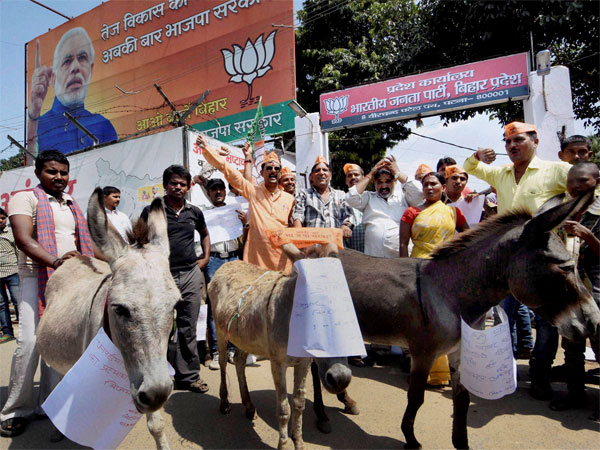
    LUCKNOW (TIP): Countering Chief Minister Akhilesh Yadav’s ‘donkeys from Gujarat’ jibe, Prime Minister Narendra Modi on Feb 23 (Thursday) said he drew inspiration from the animal.

    Modi also said the remark reflected Akhilesh’s “casteist” mentality. “You can attack me or the BJP, but why attack the donkeys? Why are you scared of them… they are hundreds of miles away,” Modi said, addressing an election rally at Bahraich.

    Spare the animal, says PM

    “It shows your (Akhilesh’s) casteist mentality… it is discriminating among animals,” the prime minister said, adding that the SP regime was known for employing the entire government machinery in tracing a lost buffalo.

    “The donkey also inspires me… it remains loyal to its master and keeps on working even if tired, hungry or sick. I perform tasks that the people of the country ask me to do. I work on an empty stomach, without taking leave,” he said.

    Modi reminded Akhilesh that the previous Congress-led UPA government had released a postal stamp on donkeys. “It (Congress) is your (SP’s) alliance partner now,” he said.

    Akhilesh had on Monday launched a veiled attack on Modi for promoting the donkeys of Gujarat and asked actor Amitabh Bachchan not to endorse them. “Gujarat ke log ab wahan ke gadhon ka bhi prachar karwa rahen hain…kahin gadhon ka prachar hote dekha hai?”

    (even the donkeys of Gujarat are being promoted… have you ever seen the promotion of donkeys?),” Akhilesh said at an election rally in Raebareli.

    “I urge Amitabh Bachchan to stop promoting the donkeys of Gujarat,” he said, referring to the ad campaign on the Wild Ass Sanctuary in Gujarat.

  • Donald Trump reverses Barack Obama ban on private prisons

    Donald Trump reverses Barack Obama ban on private prisons

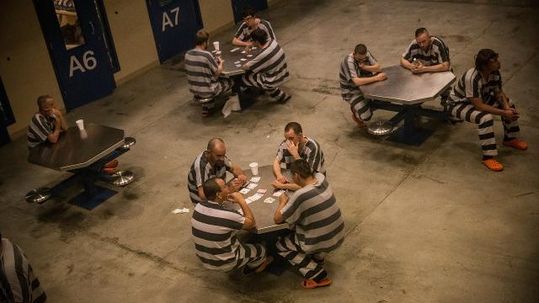
    WASHINGTON (TIP): President Donald Trump’s administration on Thursday reinstated the use of private prisons for federal inmates, saying commercial prison operators are needed for the correctional system’s “future needs.”

    Trump’s new attorney general, Jeff Sessions, officially rescinded the Barack Obama administration’s move last August to phase out the management of prisons by private companies, which Obama’s justice department had said proved to be inadequate, more dangerous and not cheaper than government-run prisons.

    Sessions said in an order that the move last year had reversed a longstanding policy at the Federal Bureau of Prisons to have private companies involved, “and impaired the bureau’s ability to meet the future needs of the federal correctional system.”

    The Obama move had only affected a small portion of the US prison system: 13 privately run prisons housing just over 22,000 people, or about 11 percent of the federal prison population. Most are foreign nationals, mainly Mexicans incarcerated for immigration violations.

    The Trump government has promised a crackdown on crime and illegal immigration, suggesting the prisons bureau could require greater holding capacity in a short time.

    The 13 prisons are run by three companies: CoreCivic (known until recently as Corrections Corporation of America), GEO Group and Management and Training Corporation.

    The announcement gave a strong after-hours boost to the stock of the two listed firms. Core Civic jumped 3.2 percent, while GEO Group added 1.0 percent.

    The move was expected and both companies’ stocks had already risen sharply after Trump’s election victory on November 8.

  • Donald Trump administration lifts transgender bathroom guidance

    Donald Trump administration lifts transgender bathroom guidance

    WASHINGTON (TIP): The Trump administration has ended federal protections for transgender students that instructed schools to allow them to use bathrooms and locker rooms matching their gender identities. Stepping into an emotional national debate, the administration yesterday came down on the side of states’ rights, lifting federal guidelines that had been issued by the Obama administration and characterized by Republicans as a legal overreach.

    Without the Obama directive, it will be up to states and school districts to interpret federal anti-discrimination law and determine whether students should have access to restrooms in accordance with their expressed gender identity and not just their biological sex. “This is an issue best solved at the state and local level,” Education Secretary Betsy DeVos said. “Schools, communities and families can find a” and in many cases have found solutions that protect all students.” In a letter to the nation’s schools, the Justice and Education departments said the earlier guidance “has given rise to significant litigation regarding school restrooms and locker rooms.” The agencies withdrew the guidance to “in order to further and more completely consider the legal issues involved.” Anti-bullying safeguards would not be affected by the change, according to the letter.

    “All schools must ensure that all students, including LGBT students, are able to learn and thrive in a safe environment,” it said. It was not clear what immediate impact the change would have on schools, as a federal judge in Texas put a temporary hold on the Obama guidance soon after it was issued after 13 states sued.

    Even without that hold, the guidance carried no force of law. But transgender rights advocates say it was useful and necessary to protect students from discrimination. Opponents argued it was federal overreach and violated the safety and privacy of other students.

  • Embassy of India hosts Memorial ceremony

    Embassy of India hosts Memorial ceremony

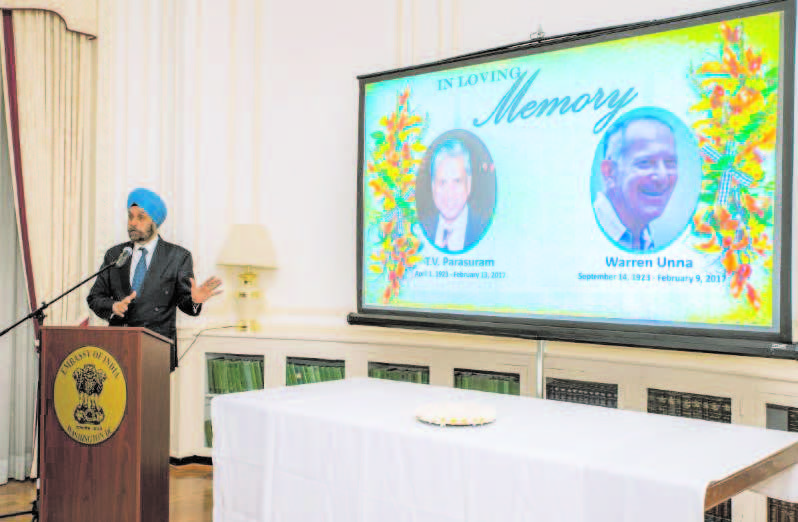
    WASHINGTON (TIP): Embassy of India organized a Memorial ceremony on February 21 to condole the passing away of two stalwarts of India-US journalism: Mr. Warren Unna (former South Asia Bureau Chief of Washington Post and longtime columnist for the Statesman) and Mr. T.V. Parasuram (veteran Press Trust of India/Indian Express correspondent). The event saw participation of the families and close friends of the departed souls, old India hands among the media and members of the Indian-American community.

    Speaking on the occasion, Ambassador of India to the United States Navtej Sarna highlighted the stellar contributions of Mr. Parasuram and Mr. Unna in the field of journalism and promotion of greater empathy and deeper mutual understanding between the people of India and the world. Ambassador also drew attention to the passing away of another legendary journalist last night- Mr. Easwar Sagar [senior correspondent for The Hindu in the United States (1961-78)].

    Condolence messages penned by Editors of Press Trust of India and The Statesman- two organizations, with which Mr. Parasuram and Mr. Unna were closely associated, were also read out.

    The event concluded with fond recollections by families, friends and colleagues of Mr. Unna and Mr. Parasuram.

  • Hindus concerned about fate of “Hindu Prayer Room” in Iowa’s Grinnell College

    Hindus concerned about fate of “Hindu Prayer Room” in Iowa’s Grinnell College

    IOWA (TIP): Because of significant physical changes and construction projects at Grinnell College Iowa, Hindus are worried about the fate of existing dedicated “Hindu Prayer Room” with 24-hour access.

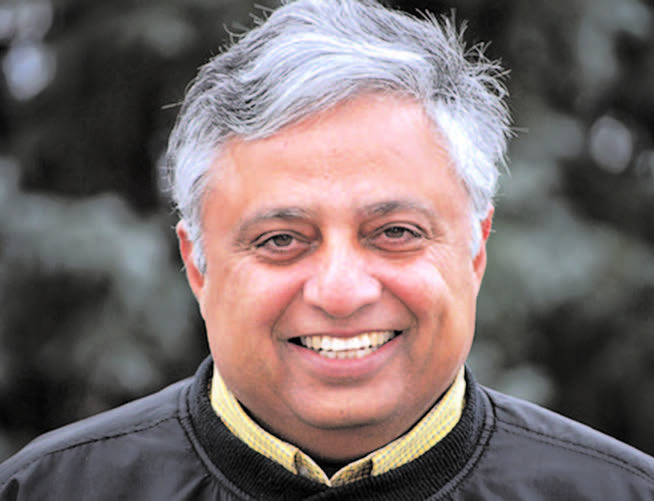
    Hindu statesman Rajan Zed, in a statement  urged College President Dr. Raynard S. Kington and Trustees Chair Patricia Finkelman to ensure that spirituality and worship services of the Hindu students were not affected during this transition period.

    Zed, who is President of Universal Society of Hinduism, pointed out that if murti of Lord Ganesha, reportedly installed by a priest in the existing “Hindu Prayer Room”, was moved to a new “Hindu Prayer Room”; administration should provide assistance to the college Hindu students group to reinstall it with proper ancient rituals by a priest.

    Moreover, they expected the new “Hindu Prayer Room” be of the same (or bigger) size as the existing one, as it was one of the attractions for Hindu students to come to Grinnell, Rajan Zed noted. “The Scarlet & Black”, student newspaper of Grinnell, in a news posted on February 17, however, wrote: “…the new building will feature a significant reduction in size of the Hindu Cultural Suite…”.

    Zed hoped that Grinnell would continue to recognize the intersection of spirituality and education and respond to the spiritual needs of Hindu students. Dedicated Hindu prayer/meditation room for rituals, quiet reflection, festivals and spiritual exercise helped in the personal growth of Hindu students.

    Located in the “Center for Religion, Spirituality and Social Justice” (CRSSJ), which is relocating; the existing “Hindu Prayer Room” is reportedly accessible to students from eight am to 12 midnight every day when the College is in session, but by request, a student can have 24-hour access using their student ID to enter the building.

    Meanwhile, Debra Lukehart, Vice President for Communications of Grinnell College, in an email response to Rajan Zed, wrote: “…transition plans have not yet been finalized…. The Hindu Prayer Room that is currently housed in the CRSSJ facility will necessarily move this summer…, but we expect a dedicated space will be identified.”


  • US, EU rift: Trump White House to rescue Indian-origin CIA agent

    US, EU rift: Trump White House to rescue Indian-origin CIA agent

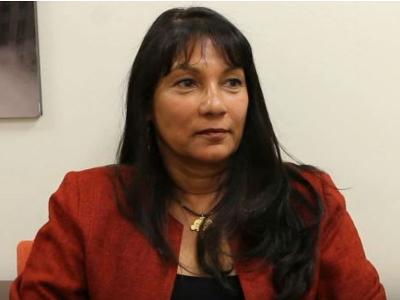
    WASHINGTON (TIP): The Trump White House is coming to the rescue of a CIA agent of Indian-origin who is being extradited from Portugal to Italy following a conviction for her role in kidnapping an Egyptian cleric, igniting another flashpoint in the growing rift between the United States and the European Union. Sabrina de Sousa, who was born in Goa and grew up in Mumbai before emigrating first to Portugal and then to the U.S. (she has dual citizenship of both countries), was detained in Lisbon on Monday night, in a case that has dragged on for nearly a decade. Portugal wants to comply with the Italian request for her extradition, following an European arrest warrant, for her alleged role in the 2003 kidnapping of an Egyptian cleric as part of a secret United States rendition program during the Bush administration.

    De Sousa, who is now 60, says at the time Osama Moustafa Hassan Nasr, also known as Abu Omar, was kidnapped from the streets of Milan in February 2003, she was actually on a skiing trip with her son in Northern Italy. Nasr was taken to a military base and then moved to Egypt where he was allegedly tortured even as an Italian court convicted him on terrorism-related charges.

    But in 2009, another Italian court sentenced 26 Americans, including de Sousa, in absentia of kidnapping and other charges related to the abduction. Most have since been pardoned and not one has done time in prison, but a dual citizenship appears to have put Sousa in European crosshairs. In October 2015, she was detained at Lisbon’s airport on a European arrest warrant while attempting to travel to India, where she still has family. She was later released but ordered to remain in Portugal.

    On Monday, she was detained for extradition to Italy after Rome press for compliance on an European warrant, even as the Trump administration expressed disappointment and said it would intervene in the matter.

    ”The US government’s view is that this [conviction] was a violation of her diplomatic status,” a Senior administration official told Fox News, adding, ”We’re very concerned and following the case closely… the highest levels of our government are trying to intervene on her behalf.”

  • Meet Lt Gen McMaster, Trump’s New National Security Advisor

    Meet Lt Gen McMaster, Trump’s New National Security Advisor

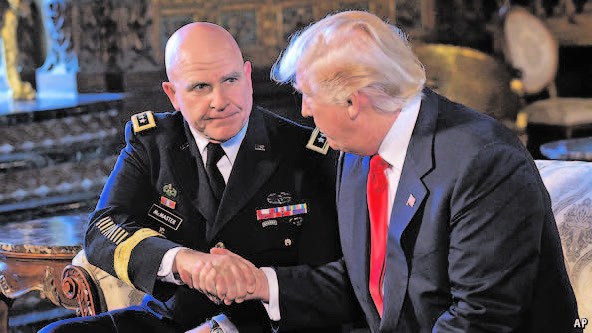
    Herbert Raymond “H.R.” McMaster has been picked to serve as President DonaldTrump’s new national security adviser. The active duty 3-star Army general is expected to have a relatively easy confirmation process, as he is widely respected in Congress.

    Here are some interesting things to

    know about the new NSA

    1. Herbert Raymond McMaster, known as “H.R.,” graduated from the U.S. Military Academy at West Point in 1984. In the mid-1990s, he worked as an assistant professor of history there.
    2. He received a Ph.D. in U.S. history from the University of North Carolina at Chapel Hill. He turned his thesis into “Dereliction of Duty,” a 1997 book critical of the country’s leadership during the Vietnam War.
    3. McMaster is the first active-duty military officer in the national security adviser role since Gen. Colin Powell held the post during President Ronald Reagan’s tenure, and he will remain on active duty.
    4. McMaster was among Time magazine’s 100 most influential people in 2014.
    5. McMaster, served twice in Iraq, is a combat veteran who was awarded a Silver Star in the first Gulf War for his commanding of a tank during the Battle of 73 Easting.
    6. He was twice passed over for promotion to general before finally earning the rank; some say his outspokenness and questioning of authority led to the delay in his career advancement.
    7. He was a national security affairs fellow at the Hoover Institution at Stanford University from 2002 to 2003.
    8. McMaster was critical of the Vietnam War and wrote a well-known book in 1997, titled Dereliction of Duty: Lyndon Johnson, Robert McNamara, the Joint Chiefs of Staff, and the Lies that Led to Vietnam. He criticized the U.S. government for the Vietnam War and argued that the Joint Chiefs should have pushed back against President Lyndon B. Johnson.

    “We must address the question of responsibility for one of the greatest American foreign policy disasters of the twentieth century,” he wrote in the book.

    1. McMaster served as the director of the Army Capabilities Integration Center before being appointed the national security adviser, the Associated Press reported.

    Reactions on the choice

    Arizona Sen. John McCain, who has been critical of other aspects of Trump’s administration, called McMaster an “outstanding choice” and a “man of genuine intellect, character, and ability.”

    “I could not imagine a better, more capable national security team than the one we have right now,” said McCain, a veteran who was held for more than five years as a prisoner of war in Vietnam.

    “H.R. is the most bull-headed, nicest, smartest, most ego-free person I think I have ever met,” says retired Army Col. John Nagl, who has known and worked with McMaster for more than 20 years.

    “He is absolutely dedicated to taking care of America’s national interests,” adds Nagl. “Razor-sharp, and actually every once in a while even a little bit funny.”

    As a soldier, Nagl says McMaster is the most demanding trainer of forces, and “the best implementer of both tactics and strategy, and the best military leader, I think, of his generation.”

    House Permanent Select Committee on Intelligence Chairman Devin Nunes congratulated McMaster on his appointment.

    “With his history of questioning the status quo and infusing fresh thinking and new approaches into military affairs, Lt Gen McMaster will make a

    additionfine  to the Trump Administration’s national security team,” Nunes said.

  • Pakistan on equipment buying spree to fight militancy

    Pakistan on equipment buying spree to fight militancy

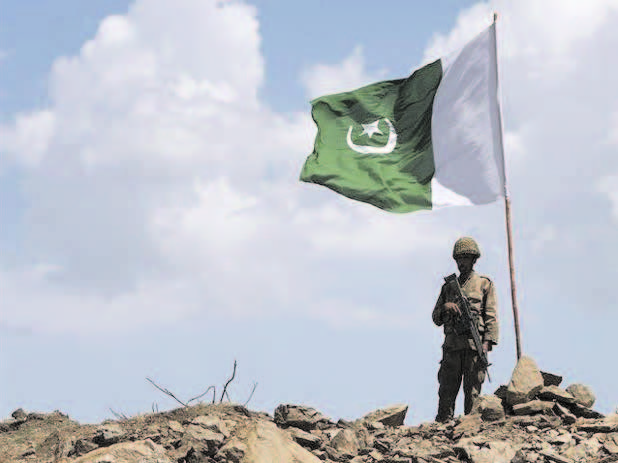
    Pakistan has expedited efforts to acquire military equipment and weapons to combat militancy as a fresh bout of terror attacks have killed over 100 people.

    At least three such deals with the US were reported in American media, which involve helicopters and military vehicles that would enhance the military’s capability to pursue militants in difficult terrains, the newspaper Dawn said on Thursday.

    Earlier this week, Pakistan concluded a deal with an Italian aerospace and defence firm, Leonardo S.p.A. for purchasing an unspecified number of AW139 helicopters.

    Deliveries are expected to begin in mid-2017. Despite uncertainty about bilateral relations under the Trump administration, Pakistan is also purchasing weapons from the US.

    Last year, the US Congress stopped the sale of eight F-16 fighter jets to Pakistan but the move did not affect the weapons needed to combat terrorists.

    The US media reported on Tuesday that Bell Helicopter would deliver three Bell AH-1Z Viper attack helicopters to Pakistan this year.

    This will be the first of a total shipment of 12 helicopters. The remaining nine will arrive in 2018.

    Pakistan ordered the first three helicopters in August 2015 and placed an additional order for nine helicopters in April last year.

    A US department of defence notification said nine AH-1Z Viper helicopters would cost Pakistan an estimated $170.2 million.

    Pakistan’s original request included the sale of 1,000 AGM-114 R Hellfire II missiles as well.

    Pakistan will also receive four Russian-made Mi-35M attack helicopters in 2017.

    The US media noted that the Mi-35M was the export version of the Mi-24 gunship and was particularly suited for operations in mountainous terrain.

    Pakistan Army Aviation could acquire up to 20 Mi-35Ms in the years ahead.

    Islamabad is also considering the Turkish Aerospace Industries T-129 attack helicopter or the Chengdu Aircraft Industry Group Z-10 helicopter gunship as an alternative to the Mi-35M.

    The new gunships would slowly phase out Pakistan Army Aviation’s obsolete fleet of US-made AH-1 Cobra attack helicopters, the media reported.

    Pakistan signed another $35 million deal with a US firm, Navistar Defence, for manufacturing 40 mine-resistant ambush-protected MaxxPro Dash DXM vehicles.

    The contract, awarded under US foreign military sales arrangement, includes manufacturing of various support items, logistics and technical support services.

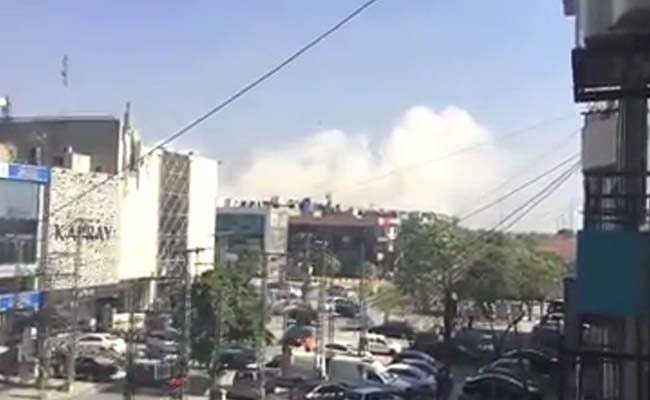
    At least eight persons were killed and 20 others injured today in a powerful explosion that ripped through a building in a defence locality in Lahore.

    On February 16, a suicide bomber killed 88 people at a famed Sufi shrine in Sindh province. Following the attack, the army launched an offensive against militants and claimed to have killed more than 130 terrorists across the country. (PTI)

  • Nepal to hold first local elections in 20 years

    Nepal to hold first local elections in 20 years

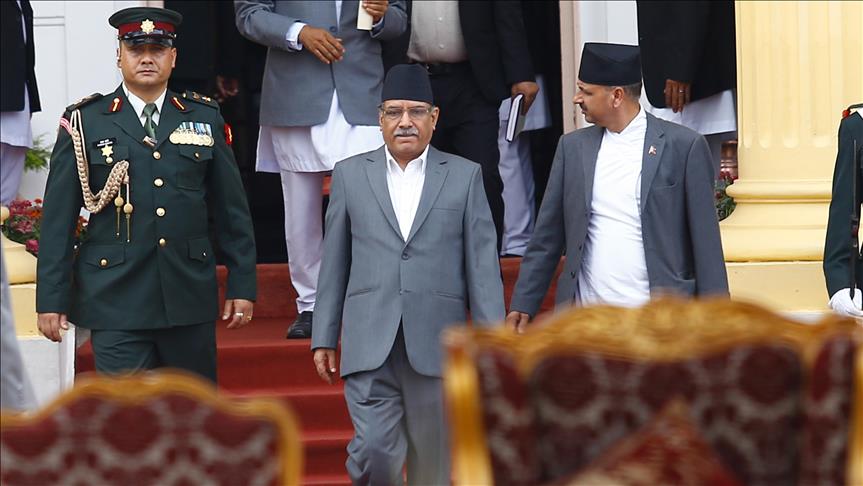
    KATHMANDU (TIP): Nepal will hold its first local elections in two decades in May, the government has announced, a key moment in the country’s fraught transition to democracy. The impoverished Himalayan nation emerged from a brutal decade-long civil war in 2006, which brought the end of the 240-year-old Hindu monarchy and transformed it into a secular republic.

    But deep political divides have prevented it from implementing a new constitution that paves the way for elections, but which the minority Madhesi community says leaves them politically marginalised. “The government has taken a historic decision. The election will be held in a single phase across the country,” Prime Minister Pushpa Kamal Dahal said following a late night cabinet meeting on Monday.

    “Election is compulsory for safeguarding all agendas and implementing the constitution for the functioning of democracy.” Local polls will be held on May 14, paving the way for provincial and then national elections later in the year. The Madhesis, who live in the densely populated Terai plains bordering India, want the constitution to be amended first and have pledged to protest against the polls.

  • Bacha bazi: Afghan practice of child sex slavery

    Bacha bazi: Afghan practice of child sex slavery

    Afghanistan is set to criminalise the practice of “bacha bazi”, sexual exploitation of boys, with a slew of stringent punishments laid out for the first time in a revised penal code.

    The move comes after an AFP report last year found the Taliban are exploiting the centuries-old practice, one of the most egregious violations of human rights in the country, to mount deadly insider attacks in the volatile south.

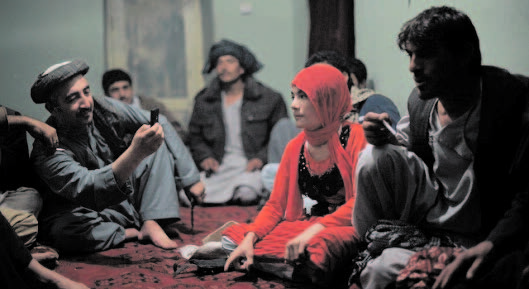
    Powerful warlords, commanders, politicians and other members of the elite often keep “bachas” as a symbol of authority and affluence. Bachas, sometimes dressed as women, are often sexually exploited. They can also be used as dancers at private parties.

    Bacha bazi is not widely seen as homosexual behaviour- popularly demonised as a deviant sexual act, prohibited in Islam- and is largely accepted as a cultural practice.

    “Women are for child-rearing, boys are for pleasure” is a common saying across many parts of Afghanistan.

    The ancient custom, banned under the Taliban’s 1996-2001 rule, has seen a resurgence in recent years. It is said to be widespread across southern and eastern Afghanistan’s rural Pashtun heartland, and with ethnic Tajiks across the northern countryside.

    Tight gender segregation in Afghan society and lack of contact with women have contributed to the spread of bacha bazi, rights groups say. Several other factors such as an absence of the rule of law, corruption, limited access to justice, illiteracy, poverty, insecurity, and the existence of armed groups have also helped the practice spread, the Afghanistan Independent Human Rights Commission (AIHRC) said in a report in 2014. AIHRC points out that Afghanistan’s criminal law prohibits rape and pederasty, but so far there are no clear provisions on bacha bazi. “There is a gap and ambiguity in the laws of Afghanistan regarding bacha bazi and the existing laws do not address the problem sufficiently,” the report said. (AFP)

  • Centre clears Rs 5,700-crore hydro project to be set up in Nepal

    Centre clears Rs 5,700-crore hydro project to be set up in Nepal

    NEW DELHI (TIP): The government on Feb 22 approved a 900 MW hydro power project to be set up in Sankhuwasabha district of Nepal at a cost of Rs 5,723.72 crore.

    The decision to approve the Arun-III project was taken at a meeting of the Cabinet Committee on Economic Affairs headed by Prime Minister Narendra Modi here on Wednesday.

    “The Cabinet today approved setting up of Arun-III project at an estimated cost of Rs 5,723.72 crore. The project is expected to achieve financial closure by September this year. The projected will be implemented within five years,” power minister Piyush Goyal told reporters at a briefing here.

    The project is being implemented by a 100 per cent subsidiary of state-run SJVN Ltd. SJVN Ltd is joint venture between Central and Himachal Pradesh governments with shareholding of 64.46 per cent and 25.51 per cent, respectively. “Union Cabinet has approved the project and its investment. It was awaited. The project is being implemented by 100 per cent subsidiary of SJVN Ltd,” SJVN Ltd chairman and managing director RN Misra said.

    The subsidiary SJVN Arun-3 Power Development Company Pvt Ltd (SAPDC) was incorporated and registered on April 25, 2013 as a private limited company under Nepal’s Companies Act.

    -PTI

  • 7 dead, 20 injured in bomb attack in Pakistan’s Lahore

    7 dead, 20 injured in bomb attack in Pakistan’s Lahore

    LAHORE (TIP): At least seven persons were killed and 20 others injured on Feb 23 in a powerful explosion that ripped through a building in a defence locality in this Pakistani city, the latest in a series of terror attacks in the country.

    Panic gripped the area a little before noon when the loud explosion resonated across Z-Block in Defence Housing Authority area in Lahore.

    “Seven persons have been killed and 20 suffered injuries,” officials said.

    The nature of the blast is yet to be determined and bomb disposal squad and forensic expert are collecting evidences from the spot.

    “It appears to be a planted device,” Punjab police spokesman Niyab Haider told PTI.

    The Z-block market houses restaurants frequented by young couples.

    Several vehicles were also damaged in the blast. The injured are being shifted to different city hospitals.

    The latest blast came as security has been tightened across Pakistan after a recent wave of terrorist strikes killed more than 100 people.

    On February 16, a suicide bomber killed 88 people at a famed Sufi shrine in Sindh province. Following the attack, the army launched an offensive against militants and claimed to have killed more than 130 terrorists across the country.

    Earlier on 13 February, at least 14 people were killed in a suicide bombing near the Punjab Assembly.

    – PTI

  • ‘Huge blessing in small virtues’

    ‘Huge blessing in small virtues’

    Sheila Chaman, the one time most admired newsreader on Doordarshan and now a Delhi based freelance journalist sent me, the other day, a piece ‘Huge blessing in small virtues’ by Maj Gen SPS Narang (Retd). She came across the article in The Tribune, liked it and forwarded it to me. Thank you, Sheila. The author’s forceful narrative of a moving incident carries an extremely tender, human message which I am sharing with the readers of The Indian Panorama.

    Like a large percentage of secular Indians, I have an incident to share which may awaken the conscience of some of my fellow men. The incident goes back to nearly a year, and even now evokes poignancy in my heart.

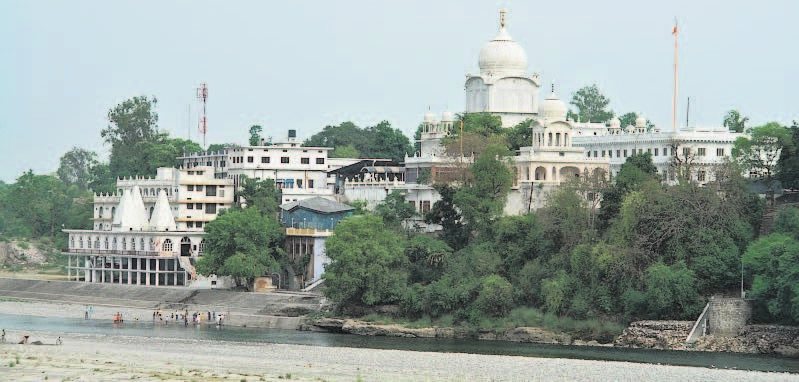
    Last November, I was driving back to Dehradun from Chandigarh – a fascinating four-hour journey, with the added attraction of visiting Paonta Sahib Gurdwara. I had to break on the way to give myself and my car some rest. And what better than entering the abode of the Guru. Besides the soothing kirtan, it is the langar that one savors, seated on the floor among a multitude of people from all walks of life. Some partake of all meals as they have no means to satiate their hunger.

    Breaking bread with them gives an indescribable spiritual high, and to experience this, one doesn’t have to belong to any one religion. I, too, enjoyed the langar and came out to get on with my journey.

    I stopped to buy some knick-knacks from a kiosk outside the gurdwara. Just then, I spotted a family of Gujjars (Muslims nomads who rear cattle in semi mountains and sell milk), in an intent discussion in front of a tea vendor. The family comprised an elderly couple, two middle-aged couples and four children. Three women were partially veiled. They seemed poor as the eldest gentleman (probably the father) counted coins and some crumpled notes.

    Undoubtedly, the issue was how much they could afford to buy. They asked for three cups of tea and four samosas (popular Indian snack).

    Gathering courage, I asked him, “Kya aap sab khana khayenge?” (would you all like to have food!!) They looked at one another with a mix of surprise, apprehension and a hurt self-respect.

    There was silence. Sometimes, silence can be loud. The innocent eyes of the kids were filled with hope. “Hum kha ke aaaye hain,” (we have eaten already) he responded.

    There was an instant retort, “Kahan khayaa hai subeh se kuch bhi, Abba?” (we have not eaten anything since morning, Papa!!)

    Hearing that, a dull ache in my chest caught me by surprise. The stern look in the eyes of the three men and the pleading moist eyes of the women said it all

    I insisted that they come with me. They agreed, reluctantly. We entered the gurdwara (Sikh Temple of God)

    A good feeling descended over me as I deposited their shoes at the jora ghar (Shoe deposit room in all Gurdwaras). The elders were awed by the architectural marvel.

    However, there was fear in their eyes, which was understandable. They were entering a non-Islamic place of worship for the first time.

    But the children couldn’t care less, their innocent faces single-mindedly focused on food. Some onlookers flashed strange looks from the corner of their eyes. But then I followed the children, adopting their easy attitude as they excitedly chose head wraps of different colors. (everyone is supposed to cover their heads inside a Gurdwara).

    Except for the eldest member, all accompanied me inside, and emulating me, bowed their heads and touched their forehead to the floor. Many others must have noticed, as I did, that these children went through this ritual with utmost reverence. They took Parshad (offering) from the Bhaiji (The Priest)) who asked them if they needed more. The children gladly nodded.

    We entered the Langar Hall and I took the kids along to collect thaalis (plates).

    They did it with joy, like only kids would. Seated opposite us was a newly-married couple. The bride, with red bangles accentuating her charm, asked the children to sit beside her, and two of them sat between them. The way she was looking after them, I could tell she would make a loving mother.

    Langar was served, and though I had already eaten, I ate a little to make my guests comfortable. One had to see to believe how they relished it. The initial apprehension had vanished and they ate to their fill. I have no words to describe the joy I experienced.

    We had nearly finished when an elderly Sikh and a youth with flowing beard (perhaps the head granthi and sewadar- helper) sought me out.

    I was overcome by fear, and more than me, my guests were scared. I walked up to them with folded hands.

    He enquired, “Inhaan nu tusi le ke aaye ho? (Have you brought them in?).” I nodded.

    The next question had me baffled, “Tusi har din path karde ho? (Do you say prayers every day?).” I almost blurted “yes”, but it would have been a lie. So, with utmost humility I said “no”.

    Expecting an admonishment, he surprised me, “Tuhaanu tha koi lorh hi nahin. Aj tuhaanu sab kuch mil gaya hai ji (You don’t need to. Today you have got everything).” I was flabbergasted. Was it advice or sarcasm? He added, “Inha nu Babbe de ghar lya ke te langar shaka ke tusi sab kuch paa laya. Tuhaada dhanwad. Assi dhan ho gaye (By bringing them to the Guru’s abode for langar, you’ve got everything from God. Thank you. We are blessed).”

    Then, with folded hands, he walked up to the elderly couple and requested them, “Aap jad bhi idhar aao to langar kha ke jaaiye. Yeh to uparwale da diya hai ji (Whenever you happen to pass through here, please come and have food. It is God’s gift).”

    I escorted my guests out of the Langar Hall. Just as we were about to pick our footwear, one of the children said, “Humme aur halwa do naa.” (Get us some more sweet offering). We five went in to get more parshad.

    Finally, as they were about to depart, the elderly lady whispered to her husband.

    I enquired, “Koi baat, Miyaji?” (is there any problem, Mian Ji!!

    Almost pleadingly, he said, “Yeh keh rahin ki, kya aap ke sar par haath rakh sakti hain? (She is saying, can she keep her hand on your head)!! I bowed as she blessed me with tears in her eyes.

    A wave of emotions swept over me.

    Is it my imagination, or for real, that I often feel the beautiful hand of a Muslim lady, wrapped in purity and love, on my head?

    This is the reason, we are secular.

  • UN To Create Counter-Terrorism Office; India’s Syed Akbaruddin Welcomes move

    UN To Create Counter-Terrorism Office; India’s Syed Akbaruddin Welcomes move

    India has welcomed an initiative by UN Secretary General Antonio Guterres to create a new office for counter-terrorism and stressed the nations should not allow “turf battles” to “hobble” the proposal.

    “Every day our collective conscience is being ravaged by terrorists in some part of the world or other. It is in this background of growing concerns, that we greatly appreciate the Secretary General’s initiative to promptly address the need to enhance coordination of the UN’s Counter-Terrorism efforts,”

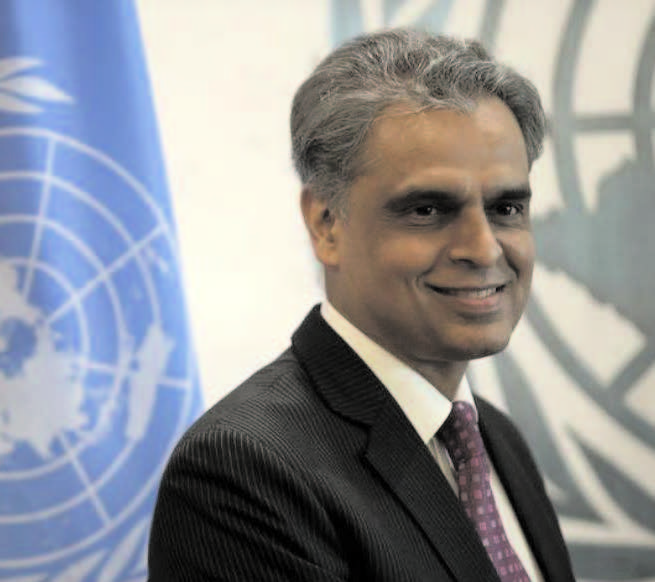
    India’s Permanent Representative to the UN Ambassador Syed Akbaruddin said and appreciated SG’s initiative to promptly address the need to enhance coordination of the UN’s CT efforts.

    Akbaruddin quoted Bill Gates’s speech at the Munich Security Conference where the latter drew attention to how unprepared we were to a new kind of terrorism – bio-terrorism. According to Gates, epidemiologists say that a fast moving air borne pathogens could kill more that 30 million people in less than a year.

    Guterres mooted the proposal to move the Counter-Terrorism Implementation Task Force (CTITF) Office and the UN Counter-Terrorism Centre out of the Department of Political Affairs and create a new office for counter-terrorism.

    This office would be headed by a new Under-Secretary-General. The UN Chief said the only objective of the new body is to improve efficiency in combating terrorism and not to change the different mandates in the field of counter-terrorism.

    Akbaruddin said India welcomes the initiative and fully supports the proposal for creation of the Office of Counter-Terrorism, assuring all possible support in taking the proposal to its fruition. He however said that nations should not let differences impact the initiative and dent its credibility.

    “So, let us not allow turf battles to hobble this initiative, if we have to maintain its credibility,” he said during an informal meeting on strengthening of the capability of the UN system in implementing Global Counter-Terrorism Strategy here yesterday.

    “As terrorism thrives on and is sustained by its trans-boundary networks for ideology, recruitment, propaganda, funding, arms, training and sanctuary, no single nation alone can tackle this menace decisively. There is no stronger case for more multilateral action, more coordination and more cooperation on any matter amongst all stakeholders than on terrorism,” he said.

    Akbaruddin said India envisages the Under-Secretary General for Counter-Terrorism to be able to take positions and speak on behalf of “all of UN” and develop a comprehensive narrative on terrorism including on all issues relating to counter-terrorism. He added that there are differing mandates of various UN bodies and if the counter-terrorism coordinator is to have credibility, the individual needs to be seen as the UN’s voice on counter-terrorism issues.

    “Such differentiation of mandates is only known to those in this room or those who use this building as work space. It will never be comprehensible to the ordinary people at large,” the Indian envoy said.

  • New Yorkers send a clear message – Activists drape Lady Liberty with ‘Refugees Welcome’ banner

    New Yorkers send a clear message – Activists drape Lady Liberty with ‘Refugees Welcome’ banner

    NEW YORK (TIP): Activist scaled the Statue of Liberty and unfurled a red and white “Refugees Welcome” banner on Tuesday, just hours after the Department of Homeland Security unveiled its sweeping plan to deport undocumented immigrants across the U.S.

    The banner, which measured 3 feet by 20 feet in length, was unrolled and dangled from the statue’s observation deck, the National Park Service said.

    The sign was removed more than an hour later after it surfaced, the Associated Press reported, but not before images spread like wildfire on social media.

    According to CNN, an activist group called Alt Lady Liberty claimed responsibility for the banner. “Almost all Americans have descendants from somewhere else,” the group told CNN. “Immigrants and refugees make this country great. And turning away refugees, like we did to Anne Frank, does not make us great.”

  • The terror Frankenstein: ISI-nurtured terror groups have come to haunt Pakistan

    The terror Frankenstein: ISI-nurtured terror groups have come to haunt Pakistan

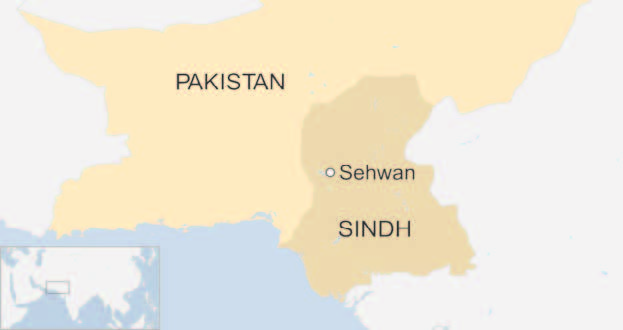
    With Pakistan on the back foot, the time has come for New Delhi to make use of the aversion for jihadi groups in Pakistan over the Sehwan outrage. A carefully crafted approach to relations with Pakistan needs to be adopted. New Delhi should remain firm on issues of terrorism by reiterating that there can be no question of reverting to business as usual till our concerns on Pakistan-sponsored terrorism in India and Afghanistan are addressed”, says the author – G Parthasarathy.

    Pakistan’s founder Muhammad Ali Jinnah, an Ismaili Shia by birth, proudly proclaimed, just prior to Pakistan’s independence, that the country he founded on the basis of religion would not discriminate against any of its citizens on the basis of religion. While the eastern half of his country was divided on the basis of ethnicity in 1971, what remains of what he initially called a “moth-eaten” Pakistan, is now finding that religion could indeed tear the country apart. Born into a Shia family, Jinnah could well be regarded as a “kaffir” by many in today’s Pakistan. Extremist Wahhabi-oriented groups, who since the days of Gen Zia-ul-Haq have received extensive support from the army, regularly target and kill those who are Shias, or even Sunnis, who are Sufi in orientation.

    The most revered Sufi shrine in Pakistan, where thousands of people of all sects and religions congregate and worship, is the shrine of Lal Shahbaz Qalandar at Sehwan, in northern Sindh. The shrine, built in 1356, was established in memory of the 13th century Sufi, Saint Syed Usman Marwandi, popularly known as Lal Shahbaz Qalandar, whose ancestors were devotees of the Imam Hussein, the Prophet’s grandson. Reza Shah Pahlavi, the last Shah of Iran, donated the shrine’s gold-plated main gate. For today’s jihadis in Pakistan, especially from groups like the Jaish-e-Mohammed, the Lashkar-e-Jhangvi and the Tehrik-e-Taliban Pakistan (TTP), that have received, or continue to receive ISI support, Sufi shrines are heretical, with its worshipers fit targets for elimination. This is precisely what happened on February 16, when a fanatical suicide bomber entered the shrine in the midst of prayers and triggered explosives, killing 88 devotees and wounding over 250.

    Not surprisingly, Pakistan reacted by passing the blame to others for its incredible follies in strengthening “militant Islam”, ever since the days of the anti-Soviet jihad. This policy was followed by its backing of the Taliban in Afghanistan and the use of its “non-state actors” for its jihad in J&K and elsewhere in India. The TTP was a tool of the ISI used to wage jihad against the Americans and pro-government forces in Afghanistan, post 9/11. The situation in Pakistan changed when the army, led by the ubiquitous Gen Raheel Sharif, saw the TTP establishing a presence over large areas beyond its traditional habitat and launched large-scale operations against it. This was done without General Sharif’s bothering to secure parliamentary approval. These operations led to escalating violence and displacement of nearly a million Pashtuns from their tribal homes, with many seeking refuge in Afghanistan. Thus, while the ISI continues to back the Afghan Taliban, the army is bogged down in a continuing conflict with the TTP, some of whose cadres operate across the disputed Durand Line, separating Pakistan and Afghanistan.

    The fact that Pakistan is still living in a world of delusion was evident from the reaction both by the government and the army chief, Gen Qamar Javed Bajwa, to the Sehwan attack. In an effort to establish that no Pakistani groups were involved, the ISIS and then an allegedly Afghanistan-based group – Jamat-ul-Ahrar – were blamed by Pakistan for the outrage. Indiscriminate attacks against alleged terrorist locations in Punjab, Sindh and Balochistan immediately followed the attack. Over 100 alleged “terrorists” were killed within hours, with the army also mounting attacks on alleged terrorist “hideouts” along the border. Officials from the Afghan embassy in Islamabad were summoned to the army’s GHQ and given a list of 76 “terrorists” said to be living in Afghanistan.

    General Bajwa also called the American commander in Afghanistan, Gen John Nicholson, warning that continuing attacks across the border were testing Pakistan’s policy of “cross-border restraint”. PM Nawaz Sharif’s adviser, Sartaj Aziz, spoke in similar terms to Afghanistan’s National Security Adviser Hanif Atmar. A logical question would be whether Pakistan has done anything to prevent its jihadis, including the Taliban, LeT and the Jaish-e-Mohammed, crossing the Durand Line, the LoC in Kashmir, or the International Border with India? Is it not a fact that groups once nurtured by the ISI are executing terrorist attacks within Pakistan?

    With Pakistan on the back foot, the time has come for New Delhi to make use of the aversion for jihadi groups in Pakistan over the Sehwan outrage. A carefully crafted approach to relations with Pakistan needs to be adopted. New Delhi should remain firm on issues of terrorism by reiterating that there can be no question of reverting to business as usual till our concerns on Pakistan-sponsored terrorism in India and Afghanistan are addressed. The cross-LoC strikes in September last year have set the precedent for India to appropriately respond to attacks on its soil by crossing established borders. Pakistan should be left in no doubt that it can no longer take Indian forbearance for granted.

    The recent invitations to India and Iran from Russia to attend talks in Moscow, along with China, Pakistan and Afghanistan, on promoting political reconciliation in Afghanistan suggest that there is growing realization that appeasing Pakistan on any proposed “Afghan led” peace process is counterproductive. India would do well to use these developments for stepping up economic and military assistance to Afghanistan and expediting the operationalization of the Chabahar Port. Moreover, it would only be logical for adequate time to be given to the Trump administration to evolve its policies on dealing with Pakistan-sponsored terrorism in Afghanistan and India.

    Pakistan should be reminded that it has not fulfilled its commitment made by PM Sharif at Ufa for talks between DGMOs of the two armies to address issues of cross-border terrorism. The growing sentiments in Pakistan against the attack on its most revered Sufi shrine should be taken note of. The existing agreements with Pakistan on group tourism and visits to shrines could be utilized to promote visits of Pakistani pilgrims to Sufi shrines in India, together with visits by musical troupes devoted to Sufi music. New Delhi has done well to facilitate participation by Indian writers in the Karachi Literary Festival. Reaching out to people getting disillusioned with Wahhabi extremism and violence in Pakistan, while standing firm on terrorism, enhances our credibility internationally.

    (The author is a career diplomat. He was High Commissioner of India to Pakistan in 1998-2000)

  • Mass deportations? The Trump Administration goes after immigrants

    Mass deportations? The Trump Administration goes after immigrants

    Despite judicial rebuffs on his ban on immigrants, President DonaldTrump appears to be intent on waging war on the American society’s most vibrant elements: the immigrants. The Department of Homeland Security is reported to have put in place plans “for aggressive enforcement of immigration laws.”

    The only saving grace is that the new administration has denied reports that it intended to deploy National Guards to round up the undocumented immigrants in the United States. And, though the Trump administration has emphasized that it will keep intact President Obama’s protection program for “dreamers”, the overall message the immigrants across the board have heard from the Trump White House is one of intimidation and fear. Also, the potential asylum seekers stand discouraged and forewarned. America will no longer be the first choice of the prosecuted.

    If President Trump has his way, the United States would be spending huge resources on making life simply difficult for the current and potential immigrants. The Trump White House wants to empower agencies like the Immigration and Customs Enforcement, Custom and Border Protection, as well as to build up a wall along the southern border.

    On their part the administration officials insist that President Trump is simply asking for a vigorous enforcement of the existing laws and that the law-enforcement agencies will be targeting mostly “criminals” among the immigrants.

    These caveats notwithstanding, President Trump has succeeded in making each and every immigrant edgy, nervous and fearful. The American law-enforcement agencies are neither known for their professional detachment nor for their racial broadmindedness. The leadership of the law-enforcing agencies remains with those who belong to “the Trump class”, mostly subscribing to the ugly notions of white supremacy.

    The rest of the world has reacted adversely to these signals. But the new American President has made it clear that he is not going to allow himself to be distracted from those loony ideas and prejudices that in the first instance propelled him to the White House. Nor does he appear bothered at playing the bull in America’s ethnic china shop.

  • Media and issues of responsibility

    Media and issues of responsibility

    The Indian media display certain defects. These should ideally be addressed and corrected in a democratic manner. But if the media prove incorrigible, harsh measures may be called for.

    The time has come when some introspection by the Indian media is required. Many people, not only those in authority but even ordinary people, have started saying that the media have become irresponsible and wayward, and need to be reined in.

    Only a couple of days back I read in the newspapers that the Union government has issued some regulations regarding licenses for news channels, to which there was a lot of reaction. Under the Constitution of India, freedom of the media is part of the freedom of speech guaranteed by Article 19 (1) (a). However, no freedom can be absolute, and reasonable restrictions can be placed on it. One of the basic tasks of the media is to provide truthful and objective information to the people that will enable them to form rational opinions, which is a sine qua non in a democracy. But are the Indian media performing this role properly?

    I may only mention certain defects in the functioning of the India media today.

    Twisting facts

    One of the defects is that the media often twist facts. I would like to give an example.

    One day, a leading English newspaper published on its front page a photograph of Justice Gyan Sudha Misra of the Supreme Court with the caption: “Supreme Court Judge says that her daughters are liabilities.” This was a distorted and fallacious item of news, published on the front page.

    Supreme Court Judges have to disclose their assets and liabilities. Against the liabilities column, Justice Misra had written: “two daughters to be married.” Strictly speaking, it was not necessary to mention this because liabilities mean legal liabilities, for example, housing loan, car loan, and so on. Justice Misra’s intention was obviously to say that she would have to spend on her daughters’ future marriage. She has three daughters (no son), only one of whom has been married. Justice Misra never said, nor intended to say, that her daughters were liabilities. The news was false and defamatory, with the obvious intention of creating a sensation.

    Paid news

    A second defect concerns the issue of paid news that has become prominent of late. In the 2009 elections, it was a scandal. How this vicious practice could be stopped needs to be discussed. Incidentally, in compliance with an order of the Chief Information Commissioner dated September 19, 2011, we have placed the 71-page report of the Committee consisting of Paranjoy Guha Thakurta and Sreenivas Reddy on our website, www.presscouncil.nic.in with the disclaimer that the Press Council had rejected this report at its meeting held on April 26, 2010.

    Non-issues as real issues

    A third defect is that the media often portray non-issues as real issues, while the real issues are sidelined. The real issues in India are economic, that is, the terrible economic conditions in which 80 per cent of our people are living, the poverty, unemployment, lack of housing and medical care and so on. Instead of addressing these real issues, the media often try to divert the attention of people to non-issues. Such as that the wife of a film actor has become pregnant, whether she will give birth to a single child or to twins, and so on. Are these the real issues facing the nation?

    At a Lakme India Fashion Week event, there were 512 accredited journalists covering the event in which models were displaying cotton garments, while the men and women who grew that cotton were killing themselves at a distance of an hour’s flight from Nagpur, in the Vidharbha region. Nobody told that story, except one or two journalists, locally.

    Is this a responsible way for the Indian media to function? Should the media turn a Nelson’s eye to the harsh economic realities facing over 75 per cent of our people, and concentrate on some ‘Potemkin villages’ where all is glamour and show biz? Are not the Indian media behaving much like Queen Marie Antoinette, who said that if the people had no bread, they should eat cake?

    No doubt, sometimes the media mention farmers’ suicides, the rise in the price of essential commodities, and so on, but such coverage is at most 5 per cent to 10 per cent of the total. The bulk of the coverage goes to showing the life of film stars, pop music, fashion parades, cricket and astrology.

    Tendency to brand

    Here is a fourth defect. Bomb blasts have taken place near the Delhi High Court, in Mumbai, Bangalore and so on. Within a few hours of such a bomb blast, many TV channels started showing news items that said that the Indian Mujahideen or the Jaish-e-Mohammed or the Harkatul-Jihad-e-Islam had sent e-mails or text messages claiming responsibility. The names of such alleged organizations will always be Muslim ones. Now, an e-mail can be sent by any mischievous person, but by showing this on TV channels and the next day in the newspapers, the tendency is to brand all Muslims as terrorists and bomb-throwers.

    The truth is that 99 per cent of the people of all communities, whether Hindu, Muslim, Christian or Sikh, and of whatever caste or region, are good. But the manner in which such news is shown on TV screens and published in newspapers tends to create the impression that all Muslims are terrorists, and evil – which is totally false. The person who sends such e-mails or text messages obviously wants to create hatred between Hindus and Muslims, which is the old British divide-and-rule policy continuing even today. Should the media, wittingly or unwittingly, become part of this policy of divide-and-rule?

    No doubt there are defects not only in the media but in other institutions also, for example, the judiciary, the bureaucracy, and so on.

    There are two ways to remove these defects in the media. One is the democratic way, that is, through discussions, consultations and persuasion – which is the method I prefer. The other way is by using harsh measures against the media, for example, by imposing heavy fines on defaulters, stopping government advertisements to them, suspending their licenses, and so on.

    In a democracy we should first try the first method to rectify the defects through the democratic method. For this purpose, I have decided to have regular get-togethers with the media, including the electronic media, so that we can all introspect and ourselves find out ways and means to rectify the defects in the media, rather than this being done by some government authority or external agency.

    I propose to have such get-togethers once every two or three months, at which we will discuss issues relating to the media and try to think of how we can improve the performance of the media so that it may win the respect and confidence of the people.

    If the media prove incorrigible, harsh measures may be required. But in my opinion, that should be done only as a last resort and in extreme situations. Ordinarily, we should first try to resolve issues through discussion, consultation and self-regulation. That is the approach which should be first tried in a democracy. I, therefore, request the Union government to defer the implementation of its recent decision regarding news channel licenses, so that we can ourselves discuss the issue thoroughly, and ourselves take corrective measures.

    Till now the function of the Press Council was only adjudication. I intend to make the Press Council an instrument of mediation in addition, which is in my opinion the democratic approach. For this purpose, I need help, cooperation and advice from the media.

    India is passing through a transitional period in its history, from a feudal agricultural society to a modern industrial society. This is a very painful and agonizing period. The media must help society in going through this transitional period as quickly as possible, and by reducing the pain involved. This they can do by attacking feudal ideas, for example, casteism and communalism, and promoting modern scientific ideas.

    (This is the edited text of a speech delivered by Justice (retired) Markandey Katju
    (Courtesy The Hindu)

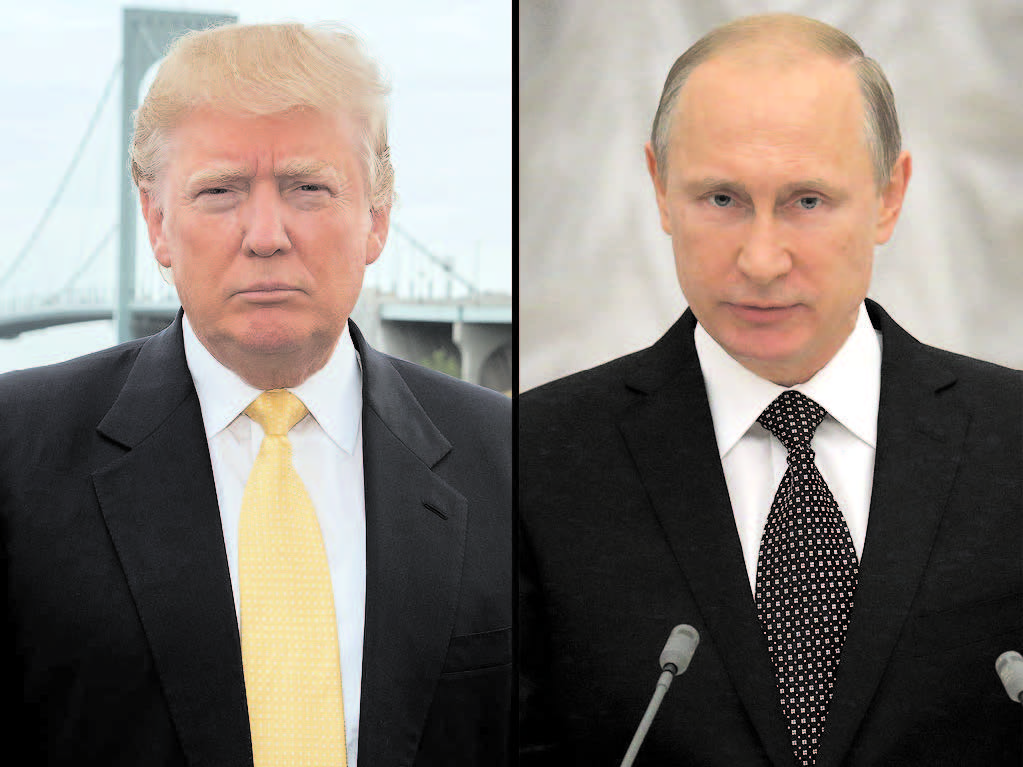
  • THE SUM OF ALL FEARS – THE REAL DONALD TRUMP AND RUSSIA’s PUTIN

    THE SUM OF ALL FEARS – THE REAL DONALD TRUMP AND RUSSIA’s PUTIN

    The undeserving Donald Trump pretty just keeps on proving to America that his presidency was just going to be a pathetic continuation of his presidential campaign, squashing all hopes that he might suddenly come to his senses and start acting like a responsible adult who must now lead a country.

    Donald Trump’s weird relationship with Russia has been problematic and suspicious from the beginning of his presidential campaign.

    Read more about Trump’s Russia Ties

    Never before had we seen a President praising a leader of another country like the way Trump gushed about Russian leader Vladimir Putin or admitting that our country the United States of America is not no innocent.

    Trump continued effort to defend Russia as reports of the country’s interference in the U.S. election started to be released. There were red flags everywhere, and they continue to pop up again and again while Trump continuously tried to distract Americans from it with his Twitter temper tantrums about “fake news.”

    Another concerning report has just been released by CNN, and this makes Trump and his team look even more suspicious than before.

    Apparently, the White House has requested that the FBI “publicly knock down media reports about communications between Donald Trump’s associates and Russians known to US intelligence during the 2016 presidential campaign.”

    The report states: “White House officials had sought the help of the bureau and other agencies investigating the Russia matter to say that the reports were wrong and that there had been no contacts, the officials said. The reports of the contacts were first published by The New York Times and CNN on February 14.

    That certainly sounds shady – and the FBI knows it.

    According to the report, the FBI shot down the White House’s request and said no.

    For Trump’s team to be contacting the FBI directly is highly unusual due to “decade-old restrictions on such contacts”, according to CNN, and we should definitely be paying attention.

    Clearly, the Trump administration is extremely worried about what might be uncovered and wanted to take the focus off Trump’s ties with Russia by asking the FBI for this ridiculous favor.


    Read More

  • SYL standoff: INLD bid to dig canal foiled; Abhay Chautala, 72 other leaders jailed

    SYL standoff: INLD bid to dig canal foiled; Abhay Chautala, 72 other leaders jailed

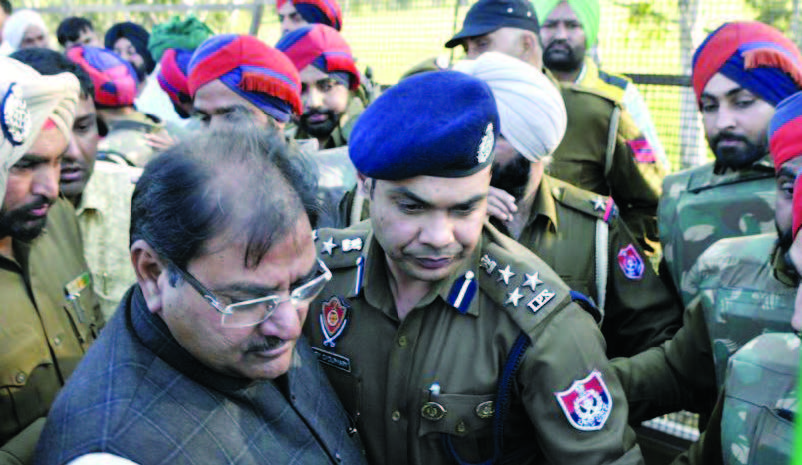
    PATIALA (TIP): Top leaders of the Indian National Lok Dal (INLD), including Abhay Chautala, 18 other MLAs and two MPs, were arrested by Punjab Police at Shambhu barrier on the Punjab-Haryana border on Thursday after they, along with several supporters, entered the state to undertake digging of the Sutlej-Yamuna Link (SYL) Canal.

    They were rounded up for violating prohibitory orders and were sent to Patiala jail in judicial custody till February 27. A case under Section 188 (Disobedience to order duly promulgated by public servant) of the Indian Penal Code (IPC) was registered against Abhay and 72 other party leaders, who courted arrest, after the police refused to allow them to enter the state.

    The INLD leaders had threatened to march into Punjab along with their shovel-carrying supporters towards the contentious canal, but heavy force was deployed to thwart their attempt. Punjab Police responded by constructing a 10-feet high wall of iron barricades and deployed about 5,000 armed personnel to stop the protesters from marching into the state.

    Symbolic digging of the SYL Canal by INLD supporters Photo courtesy: HTWhen the INLD workers reached the Punjab-Haryana border at the Shambhu barrier, they were clearly outnumbered by the police. They first tried to climb up the barricades to cross into Punjab, but failed and symbolically started the digging work of the SYL Canal right there. As slogans of SYL being their legal right rent the air, Abhay delivered a short speech. He accused the Centre of being biased against Haryana, saying that Prime Minister Narendra Modi is not implementing the court decision on the SYL canal.

    After his speech was over, Abhay and his supporters turned to go back, but suddenly stopped to have a brief consultation with party leaders. He then changed his mind and decided to court arrest by entering Punjab. Police officials held brief parleys with the protesters before making an announcement on loudspeaker that whosoever enters Punjab will be arrested for breaching the prohibitory orders. Abhay and other party leaders did not resist the arrest and were taken to the Shambhu Serai where a temporary control room of Punjab Police had been set up.

    After his arrest, Abhay warned that his party would not allow any Punjab leader who is opposed to the SYL Canal to travel through Haryana.

    Earlier in the morning, INLD supporters started gathering at the new grain market in Ambala City for the “Jal Yudh Sammelan”. Though the number of workers at the venue was modest at the start, it began to swell rapidly after 12.30pm.

    The venue was packed by the time Abhay arrived. After a quick round of speeches, they started marching on National Highway-1 (also known as GT Road) towards the Punjab border, about 2km from the rally spot. The party leaders were ferried in tractor-trailers. Though Haryana Police had made heavy bandobust, they did little to stop protesters from entering Punjab.

    No traffic was allowed on the highway from Rajpura onwards and traffic to Ambala was diverted through Sirhind via Landran. They were stopped by Punjab Police which had deployed 10 companies of paramilitary, anti-riot squads at all entry points, besides using a helicopter and drones to keep vigil to avert any untoward situation, director general of police (DGP law and order) Hardeep Dhillon, along with inspector general, Patiala, B Chandra Sekhar, was in command of the operation.

    Meanwhile, Punjab Police also didn’t allow All India Sikh Students Federation and Bains brothers’-led Lok Insaaf Party workers to reach the Punjab-Haryana border as they had announced to take the INLD head-on.

  • IPL 2017 Player Auction Complete List

    IPL 2017 Player Auction Complete List

    Ben Stokes most expensive buy at Rs 14.5 crore, Karn Sharma most expensive Indian for Rs 3.2 crore

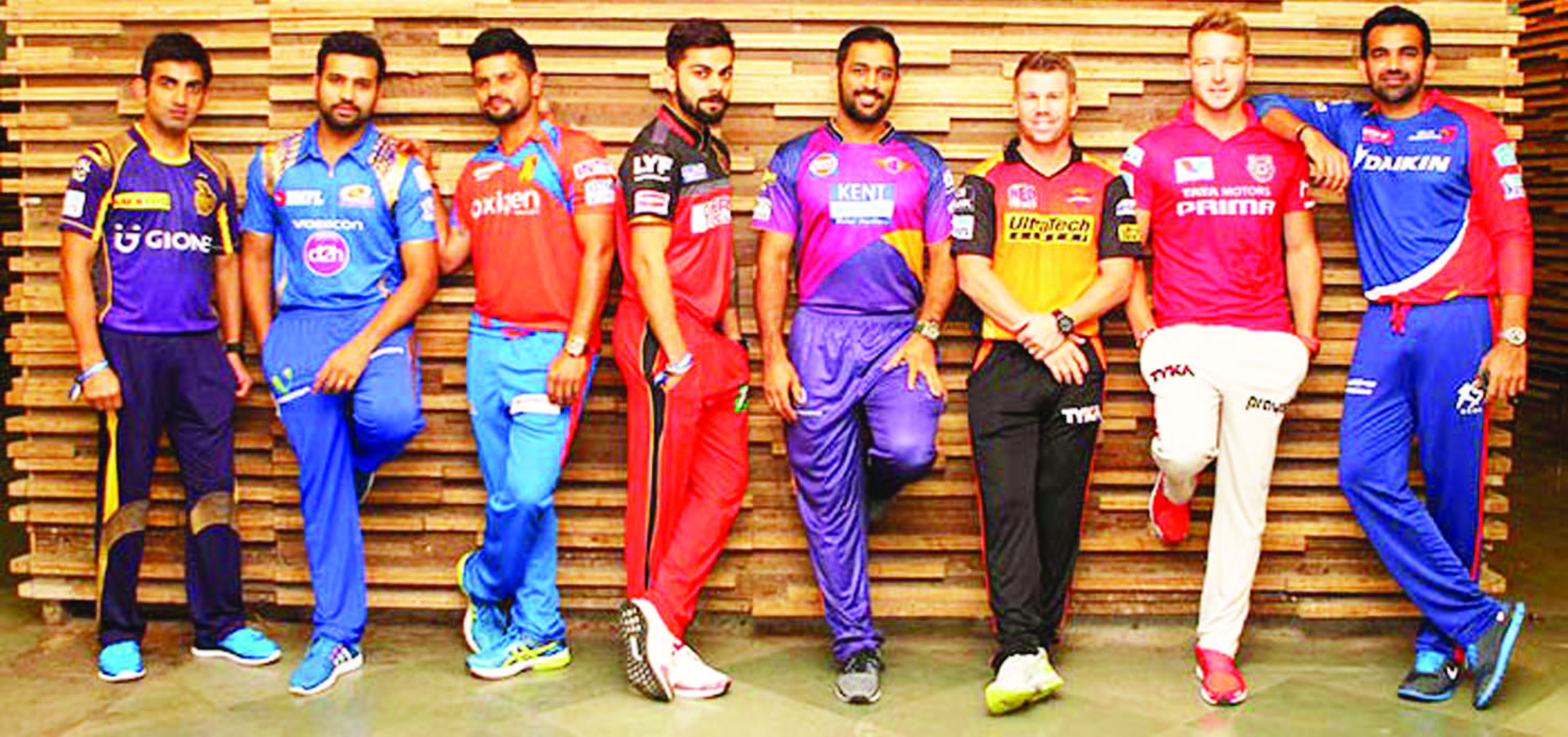
    IPL 2017 Player Auction just got over today in Bengaluru inside the plush hotel rooms for the tenth edition. With the league starting on April 5, teams had the auction as a launchpad to decide their strategy for the season in terms of players required and areas they need to improve upon.

    Englishmen did really well in India this time with all big players including, Eoin Morgan, Jason Roy, Ben Stokes and Tymal Mills getting big money.

    Moreover, Ben Stokes and Tymal Mills were sold for more than INR 10 Crore!

    Now, the squads are ready for the tournament which is scheduled to start from April 5.

    Here are the full squads of all teams:

    Delhi Daredevils

    Captain – Zaheer Khan

    Indian Players

    Zaheer Khan, Mohammad Shami, Shahbaz Nadeem, Jayant Yadav, Amit Mishra, Shreyas Iyer, Sanju Samson, Karun Nair, Rishabh Pant, CV Milind, Khaleel Ahmed, Pratyush Singh, Murugan Ashwin, Aditya Tare, Shashank Singh, Ankit Bawane, Navdeep Saini

    Overseas Players

    Corey Anderson (New Zealand)

    Angelo Mathews (Sri Lanka)

    Pat Cummins (Australia)

    Kagiso Rabada, Chris Morris, Quinton De Cock, JP Duminy (South Africa)

    Carlos Brathwaite (West Indies)

    Sam Billings (England)

    Gujarat Lions

    Captain – Suresh Raina

    Indian Players

    Suresh Raina, Ravindra Jadeja, Dinesh Karthik, Dhawal Kulkarni, Praveen Kumar, Ishan Kishan, Pradeep Sangwan, Shivil Kaushik, Shadab Jakati, Jaydev Shah, Manpreet Gony, Nathu Singh, Munaf Patel, Akshdeep Nath, Basil Thampi, Shubham Agarwal, Tejas Baroka, Pratham Singh, Shelley Shaurya

    Overseas Players  

    James Faulkner, Aaron Finch, Andrew Tye (Australia)

    Brendon MacCullam  (New Zealand)

    Dwayne Bravo, Dwayne Smith (West Indies)

    Chirag Suri (UAE)

    Kings XI Punjab

    Captain – David Miller

    Indian Players

    Manan Vohra, Axar Patel, Gurkeerat Mann Singh, Anureet Singh, Sandeep Sharma, Shardul Thakur, Wriddhiman Saha, Murali Vijay, Nikhil Naik, Mohit Sharma, KC Cariappa, Armaan Jaffer, Pradeep Sahu,  Vraun Aaron, Rahul Tewatia, Rinku Singh, T Natarajan

    Overseas Players

    Martin Guptill, Matt Henry (New Zealand)

    Darren Sammy (West Indies)

    Eoin Morgan (England)

    Hashim Amla, David Miller (South Africa)

    Marcus Stoinis, Shaun Marsh, Glenn Maxwell (Australia)

    Kolkata Knight Riders

    Captain – Gautam Gambhir

    Indian Players

    Gautam Gambhir, Kuldeep Yadav, Manish Pandey, Suryakumar Yadav, Piyush Chawla, Robin Uthappa, Umesh Yadav, Yusuf Pathan, Sheldn Jackson, Ankit Rajpoot, Rishi Dhawan, Ishank Jaggi, Sayan Gosh, R Sanjay Yadav

    Overseas Players

    Darren Bravo, Rovman Powell, Andre Russell, Sunil Narine (West Indies)

    Chris Woakes (England)

    Nathan Coulter-Nile, Chris Lynn (Australia)

    Trent Boult (New Zealand)

    Shakib Al Hasan (Bangladesh)

    Mumbai Indians

    Captain – Rohit Sharma

    Indian Players

    Rohit Sharma, Harbhajan Singh, Ambati Rayudu, Jasprit Bumrah, Shreyas Gopal, Vinay Kumar, Parthiv Patel, Nitish Rana, Siddhesh Lad, Jagadeesha Suchith, Hardik Pandya, Jitesh Sharma, Krunal Pandya, Deepak Punia, Saurabh Tiwary, Karn Sharma, Krishnappa Gowtham Kulwant Kejroliya

    Overseas Players

    Asela Gunaratne, Lasith Malinga (Sri Lanka)

    Mitchell Johnson (Australia)

    Nicholas Pooran, Lendl Simmons, Kieron Pollard (West Indies)

    Tim Southee, Mitchell McClenaghan (New Zealand)

    Jos Buttler (England)

    Rising Pune Supergiants

    Captain – Steven Smith

    Indian Players

    MS Dhoni, Ajinkya Rahane, Ravichandran Ashwin, Ashok Dinda, Ankush Bains, Rajat Bhatia, Ankit Sharma, Ishwar Pandey, Jaskaran Singh, Baba Aparajith, Deepak Chahar, Mayank Agarwal, Manoj Tiwary, Jaydev Unadkat, Rahul Chahar, Saurabh Kumar, Milind Tandon, Rahul Tripathi

    Overseas Players

    Lockie Ferguson (New Zealand)

    Daniel Christian, Usman Khawaja, Adam Zampa, Mitchell Marsh, Steven Smith (Australia)

    Ben Stokes (England)

    Francois Du Plessis (South Africa)

    Royal Challengers Bengaluru

    Captain – Virat Kohli

    Indian Players

    Virat Kohli, Yuzvendra Chahal, Harshal Patel, Mandeep Singh, Sarfaraz Khan, Sreenath Arvind, Kedar Jadhav, Stuart Binny, Sachin Baby, Iqbal Abdulla, Lokesh Rahul, Avesh Khan, Pawan Negi, Praveen Dubey, Aniket Choudhary

    Overseas Players

    Tymal Mills (England)

    Billy Stanlake, Travis Head, Shane Watson (Australia)

    Tabraiz Shamsi, AB de Villiers (South Africa)

    Samuel Badree, Chris Gayle (West Indies)

    Adam Milne (New Zealand)

    Sunrisers Hyderabad

    Captain – David Warner

    Indian Players

    Shikhar Dhawan, Bhuvneshwar Kumar, Namaj Ojha, Ricky Bhui, Siddarth Kaul, Bipul Sharma, Ashish Sharma, Yuvraj Singh, Abhimanyu Mithun, Barinder Sran, Deepak Hooda, Vijay Shankar, Eklavya Dwivedi, Pravin Tambe, Tanmay Agarwal, Mohammed Siraj

    Overseas Players

    Ben Laughlin, Ben Cutting, David Warner, Moises Henriques (Australia)

    Rashid Khan Arman, Mohammad Nabi (Afghanistan)

    Chris Jordan (England)

    Mustafizur Rahman (Bangladesh)

    Kane Williamson (New Zealand)