Month: February 2017

  • Former UK PM Cameron tried to have paper editor sacked over EU stance: BBC

    Former UK PM Cameron tried to have paper editor sacked over EU stance: BBC

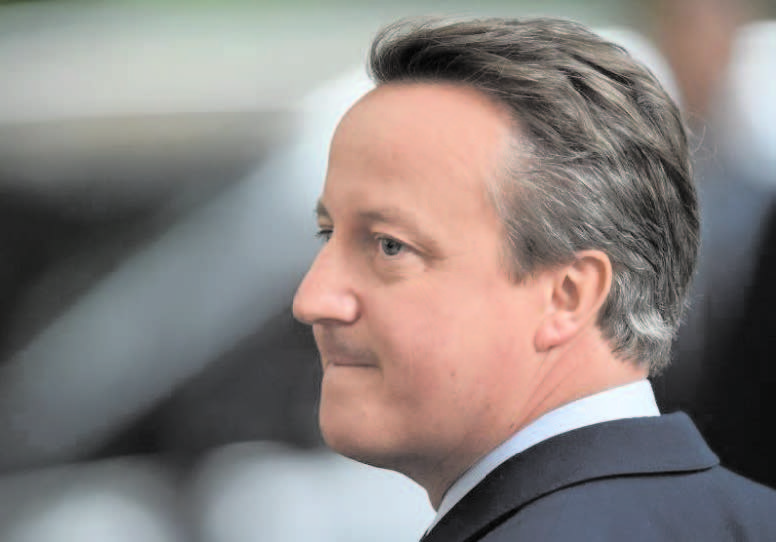
    LONDON (TIP): Former British Prime Minister David Cameron attempted to have the editor of a national newspaper that strongly supported Brexit sacked during last year’s European Union referendum campaign, the BBC has reported.

    Cameron, who led the campaign for Britain to stay in the EU, met the owner of the Daily Mail tabloid, the country’s second-biggest selling paper with the largest online audience, to urge him to either rein in or sack its editor Paul Dacre, according to the report by BBC TV’s “Newsnight” programme.

    A spokesman for Cameron told the BBC he denied the report and had merely sought to persuade them of his pro-EU case.

    The Mail, which Dacre has edited for 25 years, has long been a fierce critic of the EU and, like the majority of Britain’s national newspapers, was an outspoken supporter of the campaign to leave the bloc.

    Britons voted by 52-48 per cent for Brexit on June 23 last year, prompting Cameron to resign the next day.

    According to the BBC report, Cameron tried to persuade Dacre to “cut him some slack” in a private meeting last February on the day European Council President Donald Tusk unveiled a deal the bloc had agreed with Britain which Cameron hoped would secure victory in the referendum.

    The next day the Mail, which sells about 1.5 papers a day and attracts 14 million global users to its website daily, accused Cameron of “delusion and selling the country short”.

    Then in March, the BBC said Dacre learned that the then-prime minister had tried to press Jonathan Harmsworth, known as Lord Rothermere, to sack him leaving him “incandescent” and vowing to step up his anti-EU campaign.

    Cameron’s relationship with the Mail’s editor had deteriorated after he ordered a public inquiry in 2011 headed by a judge Brian Leveson to examine media ethics in the wake of a phone-hacking scandal at one of Rupert Murdoch’s newspapers, the BBC reported.

    The Leveson inquiry revealed the cosy ties between politicians and editors, although both sides insisted neither was unduly influenced by the other.

    “It is wrong to suggest that David Cameron believed he could determine who edits the Daily Mail,” his spokesman told the BBC, adding Cameron had privately made his case to Dacre and Rothermere for them not to back Brexit. A spokesman for Rothermere declined to confirm or deny the BBC report, but said the Mail’s proprietor had been “leant on by more than one prime minister” to remove editors over the years.

    Dacre also declined to comment, saying he had been free to edit the paper without any interference from Rothermere.

  • Philippine ministry asks Rodrigo Duterte to clarify military’s role in drug war

    Philippine ministry asks Rodrigo Duterte to clarify military’s role in drug war

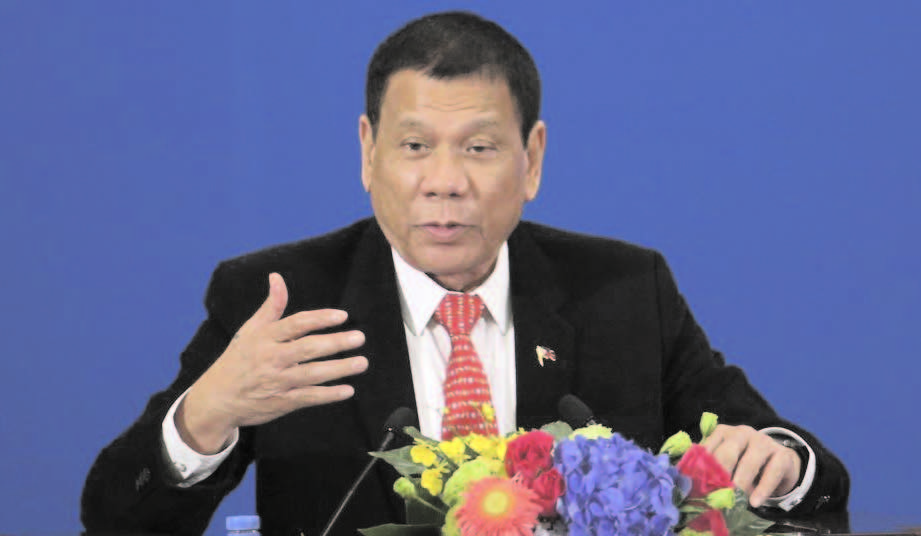
    MANILA (TIP): The Philippine defence ministry on Feb 1 asked President Rodrigo Duterte to issue an order for the military to play a role in his war on drugs, including granting troops powers to arrest “scalawag” police.

    The ministry asked Duterte to formalise remarks he made in a speech to army generals on Tuesday, when he said he needed their help in his drugs war, and to detain members of a police force he described as “corrupt to the core”. The ministry asked for “an official order regarding this presidential directive to serve as a legal basis for our troops to follow”.

    “By the same token, the president’s verbal directive to arrest ‘scalawag cops’ should also be covered by a formal order,” the ministry said in a statement.

    Duterte’s police chief ordered the Philippine National Police (PNP) on Monday to suspend their anti-drugs operations after the killing of a South Korean businessman by rogue drug-squad police. Duterte is infuriated and embarrassed by the incident, which he said had “international implications”.

    His suggestion that the military should fill the void left by police marks a stunning change of tack by the former city mayor, who had steadfastly backed the police amid allegations from human rights groups and some lawmakers they were operating with impunity.

    It was not clear why the ministry made public its request to Duterte. Any grant of powers of arrest to the Armed Forces of the Philippines (AFP) would require an executive order, or a declaration of martial law.

  • China tests missile with 10 nuclear warheads: Report

    China tests missile with 10 nuclear warheads: Report

    BEIJING (TIP): China has reportedly tested a new version of a missile that can carry up to 10 nuclear warheads, signalling a major shift in its nuclear capability as Beijing gears up for a possible military showdown with the US under Trump Presidency.

    The flight test of the DF-5C missile was carried out last month using 10 multiple independently targetable reentry vehicles, or MIRVs, the Washington Free Beacon reported.

    The test of the inert warheads was monitored closely by US intelligence agencies, said two officials familiar with reports of the missile test.

    The Dongfeng-5C missile, carrying 10 dummy warheads, was launched from the Taiyuan Space Launch Centre in Shanxi province, and flew to a desert in western China, the report said.

    The missile is a new variant of the DF-5, an intercontinental ballistic missile that first went into service in the early 1980’s.

    “The [Defence Department] routinely monitors Chinese military developments and accounts for PLA capabilities in our defence plans,” Pentagon spokesman Commander Gary Ross was quoted as saying by the report.

    For decades, the US has put the estimated number of warheads in China’s nuclear arsenal at about 250.

    But the report suggested that the latest test with 10 warheads meant the actual number could be larger.

    China also began adding warheads to older DF-5 missiles in February last year, according to US intelligence agencies.

    US defence officials have previously warned that China’s rapid development of long-range ballistic missiles, coupled with a lack of transparency about its nuclear capabilities, could bring uncertainty to stability in the region.

    The timing of the test coincided with the election of Donald Trump as US President who signalled a tougher stance against China over a range of issues, from the trade deficit to Beijing’s military build-up in the disputed South China Sea.

    Chinese military expert from an institute affiliated with the People’s Liberation Army+ , (PLA) said a new test would not have been aimed at Trump. (PTI)

  • Hundreds of Yemenis with US visas stranded in Djibouti

    Hundreds of Yemenis with US visas stranded in Djibouti

    JOHANNESBURG (TIP): Hundreds of Yemenis with US visas are stranded in the tiny African state of Djibouti because of President Donald Trump’s ban on entry for citizens of seven Muslim-majority countries, an American lawyer there said Feb 1.

    “These are all children, parents and the spouses of US citizens,” lawyer Julie Goldberg told The Associated Press, emphasizing that those stranded are not refugees. They received visas last week, she said.

    More than half of the 200-plus Yemenis are children, including a 3-year-old whose parents are permanent residents in the US and has never seen her father in person, said Goldberg, an immigration lawyer.

    She has obtained a court order dated Tuesday from the US District Court in California’s central district instructing the US government to not enforce Trump’s executive order and allow the Yemenis to fly to the United tates.

    The court order calls on the US government to not cancel “validly obtained and issued immigrant visas” and to return passports containing those visas so people can travel to the US. Goldberg is now seeking an airline that will comply with the court order.

    “It’s super frustrating,” she said of the Yemenis’ plight. “They’re running out of money. Djibouti is very expensive. They can’t go back to Yemen, they would be killed.”

    Yemen has been engulfed in conflict since 2014. A Saudi-led coalition, backed by the United States, has been carrying out an air campaign against Iranian-backed Houthi rebels for nearly two years. Djibouti and Yemen lie on opposite sides of the narrow Bab al-Mandab — Arabic for “the gates of grief” —straits at the mouth of the Red Sea.

    Mohamed Mosleh Jeran is one of the Yemenis waiting in Djibouti. After his family’s home was blown up in Yemen’s conflict, he and his wife and two young children spent two years in Djibouti. Last month, the younger son died during what should have been a routine surgery. On Thursday, the family received their US visas and looked forward to joining Jeran’s father, a U.S. citizen, in New York City. (AP)

  • ANTIBIOTICS CAN BOOST BACTERIAL GROWTH: STUDY

    ANTIBIOTICS CAN BOOST BACTERIAL GROWTH: STUDY

    Repeated antibiotic treatment not only can increase bacteria’s resistance to drugs but also help them reproduce faster, warns a new study.

    The finding that growth of bacteria can be stimulated by antibiotics underlines the importance of using the right antibiotic on patients as soon as possible.

    For the study, the researchers exposed E.coli bacteria to eight rounds of antibiotic treatment over four days and found the bug — which can cause severe stomach pain, diarrhoea and kidney failure in humans –had increased antibiotic resistance with each treatment.

    This had been expected, but researchers were surprised to find mutated E.coli reproduced faster than before encountering the drugs and formed populations that were three times larger because of the mutations.

    This was only seen in bacteria exposed to antibiotics — and when researchers took the drug away, the evolutionary changes were not undone and the new-found abilities remained, said the study published in the journal Nature Ecology & Evolution.

    “Our research suggests there could be added benefits for E.coli bacteria when they evolve resistance to clinical levels of antibiotics,” said lead author Robert Beardmore, Professor at University of Exeter in Britain.

    “It’s often said that Darwinian evolution is slow, but nothing could be further from the truth, particularly when bacteria are exposed to antibiotics,” Beardmore said.

    “Bacteria have a remarkable ability to rearrange their DNA and this can stop drugs working, sometimes in a matter of days,” Beardmore explained.

    The researchers tested the effects of the antibiotic doxycycline on E.coli as part of a study of DNA changes brought about by antibiotics.

    “It is said by some that drug resistance evolution doesn’t take place at high dosages but our paper shows that it can and that bacteria can change in ways that would not be beneficial for the treatment of certain types of infection,” Mark Hewlett, also of the University of Exeter, pointed out.

    “This shows it’s important to use the right antibiotic on patients as soon as possible so we don’t see adaptations like these in the clinic,” Hewlett noted.

  • WALK CAN EASE YOUR STRESS

    WALK CAN EASE YOUR STRESS

    Imagine a scenario – You have to submit that critical report one week early. Your pulse races and blood pressure increases. What are you going to do? Before you face a sudden breakdown due to anger, try going out for a stress busting walk. One of the best ways to relieve the stress is to simply walk them away. Yes, walking has multiple benefits including reducing stress and anxiety.

    It’s now well medically and practically proven that a walk is the best stress buster we always had and it costs us nothing. Walking is really the magic talisman! But is it just some pep talk or is there really some truth?

    Lodes of it! Heard of Endorphin – the cool chemical within us that soothes brain and but keeps hiding till knocked? Walking triggers the release of endorphins and immediately helps you relieve anxiety and pain. The higher your level of endorphins, the greater your sense of calm and well-being! No wonder walking makes us feel so good and elevates our mood almost instantly. And the beauty is, one can walk anytime, anywhere.

    Yes, morning walks have other important benefits too. Investing significant time to pursue walking can get your mind off stress and give you a feeling of detachment from daily pressures of life. By unwinding and giving your mind the space to meander, you may be able to see the situation in a different positive light. You may even come up with a solution to your problem.

    Here’s how walking helps beat stress besides the release of that cool chemical endorphin:

    Meditate in motion: As you begin to regularly shed your daily worries through physical activity and constant movement, you might find that this enables you focus more. The resulting energy and optimism, can further help you to remain calm and clear in everything you do.

    Time to introspect: “All truly great thoughts are conceived while walking,” said philosopher Friedrich Nietzsche. Walking increasing the blood flow to your brain. It gives you time to consider different aspects of your problems away from the distractions of your office or home. Creative ideas and solutions may flow more effortlessly.

    Blood pressure control: Stress can be one of the factors for a high blood pressure. Studies have shown that walking can lower your blood pressure and reduce your heart health risk.

    Increased stress relief: Studies found that walking in a natural environment had greater effects for stress relief.

    Next time you feel you are too stressed, simply go for a walk and feel re-energized. Since, it is the most simple, fun and a healthy way to manage your stress levels, so lace up and start walking!

  • Let’s Talk Health – DIABETES & YOU

    Let’s Talk Health – DIABETES & YOU

    In general, we are not seeing eye to eye with this dreadful disease. It need not be, if we educate ourselves and take of ourselves.

    • Our guts are against us
    • Our minds are against us
    • Food companies are against us
    • Have we left anything out?
    • YES!  Our friends and families are against us too.

    Readers are welcome to reach Dr. Raju directly with their questions on health

    A recent study in the New England Journal of Medicine found that over the course of 32 years, a person’s chance of becoming obese jumps by 57% if he or she has a friend who becomes obese, 40% if siblings become obese, 37% if the spouse does.

    • Neighbors had little influence
    • Friends and family members of the same sex had more influence than those of the opposite sex.
    • Statistically significant effects could be seen even from friends-of-friends
    • The same study also found that friends and families who lost weight imparted a similarly powerful influence on people’s odds of losing weight themselves.

    Either way, though, the implication is the same:

    WE ARE ALL IN THIS TOGETHER.

    Eye Disease in Diabetes

    Eye disease in Diabetes refers to a group of eye problems that people with Diabetes may face as a complication of diabetes leading to severe vision loss or even blindness.

    1. Retinopathy (damage to the blood vessels of retina)
    2. Cataract (clouding of the lens of the eye) Cataracts develop at an earlier age in people with diabetes.
    3. Glaucoma (increase in pressure inside the eye that leads to optic nerve damage and loss of vision) A person with diabetes is twice as likely to get glaucoma as other adults.

    Today, with the advances in technology, new medications and understanding, 90% of people need not be blind. Early screening, diagnosis and management are keys. One in four diabetics may not need medication if they eat right and exercise right.

    Look what Susruta of Ancient India said about Diabetes, “It may be prognosticated that an idle man, who indulges in day sleep, or follows sedentary pursuits or is in the habit of taking sweet liquids, or cold and fat making or emollient food, will ere long fall an easy victim to this disease.”

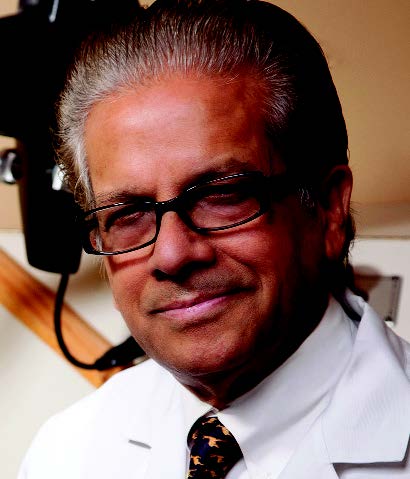
    (Dr VK Raju is Clinical Professor, Department of Ophthalmology; West Virginia University. He is the Founder/ Medical Director of The Eye Foundation of America (www.eyefoundationofamerica.org); Chairman, Goutami Eye Institute, AP; Advisor – Indo-US Healthcare Summit; Director, International Ocular Surface Society.

    Dr. Raju presides over Monongalia Eye Clinic located at 3140 Collins Ferry Road, Morgantown, WV 26505. He can be reached at vkr@vkraju.com. The phone nos. are:(Clinic) 304-598-0055; (Cell) 304-288-2080; (Home) 304-599-0705; (Fax) 304-598-0058.

  • METEORITE IN AFRICA OFFERS CLUES TO VOLCANIC ACTIVITY ON MARS

    METEORITE IN AFRICA OFFERS CLUES TO VOLCANIC ACTIVITY ON MARS

    NEW YORK (TIP): Examining a Martian meteorite found in Africa, scientists have uncovered evidence of at least two billion years of volcanic activity on Mars.

    The findings, published in the journal Science Advances, offer new clues to how the planet evolved and insight into the history of volcanic activity on Mars, said lead author of the study Tom Lapen, Professor at University of Houston in the US.

    Much of what we know about the composition of rocks from volcanoes on Mars comes from meteorites found on Earth.

    The meteorite, known as Northwest Africa 7635 and discovered in 2012, was found to be a type of volcanic rock called a shergottite.

    Eleven of these Martian meteorites, with similar chemical composition and ejection time, have been found.

    “We see that they came from a similar volcanic source,” Lapen said.

    “Given that they also have the same ejection time, we can conclude that these come from the same location on Mars,” Lapen noted.

    Together, these meteorites provide information about a single location on Mars. Previously analysed meteorites range in age from 327 million to 600 million years old.

    In contrast, the meteorite analysed by Lapen’s research team was formed 2.4 billion years ago and suggests that it was ejected from one of the longest-lived volcanic centers in the solar system.

    The finding confirms that some of the longest-lived volcanoes in the solar system may be found on the Red Planet.

  • SPACE TRAVEL MAY CAUSE GENETIC CHANGES: STUDY

    SPACE TRAVEL MAY CAUSE GENETIC CHANGES: STUDY

    WASHINGTON (TIP): Space travel may cause changes in gene expression and other biological markers in astronauts, a NASA study of twins has found.

    Scientists studied the genetic differences between astronaut Scott Kelly, who spent nearly a year in space, and his identical twin Mark.

    Measurements taken before, during and after Scott Kelly’s mission show changes in gene expression, DNA methylation and other biological markers that are likely to be attributable to his time in orbit.

    From the lengths of the twins’ chromosomes to the microbiomes in their guts, “almost everyone is reporting that we see differences,” said Christopher Mason, a geneticist at Weill Cornell Medicine in New York City.

    The challenge now is to untangle how many of the observed changes are specific to the physical demands of spaceflight – and how many might be simply due to natural variations.

    Since the Kelly twins are just two people, the results may not be generalisable to others, researchers said.

    Still, the work is some of the most detailed molecular profiling ever done, involving some of the most physically demanding environments.

    Scott Kelly spent 340 days in space in 2015-16, giving him a lifetime total of 520 days.

  • APPLE MOVES CLOSER TO IPHONE ASSEMBLY IN INDIA, MAY MANUFACTURE IN BENGALURU

    APPLE MOVES CLOSER TO IPHONE ASSEMBLY IN INDIA, MAY MANUFACTURE IN BENGALURU

    The government of Karnataka said on Thursday it welcomed a proposal from Apple Inc to begin initial manufacturing operations in the state, in a sign the tech company is slowly moving forward with plans to assemble iPhones in the country.

    “Apple’s intentions to manufacture in Bengaluru will foster cutting edge technology eco system and supply chain development in the state, which are critical for India to compete globally,” the Karnataka government said in a statement.

    A source familiar with the matter told Reuters, however, that no deal, or memorandum of understanding had so far been finalised with the Karnataka government.

    Apple has been asking for sops from the Indian government to start making iPhones in the country and as well as its own retail chain.

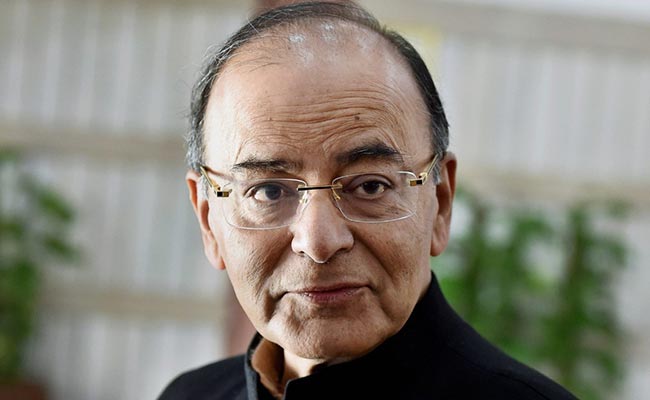
    However, Union finance minister Arun Jaitley in his budget speech announced a record figure of Rs 745 crore under modified special incentive package scheme (MSIPS) to boost electronic manufacturing. In a caveat, the government also has proposed a 2% special additional duty on import of PCBs. PCBs or in simple words printed circuit boards makes up for 20-30% of a smartphone’s cost and is generally imported as India still doesn’t have fabrication units to manufacture them domestically.

    The person, who asked not to be named, said if Apple did go ahead with plans to begin assembling the iPhone, it was likely to do so initially at a plant being set up by its Taiwanese manufacturing partner Wistron Corp at Peenya on the outskirts of the tech hub of Bengaluru, Karnataka.

    Cupertino, California-based Apple, is keen to assemble its phones in India, one of the world’s fastest growing smartphone markets.

    Apple representatives met with central and state government officials in India last week, as it is lobbying hard for a raft of tax and sourcing concessions, before it begins to assemble iPhones in the country.

    Following the meetings, Apple said it appreciated the open and constructive dialogue it held with Indian officials, around the expansion of its local operations in the country.

  • TWITTER REPLACES MOMENTS WITH EXPLORE TAB

    TWITTER REPLACES MOMENTS WITH EXPLORE TAB

    You do not have to wander around on Twitter to find its multiple features, as the micro-blogging site has rolled out a new tab called Explore that consolidates Moments, search, trending hashtags and live video features all in the same place.

    “During our research process, people told us the new Explore tab helped them easily find news, what’s trending and what’s popular right now,” said Angela Lam, Product Designer Twitter, in a blog post.

    According to a report on Redcode, as Twitter is replacing its Moments with Explore, none of the individual features in the tab are new — they are just currently scattered throughout Twitter’s app.

    “Now they will all be in the same place. The current search icon, a magnifying glass in the upper right hand corner on iOS, is going away,” a Twitter spokesperson was quoted as saying.

    The Moments feature — a collection of tweets publishers and users create around specific events — is being pushed a little deeper into Twitter’s app.

    onsidered as the most high profile product launch Twitter has ever had, with months of build-up from executives, Moments was launched late in 2015.

  • Now, a space radio to track every flight in real time

    Now, a space radio to track every flight in real time

    WASHINGTON (TIP): Researchers have developed a reconfigurable radio that could help air traffic controllers see in real-time the location of every plane in the air – even those flying across oceans.

    To design and develop the new reconfigurable, higher-bandwidth radio, NASA worked with Palm Bay, Florida-based Harris Corporation.

    With real-time global tracking, planes could fly with less space between them and take more direct routes.

    “It tremendously improves public safety and potentially saves a lot of fuel costs, because you no longer have to remain in the particular airline traffic lanes,” said Jeff Anderson from Harris Corporation.

    The biggest selling point of the new device, which Harris sells as the AppSTAR, turned out to be its flexibility.

    With hardware and software both fully reconfigurable, the company could quickly and cheaply redesign the radio to fit any customer’s needs, Harris programme manager Kevin Moran explained.

    The company has already entered into contracts with Virginia-based Aireon LLC that will use the radios to create the first space-based global air traffic control system.

    With Aireon flight tracking, powered by a radio developed by Harris Corporation, researchers hope that air traffic control agencies will be able to see in real time the location and heading of every plane in the air.

    For decades, airplanes have relied on radar surveillance via land-based radar stations. That has left huge gaps ?particularly over oceans ? where air traffic controllers have no real-time information.

    To compensate, pilots file detailed flight plans and are required to remain within prescribed lanes at different altitudes so air traffic controllers can estimate where they are and work to ensure there are no mid-air collisions.

    But that could change when a constellation of 66 satellites, owned by Iridium Communications Inc., goes into orbit equipped with AppSTAR radios.

    The radios are programmed to receive signals from new airplane transceivers called ADS-B, which automatically send out a flight’s number, location, heading and other details.

  • US Industry commends India’s Union Budget 2017: Says It Seeks to Simplify Ease of Doing Business for Foreign Investors

    US Industry commends India’s Union Budget 2017: Says It Seeks to Simplify Ease of Doing Business for Foreign Investors

    The U.S.-India Business Council (USIBC) commended the 2017 Union Budget presented by Finance Minister Arun Jaitley, saying the budget has a forward-looking outlook and builds off the economic reforms enacted over the last three years of Prime Minister Modi’s government. USIBC feels that the budget deepens the Government’s move towards a digital economy, while remaining committed to attracting foreign investment, increasing infrastructure spending in roads and civil aviation, rationalizing the tax structure, spurring domestic growth while also bringing in rural India into the fold of the digital economy.

    USIBC has commended the noteworthy reform measures that have been implemented in the last year including the passage of the Goods and Services Tax (GST), the bankruptcy code, FDIs in several sectors of the economy, and measures for financial inclusion. In light of these reforms, the Council was pleased to note that the budget is a fiscally sound agenda that doubles down on Prime Minister Modi’s stated goals of improving the ease of doing business by reducing red tape, investing in “Skill India”, and attempts to mitigate the negative impact of demonetization.

    USIBC President, Dr. Mukesh Aghi said, “At a time of global uncertainty, budgets can be challenging to implement but the Finance Minister has done an admirable job in creating a vision that will propel the domestic economy while remaining cognizant about foreign investors. The industry welcomes positive steps in the affordable housing segment, bringing the ‘Housing for All’ scheme a step closer to reality. Relaxation on long term capital gains and infrastructure status to the segment will boost supply in the market. The Council looks forward to more announcements on liberalization in certain sectors in the near-term.”

    Rajiv Khanna, President of India-America Chamber of Commerce described it as a well-balanced budget. “It is a well thought out and a well balanced budget. The fact that the Indian stock market has reacted so positively to the budget speaks for itself”, said Mr. Khanna.

    Ron Somers, founder and CEO of India First Group also commended the budget. “I am in complete agreement with Finance Minister Arun Jaitley: when you look around the world today and witness all the retrenchment and chaos underway from Russia to China to Brazil, India stands out as a beacon of stability and predictability,” said Somers.

    Karun Rishi, President of USA-India Chamber of Commerce (USAIC) described it as a well-balanced, fiscally cautious budget in the right direction.

    The Indian Panorama invited readers to comment on the Indian Union Budget. Most felt it was a soft budget which did not hurt common people much, may be because of the impeding elections in a couple of important state assemblies. Whatever, the consensus was that it was an unexciting, lackluster budget. Here are their comments.

    Dr. VK Raju, an eminent eye surgeon based in Morgantown, WV says: “India has had 25 finance ministers since independence in 1947 that have presented and passed in Parliament 83 budgets- both interim and annual so far. Mrs. Indira Gandhi from Indian National Congress, as the Prime Minister of India was the only woman to hold the Finance Portfolio (1970-71). Her critics used to call her “the only man in Indian Cabinet.”

    Since our Independence in 1967, we have few islands of excellence in many fields, yet the India we all dream about is far from reality.

    The budget can undoubtedly give a shot in the arm to our economy, but consider these:

    1. The human resource is the ultimate resource of a nation.
    2. Water and sanitation are still major problems.
    3. Investment in human development is more productive than investment in physical assets and moreover, it leads to a faster rate of national growth.
    4. Malnutrition in children and 23% of middle school girls dropping out of school because of feminine hygiene issues.

    India is a highly developed country with developing country problems. In the west, poverty is relative and in India it is absolute poverty.

    Finally see what the great statesman, Nani Palkhivala said, “To my countrymen, who gave unto themselves the constitution but not the ability to keep it. Who inherited a resplendent heritage but not the wisdom to cherish it, who suffer and endure in patience without the perception of their potential. I say, Change the mindset, sky is the limit for India.”

    George Abraham, a former Chief Technology Officer at the United Nations and Chairman of INOC (USA) made the following comment.

    “I could not bring myself commenting on this budget without mentioning the way Modi Government’s unprecedented rush for submission on the day when one of its longest serving members of Lok Sabha and former Union minister Shri. E. George Abraham Ahamed has passed away. I am saddened by the fact that his memory has been dishonored!

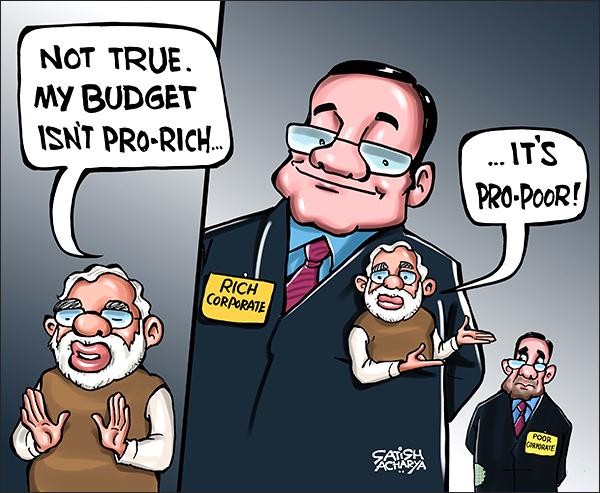
    At the outset, I would like to agree with many observers that the budget has some positive elements such as tax deduction for lower-income earners. However, the budget has done very little for the middle class, farmers, daily laborers, self-employed or small and medium businesses who are hit hard by the reckless demonetization policy of this Government. The budget is also appeared to be rushed through for narrow political benefits with an eye on the upcoming state elections.

    At this point in time, the economic fundamentals are on a downward trend with fall in demand and fall in consumption with job losses in millions. While the GDP forecast is downgraded to be a percent or lower, there are no new bold initiatives for job creation or very few incentives to promote investment.

    Obviously, there is so much emphasis on digitization while not referencing the fact that there are 18,000 villages in India are still without electricity and 47 percent of the population lack any access to a bank account and the Internet is unavailable in the remote areas of the country.

    Although the Union budget has made an attempt to deal with political contributions, there would be little accountability without laying a solid groundwork for transparency, disclosures, and penalty.

    Finally, though the Prime Minister has characterized MGNREGA  as a ‘living monument,’ of Congress failure, the Finance Minister gave it a nudge by allocating 699 crores more than the previous year. It is a clear admission that the MGNREGA is so vital to the rural households across the land, and it would be suicidal for the Modi Government to scuttle it.

    In summary, the budget failed either to address the current hardships the lower echelon of the society is facing due to demonetization or putting up bold reforms for incentivizing investment or job creation.”

    Anu Jain, a Finance analyst had this to say. “Indian Finance Minister Arun Jaitley has presented the Union Budget for the year 2017-18. It was the first budget in the history of independent India to be presented on February 1

    This is his fourth annual budget and the first budget after demonetization. The Union Budget 2017 was broadly focused on 10 broad themes.

    They are – Farmers, Rural Population, Youth, Poor and Health Care for the Underprivileged; Infrastructure; Financial Sector for Stronger Institutions; Speedy Accountability; Public Services; Prudent Fiscal Management; Tax Administration for the honest.

    “The impact on growth from the governments cash crackdown would wear off soon and called 2017 budget is for the poor”, said Mr. Jaitley. Yet, while vowing prudent fiscal management, Arun Jaitley also raised his 2017-18 federal deficit targets to 3.2 percent of gross domestic product to cover his spending promises. Jaitley said, “As we all see that India as “an engine of global growth” but we should remember risks to its outlook from likely U.S. interest rate hikes rising oil prices and signs that globalization is in retreat”. PM Narendra Modi’s surprise decision last November to scrap high-value banknotes worth 86 percent of India’s cash in circulation has hit consumer demand, disrupted supply chains and hurt capital investments. The worst of the cash crunch is now over. Manufacturing survey showed that business was slowly returning to normal. Still, the finance ministry forecasts that growth could dip to as low as 6.5 percent in the current fiscal year till March, before picking up slightly in the coming fiscal year to between 6.75 and 7.5 percent.

    The Income Tax rates have been slashed and that’s certainly a reason for everyone to cheer. Those earning up to Rs 3 lakhs per annum will now be completely exempted from paying tax. Individuals earning between Rs 3 lakhs and Rs 5 lakhs per annum will get a 5% benefit as the tax rate has been slashed from 10% to 5%. Also, people earning higher than Rs 5 lakhs per annum are also eligible for the 5% reduction in income tax and businesses with turnovers of no more than Rs 50 crore get a tax break. This all is healthy to trigger the economy and help everyone especially the middle class and small business.

    Government targets to bring almost one crore households out of poverty by 2019. The budget proposes to complete 1 crore houses for those without homes.

    Budget has raised the allocation for the “Mahatma Gandhi National Rural Employment Guarantee Act” (MGNREGA) to an all-time high from Rs 37,000 crore to Rs 48,000 crore. This is big hike, and was the highest ever allocation to rural India.

    Budget also highlighted that the participation of women in MGNREGA is increased to 55 per cent. In the budget, there is allocation for linking Aadhar to various bank accounts and to health cards for senior citizens. After announcing demonetization, Modi government has been promoting linking of Aadhar numbers to bank accounts and also claims credit for systematization as Aadhar registrations grow.

    Railway e-tickets: In a move to encourage the use of services, service tax on railway tickets booked electronically have been pulled back. Currently, a service charge of Rs 20 is levied for sleeper class and Rs 40 for all air conditioned classes per ticket while booking tickets on the IRCTC website.

    The continuing theme of attacking black money was evident in the move to ban all cash transactions of over Rs 3 lakh and the attempt to clean up political funding. Parties will now have to disclose the identities of those donating over Rs 2,000, though electoral bonds will be introduced to allow anonymity for clean donors. The government has lined up more incentives for startups. Profit linked deduction will be allowed for three years out of seven instead of three years out of five.

    But there is negative impact of budget on LED Lights, Tobacco, Mobile phones etc.

    The 2017 India budget looks all round development budget, aimed to take India to growth path, while focusing on helping low and middle income group people including farmers and village folk, the poor and youth – while not unusual, became even more necessary because of the criticism that demonetization had hurt the informal sector and the rural economy. It is first budget which include railway budget too projecting an overall growth of more than 7%.”

    Indu Jaiswal, a senior community leaders said: “I think the new budget proposed for 2017 by Mr. Jaitley will definitely benefit the country. Specially encouraging digital payment, transactions at fuel pumps, hospitals and railway stations will help in eliminating cash handling. As we are progressing in the right direction these proposals for upgrading the financial transactions system will help.

    We must include all areas of business specially healthcare. Together we will continue to make a difference.

    Ashok Ojha, a senior journalist and a promoter of Hindi language in the US opined that the budget might determine the course of movement of Indian economy but doesn’t necessarily reflect the condition of its entire people.

    “The presentation of annual budget in the Indian Parliament is a democratic ritual that is supposed to accelerate the growth of Indian economy, which is on upward path since the past decade. The Modi Government has made a wide range of tax concessions aimed at directly assisting the middle class working man save some money every year. In addition to helping the middle class city dweller the annual budget of India also targeted farmers who produce the food for the nation. Helping farmers with varieties of crop loans and insurance policies may go a long way making the farming community prosperous and the country self-sufficient in agriculture.

    My sister called me from her village in Buxar district of Bihar. Two decades ago her village lacked even the basic electricity to light her home. She boldly invited me to visit her home where all rooms were fitted with heater and air-conditioning. She said her family agriculture business helped her save enough money to install comfortable living and now we feel that ‘Our living is no less comfortable than that of city dwellers’.

    The farming community in India is no doubt prospering, however, the budget failed to take stock of the debt that the rural economy is carrying on its soldiers. We don’t know if the budget is able to protect a debt struck farmer from taking the extreme step of committing suicide.

    The budget allocates two months interest free credit for farmers and many other insurance plans. It is hoped that rural India will receive funding to improve crop yield and provide employment to rural population.

    The budget might determine the course of movement of Indian economy but doesn’t necessarily reflect the condition of its entire people. Indian boasts of its huge workforce of young people within the age range of 20 to 35, who continue to look for job and with every passing year ejected from various jobs that subscribe age limit for employment. During the past few years the job growth remained very dismal. The education system failed to improve and address the demands of the 21st century. In its new budget proposals the Modi Government promised to set up one hundred skill development centers while institutions of higher education, especially in states like Bihar, continue to be out of tune with the new demands and challenges of 21st century.

    The government plans to improve employment opportunities by teaching foreign languages for young people, however, improving the quality of education for Indian languages are on back burners. Of course, the prime minister promised to pay $6,000 for every pregnant woman in rural India, however, hospitals continue to charge hefty amount from patients with serious illnesses. In USA a patient death is the failure of the hospital, in India, it is a normal situation that enables hospital authorities collect their dues before the dead is released for last rites. India seems to become insensitive to rail accidents. One hears stories of rail accidents almost every month. There is no way to know if the provision of Rs. 1,31,000 crores in the national budget will be wisely used to upgrade the system.

    I returned to USA after a month-long trip to India, where ATM machines fail to eschew cash, two months after the much hated demonetization of high value Indian currencies. A story goes like this: A Western tourist exchanged his dollar bills into Indian rupees in 500 and 1000 denominations. The same day government of India ordered these currencies invalid. The tourist was visiting India for 40 days. He spent rest of his time in India returning his rupees bills of 500 and 1000 by queuing outside of banks. There are many stories that tell the story of negative impact of demonetization but the government ignored to talk about it in its budget.

    The government push to make the country cash less is a dangerous one. The whole world deals in cash, especially for small transactions. If you are forced to get a credit card and use for purchases, you are destined to be drowned in heavy debt very soon. This is the true saga of middle class in developed economies including USA. Indian government promotes the cash less economy that would bring misery over its middle class, the same people who are responsible for improving the Indian economy to more than seven percent growth rate. There is no sign Modi government is capable to force the big industrialist mend their ways of working. Barring a few, no major case of corruption has been unearthed, except the arrests of individuals, who were caught carrying a few lakhs of currencies.

    Travelling from Delhi airport to my home in Dwarka I met a number of young people who had left their villages in far flung areas of Bihar and Odisha to drive taxis for living. These young people work for companies like Uber and Ola. Some of them plan to go back to their native village where they would appear for collage examinations. I bet these young people, who are without a pull in Delhi, are destined to continue driving taxis even after they would graduate from colleges.

    I travelled to Jaipur to attend the annual literature festival. The festival didn’t charge entry fee for young people who came to listen to authors from all over the world. I could see hundreds of young people, who thronged the venue every afternoon to mingle with friends. I am sure these young people were trying to make a sense of their lives and figure out if there is a future for themselves should they decide to become writers.

    During my month long trip to India I found that government offices including banks reverting to old days, when files used to move slowly. Officials talk about government guidelines that must be observed in order to ensure compliances. I visited a number of government offices and banks all of who were not busy working on their laptops. Wi-Fi was not functioning most of the time and many people continued to wait days and weeks for clearance of their files.

    All government steps are geared towards winning elections. The ruling Bharatiya Janata Party is facing daunting challenges in five states immediately after the release of the budget. It is quite natural that the concessions declared in the national budget reflect its concern for the common man. How much gain the common man gets due to the new initiatives is something to see in coming months.”

    The Indian Panorama will welcome comments on the subject from our wide awake readers.

  • How corporate India reacted to Arun Jaitley’s budget speech

    How corporate India reacted to Arun Jaitley’s budget speech

    NASSCOM: The Union Budget 2017 reinforces government’s reliance on technology for achieving development goals, as it focuses on Infrastructure and empowering startups and SMEs, although IT industry expectations on facilitative proposals remain largely unmet… The budget evangelizes digital payments and infrastructure, along with promoting a transparent business environment.

    Anant Maheshwari, president, Microsoft India: “The Finance Minister has presented a balanced budget, underlined by the continued push to using technology to aid a digital economy. As India strengthens its position on the global map, the need for skilled youth is crucial. The budget’s focus on extending market relevant training for the youth and setting up 100 international skill centers across the country, is a positive move. The emphasis on science and technology for students, and launch of SWAYAM, will further empower India’s youth for the future. I am glad to witness the increasing focus on cybersecurity, which is critical to securing the economy’s digital transformation. The reduction of corporate tax for MSMEs is a welcome move and will boost the economic growth. The momentum in the implementation of GST is promising and I look forward to seeing it unfold in the coming months.”

    Varun Berry, managing director, Britannia Industries Ltd: “ Rural markets have suffered for the longest period of time. This year’s been an okay monsoon; the last two years have been very bad. And then demonetization came, so it slid again. But hopefully with these measures coming in, I’m sure that the rural economy is going to start to spur once again and that’s going to be very good for companies like ours. That’s really is the next frontier as far as consumption is concerned.”

    Hemal Mehta, Partner, Deloitte Haskins & Sells Llp: “Affordable housing is a priority for this government and it was expected to get infrastructure status. With infrastructure status, developers can access foreign funds at a cheaper cost by way of debt and it will be a priority lending for banks as well. This should result into a progress in the sector. The fine print shall provide higher clarity.” (Reuters)

    Samrat Dasgupta, chief executive officer (CEO), Esquire Capital Investment Advisors, Mumbai: “He (Jaitley) focused on the rural side more, and he has recognised that demonetisation had brought some hardship to people. So he’s trying to mitigate that as much as possible, with some rural schemes and reduction in taxation for low income people.”

    Deepak Parekh, chairman, HDFC: A good budget, has done a lot for housing and for rural development. Disappointed with no announcement on corporate tax.”

    Adrian Mowat, chief Asian and emerging markets strategist, JP Morgan: A very workmen like Budget. Got some clear indications about how to broaden the tax base in India, developments around improving transparency, efficiency, these are all good things.”

    Rangarajan, former RBI governor: “It was a fairly routine Budget… in the sense that there have not been much changes on the revenue side. Nevertheless, I am happy that the fiscal deficit is maintained at 3.2 per cent. The original road map has set it at 3 per cent.”

    Tirthankar Patnaik, India Strategist, Mizuho Bank, Mumbai: “The fiscal deficit of 3.2 percent missed the target, but laudable efforts nonetheless. Markets should love the lower net borrowing figure of 3.4 trillion rupees. On tax reforms, the reduction of the corporate tax for SMEs to 25 percent is very welcome.”

    Devendra Kumar Pant, chief economist, India Ratings, New Delhi: “Fiscal deficit of 3.2 percent is in-line with expectations. Bond markets or the debt markets will take it favourably. The quality of deficit has improved marginally.”

    Shakti Satapathy, fixed-income strategist, AK Capital, Mumbai: “The tone remains neutral with not so drastic surprises in terms of maintaining a sustainable fiscal consolidation roadmap. The 3.2% fiscal deficit target for FY 17-18 is largely in line with the expectation & the same has already been factored in the bond yields.”

    Kunal Bahl, co-founder and co-founder, Snapdeal: “We commend the focus on growing the digital footprint in the country-enhancing digital infrastructure, capping cash transactions, reducing cash donations, using Adhaar Pay to enable more digital payments are significant measures. Initiatives make an impact when there is continued attention and the announcement of today builds on the demonetization efforts of last few weeks.”

    C. Deveshwar, chairman, ITC: “The Budget proposals to increase spends in rural areas, infrastructure development, poverty alleviation as well as the agricultural sector should provide a growth impetus to the Indian economy and a pickup in consumption demand. The enhanced push towards digitisation is indeed welcome as it will ensure a quantum jump in efficiency, enable mainstreaming of the informal economy as well as inclusive empowerment through technology and innovation.”

  • NRI wants his name delinked from Google search, court says no

    NRI wants his name delinked from Google search, court says no

    There is no reason for creation of a separate legal framework under ‘right to be forgotten’ to delink ‘irrelevant information’ from the Internet, Google Inc told Delhi High Court on Thursday.

    The submission was made in an affidavit placed before Justice Sanjeev Sachdeva by Google which has contended that even if it disables or blocks a site in its search engine, that webpage will remain on the original website and would be accessible on other search engines.

    This view was also echoed by the court while hearing an NRI’s plea seeking he be “delinked” from information regarding a criminal case involving his wife in which he was not a party. He has also sought removal from the records of the trial court order which mentions him.

    “If you post something on social media, it will never get deleted,” the court said and added if the man’s plea was allowed then all courts may have to destroy their records in matrimonial disputes.

    In his petition, filed through advocates Rohit Madan and Zoheb Hussain, the NRI has claimed the online availability of the criminal case, despite it being settled amicably, affects his right to privacy and reputation apart from affecting his employment opportunities.

    His petition has raised the question “whether data controllers or intermediaries such as Google, are required to delete information that is inadequate, irrelevant or no longer relevant if they receive a request for removal of such data”.

    Claiming that the plea was not maintainable against it or its Indian entity, Google has said, “If a content is adjudicated to be defamatory or its goes beyond the principles of law of privacy, same can be directed to be removed pursuant to being adjudicated by the court. “However, there is no reason or justification for creation of a separate statute or legal framework under right to be forgotten.”

  • Key Figures From Budget 2017 : Snapshot

    Key Figures From Budget 2017 : Snapshot

    Snapshot

    • Total expenditure of budget 2017-18 is 21.47 lakh crore
    • Fiscal deficit at 3.2 per cent of GDP for year starting April 1. Remain committed to achieve 3% in following year
    • Defence Expenditure excluding pensions set at 2.74 lakh crore
    • 10,000 crores for recapitalization of banks
    • Rural employment scheme of MNREGA gets “highest allocation ever” of 48,000 crores
    • One page I-T return form for individuals with less than Rs. 5 lakh income
    • Maximum cash donation from unknown sources to political parties cut to Rs. 2,000 from Rs. 20,000
    • Tax rate on small firms cut to 25 per cent

    FARMERS:

    • Farmer credit fixed at record level of Rs10 trillion; will ensure adequate flow to underserved areas
    •  Soil health cards: Govt to set up mini-labs in Krishi Vigyan Kendras
    • Long-term irrigation fund in Nabard-corpus at Rs40,000 crore
    • Model law on contract farming to be circulated
    • Dairy processing infra fund with corpus of Rs8,000 crore
    • Dedicated micro-irrigation fund with Rs5,000 crore corpus

    RURAL POPULATION

    • Mission Antyodaya to bring 1 crore households of poverty
    • MGNREGA: Rs48,000 crore has been allocated; participation of women now at 55%; using space technology in a big way
    • Prime Minister Gram Sadak Yojana: Rs19,000 crore allocated; along with states, Rs27,000 crore will be spent in FY18
    • Pradhan Mantri Awas Yojana: Rs23,000 crore allocated
    • 100% village electrification by May 2018
    • Rural livelihood mission: Rs4,500 crore allocated
    • Mason training to be provided for 5 lakh people
    • Panchayat Raj: Human resource reform programme to be launched
    • Rs1,87,223 crore allocated for rural programmes

    YOUTH

    • ? Education: System of measuring annual learning outcomes, emphasis on science
    • ? Innovation fund for secondary education
    • ? Reforms in UGC: Colleges to be identified based on ranking and given more autonomy
    • ? Propose to leverage information technology with launch of SWAYAM platform for virtual learning
    • ? National testing agency to be established for all entrance exams, freeing up CBSE, AICTE and other bodies
    • ? 100 Indian international skill centres to be established with courses in foreign languages
    • ? Rs4,000 crore allocated to launch skill acquisition and knowledge awareness
    • ? Special scheme for creating employment in leather/footwear sector

    POOR AND UNPRIVILEGED

    • ? Women: Mahila Shakti Kendras with Rs500 crore corpus
    • ? Stepped up allocation to Rs1.84 trillion for various schemes for women and children
    • ? Affordable housing to be given infrastructure status
    • ? Action plan to eliminate leprosy by 2018, TB by 2025, reduce IMR to 29 in 2019
    • ? To create additional PG medical seats per annum
    • ? Two new AIIMS in Jharkhand and Gujarat
    • ? New rules to be introduced for medical devices
    • ? Labour rights: Legislative reforms to simplify and amalgamate existing labour laws
    • ? Allocation to SCs increased to Rs52,393 crore; STs given Rs31,920 crore, minority affairs allocated Rs4,195 crore
    • ? Senior citizens: Aadhaar-based smart cards with health details to be provided

    INFRASTRUCTURE

    • ? Total capex and development expenditure of railways pegged at Rs1.31 trillion
    • ? Railways: Passenger safety fund corpus set up; unmanned level crossings to go by 2020
    • ? Railway lines of 3,500km to be commissioned
    • ? To launch dedicated tourism/pilgrimage trains
    • ? 500 stations to be made differently-abled friendly
    • ? Cleanliness in railways: To introduce Coach Mitra facility; By 2019, biotoilets for all coaches
    • ? Railways to offer competitive ticket-booking facility; service charge withdrawn for tickets
    • booked on IRCTC
    • ? New metro rail policy to be announced
    • ? Roads sector: Allocation for national highways at Rs64,000 crore


  • Here are the winners and losers – Indian Union Budget 2017

    Here are the winners and losers – Indian Union Budget 2017

    MUMBAI (TIP): India’s annual budget is one of the nation’s most closely watched events-not just for the numbers, but for the political message during a speech that runs for about 90 minutes.

    The thrust of Feb 1 speech by finance minister Arun Jaitley for the fiscal year starting 1 April was on rural and infrastructure spending after advisers warned of a steep slowdown triggered by Prime Minister Narendra Modi’s cash ban. Here are the winners and losers.

    Winners

    FARMERS: Pledges a record agricultural credit of Rs10 trillion by the fiscal year through March 2018; Rs48,000 crore allocated for its rural job guarantee program; electrification of villages. Companies that may benefit include tractor makers such as Mahindra & Mahindra Ltd.

    REAL ESTATE : Proposes extension of affordable housing program to five years; gives the sector infrastructure status. Plans to also lower holding period for taxing capital gains on sale of immovable property to two years from three. Shares of DLF Ltd, Godrej Properties Ltd and Oberoi Realty Ltd could be affected.

    CONSUMER GOODS AND AUTOMAKERS: Jaitley proposed cutting the tax rate for people with income of between Rs2,50,000 and Rs5,00,000 to 5% from 10%, leaving more cash in the hands of consumers to spend more on toiletries, household goods, cars and two-wheelers. Shares that may be affected are ITC Ltd, Hindustan Unilever Ltd, Marico Ltd, Maruti Suzuki Ltd and Hero MotoCorp Ltd.

    BANKS: Government proposes to inject at least Rs10,000 crore of capital into state-owned lenders and provide additional capital. Also proposed increasing allowable provisions for bad loans. Stocks involved include State Bank of India, Bank of India, Bank of Baroda.

    FIBER OPTICS: The budget allocated Rs10,000 crore to lay fiber optic network covering 150,000 villages.

    INFRASTRUCTURE: The outlays here may aid stocks such as Larsen & Toubro Ltd., Hindustan Construction Co., and IRB Infrastructure Developers, as well as Electrosteel Steels Ltd. and Aegis Logistics Ltd.

    Losers

    DRUG MAKERS: As part of the rural focus, government proposes to amend rules governing pharmaceuticals to help lower prices, make healthcare affordable and encourage generics. Stocks affected include Dr. Reddy’s Laboratories Ltd and Sun Pharmaceutical Industries Ltd.

    CIGARETTE MAKERS: An increase in the excise duty on cigarettes by 6%, as well as boost in the levy on cigarettes made with tobacco substitutes, may affect companies including ITC and Godfrey Phillips India Ltd.Bloomberg

  • Education outlay increases 9.9% to Rs 79,685.95 crore

    Education outlay increases 9.9% to Rs 79,685.95 crore

    NEW DELHI (TIP): Finance minister Arun Jaitley indicated in his Budget speech on February 1 that India’s education sector would take a reform path in 2017-18.

    From focusing on learning assessment in schools and revamping higher education regulator University Grants Commission (UGC) to allow more autonomy to setting up of a national testing agency to conduct higher education entrance exams and freeing nodal education bodies from tedious administrative work, Jaitley touched the pain points in the country’s ever expanding education sector.

    Overall, the Union Budget 2017-18 has pegged an outlay of Rs79,685.95 crore for the education sector for financial year 2017-18, up from Rs72,394 crore in 2016-17-a 9.9% rise. Of the total outlay, Rs46,356.25 is for the school sector and the rest for higher education.

    “We have proposed to introduce a system of measuring annual learning outcomes in our schools. Emphasis will be given on science education and flexibility in curriculum to promote creativity through local innovative content,” the finance minister said.

    He also spoke about an “innovation fund” for the secondary education segment and leveraging technology to take quality courses to the mass students base in 3,479 educationally-backward blocks. In the higher education space, the finance minister said the government will undertake reforms in the University Grants Commission of India.

    “Good quality institutions would be enabled to have greater administrative and academic autonomy. Colleges will be identified based on accreditation and ranking, and given autonomous status,” said Jaitley, taking a leaf from the much talked about Indian Institutes of Management (IIM) Bill that promises to grant “complete autonomy” to the elite B-Schools.

    However, there seems to be a gap between the intent and actual allocations under some of the education reform heads. For example, the school assessment program has been allocated a sum of Rs67 lakh in the 2017-18 budget as against Rs5 crore in the previous one.

    Conducting learning assessment in a mammoth school system with nearly 250 million students across over 1.4 million schools with the amount allocated looks difficult. In contrast, the budget pegs Rs125 crore for appointing language teachers in 2017-18 as against Rs25 crore in the previous budget.

    Similarly, the e-learning portfolio of higher education has been allocated a total of Rs497 crore in 2017-18, as against Rs552 crore in 2016-17. Though the e-learning revised budget talks of a Rs516.89 crore allotment for the fiscal ending 31 March, the new allocation is below the revised estimates.

    The massive open online courses (MOOCs), part of the overall e-learning segment has been allocated Rs75 crore, the same as last year. The budget is also silent on any allocation for the proposed national testing agency or the innovation fund.

    “If you look at some of the reforms that the budget speech mentioned and the allocations made, then it is disappointing. Too little too late,” said Narayanan Ramaswamy, partner and head education practice at consulting and auditing firm KPMG.

    However, the budget allocates Rs250 crore for capital expenditure for setting up of higher education financing agency up from a token Rs1 crore last year. The world class institutions plan has been allocated Rs50 crore and the prime minister’s research fellowship, a new entrant in the budget has got Rs75 crore.

    Similarly, the IIMs will get Rs1,030 crore in 2017-18 including Rs190 crore for setting up of new IIMs. In 2016-17, the government had allocated Rs730 crore to IIMs, which was raised to Rs857.78 crore in the revised estimate.

    The Indian Institutes of Technologies have been allocated Rs7,856 crore in this budget, up from around Rs5,000 crore in the last budget. Sarva Shiksha Abhiyan, the flagship central scheme for universalization of school education has been given Rs23,500 crore, up from Rs22,500 crore in last budget. The mid-day-meal programme has been allocated Rs10,000 crore, up by Rs300 crore from the last budget.

  • UNION BUDGET 2017 – CIGARETTES, TOBACCO, MOBILES ASSEMBLED IN INDIA TO TURN DEARER

    UNION BUDGET 2017 – CIGARETTES, TOBACCO, MOBILES ASSEMBLED IN INDIA TO TURN DEARER

    PARTS USED FOR MANUFACTURING OF LED LIGHTS WILL ATTRACT BASIC CUSTOMS DUTY 5 PER CENT AND CVD OF 6 PER CENT FROM NIL EARLIER

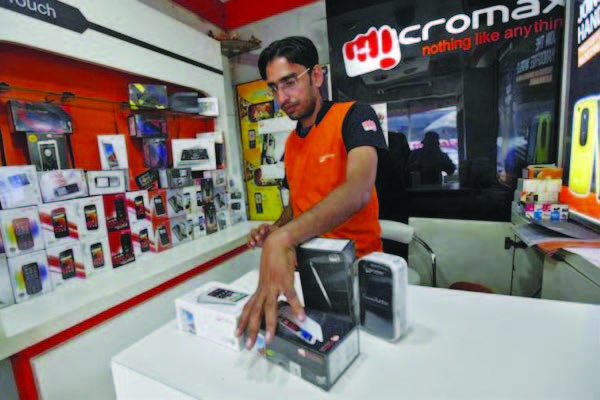
    NEW DELHI (TIP): Smokers and tobacco consumers will have to pay more for their indulgence as Finance Minister Arun Jaitley continued with the crackdown on cigarettes, bidis and tobacco products by increasing taxes in the Budget 2017-18. Besides, mobile phones and LED lights assembled in India will also become dearer with the finance minister increasing duties on imported printed circuit boards and components respectively.

    UNION BUDGET 2017: WHO SAID WHAT
    PRIME MINISTER NARENDRA MODI: “This is a Budget for the future – for farmers, underprivileged, transparency, urban rejuvenation, rural development, enterprise. This Budget is yet again devoted to the well-being of the villages, farmers and the poor. From railway modernization to economic reforms, from education to health, from entrepreneurship to industry, the aim at fulfilling the dreams of all is clearly visible in the Budget.”

    RAILWAY MINISTER SURESH PRABHU: “It’s a pro- growth Budget. The growth will happen because of huge investments that is happening. For example in railways, the provision for Rs 1.31 lakh cr for capital expenditure is unprecedented in railway history.”

    UNION MINISTER VENKAIAH NAIDU: “It’s a fine exercise taken up by the Finance Minister. It’s very inspiring, bold steps has been announced. Particularly the political funding has been made transparent. People will be happy. Some political parties will become poor. That is why our opponents are saying the budget is anti-poor.”

    UNION MINISTER KIRAN RIJIU: “It will transform rural India and urban as well in terms enhancing the capacity of building infrastructure. It is a great relief to the common masses and it will transform the economy of the nation. At the same time, the reform in taxation is great.”

    BJP PRESIDENT AMIT SHAH: “The Union B8udget is aimed at all-round development with sops for the youth, women, farmers, the poor and middle class and that it will usher in a new era of progress.”

    CONGRESS VICE-PRESIDENT RAHUL GANDHI: “We were expecting fireworks, instead it was a damp squib. It is just ‘sher-o-shayari’ in the Budget. There is nothing for farmers and youth and nothing for job creation. There is no clear vision, no idea.”

    CONGRESS MP MALLIKARJUN KHARGE: “They have promised all these things (proposals to cleanse political system) keeping polls in five states in mind. They have not said anything for farmers, youth, women. They have accepted that GDP growth has gone down.”

    WEST BENGAL CM MAMATA BANERJEE: “A controversial Budget which is clueless, useless, baseless, missionless and actionless. No roadmap for the country or the future from a government that has lost all its credibility.”

    MADHYA PRADESH CHIEF MINISTER SHIVRAJ SINGH CHOUHAN: ” union budget is a revolutionary step for a progressive India. The budget will increase the pace of development and growth to help poor and marginalized people.”

    CPM GENERAL SECRETARY SITARAM YECHURY: “It an example of Finance Minister joining the Prime Minister and the BJP President to create ‘jumlas’. The budget is a classic example of that. It won’t boost employment or generate demand. The idea of infrastructure development is a farce because the data given by the FM is not related to reality, does not match to what he said in his speech.”

    MAHARASHTRA CM DEVENDRA FADNAVIS: “Pathbreaking budget! It has the same disruptive effect as demonetization had. Country will leapfrog to next level. This is indeed Budget for Better India. Positive effect of demonetization, the increase in capital expenditure by 25%will generate more jobs.”

    HARSH KUMAR BHANWALA, CHAIRMAN NABARD: “The Budget focuses a lot on the rural and agriculture sector. Though the thrust on digital continues, reforms announced in the Budget will generate employment and help in doubling farmers income.”

    Jaitley, however, made an attempt to make it more affordable for clean energy sources by cutting duties on solar tempered glass, fuel cell based power generating systems and wind operated energy generator. With the expected implementation of GST, large scale tinkering of tax structure has been avoided in the Budget thereby sparing most of the commonly used daily items from price changes.

    “Implementation of GST is likely to bring more taxes to both central and state governments because of widening of tax net. I have preferred not to make many changes in current regime of Excise and Service Tax because the same are to be replaced by GST soon,” Jaitley said while presenting the Budget.

    Yet, tobacco and cigarettes have not been spared.

    Excise duty on unmanufactured tobacco has been almost doubled to 8.3 per cent from 4.2 per cent earlier, while that on pan masala has been hiked to 9 per cent from 6 per cent.

    Likewise, excise duty on cigar, cheroots has been changed to 12.5 per cent or Rs 4,006 per thousand, whichever is higher from 12.5 per cent or Rs 3,755 per thousand, whichever is higher. Excise duty on chewing tobacco, including filter khaini and jarda scented tobacco has also been doubled to 12 per cent from 6 per cent earlier.

    Excise on paper-rolled handmade bidis has been increased to Rs 28 per thousand from from Rs 21 per thousand and the same for paper rolled biris has gone up from Rs 21 per thousand to Rs 78 per thousand.

    Populated Printed Circuit Boards (PCBs) for use in the manufacturing of mobile phones, subject to actual user condition will also attract SAD of 2 per cent from nil earlier.

    Similarly, parts used for manufacturing of LED lights will attract basic customs duty 5 per cent and CVD of 6 per cent from nil earlier.

    As per the Budget announcement, imported cashew nut (roasted, salted or roasted and salted) will also become dearer as basic customs duty on the item has been hiked to 45 per cent from 30 per cent earlier.

    Imported silver medallion, silver coins, having silver content not below 99.9 per cent, semi-manufactured form of silver and articles of silver will also be dearer as there items will now attract CVD of 12.5 per cent from nil earlier.

    Jaitley has made a few announcements in the Budget that will help consumers.

    Railway travel with e-tickets booked through IRCTC will become cheaper as service charge on it has been withdrawn. RO water purifiers are likely to be slightly cheaper with basic customs duty on imported membrane sheet and tricot/spacer for use in the manufacture of RO membrane element for household filters has been reduced from 12.5 per cent to 6 per cent.

    However, with a view to encourage domestic production of RO membrane element, the government has hiked basic customs duty on it to 10 per cent from 7.5 per cent earlier.

    Customs duty of LNG has been halved to 2.5 per cent which can lead to lower power and fertiliser costs.

    With an eye on promoting clean energy source, the government has reduced basic customs duty on solar tempered glass used in solar panels from 5 per cent to nil.

    Likewise, the basic customs duty and CVD on all items of machinery required for fuel cell based power generating systems to be set up in the country lowered to 5 and 6 per cent from 10/7 and 12.5 per cent earlier.

    Also, the basic customs duty, on resins and catalyst for manufacture of cast components for wind operated energy generator has been lowered to 5 per cent from 7.5 per cent earlier, while CVD and SAD on these items have been slashed to nil from 12.5 per cent and 4 per cent, respectively earlier.

    Continuing the focus on promoting leather industry, Jaitley announced that basic customs duty on vegetable tanning extracts used in making leather products such as bags and shoes has been slashed to 2.5 per cent from 7.5 per cent earlier.

    Miniaturised POS card reader for m-POS, micro ATM as per standard version, finger print reader/scanner and iris scanner will also be cheaper as duty on these item have been reduced to nil.

    For the defence forces, services provided or agreed to be provided by the Army, Naval and Air Force Group Insurance Funds by way of life insurance to their members under the Group Insurance Schemes of the Central Government is being exempted from service tax as against 14 per cent charged earlier.


  • Uber chief quits Trump business council amid boycott calls

    Uber chief quits Trump business council amid boycott calls

    WASHINGTON (TIP): Uber CEO Travis Kalanick has quit US President Donald Trump’s council of business leaders, according to an internal memo obtained by The Associated Press.

    Kalanick wrote to his employees that he’d spoken with Trump on Thursday to “let him know that I would not be able to participate on his economic council. Joining the group was not meant to be an endorsement of the president or his agenda but unfortunately it has been misinterpreted to be exactly that.”

    His departure came on the eve of the first meeting of the group at the White House, planned for Friday.

    Disney CEO Bob Iger won’t attend either; instead he will be at a company board meeting in California, according to a person close to Iger who requested anonymity to discuss the CEO’s schedule.

    White House officials did not respond to requests for comment.

    Led by Stephen Schwarzman, chairman and chief executive of the private equity group Blackstone, the council has about 15 members, including the leaders of Wal-Mart, Tesla, the Cleveland Clinic and Pepsi.

    The council is ‘designed to provide direct input to the president from many of the best and brightest in the business world in a frank, non-bureaucratic, and non-partisan manner,’ according to a Blackstone press release in December announcing its formation.

    Yet public outcry about Trump- specifically his executive order suspending the country’s refugee program and halting other aspects of immigration- has put some business leaders in an uncomfortable spot.

  • Trump not planning any executive order on H-1B visas: Shalabh ‘Shalli’ Kumar

    Trump not planning any executive order on H-1B visas: Shalabh ‘Shalli’ Kumar

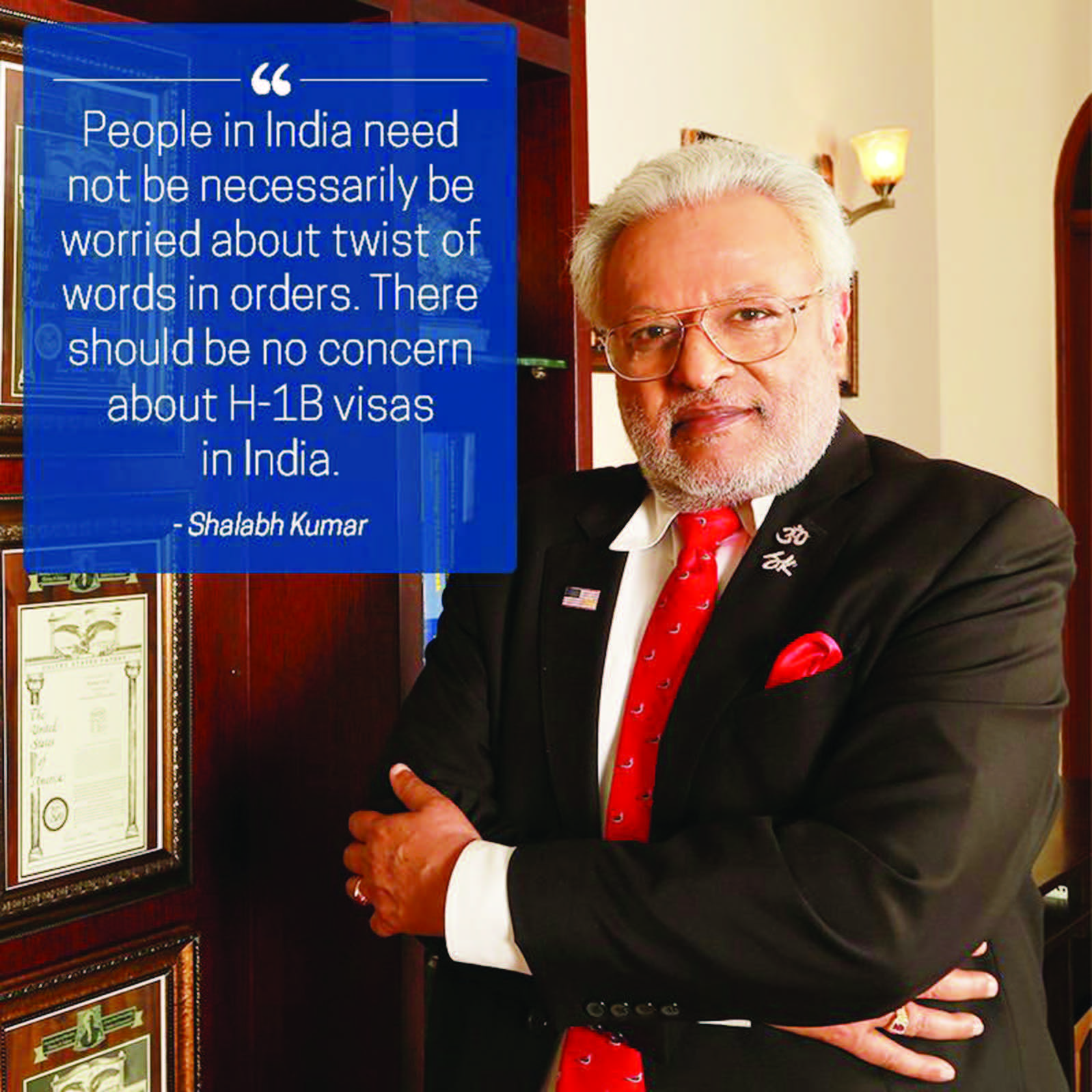
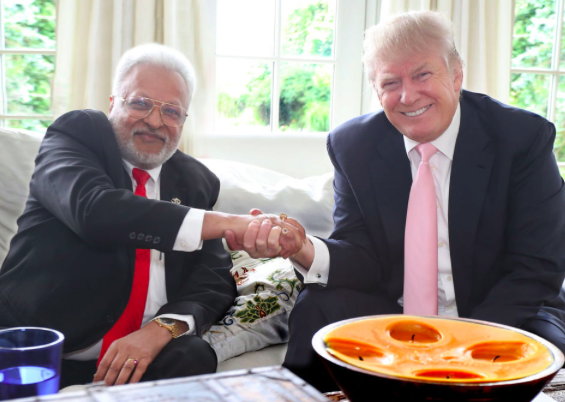
    The Trump administration has no plans to come out with an executive order on H-1B visas, a prominent Indian-American donor and supporter of the US President claimed today, contradicting media reports that have generated anxiety in India. “There will be a need of more H-1B visas. The number of people on H-1B from India is certainly going to increase,” Chicago-based Shalabh ‘Shalli’, Kumar and head of the Republican Hindu Coalition, told reporters at a news conference.

    Responding to a volley of questions, Kumar claimed that contrary to the reports in the media, there is no executive order being worked upon by the White House on H-1B visa. For the American economy to grow, IT would have to play an important role.

    “As such I visualize need of more IT workers in the US,” he said, adding that the US has huge shortage of IT workers which can be filled up only by Indian IT professionals. Of the view that the Trump Administration would be working to ensure that there is no fraud and abuse of H-1B visas, Kumar said he believes that the White House would work to eliminate country-quota towards allocation of green cards for legal permanent residents.

    “This would be of great help Indian IT professionals,” he said, adding that the current wait time for Indians to get a green card could be as many as 35 years.

    According to reports, President Donald Trump may soon crack down on US temporary work visas including the H-1B and L-1 visas that are used widely by Indian tech companies.

    The H1B visa is a non-immigrant visa that allows US firms to employ foreign workers in specialty occupations that require theoretical or technical expertise in specialized fields. The technology companies depend on it to hire tens of thousands of employees each year.

    During his campaign, Trump had promised to increase oversight of our H-1B and L-1 visa programs.

    Supporting the executive orders of Trump on immigration and visa ban, Kumar said he would prefer this to be expanded to other countries like Pakistan. Kumar said the US Government is currently reviewing the list of countries, and if Pakistan does not start co-operating with the US, there is very high probability of it being included in the list of visa ban countries. Pakistan needs to act against terrorism.

    “There cannot be any difference between what it says and what it does. Trump would not tolerate that,” he said. In response to a question, he did not altogether rule out the possibility of him becoming the next US Ambassador to India.

  • Republican Hindu Coalition supports Trump’s immigration order, demands ban on Pakistan, Saudi Arabia, and Afghanistan, too

    Republican Hindu Coalition supports Trump’s immigration order, demands ban on Pakistan, Saudi Arabia, and Afghanistan, too

    WASHINGTON (TIP): Republican Hindu Coalition expressed full support for President Donald Trump’s actions banning visas for seven Muslim countries. Trump had banned the admissions of all refugees for 120 days and citizens of seven Muslim-majority countries for 90 days. The countries banned include Iran, Iraq, Sudan, Somalia, Yemen and Syria and Libya.

    Chairman of the coalition Shalabh Kumar, a prominent Indian-American donor and supporter of Trump, said that the Trump administration was taking the steps in order to protect the US citizens from Islamic terrorism.

    “We applaud the Trump administration for taking this decisive move to protect our citizens from Islamic terror,” Shalabh Kumar said in a press release. “A firm stance against terror is one of the pillars of our organization and one of the central tenets of the Trump campaign, and we fully support our Commander-in-Chief taking the necessary steps to protect our country.”

    The Republican Hindu Coalition also demanded banning three more countries, including Pakistan, Afghanistan and Saudi Arabia.

    “While Americans do not discriminate, and this is a country that encourages legal immigration and celebrates the contributions that immigrants have made to our culture, it is about time we get serious about combating the dangers of terrorism on our shores,” said Kumar.

  • In shift, Donald Trump warns Israel against new settlements

    In shift, Donald Trump warns Israel against new settlements

    WASHINGTON (TIP): President Donald Trump on Feb 2 warned Israel that constructing new settlements “may not be helpful” to Middle East peace efforts, striking a tougher line with Israeli Prime Minister Benjamin Netanyahu’s government.

    Trump has been perceived as sympathetic to the settlements, which are considered illegal by most of the international community. Shortly before taking office, he vigorously criticized the Obama administration for not vetoing a United Nations Security Council measure condemning settlements.

    But in a statement Thursday, the White House said, “While we don’t believe the existence of settlements is an impediment to peace, the construction of new settlements or the expansion of existing settlements beyond their current borders may not be helpful in achieving that goal.”

    The White House said the administration “has not taken an official position on settlement activity” and the president would discuss the issue with Netanyahu when he travels to Washington later this month. The two leaders are scheduled to meet at the White House on Feb. 15.

    The US statement came hours after Netanyahu vowed to establish the first new West Bank settlement in over two decades “as soon as possible,” promising to make up for the court-ordered demolition of an illegal settler outpost. It was his latest step to expand Israeli settlement construction in the wake of Trump’s inauguration.

    Netanyahu repeatedly clashed with President Barack Obama during the Democrat’s eight years in office, and Trump has vowed to be a better partner for Israel. Following the U.N. vote, Trump tweeted, “Stay strong Israel, January 20th is fast approaching!” _ referring to the date of his inauguration.

    Trump has already appeared to slow his promises to move the US Embassy in Israel from Tel Aviv to Jerusalem – a promise often made by presidential candidates, but never carried out in office because of fears the move would inflame tensions in the region.

    Newly sworn-in Secretary of State Rex Tillerson spoke by phone Thursday with Netanyahu.

    The prime minister’s vow to establish new West Bank settlements came as Israeli security forces were completing the evacuation of Amona, where they broke into a synagogue to remove dozens of Israeli protesters who had barricaded themselves inside. Netanyahu’s pro-settler government had unsuccessfully tried to block the evacuation of Amona, but Israel’s Supreme Court rejected all appeals after determining the outpost was built illegally two decades ago on private Palestinian land.

    Speaking at a ceremony in the West Bank settlement of Ariel, Netanyahu expressed “great pain” over the removal of Amona. (AP)

  • Pakistan to file FIR against Hafiz Saeed

    Pakistan to file FIR against Hafiz Saeed

    A top official of the Pakistan government said on Wednesday that an FIR would soon be lodged against Jamaat-ud-Dawa (JuD) chief Hafiz Muhammad Saeed, currently in house arrest under an anti-terrorism law.

    The crackdown on the Mumbai attack mastermind and others was described as “cowardly” by assorted terror and militant groups, with Hizbul Mujahideen chief Syed Salahuddin saying it was “painful”. Minister Khurram Dastagir Khan said all state institutions were on board before action was taken against Saeed, adding, “The charges against him will be known in a few days.”

    Punjab law minister Rana Sanaullah said more activists of JuD and its front Falaha-i-Insaaniyat (FIF) would be booked soon. “We’re monitoring the activities of JuD and FIF workers. More activists will be detained under the fourth schedule of the anti-terrorism law,” Sanaullah said, telling reporters that Saeed’s Kashmir policy was at variance with Pakistan’s. “We won’t compromise on our national interest. Our policy on Kashmir is different from JuD’s,” the minister said.

    Syed Salahuddin issued a statement saying the arrest not only sent “a negative and disappointing message” to the people in “India-held Kashmir”, but also showed “Pakistan’s weak role in the ongoing freedom struggle” of Kashmiris. He urged the Pakistani government to revoke the detention, which led to a few pro-JuD demonstrations in Muzaffarabad in Pakistan Occupied Kashmir.

    “Kashmir’s freedom movement demands the Pakistani leadership rise above compulsions and fears and take a firm position. Saeed has always called the international community to break its criminal silence on Kashmir,” said Salahuddin, who also heads the United Jihad Council (UJC), a conglomerate of 12 terror groups.

    Pakistan army, which allegedly used Saeed and his militant outfits for years as proxies against India, has said his arrest was in national interest. October last, the Sharif government had informed the military leadership of Pakistan’s growing international isolation over failure to curb terrorists, and sought consensus on several key actions against non-state actors. Foreign secretary Aizaz Ahmed Chaudhry had then said that the principal international demands were for action against Masood Azhar and Jaish-e-Mohmmad, Hafiz Saeed and Lashkar-e-Taiba, and the Haqqani network.

  • UN report blames Pakistan for delay in resolution of Indus water issues with India

    UN report blames Pakistan for delay in resolution of Indus water issues with India

    Pakistan has neglected to resolve trans-border water issues and delayed presenting the cases of dispute with India to the Water Commission related to the Indus Waters Treaty, a United Nation Development Programme (UNDP) report said on Tuesday.

    The report titled “Development Advocate Pakistan”, released in Pakistan, said, “Pakistan’s negligence in conducting a sound analysis of trans-boundary water issues and delays in presenting the cases of dispute with India to the Indus Water Commission or the World Bank on the issues related to the Indus Waters Treaty have caused the issues to linger on and remain unaddressed.”

    “Pakistan has gone as far as calling the treaty an inefficient forum for resolving water issues, elevating the water issue to a “core issue” and including it in the composite dialogue. But India has refused to include the issue in the composite dialogue because it is not ready to discard the treaty,” the report said.

    “The treaty permitted India to create storage on the western rivers of 1.25, 1.60 and 0.75 million acre feet (MAF) for general, power and flood storages, respectively, amounting to a total permissible storage of 3.6 MAF,” it added.

    The report also claims that the 40-year-old Indus Water Treaty between India and Pakistan has been an outstanding example of conflict resolution but scarcity of water in the basin states since the early 1990s has brought the agreement under strain and its “survival appears weak”.

    “The treaty fails to address two issues: the division of shortages in dry years between India and Pakistan, when flows are almost half as compared to wet years, and the cumulative impact of storages on the flows of the River Chenab into Pakistan,” the UNDP report said.

    Wular Barrage and Kishenganga project on the Jhelum and Neelum rivers present a similar problem whereby water storage during the Rabi season is critical as flows are almost one-fifth of the Kharif season, according the report.

    Last week, Pakistan Prime Minister Nawaz Sharif met the World Bank Chief Executive Officer Kristalina Georgieva and raised the Indus Water Treaty dispute.

    Sharif expressed hope that a Court of Arbitration would solve the Indus Water Treaty dispute with India. New Delhi has requested the World Bank to appoint a ‘neutral expert’ to resolve the water-sharing disagreement.