Month: February 2017

  • American Carnage: Trump’s Road to Ruin

    American Carnage: Trump’s Road to Ruin

    The Trump presidency in the U.S. is less than two weeks old, but it is already clear that it represents an unusually fierce assault on civic, political, and moral values

    Shashank Joshi

    “President Trump is not an authoritarian leader. But the wall between populist demagogue and budding autocrat is less firm than we would like to imagine. It has been knocked down by countless leaders, such as Hugo Chavez, Vladimir Putin, and Recep Tayyip Erdogan. Like all populists, they have brought economic ruin and political turmoil. To quote President Trump’s inaugural: “American carnage”, says the author – Shashank Joshi.

    As a student of international politics, I can certainly suggest various ways in which U.S. President Donald J. Trump may be good for one country or another. From the vantage point of New Delhi, his focus on terrorism, his business interests in India, and his radical indifference to non-proliferation all present strategic opportunities. From my perch in London, I also understand why Theresa May, Prime Minister of the U.K., is aggressively courting the Trump administration. A trade deal with Washington would bolster the government’s hand in departure negotiations with the European Union, and American support for the North Atlantic Treaty Organisation remains crucial to Britain’s interests. This is all legitimate diplomacy, of course. If we work with those who imprison journalists (Turkey), shoot demonstrators (Iran) or ban political parties (Saudi Arabia) – feting their leaders, welcoming their capital, and cooperating with their soldiers and spies – then it’s difficult to make a strong case against engagement with a man who earned the votes of nearly 63 million Americans in a free and, barring Russian involvement, largely fair election.

    But as citizens, as lower-case ‘d’ democrats, as those with myriad ties of culture, kinship, and intellect with the United States and its institutions, the geopolitical dimension is not the only relevant one. The Trump presidency is less than two weeks old, but it is already clear that it represents an unusually fierce assault on civic, political, and moral values, far in excess of that which might have occurred under the most extreme alternatives, from Bernie Sanders on the hard left to Ted Cruz on the hard right. To call Mr. Trump a fascist is to trivialise the term and insult those who have lived under truly oppressive systems; but to insist that the President’s critics are hysterical, motivated by partisan animus, or crying wolf is to blind oneself to the evidence that is rapidly mounting.

    The I-me-myself President

    Most striking of all is the President’s extraordinary narcissistic personality disorder. Its most recent manifestation is his protracted obsession with the size of crowds at his inauguration. Mr. Trump despatched his press secretary to disseminate outright and easily disproved lies (“largest audience to witness an inauguration, period”), in the manner of the Iraqi information minister who famously insisted that American tanks, audible in the background, were nowhere near Baghdad in 2003. He then spent much of his speech to the Central Intelligence Agency (CIA) boasting of this, and went on to shut down the Twitter account of the National Park Service after it circulated dissenting photographs. Behaviour like this is better subject to psychiatry than political analysis.

    Then we come to the pathological fibbing. Mr. Trump, who began his political career by insisting that the U.S.’s first black President was a Kenyan-born Muslim, lies habitually and with disturbing ease, about matters both trivial and serious. He lied dozens of times in the past few weeks alone, claiming falsely that mass voter fraud explains Hillary Clinton’s higher number of votes, that the U.S. did not accept Christian refugees, and that his ‘Muslim ban’ was comparable to the Obama administration’s suspension of visa waivers. These “alternative facts”, to use the Orwellian term coined by the President’s adviser Kellyanne Conway, are demonstrably untrue. If a President lies on matters that can be fact-checked in seconds, is he likely to tell the truth on less visible matters of state?Moreover, when reporters call out these lies, they are repeatedly attacked as “fake news”, blacklisted and silenced at press conferences, and warned – in Mr. Trump’s own words – that they will “pay a big price”. A democracy cannot subsist on a diet of dishonesty.

    Militarisation and politicisation

    No less concerning is the damage being done to American institutions. Last week, the entire senior management of the State Department resigned en masse, in an unprecedented move. Hundreds of other diplomats are writing a dissent memo – like the so-called Blood Telegram from Dhaka in 1971 – on the Muslim ban. “This ban,” they write, “stands in opposition to the core American and constitutional values.” No surprise, then, that Mr. Trump has filled only 33 of 700 critical positions across the federal government. Meanwhile, National Security Advisor General Michael Flynn, who routinely tweets conspiracy theories and led campaign chants of “lock her up” targeting Ms. Clinton, is building up the most military-dominated National Security Council (NSC) staff of recent times. Eliot Cohen, a prominent neoconservative scholar who wrote a landmark book on the relationship between politicians and generals and served in the George W. Bush administration, warned: “A serious civil-military issue is emerging.”

    And atop this militarisation, there comes a remarkable act of politicisation. On Saturday, Mr. Trump issued another executive order that removed the chairman of the Joint Chiefs of Staff and the Director of National Intelligence as permanent members of the NSC’s apex Principals Committee. In their place came Stephen Bannon, his Senior Counselor – and co-author of the President’s dystopian inaugural address – as a permanent member of the committee, alongside the Secretaries of State and Defence. This move shocked former Defence Secretary Leon Panetta (“I’ve never seen it happen, and it shouldn’t happen”) and George W. Bush’s Chief of Staff Josh Bolten, who had barred Mr. Bush’s own political adviser Karl Rove from NSC meetings. More disturbing still is that Mr. Bannon is no ordinary political flack. He was head of the far-right, white nationalist website Breitbart News. He has complained about the number of Asians in Silicon Valley, cheered on a “historic struggle against Islam”, and published misogynistic and anti-Semitic headlines. It was surely Mr. Bannon who deliberately excluded mention of Jews from the White House statement on Holocaust Remembrance Day on Friday – like much else, entirely without precedent.

    Dealing without the dealmaker

    Finally, we come to the pivotal role of Mr. Trump’s son-in-law, Jared Kushner. It is Mr. Kushner, the President assures us, who will bring peace between Israelis and Palestinians. When British Foreign Secretary Boris Johnson sought clarity on the scope of the Muslim ban, it was Mr. Kushner, rather than the State Department, that he called. If Mr. Trump’s adult sons feel slighted, they can take consolation from the fact that they have been given control of a trust controlling their father’s vast business empire which the President refuses to divest from. As he still profits from it, this creates permanent conflicts of interest in foreign and domestic policy. Azerbaijan, Bahrain, and Kuwait have all booked rooms at the Trump International Hotel in Washington, D.C., effectively funnelling money to the President. Is this the government of the world’s largest democracy, or the Corleone family?

    None of this is normal. Not the sweeping cruelty of the Muslim ban, not the failed extortion of Mexico, not the press secretary printing out hostile tweets and flaunting them at a press conference, not the Attorney General being fired for upholding the law.

    By all means, haggle with the self-professed dealmaker. Perhaps he’ll stick to the agreement. Perhaps, as in his business dealings, he won’t. Either way, do not delude yourself that everything is fine. President Trump is not an authoritarian leader. But the wall between populist demagogue and budding autocrat is less firm than we would like to imagine. It has been knocked down by countless leaders, such as Hugo Chavez, Vladimir Putin, and Recep Tayyip Erdogan. Like all populists, they have brought economic ruin and political turmoil. To quote President Trump’s inaugural: “American carnage”.

    (The author is a Senior Research Fellow of the Royal United Services Institute in London)

    (This article is in British English)

  • Funding a clean polity: Crony capitalism needs a dirty political arena

    Funding a clean polity: Crony capitalism needs a dirty political arena

    Harish Khare

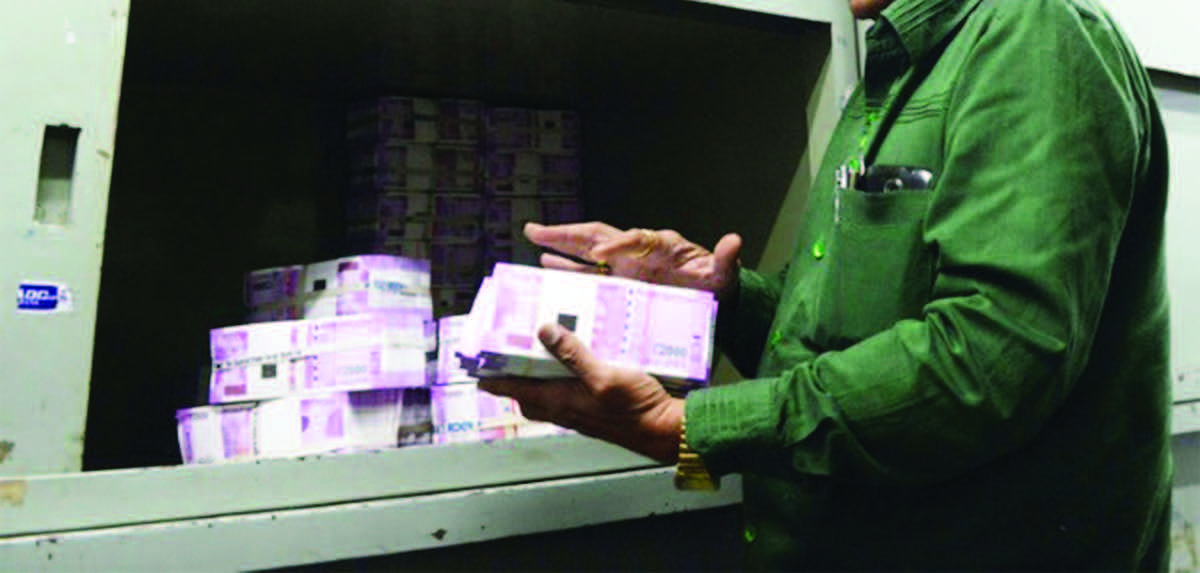
    “Today, our politics has become so divisive and toxic that any ‘reform’ becomes suspect. There is no ‘JRD’ today who would be able to tell the Prime Minister that he would be funding his political rivals.  There is no business house that does not seek a favour from the government of the day. This vulnerability induces moral timidity and financial chicanery. The unvarnished fact is that no corporate house can sanguinely acknowledge writing cheques for a political party’s treasurer. No businessman can afford to earn the wrath of the ruling party and incite a visit from that ubiquitous ‘ED’ or the CBI who invariably end up seizing ‘incriminating documents’. Even the most honest trader or contractor or entrepreneur remains vulnerable to the State’s minatory inspector”, says the authorHarish Khare.

    Sometime in early 1959, JRD Tata, India’s most respected and iconic entrepreneur, wrote to Jawaharlal Nehru that though his group, the Tatas, would continue to keep funding the Congress Party, he wanted to inform the Prime Minister that it would also be financing the newly established Swatantra Party. The Tata doyen told the Prime Minister that he found the Swatantra Party to be having a much closer appreciation of the needs of the business community; hence, he felt his group was obliged to extend whatever support it could to the Swatantra Party. Unperturbed, Nehru replied to JRD that he and his group were fully entitled to fund and finance whichever political activity they deemed worth their penny. As far as he was concerned, he had no doubt in his mind that the Swatantra Party had no future in Indian politics. Nehru was proved right: the Swatantra Party folded its tent within 15 years, though not without some spectacular successes in the 1962 and 1967 Lok Sabha elections.

    What neither Nehru argued nor JRD understood was that the Indian business community did not need a party like the Swatantra Party, a political outfit that believed in plain, simple, clean capitalism, whereas the Indian businessmen had thrived only under State patronage and its louche cousin, crony capitalism. Both before and after the 1991 reforms, the so-called entrepreneurs relied on political connections for their financial prosperity. Even now, the Indian State retains a very capricious capacity to mug any business house of its happiness. That is why the totally strange and inexplicable sight of a Ratan Tata making a pilgrimage to Nagpur to pay a ‘courtesy call’ on Mohan Bhagwat, the RSS boss man.

    All this needs to be recalled in order to contextualise Finance Minister Arun Jaitley’s attempt to cleanse the political party’s dirty financial stables. Over the years, all political parties have had access to huge and, that means, really huge -funds to finance elections and political activity. And, this means a less-than-honourable juggalbandi with the dishonest businessman. This juggalbandi has been at the core of all the ills and imperfections of Indian democracy. On the one hand, there rose- and, rose mightily -the houses of the Adanis and the Ambanis; the rise has been attributed to their ability to cosy up to political leaders. On the other hand, we have had the politicians with business links -the SK Patils, the LN Mishras, the Pramod Mahajans – having acquired prominence and clout within their own parties. Narendra Modi’s own ascendency in Gujarat can easily be traced to the ecology of institutionalised crony capitalism. And, by all accounts, the BJP had outspent many times over all its rivals in the 2014 Lok Sabha elections.

    No political party can pretend to have its hands clean, or even cleaner than the other. A handful of individual leaders may be able to claim a kind of personal honesty but none is entitled to a claim of ignorance about his/her party’s ability to access dirty money. No political party can claim to be morally superior when it comes to receiving – or extorting -funds from businessmen, big or small. In recent years, AAP has sought to put in place a somewhat transparent system but, of late, it too has found itself being accused of unclean transactions.

    At first glance, Mr. Jaitley has taken the first step towards forcing the political parties to clean up their account books. It is a political reform whose day has come. Not a day too soon. The middle classes, who have peremptorily colonised the sites of political argumentation, can be tempted to cheer this as a transformative moment. Yet, the temptation must be resisted-for three reasons.

    First, politics is an expensive business. A political party and its activities -mobilisation of support and dissent, sustenance of a large number of party activists, and, increasingly, the need for access to expensive technology of social media – cost quite a bundle. The bigger the party, the larger its establishment and larger the size of its baggage-and, the heftier its monthly bill. Second, the government – at the Centre and in the states – has not vacated its rent-seeking sites. There will always be temptation for a chief minister to use his coercive powers to generate easy money, for personal or political use. Political parties attract mostly the parasitic elements that come to the arena only to live off the taxpayer. And, third, there is no dismantling of crony capitalism. Consequently, the unclean and unethical businessman would continue to seek out the unclean and unethical politician. The businessman’s greed and the politician’s rapacity work in tandem.

    Nonetheless, a beginning has been made. Still, it would be reassuring to know that the Finance Minister’s initiative was not simply motivated by political cleverness, aimed at grounding the BJP’s rivals – just as some suspect that demonetisation was primarily driven by a desire to ‘pauperise’ the other political parties. That calculation seems to be coming unstuck in Uttar Pradesh. The Modi government has incurred a serious trust deficit.

    Political parties in India will continue to have a legitimate need for funds, both for and beyond electioneering activities. And, it is perfectly legitimate for a business house or a rich businessman to ‘reward’ a political party or leader on account of a platform or ideology. In fact, even before Independence, most Indian business leaders willingly and cheerfully funded Mahatma Gandhi’s establishment. After 1947, many regional businessmen were inclined to fund, finance and support regional political outfits.

    Today, our politics has become so divisive and toxic that any ‘reform’ becomes suspect. There is no ‘JRD’ today who would be able to tell the Prime Minister that he would be funding his political rivals. No businessman can afford to earn the wrath of the ruling party and incite a visit from that ubiquitous ‘ED’ or the CBI who invariably end up seizing ‘incriminating documents’. Even the most honest trader or contractor or entrepreneur remains vulnerable to the State’s minatory inspector.

    Mr. Jaitley’s budget has so ordained that the political parties – including the BJP – would have to rejig their financial connections. Transparency in public life is a much-desired goal, but it should not be used to frogmarch the rivals out of the political arena. New norms of a level-playing field will need to be institutionalised. Otherwise the Jaitley remedy may be worse than the disease.

    (The author is editor in chief of Tribune group of newspapers)

    British English

  • An incremental budget: welcome thrust on rural infrastructure

    An incremental budget: welcome thrust on rural infrastructure

    The Union Budget for 2017-18 is in line with the BJP’s changed political stance of wooing the poor and shedding its “suit-boot-ki-sarkar” image. The Modi government has changed track and turned to the side where the numbers are – the poor, farmers and the middle class -which makes sense electorally. This is what every party tries to do – look credible on welfare and capture the constituency of the deprived. Congress and BJP budgets frequently look similar. How to deliver the dole is the real challenge and the switchover to a technology-based foolproof system is being unnecessarily delayed.

    “Good Politics makes for Bad Economics” and perhaps vice-versa runs the age-old adage.  Throughout history and more perceptibly in recent times, politicians have tried with mixed results, to prove the adage wrong.  The Union Budget coming midway through the tenure of the NDA Government makes an attempt at blending good politics and economics, with the fond hope that positive and encouraging results of this effort will be visible in the not too distant future.” – Ashwani & associates, Ludhiana, Punjab

    India’s economy moves mainly on four wheels-government spending, consumption, exports and private investment. This Budget focuses only on the first two. Exports have lost momentum due to a slowdown in Europe and the US. The situation can only worsen as Western leaders, including President Trump, increasingly turn protectionist. The windfall from oil has gone into refurbishing the government finances and good times may end if crude prices keep inching up. India’s companies, even the cash rich, are not investing -here or abroad. Bank credit offtake is at its lowest in decades. Jaitley has pumped more money into banks. He had no option other than stimulating demand with government expenditure.

    Welfare carries its costs: more government, more taxes. Worse, the extended hand does not reach the needy. Since infrastructure is still not ready for direct cash transfers, the leaky system persists to the advantage of the vested interests. Poverty reduction efforts have drained the exchequer over the years. Competitive populism has led to cuts in funds for educational and health institutions which the poor access. It is not enough to say “farmers’ income will be doubled in five years” without answering how and when. Incomes can rise if either farm inputs cost less or farm products fetch higher prices. The government is showing them the way to new markets. Job creation through MNREGA is welcome but Jaitley need not take much pride in making the “highest-ever” allocation for this UPA scheme. Instead the focus should be on plugging the leakages. MNREGA, say critics, is a needless burden on the taxpayer and a 2013 government audit found fault with its implementation.

    Ideally, in keeping with economic reforms, the government should limit itself to taking care of essentials like education, health and infrastructure and make institutions deliver. Every rupee of the taxpayer’s money must be accounted for. Modi has abandoned his idea of a “minimum government”. A lean efficient government with vibrant institutions is possible but no party, it seems, needs it as there are activists to adjust and the downtrodden to look after. Why it should take this long to scrap the FIPB (Foreign Investment Promotion Board) is a mystery. States have many such white elephants that feed on limited resources.

    Despite a questionable government approach the budget has a lot to commend itself. The budget’s rural, MSME, housing and infrastructure thrust would hopefully perk up consumption and employment generation. The grant of infrastructure status to affordable housing will help lower the costs for builders and attract buyers, while the steps to reduce the capital gains tax for property sellers may wake up the sleepy real estate sector. Individuals and MSMEs have been granted tax relief, possibly to compensate them for the pain of demonetisation, inflicted suddenly and thoughtlessly on an economy running smoothly. What is not broke need not be fixed.

    Honest taxpayers and tax evaders should be treated differently. It is not enough to talk about a law to seize assets of economic offenders. Make it happen. Some states have already taken the lead. The drive against black money has kept a window open for political parties to let in nameless contributions. The 2,000 limit is open to as much misuse as the one for Rs 20,000. Jaitley has shied away from cleaning up an area notorious for peddling black money. There is a known route of laundering unaccounted cash through P-notes which remains unplugged.

    Vote politics has weighed on priorities. Jailtey has not hurt any section but lost an opportunity for hard decisions. It is an incremental, more-of-the-same budget that does not inflict pain on anyone and is fiscally sound but falls below expectations of those looking for something transformative. Unexciting, Mr. Jaitley.


  • Can a Racialist regime break the bond?

    Can a Racialist regime break the bond?

    A multiracial, multicultural group of Americans at No Frills Grill & Sports Bar in Fort Worth, Texas , February 3, 2017Can a Racialist regime break the bond? Photo caption: A multiracial, multicultural group of Americans at No Frills Grill & Sports Bar in Fort Worth, Texas , February 3, 2017

  • ZEE ALWAN & ZEE AFLAM Launched

    ZEE ALWAN & ZEE AFLAM Launched

    On January 19th, 2017 ZEE TV Americas held a press conference/community event in New Jersey for the launch of 2 New Networks – ZEE ALWAN & ZEE AFLAM targeting the Arab audiences in the USA. ZEE ALWAN is An Indian Drama & Entertainment Channel and ZEE AFLAM is A Bollywood Channel packaged in Arabic for the Arab community.

    Currently there are over 500,000 Arab households in the United States representing a 91%increase since 1990 and the top cities with highest Arab-American population are New Jersey/New York, Detroit and Los Angeles. Also, Dish & Sling have the biggest base of Arabic subscribers and the biggest library of Arabic programming in the United States.

    Amit Goenka, CEO, International Broadcast Business said “In our constant endeavor to expand our business beyond the core South Asians – launch of Arabic channels in USA in the Arabic base pack is another step in that direction. Bollywood enjoys unparalleled popularity among Arab audiences across the world and this ethnicity has been one of the fastest growing segments in USA”.

    Sameer Targe, CEO of Zee TV Americas spoke about the growing interest of Bollywood & Indian content among Arabs and the launch of Zee ALWAN and Zee AFLAM is our first step to cater to the masses and bridge the language gap. He also thanked the Arab community and Dish Network for being part of the event.

    Amira Nour, Product Manager of ZEE Channels in USA shared her vision to see Zee Alwan & Zee Aflam transforming the face of Arabic entertainment and revolutionizing the Arabic viewership. Nour promised to continue her efforts in promoting Zee and catering to audience taste. In conclusion, Nour thanked the audience for their participation and urged them to stay engaged in shaping the future of Zee Alwan & Zee Aflam channels.

    Event was highlighted by the wonderful performances of prominent Eastern Folk and Oriental Dancing, as well as the traditional Saidi Dance performed by Yasser Darwish – an Egyptian Folklorist. The audience appreciated the performances with great applause. The glittering night continued on with a traditional Middle Eastern dinner and the guests were all given ZEE Alwan and ZEE Aflam imprinted Flask gift sets to commemorate the event. Both channels are available on Dish & Sling. ZEE Alwan on Channel no. 660 and ZEE Aflam on Channel no. 661.

    (Press Release)

  • Dr. Neeta Jain sworn in as Democratic District Leader for Assembly District 25

    Dr. Neeta Jain sworn in as Democratic District Leader for Assembly District 25

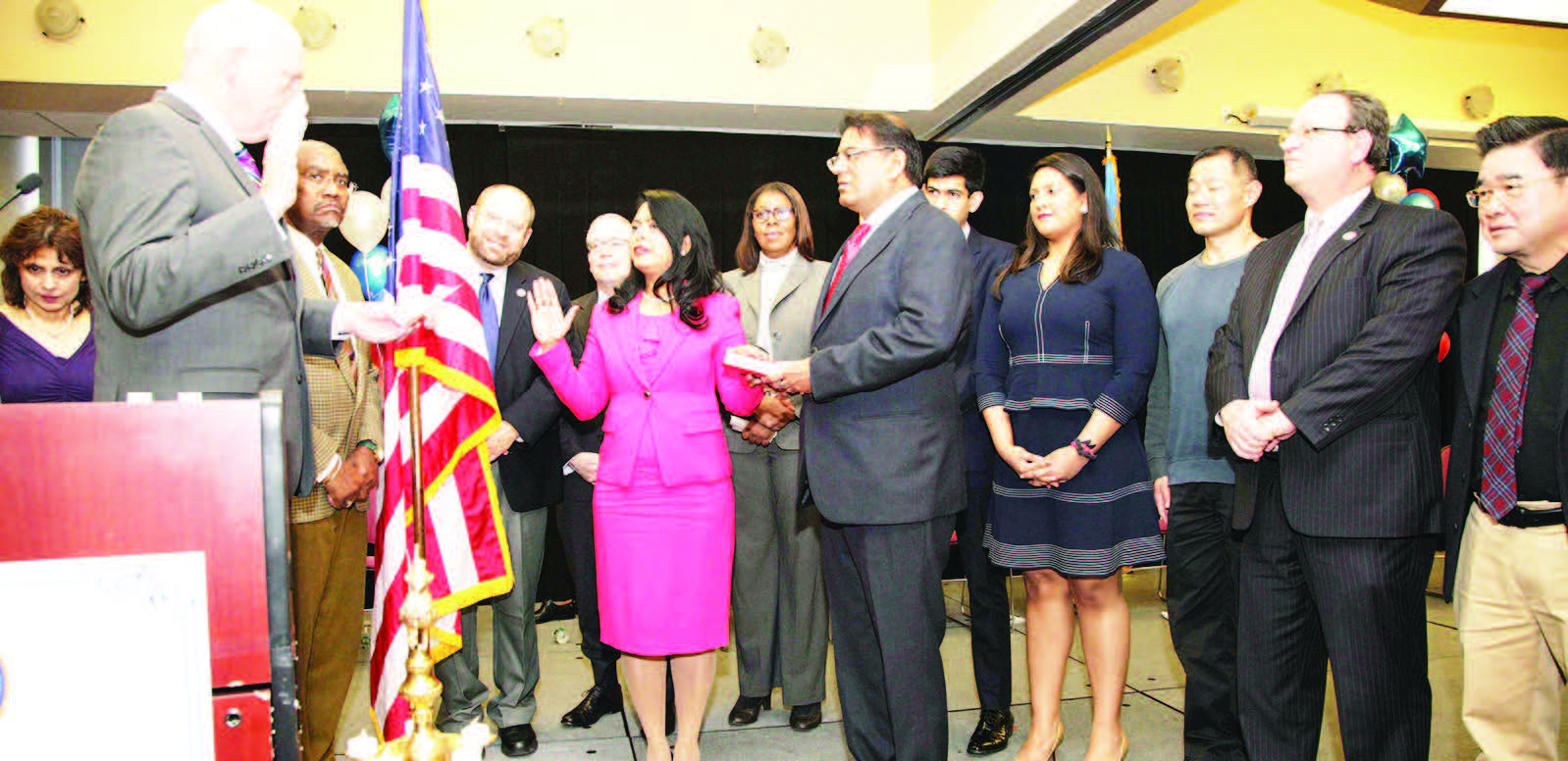
    NEW YORK (TIP): New York City Democrats were at Queens College on January 21st, 2017 for the swearing in ceremony of Dr. Neeta Jain as the Democratic District Leader for Assembly District 25, Part B which includes Flushing, Kew Gardens Hills, Hillcrest, and Hillside Avenue. Celebrity broadcaster and activist Renee Mehrra was the emcee of the prestigious event. Over 400 people attended the ceremony which included  Dr. Jain’s constituents, civic leaders, members of the South Asian community and Queens district leaders.

    The ceremony opened with the presentation of colors by Francis Lewis High School JROTC color guard commanded by Sergeant Major Charles Cabrera. Dr. Uma Mysorekar, President of the Hindu Temple Society of North America, recited the auspicious opening prayer to Lord Ganesha and Anandita Guha performed Ganesha Vandhana, a traditional Indian dance honoring Lord Ganesha.

    Dr. Jain joined the Queens community over 20 years ago and has a long history of serving the community both socially and politically. Her core values of humanity and peace have fueled her passion to serve the community. She has also represented the South Asian community and worked hard to give them a voice in politics. Due to her hard work as a team member of Diwali Stamp Project and collaboration with other officials and organizations, the US Postal Service launched a forever stamp for the Indian New Year Diwali in 2016. She would like to further advocate for the Hindu Holidays Campaign and continue to petition for Diwali as a religious holiday in New York City schools calendar.

    Dr. Jain’s passion for the South Asian community extends to all in the community as is evidenced by the support from officials and district leaders of all faiths and backgrounds. Diversity and inclusiveness was a common theme among the speakers at the event. Keynote Speaker, Congressman Crowley chairman of the House Democratic caucus administered the oath of office to Dr. Jain over the Jinvani, the sacred book of Jains. Dr. Jain was recognized for her laurels and accomplishments by Congressman Gregory Meeks, Queens Borough President Melinda Katz, NYC Public Advocate Letitia James, NYC Comptroller Scott M. Stringer as well as NYC Council members Rory Lancman, Barry Grodenchik and Peter Koo. New York State Governor Andrew Cuomo and Lt. Governor Hochul send her congratulations and good wishes for her new endeavors. Mayor De Blasio, who could not be there in person, sent a congratulatory letter to Dr. Jain applauding her for her civic work. Attorney Ravi Batra and Harish Thakkar congratulated Dr. Jain on behalf of the Indian American community.

    In her speech, Dr. Neeta Jain made a commitment to address issues of her district including healthcare, education, women and senior citizens. The program concluded with entertainment from Sandra Productions, Korean American Association of Queens and the NYC Bhangra Group.

  • Indian American writer Bharati Mukherjee dies at 76

    Indian American writer Bharati Mukherjee dies at 76

    Bharati Mukherjee, whose works examined the Indian American immigrant experience, died on Saturday, January 28, at the New York University Hospital.

    Mukherjee was suffering from rheumatoid arthritis in the past few years. She suffered from cardiomyopathy, said her husband, author Clark Blaise in an official statement.

    “She begged for death,” Blaise was quoted by The San Francisco Chronicle as saying. “She was really not in pain as such, but she realized there was no turning around.”

    The paper described the author as the “Chronicler of Indian American life.”

    The Kolkata-born Mukherjee was a Professor Emerita in the department of English at University of California, Berkeley, and her works chronicled the lives of Indians on the subcontinent and in the United States.

    Mukherjee graduated from the University of Calcutta in 1959 and did Master’s from the University of Baroda. She traveled to the United States in the 1960s. She earned a master of fine arts degree from the University of Iowa Writers’ Workshop in 1963. Later she pursued a doctorate in comparative literature in 1969, Iowa.

    Mukherjee married Blaise, a Canadian American author, in 1963. They had been together for 53 years.

    Mukherjee is best known for her 1989 novel, Jasmine, which is about a young Indian Punjabi woman in the United States, who, trying to adapt to the American way of life in order to be able to survive, changes identities several times.

    Mukherjee is also known for her 1977 memoir, Day and Nights in Calcutta, which she co-wrote with her husband.

    Her other books include The Tiger’s Daughter (1972), Wife (1975), Darkness (1985), Wanting America: Selected Stories (1995), Leave It to Me (1997), Desirable Daughters (2002), The Tree Bride (2004) and Miss New India (2011).

    Mukherjee became a US citizen in 1989, the year she joined at UC Berkeley and after retiring from there in 2013, she and Blaise moved to New York, where they have had a home for 35 years. Before starting her stint at the UC Berkeley, the celebrated writer had a teaching career with several institutions including McGill University, Skidmore College, Queens College and City University of New York.

    In addition to her husband, Mukherjee is survived by their son Bernard. The couple’s other son, Bart, died last year at age 51.

  • Indian-American lawmakers slam RHC

    Indian-American lawmakers slam RHC

    Indian-American lawmakers have slammed the US-based Republican Hindu Coalition for supporting President Donald Trump’s executive order on immigration, which they alleged takes the country backwards “towards dark times”.

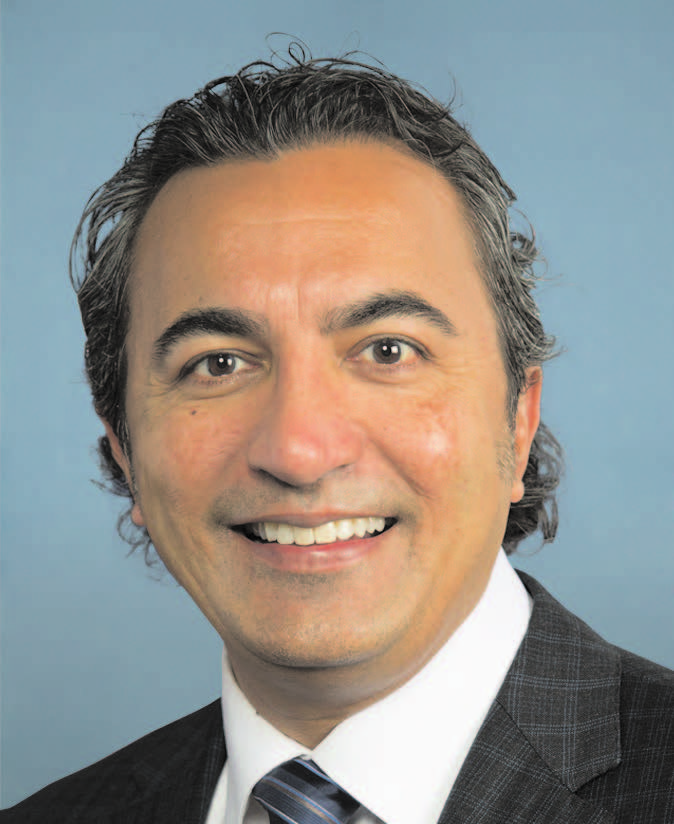
    “As the most senior Indian-American member of Congress, I believe that Donald Trump’s executive order does not reflect who we are as Americans,” Ami Bera, a three-time Congressman, said.

    “The actions of the Republican Hindu Coalition (RHC) on Wednesday do not reflect the breadth and diversity of the Indian-American community, or our diaspora,” he said in a rare criticism of an Indian-American organization related to the Republican Party.

    Bera, along with three other Indian-American lawmakers, vented out his anger against the Coalition. The Coalition has supported Trump’s executive order on immigration and refugees.

    “We applaud the Trump administration for taking this decisive move to protect our citizens from Islamic terror,” its chairman Shalabh Kumar said on Tuesday.

    The executive order signed on Friday, indefinitely barred Syrian refugees from entering the US, and blocked citizens of seven Muslim-majority countries – Iran, Iraq, Somalia, Sudan, Syria, and Yemen – for 90 days.

    Bera said it was very difficult for people of Indian origin to immigrate to the US before 1965, “and this order takes us backwards towards that dark time.”

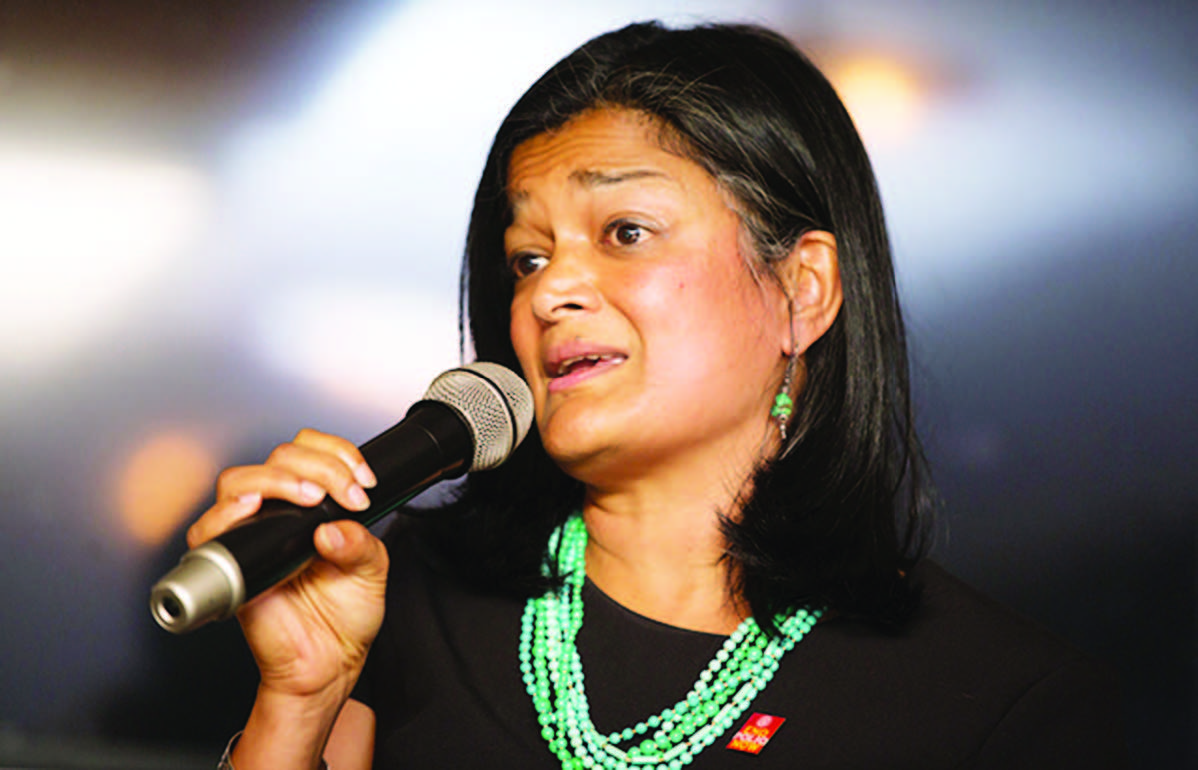
    Congresswoman Pramila Jayapal said the Coalition does not represent them. “As Indian-Americans, we believe deeply in pluralism, in freedom of religion, in freedom of speech and in a democratic diverse society.”

    “To them, I would say, shame. Shame for trying to divide the Indian-American community.

    As a Hindu, I can tell you that this group does not represent the much larger Indian- American community that honor our birth countries commitment to religious freedom and democracy,” Jayapal said asserting that Indian-Americans “will not be bullied” by this president.

    “I call on our communities to condemn and resist these executive orders,” Jayapal said. Congressman Raja Krishnamoorthi termed the executive order an assault on Constitution which “only serves to divide Americans, not unify them.

    It is no longer time to agonies but to organize. It is time to do everything we can to oppose this executive order,” he said.

    Congressman Ro Khanna said, “We cannot allow policies to exist that are not consistent with our founding ideals and values. I swore in on the Constitution, and will always stand up for Constitutional principles.”

    Former Assistant Secretary of State for South and Central Asian Affairs Nisha Desai Biswal said, “This executive order does not make us safer; it imposes the most severe of burdens on the most vulnerable among us.

    It goes against our responsibilities from the Geneva Conventions and poses an unjust, un-American and what we believe to be an unconstitutional ban on immigrants and refugees,” Biswal said.

  • Indian Consulate, NY to host first outreach event of the Year in New Jersey

    Indian Consulate, NY to host first outreach event of the Year in New Jersey

    NEW YORK CITY (TIP): The Consulate General of India, New York will host the first outreach event of 2017 on 7th February in TV Asia in Edison, New Jersey. There will be a session ‘Ask your Consul General’ and the event will be telecast live.

    The program will begin at 6:30 pm with meet and greet followed by welcome address and introduction by Mr. H. R. Shah, Chairman and CEO of TV Asia. Next, Consul General Ambassador Riva Ganguly Das will address the gathering. After introduction by delegation (Nationalized and Private Banks, Tourism office, Chambers of Commerce, and Air India among others) there will be a Live Q&A session. The floor will be open for the viewers of TV Asia who will have the opportunity to ask questions.

    With an aim to strengthen ties with the local Indian Community in the ten states under the jurisdiction of The Consulate General of India, New York, the Consulate has been organizing outreach programs in different cities since 2015 for the Indian community on consular, economic, cultural, banking and tourism matters. The Outreach program provides a platform to the community to know more about the activities of the Consulate as well as other economic houses. For more information please visit: www.indiacgny.org

  • International Fashion Designer Mac Duggal Makes NYFW Debut

    International Fashion Designer Mac Duggal Makes NYFW Debut

    Mac Duggal’s First NYFW Show to be Presented in Association with Arts Hearts Fashion

    NEW YORK (TIP): Mac Duggal, LLC will stage its first ever New York Fashion Week show with its Fall/Winter 2017 collection. This premiere showing will happen at The Angel Orensanz Event Space located at 172 Norfolk Street in New York City on Saturday, February 11, 2017 from 4 – 6 pm.

    Sponsored by Arts Hearts Fashion, the runway show and cocktail reception will feature the work of International Fashion Designer Mac Duggal.

    Attendees will get a first-hand look at the Fall/Winter 2017 collections. Mac Duggal’s designs have been previously covered by prestigious publications including WWD, Elle, and Seventeen, coveted by A-list celebrities such as Eva Longoria, Khloe Kardashian, Carrie Underwood, Kelly Clarkson, Mary J. Blige and Carrie Ann Inaba and is the most represented designer on the world pageant stage.

    Among the distinguished designs that Mac will be showing is the celebrated Fabulouss! line. Mac’s vision for Fabulouss was to create a prom collection for plus-sized teens, who often go unrepresented in the fashion industry. Since its beginning the Fabulouss line has become the gold standard in plus size clothing for those seeking a full-figured option. Fabulous designs, unlike other plus size dress alternatives, are created to not only fit but compliment a full-figured silhouette.

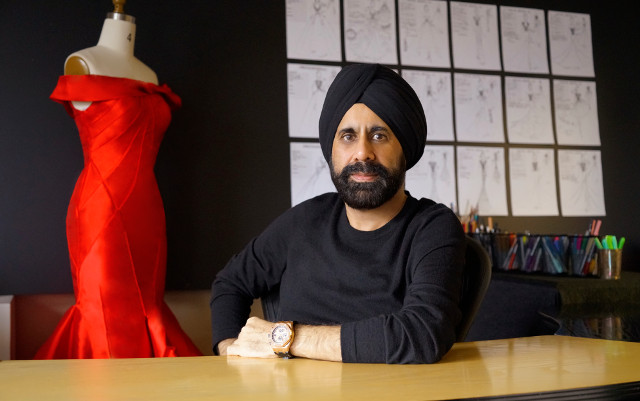
    ABOUT MAC DUGGAL: Mac Duggal’s enthusiasm for women’s fashion began with the merging of the colorfully rich designs of India’s royal history and opulent traditions. His early creations, mixing a classic silhouette and design esthetic with a contemporary sophistication, have made Mac Duggal the leader in the Prom industry.

    Mac continued his success story by expanding his collection to 12 distinct social occasion lines. Mac’s success is highlighted by the many awards throughout his celebrated career. Most recently was his induction into the Smithsonian museum, Family of Voices exhibit, focusing on successful entrepreneurs in the United States. The Mac Duggal brand has transformed into a highly sought after label culminated by their participation in New York Fashion Week.

    Mac Duggal is about making something effortless, something timeless, something exceptional. Exceptional designs mean impeccable construction using the finest fabrics to achieve the perfect fit. Today, Mac presents a collection of classic designs curated with a youthful sophistication that both marks the moment and redefines tomorrow.

    To view the collections please visit www.MacDuggal.com.

    For more information please contact media@macduggal.com


  • Two Indian American authors make it to Wellcome Book Prize 2017 longlist

    Two Indian American authors make it to Wellcome Book Prize 2017 longlist

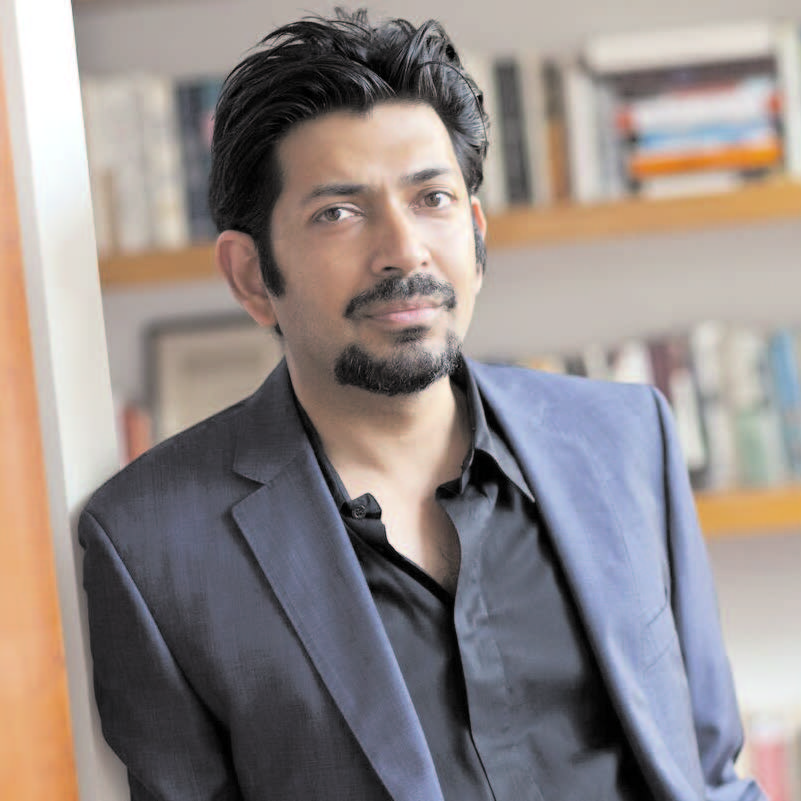
    NEW YORK (TIP): Two Indian Americans – Dr Siddhartha Mukherjee and late Stanford neurosurgeon Dr. Paul Kalanithi were among those longlisted for 2017 Wellcome Book Prize.

    Dr Siddhartha Mukherjee

    Siddhartha Mukherjee is a cancer physician and researcher, a stem cell biologist, and a cancer geneticist. He is the author of ‘The Laws of Medicine’ and ‘The Emperor of All Maladies: A biography of cancer’, which won the 2011 Pulitzer Prize in General Nonfiction and the Guardian First Book Award.

    Siddhartha Mukherjee was longlisted for his non-fictional work “The Gene: An Intimate History,” which was published in May 2016. The Gene’ is an epic, moving history of a scientific idea coming to life. The story of the gene begins in an obscure Augustinian abbey in Moravia in 1856, where a monk stumbles on the idea of a ‘unit of heredity’. It intersects with Darwin’s theory of evolution, and collides with the horrors of Nazi eugenics in the 1940s.

    Late Stanford neurosurgeon Dr. Paul Kalanithi

    Paul Sudhir Arul Kalanithi, who died of lung cancer in March 2015, was named to the list for his memoir, “When Breath Becomes Air,” which was released posthumously in February 2016.

    Paul Kalanithi was a neurosurgeon and writer. At the age of 36, on the verge of completing a decade’s training as a neurosurgeon, Paul Kalanithi was diagnosed with inoperable lung cancer. One day he was a doctor treating the dying, the next he was a patient struggling to live.

    ‘When Breath Becomes Air’ chronicles Kalanithi’s transformation from a medical student asking what makes a virtuous and meaningful life into a neurosurgeon working in the core of human identity – the brain – and finally into a patient and a new father.

    The 2017 longlist of 12 books was selected by a judging panel chaired by celebrated Scottish crime writer Val McDermid, alongside Simon Baron-Cohen, Gemma Cairney, Tim Lewens and Di Speirs. The Wellcome Book Prize celebrates the topics of health and medicine in literature. It awards£30,000 each year to the winning author, and aims to stimulate interest and debate about medical science through books and reading. The prize crosses genres: fiction and non-fiction are both eligible, so its shortlists can include biography, crime, historical fiction, current affairs, sci-fi and more.

    The shortlist for the prize will be announced at a press conference on Tuesday 14 March at the London Book Fair. The winner will be announced at an evening ceremony on Monday 24 April at Wellcome Collection.

  • Indian American charged with impersonating US Tax Official: Abhijeetsinh Jadega of Miami, Florida, faces 12-count indictment

    Indian American charged with impersonating US Tax Official: Abhijeetsinh Jadega of Miami, Florida, faces 12-count indictment

    MIAMI, FL (TIP): A 29-year-old Indian American man and another person have been charged with pretending to be US tax officials and falsely representing victims from the department to pay money to their bank accounts, according to officials.

    Abhijeetsinh Jadeja and Rachel Jean Rorgen (41), both residents of Florida, were charged on Friday and they face 12-count indictment, including conspiracy to commit wire fraud, possessing fifteen or more unauthorized access devices and identity theft.

    According to Southern Florida federal prosecutor Wifredo A. Ferrer, Jadeja made phone calls to his alleged victims making them believe that they owed money to the government and made them send money to bank accounts controlled by him and his co-conspirators. The transactions happened between January 2014 and March 2016. Jadeja and Roragen’s co-conspirators impersonated US government officials including Internal Revenue Service (IRS) during telephone calls.

    The case is being prosecuted by Assistant US Attorney Daya Nathan and it is not clear if this arrest was related to Mumbai call center scam that cheated at least 15,000 Americans for more than $250 million.

  • Indian American actor Kal Penn raises thousands of dollars for Syrian refugees

    Indian American actor Kal Penn raises thousands of dollars for Syrian refugees

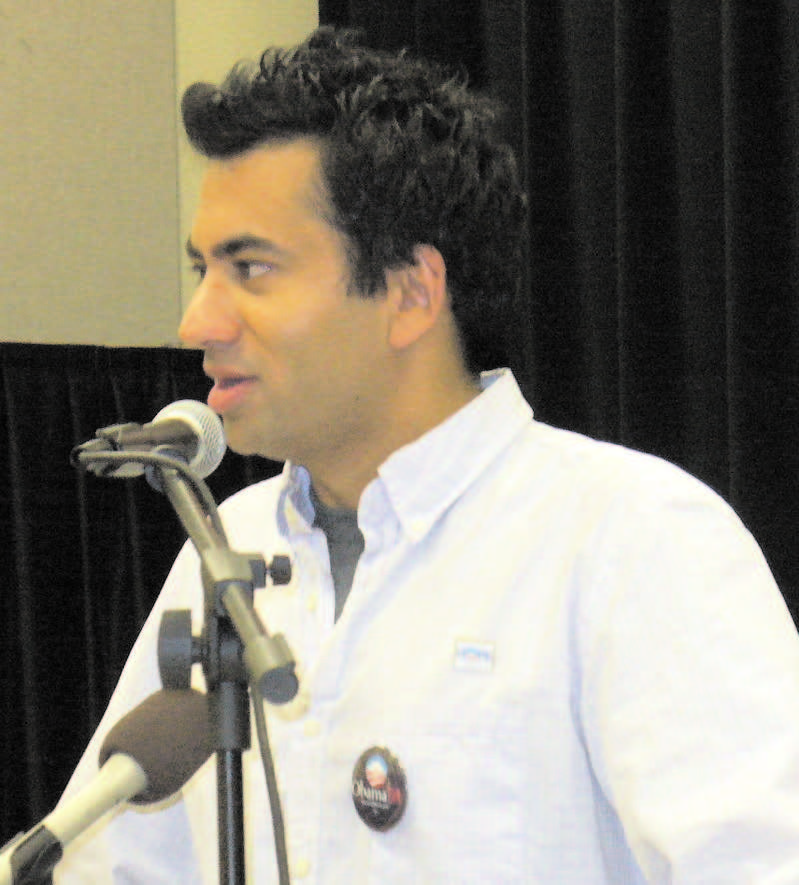
    NEW YORK (TIP): Indian American actor Kal Penn launched a fundraising campaign to aid Syrian refugees after being asked to leave the US by an online troll. The 39-year-old “House” star launched a Crowdrise.com appeal to help those left stranded by President Donald Trump’s weekend executive order to keep Muslim travelers from seven countries around the world out of America. “To the dude who said I don’t belong in America, I started a fundraising page for Syrian Refugees in your name,” Penn tweeted on Saturday, January 28.

    “I just want to keep it short and let you know that so far, you have raised a total of $813,533 & counting for Syrian Refugees through International Rescue Committee (“in the name of the dude who said I don’t belong in America”, haha)! I’m so speechless. Thank you for continuing to share our stories on social media for folks who would like to contribute. More than 20,443 of us have joined together to donate. To borrow a phrase from a friend, this is obviously about so much more than any one of us. Thank you, and keep it up! Wonder how high we can get this number”, Penn wrote on the online fund raising website on February 2.

    The funds raised would go to the International Rescue Committee.

    Kalpen Suresh Modi, better known as Kal Penn, was born to Indian parents in New Jersey. He’s starred in several popular TV shows like House M.D., How I Met Your Mother and the Harold and Kumar movies. In 2013, President Obama appointed Penn to serve on the President’s Committee on the Arts and Humanities.

  • Two Indian American Women named ‘Faith leaders to watch in 2017’

    Two Indian American Women named ‘Faith leaders to watch in 2017’

    WASHINGTON (TIP): Suhag Shukla, Executive Director, Legal Counsel, and co-founder of the Hindu American Foundation (HAF), and Sapreet Kaur, Executive Director of Sikh Coalition have been named among twelve “faith leaders to watch in 2017” by the Center for American Progress.

    CAP says, “Shukla has positioned HAF as a strong voice in the national debate about the separation of church and state, consistently speaking out about issues of Hinduphobia and the rights of religious minorities. Prioritizing legal advocacy, HAF regularly weighs in on cases related to religious discrimination and accommodations. Educating the Hindu American community on their rights regarding religious liberty is a core part of this work.”

    About Kaur CAP says, “Since starting as the Sikh Coalition’s executive director in 2009, Sapreet Kaur has transformed the organization into a large and visible civil rights organization that provides legal defense and advocates on issues of hate crimes, racial and religious profiling, safe schools, employment discrimination, and religious liberty.

    @sikh_coalition national ED Sapreet Kaur

    Shedding a light on the lesser-recognized faith, in 2013, Kaur was the first Sikh to speak at a Presidential Inaugural Prayer Service. In 2016, Kaur and her team launched the groundbreaking Sikh Project, a collection of photographs of diverse Sikh Americans that complicates the narrative and sparks conversation about what it means to be American.”

    Other faith leaders recognized by CAP include: Amani Al-Khatahtbeh (MuslimGirl), April Baskin (Audacious Hospitality), Rev. Susan Chorley (Unitarian Universalist Urban Ministry/Exhale), Rev. Michael Curry (Episcopal Church), Rev. John C Dorhauer (United Church of Christ), Rev. Cedric Harmon (Many Voices: A Black Church Movement for Gay & Transgender Justice), Tamar Manasseh (Mothers Against Senseless Killing), the North Carolina clergy advocating for transgender rights, Pastors for Texas Children, and Rev. Allyson Robinson (the first openly transgender Baptist minister).

  • Ashok Amritraj Appointed UN in India Goodwill Ambassador for Sustainable Development Goals

    Ashok Amritraj Appointed UN in India Goodwill Ambassador for Sustainable Development Goals

    Award-winning Hollywood film producer and Wimbledon tennis player, Ashok Amritraj has been appointed the United Nations in India Goodwill Ambassador for the Sustainable Development Goals (SDGs). Chairman and CEO of the Hyde Park Entertainment Group, Mr. Amritraj is the first Ambassador for the UN in India.

    An internationally-renowned iconic filmmaker, Ashok Amritraj has made over 100 films during the span of his 30-year extraordinary career garnering global acclaim as well as worldwide revenues in excess of $2 billion. He has been a pioneering force in bridging India and Hollywood through film and media.

    Accepting the honor, Mr. Amritraj said “I look forward to working with the United Nations in India to amplify awareness about the SDGs. It is a tremendous opportunity that brings together my personal desire to serve the country of my birth, and my passion to leverage the power of the media for the creation of diverse, socially-relevant content”.

    Welcoming Mr. Amritraj to the UN Family, Yuri Afanasiev, UN Resident Coordinator said, “We look forward to working with Mr. Amritraj as a powerful advocate for the SDGs, and to his support in showcasing innovations and cutting-edge solutions to development challenges that are being generated in India”.

    A passionate believer in the power of the media to effect social change, Mr. Amritraj produced and hosted the acclaimed series, ‘Chance of a Lifetime’ in partnership with the UNHQ in which young filmmakers from Asia competed to create original, short stories highlighting issues related to water, HIV/AIDS, gender equality, migration and education. The winners were feted at the Cannes Film Festival.

  • New York Asian Women’s Center Changes Name to Womankind

    New York Asian Women’s Center Changes Name to Womankind

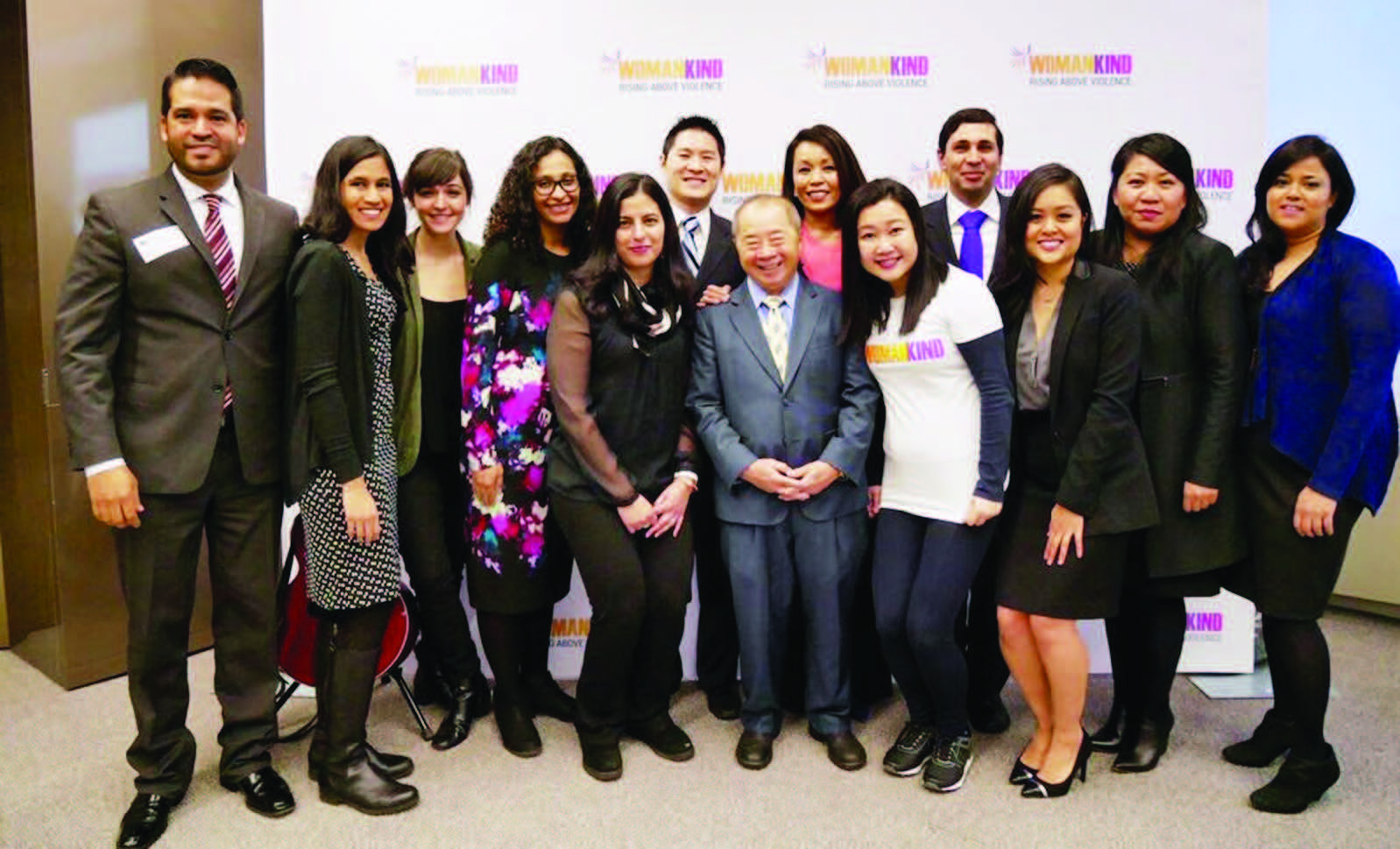
    The New York Asian Women’s Center, a leader in providing innovative and award-winning multilingual and culturally responsive services to survivors of domestic violence, human trafficking, sexual violence and later in life abuse, officially changed its name to Womankind at a press conference in Manhattan on last month.

    Indie rock artist Queen V rocks the press conference
    Photo courtesy Yinan Xia

    “We changed our name to create an identity that speaks to the power of our unique ways of thinking and doing – changing paradigms, building and healing,” said Larry Lee, executive director of Womankind. “And to show that we are more inclusive and transforming, we changed because we had outgrown our name.”

    For 35 years, Womankind has helped Asian women and their children rise above trauma and build a path to healing through counseling, safe and confidential emergency housing, immigration and legal services, economic empowerment programs and so much more.

    Representatives from the organization also revealed the trailer of a short film by director Benjamin Ross called “Rise Above,” which premiered during the Sundance Film Festival in Park City, Utah, last weekend. The virtual reality (VR) film focuses on Brittany, a South Asian youth survivor of sexual violence, and was produced by Oculus’ “VR For Good” initiative.

    “It was great to be able to tell my story of abuse through the medium of virtual reality and to be able to share the film through social media,” said Brittany. “I hope the film encourages more people from my generation to report abuse and speak out against violence.”

    The organization also announced the opening of a new community office in Brooklyn, which will allow advocates to provide services for double the number of victims from that community. The Brooklyn Center makes for a total of THREE community offices and TWO emergency residences that Womankind manages in New York.

    Indie rock artist Queen V ended the press conference on a high note by performing her rendition of “Broken Wings,” which is now available on Itunes. Proceeds from the sales will benefit Womankind.

  • Indian origin man charged with drug smuggling in US

    Indian origin man charged with drug smuggling in US

    NEW YORK (TIP): On January 31, Preet Bharara, the United States Attorney for the Southern District of New York, and Raymond Donovan, the Special Agent in Charge of the Special Operations Division of the U.S. Drug Enforcement Administration (“DEA”), announced that four individuals including an Indian charged with participating in a narcotic importation conspiracy arrived in New York from Kenya.

    Preet Bharara (File Photo)
    Preet Bharara (File Photo)

    Vijay Giri Anandgiri Goswami, 55, is an Indian national and a resident of Kenya. BAKTASH AKASHA, 40, is a Kenyan national and a resident of Kenya. IBRAHIM AKASHA, 28, is also a Kenyan national and a resident of Kenya. HUSSEIN, 61, is a Pakistani national and a resident of Pakistan. They were arrested in Mombasa, Kenya, on November 9, 2014, pursuant to a United States request, based on charges filed in the Southern District of New York arising out of their participation in a conspiracy to import kilogram quantities of heroin and methamphetamine into the United States. On November 10, 2014, a superseding Indictment was returned also charging the defendants with narcotics importation offenses based on their delivery of 99 kilograms of heroin and two kilograms of methamphetamine in Kenya, which they intended would be imported into the United State.

    The defendants are charged with conspiring to import heroin into the United States (Count One), conspiring to import methamphetamine into the United States (Count Two), distributing heroin for unlawful importation into the United States (Count Three), and distributing methamphetamine for unlawful importation in the United States (Count Four). Each count carries a mandatory minimum sentence of 10 years in prison and a maximum sentence of life in prison. The minimum and maximum potential sentences in this case are prescribed by Congress and are provided here for informational purposes only, as any sentencing of the defendants will be determined by the judge.

    Bharara said: “As alleged, the four defendants who arrived yesterday in New York ran a Kenyan drug trafficking organization with global ambitions. For their alleged distribution of literally tons of narcotics – heroin and methamphetamine – around the globe, including to America, they will now face justice in a New York federal court.”

  • FIA celebrates Republic Day with zest and fervor

    FIA celebrates Republic Day with zest and fervor

    As per tradition, the newly elected officials of the Federation of Indian Associations (FIA) of the tristate (NY, NJ &CT) took the oath of office during India’s Republic Day celebration on January 28th at the auditorium of Plainfield High School in Plainfield, New Jersey.

    Deputy Consul General Dr. Manoj Kumar Mohapatra administered the oath of office to the new officials. The new officials of FIA are: Andy Bhatia(President); Srujal Parikh (Executive Vice President); Alok Kumar (Vice President); Chhavi Dharayan (Secretary); Jatin Patel (Joint Secretary); Himanshu Bhatia (Treasurer). FIA Chairman Ramesh Patel felicitated the outgoing and incoming officials. TV Asia Chairman HR Shah, who was named Padma Shri awardee by Government of India, was also felicitated during the event.

    The event had its annual signature show, the ‘Dance Pe Chance,’ a dance competition for children. This year the competition was attended by 11 dance schools. It was an amazing sight to see 450 dancers in vibrant costumes on stage at the auditorium of Plainfield High School in Plainfield, New Jersey, on January 28th 2017. Children as young as five years old showcased their talent while the choreographers displayed their creativity.

    Dr. Manoj Kumar Mohapatra congratulated the new officials and appreciated the dance presentations characterizing them as charismatic and enchanting.

    FIA celebrated the Republic Day of India with its annual signature show, the 'Dance Pe Chance'
    FIA celebrated the Republic Day of India with its annual signature show, the ‘Dance Pe Chance’
  • Indian Union Budget 2017 Presented – Finance Minister unveils series of post-demonetization digital reforms

    Indian Union Budget 2017 Presented – Finance Minister unveils series of post-demonetization digital reforms

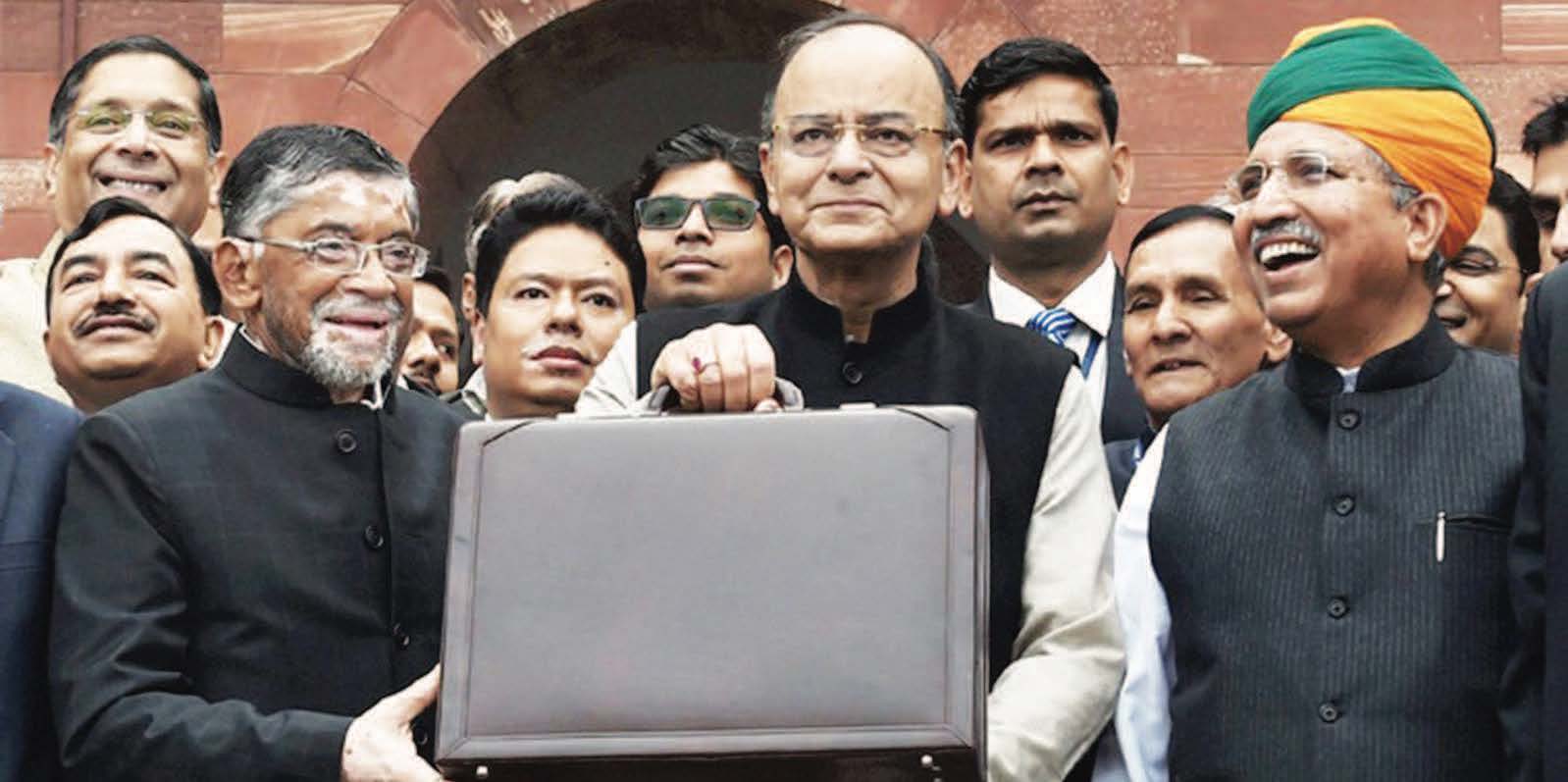
    NEW DELHI (TIP): In a pre-election Budget aimed at softening the demonetization blow, Finance Minister Arun Jaitley on February 1 halved the basic income tax rate to 5 per cent and lowered the rate for small companies, while boosting spending on rural employment, agriculture and infrastructure.

     
    HIGHLIGHTS
    I-T halved to 5% for assessees in Rs 2.5-Rs 5 lakh slab

    ● Rs 12,500 relief for taxpayers in other categories

    ● 10% surcharge on income between Rs 50 lakh-1 cr

    ● Rs 1 lakh cr Rail Safety Fund for network upgrade

    ● Highest-ever Rs 48,000-cr grant for MGNREGA

    ● FIPB shut; FDI norms to be further eased

    ● 5% corporate tax cut for small firms

    ● No cash deals above Rs 3 lakh

    Jaitley presented a merged railway and general Budget after advancing the dates by a month that provides a record outlay of Rs 3,96,135 crore for infrastructure schemes, besides a capital expenditure of Rs 1.3 lakh crore on railways and Rs 64,000 crore on highways.

    The FM perhaps was asked to build on the political gains of demonetization, and that is why sections hurt by it were targeted for incentives. Small and medium enterprises got a tax cut and taxpayers were rewarded – though not to the extent expected. And much against expectation again, the Budget lacked the surprise factor.

    The Budget seeks to provide a record Rs 10 lakh crore in loans to farmers, boost funds for rural employment guarantee program, bring one crore households out of poverty and promised to build one crore houses by 2019 for the homeless ahead of the crucial elections in five states.

    In view of the fact that the proposed GST is expected to be rolled out soon, he left indirect taxes largely untouched.

    While the tax rate for income between Rs 2.5 lakh and Rs 5 lakh has been lowered to 5 per cent, a 10 per cent surcharge has been slapped on income between Rs 50 lakh and Rs 1 crore. The 15 per cent surcharge on income above Rs 1 crore will continue.

    The tax liability of all persons below Rs 5 lakh would be reduced to either zero (with rebate) or 50 per cent of the existing liability. In order not to have duplication of benefit, the existing benefit of rebate available to them is being reduced to Rs 2,500 available only to assessees up to income of Rs 3.5 lakh.

    While the taxation liability of people with income up to Rs 5 lakh is being reduced to half, all other categories of taxpayers in the subsequent slabs will also get a uniform benefit of Rs 12,500 per person.

    In the case of senior citizens above 60 years, there will be no tax up to Rs 3 lakh, while the exemption will be up to Rs 5 lakh in case of citizens above 80. Both the categories will attract a tax of 20 per cent on income between Rs 5-10 lakh and 30 per cent for income above Rs 10 lakh.

    FISCAL DEFICIT DOWN TO 3.2% FROM 3.5%

    Moving ahead with the fiscal consolidation path, Finance Minister Arun Jaitley has pegged the fiscal deficit for 2017-18 at 3.2 per cent, down from 3.5 per cent expected in the current financial year. Addressing the media, he said the Budget estimate for fiscal deficit was 3.5 per cent for 2016-17 and revised estimate is also 3.5 per and it will be achieved. Fiscal deficit is the difference between revenue receipts plus non-debt capital receipts (NDCR) and total expenditure. This indicates the total borrowing requirements of the government from all sources. Fiscal deficit of 3.2 per cent in absolute terms for the next fiscal comes out to be Rs 5,46,532 crore.

    AFFORDABLE HOUSING GETS INFRA STATUS

    Aiming to boost real estate sector, the government announced infrastructure status to affordable housing for encouraging investment and offered tax sops to developers sitting on completed but unsold homes. The allocation for Pradhan Mantri Awaas Yojana- Gramin has also been raised.

    INCENTIVES TO BOOST INVESTMENT IN NPS

    In a bid to boost NPS, Finance Minister Arun Jaitley has proposed higher tax rebate for investment in flagship social security programs and allowed tax relief on partial withdrawal of up to 25 per cent of the contribution.

    NOW, TAX EXEMPTION TO CM, LG RELIEF FUNDS

    The government announced extension of tax exemption on contributions to Chief Minister’s Relief Fund and Lieutenant Governor’s Relief Fund. At present, there is tax exemption on funds given to Prime Minister’s National Relief Fund. Jaitley said Chief Minister’s Relief Fund (CMRF) and Lieutenant Governor’s Relief Fund (LGRF) are of the same nature as the Prime Minister’s National Relief Fund at the level of state or the union territory. “Therefore, it is proposed to amend the said clause to provide the benefit of exemption to the Chief Minister’s Relief Fund or the Lieutenant Governor’s Relief Fund,” he said. This amendment to I-T Act will take effect retrospectively from April 1, 1998.

    “The Union Budget for 2017-18 is in line with the BJP’s changed political stance of wooing the poor and shedding its “suit-boot-ki-sarkar” image. The Modi government has changed track and turned to the side where the numbers are -the poor, farmers and the middle class – which makes sense electorally. This is what every party tries to do – look credible on welfare and capture the constituency of the deprived. Congress and BJP budgets frequently look similar. How to deliver the dole is the real challenge and the switchover to a technology-based foolproof system is being unnecessarily delayed”, commented a newspaper.

  • Indian American leaders Condemn Trump’s “Extreme Vetting” Executive Order

    Indian American leaders Condemn Trump’s “Extreme Vetting” Executive Order

    WASHINGTON (TIP): On February 1, the Asian American and Pacific Islanders (AAPI) Victory Fund held a press conference with Members of Congress and Indian American leaders at the National Press Club to condemn the Trump administration’s immigration executive orders. On behalf of the Asian American and Pacific Islander community representing a diversity of faiths, ethnicities and backgrounds, speakers stood together in opposing these discriminatory executive orders.

    “As the most senior Indian American Member of Congress, I believe that Donald Trump’s executive order does not reflect who we are as Americans,” said Rep. Ami Bera, M.D. (CA-7). “The actions of the Republican Hindu Coalition today do not reflect the breadth and diversity of the Indian American community, or our diaspora. Prior to 1965, it was very difficult for people of Indian origin to immigrate to the United States, and this order takes us backwards toward that dark time. That’s why I’m fighting back, and today sponsored the SOLVe Act to repeal this discriminatory executive order.”

    “I was elected to help unify our country. This executive order from President Trump is an assault on our Constitution; it hurts working families; and it only serves to divide Americans, not unify them,” said Rep. Raja Krishnamoorthi (IL-8). “It is no longer time to agonize but to organize. It is time to do everything we can to oppose this executive order.”

    “It is unthinkable that this country, which welcomed me when I arrived at 16 years old, would so boldly, defiantly and barbarically turn its back on immigrants and refugees,” said Rep. Pramila Jayapal (WA-7). “Let us be clear that President Trump came into office by demonizing and ‘otherizing’ immigrants and refugees. While we had hoped that perhaps he would move from being a divisive candidate to being a unifying President, he is failing us. I call on our communities to condemn and resist these executive orders.”

    “The temporary ban in the executive order is not constitutional,” said Rep. Ro Khanna (CA-17). “We cannot allow policies to exist that are not consistent with our founding ideals and values. I swore in on the Constitution, and will always stand up for Constitutional principles.”

    “This executive order does not make us safer; it imposes the most severe of burdens on the most vulnerable among us,” said Nisha Desai Biswal, former Assistant Secretary of State for South and Central Asian Affairs at the U.S. Department of State. “To single out people because of their nationality or their faith is unethical. It goes against our responsibilities from the Geneva Conventions and poses an unjust, un-American and what we believe to be an unconstitutional ban on immigrants and refugees.”

    “I believe this executive order will not only be ineffective, it will be counterproductive,” said Manpreet Singh Anand, former Deputy Assistant Secretary in the Bureau of South and Central Asian Affairs at the U.S. Department of State. “National security cooperation, partnership and building trust with other countries in our efforts. This executive order will not achieve its intended policy outcomes. By not including interagency government professionals, the order was horribly executed and will end up being unlawful as well as alienate our partners. Executive orders like this one will be counterproductive to the very national security goals that it purports to achieve.”

    “We cannot allow ourselves to be divided by this un-American executive order. It is a stain on our history, just like slavery, internment and denial or voting rights,” said Shekar Narasimhan, chair of the AAPI Victory Fund. “Americans confronted and overcame these challenges and we will do the same here. We unite and call on our Members of Congress to deny President Trump the funds to carry out these unlawful executive orders.”

  • The Serenading over, the silent voter holds the key

    The Serenading over, the silent voter holds the key

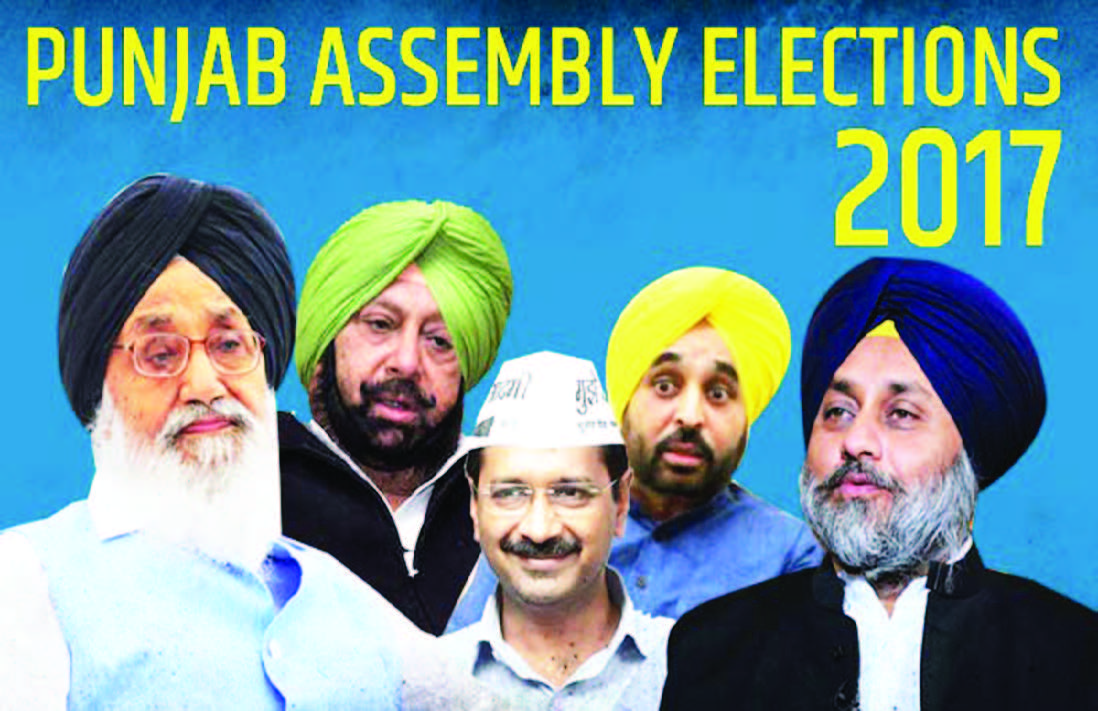
    A do or die battle for the three contenders-Parkash Singh Badal, Capt. Amarinder Singh and Arvind Kejriwal.

    CHANDIGARH (TIP): Two days before the polling on February 4, campaign din ended on February 2. The three main contenders for power- the ruling SAD-BJP combine, the Congress Party and the Aam Aadmi Party (AAP) held impressive roadshows to give a final push to their campaigns. As loudspeakers went silent at 5 pm, on February 2, party cadres were seen going door-to-door to persuade the voters. SAD-BJP combine is trying to retain power which the Congress Party and the AAP are trying to wrest from it. AAP is fighting the Assembly elections in Punjab for the first time.

    Election campaign in Punjab has always been marred with violence. It was no different this time. Often shrill and at times nasty, it was marred by the twin blasts at Maur Mandi in Bathinda on January 31 in which six persons were killed and several injured.

    In the first round, the electioneering revolved around the issues of drugs, unemployment, agrarian crisis and incidents of sacrilege. It was reduced to mere rabble-rousing in the last phase, with leaders making wild allegations against one another. What stood out was the participation of the Punjab youth in a big way.

    Polling for the 117 Assembly constituencies in Punjab on February 4 will decide the fate of 1,145 candidates in the fray. There is a stiff triangular contest among the SAD-BJP, Congress and AAP candidates in most constituencies. Other parties, such as the BSP, too, are in the election arena.

    On the last day of campaigning, AICC vice-president Rahul Gandhi chose to focus on Malwa, including Lambi, where PPCC chief Capt. Amarinder Singh is pitted against Chief Minister Parkash Singh Badal. Deputy CM Sukhbir Singh Badal held a roadshow in Lambi. The AAP convener, Arvind Kejriwal, held one in Ludhiana. Union Minister Harsimrat Kaur Badal spent the day in Jalalabad, her husband’s constituency.

    AAP’s Bhagwant Mann and Congress’ Navjot Singh Sidhu drew huge crowds during campaigning. Among the key campaigners were Prime Minister Narendra Modi, BSP chief Mayawati, Union Home Minister Rajnath Singh and a number of senior leaders from various parties.

    The Prime Minister addressed two rallies in Jalandhar and Kotkapura where he sought votes on the “stability” plank, saying Pakistan was trying to disturb the state’s peace.

    On the other hand, Rahul claimed Punjab, a front-ranking state, had fallen behind as the ruling Akalis had “plundered” it to serve their own interests. He promised tough laws to curb the drug menace.

    New entrant AAP accused the SAD and the Congress of “hobnobbing” with each other and vowed to put the Badal family behind bars on the issue of drugs. All parties wooed the Dalits who constitute over 30 per cent of the electorate.


  • Theresa May faces fresh legal challenge over Brexit

    Theresa May faces fresh legal challenge over Brexit

    White Paper spells out need for new immigration laws

    LONDON (TIP): British Prime Minister Theresa May faces fresh legal challenge over Brexit as David Davis, the Brexit secretary, refused to rule out a vote on leaving the EEA when he was asked about it in the Commons by Labor MP Heidi Alexander. David Davis released document – a 77-page white paper setting out the government’s plans for leaving the EU- highlighting need for new laws on immigration and customs systems after UK leaves EU. “Leaving the EU will mean that our laws will be made in London, Edinburgh, Cardiff and Belfast, and will be based on the specific interests and values of the UK,” The White Paper states.

    The document, which sets out Theresa May’s plans was, was presented to Parliament on Thursday, February 2.

    It comes after a Supreme Court ruling empowered Parliament to give its approval before any official talks on Brexit could begin.

    The ruling was a blow to Theresa May, who would have rather bypassed a Parliament vote. However, MPs overwhelmingly supported the triggering of Article 50 with 498 votes to 114 on Wednesday.

    Brexit is an abbreviation for “British exit,” which refers to the June 23, 2016, referendum whereby British citizens voted to exit the European Union. The referendum roiled global markets, including currencies, causing the British pound to fall to its lowest level in decades.

  • England demolished, India makes a clean sweep of Test, ODI and T20 Series

    England demolished, India makes a clean sweep of Test, ODI and T20 Series

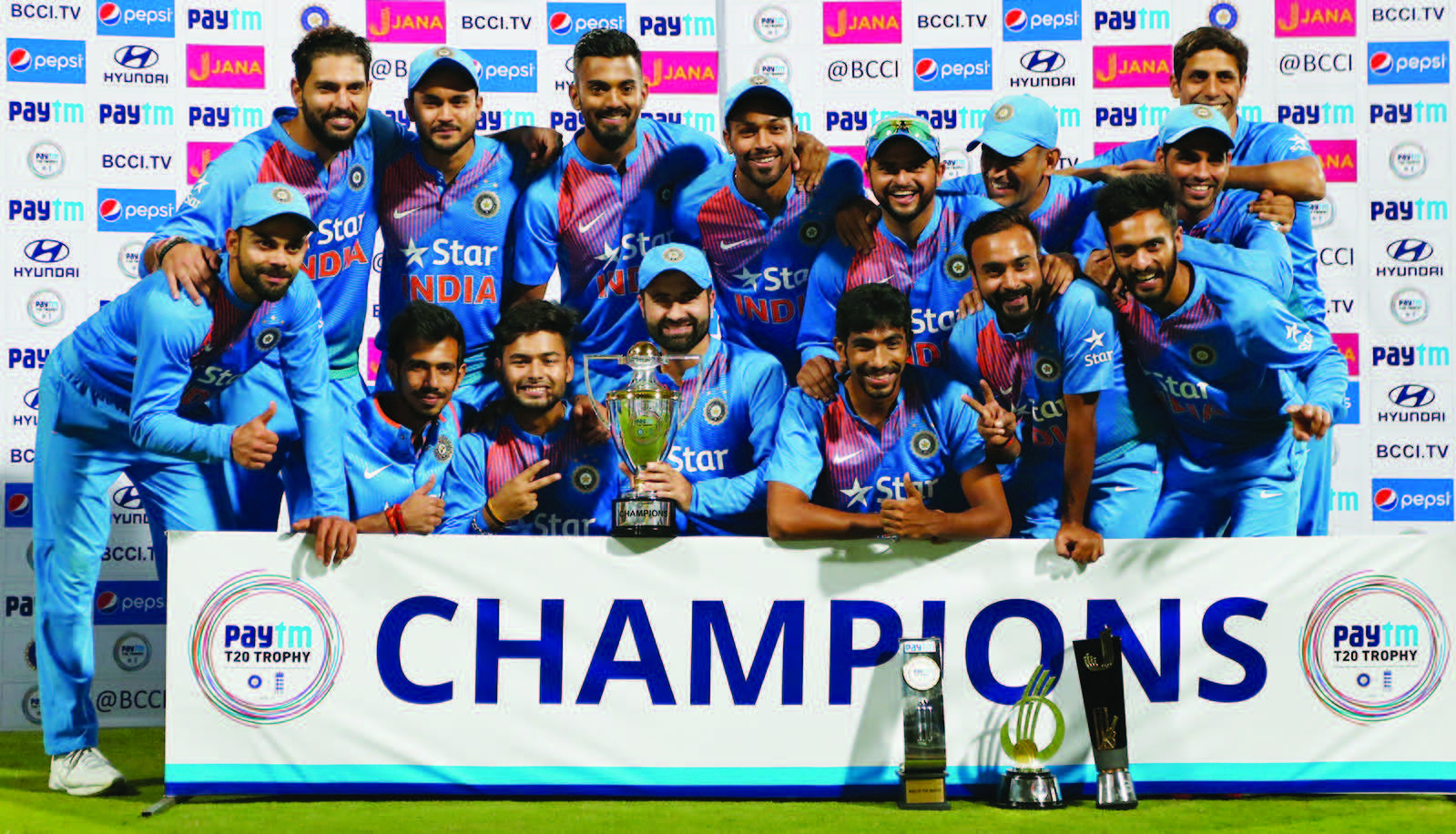
    England collapse hands India a clean sweep of Test, ODI and T20 series

    England’s cricketers will leave India defeated on every front after collapsing spectacularly in the balmy Bengaluru air, losing eight wickets for eight runs from a position of strength to go down by 75 runs in the final T20 international. The result means India win the series 2-1 to go alongside victories in the one-day and Test series across a trying two-legged winter tour.

    The collapse at the end will live long in the memory, a collective spasm of panic that turned a tight chase into a thrashing. But England’s late middle order had been left with no choice but to hit wildly as the innings stagnated as they sought 203 to win. The leg-spinner Yuzvendra Chahal, playing on his home IPL ground, finished with the astonishing figures of six for 25 as England flailed, unable to pick his googly, unable to find any other way to respond to the pressure of the occasion.

    In reality the game turned in the guts of their innings as Joe Root batted too slowly, chewing up 37 balls for his 42 as wickets were lost around him to some careless shots and the weight of the chase simply became too much.

    The key over was bowled by Amit Mishra, who completed a four-over spell of skill and accuracy to keep England to three runs off the 13th over. From there India had the best “death” bowler on either team, Jasprit Bumrah, with three overs left to bowl. It was hit or bust for the last knockings of this tour; and bust it was, the end coming in a dizzying rush.

    For much of the night this had been a wild bare-knuckle brawl of a match that kept barrelling on without taking a breath. The promised high-scoring contest did, indeed, materialise on this tight ground and India’s 202, an inning of 12 sixes and not a lot of quick singles, left England needing their third highest total batting second in T20s to win the series, though all stats in this form of the game are a mutable, infant science.

    They began with some intent. Jason Roy got things under way with an astonishing reverse slogged six off Chahal’s first ball. Sam Billings was out caught ballooning one up off his boot bringing Root to the crease. It was angsty cricket for a while as England thrashed and the Chinnaswamy roared and wailed at the hilarity of it all.

    With England 55 for one at the end of the powerplay the game was still wide open. Roy threw his wicket away with a horrendous, static swipe against the spin. It might have been a good moment to send in Jos Buttler, England’s most explosive player, with something to play for but Eoin Morgan batted with energy and, with 10 overs gone, England were only a little behind at 86 for two.

    Morgan began to open up, lifting Suresh Raina for two lofted sixes to bring up the hundred, then flipping another over square-leg as 22 came from the 12th over. After Mishra had tightened the screw Morgan holed out a little desperately to deep square-leg. Root went lbw to Chahal. It felt like a moment of do-or-die and so it proved, five of the last six wickets coming from mistimed airborne swipes.

    Earlier England had won the toss as dusk fell and decided to chase. Liam Plunkett came in for Liam Dawson and the prodigy Rishabh Pant made his debut for India.

    The Chinnaswamy is a claustrophobic, steeply-tiered circular noise funnel but it fell silent seven balls into the match as Virat Kohli was run out in extraordinary circumstances, dropping the ball at his feet and finding himself undone as he dithered by some wonderfully decisive athleticism from Chris Jordan.

    Raina skied a Plunkett slower ball, bringing Yuvraj Singh to the crease, a man who likes a flat pitch and a short boundary. MS Dhoni’s fifty came up off 32 balls, his first in 76 T20 internationals, at which point Yuvraj began to move. Jordan was glided for three effortless straight sixes over mid-on in an over that went for 24, the last an extraordinary flat bunted hit off a yorker length. Yuvraj was out for 27 off nine balls, expertly deceived by a 61mph slower ball from Mills, and India closed on a breathless, never quite full-throttle 201 for six. It felt like a par score. England made it into a great deal more.

    Haryanavi Hero: Chahal steals the show

    Opportunities have been far and few at the first-class level, but becoming an IPL regular has breathed life into Yuzvendra Chahal’s yet flourishing limited-overs career

    Haryanavi Hero Chahal
    Haryanavi Hero Chahal

    While India’s captain Virat Kohli was beaming ear to ear at the post-match press conference after his team secured the T20 series, Yuzvendra Chahal looked like a nervous kid told about a surprise test. On the field, though, he had delivered a nerveless performance, posing question after question to England’s batsmen. Chahal ultimately came away with incredible figures of 6 for 25 in four overs – the best by an Indian bowler in T20I history and the third best overall.

    He was chiefly responsible for England’s blink-and-you-miss-it collapse: they lost 8 for 8 in 18 balls. Chahal might not have been in the XI in the first place had R Ashwin and Ravindra Jadeja not been rested from the T20I series. Chahal’s sidekick in the match was Amit Mishra, his state captain at Haryana, who claimed 1 for 23 off four overs.

    Wednesday was just Chahal’s ninth match in India colours. He’s been an IPL regular now for Royal Challengers Bangalore for three seasons, and has been around in the first-class scene since 2009. However, opportunities have remained elusive – he has played just 27 matches in eight years. Seven of those games came in the Ranji Trophy season gone by, when Mishra was working his way into becoming a Test regular. When Mishra was released from the Test squad for the Ranji game against Goa last November, Chahal had to sit out. He has had to operate in Mishra’s shadows for a bulk of his career. More recently, he has had to also contend with Jayant Yadav.

    At the IPL, he was first snapped up by Mumbai Indians in 2011. He played understudy to Harbhajan Singh there, although he picked up 2 for 9 in Mumbai’s title triumph in the Champions League T20 the same year. Overall, he got only seven games for Mumbai between 2011 and 2013. In 2014, he was bought by Royal Challengers at the auction, and he made a mark immediately.

    He isn’t intimidated by the short boundaries at the M Chinnaswamy Stadium. He loops the ball up and doesn’t lose heart even if he is launched out of the park. He managed 12 wickets in his first season with the Bangalore franchise and nearly doubled it in the next season. In Royal Challengers’ run to the final in 2016, he collected 21 wickets and finished as the second-highest wicket-taker in that season, but was overshadowed by Kohli and AB de Villiers.

    Chahal’s efforts, though, caught the eyeballs of the national selectors, who picked him in India’s second-string squad for the Zimbabwe trip in 2016. Chahal gave a good account of himself in Zimbabwe; none quite like his efforts in Bangalore though.