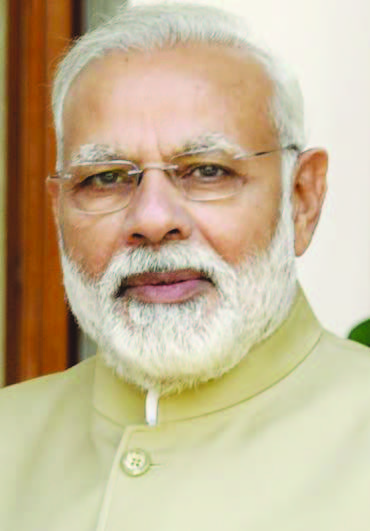
NEW DELHI (TIP): Prime Minister Narendra Modi will give a pep talk to chief ministers of 13 BJP ruled states at the party headquarters here on Sunday. Party president Amit Shah too will join them.
The meeting comes within weeks of Modi holding a similar session with leaders of 33 NDA allies, who reposed faith in his leadership and resolved to win the 2019 elections again.
BJP sources described the meeting as an exercise to gear up BJP-ruled states for the next Lok Sabha election, a key electoral challenge that will also be seen as a referendum on Modi government’s five year tenure.
Three BJP ruled states, Chhattisgarh, Madhya Pradesh and Rajasthan, will also go to poll in 2018.
With the BJP ruling 13 states and sharing power in four others, party leaders admit the performance of the state governments will have a bearing on the performance of the BJP in 2019.
Modi doesn’t want any anti-incumbency to set in against the sitting BJP governments, which can pull down the party in 2019.
“At the Sunday meeting, he will reiterate that BJP needs to keep its focus on governance and avoid controversies that can provide fresh ammunition to the opposition looking for an opportunity,” a BJP leader said.
Activism by cow vigilantes, conduct of certain BJP leaders and several others issues have hogged the media limelight, putting the BJP in a tight spot.
At the just concluded conclave of the BJP in Bhubaneswar, Prime Minister Modi asked BJP leaders to be mindful of their conduct.
“Don’t let power go into your head. We should not get spoiled,” he told over 300 BJP leaders.
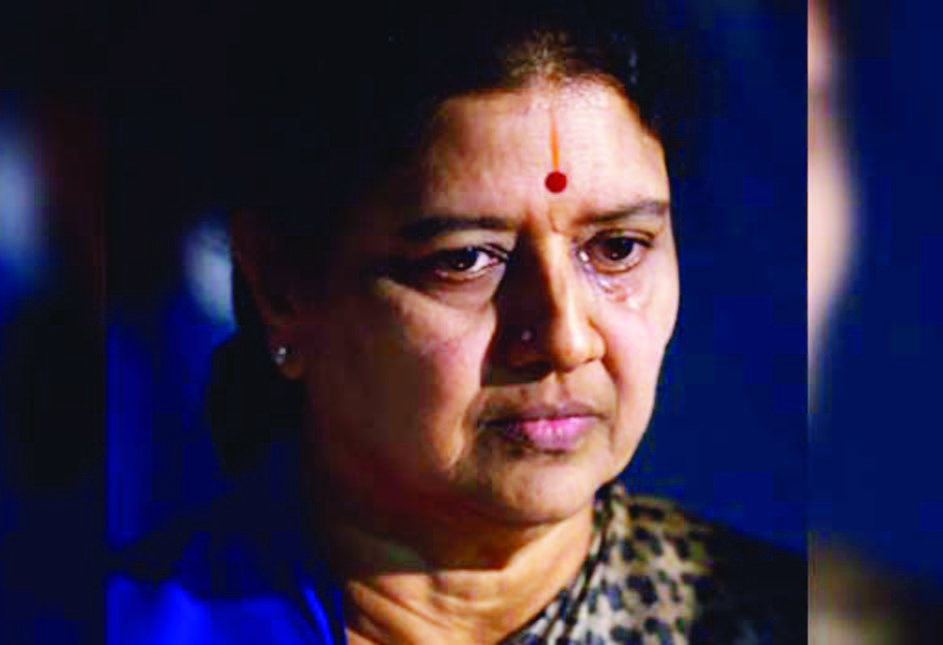
Two days after AIADMK (Amma) opened doors to its rival faction, the two camps have again hardened their stand.
? The O Pannerselvam-led faction termed the truce call by the EPS faction a “drama” authored by Sasikala.
CHENNAI (TIP): Two days after AIADMK (Amma) announced it would free the party and the government from the influence of the V K Sasikala family, and opened doors to its rival faction for merger talks , the two camps hardened their stand and flung barbs at each other. The central player in the political drama, party deputy general secretary TTV Dhinakaran, meanwhile, remained out of sight on Thursday.
Dhinakaran loyalists and MLAs Thanga Tamilselvan and P Vetrivel visited chief minister Edappadi K Palaniswami at the secretariat on Thursday after a brief meeting with Dhinakaran at his Adyar residence in Chennai. Vetrivel later said Dhinakaran had directed them to meet the chief minister and extend their cooperation forsmooth functioning of the government. “Dhinakaran will remain our deputy general secretary,” said Vetrivel.
The O Pannerselvam-led faction dug in its heels, terming the truce call by the EPS faction a “drama” authored by Sasikala, her husband M Natarajan, and brother V Dhivakaran, using Dhinakaran as the ‘pagadaikai’ (dice). It also laid down threeconditions, including withdrawal of an affidavit filed by the Palaniswami group on the appointment of Sasikala as general secretary, officially removing her and Dhinakaran+ from their posts and instituting a CBI investigation into former chief minister J Jayalalithaa’s death.
For its part, the EPS camp got several of its leaders to hit back, setting the tone for fiery talks ahead. Jayakumar took on OPS over his remarks that Dhinakaran’s ouster was his “first victory”, saying, “Will he also say that he was the force behind ((US President) Trump’s victory?” Law minister C Ve Shanmugam asked how his party’s affidavit could be withdrawn when it was the OPS camp which moved the EC to challenge the appointment of general secretary and to stake claim for the ‘two leaves’ symbol.
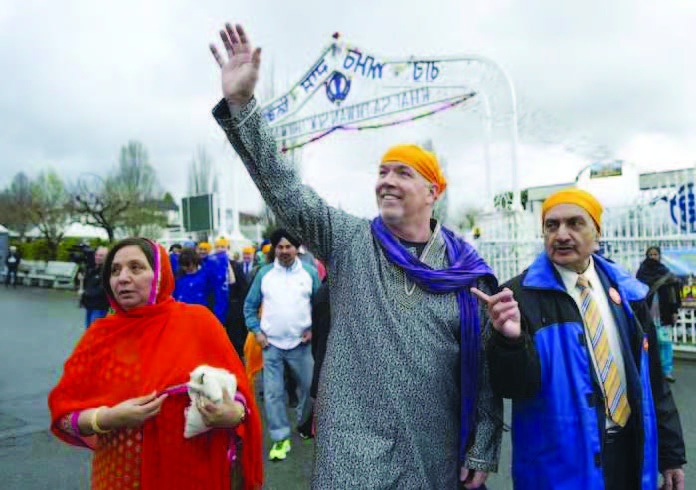
The Vancouver Vaisakhi celebration brought tens of thousands of British Columbians to the same temple Saturday —including B.C.’s Liberal and NDP leaders, who first crossed paths after kicking off their campaigns earlier this week.
B.C. Liberal Leader Christy Clark and B.C. NDP Leader John Horgan both attended the celebration and parade in South Vancouver, flanked by local candidates and supporters from the Sikh community.
With their branded tour buses parked across the street, both leaders and staff kept their distance from each other, but supporters wearing Liberal or NDP buttons mingled at the event.
Vaisakhi, which fell on Friday this year, marks the birth of the Khalsa – the Sikh brotherhood – and pays tribute to the start of the Punjabi harvest.
Malkiat Dhami, president of the Khalsa Diwan Society, said the event has grown beyond a celebration for B.C.’s Indo-Canadian community and said organizers are noticing more non-Indo-Canadian people revelling in its festival atmosphere and tasty food.
Christy Clark joins the tens of thousands of Vaisakhi revellers. Photo Courtesy:JASON PAYNE / PNG
Dhami couldn’t confirm attendance by Saturday afternoon, but said it felt like the crowd was even bigger than the approximately 125,000-150,000 people who showed up last year. He praised the hard work of volunteers and organizers who helped the event thrive in its 39th year.
Asked whether the presence of Clark and Horgan changed the nature of this year’s celebration, Dhami said politicians always like to come, no matter what party or level of government.“Sometimes people are mistaken— they say, ‘Maybe it’s an election year,’” Dhami said.“It gives them the platform to say whatever they want to say to the congregation. They’re seeking help from the people. It’s good for them, it’s good for us.”
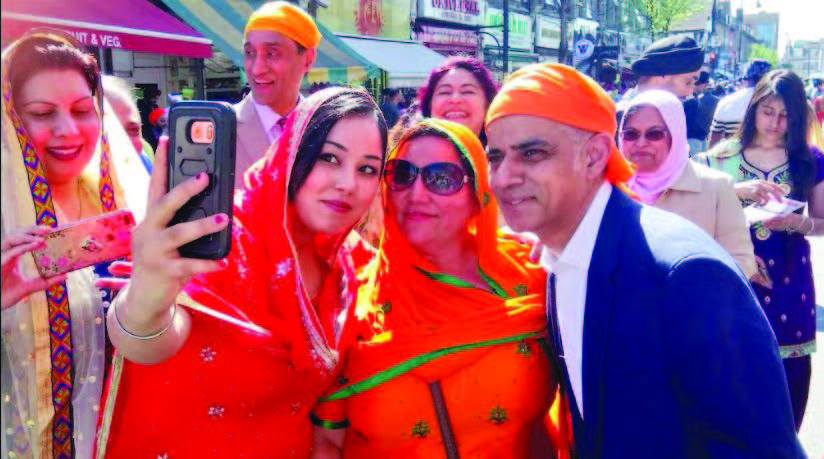
Sadiq Khan Becomes First London Mayor to Celebrate #Vaisakhi
Crowds gathered in Southall to watch the annual Vaisakhi parade, which started and ended at the Sri Guru Singh Sabha Southall Gurdwara on Havelock Road.
Mayor of London Sadiq Khan was in attendance and tweeted: ‘Londoners don’t just tolerate our diversity, we celebrate it! Brilliant to be back in Southall alongside thousands at Vaisakhi celebrations.’
It is thought to be the first time a London Mayor has ever visited the event, known as Nagar Kirtan, to mark Vaisakhi.
With the sun beaming down, hundreds of people stopped by the many food stalls offering free drinks and Indian snacks (langar) while hyms were sung and various different dances took place.
Other MPs including Southall MP Virendra Sharma and Feltham and Heston MP Seema Malhotra were in attendance.
St John Ambulance and London Ambulance Service cycle responders were also present to keep everyone safe.
The Sikh festival of Vaisakhi celebrates the birth of the Khalsa but is often mistaken for being a harvest festival or the Sikh New Year.
In April 1699 the 10th Sikh Guru, Guru Gobind Singh Ji tested thousands of Sikhs and the first five to pass his test were initiated into a new order called the Khalsa.
May says UK will need Sikh values of equality, respect
UK Prime Minister Theresa May on April 13 said Britain needs Sikh values of equality and respect more than ever as the country forges a “new and ambitious role” in the world post Brexit.
Greeting the Sikh community on the occasion of Baisakhi, May said Sikhs have set an example for all.
“I send my best wishes to everyone in Britain and around the world celebrating Baisakhi -one of the most important dates in the Sikh calendar and a time when families and friends come together to commemorate the birth of the Khalsa,” she said in a video message released by Downing Street.
She said Sikhs in the country consistently follow the pillars of their faith, which sets an example to all.
Praising Sikh values of equality and respect, of fairness and helping those less fortunate, the British prime minister said these values Britain needs more than ever as it forges a “new, ambitious, role” in the world.
“I am determined to build a country that works for everyone; a country where no matter who you are, you can achieve your goals – and the Sikh community is a vital part of that mission. So as the dancing and the festivals begin, at home and abroad, I would like to thank you for all that you do and to wish you a very happy,” she said.
She noted: “As Sikhs across the globe take part in spectacular processions and neighbourhoods and gurdwaras burst forth with colour, I would like to take this opportunity to celebrate the immense contribution British Sikhs make to our country.
“Whether it’s in the fields of business, the armed forces or the charitable sector, you consistently follow the pillars of your faith and in so doing set an example to us all,” she said.
This year, the Indian High Commission in London has tied up with gurdwaras across London and other British Punjabi organisations to launch Baisakhi festivities on a grand scale.
The event, to be held in north-west London on April 30, has been conceived as a grand mela complete with shabad kirtan and folk music to bring the Indian community together.
“Come with your families and friends to celebrate, enjoy and be part of the best of Sikh culture,” according to a statement by the High Commission.
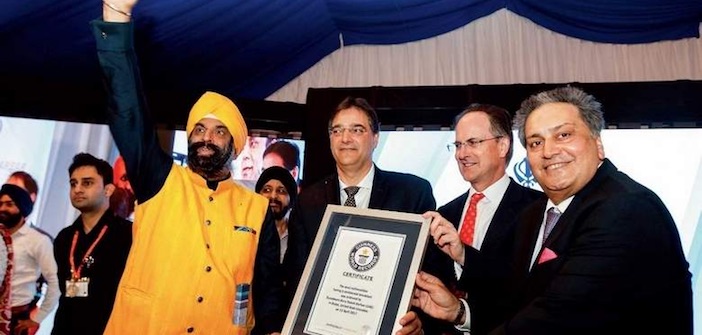
A gurdwara in Dubai broke the world record for serving free breakfast to the maximum number of people from diverse nationalities.
Gurdwara Guru Nanak Darbar entered the Guinness World Record on Thursday for serving continental breakfast titled ‘Breakfast for Diversity’ to 600 persons from 101 countries in an hour-long event in Jebel Ali.
The Khaleej Times reported that schoolchildren, government officials and diplomats attended the event while Indian ambassador to the UAE Navdeep Singh Suri was the chief guest. People from different parts of the city flocked to the Jebel Ali Gardens and filled a temporary tent made for hosting the marathon breakfast event.
The officials from the Guinness Book of World Records confirmed that the gurdwara broke the previous record of 55 nationalities having a continental breakfast, organised by Nutella at the Milan Expo in Italy in 2015.
The gurdwara, which is known for serving free meals to all visitors through its community kitchen, caters to over 50,000 Sikh devotees in the United Arab Emirates.
“Sikhism has always embraced diversity as it has been part of our faith and belief that we are all human beings to be treated with respect,” Surender Kandhari, chairman of the Gurdwara Guru Nanak Darbar, told the daily. “The gurdwara has been spearheading charity and volunteer work not only for the Indian community but for the entire UAE community as well. We feel blessed to give in any form, as this is our selfless service to the society,” he said.
The iconic Times Square in New York was seeped in the colours and tradition of the Sikh culture as members of the community tied turbans to thousands of New Yorkers and tourists to spread awareness about the Sikh identity amid a spike in hate crimes against them in the country.
Non-profit group ‘The Sikhs of New York’ organised the ‘Turban Day’ at Times Square yesterday, with its volunteers tying colourful turbans to close to 8,000 Americans and tourists hailing from different nationalities and ethnicities. The four-hour event, held as part of Vaisakhi celebrations, was aimed at spreading awareness among Americans and other nationalities about the Sikh religion and its articles of faith, especially the turban, which has often been misconceived and misidentified as being associated with terrorism particularly in the years since the 9/11 terror attacks.
During the event, a proclamation by Congressman Gregory Meeks of the 5th Congressional District of New York declared April 15, 2017 as ‘Turban Day’, lauding The Sikhs of New York for its dedication in educating other communities about the Sikh faith.
The organisation’s founder Chanpreet Singh told PTI Turban Day was started in 2013 at Baruch College to promote and educate people about the Sikh religion and identity.
“We are spreading awareness about the Sikh turban and culture. The turban is the crown of each Sikh and represents pride and valour. Turban Day provides an opportunity for those that do not wear a turban to experience a turban and learn about its significance first hand,” he said.
Turban Day Celebrated At Times Square In New York. Photo: Keertan.org
Mr Singh added that he had personally experienced hate during his school years and wanted to take the initiative to educate Americans that “Sikh values are American Values”.
He said by inviting people from other nationalities to wear the turban, the event also aims to encourage them to avoid discrimination and speak out against hate crimes targeting Sikhs in America going forward.
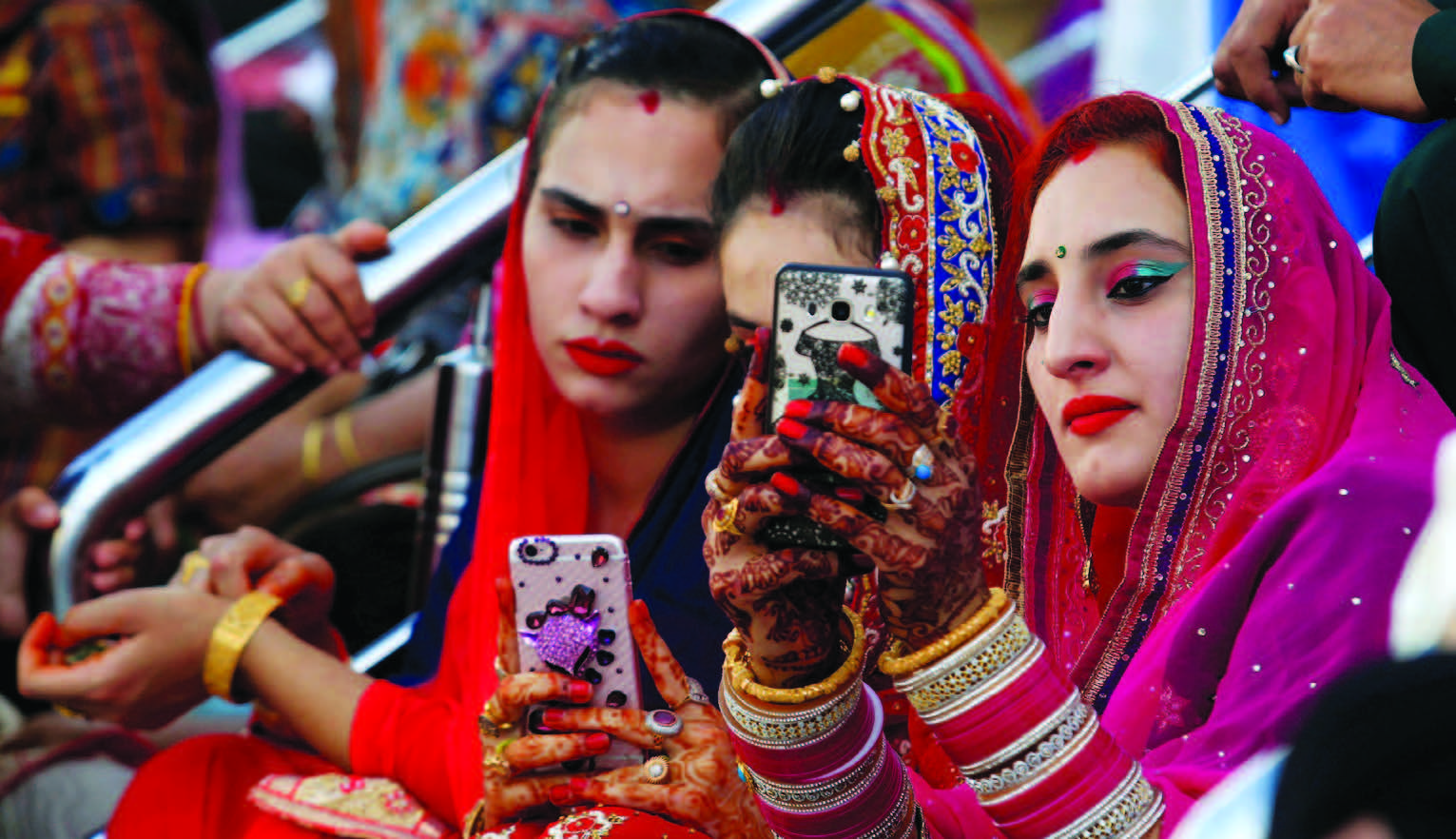
More than 1,400 Sikhs from India on Friday celebrated the Baisakhi Festival in Hassan Abdal, a town in Pakistan’s Punjab province, famous for one of the most sacred sites of Sikhism.
The officials of Evacuee Trust Property Board (ETPB) and Pakistan Sikh Gurdwara Parbhandik Committee also took part in the festivities.
ETPB Chairman Siddiqul Farooq inaugurated the festival. Speaking on the occasion he said the board would continue facilitating the visiting Yatrees.
He said the ETPB is establishing the Guru Nanak University in Nankana Sahib and Ghandara University in Taxila.
“The federal Higher Education Commission has allocated Rs 1bn for each project and construction work will soon begin,” he said and reiterated that the people of both countries want peace.
Baisakhi is an ancient festival dating back to the 17th century, also marks the beginning of a new solar year and harvest season. It is one of the most significant holidays in the Sikh calendar, commemorating the establishment of the Khalsa at Anandpur Sahib in 1699 by the 10th Sikh Guru, Guru Gobind Singh.
Devotees at Panja Sahib.#
To mark the celebrations, devotees, irrespective of Sikh religion, throng at Gurdwara Punja Sahib Hassan Abdal. The celebrations start when devotees with flowers and offerings in their hands, proceed towards the Gurdawaras and temples before dawn.
The Indian Sikhs visited Gurdwara Janamesthan Nankana Sahib, Gurdwara Sacha Soda in Farooqabad, Gurdawara Kartarpur Narowal and Gurdwara Dera Sahib Lahore.
Actress Sunny Leone said she would like to come up with a high-end hip street line that everyone would want to wear. Asked if she would like to invest in a jewellery brand, Sunny said, “Not something I have thought of much and not sure.”
What about her own jewellery line? “If I did want to start something, I would want to start more of a high-end hip street line that everyone would want to wear,” said the ‘Jism 2’ actress.
Talking about her first jewellery piece, she reminisced, “My parents gave me an emerald ring that I begged for. I don’t have it anymore. I lost it because… like they knew I was too young to have something like that. I was a tomboy growing up and they knew that I was too reckless to keep it properly.” But she says her favorite jewellery piece is her wedding band. “It is actually worth next to nothing as far as money goes. But it’s my most precious piece of jewellery because it symbolises something we want in life. A partner to share your journey with and money can’t buy you that,” said the wife of Daniel Weber
Actress Lena Headey, who essays Cersei Lannister in hit show ‘Game of Thrones’, has opened up about her struggle with anxiety.
Currently embroiled in a custody battle with her former husband and musician Peter Paul Loughran, Headey posted on Twitter that she tends to overthink and has been through depression. “I overthink for sure. I am familiar with depression. I get huge anxiety,” Headey posted on Thursday.
The 43-year-old added that she wasn’t surprised so many people today are suffering from anxiety of some sort. “Globally we see constant destruction of human lives. Which no matter your belief, has an effect. If we scale it back to family and community, it’s been lost to greed and aspiration, no wonder we have anxiety, no wonder we overthink… We’re slammed with bullshit.
“Anxiety. Depression. It’s real and it’s chemical. It’s also spiritual. We’re slammed with crap; tricked into thinking you’re not enough – well here’s the truth. You are enough. In fact you are who you are meant to be which is beautiful,” she added. Source: IANS
Alia Bhatt, who set off on a six-month break follow ing the release of Shashank Khaitan’s ‘Badrinath Ki Dulhania’ and before she kicks off work on Ayan Mukerji’s Ranbir Kapoor starrer superhero film ‘Dragon’, is now Dubai-bound with bestie Akansha Ranjan Kapoor. The trip comes close on the heels of a week-long sojourn in London with her gal pals last month.
A source close to the actress reveals, “Alia is scheduled to attend an awards ceremony in Dubai so she decided to turn it into a work-vacay trip. The girls will spend three days in the city and the plan, in-between work, includes sight-seeing and lots of shopping.” Once back in Mumbai, Alia is expected to resume prep with Ayan which they had started during her London trip. “Ayan was doing some work on the special effects for ‘Dragon’ and I wanted to be involved.I landed up in London and joined him,” Alia said.
Meanwhile, the 24-year-old actress will also be a part of Zoya Akhtar’s ‘Gully Boy’ that features Ranveer Singh as a rapper.
Actress Anne Hathaway says she still finds it hard to digest her Hollywood success and feels “baffled”. The Oscar-winning actress says she feels lucky to have received roles like ‘Colossal’ in her career.
“The fact I’m, like, a Hollywood actress – I’m like, seriously? Me? OK, I really did not expect any of this. I’m constantly baffled.”
“It’s not like I’ve been trying to avoid making these movies (like ‘Colossal’), you just wait for the ones that really speak to you. And I felt very lucky because in my early career I couldn’t have gotten a movie like this made,” Hathaway says.
The 34-year-old star, who has 12-month-old son Jonathan with husband Adam Shulman, always believes in the movies she works on but says she also has other reasons for taking on a project than simply artistic purity.
“I’ve yet to make a movie that I didn’t believe in on some level, but somebody asked me, ‘Do you do it to advance your career or do you do it for love?’ I can’t claim artistic purity.”
“I’m very conscious of making movies that will allow me to keep making movies, because I love this and I want to do it for the rest of my life,” she said. Source: PTI
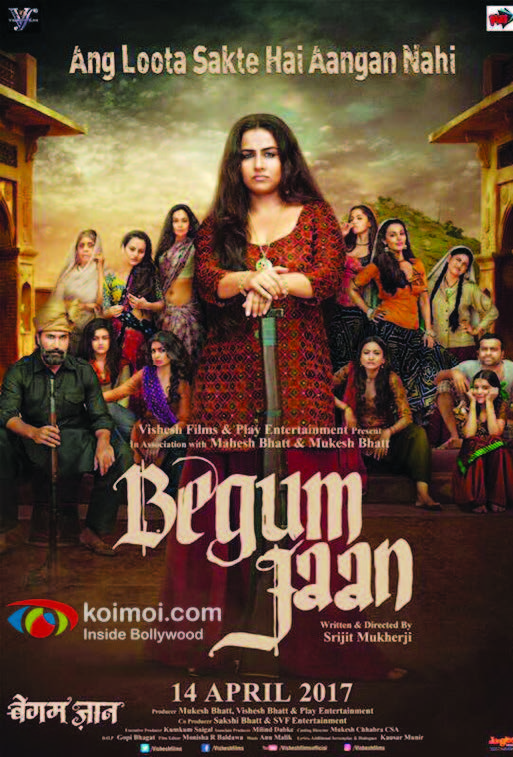
STORY On the eve of Independence, the chairman of the Border Commission, Sir Cyril Radcliffe decides to divide India and Pakistan into equitable halves. What the administration doesn’t account for is the line running through the middle of Begum Jaan’s(Vidya Balan) brothel situated plonk on the border; with one half falling in India and the other in Pakistan.
REVIEW It’s a good period and story to revisit because even 70-years after Partition, anything around it still piques interest. Then again, here the narrative deals less with the horror of the divide and serves more as an ode to the spiritedness of Begum; widowed in her childhood and sold to a brothel. Also, Mukherji is revisiting his Bengali film Rajkahini(2015).
Coming back to our protagonist – kings, administrators and commoners are hooked onto the pleasures provided by her girls, so Begum with her guile manages to rule. Till, Radcliffe draws the Lakshman-Rekha. Vidya invests fully in Begum and her dialogue-baazi (a lot of which is raunchy) will get ceetis. However, the writer-director’s interest level in everything else, falters. A sense of deja-vu pervades as one watches a prostitute staring sightlessly at the celling when “entertaining” a customer; or when sex-workers get sentimental over a child, “because all of them are mothers first and whores later.” Surely these women needed to be fleshed out with more finesse.
Begum’s spunk is infectious though. She resembles a Bengal tigress whether she is defending her body or boundaries. However, trying to retell her virtues through various historical avatars in animation, is far too indulgent. Also conversations between officials of the INC and Muslim League, or for that matter between other cardboard cutouts, is superficial. The cinematographer’s effort to capture the Indo-Pak divide with close-ups in half frames, seems amiss.
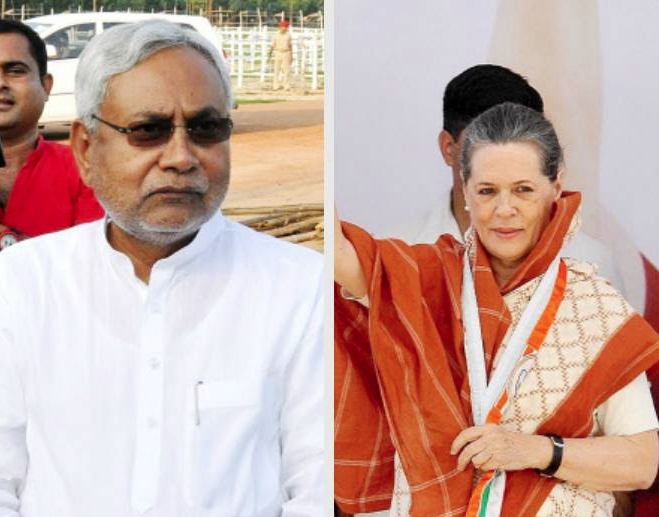
NEW DELHI (TIP): Bihar Chief Minister and Janata Dal (United) president Nitish Kumar met Congress president Sonia Gandhi, setting off speculation on the possibility of a united Opposition fielding a joint candidate for the upcoming Presidential election.
Nitish spent about half an hour with Sonia. It was after a long time that the AICC president met a senior leader after she took ill in August last year. The CPM has already indicated its willingness to back a common nominee against a BJP candidate. Indications are that the Opposition parties may agree on fielding former JD (U) chief Sharad Yadav, a Rajya Sabha MP.
Within the Congress there is an understanding that non-NDA outfits must come together to throw a challenge to the BJP. If the Trinamool Congress (TMC) and Left parties are to come together, the nominee has to be acceptable to both, and Yadav fits the bill, claim sources. “It’s still early. Let us see what happens,” said a Congress source, sounding cautious.
WASHINGTON (TIP): US President Donald Trump on Tuesday, April 18, ordered federal agencies to look at tightening the H1B visa program used to bring high-skilled foreign workers to the US, as he tries to carry out his campaign pledges to put “America First“.
The EO also establishes certain Hire American standards, which are not necessarily limited to federal procurement or federally-funded projects. This primarily includes an overhaul of the “H1B” visa program to replace the lottery features of the program and to impose restrictions designed to preclude the H1B program from being a conduit for lower-cost labor at the expense of American workers.
The latest action is part of Trump’s administration relentless series of tightening measures and is a major deterrent to Indian IT companies which send hundreds of software engineers to the US on H1B visas.
The executive order doesn’t actually make any change in the policy as it stands today.
This year there were 199,000 applications for the H1B visas even after the USCIS guidelines released April 3 clarifying that computer programmers will not be eligible for H1B visas by default.
The Trump administration appears to be keen to scrap the lottery system, which is why it is insisting on a higher wage floor as a first eligibility criterion to apply for the visa. It may also set a minimum education criterion, skewering the hopes of many Indians who hope to gain entry into the US.
H1B visas are intended for foreign nationals in occupations that generally require higher education, including science, engineering or computer programming. The government uses a lottery to award 65,000 visas every year and randomly distributes another 20,000 to graduate student workers.
Critics say the lottery benefits outsourcing firms that flood the system with mass applications for visas for lower-paid information technology workers.
“Right now, H1B visas are awarded in a totally random lottery and that’s wrong. Instead, they should be given to the most skilled and highest paid applicants and they should never, ever be used to replace Americans,” Trump said.
At present, about 70 per cent of the 85,000 H1B visas issued annually go to Indians, with more than half of that to software professionals. The infotech industry adds around 10 per cent to India’s GDP.
Senior officials gave few details on implementation of the order but Trump aides have expressed concern that most H1B visas are awarded for lower-paid jobs at outsourcing firms, many based in India, which they say takes work away from Americans.
They seek a more merit-based way to give the visas to highly skilled workers.
“Right now, widespread abuse in our immigration system is allowing American workers of all backgrounds to be replaced by workers brought in from other countries,” Trump said.
Read the full EO at https://www.whitehouse.gov/the-press-office/2017/04/18/presidential-executive-order-buy-american-and-hire-american? utm_source= email&utm_medium= email&utm_content=20170419_ADM_1600-Daily
What could be more unfortunate than to find the Sikh Gurdwara managers taking to violence in the presence of Guru Granth Sahib! The fight which broke off between two groups at Gurdwara Sikh Cultural Society in Richmond Hill, New York on April 16 could not have been more ill-timed.
It was a day of celebrations. One, Vaisakhi which fell on April 13, was formally being celebrated by the congregation. Also, it was the birth anniversary of Shri Guru Arjan Dev Ji, the fifth Guru of the Sikhs, who is credited with having collected Gurbani in the form of Granth Sahib.
The congregation was there to celebrate the two historic occasions when some Sikhs chose to come to blows right in the presence of Shri Guru Granth Sahib Who is considered by the Sikhs to be a Living Guru who guides and protects. Besides, there were around a thousand men, women and children who witnessed turbans flying in the air and some leaders of the community who the congregation otherwise held in great esteem, thinking they were doing a service to Guru Sahib and to the community, engaging in shameful fights.
Everyone obviously wondered why they were fighting. It is too well known that there are privileges and benefits, gains and profits associated with holding a position in the management of a gurdwara. And those who eye them and do not get an opportunity to be on the management, look for opportunities to create conditions which they think, might benefit them. So, it was in this case.
Then there are occasions to promote one socially and politically. Sikh Day Parade is one such occasion. There are always differences among various groups when it comes to sharing the limelight. Those in power would like to keep their opponents away. And those not in power would claim they be treated with respect and allowed a fair share in organizing and participating in the parade.
Thus, it was a clash of egos which resulted in the unfortunate and shameful fight between the two groups in the presence of Guru Granth Sahib and the Sangat. The worst which happened was that the police came in to the Diwan Hall in the presence of Shri Guru Granth Sahib in shoes and bareheaded, which the Sikhs have always resented in every part of the world, viewing it as an insult to their Guru.
Those who picked up a fight in the presence of Guru Sahib are responsible for desecration of the holy place. The least they need to do, without anybody telling them, is to seek public forgiveness from Guru Sahib and from the Sangat. Their conduct was unbecoming of a Sikh, reprehensible and unpardonable.
“We are a blended nation. Our long traditions, our languages, our home states, these cultural geographies have blurred and indistinct boundaries, interrelated contexts of meaning. There are many echoes, spirits and voices that inhabit our gardens. Separation and distinctiveness are not their defining features. Human life is not about separation but about connection”, says the author –Nirupama Rao.
I am a Hindu by birth and by enduring faith. The house that I was born into that my grandfather built, had no special puja room — but the plaster of Paris statue of a flute playing Krishna, the Ravi Varma oleographs of a Lakshmi rising from a lotus with elephants trumpeting their joy at her presence, the veena-playing Saraswati, and our special deity Lord Guruvayurappan, with beautiful Kartikeya and his “vel”(spear) and his vehicle, the peacock made up the pantheon of our isthtadevatas.
On my trips to my “native place” as we say in Indian English, I remember how every evening, the vilakku (bronze lamp) was lit with cotton wicks we lovingly made, dipped in gingelly oil, and brought out to the verandah of the tharawad (Hindu matrilineal family) house, with the heralding word: “Deepam” (lamp) repeated two or three times, quietly, with deep reverence. We would greet the sight of this burnished lamp and its brave, bright flame in a prayerful namaskar with bowed heads in a moment of blessed quietude, as imaginary and heavenly angels murmured in the dusk of a tropical Kerala garden around us.
Wherever we lived as children travelling the length and breadth of India with my army officer father, my homemaker mother would gather us three sisters together at dusk to say our prayers after she had lit the little vilakku that graced a small corner of the bedroom, auspiciously positioned.
We sat down cross-legged on the bare floor, put our hands together in prayer, and recited our Om Namashivaya, and sang a few bhajans including Gandhiji’s favourite “Raghupati Raghava”. We must have sung with youthful fervour and reasonable harmony because in one of the towns we lived in, the neighbouring Malayalee Catholic family with whom we shared a wall, the Pereiras, would listen tell my mother how much they loved our “evensong”. Them being Christian, and our being Hindu did not matter in those simple days.
I went to Catholic school till I finished high school and to a Catholic undergraduate college after that. I read Bible history as a young girl and was equally fascinated with the stories of Moses, N the Ark of Noah, and the life of Jesus as I was with the Ramayana and the Mahabharata. Growing up, we were taught to respect all faiths and to be tolerant of differences. We grew into self-confident Hindus, secure in our faith and respectful of our Christian and Muslim classmates and friends.
In this recalling of memory, I am reminded of the saying that “the past is another country”. Where is that far-off land? What starship are we voyaging on today? Today we Hindus demand “empathy” from the minorities in our country. A Muslim dairy farmer transporting a cow, even with a permit, is not showing empathy for the majority religion, an NRI friend said recently. India is a Hindu nation he added and the minorities should respectfully acknowledge this and adjust to this basic reality.
Ensconced in the United States, I do not believe he had any doubt in his mind that Hinduism should constitutionally be India’s national religion. Having lived in Sri Lanka, I was reminded of the manner in which that island country made Buddhism its state religion, with its Buddhist clergy being the most powerful source of authority in the land, and all the momentous repercussions of that approach for civil society and the Sri Lankan minorities.
Is India a wounded civilization? If our religion as Hindus has survived intact despite the depredations of conquest and empire over the last millennium, then are we not prepared to face the next with the steadfastness of faith and the confidence that Hinduism with its capacity for tolerance and accommodation can create the India of our dreams? Are we instead, intent on molding our lives on the basis of religious militancy and a fundamentalist interpretation of belief? Are we intent on the subjugation of our religious minorities so that they conform to what our idea of their place in our society should be?
Pepita Seth, the English woman who has become a Hindu, and made Kerala and particularly Guruvayur her home, has a passage in her book, Heaven on Earth: The Universe of Kerala’s Guruvayur Temple, that eloquently sums up how I define my being Hindu:
“In northern Malabar there is a Theyyam deity, Kshetrapalan, the guardian of temples, who once demolished a semi-ruined shrine and built a mosque to give a growing community of Muslims a place of worship. This, in essence is a sharing of cultures and spaces, even as the other is respected. This fineness shows India’s profoundly pluralistic dimension. It is beyond me to suggest what can be done, political will being what it is. The great hope is that our children can, at an early age, be shown what is common to us all, that with opened minds they come to recognize that this will give them a share of the wider whole. As India is railed against for the dreadful things that now too often happen, it can help to recognize that the other side of the coin exists. And that I have been lucky to experience it.”
India’s is a map of many migrations. She speaks to both East and West, those twins of history, when she demonstrates the fact that labels like Hindu, Muslim, Christian are no more than starting points. We are a blended nation. Our long traditions, our languages, our home states, these cultural geographies have blurred and indistinct boundaries, interrelated contexts of meaning. There are many echoes, spirits and voices that inhabit our gardens. Separation and distinctiveness are not their defining features. Human life is not about separation but about connection.
Gandhiji drew inspiration from the devotional traditions of Hindu faith as expressed in the ideals of the religious poets and preachers of rural Gujarat, as also from Thoreau and Tolstoy, and even Christianity. He wove these influences into his life and made them work in a manner that was magnetic, riveting and resoundingly powerful. There is power in his example. The Indian answer to the question “who am I” which is “I am that” or Tat Tvam Asi, signifies a oneness with all creation. The Chinese saying: There is me in you, and you in me bridges divisions of race or creed. The Sanskrit word, Viswabodh or, awareness of the whole world, should apply in everything we do.
It was Rabindranath Tagore who, when he spoke of the idea of India, which as he emphasised was not just a geographical expression, (“I love my India, but my India is an idea and not a geographical expression”), stressed the assimilative outlook, the irreducible diversity that characterised the civilization of India. In a similar way, life in my home state of Kerala has been largely marked by the tenor of coexistence between Hindus, Muslims and Christians. Each community left the other to come to terms with his God in his or her own fashion and in the words of the writer Krishna Chaitanya, realising that difference here in no way militated against close cooperation in activities that ensured the livelihood of all.
The great twentieth century poet in Malayalam, Vallathol, a Hindu, wrote a narrative poem on Mary Magdalene which is treasured by the Christian community both for its spiritual high notes as well as its sheer beauty. The story of Genesis is seen integrated with the Hindu myth of origin of the churning of the primeval ocean by the gods and demons. This is the true symbiosis that India should seek to treasure and to preserve.
Today, at evensong, even as I celebrate my being Hindu, I pray for India. I pray for peaceful coexistence, and for us to conduct our lives as citizens of a great and grown-up nation. Let us not leave our destinies to the vagaries of fate, or the tyranny of the closed and confined mind.
(The author is a former Foreign Secretary of India) (Source: First Post) British English
Perhaps the backdrop explains the dynamics at play more than just details of his incarceration
“The fact that despite specific provisions in the Vienna Convention on Consular Relations, India was denied access to Mr. Jadhav only confirms that Pakistan does not want the truth to be revealed about the place and manner of arrest. India also argues that spies and operatives are not sent carrying their own passports”, says the author – KC Singh.
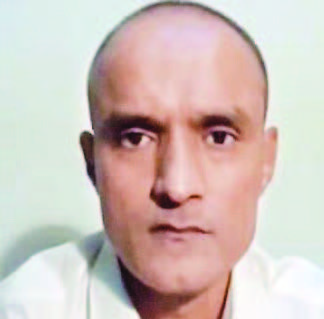
The military trial and summary sentencing to death of Kulbhushan Jadhav in Pakistan, with the Indian High Commission denied consular access to him, has plunged India-Pakistan relations into a crisis again. Mr. Jadhav is not the first Indian to be caught and sentenced as a spy by Pakistan, but the first retired middle-level naval officer. The context and background of this need examination.
A diplomatic leap in the dark
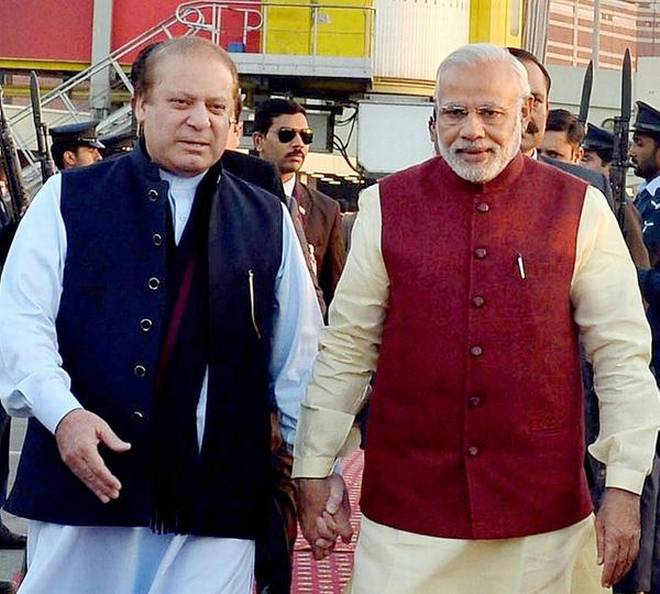
The current cycle of bilateral engagement and acrimony runs from the dramatic visit by Prime Minister Narendra Modi to Lahore on Christmas in 2015. The occasion was Pakistan Prime Minister Nawaz Sharif’s granddaughter’s wedding, but really it was a diplomatic leap in the dark. As in the past, beginning with Prime Minister Atal Bihari Vajpayee’s Lahore bus journey, theatrical moves rattle anti-India forces in the Pakistani military and jihadi organisations, who then unleash retributive terrorist acts. Within a week of Mr. Modi and Mr. Sharif socialising, the Pathankot airbase was attacked. Tragically, within days of that, Mufti Mohammad Sayeed, the Chief Minister of Jammu and Kashmir, who headed the Peoples Democratic Party’s alliance with the Bharatiya Janata Party, died. The stage was set for instability in the Kashmir Valley.
While Mufti sahib’s daughter Mehbooba Mufti dithered for nearly three months whether or not to succeed her father, the situation in Pakistan was drifting too. Prime Minister Sharif, marginalised by his namesake, the Pakistani Army chief, undermined by the Panama Papers revelations and suffering from heart trouble, left for the U.K. for medical treatment in April 2016. He returned to Pakistan in July. By then, Ms. Mufti had barely been in office when Burhan Wani, a self-styled commander of the Hizbul Mujahideen, was killed, inflaming an already restive Valley. From that point onwards, Indo-Pak relations slid downwards.
Kulbhushan Jadhav alias Hussein Mubarak Patel was arrested by Pakistan in March 2016, allegedly in Balochistan, for espionage and abetting terror. This was a windfall for Pakistan as since the 2008 Mumbai attacks and the confessions of Pakistan-born American operative David Headley, it had been seeking moral equivalence by alleging complicity of India’s external intelligence agency, the Research and Analysis Wing (R&AW), in almost every major attack, particularly by the renegade Tehreek-e-Taliban Pakistan. In fact, the joint statement of Prime Ministers Manmohan Singh and Yousaf Raza Gilani at Sharm el-Sheikh in 2009 was widely condemned in India for unnecessarily allowing Pakistan to introduce Balochistan in the statement to discuss an alleged Indian hand in the Baloch uprising.
Gaps in stories
There is the usual Indo-Pak disagreement over facts. India claims Mr. Jadhav was conducting business out of Chabahar, Iran, for many years after retiring from the Navy, and that he has been abducted by Pakistani state or non-state actors from within Iran. The fact that despite specific provisions in the Vienna Convention on Consular Relations, India was denied access to Mr. Jadhav only confirms that Pakistan does not want the truth to be revealed about the place and manner of arrest. India also argues that spies and operatives are not sent carrying their own passports. On the other hand, it is unclear why Mr. Jadhav was operating under a Muslim name, and if he did convert, why the government keeps referring to him by his earlier name. India has not challenged the authenticity of his passport, implying that it was not obtained by fraud or faked by Pakistan. With the debate in India now enveloped in jingoism, such lacunae in stories paraded by both sides are beyond examination.
The truth may never be known, but “Doval-isation” of India’s approach to Pakistan has been obvious for some time. Prime Minister Modi’s espousal of the cause of Balochis and the residents of Gilgit from the ramparts of the Red Fort on August 15, 2016 only confirmed Pakistani fears that India abets terror and secession in Pakistan. However, recent signals from Pakistan via Track II events were that the new Army chief, Gen. Qamar Javed Bajwa, wanted to reorient his Army’s approach towards India and would endorse the civilian government’s lead in crafting its India policy. He was apparently getting a pushback from entrenched interests raised on India baiting. There were unconfirmed reports that National Security Adviser Ajit Doval had spoken to his Pakistani counterpart to acknowledge the signal and create an environment for resuming political contact. Why then did Pakistan change tack and with sudden alacrity, devoid of transparency, sentence Mr. Jadhav?
One trigger could have been the disappearance of an ex-ISI Pakistani military officer in Nepal. Another may be a desire to stoke further unrest in the Kashmir Valley. It could also be some re-balancing between the civilian and military authorities as Prime Minister Sharif awaits court judgement on the Panama Papers charges. At any rate, Pakistan has succeeded in capturing media space and the Indian government’s attention and thus mainstreaming its grouses even as a new U.S. president shapes his foreign policy.
The Indian opposition has adopted a jingoistic pitch to entrap a government mixing politics, religion and nationalism. If assurances in Parliament are that the government will do “all” in its power to rescue Mr. Jadhav, either it is confident of a Cold War-style exchange of spies, provided they have managed to secure the asset that went missing from Nepal, or it is upping the ante hoping that Pakistan will not want to escalate tensions further.
India’s perception of Pakistan
India misperceives Pakistan, as the 19th century French statesman Talleyrand said the world did Russia, as it is neither as strong as it seems nor as weak as we think. For instance, it is not isolated, as policymakers in South Block assume. Pakistan would have seen rising Chinese rhetoric over the Dalai Lama’s visit to Tawang. It also would read U.S. President Donald Trump’s intervention in Syria and the dropping of the ‘mother of all bombs’ in Afghanistan as the U.S. returning to business as usual and restoring the primacy of its Sunni allies, i.e. Turkey, Saudi Arabia, plus the Gulf Cooperation Council, Pakistan, and Egypt. Pakistan is familiar with the generals now ruling the roost after White House chief strategist Stephen Bannon’s fall.
A Sino-Pak alliance now fed by China’s open hostility and not countered by the U.S.’s words of restraint may entrap India into a regional morass. Many assumptions on which the Modi government has functioned in diplomacy are being rewritten. The challenge is to steer India through this maze with more than jingoism, theatre, and domestic electoral needs.
(The author is a former Secretary, Ministry of External Affairs, Government of India) British English
In the absence of any initiative to begin a dialogue process, separatists hone their skills to influence people
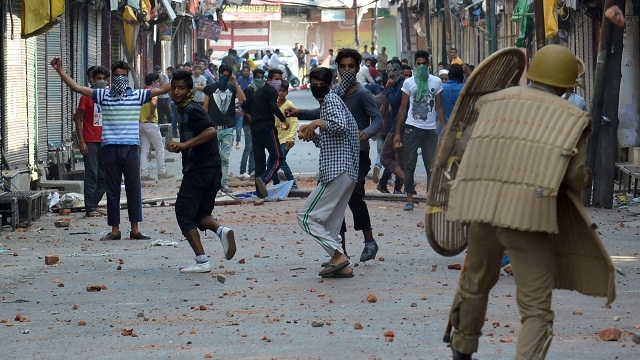
There is a lot to unlearn from a recent video clip gone viral on social media. A CRPF man carrying EVMs keeps walking nonchalantly even as he is pushed, heckled and abused by a group of youths shouting anti-India slogans, — a predictive ranting tirade. The clip protagonists seemed to expect some elisions reflected in that part of Kashmir:
a) security forces are used to such gimmickry of protestors; and
b) most youths in the Valley are downright separatists whose writ runs so wantonly.
For outsiders, a message went out: Kashmir is as bad as it has been in last three decades — a perception repeatedly reinforced by a series of violent events. The last year’s post – Burhan Wani’s killing and the death of over 80 people in its wake bear it out. It all climaxed in the lowest voter turnout on Thursday in Budgam, under Srinagar parliamentary constituency, where a re-poll was ordered after April 9’s poor voting figures amid large-scale violence leading to the death of eight people.
“Maybe all sides — mainstream political parties, separatists and those sitting in Delhi and Islamabad — want to tire each other out before realizing the futility of it all,” says a youth in Srinagar, refusing to identify himself.
“The frustration stems from people’s perception of betrayal and the anger is because no dialogue process is initiated — either with Pakistan or with the people’s representatives,” says Junaid Mattu, spokesperson for the National Conference.
The separatists have their own take that essentially revolves around Pakistan. “It is not the fight for votes or power. This is the fight against the betrayal of Indian government for not fulfilling the promises made with the Kashmiri people. It is time to ease tension and ensure stability by settling all disputes,” says Abdul Gani Bhat, executive member in moderate faction of Hurriyat Conference.
The separatists’ poll boycott call was reported from mosques’ loudspeakers, phone calls, WhatsApp and text messages. And despite several requests by the mainstream parties to postpone the polls, the Election Commission deemed it fit to hold elections. “In such an environment, genuine voters would obviously feel frightened,” said an NC activist.
Development a ‘non-issue’
During his recent visit to Udhampur, Prime Minister Narendra Modi asked the people, particularly Kashmiri youth, to choose “tourism over terrorism”. “Had the people of Kashmir devoted the past 40 years to development of tourism, the Valley would have been blessed with numerous benefits,” Modi said at a rally organized to mark South-East Asia’s biggest tunnel along the Jammu-Srinagar Highway.
The separatists were quick to reject the assertion. “Construction of tunnels and roads is futile and won’t succeed to lure us,” said a joint Hurriyat Conference statement.
The failure of the ‘development mantra’ was, in fact, clear from the election manifestoes of all parties during the assembly polls. Predominant issues were: a dialogue with Pakistan, opening new routes along the LoC, restoration of autonomy, demilitarization and revocation of the Armed Forces Special Powers Act. This explains why, after over a year of assembly polls, the separatist camp’s slogans of ‘azadi’ strongly influence the Kashmiri youth.
Poor showing
A senior government officer, who wished not to be named, throws light on areas of concern. “Our education is in a shambles. Out of the 96 degree colleges functioning in the state, at least 31 colleges —some of them sanctioned about nine years back – function from makeshift accommodations. We have poor health infrastructure. Hundreds of villages don’t have electricity and road connectivity. We have the highest number of unemployment in North India. But we have restricted our thought process to unnecessary issues,” he says.
Nawang Rigzin Jora, Congress Legislature Party leader and MLA from Leh, rues that politics has taken over everything else. “There is no commonality among the people of three regions — Jammu, Kashmir and Ladakh. We have to have a binding force, which is not there.”
Mahesh Koul, a research scholar, says by relegating areas of human development, “the government has handed a long leash to the subversives who want the state to waste time in conflict management.”
The situation has come to such a pass, says Prof Hari Om, a Jammu-based historian, that leaders in Kashmir don’t want development. “The three regions — Jammu, Kashmir and Ladakh — are pulling in different directions. And the Indian state simply watches on.”
SACRAMENTO (TIP): An Indian-American CEO has been ordered to pay USD 135,000 to her former domestic worker after a Labor Department investigation found she underpaid and mistreated her.
Himanshu Bhatia, CEO of Rose International and IT Staffing, will have to pay her former live-in domestic service worker back wages and damages under the terms of a consent judgement entered into the US District Court for the Central District of California.
The judgement, entered on April 11, resolves a complaint filed by the US Department of Labor in August last year. An investigation by the department’s Wage and Hour Division found that Bhatia willfully and repeatedly violated federal labor laws’ minimum wage and record keeping provisions from July 2012 to December 2014.
The complaint alleged that Ms Bhatia paid her domestic service worker, who had been identified in an earlier complaint as Sheela Ningwal, a fixed monthly salary of USD 400 plus food and housing at Ms Bhatia’s home in San Juan Capistrano and other residences in Miami, Las Vegas and Long Beach.
Investigators found that the employee suffered “callous abuse” and retaliation, including being forced to sleep on a piece of carpet in the garage when ill, while Ms Bhatia’s dogs slept on a mattress nearby. The complaint also alleged that Ms Bhatia confiscated Ms Ningwal’s passport.
Ms Bhatia terminated the worker in December 2014 after she allegedly found her employee researching labor laws online, and after the worker refused to sign a document stating she was being paid an adequate salary and had no employment dispute with Ms Bhatia.
“This consent judgement underlines the department’s commitment to protecting workers from exploitation,” said Janet Herold, solicitor for the Department of Labor’s Western Region.
“The department will take strong and immediate action to ensure that workers are protected against retaliation.”
CHICAGO, IL (TIP): The Consulate General of India in Chicago in collaboration with Ambedkar Association of North America [AANA] celebrated 126th Birth Anniversary of Dr. B.R. Ambedkar on 14th April, 2017.
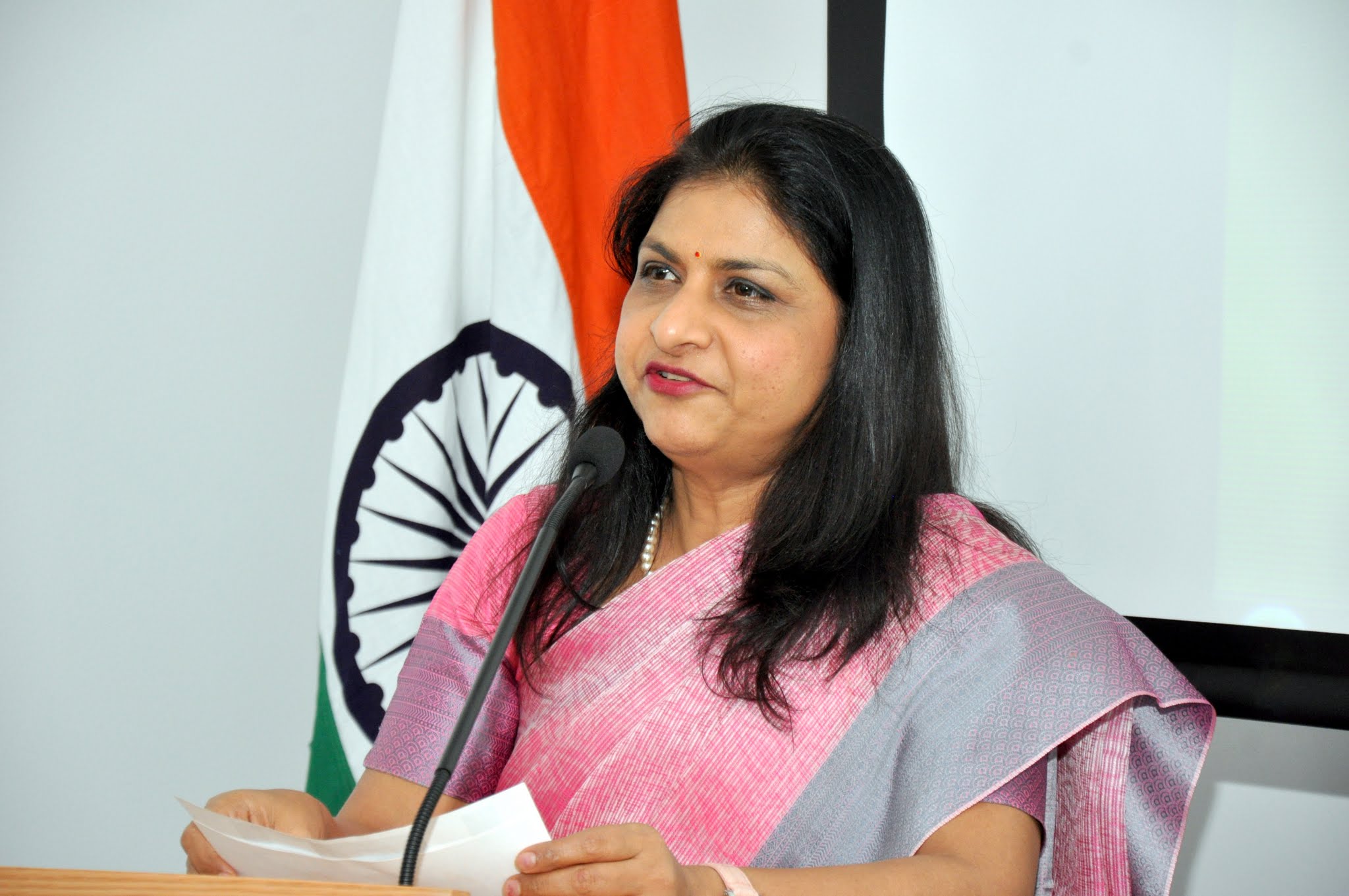
The opening remarks were delivered by Mrs. Neeta Bhushan, Consul General. Consul General addressed the gathering and recalled the mammoth work done by the Drafting Committee of the Constituent Assembly under the Chairmanship of Dr. B.R. Ambedkar in drafting the Constitution of India. She emphasized that the Constitution of India does not discriminate anyone on the basis of religion, creed, sex or any other ground. It is the duty of every citizen of India, therefore, to uphold the Constitution both in its letter and spirit.
Speakers from Ambedkar Association of North America [AANA] spoke on role of Dr. Ambedkar in National Reconstruction, Ambedkar’s agriculture and economic policies and women empowerment. During cultural program, the children sang classical Raga & performed the classical dance “Bharat Natyam”. Mr. Mahesh Wasnik introduced the AANA & its activities.
A Book and photo exhibition of photographs on the life and times of Dr. B.R. Ambedkar was also organized as part of the celebration.
The celebration was attended by a cross-section of prominent Indian-Americans residing in Chicagoland. Mr OP Meena, Consul, proposed a vote of thanks.
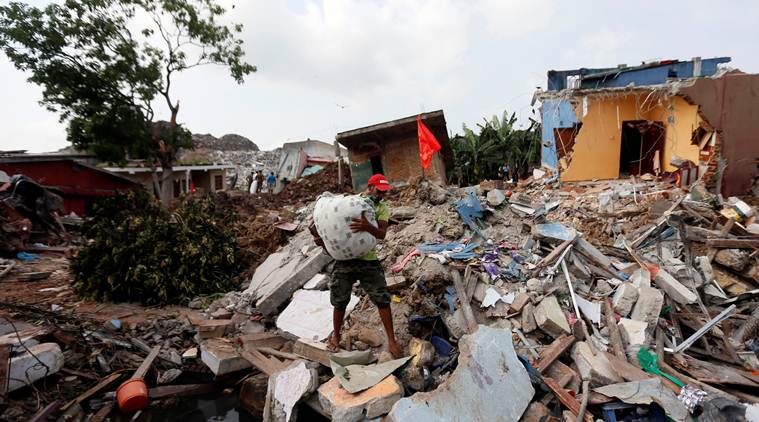
COLOMBO (TIP): The death toll from the collapse of a giant open garbage dump near Colombo reached 33 today with Sri Lankan Prime Minister Ranil Wickremesinghe promising to clear the area as soon as possible.
Wickremesinghe, who cut short his state visit to Vietnam and returned last night, today visited the site and promised a house to each of the affected families in the disaster.
He promised to remove the Meethotamulla garbage dump as soon as possible, Colombo Page reported. A portion of the 91-metre dump collapsed following a fire incident on Friday as the residents celebrated the traditional Sri Lankan New Year, burying dozens of residential buildings and trapping many people in Meetotamulla area in Kolonnawa.
At least seven children were among the dead. Some still remain untraceable after the mishap, officials said. The death toll climbed to 33, the report said. After the explosion in the 23-million-tonne garbage mound, the air force was deployed to douse the flames. Nearly 1,000 military security personnel, including police and special task forces, have been deployed for rescue operation.
The tragedy has displaced nearly 200 families numbering more than 1500. Nearly 80 houses were completely destroyed while many more suffered partial damage, according to Sri Lanka’s Disaster Management Centre. The affected families have blamed politicians for the tragedy, though President Maithripala Sirisena has ordered officials to ensure maximum relief to them.The National Building Research Organisation said people still living in over 130 houses in the area must be relocated to safety. The true scale of the damage remains unclear, police said as about 800 tonnes of garbage were added to the dump daily. The Parliament was recently warned that 23 million tonnes of garbage at Kolonnawa dump was a serious hazard. (PTI)
WASHINGTON (TIP): Former Pakistan ambassador to the US, Hussain Haqqani, has criticised the death sentence awarded to retired Indian navy officer Kulbhushan Jadhav, saying Islamabad’s “spy games” are making it tougher for the two South Asian neighbours to even explore peace.
Haqqani said Jadhav’s conviction for espionage would have been more convincing had it resulted from an open trial.
“But as with much about Pakistan, the trial’s short and secretive timeline may have more to do with internal dynamics than with the merits of the case itself,” he wrote in an op-ed in The Wall Street Journal.
Haqqani, who currently is the director for South and Central Asia at the Hudson Institute, a top American think-tank, said putting an Indian on death row was an easy way to scuttle momentum for new talks.
“At a time when India is also sliding into Hindu religious fervour, with vigilante violence threatening the country’s minorities over protecting cows that are considered sacred, Pakistan’s spy games can only make it tougher for the two South Asian neighbours to even explore peace, let alone find it,” Haqqani said. “(Pakistan Prime Minister Nawaz) Mr Sharif had recently renewed calls for improving relations with India. Putting an Indian on death row is an easy way to scuttle momentum for new talks,” he added.
In his op-ed, the former Pakistani diplomat also alleged that Islamabad is unlikely to change its policy of using terrorist groups for its national security. “Unwilling to change its policy of supporting jihadist groups as an instrument of regional influence, Pakistan’s military-intelligence combine wants to ensure the primacy of its worldview at least within Pakistan,” Haqqani said.
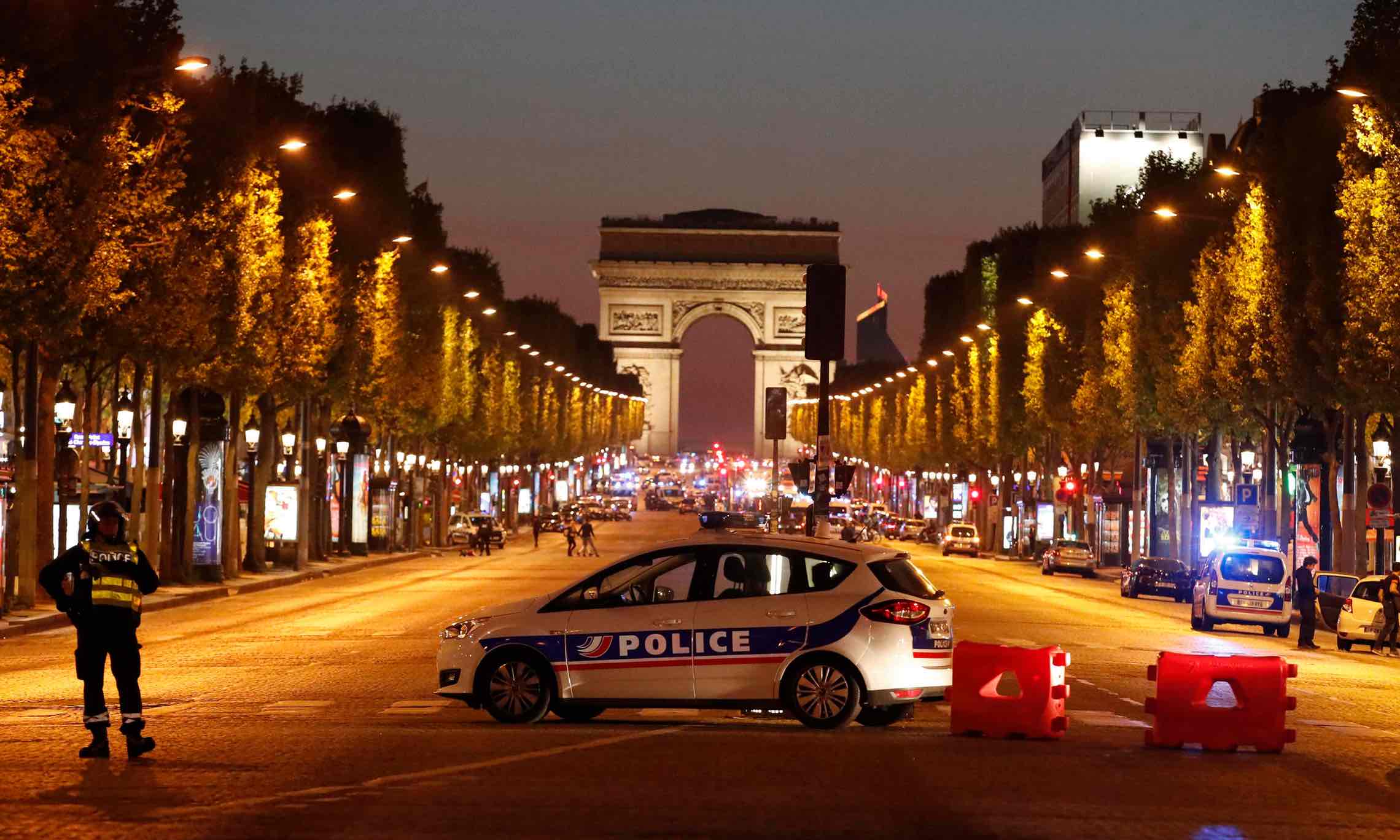
PARIS (TIP): A lone gunman opened fire on police on Paris’ iconic Champs-Elysees boulevard Thursday night, killing one officer and wounding three people before police shot and killed him. The Islamic State group claimed responsibility for the attack, which hit just three days before a tense presidential election.
Security already has been a dominant theme in the campaign, and the violence on the sparkling avenue threatened to weigh on voters’ decisions. Candidates canceled or rescheduled final campaign events ahead of Sunday’s first round vote.
One officer was killed and two police officers were seriously wounded when the attacker emerged from a car and used an automatic weapon to shoot at officers outside a Marks & Spencer’s department store at the center of the Champs-Elysees, anti-terrorism prosecutor Francois Molins said.
A female foreign tourist also was wounded, the officer said.
Police and soldiers sealed off the area, ordering tourists back into hotels and blocking people from approaching the scene.
Emergency vehicles blocked the wide Champs-Elysees, an avenue lined with boutiques and normally packed with cars and tourists that cuts across central Paris between the Arc de Triomphe and the Tuileries Gardens. Subway stations were closed off.
The gunfire sent scores of tourists fleeing into side streets.
French President Francois Hollande said he was convinced the circumstances of the attack in a country pointed to a terrorist act. Mr. Hollande held an emergency meeting with the prime minister on Thursday night and planned to convene the defense council on Friday morning.
Speaking in Washington during a news conference with Italian Prime Minister Paolo Gentiloni, U.S. President Donald Trump said the shooting “looks like another terrorist attack” and sent condolences to France.
Conservative contender Francois Fillon, who has campaigned against “Islamic totalitarianism,” said on France 2 television that he was canceling his planned campaign stops on Friday.
Far-right candidate Marine Le Pen, who campaigns against immigration and Islamic fundamentalism, took to Twitter to offer her sympathy for law enforcement officers “once again targeted.” She canceled a minor campaign stop, but scheduled another.
Centrist candidate Emmanuel Macron offered his thoughts to the family of the dead officer.
Socialist Benoit Hamon tweeted his “full support” to police against terrorism.
Apex Court favors joint trial of the accused to speed up the judicial process
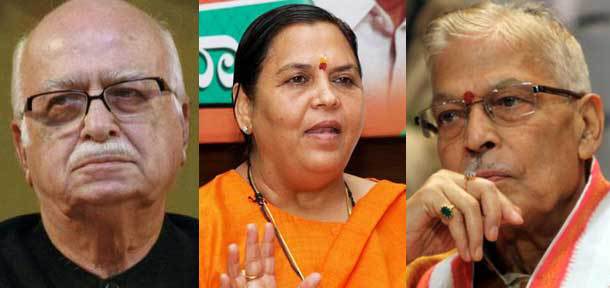
NEW DELHI (TIP): In a major judgement handed down on April 19, Supreme Court of India ordered that the co-founder of the BJP, LK Advani, and other leaders be tried for criminal conspiracy in the demolition of Babri Masjid about 25 years ago.
The Babri Masjid in Ayodhya was allegedly pulled down by Hindu activists in December 1992, leading to widespread riots in which more than 2,000 people died.
The apex court added that the trial must conclude within two years, a decision welcomed by Muslim clerics.
This is a huge setback for former BJP chief Lal Krishna Advani and his colleagues who have repeatedly denied making inflammatory speeches that encouraged Hindu mobs to tear down the Babri Masjid.
Those accused along with Mr Advani are senior BJP leaders Murli Manohar Joshi and Uma Bharti. They have all denied any wrongdoing, however, the Central Bureau of Investigation (CBI) has always said the destruction of the mosque was a planned event.
The Supreme Court has been hearing the case since 2011 after setting aside a high court judgement which allocated two-thirds of the disputed site to Hindu groups, and the remainder to Muslims.
The Allahabad High Court ruling in 2010 addressed three major issues. It said the disputed spot was Lord Ram’s birthplace, that the mosque had been built after the demolition of a temple and that it was not built in accordance with the tenets of Islam.
The Archaeological Survey of India, in 2003, had reported to the Allahabad High Court that its excavations found distinctive features of a 10th century temple beneath the Babri Mosque site.
For the first time in a judicial ruling, it also said that the disputed site was the birthplace of the Hindu god.
Hindus claim the mosque is the birthplace of one of their most revered deities, Lord Ram, and that Babri Masjid was built after the destruction of a Hindu temple by a Muslim invader in the 16th Century.