Month: April 2017

  • Indian-American Student at Rice University awarded Watson Fellowship

    Indian-American Student at Rice University awarded Watson Fellowship

    An Indian American student is among among the 40 students, chosen from 149 finalists nominated by private liberal arts colleges and universities across the United Sates, who were named a 2017 Thomas J. Watson Fellow and will each receive $30,000 for a year of international travel to study their field of choice.

    Madhuri Venkateswar, from San Antonio, is majoring in chemical engineering, minoring in poverty, justice and human capabilities and pursuing a certificate in civic leadership at Rice University. Another Rice University major Allison Yu has also been named a 2017 Thomas J. Watson Fellow.

    Madhuri plans to travel to Peru, Malawi, New Zealand, China and Germany, where she will study women’s choices and how they are constrained by unique social and political climates. From sexual violence to discrimination in higher education, she will learn how power structures engage and often oppress women in complex ways.

    This year’s class of Watson Fellows shows “the enormous depth, width and creativity of our next generation of leaders,” said Chris Kasabach, executive director of the Watson Foundation. He noted that the year of unparalleled international exploration funded by the foundation helps expand the vision and develop the potential of remarkable students.

    “My personal interactions with gender discrimination spurred me to learn more about it in college and quickly become passionate about doing my part to fight it,” Venkateswar said. “By leading a Women’s Empowerment Alternative Spring Break my sophomore year, I became aware of the breadth of issues that women face and want to further broaden my perspective by studying this abroad.”

    During her education at Rice, Venkateswar has served as president of her residential college and as president of Rice’s chapter of the Roosevelt Institute, which works to effectively engage students in Houston policy. She researched gender inequality in education through a Loewenstern Fellowship in India, where she helped a local nonprofit assess the impact of its mobile library program on women in the community.

    Upon completion of her Watson Fellowship, Venkateswar plans to move to Boston to work as a strategy and operations consultant for Deloitte.

    – See more at: http://news.rice.edu/2017/04/06/2-rice-university-students-awarded-watson-fellowships/#sthash.N2nEm0yV.dpuf


  • Raja Krishnamoorthi calls for decisive steps to end bigotry, hate crimes

    Raja Krishnamoorthi calls for decisive steps to end bigotry, hate crimes

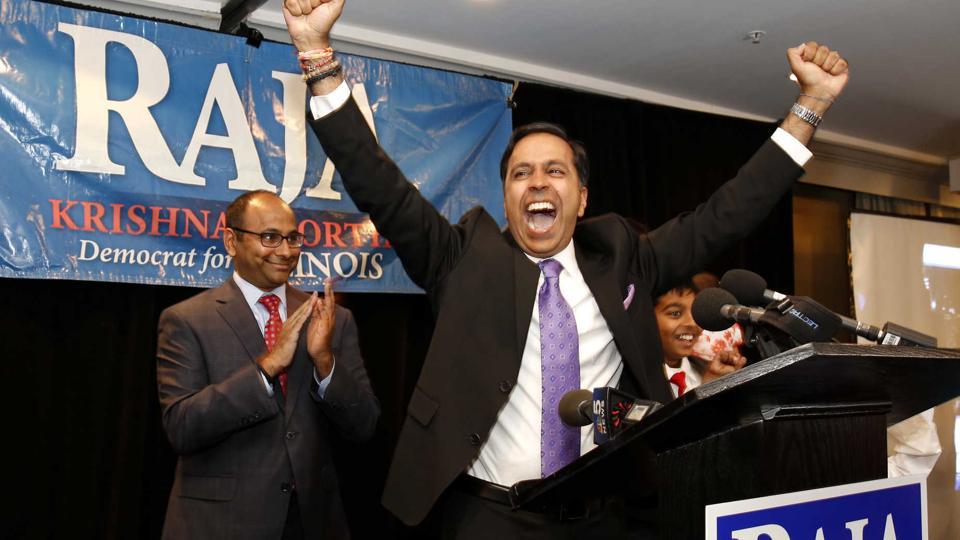
    Indian-American Congressman Raja Krishnamoorthi has asked the US administration to take “decisive steps” to end bigotry and hate crimes towards Indian-Americans and other religious minorities in the country.

    “There are various reasons (for increase in hate crimes), but one is certainly there’s been a rise in divisive rhetoric starting with the top,” Krishnamoorthi, Congressman from Illinois, said.

    Krishnamoorthi, who has initiated steps to galvanise his Congressional colleagues on the issue, said there has been a number of issues taken on the immigration front, which really contributes to the divisive atmosphere in this country.

    “Starting with the immigration executive order dated January 27th, which targeted American legal permanent residents, also known as Green Card holders. But we’ve now seen a number of steps taken by the White House on a number of fronts, which have sown confusion, concern, and fear among Indian-Americans and others,” Krishnamoorthi told PTI.

    The first-time Congressman said he has not seen any measures being taken by President Donald Trump.

    “Not so far, but I’m heartened that at least Secretary (of Homeland Security John) Kelly was willing to meet with me and others to discuss this issue and to recognise that there has been an increase in hate crimes and that we need to do something about it,” he said.

    “But now is the time to act. We can’t just have a nice talk. It’s time for the authorities at the very top of our government to take decisive steps to end the state of bigotry and prejudice that’s being directed toward Indian-Americans, Jews, Latinos, Muslims, and others because at the end of the day, we have to come together as a country to confront the various challenges that we have on the landscape, primarily economic,” Krishnamoorthi said.

    One thing that the Trump Administration can do is that they can make sure that there continue to be the registry of where are the attacks happening and against who, and those responsible for it are prosecuted.

    “They’ve been dilly-dallying on this front in a number of cases,” he alleged.

    “It’s very clear that some of these attacks were motivated by hate, and they should be prosecuted as such. Then, we need leaders to come and meet with the community and to show solidarity with them,” he said.

    “We are all Americans, and regardless of what you think about his policies, George Bush, after the September 11th attacks, actually showed up in the different communities to allay concerns about different communities being singled out as targets of hatred. We need that same type of attention being given now,” he said.

    “Then, word needs to go out into law enforcement that they need to act with even more purpose, and they need to do everything they can to stop these attacks,” he added.

    Read more

    Krishnamoorthi last week met with Secretary of Homeland Security John Kelly.

    During the meeting, he brought up the concerns about the attacks on Indian-Americans, Hindus, Muslims, Jews, and others.

    “I basically got a commitment from him to work on this issue, and he also lamented the rise in White supremacist organisations,” he said.

    “I then followed up with a letter to him basically urging him to take action to follow up on his commitment. Then I’ve also asked him to come to Chicago and hold meetings with local concerned community leaders with regard to this issue. He said that he was interested, but we’re following up on that,” he added.

    “This follows a number of other actions taken by our office including calling for investigative hearings of my Oversight Committee, writing to Department of Justice (DOJ) including Attorney General Jeff Sessions asking them to investigate, and various other statements and letters that we’ve sent,” Krishnamoorthi said.

    “In addition, I’ve met with local leaders in the community with regard to this issue, and we are holding town halls and other meetings to basically bring attention to what’s happening. We’re doing everything we can to make sure that we address this rise in hate crimes and prejudice and bigotry in as diligent a manner as possible,” Krishnamoorthi said.

    Having received feedback from across the country, Krishnamoorthi said Indian-Americans are very concerned, which is bordering on fear.

    “I think that we have to do everything we can to allay their concerns, but more importantly, to take action, to make sure that we get to the bottom of what’s happening and prevent future attacks,” he said.

  • African-American attacks Nepali-Indian establishment pretending to be white supremacist

    African-American attacks Nepali-Indian establishment pretending to be white supremacist

    New York, April 11: A Bhutanese businessman is the victim of a false flag assault in Charlotte by an African-American man who made the attack on the man’s store appear to be the work of white supremacists.

    Hate Politics – A rash of racist attacks have broken out after Donald Trump’s victory

    North Carolina police arrested on Sunday the man allegedly seen on a surveillance video setting fire to the store on Thursday and leaving a note threatening to torture immigrants and refugees and signing it “White America”, The Charlotte Observer newspaper reported.

    The Central Market, described as Nepali-Indian establishment that sells South Asian food and gifts, is owned by Kamal Dhimel, a refugee from Bhutan.

    On Thursday night, the store’s front door was set on fire, a glass pane on the door was smashed with a stone and the note signed “White America” and warning that refugees and immigrant business owners would face torture “if they did not leave and go back to where they came from” was left there, according to police quoted by the newspaper.

    Investigators said a video surveillance of the incident showed a “black male suspect”, the Observer reported.

    African-American man Curtis Flournoy, 32, has been arrested and charged with ethnic intimidation, sending threatening letters, burning a business building and using incendiary material, according to the newspaper.

    Charlotte City Council member Dimple Ajmera told the Observer that she was frustrated to see the hate crime take place.

    “I’ll continue to work around the clock to make sure that all businesses and all the residences feel safe,” she added.

    Last month, Harnish Patel, an Indian-American businessman in Lancaster in neighbouring South Carolina state, was shot dead outside his home. There have been no arrests in the case.

    While attacks and threats against ethnic and religious minorities have always been a feature of America, activists and Democratic Party leaders have attributed recent incidents to President Donald Trump.


    RECENT RISE OF ATTCKS ON INDIAN AMERICANS

    In some places, including New York, false reports have been spread about raids on illegal immigrants to spook immigrant communities.

    In February, an Indian-American woman, Ekta Desai, was harassed on a New York-New Jersey metro train by an African-American man who threatened her using foul language and said she should “get out of here”.

    She uploaded the video of the harassment, but the Democratic New York city or state officials have not come forward to condemn it or take action against the man. US human rights organisations have not reacted to it either.

    In February, in a case directly attributed to white racism, Indian engineer Srinivas Kuchsbhotla was shot dead and Alok Madsani was injured in Kansas, after they were mistaken for Middle Easterners or Iranians.

    The alleged shooter, a white man, has been arrested and awaiting trial.

    Last month, a Sikh in Kent, Washington State, was shot and injured by a man who shouted at him, “Go back to your country”. Authorities are still looking for the shooter.

    In another case last month, an Indian woman Sasikala Narra, 38, and her six-year-old son, Anish, were stabbed to death in New Jersey.

  • Preet Bharara On Why He Was Fired: ‘Beats The Hell Out Of Me.’

    Preet Bharara On Why He Was Fired: ‘Beats The Hell Out Of Me.’

    New York: In his first public appearance since being fired last month, former U.S. attorney of Manhattan Preet Bharara on Thursday, April 7, offered a brutal and sometimes humorous critique of President Donald Trump’s administration, saying that draining “the swamp” requires more than a “slogan.”

    “There is a swamp, a lot of the system is rigged and lots of your fellow Americans have been forgotten and have been left behind. Those are not alternative facts. That is not fake news,” Bharara said during an hour-long speech at the Cooper Union for the Advancement of Science and Art.

    “But I would respectfully submit you don’t drain a swamp with a slogan. You don’t drain it by replacing one set of partisans with another. You don’t replace muck with muck. To drain a swamp you need an Army Corps of Engineers, experts schooled in service and serious purpose, not do nothing, say anything neophyte opportunists who know a lot about how to bully and bluster but not so much about truth, justice and fairness.”

    Bharara, who was appointed by former president Barack Obama, was one of 46 U.S. attorneys asked by the Trump administration to resign last month. The order is not unusual at the beginning of a new administration. But in Bharara’s case it came as a surprise. Trump had asked him to stay after a meeting at Trump Tower in November and Bharara initially was unclear about whether the order to resign applied to him.

    “I was asked to resign. I refused. I insisted on being fired and so I was,” Bharara said Thursday. “I don’t understand why that was such a big deal. Especially to this White House. I had thought that was what Donald Trump was good at.”

    Asked why he was fired, Bharara said: “Beats the hell out of me.”

    During more than seven years on the job, Bharara built a reputation as an aggressive prosecutor willing to go after public officials from both political parties and Wall Street. Bharara indicted more than a dozen prominent New York politicians for malfeasance, including some Democrats, and pursued more than 70 insider trading cases. He won major convictions against terrorists, including the son-in-law of Osama bin Laden, Sulaiman Abu Ghaith.

    But Bharara also had his critics. Some accused him of overreach – he had to dismiss several insider trading cases after an appeals court ruling. Others complained he was not aggressive enough, noting that Bharara did not secure any convictions of big bank CEOs for financial-crisis-era misdeeds.

    Bharara has repeatedly dismissed speculation that he would eventually run for public office, a position he emphasized Thursday.

    “I do not have any plans to enter politics just like I have no plans to join the circus,” he said, “and I mean no offense to circus.”

  • Canadian Prime Minister Justin Trudeau To Visit India Soon

    Canadian Prime Minister Justin Trudeau To Visit India Soon

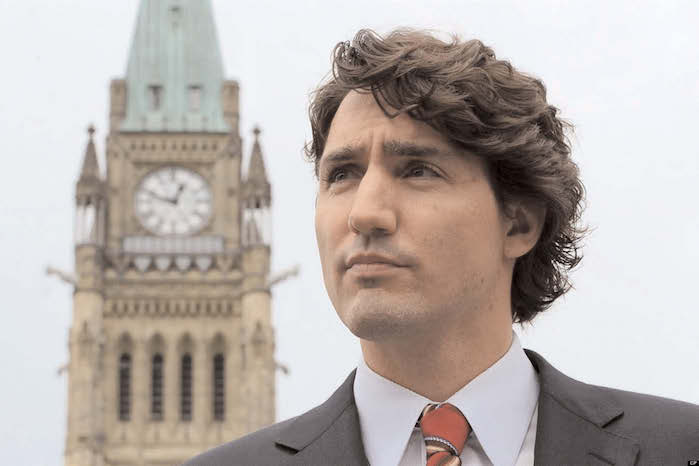
    New Delhi:  Canadian Prime Minister Justin Trudeau is expected to visit India either late this year or early next year, the country’s High Commissioner to India Nadir Patel said on Friday.

    “The India-Canada relationship is blooming and thriving,” Mr Patel said at a media interaction organised by the Indian Association of Foreign Affairs Correspondents (IAFAC) here.

    “We have already held four strategic dialogues,” he said.

    Stating that Prime Minister Narendra Modi and PM Trudeau have met both formally and informally, he said that “our leaders have developed a very strong relationship”.

    PM Modi had visited Canada in April 2015 when Stephen Harper was the Prime Minister. It was the first standalone prime ministerial visit from India to Canada in 42 years.

    According to Mr Patel, PM Trudeau is scheduled to visit India either “late this year or early next year” at the invitation of PM Modi.

    “We are yet to finalise the dates,” he said.

    Seven Canadian cabinet ministers have visited India in the last eight months.

    The High Commissioner said that both PM Trudeau and Canadian Foreign Minister Chrystia Freeland “have made it clear that India is top priority for Canada”.

    “Delhi is our largest diplomatic mission in the world,” he said.

    Stating that bilateral trade and investment was “largely balanced”, he said that there was “$14-15 billion of Canadian investment in India in the last two years”.

    “There are around 1,000 Canadian companies in India of which 400 are physically present,” Patel said.

    However, he lamented the fact that bilateral trade stood at only $8 billion given that “we do $2 billion of trade per day with the US”.

    “There is potential do a lot more,” he said.

    In terms of what Canada can offer to India, he cited food security, aviation, start-ups and clean energy among various sectors.

    He said that Canada was keen to have a Comprehensive Economic Partnership Agreement (CEPA) with India.

    “SMEs (small and medium enterprises) of both countries stand to gain the most,” the High Commissioner said.

    As for the civil nuclear agreement signed during PM Modi’s visit, he said that administrative guidelines have been concluded and “things are moving fast”.

    In this connection, he said a delegation of Canadian companies would be visiting India to discuss nuclear technology.

    “Large-scale uranium supply is already happening,” he stated.

    With around 1.2 million Indian-origin people in Canada, Mr Patel, who’s also an Indian-origin, said there are “very significant people-to-people links” with India.

    Of this number, 5,00,000 hail from Punjab and there are 19 Indian-origin lawmakers, of whom 4 are cabinet ministers.

    He also said that there has been a hike in the number of Indian student visas for Canada in the last four months. Asked if this was due to the policies of the Donald Trump administration in the US, he said that the surge started even before the US election and was “not attributable to the new US administration”.

  • Indian Shot Dead In Washington, Probe Underway, Tweets Sushma Swaraj

    Indian Shot Dead In Washington, Probe Underway, Tweets Sushma Swaraj

    New Delhi/Washington:  India is coordinating with investigating agencies in the US and a probe is underway after a 26-year-old Indian man was shot dead in Washington on Thursday, External Affairs Minister Sushma Swaraj tweeted this morning.

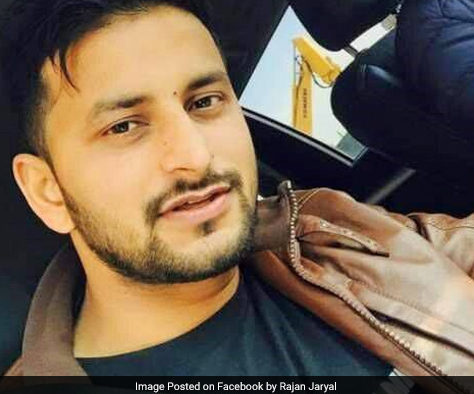
    Vikram Jaryal was shot dead allegedly by two masked armed robbers at a convenience store of a gas station. Mr Jaryal, who was from Hoshiarpur district in Punjab, worked as a clerk in the store. He was behind the counter when two people in masks came in and robbed the store. Police said Mr Jaryal handed the suspects money, but one of the suspects fired at him. Mr Jaryal was taken to the hospital where he later died.

    Ms Swaraj tweeted, “We are coordinating with the investigative agencies. They have got the CCTV footage and are in the process of apprehending the culprits.”

    Local police are looking for two men caught on surveillance camera leaving the store. “Somebody knows something. Somebody knows these people. The still photos show a very recognisable top that one of the suspects is wearing,” Mike Bastinelli, Yakima Police Department said. “The shooter wore a black hoodie with patches of white on the back,” he said.

    Police are looking for the two suspects who allegedly shot dead Vikram Jaryal at a store in Washington.

    “The victim was able to tell officers what happened when they arrived a few minutes later; but tragically, he died a short time later at the hospital,” police was quoted as saying by the NBC Right Now channel.

    According to Ms Swaraj, Mr Jaryal had reached the US only 25 days back.

    (With inputs from PTI)

  • In Donald Trump’s United States, Indian Students Weigh Canada, Ireland

    In Donald Trump’s United States, Indian Students Weigh Canada, Ireland

    Rahul Kolli was all set to head to the U.S. for a Master’s degree in data science with admission to Michigan Technological University and a 2.7 million rupee ($42,000) student loan in place.

    Schools across the country have current students who are worried they won’t be allowed back into the U.S. if they leave, prospective students who may not be allowed in at all, and faculty who are from the banned countries and fear they will be denied re-entry if they try to visit sick family members or relatives outside the country. 

    Then Donald Trump was elected president and promised a crackdown on work visas that he says undercut salaries for Americans. Kolli has since changed tack and is instead going to the University of Dublin in Ireland, where he says the total cost would be half of what he’d budgeted for in the U.S. and where he plans to work after his studies.

    For 27-year-old SAP consultant Rohit Madhav, it’s recent attacks on people of Indian ethnicity in America that made his parents cautious about his higher-education plans. They’ve asked him to widen his search beyond the U.S. — to Canada, New Zealand and local institutions as well, he said.

    Such concerns are driving a decline in applications at some U.S. universities as Indians reconsider what has long been their first choice for overseas study, fueled by the success of immigrants like Sun Microsystems Inc. Co-Founder Vinod Khosla and Google Inc. Chief Executive Officer Sundar Pichai. Now, safety and doubts about a path to employment are being weighed instead as the Trump administration begins to reform the H-1B foreign worker visa program that’s used more by people from India than any other nationality.

    “The recent spate of racists attacks on Indians is fearsome,” said Mumbai-based Madhav, who plans to pursue a management degree and fund his studies with a loan. “If I stay back in the U.S. for work, then I can repay the loan amount in two-to-three years. But, if I come back to India for work then it may take me seven-to-eight years.”

    A path to employment is crucial for the many Indians who count on a mix of loans, scholarships and family savings to fund their overseas degrees. At a record 165,918, they formed the second-largest group of international students on U.S. campuses in 2015-16, according to a report from the Institute of International Education.

    Foreign students in the U.S. can do up to a year of practical training, extendable by those with qualifications in certain science, technology, engineering or math fields. More than three-quarters of Indians pursue such degrees, according to IIE, giving them a better chance of finding full-time jobs and getting one of a limited number of H-1B visas issued each year.

    During his presidential campaign, Trump called the H-1B a “cheap labor program.”

    His administration on March 31 issued guidelines requiring more information for computer programmers applying for H-1Bs to prove the jobs require advanced knowledge and experience. Lawmakers have also introduced several bills that would force broader reform.

    The visa program modifications “will be what will drive changes in the pattern of enrollment with international students in the United States,” Timothy Brunold, dean of admission at the University of Southern California, Los Angeles, said by phone March 6. “The question in our mind is very much next year or subsequent years. May be students will start looking elsewhere and planning in different directions due to the uncertainty.”

    Given the focus on skills, the greater impact to date has been on applications from India to undergraduate programs. Twenty-six percent of institutions in a recent poll reported a decline from India at that level, while 15 percent have seen a fall at the graduate level, according to a survey of more than 250 U.S. higher education providers by the American Association of Collegiate Registrars and Admissions Officers and partner organizations.

    Amid those declines, Canada seems the preferred alternative, said Vijay Sricharan, the Chennai-based business head at Manya Education Pvt. Ltd., which helps about 5,000 students secure admissions in foreign universities every year.

    The U.K. saw Indian student numbers drop by about half to 19,485 in 2014-15 from 2010-11, according to data compiled on IIE’s website, after tightening its post-study visa norms. In 2009, a series of attacks against Indian students in Australia saw numbers drop to 19,238 in 2010 from the previous year’s 26,398.

    Akshay Kumar Varanasi is in his final year of an engineering degree at the Indian Institute of Technology, Madras. An attack in Kansas — which left an Indian engineer dead and his friend wounded — has scared his parents, he said, though they “cannot say no to me going to the U.S.”

    A perception that the U.S. is becoming a racist country where Indians aren’t welcome would be a serious concern for campuses trying to attract international students, said Karan Gupta, who runs a student advisory service in Mumbai. There’s no indication of that now and one can’t judge the country by the acts of a few, he said.

    External Affairs Minister Sushma Swaraj noted in Parliament last month that American authorities have responded strongly to the attacks.

    For Gupta, whose Mumbai-based Karan Gupta Consulting advises close to 1,000 students a year, only those focused on working overseas are considering alternatives to the U.S. Ninety percent of his clients still plan to study there, he said.

    “Even if the policies do change, you can’t lose with a good education,” he said. “You can’t argue with getting into a Harvard or Cornell.”

  • Asian doctor dragged off overbooked flight by United Airlines

    Asian doctor dragged off overbooked flight by United Airlines

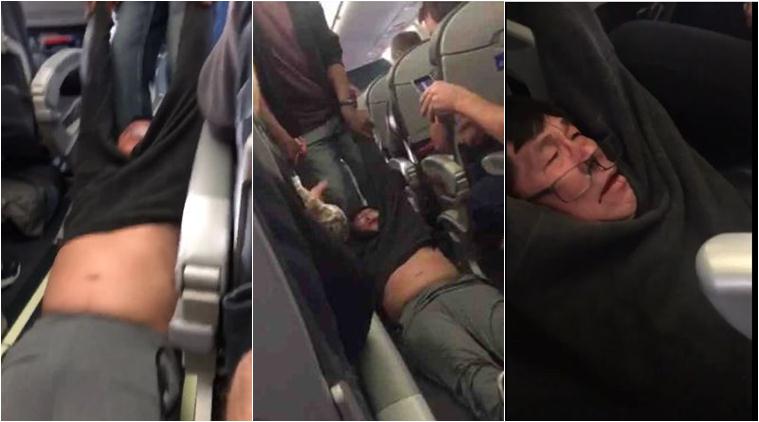
    United Airlines (UAL.N) sparked outrage on Monday, April 10, for the treatment of an Asian doctor who was forcibly dragged off the airline by security officers causing multiple injuries to the passenger just because he was RANDOMLY chosen to be removed from the flight because UA had overbooked the flight.

    Videos taken by fellow passengers on board the flight 3411 from Chicago to Louisville showed that the passenger being hauled out of his seat by one of the security officers, who has now been placed on leave pending an investigation.

    In the process, the man’s glasses were knocked off and he was hauled down the aisle by stewards after the man refused to give up his seat to allow stand-by aircrew to take it.

    The flight was overbooked and United had asked for volunteers to leave so that standby aircrew could board, the report said.

    When no one came forward, the airline seemingly decided to take matters into their own hands and decided who was getting off.

    In a letter circulated to employees and seen by Reuters, United Chief Executive Officer Oscar Munoz did not apologize for the way the passenger was handled, writing that the passenger had “defied” security officers.

    Munoz said there are lessons the company can learn from this situation, though he impressed that he “emphatically” stands behind his employees.

    “We sought volunteers and then followed our involuntary denial of boarding process (including offering up to $1,000 in compensation),” Munoz wrote. “When we approached one of these passengers to explain apologetically that he was being denied boarding, he raised his voice and refused to comply with crew member instructions.”

    The Chicago Department of Aviation said in a statement that one of the officers did not follow protocol and added that he had been placed on leave pending a review for actions not condoned by the department.

    The U.S. Department of Transportation (DOT) said it was reviewing whether United complied with overbook rules that require airlines to set guidelines on how passengers are denied boarding if they do not volunteer to give up their seats.

    A passenger Jayse D Anspach posted a video on twitter and said: “#United overbooked and wanted four of us to volunteer to give up our seats for personnel that needed to be at work the next day.

    “No one volunteered, so United decided to choose for us. They chose an Asian doctor and his wife.

    “The doctor needed to work at the hospital the next day, so he refused to volunteer,” Anspach added.

    “10 mins later, the doctor runs back into the plane with a bloody face, clings to a post in the back, chanting, “I need to go home.”

    “It looked like he was knocked out, because he went limp and quiet,” Anspach wrote, “and they dragged him out of the plane like a rag doll.”

    Another video shows the distressed man, still disheveled from the wrangle, returned to the cabin, clinging onto a curtain at the back of the plane and repeating: “Just kill me. Kill me,” and “I have to go home,” as blood streaked down his mouth.

    Much of the online uproar surrounded the appropriateness of removing a paying customer in order to accommodate airline staff.

    “They bloodied a senior citizen & dragged him off the plane so THEIR OWN STAFF could take his seat,” one Twitter user wrote.

    Social media users questioned whether the man would have been removed as forcefully had he not been Asian.

  • Indian American Hindus plan a Majestic Hindu temple planned in New Jersey

    EDISON, NJ (TIP): A grand Hindu temple, Sri MahaPeriyava ManiMandapam, is reportedly being planned in Flemington area of Raritan Township in New Jersey.

    Raritan Township Planning Board is holding a public hearing on April 12 on “Application for Preliminary and Final Site Plan Proposed Use” of non-profit Sanatana Dharma Foundation Inc. (SDFI) of Skillman on this reportedly 10,482-square-foot house of worship.

    A 10-acres plot has been purchased for this proposed temple, which will become a weekly “devotion place with family”, a place of satsang, a place for conducting all Vedic and religious events, and a place to strengthen bhakti, reports suggest.

    Distinguished Hindu statesman Rajan Zed has commended efforts of temple leaders and area community towards realizing this Hindu temple, saying it was important to pass on Hindu spirituality, concepts and traditions to coming generations amidst so many distractions in the consumerist society and hoped that this temple would help in this direction. Zed stressed that instead of running after materialism; we should focus on inner search and realization of Self and work towards achieving moksh (liberation), which was the goal of Hinduism.

    Trustees of SDFI, which ultimately wants to have such a temple in all major cities, include: Mahesh Krishnamoorthy, Narayanan Krishnaswamy, Shivagiri Nallicheri, Srinivasan Natarajan, Shivakumar Nathan, Suriyanarayanan Subramanian and Aarthi Suriyanarayanan. Funds are being raised.

  • AAPI’s 35th annual convention kick off event held at Indian Consulate

    AAPI’s 35th annual convention kick off event held at Indian Consulate

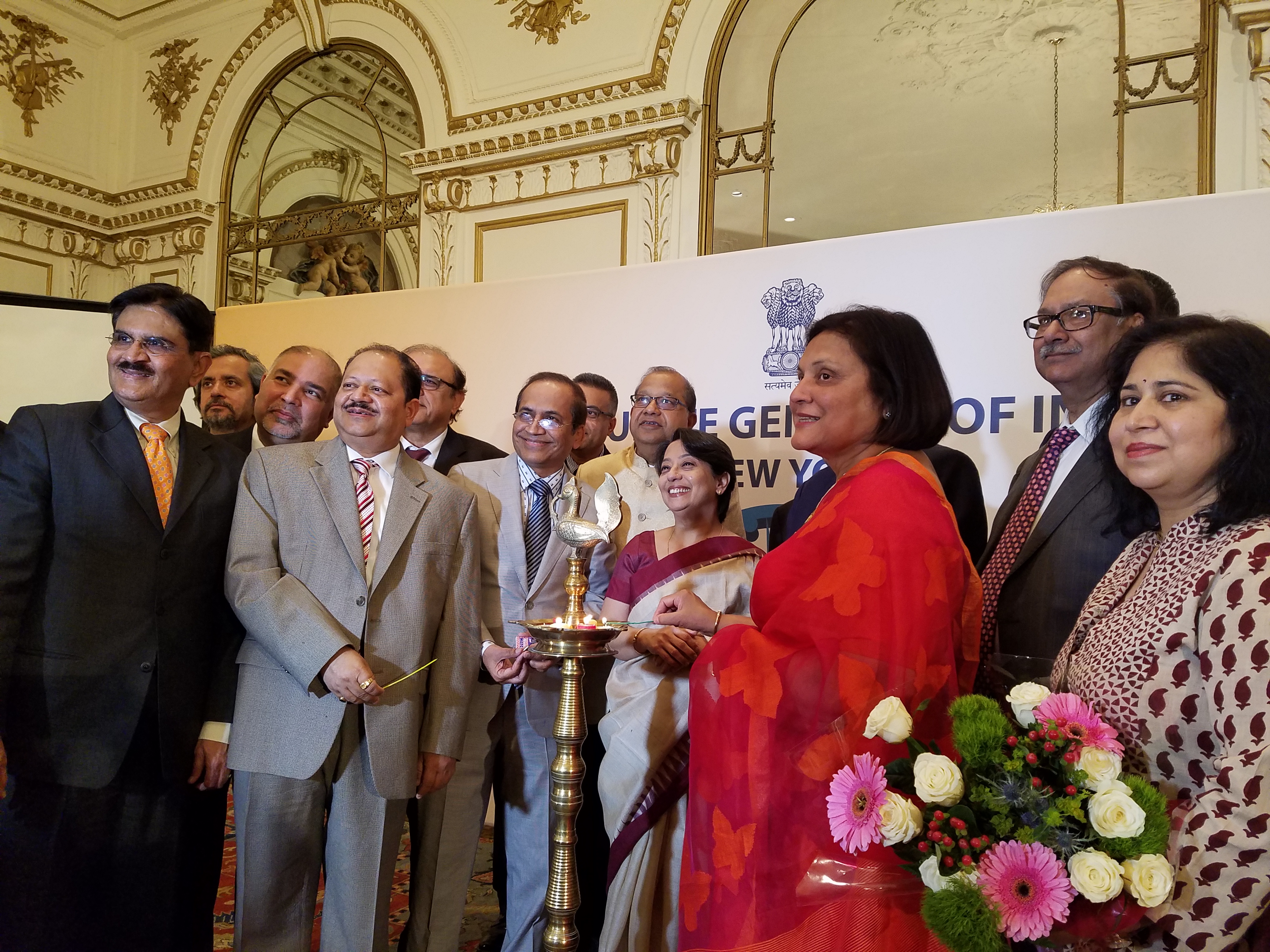
    NEW YORK CITY (TIP): “It’s very great joy that I want to invite you all to come and be part of the 35th annual American Association of Physicians of Indian Origin (AAPI) Convention 2017 to be held at the brand new state of the art Convention Centre, at the prestigious Harrah’s Resort in Atlantic City, New Jersey from June 21 – 25, 2017,” Dr. Ajay Lodha, President, AAPI, declared at the kick off event held at the Indian Consulate in New York on Sunday, April 9, 2017.

    Ambassador Riva Ganguly Das addressing the audience at the AAPI convention kick off event
    Ambassador Riva Ganguly Das addressing the audience at the AAPI convention kick off event

    Attended by AAPI leadership, various committee members, community leaders, and media persons from across the United States, the kick off event was inaugurated by lighting of the traditional lamp by Ambassador Riva Ganguly Das, Consul General of India in New York.

    In her felicitations, Ambassador Das lauded the achievements of AAPI and the leadership of Dr. Lodha. Describing Dr. Lodha as “a great leader, great physician, and great negotiator” the Indian envoy promised to be at the Convention at the request of Dr. Lodha.

    “We have watched how AAPI has grown over the years and how we want other NRI groups to emulate the success model of AAPI,” Ganguly Das told the cheering audience. ‘What AAPI does is to contribute to leverage the relationships between India and the United States.” Stating that the government of India “values our relationship with AAPI and the many initiatives and contributions you have made for the people in India,” the Indian envoy said.

    Dr. Ajay Lodha, President of AAPI, delivering presidential address
    Dr. Ajay Lodha, President of AAPI, delivering presidential address

    In his opening remarks, Dr. Lodha shared with the audience the many programs and initiatives he and his executive committee has taken in the past few months since assuming charge as the President of the largest ethnic medical organization in the nation.
    Dr. Lodha highlighted the Leadership seminar at Columbia University, the Cruise to Brazil, participation and leading the Independence Day Parade in New York, the successful organization of Global health Summit in Rajasthan and the many initiatives at the Summit, Crash Courses in India for police officers as first responders in accidents, EPS lab studies, AYUSH, raising AAPI’s voice against hate crimes in the US and against violence against physicians in India and championing the voice of AAPI for a powerful voice through AAPI’s legislative conference in Washington DC next month.

    Expressing his gratitude to AAPI’s executive committee members, Dr. Lodha, said :

    “The organizing committees have been working hard to make the AAPI Convention of 2017 rewarding and memorable for all with Continuing Education Meetings, National and India based Health Policy Forums, Youth Seminars, New Physician and Resident Student meetings. Physicians attending this convention will benefit not only from cutting edge CME, but also the camaraderie of their alumni groups and share in our common heritage. Social events are all being planned meticulously so that maximum benefit can be reaped.

    Dr. Vas Narsimhan, Global Head, R&D Novartis, who was the chief guest, in his address stated that AAPI conventions have been very inspiring. Describing India as the “innovation power house” Dr. Narasimhan, who had flown in from Sweden, advised young physicians to “dream big and thus achieve big.”

    The annual convention this year is being organized by AAPI’s New York Chapter.

    We look forward to seeing you all in Atlantic City, New Jersey!” said Dr. Ajay Lodha.

    AAPI leadership and committee members
    AAPI leadership and committee members
    Releasing of the AAPI’s souvenir of AYUSH by Ambassador Riva Ganguly Das
    Releasing of the AAPI’s souvenir of AYUSH by Ambassador Riva Ganguly Das

    – AAPI Press Release

  • Dr. V. K. Raju: Proud of Ancient Indian Medical Traditions

    Dr. V. K. Raju: Proud of Ancient Indian Medical Traditions

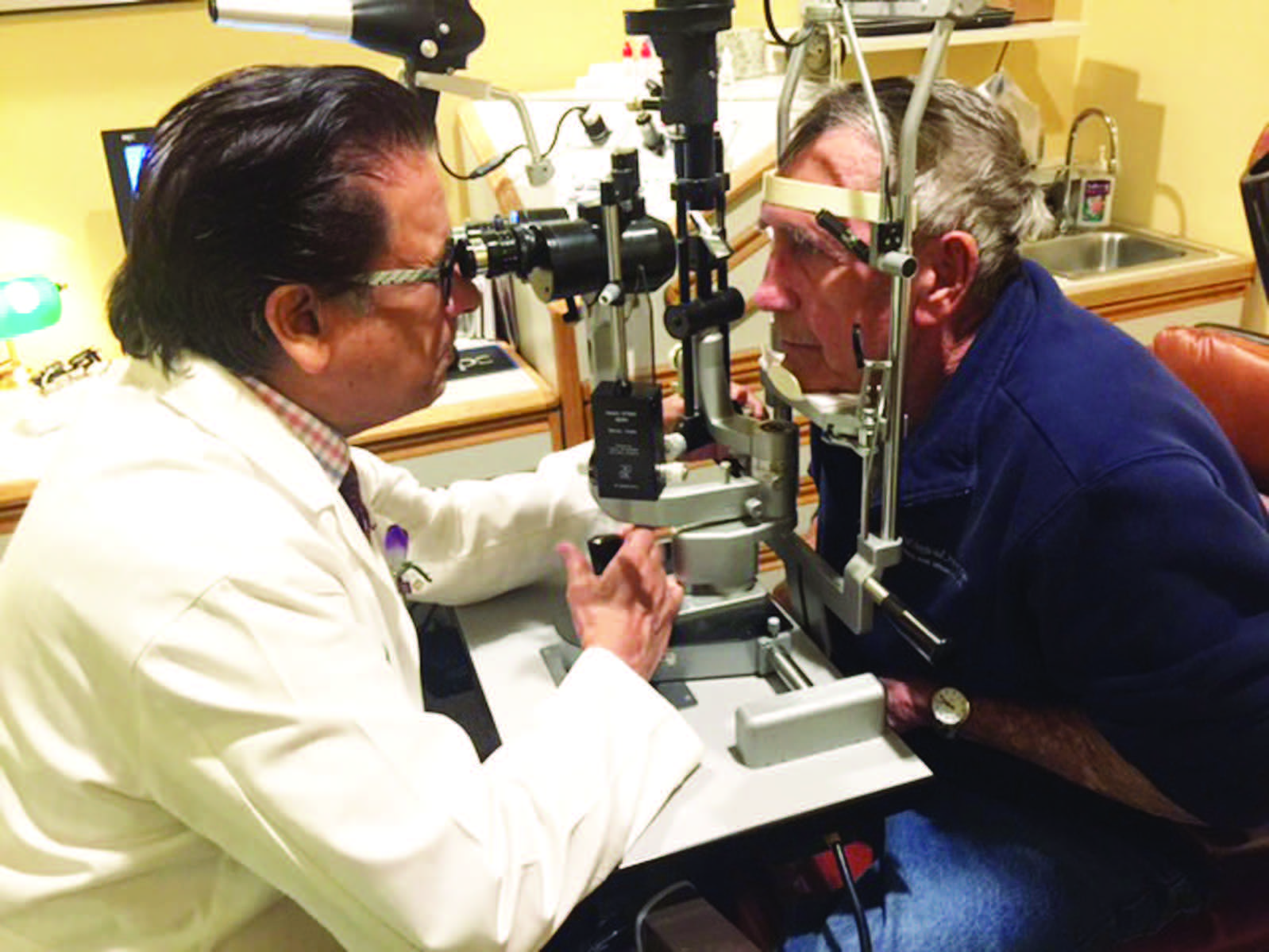
    The inside walls of Dr. V. K. Raju’s eye clinic in this picturesque town of Morgantown in West Virginia are covered with a variety of historical facts about the history of eye treatment in the world. The exhibit not only informs the visitor about the need to protect one’s vision, but also educate about major developments in the field of eye surgery in Western countries as well as in India.

    Exhibits at Dr. Raju's Eye Care Clinic
    Exhibits at Dr. Raju’s Eye Care Clinic

    Dr. Raju moved to Morgantown almost forty years ago. “This is the place I settled down after moving to America”, he said. Morgantown is situated among the hills of West Virginia offering a wide variety of natural wonders just a few miles away from the urban society. As his practice thrived in this town, Dr. Raju continued to treat his patients with care and teach at the West Virginia University. All along his journey as an eye doctor, he remained deeply committed to helping people in India, who needed help for restoring their vision.

    A native of Rajahmundry, India, Raju was educated in India, Great Britain, and the US. He serves as an adjunct clinical professor of ophthalmology at West Virginia University’s School of Medicine. “Many years ago, when I was visiting India, I met a villager who needed immediate surgery of his eyes. Unfortunately, I hadn’t carried my surgical equipment with me. I felt very sad for not being able to help him. Since then I realized the need to do much more for those who needed care for their eyes”, he recalled.

    Dr. Raju continued to visit India where he volunteered his time conducting eye camps to provided free service to patients. In order to institutionalize his efforts he established the Eye Foundation of America in 1979. Today, the foundation has touched many lives in USA and in India. “The foundation has partnered with many organizations with similar goals in order to maximized its capabilities”, he told me.

    Raju also helped found the Goutami Eye Institute in 2006, a fully equipped eye hospital in Rajahmundry, India, where a wing is dedicated to children’s eye problems. The Institute, also a teaching hospital, has trained 200 ophthalmologists, served 400,000 patients, and performed 50,000 surgeries since its operation.

    “The medical facilities are still out of reach for poor people in India”, Dr. Raju said as he was discussing the ancient traditions of Ayurveda in India. “Even today, we hear news about people losing their visions due to after surgery complications. It is not because eye camps are not capable of treating patients with eye problem. We lack after care facilities for them”, he said.

    Dr. Raju proudly talked about India’s golden age of surgery. Pointing to one of the exhibits on the wall depicting the tools used for surgeries during the ancient time of famed eye surgeon Susruta, he said, “RishiSusruta, who may be called the father of surgery due to his extensive work found in ‘Susruta-Samhita’, taught and promoted ophthalmology and cataract surgery in India way back in 600 BC. For hundreds of years India was a leader in medical practices. We have since lost most of our ancient traditions of medicine and surgery. It is sad that majorities of eye ailments have been successfully eradicated in the West while treatable eye problems leaves children blind for life”, he commented with a sad face.

    Title page of Dr. Raju's recently released book, 'Musings on Medicine, Myth, and History'
    Title page of Dr. Raju’s recently released book, ‘Musings on Medicine, Myth, and History’

    In a recently released book, ‘Musings on Medicine, Myth, and History’, that Dr. Raju authored along with his physician daughter Leela, he wrote extensively on problems faced by children and poor people in India, ‘…three quarters of the world’s blind children live in developing countries, and about five hundred thousand become blind each year. In India alone such childhood blindness results in a four billion dollar economic loss.” (Page 82)

    Dr. Raju told me that Goutami Eye Institute conducts workshops and other programs to teach its staff about new medical techniques and equipment. This program has been expanded to include physicians and medical practitioners from all over the world. Some workshops provide Continuing Medical Education (CME) credits. Fellowships available through Goutami Institute allow postgraduate physicians from India to further their education.Residents at the hospital are expected to participate in screenings during an eye camp for a day after which they examine outpatients with consultants in the clinics and gain hands-on experience with supervision in the operating room. The OR portion of this experience is geared toward 3rd year residents and 2nd year residents with previous experience in performing cataract surgery. First year residents will gain an exposure as assistants to the consultants.

    Dr. Raju can be described as a human being who touches the heart of everyone. His long time technician EJ Clark, who has been working with him for the past 30 years comments about him, “The most important thing I like about Dr. Raju is the way he cares for the children of the world. He cares for everyone and treats his patients with equal care.”

    “West Virginia is little bit like India”, Mr. Clark, who confidently said that she will retire when Dr. Raju will retire, commented about similarity among the people of West Virginia and India, “We are very friendly people. Some parts of the state is poor and need care, very much like those in India.”

    The Eye Clinic of Dr. VK Raju in Morgantown, WV
    The Eye Clinic of Dr. VK Raju in Morgantown, WV

    Dr. Raju continued to elaborate upon his vision, also posted on the wall in his office, “There are three things people need, Education, education and education.” I laughed, “Can’t agree more with you, Doc!”, I said complimenting him for his untiring services for eradicating blindness among adults in general and children in particular.

    As I lay down in bed in the night, I scrolled the pages of his book and stopped to read, “But if people around the world can remember the contributions to medicine that sages like Charaka and Susruta once made, perhaps they will be encouraged to lend their assistance to India-and India will finally enter another golden age of medicine and will once again be a world leader in the study and practice of medicine.” (Page 84)


    Can’t agree more with you, Doc!


  • Wells Fargo adds Axis Bank to Express Send remittance network in India

    Wells Fargo adds Axis Bank to Express Send remittance network in India

    NEW YORK (TIP): Wells Fargo & Company (NYSE: WFC) recently announced that it has added more than 2,500 Axis Bank locations to its ExpressSend® remittance payout network in India, bringing the total number of locations in that country to more than 8,300, in addition to nearly 35,000 ATMs. Wells Fargo also announced that beginning April 8, 2017, it will offer a $0 transfer fee for all ExpressSend transactions sent to India, extending pricing that was previously available for transactions larger than$500.

    “We know that our Express Send customers have a choice of remittance providers, and they choose our service because it is economical, dependable, and convenient for both the customer and their family and friends back home,” said Daniel Ayala, executive vice president and head of Wells Fargo’s Global Remittance Services. “By adding Axis Bank to our network in India, this expansion will make it even more convenient for beneficiaries in India to receive their money, and give our customers another reason to feel good about sending money back home.”

    ExpressSend customers can send up to $5,000 per day to a beneficiary in India receiving the funds to their account. Beginning April 8, 2017, all transactions sent to any ExpressSend location in India from an eligible account pay no transfer fee (previously, customers sending up to $500 paid a transaction fee of $5). In addition to Axis Bank, beneficiaries in India may receive remittances at more than 5,700 locations and more than 22,000 ATMs operated by ICICI Bank and HDFC Bank.

    “Wells Fargo’s integration of Axis Bank into its ExpressSend network provides a valuable opportunity to Indian transnational families,” said Manuel Orozco, Senior Director at Inter-American Dialogue. “This initiative will enhance financial asset building opportunities for the more than 2 million households – representing the third largest migrant community in the U.S. – that send funds from the U.S. to India. This expansion will also financially empower millions of women-headed households in India.”

    According to the World Bank Group, remittance volume from the U.S. to India totaled $11.5 billion in 2015, making India the third largest recipient of U.S. remittances. Additionally, according to a 2016 WealthInsight report, more than 133,000 non-resident Indian (NRI) millionaires live in the United States, representing more than half of all NRI millionaires worldwide.

    ExpressSend transactions can be initiated by calling Wells Fargo Global Remittance Services at 1-800-556-0605, going online at wellsfargo.com, or visiting a Wells Fargo banking branch, making Wells Fargo the only U.S. commercial bank to offer all three channels for remitting funds. The first remittance sent under each ExpressSend Service Agreement must be initiated in person at a Wells Fargo branch. Customers with an existing checking or savings account may be able to initiate their first remittance by calling the Wells Fargo Phone BankSM.


  • SHAURYA CHAKRA AWARDED TO HEROES OF SURGICAL STRIKE

    SHAURYA CHAKRA AWARDED TO HEROES OF SURGICAL STRIKE

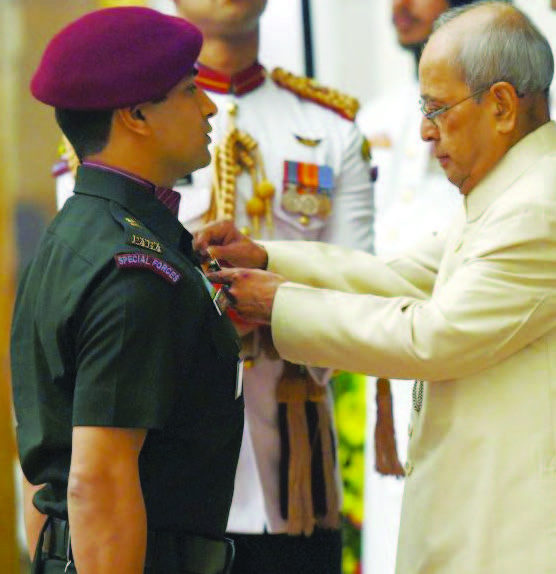
    NEW DELHI (TIP): President Pranab Mukherjee on April 6 awarded Shaurya Chakra to the officers who took part in the surgical strike across the Line of Control (LoC) last year.

    He also awarded the Shaurya Chakra posthumously to Lt Col Niranjan Ek, who died while recovering IED from the bodies of Pathankot terrorists in January 2016.

    As per the citation against Shaurya Chakra awardees, Major Rajat Chandra killed two terrorists during the surgical strike, while Captain Ashutosh Kumar eliminated four terrorists. Both belong to 4 Para Special Forces, which took part in the surgical strike in September last year.

    Major Deepak Upadhyay and Paratrooper Abdul Qayum, both of 9 Para Special Forces, were also awarded with Shaurya Chakra for their role in the surgical strike.

    Nineteen soldiers of the 4 and 9 Para — units of the special forces —,who undertook the cross-border surgical strike across the LoC, were awarded with gallantry medals, including a Kirti Chakra, on January 25, while their commanding officers have been given Yudh Sewa Medal.

    Shaurya Chakra was also posthumously awarded to Sanjewan Singh, head constable with the J&K Police, Naib Subedhar Kankara V Subba Reddy, Naik Pandurang Gawande, and Kirti Chakra to Lance Havildar Prem Bahadur Resmi Magar of the Gorkha Rifles. All laid their lives fighting terrorists. Family members of Singh, Reddy, Gawande and Magar received the honour by the President.

    Lt Gen PM Hariz, one of the two senior most officers superseded by Chief of Army Staff Gen Bin Rawat, was awarded Param Vishisht Seva Medal. Hariz is the Commander-in-Chief of the Southern Command.

    Shaurya Chakra was also awarded to Atu Zumvu, Sub-Divisional Police Officer with the Nagaland Police, who shot down three National Democratic Front of Bodoland (NDFB) outfit members, responsible for killing 81 people.

    Captain Elisen Y Jami of the 12th Battalion  Parachute Regiment; Kukudapu Srinivasulu, police constable with the Telangana Police; Lt Col D Vinay Reddy of the Madras Regiment and Havildar Hanuman Ram Saran of the Rajputana Rifles were also awarded with Shaurya Chakra.

  • India, Israel ink defence deals worth over $2 bn

    India, Israel ink defence deals worth over $2 bn

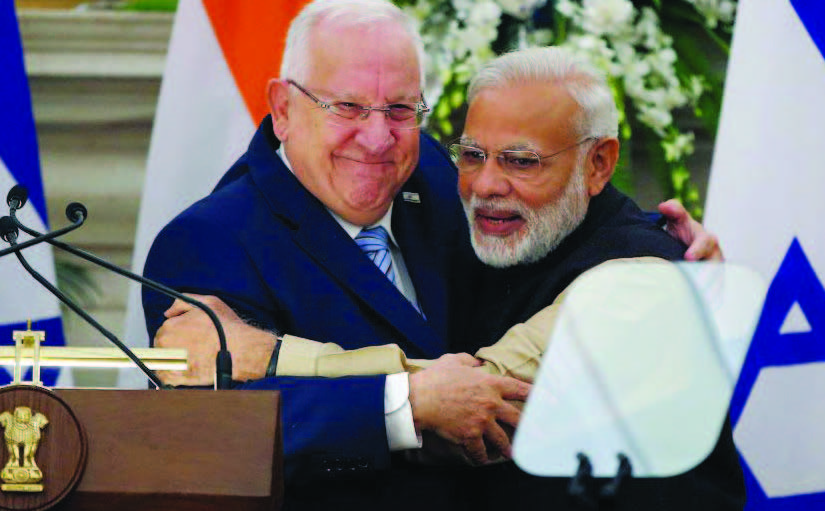
    NEW DELHI (TIP): India and Israel on Thursday inked mega defence deals worth over $2 billion for advanced surface-to-air missile (SAM) systems, which are designed to destroy hostile aircraft, missiles and drones at a range of 70-km, to further tighten the bilateral strategic partnership ahead of PM Narendra Modi’s impending visit to Tel Aviv in July.

    Defence sources said the major deal was for the joint project between the Defence Research and Development Organization (DRDO) and Israel Aerospace Industries (IAI) for the Barak-8 medium-range SAM systems to initially include one regiment of 16 launchers and 560 missiles for the Indian Army.

    The second deal to be inked was for a similar SAM system to be fitted on board the 40,000-tonne indigenous aircraft carrier INS Vikrant being built at the Cochin Shipyard.

    The Modi-led Cabinet Committee on Security (CCS) in February had cleared the MR-SAM project for the Army at an overall cost of Rs 16,830 crore, which will now include a first instalment of Rs 1,500 crore.

    This project follows the two similar DRDO-IAI programmes already underway for the next-generation SAMs for Indian warships at an initial cost of Rs 2,606 crore and nine air defence squadrons for the IAF for Rs 10,076 crore.

    These Barak-8 systems, with their MF-STARs (multi-function surveillance and threat alert radars) as well as weapon control systems with data links, can detect and track hostile aerial threats at a range of 100-km and destroy them at 70-km. Consequently, they will help in plugging the existing holes in India’s air defence coverage.

    But questions have been raised about these SAM systems, which are to be produced in bulk by defence PSU Bharat Dynamics, both in terms of their exorbitant costs as well as long delays in their delivery schedules.

    The naval SAM project, for instance, was sanctioned by the CCS in December 2005, while the IAF one for nine squadrons was cleared in February 2009. As per the latest revised timeline, the naval project’s completion date is now slated for December 2017 instead of the original May 2011 deadline.

    The naval SAM system, tested for the first time in November 2014, meanwhile, has been fitted on the three new Kolkata-class destroyers. Each new SAM system is projected to cost around Rs 1,200 crore for the 12 under-construction warships in Indian shipyards, including NS Vikrant, four guided-missile destroyers and seven stealth frigates.

    Though the expansive bilateral defence ties are kept largely under wraps due to international and domestic political sensitivities, Israel is among the top three defence suppliers to India.

    Having already inked deals and projects worth around $10 billion over the last 15 years, Israel has bagged seven Indian arms contracts in the last two years.

    There are also several more big-ticket deals in the pipeline. These include two more Israeli Phalcon AWACS (airborne warning and control systems), which are to be mounted on Russian IL-76 military aircraft, and four more Aerostat radars at a cost upwards of $1.5 billion.

    Moreover, India is set to soon acquire 10 Heron-TP armed drones for around$400 million. While the Indian armed forces have inducted over 100 Israeli unmanned aerial vehicles, which include the surveillance Searcher and Heron as well as the kamikaze Harop drones, this will be the first time it will acquire missile-armed drones capable of undertaking bombing missions like fighter jets.

  • 4 GST bills passed after Rajya Sabha makes no changes

    4 GST bills passed after Rajya Sabha makes no changes

    NEW DELHI (TIP): Parliament on April 6 passed four GST-related bills, paving the way for the new indirect tax to be implemented nationwide.

    Parliament passed four GST-related bills on April 6 with the Rajya Sabha’s support, bringing the new tax reform closer to being implemented nationwide in July

    The bills were supported by the Rajya Sabha without any amendments, and follows after the Lower House passed them last week. They will now be presented before the President for his consent, following which, states will pass another legislation, readying the country for a uniform Goods and Services Tax (GST).

    The four bills are the Central Goods and Services Tax Bill (CGST), the Integrated Goods and Services Tax Bill (IGST) the Goods and Services Tax (Compensation to States) Bill and the Union Territory Goods and Services Tax Bill (UTGST).

    The CGST will give powers to the Centre to charge a tax after levies of excise, service tax and additional customs duty is subsumed. The IGST will be a tax to be levied by the Centre on inter-state movement of goods and services. Besides, GST compensation law allows for imposition of cess on certain luxury goods like tobacco, high-end cars and aerated drinks to create a fund for compensating states for any loss of revenue in the first five years after implementing the new indirect tax.

    The UTGST is for UTs like Chandigarh and Daman and Diu which do not have assemblies.

    The State GST or SGST law that will allow them to levy sales tax after levies like VAT are subsumed.

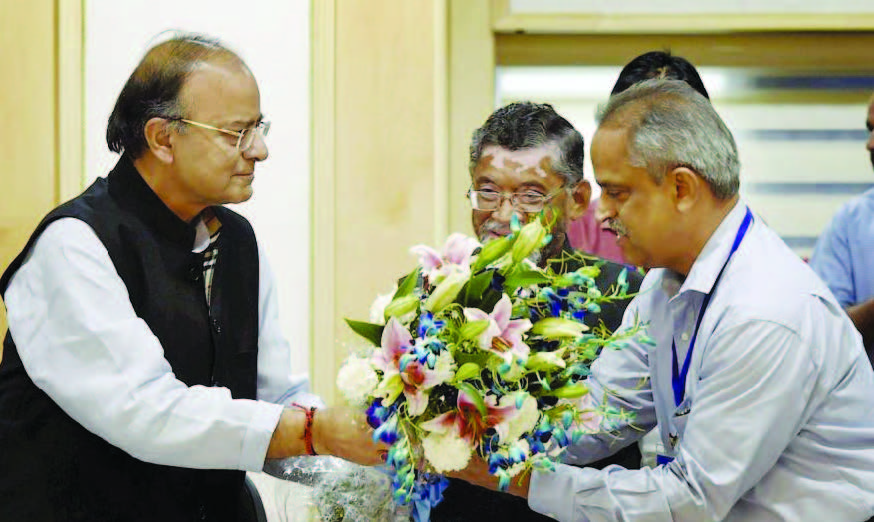
    “The broad approach of every member has been to support the legislation. Even the Constitutional Amendment Bill was supported overwhelmingly,” finance minister Arun Jaitley said while summing up the debate at the Upper House.

    “Not only did both the Houses of Parliament support the GST bills, all the states have arrived at a consensus,” he added. In the backdrop of a reconciliatory mood, Rajya Sabha members showed consensus that the new indirect tax is the biggest reform since Independence and is the need of the hour. But still, concerns were raised about the sweeping powers of the GST council, the GST network and the GST rates. Allegations were also levelled against BJP trying to steal all credit of implementing this landmark tax reform.

    CPI-M’s Sitaram Yechury was among the many MPs who raised the issue of the overarching power that the GST council. “The proposals before GST council should also come before the Parliament,” he said. In the new tax regime, this council will be the highest decision making body; this led to many Opposition members claiming that this provision takes away from the Parliament’s authority. Highlighting the federal structure of the Council, Jaitley said 32 representatives from the Centre and states are finalising the GST rules.

    “We have had 14 meetings at the GST Council…and arrived at a consensus on all issues,” he said, adding there has been no voting on any issue.

    “Mr Jaitley is only giving final touches to a reform that was set rolling many years ago by his predecessors,” said Congress MP Jairam Ramesh.

    Congress’ Kapil Sibal and CPI’s D Raja raised concerns about data privacy under a private company in-charge of the IT backbone of GST or the GST-N.

  • Manmohan Singh lends support to GST bills

    Manmohan Singh lends support to GST bills

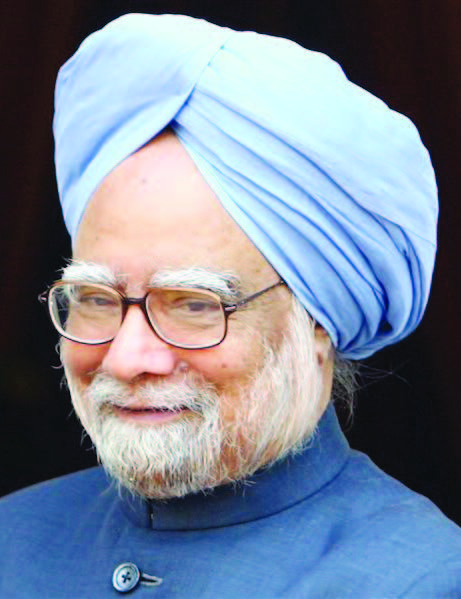
    NEW DELHI (TIP): Former PM Manmohan Singh lent his strong backing to the goods and services tax (GST) bills on Thursday. As amendments to the bills were being taken up in Rajya Sabha by deputy chairman PJ Kurien, Congress MP Jairam Ramesh said he was not moving them. “Former PM Manmohan Singh has taken this approach in the spirit of consensus and in respect of the federal structure,” he said.

    As soon as the four bills were cleared, finance minister Arun Jaitley walked up to Singh and shook his hands. Singh congratulated the BJP member on passage of the bills.

    Manmohan Singh termed the move a game changer. “It could be a game changer but can’t assume there will be no difficulties on the way,” the former PM said after the bills were passed.

  • BABRI MASJID CASE SC FROWNS ON 25-YR DELAY, MAY ORDER TIME-BOUND TRIAL

    BABRI MASJID CASE SC FROWNS ON 25-YR DELAY, MAY ORDER TIME-BOUND TRIAL

    NEW DELHI (TIP): The Supreme Court indicated that it could order a timebound trial in the Babri Masjid demolition case, including of BJP veterans LK Advani, Murli Manohar Joshi and Uma Bharati, after the CBI told the court that they were part of a larger “conspiracy” to bring down the structure and should be tried along with the ‘kar sevaks’ responsible for the act.

    A bench comprising Justices Pinaki Chandra Ghose and RF Nariman on Thursday reserved its order on the CBI’s argument and on holding the trial on two cases related to the 1992 demolition — currently being held in Lucknow and Rae Bareilly — in one location, Lucknow.

    Trial would have to be completed in two years with day-to-day hearings, the bench said as it was told of judges retiring and frequent adjournments during the trial, both at Rae Bareilly and Lucknow.

    “Why should they (the accused) carry the burden of the case for over 17 years,” Justice Ghose asked. Justice Nariman dubbed it a case of “evasion” of justice, insisting that the court cannot allow a technical defect to stand in the way of justice. “Some of the accused have died. Others will also die,” Justice Nariman said.

    The case being heard in Rae Bareilly is against eight BJP and VHP leaders, including Advani and Joshi, while the one in Lucknow has ‘kar sevaks’ as the accused. While the ordinary workers are facing charges of criminal conspiracy, the leaders are not — they are currently charged with instigating the workers through their speeches.

    he CBI now wants the charge of criminal conspiracy revived against Advani and others, after the Allahabad High Court had given a quietus to the charges.

    “During the course of investigations, the CBI came across evidence of conspiracy … of concerted action in tandem,” the CBI counsel, additional solicitor general Neeraj Kishan Kaul, told the bench. Senior advocate KK Venugopal, who appeared for Advani and Joshi, resisted any bid to transfer the Rae Bareilly case to Lucknow.

    Instead, he suggested that in view of Advani’s advanced age, the charge of criminal conspiracy be added to the Rae Bareilly charge sheet, which the court said was not permissible in law. The top court eventually reserved orders for judgement on this after hearing all sides. In the meantime, parties could submit fresh written submissions till Tuesday.

  • Pak welcomes US offer to de-escalate tensions after India rejects it

    Pak welcomes US offer to de-escalate tensions after India rejects it

    ISLAMABAD (TIP): Pakistan has welcomed the US offer to help de-escalate tensions with India, saying “any positive role” America plays to bring peace and stability in South Asia can serve the region well, according to a media report on April 7.

    Aizaz Ahmad Chaudhry, Pakistan’s envoy to Washington, termed US ambassador to the UN Nikki Haley’s remarks on Monday that the US would try and “find its place” in efforts to de-escalate tensions between India and Pakistan as positive.

    READ ALSO: India rejects US offer to mediate with Pakistan on Kashmir issue

    “Any positive role that the US plays to bring peace and stability in South Asia can serve the region well,” Chaudhry was quoted as saying in a report by Dawn from Washington.

    Chaudhry said Pakistan is interested in such efforts because it “wants good neighbourly relations with India”.

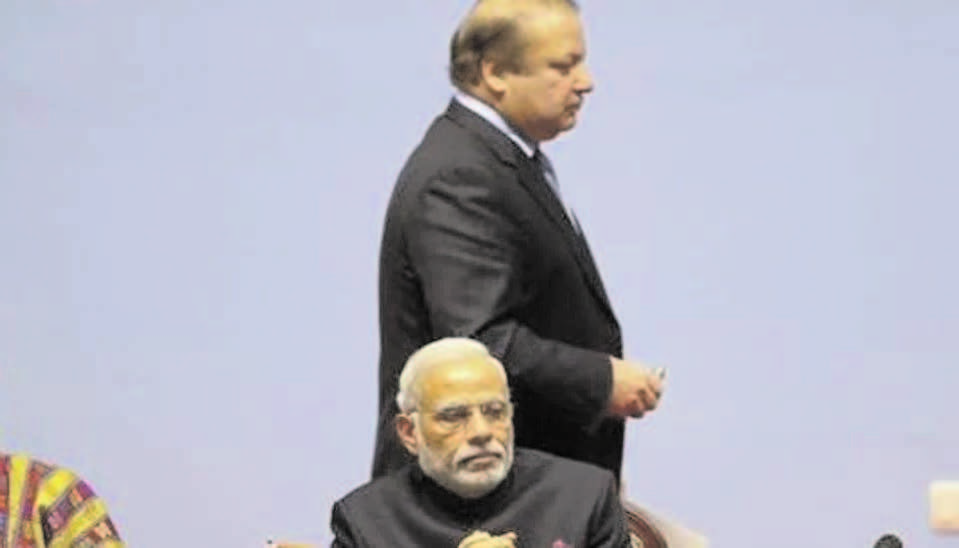
    Pakistan’s support for a third-party mediation comes after India rejected yesterday any role for the US in Indo-Pak issues. India said its position for bilateral redressal of all India-Pakistan issues “in an environment free of terror and violence hasn’t changed”.

    Haley, a senior Indian-American member of the Trump Cabinet, made the remarks after the US assumed the presidency of the United Nations Security Council for the month of April.

    She hinted that the Trump administration would participate in the talks aimed at resolving differences between India and Pakistan. It was the first time Haley, as a member of the Trump Cabinet, has addressed tensions between India and Pakistan.

    A State Department spokesperson, when contacted by the newspaper, explained the US position on facilitating talks between the two countries.

    “We believe India and Pakistan stand to benefit from practical cooperation. We encourage India and Pakistan to engage in direct dialogue aimed at reducing tensions,” the spokesperson said. The US official also explained why Washington wanted to promote good Indo-Pak ties. “The normalisation of relations between Pakistan and India is vital to both countries and the region. Steps that initiate closer regional economic ties can also create jobs, lower inflation and increase energy supply,” the official said.

    The last sentence of the statement, however, stressed the stated US policy, which is close to India’s stance on this issue, that all differences between India and Pakistan should be resolved bilaterally.

    “We have and continue to encourage India and Pakistan to work together to resolve any differences,” the US official said.

    India has consistently ruled out third-party mediation, including by the United Nations or the US, and maintained that Kashmir was a bilateral issue. Pakistan, however, welcomes international mediation and regularly raises the Kashmir issue at various UN fora.

    Yesterday, India’s external affairs ministry spokesperson Gopal Baglay snubbed Haley for hinting that the US was ready to mediate. He asked the international community to instead persuade Pakistan to stop cross-border terrorist attacks. (PTI)

  • Student writes ‘BlackLivesMatter’ 100 times, gets into Stanford University

    Student writes ‘BlackLivesMatter’ 100 times, gets into Stanford University

    NEW YORK (TIP): An 18-year-old Bangladeshi-American Muslim student has won a place at the prestigious Stanford University after writing ‘#BlackLivesMatter’ a 100 times in the essay section of his application.

    Ziad Ahmed said he was “stunned” when his innovative approach to the application process, which he described as “unapologetic activism”, paid off.

    On his Stanford University application, Ahmed was posed the question, “What matters to you, and why?”

    The activist from Princeton, New Jersey, decided to use the opportunity to write “#BlackLivesMatter” a 100 times.

    To his surprise, the answer caught the attention of the California school’s admissions office and Ahmed received his acceptance letter on Friday.

    He proudly tweeted his answer and his acceptance letter to the prestigious American university, which boasts 20 applications per place.

    “I was actually stunned when I opened the update and saw that I was admitted,” Ahmed told Mic.

    “I didn’t think I would get admitted to Stanford at all, but it’s quite refreshing to see that they view my unapologetic activism as an asset rather than a liability,” he said.

    Ahmed said as an ally of the black community, he felt it was his duty to make a statement and speak up against the injustices he witnesses. “As an ally of the black community though, it is my duty to speak up in regards to the injustice, and while this was not a form of ‘activism’ as it was simply an answer in a college application. I wanted to make a statement,” he said. (PTI)

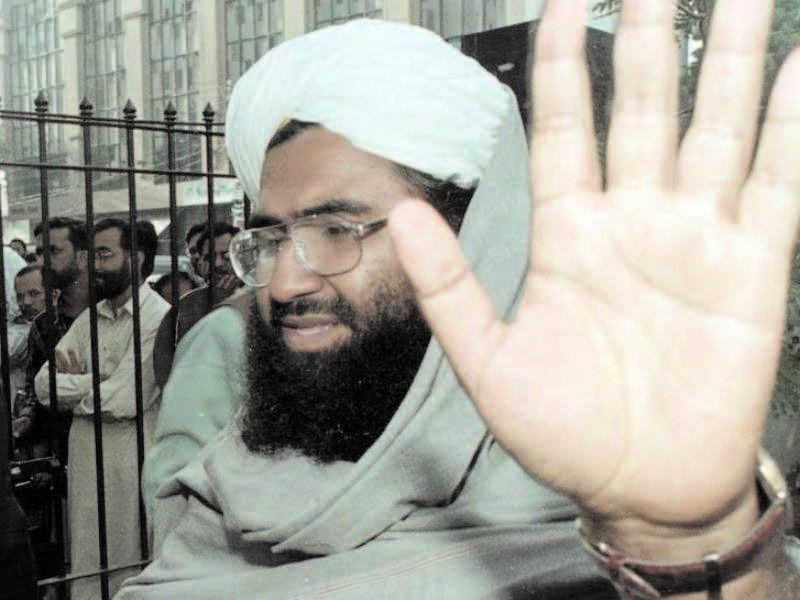
  • Amid China’s stand on Masood Azhar ban, US says ‘Veto will not prevent us from acting’

    Amid China’s stand on Masood Azhar ban, US says ‘Veto will not prevent us from acting’

    UNITED NATIONS (TIP): The US said on Tuesday that countries using veto to scuttle sanctioning of terrorists will not “preclude” it from taking actions.

    The US remarks come amid continued Chinese opposition+ to efforts to get Pakistan-based JeM chief Masood Azhar banned by the UN.

    “The administration very much is looking at all of these avenues and some of the things we have talked about is sanctions and who is on the list and how we have managed that,” US’ envoy to the UN Nikki Haley told reporters here.

    “And that is part of what we are going to try and find our place with is that we do want to make sure that we are calling out those that we need to call out,” she said.

    Haley made the remarks while addressing a press conference after assuming role of President of the Security Council for the month of April.

    She was asked about efforts to get terrorists, particularly those in the South Asian region, sanctioned under UNSC’s sanctions list and how another permanent member scuttles these efforts+ by using its veto power, a veiled reference to China blocking moves to ban Jaish-e-Mohammed chief Masood Azhar+ . “Are we going to have people that veto certain issues? Yes. But that doesn’t preclude the US from acting and it certainly does not preclude us from trying to see if we can change that as well,” Haley said. “Our goal is to get more done together than we do separately. If we cannot get it done separately then we just move in another direction to still get the same things done,” she said.

    The US wants to make sure that it is leading towards a “result” and “not sitting back” and allowing things to happen. “I think you are obviously seeing a very aggressive administration because we feel like in order to lead we need to act and in order to act we need to make sure we have those conversations with the National Security Council and we are having those conversations with the National Security Council,” she said.

    Haley noted that a lot has happened in the last two months of her assuming the UN ambassador’s role under the Trump administration and a lot will continue to happen “but it is all about how we can make sure we are moving the ball”.

    Haley also described Syrian President Bashar al-Assad as a “war criminal”, saying what he has done to the people of his country is disgusting.

    Asked about US Secretary of State Rex Tillerson’s remarks in Ankara where he said that Assad’s status would be decided by the Syrian people, she said, “It’s that we don’t think the people want Assad anymore; we don’t think that he is going to be someone that the people want to have.”

    “We have no love for Assad. We’ve made that very clear. We think that he has been a hindrance to peace for a long time. He’s a war criminal. What he’s done to his people is nothing more than disgusting,” she said.

    Haley said that the goal of the Trump administration is to do what needs to be done to defeat ISIS.

    “I don’t know that our goal is to talk to Assad in doing that…Now that could change and the administration could think otherwise, but right now Assad is not our No.1 person to talk to,” said Haley. (PTI)

  • Donald Trump removes Steve Bannon from National Security Council

    Donald Trump removes Steve Bannon from National Security Council

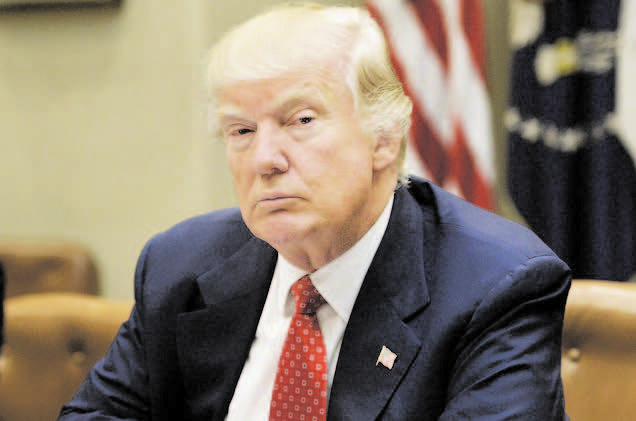
    WASHINGTON (TIP): President Donald Trump has removed chief strategist Steve Bannon from the National Security Council, reversing an earlier, controversial decision to give Bannon access to the high-level meetings.

    A new memorandum about the council’s composition was published Wednesday in the Federal Register. The memo no longer lists the chief strategist as a member of the Principals Committee, a group of high-ranking officials who meet to discuss pressing national security priorities.

    Tom Bossert, the assistant to the president for Homeland Security and Counterterrorism, also had his role downgraded as part of the changes.

    A senior White House official said Wednesday that Bannon was initially placed on the national security council after Trump’s inauguration as a measure to ensure implementation of the president’s vision, including efforts to downsize and streamline operations at the NSC.

    Trump’s first national security adviser, Michael Flynn, was at the helm of the NSC at the time, but the official says Bannon’s role on the committee had nothing to do with the troubles facing Flynn, who was later asked to resign for misleading the administration about his communication with Russian officials.

    The senior White House official was not authorized to discuss changes that have not been formally announced and spoke on condition of anonymity.

    The new memo also restores the director of national intelligence and the Joint Chiefs chairman to the principals committee.

    Bannon’s addition to the NSC sparked concerns from Trump critics, who said it was inappropriate for the political adviser to play a role in national security matters. (AP)

  • Trump signs bill blocking online privacy regulation

    Trump signs bill blocking online privacy regulation

    WASHINGTON (TIP): After his press secretary blasted it as an example of rampant government overreach, President Donald Trump has signed a bill into law that could eventually allow internet providers to sell information about their customers’ browsing habits.

    The bill scraps a Federal Communications Commission online privacy regulation issued in October to give consumers more control over how companies like Comcast, AT&T and Verizon share that information.

    Critics have argued that the rule would stifle innovation and pick winners and losers among internet companies.

    The regulation was scheduled to take effect later this year, but Congress used its authority under the obscure Congressional Review Act to wipe it from the books.

    With a Republican president in the White House, the GOP-controlled Congress has turned to the 20-year-old law to scrap numerous regulations that Republicans say are costly, burdensome or excessive, many of which were finalized in the closing months of Democrat Barack Obama’s presidency.

    Internet companies like Google don’t have to ask their users for permission before tracking what sites they visit, a discrepancy that Republicans and industry group have blasted as both unfair to companies and confusing to consumers. White House press secretary Sean Spicer said last week that the president’s support for the bill was part of a larger effort “to fight Washington red tape that stifles American innovation, job creation and economic growth.” “The president pledged to reverse this type of federal overreach in which bureaucrats in Washington take the interest of one group of companies over the interest of others,” picking the winners and losers, he said.

    Supporters of the privacy measure argued that the company that sells an internet connection can see even more about consumers, such as every website they visit and whom they exchange emails with, information that would be particularly useful for advertisers and marketers.

    Undoing the regulation leaves people’s online information in a murky area. Experts say federal law still requires broadband providers to protect customer information but it doesn’t spell out how or what companies must do, which is what the online privacy rule aimed to do. The absence of clear privacy rules means companies that supply internet service, and who can monitor how consumers use it, can continue to mine that information for use in their own advertising businesses. Consumer advocates also worry that the companies will be a rich target for hackers.

    Ajit Pai, the agency chairman appointed by Trump, has said he wanted to roll back the broadband privacy rules. Pai and other Republicans want a different federal agency, the Federal Trade Commission, to police privacy for both broadband companies like AT&T and internet companies like Google.

    Broadband providers don’t fall under the trade commission’s jurisdiction, and advocates say that agency historically has been weaker than the communications commission.

    Trump signed three other bills yesterday, including one that eliminates a rule that prohibited the use of tactics like baiting and shooting bears from the air on the National Wildlife Refuges in Alaska (AP)

  • Black teen wins essay contest on topic of white privilege

    Black teen wins essay contest on topic of white privilege

    WESTPORT  (TIP):A black teenager who wrote about the “unavoidable” racial issues he faces growing up in an affluent, predominantly white Connecticut town has won an essay contest on the topic of white privilege.

    Chet Ellis, a 15-year-old sophomore at Staples High School in Westport, described a discussion on getting into college one day during track practice. He wrote that a white friend said he would have no problem because he’s black.

    “I was stunned,” he wrote, “and mumbled something instead of firing back, `Your parents are third-generation Princeton and your father runs a hedge fund and yet you think my ride is free?”‘

    The annual essay contest, put on by the town’s diversity council and the Westport Library, aims to prompt discussion of multicultural issues in the shoreline community that is 93 percent white. This year’s topic stirred some controversy by encouraging high schoolers to describe how they have been touched by white privilege, a term used mainly by liberals that refers to unseen advantages conferred to whites, and not racial minorities.

    Chet was awarded the $1,000 top prize at a ceremony Monday night.

    Living in a place where almost everyone is white, he writes, he wonders how his race affects how he’s treated. He writes about being followed around by a manager inside a store and how it felt when a classmate said a racial slur out loud to describe an offensive sign. And he notes the knowing nods a track teammate receives when he explains a loss by telling others, “I mean I was running against two giant black guys.” “As a black teen in Westport, race issues in and outside the classroom are unavoidable,” he wrote. (AP)

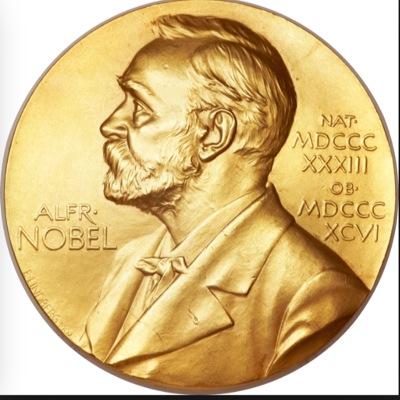
  • At long last, Bob Dylan accepts the 2016 Nobel Prize in Literature

    At long last, Bob Dylan accepts the 2016 Nobel Prize in Literature

    STOCKHOLM (TIP): After months of uncertainty and controversy, Bob Dylan finally accepted the 2016 Nobel Prize for Literature at a secret meeting on Saturday with the Swedish Academy, local media reported. Asked by Swedish public broadcaster SVT if Dylan had received his Nobel diploma and medal on Saturday afternoon, Academy member Horace Engdahl said: “Yes”, without making any further comments.

    The Swedish Academy, which awards the prize, had been tight-lipped about the prospective meeting and declined to comment on the report. The first songwriter to receive the prestigious award, Dylan joins a celebrated group of laureates including Thomas Mann, Samuel Beckett, Gabriel Garcia Marquez and Doris Lessing.

    The meeting took place at a secret location ahead of Dylan’s first concert in Stockholm, the first stop on a long-planned European tour for his latest album of cover songs, “Triplicate”. His second concert is on due Sunday.

  • Chicago police arrest 14 year-old in Facebook rape case

    Chicago police arrest 14 year-old in Facebook rape case

    CHICAGO (TIP): Police in Chicago arrested a 14-year-old boy in connection with the alleged gang rape of a teenage girl that was broadcast on Facebook Live, police and local news reported.

    “CPD arrested 1st of several juvenile offenders in Facebook sexual assault incident,” police department spokesman Anthony Gugliemi wrote on Twitter late Saturday.

    The boy, who is 14, faces at least three juvenile felony charges, The Chicago Tribune newspaper reported, citing city police. The victim was a 15-year-old girl who went missing on March 19 in the crime-plagued midwestern US city. She was found two days later and taken to a children’s hospital for treatment.

    Gugliemi promised more details at an 11 am (1600 GMT) Sunday press conference.

    City police got involved when the girl’s mother approached police with graphic photos taken from a Facebook Live video showing several young men assaulting the teen.

    It was the latest in a series of troubling incidents in which violent acts have been streamed live on Facebook, including two fatal shootings and the kidnapping and torture of a disabled 18-year-old.

    The social networking site said in a statement after the incident that it took seriously its “responsibility to keep people safe on Facebook.”

    The live online video of the alleged gang rape attracted as many as 40 viewers at one time, but no one contacted police, according to reports. The video was later taken down.

    Chicago has been grappling with a surge in violent crime. Last year, the city endured its highest number of shootings and murders in nearly two decades.

    Much of the violence is concentrated in a few impoverished areas, including the one where the teenage girl lives.