Month: April 2017

  • RBI wants to circulate new Rs 200 notes through banks

    RBI wants to circulate new Rs 200 notes through banks

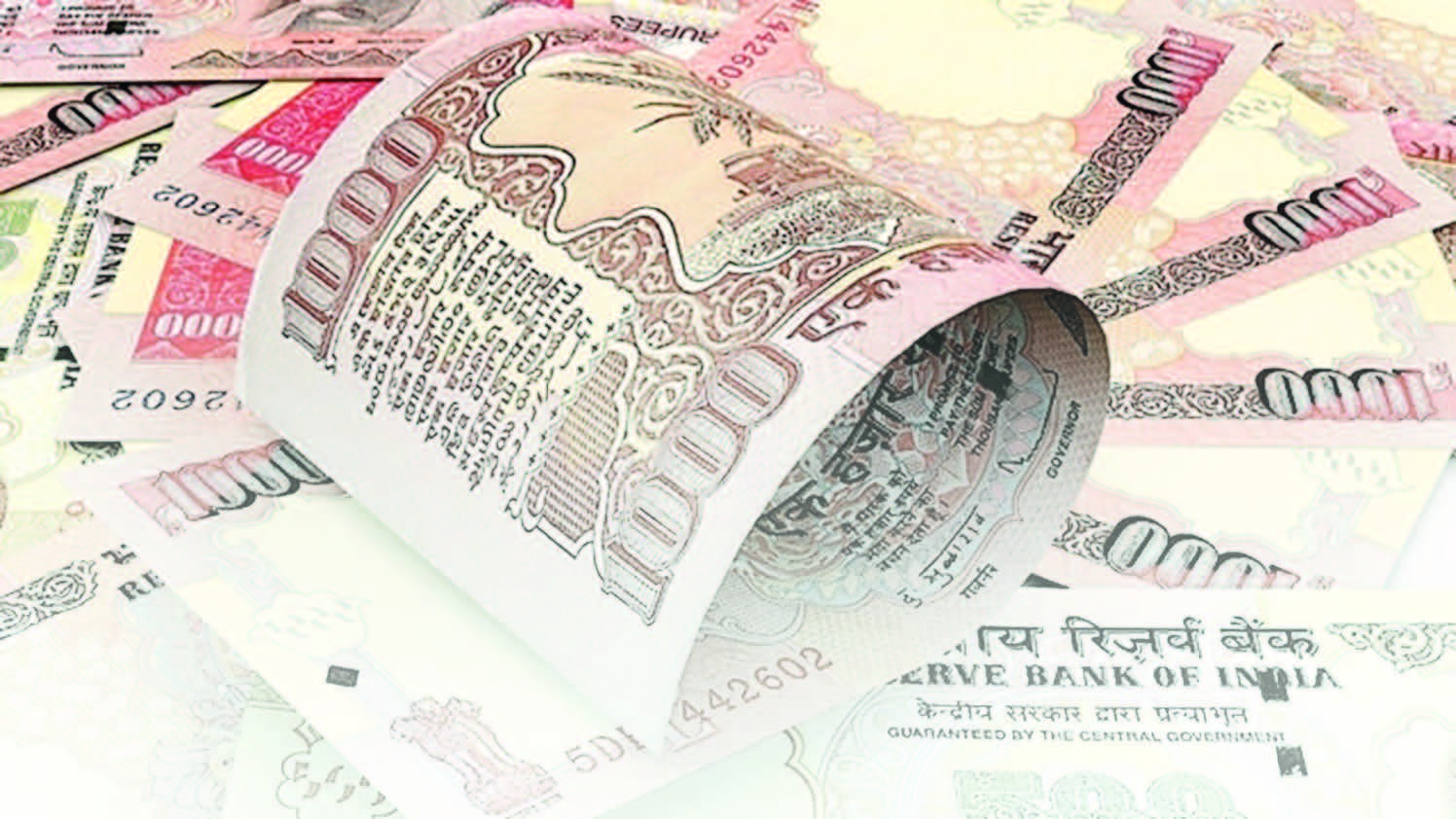
    NEW DELHI (TIP): The Reserve Bank of India (RBI) is likely to decide against circulating proposed new Rs 200 banknotes through ATMs to avoid another chaotic recalibration process similar to the one that followed the recall of high-value currency last November.

    The central bank wants to circulate the new banknotes only through bank branches, similar to the way Rs 50 and Rs 10 notes are circulated. The RBI board in March cleared a proposal to introduce Rs 200 notes to plug the paucity of lower denominations. The mints are likely to start printing the new notes from June.

    A senior banking official – who refused to be quoted because he isn’t authorised to talk to media – said dispensing new currency notes through ATMs would mean recalibrating India’s 220,000 machines, an exercise that will take more than a month.

    These ATMs were just reprogrammed to dispense the Rs 2000 notes introduced on November 9, a period that saw snaking queues outside machines and millions of people unable to withdraw cash immediately. “The idea is not to disturb the system once again, there has been disruption for more than four weeks between November and December and it is advisable to circulate these notes through the bank branches, though at present these are just proposals,” the official told Hindustan Times.

    The proposal to introduce Rs 200 notes is part of a larger focus by the government and RBI on circulating lower denomination currency notes of Rs 100 and Rs 500.

  • TRAI FORCES RELIANCE JIO TO WITHDRAW SUMMER SURPRISE OFFER

    TRAI FORCES RELIANCE JIO TO WITHDRAW SUMMER SURPRISE OFFER

    NEW DELHI (TIP): Reliance Jio on April 6 decided to withdraw its ‘Jio Summer Surprise’ offer after the Telecom Regulatory Authority of India (TRAI) advised the Mukesh Ambani-led firm to withdraw the three-month ‘complimentary’ offer.

    On March 31, Reliance Jio, which was expected to charge for its services from April 1, 2017, extended the deadline for buying Jio’s Rs. 303 plan until April 15, 2017. Subscribers who bought the Rs. 99 Prime membership till April 15, 2017, with a plan of Rs. 303 or higher, were eligible for the ‘Jio Summer Surprise’ offer and its subscribers were entitled to get free services for three months, starting April 15.

    “Jio is in the process of fully complying with the regulator’s advice, and will be withdrawing the three months’ complimentary benefits of Jio Summer Surprise as soon as operationally feasible, over the next few days,” according to a company statement. Customers who have subscribed to the offer prior to its discontinuation will remain eligible for the offer.

    Jaideep Ghosh, partner telecom at KPMG said: “While the regulators’ rationale to urge Jio is understandable, I believe that the telecom tariff must be left to market forces.”

    Jio, through its free offers since September 5, 2016, has notched up more than 100 million subscribers, of which 72 million were willing to pay for Jio services as of March 31, as they become ‘Prime’ customers.

    After the extension, existing players such as Bharti Airtel and Idea Cellular moved the telecom tribunal against TRAI for letting Jio continue the free promotional offer beyond the stipulated 90 days.

    The operators criticised the regulator for being a “mute spectator” to the alleged violations. On January 31, TRAI had held that Jio’s free voice calling and data plan were not in violation of the regulatory guidelines.

    The arrival of Reliance Jio was followed by a consolidation in the industry, even as it spurred a fall in profits for incumbent operators. In March, Idea Cellular merged with the Indian unit of Vodafone Plc, making the entity India’s largest mobile telephony and data service provider.

    Earlier, in February, Bharti Airtel bought the assets of Telenor ASA’s India unit while in September last year Anil Ambani-led Reliance Communications decided to merge with Aircel.

  • Samsung tips best quarterly profit in over three years as chips soar

    Samsung tips best quarterly profit in over three years as chips soar

    SEOUL (TIP): Samsung Electronics Co Ltd forecast on Friday its best quarterly profit in more than three years in the January-March period, beating expectations and putting it on track for record annual earnings on the back of a memory chip super-cycle.

    The Apple Inc rival has rapidly recovered from last year’s costly failure of its fire-prone Galaxy Note 7 device, despite a political scandal involving Vice Chairman Jay Y. Lee who appeared in a Seoul court on Friday facing charges including bribing ousted president Park Geun-hye.

    The global memory chip leader said first-quarter operating profit was likely 9.9 trillion won ($8.8 billion), compared with an average forecast of 9.4 trillion won from a survey of 18 analysts. Revenue rose 0.4 percent to 50 trillion won, just ahead of analysts’ forecasts.

    “The semiconductor business was likely the main driver for earnings,” said Heungkuk Securities analyst Lee Min-hee, adding that sales of mid-to-low tier smartphones also helped the mobile business remain profitable.

    Samsung shares touched a record high of 2.134 million won in late March on expectations of record annual profit in 2017, as the South Korean tech giant bounced back from the embarrassing withdrawal of its Note 7 devices due to combustible batteries. Source: Reuters

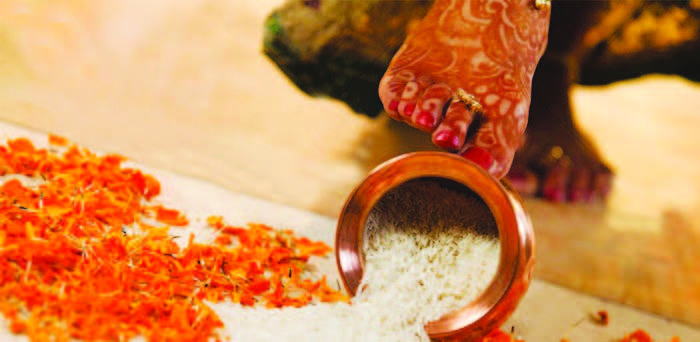
  • MahaVastu tips for an auspicious griha pravesh

    MahaVastu tips for an auspicious griha pravesh

    Mahavastu is an upgraded, tested and bug-free understanding of vastu shastra that I have distilled from more than 12,000 case studies in the last 25 years. A rational understating helps to maintain equilibrium with nature; with simple yet powerful remedies without demolishing buildings. MahaVastu propagates that five elements are present in directions in our living spaces and the imbalance in these elements leads to the sickness of mind and body. It basically balances all these 5 elements for harmony in life.

    Before buying a home or an office one must check the location of entrance, e.g., an east or a north – east entrance is very auspicious, it brings in money, profits and success. On the contrary, an east entrance of a house leads to fire, accidents and unexpected losses for the inhabitants. According to MahaVastu, south or south – east entrance brings immense prosperity whereas entrance from south creates negative effects on the kids specially the boys of the family.

    In general, houses and buildings facing north-east, south and the west are considered good for the residence.

    Toilet

    Toilets in the north-east direction should be avoided completely.

    Kitchen

    The fire place / kitchen should ideally be located in south east zone of the house. An underground Water tank should ideally be placed towards the north, north – east, east and west zones of the house.

    Bedroom

    Bedroom should ideally be located in the south zone; however, for a newly wedded couple the north or north – west is the ideal direction.

    Kid’s room should ideally be in the east, north – east, west or south – west directions.

    Office

    An ideal location of entrance(s) is north, north – east or north -west zones. This would bring good luck and positive energy. The main door of the entrance should be facing the north or the east. The reception should always be in the east or the north – east.

    Location of toilets should ideally be in the south or south -west vastu zone of disposal. The toilet seats should ideally be placed in either south to north or west to east direction.

    Location of Pantry ideally should be in the southeast corner or zone of the building

    If a house is not built according to vastu , what should they do?

    Simple remedies can help you to correct vastu flaws. Mahavastu has some very simple yet effective remedies like changing the colour of the main entrance, painting a particular portion in a colour to balance the five elements, e.g., the elemental strip technique proves instrumental when it comes to removing the bad effects of entrance locations and toilets. Hanging green sceneries towards north attracts growth and new opportunities. Mahavastu believes in giving you proven vastu formulae for instant results without any demolitions and reconstruction.

  • DID LORD SHIVA REALLY TAKE AVATAR IN DWAPAR YUGA?

    DID LORD SHIVA REALLY TAKE AVATAR IN DWAPAR YUGA?

    As mentioned in Linga Puran, once Lord Brahma asked Lord Shiva as to why he never reincarnated in a human form that involved him living among human relations, like Lord Vishnu? Lord Shiva in all his calmness replied, “Not once, but many a time I have taken the required avatar for the advantage of humankind.”

    Even though, there’s no significant evidence to prove these claims, but it is believed that Lord Shiva did appear not once but under 28 dwapars. Following are the excerpts from Linga Purana, where Lord Shiva explains all his avatars.

    “I shall incarnate as Shwet-Mahamuni during first Dwapar Yuga of Vaivaswat manvantar. My abode shell is at Chhogal peak of Himalaya mountain. I shall have four disciples who will be proficient in the Vedas.”

    “I will incarnate as Sutar during second dwapar. At that time, Saddyojat Prajapati will be holding he post of Vyasa.I will have four sons- Dundubhi, Shataroopa, Richika and Keluma.”

    “During third dwapar and at the time when Sage Bhargav will be acting as a Vyasa, I will take incarnation as Daman. I will have four sons- Vikrosh, Vikesh, Vipash and Papnashak.”

    “During fourth dwapar and at the time when Sage Angira will be acting as a Vyasa, I will take incarnation as Suhotra. I will have four sons- Sumukh, Durmukh, Durdhar and Duratikram.”

    “I will take incarnation as Kank during fifth dwapar and at the time when Sage Savita will be fulfilling the obligations of Vyasa; I will have four sons- Sanak, Sanandan, Sanatan and Sanatkumar.”

    “During Sixth dwapar, I will take incarnation as Laugakshi. At that time Sage Mrityu will be holding the post of Vyasa. My sons will be Sudhama, Viraja, Shankh and Padraj.”

    “Sage Shataritu will act as Vyasa during Seventh dwapar. I will have four sons- Saraswat, Megh, Meghvah and Suvahan.”

    “Sage Vashishtha will be the Vyasa during eighth dwapar. I will take incarnation as Dadhivahan. My sons will be- Kapila, Asuri, Panch, Shikhomuni and Vashkal.”

    “Sage Saraswat will act as Vyasa during nineth dwapar. I will take incarnation as Rishabh. I will have four sons-Parashar, Garg, Bhargav and Angiras.”

    “The 10th dwapar will see Tripad fulfilling the duties of Vyasa. I will incarnate as Bhavita Muni. I will have four sons-Bala, Bandhu, Niramitra and Ketu.”

    “Sage Trivat will be the Vyasa during 11th dwapar. I will take incarnation as Ugra. My sons will be- Lambodar, Lambaksha and Lambakesh.”

    “Sage Shatateja will perform the duties of Vyasa during 12th dwapar. I will have four sons- Sarvagya, Sambuddhi, Sadhya and Sarva.”

    “Dharma will be the Vyasa during 13th dwapar. I will take incarnation as Bali and live at the hermitage of the Balkhilya. I will have four sons- Sudhama, Kashyapa, Vashishtha and Viraja.”

    “In the 14th dwapar, I will be born as sage Gautama and the responsibilities of Vyasa would be fulfilled by Sage Tarakashu. In this avatar I will have four sons- Atri, Devarudra, Shravana & Srivishthak.”

    “Sage Traiyyaruni will obligate the duties of Vyasa and I will re-incarnate as Vedshira in the 15th dwapar. My sons would be named- Kuni, Kunibahu, Kusharir & Kunetrak.”

    “Sage Deva will perform the duties of Vyasa during 16th dwapar. And, I will be Gokarn and would have four sons-Kashyao, Shukracharya, Chyavn & Brihaspati.”

    “The 17th dwapar will see Kritanjay fulfilling the duties of Vyasa. I will incarnate as Guhavasi. I will have four sons-Utathya, Vamadev, Mahayoga & Mahabal.”

    “During 18th dwapar and at the time when Sage Ritanjay will be acting as a Vyasa, I will take incarnation as Shikhani. I will have four sons- Vachashrava, Richik, Shyavasva & Yatishwar.”

    “I will take incarnation as Jatamali during 19h dwapar and at the time when Sage Bhardwaj will be fulfilling the obligations of Vyasa; I will have four sons- Hiranyabh, Kaushal, Laungaksi & Kuthumi.”

    “Sage Gautam will perform the duties of Vyasa during 20th dwapar, and I will re-incarnate as Attahas. I will have four sons- Sumantu, Varvari, Kavand & Kushi Kandar.”

    “During the 21st dwapar, where I will incarnate as Daruko, sage Vachashrava will disembark on the journey of fulfilling the duties of Vyasa. My four sons would be- Ramapksoda, Bhayani, Ketuman & Gautam.”

    “During 22nd dwapar and at the time when Sage Shushmayan will be acting as a Vyasa, I will take incarnation as Langli Bheem. I will have four sons- Dharmik, Mahayotri, Bhallavi, Madhupinga,Shwetu, Ketu & Kush.”

    “Trinabindu will be the Vyasa during 23rd dwapar. I will take incarnation as Kalanjar. I will have four sons- Ushik, Vrihadashva, Deval & Kavirevach.”

    “When 24th dwapar would begin, I will re-incarnate as Shooli, while Vyasa’s duties would be fulfilled by Riksha. I will have four sons- Salihotra, Agnivesh, Unasva & Sharadvasu.”

    “I will incarnate as Dandi-Mundishvar during the 25th dwapar. At that time, Shakti will be holding he post of Vyasa. I will have four sons- Chhagal, Kundak, Kumbhand & Prawahaj.”

  • Border Security operations destabilize Texas Budget

    Border Security operations destabilize Texas Budget

    AUSTIN, TEXAS (TIP): As a budget shortfall in Texas threatens cuts to colleges and Medicaid, a costly border security operation is proving largely untouchable despite President Donald Trump’s promises to build a wall and the plunging number of people caught illegally entering the U.S., says an AP report.

    The report points out that a prolonged oil slump has left lawmakers about $6 billion short of the money needed to keep the status quo in Texas, which attracts about a million new residents every two years. But border security is one area where Republicans – who control state government – have all but refused to search for savings.

    During a key budget vote on Thursday, April 6, House Democrats proposed taking dollars earmarked for hundreds of state troopers on the Texas-Mexico border and National Guard patrols, and putting that money instead toward other programs they say are underfunded. One even proposed tacking onto a $218 billion spending bill a prohibition against using state funds on Trump’s border wall.

    But the proposals to scale back Texas’ $800 million border operation appeared largely symbolic during a marathon debate in the GOP-controlled Legislature.

    Illegal border crossings have plummeted in recent months. In March, authorities caught 12,193 people at the southern border – the lowest monthly figure in at least 17 years, and the second straight month that border arrests sharply dropped. Still, Republican officials from Texas Gov. Greg Abbott on down embrace Trump’s plans to build a wall, and the state is committing more money to border security efforts.

    “At the federal level, the money hasn’t been turned loose to apply the new resources that are needed to do what President Trump has said needs to be done, and what I agree needs to be done,” said Republican Rep. Matt Schaefer, a U.S. Navy reserve lieutenant from East Texas who is among the most far-right lawmakers in the Texas House. “This is going to take time. I don’t believe that we can stand down while the federal government steps up. And that’s going to be awhile.”

    The state is set to pass a new budget by June, and just about every part of Texas government is in line to take hit: Public universities are fighting a proposed $300 million cut, and one of Abbott’s biggest initiatives – bolstering pre-kindergarten – is also getting short shrift. More than $2 billion in proposed cost cuts to Medicaid is also on the table, and many state agencies are under a hiring freeze.

    The Senate spared border security from any cuts, and the House plan would also keep funding 50-hour workweeks on the border for nearly two dozen Texas Rangers and 250 troopers. The House only stopped short of purchasing new big-ticket defense items, such as more spy planes or armored boats to patrol the Rio Grande.

    State officials have defended the price tag by with data that include drug seizures and arrests, though critics question the numbers. Last year, an Associated Press review found that child support evaders and low-level felony drug arrests were among thousands of arrests being categorized as “high-threat criminals” along the border.

    Some think the real “Trump effect” was pushing fearful people to get to the U.S. before Trump took office. Border arrests in October, November and December increased by about a third compared to the same period in 2015, before falling this year.

    “A lot of Republican members want to be able to say they voted for money on the border to stop this perceived immigration problem,” said Rep. Chris Turner, who leads the House Democratic Caucus. “The data doesn’t support their arguments. A lot of us hoped there would be a lot less money would be put into border security. But politics is driving that decision.”

    (Source: AP)

  • “No regrets” in job, says Ambassador Haley

    “No regrets” in job, says Ambassador Haley

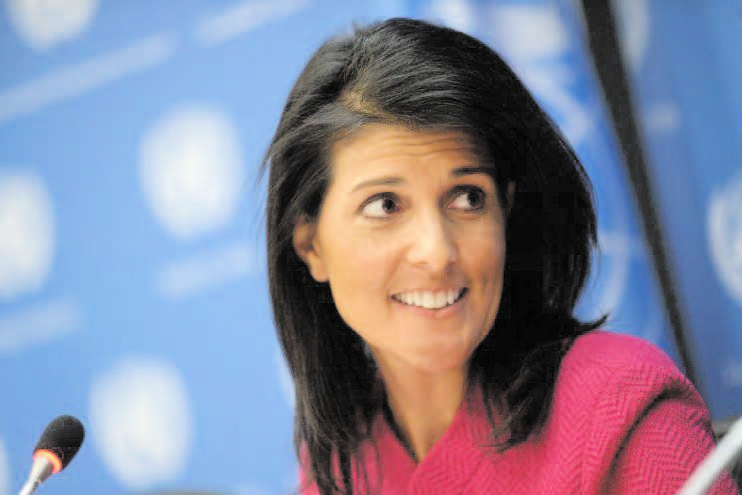
    NEW YORK(TIP): Asserting that she has “no regrets” in her job, US Ambassador to the UN Nikki Haley said her Indian parents raised her to give her best to whatever job she does.

    “No, there is no regrets,” Haley said at a session at the Women In The World summit when asked if she has any regrets in her job.

    “I am the daughter of Indian parents where my mom always said, ‘whatever you do, be great at it and make sure people remember you for it’ and so my focus is just to try and do the jobs as best as I can,” she said here.

    Haley was speaking yesterday at the ‘Women In The World’ summit, a premier annual gathering of influential women leaders, politicians and activists organized by media personality Tina Brown in association with the New York Times.

    Haley speaks proudly about her Indian heritage, often bringing it up during her speeches and interactions. Earlier this week, while addressing reporters at the UN headquarters, Haley brought up her Indian heritage when she asked about her qualities of being able to speak freely and openly.

    “Every position that I have ever had, people have assumed that I’m looking towards something bigger when in reality I’m the daughter of Indian parents who said to me ‘whatever you do be great at it and make sure people remember you for it’. That is all I am trying to do. That is all I have ever known how to be is to try and just do my job to the best of my ability and if that comes out blunt and if that comes out strong – I’m one of two brothers and a sister – my parents raised us all to be strong,” she said.

    When asked at the women summit if she liked her new job as Washington’s envoy to the world body, she said she does.

    “I do like the job because you can move the ball. It’s not just about talking, you can actually negotiate, you can actually change things,” she said.

    Haley said she has a “lot of” interaction with President Donald Trump, “I talked to him this morning” adding that she visits Washington at least once a week for the National Security Council meetings.

  • Pratham Graduate from India to Share Success Story in NYC

    Pratham Graduate from India to Share Success Story in NYC

    NEW YORK (TIP): Sanjana Das, a 22-year-old graduate of Pratham’s Vocational Training Program in India, will speak at the next Pratham NYC Young Professionals event on Tuesday, April 11th from 6 p.m. onwards at Stitch Bar & Lounge @ 247 W 37th Street in midtown Manhattan about her inspiring life journey so far.

    After an early life of poverty, Das is defying the odds. She grew up in the small village of Kusasthali in the state of Odisha and was forced to leave school after her father passed away from a prolonged illness. Despite these challenges, Das persevered, and with the support of her mother, she completed Pratham’s vocational training program and earned a certificate in hospitality. Today, the diligent 22-year-old is employed in the front office at the three-star Lords Plaza Hotel in Jaipur and has realized her dream of financial independence.

    “It is so empowering for us to hear the real-life testimonials of people who have benefitted from Pratham’s incredible work on the ground in India to educate and empower the youth,” said Meeta Manglani, co-chair of the New York chapter of Pratham Young Professionals. “Very rarely do we, the supporters of Pratham around the world, have an opportunity to see where our dollars, our energy and our time is going, unless we travel to India and witness it first-hand. Sharing Sanjana’s story is the responsible way for us to engage the next generation of Pratham supporters.”

    Pratham’s Vocational Training Program promotes economic self-sufficiency for young adults through training and job placement. Last year, Pratham equipped 22,000 youth with skills and supported 300 entrepreneurs all over India.

  • IAA Women Achievers Awards make a powerful statement

    IAA Women Achievers Awards make a powerful statement

    NEW JERSEY (TIP): With all eyes on a beautifully decorated stage, almost 300 guests from New York and New Jersey in audience, the expectations were running high to know the names of 15 women “Honorees” who have left an indelible impression on society in USA. An event which has been the talk of the town since it was announced three weeks ago by Brain Storm Entertainment in association with Renascent Enterprise, IAA Women Achiever Awards held at newly built MARIGOLD in New Jersey offered everything that raised expectations.

    Manish Malhotra Fashion Show
    Manish Malhotra Fashion Show

    Fifteen women to be selected through a process audited by Ernst and Young, a fund raiser with Chief Guest Shabana Azmi and a fashion show by superstar of fashion industry, Manish Malhotra for Mijwan Welfare Society (NGO run by Shabana Azmi) at a venue that has created a name for its grandeur in such a short time, it was an evening to watch.

    Tanvi Prenita Chandra, local promoter of the show
    Tanvi Prenita Chandra, local promoter of the show

    Guests started arriving early at 5 pm and crowded the reception to ensure they got best seats after a formal photo-op. The bar was filled soon with hundreds and an air with best fragrance and some of outfits that would have surprised celebrity designer Manish Malhotra. Many wanted to know the names of the winners since such events have rarely presented surprise. But Tanvi Prenita Chandra, promoter and Vandana Krishna, brain behind the event lived upto her promise, and nobody including “Honorees” knew about the surprise about to unfold. Some wanted to have a glimpse of Manish Malhotra who was busy with models and wanted to make his maiden presentation the best ever in East coast. Photographers ensured they clicked the pics of the most notable guests from Tri-State which would fill the Facebook after the event. Selfie stars were busy too, almost competing with each other in putting maximum in one frame.

    Cineyug promoter Aly Morani was quietly checking the finishing of the grand room for stage and settings, first of its kind where the evening was to unfold. Side panels with white fabric were used as screens with a state of the art projectors and backdrop lit to make the setting most serene. A totally new concept of a fashion show with top models were to walk on the floor with a ramp-style setting between front three rows, thus, giving the audience a closer view of beautiful dresses of Mijwan collection by celebrity Manish Malhotra.

    A warm welcome from Vandana Krishna
    A warm welcome from Vandana Krishna

    Vandana Krishna introduced the evening and awards event to a hall filled with 300 plus guests. She shared the overview of upcoming Indian Academy Awards to be held in California in July. Vandana Krishna and Saurabh Pandey, two veterans from the entertainment industry are launching their awards event in SFO with Bollywood, Tollywood and Hollywood stars as guests and performers when the winners will be announced once again through a popular selection process audited by Ernst and Young. The grand 2-day event is expected to host 50,000 in audience. The event was announced in Mumbai in last week of December by RAEES Bollywood Badshah Shahrukh Khan and launched at a media conference by superstar Madhuri Dixit in Santa Clara in January.

    Vandana said, “As an initiative of the Indian Academy Awards we want to share the success stories of real women with the world, to encourage all the Non Residents of India. True stories of women entrepreneurs are an inspiration to change the world. Today’s women are making the difference with their innovative ideas, seeking solutions and reclaiming their status as equals. We want to create a platform to honor these women and to share their success with the world.”

    One could see smiling Tanvi Prenita Chandra of Renascent Media who was the local promoter for hosting the show. “Women empowerment …this cause is very close to my heart and I feel fortunate to get this opportunity to host this history making event with most respected Bollywood icon Shabana Azmi ji and world famous designer Manish Malhotra. A big thank you to the sponsors Nirvani restaurant, Morgan Stanley, Laxmi (House of Spices), Mphasis Corporation, Hometowne rx, Pro Beauty Academy, KTC Edibles Ltd, The Marigold and Corporate Limousine Services for the support of this great cause. I have done my best to present a different type of show with celebrities from Mumbai and feel happy it has all come together in flying colors witnessed by elite crowd in such a short span of three weeks” said Tanvi.

    Host Nisha Mathur, herself a celebrity, opened the evening and in her inimitable style announced the winners one-by-one. The honorees graced the stage and accepted the honors to an applaud by audience which marked the recognition by all. Fifteen honorees who had travelled from all over just like other guests to attend the event and were caught by surprise when their names were announced. Ms Shabana Azmi presented the awards to each honoree as Nisha invited them after a brief introduction.

    The winners were selected via a nomination process managed by EY. The final jury members comprising of Bollywood actresses Manjari Phadnis and Chitrashi Rawat, Wellness and grooming expert Avni Gandhi Varma will made the final selection.

    The next segment included the introduction of Mijwan Welfare Society by none other than Ms Shabana Azmi who shared the details of her father, Kaifi Azmi’s dream for the small village in U.P. which has been converted by funds raised by the NGO to support women.

    Shabana Azmi and Manish Malhotra
    Shabana Azmi and Manish Malhotra

    Ms Azmi’s humility and happiness was visible as she fondly recalled the time she spent with her father who was a great poet and supported for equality of women. She expressed her gratitude for Manish Malhotra and generous audience as well as every donor till date who have supported the Society.

    Actors & Activist Shabana Azmi was the guest of honor for the final event.

    Mijwan today is not only a story of the progress of a small village in India, but it’s also the story of women journeying on, past the patriarchal conforms of their society. It’s the hope for a better tomorrow, beating in the hearts of rural women who have taken charge of their own destinies

    The finale was the fashion show as colorful lights came up and beautiful modelsdisplayed the dresses. One could see the audience was dazzled with the exquisite hand embroidery called Chikankari by Mijwan Women. The ‘Mijwan Summer Couture 2017’ was clearly the highlight of the evening. The grace with which each model walked and carried the dress, almost everyone in audience captured the view with eyes while top photographers and cameraman from television channels captured through their lens. Music enhanced the walk on the ramp between the aisles and many females almost touched the dresses with their cell phones cameras to decide on their choices. About thirty minutes of mesmerizing presentation before Manish Malhotra came to the stage himselfin his customary style to accept the honors.

    Manish Malhotra has pulled women out of oblivion and brought their craft to the doorsteps of Bollywood by creating glamorous outfits in his signature style. By giving women gainful employment, he has given the women to negotiate more space for themselves within the family structure.

    The show epitomized the continuous realization of Kaifi Saab’s vision and the wonderful legacy of hope for his village, Mijwan. (www.mijwan.org)

    Evening closed with the fund raiser and Ms Azmi assisted by her US associate Ketki Parikh collected the checks with humble thanks that will help spread the word for the Mijwan Society all over US in times ahead.

    A landmark is created by Brainstorm Entertainment in association with Renascent Media in East coast as West coast now waits for the mega event in July when superstars will land in Silicon Valley. (Press Release)

  • Reining in the Rogue Regime of North Korea

    Reining in the Rogue Regime of North Korea

    “Pyongyang’s missile program has progressed over the last few decades from tactical rockets in the 1970s, to short, medium-range ballistic missiles in the 1980s and 1990s. Systems capable of even greater range are under research and development.”

    A defiant North Korea has fired yet another missile. It fired four ballistic missiles into Japanese waters in February. The missiles were fired towards the Sea of Japan. After flying an estimated 1000 km, the missiles fell into Japan’s exclusive economic zone – a 200-nautical mile area off Japan’s coast. These launches defy UN resolutions that ban North Korea from any use of ballistic missile technology whatsoever. North Korea has violated these resolutions many times in the past. Launching four missiles in rapid succession shows remarkable operational skill – a matter of grave concern for the international community.

    The estimated range of the missile that North Korea is inching ever so close to now could put parts of the US, among other countries, within its firing range. What is petrifying is that North Korea does not shy away from the fact that it has an active nuclear-weapons program. It has carried out several nuclear tests. The most recent nuclear test was conducted in September 2016.

    The missile launch has been met with heavy condemnation throughout the world. Japanese Prime Minister Shinzo Abe told the Japanese parliament that the launch clearly shows North Korea has entered a new stage of threat. He called a meeting of the country’s National Security Council.

    China, on the other hand, has “proposed” that North Korea suspend its tests of missile and nuclear technology to “defuse a looming crisis”. China has been known to supply nuclear knowhow and material to North Korea in the past. So much so that the North-Korean launch vehicles are all made in China. North Korea is often called China’s spoilt brat. Unfortunately, the fact remains that China supports and feeds the rogue nation to use it as a pawn in the game of international relations. History has shown us time and again that nurturing a serpent is always treacherous. The serpent is bound to show its fangs and inevitably bite the possessor at some point in time. Understandably, this region is of special importance to America. The ASEAN (Association of South-East Asian Nations) includes Indonesia, Malaysia, the Philippines, Singapore, Thailand, Brunei, Cambodia, Laos, Myanmar and Vietnam. These countries have a collective gross domestic product (GDP) of approximately $1.3 trillion. These countries are also the most trade-dependent formal grouping of nations in the world, with trade accounting for just less than 100 percent of their aggregate GDP. The largest market of ASEAN is the US, with a huge investment of roughly $153 billion, as compared to $45 billion in China and $16 billion in India. These figures are exclusive of the US investment in the oil and gas sector in this region, which could mean twice the total US investment.

    The Chinese economy has overtaken the economy of Japan, becoming the second largest in the world. This has changed the power landscape in the region. China’s growth has troubled America even in the past. A growing China indeed means that the US stronghold in the region is on the decline. Not only that, the US power might also be challenged in the region by an imminent yet growing China. China is trying to persuade the world, in particular its neighbors and the United States, that its development under the “peaceful-rise” policy does not pose a threat to the international order. China argues that countries will gain from its rise due to the economic benefits of expanding trade and investment. China also lays stress on the fact that with soft power, the maintenance of positive relations with its neighbors enhances its own security. China’s desire to alter the balance of power in the region makes it a strategic competitor to the United States. North Korea has, on several previous occasions threatened an all-out war, stating it will hit the US, Japan and South Korea with nuclear weapons. Pyongyang has often raised the rhetoric and has wielded its nuclear capability in the past. The warnings and threats might not be taken extremely seriously by the world at this point in time. North Korea is desperate and might go to any extent to be taken seriously in the world. It has remained reckless in its actions. How many nuclear nations do you know that are ruled by a 30-year-old despot?North Korea would go to any extent to be seen as a power in the region and this is a frightening thought. It poses a grave threat to world peace. The biggest security concern is the one that comes from its arsenal of mid-range missiles that have the capability to hit parts of Japan and South Korea. An attack on these strong economies would not only cause a great loss of human life but also damage the global economy.

    North Korea is a serious threat to the East-Asian security. A stable, economically, militarily growing China might have grand designs for the foreseeable future, but remains somewhat compliant as of now. North Korea remains an apparent, imminent and a potent threat in the region – ready to indulge in nuclear warfare at any time.

    The country’s missile technology and nuclear programs threaten international stability. The White house has used stern language but it remains to be seen how the Trump administration will tackle the situation. Several peace-loving nations should come together to challenge China’s might in the region. North Korea is a rogue regime and the United States should deal with it resolutely, but on the basis of deterrence. An enemy who has nothing to lose is indeed a dangerous enemy.

    Sartaj Chaudhary
    Sartaj Chaudhary

    (The author, Sartaj Chaudhary, is an alumnus of Kent University Law School and an  expert in international law)

  • America Launches Missile Attack at Syrian Base after Chemical Weapons Attack kills 100

    America Launches Missile Attack at Syrian Base after Chemical Weapons Attack kills 100

    Piqued by Syria’s use of banned chemical weapons that killed at least 100 people, the U.S. military launched dozens of cruise missiles Thursday, April 6 night at a Syrian airfield

    Two U.S. warships in the Mediterranean Sea, the USS Ross and the USS Porter, fired 59 Tomahawk missiles intended for a single target -Shayrat Airfield in Homs province in western Syria, the Defense Department said. That’s the airfield from which the United States believes the government of Syrian President Bashar al-Assad fired the banned weapons.

    The Pentagon said people were not targeted, and there was no immediate word on casualties. U.S. officials told NBC News that aircraft and infrastructure at the site were hit, including the runway and gas fuel pumps.

    “Assad choked out the lives of helpless men, women and children,” President Donald Trump said in remarks from Mar-a-Lago, his family compound in Palm Beach, Florida.

    “It is in this vital national security interest of the United States to prevent and deter the spread and use of deadly chemical weapons,” said Trump, who called on other countries to end the bloodshed in Syria.

    NBC news reported that a White House official said that more than two dozen members of Congress were briefed by administration officials on the missile strike. Vice President Mike Pence returned to the White House after having gone home for dinner Thursday evening and monitored the events from the Situation Room, officials said.

    “We feel that the strike itself was proportional, because it was targeted at the facility that delivered this most recent chemical weapons attack,” Tillerson told reporters on Thursday night.

    “There was a thorough examination of a wide range of options, and I think the president made the correct choice and made the correct decision,” Tillerson said.

    Syrian television characterized the missile strike “as American aggression” Friday morning. But Ahrar Al Sham, the largest Syrian armed rebel group, told NBC News it “welcomes any U.S. intervention through surgical strikes that would deter the Assad regime capabilities to kill civilians and shorten the suffering of our people.”

    Navy Capt. Jeff Davis, a spokesman for the Defense Department, said initial assessments showed that the airfield was severely damaged, reducing Syria’s capability to deliver chemical weapons.

    Tillerson and Nikki Haley, the U.S. ambassador to the United Nations, have bluntly blamed Syria for the chemical weapons attack, whose victims included at least 25 children.

    “We have a very high level of confidence that the attacks were carried out by aircraft under the direction of Bashar al-Assad’s regime, and we also have very high confidence that the attacks involved the use of sarin nerve gas,” Tillerson said Thursday night.

    In a combative speech at the U.N. Security Council on Wednesday, Haley warned: “When the United Nations consistently fails in its duty to act collectively, there are times in the life of states that we are compelled to take our own action.”

    There was no immediate reaction to the missile strike from Russia, which Tillerson and Haley have accused of having turned a blind eye to Syria’s transgressions.

    Tillerson said there were no executive-level communications with Russian President Vladimir Putin before the missile strike. But he confirmed that U.S. officials had “multiple conversations” with the Russian government in accord with U.S.-Russian military “deconfliction” agreements.

    “We sought no approval from Moscow or at any other level within the Russian infrastructure,” Tillerson said. “This was simply following rules that we have put in place in agreement with the Russian military to deconflict. Because our target in this attack was not Russia.”

    Noting the 2013 U.N. arrangement under which Syria agreed to surrender its chemical weapons under the supervision of Russia, Tillerson said Thursday night: “Clearly, Russia has failed in its responsibility to deliver on that commitment from 2013. So, either Russia has been complicit or simply incompetent in its ability to deliver on that agreement.”

    McMaster said the missile strike wouldn’t have wiped out Assad’s “capacity to commit mass murder with chemical weapons.” But he said: “This was not a small strike. I mean, it was not a small strike. And I think what it does communicate is a big shift in Assad’s calculus – it should be, anyway.”

    (Source: NBC News)

    About the Missile Attack on Syria:

    * Fifty-nine Tomahawk missiles were fired from American destroyers in the eastern Mediterranean at Al Shayrat airfield in Syria, where officials said Mr. Assad’s chemical weapons attack this week originated.

    * Mr. Trump ordered the strike after two days of intense deliberations that involved two meetings of his top national security advisers, including one that Mr. Trump conducted from his Mar-a-Lago estate in Florida.

    * In announcing the strikes on Thursday evening, Mr. Trump called the chemical attack “very barbaric” and said his decision would “prevent and deter the spread and use of deadly chemical weapons.”

    * Administration officials described the missile strikes as a message to the world about Mr. Trump’s resolve and his commitment that the United States will no longer “turn away, turn a blind eye.”

    * The Russian military, which is active in Syria, was notified of the strikes in advance, though American officials did not personally inform President Vladimir V. Putin. In a briefing, Secretary of State Rex W. Tillerson criticized Moscow for failing to live up to its promise in 2013 to destroy all of Syria’s chemical weapons, calling Russia either “complicit” or “incompetent.”

  • US-China Summit: Chinese President Xi Jinping Arrives in the US

    US-China Summit: Chinese President Xi Jinping Arrives in the US

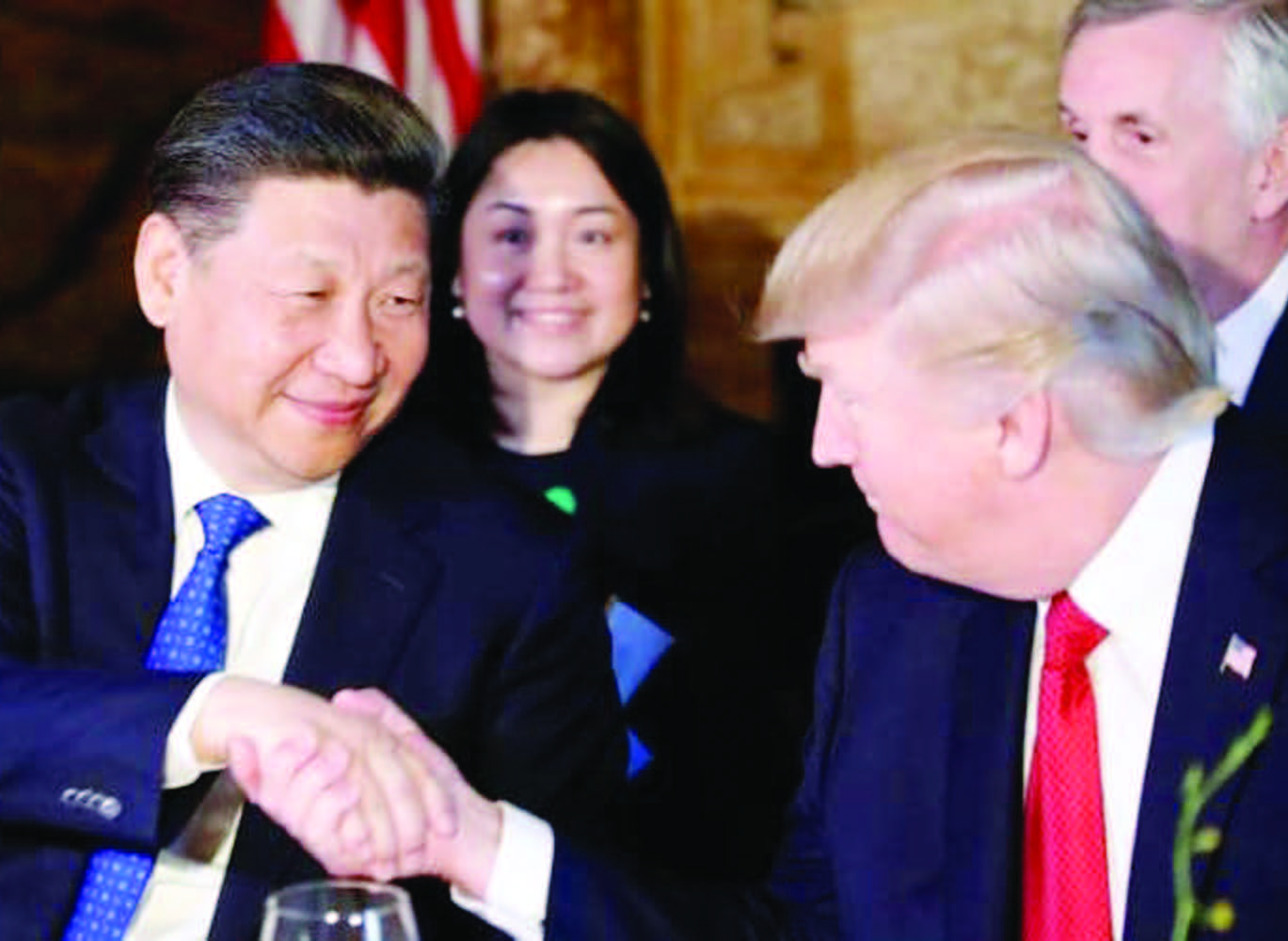
    MAR-A-LAGO, FL (TIP): US President Donald Trump and Chinese President Xi Jinping opened their high-stakes summit at Trump’s Florida beach resort on Thursday, April 6 evening, with the volatile situation in Syria where Syrian government troops used chemical gas which killed at least 100, an urgent threat of North Korea’s nuclear ambitions, and tensions over trade on the agenda for the first meeting between the leaders of the world’s two largest economies.

    President Trump pointed to the crisis in North Korea as a top priority in the meetings with Xi, telling reporters on Air Force One on his way to Florida on Thursday that he thinks China will “want to be stepping up” in trying to deter North Korea’s nuclear ambitions.

    Ahead of the dinner, Trump said he and Xi already had had a long discussion and had “developed a friendship,” and then joked, “I have gotten nothing, absolutely nothing.”

    The White House said the location was selected to give the two days of discussions a more relaxed feel. A number of Trump’s top advisers were in attendance, including his daughter, Ivanka Trump, and son-in-law, Jared Kushner.

    While Trump would not say what he wants China to do specifically with regard to North Korea, he suggested there was a link between “terrible” trade agreements the U.S. has made with China and Pyongyang’s provocations. He says the two issues “really do mix.”

    The president has said that if China doesn’t exert more pressure on North Korea, the U.S. will act alone.

  • Senate Republicans exercise Nuclear option to confirm Gorsuch

    Senate Republicans exercise Nuclear option to confirm Gorsuch

    WASHINGTON (TIP): Senate Majority Leader Mitch McConnell, R-Ky., set a new precedent in the Senate that will ease the confirmation for President Trump’s Supreme Court nominee Neil Gorsuch on Friday, after 30 more hours of debate on the floor.

    “This will be the first, and last, partisan filibuster of a Supreme Court justice,” said McConnell in a closing floor speech.

    Senate Democrats voted against ending debate on Gorsuch’s nomination on a near party-line vote, leaving Republicans shy the 60-vote hurdle required by Senate rules to move on to a final confirmation vote.

    Democrats opposed Gorsuch for a variety of reasons, including his conservative judicial philosophy, dissatisfaction with his answers during his confirmation hearings and a simmering resentment towards McConnell’s decision to block any consideration of President Obama’s nominee Merrick Garland last year.

    “We believe that what Republicans did to Merrick Garland was worse than a filibuster,” said Senate Minority Leader Charles Schumer, D-N.Y.

    So, McConnell then, as promised, used the power of his position and with all of his GOP colleagues lined up behind him, to essentially change the rules of the Senate – to lower that threshold on Supreme Court nominations to end debate from 60 to 51 votes. The change did not affect the legislative filibuster.

    McConnell made a point of order that ending debate on the nomination only requires a simple majority. The motion was not sustained by the chair because Senate rules required 60 votes, so McConnell then made a motion to overturn that ruling. And once that motion passed on a party-line vote, the Gorsuch nomination only needed 51 votes to clear the hurdle.

    That mild-sounding parliamentary maneuver has the most destructive nickname, “the nuclear option,” because it contains sweeping impact on the Senate, President Trump and all of his successors -and the nation as a whole.

    By essentially eliminating the filibuster for Supreme Court nominees – an extension of the 2013 nuclear option triggered by then-Senate Majority Leader Harry Reid, D-Nev., for all lower court and executive branch nominees – all presidential nominees will now face a far easier path navigating through the Senate confirmation process. It also could make it easier for presidents to appoint more overtly partisan justices to the Supreme Court. The change will also test the character of the Senate and the people who serve in it, and lay bare whether the upper chamber is slowly lurching towards becoming more like the majority-driven and reactionary House of Representatives, where the minority party has little substantive role.

    Opponents of easing the filibuster warn that the next and likely step is to eliminate the legislative filibuster, which allows any one senator to hold up a piece of legislation and requires a 60-vote threshold to break the logjam and move such a bill forward. Critics of the filibuster say the maneuver is abused and used so regularly that it has rendered the Senate incapable of acting on even routine legislative matters.

    The filibuster and the rights it gives to individual senators and the minority party are reasons why the Senate has long considered itself “the greatest deliberative body in the world.”

    But the use of filibusters and the polarization between the two parties have dramatically increased in the past two decades, making it harder and harder for the Senate to reach bipartisan consensus even on matters like the annual 12 spending bills.

    “Today’s vote is a cautionary tale about how unbridled partisan escalation can ultimately overwhelm our basic inclination to work together, and frustrate our efforts to pull back, blocking us from steering the ship of the Senate away from the rocks,” Schumer said.

  • House Intelligence Committee Chairman Devin Nunes steps down from Russia probe

    House Intelligence Committee Chairman Devin Nunes steps down from Russia probe

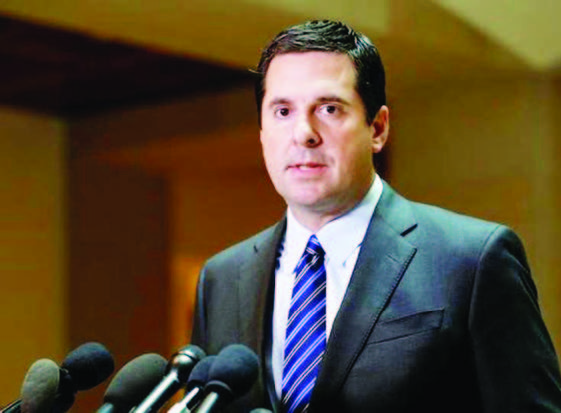
    Rep. Devin Nunes (R-Calif.), chairman of the House Intelligence Committee, announced on April 6 that he will recuse himself from the committee’s investigation into Russian interference in the 2016 election, while he faces allegations that he improperly disclosed classified information.

    WASHINGTON (TIP): After resisting for weeks calls from Democrats to step aside, House Intelligence Committee Chairman Devin Nunes (R-Calif.) temporarily stepped aside Thursday, April 6 from the committee’s probe into Russian interference in the presidential election. Nunes was under pressure after the House Ethics Committee determined to investigate allegations that “Nunes may have made unauthorized disclosures of classified information, in violation of House Rules, law, regulations, or other standards of conduct.”

    Nunes has come under fire in recent weeks for speaking publicly about classified foreign surveillance reports he viewed on White House grounds. Nunes suggested that those reports identified President Trump and members of his transition team, whose names may have been mentioned by individuals under surveillance – or whose conversations with those individuals may have been incidentally picked up.

    On Thursday, Nunes dismissed the suggestion that he violated ethics laws as “entirely false and politically motivated,” blaming “several left-wing activist groups” for filing complaints with the Office of Congressional Ethics. He noted that he asked to speak with the Ethics Committee “at the earliest possible opportunity in order to expedite the dismissal of these false claims,” and said his recusal – which applies only to the committee’s Russia investigation – would be in effect while the committee looks into the matter.

    In the meantime, Rep. K. Michael Conaway (R-Tex.) will take the lead on the Russia investigation, Nunes said, with assistance from Reps. Thomas J. Rooney (R-Fla.) and Trey Gowdy (R-S.C.). Gowdy also sits on the Ethics Committee. Nunes also pledged in his statement to “continue to fulfill all my other responsibilities as Committee Chairman” in matters unrelated to the Russia probe.

  • GOPIO Litigation: Ashook Ramsaran’s case against some GOPIO officials dismissed by District Court

    GOPIO Litigation: Ashook Ramsaran’s case against some GOPIO officials dismissed by District Court

    NEW YORK (TIP): In early 2016, GOPIO’s former president Mr. Ashook Ramsaran had filed a lawsuit against three current officers of GOPIO (it’s Chairman Dr. Thomas Abraham, Vice President Ram Gadhavi and Global Ambassador Sunny Kulathakal) and the publications DNA News, APN News and Tehelka News in the court of Judge Paul J, Oetken, US District Court, Southern District of New York. In his lawsuit, Mr. Ramsaran had alleged libel and sought damages for certain statements that had appeared in those publications.

    The case was filed on Mr. Ramsaran’s behalf by Attorneys Nicholas Netram Loaknauth and Robert A. Stramiere. The defense attorneys were Megha Bhouraskar, David Alan Karlin, Karen M. Lager and Robert Marc Barta.

    As per a ruling dated March 30th, 2017 Judge Oetken dismissed Mr. Ramsaran’s case against all defendants.

    In a press release, GOPIO stated that a big nuisance has gone and that its officers can now spend more time for the benefit of the Indian Diaspora and to promote India’s interest around the world.

    GOPIO has been in existence since 1989 as a member supported community based non-profit organization headquartered in New York, looking after the interests of the Indian Diaspora. It has over 100 chapters in 35 countries.

    When contacted for confirmation, Mr. Ramsaran said it was an ongoing case.

  • Indian American Pharmaceutical Leader Sanjiv K. Patel named President and CEO of Relay Therapeutics

    Indian American Pharmaceutical Leader Sanjiv K. Patel named President and CEO of Relay Therapeutics

    WASHINGTON (TIP): Dr. Sanjiv K. Patel has been named President and CEO of Relay Therapeutics, a biotech company dedicated to developing breakthrough medicines by focusing on insights in protein motion. Dr Patel brings to Relay over 20 years of life sciences industry experience. He succeeds interim CEO Alexis Borisy, a Partner at Third Rock Ventures, who is assuming the position of Chairman of the company’s Board of Directors.

    “We are thrilled to welcome Sanjiv as the CEO of Relay Therapeutics. Sanjiv’s strategic acumen and business experience coupled with his deep commitment to patients will help fulfill the transformational potential of Relay,” said Borisy, in a statement. “Along with this key leadership appointment, our new board members, Laura Shawver and Markus Warmuth bring to Relay an incredible depth of research, development and entrepreneurial experience in building great biotech drugs and companies. We are enthusiastic to partner with them as Board members as we build a great company that will make a transformative difference for patients.”

    Prior to Relay, Patel was at Allergan for over 10 years, and played a key part in Allergan’s sustained growth and value creation over that period. He was most recently part of Allergan’s Executive Team, as Chief Strategy Officer and at the center of some of the industry’s largest transactions. Prior to this, he held roles of increased responsibility, including leading Global Strategic Marketing for all franchises and general management of Allergan’s fastest growth geographic region, the Emerging Markets.

    Prior to Allergan, Patel was a Management Consultant at Boston Consulting Group in London and he started his career as a surgeon in the U.K.’s National Health Service. Dr. Patel received his MBA from INSEAD, MBBS from the University of London and has a M.A. in Neurosciences from Cambridge University.

    “This is a rare opportunity to join a team that is fully dedicated to treating diseases where today, no truly effective therapy exists,” said Patel, in a statement. “Relay is uniquely positioned to design innovative drugs by visualizing protein motion through integrating emerging computational and experimental methods. I look forward to working with the team to build a pipeline of groundbreaking therapies with an initial focus in oncology.”

  • Indian American C.J. Bhalla named Chief Financial Officer of Kaiser Permanente Northern California

    Indian American C.J. Bhalla named Chief Financial Officer of Kaiser Permanente Northern California

    SAN JOSE (TIP): Kaiser Permanente Northern California on April 3 announced that senior executive C.J. Bhalla has been selected as its new senior vice president and chief financial officer.

    Bhalla will oversee the finance strategy and revenue cycle operations for Kaiser Permanente Northern California. The region serves 4.1 million members and is one of the largest markets in a nationwide organization that generated $64.6 billion in operating revenue in 2016.

    Bhalla joined Kaiser Permanente in 2006 with successive promotions as chief financial officer of the national information technology unit and vice president, national financial performance and planning. Prior to joining Kaiser Permanente, she was a senior vice president at Charles Schwab & Co, a Fortune 500 company, and held numerous senior management positions at Household International Inc. (now HSBC), a Global 500 company.

    “C.J. led our financial strategy during a time of unprecedented change in health care. She is an outstanding leader who has driven healthy financial outcomes in one of the largest integrated health care systems in the country,” said Janet Liang, president, Kaiser Permanente Northern California. “This is a well-deserved promotion into one of the most sought after finance executive roles in the industry.”

    Bhalla received an MBA from Virginia Polytechnic University, and a BS in Electrical Engineering from Punjab Engineering College, India.

  • Indian American Senator Harris Urges President Trump to Abandon ACA Repeal Efforts

    Indian American Senator Harris Urges President Trump to Abandon ACA Repeal Efforts

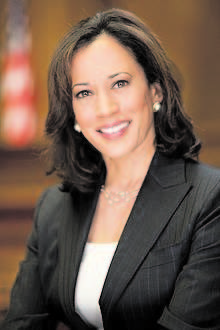
    WASHINGTON (TIP): U.S. Senator Kamala D. Harris joined colleagues in sending a letter to President Trump urging him and his administration to abandon their efforts to repeal the Affordable Care Act and undermine the United States health care system so they can work in a bipartisan fashion to improve the law and lower the costs of health care for all Americans.

    The letter, signed by 44 Senate Democrats, also requests – as a first step – that the Trump Administration rescind the executive order signed on January 20th, 2017 which severely undermined the Affordable Care Act and sparked the efforts to unravel the law thereby undermining the health care system and increasing costs, hurting patients, providers and families. Senate Democrats also expressed concern with President Trump’s recent statement indicating it would be a good thing to make the ACA “explode”, despite the fact that would mean hurting millions of Americans.

    “Members of the Democratic caucus remain ready and willing to work with you on policies that would improve the stability of the individual insurance market. We ask that you begin the work of improving health care for millions of Americans by rescinding your January 20th executive order”, reads the letter.

    Earlier, Harris spoke on the floor of the Senate in opposition to the American Health Care Act on the anniversary of the signing of the Affordable Care Act.

  • Indian American Congressman Raja Krishnamoorthi Denounces Trump’s Executive Order Rolling Back American Commitment to Growing Green Technology Sector

    Indian American Congressman Raja Krishnamoorthi Denounces Trump’s Executive Order Rolling Back American Commitment to Growing Green Technology Sector

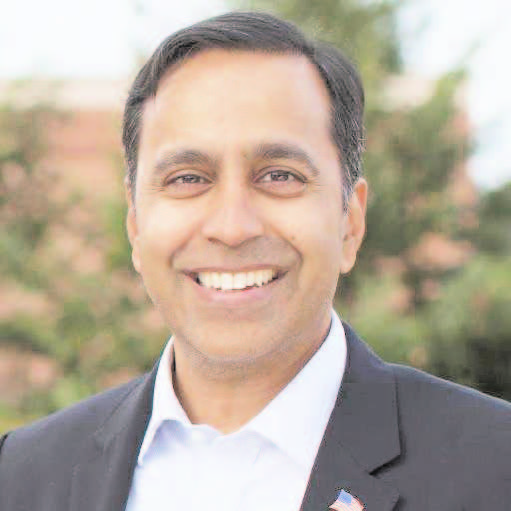
    WASHINGTON (TIP): Indian American Congressman Raja Krishnamoorthi denounced President Trump’s executive order eliminating President Obama’s climate-change protections as an attack on the growing green economy and as another example of the Trump administration’s effort to govern by decree. Krishnamoorthi is the author of the Executive Order Transparency Act, which would require executive orders to be posted to the White House website seventy-two hours in advance of signing, to reveal their contents. The Congressman also introduced H. Res. 85, a resolution in support of the United States continuing its Paris Agreement commitments to address climate change and develop clean energy.

    “Through this sudden and reckless order, the Trump administration has continued to cede American leadership in green technology while endangering our environment and ambushing our economy in the process,” Krishnamoorthi said.

    “The need to deal with climate change is imperative, but by doing so, we can also lead the world in the development of green technology. That is why I introduced a resolution specifically calling for our country to continue to address climate change and to embrace the new economic developments that come with it. Through rolling back these environmental protections, President Trump has allowed other nations to lead on this vital technology.”

    “I’ve also introduced legislation to push back against the White House’s efforts to ambush the country with radical overnight orders by requiring executive orders to be disclosed three days before their signing. By issuing this order so suddenly and without providing warning to the necessary Agencies, the administration has left clean energy and green technology firms to face a suddenly more hostile business environment for no discernible advantage”, he further added.

  • Indian American Social Entrepreneur elected Treasurer for Democrats Abroad India

    Indian American Social Entrepreneur elected Treasurer for Democrats Abroad India

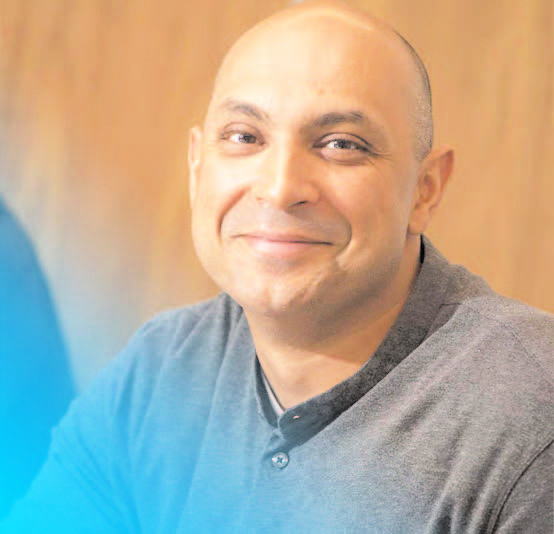
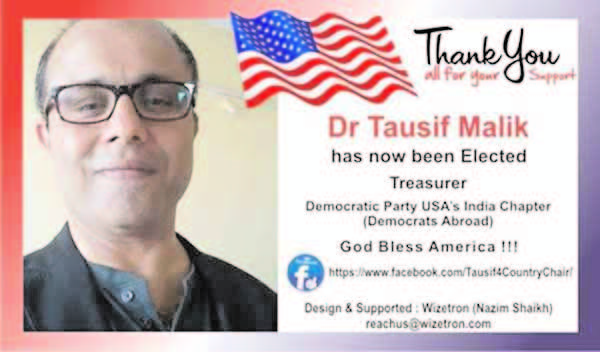
    CHICAGO (TIP): Social Entrepreneur Dr Tausif Malik from Chicago elected Treasurer for Democrats Abroad India (Democratic Party of USA – India Chapter). The elections were held on March 22nd, 2017 and results were announced on March 26th, 2017.

    Indian born Malik immigrated to Chicago in 2007. He did his schooling from Bishop’s School & Crescent School Pune. He earned his B. Com & M.Com from Poona College & Post Graduate Diploma in Business from Institute of Management Education, Pune and his Doctorate in Business Administration from Argosy University Chicago.

    A strong supporter of Barack Obama, Malik launched World’s First Muslim Spelling Bee competition, which became one of the largest community competitions of USA. In 2015, the social entrepreneur decided to return to India to take care of his ailing mother. While in India, he established various startup festivals such as AIMBSN.com, GCC Startup Fest, India Startup Fest and Schoolpreneur.

    Biz to empower individuals to achieve economic liberation and benefit from the Government of India’s Make in India, Digital India, SkiII India, Standup India Startup India initiatives. Malik now lives in Pune with his mother Razia Malik.


  • Indian Man Pleads Guilty to Use of False Passport

    Indian Man Pleads Guilty to Use of False Passport

    NEW YORK (TIP): Manish Patel, 43, a citizen of India, pled guilty on April 3 to use of a false passport, announced United States Attorney Richard S. Hartunian.

    As part of his guilty plea, Patel admitted to presenting a forged Indian passport to Border Patrol agents in the early-morning hours of January 20, 2017. Patel used the forged passport -which was in another person’s name, but bore Patel’s photograph – to fly from India to Toronto, by way of London, prior to illegally entering the United States.

    Sentencing is scheduled for August 16, 2017 at 11:30 a.m. before Senior United States District Judge Norman A. Mordue. Patel faces up to 10 years in prison and up to 3 years of post-imprisonment supervised release, and a $250,000 fine. A defendant’s sentence is imposed by a judge based on the particular statute the defendant is charged with violating, the U.S. Sentencing Guidelines and other factors.

  • Reforms Will Not Do India Any Good – Only A Revolution Will

    Reforms Will Not Do India Any Good – Only A Revolution Will

    Markanday Katju

    The answers to our problems lie outside the system

    What form this revolution will take, and how much time, cannot be predicted, but what certainly can be predicted is that it is coming.

    The test of every government is one, and only one: is the standard of living of the masses rising under it? From this standpoint the Modi government, like the previous Manmohan Singh government, is a total failure”, says the author who is a former Judge, Supreme Court of India, and a former Chairman, Press Council of India.

    India is inevitably heading for a revolution. Why do I say so? Let me explain. India could potentially be a highly developed country, but is actually a poor and backward country.

    It is potentially a highly developed country because it has two of the basic requirements to be a highly developed country-a huge pool of technical talent, and immense natural resources.

    This was not the position in 1947 when India became independent. The British policy was broadly to keep India backward, feudal and largely unindustrialised, so that Indian industry may not emerge as a big rival to British industry. So, we were not permitted by our British rulers to set up a heavy industrial base, but were permitted only some light industries like textiles, plantations, etc which, too, for a long time were mainly under British ownership. So, till 1947 we had very few industries and very few engineers

    What has happened to the slogan “sab ka saath, sab ka vikas?” It seems it was only a “jumla.”

    The position today in 2017 is very different. Today we have a heavy industrial base, and a huge pool of competent engineers, technicians, scientists, managers, etc. Our IT engineers are manning Silicon Valley in California, and American universities are full of our mathematics and science professors.

    In addition, we have immense natural wealth. India is not a small country like England or Japan. It is almost a continent.

    So, we have all that is required to be a first-rate, modern, highly developed country, like North America or Europe.

    And yet the reality is that we are an underdeveloped, poor country, with massive unemployment, malnourishment, lack of healthcare, good education, etc for our masses.

    We can consider some facts:

    1. The level of unemployment can be gathered from two facts:

    (a) 1 crore youth are entering the Indian job market every year, but only 1.4 lakh jobs are being created annually in the organised sector. So where do the remaining 9.86 million youth go? They become hawkers, street vendors, bouncers, criminals, the girls often become prostitutes, and many end up as suicides.

    (b) In 2015, the UP govt. advertised 358 jobs of peons (i.e. class 4 employees) for which there were 23 lakh applications; 250 of the applicants had Ph.D. degrees, 2500 were M.Sc., M.B.A. engineers, etc and all were begging for a peon’s job. Something similar happened when vacancies police constables were advertised in Madhya Pradesh, and peon’s jobs in West Bengal.

    1. Fifty percent of Indian children are malnourished, which is a situation far worse than in sub-Saharan countries of Africa like Somalia.

    A UNICEF report says that one out every three malnourished child in the world is an Indian child.

    1. Poor people in India have hardly any access to healthcare. There are no doubt some excellent hospitals in the big cities, but they are exorbitantly expensive. Poor patients simply cannot afford good doctors. AIIMS (All India Institute of Medical Sciences, Delhi) looks like a railway station, with thousands of people sitting there, and no one caring for them, unless they happen to be rich or powerful. So where do the poor people go when they fall sick? They go to quacks. Quackery is rampant in India.

    The test of every government is one, and only one: is the standard of living of the masses rising under it? From this standpoint the Modi government, like the previous Manmohan Singh government, is a total failure…

    1. The government spends a huge amount of money on IITs and elite institutions like JNU, but hardly anything for primary schools in villages, where the foundation of knowledge is laid.
    1. Just 57 individuals in India control 70% of India’s wealth.
    1. Far from there being any ‘vikas’, the Indian economy is lying stagnant, with chances of genuine growth remote. Whatever “growth” there has been has only benefited a handful of crony capitalists, but not the Indian masses.

    According to Mark Twain, there are three kinds of lies: lies, damned lies, and statistics. Statistics is such a wonderful thing that with its help one can manufacture any figure one wants, like a conjuror pulling a rabbit out of a hat.

    The latest figures given by the government of India authorities claiming 7.9% growth in GDP in the last quarter is an excellent example, and reminds one of Lord Haw Haw (William Joyce), or the Nazi propaganda minister, Dr Goebbels, who kept proclaiming on radio to the German people right till the very end that Germany was winning the Second World War, when in fact it was losing.

    According to this claim, the Indian economy is the fastest growing economy of the world, outstripping the growth in GDP of the Chinese economy, which grew by only 6.9% in the same period. Evidently, according to this figure, we are heading for an El Dorado sometime in the future, and as Dr Pangloss would say (see Voltaire’s Candide), quoting the German philosopher Leibniz, this is the best of all possible worlds.

    But a scrutiny of these figures throws up several doubts. Are the figures true or dressed up, like a Potemkin village? Also, assuming they are true, is this GDP growth benefiting the Indian masses, or only a handful of big businessmen?

    Exports have fallen from $187.29 billion in the period April -October 2014, to $156.29 billion in the period April-October 2015-that’s a drop of 17.6%. So, if exports have fallen, and manufacturing has grown by 9%, as claimed by the Union Ministry of Statistics and Programme Implementation, where have the increased quantity of goods manufactured been sold? In the home market?

    Apart from a huge pool of technical talent and huge natural resources, there is a third requirement to become a developed country… and that is a modern minded, patriotic political leadership.

    But India is a poor country, with 80% people holding little purchasing power. And with the sharp escalation in food prices, real incomes have really gone down.

    According to a statement of Raghuram Rajan, the RBI governor, most factories are running at 70% of their capacity, while in 2011-2012 they were running at 80%. This apparently shows manufacturing decline, rather than growth. According to a Business Standard report, corporate profitability is below 1% on an average.

    Bad loans by banks continue to mount. According to CARE, non-performing assets during July-September 2015 stood at about ?3.37 lakh crore, an increase of ?71,000 crore. According to a report by Morgan Stanley, the number of stalled projects-the bulk of them in the manufacturing and infrastructure sectors-went up. Small and medium enterprises are having a difficult time trying to survive. The real-estate sector, which provides a lot of jobs, is down in the dumps, with construction of new buildings going down, and the number of unsold homes going up.

    An article by Andy Mukherjee published by Reuters states that the GDP growth of the Indian economy is one-third a statistical mirage, and real GDP growth is more likely to be about 5 percent rather than 7.4 percent as claimed by the Indian authorities. Mukherjee says:

    “The illusion comes from a recent supposed improvement in the way India calculates its Gross Domestic Product. In theory, Indian authorities claim that Indian GDP is close to international standards. In practice it has become utterly unreliable.”

    But just how sluggish is the economy really? Breakingviews tried to answer that question by looking at three indicators: corporate earnings, auto sales and imports of computer software. The logic is straightforward: retained earnings finance new investment projects; auto sales are a proxy for consumer demand; while software imports reflect productivity gains. Mixing the three in a simple index suggests that growth in the most recent quarter was closer to 5 percent.”

    But let us assume that the 7.9% figure is correct. The further question that still remains is: is this GDP growth benefiting the Indian masses, or just a handful of big businessmen? Is the rich-poor divide growing? Dilip Shanghvi, Gautam Adani, Mukesh Ambani, Aziz Premji, Pallonji Mistry, etc are worth billions of dollars, while the majority of Indians are struggling to make both ends meet, as prices of food soar.

    What has happened to the slogan “sab ka saath, sab ka vikas?” It seems it was only a “jumla.” The communal fire is being stoked again in UP and elsewhere. When there is an economic crisis which the government cannot resolve, it resorts to fascist methods, as happened in Germany and Italy with the rise to power of Hitler and Mussolini.

    India stands at the 131st rank in human development out of the approximately 200 countries in the world.

    To solve all this, and raise the standard of living of our people-that is what must be the goal of all patriotic modern minded people. We have to create a modern, highly industrialised country in which all our citizens are getting decent lives.

    But what has this government done in this direction? The answer is: a big zero, and only jumlas and dramas.

    The test of every government or system is one, and only one: is the standard of living of the masses rising under it or not? If not, the government or system is a failure. From this standpoint (and it is the only correct standpoint), the Modi government, like the previous Manmohan Singh government, is a total failure on all fronts.

    The interest of our country, and the interest of our politicians are diametrically opposite to each other. How, then, can our country progress?

    The question once again naturally arises that when we have all that is required to be a first-rate highly developed country, why is India still poor and backward?

    The answer is that apart from a huge pool of technical talent and huge natural resources, there is also a third requirement to become a developed country, which unfortunately we do not have, and that is a modern minded, patriotic political leadership. Let me explain this in some detail.

    India borrowed the parliamentary system of democracy from England, and incorporated it into our Constitution. Now parliamentary democracy is based on majority vote, but the truth is that the vast majority of people in India are intellectually very backward, their minds full of casteism, communalism and superstitions. So, when most Indians go to vote they do not see the merit of the candidate (whether they are good people, whether they are educated) but only see their caste or religion (or the party representing a caste or religion). That is why there are so many people with criminal antecedents in our legislatures.

    Our cunning politicians take advantage of this, and have learnt the skill of manipulating caste and religious vote banks.

    The interest of the nation is to rapidly modernise, for which it is necessary to destroy feudal forces like casteism and communalism. On the other hand, the interest of our politicians is to win the next elections, and for that they have to appeal to, and therefore perpetuate, casteism and communalism, which are feudal forces. Therefore, the interest of our country, and the interest of our politicians are diametrically opposite to each other. How, then, can our country progress?

    What form this revolution will take, and how much time, cannot be predicted, but what certainly can be predicted is that it is coming.

    Most of the Indian politicians are rogues, rascals, goondas, criminals, scoundrels, looters and gangsters. They have no genuine love for the country, but only seek power and pelf. They are shameless and incorrigible, and cannot be reformed. They are experts in manipulating caste and communal vote banks, and they polarise society by spreading caste and communal hatred. Don’t such people deserve to be treated like the aristocrats in the French Revolution?

    It is thus obvious that parliamentary democracy is not suited to India. Our Constitution has exhausted itself, our “democracy” has been hijacked by feudal-minded people, and all our state institutions have become hollow and empty shells.

    On the other hand, the socio-economic distress of our people keeps mounting.

    I submit that the solutions to the massive problems of India lie outside the system, not within it. No amount of reforms will do, what is now required is a revolution. What form this revolution will take, and how much time, cannot be predicted, but what certainly can be predicted is that it is coming.

    It is only after such a revolution, which will be led by some genuinely patriotic, modern-minded persons, that a just social order will be created in India, in which our masses get decent lives, and a high standard of living.

    (The article is part of a lecture by the author who is a former Judge of the Supreme Court of India, and a former Chairman of Press Council of India)

    British English

  • There is no holy cow in the Vedas

    There is no holy cow in the Vedas

    Hinduism considers the Vedas as its Supreme Court, whose word is final, and if any of the later Sanskrit or non-Sanskrit writing goes against what the Vedas have said, a Hindu has to follow the words of the Vedas.

    The Vedas consider bovines important  for milk, beef, agriculture, transport, but not as divine or holy. The word ‘Aghnyaa’ applies only to a milch cow because it is not economical to kill it. A Vaisha cow is meant for beef, and especially reserved to an extent for Brahmins only. Atharva 12.4(13) tells us that in case a Brahmin begs for a cow from a non-Brahmin, “even if that person has a beef-dinner at his house, he has to select another cow to slaughter for his own dinner than the one that is asked for”.

    The word ‘Aghnyaa’ (not to be killed) coined by Rigveda for young milch cows was the main cause of the Hindu misunderstanding that cows or bovines are not to be slaughtered. The importance of the cow entered the Hindu religion with full force possibly later, when Krishna began to be worshipped as Vishnu’s incarnation. The Rig Veda, like our Constitution, only recommends that young milch cows should be considered ‘Aghnyaa’ or ‘not to be slaughtered’, for economic reasons, and specifically states that those animals which are of no use have to be killed -Rigveda[10.95(6)]. The cattle-protection laws in most of the Indian states also rule the same way.

    The Rigveda has never used the word ‘mother’ for a cow. As in our Constitution, so in the Rig Veda, cow protection is not mandatory but only a directive principle. There is no punishment recommended for a cow slaughterer even if he kills a young milch cow. Beef-eating is also not taboo. Beef parties are not only allowed but highly appreciated, and a person who cooks beef for his guests is praised by the term ‘Atithi-gva’ ‘one who offers beef to guests’.

    Ritual sacrifice of a bull is a must in worship to God Indra. Beef parties also seem a regular affair in weddings (RV 10.85). Cows are not sacred and beef is not forbidden to Hindus. Here is a line from a verse ascribed to god Savita, the presiding deity of the Gayatri Mantra, describing a dinner party he is hosting: “At night we are going to kill cows” (RV.10.85(19). RV 10.89 (14) mentions “cows for food, laying scattered on the grounds of a slaughter house”. Mark that the author does not use the word ‘animals’ but ‘cows’, showing that beef was the most popular item, and the cow the most slaughtered animal. RV 10.95(6) says that “old cows which do not give milk” are “only fit to be cooked”. It further states that “useless cows are taken to be cooked, but never milch cows”. It is clear that slaughter houses are not banned, beef is allowed and useless bovines are allowed to be slaughtered in Hinduism.

    The cattle-protection laws in most of the Indian states also rule the same way. The Central government, in a letter dated 20th December 1950, directed the state governments not to introduce total prohibition on cow slaughter, stating economic reasons[i](DAHD, 2002, para. 64). Again, in 1995, the government of India stated before the Supreme Court that the central government was encouraging development of livestock resources and their efficient utilization which included production of quality meat for export as well as for the domestic market (DAHD, 2002, para. 65). In recent decades, the government also started giving grants and loans for setting up modern slaughter houses (Ministry of Food Processing Industries, ND.).

    In several cases, the Supreme Court has held that “a total ban (on cattle slaughter) was not permissible if, under economic conditions, keeping useless bull or bullock be a burden on the society and therefore not in the public interest” (DAHD, 2002, para. 124). So much for the legal standing on cow slaughter in the Constitution of India.

    (Summarized by Dave Makkar from the article Bovines, India And Hinduism by Rajani K. Dixit, retired Lecturer in Sanskrit.

    We look forward to your comments – Editor

  • Brexit has already made UK less attractive place to do business, KPMG study says

    Brexit has already made UK less attractive place to do business, KPMG study says

    LONDON (TIP): The UK has already become a less attractive place to do business as a result of the Brexit vote, according to a new survey. Professional services firm KPMG questioned 100 of the largest UK listed companies and foreign owned subsidiaries, as well as 60 companies from across the other G7 nations, and found that respondents deemed the UK less attractive than they did this time last year in terms of both tax competitiveness and appeal as a destination for foreign direct investment.

    “As in 2015, the Irish tax regime tops the rankings with 74 per cent of UK companies selecting it as one of their ‘top three’ and the UK again taking second place,” KPMG wrote in the accompanying report. “What is noticeable however, is the widening gap between Ireland and the UK which was just 1 per cent in 2015 but has grown to 9 per cent in the past year,” they said. The survey showed that amongst the 60 non-UK companies surveyed this year, the UK fell from first to fifth place in the rankings, trailing Ireland, Luxembourg, the Netherlands and Singapore. “Not only does this demonstrate a sharp decline in perceptions of the UK’s tax regime, there also seems to be a clear divide in sentiment between UK versus non-UK businesses,” KPMG said.

    Asked why their perception of the UK had changed, non-domestic businesses mostly cited the prospect of sensitivity to disruptions in trade deals and tariffs as a result of Brexit, and an end to the UK’s access to the single market. One concern was also the risk to the mobility of skilled labour.

    “The material change this year is that finance executives are now grappling with the question of how Brexit might impact current and future investment in the UK,” said Robin Walduck, tax partner at KPMG in the UK. “It’s in this area we see a striking divergence between the views of UK companies and their G7 peers, providing some insight as to why the UK has started to fall out of favour.”

    Mr Walduck said that those companies already investing or located in the UK, are broadly confident about the country’s future prospects. But those “on the outside looking in” are less optimistic. “As Brexit negotiations get underway, this begs the question whether UK respondents are being too bullish with misplaced optimism, or if non-UK respondents are being too quick to discount the UK,” he said.

    But while some companies have in the past hinted that a hard Brexit could mean that they re-evaluate their position in the UK, this year’s survey also shows that broadly speaking companies are not planning to withdraw their entire operations from the country. However, the number of businesses seeking to move functions into the UK -which KPMG says is a crucial source of foreign direct investment – has dropped materially for both UK and non-UK participants this year.

    The survey was conducted between December 2016 and February 2017 and 56 per cent of the companies interviewed had a turnover of over £1bn, according to KPMG. A total of 22 of the companies interviewed were members of the FTSE 100 bluechip index, with another 21 in the FTSE 250. (PTI)

  • Pope to wash feet of inmates at mafia turncoat prison

    Pope to wash feet of inmates at mafia turncoat prison

    VATICAN CITY (TIP): Pope Francis will wash the feet of inmates at a prison known for housing mafia turncoats in an Easter week ritual meant to show his willingness to serve.

    The Paliano prison, located in a huge fortress outside Rome, houses many of Italy’s “collaborators of justice,” who can shave time off their sentences by cooperating with anti-mafia investigators.

    Given the security concerns involved, the Vatican said today the April 13 Mass at the maximum-security facility would be “strictly private.”

    Francis has spoken out frequently to denounce the mafia, declaring mobsters “excommunicated” and urging them to change their ways. Many mafia turncoats have done just that, risking their own lives and those of their families to help authorities fight the mob.

    Francis has used the Holy Thursday foot-washing ceremony as a deeply symbolic gesture of inclusion that has at times riled conservatives, such as when he washed the feet of women and Muslims. Last year he performed the ritual on would-be refugees.

    Even before he became pope, the Argentine Jesuit paid particular attention to prison ministry and still stays in touch with a group of inmates in Buenos Aires. Francis has denounced the death penalty and solitary confinement and says inmates must be given hope and chances for rehabilitation. (AP)