Month: July 2017

  • BERLIN SYNDROME MOVIE REVIEW

    BERLIN SYNDROME MOVIE REVIEW

    CAST: Teresa Palmer, Max Riemelt, Matthias Habich

    DIRECTION: Cate Shortland

    GENRE: Mystery

    DURATION: 1 hour 56 minutes

    Review

    Clare (Teresa Palmer) is an explorer in search of a new beginning. Andi (Max Riemelt), a mysterious and charming young man catches her fancy on a busy Berlin street. She’s a photographer from Australia. He’s a German native, who teaches English. After an instant attraction, their intriguing story takes an unlikely turn when the girl discovers there’s more to him than meets the eye.

    Story

    Berlin Syndrome works on your mind. Cate Shortland’s slow-moving arthouse thriller manages to suffocate you with its creepy and unpredictable nature and atmospheric execution. Shot within the confines of a secluded house, the intense cinematography makes you feel claustrophobic, evoking a sense of paranoia. The psychological thriller manages to instil fear and will make you think twice before trusting strangers or walking into strange homes. You might also rethink your exotic fantasies of ‘falling for a stranger in a foreign country’.

    The concept isn’t original per se as various foreign indie films have played around a similar theme – a film revolving around a trapped protagonist. However, Shortland’s nuanced interpretation of her characters and their psyche is what makes the difference. She makes you wonder how everything can be subjective; including one’s perception of ‘abnormal’.

    Interestingly, there are no character clichés per se. You often wonder if Clare would be ‘institutionalised’ eventually, after being trapped in Andi’s house for the longest time. The twists and turns keep you guessing and wondering if the lead pair’s strange relationship might actually have a deeper meaning. Speaking of the pair, the film solely rests on the shoulders of its two lead actors – Teresa Palmer (who looks and acts exactly like Kristen Stewart) and Max Riemelt. They portray their characters’ vulnerabilities, fear and erraticism with utmost conviction.

    Overall, this one’s creepy and unsettling but will largely appeal to a niche audience, owing to its languid pace and world cinema sensibilities.

  • CHARLIZE THERON WANTS TO DO ANOTHER MAD MAX MOVIE

    CHARLIZE THERON WANTS TO DO ANOTHER MAD MAX MOVIE

    Actress Charlize Theron wants to return for a ‘Mad Max’ movie based on her character Furiosa.

    The 41-year-old actress said she knows more of the character’s backstory, including how she lost her arm, but will wait for director George Miller to be ready. “But I’m going to be 42 in August, so let’s get to it,” she said.

    Theron, who was speaking at the Comic-con, will next be seen in ‘Atomic Blonde’, and the actress opened up about her wish to essay an unrepentant woman who plays by the rules men get to play by. “Women in film typically need a reason to become warriors losing a child or husband. They can just be warriors,” she said.

    “That’s what Atomic Blonde is supposed to portray. Lorraine is simply herself. There’s no explanation for why the way she is the way she is,” she added.

    Source: PTI

  • ANNE HATHAWAY TO STAR IN NEXT BARBIE MOVIE?

    ANNE HATHAWAY TO STAR IN NEXT BARBIE MOVIE?

    Anne Hathaway may be the next one to get behind the wheel of the pink dream convertible for a Barbie movie.

    The Oscar winner is in negotiations to star in the longin- the-works feature project, putting on the outfit that was originally going to be worn by Amy Schumer, reports the Hollywood Reporter.

    On that note, Schumer was announced to star in December, but dropped out in March, citing “scheduling conflicts.”

    Along with this, rising Australian director Alethea Jones is in talks to helm the flick, after being handpicked by Hathaway, who was integral in the search for a filmmaker.

    Reports further say, Sony is hesitant to move the release date, which has already been scheduled to be June 29, 2018, and “there’s a chance that if Hathaway’s schedule isn’t worked out in a satisfactory way, a deal may not be made.”

    Hathaway was last seen in the indie Colossal and will next be seen palling around with Rihanna and Sarah Paulson in ‘Ocean’s 8’ and with Rebel Wilson in ‘Nasty Women,’ MGM’s remake of ‘Dirty Rotten Scoundrels.

    Source: ANI

  • RAAG DESH MOVIE REVIEW

    RAAG DESH MOVIE REVIEW

    CAST: Kunal Kapoor, Amit Sadh, Mohit Marwah

    DIRECTION: Tigmanshu Dhulia

    GENRE: History

    DURATION: 2 hours 17 minutes

    STORY

    Three officers of the Indian National Army are on trial for treason. An ailing lawyer must help them face the consequence of their courage.

    REVIEW

    We are living in the time of terrific national pride. If your patriotism doesn’t reflect in your attitude, your cuisine, your movie-theatre etiquette and your twitter feed, its existence is called into question. And while we jump to conclusions faster than we can say ‘India’, we often forget the people who fought actual blood-and-bullet wars (as opposed to shouting matches on news shows) to get us where we are today.

    Raag Desh takes us back to these heroes. It tells the story of Maj. Gen. Shahnawaaz Khan (Kunal Kapoor), Lt. Col. Gurbaksh Singh Dhillon (Amit Sadh) and Col. Prem Sahgal (Mohit Marwah), three officers of Subhash Chandra Bose’s Indian National Army, who put everything on the line and gathered troops to re-enter India to take down the British after the Second World War. Khan, Dhillon and Sahgal are captured and tried in court for conspiring against the British Indian Army, while their lawyer, Bhulabhai Desai (Kenneth Desai), tries to twist facts to free them of the charges.

    Writer-Director Tigmanshu Dhulia has chosen to narrate an incredibly interesting anecdote from our freedom struggle. The hard work of his four-member research team and two-member writing team is evident. Whether the story needed to be told in a non-linear fashion is debatable, but it mostly gets the point across. In a lot of ways, it educates you about the socio-political climate of the time. However, its educational quality is its bane.

    Even though Dhulia painstakingly recreates the pre independence era with researched costumes and sets, and employs multiple languages (the Japanese speak Japanese, the British speak English; no shady dubbing here) to maintain authenticity, the movie proceeds with the mechanical tone of a disinterested college professor. It gives you numbers and dates and facts and suddenly introduces relatives of the protagonists who have stories of their own.

    It’s death by information. Had the movie been freed of its half-hearted side-tracks it would have made for great infotainment. It is only half of that word now.

  • PARINEETI CHOPRA DYING TO START NAMASTEY CANADA

    PARINEETI CHOPRA DYING TO START NAMASTEY CANADA

    Actress Parineeti Chopra said she is “dying” to start working on the film ‘Namastey Canada’. “A desi film with a videsi heart! my kind of film! Dying to start ‘Namastey Canada’,” Parineeti tweeted on Tuesday.

    The film is directed by Vipul Amrutlal Shah and also stars Arjun Kapoor with Parineeti. This will be the second time the two will be seen sharing screen space after ‘Ishaqzaade’.

    ‘Namastey Canada’ is not a sequel to the Akshay Kumar and Sonakshi Sinha starrer ‘Namastey London’.

  • ANUSHKA SAYS SHE INSTANTLY SAID YES TO JAB HARRY MET SEJAL

    ANUSHKA SAYS SHE INSTANTLY SAID YES TO JAB HARRY MET SEJAL

    Actress Anushka Sharma said she wanted to work with filmmaker Imtiaz Ali since a long time and thats why she instantly agreed to be part of forthcoming film ‘Jab Harry Met Sejal’. “The first film he (Ali) offered to me, I instantly said yes to it, which is ‘Jab Harry Met Sejal’. In fact, I have been wanting to work with Imtiaz for the longest time,” Anushka said in a statement.

    “So, yes, this (‘Jab Harry Met Sejal’) is something I always wanted to do with Imtiaz and this just seemed like a film which I would really enjoy having a great time, so this is the one film,” she added. ‘Jab Harry Met Sejal’ features Anushka with Bollywood superstar Shah Rukh Khan. The film is slated for release on August 4.

    ’Shah Rukh can even romance a microphone’

    Anushka Sharma, who will be seen opposite Shah Rukh Khan in their upcoming ‘Jab Harry Met Sejal’ say romancing the superstar was quite easy and that he can even romance a microphone.

    Both of them came along with music director Pritam and film director Imtiaz Ali for the launch of the new song “Hawayeina” on Wednesday. Asked about how was it romancing Shah Rukh third time, on-screen, Anushka said: “Extremely easy! There is a genuineness in his eyes that we all can see – that reflects on-screen. In my opinion, he even can romance a microphone.”

    To this, Shah Rukh replied: “As long as you are holding the mic, darling!” The evening started with a live performance by Pritam where he sang the song live and went on to show it on the big screen.

    Two of the songs of the film ‘Radha’ and ‘Beech Beech Mein’ has already been released and gained popularity. Asked what is his favourite genre of films, Shah Rukh, who is known for his romantic films but in an earlier interview had said that he is not a fan of love stories, said: “No no, I think that was misinterpreted. I like a love story also but I like comedy more.”

  • NEW 4D CAMERA TO BOOST ROBOT VISION, VIRTUAL REALITY

    NEW 4D CAMERA TO BOOST ROBOT VISION, VIRTUAL REALITY

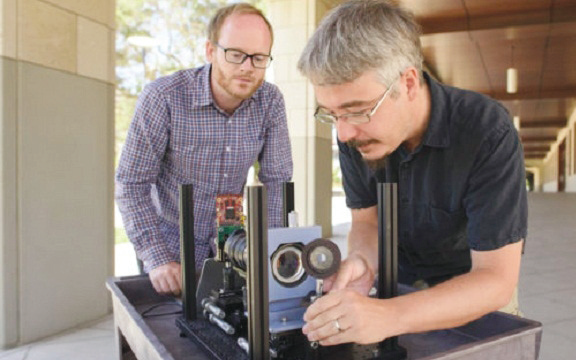
    BOSTON (TIP): Stanford scientists have developed a first-of-its-kind camera which can generate information-rich four dimensional (4D) images that robots need to navigate the world.

    The camera, which captures nearly 140 degrees of information, can be better than current options for close-up robotic vision and augmented reality, researchers said.

    “We want to consider what would be the right camera for a robot that drives or delivers packages by air. We are great at making cameras for humans but do robots need to see the way humans do?

    Probably not,” said Donald Dansereau, a postdoctoral fellow at Stanford University in the US.

    The robots have to move around, gathering different perspectives, if they want to understand certain aspects of their environment, such as movement and material composition of different objects.

    The new camera could allow them to gather much the same information in a single image. The researchers also see this being used in autonomous vehicles and augmented and virtual reality technologies.

    The difference between looking through a normal camera and the new design is like the difference between looking through a peephole and a window, the scientists said.

    “A 2D photo is like a peephole because you cannot move your head around to gain more information about depth, translucency or light scattering,” Dansereau said.

    “Looking through a window, you can move and, as a result, identify features like shape, transparency and shininess,” he said. That additional information comes from a type of photography called light field photography, first described in 1996 by Stanford researchers.

    Light field photography captures the same image as a conventional 2D camera plus information about the direction and distance of the light hitting the lens, creating what is known as a 4D image.

    A well-known feature of light field photography is that it allows users to refocus images after they are taken because the images include information about the light position and direction.

    Robots might use this to see through rain and other things that could obscure their vision. This camera system’s wide field of view, detailed depth information and potential compact size are all desirable features for imaging systems incorporated in wearables, robotics, autonomous vehicles and augmented and virtual reality.

    “It could enable various types of artificially intelligent technology to understand how far away objects are, whether they are moving and what they have made of,” said Gordon Wetzstein, assistant professor at Stanford.

    “This system could be helpful in any situation where you have limited space and you want the computer to understand the entire world around it,” Wetzstein said. Source: PTI

  • Moon’s interior may contain water say researchers

    Moon’s interior may contain water say researchers

    NEW YORK (TIP): There may be substantial amounts of trapped water in the interior of the moon, researchers have said.

    By analysing satellite data, researchers at Brown University in the US discovered rich amounts of indigenous water within the volcanic deposits or within layers of rocks spread across the lunar surface after ancient volcanoes erupted on the moon, Xinhua news agency reported.

    This suggests that water may be rich in the moon’s mantle, the layer between the crust and the core, according to the study published in the journal Nature Geoscience.

    The study’s lead author, Ralph Milliken, said past findings of water on the moon did not appear to come from indigenous sources.

    The moon is believed to have been formed from debris of an object that hit the Earth early in the solar system’s history, but the essential hydrogen to form water could hardly survive the heat in the formation of the moon. Li Shuai, who coauthored the story, said, “Water did somehow survive or that it was brought in shortly after the impact by asteroids or comets before the moon had completely solidified. The exact origin of water in the lunar interior is still a big question.”

    The finding also sheds light on future lunar exploration as water could potentially be extracted from volcanic deposits.

  • Microsoft Paint brushed aside

    Microsoft Paint brushed aside

    SAN FRANCISCO (TIP): Microsoft has announced the end of days for its pioneering Paint application as it focuses on software for 3- D drawing.

    Paint drawing and image processing software that made its debut in 1985 with the Windows operating system was among the applications listed as “removed or deprecated” in a Windows 10 Fall Creators Update set for release later this year.

    Features or functions on the list “are not in active development and might be removed in future releases,” according to the US technology company.

    For decades, Paint was among applications installed by default on Windows-powered personal computers and drew a strong following.

    Fans of the application will be able to take solace in a Paint 3-D version launched early this year. Source: AFP

  • USER INTERACTIVE COLOR CHANGING ELECTRONIC SKIN DEVELOPED

    USER INTERACTIVE COLOR CHANGING ELECTRONIC SKIN DEVELOPED

    BEIJING (TIP): Scientists have developed a user interactive colour changing electronic skin inspired by chameleons that could be used in robotics, prosthetics and wearables.

    While science has been able to replicate the ability of animals such as chameleons, octopus and squids to change colour with artificial skin, the colour changes are often only visible to the naked eye when the material is put under huge mechanical strain.

    Now, researchers from Tsinghua University in China have developed a new type of user-interactive electronic skin, with a colour change perceptible to the human eye, and achieved it with a much-reduced level of strain.

    The team employed flexible electronics made from graphene, in the form of a highly-sensitive resistive strain sensor, combined with a stretchable organic electrochromic device.

    Researchers explored the substrate (underlying) effect on the electromechanical behaviour of graphene. To obtain good performance with a simple process and reduced cost, they designed a structure to use graphene as both the highly sensitive strain-sensing element and the insensitive stretchable electrode of the electric current density (ECD) layer.

    “We found subtle strain – between zero and 10 per cent – was enough to cause an obvious colour change, and the RGB (red green blue) value of the colour quantified the magnitude of the applied strain,” said Tingting Yang from Tsinghua University.

    “Graphene, with its high transparency, rapid carrier transport, flexibility and large specific surface area, shows application potential for flexible electronics, including stretchable electrodes, super capacitor, sensors, and optical devices,” said Hongwei Zhu, professor at Tsinghua University.

    However, our results also show that the mechanical property of the substrate was strongly relevant to the performance of the strain sensing materials, Zhu said. “It’s important to note that the capability we found for interactive colour changes with such a small strain range has been rarely reported before. This user-interactive e-skin should be promising for applications in wearable devices, robots and prosthetics in the future,” Yang added.

    Source: PTI

  • AXIS BANK BUYS SNAPDEAL’S FREECHARGE FOR RS 385 CRORE

    AXIS BANK BUYS SNAPDEAL’S FREECHARGE FOR RS 385 CRORE

    Deal dynamics

    • ? The sale price is huge markdown for Snapdeal, which acquired payment wallet FreeCharge for $400 m in 2015

    • ? The deal will help the third largest private sector lender to double the customer base and address the digitally savvy people

    • ? FreeCharge clocked revenues of Rs 80 crore last year, and has a gross merchandise value of Rs 2,700 crore. Its 200 employees will be retained by Axis Bank as part of the deal

    MUMBAI (TIP): After nearly a year of scouting for a buyer, struggling ecommerce firm Snapdeal today agreed to sell its payment wallet FreeCharge to Axis Bank for Rs 385 crore, almost 90 per cent lower than what it had paid for the firm in 2015.

    The price paid by the third largest private sector lender for the acquisition — which will help it double the customer base and address the digitally savvy people — is also higher than what was reportedly offered by other suitors.

    According to some reports, others were offering $15-20 million for FreeCharge, which was acquired by Snapdeal for $400 million in 2015 during heady days for the e-commerce sector in the country.

    Rival e-commerce company and wallet Paytm had made an offer $10-20 million for FreeCharge, while Amazon also made a late bid for the digital payments platform.

    From business as well as value addition angles, the deal does not make much sense as other banks have been going slow in investing in wallets after the RBI-promoted National Payments Corporation has launched UPI and IMPS applications.

    Echoing similar views, Sandy Shen, a research director at Gartner, said, “Though the acquisition will give Axis Bank a jump-start in customer acquisition, whether the bank can keep growing that number is a question.”

    “Digital wallet is a highly competitive space with dozens of players and it takes lots of efforts and resources to increase merchant acceptance and offer good services, which is key in winning over the customers,” he said.

    Stating that it is difficult to put a price tag for such buys, Axis Bank MD and Chief Executive Shikha Sharma said, “What we are excited about is its tech platform, its capabilities, customer base and the brand. We’d certainly like to continue with the brand.”

    The announcement comes at a time when sale of parent Snapdeal to Flipkart is in the final lap and will give it headroom. “This is a win-win deal that allows Snapdeal to further focus on our core e-commerce business, while giving Axis Bank some of the most agile and innovative capabilities in the financial services space,” Kunal Bahl, Snapdeal co-founder and chief executive, said in a video call. Source: PTI

    Shikha Sharma

    Axis Bank boss gets 3-yr extension

    ? Seeking to rest speculation, Axis Bank on Thursday re-appointed Shikha Sharma as the managing director and chief executive of the third largest private lender for a third term that will last till June 2021 ? “The board, at its meeting held on Wednesday, approved the re-appointment of Shikha Sharma as the managing director and chief executive of the bank for three years, with effect from June 1, 2018,”the bank said.

    ? The unusual announcement comes over 11 months ahead of the 59-year-old banker’s current term. The veteran banker is serving the second term that comes to an end in June 2018. She joined Axis Bank in 2009 with a five-year mandate which was subsequently extended

    ? A section of the media had first reported appointment of an executive search firm by the bank to find her successor, which was followed by another report that Tata Sons sounded her out with an offer

  • JIO EFFECT TANKS 75% AIRTEL Q1 PROFIT

    JIO EFFECT TANKS 75% AIRTEL Q1 PROFIT

    NEW DELHI (TIP): Country’s largest telecom company, Bharti Airtel today posted 74.89% decline in consolidated net profit to Rs 367 crore for the June quarter of the current fiscal, hit hard by the disruptive pricing of newcomer Reliance Jio.

    In contrast, its net income was Rs 1,462 crore in the April- June quarter of last fiscal, 2016-17. Total revenue fell 14% to Rs 21,958 crore in the first quarter of 2017-18, from Rs 25,546 crore in the year-ago period.“The pricing disruption in the Indian telecom market caused by the entry of a new operator continued with industry revenues declining over 15% year-onyear, creating further stress on sector profitability, cash flows and leverage,” Gopal Vittal, MD and CEO, India & South Asia, Bharti Airtel said.

    Hero MotoCorp Q1 net up at Rs 914.04 crore

    Riding on its best-ever quarterly unit sales, two-wheeler market leader Hero MotoCorp on Tuesday reported a 3.5% increase in profit after tax at Rs 914.04 crore for the April-June quarter. Revenue from operations during the period under review stood at Rs 8,612.91 crore as against Rs 8,010.66 crore in the year-ago quarter, up 7.52%.

    Vedanta profit doubles to Rs 1,525 crore

    Mining conglomerate Vedanta Ltd’s consolidated profit after tax doubled to Rs 1,525 crore for the quarter through June, driven by strong show in zinc and oil and gas businesses, the company said on Tuesday. Total income during the quarter was at Rs 20,397 crore, an increase of 23 per cent over a year ago. The quantum jump in profit during the April-June quarter was on account of volumes and improved zinc pricing.

  • Diageo asks Vijay Mallya to return $40 m

    Diageo asks Vijay Mallya to return $40 m

    LONDON/NEW DELHI (TIP): British liquor giant Diageo said it had asked beleaguered businessman Vijay Mallya to return $40 million paid to him as part of the $75 million (Rs 515 crore) sweetheart deal for his exit from United Spirits Ltd (USL).

    Diageo has stopped payment of $7 million a year to Mallya as part of the deal and sought compensation for the losses incurred by it.

    The British firm had agreed to pay Mallya, who now lives in the UK after Indian banks approached courts to recover money lent to his now defunct airline, $75 million over five years as global non-compete and non-interference fee post his exit from USL.

    Citing violation of the agreement by Mallya, Diageo has also ruled out the future instalments to him, saying “it was not liable to pay such amount”. “Diageo and other group companies have demanded from Mallya the repayment of $40 million which was paid by Diageo on 25 February, 2016, and also sought compensation from him for various losses incurred by the relevant members of the Diageo group on account of the breaches committed by him,” Diageo said.

    Diageo has paid $40 million of the total $75 million on signing of the pact on February 25, 2016, while the balance $35 million was to be paid in equal instalments of $7 million a year over five years. This was subject to and conditional on Mallya’s compliance, with certain terms, it said. Source: PTI

  • DIWALI AT Times Square

    [vc_row][vc_column][vc_single_image image=”86600″ img_size=”full” add_caption=”yes” alignment=”center”][/vc_column][/vc_row]

  • 26 Afghan soldiers killed in Taliban attack on Kandahar base says Defence ministry

    26 Afghan soldiers killed in Taliban attack on Kandahar base says Defence ministry

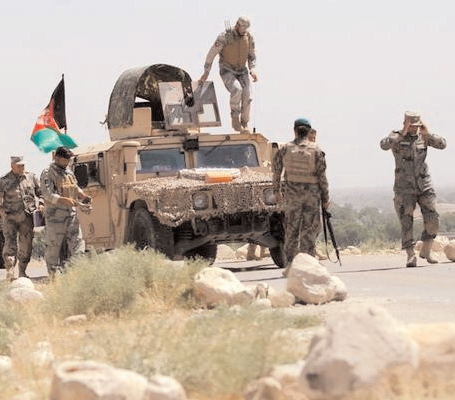
    KANDAHAR (TIP): At least 26 Afghan soldiers have been killed and 13 wounded in a Taliban attack on a military base in Kandahar province, the defence ministry said on July 26, the latest blow to struggling security forces.

    The militants “attacked an army camp in Karzali area of Khakrez district of Kandahar last night,” MoD spokesman General Dawlat Waziri said. Afghan soldiers “bravely resisted”, he said, killing more than 80 insurgents.

    Residents in the area described an hours-long attack launched by a 30- strong convoy carrying “hundreds” of Taliban who assaulted the base from multiple directions. Air support was called in, several residents said, though that was not immediately confirmed by officials.

    The insurgents claimed the attack via their Twitter account. The resurgent Taliban have been ramping up their campaign against beleaguered government forces, underscoring rising insecurity in the war-torn country throughout the warmer weather fighting season.

    Afghan security forces, beset by killings, desertions and non-existent “ghost soldiers” on the payroll, have been struggling to beat back insurgents since US-led NATO troops ended their combat mission in December 2014.

    According to US watchdog SIGAR, casualties among Afghan security forces soared by 35 percent in 2016, with 6,800 soldiers and police killed. The insurgents have carried out more complex attacks against security forces in 2017.

    In April more than 140 soldiers are believed to have been killed on a base outside the northern city of Mazar-i- Sharif, one of the deadliest ever Taliban attacks on a military installation.

    While in early March gunmen disguised as doctors stormed the Sardar Daud Khan hospital — the country’s largest military hospital — in Kabul, killing dozens. (AFP)

  • Myanmar insists no North Korea  links as US envoy visits

    Myanmar insists no North Korea links as US envoy visits

    YANGON (TIP): Myanmar has no military ties with North Korea, a Myanmar official said on Monday, as a US diplomat responsible for North Korea arrived for talks in which he is likely to seek assurances on efforts to isolate it.

    Ambassador Joseph Yun was set to meet Myanmar’s State Counsellor Aung San Suu Kyi and the military’s commander in chief in the capital, Naypyitaw, on Monday, according to the U.S. Embassy in Yangon. Yun attended a conference in Singapore over the weekend focusing on tension on the Korean peninsula over the North’s unrelenting nuclear and missile programmes. Ambassador Joseph Yun’s trip to Asia was announced after North Korea’s test on July 4 of on intercontinental ballistic missile that it says can carry a large nuclear warhead and some experts believe has the range to reach Alaska. Myanmar is the only other stop on his trip, pointing to concern in Washington that Myanmar’s army, which used to have ties with North Korea, continues to give succour to Kim Jong Il’s regime. (Reuters)

  • Sri Lanka allays India’s concerns  renegotiates port deal with China

    Sri Lanka allays India’s concerns renegotiates port deal with China

    COLOMBO (TIP): Sri Lanka’s cabinet has cleared a revised agreement for its Chinese-built southern port of Hambantota on July 24, the government said, after terms of the first pact sparked widespread public anger in the island nation.

    The port, close to the world’s busiest shipping lanes, has been mired in controversy ever since state-run China Merchants Port Holdings, which built it for $1.5 billion, signed an agreement taking an 80 per cent stake.

    Under the new deal, which Reuters has examined, the Sri Lankan government has sought to limit China’s role to running commercial operations at the port while it has oversight of broader security.

    Chinese control of Hambantota, which is part of its modern-day “Silk Route” across Asia+ and beyond, as well as a plan to acquire 15,000 acres (23 sq miles) to develop an industrial zone next door, had raised fears that it could also be used for Chinese naval vessels.

    Sri Lankans demonstrated in the streets at the time, fearing loss of their land, while politicians said such large scale transfer of land to the Chinese impinged on the country’s sovereignty.

    Details of the new agreement have not yet been made public. But according to parts of the document seen by Reuters, two companies are being set up to split the operations of the port and allay concerns, in India mainly but also in Japan and the United States, that it won’t be used for military purposes. (Reuters)

  • Pakistani council orders revenge rape of 16-year-old girl

    Pakistani council orders revenge rape of 16-year-old girl

    ISLAMABAD (TIP): Pakistani police have arrested 25 members of an informal village council accused of ordering the rape of a 16-year-old girl as revenge for her brother’s alleged sexual assault of another girl.

    The Supreme Court also requested a report on the case, which echoed a notorious case from 2002 in which another teenager was gang-raped on a local council’s order.

    “A total of 29 people were involved in this ghastly crime, and we have 25 of them in our custody,” Multan City Police Officer Ahsan Younus told Reuters by telephone on July 27.

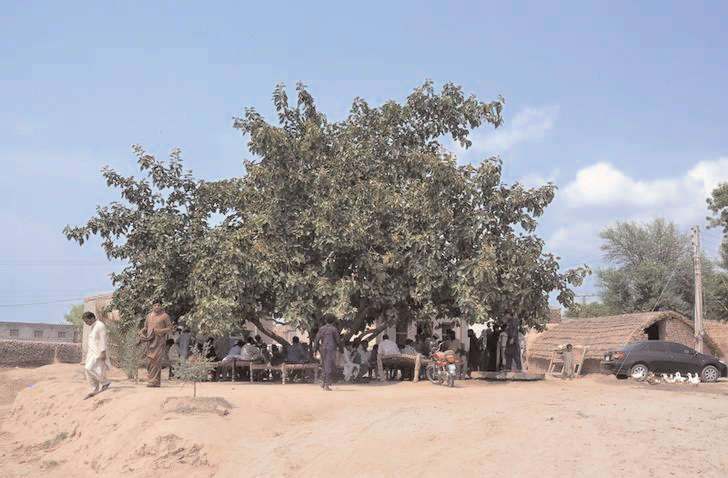
    Earlier this month, a local council in the southern city of Multan was called after a family accused a 16-year-old boy of raping a 13-year-old neighbour. The council ruled that the sister of the boy should be handed over to the victim’s brother to be raped. The punishment was carried out on July 17 after her family handed the girl over.

    The case came to light when both families filed criminal charges with police accusing the other family’s son of rape. Questioning both sides in the cases, however, soon revealed the role of the informal village council, Younus said. “All the village council elders who ordered the revenge rape have been arrested,” he said.

    Both the victims and their mothers have been sent to a women’s protection centre, he added. Pakistan has a centuries-old tradition of quick justice handed down by gatherings of local elders, known as jirgas or panchayats, seen by many villagers as preferable to the often cumbersome and corrupt formal legal system. In most of the country, jirgas are tolerated but not recognised by the formal courts and police.

    The jirgas and the practice of “revenge rape” drew international attention in 2002 when a woman named Mukhtaran Mai was ordered gang-raped by a local council for a male relative’s alleged crime.

    Mai took the rare step of filing criminal charges against her attackers, and six men were convicted and sentenced to death later that year, though five of them were later freed on appeal.

    Mai went on to become a high-profile campaigner for women’s rights in Pakistan. “Another Tribe Court (panchayat) in south Punjab Multan and another girl was raped. We are still in 2002,” Mai said on her official Twitter account this week.

    Speaking to Reuters by telephone, Mai denounced the revenge rape. “If there were any justice in the panchayat, they should have shot the rapist. Why punish an innocent girl instead?” (reuters)

  • Pakistan SC’s verdict on Nawaz Sharif in Panamagate

    Pakistan SC’s verdict on Nawaz Sharif in Panamagate

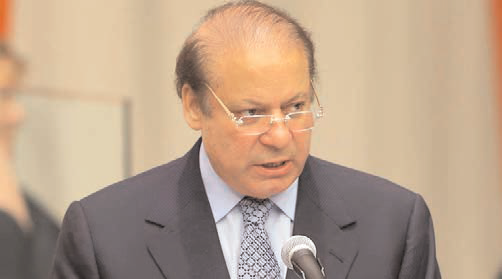
    ISLAMABAD (TIP): Pakistan’s Supreme Court is pronouncing its verdict on Nawaz Sharif in the Panamagate case in which he and his family are accused of corruption. Stay with us for latest updates.

    Meanwhile, interior minister Chaudhry Nisar Ali Khan on Thursday said that he would resign and quit politics after the Supreme Court judgment on the Panamagate case.

    Nawaz Sharif leads Pakistan’s most powerful political family and the ruling PML-N party. Sharif, who has been the prime minister of Pakistan for a record three time, faces the risk of being disqualified if the court finds him guilty of corruption and money laundering.

    What is Panamagate

    The scandal is about alleged money laundering by Sharif in 1990s, when he twice served as prime minister, to purchase assets in London. The assets surfaced when Panama Papers leak last year revealed that they were managed through offshore companies owned by Sharif’s children.

  • Beijing sends conciliatory signals after Doval’s first meeting with his Chinese counterpart Yang Jiechi

    Beijing sends conciliatory signals after Doval’s first meeting with his Chinese counterpart Yang Jiechi

    BEIJING (TIP): In the first official meeting between top Indian and Chinese officials since the Doklam stand-off+ became public, national security adviser Ajit Doval met state councillor Yang Jiechi here on July 27, offering the possibility of serious diplomatic efforts to deescalate the confrontation.

    Yang, who as China’s state councillor overseeing foreign affairs occupies a powerful position in the state council, is the Chinese nominee in the India-China special representative level dialogue with Doval. An influential post, the state councillor is a member of the state council.

    Indications of how the bilateral meeting went could be gleaned by the commentary released by the official Xinhua news agency which sent out a conciliatory signal before Doval is expected to meet Chinese president Xi Jinping on Friday. It spoke of the need to enhance mutual trust as the two countries are “not born rivals”.

    The comments released by the official Xinhua news agency made a strong plea to avoid the possibility of a war. “Most economies, including those in the West, will find themselves negatively affected by an India-China war in a globalised and intertwined world today,” it said. In Delhi, the Indian government reminded China of the agreements on peace and tranquility that go back to 1993.

    Yang also held separate meetings with security officials of three other countries on the sidelines of a security dialogue of BRICS nations comprising Brazil, Russia, India, China and South Africa.

    He discussed issues concerning bilateral relations, international and regional issues and multilateral affairs with the visiting security officials, the official Xinhua news agency said.

    The remarks are a contrast to the hectoring tone in the comments published in publications like Global Times that are seen to reflect the views of the government.

    China’s official spokespersons have accused India of trespassing into Chinese territory, ignoring India’s protests that the face-off near the Sikkim-Tibet-Bhutan trijunction has been caused by unilateral attempts by China to alter the ground position.

    There are signs that the two neighbours might be able to scale down tensions that have spiked due to the military muscle flexing over China’s bid to build a road through a plateau in Bhutanese territory.

    This is the first time in weeks that the official media ran a commentary without demanding withdrawal of Indian troops from the disputed Doklam region. China has so far been insisting that troop withdrawal is a pre-condition to a “meaningful dialogue”.

    Doval reached Beijing on Thursday ahead of his planned meetings with Chinese President Xi Jinping and state counsellor Yang Jiechi on Friday. “The recent border issue between the two countries shows a lack of strategic trust on the Indian side,” Xinhua said.

    It is not China but a set of problems common to all developing countries like corruption, a lack of quality education and healthcare that is holding back India.

    “India must understand that China wishes what’s good for the Indian people and would love to see a strong India standing shoulder by shoulder with China,” Xinhua, which reflects the government’s thinking said, giving an emotional touch to the vexed relationship.

    Doval’s formal purpose of visiting Beijing is to attend a security dialogue of BRICS nations. He is expected to discuss the border standoff with Chinese leaders in separate meetings. Chinese foreign ministry has said that bilateral meetings are usually held during BRICS meetings and indirectly confirmed meetings on the border issue with Doval.

    “Instead of being rivals, India and China have much more common ground, common interests and common aspirations. Both as developing countries, the two need to work together on important issues like fighting climate change, protectionism and the financial privileges of Washington,” Xinhua said.

    It further said, “Hopefully, wisdom will guide the two countries to common prosperity. There is more than enough room for them to co-exist and thrive in Asia and in the world”.

    “Both China and India need to enhance communication and nurture trust between them, first by recognizing that the two are not born rivals and that harboring ill will against each other is dangerous,” Xinhua added.

  • China steps up warning to  Botswana over Dalai Lama visit

    China steps up warning to Botswana over Dalai Lama visit

    BEIJING (TIP): China stepped up its warning to Botswana on July 27 over a planned visit by exiled Tibetan spiritual leader the Dalai Lama next month, demanding the African nation respect China’s core interests.

    The Dalai Lama, reviled by Beijing as a dangerous separatist, is expected to address a human rights conference in the capital, Gaborone, on August 17-19 and will also meet Botswana’s president. China is a major investor in Botswana’s economy.

    China has already “clearly” expressed its point of view about the Dalai Lama’s visit, Foreign Ministry spokesman Lu Kang told a daily news briefing. “Issues relating to Tibet concern China’s sovereignty and territory integrity. We demand the relevant country earnestly respect China’s core interests and make the correct political decision on this matter,” Lu said, using stronger language than before on the issue.

    “China will not interfere in other countries’ internal affairs, but will certainly not tolerate another country doing anything that harms China’s core interests,” he added, without elaborating.

    The Dalai Lama, who fled from Tibet into exile in India in 1959 following a failed uprising against Chinese rule, has long been at loggerheads with China, which sent its troops into Tibet in 1950.

    The Dalai Lama, who won the Nobel Peace Prize in 1989, denies he is seeking independence for his Himalayan homeland. He says he is merely seeking greater rights, including religious freedom and genuine autonomy. Visits by the Dalai Lama to foreign countries infuriate China. (Reuters)

  • Wildfires prompt 10,000  evacuations on French Riviera

    Wildfires prompt 10,000 evacuations on French Riviera


    MARSEILLE (TIP): Firefighters evacuated thousands of campers and local residents after a wildfire broke out on France’s tourist-thronged Riviera coast overnight.

    The blaze was the latest of several wind-whipped fires that are ravaging forest and scrubland on the hills and slopes that spill into the Mediterranean sea between the Marseilles and the city of Nice in the southeastern corner of France.

    Not far west of the yacht-filled marinas of Saint-Tropez resort, 10,000 people were evacuated – 3,000 of them from campsites – as a fast-encroaching fire ripped through the hills of La Lodes les Manures, the Lavabo and Bromes.

    “A fast-spreading fire broke out at 22:50 (2050 GMT), burning up about 800 hectares of land,” the local government prefect’s office said in a statement. Hundreds of firefighters fought the blaze with planes and helicopters dropping tonnes of water on the tinder box hills where fires regularly break out in summer time, often as a result of a carelessly discarded cigarette butt.

    Thousands of hectares of land have been devastated by flames since the start of the week, although Tuesday night’s evacuation was far larger than other more minor ones where dozens of people and horses were moved to safety from fasten croaching infernos.

    High winds risked whipping up more fires, said the prefect’s office of the Vary region, where most of the blazes are located. So far there have been no deaths reported in the summertime wildfires, unlike in other countries such as Portugal where they have killed dozens (Reuters)

  • Russia signs deal to use Syria air base for 49 years

    Russia signs deal to use Syria air base for 49 years

    MOSCOW (TIP): President Vladimir Putin has signed a law ratifying a deal with the Syrian government allowing Russia to keep its air base in Syria for almost half a century, official documents show.

    The original deal, signed in Damascus in January, sets out the terms under which Russia can use its Hmeymim air base in Latakia Province which it has used to carry out air strikes against forces opposing President Bashar al-Assad.

    Putin approved the agreement on Wednesday, after the two chambers of the Russian parliament backed it earlier this month, according to the government’s official information portal.

    The document says Russian forces will be deployed at the Hmeymim base for 49 years with the option of extending that arrangement for 25-year periods.

    The base has been at the heart of Moscow’s military foray since it intervened in the conflict in September 2015, helping turn the tide in favour of Assad, one of Russia’s closest Middle East allies. (Reuters)

  • Kremlin warns against harmful new US sanctions on Russia

    Kremlin warns against harmful new US sanctions on Russia

    MOSCOW (TIP): The Kremlin on july 28 warned that new US sanctions on Russia would hit the interests of both sides as Congress gears up to approved fresh punitive measures.

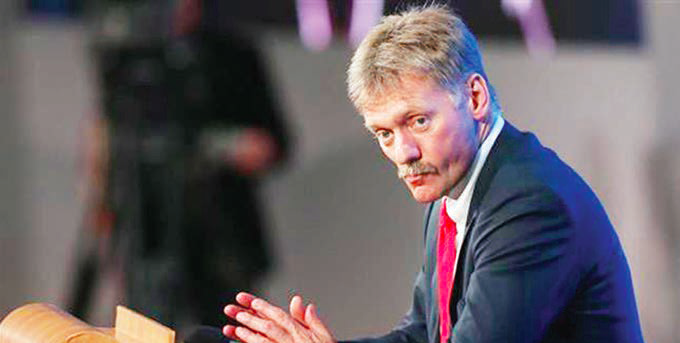
    “We consider such a continuation of the rhetoric of sanctions counter productive and harmful to the interests of both countries,” Kremlin spokesman Dmitry Peskov said. In mid-June, the US Senate overwhelmingly passed tough sanctions, but the text stalled in the House of Representatives, until agreement was reached on Saturday.

    The House is now set to vote Tuesday on a bill that targets Russia — for its alleged meddling in the 2016 presidential election and its annexation of Crimea from Ukraine in 2014 — as well as Iran and North Korea, for its ballistic missile tests. Initially, US President Donald Trump resisted the legislation, which would prevent him from unilaterally easing penalties against Moscow in the future — effectively placing him under Congress’s watch.

    But he seems to be left with little option but to sign off on the move as a political firestorm swirls over potential collusion between his campaign and Russia.

    Peskov said the Kremlin is still waiting and watching to see if Trump will approve the measures, after White House communications director Anthony Scaramucci said the US leader was weighing his decision.

    Before Trump definitively takes a decision it is too early to talk about any potential counter measure from Moscow, Peskov said. Ties between Moscow and Washington have slumped to their lowest since the Cold War as the US slapped sanctions on Moscow over it meddling in Ukraine.

    Russia had hoped that Trump’s election might ease relations between the two sides, but those prospects have dimmed in the face of a major political pushback in Washington. (AFP)

  • THE DIGNIFIED PRESIDENT OF INDIA  PRANAB MUKHERJEE

    THE DIGNIFIED PRESIDENT OF INDIA PRANAB MUKHERJEE

    WHAT MAKES PRANAB MUKHERJEE’S TENURE AS PRESIDENT UNIQUE

    As Pranab Mukherjee exits the Rashtrapati Bhavan to hand over the reins to Ram Nath Kovind – India’s 14th president, it is an appropriate time to look back to steps and actions that were taken by him that made his tenure unique from others

    Ordinances and Mercy petitions

    Pranab Mukherjee’s tenure’s biggest highlight could be the tough stance he took when it came to his judicial powers. Unlike many of his predecessors who seemed to think twice when it came to reviewing mercy petitions, Mukherjee was quite hands on. Of the 34 mercy petitions that were presented to him, he rejected 30, a number which is second only to G Venkataraman. He also promulgated or repromulgated 26 ordinances.

    Peoples president

    Under his tenure, many steps were taken to make Rashtrapati Bhavan closer to the common man. Steps were taken to reduce security checks within the Rashtrapati Bhavan to make it more inclusive for people. Many important events were shifted to the Rashtrapati Bhavan so that the public won’t suffer from security measures due to presidential movement.

    Mukherjee also became the first president to take teaching classes for the school children. An in-residence program aimed at encouraging talented scholars and artists was also set up. The official twitter account of the Rashtrapati Bhavan was launched on July 1, 2014.

    Brought an end to the colonial hangover

    Perhaps one of the greatest achievement of Pranab Mukherjee was the fact that he brought an end to certain practices that were a product of the imperial rule in the country. He ended the practice of using the honorific title ‘His Excellency’ while addressing the President on the first anniversary of his term. Even governors were encouraged to follow this practice.

    Welfare programs

    A Smartgram pilot project was launched on July 2, 2016 with the aim of developing and modernising villages. At the initial stage, five villages from Haryana was included in the program. Under another initiative Mukherjee also launched the 4S initiative ie; samskriti, samagam, sparsh and sanskar aimed at overall welfare of senior citizens and children residing in the estate.

    Re-development of the Rashtrapati Bhavan

    A new museum was established in the estate’s carriage halls and stables building. Roof top solar panels, water harvesting and recycling programmes were initiated in the Bhavan to make it energy efficient and self-reliant. Also, measures were taken to re-introduce the heritage Buggy in the estate after a gap of over three decades. Pranab Mukherjee Public Library was also set up in the estate. This included the cataloguing and bar coding of the vast number of books as part of the EPustakalaya project. Apart from all this, the presidential retreat in Dehradun known as the Rashtrapati Ashiana was also renovated.

    Source: Moneycontrol

    In keeping with tradition, Prime Minister Narendra Modi presented a memento to outgoing
    President Pranab Mukherjee at the farewell hosted by him for the President at Hyderabad
    House , in New Delhi. (Source: PTI)

    Pranab Mukherjee’s tenure as the 13th President of India ended n July 24, bringing to a close a political career spanning nearly five decades in government and in the Congress party, both extremely eventful and hugely successful.

    Pranab Mukherjee’s political journey started in West Bengal in the 1969 by-election in Midnapore when he was the election agent for V K Krishna Menon, who ran as an independent candidate. He caught the eye of Siddhartha Shankar Ray who recommended him to prime minister Indira Gandhi,who gave him a Rajya Sabha seat. Thus at the age of 35, Pranabda entered the Rajya Sabha.

    Within a short period he had gained Mrs Gandhi’sconfidence and became a minister of state in her government.

    In the wake of Rajiv Gandhi’s tragic assasination, the Congress party emerged as the single largest party, but there was no clarity as to who would be Prime Minister.Pranabda was not an MP and PV Narasimha Rao had announced his retirement from active politics. Arjun Singh and Sharad Pawar became prime contenders. But as the number of MPs from south India was large, Narasimha Rao was called out of retirement and chosen to be Prime Minister.

    During Cabinet formation, Narasimha Rao actively consulted his friend and colleague, Pranabda. It appeared certain that Pranabda would become the finance minister. But quite unexpectedly, he was left out of the Cabinet altogether and Dr Manmohan Singh was named finance minister. Pranabda was shocked. As consolation, Narasimha Rao asked Pranabda to take up the deputy chairmanship of the Planning Commission.

    Now when a former finance minister is left out of the Cabinet and sent to the Planning Commission, it clearly signals the end of an active political career. Pranabda told the Prime Minister that he would think about the offer. Narasimha Rao is supposed to have remarked, “Take as much time as you like, but join on Monday.” Narasimha Rao assured Pranabda that he would one day tell him the reason for his exclusion from the Cabinet, but he never did.

    One can describe Pranabda in one word – a survivor. His survival skills in politics are indeed remarkable. After Rajiv Gandhi became prime minister in 1984, he dropped Pranabda from the Cabinet and also from the Congress Working Committee. He was subsequently expelled from the Congress party itself, pushing Pranabda to launch his own party, the ‘Rashtriya Samajwadi Congress,’ in 1986. But his political career had clearly stalled.

    He later admitted he was no mass leader. Within two years, he was back in favour with Rajiv Gandhi and merged his party in the Congress. Despite all the ups and downs, he always bounced back.

    Pranabda is very good at keeping secrets. In fact, Indiraji used to say, “Whenever Pranabda is given any confidential information, it never comes out of his belly.What comes out is only the smoke from his pipe.” His excellent command over the English language, drafting skills, razor-sharp memory, vast knowledge of national and international affairs and mastery of parliamentary procedures made him indispensable in the cabinet and the Party.Whenever any complicated and contentious issue arose in the Cabinet, he was called upon to resolve it. He would invariably be asked to draft various AICC resolutions and chair different party committees.

    In Dr Manmohan Singh’s cabinet,Pranabda was the de facto number two. He was the chairman of more than 95 GoMs and EGoMs (Empowered Group of Ministers). I was a member of many such groups dealing with Enron, spectrum, WTO, Bhopal disaster and disinvestment. One time the issue of amending the law to remove the domicile condition for contesting Rajya Sabha elections came up for discussion. Dr Manmohan Singh was elected from Assam and Pranabda had been once elected from Gujarat. The proposal was accepted after a brief discussion as was the proposal for open voting. I insisted that the same condition be made applicable to the legislative council elections in the states. But Pranabda strongly opposed this and my proposal was not accepted. Unfortunately, “horse trading” in legislative council elections continues unabated.

    Pranabda worked under three Prime Ministers – Indiraji, Narasimha Rao and Dr Manmohan Singh. He is the only finance minister to have presented budgets both before the 1991 reforms in the license permit raj regime as well after the 1991 economic reforms. He took bold decisions after the global economic crisis of 2008 which helped shield the Indian economy. As commerce minister in 1993, Pranabda championed the cause of trade liberalisation. But as India dealt with GATT, especially its intellectual property rights regime, the fear was drug prices would increase. Pranabda’s skilful negotiations not only prevented that from happening, but also charted India’s entry into the WTO.

    The Indo-US nuclear deal over 2005-8 was a landmark achievement of the Manmohan Singh government.Both countries wanted to get India out of the discriminatory nuclear world order, facilitate India’s participation in nuclear commerce and allow it benefits of clean nuclear energy. But because the Left parties supported the UPA government in power and the Left was against India joining hands with the US, a coordination committee between the UPA and the Left parties was constituted under Pranabda’s chairmanship – and myself as its convenor. The Committee succeeded in obtaining the consent of the Left, thanks only to the skilful leadership of Pranabda and his personal equation with its leaders.

    He fulfilled the role of President of India with great dignity. Concerns were raised when the government changed after the 2014 election. But he did not needlessly confront prime minister Narendra Modi’s government and always went by the book. At the same time, he often publicly appealed for tolerance, lamented the poor quality of parliamentary debate, and urged protection of the Constitution and democratic values. He was certainly not a “rubber-stamp President”.

    Source: The Indian Express