Month: July 2017

  • Pentagon blocks $350 million military aid to Pakistan

    Pentagon blocks $350 million military aid to Pakistan

    WASHINGTON DC (TIP): The US Department of Defense withheld military payments to Pakistan, after Secretary of Defense Jim Mattis told Congressional defense committees that he was unable to certify that Pakistan took sufficient action against the Haqqani network to permit full reimbursement of the fiscal year 2016 Coalition support funds (CSF). The Pakistan-based Haqqani network has been accused for carrying out many high-profile terror acts against US and Indian interests in Afghanistan, including the 2008 bombing of the Indian mission in Kabul that killed 58 people. This is the second year in a row that the Defense Secretary has refused to certify to Congress, as mandated under National Defense Authorization Act (NDAA), that Pakistan has taken satisfactory action against the Haqqani network.

    Pakistan had been allotted $900m in military aid to through the special fund. The country has already received $550m of that, but Mattis’ decision means $50m will be withheld. The remaining $300m was rescinded by Congress as part of a broader appropriations act, earlier this year. The Coalition Support Fund (CSF) authority reimburses key cooperating nations for logistical, military and other support provided to US combat operations. Pakistan is the largest recipient of CSF reimbursements, having received more than USD 14 billion since 2002.

    The US is in the process of reviewing its policy on Afghanistan and Pakistan. Last week, the State Department in a report to the Congress had listed Pakistan as one of the countries having terrorist safe havens. Sanjay Puri, Chairman, US India Political Action Committee, welcomed the announcement adding, “USINPAC has been advocating for years to reevaluate military aid to Pakistan. We cannot have US taxpayer money going towards terror attacks against US and Indian interests from groups in Pakistan.”


  • USCIS Resumes H-1B Premium Processing for Certain Cap-Exempt Petitions

    USCIS Resumes H-1B Premium Processing for Certain Cap-Exempt Petitions

    WASHINGTON (TIP): U.S. Citizenship and Immigration Services (USCIS) on July 24 announced that it will resume premium processing for certain cap-exempt H-1B petitions effective immediately. The H-1B visa has an annual cap of 65,000 visas each fiscal year. Additionally, there is an annual “master’s cap” of 20,000 petitions filed for beneficiaries with a U.S. master’s degree or higher.

    Premium processing will resume for petitions that may be exempt from the cap if the H-1B petitioner is:

    * An institution of higher education;

    * A nonprofit related to or affiliated with an institution of higher education; or

    * A nonprofit research or governmental research organization.

    Premium processing will also resume for petitions that may also be exempt if the beneficiary will be employed at a qualifying cap-exempt institution, organization or entity.

    Those cap-exempt petitioners who are eligible for premium processing can file Form I-907, Request for Premium Processing Service for Form I-129, Petition for a Nonimmigrant Worker. Form I-907 can be filed together with an H-1B petition or separately for a pending H-1B petition.

    USCIS previously announced that premium processing resumed on June 26 for H-1B petitions filed on behalf of physicians under the Conrad 30 waiver program as well as interested government agency waivers.

    USCIS plans to resume premium processing of other H-1B petitions as workloads permit. USCIS will make additional announcements with specific details related to when we will begin accepting premium processing for those petitions. Until then, premium processing remains temporarily suspended for all other H-1B petitions. USCIS will reject any Form I-907 filed for those petitions, and if the petitioner submitted one check combining the Form I-907 and Form I-129 fees, USCIS will have to reject both forms.

  • Missed the chance to act, Mr President

    Missed the chance to act, Mr President

    A seasoned parliamentarian, the now ex- President, Pranab Mukherjee, is known to weigh his words before uttering them and he must have taken extra caution about what to say in his parting speech. Yet the farewell message was a little odd for the occasion. The President was telling the government not to do something which he had not disapproved of when the occasion demanded. While Mr Mukherjee’s emphasis on “debate, discussion and dissent” and his observation that “disruptions hurt the Opposition more” were all well taken, it was his advice to the government to take the Ordinance route sparingly that has drawn maximum attention.

    As President, Mr Mukherjee gave unqualified assent to Ordinances — as many times and as often presented. Not even once did he return to the government for reconsideration any of the crucial recommendations — be it the frequent issue of Ordinances or the imposition of President’s rule. The land Ordinance was promulgated thrice. It had replaced the land Bill, which was widely dubbed “anti-farmer” and had remained stuck in the Rajya Sabha before its dilution. Again, the President happily sided with the government in approving the Ordinance that criminalized the holding of Rs 500 and Rs 1000 currency notes beyond December 31, 2016. Despite the nationwide dislocation, loss of jobs and farmer distress it caused without achieving any of the purported gains, the President did not try to satisfy himself, by asking the government or the RBI, whether sufficient arrangements were made for executing such an important policy measure.

    The unquestioned approval of President’s rule in the two Opposition-ruled states of Arunachal Pradesh and Uttarakhand also did not enhance his stature. It was finally left to the Supreme Court to right the wrong. His predecessor, K R Narayanan, had sent back Cabinet resolutions seeking President’s rule in UP and Bihar. Most of the time the President’s job is ceremonial. It is on such occasions that the worth of the Rashtrapati Bhavan occupant is judged. Pranab Mukherjee was found wanting at times. Only towards the end of his term did he talk of issues not to the government’s liking such as growing intolerance, Parliament turning dysfunctional and constitutional values. It did not add up, Mr Mukherjee.

    (Tribune, India)

  • Country without a Prime Minister

    Country without a Prime Minister

    By Ayesh Siddiqa

    The real conversation in the drawing rooms these days is whether it is just Mr. Sharif who will be disqualified or whether it would extend to his entire family — two sons and a daughter who are the ones actually named in the Panama leaks. With his eyes already on the 2018 elections, Mr. Sharif would hope that his daughter and political heir, Maryam Nawaz, survives this crisis. If the entire family is disqualified, it will certainly send a signal that things are up for grabs, says the author.

    The office of Pakistan’s Prime Minister is subject to pulls and pressures far in excess of those in other democracies. But even by these standards, Nawaz Sharif is under inordinate stress. He is facing a court case and a scathing media trial.

    A three-member Bench of the Supreme Court is yet to give a final verdict regarding his disqualification. The decision will be based on the report by a Joint Investigation Team (JIT) established by the orders of the court to investigate Mr. Sharif and his family’s assets after the leak of the Panama Papers related to holdings in offshore companies.

    The question now is whether the Chief Justice will give a verdict based on the decision of the three judges or call for a larger Bench. The judiciary might like to get the decision popularly accepted by calling for a larger Bench. It is not as if all onlookers are convinced about the judges or the JIT being bipartisan.

    Odds stacked against PM

    It is a fact that corruption investigations are not easy, especially when the country’s main anti-corruption institutions, the National Accountability Bureau (NAB) and the Federal Investigation Agency (FIA), lack forensic investigation expertise. Even in the case of some of the Sharifs’ assets, the JIT hired the services of a foreign company. Notwithstanding such lacunae, the highest court was willing to open up a Pandora’s box of investigating “a constant murmur nationally as well internationally about respondent No. 1 (Nawaz Sharif) indulging in corruption, corrupt practices and money laundering”. If proven guilty, Mr. Sharif cannot hold office as per Article 62 (1) (f) of the 1973 Constitution as he would be declared as not being sadiq (truthful) and ameen (honest). Even if the judges feel uncomfortable using the JIT report as the basis of their decision, the axe could still fall on Mr. Sharif on the basis of him officiating as a director in a company registered in the UAE while he was heading the government.

    There are today very few people betting on Mr. Sharif completing his term, which if he does, he’d be the first Prime Minister to do. But as far as the popular narrative in the country goes, Mr. Sharif is already gone. The working of the state bureaucracy has already slowed down in anticipation of some transition.

    There are even rumors of Mr. Sharif’s current Interior Minister, Chaudhry Nisar, being favored by both the Establishment and the rival Pakistan Tehreek-e-Insaf party as one of the candidates to replace him while the Pakistan Muslim League (Nawaz) government is allowed to complete the term.

    In any case, there will be no hurry to hold the next elections due to the need for a new delimitation of constituencies based on the recently held census — senior judges believe the delimitation should take place. Meanwhile, Mr. Sharif’s future role in politics will be determined by how far the court proceedings drag and how it turns out personally and politically for him in the months and years to come. What is certain is that Mr. Sharif is not inclined to resign, as was expected of him, but, if it comes to that, to go down as a political martyr — a man politically victimized by non-parliamentary institutions of the country.

    The media campaign aims to make him bleed politically and increase his losses the longer he stays. Interestingly, there are serving state officials in numerous WhatsApp groups who are gently directing conversations in a certain direction, or watching while their partners do the same. It is not that lack of accountability is not a huge problem in Pakistan but that accountability has always been used as a political tool to punish rivals. Hence, ordinary people forgave Dr. A.Q. Khan, the architect of Pakistan’s nuclear program, and accept him as a hero despite his confession on television regarding illegal sale of nuclear technology because in their eyes he did return something for all he took. Also, in the absence of the enactment of a strong law or principle of the rule of law, even courts are perceived by the man on the street as either corrupt or highly political. Moreover, when the law is meant to selectively conduct accountability (excluding the military and the judiciary), many raised eyebrows at an earlier judgment in the Panama Papers case that quoted Mario Puzo’s The Godfather but no law.

    Post-verdict scenarios

    Since the power rests with the judges, their verdict will influence the short- or longer-term future of the Sharif family. The real conversation in the drawing rooms these days is whether it is just Mr. Sharif who will be disqualified or whether it would extend to his entire family — two sons and a daughter who are the ones actually named in the Panama leaks. With his eyes already on the 2018 elections, Mr. Sharif would hope that his daughter and political heir, Maryam Nawaz, survives this crisis. If the entire family is disqualified, it will certainly send a signal that things are up for grabs.

    This means that even if the PML(N) remains, it would be mired in infighting and could be as easily manipulated as the Pakistan Muslim League (Quaid-e-Azam) was. While parts of central and north Punjab will remain aligned with Mr. Sharif, there will much greater activity in south and south-west Punjab where people will be influenced by, as per local political lingo, ‘whichever way the strong wind blows’. This is translated as a clear indication that the Establishment is not in a party’s favor.

    But the process of shifting gears will essentially start with electable candidates moving to another party or contesting elections as independent candidates. In urban centers, the anti-corruption slogan, compounded with the anti-incumbency factor, will play a role.

    The case against Mr. Sharif is indeed critical as the manner in which the court proceeds will determine not only his short- to medium-term political moves but also his long- to longer-term future. If the judges do not appear bipartisan and use the principle of law rather than their opinion — a fashion that dates back to Justice Iftikhar Chaudhry’s days — Mr. Sharif will be perceived as a victim rather than a culprit.

    Even his disqualification will then generate the myth that he was punished for something else rather than what the court and the JIT tried him for. This may not save Mr. Sharif now but will haunt the Establishment in a few years.

     (The author is a Pakistani military scientist, political commentator and an author who serves as a research associate at the SOAS South Asia Institute. She is the author of ‘Military Inc. — Inside Pakistan’s Military Economy’.)

  • Economics crucial for social justice believed Ambedkar

    Economics crucial for social justice believed Ambedkar

    BR Ambedkar was an original economic thinker who believed in advancing the interests of the Dalits by focusing on the economy. According to him, the economic conditions that affected the Dalits were – monetary circulation in the economy, size of land holdings and the pattern of public finance.

    By Pritam Singh

    In his writings on money, he directly challenged the dominant Keynesian view in the 1930s regarding the delinking of supply of money from gold reserves.  Keynes had argued that due to the development of the monetary- exchange mechanism in advanced capitalist economies such as the UK, there was no need to limit the supply of money by linking it with the gold reserves.  Ambedkar opposed this view not because he had any special fascination with gold but because he considered that delinking of money supply from gold reserves would open the possibilities of excessive supply of money. This, in turn, could lead to financial instability and inflation, says the author.

    Bhim Rao Ambedkar, the chief framer of the Indian Constitution, was also an original economic thinker. The originality of his economic thinking can be interpreted as eclecticism due to his non-adherence to any one particular economic ideology — Marxism, neo-classical economic thought, support for market economy or state regulation. However, behind his eclecticism lies a common running thread in his ideas on different economic issues. That unity was provided by his concern for the Dalit sections of Indian society.

    In adopting this approach, he can be compared with Karl Marx who was ruthless in his rigorous analysis of capitalism. That rigor was not merely an academic enterprise but closely linked with defending the interests of the working class. In both cases —Marx for the working class and Ambedkar for the Dalits — there was no compromise in the objective analysis of the economic conditions to suit any partisan considerations.

    On the contrary, both viewed a scientific examination of the economic conditions as a necessary condition for advancing the interests of the working class and the Dalits (for Ambedkar). In the Indian context, in particular,  and  South-Asian context in general, the social categories of class and caste overlap and interpenetrate each other despite the autonomous status. Three main issues on which Ambedkar focused his intellectual energies were: monetary circulation in the economy, size of land holdings as a part of the broader agriculture strategy and public finance especially the pattern of federal finance.

    In his writings on money, he directly challenged the dominant Keynesian view in the 1930s regarding the delinking of supply of money from gold reserves.  Keynes had argued that due to the development of the monetary- exchange mechanism in advanced capitalist economies such as the UK, there was no need to limit the supply of money by linking it with the gold reserves.  Ambedkar opposed this view not because he had any special fascination with gold but because he considered that delinking of money supply from gold reserves would open the possibilities of excessive supply of money. This, in turn, could lead to financial instability and inflation. From the viewpoint of the poor sections of society, Ambedkar thought that both inflation and financial instability would hit them adversely. The rich might benefit from financial instability by using a range of alternative investment options. The 2007-8 financial crisis of the global capitalist economy, triggered by unregulated financial markets and resulting in huge income and wealth inequalities, is a testimony to Ambedkar’s prophetic insights. For him, the seemingly technical question of money supply and gold reserves needed to be assessed for how these impacted the welfare of Dalits who constituted the bulk of the poorer segment.

    Ambedkar adopted the same method to assess the conditions in India’s rural economy. He argued that fragmentation of land holdings in India was leading to decreasing the average size of land holdings to an economically inefficient level. He advocated consolidation of landholdings in order to increase the average size of a farming unit. On the face of it, this may seem against the interests of small landholders.  However, from the viewpoint of economic efficiency, he did not consider the defense of uneconomic landholding size was in the interests of poor peasantry or landless workers. He, therefore, proposed cooperative agriculture which ensured pooling of smaller units into a bigger unit to avail of the economies of scale.  In his view, cooperative farming was desirable for small landholders and landless workers who were mostly Dalits. In looking at alternative modes of farming and suggesting cooperative farming as the most-desirable system, Ambedkar’s goal was the defense of the economic interest of the Dalits.

    The third major issue Ambedkar examined was the question of public finance, dealing with revenue and expenditure of different layers of governance. His basic premise was that each level of government needed to have appropriate sources of revenue to meet its expenditure obligations. He further argued that along with the quantitative dimensions of revenue and expenditure, it was necessary to examine the qualitative dimensions of the revenue-expenditure pattern. A government may be able to generate generous revenue but it might fritter away that revenue through unproductive expenditure such as luxury spending by ministers and government officials. In contrast, even a modest increase in revenue if spent on public goods such as health and education can have a multiplier effect on improving the quality of life. The provision of such public goods is especially important for the Dalits and other pooper sections of society.

    Ambedkar also examined the impact of centralization versus decentralization on the life conditions of Dalits. From one angle, he seemed to be supportive of centralization but he also considered excessive centralization as a threat. In arguments in support of centralization, he viewed that decentralization could empower the local upper-caste elites more against the Dalits. He viewed centralization as creating conditions for authoritarianism that can weaken democracy.

    In Ambedkar’s view, the weakening of democracy was not in the interests of the Dalits. Precisely for this reason, Ambedkar opposed and defeated a proposal from Jawaharlal Nehru that India’s Constitution could be amended by a simple majority in the Parliament. He viewed Nehru’s proposal as paving the way for increased centralization and succeeded in inserting that a government needed to have at least a two-third majority in the Parliament to make a constitutional amendment. In supporting or opposing centralization, his key concern was the defense of Dalits’ political and economic interests.

    All those who oppose caste and other forms of discrimination need to learn this Ambedkarite method of keeping the concerns of Dalits as the central determining criterion in assessing different policy options.  In the era of global climate change, a creative development of Ambedkar’s ideas is necessary to suggest sustainable and egalitarian modes of economic activities.

    (The author is a Professor of Accounting, Finance and Economics at the Oxford Brookes University, the UK)


  • Regenerative properties of Liver help tackle Hepatitis

    Regenerative properties of Liver help tackle Hepatitis

    Hepatitis causes inflammation of the liver; it can cause either acute and chronic infection or inflammation. Liver is one of the few organs in the body with regenerative properties. Hepatitis is a group of infectious disease known as Hepatitis A, B, C, D and E. As per World Health Organization (WHO), in India, 40 million people are infected with Hepatitis B and around 6 to 12 million people are infected with chronic Hepatitis C.

    Hepatitis is asymptomatic, it is estimated that only 5% of people with chronic hepatitis know of their infection, and less than 1% have access to treatment. Symptoms of Hepatitis are jaundice, dark colored urine, fatigue, nausea, vomiting and abdominal pain. Hepatitis B, C and D are commonly transmitted through blood, semen and other body fluids. Although Hepatitis A does not generally result in chronic infection, Hepatitis B and C can increase incidence of liver cirrhosis, liver failure or liver cancer.

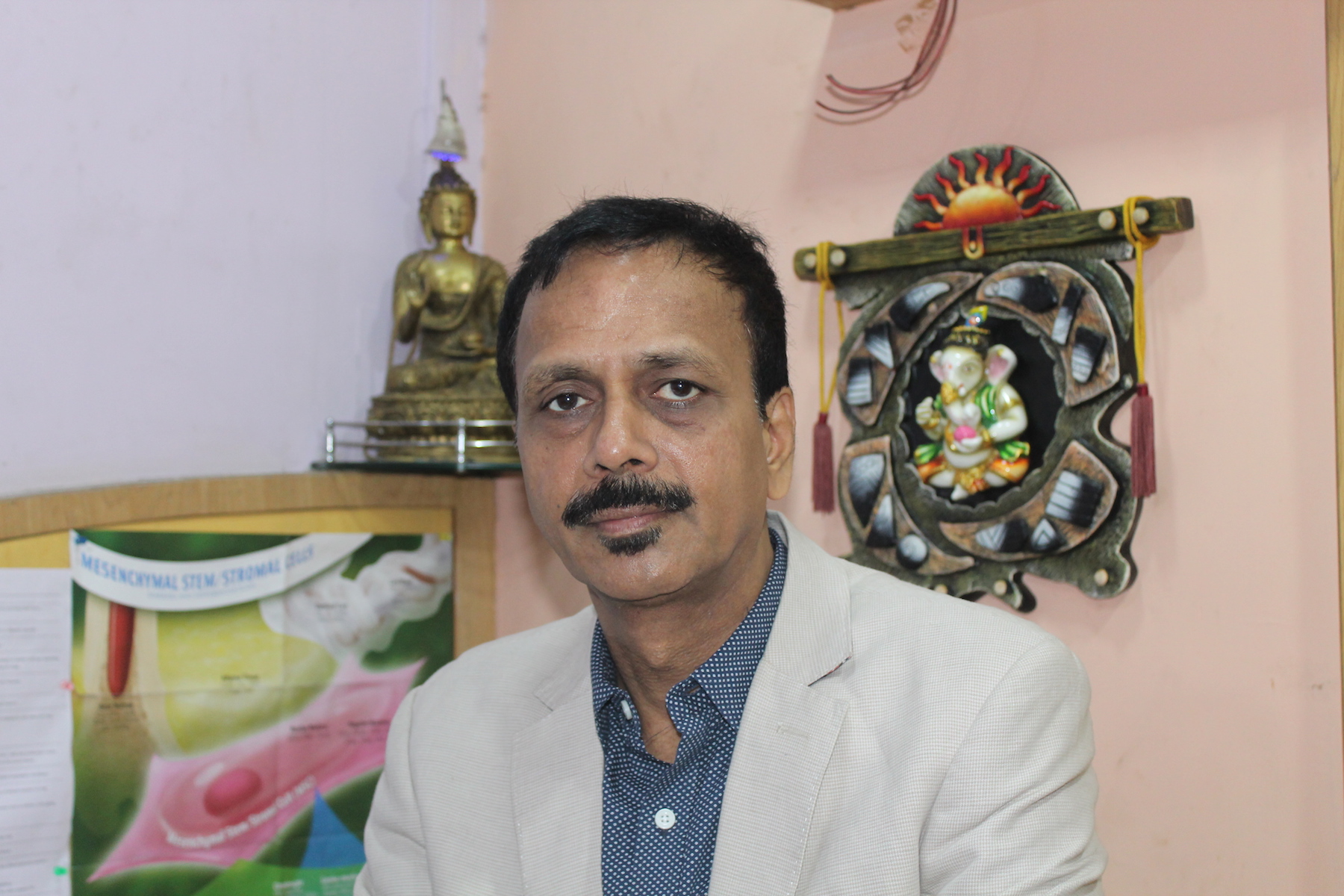
    Vaccinations are now available for hepatitis A, B and C but Hepatitis B and C are the most common cause of liver cirrhosis and cancer, according to WHO. Dr Pradeep Mahajan, Regenerative medicine researcher, says “Liver disease can progress to cirrhosis and liver failure. The majority of the liver (80 %) is made up of liver cells called hepatocytes. These cells have an average lifespan of 150 days, which means that the liver is constantly renewing itself under normal conditions. It is only organ that can regenerate. In many countries, autologous cells therapy is used for clinically treating liver disease. The major advantage with using these cells is that because they come from the patient, there is no risk of rejection when they are transplanted back.”

    “Mesenchymal stem cells (MSCs) are capable of promoting regeneration of liver tissue. Autoimmune hepatitis may benefit by the immune-modulatory potential of MSCs. Bone marrow MSCs have also been shown to reduce levels of liver enzymes and subsequently resolve inflammation. It is the Anti-fibrotic property of MSCs which aids in eliminating fibrotic or scar tissue that would otherwise impair vascular supply and delay regeneration”.

  • Indian American Businesswoman Pleads Guilty to Tech Worker Visa Fraud

    Indian American Businesswoman Pleads Guilty to Tech Worker Visa Fraud

    SAN JOSE (TIP): A San Jose businesswoman of Indian origin pleaded guilty in federal court last week to three counts of visa fraud. In pleading guilty, Sridevi Aiyaswamy, 50, of San Jose, admitted that between April 2010 and June 2013 she made numerous false statements, and submitted over 25 fraudulent documents, to the United States Citizenship and Immigration Services (USCIS) for the purpose of obtaining H-1B non-immigrant classifications for skilled foreign workers.

    Acting as a petitioner on behalf of foreign worker beneficiaries, Aiyaswamy falsely represented in I-129 petitions that the foreign worker beneficiaries would be working at Cisco, an information technology and networking company in San Jose, Calif.  Aiyaswamy further submitted counterfeit statements of work with forged signatures as back-up documentation to the I-129 petitions.  In fact, at the time she submitted these documents to USCIS, Aiyaswamy knew that the statements regarding offers of work from Cisco for these beneficiaries were false statements, and that Cisco had not made any offers of employment regarding these individuals.

    A federal grand jury indicted Aiyaswamy on December 3, 2015, charging her with 34 counts of visa fraud, in violation of 18 U.S.C. § 1546(a).  Pursuant to today’s pea agreement, Aiyaswamy pleaded guilty to three of the counts of visa fraud and the government agreed to request dismissal of the remaining counts.

    Aiyaswamy is currently free on bond.  Judge Koh scheduled her sentencing for November 15, 2017, at 9:15 a.m.  The maximum statutory penalty for visa fraud is 10 years in prison and a $250,000 fine.

    (Source: U.S. Attorney’s Office, Northern District of California)

  • Indian American doctor accused of health care fraud and money laundering

    Indian American doctor accused of health care fraud and money laundering

    MILFORD, CT (TIP): A federal grand jury in Bridgeport returned an indictment on July 26 charging Indian American physician Dr. Bharat Patel, 70, of Milford, and his ally Dr. Ramil Mansourov, 47, of Darien, both residents of Connecticut, with narcotics distribution, health care fraud and money laundering offenses.

    Patel was arrested on a federal criminal complaint on July 12 and is detained. Mansourov was apprehended by the Canada Border Services Agency on an immigration offense on July 13 and is currently detained in Canada.

    The five-count indictment charges Patel and Mansourov with one count of conspiracy to distribute oxycodone and hydrocodone, an offense that carries a maximum term of imprisonment of 20 years, and one count health care fraud, an offense that carries a maximum term of imprisonment of 10 years. The indictment also charges Mansourov with two counts and Patel with one count of money laundering, an offense that carries a maximum term of imprisonment of 20 years.

    The indictment also seeks the forfeiture of Patel’s Milford residence, Mansourov’s Darien residence, $16,521.25 seized from a safe deposit box rented by PATEL, and money judgments equal to the proceeds of Patel and Mansourov alleged criminal conduct.

  • Arundhati Roy’s Novel The Ministry of Utmost Happiness in Booker Longlist

    Arundhati Roy’s Novel The Ministry of Utmost Happiness in Booker Longlist

    LONDON (TIP): Indian novelist Arundhati Roy, who won the Man Booker prize in 1997 for “The God of Small Things,” is among the contenders for this year’s Man Booker Prize for fiction.

    On a longlist thronged with literary titans, whose combined trophy cabinet would include the Pulitzer, the Costa, the Baileys, the Folio, the Impac and the Goldsmiths prizes, Roy – the only author to have won the Booker before – is listed for her novel about an Indian transgender woman, which judges called a “rich and vital book”. Speaking about why it took her two decades to produce a second novel, Roy told the Guardian earlier this year that “fiction just takes its time. It’s no hurry. I can’t write it faster or slower than I have; it’s like you’re a sedimentary rock that’s just gathering all these layers, and swimming around.”

    On July 26, The Man Booker Prize unveiled the 13 titles longlisted for its annual £50,000 ($81,625) award.

    The complete longlist is comprised of:

    144 titles were submitted for consideration for the 2017 prize. The Man Booker Prize is open to any book-length work of fiction written in English that has been published in the U.K. This year’s award is being judged by Baroness Lola Young, literary critic Lila Zam Zangeneh, novelist Sarah Hall, artist Tom Phillips and writer Colin Thubron. The six finalists will be named Sept. 13, and the winner of the 50,000-pound ($65,000) prize will be announced on Oct. 17.

  • Indian American Attorney Running for Civil Court Judgeship

    Indian American Attorney Running for Civil Court Judgeship

    NEW YORK (TIP): Indian American Hemalee J. Patel, a lawyer and involved Brooklyn community member, is running for civil court judge in the 6th municipal district in Brooklyn, reports Kings County Politics. The district includes Northern Park Slope, Lefferts Gardens and a stretch between Coney Island Avenue and Ocean Avenue to Avenue M.

    Currently, Patel serves as a Court Attorney-Referee in Richmond County (Staten Island) Supreme Court, where she conducts trials and hearings on financial issues in matrimonial matters, including equitable distribution, child support and maintenance. And while she understands legislative government, she remains drawn to the judicial branch and helping immigrants and less moneyed people navigate the often daunting judicial system, and leaving with the feeling they had a fair and just day in court.

    “The quality of our lives is directly and deeply influenced by those who serve the public and I consider myself privileged to be a civil servant—and try always to be one in the truest sense. This means, to my mind, that I must not only do my best, but convey that intention by being at all times honest, fair and courteous to the parties and attorneys who appear before me,” said Patel.

    Patel came to the U.S. from India at the age of 5 with her mother, after her father had first come here.

    “As an immigrant South Asian woman I have a unique perspective that, along with my background, experience and proven ability in performing the duties and responsibilities of a Court Attorney-Referee, prepares me to undertake a career as a judge,” said Petal.

    She grew up in Queens, attended New York University in Manhattan, and attended Brooklyn Law School. She resides with her family in Bay Ridge.

  • Indian American MIT researcher develops smart sticker to prevent sexual abuse

    Indian American MIT researcher develops smart sticker to prevent sexual abuse

    BOSTON (TIP): An Indian American student from the Massachusetts Institute of Technology is getting the attention of the world for her invention of a smart device that can prevent women from sexual assault.

    Manisha Mohan, a Masters student at MIT has developed a device that she has named Intrepid, which investigates multiple methods that can detect initial signs of assault and develop methods for communication and prevention of assault.

    The device, which is a smart sticker, is connected to a smartphone via Bluetooth and it can be attached to any piece of clothing.

    In order for the device to start working, the user must first download and install an app that accompanies the device. The user can add their phone number and enter five other immediate contacts that will be either called or sent with a message in any case of emergency.

    The app developed by Mohan also has an additional option in which if there is no timely response from the wearer.

    Mohan’s device, if produced in large numbers, can be proposed as one of the solutions to combat Child Sexual Abuse (CSA), College Campus assault and abuse of elderly and disabled.

    The device works on two different mode – active mode and passive mode. In active mode distress message is sent when the victim is unconscious or cannot fight against the assaulter, for example in the case of infants, bed-ridden patients, elderly, disabled, intoxicated people. In passive mode, the victim can self-active the safety mechanism feature.

    The design of the clothing to which the smart sticker can be attached to is based on input from sexual assault survivors, 338 on-line participants, 67 volunteers and 20 users.

    According to the official MIT page of Intrepid, “Users evaluated the clothing appeal, functionality, cultural sensitivity and provided feedback on their general sense of security wearing the smart clothing.”

    “We demonstrate the practicality of our unobtrusive design with user studies that support our technological development and use of olfactory stimuli by showing the effect of smells on sexual arousal and partner selection. We believe our techno social approach can help improve user safety and prevent sexual assault,” the website added.

  • Sodexo’s Global Chief Diversity Officer Dr. Rohini Anand Appointed New Chair of the Catalyst Board of Advisors

    Sodexo’s Global Chief Diversity Officer Dr. Rohini Anand Appointed New Chair of the Catalyst Board of Advisors

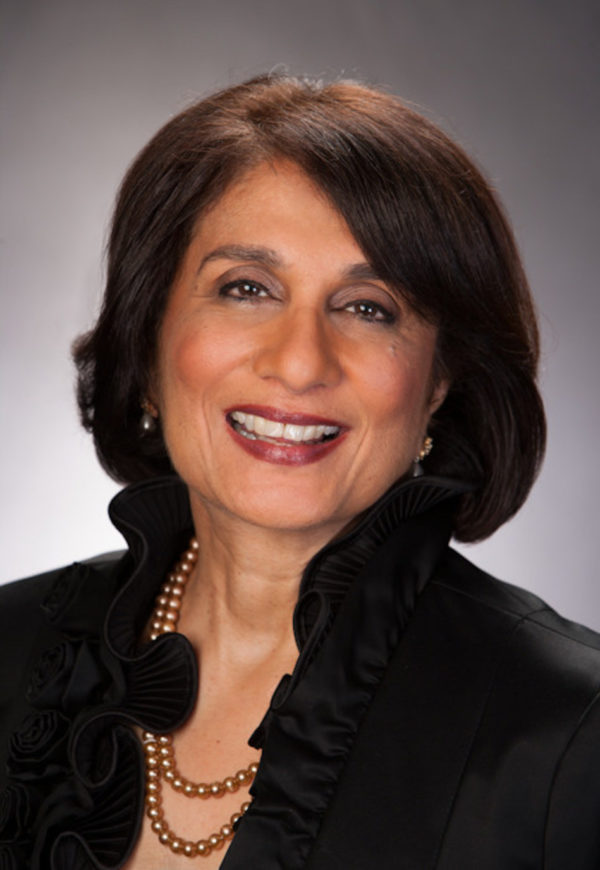
    WASHINGTON (TIP): Indian American Dr. Rohini Anand, senior vice president corporate responsibility and Global Chief Diversity Officer for Sodexo, a leading provider of sustainable, integrated facilities management and food service operations, has been appointed as the new Chair of the Catalyst Board of Advisors, which features a variety of senior leaders across Fortune 500 companies, including Coca-Cola Companies, Deloitte, IBM Corporation and Walmart. In this new leadership role, Anand will attend and chair all three Board of Advisors meetings over the next three years, as well as advise Catalyst’s CEO Deborah Gillis on new board members, meeting agendas and other board-related issues.

    Founded in 1962, Catalyst is the leading nonprofit organization accelerating progress for women through workplace inclusion. With operations in the United States, Canada, Europe, India, Australia, and Japan, and more than 800 supporting organizations, Catalyst is the trusted resource for research, information, and advice about women at work. Catalyst annually honors exemplary organizational initiatives that promote women’s advancement with the Catalyst Award.

    “I am delighted to welcome Rohini Anand as the new chair of the Catalyst Board of Advisors. Rohini is a recognized advocate for gender diversity and inclusion in workplaces,” said Deborah Gillis, President and CEO, Catalyst. “She has been a member of the Catalyst Board of Advisors for many years, bringing a breadth of experience and helping to drive change. I look forward to working with her in this new leadership role that is sure to be incredibly valuable to both the board and Catalyst.”

    “I am excited to represent Catalyst and Sodexo in my new role as Chair of the Advisory Board,” said Dr. Anand. “It’s a great honor and I’m looking forward to continuing to advance Catalyst’s mission of accelerating progress for women through workplace inclusion.”

    Dr. Anand’s commitment to diversity and inclusion continues to generate success and position Sodexo as a global leader in the space. As Sodexo’s SVP Corporate Responsibility and Global Chief Diversity Officer, she has helped the company rank among the world’s best. Under Dr. Anand’s leadership, Sodexo received the prestigious 2012 Catalyst Award and has ranked in the top ten for nine consecutive years on the DiversityInc business index of Top Companies for Diversity and Inclusion. In addition, The Human Rights Campaign has given Sodexo a 100 percent rating on its Corporate Equality Index for nine years and Sodexo was named Global Sustainability Industry Leader in its sector for the 12th year in a row by the Dow Jones Sustainability Index (DJSI).

  • Indian American Sundar Pichai, Google’s CEO, joins Alphabet’s Board of Directors

    Indian American Sundar Pichai, Google’s CEO, joins Alphabet’s Board of Directors

    SAN JOSE (TIP): Google’s Indian American CEO Sundar Pichai is joining parent company Alphabet’s board, according to an announcement on July 24 from the company. 

    “Sundar has been doing a great job as Google’s CEO, driving strong growth, partnerships, and tremendous product innovation. I really enjoy working with him and I’m excited that he is joining the Alphabet board,” said Larry Page, CEO of Alphabet, in a statement.

    Formerly the Product Chief of Google, Pichai’s current role as CEO was announced on 10 August 2015, as part of the restructuring process that made Alphabet Inc. into Google’s parent company, and he assumed the position on 2 October 2015.

    Pichai worked in engineering and product management at Applied Materials and in management consulting at McKinsey & Company.

    Pichai joined Google in 2004, where he led the product management and innovation efforts for a suite of Google’s client software products, including Google Chrome and Chrome OS, as well as being largely responsible for Google Drive. He went on to oversee the development of different applications such as Gmail and Google Maps. On 19 November 2009,  Pichai gave a demonstration of Chrome OS and the Chromebook was released for trial and testing in 2011, and released to the public in 2012.  On 20 May 2010, he announced the open-sourcing of the new video codec VP8 by Google, and introduced the new video format, WebM.

    On 13 March 2013, Pichai added Android to the list of Google products that he oversees. Android was formerly managed by Andy Rubin. He was a director of Jive Software from April 2011 to 30 July 2013. Pichai was selected to become the next CEO of Google on 10 August 2015 after previously being appointed Product Chief by CEO, Larry Page. On 24 October 2015 he stepped into the new position at the completion of the formation of Alphabet Inc., the new holding company for the Google company family.

  • Indian American Anantha Chandrakasan takes over as MIT’s Dean of School of Engineering

    Indian American Anantha Chandrakasan takes over as MIT’s Dean of School of Engineering

    BOSTON (TIP): Indian American Anantha P. Chandrakasan, the Vannevar Bush Professor and head of the Department of Electrical Engineering and Computer Science (EECS), has been resumed charge as dean of MIT’s School of Engineering, from July 1.

    During his six-year tenure as head of MIT’s largest academic department, Chandrakasan spearheaded a number of initiatives that opened opportunities for students, postdocs, and faculty to conduct research, explore entrepreneurial projects, and engage with EECS.

    “Anantha balances his intellectual creativity and infectious energy with a remarkable ability to deeply listen to, learn from, and integrate other people’s views into a compelling vision,” MIT President L. Rafael Reif says. “In a time of significant challenges, from new pressures on federal funding to the rising global competition for top engineering talent, I am confident that Anantha will guide the School of Engineering to maintain and enhance its position of leadership. And I believe that in the process he will help make all of MIT stronger, too.”

    Since joining the MIT faculty in 1994, Chandrakasan has produced a significant body of research focused largely on making electronic circuits more energy efficient. His early work on low-power chips for portable computers helped make possible the development of today’s smartphones and other mobile devices. More recently, his research has addressed the challenge of powering even more energy-constrained technologies, such as the “internet of things” that would allow many everyday devices to send and receive data via networked servers while being powered from a tiny energy source.

    In an email today announcing the news to the MIT community, Provost Martin Schmidt described Chandrakasan as “a people-centered and innovative leader.” Schmidt continued, “Having observed Anantha’s collaborative approach to building a shared vision within EECS, I am excited for the opportunities that lie ahead for the School of Engineering.”

    While at the helm of EECS, Chandrakasan launched a number of initiatives on behalf of the department’s students. “That’s what excites me about an administrative job,” he says. “It’s how I can enhance the student and postdoc experience. I want to create exciting opportunities for them, whether that’s in entrepreneurship, research, or maker activities. One of the key things I plan to do as dean is to connect directly with students.”

    Many of these initiatives were themselves designed with student input, including the Advanced Undergraduate Research Opportunities Program, more commonly known as “SuperUROP.” This year-long independent research program, launched in EECS in 2012 and expanded to the whole School of Engineering in 2015, was shaped in response to feedback about why some EECS students were opting out of MIT’s traditional UROP program.

    Chandrakasan also initiated the Rising Stars program in EECS, an annual event that convenes graduate and postdoc women for the purpose of sharing advice about the early stages of an academic career. Another program for EECS postdocs created under his direction, Postdoc6, aims to foster a sense of community for postdocs and help them develop skills that will serve their careers. Chandrakasan also helped create StartMIT, an independent activities period (IAP) class that provides students and postdocs the opportunity to learn from and interact with industrial innovation leaders.

    “I tend to be a people person,” Chandrakasan says. “Of course, data is always important, but it’s not where I start. I’m like the quarterback who throws it up in the end zone. I try things, and some of them don’t work, which I’m totally fine with; other things we try and then refine. But I do a lot of homework, talking to students and faculty, getting feedback, and incorporating them to improve our efforts.”

    “I’m also very passionate about helping our faculty explore new research areas,” says Chandrakasan, who as department head has sought unrestricted grants and other funding to provide faculty with this flexibility. These efforts have enabled several Faculty Research Innovation Fellowships, for midcareer faculty who seek to branch out in new directions.

    Chandrakasan also has a long-standing interest in creating opportunities for innovation outside the lab. He is a board member and chair of the advisory committee dealing with MIT policies for The Engine, a new accelerator launched by MIT last fall to support startup companies working on scientific and technological innovation with the potential for transformative societal impact. In the latter role, he has overseen five working groups consisting of faculty, students, postdocs, and staff with specialized expertise, and created suggestions for how the MIT community can work with The Engine.

    “In building out the concept for The Engine, it was vitally important to make sure it would meet the needs of faculty, student, and alumni entrepreneurs,” says MIT Executive Vice-President and Treasurer Israel Ruiz, who helped spearhead The Engine’s development. “As the faculty lead, Anantha played an indispensable role in gathering feedback from a wide range of voices and transforming it into actionable ideas for how The Engine should work.”

    Online learning is another area of interest for Chandrakasan: “I’m very excited about the whole online arena and how we can use MITx for residential education,” he says. Last fall, EECS and the Office of Digital Learning piloted a full-credit online course for a small cohort of students on campus, who gave the experience strong marks for providing flexibility and reducing stress. “I’m looking forward to working with the other department heads to see how we can get a license to experiment with these new modes of education,” he says.

    Born in Chennai, India, Chandrakasan moved to the United States while in high school. His mother was a biochemist and Fulbright scholar, and he enjoyed spending time in her lab where she conducted research on collagen.

    “I always knew I wanted to be an engineer and a professor,” he says. “My mother really inspired me into an academic career. When I entered graduate school, I knew on day one that I wanted to be academic professor.”

    Chandrakasan earned his bachelor’s (1989), master’s (1990), and doctoral (1994) degrees in electrical engineering and computer science from the University of California at Berkeley — the latter two after being rejected from MIT’s graduate program, he notes with a laugh. After joining the MIT faculty, he was the director of the Microsystems Technology Laboratories (MTL) from 2006 until he became the head of EECS in 2011.

    Chandrakasan is a recipient of awards including the 2009 Semiconductor Industry Association (SIA) University Researcher Award, the 2013 IEEE Donald O. Pederson Award in Solid-State Circuits, an honorary doctorate from KU Leuven in 2016, and the UC Berkeley EE Distinguished Alumni Award. He was also recognized as the author with the highest number of publications in the 60-year history of the IEEE International Solid-State Circuits Conference (ISSCC), the foremost global forum for presentation of advances in solid-state circuits and systems-on-a-chip. Since 2010, he served as the ISSCC Conference Chair. A fellow of IEEE, in 2015 he was elected to the National Academy of Engineering.

  • Clashes between herdsmen farmers kill 33 in Nigeria

    Clashes between herdsmen farmers kill 33 in Nigeria


    KANO, NIGERIA (TIP): At least 33 people were killed in clashes between cattle herders and farmers in Nigeria’s northern Kaduna state, a police chief told AFP Thursday. KANO, Nigeria: At least 33 people were killed in clashes between cattle herders and farmers in Nigeria’s northern Kaduna state, a police chief told AFP on july 20.

  • 20 Yemeni civilians killed in air strike UN, witnesses

    20 Yemeni civilians killed in air strike UN, witnesses

    ADEN (TIP): An air strike on a group of displaced Yemenis has killed at least 20 civilians, mostly from the same family, a UN statement and witnesses said July 19. The attack on Tuesday afternoon hit a group of civilians in the Mawza district of the southwestern province of Taez, a statement by the UN refugee agency said. Residents said the attack was carried out by a warplane from the Saudi-led coalition fighting Shiite rebels in support of Yemen’s internationally recognised government.

  • Swiss identify glacier bodies as  couple missing since 1942

    Swiss identify glacier bodies as couple missing since 1942

    BERLIN (TIP): Swiss police say they’ve formally identified two bodies found on an Alpine glacier as those of a couple missing for nearly 75 years. Valais canton (state) police said Wednesday that forensic experts using DNA analysis identified the two as Marcelin Dumoulin and his wife, Francine. They were 40 and 37, respectively, when they disappeared on Aug. 15, 1942. The couple’s daughter, now 79, has said her parents set off on foot to feed their animals but never returned. Police were alerted on Friday to the bodies on the Tsanfleuron glacier at 2,615 meters (8,580 feet) above sea level. Regional police have a list going back to 1925 of missing people. They note that, because of climate change, bodies of people missing for decades regularly emerge from receding glaciers. (PTI)

  • Earthquake damages buildings on Greek island 2 killed and 100 hurt

    Earthquake damages buildings on Greek island 2 killed and 100 hurt

    KOS (TIP): A powerful earthquake struck Greek islands early morning on july 20, damaging buildings and a port, killing at least two people and causing more than 100 injuries, authorities said.

    The island of Kos was nearest to the epicentre and appeared to be the worst-hit, with two deaths and structural damage to older buildings. Minor damage — cracks in buildings, smashed windows and trashed shops — appeared widespread, according to city officials.

    “The rest of the island has no problem. It’s only the main town that has a problem,” Kos Mayor Giorgos Kyritsis told state-run Greek media. “The buildings affected were mostly old, and were built before the earthquake building codes were introduced.”

    Rescuers were checking for trapped people inside houses after the quake struck in the middle of the night. Kyritsis said the army was mobilised along with emergency services. The island’s port was among structures that sustained damaged and a ferry en route there was not docking, the coast guard said.Giorgos Halkidios, Kos regional government official, said the number of injured was more than 100.

    “Two or three of them are in serious condition and are in surgery,” he said. He said the injured included people who were underneath a building that collapsed. Ferry services were suspended due to damage at Kos’s main port, where a 14th-century fortress also was damaged. A minaret from an old mosque also was damaged.

    Greek officials said the quake was 6.5-magnitude. It was centred 10 kilometres south of Bodrum, Turkey, and 16 kilometres east-northeast of Kos with a depth of 10 kilometres, according to the US Geological Survey. According to Turkish disaster officials, the earthquake had a magnitude of 6.3, and more than 20 aftershocks have been recorded. Esengul Civelek, governor of Mugla province, said there were no casualties according to initial assessments. She said “there were minor injuries due to fear and panic.” In Bitez, a resort town about 6 kilometres west of Bodrum, the quake sent frightened residents running into the streets Hotel guests briefly returned to their rooms to pick up their belongings but chose to spend the rest of the night outside, with some using sheets and cushions borrowed from nearby lounge chairs to build makeshift beds, according to an AP reporter on the scene. Greece and Turkey lie in an especially earthquake-prone zone. (AP)

  • Gifts to Britain’s Queen Elizabeth II go on display

    Gifts to Britain’s Queen Elizabeth II go on display

    LONDON (TIP): Britain’s Queen Elizabeth II is putting gifts received from world leaders on display at Buckingham Palace, with the eclectic collection including presents from the likes of Nelson Mandela and John F. Kennedy.

    A remarkable array of over 200 gifts will go on display from Saturday, providing an intriguing reminder of the globetrotting lifestyle and international encounters of the 91-year-old sovereign.

    “One of the most universal aspects of the Queen’s meetings with other heads of state, both at home and abroad, is the exchange of gifts,” said Sally Goodsir, assistant curator of the new “Royal Gifts” exhibition.

    Since her accession to the throne in 1952, Elizabeth has travelled more than 1 million miles (1.6 million kilometres) around the world and taken part in 89 state visits abroad.

    At the same time, she has welcomed more than 100 leaders to Britain for formal state visits.

    “The exchange is a gesture of goodwill and these gifts are representative of traditional skills or of cultural significance and speak of a nation of culture’s history and traditions,” explains Goodsir.

    Although hugely diverse, these symbols of friendship have often involved an exchange of signed photographs.

    These include one from US President John F. Kennedy in 1961, who along with his wife Jackie was invited to dine at Buckingham Palace while on an unofficial visit to London.

    The gifts on display also include a handwritten note of Kennedy’s “high esteem” for his royal host. Thirty-five years later, the queen met with another great figure of the 20th century when she welcomed Nelson Mandela for a state visit. The then South African president offered the monarch a silk scarf depicting bushmen hunting a herd of eland in his country’s Eastern Cape region.

    Next to the scarf stands a surprising portrait of Elizabeth, created by weaving dyed banana leaves together, which was given by Rwanda’s president Paul Kagame in 2006.

    Below the majestic chandeliers of Buckingham Palace’s ballroom gifts from Asia are on display, including a lacquer box with the image of a heron worked in silver on the lid.

    It was a present from Japan’s Emperor Showa to Elizabeth for her coronation in 1953. (AP)

  • Water thrown at Muslim women in fake acid attack hate crime outside mosque

    Water thrown at Muslim women in fake acid attack hate crime outside mosque

    SOUTHAMPTON (TIP): Water was thrown over two women standing outside a mosque in an apparent fake acid attack which police are treating as racially aggravated assault.

    The women, who were wearing traditional head coverings, were attacked as they waited outside the Bashir Ahmed Masjid in Southampton on Tuesday. A CCTV footage showed a black car slowing down next to them before speeding away. The pair reacted in horror before realising they are unhurt.

    The mosque, in the southern city’s Portswood district, has been forced to issue a safety warning to worshippers. Police described the women as “understandably shaken”, while on Facebook the mosque shared their fears that a subsequent attack could involve acid. It follows a string of acid attacks, including five committed inside 90 minutes in London last week.

    A message, the mosque said, came from one of the women read, “Sisters just to warn you to be careful when u are out and about, you all know about the recent acid attacks in London.

    “Today my friend and I were standing outside Bashir Masjid in Portswood, waiting to be picked up when a group of men in a black car drove past us and threw water at us. We are both OK because it was only water, but if they get away with doing stuff like this then it could embolden them to next time use bleach or acid.”

    The footage suggested the assault took place at about 2pm. A Hampshire Constabulary spokeswoman said, “We received a report yesterday regarding a racially aggravated assault in Portswood Road, Southampton.”

    “A woman reported that she stood outside a mosque in Portswood Road, with her friend, when they had water thrown over them by someone in a passing car.”

    “Our investigations are continuing today and we are in contact with the victims who were understandably shaken by this incident. The vehicle is described as a black estate car.”

    Recent acid attacks have led to calls for tougher controls on corrosive substances, while Home Secretary Amber Rudd has suggested acid attack convictions could soon carry life sentences. A Home Office review will examine the law enforcement and criminal justice response, existing laws, access to harmful products and the support available for victims.

    Anyone with information about the Southampton assault should call Hampshire Constabulary on 101, and quote reference 44170276157. (PTI)

  • Mosul’s Christians face dilemma after Islamic State

    Mosul’s Christians face dilemma after Islamic State

    ARBIL (IRAQ) (TIP): The jihadists may have been ousted from their Iraqi hometown of Mosul but many Christians like Haitham Behnam refuse to go back and trade in the stability of their new lives.

    “There’s no security, no protection for Christians back there,” said the former resident of the largest city in northern Iraq.

    “It’s better for us to stay here and keep our mouths shut,” said the man in his 40s who resettled in the Iraqi Kurdish capital of Arbil in 2014 after the Islamic State (IS) jihadist group seized control of Mosul.

    “They came to see us in our shops. They told us: ‘We have nothing against you. If we’re bothering you, tell us.’ A week later, it was ‘Christians out!’” recalled Behnam, who used to deal in ready-to-wear clothing.

    Under the brutal rule of IS, Mosul’s Christian community of around 35,000 was handed an ultimatum: convert to Islam, pay a special tax imposed on non-Muslims, or risk being executed unless they leave town.

    Since the Iraqi authorities on July 10 announced their recapture of Mosul after a battle that raged for several months, tens of thousands of Christians who have rebuilt their lives in the past three years face a dilemma.

    “We couldn’t go back even if we wanted to,” said Behnam, who fondly remembers “a paradise-like life” before Mosul fell under jihadist control.

    His polo shirt and trousers are smeared with grease from his new life as a mechanic working in an Arbil suburb, a change he has had to undergo in order to put food on the table for his wife and two children.

    “There’s no security (in Mosul). People were brainwashed over the past three years,” said Behnam, a Catholic. “Even the children have become Daesh, they’ve been taught to slit throats,” he said using a pejorative Arabic name for IS.

    A customer at the small workshop that Behnam rents was quick to agree. “If I was a Christian, I wouldn’t go back to Mosul until its residents prove to me that they’re ready to accept me,” said Omar Fawaz, a Muslim from the east of the city. Once the battle for Mosul was over, his parents had returned, only to find their home occupied by the victorious security forces.

    “Neighbours told us to take the house of a Christian who used to live four doors down,” said the 29-year engineer. “The mentality hasn’t changed. The imams in the mosques preach against IS… but the Salafists (radical Muslims) believe Christians have no place there.”

    Another Christian Maslawi (resident of Mosul), Essam Boutros, a father of four, had to restart from scratch after having abandoned five shops and two houses in the city in 2014.

    He had to sell his car to pay the first three months of rent for a shop in Arbil and used his business contacts and reputation to open credit lines with suppliers in neighbouring Turkey.

    Now his impressive two-floor store displays counters loaded with perfumes and cosmetics as well as racks of brightly coloured clothes for young girls. (AFP)

  • FRENCH MILITARY CHIEF RESIGNS AFTER ROW WITH MACRON

    PARIS: France’s top military chief resigned after a war of words with Emmanuel Macron over budget cuts that tested the new president’s authority.

    The row between Macron and General Pierre de Villiers erupted last week when the chief of staff told a parliamentary committee he would not allow the armed forces to be “screwed” by the government’s plans to slash 850 million ($980 million) from this year’s defence budget.

    Macron, 39, slapped down the 60-yearold 5-star general in front of army chiefs at their annual summer party last week, saying “I am the boss” and that he deeply regretted the budget dispute had been dragged into the “public sphere”. De Villiers, a widely respected figure who had been in the job for three years and was popular with the rank and file, said he had no choice but to stand down.

    “I no longer feel able to ensure the sustainability of the model of the armed forces that I think is necessary to guarantee the protection of France and the French people,” he said in a statement.

    On Wednesday, Macron stood by his handling of the disagreement, telling France 2 television that de Villiers was a “fine soldier” it was “not the role” of the chief of staff to question the budget.

    The president also reiterated his promise to raise the defence budget again in 2018. “I’m behind our troops,” he assured.

    He named General Francois Lecointre, a 55-year-old hero of the Balkans wars, as de Villiers’s replacement.

    Seen as one of the finest officers of his generation, de Villiers’s departure triggered howls of indignation from the opposition.

    The leader of the hard-left France Unbowed, Jean-Luc Melenchon, called it an “enormous mistake” on Macron’s part.

    De Villiers’s leaked remarks about the budget were made behind closed doors to a committee that expected him to “respond frankly”, Melenchon argued. Far-right leader Marine Le Pen, whom Macron beat in the presidential run-off election, claimed de Villiers’s resignation showed “the very serious abuses and worrying limits” of Macron’s leadership.

    Damien Abad, a lawmaker from the conservatives Republicans, also took issue with what he termed Macron’s “excessive authoritarianism”.

    De Villiers had repeatedly complained that the military was overstretched and said he saw it as his duty to inform politicians.

    In a Facebook “letter to a young recruit” last week, he wrote: “As everyone has their shortcomings, no one should be blindly followed.”

    Macron’s defence cuts — part of a 4.5 billion reduction in spending aimed at reducing France’s budget deficit — were viewed by the military as a betrayal after his strong show of support for the armed forces during his first weeks in office. Hours after being inaugurated Macron visited a hospital treating injured soldiers and his maiden foreign trip as leader took him to Mali to meet French troops engaged in counterterrorism operations.

    Today, he is set to visit an air base in the southwestern city of Istres, addressing the military for the first time since de Villiers’ departure, with Lecointre accompanying him.

    The president, his office said, will “reiterate his support for the armed forces, reminding them of his campaign pledge to increase the defence budget as well as his ambitious plans for them in a difficult international environment”.

    Retired general Dominique Trinquand, an adviser to Macron during his campaign, said the row had cast a pall over his otherwise “remarkable” debut.

    “This is a hitch that will probably be a bit difficult to get past,” he said in an interview with AFP. Uniformed troops formed a guard of honour and applauded de Villiers as he left the defence ministry, according to a one-minute video posted with the message “Merci” (thank you) on the chiefs of staff Twitter account.

    Macron says the belt-tightening is temporary and that he remains committed to boosting defence spending to 2.0 per cent of gross domestic product by 2025 (around 50 billion), in line with Nato targets. (AFP)

  • China’s attempts to lobby against India suffer as US China talks hit hard rock

    China’s attempts to lobby against India suffer as US China talks hit hard rock

    BEIJING (TIP): China’s hopes of getting western support for its stance against India dimmed as Chinese negotiators suffer a serious setback during annual US-China Strategic Economic Dialogue in Washington on Wednesday. Negotiations between the two sides got into a deadlock as American negotiators demanded an end to Chinese dumping of steel and a reduction in the adverse trade deficit created by Chinese exporters.

    Chinese envoys are already facing an uphill task trying to convince western countries that the world’s biggest democracy was actually an aggressor on the border with the second biggest economy. It is much easy for China to persuade countries that depend on its largesse like Pakistan that it was a victim at the Doklam plateau where Indian troops have allegedly trespassed into Chinese territory.

    A joint press conference that was to be held by officials of the two countries was abruptly cancelled. “The press conference was canceled because there was nothing to say. Nothing has been achieved in specific terms,” Sourabh Gupta, a senior specialist at the Institute of China America Studies in Washington told TNN. “The US came down very hard on China and I think China balked,” he said.

    The economic dialogue has resulted in a setback in US-China relationship, which will make it more difficult for Chinese diplomats to get Washington to accept their point of view on the border standoff with India, sources said.

    The Trump administration has repeatedly said that Chinese dumping of steel and other goods has led to huge loss of American jobs. During the negotiations, US commerce secretary Wilbur Ross said that China’s $347 trade deficit with his country was not the result of natural market forces but the absence of “fair, equitable and reciprocal” relationship between the two countries.

    “We must create more balance in our trade by increasing exports of made-in- America goods to China,” Ross said adding, “There are significant opportunities to do this if we can work together to remove the significant barriers that continue to exist”.

    Chinese Vice-Premier Wang Yang, who participated in the talks, spoke about the importance of cooperation between the two countries in general terms but had nothing specific to report in terms of outcomes.

    “Good cooperation between China and the US, the world’s two largest economies, will not only benefit the businesses and people of the two countries, but the entire world,” China’s state media quoted him as saying. (PTI)

  • No sympathy for lynching in the name of cow says Govt

    No sympathy for lynching in the name of cow says Govt

    NEW DELHI (TIP): Facing attacks over lynching incidents, the government on Thursday asserted that killings in the name of cow “sentiments” was unacceptable and said the state governments should take stern action against those indulging in such violence.

    Finance minister Arun Jaitley, who was replying to a debate on lynchings in the Rajya Sabha on behalf of ailing home minister Rajnath Singh, made it clear that the central government could not be blamed for violence by “some people” as it was the responsibility of the state governments to deal with such issues. “The government’s stand is clear.

    Nobody is allowed to do that (lynching in the name of cow protection). There is no rationalisation, no arguments of sentiments being hurt can be an explanation for this.

    And, the government is absolutely committed,” he said. He said “no amount of sympathy” will be shown for those who indulge in lynching and “law will certainly take its own course.”

    Jaitley was replying to the debate on ‘situation arising out of the reported increase in the incidents of lynching.

  • Mayawati’s resignation accepted

    Mayawati’s resignation accepted

    NEW DELHI (TIP): BSP supremo Mayawati’s resignation from the Rajya Sabha has been accepted by Chairman Hamid Ansari. Officials said Mayawati had submitted a fresh resignation letter as per the prescribed format, which was accepted by Ansari today Accusing the BJP and the Chair of not allowing her to raise the issue of anti-Dalit violence in Uttar Pradesh,Mayawati resigned from the House on Wednesday.

    The three-page resignation letter she submitted was rejected as it was not in the requisite format. As per the format, the resignation letter should be brief and should not mention reasons. The resignation move is seen as an attempt by Mayawati to consolidate her core Dalit support base and re-establish herself as the community’s preeminent leader after facing a massive defeat in the UP Assembly poll earlier this year. There is also a speculation that she might tie up with Lalu Prasad Yadav’s RJD to augment her falling political fortunes.

    The BSP could win only 18 seats while the BJP came to power by winning more than 300 of the 403 seats in the Assembly poll.

    The BJP had termed her resignation as a “drama” and pointed out that her tenure in the House was anyway coming to an end early next year.