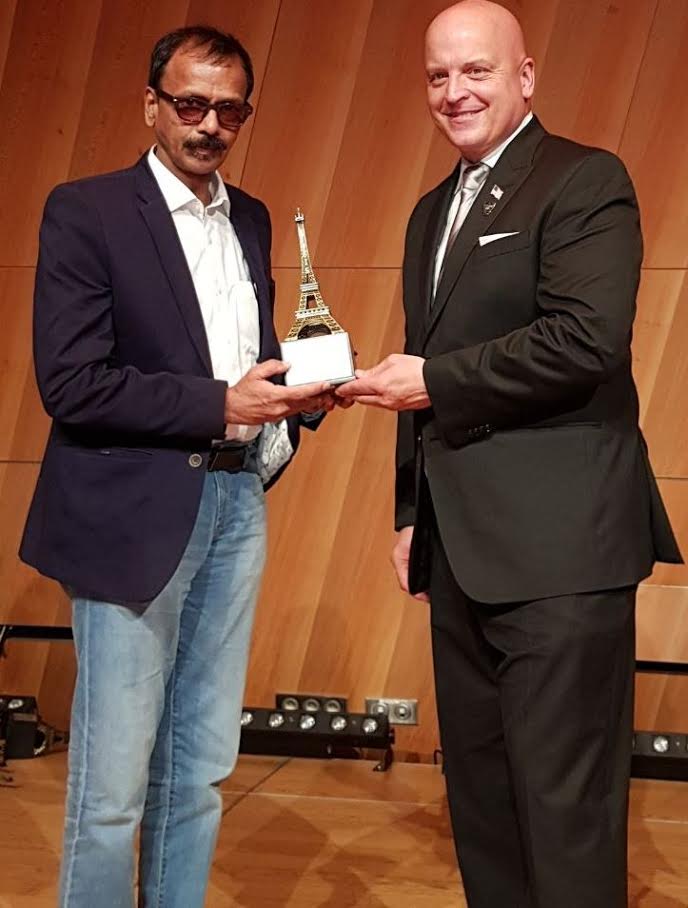
PARIS (TIP): Dr Pradeep V Mahajan, Chairman and Managing Director of StemRx Bioscience Solutions Pvt Ltd received the Paris appreciation award, 2017 for Excellence in stem cell therapy. The award was given by Robby Wells. It was a historic event of global research and significance and the event was held atop the Eiffel tower on July 8, 2017. It was an initiative of the French European Indian Organization based in Paris, World News Network and Art for Peace awards Beverly Hills, USA.
“Being honored at an international platform in the presence of many dignitaries was a very special and indeed the most memorable moment of my life. I am glad to have received this opportunity to represent India in the field of Cellular Therapy,” said Dr P V Mahajan, Chairman and Managing Director of StemRx Bioscience solutions Pvt Ltd.
This global phenomenon displayed an array of entrepreneurial success stories across industries, like pharmaceuticals, aviation, fashion, cosmetic, e-commerce, manufacturing, FMCG, real estate, jewelry, BFSI, and so on. Dr P V Mahajan’s brainchild is StemRx Bioscience Solutions Pvt. Ltd wherein a dedicated clinical and research team works 24/7 to develop new protocols for various untreatable diseases. A multidirectional approach is employed at StemRx comprising of education, research and therapeutics.
This vast knowledge and experience has gained Dr Mahajan the Excellence in stem cell therapy award. This coveted award ceremony was held in the presence of many well known dignitaries. To name a few; Robby Wells, a U.S. presidential candidate for the Democratic Party; Consuls General (Ms. Pinkey Ahluwalia, Vice Consul General of Belgium) , Ambassadors of various countries; Ashish Chauhan, the Managing Director of the Bombay Stock Exchange; Anurag Kashyap, a renowned filmmaker; Dr. B.K. Modi of the Modi Group and also a well-known philanthropist; heads of organizations like Google; Hollywood celebrities and socialites; the top Fashion Weeks of the world; mayors and senators; top brands; French and Indian actors; Naypadmasagar Maharaj, the Jain Spiritual Guru; Indian Bullion & Jewelry Association; and many more.
The award is an initiative of the French European Indian Organization based in Paris, World News Network and Art for Peace awards Beverly Hills, USA. The French European Indian Organization is a registered body with the French Government.
ATLANTA, GA (TIP): His Holiness Mahant Swami Maharaj, the current spiritual leader of the BAPS Swaminarayan Sanstha, joined devotees and well-wishers in celebrating the ten-year anniversary of the BAPS Shri Swaminarayan Mandir in Atlanta, GA on July 1, 2017. The Mandir was inaugurated by His Holiness Pramukh Swami Maharaj in 2007 and has helped enrich the local community through the development of family and youth programs, community outreach, and spiritual assemblies. A true labor of love, the Mandir offers weekly services and year-round programs organized by volunteers and Swamis within the BAPS community.
As a central place of Hindu worship, the BAPS Shri Swaminarayan Mandir opened to the community on August 26, 2007 and was made possible by the spiritual support, guidance, and inspiration of Pramukh Swami Maharaj, the fifth spiritual successor of Bhagwan Swaminarayan. Today, Mahant Swami Maharaj carries forward this work and legacy as the current spiritual successor of Bhagwan Swaminarayan. Through his leadership and guidance, Mahant Swami Maharaj invites people of all faiths and cultural backgrounds to visit and explore the mandir, its architecture, and its Hindu teachings.
Heer Patel from Memphis, Tennessee was relatively new to the BAPS community during the inaugural ceremonies in 2007 and recalled the event with great enthusiasm, “[Pramukh Swami] was truly someone special that was able to attract thousands of people from different backgrounds and bring them together for one purpose. I was not never really interested in spirituality, but after the memorable interactions with Pramukh Swami Maharaj when he inaugurated the temple in 2007, I became more and more connected with the temple.” Patel was a volunteer at the 10 year celebrations. “It has been such an amazing experience to have just as amazing interactions with Mahant Swami Maharaj as we celebrated the 10 year anniversary of the mandir”.
BAPS Atlanta 10th Anniversary: His Holiness Mahant Swami Maharaj, the current spiritual leader of the BAPS Swaminarayan Sanstha, joined devotees and well-wishers in celebrating the ten-year anniversary of the BAPS Shri Swaminarayan Mandir in Atlanta, GA on July 1, 2017.
Since Pramukh Swami Maharaj’s visit, participation within the local community and beyond has grown, and hundreds of individuals regularly attend celebrations of Hindu festivals throughout the year.
The BAPS Shri Swaminarayan Mandir in Atlanta is the first of its kind in the region, and community volunteers welcomed the ten-year anniversary celebrations in the presence of Mahant Swami Maharaj with the same zeal and excitement they experienced back in 2007.
The anniversary celebrations were primarily created and led by the youth of BAPS who have been preparing for the arrival of Mahant Swami Maharaj for several months. Yash Soni from Parkland, FL says, “By participating in various performances during the 10th anniversary celebration, I have felt a deep connection with my guru and developed a greater understanding of samp (unity) and teamwork. These are two values that he has stressed to youths of my age.”
Over the past ten years, the mandir has welcomed people from all walks of life, leaving a lasting impression in their lives. Community members join in weekly events to practice spirituality and personal development while fostering a sense of unity and teamwork. Music, language, and spiritual enrichment classes actively instill Hindu values and culture in future generations of young people who will grow to lead in their communities.
Regular programs and events at the mandir provide an opportunity for community members to explore and practice Hindu traditions and faith. The mandir is also the site of various charitable initiatives that include health fairs, blood drives, and community walkathons for people of all ages – merging the spirit of service with volunteerism.
The BAPS Mandir in Atlanta unites families in spirituality, setting the tone for the anniversary events. Highlights from the program included video footage of the inaugural ceremonies and colorful cultural dances. Guests relived the past ten years of the mandir’s history, the development of youth activities, and the installation of the sacred image of Nilkanth Varni. Devotees shared stories of reaching milestones in their spirituality, growing closer to one another, and practicing peaceful living – all inspired and guided by the role of mandir in their lives.
The event was attended by several community and government officials who recalled fond moments with Pramukh Swami Maharaj and shared heartfelt reflections on their first meeting with Mahant Swami Maharaj during his current travels. The mayor of Lilburn, Mayor Johnny Crist, presented Mahant Swami Maharaj with a key to the city while saying, “Most cities in the state of Georgia want to be a place where you live, work, and play. But may I offer another alternative, or add to it, and that is we need to be a city where that is a place to live, to work, to play, and to pray.” Mayor Crist also brought a proclamation designating July 1, 2017 as Mahant Swami Maharaj Day in the city of Lilburn. In addition to Lilburn there are a total of six cities recognizing July 1, 2017 as Mahant Swami Maharaj Day including Matthews, NC; Boynton Beach, FL; Montgomery, AL; Knox County, TN; and Anderson, SC.
Georgia’s Secretary of State, Mr. Brian Kemp, conferred an Honorary Citizenship of Georgia to His Holiness Mahant Swami Maharaj. The honorable Mr. Nagesh Singh, the Consul General of India, was also in attendance and conveyed a hearty welcome on behalf of the Government of India.
The celebrations concluded with blessings from Mahant Swami Maharaj who encouraged all to uphold unity, maintain faith, and further develop one’s spirituality in strengthening the mandir as a community place of worship.
Follow #BAPSATL10 and #MahantSwami on social media for more details regarding anniversary celebrations and His Holiness Mahant Swami Maharaj’s North America visit.
More details at http://www.baps.org/News/2017/BAPS-Atlanta-10th-anniversary-11686.aspx
NEW YORK (TIP): Sunita Kumar, an Indian American Brooklyn based pharmacy owner/operator has been charged with defrauding Medicare and Medicaid programs of approximately $9 Million.
Joon H. Kim, the Acting United States Attorney for the Southern District of New York, announced the unsealing of a criminal Complaint charging defendant Sunita Kumar with operating a health care fraud scheme utilizing two pharmacies in Brooklyn, New York, through which KUMAR submitted approximately $9 million in fraudulent claims to Medicaid and Medicare. KUMAR was arrested July 10 morning and was presented in Manhattan federal court before U.S. Magistrate Judge Andrew J. Peck.
Attorney Joon H. Kim said: “As alleged, Sunita Kumar defrauded Medicare and Medicaid, public programs to assist the indigent and the elderly, by submitting $9 million in fraudulent claims. She allegedly did so by inducing people to surrender their own prescriptions and forego their medications in exchange for kickbacks. Medicare and Medicaid provide critical health care for some of our most vulnerable citizens. Together with our law enforcement partners, we will aggressively pursue those who allegedly use public programs as a vehicle for illegal personal profit.”
Kumar, 54, of Old Westbury, New York, is charged with one count of health care fraud, which carries a maximum sentence of 10 years in prison, and one count of paying illegal remuneration in the form of kickbacks, which carries a maximum sentence of five years in prison.
(Source: U.S. Attorney’s Office, Southern District of New York)
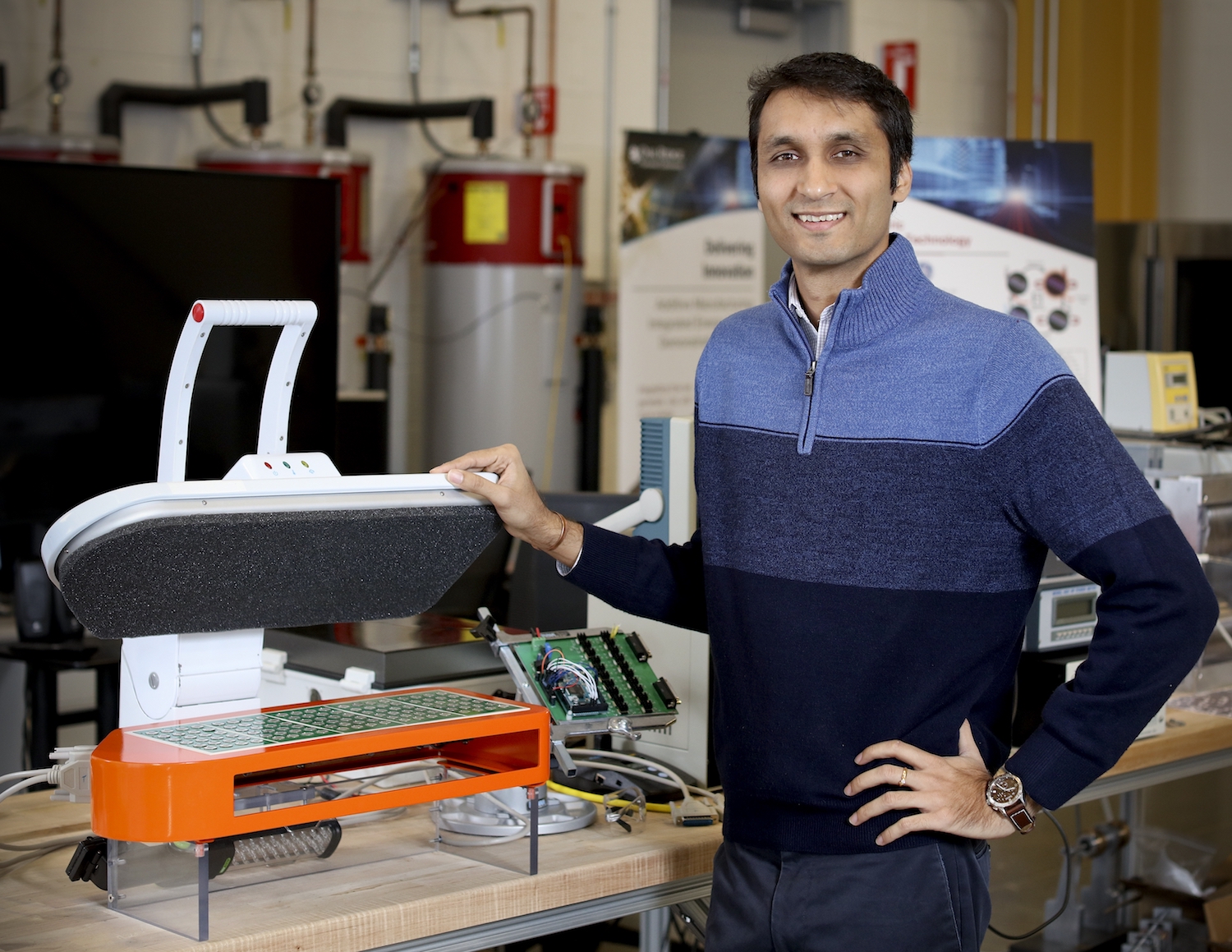
NEW YORK (TIP): An Indian-American researcher has invented a dryer that could easily dry clothes even without heat. Viral Patel along with his team at Oak Ridge National Laboratory in Tennessee have invented a dryer that could laundry your clothes much faster. Expected to be five times more energy efficient, ‘Ultrasonic dryer’ could dry a large load of clothes in about half the time.
Viral Patel came to Oak Ridge National Laboratory (ORNL) with the aim of conducting research that would provide benefits to the average consumer. Viral began his studies after moving from Zambia to the United States for college. As an undergraduate at the Illinois Institute of Technology, he started out in aerospace engineering. But after taking a course in thermal systems design, he decided to broaden his horizons and career opportunities with a dual major in mechanical engineering.
Viral jumped into three energy efficiency projects almost immediately after starting at the lab as a postdoctoral researcher in the Energy and Transportation Science Division in 2015, working on development of two clothes dryers (one ultrasonic and the other thermoelectric) and a new, more efficient rotating heat exchanger for refrigerator applications.
Outside the lab, Viral enjoys reading science fiction, loves to cook and travel, and spends time with friends and family. His family is spread across the globe now—on both US coasts, back in Zambia, and in Australia.
JERSEY CITY, NJ (TIP): Jersey City Ward C committeewoman Rekha Nandwani became the second official candidate on June 30 for Jersey City Council race.
Rich Boggiano, 73, the Jersey City Ward C councilman, was the first candidate in the upcoming mayoral and council races to qualify for a race.
A Boggiano challenger, Rekha currently serves as a committeewoman for her community in Ward C and as President of the Jefferson Avenue Block Association. She is also a steering board member and county director for the New Jersey Democratic State Committee’s South Asian American Caucus. But she is a mother first with a daughter in Jersey City’s public school system. An entrepreneur by background, Rekha brings a record of creativity and efficiency in seeking unique solutions to issues facing her community and making sure all residents have a say.
WASHINGTON (TIP): Indian American student Madhuri Molleti of Madison has won the 2017 National Geographic Mundo Explorer Competition and embarked on a travel to Iceland.
DIRECTV and Nat Geo Mundo recently announced the 2017 winner of the Nat Geo Mundo Explorer competition – a unique travel program offering students the opportunity to go into the field with National Geographic photographers, scientists and writers. The competition was created to provide four deserving students (two from the United States and two from Latin America) the opportunity to explore the subarctic island nation of Iceland and learn the basics of climate change.
Molleti, a student at James Clemens High School, is one of four teenagers from the United States and Latin America who won access to this unique travel program with all expenses paid. She left last week with a National Geographic team on a 15-day expedition to Iceland, joining other students to explore the subarctic island nation and learn the basics of climate change with Nat Geo photographers, scientists and writers.
Their travels will include visits to Iceland’s geothermal features, its rugged coast, its glacier-rich Vatnajokull National Park, and other stops that include basalt columns, black sand beaches, wildlife sanctuaries, volcanic features, forests, waterfalls and fishing villages.
“DIRECTV and AT&T are proud to support programs that empower students and provide unique learning opportunities,” said Dave Hargrove, AT&T Regional Director of External Affairs. “It’s exciting to play a part in offering students like Madhurri a chance to embark on a once-in-a-lifetime experience, and we look forward to learning about her adventures later this summer.”
Madhuri was an AP student and member of the National Honor Society at James Clemens. She plans to attend UAB to study public health in fall. Her parents are Raju and Padma Molleti.
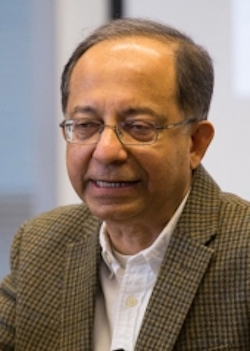
WASHINGTON (TIP): Renowned economist Kaushik Basu, the C. Marks Professor of International Studies and professor of economics in the College of Arts and Sciences in Cornell University, began his three-year term as president of the International Economic Association (IEA) June 23.
The IEA is a leading organization founded in 1950 for professional economists that seeks to shape global economic policy and research. Among IEA past presidents are Nobel laureates Kenneth Arrow, Robert Solow, Amartya Sen and Joseph Stiglitz.
Basu served as senior vice president and chief economist at the World Bank from 2012 to 2016 and as the chief economic adviser to the government of India from 2009 to 2012. At Cornell, he has served as chairman of the Department of Economics and as director of the Center for Analytic Economics.
He received a B.A. in economics in 1972 from St. Stephen’s College, Delhi University, and a M.Sc. in 1974 and a Ph.D. in 1976, both in economics from the London School of Economics. A fellow of the Econometric Society, Basu has published widely in development economics, industrial organization, game theory and welfare economics. His books include “Analytical Development Economics” (1997), “Prelude to Political Economy: A Study of the Social and Political Foundations of Economics” (2000), “Beyond the Invisible Hand: Groundwork for a New Economics” (2010) and “An Economist in the Real World: The Art of Policymaking in India” (2015).
WASHINGTON (TIP): On July 10, 2017, the U.S. Senate confirmed Neomi Rao, associate professor at the Antonin Scalia Law School at GeorgeMason University as Administrator of the Office of Information and Regulatory Affairs, an agency within the White House Office of Management and Budget. She is the first Indian-American to head the important Office in the White House.
Rao’s confirmation was welcomed by top American lawmakers.
“As regulatory czar for federal policymaking, Director Rao will play an instrumental role in helping the President fulfill his promise to roll back unnecessary red tape and unleash the full potential of the American economy,” said Senator Orrin Hatch, senior member and former Chairman of the Senate Judiciary Committee.
Hatch said he looks forward to working with Rao to ensure that federal rules and regulations are narrowly tailored to address pressing public health and safety concerns while also leaving plenty of room for job creators and entrepreneurs to expand and flourish.
Rao worked on Senator’s staff several years ago.
Senator Ron Johnson, chairman of the Senate Homeland Security and Governmental Affairs Committee, applauded Senate for confirming Rao’s nomination.
“We can all agree that federal regulations should achieve their aim without imposing unnecessary costs on the country’s economy and job creators. I look forward to working with Professor Rao to reduce the burden of regulations – by our best estimates as high as USD 2 trillion a year – that weigh on the American economy,” Johnson said.
Senator John Hoeven said as the head of OIRA, Rao is going to play a vital role in helping to provide regulatory relief and make the country more competitive.
“Further, I appreciate her commitment to work with me to ensure public-private partnerships receive fair treatment by OMB and the Army Corps,” he said.
“In order for our nation to continue to compete around the globe, we need to have a cost-effective, pro-growth regulatory environment,” Hoeven said.
Senator Deb Fischer hoped that in her role as the nation’s top regulatory official, Rao will focus on eliminating the misguided federal regulations harming Nebraska families and communities.
“Cutting through reams of government red tape has long been a priority of mine and I look forward to working with Rao to continue to do so,” Fischer said.
Described by The Washington Post as a “superlative pick”, Rao at the George Mason University founded and directs the Center for the Study of the Administrative State.
Rao’s research and teaching focuses on constitutional and administrative law.
Rao’s scholarship is informed by her service in all three branches of the federal government. Prior to joining the Law School, she served as Associate Counsel and Special Assistant to President George W. Bush. Professor Rao also served as counsel to the U.S. Senate Committee on the Judiciary, where she was responsible for judicial nominations and constitutional law issues. In between government service, Professor Rao practiced in the London office of Clifford Chance LLP, specializing in public international law and arbitration. She clerked for Judge J. Harvie Wilkinson III on the U.S. Court of Appeals for the Fourth Circuit and for Justice Clarence Thomas on the U.S. Supreme Court. She was a visiting professor at the University of Minnesota Law School in fall 2013.
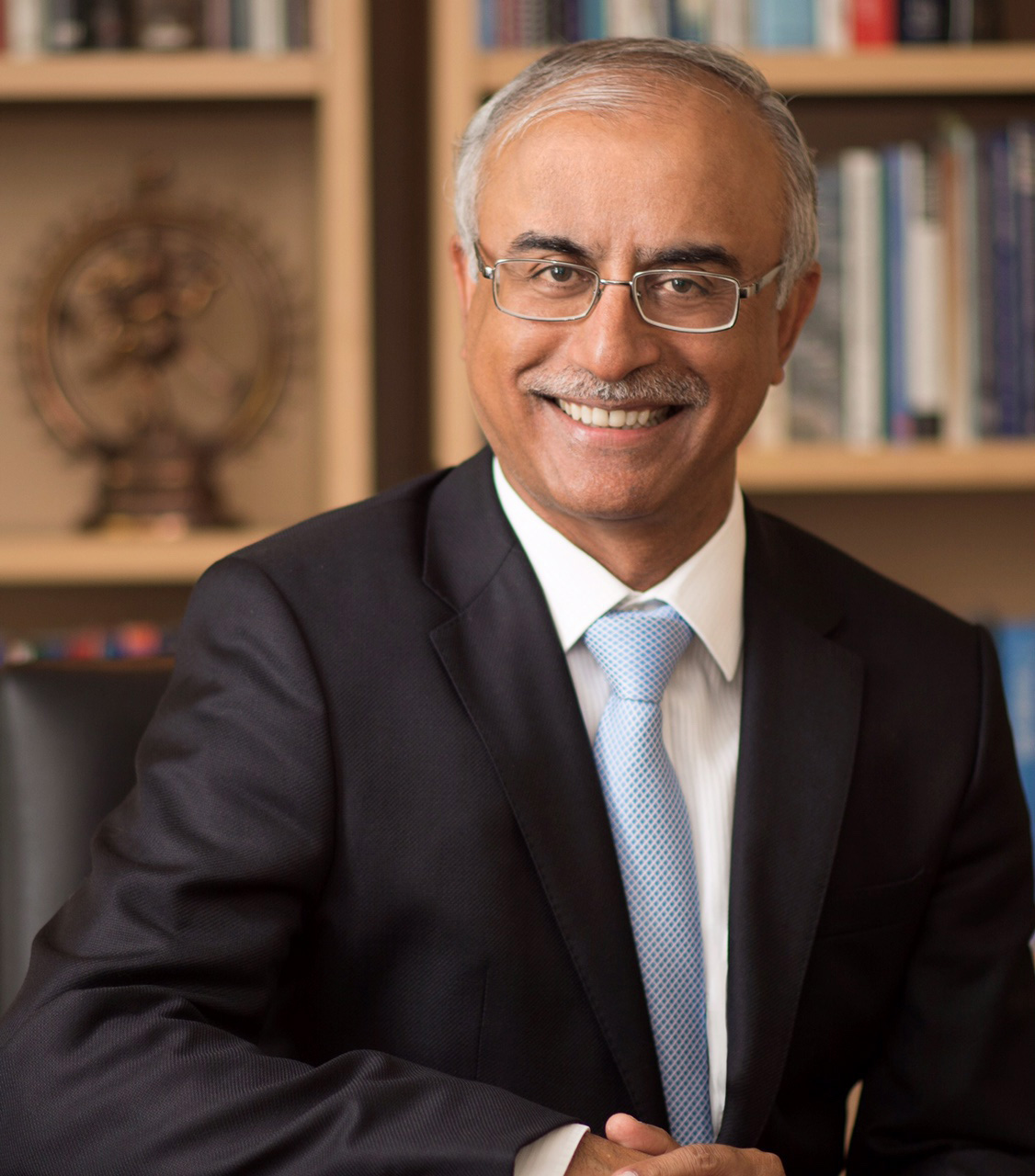
NEW BRUNSWICK, NJ (TIP): On July 1, Debasish “Deba” Dutta – a respected Indian American academic and an experienced higher education administrator who has spearheaded change at three top national research universities – began serving as the chancellor of Rutgers University, New Brunswick.
Dutta came to Rutgers from Purdue University, where he served as provost and executive vice president for academic affairs and diversity, with a faculty appointment as a professor of mechanical engineering. Previously, he worked at the University of Illinois at Urbana-Champaign and the University of Michigan, Ann Arbor.
As chancellor of Rutgers University-New Brunswick, Dutta will oversee the largest of the three major Rutgers University campuses with more than 50,000 students, 4,000 faculty, 12 degree-granting schools, nine academic research centers, four administrative units, a premier Honors College, Douglass Residential College and the Zimmerli Art Museum.
“I am tremendously excited to bring the skills I have developed at Purdue, Illinois and Michigan to lead Rutgers University-New Brunswick,” Dutta said. “I look forward to working with the faculty, staff and students to drive innovation and build a new era of success that will elevate the flagship of Rutgers University to even greater national prominence.
“One of my goals is to provide institutional leadership with an urgency to address current needs, ever mindful of history, and with an eye toward the future. This university is rich with highly accomplished faculty, skilled administrators, and talented and passionate students. I truly believe that when we work together, the possibilities are limitless.”
Dutta is a fellow of the American Association for the Advancement of Science and the American Society of Mechanical Engineers, as well as a scholar in residence at the National Academy of Engineering.
Before joining Purdue in 2014, Dutta served as associate provost and dean of the graduate school at the University of Illinois at Urbana-Champaign, where he was also Gutgsell Endowed Professor and interim vice-chancellor for research. There, he established several new interdisciplinary programs to help foster new research and create collaborations across colleges. He also helped set standards for more than 300 master’s and doctoral programs across disciplines.
Sandeep Chakravorty to replace Riva Ganguly Das as Consul General
NEW YORK CITY (TIP): Sandeep Chakravorty, India’s current Ambassador to Peru will be the next Consul General of India in New York, according to information available with The Indian Panorama.
The present Consul General Ms Riva Ganguly Das will be taking over as Director General of the Indian Council for Cultural Relations (ICCR).
Ms Riva Ganguly Das had assumed charge as the Consul General at New York Consulate on March 7, 2016. She had succeeded Ambassador Dnyaneshwar Mulay who is presently Secretary in the ministry of external affairs in New Delhi. Ms Das has had the shortest tenure as Consul General of India in New York.
Maulana Abul Kalam Azad, independent India’s first Education Minister, founded ICCR in 1950. Its objectives are to actively participate in the formulation and implementation of policies and programs pertaining to India’s external cultural relations; to foster and strengthen cultural relations and mutual understanding between India and other countries; to promote cultural exchanges with other countries and people; and to develop relations with nations.
The incoming Consul General Sandeep Chakravorty is a member of the Indian Foreign Service (IFS) of 1996. batch Before joining the Government of India, he worked for several years in organizations dealing with forestry, environment and watershed development issues in India.
He has served in India’s missions in Madrid, Bogota and Dhaka. In the Ministry of External Affairs of India, he served at several desks including working as Press Relations Officer as well as Private Secretary to Minister of State for External Affairs. He also served in the Eurasia Division dealing with Central Asia and in the East Asia Division dealing with China, Japan, Koreas and Mongolia. Before being appointed as India’s Ambassador to Peru and Bolivia, he was India’s Deputy High Commissioner in Dhaka, Bangladesh.
He holds a Master Degree in Advanced Studies from Geneva University and has an MA in Sociology. He has a PG Diploma in Forestry Management from Indian Institute of Forest Management (IIFM), Bhopal. He graduated in Physics from Delhi University.
Federation of Indian Associations NY/NJ/CT is hosting a farewell reception to Ambassador Das on Tuesday, July 18 at Royal Albert’s Palace in Edison, New Jersey.
WASHINGTON (TIP): Scientists, including one of Indian origin, have developed a smart headlight system for the first time that can help drivers see through heavy rain or snowfall and safely navigate roads during stormy nights.
The system invented by researchers at Carnegie Mellon University (CMU) in the US improves visibility by constantly redirecting light to shine between particles of precipitation. It prevents the distracting and sometimes dangerous glare that occurs when headlight beams are reflected by precipitation back toward the driver.
“If you’re driving in a thunderstorm, the smart headlights will make it seem like it’s a drizzle,” said Srinivasa Narasimhan, CMU associate professor of robotics. The system uses a camera to track the motion of raindrops and snowflakes and then applies a computer algorithm to predict where those particles will be just a few milliseconds later.
The light projection system then adjusts to deactivate light beams that would otherwise illuminate the particles in their predicted positions. “A human eye will not be able to see that flicker of the headlights,” Narasimhan said.
“And because the precipitation particles aren’t being illuminated, the driver won’t see the rain or snow either,” To people, rain can appear as elongated streaks that seem to fill the air. To high speed cameras, however, rain consists of sparsely spaced, discrete drops.
That leaves plenty of space between the drops where light can be effectively distributed if the system can respond rapidly. Lab tests demonstrated that the smart headlight system could detect raindrops, predict its movement and adjust a light projector accordingly in 13 milliseconds.
At low speeds, such a system could eliminate 70 to 80 per cent of visible rain during a heavy storm, while losing only five or six per cent of the light from the headlamp. To operate at highway speeds and to work effectively in snow and hail, the system’s response will need to be reduced to just a few milliseconds.
WASHINGTON (TIP): Scientists, including those of Indian origin, have developed a new battery-less cell phone for the first time, which consumes almost zero power and runs by harvesting energy from ambient radio signals or light.
The team also made Skype calls using its battery-free phone, demonstrating that the prototype made of commercial, off-the-shelf components can receive and transmit speech and communicate with a base station.
“We have built what we believe is the first functioning cell phone that consumes almost zero power,” said Shyam Gollakota, associate professor at the University of Washington (UW) in the US.
Researchers eliminated a power hungry step in most modern cellular transmissions – converting analogue signals that convey sound into digital data that a phone can understand.
This process consumes so much energy that it has been impossible to design a phone that can rely on ambient power sources, researchers said. Instead, the battery-free cell phone takes advantage of tiny vibrations in a phone’s microphone or speaker that occur when a person is talking into a phone or listening to a call.
To transmit speech, the phone uses vibrations from the device’s microphone to encode speech patterns in the reflected signals. To receive speech, it converts encoded radio signals into sound vibrations that that are picked up by the phone’s speaker.
In the prototype device, the user presses a button to switch between these two ‘transmitting’ and ‘listening’ modes, researchers said. The prototype was able to perform basic phone functions- transmitting speech and data and receiving user input via buttons.
Using Skype, researchers were able to receive incoming calls, dial out and place callers on hold with the battery free phone. The team designed a custom base station to transmit and receive the radio signals. That technology conceivably could be integrated into standard cellular network infrastructure or Wi-Fi routers now commonly used to make calls.
“You could imagine in the future that all cell towers or Wi-Fi routers could come with our base station technology embedded in it, and if every house has a Wi-Fi router in it, you could get battery free cell phone coverage everywhere,” said Vamsi Talla, a research associate at UW.
The battery-free phone does still require a small amount of energy to perform some operations. The prototype has a power budget of 3.5 micro watts. Researchers demonstrated how to harvest this small amount of energy from two different sources. The battery free phone prototype can operate on power gathered from ambient radio signals transmitted by a base station up to 31-feet away.
Using power harvested from ambient light with a tiny solar cell-roughly the size of a grain of rice – the device was able to communicate with a base station that was 50 feet away, they said.
The study was published in the journal Proceedings of the Association for Computing Machinery on Interactive, Mobile, Wearable and Ubiquitous Technologies.
LONDON (TIP): For the first time, scientists have detected large quantities of methanol molecules around Saturn’s moon Enceladus, a finding that has significant implications for the search for alien life.
Enceladus has peaked scientists’ interest since water rich plumes were discovered gushing from its south pole. The discovery was made by the Cassini spacecraft, which has since flown through the plumes and sampled organic compounds.
The latest results, however, were gained using the IRAM 30-metre radio telescope in the Spanish Sierra Nevada, and reveal a higher-than-expected quantity of the molecule methanol around Enceladus.
This is the first detection of a molecule from Enceladus with a ground-based telescope. Enceladus’s plumes are thought to originate in water escaping from a subsurface ocean through cracks in the moon’s icy surface.
Eventually these plumes feed into Saturn’s second outermost ring, the E-ring. Recent work has found similar amounts of methanol in Earth’s oceans and Enceladus’s plumes.
However, the new discovery suggests that material spewed from Enceladus undertakes a complex chemical journey once vented into space. “Recent discoveries that icy moons in our outer Solar System could host oceans of liquid water and ingredients for life have sparked exciting possibilities for their habitability,” said Emily Drabek-Maunder, from Cardiff University in the UK.
“But in this case, our findings suggest that that methanol is being created by further chemical reactions once the plume is ejected into space, making it unlikely it is an indication for life on Enceladus,” said Drabek-Maunder.
The team suggests the unexpectedly large quantity of methanol may have two possible origins: either a cloud of gas expelled from Enceladus has been trapped by Saturn’s magnetic field, or gas has spread further out into Saturn’s Ering.
In either case, the methanol has been greatly enhanced compared to detections in the plumes. “Observations aren’t always straightforward. To interpret our results, we needed the wealth of information Cassini gave us about Enceladus’s environment,” said Dave Clements from Imperial College of London.
“This study suggests a degree of caution needs to be taken when reporting on the presence of molecules that could be interpreted as evidence for life,” said Clements. “This finding shows that detections of molecules at Enceladus are possible using ground-based facilities,” said Drabek-Maunder.
“However, to understand the complex chemistry in these subsurface oceans, we will need further direct observations by future spacecraft flying through Enceladus’s plumes,” she said.
SINGAPORE (TIP): Oil prices fell by more than 1 percent early on Friday, with U.S. crude futures dipping below $45 per barrel as news of a rise in U.S. production added to earlier reports that OPEC output was also on the rise.
Brent crude futures, the international benchmark for oil prices, were trading down 58 cents, or 1.2 percent, at $47.53 per barrel by 0137 GMT. U.S. West Texas Intermediate (WTI) crude futures were at $44.95 per barrel, down 57 cents, or 1.3 percent.
News of the production rise outweighed positive sentiment from falling crude and gasoline inventories in the United States. “Oil prices were initially stronger of the back of the better than expected drawdown in inventories… However, the exuberance was short-lived, as the market turned its attention to another increase in U.S. production,” ANZ bank said on Friday.
U.S. crude inventories fell by 6.3 million barrels in the week to June 30, to 502.9 million barrels, according to the U.S. Energy Information Administration (EIA). Gasoline stocks fell by 3.7 million barrels, to 237.3 million barrels.
The data suggested strong demand in the United States, but this was offset by a 1 percent rise in weekly U.S. oil production to 9.34 million barrels per day (bpd). Since mid-2016, that’s an increase of more than 10 percent.
The rising U.S. output comes as supplies from the Organization of the Petroleum Exporting Countries (OPEC) rose for a second month in a row in June, according to Thomson Reuters Oil Research, despite its pledge to hold back production between January this year and March 2018.
OPEC exported 25.92 million barrels per day (bpd) in June, 450,000 bpd more than in May and 1.9 million bpd more than a year earlier.
HAMBURG (TIP): As the world debates use of big data and analytics to improve financial inclusion, India’s Aadhaar system has come in for praise by a global body on financial reforms for expanding banking reach and lesser use of cash.
In a progress report on efforts to assess and address decline in correspondent banking, the Financial Stability Board (FSB) said its action plan in this regard is making good progress but the fall in numbers is continuing.
“A decline in the number of correspondent banking relationships remains a source of concern for the international community,” it said, while flagging issues like problems in international payments and some payment flows being driven underground.
This may have adverse consequences for financial inclusion, as well as the stability and integrity of the financial system, it added. The FSB has submitted its action plan in this regard to the G20 Summit, which begins here tomorrow and is being attended by Prime Minister Narendra Modi along with the leaders of the world’s other largest economies.
The FSB has been established to coordinate at the international level the work of national financial authorities and global standard-setting bodies in order to develop and promote the implementation of effective regulatory, supervisory and other financial sector policies.
It has established a Correspondent Banking Coordination Group (CBCG) to coordinate and maintain impetus in the implementation of the action plan.
On potential applications of financial technologies, the FSB said the CBCG had an initial discussion on whether advances in big data and analytics might be usefully combined with KYC utilities, better information in payment messages and the LEI (Legal Entity Identifier) to facilitate due diligence on correspondent banks and transaction monitoring.
NEW DELHI (TIP): The Modi government’s Goods and Services Tax (GST) is “very, very imperfect” and cannot be called “one nation, one tax” as it has seven or more rates, senior Congress leader P Chidambaram has said.
The Congress will press for a reduction in tax rates and demand a cap of 18 per cent, besides seeking to bring petroleum, electricity and real estate under the new tax regime, the former finance minister told reporters.
“This is a very, very imperfect GST. This is not the GST which we (the UPA) had envisaged,” he said. What the government had implemented, he said, was a GST with at least seven rates.
“It is a mockery of the GST.When we have rates such as 0.25, 3, 5, 12, 18, 28 and 40, and possibly more because of the discretion vested with state governments, how can we call this a ‘one nation, one tax’ regime,” he wondered. Asked if the issue would be raised in Parliament, he said, “Of course, this is a preview”.
Chidambaram said the Congress would continue to watch the roll out of the GST and “articulate the fears and grievances” of businesses and consumers. “We will keep vigil over the possible misuse of the draconian powers given to the anti-profiteering authority. We will highlight the elements of the true GST,” he said.
The senior leader said his party would hold meetings across the country to highlight that the Congress was the “original proponent” of the GST and campaign for a “true GST”. He noted that authorities and businesses were “unprepared or under-prepared” for the tax regime and said its launch should have been deferred by two months, while the GSTN (goods and services tax network) should have been put on a trial run. “I suggested a trial run for two months and effectively we should have a rollout of GST from September 1,” he said. He said the government should have tried to make it as perfect a GST as possible as this was “very imperfect”.
NEW DELHI (TIP): Global e-tailing giant Amazon has invested over Rs 2,000 crore (over $310 million) in India in the past two months as it looks to consolidate its position in the country and fend off local rivals like Flipkart.
The US-based firm pumped in Rs 1,680 crore in June into its online marketplace business in India, while Rs 341 crore was invested in the preceding month in the wholesale business. As per regulatory filings with the Corporate Affairs Ministry, Amazon Corporate Holdings and Amazon.com.incs has made these investments in the two Indian entities.
The capital infusion will also provide more arsenal to the Indian entity that has been aggressively investing in expanding infrastructure and adding solutions to enhance consumer and seller experience. Last year, Amazon founder Jeff Bezos had committed investments to the tune of $5 billion into the Indian market. Estimates suggest that the company has already invested over $2 billion in the last few quarters in the Indian market.
Amazon India, which has recently completed four years of operations, has been directing its investments towards building warehouses, strengthening logistics and increasing product assortment.
Besides, money is also being invested in marketing and promotions as the company looks to bring more consumers into shopping online on its platform. Bezos, as part of investor calls, has highlighted the importance of the Indian market to its operations on multiple occasions and has assured that the company will continue to invest in India. When contacted, an Amazon India spokesperson said: “We remain committed to our India business with a long-term perspective to make e commerce a habit for Indian customers and invest in the necessary technology and infrastructure to grow the entire ecosystem.”
With Tiger Global-backed Flipkart raising $1.4 billion earlier this year, the competition is intense and the rivals are already believed to be gearing up for the festive season. Amazon has invested Rs 341 crore in Amazon Wholesale India, the wholesale B2B arm of Amazon India.
The company has also made an additional investment of Rs 1,680 crore in its India unit as it looks to further strengthen operations in the booming e commerce market. Source: PTI
While it is a known fact that carrots are excellent for your eyes, there are other foods as well that are known to protect eyesight and promote eye health. Include the following food items in your diet…
Dark, leafy greens like spinach, broccoli, cabbage, lettuce, iceberg lettuce, kale, etc contain a lot of antioxidants such as lutein and zeaxanthin that lower your chances of developing macular degeneration and cataracts.
While there are several people who are against consumption of eggs, when eaten in moderation, these can actually be beneficial for health. The yolk present in eggs contains lutein, zeaxanthin and zinc, which lower your chances of developing macular degeneration.
Consume citrusy fruits such as grapefruit, tangerine, oranges, lemons, sweet lime etc, which are packed with vitamin C, known to lower your risk of developing cataracts.
Consuming a handful of almonds daily will help slow down macular degeneration thanks to the vitamin E present in them. Tuck into fish like mackerel, tuna, salmon, etc, which are packed with fatty acids that protect your eyes. Some studies also say that regularly consuming oysters is said to improve eyesight. Corn contains lutein and zeaxanthin, excellent for your eyes.
The newest toy addiction, fidget spinners, have made their way into the fingertips of many youngsters and adults too. These are devices that are portable enough to fit in the palm of your hand. Fidget spinners contain weighted propellers which allow you to spin it for several seconds. They are known to reduce stress and anxiety, not only in children but also in adults. However, in recent times, a lot has been spoken about this tiny toy – its benefits and disadvantages.
Why is it believed to help autistic kids?
When in application, the fidget spinner spins around and creates a hypnotic effect. This is meant to relieve stress and anxiety as your brain is involved in a manner, which provides you comfort in stressful situations. Therefore, when an autistic child plays with a fidget spinner, the brain of the child is believed to release happy or stress relieving hormones. The continuous movement of the gadget helps in keeping the child focussed on one activity which involves a great deal of concentration.
“A fidget spinner is a normal toy that parents can give to a child who is restless as it will help calm the child. There is nothing in a fidget spinner which makes it ‘special’ for an autistic child,” says Merry Barua, founder, Action for Autism. Merry also talks about how fidget spinners being sold in the name of ‘special toys for autistic kids’ is nothing but a marketing gimmick. However, she does add that while it can help pacify a child with special needs, it is wrong to call a fidget spinner a toy for autistic kids.
Are fidget spinners really for autism and ADHD?
Fidget spinners, according to popular opinion, are meant to provide a pleasing sensory experience. Though no study confirms its effect on those suffering with autism and ADHD.While a lot of research has gone into finding out howca simple fidget spinner can help with neurological disorders, a documented study is yet to be published by any reputed institute.
A recent research by John Hopkins University cleared some air on its medical use. The research says as follows:c”These were never made as a medical aid or medical device,cand these claims come from smart marketing on the internet.”
Consequently, it is safe to say that fidget spinners came in as a marketing gimmick more than anything else. It is common for children to get addicted to a new toy and take it with them wherever they go. Fidget spinners provide the child with stress management as it helps distracting themcwhen in a confused or stressed situation.
More than a game, a distraction?
Many schools and institutes have dissed the fidget spinner as a distraction more than anything else. This is because once the user starts spinning the little device, due to the sensory experience that it provides, he or she can go on for hours together.
Work place stress buster?
Just like for children, a fidget spinner works as a stress buster for working millennials as well. This is because, when a person is playing with fidget spinner while working, their concentration is at its peak. This helps them focus on one point or the piece of work they are currently working on. When sitting on your desk, working on ten different things at the same time, a fidget spinner can help provide one point of concentration that helps busting stress.
Starting a weight loss programme is easy, but following it up with your busy work schedule is not. Especially with a sedentary lifestyle, it is often difficult to keep a track of what goes inside your tummy. Birthdays, anniversaries, baby showers, farewells – we are all part of celebrations while sitting on our desk and answering our emails simultaneously. However, these small nooks end up hurting our weight loss regime in a major way. Here are some common mistakes which we all make while at work:
Skipping breakfast
There is a reason why skipping breakfast is considered to be a sin. Skipping breakfast is a mistake which needs to be rectified. When we sleep at night, our body repairs itself. This is the reason why our body is generally hungry in the morning. If we do not feed our body anything at this time, we are not only slowing our metabolism but also heading towards weight gain more than anything else. Therefore, skipping breakfast is not the wisest decision.
Obliging co-workers
One bite of chocolate from your work buddy or one slice of pizza because everyone in the team wants to order pizza can hamper your weight loss more than you think. It may look like a small quantity initially, but small quantities can add up to large ones and hence show on your weighing scale. Your solution: say NO!
Eating on your desk
Getting a boiled vegetable salad with dal prepared by your mother will not help if you are eating on your desk. While eating on your desk not only resonates inactivity but also, you’re not burning calories. Taking out 20 minutes for lunch may seem difficult on busy days, but make sure you make your desk a no-lunch zone. Take your lunch box to the cafeteria or any setting which is away from your desk. This will help you in two ways: firstly, you get a break and secondly, your food is being digested simultaneously and hence you’re burning calories.
Stress is eating you up
Stress is eating you up: Work stress can often get to the best of us. Late working hours, long meeting hours, desk jobs which require mental calmness can lead us to eating foods all the time. This happens because your body requires fuel to work and concentrate. Involuntarily our hands start reaching out for anything and everything that we see when we face mental pressure and stress. At such times, we often forget to drink even water. Here’s help. You can try two things: firstly, start with keeping a bottle of water with you always and secondly, keep healthy snack nibbles like dry fruits or gur (sugarcane), which are instant energy-providers.
Unhealthy snacks
That vending machine in your office pantry maybe stocked up with all your favourites and may seem like the ideal choice at certain times, but snacking on unhealthy foods can hurt you more than you think. You may consider burning calories next day in the gym, but eating unhealthy snacks everyday can hurt you in the long run as this can lead to weight loss plateau. Solution: Bring your home cooked snacks. This will help you because you will not munch on unhealthy snacks after a long meeting or a very tiring task.
1 kilograms washed & dried chicken boneless, 1/4 tablespoon ginger, 2 green chilli, 1/2 teaspoon powdered black pepper, 2 finely chopped onion, 1 tablespoon garlic, 1/2 teaspoon garam masala powder
For Garnishing
1 tablespoon dried fenugreek leaves 2 sprigs crushed lightly mint
For The Main Dish
100 gm fresh cream
For Toppings
1 tablespoon sliced & slit almonds
Method
? To make this creamy chicken recipe, take a pan and heat a little oil in it on moderate flame. Put ginger, garlic and green chillies in it and saute till they become golden brown. Then add chopped onions to it and saute till they turn light pink.
Now add the washed chicken and cook for around 10 minutes. Add salt, black pepper powder and garam masala to the chicken, and cook till it is cooked or has turned golden.
Once the chicken is tender, go ahead and add the fresh cream. Mix well, cover and cook for around 6-10 minutes. When it’s almost cooked, add kasoori methi powder and cover it for about 2 more minutes.
Your creamy chicken is prepared. Garnish it with almonds and lightly crushed mint leaves.
Serve it hot with butter naan or stuffed naan along with raita of your choice!
Nothing signals the end of the carefree days of youth than the appearance of the early signs of ageing. The first fine lines and the first grey hair all serve to remind us that the glory days of our easy-going beauty routines are over. After a certain age, you just cannot afford to go out without sunscreen or be careless with your health without the effects showing up on your face and body. Eating healthy, exercising, eliminating stress, sleeping well and, of course, genetics, will all determine how fast you will show your age. But there are certain time-tested natural therapies that will help you care for your skin and hair and, maintain a basic level of health and vitality.We got some of India’s top beauty experts to share their formulae with us.
Back to the basics
One way in which you can increase the potency of these remedies is by supplementing them with a clean lifestyle. According to Suparna Trikha, director, Suparna Herbs, a company that manufactures natural skin and hair products, “Ageing is a state of mind. You can be young at 90 or look haggard at 19. Lifestyles and our changing temperaments and tempers are responsible for early ageing.” The beauty guru advocates some simple changes that will make all the difference.
STOP WORRYING: “I see people worry all the time! Stop it because it will only give you more wrinkles and lines. If you have a problem without a solution, sleep over it.”
DESTRESS: “Most people spend a majority of their time doing things they don’t want to. To stay young, you should make the time to do something you enjoy at least four times a week. Play, follow a dream, listen to music, meditate, read a book or exercise.” Avoid luxury: “Too much luxury can be stifling. For instance, avoid air-conditioning as it completely ruins the skin. Breathe fresh air and let your skin hydrate naturally.”
STAY TRUE TO NATURE: “Walk outdoors, eat lunch under the open sky whenever you can, and meditate and exercise in the fresh air. Just being with nature calms the mind and eases tension.”
EAT FRESH: “Have healthy eating options for every meal and add plenty of fresh fruits, salads, dry fruits, greens and lean meats to your diet.”
LAUGH: “We don’t laugh often and enough! Try to spend time with people who make you happy.”
DRINK UP: “I call water ambrosia for the skin. No matter what your skin type is, water will keep you hydrated and younger-looking. It helps flush out toxins from the body and cleanses the skin like nothing else.”
Boost your reserves
According to Bharti Taneja, founder-director of the Alps Beauty Group, as one gets older, the skin naturally becomes less elastic and more fragile. Decreased production of natural oils dries the skin and makes it appear more wrinkled. Fat in the deeper layers of the skin diminishes and this causes loose, saggy skin and more pronounced lines and crevices. She advocates a good skincare regimen to look young.
CLEANSING: “First thing in the morning, wash your face with a deep-pore, soap-free and non-foaming cleanser, as the foaming ones tend to leave the skin drier. Take a little on your palm and massage your face for two to three minutes.Wash off with cool water and pat dry with a clean towel.”
TONING: “A toner is a liquid meant to close open pores while cleansing. Toning firms up the skin and should follow every cleansing ritual. You can also try making a homemade toner by boiling tulsi, neem and mint leaves together in a litre of water till half of it evaporates. Store and apply whenever needed.”
3. Remember the three C’s: be comfortable, calm and confident.
4. Its where it’s supposed to be.
5. Domestic drift. If an object is missing from its designated space, it’s probably where it was last used.
Lost your house keys? Can’t find your specs? Your daughter can’t find her favourite doll? Try some findology to prevent losing things around the house. According to Findologist Michael Solomon, author of How to Find Lost Objects: “Don’t get frantic and keep searching around.
There are no missing objects, only unsystematic searches and clutter.” Solomon says if everything is in its place, nothing will be lost. Meaning: design spaces for specific things. So, your keys, spectacles, mobile, its charger and all thingamajigs must have designated spaces – and then consistently put the objects there.
Clutter begone
While designing a house, it’s important to keep it free of clutter. Because amid clutter, things become invisible and virtually unfindable. Solomon says, “Keys are among the most common objects we lose. And a missing set of keys can bring our day to a sudden and infuriating halt.” But if you have lost something key, the big tip to finding it is to remain calm. “The moment you calm down, the lost object shows up,” he says.
Solomon says that there’s also “The Camouflage Effect” – a common situation in which your missing object is where you thought it was, or where you remember last having seen it. But it has become hidden from view, due to some other object having been inadvertently placed on top of it. The way out: look underneath things.
Make up for lost time
The basic reason people should use findology while designing houses is to stop wasting time that goes in looking for things. Interior designer Namita Sharma says, “People want specific corners in cupboards for placement of things in the kitchen and bedrooms.” In smart houses, Sharma mentions that they try to create uncluttered spaces where there’s no scope for an object just disappearing. Her take: “Lost keys, books, eyeglasses, jewellery, many times simply vanish and resurface after years. We want to reduce the frustration and trauma.”
CAST: Kumail Nanjiani, Zoe Kazan, Anupam Kher, Ray Romano and Holly Hunter
DIRECTION: Michael Showalter
GENRE: Romantic Comedy
DURATION: 2 hours 10 minutes
STORY
Kumail Nanjiani(Kumail Nanjiani) is a Pakistani cab driver and an aspiring comedian who is instantly drawn to American student Emily Gordon(Zoe Kazan) who he bumps into at a bar in Chicago. But, his parents want him to be a good Muslim and marry a Pakistani. And therein lies the conflict or at least some of it …
REVIEW
Michael Showalter’s drama is based on the real-life romantic track of the protagonist (Kumail who plays himself) and the gori he ultimately marries. And the script (co-written by Kumail and Emily) has many laugh-out-loud moments. Their initial dates, where the couple talks of keeping it casual are fun to watch. As is the scene in which you’re introduced to Kumail’s family. The banter at Nanjianis’ suburban Chicago home with his parents Azmat (Anupam Kher) and Sharmeen (Zenobia Shroff), is delightful. Like most immigrants, they’ve made America their home, but Pakistan still resides in their hearts. Typically they encourage their son to pray to Allah and even organize a daily parade of eligible young Pakistani-American women for him to choose his bride from.
Kumail who fears that he’ll be osctracised doesn’t tell his parents about his American girlfriend. Nor does he give in to Emily’s request of having dinner with her parents—Terry (Ray Romano) and Beth (Holly Hunter) who are visiting from North Carolina.This is when Emily decides to call off their relationship.
But fate wills otherwise. When she lands up in hospital, Kumail who takes charge of the situation also comes to terms with how deeply he cares for her.
Self-deprecatory humour keeps the mood alive through and through. Be it a mention of the ISIS or Terry’s wish to talk with a Muslim about the 9/11 attacks, everything provides a `good’ laugh. Kumail’s cowardice in not telling his parents that he is dating a non-Muslim and his initial terse interactions with Emily’s parents in the hospital are both funny and emotional.
As far as performances go, Ray and Holly lead the way; Anupam Kher is adept and Kumail with his mostly-comic expressions passes muster. The film lacks the vitality of My Big Fat Greek Wedding and other such romcoms. It could also do with a 10-minute shorter run. But there is no taking away from the fact that this smart comedy is an ideal monsoon getaway.
Actress Gwyneth Paltrows plan to build a 14,000 sq ft mansion in Montecito, California, has not gone down well with her neighbours.
“She’s created an uproar with neighbours on all three sides,” Andrew Rice, a spokesman for one neighbour, Michael MacElhenny, told an online portal.
The neighbours say the new building is too big, too tall and incompatible with the adjacent houses, and it blocks their views. Rice said Paltrow – who has owned properties in Amagansett, London, Malibu, California, and Los Angeles’ Brentwood area, where a complaint was filed against her for erecting an oversized nine-foot gate – has left “a trail of tears” on two continents.
“Michael and the other neighbours have tried to work with her, and they’ve gotten nowhere,” Rice said. The Montecito Board of Architectural Review voted in favour of the plans last month when her architect claimed the house had been lowered eight feet. Rice said the real shrinkage was just one foot and that the project was moving forward to the next step based on incorrect information, the portal reported.
Source: IANS
Signup to our Newsletter!
Don’t miss out on all the happenings around the world