LONDON (TIP): British jeweller Graff said Tuesday it has purchased the world’s largest uncut diamond — roughly the size of a tennis ball — for $53 million (44.5 million euros).
Canadian miner Lucara Diamond sold to Graff the 1,109- carat gem, the Lesedi La Rona, which was found in Botswana’s Karowe mine in late 2015.
“We are thrilled and honoured to become the new custodians of this incredible diamond,” said company chairman, Laurence Graff, in a statement.
“The stone will tell us its story, it will dictate how it wants to be cut, and we will take the utmost care to respect its exceptional properties.”
Lucara confirmed the hefty price tag in a statement issued in Vancouver.
“The discovery of the Lesedi La Rona was a company defining event for Lucara,” said William Lamb, president and chief executive of Lucara.
“It solidified the amazing potential and rareness of the diamonds recovered at the Karowe mine.”
The rough diamond had previously failed to meet its reserve price of more than $70 million at a Sotheby’s auction in 2016.
Graff is already the owner of a 373-carat diamond, which was bought earlier this year and formed part of the original stone.
Lesedi La Rona means “our light” in Botswana’s Tswana language. It could be cut into smaller gems for jewellery or left whole in a private collection. (AFP)
BEIJING (TIP): The Chinese authorities appear to have severely disrupted the WhatsApp messaging app in the latest step to tighten censorship+ as they prepare for a major Communist Party congress next month.
Users in China have reported widespread disruptions in recent days to the Facebook-owned service, which previously malfunctioned in the country over the summer.
Experts said the problems began on Sunday, but text messaging, voice calls and video calls appeared to be working again today, though voice messages and photos were not going through.
WhatsApp provides message encryption technology that likely does not please Chinese authorities, which closely monitor and restrict cyberspace through their “Great Firewall”.
Many Chinese activists favour WhatsApp over local messaging apps because of its end-to-end encryption function. China has tightened online policing this year, enacting new rules that require tech companies to store user data inside the country as well as imposing restrictions on what is permissible content. Chinese cyberspace regulators said on Friday they slapped “maximum” fines on major Chinese tech firms Baidu and Tencent for allowing the publication of pornographic, violent and other sorts of banned material on their social media platforms. The amount of the fines was not disclosed.
Websites such as Facebook, Twitter, Pinterest and a slew of foreign media have been blocked for years.
The WhatsApp troubles emerged ahead of the Communist Party congress on October 18, when President Xi Jinping is expected to be given a second five-year term as the party’s general secretary. “It smells like Party congress pre-emptive blocking,” said Jason Ng, who researches China’s internet at the Citizen Lab at the University of Toronto. China usually steps up surveillance around major events, Ng said.
While the WeChat messaging app owned by China’s Tencent company is more widely used in the country, many WhatsApp users complained about the disruptions.
“As we get closer to the Party congress, I think authorities will use more extreme censorship measures+ .
The public knows that WeChat isn’t safe,” prominent Beijing-based activist Hu Jia told AFP. “Me and other dissidents use WhatsApp to communicate 70 per cent of the time. For the few days WhatsApp was completely inaccessible, we didn’t talk at all,” Hu said. Earlier this month, WeChat informed its users in a new privacy policy that it would “retain, preserve or disclose” users’ data to “comply with applicable laws or regulations” — confirming long-held public assumptions about the company’s practices.
Other users in China noted that the WhatsApp disruptions would make it difficult to work with clients abroad. “Facebook, Twitter, Gmail, Viber were blocked before. Now even WhatsApp is blocked? Without good messaging tools, it will reduce the efficiency of the foreign trade industry,” wrote one person on Weibo, China’s Twitter-like social media website. “I can live without the others (applications), but blocking WhatsApp is driving me crazy,” said another. WhatsApp declined to comment. The Open Observatory of Network Interference, a global censorship detection group, said China started blocking WhatsApp on Sunday.
LONDON (TIP): India has started to “roll out the red carpet” to UK SMES instead of subjecting them to a barrage of regulations. The move comes as India hopes to ramp up exports from Britain.
“Earlier the mindset of the Government was all about being the regulator – these are the rules and constraints and this is the framework the investor must operate in,” said Assistant Vice President of Invest India Vivek Abraham. “Now we are trying to change the mindset to ensure that the red carpet is rolled out to all investors,” he said at the launch of the Access India Programme at India House in London on Wednesday.
The new initiative, launched by the High Commission of India in the UK, with the UK India Business Council, aims to offer a single window of advice to SMEs in the UK looking to export to or invest in India.
The market entry support programme offers legal and project financing advice as well as strategic advisory and location services and advice on mergers, acquisitions and government clearances.
The programme will identify 50 UK SMES that want to sell their products in India by November. Free workshops will be held and mentoring provided for them next year.
Dinesh K. Patnaik, Deputy High Commissioner of India to the UK, told the audience of business leaders: “We want to move from the UK having a slow burning love affair with India to speed dating and speed up the process and help UK SMES find the right way to reach India.”
He said India was trying to help UK SMES “beat the Brexit blues” and India’s understanding of Brexit was that Brexit was “about open Britain. That is what we are hoping for anyway,” he said.
The UK SMES did not need to have any specific turnover to invest in India, he said. They just needed to have a product and be willing to sell it in India.
“If they have a product we need, it is good for us. Once they have accessed India they might find it better to manufacture in India too,” he said, giving as an example the decision of Lockheed Martin to shift the manufacturing of its F-16 fighter aircraft from Texas to India. “When they move their supply chains will move too.”
“Every product made in the UK has the potential to do well in India because the Indian market is huge,” he explained, adding the team would use analytics to see if the product would be successful.
Only 20 per cent of UK SMEs currently have international exposure, of which only 10 per cent export internationally. Many were risk averse and lacked knowledge, Patnaik said, unlike many large UK companies that had been in India for years. The aim of the Access India Programme was to take away that risk, he stated.
High Commissioner of India to the UK YK Sinha said the UK was already one of the largest G20 investors in India but had just been overtaken by Japan as a “temporary blip”. “SMEs need handholding.
They are not geared up to going into international markets. India was the largest recipient of FDI last year and we are very keen to increase that amount and involve the UK SME sector.”
“The Access to India programme will help encourage manufacturing in India via the UK SME sector especially providing high end technology and innovation where the UK is strong,” he said. He affirmed the Indian economy was “strong” despite first quarter growth slumping to 5.7 per cent.
“Entering India is a sensible business decision putting yourself at the centre of gravity” said Philip Bouverat, director at JCB and one of the mentors. “We are exporting some of our components from India to Africa and ASEAN,” he said. Rhydian Pountney, General Manager at Renishaw Plc, which has a manufacturing base in Pune, said: “If you are an SME and you want to beat the Brexit blues, India should be one of the first countries you look at.” (PTI)
American Made brings the chilling true story of the infamous Barry Seal to the big screen, seen through his eyes. Seal was an American airline pilot who operated as CIA’s (Central Intelligence Agency) spy, drug smuggler for the Medellin Cartel (led by drug lord Pablo Escobar) and informant for the DEA (Drug Enforcement Administration) and the White House, before he was murdered in 1986 by Escobar’s contract killers. Tom Cruise essays the role of Barry Seal.
REVIEW
Director Doug Liman’s tragicomedy takes a unique and playful look at Seal’s dangerous but fascinating under the table dealings with the CIA and drug cartels in the 70s and 80s. How he led a double life and smoothly juggled the various nefarious activities forms the story. Interestingly, he was well aware that he is merely a puppet of the American government and a pawn in the grand scheme of things.
Nonetheless, he chose to make hay while the sun shines.
While the subject itself evokes intrigue, credit must go to Liman for giving that satirical twist to an otherwise intense crime thriller. However, given the subject at hand and its socio-political undertones, it’s impossible to capture it all in a film that runs for a little less than two hours. What you thus get is a hurried recap of Seal’s antics. You hope to explore how Seal covered his tracks but that isn’t substantially explained.
What then keeps you hooked despite the shortcomings is Tom Cruise’s classic charm (trademark aviators, et al) coupled with some clever humour. Just like Seal, Cruise manages to ‘deliver’. In a career spanning over three decades, the quintessential movie star proves his mettle as an actor once again as he essays Seal’s naive recklessness, moral ambiguity and hide and seek with danger, in an earnest manner. Given Cruise’s penchant for being drawn to commercially viable entertainers that reduced him to ‘running in the movies since 1981’ (as his Twitter bio rightly says); American Made comes as a breath of fresh air.
This is a fascinating story told in a fascinating way. Much recommended for those who crave to see Tom Cruise in films beyond the formulaic but entertaining Mission Impossible series, forgettable Jack Reacher installments and that awful Mummy reboot.
Oscar winner Emma Stone has revealed that she has been dealing with anxiety since her childhood.
The actor, said she had been in therapy for anxiety while she was just seven.
“I was a very, very anxious child and I had a lot of panic attacks. I benefited in a big way from therapy – I started it at seven. Acting and improvisation helped me so much,” she said.
Stone said while growing up she never believed that she would be able to leave Arizona but she moved to Hollywood for a career in acting when she was 15.
Stone won the Best Actress Oscar for her role in ‘La La Land’.
Emma Stone, who is currently busy in promoting her upcoming movie ‘Battle of the Sexes,’ has revealed about a real-life ‘battle’ that she has been battling since the age of seven.
While appearing on a talk show, the Oscar-winning actress spoke about living with anxiety from a very young age. Stone was asked by the host to elaborate on the meaning behind a picture she’d drawn when she was 9, which featured the words ‘I’m bigger than my anxiety’.
She replied, “I drew this in therapy. I was a very, very, very anxious child, and I had a lot of panic attacks. I benefited in a big way from therapy. I started at 7.”
She also added, “This is me, I guess, and this is anxiety, a little green monster that looks a little bit like, as someone backstage said, a uterus with some ovaries. I didn’t mean it to be hormonally related in any way, as I said, I was 9.” The ‘La La Land’ actress shared that both her acting and early improvisational work helped her so much with her anxiety.
But her anxiety hasn’t been limited to those days, and her ideas about what’s therapeutic have expanded since then. She noted, “I still have anxiety to this day but not panic attacks.” This is not the first time Emma Stone has talked about her struggles with anxiety, revealing in an interview back in January that it was “just the way I’m wired.”
Actress Debra Messing had one request when she signed on to ‘Will & Grace’ reboot – that her character must be a feminist. “The only thing that I asked for was that Grace be a feminist. That she have a voice,” she told an audience at the Tribeca Festival last week.
In the premiere episode, Grace will compromise her political beliefs to take a design job. The 49-year-old actress has been vocal about her political beliefs in the last election, even getting into a Twitter argument with actress Susan Sarandon. Messing also talked about the challenges of coming back to her famous role 11 years later.
“I think it took a little bit. I think the language was there and that I recognized right away and my body recognized it, but you know, it’s been 11 years and I think that I was a little tentative. I think eventually by the third episode I just sort of relaxed and I was like, ‘Okay, she’s back’,” she said. Source: IANS
This courtroom drama tries to decode the life and criminal activities of India’s most wanted fugitive – Dawood Ibrahim’s late sister Haseena Parkar, who allegedly headed her brother’s crime syndicate in Mumbai and ran proxy business for him.
REVIEW
As the film shuttles between past and present, it passionately lists down the gang wars and events that led to Dawood’s rise as a crime lord-terrorist and its repercussions on his family, including his sister Haseena, who was summoned to the Court only once (2007), despite the many offences registered against her. Incidentally, the recent arrest of Dawood’s brother Iqbal Kaskar (‘while he was having biryani’), from his Mumbai residence on charges of extortion, made one wonder why the bigger fish continues to roam scot free. While the siblings are obviously no saints, do they somewhere bear the brunt of belonging to the D family? This disappointingly shallow biopic tries to decipher this debatable thought.
However, given Apoorva Lakhia’s poor direction and penchant for making films on Mumbai’s underworld dons that ride on sensation over substance, all you get is a tanned Shraddha Kapoor who looks like she’s holding two kachoris in her mouth. The actress is ‘lucky’ to be getting biopics (she will essay the role of badminton ace Saina Nehwal next), given her limited acting skills. But let us clarify, Shraddha is not the weakest link here.
The treatment, jarring background score and setting, is equally sloppy as Dongri, Nagpada, Dubai, Mulund, Bhandup…all look the same. Also, the stereotypes are laughable. Siddhant Kapoor (badly dubbed) as Dawood, roams around aimlessly in Dubai, goes on candlelight dinners with random girls and chills in his bathtub as Mumbai burns (1993). The judge examining Haseena Parkar’s case, comes across as a nincompoop.
After starring in movies like ‘Pink’ and ‘Naam Shabana’, working on ‘Judwaa 2’ was nothing less than a picnic for Taapsee Pannu. Pink won the National Film Award for Best Film on Social Issues, and ‘Naam Shabana’ had Taapsee playing an Indian spy. Taapsee says, that after doing two intense films, it was important for her to take a break.
She says, “I have no qualms in admitting that the reason I chose a film like ‘Judwaa 2’ was to avoid being typecast. I thought, before people typecast me, saying, ‘Oh, she can only do hardhitting, intense roles’ and put me in the category of offbeat actresses, I should shock and surprise them. I hate being called an offbeat actress and I don’t consider myself one as my films have been a huge commercial success. ‘Judwaa 2’ is an attempt to surprise the audience and surprises have always worked in my favour. In ‘Baby’, people loved my 10-minute role which was a surprise to many; in Pink, when people thought that apart from Mr Bachchan nobody else would get the limelight, I did make a mark, and so was the case with ‘Naam Shabana’. After all these films, when people might have thought that this is working for her and she might continue doing these kind of films, here I am, playing a typical Bollywood heroine because I know that I can carry that off as well.”
The actress says that working on ‘Judwaa 2’ has been special for her as that has been one of her favourite films since childhood. She says that she must have been nine when she would have watched the film, and since then, she’s remembered dialogues, scenes and lyrics from the movie. “My memories of Judwaa are so strong that I remember the lyrics better than Varun Dhawan. When I shot for ‘Chashme Baddoor’ with David (Dhawan) sir in Mauritius, on the last day of the shoot, I forced David sir to shoot ‘Oonchi Hai Building’ with me as a promotional video, without having any idea that four years later, I would get to do this film,” she says. Source: TOI
Priyanka Chopra is on the top of her game and there is just no stopping her. The actress who has two People’s Choice Awards to her name is now among the top ten of the highest paid television actresses in the world. The star ranked eight on the Forbes list, with an estimated earning of $10 million.
The former Miss World is a global name now thanks to her American TV show ‘Quantico’, in which she plays the lead. The diva has widened her horizon by donning the producer’s hat and backing regional cinema in India. Priyanka also made her Hollywood debut this year with ‘Baywatch’ and will be seen next in two upcoming American movies set to release next year.
Talking about her Indian work commitments, she was last seen in ‘Jai Gangaajal’ in 2016 and is yet to announce her next projects.
The Special Investigation Team also suspects that a family insider may hold the key to the crime
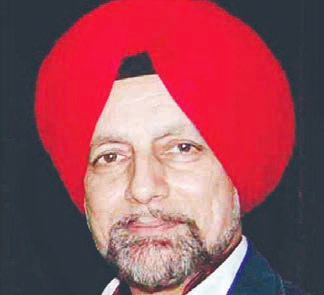
MOHALI (TIP): The Mohali police are now focusing their investigation on the former woman colleague of KJ Singh who had worked with him in a couple of organisations. In the CCTV footage, the police have traced the car that passed through Phases 3B2 and 7 lightpoint around Friday midnight. The murder purportedly took place earlier that evening.
Sources in the police said they also haven’t ruled out that a woman along with her male companion came to KJ’s house, after which he opened the door. Police in the investigation is also trying to locate one mobile SIM card belonging to KJ.
The deputy superintendent of police city 1, Alam Vijay Singh, and SHO, Mataur, Jarnail Singh on Tuesday along with the family members of the deceased Yashpal Kaur, Jagdish Grewal, Yashjeet Sahota, Jasbir Singh and VP Singh went to the bank to procure the will made by KJ’s mother Gurcharan Kaur.
The final will was made by Gurcharan Kaur on April 22, 1992. It states that her two sons Vijay Pal Singh and Karanjit Singh will bequeath House No. 1796, Sector 60 (Phase 3b2) Mohali, and other immovable property wherever located and in whatever form, if acquired in future, to the two sons in equal proportion.
The will also mentions that all the household items, will be bequeath to her younger son KJ as he has yet to set up his home and settle with his family. All the belongings present in the locker where bangles and necklaces are to be given to the nominated person, who was KJ Singh.
It came to the fore that a police complaint was also filed against KJ Singh by former member of the family.
Police sources said that they will be questioning the former wife of Ajaypal, KJ’s nephew, and her family members.
Police sources said they have already started questioning former colleagues.
The DGP, law and order, Hardeep Dhillon was also present during the investigation. KJ Singh (63), a senior journalist, and his bedridden mother Gurcharan Kaur (92), were found murdered at their Phase 3B2 house on Sept 22 (Saturday) afternoon. KJ was stabbed at least 15 times while his mother was strangulated. Although the kin claimed that KJ had also made a call to the police control room about the presence of a miscreant, sources confirmed no such call was received. Source: HT
NEW DELHI (TIP): “India remains ready to respond to the urgent needs of the Iraqi people for stability, security, political progress and economic reconstruction… were there to be an explicit UN mandate for the purpose. The Government of India could consider the deployment of our troops in Iraq.” PM Atal Behari Vajpayee stood up in Parliament on July 4, 2003 to reject a US request to send more than 15,000 Indian troops into Iraq with these words.
This, amid heavy pressure from Washington DC seeking to bolster its efforts in securing Iraq post the fall of Saddam Hussein. After deliberations and with the Opposition up in arms, India made it clear. It was not willing to put at stake its larger ties with the Gulf and be sucked into a non-UN mandated operation in a country where the US had not drawn up a clear stabilising plan.
That was the only time India had been asked by the US in categorical terms to deploy its forces overseas. In September 2015, at the Leaders’ Summit on Peacekeeping hosted by then US President Barack Obama in New York, reports suggested the Narendra Modi government was informally asked to join hands with the coalition forces fighting the Islamic State.
India had no intention of joining the faraway war on the ground, and a formal request by US was not conveyed. This week as Defence Minister Nirmala Sitharaman addressed mediapersons after talks with visiting US Secretary of Defence James Mattis, in response to a specific question asked by an American journalist whether India was considering contributing to troops in Afghanistan, she said: “We have made it very clear that there shall not be boots from India on the ground.”
“Indian contribution to Afghanistan has been for a very long time and has been consistently on development issues.
Medical assistance is also provided by India. So India’s contribution has been on these grounds, and we shall expand if necessary,” she added. Fact is, a formal request for boots on the ground in war-torn Afghanistan has never been on the table to begin with either by the Americans or by the Afghans. Source: The Tribune
NEW DELHI (TIP): The Indian Army commandos participating in last year’s surgical strike on terrorists’ launchpads in Pakistan-controlled Kashmir livestreamed the entire operation back to army headquarters in Udhampur and Delhi, the officer-in-charge of the operation has revealed.
“Yes, we were getting the images live. I was sitting in the operations room in our command headquarter in Udhampur. I saw the entire operation live how our teams attacked the targets, and the entire live feed was being sent to Delhi Army Headquarters,” former General Officer Commanding-in-Chief of Indian Army’s Northern Command (retired) Lieutenant General DS Hooda said in an interview with India TV.
Asked who all in Delhi were watching the live feed, Hooda said: “I don’t know who were watching in Delhi. In Udhampur, we were watching and the feed was going to Delhi too.”
However, he refused to disclose as to whether the live streaming was done through satellite or some other technology.
“I can’t disclose what technology we used, but the Indian Army has the capability where you can see livestreaming of operation that was going on. We have the capability,” Hooda said.
Giving details of the strike, Hooda said the last team of special forces returned at around 6.30 a.m.
“Some teams arrived earlier. They had left earlier and had struck at targets soon after midnight, while some other teams went in later and returned late.”
“There was panic in the ranks of Pakistani forces. In some places, they were firing randomly. We had also planned a backup. If any team failed to return, we had teams ready to go in, retrieve and rescue and bring them back,” Hooda, who had planned the strikes, revealed.
The former Lieutenant General also revealed that the government had made up its mind to make an announcement soon after the surgical strike was over.
“It was decided in advance. The government had decided that we will announce the surgical strike having taken place, own it up. Had it not been successful, then they would have had to take criticism also. So, the pressure on the army (to make it successful) was big,” he said.
Hooda said there were heavy casualties at four or five terror launchpads.
He admitted that there was a day’s delay in carrying out the strikes.
“The initial planning was, the forces would go in on September 27, but the final execution took place on September 28,” he said. Source: IANS
CHENNAI (TIP): An inquiry commission, set up by the Tamil Nadu government to probe former chief minister J Jayalalithaa’s death, will look into the circumstances leading to her hospitalisation last year and subsequent treatment, the government has said.
The commission shall submit its report in three months, it said.
A public (SC) department Government Order (GO) dated September 27 said Tamil Nadu Governor Ch Vidyasagar Rao, in excercise of the powers conferred under relevant sections of the Commission of Inquiry Act, 1952 (Central Act LX of 1952), issued the following terms of reference of the commission.
“To inquire into the circumstances and situation leading to the hospitalisation of the late Hon’ble Chief Minister (Jayalalithaa) on 22.9.2016 and subsequent treatment provided till her unfortunate demise” on December 5, 2016, it said.
The state government had on Monday announced setting up of the inquiry commission to probe and submit a report on the death of Jayalalithaa.
The probe was a key demand of the then rebel AIADMK faction led by O Panneerselvam as a pre-condition for the merger of his camp with that of Chief Minister K Palaniswami. The two factions had merged on August 21.
Another GO, dated September 25 and released by the government yesterday, said the Commission “shall complete its enquiry and submit its report (both English and Tamil) to the Government within a period of three months from the date of publication of this notification in the Tamil Nadu Gazette (i.e. September 25)”. Source: PTI
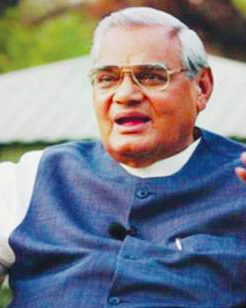
LUCKNOW (TIP): Former prime minister Atal Bihari Vajpayee’s name has been removed from the voters’ list in Lucknow on the ground of being ”inactive” and ”absent” from his registered address in the city.
According to the Lucknow Municipal Corporation (LMC) officials here on Thursday Vajpayee’s name was removed during the work of revision of the voters’ list ahead of the forthcoming elections for civic bodies in the state.
”Vajpayee has not been living at the address registered with us for the past several years…his name was therefore removed during the revision of the electoral rolls,” said a senior LMC official.
Vajpayee’s address as per the records here was 92/98-1 in Bansmandi locality in the city. His voter serial number was 1054, the official said.
”Currently, there is an office of a farmers’ organisation on this address,’’ he added.
Vajpayee last cast his vote in the Lok Sabha polls in 2014. He had voted last in the LMC polls in the year 2000. He was a voter from Babu Banarasi Das Ward in the city.
The former prime minister, who had not been keeping well for the past several years, retired from active politics after 2004.
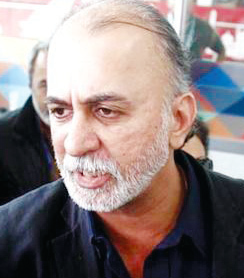
PANAJI (TIP): Tejpal, who then ran Tehelka, was accused of rape by a junior colleague in 2013. The charges against him include Sections 376(2)F and 376(2)K, which lay down stricter punishment for a person who uses a position of power or trust to abuse a woman.
Rape cases normally carry a minimum sentence of 7 years if convicted. Tejpal has pleaded not guilty to the rape charge, public prosecutor Francisco Tavera said. He has pleaded guilty to charges under Sections 341 and 342 (wrongful restraint) and 354 (sexual harassment) of IPC, he said.
The next date of hearing in the trial court is November 20- 21, by which time a high court decision on Tejpal’s challenge against the trial is expected.
“It has been a positive day for us. All the charges we were pleading against Tejpal have been approved by the court. We now wait for the matter which is in the high court,” said Tavera.
Earlier in the court of Vijaya D Pol, Tejpal’s lawyer Rajeev Gomes argued at length to delay the framing of charges as a decision on the matter is pending with the high court.
The judge rejected this request and stated that the proceedings of the trial court will continue but a status report on the matter in high court be submitted before her on the next date of hearing.
“The matter cannot be delayed much as already a lot of delay has happened. As per the Supreme Court guidelines, we have to go ahead with the trial within 8 months of the accused being given bail. This matter however was delayed as Tejpal’s lawyer kept on asking us for clone copies of the footage which not many laboratories in the country provide.
It took us a long time to furnish these copies and therefore the delay happened” said Tavera.
“They were arguing that the charges be not framed but the high court had clearly not put a stay on the case. Therefore the court went ahead with its proceedings,” he added. Gomes said he is confident that the high court will dismiss the matter as his client is not guilty.
Contradicting BJP chief Amit Shah’s stand that the economy was sluggish due to ‘technical reasons’, Sinha says it is here to stay and the slowdown in demand has only aggravated the situation
NEW DELHI (TIP): Senior Bharatiya Janata Party leader and former finance minister Yashwant Sinha launched a scathing attack on the BJP-led central government’s economic policies,saying that the economy is headed for a downward spiral.
In an opinion piece for the Indian Express, Sinha lambasts the government’s decisions on the economic front. “I shall be failing in my national duty if I did not speak up even now against the mess the finance minister has made of the economy,” writes Sinha, adding that many within the BJP are aware of the situation, but fear speaking up. In the no-holds barred piece, Sinha says demonetisation proved to be an “unmitigated economic disaster” and that the Goods and Services Tax (GST) was a “badly conceived and poorly implemented” havoc.
Finance minister Arun Jaitley comes in for the bulk of the criticism, as Sinha writes, “Arun Jaitley is considered to be the best and the brightest in this government.
It was a foregone conclusion before the 2014 elections that he would be the finance minister in the new government.”
Sinha further took on BJP president Amit Shah for citing ‘technical’ reasons for slowdown in the GDP rate and wrote, “Even the SBI, the largest public sector bank of the country, has stated with unusual frankness that the slowdown is not transient or “technical”, it is here to stay and the slowdown in demand has only aggravated the situation. It has openly contradicted what the BJP president said just a few days ago that the slowdown in the last quarter was on account of “technical” reasons and will be corrected soon.”
On that note, the figures of the first quarter of fiscal 2017-18, released last month, showed the GDP growth rate falling at 5.7 percent, while in the concurrent period last year, the GDP was soaring ahead at 7.6 per cent.
In his article, Sinha also took a jibe at raids conducted by Income Tax department, Enforcement Directorate and Central Bureau of Investigation and said that it has become “a new game to instill fear in the minds of people,” adding, “We protested against raid raj when we were in opposition. Today it has become the order of the day.”
He also ridiculed the “massive” loan waivers given to the farmers “varying from one paise to a few rupees.”
Sinha concluded his article by saying, “The prime minister claims that he has seen poverty from close quarters. His finance minister is working over-time to make sure that all Indians also see it from equally close quarters.”
SINHA A JOB APPLICANT AT 80: JAITLEY
NEW DELHI (TIP): Finance minister Arun Jaitley on September 28 took a dig at predecessors Yashwant Sinha and P Chidambaram, who have been critical of his handling of the economy.
In a speech at a book release function, Jaitley reminded Sinha, a colleague of his in the Bharatiya Janata Party (BJP), that when he was finance minister in the Atal Bihari Vajpayee government in 1998-2002, non-performing assets (NPAs) of commercial banks stood at a “staggering” 15% of total advances. And in 1991, Sinha had left the office of finance minister with only $4 billion of foreign exchange reserves.
“The Reserve Bank of India had to bring down interest rates radically to deal with the high level of NPAs,” Jaitley said.
Jaitley said he does not have the luxury of being a former finance minister who has turned a columnist and cannot conveniently forget the past record.
Sinha’s unsually sharp piece caused quite the stir and he started trending on social media. The Opposition has reacted strongly to the piece, with senior Congress leader and former finance minister P Chidambaram lauding Sinha’s words as proof that truth will prevail.
“Yashwant Sinha speaks Truth to Power. Will Power now admit the Truth that economy is sinking?,” tweeted Chiadambaram.
A second failure by Republicans to replace ‘Obamacare’ exposes incoherence in the party
A second concerted push by Republicans in the U.S. Congress to “repeal and replace” the landmark health-care reform law passed by the Obama administration ended in tears when it failed to garner the minimum 50 votes necessary to pass on the floor of the Senate. The latest proposal, which came to be known as the Graham-Cassidy bill after the Senators who sponsored it, was built on the idea, contra-Obamacare, that each U.S. State could effectively write up its own provisions for implementing certain aspects of healthcare policy. And in return for ensuring that some basic tenets were followed, such as patients with pre-existing conditions not being excluded from health insurance schemes, they would be given sizeable block grants. These grants, effectively “sweeteners” for moderate Republicans nervous about the mid-term elections due in November 2018, were supplemented with the promise of further deregulation of the health-care sector, a giveaway to the more conservative Republican fold. Ultimately neither of these measures worked as intended. Two Republican Party stalwarts, Senators John McCain and Susan Collins, reprised their oppositional role to the effort in July 2017, when the first attempt to repeal and replace Obamacare fell short of the 50-vote mark. Along with libertarian Senator Rand Paul, their resistance was sufficient to sink the bill’s prospects.
The failure to repeal and replace the Affordable Care Act (ACA) represents more than just cracks within the Republican superstructure. It shows that notwithstanding the stunning victory of Donald Trump last November, the party is still beset with conflicting imperatives and has not united under his leadership as President. Factors exacerbating the malaise include the pressure on Senators facing contests in the mid-term elections, where they will have to explain to voters why seven years of anti-Obamacare sloganeering has amounted to nothing. They will further have to find some way to sell the embarrassing, dismal reality that influential Republicans such as Mr. McCain are opposed to the Graham-Cassidy bill as long as they don’t know “how much it will cost, how it will affect [sic] insurance premiums, and how many people will be helped or hurt by it.” A second source of anxiety for Republicans is that the political goodwill they enjoy today hinges ever more on success in a second area of policy reform: a complex overhaul of the tax code. Mr. Trump is poised to announce a major tax cut, going by his tweets; yet will that suffice to unite his squabbling party colleagues around a single conservative banner? The heart of the problem for the Republicans is that the ACA is a powerful institutional recalibration that transferred a measure of control over health-care outcomes from health insurance corporations to patients, not to mention potentially expanding coverage to 30 million uninsured Americans. Whatever the Republicans hope to replace such a patient-centric policy with had better be deeply thought through and masterfully sold to their constituents.
Mega projects, like mega mountains, shape the environment around them.
“You need vision to think up mega projects, and indomitable will to drive them through. Dubai’s sheikhs have it. They are pumping in north of $82 billion to build the Al Maktoum International Airport, which, when completed next year, will be the world’s largest by a comfortable margin. Could one have imagined that this tiny desert emirate would become a global air travel hub? No. But will it help bring in technologies and services, create tens of thousands of jobs, and probably make Dubai a serious player in the airport-building business (they have already achieved this in seaports)? Yes”, says the author.
So far, the proposed Ahmedabad-Mumbai bullet train project is just a piece of stone that has been laid by Prime Ministers Narendra Modi and Shinzo Abe, but it has already been written off as a white elephant by most analysts and commentators. They are probably right. The project, of course, is alarmingly expensive. And a 0.1% interest on the loan from Japan, despite what the Prime Minister says, is not “practically free of cost”; in fact, it may well be above real interest rates in Japan if you factor in rupee depreciation. Both the fares and the number of passengers have to be unrealistically high if the project is to even come close to breaking even. In fact, with 12 stations on the route, to reach out and touch as many potential voters as possible, it might not even be able to maintain bullet train-levels of average speeds, given the number of starts and stops.
A leap into the unknown
But I am all for bullet trains. Not because I have an economic model which makes the high-speed train project suddenly viable — frankly, it is difficult to counter the logic of the above-mentioned experts — but because there is a dimension to an ambitiously audacious project like this which is being totally missed in the heat and dust kicked up by the whole bullet train debate. It is the transformative impact that such mega projects can have on the entire ecosystem.
Every mega project that we have seen — from China’s Great Wall to the Angkor Wat, from the Taj Mahal to the U.S. Interstate Highway System — has represented a leap into the unknown when it first started. Almost every case has faced the same criticism that the bullet train project is facing now — that it was too unrealistic, too expensive, too fanciful, or just plain megalomaniacal.
But these projects also represent the crowning glories of human achievement. A Taj Mahal is not just one man’s dream; the secret of its enduring appeal is that it is a representation in physical reality of man’s capacity to dream. They also created technologies, processes, and execution capabilities which not only had not existed till then, but had not even been thought of. And in the process, they ended up shaping the world around them forever.
Some of the largest mega projects under way around the world are epitomes of this ability of humans to surpass the possible. Take the International Space Station. It has so far cost nearly $200 billion, but is also our world’s first and only permanent outpost outside it — in space, the jumping-off point for mankind’s eventual spread to the planets and stars beyond. It is also a magnificent example of international collaboration, and a technology generator of mammoth proportions, sparking innovations which are now part of everyday technology.
Vision and will
You need vision to think up mega projects, and indomitable will to drive them through. Dubai’s sheikhs have it. They are pumping in north of $82 billion to build the Al Maktoum International Airport, which, when completed next year, will be the world’s largest by a comfortable margin. Could one have imagined that this tiny desert emirate would become a global air travel hub? No. But will it help bring in technologies and services, create tens of thousands of jobs, and probably make Dubai a serious player in the airport-building business (they have already achieved this in seaports)? Yes.
China’s party leaders have this ability and will as well. The South-North Water Transfer Project is the world’s largest hydro-engineering project, involving, among other things, two mega 1,000-km canals. It costs thrice as much as the mammoth Three Gorges Dam project did, but will solve the water problems of 50% of China’s population in one stroke.
An ability to dream big
We had it too, at one time. In fact, one mega project from the past was, ironically, temporally linked with the bullet train. The Narmada Dam, 56 years after it was started, was dedicated to the nation around the same time the bullet train was announced. Forget all the (again, mostly valid) criticism of the project, the abandonment of dam oustees, and so on, and just look at the project in isolation. Half a century ago, this country had no problems visualizing impossible dreams — damming mighty rivers, building steel plants in the middle of jungles, and so on. We lost that capacity to dream big somewhere along the way, as well as the capacity to execute. Bhakra Nangal got built, but Narmada took half a century. Bhilai and Rourkela got built, but a satisfactory version of the Arjun Main Battle Tank is yet to be inducted, despite having been sanctioned in 1974.
That is why we need more bullet trains. It is not just the one project. Just the technology, engineering and quality levels it brings will alone transform the future of our early industrial age railway system. One showcase team will fire the aspirations of a billion people, just like one Delhi Metro made every city in India try to build one. If we don’t dream big, we will never achieve big.
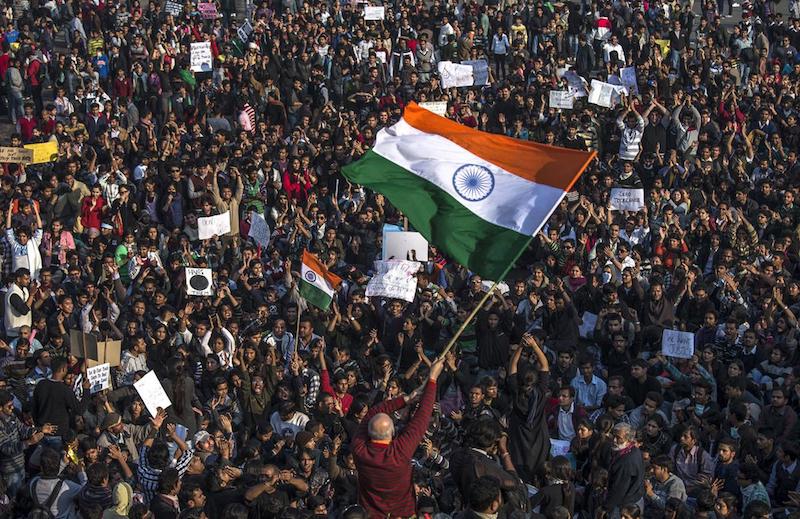
When the moral temperature of a society falls, as it has globally in recent times, activists will arise.
By Sundar Sarukkai
“ Activists working with a variety of marginalized groups often believe that scholarship and ‘theory’ is of little use to them. Intellectuals, on their part, seem to have got cocooned inside their academic spaces or other elite spaces with very little engagement with the people and the situations that they write about. This has led to a rejection of intellectuals by many activists, and a benign neglect of activists by the intellectuals”, says the author.
It is ironical that those who have always been an essential catalyst for a just society have also been those who have been kept at its margins. Activists have become increasingly unpopular and have become the targets of an upwardly mobile middle class. It is difficult to understand this phenomenon: why would those who have a comfortable life get so angry and upset at those who sacrifice their personal well-being for the good of others? The public and government reaction against NGOs, the killing of social activists, the cynicism towards those who decide not to follow the mainstream are all part of this larger trend, a symptom of the silent corporatization of society itself.
In the line of attack
Intellectuals, including artists and academics, also bear the brunt of this hatred. As many have pointed out, it has never been as difficult as it is now to disagree about something without being called names. These are symptoms of what our society is becoming. As a society, we lack a culture of protest, whether in the public or in institutions. Disagreeing with a policy is always misinterpreted as if it is an attack on individuals associated with that policy.
It is not easy being an activist, although it is somewhat easier being an intellectual. The activist is in the middle of conflicts while the intellectual is in the midst of the world of ideas and scholarship. Historically, this tension is powerfully manifested in the apparent opposition between ‘thinking’ and ‘doing’. The stereotype is that activists ‘do’ while intellectuals ‘think’.
Like almost everything else, this is not an Either-Or situation. There are good arguments for supporting the view that some intellectual activity, especially that which develops new vocabulary and arguments for social change, helps activism. Similarly, major agents of social change have often contributed to the creation of new perspectives on society which academics have not been able to.
Nevertheless, this tension persists. Activists working with a variety of marginalized groups often believe that scholarship and ‘theory’ is of little use to them. Intellectuals, on their part, seem to have got cocooned inside their academic spaces or other elite spaces with very little engagement with the people and the situations that they write about. This has led to a rejection of intellectuals by many activists, and a benign neglect of activists by the intellectuals.
However, there is an important difference between both these acts. There is something special to the domain of activism which a knowledge-based intellectual activity does not have.
Being an activist
Becoming an intellectual is a long process and is often dependent on access to education as well as resources of various kinds. A school student will not be considered an intellectual but she can be an activist. She can join marches, shout slogans and write blogs. The opportunity to be an activist is more easily available. There is something more democratic and egalitarian about activism as compared to intellectualism, a feature which has often led to cynicism about intellectuals.
The idea of an organic intellectual, drawing from Gramsci’s original use of this term, can be understood as a mediation between these extremes. The history of activism in India has shown us that some of the greatest activists have also been organic intellectuals. Nevertheless, this invocation of the organic intellectual is itself a response to the specific privilege of being an intellectual.
I believe that there is one significant difference between the activist and the intellectual. An activist may or may not be a scholar. But what she does is far more important than the scholar because her action is most fundamentally a moral action. On the other hand, an intellectual’s action is most often an epistemic action, an action that is concerned with information and knowledge.
An activist acts on behalf of, and with, others. In most cases, activists work with the dispossessed and the marginalized. They can imagine a better world for those the larger society forgets about and, in doing this, they sacrifice something. Their actions are not geared towards personal benefit but for the benefit of communities and individuals with whom they can stand in solidarity. For an intellectual’s action to become moral, it needs the intervention of activists.
All activism involves a sense of giving and giving-up something. While ‘normal’ individuals in a society act in order to benefit themselves or their family, activists often act against their own interests. Often the actions of the activist improves the well-being of others (who are not just family and friends) more than that of the activist herself. And this is the real strength of an activist. Her actions are not rationally utilitarian but morally robust, as powerfully exemplified by countless activists who have worked with labor, women, the marginalized and the dispossessed.
This is the important skill that differentiates an activist and the intellectual. When a student goes on a protest, she is picking up an important skill — that of developing a moral sense of the social, a sense of concern and respect for others who may or may not be in a situation like hers. Her actions have the benefit of others as her good. And this sense, akin to the truth or soul force as Gandhi would call it, is the most important quality of being an activist.
The intellectual does not possess this necessarily, although some intellectuals have a deep sense of the moral. The history of intellectual labor has consistently removed the moral from the accumulation of knowledge. This is best exemplified by science and the creation of scientific knowledge decoupled from moral considerations. Academic intellectualism is clever, deep in knowledge and understanding but less so in its moral force. Organic intellectualism be an attempt to put back the moral within this pursuit of knowledge.
So, when the larger society fails in its moral sense or when its intellectuals ignore moral action, activists will arise to counter them. When the moral temperature of a society falls, as it has globally in recent times, activists will arise. If this does not happen, the moral force of a society gets depleted. It is only the activists who can make sure that the moral skills of a society do not vanish. It is activists, who give up their personal, material comforts for the larger values of dignity, respect and equality of individuals in a society, who can function as the moral compass for others. Activists and intellectuals are essential to protecting the society from two of the greatest dangers — power and profit. Getting rid of such people is to compromise our present as well as the future of our society.
(The author is Professor of Philosophy at the National Institute of Advanced Studies, Bengaluru)
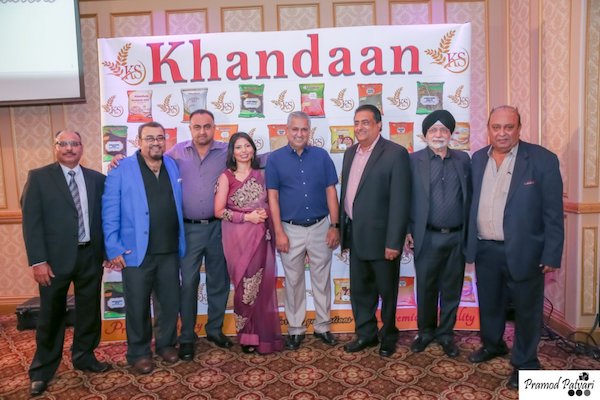
NEW JERSEY (TIP): K.S Aura LLC launched ‘Khandaan’ their first and finest premium quality South Asian grocery brand in the United States.
On Friday the 22nd of September, K.S Aura LLC celebrated the launch of their first product ‘Khandaan’. It is their first attempt to fill the vacuum and bring a brand that covers products such as pulses, rice, spices, flour and many more that guarantees both taste and health.
The Vice president of the company, Mr. Rajiv Wadhera was asked to describe ‘Khandaan’ in one sentence to which he said, “ Eat Khandaan products and be healthy”. He also said, “‘Khandaan’ in English is translated as ‘family’ and as a family we wish each one a very healthy and happy life. Hence, we do not add food color or preservatives in our food products. People’s health is our first and foremost concern.”
Mr. Kawaljit Singh, the president of the company flew all the way from India to attend this event. Ms. Tanvi Prenita Chandra, President of Renascent media house, organized the whole event. When she was approached with a question regarding her experience as a media partner with ‘Khandaan’, she said,
“I must say that we at Renascent Media are very honored and grateful to be associated with one of the world’s largest company, now launching Khandaan brand – premium quality food products in this part of the world. Whereas advertising and marketing is concerned, we are all set not to leave any stone unturned to make KHANDAAN a number one brand in America.”
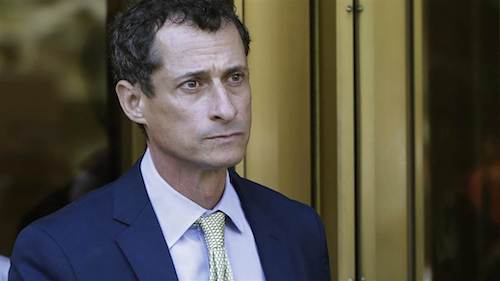
NEW YORK (TIP): Anthony Weiner, the former New York congressman and husband of former top Hillary Clinton aide Huma Abedin, was sentenced on Monday to 21 months in prison for the sexting case that reopened a damaging investigation into Clinton’s email use.
Weiner pleaded guilty in May to the charges of transferring obscene material to a minor after sexting with a 15-year-old girl.
Weiner’s attorney had asked for probation, claiming Weiner had a “sickness” and that the teenager, who documented her communication with Weiner and sold her story to the British tabloid the Daily Mail in September 2016, was using the interaction for personal gain. Prosecutors, who sought 21 to 27 months in prison, said the victim’s motives did not matter. According to USA Today, the prosecutors wrote that:
He initially denied his conduct, he suffered personal and professional consequences, he publicly apologized and claimed reform … Yet he continued to engage in the very conduct he swore off, progressing … to that which is also destructive to a teenage girl.
According to reporting from the Manhattan federal court, Weiner read a statement saying he had “hit rock bottom” and was a “very sick man” in asking to be spared a prison sentence. When the judge announced his sentence, he held his head in his hands and cried.
The sexting scandal led the FBI to seize Weiner’s laptop, where it then found emails belonging to Abedin. In late October, then–FBI Director James Comey announced that the bureau would review the emails to see if they contained classified information, saying that the messages appeared “to be pertinent” to the previously closed investigation into Clinton’s email server. That review ended two days before the election, and Clinton has blamed Comey’s action in part for her loss.
Abedin filed for divorce after Weiner, who was first elected to Congress in 1999, pleaded guilty in May. The scandal was Weiner’s third major sexting scandal, the first of which cost him his congressional seat in 2011 and the second of which derailed his 2013 New York mayoral campaign (when it emerged he was using the pseudonym “Carlos Danger”). During the most recent sexting scandal, a photo circulated showing Weiner’s crotch as he lay next to his 4-year-old son.
When he pleaded guilty, Weiner told the court he had been in “intensive treatment” in which he “began a program of recovery and mental health treatment that I continue to follow every day.” He also apologized to the teenage girl, whom he said he “mistreated.”
The 52-year-old will also now have to register as a sex offender. He must report to prison by Nov. 6.
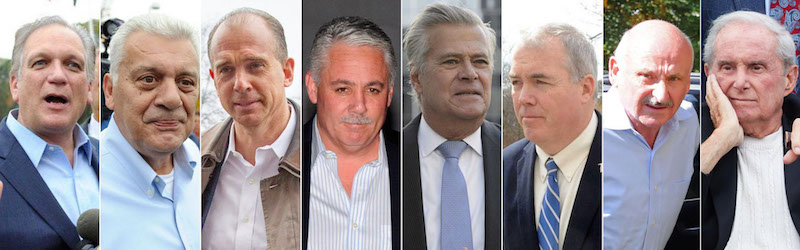
WOODBURY (TIP): Former Oyster Bay Town Supervisor John Venditto and several other former town officials accused of corruption appeared before a judge on Wednesday, September 27.
Venditto, who had nothing to say as he left Nassau County court, and six others are accused in several corruption schemes.
According to Nassau District Attorney Madeline Singas, the owners of an Old Bethpage paving company paid former town planning commissioner Fred Ippolito $1.6 million in exchange for approval to build a senior housing development.
“It was a huge breech of the public trust,” Singas said. “That’s something we take seriously. Tax dollars should be protected.”
Ippolito has since died, and charges against him were dropped Wednesday.
But the attorney for Marissa Lizza, one of the company’s owners, told News 12 that his client did nothing wrong.
“I don’t think there’s a case against my client, but that’s all I can really say right now,” said defense attorney Marc Gann.
It was decided in court Wednesday that prosecutors would turn over evidence, including audio recordings and photographs, to the defendants’ legal teams. Other charges allege improper hiring practices and using a town crew to fix a connected resident’s sidewalk at no charge.
The defendants have all pleaded not guilty to the charges.
Another conference between the two sides is scheduled for Nov. 1.
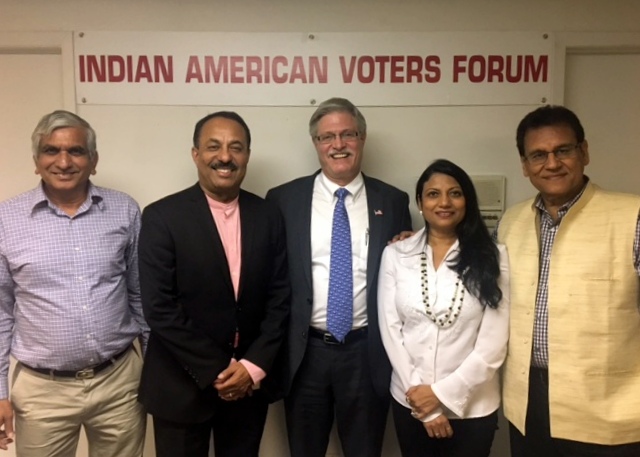
LONG ISLAND, NY (TIP): Indian American Voters Forum of Long Island made history when its panel consisting of prominent community leaders interviewed the two leading candidates running for election as Supervisor for the Town of Oyster Bay in Nassau County, New York – Marc Herman, the Democratic nominee and his opponent, the Republican incumbent Joseph Saladino. The purpose of the first ever such interviews by any ethnic group was to “prescreen the candidates and determine their election platform and experience as well as their understanding of the issues important to the Indian American community”, said Dr. Sunil Mehra, a veteran member of the Forum.
Varinder Bhalla, chairman of the Indian American Voters Forum, moderated the interviews and was joined by Dr. Ajay Lodha, former President of the American Association of Physicians of Indian Origin, Dr. Yashpal Arya, a philanthropist, Dr. Sunil Mehra, former President of AAPIQLI, Animesh Goenka, former President of AIA, Ratna Bhalla, former Deputy Commissioner of Nassau County, Gunjan Rastogi, Vice President of the India Association of Long Island (IALI), Sunil Modi, former President of AIA NY Chapter, Gobind Bathija, founder President of the Hicksville based Asa Mai Temple, Beena Kothari, former IALI President, Vijay Verma, a Hicksville based entrepreneur, and Govind Gupta, a community activist and IALI executive member.
Herman, a successful businessman, formerly President of the Syosset School District and now serving on the faculty and the medical ethics committee of Hofstra School of Medicine cited many concerns about corruption in the Town of Oyster Bay. “I am running for Town Supervisor because I am fed up with corruption and the big mess in our town government, and upset that for decades, the town officials have used our tax dollars as their personal piggy bank”, Herman said. “I would fight to end the culture of corruption, ensure complete transparency of all financial matters, end the era of nepotism and patronage and ensure merit based appointments so qualified Indian Americans and other minority groups could serve in the Town government.”
What about his administrative and governmental skills especially dealing with a town budget of nearly $300 million? “As President of Syosset School District, I oversaw a
a budget near in size to the budget of the Town of Oyster Bay, and dealt with some of the same issues that face our Town; union contract negotiations and pay scales, transportation network, vehicle deployment, snow removal, athletic field construction, budgeting and debt management.”
“During my tenure as school board President, the Syosset schools were rated amongst the top schools in the New York and the nation while maintaining the highest bond ratings possible, with every budget balanced and under the State tax cap.”
“Herman has met with several business leaders and community activists in Hicksville in recent weeks and seems to have garnered wide support from the Indian American community”, Animesh Goenka, former President of AIA said while Rajesh Kumar of Bengali Sweets echoed the same sentiments.
Herman’s opponent, Joseph Saladino was appointed Town Supervisor to replace his longtime predecessor who resigned in January after being arrested on federal corruption charges. Saladino, who served as New York State Assemblyman since 2004, told the Forum panel “I will make the Town government live within its means, while continuing to deliver top notch municipal services. I will work to gain the faith and trust of our residents by providing transparency and improving efficiency.” Herman disagreed and said only the voters can change the culture of corruption in a town dominated by Republicans for so many years.
“The consensus among all members of the panel was that Marc Herman is an outsider, with sufficient business and administrative experience and is well prepared to take the reins of the Town and move it in a new direction and is therefore our choice for the next Supervisor,” Vijay Verma said while enthusiastically introducing Herman to community leaders and business associates in Hicksville.
Indian American Voters Forum is a bipartisan committee of community activists, not beholden to any political party. Founded in 2003, the Forum has conducted debates among candidates running in the local elections and fueled political activity in the community. Earlier, the Forum had also interviewed Legislator Laura Curran, Democratic nominee for Nassau County Executive. “We are most proud of our successful drive to recruit congressional leaders into the India Caucus”, says Dr. Arya.
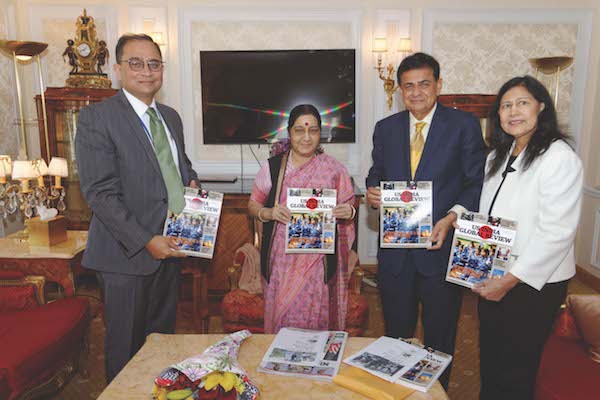
NEW YORK CITY, NY (TIP): India’s External Affairs Minister Sushma Swaraj unveiled a new magazine ‘US-India Global Review’, published by the New York-based Parikh Foundation for India’s Global Development, at a private meeting, held at the New York Palace hotel, on Sunday, September 24.
The publisher of the magazine, Dr. Sudhir Parikh, a well-known allergist and entrepreneur in the New York City Tristate area who received a Padma Shri in 2010, and is also the founder and chairman of Parikh Worldwide Media – the top Indian American-focused news publishing house in the United States, was present with his wife, Dr. Sudha Parikh, along with Ambassador Sandeep Chakravorty, the Consul General of India in New York, at the unveiling of the magazine by Swaraj, who was in New York City to attend the United Nations General Assembly meet.
Swaraj gave her blessings for the magazine. She appreciated the content of the debut issue, which focused on India’s relations not only with the US, but its growing influence and outreach globally, including on India’s defense personnel, and contribution to the United Nations’ peacekeeping front.
US-India Global Review is a quarterly magazine. Copies of it will be distributed to select government offices, officials and ministers in India, and Indian diplomatic missions and embassies around the world, apart from some administration officials, members on Capitol Hill, and think tanks in the US. The magazine will also soon be available as an e-magazine.
The Parikh Foundation for India’s Global Development will eventually expand its operations to a full-fledged think tank focused on US-India polity issues. A seminar will be held next year focusing on some of those core issues, with panel discussions by eminent experts.
Parikh reiterated what he said, at a recent meet held in Watchung, New Jersey, to welcome Chakravorty and Deputy Chief Mission in the Indian Embassy in Washington, D.C., Ambassador Santosh Jha: the need to put Indo-US ties in perspective, for politicians and policy makers, in India and the US.
“The aim of the Parikh Foundation for India’s Global Development is to ensure the initiatives of the Indian government, its efforts to expand bilateral ties, is put in perspective,” he said. “We intend to have regularly top experts – policymakers, politicians, intellectuals, to participate in this endeavor,” he added.
Parikh also expressed his confidence that even if there is change of guard in administration, either in India or the US, bilateral ties between the two countries will remain strong.
“Close ties between India and the U.S. will be a defining relationship in the 21st century,” he said.
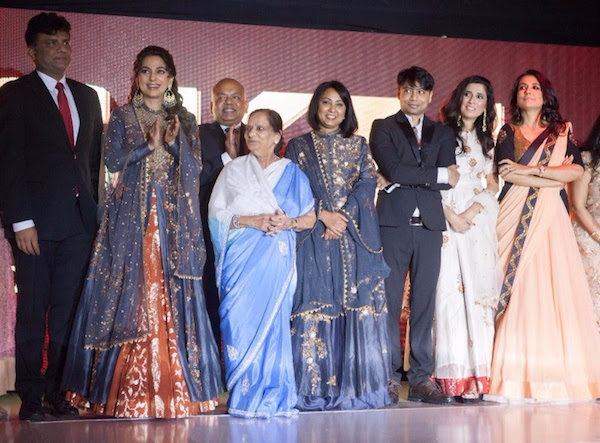
SOMERSET, NJ (TIP): More than 500 supporters in the fields of business, arts, philanthropy and medicine attended the annual SKN Hope Gala on Friday, Sept 22 evening at the Marigold Hotel in Somerset, New Jersey, which focused its efforts to raise funds for South Asian children with special needs this year.
“We could not be more humbled by the love and generosity of the community,” said founder Dr. Naveen Mehrotra. “SKN’s goal is to educate the South Asian community about the various diseases that plague our loved ones, and this year, we wanted to shed light on how parents cope with their children with special needs.” The major beneficiary of this year’s fundraiser will be the Special Needs Community Outreach Program for Empowerment (SCOPE).
Guest of Honor Juhi Chawla, a renowned Indian actress, humanitarian and former Miss India, spoke at the event and served as the show stopper for international fashion designer to the stars, Joy Mitra, who debuted a special collection he created just for the cause. The fashion show spotlighted special needs children, who walked the ramp with their mothers, followed by an intimate Q&A between host Mini Mathur and the fathers. “What an amazing opportunity for my son! I am so proud of him every day, and walking the ramp, dressed up so fabulously, allowed him to know that we love him just as he is,” said Radha Lath, mother of Aditya Lath, a child with special needs.
“Parents of special needs children have an unbelievable level of grit and determination, as they face daily life issues, and we are honored to be shedding light on some of their challenges at the SKN Foundation Gala,” said Sonalika Ahuja of Beyond Media, the woman who executed the event for the second year in a row.
Signup to our Newsletter!
Don’t miss out on all the happenings around the world