
NEW YORK CITY (TIP): Vegetarian Vision, a 501 (C ) Non-Profit Organization, will have a 2-day Health and Wellness EXPO to celebrate its 25th anniversary – International Vegetarian Convention at the Penn Plaza Pavilion (401 Seventh Ave. at 33 St., NYC) on Saturday, September 9 and Sunday, September 10, 2017. The weekend will highlight Food for medicine – Health Talks by over 50 renowned speakers, compassion, healthy living and will feature non-stop food, fun, fitness, and wellness. The family-friendly festivities will include demonstrations, classes, tastings, fashion show, pageant, kids’ activities, youth activities and live cultural performances, beginning at 10 AM daily. Tickets are $15 for one day and $25 for the weekend. Additional information can be found on their website at www.vegetarianvision.org.
During the two-day event, renowned celebrities, dignitaries and political leaders will be on hand to celebrate all things vegetarian. An expected 100+ merchants and vendors will be on site to introduce guests to the pleasure of vegetarianism. Over couple dozen food vendors will serve up plant-based, vegetarian and vegan fare from around the globe. Indian, Chinese Japanese, Indonesian, French, Kosher and American chefs will conduct cooking demonstrations and offer tasty samples throughout the day and adults will also be able to taste various vegan wines from a variety of purveyors while children enjoy various activities in the “Kids’ Corner.”
The judiciary has put a spanner in the BJP’s plans for Haryana, triggering an outburst from BJP chief Amit Shah. The BJP also faces hurdles in its Baba-first plan in Odisha where Naveen Patnaik has jailed 10 babas on charges of rape and cheating
What is the mystery behind the Khattar government’s incompetence in handling Gurmeet ‘Ram Rahim’ Singh’s arrest? Is Khattar incompetent or is his administration inept? The real issue is their political design which needs a thorough probe.
The Haryana CM’s handling of the law and order situation was criticized during the Jat agitation as well. The BJP Government did not restrain the Jat community from causing mayhem in some cities because it is part of the BJP’s political design to create anger in the other communities. That was the BJP’s politics of mobilization of other castes.
The backroom boys of the BJP have worked out the execution of this plan in India in general and Haryana in particular. They found the Baba useful as he is rooted in the lower strata of society, especially the Dalits and marginalized communities.
Why do the Babas dominate the local society? While conducting a study into the role of the babas in Odisha two years back I found that they have legitimacy in the prevailing tradition. Traditionally, the baba was a fakir without any wealth and power. With wisdom he helped the local people and earned his livelihoods by taking alms from the poor and rich alike.
In Punjab and Haryana, the tradition of the Babas started in the similar manner. Capitalism helped the Deras to expand and gain wealth and power while in Odisha the market economy has grown at a slower pace. The Gurmeet Ram Rahims have acquired political power because of powerful politicians who have tried to benefit from their politicized social base. This has brought mafia with them to protect the ill-gotten wealth, women and power. But they do not bother being questioned by the legal society because of the support of police and the administration. This has created havoc in regional politics.
But our study showed that the Chief Minister of Odisha allowed the police to take action against similar babas and they are now facing the courts. In Haryana, all the ministers led by the CM himself, went to Dera Sacha Sauda. As a result, the verdict against Ram Rahim encouraged his followers to create mayhem while Haryana Police and the paramilitary forces stood as bystanders.
The BJP government of Haryana imbibed a lesson from Gujarat 2002. The then CM Narendra Modi used his political acumen to allow the dead bodies to from the train fire to go to Ahmedabad which fired the emotions of the Hindu community leading to riots. Again, as in Haryana, the Gujarat police and paramilitary forces stood as bystanders. Modi consolidated the Hindu community votes earning him repeated electoral victories.
Here in Panchkula, the followers of Ram Rahim were allowed to attack government property, media and ordinary citizens resulting in the killing of 38 people. Ram Rahim was an ardent BJP supporter and his ashram had become the defacto office of the Haryana cabinet. Khattar, like Modi in Gujarat 2002, has no social support. Like Modi he is a pracharak and both are close friends. This riot is a planned and calculated pogrom which may lead to Modi and Khattar trying to consolidate their social base in Haryana.
Let us examine the case of Odisha where around 10 babas were involved in cases of rape and cheating. Chief Minister Naveen Patnaik was instrumental in putting them behind bars while the BJP opposed the arrests by claiming the action was against Hindus. Patnaik refused to listen to anybody including two of his party MLAs who were ardent supporters of the Babas.
The persecution of these Odisha babas is going on in the various courts. Here lies the difference in the administrations of Naveen Babu and Khattar.
Baba politics of Odisha is different from Haryana’s Dera politics. The babas of Odisha do not have a single-caste support whereas the deras here have the support of specific castes. As the BJP is trying to replicate the Gujarat political project in Haryana, it is facing problems from the judiciary, specifically the High Court of Punjab and Haryana. That disturbs the political design of Amit Shah who has already blamed the courts. In Gujarat they got a sympathetic judiciary which helped them build their communal base after the riots organized by the Hindutva forces in 2002. To get justice, victims had to run to the Supreme Court which claimed that there was a failure of natural justice. It reopened the major cases and directed their trial outside Gujarat. In Haryana, they wanted the cult figure of Baba Ram Rahim to support BJP and by implication, the castes supporting Baba backed BJP as well.
Can the BJP succeed now? It is a million dollar question. They may take up the cases of the members of the Dera who were involved in violent clashes. That could help the mobilization of caste supporters of the Dera who would then prefer wait for a favorable High Court judge to bail out the Baba rather than try to destabilize the Khattar government. In the case of Odisha, the BJP worked with the Babas who are in jail but they do not have the caste support. That is the fear that is haunting the leaders of the BJP in Odisha. Moreover, Naveen babu does understand their political design he does not want to be the victim of the BJP design as happened in 2002.
It is too early to feel elated. There is a VIP track in jail as Sanjay Dutt and Mukhtar Ansari have demonstrated. The episode also reeks of systemic failure and it seems odd that the nation is standing up to applaud a judge who just did his duty. And no one has questioned the death of so many fellow citizens in one police firing.
The Indian State has personnel, apparatus, intent but no institutions that can undertake routine and regular governance.
The sentencing of ‘Ram Rahim’ Gurmeet Singh has left us all a little smug. A false godman exposed, his empire about to be dismantled. At least one strand of the politician-baba nexus snapped. The government made to take firm action against violators of rule of law. Finally, if belatedly, the long arm of law has caught up with a high-profile criminal. A step in the right direction, it would seem.
I do not share this optimism. Not just because this is a very small and tentative step and there is no room for complacency here. Gurmeet Singh has just been convicted by the first trial court; he may soon be out, pending the final disposal of protracted appeals. He may be in jail, but the experience of Shashikala and Sanjay Dutt reminds us that there is a VIP track even inside jails: special facilities, long hospital visits, unusual paroles and what not.
For me ‘Ram Rahim’ episode stands for our systemic failure. The last one week exposed four dimensions of this failure: system of criminal justice, institutions of governance, political establishment and spiritual guardianship. The more we talk about some individual, episodic success, the more we underline our chronic collective failures.
It would be odd to speak of the failure of the system of criminal justice in the week when judiciary is about the only institution that has redeemed itself. Everyone agrees and has rightly applauded the judge of the CBI court, Jagdeep Singh, for his courage and rectitude. The role of the Punjab & Haryana High Court must have restored the faith of many citizens, and not just those living in Panchkula, in the constitutional order of things. This also happens to be the week when the Supreme Court has annulled Triple Talaq and has given a stirring, incisive and far reaching verdict in defense of citizens’ personal freedoms under the right to privacy.
Yet there is something odd if the whole nation has to applaud a judge for performing his normal duty. It is an acknowledgement that routine, regular dispensation of justice is so rare, when the accused happens to be someone as powerful as Gurmeet Singh. We cannot lose sight of the fact that it took fifteen years since the first complaint and nearly ten years of hearing for justice to be dispensed. It reminds us of all the pitfalls that our criminal justice system suffers from: victim’s reluctance to approach police in the first instance, refusal to take cognizance of the first complaint, brazen refusal to record dying declaration of a brave journalist for three weeks, protracted delays, appeals and other ways in which the powerful bend the law. It was a fortuitous coming together of fearless victim, meticulous & honest investigator and an upright judge that brought Gurmeet Singh to the book. This case brings out the capricious nature of our criminal justice system. As any good lawyer would tell you, it’s a lottery.
The governance failure in Panchkula touched a new low. Everything about the violence on the 25th was known well in advance: the date, the time, the venue and the actors. Thus, the occurrence on the 25th can only be attributed to lack of political will and the reluctant refusal to observe elementary protocols of law & order that were observed, for example, in Punjab. The episode also highlighted another growing institutional deficit: when the top boss blinks, everyone down the line takes a snooze.
If Haryana government’s inaction highlighted one aspect of government’s failure, its subsequent action highlighted the other dimension. Given the low credibility of Dera’s supporters, no one has yet asked searching questions about the death of 38 persons, one of the highest casualties, in police firing in one incident in recent times. Granting that use of force was necessary and sanctioned to deal with an unruly crowd, the question still remains if force was used as per procedure laid by law. Was the crowd given sufficient & effective warnings to disperse and told about possible consequences? Were all other avenues – tear gas, water cannons, rubber bullets, firing in air — duly exhausted before resorting to firing on the crowd? And, was there even an attempt to fire below the waist, as required?
Put together, the criminal inaction and action of Haryana government present the picture of a state that withers away, at least momentarily. The Indian State has personnel, apparatus, intent but no institutions that can undertake routine and regular governance.
The failure of political establishment is deeper than what we think. It is not just the comic, tragic failure of Mr. Khattar and his colleagues ever hopeful of dislodging him. It is not just the brazen collusion between the ruling BJP and Dera Sacha Sauda. We must not forget that all the major parties of Haryana and Punjab including the Congress, the Akalis and the INLD, have been in bed with the Dera at one point or the other in recent history. The BJP is clearly paying back for Dera’s support during 2014 elections, But so did the Congress in 2009 and the INLD before that. Let us not forget that none of the national leaders of any party that matters electorally in this region – BJP, Congress, SAD, INLD, AAP – have had the courage to welcome this verdict. Clearly no one wants to rule out a future deal with the Dera. It’s not just that our political establishment is opportunistic and ethically compromised, above all, this establishment is so weak, ever-dependent on the tiniest vote-bank that comes its way.
(The author is a politician, psepholigist and academic)
“Before doing so she did not call up the CM, not even the Chief Secretary or Home Secretary. Because there was no need since DM is the final authority. But this very DM had earlier allowed such massive and unruly crowd to assemble inside this small, satellite town of Chandigarh, despite prohibitory orders being in place! This is a clear case of governance failure and the state abdicating its primary role — that of maintaining law and order by taking preventive action”, says the author.
L’affaire Panchkula threw up a strange phenomenon, rather an apparition as to the maintenance of law and order, the primary responsibility of any civilized state. The District Magistrate and the police, representing the state, allowed the unruly crowd to assemble in large numbers. The Punjab and Haryana High Court directed how this crowd was to be controlled and it was the Army that controlled it. A complete role reversal of governance and government!
Everyone is pouncing on the Haryana Chief Minister. Naturally so, because this is the third time in three years that Khattar has proved his inefficiency. The Rampal incident in November 2014, which left six dead, was the beginning. The breakdown of the official machinery during the Jat agitation in February 2016 was the second. Now, it is the dera havoc in Panchkula and other places in the state that left many dead and bleeding.
But why is the CM being targeted when the statute is clear on who is responsible for maintaining law and order? Section 144 (1), CrPC, is meant to prevent unruly crowd to gather and indulge in arson and vandalism, and gives power to the DM, or other executive magistrates to issue such direction to ‘prevent obstruction, annoyance or injury to any person lawfully employed, or danger to human life, health or safety, or a disturbance of the public tranquility, or a riot, of an affray’.
Rule 1.15 of Punjab Police Rule, 1934 (adopted by Haryana) is more specific: ‘The DM is the head of the criminal administration of the district, and the police force is the instrument provided by government to enable him to enforce his authority and fulfil his responsibility for the maintenance of law and order. The police force in a district is, therefore, placed by law under the general control and direction of the DM who is responsible that it carries out its duties in such a manner that effective protection is afforded to the public against lawlessness and disorder.’ Therefore, it is the legally mandated duty of the DM called DC to take decisions and direct all steps to maintain law and order. The police is bound to obey all such directions.
When a situation becomes serious, as happened during the Jat agitation and now in Panchkula, Section 130 CrPC kicks in. This legal clause states that decision to requisition ‘armed forces’ to disperse ‘violent assembly of people’, which cannot otherwise be dispersed by the police or other forces available, should be taken by the DM. He/she ‘may require any officer in command of any group of persons belonging to the armed forces to disperse the assembly with the help of the armed forces under his command, and to arrest and confine such persons forming part of it….’ Law also says that ‘every such officer of the armed forces shall obey such requisition in such manner as he thinks fit, but in so doing he shall use as little force and do as little injury to person and property, as may be consistent with dispersing the assembly and arresting and detaining such persons’.
Law and the standard operating procedure are clear. The DM is the competent authority to direct the police and when the situation gets out of civilian control, to requisition the Army by a written order from the Magistrate on duty. The Army is then entirely in control with the officer-in-command in charge. Only that the Army is expected to bring the situation under control quickly and hand it back to the civil authorities and exit the scene.
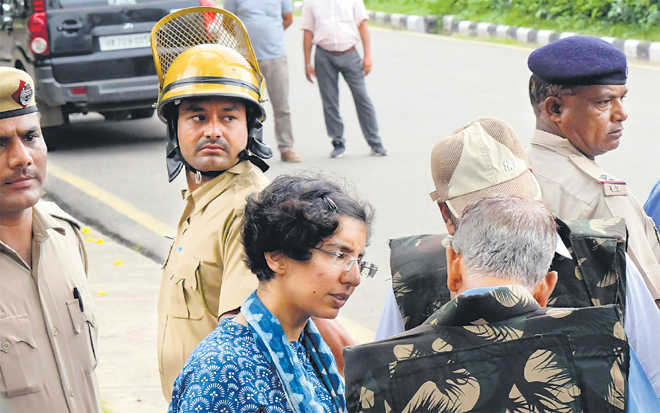
The DC Panchkula, Gauri Parasher Joshi, performed her role rather belatedly and yet she saved the situation by pressing the Army into action when violence and arson reigned supreme. After being outnumbered by thousands of dera followers, the police fled the spot, leaving the young officer to almost fend for herself. Left alone with a single PSO, she decided to hand over the situation to the Army, which helped avoid further deterioration of the situation.
Before doing so she did not call up the CM, not even the Chief Secretary or Home Secretary. Because there was no need since DM is the final authority. But this very DM had earlier allowed such massive and unruly crowd to assemble inside this small, satellite town of Chandigarh, despite prohibitory orders being in place! This is a clear case of governance failure and the state abdicating its primary role — that of maintaining law and order by taking preventive action.
Fortuitously, the high court took over this role at the nick of time and shot-off a catena of orders: ‘All parties and every section of society should maintain peace and harmony; in case anybody indulges in any kind of violence, arson, loot, etc., he or they should be dealt with firmly by use of force, if necessary; the police force and paramilitary forces would have free-hand to deal with the situation wherever and whenever required against any individual or any section of society or organization; in case of need, the Army shall be deployed and made operational….’
All these are legally mandated duties of administrative and police officers who belong to the elite services of IAS and IPS, covenanted and protected by constitutional safeguards. Why then have they surrendered to politicians who have come to power at the mercy of rapists, murderers and money-launderers? So much so, the court had to issue such specific directions: ‘In case any politician or anybody else including ministers interferes in the enforcement of law, FIR be registered against him/them… No politician, leader, social worker, spiritual leader, religious leader or any such organization shall make any provocative speech or statement, which may have the tendency to affect public order.’
This raises a critical question — has the state lost it relevance, or rather has it withered away? Withering away of the state is a concept of Marxism, coined by Friedrich Engels, and referring to the idea that, with realization of the ideals of socialism, the social institution of a state will eventually become obsolete and disappear, as society will be able to govern itself without the state and its coercive enforcement of the law.
India shifted from equitable socialism to crony capitalism long ago. Under this, state is pandering to cheats, crooks and charlatans who either have big money or control vote-banks. Because ‘god-men’ command both, they are the object of adoration by small men who run the Indian state. As the adage goes ‘when small men cast long shadows, it means that the sun is about to set’. No wonder then that the state is fast withering away!
(The author is a former Haryana Cadre IAS officer)
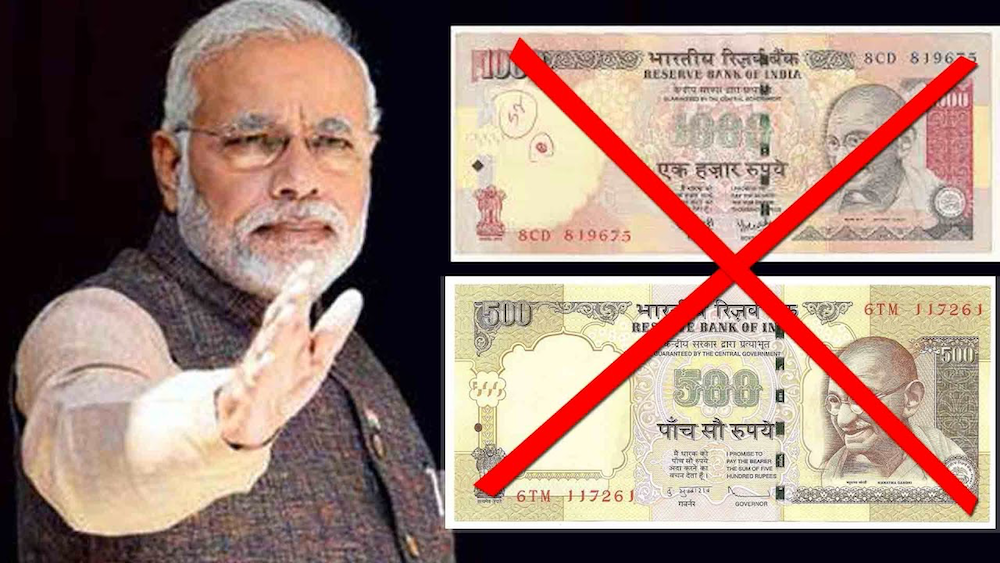
If 99 per cent of the demonetized currency has returned to the banks, as the RBI has said, it means the fight against black money through demonetization was not properly thought through. The Prime Minister had declared then: “The Rs 500 and Rs 1,000 notes hoarded by anti-national and anti-social elements will become worthless bits of paper.” That has not happened. This “anti-rich idea”, the “surgical strike” on black money, was successfully marketed by the BJP in the UP and other state elections. The Finance Minister had claimed that Rs 3 lakh crore of black money would get extinguished. Instead just Rs 1,600 crore has not re-entered the banking system.
The Finance Minister’s claim on the country making digital gains is also untenable. Digital transactions, according to the RBI, fell 20 per cent this April, compared to the previous month. To cover up the embarrassment, Arun Jaitley has changed the narrative: The demonetization objective was to force unaccounted money out of the cupboards and vaults at homes into bank accounts so that tax officials could establish the money trail. His assertion that personal income tax collections have gone up 25 per cent post-demonetization is also open to question. Official tax data indicates the I-T collection rise was higher at 27 per cent a year before. Any fight against black money would be incomplete without first tackling the issues of political funding, benami properties and offshore investments.
The exercise of extinguishing 86 per cent of the nation’s currency had caused countrywide dislocation and loss of jobs in the unorganized sector, hurt farmer incomes and led to a growth slowdown and some 104 deaths. The RBI ended up spending over Rs 30,000 crore on the printing of new notes and managing the logistics of demonetization. It spent 132.8 per cent more on printing new notes — Rs 7,965 crore during 2016-17 compared to Rs 3,421 crore in the preceding year. Here is an institution that compromised its autonomy, put itself to loss and invited criticism for the shoddy currency replacement work. The inescapable conclusion is: the pain of demonetization was real; the gain remains intangible.
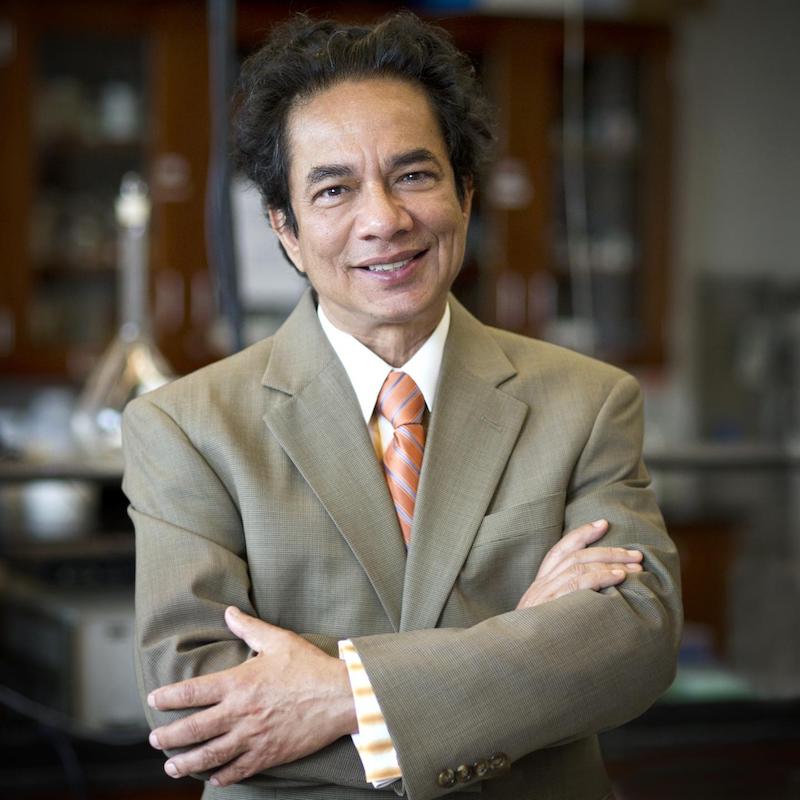
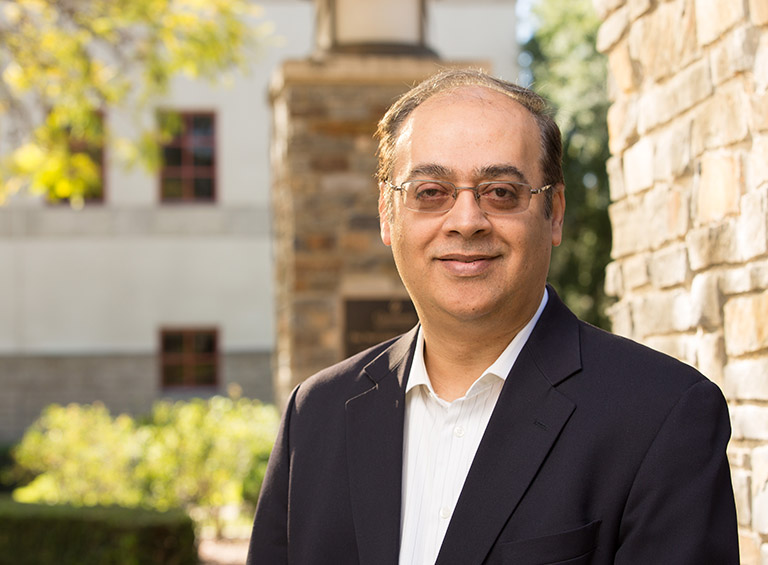
ARLINGTON, TX (TIP): Professor Purnendu “Sandy” Dasgupta, the Hamish Small Chair of Ion Analysis in the Department of Chemistry and Biochemistry at the University of Texas at Arlington, has been named recipient of the 2017 Talanta Medal, an international award that recognizes world leaders in the analytical chemistry field.
The Talanta Medal was initiated in 1961 by Pergamon Press, which was later acquired by multinational publishing group Elsevier, as a prestigious award of a gold medal for outstanding contributions to analytical chemistry. Dasgupta is the fourth American academic to win the award and the first of Indian origin. A special issue of Talanta, an acclaimed international journal devoted to Analytical Chemistry, will be published to coincide with the award ceremony, to commemorate this occasion.
Dasgupta’s high-impact research is improving public health on a global scale, a clear demonstration of advancing the University’s Strategic Plan 2020: Bold Solutions | Global Impact. Dasgupta has won numerous awards over the course of his career. In 2016, he was awarded the Eastern Analytical Symposium’s highest award, the Award for Outstanding Achievements in the Fields of Analytical Chemistry, and the Tech Titans Technology Inventors Award for his many innovations in chemical and environmental analysis.
Other honors include the 2015 American Chemical Society Division of Analytical Chemistry J. Calvin Giddings Award for Excellence in Education; the 2012 Stephen Dal Nogare Award in Chromatography; the 2012 Wilfred T. Doherty Award, DFW Section of the ACS; and the 2011 ACS Award in Chromatography. He also was named a Fellow of the Institute of Electrical and Electronics Engineers and an honorary member of the Japan Society of Analytical Chemistry, both in 2015.
Dasgupta received a bachelor’s degree with honors in Chemistry from Bankura Christian College in 1968 and a master’s degree in inorganic chemistry from the University of Burdwan in 1970, both located in West Bengal, India. He came to the United States in 1973 and earned his doctorate in analytical chemistry under Philip W. West, with a minor in electrical engineering, from Louisiana State University in 1977. He has published more than 400 papers and holds 29 patents.
CLAREMONT, CA (TIP): Claremont Graduate University Professor Samir Chatterjee has been selected for the Mahatma Gandhi Pravasi Samman award, which is given to non-resident Indians for “outstanding services, achievements and contributions for keeping the ‘Flag of India high.’ The award is given by the NRI Welfare Society of India, an organization established to strengthen bonds between India and non-resident Indians. The award will be presented on September 27 at the Global Indian Summit at the House of Lords in London.
Professor Samir Chatterjee is the Fletcher Jones Chair of Technology Design & Management at CGU’s Center for Information Systems & Technology (CISAT). He is also considered a leading technology designer and strategist for 21st-century health care. His entry into health care field has been via Telemedicine. Today he leads the emerging field of Persuasive Technology, a stimulating interdisciplinary research field that focuses on how interactive technologies and services can be designed to influence people’s attitudes and support positive behavior change.
Chatterjee received a Bachelor’s of Technology in Electronics & Telecommunications Engineering (1988) from Jadavpur University, India; as well as an MS (1991) and PhD (1994) in Computer Science from the School of Computer Science, University of Central Florida. He joined CGU in July 2001. In May 2015, he was awarded the distinguished lifetime achievement award for contributions to Design Science Research, presented by the IS design community. He is also an adjunct faculty at Keck Graduate Institute, where he teaches a course on Healthcare Informatics. He has also taught in the Drucker School of Management’s Executive MBA Program.
Throughout his career, Chatterjee has had substantial influence on the advancement of technology within the health care industry. He founded the Network Convergence Laboratory (now IDEA Labs), made possible by a grant from the National Science Foundation. He was co-founder and chairman of VoiceCore Technologies Inc., which he formed in 2001. In 2013, he founded DCL Health (Dr. Chatterjee’s Laboratories Health LLC), a wireless health care startup. He works closely with the Venture Capital and entrepreneurial startup community in the Southern California area.
Since 2006 he has been an evangelist and champion of design science as a research method in the IS community. He started the successful DESRIST series of conferences, and his book Design Research in Information Systems: Theory & Practice, co-authored by Alan Hevner, is important in the field. One of his design methodology research (DSR) papers is the third-most cited DSR paper in the IS community. He works closely with his graduate students in the lab; at any given time, the lab has several ongoing projects, with six to eight doctoral students involved in various stages of their dissertations.
His current projects include designing ICT and mobile solutions to address management of such chronic diseases as obesity/diabetes as well as oral health hygiene. He is also working closely with Loma Linda Medical Center on remote monitoring technology to assist patients with congestive heart failure.
MANCHESTER, NH (TIP): An Indian American businessman in Manchester, New Hampshire Rohit Saksena, 42, was sentenced to serve three years of probation and pay a $40,000 fine for filing false visa applications, Acting United States Attorney John J. Farley announced.
According to court documents, Saksena is the president and chief executive officer of Saks IT Group LLC, a company based in Manchester, New Hampshire. Saks IT Group contracts with other companies to provide information technology consulting services and places its employees with other companies to provide professional technology services. From approximately March 2014 through approximately December 2015, Saksena filed 45 fraudulent visa applications with United State Citizenship and Immigration Services falsely claiming that Saks IT Group was hiring foreign workers to provide professional services to a company in Cupertino, California. The California company had not entered into a contract with Saks IT Group and had no jobs available for the foreign workers. Saksena knew that the foreign workers would not be employed at the California company.
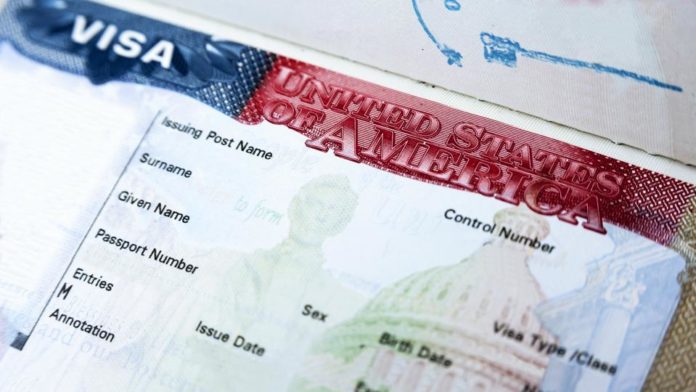
Saksena filed the false visa applications under the H-1B visa program. That program allows American businesses to temporarily employ foreign workers with specialized or technical expertise in a particular field like accounting, engineering, or computer science when qualified U.S. workers cannot be found to fill those positions. Under the H-1B visa program, a U.S. employer may employ a highly educated foreign worker subject to strict conditions, which include a demonstrated need for the foreign worker to fill a vacant position and assurance that the U.S. company will employ the foreign worker. Saksena filed visa applications that falsely claimed jobs awaited the foreign workers at the California company. He supported those applications with bogus Independent Contractor Agreements between the California company and Saks IT Group and with sham Work Orders that purported to show that the foreign worker would provide professional services for the California company. Some of the false visa applications resulted in foreign workers receiving H-1B visas. Many of the fraudulent applications were denied once Saksena’s deception came to light.
Saksena previously pleaded guilty on May 1, 2017, to making false statements to United States Citizenship and Immigration Services.
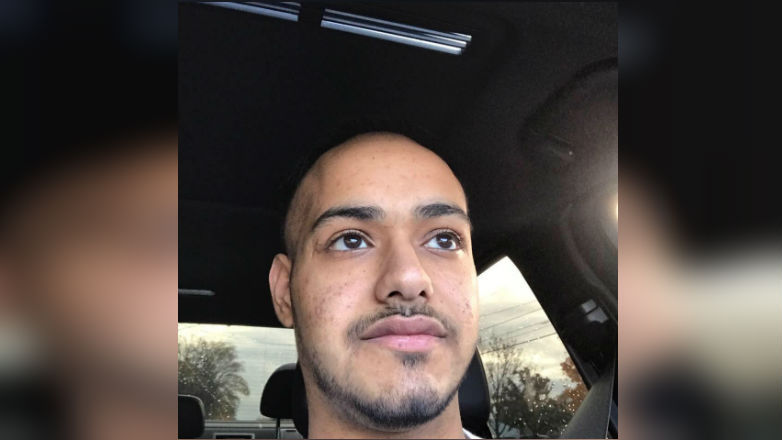
SPOKANE, IDAHO (TIP): On August 28 an Indian American cab driver in Idaho, Gagandeep Singh, 22, was stabbed to death by 19 years old passenger, Jacob Coleman who was arrested the next day on a first-degree murder charge. Singh was attacked by Jacob Coleman whom he picked up from Spokane International Airport. According to reports, Coleman was upset over not getting admission into his choice of university. Singh, a final year student of software engineering, hailed from Jalandhar in Punjab. He settled in Spokane, some 100 km from Bonner County, in Washington State in 2003 with his family.
According to Bonner County, Coleman flew from Seattle to Spokane on Monday to apparently begin a new semester at Gonzaga. When he reached the school, he contacted members of the Housing and Residence Life Office, who told him that he was not enrolled and had to leave. He became angry and began to have homicidal thoughts. As his anger festered, he hailed Singh’s cab from the Spokane Airport and asked to be driven to a fictitious friend’s home in eastern Bonner County.
Once reaching Bonner County, Coleman asked the Gagandeep Singh, of Spokane Valley, Wash., to stop at a Kootenai store, where he purchased a knife. Singh was directed to keep driving and look for the friend. When it became apparent Coleman had no particular destination, the sheriff’s office said Singh stopped the cab and was stabbed by Coleman.
“Gonzaga University has no record of an application for admission from Jacob Coleman of Puyallup, WA. An individual matching his description was reported to have approached housing officials on campus Monday. As Mr. Coleman was not enrolled as a student, he was never assigned to campus housing and was informed of this fact by the Housing and Residence Life Office,” spokeswoman Mary Joan Hahn said in a statement. “We continue to gather information and work with law enforcement to support their investigation. Our hearts go out to the victim of this tragic crime and his family.”
Coleman surrendered without incident and told officials he was upset as he didn’t get admission to Spokane-based Gonzaga University where he wanted to study. He has been arrested and charged with first-degree murder.
GRAND RAPIDS, MICHIGAN (TIP): An Indian American Hotel Owner Mehul Chandubhai Patel, a/k/a “Mike Patel,” 31, of Battle Creek, Michigan, on Aug 21 was ordered to pay restitution of $150,500 to his former employees, Acting U.S. Attorney Andrew Birge announced. The restitution order is the last stage of Patel’s sentence for lying to Labor Department investigators during their probe into his violation of minimum wage laws while operating two hotels operated by him, in Battle Creek and Coldwater, Michigan. Patel is currently serving a 60-day sentence imposed in U.S. District Court on May 24, 2017 for the offense.
On February 2, 2017, Patel appeared in federal court and pled guilty to violating 18 U.S.C. 1001(a)(1), a federal statute that prohibits anyone from concealing a material fact from the federal government when obligated to disclose it. He admitted that during 2005, the Department of Labor (“DOL”) had found him to be in violation of minimum wage laws by underpaying his hotel employees. He thereafter signed an agreement promising to repay his employees. When requested to provide proof that he had done so, Patel sent DOL checks indicating that back wages had been repaid. However, he concealed the fact that he required his employees to return the money to him immediately after cashing them.
U.S. District Judge Paul Maloney delayed imposing restitution at the sentencing hearing, advising the parties that he would decide the matter in August if they could not reach an agreement on the amount of restitution. On August 18, 2017, the U.S. Attorney’s Office reached an agreement with Patel that he would immediately pay $150,500 to the Department of Labor, for disbursement to his former employees. This will result in no further action against him for back wages, either in criminal or civil court.
Acting U.S. Attorney Birge commented that “Putting Patel in jail for cheating his financially distressed employees was important, but so is making sure they are paid what they are owed. This settlement allows them to be repaid right away, rather than waiting months or years.” Birge praised the help provided by the Chicago Office of the Department of Labor for its help in reaching a settlement that satisfied both criminal restitution and civil damages issues.
DALLAS (TIP): Drivers in northern Texas are rushing to fill up their gas tanks as prices at the pump in the area rise and some stations run out of fuel altogether as Harvey continues to wreak havoc.
QuikTrip, a chain with 135 gas stations in the Dallas-Fort Worth area, is keeping about half of them without gas, said spokesman Mike Thornbrugh. “Our experience has been, if you try to keep every store full… you’ll run out,” he told CBS Dallas-Fort Worth. Strategically closing stations can help sustain supplies in different parts of the city, according to the company. QuikTrip maintains a list of stations that have gasoline available on its website.
Around Dallas, pumps at several service stations in places like Denton, McKinney and Little Elm are seeing gas shortages, leading customers to scramble.
“We heard there was going to be a shortage,” one driver told CBS Dallas-Fort Worth. “So, we hopped in the car and came and filled up.” A driver in Denton, northwest of Dallas, tweeted a photo of a line at the gas pump.
In downtown Dallas, some stations charged well over $3 for a regular gallon of gas Thursday, and one downtown Shell station charged $3.97, the Associated Press reported. At three gas stations in north Dallas, yellow bags or caution tape was wrapped around pumps just after noon.
The majority of North Texas gas stations are not expected to run out of gas, but costs are expected to rise. Gas prices in the region are up almost 20 cents from this time last week, CBS Dallas-Fort Worth reported. That jump comes just ahead of the Labor Day holiday weekend, which typically sees heavy driving.
U.S. Energy Secretary Rick Perry on Thursday announced a release of a million barrels of oil from the Strategic Petroleum Reserve, which, at a capacity of 713 million barrels, is the largest emergency crude oil supply in the world. The oil will be delivered to the Phillips 66 refinery in Lake Charles, Louisiana, according to the Energy Department. That refinery has not been affected by the storm.
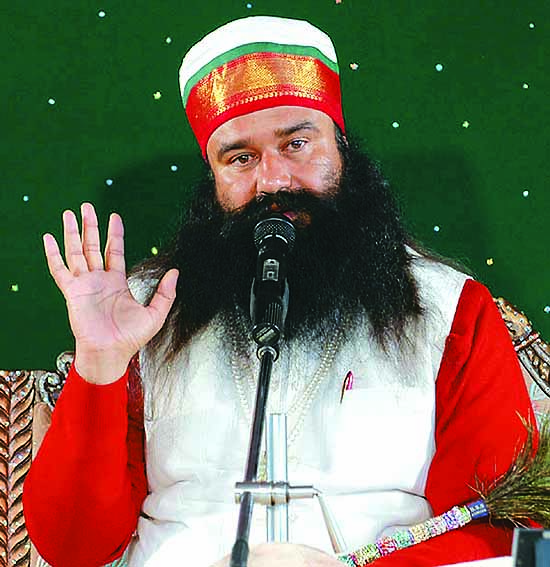
ROHTAK / CHANDIGARH (TIP): A special Central Bureau of Investigation (CBI) court sentenced Dera Sacha Sauda chief and self-styled godman Gurmeet Ram Rahim Singh to 20 years in prison and fined him Rs30 lakh on August 28 Monday, three days after convicting him of rape.
Judge Jagdeep Singh awarded a consecutive sentence of 10 years for each rape case. “Of the Rs30 lakh fine, Rs14 lakh each would be provided as compensation to the victims,” the CBI said.
The CBI court on Friday held Singh guilty of raping two of his female followers in 2002.
Violence once again broke out in Sirsa, Haryana, where the Dera’s headquarters is located, with his followers setting two vehicles on fire on Monday, even as the Dera’s chairperson Vipassana Insan appealed for calm.
Thirty-six people were killed in police shooting, arson and rioting on Friday in Haryana’s Panchkula.
In the run-up to the sentencing, special CBI court judge Jagdeep Singh was flown by helicopter to Rohtak’s Sunaria jail where Singh had been airlifted after the verdict on Friday. Security was beefed up in and around Rohtak with the Indian Army and the central paramilitary forces shutting down the area on Sunday evening.
The judge was flown from Panchkula to Rohtak at 2.20PM on Monday, following which arguments for Singh’s sentencing began at 2.30PM.
After the judge gave each side 10 minutes to present their case, the prosecution sought life imprisonment for the defendant, while the defense argued that Singh was a social worker who should be dealt with leniently.
Singh can now file an appeal against the sentence with the Punjab and Haryana high court.
Prohibitory orders barring the assembly of five or more people had been imposed in Rohtak; the area within a 10-km radius of the jail premises had been cordoned off. The Border Security Force (BSF) set up bunkers in Sirsa and the Indian Army and Haryana police deployed their forces in Rohtak, with order to shoot lawbreakers at sight.
NEW DELHI (TIP): Prime Minister Narendra Modi set in motion the reshuffle of his council of ministers with the resignation of at least half-a-dozen ministers, according to sources in the ruling BJP and the government.
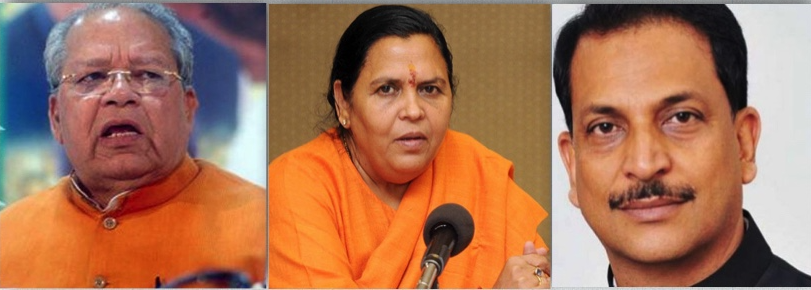
Small and medium enterprises minister Kalraj Mishra, water resources and Ganga rejuvenation minister Uma Bharti, skill development minister Rajiv Pratap Rudy, minister of state for human resource development Mahendra Nath Pandey and minister of state for water resources Sanjiv Baliyan have quit the government.
While Bharti met BJP president Amit Shah on Wednesday, August 30, Mishra called on him on Thursday. Party sources said these were routine meetings.
Rudy was among three ministers — the other two were steel minister Choudhury Birendra Singh and minister of state for human resource development Upendra Kushwaha — who met the BJP president last week.
One of the ministers who submitted his resignation to party general secretary (organization) Ram Lal on Thursday said that he had been asked to step down. Even during the last reshuffle in July last year, sources said, ministers were asked to submit their resignations to the party leadership first.
Modi will be out of the country from September 3 to September 7 for the Brics summit in China and a state visit to Myanmar. President Ram Nath Kovind is scheduled to visit Tirupati on Friday and will return to Delhi on Saturday afternoon, making September 2 the most likely date for the reshuffle.
The latest reshuffle will be the third after Modi came to power in 2014.
Among the ministers who resigned, Pandey was named the Uttar Pradesh BJP chief earlier in the day, and insiders said that Rudy may also be allotted organizational responsibilities.
The latest round of resignations will add to the vacancies already created after defense minister Manohar Parrikar became the Goa chief minister, urban development and information & broadcasting minister Venkaiah Naidu quit to become vice-president, and environment minister Anil Dave died after a prolonged illness this May.
Finance and corporate affairs minister Arun Jaitley was given the additional charge of defense, while Smriti Irani got the additional portfolio of information and broadcasting. Science minister Harsh Vardhan was allotted the environment ministry.
At an event on Thursday, when Jaitley was asked how long he would have dual charge of the finance and defense ministries, he had replied: “At least, I hope, not very long.”
Sources added that in the upcoming reshuffle, the NDA’s latest partner — Nitish Kumar’s JD(U) — may bag at least one berth. Kumar had left the NDA in 2013 but returned dramatically last month, dumping his poll partners Rashtriya Janata Dal and the Congress to renew an alliance with the BJP.
Modi’s last reshuffle was in July 2016 when he brought in 19 fresh faces and promoted Prakash Javadekar to the Cabinet.
Unconfirmed reports say transport and shipping minister Nitin Gadkari may get additional responsibility of railways.
There is speculation whether some ministers will shed additional portfolios and if railway minister Suresh Prabhu will retain his position after two back-to-back derailments, killing at least 20 people, led him to take responsibility and offer to quit. Modi didn’t accept the resignation though, and asked him to wait.
WASHINGTON (TIP): In a tit-for-tat, Washington finally decided to retaliate against Russia, ordering Thursday, August 31, to close its Consulate in San Francisco and scale back its diplomatic presence in Washington and New York. The retaliation comes in the wake of Moscow forcing the cut in American diplomatic staff earlier this year in retaliation for U.S. sanctions. Washington had to reduce its diplomatic staff by 755 people.
The Trump administration said the move constituted its response to the Kremlin’s “unwarranted and detrimental” decision to force the U.S. to cut its diplomatic staff in Russia. Under the order, Russia must close its San Francisco consulate by Saturday, along with Russia’s “chancery annex” in Washington and a “consular annex” in New York.
“The United States is prepared to take further action as necessary and as warranted,” said State Department spokeswoman Heather Nauert. Still, she said the U.S. hoped both countries could now move toward “improved relations between our two countries and increased cooperation on areas of mutual concern.”
Earlier this month, the Kremlin retaliated for stepped-up U.S. sanctions on Russia by announcing the U.S. would have to cut its embassy and consulate staff in Russia by 755 people. During meetings in the Philippines shortly thereafter, Secretary of State Rex Tillerson left open the possibility the U.S., in turn, would retaliate for that move, and promised Russian Foreign Minister Sergey Lavrov a formal response by Sept. 1.
The U.S. has said as a result, it will stop issuing visas at its consulates in Russia in cities other than Moscow. A senior U.S. official said Thursday that the U.S. reduction of diplomatic staff is complete.
There was no immediate reaction from the Russian government. But given the back-and-forth nature of the escalating tensions over the past year, it was likely the Kremlin would feel compelled to respond by taking further action against the U.S.
Nevertheless, the United States argued that the score has been evened, urging Russia not to retaliate for the retaliation. U.S. officials pointed out that Russia, when it ordered the cut in U.S. diplomats, had argued it was merely bringing the size of the two countries’ diplomatic presences into “parity.”
“The United States hopes that, having moved toward the Russian Federation’s desire for parity, we can avoid further retaliatory actions by both sides,” Nauert said.
The newly arrived Russian ambassador to the United States has invoked Bolshevik leader Vladimir Lenin in saying Moscow will carefully consider its response to the order to close its consulate in San Francisco and scale back operations in Washington and New York.
Anatoly Antonov flew into Washington on Thursday, hours after the State Department’s announcement of the closure.
Russian news agencies quoted him as saying: “We have to act calmly and professionally. Speaking like Lenin, we don’t need hysterical impulses,” citing a Lenin maxim.
Not much activity was detected outside the consulate building at 2790 Green Street in San Francisco’s Pacific Heights neighborhood Thursday afternoon. A white van bearing the consulate logo could be seen parked outside. Several people, including aged relatives of people living in Russia, had shown up to get their passports renewed, and were surprised to hear the news.
Women with suitcases could also be seen coming out of the building, but nobody offered any comment. News crews with cameras were parked outside the building.
Daniel, a dual Russian citizen who was visiting the consulate Thursday, told NBC Bay Area he was blindsighted. “A lot of people feel blindsighted,” he said.
Back in December, then President Barack Obama expelled 35 Russian diplomats from the U.S., including four employees and their families from the Russian consulate.
The four Russian consulate employees in San Francisco — including a chef accused of being a spy by the U.S. government — were ordered to leave the United States within 72 hours.
At that time, the Consul General called Obama’s accusations against their staff “bizarre and ridiculous.”
With this action both countries will remain with three consulates each. While there will continue to be a disparity in the number of diplomatic and consular annexes, we have chosen to allow the Russian Government to maintain some of its annexes in an effort to arrest the downward spiral in our relationship.
The United States hopes that, having moved toward the Russian Federation’s desire for parity, we can avoid further retaliatory actions by both sides and move forward to achieve the stated goal of both of our presidents: improved relations between our two countries and increased cooperation on areas of mutual concern. The United States is prepared to take further action as necessary and as warranted.”
Signup to our Newsletter!
Don’t miss out on all the happenings around the world