Month: September 2017

  • India Celebrates 70 Years of Independence at the United Nations

    India Celebrates 70 Years of Independence at the United Nations

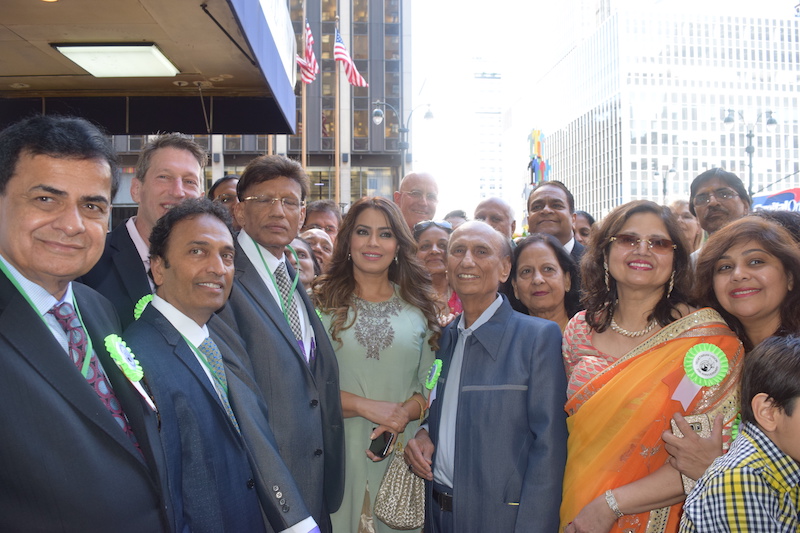
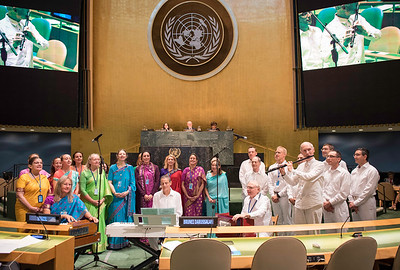
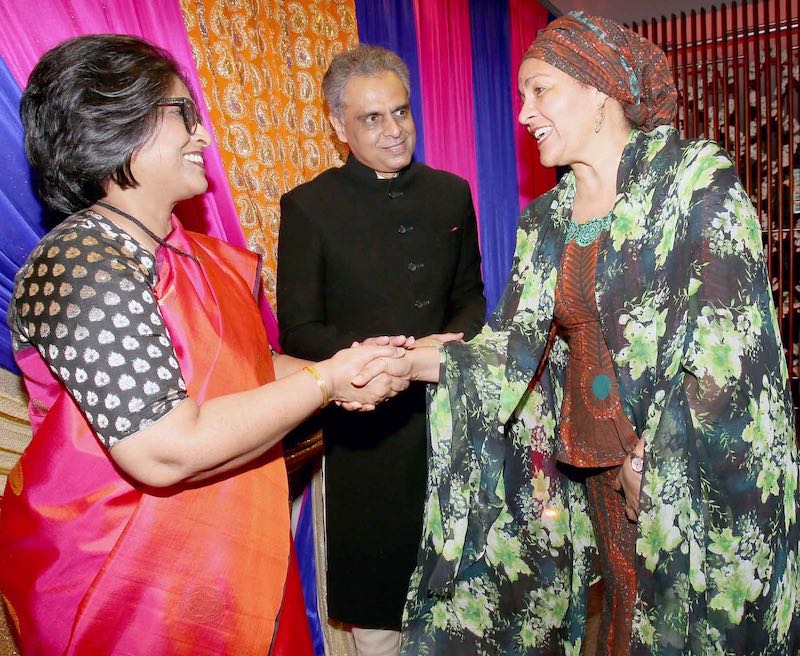
    UNITED NATIONS (TIP): Ambassador Amina Mohammed, Deputy Secretary General of the UN was present along with PRs/Ambassadors of several countries at the celebration of 70 years of India’s independence, hosted by the Permanent Mission of India.

    It was Indian ambience all over at the Delegates Dining Room at the United Nations building on September 8, 2017. In fact, the invitation itself with the picture of a man playing dhol (Indian drum) left one in no doubt that the event will offer music and, of course, food. And, so it was.

    Guests enjoying the musical extravaganza

    Over 600 hundred guests who descended at the beautiful venue, with East River flowing by and the colorful lights of Manhattan and Long Island lending romance and charm, were treated to Indian traditional and modern music and a delectable cuisine from various parts of the vast country that India is. It will be no exaggeration to claim here that India offers the most variegated food in the world. And, all of it is delicious.

    Guests were treated to a scintillating evening of music and dances
    Guests were treated to a scintillating evening of music and dances
    Guests were treated to a scintillating evening of music and dances

    A scintillating musical evening awaited guests who were treated to lovely Indian classical and modern music and enchanting dances, presented by Surati Performing Arts headed by an accomplished dancer Rimli Roy who has earned for herself the reputation of being a great promoter of Indian dance forms.

    Traditional welcome. Tilak being applied on a guest’s forehead

    The Indian hospitality was evidenced by the fact that the host, India’s Permanent Representative to the United Nations, Ambassador Syed Akbaruddin with his lovely wife Padma Akbaruddin, personally welcomed every guest. The deputy PR and his wife also joined them in welcoming guests who all were greeted at the entrance with a tilak on the forehead, an Indian way to show respect and express warmth.


  • Vegetarian Vision Takes a Leap Forward with International Health and Wellness Expo

    Vegetarian Vision Takes a Leap Forward with International Health and Wellness Expo

    NEW YORK CITY, NY (TIP): Vegetarian Vision presented its first International Health and Wellness Exposition on September 9th and 10th at Penn Pavilion in New Yok City.  Drawing crowds of thousands from New York and visitors world wide, the two-day event celebrated plant based lifestyle, and health and wellness awareness.  Renowned speakers included dozens of internationally recognized physicians, scientists, authors, and wellness experts, who spoke about the many health and environment benefits of a plant based/vegetarian diet.  Exhibitors and booth demonstrators filled a 40,000 square foot arena at Penn Pavilion’s expo hall, entertaining guests with live food demonstrations, on site yoga exercises, holistic therapies and new age massage techniques, and the very latest in health and wellness products.

    Speaker: Dr. Joel Fuhrman
    Speaker: Dr. Brian Clement

    Vegetarian Vision founder H.K. Shah, and his wife Malti Shah, expressed their joy at a ribbon cutting ceremony, which marked the inception of the event and the organization’s 25th jubilee anniversary.

    President, Chandra Mehta, then opened the exposition with an auspicious lamp lighting ceremony, alongside featured guest and Bollywood actress, Mahima Choudhary.  Attendants also included, Padma Shri Dr. Sudhir Parekh, H. R. Shah, Patri Ji, meditation guru, Vandana Sharma, Air India Regional Director, David Green, president of Vegan Association, and Mr. K. K. Mehta, convention chair, Nitin Vyas convention coordinator, and all Vegetarian Vision executive committee members.

    The exposition was a first for the Vegetarian Vision organization, bringing plant based lifestyle and wellness, to a global stage.  Null, host of award winning radio shows, and author of numerous NY Times best sellers, delivered a keynote lecture on reversing heart disease, cancer, arthritis, and mental decline through vegetarian and veganism.  Harvard trained cardiologist, Dr. Robert Ostfeld spoke further on the many benefits of plant based diet Dr. Brian Clement of Hippocrates Health Institute lectured on advanced healthcare, preventing and reversing disease, premature again, and renewing happiness.  Dr. Joel Fuhrman, New York Times bestselling author of Eat to Live, The End of Diabetes and The End of Heart Disease, further demonstrated the healthiest ways to eat, and scientific principles of superior nutrition. Mark Becker, yoga specialist, who opened the first Non-Hindu yoga center in NYC, Serenity, over 40 years ago, focused on “ahimsa,” nonviolence, as a spiritual cornerstone of vegetarianism.  Pavilion hosts, booth exhibitors, and other speakers displayed unique healing techniques through crystal bowl sounds, infrared light saunas, hydrogen water, and ayurvedic remedies.   Famous vegan chefs, including, Mark Reinfeld, lit up the Expo with live cooking demonstrations featuring their celebrated recipes.  The food hall also showcased a variety of oriental teas, live juice and smoothie samples, and vegan meals by Chickpea.

    Fashion Show Participants

    Saturday culminated in a dazzling night, with Bollywood superstar Mahima Choudhary, who starred as chair and judge of the Mr. and Miss Vegetarian Beauty Pageant.  The event brimmed with a colorful spectacle of fashions, and was attended by an audience of hundreds.

    Mr. and Ms. Vegetarian Pageant Winners: (L to R) Ms. Vegetarian, Mr. Vegetarian, Chandra Mehta, H K Shah, Mahima Chaudhry
    Committee Appreciation: (L to R) Animesh Goenka, Suhag Mehta, Flora Parekh, Chandra Mehta, Mahima Chaudhry, H K Shah, K K Mehta, Malti Shah, Mrs. Becker, Vinod Shah, Mark Becker

    The pageant was followed by a special gala event, hosted with honorable congressman Tom Suozzi and Vegetarian Vision Founder H. K. Shah.  The night featured a keynote speech by Vegetarian Vision president, Chandra Mehta.  Mrs. Mehta, expressed her delight with the exposition, and wished for a joyful and memorable experience for all guests.  She spoke of her hopes for continued education on the health and lifestyle benefits of plant based diets, and increased vegetarian and vegan options for students at schools, and universities, and guests at hotels by working with communities and businesses.  She suggested separate cutting utensils when preparing vegetarian meals, and different oils to fry vegetarian foods as a universally accepted standard at all restaurants.  The gala event continued with live music and dance and performances.

    On Sunday, more guests from around the New York metropolitan area arrived at the Health and Wellness Exposition, attending the featured lectures, and visiting the pavilion hall’s booths and exhibitions.

    Vegetarian Vision Committee Members

    The Expo culminated in a grand finale Sunday night.  The finale centered around a live fashion show, beautifully organized by Suhag Mehta, president of Shreenath Enterprise Inc, MC’d by Flora Parekh, and was graced once again by the events favorite Bollywood star, life-long vegetarian Mahima Choudhary.

    Vegetarian Vision’s International Health and Wellness Exposition proved to be a success of mega proportion.  Attended by thousands, and hosted by a star-studded list of pioneers and wellness experts, the Expo made for a special, and memorable experience.

  • The Varli Food Festival 2017: A Delectable Experience

    The Varli Food Festival 2017: A Delectable Experience

    By I.S. Saluja

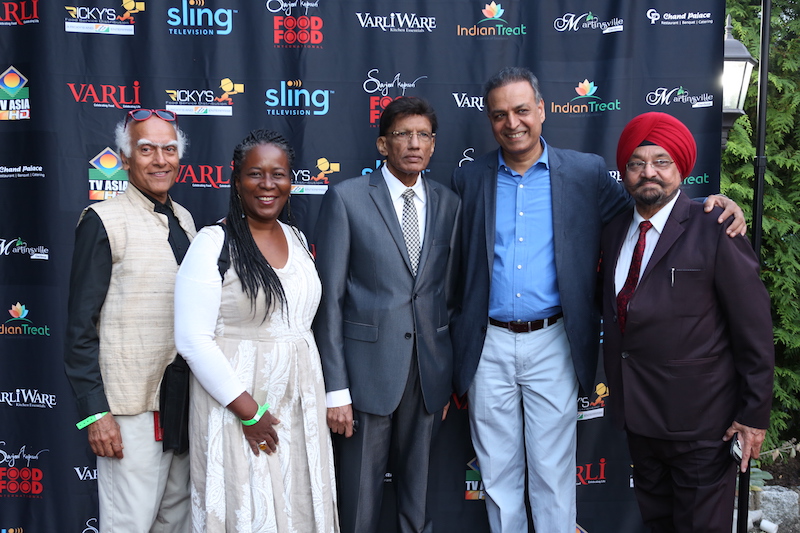
    NEW YORK (TIP): My friend Paul Chhabra who runs two restaurants known as Rajput Restaurant and pretty popular ones in Norfolk, Virginia, called a couple of days ago to say that he was flying with a scientist friend and his wife who is a culture tsar in her own way, in the latter’s private plane to New Jersey to attend Varli Food Festival on September 10. And he wished that I visit the culinary expo which will also be an opportunity to see each other.

    Master Chef Sanjeev Kapoor addressed the visitors. He is seen here with Varli Singh

    I have known Varli to be a great connoisseur of food and a pioneer in the field of culinary events. A couple of years ago, Mr. Garry Sikka had hosted Varli Food Festival at Mint Restaurant in Garden City, Long Island and I was one of the invitees. And I must say, I was impressed and pleased with myself that I had attended a great food festival. What I know is Varli launched the Food Festival named after her in 2011 The food festival opened to much acclaim and soon became a popular event, with restaurants and caterers lining up for the festival and connoisseurs of food rushing to the event.

    Varli, her husband Rickey Singh and their daughter are seen in the middle of the crowds at the Varli Food Festival on September 10

    The Varli Food Festival at the beautiful outdoor location of Martinsville Gardens in New Jersey was hosted by celebrity chef and entrepreneur Sanjeev Kapoor. It was a pleasure to meet him after a long time and exchange pleasantries with him although he was constantly mobbed for photographs. Even I had a photograph with him about which my daughter Jaskiran commented that I appeared to be blushing. Well, who wouldn’t in the company of the genius that Sanjeev is.

    Visitors listening to the Master Chef
    Visitors throng the food stalls

    I was told that 40 restaurants, chefs and celebrities from across the globe participated in the food festival. And the Indian cuisine, the main one, was simply delectable. And, on top, there was a huge number of visitors crowding each of the scores of food joints.

  • SANKARA EYE FOUNDATION Partners with EVENTGURU INC for Diwali at Times Square

    SANKARA EYE FOUNDATION Partners with EVENTGURU INC for Diwali at Times Square

    NEW YORK CITY, NY (TIP):  EVENTGURU INC, organizers of Diwali at Times Square announced September 12 their tie up with SANKARA EYE FOUNDATION (SEF), an organization committed to eradicating curable blindness in India for this year’s Diwali at Times Square. SEF aims to reach out to the underprivileged communities in India and provides them with quality eye care free of cost by building operationally self-sufficient super specialty eye care hospitals across the country.

    Ms. Neeta Bhasin, the founder of EVENTGURU INC. said, “Diwali is the harbinger of hope and all things good, which is why charitable works are encouraged during this time of the year. To fulfill the most important tenets of Diwali, we are pledging to support Sankara Eye Foundation and I urge everyone to donate and spread the light of sight.”

    This year’s Diwali at Times Square’s objective is to stand up with Sankara Eye Foundation’s work, raising awareness on visual impairment that affects almost 55 million people and to facilitate fundraising opportunities. SEF has, to this date performed over 1.6 million free eye surgeries for the needy This Diwali, Diwali at Times Square urges everyone to donate and gift the light of sight. To quote the Founder and CEO of Sankara Eye Foundation, Mr. Murali Krishnamurthy “SANKARA EYE FOUNDATION is very happy to partner with EVENTGURU INC for “Diwali at Times Square. This partnership will help SEF bring light into the lives of many more visually handicapped people. On the occasion of this grand “Festival of Lights” let us light many, many  lamps and spread love – Jyot se jyot jalate chalo, Prem ki Ganga bahate chalo.”

    For more information please visit https://www.giftofvision.org/

    ABOUT EVENT GURU: Event Guru World Wide is a premier full-service event company specializing in festivals, concerts, tradeshows, gala dinners, and press conferences. We conceptualize and implement events of all sizes and statures. We have built a team of passionate individuals who are sure to create impactful and memorable experiences for its clients.

    For more information contact: Alvaro Olmedo, Diwali at Times Square (212-216-9306) /media@diwalitimessquare.com

  • HAB Bank is not affiliated with habib bank limited (HBL)

    HAB Bank is not affiliated with habib bank limited (HBL)

    “In light of recent news regarding HBL, HAB Bank, strongly affirms it has no direct, indirect or any affiliation whatsoever or shared ownership with Habib Bank Limited, a Pakistan-based financial institution with an office in Manhattan”, as stated in a press release issued by HAB Bank, New York.

    The release further stated that HAB Bank is a U.S.-based community bank headquartered in Manhattan with FDIC membership. HAB Bank has no operations outside the US.  The institution has operated continuously and successfully since its original incorporation in 1983 and has branches in NY, NJ and CA.

    “HAB Bank proudly serves our consumer and commercial banking customers in the New York Tri-state area and California for over three decades,” said Saleem Iqbal, President and CEO of HAB Bank.

    We reached out to HAB Bank’s President & CEO Mr. Saleem Iqbal to seek clarification on the penalties assessed by the New York State against Habib Bank Limited. In an exclusive interview with this newspaper, Mr. Iqbal answered a series of questions clarifying HAB Bank’s position. on the whole matter and reiterated the fact that HAB Bank has no affiliation, direct or indirect, with Habib Bank Limited or HBL.

    Reporter: What is the difference between HAB Bank and Habib Bank Limited or HBL?

    Saleem Iqbal: HAB Bank is a US chartered, FDIC Insured bank with branches in three states. Our charter dates back to 1983. Habib Bank Limited on the other hand is Pakistan based foreign bank with a branch in New York City. As we have categorically stated over the last so many years, HAB Bank is not affiliated in any manner whatsoever with Pakistan based Habib Bank Limited or HBL.

    Reporter: How does this action by the NY regulator impact you?

    Saleem Iqbal: This has no impact on HAB Bank, we are two different banks.

    Reporter: How do you safeguard and protect your bank from such matters?

    Saleem Iqbal: HAB Bank, from day one of its inception, has built a strong culture of compliance. We recognize that banking industry in our country is highly regulated and there are number of federal as well as state laws that applies to us as a community bank. We have a top-down approach in complying with various regulations including Anti Money Laundering laws currently in place. Our frontline personnel are fully aware of such laws and trained by the Bank on an ongoing basis. Then there is active oversight by the senior management and the board of directors in addition to an extensive risk management framework.

    Reporter: What does future hold for HAB Bank?

    Saleem Iqbal: The Bank has shown steady and consistent growth; we are one of the largest South Asian-American banks in the US with assets over $1.3 billion with branches in three states. We were one of the few community banks in the US which remained unscathed and actually grew during the Great Recession, which started in 2007. We will continue to grow and to serve the banking needs of the South Asian community in the US.

    HAB BANK was incorporated in 1983 as a New York State Chartered Bank. HAB is a member of the Federal Deposit Insurance Corporation (FDIC), and holds $1.3 billion in assets as of June 30, 2017. Headquartered in New York, the Bank and besides Manhattan maintains branches in, Jackson Heights, Richmond Hill, Hicksville in NY, Iselin in NJ, Artesia and Downtown Los Angeles in CA.

    For further information, please visit HAB Bank’s website at www.habbank.com and Click on “Important Announcement”.


  • Diwali At Times Square

    Diwali At Times Square

    [vc_row][vc_column width=”2/3″][vc_single_image image=”87678″ img_size=”Full” add_caption=”yes” alignment=”center”][/vc_column][vc_column width=”1/3″][vc_widget_sidebar sidebar_id=”td-default”][/vc_column][/vc_row]

  • Diwali at Times Square Diwali Memory Contest

    Diwali at Times Square Diwali Memory Contest

    Enter the contest and win a prize

    Diwali is around the corner and we can feel the magic in the air. In the spirit of Diwali, we are giving away a gift a week for our #DiwaliMemory contest*! We want to hear from you! How do you celebrate Diwali? Share a picture, a video or a story post and every week the post with the most likes will win a gift.

    Steps to enter:

    1) Share your Diwali Memory post on Facebook

    2) Like Diwali at Times Square Page & tag us on your post

    3) Use the #DiwaliMemory

    4) Tell all your friends to like your post – the more likes you have the more likely you are to win!

    Our first winner will be announced on September 18th!

    * Rules and Regulations: https://goo.gl/6xKC7j

    * This contest is only valid for residents of the US and Canada.

  • New strategy, old game: on Trump and Afghanistan

    New strategy, old game: on Trump and Afghanistan

    By Varghese K. George

    “The Trump administration has presented its plan for Afghanistan as a regional approach — it’s anything but that”, says the author.

    “This is a continuation of the Obama administration’s policy. In 2015 and 2016, it had held back part of reimbursements to Pakistan from the Coalition Support Funds. Though Mr. Trump spoke tough on Pakistan, it is still unclear what could be the tough measures. Mr. White thinks overdoing this could be counterproductive: “Increased pressure is likely to push Pakistan into a corner, unlikely to deliver results in terms of cooperation on critical security issues. The insurgency in Afghanistan is largely organically funded. The safe havens help the Taliban, but I don’t think they are vital to the Taliban. So even if the pressure on Pakistan produces results, I don’t think its impact on the situation in Afghanistan will be significant.”

    “The core goal of the U.S. must be to disrupt, dismantle, and defeat al-Qaeda and its safe havens in Pakistan, and to prevent their return to Pakistan or Afghanistan… And after years of mixed results, we will not, and cannot, provide a blank check (to Pakistan)… As President, my greatest responsibility is to protect the American people. We are not in Afghanistan to control that country or to dictate its future,” said the President of the United States, announcing a “regional strategy” for Afghanistan after the worst year of the conflict. The President was Barack Obama and the year was 2009.

    On August 21, when President Donald Trump unveiled his new “regional strategy” for Afghanistan, it was in large part a reiteration of the above speech in terms of strategic objectives. By now 2016 has become the worst year of the conflict. Mr. Trump’s speech was high on rhetoric and low on detail. Three weeks later, do we know better? Interactions with people close to the subject, including Ahmad Daud Noorzai, head of the office of President Ashraf Ghani of Afghanistan, and Joshua White, who was Director for South Asian Affairs at Barack Obama’s National Security Council, provide some clues.

    Junking timelines

    Mr. Trump’s announcement of military commitment without a deadline in Afghanistan could be a game changer, both agree. “The word on the street is that Afghans are happy. This allows us to create a culture of peace, to build institutions and improve delivery of public services,” Ahmad Daud Noorzai, said during an interaction with a group of journalists and experts at the Afghanistan embassy in Washington last week. He said the most important reason for Afghanistan’s failure to stabilize has been the uncertainty around security.

    Not announcing a timeline is wise strategy, feels Mr. White, who played a crucial role in President Obama’s Afghanistan strategy. “We examined the risk of drawdown and the outcomes looked ugly. Withdrawal would have been unwise. Significant scaling up of American troops would also have been unwise — that is the lesson that we learnt from the surge (in U.S. troop deployment in Afghanistan). We could not have fundamentally changed the balance of power without a large number of forces there forever,” he said in an interview at the Johns Hopkins University, where he teaches now (http://bit.ly/JoshuaTWhite).

    Mr. Noorzai said Mr. Trump’s declaration that the U.S. would go after terrorists has already made a difference on the ground in Afghanistan: “From the military point of view, this is a huge change. This has already impacted the armed insurgents. When your commander-in-chief says to go after the terrorists, the nature of the military presence changes.” So more than the number of American boots on the ground, the nature and quality of America’s military presence has changed, and this could make a difference.

    Pressure on Pakistan

    The most tangible measure against Pakistan came a week after Mr. Trump’s speech as the administration decided to keep $255 million in military assistance to Pakistan in suspension until Islamabad demonstrates action against terrorist groups. This was earmarked in the U.S. budget for 2017. In July, Defense Secretary James Mattis did not provide certification that Pakistan was taking action against the Haqqani network, and held back $50 million from reimbursements to Pakistan for logistical support for the war in Afghanistan.

    This is a continuation of the Obama administration’s policy. In 2015 and 2016, it had held back part of reimbursements to Pakistan from the Coalition Support Funds. Though Mr. Trump spoke tough on Pakistan, it is still unclear what could be the tough measures. Mr. White thinks overdoing this could be counterproductive: “Increased pressure is likely to push Pakistan into a corner, unlikely to deliver results in terms of cooperation on critical security issues. The insurgency in Afghanistan is largely organically funded. The safe havens help the Taliban, but I don’t think they are vital to the Taliban. So even if the pressure on Pakistan produces results, I don’t think its impact on the situation in Afghanistan will be significant.”

    Mr. Noorzai said Mr. Ghani is trying to impress upon Pakistan to make the best use of Afghanistan’s economic potential: “We have excellent relations with the countries on the north, west and south. New trade routes and opportunities are opening up and Pakistan has a lot to gain from it all.”

    Mr. Trump called upon India to play a larger role, but Washington’s expectations from India are very modest. No specific demand for monetary assistance has been made.

    Expectations from India

    The Trump administration, it appears, would like India to help in working with Afghanistan’s domestic factions in widening and buttressing the political legitimacy of the current government, and helping it improve its governance. For his part, Mr. Noorzai finds India’s increasing role in Afghanistan very welcome. “The Indian private sector must come to Afghanistan,” he said. “Start your business, make your profit. We could start with IT, we have so many needs. There is an impression in India that Indians are targeted in Afghanistan; Indians will need as much security as any other, but they can do their business. India needs to create a positive view in the country about Afghanistan so that the private sector understands the economic opportunity in Afghanistan.” Mr. White believes India has been self-restrained — “for good reasons” — in its role in Afghanistan, though from 2012 onwards the Obama administration was open to New Delhi playing any role that it could agree with the Afghan government. “There is value in signaling that the U.S. sees India as a critical partner for Afghanistan. But there is also a risk, because feeding Pakistan’s anxiety about Indian influence in Afghanistan is not necessarily helpful to either Washington or New Delhi,” he said.

    Following Mr. Trump’s speech, Secretary of State Rex Tillerson said India has a role to play in changing Pakistan’s behavior: “India and Pakistan, they have their own issues that they have to continue to work through, but I think there are areas where perhaps even India can take some steps of rapprochement to improve the stability within Pakistan and remove some of the reasons why they deal with these unstable elements inside their own country.”

    Mr. White feels this is continuation of U.S. policy under President Obama: “The Trump administration has spoken more clearly and more directly about safe havens, not only for Afghan-focused groups but also for Indian-focused groups. But again, near the end of the Obama administration there were some strong statements and acknowledgment on that issue, particularly after the Uri attack.” He adds that America always wanted India to remain constantly engaged with Pakistan, “despite the disappointments India and the U.S.” had with Islamabad. There is an unmistakable level of continuity between the Obama and Trump administrations in viewing the India-Pakistan rivalry as a potential nuclear catastrophe. In fact, Mr. Trump mentioned that in his South Asia speech, and he has inherited the idea from the Obama era.

    Not exactly regional

    The Trump administration has presented the new strategy as a “regional” approach, but in the last three weeks it is clear that there is hardly any regional cooperation evolving or to be expected. Russia has termed the strategy a “dead end”, China has said Pakistan should be on board. The administration has acknowledged that Russia will work to undermine America in Afghanistan, but believes that China is interested in stability in Afghanistan. In June, the Pentagon’s half-yearly report on the situation in Afghanistan described India as “Afghanistan’s most reliable regional partner” and noted the interests — conflicting in many cases — of countries such as Iran, Saudi Arabia, China, Russia and the Central Asian states in Afghanistan, not to mention Pakistan. The new strategy does not appear to be addressing this factor and other measures of the Trump administration could aggravate the rivalries. Herein lies the most serious challenge in making any meaningful progress in Afghanistan.

    (The author is a columnist with The Hindu)


  • Bullet Train to boost India-Japan bilateral ties

    Bullet Train to boost India-Japan bilateral ties

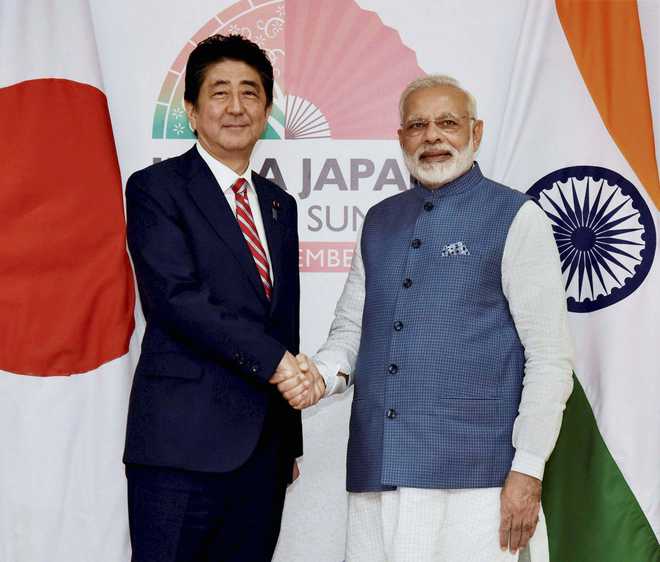
    Modi, Abe jointly Lay foundation stone for Rs 1.08 lakh-cr Ahmedabad-Mumbai high-speed train; 15 agreements signed GANDHINAGAR

    (TIP): It may have been a dream come true for PM Narendra Modi when, on September 14, he and his Japanese counterpart, Shinzo Abe jointly laid the foundation stone of India’s first much-hyped Rs 1.08 lakh crore bullet train corridor between Ahmedabad and Mumbai.

    The two Prime Ministers also oversaw the signing of 15 memoranda of understanding, including on disaster risk management, skills development, connectivity, civil aviation and science and technology. On the second and concluding day of Abe’s visit, the two leaders issued a joint statement at the end of the 12th Indo-Japan Joint Summit.

    Speaking at the business summit, Abe said the foundation of the friendship between the two countries was laid when his grandfather, who was the then Prime Minister, visited India 60 years ago and his then Indian counterpart Jawaharlal Nehru accepted him with open arms though Japan then had just started to recover from the battering of the World War.

    “Today I and Modi have decided to start a new chapter in the friendship and develop stronger bonds between the two countries,” he said.

    Modi described Abe as a “great friend of India” and his “best friend”. Modi said in 2016-17, Japan invested $4.7 billion in India, 80% higher than the previous year. “Japan is the third largest investor in India. This shows the optimism in Japan about India’s economic development and bright future,” he said.

    Expecting the bullet train project to be completed by 2022-23, Abe said it would stand out as a towering example of the growing close ties between the two countries. He hoped that during his next visit to Gujarat, he would “come to Ahmedabad in the bullet train from Mumbai with Modi beside him, enjoying the beautiful scenery of India”.

    Both PMs also unveiled the plaque for an institute in Vadodara to train about 4,000 personnel to run the bullet train. The project would provide direct and indirect employment to about 20,000 people.

  • Trump speaks loud & clear: Do more or face consequences, Pak warned

    Trump speaks loud & clear: Do more or face consequences, Pak warned

    By G Parthasarathy
    Pakistan gives safe haven to agents of chaos, violence and terror.’ He added: ‘We have been paying Pakistan millions of dollars at the same time that they are housing the very terrorists that we are fighting.’ He pledged his support to strengthen the Afghan government, while praising India’s role in Afghanistan and across the Indo-Pacific Region. He made it clear that he would do what it takes to act against ‘Pakistan’s safe havens for terrorist organizations’, like the Taliban. The Secretaries of State and Defense, and the US Commander in Afghanistan have echoed the President’s comments”, the author says, quoting US President Donald Trump.

    After waiting anxiously for six months to learn how the Trump Administration will deal with Afghanistan, Pakistan was rudely shaken when President Trump virtually read out the ‘Riot Act’ to the generals in Rawalpindi and politicians in Islamabad. Never given to sophistry, Trump made it clear that the Af-Pak region is the epicenter of global terrorism, stating: ‘Pakistan gives safe haven to agents of chaos, violence and terror.’ He added: ‘We have been paying Pakistan millions of dollars at the same time that they are housing the very terrorists that we are fighting.’ He pledged his support to strengthen the Afghan government, while praising India’s role in Afghanistan and across the Indo-Pacific Region. He made it clear that he would do what it takes to act against ‘Pakistan’s safe havens for terrorist organizations’, like the Taliban. The Secretaries of State and Defense, and the US Commander in Afghanistan have echoed the President’s comments.

    Shocked by Trump’s condemnation, Pakistan responded by calling a meeting of its military dominated National Security Council (NSC), chaired by stand-in PM, Shahid Khaqan Abbasi. The NSC avoided responding directly to Trump’s remarks. It called instead for ‘eliminating safe havens inside Afghanistan’, with focus on ‘border management, return of Afghan refugees in Pakistan and reinvigorating the peace process, for a political settlement in Afghanistan’. Rather than responding to the view across the world that Pakistan should end support to terrorism, as demanded by Trump, Pakistan is now a nation in denial, changing the narrative from ending terrorism to its ‘sacrifices’ in the ‘war on terror’. The emphasis is not on terrorism, but on getting a dialogue between the Taliban and the Afghan government, in which the Taliban will talk from a position of military strength. In Pakistan’s perceptions, Afghanistan should be its ‘client state’, ruled by universally reviled terrorists it backs.

    Not surprisingly, Pakistan has received backing for its stand from its ‘all-weather friend’ China. Beijing has asked the US to show ‘understanding’ of Pakistan’s views and concerns. Not to be left behind, President Putin’s loquacious special envoy to Afghanistan, Zamir Kabulov, has spoken like the special envoy of the Taliban. US’ NATO allies have pledged to support and supplement the US decision to expand its military presence in Afghanistan. While the US would support a dialogue between the Afghan government and Taliban, Trump has made it clear that while his aims include ‘preventing the Taliban from taking over Afghanistan’, he would only accept ‘elements of the Taliban’ in any political settlement in Afghanistan. The US and its allies will, therefore, not accept a government dominated by the Taliban, as China and Russia would evidently acquiesce in.It is crucial for India to see that it is involved in and influences the emerging political process within Afghanistan, in consultation with the Afghan government. Rejecting US proposals for early dialogue, Pakistan has indicated that it will enter into such a dialogue only after serious consultations with China, Russia and Turkey. It has also indirectly held out the threat that it could close US supply routes to Afghanistan if it finds US actions unpalatable. It remains to be seen how the US reacts to this. The American public and political opinion, especially in the US Congress, are becoming increasingly impatient and angry at Pakistan’s duplicitous role.

    The Trump Administration is said to have consulted Washington’s former Ambassador to Kabul, Zalmay Khalilzad, who hails from Afghanistan, on shaping its Af-Pak policies. Khalilzad has held that Pakistan would ‘test’ Trump’s resolve to implement what he had stated. Khalizad has urged that the increase in the US military presence should be accompanied by a ‘strong diplomatic push’ to coordinate the actions Trump has proposed. He envisages Pakistan-backed attacks by the Taliban and Haqqani Network on American supply lines and advocates precision drone strikes on the Taliban within Pakistan, like the attack that killed the former Taliban chief Mullah Akhtar Mansour in Balochistan. He also recommends US air strikes on terrorist hideouts in Pakistan and initiating action to put Pakistan on the list of states sponsoring terrorism. Most importantly, he urges: ‘Washington should also suspend all American aid to Pakistan and use its influence with the World Bank and the International Monetary Fund to do the same.’ Moreover, he believes that the ISI and other Pakistani officials, with links to terrorist groups, should face travel bans and other US sanctions.

    India would do well to encourage congressional and political opinion in the US to work in the direction Khalilzad has proposed. The Pakistani bluff about closing US supply routes has to be met by the US and its allies resolutely and frontally. The financial sanctions will be particularly effective at a time when the balance of payments position in Pakistan is far from comfortable and the much-touted Chinese assistance for the CPEC is largely made up of tied loans, with a negligible grant element. This credit squeeze on Pakistan could also be extended to loans from Asian Development Bank. The Trump Administration wields substantial clout with the Gulf Cooperation Council (GCC). Leading members of the GCC like Saudi Arabia and the UAE could be very effective in ‘persuading’ Pakistan see reason!

    India can best contribute to the squeeze on Pakistan by proceeding on its present course of replacing SAARC with BIMSTEC as the primary organization for regional cooperation in South Asia, while stepping up trilateral cooperation with Iran and Afghanistan on issues of trade, transit and aid to Afghanistan, despite Tehran’s recent ‘contacts’ with the Taliban. The obvious collusion between the Supreme Court and the military in Pakistan to oust Nawaz Sharif makes it clear that the Pakistan army is going to fully call the shots on cross-border terrorism in J&K and elsewhere in India. There should be no illusions on this score, while determining policies on our relations with Pakistan. It is important that we now finalize an imaginative five-year plan for economic assistance to Afghanistan and coordinate policies with Kabul to deal with Pakistan-sponsored terrorism internationally more effectively. We should also ask ourselves whether any Indian interest is served by denying more military equipment from our stocks of Soviet-era equipment to Afghanistan, especially when two of the four attack helicopters supplied by us to Afghanistan are not operational for want of spare parts.

    (The author is a career diplomat)


  • At bullet speed: Indo-Japan ties, beyond the optics

    At bullet speed: Indo-Japan ties, beyond the optics

    The Indian-Japanese partnership has been in the making for a decade since Shinzo Abe described it as a confluence of two seas while addressing the Indian Parliament. This confluence became a symbolic convergence with the laying of the foundation stone of the bullet train project in Ahmedabad. Partisans are out in strength, debating the merits and demerits of the project, though it is a bit rich for the Congress to protest since the very same Mumbai-Ahmedabad bullet train project had figured in two UPA railway budgets, presented by Pawan Bansal and Mallikarjun Kharge, respectively. Sceptics, though, have a point when they question the hoopla surrounding a single, stand-alone section, keeping in mind that the most difficult part — land acquisition — is yet to begin. And not for nothing is Abe called Japan’s top salesman — he has sold the bullet train idea to India even though cost considerations had edged the Japanese out in Indonesia and Thailand where China has been the gainer.

    Arguably, the Indo-Japanese partnership story is not just about the bullet train. Japan needs a large market like India to offset the tepid outcome of Abenomics that was supposed to pull it out of chronic low growth. New Delhi, in return, hopes to get its hands on sophisticated technology in cutting-edge areas. However, Japan is yet to make up its mind about technology transfer. On the other hand, Japan’s unequivocal show of solidarity with India in its Doklam standoff with China should suggest that doubts and hesitations in Tokyo are dissolving.

    Partnerships that benefit both sides are a staple of international relationships. But PM Modi and his predecessor, Manmohan Singh, imbued greater dynamism in ties with Japan by extending it to other countries. The two countries plan to venture in tandem in Africa, while the project to connect India with East Asian countries is in full swing. There is need for caution. The Indian taxpayer cannot be allowed to become the guinea pig for expensive Japanese imports. Indeed, in the New India of PM Modi, the private sector should have shouldered the risks and joy of running bullet trains. That would have produced some transformation.

    (Tribune, India)

  • Fairly close to DACA deal but citizenship and amnesty are not part of the deal, says Trump

    Fairly close to DACA deal but citizenship and amnesty are not part of the deal, says Trump

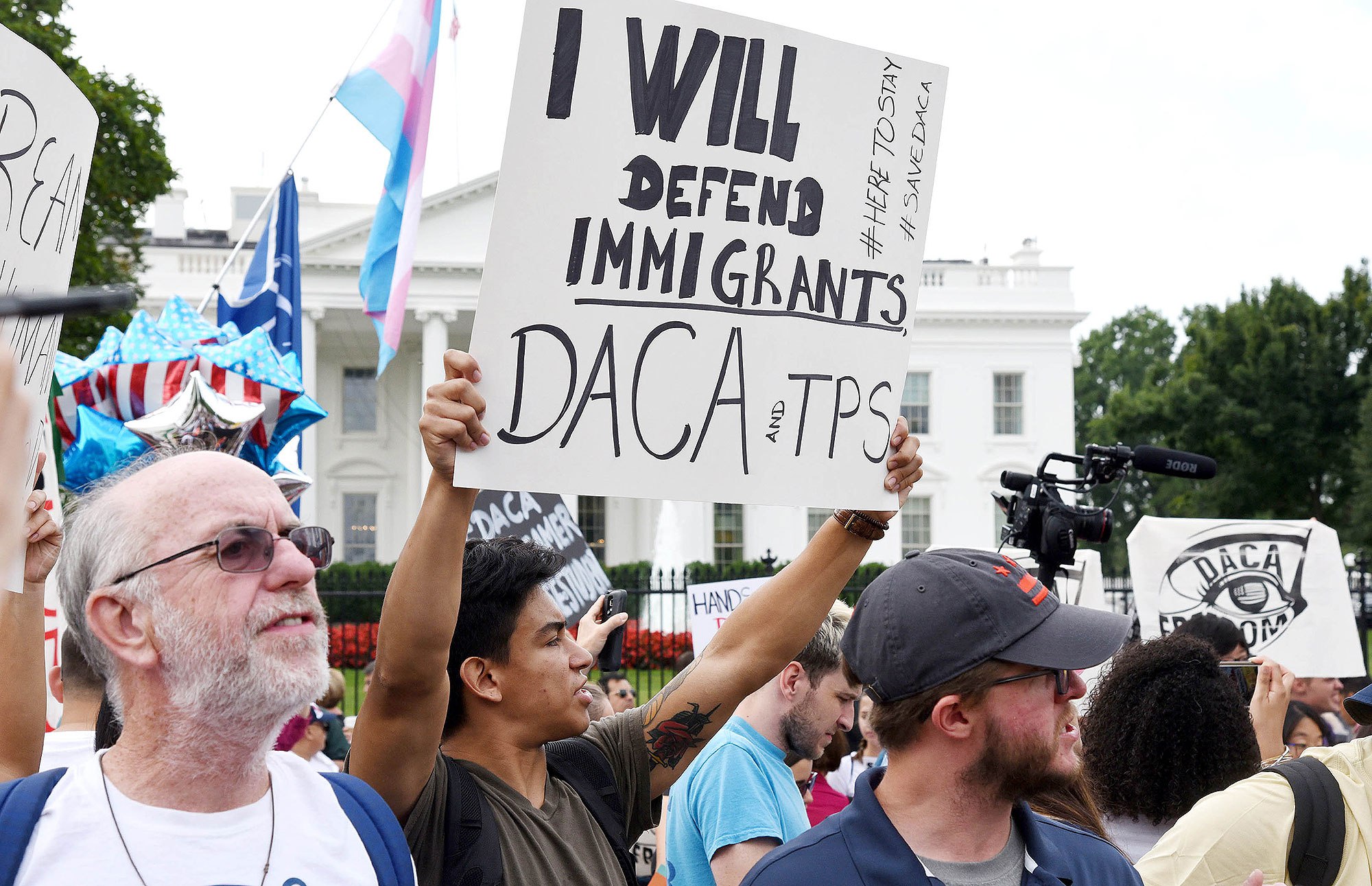
    WASHINGTON (TIP): US President Donald Trump said on Thursday, September 14, that he was looking to allow people to stay here, but not ready for citizenship or amnesty, an announcement that may benefit 8,00,000 young immigrants, including those from India.

    Trump’s statement came a day after top Democratic lawmakers Chuck Schumer and Nancy Pelosi claimed that they had reached a deal with the president to protect about 8,00,000 young immigrants who came to America illegally as children and were given protection by the Obama-era Deferred Action for Childhood Arrivals (DACA) program.

    Trump had scrapped the DACA program earlier this month.

    “We are not looking at citizenship. We are not looking at amnesty. We are looking at allowing people to stay here,” Trump told reporters.

    Trump said he is very close to a deal on DACA.

    “I just spoke with Paul Ryan, everybody’s on board… We are talking about taking care of people, people who were brought here, people who have done a good job. We will only do it if we get extreme security, not only surveillance but everything that goes with surveillance. If there is not a wall, we are doing nothing,” he said.

    In a statement after dinner with Trump at the White House, Schumer and Pelosi said that they have reached a deal with him on DACA.

    “We had a very productive meeting at the White House with the president. The discussion focused on DACA. We agreed to enshrine the protections of DACA into law quickly, and to work out a package of border security, excluding the wall, that is acceptable to both sides,” Schumer and Pelosi said.

    In a tweet early this morning, Trump however said that no deal has been reached.

    “No deal was made last night on DACA. Massive border security would have to be agreed to in exchange for consent.

    “Would be subject to vote,” he said, refuting claims being made by the Democratic leaders.

    Pelosi tended to disagree at a news conference at the Capitol Hill.

    “I do believe that there is an understanding that down the road, there is an eventual path to citizenship in the DREAM Act, and that overwhelmingly, the American people support that,” she said.

    “In a poll today, over 50 per cent, and then, you know, 12 per cent want to send them back, and then others somewhere in the middle. But it came up in the context of the suggestion that there might be other bills to be considered, and that did not last long,” Pelosi said.

    The atmosphere during the White House dinner last night, she said, was very friendly.“We made it clear from the start that there were certain concerns that we had about some of the president’s statements relating to the Muslim ban, Charlottesville, DACA decision and that we needed to establish some trust and confidence as we go forward.

    “One path to building that confidence and trust would be the DREAM Act, DACA. The president likes to call it DACA. I believe that we have had enough conversation with the President with enough reiteration of his commitment to protect the dreamers, in fact, publicly. You saw his statements, today, that it would not be wise to send these young people back,” Pelosi added.

    (Source: PTI)

  • Dr. VK Raju Honored

    Dr. VK Raju Honored

    CONEY ISLAND, NEW YORK (TIP): Internationally renowned ophthalmologist Dr. VK Raju was, on September 14, honored by The Asha Niketan Community at a special event to honor the Founder-President of The Eye Foundation of America. Dr. Raju is a clinical Professor, department of Ophthalmology at West Virginia University. Through his Eye Foundation, he has been working all over the world, in particular in India, for the prevention of avoidable blindness among children. He runs eye hospitals in his native State of Andhra Pradesh.

    A renowned ophthalmologist, he has received a number of prestigious recognitions and honors. He was recently admitted to Toledo University Hall of fame.

  • USIBC Global Summit Aims to Renew US-India Key Linkages

    USIBC Global Summit Aims to Renew US-India Key Linkages

    WASHINGTON (TIP): The U.S. Chamber’s U.S.-India Business Council (USIBC) on Sept 12 hosted the inaugural ‘Road to Global Entrepreneurship’ Summit, part of its Global Entrepreneurship Conclave, in Washington, D.C. The summit brought together key stakeholders, including U.S. government officials, government of India officials, and industry leaders from across sectors to renew the two countries’ key linkages and advance their mutual interests.

    Participants from the U.S. and India discussed the power of innovation and entrepreneurship to accelerate economic growth, create jobs, and encourage groundbreaking ideas in order to serve the citizens of both nations. U.S. Commerce Secretary Wilbur Ross addressed the summit, which is the first in a series, and he discussed the importance of the bilateral ties between the U.S. and India. Secretary Ross said the U.S. administration is encouraged by India’s economic reforms, and he highlighted the important role that the U.S.-India Business Council has played in furthering the commercial partnership over its 42-year existence.

    “The U.S.-India strategic and commercial partnership is unique and complementary in nature,” said Khush Choksy, acting president of the USIBC. “These discussions at the Global Entrepreneurship Summit are timely and necessary because we believe that the next phase of the bilateral relationship will be determined by the necessity to expand job creation, economic growth, and innovation in both countries.”

    The summit included remarks from Ambassador Alice Wells, Acting Assistant Secretary of State for South and Central Asian Affairs and Acting Special Representative for Afghanistan and Pakistan, U.S. Department of State; Ambassador of India to the United States Navtej Sarna; Ambassador of Israel to the United States Ron Dermer; and Rep. Raja Krishnamoorti (D-IL).

    The event also included a panel discussion on building communities through private-sector collaboration, with participation from Monique Meche, vice president of global public policy for Amazon; Angela Baker, director of Qualcomm Wireless Reach; and Reggie Aggarwal, founder and CEO of Cvent. The discussion focused on advancing policy frameworks to grow entrepreneurship, especially in emerging markets, and the role of women in growing jobs and economies.

    “Many women in emerging economies have the ideas and ambitions needed to succeed, but are held back by a lack of access to business skills, education, networks, and capital,” said Baker. “Mobile technology can break down common barriers of skill and access and connect entrepreneurs to information, resources, and consumers. By fostering and investing in programs that use wireless solutions, we are enabling women entrepreneurs to participate in the flourishing mobile economy in India and around the world.”

    “Amazon is pleased to contribute to the Global Entrepreneurship Conclave to discuss innovation, entrepreneurship, and the empowerment of women in India – which are all at the heart of Amazon’s business in India,” said Meche.

    “As an entrepreneurial company, Cvent recognizes that bringing people together and fostering innovation regardless of borders is a key to success,” said Aggarwal. “We are proud to be part of a summit that will encourage entrepreneurship around the world.”

    Formed in 1975 at the request of the U.S. and Indian governments, the U.S.-India Business Council is the premier business advocacy organization, comprised of 350 top-tier U.S. and Indian companies advancing U.S.-India commercial ties. USIBC is the largest bilateral trade association in the United States, with liaison presence in New York, Silicon Valley, and New Delhi.

    The U.S. Chamber of Commerce is the world’s largest business federation representing the interests of more than 3 million businesses of all sizes, sectors, and regions, as well as state and local chambers and industry associations. Its International Affairs division includes more than 70 regional and policy experts and 25 country- and region-specific business councils and initiatives. The U.S. Chamber also works closely with 117 American Chambers of Commerce abroad.

  • Sri Chinmoy singers perform at “Culture of Peace” at the United Nations

    Sri Chinmoy singers perform at “Culture of Peace” at the United Nations

    Ashok Parulekar

    UNITED NATIONS (TIP): The singers from Sri Chinmoy:  Peace Meditation at the United Nations were invited to perform at the United Nations high level forum on the Culture of Peace held in the General Assembly hall.  They presented meditative peace songs composed by Sri Chinmoy (1931-2007).  The event was organized by the President of UN General Assembly and Bangladesh ambassador.

    The United Nations General Assembly President Peter Thomson said, “On behalf of you all, I’d like to thank Sri Chinmoy: The Peace Meditation at the United Nation for that beautiful performance and the culture of Peace for which they have stood for so long”.

     In response to the issue raised by Pakistan’s permanent representative Maleeha Lodhi, the senior Indian diplomat Srinivas Prasad said, “As one of the oldest civilizations, India has been the home to a continuous stream of great spiritual teachers, thinkers throughout the centuries who have spread the message of a culture of peace”.

    Sri Chinmoy was one such spiritual teacher.  He tirelessly worked for world peace through his meditations, books, music, art, poetry, sports and meetings with world leaders such as Nelson Mandela and President Gorbachev.  In 1970 at the invitation of then UN secretary General U Thant, he started Sri Chinmoy: The Peace Meditation at the United Nations, as this meditation group is now called.  He was very optimistic about the world peace.  He said,” A day will come when our world will be flooded with peace. About UN he said, “The UN is now a small plant, so we underestimate its potential, eventually it will become a big tree and protect the world”.

  • Indian American Scientist Ananda Theertha Suresh honored with Paul Baran Young Scholar Award

    Indian American Scientist Ananda Theertha Suresh honored with Paul Baran Young Scholar Award

    NEW JERSEY (TIP): The Marconi Society, dedicated to furthering scientific achievements in communications and the Internet, will honor Google Research Scientist and UC San Diego PhD Ananda Theertha Suresh with the 2017 Paul Baran Young Scholar Award. The 28-year-old researcher will receive the award at an awards ceremony in Summit, NJ on October 3, 2017.

    Suresh’s research focuses on understanding the most efficient ways to use information, data and communication. As a PhD student at UC San Diego, Suresh showed why Good-Turing frequency estimation works well and developed improvements to the technique, creating an estimator that works across fields ranging from genetics to language modeling. At Google Research, his work helps provide sophisticated communications capabilities and applications to people with low bandwidth Internet connections and low-end devices.

    Suresh’s innovations in distribution estimation, co-authored with Alon Orlitsky and described in “Competitive Distribution Estimation: Why is Good-Turing Good,” won a best paper award at the 2015 Neural Information Processing Systems (NIPS) conference. In addition, the prestigious 2017 Annual ACM Symposium on Theory of Computing (STOC) chose Suresh’s work for presentation at their first-ever “best of theory” session.

    “Ananda applied his philosophy to several important tasks in probability estimation, compression, classification, closeness testing, and outlier detection,” said Alon Orlitsky, Professor of Electrical and Computer Engineering at UC San Diego Jacobs School of Engineering and Suresh’s PhD advisor and nominator for the award. “In all these problems he derived crisp, insightful, and surprising results that often required broad vision, keen intuition, and mastery of diverse technical skills, a highly unusual combination for such a nascent researcher.”

    As a Research Scientist at Google Research, Suresh follows his passion to make communications available to everyone. Access and opportunities for those in developing countries are gated by low-bandwidth Internet services, as well as by low-end devices that have limited storage and intelligence. In most machine learning algorithms used to support capabilities such as autocomplete suggestions when a user is searching, the phone sends all the information about the search to the server and the server sends all the information back to the phone. Suresh’s algorithms reduce the amount of data that needs to be sent to the network on the uplink – the bottleneck in the entire process – thereby reducing data sent and data costs by orders of magnitude.

    According to Dr. Michael D. Riley, Principal Research Scientist and Manager at Google Research, “Ananda’s research has already led to algorithms that give better compression for a given decompression time budget than we have previously used and this work is now used by millions of people within speech and keyboard input applications in Google products.”

    “I am a great admirer of some of the previous Marconi Society Young Scholar winners and I am humbled and honored to be in their company,” said Suresh. “I look forward to interacting with the other Young Scholars and Fellows. I know that talking with them and learning from them will inspire me to tackle the most challenging problems in the world.”

    As the first in his family to attend college, Suresh’s goal is to deeply understand the fundamental limits of what is possible in data science so that he can develop a set of tools that will make an impact on people who have access to only limited resources.

    “Suresh’s work requires very diverse techniques ranging from high-dimensional statistics and approximation theory to information theory, which clearly demonstrates the depth of his understanding,” remarked Yihong Wu, 2011 Marconi Society Young Scholar, Assistant Professor of Statistics and Data Science at Yale University and collaborator at the Simons Institute for the Theory of Computing. “Furthermore, it attests to his vision, intuition and good judgment as a theoretical data scientist. I am thoroughly impressed by his creative and systematic way of thinking and great tenacity when tackling tough research.”

    Young Scholar candidates are nominated by their academic advisors. Winners are selected by an international panel comprised of engineers from leading universities and companies, and receive a $4000 prize plus expenses to attend the annual awards event. Three other Young Scholars were also selected this year.

    Suresh will receive his award at the same event where former Bell Labs chief Arun Netravali, regarded as the “father of digital video,” will be honored with the $100,000 Marconi Prize.


  • Business delegation from India focuses to strengthen bilateral business opportunities

    Business delegation from India focuses to strengthen bilateral business opportunities

    WASHINGTON (TIP): A Business delegation from India recently visited USA, focusing on Defense, Aerospace and Renewable Energy Sectors. The main objective of the delegation was to create business opportunities for Indian and U.S. companies and establish effective partnerships in these sectors. The delegation visited multiple cities including Atlanta (Georgia), Columbia (South Carolina), Huntsville (Alabama), Orlando (Florida) Seattle (Washington) and San Diego (California). They also participated in the South Carolina Aerospace Conference and Expo held in Columbia on August 30.

    “Among the thrust areas, Defense, Aerospace and Renewable energy (power) are the most important sectors in India. The State of Tamil Nadu is the thrust area for the aerospace sector and it recently opened up 300 acres of Aerospace Park at Sriperumbudur in Chennai. As the Indo-U.S. relationship is robust and engaging, it is the time for the Indian industries to look for the investment partners/opportunities, informational exchange, knowledge and technology sharing with the companies in the U.S. in these sectors”, feels The Indo-American Chamber of Commerce (IACC).

    Huntsville was the delegation’s final stop on a multiple-city tour that included Seattle, San Francisco, and Jacksonville. The group was comprised of government leaders and aerospace industry executives who were impressed what they saw in North Alabama. Multiple presentations were made by various members of the Indian delegation regarding aerospace projects, both civil and governmental, and opportunities for Alabama companies to supply parts.

    The delegation was hosted by The North Alabama International Trade Association (NAITA), whose mission is generating international trade in the region. Representing NAITA, Anne Burkett (Director of Planning & Economic Development for Madison County), said they are excited to explore opportunities for increased collaboration with India, including joint ventures, strategic partnerships, and capital investments in North Alabama’s aerospace industry.

    India’s delegation was led by Atulya Misra, Secretary of Industry for the government of Tamil Nadu—India’s sixth most populous state. Accompanying Mr. Misra was India’s Deputy Consul General D. V. Singh and many others who are integral to investments in the U.S. economy.

    According to International Air Transport Association (IATA), India is the fastest growing domestic market globally, handling over 190 million passengers.  Over the next decade, the market is expected to reach 337 million domestic and 84 million international passengers.  This growth will create demand for new aircrafts, air navigation service technologies, airport security equipment, and increased infrastructure.


  • MOVIE REVIEW – LOGAN LUCKY

    MOVIE REVIEW – LOGAN LUCKY

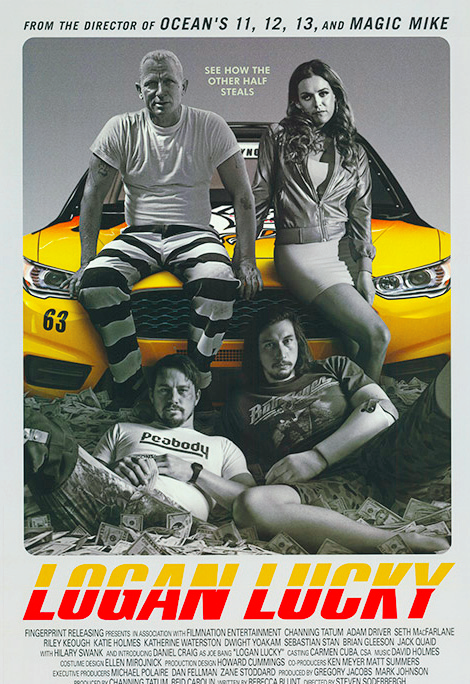
    CAST: Channing Tatum, Adam Driver, Seth MacFarlane, Riley Keough, Katie Holmes, Katherine Waterston, Dwight Yoakam, Sebastian Stan, Hilary Swank, Daniel Craig

    DIRECTION: Steven Soderbergh

    GENRE: Comedy

    DURATION: 2 hours

    STORY

    Steven Soderbergh’s ‘Logan Lucky’ is an American heist comedy film. It focuses on three siblings who plan to rob the Charlotte Motor Speedway in North Carolina.

    REVIEW

    Steven Soderbergh retired from filmmaking in 2013, claiming that he had lost interest in the industry. The director behind the ‘Ocean’s Trilogy’ – the iconic heist series – decided to come out of retirement and make another entry in the same genre, but this time at the other end of the glamor spectrum. If the sophisticated crew of Ocean’s had swag, then this ragtag group has rustic charm, and loads of it. Set in West Virginia, there’s nothing fancy about any of them, or their methods. But Soderbergh’s years of experience with handling an assorted cast hasn’t wasted away over the years. He empowers each actor with enough material to showcase their range of skills and to a large extent, they do not disappoint.

    Tatum & Driver play two siblings carrying some family baggage due to unfortunate events. They both imbibe their characters with a subtle sibling tension under the surface but are undeniably brothers in arms. Their sister Mellie Logan, played by Riley Keough, is a strong presence even with her limited screen time.

    There are a lot of smaller parts featuring a talented set of actors like Hilary Swank and Seth MacFarlane who might make you wonder what they’re doing in this film at certain points, but clearly, everyone’s having a great time playing this assorted bunch of endearing oddities. That’s certainly the case for Daniel Craig, who seems to have taken up this film as a palate cleanser of sorts. Before he wears the bespoke suit again, and gets back all his fancy toys as the spy extraordinaire, he has to make do as a petty criminal with a penchant for crude bombs. Instead, Craig walks a fine line between being a tightly wound manic genius, and an eccentric loose cannon waiting to blow up. It’s a thrill to watch him at work as the wild card.

    Which is also a way to describe ‘Logan Lucky’ as a film. It’s unpredictable, with some unforeseen twists and turns but with its heart intact. While the last act feels a bit drawn out, especially with the rushed introduction of a particular character, the majority of the film plays out smoothly and there’s hardly a lull in the quirky humor and suspense. Even if it doesn’t raise the stakes of the genre, there’s enough potential to turn this funny and smartly written caper into another entertaining Soderbergh franchise.

  • JENNIFER LAWRENCE’S CHARACTER REPRESENTS MOTHER EARTH

    JENNIFER LAWRENCE’S CHARACTER REPRESENTS MOTHER EARTH

    As the release date for Darren Aronofsky’s upcoming horror movie ‘Mother,’ starring Jennifer Lawrence is coming closer, people are getting more and more curious about what the title and JLaw’s character represent in the movie.

    And it seems like we now have an answer to that question. While premiering his new thriller at the Venice Film Festival, director Darren Aronofksy said that Lawrence’s character represents Mother Earth, and her destruction symbolizes how people treat the environment.

    He said, “I think there is absolutely a connection. America is schizophrenic. We go from backing the Paris climate [accord] to eight months later pulling out. It’s tragic, but, in many ways, we’ve revealed who the enemy is and now we can go attack it.”

    He also noted that making Lawrence’s character completely submissive was intentional. “It really has to do with the allegory of the film and what we’re trying to do there. If you think about Day 6 in your history and in your bibles, you’ll kind of figure out where the film starts,” shared Aronofksy.

    The film also stars Domhnall Gleeson, Ed Harris, Kristen Wiig, Michelle Pfeiffer, and Brian Gleeson in pivotal roles. The flick is slated to hit theaters on September 15.

  • I DON’T ENJOY BEING SINGLE: ANGELINA JOLIE

    I DON’T ENJOY BEING SINGLE: ANGELINA JOLIE

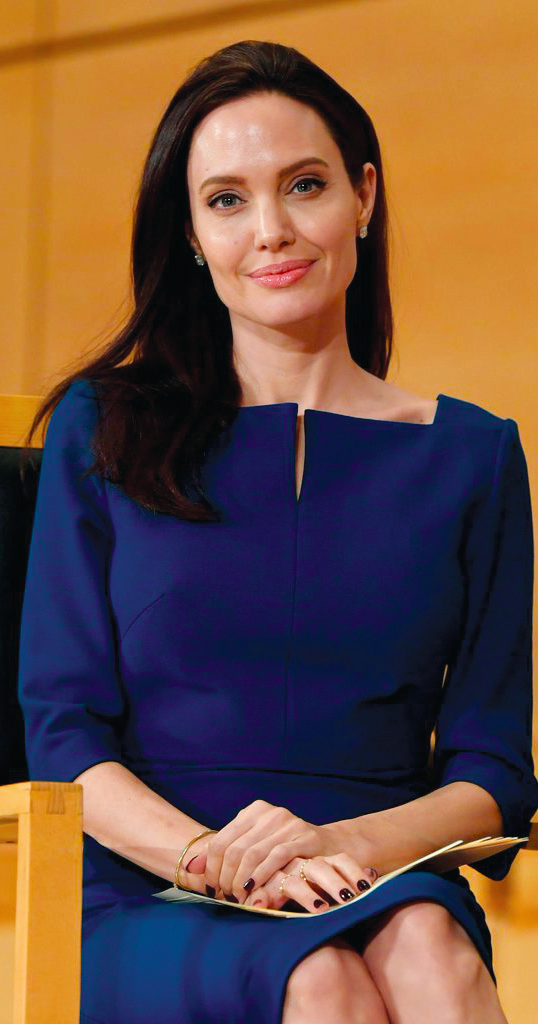
    The past year has been hard for Angelina Jolie. The actress is now opening up about her feelings. In an interview with Sunday Telegraph, she said, “Sometimes maybe it appears I am pulling it all together. But really

    I am just trying to get through my days. I don’t enjoy being single. It’s not something I wanted. There’s nothing nice about it. It’s just hard.”

    However, sources from E! News have earlier reported that she is not getting back with Brad Pitt. “Emotionally it’s been a very difficult year. And I have some other health issues,” Jolie said, referring to her hypertension and Bell’s palsy diagnoses, and added, “I feel sometimes that my body has taken a hit, but I try to laugh as much as possible. We tend to get so stressed that our children feel our stress when they need to feel our joy. Even if you are going through chemo, you need to find the ability to love and laugh. It may sound like a postcard, but it’s true.”

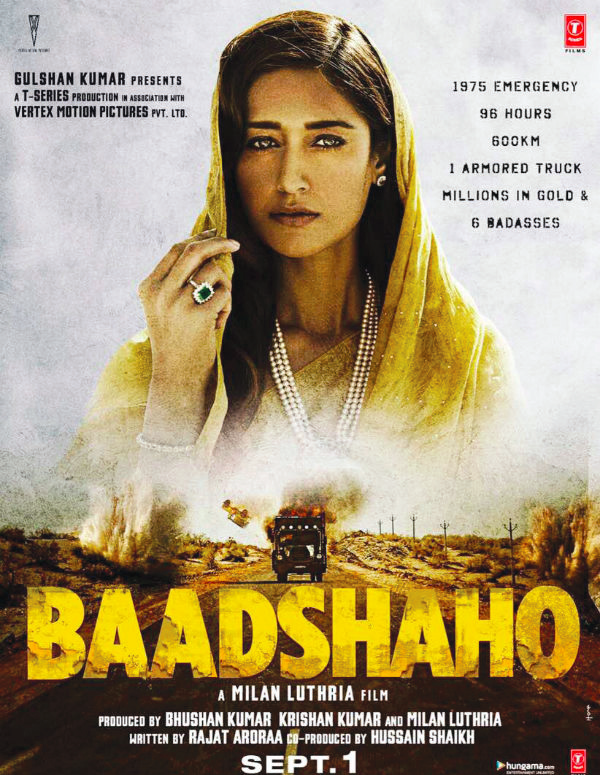
  • MOVIE REVIEW – BAADSHAHO

    MOVIE REVIEW – BAADSHAHO

    CAST: Ajay Devgn, Emraan Hashmi, Vidyut Jammwal, Ileana D’Cruz, Esha Gupta, Sanjay Mishra

    DIRECTION: Milan Luthria

    GENRE: Action

    DURATION: 2 hours 16 minutes

    STORY

    Emergency has been declared in India. Maharani Gitanjali(Ileana) from one of Rajasthan’s princely states has already lost her privy purse. Now, she fears that she will lose the last treasure chest of gold which has been forcibly taken away from her. So she asks her trusted lieutenant, Bhawani (Ajay) to step in and plan a heist.

    REVIEW

    On paper, Baadshaho may have had the merit of a Hollywood heist thriller like Ocean’s Eleven. This would seem like why Ajay Devgn agreed to be a part of this multi-starrer– that attempts to make outlaws look like Robin Hood. However good intention is defeated, when the execution offers zero novelty.

    Anyway, mastermind, Bhawani, who is madly in love with Gitanjali promises her that he will win her pot of gold back. So he lovingly handpicks his crew—a lock picker, Tikla(Sanjay), a daredevil all-rounder, Daliya(Emraan), a `I-bite-bullets-forbreakfast’ kinda gal, Sanjana(Esha) who along with him, form the quartet that sets out to outsmart the faujis taking the armoured truck from Rajasthan to Delhi. It’s the haraami v/s army clash.

    The highlight of the film is the chase that ensues soon after Seher(Vidyut), an army officer alights from the train. You so wish that the film had maintained the same breakneck speed all through, but alas!

    For a heist-thriller to work, the moves of the rural bandits should have been more calculated and precise. Instead, here you have buffoonery. Everyone is mouthing signature lines trying to constantly reiterate how “bad-ass” they are. However, if you’re in the mood, indulge them– these are Bollywood’s paisa-pheko, dialogue-suno moments.

    Ajay burns the screen with his searing intensity; Ileana passes muster as the Maharani with hidden facets; Emraan’s takeaway is that he gets to shimmy with Sunny Leone and Vidyut gets an `interesting’ introduction.

    Sunita Radia’s lens captures the expanse of the desert deftly showing scale. Certain shots even stay frozen in your memory.

    The song Mere Rashke Qamar rekindles the magic of the voices of Nusrat Fateh Ali Khan and Rahat Fateh Ali Khan. If you’re an action junkie, this could be your weekend big-ticket ride.

  • PARINEETI CHOPRA CLEARS THE AIR ABOUT HARDIK PANDYA

    PARINEETI CHOPRA CLEARS THE AIR ABOUT HARDIK PANDYA

    While the world knows that cricketer Virat Kohli and actress Anushka Sharma are a couple, Twiteratti thought Parineeti Chopra and Hardik Pandya could be the next ‘Bollywood-cricket’ link after their recent Twitter chat.

    It all started with Parineeti posting a picture of a bicycle few days back, but the captions spoke about the ‘most amazing partner’ and ‘love is in the air.’

    Cricketer Hardik Pandya’s response to the picture set tongues wagging, talking about a ‘second Bollywood-cricket link’, first perhaps being Virat and Anushka.

    The actress, however, later had to post a video, following the link-up rumours, that the ‘partner’ in question was instead her new smartphone.

    At an event on Monday, the actress was asked about the link-up rumours again and this time, she set the record straight. She said, “Whether I am single or not that is not the discussion, but I am not dating Hardik Pandya. Even I heard about it.” Fans expecting a ‘second Bollywood-cricket’ link after Virat and Anushka would surely be a disappointed lot.

  • MADHURI DIXIT TO MAKE INTERNATIONAL MUSICAL DEBUT

    MADHURI DIXIT TO MAKE INTERNATIONAL MUSICAL DEBUT

    Global icon and Bollywood’s eternal It girl Madhuri Dixit is all set to venture into world wide music with – The Film Star.

    Bollywood’s Dhak Dhak Girl Madhuri Dixit, is poised to release her first-ever English language EP, The Film Star. The EP will be launched with the debut single, ‘Tu Hai Mera’.

    ‘Tu Hai Mera’ is a special ode from Madhuri to her fans for all the love and support she’s received from them and continues to. It is a fusion of classical Indian folk music with western pop lyrics and beats, bringing together the East and the West, creating an iconic sound and vibe.

    The idea to create a multilingual soundtrack from one of India’s most iconic performers and entertainers like Madhuri was conceived early last year at a meeting

    in Beverly Hills, CA between Madhuri Dixit, her husband Shriram Nene and Sat Bisla, president & founder of A&R Worldwide. Bisla has been an early supporter for acts such as Sheppard, Coldplay, Muse, Keane, Dido, Adele, The Temper Trap, LMFAO, Jessie J, Katy Perry, Sia, Gavin James and hundreds of others prior to their global successes.

    Talking about embarking on this musical journey Madhuri Dixit stated, “Music has been a part of my being from the very beginning. I was pretty clear that I wanted to kickstart this new chapter with a sense of celebration and gratitude for my fans who have offered their unrelenting support and all their love no matter what. So what better way to embark on this journey than by celebrating their appreciation!”

    Talking further about her debut single Tu Hai Mera, Dixit says, “It was a pleasure to work with a team of talented individuals who understood and appreciated the beauty of the East and West. We were able to create something that really speaks to your soul. Our hope is that the audience will appreciate all the hard work our team has put into the project and that it moves them as much as it has affected us.” Source: DECCAN CHRONICLE

  • RELIVING 9/11

    RELIVING 9/11

    A co-ordinated al-Qaeda attack on America on 11th September 2001 killed almost 3,000 people. Two hijacked planes were flown into New York’s World Trade Center, resulting in the collapse of the Twin Towers, while another crashed into the Pentagon. The fourth crashed in a field in Pennsylvania

    HOW IT HAPPENED?

    The airplanes hijacked on 9/11 begin taking off at 7:59 a.m. The first to depart is American Airlines Flight 11, a Boeing 767 that leaves Boston’s Logan International Airport for Los Angles with 92 people on board.
    At 8:14 a.m., United Airlines Flight 175 — a Boeing 767 with 65 passengers on board — leaves Logan for Los Angeles.
    American Airlines Flight 77 leaves Washington Dulles International Airport at 8:20 a.m. The plane, a Boeing 757 with 64 people on board, is headed for Los Angeles.
    Finally, at 8:42 a.m., United Airlines Flight 93 departs from Newark International Airport. The Boeing 757, which carries 44 passengers, is bound for San Francisco.
    The first crash occurs at 8:46 a.m. when Flight 11 slams into the north tower of New York’s World Trade Center.
    The second crash comes at 9:03 a.m., when Flight 175 flies into the south tower of the World Trade Center.
    9:37 a.m.: Flight 77 crashes into Pentagon.
    9:45 a.m.: Just minutes after Flight 77 crashes into the Pentagon, the White House and U.S. Capitol are evacuated.
    9:59 a.m: After burning for 56 minutes, the south tower of the World Trade Center collapses at 9:59 a.m. The fall, which kills approximately 600 workers and first responders, lasts 10 seconds.
    The fourth hijacked plane crashes at 10:03 in a field in Shanksville, Pa.
    10:28 a.m: After burning for 102 minutes, the north tower of New York’s World Trade Center collapses.
    5:20 p.m: Hours after the attacks that morning, the 47-story 7 World Trade Center building collapses from ancillary damage.

    On September 11, 2001, 19 militants associated with the Islamic extremist group al-Qaeda hijacked four airplanes and carried out suicide attacks against targets in the United States. Two of the planes were flown into the twin towers of the World Trade Center in New York City, a third plane hit the Pentagon just outside Washington, D.C., and the fourth plane crashed in a field in Pennsylvania. Almost 3,000 people were killed during the 9/11 terrorist attacks, which triggered major U.S. initiatives to combat terrorism and defined the presidency of George W. Bush.

    WORLD TRADE CENTER

    On September 11, 2001, at 8:45 a.m. on a clear Tuesday morning, an American Airlines Boeing 767 loaded with 20,000 gallons of jet fuel crashed into the north tower of the World Trade Center in New York City.

    The impact left a gaping, burning hole near the 80th floor of the 110-story skyscraper, instantly killing hundreds of people and trapping hundreds more in higher floors.

    As the evacuation of the tower and its twin got underway, television cameras broadcasted live images of what initially appeared to be a freak accident. Then, 18 minutes after the first plane hit, a second Boeing 767—United Airlines Flight 175—appeared out of the sky, turned sharply toward the World Trade Center and sliced into the south tower near the 60th floor.

    The collision caused a massive explosion that showered burning debris over surrounding buildings and onto the streets below. It immediately became clear that America was under attack.

    The structural steel of the skyscraper, built to withstand winds in excess of 200 miles per hour and a large conventional fire, could not withstand the tremendous heat generated by the burning jet fuel. At 10:30 a.m., the north building of the twin towers collapsed. Only six people in the World Trade Center towers at the time of their collapse survived. Almost 10,000 other were treated for injuries, many severe.

    OSAMA BIN LADEN

    The attackers were Islamic terrorists from Saudi Arabia and several other Arab nations. Reportedly financed by the al-Qaeda terrorist organization of Saudi fugitive Osama bin Laden, they were allegedly acting in retaliation for America’s support of Israel, its involvement in the Persian Gulf War and its continued military presence in the Middle East.

    Some of the terrorists had lived in the United States for more than a year and had taken flying lessons at American commercial flight schools.

    Others had slipped into the country in the months before September 11 and acted as the “muscle” in the operation.

    The 19 terrorists easily smuggled box-cutters and knives through security at three East Coast airports and boarded four early-morning flights bound for California, chosen because the planes were loaded with fuel for the long transcontinental journey. Soon after takeoff, the terrorists commandeered the four planes and took the controls, transforming ordinary passenger jets into guided missiles.

    ATTACK ON PENTAGON

    As millions watched the events unfolding in New York, American Airlines Flight 77 circled over downtown Washington, D.C., before crashing into the west side of the Pentagon military headquarters at 9:45 a.m.

    Jet fuel from the Boeing 757 caused a devastating inferno that led to the structural collapse of a portion of the giant concrete building, which is the headquarters of the U.S. Department of Defense. All told, 125 military personnel and civilians were killed in the Pentagon, along with all 64 people aboard the airliner.

    2,996 PEOPLE DIED

    A total of 2,996 people were killed in the 9/11 attacks, including the 19 terrorist hijackers aboard the four airplanes.

    At the World Trade Center, 2,763 died after the two planes slammed into the twin towers. That figure includes 343 firefighters and paramedics, 23 New York City police officers and 37 Port Authority police officers who were struggling to complete an evacuation of the buildings and save the office workers trapped on higher floors.

    At the Pentagon, 189 people were killed, including 64 on American Airlines Flight 77, the airliner that struck the building. On Flight 93, 44 people died when the plane crash-landed in Pennsylvania.

    New York City’s 9/11 Memorial.
    HOW U.S. IMMIGRATION POLICY HAS CHANGED SINCE 9/11

    Arguably, the most significant difference is that the Department of Homeland Security didn’t exist before 9/11. Formed in November 2002 with the passing of the Homeland Security Act, the agency replaced the Immigration and Naturalization Service and became responsible for enforcing national security and protecting the U.S. from terrorism. The three main bodies created within the DHS consist of Customs and Border Protection (CBP), Immigration and Customs Enforcement (ICE) and U.S. Citizenship and Immigration Services (USCIS).

    The main duties they fulfill in the post-9/11 era include screening and collecting data on international travelers, additional screenings and interviews of people of certain nationalities, and sharing information with other countries.

    Immigration Reform

    While national security became a centerpiece of U.S. immigration policy after 9/11, undocumented immigrants’ entry into the country has remained a constant political issue.

    Refugee Resettlement

    The immigration debate in the U.S. has shifted to some degree in the last several years as the country considers whether it has a moral duty to welcome refugees ? and if so, how to ensure that they don’t pose a national security threat. The U.S. has admitted more than 800,000 refugees since the 9/11 attacks, if this year’s figures are taken into account. Only three have been arrested on terrorism charges, according to MPI. “The threat to the U.S. homeland from refugees has been relatively low,” Seth Jones, director of the International Security and Defense Policy Center at the RAND Corporation, testified to Congress in 2015.

    “Almost none of the major terrorist plots since 9/11 have involved refugees.”


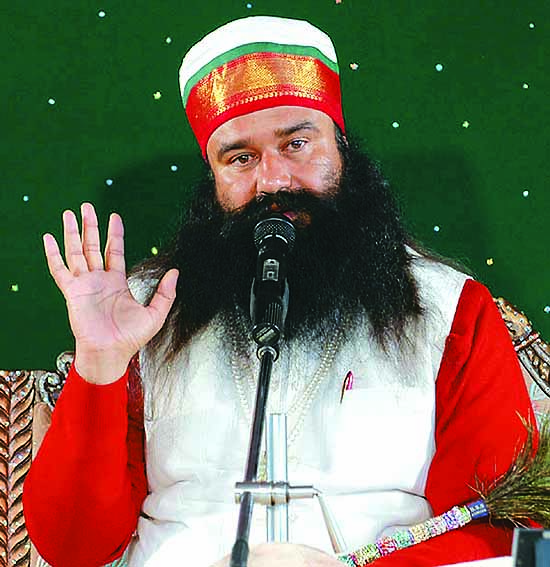
  • DERA HQ SEARCH: BANNED NOTES, LUXURY CAR SEIZED FROM GURMEET RAM RAHIM DEN

    DERA HQ SEARCH: BANNED NOTES, LUXURY CAR SEIZED FROM GURMEET RAM RAHIM DEN

    SIRSA (TIP): The first day of search of the Dera Sacha Sauda headquarters near Haryana’s Sirsa town on Friday ended with a few computers, a luxury SUV and some currency notes being seized, official (old and new currency) being seized, officials said.

    Officials said that five children were found inside the Dera premises in the search.

    The authorities seized a few computers and hard disks, one Toyota Lexus luxury SUV and some currency notes (both old and new) amounting to a few thousand rupees during the search, said Haryana government deputy director Satish Mehra.

    Officials involved in the search remained tight-lipped about the recoveries made inside. Sources said that a couple of rooms in one of the buildings had been sealed and that the search operation could take a long time.

    The search operation began amid tight security and curfew in the area on Friday morning. The media was stopped at some distance from the Dera premises to avoid any controversy.

    JCB machines, locksmiths, forensic experts and dog squads were called in to assist a comprehensive search operation launched by security agencies and district authorities at the Dera premises. Internet services in Sirsa district were suspended by local authorities on Friday.

    EXPLOSIVES SEIZED

    An illegal crackers factory was on Saturday found inside Dera Sacha Sauda headquarters during the second day of search operations.

    Nearly a hundred packs of crackers were also found. The authorities have sealed the factory.

    Also, 1,500 pairs of costly designer shoes of the Dera chief and hundreds of designer dresses were recovered.

    Meanwhile, the Haryana Police have arrested three Dera Sacha Sauda followers for hatching a conspiracy of trying to help Ram Rahim escape from Panchkula during an agitation on August 25.