Year: 2017

  • August 18 New York Print Edition

    August 18 New York Print Edition

    [vc_row][vc_column][vc_column_text]

    Print Replica ~ Digitally

    E-Edition

    [/vc_column_text][/vc_column][/vc_row][vc_row][vc_column width=”2/3″][vc_custom_heading text=”New York Edition” font_container=”tag:h2|text_align:center” google_fonts=”font_family:Istok%20Web%3Aregular%2Citalic%2C700%2C700italic|font_style:700%20bold%20regular%3A700%3Anormal” link=”url:https%3A%2F%2Fwww.theindianpanorama.news%2Fwp-content%2Fuploads%2F2017%2F08%2FTIP-August-18-NYC.pdf|||”][vc_single_image image=”87030″ img_size=”full” add_caption=”yes” alignment=”center” onclick=”custom_link” link=”https://www.theindianpanorama.news/wp-content/uploads/2017/08/TIP-August-18-NYC.pdf”][/vc_column][vc_column width=”1/3″][vc_single_image image=”82828″ img_size=”medium” alignment=”center” onclick=”custom_link” link=”https://www.theindianpanorama.news/advertising-media-kit-portal-indian-panorama/”][vc_single_image image=”82829″ img_size=”medium” alignment=”center” onclick=”custom_link” link=”https://www.theindianpanorama.news/advertising-media-kit-portal-indian-panorama/”][/vc_column][/vc_row][vc_row][vc_column][td_block_ad_box spot_id=”custom_ad_3″ tdc_css=””][/vc_column][/vc_row][vc_row][vc_column width=”2/3″][vc_custom_heading text=”Lead Stories This week” font_container=”tag:h2|text_align:center” google_fonts=”font_family:Istok%20Web%3Aregular%2Citalic%2C700%2C700italic|font_style:700%20bold%20regular%3A700%3Anormal” link=”url:https%3A%2F%2Fwww.theindianpanorama.news%2F%20_blank|||”][td_block_5 separator=”” limit=”8″ tdc_css=””][/vc_column][vc_column width=”1/3″][vc_widget_sidebar sidebar_id=”td-default”][/vc_column][/vc_row]

  • INTERVIEW : Eye Foundation of America aims at eliminating childhood blindness: Dr. VK Raju

    INTERVIEW : Eye Foundation of America aims at eliminating childhood blindness: Dr. VK Raju

    By Prof. Indrajit S Saluja

    Dr. V.K. Raju, MD, FRCS, FACS, the Founder and Medical Director of the Eye Foundation of American is on a crusade to eliminate avoidable blindness around the world.
    Eye Foundation of America began its work in 1979 in Morgantown, West Virginia, USA. EFA grew out of his earlier work providing services and treatment near his birthplace in Rajahamundry, a town in Southeast India‘s Andhra Pradesh. Raju organized teams to go to remote areas and deliver eye care in areas where there otherwise were none. These traveling clinics were known as “eye camps.” (Eye camps remain a standard part of the Foundation’s services today.)
    Raju dedicated virtually all the spare time he had outside his busy ophthalmological practice in West Virginia and used his own funds to cover many of the expenses. Eventually it became apparent that the lack of accessible, affordable eye care was very large and shared by an enormous number of people worldwide. In order to battle avoidable blindness on a global scale and to gain strength by partnering with other organizations, Raju created the 501 © 3 nonprofit organization that we know today as the Eye Foundation of America.
    Today, Foundation has grown far beyond its original size and scope but never outgrew the vision of its founder, who continues to look ahead. EFA has built modern eye hospitals and trained ophthalmic assistants and other personnel to carry on our work. We provide workshops and fellowships for physicians and medical students throughout the world. We also conduct research to find better ways of preventing blindness, to learn how to distribute Vitamin A efficiently
    His team has done wonders, considering the tremendous work done by them.
    • 2 million+ outpatients
    • 300 thousand+ eye surgeries
    • 25 thousand+ on children
    This is completed by the Eye Foundation of America team since 1977 in India and 21 other developing countries. Additionally, the Eye Foundation of America lays great emphasis on teaching and training of health professionals who receive the Foundation’s support at every level.

    When Dr. VK Raju invited me over for the annual Golf for Sight tournament which was held on July 21, I was a little confused. I wondered what connection sight could have with golf. However, I soon learnt it was a golf tournament Dr. Raju has been organizing to raise funds for the Eye Foundation of America which he founded in 1979 to work for prevention of blindness, particularly among children. As of now, the Foundation provides services in more than 14 countries and it has plans to extend that reach in the years ahead.

    After the tournament was over, I asked Dr. Raju to sit me with me for an interview for The Indian Panorama. He was gracious enough to schedule a meeting the next morning over breakfast at his place.

    Here are excerpts from the interview.
    What is the concept behind the Eye Foundation of America and the various activities you are conducting?

    The concept behind it is to review different aspects of a disease. For example, 80% of our learning is through vision. If you don’t promote good nutrition and exercise, we get into diabetes. And once we get into diabetes, things that can go wrong, it can affect from top of the head to toes. But most of the problems caused by diabetes can be prevented. We all have to start it early. West Virginia – where I came from India via London 40 years ago has tremendous similarities with India. It has wonderful people, hardworking people just like India. West Virginia has tremendous potential like India – it is not on the top of world but it can be. I feel I have two homes – travel from home to home. Ironically West Virginia and India have highest rates of diabetes. So this project is mainly to address problems of children, their nutrition problem is almost like developing countries. In the context of United States, some of the West Virginia counties have been neglected for a long time. So our objective is working with others. By doing so, we can do well. West Virginia University is unique – it has extension service where incredible people work. They have their presence in India too. Both Eye Foundation of America’s motto is ‘World without Childhood Blindness.’

    During the last three years you launched a program/event called ‘For Sight.’ What kind of cooperation has been forthcoming from the community?

    Very good but it has to be much better than what we are experiencing. This kind of effort needs a lot of people and time. Selling something is easy but doing an event is not.

    How about your medical fraternity? How supportive they are?

    Generally, the medical fraternity is too busy with their day to day routine. And they don’t think about things like this. The state medical association president Dr Rahul Gupta is a public health man and has been very supportive of program like this and we are trying to reach more and more. We are trying to make the event bigger.

    You are talking about your two homes – West Virginia and India. Have you ever tried to establish a sister cities concept between West Virginia and any state of India?

    We tried many times but others have to participate. I always quote this – If you want to go fast, you go alone. If you want to go very far, you go with the team. By working together, we can do more. Non-medically these things can be done, not by medical people.

    Would you like to take up this issue to establish a sister cities concept between West Virginia and Andhra Pradesh with the help of Chief Minister Chandrababu Naidu?

    Of course. But not only Andhra Pradesh. It can be any other state if we get proper support.

    Do you think you have enough contact with the West Virginia State to convince them to establish a relationship of that kind with another state in India?

    Absolutely. Our state Senator has been extremely supportive of our projects. He is a very good friend of mine and always ready to do things like this. The mayor of Morgan town, who retired couple of years back, visited India. But we need help from others like journalists, think tanks.

    West Virginia University extension service centers are doing excellent job. Do you have any plan to open such centers in India with the help of the university?

    Absolutely – West Virginia University extension service has their presence in India too. We will make it bigger. But you know, the proof of pudding is in eating. The Rotary International is working with WHO, UNICEF to eradicate polio for decades. That is the way it should be done.

    Have you ever tried to collaborate with AAPI to prevent blindness in India?

    AAPI is a wonderful organization and it can do good things. There are many projects under them. But being persistent with a project is very important. In recent AAPI meetings many leaders expressed interest. So, we have to look into that.

    Tell us about the hospitals you have established in India

    Both in Andhra Pradesh. The first one is in Kakinada which I opened with the help of my friend in Canada. The second one is Goutami Eye Institute, a fully-equipped eye hospital in Rajahmundry, with a wing dedicated to children’s eye care. The Goutami Eye Institute has become a global training center for education, and exchange programs.  The Goutami Eye Institute has trained teachers to screen 100,000 school children for symptoms.  Since its inception the Eye Foundation of America has performed more than 300,000 surgeries, 25,000 of these surgeries on children. For new born premature babies we give oxygen so that they can survive and don’t get blind.

    Have you ever thought of seeking government help for your institutions?

    We did many times but indirectly. A friend of mine fixed an appointment with Mrs. Gandhi but it did not happen. Later we tried with many government agencies but that also did not work out.

    What is your opinion about the role of corporate world in health sector in India?

    The corporate sector is doing a very good job. But except few, the standard is not at par with the western world.

    If a state in India requests you to set up an eye hospital with the aim of avoidable blindness that the children of that state do not go blind, what would be your reaction?

    The answer for that is – if it happens – it will be my dream comes true. The first thing we need is land. Rest of it will be taken care of.

    Just before we parted he invited me over to another event the Foundation is organizing. This time in India. The Foundation will host an event on Oct 27 in India. People from all walks of life across the globe will come together. Mr Ravi from Sri Lanka – President of Rotary International will be the Chief Guest. Shrinu – foster child of IFA will be the guest of honor. Dr. Raju is such a fine person I could not decline his invitation. So, I have to be preparing to leave for India in the third week of October.

  • Exclusive Interview: “Look forward to fantastic relationship with the Indian community here”: Consul General Sandeep Chakravorty

    Exclusive Interview: “Look forward to fantastic relationship with the Indian community here”: Consul General Sandeep Chakravorty

    “There are three relationships here – India-US relationship, Indian community-US relationship, and Indian community-India relationship. All are very important and we need to focus on all three”, said Mr. Chakravorty.

    A seasoned diplomat with years of diplomacy and varied experiences of a diverse classes of people from different parts of the world extending from the East to the West and the North to the South behind him, Mr. Sandeep Chakravorty as Consul General of India in New York should prove to be a worthy successor to his equally worthy predecessors who all left a mark of their own.

    The Indian Consulate, New York website introduces Mr. Chakravorty in the following words.

    “Mr. Sandeep Chakravorty is a member of the Indian Foreign Service (IFS) since 1996. Before joining the Government of India, he worked for several years in organizations dealing with forestry, environment and watershed development issues in India.

    He has served in India’s Missions in Madrid, Bogota, Dhaka and Lima. In the Ministry of External Affairs of India, New Delhi he worked on several desks including Press Relations Officer as well as Private Secretary to Minister of State for External Affairs. He also served in the Eurasia Division dealing with Central Asia and in the East Asia Division on China, Japan, Koreas and Mongolia. He was India’s Deputy High Commissioner in Dhaka, Bangladesh from July 2012 to June 2015. From July 2015 to July 2017 he was Ambassador of India to Peru and Bolivia with residence in Lima. He assumed charge as Consul General of India in New York on August 3, 2017.

    He holds a Master’s Degree in Advanced Studies from Geneva University and has an MA in Sociology. He has a PG Diploma in Forestry Management from Indian Institute of Forest Management (IIFM), Bhopal. He graduated in Physics from Delhi University.

    He was born in 1968 and is married with twin daughters. He is fluent in Hindi, Bangla, English and Spanish.”

    The Indian Panorama has always been the first newspaper to welcome an incoming Consul General. And this applies to Permanent Mission of India also.

    Even before Mr. Chakravorty had arrived, I emailed a request for an interview. Such interviews are more in the nature of trying to know the person rather than be explorative on issues. Of course, the issues are to be there which form the basis of a conversation but these acquire some kind of sophistication and politeness when meeting for the first time. Also, a journalist has no list of complaints and grievances for the new arrival. Therefore, the meeting of The Indian Panorama team which was joined by friends from PTC TV led by the channel’s US operations chief Davender Singh, turned out to be a friendly exchange of views in a relaxed setting.

    Mr. Chakravorty, a suave and gentle person, was extremely responsive and forthcoming on even certain tricky issues. He was candid enough to answer questions fielded by the editor Prof. Saluja and the assistant editor Bidisha Roy, and the PTC representative Davender Singh. The Deputy Consul General Paramita Tripathi joined the Consul General, though not taking part in the conversation.  

    Here are excerpts from the interview.

    When somebody comes to a new posting, there is something in mind like what kind of impression one wants to create and one begins to think in terms of creating a legacy. What did you have in your mind when you came to New York as the Consul General?

    I would like to reciprocate your words; we want to create a productive and constructive relationship with the media and the Indian community at large. The framework of the relationship is set by our government officials in India and our Ambassador in Washington. We will basically follow the script that has been drafted by our leadership. But as you said every person is different and I would also love to leave a legacy behind me. My legacy that I would love to leave behind is fantastic relationship with the Indian community here. I believe in an open door policy. I believe this is the home for every Indian here in my jurisdiction. Whether you want some services from the consulate or not you should be always looking forward to come to the consulate.  We are also eager to interact with the media. What I would like to do is – our government has announced many programs – particular flagship programs – which desire to involve the community in the development of India. So, we would try to give more focus on that. As our Prime Minister said, the aspirations and expectations of people in India have grown. Here we have all the expertise and experience and the resources. I am not talking about financial resources but all kinds of resources. My team’s main responsibility is to give the opportunity to the community. Many times, people want to do things in India but there is lack of information and they do not know what to do. So, if we can play the role of a catalyst or a service provider and can involve the community for development of India, I think that could be a legacy. It has been a humbling experience for me to be appointed the Consul General of India. I would try to do my best. I am always available so please connect to us. In last couple of years there has been incredible change in India, in United States and their relationship. The Indian community played a major role in that. The strength of Indian community will grow and India-US relationship will be stronger. There are three relationships here – India-US relationship, Indian community-US relationship, and Indian community-India relationship. All are very important and we need to focus on all three.

    You spoke about flagship schemes of Government of India. Can you elaborate?

    In last few years we rolled out those schemes. Flagship schemes are important programs such as Make in India, Digital India, and Start up India. For all these programs, there is a huge role that United States can play, the Indian community can play. We are already seeing huge interest for these programs. What is Make in India? It is to invest in India which has become the number one investment destination in the world. Indian community can also invest in India. We are having the programs like Start up India or Digital India – we are digitalizing the economy. Huge opportunities are coming up in India in digital world and US is the world leader of digital technology.

    Do you have a different set of ideas for New York?

    It’s a very vibrant and dynamic city. We have huge presence here. I take it as a challenge because we should live up to the expectations of my government and the community. I am already thinking what differently we can do so our presence here can make a difference. I need your cooperation and help. One thing I want to assure that there has been a change in the consulate. We’ll certainly do what our predecessors have done. But we’ll try to do something more. We had a program called ‘Consulate at Your Doorstep.’ One of the first decisions we took was we’ll revive the program. I’ve asked my colleagues to draw a schedule for next six months. We’ll publish that schedule. And if someone has any grievance, please feel free to come to the consulate. People can connect to us on social media platforms as well.

    Some categories right now are being denied passport. Some categories are being denied visas. There are issues which have remained unresolved. Those who sought asylum here are not granted passports. This category needs to be given justice. What is your call?

    I am aware of these issues. As a person, I can understand the sentiments and have full sympathy. But we are bound by the policy of Government of India and the policy is decided after a lot of thought processes. We cannot take any decision for which we have to repent later and also it should not prejudice other categories of people who are legitimate residents of this country. It is not only about policy of Government of India but it has an implication on US policy too.

    Do you plan to continue with open house to address complaints and grievances?

    We will not only continue with the open house; we will try to make it more effective so the complaints and grievances of people needing our services are looked in to expeditiously. We are committed to providing the best consular services. I will urge all to visit the Consulate helpline (helpline@indiacgny.org ) in case of any issues/ information required.

    People often complain that they pay agents huge sums for obtaining passport and visa which are originally denied by the Consulate. What is your take on the issue?

    This is totally unacceptable. If any such case comes to your notice, please bring it to our notice. Consulate services are free for all Indian nationals. We don’t charge any commission apart from fees that go to Govt of India account. There is no additional surcharge. So, there is no need to go to the agents. If the documents are fine, people will get their visa and passport from the consulate. If not, the agents can’t do anything. We don’t accept any applications through agents.

    Some people are afraid of coming to the consulate.

    Why? The consulate is an Indian establishment. They should not be afraid. There will be no harm. Please feel free to come to us. We can reach out to these people too through our reach out program.

    You are very passionate about having good relations with mainstream American politicians and lawmakers. How do you think to go about it?

    I was thinking of multipoint strategies. Some people I will go and meet on my own. Some people I will meet through the community leaders. I have already met some leaders. The community has this ability of connecting the consulate to the American leadership. I will also connect through American organizations and institutions. I will use all resources available. What I would like to convey that we will follow a very inclusive approach. I will deal with everybody and give everybody a chance. That’s the whole idea.

    In media interactions, would you like to include mainstream media?

    There is no reason that mainstream media should not be involved. We will unfold the strategy to involve them. Not only big media houses but we’ll approach all – even the small ones. We need to engage with everybody. That is our job.

    Anything else you want to share?

    People should approach us with suggestions. As far as we can help, we will do. We have a new team here; so, give us some time. Periodically we will review our performance. If there is any need for course correction, we’ll do.

    (Prof. Indrajit S Saluja / Bidisha Roy)


  • Enough is Enough – By Prof. I. S. Saluja

    Enough is Enough – By Prof. I. S. Saluja

    As we celebrate the 71st Independence Day of India, we remember the valiant freedom fighters who made huge sacrifices to make it possible for us to live as a free people in an independent nation. They are the ones who should be worshipped as gods who delivered us from cruel clutches of alien rulers.  They are the ones who should command our admiration and adulation. But what do we see here?

    The present political masters in charge of the nation’s affairs are doing their best to malign them. They are carrying out a sustained propaganda against them. They are removing their mention from history books. They will soon remove their statues and busts which one sees all across India, and even abroad. It suits their politics. But the question is: Does it suit the nation? Does it make the nation any better?

    We have been hearing the word “intolerance” in India for quite some time. We have often seen its manifestation in various spheres- from the world of academics to that of entertainment. We have seen it manifested in every sphere of ordinary man’s daily life. We have heard the voice turning in to a noise in the name of majority and minorities; in the name of regions; in the name of religions; in the name of language and culture. The question is: Is it good for the nation? Is it good for the 1.3 billion people of India?

    On the 70th anniversary of Independence of India, we need to ask ourselves: Was it this kind of independent India that our freedom fighters dreamed of and laid their lives for? We need to ask ourselves: Is it this “Tryst with destiny” that we want? Surely, not. So then, let the voice of reason be raised; let the common people tell their rulers we do not subscribe to your ideology of hatred and intolerance. We want the India that our freedom fighters had dreamed of and fought for. You were nowhere in the struggle for freedom. You were on the other side thinking of yourself only which even now you are doing. Go ahead, go on doing it. But do not try to turn India in to a country of which the souls of freedom fighters will feel ashamed of. Enough is enough.

  • Why Nehru matters more than ever

    Why Nehru matters more than ever

    By Neera Chandhoke
    The belittling of Pandit Nehru is odd, because the standing of the current Prime Minister is not validated by writing out a previous Prime Minister from the annals of history. The future will judge both leaders on their own merit, their success or their failure in managing a complex and plural society, their credentials as democrats, and their political, economic, and strategic visions. Both have a place in modern India. What that place is, will be decided by history”, says the author.

    Unremembering Jawaharlal Nehru is to forget that there is an alternative to narrow nationalism

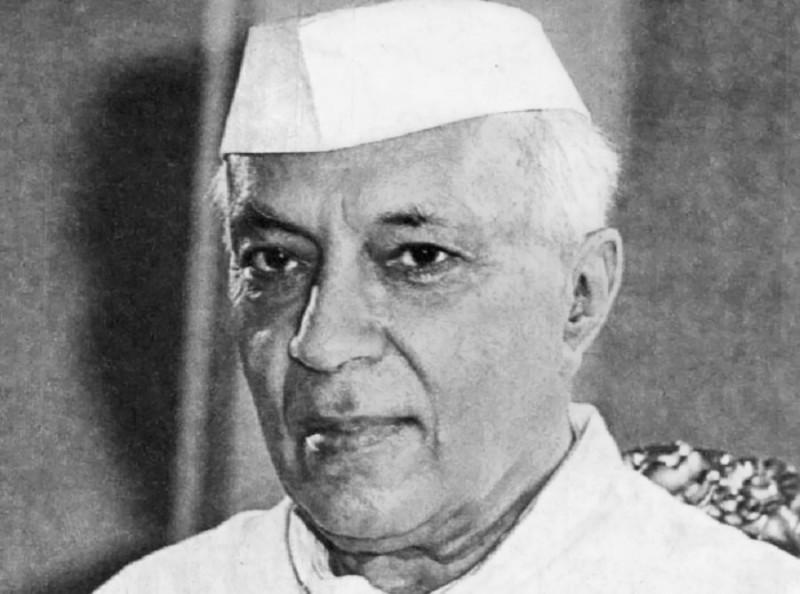
    Otherwise ordinary ‘first’ speech given by India’s fourteenth President, Ram Nath Kovind, would have gone unremarked, except for one notable omission. The name of Pandit Jawaharlal Nehru, arguably the foremost leader of the freedom struggle, and India’s first Prime Minister, was spectacularly missing from the inventory of prominent Indians listed by the President. Though the government under Prime Minister Narendra Modi has gone to extraordinary lengths to eliminate references to the architect of democratic India, we expect the head of state to stand above partisan party politics. There is cause for disappointment.

    A few days after Mr. Kovind’s speech, the Bharatiya Janata Party (BJP) published a largish booklet to celebrate the birth centenary of Deen Dayal Upadhyaya. In the section on great leaders of India, ‘Mahapurush’, the names of Nehru as well as Mahatma Gandhi are conspicuous by their absence. Almost 10 lakh senior school students in Uttar Pradesh are forced to study the booklet, appear for an exam, and be rewarded if they perform well. Many of the ‘great men’ listed in the booklet have never taken part in the freedom struggle, and never been jailed for combating colonialism, unlike Nehru and the Mahatma. But their names occupy pride of place in oral and written histories authored by the BJP. Leaders who fought for Independence are simply written off.

    The belittling of Pandit Nehru is odd, because the standing of the current Prime Minister is not validated by writing out a previous Prime Minister from the annals of history. The future will judge both leaders on their own merit, their success or their failure in managing a complex and plural society, their credentials as democrats, and their political, economic, and strategic visions. Both have a place in modern India. What that place is, will be decided by history. The current dispensation should take the art of history writing seriously and not reduce it to pamphleteering. History is important for collective self-understanding, because it enables us to understand where we have come from, and how we got from ‘there’ to ‘here’. Without competent histories that allow us to understand our collective past and present, and help us generate visions for the future, entire generations will lose their bearings.

    What the philosopher Jürgen Habermas calls the ‘public use of history’ should be, for this reason, subjected to strong evaluations. Since the craft has a bearing on the human condition, we ought to distinguish between histories that inspire a democratic, critical sensibility to contain and challenge authoritarianism, from those that feed appetites for absolute power. History, of course, must narrate tales of tyrants and despots, so that we take care not to repeat the errors of the past. But it must also chronicle tales of the triumph of the human spirit, and inspire us to struggle against totalitarianism and suppression of individual freedom.

    For the ruling class, history should be important, because it reminds them that absolute power, often won at the expense of human freedom, does not endure. Unexpected moments arise in the life of a society when its members clamor for change, when existing gods are brought down, and new ones erected in their place, condemned to wait for their own downfall. All of us should be wary of changing tides of fortune.

    Fortune, wrote the 16th century political theorist of Florence, Niccolò Machiavelli, is unpredictable and inexplicable. She is an active sharer in man’s making of history, she produces the unforeseen, and she will never be dominated, but will dominate men. That is why Machiavelli advised the Prince of Florence to study history. The public role of history is to remind rulers that fortune is fickle. After all, Nehru, who once led India to freedom, is vilified in his own country by the benighted cyberspace industry. This is short-sighted, because to unremember the man is to forget that there is an alternative to narrow and energy-consuming nationalism.

    Despite all attempts, Nehru continues to be remembered by many for his contribution to the institutionalization of democracy, establishing institutions of excellence, and his conviction that poverty and inequality in India cannot be tackled by the market. There is, however, more to a good society: solidarity with struggling people within and outside the country.

    Nehru, as one of the most distinguished leaders of Third World solidarity, reached out to the rest of the colonized world, and forged a joint front against colonialism and a reinvented imperialism. He was, by temperament and experience, a cosmopolitan. His frequent visits to Europe, his deep familiarity with the past, and his understanding of the contemporary ideologies of the day, from liberalism to Fabian socialism, to communist internationalism, had convinced him that the future of India was incomplete without the liberation of other colonies.

    Nehru’s commitment to the independence of the Third World had been shaped by intellectual journeys through history, as well as participation in a number of international conferences such as the Congress of Oppressed Nationalities in Brussels in 1927. He played a prominent role in the 1955 Bandung Conference, which set the stage for the emergence of a new bloc, and a new ideology in global affairs. Representatives of 29 countries from the global South, comprising well over a billion people, met to consider and debate on how they could help each other to neutralize the harmful effects of colonialism, and bring economic and social well-being to their people. Towering over leaders who had won their political spurs by piloting their countries to independence were Nehru, Kwame Nkrumah, the Prime Minister of Ghana, Gamal Abdel Nasser, the President of Egypt, Zhou Enlai, the Premier of China, and Ho Chi Minh, the Prime Minister of Vietnam. The agenda included every topic over which the colonized and the newly decolonized world had agonized for decades — religion, colonialism, sovereignty, and world peace. The Bandung meeting sparked off reflections on the distinct attractions of non-alignment, and of the strengths that a movement of the non-aligned could acquire in global forums.

    Interestingly, if one strand of anti-colonial nationalism focused on the idea and the imaginaries of the nation, the second moved away from processes of closed identity formation towards other ways of being in the world. Nehru’s cosmopolitanism acknowledged that our political identities are forged in and through conversations not only with people who are like us, but people who belong to other cultures, other countries, other societies, and other traditions, but who are like us in many ways.

    Contemporary history has not treated this statesman kindly. This is a great pity because today’s generation might know what globalization is, but not what cosmopolitanism is about. Even as our society globalizes at a frenetic pace, it has turned inwards and become claustrophobic. History must remember Nehru, he taught us to look outwards, to express solidarity, and to become, in the process, cosmopolitans. We must remember him because we have lost out on something that is rather important, teaching our children that our imaginations and our energies should be harnessed to the cause of the oppressed over the world, that closed-in societies lead to stagnation if not to certain death, and that such societies circumscribe imaginings and truncate visions. We have, perhaps, become lesser human beings.

    (The author is a former Professor of Political Science, Delhi University)

  • Fire White Supremacists from the White House for Charlottesville incident, demands Jayapal

    Fire White Supremacists from the White House for Charlottesville incident, demands Jayapal

    WASHINGTON (TIP): In the aftermath of the white supremacist “Unite the Right” rally and the domestic terrorist attack in Charlottesville, Virginia, Indian American Congresswoman Pramila Jayapal – joined by 31 members of Congress – introduced a resolution urging President Trump to strongly condemn white nationalists, the Ku Klux Klan, neo-Nazis and other hate groups responsible for the violence, and to remove from the White House and the Trump administration individuals, including Steve Bannon, Stephen Miller and Sebastian Gorka, who support white supremacists.

    “When the president fails to swiftly condemn white supremacist terrorism, it’s imperative that Congress steps up and says clearly: Hate is not welcome, hate is un-American and we will strongly resist hate wherever it appears,” said Jayapal.

    “White supremacy must be uprooted from our society, but the president has elevated white nationalists to the highest posts of government. It’s time to get these people out of the White House. Donald Trump must unequivocally condemn hate groups and remove from the administration individuals who espouse bigotry or support white supremacists,” Jayapal continued. “Enough is enough. The president needs to take decisive action.”

    Jayapal’s resolution:

    • Condemns the role of white supremacist, neo-Nazi, KKK and other hate groups in the “Unite the Right” rally and domestic terror attack in Charlottesville, Virginia;
    • Denounces the increase in organizing, fear-mongering, racism, anti-Semitism, bigotry and violence perpetrated by white supremacists, neo-Nazis, the KKK and other hate groups;
    • Offers condolences and sympathies to the families of Heather Heyer, Lt. H. Jay Cullen and Trooper-Pilot Berke M.M. Bates, and urges a quick recovery to those injured;
    • Strongly urges the president to:
      • Fire individuals in the White House and Trump administration who have supported or encouraged support for white supremacists;
      • Quickly and publicly repudiate and denounce white supremacist, neo-Nazi, KKK and other hate groups;
      • Use all available resources of the Office of the President and the Cabinet to address the growing prevalence of such hate groups domestically;
      • Use his office to unite all Americans against hate.

    On Friday, Aug 11 night in Charlottesville, Virginia, white supremacists with tiki torches, rifles, and Confederate and swastika flags marched through the University of Virginia campus ahead of a “Unite the Right” rally on Saturday. Peaceful demonstrators gathered to protest this hate, but violence erupted. On Saturday, white supremacists and counter-protesters again gathered and a similar scene unfolded when, in an act of terrorism, a driver sped up and plowed his car into the crowd, killing one counter-protester and injuring 19. Two police officers monitoring the events in Charlottesville also died when their helicopter crashed.

  • Texas starts oil shipments to India

    Texas starts oil shipments to India

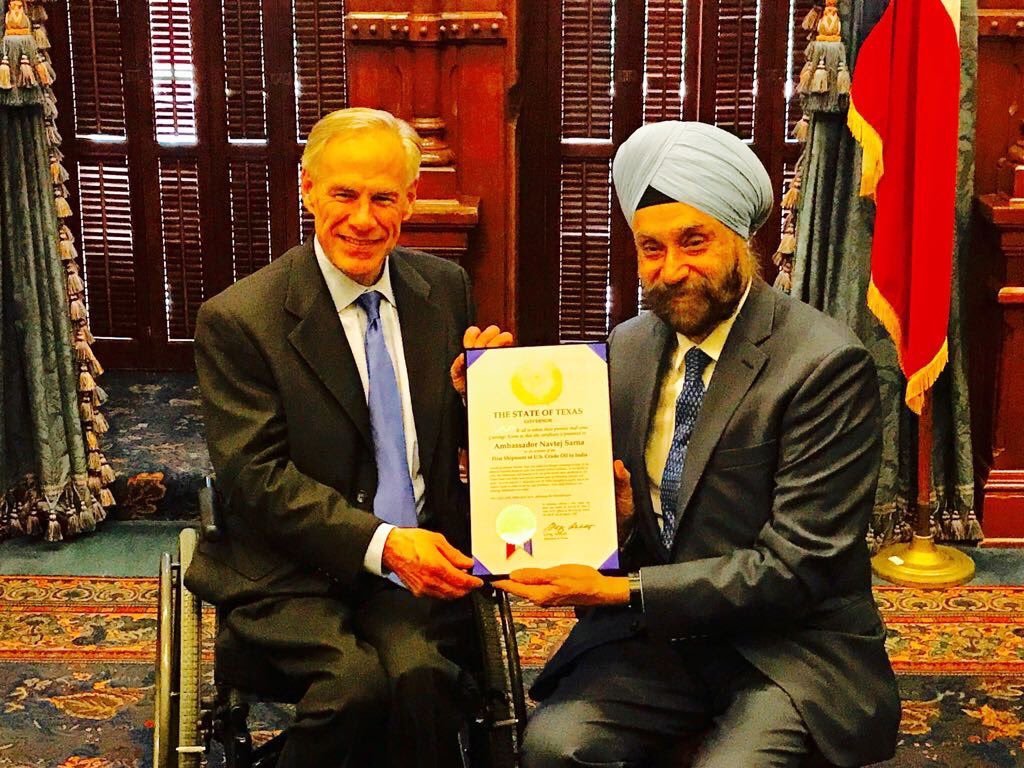
    DALLAS (TIP): On August 16, India‘s Ambassador to United States Navtej Sarna handed over the papers of the first shipment of crude oil worth USD 100 million that will be imported from the U.S. to India to the Governor of Texas, Greg Abbott, giving a major boost to the world’s third-largest oil importer.

    The Indian Embassy in Washington tweeted images and video of the Sarna-Abbott meeting.  “Opening New Vistas in India, US co-opn Amb @NavtejSarna handing over pprs for 1st shipment of crude oil import to Texas,” the Embassy tweeted.

    In a tweet a day earlier, Texas Senator Ted Cruz said his state would provide crucial oil exports to India and serve as a reliable long-term supplier of energy. In a certificate issued to Ambassador Sarna, the Texas Governor said in the decades to come “this relationship will continue to be one of the world’s most significant” as the US and India work toward common goals of prosperity, strength and peace.

    “As a top exporter to India with over USD 2 billion annually in exports and as the nation’s leader in crude oil reserve and production, Texas looks forward to our growing relationship with India,” Abbott said.

    The shipments have already begun – starting sail from August 8 till August 14. It is expected to reach Odisha’s Paradip Port by the end of September.

    The development comes three days after U.S. President Donald Trump made a phone call to Prime Minister Narendra Modi to greet him on India’s 71st Independence Day.

    Over 6 million barrels of U.S. crude oil has been ordered in last one month by the Indian Oil Corporation Ltd. (IOCL) and the Bharat Petroleum Corporation Ltd. (BPCL).

    U.S. President Donald Trump had mentioned that his country looked forward to exporting more energy products to India, when Prime Minister Modi visited the United States in June.

  • Embassy of India Celebrates 71st Independence Day

    Embassy of India Celebrates 71st Independence Day

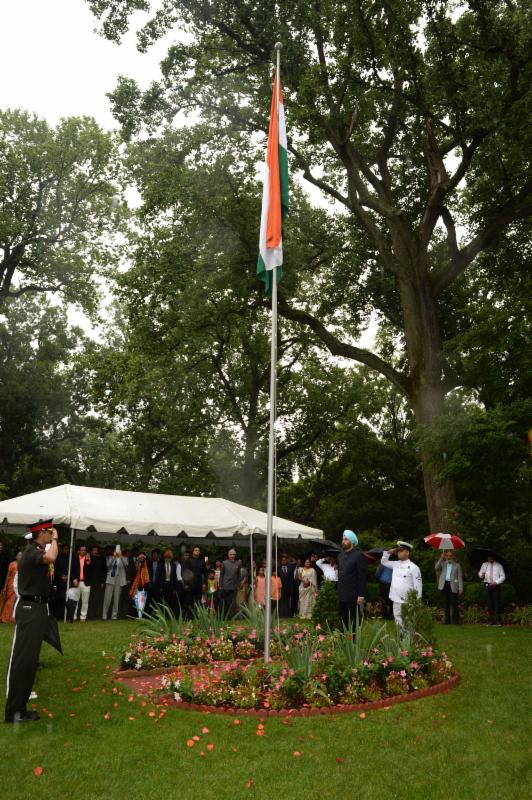
    WASHINGTON (TIP): India’s 71st Independence Day was celebrated in Washington DC with a flag-hoisting ceremony on the morning of August 15, 2017 at the Embassy Residence. The ceremony was attended by members of the Indian community in large numbers.

    Shri Navtej Sarna, Ambassador of India, unfurled the tricolor followed by singing of the National Anthem. Thereafter, Ambassador addressed the guests and read out Hon’ble President’s address to the nation. A brief cultural program involving rendition of patriotic songs by school-children in US was also organized to mark the occasion.


  • Religious freedom conditions continued to deteriorate in India, says US Report

    Religious freedom conditions continued to deteriorate in India, says US Report

    WASHINGTON (TIP): The United States Commission on International Religious Freedom (USCIRF), that researches and monitors international religious freedom issues, in its latest report slammed ruling BJP and Hindu nationalist groups for perpetrating violence against religious minority communities.

    USCIRF’s 2017 annual report which was released on Aug 15, pointed out that “In 2016, religious tolerance and religious freedom conditions continued to deteriorate in India.”

    “Hindu nationalist groups—such as the Rashtriya Swayamsevak Sangh (RSS), Sangh Parrikar, and Vishal Hindu Perished (VHP)—and their sympathizers perpetrated numerous incidents of intimidation, harassment, and violence against religious minority communities and Hindu Dalits. These violations were most frequent and severe in 10 of

    India’s 29 states. National and state laws that restrict religious

    conversion, cow slaughter, and the foreign funding of nongovernmental organizations (NGOs) and a constitutional provision deeming Sikhs, Buddhists, and Jains to be Hindus helped create the conditions enabling these violations.”

    The report criticized the ruling party as well. “While Prime Minister Narendra Modi spoke publicly about the importance of communal tolerance and religious freedom, members of the ruling party have ties to Hindu nationalist groups implicated in religious freedom violations, used religiously divisive language to inflame tensions, and called for additional laws that would restrict religious freedom. These issues, combined with longstanding problems of police and judicial bias and inadequacies, have created a pervasive climate of impunity in which religious minorities feel increasingly insecure and have no recourse when religiously motivated crimes occur”, it said. Based on these concerns, in 2017 USCIRF again places India on its Tier 2, where it has been since 2009.

    USCIRF suggested following recommendations to the US government:

    • Integrate concern for religious freedom into bilateral contacts with India, including the framework of future Strategic Dialogues, at both the federal and provincial levels, and encourage the strengthening of the capacity of state and central police to implement effective measures to prohibit and punish cases of religious violence and protect victims and witnesses;
    • Increase the U.S. Embassy’s attention to issues of religious freedom and related human rights, including through visits by the ambassador and other officials to areas where communal and religiously motivated violence has occurred or is likely to occur, and through meetings with religious communities, local governmental leaders, and police
    • Press the Indian government to allow USCIRF to visit the country, and urge the Indian government to invite the United Nations Special Rapporteur on freedom of religion or belief to visit India
    • Urge India to boost training on human rights and religious freedom standards and practices for the police and judiciary, particularly in states and areas with a history or likelihood of religious and communal violence;
    • Urge the central Indian government to press states that have adopted anti-conversion laws to repeal or amend them to conform with internationally recognized human rights standards; and
    • Urge the Indian government to publicly rebuke government officials and religious leaders who make derogatory statements about religious communities.


  • Designate Pakistan as ‘Country of Particular Concern’: US Commission Report

    Designate Pakistan as ‘Country of Particular Concern’: US Commission Report

    WASHINGTON (TIP): The United States Commission on International Religious Freedom (USCIRF), that researches and monitors international religious freedom issues, in its latest report has suggested that the US State Department should immediately designate Pakistan as a ‘Country of particular concern’ under the International Religious Freedom Act (IRFA).

    USCIRF’s 2017 annual report which was released on Aug 15, slammed Pakistani government as they ‘continued to perpetrate and tolerate systematic, ongoing, and egregious religious freedom violations.’

    “During the past year, the Pakistani government continued to perpetrate and tolerate systematic, ongoing, and egregious religious freedom violations. Religiously discriminatory constitutional provisions and legislation, such as the country’s blasphemy and anti-Ahmadiyya laws, continue to result in prosecutions and imprisonments. At least 40 individuals have been sentenced to death or are serving life sentences for blasphemy, including two Christians who received death sentences in June 2016”, said the report.

    The report also mentioned the atrocities against minorities.

    “Provincial textbooks with discriminatory content against minorities remain a significant concern. Reports also continue of forced conversions and marriages of Hindu and Christian girls and women, although the Pakistani government took some positive steps on this issue and made other encouraging gestures toward religious minorities”, it pointed out.

    “Based on these violations, USCIRF again finds in 2017 that Pakistan merits designation as a “country of particular concern,” or

    CPC, under the International Religious Freedom Act (IRFA), as it has found since 2002. Designating Pakistan as a CPC would enable the United States to more effectively press Islamabad to undertake needed reforms. Despite USCIRF’s longstanding recommendation, the State Department has never designated Pakistan as a CPC”, it further added.

    In its list recommendations, the USCIRF said that the State Department should designate Pakistan as a CPC under IRFA.


  • Upset Hindus urge Australia fightwear firm to withdraw battling Hindu gods rashguards

    Upset Hindus urge Australia fightwear firm to withdraw battling Hindu gods rashguards

    MELBOURNE (TIP): Upset Hindus are urging Gosford (New South Wales, Australia) based fightwear firm “Raven Fightwear” for immediate withdrawal of “Battle of the Gods – Hanoman v Ganesha” rashguards displaying images of Hindu deities Lord Ganesha and Lord Hanuman in a battle mode.

    Hindu statesman Rajan Zed, in a statement in Nevada said that it was trivialization of Lord Ganesha and Lord Hanuman, who were highly revered in Hinduism, as there was no scriptural evidence that any Hanuman versus Ganesha battle took place. Inappropriate usage of Hindu deities or concepts for commercial or other agenda was not okay as it hurt the devotees.

    Zed, who is President of Universal Society of Hinduism, also urged Raven Fightwear and its CEO to offer a formal apology, besides withdrawing “Battle of the Gods – Hanoman v Ganesha” rashguards from its website and stockists.

    Zed further said that such trivialization of Hindu deities was disturbing to the Hindus world over. Hindus were for free artistic expression and speech as much as anybody else if not more. But faith was something sacred and attempts at trivializing it hurt the followers, Zed added.

    “Battle of the Gods – Hanoman v Ganesha” men’s/women’s long sleeve rashguards were priced at $64.95 each on the website of Raven Fightwear, which specializes in Mixed Martial Arts apparel and claims to be “one of Australia’s fastest growing fight wear brands”. It has stockists in Australia, United Kingdom, USA, Canada, Czech Republic, Singapore, Russia; and its products include shorts, rashguards, gloves t-shirts, hoodies. “Our designs center around Norse mythology”, it states.

    In Hinduism, Lord Ganesha is worshipped as god of wisdom and remover of obstacles and is invoked before the beginning of any major undertaking. Lord Hanuman is known for incredible strength and was a perfect grammarian.

  • ZEE TV LAUNCHES, “MADE IN AMERICA”:The first English Language Bollywood Reality TV Show filmed in Hollywood

    Zee TV America had its official launch party on August 2nd, 2017 for their first English Language reality tv show, “Made In America”, which was held at the PHD Rooftop, located at The Dream Hotel in downtown Manhattan. Over 200 guests to celebrate this monumental launch and expansion of programing of ZEE TV America.

    NEW YORK, NY (TIP): Zee TV, the largest Indian television network in the world is now making its presence known in Hollywood. In August 2017, the first English language South Asian Reality show that Zee TV will be launching is titled, “Made In America”. Six South Asian millennial women were chosen from a nationwide audition that drew in over 6,000 applicants. The show features Nina Davuluri, Miss America 2014 as its host.

    Over a period of 10 weeks, the six contestants participated in grueling physical training, beauty and wardrobe styling, personal talent training, acting classes from New York Film Academy, dietary training, and more. All of this lead to shape their physical and mental strength to compete against the best in the world.

    During their time, the contestants also participated in community outreach programs, and competed in one challenge per episode ranging from, “Best Walks to Best Wardrobe, Best Swimwear and more.” A winner was chosen in each episode, ultimately decreasing from six contestants to a final single winner.

    On October 10th, 2017 the first Bollywood, “Made In America” contestant winner will be revealed on Zee TV. The winner will get crowned as the, “Made In America” Woman. Prizes will include the winner walking on the runway for Andre’ Aquinol Couture New York Fashion Week. A one year modeling contract with a top New York City Modeling Agency. Acting course from New York Film Academy. The opportunity to be cast in an upcoming Bollywood movie as well as be cast in a ZEE TV original content produced show in America.

    “We realized that there was a need in the marketplace that was to reach younger South Asian women who had an enormous desire to be in the glamour world. Zee TV being the flagship television network for the South Asian community in the United States, we decided to launch “Made In America”, giving the opportunity and inspiration to these women to fulfill their dreams and create a platform for them to be able to showcase themselves” – Sameer Targe, CEO, ZEE TV America.

    ABOUT ZEE TV:

    Zee Entertainment Enterprises Limited is one of India’s leading television media and entertainment companies. It is amongst the largest producers and aggregators of Hindi programming in the world, with an extensive library housing over 222,000 hours of television content. With rights to more than 3,818 movie titles from foremost studios and of iconic film stars, ZEE houses the world’s largest Hindi film library. Through its strong presence worldwide, ZEE entertains over 1 billion viewers across 172 countries.


  • Mangano: IDA Aids New Senior Housing in Downtown Farmingdale

    Mangano: IDA Aids New Senior Housing in Downtown Farmingdale

    MINEOLA, NY (TIP): Nassau County Executive Edward P. Mangano announced that the Nassau County Industrial Development Agency (IDA) has approved an economic compact that will assist a developer in building an apartment complex in Farmingdale, intended and operated for occupancy for persons 55 years of age or older.

    “This project will further the redevelopment efforts of the Village of Farmingdale as its works with its master plan to revive its downtown and will create new, much-needed housing options for seniors,” said Mangano.

    The compact, approved by the IDA at its Aug. 16 meeting, will assist Ronkonkoma-based Carlyle Building LLC in constructing an approximately 50,497-square foot, 3-1⁄2-story apartment building on vacant land at 776-780 Fulton St. The project would have 24 units, three one-bedroom apartments and 21 two-bedroom apartments.

    Designated as a “Housing for Older Persons” project in accordance with the Fair Housing Act, the development would be intended and operated for occupancy by persons 55 years of age or older. In addition, three of the units will be affordable – one unit will be for a household with an income not to exceed 50% of area median income; and two units will be for households with incomes not exceeding 80% of area median income. The Long Island Housing Partnership will assist in marketing and leasing the affordable units.

    The proposed $7.9 million senior housing project would be the latest addition to the Village of Farmingdale’s downtown renaissance. The project will generate 50 construction industry jobs and 2 permanent full-time-equivalent positions and inject more than $16 million into the Nassau County economy and more than $1 million in new tax revenue.

    Other residential projects in the village’s downtown that have received IDA economic compacts in recent years, include the 42-unit Cornerstone at Farmingdale and the 154-unit complex called Farmingdale Plaza.

    About the Nassau County Industrial Development Agency

    The Nassau County Industrial Development Agency consists of a team of professionals whose mission is to promote the economic welfare and prosperity of Nassau County. It is a resource for businesses in Nassau County and those considering relocation. The IDA provides assistance to businesses interested in relocating, expanding and financing new investments. It has provided assistance to a wide range of companies including Hain Celestial, Publishers Clearing House, Arizona Iced Tea, Dealer Track Technologies and Sleepy’s Mattress as well as Cold Spring Harbor Labs and Grumman Studios. For more information, please visit www.nassauida.org or call 516-571-1945.

  • Barcelona van attacker among five suspects ‘shot dead’ by cops

    Barcelona van attacker among five suspects ‘shot dead’ by cops

    Four arrested, warrants issued against 4 others; Victims from 34 countries

    BARCELONA (TIP): The driver of the van that ploughed into crowds in Barcelona on Thursday, killing 13 persons, was one of five men shot dead by the police in a Catalan seaside resort hours later, two Spanish newspapers reported on Friday.

    There was no immediate confirmation of the reports.

    Josep Lluis Trapero, police chief in Spain’s northeastern region of Catalonia, had said earlier that it was possible, but not confirmed, that the driver was among those killed. The driver abandoned the van and fled on Thursday after speeding along a pedestrianised section of Las Ramblas, the most famous boulevard in Barcelona, leaving a trail of the dead and injured.

    It was the latest of a string of attacks across Europe in the past 13 months in which militants have used vehicles as weapons — a crude but deadly tactic that is near-impossible to prevent and has now killed nearly 130 people in France, Germany, Britain, Sweden and Spain.

    Suspected jihadists have been behind the previous attacks. Islamic State said the perpetrators of the latest one had been responding to its call to target countries involved in a US-led coalition against the Sunni militant group.

    Hours after the van rampage, the police shot dead five persons in the Catalan resort of Cambrils, 120 km down the coast from Barcelona, after they drove their car at pedestrians and police officers. The five assailants had an axe and knives in their car and wore fake explosive belts, the police said. A Spanish woman was killed in the Cambrils incident, while several other civilians and a police officer were injured.

    The police have arrested four persons in connection with the attacks — three Moroccans and a citizen of Spain’s North African enclave of Melilla, Trapero said. They were aged between 21 and 34, and none had a history of terrorism-related activities. Authorities have issued arrest warrants for four further suspects in connection with the two attacks, a judicial source said, declining to give their names.

    La Vanguardia, a Barcelona-based newspaper which said it had obtained an internal document from the investigation, said the four being sought were all of Moroccan origin and aged between 17 and 24.

    One of those being sought by police is called Moussa Oukabir, a police source said, but it was unclear what his suspected role may be. Aged 17 or 18 and of Moroccan origin, he is the younger brother of one of the men arrested on Thursday, according to Spanish media reports.

    The van attack was the deadliest in Spain since March 2004. Of 126 people injured in Barcelona and Cambrils, 65 were still in hospital and 17 were in a critical condition. The victims came from 34 countries, ranging from France and Germany to Pakistan and the Philippines.

    (Source: Reuters)

  • Steve Bannon shown the door

    Steve Bannon shown the door

    WASHINGTON (TIP): The writing was on the wall. Only President Donald Trump had to announce the departure from White House of his controversial chief strategist. Finally, on Friday, August 18, President Trump fired Stephen Bannon as his chief strategist in the latest high-level White House shake-up, removing a powerful and controversial figure known for far-right political views.

    Bannon was a force behind some of Trump’s most contentious policies, including a travel ban on people from several Muslim-majority nations, and has fought with more moderate factions inside a White House riven with rivalries and back-stabbing. Bannon’s ouster comes with the President, seven months into his term in office, increasingly isolated over his comments following white supremacist violence in the Virginia college town of Charlottesville last Saturday.

    As Trump came under fire from prominent fellow Republicans, business leaders and US allies abroad, he faced mounting calls for Bannon’s ouster. “White House Chief of Staff John Kelly and Steve Bannon have mutually agreed today would be Steve’s last day,” White House spokeswoman Sarah Sanders said in a statement on Friday. “We are grateful for his service and wish him the best.”

    A champion of economic nationalism and a political provocateur, Bannon, 63, is a former US Navy officer, Goldman Sachs investment banker and Hollywood movie producer. Bannon had been in a precarious position before but Trump opted to keep him, in part because his chief strategist played a major role in his 2016 victory and is backed by many of the President’s most loyal rank-and-file supporters.

    The decision to fire Bannon could undermine Trump’s support among far-right voters but might ease tensions within the White House and with party leaders. Republicans control the White House and both chambers of Congress but have been unable to pass major legislative goals, including a healthcare legislation overhaul, because of fierce intra-party divisions.

    Trump ran into trouble in recent days after saying anti-racist demonstrators in Charlottesville were as responsible for the violence as the neo-Nazis and white supremacists who instigated the protests. Those remarks sparked rebukes from fellow Republicans, corporate executives and close allies even as some supporters stood by Trump.

    A source said Bannon had been given an opportunity to depart on his own terms. “The President made up his mind on it over the past couple of weeks,” the source said. Kelly had been evaluating Bannon’s role within the White House. “They gave him an opportunity to step down knowing that he was going to be forced to,” the source said. Bannon has told friends he could go back to Breitbart News if he were to leave the White House.

  • SC rejects Sahara’s plea to put on hold Aamby Valley auction

    SC rejects Sahara’s plea to put on hold Aamby Valley auction

    NEW DELHI (TIP): In a setback to Subrata Roy, the Supreme Court on Aug 10 turned down his plea to halt the process for auction of Sahara Group’s flagship property Aamby Valley by the official liquidator of the Bombay High Court.

    On behalf of Roy, senior counsel Kapil Sibal told a three-judge Bench headed by Justice Dipak Misra that Sahara was holding negotiations with a foreign company to sell 26% stake in Aamby Valley and requested it to put the auction process on hold. However, the Bench said it would stay the auction process only if Sahara deposited Rs 1,500 crore with SEBI in terms of its earlier order.

    The top court’s refusal to stay the process for auction of Aamby Valley – a Rs 34,000- crore real estate – means the liquidator can go ahead with the publication of auction notice on August 14.

    In a last ditch attempt to save Sahara group’s flagship property Aamby Valley in Pune district of Maharashtra from being disposed of, the company had on Wednesday moved the top court with a request to halt the entire process on the ground that the company was ready with a new payment plan.

  • Digital currency exchange Coinbase raises $100 million, hits $1 billion valuation

    NEW YORK (TIP): Digital currency exchange Coinbase announced on its blog on Thursday that it has raised $100 million in so-called “Series D” funding led by US venture capital firm IVP, making it the first bitcoin start-up to achieve a valuation of at least $1 billion.

    Start-ups with a $1 billion valuation are part of what is called a “unicorn” club in the venture capital industry. The $1 billion valuation was estimated by data and research provider Pitchbook.Series D is generally the fifth stage of funding, following a seed investment, and series A through C rounds.

    With the new investment, Coinbase has raised $217 million since it launched in 2012. It raised $75 million more than two years ago and then secured an additional $10.5 million in July 2016, Pitchbook data showed.

    The other participants in Coinbase’s Series D funding were Spark Capital, Greylock Partners, Battery Ventures, Section 32 and Draper Associates. Draper Associates was an investor in a previous financing round, Coinbase said.

    The funds will be used to finance the company’s expansion, Brian Armstrong, chief executive officer and founder of Coinbase, said on the company’s blog.

    Specifically, Coinbase wants to increase the size of its engineering and customer support teams and open an office in New York for GDAX, the company’s trading platform for institutional investors.

    Coinbase, which operates in 32 countries, said it also wants to grow its investment in Toshi, a browser for the Ethereum network. Ethereum is blockchain, similar to that of bitcoin.

    Armstrong said Coinbase is beginning to transition into the third phase of its expansion and wants to build digital currency applications for consumers. “The key feature of this application will be that it dramatically lowers the hurdle for new digital currency applications to be developed and used by ordinary people,” Armstrong said.

    Source: Reuters

  • RCOM PLANS TO ISSUE SHARES TO LENDERS IN LIEU OF DEBT

    NEW DELHI (TIP): Telecom operator Reliance Communications (RCom), which is reeling under debt of about Rs 45,000 crore, plans to issue shares to lenders for the debt that it has raised from them, as per a regulatory filing of the company.

    The board of RCom is scheduled to meet on August 12 which will consider convening annual general meeting of shareholders to enable the firm seek their nod for converting debt into equity shares.

    In a regulatory filing, RCom said that the board will consider and approve matters related to merger scheme between the company and Aircel along with other deleveraging measures.

    The board will in the same meeting will consider “approving notice convening annual general meeting seeking shareholders’ enabling approval for various items including conversion of debt into equity shares, if and when required, for issue of privately placed non-convertible debentures/ other debt securities”. Source: PTI

  • SOFTBANK PUTS $2.5 BN INTO FLIPKART’S WALLET

    NEW DELHI (TIP): Flipkart has raised an estimated $2.5 billion from SoftBank Vision Fund, making the fund created by Japanese conglomerate SoftBank one of the biggest shareholders of India’s largest ecommerce player.

    “This is the biggest ever private investment in an Indian technology company,” Flipkart said without disclosing the sum invested. The investment will make the $100 billion Vision Fund one of the largest shareholders in Flipkart, the e-tailer said.

    People familiar with the deal said the investment is worth $2.5 billion, with about $1.5 billion being directly funneled into Flipkart and $1 billion for part of Tiger Global Management’s stake. The SoftBank Vision Fund, the world’s largest technology-focused fund, will get about 20% stake in Flipkart, they said.

    The investment, which comes less than two weeks after Snapdeal dropped merger talks with its bigger rival, will swell Flipkart’s cash holdings to more than $4 billion. Snapdeal is backed by SoftBank.

    The investment is part of the financing round announced in April this year where Tiger Global-backed Flipkart had raised $1.4 billion from Tencent, Microsoft and eBay. At that time, Flipkart was valued at $11.6 billion. With the latest funding, Flipkart is estimated to have raised well over $5 billion to date.

    For Flipkart, the funding provides it with more arsenal to compete with Amazon. The two companies have been locked in an intense battle for leadership in the burgeoning Indian e-commerce market.

    “India has a thriving internet market with close to 500 million internet users and as per market research, the Indian ecommerce market is expected to grow at a five-year CAGR in excess of 30%,” the statement said.

    The funding round further solidifies Flipkart’s balance sheet and will help accelerate investment in driving continued market leadership, it added. Amazon and Flipkart have been pumping in millions of dollars to strengthen infrastructure as well as bring more sellers and buyers online.

    While Flipkart has now raised close to $4 billion this year, Amazon pumped in about $600 million across various units in India since January this year.

    “This is a monumental deal for Flipkart and India. Very few economies globally attract such overwhelming interest from top-tier investors,” Flipkart co-founders Binny Bansal and Sachin Bansal said.

    Masayoshi Son, founder, Chairman and CEO of SoftBank Group Corp, said India is a land of vast opportunity. “We want to support innovative companies that are clear winners in India because they are best positioned to leverage technology and help people lead better lives. As the pioneers in Indian e-commerce, Flipkart is doing that every day,” he added. Source: PTI

  • Germany urges ‘restraint’ from North Korea, Trump

    Germany urges ‘restraint’ from North Korea, Trump

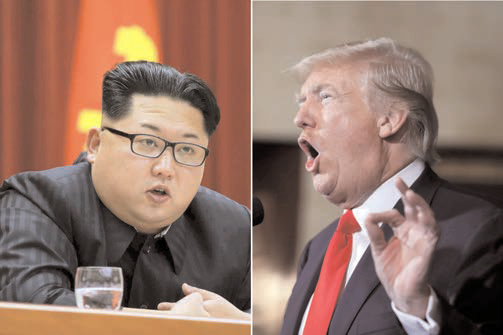
    BELIN (TIP): Germany on August 9 urged North Korea and the United States to show “restraint” after apocalyptic threats from President Donald Trump and Pyongyang in their mounting war of words.

    “We are watching the increasing rhetorical escalation regarding the Korean Peninsula with the greatest concern,” foreign ministry spokesman Martin Schaefer told reporters. “That is why we call on all sides to use restraint.” Schaefer said Berlin was convinced a “military option” could not be “the answer in the quest for a nuclear weapon-free Southeast Asia”.

    He urged the international community to “thoroughly implement” the latest round of sanctions against North Korea approved by the United Nations Security Council.

    And he backed a call by US Secretary of State Rex Tillerson to resume talks with Pyongyang if it halts ballistic missile tests.

    “We must all continue our diplomatic efforts — it is the only way to ensure that the threat of the illegal North Korean nuclear weapons programme can be contained,” he said. (AFP)

  • UK ready to pay 40 billion euro Brexit divorce bill: Report

    UK ready to pay 40 billion euro Brexit divorce bill: Report

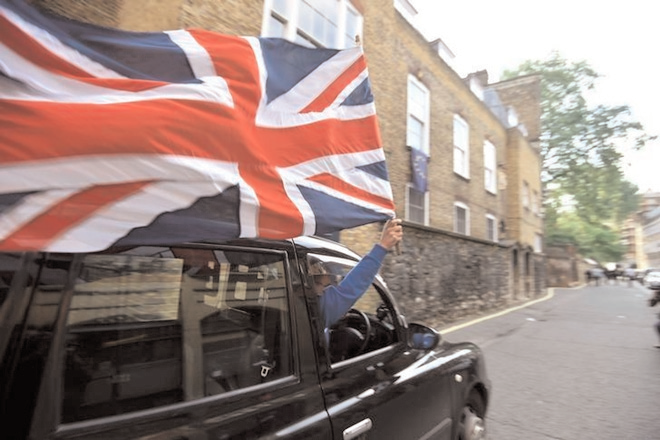
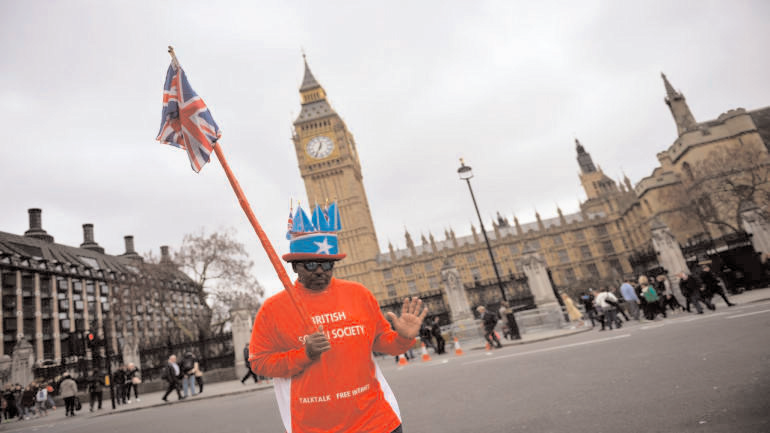
    LONDON (TIP): Britain is open to paying up to 40 billion euros ($47.1 billion) towards a so-called Brexit divorce bill to the European Union as long as a future UK-EU trade deal can be secured, a media report said on August 8.

    Three separate sources within the UK civil service and government with knowledge of the UK’s Brexit negotiating strategy have confirmed the figure, dismissing previous reports that British Prime Minister Theresa May would agree to a 50-billion-pound bill as “too high”.

    According to the report published in ‘The Sunday Telegraph’, the UK government negotiators for Britain’s exit from the European Union have been able to ascertain that the 27-member EU’s actual opening position is around 60 billion euros – not 100 billion euros as previously suggested.

    “The 27 say they can’t knock off the bits of their ‘bill’ until the very end – but politically we can’t move on money until the 27 member states start to show compromise. As a negotiation process, it just doesn’t work,” a senior civil servant based at Whitehall in London told the newspaper.

    “We know their position is 60 billion euros, but actual bottom line is 50 billion euros. Ours is closer to 30 billion euros, but the landing zone is 40 billion euros, even if the public and politicians are not all there yet,” the official added.

    A second Whitehall source confirmed the UK bottom line was “30 billion euros- 40 billion euros” while a third political source put the figure in May’s mind at “north of 30 billion euros”.

    Making such a large offer is likely to prove politically divisive for Theresa May. Brexiteers within the Conservative party will find it hard to accept paying such a sum, especially if it was not in exchange for a workable future relationship. British Brexit negotiators concluded after second-round talks last month that the EU had created a non-negotiable stance by refusing to talk about trade until it had reached a settlement on citizens’ rights, money and Northern Ireland.

    UK officials have been looking at a compromise by proposing a transition deal in which Britain would offer to continue to make net payments to the EU of some 10 billion euros a year for up to three years after Brexit.

    According to the latest estimate, this continued EU budget payment for 2019- 2021 could represent a partial downpayment on a final 40-billion-euros bill that negotiators hope will jump-start talks on trade and future relations.

    Britain voted with 52 per cent in favour of leaving the European Union in a referendum last year. (PTI)

  • At least 56 dead as smugglers throw 300 African migrants into Yemen sea

    At least 56 dead as smugglers throw 300 African migrants into Yemen sea

    DUBAI (TIP): At least 56 people have drowned over the past 24 hours, and dozens remain missing, after human traffickers forced 300 African migrants off two Yemen-bound boats and into the sea.

    Survivors — all Ethiopian and Somali migrants — managed to make their way to Shabwa, a southern province along Yemen’s Arabian Sea coastline, the International Organization for Migration said.

    The war in Yemen has left over 8,300 people dead and displaced millions since 2015, but the impoverished country continues to draw migrants from the Horn of Africa seeking work in prosperous Gulf countries further north.

    At least six people drowned on Thursday after human smugglers forced 180 Ethiopians off their boat and into the choppy waters of the Arabian Sea, an IOM spokesperson told AFP. Thirteen people remained unaccounted for, the spokesperson said. The majority of the migrants appeared to be teenagers and young adults.

    On Wednesday, traffickers also forced more than 120 Somali and Ethiopian migrants into the rough seas off Yemen to avoid arrest by local authorities, leaving at least 50 dead and 22 missing, IOM reported.

    IOM teams, working with the International Committee of the Red Cross, found the bodies of 29 migrants in shallow graves along the coast of Shabwa, currently under the control of Yemeni troops backed by the United States. They had been buried by survivors.

    “The smugglers deliberately pushed the migrants into the waters since they feared that they would be arrested by the authorities once they reach the shore”, an IOM emergency officer in Aden, where the Yemeni government is based, told AFP. Laurent de Boeck, IOM’s Yemen mission head, said the boat’s crew immediately returned to Somalia yesterday to pick up more migrants headed to Yemen on the same route. (AFP)

  • Turkey detains Russian IS suspect ‘planning attack on US base’

    Turkey detains Russian IS suspect ‘planning attack on US base’

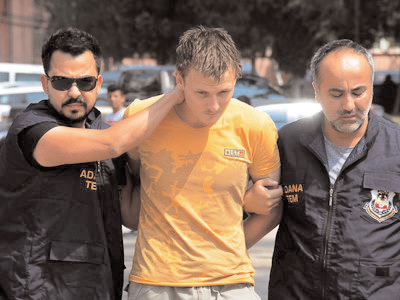
    ISTANBUL (TIP): Turkish authorities have detained a Russian national and suspected Islamic State group militant for allegedly planning a drone attack on US aircraft at Turkey’s Incirlik air base, police said on Thursday.

    Renad Bakiev was detained in the southern city of Adana over suspicions that he plotted to crash an American aircraft or attack the Incirlik air base using a drone, Adana police said in a statement. Turkish private news agency Dogan said a court later ordered him formally arrested pending a trial. Bakiev also intended to attack the local Alevi community in Adana city, the statement said. It said he was affiliated with IS and had previously traveled to Syria.

    The Alevi religious minority is an offshoot of Shia Islam and is the largest religious group in Turkey after Sunnis. IS regards Alevis as heretics.Bakiev appealed for 2,800 Turkish Lira (nearly $800) fromother militants on the Telegram messaging application, whichIS sympathizers use widely, to buy a drone, police said.

    The private Dogan news agency said during his questioning that he allegedly defended the need to kill Alevis and considered them “enemies of Allah,” the statement said. During police interrogations, Bakiev admitted to reconnoitering the air base for his strike, the police statement said. A previous attempt he made to attack Americans was unsuccessful.

    Bakiev’s plans came to light in testimony from suspected IS members detained in a counterterror raid in June, according to Dogan news agency. That operation captured the alleged commander of an Adana-based IS cell, 32-year old Abdulkerim Cakar, and 10 others.

    The US Air Force has used Incirlik air base, near Adana, as a staging post for the air campaign against IS in Syria and Iraq since 2015. IS militants have used armed drones to deadly effect in Iraq and Syria, converting commercial drones to carry small explosives. (AFP)

  • UK to scrap ‘outdated’ landing cards for Indians, others

    UK to scrap ‘outdated’ landing cards for Indians, others

    LONDON (TIP): Non-EU visitors including Indians arriving in the UK will soon be no longer required to fill the “outdated” landing cards as part of the ongoing digital transformation of border controls, the Home Office has said.

    Landing cards are filled out by an estimated 16 million international visitors from outside the European Union (EU), including Indians, annually. Under proposals published yesterday, the UK Home Office said the paper-based system, which costs the UK public around 3.6 million pounds ($4.6 million) each year, will be replaced as part of the UK Border Force’s ongoing digital transformation of border controls.

    “We are modernising border technology to ensure Border Force staff stop dealing with outdated paperwork and can continue to focus on security and protecting the public,” said Immigration Minister Brandon Lewis. “In addition, this change will improve the experience for arriving passengers so they get an even better welcome when they land in the UK,” he said.

    The withdrawal of landing cards, filled out by non-EU passengers since 1971, will not result in the loss of any data that is used for security checks, the Home Office said.

    All passengers arriving from outside the EU will continue to be checked against the variety of police, security and immigration watch lists which are used to verify the identity and confirm the status of every passenger arriving at the British airports.

    The Home Office has launched a fourweek consultation with carriers/airlines, ports and those that use statistics gathered from landing card data before it comes into force later this year.

    According to the department, the changes are expected to free up staff and enable Border Force to better deploy their resources.

    At the same time, the changes will improve the experience for travellers as passengers will no longer need to fill out the paper cards while on board the flight or in queues at airports and ports. The airports and ports, on the other hand, will no longer have to purchase and distribute them.

    It is expected that queue lengths will be shortened and passenger flows improved at British airports, a move welcomed by Heathrow airport, the largest UK hub.

    Heathrow CEO John Holland-Kaye said in a statement: “We warmly welcome this proposed change which would give visitors to Britain an improved experience, whilst maintaining a secure border into the UK”.

    “In post-Brexit Britain, it will be even more important to show we are open for business and make sure that we give investors, tourists and students a great welcome to our country.

    “We look forward to continuing to work closely with the new Immigration Minister and Border Force over the coming years to keep improving the passenger experience at the UK’s border,” Holland-Kaye said.

    The proposals have been characterised as part of the Home Office’s ongoing transformation at the border which is enhancing Border Force’s ability both to facilitate legitimate travel and ensure the security of the border.

    “This programme of work has already seen the introduction of 232 e-gates at 21 ports and since June has seen more than a million passengers use them each week. This has enabled Border Force officers to work on other security and intelligence matters,” the Home Office said.

    The changes are in addition to the ongoing Digital Services at the Border (DSAB) programme, which is modernising technology at the border to improve intelligence gathering on goods and passengers and increase security.

    The UK Border Force has also increased the use of Advance Passenger Information, with systems in place to receive data on 100 per cent of scheduled flights for all international journeys to and from the UK. (PTI)

  • ASHLEY JUDD FACES ‘EVERYDAY SEXISM’

    ASHLEY JUDD FACES ‘EVERYDAY SEXISM’

    Actress Ashley Judd has claimed she became the victim of “everyday sexism”.

    The 49-year-old took to Facebook Live to detail an incident with an airport employee, who referred to her as “sweetheart”, prompting a dispute between the pair, reports usmagazine.com.

    Speaking down the camera lens as she made her way through the airport, Judd explained: “This is the kind of thing to me that happens which I categorise as everyday sexism. And it is so easy to let it go and not to speak up, particularly when it is so easy for someone to push back and say ‘Oh, I was just being polite’.”

    She added: “So I was coming through security and a guy said ‘Hey sweetheart’, and I said, ‘I’m not your sweetheart, I am your client.’ So I was already setting a boundary. When I was setting my things out, he said, ‘Hey nice dress!’”

    The “Divergent” actress said the airport employee’s behaviour was sexist. “I didn’t hear him say anything about the attire of any of the other folks in the entire line and I am in one of the most travelled airports in the world,” Judd said. “I’m surrounded by lots and lots of other people dressed in lots of different kinds of dress,” she added.