Year: 2017

  • Indian Americans among top investors in residential property in US

    Indian Americans among top investors in residential property in US

    MUMBAI (TIP): A Times of India report published July 21 says that the pall of gloom owing to protectionist policies has not kept Indians residing in the US from investing in real estate. By purchasing residential property worth $7.8 billion during the 12-month period ending March 2017, Indians emerged as the fifth largest investors in real estate in the US. Backed by mortgage finance, these properties were largely acquired for use as primary residence or for use by a child studying in the US.

    Chinese nationals were the biggest buyers, purchasing residential property worth $31.7 billion in the same period. They were followed by the Canadians, British, Mexicans and, lastly, Indians.

    Between April 2015 and March 2016, Indians had invested $6.1 billion and occupied third place on the list of biggest buyers. However, a surge of investments from other nationalities resulted in Indians slipping to fifth position in 2016-17.

    The bulk of buyers from China, India, and Mexico were working and residing in the US, while most buyers from Canada and the UK were non-resident buyers, adds the report, “2017- Profile of international activity in US residential real estate” released recently by the National Association of Realtors (NAR).

    More than a third of the Chinese buyers purchased residential property in California. Compared to the other major foreign buyers, Indians were not as concentrated in any state in the US and the location of their jobs largely determined their purchase. While California, New Jersey, Texas, Massachusetts, and Kentucky were top destinations, more than two in five Indian buyers purchased in another state.

    In aggregate, foreign buyers purchased $153 billion of residential property in US between April 2016 and March 2017, which is a 49% jump from the figure of the corresponding previous period of $102.6 billion. In terms of number of units, foreign buyers purchased 2.84 lakh residential properties in US in April 2016-March 2017, up 32% from the previous period’s figure of 2.14 lakh properties.

    On an average, foreign buyers paid $536,852 for their properties, 12% more than the average price during the previous 12-month period. The average purchase price of properties bought by Indians was $522,440.

    “The political and economic uncertainty both here and abroad did not deter foreigners from exponentially ramping up their purchases of US property over the past year,” said Lawrence Yun, NAR’s chief economist. “While the strengthening of the US dollar in relation to other currencies and steadfast home-price growth made buying a home more expensive in many areas, foreigners increasingly acted on their beliefs that the US is a safe and secure place to live, work and invest,” he added.

    While a stronger dollar makes it more expensive to purchase US property, fears of a further weakening of a local currency against the dollar prompts some foreign buyers to accelerate their purchase.

    Referring to the value of the Indian rupee, the report says it depreciated modestly (by 2%) relative to the dollar over the entire survey period. However, post-demonetization in November 2016, which caused a severe liquidity squeeze, the rupee reversed course and began to appreciate.

    From November 2016 to March 2017 (the end of the survey period), the rupee had appreciated nearly 3% against the dollar. Data from June 2017 shows that the rupee had strengthened nearly 5% against the dollar from November 2016, suggesting that terms could improve for Indian buyers of US real estate next year.

    (Source: TOI)

  • Fourteen Indian Americans to receive M&A Emerging Leaders Awards

    Fourteen Indian Americans to receive M&A Emerging Leaders Awards

    NEW YORK (TIP): Fourteen Indian Americans will receive this year’s M&A Advisor Emerging Leaders Awards. They are – Weil Goshal & Manager LLP. Partner Sachin Kohli, Deloitte Consulting LLP Senior Manager Karthik Krishnamoorthy, Kaley Jessen PC LLD Shareholder Anshu Pasricha, Raymond James Managing Director Sanjay Patel, Berkery Noyes Managing Director Vineet Asthana, Simanor LLC. Senior Director Sri Geedipali, SSG Capital Advisors Director Neil Gupta, Ernst & Young LLP partner Raghav Rao, PJT Partners Managing Director Ketan Shah, Deloitte Consulting Senior Manager Simon Singh and Kramer, Levin Naftalis & Frankel Special Counsel Anupama Yerramali. Ballard Spahr Senior Associate Amit Kakkar, Ernst & Young LLP. Partner Sid Khosla.

    The M&A Advisor, renowned globally for its recognition and presentation of leading M&A, financing and turnaround professionals, created this recognition awards program to promote mentorship and professional development amongst the emerging leaders of the industry.

    “The Annual M&A Advisor Emerging Leaders Awards was born as the 40 Under 40 Awards in the United States in 2010 to recognize and celebrate the achievements of young M&A, Financing and turnaround professionals who had reached a significant level of success and made a notable contribution to their industry and community. With the expansion of the Emerging Leaders program to the United Kingdom, and Europe in 2016, the 2017 US award winners join a truly global network of outstanding young professionals”, said David Fergusson, President and Co CEO of The M&A Advisor.

    The 2017 Award Winners have been chosen from a pool of prominent nominees for their notable accomplishments in business and in service to the community. Evaluation and selection of the nominees was completed by an independent judging panel, Added Fergusson.

    “It is our belief that the Emerging Leader Award winners will continue to have a significant effect on the advancement of our industry.

    Through the support of business, philanthropic, academic and personal development experts, we are establishing a connected “leadership community” with the mandate to empower these successful young professionals to improve the life experiences of others through their career.”

    On Tuesday, September 19th, The M&A Advisor will host a black tie Awards Gala at the New York Athletic Club in Manhattan to introduce the Emerging Leaders Award Winners to the business community and celebrate their achievements.


  • Debate Why Hinduwadis are obsessed with Cow?

    Debate Why Hinduwadis are obsessed with Cow?

    Cow is not sacred and beef is not forbidden to Hindus, according to Vedas 

    By Dave Makkar

    The author finds no mention in Hindu scriptures about cow being referred to as “mother” or as “holy”. He finds no evidence that cow slaughter was ever prohibited, that beef eating was forbidden. He wonders why Hinduwadis are so obsessed with cow. The Indian Panorama, with this article, is initiating a debate on an issue which has fiercely divided the Indian nation. The views expressed here are the author’s own.

    The current atmosphere in India on the issue of cow defies all sane logic, Hindu religious Texts, thousands of years old sacred history, historians and scholars.  On one hand the current Modi government talks of making India the biggest economic power in the world surpassing America and China. On the other hand, his own party and his Hindu affiliate’s members talk of what people can eat or cannot eat, how many children the Hindu couples should produce, what the women should wear, adult girls cannot be seen in the company of opposite sex friends, Hindu girl cannot marry a non-Hindu and any criticism of government policies make you anti-national that includes refusing to say Bharat Mata ki Jai or Cow is our mother.

     Modi himself and his team members are biggest hypocrites on the issue of cow or meat. As CM of Gujarat under Modi meat production 10,600 tons in 2001-2 went up to 35,286 tons in 2011-12. Still Modi accused UPA government for cow slaughter for their support to meat exporters “Pink Revolution” during the run up to the 2014 elections that brought him to power. Ironically under Modi’s watch bovine/cow meat export has gone up by 70% according to the Commerce Ministry website. Now India is number 1 exporter of bovine/cow meat in the world.

     Modi’s confidante Amit Shah during the 2014 campaign made several speeches that cow slaughter will not be banned in north eastern states of India. As BJP’s party president on May 28, 2015 in Goa; Amit Shah ruled out a nation-wide beef-ban or cow slaughter.  Union Government and Goa Government both under BJP are jointly running a slaughterhouse in Goa.

     Sangeet Som, the Hindutva poster boy & one of the main accused in 2013 Muzzafarnagar communal riots, UP Assembly Member and now Minister in Adityanath Yogi’s government had been personally associated with two meat processing and export companies, Al-Dua and Al-Anam. Al-Dua is one of the India’s leading halal meat export companies which exports meat to Arab countries.

     BJP candidate Sreeprakash on April 2, 2017 in the run up to the Mallapuram Lok Sabha by election in Kerala said, “I will ensure quality beef and standard abattoirs in my constituency.”

     Modi’s Minister of State for Home Affairs Kiren Rijiju in Aizwal on May 27, 2017 said that, “I eat beef, I’m from Arunachal Pradesh and can anybody stop me? So let us not be touchy about somebody’s practices. This is a Democratic country. Sometime some statements are made which are not palatable.” Kiren Rijiju also described as “unpalatable” his colleague Mukhtar Abbas Naqvi’s remarks that those who eat beef should go to Pakistan, and questioned whether anyone could stop him from eating beef. The BJP leaders in Arunachal, Meghalaya, Sikkim, Mizoram, Nagaland have been making statements to their constituents, sale of beef at subsidized rates is their commitment to them. After the new Cattle Trade Rules announced by the Modi government they went to the extent of saying “No Beef No Support to BJP”

     BJP’s Karnataka spokesperson Vaman Acharya on May 28, 2017 while participating in a panel discussion on Suvarna News opposed the beef ban. He said that people from all communities including the Brahmin community, consumed beef. Before India became an agrarian nation, beef had been a staple diet. Even today, several people, including indigenous tribes in the North Eastern States consumed beef as a staple. Acharya had also said that as chairman of the Karnataka Pollution Control Board, he gave permission for the setting up of 16 abattoirs in the State.  Lastly, he had said that he didn’t subscribe to the religious sentimentality attached to the cattle. He retracted his statements on June 6, 2017 under party pressure.

     Modi’s Home Minister Rajnath Singh in Aizwal on June 12, 2017, said that people are free to choose what they want to eat.  When asked about protests against the government’s ban on sale of cattle for slaughter, Singh clarified that the Centre will not impose any restrictions on one’s choice of food. However, even as Singh spoke, scores of people in the Mizoram capital participated in a “beef ban bashing banquet” organized by a local organization. (PTI)

    Kerala BJP and RSS have joined hands to start a co-operative society to sell meat which includes bovine meat as well as fish, a Malayalam daily Deshabhimani reported on July 5, 2017.

    July 17, 2017 Goa’s BJP CM Manohar Parikar who also holds the animal husbandry portfolio in the assembly session replied to BJP assembly members concern over the poor quality of Beef imported from Congress ruled neighboring state Karnataka; “Approximately 2,000 kg beef is produced per day at the state abattoir of the Goa Meat Complex Limited, while rest of beef is brought in from Karnataka. Parrikar said he would issue directions to the department concerned to carry proper inspection of beef imported from Karnataka. Parrikar further added that “The Goa Meat Complex Ltd has no problem in slaughtering more animals if they are brought there by traders,”

    Modi’s New Cattle Trade Rules that have been stayed by the SC on July 12, 2017 violates Right of a Person to Freedom of Choice regarding Food as enshrined in Indian Constitution and it is also violating the rights of the farmers to trade. Under this law farmers cannot sell the cattle in the market for slaughter but slaughter houses can come to the farmer and buy cattle for slaughter. Then majority of the farmers are not educated how they can comply with filling out numerous forms about the origin & ownership of the animal in question? First, the farmers/dairy operators will be exploited by the bureaucracy and then by Slaughterhouses that can make a cartel to give them less price for their cattle.

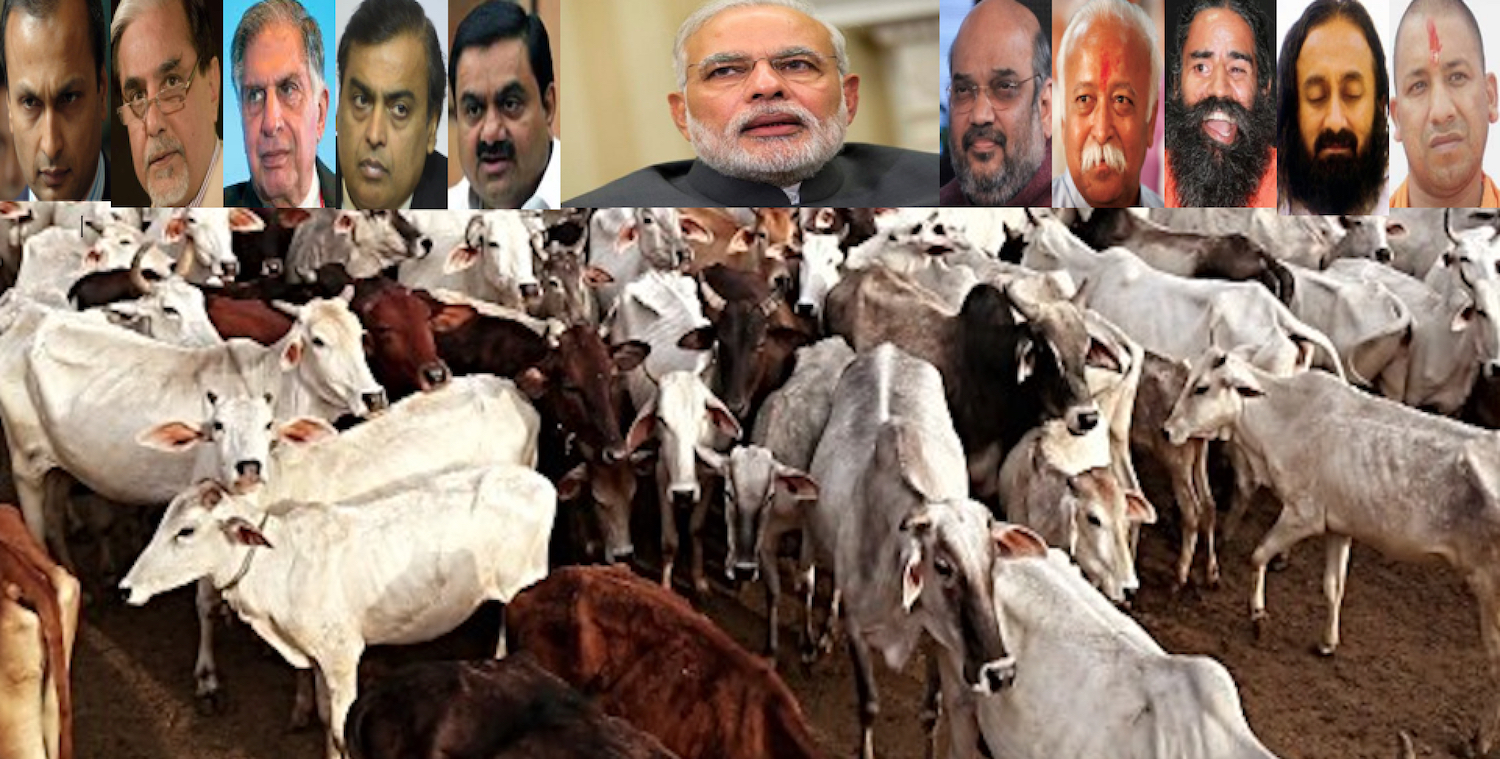
     Modi aka BJP is paving the way for its handlers like Adani, Ambani, Tata and other foreign MNC’s to control the meat and animal hide trade that is worth Billions of Dollars. UP slaughterhouses alone employ 25 lac people with a turnover of Rs. 15,000.00 crore, the highest producer of meat in India. The meat industry is likely to grow at a compound growth rate of 8.4% over the next five years. The processed meat industry is growing even much faster, at about 20%. The meat export from India is about $4.5 billion and raw hide to leather goods is another $5.5 billion. About 22 million people are in the workforce and the meat export industry is expected to grow 50% in 5 years. Beside that 70% of Indians are non-vegetarians. Domestic per capita meat consumption in India is very low — around 5 kg as compared to the world average of 47 kg. With rising incomes between 2003 and 2012, their meat consumption rose by 6.3% a year. It is expected to rise by another 3.5% a year between 2013 and 2022.

     Apart from 73.7 lakh tons of meat in 2016-17, India also produced 108 lakh tons of fisheries in 2015-16 ranking 2nd after China. India is the number One the and largest exporter of shrimp fish in the world. This industry is growing at a robust pace of 8% per annum. The business is valued at Rs. 1 Lakh Crore and employs about 150 lakh people. Andhra Pradesh occupies the first place, West Bengal 2nd and Modi’s Gujarat at 3rd place in fish production in India.

     The demonetization was also done for these very influential people so that they can control food business worth billions that is traditionally run on cash basis by the informal sector. On top of that to pave the way for billions of dollars that can be made in transaction fees in the guise of digital money from the less fortunate and financially most vulnerable people of Indian society. Rich have credit cards; they don’t pay any fees to use it; rather they are rewarded with points and cash back for its use; it is the merchant that pays the fees for accepting it. The poor has to get a “Pre-Paid Debit Card” for a fee with a monthly maintenance fee and fee for loading money; one of the biggest Ponzi schemes ever invented by the American Financial Industry to loot the poor.

     Coming to Team Modi & Hinduwadi’s understanding of Hinduism, its history, its writing on eating meat and views of various learned scholars, all of them are a very big disappointment. Team Modi should do some soul searching why Atal Behari Bajpai avoided the trap of cow laid by the bogus Hindutva supporters that has no love for their own 50 crore (500 million) extremely poor Hindus living a miserable life.

     According to Sanskrit Scholar Rajani K Dixit, “there is no such thing as Holy Cow in the Vedas”. The Vedas consider bovines important for milk, beef, agriculture and transport but not divine or holy. The word ‘Aghnyaa’ applies only to a milch cow because it is not economical to kill it. A Vaisha cow is meant for beef, and especially reserved to an extent for Brahmins only. Atharva 12.4(13) tells us that in case a Brahmin begs for a cow from a non-Brahmin, “even if that person has a beef-dinner at his house, he has to select another cow to slaughter for his own dinner, than the one that is asked for”. The word ‘Aghnyaa’ (not to be killed) coined by Rigveda for young milch cows was the main cause of the Hindu misunderstanding that cows or bovines are not to be slaughtered.

     The Rigveda has never used the word ‘mother’ for a cow. There is no punishment recommended for a cow slaughterer even if someone kills a young milch cow. Beef-eating is also not taboo. Beef parties are not only allowed but highly appreciated, and a person who cooks beef for his guests is praised by the term ‘Atithi-gva’ ‘one who offers beef to guests’.           

     Ritual sacrifice of a bull is a must in worship to God Indra. Beef parties also seem a regular affair in weddings (RV 10.85). Cows are not sacred and beef is not forbidden to Hindus. Here is a line from a verse ascribed to god Savita, the presiding deity of the Gayatri Mantra, describing a dinner party he is hosting: “At night we are going to kill cows” (RV.10.85(19). RV 10.89 (14) mentions “cows for food, laying scattered on the grounds of a slaughter house”. Mark that the author does not use the word ‘animals’ but ‘cows’, showing that beef was the most popular item, and the cow the most slaughtered animal. RV 10.95(6) says that “old cows which do not give milk” are “only fit to be cooked”. It further states that “useless cows ….are taken to be cooked, but never milch cows”. It is clear that slaughter houses are not banned, beef is allowed and useless bovines are allowed to be slaughtered in Hinduism.

     Aadi Shankaracharya born in 788 CE in Kerala: in his commentary on Brahadaranyako Upanishad 6/4/18 says: ’Odaan’ rice mixed with meat is called ‘maansodan’ on being asked whose meat it should be, he answers ‘Uksha’ is used for an ox, which is capable to produce semen. Currently 72 communities including some upper caste Hindus in Kerala prefer beef to the mutton and some prefer it because it is cheaper than mutton.

     Hinduisms great propagator Swami Vivekaanand said: “You will be surprised to know that according to ancient Hindu rite and rituals, a man cannot be a good Hindu who does not eat beef “. (The complete works of Swami Vivekanand vol :3/5/36)

     Vinayak Damodar Savarkar, the Hindutva Icon and Icon of Hindu religious & political parties including BJP, espoused his views in Vidnyan Nishta Nibandh, that the cow, like the peepal tree, should be cared for, as something useful to humans, which meant eating it as well if need be. He insisted that a superstitious mindset towards cows would ruin India’s intellect and that cows should be protected for their economic use to man, and not because of their ‘divinity’. Attributing religious qualities to it gives it a godly status. Such a superstitious mindset destroys the nation’s intellect. “When humanitarian interests are not served and in fact harmed by the cow and when humanism is shamed, self-defeating extreme cow protection should be rejected.”              

    Every now and then, an admirer of Savarkar raises the topic. “Can anyone imagine that the ‘Father of Hindutva’ advocated beef-eating (in special circumstances), rejected the divinity of the Vedas, denounced the sanctity of the caste system and launched a virulent attack on the hypocrisy of the priests?” wrote Ved Pratap Vaidik, a journalist close to several Hindutva figures. “Incidentally, Savarkar was a beef-eater,” wrote Varsha Bhonsle on Savarkar’s birth anniversary, February 26, in 1998. “For he was, above all else, a rationalist – a true Hindu – and eons ahead of contemporary Hindutvawadis.” (“Why is the Cow a Political Animal?” S. Joshi)

    Mahatma Gandhi was approached for total ban on Cow Slaughter in India. His reply was, “I have been long pledged to serve the cow but how can my religion also be the religion of the rest of the Indians? It will mean coercion against those Indians who are not Hindus. The assumption of the Hindus that India now has become the land of the Hindus is erroneous. India belongs to all who live here. Earlier on 25th July 1947 he also said that “The Hindu religion prohibited cow slaughter for the Hindus, not for the world. The religious prohibition came from within. Any imposition from without meant compulsion. Such compulsion was repugnant to religion.”

     A Brahmin’s Cow Tales by D. N. Jha, a high cast Brahmin himself. The cow as a sacred animal, Jha believes, did not really gain currency until Dayanand Saraswati’s cow protection movement in the 19th century”. The cow became a tool of mass political mobilization with the organized cow-protection movement,” the historian points out. “The killing of cows stopped gradually with the agrarian society and caste rigidity. The Brahmins found it convenient to say that those who ate beef were untouchable. But they themselves continued to consume it, recommending it for occasions such as shraadh. The beef-eating habits of Indians which existed in Rig Vedic times and continued till the 19th century and after, despite repeated Brahminical injunctions against cow-killing. That ancient Hindus, including Brahmins, were beef-eaters, willing to incur the minor penalty that an agrarian society began imposing on cow-killers, and that this fondness for cattle meat had nothing to do with Islam or Christianity.       

     For those who blame Muslims for the practice of Cow slaughter in India.  Babar’s first act after conquering Delhi was to forbid the killing of cows. They must read Babar’s Directives (Wasiyyat namd-i-majchfi) a secret testament to his son Humayun and his future generations. For the stability of the Empire, O my son!, “The realm of Hindustan is full of diverse creeds. Praise be to God, the Righteous, the Glorious, the Highest, that He hath granted unto thee the Empire of it. It is but proper that thou, with heart cleansed of all religious bigotry, should dispense justice according to the tenets of each community.’ “And in particular refrain from the sacrifice of cow, for that way lies the conquest of the hearts of the people of Hindustan; and the subjects of the realm will, through royal favour, be devoted to thee. And the temples and abodes of worship of every community under Imperial sway, you should not damage. Dispense justice so that the sovereign may be happy with the subjects and likewise the subjects with their sovereign. The progress of Islam is better by the sword of kindness, not by the sword of oppression.” (Abstracted from the 1936 book The Mughal Empire From Babar To Aurangzeb, by SM Jaffar of Peshawar. It mentions that “the original document is in Persian and is treasured in the Hamida Library at Bhopal as one of its heirlooms.”)

    The British Origin of Cow-Slaughter in India (published 2002) by Gandhian historian Dharampal. His book draws from official documents to show that the riots of 1880-1894 were not the obvious Hindu-Muslim conflagration they were made out to be. The book cites accounts of how “many prominent Muslims as well as the Parsis and Sikhs actively participated in the (cow protection) movement.” Dharampal wrote that large-scale cow slaughter was not the handiwork of Muslims who came to India from central and western Asia. “The question of the sacrifice of a cow did not arise as the land where Islam arose did not have many cows.”

    Mughals were habituated to the meat of goats and mutton, sacrificing camels on the occasion of festivals like Eid or for large feasts, the book says. Dharampal rues the lack of research on cow killing between 1200 and 1700, when a series of Muslim kings ruled over a large part of India. But he goes on to show that systematic slaughter of cattle began in India with the East India Company establishing itself. The British, unlike the central and west Asians, were habituated to beef.  The first slaughterhouse in India was built in Calcutta (now Kolkata) in 1760 by Robert Clive, then Governor of Bengal. It could kill 30,000 animals per day. Several more slaughterhouses were set up in various parts of the country by the Commissariat Wing of the three British armies of Bengal, Madras and Bombay Presidencies. A total of 350 slaughterhouses were constructed by 1910.

     Nitya Sambamurti Ghotge, a veterinary surgeon who heads Anthra, a group in Pune that has worked with rural livestock rearers since 1992. Laws against cow slaughter and Trade Rules will only criminalize the livestock trade, not protect the animals, said Ghotge. Only the smugglers and the law enforcement officials will benefit from the ban on cow slaughter, not the poor farmers or the livestock. Like the agriculture scientist Ramanjaneyulu, Ghotge holds that the cow protection laws are unjust; it is about powerful urban people outsourcing the burden of cow protection on the rural poor, she said.

    As for the BJP’s claim that “cow is the only divine animal that exhales oxygen”, no living being other than plants exhale oxygen is also a myth. Animals, however, exhale unused oxygen, as lungs cannot process all the oxygen that is inhaled. According to the 2006 FAO report, the livestock sector accounts for 9 per cent of carbon dioxide derived from human-related activities, but produces a much larger share of even more harmful greenhouse gases.

     Team Modi is least concerned about the millions of Indians- Hindus as well as non-Hindus employed directly and indirectly in the cattle trade. The millions especially children and elderly that depend on bovine meat as the cheapest source of protein. In the name of misguided Hindutva they are imposing their personal believes on the cattle breeders, traders, farmers and bovine meat eaters without considering the economic realities. There was a time when the owner could get Rs 12,000.00 to Rs. 15,000.00 for the unproductive animal from a slaughterhouse, now that has been reduced to Zero by the Gau Rakshaks/cow vigilantes. Rs 2,500.00-3,000.0 per month is the cost just to keep the animal alive for 8-10 years after the end of its economic utility. If the 10 million or so cattle that possibly end up at the abattoir every year are not culled, farmers will simply stop caring for them and let them loose in towns and cities. It will cost upward of Rs 22,000 crore to take care of them. And since the 10 million-plus will keep adding each year, till they die in their natural course, these costs would only keep on mounting up every year.  Just in the 4th year the cost could be more than Rs. 88,000.00 crore. In BJP ruled state Rajasthan the state government is providing Rs 70.00/day for cow and Rs 35/day for calf and at the same time it is providing Rs. 25.63/person on welfare schemes in the state. Under Modi, India has become an international joke where cow is more valuable than human beings.

    (The author is a New Jersey based community activist and a regular commentator on burning issues. He can be reached at davemakkar@yahoo.com)


                                (The Indian Panorama invites comments on the article)


  • Google Earth to let users post stories and photos

    Google Earth to let users post stories and photos

    RIO DE JANEIRO (TIP): Alphabet Inc wants users to post millions of stories, video and photos on its Google Earth platform in the next few years, the programme chief said at a launch event in Brazil for content focused on showcasing the Amazon rainforest.

    The “Voyager” tool allows internet surfers to take interactive tours of exotic destinations on Google Earth led by the likes of primatologist Jane Goodall, with photos, information and maps.

    However, regular users will be able to create their own unedited content for private or public use within two to three years, Google Earth Director Rebecca Moore told Reuters.

    “The story of your family history, the story of your favorite hiking trip – it could be anything. It doesn’t have to be profound,” she said at the event in Sao Paulo.

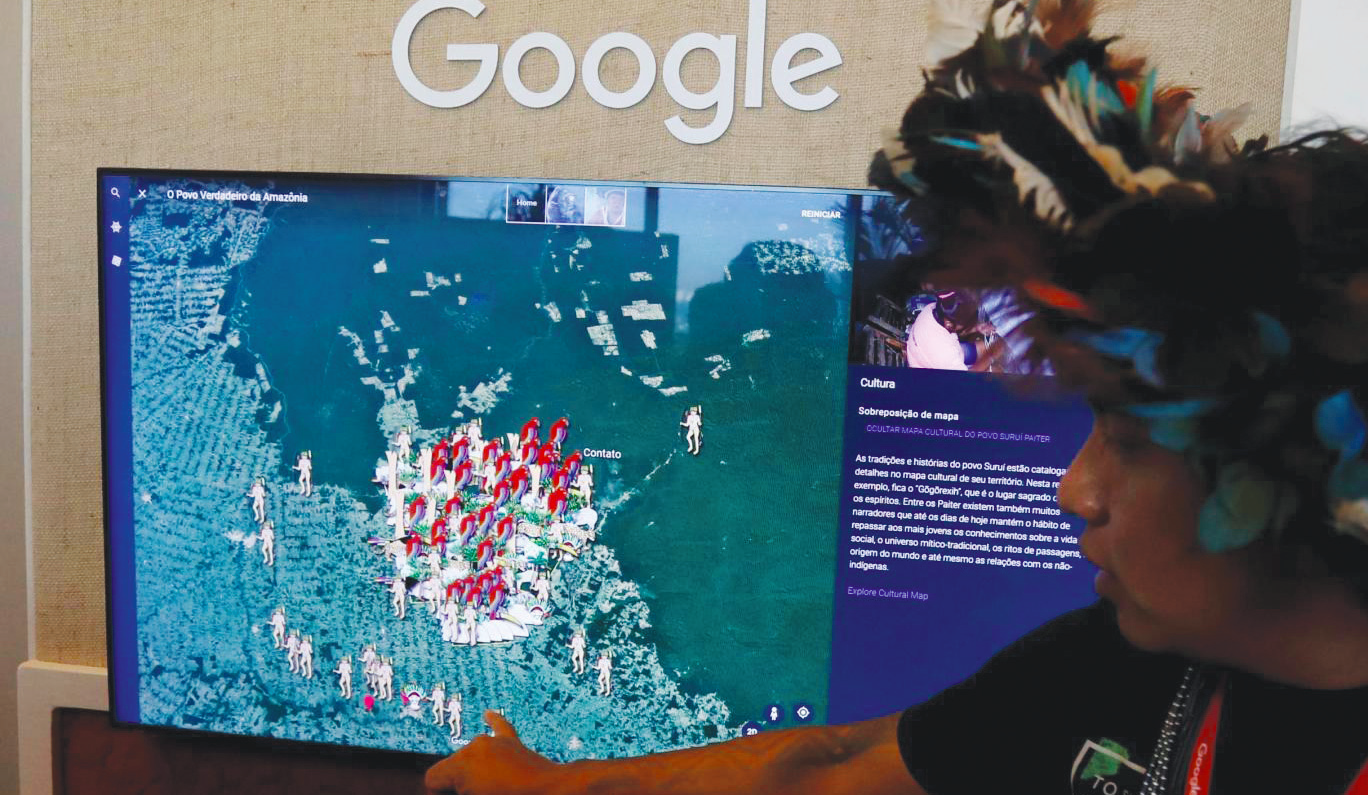
    Moore took the stage at an event in Sao Paulo to unveil the “I am the Amazon” project, which has mapped 11 sites to document the relationship between the rainforest and its people, touching on topics like food, water and cultural origins.

    To tell the stories of communities such as the Yanomami people, Cinta Larga and the Boa Vista Quilombola, Google and partners used tools like 3D cameras to accompany satellite images with videos and text.

    Moore did not reveal the budget for the project but she ruled out the idea of advertising on the platform and said it is not Google’s intention to turn a profit from the venture.

    “Google Earth is our gift to the world,” she said. “In terms of budget, Google has nice revenue from advertising, and not everything Google does has to make money.”

    Source: Reuters

  • SECURITY AGENCIES’ ALERT CALL ON 100% FDI IN DOMESTIC AIRLINES

    SECURITY AGENCIES’ ALERT CALL ON 100% FDI IN DOMESTIC AIRLINES

    NEW DELHI (TIP): The security agencies, including the Intelligence Bureau (IB), have raised concerns over the Centre’s decision to allow 100% foreign direct investment (FDI) in domestic airlines’ operations.

    Recently, Union Home Secretary Rajiv Mehrishi chaired a meeting to discuss the matter, where sources said, the IB and other agencies expressed concerns over the government’s decision on allowing 100% FDI for running domestic airlines.

    Sources said, the meeting, which was attended by senior officials from the Civil Aviation Ministry and the Ministry of Home Affairs (MHA), including the IB, was called to discuss issues related to proposed amendments to the Aircraft Rules, 1937.

    It is learnt that the amendments are required to operationalise the framework for allowing foreign non airline players to own up to 100% stake in domestic carriers. “As the government had decided to put in place liberal FDI policy last year only, this can become reality only once the relevant rules are put in place,” a senior MHA official said.

    Noting that aviation is a “highly sensitive sector”, the IB, during the meeting, suggested that it would be prudent to allow 100% FDI in the sector. To justify its claim, the IB also contended that even developed countries such as the US and Canada have permitted foreign entities to have only up to 25% stake in their respective domestic carriers.

    Source: The Tribune

  • FLIPKART COULD OFFER $900 to 950 MILLION FOR SNAPDEAL

    FLIPKART COULD OFFER $900 to 950 MILLION FOR SNAPDEAL

    NEW DELHI (TIP): E-commerce major Flipkart is expected to make a revised offer of USD 900-950 million for buying rival Snapdeal, according to sources.

    The new offer almost matches the initial asking price of USD 1 billion for acquisition of the beleaguered e-commerce marketplace, sources privy to the development said.

    They did not wish to be identified as discussions are still on and the deal has not been signed yet.

    One of the sources said a new offer of USD 900-950 million is likely to be made by early next week.

    When contacted, Snapdeal, SoftBank and Flipkart declined to comment. Snapdeal’s board has already rejected a takeover offer of USD 800-850 million (around Rs 5,500 crore) from Flipkart as it felt the amount undervalued the company given that the due diligence report was clean.

    SoftBank, Snapdeal’s largest investor, has been proactively mediating the sale for the past few months. The board of Snapdeal also has representation from its founders (Kunal Bahl and Rohit Bansal), Nexus Venture Partners and Kalaari Capital.

    Snapdeal is also engaged in separate discussions for selling Freecharge (mobile wallet operations) and Vulcan Express (logistics arm).

    These deals are also likely to be closed over the next few weeks. The deal between Snapdeal and Flipkart, if completed, would mark the biggest acquisition in the Indian e-commerce space.

    One of the leading contenders in the Indian e-tailing segment, Snapdeal has seen its fortunes failing amid strong competition from Amazon and Flipkart.

    Snapdeal’s valuations have also plummeted from about USD 6.5 billion in February 2016. SoftBank has already written off over USD 1 billion on valuation of its investment in Snapdeal.

  • SENSEX PAST 32K NIFTY AT NEW PEAK

    SENSEX PAST 32K NIFTY AT NEW PEAK

    ‘First-time-ever’ records continue to tumble as rally continues on BSE and NSE

    Mumbai, July 13: The Sensex today went past the 32,000- mark for the first time ever, soaring over 232 points, and the Nifty closed at a new peak of 9,892 as inflation hit a record low, offering the RBI leeway for a lower policy rate.

    The 30-share BSE index took 33 sessions to rise 1,000 points before it finally went beyond the psychologically significant 32,000.

    Higher Asian and European stocks provided fodder after the US Fed chief, in a House testimony, signalled that the approach to higher rates would be steady, prompting investors here to buy more.

    Retail inflation for June hit a historically low 1.54 per cent and industrial output growth for May slumped to 1.7 per cent, boosting chances of a rate reduction by the Reserve Bank at its upcoming August policy meet. The macro numbers were released after market hours yesterday.

    The BSE Sensex settled at a new peak of 32,037.38, up 232.56 points, or 0.73 per cent. It surpassed its previous record of 31,804.82 touched yesterday. In the past four days, the index has gained 676.75 points.

    The broader 50-issue NSE Nifty spurted 75.60 points, or 0.77 per cent, to close at a fresh lifetime high of 9,891.70, bettering its earlier record 9,816.10 hit yesterday.

    Both indices rose for the fourth consecutive session.

    Traders said ample liquidity in the market was driving the current phase of the rally amid optimism over earnings from blue-chip companies. Consumer goods and banking stocks had a good day. The FMCG index rose the most by surging 1.58 per cent, followed by capital goods and banking.

    Foreign investors have been pumping in sizeable money into domestic markets. Foreign portfolio investors bought shares worth a net Rs 361.25 crore yesterday. Source: PTI

  • Top CEOs vote to take US India Business Council out of US chamber

    Top CEOs vote to take US India Business Council out of US chamber

    WASHINGTON (TIP): The board of the US-India Business Council comprising CEOs of some top American companies has voted to sever ties with the powerful US Chamber of Commerce, laying bare years of simmering tensions, including over clashing policy priorities.

    The rupture has left the fate of the USIBC and its staff uncertain for the time being since the US Chamber of Commerce has no intention of letting go of it, as was stated by its president and CEO Tom Donahue in a letter on Tuesday.

    “The USIBC is a part of the Chamber, and the Chamber does not plan to transition it anywhere,” Donahue wrote in the strongly worded letter. He added sternly: “The USIBC has no separate existence and its board has no legal authority.” If reconciliation efforts slated for next week don’t succeed, members of the USIBC appear prepared to start a separate body. “We are ready to form an alternate entity, with far more independence and autonomy,” said a source.

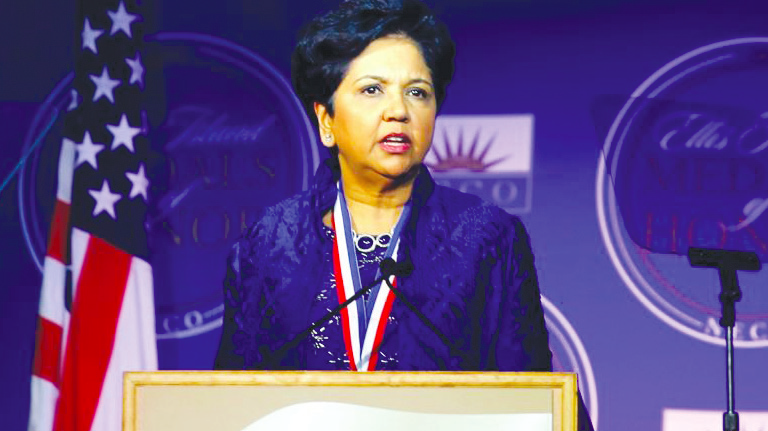
    Donahue went on to announce that USIBC president Mukesh Aghi had left last month and that the chamber had launched a search for his successor. Khush Choksy, a senior vice president at the chamber, will serve as interim president until then. Aghi quit late last month, the day 29 members of the USIBC board voted to split with the chamber. They included Indra Nooyi of Pepsi, John T Chambers of Cisco, Ajay Banga of MasterCard and Warburg Pincus co-chief executive Charles R “Chip” Kaye.

    Started in 1975, the USIBC has emerged as a leading advocacy body on India-US trade, and is acknowledged so by the private sectors and the governments of the two countries. It has hosted Prime Minister Narendra Modi twice during his US visits, and US vice presidents Joe Biden and Mike Pence.

    Hosting Pence at its annual leadership summit on June 27, the day after Modi met President Donald Trump, is understood to have provided the flashpoint that triggered the rupture.

    The chamber was also keen to host Pence but at a separate event and the USIBC beat the chamber to it. Tensions simmering between the two bodies “reached boiling point” with differences over the dispute, according to a source.

    The chamber and the council had serious differences over some policy issues, going back several years — especially on market access, free trade issues and intellectual property rights, according to several past and present affiliates of the USIBC.

    The chamber joined a group of business bodies that called on the new Trump administration and Congress in February to “use all available channels to ensure fair play for businesses, investors and entrepreneurs across the United States, and to support Indian efforts that align with these goals”.

    Several past and present USIBC officials have said they felt “uncomfortable” by the chamber’s aggressive position on these issues, which has included asking the US trade representative to designate India for punitive trade measures.

    Differences between the chamber and the USIBC go back many years, and attempts were made to come to an understanding that would allow each other independence on policy issues and operational autonomy. That had become frayed lately.

    The chamber did not respond to request for comment on these questions, and pointed to Donahue’s letter for all those and other issues. Source: HT

  • VENUS ECLIPSES HOME FAVOURITE KONTA, TO MEET MUGURUZA IN FINAL

    VENUS ECLIPSES HOME FAVOURITE KONTA, TO MEET MUGURUZA IN FINAL

    LONDON (TIP): Five-time champion Venus Williams rolled back the years to reach her first Wimbledon final since 2009 with a clinically executed 6-4 6-2 victory over British hope Johanna Konta on July 13 (Thursday).

    Konta was looking to become the first woman on home soil to reach the Wimbledon final since Virginia Wade in 1977, but she was picked off at crucial times by the 37- year-old Williams, who will face Garbine Muguruza in Saturday’s final.

    Williams, who claimed the last of her Wimbledon titles nine years ago, was too strong for her opponent from the baseline and was able to produce booming serves whenever the Briton threatened.

    After initially going toe-to-toe with the seven-time Grand Slam winner, Konta was unable to put Williams under sustained pressure and ended the contest a clear second best, losing eight of the final 10 games.

    Konta saved two match points before Williams finally ended her resistance, smashing a forehand that flew past the Briton and left the American to twirl in celebration on Centre Court. “I’ve played a lot of finals here. One more win will be amazing. It won’t be a given but I’ll give it my all,” Williams said. “The crowd were very nice to me. The crowd were so fair, I know they love Jo.”

  • FEDERER STANDS TALL AS RIVALS SHOW FRAILTY

    FEDERER STANDS TALL AS RIVALS SHOW FRAILTY

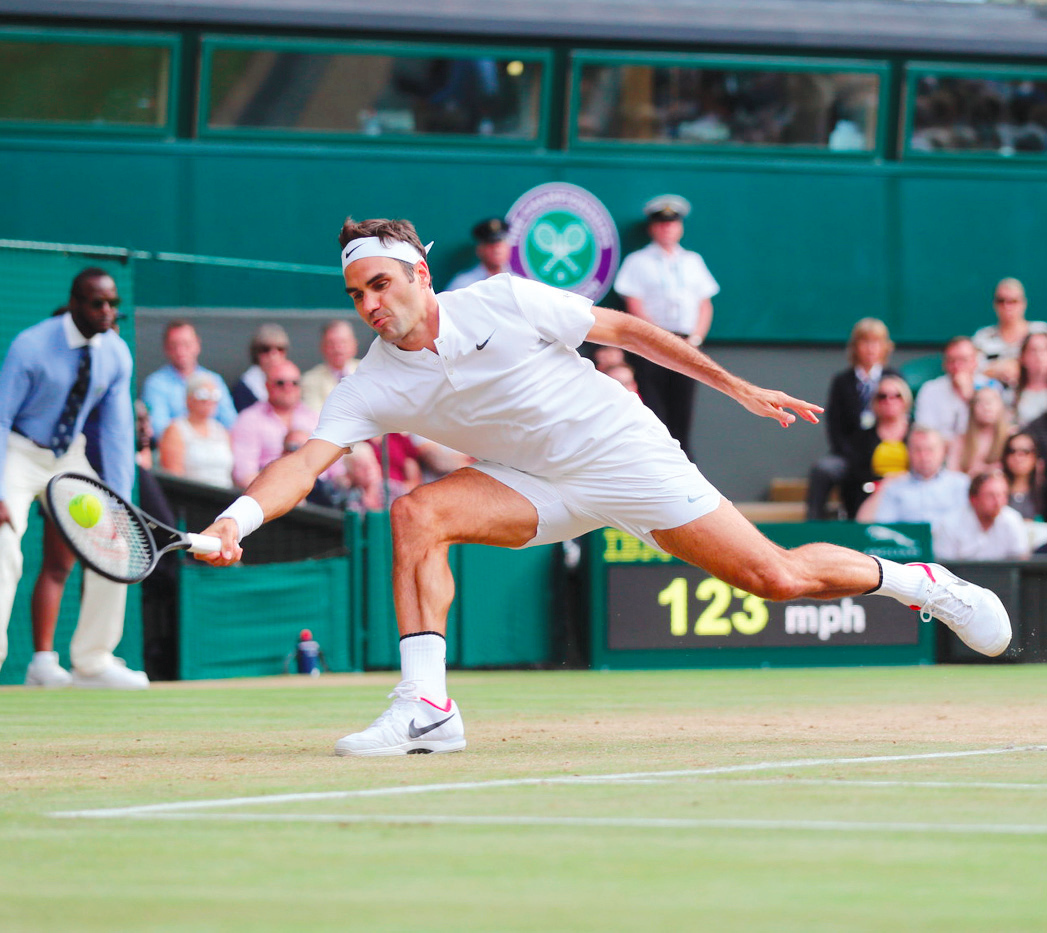
    LONDON (TIP): Roger Federer insists he is only slightly surprised to find himself tantalisingly within touching distance of a record eighth Wimbledon title despite his 36th birthday fast approaching.

    The Swiss star reached the Wimbledon semifinals for the 12th time on July 12 (Wednesday) with a 6-4 6-2 7-6(4) win over Milos Raonic. It was his 100th match at the All England Club and the 50th Grand Slam quarterfinal of his career.

    At 35, Federer is the second oldest man to reach the semifinals after Ken Rosewall who finished runner-up in 1974 at the age of 39. With ‘Big Four’ rivals Andy Murray and Novak Djokovic suffering injury-hit exits on Wednesday and Rafael Nadal having lost in the fourth round, Federer is favourite to reclaim the Wimbledon title and break the tie for seven he has shared with Pete Sampras since 2012.

    “The plan was always to hopefully be strong later on in my career,” said Federer, who will face Tomas Berdych in Friday’s semifinals. “I don’t see myself playing better than a few years ago. I always hope to improve every year. I’m just very happy that I’m still doing so well.

    Am I surprised? Maybe a little bit.” The contrast between Federer and Murray and Djokovic on Wednesday was impossible to ignore.

    Defending champion and world No. 1 Murray lost in five sets to Sam Querrey, hobbled by a long-standing right hip injury. Djokovic, the three-time winner, quit after two games of the second set of his quarterfinal against Berdych with a right elbow injury. Like Murray’s hip, the elbow problem plaguing Djokovic has been a constant menace for many seasons.

    Federer has already trimmed back his schedule, skipping the 2016 and 2017 French Opens which were won by Djokovic and Nadal. After losing to Raonic in the Wimbledon semifinals last year, Federer shut down his season to rest a knee injury which had already required surgery earlier in 2016.

    He came back in January this year, won the Australian Open for his 18th Slam, added the Indian Wells-Miami Masters double before hibernating again through the clay court season.

    “Once you hit 30, you’ve got to look back and think of how much tennis have I played, how much rest did I give my body over the years, how much training have I done, did I do enough, did I overdo it or not enough,” he explained.

    “It’s always calibrating the whole thing. For me it worked out. Sometimes the body and the mind do need a rest.”

    Djokovic ponders long break 

    There is a possibility that they will propose surgery, but I don’t think that is good. To go be cut in surgery or to poison myself with pills… none of the solutions is good A logical conclusion is that a kind of a rest and a longer break is a logical solution. Maybe a longer rest is necessary, not only because of the injury but for my mind as well. During my entire career I have followed a school schedule, I have never been reprimanded, maybe I will skip the next semester The specialists that I’ve talked with, they haven’t been really too clear, mentioning also surgery, mentioning different options…

    Obviously it’s adding up more and more. The more I play, the worse it gets. Yeah, I guess the break is something that I will have to consider

    Paying price for rivalry with Murray?

    We both had a very long, very tough year, a lot of matches, a lot of emotions, a lot of things in play. Our bodies have taken a lot physically. So, I mean, as an athlete, one way or another, at a certain stage of your career, you’re going to experience these kind of things. Injuries are part of this sport, unfortunately.

    Professional tennis getting very physical

    It’s not easy to play on the highest level throughout the entire season, then be able to do that over and over again every season, and then stay healthy.

  • Soon you will be able to openly carry a sword in Texas

    Soon you will be able to openly carry a sword in Texas

    AUSTIN, TX (TIP): Starting this fall, adults in Texas can openly carry knives with blades longer than 5.5 inches.

    In fact, swords, spears, daggers, sabers, bowie knives and machetes are all perfectly fine to tote around. Pretty much anything you can whip out in a Dungeons and Dragons battle is fair game.

    Texas Gov. Greg Abbott signed the bill into law last month, but it doesn’t go into effect until September 1.

    Under the existing law knives with blades longer than 5.5 inches could be purchased but not carried — with only limited exceptions.

    There are some places where the new law won’t apply — including schools, prisons, hospitals, amusement parks or places of worship. Long blades are still banned at sports events. And you can’t bring your sword into a bar, either. The tiny colorful plastic ones that you stick on top of a cocktail, however, are under 5.5 inches, so those are still OK.

    House Bill 1935 provides a common sense solution by prohibiting any knife with a blade over five-and-a-half inches in certain location restricted areas,” Rep. John Frullo, the Republican representative from Lubbock who authored the bill, told CNN in a statement.

    Texas now joins Montana and Oklahoma. Both have both passed laws lifting their bans on certain bladed weapons, including swords.

    The legislation stalled in May after a man was accused of using a hunting knife to kill one student and wound three others at the University of Texas at Austin. Frullo postponed debate on the legislation until a week later — but stood by his bill.

    “It’s not making criminals out of people who have no intention of creating some type of criminal act,” Frullo told CNN affiliate Spectrum News in Austin at the time. Knife Rights, a national advocacy organization, supported the legislation but said there is still a way to go to strike “those last remaining minor knife restrictions in Texas.”

    “We won’t stop until Texas is as free as everyone thinks Texas is,” the group wrote in a statement on its website.

  • Man Trapped Inside Texas A.T.M. for 3 Hours Rescued by Police

    Man Trapped Inside Texas A.T.M. for 3 Hours Rescued by Police

    CORPUS CHRISTI, TX (TIP): Just after 2 p.m. Wednesday, July 13, a person in Corpus Christi, Tex., had just completed a transaction at a Bank of America A.T.M. when a surprise slid through the receipt slot.

    “Please help,” read a handwritten note on a thin strip of paper. “I’m stuck in here, and I don’t have my phone.”

    The person, whose age and gender the authorities did not provide, did not know quite what to do. But it so happened that a Corpus Christi police officer was driving by, so the person went a step beyond what other A.T.M. users had been willing to do and flagged down the officer.

    The officer, like previous bank patrons, initially thought the note was a joke — some sort of “Candid Camera”-type prank that no one wanted to fall for.

    But then the officer approached the A.T.M., and when he listened closely, he could hear a faint sound.

    This was how the police came to discover a man who had been trapped for hours inside an A.T.M., said Gena Pena, a spokeswoman for the Corpus Christi Police Department.

    “Honestly, we can’t say it’s never happened,” Ms. Pena said in an interview on Thursday. “But 95 percent of people will have their phone on them,” she added, and for about three hours, she said, this man did not.

    How does one become stuck inside an A.T.M. in the first place? Ms. Pena said it happened this way:

    The A.T.M. was affixed to a bank, which was under construction, so no employees were inside. The A.T.M., though, was operational. And somewhere on the site, a door led into what Ms. Pena called an “A.T.M. vault” — a room from which a person can service a teller machine from the inside.

    A worker arrived on Wednesday to repair the “locking mechanism” of the room, Ms. Pena said. The door shut behind the worker, and somehow, she said, the man locked himself in.

    The worker, whom the police did not identify, had left his phone inside a vehicle. But once he realized that people were using the A.T.M., the man began slipping notes out the receipt slot, a solution Ms. Pena thought was “pretty ingenious.”

    Unfortunately for the man, several A.T.M. users who got a note thought they were being pranked and apparently did nothing.

    “He was kind of upset,” Ms. Pena said of the contract worker.

    Indeed, the man would later tell the police that he had been screaming for help. Something about the room, though, must have muffled the sound, Ms. Pena said.

    The contractor “didn’t think this was going to happen, obviously,” Ms. Pena said. “I feel bad for him.”

  • Indian American doctor couple killed in plane crash in US

    Indian American doctor couple killed in plane crash in US

    The Piper Archer PA-28 piloted by Umamaheswara is believed to have crashed sometime between 10:36 a.m. and 12:30 p.m. on Saturday, July 8, the media release said.

    HOUSTON (TIP): In a tragic incident, an Indian-origin psychiatrist couple were killed when their private plane crashed in the US state of Ohio, police officials said on Wednesday, July 5.

    Umamaheswara Kalapatapu, 63, and his wife Sitha-Gita Kalapatapu, 61, both of Logansport, were killed in the crash, according to a media release from the Ohio State Highway Patrol.

    The Piper Archer PA-28 piloted by Umamaheswara is believed to have crashed sometime between 10:36am and 12:30pm on Saturday, July 8, the release said.

    The release goes on to report that Ohio State Highway Patrol Aviation with assistance from the Civil Air Patrol located the crash scene in an abandoned retention pond near the village of Beverly in southeastern Ohio.

    Ohio State Highway Patrol Sgt Garic Warner said in an interview on Monday that the crash occurred about 3 miles northwest of Beverly.

    Searchers found the wreckage Saturday afternoon.

    There was no word on what caused the crash. The Federal Aviation Administration and the National Transportation Safety Board are investigating.

    The Kalapatapus were psychiatrists and owned Raj Clinics, with offices in Logansport, Indianapolis, Fort Wayne, Lafayette and Kokomo.

    “They were generous to a fault, extremely hardworking and dedicated to their patients,” employee Heather Geisler said of the Kalapatapus.

    Umamaheswara Kalapatapu was a talented photographer while Sitha-Gita was a gifted musician and “fantastic cook,” Geisler said.

    Umamaheswara received multiple state, national and international awards and recognition for his photography and had been a certified professional photographer by the Professional Photographers of America since 2005, according to Pharos-Tribune archives.

    “They were just two people that were so full of life. It’s hard to imagine that they’re not there anymore. They were wonderful people, absolutely wonderful. Two of the kindest people I’ve ever known and I’m going to miss them,” Geisler said.

  • July 14 New York & Dallas Print Editions

    July 14 New York & Dallas Print Editions

    [vc_row][vc_column][vc_column_text]

    Print Replica ~ Digitally

    E-Editions

    [/vc_column_text][/vc_column][/vc_row][vc_row][vc_column width=”1/3″][vc_custom_heading text=”New York Edition” font_container=”tag:h2|text_align:center” google_fonts=”font_family:Istok%20Web%3Aregular%2Citalic%2C700%2C700italic|font_style:700%20bold%20regular%3A700%3Anormal” link=”url:https%3A%2F%2Fwww.theindianpanorama.news%2Fwp-content%2Fuploads%2F2017%2F07%2FTIP-Edition-July-14-NYC.pdf|||”][vc_single_image image=”86188″ img_size=”full” add_caption=”yes” alignment=”center” onclick=”custom_link” link=”https://www.theindianpanorama.news/wp-content/uploads/2017/07/TIP-Edition-July-14-NYC.pdf”][/vc_column][vc_column width=”1/3″][vc_custom_heading text=”Dallas, Texas Edition” font_container=”tag:h2|text_align:center” google_fonts=”font_family:Istok%20Web%3Aregular%2Citalic%2C700%2C700italic|font_style:700%20bold%20regular%3A700%3Anormal” link=”url:https%3A%2F%2Fwww.theindianpanorama.news%2Fwp-content%2Fuploads%2F2017%2F07%2FTIP-Edition-July-14-Dallas-TX.pdf|||”][vc_single_image image=”86187″ img_size=”full” add_caption=”yes” alignment=”center” onclick=”custom_link” link=”https://www.theindianpanorama.news/wp-content/uploads/2017/07/TIP-Edition-July-14-Dallas-TX.pdf”][/vc_column][vc_column width=”1/3″][vc_single_image image=”82828″ img_size=”medium” alignment=”center” onclick=”custom_link” link=” https://www.theindianpanorama.news/advertising-media-kit-portal-indian-panorama/”][vc_single_image image=”82829″ img_size=”medium” alignment=”center” onclick=”custom_link” link=” https://www.theindianpanorama.news/advertising-media-kit-portal-indian-panorama/”][/vc_column][/vc_row][vc_row][vc_column][td_block_ad_box spot_id=”custom_ad_3″][/vc_column][/vc_row][vc_row][vc_column width=”2/3″][vc_custom_heading text=”Lead Stories This Week” font_container=”tag:h2|text_align:center” google_fonts=”font_family:Istok%20Web%3Aregular%2Citalic%2C700%2C700italic|font_style:700%20bold%20regular%3A700%3Anormal” link=”url:https%3A%2F%2Fwww.theindianpanorama.news%2F%20_blank|||”][td_block_5 separator=”” limit=”8″ tdc_css=””][/vc_column][vc_column width=”1/3″][vc_widget_sidebar sidebar_id=”td-default”][/vc_column][/vc_row]

  • INDIA TO PURSUE DIPLOMATIC CHANNELS WITH CHINA

    INDIA TO PURSUE DIPLOMATIC CHANNELS WITH CHINA

    NEW DELHI (TIP): India on Thursday said it would continue to use “diplomatic channels” with China to resolve the face-off between soldiers from the two nations in western Bhutan.

    As the face-off continued for the 26th day, Spokesperson of the Ministry of External Affairs (MEA) Gopal Baglay said,

    “We have diplomatic channels available and we will continue to use those channels.” Baglay noted that the MEA had issued a press release on June 30, articulating its views on the way to resolve the faceoff. New Delhi’s position has not changed, he said on Thursday, adding that Prime Minister Narendra Modi, too, had a conversation with Chinese President Xi Jinping during the G20 summit at Hamburg and they had covered “a range of issues”. “I can certainly say that the approach that we had underlined and put out at the end of the last month continues,” Baglay said.

    National Security Advisor Ajit Doval is likely to be in Beijing on July 27 and 28 to attend a meeting with his counterparts from other BRICS (Brazil, Russia, India, China and South Africa) nations.

  • EXPLOSIVE RECOVERED FROM UP ASSEMBLY, YOGI CLAIMS TERROR CONSPIRACY

    EXPLOSIVE RECOVERED FROM UP ASSEMBLY, YOGI CLAIMS TERROR CONSPIRACY

    NEW DELHI (TIP): Uttar Pradesh chief minister Yogi Adityanath said on July 14 (Friday) that the “white powder” recovered from the state Legislative Assembly on July 12 was an explosive substance and claimed there may be a “terror conspiracy” afoot.

    Citing a forensic report which confirmed that the white powder was the extremely powerful plastic explosive Pentaerythritol Tetranitrate or PETN, Yogi Adityanath called the incident a major security lapse and demanded an National Intelligence Agency (NIA) probe into the matter.

    “This is PETN, a higly explosive substance was found in the assembly. Action must be taken against those involved. How can we allow anyone to compromise the security of 403 MLAs? NIA must investigate this,” the chief minister said in the state assembly on Friday.

    “Strong security system must be established as this could be a terror conspiracy,” he said.

    Earlier, Yogi Adityanath had called a high level meeting to review the security measures in the assembly in light of Thursday’s incident. He told all MLAs present that everyone needs to be cautious and make sure to follow security guidelines. He also said that police should carry out background checks for all workers in the state assembly.

    Source: TOI

  • During the Monsoon session Oppn to corner govt on GST, farm suicides

    During the Monsoon session Oppn to corner govt on GST, farm suicides

    NEW DELHI (TIP): The government will face a united Opposition in Parliament as the monsoon session begins this Monday.

    Led by the Congress, 17 Opposition parties, which recently fielded Gopalkrishna Gandhi as their joint candidate for the August 5 Vice-Presidential poll, will also coordinate on Parliament strategy issues mainly on “political vendetta against non-NDA leaders and the grim internal and border security situation”.

    TMC leader in the Rajya Sabha Derek O Brien said the Opposition discussed the need to corner the government on vendetta, GST consequences and demonetisation, farmers’ suicides, lynchings, and security scenario in the coming session from July 17.

    “The meeting of 18 Opposition parties to discuss the VP poll candidate lasted 90 minutes on July 11. Of the 90 minutes, 15 minutes went in finalising the name of Gopalkrishna Gandhi. Later, we discussed the ongoing political and security situation, vendetta against Opposition leaders, GST, and farmers’ suicides. It was decided to coordinate a floor strategy inside Parliament and attack the government outside through the social media on these issues,” Derek o Brien said.

  • DON’T MISS INDIA, THERE’S NOTHING TO MISS SAYS MALLYA

    DON’T MISS INDIA, THERE’S NOTHING TO MISS SAYS MALLYA

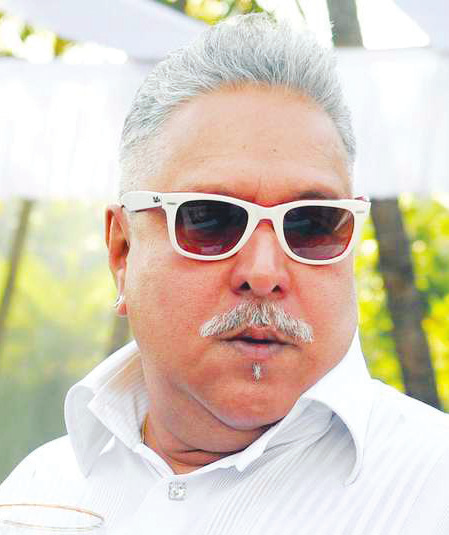
    SILVERSTONE (TIP): Missing India, and pining for a pit lane he can visit only once a year? Not a bit of it, says embattled Formula One team owner Vijay Mallya.

    The flamboyant businessman, currently fighting a high-profile Indian extradition request, speaks instead of ‘enjoying the fruits’ of his labours on track and planning high-flying Force India’s next decade.

    He is also, despite the court appearances and travel restrictions, still living the good life and enjoying a summer of sport. Horse racing at Royal Ascot, the Wimbledon tennis championships and Champions Trophy cricket have all been on his social diary, along with Wednesday’s Formula One promotional event in London.

    “There’s nothing to miss,” the 61-year-old told Reuters at the British Grand Prix when asked if he missed India. “All my immediate family is either in England or the US. Nobody in India at all. As far as my step-siblings are concerned, they are all UK citizens. So there’s nothing family wise to miss.” India is seeking Mallya’s extradition over $1.4 billion that the authorities say he owes as a result of loans tied to his defunct Kingfisher Airlines. Mallya has dismissed the charges against him. Source: Reuters

  • Indian scientists discover supercluster of galaxies

    Indian scientists discover supercluster of galaxies

    NEW DELHI (TIP): A team of Indian astronomers has discovered an extremely large supercluster of galaxies, as big as 20 million billion suns, which they have named Saraswati, Pune-based Inter University Centre for Astronomy and Astrophysics (IUCAA) said on July 13.

    This is one of the largest known structures in the neighbourhood of the universe, 4,000 million light-years away from Earth and roughly more than 10 billion years old, IUCAA said. Its mass extends over the scale of 600 million light years, it said. Scientists of this institute were also involved in the path-breaking discovery of gravitational waves last year.

    The supercluster was discovered by Shishir Sankhyayan, a PhD student at the Indian Institute of Science Education and Research (IISER), Pune, Pratik Dabhade, IUCAA research fellow, Joe Jacob of the Newman College, Kerala, and Prakash Sarkar of the National Institute of Technology, Jamshedpur.

    Their findings were published in the latest issue of The Astrophysical Journal, the premier research journal of the American Astronomical Society. “Superclusters are the largest coherent structures in the cosmic web. They are a chain of galaxies and galaxy clusters, bound by gravity, often stretching to several hundred times the size of clusters of galaxies, consisting of tens of thousands of galaxies,” the IUCAA said in a statement.

    Sankhyayan said this “newlydiscovered Saraswati supercluster” extends over a scale of 600 million lightyears and may contain the mass equivalent of over 20 million billion suns. A cluster could roughly have galaxies ranging from 1,000 to 10,000. A supercluster could have clusters ranging from 40 to 43, he added.

    “Our own galaxy is part of a supercluster called the Laniakea supercluster,” the IUCAA said. Joydeep Bagchi from IUCAA, the lead author of the paper in the journal, and co-author Sankhyayan said they were “astonished to spot this giant wall-like supercluster of galaxies”, visible in a large spectroscopic survey of distant galaxies, known as the Sloan Digital Sky Survey.

    Sankhyayan said the data was then analysed, following which the discovery was made. “This supercluster is clearly embedded in a large network of cosmic filaments traced by clusters and large voids,” Bagchi said.

    He said previously “only a few comparatively large superclusters” had been reported, such as the Shapley Concentration or the Sloan Great Wall in the nearby universe. Source: PTI

  • SC gives govt a week to decide on giving voting rights to NRIs

    SC gives govt a week to decide on giving voting rights to NRIs

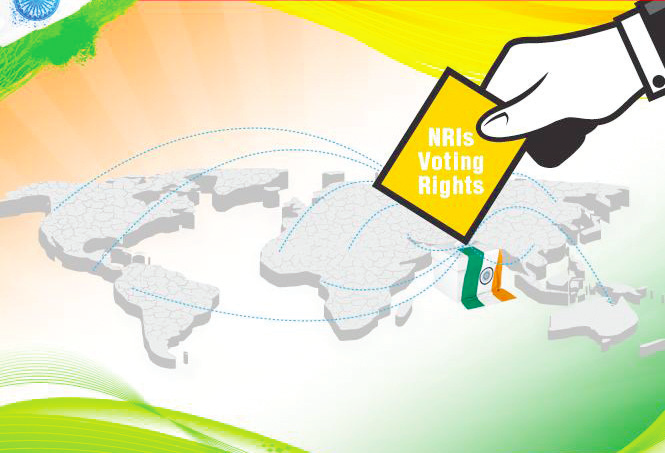
    NEW DELHI (TIP): Pulling up the Centre, the Supreme Court on July 14 allowed one last chance that is to tell by next Friday as to how it planned to allow 25 million Non-Resident Indians (NRIs)across the world to participate in Indian elections through e-vote.

    A bench of Chief Justice J S Khehar and Justice D Y Chandrachud asked the Centre to make it clear within one week if it planned to amend the Act or concerned Rules under the Representation of People’s Act.

    “This is a petition of 2014. Every year you keep saying we will amend we will amend. You said this in 2014, 15, 16 and again..this is not the way a government works”, an angry CJI Khehar told the Central government’s counsel.

    At the outset, former Attorney General Mukul Rohatgi, appearing against the Centre for the first time after quitting the AG post questioned the Centre”s delay in making the necessary changes to allow NRIs to vote and said ‘ they are only buying time by saying they need to amend the Act while they only need to change the rules which is a simple process.”

    “They allow Armed forces personal to vote other defence personal all through postal ballot etc only to NRIs most of them from Kerala they say you come to India and vote” Rohatgi told the bench. In December last a bench headed by then Chief Justice T S Thakur enquired about the latest stand of the union government after senior advocate Kapil Sibal appearing for a petitioner said one and a half years ago the Centre had accepted the Election Commission’s (EC) proposal in this regard, claimed it formulated a draft bill and told the court that steps are being taken to get the Representation of People Act 1951 amended but things have not moved much.

    “Senior counsel appearing for the Union of India seeks time to take instructions whether any amendment to the Representation of People Act, 1950 and 1951 is proposed in terms of the recommendations received from the Election Commission in so far as the Notification of NRI’s as special voters is concerned, if so, the status of such process may be informed within 8 weeks”, the CJI said in the order.

    Once e-vote is allowed, NRIs will not have to fly home to vote. Responding to the PILs, the EC had ruled out the possibility of allowing NRIs to vote through the Internet or at diplomatic missions abroad for the time being. But it said e-postal ballot system has almost no risk of manipulation, rigging or violation of secrecy.

    The government had on July 8, last year told the court that it has “in principle” approved eballot voting for Indian passport holders abroad, recommended by the Election Commission in a report, and it would have the process in place after making necessary amendments to the Representation of the Peoples Act, 1951, that dealt with elections in the country.

    “The recommendation has been accepted in letter and spirit, and a committee had been set up to devise the modalities of its implementation”, Additional Solicitor General P L Narasimha representing the Centre had said on that day.

    SC then directed the government to enable evoting by NRIs within two months after effecting the amendments.

  • AAP declares support  for Meira Kumar in Prez poll

    AAP declares support for Meira Kumar in Prez poll

    NEW DELHI (TIP): The Aam Aadmi Party declared it’s support for former Lok Sabha speaker Meira Kumar in next week’s presidential poll on July 13 (Thursday) evening. Kumar, who will take on the NDA candidate and former Bihar governor RN Kovind, had called up AAP national convenor Arvind Kejriwal and sought his support, senior party leader Sanjay Singh said.

    “The election of President and Vice President should be above partisan politics and we would have preferred a consensus candidate. But in the present circumstances, we prefer a strong and united opposition,” Singh said

    Kumar is the candidate of the combined opposition but parties such as JD-U and BSP have declared their support for Kovind. The opposition, led by the Congress, had kept

    AAP leaders away from the multi-party deliberations for deciding their presidential candidate.

  • India contributes additional US$  I million to UN partnership fund

    India contributes additional US$ I million to UN partnership fund

    UNITED NATIONS (TIP): India has contributed an additional million dollars to a UN partnership fund launched to support sustainable development projects across the developing world.

    The India-UN Development Partnership Fund was set up last month as a partnership between India and the United Nations Office for South-South Cooperation (UNOSSC). India had made an initial contribution of a million dollars when the fund was created and the amount was allocated for the implementation of a project benefiting seven Small Island Developing States in the South Pacific.

    India yesterday enlarged its support to sustainable development through the multilateral system by making a supplemental contribution of one million dollars to the fund.

    Source: PTI

  • SC ORDERS CBI PROBE INTO MANIPUR FAKE SHOOTOUTS

    SC ORDERS CBI PROBE INTO MANIPUR FAKE SHOOTOUTS

    NEW DELHI (TIP): The Supreme Court on July 14 asked the Central Bureau of Investigation to probe the over 60 cases of alleged fake shootouts by the security forces in Manipur. The CBI has to file its report in January 2018.Handing over the investigation to the CBI, a bench headed by Justice Madan B. Lokur asked its director to constitute a team within two weeks to investigate the encounters. Source: IANS

  • Govt needs math tutor Rahul taunts RBI for not finishing scrapped note counting

    Govt needs math tutor Rahul taunts RBI for not finishing scrapped note counting

    P Chidambaram also taunted the RBI for buying couting machines 8 months later and asked them if they had ever heard of leasing

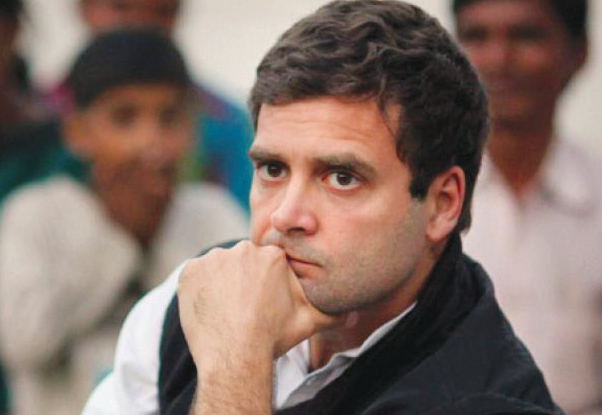
    NEW DELHI (TIP): The Congress on July 13 (Thursday) took a dig at the RBI for still counting banned currency notes, with Rahul Gandhi saying the government is looking for a mathematics teacher and one should apply to the PMO soon.

    “GOI looking for a Math tutor. Please apply to PMO ASAP,” Gandhi said on Twitter, while tagging a news report quoted to Urjit Patel, the RBI governor, saying the central bank is still counting demonetised notes.

    Earlier, senior party leader P Chidambaram took a jibe at the RBI for buying note-counting machines eight months after demonetisation and asked the federal bank if it had heard of “leasing” equipment.

    “RBI buying note counting machines 8 months after demonetisation! Has RBI not heard of ‘leasing’,” he tweeted. Chidambaram also poked fun at the NDA’s Mudra scheme, which the government claims has provided self employment opportunities to over 7 crore people, especially the youth.

    “‘7.28 crore youth self-employed under MUDRA loan scheme’ — that is title of mythological serial beginning today. Scriptwriters may apply,” he posted on Twitter today.

    The former finance minister has been critical of the government’s demonetisation decision and has said it has hit the country’s economy and growth prospects.

    RBI Governor Urjit Patel, while appearing before a Parliamentary panel, is understood to have said the deposited banned notes were still being counted and therefore he was not in a position to give a figure on the scrapped currency that was back in the system. Appearing before the Standing Committee on Finance yesterday, Patel did not provide any “specific number” on the amount of money that had been deposited postdemonetisation.

    Prime Minister Narendra Modi had on November 8 banned 500-rupee and 1000- rupee currency notes. Source: PTI

  • Al Qaida in Indian subcontinent getting more active say US experts

    Al Qaida in Indian subcontinent getting more active say US experts

    WASHINGTON/NEW DELHI (TIP): Al-Qaida is getting more active in the Indian subcontinent and by 2017, it boasted several hundred members, with its cells mostly in Afghanistan and its operatives flourishing in Bangladesh, counter-terrorism experts have told the US lawmakers.

    “By 2017, al-Qaida in the Indian Subcontinent boasted several hundred members and had cells in Afghanistan’s Helmand, Kandahar, Zabul, Paktika, Ghazni, and Nuristan Provinces. Al- Qaida’s presence in Afghanistan was almost certainly larger and more expansive than five or even ten years before,” said Seth G Jones, a strategic expert.

    He was speaking during his Congressional testimony before the House Homeland Security Subcommittee on Counterterrorism and Intelligence on Thursday.

    This expansion, Jones said, may have been partly due to Taliban advances in Afghanistan and al-Qaida’s relationship with operatives from the Taliban and other groups, such as Tehreek-e-Taliban Pakistan and Lashkar-e Jhangvi.

    “Al-Qaida operatives in Bangladesh were particularly active, conducting a range of attacks. In addition, al-Qaida in the Indian subcontinent conducted a steady propaganda campaign from its media arm As-Sahab,” he said.

    However, the group conducted few attacks in Afghanistan or Pakistan and was largely irrelevant in the Taliban-led insurgency, Jones said.

    In September 2014, al-Qaida leader Ayman al-Zawahiri had announced the creation of regional affiliate al-Qaida in the Indian subcontinent, taking advantage of sanctuaries in Afghanistan, Pakistan, and Bangladesh.

    “A new branch of al-Qaida was established – Qaida al-Jihad in the Indian subcontinent, seeking to raise the flag of jihad,…and return the Islamic rule across the Indian subcontinent,” al- Zawahiri had said.

    The group was led by Asim Umar– an Indian and former member of Harkat-ul-Jihad al-Islami – a Pakistan-based terrorist group with branches across the Indian subcontinent. Umar was flanked by Abu Zar, his first deputy.

    In October 2015, US and Afghan forces targeted a large training camp in Kandahar Province, killing over one hundred operatives linked to al-Qaida in the Indian Subcontinent, Rhodes said.

    According to Katherine Zimmerman, research fellow, American Enterprise Institute, the al-Qaida presence in the Indian subcontinent remains weak after Ayman al-Zawahiri announced the launch of a new affiliate in September 2014. Source: PTI