Year: 2017

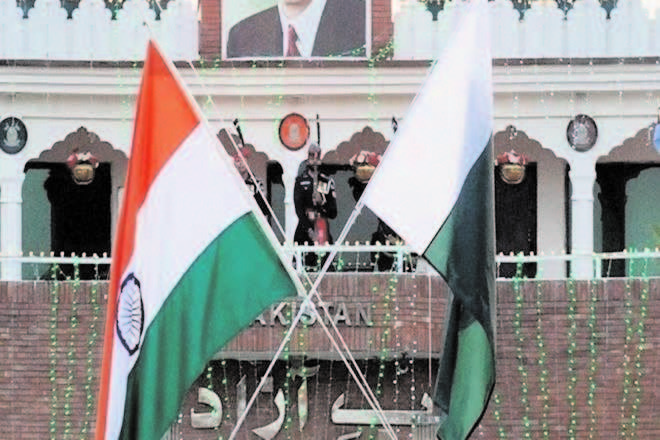
  • India objects to Pakistan raising Kashmir issue at UN forum

    India objects to Pakistan raising Kashmir issue at UN forum

    UNITED NATIONS (TIP): India has strongly objected to Pakistan raising the Kashmir issue at a UN General Assembly session here, asserting that it is a bilateral matter which should not be brought up in the UN forum.

    Minister in Pakistan’s permanent mission to the UN Masood Anwar raised the Kashmir issue in his statement to the UN General Assembly session of the committee on information on April 25.

    He said Pakistan appreciates the efforts by the UN’s department of public information in arranging coverage of events related to the International Day of Solidarity with the Palestinian people.

    “We would urge you to do the same for the people of Kashmir who continue to suffer under foreign occupation,” Anwar said. As soon as these remarks were made, minister in India’s Permanent mission to the UN S Srinivas Prasad interrupted Anwar’s speech and strongly raised objections to the mention of Kashmir by the Pakistani delegate. “It is a bilateral issue which should not be brought here,” Prasad told the chair of the session.

    Pakistan’s ambassador to the UN Maleeha Lodhi, also present during the session, was heard prodding Anwar to “carry on” speaking even as Prasad raised his objections with the session’s chair.

    Later, before delivering India’s statement at the session, Prasad said the Kashmir issue was totally unrelated to the forum.

    “Before I begin my statement, I would like to thank the chair for its deft handling and not allowing the elaboration of a subject which is totally unrelated to this forum as was tried by a member state,” Prasad said.

    The committee on information is a subsidiary body of the General Assembly established to deal with questions relating to public information. It is responsible for overseeing the work of the department of public information and for providing it with guidance on policies, programmes and activities of the department. (PTI)


  • India demands consular access to Kulbhushan Jadhav

    India demands consular access to Kulbhushan Jadhav

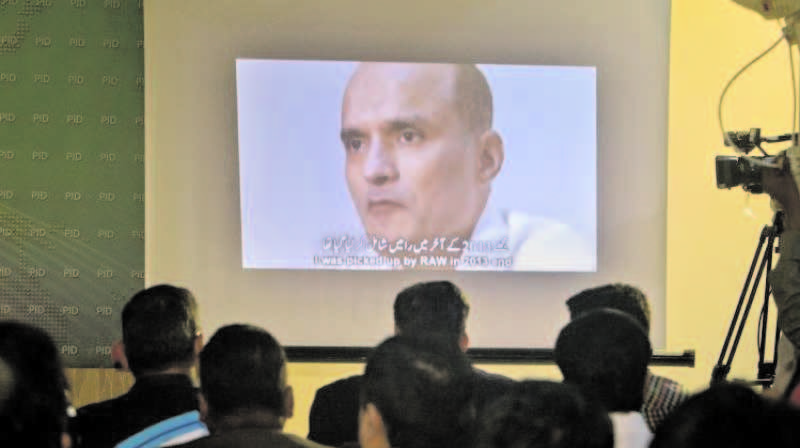
    ISLAMABAD (TIP): India on Tuesday demanded consular access to Kulbhushan Jadhav who has been sentenced to death by a Pakistani military court for alleged spying.

    This was conveyed by Indian high commissioner in Islamabad Gautam Bambawale to Pakistan foreign secretary Tehmina Janjua during a meeting sought by him.

    On April 19, a meeting between Bambawale and Janjua was rescheduled.

    Pakistan has denied India’s request for consular access to 46-year-old Jadhav over a dozen times in the last one year.

    Pakistan army has already rejected any chance of granting consular access to Jadhav who was sentenced to death for espionage and subversive activities.

    On April 14, Bambawale had met with the Pakistani foreign secretary, showing increasing concern of India about the fate of Jadhav.

    He told media after his meeting that he had asked for list of charges and authentic copy of verdict of military tribunal against Jadhav to launch appeal against his conviction.

    He also said that India was seeking consular access on the basis on international law humanitarian grounds.

    Pakistan Foreign Office has said that during the period of trial of Jadhav, due judicial process was followed and he was provided a lawyer in accordance with relevant laws and the Constitution of Pakistan.

    Jadhav was awarded death sentence by the Field General Court Martial earlier this month, evoking a sharp reaction in India which warned Pakistan of consequences and damage to bilateral ties if the “pre-meditated murder” was carried out.

    Pakistan claims its security forces had arrested Jadhav from the restive Balochistan province on March 3 last year after he reportedly entered from Iran. It also claimed that he was “a serving officer in the Indian Navy.”

    The Pakistan army had also released a “confessional video” of Jadhav after his arrest.

    However, India denied Pakistan’s contention and maintained that Jadhav was kidnapped by the Pakistan authorities.

    India had acknowledged that Jadhav had served with the navy but denied that he has any connection with the government. (PTI)


  • ‘Bangladesh relies on BIMSTEC after SAARC failure’

    ‘Bangladesh relies on BIMSTEC after SAARC failure’

    DHAKA (TIP): Bangladesh is hopeful of forging regional cooperation through BIMSTEC after the failure of SAARC, a top aide of Prime Minister Sheikh Hasina said on Saturday.

    “In this context coming together in BIMSTEC is truly important. We already saw earlier SAARC with all our high hopes has not done much, and for the moment it is doubtful whether or not the next summit meeting will happen,” International Affairs Adviser Gowher Rizvi said at the opening of the BIMSTEC Network of Policy Think Tanks (BNPTT) meeting here at the Bay of Bengal grouping’s headquarters.

    He said Bangladesh hopes to make up through sub-regional cooperation including #BIMSTEC after the failure of SAARC, bdnews24.com reported. “We have seen NAFTA may or may not survive. We see European Union under challenge. In Bangladesh we see much of the future in the sub-region. It is the sub-region we are focused on. We have BBIN, BCIM and BIMSTEC… this is where we see our future,” Rizvi said, giving examples of the state of the regional groupings in the world. (PTI)

  • Man fatally shoots boss, kills himself in US

    Man fatally shoots boss, kills himself in US

    HOUSTON (TIP): An unidentified man shot dead his woman boss before killing himself, leading to chaos in a multi-storey building in the northern part of US city of Dallas, police said.

    The Dallas police responded to a report of an active shooter in an office building in the 8300 block of the LBJ Freeway at around 10.45am (local time) yesterday.

    When officers arrived on the scene, they suspected the shooter was in a meeting room. They breached the door by firing a shotgun, authorities said.

    Officers found a man and a woman dead in the room. It appears the man shot and killed the woman and then turned the gun on himself, police said.

    The woman was the supervisor of the gunman, they said. As the incident unfolded, television footage showed a heavy police response including a SWAT team at the office building along an interstate.

    A broken window could be seen on one of the upper floors of the building.

    “(Officers) went inside the office where the shooting was taking place, and they discovered that the possible shooter was inside a particular office in a meeting room,” Asst Chief Randy Blankenbaker said.

    “The officers were forced to utilise a shotgun to breach the front office door,” he said.

    Blankenbaker said the victim and suspect will not be identified until the next of kin are notified.

    Investigators said there were multiple witnesses in the building at the time of the shooting and were taken to police headquarters for questioning.

    The building was declared to be safe around 12.49pm (local time).

    Pictures of the crime scene show dozens of people outside the building being evacuated. Another photo shows a busted out window on the far edge of the property.

    One officer was injured due to broken glass during the search and was taken to the hospital, the police department’s Twitter account said. (PTI)


  • US blacklists 271 Syrian chemists, other experts over sarin attack

    US blacklists 271 Syrian chemists, other experts over sarin attack

    WASHINGTON (TIP): The US government put 271 Syrian chemists and other officials on its financial blacklist Monday, punishing them for their presumed role in the deadly chemical weapons attack on a rebel-held town in early April.

    In one of its largest-ever sanctions announcements, the Treasury Department took aim at the Syrian Scientific Studies and Research Center (SSRC), which it said was responsible for developing the alleged sarin gas weapon used in the April 4 attack.

    The attack left 87 dead, including many children, in the town of Khan Sheikhun, provoking outrage in the West, which accused Syrian President Bashar al-Assad of being responsible.

    The sanctions will freeze all assets in the United States belonging to the 271 individuals on the blacklist, and block any American person or business from dealing with them.

    According to the Nuclear Threat Initiative, a Washington-based think tank, the SSRC is Syria’s leading scientific reasearch center, with close links to the country’s military.

    The center was the subject of two earlier sanctions declarations, in 2005 and 2007, due to its alleged role in developing weapons of mass destruction.

    The Treasury asserted in a statement Monday that the SSRC is behind the Syrian government’s efforts to develop chemical weapons and the means to deliver them.

    The 271 either have scientific expertise for the program or have been involved in it since 2012, the statement said.

    “These sweeping sanctions target the scientific support center for Syrian dictator Bashar al-Assad’s horrific chemical weapons attack on innocent civilian men, women and children,” Treasury Secretary Steven Mnuchin said.

    “These sanctions are intended to hold the Assad regime and those who support it — directly or indirectly –accountable for the regime’s blatant violations of the Chemical Weapons Convention and UN Security Council Resolution 2118,” he said. Assad has said the attack was a “fabrication” by the West. But the US military quickly responded on April 7, firing 59 Tomahawk cruise missiles at a Syrian airfield to punish the government and send a warning against any further chemical weapons attacks. (AFP)

  • Donald Trump: ‘Major, major’ conflict with North Korea possible

    Donald Trump: ‘Major, major’ conflict with North Korea possible

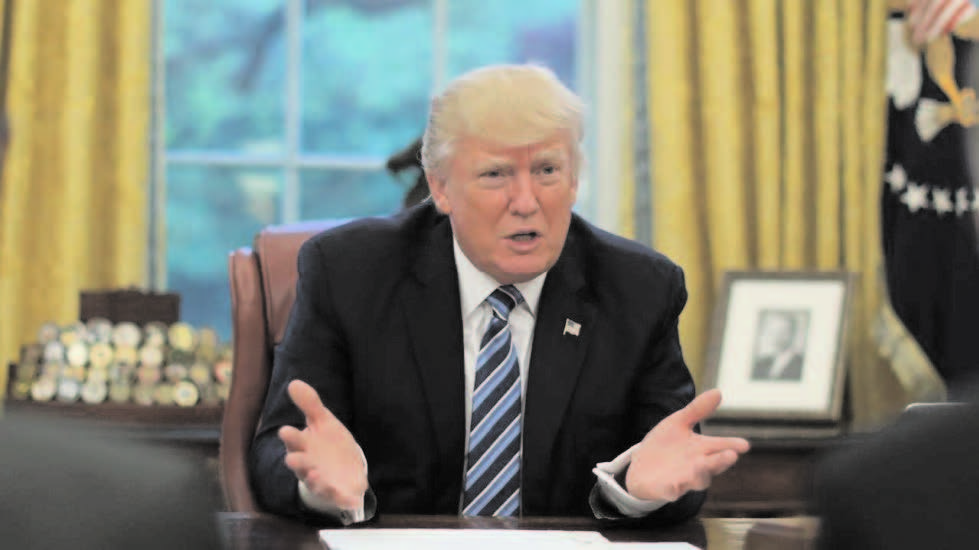
    WASHINGTON (TIP): US President Donald Trump said on April 27 a major conflict with North Korea is possible in the standoff over its nuclear and missile programs, but he would prefer a diplomatic outcome to the dispute.

    “There is a chance that we could end up having a major, major conflict with North Korea. Absolutely,” Trump told Reuters in an Oval Office interview ahead of his 100th day in office on Saturday.

    Nonetheless, Trump said he wanted to peacefully resolve a crisis that has bedeviled multiple US presidents, a path that he and his administration are emphasizing by preparing a variety of new economic sanctions while not taking the military option off the table.

    “We’d love to solve things diplomatically but it’s very difficult,” he said.

    In other highlights of the 42-minute interview, Trump was cool to speaking again with Taiwan’s president after an earlier telephone call with her angered China. He also said he wanted South Korea to pay the cost of the US THAAD anti-missile defense system, which he estimated at $1 billion. He said he intended to renegotiate or terminate a US free trade pact with South Korea because of a deep trade deficit with Seoul.Trump said he was considering adding stops to Israel and Saudi Arabia to a Europe trip next month, emphasizing he wanted to see an Israeli-Palestinian peace. Trump said North Korea was his biggest global challenge. He lavished praise on Chinese President Xi Jinping for Chinese assistance in trying to rein in Pyongyang. The two leaders met in Florida earlier this month. “I believe he is trying very hard. He certainly doesn’t want to see turmoil and death. He doesn’t want to see it. He is a good man. He is a very good man and I got to know him very well.

    “With that being said, he loves China and he loves the people of China. I know he would like to be able to do something, perhaps it’s possible that he can’t,” Trump said.

    ‘I hope he’s rational’ : Trump spoke just a day after he and his top national security advisers briefed US lawmakers on the North Korean threat and one day before Secretary of State Rex Tillerson will press the United Nations Security Council on sanctions to further isolate Pyongyang over its nuclear and missile programs.

    The Trump administration on Wednesday declared North Korea “an urgent national security threat and top foreign policy priority.” It said it was focusing on economic and diplomatic pressure, including Chinese cooperation in containing its defiant neighbor and ally, and remained open to negotiations.

    US officials said military strikes remained an option but played down the prospect, though the administration has sent an aircraft carrier and a nuclear-powered submarine to the region in a show of force. Any direct US military action would run the risk of massive North Korean retaliation and huge casualties in Japan and South Korea and among US forces in both countries.

    Trump, asked if he considered North Korean leader Kim Jong Un to be rational, said he was operating from the assumption that he is rational. He noted that Kim had taken over his country at an early age.

  • FBI chief Comey tried to shield agency from politics, then shaped an election

    FBI chief Comey tried to shield agency from politics, then shaped an election

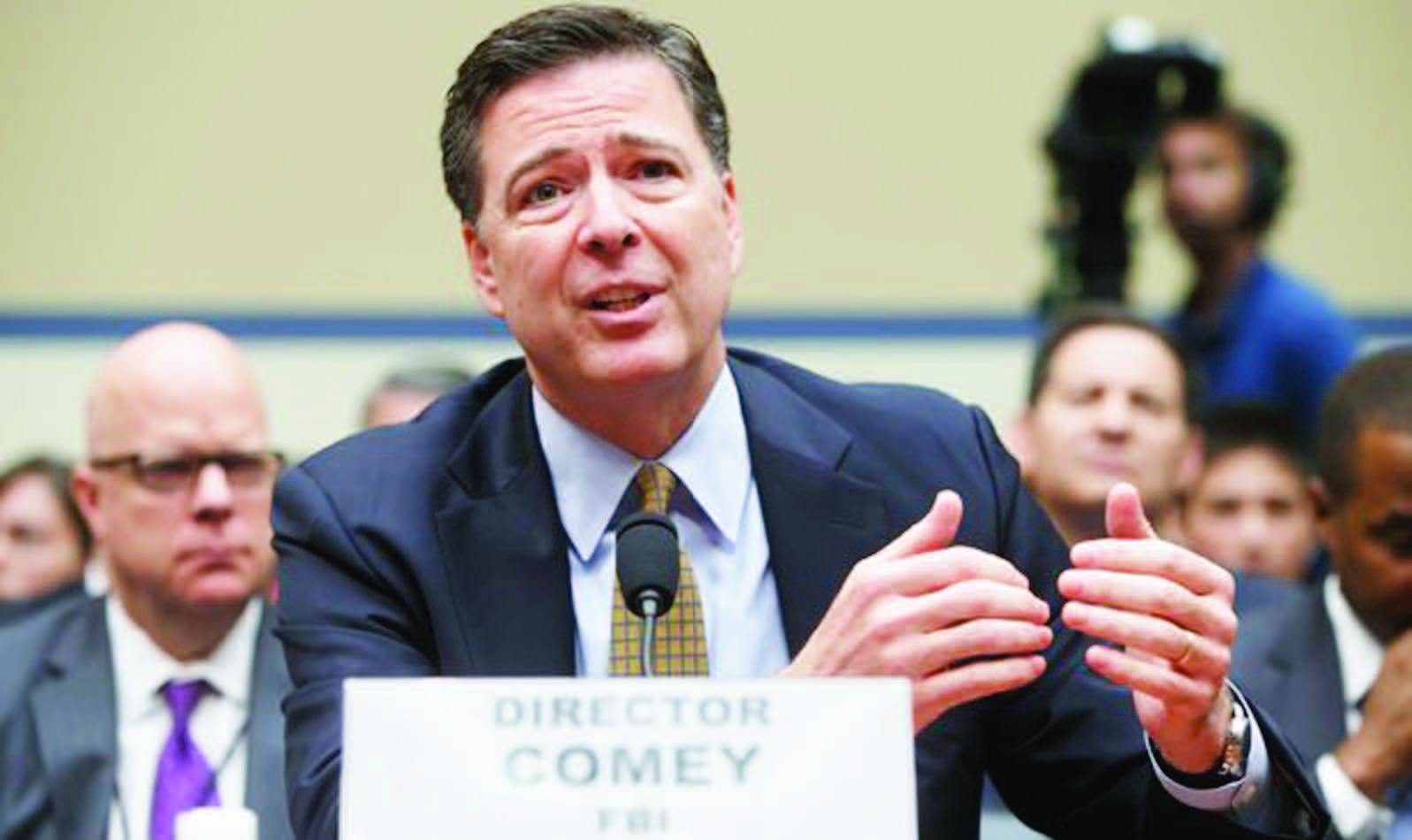
    WASHINGTON (TIP): The day before he upended the 2016 election, James B. Comey, the director of the Federal Bureau of Investigation, summoned agents and lawyers to his conference room. They had been debating all day, and it was time for a decision.

    Comey’s plan was to tell Congress that the FBI had received new evidence and was reopening its investigation into Hillary Clinton, the presidential front-runner. The move would violate the policies of an agency that does not reveal its investigations or do anything that may influence an election. But Comey had declared the case closed, and he believed he was obligated to tell Congress that had changed.

    “Should you consider what you’re about to do may help elect Donald Trump president?” an adviser asked him, Comey recalled recently at a closed meeting with FBI agents.

    He could not let politics affect his decision, he replied. “If we ever start considering who might be affected, and in what way, by what we do, we’re done,” he told the agents.

    But with polls showing Clinton holding a comfortable lead, Comey ended up plunging the FBI into the molten center of a bitter election. Fearing the backlash that would come if it were revealed after the election that the FBI had been investigating the next president and had kept it a secret, Comey sent a letter informing Congress that the case was reopened.

    What he did not say was that the FBI was also investigating the campaign of Donald Trump. Just weeks before, Comey had declined to answer a question from Congress about whether there was such an investigation. Only in March, long after the election, did Comey confirm that there was one. (PTI)

  • French consulate in New York evacuated after bomb threat

    French consulate in New York evacuated after bomb threat

    NEW YORK (TIP): The French consulate in New York, where thousands of expatriates were registered to cast ballots in their presidential election, was briefly evacuated following a bomb threat, officials said.

    A suspicious vehicle prompted police to clear the building on Fifth Avenue across from Central Park, Consul General Anne-Claire Legendre said yesterday.

    “After the Champs Elysees attack, the New York police department was told to be especially vigilant,” she said.

    Dozens of people who were inside the building at about 5 pm (2100 GMT) waited on the sidewalk while authorities checked the vehicle.

    The situation returned to normal after about 50 minutes, consulate press officer Amelie Geoffroy said.

    Voting activities, which were scheduled to take place until 7 pm, also resumed, she added.

    Some 28,500 French citizens living in New York, New Jersey and Connecticut are registered to vote at the consulate. Security measures were strengthened at French polling stations across the United States following a jihadist’s killing of a policeman on Paris’ famed Champs Elysees avenue this week. (AFP)

  • Astronaut breaks US space record, gets call from Donald Trump

    Astronaut breaks US space record, gets call from Donald Trump

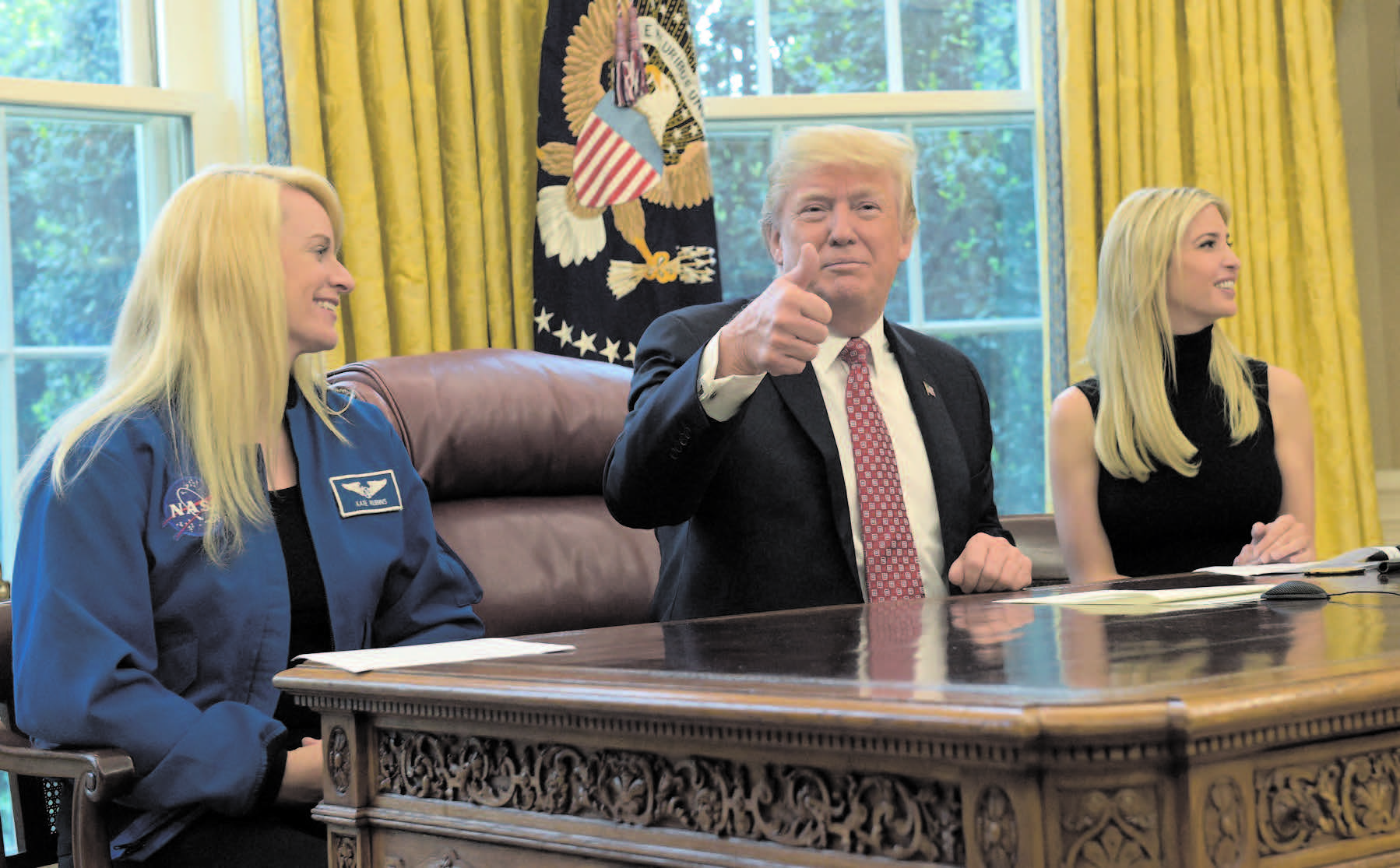
    CAPE CANAVERAL (TIP): Astronaut Peggy Whitson broke the US record on April 24 for most time in space and talked up Mars during a congratulatory call from President Donald Trump.

    The International Space Station’s commander surpassed the record of 534 days, two hours and 48 minutes for most accumulated time in space by an American.

    “This is a very special day in the glorious history of American spaceflight,” Trump said.

    His daughter Ivanka also offered congratulations to Whitson from the Oval Office. Whitson said it’s “a huge honor” to break such a record.

    “It’s an exciting time” as NASA prepares for human expeditions to Mars in the 2030s, included in new legislation signed by Trump last month. She called the space station “a key bridge” between living on Earth and traveling into deep space, and she singled out the station’s recycling system that transforms astronauts’ urine into drinking water.

    “It’s really not as bad as it sounds,” she assured the president.

    “Well, that’s good, I’m glad to hear that,” he replied. “Better you than me.”

    Whitson already was the world’s most experienced spacewoman and female spacewalker and, at 57, the oldest woman in space. By the time she returns to Earth in September, she’ll have logged 666 days in orbit over three flights.

    The world record, 879 days, is held by Russian Gennady Padalka. Whitson broke the NASA cumulative record set last year by astronaut Jeffrey Williams; Scott Kelly holds the U.S. record for consecutive days in space , 340. Whitson is also the first woman to command the space station twice and the only woman to have led NASA’s astronaut corps. Behind her was a banner that read: “Congrats Peggy!! (TNN)

  • US judge blocks Trump order to restrict funding for ‘sanctuary cities’

    US judge blocks Trump order to restrict funding for ‘sanctuary cities’

    SAN FRANCISCO (TIP): A US judge on April 23 blocked President Donald Trump’s executive order that sought to withhold federal funds from so-called sanctuary cities, dealing another legal blow to the administration’s efforts to toughen immigration enforcement.

    The ruling from US District Judge William Orrick III in San Francisco said Trump’s Jan. 25 order targeted broad categories of federal funding for sanctuary governments and that plaintiffs challenging the order were likely to succeed in proving it unconstitutional.

    The Republican president’s moves on immigration have galvanized legal advocacy groups, along with Democratic city and state governments, to oppose them in court. The administration suffered an earlier defeat when two federal judges suspended executive orders restricting travel from several Muslim-majority countries. The government has appealed those decisions.

    Reince Priebus, Trump’s White House chief of staff, told reporters the administration was taking action to appeal the ruling, adding: “The idea that an agency can’t put in some reasonable restrictions on how some of these monies are spent is something that will be overturned eventually.”

    “It’s the 9th Circuit going bananas,” Priebus said, referring to the West Coast judicial district where the judge ruled. “We’ll win at the Supreme Court level at some point.”

    The US Justice Department said in a statement it would follow existing federal law with respect to sanctuary jurisdictions, as well as enforce conditions tied to federal grants.

    Sanctuary cities generally offer safe harbor to illegal immigrants and often do not use municipal funds or resources to advance the enforcement of federal immigration laws. Dozens of local governments and cities, including New York, Los Angeles and Chicago, have joined the growing “sanctuary” movement.

    Supporters of the sanctuary policy argue that enlisting police cooperation in rounding up immigrants for removal undermines communities’ trust in local police, particularly among Latinos.

    The Trump administration contends that local authorities endanger public safety when they decline to hand over for deportation illegal immigrants arrested for crimes.

    The executive order by Trump, who made cracking down on illegal immigration a cornerstone of his 2016 presidential campaign, directed such funding to be restricted once the Homeland Security Department determines what constitutes a sanctuary city.

    Santa Clara County, which includes the city of San Jose and several smaller Silicon Valley communities, sued in February, saying Trump’s order was unconstitutional. San Francisco filed a similar lawsuit.

    ‘Crumbling under the weight’

    The Justice Department threatened last week to cut some funding to California as well as eight cities and counties across the United States.

    The department singled out Chicago and New York as two cities “crumbling under the weight of illegal immigration and violent crime,” even though New York City is experiencing its lowest crime levels in decades and experts say Chicago’s recent spike in violent crime has little to do with illegal immigration. Santa Clara County receives about$1.7 billion in federal and federally dependent funds annually, about 35 percent of its total revenues. The county argued it was owed millions of dollars of federal funding every day and that its budgetary planning process had been thrown into disarray by the order.

    The Justice Department said the counties had taken an overly broad interpretation of the president’s order, which it said would affect only Justice Department and Homeland Security funds, a fraction of the grant money received by the counties.

    In his ruling, Orrick said the language of the order made it clear it sought to withhold funds beyond law enforcement.

    “And if there was doubt about the scope of the Order, the President and Attorney General have erased it with their public comments,” Orrick wrote.

    The judge cited comments from Trump calling the order “a weapon” to use against jurisdictions that disagree with his immigration policies.

    “Federal funding that bears no meaningful relationship to immigration enforcement cannot be threatened merely because a jurisdiction chooses an immigration enforcement strategy of which the President disapproves,” Orrick wrote.

    Dave Cortese, president of the Santa Clara County Board of Supervisors, said in a statement: “The politics of fear emanating from the Trump White House has just suffered a major setback.” (Reuters)

  • INDIA WANTS PAK TO GIVE CERTIFICATE ON JADHAV’S HEALTH

    INDIA WANTS PAK TO GIVE CERTIFICATE ON JADHAV’S HEALTH

    NEW DELHI (TIP): India on April 27 asked Pakistan for a certificate on the health condition of Kulbhushan Jadhav, who has been awarded death sentence by a military court in Islamabad after it found him guilty of espionage.

    Expressing concern over the wellbeing of Jadhav, the Ministry of External Affairs said since Jadhav had been in Pakistan’s custody for over a year now, India was anxious to know his wellbeing.

    Only yesterday, India’s High Commissioner to Pakistan Gautam Bambawale met the Pakistan foreign secretary for the 16th time and sought consular access to Jadhav. “We have asked Pakistani government earlier also, and yesterday our High Commissioner (to Pakistan Gautam Bambawale) made a request on providing a report on his medical condition. So we await Pakistan’s response,” MEA spokesperson Gopal Baglay said today. Baglay also said the government was yet to receive a copy of the charge sheet against Jadhav, and did not even know who had defended him in the military court that sentenced him the death sentence. Denying consular access to Jadhav, Pakistan has consistently stuck to the line that the Indian national is a spy arrested by the Pakistan military from the restive Baluchistan area. India, while accepting the fact that Jadhav is indeed a former Indian Naval officer, has denied the charges of him being a spy.

    Islamabad says no to 26/11 reinvestigation

    Pakistan has told India that a reinvestigation of the Mumbai attack case was “not possible” as the trial was at an advanced stage and demanded “concrete” evidence against Hafiz Saeed, the mastermind of 26/11 assault, for putting him on trial

    “All proceedings (in the case) have been finalised except recording of 24 Indian witnesses’ statements… if India wants conclusion of the case, it should send witnesses to Pakistan to record their statements, a senior official of the Pakistan interior ministry said. Source: The Tribune


  • PAY OR GO TO JAIL, SUBRATA TOLD

    PAY OR GO TO JAIL, SUBRATA TOLD

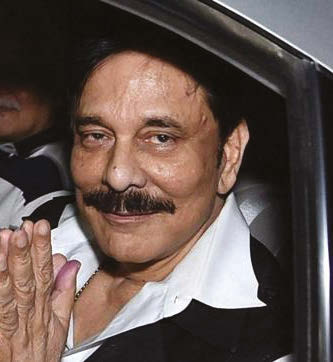
    NEW DELHI (TIP): Embattled Sahara Chief Subrata Roy today appeared before the Supreme Court which extended his parole till June 19 with a warning that failure to pay Rs 1,500 crore, as promised, may again land him in jail.

    The apex court took note of the affidavit and a personal undertaking of Roy, who stood right behind his lawyer Kapil Sibal, that he will pay Rs 1,500 crore on or before June 15 and Rs 552.22 crore exactly a month thereafter and said, “if the cheque is not encashed, the contemnor will straightaway go to jail”.

    A Bench headed by Justice Dipak Misra also asked Roy “do you intend to pay the money?”

    The Sahara chief stood up and said “I am trying my best”. On his short reply, the Bench, also comprising Justices Ranjan Gogoi and AK Sikri, once again said, “We are warning you, if the cheques are not cleared and amount is not coming frequently, we will be compelled to send you to Tihar Jail straightaway from here”.

  • Author Meghna Pant Wins Bharat Nirman Award

    Author Meghna Pant Wins Bharat Nirman Award

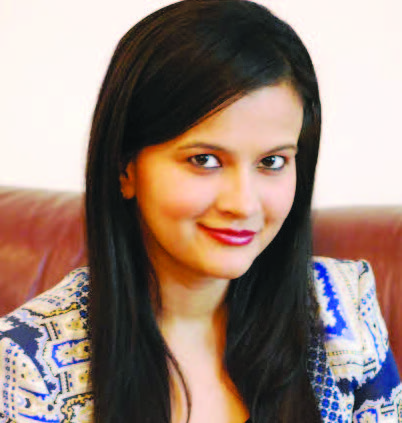
    NEW DELHI (TIP): Meghna Pant, the award-winning author of ‘One & A Half Wife’, was felicitated with the prestigious ‘Bharat Nirman Award’ for her contribution to the field of literature. The award was given to her by the Bharat Nirman Foundation during the 3rd edition of the Asiad Literature Festival 2017, which aims to reward and empower women and promote the beauty of Indian literature.

    The Asiad Literature Festival seeks to felicitate individuals who have made an outstanding contribution in their field of expertise. The noted author was bestowed with the award for her work and contribution as a pioneer amongst women writers.

    Meghna Pant is an award-winning Indian author, columnist, feminist and TEDx Speaker. Her books have been published to critical and commercial acclaim. Meghna’s debut collection of short stories HAPPY BIRTHDAY (Random House, 2013) was long-listed for the prestigious Frank O’Connor International Award 2014, the world’s biggest short story prize. ONE AND A HALF WIFE (Westland, 2012) – her bestselling debut novel – won the national Muse India Young Writer Award and was shortlisted for several other awards, including the Amazon Breakthrough Novel Award. Her latest book THE TROUBLE WITH WOMEN (Juggernaut, 2016) is considered a landmark in feminist writing and was described as ‘the best book from Juggernaut’ by The Hindu Business Line. Pant is also the winner of the coveted 2016 FON South Asia Short Story Award.

    Meghna is known for having abridged the world’s longest epic, THE MAHABHARATA, into one hundred tweets that The Guardian (UK) quoted as ‘wonderfully descriptive and paced’. Meghna curates a monthly panel discussion on feminism called FEMINIST RANI, and interviews India’s top female leaders and opinion makers on two online shows–FIRST LADY With Meghna Pant (Firstpost/ Network 18) and GET REAL With Meghna Pant (SheThePeople). She is invited as a speaker for many of the nation’s biggest literary festivals and conferences. Meghna has previously worked as a business news anchor with Times Now, NDTV and Bloomberg-UTV in Mumbai and New York.

    ABOUT BHARAT NIRMAN

    Bharat Nirman is an organization launched by the Government of India in 2005 that promotes rural development across the country. The 3rd Asiad Literature Festival was launched in New Delhi with the purpose to promote Indian literature and reading.

  • ‘Outsiders’ Sanjay, Durgesh finally exit Punjab AAP

    ‘Outsiders’ Sanjay, Durgesh finally exit Punjab AAP

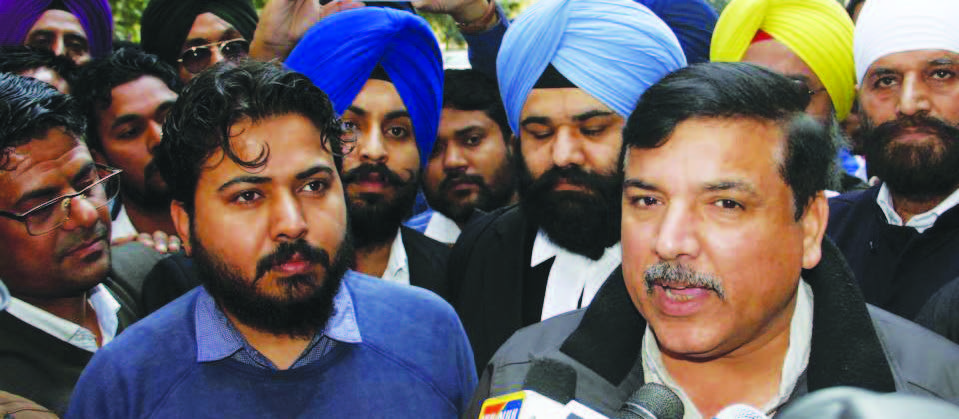
    CHANDIGARH (TIP): It’s been more than six weeks since the Aam Aadmi Party’s disappointing loss in the Punjab assembly elections, but finally a humiliation in the Delhi civic polls became the trigger for Sanjay Singh and Durgesh Pathak to resign as the party’s bosses for the state on April 27 (Thursday).

    The signs were there immediately after the party lost face in the elections to the municipal corporation of Delhi (MCD) on Wednesday. Punjab AAP legislative party leader HS Phoolka, chief whip Sukhpal Singh Khaira and star campaigner MP Bhagwant Mann had upped the ante and again blamed the central leadership, or “the outsiders”, for the party’s Punjab loss.

    Uttar Pradesh natives Sanjay (Sultanpur) and Durgesh (Gorakhpur) had effectively taken over the Punjab unit in early 2015 — as in-charge and co-incharge — almost 18 months before the state polls. The idea was to reap dividends in Punjab — the state that had given the party all its four MPs in the 2014 Lok Sabha polls — particularly after the party’s historic mandate in the Delhi assembly polls in the February of that year.

    By then, Sucha Singh Chhotepur, who had been picked by party national convener and Delhi chief minister Arvind Kejriwal, had built a structure for the party as the state unit convener. The Sanjay-Durgesh team brought along a 52-member team of observers from Delhi that spread out as an umbrella body over that structure.

    Inside story a mystery

    A dormant fight for dominance blew up when Chhotepur was removed in August 2016 over a “sting operation”, allegedly showing him taking bribe for a ticket. The “sting” was never made public, and thus the real reasons behind Chhotepur’s removal remain a mystery. After Chhotepur floated his own party —significant in the politics of perception— the Congress and Shiromani Akali Dal raised the decibel level on labelling AAP as a party of outsiders.

    Some local faces were given posts, but the duo continued to enjoy primary roles— Durgesh as final authority on tickets and funds to candidates, and Sanjay as the overseeing troubleshooter. Their dominance was even disliked by a number of candidates, but they said little or nothing, hoping for a bigger role in an AAP government.

    Another section in the party kept raking up allegations of Sanjay-Durgesh taking money for tickets, but the party overlooked it all, not realising that opposition parties were cashing in.

    All their doing?

    But can the two be blamed for all the mistakes? A section of AAP leaders in Punjab is asking this question too.

    For instance, the party faced serious flak from within for not announcing a chief ministerial candidate. But who could have been projected when prominent local leaders were competing with each other in being on the right side of the duo?

    On seeing all others getting miffed with one given prominence, the party went into the polls on the back of Brand Kejriwal, but the bubble burst on March 11, the result day, when the party managed to win just 20 seats, plus two of coalition partner Lok Insaaf Party, as against its own claims of 100 out of 117. The Congress won a decisive victory with 77, though the AAP managed to become the prime opposition ahead of the SAD-BJP combined tally of 18.

    Insiders and observers both have also pointed out Kejriwal’s flirtations with Sikh radicals, and theories of his own ambitions to become Punjab CM, as reasons behind the loss; and not just mismanagement by the duo.

    Even party leaders in Punjab are not satisfied by the duo’s ouster alone. Khaira and NRI wing convener Jagtar Sanghera want more heads to role, and Khaira in particular has called for a “free hand” to state leaders. A roadmap for introspection and action is still not clear, and party leaders and volunteers remain confused. The resignations by Sanjay and Durgesh are the culmination of resentment within the AAP, but not the final solution to its troubles in Punjab.

    ‘Victory has many fathers, defeat has none’

    While Durgesh did not dwell, Sanjay again denied that he took money in exchange of poll tickets. “There’s no proof,” he told HT over phone. On being blamed for the Punjab fiasco, he commented, “Victory has many fathers; defeat has none.” Advocating introspection now, Sanjay said he had worked “very hard” to build the party “but the results turned out to be a reversal”. Source: HT

  • #SUKMAATTACK  – Maoists claim responsibility in audio message, warn security forces not to crush ‘revolution’

    #SUKMAATTACK – Maoists claim responsibility in audio message, warn security forces not to crush ‘revolution’

    NEW DELHI (TIP): Maoists based in the Bastar region of Chhattisgarh have claimed responsibility for the recent attack on CRPF jawans – the worst in few years – and warned the security forces not to come in way of their ‘revolution’.

    A News18.com report claimed on April 28 (Friday) that the home-grown rebels have released an audio message in which they have claimed responsibility for the gruesome attack.

    Their attack on the CRPF jawan was in retaliation to Operation Green Hunt launched by the government against Naxals, they claimed.

    In the 16-minute long audio message clip, a spokesperson of the banned Communist Party of India (Maoist) also hailed the attack by the outfit’s military arm People’s Liberation Guerrilla Army (PLGA) on the CRPF personnel.

    The Maoists’ spokesperson, who spoke in Hindi, said that their “fight” was not with the paramilitary personnel, but warned central forces against standing in the way of “revolution”.

    He also appealed to them and to the police personnel to leave the forces, which he said were targeting activists and journalists.

    “In 2016, the government killed nine of our people in Chhattisgarh and 21 in Odisha. The ambush is a reaction to these killings and sexual violence against our women,” Vikalp, the Maoists spokesperson reportedly said.

    He also alleged that the state police had gang-raped tribal women and killed villagers in “fake” encounters.

    However, the veracity of the purported audio clip, which has become viral on the social media, and the claims made by the Maoists could not be confirmed.

  • Funds for my property not linked to husband  finances : Priyanka

    Funds for my property not linked to husband finances : Priyanka

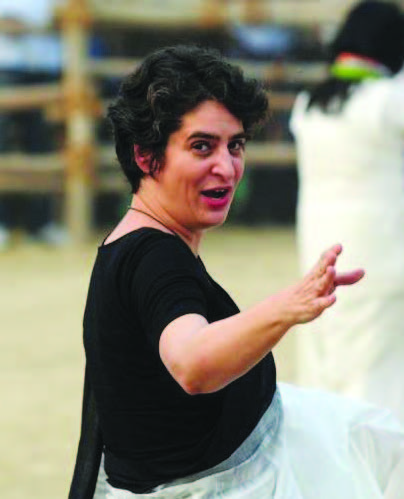
    NEW DELHI (TIP): Congress president Sonia Gandhi’s daughter, Priyanka Vadra, has said funds for her properties are not linked to the finances of her husband, businessman Robert Vadra, or his company Skylight Hospitality.

    Priyanka’s denial came after a financial daily sent queries to Robert Vadra about his land deals and alleged profits.

    “The source of funds for this or any other property acquired by Priyanka Gandhi Vadra has no relationship whatsoever with Robert Vadra’s finances and/or Skylight Hospitality and no relationship whatsoever with DLF,” her office said in a statement on Thursday.

    The statement said Gandhi bought 5 acres of agricultural land in Amipur village in Faridabad district for Rs 15 lakh on April 28, 2006, six years prior to the purported land deal involving Skylight Hospitality.

    The land was resold to the original owner four years later for Rs 80 lakh, the then prevailing market price, the statement said, adding that all transactions were done through cheque.

    It said the earlier owner was made the offer to allow him exercise the right of first refusal.

    “The source of funds for the aforesaid purchase was rental income of Priyanka Gandhi Vadra from property inherited by her from her grandmother (former prime minister) Indira Gandhi,” it added. The statement added that any insinuations made about the land deal were “false, baseless and defamatory” and represented “a deliberate, politically motivated and malicious campaign to besmirch and destroy her reputation”.

    Political opponents of Robert Vadra had often raised questions about his company’s land deals in Haryana and Rajasthan. No charges, however, have been proved. A land deal in Himachal Pradesh, where Priyanka is building a hillside house, has earlier run into controversy following allegations that the then state government had relaxed laws to facilitate the transfer of the land to her.

  • 1% of Indians own 53% of country’s wealth, says UN report

    1% of Indians own 53% of country’s wealth, says UN report

    NEW DELHI (TIP): Indicating that inequality in India is increasing, a UN report released on Thursday said that the richest 1% own 53% of the country’s wealth.

    It also said that unlike other countries, development in India is not moving across states.

    “In terms of wealth inequality, India is second only to Russia, where the richest 1 percent own 53 percent of the country’s wealth,” said the report ‘The Better Business, Better World’ released here in a two day event of the United Nations Global Compact (UNGC) focussing on how through bold innovation, businesses can create solutions and tap new opportunities found within the 17 Sustainable Development Goals (SDGs).

    According to Lise Kingo, CEO and Executive Director of the UNGC, SDGs can open at least $1 trillion of market opportunity for the private sector in India.

    “This is out of a total global value of $12 trillion that could be unlocked by sustainable business models in four key areas, food and agriculture, energy, cities and health,” she said. Kingo added that over 72 million new jobs could be created in India by 2030 by adapting a sustainable business model. The report says that to reduce the inequality, India needs a ‘different economic model’ — one that is not only low-carbon but also recognizes poverty, inequality and lack of financial access. Source: IANS

  • INDIA SUCCESSFULLY TEST-FIRES AGNI III MISSILE

    BHUBANESWAR (TIP): India on April 27 (Thursday) successfully test-fired its intermediate-range ballistic missile Agni-III from Abdul Kalam Island off the Odisha coast.

    The missile lifted off from launch pad No.4 of the Integrated Test Range located on the island at 9.12 am, sources in the Defence Research and Development Organisation (DRDO) said.

    This was a user test, undertaken by the Strategic Forces Command — an especially raised missile-handling unit of the Indian Army. It carried out the test with logistics support from the DRDO.

    Agni-III is the mainstay of India’s nuclear arsenal, and the missile used for the test was randomly chosen from the assembly line, according to sources.

    The missile has a strike range of 3,000 km to 5,000 km and is capable of carrying both conventional and nuclear warheads weighing up to 1.5 tonnes.

    The missile is powered by a two-stage solid propellant engine. The missile is 17 metres long, with two-metre diameter, and weighs around 2,200 kg.

    The missile was inducted into the armed forces in June 2011.

    This test comes less than a week after the Indian Navy test-fired a land attack version of BrahMos from a naval ship.

    India also recently tested BrahMos missile with an extended 450 km range, has undertaken a drop test of the air version of BrahMos, exo-atmospheric Prithvi Defence Vehicle (PDV) interceptor missile and endo-atmospheric Advanced Air Defence missile, both part of a two-tier anti-ballistic missile system, Agni IV and Agni V in the last six months. Source: IANS


  • Sikhs Take out an Impressive Parade in New York City

    Sikhs Take out an Impressive Parade in New York City

    NEW YORK (TIP): Despite some showers, Sikh men, women and children in thousands thronged New York City to participate in the annual Sikh Day Parade, April 22. It is a day of the birth of Khalsa, the pure Sikhs. It was on the day of Vaisakhi in 1699 that the Tenth Master of the Sikhs, Shri Guru Gobind Singh Ji created Khalsa, the pure among the Sikhs. The Master(Guru) enjoined upon his Sikhs to fight for basic human rights and against all kinds of injustice, oppression and tyranny. Which made them a martial community. During the British rule of India, the Sikh soldiers were recognized for their valor and the most Victoria Crosses, the highest gallantry award were won by them. In independent India, Sikhs have proved time and again they were the sword arm of the country.

    The Sikhs number more than 25 million and are present in every part of the world. Their adventurous spirit has taken them far and wide in search of greener pastures. They created a great impression of themselves as honest and hardworking people. Many Sikhs have won laurels in various fields in countries across the world. The Sikh religion-Sikhism is one of the five major religions of the world. Sikhs believe in unity of mankind and seek good of all.

    On or around the day of Vaisakhi, which usually falls in the middle of April, Sikhs organize parades and prayers to celebrate their birth. In New York, as elsewhere, every year, thousands of Sikhs gather to celebrate the day.

    The huge crowds, following their Guru, at the Parade in Manhattan on April 22.
    The huge crowds, following their Guru, at the Parade in Manhattan on April 22.

    Unconfirmed estimates suggested presence of over 25000 Sikh men, women and children in the parade this year. Over the years, the size of parade has grown, with non-Sikhs also joining in the parade.

    The Sikh Day Parade is more a religious affair than a mere social gathering. That is why, the parade is led by the Living Guru of the Sikhs- The Holy Guru Granth Sahib in whose presence a perfect decorum and an atmosphere of spirituality is maintained.

    A display of Sikh martial arts
    A display of Sikh martial arts

    On display at the parade were Sikh history, culture and traditions, as also the Sikhs’holy places. Various forms of Sikh martial art were displayed by the young and not so young.

    Many bands, including the NYPD band participated. NYPD Desi officers also were part of a contingent.

    A conference was a part of the celebrations where community leaders spoke about their religion and the community. A few politicians and officials also attended the parade and the conference.

    A community kitchen (Langar) proved to be a great attraction, with people enjoying many delectable dishes absolutely free. Sikhs are the only community in the world who have the unique tradition of langar. In every Sikh temple, food is provided free to everyone without any discrimination on any basis.The park at 23rd Street was a great place for people to sit in and enjoy the food which was served free to all.

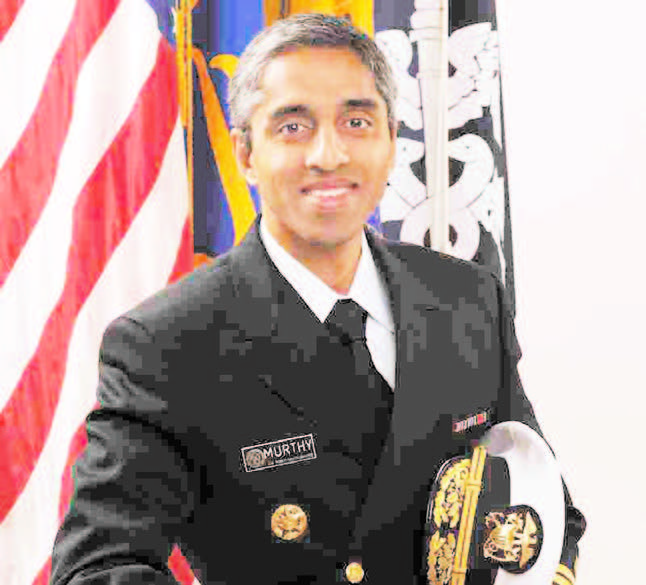
  • Indian American Medical fraternity praises contribution of its member, former US Surgeon General Dr. Vivek Murthy

    Indian American Medical fraternity praises contribution of its member, former US Surgeon General Dr. Vivek Murthy

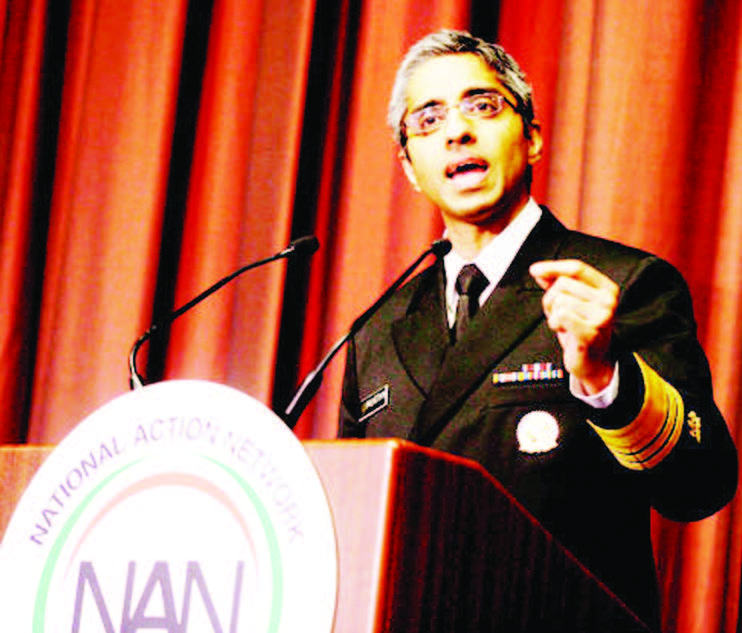
    NEW YORK (TIP): “On behalf of the American Association of Physicians of Indian Origin (AAPI), I want to applaud the many contributions and initiatives of Dr. Vivek Murthy, our AAPI member, in the healthcare sector in very short span of about two years since he became US Surgeon General in 2014,” said Dr. Ajay Lodha, President of AAPI.

    Dr. Murthy has attended several AAPI meetings and has always acknowledged the contributions of AAPI and the Indian community in his statement which he quoted as, “I am proud of our community of Indian physicians for all the progress that we have made over the years, and I know that AAPI has been a critical force in making this process possible. The advice you shared and assistance you kindly offered were important pieces of this journey,”

    The growing influence of doctors of Indian heritage is evident, as increasingly physicians of Indian origin hold critical positions in the healthcare, academic, research and administrative positions across the nation. With their hard work, dedication, compassion, and skills, they have thus carved an enviable niche in the American medical community. AAPI’s role has come to be recognized as vital among members and among lawmakers.

    The surgeon general represents the Health and Human Services Secretary in addressing public health practice in the nation. Murthy, 39, was America’s youngest-ever top doctor, and is also the first surgeon general of Indian-American representing the next generation of Indian American physician. His ethics, quiet leadership style and impeccable credentials made him the smart choice for this position.

    Dr. Murthy, grandson of a farmer, second generation Indian American physician, said, he will always be grateful to “our country for welcoming my immigrant family nearly 40 years ago and giving me this opportunity to serve.

    Dr. Murthy played key role in bringing to the forefront many crucial health issues confronting the nation. In a landmark report on addiction released in November, said dependency on opioids and other substances must not be looked on as a “character flaw,” in the first publication from a surgeon general that has addressed drug and alcohol addiction.

    Murthy embarked on a three-month listening tour of the U.S. ahead of a ceremonial swearing in to listen to the people and professionals before taking on this important role.

    AAPI is shocked and saddened with his departure and wishes him well as he moves on to a new phase in life and is confident that his talents. skills, and experiences will be utilized effectively for the greater good of the nation.


  • Trump sends Indian-American Vishal J Amin’s name to Senate for ‘IP Czar’

    Trump sends Indian-American Vishal J Amin’s name to Senate for ‘IP Czar’

    WASHINGTON (TIP): Indian-American Vishal J Amin’s name has been sent by President Donald Trump to the Senate for confirmation as America’s new ‘IP czar’ to coordinate the country’s law-enforcement strategy around copyright, patents and trademarks.

    If confirmed by the Senate, Vishal, who is currently Senior Counsel on House Judiciary Committee, would succeed Daniel Marti in the White House.

    Earlier this month, Trump had tapped him as the US’ new Intellectual Property Enforcement Coordinator –dubbed as ‘IP czar’ — to coordinate US law-enforcement strategy around copyright, patents and trademarks.

    Amin has served in the administration of former president George W Bush at the White House as Associate Director for Domestic Policy and at the US Department of Commerce as Special Assistant and Associate Director for Policy in the Office of the Secretary, the White House said.

    Vishal received his bachelor’s degree in neuroscience from Johns Hopkins University and his law degree from Washington University in St Louis.

    The Recording Industry Association of America welcomed his nomination.

    “The prompt appointment and consideration of this position is critical, and we commend President Trump for his choice. Vishal Amin is a smart, thoughtful leader and we look forward to working with him,” said Cary Sherman, chairman and CEO of the Recording Industry Association of America.


  • Indian-American Investment Banker Avaneesh Krishnamoorthy Charged with Insider Trading

    Indian-American Investment Banker Avaneesh Krishnamoorthy Charged with Insider Trading

    WASHINGTON (TIP): Indian-American Avaneesh Krishnamoorthy has been charged with insider trading by the Securities and Exchange Commission (SEC).

    Avaneesh Krishnamoorthy, a Vice President in the risk management department of Nomura Securities, a New York-based investment bank, allegedly used the confidential information of a private equity firm’s acquisition to conduct insider trading, the American Bazaar online reported on Wednesday.

    He was charged with one count of securities fraud, which carries a maximum sentence of 20 years in prison and a maximum fine of $5 million. According to the SEC’s complaint, Mr. Krishnamoorthy made approximately $48,000 in illicit profits through insider trading.

    Federal prosecutors said Mr. Krishnamoorthy learned through the course of his work that the private equity firm Golden Gate Capital intended to acquire the online analytics and marketing firm Neustar.

    Mr. Krishnamoorthy then began trading in Neustar securities through two brokerages accounts that he allegedly kept hidden from his employer, which had been approached by Golden Gate Capital to finance the transaction, according to the report.

    “As alleged in our complaint, Krishnamoorthy was entrusted with confidential, market-moving information by his employer and he misused it for personal gain,” said Andrew M. Calamari, Director of the SEC’s New York Regional Office.

    Mr. Krishnamoorthy was presented in Manhattan federal court before US Magistrate judge Kevin Nathaniel Fox on Tuesday. Acting Manhattan US Attorney Joon Kim said Mr. Krishnamoorthy was charged with violating his duty to his company and trading on insider information.

    “Avaneesh Krishnamoorthy allegedly exploited his access to information about a pending acquisition to purchase stock and options, making tens of thousands of dollars in illegal profit for himself,” she said.

    This was the first criminal insider trading case filed by Ms Kim, who in March succeeded Indian-American Preet Bharara, who was sacked by new President Donald Trump as part of his administration reshuffling.

  • Dr. Vivek Murthy fired as America’s Top Doctor by Trump

    Dr. Vivek Murthy fired as America’s Top Doctor by Trump

    WASHINGTON (TIP): The Indian American Hero Dr. Vivek Murthy, America’s top doctor, was dismissed by Donald Trump’s administration on Friday, April 21, 2017 as the US Surgeon General.

    Dr. Vivek Murthy taking charge as the US Surgeon General cemented the reputation physicians of Indian origin have across America. President Obama made the right choice in naming a highly-qualified physician to serve as America’s surgeon general.

    The surgeon general, known as “America’s doctor,” represents the Health and Human Services Secretary and Assistant Secretary in addressing public health practice in the nation. Murthy, 39, was America’s youngest-ever top doctor, and he is also the first surgeon general of Indian-American descent. Dr. Vivek Murthy represents the next generation of Indian American physician. His ethics, quiet leadership style and impeccable credentials made him the smart choice for this position.

    Murthy was named America’s top doctor by President Barack Obama in 2014, making him the first Indian American ever named to the post, one among many growing achievement of a tiny but economically powerful ethnic community. In a very short span of time, Dr. Murthy had played key role in bringing to the forefront many crucial health issues confronting the nation. Dr. Murthy said, being picked for the job was a “uniquely American story” for the “grandson of a poor farmer from India.”

    It was not immediately clear why Murthy was relieved from duty, the New York Times said while noting that employees at the Department of Health and Human Services privately expressed surprise at his sudden departure. Murthy, the 19th Surgeon General, and the first Indian American to hold this post said in a Facebook Post that it was an honor and privilege to work for this prestigious position.

    “For the grandson of a poor farmer from India to be asked by the President to look out for the health of an entire nation was a humbling and uniquely American story. I will always be grateful to our country for welcoming my immigrant family nearly 40 years ago and giving me this opportunity to serve,” he said.

    In a post on Facebook, Murthy said. “For the grandson of a poor farmer from India to be asked by the President to look out for the health of an entire nation was a humbling and uniquely American story. I will always be grateful to our country for welcoming my immigrant family nearly 40 years ago and giving me this opportunity to serve,” he added.

    Murthy went on to recount his goals and achievements as surgeon general and said he “had hoped to do more to help our nation tackle its biggest health challenges, (but) I will be forever grateful for the opportunity to have served”. He says he was the ‘grandson of a poor farmer from India’.

    The US health and human services said in a statement on Friday he had been asked “to resign from his duties as surgeon general after assisting in a smooth transition into the new Trump Administration … (and stood) relieved of his duties”.

    Rear Admiral Sylvia Trent-Adams, a nurse by training and currently deputy surgeon general, was named to serve as the acting surgeon general and assume leadership of the US public health service commissioned corps.


  • The Indo-American Heritage Museum’s reveal: “Unstitched -The Art of Sari Draping”

    The Indo-American Heritage Museum’s reveal: “Unstitched -The Art of Sari Draping”

    CHICAGO, IL (TIP): The Indo-American Heritage Museum’s  April 23 presentation of “Unstitched: The Art of Sari Draping” at Ashton Place, 341 75th Street, Willowbrook, IL, was a winner on all counts, judging by the audience reaction. IAHM, a non-profit educational organization, was established in 2008 and is the only institution of its kind in the country. The event is among many the museum organizes throughout the Chicago area as part of its efforts to preserve the history of Indian Americans and promote understanding of their diversity, culture and contributions to American life.

    Morning cocktails, hors d’oeuvres and music by The Red Line band greeted arrivals and set the tone for the fascinating program that followed. Following a vandana by Geetanjali Maru of Raag ‘N’ Rock, IAHM Board member Amita Banerji spoke about the museum and its work. Padma Rangaswamy, also an IAHM Board member called for the community to participate in the upcoming exhibition, Beyond Bollywood: Indian Americans Shape the Nation, from the Smithsonian Exhibition Traveling Exhibition Service. The exhibit, which will open in July with support from the Chicago Community Trust, is being co-presented by the Field Museum and IAHM in Chicago. The Smithsonian exhibition is being augmented with the Chicago chapter of the Indian American story by IAHM.

    Dr. Rangaswamy pointed out that IAHM as a grass roots organization welcomes community participation in helping tell the Chicago story. Community members can send in videos and images for a video portrait of community life that will be showcased at the Field during the exhibition. They can sign up for a docent training session and guide visitors through the exhibition. They can volunteer to help with the programs IAHM is organizing during the 5 months the exhibition will be running. Interested persons can e-mail info@iahmuseum.org or visit www.iahmuseum.org for more information.

    After IAHM President Madhoolica Dear’s address and Guest of Honor Indian Consul General Neeta Bhushan’s remarks, renowned textile expert and sari historian RTA Kapur Chishti took over with a kaleidoscopic multimedia presentation of the history, design concepts and varieties of saris from the different regions of India. Women from the community modeled saris draped in various regional styles, wearing pure silver jewelry from Amrita Kar’s Vintage2Mod jewelry as they walked the runway to music by DJ Kollision. The event concluded with a lunch buffet from Gaylord Fine Indian Cuisine. Unstitched was sponsored by OROCHEM, Club of Indian Women (CIW), Geetanjali & Abir Maru of Raag ‘N’ Rock Entertainment, EbyN: Events by Nisar, Harp arte Photography, Patel Brothers, Vinni’s Salon and Spa,Wanda Willmore Schlafly of Sunshine Video, Gaylord Fine Indian Cuisine, DJ Kollision and The Red Line band. Information about the Indo-American Heritage Museum is at www.iahmuseum.org

    (Photograph and Press release by: Asian Media USA)

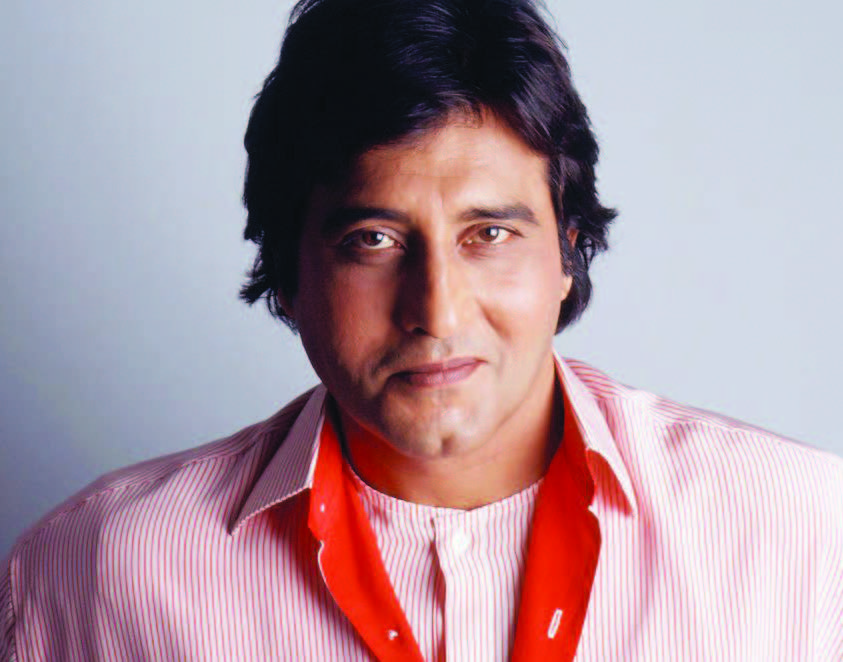
  • VINOD KHANNA – A MAN OF MANY PARTS

    VINOD KHANNA – A MAN OF MANY PARTS

    The man with many parts could no more fight against the terrible cancer  which had bowed him down for some time now and yielded to the Will of God on Thursday, April 27, 2017 at the HN Reliance Foundation and Research Center in Mumbai where he was being treated for advanced bladder cancer.

    The Indian Panorama mourns the superstar’s  sad demise.

    His filmography has many good roles, many forgettable parts, and at least a few questionable choices. But there is no doubt that here was one actor whose name was destined to be on the marquee, along with other such ’70s personages as Amitabh Bachchan, Rishi Kapoor and Mithun Chakraborty.

    One of Khanna’s most popular roles was alongside Bachchan and Kapoor in the multi-starrer Amar Akbar Anthony. The madcap comedy, directed by Manmohan Desai in 1977, follows three brothers separated during their childhood. Khanna had the least showy part, as the inspector Amar, who beats up Anthony (Bachchan) without realising that he is one of his two siblings.

    Khanna started out as a villain in a cinematic universe in which characters were etched in strong black and white shades. In Man Ka Meet (1968), produced by Sunil Dutt’s banner Ajanta Arts and directed by A Subba Rao, Khanna made his acting debut alongside Dutt’s brother Somdutt and Leena Chandavarkar. The movie was designed to boost Somdutt’s leading man prospects, but it was Khanna, who was 22 at the time, who caught the eye as the malefactor who schemes to marry the heroine.

    Khanna was born on October 6, 1946, in Peshawar in undivided India, to KC Khanna, a businessman, and Kamla, a housewife. He was one of five children. After the Partition, the Khannas arrived in Mumbai, where the family has lived since except for a few years in Delhi.

    By his own admission, Khanna wanted to join the movie industry after watching Mughal-E-Azam (1960) as a boy. He rebelled against his father’s dictates against partying and acting, and, was, as Protima Bedi recalls in her memoir Timepass, a South Mumbai layabout and a member of one of two local gangs (the other was led by actor and filmmaker IS Johar’s son Anil).

    “Almost all social life in the Bombay of the mid-sixties revolved around these groups,” Bedi writes. “Bistro and Volga, right next to each other in the Fort, were the places to go to. In Churchgate there was Napoli, and Venice at the Astoria, where Biddu used to sing as the lone Trojan, with his crowd gathered all around.”

    It was at a party that the young man with the hypnotic gaze, brooding personality and Kirk Douglas-style cleft chin met Sunil Dutt, who signed him up for Man Ka Meet. Several roles followed either as a hero in a low-budget movie or a side character in a prominent production, including Nateeja (1969), Aan Milo Sajna (1970), Purab aur Paschim (1970) and Saccha Jhuttha (1970). In Aan Milo Sajna, Khanna furthered the menace that marked his debut. He plays a mean-minded heir who brings home a fake girlfriend so that he can get his share of the inheritance.

    Khanna’s ability to mould his handsome features into a snarl was perfected in Mera Gaon Mera Desh (1971). Raj Khosla’s rural drama is a precursor to Sholay (1975) in numerous ways – it features Dharmendra as the saviour of a village plagued by a gang of dacoits led by the fearsome and sadistic Jabbar Singh. As Jabbar, Khanna is the blackest shade of black, and he delivers one of his most effective performances.

    In 1971, Khanna finally got the opportunity to expand his repertoire when Gulzar remade Tapan Sinha’s Bengali film Apanjan (1968). Khanna plays the leader of one of two packs of aimless young men whose constant clashes are mediated by a widow (Meena Kumari).

    More villainy awaited Khanna (for instance, Anokhi Ada, in 1973) before he could prove his ability to evoke empathy and identification rather than fear and revulsion. In Gulzar’s Achanak (1973), loosely based on the KM Nanavati case of 1959, Khanna is very effective as the Army officer who kills his wife and her lover and escapes, leading to a manhunt.

    Achanak marked the beginning of a shift in Khanna’s fortunes. He was now headlining films, and even though many of them didn’t set the cash registers ringing, his smouldering presence and ability to suggest a volcanic temperament were increasingly unmistakable. Khanna was the other Angry Young Man alongside Amitabh Bachchan in the ‘70s, grimacing at the injustice and corruption around him and using his conscience and fists to set things right.

    Unlike Bachchan, Khanna was a bona fide pin-up. In the arthouse thriller Shaque (1976), directed by the couple Aruna Raje and Vikas Desai, Khanna plays a bespectacled husband and father whose sudden wealth creates suspicion in his wife. The movie showcases Khanna’s casual sex appeal – it includes a brief lovemaking scene and a swimwear moment set on a beach, which has been enshrined on YouTube. Aruna Raje later celebrated Khanna’s manliness in her sexual liberation tract Rihaee in 1988.

    Among Khanna’s hits in the ’70s were Nehle Pe Delha (1976) and the multi-starrers Amar Akbar Anthony (1976) and Muqaddar Ka Sikandar (1978). Mahesh Bhatt cast Khanna in a double role in Lahu Ke Do Rang (1979), as an Indian National Army soldier who has an affair with a Hong Kong national, and as the son who tries to unravel his past.

    Khanna began the ’80s with Feroz Khan’s Qurbaani (1980), and its success bolstered his claim to star status. If Bachchan has played numerous characters named Vijay, Khanna has his share of Amars. In Qurbaani, Khanna’s Amar is a criminal who is one of two men (the other is Feroz Khan) who is besotted with the club singer Sheela (Zeenat Aman). The soundtrack has the club song Aap Jaisa Koi, sung by Nazia Hassan and composed by Khanna’s teenage friend Biddu, and the ballad Hum Tumhe Chahte Hai Aise, in which Khanna’s character pays tribute to the lissome Zeenat Aman.

    Despite his popularity, Khanna’s career remained a rough and tumble affair, marked by more misses than hits. A force greater than cinema was already beckoning the actor, who was by now married to his college sweetheart Geetanjali Taleyarkhan and the father of Rahul and Akshaye (both became actors in the ’90s). “I have always been a seeker,” he said in an interview to the Times of India in 2002. “In the film industry, I had money, glamour, fame but wondered a ‘now what?’”

    The answer was provided by Rajneesh, the headline-grabbing godman later known as Osho, who was running an ashram in Pune at the time. “Initially, I visited Osho’s ashram in Pune every weekend,” Khanna said. “I even diverted shooting schedules to Pune. I was finally initiated on December 31, 1975. When I announced my retirement from films, nobody believed me. I was called the ‘sexy-sanyasi’. I took it in my stride.”

    Khanna’s decision to quit films in 1982 left the field wide open for Bachchan, his close rival and frequent co-star. Another “What if ” in Khanna’s career concerns Bachchan, who similarly navigated a series of early disappointments before breaking out with Zanjeer in 1973. Bachchan’s unmatched hold over the ’70s was destined, but would he have continued to be the face of the ’80s if Khanna had chosen to stay and fight rather than shrug and walk away?

    “I was very angry… I had reached a saturation point,” he told Simi Garewal on her celebrity talk show Rendezvous with Simi Garewal, which began airing on Indian television in 1997. He began to meditate, which helped him become “the master of my mind” and pushed him further towards a spiritual journey that let to Rajneesh’s doorstep.

    Khanna was Rajneesh’s devotee for close to five years, and was a part of the cult leader’s controversial attempts to carve out a city for himself named Rajneeshpuram in the Oregon state in the United States of America in the ’80s. Rajneesh was deported from the US in 1985, and he returned to India and resettled in Pune, where he ran his commune till his death in 1990.

    At the ashram, the movie star went by the name Swami Vinod Bharti. “I was his gardener, I cleaned the toilets, I did the dishes, and his clothes were tried out on me because we were, physically, of the same stature,” Khanna told the TOI. “Gitanjali couldn’t take it any more: While I was at Rajneeshpuram, I was in touch with my family over the phone. But those were terrible times for my sons –they didn’t have me around and people said: Tumhara baap apne guru ke saath bhaag gaya… Gitanjali and I settled for divorce. When I returned to India, I had nothing.”

    Khanna’s close competitor had also undergone a change of heart about showbiz. Bachchan’s best films were already behind him, and he had taken an ill-advised break from acting to contest Lok Sabha elections on a Congress Party ticket. Bachchan won a parliamentary seat from Allahabad in 1982, but fled politics three years later, and was back under the arc lights in the same year as Khanna.

    Vinod Khanna made a better landing than Bachchan when he resumed acting in 1987. He had two hits that year. In Mukul Anand’s crime drama Insaaf, he plays a professor who becomes a criminal. In Raj N Sippy’s Satyamev Jayate, he plays a rule-breaking police officer who has a change of heart.

    As in the initial phase of his career, Khanna continued to labour in mediocre productions that brought in the cheques but no personal glory. There were some highlights – Rihaee (1988), the multi-starrer Batwara (1989), and Gulzar’s acclaimed ghost story Lekin (1990).

    Yash Chopra’s Chandni (1989) gave Khanna one of his best-loved roles. Khanna plays the sad-eyed and dignified Lalit, who overcomes his grief over his girlfriend’s death by falling for the titular heroine (Sridevi), only to reunite her with her one true love (Rishi Kapoor) in the end.

    Among Khanna’s hits in the ’90s was Mahesh Bhatt’s Jurm, a copy of the 1978 Hollywood movie Someone To Watch Over Me. Khanna plays a police officer who falls in love with the witness he is assigned to protect.

    In 1997, he launched his younger son, Akshaye Khanna, in the multi-starrer Himalayputra. In the same year, he joined the Bharatiya Janata Party and won the Lok Sabha elections from Gurdaspur in Punjab the following year. Khanna has represented Gurdaspur in Parliament in 1999, 2004 and 2014.

    Khanna enjoyed a later-career resurrection in paternal parts in Wanted (2009), and Dabangg (2010), both starring Salman Khan. One of his most relaxed roles is in the cricket match fixing comedy 99 (2009), in which he is perfectly cast by directors Raj and DK as a lush Delhi bookie.