STORY On the eve of Independence, the chairman of the Border Commission, Sir Cyril Radcliffe decides to divide India and Pakistan into equitable halves. What the administration doesn’t account for is the line running through the middle of Begum Jaan’s(Vidya Balan) brothel situated plonk on the border; with one half falling in India and the other in Pakistan.
REVIEW It’s a good period and story to revisit because even 70-years after Partition, anything around it still piques interest. Then again, here the narrative deals less with the horror of the divide and serves more as an ode to the spiritedness of Begum; widowed in her childhood and sold to a brothel. Also, Mukherji is revisiting his Bengali film Rajkahini(2015).
Coming back to our protagonist – kings, administrators and commoners are hooked onto the pleasures provided by her girls, so Begum with her guile manages to rule. Till, Radcliffe draws the Lakshman-Rekha. Vidya invests fully in Begum and her dialogue-baazi (a lot of which is raunchy) will get ceetis. However, the writer-director’s interest level in everything else, falters. A sense of deja-vu pervades as one watches a prostitute staring sightlessly at the celling when “entertaining” a customer; or when sex-workers get sentimental over a child, “because all of them are mothers first and whores later.” Surely these women needed to be fleshed out with more finesse.
Begum’s spunk is infectious though. She resembles a Bengal tigress whether she is defending her body or boundaries. However, trying to retell her virtues through various historical avatars in animation, is far too indulgent. Also conversations between officials of the INC and Muslim League, or for that matter between other cardboard cutouts, is superficial. The cinematographer’s effort to capture the Indo-Pak divide with close-ups in half frames, seems amiss.
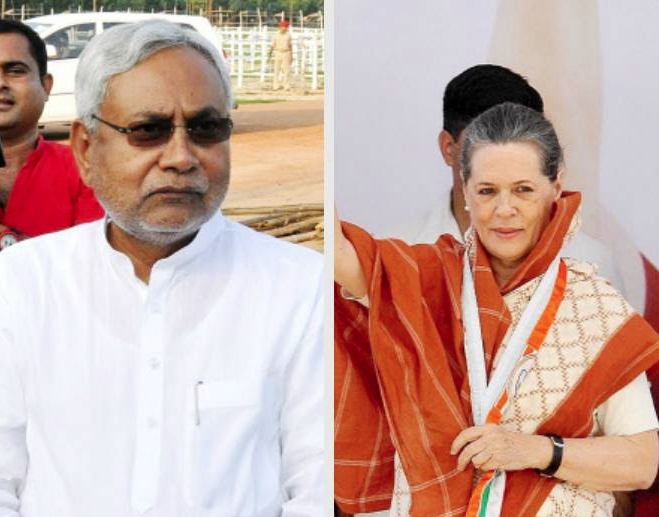
NEW DELHI (TIP): Bihar Chief Minister and Janata Dal (United) president Nitish Kumar met Congress president Sonia Gandhi, setting off speculation on the possibility of a united Opposition fielding a joint candidate for the upcoming Presidential election.
Nitish spent about half an hour with Sonia. It was after a long time that the AICC president met a senior leader after she took ill in August last year. The CPM has already indicated its willingness to back a common nominee against a BJP candidate. Indications are that the Opposition parties may agree on fielding former JD (U) chief Sharad Yadav, a Rajya Sabha MP.
Within the Congress there is an understanding that non-NDA outfits must come together to throw a challenge to the BJP. If the Trinamool Congress (TMC) and Left parties are to come together, the nominee has to be acceptable to both, and Yadav fits the bill, claim sources. “It’s still early. Let us see what happens,” said a Congress source, sounding cautious.
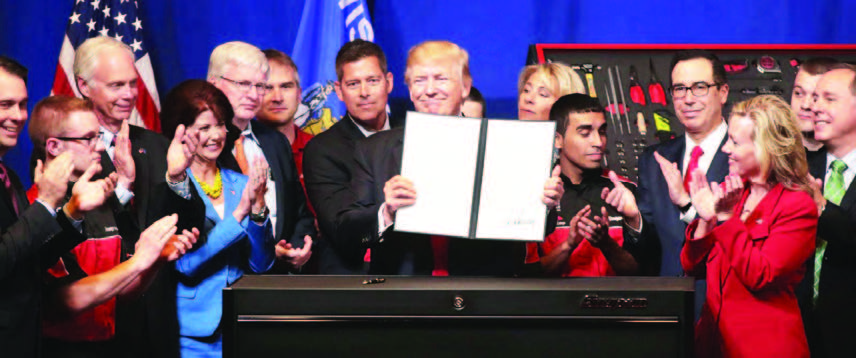
WASHINGTON (TIP): US President Donald Trump on Tuesday, April 18, ordered federal agencies to look at tightening the H1B visa program used to bring high-skilled foreign workers to the US, as he tries to carry out his campaign pledges to put “America First“.
The EO also establishes certain Hire American standards, which are not necessarily limited to federal procurement or federally-funded projects. This primarily includes an overhaul of the “H1B” visa program to replace the lottery features of the program and to impose restrictions designed to preclude the H1B program from being a conduit for lower-cost labor at the expense of American workers.
The latest action is part of Trump’s administration relentless series of tightening measures and is a major deterrent to Indian IT companies which send hundreds of software engineers to the US on H1B visas.
The executive order doesn’t actually make any change in the policy as it stands today.
This year there were 199,000 applications for the H1B visas even after the USCIS guidelines released April 3 clarifying that computer programmers will not be eligible for H1B visas by default.
The Trump administration appears to be keen to scrap the lottery system, which is why it is insisting on a higher wage floor as a first eligibility criterion to apply for the visa. It may also set a minimum education criterion, skewering the hopes of many Indians who hope to gain entry into the US.
H1B visas are intended for foreign nationals in occupations that generally require higher education, including science, engineering or computer programming. The government uses a lottery to award 65,000 visas every year and randomly distributes another 20,000 to graduate student workers.
Critics say the lottery benefits outsourcing firms that flood the system with mass applications for visas for lower-paid information technology workers.
“Right now, H1B visas are awarded in a totally random lottery and that’s wrong. Instead, they should be given to the most skilled and highest paid applicants and they should never, ever be used to replace Americans,” Trump said.
At present, about 70 per cent of the 85,000 H1B visas issued annually go to Indians, with more than half of that to software professionals. The infotech industry adds around 10 per cent to India’s GDP.
Senior officials gave few details on implementation of the order but Trump aides have expressed concern that most H1B visas are awarded for lower-paid jobs at outsourcing firms, many based in India, which they say takes work away from Americans.
They seek a more merit-based way to give the visas to highly skilled workers.
“Right now, widespread abuse in our immigration system is allowing American workers of all backgrounds to be replaced by workers brought in from other countries,” Trump said.
Read the full EO at https://www.whitehouse.gov/the-press-office/2017/04/18/presidential-executive-order-buy-american-and-hire-american? utm_source= email&utm_medium= email&utm_content=20170419_ADM_1600-Daily
What could be more unfortunate than to find the Sikh Gurdwara managers taking to violence in the presence of Guru Granth Sahib! The fight which broke off between two groups at Gurdwara Sikh Cultural Society in Richmond Hill, New York on April 16 could not have been more ill-timed.
It was a day of celebrations. One, Vaisakhi which fell on April 13, was formally being celebrated by the congregation. Also, it was the birth anniversary of Shri Guru Arjan Dev Ji, the fifth Guru of the Sikhs, who is credited with having collected Gurbani in the form of Granth Sahib.
The congregation was there to celebrate the two historic occasions when some Sikhs chose to come to blows right in the presence of Shri Guru Granth Sahib Who is considered by the Sikhs to be a Living Guru who guides and protects. Besides, there were around a thousand men, women and children who witnessed turbans flying in the air and some leaders of the community who the congregation otherwise held in great esteem, thinking they were doing a service to Guru Sahib and to the community, engaging in shameful fights.
Everyone obviously wondered why they were fighting. It is too well known that there are privileges and benefits, gains and profits associated with holding a position in the management of a gurdwara. And those who eye them and do not get an opportunity to be on the management, look for opportunities to create conditions which they think, might benefit them. So, it was in this case.
Then there are occasions to promote one socially and politically. Sikh Day Parade is one such occasion. There are always differences among various groups when it comes to sharing the limelight. Those in power would like to keep their opponents away. And those not in power would claim they be treated with respect and allowed a fair share in organizing and participating in the parade.
Thus, it was a clash of egos which resulted in the unfortunate and shameful fight between the two groups in the presence of Guru Granth Sahib and the Sangat. The worst which happened was that the police came in to the Diwan Hall in the presence of Shri Guru Granth Sahib in shoes and bareheaded, which the Sikhs have always resented in every part of the world, viewing it as an insult to their Guru.
Those who picked up a fight in the presence of Guru Sahib are responsible for desecration of the holy place. The least they need to do, without anybody telling them, is to seek public forgiveness from Guru Sahib and from the Sangat. Their conduct was unbecoming of a Sikh, reprehensible and unpardonable.
“We are a blended nation. Our long traditions, our languages, our home states, these cultural geographies have blurred and indistinct boundaries, interrelated contexts of meaning. There are many echoes, spirits and voices that inhabit our gardens. Separation and distinctiveness are not their defining features. Human life is not about separation but about connection”, says the author –Nirupama Rao.
I am a Hindu by birth and by enduring faith. The house that I was born into that my grandfather built, had no special puja room — but the plaster of Paris statue of a flute playing Krishna, the Ravi Varma oleographs of a Lakshmi rising from a lotus with elephants trumpeting their joy at her presence, the veena-playing Saraswati, and our special deity Lord Guruvayurappan, with beautiful Kartikeya and his “vel”(spear) and his vehicle, the peacock made up the pantheon of our isthtadevatas.
On my trips to my “native place” as we say in Indian English, I remember how every evening, the vilakku (bronze lamp) was lit with cotton wicks we lovingly made, dipped in gingelly oil, and brought out to the verandah of the tharawad (Hindu matrilineal family) house, with the heralding word: “Deepam” (lamp) repeated two or three times, quietly, with deep reverence. We would greet the sight of this burnished lamp and its brave, bright flame in a prayerful namaskar with bowed heads in a moment of blessed quietude, as imaginary and heavenly angels murmured in the dusk of a tropical Kerala garden around us.
Wherever we lived as children travelling the length and breadth of India with my army officer father, my homemaker mother would gather us three sisters together at dusk to say our prayers after she had lit the little vilakku that graced a small corner of the bedroom, auspiciously positioned.
We sat down cross-legged on the bare floor, put our hands together in prayer, and recited our Om Namashivaya, and sang a few bhajans including Gandhiji’s favourite “Raghupati Raghava”. We must have sung with youthful fervour and reasonable harmony because in one of the towns we lived in, the neighbouring Malayalee Catholic family with whom we shared a wall, the Pereiras, would listen tell my mother how much they loved our “evensong”. Them being Christian, and our being Hindu did not matter in those simple days.
I went to Catholic school till I finished high school and to a Catholic undergraduate college after that. I read Bible history as a young girl and was equally fascinated with the stories of Moses, N the Ark of Noah, and the life of Jesus as I was with the Ramayana and the Mahabharata. Growing up, we were taught to respect all faiths and to be tolerant of differences. We grew into self-confident Hindus, secure in our faith and respectful of our Christian and Muslim classmates and friends.
In this recalling of memory, I am reminded of the saying that “the past is another country”. Where is that far-off land? What starship are we voyaging on today? Today we Hindus demand “empathy” from the minorities in our country. A Muslim dairy farmer transporting a cow, even with a permit, is not showing empathy for the majority religion, an NRI friend said recently. India is a Hindu nation he added and the minorities should respectfully acknowledge this and adjust to this basic reality.
Ensconced in the United States, I do not believe he had any doubt in his mind that Hinduism should constitutionally be India’s national religion. Having lived in Sri Lanka, I was reminded of the manner in which that island country made Buddhism its state religion, with its Buddhist clergy being the most powerful source of authority in the land, and all the momentous repercussions of that approach for civil society and the Sri Lankan minorities.
Is India a wounded civilization? If our religion as Hindus has survived intact despite the depredations of conquest and empire over the last millennium, then are we not prepared to face the next with the steadfastness of faith and the confidence that Hinduism with its capacity for tolerance and accommodation can create the India of our dreams? Are we instead, intent on molding our lives on the basis of religious militancy and a fundamentalist interpretation of belief? Are we intent on the subjugation of our religious minorities so that they conform to what our idea of their place in our society should be?
Pepita Seth, the English woman who has become a Hindu, and made Kerala and particularly Guruvayur her home, has a passage in her book, Heaven on Earth: The Universe of Kerala’s Guruvayur Temple, that eloquently sums up how I define my being Hindu:
“In northern Malabar there is a Theyyam deity, Kshetrapalan, the guardian of temples, who once demolished a semi-ruined shrine and built a mosque to give a growing community of Muslims a place of worship. This, in essence is a sharing of cultures and spaces, even as the other is respected. This fineness shows India’s profoundly pluralistic dimension. It is beyond me to suggest what can be done, political will being what it is. The great hope is that our children can, at an early age, be shown what is common to us all, that with opened minds they come to recognize that this will give them a share of the wider whole. As India is railed against for the dreadful things that now too often happen, it can help to recognize that the other side of the coin exists. And that I have been lucky to experience it.”
India’s is a map of many migrations. She speaks to both East and West, those twins of history, when she demonstrates the fact that labels like Hindu, Muslim, Christian are no more than starting points. We are a blended nation. Our long traditions, our languages, our home states, these cultural geographies have blurred and indistinct boundaries, interrelated contexts of meaning. There are many echoes, spirits and voices that inhabit our gardens. Separation and distinctiveness are not their defining features. Human life is not about separation but about connection.
Gandhiji drew inspiration from the devotional traditions of Hindu faith as expressed in the ideals of the religious poets and preachers of rural Gujarat, as also from Thoreau and Tolstoy, and even Christianity. He wove these influences into his life and made them work in a manner that was magnetic, riveting and resoundingly powerful. There is power in his example. The Indian answer to the question “who am I” which is “I am that” or Tat Tvam Asi, signifies a oneness with all creation. The Chinese saying: There is me in you, and you in me bridges divisions of race or creed. The Sanskrit word, Viswabodh or, awareness of the whole world, should apply in everything we do.
It was Rabindranath Tagore who, when he spoke of the idea of India, which as he emphasised was not just a geographical expression, (“I love my India, but my India is an idea and not a geographical expression”), stressed the assimilative outlook, the irreducible diversity that characterised the civilization of India. In a similar way, life in my home state of Kerala has been largely marked by the tenor of coexistence between Hindus, Muslims and Christians. Each community left the other to come to terms with his God in his or her own fashion and in the words of the writer Krishna Chaitanya, realising that difference here in no way militated against close cooperation in activities that ensured the livelihood of all.
The great twentieth century poet in Malayalam, Vallathol, a Hindu, wrote a narrative poem on Mary Magdalene which is treasured by the Christian community both for its spiritual high notes as well as its sheer beauty. The story of Genesis is seen integrated with the Hindu myth of origin of the churning of the primeval ocean by the gods and demons. This is the true symbiosis that India should seek to treasure and to preserve.
Today, at evensong, even as I celebrate my being Hindu, I pray for India. I pray for peaceful coexistence, and for us to conduct our lives as citizens of a great and grown-up nation. Let us not leave our destinies to the vagaries of fate, or the tyranny of the closed and confined mind.
(The author is a former Foreign Secretary of India) (Source: First Post) British English
Perhaps the backdrop explains the dynamics at play more than just details of his incarceration
“The fact that despite specific provisions in the Vienna Convention on Consular Relations, India was denied access to Mr. Jadhav only confirms that Pakistan does not want the truth to be revealed about the place and manner of arrest. India also argues that spies and operatives are not sent carrying their own passports”, says the author – KC Singh.
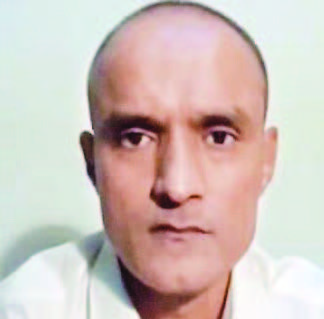
The military trial and summary sentencing to death of Kulbhushan Jadhav in Pakistan, with the Indian High Commission denied consular access to him, has plunged India-Pakistan relations into a crisis again. Mr. Jadhav is not the first Indian to be caught and sentenced as a spy by Pakistan, but the first retired middle-level naval officer. The context and background of this need examination.
A diplomatic leap in the dark
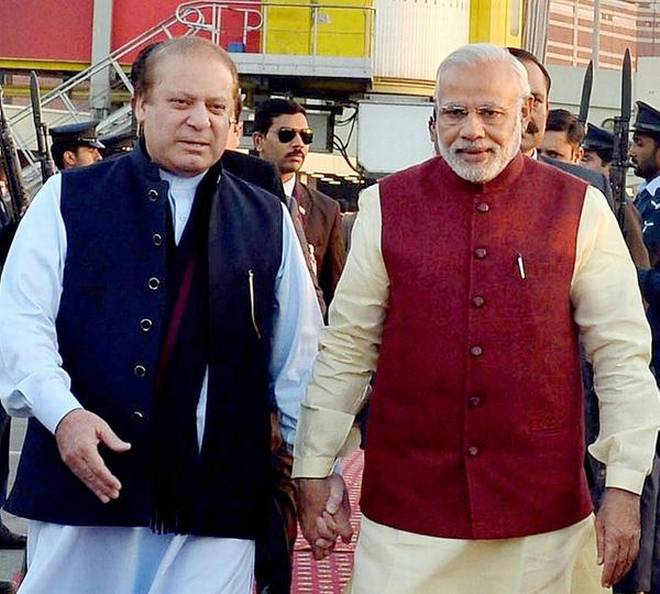
The current cycle of bilateral engagement and acrimony runs from the dramatic visit by Prime Minister Narendra Modi to Lahore on Christmas in 2015. The occasion was Pakistan Prime Minister Nawaz Sharif’s granddaughter’s wedding, but really it was a diplomatic leap in the dark. As in the past, beginning with Prime Minister Atal Bihari Vajpayee’s Lahore bus journey, theatrical moves rattle anti-India forces in the Pakistani military and jihadi organisations, who then unleash retributive terrorist acts. Within a week of Mr. Modi and Mr. Sharif socialising, the Pathankot airbase was attacked. Tragically, within days of that, Mufti Mohammad Sayeed, the Chief Minister of Jammu and Kashmir, who headed the Peoples Democratic Party’s alliance with the Bharatiya Janata Party, died. The stage was set for instability in the Kashmir Valley.
While Mufti sahib’s daughter Mehbooba Mufti dithered for nearly three months whether or not to succeed her father, the situation in Pakistan was drifting too. Prime Minister Sharif, marginalised by his namesake, the Pakistani Army chief, undermined by the Panama Papers revelations and suffering from heart trouble, left for the U.K. for medical treatment in April 2016. He returned to Pakistan in July. By then, Ms. Mufti had barely been in office when Burhan Wani, a self-styled commander of the Hizbul Mujahideen, was killed, inflaming an already restive Valley. From that point onwards, Indo-Pak relations slid downwards.
Kulbhushan Jadhav alias Hussein Mubarak Patel was arrested by Pakistan in March 2016, allegedly in Balochistan, for espionage and abetting terror. This was a windfall for Pakistan as since the 2008 Mumbai attacks and the confessions of Pakistan-born American operative David Headley, it had been seeking moral equivalence by alleging complicity of India’s external intelligence agency, the Research and Analysis Wing (R&AW), in almost every major attack, particularly by the renegade Tehreek-e-Taliban Pakistan. In fact, the joint statement of Prime Ministers Manmohan Singh and Yousaf Raza Gilani at Sharm el-Sheikh in 2009 was widely condemned in India for unnecessarily allowing Pakistan to introduce Balochistan in the statement to discuss an alleged Indian hand in the Baloch uprising.
Gaps in stories
There is the usual Indo-Pak disagreement over facts. India claims Mr. Jadhav was conducting business out of Chabahar, Iran, for many years after retiring from the Navy, and that he has been abducted by Pakistani state or non-state actors from within Iran. The fact that despite specific provisions in the Vienna Convention on Consular Relations, India was denied access to Mr. Jadhav only confirms that Pakistan does not want the truth to be revealed about the place and manner of arrest. India also argues that spies and operatives are not sent carrying their own passports. On the other hand, it is unclear why Mr. Jadhav was operating under a Muslim name, and if he did convert, why the government keeps referring to him by his earlier name. India has not challenged the authenticity of his passport, implying that it was not obtained by fraud or faked by Pakistan. With the debate in India now enveloped in jingoism, such lacunae in stories paraded by both sides are beyond examination.
The truth may never be known, but “Doval-isation” of India’s approach to Pakistan has been obvious for some time. Prime Minister Modi’s espousal of the cause of Balochis and the residents of Gilgit from the ramparts of the Red Fort on August 15, 2016 only confirmed Pakistani fears that India abets terror and secession in Pakistan. However, recent signals from Pakistan via Track II events were that the new Army chief, Gen. Qamar Javed Bajwa, wanted to reorient his Army’s approach towards India and would endorse the civilian government’s lead in crafting its India policy. He was apparently getting a pushback from entrenched interests raised on India baiting. There were unconfirmed reports that National Security Adviser Ajit Doval had spoken to his Pakistani counterpart to acknowledge the signal and create an environment for resuming political contact. Why then did Pakistan change tack and with sudden alacrity, devoid of transparency, sentence Mr. Jadhav?
One trigger could have been the disappearance of an ex-ISI Pakistani military officer in Nepal. Another may be a desire to stoke further unrest in the Kashmir Valley. It could also be some re-balancing between the civilian and military authorities as Prime Minister Sharif awaits court judgement on the Panama Papers charges. At any rate, Pakistan has succeeded in capturing media space and the Indian government’s attention and thus mainstreaming its grouses even as a new U.S. president shapes his foreign policy.
The Indian opposition has adopted a jingoistic pitch to entrap a government mixing politics, religion and nationalism. If assurances in Parliament are that the government will do “all” in its power to rescue Mr. Jadhav, either it is confident of a Cold War-style exchange of spies, provided they have managed to secure the asset that went missing from Nepal, or it is upping the ante hoping that Pakistan will not want to escalate tensions further.
India’s perception of Pakistan
India misperceives Pakistan, as the 19th century French statesman Talleyrand said the world did Russia, as it is neither as strong as it seems nor as weak as we think. For instance, it is not isolated, as policymakers in South Block assume. Pakistan would have seen rising Chinese rhetoric over the Dalai Lama’s visit to Tawang. It also would read U.S. President Donald Trump’s intervention in Syria and the dropping of the ‘mother of all bombs’ in Afghanistan as the U.S. returning to business as usual and restoring the primacy of its Sunni allies, i.e. Turkey, Saudi Arabia, plus the Gulf Cooperation Council, Pakistan, and Egypt. Pakistan is familiar with the generals now ruling the roost after White House chief strategist Stephen Bannon’s fall.
A Sino-Pak alliance now fed by China’s open hostility and not countered by the U.S.’s words of restraint may entrap India into a regional morass. Many assumptions on which the Modi government has functioned in diplomacy are being rewritten. The challenge is to steer India through this maze with more than jingoism, theatre, and domestic electoral needs.
(The author is a former Secretary, Ministry of External Affairs, Government of India) British English
In the absence of any initiative to begin a dialogue process, separatists hone their skills to influence people
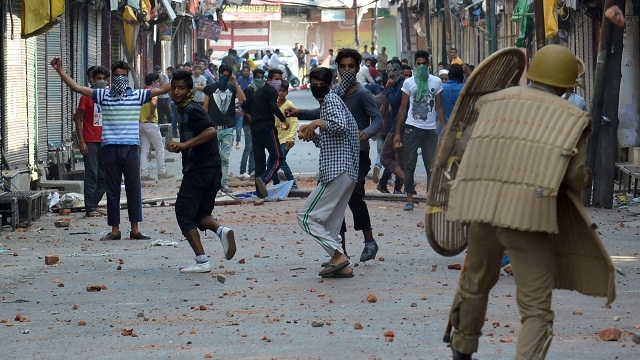
There is a lot to unlearn from a recent video clip gone viral on social media. A CRPF man carrying EVMs keeps walking nonchalantly even as he is pushed, heckled and abused by a group of youths shouting anti-India slogans, — a predictive ranting tirade. The clip protagonists seemed to expect some elisions reflected in that part of Kashmir:
a) security forces are used to such gimmickry of protestors; and
b) most youths in the Valley are downright separatists whose writ runs so wantonly.
For outsiders, a message went out: Kashmir is as bad as it has been in last three decades — a perception repeatedly reinforced by a series of violent events. The last year’s post – Burhan Wani’s killing and the death of over 80 people in its wake bear it out. It all climaxed in the lowest voter turnout on Thursday in Budgam, under Srinagar parliamentary constituency, where a re-poll was ordered after April 9’s poor voting figures amid large-scale violence leading to the death of eight people.
“Maybe all sides — mainstream political parties, separatists and those sitting in Delhi and Islamabad — want to tire each other out before realizing the futility of it all,” says a youth in Srinagar, refusing to identify himself.
“The frustration stems from people’s perception of betrayal and the anger is because no dialogue process is initiated — either with Pakistan or with the people’s representatives,” says Junaid Mattu, spokesperson for the National Conference.
The separatists have their own take that essentially revolves around Pakistan. “It is not the fight for votes or power. This is the fight against the betrayal of Indian government for not fulfilling the promises made with the Kashmiri people. It is time to ease tension and ensure stability by settling all disputes,” says Abdul Gani Bhat, executive member in moderate faction of Hurriyat Conference.
The separatists’ poll boycott call was reported from mosques’ loudspeakers, phone calls, WhatsApp and text messages. And despite several requests by the mainstream parties to postpone the polls, the Election Commission deemed it fit to hold elections. “In such an environment, genuine voters would obviously feel frightened,” said an NC activist.
Development a ‘non-issue’
During his recent visit to Udhampur, Prime Minister Narendra Modi asked the people, particularly Kashmiri youth, to choose “tourism over terrorism”. “Had the people of Kashmir devoted the past 40 years to development of tourism, the Valley would have been blessed with numerous benefits,” Modi said at a rally organized to mark South-East Asia’s biggest tunnel along the Jammu-Srinagar Highway.
The separatists were quick to reject the assertion. “Construction of tunnels and roads is futile and won’t succeed to lure us,” said a joint Hurriyat Conference statement.
The failure of the ‘development mantra’ was, in fact, clear from the election manifestoes of all parties during the assembly polls. Predominant issues were: a dialogue with Pakistan, opening new routes along the LoC, restoration of autonomy, demilitarization and revocation of the Armed Forces Special Powers Act. This explains why, after over a year of assembly polls, the separatist camp’s slogans of ‘azadi’ strongly influence the Kashmiri youth.
Poor showing
A senior government officer, who wished not to be named, throws light on areas of concern. “Our education is in a shambles. Out of the 96 degree colleges functioning in the state, at least 31 colleges —some of them sanctioned about nine years back – function from makeshift accommodations. We have poor health infrastructure. Hundreds of villages don’t have electricity and road connectivity. We have the highest number of unemployment in North India. But we have restricted our thought process to unnecessary issues,” he says.
Nawang Rigzin Jora, Congress Legislature Party leader and MLA from Leh, rues that politics has taken over everything else. “There is no commonality among the people of three regions — Jammu, Kashmir and Ladakh. We have to have a binding force, which is not there.”
Mahesh Koul, a research scholar, says by relegating areas of human development, “the government has handed a long leash to the subversives who want the state to waste time in conflict management.”
The situation has come to such a pass, says Prof Hari Om, a Jammu-based historian, that leaders in Kashmir don’t want development. “The three regions — Jammu, Kashmir and Ladakh — are pulling in different directions. And the Indian state simply watches on.”
SACRAMENTO (TIP): An Indian-American CEO has been ordered to pay USD 135,000 to her former domestic worker after a Labor Department investigation found she underpaid and mistreated her.
Himanshu Bhatia, CEO of Rose International and IT Staffing, will have to pay her former live-in domestic service worker back wages and damages under the terms of a consent judgement entered into the US District Court for the Central District of California.
The judgement, entered on April 11, resolves a complaint filed by the US Department of Labor in August last year. An investigation by the department’s Wage and Hour Division found that Bhatia willfully and repeatedly violated federal labor laws’ minimum wage and record keeping provisions from July 2012 to December 2014.
The complaint alleged that Ms Bhatia paid her domestic service worker, who had been identified in an earlier complaint as Sheela Ningwal, a fixed monthly salary of USD 400 plus food and housing at Ms Bhatia’s home in San Juan Capistrano and other residences in Miami, Las Vegas and Long Beach.
Investigators found that the employee suffered “callous abuse” and retaliation, including being forced to sleep on a piece of carpet in the garage when ill, while Ms Bhatia’s dogs slept on a mattress nearby. The complaint also alleged that Ms Bhatia confiscated Ms Ningwal’s passport.
Ms Bhatia terminated the worker in December 2014 after she allegedly found her employee researching labor laws online, and after the worker refused to sign a document stating she was being paid an adequate salary and had no employment dispute with Ms Bhatia.
“This consent judgement underlines the department’s commitment to protecting workers from exploitation,” said Janet Herold, solicitor for the Department of Labor’s Western Region.
“The department will take strong and immediate action to ensure that workers are protected against retaliation.”
CHICAGO, IL (TIP): The Consulate General of India in Chicago in collaboration with Ambedkar Association of North America [AANA] celebrated 126th Birth Anniversary of Dr. B.R. Ambedkar on 14th April, 2017.
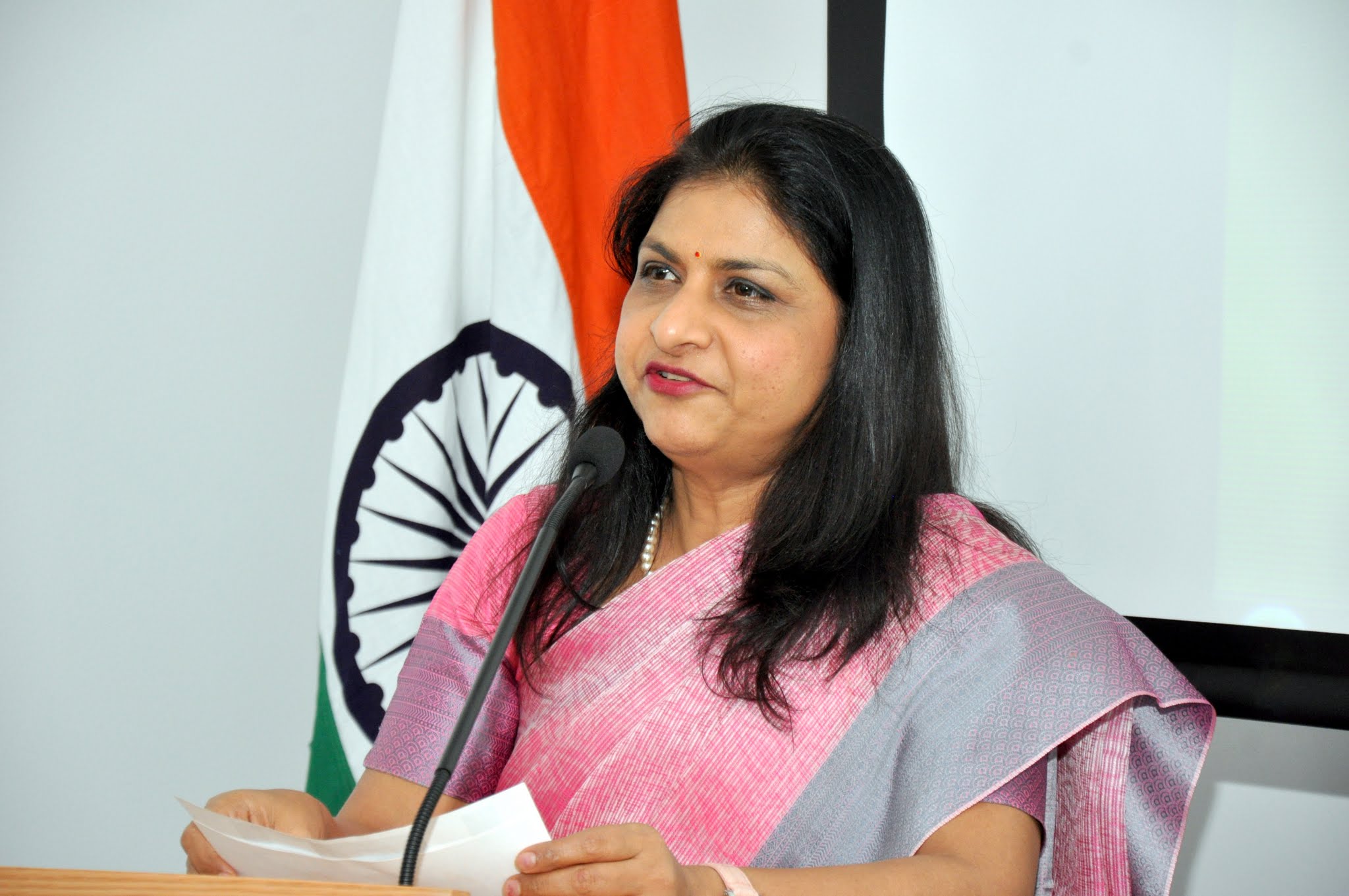
The opening remarks were delivered by Mrs. Neeta Bhushan, Consul General. Consul General addressed the gathering and recalled the mammoth work done by the Drafting Committee of the Constituent Assembly under the Chairmanship of Dr. B.R. Ambedkar in drafting the Constitution of India. She emphasized that the Constitution of India does not discriminate anyone on the basis of religion, creed, sex or any other ground. It is the duty of every citizen of India, therefore, to uphold the Constitution both in its letter and spirit.
Speakers from Ambedkar Association of North America [AANA] spoke on role of Dr. Ambedkar in National Reconstruction, Ambedkar’s agriculture and economic policies and women empowerment. During cultural program, the children sang classical Raga & performed the classical dance “Bharat Natyam”. Mr. Mahesh Wasnik introduced the AANA & its activities.
A Book and photo exhibition of photographs on the life and times of Dr. B.R. Ambedkar was also organized as part of the celebration.
The celebration was attended by a cross-section of prominent Indian-Americans residing in Chicagoland. Mr OP Meena, Consul, proposed a vote of thanks.
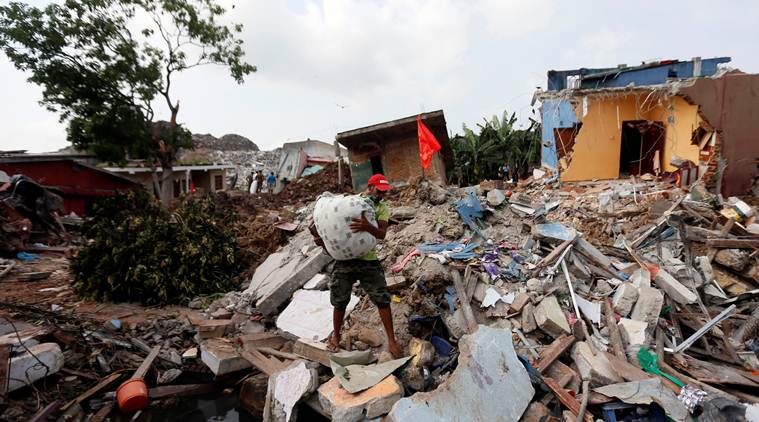
COLOMBO (TIP): The death toll from the collapse of a giant open garbage dump near Colombo reached 33 today with Sri Lankan Prime Minister Ranil Wickremesinghe promising to clear the area as soon as possible.
Wickremesinghe, who cut short his state visit to Vietnam and returned last night, today visited the site and promised a house to each of the affected families in the disaster.
He promised to remove the Meethotamulla garbage dump as soon as possible, Colombo Page reported. A portion of the 91-metre dump collapsed following a fire incident on Friday as the residents celebrated the traditional Sri Lankan New Year, burying dozens of residential buildings and trapping many people in Meetotamulla area in Kolonnawa.
At least seven children were among the dead. Some still remain untraceable after the mishap, officials said. The death toll climbed to 33, the report said. After the explosion in the 23-million-tonne garbage mound, the air force was deployed to douse the flames. Nearly 1,000 military security personnel, including police and special task forces, have been deployed for rescue operation.
The tragedy has displaced nearly 200 families numbering more than 1500. Nearly 80 houses were completely destroyed while many more suffered partial damage, according to Sri Lanka’s Disaster Management Centre. The affected families have blamed politicians for the tragedy, though President Maithripala Sirisena has ordered officials to ensure maximum relief to them.The National Building Research Organisation said people still living in over 130 houses in the area must be relocated to safety. The true scale of the damage remains unclear, police said as about 800 tonnes of garbage were added to the dump daily. The Parliament was recently warned that 23 million tonnes of garbage at Kolonnawa dump was a serious hazard. (PTI)
WASHINGTON (TIP): Former Pakistan ambassador to the US, Hussain Haqqani, has criticised the death sentence awarded to retired Indian navy officer Kulbhushan Jadhav, saying Islamabad’s “spy games” are making it tougher for the two South Asian neighbours to even explore peace.
Haqqani said Jadhav’s conviction for espionage would have been more convincing had it resulted from an open trial.
“But as with much about Pakistan, the trial’s short and secretive timeline may have more to do with internal dynamics than with the merits of the case itself,” he wrote in an op-ed in The Wall Street Journal.
Haqqani, who currently is the director for South and Central Asia at the Hudson Institute, a top American think-tank, said putting an Indian on death row was an easy way to scuttle momentum for new talks.
“At a time when India is also sliding into Hindu religious fervour, with vigilante violence threatening the country’s minorities over protecting cows that are considered sacred, Pakistan’s spy games can only make it tougher for the two South Asian neighbours to even explore peace, let alone find it,” Haqqani said. “(Pakistan Prime Minister Nawaz) Mr Sharif had recently renewed calls for improving relations with India. Putting an Indian on death row is an easy way to scuttle momentum for new talks,” he added.
In his op-ed, the former Pakistani diplomat also alleged that Islamabad is unlikely to change its policy of using terrorist groups for its national security. “Unwilling to change its policy of supporting jihadist groups as an instrument of regional influence, Pakistan’s military-intelligence combine wants to ensure the primacy of its worldview at least within Pakistan,” Haqqani said.
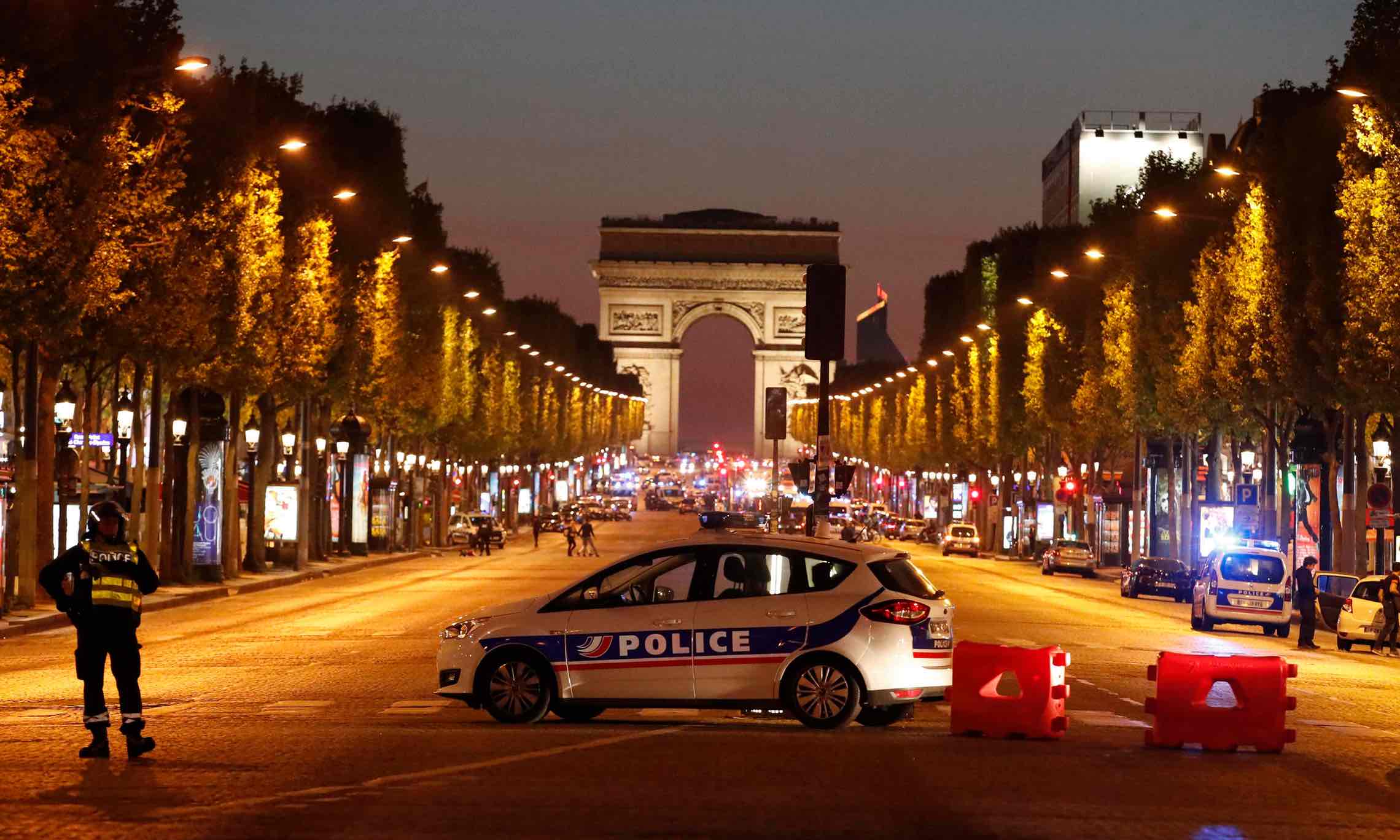
PARIS (TIP): A lone gunman opened fire on police on Paris’ iconic Champs-Elysees boulevard Thursday night, killing one officer and wounding three people before police shot and killed him. The Islamic State group claimed responsibility for the attack, which hit just three days before a tense presidential election.
Security already has been a dominant theme in the campaign, and the violence on the sparkling avenue threatened to weigh on voters’ decisions. Candidates canceled or rescheduled final campaign events ahead of Sunday’s first round vote.
One officer was killed and two police officers were seriously wounded when the attacker emerged from a car and used an automatic weapon to shoot at officers outside a Marks & Spencer’s department store at the center of the Champs-Elysees, anti-terrorism prosecutor Francois Molins said.
A female foreign tourist also was wounded, the officer said.
Police and soldiers sealed off the area, ordering tourists back into hotels and blocking people from approaching the scene.
Emergency vehicles blocked the wide Champs-Elysees, an avenue lined with boutiques and normally packed with cars and tourists that cuts across central Paris between the Arc de Triomphe and the Tuileries Gardens. Subway stations were closed off.
The gunfire sent scores of tourists fleeing into side streets.
French President Francois Hollande said he was convinced the circumstances of the attack in a country pointed to a terrorist act. Mr. Hollande held an emergency meeting with the prime minister on Thursday night and planned to convene the defense council on Friday morning.
Speaking in Washington during a news conference with Italian Prime Minister Paolo Gentiloni, U.S. President Donald Trump said the shooting “looks like another terrorist attack” and sent condolences to France.
Conservative contender Francois Fillon, who has campaigned against “Islamic totalitarianism,” said on France 2 television that he was canceling his planned campaign stops on Friday.
Far-right candidate Marine Le Pen, who campaigns against immigration and Islamic fundamentalism, took to Twitter to offer her sympathy for law enforcement officers “once again targeted.” She canceled a minor campaign stop, but scheduled another.
Centrist candidate Emmanuel Macron offered his thoughts to the family of the dead officer.
Socialist Benoit Hamon tweeted his “full support” to police against terrorism.
Apex Court favors joint trial of the accused to speed up the judicial process
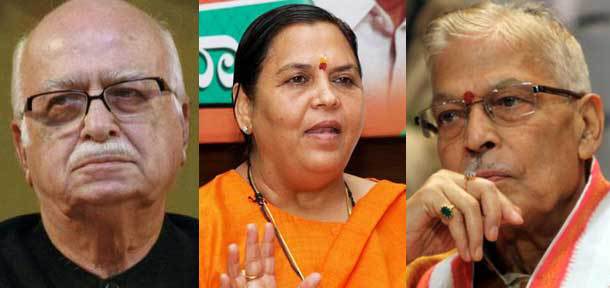
NEW DELHI (TIP): In a major judgement handed down on April 19, Supreme Court of India ordered that the co-founder of the BJP, LK Advani, and other leaders be tried for criminal conspiracy in the demolition of Babri Masjid about 25 years ago.
The Babri Masjid in Ayodhya was allegedly pulled down by Hindu activists in December 1992, leading to widespread riots in which more than 2,000 people died.
The apex court added that the trial must conclude within two years, a decision welcomed by Muslim clerics.
This is a huge setback for former BJP chief Lal Krishna Advani and his colleagues who have repeatedly denied making inflammatory speeches that encouraged Hindu mobs to tear down the Babri Masjid.
Those accused along with Mr Advani are senior BJP leaders Murli Manohar Joshi and Uma Bharti. They have all denied any wrongdoing, however, the Central Bureau of Investigation (CBI) has always said the destruction of the mosque was a planned event.
The Supreme Court has been hearing the case since 2011 after setting aside a high court judgement which allocated two-thirds of the disputed site to Hindu groups, and the remainder to Muslims.
The Allahabad High Court ruling in 2010 addressed three major issues. It said the disputed spot was Lord Ram’s birthplace, that the mosque had been built after the demolition of a temple and that it was not built in accordance with the tenets of Islam.
The Archaeological Survey of India, in 2003, had reported to the Allahabad High Court that its excavations found distinctive features of a 10th century temple beneath the Babri Mosque site.
For the first time in a judicial ruling, it also said that the disputed site was the birthplace of the Hindu god.
Hindus claim the mosque is the birthplace of one of their most revered deities, Lord Ram, and that Babri Masjid was built after the destruction of a Hindu temple by a Muslim invader in the 16th Century.
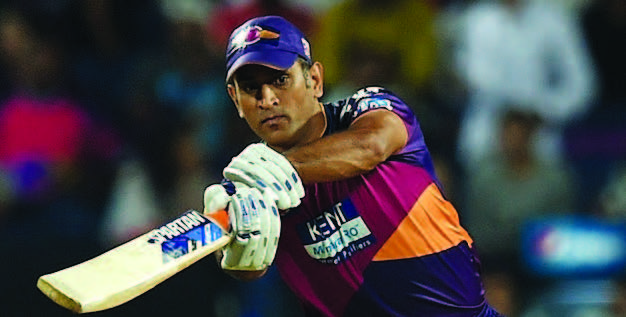
Mahendra Singh Dhoni has been more in focus than his team Rising Pune Supergiant in this Indian Premier League. And that should be the case ahead of the clash against Gujarat Lions at the SCA Stadium on Friday too.
Dhoni was stripped of captaincy by RPS and is struggling with the bat as he faces Gujarat Lions in the next match
Nothing seems to be going right for the champion cricketer at the moment. While it all started with RPS owners replacing India’s greatest captain with Steven Smith for the 10thedition of the T20 tournament, the spotlight is on the Ranchi superstar’s poor run with the bat.
One hoped with the burden of captaincy off his shoulders, a vintage Dhoni would take IPL by storm. However, that hasn’t been the case so far. With scores of 12 not out, 5 and 11 in his first three games, Dhoni, 35, seems nowhere close to his best. Although Dhoni has been active with field placements from behind the wicket, it’s his power-hitting that Smith would have banked on.
In the first match against Mumbai Indians, the situation was tailor-made for Dhoni, with 13 runs required off the final over. The job was ultimately done by Smith, who hit two sixes to finish off the game, as Dhoni found it difficult to even connect.
In Pune’s last match against Delhi Daredevils, which Smith missed due to an upset stomach, Dhoni was expected to take on more batting responsibility. The opportunity was lost again.
It isn’t Dhoni’s form alone that is a concern. It has also a lot to do with building the right environment to bring the best out of the players.
The build up to IPL 10 hasn’t been ideal for Dhoni. Controversy erupted when RPS owner Sanjiv Goenka declared that he was sacked as skipper of his team.
After the emphatic win in the opener against Mumbai Indians, tweets by Goenka’s brother Harsh seemed to pit Dhoni against Smith, upsetting fans of the double World Cup-winning skipper.
Dhoni’s wife Sakshi posted a photograph sporting a Chennai Super Kings helmet and jersey and came out in support of her beleaguered husband with a strong response to Harsh Goenka’s tweets.
One major reason Chennai Super Kings under Dhoni enjoyed great IPL success, before it was suspended for two years, was because the skipper was a master finisher.
It is often said write off a champion at your peril. With Dhoni’s finishing abilities on the wane, his task has become more challenging than ever at No 5. Pune could consider promoting Dhoni ahead of England allrounder Ben Stokes, who can still finish matches by batting at No 5.
The dip in form in IPL 10 seems sudden. Before the league, Dhoni scored 330 runs in eight matches for Jharkhand in the 50-over Vijay Hazare Trophy.
NEW DELHI: Business tycoon Vijay Mallya, the boss of the now defunct Kingfisher Airlines, owes Rs 9,081 crore to a consortium of 17 Indian banks, has been arrested in London and will be produced in a metropolitan court today.
The liquor baron was arrested at about 9.30 am London local time and was taken to Westminster court.
Mallya, whose extradition India has been seeking since he fled to the United Kingdom in March 2016, is wanted in various cases of foreign exchange violation and debt recovery.
India had in February asked the UK to extradite Mr Mallya, who is facing charges of money laundering and several warrants in the country. CBI sources count the arrest, which took place around 9.30 in the morning, as a big win in attempts to bring the liquor baron to justice.
Last month, the UK told India that its request had been certified by the Secretary of State.
Mr Mallya has been charged with cheating and conspiracy by the CBI that filed a 1,000-page chargesheet against him for defaulting on a 900-crore loan taken from the IDBI bank in 2009. The CBI probe found that 250 crore of this – given to buy aircraft parts – was diverted abroad.
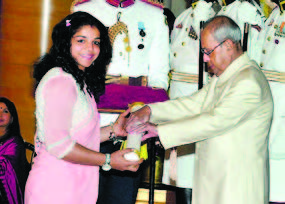
NEW DELHI (TIP): Gymnast Dipa Karmakar and wrestler Sakshi Malik on Thursday received the coveted Padma Shri Award from President Pranab Mukherjee at the Rashtrapati Bhavan in New Delhi on Thursday.
Gymnast Dipa Karmakar receiving Padma Shri from President Pranab Mukherjee
Karmakar, hailing from Agartala, missed the bronze medal by 0.150 points as American gymnast Simone Biles won her third gold medal at the Rio Olympics last year. The 23-year-old had created history when she became the first Indian gymnast to enter the final on her debut at the Olympics after finishing eighth in the qualifying round.
Sakshi, on the other hand, won the bronze medal in the 58kg category at the Rio Olympics. Sakshi became the first Indian woman wrestler to win an Olympics medal and fourth Indian woman athlete to clinch the coveted medal after Karnam Malleshwari, Mary Kom and Saina Nehwal.
Meanwhile, discus thrower Vikas Gowda and Paralympian Mariyappan Thangavelu were the other notable recipients of the prestigious award.
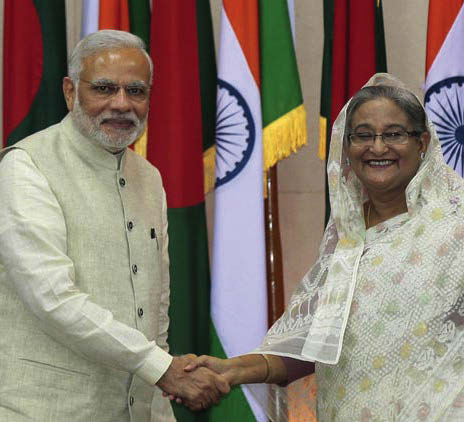
NEW DELHI (TIP): Bangladesh PM Sheikh Hasina signed off her hugely successful India visit on Monday with a restructured strategic relationship with India, but rejected Mamata Banerjee’s proposal for sharing rivers other than the Teesta.
Addressing a civic reception held for her by think tank India Foundation, Hasina spoke about the importance of water sharing between India and Bangladesh.
“On Teesta issue, PM Modi once again reiterated his government’s strong resolve to conclude the water sharing treaty at the soonest. Once it happens, the face of Indo-Bangladesh relations would undergo another transformation.”
Then, switching to Hindi, she said, “Lekin mujhe nahin pata didimoni kya karega (but I don’t know what Didi i.e. Mamata will do).”
For the first time, giving a sense of the conversation between her and the West Bengal chief minister, Hasina revealed Mamata had put forward some alternative proposals. But she held PM Modi to his words that Teesta would be the one being negotiated.
Mamata, she said, had offered to give her electricity. “Paani manga, bijli mila,” Hasina laughed. But PM Modi, she noted, said he would ensure a successful Teesta deal.
But the ice has been broken, both between Mamata and the Centre and between Mamata and Bangladesh.
The CM’s presence at the talks and the banquets, even her shift from an intransigent “no” to thinking of alternative water sharing pacts, offering electricity to Bangladesh, all signal a significant move forward, giving the Modi government something to work on with her.
For India, the Hasina visit proved very productive.
But more importantly, India has walked the extra mile to court the Bangladesh military, a very powerful institution, with stronger institutional ties to Pakistan than India.
This will help to change the institutional hostility that the Bangladesh army continues to harbour against India, specially when, India reckons, they begin to look at India as a dependable defence supplier.
On the economic front, India changed tack this time — a huge $5 billion shopping voucher could have meandered along in traditional Indian style, achieving little.
But India is learning to play the Chinese game — in the past few months, Indian officials have combed Bangladesh government corridors to pick up visible and viable projects which this line of credit would build.
Although India has far less cash to throw around (China promised Dhaka$24 billion in 2016), in the past six years India has given $8 billion to Bangladesh— $3 billion already utilised, all of it on much easier terms than China.
With the “shommanona” ceremony, India and Bangladesh renewed an alliance forged during its liberation —the enemy remaining the same.
But Hasina never wavered from her demand of a Teesta deal, and with relations ramped up, India will remain under pressure to deliver.
Indian officials have said that Bangladesh officials have refused to negotiate sharing any of the other rivers — India and Bangladesh share 54 rivers — until Teesta is done.
Sources said Mamata had offered to negotiate water sharing agreements for Torsa, Sankosh and Raidak rivers, all of which cross over into Bangladesh.
Hasina said that the Indian Parliament’s unanimous approval of the land boundary agreement was reminiscent of India’s whole-hearted support during Bangladesh’s liberation war. Implicit was the message that India should come together to get the Teesta deal done. (PTI)
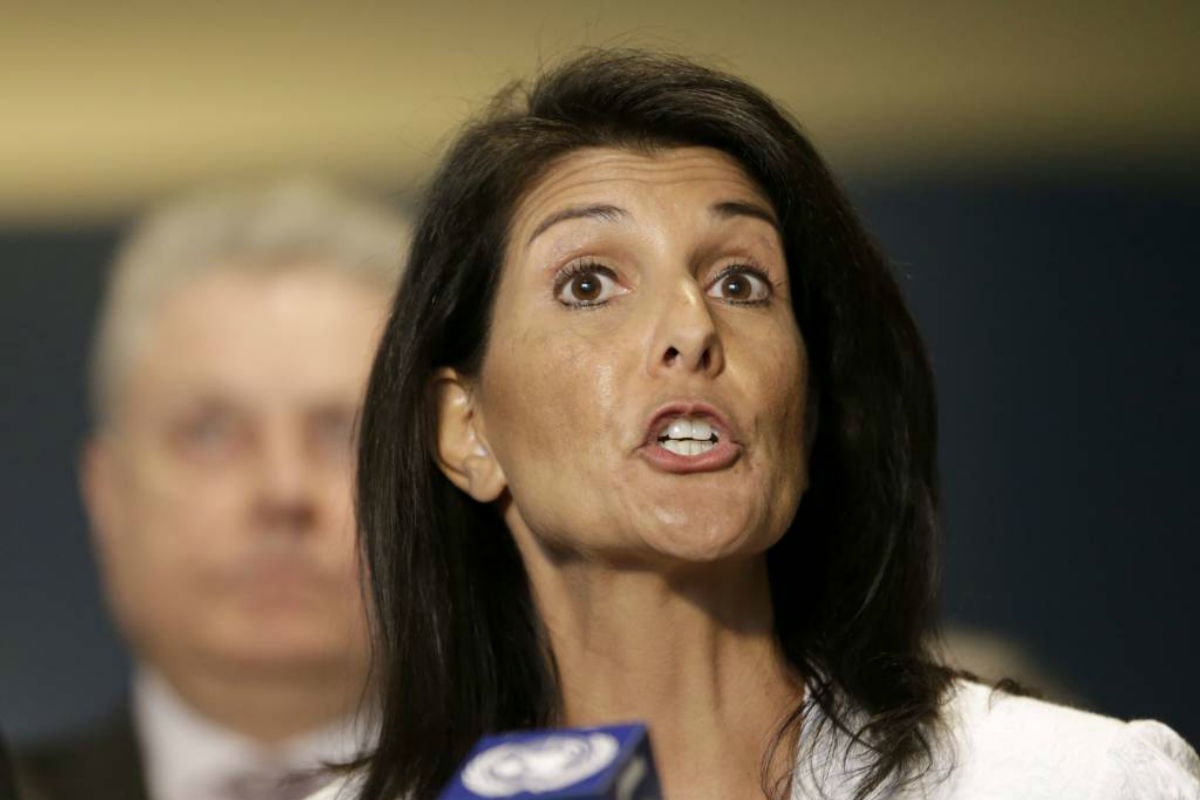
NEW YORK (TIP): Nikki Haley, the tough-talking and blunt U.S. Ambassador to the UN, was heckled during an annual summit on women here as she spoke about President Donald Trump and Russia.
The Indian American envoy was speaking April 5 at the ‘Women In The World’ summit, a premier annual gathering of influential women leaders, politicians and activists organized by media personality Tina Brown in association with the New York Times.
As she was answering questions during the session titled ‘Trump’s Diplomat: Nikki Haley’ moderated by MSNBC anchor Greta Van Susteren, Haley was booed and heckled on several occasions. At one point, someone in the audience shouted,”what about refugees” while another asked, “when is the next panel.”
During the nearly 22-minute session, a woman in the audience shouted, “when is the next panel,” to which the 45-year-old smiled and exclaimed “wow” as the audience tried to shush the heckler.
She was heckled again when asked how America deals with some of the world leaders who are dictators.
“You call them out when they do something wrong and you work with them when you can find ways to work with them,” Haley said.
As some members of the audience shouted at her remarks, Haley said, “we have to express America’s values. We are always the moral conscience of the world,” to which someone from the audience shouted, “what about the refugees,” cutting off Haley. Haley went silent. Van Susteren paused, and then said, “Moving on.”
At the end of the day’s program, Brown commended Haley for attending the event even as she got a “boisterous reception” and for remaining gracious as she was heckled.
“We often complain and sneer and say Republicans never want to come on any kind of forum except Fox News or places where they can be asked questions that are soft,” Brown said, adding that Haley did not put on any pre-conditions and sat very “graciously” while the audience heckled.
“She didn’t get agitated about it, and she’s in the middle of a lot of world crises. So, I feel that we should really applaud the fact that she did come.”
Van Susteren asked Haley why the world has not heard much from Trump about Russia, a question that drew a thunderous applause from the audience.
Haley said, “First keep in mind that I work for the Trump administration,” a response that generated boos and heckles from the audience and prompted Van Susteren to ask the audience to “hold on, hold on. We got to get people fix these problems.” Haley added that she has “hit Russia over the head more times than I can count. It’s because if they do something wrong we are going to call them out on it. If they want to help us defeat terrorism, fine.”
“But the things they have done with Crimea and Ukraine, the things they have done with how they have covered up for (Syrian President Bashar) Assad, we are not going to give them a pass on.”
Haley said she has had conversations with Trump “where he very much sees Russia as a problem and I think if you look at his actions, everybody wants to hear his words but look at his actions. The two things that Russia does not want to see the U.S. do is strengthen the military and expand energy and the president has done both of those.” She gave out a smile as her comments again drew prolonged boos from the audience.
On the chemical weapons attack on a Syrian town, Haley said Russia blamed it on a container of chemical weapons that ISIS had.
“There is no ounce of proof. They just make things up,” she said.
NEW YORK (TIP): In his first public appearance since being fired last month, former U.S. attorney of Manhattan Preet Bharara on Thursday, April 7, offered a brutal and sometimes humorous critique of President Donald Trump’s administration, saying that draining “the swamp” requires more than a “slogan.”
“There is a swamp, a lot of the system is rigged and lots of your fellow Americans have been forgotten and have been left behind. Those are not alternative facts. That is not fake news,” Bharara said during an hour-long speech at the Cooper Union for the Advancement of Science and Art.
“But I would respectfully submit you don’t drain a swamp with a slogan. You don’t drain it by replacing one set of partisans with another. You don’t replace muck with muck. To drain a swamp you need an Army Corps of Engineers, experts schooled in service and serious purpose, not do nothing, say anything neophyte opportunists who know a lot about how to bully and bluster but not so much about truth, justice and fairness.”
Bharara, who was appointed by former president Barack Obama, was one of 46 U.S. attorneys asked by the Trump administration to resign last month. The order is not unusual at the beginning of a new administration.
But in Bharara’s case it came as a surprise. Trump had asked him to stay after a meeting at Trump Tower in November and Bharara initially was unclear about whether the order to resign applied to him.
“I was asked to resign. I refused. I insisted on being fired and so I was,” Bharara said Thursday. “I don’t understand why that was such a big deal. Especially to this White House. I had thought that was what Donald Trump was good at.”
Asked why he was fired, Bharara said: “Beats the hell out of me.”
During more than seven years on the job, Bharara built a reputation as an aggressive prosecutor willing to go after public officials from both political parties and Wall Street. Bharara indicted more than a dozen prominent New York politicians for malfeasance, including some Democrats, and pursued more than 70 insider trading cases. He won major convictions against terrorists, including the son-in-law of Osama bin Laden, Sulaiman Abu Ghaith.
But Bharara also had his critics. Some accused him of overreach – he had to dismiss several insider trading cases after an appeals court ruling. Others complained he was not aggressive enough, noting that Bharara did not secure any convictions of big bank CEOs for financial-crisis-era misdeeds.
Bharara has repeatedly dismissed speculation that he would eventually run for public office, a position he emphasized Thursday.
“I DO NOT HAVE ANY PLANS TO ENTER POLITICS JUST LIKE I HAVE NO PLANS TO JOIN THE CIRCUS,” HE SAID, “AND I MEAN NO OFFENSE TO CIRCUS.”
United Nations: An Indian software engineer has won the top prize at a global challenge for an open-source tool that enables users to interactively view UN General Assembly resolutions and gain a deeper understanding of the voting patterns of member states.
Abdulqadir Rashik, also an entrepreneur, won the ‘Unite Ideas #UNGAViz Textual Analysis and Visualisation Challenge’ for his ‘Global Policy’, an open-source tool that enables users to search and interactively view General Assembly resolutions to gain a deeper understanding of the voting patterns and decisions made by United Nations Member States.
Mr Rashik’s prototype will be made public and shared with United Nations bodies and member states. He will also receive recognition from the Department of State and the Office of Information and Communications Technology.
Mr Rashik is a frequent contributor to Unite Ideas challenges and he previously won the top prize in the #LinksSDGs challenge for his ‘Links to Sustainable Cities’, an interactive visualisation that identifies and maps the links between various Sustainable Development Goals.
The world body said the project was the first collaboration between the UN Office of Information and Communications Technology (OICT) and the US Department of State.
The UNGAViz challenged developers worldwide to create an open-source tool capable of providing greater visibility into Member State voting patterns, as well as greater public transparency about their voting choices.
Solutions were judged not only on their technical merits, but also on their potential to support policymakers dealing with humanitarian challenges, peace and security issues, and other international matters, sometimes under extreme time pressure.
A State Department official Andrew Hyde said the UN General Assembly has drafted and passed thousands of resolutions affecting people in every corner of the world since its establishment in 1946.
“In support of transparency and accountability, we believe that everybody, from the general public to policymakers to diplomats, should have easy and timely access to this vast body of knowledge,” he said.
The first runner-up position was awarded to Maximiliano Lopez, an information technology consultant from Argentina, and the second runner-up was Thomas Fournaise, an information technology manager from France.
The Chief of the Global Services Division in the Office of Information and Communications Technology Salem Avan said the global network of talented open-source developers responded with insightful and practical solutions that can be easily implemented and made available to United Nations offices and Member States.
UNGAViz is the sixth challenge issued by Unite Ideas, a big data crowd-sourcing platform developed by the Office of Information and Communications Technology to facilitate collaboration among academia, civil society and UN offices, and to mobilise data scientists and software developers around the world to help tackle the complex issues faced by the Organisation and its member states through the creation of open-source technology solutions.
To date, academia, the general public and private companies have responded to the Unite Ideas challenges with more than 50 open-source solutions, many of which will be used by the United Nations or shared with member states.
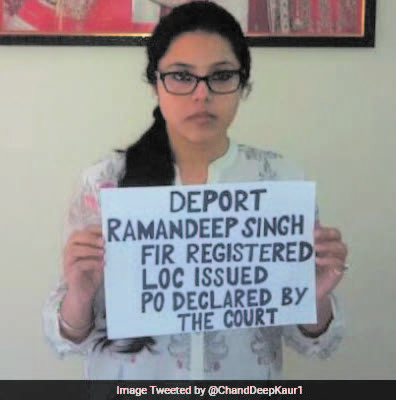
KAPURTHALA (TIP): A 29-year-old woman who has been deserted by her NRI husband has sought help from External Affairs Minister Sushma Swaraj. She has requested the minister to get him deported from New Zealand. Though her husband, Ramandeep Singh, has been declared a proclaimed offender by the Punjab Police, Chand Deep Kaur has requested Ms Swaraj for help, saying that she wants to set an example so that no other Non-Resident Indian cheats his wife.
“I have sought (Sushma) Swaraj’s help in getting my husband deported. He is in New Zealand,” Ms Kaur, who is based in Kapurthala, said.
She also wants her husband’s passport to be cancelled. “I want to set an example so that no other NRI husband can ever dare to cheat a woman. I also want stringent laws in place to check such men,” she said.
Ms Kaur said she has received a call from the ministry to send relevant documents in connection with her case. “I want him back here for divorce so that I can start my life afresh,” she said.
Chand Deep Kaur married Ramandeep Singh, who was working as an accountant in Auckland, in July 2015. “Soon after our wedding he returned to New Zealand, in August 2015,” Ms Kaur said. “I stayed with him at his family’s house in Jalandhar,” she said. “He returned to India briefly in December 2015 and went back to New Zealand in January 2016,” she said.
“I spent just 40-45 days with my husband,” she said. She alleged that the behavior of her in-laws changed after marriage. “They told me that they had disowned Ramandeep so I should move back with my parents,” Ms Kaur claimed.
“I tried calling my husband repeatedly, but he did not respond. I even tried to contact members of my in-laws’ family but they also refused to respond, and blocked my number instead,” she said.
She then lodged a complaint against her husband in August 2016. He was booked under charges of criminal breach of trust, among other sections of the Indian Penal Code. A look-out circular was also issued against Ramandeep, she said.
A police official in Jalandhar later said Ramandeep was declared a proclaimed offender in February 2017.
WASHINGTON (TIP): The U.S. is prepared to launch a preemptive strike with conventional weapons against North Korea should officials become convinced that North Korea is about to follow through with a nuclear weapons test, multiple senior U.S. intelligence officials told NBC News.
North Korea has warned that a “big event” is near, and U.S. officials say signs point to a nuclear test that could come as early as this weekend.
The intelligence officials told NBC News that the U.S. has positioned two destroyers capable of shooting Tomahawk cruise missiles in the region, one just 300 miles from the North Korean nuclear test site. American heavy bombers are also positioned in Guam to attack North Korea should it be necessary, and earlier this week, the Pentagon announced that the USS Carl Vinson aircraft carrier strike group was being diverted to the area.
The U.S. strike could include missiles and bombs, cyber and special operations on the ground.
The danger of such an attack by the U.S. is that it could provoke the volatile and unpredictable North Korean regime to launch its own blistering attack on its southern neighbor.
On Wednesday, April 12, North Korea said it would “hit the U.S. first” with a nuclear weapon should there be any signs of U.S. strikes.
On Thursday, April 13, again, North Korea warned of a “merciless retaliatory strike” should the U.S. take any action.
“By relentlessly bringing in a number of strategic nuclear assets to the Korean peninsula, the U.S. is gravely threatening the peace and safety and driving the situation to the brink of a nuclear war,” said North Korea’s statement.
North Korea is not believed to have a deliverable long-range nuclear weapon, according to U.S. experts, nor does it yet possess an intercontinental missile.
South Korea’s top diplomat said today that the U.S. would consult with Seoul before taking any serious measures. “U.S. officials, mindful of such concerns here, repeatedly reaffirmed that (the U.S.) will closely discuss with South Korea its North Korea-related measures,” Foreign Minister Yun Byung-se told a special parliamentary meeting. “In fact, the U.S. is working to reassure us that it will not, just in case that we might hold such concerns.”
The U.S. is aware that simply preparing an attack, even if it will only be launched if there is an “imminent” North Korean action, increases the danger of provoking a large conflict.
“It’s high stakes,” a senior intelligence official directly involved in the planning told NBC News. “We are trying to communicate our level of concern and the existence of many military options to dissuade the North first.”
“It’s a feat that we’ve never achieved before but there is a new sense of resolve here,” the official said, referring to the White House.
The threat of a preemptive strike comes on the same day the U.S. announced the use of its MOAB – or Mother of All Bombs – in Afghanistan, attacking underground facilities, and on the heels of U.S. missile strikes on a Syrian airbase last week, a strike that took place while President Trump was meeting with Chinese President Xi Jinping at Mar-a-Lago.
ALBANY, NY (TIP): Undocumented immigrants in New York who can’t afford a lawyer and are facing deportation will soon have access to free legal counsel.
The New York governor’s office said last week that it is allocating $10 million in its fiscal 2018 budget toward creating a legal defense fund “to ensure all immigrants, regardless of residency status, have access to representation.”
Unlike U.S. citizens, undocumented immigrants don’t have the right to free legal counsel.
Called the Liberty Defense Project, the funding is part of a public-private partnership with the Carnegie Corporation of New York and the Ford Foundation. So far, the non-profit organizations have contributed $1.5 million, making the total funds available $11.5 million.
“During these stormy times, it’s critical that all New Yorkers have access to their full rights under the law,” New York Governor Andrew Cuomo said when he first announced the program.
The Liberty Defense Project will work with 182 advocacy groups and legal entities to provide attorneys to immigrants.
To qualify, an immigrant’s household income must be below 200% of the federal poverty line and must not already be represented by a lawyer, said Oren Root, director of immigration and justice at the Vera Institute of Justice, a nonprofit social justice policy group based in New York City.
The Vera Institute is set to receive $4 million — the largest slice of the funds from the state, according to the budget.
“This funding is significant in that we will now be able to represent all detained people in the State of New York,” Root said.
Previously, the legal defense services Vera arranged for immigrants were funded by the New York City Council. Last year, the organization received $650,000 through the city’s New York Immigrant Family Reunification Project.
Since 2013, all of the city’s eligible undocumented immigrants could secure a public defender through the New York Family Immigrant Reunification Project, Root said. Of those immigrants who had legal representation, roughly 30% were able to remain in the country, Root said.
Outside of the city, Vera said it funded less than 20% of the need in New York State’s three other immigration courts: Batavia, Buffalo, and Fishkill, Root said.
Last year, nearly 4,400 immigrants in New York were deported after appearing in court, according to TRAC, a database of information on the staffing, spending and enforcement activities of the federal government that’s run by Syracuse University.
TRAC reviewed nationwide data on immigration hearings for women with children in 2015. Without representation, 98.5%of the cases were ordered to be deported. With legal representation, that percentage dropped to 73.7%.
Other groups that will receive funds from the state include The Hispanic Federation, the Catholic Charities Community Services Archdiocese of NY, the New York Immigration Coalition, the Northern Manhattan Coalition for Immigrants Rights and the Empire Justice Center.
The funds may be used for legal services, case management, English-as-a-second-language, job training and placement assistance and other employment-related services. However, the vast majority of the funding will go toward legal services, said Frank Sobrino, a spokesman for the governor’s office.
“The $10 million in the budget is a good start and an important investment,” said Steve Choi, executive director of the New York Immigration Coalition. “But there are still major gaps in legal services. There are thousands of New Yorkers who are not detained, but face deportation and might have relief, but can’t afford lawyers,”
New York is the first state to provide free legal services to immigrants, but California and several cities — including San Francisco, Chicago, and Washington, D.C. — have begun efforts to design similar programs, Root said.
NEW DELHI (TIP): Rise in the prices of sugar, confectionary, snacks and fruits pushed up India’s consumer price inflation (CPI) firmed up to 3.81% in March from 3.65% in February, government data showed on Wednesday.
The slowing pace of remonetisation, or pumping new Rs 500 and Rs 2,000 notes into circulation, during March to replace the scrapped Rs 500 and Rs 1,000 notes in November, helped inflation to stay within 4% in the financial year ending March 2017.
Retail food inflation was at 1.93% in March, slightly lower than 2.01% in February, as prices of pulses and vegetables fell by a little over 8%.
However, sugar and confectionaries were costlier by 16.5% while prices of snacks, sweets and prepared meals were up 6.13% due to festival demand during Holi.
“The worrisome feature is that non-food components still witnessed high rates–clothing 4.6%, fuel and light 5.6%, housing 5%, transport 6%. Hence, core CPI is a worry,” said Madan Sabnavis, chief economist of Care Ratings.
“We expect CPI inflation to range between 4.5-5% for FY18 assuming a normal monsoon,” he added.
Signup to our Newsletter!
Don’t miss out on all the happenings around the world