Year: 2017

  • US-China Summit: Chinese President Xi Jinping Arrives in the US

    US-China Summit: Chinese President Xi Jinping Arrives in the US

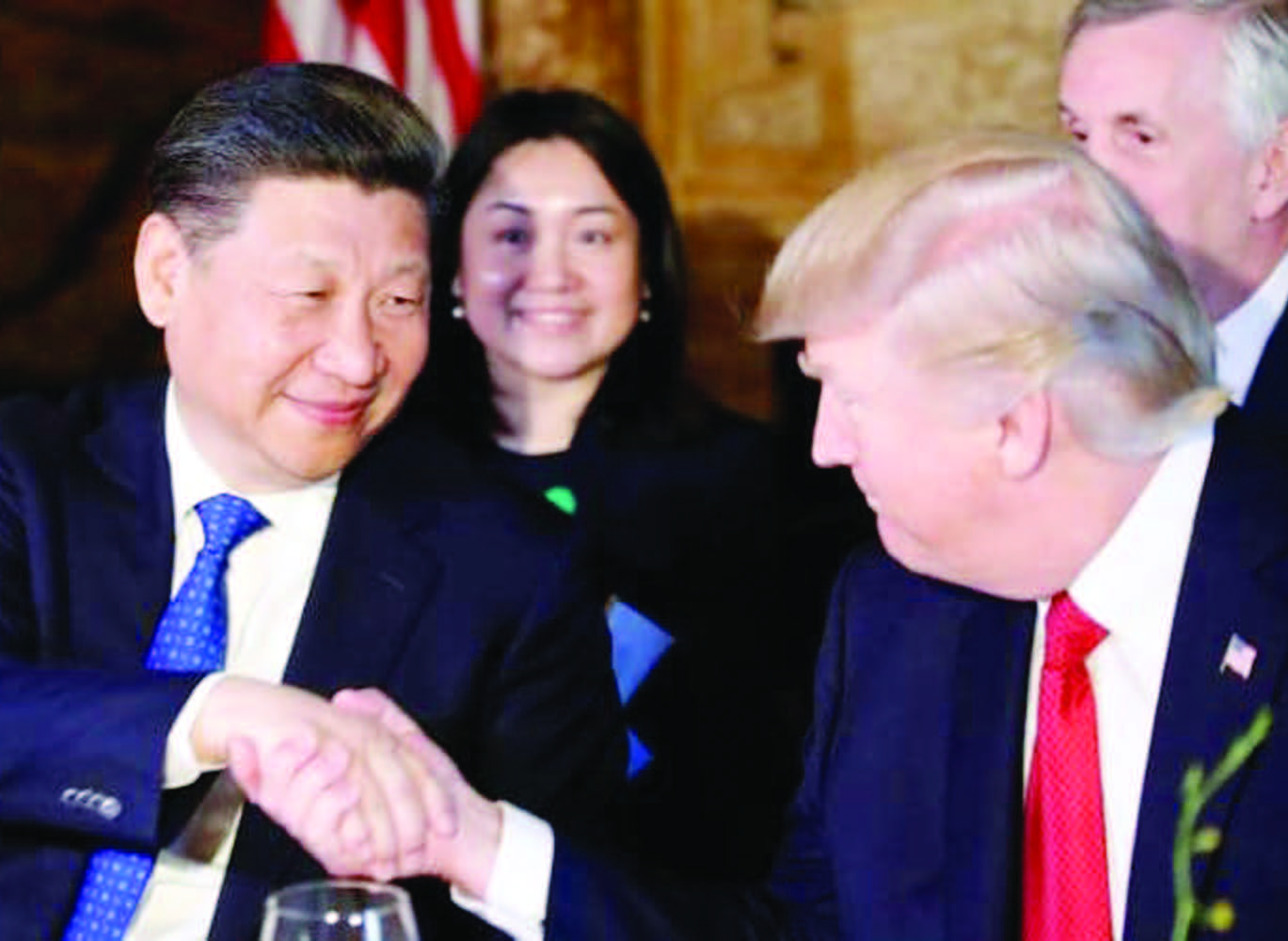
    MAR-A-LAGO, FL (TIP): US President Donald Trump and Chinese President Xi Jinping opened their high-stakes summit at Trump’s Florida beach resort on Thursday, April 6 evening, with the volatile situation in Syria where Syrian government troops used chemical gas which killed at least 100, an urgent threat of North Korea’s nuclear ambitions, and tensions over trade on the agenda for the first meeting between the leaders of the world’s two largest economies.

    President Trump pointed to the crisis in North Korea as a top priority in the meetings with Xi, telling reporters on Air Force One on his way to Florida on Thursday that he thinks China will “want to be stepping up” in trying to deter North Korea’s nuclear ambitions.

    Ahead of the dinner, Trump said he and Xi already had had a long discussion and had “developed a friendship,” and then joked, “I have gotten nothing, absolutely nothing.”

    The White House said the location was selected to give the two days of discussions a more relaxed feel. A number of Trump’s top advisers were in attendance, including his daughter, Ivanka Trump, and son-in-law, Jared Kushner.

    While Trump would not say what he wants China to do specifically with regard to North Korea, he suggested there was a link between “terrible” trade agreements the U.S. has made with China and Pyongyang’s provocations. He says the two issues “really do mix.”

    The president has said that if China doesn’t exert more pressure on North Korea, the U.S. will act alone.

  • Senate Republicans exercise Nuclear option to confirm Gorsuch

    Senate Republicans exercise Nuclear option to confirm Gorsuch

    WASHINGTON (TIP): Senate Majority Leader Mitch McConnell, R-Ky., set a new precedent in the Senate that will ease the confirmation for President Trump’s Supreme Court nominee Neil Gorsuch on Friday, after 30 more hours of debate on the floor.

    “This will be the first, and last, partisan filibuster of a Supreme Court justice,” said McConnell in a closing floor speech.

    Senate Democrats voted against ending debate on Gorsuch’s nomination on a near party-line vote, leaving Republicans shy the 60-vote hurdle required by Senate rules to move on to a final confirmation vote.

    Democrats opposed Gorsuch for a variety of reasons, including his conservative judicial philosophy, dissatisfaction with his answers during his confirmation hearings and a simmering resentment towards McConnell’s decision to block any consideration of President Obama’s nominee Merrick Garland last year.

    “We believe that what Republicans did to Merrick Garland was worse than a filibuster,” said Senate Minority Leader Charles Schumer, D-N.Y.

    So, McConnell then, as promised, used the power of his position and with all of his GOP colleagues lined up behind him, to essentially change the rules of the Senate – to lower that threshold on Supreme Court nominations to end debate from 60 to 51 votes. The change did not affect the legislative filibuster.

    McConnell made a point of order that ending debate on the nomination only requires a simple majority. The motion was not sustained by the chair because Senate rules required 60 votes, so McConnell then made a motion to overturn that ruling. And once that motion passed on a party-line vote, the Gorsuch nomination only needed 51 votes to clear the hurdle.

    That mild-sounding parliamentary maneuver has the most destructive nickname, “the nuclear option,” because it contains sweeping impact on the Senate, President Trump and all of his successors -and the nation as a whole.

    By essentially eliminating the filibuster for Supreme Court nominees – an extension of the 2013 nuclear option triggered by then-Senate Majority Leader Harry Reid, D-Nev., for all lower court and executive branch nominees – all presidential nominees will now face a far easier path navigating through the Senate confirmation process. It also could make it easier for presidents to appoint more overtly partisan justices to the Supreme Court. The change will also test the character of the Senate and the people who serve in it, and lay bare whether the upper chamber is slowly lurching towards becoming more like the majority-driven and reactionary House of Representatives, where the minority party has little substantive role.

    Opponents of easing the filibuster warn that the next and likely step is to eliminate the legislative filibuster, which allows any one senator to hold up a piece of legislation and requires a 60-vote threshold to break the logjam and move such a bill forward. Critics of the filibuster say the maneuver is abused and used so regularly that it has rendered the Senate incapable of acting on even routine legislative matters.

    The filibuster and the rights it gives to individual senators and the minority party are reasons why the Senate has long considered itself “the greatest deliberative body in the world.”

    But the use of filibusters and the polarization between the two parties have dramatically increased in the past two decades, making it harder and harder for the Senate to reach bipartisan consensus even on matters like the annual 12 spending bills.

    “Today’s vote is a cautionary tale about how unbridled partisan escalation can ultimately overwhelm our basic inclination to work together, and frustrate our efforts to pull back, blocking us from steering the ship of the Senate away from the rocks,” Schumer said.

  • House Intelligence Committee Chairman Devin Nunes steps down from Russia probe

    House Intelligence Committee Chairman Devin Nunes steps down from Russia probe

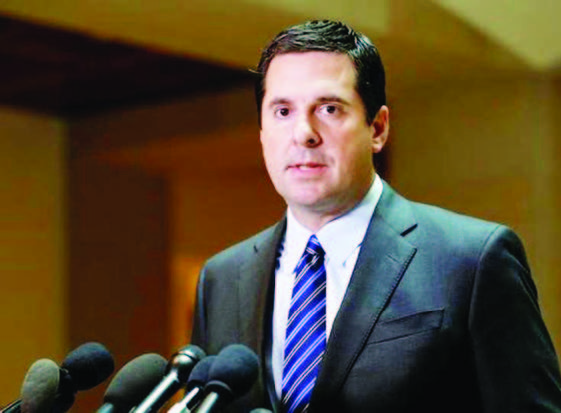
    Rep. Devin Nunes (R-Calif.), chairman of the House Intelligence Committee, announced on April 6 that he will recuse himself from the committee’s investigation into Russian interference in the 2016 election, while he faces allegations that he improperly disclosed classified information.

    WASHINGTON (TIP): After resisting for weeks calls from Democrats to step aside, House Intelligence Committee Chairman Devin Nunes (R-Calif.) temporarily stepped aside Thursday, April 6 from the committee’s probe into Russian interference in the presidential election. Nunes was under pressure after the House Ethics Committee determined to investigate allegations that “Nunes may have made unauthorized disclosures of classified information, in violation of House Rules, law, regulations, or other standards of conduct.”

    Nunes has come under fire in recent weeks for speaking publicly about classified foreign surveillance reports he viewed on White House grounds. Nunes suggested that those reports identified President Trump and members of his transition team, whose names may have been mentioned by individuals under surveillance – or whose conversations with those individuals may have been incidentally picked up.

    On Thursday, Nunes dismissed the suggestion that he violated ethics laws as “entirely false and politically motivated,” blaming “several left-wing activist groups” for filing complaints with the Office of Congressional Ethics. He noted that he asked to speak with the Ethics Committee “at the earliest possible opportunity in order to expedite the dismissal of these false claims,” and said his recusal – which applies only to the committee’s Russia investigation – would be in effect while the committee looks into the matter.

    In the meantime, Rep. K. Michael Conaway (R-Tex.) will take the lead on the Russia investigation, Nunes said, with assistance from Reps. Thomas J. Rooney (R-Fla.) and Trey Gowdy (R-S.C.). Gowdy also sits on the Ethics Committee. Nunes also pledged in his statement to “continue to fulfill all my other responsibilities as Committee Chairman” in matters unrelated to the Russia probe.

  • GOPIO Litigation: Ashook Ramsaran’s case against some GOPIO officials dismissed by District Court

    GOPIO Litigation: Ashook Ramsaran’s case against some GOPIO officials dismissed by District Court

    NEW YORK (TIP): In early 2016, GOPIO’s former president Mr. Ashook Ramsaran had filed a lawsuit against three current officers of GOPIO (it’s Chairman Dr. Thomas Abraham, Vice President Ram Gadhavi and Global Ambassador Sunny Kulathakal) and the publications DNA News, APN News and Tehelka News in the court of Judge Paul J, Oetken, US District Court, Southern District of New York. In his lawsuit, Mr. Ramsaran had alleged libel and sought damages for certain statements that had appeared in those publications.

    The case was filed on Mr. Ramsaran’s behalf by Attorneys Nicholas Netram Loaknauth and Robert A. Stramiere. The defense attorneys were Megha Bhouraskar, David Alan Karlin, Karen M. Lager and Robert Marc Barta.

    As per a ruling dated March 30th, 2017 Judge Oetken dismissed Mr. Ramsaran’s case against all defendants.

    In a press release, GOPIO stated that a big nuisance has gone and that its officers can now spend more time for the benefit of the Indian Diaspora and to promote India’s interest around the world.

    GOPIO has been in existence since 1989 as a member supported community based non-profit organization headquartered in New York, looking after the interests of the Indian Diaspora. It has over 100 chapters in 35 countries.

    When contacted for confirmation, Mr. Ramsaran said it was an ongoing case.

  • Indian American Pharmaceutical Leader Sanjiv K. Patel named President and CEO of Relay Therapeutics

    Indian American Pharmaceutical Leader Sanjiv K. Patel named President and CEO of Relay Therapeutics

    WASHINGTON (TIP): Dr. Sanjiv K. Patel has been named President and CEO of Relay Therapeutics, a biotech company dedicated to developing breakthrough medicines by focusing on insights in protein motion. Dr Patel brings to Relay over 20 years of life sciences industry experience. He succeeds interim CEO Alexis Borisy, a Partner at Third Rock Ventures, who is assuming the position of Chairman of the company’s Board of Directors.

    “We are thrilled to welcome Sanjiv as the CEO of Relay Therapeutics. Sanjiv’s strategic acumen and business experience coupled with his deep commitment to patients will help fulfill the transformational potential of Relay,” said Borisy, in a statement. “Along with this key leadership appointment, our new board members, Laura Shawver and Markus Warmuth bring to Relay an incredible depth of research, development and entrepreneurial experience in building great biotech drugs and companies. We are enthusiastic to partner with them as Board members as we build a great company that will make a transformative difference for patients.”

    Prior to Relay, Patel was at Allergan for over 10 years, and played a key part in Allergan’s sustained growth and value creation over that period. He was most recently part of Allergan’s Executive Team, as Chief Strategy Officer and at the center of some of the industry’s largest transactions. Prior to this, he held roles of increased responsibility, including leading Global Strategic Marketing for all franchises and general management of Allergan’s fastest growth geographic region, the Emerging Markets.

    Prior to Allergan, Patel was a Management Consultant at Boston Consulting Group in London and he started his career as a surgeon in the U.K.’s National Health Service. Dr. Patel received his MBA from INSEAD, MBBS from the University of London and has a M.A. in Neurosciences from Cambridge University.

    “This is a rare opportunity to join a team that is fully dedicated to treating diseases where today, no truly effective therapy exists,” said Patel, in a statement. “Relay is uniquely positioned to design innovative drugs by visualizing protein motion through integrating emerging computational and experimental methods. I look forward to working with the team to build a pipeline of groundbreaking therapies with an initial focus in oncology.”

  • Indian American C.J. Bhalla named Chief Financial Officer of Kaiser Permanente Northern California

    Indian American C.J. Bhalla named Chief Financial Officer of Kaiser Permanente Northern California

    SAN JOSE (TIP): Kaiser Permanente Northern California on April 3 announced that senior executive C.J. Bhalla has been selected as its new senior vice president and chief financial officer.

    Bhalla will oversee the finance strategy and revenue cycle operations for Kaiser Permanente Northern California. The region serves 4.1 million members and is one of the largest markets in a nationwide organization that generated $64.6 billion in operating revenue in 2016.

    Bhalla joined Kaiser Permanente in 2006 with successive promotions as chief financial officer of the national information technology unit and vice president, national financial performance and planning. Prior to joining Kaiser Permanente, she was a senior vice president at Charles Schwab & Co, a Fortune 500 company, and held numerous senior management positions at Household International Inc. (now HSBC), a Global 500 company.

    “C.J. led our financial strategy during a time of unprecedented change in health care. She is an outstanding leader who has driven healthy financial outcomes in one of the largest integrated health care systems in the country,” said Janet Liang, president, Kaiser Permanente Northern California. “This is a well-deserved promotion into one of the most sought after finance executive roles in the industry.”

    Bhalla received an MBA from Virginia Polytechnic University, and a BS in Electrical Engineering from Punjab Engineering College, India.

  • Indian American Senator Harris Urges President Trump to Abandon ACA Repeal Efforts

    Indian American Senator Harris Urges President Trump to Abandon ACA Repeal Efforts

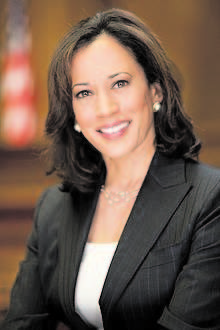
    WASHINGTON (TIP): U.S. Senator Kamala D. Harris joined colleagues in sending a letter to President Trump urging him and his administration to abandon their efforts to repeal the Affordable Care Act and undermine the United States health care system so they can work in a bipartisan fashion to improve the law and lower the costs of health care for all Americans.

    The letter, signed by 44 Senate Democrats, also requests – as a first step – that the Trump Administration rescind the executive order signed on January 20th, 2017 which severely undermined the Affordable Care Act and sparked the efforts to unravel the law thereby undermining the health care system and increasing costs, hurting patients, providers and families. Senate Democrats also expressed concern with President Trump’s recent statement indicating it would be a good thing to make the ACA “explode”, despite the fact that would mean hurting millions of Americans.

    “Members of the Democratic caucus remain ready and willing to work with you on policies that would improve the stability of the individual insurance market. We ask that you begin the work of improving health care for millions of Americans by rescinding your January 20th executive order”, reads the letter.

    Earlier, Harris spoke on the floor of the Senate in opposition to the American Health Care Act on the anniversary of the signing of the Affordable Care Act.

  • Indian American Congressman Raja Krishnamoorthi Denounces Trump’s Executive Order Rolling Back American Commitment to Growing Green Technology Sector

    Indian American Congressman Raja Krishnamoorthi Denounces Trump’s Executive Order Rolling Back American Commitment to Growing Green Technology Sector

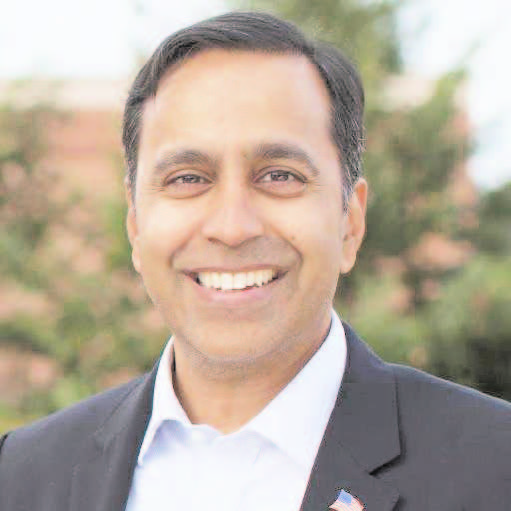
    WASHINGTON (TIP): Indian American Congressman Raja Krishnamoorthi denounced President Trump’s executive order eliminating President Obama’s climate-change protections as an attack on the growing green economy and as another example of the Trump administration’s effort to govern by decree. Krishnamoorthi is the author of the Executive Order Transparency Act, which would require executive orders to be posted to the White House website seventy-two hours in advance of signing, to reveal their contents. The Congressman also introduced H. Res. 85, a resolution in support of the United States continuing its Paris Agreement commitments to address climate change and develop clean energy.

    “Through this sudden and reckless order, the Trump administration has continued to cede American leadership in green technology while endangering our environment and ambushing our economy in the process,” Krishnamoorthi said.

    “The need to deal with climate change is imperative, but by doing so, we can also lead the world in the development of green technology. That is why I introduced a resolution specifically calling for our country to continue to address climate change and to embrace the new economic developments that come with it. Through rolling back these environmental protections, President Trump has allowed other nations to lead on this vital technology.”

    “I’ve also introduced legislation to push back against the White House’s efforts to ambush the country with radical overnight orders by requiring executive orders to be disclosed three days before their signing. By issuing this order so suddenly and without providing warning to the necessary Agencies, the administration has left clean energy and green technology firms to face a suddenly more hostile business environment for no discernible advantage”, he further added.

  • Indian American Social Entrepreneur elected Treasurer for Democrats Abroad India

    Indian American Social Entrepreneur elected Treasurer for Democrats Abroad India

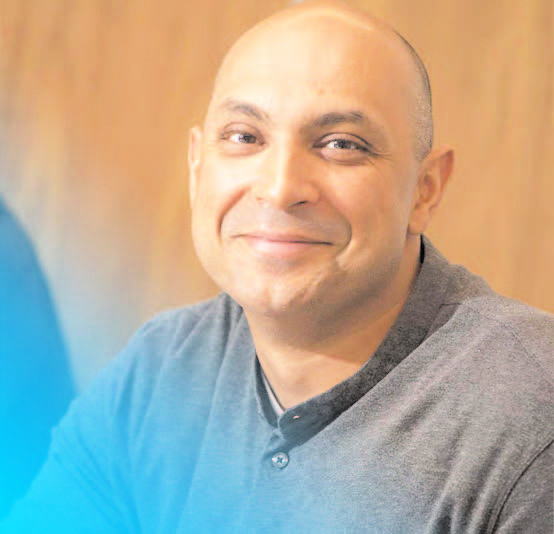
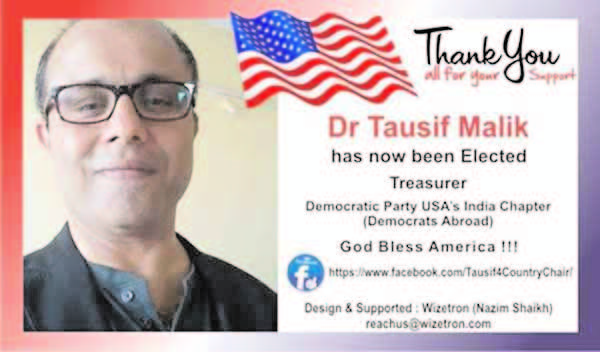
    CHICAGO (TIP): Social Entrepreneur Dr Tausif Malik from Chicago elected Treasurer for Democrats Abroad India (Democratic Party of USA – India Chapter). The elections were held on March 22nd, 2017 and results were announced on March 26th, 2017.

    Indian born Malik immigrated to Chicago in 2007. He did his schooling from Bishop’s School & Crescent School Pune. He earned his B. Com & M.Com from Poona College & Post Graduate Diploma in Business from Institute of Management Education, Pune and his Doctorate in Business Administration from Argosy University Chicago.

    A strong supporter of Barack Obama, Malik launched World’s First Muslim Spelling Bee competition, which became one of the largest community competitions of USA. In 2015, the social entrepreneur decided to return to India to take care of his ailing mother. While in India, he established various startup festivals such as AIMBSN.com, GCC Startup Fest, India Startup Fest and Schoolpreneur.

    Biz to empower individuals to achieve economic liberation and benefit from the Government of India’s Make in India, Digital India, SkiII India, Standup India Startup India initiatives. Malik now lives in Pune with his mother Razia Malik.


  • Indian Man Pleads Guilty to Use of False Passport

    Indian Man Pleads Guilty to Use of False Passport

    NEW YORK (TIP): Manish Patel, 43, a citizen of India, pled guilty on April 3 to use of a false passport, announced United States Attorney Richard S. Hartunian.

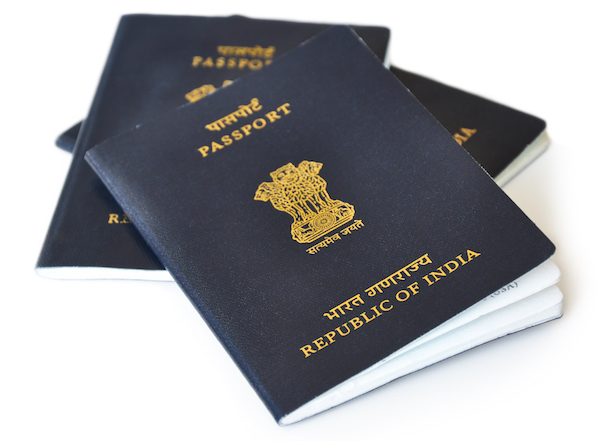
    As part of his guilty plea, Patel admitted to presenting a forged Indian passport to Border Patrol agents in the early-morning hours of January 20, 2017. Patel used the forged passport -which was in another person’s name, but bore Patel’s photograph – to fly from India to Toronto, by way of London, prior to illegally entering the United States.

    Sentencing is scheduled for August 16, 2017 at 11:30 a.m. before Senior United States District Judge Norman A. Mordue. Patel faces up to 10 years in prison and up to 3 years of post-imprisonment supervised release, and a $250,000 fine. A defendant’s sentence is imposed by a judge based on the particular statute the defendant is charged with violating, the U.S. Sentencing Guidelines and other factors.

  • Reforms Will Not Do India Any Good – Only A Revolution Will

    Reforms Will Not Do India Any Good – Only A Revolution Will

    Markanday Katju

    The answers to our problems lie outside the system

    What form this revolution will take, and how much time, cannot be predicted, but what certainly can be predicted is that it is coming.

    The test of every government is one, and only one: is the standard of living of the masses rising under it? From this standpoint the Modi government, like the previous Manmohan Singh government, is a total failure”, says the author who is a former Judge, Supreme Court of India, and a former Chairman, Press Council of India.

    India is inevitably heading for a revolution. Why do I say so? Let me explain. India could potentially be a highly developed country, but is actually a poor and backward country.

    It is potentially a highly developed country because it has two of the basic requirements to be a highly developed country-a huge pool of technical talent, and immense natural resources.

    This was not the position in 1947 when India became independent. The British policy was broadly to keep India backward, feudal and largely unindustrialised, so that Indian industry may not emerge as a big rival to British industry. So, we were not permitted by our British rulers to set up a heavy industrial base, but were permitted only some light industries like textiles, plantations, etc which, too, for a long time were mainly under British ownership. So, till 1947 we had very few industries and very few engineers

    What has happened to the slogan “sab ka saath, sab ka vikas?” It seems it was only a “jumla.”

    The position today in 2017 is very different. Today we have a heavy industrial base, and a huge pool of competent engineers, technicians, scientists, managers, etc. Our IT engineers are manning Silicon Valley in California, and American universities are full of our mathematics and science professors.

    In addition, we have immense natural wealth. India is not a small country like England or Japan. It is almost a continent.

    So, we have all that is required to be a first-rate, modern, highly developed country, like North America or Europe.

    And yet the reality is that we are an underdeveloped, poor country, with massive unemployment, malnourishment, lack of healthcare, good education, etc for our masses.

    We can consider some facts:

    1. The level of unemployment can be gathered from two facts:

    (a) 1 crore youth are entering the Indian job market every year, but only 1.4 lakh jobs are being created annually in the organised sector. So where do the remaining 9.86 million youth go? They become hawkers, street vendors, bouncers, criminals, the girls often become prostitutes, and many end up as suicides.

    (b) In 2015, the UP govt. advertised 358 jobs of peons (i.e. class 4 employees) for which there were 23 lakh applications; 250 of the applicants had Ph.D. degrees, 2500 were M.Sc., M.B.A. engineers, etc and all were begging for a peon’s job. Something similar happened when vacancies police constables were advertised in Madhya Pradesh, and peon’s jobs in West Bengal.

    1. Fifty percent of Indian children are malnourished, which is a situation far worse than in sub-Saharan countries of Africa like Somalia.

    A UNICEF report says that one out every three malnourished child in the world is an Indian child.

    1. Poor people in India have hardly any access to healthcare. There are no doubt some excellent hospitals in the big cities, but they are exorbitantly expensive. Poor patients simply cannot afford good doctors. AIIMS (All India Institute of Medical Sciences, Delhi) looks like a railway station, with thousands of people sitting there, and no one caring for them, unless they happen to be rich or powerful. So where do the poor people go when they fall sick? They go to quacks. Quackery is rampant in India.

    The test of every government is one, and only one: is the standard of living of the masses rising under it? From this standpoint the Modi government, like the previous Manmohan Singh government, is a total failure…

    1. The government spends a huge amount of money on IITs and elite institutions like JNU, but hardly anything for primary schools in villages, where the foundation of knowledge is laid.
    1. Just 57 individuals in India control 70% of India’s wealth.
    1. Far from there being any ‘vikas’, the Indian economy is lying stagnant, with chances of genuine growth remote. Whatever “growth” there has been has only benefited a handful of crony capitalists, but not the Indian masses.

    According to Mark Twain, there are three kinds of lies: lies, damned lies, and statistics. Statistics is such a wonderful thing that with its help one can manufacture any figure one wants, like a conjuror pulling a rabbit out of a hat.

    The latest figures given by the government of India authorities claiming 7.9% growth in GDP in the last quarter is an excellent example, and reminds one of Lord Haw Haw (William Joyce), or the Nazi propaganda minister, Dr Goebbels, who kept proclaiming on radio to the German people right till the very end that Germany was winning the Second World War, when in fact it was losing.

    According to this claim, the Indian economy is the fastest growing economy of the world, outstripping the growth in GDP of the Chinese economy, which grew by only 6.9% in the same period. Evidently, according to this figure, we are heading for an El Dorado sometime in the future, and as Dr Pangloss would say (see Voltaire’s Candide), quoting the German philosopher Leibniz, this is the best of all possible worlds.

    But a scrutiny of these figures throws up several doubts. Are the figures true or dressed up, like a Potemkin village? Also, assuming they are true, is this GDP growth benefiting the Indian masses, or only a handful of big businessmen?

    Exports have fallen from $187.29 billion in the period April -October 2014, to $156.29 billion in the period April-October 2015-that’s a drop of 17.6%. So, if exports have fallen, and manufacturing has grown by 9%, as claimed by the Union Ministry of Statistics and Programme Implementation, where have the increased quantity of goods manufactured been sold? In the home market?

    Apart from a huge pool of technical talent and huge natural resources, there is a third requirement to become a developed country… and that is a modern minded, patriotic political leadership.

    But India is a poor country, with 80% people holding little purchasing power. And with the sharp escalation in food prices, real incomes have really gone down.

    According to a statement of Raghuram Rajan, the RBI governor, most factories are running at 70% of their capacity, while in 2011-2012 they were running at 80%. This apparently shows manufacturing decline, rather than growth. According to a Business Standard report, corporate profitability is below 1% on an average.

    Bad loans by banks continue to mount. According to CARE, non-performing assets during July-September 2015 stood at about ?3.37 lakh crore, an increase of ?71,000 crore. According to a report by Morgan Stanley, the number of stalled projects-the bulk of them in the manufacturing and infrastructure sectors-went up. Small and medium enterprises are having a difficult time trying to survive. The real-estate sector, which provides a lot of jobs, is down in the dumps, with construction of new buildings going down, and the number of unsold homes going up.

    An article by Andy Mukherjee published by Reuters states that the GDP growth of the Indian economy is one-third a statistical mirage, and real GDP growth is more likely to be about 5 percent rather than 7.4 percent as claimed by the Indian authorities. Mukherjee says:

    “The illusion comes from a recent supposed improvement in the way India calculates its Gross Domestic Product. In theory, Indian authorities claim that Indian GDP is close to international standards. In practice it has become utterly unreliable.”

    But just how sluggish is the economy really? Breakingviews tried to answer that question by looking at three indicators: corporate earnings, auto sales and imports of computer software. The logic is straightforward: retained earnings finance new investment projects; auto sales are a proxy for consumer demand; while software imports reflect productivity gains. Mixing the three in a simple index suggests that growth in the most recent quarter was closer to 5 percent.”

    But let us assume that the 7.9% figure is correct. The further question that still remains is: is this GDP growth benefiting the Indian masses, or just a handful of big businessmen? Is the rich-poor divide growing? Dilip Shanghvi, Gautam Adani, Mukesh Ambani, Aziz Premji, Pallonji Mistry, etc are worth billions of dollars, while the majority of Indians are struggling to make both ends meet, as prices of food soar.

    What has happened to the slogan “sab ka saath, sab ka vikas?” It seems it was only a “jumla.” The communal fire is being stoked again in UP and elsewhere. When there is an economic crisis which the government cannot resolve, it resorts to fascist methods, as happened in Germany and Italy with the rise to power of Hitler and Mussolini.

    India stands at the 131st rank in human development out of the approximately 200 countries in the world.

    To solve all this, and raise the standard of living of our people-that is what must be the goal of all patriotic modern minded people. We have to create a modern, highly industrialised country in which all our citizens are getting decent lives.

    But what has this government done in this direction? The answer is: a big zero, and only jumlas and dramas.

    The test of every government or system is one, and only one: is the standard of living of the masses rising under it or not? If not, the government or system is a failure. From this standpoint (and it is the only correct standpoint), the Modi government, like the previous Manmohan Singh government, is a total failure on all fronts.

    The interest of our country, and the interest of our politicians are diametrically opposite to each other. How, then, can our country progress?

    The question once again naturally arises that when we have all that is required to be a first-rate highly developed country, why is India still poor and backward?

    The answer is that apart from a huge pool of technical talent and huge natural resources, there is also a third requirement to become a developed country, which unfortunately we do not have, and that is a modern minded, patriotic political leadership. Let me explain this in some detail.

    India borrowed the parliamentary system of democracy from England, and incorporated it into our Constitution. Now parliamentary democracy is based on majority vote, but the truth is that the vast majority of people in India are intellectually very backward, their minds full of casteism, communalism and superstitions. So, when most Indians go to vote they do not see the merit of the candidate (whether they are good people, whether they are educated) but only see their caste or religion (or the party representing a caste or religion). That is why there are so many people with criminal antecedents in our legislatures.

    Our cunning politicians take advantage of this, and have learnt the skill of manipulating caste and religious vote banks.

    The interest of the nation is to rapidly modernise, for which it is necessary to destroy feudal forces like casteism and communalism. On the other hand, the interest of our politicians is to win the next elections, and for that they have to appeal to, and therefore perpetuate, casteism and communalism, which are feudal forces. Therefore, the interest of our country, and the interest of our politicians are diametrically opposite to each other. How, then, can our country progress?

    What form this revolution will take, and how much time, cannot be predicted, but what certainly can be predicted is that it is coming.

    Most of the Indian politicians are rogues, rascals, goondas, criminals, scoundrels, looters and gangsters. They have no genuine love for the country, but only seek power and pelf. They are shameless and incorrigible, and cannot be reformed. They are experts in manipulating caste and communal vote banks, and they polarise society by spreading caste and communal hatred. Don’t such people deserve to be treated like the aristocrats in the French Revolution?

    It is thus obvious that parliamentary democracy is not suited to India. Our Constitution has exhausted itself, our “democracy” has been hijacked by feudal-minded people, and all our state institutions have become hollow and empty shells.

    On the other hand, the socio-economic distress of our people keeps mounting.

    I submit that the solutions to the massive problems of India lie outside the system, not within it. No amount of reforms will do, what is now required is a revolution. What form this revolution will take, and how much time, cannot be predicted, but what certainly can be predicted is that it is coming.

    It is only after such a revolution, which will be led by some genuinely patriotic, modern-minded persons, that a just social order will be created in India, in which our masses get decent lives, and a high standard of living.

    (The article is part of a lecture by the author who is a former Judge of the Supreme Court of India, and a former Chairman of Press Council of India)

    British English

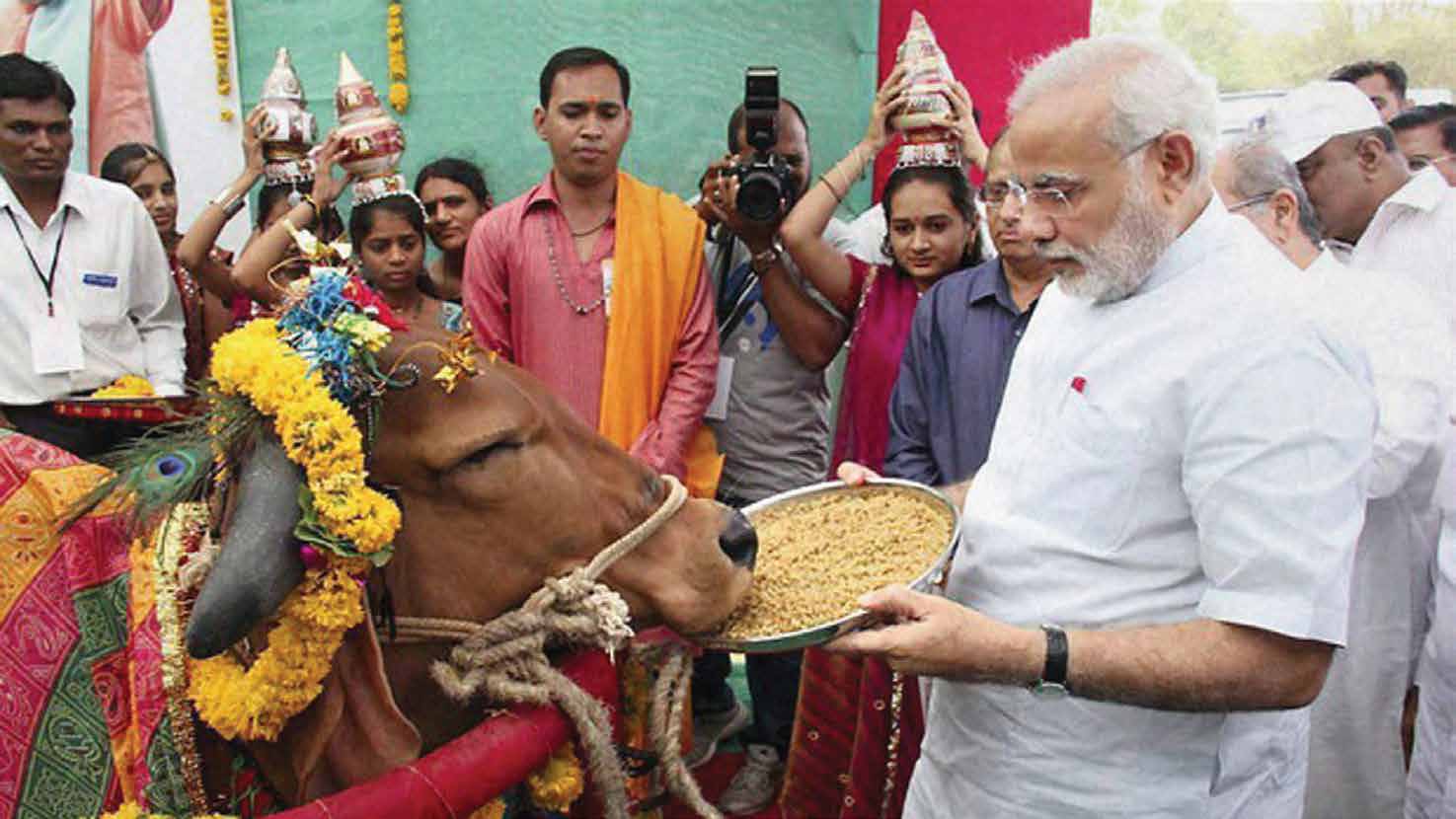
  • There is no holy cow in the Vedas

    There is no holy cow in the Vedas

    Hinduism considers the Vedas as its Supreme Court, whose word is final, and if any of the later Sanskrit or non-Sanskrit writing goes against what the Vedas have said, a Hindu has to follow the words of the Vedas.

    The Vedas consider bovines important  for milk, beef, agriculture, transport, but not as divine or holy. The word ‘Aghnyaa’ applies only to a milch cow because it is not economical to kill it. A Vaisha cow is meant for beef, and especially reserved to an extent for Brahmins only. Atharva 12.4(13) tells us that in case a Brahmin begs for a cow from a non-Brahmin, “even if that person has a beef-dinner at his house, he has to select another cow to slaughter for his own dinner than the one that is asked for”.

    The word ‘Aghnyaa’ (not to be killed) coined by Rigveda for young milch cows was the main cause of the Hindu misunderstanding that cows or bovines are not to be slaughtered. The importance of the cow entered the Hindu religion with full force possibly later, when Krishna began to be worshipped as Vishnu’s incarnation. The Rig Veda, like our Constitution, only recommends that young milch cows should be considered ‘Aghnyaa’ or ‘not to be slaughtered’, for economic reasons, and specifically states that those animals which are of no use have to be killed -Rigveda[10.95(6)]. The cattle-protection laws in most of the Indian states also rule the same way.

    The Rigveda has never used the word ‘mother’ for a cow. As in our Constitution, so in the Rig Veda, cow protection is not mandatory but only a directive principle. There is no punishment recommended for a cow slaughterer even if he kills a young milch cow. Beef-eating is also not taboo. Beef parties are not only allowed but highly appreciated, and a person who cooks beef for his guests is praised by the term ‘Atithi-gva’ ‘one who offers beef to guests’.

    Ritual sacrifice of a bull is a must in worship to God Indra. Beef parties also seem a regular affair in weddings (RV 10.85). Cows are not sacred and beef is not forbidden to Hindus. Here is a line from a verse ascribed to god Savita, the presiding deity of the Gayatri Mantra, describing a dinner party he is hosting: “At night we are going to kill cows” (RV.10.85(19). RV 10.89 (14) mentions “cows for food, laying scattered on the grounds of a slaughter house”. Mark that the author does not use the word ‘animals’ but ‘cows’, showing that beef was the most popular item, and the cow the most slaughtered animal. RV 10.95(6) says that “old cows which do not give milk” are “only fit to be cooked”. It further states that “useless cows are taken to be cooked, but never milch cows”. It is clear that slaughter houses are not banned, beef is allowed and useless bovines are allowed to be slaughtered in Hinduism.

    The cattle-protection laws in most of the Indian states also rule the same way. The Central government, in a letter dated 20th December 1950, directed the state governments not to introduce total prohibition on cow slaughter, stating economic reasons[i](DAHD, 2002, para. 64). Again, in 1995, the government of India stated before the Supreme Court that the central government was encouraging development of livestock resources and their efficient utilization which included production of quality meat for export as well as for the domestic market (DAHD, 2002, para. 65). In recent decades, the government also started giving grants and loans for setting up modern slaughter houses (Ministry of Food Processing Industries, ND.).

    In several cases, the Supreme Court has held that “a total ban (on cattle slaughter) was not permissible if, under economic conditions, keeping useless bull or bullock be a burden on the society and therefore not in the public interest” (DAHD, 2002, para. 124). So much for the legal standing on cow slaughter in the Constitution of India.

    (Summarized by Dave Makkar from the article Bovines, India And Hinduism by Rajani K. Dixit, retired Lecturer in Sanskrit.

    We look forward to your comments – Editor

  • Brexit has already made UK less attractive place to do business, KPMG study says

    Brexit has already made UK less attractive place to do business, KPMG study says

    LONDON (TIP): The UK has already become a less attractive place to do business as a result of the Brexit vote, according to a new survey. Professional services firm KPMG questioned 100 of the largest UK listed companies and foreign owned subsidiaries, as well as 60 companies from across the other G7 nations, and found that respondents deemed the UK less attractive than they did this time last year in terms of both tax competitiveness and appeal as a destination for foreign direct investment.

    “As in 2015, the Irish tax regime tops the rankings with 74 per cent of UK companies selecting it as one of their ‘top three’ and the UK again taking second place,” KPMG wrote in the accompanying report. “What is noticeable however, is the widening gap between Ireland and the UK which was just 1 per cent in 2015 but has grown to 9 per cent in the past year,” they said. The survey showed that amongst the 60 non-UK companies surveyed this year, the UK fell from first to fifth place in the rankings, trailing Ireland, Luxembourg, the Netherlands and Singapore. “Not only does this demonstrate a sharp decline in perceptions of the UK’s tax regime, there also seems to be a clear divide in sentiment between UK versus non-UK businesses,” KPMG said.

    Asked why their perception of the UK had changed, non-domestic businesses mostly cited the prospect of sensitivity to disruptions in trade deals and tariffs as a result of Brexit, and an end to the UK’s access to the single market. One concern was also the risk to the mobility of skilled labour.

    “The material change this year is that finance executives are now grappling with the question of how Brexit might impact current and future investment in the UK,” said Robin Walduck, tax partner at KPMG in the UK. “It’s in this area we see a striking divergence between the views of UK companies and their G7 peers, providing some insight as to why the UK has started to fall out of favour.”

    Mr Walduck said that those companies already investing or located in the UK, are broadly confident about the country’s future prospects. But those “on the outside looking in” are less optimistic. “As Brexit negotiations get underway, this begs the question whether UK respondents are being too bullish with misplaced optimism, or if non-UK respondents are being too quick to discount the UK,” he said.

    But while some companies have in the past hinted that a hard Brexit could mean that they re-evaluate their position in the UK, this year’s survey also shows that broadly speaking companies are not planning to withdraw their entire operations from the country. However, the number of businesses seeking to move functions into the UK -which KPMG says is a crucial source of foreign direct investment – has dropped materially for both UK and non-UK participants this year.

    The survey was conducted between December 2016 and February 2017 and 56 per cent of the companies interviewed had a turnover of over £1bn, according to KPMG. A total of 22 of the companies interviewed were members of the FTSE 100 bluechip index, with another 21 in the FTSE 250. (PTI)

  • Pope to wash feet of inmates at mafia turncoat prison

    Pope to wash feet of inmates at mafia turncoat prison

    VATICAN CITY (TIP): Pope Francis will wash the feet of inmates at a prison known for housing mafia turncoats in an Easter week ritual meant to show his willingness to serve.

    The Paliano prison, located in a huge fortress outside Rome, houses many of Italy’s “collaborators of justice,” who can shave time off their sentences by cooperating with anti-mafia investigators.

    Given the security concerns involved, the Vatican said today the April 13 Mass at the maximum-security facility would be “strictly private.”

    Francis has spoken out frequently to denounce the mafia, declaring mobsters “excommunicated” and urging them to change their ways. Many mafia turncoats have done just that, risking their own lives and those of their families to help authorities fight the mob.

    Francis has used the Holy Thursday foot-washing ceremony as a deeply symbolic gesture of inclusion that has at times riled conservatives, such as when he washed the feet of women and Muslims. Last year he performed the ritual on would-be refugees.

    Even before he became pope, the Argentine Jesuit paid particular attention to prison ministry and still stays in touch with a group of inmates in Buenos Aires. Francis has denounced the death penalty and solitary confinement and says inmates must be given hope and chances for rehabilitation. (AP)

  • London to become first city to have ultra-low emission zone

    London to become first city to have ultra-low emission zone

    LONDON (TIP): London has become the first city in the world to announce an ultra-low emission zone to tackle rising levels of air pollution, under which the drivers of the most polluting cars will have to pay an extra charge.

    London mayor Sadiq Khan has announced that the new zone will be launched from April 8, 2019, when most polluting cars, vans and motorbikes will have to pay 12.50 pounds to drive through central London, while buses, coaches and HGVs will pay 100 pounds.

    The mayor’s office hopes the move will result in a 50 per cent drop in emissions by 2020.

    “The air in London is lethal and I will not stand by and do nothing. Now I urge the Government to step up and match my ambition to transform the appalling air we breathe,” Khan said.

    “I want to announce my intention to consult on these proposals in good time so that business and those affected by new charges will have time to make changes they need to adapt to our low emission requirements,” he added.

    The new charge in 2019 will replace the “toxicity charge”, which comes into force from October this year, under which pre-2006 diesel and petrol vehicles will face an extra 10-pound charge when they enter central London during peak times.

    The so-called T-charge will see owners of such vehicles paying extra on top of the existing 11.50-pound congestion charge.

    Consultations on the various aspects of the proposals will take place this year to be ready to be imposed in two years’ time.

    The ultra-low emission zone is an area within which all cars, motorcycles, vans, minibuses, buses, coaches and heavy goods vehicles will need to meet exhaust emission standards or pay a daily charge to travel. (PTI)


  • EU to start checks at external borders

    EU to start checks at external borders

    BRUSSELS (TIP): Europeans will face systematic checks at the external borders of the EU’s Schengen border area from Friday under legislation designed to tackle “foreign fighters” returning from Iraq and Syria.

    “Member States will as of tomorrow have an obligation to carry out systematic checks against relevant databases at the external borders, also on EU citizens,” a European Commission spokeswoman said Thursday.

    This is “in order to verify that persons crossing the borders do not represent a threat to public order and internal security.” The EU said it was “in response to the attacks in Paris in November 2015 and the growing threat from foreign terrorist fighters.” The EU first proposed the measures after the November 2015 Paris attacks and the 28 member states adopted them on March 7. (AFP)

  • Germany cracks down on child marriages

    Germany cracks down on child marriages

    BERLIN (TIP): Germany’s cabinet on April 5 moved to ban child marriages after the recent mass refugee influx brought in many couples where one or both partners were aged under 18.

    The new law, set to receive parliamentary approval by July, is seen as a protective move especially for girls by annulling foreign marriages involving minors.

    It will allow youth welfare workers to take into care underaged girls even if they were legally married abroad and, if deemed necessary, separate them from their husbands.

    “Children do not belong in the marriage registry office or the wedding hall,” said Justice Minister Heiko Maas.

    “We must not tolerate any marriages that harm minors in their development.”

    “The underaged must be protected as much as possible,” he added, stressing that no minor must suffer restrictions on their asylum or residential status as a result of the change.

    The age of consent for all marriages in Germany will be raised from 16 to 18 years. Currently in some cases an 18-year-old is allowed to marry a 16-year-old.

    Foreign marriages involving spouses under 16 will be considered invalid, and those involving 16 or 17-year-olds can be annulled by family courts.

    Rare exceptions are possible, for example when one of the spouses suffers from a serious illness — but only if the couple are now both adults and both want to stay married.

    The draft law would also punish with a fine any attempts to marry minors in traditional or religious rather than state ceremonies.

    There were 1,475 married minors registered in Germany last July — 361 of them aged under 14 — according to the latest figures released after a parliamentary request.

    Of these 1,152 were girls, said the interior ministry.

    The largest group, 664 children, came from Syria followed by 157 from Afghanistan, 100 from Iraq, and 65 from Bulgaria.

    The conservative daily Frankfurter Allgemeine Zeitung welcomed the bill, saying that “archaic practises that harm women and children have no place” in Germany.

    The aim was not to “paternalistically spread one’s values or disrespect foreign cultures”, but to enforce “fundamental and, in principle, globally recognised human rights”. The non-profit German Children’s Aid Foundation said it generally welcomed the new draft law as a sign of “progress” but said courts should have latitude in some tricky cases where one spouse is aged 16 or 17.

    These could involve underage couples that have their own children, who could then be considered born out of wedlock and lose certain entitlements and inheritance rights, warned the group’s head, Thomas Krueger.

    In such cases, recognising a marriage involving one 16 or 17-year-old “can be acceptable, for example, if the relationship is proven to be emotionally stable and there is no evidence of compulsion,” he said in a statement.

    “The opinion of the minor is also decisive and must absolutely be taken into account.” (AFP)

  • China jittery as Dalai Lama’s visit challenges its diplomatic ‘symbol’

    China jittery as Dalai Lama’s visit challenges its diplomatic ‘symbol’

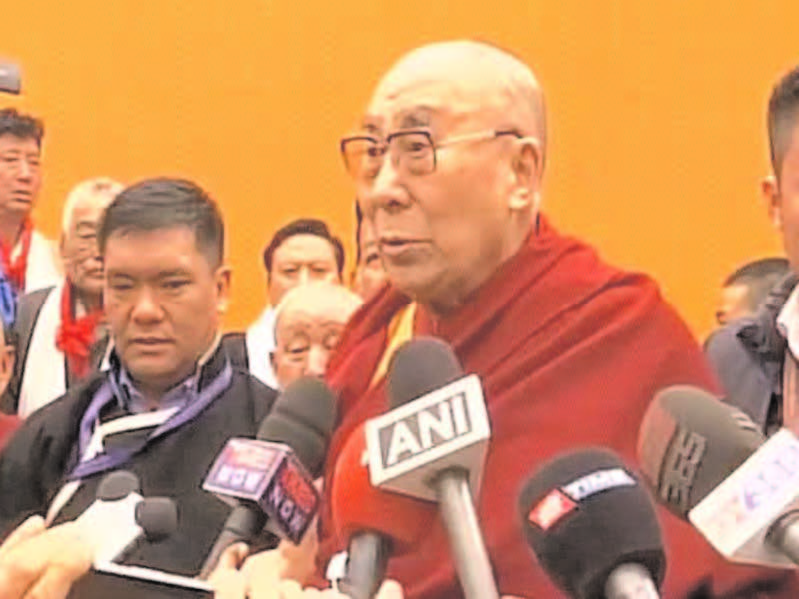
    BEIJING (TIP): Chinese foreign ministry said on Thursday that the Dalai Lama visit to Arunachal Pradesh has “fueled tensions” between China and India.

    “By inviting and approving the Dalai Lama to visit disputed areas between China and India, India has damaged our interests and the India-China relationship and it has fueled tensions,” ministry spokesperson, Hua Chunying, said. China was “opposed to attempts by the relevant country (referring to India) to arrange a platform for the Dalai Lama to conduct anti-China activities,” she said.

    There were also signs that a section of the Communist Party and the official media has stepped up pressure on the government to take action against India for allowing the Dalai Lama to visit Arunachal Pradesh.

    A senior Communist official, Zhu Weiqun, said that India is losing its dignity by encouraging the Tibetan leader, whom he accused of trying to split up China. “India is losing its dignity as a big power by playing around with such a figure,” Zhu, who heads the Ethnic and Religious Affairs Committee of the National Committee of the Chinese People’s Political Consultative Conference, said.

    It is rare for a sitting Communist official to comment on China’s relationship with other countries, which is an area left to the foreign ministry. Beijing based China Daily, which usually refrains from taking aggressive stance against India. (TOI)

  • Somalia roadside bomb kills atleast 10 in minibus

    Somalia roadside bomb kills atleast 10 in minibus

    MOGADISHU (SOMALIA) (TIP): A roadside bomb exploded and killed at least 10 people in a minibus in Somalia’s Lower Shabelle region Thursday evening, a local official said.

    Five others were injured and the death toll could rise, Nur Abdullahi told The Associated Press.

    The massive bomb buried beside the road struck the vehicle near Gobweyn village, he said.

    The Somalia-based extremist group al-Shabab claims control over parts of the largely coastal Lower Shabelle region, which has been a focus of efforts to counter the group by a 22,000-strong multinational African Union force.

    Civilians often have been casualties in this long-chaotic Horn of Africa country. Now hundreds of thousands of Somalis are on the move as a drought threatens roughly half of the country’s population of 12 million.

    New Somali-American President Mohamed Abdullahi Mohamed, who was elected in February, has promised to make security a priority as the weak central government tries to assert itself beyond the capital and some other urban areas. (AP)

  • Hamas execute 3 Palestinians over Israel ties

    Hamas execute 3 Palestinians over Israel ties

    GAZA CITY (TIP): The Islamic militant Hamas group ruling the Gaza Strip says it has executed three Palestinians accused of `collaborating’ with Israel.

    Hamas says they were hanged at a police compound on Thursday morning as dozens of Hamas leaders and officials watched.

    Hamas has launched a local media campaign against those it suspects of spying for Israel after a militant, Mazen Faqha, was found dead in Gaza last month.

    Israel had sentenced him to nine life sentences for directing suicide bombings. He was freed along with more than 1,000 other Palestinian prisoners in exchange for a single Israeli soldier in 2011.

    Israel had sentenced him to nine life sentences for directing suicide bombings. He was freed along with more than 1,000 other Palestinian prisoners in exchange for a single Israeli soldier in 2011. (PTI)


  • Chemical attack kills 22 members of a single family in Syria

    Chemical attack kills 22 members of a single family in Syria

    BEIRUT (TIP): The grief-stricken father cradled his 9-month-old twins, Aya and Ahmed, each in the crook of an arm. Stroking their hair, he choked back tears, mumbling, “Say goodbye, baby, say goodbye” to their lifeless bodies.

    Then Abdel Hameed Alyousef took them to a mass grave where 22 members of his family were being buried. Each branch of the clan got its own trench.

    More than 80 people, including at least 30 children and 20 women, were killed in the chemical attack on the Syrian town of Khan Sheikhoun early Tuesday, and the toll could still rise. The Alyousef family, one of the town’s main clans, was hardest hit.

    Another member of the family, Aya Fadl, recalled running from her house with her 20-month-old son in her arms, thinking she could find safety from the toxic gas in the street. Instead, the 25-year-old English teacher was confronted face to face with the horror of it: A pick-up truck piled with the bodies of the dead, including many of her own relatives and students.

    “Ammar, Aya, Mohammed, Ahmad, I love you my birds. Really they were like birds. Aunt Sana, Uncle Yasser, Abdul-Kareem, please hear me,” Fadl said, choking back tears as she recalled how she said farewell to her relatives in the pile.

    “I saw them. They were dead. All are dead now.”

    The tragedy has devastated the small town. It also deepened the frustration felt by many Syrians in opposition-held areas that such scenes of mass death, which have become routine in the country’s 6-year-old civil war, bring no retribution or even determination of responsibility.

    The US and other Western countries accused President Bashar Assad of being behind the attack, while Syria and its main backer, Russia, denied it. Despite world condemnation, bringing justice is difficult in the absence of independent investigation of Syria’s chemical arsenal, which the government insists it has destroyed. (AP)

  • Cow is an excuse – Rajasthan murder more than a vigilante action

    Cow is an excuse – Rajasthan murder more than a vigilante action

    Another vigilante action, another Muslim dead. This time in Rajasthan. But the beating of five persons transporting milch cows, leading to the death of a 55-year-old man, Pehlu Khan, was not surprising even if it was shocking. Circumstances of the case make it obvious that it was not part of any attempt to prevent smuggling of cows. It was an assault on a particular religious identity. For one, anyone familiar with cattle – especially those who claim to be passionately devoted to it – should be able to tell condemned cattle from a milch cow, as was the case here. Then, the man who died had documents to show he purchased the cows for milk as he ran a dairy. The more pertinent bit, however, is that one Hindu driver was let off by the gang, even though he was as much a part of the crew transporting the cattle.

    The disturbing aspect is that this is not an action of “fringe elements”, if there is still any distinction to be made within the communal monolith called the “Sangh”. The police were as quick as the “gau rakshaks” to accuse the cattle buyers of being smuggles, and booked them too without even preliminary inquiries. The Rajasthan Home Minister defended the police action, and even the need for “gau rakshaks” to prevent cattle smuggling. Union Minister Mukhtar Abbas Naqvi said in the Rajya Sabha that the incident had been misreported. It is becoming increasingly difficult for the BJP to deny that it supports such vigilante action, given the systematic persecution of meat traders in certain states. UP has also seen “anti-Romeo squads” and instructions for teachers on how to dress “decently”.

    The fast evolving cultural tyranny needs to be recognised for what it is – a devious ploy at sustaining animosity on communal lines. The motives for this are as much political as a sincere faith in a medieval ideology, not very different from the extreme Islamic intrusion seen in all public institutions in Pakistan. Unless this is understood, and no less than the top leadership of the BJP moves to put a stop to the moral policing, the consequences also may be very similar to as in Pakistan.


  • India Business Conference to focuson ‘Route to Resurgence: Shaping India’s New Desinty’

    India Business Conference to focuson ‘Route to Resurgence: Shaping India’s New Desinty’

    NEW YORK (TIP): The South Asia Business Association at Columbia Business School will host their 13th Annual India Business Conference on April 8 at Lerner Hall, Columbia University.

    The annual India Business Conference is the premier India-focused conference in the City of New York and is a powerful forum that inspires thought-leadership and generates discussions around the business, social, political, and creative undercurrents that permeate Indian life. The goal of the conference is to bring together decision makers and opinion shapers from across the business, social, political, and creative spectrums of India.

    The India Business Conference has enabled discourse around varied topics including driving growth on the foundation of structural reforms, maintaining the momentum provided by the sustained success of the Information Technology sector, and having an honest conversation about the challenges inherent in the Indian political and democratic system. The ideas exchanged during past conferences have permeated academic, political, and social circles, and have earned both acclaim and extensive media coverage.

    The theme for this year’s conference is “Route to Resurgence: Shaping India’s New Destiny.” After 25 years of economic liberalization, India as a nation has finally realized that the ingenuity of its entrepreneurs and the market potential of its billion plus people are the keys to its prosperity. With one of the largest number of start-ups in the world, today’s India is thriving with opportunities and its lure is hard to ignore. The India of today is more confident and knows that it holds the key to its destiny. We believe this shift in thinking, despite India’s many problems, is perhaps one of the most interesting ideas to explore and has implications not just for India but also for those who wish to do business in the country.

  • National Sikh Day Campaign Launches Awareness about Sikhs on Media

    National Sikh Day Campaign Launches Awareness about Sikhs on Media

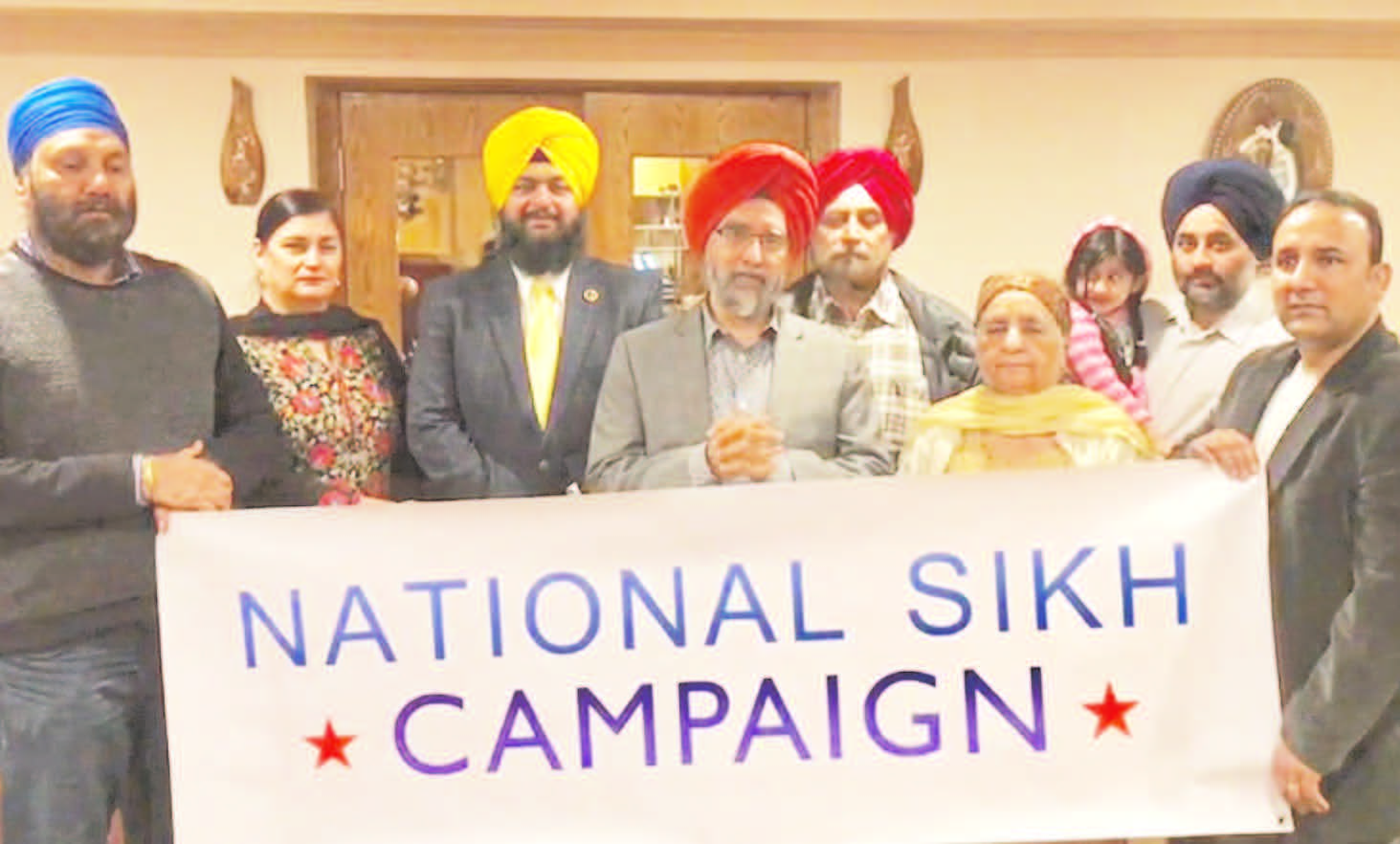
    NEW YORK (TIP): “National Sikh Campaign” is a project with 1.3 million dollars led by Dr. Rajwant Singh Based in Washington D.C to raise awareness among fellow Americans about Sikhism.

    “As we all know if change in political scenario the hate crimes have increased by 20%on Sikhs and other communities”, said Mr. Singh.

    National Sikh campaigns is started with the aim to have TV advertisement on CNN and Fox TV networks about Sikhism in which they focus on basic Sikh values and how Sikh values are the same as American values.

    This is help fellow Americans to understand the fact that Sikhs are important part of American Fabric.

    Swaranjit Singh Khalsa who is also serving in “Commission of City Plan of Norwich” said “This Campaign is a need of the time and this is first time community is coming together and doing this project in a professional manner”.

    On the occasion, famous singer “DavinderPal Singh ” was also present and performed with his band.

    Pritpal Singh From Salt Lake City , Uttampal Singh, Swaranjit Singh Khalsa, Kulwant Singh Samra,Malkit Singh Sekhon, Manmohan Singh Bharara,Harpal Singh Chawla,Hargurpreet Singh, Guruninder Singh Dhaliwal, Kanwalpreet Singh, Avtar Singh, Veer Singh, Kulbir Singh,Purshotam Singh, Amarjit Singh, Maninder Singh Arora and Satnam Singh donated very generously.

    Presidents of various Gurudwara sahib and members of community also took pledge that raise the money in their congregations to support the campaign and reach their fundraising goal.

    Overall program was success and it provided platform for Sikh community of Connecticut to come together and do project based on common goals.

    Dr.Rajwant Singh Thanked all the Community Members and also told them that ads will be running on CNN from April 14th 2017.

    (Press Release)

  • April 07 New York & Dallas Print Editions

    April 07 New York & Dallas Print Editions

    [vc_row][vc_column][vc_column_text]

    Print Replica ~ Digitally

    E-Editions

    [/vc_column_text][/vc_column][/vc_row][vc_row][vc_column width=”1/2″][vc_custom_heading text=”New York Edition” font_container=”tag:h2|text_align:center” google_fonts=”font_family:Istok%20Web%3Aregular%2Citalic%2C700%2C700italic|font_style:700%20bold%20regular%3A700%3Anormal” link=”url:https%3A%2F%2Fwww.theindianpanorama.news%2Fwp-content%2Fuploads%2F2017%2F04%2Fvol11issue14nyc.pdf||target:%20_blank|rel:nofollow”][vc_single_image image=”82378″ img_size=”full” add_caption=”yes” alignment=”center” onclick=”custom_link” link=”https://www.theindianpanorama.news/wp-content/uploads/2017/04/vol11issue14nyc.pdf”][/vc_column][vc_column width=”1/2″][vc_custom_heading text=”Dallas, Texas Edition” font_container=”tag:h2|text_align:center” google_fonts=”font_family:Istok%20Web%3Aregular%2Citalic%2C700%2C700italic|font_style:700%20bold%20regular%3A700%3Anormal” link=”url:https%3A%2F%2Fwww.theindianpanorama.news%2Fwp-content%2Fuploads%2F2017%2F04%2Fvol5issue14dallas.pdf||target:%20_blank|rel:nofollow”][vc_single_image image=”82447″ img_size=”full” add_caption=”yes” alignment=”center” onclick=”custom_link” link=”https://www.theindianpanorama.news/wp-content/uploads/2017/04/vol5issue14dallas.pdf”][/vc_column][/vc_row]