Year: 2017

  • Paytm to levy 2% fee on top up with credit cards

    Paytm to levy 2% fee on top up with credit cards

    NEW DELHI (TIP): Paytm users will now have to pay a 2% fee for adding money to their wallets using credit cards. The move by the Alibaba-backed company came after it found multiple users using its platform to get free credit by using credit cards to top up their mobile wallets and transferring the money back to their bank accounts at zero transaction cost.

    Paytm has started levying the fee from yesterday. However, adding money using other payment options like debit cards and net banking would remain free. “Some financially savvy users (surprisingly many of them employees of national financial institutions) exploited this model to rotate money. This may surprise normal users like most of us but for a savvy user, it meant freebies at Paytm’s cost,” Paytm said in a blog post.

    Paytm said it pays “hefty charges” when consumers use their credit card to card networks and issuing banks and therefore, if users simply add money from credit card to wallet and transfer the amount to bank, it loses money. “Our revenue model requires users to spend money within our network and we make money from the margins available to us on various products/services we offer,” it said.

    To avoid the misuse, Paytm “will put two per cent fee (inclusive of taxes) only on adding money to wallet using credit cards”, it added.

    Meanwhile, MobiKwik today said it will allow consumers to top up wallets using credit cards without any additional charges.

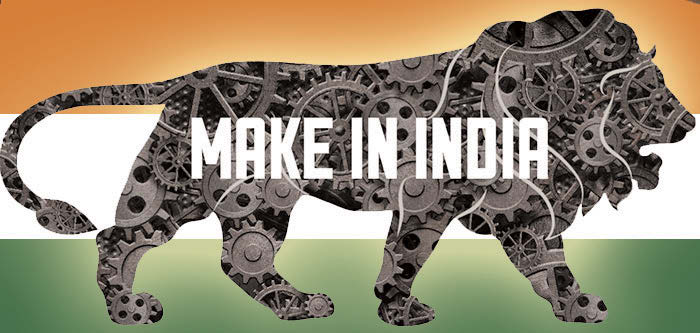
  • Toyota, Suzuki chief meets Modi, discuss ‘Make in India’

    Toyota, Suzuki chief meets Modi, discuss ‘Make in India’

    NEW DELHI (TIP): Toyota president Akio Toyoda and Suzuki chairman Osamu Suzuki on Thursday called on Prime Minister Narendra Modi to discuss future technological development and plans for Make in India.

    The Toyota-Suzuki business partnership and future technological developments came up for discussion, a PMO release said.

    “The partnership is expected to bring together Toyota’s global leadership in technology and manufacturing, with Suzuki’s strength in manufacture of small cars, especially in India. It is expected to enable India to use new technological developments,” it said.

    Further, high volumes will enable local manufacture of components required for these technologies.

    “Hence, the partnership will promote Make in India, and contribute to employment generation. It also opens up scope for export of new technology cars from India,” the PMO statement said.

  • LAMBORGHINI AIMS TO SELL 50 SUPERCARS A YEAR IN INDIA BY 2020

    LAMBORGHINI AIMS TO SELL 50 SUPERCARS A YEAR IN INDIA BY 2020

    GENEVA (TIP): Italian super sports carmaker Lamborghini is betting big on the Indian market and expects its sales in the country to double by 2020.

    In order to popularise the brand, the company also plans to push sales of its licenced accessories and merchandise in India. “India for us represents a market with a lot of returns and a very important market. Last year, it was a very good year there, “ Automobili #Lamborghini CEO Stefano Domenicali said on the sidelines of the Geneva Motor show.

    He said although the company has been present in India for around three years, it was able to sold 28 units last year.

    “It is a growing market and we see potential. We can go easily to 40-50 cars a year very soon (with the upcoming SUV Urus), we can double our sales in India realistically by 2020,”Domenicali said.

  • ‘Denied sex for 10 yrs’, woman chops off husband’s organ

    ‘Denied sex for 10 yrs’, woman chops off husband’s organ

    GHAZIABAD (TIP): A 30-year-old woman allegedly chopped off her husband’s private parts after the man refused to have a physical relationship with her for 10 years of their marriage. The couple hails from Bulandshahr and has been living in Ghaziabad for the past eight years.

    According to the police, the couple has no children and there used to be frequent altercations between them over the issue. The incident took place around 9.30am on Thursday.

    “She told the police that her husband mentally tortured her by not having a physical relationship with her and avoided having children with her. Frustrated by his behaviour, she picked up a kitchen knife and attacked him when he came out of the bathroom after a bath,” said Anil Kumar Yadav, circle officer (Indirapuram).

    The police lodged an FIR at Khoda police station and also arrested the woman who said she had no alternative but to injure her husband. Her husband is a cab operator and owns two Innova MUVs.

  • I’VE REPRESENTED GHOST COMMUNITY WELL: ANUSHKA

    I’VE REPRESENTED GHOST COMMUNITY WELL: ANUSHKA

    Actress Anushka Sharma, who will be essaying the role of a ghost bride in her second production ‘Phillauri’, says she does believe in ghosts.

    During media interaction to promote her upcoming flick, the ‘Rab Ne Bana Di Jodi’ star revealed, “I believe ghosts exist and I have felt it too.”

    The 28-year-old then described her experience of becoming one and said, “It was fun to play a non-living character. Normally we play characters which are in the flesh and its boring to portray a living character in each film. You should keep doing a different thing. I think I’ve represented the ghost community well by presenting their feelings in front of all of you.”

    Anushka ventured into production with 2015 thriller ‘NH-10’ and is now gearing up for her banner’s next project starring Diljit Dosanjh.

    When asked as to what she enjoys the most, the actress replied, “I enjoy being both, an actor and producer. I have realized that with more responsibilities, I tend to perform better. It’s because I get to collaborate on a film from scratch, from the beginning of it. This is creatively an extremely satisfying experience.”

    “For example right now when I am working on Imtiaz Ali’s film, I just act and that’s it. But when it’s your film, there is even more involvement which I really enjoy,” added the ‘PK’ star. Source: ANI

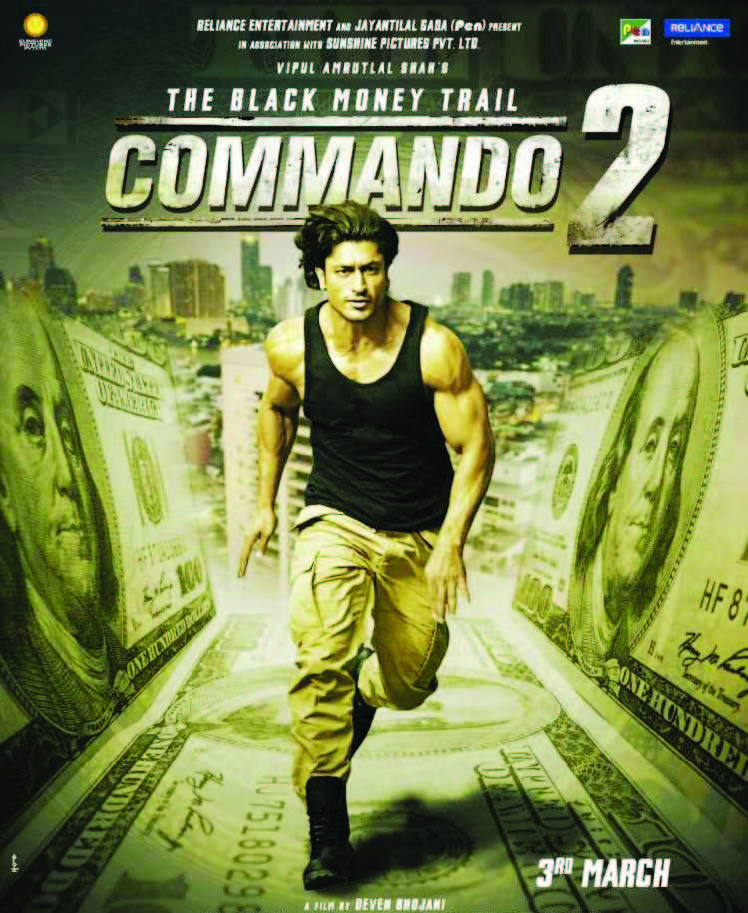
  • Commando 2: The Black Money Trail – MOVIE REVIEW

    Commando 2: The Black Money Trail – MOVIE REVIEW

    STORY: The Home Minister of India (Shefali Shah) assigns a four member special unit, comprising a dedicated police officer (Freddy Daruwala), ex-commando turned encounter specialist (Vidyut Jammwal), corrupt cop obsessed with brands (Adah Sharma) and a hacker to undertake a covert operation. The team must travel to Malaysia to bring in Vicky Chadda, a notorious black money launderer. Soon this challenging mission turns into a dangerous game of deceit. ?

    CAST: Vidyut Jammwal, Adah Sharma, Esha Gupta,
    Freddy Daruwala, Shefali Shah
    DIRECTION: Deven Bhojani
    GENRE: Action
    DURATION: 2 hours 3 minutes

    REVIEW: Vidyut Jammwal is a solid action star and his stunts are the only reason you manage to sit through this never-ending tale of ‘catch-Vicky Chadda-if-you-can’. The opening scene is spectacular. Sadly, the cat and mouse game between the cops and the criminal is not one bit exciting as the story pretends to be more intelligent than it is.

    Every move is far-fetched and preposterous. Why would the cops, who accidentally witness Chadda’s confrontation with their co-member Karan (Jammwal) just stand there staring at the two blatantly, knowing they could get killed! All your doubts about this chase are left unanswered like the bizarre instance mentioned above. The Home Minister comes across like a jobless person, who has nothing else to do in the world, except for making inane phone calls to these undercover agents.

    Director Deven Bhojani tries too hard to evoke intrigue but the absurd script leaves no room for thrill. The multiple illogical twists leave you frustrated and in no mood to connect the dots and decode the mystery. Also, the director seems to be a diehard fan of Mission Impossible series and American superhero films as various scenes remind you of the original versions.

    Barring Esha Gupta’s ravishing looks and permanent smirk, nothing quite stands out in the film. None of the lead actors are able to show a single expression. Ada Sharma’s attempt at speaking comic Hyderabadi Hindi (or at least that’s we thought it was) fails to amuse.

    The blaring ‘Commando commando’ background during the action scenes is strikingly outdated. Overstretched and uninspiring, this film is reminiscent of a poor man’s Abbas Mustan film. Even decent action cannot salvage this dreary supposed crime thriller.

  • FEEL LIBERATED TO CARRY FILM ON MY SHOULDER: SONAKSHI

    FEEL LIBERATED TO CARRY FILM ON MY SHOULDER: SONAKSHI

    Actress Sonakshi Sinha says featuring in movies as a main lead is a ‘liberating’ experience. The actress starred in ‘Akira’ last year and is gearing up for the release of ‘Noor’. Both the films feature her as the main lead and Sonakshi is really excited. “I don’t (know) if it’s easy or difficult but with ‘Akira’ and ‘Noor’, I feel very liberated that I don’t have to depend on anybody else to carry this film. Honestly, the team that I have is such a solid support to me I don’t need anybody else,” Sonakshi said.

    “Once you get this addiction that you can do it, you are strong, you’re independent, you are moving ahead with the team, it’s just the best feeling in the world. I am really happy to be able to carry this film on my shoulders along with the team,” she adds.

    The 29-year-old actress was speaking at the trailer launch of ‘Noor’. Directed by Sunhil Sippy, the film is based on Pakistani author Saba Imtiaz’s novel ‘Karachi, You’re Killing Me!’

    The film follows journalist-writer Noor’s misadventures and love life as she navigates her way through Mumbai. The star feels the film industry is going through a good phase when it comes to having strong female centric roles.

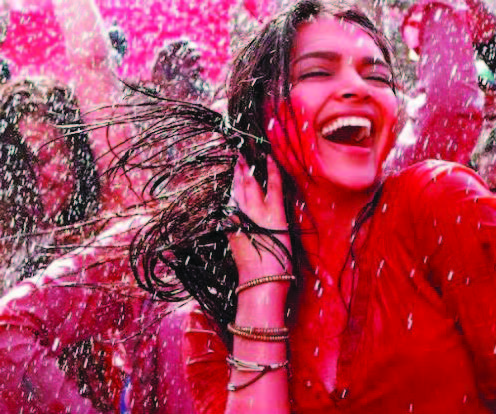
  • HOLI: LET THE COLOR SHOWER JOY

    HOLI: LET THE COLOR SHOWER JOY

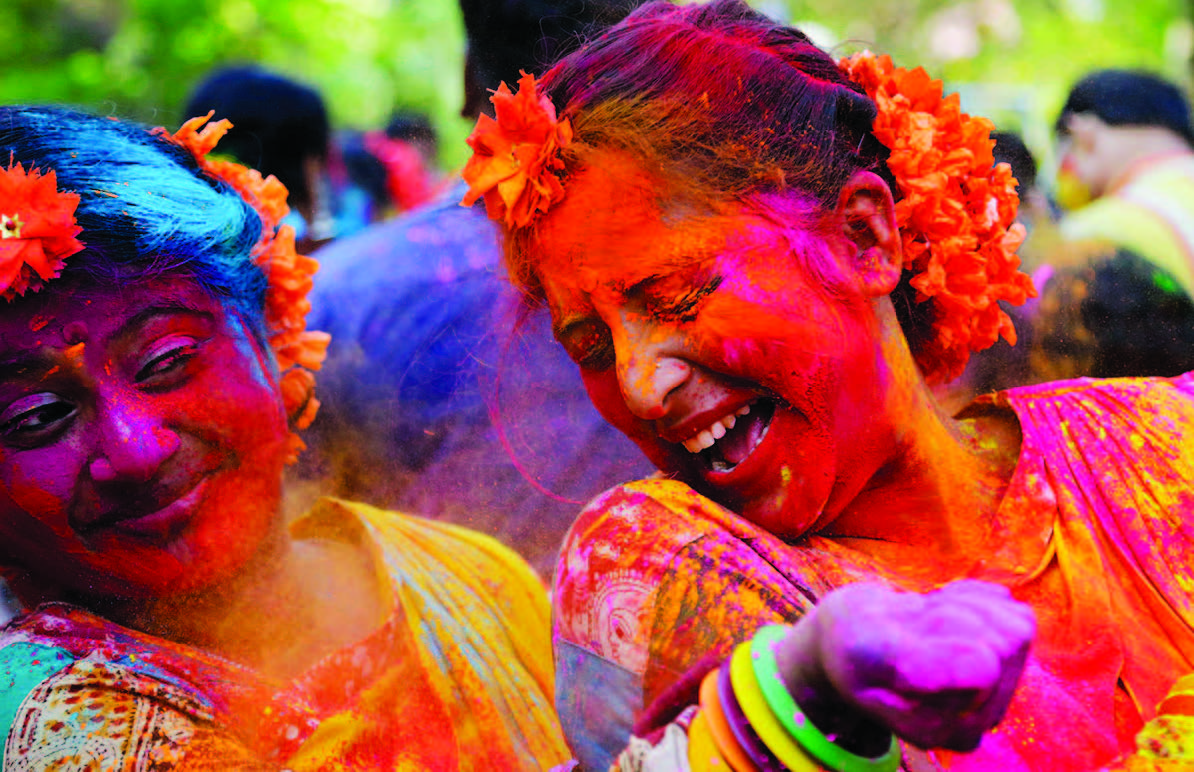
    The colorful festival of Holi is celebrated on Phalgun Purnima which comes in February end or early March. Holi festival has an ancient origin and celebrates the triumph of ‘good’ over ‘bad’. The colorful festival bridges the social gap and renew sweet relationships. On this day, people hug and wish each other ‘Happy Holi’.

    Holi celebration begins with lighting up of bonfire on the Holi eve. Numerous legends & stories associated with Holi celebration makes the festival more exuberant and vivid. People rub ‘gulal’ and ‘abeer’ on each others’ faces and cheer up saying, “bura na maano Holi hai”.

    History of Holi

    Holi is an ancient festival of India and was originally known as ‘Holika’. The festivals finds a detailed description in early religious works such as Jaimini’s Purvamimamsa-Sutras and Kathaka-Grhya-Sutras. Historians also believe that Holi was celebrated by all Aryans but more so in the Eastern part of India. It is said that Holi existed several centuries before Christ. However, the meaning of the festival is believed to have changed over the years. Earlier it was a special rite performed by married women for the happiness and well-being of their families and the full moon (Raka) was worshiped.

    Story of Behind the Celebration of Holika Dahan

    There are numerous mythological explanations that are described in the historical books regarding the death of Holika and its reference for the celebration of Holi. In accordance to those historical explanations Holika was booned by Brahma for not getting any harm from fire or never getting burnt in fire. Following the order of his Brother Hiranyakashyap (who was also the father of Prahlad) Holika sat on fire with Prahladf in order to burn him in fire and let to death. It was Prahlad’s prayers to Lord Vishnu that saved him from burning in fire. It was the protective shawl of Holika that flew to cover Prahlad’s body from Holika who was having it. This is the story behind the celebration of Holika Dahan that is still followed by the people of India.

    The Legend of Holika and Prahlad

    There was once a demon king by the name of Hiranyakashyap who won over the kingdom of earth. He was so egoistic that he commanded everybody in his kingdom to worship only him. But to his great disappointment, his son, Prahlad became an ardent devotee of Lord Naarayana and refused to worship his father.

    Hiranyakashyap tried several ways to kill his son Prahlad but Lord Vishnu saved him every time. Finally, he asked his sister, Holika to enter a blazing fire with Prahlad in her lap. For, Hiranyakashyap knew that Holika had a boon, whereby, she could enter the fire unscathed.

    Treacherously, Holika coaxed young Prahlad to sit in her lap and she herself took her seat in a blazing fire. The legend has it that Holika had to pay the price of her sinister desire by her life. Holika was not aware that the boon worked only when she entered the fire alone.

    Prahlad, who kept chanting the name of Lord Naarayana all this while, came out unharmed, as the lord blessed him for his extreme devotion. Thus, Holi derives its name from Holika. And, is celebrated as a festival of victory of good over evil.

    Holi is also celebrated as the triumph of a devotee. As the legend depicts that anybody, howsoever strong, cannot harm a true devotee. And, those who dare torture a true devotee of god shall be reduced to ashes.

    The Legend of Radha-Krishna

    Young Krishna is known to be very playful and mischievous. The story goes that as a child, Krishna was extremely jealous of Radha’s fair complexion since he himself was very dark.

    One day, Krishna complained to his mother Yashoda about the injustice of nature which made Radha so fair and he so dark. To pacify the crying young Krishna, the doting mother asked him to go and colour Radha’s face in whichever colour he wanted.

    In a mischievous mood, naughty Krishna heeded the advice of mother Yashoda and applied colour on her beloved Radha’s face; Making her one like himself.

    Well, there is also a legend to explain Krishna’s dark complexion. It so happened that once a demon attempted to kill infant Krishna by giving him poisoned milk. Because of which Krishna turned blue. But Krishna did not die and the demon shriveled up into ashes.

    The Legend of Dhundhi

    It is believed that there was once an Ogress called Dhundhi in the kingdom of Prithu (or Raghu). The female monster used to specially trouble little children who became fed- up of her.

    Dhundhi, had a boon from Lord Shiva that she would not be killed by gods, men nor suffer from arms nor from heat, cold or rain. These boons which made her almost invincible but she also had a weak point. She was also cursed by Lord Shiva that she would be in danger from boys going about crazy.

    Deeply troubled by the Ogress, the King of Raghu consulted his priest. Giving the solution, the priest said that on Phalguna 15, the season of cold vanishes and summer starts. Boys with bits of wood in their hands may go out of their house, collect a heap of wood and grass, set it on fire with mantras, clap their hands, go around the fire thrice, laugh, sing and by their noise, laughter and homa, the ogress would die.

    The legend has it that on the day of Holi, village boys displayed their united might and chased Dhundhi away by a blitzkrieg of shouts, abuses and pranks. It is for this reason that young boys are allowed to use rude words on the day of Holi without anybody taking offence. Children also take great pleasure in burning Holika.

    Lathmaar Holi

    In what is known as the hub of holi in India – Barsana, Holi is known as Lathmaar Holi. Sounds violence?? There is more violece than the name signals off. The stick is in the hands of the women on this day and the men need to work a lot to save themselves from the immensely charged up womenfolk.

    The birth place of Lord Krishna’s beloved Radha, Barsana celebrates Holi with extreme enthusiasm as Krishna was famous for playing pranks on Radha and gopis. In fact, it was Krishna who started the tradition of colours by first applying colour on Radha’s face.

    Womenfolk, of Barsana it seems, after thousands of centuries want to take a sweet revenge of that prank of Krishna. Even men have not left their mischief and are still eager to apply colour on the women of Barsana.

    Following the tradition, men of Nandgaon, the birthplace of Krishna, come to play Holi with the girls of Barsana, but instead of colours they are greeted with sticks.

    Completely aware of what welcome awaits them in Barsana, men come fully padded and try their best to escape from the spirited women. Men are not supposed to retaliate on the day. The unlucky ones are forcefully led away and get a good thrashing from the women. Further, they are made to wear a female attire and dance in public. All in the spirit of Holi.

    The next day, it is the turn of men of Barsana. They reciprocate by invading Nandgaon and drench the womenfolk of Nandgaon in colours of kesudo, naturally occurring orange-red dye and palash. This day, women of Nadagow beat the invaders from Barsana. It is a colourful site.

  • PLACES IN MADHYA PRADESH THAT TAKE YOU BACK IN TIME

    PLACES IN MADHYA PRADESH THAT TAKE YOU BACK IN TIME

    With three UNESCO World Heritage Sites under its belt, this central Indian state already has a prominent place on the tourist map of the country. With its rugged hilltop forts, beautiful palaces, intricately-carved temples, historic mosques and other monuments, Madhya Pradesh is the perfect place for time-travelling.

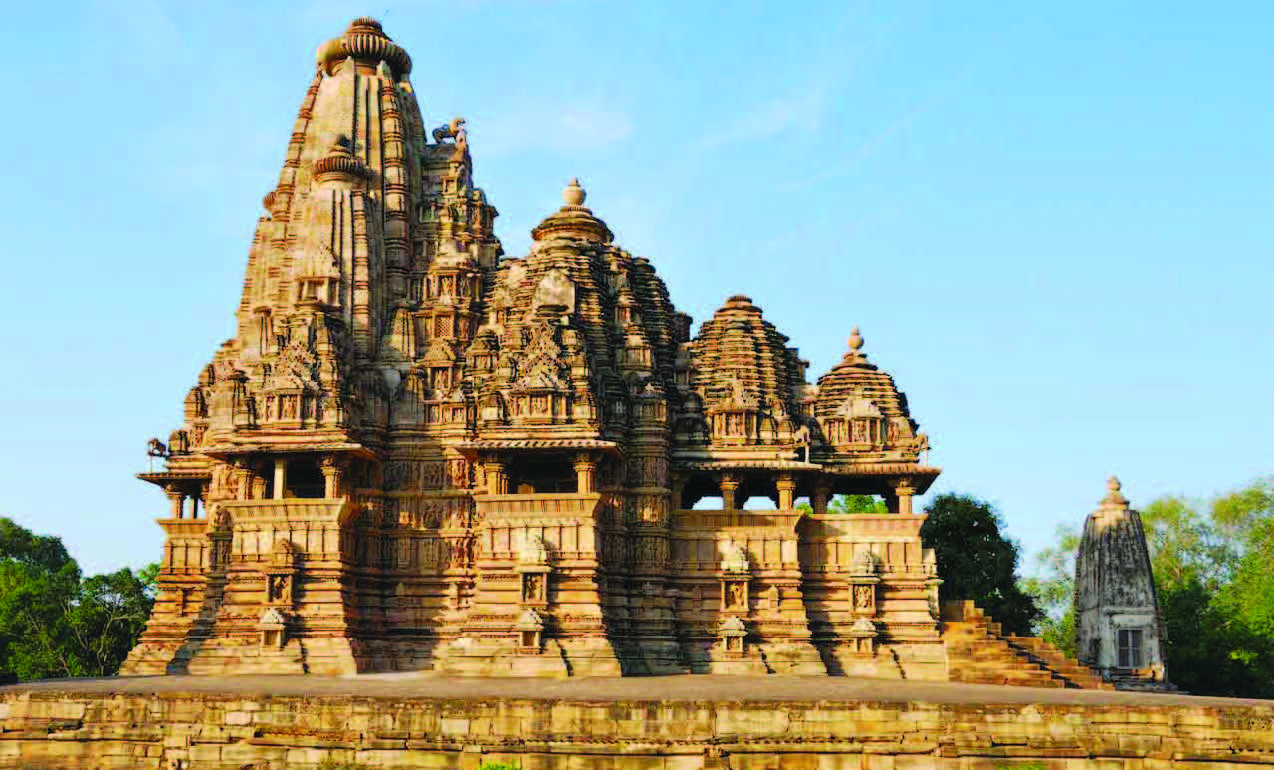
    KHAJURAHO

    Famous for its sensual sculptures, this UNESCO World Heritage Site contains one of the best examples of temple architecture in India. Khajuraho’s temples were built by the Chandela dynasty, who ruled over central India between 950-1050 AD. Out of the 85 original temples, only 20 survive today. Most of them have soaring vertical spires or shikharas, which are believed to represent the Himalayas.

    Khajuraho contains both Hindu and Jain temples, which are divided into the Western, Eastern and Southern complexes. It’s best to begin from the Western complex, either by taking an audio guide from the ASI ticket booth or hiring a guide. There is also a light-and-sound-show held every evening in Hindi and English, which narrates the history of the temples.

    The largest and best-decorated monuments are found in the Western complex. The Kandariya Mahadev is a Shiva temple with an exquisite entrance, and a large number of carvings of Hindu gods as well as lovers. The Chitragupta temple has an impressive seven foot image of the sun god Surya drawing a chariot pulled by seven horses. The unique Chausath Yogini temple originally consisted of 64 small shrines dedicated to ‘yoginis’ or female spiritual leaders, of which only 35 survive now.

    The Eastern complex includes both Hindu and Jain temples. The largest Jain temple now houses an image of Parshvanath, but was originally dedicated to the first ‘tirthankara’, Adinath. The Southern complex has two temples, dedicated to Vishnu and Hindu. The Chaturbhuj temple has a large idol of Vishnu, while the Duladeva temple is an ode to Shiva.

    SANCHI

    This UNESCO World Heritage Site contains some of the finest examples of ancient Buddhist architecture in India. Located at a distance of 40 kilometres from Bhopal, Sanchi is most famous for its Great Stupa (a dome-like monument housing Buddhist relics), which was built by the Mauryan emperor Ashoka. The stupa has four monumental gateways or ‘toranas’ covered with exquisite carvings. These depict scenes from Buddha’s life, Jataka stories and Buddhist history. Sanchi was a major Buddhist centre from the 3rd century BCE until the 12th century AD, and also contains the ruins of several other stupas, temples, pillars, monasteries.

    BHIMBETKA

    Located 46 kilometres from Bhopal, the Bhimbetka Hill contains a cluster of 14 rock shelters which house some of the best prehistoric rock art in the world. Now a UNESCO World Heritage Site, they are situated inside the Ratapani sanctuary. This densely-forested area also has several stunning naturally-sculpted rock formations. The cave paintings date back to the Mesolithic period, and explore themes such as hunting, dancing, music and animals. They also depict animals such as bisons, tigers, lions, wild boars, antelopes, and elephants, as well as religious and ritualistic symbols. They have been made primarily with red and white colours, with the occasional use of green and yellow. These colours were prepared using natural dyes, minerals, coal, and animal fat.

    MAHESHWAR

    A short drive away from Mandu and Indore, this small town is a popular pilgrimage centre with a rich architectural heritage. While Maheshwar has a long history, it was revived in the 18th century by the Holkar queen Ahilyabai. Ahilyabai shifted the capital from Indore to Maheshwar, consolidated the Maheshwar fort and constructed the city’s famous ghats and temples.

    The imposing Maheshwar Fort is located on a hilltop overlooking the Narmada river. Its walls enclose the Rajwada or Ahilyabai’s royal palace; Devpuja, the shrine used by her; and the ‘rajgaddi’, her throne, on which a life-sized statue of the queen has been installed. It also contains various heirlooms of the Holkar dynasty.

    Most of the activity is centred around its ghats, where pilgrims take a dip in the river Narmada. Maheshwar also has beautiful temples such as Kaleshwar, Rajarajeshwara and Ahileshwar, which have tall spires and carved balconies and doorways. To truly immerse yourself in the city’s history, stay at the Ahilya Fort, a beautiful and sprawling heritage hotel located on the banks of the Narmada river.

    ORCHHA

    The former capital of the Bundela Rajputs, Orchha was founded in the 16th century on the banks of the Betwa River. Dotted with palaces, temples and cenotaphs, this heritage site is still not on the mainstream tourist roadmap and makes for an enriching and quiet getaway from Khajuraho.

    The main centre of attraction is the fort complex. A medieval bridge leads to the three palaces inside its walls. The Raja Mahal is the oldest palace in the city. It was built in the 16th century by Orchha’s founder Rudra Pratap and his successor Bharat Chand. It contains royal quarters and the Diwan-i-Khas (a hall for private audience), both with beautiful wall and ceiling murals. The second palace, known as Jahangir Mahal, was built in the 17th century by Raja Bir Singh Deo, to mark the visit of the Mughal emperor Jahangir. The three-storey structure is an impressive example of Indo-Islamic architecture, with domes, balconies and delicate trellis work. Finally, the Rai Parveen Mahal was built for Bir Singh’s paramour Rai Parveen, a musician and poetess. The simple, two-storey building still contains her portrait.

    Orchha also has an unusual Rama Raja Temple, which is unique because Rama is worshipped as a king rather than a god. The temple is also actually a palace, where the idol, brought from Varanasi, had originally been installed while its temple was being constructed. Eventually however, the palace was converted into a temple.

    Finally, for a last whiff of royal history, check out the 14 beautiful chhatris or cenotaphs. These are located on the banks of the Betwa river, and were built as memorials to the Bundela rulers.

    MANDU

    Located in the Vindhya mountains in the Malwa region of Madhya Pradesh, this medieval hill fort is at its most picturesque during the monsoon. Mandu rose to prominence in the 15th and 16th centuries, under the Afghan ruler Dilawar Khan, his successors, Hoshang Shah and Baz Bahadur, and later, the Mughals.

    The city’s major monuments are divided into three broad clusters. The Royal Enclave contains several palaces, Mandu’s first mosque, and water bodies such as a ‘hammam’ or Turkish bath, a ‘baoli’ or step well, and lakes. The two-storey Jahaz Mahal or the ‘ship palace’ is located between two artificial lakes, Munj Talao and Kapur Tao. It was probably built by Sultan Ghiyasuddin Khilji for his large harem. It has open pavilions, balconies overlooking the lakes, and an open terrace.

    History-lovers should also check out the 15th-century Jami Masjid, whose grand architecture was inspired by the great mosque of Damascus. Located next to the mosque, Hoshang Shah’s tomb is considered to be the first marble building in India, and preceded the magnificent marble edifices built by the Mughals in Agra.


  • ISHVARA: THE PERSONAL ASPECT OF GOD

    ISHVARA: THE PERSONAL ASPECT OF GOD

    When Brahman is viewed as the supreme personal being (rather than as the infinite principle) Brahman is called Ishvara (“The Lord”;), bhagavan (“The Auspicious One”;), or Parameshwara (“The Supreme Lord”). Ishvara thus refers to the personal aspect of Brahman in general; it is not specific to a particular deity. Ishvara transcends gender, yet can be looked upon as father, mother, friend, child, or even as sweetheart. Some schools of Hindu philosophy do not believe in Ishvara, while others interpret Ishvara in different ways. Some schools do not distinguish between Ishvara and Brahman. The dvaita-advaita school holds that Ishvara is not incorporeal, but is infinite and a personal being.

    According to Bhagavata Purana, absolute Brahman can be realized in three ways.

    • Brahman it self ( the absolute reality)
    • Paramatma (union of all individual souls)
    • Bhagavan (as a personal God)

    Devatas: The Celestial Beings – The Hindu scriptures also speak about many celestial entities, called devas (“The shining ones”, also called devatas). The word devas may be translated into English as Gods, Deities, Celestial Spirits or Angels. The feminine of deva is devi.

    The Vedas and Puranas depict traditional stories about individual devas. The latter lauds the Trimurti of Mahadevas (“Great Gods”), which are the three aspects of God, Brahma, Vishnu and Shiva. Numerous other devas have been worshiped throughout Hinduism’s history. The devas are an integral part of Hindu culture and are depicted in art, architecture and through icons. In their personal religious practices, Hindus worship primarily one or another of these deities, known as their i??a devata, or chosen ideal. The particular form of God worshiped as one’s chosen ideal is a matter of individual preference and needs, influenced by regional and family traditions.

    Atman: The Innermost Self

    We as individuals are also a part of this changing universe. Our bodies are constantly undergoing change, while our minds, formed of thoughts and feelings, are also in a state of flux. According to Vedanta, however, our self consists of more than mind and body. At its core lies the unchanging atman, our innermost, transcendental Self, as opposed to the material self (our body, thoughts, and feelings) that is part of the universe. The atman is our True Self. But we lose sight of it because of our passionate involvement with our material self and its search for happiness in this universe. The universe can never provide perfect and permanent happiness, however, because it, like our material self, is in a state of constant flux. We attain true happiness only through an awareness of our atman and the discovery of its true relationship with Brahman.

    By achieving awareness of atman and its unity with Brahman, we attain not only happiness, but also moksha, or liberation. But liberation from what? At one level, the liberation is from unhappiness, but the answer provided by Vedanta Hinduism goes deeper: Moksha is liberation from a chain of lives called samsara.

    Samsara: The Chain of Lives

    We normally think of ourselves as coming into being when we are born of our parents and as perishing when we die. According to Hinduism, however, this current life is merely one link in a chain of lives that extends far into the past and projects far into the future. The point of origin of this chain cannot be determined. The process of our involvement in the universe—the chain of births and deaths—is called samsara.

    Samsara is caused by a lack of knowledge of atman (our Innermost Self) and our resultant desire for fulfillment outside ourselves. We continue to embody ourselves, or be reborn, in this infinite and eternal universe as a result of these unfulfilled desires. The chain of births lets us resume the pursuit. The law that governs samsara is called karma. Each birth and death we undergo is determined by the balance sheet of our karma—that is, in accordance with the actions performed and the dispositions acquired in the past.

    This cycle of action, reaction, birth, death, and rebirth is a continuum called samsara. The Bhagavad Gita states that:

    As a person puts on new clothes and discards old and torn clothes, similarly an embodied atman (our Innermost Self) enters new material bodies, leaving the old bodies.

    Karma: Action and Its Consequences

    Karma is a crucial Hindu concept. According to the doctrine of karma, our present condition in life is the consequence of the actions of our previous lives. The choices we have made in the past directly affect our condition in this life, and the choices we make today and thereafter will have consequences for our future lives in samsara. An understanding of this interconnection, according to Hindu teachings, can lead an individual toward right choices, deeds, thoughts, and desires, without the need for an external set of commandments.

    The principle of karma provides the basic framework for Hindu ethics. The word karma is sometimes translated into English as “destiny,” but karma does not imply the absence of free will or freedom of action that destiny does. Under the doctrine of karma, the ability to make choices remains with the individual.

    We are subject to the “law” of karma just as our physical movements on earth are subject to the law of gravitation. But just as the law of gravitation does not take away our freedom to move about, the doctrine of karma does not leave us unfree to act. It merely describes the moral law under which we function, just as the law of gravitation is a physical law governing our being.

    When we cause pain or injury, we add to the karmic debt we carry into our future lives. When we give to others in a genuine way, we lighten our karmic load. In the Bhagavad-Gita, an important Hindu text, Krishna states that the best way to be free of debt is by selfless action, or by dedicating every action as an offering to Krishna himself. In addition, human beings can purify themselves of karmic debt through different yogas (disciplines), kriyas (purification processes), and bhakti (devotions).

    Purusharthas: Stages or Goals of Life

    Classical Hindu thought accepts two main life-long dharmas: Grihastha Dharma and Sannyasin Dharma.

    The Grihastha Dharma recognize four goals as noble; these are known as the puru?harthas, and they are:

    1. kama: Sensual pleasure and enjoyment
    2. artha: Worldly prosperity and success
    3. dharma: Following the laws and rule that an individual lives under
    4. moksha: Liberation from the cycle of samsara

    Among these, dharma and moksha play a special role: dharma must dominate an individual’s pursuit of kama and artha while seeing moksha, at the horizon.

    The Sannyasin Dharma recognizes, but renounces kama, artha and dharma, focusing entirely on moksha. As described below, the Grihasthi eventually enters this dharma as an eventual stage of life. However, some enter this stage immediately from whichever stage they may be in.

    Moksha: Liberation from Samsara

    Moksha (Freedom or Liberation) from the cycle of birth and death is the ultimate goal of Hindu religious life. Moksha is called Mukti (freedom) by yogis.

    The atman (Innermost Self), in its liberated state, possesses divine qualities such as purity, omnipresence and omnipotence, and is beyond limitations. Within the individual, however, the atman is involved in the working of samsara (the cycle of birth and death in the phenomenal world), thereby subjecting itself to bondage by Law of Karma. Moksha is attainted when the individual becomes liberated from the cycle of birth and death and attains eventual union with the Brahman (Supreme Being).

    This union can be achieved through gyana or jnana (True Knowledge), bhakti (devotion), or karma (right work). Purity, self-control, truthfulness, non-violence, and compassion toward all forms of life are the necessary pre-requisites for any spiritual path in Hindu dharma. The Hindu dharma emphasizes the importance of a satguru (True Guru or Spiritual Master) for the attainment of True Knowledge of the atman and Brahman.

    Darshanas: Schools of Thought

    As Hinduism developed, it did not reject its parent traditions, but modified and assimilated them into newer schools of thought. For example, the ancient Vedic notion of sacrifice, and the later philosophies of Sankhya and Yoga, have all been assimilated into the more recent school of Vedanta. Even the more sectarian sampradaya do not entirely reject other doctrines, but claim that they demonstrate a less complete understanding.

    Despite a relatively inclusive approach, Hinduism has rejected those doctrines that do not accept its scriptural authority. Most notably these include Jainism, Buddhism, and the hedonistic philosophy of Charvaka. They are therefore called nastika, differentiating them from the accepted schools termed astika. There are six main astika systems, which are called darshanas (ways of seeing). The various groups and sub-groups within Hinduism usually subscribe to one or more of the six darshanas.

    The Six Darshanas

    The six darshanas are grouped as three pairs of “sisters.” Each pair consists of one darshan dealing with theory and the other explaining the corresponding practice and methodology. For example, Sankhya forms the doctrinal basis for the discipline of yoga. Each pair is further explored in this section.

    Some groups consider these schools to be hierarchical, with Vedanta the culmination of Vedic philosophy. This is somewhat supported by the fact that Vedanta means “the end of the Vedas” or, less literally, “the ultimate conclusion of knowledge.” Certainly, Vedanta today represents the more theologically developed strands of Hinduism, and forms the basis for many modern theistic traditions.

  • DIY FACE PACKS TO GET GLOWING SKIN NATURALLY

    DIY FACE PACKS TO GET GLOWING SKIN NATURALLY

    In case you head to a salon for facial, clean-up or any other treatment whenever your skin feels dull, here’s something that will save your money and time. Your kitchen is loaded with ingredients that can be put together to make an amazing face mask, and give you a glowing in just 10-15 minutes. Plus, they are free from harsh chemicals, and are suitable for all skin types. Here, take a look…

    1. Honey and Egg Mask

    This two ingredient face mask is super easy and effective. All you need to do is to mix a tablespoon of honey with egg white, and keep it for 10-12 minutes. Honey moisturises your skin, and makes it supple. Egg white is rich in protein that helps to tighten your skin, and provide it the much needed nutrition.

    1. Lemon and Yogurt Pack

    Start by mixing two tablespoons of plain yogurt with one tablespoon of lemon juice. Apply this mixture on your face for 10 minutes, and wash it off with lukewarm water. Lemon helps to reduce pigmentation and dark spots. Yogurt moisturises the skin and helps to smoothen it.

    1. Gram Flour Mask

    Mix four tablespoons of gram flour with one tablespoon of sandalwood powder, and a pinch of turmeric. Add two-three tablespoons of milk to make it a paste and apply it on your face. Keep it for 10-12 minutes and wash it off with cool water. Gram flour will help to exfoliate your skin, and turmeric will help to tackle pimples and blemishes. Sandalwood also acts as a natural antiseptic, and this mask also effective for those with acne.

    1. Apple Cider Vinegar and Honey

    Start with mixing two tablespoons of honey with one tablespoon of apple cider vinegar. Apply this mask for 15 minutes, and wash it off with lukewarm water, followed by cold water. Apple cider vinegar helps to maintain the pH balance of the skin and also helps to repair the damaged skin. On the other hand, honey moisturises and smoothens the skin.

    1. Olive Oil Mask

    This mask is again pretty simple to make. All you need to do is to mix one tablespoon of olive oil with half tablespoon of lemon juice. Olive oil contains Vitamin C, D and E, along with anti-oxidants that helps to moisturise as well as repair the damaged skin. Lemon juice is a natural bleaching agents and works on your blemishes.

    Source: TOI

  • WANT MORE SEX? THEN STOP GOING TO THE GYM!

    WANT MORE SEX? THEN STOP GOING TO THE GYM!

    Well, if you’ve been hitting the gym regularly, only to seem more attractive to girls, then here’s a bad news! Chances are you are missing on some good sex because of your beloved gym.

    According to a research carried out by researchers by University of North Carolina in Chapel Hill, US, men who go to the gym have less active sex life.

    As per the study, men who workout rigorously strenuously have a lower libido than those who do low intensity exercise.

    Each of the respondants were then categorised according to the duration of their workouts – light, moderate, or intense. Also, their sexual appetite was categorised into high, moderate or low libido.m It was also concluded that people who exercised for a shorter amount of time wanted more sex as well.

    Apparently, the problem lies in the fact that gym going men reach a point when they become too tired to have sex or lose interest in it.

    Lead researcher Anthony Hackney, a professor of exercise physiology and nutrition concluded that those who had a less intense workout had a higher libido.

    The study which has been published in the journal Medicine & Science in Sports & Exercise, read, “Exposure to higher levels of chronic intense and greater durations of endurance training on a regular basis are significantly associated with a decreased libido scores in men.”

  • TAKE CARE OF YOUR HAIR THIS HOLI

    TAKE CARE OF YOUR HAIR THIS HOLI

    The festival of colours Holi is just around the corner. And even if you’re prepared with organic colours, you may get drenched in toxic colours, courtesy your friends. And this may take a toll on your hair. No matter how particular you are, let’s face it that any colour can damage your hair. So, we’ve got some tips from Celebrity Hairstylist Asgar Saboo that you would need pre-and post-Holi celebrations. And here’s what he recommends:

    What you need to do pre-Holi

    1. Prepping your hair with oil is a must! A night before Holi, massage your hair with warm coconut oil or a mix of jojoba and castor oil. By doing this, the oil will provide extra nutrition that won’t dry your hair due to colours. Later, this will also help the colour to come off easily.
    2. Also, avoid shampooing a day before Holi. This way the natural oils on your scalp can act as a barrier!
    3. And, if you have a sensitive scalp, add few drops of lemon juice. This will avoid any infection trigged by the chemicals in the colour. Here, the lemon juice will act as a protective shield against the harsh colours on your scalp.

    How to treat your hair post-Holi

    1. First things first, rinse your hair with plenty of plain water to wash off any dry colours and tiny particles of mica. And try to use a mild shampoo, working it into hair with fingers followed by a conditioner. And if still there’s any colour, don’t over wash it the same day, as this can dry out your hair. You can also apply olive oil to your hair and wash it the next day.
    2. To hydrate your hair further, you can apply oil once your hair is washed and completely dry.
    3. You can even try a DIY hair mask. Soak few fenugreek (methi) seeds in water overnight. And next morning, crush them to make a paste. Now, apply this on your hair for at least 15 minutes. Later, use a mild shampoo to wash your hair. This mask also helps in controlling dandruff.
     Source: TOI
  • SCARLETT JOHANSSON FILES FOR DIVORCE FROM ROMAIN DAURIAC

    SCARLETT JOHANSSON FILES FOR DIVORCE FROM ROMAIN DAURIAC

    Actress Scarlett Johansson has filed for divorce from her husband of two years, Romain Dauriac.

    The 32-year-old star, who separated from Dauriac in January, is also headed for a custody battle.

    ‘The Avengers’ star has sued Dauriac in Manhattan Supreme Court saying that their marriage is irretrievably broken.

    The former couple have a daughter Rose Dorothy, 2, who was born shortly after they got hitched in 2014.

    Johansson is also asking a judge to give her primary custody of their only child. On the other hand, Dauriac’s attorney, Harold Mayerson, has said that his client “would like to move to France with his daughter and Ms Johansson does a lot of travelling.”

    Earlier, the parents had an informal co-parenting agreement where they each spent every other week with Rose post break-up.

    This will be Johansson’s second divorce after splitting from first husband actor Ryan Reynolds in 2010.

  • AMY SCHUMER: I’M WHAT HOLLYWOOD CALLS FAT BUT I FEEL SEXY

    AMY SCHUMER: I’M WHAT HOLLYWOOD CALLS FAT BUT I FEEL SEXY

    Amy Schumer says she feels sexy despite being what Hollywood calls fat.

    Slamming the body image standards followed by the film industry, the 35-year-old actress says she feels “strong and healthy” in her skin, regardless of what people tell her about her body.

    “I’m what Hollywood calls, very fat. Before I did anything, somebody like explained to me, ‘Just so you know, Amy, no pressure, but if you weigh over 140 lbs., it will hurt people’s eyes. And I was like (‘Okay’) I just bought it. I was like, ‘Okay, I’m new to town. So I lost weight. I look very stupid skinny. My dumb head stays the same size but then my body, like, shrivels and just look like a, like a Thanksgiving Day parade (balloon) of Tonya Harding. Nobody likes it. It’s not cute on me. I feel very good in my own skin. I feel strong. I feel healthy. I do. I feel sexy,” Schumer says.

    Source: PTI

  • Patriots Day MOVIE REVIEW

    Patriots Day MOVIE REVIEW

    STORY: On April 15, 2013, two bombs exploded near the finish line of the annual Boston Marathon, killing three and injuring hundreds of people. The film chronicles the terror attack and its aftermath, comprising the week-long relentless investigation undertaken by the Boston Police and the FBI to hunt down prime suspects – brothers, Dzhokhar and Tamerlan Tsarnaev. It also salutes the spirit of Bostonians, who stood united in this moment of crisis.

    REVIEW: While all other characters are biographical, we see the film through the eyes of Police Sgt, Tommy Saunders (Mark Wahlberg), who plays a fictional role. He is the patriotic Boston Police officer, who owes it to his city to find its culprits. How the cops and the FBI managed to nab Dzhokhar alive, along with the help of some brave citizens forms the story.

    If you have lived in Mumbai or any city in the world that has been a soft target of terrorists, you won’t be able to hold back your tears while watching this emotional thriller. Though it’s an inspiring tribute to the victims and survivors of the Boston attack, Patriot’s Day has the ability to strike a chord with people universally, as terrorism is a global issue. However, this one’s not for the fainthearted as graphic images of fallen limbs and injured bodies are in abundance.

    You’ll like this film for the same reason that you admired Ram Madhvani’s ‘Neerja’ last year. Peter Berg’s compelling and empathetic storytelling makes you feel a part of the crisis instead of being a spectator. Atmospheric and taut, you fear for people’s safety and mourn for those who were killed. The narrative creates an air of paranoia, anxiety and claustrophobia throughout.

    What also stands out is the impeccable casting. The convict – Dzhokhar Tsarnaev, whose controversial Rolling Stones cover (August 2013) made headlines, is perfectly enacted by actor Alex Wolff. We wish the film would have been a tad crisper in the second half though.

    Intense and thoughtful, the film salutes those who show extraordinary courage and resilience in the face of terror.

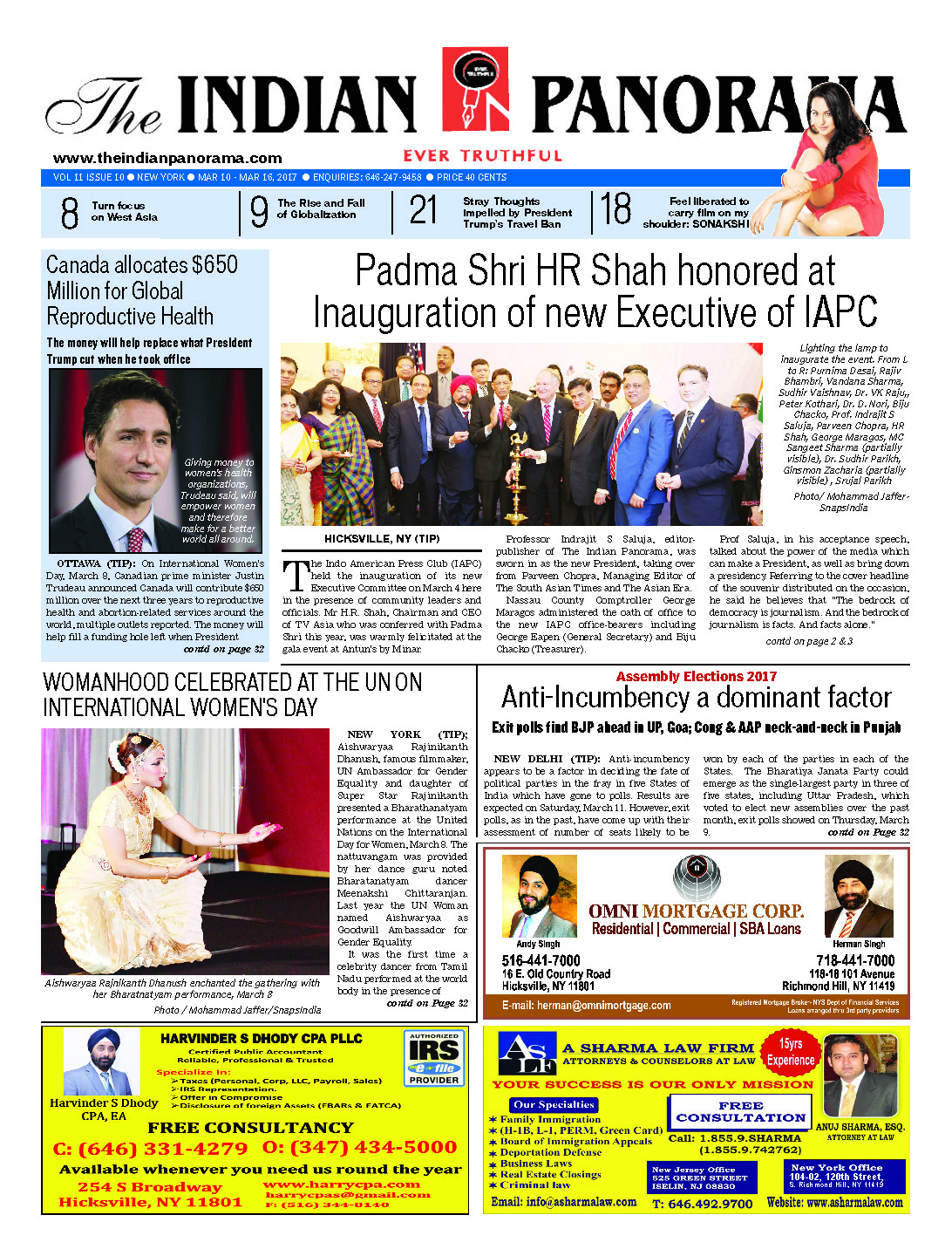
  • March 10 New York & Dallas Print Editions

    March 10 New York & Dallas Print Editions

    [vc_row][vc_column][vc_column_text]

    Print Replica ~ Digitally

    March 10 E-Editions

    [/vc_column_text][/vc_column][/vc_row][vc_row][vc_column width=”1/2″][vc_custom_heading text=”New York Edition” font_container=”tag:h2|text_align:center” google_fonts=”font_family:Istok%20Web%3Aregular%2Citalic%2C700%2C700italic|font_style:700%20bold%20regular%3A700%3Anormal” link=”url:https%3A%2F%2Fwww.theindianpanorama.news%2Fwp-content%2Fuploads%2F2017%2F03%2Fvol11issue10nyc.pdf||target:%20_blank|”][vc_single_image image=”81507″ img_size=”full” add_caption=”yes” alignment=”center” onclick=”custom_link” link=”https://www.theindianpanorama.news/wp-content/uploads/2017/03/vol11issue10nyc.pdf”][/vc_column][vc_column width=”1/2″][vc_custom_heading text=”Dallas, Texas Edition ” font_container=”tag:h2|text_align:center” google_fonts=”font_family:Istok%20Web%3Aregular%2Citalic%2C700%2C700italic|font_style:700%20bold%20regular%3A700%3Anormal” link=”|||”][vc_single_image image=”81566″ img_size=”full” add_caption=”yes” alignment=”center” onclick=”custom_link” link=”https://www.theindianpanorama.news/wp-content/uploads/2017/03/vol5issue10.pdf”][/vc_column][/vc_row]

  • Women Power on Display in Celebration of International Women’s Day

    Women Power on Display in Celebration of International Women’s Day

    Malini Shah among 18 women honored by SOFC for outstanding contribution to the society

    The Society of Foreign Consuls (SOFC), New York, hosted an event to celebrate the International Women’s Day on March 02, 2017 at the Bohemian National Hall, New York City. The event was an occasion to honor the academic, economic and social achievements of women around the world.

    The program witnessed participation by all the Lady Consuls General in New York as well as prominent women from various countries who have made major contributions to their communities. Besides, it had cultural performances and a reception hosted by Mr. Martin Dvorak, the Consul General of Czech Republic and Deputy President of the Society of Foreign Consuls.

    In recognition of International Women’s Day, 18 women from all over the world were honored for their outstanding professional achievements and contribution to community empowerment in New York and America with their hard work and dedication.

    Initiated in 2011 by Consul General of the Republic of Kazakhstan Raushan Yesbulatova, the reception in celebration of Women’s Day was so successful that it was established as an annual celebration. Since then every year the Consulate General of the Republic of Kazakhstan graciously carries the flag of organizers.

    Malini Shah receiving the citation from SOFC President and Consul General of Columbia Maria Isabel Nieto (left) and India's Consul General Riva Ganguly Das
    Malini Shah receiving the citation from SOFC President and Consul General of Columbia Maria Isabel Nieto (left) and India’s Consul General Riva Ganguly Das

    Eighteen Foreign Consulates in New York came together this year to honor 18 outstanding women achievers from their respective countries. Participating countries included Algeria, Bangladesh, Barbados, Bulgaria, Columbia, Georgia, Haiti, Hungary, India, Indonesia, Jamaica, Kazakhstan, Kosovo, Philippines, Russia, Slovakia, Saudi Arabia and Turkey. All participating countries contributed to the reception with their national specialties.

    The 18 honorees were – Malini Shah (India) Rahmouna Rouni (Algeria), Nayeema Khan (Bangladesh), Janet C Malone (Barbados), Boriana Pavlova (Bulgaria), Betty Garces (Columbia), Eteri Chkadua (Georgia), Rodneyse Bichotte (Haiti), Zsuzsa Marka (Hungary), Amaliya Suryani (Indonesia), Yvonne J Graham (Jamaica), Gaukhar Noortas (Kazakhstan), Albana Krasniqi (Kosovo), Analisa Leonor Blares (Philippines), Tatiana Deptola (Russia), Rasha Al-Bawardy (Saudi Arabia), Luba Gregus Mason (Slovakia), and Tulay Taskent (Turkey).

    Interestingly, among the 18 Consuls General, 13 were women – including India’s Consul General Ambassador Riva Ganguly Das. Well known Indian American community leader and philanthropist Malini Shah was honored with 17 others for her contribution to the society. Air India Regional Manager, USA, Ms Vandana Sharma graced the occasion along with other prominent Indians.

    Air India Regional Manager, USA, Ms Vandana Sharma who was a guest at the event, is seen here with India's Consul General Riva Ganguly Das (Center) and Malini Shah who was honored
    Air India Regional Manager, USA, Ms Vandana Sharma who was a guest at the event, is seen here with India’s Consul General Riva Ganguly Das (Center) and Malini Shah who was honored

    Upon receiving the citation from SOFC President and Consul General of Columbia Maria Isabel Nieto and Ambassador Riva Ganguly Das, Malini said, “I am deeply honored to get this recognition. This is how New York celebrates its diversity and culture. I love to work for humanity and will continue to do so.”

    On this occasion SOFC received a proclamation from NY Governor Andrew Cuomo declaring March 2017 as ‘Women’s History Month.’

  • Preparing Global Citizens: Expanding Multilingual Classrooms in New York City

    Preparing Global Citizens: Expanding Multilingual Classrooms in New York City

    Like many New Yorkers, I am a child of immigrants. Being a City of immigrants is what makes us strong and resilient, and as New Yorkers, we take pride in living in a diverse, multicultural place. That same pride extends to our schools. First and foremost, we know that in the 21st century, speaking more than one language opens doors and opportunities for our City’s students. That’s why, as Chancellor, I am dedicated to increasing Dual Language and Transitional Bilingual Education programs across the City, which provide instruction for students to acquire fluency in two languages while fostering an appreciation for multiple cultures. In other words, to be thoughtful and productive citizens of our country – and our world.

    This year, I am particularly proud that we are opening 68 new Dual Language and Transitional Bilingual Education programs across all five boroughs in September 2017. This large expansion includes our first Urdu Transitional Bilingual Education program in Brooklyn, in addition to programs in Chinese, Russian, Arabic, French, Bengali, and Spanish.

    Bilingual programs are critical for the 150,000 English Language Learners who attend public school in New York City. As a former ELL myself, I know the many benefits that come with being bilingual. This expansion will give hundreds of ELLs access to high-quality bilingual programs, preparing them for real world experiences and success in the classroom and beyond.

    Bilingual programs give our students confidence as they develop proficiency in a second language and can also help students to develop a vision for their futures. One of our remarkable students, Carlos Vega, attends Manhattan Bridges High School. Carlos was born in Mexico and arrived in New York with his parents six years ago. Moving to New York City exposed him to different languages, cultures and needs of people, in particular he noticed many handicapped New Yorkers struggling to get on the train, climb stairs and overall navigate the City independently. Carlos is a Pre-Engineering and Dual Language student and hopes to one day create prosthetics and sensory aids to help people without limbs to become more independent. This is the beauty of our City and our bilingual programs, which increase opportunities for thousands of students like Carlos every day.

    Parents are partners in expanding bilingual programs. Family engagement helps us open bilingual programs in neighborhoods that need them, and I am pleased to hear from parents at town hall meetings requesting these programs in their schools. We want to hear from our communities about the Dual Language and Transitional Bilingual Education programs that they need.

    And doing a better job of reaching parents – who represent the diversity and many cultures of New York City – is also on our mind. As Chancellor, providing families with limited English skills access to information, workshops and conferences in their native language has been one of my biggest priorities. Since the fall, for the first time, we’ve offered Native Language Parent Conferences for families in Mandarin, Bengali, Arabic and Spanish. I encourage families to attend these conferences, and also to find other ways to get involved in their child’s education. It could be through a weekend club or English classes-there are many ways for the entire family to support their child’s future.

    I look forward to visiting these programs, and seeing the benefits firsthand for our students and families. As we continue to bring more educational opportunities to students across the city, we’re celebrating our diversity, building Equity and Excellence across our schools, and putting more students on the path to college and meaningful careers.

    To learn how to apply for these programs, families can call 718-935-3500 or visit one of our family welcome centers.

  • WHY SHOULD WE TEACH HINDI IN USA?

    WHY SHOULD WE TEACH HINDI IN USA?

    Recently a US diplomat, who is due for his posting in India, asked me to brief him about usage of Hindi in the local community. I live in Central New Jersey, the hub of the Indian-American community.

    I wish to tell the US diplomat that I belong to a vibrant community that prides itself in hard work and education. My community has revitalized neighborhoods after neighborhoods uplifting local economies. We demonstrate our unchallenged love for our native culture. What I don’t want to tell him is: our linguistic landscape is littered with broken and incorrect English. We are shy of using our native language, Hindi, in social gatherings and community events.

    For the past decade I have been promoting Hindi learning in our communities and beyond. I have successfully convinced many people about the importance of teaching Hindi to the next generation. Parents, who are engaged in diverse occupations, are sending their children to our program to learn Hindi and practice Indian culture. As the director of STARTALK programs I am collaborating with two school districts, Franklin Township in NJ and North Penn School District in Lansdale, PA, for hosting our programs. Our collaborators offer all resources because they believe in benefits of teaching the next generation a world language other than English so they could grow up as a true world citizen.

    My students belong to the age groups 8 to 13 years, who attend Elementary, Middle and High schools. My instructors labor hard for more than three months prior to the start of our programs preparing their lesson plans. We facilitate students’ performance in classrooms, computer labs, and in varieties of arts and cultural activities including Yoga and Bollywood dancing. These activitiesare topic-based, supervised and aim atimproving students’ speaking, reading and writing skills in Hindi. I am very proud to announce that our students never drop outof the program. They enjoy the activities at the program and also take it home where interact with their parents in Hindi.

    On of the major aspect of STARTALK programs is to prepare students practice their language in real life. In fact community is the major component of the five standards of language learning in order to meet our goals of 21st century learning. That is why we organize a field trip for students so they could see how Hindi is used in the community. But if our kids are exposed to sign boards in English, interact with shopkeepers who speak broken English, they are deprived of opportunities to practice the language we are teaching them at our programs.

    I received my training at the University of Pennsylvania for teaching Hindi in our community. As I explored the theories and principles of teaching a foreign language, I learned that we can’t teach our language without providing appropriate cultural contexts. We must use our customs, traditions, mythology and history to design our lesson plans for students born and raised in the US in the 21st century.

    STARTALK programs are the result of the very pragmatic education policy of the US government that promotes multilingualism and multiculturalism. The White House categorized Hindi as a critical language for business, commerce and national security. Any student graduating with credits in a foreign language, scores higher credits while applying for jobs in many sectors.

    STARTALK supports about a dozen, Hindi among them, with financial and academic resources. These languages are also known as less commonly taught languages, as majority of them are not included in the curricula of local school district. Hindi is now taught in a few schools in NJ, NY and Texas.For the members of the Indian-American community Hindi is a native language and the mother tongue that also functions as the lingua franca in the width and breadth of our native land, India.

    Today we need our students to opt for a teaching career. As Professor Janice Jensen, Director of Hindi-Urdu program at Kean University, NJ, says, “We really need teachers, globally competent teachers of Hindi, who could create an environment for Hindi learning. A new generation of language teachers prepared within this global context provides meaningful, relevant (and welcoming!) learning experiences for students that will assist in developing professionally useful skills in Hindi while developing the intercultural and global competencies needed in the global age.

    As India achieves its ranking among major world economic powers, use of Hindi becomes even more important. America is willing to utilizing our rich cultural heritage in US classrooms. Local governments are eager to print their documents and public service announcements in our language provided we desire the same and demand for it.

    Hindi is the third most spoken language in the world. It is our duty to recognize its vast reach among people around the globe. We need to let others know that we are proud of our language and our culture. A meeting with a US diplomat is an opportunity to demonstrate that Hindi is the unifying language for all people of Indian origin. It is a vehicle to showcase our identity and heritage in the United States. I am going to tell my diplomat friend that when he moves to India he can communicate with a few if he speaks English, but he could communicate with the whole of India if he spoke in Hindi.

    (Ashok Ojha is director of Sangam-Franklin STARTALK and YHS STARTALK Hindi Programs. He recently coordinated the Fourth International Hindi Conference, Vishakhapatnam, India, January 6-8, 2017. He can be reached at: aojha2008@gmail.com)

  • Indian American legal luminary says, ‘Relationship with India should be treated with respect’

    Indian American legal luminary says, ‘Relationship with India should be treated with respect’

    Arguing that America’s ties with India are important to ensure regional stability, a top Indian-American legal luminary has said that the US should treat New Delhi with respect, especially since it has “tough neighbors” like China and Pakistan.

    “Strengthening of economic relations between India and the US is obviously in our common interest. Perhaps even more important is our strategic partnership to ensure regional stability, especially in light of India’s tough neighbors, China, Pakistan and Afghanistan,” said Ved Nanda, Evans University Professor and director of the Nanda Center for International and Comparative Law at the University of Denver Sturm College of Law.

    “The relationship should be treated with respect,” said Nanda who has been teacher of several top legal luminaries and diplomats including the former Secretary of State Condoleezza Rice, in an op-ed published in The Denver Post.

    Known to be close to the ruling establishment in India, Nanda in his op-ed also mentioned the current H-1B visa policy changes that are being talked about.

    Citing examples of two students, he indicated that Indian students could be moving out to European nations and other nations in the West. “This is a loss to the US,” he said.

    “I met two Indian students who were accepted for graduate studies, one in engineering at Purdue and the other for an MBA at Carnegie Melon.

    “Both are now applying to European universities instead, wary of possible restrictions by the Trump administration on job opportunities for outsiders,” Nanda said.

    “The situation is unpredictable and I can’t take chances,” he quoted an engineering student as saying.

    Nanda said the Trump administration’s proposed restrictions on the H-1B visa program has rattled the USD 150 billion technology sector.

    “Despite the assertions by tech companies that they are re-positioning their business models, the change is likely to adversely affect major Indian tech players, such as Infosys, Tata Consulting, Wipro, and Cognizant,” he noted.

    According to Nanda, discussions are taking place between India and the US on exploring measures to strengthen political, economic and defense relations between the two countries.

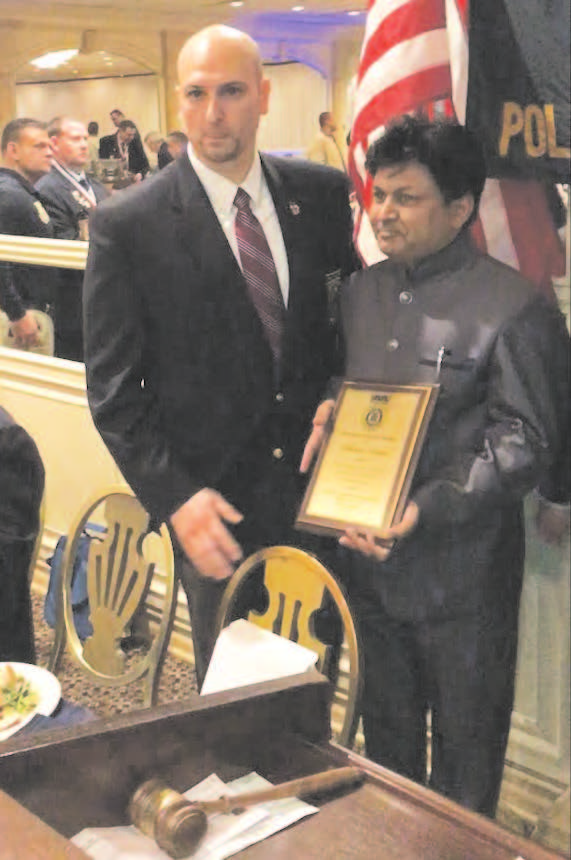
  • Indian American Dhiren Amin honored with Police Award

    Indian American Dhiren Amin honored with Police Award

    EDISON, NJ (TIP): The Indian Business Association congratulated IBA President Dhiren Amin who was recognized by the Honor Legion of the Police Departments of the State of New Jersey. He was presented with Honored Citizen Award by President Michael Manzo.

    The Honor Legion is a nonpolitical association that fosters and encourages many fraternal and charitable causes. It was incorporated in 1966 under the simple premise of recognizing the ‘Finest of the Finest’ for their many acts of heroism and valor. In their 50+ years of existence, more than 6,000 law enforcement officers, representing agencies throughout the state of New Jersey, have been accepted into the association.

    The IBA has a long tradition of working with law enforcement. We salute and thank all the individuals associated or connected with law enforcement for their service.


  • Indian American Prasad Srinivasan announced his candidacy for Governor of Connecticut

    Indian American Prasad Srinivasan announced his candidacy for Governor of Connecticut

    STAMFORD, CT (TIP): Indian American State Representative Dr. Prasad Srinivasan, R-Conn., who serves as the representative in the state’s 31st Assembly District, announced his candidacy for Governor of Connecticut in 2018.

    “Connecticut has been prosperous in our lifetimes, and we can get back to prosperity again. But the path of divisive special interest politics that Governor Malloy and the Democrats in the legislature have chosen is not working. We need to change things around to revive our state. We need new leadership and new vision to conquer the old problems that are continuing to hold us back. That is why I want to be your governor”, he said in a statement.

    Dr. Prasad Srinivasan (Dr.S) is a long time resident of the town of Glastonbury. He has been practicing in Glastonbury and the Hartford area for over 30 years. He treats pediatric and adult patients with allergies. Dr. Srinivasan has been accomplished Legislator, Physician, Business Owner and Philanthropist and won many endorsements, accolades, awards and recognitions.

    On November 8th 2016, Prasad Srinivasan was elected to his fourth term as the State Representative of the Glastonbury 31st Assembly District. He is an Assistant Republican Leader and Ranking Member of the Public Health committee in Connecticut General Assembly besides being a member of Environment and Judiciary committees.

    Prasad Srinivasan was chief pediatric resident at Brookdale Hospital in Brooklyn, NY. He did his fellowship in allergy and immunology at Michael Reese Hospital in Chicago. He is a graduate of Baroda Medical College in India. He is certified by the American Board of Pediatrics and the American Board of Allergy and Immunology. His community involvement is remarkable and has been recognized on numerous occasions.

  • Seven Indian American Students named finalists for 2017 Truman Scholarship

    Seven Indian American Students named finalists for 2017 Truman Scholarship

    WASHINGTON (TIP): A total of seven students of Indian origin have been nominated for the prestigious Harry S Truman Scholarship this year. The scholarship finalists are Shreya Ganeshan from the University of Georgia, Samarth Gupta from Harvard University, Megan Patel from Georgetown University, Maya Durvasula from Duke University, Anjali Misra from the Massachusetts Institute of Technology, Manju Bangalore from the University of Oregon, and Anjana Murali from the University of Pittsburgh. The Harry S. Truman Scholarship Foundation reviewed more than 750 files from 315 institutions before selecting its finalists, according to a news release from KU.

    The Truman Scholarship Foundation was established by former President Harry S. Truman four decades ago to inspire and support Americans from diverse backgrounds and from across the United States. Scholarship is awarded to college juniors for display of leadership potential and their commitment toward public service. As part of the scholarship, students are provided up to USD 30,000 for their graduate studies. Every year hundreds of students apply for this scholarship but only 60 Truman Scholars are named nationwide. This year the Truman Scholarship Foundation reviewed 768 potential scholars from 315 educational institutes across the United States of America out of which 199 students were picked to compete for the scholarship.

    A regional review panel appointed by the scholarship foundation will interview the finalists between March 3 and April 7. The final list of the scholars will be announced on April 21.

  • Indian American girl racially abused in New York train

    Indian American girl racially abused in New York train

    NEW YORK (TIP): In yet another incident against an Indian American, the same day when an Indian American engineer was shot dead in an apparent hate crime in Olathe, Kansas, an Indian American girl living in New York faced discrimination. Ekta Desai was racially profiled and yelled at by a stranger on a PATH train.

    One her Facebook post, Desai posted a video of the incident and said that she was confronted by an abusive racist man on the train.

    “So, this is something that happened while I was on my way from work today!! This man was on the same PATH train as me along with 100 other passengers, I had my headphones on and was like any other day. Next thing I know he is yelling on my face (Did not bother to listen/react). Knowing it’s pointless I step away, next target alongside an Asian lady!” Desai wrote.

    When she said, she will approach the cops, the man was heard saying in the video, “I did not touch anybody. I just expressed what I feel. Freedom of speech.”

    “Not sure the cops found him or even took any action, though they showed up 15 mins after all this drama and he walked away with his friends!” she added.

    Within six days, her video got more than 49,000 views and is being widely discussed after Srinivas Kuchibhotla’s death.