Year: 2017

  • INDIAN STUDENT WINS PRINCETON UNIVERSITY’S TOP HONOR

    INDIAN STUDENT WINS PRINCETON UNIVERSITY’S TOP HONOR

    PRINCETON, NJ (TIP): Neereja Sundaresan, an Indian origin student has been named one of the winners of the Porter Ogden Jacobus Fellowship, Princeton University’s top honor for graduate students. The fellowships support their final year of study at Princeton and are awarded to one Ph.D. student in each of the four divisions (humanities, social sciences, natural sciences and engineering) whose work has exhibited the highest scholarly excellence.

    Sundaresan, a Ph.D. student in electrical engineering who came to Princeton in 2012, has a bachelor’s degree in electrical and computer engineering from Carnegie Mellon University. Through experimental study, her dissertation explores non-equilibrium condensed matter physics with photons.

    Her adviser Andrew Houck, a professor of electrical engineering, said Sundaresan has excelled at expanding her base of knowledge, learning skills such as nanofabrication and quantum measurement, teaching and mentoring other students, and making exciting discoveries in the lab. “In short, Neereja is a superstar,” Houck said. “She is a gifted experimentalist who can bring her talents to bear on many problems at once and can lead teams of researchers both within my group and across several research groups.”

    After graduation, Sundaresan plans to contribute to ongoing quantum computing research. “Through the course of my Ph.D. I will have gained a solid foundation for a meaningful career in research. … As research in this field requires similar principles of device design, fabrication and measurement, I will be able to leverage the skills I’ve gained at Princeton while learning new ones,” she said. “I think that these research initiatives will have broad and illuminating applications beyond the goal of universal quantum computation.”

  • INDIAN-AMERICAN AUTHORS JOIN ANTI-TRAVEL BAN CHORUS

    INDIAN-AMERICAN AUTHORS JOIN ANTI-TRAVEL BAN CHORUS

    WASHINGTON (TIP): Indian-American authors Jhumpa Lahiri and Anish Kapoor joined scores of other writers to oppose the controversial travel ban by US President Donald Trump, asking him to “rescind” his last month’s executive order.

    “In barring people from seven predominantly Muslim countries from entering the US for 90 days, barring all refugees from entering the country for 120 days, and blocking migration from Syria indefinitely, your January Executive Order caused the chaos and hardship of families divided, lives disrupted, and law-abiding faced with handcuffs, detention, and deportation,” about 70 eminent American writers and artists wrote to Trump.

    They called on the US President to “rescind” his executive order of January 27, 2017, and refrain from introducing any alternative measure that similarly impairs freedom of movement and the global exchange of arts and ideas.

    In doing so, the executive order also hindered the free flow of artists and thinkers and did so at a time when vibrant, open intercultural dialogue is indispensable in the fight against terror and oppression, the writers and artists said in a letter dated February 21.

    Its restriction is inconsistent with the values of the US and the freedoms for which it stands, said the top US artists and writers under the banner of PEN America.

    Among those notable signatories to the letter include Chimamanda Adichie, Margaret Atwood, Rita Dove, Jonathan Franzen, Khaled Hosseini, Azar Nafisi and George Packer.

    According to the letter, the negative impact of the original Executive Order was felt immediately, creating stress and uncertainty for artists of global renown and disrupting major US cultural events.

    “Oscar-nominated director Asghar Farhadi, who is from Iran, expecting to be unable to travel to the Academy Awards ceremony in late February, announced that he will not attend,” it said.

    Syrian singer Omar Souleyman, who performed at the 2013 Nobel Peace Prize Concert in Oslo, Norway, may now be prevented from singing at Brooklyn’s World Music Institute in May, 2017.

    The ability of Adonis, an 87-year-old globally celebrated poet who is a French national of Syrian extraction, to attend the May, 2017 PEN World Voices Festival in New York remains in question, the letter noted.

  • Trump calls deportations a ‘Military Operation’, as DHS goes in for Mass Deportations & Raids

    Trump calls deportations a ‘Military Operation’, as DHS goes in for Mass Deportations & Raids

    Plans to bypass Immigration Courts and short-circuit ‘Due Process’

    President Donald Trump, meeting with business leaders at the White House on Thursday, February 23, described his administration’s moves to deport undocumented immigrants as a “military operation,” a rhetoric that runs counter to what his administration has previously said but is in consistence with Trumps Campaign promises.

    Trump has used a series of executive orders to chip away at the barriers to deportations and hire new law enforcement officials to spearhead the effort, using the Department of Homeland Security to live up to the President’s tough talk on undocumented immigration during the 2016 campaign.

    On Tuesday, February 21st, 2017 two (2) guidance memos were signed by Homeland Security Secretary John Kelly implementing the President’s Executive Orders on immigration enforcement. Although much attention has been focused on the building of the border wall, these new memos direct the Department of Homeland Security (DHS) to escalate immigration enforcement nationwide. The memos reveal that DHS intends to take a much more “enforcement-oriented” position with regard to U.S. Immigration law.

    INDIAN-AMERICANS AS PER UNOFFICIAL FIGURES ACCOUNT FOR NEARLY 300,000 ILLEGAL ALIENS.

    Nearly 300,000 Indian-Americans are likely to be impacted by the Trump administration’s sweeping plans that put the nation’s 11 million undocumented immigrants at risk of deportation.

    The Trump administration is releasing more on its plans to crack down on illegal immigration, enforcing the executive orders President Trump issued in late January. Those orders called for increased border security and stricter enforcement of immigration laws.

    “Everybody who is here illegally is subject to removal at any time,” Spicer said. “That is consistent with every country, not just ours. If you’re in this country in an illegal manner, that obviously there’s a provision that could ensure that you be removed.”

    “The Department no longer will exempt classes or categories of removable aliens from potential enforcement,” the Department of Homeland Security (DHS) said in an enforcement memo.

    “Department personnel have full authority to arrest or apprehend an alien whom an immigration officer has probable cause to believe is in violation of the immigration laws,” it said.

    According to the memo, the DHS Secretary has the authority to apply expedited removal provisions to aliens who have not been admitted or paroled into the US, who are inadmissible, and who have not been continuously physically present in the US for the two-year period immediately prior to the determination of their inadmissibility, so that such aliens are immediately removed unless the alien is an unaccompanied minor, intends to apply for asylum or has a fear of persecution or torture in their home country, or claims to have lawful immigration status.

    WHAT IS IN THE IMMIGRATION MEMOS?

    1. AN END TO LONG-STANDING PROTECTIONS FOR CHILDREN. DHS intends to strip many children arriving alone at our border of basic protections and to penalize their parents for seeking to reunite with their children in the United States. DHS will do this by narrowing the definition of “unaccompanied alien child” in order to limit those protections and by launching either civil or criminal enforcement against the parents.
    2. A MASSIVE EXPANSION OF DETENTION. The memos contemplate a massive expansion of detention, including a requirement that DHS officers detain nearly everyone they apprehend at or near the border. This detention space expansion-a boon to the private prison industry-means that children, families, and other vulnerable groups seeking protection in the United States will end up detained, at great financial and human cost.
    3. PROSECUTION PRIORITIES AND DISCRETION ARE GONE. The new memos rescind earlier policies on whom to prosecute and deport and whom to de-prioritize because they pose no threat to our communities. The new enforcement priorities are extremely broad, covering nearly all undocumented individuals in the United States. They even include individuals simply charged or suspected of having committed crimes.
    4. CREATION OF A DEPORTATION FORCE. The memos order the hiring of 5,000 additional Customs and Border Protection (CBP) agents and 10,000 additional Immigration and Customs Enforcement (ICE) agents. They direct a massive expansion of 287(g)-a provision that allows DHS to deputize State and Local law enforcement officers to perform the functions of immigration agents. The memos reinstate Secure Communities [terminating the Priority Enforcement Program (PEP)], which expand the ways in which local police collaborate with ICE.
    5. PLANS TO BYPASS IMMIGRATION COURTS AND SHORT-CIRCUIT DUE PROCESS. The memos indicate that many people in the interior of the country – not just those at the border – could be subject to expedited removal or expedited deportation without going before an immigration law judge, the details of which DHS said will be forthcoming in a notice in the Federal Register. This expansion of “expedited removal,” will allow the government to bypass the backlogged immigration courts in order to remove or deport people rapidly and with little-to-no due process.
    THE INDIAN PANORAMA URGES READERS TO CONSULT AN ATTORNEY IF THEY HAVE QUESTIONS OR NEED MORE INFORMATION ABOUT THE WAY THAT THE NEW U.S. IMMIGRATION AND NATIONALITY LAWS MAY IMPACT THEM, THEIR FAMILY, THEI FRIENDS, OR THEIR COLLEAGUES.
  • Mexico voices ‘Irritation’ to Trump envoys

    Mexico voices ‘Irritation’ to Trump envoys

    “No use of military force in immigration operations,” and “no, repeat, no mass deportations”: Secretary Kelly

    MEXICO CITY (TIP): In a first and carefully worded rebuke senior Mexican officials have expressed “worry and irritation” about US policies during a visit by two of President Donald Trump’s top envoys, who in turn seek to cool tempers after weeks of tension between the two neighbors.

    With a stern look while speaking to reporters on Thursday, February 23, after closed-door meetings with US Secretary of State Rex Tillerson and Homeland Security chief John Kelly, Videgaray said it is “a complex time” for Mexican-US relations.

    “There exists among Mexicans worry and irritation about what are perceived to be policies that could be harmful for the national interest and for Mexicans here and abroad,” Foreign Minister Luis Videgaray told a news conference on Thursday.

    The US government this week angered Mexico by saying it was seeking to deport many illegal immigrants to Mexico if they entered the United States from there, regardless of their nationality.

    The immigration guidelines are the latest point of tension between neighbors already tense over Trump’s vow to build a wall on the border and his attempts to browbeat Mexico into giving concessions on trade.

    Videgaray and President Enrique Pena Nieto have been criticized at home for being too willing to engage with Trump. However, relationships between the two countries have gone downhill in the past few weeks.

    Both sides on Thursday pledged further dialogue on migration, trade and security issues facing both nations.

    Kelly and Tillerson were much more measured in their words than either the Mexicans or Trump, who on Thursday said a military operation was being carried out to clear “bad dudes” from the United States.

    ‘No mass deportations’

    For their part, Kelly and Tillerson sought to cool tempers as they adopted a more measured tone than either the Mexicans or Trump, who on Thursday said a military operation was being carried out to clear “bad dudes” from the US.

    Kelly said there would be “no use of military force in immigration operations,” and “no, repeat, no mass deportations”.

    None of the US officials made direct references to the deportation of immigrants from third countries to Mexico, or to paying for the border wall planned by Trump, a red-flag issue for Mexico. Both sides at the Mexico City talks on Thursday pledged further dialogue on migration, trade and security issues facing both nations. Al Jazeera’s John Holman, reporting from Mexico City, said Mexico has been criticized as “timid” in confronting issues with the US in the past, but since Trump came into office it has grown “tougher”.

    “Usually, this is a quiet and cordial meeting. That’s how it has been for decades. But not under the administration of Donald Trump,” Holman said.


  • Indo-American Press Club to inaugurate new team on March 4

    Indo-American Press Club to inaugurate new team on March 4

    HICKSVILLE, NY (TIP): The Indo-American Press Club (IAPC) will inaugurate its new executive committee at a gala at Antun’s by Minar here on March 4 in the presence of media personalities and community.

    Prof. Indrajit Singh Saluja, Editor-Publisher of The Indian Panorama

    Prof. Indrajit Singh Saluja, Editor-Publisher of The Indian Panorama, will take over as President from Parveen Chopra, Managing Editor of The South Asian Times. The Chief Guest, Hon. George Maragos, Comptroller of Nassau County, is set to administer the oath of office to the 2017 office-bearers, including Eapen George as General Secretary and Biju Chacko as Treasurer.

    Mr H.R. Shah, Chairman and CEO of TV Asia

    A highlight of the event will be felicitating Mr H.R. Shah, Chairman and CEO of TV Asia, on conferment of one of the highest civilian awards of India, Padma Shri.

    The keynote address will be given by Jehangir Khattak, Co-Director, Center for Community and Ethnic Media, CUNY Graduate School of Journalism,

    Dr. Manoj Kumar Mohapatra, Deputy Consul General, New York will presideover the function.

    A book, Musings on Medicine, Myth, and History – India’s Legacy, by Dr. VK Raju and Dr. Leela Raju will be launched. The authors will be present.

    The roaster of entertainment includes a skit by New Jersey street theater group, Prayog. Kalpita Chakote, who has performed at the UN and at Metropolitan Museum of Art, will present a classical dance. St. John’s College students will present Bhangra. Surya Makkar will play the dhol.

    #IAPC

    Under founder and chairman, Ginsmon Zacharia, IAPC has grown from strength to strength.

    It has organized three successful annual international conferences in New Jersey, New York and Connecticut. A highlight of the conference last year was a presidential debate with representatives from Democratic and Republican sides.Prof. Indrajit S Saluja moderated the debate.

    IPAC has six active chapters in America and Canada. The Atlanta chapter celebrated India’s Republic Day this January in a big way. Last year, the Houston chapter hosted a debate and discussion on the presidential election to increase participation of the Indian community in the political process.

  • Indian American Shot Dead by American Spewing Racial Slurs in Kansas #RacismAlert

    Indian American Shot Dead by American Spewing Racial Slurs in Kansas #RacismAlert

    OLATHE, KANSAS (TIP): An Indian engineer was killed and two others injured when an American man opened fire on them after allegedly yelling “get out of my country”, with the local police calling it as a “possible hate crime”.

    Srinivas Kunchubhotla, 32was killed ina shooting on Wednesday, February 22 night
    Srinivas Kunchubhotla, 32was killed ina shooting on Wednesday, February 22 night

    Srinivas Kunchubhotla, 32, working at the Garmin headquarters in Olathe, was killed in the shooting on Wednesday night, while another Indian and his colleague Alok Madasani was critically injured and is battling for life at a local hospital.

    One other identified as Ian Grillot was also injured in the shooting.

    The accused, Adam Purinton, 51, was arrested on Thursday, February 23 morning, five hours after the incident.

    “It was a tragic and senseless act of violence,” Olathe Police Chief Steven Menke told reporters.

    According to local media reports, he yelled “get out of my country” at the Indians.

    Purinton, a navy veteran, later reportedly told a bartender in Clinton, Missouri, where he was hiding that he killed two Middle Eastern persons, the Kansas City Star said.

    The Indian Embassy has swung into action and two senior officials of the Indian Consulate in Houston have been sent to Kansas to assist the victims’ families.

    “Consul Ravindra Joshi and Vice Consul Harpal Singh rushed to Kansas to assist shooting victim.

    They are on their way and will reach by evening,” the consulate said in a tweet.

    The accused has been charged with premeditated first-degree murder and his bond has been set at USD 2 million.

    According to Garmin, Kuchubhotla and Madasani worked in the company’s aviation systems.

    “We’re saddened that two Garmin associates were involved in last night’s (Wednesday night) incident, and we express our condolences to the family and friends of our co-workers involved. Garmin will have grievance counsellors on-site and available for its associates today and tomorrow,” Garmin said in a statement.

  • Feb 24 New York & Dallas Print Editions

    Feb 24 New York & Dallas Print Editions

    [vc_row][vc_column][vc_column_text]

    Print Replica ~ Digitally

    Feb 24 E-Editions

    [/vc_column_text][/vc_column][/vc_row][vc_row][vc_column width=”1/2″][vc_custom_heading text=”New York Edition” font_container=”tag:h2|text_align:center” google_fonts=”font_family:Istok%20Web%3Aregular%2Citalic%2C700%2C700italic|font_style:700%20bold%20regular%3A700%3Anormal” link=”url:https%3A%2F%2Fwww.theindianpanorama.news%2Fwp-content%2Fuploads%2F2017%2F02%2Fvol11issue8nyc.pdf||target:%20_blank|rel:nofollow”][vc_single_image image=”80933″ img_size=”full” add_caption=”yes” alignment=”center” onclick=”custom_link” link=”https://www.theindianpanorama.news/wp-content/uploads/2017/02/vol11issue8nyc.pdf”][/vc_column][vc_column width=”1/2″][vc_custom_heading text=”Dallas, Texas Edition” font_container=”tag:h2|text_align:center” google_fonts=”font_family:Istok%20Web%3Aregular%2Citalic%2C700%2C700italic|font_style:700%20bold%20regular%3A700%3Anormal” link=”url:https%3A%2F%2Fwww.theindianpanorama.news%2Fwp-content%2Fuploads%2F2017%2F02%2Fvol5issue8dallas.pdf||target:%20_blank|rel:nofollow”][vc_single_image image=”80933″ img_size=”full” add_caption=”yes” alignment=”center” onclick=”custom_link” link=”https://www.theindianpanorama.news/wp-content/uploads/2017/02/vol5issue8dallas.pdf”][/vc_column][/vc_row]

  • Hitler’s phone bought for $243K at auction by Anonymous Bidder

    Hitler’s phone bought for $243K at auction by Anonymous Bidder

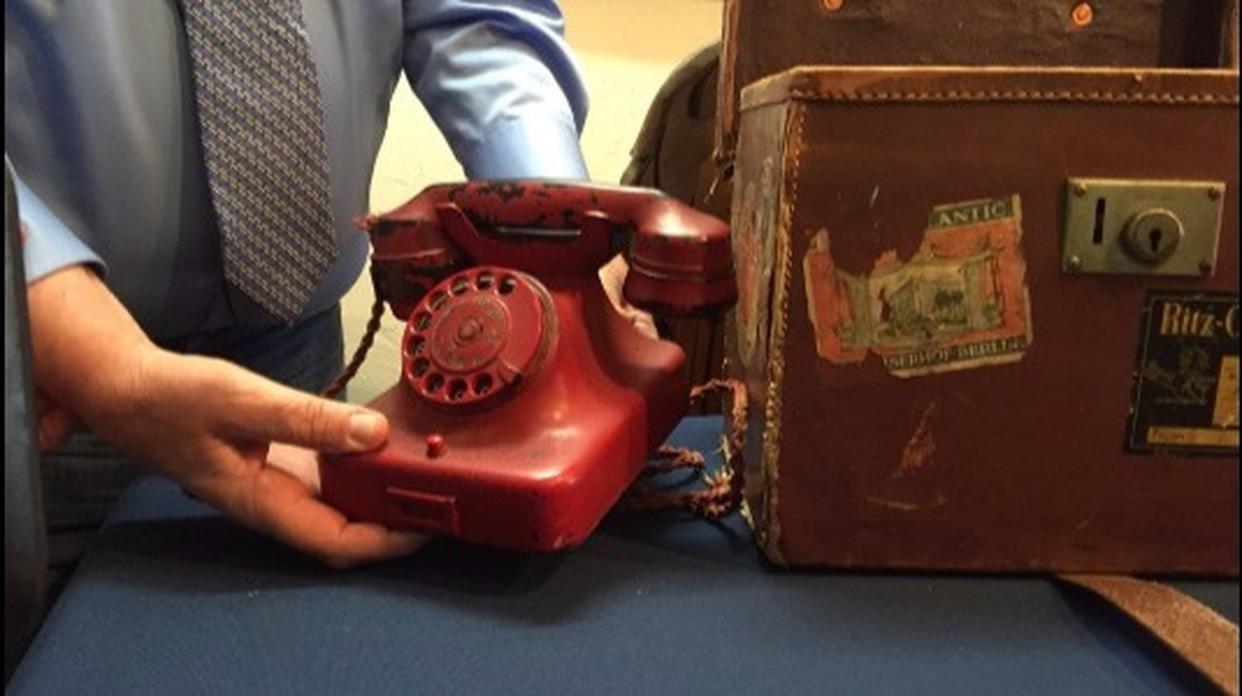
    A Maryland auction house has reportedly sold Adolf Hitler’s personal traveling telephone for $243,000 to an anonymous bidder on Sunday, Feb 19.

    According to Bill Panagopulos of Alexander Historical Auctions in Chesapeake City the infamous phone was given (presented) to Brig. Sir Ralph Rayner during a visit to Hitler’s Berlin bunker by the occupying Russian officers.

    Rayner’s son sold the red Siemens phone, which bears Hitler’s name and a swastika, is “arguably the most destructive weapon of all time, which sent millions to their deaths” according to a catalog description given by the auction house.

    On May 5, 1945, a day after Germans surrendered, Rayner was ordered by Field Marshall Bernard Montgomery to make contact with the Russians in Berlin, according to the auction house.

    The Russians offered Rayner a telephone that belonged to Eva Braun, Hitler’s bride, but he joked that he preferred red.

    “His Russian hosts were pleased to hand him a red telephone,” the auction house said in the catalog. “The telephone offered here.”

    Rayner told CNN that his father brought the phone and a dog figurine, which was made by slave laborers at Dachau concentration camp, back to their home in Devon in western England.

    “My father didn’t see it as a relic of Hitler’s glory days, more a battered remnant of his defeat, a sort of war trophy,” Rayner told CNN. “He never thought it would become an important artifact.”

    “I don’t want them to be hidden again,” he said. “I want them to remind the world of the horrors of war.”

  • Pakistan’s Karachi is Anti-India Hub for Jihadis ~ International Crisis Group

    Pakistan’s Karachi is Anti-India Hub for Jihadis ~ International Crisis Group

    In a major setback to Pakistan’s claim making efforts against use of it terrain for terror activities, a Brussels based think-tank, International Crisis Group has deemed port city Karachi as the hub of anti-India Jihadist groups.

    The report also said that these groups and criminals often enjoy support of Pakistan Army.

    Pakistan port city of Karachi is a hub of anti-India jihadist groups and criminals who often enjoy the support of the Pakistani army, says a report released by the Brussels-based think tank, International Crisis Group.

    Terrorist groups like Lashkar-e-Taiba, its parent organisation Jamaat-ud-Dawa, Maulana Masood Azhar led Jaish-e-Mohammad and anti-Shia group Lashkar-e-Jhangvi have umbilical links with Karachi’s large, well-resourced madrassas, claimed the report.

    It also says that Pakistan’s most dangerous groups actively contest Karachi’s turf and resources. These outfits operate madrassas and charity fronts with no hindrance from Pakistani law enforcement authorities.

    ICG’s report titled “Pakistan: Stoking the fire in Karachi”, talks about how ethnic, political and sectarian rivalries and a jihadist influx are turning the largest and wealthiest city of Pakistan, into a pressure cooker.

    It mentioned that during a crackdown on jihadists and criminal gangs, Pakistan Rangers have spared many areas in Karachi and its outskirts of the city, known as the redoubts of “good” jihadists like LeT-JuD and Jaish-e-Mohammed.

  • Trump’s Immigration Plans Could Impact 3 Lakh Indian-Americans

    Trump’s Immigration Plans Could Impact 3 Lakh Indian-Americans

    Washington:  Nearly 300,000 Indian-Americans are likely to be impacted by the Trump administration’s sweeping plans that put the nation’s 11 million undocumented immigrants at risk of deportation.

    The Trump administration is releasing more on its plans to crack down on illegal immigration, enforcing the executive orders President Trump issued in late January. Those orders called for increased border security and stricter enforcement of immigration laws.

    “Those people who are in this country and pose a threat to our public safety, or have committed a crime, will be the first to go,” White House spokesman Sean Spicer told reporters. “And we will be aggressively making sure that occurs. That is what the priority is.”

    “The Department no longer will exempt classes or categories of removable aliens from potential enforcement,” the Department of Homeland Security (DHS) said in an enforcement memo.

    “Department personnel have full authority to arrest or apprehend an alien whom an immigration officer has probable cause to believe is in violation of the immigration laws,” it said.

    The Department of Homeland Security has issued two enforcement memos, which among other things, tightens deportation of illegal immigrants.

    The emphasis is on criminal aliens, though, but opens up the door for others too.

    Indian-Americans as per unofficial figures account for nearly 300,000 illegal aliens.

    Homeland Security Outlines New Rules on Immigration

    According to the memo, the DHS Secretary has the authority to apply expedited removal provisions to aliens who have not been admitted or paroled into the US, who are inadmissible, and who have not been continuously physically present in the US for the two-year period immediately prior to the determination of their inadmissibility, so that such aliens are immediately removed unless the alien is an unaccompanied minor, intends to apply for asylum or has a fear of persecution or torture in their home country, or claims to have lawful immigration status.

    Immigrant rights advocates say the rules are written so broadly that they make anyone in the country illegally a target for deportation — potentially, as many as eight to 11 million people.

    The White House and DHS deny that the rules amount to a blueprint for mass deportation.

    While the new policies call for a “surge” in the deployment of immigration judges and other personnel, DHS officials said the agency is not planning mass deportations and that many of the new policies would take time to implement.

    “We don’t need a sense of panic necessarily in these communities,” one DHS official said in a conference call with reporters.

    Homeland Security officials said the policies would not affect Deferred Action for Childhood Arrivals #DACA, the Obama administration program that offered protection from deportation for so-called Dreamers who were brought to the U.S. illegally as children.

    The DHS wants to expand the use of so-called expedited removal, in which migrants do not appear before an immigration judge before being deported. Under the Obama administration, those expedited deportations had been limited to those in the country for two weeks or less, and within 100 miles of the border.

    DHS officials say they could seek to expand the use of expedited removal all over the country, for immigrants who have been in the U.S. for up to two years. Those rules have not yet been finalized.

    In addition, the policies call for an expansion of a federal program that enlists state and local police to enforce immigration laws.

    That partnership has come under fire from critics who allege that it has led to racial profiling. The federal government terminated one such agreement with Arizona’s Maricopa County Sheriff Joe Arpaio in 2011 after the Justice Department found that county officers unlawfully stopped and detained Latinos.

    On Tuesday, Feb 21, DHS called the program “a highly successful force multiplier.” Officials said local officers go through extensive training and that racial profiling would not be tolerated.

  • ACNE-CAUSING HABITS YOU SHOULD STOP

    ACNE-CAUSING HABITS YOU SHOULD STOP

    Not washing your face properly : It is important to use good medicated cleansers twice a day, but hard cleansers and washing too frequently can make the acne worse and face drier.

    Using dairy products on a daily basis : Dairy products have abundance of hormone IGF 1 (Insulin-like growth factor 1) which is specially found in milk. It can cause inflammation in humans. Milk causes insulin spike in humans that makes the liver produce IGF 1. This can cause excess sebum production causing more clogged pores and thus, the acne. Try to reduce dairy product consumption.

    Using smartphones too much : Smartphones are one of the common causes of breakouts. This is because when your phone is placed on skin while talking to someone, you press bacteria into your pores and ultimately, get pimples. So, use ear phones to keep a check on breakouts.

    Applying body cream on face : Many body care products can give you acne on your face. Some people apply body products on their face to get some more beauty benefits. But it is better not to use body products on face. Feel free to use face cream on dry patch of body, but using a body lotion on your face could cause acne.

    This could specifically be the case if your skin is sensitive and the facial lotion you generally use is oil and fragrance-free, and then you reach for a scented and thicker body lotion in the hope to achieve the same hydrating results.

    Diet issue : Sweet food items may not always be good for skin. Diet rich in sugar or food with high glycemic index can be a cause for acne. Avoid sugar, carbohydrate-rich food and starch for acne-free skin. Eat small meals with diet rich in fruits and vegetables.

    Here’s how you can choose your night cream smartly

    Night time is when one’s skin gets the maximum rest, repair and time to rejuvenate. So always remember to wash and deep cleanse your face before you apply your night time moisturiser for the best results. But how do you decide what constitutes a good moisturiser? Divya Mehta, co-founder of skincare brand Epique, shares tips to keep in mind when deciding on a good night cream:

    It doesn’t need to have the word ‘night’ to describe it : The difference between a night cream and any other is that it doesn’t have UV protection or any sunscreen ingredients in it. Hence you don’t necessarily need to use a cream that uses the word ‘night’ to define it. So long as the cream does not contain sunscreen, works well with your skin type and is rich in active ingredients, you are good to go!

    High concentration of active ingredients : Look for components such as boswellia serrata, coffee bean extract, centella asiatica, andrographis, liquorice, coleus forskolin, horse chestnut, oils, vitamins like E and C and other antioxidants to name a few (in your night creme). In addition to these, actives need to be highly concentrated to address specific mature skin issues.

    Deep penetrating and light weight in texture : Ensure the cream texture is light, penetrates deeply and is comfortable for your skin. Try avoiding creams that sit on the skin’s surface and don’t get absorbed well, causing the skin to feel oily.

    Choose a night cream that is compatible with your skin type : This step may require some trial and error. Whether your skin is oily, dry or combination, there is a perfect solution for you out there. Find a moisturizer that is compatible with your specific skin type. Try testing the cream on the back of your hand before you buy it. The product should sink into your skin easily and leave a dewy look. That is a good sign that this cream may work well for you.

  • ICC should know what happens if they try to kill Indian cricket, the golden goose: Shastri

    ICC should know what happens if they try to kill Indian cricket, the golden goose: Shastri

    NEW DELHI (TIP): Indian cricket has rarely been in the pink of health, on the field, as it is now. The team, under the unified captaincy of Virat Kohli across formats, has begun to produce results consistently and Anil Kumble has put in place practices in the background that are ensuring steady growth. Off the field, however, turmoil has been the order of the day, with the Board of Control for Cricket in India (BCCI), at large, and certain administrators in particular, coming to grips with the sweeping changes laid down via the courts

    Because of the string of performances overseas, about two years of playing in different conditions, the team developed at pace. The turning point was the tour of Australia, where they held their own and then beat Sri Lanka in Sri Lanka to become the No. 1 side in the world. To become the No. 1 side even before the long season at home was an achievement. Beating South Africa 3-0, and then the home season helped stretch the lead at the top to a strong position. The run of Tests at home helped balance the side, which will help them overseas as well. The challenge now will be Australia at home. With due respect to England and New Zealand, Australia will be the toughest of India’s home assignments. To beat Australia, India will have to play their best game

    The turning point from the batting aspect was quite clear -KL Rahul got a hundred, [Ajinkya] Rahane made a strong century, Virat got four centuries. Then, having a very good World Cup gave the fast bowlers the confidence, the feeling that they could make teams hop, when [Mohammed] Shami, Umesh Yadav were on fire. It was very exciting. What is especially heartening to see is that all the good work the team put in behind the scenes has not gone to waste. The results are coming now.

    Their last two visits to India, in their minds, are probably best forgotten. The one thing is that they will come out and play hard. Most of their players would’ve learnt a lot of Indian conditions and (there are also) players from the IPL: there will be caution and aggression. With the likes of [Steve] Smith and Warner in the ranks, and [Mitchell] Starc, [Nathan] Lyon and [Josh] Hazlewood in the bowling, makes for a very interesting series. It is the committee appointed by the courts that is in charge now. When transparency in administration and the electoral process are in place, BCCI, the institution, will be back to where it should be. (PTI)

  • 2017 IPL Players auction guide

    2017 IPL Players auction guide

    The 2017 IPL players auction in Bangalore on Monday has created a buzz ahead of the tenth season of the T20 league. Here’s a rundown on the big event.

    Player for sale

    From an original pool of 799, there will be 351 cricketers up for auction; of these, 226 are Indian and the rest overseas players. The list of 351 includes 122 capped, 223 uncapped and six Associates players. A total of 76 players can be purchased, however.

    Franchise purses

    • Kings XI Punjab – Rs 23.35 crore
    • Delhi Daredevils – Rs 21.5 crore
    • Sunrisers Hyderabad – Rs 20.9 crore Kolkata Knight Riders – Rs 19.75 crore
    • Rising Pune Supergiants – Rs 19.1 crore Gujarat Lions – Rs 14.35 crore
    • Royal Challengers Bangalore – Rs 12.825 cror Mumbai Indians – Rs 11.555 crore

    The most expensive players (base price INR 2 crore)

    • Angelo Mathews
    • Ben Stokes
    • Chris Woakes
    • Eoin Morgan
    • Ishant Sharma
    • Mitchell Johnson
    • Pat Cummins


    Five potential jackpot winners (overseas)

    • Jason Roy – (recent T20 form: 157 runs @ 31.40, SR 135)
    • Ben Stokes – (recent T20 form: 46 runs @ 23, SR 117.94, 2 wickets @ 45, Econ 8.18)
    • Mitchell Santner – (recent T20 form: 3 wickets @ 23.66, Econ 6.45, SR 23.66)
    • Mohammad Nabi – (recent T20 form: 83 runs @ 41.50, SR 123.88, 9 wickets @ 19.88, Econ 7.35)
    • Evin Lewis – (recent T20 form: 131 runs @ 43.66, SR 179.45)

    Five uncapped Indians to watch for

    • Umar Nazir
    • Puneet Datey
    • Tanmay Agarwal
    • Ankit Bawne
    • Vishnu Vinod
  • 21-YEAR-OLD DELHI STUDENT GETS RS 1.25-CRORE JOB OFFER FROM UBER

    21-YEAR-OLD DELHI STUDENT GETS RS 1.25-CRORE JOB OFFER FROM UBER

    DELHI (TIP): A student of Delhi Technological University (DTU) has received a job offer with an annual salary of Rs.1.25 crore from US Based Cab hailing company UBER Technologies. This is the second-highest offer received by a student at DTU ever. In 2015, software giant Google hired a student Sidharth for an annual salary of Rs.1.27 crore.

    Sidharth, a computer science engineering student, has been offered the position of a software engineer at the San Francisco office of Uber, and the salary includes basic pay and other benefits. Sidharth’s basic pay package is Rs 71 lakh, which goes up to Rs 1.25 crore with other benefits.

    “It was a delight to have received the job offer and I am now looking forward to move to San Francisco,” said Sidharth. An alumnus of Delhi Public School, Vasant Kunj, the 21-year-old said he was looking to travel around the world with the money from his new job.

    He described the recruitment process as grilling, where he had to solve problems on the spot.

    “I had actually done a seven-week internship with Uber earlier. So this is a pre-placement offer that I have received. Along with me, I think there is someone from one of the IITs,” he said.

    The eldest son in the family, Sidharth had scored 95.4% in his Class 12 board examinations, with 98 out of 100 in computer science and mathematics. He says his percentage dipped because of a low score in English.

    He later cleared the Joint Entrance Examination (JEE) Main and landed a seat at DTU– formerly known as Delhi College of Engineering.

    “From the beginning, I wanted to do computer science engineering and with my score I was not getting the subject at any of the IITs. Moreover, I love Delhi and did not want to move from here,” he said.

    He is the first engineer of the family. His father is a planning consultant and mother a freelance transcriber. He has a younger brother who also studies at DPS Vasant Kunj.

  • Demonetisation had a significant impact on India business in Q4: Indra Nooyi

    Demonetisation had a significant impact on India business in Q4: Indra Nooyi

    NEW DELHI (TIP): PepsiCo India may emerge from the setback caused by demonetisation only by the April-June quarter, global chief executive officer Indra Nooyi said, the seventh leader among consumer companies to voice concerns over the note ban’s significant impact on sales.

    “Our hope is that by the time Q2 rolls by, we would be through the bulk of the demonetisation challenges,” Nooyi told investors on a call after the US beverage and snacks maker announced its fourth-quarter results on Wednesday. “The new currency and the digital currency will be back in circulation and we’ll be back to retail activity coming back to normal. I’m not sure we are totally out of the woods.”

    Nooyi said scrapping of the high-denomination rupee notes in November was a massive change because 80% of the currency was taken out of circulation and the implementation of the measure had its share of challenges.

    “Demonetisation had a significant impact on our India business in Q4. It hit individual retailers significantly. And there’s still some lingering effects. India is a big country,” she said.

    While New York-based Pepsi-Co did not specify India numbers, it said the Asia, Middle East and North Africa (AMENA) region was negatively affected by issues such as operating cost inflation and higher raw material costs. Net income fell 18% to $1.4 billion in the fourth quarter, while net revenue increased 5% to $19.5 billion from a year earlier.

    On the outlook for the first quarter of 2017, Nooyi said: “At this stage of the quarter, we expect organic sales to decline at our AMENA division, driven by increased levels of volatility throughout the region.”

    PepsiCo’s global beverage sales rose 1% in the fourth quarter and sales of food and snacks went up 3%.

    India’s carbonated drinks sales are estimated at over Rs 14,000 crore. Volume growth has been in the low single digits for at least four quarters as consumers in urban markets increasingly prefer healthier drinks, while in the rural areas, they’ve been scaling down on discretionary spending.

    Nooyi told analysts the company was making “significant progress in transforming its portfolio.”

    The maker of Pepsi and Mountain Dew fizzy drinks and Lay’s chips said last year it would reduce the sugar content in juices and carbonated drinks across markets including India by 2025. Nooyi said the company had a ‘pipeline of innovations’ such as Tropicana Essentials functional juices and Quaker foods, which she said were helping to fuel sales in developed markets such as the US.

    Globally, the Pepsi cola trademark contributes 12% of net revenue, while 25% comes from everyday nutrition products such as bottled water and foods and drinks packed with grains, fruits and vegetables.

    Food and beverage makers are facing pressure from consumers, health activists and governments to make their products healthier in order to rein in obesity and diseases such as diabetes.

    Measures to reduce sugar include replacing it with natural and artificial sweeteners and making smaller packs of beverages and snacks. In India, while PepsiCo is using plantbased sweetener stevia in 7UP, leading to a cut of 30% in sugar content, it is selling colas in smaller 150 ml cans.

    Demonetisation announced on November 8 by Prime Minister Narendra Modi led to slowing down of sales across consumer goods, with global heads of companies ranging from Coca-Cola to Unilever and Colgate-Palmolive stating that the currency curbs had significantly impacted their India numbers.

    Food and beverage makers are facing pressure from consumers, health activists and governments to make their products healthier in order to rein in obesity and diseases such as diabetes. Measures to reduce sugar include replacing it with natural and artificial sweeteners and making smaller packs of beverages and snacks. In India, while PepsiCo is using plantbased sweetener stevia in 7UP, leading to a cut of 30% in sugar content, it is selling colas in smaller 150 ml cans. Demonetisation announced on November 8 by Prime Minister Narendra Modi led to slowing down of sales across consumer goods, with global heads of companies ranging from Coca-Cola to Unilever and Colgate-Palmolive stating that the currency curbs had significantly impacted their India numbers.

  • Samsung chief Lee arrested as South Korean corruption probe deepens

    Samsung chief Lee arrested as South Korean corruption probe deepens

    SEOUL (TIP): Samsung Group chief Jay Y. Lee was arrested early on Friday over his alleged role in a corruption scandal rocking the highest levels of power in South Korea, dealing a fresh blow to the world’s biggest maker of smartphones and memory chips.

    The 48-year-old Lee, scion of the country’s richest family, was taken into custody at the Seoul Detention Centre after waiting there overnight for the decision. He was being held in a single cell with a TV and desk, a jail official said.

    Lee is a suspect in the influence-peddling scandal that led parliament to impeach President Park Geun-hye in December, a decision that if upheld by the Constitutional Court would make her the country’s first democratically elected leader forced from office.

    Shares in flagship Samsung Electronics Co Ltd opened down 1.2 percent+ , while shares in Samsung C&T Corp , the de facto holding company of Samsung Group, opened down 3.2 percent compared with the wider market’s drop of 0.45 percent. Prosecutors have up to 10 days to indict Lee, Samsung’s third-generation leader, although they can seek an extension. After indictment, a court would be required to make a ruling within three months.

    No decision had been made on whether Lee’s arrest would be contested or whether bail would be sought, a spokeswoman for Samsung Group said.

    Samsung and Lee have denied wrongdoing in the case.

    “We will do our best to ensure that the truth is revealed in future court proceedings,” the Samsung Group said in a brief statement after Lee’s arrest.

    The same court had rejected a request last month to arrest Lee, but prosecutors on Tuesday brought additional accusations against Lee, seeking his arrest on bribery and other charges. Source: Reuters

  • SOUND WAVES COULD TAKE A TSUNAMI DOWN A FEW NOTCHES

    SOUND WAVES COULD TAKE A TSUNAMI DOWN A FEW NOTCHES

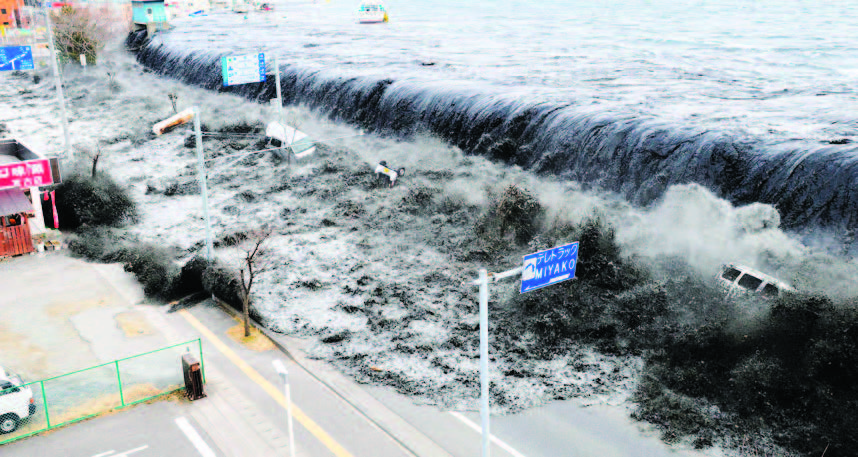
    A tsunami’s immense wall of water may not be stoppable. But there may be a way to take the ferocious force of nature down a few notches, using a pair of counterwaves.

    If released at the right moment, a type of sound wave known as an acoustic-gravity wave could subdue a tsunami, applied mathematician Usama Kadri of Cardiff University in Wales reports January 23 in Heliyon. These acoustic-gravity waves, which reach deep below the ocean’s surface, can stretch tens or hundreds of kilometers and easily travel long distances at high speeds.

    In Kadri’s plan, two acoustic-gravity waves would be launched through the water at the earthquake-triggered ocean surge. The waves would be tuned to exchange energy with the tsunami as they speed past, spreading the tsunami out by redistributing its energy and thereby decreasing its maximum height.

    The tsunami sapper is still theoretical — scientists don’t yet have a way to create the high-energy waves needed. But Kadri suggests his approach could have shrunk the amplitude of the devastating 2004 Indian Ocean tsunami by almost 30 percent. Such a reduction translates to a five-meter decrease in the height the water reached above sea level, enough to potentially save lives and property.


    Source: Science news

  • New desalination tech could help quench global thirst

    New desalination tech could help quench global thirst

    The world is on the verge of a water crisis. Rainfall shifts caused by climate change plus the escalating water demands of a growing world population threaten society’s ability to meet its mounting needs. By 2025, the United Nations predicts, 2.4 billion people will live in regions of intense water scarcity, which may force as many as 700 million people from their homes in search of water by 2030.

    Those water woes have people thirstily eyeing the more than one sextillion liters of water in Earth’s oceans and some underground aquifers with high salt content. For drinking or irrigation, the salt must come out of all those liters. And while desalination has been implemented in some areas — such as Israel and drought-stricken California — for much of the world, salt-removal is a prohibitively expensive energy drain.

    Scientists and engineers, however, aren’t giving up on the quest for desalination solutions. The technology underlying modern desalination has been around for decades, “but we have not driven it in such a way as to be ubiquitous,” says UCLA chemical engineer Yoram Cohen. “That’s what we need to figure out: how to make desalination better, cheaper and more accessible.”

    Recent innovations could bring costs down and make the technology more accessible. A new wonder material may make desalination plants more efficient. Solar-powered disks could also serve up freshwater with no need for electricity. Once freshwater is on tap, coastal floating farms could supply food to Earth’s most parched places, one scientist proposes.

    Watering holes

    Taking the salt out of water is hardly a new idea. In the fourth century B.C., Aristotle noted that Greek sailors would evaporate impure water, leaving the salt behind, and then condense the vapor to make drinkable water. In the 1800s, the advent of steam-powered travel and the subsequent need for water without corrosive salt for boilers prompted the first desalination patent, in England.

    Most modern desalination plants use a technique that differs from these earlier efforts. Instead of evaporating water, pumps force pressurized saltwater from the ocean or salty underground aquifers through special sheets. These membranes contain molecule-sized holes that act like club bouncers, allowing water to pass through while blocking salt and other contaminants.

    The membranes are rolled like rugs and stuffed into meter-long tubes with additional layers that direct water flow and provide structural support. A large desalination plant uses tens of thousands of membranes that fill a warehouse. This process is known as reverse osmosis and the result is salt-free water plus a salty brine waste product that is typically pumped underground or diluted with seawater and released back into the ocean. It takes about 2.5 liters of seawater to make 1 liter of freshwater.

  • WHATSAPP TO SOON ROLL OUT SNAPCHAT LIKE STORIES FEATURE IN IOS

    WHATSAPP TO SOON ROLL OUT SNAPCHAT LIKE STORIES FEATURE IN IOS

    Facebook-owned WhatsApp might be planning to soon add a new feature that might be very similar to Snapchar’s Stories feature.

    However, the feature will come to iOS (for iPhones) first and then later might be rolled out to Android. This means that iPhone users will be able to put forth photos and videos in their Status with their contacts if the latest leaked image is believed to be true. The feature is similar to Snapchat Stories, which will disappear after 24 hours.

    WABetaInfo tweeted an alleged image of the upcoming feature on iOS along with the text that read, “Status introduction text updated in WhatsApp beta for iOS 2.17.4+.” The feature has been on the cards since November 2016.

    The image that was leaked also shows that the new feature will come with privacy settings as well and there is a high possibility that the update will be soon rolled out.

    Facebook has been emulating Snapchat features and the new speculative feature comes as no surprise. Earlier reports also indicate that WhatsApp will soon allow users to track friends and follow them. Another new feature is also on cards which will notify users once their contacts change their status. Users will also be able to comment on the new status.

    Other reports also indicate that the company might be working on a feature that helps users edit sent messages or revoke them altogether.

    Also Read Below – Facebook introduces ‘security key’ to protect data

    To minimise data breach, Facebook has added a new login option with ‘security keys’ that requires a user to enter a special security code from their phone in addition to the password when they login from a new browser.

    According to a Facebook blog post, though most people get security code for login approvals from a text message (SMS) or by Facebook app to generate the code directly on their phones, SMS is not always reliable and having a phone back-up may not work well for them.

    “You can register a physical security key to your account so that the next time you log in after enabling login approvals, you will simply tap a small hardware device that goes in the USB drive of your computer,” said Brad Hill, security engineer at Facebook.

    Security keys can be purchased through companies like Yubico, a key manufacturing firm, and the keys support the open Universal 2nd Factor (U2F) — an authentication technology initially developed by Google — standard hosted by the ‘Fast IDentity Online’ (FIDO) Alliance.

    FIDO Alliance is a group of big corporations that collaborate on ways to make sign-ins safer and easier online.

    According to a report in Fortune, “a security key ensures that only the person in possession of it (and password) can access accounts so protected,” the report noted.

    Users can set up a security key to protect their account by buying one online at an e-commerce shop and then go to the Facebook ‘settings’.

    Click on ‘security’, where they can see an option for ‘security keys’.

    Simply select ‘add key’ and the account is secured. To add a security key from computer, users need to use the latest versions of Chrome or Opera browser. However, security keys have their own limitations currently.

  • EAT LESS TO LIVE MORE, FINDS STUDY

    EAT LESS TO LIVE MORE, FINDS STUDY

    Finally, an answer to the question ‘How to live a long life?’ has been found. At least, that’s what it seems from a recent research.

    There’s a multi-billion-dollar industry devoted to products that fight signs of ageing, but moisturizers only go skin deep. Ageing occurs deeper, at a cellular level, and scientists have found that eating less can slow this cellular process.

    Recent research published in Molecular and Cellular Proteomics offers a glimpse into how cutting calories impacts ageing inside a cell. The researchers found that when ribosomes, the cell’s protein makers, slow down, the ageing process slows too. The decreased speed lowers production but gives ribosomes extra time to repair themselves.

    “The ribosome is a very complex machine, sort of like your car, and it periodically needs maintenance to replace the parts that wear out the fastest,” said Brigham Young University biochemistry professor and senior author John Price. “When tyres wear out, you don’t throw the whole car away and buy new ones. It’s cheaper to replace the tyres.”

    So what causes ribosome production to slow down in the first place? At least for mice: reduced calorie consumption.

    Price and his fellow researchers observed two groups of mice. One group had unlimited access to food while the other was restricted to consume 35 percent fewer calories, though still receiving all the necessary nutrients for survival.

    “When you restrict calorie consumption, there’s almost a linear increase in lifespan,” Price said. “We inferred that the restriction caused real biochemical changes that slowed down the rate of ageing.”

    Price’s team isn’t the first to make the connection between cut calories and lifespan, but they were the first to show that general protein synthesis slows down and to recognize the ribosome’s role in facilitating those youth-extending biochemical changes.

    Read More

  • SODA, PIZZA AND SALTY FOOD UP LIVER DISEASE IN KIDS: STUDY

    SODA, PIZZA AND SALTY FOOD UP LIVER DISEASE IN KIDS: STUDY

    Children who regularly intake fructose present in soda, sweetened beverages, pizza and salty food, biscuits, yogurt may be be prone to liver disease, researchers warn.

    According to a study, led by researchers from Bambino Gesu Hospital in Italy, dietary fructose increases serum uric acid concentrations.

    Both uric acid concentration and fructose consumption may be high in individuals with non-alcoholic fatty liver disease (NAFLD) — a condition where extra fat is accumulated in liver cells in people who drink little or no alcohol.

    It is estimated to affect up to 30 per cent of the general population in Western countries and up to 9.6 per cent of all children and 38 per cent of obese children across a spectrum of liver disease, including NASH (defined as steatosis, hepatocyte ballooning and inflammation).

    Although NASH is a less aggressive form of NAFLD, it can progress to severe fibrosis and cirrhosis, with development of hepatocellular carcinoma in adults.

    The findings suggested that fructose consumption was independently associated with high uric acid, which occurred more frequently in patients with NASH than in not-NASH patients.

    “It is plausible that dietary fructose intake and uric acid concentrations are potential risk factors for liver disease progression in NAFLD,” said Valerio Nobili from Bambino Gesu Hospital in Italy.


  • EXERCISE IN PREGNANCY MAY HELP OBESE WOMEN AVOID COMPLICATIONS

    EXERCISE IN PREGNANCY MAY HELP OBESE WOMEN AVOID COMPLICATIONS

    Exercise may be an efficient way for obese pregnant women to lower their risk of diabetes, dangerously high blood pressure and other complications, research suggests.

    “The study suggests that a prenatal exercise-based intervention leads to both decreased costs and improved outcomes in obese women,” said Leah Savitsky, a medical student at Oregon Health and Science University in Portland who led the study.

    As reported at the 37th annual meeting of the Society for Maternal-Fetal Medicine in San Diego, California, Savitsky and her team analyzed previously published research on the effect of exercise on pregnant women with a body mass index (BMI) of at least 30.

    The normal range for BMI – a ratio of weight to height – is 18.5 to 24.9; a BMI of 30 or more indicates obesity. (A BMI calculator is here, on the website of the U.S. Centers for Disease Control and Prevention. Based on their analyses of those earlier studies, the researchers estimated the benefit of exercise for women who are obese at the start of their pregnancy.

    They calculated that for every one million such women, there would be 38,176 cases of a dangerous pregnancy-related blood pressure problem known as preeclampsia among those who exercised, compared to 113,000 cases among those who didn’t exercise.

    Exercise would also be linked to a decrease in so-called gestational diabetes, with a rate of 195,520 per million among exercisers compared to 305,500 among non- exercisers, according to their calculations.

    Likewise, they estimated, for every million obese pregnant women the preterm birth rate would drop from 105,059 to 90,923 with exercise, the maternal death rate would fall from 90 to 70 and the neonatal death rate would drop from 1,932 to 1,795.

    Based on a cost-effectiveness threshold of$100,000 per quality-adjusted life year, an exercise intervention could save money as long as expenses are held to just under$3,000. The effects of exercise may be even more beneficial than the study suggests, Savitsky said. “This study did not consider additional downstream benefits on control of weight beyond pregnancy as well as the downstream potential benefits on hypertension and diabetes,” she told Reuters Health by email.

    Women who are not obese may benefit as well. The researchers applied their model to women with a normal BMI of 18.5 – 24.9 and found similar improvements in outcomes among those who exercise, although the cost-effectiveness thresholds were lower.

    “With the obesity epidemic looming in our society, perhaps we should be turning our attention to prevention of disease. It does not seem to be too late even for obese pregnant women to engage in lifestyle change that may substantially reduce health care costs,” Mottola told Reuters Health by email.

    The current study was not designed to develop specific exercise guidelines for obese pregnant women; these women should consult their obstetricians for guidance. In the meantime, the American College of Obstetricians and Gynecologists advises obese pregnant women to “start with low-intensity, short periods of exercise and gradually increase as able.”

  • Brain unable to form new memories when you’re sleep deprived

    Brain unable to form new memories when you’re sleep deprived

    Alert! Your memories are in danger of being lost if you are sleep derived, suggests a study. Studying mice, scientists at Johns Hopkins have fortified evidence that a key purpose of sleep is to recalibrate the brain cells responsible for learning and memory so the animals can “solidify” lessons learned and use them when they awaken — in the case of nocturnal mice, the next evening.

    A summary of their study appears online in the journal Science.

    The researchers, all of the Johns Hopkins University School of Medicine, also report they have discovered several important molecules that govern the recalibration process, as well as evidence that sleep deprivation, sleep disorders and sleeping pills can interfere with the process. “Our findings solidly advance the idea that the mouse and presumably the human brain can only store so much information before it needs to recalibrate,” says Graham Diering, Ph.D., the postdoctoral fellow who led the study. “Without sleep and the recalibration that goes on during sleep, memories are in danger of being lost.”

    Diering explains that current scientific understanding of learning suggests that information is “contained” in synapses, the connections among neurons through which they communicate.

    On the “sending side” of a synapse, signaling molecules called neurotransmitters are released by a brain cell as it “fires”; on the “receiving side,” those molecules are captured by receptor proteins, which pass the “message” along. If a cell receives enough input through its synapses, it fires off its own neurotransmitters. More specifically, experiments in animals have shown that the synapses on the receiving neuron can be toggled by adding or removing receptor proteins, thereby strengthening or weakening them and allowing the receiving neuron to receive more or less input from nearby signaling neurons.

    Scientists believe memories are encoded through these synaptic changes. But there’s a hitch in this thinking, Diering says, because while mice and other mammals are awake, the synapses throughout its brain tend to be strengthened, not weakened, pushing the system toward its maximum load. When neurons are “maxed out” and constantly firing, they lose their capacity to convey information, stymying learning and memory. One possible reason that neurons don’t usually max out in a process that has been well-studied in lab-grown neurons but not in living animals, asleep or awake. Known as homeostatic scaling down, it is a process that uniformly weakens synapses in a neural network by a small percentage, leaving their relative strengths intact and allowing learning and memory formation to continue.

  • 24% MPS, MLAS ARE ‘TOO POOR’ TO PAY TAX

    24% MPS, MLAS ARE ‘TOO POOR’ TO PAY TAX

    NEW DELHI (TIP): In tax returns filed a year before they were elected, 72 pc BJP and Congress MPs and MLAs claimed they earn less than Rs 10 lakh, according to an analysis of affidavits of 4,848 (of 4,910) lawmakers.

    About 75 pc of MPs and MLAs nationwide declared annual income less than Rs 10 lakh. Around 35 pc of lawmakers said their annual income is less than Rs 2.5 lakh while 40 pc declared income between Rs 2.5 lakh and Rs 10 lakh.

    As many as 1,141 (24 pc) MPs and MLAs claimed exemption from income tax or have no income at all.

    If the annual incomes of family (incomes of spouse and dependents, as declared in their respective tax returns) are added to the incomes of MPs and MLAs, 62 pc legislators’ households have an income less than Rs 10 lakh.

    Of 1,843 MPs and MLAs with family incomes of more than Rs 10 lakh, 106 declared household assets of less than Rs 1 crore. Only 25 pc (1,236 of 4,848) of MPs and MLAs declared in tax returns that their annual incomes were more than Rs 10 lakh; 35 pc (1,676 of 4,848) declared income less than Rs 2.5 lakh.

    While 63 pc Lok Sabha MPs declared annual income of less than Rs 10 lakh, only 13 pc Rajya Sabha MPs declared annual incomes of less than Rs 10 lakh. Among states, over 80 pc of MLAs in Uttar Pradesh, Bihar, West Bengal and Odisha declared annual incomes less than Rs 10 lakh.

  • Chargesheets in just four 1984 riot cases, SIT had taken up 59 cases for reprobe

    Chargesheets in just four 1984 riot cases, SIT had taken up 59 cases for reprobe

    NEW DELHI (TIP): The Centre-appointed Special Investigation Team (SIT) has filed chargesheets in only four of the 59 anti-Sikh riot cases taken up for further probe. Almost 3,000 people were killed, most of them in Delhi, in the riots that broke out after the assassination of then PM Indira Gandhi on October 31, 1984.

    In a status report filed in the Supreme Court, the Ministry of Home Affairs (MHA) has said while 38 cases have been closed, 17 are under investigation. “It is being ensured that the investigation is carried out expeditiously and thoroughly,” the report, filed on the directions of the apex court, says. The MHA, which extended the SIT tenure till August 11 this year, has written to the Delhi Government and the Delhi High Court for designating a single court to hear the cases. The SIT has been notified as a police station with jurisdiction over the entire Delhi.

    Also, of the 293 cases taken up for scrutiny, 199 have been closed with preliminary enquiries (PEs) held in 35 cases. “A large number of representations related to these cases were received from the Delhi Sikh Gurdwara Management Committee and private persons/bodies, which are being examined by the SIT,” says the report. The SIT has recorded statements of more than 1,000 witnesses, including one from New York.