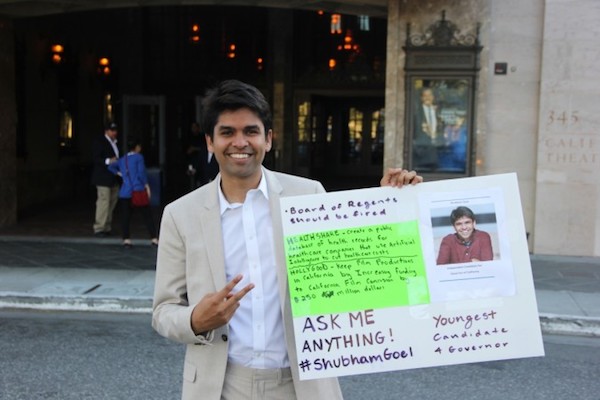
SACRAMENTO(TIP): Indian American Shubham Goel, who has his roots in Uttar Pradesh is the youngest candidate running for governor of California, Mr. Goel calls for “fresh voices to change the state government”. He was born and raised in California and campaigns for need for practical solutions to problems that the state faces.
A virtual reality manager by profession, the 22-year-old has been using social media platforms to reach out to the public. His campaigns show him on the streets of California with a megaphone in hand, advocating transparency in the political system.
In a video he posted on Twitter, the young techie in a dark blue t-shirt is seen asking people at a carnival to support him, while one of his aides is standing beside him holding a big, white placard to pitch his candidacy for California governor.
Mr. Goel will contest alongside 27 other candidates, according to a two-page state governor contest list that shows he does not have a party preference.
Another video posted on his Twitter profile shows him campaigning on virtual reality or VR platforms. “Technology has been able to fix a lot of issues. I want to run for governor just to implement technologically feasible platforms,” he said.
Shubham Goel recently graduated from the University of California or UCLA and holds a degree in economics and film studies. Calling himself an “everyday person,” soon after he announced his candidacy, he tweeted, “California is struggling and this is the moment for change!”
According to Mr. Goel, the primary reason for running for office is that one needs no political backing or funding to bring about change. “I wanted to run to show that in state-wide offices, it is presumed that to run for office, you need loads of money and fame and loads of political backing. I want to show that all you need is efficiency, platforms and conviction,” he said.
If elected, Mr. Goel hopes to take California back to its Gold Rush period, arguably one of the most significant events to shape American history.
Mr. Goel campaigns on a seven-point platform that includes a handbook for the governor that talks of creating centralized and digitalized profiles on social media for office-holders. The profiles will show their economic interactions for the past 10 years with regards to money and donations they have received from any source.
ILLIONOIS(TIP): Lovely Varughese, the mother of Indian American Pravin Varughese will finally see the man accused of killing her son after four years as the trial begun on June 4th.
Gaege Bethune, who faces a charge of first-degree murder in the death of Pravin Varughese, appeared in the court on Monday, June 4thto face the trail. His final pre-trial hearing was held last month.
Varughese, a student of Southern Illinois University was on his way home from a party, but he never reached his townhouse near the campus.
The teenager placed a desperate call to a friend around 12.30 a.m., during which he reportedly sounded out-of-breath.
Varughese’s body was found in the woods in an area roughly three miles from the SIU campus after an intense search for nearly six days.
The accused Bethune, a resident of Eldorado, Illinois, is not a student of Southern Illinois University, where Varughese was a student at the time of his death. But the indictment report says he admitted that he delivered “multiple punches to the head and face, rendering (Varughese) ‘dead weight.’”
After the final pre-trial hearing Lovely Varughese had told media “I’m pretty confident on the evidence they have, and I’m just waiting for the jury to hear the evidence.”
She had also added that the family was all prepared for the trial of Gaege Bethune.
According to the statement provided by Bethune to police, he gave Varughese a ride on a frigid February night. He also admitted that he was drunk but said the deceased was the first to start an altercation and refused to get out of the car.
He also added that when the Illinois state trooper approached, Varughese escaped into the woods.
The case was almost closed after the Jackson County State’s Attorney Michael Carr approved the police finding that Varughese died of hypothermia.
After the relentless follow-through of Lovely Varughese, who even accused the Illinois police of foul play, a second autopsy was conducted, and it revealed that there were at least three major injuries to his head from blunt trauma, and his eye was badly damaged. The victim also looked to have tried some sort of a defensive move.
In March 2015, Carr stepped down from the case and turned it over to Patrick Delfino, a special prosecutor in the Illinois State Appellate Court.
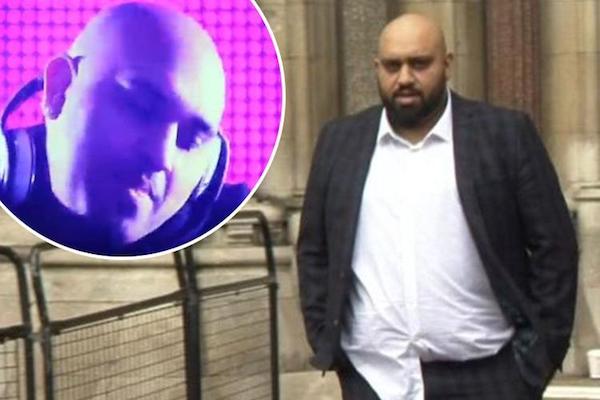
LONDON(TIP): An Indian origin UK based DJ has been jailed for three months after being found guilty of contempt of court for exaggerating the effect of his relatively minor injuries in a bid to defraud the National Health Service of over 837,000 pounds. Sandip Singh Atwal, known as Sunny, was filmed dancing and working as a courier after claiming that “negligent” treatment he received from the UK’s state-funded National Health Service (NHS) for minor injuries had left him unemployed and dependent.
The 33-year-old was found in contempt of court on 14 counts at a hearing in April and was sentenced at the UK High Court on June 1st.
“It needs to be clearly understood by everyone that false and lying claims undermine the administration of justice in a number of serious ways. The senior courts have made it clear that those who make false claims and get caught must expect to go to prison,” Justice Spencer said during sentencing.
“There is no other way to underline the gravity of such conduct to those who attempt to make such claims,” he noted.
In June 2008, Atwal, who was working in his family’s taxi firm, was injured in an attack with a baseball bat and went to Huddersfield Royal Infirmary for treatment. He was treated for fractures to the index finger of his right hand and the ring finger of his left hand, and a laceration to his lower lip.
He later brought a claim for negligent treatment, which was admitted by Calderdale and Huddersfield NHS Trust, who offered GBP 30,000 to settle the case.
Atwal asked for GBP 837,109, including very substantial sums for future loss of earnings and future care, on the basis he was unable to work and grossly incapacitated. In order to justify the much larger claim, Atwal said he was suffering from disability, self-consciousness about his lip and hands, had becoming a social recluse, suffered alcohol dependence and reliance on pain killers and was unable to work as a DJ or a courier between 2010 to 2015.
But the NHS trust was suspicious, put Atwal under surveillance and investigated his social media postings which “gave the lie” to much of what he was asserting, noted Justice Spencer.
Surveillance footage showed Atwal working and lifting heavy items, with no visible signs of discomfort, leading the trust to accuse him of fraudulent exaggeration.
NHS Resolution, on behalf of Calderdale and Huddersfield NHS Foundation Trust, said the case should be seen as a demonstration of its commitment to combating fraud – but should not deter genuine claimants.
SINGAPORE(TIP): A 28-year-old Indian origin in Singapore has been sentenced by a court there for attempting to spike his flat mate’s drink and subsequently rape her, according to reports.
Annadurai Prabakaran, who worked in Singapore for more than seven years as a private hire bus driver, had earlier started to think of having sex with his 21-year-old flat mate, who is also an Indian origin residing there, court documents suggest.
Prabakaran bought two tablets for two Singapore dollars, of what he assumed to be sleeping pills, to spike his flat mate’s water bottle.
“He planned to drug her and have sexual intercourse with her while she was asleep,” according to a report, citing court documents.
He then carried out a small test by using one of the pills to see whether it would become colorless when dissolved.
Three days later, on December 12, he dissolved the other pill in his flat mate’s bottle, when she left it unattended.
When her 21-year-old flat mate took a sip of water, she spat it out when she realized the water tasted bitter, according to reports.
The woman, upon seeing that the water was cloudy, suspected Prabakaran and called a friend of her uncle’s. Her friend, also a woman, turned up at the apartment with a male friend.
Prabakaran confessed to spiking his flat mate’s water and then pleaded for forgiveness, according to the court documents.
He then grabbed the water bottle from the man, who was holding it at that time, and dropped it on the floor.
The man proceeded to call the police, which sent the bottle to the Health Sciences Authority or HSA for analysis.
A small amount of water had remained in the bottle. The HSA’s toxicology report revealed the spiked water to not have the chemicals inside a sleeping pill, but instead Sildenafil, a drug that is used to treat erectile dysfunction. Sildenafil’s side effects include nausea and headaches.
Prabakaran pleaded guilty for obstructing justice, with his lawyer pleading to the court for Prabakaran to be given the lightest sentence possible.
The court sentence handed out to Prabakaran was for two years and 10 months. He was also sentenced to three strokes of the cane.
Singapore permits judicial caning and its caning laws are said to be one of the most severe in the world.
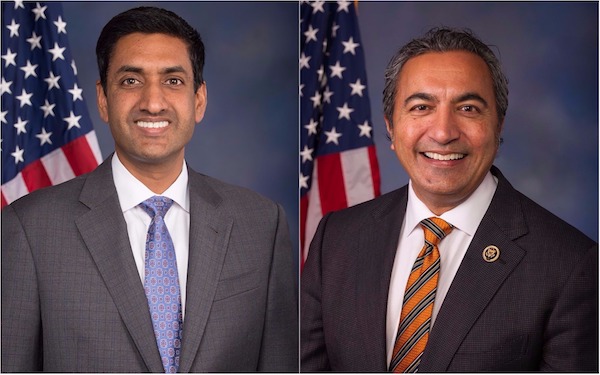
SACRAMENTO, CA(TIP): Indian American Democrats Ami Bera and Ro Khanna have won their primaries in their bid to hold on to their congressional seats in California.
Bera, the longest serving Indian American in the US House of Representatives, polled nearly 52 percent of the total votes cast in the California District 7 on June 5th. He will face Republican Andrew Grant, who finished second with 33 percent votes.
Ami Bera was first elected in 2012, when he defeated incumbent Dan Lungren by two percentage points. Since then both his reelection runs were very competitive.
Freshman congressman Ro Khanna finished first in District 17, winning 59 percent of the votes. Republican Ron Cohen, who received 25 percent of votes, will challenge the Indian American in the November election.
Khanna, who represents Silicon Valley, entered Congress by beating incumbent and fellow Democrat Mike Honda in 2016.
In the statewide elections, Indian American Vivek Viswanathan, who ran for treasurer, finished third.
The former Hillary Clinton aide, who ran an innovative campaign by running on his sneakers from one end of the state to the other, polled nearly half a million votes. Fellow Asian American Fiona Ma received more than 1.6 million votes (43 percent) — nearly double the votes polled by his nearest rival, Republican Greg Conlon.
In California, there is only one primary, and candidates from all parties compete, with the top two finishers advancing to the general election.
Last month, two Indian American Democrats won primaries in Texas and Arkansas.
Sri Preston Kulkarni won the runoff for Texas’ 22nd Congressional District, while school teacher Chintan Desai won Arkansas’ first congressional district Democratic primary unopposed.
With India recalibrating its relations with other powers, the India-U.S. equation is not quite balancing out
By Suhasini Haidar
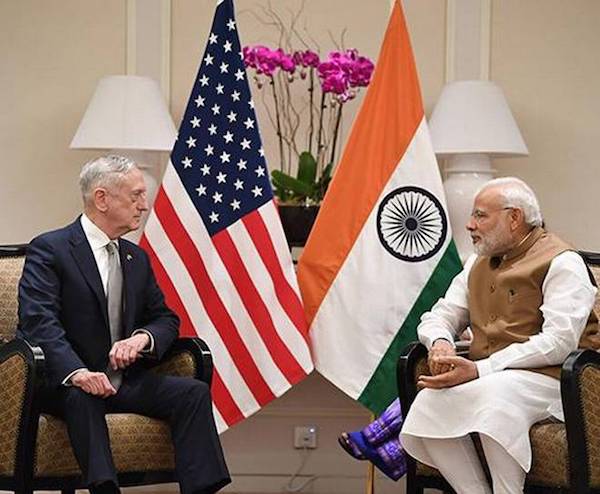
At his speech at the Shangri-La Dialogue in Singapore last week, billed as a major foreign policy statement, Prime Minister Narendra Modi spoke of India and the U.S.’s “shared vision” of an open and secure Indo-Pacific region. Yet his words differed so much from those of U.S. Defense Secretary James Mattis, who spoke at the same event, that it seemed clear that New Delhi and Washington no longer see eye-to-eye on this issue, and several others as well.
Oceanic gulf
To begin with, Mr. Modi referred to the Indo-Pacific, a term coined by the U.S. for the Indian and Pacific Oceans region, as a natural geographical region, not a strategic one, while Mr. Mattis called the Indo-Pacific a “priority theatre” and a “subset of [America’s] broader security strategy” for his military command, now renamed the Indo-Pacific Command. While Mr. Modi referred to India’s good relations with the U.S., Russia and China in equal measure, Mr. Mattis vowed to counter China’s moves in the Indo-Pacific and referred to the U.S. National Defense Strategy released this January, which puts both China and Russia in its crosshairs as the world’s two “revisionist powers”.
The divergence in their positions, admittedly, are due more to a shift in New Delhi’s position over the past year than in the U.S.’s, when Mr. Modi and President Donald Trump met at the White House. A year ago, the Modi government seemed clear in its intention to counter China’s growing clout in its neighborhood, especially post-Doklam, challenge the Belt and Road Initiative (BRI), and back a Quadrilateral grouping of India, the U.S., Japan and Australia to maintain an open Indo-Pacific. Today, the Doklam issue has been buried, the BRI isn’t as much a concern as before, and the government’s non-confrontational attitude to the Maldives and Nepal indicates a softened policy on China in the neighborhood. Meanwhile, Mr. Modi now essays a closer engagement with Chinese President Xi Jinping and a relationship reset with China after the Wuhan meeting.
The Quad formation, which is holding its second official meeting today in Singapore, has also been given short shrift. India rejected an Australian request to join maritime exercises along with the U.S. and Japan this June, and Navy Chief Admiral Sunil Lanba said quite plainly last month that there was no plan to “militarize” the Quad. Contrast this with India’s acceptance of military exercises with countries of the Shanghai Cooperation Organisation (SCO), the Russia-China led grouping it will join this week in Qingdao, and one can understand some of the confusion in Washington. Pentagon officials, who had come to accept India’s diffidence on signing outstanding India-U.S. foundational agreements, are now left scratching their heads as India publicly enters the international arena in the corner with Russia and China, while proclaiming its intention to continue energy deals with Iran and Venezuela in defiance of American sanctions.
Era of summits
In a world where summits between leaders have replaced grand strategy, the optics are even clearer. Mr. Modi will have met Mr. Xi and Russian President Vladimir Putin four-five times each by the end of the year, if one counts informal and formal summits, as well as meetings at the SCO, BRICS and G-20. In contrast, nearly half the year has gone in just scheduling the upcoming 2+2 meet of Indian and U.S. Ministers of Defense and Foreign Affairs.
Trade protectionism is clearly the other big point of divergence between India and the U.S., which have in recent months taken each other to the World Trade Organisation on several issues. There has been a surge in disputes between the two countries: on the new American steel and aluminum tariffs, the proposed cuts in H1B professional visas and cancellation of H4 spouse visas, on India’s tariffs and resistance to U.S. exports of dairy and pork products, on Indian price reductions on medical devices, and Reserve Bank of India rules on data localization on Indian servers for U.S. companies.
The row over Harley-Davidson motorcycles is a case in point, where what should have been a small chink in the relationship has ended up denting the discourse quite seriously. When Mr. Trump announced to Harley executives and union representatives in February last year that he would stop countries “taking advantage” of them, no one in New Delhi paid much attention. Over the year, Mr. Trump grew more vocal in this demand, including twice during meetings with Mr. Modi in Washington and Manila, calling for India to scrap its 75-100% tariffs, given that the U.S. imposes zero tariffs on the import of Indian Royal Enfield motorcycles. Mr. Modi tried to accommodate U.S. concerns, and even called Mr. Trump on February 8 this year to tell him that tariffs were about to be cut to 50%. But after Mr. Trump divulged the contents of their conversation publicly, trade talks were driven into a rut. Officials in Washington still say that if India were to slash its rates, it would see major benefits in other areas of commerce, while officials in New Delhi say that with Mr. Trump having gone public with Mr. Modi’s offer, it would be impossible to back down any further. In fact, a new cess has taken tariffs back up to 70%.
The biggest challenges to a common India-U.S. vision are now emerging from the new U.S. law called Countering America’s Adversaries Through Sanctions Act and the U.S.’s withdrawal from the Iran nuclear deal with the threat of more secondary sanctions. Both actions have a direct impact on India, given its high dependence on defense hardware from Russia and its considerable energy interests in Iran. In particular, India’s plans to acquire the Russian S-400 missile system will become the litmus test of whether India and the U.S. can resolve their differences. Clearly the differences over a big-ticket deal like this should have been sorted out long before the decisions were made; yet there is no indication that the Trump administration and the Modi government took each other into confidence before doing so.
In the face of sanctions
Defense Minister Nirmala Sitharaman’s avowal of the S-400 agreement, and Foreign Minister Sushma Swaraj’s open defiance of U.S. sanctions on Russia, Iran and Venezuela at separate press conferences this month couldn’t have helped. It also didn’t help that owing to Mr. Trump’s sudden decision to sack Rex Tillerson as Secretary of State in March, the 2+2 meeting in April, which may have clarified matters, was put off. The truth is, building a relationship with the Trump administration in the past year has been tricky for both South Block and the Indian Embassy in Washington, as more than 30 key administration officials have quit or have been sacked — they have had to deal with three National Security Advisers, two Chiefs of Staff, as well as two Secretaries of State as interlocutors.
It is equally clear that the India-U.S. equation isn’t balancing out quite the way it did last year, when Mr. Modi and Mr. Trump first announced the idea of the “2+2” dialogue. Ms. Swaraj, Ms. Seetharaman and their American counterparts have their work cut out for them during their upcoming meeting in Washington on July 6. If a week is a long time in politics, in geopolitics today a year is an eternity.
(The author is Deputy Resident Editor & Diplomatic Affairs Editor, The Hindu. She can be reached at suhasini.h@thehindu.co.in)
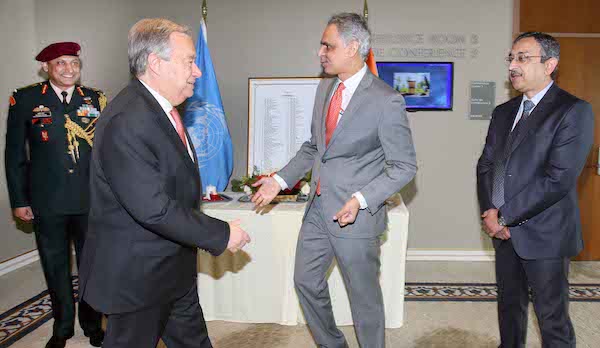
Ambassador Maleeha Lodhi, Pakistan’s Representative greeted by Ambassador Tanmay Lala, Dy Permanent Representative to the UN as she and her Military Attache join the celebration of UN Peacekeeping Day at the UN. Also, in the Pic, Col Sanjeev Kapoor. (right) to the United Nations. Photo /Jay Mandal/On AssignmentUN Secretary-General António Guterres delivers his statement during UN Peacekeeping day event at the UN, hosted by Indian Mission to the UN. in NY. Photo /Jay Mandal/On Assignment
NEW YORK CITY(TIP): The Eye Foundation of America (www.eyefoundationofamerica.org) held a fundraiser, May 23 in Downtown here. Around a hundred well wishers and patrons of the Foundation gathered to support the Foundation which aims at “preventing the avoidable blindness”.
Ashok Raju speaks about the Eye Foundation of AmericaDr. Leela Raju speaks about various projects
Ashok Raju and Leela Raju spoke about the Foundation’s work in the last three decades and expressed their gratitude to the patrons of the Foundation who have been regularly funding the various projects of the Foundation.
The Madullas, Srinu and Tulsi who are regular donors received special recognition, as did the Maddalis, the Panchals, and the Modaks for their generous pledges.
Ms Neeta Bhasin, CEO of ASB Communications and Chair of Diwali at Times Square making announcement of having the Eye Foundation as a partner at the October 2018 Diwali at times square
A highlight of the event was an announcement by Ms Neeta Bhasin, CEO of ASB Media and Chair of Diwali at Times Square that the Eye Foundation of America will be a partner in Diwali celebrations in October 2018.
Prasanna and ensemble performingOrganizers and Prasanna EnsembleMaster of Ceremonies Kulraaj Bhushan Anand
Prasanna and his ensemble which included his singer wife Shalini cast a spell with their soulful music and won the admiration and appreciation of the gathering.
The fundraiser netted $350,000.
The Foundation has planned a fundraising event in NJ on Sept 22 at Royal Albert Palace.
The Foundation is also considering a tour with Prasanna in Chicago and San Francisco, and maybe at some other locations also, given the fact that the gathering felt hugely entertained by his ensemble.
Dr. VK Raju, founder of the Eye Foundation of America chose no to speak on the occasion. His wife and he kept themselves busy looking after the guests.
The organizers thanked Prasanna and his ensemble, Joe’s Pub, the Master of Ceremonies Kulraaj Bhushan Anand, Gloria and the Society and Diplomatic Review, and Prof. Indrajit Saluja and The Indian Panorama for their support.
BJP president Amit Shah is busy making pilgrimages to places he had rarely bothered to visit while his party logged a steady record of victories in state elections. His first port of call was Matoshree, home to Shiv Sena chief Uddhav Thackeray to be followed by a closed-door meeting with the Badals in Chandigarh. His boss, PM Modi is on a pacifying and reconciliation mission too: an olive branch to party veteran LK Advani after studiously ignoring him all these years and there is talk of rapprochement with other estranged party elders as well.
A walk-back in politics, as in war, is an accepted tactic to cut the losses and recoup energy. The message from the high-value losses in UP and Karnataka seems to be that the BJP’s brand of ethno-religious political activism and the Modi charisma may not be adequate in a bipolar competition in 2019. It is also a realization that the NDA needs to again summon the spirit of 2014 but with a slight twist in the arrangement: it is no longer the rising tide of Modi’s populism and antipathy to the Congress that unconditionally brought allies to the BJP’s fold.
The Congress’ readiness to take the backseat in Karnataka and play the understudy to the BSP and SP in UP have also brought a matching pressure on the BJP to be accommodative to its allies as well. However, power brings in its own complications. The BJP has a much harder task on hand in trying to separately renegotiate the terms of alliance with its partners. For its allies of UP and Bihar, the BJP needs to allay their fears of abandonment and emasculation; with Akali Dal and Shiv Sena, conciliation is easier on the back of decades of association but the ball game in the South is different: the BJP may have invested in the wrong AIADMK faction in Tamil Nadu, is without a partner in Karnataka and divorced but not separated with the TDP in Andhra. J&K also requires a greater flexibility of alignment. A helping hand from the sidelined elders could make this arduous task easier.
CHICAGO, IL(TIP): The Uttar Pradesh Association of Greater Chicago (UPA) held its annual Hindi Hasya Kavi Sammelan on Sunday, May 27, 2018 at Ashiyana banquet hall in Downers Grove, Illinois
The Sammelan was a huge success with over 400 plus guests attending the program from all over Chicagoland and neighboring areas.
This is a signature event of UP Association which is organized every year in close collaboration with International Hindi Association (IHA). UPA is the only organization that organizes this very popular Kavi Sammelan every year and brings acclaimed poets from India to promote and celebrate richness of our motherland language through kavi sammelan.
Three famous poets, Mr. Sarvesh Asthana, Mr. Gaurav Sharma and Dr. Sonroopa Vishal, currently on tour of Unites States and Canada, entertained audience with hasya, vyang and geet. The Kavis’ were a perfect combination- where Mr. Asthana’s comic poetry and Sharma’s two liner comic poetry kept the audience roaring in laughter, at the same time, Dr. Vishal’s geet and Gazals mesmerized the audience with her melodious voice. The performances by three poets were outstanding and the hall echoed with loud laughter and clapping with great hasya and satire poems presented by Mr. Ashthana and Mr. Sharma. Dr. Vishal’s geet/gazals on love and family relationship and importance of women in shaping our society filled our hearts with pride and she received standing ovation. Overall, combinations of three poets was well appreciated by the audience. Mr. Asthana presided over the kavi sammelan with his unique and impressive style of poetry presentation.
The Sammelan started with welcome remarks by Dr. Subhash Pandey, who is Chairman for the Board of Trustees of the Association. He said that we are pleased to have three honorable poets from India and he emphasized that poets with his or her power of writing contribute greatly to shape our culture and heritage. He highlighted the Association’s history and accomplishments to the audience and thanked them for constant support. Dr. Pandey said that UP Association since its inception has engaged in promoting Hindi by organizing the several successful Kavi Sammelan. He then introduced poets one by one and highlighted the accomplishments of each poets and their popularity in India. He also highlighted many recent accomplishments, thanked immediate past president of UPA, Mr. Vivek Varma and his team for their dedication and an outstanding service. He then introduced and welcomed newly elected president Mrs. Taruna Gupta, who have been associated with UPA for last several years. Mrs. Gupta gave her warm welcome to guests, visiting poets and audience. She thanked organization for giving this opportunity to serve Indian community of Chicago in promoting Indian culture and most importantly UP state of India. Dr. Pandey also introduced and welcomed all newly elected members of executive committee and board of trustees. Dr. Pandey also invited guest of honor, Mr. OP Meena, Consul and head of chancery, Chicago Indian Consulate General office for his remarks on this occasion. Mr. Meena appreciated association’s outstanding work in promoting Hindi and also welcomed visiting poets from India. He also announced the plan of consulate for the celebration of international Yoga day on June 16th, 2018 at Millennium park and invited everyone to attend.
A view of the audience
A large number of audience attended this year’s Hasya Kavi Sammelan that focused on geet and gazals. Refreshments consisted of delicious snacks with hot tea that were served during the intermission by Ashiyana banquets. On behalf of UPA, Dr. Subhash Pandey thanked Mr. Surendra Jain, owner of Ashiyana banquets, for the delicious food and his support. His service was greatly appreciated by everyone who attended the program. Dr. Pandey also thanked the media personnel particularly Mr. Suresh Bodiwala, Asian media USA, for his superb service of the Indian community. He also thanked Ms. Vandana Jhingan for her service to community and covering the event for TV Asia and Mr. Jatinder Bedi of Hello NRI for his support. The Association’s outgoing President Mr. Vivek Varma thanked the poets, audience, committee members, board of trustees and volunteers to make this program a great success. The memorable night ended with presenting the poets with small gift of appreciation by the guest of honor, Mr. OP Meena and office bearers of UP association.
As quoted by Dr. Subhash Pandey, “The credit of grand success of Kavi Sammelan goes to the immense talent of Kavis’ who kept the audience glued to their chairs and engaged for four hours and also the hard work and dedication of the U.P Association’s executive Committee and board of trustees who worked tirelessly for the program”.
As quoted by Mrs. Taruna Gupta, “We are very pleased with the interest and positive feedback from audience about the program and the credit of success goes to all the attendees for coming and showing their support for our Indian Culture and love for Hind language”
(Photographs and Press release by Asian Media USA)
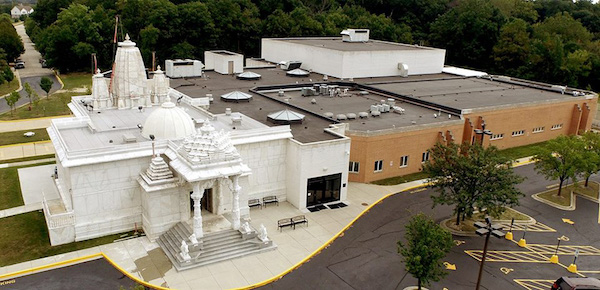
CHICAGO, IL(TIP): A Media conference was held by Jain Society of Metropolitan Chicago (JSMC) on Saturday, June 2 at JSMC temple, 435 N Route 59, Bartlett, IL 60103
The Jain Society of Metropolitan Chicago (JSMC), Bartlett Illinois, is preparing for a grand celebration of the 25th Anniversary of its temple from June 22 to July 1, 2018 in Bartlett, IL. More than 4000 people are expected to witness this historical celebration. This will be the first Jain temple in North America with “Shikhar” or dome to complete 25 years. A number of dignitaries, speakers, and faith leaders from US and India will grace the occasion. With the mission of preserving and sharing Jain way of life, JSMC has grown great with 1900+ proud life members (families) and expanded its facilities in a 17.5-acre lot with a monumental temple and Community Center.
Since 1970s, Chicago has experienced tremendous growth in population. A great part of this growth has come about as Chicago has become more international in character. Story of Jains in Chicago parallels that of Chicago. During this brief period, Jain population exploded from less than thirty families to more than nineteen hundred families. Jains built a beautiful eighty-four thousand square feet Jain Center and Temple at 435 North Route 59, on the northeast corner of Route 59 and Route 20 in Bartlett, Illinois. President of JSMC executive committee Mr. Vipul Shah is very excited and mentioned that, “This is a milestone year for all Jains in and around Chicago and indeed the whole of US. We have put in a lot of planning to ensure that all our guests have a great experience.” Chairman and Board of Trustees of JSMC, Mr. Atul Shah added, “Our unity, dedicated volunteers, visionary leaders and generous donors, over the last 25 years is the main reason that we are a role model Jain society in North America.”
The ten- day celebration includes various religious, cultural, educational and entertainment events to keep the audience enthralled. There is also a separate track of activities for youth and young adults. Planning for the celebration has been going on for the last 6 months and has now reached a feverish pace with over 200 volunteers working to put finishing touches with the Executive Committee and Board of Trustees leadership.
JSMC Members
PR & Media co-leads Mr. Hemant Shah (past Chairman) and Dr. Mukesh Doshi (past Chairman) also explained, “We are building on a very successful legacy of 48 years of JSMC.” Chicago is very fortunate to have remarkable history of the first Jain who landed 125 years ago – when Shri Virchand Raghavji Gandhi pioneered Jainism in western world and represented Jains in first parliament of World religious conference held in Chicago in 1893. Therefore, the roots of Jain religion were already planted. Since 1970, this society is standing on contributions of generous donors, dedicated volunteers and passionate leadership of visionaries. We are humbled to be part of this society that is regarded as symbol of Unity and harmony among all Jains.
About Jain Center of Metropolitan Chicago (JSMC)
Founded in 1970, JSMC caters to the religious, educational, cultural and community needs of Jains in and around Chicago. After building North America’s first Jain temple with Shikhar in 1993, the organization undertook a major expansion in 2008-09. With more than 1900 families as life members, JSMC has maintained its unity of Shwetamber, Digambar, Sthanakvasi and Shrimad sects over the years and has continued to inspire the Jain values of non-violence, multi-pluralism and non-possessiveness.
These members engage in various religious, cultural, educational, social and community activities on close to 160+ days in a typical year. Over 500 students register in the Pathshaala that meets every 1st and 3rd Sunday. The Center has also become a preferred location to host other events – given its state of the art community hall and dining facility available on rental. A 7-person elected Board and a 13-person elected Executive Committee manage JSMC with support from many /committees.
Jainism is a religion and a way of life for Jains around the world. The primary purpose of JSMC is to increase the awareness of the principles of Jainism, achieve the unity of all Jains, provide a platform wherefrom to project the voice of Jain religion, promote the feeling of amity and unity among Jains and to promote inter-faith understanding. Jainism, which originated in India, at least five thousand years ago, has largest number of followers (about 4 million) in India. It has nonetheless, influenced the world peace through its message of non-violence and forgiveness. Jainism indirectly influenced Dr. Martin Luther King Jr, as he followed the example and non-violent methods of Mahatma Gandhi in his struggle for equality and civil rights for all minorities in USA.
Jains have been on a path of Non-Violence, Non-Absolutism (Anekantvad), and Non-possession (Aparigrah) for thousands of years. And Science is walking hand in hand with us on this path. For thousands of years, Jains have believed in meditation, yoga, animal compassion, vegetarianism, environmentalism, equal rights for women, respect for other cultures and forgiveness. Jains believe that universe is eternal and that Jain religion, which explains the rules of the universe, is therefore eternal, with no beginning and no end. Last perfected soul known (Tirthankar) to us is Lord Mahavir, who was born in 599BC, near Patna in Bihar, India.
(Photographs by: Asian Media USA. Press release by The Jain Society of Metropolitan Chicago (JSMC))
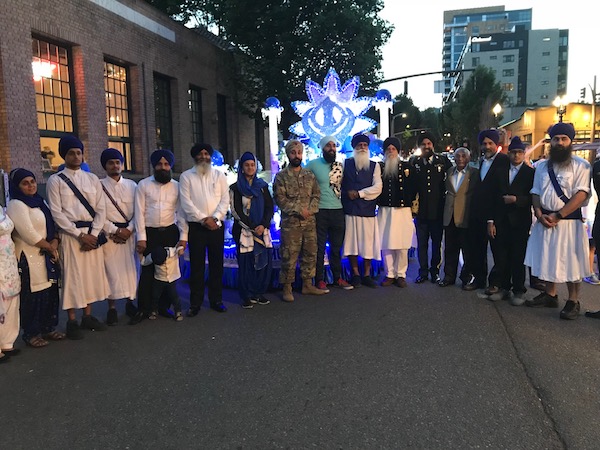
PORTLAND, OREGON(TIP): This past Memorial Day Weekend several Sikh organizations including Sikh American Legal Defense and Education Fund, Sikh Seva Foundation, Ghadar Memorial Foundation, SAVA, and SikhLens, along with the local Sikh community organized a program in celebration of Dr. Bhagat Singh Thind’s service and activism.
The event took place prior to the Portland Oregon Memorial Day Parade. LTC Kamal Singh Kalsi and Johanna Ogden spoke about history and service. The program included elements of film, music, dance, and discussion. After the event attendees went to the Portland Oregon Memorial Day Parade were the Sikh community created a float in honor of Sikhs in Service.
SALDEF Regional Director SatHanuman Singh Khalsa organized the important event.
Trump has offered India 100% access to all US Technologies and treat India as the closest ally
By Ven Parameswaran
“Close alignment with the US will strengthen India’s national security and protect its sovereignty. China will think twice before threatening to attack India. Future wars will be won by whoever has superior technology”, says the author
The US spends half a trillion dollars a year on scientific research—more than any other nation on Earth—but China has pulled into second place, with the European Union, third and Japan, a distant fourth. China is on track to surpass the US by the end of this year, according to the National Science Board. In 2016, annual scientific publications from China outnumbered those from the US for the first time.
“There seems to be a sea change in how people are talking about Chinese science,” said Alanna Krolikowski, a Chinese science expert at Missouri University of Science and Technology. Foreign observers, many of whom were once condescending, now “are rather in awe at what the Chinese policies have accomplished.”
The scientific advances are a small piece of China’s larger ambitions. President Xi Jinping aims to supplant the USA as the world’s economic superpower within three decades. In October Xi vowed to produce “a world-class army by 2050.” Meanwhile, China is spending more on infrastructure than the US or Europe, and the middle class has ballooned – making relocation more attractive.
India was ahead of China in nuclear development and could have tested before 1964, when China tested. India was foolish to wait for China to test first; and tested only in 1974. The US punished India with severe sanctions. Indian scientists were shut off from all international scientific conventions. India further tested in 1998 and the US punished with more sanctions. Thanks to George W Bush for offering India civil nuclear agreement that lifted the sanctions of 3 decades. India was shut off for 30 years. Nehru may be held responsible for enabling China to advance ahead of India.
There is something dangerously wrong with Indian policies. After 71 years of independence, India is unable to deliver water and electricity 24/7 to all Indians. Why? The Indian Institute of Technology is branded No.1 in the world. At least 50,000 of IIT alumni have settled in the US. As citizens of the USA many of them have performed par excellence in different fields.
Prime Minister Modi must take aggressive steps to transform India from backwardness to modernization. He should liberalize policies to encourage the USA to invest and participate in the Indian economy. Modi physically embraced Trump at the White House. He must follow up by India embracing the US and seek full alignment with the USA. Chester Bowles, American Ambassador to India during Truman’s and Kennedy’s era fell in love with India and recommended a strong partnership with the USA. But Nehru turned down the offer. India pretended nonalignment, but it was aligned with the Soviet Union.
Prime Minister Modi must capitalize on the opportunity President Trump has offered to India in technology, defense, and economic development. If India gives carte blanche to the USA, India will be modernized within the shortest possible time enabling the US to import consumer and industrial products from India instead of from China.Full access to the latest U.S. technology and investing in research and development can make India compete with China. India is the youngest country in the world. India is also the largest English speaking country in the world, second being the USA. India should be able to create huge employment opportunities for its large supply of engineers, scientists and management professionals.
Close alignment with the US will strengthen India’s national security and protect its sovereignty. China will think twice before threatening to attack India. Future wars will be won by whoever has superior technology. In this context, India should continue to align with Israel, besides, of course, its close alignment with the US.
(The author, 64 year resident of USA; MBA, Columbia Business School, is a Diplomat-in-Residence and Senior Adviser to Imagindia Institute. a think tank in New Delhi. He can be reached at vpwaren@gmail.com)
TRENTON, NJ(TIP): A Resolution sponsored by Senator Vin Gopal and Senator Kristen M. Corrado that would designate the month of May each year as “Small Business Month” in New Jersey advanced from the Senate, June 7.
“Small businesses are what make the economy in New Jersey flow, and propel our state to an even brighter future,” said Senator Gopal (D-Monmouth). “As a small business owner myself, I understand the day-to-day difficulties that these entrepreneurs can face. I am committed to supporting mom-and-pops not only in Monmouth County, but throughout the entire state.”
The resolution, SJR-27, aims to recognize the vital importance of small businesses in the state and local economies, and how their success strengthens community identity and pride.
The resolution would request the Governor to annually issue a proclamation calling upon public officials, private organizations, and all citizens and residents of this state to observe the month by patronizing small businesses, as well as engaging in appropriate activities and programs designed to support small businesses across the state.
“The roundtable discussions were incredibly productive, and I hope we can take what we learned and apply them in order to make New Jersey a better state to do business in,” continued Senator Gopal.
New Jersey has over 800,000 small businesses, comprising more than 98 percent of all employers in the state. Small businesses employ 1.7 million workers, making up more than 50 percent of the state’s workforce. They have a strong presence in New Jersey communities, and support a range of local services.
During the month of May, Senator Gopal hosted a number of small business roundtable discussions to honor National Small Business Month. Business owners were encouraged to visit www.ReportRedTape.com, Senator Gopal’s small business initiative, to inform him about their business and submit written comments about the issues they have encountered.
The resolution was released from the Senate by a vote of 37-0, and next heads to the Assembly for further consideration.
THE NAUNIDHH ARE THE NINE SPIRITUAL TREASURES OF GOD REALIZATION.
The nine spiritual treasures are the steps or keys we must achieve along our journey to Realization of WAHEGURU.
1.Acceptance…… *HUKAM*
The first key to GOD is to accept and stop questioning His will and the natural laws and order of the Divine
2.Faith……. *BHAROSA*
Upon acceptance of GOD and beginning a quest in search of Him, expand your mind, read all that is written and develop faith.
3.Detachment…… *VAIRAG*
When you have exhausted every outer search then begin your inner quest with detachment from any negative unhealthy relationship to the world and family.
4.Absolute Absorption…… *LEENTA*
Using GOD’s name in prayer and meditation, attain an absolute absorption in and attachment to GOD.
5.Balance…. *SEHEJ*
If you quieten your mind, aim for balance and listen to the silence within, a point of equilibrium will be reached where
6.Joy…… *ANAND*
A light will fill your mind and your heart will quicken with Joy
7.Ecstasy…. *VISMAAG*
As you feel the LOVE and presence of GOD, you will be in a state of spiritual ecstasy.
8.Contentment……. *SANTOKH*
Contentment will follow
9.GOD’s grace/Humility…. *NADAR*
After a deeper realization of the wonder that is GOD one will, with humility, attribute all to GOD and only GOD and not think about his personal contribution as one is nothing without GOD.
MINEOLA, NY(TIP): The Nassau County Legislature on May 23 approved the measure unanimously, which requires buyers of products such as “cigarettes, cigars, electronic cigarettes, chewing tobacco, rolling papers, herbal cigarettes, liquid nicotine and smoking paraphernalia” to be over age 21.
The action follows years of advocacy by Minority legislators, who have repeatedly demanded a vote on the measure in recent years. This legislation was first proposed by the late Legislator Judy Jacobs and was championed by Legislator Drucker, who succeeded her in office.
“As the successor to Judy Jacobs, who served the residents of Nassau County with honor and distinction for so many years, I am extremely proud to witness this historic day in Nassau County,” Drucker said. “Raising the minimum age for the purchase of tobacco products to 21 will save lives by making it harder for teenagers to pick up a dangerous habit that results in a lifetime of poor health, addiction, inordinate expense, and a loss of the ability to enjoy life to its fullest.”
NEW YORK(TIP): Council Member Peter Koo, on June 7, introduced a pair of bills that look to address two major quality of life issues in downtown Flushing and throughout the City of New York – street vendor pollution and sidewalk obstructions.
Intro 969 will prohibit all sidewalk obstructions in downtown Flushing and stoopline stands in certain areas of downtown Flushing.
Intro 970 will prohibit the use of under-fired char broilers at mobile food vending units citywide.
Last year, the Flushing community celebrated the completion of up to nine feet of widened sidewalks on Main Street, Flushing. The new space was intended to provide critical relief to the hundreds of thousands of commuters who use the transportation hub’s more than 20 bus lines, subway, LIRR, and others who visit Flushing for its restaurants and shopping.
“Unfortunately, the widened sidewalks gave rise to an increase in illegal street vendors and stoopline stands – people who are taking advantage of the new space to sell everything from health insurance, counterfeit handbags, bed sheets, pots and pans, fruits and vegetables, cell phones, and even socks,” said Council Member Koo. “We are overrun with sidewalk obstructions, and our sidewalks have become an obstacle course. As a small business owner, I have no objection to people innovating in order to turn a profit, but I wholeheartedly object to those who do so at the expense of their community.”
The bill would prohibit stoopline stands at the following locations:
Main Street between Northern Boulevard and Sanford Avenue; Roosevelt Avenue between College Point Boulevard and Union Street; Kissena Boulevard between 41st Avenue and Barclay Avenue; 40th Road between Prince Street and Main Street; 41st Avenue between Main Street and Union Street; 41st Road between Main Street and Frame Place.
General and food vending would be prohibited within the following boundary:
North: Northern Boulevard; East: Union Street; South: Sanford Avenue; West: College Point Boulevard.
Licensed veterans and vending protected by under the Constitution’s freedom of speech provisions would be exempt from these restrictions.
The other bill, Intro 970, would prohibit the use of under-fired char broilers in mobile food vending units throughout the city. According to recent testimony by the Department of Health, one food vendor grilling meat for a day emits the same amount of particulate pollution as diesel truck driving 3,500 miles – the distance from New York City to Denver and back.
“The under-fired char broilers used by street vendors are responsible for a significant amount of particulate matter in our air. Not only are the grillers breathing this in, but it also impacts nearby residents, businesses and others who must endure the clouds of smoke blowing in their windows and hanging over the street. Making these vendors more environmentally safe will reduce particulate matter and significantly improve the air quality of our city.”
The legislation would not restrict flattop grills, such as the griddles used in Halal trucks.
Sweeney-Gopal-Smith Bill would ban Smoking on NJ Beaches
Approved by both Houses, Legislation goes to the Governor
TRENTON, NJ(TIP): Legislation sponsored by Senate President Steve Sweeney, Senator Vin Gopal and Senator Bob Smith that would ban smoking on New Jersey’s beaches was approved by the Senate, June 7. The bill, S-2534, would prohibit smoking on all public beaches by extending the existing provisions of the “New Jersey Smoke Free Air Act” to public beaches throughout the state.
The legislation was amended to extend the smoking ban to state, county and municipal parks, making it identical to the Assembly version. Approved by both houses, the measure now goes to the governor.
“This is an issue that impacts the environmental quality of the Jersey Shore, the health of beachgoers exposed to second-hand smoke, the quality of life for residents and visitors, and ultimately, the economic well-being of Shore communities,” said Senator Sweeney. “We don’t want our beaches littered with cigarette butts, the air polluted with smoke or the ocean wildlife exposed to threat of discarded cigarettes.”
“The Jersey Shore has always been one of New Jersey’s most treasured natural assets,” said Senator Gopal. “We have the best beaches and the most desirable beachfront communities in the country – and we want to keep it that way. They have environmental and economic value that should not be lost or damaged by the ill effects of smoking on the beach. This legislation ensures that our beaches will be free of cigarette butts and our lungs free of smoke.”
“It’s time to get smoking off the beach,” said Senator Smith, chairman of the Senate Environment Committee. “Not only do you have a nice beach for you and your kids and your grandkids, but you’re also cutting down the costs of maintenance for towns on the beach in terms of keeping them clean.”
Cigarette filters are among the top types of litter collected from beaches, according to environmental advocates, who collected an estimated 25,000 cigarette filters from New Jersey beaches in “beach sweeps” last year alone.
The smoking ban would not include beach parking lots and it would allow municipalities to designate up to 15 percent of a beach for permitted smoking, according to the legislation.
In 2005, under the original “New Jersey Smoke Free Air Act,” the Legislature found and declared tobacco smoke to constitute a substantial health hazard to the nonsmoking majority and found it in the public interest to prohibit smoking in most enclosed indoor places of public access and workplaces. This bill amends the 2005 law to extend the ban to state, county, municipal beaches and state parks.
A violation of the proposed law would include a fine of not less than $250 for the first offense, $500 for the second offense and $1,000 for each subsequent offense. It would take effect 180 days after enactment.
Nationwide, more than 300 coastal communities have banned smoking on their beaches, according to the American Nonsmokers’ Rights Foundation. In New Jersey, an increasing number of beach communities have enacted local smoking bans on their own in recent years, with at least 19 towns enacting the prohibition.
“In 1950, the world’s population of 2.5 billion produced 1.5 million tons of plastic; in 2016, a global population of more than 7 billion people produced over 300 million tons of plastic – with severe consequences for marine plants and animals” UN
We buy 1 million plastic bottles every minute.
We use over 500 million straws every day in America.
500 billion disposable plastic bags are used worldwide every year.
Plastic bags are used for an average of 12 minutes only.
90% of bottled water found to contain plastic particles.
83% of tap water found to contain plastic particles.
World Environment Day (WED), June 5th, 2018, is the people’s day for doing something to take care of the Earth; so, we can join hands to bring the change needed to save all life on our planet. The theme for 2018 is beating plastic pollution.
WED is UN’s most important day for encouraging worldwide awareness and action for the protection of our environment.
On World Environment Day, the United Nations with The Ministry of Environment, Forest and Climate Change, India, invited Isha Foundation to partner with it for the United Nations Environment Program to hold awareness drives in over 270 iconic locations around the world and thus spread awareness for banning single-use plastic.
Children in Princeton, NJ support World Environment Day (WED)Participants in NY Cruise fundraiserWED supporters at Niagara FallsWED supporters at Central Park, NY Photos / Courtesy Isha Foundation
This year’s environment day theme is Beat Plastic Pollution, and the host is Delhi, India. Sadhguru Jaggi Vasudev, yogi, mystic, humanitarian, founder-head of the international organization, Isha Foundation, was invited to speak with Erik Solheim, Executive Director of UN Environment Programme (UNEP), on this occasion and this event was live web-streamed. Dia Mirza, former Miss Asia Pacific, UN Goodwill Ambassador for India, moderated the discussion.
Since it began in 1974, World Environment Day has grown to become a global platform for public outreach that is widely celebrated in over 100 countries.
Sadhguru began one of the world’s largest environmental campaigns in 2017 with his ‘RallyforRivers’30-day all-India drive. He personally drove across 16 States of India in 30 days. The campaign witnessed an unprecedented participation of over 162 million people from all walks of life, in different capacities.
“Eric (Solheim) has spent the last week or more traveling through India, visiting different cities, interacting with people, and his energy and his enthusiasm is awe-inspiring,” noted Dia Mirza, former Miss Asia Pacific.
Being a long-time admirer of Sadhguru, Mirza said “You have been instrumental in making so many of us love nature and ourselves and help us understand that we humans are not separate from nature, but we are part of nature. What we do to our environment, we do to ourselves, to our health.”
“I’m very proud to have participated in the campaign, ’Rally for Rivers.’ It was a movement that galvanized civil society like no other. It has seen a kind of participation that is unprecedented. And I know that your concern and love for India’s rivers is deep. And, I think the theme of ‘Beat Plastic Pollution’ is so deeply connected with ‘Rally for Rivers’.”
Sadhguru said, “Plastic is one of the most fantastic materials. Such a wonderful material has become poisonous. This (is) a material that can be recycled 1000s of times, over and over again, that can be of use in a cycle.”
“It is a serious problem if we do not handle this on a war-footing. I’m using the word ‘war’ intentionally because every day the way we’re living, is a war… with everything. At least, let’s reverse the war towards our well being. It has to be done (as if) we have a war on our hands.”
“Without the push of law, the larger population will not move (for change). If it has to change quickly, law has to come into place. That is why we are looking at single-use-plastic-ban.”
Eric Solheim observed that a couple of days earlier, the team visited the beautiful southern State of Andhra Pradesh. They watched a number of farmers transforming their agriculture into nature-based farming. “It was fantastic to see beautiful trees, fantastic landscape, hard working farmers. Then all of a sudden we came to some open fields that were full of plastic.” Then, again, while they traveled from Agra to Delhi, they saw plastic bags, plastic pollution of all sorts along the railway tracks. “This is bad,” said Solheim.
So, there is no doubt we need to change. We need to change for the sake of Mother Earth. We need to change for the sake of the animal kingdom. But, we need to change for the sake of ourselves. This is in the most simple and clear terms, I hope, why we have started this global campaign: Let’s Beat Plastic Pollution.
He was happy and proud to note that the Indian Government, Prime Minister Modi, many Chief Ministers and political heads of India, even some of whom are not supportive of Mr. Modi, have all picked up this cause because they believe in change and they believe in making India clean.
And, finally, he wished to remind all Indians that the greatest of all Indians, and one of the greatest of human beings that ever-walked planet earth, Mahatma Gandhi, who said it very rightly: ‘Cleanliness is (next to) Godliness.’ And believed that it was not God’s plan that we humans should pollute our Mother Earth. “It’s God’s plan that we should cater for Mother Earth as we cater for our children. This is the most beautiful, one planet that we have, and we have to take good care of it,” he said.
Join Hands To Beat Plastic Pollution:
On the weekend of June 2, local city-based events and global online campaigns, across the US and Canada, created awareness through social media.
The United Nations is organizing the worldwide #BeatPlasticPollution game of tag on social media towards this initiative.
How can we humans help?
The task of creating awareness continues by people sharing with their friends, families and colleagues what they are doing to change their single-use plastic habits. This can be spread through influencers, media, politicians, schools, businesses and organizations.
For example: You can share photos and videos to show how you changed a
habit like using canvas shopping bags, metal straws or any other reusable products, then tag ten friends, inspiring them to do the same. The person tagged should post a photo with their reusable items within 24 hours and nominate 10 more. Please add #BeatPlasticPollution #Sadhguru #WorldEnvironmentDay as well.
Please share your ideas, photos and creative solutions on twitter.com/IshaUSA and facebook.com/IshaUSA by tagging #Sadhguru #BeatPlasticPollution #WorldEnvironmentDay
If you are an organization and would like to partner with Isha, please write to wed@ishausa.org.
(Mabel Pais writes on The Arts and Entertainment, Social Issues, Health and Wellness, and Spirituality)
“We are very excited to celebrate excellence in high school musical theater with the students of New Jersey”
– Mark S. Hoebee, Paper Mill Playhouse’s Producing Artistic Director
“We consistently hear from top-tier colleges and casting directors that a Paper Mill Playhouse Rising Star Award is a significant accolade for an aspiring theater artist”
– Lisa Cooney, Paper Mill’s Director of Education
Since their inception in 1996, the Paper Mill Playhouse Rising Star Awards for Excellence in High School Musical Theatre have ignited the careers of many notable performers, all of whom attended high school in New Jersey. Among the early nominees and winners are Academy Award winner Anne Hathaway (Les Misérables), Tony Award winners Laura Benanti (Gypsy) and Nikki M. James (The Book of Mormon), Tony nominee Rob McClure (Chaplin), Shanice Williams, star of NBC’s The Wiz Live! and Olivier Award nominee Jared Gertner (The Book of Mormon).
This year Union High School took the prize for Outstanding Overall Production.
Indian American students recognized for the role of Outstanding Actress in a Leading Role were Mira Mookerjee of Moorestown High School as Lilli Vanessi/Katharine in Kiss Me, Kate; and Rakesh Potluri of Princeton Day School as Assistant Lighting Designer/Master Electrician in Bat Boy The Musical.
The Paper Mill Playhouse Rising Star Awards are modeled after the Tony Awards, and Paper Mill Playhouse’s program serves the entire state of New Jersey, with nearly 100 entered productions from public, private and parochial high schools. Paper Mill Playhouse conceived and created the awards in 1996 to give schools the opportunity to showcase their musical arts programs on a statewide level. The musicals are adjudicated by Paper Mill Playhouse throughout the spring by a group of 70 evaluators, with each school receiving four independent evaluations. Schools nominated for Outstanding Overall Musical and Leading Actor/Actress nominees perform at the event, and award recipients are presented with an engraved crystal award.
Paper Mill Playhouse also awards $5,000 in scholarships at the Paper Mill Playhouse Rising Star Awards. Four $1,000 cash scholarships are given to outstanding individual students who plan to continue studying theater performance in college. Paper Mill Playhouse is pleased to award a prize of $500 to a school receiving the 2018 Educational Impact Award, which acknowledges a school that successfully connects the musical to the district’s curriculum, using the production as a teaching tool for the greater student body and local community.
Through the Rising Star Theater for Everyone Inclusion and Access Award and a partnership with The Cultural Access Network of New Jersey, a project of the New Jersey Theatre Alliance and the New Jersey State Council on the Arts, Paper Mill Playhouse will present a cash award of $1,000 to a school to recognize excellence in the promotion and practice of creative inclusion of students and adults with disabilities as performers, designers, musicians and production staff. Additionally, this award seeks to recognize and reward a school that takes steps to ensure their performances are accessible to audiences with disabilities.
Lastly, students receiving final nominations in the lead and supporting acting categories receive a scholarship to Paper Mill Playhouse’s competitive Summer Musical Theatre Conservatory, a professional training program, which, along with advanced classes in singing, acting and dance, offers the nominees an opportunity to perform in the season finale concert, “New Voices of 2018: From Sea to Shining Sea” on July 27 and July 28 at Montclair State University.
“Work is a dirty word around here,”– Tully Mars, lead actor
ESCAPE TO MARGARITAVILLEis the Broadway musical for all of us—it’s the People’s Musical
Escape to Margaritavilleis the musical comedy getaway featuring both original songs and classics of the iconic singer-songwriter-author Jimmy Buffett, including Fins, Volcano, Cheeseburger in Paradise, and many more.
Theatergoers are encouraged to get in the party mood by indulging in a few margaritas in the extravagantly decorated lobby.
Lisa Howard, Alison Luff, Paul Alexander Nolan and Eric Petersen in a scene from “Escape To Margaritaville.” Photo/ Matthew Murphy.
Book is by Emmy Award® winner Greg Garcia (My Name Is Earl, Raising Hope) and Emmy Award nominee Mike O’Malley (Survivor’s Remorse, Shameless); this new production is choreographed by Tony Award® nominee Kelly Devine (Come From Away, Rock of Ages) and directed by Tony Award winner Christopher Ashley (Come From Away, Memphis).
The plot…. Rachel (Alison Luff) is an intense environmental scientist; her best friend Tammy (Lisa Howard) is engaged to an imbecile. Together, they take a one-week vacation to a rundown Caribbean hotel called Margaritaville. There, they meet Tully Mars (Paul Alexander Nolan), the laid-back, guitar-strumming on-site entertainer, and Brick (Eric Petersen), the dull but sweet bartender.
Laziness is not only the method of the musical but also its message. “Work is a dirty word around here,” Tully tells Tammy. “If you say it again we’ll have to wash your mouth out with tequila.” His profound challenge to Rachel is to decide whether she can relax her tense, scientific personality to crawl into a cabana for five days of casual sex with him.
A gutsy woman named Marley (Rema Webb, who lights up the stage whenever she’s on) owns the picturesquely seedy Margaritaville Hotel & Bar, where all the local idlers hang out. Brick, the sleepy-eyed bartender, is a likeable bear of a guy, as played by Eric Petersen. J.D., entertainingly played by Don Sparks, is the house character, an old dimwit who drinks on endless credit and claims to be writing the memoirs of a fabulous life.
Andre Ward in the pre-volcano eruption scene from “Escape To Margaritaville.” Photo/ Matthew Murphy.
Walt Spangler’s color-drenched designs set the scene for the never-land called Margaritaville with grass and bamboo huts, cardboard ocean waves, beachballs, surf boards, beach towels, and thick curtains of flower-filled vegetation. And…. the volcano – every Caribbean island needs one – on the back wall. Designer Howell Binkley lights it all up with the brightest hues on his color wheel.
Paul Alexander Nolan (Bright Star) leads the company of Escape to Margaritaville as Tully, and is joined by Alison Luff (Les Misérables) as Rachel, Lisa Howard (It Shoulda Been You) as Tammy, Eric Petersen (School of Rock) as Brick, Rema Webb (The Color Purple) as Marley, Don Sparks (Take Me Out) as J.D., Andre Ward (Something Rotten!) as Jamal, along with Matt Allen, Tessa Alves, Sara Andreas, Tiffany Adeline Cole, Marjorie Failoni, Samantha Farrow,Steven Good, Angela Grovey, Albert Guerzon, Keely Hutton, Justin Keats, Mike Millan, Justin Mortelliti, Ryann Redmond, Jennifer Rias, Julius Anthony Rubio, Nick Sanchez, Ian Michael Stuart, and Brett Thiele.
The creative team includes Walt Spangler (Scenic Designer), Tony Award winner Paul Tazewell (Costume Designer), two-time Tony Award winner Howell Binkley (Lighting Designer), two-time Tony Award winner Brian Ronan (Sound Designer), Leah J. Loukas (Wigs, Hair, and Makeup Design), Flying By Foy (Flying Effects), Michael Utley (Orchestrations), Tony Award nominee Christopher Jahnke (Music Supervisor), Foresight Theatrical (General Management), and Telsey + Company / Rachel Hoffman, CSA (Casting).
Escape to Margaritaville is produced on Broadway as a collaboration of several individuals and theater production companies.
The Musical is running at the Marquis Theater at 1535 Broadway; www.marquistheatre.com; 877 250-2929.
Shahkot by-election in Punjab was caused by the death of an Akali former minister Ajit Singh Kohar. In order to cash in on sympathy wave, the Akali supremo allotted the party ticket to Naib Singh Kohar, son of the deceased. Of course, sympathy was there. The Congress reposed confidence in a rich farmer and local sand mining satrap Hardev Singh Laadi Sherowalia. The Akalis enjoyed initial advantage. Their leadership had the deepest pockets and money makes the mare go. They were getting excellent response, and this was partly due to the feeling of overawe generated by the perception of their power and pelf created over a period of a decade.
Then the ruling party injected all the ministers into the campaign. They worked day and night like never before. They visited riverine areas near the notorious bed of the polluted Sutlej. This area is famous for illicit distillation of liquor and was heavily patronized by the deceased leader. So far, the Congress was alien to this stronghold of SAD. Some positive response was noticed.
The team of ministers fanned out in every nook and corner of the constituency. One minister Balbir Singh Sidhu spent two weeks in the campaign. The Akali leadership started poaching the gullible former leaders of AAP. Virtually the entire former leadership of AAP was in the SAD camp. The wealthy strong arm SAD leadership fished for some Congress leaders too, but the traffic became two- way. The campaign was neck and neck and was giving sleepless nights.
Cabinet Minister Navjot Singh Sidhu was sidelined for a long time. Then some leaders from the Majha Region suggested the induction of Sidhu into the campaign. The strategy worked. Navjot Singh Sidhu campaigned for three days. In his aggressive style he exposed all the weak points of the most powerful brothers in law in Punjab. He highlighted how this family monopolized the TV in Punjab through PTC and Fastway. How the big boss monopolized the transport business by owning 800 luxury buses, like Mercedes Benz European built integrated coaches. He fully exposed how the liquor trade was exploited for financial gains by the previous government. He also explained the phenomena of sand mining for enrichment of the very rich.
In three days of campaigning by Navjot Singh Sidhu, the tide was completely reversed. The Congress campaign was upbeat. The leaders were relaxed, the battle was almost won.
As an icing on the cake the Chief Minister Captain Amarinder Singh, on the last day of campaigning, conducted a day long road show on the pot-holed dusty roads of Shahkot constituency. And that is the way it was, the Congress getting 82000 votes trounced SAD by 39000 votes.
(The author can be reached at harjapaujla@gmail.com)
Prime Minister of Bangladesh Sheikh Hasina tops the list
NEW YORK (TIP): We Are The People (WRTP) is a human and civil rights organization based in New York, USA. The Organization focuses on immigrant population from all over the world, especially, those from South Asian community.
WRTP focused an investigation in to persecution of people in the countries around the world. On May 30th, 2018, WRTP Press Secretary Prima Rabbany released a report “FIVE WORST DICTATORS IN THE WORLD IN HUNDRED YEARS”. Sheikh Hasina, Prime Minister of Bangladesh tops the list.The Indian Panorama is placing the unedited report in the hands of readers with the request to send in their comments for publication.
Five Worst Dictators in the Last 100 Years Declared by WRTP
On May 30th, 2018, New York USA based Human & Civil Right Organization WRTP (We Are the People) named 5 Worst Dictators in the world in the past 100 years. In order to select these dictators, WRTP created a panel of three a year ago:
Jilani Warsi: a former professor at HARVARD UNIVERSITY and four-time gold medal recipient: Chairman
John P. DeMaio, Esq: An Attorney at Law, Former Clerk of a Justice of Supreme Court: Member
David Korngold, Esq: An Attorney at Law, Former Assistant District Attorney: Member
For the past year, this panel worked tirelessly to compile this list of five worst dictators. Primarily, they selected 25 Worst Dictators based on their personal lives including education, how they were elected as chief executive of a state, their governing style, their success and failure in governing, crime statistics during their regime, their country’s judicial system, their kindness and brutality on their own people including those who opposed their rule, development of their country and the beneficiaries of the development, etc. Later, they conducted hundreds of interviews of educators, journalists, historians and literates from the countries where those dictators reigned. After the results were tabulated, this panel debated among themselves and selected five worst dictators of the world in the last one hundred years.
The following are the five worst dictators in the last 100 years
SHEIKH HASINA:(2009 – PRESENT) BANGLADESH
Sheikh Hasina is the daughter of Bangladesh’s first dictator, Sheikh Mujibur Rahman. Even though Sheikh Mujibur Rahman was the leader at the time of the liberation war of Bangladesh, under his regime, hundreds of thousands of people died in abject poverty and tens of thousands of people were brutally murdered, especially, those who opposed his rule. In 1975, Sheikh Mujibur Rahman was assassinated. The entire country celebrated the departure of a dictator. In 2009, the daughter of former dictator, Sheikh Mujibur Rahman, Sheikh Hasina took power as Prime Minister with the blessings of our mighty neighbor India and Bangladesh Army – which was intimidated by India as Bangladesh is surrounded by them on three sides. In 2008, the Indian-supported regime held an election in which intimidation, kidnapping opposition, killing leaders and opposition workers, hijacking ballot boxes and random rigging were prevalent. Through all of these massive brutalities and irregularities, in 2009, Sheikh Hasina became the Prime Minister. As soon as she became the Prime Minister of Bangladesh, she began killing leaders, workers and supporters of all opposition political parties and their affiliates. Tens of thousands of Bangladeshi citizens were killed like animals. Since her father was assassinated by a small group of Bangladesh army soldiers, she used Indian help to take revenge to kill hundreds of senior officers of Bangladesh Army since India did not like the existence of a well-disciplined Bangladesh Army. Bangladesh became a killing field as dead bodies began floating in the lakes, ponds and rivers. Scores of dissidents were kidnapped and murdered, and their relatives were made constant targets of the government. Sheikh Hasina became the inventor of extra judicial killing. She also ordered her goons and armed mercenaries to remove two chief justices in a row and throw them out of the country. Press is tightly controlled by her armed cadre. Most of the financial institutions are on the verge of collapse, as her own son stole almost a billion dollars by hacking the computers of Bangladesh Central Bank. Under her rule, Bangladesh has become a modern MAFIA land, where breaking a law is the law and killing opposition or a citizen has become a source of getting affluent.
Just to prolong her regime and consolidate her absolute power, she signed hundreds of agreements with India which are not beneficial for Bangladesh. There is a significant sign that Sheikh Hasina will be the second head of the state after Kazi Lhendup Dorjee,who destroyed her country first and then handed it over to India for her greed of power and wealth.
2. SAMUEL DOE: (1980-1990) LIBERIA
In 1980, a Master Sergeant named Samuel Doe took over the presidency of Liberia after staging a small military coup as none of Liberian Military were involved with that coup d’état. He was supported by the President of the United States of America, President Ronald Reagan. As soon as he was endorsed by the American government, he killed all the senior officers of Armed Force services of Liberia and all political leaders, workers and supporters who did not support his regime. During his time, even though almost all of the financial institutions collapsed, he and his family members became the wealthiest among Africans. He sacked all justices and replaced them with military personnel those who were from other ranks. He was signing agreement one after another with different countries which were not beneficial to Liberia. In 1990, citizens of Liberia had had enough. Poverty and hunger went up to a level that the citizens of Liberia took to the streets and later dragged him out of his palace and mutilated his body before brutally killing him.
3. RAFAEL TRUJILLO: (1930 – 1961) DOMINICAN REPUBLIC
Rafael Trujillo was president of the Dominican Republic from February 1930 until his assassination in May 1961. His 31 years of rule is called the Trujillo Era by Dominicans, the bloodiest era ever in the Americas. During his presidency, he murdered innocent civilians, men, women, and children, and the most heinous carnage was the infamous Parsley Massacre. He started killing tens of thousands of Haitians, falsely accusing them of harboring his former Dominican opponents. When Lescot becomes president of Haiti, Trujillo expected him to be his puppet, but Lescot turned against him. Furious about Lescot’s defiance and refusal to comply, Trujillo tried to assassinate him in 1941 unsuccessfully. He also tried to kill one of his staunch opponents, Betancourt, on June 24, 1960, by planting a bomb in Betancourt’s car, but Betancourt survive the bomb attack. Trujillo killed anyone who spoke against him, and this included three Mirabal sisters, Patria, Maria, and Minerva. He brutally murdered them on Friday, November 25, 1960. His ruthless killing of his opponents met with severe criticism, and the Dominican people became restless and indignant. The United States of America also gradually withdrew its support of Trujillo.
Soon after that, on Tuesday, May 30, 1961, when Trujillo was traveling in his blue 1957 Chevrolet Bel Air, he was ambushed and killed by a number of men. Even after his assassination, the killing of the Dominicans did not stop. The Trujillo family avenged his assassination by hunting down the members of the plot, captured most of them, and executed all of them methodically.
4. JOSEPH ESTRADA: (1998-2000)
An actor turned politician. Estrada became a mayor, then a senator, and then vice president under President Fidel Ramos. In an unstable political atmosphere, almost everyone knew that he was America’s Man in the Philippines. He ran for presidency and won the election in 2000. He won the election with American blessing. As soon as he won, he wanted to impress Americans by ordering the military to kill every Muslim in the country under the false pretext of “War against Terror.” He began an “all-out-war” against the Moro Islamic Liberation Front and captured its headquarters and several other camps. Thousands of innocent men, women and children were killed in his so-called war against terror. He became filthy rich as his people started looting and confiscating Muslims properties, including land. He started imprisoning opposition political leaders, workers and supporters who opposed his policies. Day by day, he became increasingly corrupt as almost all financial institutions collapsed. Unemployment, recession and corruption by the president himself, brought the presidency of Joseph Estrada to an abrupt end. In 2007, Estrada was sentenced to a lifetime in prison for embezzling $80 million from the government. He was given clemency by President Arroyo and ran for president in the 2010 presidential election, but he was defeated by his opponent by a landslide margin.
5. NGUYEN CAO KY: (1965-1967) SOUTH VIETNAM
In 1965, America found the right ally in Nguyen Cao Ky of South Vietnam. He was Major General of South Vietnam Air Force. He was so ambitious that he was willing to give up his nation in exchange for power. He was helping Americans to prepare a plan to kill the Vietnamese. He allowed Americans to take out Vietnamese natural resources and assets. Under his rule, citizens did not have freedom of speech. He was controlling the press with his iron fist. He enlisted South Vietnamese by force and forced them to work for the Americans. Thousands of Vietnamese died under his rule. He was reported to have said, “If someone asks me who my hero is, I say: Hitler.” But at one point, the Americans found a better option in General NguyễnVănThiệu. The Americans forced Nguyen Cao Ky to work under Nguyen Van Thieu, once his lieutenant. Americans gave him valor and other honor but deposed him as soon he became America’s burden.
After North Vietnam defeated South Vietnam, it was impossible for him to stay in Vietnam. Nguyen Cao Ky fled to the United States of America on April 30, 1975 and settled in Westminster, California. He died on July 30, 2011 at a hospital in Kuala Lumpur, Malaysia, where he was being treated for respiratory complications.
Yoga has been growing exponentially – and organically – worldwide in the past few decades, but credit goes to Indian Prime Minister Narendra Modi for taking the initiative to get United Nations to declare June 21 as International Day of Yoga to be observed every year.
The resolution in the UN General Assembly on Dec 11, 2014, endorsed by record 177 members, recognized that “yoga provides a holistic approach to health and well-being, and that wider dissemination of information about the benefits of practicing yoga would be beneficial for the health of the world population.” The resolution invitedallnations, UN and world organizations as well as civil society and NGOs to observe IDY to raise awareness of the benefits of practicing yoga.
The UN resolution followed Modi’s call during his address to UNGA on Sept 27 last year wherein he stated: “Yoga is an invaluable gift of India’s ancient tradition. It embodies unity of mind and body; thought and action; restraint and fulfillment; harmony between man and nature; a holistic approach to health and well-being. It is not about exercise but to discover the sense of oneness with yourself, the world and the nature.”
June 21 was suggested for yoga day because it is the Summer Solstice (longest day of the year in the northern hemisphere), and from the perspective of yoga, it marks the transition in the Sun’s celestial passage from north to south. This year June 21 falls on a Sunday.
Lauding Modi for IDY, the Art of Living founder Sri Sri Ravi Shankar, who himself had earlier lent support for a yoga day, said, “It is very difficult for any philosophy, religion or culture to survive without state patronage. Now, official recognition by the UN would further spread the benefit of yoga to the entire world.” Sri Sri and Sadhguru Jaggi Vasudev (founder of Isha Yoga) are traveling around the world headlining events attended by thousands in the run up to the International Day of Yoga.
Yoga is at least 5,000-year-old and one of the six systems of Indian philosophy. It was codified byMaharishi Patanjali in 200 AD as Yoga Darshan,containing195 Yoga Sutras. The core essence of Patanjali is the eightfold path or Ashtanga Yoga containing observances and practices for the holistic growth of a human being – physical, moral, mental and spiritual. Yoga’s literal meaning of union (of individual consciousness with universal consciousness) lays out its higher reaches.
In today’s world, though, yoga to most people has come to mean the practice of asanas – physical postures, but Patanjali’s treatise has only one sutra about postures- sthira-sukham asanam (2.46), which translated from Sanskrit means: posture should be stable and comfortable. So where are the numerous asanas practiced in yoga classes coming from? The answer is, they originate from the age-old Hatha Yoga tradition, one treatise for which is called Hatha Yoga Pradipika.
The modern revival of yoga can be traced to T. Krishnamacharya, who started teaching it from Mysore in 1924. Among his students prominent in popularizing yoga in the West were B.K.S. Iyengar (Iyengar Yoga) and K. Pattabhi Jois (Viniyasa Yoga). Another major stream of influence within India and and abroad has been Swami Sivananda of Rishikesh and his equally formidable disciples including Swami Vishnu-devananda (Sivananda Yoga Vedanta Centers), Swami Satyananda (Bihar School of Yoga) and Swami Satchidananda (Integral Yoga). In India lately, Baba Ramdev has taken his yoga-pranayama mix for curing ailments to every nook and corner of the country.
Yoga also received a fillip with the introduction of Indian spirituality to the West starting with Swami Vivekananda’s iconic address to the Parliament of the World’s Religions in 1893 in Chicago. Followed meditation movements of Yogananda Paramahamsa (‘Autobiography of a Yogi’; fame), TM guru Maharishi Mahesh Yoga, Swami Muktananda, Osho Rajneesh, Yogi Bhajan, and more recently Sri Sri Ravi Shankar. These too had a yoga component.
Today, yoga is practiced by an estimated 300 million people worldwide. In the western countries, you can find a yoga studio almost every few blocks. In the US, the number pf yoga practitioners is estimated to be over 30 million. A survey by the redoubtable National Institutes of Health (NIH) reported that in 2012, nearly 10% of US adults and 3% of children participated in yoga, almost double than 5% of adults and 2% of children a decade earlier.
The purists can argue that in its current form, yoga has been reduced to a system of physical exercises. But the practitioners must be liking it, enjoying it and benefiting from it enough to continue to spend their time and energy and money on the practice. Besides, one can also argue that the asana practice, unlike gym workouts, does create a sense of peace and equanimity – a meditative state in short. Interest is also kindled in practitioners about yoga’s other dimensions and its origins.
Yoga is part of India’s great heritage. UNESCO’s director general Irina Bokova, who met PM Modi in Paris earlier this year, affirmed that yoga is in the list of elements to be considered by the Intangible Heritage Committee for inscription on UNESCO’s register. She also told an Indian daily that “UNESCO’s general conference in October will also look to endorse the International Day of Yoga”.
Modi launched a portal (www.Idayofyoga.Org) for the International Day of Yoga onApril 10 from Paris while addressing a gathering at UNESCO headquarters. The portal gives details of events and venues connected with the IDY, besides videos on individual yoga postures.
The Government of India has planned to celebrate the IDY in countries around the world, including United States. In Washington DC, on June 21, Embassy of India is organizing a day-long event at the National Mall in collaboration with various yoga organizations, practitioners, and community organizations. In New York, Times Square is the leading official public site for IDY and dignitaries from the UN and Indian government are scheduled to attend the day long event. It is special because Times Square Alliance has been holding a mass yoga event on Summer Solstice for the last 13 years at the Crossroads of the World.
Undoubtedly, the global observance of the International Day of Yoga and related events will make millions of people to become aware of the tenets of yoga, encouraging many to follow a yogic lifestyle, a life that is healthy and harmonious. In turn, IDY is an opening for the world community to realize human oneness and move beyond war and strife towards peace and harmony.
(The author is the founder of India’s first spiritual magazine, Life Positive, and a teacher of meditation. He is currently based in New York and working as managing editor of The South Asian Times. He can be reached at parveen. chopra @gmail.com)
DALLAS, TX(TIP): In the last two months, the Trump administration has mobilized the National Guard to all four Southern border states, implemented a “zero tolerance” policy mandating prosecutions for unauthorized crossings and begun systematically separating mothers from their children when they are caught crossing illegally.
None of that has stopped the migrants from coming.
The number of illegal crossings increased slightly in May, to nearly 52,000, according to figures released Wednesday by the Customs and Border Protection agency. That total includes 11,568 people who came through legal ports of entry, some of whom were asking for asylum or other humanitarian protections under U.S. law.
Tyler Houlton, press secretary for the Department of Homeland Security, painted a bleak picture about the situation at the border in an accompanying statement.
“These numbers show that while the Trump administration is restoring the rule of law, it will take a sustained effort and continuous commitment of resources over many months to disrupt cartels, smugglers, and nefarious actors,” Houlton wrote. He highlighted that border arrests had jumped 160 percent over May of last year.
The truth is those numbers remain low by historical standards. Border Patrol arrests stand at roughly 252,000 so far for the fiscal year, which began in October. That would put them on track to exceed last year’s exceptionally low number of 304,000 arrests, but the predicted yearly total would still represent only a quarter of the 1.6 million arrests recorded in 2000. And an increase in illegal crossings during the spring months is typical ― the weather is warmer.
For the last few years, border arrests have hovered at their lowest levels since the early 1970s. Since 2014, people seeking humanitarian protections ― particularly from the violence-plagued Central American countries of El Salvador, Guatemala and Honduras ― have made up a large percentage of all unauthorized crossings.
Nonetheless, the numbers are sure to infuriate President Donald Trump, who has made cracking down on immigration a signature issue. Most of the measures his administration implemented over the last two months aimed to deter asylum seekers, whom the White House accuses of exploiting legal “loopholes” in order to gain lawful entry to the country or avoid getting locked up indefinitely in immigrant detention.
(Source: Yahoo.com)
Signup to our Newsletter!
Don’t miss out on all the happenings around the world