Month: June 2018

  • Thousands without power after storms packing high winds, lightning blow through Dallas-Fort Worth

    Thousands without power after storms packing high winds, lightning blow through Dallas-Fort Worth

    DALLAS (TIP): A line of thunderstorms that darkened skies in Dallas-Fort Worth on Thursday, June 7 evening brought rain and gusty winds to some areas before petering out.

    Denton County and parts of Collin County were hit hardest by the storms that moved south into the region from the Red River, KXAS-TV (NBC5) meteorologist Rick Mitchell said.

    The storms were already weakening as they made it into Dallas County, and by 7:15 p.m. they had been reduced to a small shower in the southwest part of the county, Mitchell said.

    A collection of non-severe showers and storms off to the northeast was also in the process of dying out, he said.

    Some areas saw strong winds including Denton Enterprise Airport, which recorded a 68 mph gust, according to the National Weather Service.

    The thunderstorms knocked out power to about 12,500 Oncor customers in the Dallas-Fort Worth area, and the agency was in the process of restoring service Thursday night, spokeswoman Connie Piloto said.

    Though the heaviest rainfall was about an inch, most areas saw less — if any at all.

    DFW International Airport recorded a quarter of an inch, and Grand Prairie and Irving got about half an inch, Mitchell said.

    Some flight delays and cancellations were also reported at DFW Airport.

    The impending weather was enough to cancel the final practice of the NASCAR Camping World Truck Series at the Texas Motor Speedway and delay the start of the Texas Rangers game.

    There were also some reports of small hail, but “none of it was that scary stuff,” Mitchell said, referring to Wednesday’s hailstorm that caused thousands of dollars in damage.

    At least one tree was damaged by wind in Coppell, which also saw significant hail damage early Wednesday.

    A house fire was reported Thursday in Sanger that may have been caused by a lightning strike, Mitchell said.

    The weekend is shaping up to be dry with highs expected in the mid-90s.

    “The last few days we’ve had these waves of showers and storms that most of us have not had but have been affecting parts of North Texas,” Mitchell said. “But I think that kind of winds down tomorrow.”

    (Source: Dallas News)


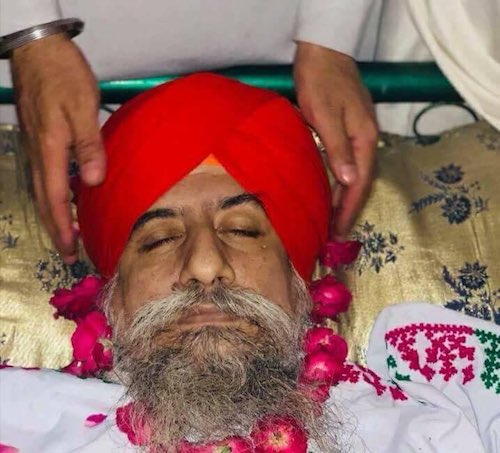
  • Sikh leader shot dead in Pakistan’s Peshawar

    Sikh leader shot dead in Pakistan’s Peshawar

    He is survived by two sons, a daughter and wife

    AMRITSAR(TIP: A prominent Sikh religious leader Charanjit Singh Sagar was shot dead in Peshawar city of Khyber Pakhtunkhwa (KPK) province of Pakistan on Tuesday, May 29. Singh was not only a prominent Sikh voice of the community in Peshawar, but he was also a member of Jatha of Panj Pyare.

    President of Peshawar based Khalsa Peace and Justice Foundation of Pakistan Radesh Singh Tony told TOI that unidentified gunmen shot dead Charanjit Singh in Budhbir area while he was sitting in his grocery shop.

    He said being an affluent community Sikh’s often become the target of fundamentalist groups.

    Radesh said the targeted killing of Charanjit Singh who was a member of Gurdwara Bhai Joga Singh on the completion of assembly term of former cricketer turned politician Imran Khan led Pakistan Tehreek-e-Insaf (PTI) party has spread fear among the community.

    He informed that the PTI government in KPK had completed its term on May 28 midnight and the caretaker chief minister of KPK would take its charge on May 31 before country’s general elections scheduled for July 25.

    Singh was not only a prominent Sikh voice of the community in Peshawar, but he was also a member of Jatha of Panj Payara (five beloved ones) and would often lead the nagar kirtan in the streets of Peshawar on various religious occasions.

    He is survived by two sons, a daughter and wife informed Radesh Singh adding that his mortal remains would be cremated on Wednesday at Attock cremation ground.

    This was the first target killing of a Sikh after the assassination of Pakistani Sikh doctor and minister of minorities of KPK in 2016. The Pakistani Taliban’s had claimed his killing. In 2013-14 as many as ten Sikh’s were killed.

    “This is the first case of target killing in 2018 and we fear this may not be the beginning of a spate of target killings in KPK,” said another Sikh of Peshawar who didn’t want to give his name.

    In past, many Hindu and Sikh families from KPK and other restive frontier parts of Pakistan had migrated to India.

  • Preet Bharara for NY State Attorney General?

    Preet Bharara for NY State Attorney General?

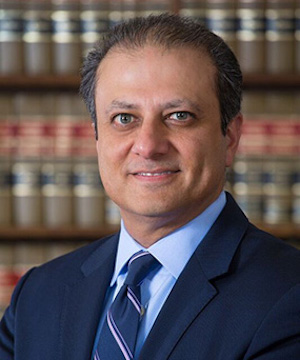
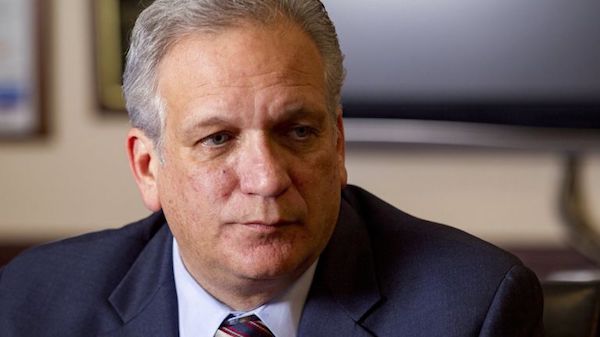
    NEW YORK(TIP): Preet Bharara, the former United States attorney in Manhattan who was fired by President Trump, has registered as a Democratic voter in New York for the first time in more than a decade amid speculation that he might run for attorney general, New York Times says.

    Mr. Bharara’s registration in Westchester County occurred during the window for candidates to gather signatures to qualify for the Democratic primary in September. A candidate needs thousands of signatures across half the congressional districts by mid-July — meaning time is short for Mr. Bharara to jump in.

    The Democratic primary for attorney general is already crowded. It includes Letitia James, the New York City public advocate, who was nominated at the state party convention; Representative Sean Patrick Maloney of the Hudson Valley; Zephyr Teachout, a law professor and former candidate for governor; and Leecia Eve, a former adviser to Hillary Clinton and Gov. Andrew M. Cuomo.

    They are running to replace Eric Schneiderman, who resigned suddenly last month after multiple women accused him of physical abuse. Barbara D. Underwood, who was chosen last month to replace Mr. Schneiderman, has said she would not seek election in November.

    Mr. Bharara, who has become an outspoken commentator since Mr. Trump fired him last year, has built a liberal following. He addressed the idea of running for attorney general last month on his podcast.

    “I think politics is not really for me, but it’s an important job, it’s an important time so we’ll see,” said Mr. Bharara, who is also a former aide to the Senate minority leader, Charles E. Schumer, Democrat of New York.


  • Indian Consulate, TV Asia host curtain-raiser to mark International Day of Yoga 2018

    Indian Consulate, TV Asia host curtain-raiser to mark International Day of Yoga 2018

    EDISON, NJ(TIP): The Consulate General of India in New York, TV Asia and the Indian American community hosted a curtain-raiser on May 29 at the TV Asia auditorium in Edison, NJ, to mark the International Day of Yoga 2018.

    The United Nations General Assembly on December 11, 2014 adopted an India led resolution to declare the day of Summer Solstice June 21 as the International Day of Yoga. The first IDY was celebrated at the United Nations on June 21, 2015.

    The event featured an interactive session with yoga exponents in the presence of Sandeep Chakraborty, India’s Consul General in New York. At the curtain-raiser, Chakravorty announced the 4thInternational Day of Yoga that the Indian Consulate is hosting on Governor’s Island (Picnic Point) in New York on June 16, 11 am-1 pm. Yoga events are also planned at Times Square, NY and elsewhere across the US.

    The Indian Consulate has partnered with several organizations to help host the yoga events. Organizations represented at the curtain-raiser and the panel discussion included, Isha Foundation (Rajashree Kotekar); Art of Living Foundation (Aniket Gune); Hindu Swayamsevak Sangh (Ganesh Ramakrishnan); Vegetarian Vision (Sonali Vyas); World Yoga Community (Guru Dilipji); Hindu Temple Society of North America (Sanjay Attada); Mallakhamb Federation of USA (Chinmaya Patankar); Indian Cultural Association of North America (Shivadasan Nair); and Sahaja Yoga (Sheetal Bhanushali).

    Panelists and prominent members of the community at the curtain-raiser at TV Asia

    The panel discussion was moderated by Rohit Vyas, TV Asia News Director.

    Dayashankar Vidyalankar, the resident yoga teacher of the Indian Consulate in NY, demonstrated quick yoga techniques for the benefit of the audience. Also, in attendance was Apoorv Om, the young Indian activist, who has a hearing impairment. He has been recognized by the United Nations for his outreach for inclusion of people with disabilities.

    Children performing yoga
    Children performing yoga

    Sandeep Chakravorty, India’s Consul General in New York, said in his remarks that notwithstanding all the euphoria it was important to establish the Indian connection of yoga, which seemed to be getting diluted as yoga gains worldwide popularity. He mentioned that the year 2018 was important for yoga as it marked the 125thanniversary of Swami Vivekanada’s address to the World Parliament of Religions in Chicago in 1893.

    “Outside of India, the US is now a leading proponent of yoga,” said Chakravorty. “Hospitals, corporates and everyone else now believes in the healing power of yoga and meditation.” He added that terminally-ill patients with cancer were being recommended to increasingly practice yoga and meditation to improve their end-stage quality of life.

    H R Shah, chairman and CEO of TV Asia speaking

    H R Shah, chairman and CEO of TV Asia, mentioned that nearly 37 million people in the US were practicing some form of yoga and meditation. That, he said quoting media reports, had translated into a $16 billion yoga industry in the US, that included yoga schools, retreats, merchandizing and even health shows on TV.

    “All of this was not possible if it was not for the efforts of Indian Prime Minister Narendra Modi that the United Nations recognized yoga’s universal appeal and on Dec 11, 2014, proclaimed June 21 as the International Day of Yoga,” he said. Shah felt that the recognition by the UN was the turning point in yoga’s acceptance as transcending international borders.

    Yoga, as the name suggests, he said, means to join or to unite, symbolizing the union of body and consciousness, was also helping bring people and countries together.

    At the curtain-raiser, an audio-visual presentation gave a brief overview of yoga. The panelists also performed a symbolic curtain-raiser on stage to announce the events planned around International Day of Yoga 2018. One of the posters at the curtain-raiser aptly displayed a photo of Prime Minister Modi performing yoga with more than 35,000 people at the historic Rajpath in New Delhi on June 21, 2015.

    The curtain-raiser at TV Asia was recorded on multiple-cameras, to be telecast on TV Asia for the extended benefit of the community in the US, Canada and worldwide.

    More than 300 guests attended the event
    Photos / courtesy Gunjesh Desai/TV Asia

    More than 300 guests, including several prominent members of the Indian American community, attended the outreach event, interacting with the yoga exponents and asking them a variety of questions about yoga and meditation.

    (Press Release issued by Niraj Trivedi)


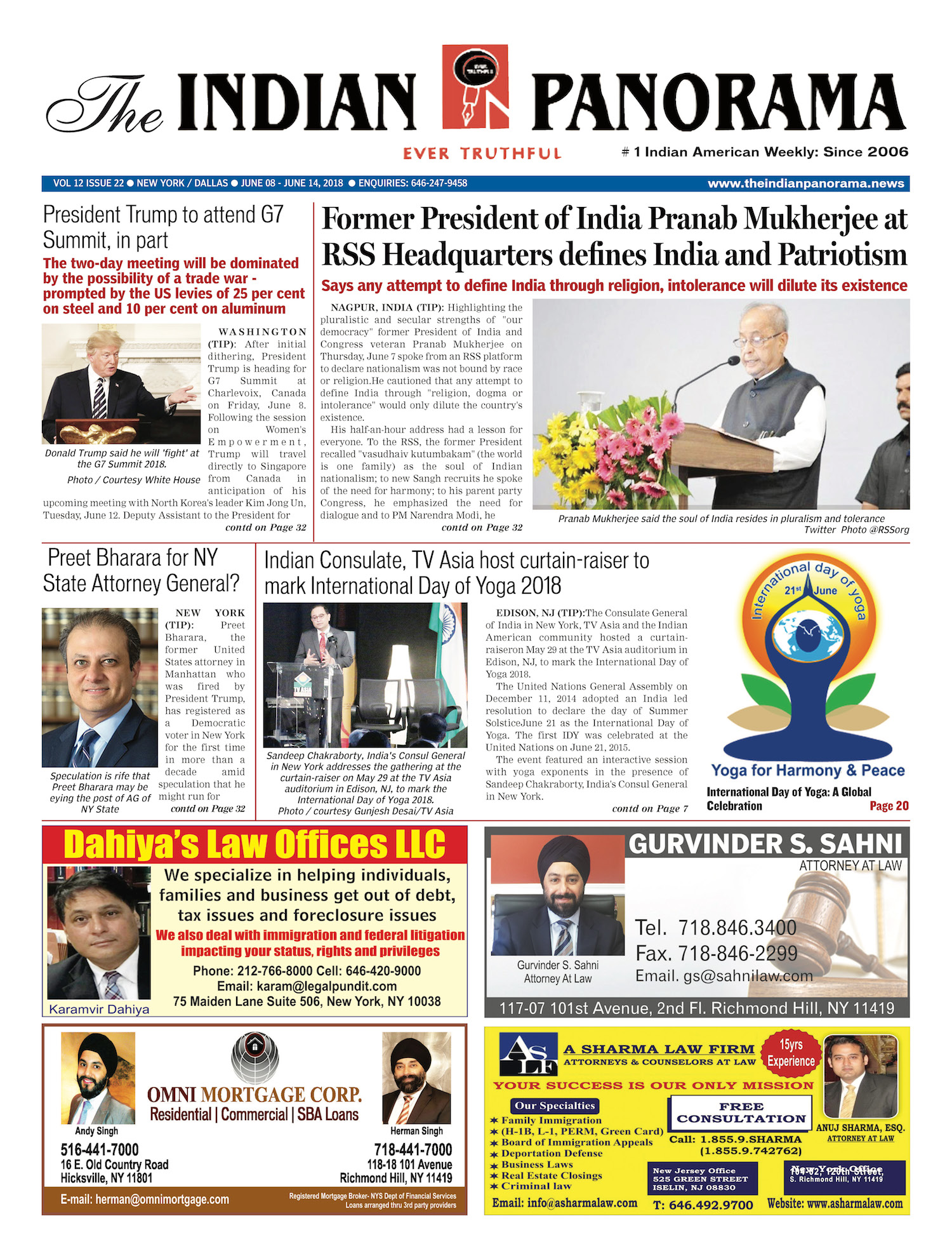
  • President Trump to attend G7 Summit, in part

    President Trump to attend G7 Summit, in part

    The two-day meeting will be dominated by the possibility of a trade war – prompted by the US levies of 25 per cent on steel and 10 per cent on aluminum

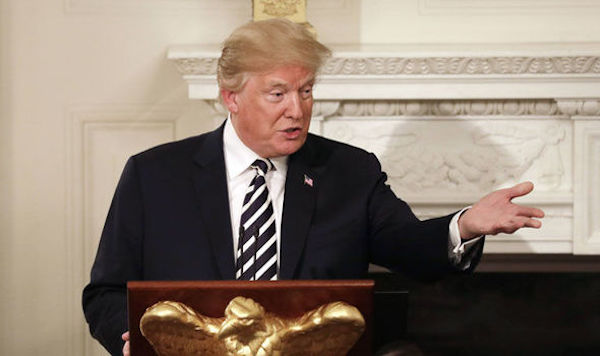
    WASHINGTON(TIP): After initial dithering, President Trump is heading for G7 Summit at Charlevoix, Canada on Friday, June 8. Following the session on Women’s Empowerment, Trump will travel directly to Singapore from Canada in anticipation of his upcoming meeting with North Korea’s leader Kim Jong Un, Tuesday, June 12.

    Deputy Assistant to the President for International Economic Affairs Everett Eissenstat will represent the United States for the remaining G7 sessions, White House Press Secretary Sarah Sanders said.

    The annual G7 (Group of Seven) summit kicks off in Charlevoix, Quebec on Friday, June 8 and the stage is set for a major showdown between the US and its allies.

    The leaders of the G7, an informal bloc of some of the world’s most powerful industrialized countries, including Germany, the UK, and Japan, get together every year to discuss collaboration on issues like global security, the international economy, and climate change.

    At the end of the summit, they aim to sign a joint statement detailing the policy positions and initiatives they agree on.

    But there’s a decent chance that might not happen this year.

    That’s because President Donald Trump has so badly rattled the other members with his recent heavy steel and aluminum tariffs and other divisive new policies that it might be impossible for the group to reach a consensus on any substantive issue.

    The two-day meeting will be dominated by the possibility of a trade war – prompted by the US levies of 25 per cent on steel and 10 per cent on aluminum.

    Angela Merkel, the German chancellor, has predicted a big fight at the summit, triggering suggestions it has become a “G6+1” – with the US president isolated and alone.

    The EU is poised to impose tariffs on US imports ranging from Harley-Davidson motorbikes and jeans to bourbon, peanut butter, cranberries and orange juice, from next month.

    Brussels is still finalizing the list it will submit to the World Trade Organisation (WTO), which will be on top of tit-for-tat tariffs on about £2.5bn of US steel.

    A French official told Bloomberg that French President Emmanuel Macron wants to make progress with President Trump on smoothing tensions over trade, the US’s withdrawal from the Iran nuclear deal, and climate policy — and if that doesn’t happen, France may refuse to sign.

    Then there’s the fact that Trump himself is reportedly contemplating not signing the joint statement to show that the US is perfectly happy to go its own way if the other members give it too much trouble during talks. The divide has become so stark that staffers and observers of the G7 have started to call it the “G6 plus one.”

    “What this G7 is going to show is that the United States are alone against everyone, and especially alone against their allies,” French Finance Minister Bruno Le Maire told reporters last week.

    The G7 summit is usually a boring meeting of broad consensus. Not anymore.

    The G7 summit, which includes Canada, France, Germany, Italy, Japan, and the United Kingdom, plus the European Union (which is not technically part of the G7 but participates), is typically a pretty straightforward affair.

    The official themes for this year’s summit include “investing in growth that works for everyone,” “preparing for the jobs of the future,” and “advancing gender equality.” Against the backdrop of these deliberately anodyne themes, world leaders can hobnob and try to move the ball forward on issues like a new free trade agreement or cooperative climate policy.

    But Trump has departed sharply from the G7 consensus on issues like these in the past by, for instance, pulling out of the Paris climate agreement and withdrawing from the Trans-Pacific Partnership.

    And White House officials say he is planning to strike a confrontational posture at the summit. “There are disagreements. He’s sticking to his guns, and he’s going to talk, talk to them,” National Economic Council Director Larry Kudlow told reporters on Wednesday. Trump is also reportedly considering implementing a fresh round of tariffs against Canada — the host of the summit.

    European countries could also shun the final statement. Their biggest priority is likely going to be getting Trump to consider some kind of compromise on his recent protectionist trade policies, the most controversial one being his imposition of sweeping tariffs on foreign steel and aluminum. Currently, those tariffs hit exports from every other member of the G7.

    Trump is also apparently not looking forward to what could be a tense and awkward meeting. According to the Washington Post, Trump has reportedly complained to advisers about having an “uneasy rapport” with German Chancellor Angela Merkel and sees British Prime Minister Theresa May as “too politically correct.”

    And Trump has apparently told advisers that he doesn’t want to be “lectured” by other world leaders, especially as he tries to prepare for an upcoming high-stakes summit with North Korea next week.

    If the final joint statement for the G7 is missing signatories this weekend when the summit wraps up, it won’t be the end of the world. It’s a symbolic show of unity, not a binding document with concrete policy effects. But it will be yet another sign of how far the US is drifting from many of its most trusted friends in the world.

    (With input from agencies)


  • Former President of India Pranab Mukherjee at RSS Headquarters defines India and Patriotism

    Former President of India Pranab Mukherjee at RSS Headquarters defines India and Patriotism

    Says any attempt to define India through religion, intolerance will dilute its existence

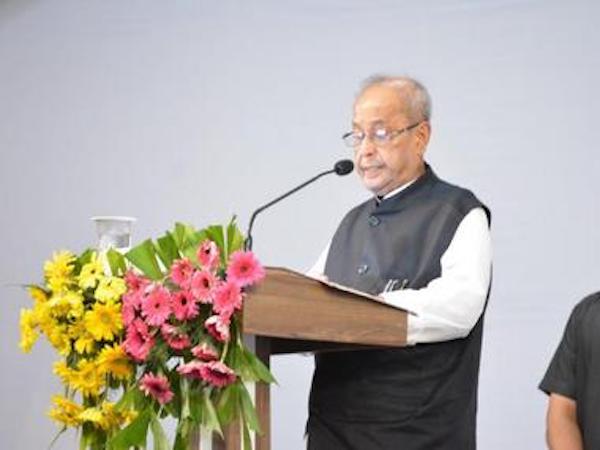
    NAGPUR, INDIA(TIP): Highlighting the pluralistic and secular strengths of “our democracy” former President of India and Congress veteran Pranab Mukherjee on Thursday, June 7 spoke from an RSS platform to declare nationalism was not bound by race or religion.He cautioned that any attempt to define India through “religion, dogma or intolerance” would only dilute the country’s existence.

    His half-an-hour address had a lesson for everyone. To the RSS, the former President recalled “vasudhaiv kutumbakam” (the world is one family) as the soul of Indian nationalism; to new Sangh recruits he spoke of the need for harmony; to his parent party Congress, he emphasized the need for dialogue and to PM Narendra Modi, he quoted Kautilya’s lessons in governance.

    Unfazed by the fact that he was standing with people he had ideologically opposed all his life, Mukherjee used the occasion to drive home “diversity and acceptance” as the bedrock of Indian nationalism and to remind the pracharaks of the need for unity.

    “We derive our strength from tolerance. We accept and respect our pluralism. We celebrate our diversity. Any attempt at defining our nationhood in terms of dogmas and identities of religion, region, hatred and intolerance will only lead to dilution of our national identity,” the former President said.

    To sceptics, including his daughter Sharmishtha, the ex-President said informed public engagement was essential in democracy. “A dialogue is necessary not only to balance competing interests, but also to reconcile them. We may argue, may agree, may not agree but we cannot deny the existence of multiplicity of opinions,” he said.

    Wading through India’s past, Mukherjee spoke of how through 3,500 years of being ruled by dynasts, India’s 5,000 years of civilizational unity remained unchanged while foreign elements were absorbed to create a new synthesis of national unity.

    “Multiplicity of cultures, faith and languages makes us special,” Mukherjee repeated to 707 pracharaks, passing out after rigorous RSS training. He carefully dotted his speech with quotes from S Radhakrishnan, Rabindranath Tagore, Mahatma Gandhi, Jawaharlal Nehru and Bal Gangadhar Tilak to hammer home his point. “When Tilak spoke of swaraj, he meant a swaraj for people encompassing all castes and religions and languages.”

    He lauded the Constitution at a gathering full of RSS sympathizers, saying, “For us, democracy is not a gift, but a sacred trust… The Constitution is not a legal document but a Magna Carta for the socio-economic transformation of society. From our Constitution flows our nationalism.”

    The former President also commented on the “routine of violence” in the country, saying India may be the fastest growing economy but it was lagging on the World Happiness Index.

    “You are young. I must tell you that manifestations of rage are tearing our social fabric. We must free public discourse of violence, both physical and verbal. We must move from anger and conflict to love and harmony. Our motherland is asking for happiness. Our motherland deserves happiness,” Mukherjee said as he marveled the fact that 1.3 billion Indians used 120 languages, 1,600 dialects, followed seven major religions, belonged to three ethnic groups and still stood united under one flag, one Constitution and one identity.

    “This is Bhartiyata,” the former President said at the RSS headquarters after he had paid tributes to Sangh founder KB Hedgewar, calling him a “great son of Mother India”. Earlier, RSS chief Mohan Bhagwat spoke of the irrelevance of controversy around Mukherjee’s visit.

    Veiled message to PM 

    “When we go to Parliament, just above the lift at gate no. 6 is inscribed Kautilya’s quote “In the happiness of people lies the happiness of the king, their welfare is his welfare. The State is for the people. People are at the center of all activities of the State and nothing should be done to divide them. The aim of the State should be to galvanize them to fight a concerted war against poverty, disease and deprivation. Only then can we create a nation where nationalism flows automatically.”

    Message to Sangh

    “India’s nationhood is not one language, one religion and one enemy. It is perennial universalism of 1.3 billion people who use 122 languages and 1,600 dialects… practice 7 major religions… live under one system, one flag and one identity of being Bharatiya and have no enemies”.

    Bhagwat on visit

    RSS Chief Mohan Bhagwat said on Mr. Mukherjee’s address: “Pranab Mukherjee will remain what he is and the Sangh will remain the Sangh even after the event. The RSS wants to unify the entire society, and no one is an outsider for it. People may have different views, but they are all children of mother India.”

    Congress comments

    Hours after Congress leaders had slammed former President Pranab Mukherjee for attending an RSS event, the party on Thursday praised him for showing “mirror of truth” to the Sangh by reminding it of India’s pluralism, tolerance, secularism and inclusiveness as an article of faith and soul of the country.

    The party also said Mukherjee reminded the Prime Minister Narendra Modi of his ‘Rajdharma’ and that “Indian nationalism is constitutional patriotism”.

    Congress spokesperson Randeep Singh Surjewala said Mukherjee’s visit to the RSS headquarters had caused wide-ranging discussion, comment, concern and even consternation amongst a large section of Indians, who have an innate belief in foundational values of democracy, pluralism, and diversity.

    His statement came soon after Mukherjee had delivered his nearly 30-minute address at the RSS headquarters during its third year annual training camp.

    Earlier, several Congress leaders, including Ahmed Patel and Anand Sharma, had slammed Mukherjee for attending an RSS event in Nagpur.    Patel, who is UPA chairperson Sonia Gandhi’s confidant and has been her political secretary, voiced his view on Twitter, in reply to Mukherjee’s daughter who too spoke out against the decision of the former President to address the RSS event. “I did not expect this from Pranab da!” Patel tweeted.

    Congress senior spokesperson Anand Sharma also took to Twitter to express his anguish after Mukherjee’s images attending an RSS event in Nagpur appeared on television. “The images of Pranab Da, veteran leader and ideologue at RSS Headquarters have anguished millions of Congress workers and all those who believed in pluralism, diversity and the foundational values of the Indian Republic,” he said. “Dialogue can only be with those who are willing to listen, absorb and change. There is nothing to suggest that RSS has moved away from his core agenda as it seeks legitimacy,” he added.

    ‘Dirty tricks at play’

    Tagging a morphed picture showing Pranab sporting the RSS cap, his daughter and Congress leader Sharmishtha Mukherjee said: “See, this is exactly what I was fearing and warned my father about. Not even few hours have passed, but BJP/RSS dirty tricks dept is at work in full swing!”

    Mr. Mukherjee came, spoke and left. But his visit to RSS headquarters is now a part of contemporary and future history of India. For long, political parties and political analysts will be commenting over the 30-minute speech of one of the most experienced and best-known politicians of our times.

  • June 08 New York & Dallas Print Editions

    June 08 New York & Dallas Print Editions

    [vc_row][vc_column][vc_column_text]

    Print Replica ~ Digitally

    E-Editions

    [/vc_column_text][/vc_column][/vc_row][vc_row][vc_column width=”1/3″][vc_custom_heading text=”New York Edition” font_container=”tag:h2|text_align:center” google_fonts=”font_family:Istok%20Web%3Aregular%2Citalic%2C700%2C700italic|font_style:700%20bold%20regular%3A700%3Anormal” link=”url:https%3A%2F%2Fwww.theindianpanorama.news%2Fwp-content%2Fuploads%2F2018%2F06%2FTIP-June-8-NYC.pdf|||”][vc_single_image image=”93088″ img_size=”full” add_caption=”yes” alignment=”center” onclick=”custom_link” link=”https://www.theindianpanorama.news/wp-content/uploads/2018/06/TIP-June-8-NYC.pdf”][/vc_column][vc_column width=”1/3″][vc_custom_heading text=”Dallas, Texas Edition” font_container=”tag:h2|text_align:center” google_fonts=”font_family:Istok%20Web%3Aregular%2Citalic%2C700%2C700italic|font_style:700%20bold%20regular%3A700%3Anormal” link=”url:https%3A%2F%2Fwww.theindianpanorama.news%2Fwp-content%2Fuploads%2F2018%2F06%2FTIP-June-8-Dallas-TX.pdf|||”][vc_single_image image=”93089″ img_size=”full” add_caption=”yes” alignment=”center” onclick=”custom_link” link=”https://www.theindianpanorama.news/wp-content/uploads/2018/06/TIP-June-8-Dallas-TX.pdf”][/vc_column][vc_column width=”1/3″][vc_single_image image=”82828″ img_size=”medium” alignment=”center” onclick=”custom_link” link=”https://www.theindianpanorama.news/advertising-media-kit-portal-indian-panorama/”][vc_single_image image=”82829″ img_size=”medium” alignment=”center” onclick=”custom_link” link=”https://www.theindianpanorama.news/advertising-media-kit-portal-indian-panorama/”][/vc_column][/vc_row][vc_row][vc_column][td_block_ad_box spot_id=”custom_ad_3″ tdc_css=””][/vc_column][/vc_row][vc_row][vc_column width=”2/3″][vc_custom_heading text=”Lead Stories This Week” font_container=”tag:h2|text_align:center” google_fonts=”font_family:Istok%20Web%3Aregular%2Citalic%2C700%2C700italic|font_style:700%20bold%20regular%3A700%3Anormal” link=”url:https%3A%2F%2Fwww.theindianpanorama.news%2F|||”][td_block_5 separator=”” limit=”8″ tdc_css=””][/vc_column][vc_column width=”1/3″][vc_widget_sidebar sidebar_id=”td-default”][/vc_column][/vc_row]

  • Indian American Raj Kohli on a bike ride from NY to DC to protest gun violence

    Indian American Raj Kohli on a bike ride from NY to DC to protest gun violence

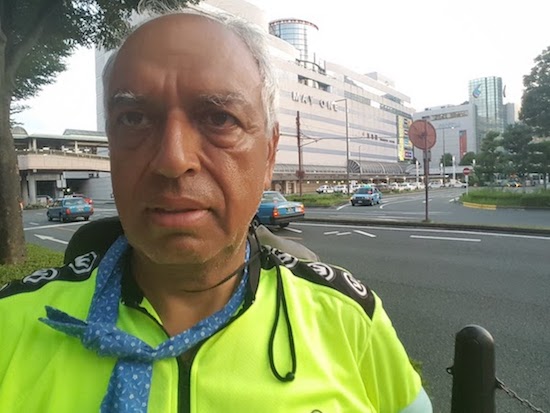
    NEW YORK(TIP): A 63-year-old Indian American realtor, Raj Kohli with two artificial knees is on a mission yet again and this time to create awareness about the rising incidents of gun violence in the United States by riding a bicycle from New York to Washington, DC.

    Raj Kohli kick-started the bicycle ride on the Memorial Day, near the Trump Tower, in New York.

    He said in a press release that, while more than $7 trillion has been spent by the United States on fighting wars on foreign soil, the country has failed to curb the violence unfolding within its border.

    More than 35,000 American die each year due to gun violence and the country has not been able to stop it, he said.

    The ride is sponsored by Jersey Bents.

    He posted the first video about the ride at 9:00 p.m. on May 13, 2018. “I already have 133,000 views, on my Facebook page: RajRideForPeace,” he says. “People are interested in supporting my cause.  Most people.  Some, obviously, are not. It is a democracy.  We can disagree, hopefully not disagreeably.” Kohli is asking people to do the following:

    • Boycott the NRA
    • Repeal the 2nd Amendment
    • Boycott Amazon and Walmart for one day, on May 28, Memorial Day, because they sell guns.
    • Boycott mutual funds and retirement funds that have gun-related stocks in their portfolio.

    “The idea is to reduce gun violence in the US and around the world, by reducing available guns,” Kohli explains. “The more guns we have, the more people will die.  It’s a numbers game!

    “I did a Peace Ride from 1981-1983, and last year again I rode my bike for Peace, from Tokyo to Hiroshima, in July/August 2017. There are 49 videos on the same Facebook page, ‘RajRideForPeace,’ relating to my Japan Peace Ride. For the Japan ride, a German bicycle company sponsored my bicycle,” he says.

    Kohli lost 115 pounds after weight loss surgery, and proudly sports two artificial knees.

  • Indian American Nima Kulkarni defeats the Democratic incumbent to be the Kentucky House District 40 Democratic nominee

    Indian American Nima Kulkarni defeats the Democratic incumbent to be the Kentucky House District 40 Democratic nominee

    KENTUCKY (TIP): Indian American Nima Kulkarni took everyone by surprise in the Democratic primary for Kentucky House of Representatives’ District 40 on May 22, when she defeated Dennis Horlander who has served in the house for more than two decades.

    She defeated the Democratic incumbent to secure her spot in the general elections, which will be held on November 6.

    The other Democrats whom she defeated are Logan Gatti and Kelly Gibson.

    Kulkarni won 46.59 percent votes against Horlander’s 25.37 percent.

    Kulkarni will now face Joshua Neubert, who was elected unopposed in the Republican primary.

    Kulkarni was born in India and moved to the United States when she was six with her parents, Suhas and Surekha, and her brother Nikhil.

    The family owned and operated the 8 to 8 grocery store in Germantown, Kentucky, where Nima and Nikhil worked delivering groceries.

    Kulkarni graduated from Atherton High School and received a bachelor’s degree in English and MBA from the University of Louisville.

    She is a recipient of the Doctor of Jurisprudence degree from David A Clarke School of Law at the University of the District of Columbia, in Washington, DC.  She is a member of the Georgia and Kentucky bar associations.

    Kulkarni founded the Indus Law Firm that specializes in immigration, employment, and business law. Kulkarni is also a member of both the Georgia, Kentucky and Louisville Bar Associations.

    Kulkarni currently lives in the St. Joseph’s neighborhood of the District 40, with her husband Raegan Maddox.

    A community leader, she founded a non-profit, New Americans Initiative, to educate, engage and build awareness of immigration and immigration-related issues.

    She serves on a number of boards, including that of Louisville Public Media, the Community Foundation of Louisville, the Indian Professional Council of Kentucky and the Beaded Treasures Project.

  • Indian American Jeremy Cooney is the NY 56th Senate District candidate

    Indian American Jeremy Cooney is the NY 56th Senate District candidate

    NEW YORK(TIP): Indian American Jeremy Cooney is one of the two such Democrats running for the New York State Senate this November. The other candidate is Kevin Thomas, who is challenging the NY 6th district incumbent Sen. Kemp Hannon, a New York state lawmaker since January 1977.

    Like Thomas, Cooney is also taking on an Albany “lifer”: Sen. Joseph Robach, who was first elected to the state assembly in 1991.

    Cooney’s incredible life story began with his adoption from an Indian orphanage by the late Anne Cooney, who worked as an English professor at Monroe Community College in upstate New York, for more than three decades.

    Raised by a single mother Ann Cooney, Jeremy went on to graduate from the liberal arts Hobart and William Smith Colleges in Geneva, NY, with a major in public policy and earn a JD from the Albany Law School.

    The lawyer and Eagle Scout is no stranger to local and state politics in New York, having served as an aide to a number of officials at all levels. They include serving as Downtown Community Relations official for Gov. Andrew Cuomo (2016-2017), as chief of staff to Rochester Mayor Lovely Warren (2014-2016), and as staff assistant to US Rep. Louise Slaughter, D-NY, (2004-2005).

    “I’ve spent the past few weeks meeting with people who are looking for change and for a representative that votes correctly on issues important to them, such as raising the minimum wage, common-sense gun safety, long-overdue bail reform, and providing educational opportunities for immigrant families,” Cooney said about his run from the 56th district in a press release. “For the past 15 years, we’ve been dealt short-term tax relief that’s no substitute for real economic growth — the type of growth that creates stable, good-paying jobs that give people the confidence to buy a house, start a family, and continue to call upstate New York home.”

    The 56th district includes the County of Monroe and parts of the City of Rochester.

    Cooney, who was named “Forty Under 40” by the Rochester Business Journal, has served in several leadership positions. While at the Albany Law School, he was a class president. For his other alma mater, Hobart Colleges, he served as a Manager for Campaign Leadership — a fundraising role.  He was also appointed to the Young Leaders Congress of New York.


  • China and South Korea Pushing for Trump-Kim Summit-Advantage Trump

    China and South Korea Pushing for Trump-Kim Summit-Advantage Trump

    By Ven Parameswaran

    China and North Korea want the U.S. to withdraw its base in South Korea and recall 40,000 of its army.  China and North Korea are asking for total denuclearization of the entire Korean Peninsula, including B-52 nuclear equipped bombers in South Korea.  The U.S. could save by withdrawing, provided North Korea fully complies, says the author.  

    The Korean War ended in the Armistice Agreement of 1953.  This Agreement was made possible because V. K. Krishna Menon’s proposal for the repatriation of prisoners belonging to different countries was accepted by the United Nations.  President Eisenhower acknowledged and thanked India for its positive contribution that ended the Korean war.

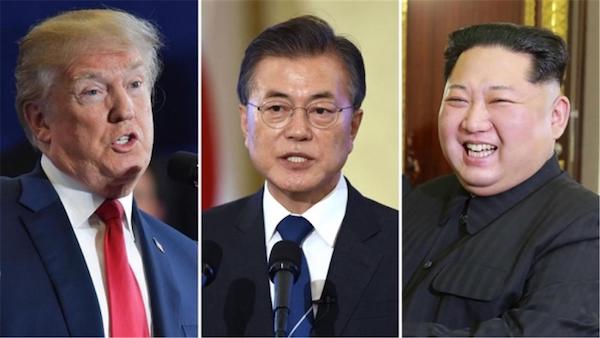
    President Trump deserves credit for his statesmanship and courage in negotiating with North Korean leader Kim-Jong-Un.   This is made possible only because Ambassador Nikki Haley was able to convince China and Russia to vote for the severest sanctions against North Korea.  Nobody knows why China changed its policy and decided to support the USA against its client State, North Korea.   It must be pointed out that after the severest sanctions, North Korea has had no choice but to depend on China for its existence and political support.  This is the reason Kim-Jong-Un made a private trip to Beijing by train before taking the initiative to seek a summit meeting with Trump.  He also had meeting with Chinese leader Xi, after Trump canceled the meeting.   Does this not show that China is more interested in getting along with Trump, and therefore, was prepared to be tough on North Korea?  What are China’s goals?

    China and North Korea want the U.S. to withdraw its base in South Korea and recall 40,000 of its army.  China and North Korea are asking for total denuclearization of the entire Korean Peninsula, including B-52 nuclear equipped bombers in South Korea.    The U.S. could save by withdrawing, provided North Korea fully complies.  The U.S. Naval power and airpower are second to none and because of the latest and sophisticated technology, the U.S. can win wars without a land base.

    North Korea cannot afford to be the victim of the severest sanctions.  North Korea is interested in economic development.   Therefore, North Korea is trying to demonstrate that it can be trusted by destroying the nuclear test sites in front of the world media.  Kim also created goodwill by releasing the U.S. prisoners.   When Trump cancelled the June 12 Summit, Kim reacted positively.  To prove, Kim of North Korea and Moon of South Korea met again, and the world saw mutual embrace and goodwill.  

    South Korea also seems to be more enthusiastic and positive about making sure the Summit takes place.  Towards this end, Moon has been applying diplomatic pressure on Trump and the U.S. Secretary of State.  

    Trump has reiterated that the U.S. will not remove sanctions until North Korea is ready and willing to denuclearize North Korea first with international inspection control.  Trump has also said that the US will be happy to help North Korea’s economy.  

    So far, Moon and Kim have demonstrated to the world that they are interested in ending the war and signing a peace accord with the approval of the US and China.  Reunification of Koreas is also a possibility in the future as happened with the Germanys.    

    Japan was almost defenseless when North Korea dared to test its missiles over Japanese airspace.  Japan is also interested in denuclearization of North Korea.   

    As of now, it appears that the historic Summit may take place on June 12, 2018 in Singapore, based on President Trump’s decision.  Trump is a tough negotiator.  He has decided to go for the Summit after calling it off.  This is only because he could feel the goodwill generated by South Korea, North Korea and China.   Preparations are going on and the diplomatic intercourse is heavy between Beijing, Pyongyang, Seoul and Washington.  

    President Trump said that he was willing to take the risk for the sake of peace of the Koreas and the world.  If indeed the Summit takes place in Singapore as scheduled, Trump will be cheered by the world.  ” Presidents Bill Clinton, George W Bush, and Obama tried and failed, but Trump succeeded” will be the headline of the world media on the 12th June.    

    This is a great and golden opportunity for Kim-Jong-Un of North Korea to create trust and demonstrate that he really wants peace.  So far, Trump has succeeded in changing the attitude of Kim, who has been uncompromising.  It is heartening to note that Kim changed though he was provoked by John Bolten, National Security Adviser and the remarks by the US Vice President.  

    (The author, a 64-year resident of the USA is a Diplomat-in-Residence and Senior Adviser for the New Delhi Think Tank, Imagindia Institute. He resides in New York, and can be reached at vpwaren@gmail.com) 

  • U.S.-North Korea: a deal that can be done

    U.S.-North Korea: a deal that can be done

    By Zorawar Daulet Singh

    The Korean imbroglio reflects America’s fear of any meaningful adjustment to the global balance of power

    The whirlwind U.S.-North Korean bromance hit a temporary roadblock last week. If American President Donald Trump’s decision to open direct talks with North Korean leader Kim Jong-un a few months ago came as a surprise, last Thursday’s dramatic somersault to pull the plug on a summit that could have ushered in a transformed Northeast Asia will not leave too many scratching their heads. After all, Mr. Trump’s foreign policy since the outset of his administration has swayed erratically between his own pragmatism and the hawkish elements in the larger security establishment. At almost every stage, we have seen Mr. Trump succumb to the default worldview inside his administration and across the broader political spectrum.

    If we accept the proposition that Mr. Trump remains stifled in a national security system still largely dominated by the traditionalists, the question then turns to what the calculus is of the policymakers really playing the strings. The traditionalists, in essence, fear change. Having been accustomed to a unipolar moment — fleeting as it was — when the U.S. held sway over all geopolitical and geoeconomic matters, the changes in the past decade have come as a psychological shock to this self-belief in global preponderance. Mounting evidence of an emerging multipolar world and waning of American relative strength should have prompted a strategic reassessment of the U.S.’s role in the world. Instead, the establishment, despite a popular domestic revolt in the 2016 U.S. presidential election that catapulted Mr. Trump to office, has scoffed at any meaningful adjustment to the global balance of power.

    A viable deal

    North Korea’s search for state security and regime survival is well known. Nuclear weapons, as in most other cases, were deemed the only reliable card to security. Since 2006, when the Democratic People’s Republic of Korea (DPRK, North Korea’s official name) conducted its first nuclear test, the process of nuclearization saw sustained progress over a decade along with ballistic missile testing to demonstrate a path towards a credible deterrence capacity. But it was not until the July 2017 intercontinental ballistic missile (ICBM) test that Washington awoke to the reality of its own homeland being part of a deterrence equation with Pyongyang. The North Koreans shrewdly realized that only the possibility of a direct threat would stir the U.S. into serious talks. And it seemed to work. For after the usual “fire and fury” charade, Washington responded positively to the prospect of a nuclear deal.

    The DPRK, for its part, was actively encouraged by its great power benefactors to pursue such an opening. As direct neighbors of the DPRK, both Russia and China have a self-interest in stabilizing the Korean peninsula and closing an unfinished chapter of the Cold War. South Korean domestic politics too was geared to tap this moment. In short, the regional context was conducive at all levels for a détente and bargaining process to ensue.

    What a deal could look like

    The contours of a deal remain viable. Pyongyang would cease its quest for intercontinental nuclear weapons capability in lieu of a gradual normalization of ties with the U.S. along with a lifting of multilateral economic sanctions. As a result, the DPRK would gain regime and national legitimacy, assurance of survival and an opportunity to economically transform itself. The U.S. could also claim success on several fronts. A deal would confine the DPRK to a regional nuclear power, which also enables Pyongyang to preserve a degree of autonomy from Beijing; it would stabilize the broader Northeast Asian setting and thereby increase the security of its two key allies, South Korea and Japan; and finally, it would eliminate a major potential flashpoint in China-U.S. relations. Such outcomes hardly seem adverse for the US.

    Much attention has also been drawn to the mutually incompatible bargaining postures: the U.S.’s maximalist position of complete de-nuclearization versus the DPRK’s bottom line, which probably reserves the right to retain an undefined level of nuclear weapon capability as an insurance measure of last resort. The issue, however, runs much deeper. The traditionalists in the U.S. establishment fear a shifting status quo that might produce new regional re-alignments or interdependent equations that gradually diminish the cohesiveness of U.S. military alliances in East Asia. For example, it is likely that China and Russia would actively leverage peace on the peninsula to pursue their ambitious geoeconomic plans for the region. Koreans on both sides of the Demilitarized Zone would be spoilt for choice after living under the shadow of prolonged tension and conflict. Put plainly, in the image of an American hawk, successful U.S.-DPRK talks translate to the U.S. no longer being the top dog in Northeast Asia and being compelled to share power and influence with others. But this is precisely what a multipolar world will look like in the foreseeable future.

    An open window

    The rhetoric from both sides suggests that the window for talks remains wide open. Even as he called off the summit on May 24, Mr. Trump maintained a high measure of respect for Mr. Kim and spoke about how a “wonderful dialogue was building up” between the two leaders and that he “very much” looked forward to meeting Mr. Kim in the future. In his oral remarks, Mr. Trump closed by intriguingly hinting that the “existing summit could take place or at a future date”. The DPRK’s response the following day was equally effusive in portraying Mr. Trump as a rousing advocate for change. Pyongyang has drawn a sharp distinction between a “bold” Mr. Trump who dared to tread in a new direction and his hardline advisers. Not mincing its words, the DPRK had previously expressed a “feeling of repugnance” towards National Security Adviser John Bolton and described Vice President Mike Pence as a “political dummy”. Echoing Mr. Trump, Pyongyang concluded its May 25 statement by expressing “an intent to sit with the U.S.” in any format “at any time”, prompting Mr. Trump to welcome the “warm and productive statement” that could “lead, hopefully to long and enduring prosperity and peace.”

    (The author is a Fellow at the Centre for Policy Research, New Delhi)

  • 2018 GLOBAL PUNJABI Awards Presented

    2018 GLOBAL PUNJABI Awards Presented

    HS Panaser from the US and Lord Swaraj Paul from UK honored

    NEW YORK/NEW JERSEY(TIP): 2018 GLOBAL PUNJABI DIVAS was held on 11th April 2018 at Hotel Leela Palace, New Delhi. The GPS ACHIEVERS AWARDS for the year 2017 were presented on the occasion as an ode to all those Punjabis who have loved and made India Proud even while staying beyond the boundaries of the Nation.  The occasion was a Charity Dinner and an Award Ceremony. After the death of S. Jagmohan Singh, the founder of GPS his son Mr. Manu Jagmohan Singh has now taken the reigns as   the Secretary General at Global Punjabi Society

    The Global Punjabi Society is a forum to celebrate the achievements of Indians in general and Punjabis in particular living in India and Abroad and honor them for the pride they have brought to their Motherland.

    The GLOBAL PUNJABI SOCIETY was launched in January 2010 by the Union Minister of State for External Affairs, Preneet Kaur at a Gala Function in New Delhi. The SOCIETY’s aim is to celebrate the very spirit of Punjab, Punjabi and Punjabiat and achievements of Punjabis in particular.  The Punjabis’ symbolize the freedom of spirit and daredevilry. They are the perfect reflection of attitude filled with supreme confidence and conviviality. They are capable of strenuous work, yet nothing seems to sap them of their infectious zest for life.

    Global Punjabi Society has chapters in Doha, Kuwait and Thailand. Last year GPS launched UK Chapter at House of Loads. We are shortly going to launch the USA Chapter. Our new initiative in the errands of NRI Institute. This Institute has organized 50 conferences – a record 23 international conferences in India,12 in London, UK, 6 in Dubai, and one each in Bangkok, Singapore, Bahrain, New York, Detroit, Washington, DC, California, and Qatar.

    Friends. L to R: H S Panaser, Justice Bashir Khan, Manu J Singh, General Eswaran and Mrs. Manjeet Panaser

    GPS had a privilege of honoring 20 personalities since 1989 including  Prime Minister Manmohan Singh, M.P Tarlochan Singh, MP, Ambika Soni, Dr. Bal Ram Jakhar, Lord Rana, General J J Singh, Air Chief Marshal Arjan Singh and Mr. Joginder Singh, IPS.


  • International Day of Yoga falls on June 21:Here is the second article in a series to commemorate International Day of Yoga

    International Day of Yoga falls on June 21:Here is the second article in a series to commemorate International Day of Yoga

    Get the Most out of Yoga – the 3 step Blueprint

     By Arun Goel

    There are several reasons why you may like to hop onto the Yoga bandwagon. The reasons are many; the goal ultimately the same (with or without your conscious knowing).

    Whether you are looking at Yoga as a tool for physical fitness, or as an aid to disease management or even for mental peace and ultimate bliss, you should adopt a blueprint for long-lasting effects.

    Step 1:Purification and developing the right attitude

    The maximum benefits of any Yoga practice can be had when the mind is ‘purified’ and the attitude is correct.

    Yoga lays down clear pointers that the aspirant should adopt towards himself and the society. These are laid out as Yamas and Niyamas.

    The Yamas are the social code of conduct which are 5 in number. They are Ahimsa (non-violence), Satya (Truth), Asteya (Non-stealing), Brahmacharya (self-restraint), and Aparigraha (non-possession)

    The Niyamas are the internal moral code. The 5 Niyamas are: Shauch (cleanliness), Santosh (contentment), Swadhyaya (self-study), Tapas (austerity), and Ishwar Pranidhana (surrender to God).

    These Yamas and Niyamas are to be understood, imbibed and practiced in everyday life, 24×7. This adherence brings about a remarkable purification process that makes the body most receptive to gain the maximum out of yoga practices.

    Today, even modern medicine has inextricably linked the mind-body complex as a whole for personal health maintenance which only underlines the necessity of this purification process.

    Step 2:Practice

    While working constantly at step 1, one should commence the practices. It is important (though not easy) to find the right Yoga teacher.

    In Yoga, the paths are many, but the goal is one. Accordingly, there are several schools which adhere to different paths as a focus. Examine your inclination and find the teacher from the path you are inclined. For example, if your primary reason for Yoga is physical fitness, then research yoga schools with an extensive emphasis on Asanas of the Hatha Yoga kind. Contact them to locate a suitable teacher in your area.

    At HealthAndYoga, we are constantly building an exhaustive teacher directory that helps connect aspirants to teachers. You can also search this exhaustive database by clicking here.

    Remember, finding a suitable teacher is not easy and you may have to resort to several trials before you find someone whom you intuitively connect to. Also, as you grow in practice, you may find the need to move on to find more accomplished teachers.

    Step 3:Study and Reading

    Regular study of Yoga books and Scriptures are an important aspect of your personal development through Yoga.

    Besides acting as motivational tools when your spirit is flagging, they provide important subtle insights which almost always spur you onto the next level.

    Indeed, regular study is the only real way to grow in the absence of Guru, of whom most of us are sadly deprived in our modern lifestyle.

    Making this 3-step process as your personal blueprint will undoubtedly help you get the most out of Yoga.

    Benefits of Yoga:

    It is an art of performing physiological, psychological and philosophical practices with a view to tone the body system for the attainment of permanent peace of soul and mind.

    Physiological benefits:

    It includes like improvement of energy levels, immune system becoming stronger, endurance increases, improvement in the respiratory system, muscular strength increases, and reaction time increases and so on.

    Psychological benefits:

    It includes like concentration improvement, social skills increase, anxiety decreases, memory improvement, cognitive functions improve and many more.

    Philosophical benefits:

    It includes like one feels the inner peace of mind, the practitioner becomes more proactive then reactive, feels excited and enthusiastic, behavioral modifications, etc.

    Some feel that Yoga is the direct way to unite our soul with the god and for the attainment of peace and prosperity in day to day life. Getting your child practicing yoga at such a tender age benefits the overall health of your loved ones.

    Yoga in the Office: A quick and effective stretch

                                                               By Evamarie Pilipuf

    It’s great when we can escape to a full hour of yoga, be it in a class or at home in front of a video, but let’s face it, that’s not always possible. Enter Yoga in the Office, a series of simple but effective suggested positions to help stretch the wrists, neck, shoulders, back and legs.

    Always talk to your doctor before starting any new exercise regime.

     Neutral Posture:Neutral posture is probably the most important position to understand and practice, for it is the position in which the spine is most stable and properly aligned. Whether standing or sitting, it means placing the feet hip-distance apart and facing forward. If you’re sitting in a chair, your heels should sit right underneath your knees, so that your knees and hips are bent at right angles. Sit near the edge of your chair and sit tall. Lift your ribcage and roll your shoulders back to open the chest. Feel a slight arch to your low back and keep your chin level. Draw your belly button inward lightly, but not so much that your ribcage contracts downward. Breathe smoothly; hold this position for a minimum of 1-2 minutes, all the while concentrating on relaxing your shoulders.

    Abdominal Breathing:As simple as it seems, a few minutes of proper abdominal breathing can do much to interrupt your stress levels and help you relax. Sit up in neutral posture and place your hands on your abdomen. As you inhale, feel your abdomen expand like a balloon, then slowly contract your abdomen by “sucking” in your belly button as you exhale. Relax your shoulders. Keep going: inhale with an expanding abdomen, and exhale while contracting your abdominal muscles. If possible, inhale through your nostrils, and exhale through pursed lips (think of the shape of your mouth when you’re about to pronounce the letter “P”). Stop the exercise immediately if you feel at all light-headed (proper abdominal breathing should not cause this). When you inhale, try not to lift your shoulders; let the breath “move” into your stomach.

    Find the natural solutions to health disorders. Re-engineer your life to live in harmony with nature and you’ll be surprised how many nagging problems just vanish into thin air! We provide a range of learning aids and practicing tools for helping you onto this path. To read more on our range of natural health management and yoga tools, visit our yoga supplies section.

    Neck Stretches:With hands resting on your waist, gently lower your chin to relax the back of your neck. Be sure the rest of your body is still sitting or standing tall in neutral posture; the only area that is bent is your neck. After holding through 2-3 breaths, return upright to neutral posture, then lower your right ear down towards your right shoulder. Hold through at least 2-3 breaths and relax the left side of your neck thoroughly. Return upright and repeat on the other side. Finally, rotate your neck as far around towards the right as it feels comfortable, hold for 2-3 breaths, then return to center and repeat on the left side.

    Shoulder Shrugs:With your hands at your sides, lift your shoulders up towards your ears as you inhale, then release the shoulders back down as you exhale. Repeat: lift and tense the muscles of the shoulders and neck as you inhale, then relax them completely as you exhale. Repeat at least 4-6 times.

    Wrist Stretches:Hold up one hand in front of you like you would when saying “stop.” Interlace your fingers with your other hand and pull your fingers back gently to provide a stretch to your wrist. Relax your shoulders and hold through at least four breaths. Now, change the position of your hand so that your fingers point downward, and the back of your hand faces away from you. Take hold of the back of your hand with your other hand and pull gently toward you to stretch the back of your wrist. Hold through at least four breaths, then perform both stretches on the other hand.

    Chest Stretch:Place your hands behind your back, holding a scarf, belt, or necktie in between them. Stand up tall in neutral posture, and gently squeeze your shoulder blades towards the center of your back as though trying to squeeze a pencil. Each time you exhale, raise your arms slowly behind you, going as high as feels comfortable, but not so high that your neck or shoulder posture is compromised. Try to relax your neck, shoulders, and chest as you perform this. Repeat at least 4-6 times.

    To begin and stay motivated in your yoga practice, it is essential that you understand the method how yoga works upon you along with a progressive yoga schedule. A unique self-learning course helps you do that quite remarkably. Evaluate this yoga for beginner’s course.

    Lateral Side Stretch:If you have pre-existing back problems, check with your doctor before performing this position. Stand tall with your feet hip-distance apart. Raise one arm overhead, and as you exhale, begin a gentle lean to the other side. Be sure your chest continues to face forward, and that your arm remains all the way up; don’t drop your arm in front of your face or let your upper body twist downward. Try to keep your top arm fully stretched; avoid bending the elbow. Relax your shoulders and waist. Hold through two breaths, come up and repeat on the other side. Then start over; work up to a total of 4-8 repetitions.

    Standing Spinal Twist:Stand with your right foot in front of your left foot. Place your right arm straight out in front of you, with your left thumb on top of your head. Keep your spine aligned; that is, do not lean forward or back. Gently rotate your right arm and upper body as far around as you can, keeping your focus over your right hand. Make sure your weight remains evenly distributed on both feet; do not raise either heel. Hold the position through three breaths as you consciously try to relax your shoulders and lightly contract your abdomen. Return around and switch legs to perform the other side.

    Seated Hip Stretch:If you have concerns regarding your knee, check with your doctor before attempting this position. Sitting in a chair, cross your right leg on top of your left leg so that your right ankle is just above your left knee. Point your right leg as far out to the side as possible. Place your right hand on your right knee, and your left hand on your right foot. Gently, sink your chest forward over your right lower leg; go as far forward as you comfortably can, and hold the position through at least four breaths. Relax your low back, shoulders, and hip muscles. Slowly return upright and repeat on the other side.

    (Another article in the series follows in the next weekly edition. Readers are invited to send in their comment)

    (TIP Bureau)


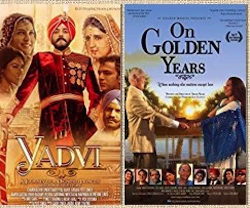
  • Jyoti’s Yadvi, The Dignified Princess comes to life in NYC on June 1

    Jyoti’s Yadvi, The Dignified Princess comes to life in NYC on June 1

     By Mabel Pais

    “Strength of character isn’t always about how much you can handle before you break, it’s also about what you do after you have broken.”  Robert Tew

    “We cannot change situations in life, but we can change our attitudes towards them.”  Mata Amritanandmayi

    This English language movie is based on the story of Yadvi – a real-life princess, granddaughter of the then internationally renowned Maharaja Bhupinder of Patiala, Punjab, who though grown-up in one of the wealthiest families of the world ends up losing all such privileges in her middle age.  How and why does she become forced to prepare her food and collect wood for the winter? In 1940’s India, before a hint of feminine assertiveness, how does a woman not only uphold her own dignity but also raise three refined daughters in the face of unexpected adversity?

    The pure personification of integrity, Yadvi, will take you on her journey through the India of Kings and Queens, of Princes and polygyny. Her deep internal strength bolstering her family honor will inspire you!

    His Highness Maharaja Bhupinder Singh (1891-1938) who took the throne of Patiala in 1901, is one royal name that is indelible in the archives of Indian history.  Among his several contributions and achievements to Punjab, India and the world was his grandiose lifestyle: he was the first individual in India to own an aircraft; had a fleet of 20 Rolls Royces at his disposal; created and wore a custom-made Cartier necklace encrusted with 2,930 diamonds, which today sits in a museum; built several prominent buildings in the state; traveled the world holding important offices; was captain of a cricket team and donated the Ranji Trophy (used until today) to the game of cricket. Further, he worked tirelessly for his subjects’ betterment and introduced many social reforms in Patiala.

    So why would one of his daughters spend her life as a commoner?

    Maharaja Bhupinder Singh’s great-granddaughters Jyoti Singh and Gauri Singh bring alive the struggles in the life of their grandmother Rajmata Yadhuvansh Kumari’s (Yadvi, for short), detailing her journey from a princess to a commoner in their film, Yadvi: The Dignified Princess.

    It’s a true story of enduring personal and financial hardships but never giving up on life.

    The Dignified Princess on Sitar
    Photos / Courtesy Jyoti Singh

    The film is the tale of Princess Yadvi (also named Alice after “Alice In Wonderland”) from Patiala, a woman dealing with the complexity of the social norms that permeated post-independence Indian society. She, the daughter of the Maharaja of Patiala, was set to marry a Rajput prince from Maiher, Madhya Pradesh, to fortify the political ties between her kingdom and that of the prince. The impediment, however, was that she would move to the prince’s kingdom only on turning 21. What unfolds from this point on is a story wrought with unexpected twists and turns, putting into light questions about relationships, norms and traditions that characterized royalty and Indian society in an era of the past. It is the story of a woman who loved and stuck by her convictions in the face of adversity.

    “Yadvi: The Dignified Princess,” set in India and New York, also touches upon the political upheavals at the time, especially when the princely states were being integrated into India, revealing an unseen side of the royalty.

    Gauri Singh, Jyoti Singh’s real-life older sister wrote the film, Jyoti Singh plays the title role of her grandmother Princess Yadvi, the daughter of Maharaja Bhupinder Singh and Maharani Bimal Kaur.  Jyoti Singh along with Vick Krishna, has directed the film. The melodious music has been composed by the talented Anuj Garg.

    Jyoti Singh, star of the 2011 Indo-American film, 9 Eleven, said she decided to play Princess Yadvi since, having spent 14 years of her childhood with her, nobody knew her better than she did.

    Another highlight of the film is Maachis actor Chandrachur Singh, who plays the Maharaja of Patiala. The cast includes Dina Rosenmeier, Siraj Huda, Vibhu Raghave, Aishwarya Raghave, Nikkitasha Marawaha, Rahul Godara, Resha Sabarwal, Bernadine Linus, Marianne Borgo, Gauri Singh, Kuvam Handa, and Yadvi Handa.

    The movie is produced by RVP Productions by executive producer Sumeet Verma.

    Yadvi with husband Gobind

    Yadvi: The Dignified Princess, screened at various film festivals across the country, has been warmly embraced by viewers. Some of the film festivals where the film has been honored in various categories include the North Carolina International South Asian Film Festival, Rishikesh Art & Film Festival, Rajasthan International Film Festival, 4th Indian Cine Film Festival and Global Film Competition.

    The first-time director recently won the ‘” Best Emerging Female Director’’ award at the Dada Saheb Phalke Film Festival.

    The director believes that her “love towards animals and kids, humanity to help out the world, punctuality, strength, patience, spirituality, and perseverance; the pillar of strength to survive all obstacles with a smile; humility and peace” come from Yadvi.

    Every day, she would do gardening with the grandchildren, never acted like a royal person. She would make them do household chores, even when they had help. Jyoti never understood why. Yadvi always said, ‘You never know where your life takes you,’” Jyoti Singh recalls.

    Yadvi was inspired by and followed the magic keys to life (by Robert Tew): “Wisdom is knowing the right path to take; integrity is taking it…. strength of character isn’t always about how much you can handle before you break, it’s also about how much you can handle after you’ve broken…having courage to face the truth…do the right thing simply because it is right.”

    The movie runs from June 1 to 7 at New York City’s Cinema Village at 22 East 12th Street.

    For more about the movie and its schedule, visit https://www.cinemavillage.com/Now-Playing/yadvi-the-dignified-princess.html

    https://www.cinemavillage.com/meet-and-greet/yadvi-q-a.html

    To learn more about Jyoti Singh, visit www.jyotisingh.net.

    To get a sneak peak, watch the trailer of the movie at

    (Mabel Pais writes on The Arts and Entertainment, Social Issues, Health and Wellness, andSpirituality)

  • Theater : NJSO presents

    Theater : NJSO presents

    By Mabel Pais

    E.T. The Extra Terrestrial

    ET Poster

    “Steven Spielberg’s film E.T. The Extra-Terrestrialhas always held a special place in my heart, and I personally think it’s his masterpiece” – John Williams, music composer

    “What’s particularly special about [these concerts] is that we’ll hear one of our great symphony orchestras, the New Jersey Symphony Orchestra [NJSO], performing the entire score live, along with the complete picture, sound effects and dialogue” – John Williams

    Relive the magic of E.T. The Extra Terrestrial on the big screen accompanied by a magnificent, live performance of the New Jersey Symphony Orchestra (NJSO) at the Count Basie Theatre in Red Bank on June 1, the New Jersey Performing Arts Center (NJPAC) in Newark on June 2 and State Theatre in New Brunswick, New Jersey on June 3.

    Director Steven Spielberg’s heart-warming masterpiece is one of the brightest stars in motion picture history. Filled with unparalleled magic and imagination, E.T. The Extra-Terrestrial follows the moving story of a lost little alien who befriends a 10-year-old boy named Elliott.  Troubled Elliott summons the courage to help friendly E.T. escape Earth and return to his home world.

    Elliott encounters E.T.
    Photos / Courtesy NJSO

    Experience all the mystery and fun of their unforgettable adventure in the beloved movie that captivated audiences around the world, complete with John Williams’ Academy Award®-winning score performed live by a full symphony orchestra in sync to the film projected on a huge HD screen.

    FROM THE COMPOSER

    Composer John Williams writes: “Steven Spielberg’s film E.T. The Extra-Terrestrialhas always held a special place in my heart, and I personally think it’s his masterpiece. In looking at it today, it’s as fresh and new as when it was made in 1982.  The performances, particularly by the children and by E.T. himself, are so honest, timeless and true that the film absolutely qualifies to be ranked as a classic.”

    “What’s particularly special about [these concerts] is that we’ll hear one of our great symphony orchestras, the New Jersey Symphony Orchestra, performing the entire score live, along with the complete picture, sound effects and dialogue.”

    “I know I speak for everyone connected with the making of E.T.in saying that we’re greatly honored by this event … and I hope that the audience will find great joy in experiencing this magical film.”

    John Williams, composer

    In a career spanning more than five decades, John Williamshas become one of America’s mostaccomplished and successful composers for film and forthe concert stage, and he remains one of our nation’smost distinguished and contributive musical voices. He hascomposed the music for more than 100 films, themes for four Olympic Games and received the Olympic Order in 2003. He served as music director of the Boston Pops Orchestra for 14 seasons and remains their laureate conductor. Williams has received five Academy Awards and 51 Oscar nominations, seven British Academy Awards, 24 Grammys, four Golden Globes and five Emmys.  For more information, visit www.johnwilliams.org.

    Constantine Kitsopoulos, conductor

    Constantine Kitsopoulosis a conductor whose musical experiences comfortably span the worlds of opera, symphony, musical theater and film with live orchestra.  To learn more about Kitsopoulos, visit kitsopoulos.com.

    Tickets

    To learn more about the concert or for tickets to the NJPAC or Count Basie Theater performance, visit online at www.njsymphony.org, by phone at 1. 800.ALLEGRO (255.3476) or in person at the NJSO Patron Services office in Newark.

    For tickets to the State Theatre concert, visit online at www.stnj.org, or in person or call by phone at 732. 246.SHOW (7469).

    Season Finale

    Conductor Xian Zhang bows with NJSO

    (NJSO is) “a vital, artistically significant musical organization” – The Wall Street Journal

    (Xian Zhang is a) “dynamic podium presence” – The New York Times

    “Gil Shaham (is) one of today’s greatest and most admired violinists” – NJSO

    A captivating end to a season of wonders!

    The New Jersey Symphony Orchestra (NJSO) and Music Director Xian Zhang close the 2017–18 season with a blockbuster program featuring works by Brahms, Mahler and Bernstein, in Newark and Red Bank, June 7–10.

    In celebration of Bernstein’s role in bringing Mahler’s music to mass audiences—and of the 100th anniversary of the American composer’s birth — the program opens with the Overture to Candide.

    Fittingly, Mahler’s monumental First Symphony marks Xian Zhang’s first NJSO performance of his music. Gil Shaham, one of today’s greatest and most admired violinists, scales the heights of Brahms’ Violin Concerto with dazzling virtuosity.

    Violinist Gil Shaham
    Photos / Courtesy NJSO

    Lauded violinist Gil Shaham returns to New Jersey for Brahms’ Violin Concerto. In her first NJSO performances of Mahler’s work, Zhang conducts the composer’s monumental First Symphony.

    THE PROGRAM

    Shaham Plays Brahms

     Thu, June 7, at 1:30 pm | NJPAC in Newark

    Fri, June 8, at 8 pm | NJPAC in Newark

    Sat, June 9, at 8 pm | Count Basie Theatre in Red Bank

    Sun, June 10, at 3 pm | NJPAC in Newark

    Xian Zhang, conductor

    Gil Shaham, violin

    New Jersey Symphony Orchestra

    BERNSTEIN Overture to Candide

    BRAHMS Violin Concerto

    MAHLER Symphony No. 1

    NJSO ACCENTS: 

    Prelude Performance—Fri, June 8, before the concert

    Come an hour before the concert and cheer on the young performers from NJSO CHAMPS (Character, Achievement and Music Project), as they perform in the lobby of NJPAC.

    Prelude Performance—Sun, June 10, before the concert

    An hour before the concert, the extraordinary Anne Lieberson Ensemble from the NJSO’s Youth Orchestras will perform in the lobby of NJPAC.

    Full concert information is available at www.njsymphony.org/shaham

    For further information on the NJSO visit www.njsymphony.org or email information@njsymphony.org; and for tickets, visit online at www.njsymphony.org or call 1. 800.ALLEGRO (255.3476).

    THE ARTISTS

    Xian Zhang, conductor

    In an acclaimed first season as Music Director of the New Jersey Symphony Orchestra, Xian Zhang “clearly made her mark,” NJ Advance Media writes. “Now it’s time to see how high [the Orchestra] can soar.” Zhang continues her tenure in 2017–18 with performances of Berlioz’s Symphonie fantastique, Mahler’s First Symphony and Dvořák’s Ninth Symphony, among others.

    In September 2016, Zhang assumed the position of Principal Guest Conductor of the BBC National Orchestra & Chorus of Wales, becoming the first female conductor to hold a titled role with a BBC orchestra.

    Born in Dandong, China, Zhang made her professional debut conducting The Marriage of Figaro at the Central Opera House in Beijing at the age of 20. She trained at Beijing’s Central Conservatory, earning both Bachelor and Master of Music degrees and serving one year on its conducting faculty before moving to the United States in 1998.

    Gil Shaham, violin

    Gil Shaham, Illinois-born and Israeli-bred, Grammy award winner, is one of the foremost violinists of our time: his flawless technique combined with his inimitable warmth and generosity of spirit has solidified his renown as an American master. For more information on Shaham, visit www.gilshaham.com.

    (Mabel Pais writes on The Arts and Entertainment, Social Issues, Health and Wellness, and Spirituality)


  • Indian American Film Makers’ Movies to Watch

    Indian American Film Makers’ Movies to Watch

    Jyoti Singh’s ‘Yadvi: The Dignified Princess’; Tirlok Malik’s ‘On Golden Years’premiere on June 1

    NEW YORKCITY (TIP): Two movies by Indian American film makers are being premiered in the coming days.

    Jyoti Singh’s Yadvi: The Dignified Princess will run from June 1 to 7 at New York City’s Cinema Village at 22 East 12th Street.

    For more information, visit https://www.cinemavillage.com/Now-Playing/yadvi-the-dignified-princess.html

    Emmy Award nominee Tirlok Malik’s ‘On Golden Years’ will have television premiere on TV Asia. The movie will be shown on Friday, June 1 at 8 PM and, again, at 9.30 PM.

    It will be shown again on Sunday, June 3 at 1 PM and at 2.30 PM.

    Incidentally, Jyoti Singh stars in both the movies.

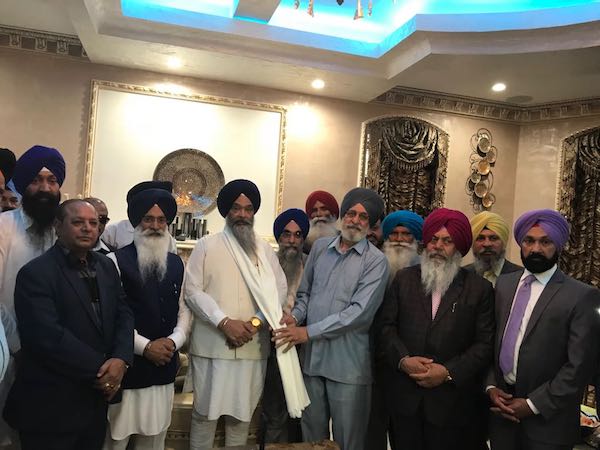
  • Member of India’s Parliament Prof. Prem Singh Chandumajra Meets with SAD leaders

    Member of India’s Parliament Prof. Prem Singh Chandumajra Meets with SAD leaders

    Assures the Sikh community of solving passport and visa related issues

    NEW YORK(TIP): Prof. Prem Singh Chandumajra, Shiromani Akali Dal leader and Parliament Member from the historic Anandpur Sahib Parliamentary constituency visited New York recently and held a meeting with the local Shiromani Akali Dal leaders at the residence of SAD leader Raghbir Singh Subhanpur. A large number of party members attended the lunch meeting.

    Speaking on the occasion, Prof. Chandumajra said that he was aware of the problems the Punjabis, particularly, the Sikhs were having in respect of passport and visa and would take up the issue with the Consul General in New York. He said he had, on his visit to California, where he had gone to attend a wedding, taken up the matter with the Consul General in San Francisco, too. He blamed the government of India for not being sensitive to the difficulties the Sikhs faced for being denied the passport and visa.

    Speaking about the situation in Punjab under the Congress government of Captain Amarinder Singh, he said people were already fed up with the Congress government working. He accused the Punjab government of total inaction and said the State was being pushed in to deeper economic and social morass.

    Prof. Chandumajra with Subhanpur family

    Earlier, welcoming the visiting leader, SAD President Raghbir Singh Subhanpur said that the SAD leaders and workers in the US were always ready to support the party in Punjab. He spoke of the need to getting back in to the driver’s seat in Punjab in order to protect the interests of the Sikhs and the Sikh religion, which he said, was under threat from the present Congress government. He also spoke of the problems in getting passport and visa and requested the visiting leader to take up the issue with appropriate authorities here and in India.

    Speaking on the occasion, Master Mohinder Singh, one of the patrons of the SAD in USA had a long list of the infirmities of various systems in the State of Punjab. He bemoaned lack of basic infrastructure in schools and in hospitals. He spoke of the enormous inconveniences faced by NRI’s in courts in India, where cases were kept pending for long.

    Others who spoke on the occasion included Mohan Singh Khatra, President of New York unit of SAD, Himat Singh Sarpanch, one of the senior leaders of the party, and Kashmir Singh Pehowa, a general secretary of New York SAD.

    Sardar Ajit Singh Subhanpur, father of Raghbir Singh Subhanpur, honored the visiting leader with a siropao.

  • The Transatlantic Variants

    The Transatlantic Variants

    By Apar Gupta
    As India stands at a crossroads, it should chart its course picking up the best ideas and practices that promote user control over data. This requires adaptation from both the U.S. and the GDPR. Our challenges are extensive, and our interests diverse. Here virtue lies in the humility to learn from others and care to protect our residents. As a public policy goal, we should borrow freely but use such knowledge within legal regulation to enlarge individual liberty.

    While the Americans and Europeans both call a sport football, they play a very different game. This difference is rooted not only in culture but in the rules of the game that provide rewards for goals, and penalties for breaching allowances. In the case of privacy regulations too, such a marked distinction is visible. With the European General Data Protection Regulation (GDPR) coming into effect on May 25, 2018, the absence of a comparable regulation across the Atlantic poses a question for India: What path should it take? Should it follow the U.S. or Europe? Or, in fact, should India take the lead in this regard?

    American exceptionalism

     Last year, in November, the U.S. Supreme Court heard arguments in Carpenter v. United States, which many commentators termed as one of the most critical electronic surveillance case in decades. Among other finely threaded legal arguments was the “third party doctrine”. It reasons that once a person turns over her data to a third party (such as a bank or a website), her expectation of privacy ends. This severely cripples the immunity that protects people from “unreasonable search and seizures”, thereby permitting the government to requisition data from third parties such as banks. Our Supreme Court realized the error in this narrow doctrine, rejecting it more than a decade ago in the case of District Registrar v. Canara Bank, ruling that our privacy protections would continue to apply as they ultimately vest in a person rather than the possession of personal artefacts. Another area where the U.S. seems to be a poor defender of privacy and data protection is when it comes to the conduct of private parties. With revelations around Cambridge Analytica and growing concern around the power of technology companies, new concerns have come to the fore. The consumer interest approach enforced by the Federal Trade Commission for unfair and deceptive trade practices and a panoply of sectoral regulators and state laws are an ineffective substitute to a federal regulator that draws its power from a comprehensive data protection law. This is not only a deficiency in the absence of law, but a fundamental design error in which legal regulation has been designed to protect property, rather than people.

    While the U.S. may present a dismal picture for data protection, it has seen an incremental movement towards surveillance reform after the disclosures made by Edward Snowden on surveillance programs. While data protection and surveillance may seem like separate issues, they build off each other since they both concern personal data — greater government surveillance weakens and hurts data protection offered by private companies. Even before the disclosures, the U.S. had an imperfect body under the Foreign Intelligence Surveillance Court, which has the legal authority to pass interception orders. We in India have no such counterpart or even a bare acknowledgement that interception requires prior judicial sanction. Even existing procedures which are supposed to act as safeguards are flouted with little repercussions. For instance, evidence which is gathered illegally in the U.S. may eventually lead to an acquittal, but our courts have consistently reasoned that such an impropriety at best could lead to a departmental inquiry against the erring official. Even when it seems we are much more progressive in our constitutional doctrine, there always remains room for learning.

    Growing European influence

    In contrast, the GDPR seems like as a modern, progressive text. The GDPR is in a lot of ways closer to our constitutional understanding of data protection as articulated by the Puttaswamy judgement last August, in which nine judges of the Supreme Court unanimously held privacy to be a pivot for our fundamental rights. So, when the GDPR provides for an explicit consent-based mechanism and continuing control for users, it seems to be setting a legislative template for India. However, it is not as if there are no risks in parroting the European solution. When it provides a “strong law” for users, the GDPR also seems like a strong-arm law to trade and commerce. Two common business objections are made. The first cites a rise in costs that would impact users, in which a bureaucratic apparatus would require companies to pass on a data protection tax. Such an argument is clearly out of step with the realization of recent months that leaving personal data unprotected erodes trust in technology.

    The second objection concerns the wider, sectoral ambitions of India’s IT entrepreneurs who ideologize permission-less innovation. They argue that regulation will make them unable to compete globally. This is incorrect on several counts, besides being self-defeating. It ignores that privacy and data protection are inherent to the coming waves of innovation. Data protection will act as a regulatory springboard to the next generation of online products and services. This, in turn, will provide a cleaner, sustainable and rights-friendly alternative to the existing theology of treating data as a fossil fuel. If anything, “strong” data protection is beneficial for the long-term health of the technology sector by improving user trust and sectoral competitiveness.

    If we hasten, we are sure to fall. Blind adoption of the GDPR would present immediate peril for several reasons. As an ambitious project, the text of the GDPR has tremendous breadth and is riddled with business exceptions which may provide porous sieves for personal data. While refinements may be incrementally made in Europe, we in India at the outset need to have foresight in adopting the drafting choices of a foreign, even if influential, text. For instance, two areas where concern arises are its impact on the right to free speech and expression and the right to information laws. A joint statement by two of the leading digital rights organizations, the Electronic Frontier Foundation and Article 19, have stated that in the context of the right to be forgotten, the GDPR “poses a significant risk of misuse to stifle free expression online”.

    Much closer to home, there has been constant worry by activists defending the embattled Right to Information Act. Their prior experience makes them wary, as the judiciary has been frequently citing privacy to undermine government transparency. For instance, in Girish Deshpande v. Central Information Commissioner, the Supreme Court upheld an order denying access to the income tax returns of a public servant. Hence, every effort should be made that the motivation to correct the absence of a data protection law does not end up hurting individuals by making government opaque and unaccountable.

    Synthesize carefully

    As India stands at a crossroads, it should chart its course picking up the best ideas and practices that promote user control over data. This requires adaptation from both the U.S. and the GDPR. Our challenges are extensive, and our interests diverse. Here virtue lies in the humility to learn from others and care to protect our residents. As a public policy goal, we should borrow freely but use such knowledge within legal regulation to enlarge individual liberty.

    (The author practices law in New Delhi)

    (Source: The Hindu)

  • Byelection results: BJP needs another wave in 2019

    Byelection results: BJP needs another wave in 2019

    The loss in the Kairana Lok Sabha byelection has confirmed the erosion of voter enthusiasm towards the BJP in UP. As was the case in the election to the two Lok Sabha seats vacated by the UP CM and Deputy CM, respectively, well over 10 per cent of the 2014 voter in Kairana did not bother to vote. This dip in the BJP’s poll percentage in all the three UP parliamentary constituencies leads to the logical conclusion about a loss in ardor among the saffron party’s adherents after voting with their feet in the UP 2017 Assembly polls. This trend is confirmed by the 10 Assembly byelection results, exemplified by the Congress’ comprehensive sweep in Punjab’s Shahkot, Trinamool handsomely retaining the Maheshtala Assembly seat and the BJP’s severe loss of vote share in two Jharkhand seats, Kerala’s Chengannur and Karnataka’s Rajarajeshwari Nagar.

    The Lok Sabha election of 2019 may well tell a different tale because PM Narendra Modi, the BJP’s sole vote-catcher, can be counted upon to invest all his might instead of leaving the battle to the local satraps, who have obviously been unable to deliver. Yet the fact that a candidate who wasn’t fielded in 2014 because of poor performance in her previous term as Kairana MP handsomely won the seat suggests that it wasn’t about the choice of the candidate. Rather, Gorakhpur, Phoolpur and Kairana show that opposition unity and a lower polling percentage have swung the caste and religion arithmetic away from the BJP in the crucial state of UP.

    Another Lok Sabha polls which the BJP lost — Gondia-Bhandara in Maharashtra — has exposed the limits of poaching. The surprise resignation of the 2014 giant killer who had humbled Praful Patel and his joining the Congress had already put the BJP in a disadvantageous position. But the bottom-line in BJP’s tepid performance could be because the party was unable to move much beyond policy formulation on livelihood issues. It needs a wave again in the Hindi heartland, but the strategy may involve a Faustian bargain: focus more on bread and butter issues at the cost of its accent on religion.

    (Tribune, Chandigarh)

  • Mangano Corruption Case- U.S. District Judge Joan M. Azrack declares a mistrial

    Mangano Corruption Case- U.S. District Judge Joan M. Azrack declares a mistrial

    Jurors fail to reach a consensus on the charges against Edward and Linda Mangano. The judge set a June 28 status conference to schedule a new trial

    CENTRAL ISLIP, NY(TIP): The federal corruption trial of former Nassau County Executive Edward Mangano and his wife, Linda, ended Thursday, May 31, in mistrial.

    The jury of seven women and five men failed to come to a consensus on the charges that Edward Mangano faced, including federal program bribery, honest-services wire fraud and extortion, after nine days of deliberations.

    U.S. District Judge Joan M. Azrack set a June 28 status conference to set a new trial.

     (Source: Newsday)

  • Texas Gov. Greg Abbott reveals plan to make schools safer

    Texas Gov. Greg Abbott reveals plan to make schools safer

    DALLAS(TIP):  An Associated Press report says Texas Gov. Greg Abbott on Wednesday, May 30, called for schools to have more armed personnel and said they should put greater focus on spotting student mental health problems but he proposed only a few small restrictions on guns following a shooting at a high school near Houston that left 10 people dead.

    The Republican and staunch gun-rights supporter released a 43-page report following three days of mostly closed-door meetings last week organized with school district officials, shooting survivors and groups on both sides of the gun-control debate, among others.

    The recommendations are voluntary, and some would require changes to state laws that would need approval from the Legislature, which doesn’t come back into session until 2019. School districts wishing to make some of the changes could begin doing so, such as sending staff for free gun training this summer.

    The lack of major gun control measures is not surprising in a state that embraces its gun-friendly reputation and has more than 1.2 million people licensed to carry handguns.

    The only significant gun-related proposal was a possible “red flag” law, although Abbott gave it a tepid endorsement, asking leaders of the Legislature to “consider the merits.” Eight states have red flag laws that allow family, law enforcement and others to file a petition to remove firearms from a potentially dangerous person. Florida, Vermont and Maryland passed such laws after the mass school shooting in Florida in February.

    Abbott’s report does not appear to depart much from the playbook of the powerful National Rifle Association following school shootings.

    Alice Tripp, legislative director for the NRA-affiliated Texas State Rifle Association said Abbott’s proposals wouldn’t lead to weapons being seized without some protections for gun owners. “Gov. Abbott has pledged due process. He’s a gun owner himself,” Tripp said.

    Abbott is proposing a change to the state law that says guns can’t be accessible to children under 17, with exceptions such as hunting or parent supervision. He’s encouraging the Legislature to consider making the law also apply to 17-year-olds. Authorities have charged a 17-year-old student, Dimitrios Pagourtzis, with capital murder in the May 18 attack at Santa Fe High School. Pagourtzis is accused of using a shotgun and .38 revolver that belonged to his father.

    Abbott also wants a new law that would require gun owners to report a lost or stolen firearm within 10 days.

    The report says the state will have access to nearly $70 million through federal funding and state grants for the proposals. The state also expects to compete for an additional $40 million from federal programs, and Abbott says he’ll ask state lawmakers for a further $30 million.

    “We all share a common bond: And that is we want action to prevent another shooting like what happened at Santa Fe High School,” Abbott, who is campaigning for re-election, said during a news conference at Dallas school district headquarters.

    Abbott’s Democratic opponent for governor, Lupe Valdez, said it’s “astounding” how few of the proposals directly address gun violence.

    So far, the governor has not been enthusiastic about calls for a special legislative session on gun laws – a sharp contrast to the response in Florida following the February high school shooting there that killed 17 people. Florida lawmakers, who were already in session, passed a gun-control package three weeks later, thanks in part to a lobbying campaign led by student survivors of the attack.

    In Texas, any attempts to create a mechanism to seize weapons is likely to be met with skepticism in a Republican-controlled Legislature that has expanded the rights of gun owners in recent years and made it easier and cheaper to be licensed to carry a handgun.

    Also, unlike the students in Florida, several students at Santa Fe High School have been vocal opponents of increased gun control, including some who were invited to meet with Abbott last week.

    Kris Brown, the co-president of the Brady Campaign to Prevent Gun Violence, said: “The answer to preventing school shootings isn’t some deep-seated secret. It’s guns. It’s the fact that it’s frighteningly easy for dangerous people to get access to a gun, and this proposal does little to stop that.”

    Texas State Teachers Association President Noel Candelaria said he “strongly objects” to arming more teachers. “Teachers are trained to teach and to nurture, not double up as security guards,” Candelaria said.

    Abbott’s recommendations include measures to “harden” campuses such as creating vestibules where doors must by remotely unlocked before visitors enter, installing metal detectors and having an alarm that would signal there’s an active shooter.

    Abbott is also recommending an expansion of a program that identifies students at risk of committing violence and provides help for them. He also wants to increase the number of people trained to identify signs of mental illness and increase awareness of a state system that allows people to report people who may be a threat and suspicious activity.

  • President Trump stops in Dallas for private fundraiser

    President Trump stops in Dallas for private fundraiser

    DALLAS(TIP): President Trump, Thursday, May 31, attended a fundraiser at the Adolphus Hotel in downtown. Air Force One touched down in Love Field around 4 p.m. He arrived at the hotel around 4:30 p.m. and was greeted by supporters and protestors.

    Trump’s fundraiser in Dallas was originally supposed to happen on May 8, but it was rescheduled due to developments with North Korea at the time. Trump still came to the NRA Convention, but he did not mix that with raising money.

    The Thursday night reception came at a minimum cost of $2,700 per person. The dinner was $25,000 a plate. Those who wanted to take a picture with the commander-in-chief had to pay $50,000 for their ticket.

    In anticipation of his visit, Dallas police closed down several roads around Downtown Dallas like Commerce, Field, and Griffin and Main Street near the hotel. They have since been reopened to traffic.

    Early in the day, President Trump was in Houston for another private fundraiser. The White House said he also made sure to add in his original schedule time to meet with the Santa Fe High School shooting victims and their families.

    Trump departed Love Field around 6:15 p.m. as he headed back to the White House.

    (Source: Fox 4)

  • Indian American Karthik Nemmani is the 2018 Scripps National Spelling Bee Winner

    Indian American Karthik Nemmani is the 2018 Scripps National Spelling Bee Winner

    DALLAS, TX(TIP): 11th year in a row, an Indian American has emerged victorious in the Scripps National Spelling Bee.

    Karthik Nemmani, 14, an eighth grader at Scoggins Middle School of McKinney, Texas, has won the 2018 Scripps National Spelling Bee. His winning word was “koinonia”.

    Nemmani was all smiles after winning the Bee. When asked when he knew he won the competition, he responded “When I heard it [the word]”. He thanked his parents and his coach, stating that “I wouldn’t have been able to do it without her [his coach]”.

    Spelling Bee veteran, Nayasa Modi, 11, a seventh grader from Texas, finished second. She was stumped by the word “Bewusstseinslage,” which she spelled “bewustsseinslage.” Nemmani however, seemed to know the word, nodding along to every letter Modi spit, shaking his head once he knew she spelled it incorrectly.

    Nemmani will walk away with a cash prize of $40,000 and a trophy from SNSB, a $2,500 cash prize and complete reference library from Merriam-Webster, a trip to New York City to appear on Live with Kelly and Ryan, a trip to Hollywood to appear on ABC’s Jimmy Kimmel Live! and a pizza party for his school sponsored by Pizza Hut and Book It!

    Eleven-year-old Abhijay Kodali, the youngest speller of the evening, finished third. He was eliminated after misspelling “aalii.”

    The commencement of round 11 saw 7 spellers, all of whom were Indian American. 11 of the 16 finalists tonight were Indian American.

    The 2018 Scripps National Spelling Bee was held at the Gaylord National Resort & Convention Center in National Harbor, Maryland from May 29-31.

    (Source: The American Bazar)

  • BJP gets drubbing in Bypolls, losing 11 of 14 as regional players set new rules for 2019

    BJP gets drubbing in Bypolls, losing 11 of 14 as regional players set new rules for 2019

    NEW DELHI(TIP): Opposition unity got a booster dose on Thursday, May 31, as the BJP faced stunning defeats in 11 of the 14 byelections for which results were announced and regional forces emerged on top of electoral charts, signaling a new phase in Indian politics.

    The ruling BJP faced a crushing defeat in Uttar Pradesh’s Kairana parliamentary segment where Tabassum Hasan, the joint nominee of Rashtriya Lok Dal and Samajwadi Party — backed by Bahujan Samaj Party and Congress — defeated Mriganka Singh of the saffron fold by around 50,000 votes. BJP’s loss in the communally sensitive Kairana stood out considering it had won the segment by over two lakh votes in the 2014 General Election when the Narendra Modi wave swept UP.

    Of the four Lok Sabha seats where bypolls were held on May 28, the BJP managed to retain only Palghar in Maharashtra, where it defeated a Shiv Sena candidate. Kairana went to the kitty of a united Opposition; Congress’ UPA partner NCP snatched Bhandara-Gondia in Maharashtra from the BJP and the Nationalist Democratic Progressive Party, a BJP ally in the North-East, bagged the Nagaland segment.

    While the trend of BJP’s losses in parliamentary byelections is not new (it has only won five of 27 Lok Sabha bypolls since its historic 2014 landslide), shockwaves for the saffron party came from states where regional satraps convincingly halted the BJP in nine of the 10 Assembly byelections.

    The BJP managed to retain only Tharali in Uttarakhand. In UP, it lost the Noorpur seat to SP’s Naim-ul-Hasan, who was propped up by the joint Opposition. Lalu Prasad’s RJD claimed sweet revenge in Bihar by wresting the Jokihat seat from the Nitish Kumar-led JD(U), which deserted the Opposition ranks some time ago to go and settle with the BJP.

    Maheshtala in West Bengal went to the Mamata Banerjee-led TMC though the BJP was second, pushing the state’s old players CPM and Congress far behind. In Kerala’s Chengannur, the ruling CPM-led LDF won comprehensively while Silli and Gomia in Jharkhand went to the Jharkhand Mukti Morcha. In Punjab’s Shahkot also, the Congress dealt a severe blow to BJP ally Akali Dal.

    An emboldened Opposition saw a clear message in BJP’s multiple defeats. “Victory of a united Opposition,” said Congress’ Pramod Tewari. The results equally established the emergence of a new leader — RJD’s Tejashwi Yadav in Bihar.

    Though signaling a receding Modi wave, Home Minister Rajnath Singh put a spin on the saffron losses by saying, “You have to take two steps back for a big leap.” Overall, it was a day of defense for the BJP, whose spokesman Sambit Patra came up with this reasoning: “We won 325 seats in UP and formed a government. How did we lose bypolls and win later… because bypoll is fought on local issues.”

    That said, ahead of the 2019 General Election, Thursday’s most abiding message is that the time for bipolar politics may be over. A senior politician (name withheld) commented:” BJP ke acche din jaane wale hain”.

    (With inputs from Tribune, Delhi)