Month: August 2018

  • Veteran journalist Kuldip Nayar passes away at 95

    Veteran journalist Kuldip Nayar passes away at 95

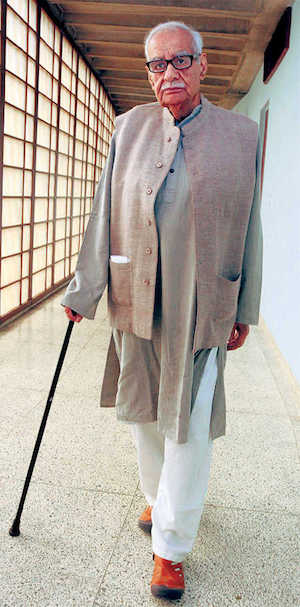
    NEW DELHI(TIP): Eminent journalist and author Kuldip Nayar, who fiercely fought for press freedom and protecting civil liberties, passed away on Thursday, August 23 morning. He was 95.

    Nayar died at around 12.30 am at the Escorts hospital in Delhi, his elder son Sudhir Nayar said.

    He was suffering from pneumonia and was admitted to the hospital five days back, Sudhir said.

    The journalist is survived by his wife and two sons

    “He kept working till the last and dictated his column before being admitted to the hospital,” his granddaughter Mandira Nayar said.

    Recalling his enthusiasm, she said he retained the eagerness of a cub reporter and wanted to know details of every development, she said.

    Nayar, known as a crusader for civil rights and press freedom, worked in several newspapers, including as the editor in ‘The Statesman’.

    He had also served as the Indian High Commissioner to the United Kingdom in the 1990s and was nominated to the Rajya Sabha in 1997.

    Kuldip Nayar was among the journalists who had staunchly opposed the Emergency and was jailed during that period. Seen in the picture, among others, are Kuldip Nayar (second from left) and Khushwant Singh (third from left).
    Photo / courtesy Indian Express

    He was arrested during the Emergency.

    Nayar was also known for his efforts to improve frosty relationship between India and Pakistan, including leading peace activists to light candles on the Independence days of Pakistan and India at the Attari-Wagah border near Amritsar.

    Prime Minister Narendra Modi condoled the demise of Nayar, saying his strong stand against the Emergency, public service and commitment to the country would always be remembered.

    “Kuldip Nayar was an intellectual giant of our times. Frank and fearless in his views, his work spanned across many decades. His strong stand against the Emergency, public service and commitment to a better India will always be remembered. Saddened by his demise. My condolences,” Modi said in a tweet.

    Editor of the Week magazine, Sachidanand Murthy, remembered Nayar’s contribution in fiercely protecting press freedom and civil liberties.

    “He had protested against the infamous Defamation Bill which was brought by the Rajiv Gandhi government in late 1980s. He had also worked tirelessly to ensure protection of civil liberties in India,” said Murthy.

    The Defamation Bill was seen as an attempt to contain free speech in India. Following public outcry, the then government had withdrawn it.

    Nayar had written a number of bestsellers, including ‘Beyond the Lines: An Autobiography’ and ‘Between the Lines’, a book on politics. Nayar was also one of the most respected syndicated columnists and his columns and op-eds were published in over 50 newspapers.

    He was born in Pakistan’s Sialkot in 1923 and began his career in journalism in Urdu press.

    (With inputs from PTI)

  • Asia Society Names 2018 Asia Game Changer Award Honorees

    Asia Society Names 2018 Asia Game Changer Award Honorees

    Awards will be presented in New York on October 9

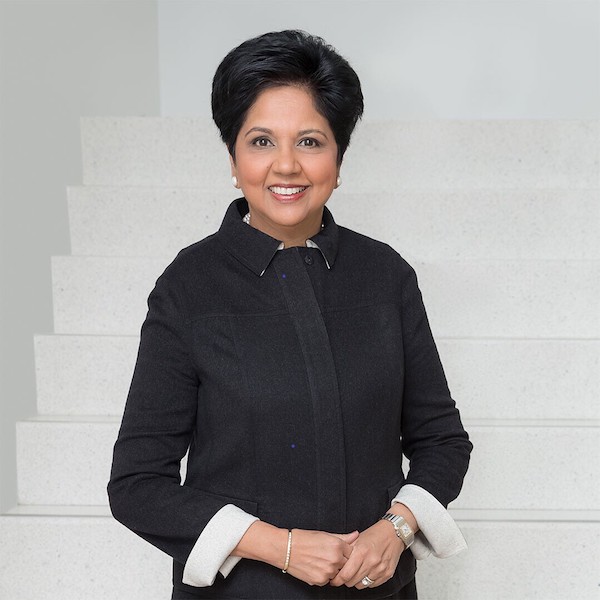
    NEW YORK(TIP): PepsiCo Chairman and CEO Indra Nooyi has been selected as Asia Society’s Game Changer of the Year for 2018 in recognition of her pioneering business achievements, humanitarian record, and advocacy for women and girls around the world. She leads a slate of groundbreaking women, including a team of Afghan girls who have made waves at international robotics competitions and Mira Rai, a record-shattering runner from a small village in Nepal, who is also an inspiration for millions of girls and young women.

    Asia Society, in partnership with Citi, has announced the recipients of its 2018 Asia Game Changer Awards, in recognition of individuals and institutions who have broken barriers, defined courage, worked miracles, and in turn inspired their fellow citizens of the world.

    The awards will be presented at the 5th Annual Asia Game Changer Awards Dinner and Celebration in New York City on October 9, 2018 at Cipriani 25 Broadway in Lower Manhattan. The event will also feature the first-ever U.S. performance of Koolulam.

    Nooyi, who this month announced she would be stepping down as CEO of PepsiCo, has driven one of the world’s most iconic global companies into the future, leading the way when it comes to delivering strong financial performance, while making more nutritious products and advancing women’s access and excellence in Asia and around the world.

    The Indian-born Nooyi was PepsiCo’s first-ever female CEO, joining only a handful of women as leaders of Fortune 500 companies. During her 12-year tenure, she not only established initiatives to meet the changing demands of consumers, increased the company’s net revenue more than 80 percent, and saw share price nearly double; she also led efforts — such as Women With Purpose and Spark A Future — to empower millions of women and girls through education, entrepreneurship, and employment opportunities. Under Nooyi’s leadership, PepsiCo was consistently rated among the top workplaces for women. Nooyi also transformed PepsiCo into a more environmentally sustainable and health-conscious company.

    “Indra Nooyi is truly a transformational leader,” said Asia Society President and CEO Josette Sheeran today. “In my United Nations work, I have witnessed firsthand her humanitarian leadership, as she steered Pepsi’s life-saving collaboration with the United Nations on food, nutrition, global water, climate, and women’s empowerment issues.”

    Nooyi leads a group of other revolutionary women as Asia Society’s Game Changers at a time when their issues and voices are at the forefront of public discourse.

    “It is a crucial moment to honor women from Asia who have battled the odds to shatter glass ceilings, opening pathways for a new generation of women to thrive and prosper,” said Sheeran. “In addition, we honor those who are devoting their own lives to improve and save the lives of others. Humanity owes them a debt of gratitude and we are so honored to recognize their works of passion and compassion. We are proud to be a part of their journey.”

    The group of Game Changers includes: the Thai rescuers who saved a dozen teenage soccer players in a flooded cave; the Japanese first responders who risked their lives following the tsunami and nuclear disaster at Fukushima; the founder of the Syrian White Helmets, whose volunteers are among the few “first responders” remaining in that country; a global champion for “green cities” — Wang Shi of China; Dr. Munjed Al Muderis  — a pioneering surgeon who has brought new hope for amputees; and the founders of Koolulam — a musical phenomenon that aims to bridge the most difficult ethnic and religious divides.

    This year marks the fifth iteration of the Asia Game Changer Awards, and the fifth time that Asia Society and Citi have given prominence to Asia-Pacific individuals and organizations who are making indelibly positive differences in the lives of others.

    “Citi is an institution that connects and seeks to improve the lives of millions of people across the world. This year’s recipients of the Asia Game Changer Awards represent further examples of progress makers who make positive contributions in their communities,” said Francisco Aristeguieta, Chief Executive Officer of Citi Asia Pacific. “We are thrilled to partner with the Asia Society again in shining a light on these extraordinary Game Changers.”

    Previous recipients of the Asia Game Changer Awards include His Highness the Aga Khan, founder of the Aga Khan Development Network; Jack Ma, founder of Alibaba; Malala Yousafzai, education activist; the non-profit organization Sesame Workshop; champion for literacy Madhav Chavan; the global architecture icon I.M. Pei, and dozens more. Honorees are nominated and chosen by members of Asia Society’s global network.

    More information about the 2018 Asia Society Game Changers is available here. For press inquiries, please email pr@asiasociety.org.

    About Asia Society

    Founded in 1956 by John D. Rockefeller 3rd, Asia Society is a nonpartisan, nonprofit organization that works to address a range of challenges facing Asia and the rest of the world.  Asia Society has cultural centers and public buildings in New York, Hong Kong, and Houston, and offices in Los Angeles, Manila, Mumbai, Tokyo, San Francisco, Seoul, Shanghai, Sydney, Washington, D.C., and Zurich. Across the fields of arts, business, culture, education, and policy, Asia Society provides insight, generates ideas, and promotes collaboration between Asia and the world.

    About Citi

    Citi, the leading global bank, has approximately 200 million customer accounts and does business in more than 160 countries and jurisdictions. Citi provides consumers, corporations, governments and institutions with a broad range of financial products and services, including consumer banking and credit, corporate and investment banking, securities brokerage, transaction services, and wealth management. Citi is the founding partner of Asia Society’s Asia Game Changer Awards.

  • President Trump in soup as 2 ex-aides face jail

    President Trump in soup as 2 ex-aides face jail

    Former campaign chairman convicted of financial crimes; Ex- lawyer pleads guilty of campaign finance violations and other crimes

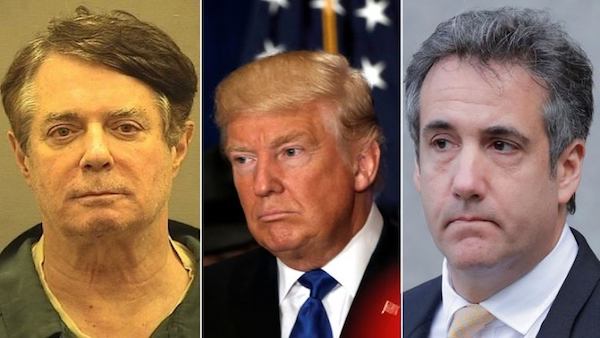
    NEW YORK(TIP): United States President Donald Trump was hit by a double whammy on Tuesday, August 21, as his former lawyer implicated him in a case of campaign finance violation and his former campaign chief was convicted of financial wrongdoing.

    Paul Manafort, who led the Trump campaign during the Republican National Convention in 2016, was found guilty of bank and tax frauds and one charge of failing to disclose foreign bank accounts, by a jury in Virginia, in the suburbs of the U.S. capital. All offences took place before he joined the Trump campaign, and none relates to links with Russia, but the conviction has given a fillip to Mr. Mueller’s ongoing investigation.

    Michael Cohen, long-time lawyer and self-declared ‘fixer’ for Mr. Trump, pleaded guilty to tax and bank fraud and violation of campaign finance rules, allegedly at the behest of the President. The investigation against Mr. Cohen by U.S. Attorney’s office for the Southern District of New York was also triggered by the Special Counsel’s findings.

    Mr. Cohen said he organized hush money for two porn stars, who allegedly had sexual relations with Mr. Trump, who directed him to pay them off. The 22-page plea deal admits this as a violation of campaign finance, as these expenses were not declared as such.

    Mr. Cohen told a court on Tuesday, August 21, that he made the payments “in coordination and at the direction of a candidate for federal office,” but the plea deal documents do not implicate Mr. Trump in the transaction.

    Lanny Davis, Mr. Cohen’s attorney, said on Twitter: “Today he stood up and testified under oath that Donald Trump directed him to commit a crime by making payments to two women for the principal purpose of influencing an election. If those payments were a crime for Michael Cohen, then why wouldn’t they be a crime for Donald Trump?”

    Mr. Davis told CNN that Mr. Cohen has information that would be useful for Mr. Mueller’s investigation.

    Sitting Presidents are not indicted, but Mr. Trump could be charged once he leaves office, according to several legal scholars.

    Meanwhile, Michael Avenatti, lawyer for one of the porn actors who was paid hush money, said he would press for the President’s appearance in the court. The porn star is suing Mr. Trump and Mr. Cohen for ending the contract that forced her to remain silent on her sexual ties with the President.

    President is in a lot of trouble, says the lawyer.

    “The President’s in a lot of trouble,” he told CNN. “…and we’re coming for him. I’m telling you flat out we’re going to come for him. We’re going to get this deposition.”

    The President responded to the Manafort verdict but had no word on the Cohen guilty plea until Wednesday morning. “Paul Manafort is a good man. … It doesn’t involve me, but I still feel – you know, it’s a very sad thing that happened,” Mr. Trump told reporters ahead of a political rally in West Virginia on Tuesday night. “This has nothing to do with Russian collusion.”

    Speaking at the rally, he trained his guns on the media and the investigation. “Fake news and the Russian witch hunt…Where is the collusion? You know they’re still looking for collusion. Where is the collusion? Find us some collusion. We want to find the collusion.”

    The White House said Mr. Trump’s outside legal team would respond to Mr. Cohen’s guilty plea.

    Rudy Giuliani, Mr. Trump’s attorney, said in a statement: “There is no allegation of any wrongdoing against the President in the government’s charges against Mr. Cohen. It is clear that, as the prosecutor noted, Mr. Cohen’s actions reflect a pattern of lies and dishonesty over a significant period of time.”


  • August 24 New York & Dallas Print Editions

    August 24 New York & Dallas Print Editions

    [vc_row][vc_column][vc_column_text]

    Print Replica ~ Digitally

    E-Editions

    [/vc_column_text][/vc_column][/vc_row][vc_row][vc_column width=”1/3″][vc_custom_heading text=”New York Edition” font_container=”tag:h2|text_align:center” google_fonts=”font_family:Istok%20Web%3Aregular%2Citalic%2C700%2C700italic|font_style:700%20bold%20regular%3A700%3Anormal” link=”url:https%3A%2F%2Fwww.theindianpanorama.news%2Fwp-content%2Fuploads%2F2018%2F08%2FTIP-August-24-NYC.pdf|||”][vc_single_image image=”94137″ img_size=”full” add_caption=”yes” alignment=”center” onclick=”custom_link” link=”https://www.theindianpanorama.news/wp-content/uploads/2018/08/TIP-August-24-NYC.pdf”][/vc_column][vc_column width=”1/3″][vc_custom_heading text=”Dallas,Texas Edition” font_container=”tag:h2|text_align:center” google_fonts=”font_family:Istok%20Web%3Aregular%2Citalic%2C700%2C700italic|font_style:700%20bold%20regular%3A700%3Anormal” link=”url:%20https%3A%2F%2Fwww.theindianpanorama.news%2Fwp-content%2Fuploads%2F2018%2F08%2FTIP-August-24-Dallas-TX.pdf|||”][vc_single_image image=”94138″ img_size=”full” add_caption=”yes” alignment=”center” onclick=”custom_link” link=” https://www.theindianpanorama.news/wp-content/uploads/2018/08/TIP-August-24-Dallas-TX.pdf”][/vc_column][vc_column width=”1/3″][vc_single_image image=”82828″ img_size=”medium” alignment=”center” onclick=”custom_link” link=”https://www.theindianpanorama.news/advertising-media-kit-portal-indian-panorama/”][vc_single_image image=”82829″ img_size=”medium” alignment=”center” onclick=”custom_link” link=”https://www.theindianpanorama.news/advertising-media-kit-portal-indian-panorama/”][/vc_column][/vc_row][vc_row][vc_column][td_block_ad_box spot_id=”custom_ad_3″ tdc_css=””][/vc_column][/vc_row][vc_row][vc_column width=”2/3″][vc_custom_heading text=”Lead Stories This Week” font_container=”tag:h2|text_align:center” google_fonts=”font_family:Istok%20Web%3Aregular%2Citalic%2C700%2C700italic|font_style:700%20bold%20regular%3A700%3Anormal” link=”url:https%3A%2F%2Ftheindianpanorama.news%2Feditions%2F|||”][td_block_5 separator=”” limit=”12″ tdc_css=””][/vc_column][vc_column width=”1/3″][vc_widget_sidebar sidebar_id=”td-default”][/vc_column][/vc_row]

  • Reflections of Readers of The Indian Panorama on India’s 72nd Independence Day

    Reflections of Readers of The Indian Panorama on India’s 72nd Independence Day

    After 71 years of independence, India is a highly developed country with developing country problems

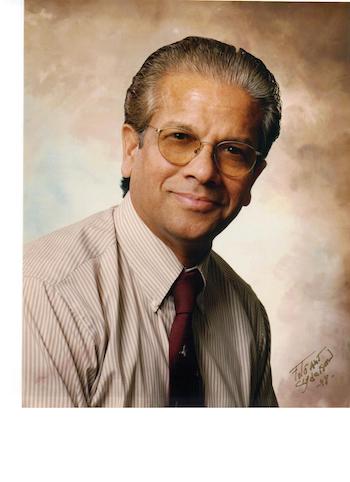
    Dr. VK Raju, Eye Foundation of America
    Dr. V.K. Raju

    Barbara Wootten, one of the greatest champions of higher education for women died at the age of ninety-one. Her autobiography, entitled” In a World I never made” is a fascinating book. She observed “the laughable idealism of one generation evolves into the accepted common place of the next.” She lived to see the truth of her dictum proved right time and again, particularly in the field of female education.

    When Lee Kuan Yew was asked on the BBC as to what attributed the phenomenal success of Singapore, his answer was “education”.

    Education has been (correctly) defined as the technique of transmitting civilization. It is unfortunate that the country with the oldest and greatest civilization should be lackadaisical about the technique of transmitting. Education has never been a high priority item in any Indian political party’s manifesto though there were some changes in the recent years. But still there are enormous gaps between the promises and execution.

    It is only through female education at all levels and the private initiative of well educated women, that India will be of our dreams and will ever be transformed into what our constitution intended it to be. The criminalization of politics and the deplorably low moral tone of our public life may be the direct consequences of the failure to impart value-based education. India ranks very high in innate intelligence, but low in wisdom. (what the ancient Rishis called “Buddhi”). Today India has islands of excellence in a sea of mediocracy or even worse.

    May I end by saying that I am an eternal optimist, but when I learn that of the girls under five years: 48% are stunted, 19% are wasted, 70% are anemic (moderate progress was made during the last few years), how can they learn? This is totally unacceptable in a country that sent a mission to Mars in the first attempt. And any country that ignores almost half of its population will fail to reach its true place in the modern world

    Finally, to quote Nani Palkhivala “To my Countrymen”:

    -who gave unto themselves the constitution but not the ability to keep it.

    -who inherited resplendent heritage but not the wisdom to cherish it

    -who suffer and endure in patience without the perception of their potential.

    We need only one change: the MINDSET!

    India has abundant natural resources and all the man-power she needs. Then what is the problem? Real problem? In India, power is in one group and knowledge is in another group.

    Dr. V.K. Raju, M.D., F.R.C.S, F.A.C.S.

    Founder & President, Eye Foundation of America,

    Morgantown, WV

    vkrajumd@gmail.com

    ————————————

    A Mixed Bag for India in 72 Years
    Actively involved in various organizations, including Rajasthan Association of North America, Jain Center of America, Vegetarian Vision, Indian Association of Long Island
    Anu Jain

    India completes 72 years of independence on August 15, 2018. But when we look back on what we have achieved or lost in these years, it is difficult to point out a single achievement or failure. There are countless achievements in many different fields, whether it’s science, technology, medicine, society, or culture, our country has witnessed a tremendous transformation and progress.

    One of our biggest achievements is our progress in technology. Today economic growth in the last twenty-five years has made India a super power. Information Technology being at the heart of our education system has created large pool of global entrepreneurs. India will soon become a technological and economic powerhouse for the world with a billion people achieving an improved standard in day to day life.

    But still in certain areas there is no change, for example; religious diversity has been a defining characteristic of India’s population for centuries. Religion continues to play a central role in India in daily life through its temple ceremonies, festivals, pilgrimages, and family religious traditions among others. Religion is taken far more seriously in India than it often is in the West and by virtually the entire population across India.

    Another popular link is the ideas of songs and dances in Indian movies, people enjoyed then also, and they are still enjoying. Mostly there are no movies without songs and dance

    Our biggest failure is corruption because this is one thing, which has caused maximum damage to our country. We could have done much better if our political system had not been as corrupt as it is today. Another concern or failure is the growing gap between the rich and poor which has not been reduced.

    If India has to progress, deliver inclusive growth and lift many more millions out of poverty, the government needs to prioritize on a comprehensive educational policy and healthcare system to fast track the country’s growth. The nation suffers from inadequate infrastructure and deep skills deficit. Without jobs the demographic dividend of youthful population can turn into a massive social and economic problem. India doesn’t need nationalistic rhetoric and mere promises of prosperity. It needs real and faster development and a society that’s just, peaceful and equal, which the country’s leaders had promised at the time of independence. Otherwise, despite the boom years, India will continue to remain a struggling country.

    Anu Jain

    New York

    Jainanu2005@gmail.com

    —————–

    India’s greatness lies in its respect for diversity
    Zafar Iqbal, Ph. D

    On this auspicious day of 15th August, when we are celebrating the independence of India from British occupiers, let us also remember the sacrifices of Azadi movement heroes. The Ghadar Movement was an important episode in India’s freedom struggle. A group of a few dedicated people comprising of Hindus, Muslims, Sikhs, and other communities started the Ghadar Party and launched the movement. Most of them were hanged publicly by the British government. The movement gained strength and thousands of freedom fighters were subjected to capital punishment for their participation in the movement. Let us also not forget the contributions of Mahatma Gandhi, Subash Chandra Bose, Jawaharlal Nehru, Sardar Patel, Maulana Azad, Rajendra Prasad, and many others who piloted post-independence India to an established democracy. Let us vow to maintain the secular nature of the constitution where people of all faith, caste, and color have equal rights. India is the largest democracy in the world and we need to work hard to become a world-leading democracy. Let us hope appropriate steps are taken to maintaining an independent judiciary, participation of all communities in sharing the power, and freedom of the press with an expectation that they would fulfill their role of a watchdog.

    Jai Hind, Hindustan Zindabad.

    Zafar Iqbal, Ph.D., Washington, DC

    Raabta.india@gmail.com

    ———

    India’s Unity in Diversity
    Gunjan Rastogi

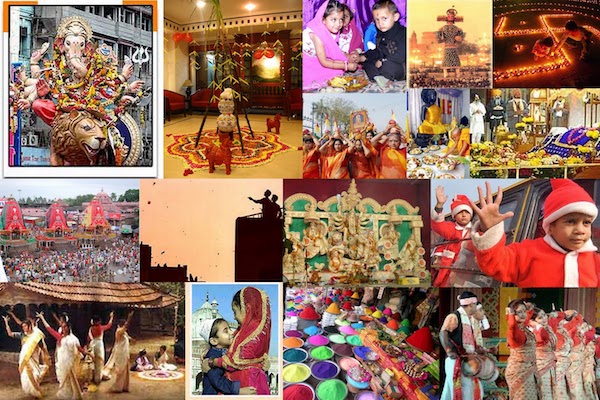
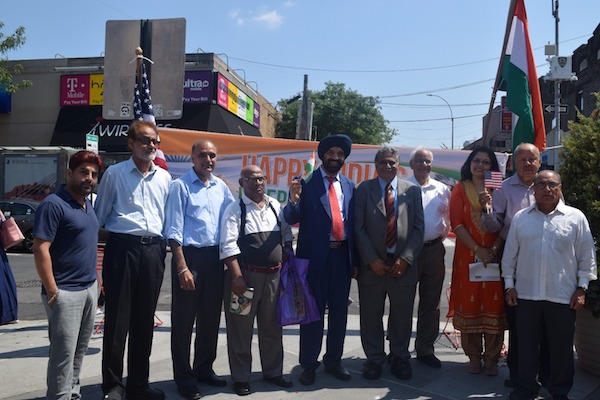
    I am extremely proud of collaboration among the community organizations and believe it is a testament to the national pride we all feel for India. It is only fitting that we all unite to celebrate our beloved country’s 72nd Independence Day. We need to recognize esteemed Indians of four major religions (Hindu, Muslim, Sikh and Christian) and other community leaders from other regions of India with the main goal of bringing the community together. As we all know, India is a beautiful mosaic of different regions which have different languages, dressing style, dance, music, regional festivals, customs and traditions, yet we all are united to celebrate our national holiday and show unity in diversity.”

    Mrs. Gunjan Rastogi

    President

    India Association of Long Island, New York

    Gunjan.p.rastogi@gmail.com

    _________________

    India needs to unite to exploit its full potential
     Ven Parameswaran

    I am very proud of India for many reasons.  India was the most civilized and affluent country in the world.  Mohan Jo Daro civilization demonstrates this.  India invented zero, fraction, decimal algebra and geometry including the theorem that was renamed as Pythagoras theorem by Greece. Kautilya’s Arthasastra was the first book on Political Science.  Aristotle and Machiavelli published their books based on Arthasastra.   I am proud the largest capitalized corporations — Microsoft and Google are headed by Indians.  I am proud the Dean of Harvard Business School is an Indian.  I am proud Ireland and Portugal are headed by Indians.  I am also proud America elected two Indian American Governors.   India needs to unite to exploit its full potential.

    Ven Parameswaran

    Chairman, Asian American Republican Committee, Scarsdale, New York

    Former President & CEO, First Asian Securities, New York

    vpwaren@gmail.com

    ___________________

    Stay vigilant and never take freedom for granted
    Priya Mukhi

    August 15th represents a plethora of positive and joyous feelings of pride for all Indians, as it represents the date that more than 200 years of British colonial rule came to an end. Since that day in 1947, Indians around the world gather each year to celebrate and honor the freedom fighters who dedicated their lives to the independence of this great, beautiful nation.

    The Indian Independence Day is a meaningful event for everyone, an opportunity for people of all ages and from all different parts of India to unite and celebrate the diversity and strength of our nation. The holiday gives younger ones the chance to learn more about their culture and connect in various ways with the earlier generations. In my personal experience, I have learned how much my grandparents and their parents coped and survived living under the rule of a foreign power.  I have come to appreciate even more the benefits of living in a free country. Everyone who has endured the hardships and seen or heard about the independence struggles has a story, and I encourage everyone to listen and pass these stories down. These memories of suffering and privation should not be forgotten, as history teaches us integral lessons, such as a nation must stay united to retain its strength, as divided we fall.

    Independence Day is celebrated in various ways across the globe. In India, there are numerous flag hoisting and patriotic presentations throughout different states, and the main event takes place at the Red Fort in New Delhi where India’s first prime minister, Jawaharlal Nehru, unfurled the Indian flag to officially mark the nation’s independence. Every year since then on Independence Day, the Prime Minister hoists the beautiful tricolor flag and presents a speech on the history and progress of the country. In other parts of the globe, parades, flag hoisting events, and kite flying festivals are held to celebrate the holiday.

    On this festive occasion, the freedom fighters are also honored. Leaders such as Sarojini Naidu, Mahatma Gandhi, Rajendra Prasad, the Rani of Jhansi and many more are remembered and celebrated for their efforts to bring peace and sovereignty to India. Arya Samaj leaders such as Swami Dayananda Saraswati, Swami Shraddhanand, Lala Lajpat Rai, and Bhagat Singh also took part in the great struggle for India’s freedom. In fact, Swami Dayanand wrote one of the most influential works of the movement, Satyarth Prakash.

    In midst of celebration for this joyous holiday, it is important not to forget the significance and message of the freedom movement that took place over 71 years ago. We must look forward, stay vigilant, and never take freedom for granted. As Pandit Nehru said just before midnight on August 15th, 1947, “At the stroke of the midnight hour, when the world sleeps, India will awake to life and freedom. A moment comes, which comes but rarely in history, when we step out from the old to the new, when an age ends, and when the soul of a nation, long suppressed, finds utterance. It is fitting that at this solemn moment we take the pledge of dedication to the service of India and her people and to the still larger cause of humanity.” And surely, as freedom rung, and the nation progressed, India has become a power to be reckoned with on the world stage.

    Priya Mukhi

    Youth Leader of Arya Samaj of Long Island, New York

    aryasamajoflongisland@yahoo.com

    Time for India and Pakistan to move forward
    Tajuddin Ahmad

    Let forget all differences of the past and resolved all issues on table, as new elected government coming into effect led by former cricketer Imran Khan as new Prime Minister taking oath on August 18th, 2018 in the capital Islamabad. Both leaders Modi and Imran are known by both nations for years and it’s time now to move forward and bring peace in the regions.

    Tajuddin Ahmad

    tajahmad717@yahoo.com

    _____________

    Let us work together for a progressive and clean India
                                                                                                                                                                                                                            Indu Jaiswal

    On August 15 Indians will celebrate its 72 ND Independence Day. We remember and Salute the people who fought for the freedom of India. We feel the pride that we are from such a glorious Land.  With Freedom in the mind, faith in the words, pride in our souls, let us all salute the Nation on Independence Day. May the nation’s Tricolor always fly high and wishing our dreams of anew tomorrow, Progressive and Clean India come true for us. Happy Independence Day

    Naye Daur mein Likhenge Mil Kar Nai kahani

    HUM HINDUSTANI HUM HINDUSTANI

    JAI HIND and VANDE MATRAM

    Indu Jaiswal RDN CDN

    Chair Indian American Forum

    New York

    indu@jaiswal.net

    ————–

    Nothing stops India from becoming a golden sparrow again
    Rajiv Khanna

    India has made progress since independence. Yet its potential is largely unexploited. If only India moved from its 100th position on ease of doing business to the top 20, it would open floodgates of investment and prosperity. Nothing stops India to be the golden sparrow again, expect India itself. It is time to correct this grave injustice that the Indian bureaucracy inflicts on India!

    Rajiv Khanna

    New York

    rkhannany@gmail.com

    ———-

    Observance of 71st Anniversary of India’s Independence
    Ashook Ramsaran

    The Indian Diaspora Council International (IDC) and its global affiliates, on the occasion of the 71st anniversary of India’s independence, extend warm and special congratulations to people of India and Indians living in other countries who take much pride in this annual celebration.

    Indians sacrificed for many years with struggle and lives in attaining their hard-fought and wrenching freedom from Britain on 15th August 1947. They used various independence movements, in particular, nonviolent resistance led by Mahatma Gandhi, to become free and independent. The partition with Pakistan resulted in violent riots, mass casualties and dislocation of millions of people.

    Despite many initial difficulties, India has made enormous strides and progress since independence from dependency to becoming a major entity in the global arena.

    A nation’s culture resides in the hearts and in the soul of its people. Freedom is never dear at any price. It is the breath of life – Mahatma Gandhi

    We end today a period of ill fortune and India discovers herself again. The achievement we celebrate today is but a step, an opening of opportunity, to the greater triumphs and achievements that await us. Are we brave enough and wise enough to grasp this opportunity and accept the challenge of the future? – Jawaharlal Nehru

    “Freedom is not given; it is taken” – Subhas Chandra Bose

    “India’s stature in the world is rising. Our India is at the door of great achievements. New India must include that integral humanist component that is in our DNA, and which has defined our country and our civilization. New India must be a society rushing towards the future, but also a compassionate society. Gone are the days when people gave up all hope from the government”, Hon. PM Narendra Modi ‘2017.

    Ashook Ramsaran

    New York

    ashookramsaran@gmail.com

    __________________

    Remember those who sacrificed their lives for India’s freedom
    Gobind Bathija

    On the 72nd celebration of India Independence Day, on behalf of our Asamai Hindu temple and myself, I want to extend my sincere best wishes to our community as well Mr. Indrajit Saluja and The Indian Panorama Newspaper. We must remember those who sacrificed their lives to obtain independence. May India always enjoy freedom and continue to flourish and prosper.

    Gobind Bathija

    Founder, P. President, trustee and Board mem

    Asamai Hindu Temple, Flushing and Hicksville, NY USA

    Gobind.bathija@gmail.com

    _________________

    72 Years of Independence has bought India to where it is today
    Devraj Aiyar

    As much as we ought to be proud, lets us not take our Freedom and Independence for granted. Many have sacrificed their breath for this to happen. We must celebrate this true spirit of Freedom by giving back to society as much as we could.

    India is a country of rich diversity in culture, religion, arts and every field we can think of.

    As we rally together, behind our great leader Narendra Modi, we pray that the next decade will witness the India that we dream of.  India whose richness will filter down to every single state, every city, every home.

    I take this opportunity to congratulate and thank the Chief editor of Indian Panorama, Prof Indrajit Saluja and his entire team for their outstanding effort in bringing the Indian community closer.

    Devraj Aiyar

    CEO, Indo American Quartz LLC

    New Jersey

    dev@indoameriacanstone.com

                                              ______________

    Indian Diaspora has contributed much to India’s growth
    Paul Sihota

    It was a Mahatma Gandhi in South Africa who led the movement for India’s independence. It was a whole lot of Indians abroad who struggled and suffered for India’s freedom from British rule. In independent India’s history, again, it is the Indians abroad who have contributed significantly to India’s growth. It is not just the remittances and investments; they introduced a culture which led to India’s modernization characterized by a scientific temper which changed the face of India. I am glad, India has recognized the contribution of Indian Diaspora. However, much more needs to be done by government of India to attract their fullest cooperation. One, for example, is a right to them to contest elections to legislative bodies and get involved in governance of India. I hope, this demand from the Indian Diaspora will be met soon.

    Paul Sihota

    Fresno, CA

  • Weekly Horoscope August 20-26, 2018

    Weekly Horoscope August 20-26, 2018

    Aries: Ganesha says making strong decisions, and making them fast, is not your key strength. In this period you continue to suffer from that malady and in the process lose out on important deals. There is a lot going on in the family, including, possibly, an inheritance tussle. If you have been having it easy all along, the time has come for you to pull up your socks. The focus of this period will be solely on family affairs. You need to shed your laid-back attitude, roll up your sleeves and get down to the hard job of making things happen.

    Taurus: You straighten out, look reality in the eye, and realize that there are no free meals in life. You get down to the hard slog. I must add here that influences of one period often coalesce into the other. Also, I am not God. I am your favorite astrologer by a distance, but do remember that these are generalizations as I do not have your personal horoscope. Also, astrology never compels. It only impels. You can always use your free will to advantage.

    Gemini: You are filled with vigor and make miracles happen. Your health is good; at least you are feeling good, and this helps. There are ego drives and you are subject to misunderstandings and altercations but that is par for the course. Your love life gets a hike too. The married take bonding to new heights and singles play the field as though the world is coming to an end in a hurry. Elders may be a cause of worry and children bring joy.

    Cancer: There could be international travel, expensive purchases, a possible change of residence, an addition to the family, fun and festivities. You could also bring home an exotic pet. You may also enroll in a gym or take a membership in a spa or nature-cure center to knock off unwanted pounds and get back on track. There are several possibilities. Your plate overflows and it’s not about curry. This is a propitious time and all that you embark on now leads to success. Ganesha is impressed.

    Leo: There is great intensity in your life. Everything is happening all at once and yet nothing decisive is happening. There could be also be illness in the family and an old skin infection may just erupt. You may be spending time with specialists. Get to the root before it ensnares you. Relationships could also get tricky and you may be hauled up for something you didn’t do. There could be time spent with the law and some out of court settlements.

    Virgo: ‘The best portion of a good man’s life is his little, nameless, unremembered acts of kindness and of love,’ said William Wordsworth, the poet. If you are writing a book or are into art, music or any creative pursuit, you will be laughing all the way to the bank and also singing a fine tune. There are rewards and awards, applause and kudos. You also spend time with NGOs and helping with the less fortunate.

    Libra: There are stability, love and longing. You are in the coils of amour and it is more constricting than the strange hold of a boa constrictor. You are helpless and flapping around. Use your free to extricate yourself. Ask me. I have seen the expression of love and lust in all its shades in the eight-plus decades of my long and winding life. You are in an altruistic state and seek out idealistic romanticism. People take advantage of you. They walk all over you. Family and friends love this side of you.

    Scorpio: There is more stability and you go the whole hog. You sign new deals and read the fine print with some deliberation. You plan your moves carefully. You may go looking for a guru and someone from another culture and country will greatly influence you. It may be someone from the same sex and it could be platonic. But you will learn a lot and emerge a better person. Children bring joy. There could also be an addition to the family. Ganesha blesses you.

    Sagittarius: You are a bundle of contradictions. You want to do everything at once and yet don’t know where to begin. You are all dressed up without knowing where to go. Your world is also playing with demons. This could be an unsettling period, but you manage to see light at the end of the tunnel before the period is over. You are frank, free and fearless. You take other people’s breath away with your open – ended comments and remarks.

    Capricorn: There could be solo travel as you decide to explore new areas of life and geography. You are one who travels in groups, but you make an exception this time. There are fun times as you meet up with new people and open new vistas to your life. You may adopt a pet, spend time in museums and entertainment parks and generally chill. ‘Faith is the bird that feels the light and sings when the dawn is still dark,’ said Rabindranath Tagore.

    Aquarius: You are back where you belong. There are energy, focus and creativity. There are group activities which you adore. There is also new love and you miss a heartbeat in fantasy land. ‘Loving ourselves works miracles in our lives,’ said Louise Hay. Loving someone else also strengthens and validates your life for yourself. Ganesha is happy that you are back on terra firma. Domestic life may showcase its thorns.

    Pisces: There are expenses of every kind. It is not that you are wasting money, but the compulsion to spend are acute and need-based. The family demands attention and galloping inflation isn’t helping the cause. You also find it tough in this phase to make hard decisions and thus lose out where it matters. Avoid gambling and games of chance. Also, if you are signing important deals make sure that you watch the fine print with care and get legal advice.

  • The Man, the Vision, the Task-Elimination of Avoidable Blindness among Children

    The Man, the Vision, the Task-Elimination of Avoidable Blindness among Children

    The execution of his vision, affordable and accessible healthcare, has provided innumerable individuals with the invaluable gift of sight. In children, this gift results in 75 years of a full and productive life. These children, who would be considered a burden to society, are then able to contribute and to their families and to society.

    While living in London, Dr. V.K. Raju traveled home to India on vacation, where a farmer asked him to examine his eyes. Dr. Raju complied, but without any instruments. In 1977, Dr. Raju returned to rural India with personnel and equipment and offered his first eye campnear his hometown; this was the inception of the Eye Foundation of America (EFA).

    For the past 4 decades, Dr. Raju and the EFA have been actively and tirelessly on a crusade to eliminate avoidable blindness in areas plagued by poverty and poor access to medical care. Because Dr. Raju feels so incredibly thankful for his personal and professional gifts, he makes great effort to share those gifts with those in need of his services. He believes that medical professionals in the United States are afforded many material comforts, and as such, only voluntary service can alleviate the feeling of intellectual poverty. He gives freely of his own time, money, and medical expertise to help the less fortunate.

    The EFA’s mission is to eliminate avoidable blindness under the guiding principles of service, teaching, and research. This is accomplished througheye camps and brick-and-mortar hospitals in developing countries, training of medical personnel to serve the needy, and educating the population at large on preventative eye care and healthy lifestyle choices. Dr. Raju quotes his mentor in London as saying, “There are 3 solutions for any problem. The first is education, the second is education, and the third is education.” With this education, patients are empowered to take charge of their lives and their own health and prevent further deleterious consequences of their poor lifestyle choices, while sharing this knowledge with their friends and families.

    When education and preventative measures are insufficient, medical and surgical interventions are performed. With the aim of permanently providing world-class state-of-the art services to populations with poor access to health care, the EFA helped to build 2 hospitals in rural India: the Srikiran Eye Institute and the Goutami Eye Institute. The Goutami Institute has a wing dedicated to exclusively to children, and the EFA has future plans to build a service and research eye hospital in India where no child will be denied treatment and children from around the world can come to receive services. Dr. Raju and the EFA are also committed to finding new cures for age-old eye disease in children.

    With all of Dr. Raju’s momentous achievements, he has also ensured that his life’s work and vision are self-sustaining. Dr. Raju has passed on his knowledge, plans, and vision to the future leaders of this movement: Dr. Leela Raju, Dr. Raju’s daughter and fellow ophthalmologist, is the EFA’s Secretary and Coordinator for Education and actively participates in its mission. “Our work is only just beginning,” affirms Dr. Raju.

    Dr. Raju was born in Rajahmundry, Andhra Pradesh, India. He earned his medical degree from Andhra University and completed an ophthalmology residency and fellowship at the Royal Eye Group of Hospitals in London, England. He is board certified in ophthalmology and is a Fellow of the Royal College of Surgeons and the American College of Surgeons. He has resided in Morgantown, WV since 1976, where he is currently a Clinical Professor of Ophthalmology at West Virginia University (WVU), the Section Chief of the Ophthalmology Department at Monongalia General Hospital, runs a private practice at the Monongalia Eye Clinic, and is the Founder and Medical Director of the EFA, a registered non-profit organization.

    Dr. Raju began the work of the EFA in 1977 by offering eye camps. The West Virginia Ophthalmology Foundation was subsequently created in 1982 and became the EFA in 1992. The realization of Dr. Raju’s vision, the EFA, has a reach that currently extends to 30+ developing countries and the USA. The EFA has served approximately 2 million patients and performed 300,000+ vision-saving surgeries, with 25,000+ surgeries performed on children alone.

    Awards/Recognition Received by Dr. Raju

    State

    Dr. Raju has received many honors and awards, including 26 distinguished awards and 17 gold medals. In Dr. Raju’s adopted home state of West Virginia, he was awarded both the Lions Club International (Morgantown) Jarrett Award and the WVU International Service Award in 1995. Morgantown Rotary International presented Dr. Raju with an award for community service in 2000. He also received the Martin Luther King Jr. Achievement Awardfrom WVU in 2008.

    National

    The American Academy of Ophthalmology (AAO) has awarded Dr. Raju 4 times for his teaching and research contributions, including the Outstanding Humanitarian Awardin 2002. Dr. Raju received this honor because of the more than $1 million dollars of his own money that went into building hospitals in India, teaching, and providing services to needy patients. At the same meeting in which Dr. Raju was presented with this award, he also received a Lifetime Achievement Award from The Association of Asian Indians in Ophthalmology. That same year, Dr. Raju received the Free to Achieve Award from the Maryland chapter of the American Association of Physicians of Indian Origin (AAPI) for his philanthropy. The AAPI also awarded Dr. Raju with their prestigious Distinguished Community Service Award in 2007 for his service, patient care, teaching, research, and professional and community involvement. In 2011, he received a Senior Achievement Award from the AAO. He has received awards from Lions International and Rotary International. For his humanitarian work, the American Medical Association Foundation acknowledged him with the prestigious Dr. Nathan Davis International Award for Excellence in Medicine in 2013. For the past 2 years, Dr. Raju has expanded his humanitarian efforts in African countries by joining the Carter Center’s Ambassador Program. President Barack Obama presented Dr. Raju with the 2016 President’s Lifetime Achievement Award. He was recently inducted into the University of Toledo Global Medical Missions Hall of Fame Class of 2017.

    International

    Dr. Raju’s international awards date back to the 1970s, when he received 2 separate awards for service for the blind: Lions (India) and Jaycees (Vijayawada, India). He received several gold medals, including the AP (India) Gold Medal for Contributions to Advance Ophthalmology in 2001; the Dr. Hardia Gold Medal for Best Paper on Refractive Surgery for the All Indian Ophthalmology Society in 2002; Gold Medal from the President at the All Indian Ophthalmology Society Meeting in Cochin in 2012; the Rameshwar Sharma, MD Gold Medal Oration from the Indian Academy of Medical Sciences, Rajasthan Chapter, in 2012; the Gold Medal Oration at the Vijayawada Academy of Ophthalmology in 2014; and the Gold Medal Award from the International Academy for Advances in Ophthalmology, Bombay Ophthalmologists Association, in 2014. He received the Vaidya Ratna in 2002, as well as an achievement award from the House of Lords, London, and the Mahatma Gandhi Pravasi Samman Award for Achievement in Medicine in 2014. He was also recognized as one of the Leading Physicians of the World by the International Association of Ophthalmologists in 2014. Dr. Raju was an invited guest of honor at GITAM University and the All Indian Ophthalmology Society Meeting in 2012.

     Since its inception, the EFA has facilitated 600+ physician exchanges and trained 200+ ophthalmologists, equipping these medical practitioners with the tools to join the global fight against blindness. The EFA not only trains medical practitioners to join the global fight against blindness through exchange programs, but also provides workshops and training opportunities for medical students and physicians. Dr. Raju’s charisma and vision inspire the EFA’s trainees return to their native countries to prevent and/or alleviate blindness in the field. For example, India and Ghana are actively engaged in avoidable blindness elimination projects with cooperation from their governments. In 2016 in India, 4,889 vision and 374 retinopathy of prematurity screenings were conducted; 779 eye glasses were distributed, and 162 pediatric surgeries were performed. In Ghana in 2016, the Avoidable Blindness Elimination Project (abep@5) and the World Sight Day Kids Funfair screened 9,763 people, including 7,453 children, and detected ophthalmologic diseases in more than 1,000 individuals who consequently received treatment, which included 157 surgeries. More than 11,560 children received vision screenings in Ghana schools; eye glasses and follow-up care were provided when necessary.

     Dr. Raju contributes to society in his home country of India and his adopted home state of WV. He believes in and practices Ayurveda, an ancient Indian health care philosophy that emphasizes a holistic approach in which prevention is preferable to treatment. In some cases, blindness and visual impairment can be prevented in developing countries by simply providing a pair of corrective glasses costing less than $10 or delivering vitamin A supplements for just a few cents per dose. The public is educated on eye care and injury prevention, and local teachers are taught how to screen for early eye problems in children. Patients, their families, and the greater community benefit from preventative medical care, free procedures, and access to education.

    In WV, Dr. Raju accepts patients that do not have medical insurance and performs surgical procedures that are not covered. If a patient is unable to pay for the costly services rendered, he asks for a small donation to the EFA. Dr. Raju performs free procedures that amount to an estimated $25,000–45,000 per year. This allows many of these patients to remain functional members of society.

    The execution of his vision, affordable and accessible healthcare, has provided innumerable individuals with the invaluable gift of sight. In children, this gift results in 75 years of a full and productive life. These children, who would be considered a burden to society, are then able to contribute and to their families and to society.


  • Whose independence is it anyway?

    Whose independence is it anyway?

    By George Abraham

    The ultimate goal of the agenda is to transform the pluralistic and democratic India to a Hindu nation where the majority religion will have the pre-eminence and minorities are relegated to subservient role probably being denied equal protection or opportunities, that too, to a substantial segment of the population.

     As the Diaspora is celebrating 72nd Independence Day of India, one of the questions that arises in minds across the globe is whose independence and freedom is actually being celebrated on August 15, 2018. Obviously, it is not the freedom of Akbar Khan, who was lynched by a mob in Rajasthan on suspicion of cattle smuggling,  or Gauri Lankesh, a journalist who was shot by a Hindutva fanatic who brazenly stated that “she was anti-Hindu and had to be killed” , or Rohit Vemula, a Dalit Scholar who was driven to commit suicide because of the entrenched anti-Dalit mindsets and practices still prevalent across the nation.

    In the case of Akbar Khan, instead of immediately rushing him to the hospital, the police appeared to have given priority in arranging the transportation of the cattle to a cow shelter and thereby denying him timely medical care that could have saved his life. It only appears to have given fodder to those who believe that it is safer to be a cow in India than a human being. What happened to their right to life and liberty? Why has the state once again failed to protect their rights as equal citizens? Who empowered these marauding thugs to conduct street-level justice to promote a sectarian ideology? What is happening to the soul of Indian democracy?

    After four years of BJP rule, lynching has become the national pastime, mobocracy rules the day. The latest attack in Rajasthan came days after India’s Supreme Court requested the government to enact new legislation to end an increase in mob violence and lynching that have reportedly killed more than dozen people accused of cattle theft or eating beef.

    ‘The basis for democracy is Liberty,’ said Aristotle. However, today, the Institutions that were built to safeguard that principle are under duress. India is one of the most diverse nations in the world. The country has its population 80% Hindu, 14 % Muslim, Sikhs, and Christians about 2 % each. It has Castes and sub-castes, many languages and dialects and varying customs and traditions including different dress codes and dietary habits. That is the crossroad where India is today with Narendra Modi in power disregarding the aspirations of the minorities and diminishing the power structures that provided political and social equilibrium in the last seven decades or more.

    Despite these variances, India has not only survived but prospered as a nation under a Nehruvian vision and the constitutional umbrella engineered by the great B.R. Ambedkar. Together, they have built Institutions that guaranteed life and property of every Citizen regardless of their background or circumstances, providing an opportunity to climb up the ladder of success and economic prosperity. Thanks to the economic liberalization policies initiated by Rajiv Gandhi and Manmohan Singh, former Prime Ministers, India has surpassed France as the sixth largest economy in the world. What we should have witnessed is a continuum of those policies and practices resulting in more openness and tolerance, and yet the opposite seems to have taken place.

    In this week, we may witness widespread celebrations of India’s independence that will be held in many cities across the country. However, one may hear very little in regard to whether the hard-fought freedom by the founding fathers of modern India is in danger of being extinguished!

    The Cultural and Religious organizations that provide forums for these events appear not to be concerned about the ever-diminishing freedom of India’s citizens or weakening of its institutions. They rather keep repeating the same narrative of India’s history and heritage and remind everyone on a regular basis of our noble ancestry. Compounding that, many of these same leaders may not only fail to mention the opportunities and privileges they were accorded here in their adopted land but often make even derisive comments about the ‘decadent culture’ of the west as if we were forced to migrate to this part of the world.

    In these days, Embassies and Consulates of India have been utilized as propaganda machinery for the ruling party in India. In the name of promoting soft power, they have been forced to underwrite programs with intrinsic religious themes or one that would fit their nationalist agenda. Even English is often being banished at official functions to the dismay of the attendee population that always include non-Hindi speaking people or the people who are born and brought up in this country.

    Indians have done well with the open electoral process in the US having elected four of their own to the House of Representatives and another one to the Senate. Although most of them ascribe to policies considered far left of the center and often very strident on issues dealing with Civil Rights, Social Policies or Immigration, they rarely criticize the Government of India for any similar wrongdoings such as violations of human rights or religious freedom and seem reluctant even to raise these issues when meeting with the Prime Minister or other officials.

    Many of the Desi civil rights organizations in this country that would make loud protests, justifiably so, at the slightest discrimination or physical attack on an Indian, remain largely silent to any level of atrocities committed on vulnerable groups in India. Some of them act as if they are mouthpieces of the BJP regime often defending actions that would violate the basic values and principles of the democracy where we all live. As a minority, we demand equal opportunities and protection from the U.S. government, however, most, remain reluctant to hold Modi regime accountable to the same standard! It is quite a paradox!

    Many liberal critics of the Modi regime sincerely believe that his administration is run by a political dogma inspired by the RSS ideology. That ideology is based on a common thread promoted by the Sangh Parivar organizations and is called the ‘Hindu Nationalist agenda of BJP.’ The ultimate goal of the agenda is to transform the pluralistic and democratic India to a Hindu nation where the majority religion will have the pre-eminence and minorities are relegated to subservient role probably being denied equal protection or opportunities, that too, to a substantial segment of the population.

    The constitution’s framers created a democratic system wherein the legislature would make laws, the executive would implement laws and be accountable to parliament, and an independent judiciary would interpret the laws. They also put in a system of checks and balances among these three organs of the state. However, over the years, these three organs of the state have pushed the boundaries of their relationship with one another. NDA has the majority in the Lok Sabha where they pass ordinary bills and then pass it on to Rajya Sabha as Money bills to circumvent their numerical impairment in that body. They also have shown utter disregard to deliberate on essential bills bypassing various parliamentary committees.

    Agencies such as India’s Central Bureau of Investigation (CBI), the Enforcement Directorate of the Finance Ministry, the Tax authorities and even local police forces are often accused of doing Government’s bidding. The opposition has charged that their leaders have often been targeted for harassment which they consider as a political vendetta for expressing their opinions critical of the government.

    India has witnessed an extraordinary news conference by four members of the Collegiums revealing the skew in the allocation of work and lack of transparency by Dipak Misra, the Chief Justice of India. According to Justice Chelameswar, recently retired, “we tried to persuade the CJI to take steps but failed. Unless the Institution of Supreme Court is preserved, democracy won’t survive in the country”. There is indeed a cloud still casting a pall over the recent verdicts on Loya and Mecca Masjid cases.

    Since the Narendra Modi government came to power, access to information through the Right to Information (RTI) Act has diminished greatly, according to the annual report of the Central Information Commission (CIC) for 2014-15. “Every Indian deserves to know the truth, and the BJP wants to hide the truth. The BJP believes the truth must be hidden from the people and they must not question people in power. The changes proposed to the RTI will make it a useless Act,” Rahul Gandhi said recently on the Twitter.

    Shiv Sena, a member of the NDA coalition has recently dubbed the election commission as a ‘Tawaif’ (Mistress) of a political party. Coming from an ally, it only amplifies the long-held suspicion by many that the election commission has become a tool increasingly in the hands of the BJP government. “People are losing faith in the voting system,” Shiv Sena spokesperson Sanjay Raut told ANI.

    Freedom of Conscience is fundamental to all other freedoms. It is innate and God-given. It is guaranteed under the Indian Constitution. However, it is open season on those who freely exercise it. Professor M.M Kalburgi and Govind Pansare were active in combating the organized mysticism and cultures of gullibility widespread at the “popular” level. Their professed independence and determined efforts to alert the common man from the hideous agenda of the so-called religious godmen cost them their lives.

    Media is dubbed as the fourth estate and has a vital role to play in a vibrant democracy. However, they are increasingly fearful for their existence if they do not toe the line of the Government. Many of these media outlets are bought out by the crony capitalists and have become the cheerleaders of the BJP agenda.

    Academia has become another favorite target of the Modi Government. BJP and its ilk have always hated Institutions like JNU where the free flow of ideas flourished, and lively debates on the pros and cons of contemporary issues were the order of the day. Today, the students and faculty in these revered institutions are intimidated, harassed and called anti-national for failing to toe Hindutva agenda line and are even charged with sedition. Modi Government has been openly hostile to civil society groups. It repeatedly denounces human rights and environmental activism as “anti-national” – a phrase that carries connotations of treason.

    Religious freedom in India continued on a downward trend in 2017, said the United States Commission on International religious freedom’s annual report released recently. It said that although government statistics have indicated that communal violence has decreased over the past two years, during the year, Hindu-nationalists groups sought to “saffronize” India through violence, intimidation, and harassment against non-Hindus and Hindu Dalits” although Indian Constitution guarantees freedom of religion through article 25 and 26. Since the ascendance of Modi as the Prime Minister, tensions between Muslims and Hindus have increased in many parts of the country. Modi’s rise has further pushed Muslims towards marginalization.

    Christians who constitute around 2% of the population are also under severe stress with many of their places of worship under attack, increased re-conversion efforts by Hindu fundamentalist organizations, removal of Christmas Day and Easter Day from the National Calendar and by the cancellation of FCRA of thousands of Christian charities effectively putting them out of business, the Saffron brigade appears to be questioning the very India ness of every Christian in India.

     “Democracy is under threat in India with “artists, writers and rationalists” being attacked in some form or the other, says acclaimed actress and filmmaker Nandita Das who feels conservatives and right-wing groups are increasingly becoming country’s moral police citing the effort to block the release of the movie ‘Padmavati.

    Since the ascension of BJP to power, there is one in a series of incidents that has revealed the mindset of a party, on the one hand, urging Dalits to unite under the flag of Hindutva but on the other, setting up a delimiter to what extent they can be included; first, the ban on the Ambedkar-Periyar Study circle of IIT Madras, then the burning alive of Dalit children in Haryana and finally General VK Singh allegedly referring to them as animals.

    The Bharatiya Janata Party’s victory in the Lok Sabha elections of 2014 has ushered in an unprecedented attack on India’s democracy and injected new elements of intolerance and authoritarianism into the lives of people living in the country. Martin Luther King Jr. once said: Our lives begin to end the day we become silent about things that matter’. The question is: will the Diaspora continue its long-held silence!

    (The author is a former Chief Technology Officer at the United Nations and Vice-Chairman of the Indian Overseas Congress, USA)

  • HINDUISM & OTHER RELIGIONS ARE THE TWO WINGS OF THE SAME BIRD CALLED INDIA

    HINDUISM & OTHER RELIGIONS ARE THE TWO WINGS OF THE SAME BIRD CALLED INDIA

    By Dave Makkar
    It is very unfortunate that misguided, dishonest, corrupt, semi or not educated at all Hindus, Muslims, Christians and Sikhs that do not understand Hinduism or Islam or Christianity or Sikhism or humanity at all have become top political & religious leaders and are pushing India towards a civil war in the name of religious supremacy.
     Indians can learn from America. It is an open and diverse society; all of its members are equal with the right to identify themselves with America’s “Founding Fathers and Freedom Fight Heroes”. An African-American Barack Obama, son of a Kenyan Muslim immigrant and native white American mother, can speak with pride of George Washington, the father of the nation and Hero of the American Revolution/ War of Independence against the British Rulers. Obama, a Democrat, also has the right to speak with pride about Republican Abraham Lincoln who enacted the Emancipation of Declaration ending Slavery which later paved the way for Equal Rights for Blacks in America.

    Iam a Hindu & living in America since 1996 and I always say I am proud to be an American first, then Hindu. When I look at the statistics I find 72% of Americans are proud to be American and in India only 18% are proud to be Indian. In America people understand, respect and honor that America quote unquote is a Christian nation, but at the same time it is a Muslim Nation, a Jewish nation, a Hindu nation, a Buddhist nation, a Sikh nation, a Mormon nation and a nation of non-believers also.”

    No one including the state or federal government has forced me or other Americans to be proud of being an American, then why after 70 years of Independence majority Indians are not nationalist and are not proud to be Indians? Why they are Hindus, Muslims, Christians, Sikhs, Jains, Buddhist etc?

    Unfortunately, India lacks an identity that supersedes caste, ethnicity, religion and region, which can unify all its citizens as equal members of a shared Nation with a shared destiny reached through common goals. The multi-fractured nature of Indian society goes beyond the healthy human disagreement and debate inherent to a healthy democracy; instead prompting the question whether India’s 1.33 billion citizens; Hindu, Muslim, Sikh, Buddhist, Jain and Christian further sub-divided into more factions Punjabi, Gujratis, Maratha, Jat, Ahir, Shia, Suni, Tamil, Kannad, Bhapey, Lubaney, Digambari, Shevetambari – actually want to be “Indians’.

    Most pathetic are Hindu’s with 72% of the population; they are Bengali, Gujarati, Punjabi, Tamil, Kannad, Bihari, Maratha, Haryanvi, Himachali etc. Then they are Arya Samajis, Vaishnavas, Brahmins, Kshatriyas, Vaishyas, Dravidians, Jats, Ahirs, Yadavas, Khasi, Dhogra, Kurmi, Dalits etc. None of them want to stand on one platform or have one identity – “Hindu” -and prior to calling themselves Hindu, that they are Indians first. Dalit Hindus that are almost 20% of the total Indian population do not want to be associated with upper caste Hindus or Hinduism as defined by them because for centuries Dalits have been treated inhumanly by upper caste Hindus. Even a great majority of the upper caste Hindus are not with the Hindus that want to redefine Hinduism and its history.

    If one combined Muslim, Christian, Sikhs & Buddhist, Scheduled Castes and Scheduled Tribes together they are 25% of India’s population. On the other hand, upper caste Hindus that believe in Hindutva invented by the likes of Savarkars and Golwalkars are less than 30%. Their numerous religious organizations like RSS, VHP, Hindu Mahasabha, Bajrang Dal, Ram Sena etc. and political wings mainly BJP & Shiv Sena- all believe that they can tolerate Sikhs, Buddhists & Jains because India is the birth place of these religions. But they are not willing to accept followers of, especially Islam and Christianity as Indians because these religions were born outside of India. How these misguided, less than 30% Hindus can dictate that India should be governed under their Hindutva when more than 70% Indians do not agree with them?

    The largest minority “Muslims” with 18% of the population, are Shia, Sunni, Wahabi etc and none of them wants to stand on one platform or are Indians first. The worst is they believe in the interpretation of Islam as being done by Muslim feudal lords and dictators of Middle East & other Islamic countries. Then the Savarkar/Golvalkar type Hindus and their religious & political organizations have alienated them more by destroying a disputed Ram Janma Bhumi/ Babri Masjid in 1992 and by killing Muslims in Gujarat under CM Modi in 2002. Now Modi is PM of India and has never shown any remorse for the organized killing of Muslims. The worst is those that did the organized killing were let go free or are on bail and have not been punished even 16 years after the reprehensible crime.

    Christians, the 2ndminority with 6% population are also divided in different sects and hardly feel that they are Indians first. The reason being the believers of Hindutva, not Hinduism, and their leaders keeps on reminding Christians that they don’t belong here; they are foreigners.

    The 3rdminority- Sikhs with 2% population are constantly reminded by Hindutvawadis that they can tolerate them because Hindus and Sikhs share some common ancestry, and for Sikhism being born in India. Though caste system is forbidden in Sikh Holy Scripture “Sri Guru Granth Sahib Ji”, Sikhs are known as Sainis (Kshatriyas), Rajputs, Ramgarhiyas (artisans), Ahluwalias (formerly brewers), Kambojs (rural caste), Lubana (merchants), Kumhars and the 2 Dalit castes- Majhabis and Ravidasias. Of the nearly 27 million Sikhsworldwide, approximately 83 percent live in India. Majority of the Sikhs living outside India, and a substantial population living in India, do not consider themselves as Indians and want their own sovereign nation- Khalistan- to be carved out of India. The blame for this squarely lies with the preachers of Savarkar / Golwalkar Hindutva that instigated Sikh genocide in 1984 when Indian PM Indira Gandhi was shot dead by her Sikh bodyguards. Till today, 34 years after the people responsible for this genocide have not been punished and Sikhs are still waiting for justice.

    It is very unfortunate that misguided, dishonest, corrupt, semi or not educated at all Hindus, Muslims, Christians and Sikhs that do not understand Hinduism or Islam or Christianity or Sikhism or humanity at all have become top political & religious leaders and are pushing India towards a civil war in the name of religious supremacy.

    The current ruling party BJP, and the followers of Savarkar/Golvalkar should be aptly named” Bharat Jalao Party” (Burn India Party) for spreading misinformation, fabricating history, inciting hate for minorities including Dalit Hindus. The Hindutva they want to impose has nothing to do with Hindu religion. Its top leaders mostly uneducated are telling especially Hindu women what to wear, how many children to produce, they cannot marry a non-Hindu and a marriage for them is a contract of slavery with husband controlling their life. For vote politics they are inciting violence in the name of Cow in majority of the states of India, killing people or instigating mob lynching of suspects of eating or carrying beef. In north eastern states & Goa they are assuring the residents cheap and steady supply of beef! They are also denying the fact that today India is the number one beef exporter in the world and 95% of the slaughter houses for export are owned by upper caste Hindus.

    Hindu, Muslim, Christian and Sikh leadership representing the largest, second largest, third & 4thlargest sections of the society; must understands that all the religions of India are the two wings of the same bird called “Indian Public”. Why don’t they stop killing this bird in the name of Ram or Allah or Christ or Waheguru whatever they believe in? Why they want to impose ill-defined radical Hinduism or Islam or Christianity or Sikhism on India when majority of the Indians do not want that? None of them has ever thought about integrating all individuals of different religions, regions and factions of Indian origin on one Indian platform as “Nationalist Indians”?

    Indians can learn from America. It is an open and diverse society; all of its members are equal with the right to identify themselves with America’s “Founding Fathers and Freedom Fight Heroes”. An African-American Barack Obama, son of a Kenyan Muslim immigrant and native white American mother, can speak with pride of George Washington, the father of the nation and Hero of the American Revolution/ War of Independence against the British Rulers. Obama, a Democrat, also has the right to speak with pride about Republican Abraham Lincoln who enacted the Emancipation of Declaration ending Slavery which later paved the way for Equal Rights for Blacks in America. The people of America elected Obama as its first African-American President by ignoring the race factor. This is the definition of a Democratic nation; multi-cultural and multi-racial. Here a person joins it by acquiring citizenship by birth or naturalization and from that moment on is the heir to all its cultural and social history. May be, Indians can learn something from American experience.

    Every Indian Leader Religious, Political and Business and the intelligentsia must unite to put an end to human sufferings of the millions of Indians rather than spreading hatred in the name of religion invented or misinterpreted by them. Theymust pay attention to the vast majority of Indians whose voice they are ignoring. They are the sane and rational Indians with their hopes for better future, looking for progress, prosperity along with peace and harmony among all citizens.

    (Dave Makkar is a community activist and author, based in New Jersey. He can be reached at davemakkar@yahoo.com)


  • The house that Naipaul built

    The house that Naipaul built

    It is not his travel writing that makes him one of the greatest writers of the 20th century, it is his fiction

    By Tablish Khair
    Naipaul knew that our house is not perfect and that it is ludicrously incomplete, but he preferred living ironically in it to pulling it down. Who, honestly speaking, can claim that he was entirely wrong? Who, in any case, with a roof over his head?

    The joke, considered by some to be factual, runs like this. An Englishman, an admirer of the descriptive writing of the blind Ved Mehta, goes to a literary party in London in the 1980s because he has heard that Mehta would be there. The Englishman suspects that any writer who is so good at description cannot be truly blind. On arriving, he asks the hostess if Mr. Mehta is in the room. She says, yes, I think he is sitting on a sofa at the back of the hall. The Englishman navigates his way through the crowd and reaches the back. He spots an Asian sitting alone on a sofa. Sneaking up, the Englishman waves his hands in front of the Asian’s face. No response. The Englishman pulls faces. No response. Just then the hostess passes by, so the Englishman turns to her and whispers, “You know, Mr. Mehta there is really blind”. “But that is not Mr. Mehta,” she replies. “That is V.S. Naipaul.”

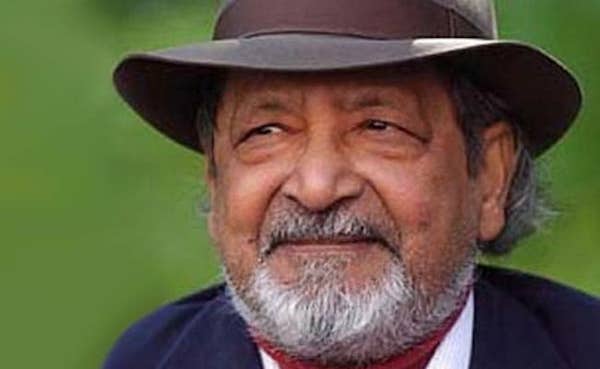
    Like all good jokes, there are elements of truth in this one. V.S. Naipaul, or Sir Vidia as he was called after receiving his knighthood, winner of the Nobel Prize for Literature, was a man who did his own stuff, and seemed to be blind to those who pulled faces at him. This was misleading: he could see them and was often highly conscious of what they were doing. But he would not condescend to respond to them, except indirectly in his writing. This was an indication of his greatness as a writer.

    Naipaul’s hurt

    Born on a small Caribbean island to a family of Indian origin, Naipaul made himself a major writer with a rare single-mindedness of purpose. He also brought this concentration, this ability to observe without seeming to be moved, to the best of his works. Of course, this ability was misleading. “Mad Ireland hurt you into poetry,” W.H. Auden wrote of W.B. Yeats. The madness of the world was also essential to Naipaul’s oeuvre. But while Yeats, the poet influenced by a Romantic sensibility, wore his hurt on his literary sleeve, Naipaul kept it deeply hidden. That is why Yeats’s hurt translates into beautiful, lyrical poetry with little humor in it, and Naipaul’s hurt translates into humorous, ironic or satirical fiction at its best.

    Despite the fact that Western critics focus inordinately on it, it is not Naipaul’s travel writing that makes him one of the greatest writers of the 20th century, it is his fiction. His travel writing comes across as hasty at times. I suspect the reason so many Western journalists do not see this is that, at a far higher level of accomplishment, Naipaul’s travel books move through the non-West with something of the burden of received opinions and impatience that Western journalists often display in their incursions.

    But even here, there is a difference. Naipaul’s highly accomplished non-fiction was flawed not as much by what he saw critically and impatiently in other cultures, for these insights were often acute despite being politically unsavory, but what he chose not to see in them — and in himself. This had to do with his hurt; his, at times, desperate trajectory from the margins to the center, and its consequences.

    The hurt that Naipaul does not easily show — or shows only as criticism, humor, satire — is revealed in the nature of the two of his greatest books, which are among the greatest ‘novels’ of the 20th century: A House for Mr Biswas (1961) and The Enigma of Arrival (1987). In very different ways, both occupy that particularly fruitful space between fiction and memoir. A House for Mr Biswas, with a story inspired by Naipaul’s father’s warped intellectual struggles in a discouraging postcolonial environment, is one of those rare recent novels in which the protagonist is basically conservative and yet gains the reader’s sympathy. The Enigma of Arrival is the story of the writer V.S. Naipaul, told by the writer V.S. Naipaul: a memoir dressed up as a novel, or a novel dressed up as a memoir, depending on how you choose to look at it. Selecting deceptively from actual autobiographical facts, this ‘novel’ (which is what Naipaul chose to call it) is correctly read by critics as examining the ambiguities of leaving or arriving ‘home’.

    But what also needs to be recalled is that the place where Naipaul arrives, or fails to arrive, in this novel is next to Stonehenge, the very heart of England, so to say. This trajectory remains central to any understanding of Naipaul as a person and a writer. It relates to the hurt I have mentioned, which is primarily that of a great artist seeking to escape — and all artists seek this, consciously or not — the whirlwind of time. This might also mean escaping the lesser storms of ugliness, pettiness, disorder. For writers who feel, as the younger Naipaul obviously did, caught on the margins of history, to be ‘post’ not just the colonial but also at times the sensible, this hurt assumes compulsive force. It is an index of Naipaul’s artistic greatness that he shaped it into highly honed creativity and did not allow it to seep, as it often does in postcolonial circles, into insistence, rhetoric, bitterness and resentment.

    Contested politics

    Naipaul’s politics, especially but not only in his non-fiction, has been often indigestible to many, including, at times, me. This does not detract from his stature as a writer, especially a writer of fiction. But it cannot be ignored. In Naipaul’s defense, one has to add that he often seemed to operate with a basic assumption that was anathema to the Left but that is largely justified. The Left (much more so in the past) operates on the assumption that if only the poor and the deprived could assume power, we would overcome the problem of power being abused. In all his writing, indirectly but clearly, Naipaul scoffs at this idea. For him, the fact that you are poor is no guarantee that you will be just if you assume power; the fact that you were deprived does not mean that, given a chance, you won’t deprive others.

    Hence, while acutely aware of the abuse of power within any conservative status quo, finally Naipaul prefers a coherent status quo to radical or revolutionary change. This explains his sympathy for extant English and (to a certain extent) Brahminical-centric tendencies over radical religious, social and political ideologies. Perhaps like Mr Biswas in his long-sought and finally half-achieved house, Naipaul knew that our house is not perfect and that it is ludicrously incomplete, but he preferred living ironically in it to pulling it down. Who, honestly speaking, can claim that he was entirely wrong? Who, in any case, with a roof over his head?

    (The author is a novelist and academic who works in Denmark)


  • A universally loved politician: Vajpayee set templates that surprised

    A universally loved politician: Vajpayee set templates that surprised

    The man was a marvel. There have been few politicians like Atal Bihari Vajpayee who so effortlessly stepped across the Lakshman rekha of party propriety and ideology and yet garnered all-round respectability. Right from his debut in the Lok Sabha, there were murmurs by his constipated colleagues about his waywardness and ‘un-swayamsevak-like’ behavior. The minders kept their counsel because of the rarity in their ranks of a silver-tongued communicator like Vajpayee. Compared with other anti-Congress young Turks of the time, Vajpayee was entirely home-schooled in politics. Yet, the man gave the impression of being more forgiving, open-hearted and oriented towards politics of consensus than those schooled in tenets of western liberalism.

    His speech in Parliament that was noticed by Nehru marked him out as a politician to watch out for. And Vajpayee paid the price when it rolled out one of its big guns to humble him in the 1962 elections. Vajpayee was to brush off this dust of defeat several times in his career even as he silkily positioned himself for the top job in the party, leaving it to LK Advani to wield the axe on their one-time mentor Balraj Madhok to land control of the party. The Emergency tested his resolve and staying power as did a barren stretch after Indira Gandhi’s assassination. Vajpayee braved them both.

    Vajpayee’s hour arrived in 1998. And till ill-health laid him low, he occupied the political center-stage with hardly a single blemish of graft, nepotism or rank opportunism blighting his 50 years of public service. As PM, he endured the usual tumultuousness of helming a country, besides countering challenges to his authority with customary élan and panache. His experience enabled him to control the narrative — be it the nuclear tests, the Kargil conflict or the 2002 Gujarat riots. His inclusion in the pantheon of greats was guaranteed when he was felled by a paralytic attack in 2009. The only regret would be that Vajpayee entered South Block 10 years late when his health was already on the decline.

    (Tribune, India)


  • Permanent Mission of India Celebrates Independence Day

    Permanent Mission of India Celebrates Independence Day

    Ambassador Sysed Akbaruddin hoisted Indian National Flag

    NEW YORK CITY(TIP):   Ambassador Syed Akbaruddin, Permanent Representative of India to the United Nations, hoisted the Indian National Flag at the Permanent Mission of India here, August 15 to mark the 72ndIndependence Day of India.

    Children singing patriotic songs. Ambassador Akbaruddin is seen on extreme left.
    Photos / Jay Mandal-on assignment

    Speaking on the occasion, Ambassador congratulated the gathering on the historic occasion and said that India has been making its presence felt in the comity of nations. He spoke of India’s all-round growth, and contribution to United Nations.


  • Jackson Heights Indian Merchants Association celebrates 72nd Independence Day of India

    Jackson Heights Indian Merchants Association celebrates 72nd Independence Day of India

    Extreme heat does not prevent people from participating

    JACKSON HEIGHTS, NY(TIP): Jackson Heights Indian Merchants Association organized a celebration, August 15 to mark the 72ndIndependence Day of India. The Indian National Flag was unfurled, and the Indian National Anthem sung by the gathering. Mohinder Verma, General Secretary of JHIMA conducted the brief program. Despite the heat of the day, a group of Indian merchants gathered to celebrate the Independence Day.

    Shiv Dass congratulated the gathering on the historic day and reminded them of the need to promote friendliness and cooperation between India and America. He also emphasized how very important it is for the business community to promote trade relations between the two great democratic countries of the world.

    Speaking on the occasion, Mohinder Verma made a passionate plea to never forget the freedom fighters of India who sacrificed their own interests for the sake of the country. He encouraged the business community of Jackson Heights to get involved in politics to get a better deal for themselves. He praised Shiv Dass for being instrumental in getting the 74thStreet named as Kalpana Chawla Way.

    Attendees were treated to lunch at Jackson Diner.

  • Yes, a D.J. Can Make a Difference!

    Yes, a D.J. Can Make a Difference!

    RICHMOND HILL, NY: Loud music and wild parties are probably what comes to mind when we hear the words disc jockey (DJ).  Sukhjinder Singh is not one to argue against that, having worked as the DJ in the successful Punjabi Mela concert in New York last May.  But try asking South Richmond Hill residents and they will be quick to say that Sukhjinder is not your ordinary DJ.  DJ Sukhjinder is more than loud music and wild parties.  DJ Sukhjinder is also all heart.

    Born in Bholath, a town in Kapurthala district in the state of Punjab, India, DJ Sukhjinder went to the U.S. in 2000 on his own search of the American dream – good job, nice house and car, family, and plenty of money.  But the American dream did not come easy to the then 18-year old DJ Sukhjinder. “I did all kinds of jobs. I worked whatever job I could get – in restaurants, construction, you name it. I was earning only $80 to $90 a day.  Taxi work was not available at that time.”

    For years, DJ Sukhjinder tirelessly worked multiple jobs, but without losing sight of his goal – having his own business.  Then in 2012, DJ Sukhjinder opened his very own CD/DVD store in South Richmond Hill, NY. And his formula for success: Service.  As inspired by his personal experience as an unhappy customer.  “I needed a new SIM card for my phone.  The guy at the store was charging me $10 to swap SIM cards!  When all he needed to do was to pick up the cellphone and change the SIM cards.  From there I ventured into the cellphone business as well.  And never did I take money for changing a SIM card!”

    Since then, DJ Sukhjinder has dedicated himself to helping make things easier for the South Richmond Hill community.  To this end, DJ Sukhjinder now offers DJ, photography, videography services and financial services in his CD/DVD store.  DJ Sukhjinder processes international money transfers, domestic money orders, and bill payments.  For all these, DJ Sukhjinder has partnered exclusively with RIA Money Transfer: “RIA is great!  They have competitive fees, best rates, and extra mile service.

    DJ Sukhjinder continues, “With RIA’s money transfer service, I have yet to hear a customer complaining that money was not received.  Instead, customers are happy that loved ones don’t have to go out of their villages to get the money.  To them RIA is reliable and convenient.  And because customers are happy with RIA, I am happy with RIA.”

    Visit DJ Sukhjinder at his Ria location, 116-01 101st Ave, South Richmond Hill, NY.  He is currently offering fee-free bill payments to all new and existing customers.


  • New York Plans to Cap Uber and Lyft

    New York Plans to Cap Uber and Lyft

    Taxi drivers welcome the measures, while ride-hailing firms warn the cap will lead to reduced service in City

    NEW YORK CITY(TIP): New York moved to become the first city in the U.S. to cap ride-hailing services including Uber Technologies Inc. and Lyft Inc., freezing new vehicle licenses for one year while it studies the fallout from the booming industry.

    The vote Wednesday, August 8 by the New York City Council could cripple the growth of Uber and Lyft in their biggest U.S. market as both companies are heading toward eventual initial public offerings. The Silicon Valley companies’ businesses depend on recruiting as many drivers as they can to drive down fares and cut pickup times.

    Council members approved a package of bills after months of campaigning from taxi drivers and others in favor of the legislation and a challenge by the ride-hailing companies urging customers to oppose the bills.

    Mayor Bill de Blasio, who has championed the measures and unsuccessfully tried to rein in the services in 2015, said he would sign the legislation. “Our city is directly confronting a crisis that is driving working New Yorkers into poverty and our streets into gridlock,” he said.

    The ride-hailing firms warned that the cap, which the council approved in a 39-6 vote, would lead to reduced service in the outer boroughs and to higher fares at a time when the city’s subway and bus systems are frequently delayed and overcrowded.

    “The city’s 12-month pause on new vehicle licenses will threaten one of the few reliable transportation options while doing nothing to fix the subways or ease congestion,” a spokeswoman for Uber, Danielle Filson, said.

    Ms. Filson added: “Uber will do whatever it takes to keep up with growing demand.”

    Joseph Okpaku, vice president of public policy for Lyft, said: “These sweeping cuts to transportation will bring New Yorkers back to an era of struggling to get a ride, particularly for communities of color and in the outer boroughs.”

    The vote marks the first big lobbying setback for Uber CEO Dara Khosrowshahi.

    Since joining the company in September from Expedia Group Inc., Mr. Khosrowshahi has scored several wins, including a short reprieve in London after regulators there threatened to effectively shutter Uber. He also helped to soften legislation affecting ride-hail drivers in Brazil.

    Uber’s fate in New York carries added weight as the company eyes an IPO in the second half of next year. If other cities follow New York’s example, it could cast doubt on Uber’s ability to maintain its growth, as well as the effectiveness of its lobbying operation. The nine-year-old company, last valued by investors at about $70 billion, recorded more than $7 billion in revenue last year but lost $4.5 billion.


  • Ambassador Asoke Mukerji awarded honorary Doctor of Civil Laws degree

    Ambassador Asoke Mukerji awarded honorary Doctor of Civil Laws degree

    NEW DELHI /LONDON/ NEW YORK(TIP): The University of East Anglia in the UK conferred on Ambassador Asoke Mukerji (he was Permanent Representative of India to the Unite Nations a few years ago) an honorary Doctor of Civil Laws degree for his contribution to diplomacy, more than two years after his retirement from the Foreign Service.

    The last time they had given an honorary DCL to another Indian was in 2012 to Dr M.S. Swaminathan (the “father of India’s Green Revolution”) for his contributions to science. Since it was established 55 years ago, the University has moved into the top 200 universities of the world, and the top 15 of the UK. It has produced two Nobel Laureates from its alumni – the 2017 Nobel Laureate in Literature Sir Kazuo Ishiguro and the 2001 Nobel Laureate in Medicine Sir Paul Nurse.

    Ambassador Asoke Mukerji (seated second from left)

    In his Acceptance Speech on this occasion, addressing the students graduating on the same day, Ambassador Mukerji offered them the vision of Rabindranath Tagore from more than a century ago to confront the turbulence currently being witnessed in international affairs. This poem is from Tagore’s Gitanjali, for which he was awarded the Nobel Prize in Literature in 1913:

    “Where the mind is without fear

    and the head is held high,

    where knowledge is free.

    Where the world has not been broken up into fragments by narrow domestic walls.

    Where words come out from the depth of truth,

    where tireless striving stretches its arms toward perfection.

    Where the clear stream of reason has not lost its way

    into the dreary desert sand of dead habit.

    Where the mind is led forward by thee

    into ever widening thought and action.

    Into that heaven of freedom, my father,

    let my country awake!”

  • Indian American singer Subhi to perform at John F. Kennedy Center for the Performing Arts in Washington Center on August 19

    Indian American singer Subhi to perform at John F. Kennedy Center for the Performing Arts in Washington Center on August 19

    CHICAGO(TIP): Indian American singer and songwriter Subhi will perform at the John F. Kennedy Center for the Performing Arts in Washington, DC, on August 19.

    The Chicago-based singer released her debut Hindi pop jazz album Shaitaan Dil last fall. The Millennium Stage performance is part of the musician’s four-city Northeastern tour, which includes stops in Long Island, NY; New York City and Baltimore.

    “I am thrilled to perform at Kennedy Center’s Millennium Stage,” said Subhi, whose full name is Subhi Khanna Rangnekar, but uses only the first name in her artistic life. “This will be my first performance there. I will be performing some of my original compositions from my debut album. I will also be doing a few classic Bollywood jazz covers.”

    Subhi’s upcoming performances and venues

    August 16, 2018 Mint Lounge, Long Island, NY
    August 17, 2018 Rockwood Music Hall, Stage 2, New York City
    August 18, 2018 An Die Musik, Baltimore
    August 19, 2018 Kennedy Center: Millennium Stage, Washington, DC

    Subhi moved to New York from Delhi when she was 15. Her first musical venture was working as a music assistant to Indian American filmmaker Mira Nair, on Monsoon Wedding: Musical, a Broadway show.

    After working as a songwriter, lyricist and vocalist for an independent feature film, in June 2013, she returned to India — this time to Mumbai — to compose music for the Bollywood film Take it Easy.

    Subhi and the New York-based reggae singer StyleBhai also composed the promo song of the film Kaun Kitne Paane Mein, directed by Nila Madhab Pandav, a national award-winning filmmaker.

    Subhi has a master’s degree in film and media studies from The New School in New York.

  • Indian- Origin British Billionaire Plans Clean Energy Project in Australia

    Indian- Origin British Billionaire Plans Clean Energy Project in Australia

    CANBERRA(TIP): India-origin British billionaire has launched a $1 billion, one-gigawatt renewable energy plan based in South Australia’s mid-north that he says will lead the country’s industry transition to more competitive power.

    Sanjeev Gupta’s energy company Simec Zen and its Cultana Solar Farm released the details on August 16. It said that “In the first of a number of projects slated for the upper Spencer Gulf region, will include a 120MW lithium-ion battery bigger than the 100MW battery built by Elon Musk’s Tesla in South Australia in 2017.”

    The project will produce 280 megawatts of power and feature 780,000 solar panels, generating enough electricity for 96,000 homes. The Cultana Solar Farm will begin construction in early 2019, employing 350 workers during construction, reports stated

    “Today’s event is symbolic of our desire to develop and invest in new-generation energy assets that will bring down Australia’s electricity prices to competitive levels again,” Mr Gupta said on Wednesday, August 16.

    “Solar will be the main base of our ambitions in Australia but we will have some wind and we have lots of storage solutions.”

    When completed, Mr Gupta’s battery will surpass the battery built by Tesla as the largest in the world, reports said.

    However, the Gupta Family Group (GFG) Alliance has no intention to stop there with plans for pumped hydro projects and expanded solar farms being developed for South Australia.

    “All of these projects will not only improve reliability and greatly reduce the cost of electricity in our own operations, they will also provide competitive sources of power for other industrial and commercial users, while at the same time playing a key role in the market’s transition towards renewables,” he said.

    “We have a strong conviction that traditional carbon-intensive generation sources do not have a long-term future as the predominant source of power in Australia and globally.”

    “We believe the world is undergoing a momentous transition to renewable power as the cost of renewables drops dramatically and quickly,” he added.

  • Indian-origin man held for selling cocaine & possessing stolen bikes in US

    Indian-origin man held for selling cocaine & possessing stolen bikes in US

    NEW YORK (TIP): An Indian-origin man in the US has been booked for unlawfully selling cocaine and possessing stolen bikes worth thousands of dollars, officials said.

    Randall Singh, 32, of Long Island has been charged with criminal possession of a controlled substance and third-degree criminal possession of stolen property.

    He allegedly sold bikes worth roughly USD 60,000 and 162 grams of cocaine. If convicted, he faces between eight and 20 years in prison.

    Singh is presently awaiting arraignment in Queens Criminal Court on two complaints.

    Queens District Attorney Richard Brown said that according to one of the complaints, between June 2017 and April 2018, Singh arranged meetings in Queens with a buyer to sell various stolen motorcycles as well as cocaine.

    However, it was unknown to him that the buyer was an undercover detective.

    During these meetings, money was exchanged for drugs and stolen bikes.

    Singh is alleged to have sold a variety of stolen motorcycles and none of the motorcycles were sold with an ignition key and in many instances the ignitions had been manipulated either with a screwdriver or rewired to enable the engines to start.

    On one occasion, Singh had met with a buyer and exchanged a bag of cocaine for cash. Singh then again allegedly sold to the same buyer, a bag of cocaine for USD 4,000 as well as a stolen Honda motorcycle for USD 2700.

    “As a result of a long-term investigation… this individual is now out of business and facing lengthy term of incarceration for these alleged crimes. This case should serve as a warning to drug dealers and anyone else who barters in stolen goods that law enforcement is coming for you,” Brown said.


  • Indian-Origin Restaurateur Racially Abused in Kentucky

    Indian-Origin Restaurateur Racially Abused in Kentucky

    NEW YORK(TIP): An Indian-origin restaurateur in the US was racially targeted by a customer who referred to him and his family as “a tribe from India”. He was further told that he “probably just funded Al-Qaeda” by eating at the hotel, a media report stated.

    Taj Sardar, the owner of ‘The Kings Diner’ in Ashland, Kentucky, was targeted by racial posts by the man after eating at his restaurant.

    The small eatery serves a combination of home cooking and Indian dishes.

    Later, the man took a photo of the restaurant and wrote on Facebook to voice his displeasure with the food and also the people inside, media reported.

    “I reluctantly entered to order meatloaf special and was greeted by a tribe from India. I’m ashamed that I probably just funded Al-Qaeda,” the post on Facebook said.

    “When I first read the thing on the Facebook, I was like, ‘Oh my gosh, is this serious?’ ” Mr Sardar said.

    “I was like hopefully his backers don’t try to get together and push me out here, which I’ve been living here since 2010,” he was quoted as saying by the report.

    Since the racist post, the restaurant has been packed with community support doubling business ever since.

    “I got to realize there are more positive people out there than the negative ones we just had experienced, and I’m really thankful to this community here,” Mr Sardar said.

    Mr Sardar said he is thankful for the outpouring of love he has received.

    He has complained about the incident to police as he fears the safety of his family, the report said.

    Meanwhile, Ashland city’s Mayor Steve Gilmore and three city commissioners visited Mr Sardar to give support.

    “After what he went through, I wanted to tell him, we’re very proud you’re one of our entrepreneurs in the city of Ashland and your reputation is sterling,” Mr Gilmore said.

    “What he went through was pretty heavy stuff, and this morning I wanted to show him we’re proud of having him in our community,” he said.

    “There’s no room in this city for that kind of behavior, for racist behavior and racist comments,” one of the city commissioners said.

    Mr Sardar and his family came to the US legally in 2006 and moved from upstate New York to Ashland in 2010 to open their store.

    Meanwhile, the Portsmouth Emergency Ambulance Services has terminated the employee.

    “We recently became aware that a member of our staff created several posts on social media that fall far short of that standard. On behalf of Portsmouth Emergency Ambulance Services, and all 650 members our team, we wish to apologize to anyone who was offended by those posts. We do not agree with, or condone, them”, they said in a statement.


  • Indians Abroad Celebrate Independence Day with traditional fervor

    Indians Abroad Celebrate Independence Day with traditional fervor

     NEW YORK(TIP): Thousands of Indians across the world, August 15, proudly celebrated India’s 72nd Independence Day with the tricolor fluttering high and the national anthem reverberating at Indian missions abroad.

    Indians in the US, China, Pakistan, Australia, Singapore and many other countries marked the day with hoisting of the national flag and singing of patriotic songs.

    Independence Day was celebrated with joy, fervor and special resonance at the High Commission of India in the Pakistani capital Islamabad. The occasion was marked by High Commissioner Ajay Biserial hoisting the national flag, singing of the National Anthem, a cultural program, and tea.

    “High Commissioner Ajay Bisaria in his Independence Day message spoke of India’s philosophy of ‘Vasudeva Kutumbakam’ (the world is one family) and hoped the ‘new India’ and ‘new Pakistan’ would build a ‘new future’ of peace and prosperity, substantially different from the past,” the Indian mission tweeted.

    The Indian envoy commenced the celebrations by paying floral tributes to Father of the Nation Mahatma Gandhi.

    In Beijing, a large number of the Indian diaspora took part in the Independence Day celebrations held at the Indian Embassy.

    India’s Ambassador to China Gautam Bambawale hoisted the tricolor and read out President Ram Nath Kovind’s address to the nation.

    Several Indian dignitaries, including BJP General Secretary Ram Madhav, President of the Indian Council for Cultural Relations Vinay Sahasrabuddhe, and senior Congress leader Karan Singh, who are currently in China, took part in the flag hoisting ceremony. A large number of Indians were present at the occasion.

    In Washington, Indian Ambassador to the US Navtej Sarna read out the president’s address to mark the country’s Independence Day.

    In Houston, several Indian-Americans converged at the Consulate General early today where Consul General Anupam Ray unfurled the tricolor.

    Independence Day was also marked in Russian capital Moscow with much enthusiasm and fervor. A large enthusiastic crowd gathered at the Indian Embassy as Indian envoy Pankaj Saran unfurled the national flag.

    He read out the president’s address to the nation to the 500-strong gathering that included Indian citizens, people of Indian origin and Russian nationals. The event included a cultural performance by the children from the Embassy of India School, Moscow.

    In Australia, a large number of Indian expatriates attended the flag hoisting ceremonies held at the Indian High Commission in Canberra and consulates in Melbourne, Sydney and Brisbane to mark the day.

    Congratulating the Indian government, Australian Prime Minister Malcolm Turnbull said that India and Australia were great friends with a lot in common as modern, vibrant and diverse democracies.

    “Australia’s large and growing Indian community makes a much-valued contribution to so many areas of our national life – and has for many years,” Turnbull said here in an official statement.

    “Whether through culture, community, education, science or enterprise, Indian-Australians are helping make our nation stronger and more dynamic. We have a connection and friendship that stretch from Adelaide to Amritsar, Hobart to Hyderabad and everywhere in between,” he said.

    Turnbull said that he was fortunate to have seen the flourishing relationship first hand during his visit to India last year.

    “I am confident that our deepening ties will ensure that these friendly relations will continue to prosper in the coming year,” he said.

    In his congratulatory message, Citizenship and Multicultural Affairs minister Alan Tudge said, “India today is the world’s largest democracy sharing our liberal democratic values and commitment to freedom.

    “As Australia’s fifth largest export market, and our 10th largest trading partner overall, Australia and India have a relationship based on strong political, economic and community ties,” he said.

    Tudge highlighted that investment between the two sides have grown significantly in the last decade and the number of Indians born in Australia also jumped.

    Meanwhile, Indian diaspora across the country held several cultural events and special dinners to mark the occasion.

    Last week, Bollywood actress Rani Mukherjee, who was attending the Indian Film Festival of Melbourne (IFFM) 2018, hoisted the tricolor at the iconic building Federation Square here.

    In Singapore, more than 500 Indians in Singapore joined High Commissioner Jawed Ashraf in celebrating India’s Independent Day.

    The Indian flag was unfurled in the presence of more than 800 Indian nationals.

    A concert of patriotic songs and cultural performance was also organized to mark the occasion.

    A mid-morning reception was hosted at the Indian High Commission for the business community linked to India.

    Members of the Indian community in the Netherlands also celebrated India’s 72nd Independence Day here with fervor.

    The celebrations began with the hoisting of the national flag by the Indian Ambassador to the Netherlands Venu Rajamony and singing of the national anthem,

    Over 600 Indians and others gathered at ‘India House’ – the residence of the Indian envoy in Wassenaar – on the occasion.

    In Nepal, Indian Ambassador Manjeev Singh Puri gifted 30 ambulances and six buses to Nepalese hospitals, charitable organizations and educational institutions at a function at the Indian Embassy in Kathmandu.

    Puri felicitated widows and wards of deceased Nepalese soldiers of the Indian armed forces by distributing cheques worth 53.5 million Nepalese rupees.

    (Source: PTI)

  • Congresswoman Grace Meng Praises India as a Great Democracy

    Congresswoman Grace Meng Praises India as a Great Democracy

    Consulate General of India celebrates India’s 72ndIndependence Day

    NEW YORK CITY(TIP): India’s 72ndIndependence Day was celebrated by a very large gathering at the Indian Consulate in New York on August 15.

    Congresswoman Grace Meng was the chief guest. Also present were Assemblyman David Weprin, New Jersey Senator Vin Gopal, Bollywood actor Anupam Kher, and a couple of other politicians and officials, besides a large number of Indian Americans.

    Consul General extends congratulations on India’s 72nd Independence Day

    Consul General Sandeep Chakravorty hoisted the Indian National Flag to the singing of the Indian national Anthem.

    Consul General read out Indian President’s address to the nation and offered his congratulations to the gathering on the historic day. He spoke briefly about the achievements India has made in its 71-year journey as a democratic nation.

    Congresswoman Grace Meng praised India as a great democratic nation

    Congresswoman Grace Meng in her brief address, spoke of the greatness of India as a democratic nation and praised the contribution of the Indian American community in “so many ways”.

    Bollywood actor Anupam Kher described India as a country with opportunities

    Anupam Kher spoke feelingly about India, emphasizing the opportunities the country offers to all to grow.

    A Kathak presentation
    Photos / Jay Mandal-on assignment

    Speeches were followed by a cultural presentation, which included a Kathak presentation.

  • Nation Celebrates 72nd Independence Day

    Nation Celebrates 72nd Independence Day

    Prime Minister Narendra Modi in his Independence Day speech signals on future priorities if elected again

    NEW DELHI(TIP): In his last Independence Day address before the next General Elections, Prime Minister Narendra Modi announced, August 15, not just the launch date for the Pradhan Mantri Jan Aarogya Abhiyan health insurance scheme, but also that women officers in short service commissions in uniformed services will be eligible for permanent commission similar to male counterparts.

    The speech, at 82 minutes, repeatedly compared his own government’s achievements to the “situation in 2013”.

    The speech was not just a report card of his tenure as Prime Minister but also a signal on future priorities if elected back next year.

    He said India will launch its first manned space mission by 2022, which could make it the fourth nation to do so after the United States, Russia and China.

    As emphasis went, the speech dwelt the longest on women and the poor. Mr. Modi decried the “demonic tendencies” of violence against women, and lauded fast track courts handing out death penalties in several cases — a mention that got a round of applause from the audience.

    He also announced that women short service commission officers in uniformed forces would get permanent commissions on transparent lines. “I’m proud to say that my Cabinet has the largest representation of women since independence,” he said. He made a special mention of his government’s efforts at bringing a Bill banning the practice of instant Triple Talaq among Muslims. “We tried to pass the Bill in the last session but there are those who have an interest in blocking it. It is my promise to my Muslim sisters that my government will try get the Bill passed,” he said.

    Prime Minister Modi also emphasized the speed at which his government had moved on basic developmental work like providing power, housing and toilets in villages and small towns. “We have the same people and systems but look at the speed at which things have been done. Achievements of this government have to be weighed in against what went on before, in 2013,” he said, targeting the previous UPA government.

    He announced anti-corruption measures and reassured tax payers that their money was not being wasted in leakages of government funds. The Prime Minister pointed to several pieces of legislation passed by his government to tackle graft. “We have passed the banking reforms bill, the bankruptcy code and the benami properties act. We are a government that has the will to take tough decisions,” he said.

    “Our government has added, in the last four years, double the number of direct tax payers from the last 70 years. I want the unsung tax payers of this country to know that my government is committed to ending leakage of public funds, and when you sit down for a meal be assured that a poor man and his family is also getting a meal under welfare programs funded by your honestly paid tax,” he said.

    While the speech in 2017 was dominated by Jammu and Kashmir, this year Mr. Modi repeated his call for dialogue and reconciliation, plumping for gale milna (a hug) rather than gali (abuse) or goli (bullet) and former Prime Minister A.B. Vajpayee’s approach of ‘Insaaniyat, Kashmriyat and Jamhooriyat.’

    He also said that panchayat polls in Jammu and Kashmir would be held soon and wished for a “balanced development” of all regions of the State.

    He quoted Tamil poet Subramania Bharathiyar to emphasize that India was on its way to assuming some leadership in international fora: “India will show the world the way to freedom from all forms of slavery” he quoted from a poem by Bharathiyar and said that India was being heard seriously at international multilateral fora. “The strength of the Indian passport has gone up and Indians know that wherever they are in trouble, the Indian government will not abandon them,” he said.

    He ended the speech on a poetic note, exhorting the dawn of a “Navyug” or a new era, hewing to the meta narrative of the speech for a political renaissance.

  • The Colossus of Indian Politics bids good bye

    The Colossus of Indian Politics bids good bye

    Former PM Atal Bihari Vajpayee dies at 93

    NEW DELHI(TIP): Former Prime Minister Atal Bihari Vajpayee passed away at All India Institute of Medical Sciences (AIIMS), August16 evening at 5.05 bringing to an end a glorious political innings.The 12-time Parliamentarian   was 93.

    Vajpayee, a bachelor, is survived by his adopted daughter Namita Kaul Bhattacharya.

    AIIMS announced the demise of the BJP veteran saying, “It is with profound grief that we inform about the sad demise of former PM of India Shri Atal Bihari Vajpayee at 5.05 pm on August 16.”

    Vajpayee was admitted to AIIMS on June 11 and was stable in the last nine weeks under the care of a team of AIIMS doctors.

    “Unfortunately, his condition deteriorated over the last 36 hours and he was put on life support systems. Despite the best of efforts, we have lost him today. We join the nation in deeply mourning this great loss,” the bulletin issued by Dr Aarti Vij, chairperson, media and protocol division, AIIMS said.

    In his condolence message, President Ram Nath Kovind stated, “His leadership, foresight, maturity and eloquence put him in a league of his own. Atalji, the Gentle Giant, will be missed by one and all.”

    “It was Atalji’s exemplary leadership that set the foundations for prosperous and inclusive India in the 21st century,” Modi said.

    Vajpayee, who joined the Rastriya Swamsevak Sangha (RSS) in 1947 rose through ranks to become a stalwart of the BJP and was the first non-Congress prime minister to complete a full term in office.

    “It was due to the perseverance and struggles of Atal Ji that the BJP was built brick by brick,” Modi said in a tweet.

    “He travelled across the length and breadth of India to spread the BJP’s message, which led to the BJP becoming a strong force in our national polity and in several states,” he added.

    India grieves the demise of our beloved Atal Ji.

    His passing away marks the end of an era. He lived for the nation and served it assiduously for decades. My thoughts are with his family, BJP Karyakartas and millions of admirers in this hour of sadness. Om Shanti.

        — Narendra Modi (@narendramodi) August 16, 2018

    It was Atal Ji’s exemplary leadership that set the foundations for a strong, prosperous and inclusive India in the 21st century. His futuristic policies across various sectors touched the lives of each and every citizen of India.

        — Narendra Modi (@narendramodi) August 16, 2018

    Atal Ji’s passing away is a personal and irreplaceable loss for me. I have countless fond memories with him. He was an inspiration to Karyakartas like me. I will particularly remember his sharp intellect and outstanding wit.

        — Narendra Modi (@narendramodi) August 16, 2018

    Vajpayee was born on December 25, 1924 in Gwalior, Madhya Pradesh to a schoolteacher, Krishna Bihari Vajpayee, and Krishna Devi. Today, his birthday is celebrated as ‘Good Governance Day’.

    Mr. Vajpayee was Prime Minister thrice in 1996, 1998-1999 and 1999-2004. As his health deteriorated, he slowly withdrew himself from public life and was confined to his residence for several years.

    In his tribute, BJP president Amit Shah said he was a “rare politician, brilliant speaker, poet and patriot, his demise is not just an irreparable loss for the BJP but also for the entire country.”

    Congress president Rahul Gandhi said on Twitter: “Today India lost a great son. Former PM, Atal Bihari Vajpayee ji, was loved and respected by millions. My condolences to his family and all his admirers. We will miss him.”

    (With inputs from PTI)

  • August 17 New York & Dallas Print Editions

    August 17 New York & Dallas Print Editions

    [vc_row][vc_column][vc_column_text]

    Print Replica ~ Digitally

    E-Editions

    [/vc_column_text][/vc_column][/vc_row][vc_row][vc_column width=”2/3″][vc_custom_heading text=”New York & Dallas Edition” font_container=”tag:h2|text_align:center” google_fonts=”font_family:Istok%20Web%3Aregular%2Citalic%2C700%2C700italic|font_style:700%20bold%20regular%3A700%3Anormal” link=”url:https%3A%2F%2Fwww.theindianpanorama.news%2Fwp-content%2Fuploads%2F2018%2F08%2FTIP-August-17-NYC.pdf|||”][vc_single_image image=”94053″ img_size=”full” add_caption=”yes” alignment=”center” onclick=”custom_link” link=” https://www.theindianpanorama.news/wp-content/uploads/2018/08/TIP-August-17-NYC.pdf”][/vc_column][vc_column width=”1/3″][vc_single_image image=”82828″ img_size=”medium” alignment=”center” onclick=”custom_link” link=”https://www.theindianpanorama.news/advertising-media-kit-portal-indian-panorama/”][vc_single_image image=”82829″ img_size=”medium” alignment=”center” onclick=”custom_link” link=”https://www.theindianpanorama.news/advertising-media-kit-portal-indian-panorama/”][/vc_column][/vc_row][vc_row][vc_column][td_block_ad_box spot_id=”custom_ad_3″ tdc_css=””][/vc_column][/vc_row][vc_row][vc_column width=”2/3″][vc_custom_heading text=”Lead Stories This Week” font_container=”tag:h2|text_align:center” google_fonts=”font_family:Istok%20Web%3Aregular%2Citalic%2C700%2C700italic|font_style:700%20bold%20regular%3A700%3Anormal” link=”url:https%3A%2F%2Ftheindianpanorama.news%2Feditions%2F|||”][td_block_5 separator=”” limit=”12″ tdc_css=””][/vc_column][vc_column width=”1/3″][vc_widget_sidebar sidebar_id=”td-default”][/vc_column][/vc_row]