Year: 2018

  • Month of May is ‘Small Business Month’ in New Jersey: Senate Passes Gopal, Corrado Bill

    Month of May is ‘Small Business Month’ in New Jersey: Senate Passes Gopal, Corrado Bill

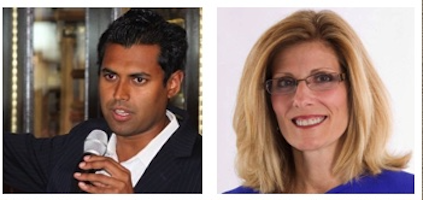
    TRENTON, NJ(TIP):  A Resolution sponsored by Senator Vin Gopal and Senator Kristen M. Corrado that would designate the month of May each year as “Small Business Month” in New Jersey advanced from the Senate, June 7.

    “Small businesses are what make the economy in New Jersey flow, and propel our state to an even brighter future,” said Senator Gopal (D-Monmouth).  “As a small business owner myself, I understand the day-to-day difficulties that these entrepreneurs can face.  I am committed to supporting mom-and-pops not only in Monmouth County, but throughout the entire state.”

    The resolution, SJR-27, aims to recognize the vital importance of small businesses in the state and local economies, and how their success strengthens community identity and pride.

    The resolution would request the Governor to annually issue a proclamation calling upon public officials, private organizations, and all citizens and residents of this state to observe the month by patronizing small businesses, as well as engaging in appropriate activities and programs designed to support small businesses across the state.

    “The roundtable discussions were incredibly productive, and I hope we can take what we learned and apply them in order to make New Jersey a better state to do business in,” continued Senator Gopal.

    New Jersey has over 800,000 small businesses, comprising more than 98 percent of all employers in the state.  Small businesses employ 1.7 million workers, making up more than 50 percent of the state’s workforce.  They have a strong presence in New Jersey communities, and support a range of local services.

    During the month of May, Senator Gopal hosted a number of small business roundtable discussions to honor National Small Business Month. Business owners were encouraged to visit www.ReportRedTape.com, Senator Gopal’s small business initiative, to inform him about their business and submit written comments about the issues they have encountered.

    The resolution was released from the Senate by a vote of 37-0, and next heads to the Assembly for further consideration.

  • What are Naunidh?

    What are Naunidh?

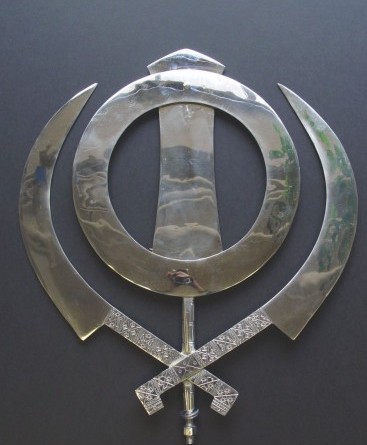
    Sikhs always talk about Naunidh during Ardas

    “TeghBahadur Simariye ghar *NAUNIDH* aavey dhaey”

    How many of us even know what the Naunidh are?

    Read on if you want to know.

    THE NAUNIDHH ARE THE NINE SPIRITUAL TREASURES OF GOD REALIZATION.

    The nine spiritual treasures are the steps or keys we must achieve along our journey to Realization of WAHEGURU.

    1.Acceptance…… *HUKAM*

    The first key to GOD is to accept and stop questioning His will and the natural laws and order of the Divine

    2.Faith……. *BHAROSA*

    Upon acceptance of GOD and beginning a quest in search of Him, expand your mind, read all that is written and develop faith.

    3.Detachment…… *VAIRAG*

    When you have exhausted every outer search then begin your inner quest with detachment from any negative unhealthy relationship to the world and family.

    4.Absolute Absorption…… *LEENTA*

    Using GOD’s name in prayer and meditation, attain an absolute absorption in and attachment to GOD.

    5.Balance…. *SEHEJ*

    If you quieten your mind, aim for balance and listen to the silence within, a point of equilibrium will be reached where

    6.Joy…… *ANAND*

    A light will fill your mind and your heart will quicken with Joy

    7.Ecstasy…. *VISMAAG*

    As you feel the LOVE and presence of GOD, you will be in a state of spiritual ecstasy.

    8.Contentment……. *SANTOKH*

    Contentment will follow

    9.GOD’s grace/Humility…. *NADAR*

    After a deeper realization of the wonder that is GOD one will, with humility, attribute all to GOD and only GOD and not think about his personal contribution as one is nothing without GOD.

    Waheguru Ji Da Khalsa

    Waheguru Ji di Fateh ?

    (Contributed by CJ Arneja)

  • Legislator Arnold W. Drucker Celebrates Milestone As  County Executive Laura Curran Signs “Tobacco 21” Into Law

    Legislator Arnold W. Drucker Celebrates Milestone As County Executive Laura Curran Signs “Tobacco 21” Into Law

    MINEOLA, NY(TIP): The Nassau County Legislature on May 23 approved the measure unanimously, which requires buyers of products such as “cigarettes, cigars, electronic cigarettes, chewing tobacco, rolling papers, herbal cigarettes, liquid nicotine and smoking paraphernalia” to be over age 21.

    The action follows years of advocacy by Minority legislators, who have repeatedly demanded a vote on the measure in recent years. This legislation was first proposed by the late Legislator Judy Jacobs and was championed by Legislator Drucker, who succeeded her in office.

    “As the successor to Judy Jacobs, who served the residents of Nassau County with honor and distinction for so many years, I am extremely proud to witness this historic day in Nassau County,” Drucker said. “Raising the minimum age for the purchase of tobacco products to 21 will save lives by making it harder for teenagers to pick up a dangerous habit that results in a lifetime of poor health, addiction, inordinate expense, and a loss of the ability to enjoy life to its fullest.”


  • Koo introduces Legislation to address Street Vendor Pollution and Sidewalk obstructions

    Koo introduces Legislation to address Street Vendor Pollution and Sidewalk obstructions

    NEW YORK(TIP): Council Member Peter Koo, on June 7, introduced a pair of bills that look to address two major quality of life issues in downtown Flushing and throughout the City of New York – street vendor pollution and sidewalk obstructions.

    Intro 969 will prohibit all sidewalk obstructions in downtown Flushing and stoopline stands in certain areas of downtown Flushing.

    Intro 970 will prohibit the use of under-fired char broilers at mobile food vending units citywide.

    Last year, the Flushing community celebrated the completion of up to nine feet of widened sidewalks on Main Street, Flushing. The new space was intended to provide critical relief to the hundreds of thousands of commuters who use the transportation hub’s more than 20 bus lines, subway, LIRR, and others who visit Flushing for its restaurants and shopping.

    “Unfortunately, the widened sidewalks gave rise to an increase in illegal street vendors and stoopline stands – people who are taking advantage of the new space to sell everything from health insurance, counterfeit handbags, bed sheets, pots and pans, fruits and vegetables, cell phones, and even socks,” said Council Member Koo. “We are overrun with sidewalk obstructions, and our sidewalks have become an obstacle course. As a small business owner, I have no objection to people innovating in order to turn a profit, but I wholeheartedly object to those who do so at the expense of their community.”

    The bill would prohibit stoopline stands at the following locations:

    Main Street between Northern Boulevard and Sanford Avenue; Roosevelt Avenue between College Point Boulevard and Union Street; Kissena Boulevard between 41st Avenue and Barclay Avenue; 40th Road between Prince Street and Main Street; 41st Avenue between Main Street and Union Street; 41st Road between Main Street and Frame Place.

    General and food vending would be prohibited within the following boundary:

    North: Northern Boulevard; East: Union Street; South:  Sanford Avenue; West: College Point Boulevard.

    Licensed veterans and vending protected by under the Constitution’s freedom of speech provisions would be exempt from these restrictions.

    The other bill, Intro 970, would prohibit the use of under-fired char broilers in mobile food vending units throughout the city. According to recent testimony by the Department of Health, one food vendor grilling meat for a day emits the same amount of particulate pollution as diesel truck driving 3,500 miles – the distance from New York City to Denver and back.

    “The under-fired char broilers used by street vendors are responsible for a significant amount of particulate matter in our air. Not only are the grillers breathing this in, but it also impacts nearby residents, businesses and others who must endure the clouds of smoke blowing in their windows and hanging over the street. Making these vendors more environmentally safe will reduce particulate matter and significantly improve the air quality of our city.”

    The legislation would not restrict flattop grills, such as the griddles used in Halal trucks.

  • New Jersey will have Smoking- free beaches

    New Jersey will have Smoking- free beaches

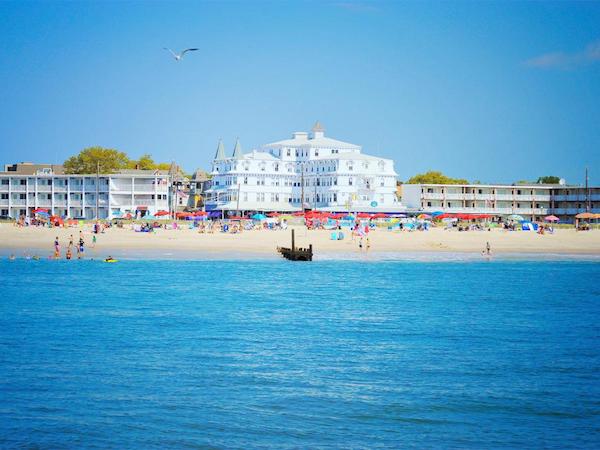
    Sweeney-Gopal-Smith Bill would ban Smoking on NJ Beaches

    Approved by both Houses, Legislation goes to the Governor

    TRENTON, NJ(TIP): Legislation sponsored by Senate President Steve Sweeney, Senator Vin Gopal and Senator Bob Smith that would ban smoking on New Jersey’s beaches was approved by the Senate, June 7.  The bill, S-2534, would prohibit smoking on all public beaches by extending the existing provisions of the “New Jersey Smoke Free Air Act” to public beaches throughout the state.

    The legislation was amended to extend the smoking ban to state, county and municipal parks, making it identical to the Assembly version. Approved by both houses, the measure now goes to the governor.

    “This is an issue that impacts the environmental quality of the Jersey Shore, the health of beachgoers exposed to second-hand smoke, the quality of life for residents and visitors, and ultimately, the economic well-being of Shore communities,” said Senator Sweeney. “We don’t want our beaches littered with cigarette butts, the air polluted with smoke or the ocean wildlife exposed to threat of discarded cigarettes.”

    “The Jersey Shore has always been one of New Jersey’s most treasured natural assets,” said Senator Gopal. “We have the best beaches and the most desirable beachfront communities in the country – and we want to keep it that way.  They have environmental and economic value that should not be lost or damaged by the ill effects of smoking on the beach. This legislation ensures that our beaches will be free of cigarette butts and our lungs free of smoke.”

    “It’s time to get smoking off the beach,” said Senator Smith, chairman of the Senate Environment Committee. “Not only do you have a nice beach for you and your kids and your grandkids, but you’re also cutting down the costs of maintenance for towns on the beach in terms of keeping them clean.”

    Cigarette filters are among the top types of litter collected from beaches, according to environmental advocates, who collected an estimated 25,000 cigarette filters from New Jersey beaches in “beach sweeps” last year alone.

    The smoking ban would not include beach parking lots and it would allow municipalities to designate up to 15 percent of a beach for permitted smoking, according to the legislation.

    In 2005, under the original “New Jersey Smoke Free Air Act,” the Legislature found and declared tobacco smoke to constitute a substantial health hazard to the nonsmoking majority and found it in the public interest to prohibit smoking in most enclosed indoor places of public access and workplaces. This bill amends the 2005 law to extend the ban to state, county, municipal beaches and state parks.

    A violation of the proposed law would include a fine of not less than $250 for the first offense, $500 for the second offense and $1,000 for each subsequent offense.  It would take effect 180 days after enactment.

    Nationwide, more than 300 coastal communities have banned smoking on their beaches, according to the American Nonsmokers’ Rights Foundation. In New Jersey, an increasing number of beach communities have enacted local smoking bans on their own in recent years, with at least 19 towns enacting the prohibition.

    The Senate vote was 32-1.

  • UN’S 2018 WORLD ENVIRONMENT DAY: BEAT PLASTIC POLLUTION

    UN’S 2018 WORLD ENVIRONMENT DAY: BEAT PLASTIC POLLUTION

    By Mabel Pais

    “In 1950, the world’s population of 2.5 billion produced 1.5 million tons of plastic; in 2016, a global population of more than 7 billion people produced over 300 million tons of plastic – with severe consequences for marine plants and animals” UN

    • We buy 1 million plastic bottles every minute.
    • We use over 500 million straws every day in America.
    • 500 billion disposable plastic bags are used worldwide every year.

       Plastic bags are used for an average of 12 minutes only.

    • 90% of bottled water found to contain plastic particles.
    • 83% of tap water found to contain plastic particles.

    World Environment Day (WED), June 5th, 2018, is the people’s day for doing something to take care of the Earth; so, we can join hands to bring the change needed to save all life on our planet.  The theme for 2018 is beating plastic pollution.

    WED is UN’s most important day for encouraging worldwide awareness and action for the protection of our environment.

    On World Environment Day, the United Nations with The Ministry of Environment, Forest and Climate Change, India, invited Isha Foundation to partner with it for the United Nations Environment Program to hold awareness drives in over 270 iconic locations around the world and thus spread awareness for banning single-use plastic.

    Children in Princeton, NJ support World Environment Day (WED)
    Participants in NY Cruise fundraiser
    WED supporters at Niagara Falls
    WED supporters at Central Park, NY
    Photos / Courtesy Isha Foundation

    This year’s environment day theme is Beat Plastic Pollution, and the host is Delhi, India. Sadhguru Jaggi Vasudev, yogi, mystic, humanitarian, founder-head of the international organization, Isha Foundation, was invited to speak with Erik Solheim, Executive Director of UN Environment Programme (UNEP), on this occasion and this event was live web-streamed.  Dia Mirza, former Miss Asia Pacific, UN Goodwill Ambassador for India, moderated the discussion.

    Since it began in 1974, World Environment Day has grown to become a global platform for public outreach that is widely celebrated in over 100 countries.

    Sadhguru began one of the world’s largest environmental campaigns in 2017 with his RallyforRivers30-day all-India drive.  He personally drove across 16 States of India in 30 days.  The campaign witnessed an unprecedented participation of over 162 million people from all walks of life, in different capacities.

    “Eric (Solheim) has spent the last week or more traveling through India, visiting different cities, interacting with people, and his energy and his enthusiasm is awe-inspiring,” noted Dia Mirza, former Miss Asia Pacific.

    Being a long-time admirer of Sadhguru, Mirza said “You have been instrumental in making so many of us love nature and ourselves and help us understand that we humans are not separate from nature, but we are part of nature. What we do to our environment, we do to ourselves, to our health.”

    “I’m very proud to have participated in the campaign, ’Rally for Rivers.’  It was a movement that galvanized civil society like no other. It has seen a kind of participation that is unprecedented.  And I know that your concern and love for India’s rivers is deep.  And, I think the theme of ‘Beat Plastic Pollution’ is so deeply connected with ‘Rally for Rivers’.”

    Sadhguru said, “Plastic is one of the most fantastic materials.  Such a wonderful material has become poisonous. This (is) a material that can be recycled 1000s of times, over and over again, that can be of use in a cycle.”

    “It is a serious problem if we do not handle this on a war-footing.  I’m using the word ‘war’ intentionally because every day the way we’re living, is a war… with everything.  At least, let’s reverse the war towards our well being. It has to be done (as if) we have a war on our hands.”

    “Without the push of law, the larger population will not move (for change). If it has to change quickly, law has to come into place.  That is why we are looking at single-use-plastic-ban.”

    Eric Solheim observed that a couple of days earlier, the team visited the beautiful southern State of Andhra Pradesh.  They watched a number of farmers transforming their agriculture into nature-based farming.  “It was fantastic to see beautiful trees, fantastic landscape, hard working farmers. Then all of a sudden we came to some open fields that were full of plastic.”  Then, again, while they traveled from Agra to Delhi, they saw plastic bags, plastic pollution of all sorts along the railway tracks.  “This is bad,” said Solheim.

    So, there is no doubt we need to change.  We need to change for the sake of Mother Earth.  We need to change for the sake of the animal kingdom.  But, we need to change for the sake of ourselves. This is in the most simple and clear terms, I hope, why we have started this global campaign: Let’s Beat Plastic Pollution.

    He was happy and proud to note that the Indian Government, Prime Minister Modi, many Chief Ministers and political heads of India, even some of whom are not supportive of Mr. Modi, have all picked up this cause because they believe in change and they believe in making India clean.

    And, finally, he wished to remind all Indians that the greatest of all Indians, and one of the greatest of human beings that ever-walked planet earth, Mahatma Gandhi, who said it very rightly: ‘Cleanliness is (next to) Godliness.’ And believed that it was not God’s plan that we humans should pollute our Mother Earth.  “It’s God’s plan that we should cater for Mother Earth as we cater for our children.  This is the most beautiful, one planet that we have, and we have to take good care of it,” he said.

    Join Hands To Beat Plastic Pollution:

    • On the weekend of June 2, local city-based events and global online campaigns, across the US and Canada, created awareness through social media.
    • The United Nations is organizing the worldwide #BeatPlasticPollution game of tag on social media towards this initiative.

    How can we humans help?

    The task of creating awareness continues by people sharing with their friends, families and colleagues what they are doing to change their single-use plastic habits.  This can be spread through influencers, media, politicians, schools, businesses and organizations.

    For example: You can share photos and videos to show how you changed a

    habit like using canvas shopping bags, metal straws or any other reusable products, then tag ten friends, inspiring them to do the same. The person tagged should post a photo with their reusable items within 24 hours and nominate 10 more. Please add #BeatPlasticPollution #Sadhguru #WorldEnvironmentDay as well.

    Please share your ideas, photos and creative solutions on twitter.com/IshaUSA and facebook.com/IshaUSA by tagging #Sadhguru #BeatPlasticPollution #WorldEnvironmentDay

    If you are an organization and would like to partner with Isha, please write to wed@ishausa.org.

    (Mabel Pais writes on The Arts and Entertainment, Social Issues, Health and Wellness, and Spirituality)


  • Paper Mill Playhouse Hosts Rising Star Awards: 2 Indian American students honored

    Paper Mill Playhouse Hosts Rising Star Awards: 2 Indian American students honored

    By Mabel Pais

    “We are very excited to celebrate excellence in high school musical theater with the students of New Jersey”

    –  Mark S. Hoebee, Paper Mill Playhouse’s Producing Artistic Director

    “We consistently hear from top-tier colleges and casting directors that a Paper Mill Playhouse Rising Star Award is a significant accolade for an aspiring theater artist”

     – Lisa Cooney, Paper Mill’s Director of Education

    Since their inception in 1996, the Paper Mill Playhouse Rising Star Awards for Excellence in High School Musical Theatre have ignited the careers of many notable performers, all of whom attended high school in New Jersey.  Among the early nominees and winners are Academy Award winner Anne Hathaway (Les Misérables), Tony Award winners Laura Benanti (Gypsy) and Nikki M. James (The Book of Mormon), Tony nominee Rob McClure (Chaplin), Shanice Williams, star of NBC’s The Wiz Live! and Olivier Award nominee Jared Gertner (The Book of Mormon).

    This year Union High School took the prize for Outstanding Overall Production.

    Indian American students recognized for the role of Outstanding Actress in a Leading Role were Mira Mookerjee of Moorestown High School as Lilli Vanessi/Katharine in Kiss Me, Kate; and Rakesh Potluri of Princeton Day School as Assistant Lighting Designer/Master Electrician in Bat Boy The Musical.

    The Paper Mill Playhouse Rising Star Awards are modeled after the Tony Awards, and Paper Mill Playhouse’s program serves the entire state of New Jersey, with nearly 100 entered productions from public, private and parochial high schools. Paper Mill Playhouse conceived and created the awards in 1996 to give schools the opportunity to showcase their musical arts programs on a statewide level. The musicals are adjudicated by Paper Mill Playhouse throughout the spring by a group of 70 evaluators, with each school receiving four independent evaluations.  Schools nominated for Outstanding Overall Musical and Leading Actor/Actress nominees perform at the event, and award recipients are presented with an engraved crystal award.

    Paper Mill Playhouse also awards $5,000 in scholarships at the Paper Mill Playhouse Rising Star Awards.  Four $1,000 cash scholarships are given to outstanding individual students who plan to continue studying theater performance in college. Paper Mill Playhouse is pleased to award a prize of $500 to a school receiving the 2018 Educational Impact Award, which acknowledges a school that successfully connects the musical to the district’s curriculum, using the production as a teaching tool for the greater student body and local community.

    Through the Rising Star Theater for Everyone Inclusion and Access Award and a partnership with The Cultural Access Network of New Jersey, a project of the New Jersey Theatre Alliance and the New Jersey State Council on the Arts, Paper Mill Playhouse will present a cash award of $1,000 to a school to recognize excellence in the promotion and practice of creative inclusion of students and adults with disabilities as performers, designers, musicians and production staff. Additionally, this award seeks to recognize and reward a school that takes steps to ensure their performances are accessible to audiences with disabilities.

    Lastly, students receiving final nominations in the lead and supporting acting categories receive a scholarship to Paper Mill Playhouse’s competitive Summer Musical Theatre Conservatory, a professional training program, which, along with advanced classes in singing, acting and dance, offers the nominees an opportunity to perform in the season finale concert, “New Voices of 2018: From Sea to Shining Sea” on July 27 and July 28 at Montclair State University.

    For more information and a complete list of Rising Star Awardees, visit https://papermill.org/2018-rising-star-award-winners

    (Mabel Pais writes on The Arts and Entertainment, Social Issues, Health and Wellness, and Spirituality)

  • BROADWAY’S MUSICAL- ESCAPE TO MARGARITAVILLE

    BROADWAY’S MUSICAL- ESCAPE TO MARGARITAVILLE

    By Mabel Pais

    “Work is a dirty word around here,”– Tully Mars, lead actor

    ESCAPE TO MARGARITAVILLEis the Broadway musical for all of us—it’s the People’s Musical

    Escape to Margaritavilleis the musical comedy getaway featuring both original songs and classics of the iconic singer-songwriter-author Jimmy Buffett, including Fins, Volcano, Cheeseburger in Paradise, and many more.

    Theatergoers are encouraged to get in the party mood by indulging in a few margaritas in the extravagantly decorated lobby.

    Lisa Howard, Alison Luff, Paul Alexander Nolan and Eric Petersen in a scene from “Escape To Margaritaville.”
    Photo/ Matthew Murphy.

    Book is by Emmy Award® winner Greg Garcia (My Name Is Earl, Raising Hope) and Emmy Award nominee Mike O’Malley (Survivor’s Remorse, Shameless); this new production is choreographed by Tony Award® nominee Kelly Devine (Come From Away, Rock of Ages) and directed by Tony Award winner Christopher Ashley (Come From Away, Memphis).

    The plot…. Rachel (Alison Luff) is an intense environmental scientist; her best friend Tammy (Lisa Howard) is engaged to an imbecile. Together, they take a one-week vacation to a rundown Caribbean hotel called Margaritaville. There, they meet Tully Mars (Paul Alexander Nolan), the laid-back, guitar-strumming on-site entertainer, and Brick (Eric Petersen), the dull but sweet bartender.

    Laziness is not only the method of the musical but also its message. “Work is a dirty word around here,” Tully tells Tammy. “If you say it again we’ll have to wash your mouth out with tequila.”  His profound challenge to Rachel is to decide whether she can relax her tense, scientific personality to crawl into a cabana for five days of casual sex with him.

    A gutsy woman named Marley (Rema Webb, who lights up the stage whenever she’s on) owns the picturesquely seedy Margaritaville Hotel & Bar, where all the local idlers hang out. Brick, the sleepy-eyed bartender, is a likeable bear of a guy, as played by Eric Petersen.  J.D., entertainingly played by Don Sparks, is the house character, an old dimwit who drinks on endless credit and claims to be writing the memoirs of a fabulous life.

    Andre Ward in the pre-volcano eruption scene from “Escape To Margaritaville.”
    Photo/ Matthew Murphy.

    Walt Spangler’s color-drenched designs set the scene for the never-land called Margaritaville with grass and bamboo huts, cardboard ocean waves, beachballs, surf boards, beach towels, and thick curtains of flower-filled vegetation. And…. the volcano – every Caribbean island needs one – on the back wall. Designer Howell Binkley lights it all up with the brightest hues on his color wheel.

    Paul Alexander Nolan (Bright Star) leads the company of Escape to Margaritaville as Tully, and is joined by Alison Luff (Les Misérables) as Rachel, Lisa Howard (It Shoulda Been You) as Tammy, Eric Petersen (School of Rock) as Brick, Rema Webb (The Color Purple) as Marley, Don Sparks (Take Me Out) as J.D., Andre Ward (Something Rotten!) as Jamal, along with Matt Allen, Tessa Alves, Sara Andreas, Tiffany Adeline Cole, Marjorie Failoni, Samantha Farrow,Steven Good, Angela Grovey, Albert Guerzon, Keely Hutton, Justin Keats, Mike Millan, Justin Mortelliti, Ryann Redmond, Jennifer Rias, Julius Anthony Rubio, Nick Sanchez, Ian Michael Stuart, and Brett Thiele.

    The creative team includes Walt Spangler (Scenic Designer), Tony Award winner Paul Tazewell (Costume Designer), two-time Tony Award winner Howell Binkley (Lighting Designer), two-time Tony Award winner Brian Ronan (Sound Designer), Leah J. Loukas (Wigs, Hair, and Makeup Design), Flying By Foy (Flying Effects), Michael Utley (Orchestrations), Tony Award nominee Christopher Jahnke (Music Supervisor), Foresight Theatrical (General Management), and Telsey + Company / Rachel Hoffman, CSA (Casting).

    Escape to Margaritaville is produced on Broadway as a collaboration of several individuals and theater production companies.

    The Musical is running at the Marquis Theater at 1535 Broadway; www.marquistheatre.com; 877 250-2929.

    The Runtime is 2 hrs. and 20 min.

    For more information on the musical and to purchase tickets, visithttp://www.escapetomargaritavillemusical.com/

  • How Congress stunned Akalis in Shahkot

    How Congress stunned Akalis in Shahkot

    By Harjap Singh Aujla

    Shahkot by-election in Punjab was caused by the death of an Akali former minister Ajit Singh Kohar. In order to cash in on sympathy wave, the Akali supremo allotted the party ticket to Naib Singh Kohar, son of the deceased. Of course, sympathy was there. The Congress reposed confidence in a rich farmer and local sand mining satrap Hardev Singh Laadi Sherowalia. The Akalis enjoyed initial advantage. Their leadership had the deepest pockets and money makes the mare go. They were getting excellent response, and this was partly due to the feeling of overawe generated by the perception of their power and pelf created over a period of a decade.

    Then the ruling party injected all the ministers into the campaign. They worked day and night like never before. They visited riverine areas near the notorious bed of the polluted Sutlej. This area is famous for illicit distillation of liquor and was heavily patronized by the deceased leader. So far, the Congress was alien to this stronghold of SAD. Some positive response was noticed.

    The team of ministers fanned out in every nook and corner of the constituency. One minister Balbir Singh Sidhu spent two weeks in the campaign. The Akali leadership started poaching the gullible former leaders of AAP. Virtually the entire former leadership of AAP was in the SAD camp. The wealthy strong arm SAD leadership fished for some Congress leaders too, but the traffic became two- way. The campaign was neck and neck and was giving sleepless nights.

    Cabinet Minister Navjot Singh Sidhu was sidelined for a long time. Then some leaders from the Majha Region suggested the induction of Sidhu into the campaign. The strategy worked. Navjot Singh Sidhu campaigned for three days. In his aggressive style he exposed all the weak points of the most powerful brothers in law in Punjab. He highlighted how this family monopolized the TV in Punjab through PTC and Fastway. How the big boss monopolized the transport business by owning 800 luxury buses, like Mercedes Benz European built integrated coaches. He fully exposed how the liquor trade was exploited for financial gains by the previous government. He also explained the phenomena of sand mining for enrichment of the very rich.

    In three days of campaigning by Navjot Singh Sidhu, the tide was completely reversed. The Congress campaign was upbeat. The leaders were relaxed, the battle was almost won.

    As an icing on the cake the Chief Minister Captain Amarinder Singh, on the last day of campaigning, conducted a day long road show on the pot-holed dusty roads of Shahkot constituency. And that is the way it was, the Congress getting 82000 votes trounced SAD by 39000 votes.

    (The author can be reached at harjapaujla@gmail.com)

  • Five Worst Dictators in the last 100 years- We Are The People Report

    Five Worst Dictators in the last 100 years- We Are The People Report

    Prime Minister of Bangladesh Sheikh Hasina tops the list

    NEW YORK (TIP): We Are The People (WRTP) is a human and civil rights organization based in New York, USA. The Organization focuses on immigrant population from all over the world, especially, those from South Asian community.

    WRTP focused an investigation in to persecution of people in the countries around the world. On   May 30th, 2018, WRTP Press Secretary Prima Rabbany released a report “FIVE WORST DICTATORS IN THE WORLD IN HUNDRED YEARS”.  Sheikh Hasina, Prime Minister of Bangladesh tops the list.The Indian Panorama is placing the unedited report in the hands of readers with the request to send in their comments for publication.

    Five Worst Dictators in the Last 100 Years Declared by WRTP

    On May 30th, 2018, New York USA based Human & Civil Right Organization WRTP (We Are the People) named 5 Worst Dictators in the world in the past 100 years. In order to select these dictators, WRTP created a panel of three a year ago:

    1. Jilani Warsi: a former professor at HARVARD UNIVERSITY and four-time gold medal recipient: Chairman
    2. John P. DeMaio, Esq: An Attorney at Law, Former Clerk of a Justice of Supreme Court: Member
    3. David Korngold, Esq: An Attorney at Law, Former Assistant District Attorney: Member

    For the past year, this panel worked tirelessly to compile this list of five worst dictators. Primarily, they selected 25 Worst Dictators based on their personal lives including education, how they were elected as chief executive of a state, their governing style, their success and failure in governing, crime statistics during their regime, their country’s judicial system, their kindness and brutality on their own people including those who opposed their rule, development of their country and the beneficiaries of the development, etc. Later, they conducted hundreds of interviews of educators, journalists, historians and literates from the countries where those dictators reigned. After the results were tabulated, this panel debated among themselves and selected five worst dictators of the world in the last one hundred years.

    The following are the five worst dictators in the last 100 years

    1. SHEIKH HASINA:(2009 – PRESENT) BANGLADESH

    Sheikh Hasina is the daughter of Bangladesh’s first dictator, Sheikh Mujibur Rahman. Even though Sheikh Mujibur Rahman was the leader at the time of the liberation war of Bangladesh, under his regime, hundreds of thousands of people died in abject poverty and tens of thousands of people were brutally murdered, especially, those who opposed his rule. In 1975, Sheikh Mujibur Rahman was assassinated. The entire country celebrated the departure of a dictator. In 2009, the daughter of former dictator, Sheikh Mujibur Rahman, Sheikh Hasina took power as Prime Minister with the blessings of our mighty neighbor India and Bangladesh Army – which was intimidated by India as Bangladesh is surrounded by them on three sides. In 2008, the Indian-supported regime held an election in which intimidation, kidnapping opposition, killing leaders and opposition workers, hijacking ballot boxes and random rigging were prevalent. Through all of these massive brutalities and irregularities, in 2009, Sheikh Hasina became the Prime Minister. As soon as she became the Prime Minister of Bangladesh, she began killing leaders, workers and supporters of all opposition political parties and their affiliates. Tens of thousands of Bangladeshi citizens were killed like animals. Since her father was assassinated by a small group of Bangladesh army soldiers, she used Indian help to take revenge to kill hundreds of senior officers of Bangladesh Army since India did not like the existence of a well-disciplined Bangladesh Army. Bangladesh became a killing field as dead bodies began floating in the lakes, ponds and rivers. Scores of dissidents were kidnapped and murdered, and their relatives were made constant targets of the government. Sheikh Hasina became the inventor of extra judicial killing. She also ordered her goons and armed mercenaries to remove two chief justices in a row and throw them out of the country. Press is tightly controlled by her armed cadre. Most of the financial institutions are on the verge of collapse, as her own son stole almost a billion dollars by hacking the computers of Bangladesh Central Bank. Under her rule, Bangladesh has become a modern MAFIA land, where breaking a law is the law and killing opposition or a citizen has become a source of getting affluent.

    Just to prolong her regime and consolidate her absolute power, she signed hundreds of agreements with India which are not beneficial for Bangladesh. There is a significant sign that Sheikh Hasina will be the second head of the state after Kazi Lhendup Dorjee,who destroyed her country first and then handed it over to India for her greed of power and wealth.

    2. SAMUEL DOE: (1980-1990) LIBERIA

    In 1980, a Master Sergeant named Samuel Doe took over the presidency of Liberia after staging a small military coup as none of Liberian Military were involved with that coup d’état. He was supported by the President of the United States of America, President Ronald Reagan. As soon as he was endorsed by the American government, he killed all the senior officers of Armed Force services of Liberia and all political leaders, workers and supporters who did not support his regime. During his time, even though almost all of the financial institutions collapsed, he and his family members became the wealthiest among Africans. He sacked all justices and replaced them with military personnel those who were from other ranks. He was signing agreement one after another with different countries which were not beneficial to Liberia. In 1990, citizens of Liberia had had enough. Poverty and hunger went up to a level that the citizens of Liberia took to the streets and later dragged him out of his palace and mutilated his body before brutally killing him.

    3. RAFAEL TRUJILLO: (1930 – 1961) DOMINICAN REPUBLIC

    Rafael Trujillo was president of the Dominican Republic from February 1930 until his assassination in May 1961. His 31 years of rule is called the Trujillo Era by Dominicans, the bloodiest era ever in the Americas. During his presidency, he murdered innocent civilians, men, women, and children, and the most heinous carnage was the infamous Parsley Massacre. He started killing tens of thousands of Haitians, falsely accusing them of harboring his former Dominican opponents. When Lescot becomes president of Haiti, Trujillo expected him to be his puppet, but Lescot turned against him. Furious about Lescot’s defiance and refusal to comply, Trujillo tried to assassinate him in 1941 unsuccessfully. He also tried to kill one of his staunch opponents, Betancourt, on June 24, 1960, by planting a bomb in Betancourt’s car, but Betancourt survive the bomb attack. Trujillo killed anyone who spoke against him, and this included three Mirabal sisters, Patria, Maria, and Minerva. He brutally murdered them on Friday, November 25, 1960. His ruthless killing of his opponents met with severe criticism, and the Dominican people became restless and indignant. The United States of America also gradually withdrew its support of Trujillo.

    Soon after that, on Tuesday, May 30, 1961, when Trujillo was traveling in his blue 1957 Chevrolet Bel Air, he was ambushed and killed by a number of men. Even after his assassination, the killing of the Dominicans did not stop. The Trujillo family avenged his assassination by hunting down the members of the plot, captured most of them, and executed all of them methodically.

    4. JOSEPH ESTRADA: (1998-2000)

    An actor turned politician. Estrada became a mayor, then a senator, and then vice president under President Fidel Ramos. In an unstable political atmosphere, almost everyone knew that he was America’s Man in the Philippines. He ran for presidency and won the election in 2000. He won the election with American blessing. As soon as he won, he wanted to impress Americans by ordering the military to kill every Muslim in the country under the false pretext of “War against Terror.” He began an “all-out-war” against the Moro Islamic Liberation Front and captured its headquarters and several other camps. Thousands of innocent men, women and children were killed in his so-called war against terror. He became filthy rich as his people started looting and confiscating Muslims properties, including land. He started imprisoning opposition political leaders, workers and supporters who opposed his policies. Day by day, he became increasingly corrupt as almost all financial institutions collapsed. Unemployment, recession and corruption by the president himself, brought the presidency of Joseph Estrada to an abrupt end. In 2007, Estrada was sentenced to a lifetime in prison for embezzling $80 million from the government. He was given clemency by President Arroyo and ran for president in the 2010 presidential election, but he was defeated by his opponent by a landslide margin.

    5. NGUYEN CAO KY: (1965-1967) SOUTH VIETNAM

    In 1965, America found the right ally in Nguyen Cao Ky of South Vietnam. He was Major General of South Vietnam Air Force. He was so ambitious that he was willing to give up his nation in exchange for power. He was helping Americans to prepare a plan to kill the Vietnamese. He allowed Americans to take out Vietnamese natural resources and assets. Under his rule, citizens did not have freedom of speech. He was controlling the press with his iron fist. He enlisted South Vietnamese by force and forced them to work for the Americans. Thousands of Vietnamese died under his rule. He was reported to have said, “If someone asks me who my hero is, I say: Hitler.” But at one point, the Americans found a better option in General NguyễnVănThiệu. The Americans forced Nguyen Cao Ky to work under Nguyen Van Thieu, once his lieutenant. Americans gave him valor and other honor but deposed him as soon he became America’s burden.

    After North Vietnam defeated South Vietnam, it was impossible for him to stay in Vietnam. Nguyen Cao Ky fled to the United States of America on April 30, 1975 and settled in Westminster, California. He died on July 30, 2011 at a hospital in Kuala Lumpur, Malaysia, where he was being treated for respiratory complications.


  • International Day of Yoga: A Global Celebration

    International Day of Yoga: A Global Celebration

    By Parveen Chopra

    Yoga has been growing exponentially – and organically – worldwide in the past few decades, but credit goes to Indian Prime Minister Narendra Modi for taking the initiative to get United Nations to declare June 21 as International Day of Yoga to be observed every year.

    The resolution in the UN General Assembly on Dec 11, 2014, endorsed by record 177 members, recognized that “yoga provides a holistic approach to health and well-being, and that wider dissemination of information about the benefits of practicing yoga would be beneficial for the health of the world population.”  The resolution invited allnations, UN and world organizations as well as civil society and NGOs to observe IDY to raise awareness of the benefits of practicing yoga.

    The UN resolution followed Modi’s call during his address to UNGA on Sept 27 last year wherein he stated: “Yoga is an invaluable gift of India’s ancient tradition. It embodies unity of mind and body; thought and action; restraint and fulfillment; harmony between man and nature; a holistic approach to health and well-being. It is not about exercise but to discover the sense of oneness with yourself, the world and the nature.”

    June 21 was suggested for yoga day because it is the Summer Solstice (longest day of the year in the northern hemisphere), and from the perspective of yoga, it marks the transition in the Sun’s celestial passage from north to south. This year June 21 falls on a Sunday.

    Lauding Modi for IDY, the Art of Living founder Sri Sri Ravi Shankar, who himself had earlier lent support for a yoga day, said, “It is very difficult for any philosophy, religion or culture to survive without state patronage. Now, official recognition by the UN would further spread the benefit of yoga to the entire world.” Sri Sri and Sadhguru Jaggi Vasudev (founder of Isha Yoga) are traveling around the world headlining events attended by thousands in the run up to the International Day of Yoga.

    Yoga is at least 5,000-year-old and one of the six systems of Indian philosophy. It was codified by Maharishi Patanjali in 200 AD as Yoga Darshan, containing 195 Yoga Sutras. The core essence of Patanjali is the eightfold path or Ashtanga Yoga containing observances and practices for the holistic growth of a human being – physical, moral, mental and spiritual. Yoga’s literal meaning of union (of individual consciousness with universal consciousness) lays out its higher reaches.

    In today’s world, though, yoga to most people has come to mean the practice of asanas – physical postures, but Patanjali’s treatise has only one sutra about postures- sthira-sukham asanam (2.46), which translated from Sanskrit means: posture should be stable and comfortable.  So where are the numerous asanas practiced in yoga classes coming from? The answer is, they originate from the age-old Hatha Yoga tradition, one treatise for which is called Hatha Yoga Pradipika.

    The modern revival of yoga can be traced to T. Krishnamacharya, who started teaching it from Mysore in 1924.  Among his students prominent in popularizing yoga in the West were B.K.S. Iyengar (Iyengar Yoga) and K. Pattabhi Jois (Viniyasa Yoga). Another major stream of influence within India and and abroad has been Swami Sivananda of Rishikesh and his equally formidable disciples including Swami Vishnu-devananda (Sivananda Yoga Vedanta Centers), Swami Satyananda (Bihar School of Yoga) and Swami Satchidananda (Integral Yoga). In India lately, Baba Ramdev has taken his yoga-pranayama mix for curing ailments to every nook and corner of the country.

    Yoga also received a fillip with the introduction of Indian spirituality to the West starting with Swami Vivekananda’s iconic address to the Parliament of the World’s Religions in 1893 in Chicago. Followed meditation movements of Yogananda Paramahamsa (‘Autobiography of a Yogi’; fame), TM guru Maharishi Mahesh Yoga, Swami Muktananda, Osho Rajneesh, Yogi Bhajan, and more recently Sri Sri Ravi Shankar.  These too had a yoga component.

    Today, yoga is practiced by an estimated 300 million people worldwide. In the western countries, you can find a yoga studio almost every few blocks. In the US, the number pf yoga practitioners is estimated to be over 30 million. A survey by the redoubtable National Institutes of Health (NIH) reported that in 2012, nearly 10% of US adults and 3% of children participated in yoga, almost double than 5% of adults and 2% of children a decade earlier.

    The purists can argue that in its current form, yoga has been reduced to a system of physical exercises. But the practitioners must be liking it, enjoying it and benefiting from it enough to continue to spend their time and energy and money on the practice. Besides, one can also argue that the asana practice, unlike gym workouts, does create a sense of peace and equanimity –  a meditative state in short. Interest is also kindled in practitioners about yoga’s other dimensions and its origins.

    Yoga is part of India’s great heritage. UNESCO’s director general Irina Bokova, who met PM  Modi in Paris earlier this year, affirmed that yoga is in the list of elements to be considered by the Intangible Heritage Committee for inscription on UNESCO’s register. She also told an Indian daily that “UNESCO’s general conference in October will also look to endorse the International Day of Yoga”.

    Modi launched a portal (www.Idayofyoga.Org) for the International Day of Yoga onApril 10 from Paris while addressing a gathering at UNESCO headquarters. The portal gives details of events and venues connected with the IDY, besides videos on individual yoga postures.

    The Government of India has planned to celebrate the IDY in countries around the world, including United States. In Washington DC, on June 21, Embassy of India is organizing a day-long event at the National Mall in collaboration with various yoga organizations, practitioners, and community organizations. In New York, Times Square is the leading official public site for IDY and dignitaries from the UN and Indian government are scheduled to attend the day long event. It is special because Times Square Alliance has been holding a mass yoga event on Summer Solstice for the last 13 years at the Crossroads of the World.

    Undoubtedly, the global observance of the International Day of Yoga and related events will make millions of people to become aware of the tenets of yoga, encouraging many to follow a yogic lifestyle, a life that is healthy and harmonious. In turn, IDY is an opening for the world community to realize human oneness and move beyond war and strife towards peace and harmony.

     (The author is the founder of India’s first spiritual magazine, Life Positive, and a teacher of meditation. He is currently based in New York and working as managing editor of The South Asian Times.  He can be reached at parveen. chopra @gmail.com)       


  • Trump’s efforts to scare away Immigrants aren’t working very well

    Trump’s efforts to scare away Immigrants aren’t working very well

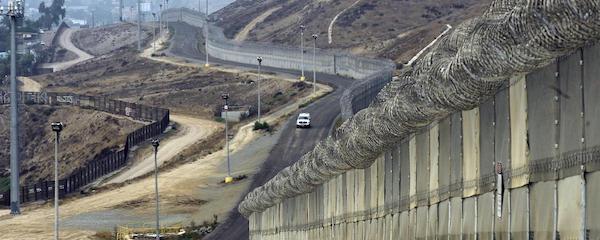
    DALLAS, TX(TIP): In the last two months, the Trump administration has mobilized the National Guard to all four Southern border states, implemented a “zero tolerance” policy mandating prosecutions for unauthorized crossings and begun systematically separating mothers from their children when they are caught crossing illegally.

    None of that has stopped the migrants from coming.

    The number of illegal crossings increased slightly in May, to nearly 52,000, according to figures released Wednesday by the Customs and Border Protection agency. That total includes 11,568 people who came through legal ports of entry, some of whom were asking for asylum or other humanitarian protections under U.S. law.

    Tyler Houlton, press secretary for the Department of Homeland Security, painted a bleak picture about the situation at the border in an accompanying statement.

    “These numbers show that while the Trump administration is restoring the rule of law, it will take a sustained effort and continuous commitment of resources over many months to disrupt cartels, smugglers, and nefarious actors,” Houlton wrote. He highlighted that border arrests had jumped 160 percent over May of last year.

    The truth is those numbers remain low by historical standards. Border Patrol arrests stand at roughly 252,000 so far for the fiscal year, which began in October. That would put them on track to exceed last year’s exceptionally low number of 304,000 arrests, but the predicted yearly total would still represent only a quarter of the 1.6 million arrests recorded in 2000. And an increase in illegal crossings during the spring months is typical ― the weather is warmer.

    For the last few years, border arrests have hovered at their lowest levels since the early 1970s. Since 2014, people seeking humanitarian protections ― particularly from the violence-plagued Central American countries of El Salvador, Guatemala and Honduras ― have made up a large percentage of all unauthorized crossings.

    Nonetheless, the numbers are sure to infuriate President Donald Trump, who has made cracking down on immigration a signature issue. Most of the measures his administration implemented over the last two months aimed to deter asylum seekers, whom the White House accuses of exploiting legal “loopholes” in order to gain lawful entry to the country or avoid getting locked up indefinitely in immigrant detention.

    (Source: Yahoo.com)

  • Thousands without power after storms packing high winds, lightning blow through Dallas-Fort Worth

    Thousands without power after storms packing high winds, lightning blow through Dallas-Fort Worth

    DALLAS (TIP): A line of thunderstorms that darkened skies in Dallas-Fort Worth on Thursday, June 7 evening brought rain and gusty winds to some areas before petering out.

    Denton County and parts of Collin County were hit hardest by the storms that moved south into the region from the Red River, KXAS-TV (NBC5) meteorologist Rick Mitchell said.

    The storms were already weakening as they made it into Dallas County, and by 7:15 p.m. they had been reduced to a small shower in the southwest part of the county, Mitchell said.

    A collection of non-severe showers and storms off to the northeast was also in the process of dying out, he said.

    Some areas saw strong winds including Denton Enterprise Airport, which recorded a 68 mph gust, according to the National Weather Service.

    The thunderstorms knocked out power to about 12,500 Oncor customers in the Dallas-Fort Worth area, and the agency was in the process of restoring service Thursday night, spokeswoman Connie Piloto said.

    Though the heaviest rainfall was about an inch, most areas saw less — if any at all.

    DFW International Airport recorded a quarter of an inch, and Grand Prairie and Irving got about half an inch, Mitchell said.

    Some flight delays and cancellations were also reported at DFW Airport.

    The impending weather was enough to cancel the final practice of the NASCAR Camping World Truck Series at the Texas Motor Speedway and delay the start of the Texas Rangers game.

    There were also some reports of small hail, but “none of it was that scary stuff,” Mitchell said, referring to Wednesday’s hailstorm that caused thousands of dollars in damage.

    At least one tree was damaged by wind in Coppell, which also saw significant hail damage early Wednesday.

    A house fire was reported Thursday in Sanger that may have been caused by a lightning strike, Mitchell said.

    The weekend is shaping up to be dry with highs expected in the mid-90s.

    “The last few days we’ve had these waves of showers and storms that most of us have not had but have been affecting parts of North Texas,” Mitchell said. “But I think that kind of winds down tomorrow.”

    (Source: Dallas News)


  • Sikh leader shot dead in Pakistan’s Peshawar

    Sikh leader shot dead in Pakistan’s Peshawar

    He is survived by two sons, a daughter and wife

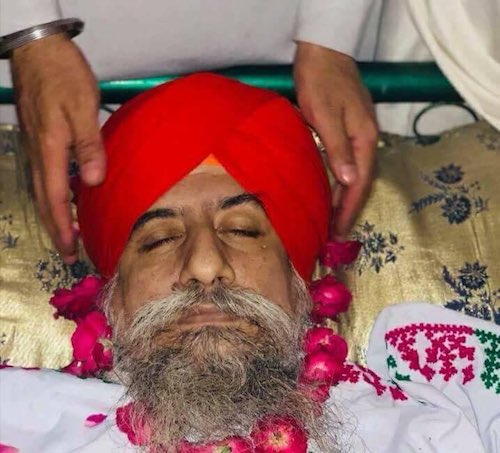
    AMRITSAR(TIP: A prominent Sikh religious leader Charanjit Singh Sagar was shot dead in Peshawar city of Khyber Pakhtunkhwa (KPK) province of Pakistan on Tuesday, May 29. Singh was not only a prominent Sikh voice of the community in Peshawar, but he was also a member of Jatha of Panj Pyare.

    President of Peshawar based Khalsa Peace and Justice Foundation of Pakistan Radesh Singh Tony told TOI that unidentified gunmen shot dead Charanjit Singh in Budhbir area while he was sitting in his grocery shop.

    He said being an affluent community Sikh’s often become the target of fundamentalist groups.

    Radesh said the targeted killing of Charanjit Singh who was a member of Gurdwara Bhai Joga Singh on the completion of assembly term of former cricketer turned politician Imran Khan led Pakistan Tehreek-e-Insaf (PTI) party has spread fear among the community.

    He informed that the PTI government in KPK had completed its term on May 28 midnight and the caretaker chief minister of KPK would take its charge on May 31 before country’s general elections scheduled for July 25.

    Singh was not only a prominent Sikh voice of the community in Peshawar, but he was also a member of Jatha of Panj Payara (five beloved ones) and would often lead the nagar kirtan in the streets of Peshawar on various religious occasions.

    He is survived by two sons, a daughter and wife informed Radesh Singh adding that his mortal remains would be cremated on Wednesday at Attock cremation ground.

    This was the first target killing of a Sikh after the assassination of Pakistani Sikh doctor and minister of minorities of KPK in 2016. The Pakistani Taliban’s had claimed his killing. In 2013-14 as many as ten Sikh’s were killed.

    “This is the first case of target killing in 2018 and we fear this may not be the beginning of a spate of target killings in KPK,” said another Sikh of Peshawar who didn’t want to give his name.

    In past, many Hindu and Sikh families from KPK and other restive frontier parts of Pakistan had migrated to India.

  • Preet Bharara for NY State Attorney General?

    Preet Bharara for NY State Attorney General?

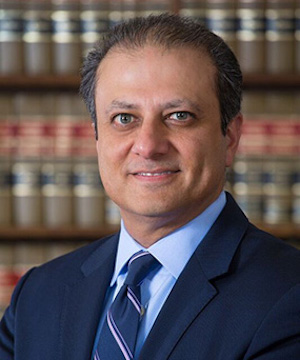
    NEW YORK(TIP): Preet Bharara, the former United States attorney in Manhattan who was fired by President Trump, has registered as a Democratic voter in New York for the first time in more than a decade amid speculation that he might run for attorney general, New York Times says.

    Mr. Bharara’s registration in Westchester County occurred during the window for candidates to gather signatures to qualify for the Democratic primary in September. A candidate needs thousands of signatures across half the congressional districts by mid-July — meaning time is short for Mr. Bharara to jump in.

    The Democratic primary for attorney general is already crowded. It includes Letitia James, the New York City public advocate, who was nominated at the state party convention; Representative Sean Patrick Maloney of the Hudson Valley; Zephyr Teachout, a law professor and former candidate for governor; and Leecia Eve, a former adviser to Hillary Clinton and Gov. Andrew M. Cuomo.

    They are running to replace Eric Schneiderman, who resigned suddenly last month after multiple women accused him of physical abuse. Barbara D. Underwood, who was chosen last month to replace Mr. Schneiderman, has said she would not seek election in November.

    Mr. Bharara, who has become an outspoken commentator since Mr. Trump fired him last year, has built a liberal following. He addressed the idea of running for attorney general last month on his podcast.

    “I think politics is not really for me, but it’s an important job, it’s an important time so we’ll see,” said Mr. Bharara, who is also a former aide to the Senate minority leader, Charles E. Schumer, Democrat of New York.


  • Indian Consulate, TV Asia host curtain-raiser to mark International Day of Yoga 2018

    Indian Consulate, TV Asia host curtain-raiser to mark International Day of Yoga 2018

    EDISON, NJ(TIP): The Consulate General of India in New York, TV Asia and the Indian American community hosted a curtain-raiser on May 29 at the TV Asia auditorium in Edison, NJ, to mark the International Day of Yoga 2018.

    The United Nations General Assembly on December 11, 2014 adopted an India led resolution to declare the day of Summer Solstice June 21 as the International Day of Yoga. The first IDY was celebrated at the United Nations on June 21, 2015.

    The event featured an interactive session with yoga exponents in the presence of Sandeep Chakraborty, India’s Consul General in New York. At the curtain-raiser, Chakravorty announced the 4thInternational Day of Yoga that the Indian Consulate is hosting on Governor’s Island (Picnic Point) in New York on June 16, 11 am-1 pm. Yoga events are also planned at Times Square, NY and elsewhere across the US.

    The Indian Consulate has partnered with several organizations to help host the yoga events. Organizations represented at the curtain-raiser and the panel discussion included, Isha Foundation (Rajashree Kotekar); Art of Living Foundation (Aniket Gune); Hindu Swayamsevak Sangh (Ganesh Ramakrishnan); Vegetarian Vision (Sonali Vyas); World Yoga Community (Guru Dilipji); Hindu Temple Society of North America (Sanjay Attada); Mallakhamb Federation of USA (Chinmaya Patankar); Indian Cultural Association of North America (Shivadasan Nair); and Sahaja Yoga (Sheetal Bhanushali).

    Panelists and prominent members of the community at the curtain-raiser at TV Asia

    The panel discussion was moderated by Rohit Vyas, TV Asia News Director.

    Dayashankar Vidyalankar, the resident yoga teacher of the Indian Consulate in NY, demonstrated quick yoga techniques for the benefit of the audience. Also, in attendance was Apoorv Om, the young Indian activist, who has a hearing impairment. He has been recognized by the United Nations for his outreach for inclusion of people with disabilities.

    Children performing yoga
    Children performing yoga

    Sandeep Chakravorty, India’s Consul General in New York, said in his remarks that notwithstanding all the euphoria it was important to establish the Indian connection of yoga, which seemed to be getting diluted as yoga gains worldwide popularity. He mentioned that the year 2018 was important for yoga as it marked the 125thanniversary of Swami Vivekanada’s address to the World Parliament of Religions in Chicago in 1893.

    “Outside of India, the US is now a leading proponent of yoga,” said Chakravorty. “Hospitals, corporates and everyone else now believes in the healing power of yoga and meditation.” He added that terminally-ill patients with cancer were being recommended to increasingly practice yoga and meditation to improve their end-stage quality of life.

    H R Shah, chairman and CEO of TV Asia speaking

    H R Shah, chairman and CEO of TV Asia, mentioned that nearly 37 million people in the US were practicing some form of yoga and meditation. That, he said quoting media reports, had translated into a $16 billion yoga industry in the US, that included yoga schools, retreats, merchandizing and even health shows on TV.

    “All of this was not possible if it was not for the efforts of Indian Prime Minister Narendra Modi that the United Nations recognized yoga’s universal appeal and on Dec 11, 2014, proclaimed June 21 as the International Day of Yoga,” he said. Shah felt that the recognition by the UN was the turning point in yoga’s acceptance as transcending international borders.

    Yoga, as the name suggests, he said, means to join or to unite, symbolizing the union of body and consciousness, was also helping bring people and countries together.

    At the curtain-raiser, an audio-visual presentation gave a brief overview of yoga. The panelists also performed a symbolic curtain-raiser on stage to announce the events planned around International Day of Yoga 2018. One of the posters at the curtain-raiser aptly displayed a photo of Prime Minister Modi performing yoga with more than 35,000 people at the historic Rajpath in New Delhi on June 21, 2015.

    The curtain-raiser at TV Asia was recorded on multiple-cameras, to be telecast on TV Asia for the extended benefit of the community in the US, Canada and worldwide.

    More than 300 guests attended the event
    Photos / courtesy Gunjesh Desai/TV Asia

    More than 300 guests, including several prominent members of the Indian American community, attended the outreach event, interacting with the yoga exponents and asking them a variety of questions about yoga and meditation.

    (Press Release issued by Niraj Trivedi)


  • President Trump to attend G7 Summit, in part

    President Trump to attend G7 Summit, in part

    The two-day meeting will be dominated by the possibility of a trade war – prompted by the US levies of 25 per cent on steel and 10 per cent on aluminum

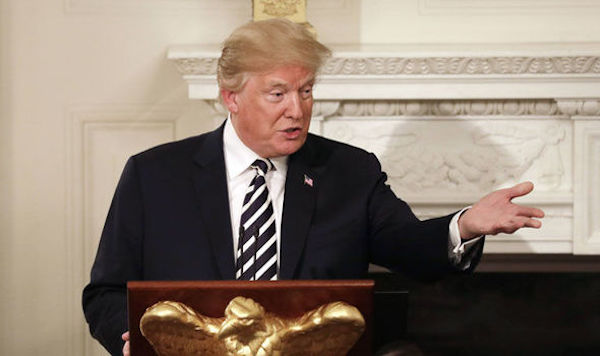
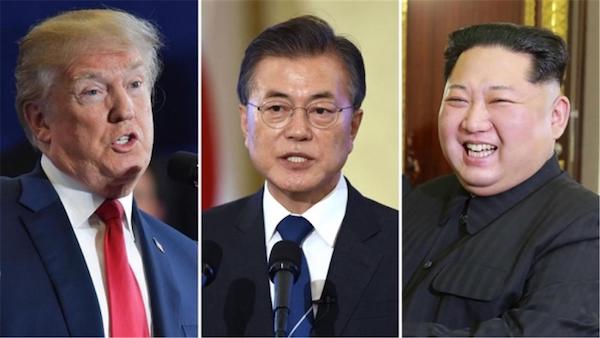
    WASHINGTON(TIP): After initial dithering, President Trump is heading for G7 Summit at Charlevoix, Canada on Friday, June 8. Following the session on Women’s Empowerment, Trump will travel directly to Singapore from Canada in anticipation of his upcoming meeting with North Korea’s leader Kim Jong Un, Tuesday, June 12.

    Deputy Assistant to the President for International Economic Affairs Everett Eissenstat will represent the United States for the remaining G7 sessions, White House Press Secretary Sarah Sanders said.

    The annual G7 (Group of Seven) summit kicks off in Charlevoix, Quebec on Friday, June 8 and the stage is set for a major showdown between the US and its allies.

    The leaders of the G7, an informal bloc of some of the world’s most powerful industrialized countries, including Germany, the UK, and Japan, get together every year to discuss collaboration on issues like global security, the international economy, and climate change.

    At the end of the summit, they aim to sign a joint statement detailing the policy positions and initiatives they agree on.

    But there’s a decent chance that might not happen this year.

    That’s because President Donald Trump has so badly rattled the other members with his recent heavy steel and aluminum tariffs and other divisive new policies that it might be impossible for the group to reach a consensus on any substantive issue.

    The two-day meeting will be dominated by the possibility of a trade war – prompted by the US levies of 25 per cent on steel and 10 per cent on aluminum.

    Angela Merkel, the German chancellor, has predicted a big fight at the summit, triggering suggestions it has become a “G6+1” – with the US president isolated and alone.

    The EU is poised to impose tariffs on US imports ranging from Harley-Davidson motorbikes and jeans to bourbon, peanut butter, cranberries and orange juice, from next month.

    Brussels is still finalizing the list it will submit to the World Trade Organisation (WTO), which will be on top of tit-for-tat tariffs on about £2.5bn of US steel.

    A French official told Bloomberg that French President Emmanuel Macron wants to make progress with President Trump on smoothing tensions over trade, the US’s withdrawal from the Iran nuclear deal, and climate policy — and if that doesn’t happen, France may refuse to sign.

    Then there’s the fact that Trump himself is reportedly contemplating not signing the joint statement to show that the US is perfectly happy to go its own way if the other members give it too much trouble during talks. The divide has become so stark that staffers and observers of the G7 have started to call it the “G6 plus one.”

    “What this G7 is going to show is that the United States are alone against everyone, and especially alone against their allies,” French Finance Minister Bruno Le Maire told reporters last week.

    The G7 summit is usually a boring meeting of broad consensus. Not anymore.

    The G7 summit, which includes Canada, France, Germany, Italy, Japan, and the United Kingdom, plus the European Union (which is not technically part of the G7 but participates), is typically a pretty straightforward affair.

    The official themes for this year’s summit include “investing in growth that works for everyone,” “preparing for the jobs of the future,” and “advancing gender equality.” Against the backdrop of these deliberately anodyne themes, world leaders can hobnob and try to move the ball forward on issues like a new free trade agreement or cooperative climate policy.

    But Trump has departed sharply from the G7 consensus on issues like these in the past by, for instance, pulling out of the Paris climate agreement and withdrawing from the Trans-Pacific Partnership.

    And White House officials say he is planning to strike a confrontational posture at the summit. “There are disagreements. He’s sticking to his guns, and he’s going to talk, talk to them,” National Economic Council Director Larry Kudlow told reporters on Wednesday. Trump is also reportedly considering implementing a fresh round of tariffs against Canada — the host of the summit.

    European countries could also shun the final statement. Their biggest priority is likely going to be getting Trump to consider some kind of compromise on his recent protectionist trade policies, the most controversial one being his imposition of sweeping tariffs on foreign steel and aluminum. Currently, those tariffs hit exports from every other member of the G7.

    Trump is also apparently not looking forward to what could be a tense and awkward meeting. According to the Washington Post, Trump has reportedly complained to advisers about having an “uneasy rapport” with German Chancellor Angela Merkel and sees British Prime Minister Theresa May as “too politically correct.”

    And Trump has apparently told advisers that he doesn’t want to be “lectured” by other world leaders, especially as he tries to prepare for an upcoming high-stakes summit with North Korea next week.

    If the final joint statement for the G7 is missing signatories this weekend when the summit wraps up, it won’t be the end of the world. It’s a symbolic show of unity, not a binding document with concrete policy effects. But it will be yet another sign of how far the US is drifting from many of its most trusted friends in the world.

    (With input from agencies)


  • Former President of India Pranab Mukherjee at RSS Headquarters defines India and Patriotism

    Former President of India Pranab Mukherjee at RSS Headquarters defines India and Patriotism

    Says any attempt to define India through religion, intolerance will dilute its existence

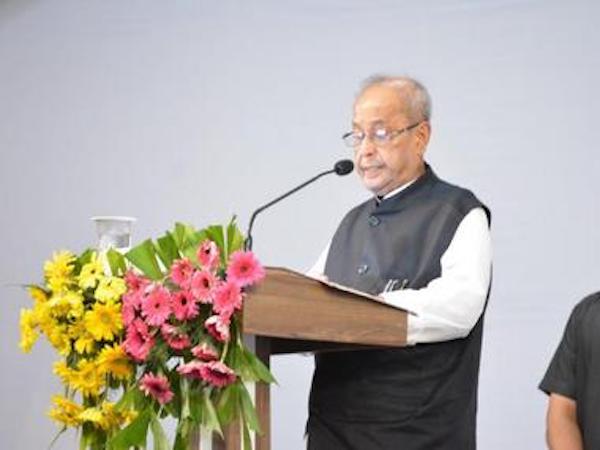
    NAGPUR, INDIA(TIP): Highlighting the pluralistic and secular strengths of “our democracy” former President of India and Congress veteran Pranab Mukherjee on Thursday, June 7 spoke from an RSS platform to declare nationalism was not bound by race or religion.He cautioned that any attempt to define India through “religion, dogma or intolerance” would only dilute the country’s existence.

    His half-an-hour address had a lesson for everyone. To the RSS, the former President recalled “vasudhaiv kutumbakam” (the world is one family) as the soul of Indian nationalism; to new Sangh recruits he spoke of the need for harmony; to his parent party Congress, he emphasized the need for dialogue and to PM Narendra Modi, he quoted Kautilya’s lessons in governance.

    Unfazed by the fact that he was standing with people he had ideologically opposed all his life, Mukherjee used the occasion to drive home “diversity and acceptance” as the bedrock of Indian nationalism and to remind the pracharaks of the need for unity.

    “We derive our strength from tolerance. We accept and respect our pluralism. We celebrate our diversity. Any attempt at defining our nationhood in terms of dogmas and identities of religion, region, hatred and intolerance will only lead to dilution of our national identity,” the former President said.

    To sceptics, including his daughter Sharmishtha, the ex-President said informed public engagement was essential in democracy. “A dialogue is necessary not only to balance competing interests, but also to reconcile them. We may argue, may agree, may not agree but we cannot deny the existence of multiplicity of opinions,” he said.

    Wading through India’s past, Mukherjee spoke of how through 3,500 years of being ruled by dynasts, India’s 5,000 years of civilizational unity remained unchanged while foreign elements were absorbed to create a new synthesis of national unity.

    “Multiplicity of cultures, faith and languages makes us special,” Mukherjee repeated to 707 pracharaks, passing out after rigorous RSS training. He carefully dotted his speech with quotes from S Radhakrishnan, Rabindranath Tagore, Mahatma Gandhi, Jawaharlal Nehru and Bal Gangadhar Tilak to hammer home his point. “When Tilak spoke of swaraj, he meant a swaraj for people encompassing all castes and religions and languages.”

    He lauded the Constitution at a gathering full of RSS sympathizers, saying, “For us, democracy is not a gift, but a sacred trust… The Constitution is not a legal document but a Magna Carta for the socio-economic transformation of society. From our Constitution flows our nationalism.”

    The former President also commented on the “routine of violence” in the country, saying India may be the fastest growing economy but it was lagging on the World Happiness Index.

    “You are young. I must tell you that manifestations of rage are tearing our social fabric. We must free public discourse of violence, both physical and verbal. We must move from anger and conflict to love and harmony. Our motherland is asking for happiness. Our motherland deserves happiness,” Mukherjee said as he marveled the fact that 1.3 billion Indians used 120 languages, 1,600 dialects, followed seven major religions, belonged to three ethnic groups and still stood united under one flag, one Constitution and one identity.

    “This is Bhartiyata,” the former President said at the RSS headquarters after he had paid tributes to Sangh founder KB Hedgewar, calling him a “great son of Mother India”. Earlier, RSS chief Mohan Bhagwat spoke of the irrelevance of controversy around Mukherjee’s visit.

    Veiled message to PM 

    “When we go to Parliament, just above the lift at gate no. 6 is inscribed Kautilya’s quote “In the happiness of people lies the happiness of the king, their welfare is his welfare. The State is for the people. People are at the center of all activities of the State and nothing should be done to divide them. The aim of the State should be to galvanize them to fight a concerted war against poverty, disease and deprivation. Only then can we create a nation where nationalism flows automatically.”

    Message to Sangh

    “India’s nationhood is not one language, one religion and one enemy. It is perennial universalism of 1.3 billion people who use 122 languages and 1,600 dialects… practice 7 major religions… live under one system, one flag and one identity of being Bharatiya and have no enemies”.

    Bhagwat on visit

    RSS Chief Mohan Bhagwat said on Mr. Mukherjee’s address: “Pranab Mukherjee will remain what he is and the Sangh will remain the Sangh even after the event. The RSS wants to unify the entire society, and no one is an outsider for it. People may have different views, but they are all children of mother India.”

    Congress comments

    Hours after Congress leaders had slammed former President Pranab Mukherjee for attending an RSS event, the party on Thursday praised him for showing “mirror of truth” to the Sangh by reminding it of India’s pluralism, tolerance, secularism and inclusiveness as an article of faith and soul of the country.

    The party also said Mukherjee reminded the Prime Minister Narendra Modi of his ‘Rajdharma’ and that “Indian nationalism is constitutional patriotism”.

    Congress spokesperson Randeep Singh Surjewala said Mukherjee’s visit to the RSS headquarters had caused wide-ranging discussion, comment, concern and even consternation amongst a large section of Indians, who have an innate belief in foundational values of democracy, pluralism, and diversity.

    His statement came soon after Mukherjee had delivered his nearly 30-minute address at the RSS headquarters during its third year annual training camp.

    Earlier, several Congress leaders, including Ahmed Patel and Anand Sharma, had slammed Mukherjee for attending an RSS event in Nagpur.    Patel, who is UPA chairperson Sonia Gandhi’s confidant and has been her political secretary, voiced his view on Twitter, in reply to Mukherjee’s daughter who too spoke out against the decision of the former President to address the RSS event. “I did not expect this from Pranab da!” Patel tweeted.

    Congress senior spokesperson Anand Sharma also took to Twitter to express his anguish after Mukherjee’s images attending an RSS event in Nagpur appeared on television. “The images of Pranab Da, veteran leader and ideologue at RSS Headquarters have anguished millions of Congress workers and all those who believed in pluralism, diversity and the foundational values of the Indian Republic,” he said. “Dialogue can only be with those who are willing to listen, absorb and change. There is nothing to suggest that RSS has moved away from his core agenda as it seeks legitimacy,” he added.

    ‘Dirty tricks at play’

    Tagging a morphed picture showing Pranab sporting the RSS cap, his daughter and Congress leader Sharmishtha Mukherjee said: “See, this is exactly what I was fearing and warned my father about. Not even few hours have passed, but BJP/RSS dirty tricks dept is at work in full swing!”

    Mr. Mukherjee came, spoke and left. But his visit to RSS headquarters is now a part of contemporary and future history of India. For long, political parties and political analysts will be commenting over the 30-minute speech of one of the most experienced and best-known politicians of our times.

  • June 08 New York & Dallas Print Editions

    June 08 New York & Dallas Print Editions

    [vc_row][vc_column][vc_column_text]

    Print Replica ~ Digitally

    E-Editions

    [/vc_column_text][/vc_column][/vc_row][vc_row][vc_column width=”1/3″][vc_custom_heading text=”New York Edition” font_container=”tag:h2|text_align:center” google_fonts=”font_family:Istok%20Web%3Aregular%2Citalic%2C700%2C700italic|font_style:700%20bold%20regular%3A700%3Anormal” link=”url:https%3A%2F%2Fwww.theindianpanorama.news%2Fwp-content%2Fuploads%2F2018%2F06%2FTIP-June-8-NYC.pdf|||”][vc_single_image image=”93088″ img_size=”full” add_caption=”yes” alignment=”center” onclick=”custom_link” link=”https://www.theindianpanorama.news/wp-content/uploads/2018/06/TIP-June-8-NYC.pdf”][/vc_column][vc_column width=”1/3″][vc_custom_heading text=”Dallas, Texas Edition” font_container=”tag:h2|text_align:center” google_fonts=”font_family:Istok%20Web%3Aregular%2Citalic%2C700%2C700italic|font_style:700%20bold%20regular%3A700%3Anormal” link=”url:https%3A%2F%2Fwww.theindianpanorama.news%2Fwp-content%2Fuploads%2F2018%2F06%2FTIP-June-8-Dallas-TX.pdf|||”][vc_single_image image=”93089″ img_size=”full” add_caption=”yes” alignment=”center” onclick=”custom_link” link=”https://www.theindianpanorama.news/wp-content/uploads/2018/06/TIP-June-8-Dallas-TX.pdf”][/vc_column][vc_column width=”1/3″][vc_single_image image=”82828″ img_size=”medium” alignment=”center” onclick=”custom_link” link=”https://www.theindianpanorama.news/advertising-media-kit-portal-indian-panorama/”][vc_single_image image=”82829″ img_size=”medium” alignment=”center” onclick=”custom_link” link=”https://www.theindianpanorama.news/advertising-media-kit-portal-indian-panorama/”][/vc_column][/vc_row][vc_row][vc_column][td_block_ad_box spot_id=”custom_ad_3″ tdc_css=””][/vc_column][/vc_row][vc_row][vc_column width=”2/3″][vc_custom_heading text=”Lead Stories This Week” font_container=”tag:h2|text_align:center” google_fonts=”font_family:Istok%20Web%3Aregular%2Citalic%2C700%2C700italic|font_style:700%20bold%20regular%3A700%3Anormal” link=”url:https%3A%2F%2Fwww.theindianpanorama.news%2F|||”][td_block_5 separator=”” limit=”8″ tdc_css=””][/vc_column][vc_column width=”1/3″][vc_widget_sidebar sidebar_id=”td-default”][/vc_column][/vc_row]

  • Indian American Raj Kohli on a bike ride from NY to DC to protest gun violence

    Indian American Raj Kohli on a bike ride from NY to DC to protest gun violence

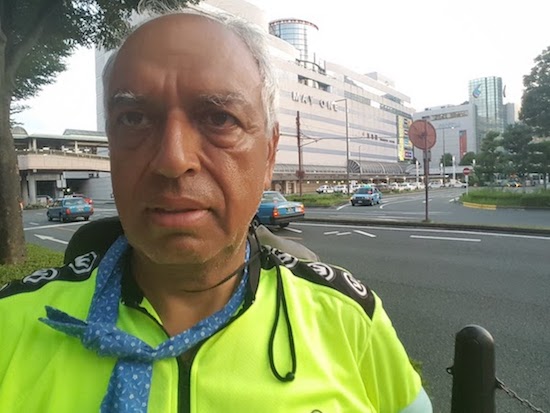
    NEW YORK(TIP): A 63-year-old Indian American realtor, Raj Kohli with two artificial knees is on a mission yet again and this time to create awareness about the rising incidents of gun violence in the United States by riding a bicycle from New York to Washington, DC.

    Raj Kohli kick-started the bicycle ride on the Memorial Day, near the Trump Tower, in New York.

    He said in a press release that, while more than $7 trillion has been spent by the United States on fighting wars on foreign soil, the country has failed to curb the violence unfolding within its border.

    More than 35,000 American die each year due to gun violence and the country has not been able to stop it, he said.

    The ride is sponsored by Jersey Bents.

    He posted the first video about the ride at 9:00 p.m. on May 13, 2018. “I already have 133,000 views, on my Facebook page: RajRideForPeace,” he says. “People are interested in supporting my cause.  Most people.  Some, obviously, are not. It is a democracy.  We can disagree, hopefully not disagreeably.” Kohli is asking people to do the following:

    • Boycott the NRA
    • Repeal the 2nd Amendment
    • Boycott Amazon and Walmart for one day, on May 28, Memorial Day, because they sell guns.
    • Boycott mutual funds and retirement funds that have gun-related stocks in their portfolio.

    “The idea is to reduce gun violence in the US and around the world, by reducing available guns,” Kohli explains. “The more guns we have, the more people will die.  It’s a numbers game!

    “I did a Peace Ride from 1981-1983, and last year again I rode my bike for Peace, from Tokyo to Hiroshima, in July/August 2017. There are 49 videos on the same Facebook page, ‘RajRideForPeace,’ relating to my Japan Peace Ride. For the Japan ride, a German bicycle company sponsored my bicycle,” he says.

    Kohli lost 115 pounds after weight loss surgery, and proudly sports two artificial knees.

  • Indian American Nima Kulkarni defeats the Democratic incumbent to be the Kentucky House District 40 Democratic nominee

    Indian American Nima Kulkarni defeats the Democratic incumbent to be the Kentucky House District 40 Democratic nominee

    KENTUCKY (TIP): Indian American Nima Kulkarni took everyone by surprise in the Democratic primary for Kentucky House of Representatives’ District 40 on May 22, when she defeated Dennis Horlander who has served in the house for more than two decades.

    She defeated the Democratic incumbent to secure her spot in the general elections, which will be held on November 6.

    The other Democrats whom she defeated are Logan Gatti and Kelly Gibson.

    Kulkarni won 46.59 percent votes against Horlander’s 25.37 percent.

    Kulkarni will now face Joshua Neubert, who was elected unopposed in the Republican primary.

    Kulkarni was born in India and moved to the United States when she was six with her parents, Suhas and Surekha, and her brother Nikhil.

    The family owned and operated the 8 to 8 grocery store in Germantown, Kentucky, where Nima and Nikhil worked delivering groceries.

    Kulkarni graduated from Atherton High School and received a bachelor’s degree in English and MBA from the University of Louisville.

    She is a recipient of the Doctor of Jurisprudence degree from David A Clarke School of Law at the University of the District of Columbia, in Washington, DC.  She is a member of the Georgia and Kentucky bar associations.

    Kulkarni founded the Indus Law Firm that specializes in immigration, employment, and business law. Kulkarni is also a member of both the Georgia, Kentucky and Louisville Bar Associations.

    Kulkarni currently lives in the St. Joseph’s neighborhood of the District 40, with her husband Raegan Maddox.

    A community leader, she founded a non-profit, New Americans Initiative, to educate, engage and build awareness of immigration and immigration-related issues.

    She serves on a number of boards, including that of Louisville Public Media, the Community Foundation of Louisville, the Indian Professional Council of Kentucky and the Beaded Treasures Project.

  • Indian American Jeremy Cooney is the NY 56th Senate District candidate

    Indian American Jeremy Cooney is the NY 56th Senate District candidate

    NEW YORK(TIP): Indian American Jeremy Cooney is one of the two such Democrats running for the New York State Senate this November. The other candidate is Kevin Thomas, who is challenging the NY 6th district incumbent Sen. Kemp Hannon, a New York state lawmaker since January 1977.

    Like Thomas, Cooney is also taking on an Albany “lifer”: Sen. Joseph Robach, who was first elected to the state assembly in 1991.

    Cooney’s incredible life story began with his adoption from an Indian orphanage by the late Anne Cooney, who worked as an English professor at Monroe Community College in upstate New York, for more than three decades.

    Raised by a single mother Ann Cooney, Jeremy went on to graduate from the liberal arts Hobart and William Smith Colleges in Geneva, NY, with a major in public policy and earn a JD from the Albany Law School.

    The lawyer and Eagle Scout is no stranger to local and state politics in New York, having served as an aide to a number of officials at all levels. They include serving as Downtown Community Relations official for Gov. Andrew Cuomo (2016-2017), as chief of staff to Rochester Mayor Lovely Warren (2014-2016), and as staff assistant to US Rep. Louise Slaughter, D-NY, (2004-2005).

    “I’ve spent the past few weeks meeting with people who are looking for change and for a representative that votes correctly on issues important to them, such as raising the minimum wage, common-sense gun safety, long-overdue bail reform, and providing educational opportunities for immigrant families,” Cooney said about his run from the 56th district in a press release. “For the past 15 years, we’ve been dealt short-term tax relief that’s no substitute for real economic growth — the type of growth that creates stable, good-paying jobs that give people the confidence to buy a house, start a family, and continue to call upstate New York home.”

    The 56th district includes the County of Monroe and parts of the City of Rochester.

    Cooney, who was named “Forty Under 40” by the Rochester Business Journal, has served in several leadership positions. While at the Albany Law School, he was a class president. For his other alma mater, Hobart Colleges, he served as a Manager for Campaign Leadership — a fundraising role.  He was also appointed to the Young Leaders Congress of New York.


  • China and South Korea Pushing for Trump-Kim Summit-Advantage Trump

    China and South Korea Pushing for Trump-Kim Summit-Advantage Trump

    By Ven Parameswaran

    China and North Korea want the U.S. to withdraw its base in South Korea and recall 40,000 of its army.  China and North Korea are asking for total denuclearization of the entire Korean Peninsula, including B-52 nuclear equipped bombers in South Korea.  The U.S. could save by withdrawing, provided North Korea fully complies, says the author.  

    The Korean War ended in the Armistice Agreement of 1953.  This Agreement was made possible because V. K. Krishna Menon’s proposal for the repatriation of prisoners belonging to different countries was accepted by the United Nations.  President Eisenhower acknowledged and thanked India for its positive contribution that ended the Korean war.

    President Trump deserves credit for his statesmanship and courage in negotiating with North Korean leader Kim-Jong-Un.   This is made possible only because Ambassador Nikki Haley was able to convince China and Russia to vote for the severest sanctions against North Korea.  Nobody knows why China changed its policy and decided to support the USA against its client State, North Korea.   It must be pointed out that after the severest sanctions, North Korea has had no choice but to depend on China for its existence and political support.  This is the reason Kim-Jong-Un made a private trip to Beijing by train before taking the initiative to seek a summit meeting with Trump.  He also had meeting with Chinese leader Xi, after Trump canceled the meeting.   Does this not show that China is more interested in getting along with Trump, and therefore, was prepared to be tough on North Korea?  What are China’s goals?

    China and North Korea want the U.S. to withdraw its base in South Korea and recall 40,000 of its army.  China and North Korea are asking for total denuclearization of the entire Korean Peninsula, including B-52 nuclear equipped bombers in South Korea.    The U.S. could save by withdrawing, provided North Korea fully complies.  The U.S. Naval power and airpower are second to none and because of the latest and sophisticated technology, the U.S. can win wars without a land base.

    North Korea cannot afford to be the victim of the severest sanctions.  North Korea is interested in economic development.   Therefore, North Korea is trying to demonstrate that it can be trusted by destroying the nuclear test sites in front of the world media.  Kim also created goodwill by releasing the U.S. prisoners.   When Trump cancelled the June 12 Summit, Kim reacted positively.  To prove, Kim of North Korea and Moon of South Korea met again, and the world saw mutual embrace and goodwill.  

    South Korea also seems to be more enthusiastic and positive about making sure the Summit takes place.  Towards this end, Moon has been applying diplomatic pressure on Trump and the U.S. Secretary of State.  

    Trump has reiterated that the U.S. will not remove sanctions until North Korea is ready and willing to denuclearize North Korea first with international inspection control.  Trump has also said that the US will be happy to help North Korea’s economy.  

    So far, Moon and Kim have demonstrated to the world that they are interested in ending the war and signing a peace accord with the approval of the US and China.  Reunification of Koreas is also a possibility in the future as happened with the Germanys.    

    Japan was almost defenseless when North Korea dared to test its missiles over Japanese airspace.  Japan is also interested in denuclearization of North Korea.   

    As of now, it appears that the historic Summit may take place on June 12, 2018 in Singapore, based on President Trump’s decision.  Trump is a tough negotiator.  He has decided to go for the Summit after calling it off.  This is only because he could feel the goodwill generated by South Korea, North Korea and China.   Preparations are going on and the diplomatic intercourse is heavy between Beijing, Pyongyang, Seoul and Washington.  

    President Trump said that he was willing to take the risk for the sake of peace of the Koreas and the world.  If indeed the Summit takes place in Singapore as scheduled, Trump will be cheered by the world.  ” Presidents Bill Clinton, George W Bush, and Obama tried and failed, but Trump succeeded” will be the headline of the world media on the 12th June.    

    This is a great and golden opportunity for Kim-Jong-Un of North Korea to create trust and demonstrate that he really wants peace.  So far, Trump has succeeded in changing the attitude of Kim, who has been uncompromising.  It is heartening to note that Kim changed though he was provoked by John Bolten, National Security Adviser and the remarks by the US Vice President.  

    (The author, a 64-year resident of the USA is a Diplomat-in-Residence and Senior Adviser for the New Delhi Think Tank, Imagindia Institute. He resides in New York, and can be reached at vpwaren@gmail.com) 

  • U.S.-North Korea: a deal that can be done

    U.S.-North Korea: a deal that can be done

    By Zorawar Daulet Singh

    The Korean imbroglio reflects America’s fear of any meaningful adjustment to the global balance of power

    The whirlwind U.S.-North Korean bromance hit a temporary roadblock last week. If American President Donald Trump’s decision to open direct talks with North Korean leader Kim Jong-un a few months ago came as a surprise, last Thursday’s dramatic somersault to pull the plug on a summit that could have ushered in a transformed Northeast Asia will not leave too many scratching their heads. After all, Mr. Trump’s foreign policy since the outset of his administration has swayed erratically between his own pragmatism and the hawkish elements in the larger security establishment. At almost every stage, we have seen Mr. Trump succumb to the default worldview inside his administration and across the broader political spectrum.

    If we accept the proposition that Mr. Trump remains stifled in a national security system still largely dominated by the traditionalists, the question then turns to what the calculus is of the policymakers really playing the strings. The traditionalists, in essence, fear change. Having been accustomed to a unipolar moment — fleeting as it was — when the U.S. held sway over all geopolitical and geoeconomic matters, the changes in the past decade have come as a psychological shock to this self-belief in global preponderance. Mounting evidence of an emerging multipolar world and waning of American relative strength should have prompted a strategic reassessment of the U.S.’s role in the world. Instead, the establishment, despite a popular domestic revolt in the 2016 U.S. presidential election that catapulted Mr. Trump to office, has scoffed at any meaningful adjustment to the global balance of power.

    A viable deal

    North Korea’s search for state security and regime survival is well known. Nuclear weapons, as in most other cases, were deemed the only reliable card to security. Since 2006, when the Democratic People’s Republic of Korea (DPRK, North Korea’s official name) conducted its first nuclear test, the process of nuclearization saw sustained progress over a decade along with ballistic missile testing to demonstrate a path towards a credible deterrence capacity. But it was not until the July 2017 intercontinental ballistic missile (ICBM) test that Washington awoke to the reality of its own homeland being part of a deterrence equation with Pyongyang. The North Koreans shrewdly realized that only the possibility of a direct threat would stir the U.S. into serious talks. And it seemed to work. For after the usual “fire and fury” charade, Washington responded positively to the prospect of a nuclear deal.

    The DPRK, for its part, was actively encouraged by its great power benefactors to pursue such an opening. As direct neighbors of the DPRK, both Russia and China have a self-interest in stabilizing the Korean peninsula and closing an unfinished chapter of the Cold War. South Korean domestic politics too was geared to tap this moment. In short, the regional context was conducive at all levels for a détente and bargaining process to ensue.

    What a deal could look like

    The contours of a deal remain viable. Pyongyang would cease its quest for intercontinental nuclear weapons capability in lieu of a gradual normalization of ties with the U.S. along with a lifting of multilateral economic sanctions. As a result, the DPRK would gain regime and national legitimacy, assurance of survival and an opportunity to economically transform itself. The U.S. could also claim success on several fronts. A deal would confine the DPRK to a regional nuclear power, which also enables Pyongyang to preserve a degree of autonomy from Beijing; it would stabilize the broader Northeast Asian setting and thereby increase the security of its two key allies, South Korea and Japan; and finally, it would eliminate a major potential flashpoint in China-U.S. relations. Such outcomes hardly seem adverse for the US.

    Much attention has also been drawn to the mutually incompatible bargaining postures: the U.S.’s maximalist position of complete de-nuclearization versus the DPRK’s bottom line, which probably reserves the right to retain an undefined level of nuclear weapon capability as an insurance measure of last resort. The issue, however, runs much deeper. The traditionalists in the U.S. establishment fear a shifting status quo that might produce new regional re-alignments or interdependent equations that gradually diminish the cohesiveness of U.S. military alliances in East Asia. For example, it is likely that China and Russia would actively leverage peace on the peninsula to pursue their ambitious geoeconomic plans for the region. Koreans on both sides of the Demilitarized Zone would be spoilt for choice after living under the shadow of prolonged tension and conflict. Put plainly, in the image of an American hawk, successful U.S.-DPRK talks translate to the U.S. no longer being the top dog in Northeast Asia and being compelled to share power and influence with others. But this is precisely what a multipolar world will look like in the foreseeable future.

    An open window

    The rhetoric from both sides suggests that the window for talks remains wide open. Even as he called off the summit on May 24, Mr. Trump maintained a high measure of respect for Mr. Kim and spoke about how a “wonderful dialogue was building up” between the two leaders and that he “very much” looked forward to meeting Mr. Kim in the future. In his oral remarks, Mr. Trump closed by intriguingly hinting that the “existing summit could take place or at a future date”. The DPRK’s response the following day was equally effusive in portraying Mr. Trump as a rousing advocate for change. Pyongyang has drawn a sharp distinction between a “bold” Mr. Trump who dared to tread in a new direction and his hardline advisers. Not mincing its words, the DPRK had previously expressed a “feeling of repugnance” towards National Security Adviser John Bolton and described Vice President Mike Pence as a “political dummy”. Echoing Mr. Trump, Pyongyang concluded its May 25 statement by expressing “an intent to sit with the U.S.” in any format “at any time”, prompting Mr. Trump to welcome the “warm and productive statement” that could “lead, hopefully to long and enduring prosperity and peace.”

    (The author is a Fellow at the Centre for Policy Research, New Delhi)

  • 2018 GLOBAL PUNJABI Awards Presented

    2018 GLOBAL PUNJABI Awards Presented

    HS Panaser from the US and Lord Swaraj Paul from UK honored

    NEW YORK/NEW JERSEY(TIP): 2018 GLOBAL PUNJABI DIVAS was held on 11th April 2018 at Hotel Leela Palace, New Delhi. The GPS ACHIEVERS AWARDS for the year 2017 were presented on the occasion as an ode to all those Punjabis who have loved and made India Proud even while staying beyond the boundaries of the Nation.  The occasion was a Charity Dinner and an Award Ceremony. After the death of S. Jagmohan Singh, the founder of GPS his son Mr. Manu Jagmohan Singh has now taken the reigns as   the Secretary General at Global Punjabi Society

    The Global Punjabi Society is a forum to celebrate the achievements of Indians in general and Punjabis in particular living in India and Abroad and honor them for the pride they have brought to their Motherland.

    The GLOBAL PUNJABI SOCIETY was launched in January 2010 by the Union Minister of State for External Affairs, Preneet Kaur at a Gala Function in New Delhi. The SOCIETY’s aim is to celebrate the very spirit of Punjab, Punjabi and Punjabiat and achievements of Punjabis in particular.  The Punjabis’ symbolize the freedom of spirit and daredevilry. They are the perfect reflection of attitude filled with supreme confidence and conviviality. They are capable of strenuous work, yet nothing seems to sap them of their infectious zest for life.

    Global Punjabi Society has chapters in Doha, Kuwait and Thailand. Last year GPS launched UK Chapter at House of Loads. We are shortly going to launch the USA Chapter. Our new initiative in the errands of NRI Institute. This Institute has organized 50 conferences – a record 23 international conferences in India,12 in London, UK, 6 in Dubai, and one each in Bangkok, Singapore, Bahrain, New York, Detroit, Washington, DC, California, and Qatar.

    Friends. L to R: H S Panaser, Justice Bashir Khan, Manu J Singh, General Eswaran and Mrs. Manjeet Panaser

    GPS had a privilege of honoring 20 personalities since 1989 including  Prime Minister Manmohan Singh, M.P Tarlochan Singh, MP, Ambika Soni, Dr. Bal Ram Jakhar, Lord Rana, General J J Singh, Air Chief Marshal Arjan Singh and Mr. Joginder Singh, IPS.