Year: 2018

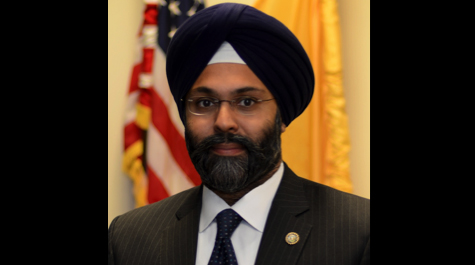
  • Indian American Gurbir S. Grewal is the First Sikh Attorney-General of New Jersey

    Indian American Gurbir S. Grewal is the First Sikh Attorney-General of New Jersey

    TRENTON, NJ (TIP):  Gurbir S Grewal, a prominent Indian-American lawyer has become the first Sikh attorney general of the US State of New Jersey after the State Senate approved his nomination unanimously.

    “I never imagined that my life’s journey could bring me here today,” Grewal, 44, said during his confirmation hearing in front of the Senate Judiciary Committee on Tuesday, January 16. “I’m extremely humbled, and I’m looking forward to getting started,” he said. “My first order of business is to introduce myself and get up to speed.”

    Grewal, became the nation’s first Sikh state attorney general after the Senate approved his nomination with a vote of 29-0. He was later sworn into office at a private ceremony, NJ.com reported. Grewal, a registered Democrat, was made Bergen County’s top law enforcement official by Governor Chris Christie in 2016.

    Before that, he worked as chief of the economic crimes unit at the US Attorney’s Office under former federal prosecutor Paul Fishman, the report said. Grewal told lawmakers he would continue the Attorney General’s Office’s efforts to stem the opioid crisis and improve relationships between police and the communities they serve. He said he would direct the Division of Criminal Justice, the office’s prosecuting arm, to work with prosecutors in the state’s 21 counties to coordinate response to the heroin epidemic.

    He has run the 265-employee Prosecutor’s Office since January 2016, working to combat opioid abuse with strategies such as pairing recently hospitalized or arrested suspects with addiction counselors. He also focused on improving relationships between police and the community. Grewal was nominated in December to serve as the next attorney general of the US state of New Jersey. He was named by New Jersey Governor-elect Phil Murphy.

    Source: Business- Standard

  • Indian Origin is Britain’s First Woman Sikh Lawmaker to be Appointed as Shadow Minister

    Indian Origin is Britain’s First Woman Sikh Lawmaker to be Appointed as Shadow Minister

    The Shadow Cabinet is the team of senior parliamentarians chosen by the Leader of the Opposition to mirror the Cabinet in Government

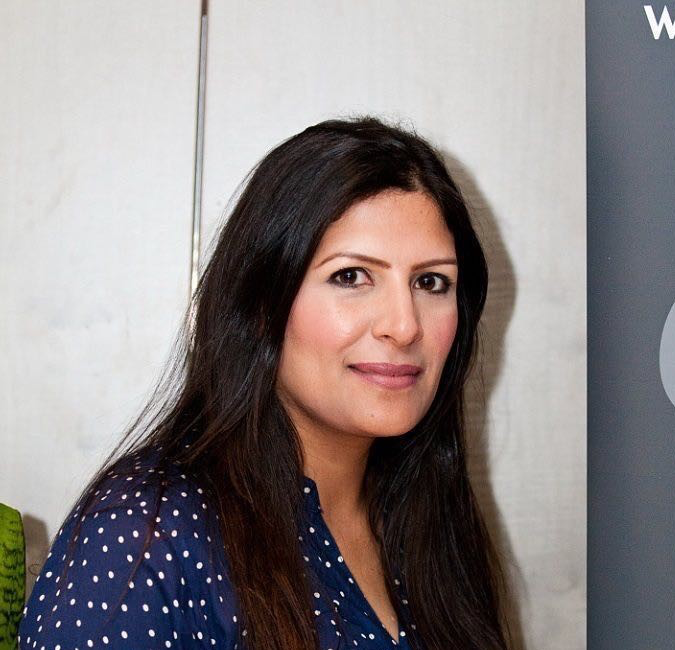
    LONDON (TIP):  Preet Kaur Gill, Britain’s first woman Sikh Member of Parliament (MP) has been promoted to the Shadow Cabinet by the Opposition Labour party leader Jeremy Corbyn.

    The Shadow Cabinet is the team of senior parliamentarians chosen by the Leader of the Opposition to mirror the Cabinet in Government.

    Each member is appointed to lead on a specific policy area for their party and to question and challenge their counterpart in the Cabinet. In this way, the Opposition seeks to present itself as an alternative government-in-waiting.

    Ms. Gill, 44, won her Birmingham Edgbaston seat for the Labour party in the June 8 snap polls last year.

    In July, she was elected to the Home Affairs Select Committee in the British Parliament.

    She was promoted to the post of shadow minister for international development in Mr Corbyn’s New Year reshuffle of what he brands as a “government-in-waiting”.

    “We had no Sikh MPs prior to this election. So, Sikhs had no representation and we had no female Sikh representation. Parliament must reflect the people it serves,” Ms. Gill had said at the time of her election.

    Since then, she has a busy tenure, being elected to the influential Home Affairs Select Committee – the cross-party parliamentary panel that examines the workings of the UK Home Office. Ms. Gill is also the chair of the All Party Parliamentary Group for British Sikhs.

    Her appointment was announced alongside that of Clive Lewis as shadow treasury minister. Mr. Lewis had resigned as the shadow business minister in February last year over wanting a vote against the European Union (Notification of Withdrawal) Bill and was one of 52 rebel MPs to defy Labour party orders to back the bill in a Parliament vote.

    He was also accused in a sexual harassment scandal but cleared of wrongdoing by the party late last year.

    Others who moved up to the frontbenches of the Opposition include Jack Dromey as the shadow minister for pensions and Karen Lee as shadow minister for fire.

    “Pleased to make appointments to strengthen Labour’s frontbench which is a government-in-waiting. I look forward to working with them holding the Tories to account, developing our policies to transform our country and preparing to form a government for the many, not the few,” Mr Corbyn said in a statement.

    British Prime Minister Theresa May had announced a reshuffle of her top team earlier this year, leading to the appointment of three new Indian-origin MPs — Rishi Sunak, Suella Fernandes and Shailesh Vara — to junior ministerial posts.

  • Indian American Congresswoman Pramila Jayapal to boycott Donald Trump’s State of the Union address

    Indian American Congresswoman Pramila Jayapal to boycott Donald Trump’s State of the Union address

    WASHINGTON (TIP): Indian American Congresswoman Pramila Jayapal has announced that she would skip President Donald Trump’s State of the Union address, in protest against his policies and rhetoric against immigrants. Jayapal, 52, joins more than half a dozen Democratic lawmakers, including the legendary Congressman John Lewis, who will give a miss to the January 30 event.

    Other lawmakers who have announced to boycott the event include Frederica Wilson, Maxine Waters, and Earl Blumenauer.

    “I would not be attending the State of the Union this year. I join other distinguished members, including Rep John Lewis, in refusing to dignify a president who has used the platform of the Oval Office to fan the flames of racism, sexism and hatred—most recently with his vulgar condemnation of Haiti and other African countries,” Jayapal said in a statement.

    Jayapal said she disagrees with Trump’s approach which is “narrow and self-serving”.

    “This president has consistently indicated that he has no interest in leading a unified country. He has gone out of his way to play to a small and shrinking base of voters by using language that diminishes and demeans vast swaths of people in our own country and around the world,” Jayapal said.

    “His path is dangerous. His path is destructive. His path cannot be normalized. I will not normalize it. This is our own form of non-violent resistance,” she said.

    According to Jayapal, her constituents and people across the country are “heartbroken, terrified and demoralized”.

    “He does and says things that none of us, as parents, would condone for our children. He consistently uses language that is outright racist. He actively uses the highest office of the land to promote hatred as a political tool for his own benefit,” said Jayapal.

    “As a brown immigrant female member of Congress, I feel the impact of these words personally, as well as collectively,” she said.

    Jayapal is the only Indian American lawmaker to have announced boycotting Trump’s State of the Union Address, which is a customary annual address of the US President to a joint session of the Congress.

    Other Indian American Congressmen are Dr. Ami Bera, Ro Khanna and Raja Krishnamoorthi. Senator Kamala Harris from California is of mixed African and American heritage.

     (Source PTI)


  • Indian American educator Deep Saran announces to run for US House of Representatives

    Indian American educator Deep Saran announces to run for US House of Representatives

    WASHINGTON (TIP):  An Indian American educator has announced to run for the US House of Representatives.  Deep Saran, 45, is one of almost a dozen Democrats in the fray for the primary to earn the right to challenge the two-term GOP congresswoman Barbara Comstock from the 10th Congressional District of Virginia.

    “I’m a teacher, school founder, technology entrepreneur, lawyer, and child of immigrants from India,” Saran says on his campaign website. Saran said he would champion a national commitment for improved quality of public education both in terms of accessibility and affordability.

    “As the child of immigrants, I would push back against intolerance and hatred,” Saran said. Saran’s parents emigrated from India over 50 years ago. His father was a refugee during India’s partition. He founded and runs a school, ‘Loudoun School for the Gifted’

    Saran holds a degree in political science from the University of Maryland and attended law school at Georgetown University. He was previously a corporate attorney for large firms in Baltimore and Chicago but left private legal practice to study how children learn and to work on a Ph.D. in Human Development at the University of Maryland.

    (Source PTI)


  • The Indian American Former State Lawmaker Decides Against Running for Congress

    The Indian American Former State Lawmaker Decides Against Running for Congress

    MANSFIELD (TIP): Former Ohio State Rep. Jay Goyal of Mansfield, has decided he will not run for the U.S. Congress. He announced his decision after some leading Democrats pressed him to consider doing so. The Columbus Dispatch reported Jan. 17, that Goyal had ruled out the run.

    “Public service is something that has always been important to me. However, I have certain commitments that I’ve made to my family business and I need to make sure I’m fulfilling those commitments,” Goyal is quoted saying in the Dispatch.

    According to the Dispatch, U.S. Rep. Joyce Beatty, Ohio, from Jefferson Township, and Franklin County Commissioner John O’Grady had approached Goyal and urged him to run in a bid to send a Democrat to Congress. They hoped that Goyal, 37, could help their party turn a red seat into blue as the district comprises of areas where Goyal had name-recognition from the time he served in the State House. Republicans have held the seat on Capitol Hill since 1982.

    Goyal was just 26 when he was first elected in 2006 and served three terms from 2007-2013, in the State House, including some of those years as Majority Leader.

    He left the political arena in 2012 to help run the family business, Goyal Industries, a manufacturing concern that produces metal fabrications. He has been leading the company for several years now.

    Goyal graduated with a degree in industrial engineering from Northwestern University, he also has an MBA from Harvard Business School and a Master’s in Public Policy from the Harvard Kennedy School of Government.


  • Indian Origin British Sculptor Anish Kapoor Awards $1 Million ‘Jewish Nobel’ Prize to Refugees

    Indian Origin British Sculptor Anish Kapoor Awards $1 Million ‘Jewish Nobel’ Prize to Refugees

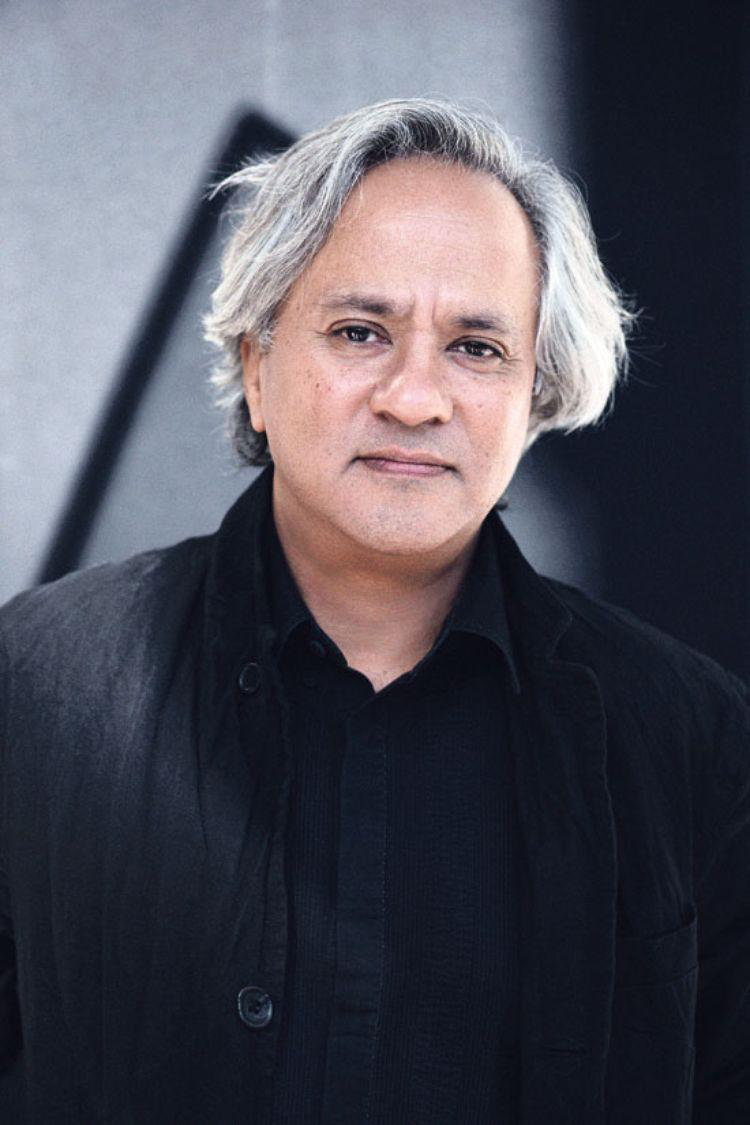
    Anish Kapoor dubbed the Jewish Nobel – last year, for his commitment to Jewish values

    LONDON (TIP):  British-Indian sculptor Anish Kapoor donated $1 million to five charities working with refugees worldwide on Jan 17, in a bid to alleviate a record-breaking global displacement crisis.

    Kapoor, who was born to an Indian father and Iraqi Jewish mother, won the Genesis Prize – dubbed the Jewish Nobel – last year, for his commitment to Jewish values.

    “Like many Jews, I do not have to go far back in my family history to find people who were refugees,” he said in a statement.

    “Directing Genesis Prize funds to this cause is a way of helping people who, like my forebears not too long before them, are fleeing persecution.”

    The United Nations (U.N.) says the world is witnessing the highest levels of displacement on record, with more than 65 million people forced to flee their homes, surpassing numbers after the Second World War more than 70 years ago.

    U.N. efforts to agree a voluntary pact on safe, orderly and regular migration suffered a setback in December when the United States quit the negotiations.

    “In recent months, awareness of the plight faced by tens of millions of refugees and displaced persons worldwide has fallen significantly while the refugee crisis continues unabated,” said Kapoor, a longtime social activist.

    Kapoor, who lived in Israel briefly before settling in Britain in the 1970s, won the Turner Prize in 1991 and created a Holocaust memorial for London’s Liberal Jewish Synagogue.

    Winners of the Genesis Prize, which is granted by the Israeli government, award $1 million to charities of their choice, with the aim of inspiring the next generation of Jews.

    One of Kapoor’s grantees is the International Rescue Committee, which is working with refugees in Uganda – home to more than 1 million people who have fled war in South Sudan – and with stateless Rohingya in Myanmar.

    He is also providing food for refugees in Greece and France and medical care for Syrian refugees.

    Previous winners include former New York City Mayor Michael Bloomberg and the actor Michael Douglas. The 2018 winner, the Oscar-winning actress Natalie Portman, plans to focus her award funds on promoting women’s equality.

    (Source: NDTV)


  • Indian American Neeraj Bhatia honored with Hind Rattan award 2018

    Indian American Neeraj Bhatia honored with Hind Rattan award 2018

    SAN FRANCISCO (TIP): A certified public accountant and a leading Indian American tax consultant, Neeraj Bhatia has been honored with the prestigious Hind Rattan Award 2018, which is one of the highest Indian diaspora awards granted annually to non-resident persons of Indian-origin by the NRI Welfare Society of India.

    Bhatia is a sought-after tax professional who has offered extensive commentary on US and India tax issues over the years.

    An accomplished accounting professional with over 30 years of practice in international and domestic tax planning and compliance for start-ups and multinational entities, Bhatia runs a successful tax and accountancy firm in the heart of Silicon Valley with offices in New Delhi as well.

    “With India-US trade, corporate and economic relations booming, companies on both sides of the world are always looking for professionals who have expertise in tax and corporate laws of America and India,” Bhatia said.

    “My firm has the advantage of having accounting professionals who have decades of experience navigating tax laws in the two countries,” he said.

    He has helped around 1,000 startups get off the ground during the past two decades of practice in Silicon Valley. It was his insights into the IT sector that led him to be associated closely with Software Technology Parks of India (STPI) – an Indian government undertaking – in the San Francisco Bay Area. Bhatia has also kept his focus on helping several Indian-American organizations representing half a dozen Indian states engaged in charitable causes. He assists them in maintaining their charitable status through strict regulatory compliance.

    Bhatia has a degree in chartered accountancy from India and holds an LLM in international taxation from the US. He is vice president and director of Indo American Chamber of Commerce and is also on the Board of the University of Silicon Andhra, a newly-formed university imparting post-graduate degree programs in Indian languages, literature and arts.

    He was awarded a gold medal and monthly scholarship for three years by India’s Central Board of Secondary Education for securing the first rank in India in the Board exam. He was also awarded a gold medal by Institute of Cost & Works (Management) Accountants of India for securing the first rank in north India. He is vice president and director of Indo American Chamber of Commerce and is also on the Board of the University of Silicon Andhra, a newly-formed university imparting post-graduate degree programs in Indian languages, literature and arts.

    The Hind Rattan, which means ‘Jewel of India’ in English, is one of the highest Indian diaspora awards. The award is granted at the Society’s annual Congress on the eve of India’s Republic Day, in conjunction with national Pravasi Bharatiya Divas celebrations.

    The award ceremony is attended by senior members of the Government of India and of the Supreme Court of India. The number of awardees varies each year, but is generally about 25 to 30. Criteria for award selection are not published by the Society; award selections are made among the Society leadership and awardees are invited to attend the conference in New Delhi to accept their awards.

    The NRI Welfare Society has been operating over the past 37 years, connecting people of Indian origin with their motherland.

    (Source: Connected to India)


  • 2018 Guru Nanak Prize Awarded to Tanenbaum Center for Interreligious Understanding

    2018 Guru Nanak Prize Awarded to Tanenbaum Center for Interreligious Understanding

    HEMPSTEAD, NY(TIP):   A non-profit organization that promotes religious understanding in schools, workplaces, health care settings and regions of armed conflict across the globe has been awarded Hofstra University’s 2018 Guru Nanak Interfaith Prize, Hofstra University President Stuart Rabinowitz announced, January 18.

    The Tanenbaum Center for Interreligious Understanding, founded 25 years ago and based in Lower Manhattan, offers programs and resources providing educators, physicians and corporate leaders with practical tools for addressing religious differences and creating cultures that respect religious diversity. It was founded in 1992 by Dr. Georgette F. Bennett, in memory of her late husband, Rabbi Marc H. Tanenbaum, a humanitarian interfaith leader.

    Through its Peacemakers in Action Network, Tanenbaum also facilitates and supports collaborations by a network of individuals from varied religious traditions who promote grassroots and interfaith peacebuilding efforts in armed conflicts around the world. The Network currently consists of 28 individuals from 23 regions.

    “Tanenbaum is an extraordinary organization that embodies the principles of Guru Nanak,” said President Rabinowitz. “Tanenbaum empowers people with concrete strategies that lead to greater religious understanding and inclusion in societal institutions.”

    Tanenbaum is also an inaugural member of the now 330+ participant CEO Action Diversity and Inclusion movement, and is in the third year of its public education campaign Combating Extremism, which aims to dispel stereotypes, inspire interreligious respect, and provide trustworthy information about current religion-related issues.

    Said Dean Benjamin Rifkin of Hofstra College of Liberal Arts and Sciences: “Tanenbaum’s accomplishments and mission are a perfect manifestation of the vision for this award, which is based on the conviction that we have much to learn from the traditions of others.”

    The $50,000 Guru Nanak Interfaith Prize is bestowed every two years to recognize significant work to increase interfaith understanding. The award will be formally presented to the Tanenbaum Center at a banquet in April 2018.

    The first Guru Nanak Interfaith Prize was awarded in 2008 to His Holiness the 14th Dalai Lama, Tenzin Gyatso. Since then, eight individuals and organizations have been recognized with the Guru Nanak prize.

    “Receiving the Guru Nanak Interfaith Prize is an honor of the highest order,” said Tanenbaum CEO Joyce S. Dubensky. “To be recognized as an advocate for the same values embodied by Guru Nanak—justice, equality, respect and compassion—is an affirmation of everything Tanenbaum seeks to achieve.”

    The Guru Nanak Interfaith Prize was established in 2006 by Ishar Bindra and family and named for the founder of the Sikh religion. It is meant to encourage understanding of various religions and encourage cooperation between faith communities. Guru Nanak believed that all humans are equal, regardless of color, ethnicity, nationality or gender.

    In September 2000, the Bindra family endowed the Sardarni Kuljit Kaur Bindra Chair in Sikh Studies at Hofstra University in honor of the family’s matriarch.

    Tejinder Bindra, speaking on behalf of the Bindra Family, noted when the award was inaugurated that Guru Nanak espoused a message of universal brotherhood at a time of increasing religious intolerance during 15th and 16th century India.

    “It is in this spirit that the Guru Nanak Prize was initiated,” Bindra said. “If one can experience that universality then there is absolutely no room left for differences in race, color, caste, creed, religion or gender, and then as the Sikh scripture tells us ‘I see no stranger’.”

    “The awardees may or may not be Sikh and may represent any of the multitudes of faiths or, for that matter, even no particular faith at all,” he said. “It is their dedication that brings humankind to their shared destiny, common purpose and roots that they honor.”

  • US Bill pushes for more Green Cards

    US Bill pushes for more Green Cards

    Indian techies to benefit if ‘Securing America’s Future Act’ is signed into law by Trump administration

    WASHINGTON (TIP): A legislation backed by the Trump administration pushing for merit-based immigration and increasing the allotment of Green Cards by a hefty 45 per cent annually has been introduced in the House of Representatives, a move that could benefit Indian techies if signed into law.

        500,000 Indians have been waiting in queue for Green Cards

        120,000 of these cards are available annually at present in the US

        175,000 will be the count after 45% raise if Bill is signed as law

    The legislation ‘Securing America’s Future Act’, if passed by Congress and signed into law by US President Donald Trump, will end the diversity visa program and reduce the overall immigration levels from currently averaging 1.05 million to 260,000 a year.

    Indian-American technology professionals, who come to the US mainly on H-1B visas and opt for Green Cards or legal permanent residence status, are expected to be a major beneficiary of the ‘Securing America’s Futures Act’. As per unofficial estimate, there are nearly 500,000 Indians waiting in the queue for Green Cards and have to seek annual extensions of their H-1B visas. Many wait for decades to get Green Cards. The H-1B program offers temporary US visas that allow companies to hire highly skilled foreign professionals working in areas with shortages of qualified American workers.

    The increase in the number of Green Cards per annum is likely to reduce their wait period drastically. Having a Green Card, officially known as a Permanent Resident Card, allows a person to live and work permanently in the US. However, the elimination of chain migration is likely to badly affect those Indian-Americans who are planning to bring their other family members to the US.

    Securing America’s Future Act eliminates Green Card program for relatives, other than spouses and minor children.

    A merit-based immigration system, the Trump administration feels would admit the best and the brightest around the world while making it harder for people to come to the country illegally.

    Observers say this could benefit technically-qualified people from countries like India and China.

    The legislation creates a workable agricultural guest worker program to grow the US economy, authors of the legislation said. In a late-night statement, the White House said the legislation “would accomplish the President’s core priorities for the American people”.

    (Source: PTI)

  • US can rejoin Paris pact:  fairer deal might coax us back into climate agreement, says Trump

    US can rejoin Paris pact: fairer deal might coax us back into climate agreement, says Trump

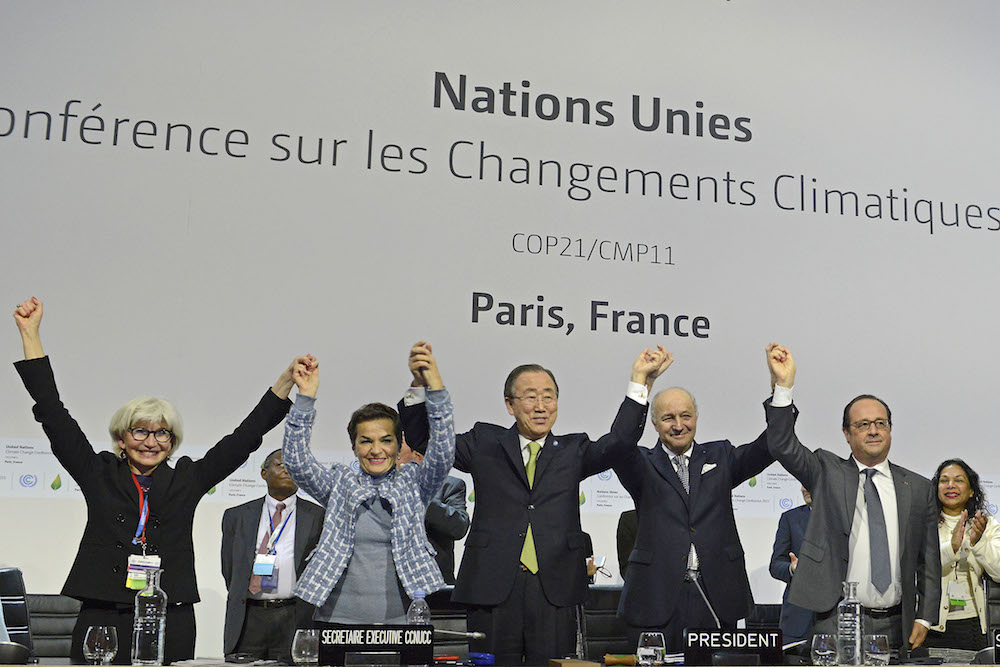
    WASHINGTON (TIP): President Donald Trump said, January 11, his primary concern with the Paris climate accord was that it treated the United States unfairly and that if a better deal could be reached, Washington might be persuaded to rejoin the agreement.

    “It treated the US very unfairly,” Trump said during a news conference with Norwegian PM Erna Solberg. He said he had no problem with agreeing to a climate deal, but the Paris accord was “a bad deal. So, we could conceivably go back in.” However, he did not indicate any move in that direction.

    In June, Trump withdrew the US from the Paris Agreement on climate change and decided to renegotiate the deal that was agreed upon by over 190 countries during the previous Obama administration.

    Defending his decision to withdraw from the Paris Agreement on Climate Change, Trump said: “The Paris Agreement as drawn and as we signed was very unfair to the United States. It put great penalties on us. It made it very difficult for us to deal in terms of business. It took away a lot of our asset values.” “Frankly, it’s an agreement that I have no problem with, but I had a problem with the agreement that they signed, because, as usual, they made a bad deal,” Trump told a news conference with Norwegian Prime Minister Erna Solberg.

    “So, we could conceivably go back in,” Trump said, stressing his administration’s commitment to environmental issues, “clean water, clean air”, but added “we also want businesses that can compete”.

    Trump justified his decision to withdraw from the Paris Climate accord, saying there was a “tremendous” penalty for using the country’s rich in gas and coal and oil and that hurt American businesses.

    The US has appeared to be so far globally isolated on this issue, but Trump strongly defended his decision. Trump insisted that his administration feels very strongly about the environment.

    “I feel very strongly about the environment. Our EPA (environment protection agency) and our EPA commissioners are very, very powerful, in the sense that they want to have clean water, clean air, but we also want businesses that can compete,” he said.

    “The Paris Accord really would have taken away our competitive edge, and we’re not going to let that happen. I’m not going to let that happen,” Trump asserted. — PTI

    Climate accord goals

    The Paris agreement’s central aim is to strengthen the global response to the threat of climate change by keeping the global temperature rise in this century well below 2° Celsius above pre-industrial levels and to pursue efforts to limit it to 1.5° Celsius

    The landmark agreement, which entered into force last November, calls on countries to combat climate change and to accelerate and intensify the actions and investments needed for a sustainable low carbon future, and to adapt to the increasing impacts of climate change.


  • AN OPEN APPEAL TO NEW NYC SPEAKER COREY JOHNSON

    AN OPEN APPEAL TO NEW NYC SPEAKER COREY JOHNSON

    By Albert Baldeo

    Dear Speaker Johnson:

    “For of those to whom much is given, much is required.”-President John F. Kennedy

    Congratulations on your elevation as the second most powerful person in NYC government! Indeed, the discrimination you overcome for being openly gay and HIV-positive has fortified you for the fights ahead. Your history and the issues that you have worked have stood in solidarity with communities of color, the marginalized and the vulnerable. Like you said, “That is where you come from. That is what my life’s work has been about.”

    We also applaud your statement that, “The problems and challenges we continue to face are of historic proportions. Overflowing homeless shelters, mom and pops unable to compete with deep-pocketed chain stores and a failing transit system are just three of our problems.”

    You should put a stop to the over criminalization of New Yorkers, like stop making criminals of poor people who cannot afford the fare to travel to work on the trains. You should roll back the senseless e-bike ban because it helps immigrant workers get by. Transform this city into a beacon that’s in solidarity with poor and working-class New Yorkers, including increasing your audit and scrutiny of the many failing city agencies that routinely waste and abuse our tax dollars, while preserving it as a “sanctuary city.”

    The mayor has promised us more senior centers, better schools, hospitals, city services and personnel and transparency in how benefits are awarded. Hold his feet to the fire.

    You also said that, “I would support us putting up a significant amount of money,” referring to city funding for the Metropolitan Transportation Authority, a stance that Mayor Bill de Blasio has resisted. “But there needs to be accountability involved so we know how that money is being spent, and that it’s being spent wisely and that the projects remain on time.” (NY Times 2/2/18).

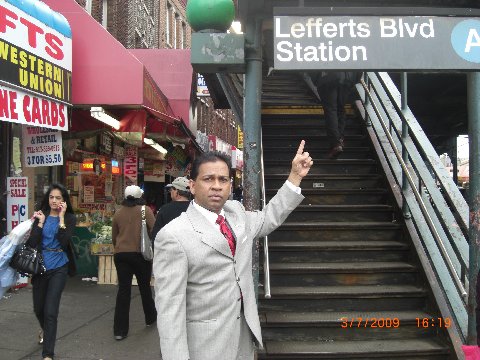
    Mr. Speaker, we urge you to address these and other issues speedily, not least here in Queens. The Metropolitan Transit Authority (MTA) is in breach of their public commitment and obligation to complete the wheelchair-accessible elevator in the Richmond Hill/Ozone Park community at the fulcrum Lefferts Boulevard and Liberty Avenue subway stop. This $29 million project, commenced since 2014, was scheduled to be finished since the end of 2016, but unpalatable excuses abound each time we enquire about the constantly deferred completion date, making it a virtual “pie in the sky!”

    MTA will also benefit from increased revenues, and its procrastination raises serious concerns, including the forced closure of the adjacent main stairway, affects businesses, the local economy, and congests traffic. Seniors, pregnant mothers, kids, the physically challenged, students, workers, indeed, everyone in our tax paying community would benefit greatly from this elevator which makes mobility and travel easier.

    Affected communities deserve to have this project completed. Moreover, the fencing, construction and accumulating garbage are an eye sore, and a danger to public safety. This delinquent entity must recognize that it is failing in its duty to make access easier for residents with disabilities, contrary to the Americans with Disabilities Act (ADA). Indeed, the nonprofit Center for Independence of the Disabled New York just filed a lawsuit against the MTA for lack of elevator access citywide. Why must Richmond Hill/Ozone Park residents be forced to expend resources and bring a class action law suit against the MTA when it feeds off the public trough of our taxes?

    As a matter of customer obligation and due compliance with our laws, this project is long overdue, and must be completed now!

    (Albert Baldeo is a civil rights activist and community advocate, As the President of the Baldeo Foundation and Queens Justice Center, he has continued to fight for equal rights, dignity and inclusion in the decision-making process. He can be contacted at the Baldeo Foundation: AlBaldeo@aol.com or (718) 529-2300)

  • Passengers hail Team Air India at JFK

    Passengers hail Team Air India at JFK

    Prakash M Swamy (Who traveled on AI-102 to Delhi)

    NEW YORK (TIP): Tormented by snow storm and suffering from nature’s fury with a delayed flight for over 12 hours, India-bound passengers of Air India 102 to New Delhi en route to Mumbai from JFK Airport on Saturday found a caring and consoling soul in Vandana Sharma, Regional Manager (Americas) of Air India.

    Sharma not only was sitting with the passengers throughout the agony communicating with the top officials of the Port Authority of NY-NJ, Air India headquarter and Ministry of Civil Aviation but ensured that the passengers were provided food and water. More than that, her soothing words and ever-smiling face in the face of adversity endeared her to the hearts of the passengers.

    The unprecedented snow storm uprooted the schedules of Air India and caused untold suffering and hardship to passengers. The incoming flight from New Delhi Air India 101 that landed in JFK at 6:30 am on Saturday could not be brought to the gate. Passengers were forced to sit in the aircraft for over four hours after arrival. When there were no indications of getting a gate at terminal to disembark, Air India was forced to off-load the passengers and crew on the taxi-way in the cold subzero temperatures and bring them by bus to the terminal. Their agony did not end there. The baggage could not be taken out from the aircraft.

    As a result of this and other contributing factors, the outbound aircraft was delayed for over 12 hours. The stranded passengers, though cursing their fate and timing of their travel, appreciated the commitment of the national career and cooperated with the airline staff. But the entire Air India team decided to stay put and stayed with the passengers for well over 72 hours without any rest.

    There were anxious passengers asking questions repeatedly about their connecting flight, baggage claim and medical attention. Many were attending weddings back home and were upset to miss the auspicious occasions. One elderly lady sobbed, and Sharma went and hugged her and consoled her saying that she would ensure her safe departure and instruct Air India staff at Delhi airport to assist her to her destination.

    A couple of young techies probed Sharma the reason for delay and wondered why Air India could not convince the Port Authority to expedite allotment of bay. She answered all their queries with conviction and smile. She was there to assist every single passenger and made them feel that the national career would not abandon them and be with them in the time of crisis.

    The entire team stayed at the airport for the past four days surmounting the insurmountable. The JFK Terminal 4 Airport Authorities did not help Air India. None of the 360 plus passengers shouted or abused AI as they are aware the delays and cancellations are due to nature’s fury and human beings are helpless.

    Problems hit Air India from all directions from denial of bay by JFK Terminal 4 Airport Authorities, to pipes bursting in the baggage hold area, and even oxygen pressure dropping as the arriving aircraft stood in extremely cold weather of minus 30 degrees in open for the whole day. The AI ground handling personnel could not take out the baggage from the incoming aircraft as aircraft did not come to gate. Equipment to get additional containers from warehouse was frozen.

    Since Thursday’s AI 102 was cancelled, both Thursdays and Fridays flights left on Friday, one after the other. The AI staff had to worry about security, crew fatigue, piling baggage, ordering food at right time, dealing with effects of bursting hot water pipes in baggage holds, frozen pipes for cleaning lavatories, lack of space for passengers to sit in the airport as the entire airport was swarmed with passengers.

    Both the Air India staff and passengers were clueless as no one knew when the JFK Terminal 4 Airport Authorities would give clearance for departure gate. The Air India aircraft finally came to the gate by 9.00 PM. Passengers rejoiced to see the aircraft finally come to gate.

    The entire Air India team right from Airport Manager Ashok Gupta, to Manager New York Anji, and the Dy. APM Amarjit Singh, Duty Manager Ms. Mildred Thivalapil pitched in and looked after passengers and all that had to be done.  At hand also was AI Airport Security Manager Ajit Manvatkar who supervised the security arrangements of passengers and also ensured that the aircraft is safe and secured for travel. Vandana and Manvatkar saw off every single passenger standing near the door of the aircraft before they moved to other tasks at hand.

     “We always blame Air India for the alleged poor service, but no one appreciates when they perform exceedingly well in times of crisis,” said Neil Patel traveling to Surat. When reached for comments Vandana said she was simply doing her job to ensure that all the passengers were safe in the toughest times and reach their destinations with minimum difficulties.  “Air India always treats passengers like an extended family and this is least we can do to make them feel at home in times of adverse nature’s fury,” she said with a justifiable pride on her face having accomplished the impossible.

  • Chairman Crowley criticizes President Trump’s $18 Billion Border Wall

    Chairman Crowley criticizes President Trump’s $18 Billion Border Wall

    WASHINGTON (TIP): House Democratic Caucus Chairman Joe Crowley (D-NY) issued the following statement on the funding request from President Trump to build his border wall:

    “President Trump has no interest in keeping Americans safe or overhauling our nation’s fundamentally flawed immigration system. He is solely focused on building an illogical and unnecessary border wall to appease the anti-immigrant voices in his party.

    “Spending $18 billion on a useless border wall is a non-starter for House Democrats. We need to fund the government, extend health insurance programs for children, protect DREAMers, secure Americans’ pensions, put forward a comprehensive overhaul for our broken immigration system that addresses border security concerns, and get back to work for the middle-class. We should not waste time on a completely impractical obsession that the President exploited for crass political reasons.”

  • Indian American Scientist honored by Google Doodle

    Indian American Scientist honored by Google Doodle

    SACRAMENTO (TIP): Har Gobind Khorana was an Indian American biochemist. His research led to greater understanding of the makeup of human DNA. In 1968, he received the Nobel Prize in Physiology or Medicine. Khorana would have been 96 years old on Tuesday, January 9.

    Google honored his life and work on its homepage with a Google Doodle.

    The image could be seen by Google users in 13 countries, including the United States, India, Argentina, Chile and Japan.

    Khorana was born on January 9, 1922, in a small Indian village called Raipur. The area is now part of Pakistan. As Google reports, Khorana’s father helped his children learn to read and write. This was not common in poor, rural places like Raipur.

    Khorana received scholarships to attend Punjab University where he earned his Bachelor’s and Master’s degrees. The Indian government later gave Khorana a scholarship for him to do his doctoral studies in chemistry at the University of Liverpool in England.

    Khorana went on to do research at universities around the world, including Canada and the United States. In 1968, he and two other researchers at the University of Wisconsin – Madison earned the Nobel Prize in Physiology or Medicine.

    “Together,” Google explains, “they discovered that the order of nucleotides in our DNA determines which amino acids are built. These amino acids form proteins, which carry out essential cell function.”

    In 1972, Khorana made another important scientific breakthrough when he built the first-ever synthetic gene.

    Bangalore-based artist and designer Rohan Dahotre created the Google Doodle.


  • Indian American nonprofit Indiaspora names Sanjeev Joshipura as its executive director 

    Indian American nonprofit Indiaspora names Sanjeev Joshipura as its executive director 

    San Francisco, CA (TIP):  The Indian American nonprofit Indiaspora has named Sanjeev Joshipura as its executive director. The announcement was made by the organization’s founder and chairman of the board of directors MR Rangaswami.

    Joshipura has been a director at Indiaspora since July 2016.

    “I am honored that MR and the Board have placed their faith in me,” he said. “It is my privilege to work for this organization, whose mission and values I truly believe in, and whose members I enjoy interacting with daily. Indiaspora has achieved a lot since its inception in 2012, and I look forward eagerly to working with and leading the team to even greater heights moving forward.”

    Rangaswami said in a press release that the board was “very pleased” with Joshipura’s performance since he joined the organization. “He has really helped take the organization to a new level, and we plan to continue professionalizing and institutionalizing Indiaspora with him in this leadership role,” Rangaswami said.

    Joshipura, a business and public policy consultant, has background in corporate, public policy and political realms. The Fairfax, Virginia, resident has worked for Fortune 500 companies in both the United States and India.

    His experience in the political arena includes managed a US Senate election campaign and working on Capitol Hill as an adviser to US Senators and Congressmen. He also served as the president of an international industry association.

    Rangaswami said the organization is planning on recruiting more staff this year. “In 2017, Indiaspora instituted a membership model, in which we invite prominent Indian American and Indian leaders in diverse professions, to become members of the organization,” he said. “The Indian-American community and leading Indians have demonstrated great support for Indiaspora’s mission, events and activities. We have included a remarkably high caliber of individuals as members, and we plan to continue growing our membership strategically. In keeping with our growing membership, new projects, and expansion of geographic scope, we plan to recruit more staff in 2018, significantly adding to our team’s capabilities.”

    Indiaspora’s mission is to transform “the success of Indian Americans into meaningful impact worldwide.”


  • Relief on H-1B front: Tech companies must decrease dependence

    Relief on H-1B front: Tech companies must decrease dependence

    US President Donald Trump’s executive order, “Buy American and Hire American”, set the tone for immigration policies and their implementation. This resulted in an increasingly protectionist stance and rising apprehensions about the future of people whose immigration status was short of permanent residency. Thus, there was a scare about the norm of granting extensions to H-1B visa-holders who were waiting for their Green Cards. The latest clarification from the US Citizenship and Immigration Services (USCIS) has brought a smile on the faces of the nearly five lakh Indian citizens working in the US on H-1B visas. No longer do they have to face the prospect of having to leave the US even as their applications for extension are pending. The USCIS has gone a step further saying that even if there were changes in the H-1B visa rules, these would not hurt the existing workforce.

    The USCIS stance acknowledges the mutual dependence of US IT companies and the tech workers of Indian origin, who are now to be seen at all levels, including the very top, of such organizations. Indian citizens are the biggest beneficiaries of H-1B visas, but this is directly related to the need of US companies for trained IT professionals. However, over the past few years, Indian companies have cut down the number of visas they seek in this category.

    IT giants like Infosys, Tata Consultancy Services and Wipro are meeting the challenges of such protectionism by hiring local professionals for their projects in the US.  However, there is also a need to develop alternatives that would keep the army of IT professionals they have gainfully engaged. This would involve re-skilling them so that they can handle newer challenges, especially in artificial intelligence and machine learning. The government, while betting for the rights of Indian workers abroad, should also help to create an ecosystem that would encourage more innovation for domestic and professional workers returning from foreign shores. Only those — individuals or organizations — who adapt will survive the challenging environment that the IT workplace has become

    (Tribune, India)

  • Indian Americans welcome continuing H-1B visa extension 

    Indian Americans welcome continuing H-1B visa extension 

    WASHINGTON (TIP): Indian Americans today welcomed the Trump Administration’s decision of not blocking extensions to H-1B visas, saying the “devastating” move would have caused “unprecedented” brain to drain and hurt American businesses.

    The US Citizenship and Immigration Services had yesterday said it was not considering any proposal that would force H-1B visa holders to leave the country.

    The announcement came days after reports emerged that the Trump administration was considering tightening H-1B visa rules that could lead to deportation of 7,50,000 Indians.

    “I welcome the decision by the US Citizenship and Immigration Service to allow H1-B visa holders to continue to apply for visa extensions while awaiting their green cards,” Indian-American Congressman Raja Krishnamoorthi said.

    “While we must continue to invest in developing the skills of our domestic workforce, this decision avoids hurting American businesses and workers, while keeping families together in the process,” he said in a statement.

    Krishnamoorthi said when a proposal to terminate H1-B extensions arose from within the Trump administration, his office and others opposed it because it would have hurt American businesses, American workers and the American economy, as well as tear apart families.

    “In short, that proposal was un-American. I am glad that the Trump administration listened to us and others,” he said.

    Suhag Shukla, Hindu American Foundation (HAF) executive director and Legal Counsel, said, “the results would’ve been devastating. Devastating to these law abiding, tax paying workers and their families who have made America their home. Devastating for America by causing an unprecedented brain drain of skilled workers and potential entrepreneurs.”

    He said soon after US President Donald Trump began raking up the       H-1B visa issue, the HAF lobbied and asked members of the Congress to ensure they voice their concern with the administration.

    “We’re grateful for the swift response by Representatives Tulsi Gabbard and Kevin Yoder in expressing to the administration the detrimental impact the proposed changes would have on the American economy and credibility, US-India relations, and families of skilled workers,” Shukla said.

    “It is a welcome relief for hundreds of thousands in our community,” he said.

    (Source: PTI)


  • PM Modi ranked among top 3 world leaders in survey

    PM Modi ranked among top 3 world leaders in survey

    NEW YORK (TIP): Ahead of Prime Minister Narendra Modi’s visit to Switzerland for Davos summit, an international survey has ranked him among the top three leaders of the world.

    An annual survey by Gallup International has put Prime Minister Modi at number three among the global leaders.

    The respondents in the survey, which was conducted among the people across 50 countries, had rated Prime Minister Modi ahead of China’s Xi Jinping, Russian President Vladimir Putin, British Prime Minister Theresa May, Israel’s Benjamin Netanyahu amongst others.

    The top ranking in the survey went to German Chancellor Angela Merkel, followed by French president Emmanuel Macron.

    Prime Minister Modi will be on a two-day visit to Davos, Switzerland, to attend the World Economic Forum (WEF) meeting between January 22 and 23.

    (Source: ANI)

  • India launches Cartosat 2 Series satellite, 29 others

    India launches Cartosat 2 Series satellite, 29 others

    SRIHARIKOTA (TIP): India on Friday, January 12, successfully launched weather observation satellite Cartosat 2 Series and 29 other spacecraft onboard its dependable Polar rocket from here.

    The successful orbiting of the satellites by the Polar Satellite Launch Vehicle PSLV C-40 comes four months after the Indian space Research Organisation’s mission to launch backup navigation spacecraft IRNSS-1H onboard PSLV-39 ended in a rare failure.

    My heartiest congratulations to @isro and its scientists on the successful launch of PSLV today. This success in the New Year will bring benefits of the country’s rapid strides in space technology to our citizens, farmers, fishermen etc. — Narendra Modi (@narendramodi) January 12, 2018

    A jubilant ISRO Chairman A S Kiran Kumar announced that the Cartosat 2 Series satellite, the seventh in the series, a nano satellite and 28 commercial payloads were successfully injected into the orbit one by one by the PSLV C-40, in the space of about 17.33 minutes since lift-off.

    A micro satellite of India would be orbited after about 90 minutes following the re-ignition of the fourth stage, Kumar said.

    International customer satellites are three micro and 25 nano-satellites from six countries — Canada, Finland, France, Korea, the United Kingdom and the United States of America.

    Earlier, at the end of the 28-hours countdown, the 44.4-meter-tall PSLV-C40 in its 42nd flight, lifted off at 9.29 am and soared into a cloudy sky from the first launch pad.

    The opening mission of 2018 was considered crucial for ISRO as the previous PSLV launch came as a setback to scientists as the backup navigation satellite IRNSS-1H could not be placed in orbit following a snag in the final leg of the PSLV-C39 mission in August last year.

    The heat shield of the rocket did not separate in the final leg of the launch sequence, trapping the satellite in the fourth stage of the rocket.

    A visibly relieved Kiran Kumar, on his final mission as the chief of the space agency, said he was happy to provide Cartosat 2 Series as a New Year gift for the country.

    “ISRO is starting 2018 with the successful launch… all customer satellites (besides Cartosat and nanosat) released and the microast after one hour. So far Cartosat performance is satisfactory,” he said at the mission control room.

    Referring to the previous launch, he said it had heat shield problem and an ISRO committee had addressed it and taken steps to ensure the vehicle was ‘robust’.

    (Source:  PTI)

  • THE POWER OF ONE: AN INTERVIEW WITH AMBASSADOR LAKSHMI PURI ASSISTANT SECRETARY GENERAL & DEPUTY EXECUTIVE DIRECTOR, UN WOMEN

    THE POWER OF ONE: AN INTERVIEW WITH AMBASSADOR LAKSHMI PURI ASSISTANT SECRETARY GENERAL & DEPUTY EXECUTIVE DIRECTOR, UN WOMEN

    INTERVIEW BY PROF. INDRAJIT S SALUJA, CHIEF EDITOR, THE INDIAN PANORAMA
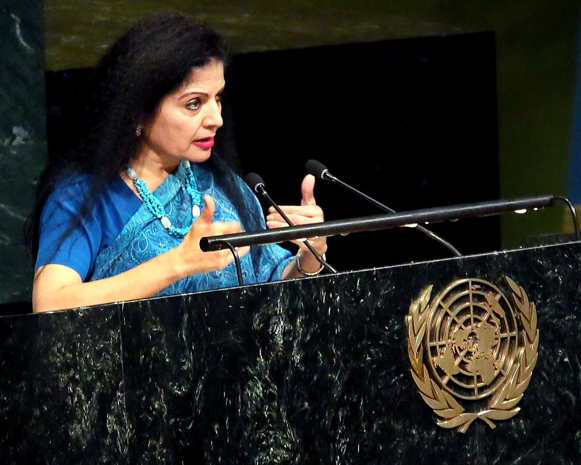
    “The power of one is about passion, commitment and indomitable courage and keeping faith with the causes we serve no matter the difficulties and setbacks. It’s about not giving up ever.” Ambassador Lakshmi Puri, Assistant Secretary General & Deputy Executive Director UN Women, had said, receiving her Diwali Power of One Award at the United Nations on December 11, 2017. The only woman among five diplomats to be honored, Ambassador Puri made her resolve known: “I will power on believing in the infinite possibility of all of us to achieve our infinite potential for good”.
    As this champion of gender equality prepared to leave the UN Women towards the end of January 2018 to go back to India, after having served the apex women’s body of the United Nations since its inception in 2011, The Indian Panorama succeeded in securing her nod for an interview.
    So, on a January 2 cold morning I reached her office in the iconic Daily News building on 42nd Street in New York City to speak with her. In a candid conversation with me she spoke passionately about her work at the UN Women – how much needed to be done, how much has been done, and how much more needs to be done – for gender equality, for emancipation of women, for empowerment of women. I could see a tigress in her when ready to pounce if she thought she was being challenged. During the conversation, at one or two points, she flipped at some remark which she considered was sexist or discriminatory.
    I tried to wean her away from the subject so dear to her, to her personal life and succeeded but only briefly because she was possessed with thinking only of women and their rightful and dignified place in society.
    Here are excerpts from the interview.

    TIP: You have put your heart and soul in your work to care for the dignity of women as guided by your parents and that’s what,Ibelieve, you have instilled in your children. You are known to be a fiercely feminist personality. I would like my readers to know what is the role of UN Women when it comes to emancipation, ending bias and grant women their rights as human beings I will then come to my other question.

    AMB: Un Women was founded in Jan. 2011, and I joined in March 2011. So, Iam in the leadership team since the beginning and this forum is the only global advocate for gender equality, women’s empowerment and women’s right in every area. So, what does that mean? It means for us that international agreements and commitments made by govts. to uphold and advance gender equality and empowerment, norms and standards. And that has been UN women’s and my own contribution.Because we have in place today historic gender equality compact on the part of international community which is reflected in the Beijing platform for action not only recommitted but taken forward.

    Similarly, the UN’s sustainable development agenda has made gender equality central to the agenda. And there is a sustainable goal on achieving gender equality and empowering all women. So, we mobilized all countries tostrongly support and take forward the goal.

    And that goal is about ending all forms of violence against women, child marriage, women trafficking, harmful practices like honor killing, sex selection, and everything. apart from that all harmful practices that we have in, includingIndia, south Asia. So, this is a strong sustainable target.

    Similarly, ending all forms discrimination, laws and practices. Women’s economic empowerment equal ownership over productive resources. Similarly, parity in voice participation and leadership in all public life, economic and political life. That means in parliament, in the executive, in judiciary, in law enforcement, in public service, in corporations, everywhere. and, then it also involves universal access to sexual and reproductive health and reproductive rights. Women need control over their bodies and their reproductive role. And, then, the goal also recognizes that women have to bear disproportionate role in domestic care. This is really frontier pushing. 2/3rds of such work is done by women and in places like in India, it is higher which is without compensation and it also without opportunity, cost on education, income and employment, economic empowerment. So, valuing that, reducing that, redistributing that and provisioning that. so, these goals are something that were very hard to attain and that’s something that I count that as my legacy – the whole gender equality, climate change, peace and security, the new urban agenda. My husband is the urban affairs minister in India,but we have been advocating before the govt. of India and implementing smart cities program and all the urban programs that they are doing. PM Modi is very much supportive of gender equality program and his new India campaign.

    Receiving the Diwali Power of One Award, in recognition of powerful advocacy and leadership
    in ensuring the adoption of a dedicated goal on gender equality and women’s empowerment
    (SDG 5) within the Sustainable Development Goals, and championship of the cause, December
    11, 2017 Photo /Jay Mandal

    But sexual harassment in work place is very pervasive. It is challenging to women who are coming out and participating in different sectors of political life and professions. So, all these stories are now coming out like “metoo” movement.

    TIP: I concur with what you are saying but centuries old cultural, social and patriarchal norms take time to change. Compared to US, there are not many women rising to top in Punjab or Africa. How tough do you think your ground is whether in Punjab or Africa?

    AMB: Well, cultural,social, and patriarchal norms are critical and that is why we believe in movement building. and that is why I believe govt. of India’s – bibi bachao, beti padhao – unless you start building culture and social norms around valuing the girl child that she is of equal value and also you dismantle all the patriarchal institutions and norms that devalue the child and aversion to the girl child, you are not going to get any change. So, movement building has to be done. This movement building has been going on through village councils. UN women has been working in India through women village councilors and zilla parishad councilors. Because they have got elected on quota and there are 1.5 million women councilors who are acting as staff. What we have do is to work with them, train them and demand rights and public services from authorities and also implementation of the programs that have been approved, money to be spent on programs that have been approved. So, our governance program is very successful program.

    Women’s economic empowerment, access to energy and water and sanitation are really important. But you have to target gender equality when you target these programs. And equally these programs will benefit gender equality in return. For example, the jan-dhan program, the access to finance, women’s disadvantage in terms of owning property, lands and in Punjab this is prevalent in spite of having a law that prevents it and also to disincentivize the discrimination. So effective laws and policies and their effective implementation, movement building, and youth have to be part of all this.

    On the youth side, we have this LEAP program – Leadership, empowerment, action and prevention of violence against women and partnership with women’s organization, young men’s organization and intergenerational dialog. So that is the youth part.

    We are very successful in our “he or she” programs. men and boys have to be made champions of gender equality. Women have to stand up for their rights. I have seen in India women are transmitting harmful, discriminatory patriarchal norms. So social transformation by women themselves is important. but men and boys have to be taught from the beginning.

    With Prime Minister of India, Narendra Modi, October 2017 Photo / PMO

    TIP:That is where the problem is. When there are many women in the family, only then men are sensitive to feminist issues.

    AMB:Yes, it has to begin when youare a boy. Every father and mother must bring up their children in a gender equal way. Boys must learn in their textbooks in the way their teachers teach them about how women and girls are lower in dignity. The other day PM Modi said in “swacha Bharat abhiyan” – he talked about how everybody in the house leaves the woman to do the cleaning work. Why? It should be the responsibility of each one. So that kind of new culture respecting the dignity and equal rights of women has to be developed. Education is an important part, but prevention, protection, prosecution of perpetrators, ending violence against women and provision of multisectoral services- in all of that again, changing mindset and educating from the beginning is needed. We are now dealing with generations of people who have grown up on gender unequal basis and mindset that have stereotypes. So, we have to change that and to change that we have to work with them. and we have been working with them.

    90% of the world is governed by men leaders and they are leading from the front. You asked about Africa. We have worked with tribal leaders, advocating and championing. It  has been successful.

    Faith is another important thing. In Sikhism, women are always seen as equal. And, what has happened now? it is with all other religions including Hindus that we worship them on one side and on the other, we devalue them.

    Farewell call with the Secretary-General of the United Nations, Antonio Guterres, December 2017 Photo/ Mohammed Jaffer-SnapsIndia

    In order to build 50/50 progress by 2030, we have to take some measures. We are leading not only in India but many parts of the world, “Gender parity Democracy” movement.

    TIP: Do you think, likereservation system, we should have a similar system in political and corporate world?

    AMB: I entirely advocate what is in the Beijing platform and what is in the convention for ending all forms of discrimination against women. There is a rule for special temporary measures. it is not that these measures will be there forever, but when you levelthe playing field, you need some special measures to take those who are at the position of disadvantage now to the position of equality and once that has been achieved, then those measures will become irrelevant. So thatis what we should aspire for.

    Now to your question, even before going to corporate, we have been advocating, and achieved constitutional amendments in many countries whereby quotas have been set for parliaments but not yet in India.We are strongly advocating for “reservation bill” in India. There are electoral system challenges and diverse community cultures, but we are advocating reservation bill strongly and parliamentary seats for women for some time. I remember one case in a village panchayt near Jaipur when she stated that she was first nominated and now she defeated 15 other contestants on her own strength. She said people voted for her because she delivered -“I built roads, got schools opened, got projects opened”.

    It is not only women and girls that we do reservation for; it is for good governance.

    Accepting the Eleanor Roosevelt Human Rights Award In recognition of her contribution to furthering the mission of the United Nations, her deep-seated commitment to human rights, as well as the global impact of her work, November 2016

    TIP: So those girls are advocating requirements for themselves.

    AMB: So, you need to bring us up to a level when we don’t need any more help and also to a point where people recognize women’s equal participation in governance.

     That brings me to the corporate world. It is a major challenge. There are many countries – like Norway – that have special measures which state that any company that wants to be listed on stock exchange has to have 50 percent women on board. China and Japan are also working towards having women board members. So, it is a mandatory movement. There are movements  in India, European union and Germany as well.

    In Australia, women owned business companies are given certain preferences. These kinds of incentives build women’s management and governance capacity in the corporate sector as well.

    So, you need some measures to achieve that.

    With Prime Minister of Canada, Justin Trudeau, global champion of gender equality and UN Women; and Executive Director of UN Women, Phumzile Mlambo-Ngcuka. June 2016

    TIP: Even though India had Lady PM and President in politics, what about corporate sector?

    AMB: We have women CMs, ministers etc. We are taking many steps but not enough.This is a very slow progress. In order to build 50/50 progress by 2030, we have to take some measures.We are leading not only in India but many parts of the world, “Gender parity Democracy” movement.

    We have great women’s movement in India, many NGO leaders are women.

    As UN organization, we have our first MOU with NYC and we have partnership program on all aspects of gender equality. Like NYC, we are working with many cities in in the world. We also have safe and sustainable cities program which include 66 cities in the program and India has about 8 or 9 cities that participates in the gender equality program which includes many areas like transport, business etc.

    Regarding your earlier question on women, apart from this norm setting and movement building, one major project has been how to build a knowledge hub. we want to bring out the facts for a “gender statistics revolution”.

    We need to know and bring out what is happening with women and girls – whether economic empowerment, violence etc. and we have this program called “making women and girls count”.

    India is a pathfinder country. There are about now 20 countries that participating in this program. Now social media is also helping in that – gender statistics revolution.

    We need to bring out the facts to make people outreach to bring about the emancipation of women. As Swami Vivekananda said -“arise, awake and stop not” – this whole knowledge is important and that is the basis of the revolution.

    TIP: Is there a time frame for that?

    AMB:We have set a time-frame of 2030. That is why the slogan is – “planet 50/50 by 2030”. We are asking every country to step up.

    We are very strapped and under-resourced. Original target was 1 billion, then it became 500 million and now we are struggling to reach 300 million. It has been a big challenge. We have tried to raise from philanthropist and private sectors, including India. We are doing everything, but governments are not forthcoming.

    TIP: Just like any country that violates UN resolutions, are there any sanctions for the country that violates the gender equality?

    AMB: UN women is intergovernmental organization. There are no sanctions that can be placed but we work with every country to make them speed up the gender equality. In UAE we have opened an office. We are having dialog with Saudi Arabia and we have a very strong Arab office in Egypt that oversees all of the Arab world.

    We are working in conflict countries, natural disasters, refugee countries, we are working on humanitarian response and resiliencebuilding, making sure that whateverhumanitarianresponse is provided, there is a very strong focusing on differential and disproportionate response on women as they are more prone to exploitation.

    TIP:Regrading your 2030 target, do you think your organization needs more resources and extra power to meet the target?

    AMB: Absolutely. This has been one of my regrets that the international community has been very strong in committing in terms of norms and standards to women’s empowerment and gender equality, they have not setup institutions to take this forward. So, the financial commitment part has not been commensurate with declared political commitment. We are very strapped and under-resourced.

    Original target was 1 billion, then it became 500 million and now we are struggling to reach 300 million. It has been a big challenge. We have tried to raise from philanthropist and private sectors,including India. We are doing everything, but governments are not forthcoming.

    “Making Women and children count” is supported by Gates Foundation.

    With the godmother of feminism, Gloria Steinem at the launch symposium of the Women, Peace and Security program at Columbia University, October 2017

    I would like all women to come forward and claim their rights which are equal to all the men and boys. And to all men and boys, join the gender equality cause, because this is not only good for your mothers, sisters, colleagues etc.; it is good for you.

    TIP: US president has decided to cut back funding for UN. So, are you also affected?

    AMB: No, we were in fact very happy that in 2017 contribution from US increased by a million.

    TIP: What about now?

    AMB: In 2017 US govt. gave 8.5 million, 1 million more than the previous year.

    TIP:How is India performing?

    AMB: India, from the inception, has played a very stellar role and they are the only country contributing 1 million every year.

    TIP:One last question. Your husband, Mr. Hardeep Singh Puri has been a wonderful diplomat. Now that he has chosen to go into politics, how do you look at the new avatar of your husband.

    AMB: He always wanted to be in politics. He was in politics during his student days. He always wanted to break out of his civil service mantle and go into politics. After retirement, he chose to go into politics. I am very happy that he has assumed the role of minister for urban and housing development which is very critical in order to achieve all the 17 goals of sustainable development and he has my full support.

    TIP: Before we close, would you like to say something to The Indian Panorama readers?

    AMB: I would like all women to come forward and claim their rights which are equal to all the men and boys. And to all men and boys, join the gender equality cause, because this is not only good for your mothers, sisters, colleagues etc.; it is good for you.


  • January 12 New York Print Edition

    January 12 New York Print Edition

    [vc_row][vc_column][vc_column_text]

    Print Replica ~ Digitally

    E-Edition

    [/vc_column_text][/vc_column][/vc_row][vc_row][vc_column width=”2/3″][vc_custom_heading text=”New York Edition” font_container=”tag:h2|text_align:center” google_fonts=”font_family:Istok%20Web%3Aregular%2Citalic%2C700%2C700italic|font_style:700%20bold%20regular%3A700%3Anormal” link=”url:https%3A%2F%2Fwww.theindianpanorama.news%2Fwp-content%2Fuploads%2F2018%2F01%2FTIP-January-12-NYC.pdf|||”][vc_single_image image=”89974″ img_size=”full” add_caption=”yes” alignment=”center” onclick=”custom_link” link=”https://www.theindianpanorama.news/wp-content/uploads/2018/01/TIP-January-12-NYC.pdf”][/vc_column][vc_column width=”1/3″][vc_single_image image=”82828″ img_size=”medium” alignment=”center” onclick=”custom_link” link=”https://www.theindianpanorama.news/advertising-media-kit-portal-indian-panorama/”][vc_single_image image=”82829″ img_size=”medium” alignment=”center” onclick=”custom_link” link=”https://www.theindianpanorama.news/advertising-media-kit-portal-indian-panorama/”][/vc_column][/vc_row][vc_row][vc_column][td_block_ad_box spot_id=”custom_ad_3″ tdc_css=””][/vc_column][/vc_row][vc_row][vc_column width=”2/3″][vc_custom_heading text=”Lead Stories This Week” font_container=”tag:h2|text_align:center” google_fonts=”font_family:Istok%20Web%3Aregular%2Citalic%2C700%2C700italic|font_style:700%20bold%20regular%3A700%3Anormal” link=”url:https%3A%2F%2Fwww.theindianpanorama.news%2F|||”][td_block_5 separator=”” limit=”8″ tdc_css=””][/vc_column][vc_column width=”1/3″][vc_widget_sidebar sidebar_id=”td-default”][/vc_column][/vc_row]

  • Today’s Youth and Swami Vivekananda

    Today’s Youth and Swami Vivekananda

    By Ashok Ojha, Hindi Sangam Foundation

    As we remember Swami Vivekananda on his birthday we can’t stop visualizing his youthful aura and his glowing personality. Swami ji underscored the ideals and high values for the youth to follow. First of all, his focus on patriotism remains very appealing for the young people. Swami ji reflected high energy and charm as he travelled far and wider. He always addressed the youth as  torch bearers for the future.

    “Young people should believe in themselves”, Swami ji said. He pinpointed to self esteem which is most essential for all young people to build in themselves. He knew that youth power was the only hope for India’s future. He called to the youth saying there was no alternative than to use your power and conquer the world. This conquest was very much Indian. It was not to be accomplished by use of the gun but by the force of knowledge.

    Swami ji was a great proponent of Vedic philosophy. He asked the youth to sharpen their mind and invigorate their energy in the service of the Lord. “In our short lifespan the youth must rise and get involved in the welfare of humanity”, he said focusing on the meaningful deeds in life.  He pointed out that the only noble cause made life worth living was service to humanity. “In life, there is no place for fear and the young people should waste no time standing up and get busy in purposeful activities.”

    Swami ji’s raw appeal to the younger generation ignited the nation half a century before it gained independence.

    Since he belonged to the same generation that represented the youth, dynamism and vibrancy, Swami ji’s words influenced people all over India. He continued to inspire the youth until his untimely death at the age of 39. By then he had developed a large following of disciples around the world.

    Today the youth in India is facing many challenges. Swami ji’s message is a guiding force for all. He told the youth to find purpose in life. “Life without a purpose was useless. We must set our objective first then decide a path to follow. With a clear purpose one can get engaged into activities that could drive your life to meaningful goals.”

    Swami Vivekananda attached more importance to self-confidence than even faith in God! He asked everyone to develop self-confidence and compared the lack of self-confidence with not believing in God. According to Swami ji the second principle of life was dedication. Swami ji asked the youth to dedicate themselves to a certain cause and work towards accomplishing the goals with dedication and patience. “Pursuing a challenge with utmost dedication is indeed a road to success for our youth.”

    Swami ji’s clarion call to youth came in Chicago where he challenged the youth to ‘Awake, Arise and continue moving until the goal is reached.’ His Chicago lecture became world famous and increased the respect for India in the world arena. We are celebrating the birthday of Swami Vivekananda today on January 12 that reminds us his messages we should always remember. The youth of the world must continue to work together for a better world. Today there is a greater need to learn from Swami ji. He taught us to be organized and work as a team. In any professional field team work is necessary. The spirit of team work is important for today’s youth to practice and follow, no matter what field of life they wished to pursue. Swami Vivekananda founded  the Ramakrishna Mission where team work for nation building was practiced. He organized the Sanyasis to work towards nation building.

    Swami ji’s social thinking and economic and political thoughts are useful even today. He called for religious harmony and appealed to people to avoid confrontation. Swami ji should be looked upon as a great humanitarian whose wisdom is inspiring to all.

    (The author is a journalist and Hindiphile)

  • Why is Martin Luther King, Jr. Relevant Today?

    Why is Martin Luther King, Jr. Relevant Today?

    By Ashok Ojha, Hindi Sangam Foundation

    Almost half a century ago Martin Luther King, Jr. shook the conscious of the United States of America by launching his movement to empower the poor, the discriminated and marginalized people. The nation was deeply divided between races and classes. King, a priest, challenged the administration of this country and vowed to establish the valued ingrained in the country’s constitution.

    People of all colors and shades identified with the values set by King and took part in his protest movements to demand equality and justice. We celebrate King’s birthday on January 15 and find that his deeds continue to inspire us. As we celebrate the birthday of this great civil rights warrior we realize that his values and goals continue to be relevant and meaningful guiding force. In order to compel the nation change its path of progress King followed the strategies that Gandhi in India had implemented with success. Gandhi led his people to the road to freedom from the British rule. King led a movement very similar to what Gandhi had achieved three decades ago.

    King’s strategy of resistance through non-violence proved very effective. The positive results of Gandhi’s strategy of non-violence sound logical to King. He was certain that violence was not the right path to achieve equality in USA. In order to convince the government in Washington D. C. King made inspiring speeches and led marches. He designed his movement against white supremacists same as Gandhi had asked his people to follow the path of civil disobedience against the British.

    The two leaders were not afraid of sufferings that they invited through their campaigns. They were ready to face violent consequences of their actions. In the end they were certain to compel their opponents change their hearts and minds. Their goal was to establish the power of non-violence which was greater than the power of the gun.

    Gandhi always combined faith in his principle of nonviolence. He was firm in his believe in seeking truth. ‘Truth is God’ was his mantra. King was a godly person, a Baptist minister of black Church who preached for God. He linked the power of God with the power of oppressed people and believed that freedom and equality belonged to them. Like Gandhi King was also a seeker of Truth.

    Inspired by the civil disobedience technic formulated by Gandhi, King asked his followers to boycott the use of segregated buses in Montgomery, Alabama. This was his experiment with truth. He was using the method of noncooperation with the system. His method was so much like that of Gandhi that people called him, ‘The American Gandhi’. However, Gandhi was fighting against the rulers who were outsiders. On the contrary King was bent upon forcing the federal government to do more for people. He knew that the federal government was able to find solutions for many problems that caused poverty and unemployment.

    Neither Gandhi nor King was willing to compromise on their goals. Gandhi didn’t accept anything less than ‘total freedom’. King’s fight for racial equality was aimed at equal rights for Black people. King’s efforts were well rewarded with Nobel Peace Prize in 1964. He focused his fight against poverty and Vietnam War. He targeted his fight on a broader scale to include elimination of poverty and social justice. He aimed at appealing to a broader audience of both Black and White masses.

    In 1964, King received a Nobel Peace Prize for his nonviolent fight against racial inequality.

    In the final years of his life, King’s focus changed to include a resistance to widespread poverty and the Vietnam War. The latter alienated many of his liberal allies.

    Today, civil disobedience continues to be a tool in a democratic society. Oppression of the poor has not stopped. Equality remains noble words in the constitution. King’s philosophy and his path of democratic resistance guides those who believe in struggle for freedom. Gandhi and King experimented with truth and achieved it. But for the oppressed and the poor truth continues to be elusive. The principles of Gandhi and King are strong guiding force for the seekers of change. King was assassinated in Memphis, Tennessee. His death ignited riots in many US cities. His mission is yet to be fulfilled.

    (The author is a journalist and Hindiphile)


  • Whither Education in Maharashtra?

    Whither Education in Maharashtra?

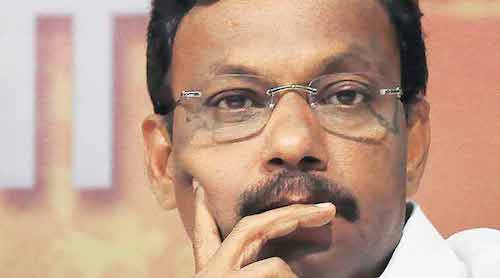
    Vinod Tawade: A failed Education Minister or an Amateurish Experimenter in Education System?

                                                      By Kishor Satwick

    Maharashtra Education Minister Vinod Tawade has again bowled a bad delivery. Under his initiative, the HSC Board has proposed two sets of test papers for Std. XII exam to be conducted in 2019 – A tough question paper for those desirous to pursue medical and engineering degrees and an easy one for the rest. The new paper pattern is already being implemented for class XI.

    According to the changed pattern, students will be given fewer choices on questions thus making it tougher to omit to study chapters or topics from a particular subject. The aim was to follow the CBSE pattern and prepare students for National Eligibility-cum-Entrance Test (NEET) and Joint Entrance Exam (JEE).

    The justification given by Vinod Tawade is: – “In NEET and JEE exams, you don’t have the option to choose what topic to study. You have to study everything. But if you are not going for these exams, then you could perhaps leave out certain topics. Out of roughly 15 lakh students who appear for class XII exams, only 5,000 go to medical colleges and 60,000 to engineering colleges. The rest go for a BSc degree. So, I have made this suggestion and the educationists are deliberating on this. We will take a decision on this before the next academic year begins.”

    It is known fact that level of examination depth in HSC is less than that in CBSC. Hence, students passing from HSC find it difficult to compete in NEET conducted by CBSC. The same goes for JEE. To increase the competitiveness of the Maharashtra Students is the call of the day. Earlier Congress/NCP Government had realized this and they had made the exam pattern competitive. However, the present Education Minister has been diluting even the syllabus ever since he has occupied that Chair.

    A bizarre idea has come to the fertile brain of Education Minister. The Learned Education Minister of Maharashtra further concludes that only 5,000 students go for medical degrees and rest do not go. The Learned Minister does not understand that it is not the case that only 5,000 students opt for medical education; rather the situation is because in Maharashtra, only 5,000 medical seats are available for admission, only 5,000 students can go for medical degrees. Instead of increasing the medical infrastructure in the State so that more students can go for medical education and fill the vacuum in health sector, the Minister is tinkering with the examination pattern promoting mediocrity. If one sees the admissions in engineering colleges, the figure of 60,000 quoted by Vinod Tawade is far from reality. As per DTE, Maharashtra, about 1,20,000 students took admissions in Engineering colleges in the Maharashtra State in 2017 as against the capacity of 2,10,000 seats. That left about 42% of the total seats vacant. According to DTE, while more students appeared for the MH-CET this year, compared to the past few years, there weren’t too many top scores when the results were announced on June 3. Just 1% of the applicants scored above 75% in the exam. This clearly shows the syllabus and the exam patter need to be redesigned to increase the intelligence and the competitiveness of the students and not to make them mediocre.

    This move is strongly opposed by the Academicians.

    Anil Deshmukh, president, Maharashtra State Federation of Junior College Teachers’ Organization says: “How can there be two papers? Asking students to decide if they are going to give entrances at the time of giving HSC is not a cogent suggestion.”

    Dr Ashok Wadia, Principal, Jai Hind College pointed out, “Students only know they have to give exams. The coaching class lobby has raised the bogey of failures as they streamline their coaching to how students can get more marks by studying most likely topics. Students have to study everything. Can a physics student say I can study the topic of ‘light’ but not ‘heat’?”

    But Learned Education Minister of Maharashtra thinks Yes; a student can learn ‘light’ but not ‘heat’. Considering this danger, the SC took away the medical entrance from the States to Centre and there is one NEET conducted by CBSC. If left to the likes of Vinod Tawade, we would have Neuro Surgeons who had left brain as option in their medical education.

    Mr. Vinod Tawade, the syllabus – whether for SSC – HSC or Engineering – should be such that it produces knowledgeable students/professionals. Industry is already complaining that 60% of the BE/B.Tech degree holders are unemployable. It is simply because of people like Vinod Tawade who encourage students to leave the topics for option thereby weakening their basic educational foundation by producing mediocracy.

    It is said a mediocre produces a mediocre. It is high time we had some professional as Education Minister in Maharashtra.

    (The author is a Mumbai based Chartered Accountant and Social Activist)


  • The Arts are Here to Stay

    The Arts are Here to Stay

    By Carmen Fariña

    When I accepted the job of Chancellor, I knew right away that the arts would be a focal point of my tenure. The arts are not an add-on or simply an extra-curricular activity – a rich arts curriculum strengthens school communities and teaches students skills and passion, cultivates hobbies and can instill confidence and creativity that students will keep with them for the rest of their lives.

    This is evident at PS 111 in Queens. When I visited in September to celebrate the opening of a new cafeteria, I was stopped in my tracks by the sound of students belting at the top of their lungs. I instantly turned around to see where the noise was coming from. As I walked down the hallway, the singing became louder until finally I found the classroom – a group of 25 fourth grade students practicing scales. I interrupted and asked the teacher what they were working on. It was still only the third week of school, but they were already rehearsing for their holiday concert in December. “We have a lot of work to do,” the teacher said with a smile.

    She was right, they had a long way to go. But that didn’t matter, because every student in that classroom was beaming with joy. This was the music teacher’s first year at the school and her class represented the culmination of hard work by the principal, Ms. Jaggon, to revamp the school’s arts instruction.

    Just two years ago, PS 111 was on the State’s list of persistently dangerous schools. The school was also struggling to engage parents and morale was low. Needless to say, a drastic change was needed and the arts have played a critical part in that effort. The school now has a dance teacher and a new dance studio, a visual arts teacher, a music teacher and a theater teacher. Parents are excited to be in the building where student artwork hangs on every wall and a performance or concert happens with great frequency. Most importantly, students have become more confident, motivated and curious to try new things.

    These are the types of investments that we’re seeing schools make in every borough. In fact, over the past two years, school-level spending in the arts has increased by over $45 million. And this year, we have a record high-number of certified arts teachers in our schools – the highest in more than a decade, with nearly 3,000 citywide.

    Schools like PS 111 are the reason this administration invests in the arts each year. Because we know that the arts help strengthen school communities, foster creativity and critical thinking skills and help create an inclusive environment for all students.

    At PS 111, for example, one in five students is an English Language Learners and nearly 40 percent of students have special needs. The arts have played an even more important role in the lives of students like these and their families. This year, we’ve expanded arts programming for ELL students and students with disabilities to nearly 350 schools across the City, more than double the number of schools in 2014-15. These programs also help students learn English and become more confident and expressive.

    When I look at schools like PS 111, I know that our investments in arts go beyond just teaching music, dance, visual arts or theater. Our investments have built stronger ties between families and schools and have opened up new and exciting doors for students, helping them discover passions they never knew they had.

     As we continue to make these investments in the arts, and cultivate partnerships with cultural institutions, I’m also proud that thousands of 7th graders have benefitted from “Teen Thursdays” where they enjoy the incredible museum offerings across our City.  And for the first time, we’re also providing some high schools with additional funding and support so that they can enhance their arts programs and attract more students through competitive auditions. As more schools spend their own resources on the arts programming, it is clear that the arts have become a pillar of instruction in our schools.

    Now, after 52 years of working in New York City schools, I will be retiring in the coming months. It gives me great pride and satisfaction to see this reinvigorated passion for the arts from our youngest learners through high school. The arts are not a frill, and they are here to stay.

    (The author is New York City Schools Chancellor)