NEW YORK(TIP): Chuskit, directed by Priya Ramasubban, won the Grand Prize at the 24th annual Stony Brook Film Festival presented by Island Federal at the Staller Center for the Arts.
“This festival was one of the most competitive yet,” said festival director Alan Inkles. “Nearly 3,000 films were submitted, and only 36 were selected for the Festival, so Chuskit was really a very special film – it’s a must-see.”
The Grand Prize is awarded when the jury and the audience rank the same film the highest. This is the second year in a row and the ninth time in the Festival’s 24-year-run that a film has received a Grand Prize.
Chuskit is a charming, family-friendly treat from a part of the world seldom seen on screen. The entirety of the film was recorded in the Himalayas and tells the story of a paraplegic girl who harbors hopes of going to school.Priya Ramasubban, director of Chuskit, attended the Festival and participated in a Q&A with the audience.
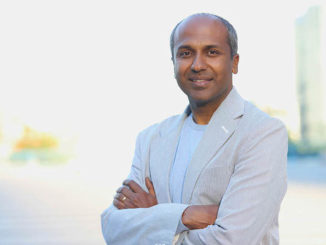
NEW YORK(TIP): Digital journalism expert Sree Sreenivasan has been appointed as the first Marshall R. Loeb Visiting Professor of Digital Innovation and Audience Engagement, Laura Lindenfeld, interim dean of the Stony Brook University School of Journalism, has announced.
At the SBU School of Journalism, Sreenivasan, a former Columbia Journalism School professor for 20 years, will engage students and faculty in the practice and power of journalism by harnessing digital innovations and research to enhance news content, delivery and audience engagement. He joined the Journalism School on September 1.
“On behalf of the Journalism faculty and staff, I could not be more delighted to have such a consummate professional join us as we reshape the School’s curriculum to match a more demanding time for journalism and the students who will be part of its future, said Lindenfeld. Sree’s experience, creative approach and dedication to integrating high-quality journalism to the digital space is vital in today’s news ecosystem. He will honor the legacy of Marshall R. Loeb in the way that his son and daughter intended upon funding this professorship.”
“I’m honored to be a visiting professor at the Stony Brook School of Journalism and work with the students, faculty and staff,” said Sree Sreenivasan. “The fact that the professorship is named for the legendary Marshall Loeb, whom I admired and had the opportunity to work with, is a special honor. I am grateful to Michael and Margaret Loeb for honoring their father’s legacy in this way.”
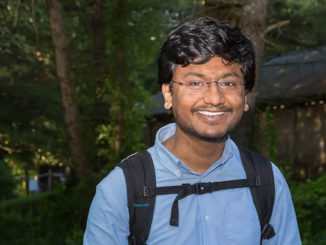
NEW YORK(TIP): Rajat Kumar, a PhD student in Biomedical Engineeringat Stony Brook University has been recently named a Chateaubriand Fellow. The Chateaubriand Fellowship is a grant offered by the Embassy of France in the United States. It supports outstanding Ph.D. students from American universities who wish to conduct research in France.
Chateaubriand Fellowship has made possible collaboration with Philippe Ciuciu at NeuroSpin, a neuroimaging research centre located near Paris, where Rajat will be working during the spring 2020 semester.
Shortly into his first job after graduating from Guru Gobind Singh Indraprastha University, working as an engineer at an oil and gas company, Rajat came to the US from India in 2015, choosing to work with Stony Brook professor Lilianne Mujica-Parodi,who is now his Ph.D. advisor.
BOSTON(TIP): The Department of Justice Sept 9 filed a lawsuit in the District of Massachusetts alleging that female tenants of residential rental properties in Worcester were subjected to sexual harassment and retaliation, in violation of the federal Fair Housing Act.
The lawsuit alleges that from at least 2009 through the present, Mohan Prashad sexually harassed female tenants of rental properties owned by Prashad, Savton LLC, and Lanaton LLC. Prashad is the sole agent for Savton LLC and Lanaton LLC. The complaint further alleges that David Besaw also harassed and assaulted female tenants. Besaw, a Level 3 registered sex offender in Massachusetts, has been employed by Prashad since at least 2014 to assist with the management and maintenance of his rental properties.
The complaint alleges that Prashad engaged in harassment that included making unwelcome sexual advances and comments; engaging in unwanted sexual touching; offering to grant tangible benefits — such as reducing rent amounts — in exchange for engaging in sexual acts; refusing to provide needed maintenance services or taking other adverse housing actions against female tenants who resisted or objected to his unwelcome sexual harassment; intimidating female tenants by monitoring them from outside their apartments or rooms; and, after receiving notice of Besaw’s sexual harassment of female tenants, failing to take any action to prevent Besaw from future sexual harassment. The complaint further alleges that Besaw subjected female tenants to unwelcome sexual contact including groping, sexual assault, and forced touching of their bodies, without consent; unwanted exposure to female tenants; making unwelcome sexual comments and sexual advances toward female tenants; and making intrusive, unannounced visits to female tenants’ units to conduct and further his sexual advances.
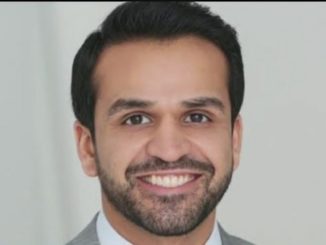
NEW YORK (TIP): Manish Patel, 33, of Granite Bay, appeared last month in federal court on charges of conspiracy and possession with intent to distribute marijuana plants and tetrahydrocannabinols contained in hashish oil, U.S. Attorney McGregor W. Scott and Drug Enforcement Administration Special Agent in Charge Chris Nielsen announced.
According to court documents, Patel is a licensed attorney in New Jersey (admitted in 2015) and New York (admitted in 2017). The complaint alleges that Patel conspired to transport marijuana and concentrated cannabis oil across the country using his private airplane, a Learjet. In May and June 2019, law enforcement in California executed search warrants that resulted in the seizure of approximately 1,400 pounds of marijuana contraband and $400,000 in cash.
If convicted, Patel faces a maximum statutory penalty of 20 years in prison.
WASHINGTON(TIP): An Indian American has been nominated as a federal judge in Florida by US President Donald Trump.
Anuraag Singhal is among 17 judiciary nominations sent by the White House to the Senate on Sept 9. If confirmed by the Senate, Singhal would replace James I. Cohn as the United States district judge for the southern district of Florida. On Aug 14, 2019 Trump announced his intent to nominate Singhal to serve as a United States District Judge of the southern district of Florida.
Singhal is a judge on the Seventeenth Circuit Court in Florida. Singhal was appointed by Governor Rick Scott on August 31, 2011, to succeed Victor Tobin. Singhal was re-elected without opposition in 2014, winning a six-year term that expires on January 4, 2021. In 2017, Singhal was one of ten finalists considered for a federal judgeship in Southern Florida.
NEW YORK(TIP): SBU Computer Science Professor Anshul Gandhi has been recently honoured with 2019 Rising Star Research Award by the Association for Computing Machinery’s (ACM) SIGMETRICS. The award recognizes Gandhi’s fundamental contributions to the analysis, modeling, design, and implementation of energy-efficient systems in data centers and cloud computing.
Anshul Gandhi, who is also an NSF CAREER awardee, earned his PhD in computer science at Carnegie Mellon University. His 2013 thesis, Dynamic Server Provisioning for Data Center Power Management, won the 2013 SPEC Distinguished Dissertation Award. After graduating, he spent a year as a post-doctoral researcher at the IBM T. J. Watson Research Center. Gandhi’s research aims to leverage mathematical tools to address challenges in computer systems. Within Stony Brook’s College of Engineering and Applied Sciences and Department of Computer Science, Gandhi leads the PACE Lab and currently advises six PhD students and 14 MS students.
HOUSTON(TIP): A federal grand jury has indicted a 43-year-old Houston man of Indian origin on four counts of firearms violations including possession of a machine gun, specifically, a bump stock, announced U.S. Attorney Ryan K. Patrick.
The four-count indictment, returned Sept 5, alleges Ajay Dhingra possessed a machine gun, made two materially false statements in the acquisition of two firearms and unlawfully possessed a firearm after having been adjudicated as a mental defective or who had been committed to a mental institution.
Previously charged by criminal complaint, he made his initial appearance in federal court Aug 19, 2019, at which time he was ordered into custody pending further criminal proceedings.
According to court records, on or about Aug. 17, 2019, Dhingra called the George Bush Foundation and left a concerning message. Authorities discovered Dhingra had previously been committed to a mental institution, according to the allegations. As such, he is prohibited by federal law of possessing a firearm or ammunition.
The charges further allege law enforcement contacted Dhingra at his residence where they found two firearms in his possession, one of which law enforcement identified as a rifle with an installed bump stock.
Authorities obtained a search warrant, which allegedly resulted in the discovery of a Glock pistol, a Colt rifle with a bump stock and 277 rounds of 9 mm ammunition.
According to the Bureau of Alcohol, Tobacco, Tobacco, Firearms and Explosives (ATF), this is the first case filed in Texas and what is believed to be the first nationwide involving illegal possession of bump stocks since the law was implemented in March 2019.
If convicted of any of the charges, Dhingra faces up to 10 years in federal prison and a possible $250,000 fine.
Canada Elections 2019: Record number (50) of candidates of Indian origin in the fray
By Prabhjot Singh
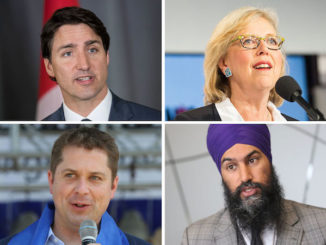
Canada is all set to go for the Federal Elections 2019. On September 11, Prime Minister Justin Trudeau will go to the Governor-General’s office to recommend dissolution of the House of Commons. It will mark the start of campaign for the 2019 Elections that are mandated by law to be held on October 21. To form the next government, a party will need 170 seats in the new House of Commons. As of today the Liberals have 177 MPs in the 338-seat House of Commons, followed by the Conservatives with 95 MPs and the NDP with 39 MPs. Besides, there are 10 Bloc Québécois MPs, two Green MPs, one People’s Party of Canada MP, one Co-operative Commonwealth Federation MP, eight independents and five vacant seats. After meeting the Governor-General, the Prime Minister, Mr. Justin Trudeau will hold a rally shortly after the campaign launch and then take off on the Liberal plane. Conservative Leader Andrew Scheer will address party supporters in Trois-Rivières in Quebec on Wednesday morning before coming to the Ontario where he is expected to join meet and greet programme of party workers at a Woodbridge park. The NDP was first to launch its campaign last Sunday when the party leader Jagmeet Singh addressed a rally in Toronto before starting an aggressive campaign in the Greater Toronto Area and southwestern Ontario in his newly revealed campaign bus.The Green Party leader Elizabeth May too has her campaign plans ready that may take her more to Quebec expecting good response there.
Indo-Canadians
Canadian politicians of Indian origin are, as usual, in the limelight as campaigning for the 2019 Federal Elections gets under way.This time a record number of 50-odd candidates of Indian origin in general and Punjabi origin in particular, are in the fray. As of today, there are 18 candidates of Indian origin in the Liberal party’s list. They include Navdeep Bains, Harjit Singh Sajjan, Amarjeet Sohi, and Bardish Chagger. There are 17 candidates of Indian origin in the Conservatives list. NDP has nine candidates of Indian origin in ts list. Green Party, too, five candidates of Indian origin. There may be a couple of Independent candidates as well as two of original Liberal MPs – Darshan Singh Kang and Raj Grewal – had to leave the Caucus to stand clear of the charges made against them. Of the candidates of Indian origin, there are 12 women candidates, including Bardish Chagger, who became one of the the youngest leader of the Government in the House.
At the time of dissolution of the present House of Commons, there are 20 MPs of Indian origin. One of the oldest sitting MPs of the Indian origin, Deepak Obhrai, died on August 2.
The 2019 Federal Election will be unique in more than one ways. This time the campaigning time will be just six weeks compared to 11 weeks in the 2015 elections.
Also, this is also for the first time that one of the three major political parties – Liberal, Conservatives and NDP – will be led into elections by a leader of Indian origin. Jagmeet Singh is heading the NDP. Though before his election as the NDP President, Jagmeet Singh was a Member of Ontario Assembly and later sought an election to House of Commons from Burnaby in British Columbia.
Only other leader of Indian origin to have led a national party in Canada had been Mr Hardial Singh Bains, one of pioneers of the Communist movement in Canada.
“Presently, we are witnessing an interesting strategic interaction. The government accepts that the economy needs more growth but insists that this can only come via private investment and the private sector awaits an improvement in growth before deciding whether to invest. It is not clear whether the basis of the government’s insistence on private investment alone is ideological or based on fiscal considerations. Whatever it may be, it is clear that if it does not get proactive now, it could be left waiting for a private investment that may not be forthcoming.”
The government accepts that the economy needs more growth but could end up paying for its inaction.
In 2005, a Nobel laureate in economics claimed that the “… problem of depression-prevention has been solved”. He was exulting over an innovation in economic theory according to which fiscal policy, associated with profligacy, had no role whatsoever. Just a few years later, following the North Atlantic financial crisis, the U.S. fiscal deficit had to be raised three-fold, he responded, “I guess everyone is a Keynesian in the foxhole”, implying that in the face of an impending crisis it is alright to rely on fiscal policy after all. A similar pragmatism is absent from economic policymaking in India today.
By meeting industrialists for policy inputs so soon after the Budget for the year had been presented and then, via a press conference held a few weeks later rolling back some of the tax proposals in it, the government revealed its anxiety about the state of the economy. This is only to be expected of a party that came to power promising to transform it. Far from having significantly improved the performance of the economy in its first term in office it has been presiding over an economy in which growth has been declining for close to two-and-a-half years by now. So what did the Finance Minister offer in her press conference? And can we expect it be game-changing?
Three sets of announcements pertain to concessions impacting upon the automobile sector, proposals for the banking sector and a change in a practice of the Income-Tax Department. Of the first it may be said that addressing the problems of any one sector when several are equally stressed is not fair governance. There have been reports of severe stress in the packaged foods industry for instance and we have long been aware that the agricultural sector has been troubled after demonetization.
Of the revision of the procedure adopted for issuing an IT notice, it can be said that it does address the issue of tax terrorism, but only a thorough social audit of the processes adopted by the tax authorities can establish whether it would be sufficient to ensure that honest firms are not be hounded and that the government receives all the revenue due to it. Industrialists are under pressure to not speak out against high-handedness, and the compulsory retirement of income tax personnel for malpractice recently point to not everything being well within that department. That leaves us with the proposals for the banking sector. Of these it can be said right away that some of them are quite sound; but if the government’s intention was to reverse the slowing of growth, they are unlikely to make much of a difference.
Infusion without reforms
Most significant among the measures related to banking is the infusion of capital up to ₹70,000 crore into the public sector banks. This is expected to contribute to a potential ₹5 lakh crore expansion of credit. With this the government has frontloaded a provision already announced in the Budget. This transfer is now going to be made right away. This is a major step in the direction of taking the banking sector to a more solid foundation. There is also a proposal to ensure that loan decisions taken by bankers are treated as economic decisions and not as instances of corruption when a loan goes awry.
Public sector banking has been hobbled by the colonial attitude that India’s public servants cannot be trusted, leading to a continuous surveillance that is not conducive to their exercising initiative in lending. At the same time, the present non-performing assets crisis points to the role of political pressure on banks in the past. Without addressing both these issues we can never transit to a strong banking sector. So the capital for the long-term infusion should have been accompanied by governance reforms that both enforce honest behavior and ring-fence the public banker from political pressure.
Policy rate cuts
Finally, there was the announcement that public sector banks will pass on more of the policy rate cuts that the Reserve Bank of India (RBI) has effected in several rounds by now. The government’s frustration at this not having happened is easily imagined but is the proposal for a near automatic adjustment sound by itself? It is tantamount to the lending rate of banks being determined by the RBI’s actions. There is after all the risk premium that banks tack on to their prime lending rate, which itself depends on factors other than the policy rate. Overall, the move towards having commercial bank rates move in tandem with the repo rate by fiat is not advisable. The decision should be left to the banks.
Let us, however, assume for a moment that lending rates are set to be lowered whatever be the mechanism. Will this revive the economy? It is apparent from the Finance Minister’s press conference that the government thinks this will happen. Generally, the potency of monetary policy in reversing sluggishness in the economy is considered to be weak. The belief among economists is that while a rise in the rate of interest can hold back a decision to invest by raising the cost of finance, an interest rate reduction can do little in the absence of an urge among investors to commit capital. A lack of understanding of the factors governing investment is evident in the suggestion often seen in the press that the government must ‘revive animal spirits’ in the economy. Animal spirits were originally imagined as the spontaneous urge to either undertake investment or hold back from it. The expectation of future profits is the key element here for potential investors. The government can have a role only if it can affect long-term profit expectations. Certainly not by lowering interest rates.
Focus on private investment
Presently, we are witnessing an interesting strategic interaction. The government accepts that the economy needs more growth but insists that this can only come via private investment and the private sector awaits an improvement in growth before deciding whether to invest. It is not clear whether the basis of the government’s insistence on private investment alone is ideological or based on fiscal considerations. Whatever it may be, it is clear that if it does not get proactive now, it could be left waiting for a private investment that may not be forthcoming.
Our experience of the five years of very high growth over 2003-08, when the economy grew at its fastest ever, tells us that three factors had played a role in it. These were unusually high rates of agricultural growth, record levels of public investment and buoyant exports. The package announced by the Finance Minister on August 23 did not relate to any of these. Of course, exports depend to an equal extent on factors beyond India’s control but the government could have addressed the other two factors. Notably, it had nothing for the rural sector which clearly needs attention. For a start an expansion of the Mahatma Gandhi National Rural Employment Guarantee Scheme, with attention paid to building assets that most strongly impact agricultural output, may be considered. As for public investment, it is the elephant in the North Block. The government is reluctant to step it up, harping on fiscal space, but fiscal space is for a smart government to make up. Instead this one shrunk the space for public investment by introducing an income scheme exclusively meant for farmers just before the elections and then expanding it soon after it returned to power. It was a case of rewarding political support rather than attending to the needs of an economy known to be slowing. When in the foxhole you imagine that you are on a mountain top, you end up paying for your fancy.
(The author is Professor, Ashoka University, Sonipat and Senior Fellow, IIM Kozhikode)
For its sheer magnitude, the scale and the ability to disrupt the status quo, the mega bank mergers announced by Finance Minister Nirmala Sitharaman on Friday must go down as the most significant the banking industry has seen in the five decades since nationalization. The bottom line is clear: to create banks of global level that can leverage economies of scale and balance sheet size to serve the needs of a $5-trillion economy by 2025. The jury is, of course, out on whether this strategy will succeed. Mergers are driven by synergies — in products, costs, business, geographies or technology and the most important, cost synergies. While there may be some geographical synergies between the banks being merged, unless they realize cost synergies through branch and staff rationalization, the mergers may not mean much to them or to the economy. This is where the government’s strategy will be tested. It is no secret that public sector banks are overstaffed. There is also bound to be overlap in branch networks such as in the Canara-Syndicate Bank merger, especially in Karnataka and a couple of other southern States. Ditto with Punjab National Bank and Oriental Bank of Commerce, both of which have strong networks in the north and the west. The success of these mergers, therefore, will hinge on how well these banks handle the sensitive issue of staff rationalization. The All India Bank Employees Association has already raised the red flag.
It was the Narasimham Committee in the late 1990s that recommended consolidation through a process of merging strong banks. The issue has been the proverbial bee in the bonnet of successive governments since then. What the committee also recommended was shutting down the weaker banks and not merging them with the strong ones as is being done now. But this is obviously not an option politically even for a government with a brute majority in Parliament. The biggest plus of the mergers is that they will create banks of scale — there are too many banks in India with sizes that are minuscule by global standards with their growth constricted by their inability to expand. Yet, this advantage of scale cannot be leveraged without adequate reforms in governance and management of these banks. To be sure, Ms. Sitharaman did announce a few measures to make managements better accountable to the board. But the key reforms to be made are at the board level, including in appointments, especially of government nominees. These are often political appointees, with little exposure to banking. Surely, such practices need to be curbed as the definition of global banks is not just about size but also professionalism in governance. The government will also have to manage the fallout of unleashing four mergers simultaneously which is bound to cause upheaval in the industry. Would it have been better if these mergers had been done one by one? The future will color the past.
VLADIVOSTOK(TIP): India and Russia are beginning a new era of cooperation in the Indo-Pacific region to make it “open, free and inclusive”, Prime Minister Narendra Modi said on Thursday ,September 5, amidst China flexing its military muscles in the strategic region.
Addressing the plenary session of the 5th Eastern Economic Forum here, Prime Minister Modi said, “When ships will start plying between Vladivostok and Chennai with the opening of the maritime routes between the two cities, the Russian port city will become the springboard of northeast Asia market in India. This will further deepen the Indo-Russia partnership.”
A Memorandum of Intent was signed on Wednesday, September 4 between India and Russia for the development of maritime communications between the ports of Chennai and Vladivostok in Russia’s Far East Region.
“We are starting a new era of cooperation in the Indo-Pacific region,” Modi said, adding that the partnership between India and Russian in the development of the Far East will make it a “confluence of open, free and inclusive Indo-Pacific”.
The Far East, Modi said, will become the bedrock of strong Indo-Russia ties, which is based on the principles of “rules-based order, sovereignty, respect for territorial integrity and is against engaging in the internal matters of other countries”.
India, the US and several other world powers have been talking about the need to ensure a free, open and thriving Indo-Pacific in the backdrop of China’s rising military maneuvering in the region.
China has been trying to expand its military presence in the Indo-Pacific, a biogeographic region comprising the Indian Ocean and the western and central Pacific Ocean, including the South China Sea.
China claims almost all of the South China Sea. Vietnam, the Philippines, Malaysia, Brunei and Taiwan have counter claims over the sea.
Earlier in the day, Modi met his Japanese counterpart Shinzo Abe on the sidelines of the Eastern Economic Forum. Both the countries agreed to further deepen cooperation in the Indo-Pacific region.
In November last year, India, the US, Australia and Japan had given shape to the long-pending Quadrilateral coalition to develop a new strategy to keep the critical sea routes in the Indo-Pacific free of Chinese influence.
China is engaged in hotly contested territorial disputes in the East China Sea too with Japan. Beijing has built up and militarized many of the islands and reefs it controls in the region.
Both areas are stated to be rich in minerals, oil and other natural resources. They are also vital to global trade
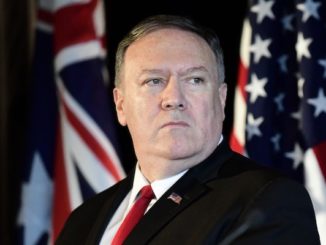
WASHINGTON(TIP): US Secretary of State Mike Pompeo has refused to sign the peace deal that his special representative has inked with the Taliban, mainly because it does not guarantee the continued presence of US forces in the country to defeat al-Qaeda or the existence of the democratically elected government, a media report said Wednesday, September 4.
Pompeo is “declining to put his name to the deal” that has been hammered out by Special US Representative on Afghan reconciliation Zalmay Khalilzad after nine rounds of talks with the representatives of the Taliban in Doha, the Time magazine reported on Wednesday, September4.
“It doesn’t guarantee the continued presence of US counterterrorism forces to battle al-Qaeda, the survival of the pro-US government in Kabul, or even an end to the fighting in Afghanistan,” reported Time magazine, which based its report on unnamed senior Afghan, European Union and Trump Administration officials.
“No one speaks with certainty. None,” said an Afghan official taking part in briefings on the deal with Khalilzad.
“It is all based on hope. There is no trust. There is no history of trust. There is no evidence of honesty and sincerity from the Taliban,” and intercepted communications “show that they think they have fooled the US while the US believes that should the Taliban cheat, they will pay a hefty price.”
According to Time magazine, the Taliban has asked for Pompeo to sign an agreement with the Islamic Emirate of Afghanistan, the official name of the government founded by the Taliban in Afghanistan in 1996.
“Having the Secretary of State sign such a document would amount to de facto recognition of the Taliban as a legitimate political entity, and he declined to do so,” the report said, quoting the Afghan officials.
Pompeo’s office declined to comment.
If the deal is signed, the US has agreed to withdraw some 5,400 US troops, roughly a third of the present force, from five bases within 135 days.
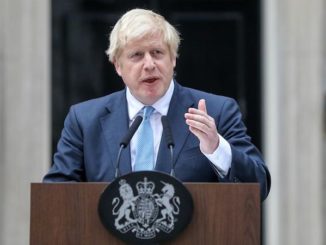
LONDON(TIP): British Prime Minister Boris Johnson was on Thursday, September 5, kicking off what is in effect an election campaign, casting an alliance of opposition parties trying to block a ‘no-deal’ Brexit as defeatists surrendering to the European Union.
As the United Kingdom spins towards an election, Brexit remains up in the air more than three years after Britons voted to leave the bloc in a 2016 referendum. Options range from a turbulent ‘no-deal’ exit to abandoning the whole endeavor.
After wresting control of the Lower House of Parliament on Wednesday, an alliance of opposition parties and rebels expelled from Johnson’s Conservative party voted to force him to seek a three-month delay to Brexit rather than leaving without a deal on October 31, the date now set in law.
Behind the sound and the fury of the Brexit crisis, an election now beckons for a polarized country.
The main choices on offer are Johnson’s radical insistence on leaving the EU on October 31, come what may, and Labour leader Jeremy Corbyn’s hard-left socialist vision, coupled with a promise of a fresh referendum with an option to stay in the EU.
“Boris will argue that it is now time for the people to decide after parliament has failed them, so we can resolve this once and for all,” a spokesman for the prime minister said.
“Jeremy Corbyn continues not only to block Brexit but is now also stopping the people having their say by refusing a General Election.”
The opposition Labour Party cast Johnson’s language – including calling Corbyn a “chicken” — as pathetic, said he was trying to act like US President Donald Trump, and compared him to a 3-year-old toddler having a tantrum.
An election adds a new twist to a Brexit crisis that has for three years overshadowed European Union affairs, eroded Britain’s reputation as a stable pillar of the West and seen sterling twitch in tune to the probability of a ‘no-deal’ exit.
Johnson, the face of the 2016 Vote Leave campaign, has pushed for an election on October 15, two weeks before the United Kingdom is due to leave the EU, though opposition parties are debating which date they would accept.
“We are saying, yeah, bring on a General Election, of course,” said John McDonnell, the Labour Party’s second most powerful man.
“We will ensure that happens after we have got the legislation to protect against a ‘no-deal’ Brexit. But we will consult and do it on at the date on which we will think will have maximum advantage against a ‘no-deal’,” he said.
While sterling rose on Parliament’s bid to block a no-deal exit, an election before Brexit would allow him, if he won, to repeal the blocking bill, which was passed by 329-300 and then 327-299 in the House of Commons on Wednesday. The law will pass the upper house, the Lords, by Friday evening.
Johnson’s finance minister, Sajid Javid, opened up the possibility of a change to the Oct. 15 date but said the government could strike a renegotiated Brexit deal with Brussels and get it through parliament before October 31.
But the EU, and Germany and France in particular, have repeatedly called on Britain to make specific proposals on how it wants to change the agreement struck by Johnson’s predecessor, Theresa May, in November.
Diplomats said an election campaign would halt any Brexit talks with the EU and expressed frustration with the turmoil of British politics at such an important juncture in European history.
“The UK side continues to produce chaos and it is very hard to predict anything,” said one EU diplomat.
WASHINGTON(TIP): Half-truths, untruths, factually incorrect information is being disseminated in the US media regarding the Indian State of Jammu and Kashmir, said India’s Ambassador to the United States Harsh Vardhan Shringla.
Ambassador Shringla made the comments in a podcast on Sept 3 and spoke on changing the paradigm in India’s Jammu & Kashmir – from cross-border terrorism and radicalization to jobs, inclusive development and a hope for peace.
“Over the past few weeks we have seen a great deal of speculation, some pedaling of half-truths, untruths, factually incorrect information that is disseminated in the media, primarily in the United States. Purpose of my conversation is really to bring to you the facts,” he said.
Seeking to counter what he called speculation, half-truths and untruths peddled in the media, primarily the U.S. media, Shringla said 91 percent of the Kashmir Valley is restriction-free and there is no communication gap. Rejecting reports of disruption in medical services in the valley due to the restrictive measures imposed by the government, Shringla said seven hundred thousand people had availed of OPD services in the month of August alone.
The administrative reorganization of Jammu and Kashmir and the abrogation of Article 370 are India’s internal matter and do not impinge on the country’s external boundaries or the Line of Control, Shringla said. Article 370 was meant to be temporary in nature and should have been abrogated a long time ago, he explained, adding that due legislative process was followed by the government in doing away with the provision. He said that the reason why these measures were taken was to “ensure that the positive steps of the government should not be scuttled due to incitement and vested interests from across the border.”
WASHINGTON(TIP): Phone numbers linked to more than 400 million Facebook accounts were listed online in the latest privacy lapse for the social media giant, US media reported on Wednesday, September4.
An exposed server stored 419 million records on users across several databases—including 133 million US accounts, more than 50 million in Vietnam, and 18 million in Britain, according to technology news site TechCrunch.
The databases listed Facebook user Ids—unique digits attached to each account—the profiles’ phone numbers, as well as the gender listed by some accounts and their geographical locations, technology website TechCrunch reported.
The server was not password protected, meaning anyone could access the databases, and remained online until late Wednesday when TechCrunch contacted the site’s host.
Facebook confirmed parts of the report but downplayed the extent of the exposure, saying that the number of accounts so far confirmed was around half of the reported 419 million.
It added that many of the entries were duplicates and that the data was old.
Following the 2018 Cambridge Analytica scandal, when a firm used Facebook’s lax privacy settings to access millions of users’ personal details, the company disabled a feature that allowed users to search the platform by phone numbers.
The exposure of a user’s phone number leaves them vulnerable to spam calls, SIM-swapping—as recently happened to Twitter CEO Jack Dorsey—with hackers able to force-reset the passwords of the compromised accounts.
“One of the most widely expected consequences of 9/11 has so far been averted. Though Islamic terrorists have engaged in successful attacks in the West since 9/11, including the 2002 Bali bombings, the 2004 Madrid train bombings, and the 2015 attacks in Paris, there has been no attack on the scale of 9/11. Instead, it is countries with large Muslim populations that have seen a rise in terrorist attacks.
Yet the West still pays the price for its militant and militarised response to terrorism through the weakening of democratic norms and values. The unleashing of US military power that was supposed to intimidate terrorists has diminished America’s might, creating a key precondition for Donald Trump’s promise to restore American greatness.”
“Although many of the issues confronting us today have very long roots, the world we live in has been indelibly shaped by 9/11 and its aftermath.”
Eighteen years after the Al Qaeda struck the iconic World Trade Centre twin towers in New York City and the Pentagon, the memories of the ghastly event, which killed almost 3,000 and wounded 6000 others, and permanently wounded the psyche of the American people, the scars remain.
Every year, on 9/11, the American nation remembers the horrific incident, prays for the fallen and salutes the first responders and saviours of human life.
On September 11, 2001, 19 militants associated with the Islamic extremist group al-Qaeda hijacked four airplanes and carried out suicide attacks against targets in the United States. Two of the planes were flown into the twin towers of the World Trade Center in New York City, a third plane hit the Pentagon just outside Washington, D.C., and the fourth plane crashed in a field in Shanksville, Pennsylvania. Almost 3,000 people were killed during the 9/11 terrorist attacks, which triggered major U.S. initiatives to combat terrorism.
On September 11, 2001, at 8:45 a.m. on a clear Tuesday morning, an American Airlines Boeing 767 loaded with 20,000 gallons of jet fuel crashed into the north tower of the World Trade Centerin New York City. The impact left a gaping, burning hole near the 80th floor of the 110-story skyscraper, instantly killing hundreds of people and trapping hundreds more in higher floors.
Pedestrians scramble for safety in front of City Hall in New York as the first World Trade Center tower collapses after being hit by an aircraft
As the evacuation of the tower and its twin got underway, television cameras broadcasted live images of what initially appeared to be a freak accident. Then, 18 minutes after the first plane hit, a second Boeing 767—United Airlines Flight 175—appeared out of the sky, turned sharply toward the World Trade Center and sliced into the south tower near the 60th floor. The collision caused a massive explosion that showered burning debris over surrounding buildings and onto the streets below. It immediately became clear that America was under attack. Less than 15 minutes after the terrorists struck the nerve center of the U.S. military,the horror in New York took a catastrophic turn when the south tower of the World Trade Center collapsed in a massive cloud of dust and smoke.
As millions watched the events unfolding in New York, American Airlines Flight 77 circled over downtown Washington, D.C., before crashing into the west side of the Pentagonmilitary headquarters at 9:45 a.m. Jet fuel from the Boeing 757 caused a devastating inferno that led to the structural collapse of a portion of the giant concrete building, which is the headquarters of the U.S. Department of Defense.
All told, 125 military personnel and civilians were killed in the Pentagon, along with all 64 people aboard the airliner.
A total of 2,996 people were killed in the 9/11 attacks, including the 19 terrorist hijackers aboard the four airplanes. Citizens of 78 countries died in New York, Washington, D.C., and Pennsylvania.
Meanwhile, a fourth California-bound plane—United Flight 93—was hijacked about 40 minutes after leaving Newark Liberty International Airport in New Jersey.Because the plane had been delayed in taking off, passengers on board learned of events in New York and Washington via cell phone and Airphone calls to the ground. The passengers fought the four hijackers and are suspected to have attacked the cockpit with a fire extinguisher. The plane then flipped over and sped toward the ground at upwards of 500 miles per hour, crashing in a rural field near Shanksville in western Pennsylvania.
At the World Trade Center, 2,763 died after the two planes slammed into the twin towers. That figure includes 343 firefighters and paramedics, 23 New York City police officers and 37 Port Authority police officers who were struggling to complete an evacuation of the buildings and save the office workers trapped on higher floors.
The Pentagon, the nerve center of the U.S. military, was struck by the American Airlines Flight 77
At the Pentagon, 189 people were killed, including 64 on American Airlines Flight 77, the airliner that struck the building. On Flight 93, 44 people died when the plane crash-landed in Pennsylvania.
Thousands of first responders and people working and living in lower Manhattan near Ground Zero were exposed to toxic fumes and particles emanating from the towers as they burned and fell. By 2018, 10,000 people were diagnosed with 9/11-related cancer.
The hijackers were Islamic terrorists from Saudi Arabia and several other Arab nations. Reportedly financed by the al-Qaida terrorist organization of Saudi fugitive Osama bin Laden, they were allegedly acting in retaliation for America’s support of Israel,its involvement in the Persian Gulf Warand its continued military presence in the Middle East. Operation Enduring Freedom, the American-led international effort to oust the Taliban regime in Afghanistan and destroy Osama bin Laden’s terrorist network based there, began on October 7. Within two months, U.S. forces had effectively removed the Taliban from operational power, but the war continued, as U.S. and coalition forces attempted to defeat a Taliban insurgency campaign based in neighboring Pakistan.
World Trade Center 9/11 Memorial in New York City
The 9/11 Commission (charged with investigating the events that lead up to September 11th) Report was released on July 22, 2004. It named Khalid Sheikh Mohammed, the accused mastermind behind 9/11, “the principal architect of the 9/11 attacks.” Mohammed led propaganda operations for al-Qaida from 1999-2001. He was captured on March 1, 2003 by the Central Intelligence Agency and Pakistan’s Inter-Services Intelligence and interrogated before being imprisoned in Guantanamo Bay detention camp with four other accused terrorists charged with 9/11-related war crimes.
Osama bin Laden, the mastermind behind the September 11 attacks, remained at large until May 2, 2011, when he was finally tracked down and killed by U.S. forces at a hideout in Abbottabad, Pakistan.
Even though Osama bin Laden and many other Al Qaeda leaders have been eliminated, there always is a threat to America from terrorists. Americans must remember, “Eternal vigilance is the price of liberty”.
“Prospects and potentials for India are unlimited. It is up to Prime Minister Modi how he takes advantage of the opportunity”, says the author.
The Sino-USA economic and trade war has reached its climax for the worst. President Trump has ordered all American corporations doing business in China to quit and relocate to an alternate country. While I am writing this, the news has come in that Apple is pulling out of China.
The tug of war has been going on between the USA and China on trade and China’s currency devaluation. It appears that Trump-Xi summitry is not working. Trump has almost declared a cold war with China when he asked publicly that American corporations in China must quit and find an alternative location.
INDIA MUST SEIZE THE OPPORTUNITY
India is the only alternative and it must seize the opportunity.
India has the human resources required. Half of India’s population is under 25, two-thirds under 35. India has an oversupply of labor, engineers and other professionals.
India is the largest English-speaking country in the world, making it easier for Americans to operate in India. IBM is the second largest private employer in India after Tatas, employing 150,000. IBM has more employees in India than in any other location including its headquarters in New York.
India has a comparative advantage over China.
President Trump has branded India as CLOSEST ALLY OF THE USA on a par with the U.K. He has allowed India to transfer 100% of U.S. technologies without restriction. China never enjoyed this advantage and they were caught stealing.
To cite an example, President Trump has authorized Lockheed Martin to manufacture F-16, 18 planes in India. He has also encouraged Boeing, United Technologies, Raytheon to set up manufacturing in India. India has a huge comparative advantage over the USA in manufacturing most expensive and sophisticated military hardware.
When the U.S. went to China in 1980, China had nothing. Its economy was far behind that of India’s. Dung Sha Ping was a practical ruler. He decided to move closer to the USA. President Reagan offered help and full cooperation if China opened its economy and created necessary environment for investment and business.
There is no reason why India cannot liberalize and open the Indian economy to the USA. Such a bold move will create millions of new jobs year after year for the next twenty years. India’s GDP, now less than 7% , could grow @10 to 12% if both countries cooperate in modernizing India.
“Prime Minister Modi must schedule a State visit for President Trump as soon as possible, preferably this year. I am sure Trump will take with him a delegation of 100 Fortune 500 corporations. Finally, India will be able to build the required infrastructure it has been talking about for 25 years. Modi will create an economic revolution that will create 20 million new jobs every year for the next 20 years.”
GOLDEN OPPORTUNITY FOR INDIA – PRIME MINISTER MODI MUT CAPITALIZE NOW
Prime Minister Modi must schedule a State visit for President Trump as soon as possible, preferably this year. I am sure Trump will take with him a delegation of 100 Fortune 500 corporations. Finally, India will be able to build the required infrastructure it has been talking about for 25 years. Modi will create an economic revolution that will create 20 million new jobs every year for the next 20 years. Prospects and potentials for India are unlimited. It is up to Prime Minister Modi how he takes advantage of the opportunity.
(The author is a senior advisor to Imagindia Institute, New Delhi . He can be reached at vpwaren@gmail.com)
PRINCETON, NJ(TIP): The Slavin Family Foundation awarded Rohan Shah, a molecular biologymajor in the Class of 2020 at Princeton, with Slavin Fellowships for his work in entrepreneurship on campus and beyond. He is among 26 global recipients of the Slavin Fellowships.
The Slavin Fellowship offers mentorship, support and a grant to a limited number of undergraduate and graduate students pursuing entrepreneurial projects. “Fellows span fields from tech to life science and materials science to fashion and the arts, and now include Thiel Fellows, Schwarzman Scholars, and winners of other international awards and competitions,” said Nick Slavin, chairman of the Slavin Family Foundation.
Shah is a co-founder of Alimtas BioVentures, a student organization working with the University’s Office of Technology Licensing to spin out new life science ventures. A Novartis Science Scholar at Princeton, he is currently conducting his thesis research in the laboratory of Ralph Kleiner,assistant professor of chemistry. He previously interned at Alector, an immuno-neurology biotechnology company focused on Alzheimer’s disease.
NEW YORK (TIP): A Queens resident has been convicted on charges of larceny and scheme to defraud. The 53-year-old has been sentenced up to six years in prison for stealing nearly USD 600,000 in payments from prospective home buyers.
Queens Acting District Attorney John M. Ryan announced Aug 30 that a former licensed real estate salesperson living in Richmond Hill, Queens, has been sentenced to up to 6 years in prison for stealing nearly$600,000 in payments from prospective homeowners for the purported “short sale” of several Queens and Brooklyn properties in 2015.
The Queens District Attorney’s Office identified the defendant as Reshmi Maharaj, 53,whose last known address was in Richmond Hill, Queens. Following a four-week bench trial presided over by Queens Supreme Court Justice Daniel Lewis, Maharaj was convicted on August12, 2019 of second-degree and larceny, first-degree scheme to defraud and second-and third-degree grand larceny. Justice Lewis sentenced Maharaj Aug 29 to 2 to 6 years in prison.
Acting District Attorney Ryan said, “The defendant in this case duped the victims into believing that they were making payments to either secure their dream home or purchase a property as an investment opportunity. Instead, the defendant selfishly pocketed their hard-earned money and spent the ill-gotten funds on personal items. The sentence meted out by the Court brings much-needed justice to these buyers who were robbed of their chance to fulfill their American Dream. The defendant will now spend a significant amount of time in prison for operating this cold-hearted scam.”
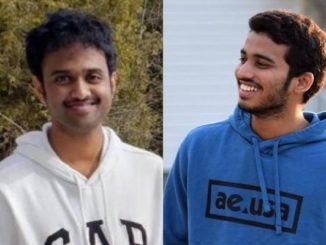
OKLAHOMA (TIP): Two Indian students have drowned at a popular tourist destination in Oklahoma, according to a media report.
The two students, 23-year-old Ajay Kumar Koyalamudi and 22-year-old Teja Koushik Voleti, who were international students at the University of Texas at Arlington died on Sept 3 at Turner Falls in Oklahoma.
According to media report, Ajay Kumar, a resident of Sindanur Taluk in Raichur, jumped into the water body to save his friend Voleti, a native of Ongole,and in the process, both drowned.
Ajay, who was studying Construction Engineering Management, had left for Texas in December 2018 after completing his Bachelor of Civil Engineering at New Horizon College of Engineering in Bengaluru’s Marathalli.
Teja was an engineering student who had completed his Bachelor’s degree from Anna University, Chennai. According to reports, Teja hails from Ongole in Andhra Pradesh. He was pursuing a master’s degree in Electrical, Electronics and Communications Engineering at the University of Texas at Arlington.
SAN FRANCISCO(TIP): An Indian American couple is believed to among those who have died in a boat fire that took place off Santa Cruz island in California on Sept 2 morning.
According to media report, Kaustubh Nirmal, who worked in a finance company in the USA and his wife Sanjeeri Deopujari, a dentist, were on board the ill-fated boat, which caught fire and sank off the California coast.
As many as 34 people died after the boat caught fire. The ship carried 33 passengers and 6 crewmembers, and only five of the crew sleeping on the top deck were able to escape by jumping off and taking a small boat to safety.
ORLANDO, FL(TIP): Three Indian origin people were killed after the vehicle they were riding in crashed into a lake and became submerged in Florida’s Deerfield Beach Sept 3, according to media reports.
The victims were identified as 47-year-old Boby Matthew, his wife 41-year-old Dolly Matthew, and 16-year-old son Steve Manoj, all from Coral Springs. The crash happened on the Sawgrass Expressway near the northbound Florida Turnpike ramp. When fire rescue crews responded, the vehicle was submerged in the lake about 20 yards from the roadway.
The Florida Highway Patrol is investigating the cause of the crash.
Signup to our Newsletter!
Don’t miss out on all the happenings around the world