Month: October 2020

  • UN chief urges G20 to unite on coronavirus fight

    UN chief urges G20 to unite on coronavirus fight

    UNITED NATIONS, NY (TIP): The UN chief says it’s very frustrating that leaders of the 20 major industrialized nations didn’t come together in March and establish a coordinated response to grapple with the coronavirus in all countries as he proposed.

    The result, he says, is every country is taking its own,  sometimes contradictory actions, and the virus is moving from east to west, north to south, with second waves of infections now affecting many countries.

    Ahead of the Group of 20 summit next month, Secretary-General Antonio Guterres said in an interview with The Associated Press that he hopes the international community now understands they need to be much more coordinated in fighting the virus.

    Mr. Guterres said the United Nations also will be strongly advocating during the G-20 summit for a guarantee that when a vaccine is available, it becomes indeed available and affordable for everyone, everywhere.

    (Source: AP)

  • A Proud Moment for the Punjabi Community of New York

    A Proud Moment for the Punjabi Community of New York

    101 Avenue, in part,  is named Punjab Avenue

    RICHMOND HILL, NY (TIP): October 23, 2020 will go down as a red-letter day in the history of the Punjabi community of New York when a part of a busy Avenue was named as Punjab Avenue.

     101 Avenue , from 111 Street to 123 Street has been named as Punjab Avenue.

    The inauguration was done on Friday, October 23 by Councilmember Adrian Adams who had moved the  motion in the NY City Council for renaming of the Avenue, in view of the strong presence of the Punjabi community in the area. It may be mentioned that the two largest Sikh shrines (Gurudwaras are situate between Lefferts Boulevard and 113 Street. Besides, the entire stretch has businesses run by Punjabis.

    Among those present at the inauguration were Assemblyman David Weprin, managing committee members of Gurdwara Sikh Cultural Society and Baba Makhan Shah Lobana Sikh Center, and prominent members of the Punjabi community, including Herman Singh , President of Omni Mortgage, H.S. Toor, and Jay Jasbir Singh. Media was present in strength. A couple of TV channels, which included CBSWLNY , NY 1, and PTC TV, among others, and  Punjabi, Hindi and English language desi newspapers also covered the event.

  • Nassau County  Partners with New York State and Mount Sinai South Nassau to Provide COVID-19 Rapid Testing in Five Towns

    Nassau County Partners with New York State and Mount Sinai South Nassau to Provide COVID-19 Rapid Testing in Five Towns

    MINEOLA, NY (TIP): Nassau County Executive Laura Curran announced October 20, a partnership between Nassau County, New York State and Mount Sinai South Nassau to provide free, drive-through COVID-19 rapid testing in the Five Towns. “Robust testing is vital to stopping the spread of the virus, and my Administration is committed to expanding access to testing for residents’, Curran said. Curran added “ Testing began on October 20 at the Five Towns Community Center and will be expanded to the Five Towns Jewish Community Center (JCC) next week. Mount Sinai South Nassau is now offering rapid molecular COVID-19 testing Monday through Saturday at the Five Towns Community Center located at 270 Lawrence Ave, Lawrence, NY 11559. Hours of operation will be 8 AM to 4 PM Monday through Friday and on Saturday from 7 AM to 11 AM. All COVID-19 testing is provided free regardless of immigration status. Appointments are required, and can be made by calling 516-390-2888.

    “We must keep the virus under control to ensure that schools, businesses, and houses of worship can stay open, and other still-closed industries can also open their doors. Let’s continue to do our part by following the common-sense precautions, like wearing a mask, washing hands, and staying six feet apart”.

  • Wedding Bells Ring in Harry and Manjeet Panaser’s  Family

    Wedding Bells Ring in Harry and Manjeet Panaser’s Family

    MONROE, NJ (TIP): Mr. Harry Singh Panaser and Dr. Manjeet Kaur’s lovely daughter Ajooni Kaur got married to Harvind Singh Jassal son of Mr. Gurdeep Singh and Mrs. Hardeep Kaur of Canada, on October 17, 2020.
    The marriage ceremony was performed according to Sikh tradition, at Gurdwara Bridgewater, under COVID norms of social distancing and face covering. The wedding party of 14 came from Canada and were joined by their relations and friends in New Jersey. Mr. Tript P. Singh, Ajooni’s maternal uncle was at hand to organize the events, leading up to wedding, which included Bridal Shower, Sagan, Mehndi, and Haldi.
    The wedding guests were treated to lavish lunch post wedding ceremony, at Harry Panaser’s sprawling house in Monroe, NJ. Those present at the events included Consul General of India Mr. Randhir Bansal, Deputy Consul General Mr. Shatrughna Sinha, Senator Bob Menandez, Senator Cory Booker, NJ Senator Linda Greeenstien and Assemblyman Dan Benson, besides relations and friends.
    The Indian Panorama congratulates Panasers and Jassals, and wishes the newlyweds a long and happy married life.
    Incidentally, Mr. Harry S. Panaser is The Indian Panorama’s special correspondent at the United Nations.

  • Stand for your Rights: Stand for your values Each vote counts: Get out and vote

    Stand for your Rights: Stand for your values Each vote counts: Get out and vote

    Democracy survives when citizens stand for their rights and their values. It is their voice which makes their elected representatives take care of their concerns. An unconcerned people will have only unconcerned and indifferent administrators. So, folks, get out and vote. Already, a big chunk of American voters, around 52 million,  have cast vote in early voting. They are the ones who made up their mind and voted. It is heartening to know that there is unprecedented enthusiasm among American voters. We are told this election on November 3 will go down in history as having the highest percentage of voting in a century. Early voting is smashing records across the country: A few months  ago, some questioned whether the U.S. could pull off an election during a raging pandemic. And here we are, with the highest voter turnout in early voting in decades. The momentum must not be lost. Each vote counts. And each eligible voter must vote.  There are some lethargic souls everywhere who may just shrug off the importance of casting a vote. It is for volunteers in both the parties- Republicans and Democrats- to reach out to them and persuade them to take part in the democratic process of having people of their choice to represent them. Let us not forget we get the government we deserve. Vote then to have a government of your choice, a government which can deliver to your expectations, a government which you may call your own.

    The future of America is in your hands.

    God bless America!

  • For 3rd time, Pak asks UK to deport Sharif

    For 3rd time, Pak asks UK to deport Sharif

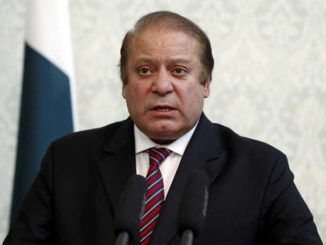
    Islamabad (TIP): Pakistan has requested the UK for the third time to deport former Prime Minister Nawaz Sharif from London to serve his prison term in the country after being sentenced in corruption cases.
    Sharif, the 70-year-old supremo of the Pakistan Muslim League (Nawaz) who was ousted from power in 2017 by the Supreme Court on corruption charges, is in London for medical treatment. A letter for the deportation of the three-time Prime Minister was handed over personally to the British High Commissioner here some three weeks ago.
    In the letter, the Pakistan Government asked the British authorities to consider cancelling Sharif’s visit visa, which has allowed him to live in London on medical grounds since November.
    The letter has cited Britain’s own immigration laws of 1974 under which any person sentenced to imprisonment of more than four years had to be deported to the country of his/her origin. — PTI

  • Bill passed, sweeping powers for Lanka President

    Bill passed, sweeping powers for Lanka President

    Colombo (TIP): Sri Lanka’s Parliament on Thursday passed the 20th Amendment to the Constitution with two-thirds majority, consolidating the power in the hands of President Gotabaya Rajapaksa and undermining the authority of Parliament. The second reading of the 20th Amendment was passed in Parliament, with 156 MPs voting in favour of the Bill and 65 against it in the 223-member Parliament. Only 213 members were present at the time of voting.
    The interesting feature of the vote was six defections from the Opposition benches to government ranks.
    With their dominant majority in the assembly, the Rajapaksas have made it clear that they would amend the Constitution to bolster the powers of the President, reversing the work of the previous government to introduce more checks and balances and enhance the role of Parliament.
    Activists, already alarmed by the diminishing space for dissent in the island nation, fear that the latest amendment to the Constitution may lead to authoritarianism.
    The Bill was presented in Parliament on Wednesday for a two-day debate following which the vote took place on Thursday. The amendment will become part of the country’s basic law after Assembly Speaker Mahinda Yapa Abeywardena signs it. The government on September 2 gazetted 20A to replace the 19th Amendment introduced in 2015 that curtailed the powers of the President and strengthened the role of Parliament.
    20A is meant to annul 19A, which was seen as a pro-democracy, good governance amendment and called for checks and balances in the presidential system while making Parliament more powerful. The 20A proposes to restore full legal immunity to the President. — PTI

  • Trump’s ‘filthy’ comment on India dismays strategists

    Trump’s ‘filthy’ comment on India dismays strategists

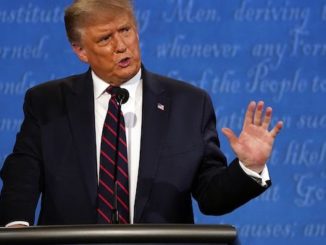
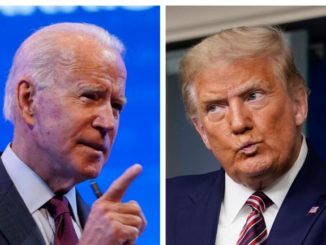
    ‘Look at India, it’s filthy,’ the US President said in the Oct 22 presidential debate

    NEW DELHI / NEW YORK (TIP): After not figuring in the first presidential debate between US President Donald Trump and former Vice President Joe Biden, India did crop up in the second edition but not in the manner proponents of a much closer Indo-US strategic relations would have wished for.

    “Look at China. How filthy it is. Look at Russia. Look at India, it’s filthy. The air is filthy,’’ said Trump in a remark that cut several strategic analysts to the bone. On the other hand, the US has the “lowest number in carbon emissions”, he claimed.

    Several questioned on social media the need for Trump to make an unsavory reference to India when they were expecting Indo-US ties to turn the strategic corner during the forthcoming visit of two top American cabinet ministers to India. They also wondered if Trump had this view of India why did he pay a return stadium-visit to Ahmedabad barely six months after being hosted in a Houston stadium by PM Narendra Modi.

    Biden did not mention India.

    Trump was responding to debate moderator Kristen Welker’s question on how he would simultaneously combat climate change and support job growth.

    The debate was expected to feature India and the wider neighborhood. During the first debate, the two candidates did not speak much on the American foreign policy, especially in the Asia Pacific, which seems to be the focus of the current administration.

    One reason for the cursory references to foreign policy is also because one debate was cancelled after Trump refused to participate in an on-line format.

    Welker had chosen six topics for in-depth discussions. Three of them were domestic issues while the other three – climate change, leadership and national security – had foreign policy ramifications.

    Trump, however, was consistent in his observations in blaming the three countries. In the first debate on September 29, he had said, “China sends up real dirt into the air. Russia does, India does — they all do.’’

    (Source: The Tribune)

  • Pakistan stays on FATF grey list for terror funding

    Pakistan stays on FATF grey list for terror funding

    Islamabad (TIP): The global Financial Action Task Force (FATF) has retained Pakistan on the grey list and asked it to complete action on six points relating to terror financing.
    A virtual FATF plenary meeting asked Pakistan to make progress on all the 27 points related to money laundering and terror financing by June, which will be followed by an on-site visit by its inspectors.
    India wanted Pakistan to be pushed into the black list for persistent delinquent behaviour. Turkey was pressing for Pakistan’s progress on the remaining points to be considered proof of good intentions and wanted FATF to close the matter with an on-site inspection.
    Pakistani diplomats said they would now make another attempt to get out of the grey list at the next FATF meeting in June next year. The deadline for Pakistan to complete its FATF file was June this year, but it earned a reprieve after the plenary was postponed due to the pandemic.
    The MEA had on Thursday said Pakistan has addressed only 21 action items so far out of a total of 27. “As is well known, Pakistan continues to provide safe havens to terrorist entities and individuals and has also not yet taken any action against those proscribed by the UNSC such as Masood Azhar, Dawood Ibrahim, Zakir-ur-Rahman Lakhvi etc,’’ said MEA spokesperson Anurag Srivastava. Pakistan has been under pressure from the international community for well over two years to implement a plan of action to curb money laundering and terror financing.
    Pakistan had in August imposed financial sanctions on 88 banned terror groups and their leaders, including masterminds of Mumbai and Pulwama attacks. (PTI)

  • Holocaust survivor and Nazi sympathiser’s son forge friendship in Belgium

    Holocaust survivor and Nazi sympathiser’s son forge friendship in Belgium

    Brussels (TIP): More than seven decades ago, their families were divided by war and hatred— Koenraad Tinel, the son of a Nazi sympathiser, and Simon Gronowski, a Holocaust survivor who lost his mother and sister to Auschwitz.
    Now the two men, both in their 80s, have forged a close friendship that has become a symbol of reconciliation in their native Belgium. “Koen and I were two children crushed by a war we did not understand,” Gronowski, a lawyer and jazz pianist, told Reuters.
    “Each of us was on his side of the fence—me on the side of the victims, and he on the side of the executioners.” Gronowski, 89, and Tinel, 86, met after they both published memoirs of their wartime experiences. They were introduced to each other by the Union des Progressistes Juifs de Belgique in 2012.
    “They ask me: ‘Would you agree to meet the son of a Nazi?’.
    Yes I agree. Weird, but I agree,” Gronowski said. “Little by little, we met and got to know each other better.” Last month, the twin Free Universities of Brussels—the Dutch-speaking VUB and the French-speaking ULB—gave both men honorary doctorates to recognise the significance of their bond. “Their unique friendship is a power symbol of hope, happiness and peace,” the universities said a statement. “Miraculously, I jumped off the train and escaped,” he said. Around the same time, Tinel was a living in Ghent. His brothers were Nazi soldiers and his artist father was sculpting busts of Adolf Hitler and SS officers. “I can’t be racist. I cannot be a Flemish nationalist. I cannot be a Belgian nationalist. I am a man of the world,” he told Reuters. Tinel, himself a sculptor, is holding an exhibition in Brussels up until November 1. His works, inspired by the military parades of his youth, explore the theme of how fear drives people to commit atrocities. “Koenraad is more than a friend, he’s my brother,” said Gronowski, sitting alongside Tinel in the Tour & Taxis exhibition hall. “We do not bring you a message of sorrow but a message of hope and happiness. I tell everyone: life is beautiful, but it’s a daily struggle.” — Reuters

  • China threatens to stop recognising BNO passports to avert exodus from Honk Kong to UK

    China threatens to stop recognising BNO passports to avert exodus from Honk Kong to UK

    Beijing (TIP:): China on Friday threatened to stop recognising the UK-issued passports for Hong Kong residents after the country reaffirmed its plan to offer a route to its citizenship to thousands of people living in the former British colony. The British government announced in July that it will open a new special pathway to obtaining British citizenship for eligible Hong Kongers from January 2021 after China imposed a new, sweeping national security law on Hong Kong. The British offer is not for all residents of Hong Kong, but only those holding a British National Overseas (BNO) passport.
    China’s Foreign Ministry spokesman Zhao Lijian told a media briefing here that the Chinese government has repeatedly made clear its “strong stance on this issue, but the British side has insisted on interfering with Hong Kong affairs and China’s domestic issues”. “As the British side broke its own promises, the Chinese government will consider not recognising the BNO passport as a valid travel document, and reserve the right to impose further measures,” he said. The new “Hong Kong BN(O) Visa” will allow the holder to enter and remain in Britain for an initial period of 30 months, extendable by a further 30 months, or a single period of five years, according to information on the British government’s website.
    “You’ll be able to work and study, but you won’t be able to access public funds such as social welfare benefits,” Hong Kong-based South China Morning quoted the statement as saying.
    Holders can apply to settle in Britain once they have lived there for five years.
    “After 12 months with this status, you can apply for British citizenship,” the statement said.
    More than one million people from Hong Kong could move to Britain in the next five years under the new visa scheme, including 500,000 in the first-year, Hong Kong-based South China Morning.
    Around 300,000 people currently hold a BNO passport, while an estimated 2.9 million people are eligible for it, according to the British Consulate General in Hong Kong. Britain handed over Hong Kong, its former colony, to Chinese rule on July 1, 1997, under a “One Country, Two Systems” framework that was supposed to guarantee the city a high degree of autonomy and Western-style civil liberties not seen on mainland China. China imposed the new national security law in Hong Kong after repeated protests there demanding more democracy and less Chinese influence.The new law targets secession, subversion and terrorism with punishments of up to life in prison. PTI

  • Spain PM appeals for public unity, sacrifice in virus fight

    Spain PM appeals for public unity, sacrifice in virus fight

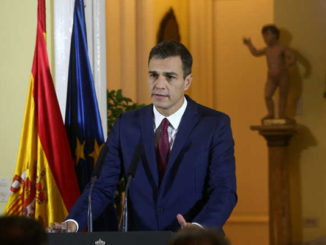
    Madrid (TIP): Prime Minster Pedro Sánchez appealed Friday for Spaniards to pull together and defeat the new coronavirus, warning: “The situation is serious.”
    Sánchez, in a televised address to the nation, acknowledged public fatigue with restrictions to contain the spread of COVID-19. But he added: “We have to step up the fight,” with more limits on people’s movement that will demand more sacrifices. Spain this week became the first European country to surpass 1 million officially recorded COVID-19 cases. Sánchez admitted, though, that the true figure could be more than 3 million, due to gaps in testing and other reasons. The current pressure on the health system, including hospitalisations, is not as acute as it was in the spring, he said. Even so, he asked for the public’s cooperation, discipline and unity during the winter months which, he said, “will be very hard”. “We have a long road to travel,” he said, to get the pandemic under control.
    Spain on Friday reported almost 20,000 new cases and 231 more deaths, taking the country’s death toll in the pandemic to 34,752. Political jockeying over pandemic measures, however, has muddled Spain’s strategy and made it at times difficult for the national government and the country’s 19 regional governments to coordinate measures.
    The latest spat is over whether to introduce curfews, as other European countries have done.
    The Spanish government is demanding cross-party agreement before possibly declaring a state of emergency amid the resurgence of the new coronavirus.
    A state of emergency can be declared only by the national government and is a necessary first legal step for authorities to impose curfews on COVID-19 hot spots. But it is also a politically sensitive move which brought criticism of the government for being heavy-handed when it was previously used to help fight the pandemic.
    Four Spanish regions formally asked the government Friday to declare a state of emergency.
    Health Minister Salvador Illa said the government is still assessing the need for night-time curfews. Young people’s street parties after dark are blamed as a major source of new infections.
    Illa said night-time curfews are a “very important,” step but the government wants “very clear” political support for the measure. Regional governments, meanwhile, are imposing their own piecemeal restrictions.
    The Madrid region on Friday banned social gatherings, except within a household, between midnight and 6 am.. Restaurants, cinemas, parks and student residences must also close at midnight. AP

  • VFS Global to provide visa, OCI and passport services for India across US from November

    VFS Global to provide visa, OCI and passport services for India across US from November

    NEW DELH/NEW YORK (TIP): VFS Global on Thursday, Oct 22 said it has been appointed as the exclusive service provider for visa, OCI (overseas citizens of India), passport, renunciation of Indian citizenship, and Global Entry Programme (GEP) verification services for the government of India in the United States.

    From next month, the Indian diaspora and other applicants across the US can apply for these services at any one of VFS Global’s India Centers, it said, adding “due to COVID-19 restrictions, India visa services remain suspended. The re-start date will be announced according to directives of the Embassy of India in USA .”

    India consular application centers will be located in six cities: Washington DC, New York, San Francisco, Chicago, Atlanta and Houston. At these centers, VFS Global said, it will provide for Indian or US citizens, and for third-country nationals, from November 2020 services like: OCI application, passport application, renunciation of Indian citizenship and GEP verification services. The US has over 40 lakh-strong Indian diaspora. “The US is the 12th country in which VFS Global will provide passport, visa and consular services for the Indian ministry of external affairs. At present, VFS Global manages 44 passport and visa application centers for the government of India in 11 countries: Australia, Belgium, France, The Netherlands, Saudi Arabia, South Africa, South Korea, Spain, Switzerland, Thailand and UK,” VFS said in a statement. VFS Global regional group COO (South Asia, Middle East and North Africa and Americas) Vinay Malhotra said that “as a company that has its origins in Mumbai, India – where the first VFS Global application center was set up close to two decades ago – it is a matter of immense pride for us to be given the opportunity to serve our customers right across the US.” VFS Global is the world’s largest outsourcing and technology services provider for governments and diplomatic missions worldwide. It has 3,430 application centers in 144 countries across five continents and partners 64 client governments.

    (Based on a press release)

  • October 23 New York & Dallas E – Edition

    [vc_row][vc_column][vc_column_text]

    E-Edition

    [/vc_column_text][/vc_column][/vc_row][vc_row][vc_column width=”2/3″][vc_custom_heading text=”” font_container=”tag:h2|text_align:center” google_fonts=”font_family:Istok%20Web%3Aregular%2Citalic%2C700%2C700italic|font_style:700%20bold%20regular%3A700%3Anormal” link=”url:https%3A%2F%2Fwww.theindianpanorama.news%2Fwp-content%2Fuploads%2F2020%2F10%2FTIP-October-23-Dual-Edition.pdf|||”][vc_single_image image=”101815″ img_size=”full” add_caption=”yes” alignment=”center” onclick=”custom_link” link=”https://www.theindianpanorama.news/wp-content/uploads/2020/10/TIP-October-23-Dual-Edition.pdf”][/vc_column][vc_column width=”1/3″][vc_single_image image=”82828″ img_size=”medium” alignment=”center” onclick=”custom_link” link=”https://www.theindianpanorama.news/advertising-media-kit-portal-indian-panorama/”][vc_single_image image=”82829″ img_size=”medium” alignment=”center” onclick=”custom_link” link=”https://www.theindianpanorama.news/advertising-media-kit-portal-indian-panorama/”][/vc_column][/vc_row][vc_row][vc_column width=”2/3″][vc_custom_heading text=”Lead Stories This Week” font_container=”tag:h2|text_align:center” google_fonts=”font_family:Istok%20Web%3Aregular%2Citalic%2C700%2C700italic|font_style:700%20bold%20regular%3A700%3Anormal” link=”url:https%3A%2F%2Fwww.theindianpanorama.news%2F%20|||”][/vc_column][vc_column width=”1/3″][vc_widget_sidebar sidebar_id=”mh-sidebar”][/vc_column][/vc_row]

  • “The UN: if it doesn’t exist, we would have to invent it”

    “The UN: if it doesn’t exist, we would have to invent it”

    By George Abraham

    Here is a special article on the occasion of the diamond jubilee of the United Nations. The United Nations officially came into existence on 24th October 1945 when the Charter was ratified by China, France, the Soviet Union, the United Kingdom, the United States of America , and a majority of other signatories.

    George Abraham who has had a long association with the United Nations underscores the relevance of the world body  in the past, in the present, and in the future. -EDITOR

    Today, thousands of Indian citizens are employed by the United Nations around the world. The Asian Headquarters for the World Health Organization is located in New Delhi. UNICEF is highly active in India, helping Children in responding to emergencies and providing them essentials to survive. India’s own contribution to the regular budget assessment is less than half of what the Netherlands pays. Therefore, all the casual talk about getting out of the UN from certain circles are not only ludicrous but a disservice to the people of India.

    Peace, dignity and equality on a healthy planet.
    The San Francisco Conference: Egypt signs the UN Charter. A facsimile copy of the Charter is superimposed on the photo. The Charter of the United Nations was signed on 26 June 1945, in San Francisco, at the conclusion of the United Nations Conference on International Organization, and came into force on 24 October 1945. Preamble to the UN Charter was read out by Sir Lawrence Olivier. Photo / Courtesy UN

    “The International Community must ask if the UN is still relevant 75 years after its founding”, said Prime Minister Narendra Modi addressing the General Assembly in a virtual conference in its 75th session. He demanded that a UN reform is the need of the hour and questioned whether the Organization has been effective in tackling Covid-19. Some commentators even went further to say that India should get out of the UN, and it no longer serves any purpose. Sir Brian Urquhart, a former Under-Secretary-General of the United Nations with special responsibility for peacekeeping operations, once quoted as saying, “to be called irrelevant is, I suppose, the most biting insult you can possibly give to anything, a person or an institution, and it’s been used quite a bit about the UN. But it is still here. And for better or worse, I think that its demise is somewhat unlikely, certainly in the near future”.

    It again shows the United Nations’ predicament, where it is a challenging job to get everybody to agree on any single issue. If we look back at history, the United Nations was founded in 1945 to save the succeeding generations from the scourge of another war just as the world was emerging out of World war II. It is also important to remember that the UN Charter and the UN’s whole concept was the brainchild of Franklin D. Roosevelt. The assumption then was that the Allies who were on the way to victory then would continue to observe the peace and, if necessary, enforce it.

    The World war has led to the cold war between the United States and the Soviet Union, resulting in proxies fighting all over the globe. However, the United Nations may still take consolation because it has succeeded in thwarting a large-scale war between nuclear-armed superpowers. Moreover, in the Cold war era, peacekeeping became a strategic tool in the UN’s hands in containing regional conflicts in places like the Middle East, Kashmir, Cyprus, Congo, Sudan, and so forth.

    The critics are often eager to paint a negative view of the UN primarily because of its failures on the political front. However, if one closely examines the structure of the Security Council, the most important organ of the United Nations, it still reflects the status quo in the immediate aftermath of World War II.  It is almost as if it was built to fail. All permanent members of the Security Council have one time, or another misused their right to veto in preventing a potential solution to a crisis and often leaving the UN remain largely paralyzed with expanding rifts and mounting tensions. Although the challenge is to shake up the Council’s structure, most governments continue to pay lip service to the need for reform, and the public seems to direct their fire and fury at the Organization.

    There is great merit to the argument that Security Council is woefully ill-prepared to deal with the contemporary challenges, and the chamber should accommodate countries like India, Germany, Japan, and Brazil with or without veto powers. However, it is a tall order that would require two-thirds of the votes in the General Assembly and the endorsement of all five permanent members. The growing ideological division among council members in dealing with sanction regimes or protracted regional conflicts may not give any ray of hope that the status-quo may change anytime soon. Nevertheless, it provides an excellent forum for the global community to air their grievances and let off steam.

    Apart from the political front, the United Nations and its Specialized Agencies have done a phenomenal job, especially in the Social and Economic arena. Having worked for the Organization on two different continents, I have had the opportunity to view the UN activities from a front-row seat. UN personnel have been directly involved as advisors and technical experts in many projects in many developing countries, especially in Africa. I have witnessed some of those valuable contributions from dedicated civil servants around the world, often under very trying conditions, working with the local officials, whether in the areas of food security, land use planning, deforestation, water, sanitation, or preventive medicine.  Of course, these efforts may not make headlines anywhere but have made an incredible difference in the daily lives of those ordinary folks who live in some of the remotest parts of the world.

    India played a seminal role in the early history of the United Nations. Although not part of the Security Council, India focused its attention on the General Assembly and worked with the newly independent nations in Asia and Africa on decolonization and socio-economic development. India may have a lot to do with the Organization’s evolution from a security-driven one to a developmental and promotional body.

    India was also one of the leaders that led the campaign against Apartheid resulting in the General Assembly adopting a resolution against racial discrimination in South Africa. Sanctions were also imposed on South Africa and Rhodesia (now, Zimbabwe) as part of the continuing opposition to Apartheid, and India played a significant role in that effort. India was also at the forefront in advocating reforms for the global economic order and was instrumental in setting up the UNCTAD to provide developmental assistance to developing countries.

    India is a major contributor to the UN’s peacekeeping efforts across the globe. As per the 2019 data, it has provided about 240,000 personnel in 49 of the 71 peacekeeping operations. Currently, Indian Military personnel is participating in 9 out of 14 peacekeeping missions. More than 160 Indian peacekeepers have paid the ultimate price in service to peace, losing lives serving under the UN flag.

    UN  is also known for its work on behalf of democracy and human rights.  With so much pride, India can remember that it has contributed significantly to the Universal Declaration of Human Rights content. Indian leadership – represented by Indian National Congress – articulated its concern for human rights and called upon the world body to learn from the coalescing of ideas and vision learned from India’s freedom struggle and urged for peoples’ self-determination everywhere.

    India truly deserves to be in the Security Council, given the demographics and its rising economic might. However, it is worth remembering that India has influenced and changed the UN’s trajectory from a security organ to a developmental body and has been a trailblazer for emerging nations towards a path forward in freedom and self-sufficiency. It was all done without having a seat at the Security Council.

    Today, thousands of Indian citizens are employed by the United Nations around the world. The Asian Headquarters for the World Health Organization is located in New Delhi. UNICEF is highly active in India, helping Children in responding to emergencies and providing them essentials to survive. India’s own contribution to the regular budget assessment is less than half of what the Netherlands pays. Therefore, all the casual talk about getting out of the UN from certain circles are not only ludicrous but a disservice to the people of India. “The UN: if it doesn’t exist, we would have to invent it.”

     (The author is a former Chief Technology Officer of the United Nations)

  • BROADWAY STARS JOIN PLAN-NYCLC IN IDG CELEBRATION – ROUNDTABLE

    By Mabel Pais

    GIRLS EVERYWHERE CAN LEARN LEAD DECIDE AND THRIVE

    Plan International USA’s (Plan) NYC Leadership Council (NYCLC) hosts its fifth annual fundraiser in celebration of International Day of the Girl (IDG). The event takes place on Thursday, October 29th, 2020 from 6:30 to 7:30 pm via Zoom. The online event will showcase Plan’s worldwide response to the COVID-19 pandemic and will feature an update on “The Graduation Project” in Zimbabwe, a roundtable conversation called “Uplifting Girls in Africa”, and special recorded musical performances by several Broadway stars. Girls around the world are often prevented from realizing their basic rights. They are silenced and excluded from the choices that shape their futures. The COVID-19 pandemic has put girls at even greater risk. NYCLC has partnered with Plan to protect girls, who are among the most vulnerable during a crisis, by working against harmful practices like child marriage, trafficking and gender-based violence, which can escalate during Emergencies.

    PROGRAM

    Panel: Conversation with Dr. Uzodinma Iweala, CEO of the Africa Center in New York, Sarah Havekost, Senior Technical Advisor for Education at Plan, and Malika, a member of Plan’s Youth Advisory Board

    By Special Arrangement: Recorded Musical Performances by Broadway stars: including Tony Award winner Leslie Odom, Jr. (of “Hamilton”), Nicolette Robinson (of “Waitress”), Joshua Henry (of “Carousel), and Tony and Grammy Award winner, Heather Headley (of “Aida).

    Funds raised through the event and an online auction will benefit “The Graduation Project”, a Plan program in Zimbabwe to help high school girls complete their education.

    To learn more, visit planusa.org/event/nyclc-idg-event/e296593

    About Uzodinma Iweala

    Uzodinma Iweala is an award-winning writer, filmmaker, and medical doctor. As the CEO of The Africa Center, he is dedicated to promoting a new narrative about Africa and its Diaspora. To learn more, visit theafricacenter.org/about/team

    About Sarah Havekost

    Sarah Havekost is the Associate Director of Plan International USA’s fundraising campaign, which funds innovative global programs that place adolescent girls in the driver’s seat of development. Her work demonstrates a deep commitment to the development of safe, equitable and quality learning environments that tap into the potential of all people, regardless of gender, ethnicity, religion or disability status. To learn more, visit planusa.org/sarah-havekost

    Malika

    Malika is an undergraduate at Johns Hopkins University, where she studies economics and international studies. Malika joined Plan International USA’s Youth Advisory Board in 2015 and has represented Plan on Capitol Hill panels, at fundraising events and during International Day of the Girl activities. To learn more, visit planusa.org/malika

  • NJSO MEETS BOLLYWOOD: In The Comfort of Your Home

    NJSO MEETS BOLLYWOOD: In The Comfort of Your Home

    By Mabel Pais

    NJSO Musicians playing Bollywood tunes Photo/Courtesy NJSO

    “The Spectacular Bollywood,” October 24, 2020, 7 PM EDT
    “Best of Bollywood,” November 6, 2020, 7 PM EDT

    Join the New Jersey Symphony Orchestra (NJSO) String Quartet for a pair of virtual musical journeys inspired by Bollywood, the Hindi-language Indian film industry. The Oct 24 concert is presented by New Jersey City University (NJCU) and the Nov 6 performance is presented by Metuchen Arts Council (MAC).

    Explore historical influences on the growth of Bollywood and hear insights into signature music and lyrics of the genre. Listen for themes from the Oscar-winning movie Slumdog Millionaire! This interactive virtual event will include a Q&A with NJSO musicians. The program explores historical influences on the growth of Bollywood and offers insights into signature music and lyrics of the genre. Famed works include themes from the Oscar-winning movie “Slumdog Millionaire”.

    These interactive virtual events—co-hosted by Archana Athalye and James Musto—will include a Q&A with NJSO musicians. The programs feature NJSO violinists Wendy Chen and James Tsao, violist David Blinn, cellist Sarah Seiver and percussionist James Musto.

    Both online events are free. Registration is required; audiences can register at www.njsymphony.org/neighborhood

    Tickets

    The Orchestra’s online hub for free NJSO Virtual 20–21 content is njsymphony.org/virtual

    Tickets for paid events are available via phone at 1.800.ALLEGRO (255.3476) or at njsymphony.org

    NJSO LAUNCHES 20–21 VIRTUAL EXPERIENCES

    The NJSO announces NJSO Virtual 20–21, a season of free digital experiences, from broadcasts of virtual orchestral concerts led by Music Director Xian Zhang at NJPAC to solo and chamber performances in iconic New Jersey locations to collaborations with fellow New Jersey arts organizations. Season launch highlights include the world premiere of a new commission by Daniel Bernard Roumain and a virtual event with Newark community leaders for the release of selections from Michael Raphael’s “Emmett Till” oratorio with Trilogy: An Opera Company, facilitated by Trilogy founder and bass Kevin Maynor.

    The Orchestra celebrates the launch of NJSO Virtual 20–21 with an at-home performance of the finale of Beethoven’s Fifth Symphony, with music director Zhang conducting from home. The video premieres on October 29 on the NJSO’s YouTube and social channels and at njsymphony.org

    Connect with NJSO:
    Website: njsymphony.org
    Facebook, Twitter and Instagram: @NJSymphony
    YouTube: @NewJerseySymphony
    Email: information@njsymphony.org

    WIPA OFFERINGS…..

    NJYS Masterclass & Webinar-Participants Photo/Courtesy WIPA/NJYS

    NJYS 2020-21 FOCUS: FREE DIGITAL COLLABS

    While in-person teaching remains critical and an important component of all of our education programs, the online environment is also creating new opportunities that definitely will expand the footprint of all of our offerings. – Peter H. Gistelinck, Exec. Dir – NJYS 

    The New Jersey Youth Symphony (NJYS) opens its 2020-21 season with a wealth of digital programming for its existing community and beyond, featuring guest artists who are not only excellent musicians but also important voices surrounding the role of the arts as a unifying force.

    The NJYS, a program of the Wharton Institute for the Performing Arts (WIPA), will open the 2020-21 season with new and compelling online education programs that include 15 master classes and 12 webinars with world-renowned guest artists and educators.

    With a hybrid schedule of both online and socially distant outdoor rehearsals, students will also participate in over 30 online classes weekly ranging from music theory, composition, and ear training to jazz history, video editing, how to improve sight-reading skills, and fiddling in an unprecedented elevation of both the quantity and breadth of educational programming. Following the U.S. Youth Orchestras eFestival on September 20 with fellow programs from Chicago, Hawaii, Los Angeles, and Texas, live performances at venues around the state of New Jersey will be replaced with a digital format that has opened new doors of artistic collaborations for the NJYS, now in its 42nd season. “Recordings of the young musicians’ solo performances at home will be compiled into a digital concert and sent to nursing homes and assisted living facilities for residents to enjoy as a calming respite during this time of social distancing,” said Helen H. Cha-Pyo, Artistic Director & Principal Conductor. The Monday Master Class Series launches this fall and imbues the essence of the NJYS’s originally scheduled season, including artists, genres, and diversity, and offers its students a rare touchpoint with professional symphony orchestra musicians and leaders in today’s world of performing arts education. The digital series, expanding the limits of what would have been possible to present in person due to the cost and logistics, features a wide variety of acclaimed instrumentalists. The series kicked off on September 14 with newly appointed Oberlin Conservatory faculty member and French hornist Jeffrey Scott and includes Cleveland Orchestra Principal Clarinet Afendi Yusuf on November 2, the New Jersey Symphony Orchestra (NJSO) Principal Bass Ha Young Jung on November 9, and Seattle Symphony Principal Flute Demarre McGill on December 7, as well as instructors from The Juilliard School, University of Massachusetts, and Jazz at Lincoln Center. The Monday Master Class Series takes place weekly from 7:00-8:15 p.m. EST through December 14. Viewing for this online series is free via Zoom.

    Friday Webinars at Wharton Arts is a series dedicated to making authentic connections between art and life through the sharing of stories, expertise, and creations by guest artists of varied disciplines. Friday Webinars at Wharton Arts take place weekly from 7:00-8:00 p.m. EST through December 11. Viewing for this online series is free via Zoom or on WhartonArts.tv.

    For more information on the Monday Master Class Series and Friday Webinars at NJYS as well as the full line-up of guest artists, visit NJYS.org.

    To learn more about NJYS, visit NJYS.org. To learn more about WIPA, visit WIPA.org

    NJYS – FREE OUTDOOR CONCERT

    NJYS Outdoor Community Concert Photo / Courtesy WIPA/NJYS

    For the past seven months, the pandemic has prevented us from performing together in-person. We are thrilled to have the opportunity to share live music with our community here in New Providence,said Helen H. Cha-Pyo.

    The (NJYS), a program of the WIPA, presents a free outdoor community concert on Sunday, October 25 at 3:00 p.m. The concert will take place at the New Providence Centennial Park located on Academy Street in New Providence. Performances by the NJYS Youth Symphony Brass and Percussion, Youth Orchestra Brass, Youth Symphony Winds, NJYS CL4tet, NJYS Percussion Quartet, and NJYS Mingus Jazz Combo will bring a message of hope to the community through the sounds of young musicians performing works by Joan Tower, Valerie Coleman, Charlie Parker, George Gershwin, and Aaron Copland, among others. The ensemble directors are Mesia Austin, Julius Tolentino, and Bryan Rudderow. The live concert will be conducted by Artistic Director and Principal Conductor Helen H. Cha-Pyo. For more information about the outdoor community concert, visit NJYS.org.

    PMP HOSTS ‘BUILDING HARMONY’ BREAKFAST

    The Paterson Music Project (PMP), a program of the Wharton Institute for the Performing Arts (WIPA), hosts the 2020 Building Harmony Breakfast on Thursday, October 29 at 10:00 a.m. EST via Zoom. This free, one-hour virtual fundraising breakfast to benefit PMP will help provide over 250 students with instrumental music in grades 1 – 10 across the city of Paterson.

    The virtual gathering will bring together local business leaders, elected officials, and civic and community leaders and culminate with performances by PMP students as well as a new video showcasing the program’s tremendous growth and imprint on the community since its inception in 2013. The event hopes to raise nearly $200,000 in donations and pledges to sustain the after-school music program over the next five years.

    The event is FREE and open to the public. For more information and to register for the event, visit PatersonMusicProject.org

    (Mabel Pais writes on The Arts and Entertainment, Social Issues, Spirituality, and Health & Wellness)


  • US Election 2020

    US Election 2020

     By Ven Parameswaran 

    Biden wins, according to polls sponsored by the mainstream media; Trafalgar poll predicts Trump will win

    There are only 12 days to the Presidential election on November 3, 2020. Everyone is interested in knowing who has better chances to win – President Trump or former Vice President Biden. This discussion and speculation will keep on going till the election. All the TV networks including Fox, CBS, ABC, NBC, CNN and the mainstream media including NYT and Washington Post and the polls sponsored by them have been predicting Biden will win by a comfortable margin. How can one believe them? They predicted in 2016 that Hillary Clinton would win. But Trump defeated Clinton by 306 electoral votes, though Clinton won the popular vote by 2%.
    Therefore, the decision will be made by the voters in battleground states of Florida, North Carolina, Arizona, Pennsylvania, Ohio, Michigan, and Wisconsin. In 2016, Trump’s major victory against Clinton was in Pennsylvania, Wisconsin, Ohio, and Michigan. He won with a narrow margin of 77,000 votes combined from these four states. According to my calculations Trump has good chances to win New Hampshire, Nevada, and Minnesota this year.
    The upstart Trafalgar does not see 2020 the same way everyone else does. Trafalgar’s strategist Robert Cahaly was born in Georgia and got involved in politics going door-to-door as a kid. He started a political consulting firm with some others in the late 1990s. Around 2008, he says, they realized that the polling they were getting was not very good, so they started doing their own. He says they got good, accurate results in the races they were working.
    In the 2016 primaries, they started putting out some of their own polls. “Our polls ended up being the best ones in South Carolina and Georgia, “ Cahaly says. “So we started studying what it was that made those so different.”
    Then there was the breakthrough in the 2016 general election. “We ended up having an incredible year,” he says. “I mean, we got Pennsylvania right. We got Michigan right. We had the best poll in five of the battleground states in 2016. And I actually predicted 306 to 232 on the electoral college. And we went from doing a little bit of polling on the side to that (being) our primary business in about 24 hours. And since then, that is what we have been doing.”
    As a general matter, he discounts national polls. First, because the race for the presidency is won state by state, not on the basis of the national vote. Second, because all the methodological difficulties involved in getting a balanced, representative sample in a state poll of 1,000 people are magnified in a national survey. It is easily skewable at that point, and you start making assumptions.
    So how does he see the 2020 race? Fundamentally, as a motivation race, rather than a persuasion race, with perhaps 1.5 per cent, at most, of the electorate UNDECIDED in battleground states.
    The likeliest Trump electoral path to victory involves winning the battlegrounds of North Carolina, Georgia, Florida, Arizona, and either Michigan or Pennsylvania among the former Blue Wall states (assuming he does not lose states such as Iowa or Ohio).
    THIS IS CAHALY’S BREAKDOWN: He believes Trump will win North Carolina and Florida and discount’s Biden’s chances in Georgia because the Republican-base vote is too big there (the same is true in Texas).
    As for Arizona, “I think Trump has the lead,” Cahaly says. “I think Republican Senator Martha McSally has some ground to make up. I see her about 5 points behind Trump, but I think Trump will probably win the state. And win it by a couple of points or more. And if he wins it big enough, McSally has a shot.”
    Trump is not there yet in Pennsylvania, according to Cahaly. “Right now, we have got him down in Pennsylvania,” he says, “I think if it were held today, the Undecides would break toward Trump and there would be some hidden vote.
    In Michigan, Trafalgar has Trump ahead. “I think he will win Michigan, “ Cahaly says, citing fear of the Democratic economic agenda.
    Overall, Cahaly sees another Trump win. “If it all happened right now,” he maintains, “my best guess would be an Electoral College victory in the high to 270s, low 280s.”
    THERE IT IS. AMONG POLLSTERS, YOU HEARD IT FROM ROBERT CAHALY FIRST, AND PERHAPS EXCLUSIVELY—A POSITION HE HAS BEEN IN BEFORE.
    I must point out that the second Presidential debate scheduled for 22nd October can have an impact.
    Do not forget Trump has been most unpredictable. President Obama said Trump won’t run, won’t be nominated and cannot win against Hillary Clinton. Nobody expected Trump would defeat nine veteran governors and 5 senators in the Primaries. Trump proved everyone wrong by defeating the most popular Hillary Clinton. There are more women voters than men voters.
    Trump is generating more enthusiasm than Biden. The working class of America cannot forget Trump brought the unemployment to 3.4%, a 50-year record. Four organizations have nominated Trump for Nobel Peace Prize based on foreign policy achievements, especially peace in the Middle East.

    THE GALLUP POLL ASKED THE AMERICANS:

    Are you better off today than four years ago? 56% said they are better off. This is the most favorable poll for Trump. The question was coined by President Ronald Reagan during the Presidential debate.

    (Ven Parameswaran, Chairman, Asian American Republican Committee (founded 1988), lives in Scarsdale, NY. He can be reached at vpwaren@gmail.com)

  • Indian American Committee IMPACT raises $10 million war chest for Indian American candidates

    Indian American Committee IMPACT raises $10 million war chest for Indian American candidates

    NEW YORK (TIP): IMPACT, the leading Indian American advocacy and political action committee, has raised a $10 million war chest to get Indian origin candidates including Kamala Harris, the first Indian American on a national ticket, and Joe Biden, elected. Raised in just three months, the funds will be spent to support turnout efforts in the Asian American and Indian American community and to elect IMPACT’s 2020 slate of candidates, as well as Indian American candidates running up and down ballots in states across the country.
    Besides the Democratic presidential ticket of Biden and Harris, the slate includes six candidates for the US House and 16 candidates for Statewide and local offices: seven for State Senates, Five for State Houses and four others.
    “IMPACT’s fundraising strength reflects trends we’re seeing across the country,” IMPACT Executive Director Neil Makhija, said Monday, October 19, announcing the organization’s groundbreaking effort.
    “There’s a level of enthusiasm and excitement about this year’s election among Indian American voters that is palpable, and unrivaled in previous cycles,” he said.
    “With an Indian American on the presidential ticket for the first time in history, and a record number of Indian American candidates running for office, Indian American voters are poised to exert a considerable amount of influence in this year’s election, and IMPACT will help mobilize and harness this emerging power.”
    IMPACT said it will invest in the presidential, state-wide, and congressional races in battleground states across the country. Investments include committee contributions, paid advertising, targeted turnout operations, and infrastructure building.
    This groundbreaking investment comes at a time when Indian Americans — the second largest immigrant group in the US — are beginning to flex their political muscle on the national political stage, it said.
    In addition to an Indian American being a historic Democratic nominee for Vice President, the number of Indian Americans in Congress has grown five-fold in just the past eight years and the campaign arm charged with electing Democrats to Congress released its first-ever Hindi-language political ad earlier this year, it noted.
    All of these developments have come less than 75 years since South Asians began emigrating to the US, and 55 years after the Immigration and Nationality Act of 1965, which ended discriminatory quotas and opened the doors to Asian immigrants, IMPACT said.
    Besides four sitting members of US Congress — Ami Bera (California), Ro Khanna (California), Pramila Jayapal (Washington), Raja Krishnamoorthi (Illinois) — Impact is backing two more, Sri Kulkarni (Texas), and Hiral Tipirneni (Arizona) for the US House.
    Seven State Senate candidates backed by IMPACT are: Sara Gideon (Maine), Jay Chaudhuri (North Carolina), Jeremy Cooney (New York), Kevin Thomas (New York), Rupande Mehta (New Jersey), Kesha Ram (Vermont), and Nikil Saval (Pennsylvania).
    Five candidates for State Houses are: Nima Kulkarni (Kentucky) Padma Kuppa (Michigan), Jennifer Rajkumar (New York), Amish Shah (Arizona), and Vandana Slatter (Washington).
    Impact is also backing Nina Ahmad (Pennsylvania Auditor General), Ronnie Chatterji (North Carolina Treasurer), Pavan Parikh (Ohio Hamilton County Court of Common Pleas) and Ravi Sandill (Texas District Judge).


  • India’s Covid-19 tally rises to 7.37 million; recoveries at 6.4 million

    India’s Covid-19 tally rises to 7.37 million; recoveries at 6.4 million

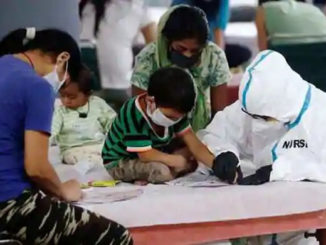
    New Delhi (TIP): With 63,371 fresh cases of the coronavirus disease (Covid-19) and 895 related deaths in the past 24 hours, India’s tally went up to 7,370,468, rising by more than 100,000 since the beginning of this month, according to the Union health ministry on Friday, October 16. India has been reporting around 66,000 new Covid-19 cases daily since October 12 and even witnessed 55,342 infections on October 13, official data shows. Deaths have also been fewer with 816 succumbing to the viral disease on October 12 and 680 fatalities on Thursday. The number of deaths have been sustained below the 1,000 mark since the last 17 days.

    The health ministry said on Friday that the country continues to have one of the lowest deaths per million population due to the coronavirus disease compared to other countries across the world. It also said that at least 22 states and Union territories have lower deaths per million population than the national average, which is currently at 80. “Some States/UTs are performing better and reporting much lower deaths/million population than the national average,” the ministry posted on Twitter.

    There are 804,528 active cases of the coronavirus disease and the death toll in the country, which is the second worst-hit in the world, has gone up to 112,161, the health ministry’s dashboard showed at 8am. There have been 6,453,779 recoveries so far with 70,338 people cured of the respiratory disease in the last 24 hours. This has taken the national recovery rate to 87.56%.

    “India is reporting a progressively high increase in the recoveries and a persistent decline in the percentage of active cases. As a result, the doubling time of the infection has sharply improved. It is now almost 73 days (72.8 days). This indicates a substantial fall in the daily New Cases and the consequent increase in time taken to double the Total Cases,” the health ministry said.

  • The Tribune, true voice of people

    The Tribune, true voice of people

    By Prabhjot Singh

    As the voice of people, the credibility of The Tribune remained unquestionable. Its readers would vouch for its stories. Unlike many other media organizations, The Tribune continued to distinguish itself with its editorial supremacy. While the management generally thrived upon its past laurels, members of the editorial staff took the challenges, including threats not only to their lives but also their families, in their stride to uphold the professional values.

    I am really saddened by an unsavory controversy in social media about The Tribune, an organization with which I have remained associated for more than 40 years. I strongly believe that institutions are much bigger than individuals. Individual come and go but institutions stay. It is not to undermine the contributions of individuals that help in building the institutions. But when individuals, or even some groups or associations,  try to run down credible institutions, it becomes  immense painful.

    Before I joined The Tribune as a Staff Correspondent at Chandigarh, 41 years ago, my association with this great institution was already three years old. Before moving to Chandigarh I worked as a Sports Reporter at Ludhiana. I had the privilege of starting my career with The Tribune under the watchful eyes of a professional giant, Mr Prem Bhatia

    My years with The Tribune were eventful. After more than four decades most of these incidents are still fresh in my memory. Bordering an emotional or traumatic angle, many of these events have been a part of my indelible memory. From trying circumstances of covering militancy in the trouble-torn State, the Tribune group continued to serve its dedicated readership in North India in a  true professional manner. Pressures from both the State and the militants notwithstanding, it stood by its avowed principle of staying apolitical. Curfews and censorships failed to deter from its path of reporting  the developments.

    As the voice of people, the credibility of The Tribune remained unquestionable. Its readers would vouch for its stories. Unlike many other media organizations, The Tribune continued to distinguish itself with its editorial supremacy. While the management generally thrived upon its past laurels, members of the editorial staff took the challenges, including threats not only to their lives but also their families, in their stride to uphold the professional values.

    Besides the professional challenges, The Tribune also had to compete with market forces as some of the leading national media houses also started their editions from Chandigarh. While editorially The Tribune was ahead of its impending challenges, the management was still basking in the glory of monopoly era.

    While the professional competitions were trying  to make dents in  strongholds of The Tribune, the management  was slow to react. Issues about limited visibility of The Tribune publications at popular public spots like Railways Stations, Bus Stands, Airports, Hotels and Libraries were  overlooked.

    While everyone has a right to criticize any individual or a group, but an attempt to tarnish the image of this great institution, The Tribune, and its editorial team, is both unwarranted and deplorable.

    It is pertinent to mention that The Tribune not only faced challenges from strong rival national publications but also had to support two of its sister publications that even after more than 40 years are still dependent upon the mother publication for their survival. While the Punjabi and the Dainik Tribune have struggled throughout, many other vernacular newspapers that came to the region much later have scripted success stories. Some blame must go to the trade unions that have generally been dominated by the loss bearing sister publications.

    It may sound strange but is true that while the employees of The Tribune were required to work and support for the Dainik and Punjabi editions  as well, wage structures of the new publications , though in much lower category under the Wage Board guidelines, were brought at par with the mother publication.

    Incidentally, the City pull outs started in late 90s became self-supporting within a couple of years of their launch. I had the distinction of leading the launch of Chandigarh Tribune that became number one among all City pull outs. And all members of the City team, including its desk staff, worked in total unison to make this experiment successful even after the usual management impediments.

    For any newspaper to grow, editions are launched to expand the paper’s base in the region. Therefore, it was only logical that The Tribune launched its J&K and Uttarakhand editions.

    While doing so, The Tribune Trust left it to the editorial section to decide on the number of pages/paginations.  Historically, The Tribune has been a big paper in J&K even when it was published from Lahore.  So the Trust rightly decided to bring out an edition for the people of J&K. Unfortunately, the edition has had to be closed owing to the failure of the business side, especially the circulation and advertisement departments.  While HT and TOI are viable in Uttarakhand and Daily Excelsior and Greater Kashmir in J&K, The Tribune was rendered non- viable because of the declining advertisement and circulation revenue from the main edition in the past 6-7 years.  The paper was unable  to subsidize the J & K edition and had to close it.

    Handpicked associates of  a former GM , who are now on important positions,  have been using the employees’ union and the website to attack the editorial section and the Trust to divert attention from their own failures and to deflect blame.

    While everyone has a right to criticize any individual or a group, but an attempt to tarnish the image of this great institution, The Tribune, and its editorial team, is both unwarranted and deplorable.

    (The author is a former editor of The Tribune)


  • Are we losing the war against the obscenity of hunger?

    Are we losing the war against the obscenity of hunger?

    By Prabhu Dayal

    The World Food Programme may have got the Nobel Peace Prize, but the world is not winning against hunger

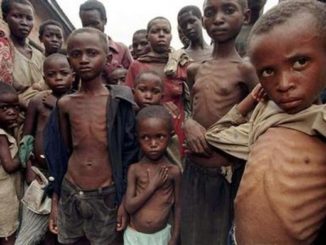
    As the humanitarian organization Mercy Corps puts it, “Hunger and malnutrition are the biggest risks to health worldwide – greater than AIDS, malaria and tuberculosis combined. Globally, food deprivation still claims a child’s life every three seconds and nearly half of all deaths in children under five are attributable to undernutrition”. Eveyone.org, another charity organization says “Every hour of every day, 300 children die because of malnutrition. It’s an underlying cause of more than a third of children’s deaths – 2.6 million every year”. There is an urgent need to take action on war footing against such a situation.

    Since its establishment, the WFP has responded to natural disasters and conflicts around the world. Currently, it is working in a number of countries, and it faces its severest challenges in three conflict-torn countries, namely Yemen, Afghanistan and South Sudan.

    As Mahatma Gandhi had said, there are people in the world so hungry, that God cannot appear to them except in the form of bread. Hunger is one of mankind’s worst enemies and has driven millions of people to desperation; it has also provided the subject-matter for some powerful literature, an outstanding example being the French writer Victor Hugo’s classic ‘Les Misérables’.

    In her article Let Them Eat Bread: The Theft That Helped Inspire ‘Les Misérables’ which appeared in the ‘npr’ (National Public Radio) in March 2017,Nina Martyris wrote:

    On a bitterly cold day in February 1846, the French writer Victor Hugo was on his way to work when he saw something that affected him profoundly. A thin young man with a loaf of bread under his arm was being led away by police. Bystanders said he was being arrested for stealing the loaf. He was dressed in mud-spattered clothes, his bare feet thrust into clogs, his ankles wrapped in bloodied rags in lieu of stockings.

    It made me think,” wrote Hugo. “The man was no longer a man in my eyes but the specter of la misère, of poverty.” In his novel, Hugo portrays the family’s circumstances in these few, short lines: “A very hard winter came. Jean had no work. The family had no bread. No bread literally. Seven children!”

    Jean Valjean is sentenced to five years’ hard labor for stealing a loaf of bread! He attempted to escape four times, and each time his sentence was lengthened by three years; he also received an extra two years for once resisting recapture during his second escape. After nineteen years in prison, he was released, but by law had to carry a yellow passport that announced that he is an ex-convict, an outcast. Hugo uses that loaf to attack society’s criminal indifference to poverty and hunger and to highlight the injustice of the penal system.

    ‘Les Misérables’ should have awakened mankind’s conscience, but one must ask oneself if it has succeeded in doing that. As former US President Dwight Eisenhower said, “Every gun that is made, every warship launched, every rocket fired, signifies in the final sense a theft from those who hunger and are not fed, those who are cold and not clothed”.

    As the humanitarian organization Mercy Corps puts it, “Hunger and malnutrition are the biggest risks to health worldwide – greater than AIDS, malaria and tuberculosis combined. Globally, food deprivation still claims a child’s life every three seconds and nearly half of all deaths in children under five are attributable to undernutrition”. Eveyone.org, another charity organization says “Every hour of every day, 300 children die because of malnutrition. It’s an underlying cause of more than a third of children’s deaths – 2.6 million every year”. There is an urgent need to take action on war footing against such a situation.

    “India is home to a quarter of all undernourished people worldwide, making the country a key focus for tackling hunger on a global scale.”
    India ranks 94 among 107 countries in 2020 Global Hunger Index, even below neighbors like Bangladesh, Nepal and Pakistan
    Picture / Courtesy Akshaya Patra

    We, as individuals, also have a great responsibility. In such trying times, the words of Mother Teresa should guide us: ” If you cannot feed a hundred people, then feed just one.” 

    Thus, the announcement by the Norwegian Nobel Committee on October 9 that the World Food Programme( WFP) has been awarded the Nobel Peace Prize in 2020 is indeed most welcome. The award has been given for its efforts to combat hunger, for its contribution to bettering conditions for peace in conflict-affected areas and for acting as a driving force in efforts to prevent the use of hunger as a weapon of war and conflict.

    The World Food Programme(WPF) has indeed been doing God’s work by providing food aid through the UN system since 1961. Its website mentions: “Every day too many men and women across the globe struggle to feed their children a nutritious meal. In a world where we produce enough food to feed everyone, 690 million people still go to bed on an empty stomach each night. Acute food insecurity affected 135 million people in 55 countries in 2019. Even more – one in three – suffer from some form of malnutrition”.

    Since its establishment, the WFP has responded to natural disasters and conflicts around the world. Currently, it is working in a number of countries, and it faces its severest challenges in three conflict-torn countries, namely Yemen, Afghanistan and South Sudan.

    Announcing the Nobel Peace Prize, the Chairperson of the Committee, Berit Reiss-Andersen said at a news conference: “The World Food Programme plays a key role in multilateral co-operation in making food security an instrument of peace”. She also said that with this year’s award, the committee wanted to “turn the eyes of the world to the millions of people who suffer from or face the threat of hunger”.

    In 2015 the global community adopted the 17 Global Goals for Sustainable Development to improve people’s lives by 2030. Goal Two is ‘Zero Hunger’ which pledges to end hunger, achieve food security, improve nutrition and promote sustainable agriculture. Achieving this goal is the priority of the WFP; if present trends continue, the number of people affected by hunger will surpass 840 million by 2030, or 9.8 percent of the global population.

    It may be mentioned that India has enjoyed steady economic growth and has achieved self-sufficiency in grain production in recent years. Despite this, high levels of poverty, food insecurity and malnutrition persist. The WFP’s website mentions that it has been working in India since 1963, with work transitioning from food distribution to technical assistance since the country achieved self-sufficiency in cereal production. It also says something that should prick our conscience: “India is home to a quarter of all undernourished people worldwide, making the country a key focus for tackling hunger on a global scale. In the last two decades, per capita income more than tripled, yet the minimum dietary intake fell. The gap between rich and poor increased during this period of high economic growth”.

    Coronavirus has further multiplied the challenges which India faces. In the second week of April 2020 itself, the International Labour Organization (ILO) had said that about 400 million workers from India’s informal sector are likely to be pushed deeper into poverty due to Covid-19. There is no doubt that during the past six months, poverty in the country has worsened; so too, has hunger. The Government as well as many NGO’s are grappling with the colossal problem of feeding millions of impoverished people who have lost even their means of earning a livelihood.

    We, as individuals, also have a great responsibility. In such trying times, the words of Mother Teresa should guide us: ” If you cannot feed a hundred people, then feed just one.”

    (The author is a retired career diplomat of India. He can be reached at Prabhu_dayal70@hotmail.com)

    (Courtesy OPOYI)


  • Consulate General of India, Houston

    Consulate General of India, Houston

    Public Notice Regarding Change in Outsourcing Service Provider

    Cox & Kings (CKGS) ceases operations; VFS Global will be the new service provider

    HOUSTON (TIP):  The Indian Consulate at Houston has issued the following press release to the effect that Cox & Kings Global Services (CKGS), the  existing service provider located at  1001 Texas Avenue, Houston TX 77002 for providing outsourcing services for Visa, OCI, Renunciation, Passport and Global Entry Program (GEP) (Website: in.ckgs.us) will shut down its operations at close of business (1600 hours Central Standard Time) on Wednesday, 14 October, 2020.

    The new service provider is VSF Global, likely to start operations from November 2. In the interim, October 19 onwards, the Consulate will provide direct limited services only in emergencies. Applicants residing in the states of Arkansas, Kansas, Louisiana, Oklahoma, Texas, New Mexico, Colorado and Nebraska, covered by the Consulate General of India, Houston.

    “ In this context, the following may kindly be noted:-

    (i)         Applicants can only submit applications on the CKGS website before the above deadline.

    (ii)       Applicants must ensure that their documents are shipped to CKGS with suitable pre-paid return envelopes in a manner to ensure it reaches CKGS by 1600 hours Central Standard Time on Friday, 16 October 2020.

    (iii)      Any applications received after 1600 hours Central Standard Time on Friday,

    16 October 2020 will be returned to the applicants without processing.

    (iv)      Applicants must ensure that they receive back the processed documentation from CKGS as it will not be possible for CKGS or the Consulate to take care of any returned envelopes. The responsibility is that of the applicant.

    With effect from 19 October 2020 and till M/s VFS Global – the new outsource service provider takes over operations (expected from 02 November 2020), the Consulate will provide direct limited services only in emergencies. Applicants residing in the states of Arkansas, Kansas, Louisiana, Oklahoma, Texas, New Mexico, Colorado and Nebraska, covered by the Consulate General of India, Houston, are advised to follow the instructions given below to avail emergencies services:

     (i)         Visa: Emergency visa to the eligible categories allowed to travel to India as per the advisories issued   from time to time by the Government of India.  Visa applicants are requested to send an email to: ‘visa.houston@mea.gov.in’ requesting for emergency visa. On receipt of the documentation checklist, applicants are requested to carefully go through the requirements relating to the different categories of visa before submitting their applications. The Consulate may request additional documentation in certain cases.

    (ii)       Passport: For emergency passport services, applicants are requested to send an email to: ‘passport.houston@mea.gov.in’ explaining the reason. Only after approval from the Consulate, the application process must be initiated by the applicant.

    (iii)      OCI: All OCI services will remain suspended till the new service provider takes over.

    (iv)      Miscellaneous Consular Services: Request for Miscellaneous Services (Attestation, Power of Attorney, Police Clearance Certificates etc.) can be sent to the Consulate through regular Post/Mail. For procedure related to these services please visit: https://cgihouston.gov.in/pages/Mjk

     The contact details of VFS Global, service fees details, their operational hours, etc. will be published on the website of CGI, Houston in due course.

     Helplines:    In case of any further query or assistance please contact the following helplines:

    Regular Helpline number: +1-713-626-2148

    Emergency helpline number:+1-713-626-2149   (for emergencies only)

    Email: enquiriescgi@swbell.net

    Website: https://cgihouston.gov.in


  • Indian American police officer Sandeep Singh Dhaliwal Honored

    Indian American police officer Sandeep Singh Dhaliwal Honored

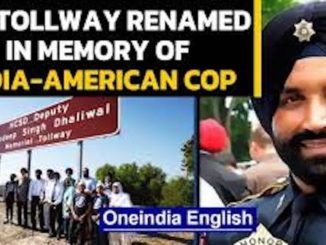
    HOUSTON (TIP): A year after Indian American Sandeep Singh Dhaliwal was shot and killed on duty during a traffic stop, a portion of a tollway in Houston was renamed after the Indian-American police officer.

    Dhaliwal, 42, was the first Sikh sheriff’s deputy in Harris county with a population of over 10,000 Sikhs. He made national headlines when he was allowed to grow a beard and wear a turban on the job.

    He was gunned down in Cyprus on Sept. 27 last year while conducting a routine mid-day traffic stop in northwest of Houston.

    Dhaliwal was scheduled to be promoted to a supervisor role where he would have mentored younger deputies on community policing.

    His death resonated across the US and the world and tributes to his memory continued with the renaming of a section of Beltway 8 tollway between Texas 249 and US 290 after him last week, Houston chronicle reported.

    The Harris County Toll Road Authority put up the sign ‘HCSO Deputy Sandeep Singh Dhaliwal Memorial Tollway’ near Texas 249. A special ceremony was also performed at the Gurdwara Sikh National Centre on the occasion.

    Dhaliwal, a father of three, joined the force 10 years back and was the state’s first law enforcement officer to receive permission to wear a religious turban and beard while on duty.

    Commissioner Adrian Garcia, who hired Dhaliwal, said, “I was honored to commemorate a section of the Beltway 8 as ‘Deputy Sandeep Singh Dhaliwal Memorial Tollway’ to honor one of HC’s finest who paid the ultimate sacrifice.”

    “We miss our friend and teammate,” said Harris County Sheriff Ed Gonzalez. “It’s a loss that we feel every day,” he said.

    Garcia as former county sheriff had allowed Dhaliwal to wear a beard and turban, Sikh articles of faith, while serving — becoming one of the first law enforcement agencies to do so in the country, Chronicle said.

    The new policy was borne from an incident just before Garcia took office as sheriff when a Sikh had been wrongly arrested.

    Garcia met with the incensed community and during his remarks, told them new policies and training will be there, but that wouldn’t transform the department.

    “What will change us is you encouraging your sons and daughters to join the Harris County Sheriff’s Office so that we can change from within,” he was quoted as saying.

    “Who would know that Sandeep would be in that audience with his father who had been a policeman in India, and look to him and tell him he wanted to be in law enforcement,” the former sheriff said.

    It set off a chain of events that would change the fiber of the department. Later, he would see a Sikh in a magazine wearing his turban and beard in a US military uniform.

    “It set me off. How could the US military do this and not us?” Garcia asked himself.

    After an internal debate, he gathered his legal team, staff, commanders, and members of the community and worked to craft what is now known as the Accommodations Policy.

    Dhaliwal’s family attended the ceremony and was touched by the remembrance. “It’s been an emotional week for us,” his father Pyara said. “All the memories that happened one year ago are fresh like yesterday.”

    “We are very thankful and honored by the designation. I believe this will remind the community and succeeding generations that pass the signs to live a life of selfless service as he (Sandeep) lived his life loving one another,” his father was quoted as saying.

    He was raised in India by his mother who told him the stories of his religious ancestors. He kept it in his mind, and he lived it as a symbol of diversity and unity.

    Coincidentally, the signs are adjacent to the new Gurdwara (Sikh temple) for the Sikh National Center located at 7500 N. Sam Houston Parkway.

    The exits near the signage also lead to the soon to be renamed post office bearing his name. Congresswoman Lizzie Fletcher who was present for the dedication said the legislation has passed the US House of Representatives.

  • Indian American Philanthropist Gets Lifetime Achievement Award

    Indian American Philanthropist Gets Lifetime Achievement Award

    WASHINGTON  (TIP): Indian American philanthropist Harish Kotecha has been awarded the prestigious Sandra Neese Lifetime Achievement Award in recognition of his work in the United States for meeting the needs of children and youth experiencing homelessness.

    The lifetime achievement award from the National Association for the Education of Homeless Children and Youth (NAEHCY) was presented to Harish Kotecha, who is founder and president of Hindu Charities for America (HC4A), at its 32nd annual conference on October 9, a statement said.

    Sandra Neese Lifetime Achievement Award is presented annually to honor people who have tirelessly worked to ensure that all children may have what most take for granted: safety, shelter, and a future and that young people without shelter may find the promise of tomorrow.

    NAEHCY’s Board of Directors were impressed with “your (Harish Kotecha’s) ability to transform a singular movement into a replicable program that now is established in 4 major cities,” the statement said.

    In her award letter to Mr Kotecha, Jimiyu Evans, president, NAEHCY wrote that, “We are glad to have an advocate like you in the field to meet the needs of children and youth experiencing homelessness – supporting and encouraging academic success – while implementing program coordination and community collaboration.”