Month: December 2020

  • SC rejects demand for govt nominees in trust formed for Ayodhya mosque

    SC rejects demand for govt nominees in trust formed for Ayodhya mosque

    The Supreme Court on Friday, Dec 4,  rejected the demand to form a trust comprising government nominees to oversee construction work at the 5 acre land allotted to the Uttar Pradesh Sunni Central Waqf Board following the landmark decision of the top court in the Ramjanmbhoomi-Babri Masjid title suit in November last year.

    A bench of justices RF Nariman and KM Joseph refused to entertain a petition filed in this regard by two lawyers Shishir Chaturvedi and Karunesh Kumar Shukla.

    Appearing for the petitioners, advocate Hari Shankar Jain submitted that as per the November 9, 2019 decision of the Supreme Court, deciding the suit in favour of the Hindu parties, the Sunni Waqf Board was allotted 5 acres of land in village Dhannipur in Ayodhya district. On July 29, 2020, the Waqf Board created a trust called the Indo Islamic Cultural Foundation which had no nominees from either the Central or state government.

  • Why farmers are protesting against Agri Bills?

    Why farmers are protesting against Agri Bills?

    The laws enacted by the Modi government lay the framework for allowing farmers to sell produce directly to corporates, but farmers fear that this may be an excuse to pull off the Minimum Support Price (market intervention by the Government of India to insure agricultural producers against any sharp fall in farm prices) safety net from under their feet

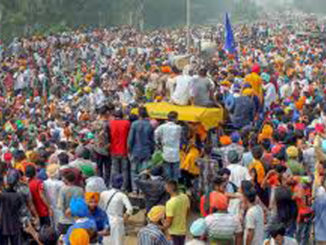
     Since 26th November 2020, the borders of Delhi have been witnessing a huge agitation being carried out by farmers, most of them from Punjab and Haryana. The three laws introduced by the Government, on paper at least, seem well intentioned. The Farmers’ Produce Trade and Commerce (Promotion and Facilitation) Bill, 2020 – allows farmers to bypass the Agricultural Produce Market Committee (APMC) and sell the produce directly to a big company, warehouses, cold storage chains, or even set up shop to sell directly to consumers.

    The Farmers (Empowerment and Protection) Agreement on Price Assurance and Farm Services Bill, 2020 allows for contract farming, for a farmer to get into a contract with a buyer to cultivate specific products for a specific price. This ensures that farmers know the price they will get even before cultivation starts.

    The Essential Commodities (Amendment) Bill, 2020 allows buyers to purchase and stock commodities without getting called a hoarder and being vulnerable to penal action.

    The changes in law facilitates the entry of big retailers and exporters in the market. The Government would like to withdraw from the business of procuring foodgrains and eventually hand over the assets of Food Corporation of India (FCI) to these private corporates. While it makes sense from the Government’s point of view, the implications of such a move are by no means certain in the long run.

    Why are the farmers upset?

    The farmers of Uttar Pradesh, Punjab, and Haryana are angry with the provisions of these Bills as they are afraid that these Bills may be the platform that the government (at the Centre) is setting up for the replacement or scrapping of the otherwise robust support system prevalent in their states for the purchase of their crops. They fear that the Minimum Support Price (MSP) guarantee that was their safety net since the Green Revolution of the 1960s kicked in, maybe snatched away from under the pretext of giving the farmers more playing ground and better platforms.

    The state-government driven crop produce procurement infrastructure in these areas is very good. Procurement through the Food Corporation of India at promised MSP to farmers, which is declared before every agriculture season, encourages farmers to focus on taking more yield. 23 agricultural crops have MSPs, though the governments primarily buy only rice and wheat. Farmers fear the two recent bills as they feel these agriculture reform processes will kill the government procurement process as well as the MSP. And why d we see most protesters from Punjab and Haryana? That is because they are the biggest beneficiaries of this safety net.

    Why has the Centre not reached out?

    The Central ministers and Prime Minister Narendra Modi have tried reassuring the farmers that the government has no plans to end the government procurement system nor the MSP policy. But fear, misconceptions persist and the two sparring parties have not had meaningful negotiations.

    The farmers of Punjab and Haryana

    As per certain reports, nearly 89 per cent of the rice produced by the farmers in Punjab is procured by the government. In Haryana, it is 85%. farmers in Punjab and Haryana face no price risk and price risk and are in fact incentivised to grow paddy and wheat. But the nation has been facing a shortage of pulses and the wheat and rice instead have been a surplus in FCI’s godowns.

    Also, rice is a water-intensive crop and farmers from areas with water shortage too grow it as there is an MSP assured in the end. Continuous adoption of rice-wheat cropping system in North-Western plains of Punjab, Haryana and West Uttar Pradesh has resulted in depletion of ground water and deterioration of soil quality, posing a serious threat to its sustainability,” says a government study. Also, these Farm Bills are encouraging farmers to strike deals with large corporates, and farmers do not trust corporates.

    What are the big concerns

    Even as the farmer protests against the three new agriculture-related laws have gathered momentum, one thing seems obvious: Much of the opposition really is just to one of the three laws.

    Even in that one – the Farmers’ Produce Trade and Commerce (Promotion and Facilitation) Act – there are only some contentious provisions, which, although key, can still leave doors open for negotiation.

    The other two laws

    Consider first the two laws that ought not to be serious cause for farmer angst. The Essential Commodities (Amendment) Act is about doing away with the Centre’s powers to impose stockholding limits on foodstuffs, except under “extraordinary conditions”. These could be war, famine, other natural calamities of grave nature and annual retail price rise exceeding 100% in horticultural produce (basically onions and potato) and 50% for non-perishables (cereals, pulses and edible oils).

    Given that stock limits apply only to traders – the amendment exempts processors, exporters and other “value chain participants” as long as they don’t keep quantities beyond their installed capacity/demand requirements – it shouldn’t concern farmers at all. Farmers, if anything, would gain from removal of stocking restrictions on the trade, as it potentially translates into unlimited buying and demand for their produce.

    The Farmers (Empowerment and Protection) Agreement on Price Assurance and Farm Services Act has to do with providing a regulatory framework for contract cultivation. This specifically concerns agreements entered into by farmers with agri-business firms (processors, large retailers or exporters) ahead of any planting/rearing season for supplying produce of predetermined quality at minimum guaranteed prices.

    Again, there is little rationale for objecting to an Act that merely enables contract farming. Such exclusive agreements between companies and farmers are already operational in crops of particular processing grades (the potatoes used by beverages and snacks giant PepsiCo for its Lay’s and Uncle Chipps wafers) or dedicated for exports (gherkins).  The processors/exporters in these cases typically not only undertake assured buyback at pre-agreed prices, but also provide farmers seeds/planting material and extension support to ensure that only produce of desired standard is grown. The point to note is that contract cultivation is voluntary in nature and largely for crops not amenable to trading in regular APMC (agricultural produce market committee) mandis.

    There is hardly any domestic market for gherkins, just as the milk in mandis either. The produce sugar mills and dairy plants source from them is practically contract farming. An Act that formalizes contract cultivation through a “national framework” and explicitly prohibits any sponsor firm from acquiring the land of farmers – whether through purchase, lease or mortgage – should actually be welcomed.

    The contentious one

    That leaves the only law – the FPTC Act, for short – which is a bone of contention. It permits sale and purchase of farm produce outside the premises of APMC mandis.

    Such trades (including on electronic platforms) shall attract no market fee, cess or levy “under any State APMC Act or any other State law”.

    At issue here is the very right of the Centre to enact legislation on agricultural marketing. Article 246 of the Constitution places “agriculture” in entry 14 and “markets and fairs” in entry 28 of the State List. But entry 42 of the Union List empowers the Centre to regulate “inter-State trade and commerce”. While trade and commerce “within the State” is under entry 26 of the State List, it is subject to the provisions of entry 33 of the Concurrent List – under which the Centre can make laws that would prevail over those enacted by the states.

    However, some experts make a distinction between agricultural “marketing” and “trade”. Agriculture per se would deal with everything that a farmer does – right from field preparation and cultivation to also sale of his/her own produce. The act of primary sale at a mandi by the farmer is as much “agriculture” as production in the field. “Trade” begins only after the produce has been “marketed” by the farmer. Going by this interpretation, the Centre is within its rights to frame laws that promote barrier-free trade of farm produce (inter- as well as intra-state) and do not allow stockholding or export restrictions.

    But these can be only after the farmer has sold. Regulation of first sale of agricultural produce is a “marketing” responsibility of the states, not the Centre. Farmers, for their part, would want no restrictions on the movement, stocking and export of their produce.

    Maharashtra’s onion growers have vehemently opposed the Centre’s resort to ban on exports and imposition of stock limits whenever retail prices have tended to go up. But these restrictions relate to “trade”. When it comes to “marketing” – especially dismantling of the monopoly of APMCs – farmers, especially in Punjab and Haryana, aren’t very convinced about the “freedom of choice to sell to anyone and anywhere” argument.

    The reason for this is simple: Much of government procurement at minimum support prices (MSP) – of paddy, wheat and increasingly pulses, cotton, groundnut and mustard – happens in APMC mandis.

     In a scenario where more and more trading moves out of the APMCs, these regulated market yards will lose revenues. “They may not formally shut, but it would become like BSNL versus Jio. And if the government stops buying, we will be left with only the big corporates to sell to,” said a Panipat (Haryana)-based farmer.

    What could be negotiated

    If the protesting farmer union leaders were to sit down at the negotiating table, the government can possibly get them to agree to drop the demand on repealing all the three laws. Their problem is essentially about the FPTC Act and its provisions that they see as weakening the APMC mandis. There is also disquiet on the dispute resolution mechanism for transactions outside the mandis. The Act proposes these to be referred to offices of the sub-divisional magistrate and district collector. “They aren’t independent courts and cannot deliver us justice, leave alone guarantee timely payment,” alleged the same farmer. These may be just fears, but they aren’t small. From the government’s standpoint, the elephant in the room would be if the farmers insist on an additional demand: Making MSP a legal right. That would be impossible to meet, even if the three farm laws were to be put on hold.

    Why MSP is not a solution

    A key debate after the enactment of three farm-reform laws and the subsequent protests is around the issue of federally-fixed minimum support prices (MSPs), a system guaranteeing farmers assured prices for their produce through procurement. MSP is an obligatory, not a statutory exercise. Farmers have demanded a legislation to prohibit sale of any farm produce below these minimum prices. If the government agrees to this, it is likely they will end their protests against the three new farm reforms.

    But a law making MSPs the legal floor price defies economic logic. The government sets MSPs for 23 crops, but it is effective only in case of rice and wheat because it buys only these two commodities in sufficiently large quantities. MSPs are an assurance that the government will intervene if market rates fall below that threshold, thereby helping avoid distress sale. This policy was salutary when India faced acute food shortages. Farm policies to deal with surpluses will fundamentally have to be different from measures adopted to overcome a previous era of scarcity. A law barring purchases of the other 21 crops below MSPs by any private trader will also, immediately, fuel high inflation. Every one percentage point increase in MSPs leads to a 15-basis point increase in inflation. Higher MSPs could also upend the Reserve Bank of India’s inflation targets, hurting economic growth. An MSP mechanism that ignores demand and global prices creates market distort-ions. If it is not profitable for traders to buy at MSPs, then the private sector will exit the markets. In such a scenario, the government cannot be a monopoly buyer. Mandatory MSPs will render India’s agri- exports non-competitive because the government’s assured prices are way higher than both domestic and international market prices.

    MSPs have also incentivised foodgrains over other crops, giving rise to imbalances of water and land resources and shifting land away from crops such as pulses and oilseeds, necessitating costly imports. Surplus cereals can’t be exported without a subsidy, which invites the World Trade Organization (WTO)’s objections. WTO rules cap government procurement for subsidised food programmes by developing countries at 10% of the total value of agricultural production based on 1986-88 prices in dollar terms. There is no argument that farmers need support, but policies that are less distortionary are in the interest of both farmers and consumers.

  • US pandemic death toll mounts as danger season approaches

    US pandemic death toll mounts as danger season approaches

    US deaths from the coronavirus pandemic have surged past 2,000 for two days in a row as the most dangerous season of the year approached, taxing an overwhelmed healthcare system with US political leadership in disarray.

    The toll from Covid-19 reached its second-highest level ever on Wednesday with 2,811 lives lost, according to a Reuters tally of official data, one short of the record from April 15. Nearly 200,000 new US cases were reported on Wednesday, with record hospitalizations approaching 100,000 patients. The sobering data came as the head of the US Centers for Disease Control and Prevention on Wednesday warned that December, January and February were likely to be “the most difficult time in the public health history of this nation.”

    CDC Director Dr. Robert Redfield told an event hosted by the US Chamber of Commerce that the United States could start losing around 3,000 people – roughly the number that died in the attacks of Sept. 11, 2001 – each day over the next two months. “The mortality concerns are real and I do think unfortunately before we see February, we could be close to 450,000 Americans that have died from this virus,” Redfield said. The US death toll since the start of the pandemic stands at around 273,000.

    Meanwhile, the administration of outgoing President Donald Trump has yet to articulate an effective strategy to contain the virus beyond promoting the development of a vaccine, which could be rolled out later this month but faces an uphill battle amid a skeptical public and logistical challenges.

    The Republican president’s few public appearances recently had been dedicated to efforts to overturn the results of the Nov. 3 election won by Democratic President-elect Joe Biden, who will assume office on Jan. 20. Maryland Governor Larry Hogan, a Republican, said he had been concerned about the transition between the Trump and Biden administrations, but he had grown more hopeful that the federal government response would not lapse.

    “We’re in the middle of the worst battle of this war, and the hand-off has got to be smooth. We’ve got to work together. There’s got to be no politics in this virus,” he told ABC News’ “Good Morning America” program.

    Hogan echoed Redfield’s warning, citing dark days ahead and noting even when vaccines are approved, there initially won’t be enough to even cover all of his state’s healthcare workers.

  • Global Covid-19 cases top 65.7mn: Johns Hopkins

    Global Covid-19 cases top 65.7mn: Johns Hopkins

    The overall number of global coronavirus cases has topped 65.7 million, while the deaths have surged to more than 1.51 million, according to the Johns Hopkins University.

    In its latest update on Saturday, Dec 5, the University`s Center for Systems Science and Engineering (CSSE) revealed that the current global caseload and death toll stood at 65,771,488 and 1,516,035, respectively.

    The US is the worst-hit country with the world`s highest number of cases and deaths at 14,343,430 and 278,605, respectively, according to the CSSE. India comes in second place in terms of cases at 9,571,559, while the country`s death toll soared to 139,188.

    The other countries with more than a million confirmed cases are Brazil (6,533,968), Russia (2,382,012), France (2,321,703), the UK (1,694,800), Italy (1,688,939), Spain (1,684,647), Argentina (1,454,631), Colombia (1,352,607), Germany (1,157,514), Mexico (1,156,770), Poland (1,041,846) and Iran (1,016,835), the CSSE figures showed. Brazil currently accounts for the second highest number of fatalities at 175,964. The countries with a death toll above 20,000 are Mexico (108,173), the UK (60,714), Italy (58,852), France (54,859), Iran (49,695), Spain (46,252), Russia (41,730), Argentina (39,512), Colombia (37,467), Peru (36,076) and South Africa (21,963).

  • S’pore to contribute $5mn to help other nations get Covid-19 vaccines

    S’pore to contribute $5mn to help other nations get Covid-19 vaccines

    Singapore on Friday announced its decision to contribute $5 million to support low- and lower-middle-income countries procure Covid-19 vaccines. The announcement was made in a joint statement by the Ministries of Foreign Affairs and Health, reports Xinhua news agency.

    The money would go through the Covid-19 Vaccine Global Access (COVAX) Advance Market Commitment (AMC) mechanism, which will help support 92 low- and lower-middle-income countries’ access through the COVAX Facility, said the statement.

    The COVAX Facility is a global risk-sharing mechanism which seeks to procure, equitably allocate and deliver 2 billion doses of COVID-19 vaccines by the end of 2021. Singapore is one of 97 self-financing participants in the Facility.

    The contribution is part of “our consistent support for vaccine multilateralism, and the fair and equitable access and allocation of vaccines”, said the statement.

    The AMC eligible countries include several ASEAN countries as well as small states globally, it added.

    The Covid-19 virus “does not respect borders, and no one is safe until everyone is safe”, said the statement, adding that the successful development of safe and efficacious vaccines is a critical step towards overcoming the pandemic.

  • Moderna to make up to 125mn Covid-19 vaccine doses available globally

    US-based drugmaker Moderna has said that it expects to have between 100 million and 125 million doses of its experimental Covid-19 vaccine available globally in the first quarter of 2021.

    Out of these, about 85-100 million doses will be made available in the US and 15-25 million doses will be available outside of the US, the company said on Thursday.

    These expected first quarter doses are inclusive within the 500 million to up to one billion doses that the company expects to manufacture globally in 2021.

    Moderna also re-affirmed its expectation of having approximately 20 million doses available in the US by the end of this year.

    The development comes after the company’s November 30 announcement that the primary efficacy analysis of the Phase 3 study of the “mRNA-1273” vaccine showed efficacy of 94.1 per cent.

    Also on November 30, Moderna submitted a request for an emergency use authorisation (EUA) from the US Food and Drug Administration (FDA) and conditional approval from the European Medicines Agency (EMA).

  • South Korea passes law allowing BTS stars to postpone military service

    New York (TIP): In a major move, the South Korean parliament has passed a bill allowing music sensation BTS and other musicians to postpone their mandatory military service until the age of 30.

    As per the South Korean laws, all able-bodied South Korean men, aged between 18 and 28, are required to serve in the military for about two years, reported New York Times.

    Two of the members of the group, Jin and Suga, will soon turn 28 and their with the group was under threat.

    According to the revised Military Service Act, “a pop culture artist who was recommended by the Minister of Culture, Sports and Tourism to have greatly enhanced the image of Korea both within the nation and throughout the world” would be allowed to postpone their military service until age of 30 if they do not have an extraordinary reason.

    Before revision, the Military Service Act only gave deferral exceptions to athletes, classical musicians, and those who enrolled in Ph.D. programs abroad. All seven members of BTS—the full name is Bangtan Sonyeondan (Bulletproof Boy Scouts) or Beyond The Scene as their English branding—meet that requirement as they were awarded the medal in 2018. The fans of the group, known as the BTS Army, celebrated the legal change on social media, calling it a gift to Jin ahead of his birthday on December 4. PTI

  • Hong Kong activist Joshua Wong defiant as he is jailed over 13 months for protest

    Hong Kong activist Joshua Wong defiant as he is jailed over 13 months for protest

    Hong Kong (TIP): Joshua Wong, 24, one of Hong Kong’s most prominent democracy activists, was jailed on Wednesday for more than 13 months over an unlawful anti-government rally in 2019, the toughest and most high-profile sentence for an opposition figure this year. Wong’s sentence comes as critics say the Beijing-backed government is intensifying a crackdown on Hong Kong’s opposition and chipping away at wide-ranging freedoms guaranteed after the former British colony returned to Chinese rule in 1997, a charge authorities in Beijing and Hong Kong reject. Reacting to the court ruling, Britain’s foreign minister Dominic Raab urged Hong Kong and Beijing authorities to stop their campaigns to stifle the opposition.

    Wong had pleaded guilty to organising and inciting an unlawful assembly near the city’s police headquarters during the height of the sometimes violent demonstrations in June last year. He faced a maximum of three years in jail.

    About 100 supporters gathered quietly inside the court ahead of the sentence, while a small group of pro-Beijing people rallied outside, calling for a hefty prison sentence. “I know the coming days will be tougher. We will hang in there,” Wong, wearing a black sweater and surgical face mask, shouted after the sentence was read out. “It’s not the end of the fight,” Wong said later through his lawyers.

    “Ahead of us is another challenging battleground. We’re now joining the battle in prison along with many brave protesters, less visible yet essential in the fight for democracy and freedom for Hong Kong.”

    Wong’s long-time colleagues Agnes Chow, 23, and Ivan Lam, 26, were jailed for a total of 10 and seven months, respectively, on charges linked to the same siege when thousands of protesters surrounded the police headquarters on June 21 to demand the government withdraw a now-shelved extradition bill.

    Chow, who cried inside the court room on hearing her sentence, had pleaded guilty to incitement and participation in an unlawful protest, while Lam pleaded guilty to incitement. A familiar face at democracy protests since he was a teenager, Wong was less than a year old when Hong Kong returned to Beijing 23 years ago with a guarantee of freedoms not enjoyed on the mainland, including freedom of speech and assembly. China’s imposition of a national security law on Hong Kong on June 30 was seen as the latest blow to the city’s liberties, which are crucial for its status as a global financial hub.

    ‘Keep the faith’ : Ahead of sentencing, the district court judge read a letter from Wong’s mother to the court in which she said her son was “a young person who cares about society and is persistent in his ideals”.

    Under the handover agreement in 1997, Beijing promised to maintain the free-wheeling city’s way of life for 50 years under a “one country, two systems” formula, although some fear 2047 is arriving early as authorities tighten their grip.

    US Senator Marsha Blackburn accused China of cracking down on human rights and destroying “any semblance of autonomy in Hong Kong”.

    “Keep the faith, Joshua, you are truly an inspiration to freedom fighters everywhere,” Blackburn said in a statement. Rights groups were swift to condemn the court ruling. “By targeting well-known activists from Hong Kong’s largely leaderless protest movement, authorities are sending a warning to anyone who dares openly criticise the government that they could be next,” said Amnesty International’s Asia-Pacific Regional Director Yamini Mishra. – Reuters

  • Suspected murderer remanded in custody after German car rampage

    Trier (TIP): A 51-year old German man suspected of murdering five people, including a baby, by ploughing a speeding car into a pedestrian zone in Trier on Tuesday, is to be held in prison after a judge decided he did not need to be sent to a psychiatric institution.

    The man, who had been drunk, had shown psychological abnormalities during and after his arrest on Tuesday, said the Trier prosecutor, adding an expert would examine him and issue an official opinion.

    “A preliminary evaluation finds no concrete indications to completely exclude culpability,” said the prosecutor, adding he was suspected of committing five murders and attempted murder and grievous bodily harm in a further 18 cases. “The accused is suspected of having randomly and deliberately driven at high speed in the pedestrian zone in Trier … with a Land Rover with the intention of killing or at least injuring as many people as possible,” said the prosecutor.

    The motive of the suspect, not named by prosecutors but identified as Bernd W. by media, was still unclear, said the prosecutor, reiterating, however, that questioning so far had given no indication of a political or religious background.

    Residents and politicians wept and hugged as they placed flowers, candles and hand-written messages to the victims in the city’s landmark Roman gate, Porta Nigra.

    “The pain of the mother who lost her child and her husband takes my voice away,” said Malu Dreyer, premier of the state of Rhineland-Palatinate, her voice breaking.

    “There will never again be the laughter of the father and the child. Others who have to mourn dead feel the same way… they will have to carry this burden for the rest of their lives,” she said. — Reuters

  • WeChat blocks Australian Prime Minister in doctored image dispute

    WeChat blocks Australian Prime Minister in doctored image dispute

    Sydney (TIP): The Chinese social media platform WeChat blocked a message by Australia Prime Minister Scott Morrison amid a dispute between Canberra and Beijing over the doctored tweeted image of an Australian soldier.

    China rebuffed Morrison’s calls for an apology after its foreign ministry spokesman Zhao Lijian posted the picture of an Australian soldier holding a bloodied knife to the throat of an Afghan child on Monday.

    The United States called China’s use of the digitally manipulated image a “new low” in disinformation.

    Morrison took to WeChat on Tuesday to criticise the “false image”, while offering praise to Australia’s Chinese community. In his message, Morrison defended Australia’s handling of a war crimes investigation into the actions of special forces in Afghanistan, and said Australia would deal with “thorny issues” in a transparent manner.

    But that message appeared to be blocked by Wednesday evening, with a note appearing from the “Weixin Official Accounts Platform Operation Center” saying the content was unable to be viewed because it violated regulations, including distorting historical events and confusing the public.

    Tencent, the parent company of WeChat, did not immediately respond to a request for comment.

    Australian special forces allegedly killed 39 unarmed prisoners and civilians in Afghanistan, with senior commandos reportedly forcing junior soldiers to kill defenceless captives in order to “blood” them for combat, a four-year investigation found.

    Australia said last week that 19 current and former soldiers would be referred for potential criminal prosecution. China’s embassy has said the “rage and roar” from Australian politicians and media over the soldier image was an overreaction.

    ‘Hypocrisy is obvious to all’

    Australia was seeking to “deflect public attention from the horrible atrocities by certain Australian soldiers”, it said.

    Other nations, including the United States, New Zealand and France – and the self-ruled island of Taiwan which China claims as its own – have expressed concern at the Chinese foreign ministry’s use of the manipulated image on an official Twitter account.

    “The CCP’s latest attack on Australia is another example of its unchecked use of disinformation and coercive diplomacy. Its hypocrisy is obvious to all,” the US State Department said on Wednesday, referring to the Chinese Communist Party. State Department deputy spokesman Cale Brown said the fabricated image of the soldier was “a new low, even for the Chinese Communist Party”. “As the CCP spreads disinformation, it covers up its horrendous human rights abuses, including the detention of more than a million Muslims in Xinjiang,” Brown wrote in a tweet.

    France’s foreign affairs spokesman said on Tuesday the tweeted image was “especially shocking” and the comments by Zhao “insulting for all countries whose armed forces are currently engaged in Afghanistan”.

    China’s embassy in Paris hit back on Wednesday, saying the soldier image was a caricature by a painter, adding that France has previously loudly defended the right to caricature.

    WeChat has 690,000 active daily users in Australia, and in September told an Australian government inquiry it would prevent foreign interference in Australian public debate through its platform. Morrison’s message had been read by 57,000 WeChat users by Wednesday. Zhao’s tweet, pinned to the top of his Twitter account, had been “liked” by 60,000 followers, after Twitter labelled it as sensitive content but declined Canberra’s request to remove the image.

    Twitter is blocked in China, but has been used by Chinese diplomats.

    China on Friday imposed dumping tariffs of up to 200 per cent on Australian wine imports, effectively shutting off the largest export market for the Australian wine industry.

    A group of parliamentarians from 19 countries that has lobbied against China’s actions in Hong Kong, where it has cracked down on dissent, and in the farwestern region of Xinjiang campaigned on social media for the public to drink Australian wine. Reuters

  • Argentina cops search office of 2nd doctor in Maradona case

    Buenos Aires (TIP): The investigation into Diego Maradona’s death continued with police raids on the office and home of the psychiatrist who cared for the soccer star and is being investigated for possible medical negligence.

    By order of the attorney general’s office of San Isidro, officers entered an apartment used by Agustina Cosachov for consultations in Buenos Aires on Tuesday, while another group of police searched her private home. AP

  • Israel hands over $1 billion in Palestinian tax backlog in sign of warming ties

    Israel hands over $1 billion in Palestinian tax backlog in sign of warming ties

    Ramallah (West Bank) (TIP): Israel handed over a backlog of billions of shekels in tax money to the Palestinian Authority on Wednesday, both sides said, in another sign of warming ties between the sides after the US presidential election victory of Joe Biden.

    The taxes, managed by Israel under interim peace accords from the 1990s and usually handed over monthly, make up more than half of the budget of the Palestinian Authority (PA), whose economy has been hard hit by the coronavirus pandemic.

    The 3.77 billion shekels ($1.14 billion) transfer is the first since June, when the Palestinians snubbed the handover due to Israeli Prime Minister Benjamin Netanyahu’s plans, currently suspended, to annex parts of the occupied West Bank.

    The Palestinians also rejected the cash several times in 2019 after Israel trimmed the sum in retaliation for funds going to the families of jailed or killed militants. It usually amounts to about $190 million a month.

    “The #Israeli government transfers all financial dues of the clearance to the account of the #Palestinian Authority,” Palestinian Affairs minister of civil affairs Hussein al-Sheikh tweeted, giving the figure as 3.768 billion shekels.

    The Israeli Finance Ministry confirmed the details.

    The PA has been unable to pay full wages of its 130,000 employees in the past months. Palestinian Prime Minister Mohammad Shtayyeh said this week it would pay full salaries once it received the tax money.

    Israel froze its annexation plans in August as part of an agreement to forge diplomatic ties with the United Arab Emirates. The Palestinians in November said they were resuming civil and security cooperation with Israel suspended over the annexation. The announcement came about two weeks after Biden beat incumbent Donald Trump in the U.S. presidential race.

    Palestinian President Mahmoud Abbas has since indicated he will drop his three-year political boycott of the White House.

    “Right now we are sending clear messages not only to the Israelis, not only to the Biden administration but also to the Europeans and many others that Palestine, and the Palestinians are ready to reengage completely with Israel,” Palestinian Foreign Minister Riyad al-Maliki said in a November 26 video conference.

    ($1 = 3.2861 shekels) — Reuters

  • China’s Chang’e-5 probe drills Moon’s surface, collects samples

    China’s Chang’e-5 probe drills Moon’s surface, collects samples

    Beijing (TIP): On the most complex mission to the Moon, China’s Chang’e-5 probe drilled the lunar surface, collected samples on Wednesday in the first such effort in over 40 years and began preparations to bring the precious soil to earth, the country’s space authority said. The Chang’e-5 probe has collected Moon samples after landing on Tuesday, the China National Space Administration (CNSA) announced on Wednesday.

    The unmanned probe landed in the area called Oceanus Procellarum, also known as the Ocean of Storms, on the near side of the Moon and started rolling out its solar panel wings and unlocking some of the payloads on-board to prepare for sample collection. The lander first drilled a 2-meter-deep hole, digging out soil, and sealed it up at 4:53 a.m. on Wednesday. Next, it will use its robotic arms to scoop up more samples from the lunar surface for backup, state-run media reported.

    About two kg of samples are expected to be collected and sealed in a container, CNSA officials said.

    State-run media has shown photos of the lander on the lunar surface after it landed successfully.

    “We designed two methods for the spacecraft to collect samples. One is to sample the lunar surface, and the other is to drill underground. The two methods could increase the chance of getting more diverse samples,” Peng Jing, deputy chief designer of the Chang’e-5 probe said.

    It is China’s maiden attempt to retrieve materials from an extra-terrestrial body.

    The United States sent astronauts to the Moon to collect samples. In the Soviet Union’s unmanned lunar sampling missions, the spacecraft took off from the Moon and returned to Earth directly.

    The US space agency on Wednesday congratulated China for the Chang’e-5 mission. Nasa’s top science official, Dr Thomas Zurbuchen, said he hoped the international research community would eventually get the chance to analyse any samples sent home.

    “When the samples collected on the Moon are returned to Earth, we hope everyone will benefit from being able to study this precious cargo that could advance the international science community,” he tweeted.

    Explaining why China chose to do what has been accomplished by the US and Soviet Union much earlier, Pei Zhaoyu, deputy director of the Lunar Exploration and Space Program Centre of the CNSA said that China chose a complicated technological approach including unmanned rendezvous and docking in lunar orbit, and could bring back more samples and lay a technological foundation for manned lunar missions.

    The samples collected on Wednesday, will be sealed in what scientists have described as a long “sausage-like package”. “Samples have to be sealed up in case any contamination occurs during the course back to earth,” Luan Enjie, the chief commander of China’s first lunar mission told the China Central Television (CCTV).

    “The Moon environment is very different from the Earth, so samples need to be stored in a very clean container,” he added. These soils obtained from the Moon are expected to provide information about its geological evolution and offer insights into solar activities in the universe, according to the mission team.

    The Chang’e-5 probe includes a lander, ascender, orbiter, and return vehicle. The sealed packages will be stored in the ascender, which will lift off from the Moon’s surface to transfer the samples to the returner and orbiter waiting in lunar orbit. At the proper time, the returner will then separate from the orbiter and carry the samples back to Earth, finally landing in north China’s Inner Mongolia.

    A no stranger to the Moon, China launched its first lunar probe, Chang’e-1 in 2007 which orbited 200 km above the Moon and mapped 3D images of the lunar surface followed by Chang’e-2 in 2010 which had sent high-resolution photos of the Moon’s surface.

    Chang’e-3 was launched in 2013 which softly touched down on the Sinus Iridum 12 days later.

    The Chang’e-4 probe was launched in 2018. It made the first-ever soft landing on the Von Karman Crater in the South Pole-Aitken Basin on the far side of the Moon. A major space power, China launched its first Mars mission ‘Tianwen-1’ on July 23 this year. The Mars spacecraft which included an orbiter, lander and rover is on its way to the red planet. PTI

  • Muslims in Sri Lanka ‘denied justice’ over forced cremations of Covid victims

    COLOMBO (TIP): Muslim and Christian families in Sri Lanka whose relatives were cremated during the coronavirus pandemic in violation of their religious beliefs say they have been denied justice after the supreme court threw out their case. Sri Lanka’s mandatory cremation policy for all bodies suspected to be infected with Covid-19 has been the cause of outrage and trauma for the majority-Buddhist country’s Muslim and Christian minorities, whose beliefs stipulate bodies should be buried. In Islam, to cremate bodies is to condemn them to hell.

    Several of the Muslims whose bodies were cremated by the authorities had not been tested for coronavirus, or had even tested negative. Sri Lanka has had more than 25,000 cases of Covid-19 and 124 deaths, including more than 50 Muslims who were cremated.

    In May, one Muslim man found that his mother had been wrongfully cremated. “The day my mother died at hospital, they took her body away and then handed me a pot of her ashes. But the next day they told me that my mother’s test was negative and it was a mistake cremating her. Every night I wake up and think of mother’s fate. We are poor and we do not have the means to demand justice or fight the authorities,” he said.

    Eleven affected families, both Muslim and Christian, took up a legal battle against the cremations, accusing the government of violating their freedom of religion and fundamental rights under the constitution. However, this week the supreme court refused to hear the appeal and dismissed the case, dashing their final hopes of justice and a halt to the mandatory cremations, which are still going on.

    Some Muslim families have begun disowning their dead because they do not want to be complicit in the cremations, which they see as a sin for their loved ones. Many have also refused to pay the fees of 48,000 rupees (£192) that are demanded by the state to cover the costs of cremation, meaning bodies of Muslim Covid-19 victims have begun to pile up in hospital morgues.

    Among them was Mohammad Ashraff, 49, whose uncle Mohammad Jeffrey, 76, died on 26 November of coronavirus. His body was compulsorily brought to a hospital in Colombo. “They demanded payment for the coffin but I refused because I told them it is against our religion to burn bodies. We have to obey the law but we would not participate, we would make no payments, we would have no part and no complicity in this.”

    ‘There will be no hope’: Muslims fear Rajapaksa win in Sri Lanka election

    Human rights activists say the policy is part of an ongoing attack on Sri Lanka’s Muslim community, who make up 9% of the population, by the Sinhala Buddhist majority government, led by the president, Gotabaya Rajapaksa. Rajapaksa was elected last year on a wave of anti-Muslim, hardline Buddhist sentiment, following the Easter suicide bombings by Islamist militants in churches and luxury hotels last April which left 267 dead.

    Shreen Saroor, a human rights activist, said: “The way they are treating the Muslim community during this pandemic is clear-cut racism. The community is being forced to abandon their own dead in order to protect their beliefs and traditions. There is not even a scientific justification for them being denied dignity in death.”

    Sri Lanka is the only country aside from China which has mandated cremations for suspected coronavirus fatalities, with the government justifying it on the basis of concerns of the virus contaminating groundwater, and that Covid-19 victims’ bodies could be used as “biological weapons … by certain groups”.

    Theguardian.com

  • PoK govt signs agreements with Chinese firm to build 700MW hydropower project

    Islamabad (TIP): The government in Pakistan-occupied Kashmir has signed agreements with a Chinese company and a local renewable energy firm for the construction of 700MW hydropower project at an estimated cost of USD 1.35 billion in the region as part of the ambitious China-Pakistan Economic Corridor, a media report said on Wednesday.

    China Gezhouba Group and its local partner Laraib Group Pakistan are the shareholders of the ‘Azad Pattan Hydropower Project’, which is located on Jhelum river in Sadhanoti district of PoK, Dawn newspaper reported.

    The consortium of lenders consists of China Development Bank, China Construction Bank, Industrial and Commercial Bank of China and Bank of China, the paper said.

    The implementation agreement and water use charges agreement for construction of the project were signed by PoK Electricity Secretary Zafar Mahmood Khan and Azad Pattan Power Private Limited CEO Li Xiaota on Tuesday, the paper said. The CPEC, which connects Gwadar Port in Balochistan with China’s Xinjiang province, is the flagship project of Chinese President Xi Jinping’s ambitious Belt and Road Initiative (BRI). Originally valued at USD 46 billion, the CPEC projects were worth USD 62 billion as of 2017.

    India has protested to China over the CPEC as it is being laid through PoK.

    The Ministry of External Affairs early this year said that Pakistan was told that the entire Jammu and Kashmir and Ladakh, including areas of Gilgit and Baltistan, are an integral part of India and that Islamabad should immediately vacate the areas under its illegal occupation. The government of Pakistan implementation agreement, Punjab water use agreement and tripartite power purchase agreements of the project had already been signed in the presence of Prime Minister Imran Khan. – PTI

  • Jail for 3 more Hafiz aides

    Lahore (TIP): A Pakistani anti-terrorism court has sentenced three more leaders of Mumbai terror attack mastermind Hafiz Saeed’s Jamat-ud-Dawa (JuD) to 15-year imprisonment each in two more terror financing cases. Anti-Terrorism Court (ATC) Lahore Judge Ijaz Ahmad Buttar handed down the sentence to Abdul Salam bin Muhammad, Zafar Iqbal and Muhammad Ashraf on Thursday. JuD chief Saeed’s brother-in-law Prof Hafiz Abdul Rehman Makki was sentenced to six months imprisonment in each case. — PTI

  • Afghan government, Taliban announce breakthrough deal to press on with peace talks

    Afghan government, Taliban announce breakthrough deal to press on with peace talks

    Kabul (TIP): Afghan government and Taliban representatives said on Wednesday they had reached a preliminary deal to press on with peace talks, their first written agreement in 19 years of war.

    The agreement lays out the way forward for further discussion but is considered a breakthrough because it will allow negotiators to move on to more substantive issues, including talks on a ceasefire.

    “The procedure including its preamble of the negotiation has been finalised and from now on, the negotiation will begin on the agenda,” Nader Nadery, a member of the Afghan government’s negotiating team, told Reuters.

    The Taliban spokesman confirmed the same on Twitter.

    The agreement comes after months of discussions in Doha, the capital of Qatar, in negotiations encouraged by the United States. In Afghanistan, the two sides are still at war, with Taliban attacks on government forces continuing unabated. Taliban insurgents have refused to agree to a ceasefire during the preliminary stages of talks, despite calls from Western capitals and global bodies, saying that that would be taken up only when the way forward for talks was agreed upon. UN envoy for Afghanistan Deborah Lyons welcomed the “positive development” on Twitter, adding that “this breakthrough should be a springboard to reach the peace wanted by all Afghans”.

    Last month, an agreement reached between Taliban and government negotiators was held up at the last minute after the insurgents balked at the document’s preamble because it mentioned the Afghan government by name.

    The Taliban refused to refer to the Afghan negotiating team as representatives of the Afghan government, as they contest the legitimacy of the administration led by President Ashraf Ghani. — Reuters

  • Parkash Singh Badal, Sukhdev Singh Dhindsa return Padma awards in protest against farm laws

    Parkash Singh Badal, Sukhdev Singh Dhindsa return Padma awards in protest against farm laws

    “Most painful and embarrassing moment in my long political career”: Prakash Singh Badal

    NEW DELHI / NEW YORK (TIP): Former Union Minister and five-time Chief Minister of Punjab Parkash Badal on Thursday, Decmber3,  returned the Padma Vibhushan award in protest against “the betrayal of the farmers by the Government of India.” In a letter to President Ram Nath Kovind, Badal said he was returning the award due to “the shocking indifference and contempt with which the government was treating the ongoing peaceful and democratic agitation of the farmers against the three farm Acts”.

    Incidentally, SAD (Democratic) chief and rebel Rajya Sabha member Sukhdev Singh Dhindsa has also announced that he would be returning his Padma Bhushan award. Dhindsa was presented the Padma Bhushan—third highest civilian award —by President Kovind last year for his contribution in the field of public affairs.

    Welcoming the decision of the Akali stalwart, Congress leader Sunil Jakhar said it was the outcome of the growing public pressure and mass movement against the farm bills. “The BJP leadership should be gracious enough to respect the larger sentiments and call up the Akali stalwart to find a way forward in solving the farmers’ agitation”. He also welcomed the announcement by Sukhdev Singh Dhindsa to return the Padma Bhushan.

    The full text of Parkash Singh Badal’s letter:

    Honorable Rashtarpati ji,

    I write this letter to return the Padma Vibhushan award in protest against the betrayal of the farmers by the Government of India and against the shocking indifference and contempt with which the Govt is treating the ongoing peaceful and democratic agitation of the farmers against the Farm Acts.

    When the Government of India had brought the Ordnances, assurances were given that the farmers’ apprehensions on these Ordinances would be addressed to their satisfaction while bringing the relevant Bills and subsequently the Acts. Trusting these assurances, I even appealed to the farmers to believe the Government’s word. But I was shocked when the Government simply went back on its word.

    That was the most painful and embarrassing moment in my long political career. I just cannot put in words the emotional stress which I have been going through since then. I have truly begun to wonder why has  the Government of the country become so heartless, so cynical and so ungrateful towards the farmers.

    While writing this letter to you, I am conscious that I address myself to a President who presides over the destiny of a population 70% of whom are farmers. For over 70 years, these farmers have been serving the country as its “Annadata” with the most selfless and self-effacing humility.

    I hardly need repeat that the country owes a huge and almost irrepayable debt to them. When the country faced hunger and humiliation in the sixties, having to beg for food in world capitals, the Government turned to the farmers to pull it out of starvation. The farmer responded so heartily that in a matter of three years, he turned the country from a food-begging to a food exporting country.

    The tide was turned principally by Punjab with Green Revolution. But in the process, he sacrificed the only two natural assets he had: soil fertility and water.

    Today however, the same farmer finds himself forced to wage bitter struggles just to secure his fundamental right to live . The three Acts fell as bolts from the blue on the already beleaguered peasantry of the country.

    Now, the spectacle of hundreds of thousands of farmers crying out for justice in one voice in the national capital would have moved any other nation or its government. Tragically, no such sensitivity towards the farmers’ pain and anger is visible here. I am sure that as the first Citizen of our great country and a conscientious public figure, you would be fully aware and perhaps as deeply concerned about these developments as I have been.

    Even before these Acts were passed, the poor farmers had already been in the grip of sever crisis throughout the country. Agriculture was never a lucrative profession in our country as the costs of agricultural inputs had been rising steeply with while there has been just meager hike or no hike on the prices of agricultural produce. But in recent years, the crisis deepened with farmers unable to meet the rising costs of inputs and were driven to draw unbearable loans just to be able to keep feeding their families. When farm friendly parties like the Shiromani Akali Dal pleaded for debt relief to farmers in overall national interest, they were mocked. It was cynically suggested that farmers take loans just for ostentatious lifestyle. This cruel cynicism and malice against the farmers did not stop even when thousands of farmers in this country were and are being driven to take their own lives in a phenomenon called farmer suicides.

    Isn’t it amazing and unjust that lakhs of crores of corporate loans are waived off with just a single thoughtless stroke of the governmental pen? But no one has ever thought of even subsiding the farm debts, forget a complete waiver. Instead, the country chose to let its Annadata die.

    Against this background, the Black Laws now implemented by the Govt have come as the proverbial last nail in the coffin of the country’s annadata. The farmers are out on the streets battling police batons, tear gas shells and water cannons even as their sources of livelihood dry up. They have come to the national Capital from all over the country, leaving their fields, crops and even their families and travelled long distances – thousands of kilometers in some cases – to get the attention of their own government. They have shown incredible and unprecedented restraint, maturity and responsibility in keeping their protests totally peaceful and democratic. But conspiracies and vicious propaganda are unleashed to paint this peaceful struggle as anti-national. Throughout my life, I have been engaged in a long and often painful struggles at the head of my party Shiromani Akali Dal seeking greater autonomy to states under a genuinely federal structure in the country as I believed that the states should have the resources to look after their people – in Punjab’s case, predominantly the farmers. During the course of these struggles I have spent long years in jails – probably the longest ever by any political figure in free India.

    All this while, farmers and the Panthic ideal of Sarbat da Bhala , which every farmer lives by, have defined my life, both personal and public. Farmers have been almost a second religious passion for me.

    Everything I have, everything I take pride in every moment of glory or every office of public service that has been bestowed on me during my long public life has been purely because of my commitment to these ideals in which farmers have remained at the center of everything.

    Thus, when the country honored me with the enviable honor of Padma Vibhushan, I knew that it was only in acknowledgement of my commitment to the people of Punjab in which the farmers featured most prominently. I owe it to them. But today, when even the survival of the farmers – because of whom I am who I am – has lost more than his honor, I see no point in holding on to the Padma Vibhushan honor.

    Accordingly, I have decided to return this honor in protest against the government’s betrayal of the farmers on the three Acts in question. The farmers of my state and country are out on the streets agitating against these Acts in this cold winter far away from their homes.

    And I feel so poor that at this stage of my life, I do not have much else to sacrifice to express solidarity with the farmers’ cause. As one who has spent close to a century amidst the people, especially the farmers of my country, I would request you still to use your good offices with the government and get it to listen to the farmers with love, compassion, understanding and , above all, with respect that they fully deserve. The Acts should be withdrawn or annulled and farmers others demands be seriously discussed with them.

    This is perhaps the hour for the country to repay the debt it owes to its farmers.

    I am deeply pained also by the communal insinuations being thrown at the peacefully and democratically protesting farmers. I can assure you that they have secular ethos running in their blood and are the best guarantee for safeguarding the country’s secular, democratic values and character which face serious challenges from some other quarters.

    As an optimist, I like to hope that you will win the confidence of these farmers as well as strengthen the secular democratic fabric of our great country.

    Thanks and high regards

    Yours sincerely,

    (PARKASH SINGH BADAL)

  • National Indo-American Association For Seniors  Inc. elects officers for 2021

    National Indo-American Association For Seniors  Inc. elects officers for 2021

    HICKSVILLE, NY (TIP): Gunjan Rastogi, a well-known community leader in the New York region has been elected as the new President of the National Indo-American Association for Senior Citizens (NIAASC). Rajeshwar Prasad, the founder and the outgoing President of NIAASC, made the announcement at the organization’s 22nd annual meeting and Board of Directors Meeting (held virtually) on November 8, 2020.

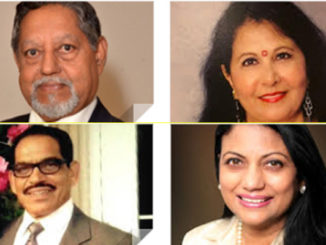
    Mr. Prasad elaborated on the process of NIAASC Board elections: one-third Board members retire every year; however they are eligible for reelection if they are recommended by the Nominating Committee and approved by the General Body at its annual meeting. Of the five retiring members, three would continue as Board members for a period of three years ending December 31, 2023.  Two members of NIAASC were also recommended by the Nominating Committee to serve on the Board of Directors and approved by the general body: They are Baldev Seekri, from Rhode Island and Santosh Kumar from Chicago area. Both Seekri and Kumar, life members of NIAASC,  were speakers at NIAASC’s annual meeting in 2019 held at Shantiniketan, Tavares, Florida.

    The officers were elected for two-year terms:

    • Gunjan P. Rastogi, currently the NIAASC Secretary, was elected as President
    • Bhavani Srinivasan, currently Vice President, was reelected as Vice President for the second full term.
    • Harbachan Singh, currently a Board member, was elected as Secretary, and
    • E M Stephen, who has been associated with NIAASC since its inception, was elected as Treasurer.

    To learn more about NIAASC or to become a member, please visit www.niaasc.org.

  • Mayor says Vaccines are arriving  in  less than two weeks

    Mayor says Vaccines are arriving  in  less than two weeks

    NEW YORK CITY, NY (TIP): The first of the COVID-19 vaccines will arrive in New York City as early as December 15 with high-risk health care workers and nursing home residents and staff to receive the first doses, said Mayor de Blasio at his daily press briefing on Thursday, December 3. Both the Pfizer and Moderna vaccines will be rolled out this month, with Pfizer’s arriving on December 15 and Moderna’s on December 22, Mayor  announced. The city is working with Gov. Cuomo’s office on a distribution plan, which will include over 400,000 doses in the month of the December.

    The mayor said it will take at least a few months before the vaccine can be widely distributed to all New Yorkers, with priority going to those in need, including those living in the neighborhoods most deeply affected by the coronavirus.

    “But we’re going to, throughout this process, work on the fastest and most effective distribution because the faster we can move and the more we can educate people and the more we can get people involved, the more people who will be safe,” the mayor said. The announcement comes as the city’s coronavirus indicators continue to move in the wrong direction, according to the mayor. As of Thursday, the daily positivity rate stood at 3.9%, the seven-day average was at 5.19% and daily hospital admissions for suspected coronavirus was at 174, just below the 200 threshold. “It’s quite clear at this point that the this second wave is unfortunately right upon us,” Mayor de Blasio said.

    The mayor said the one promising sign is that city ICUs are not seeing the stress they did back in the spring.

    As for the vaccine, the health department has the ability to receive, store and ship up to 320,000 doses of the Pfizer vaccine as well as millions of doses of the Moderna one, according to the city’s health commissioner, Dr. Dave Chokshi.

    And over 50 hospitals have access to ultra-cold storage or will have special freezers delivered soon for a total citywide storage capacity of at least 1.5 million doses, he said.  Still, Dr. Chokshi cautioned that: “The process of turning a vaccine into a vaccination will be a challenge — a formidable one.”

    The city will utilize its immunization registry to monitor inventory and administration to ensure equitable distribution of the vaccine, he said.

    “This registry is like the air traffic control of vaccine distribution,” he said about the database that includes the participation of thousands of health care providers who already report vaccines like the flu shot.

    Using this database, the city will be able to assess in real time which neighborhoods have a low uptake of the vaccine and pivot distribution efforts to prioritize those areas.

    “But this is a marathon, not a sprint and there is a long, long road ahead of us,” said Dr. Chokshi said. “Building trust has to be integral to our preparation as integral as storage and inventory.”

    In the coming months, the city will partner with community organizers, faith leaders and local clinicians to help build that trust, he said.

    The mayor also announced the establishment of a Pandemic Response Institute, which will help create a blueprint for addressing this kind of crisis in the future. The center will be housed in the Alexandria Center for Life Science initially and will focus on outbreak detection research, developing best practices and training programs for pandemic response, and piloting new community-based partnership models. “We know that research is necessary in an unprecedented way,” the mayor said. “We know that during this crisis there was so much catching up that had to be done. That work can be done in many ways in advance going forward.”

  • HOUSE OF SPICES, THE OLDEST SOUTH ASIAN FOOD COMPANY SET TO EXPAND IN THE US

    HOUSE OF SPICES, THE OLDEST SOUTH ASIAN FOOD COMPANY SET TO EXPAND IN THE US

    2nd Generation Family Owners Share Company’s New Vision FOR THE U.S. Market

    Neil & Amarpali Soni have taken over the company with their sights set on aggressive business expansion, new branding, marketing and distribution, while maintaining the family and company values.

    NEW YORK (TIP): House of Spices is the oldest South Asian food company in the USA and is widely known by its brand “Laxmi”. It has evolved over the years as a business leader in the South Asian food space with multiple leading South Asian food brands under its umbrella offering condiments, pantry items, snacks, candy, spices and frozen foods representing all regions of India, Pakistan and Bangladesh. Born out of the absolute need of a young family to be able to enjoy cuisines from their homeland while being away from home, it was founded in 1972 by Indian Immigrant G.L Soni who longed to enjoy authentic cuisine from India. As a South Asian immigrant couple living in New York, the Sonis, particularly Mrs. Shobhana Soni, faced challenges daily to find Indian ingredients for home cooking. This inspired Mr. Soni to start importing Indian cooking ingredients and founding the ‘LAXMI’ brand. Mr. Soni fittingly named it Laxmi in honor of his parents, Mr. Laxmidas and Mrs. Laxmibai. Also, since Goddess Laxmi embodies abundance, the name perfectly fits the company’s vision of providing authentic cooking ingredients in abundance to South Asian families living in the USA and helping them stay connected with their cultures through food. Today, 48 years later the next generation of the family carries the torch and enhanced vision into the expanding marketplace. The children of the founder, Neil & Amarpali  Soni have taken over the company with their sights set on aggressive business expansion, new branding, marketing and distribution, while maintaining the family and company values.

    The South Asian Market is the fastest growing population in the U.S. since 2000 with a total population of 6 million and growing – a 81% growth over the last 10 years! Furthermore, the Asian Indians have a combined disposable income of $88 billion and an estimated annual buying power of $20 billion and these numbers are growing.  The brother and sister duo know that the time is now to leverage this strong growth of the South Asian segment and do so by delivering authentic ethnic South Asian cuisines and ingredients. They strive hard to ensure that every item with their brand name is delivered with purity, quality and value. The recent rebrand of their logo also demonstrates an effort from the young leaders of the company, to be more inclusive towards the overall South Asian diaspora and representative of the hospitality and abundance that are trademarks of their culture. The new Laxmi logo is contemporary, universal and visually appealing and the icon represents a modernized red and gold Lotus with auspicious royal overtones. But despite the changes and the new vision of the co-presidents, the signature product line encompassing the ‘Laxmi’ Brand stays true to its authentic Indian roots providing the community a way to stay connected to their culture and cuisine. With aspirations to take their product line to the mainstream market, House of Spices is poised to bring the Indian grocery store items into our neighborhood big box grocery retailers and give a new spin to cooking with healthy, authentic and fresh Indian ingredients.

    (Based on a press release)

  • The agitating farmers in India get huge support from Indian Americans

    The agitating farmers in India get huge support from Indian Americans

    I.S. Saluja

    The first week of December witnessed  in New York and New Jersey enthusiastic support for agitating farmers in India, and a damning condemnation of Modi government’s anti-farm sector policies. States of New York and New Jersey  on the East Coast have a sizeable population of Indian Americans , many of whom come from farming families. The ones from Indian States of Punjab and Haryana, where  the major chunk of population depends on agriculture , have been fuming at the Modi government policies recently announce in the form of three ordinances  which are the reason why the farmers from all over India have come together to demand repeal of the anti-farmer ordinances. It is a decisive battle the farming community is fighting against an insensitive to farmers government of India which seems more inclined to kill them rather than protect their interests. The protests which had started some four months ago immediately after the promulgation of the ordinances -The Farmers’ Produce Trade and Commerce (Promotion & Facilitation) Ordinance 2020 and  The Farmers (Empowerment and Protection) Agreement on Price Assurance and Farm Services Ordinance 2020, on June 5, 2020, remained confined to Punjab chiefly, but when the government of India turned a deaf ear to their protests and demand for repeal of ordinances, Punjab farmers marched towards Delhi. They were later joined by farmers from Haryana  Uttar Pradesh, Rajasthan, Bihar and  other states. The protest has turned into a movement, the like of which Modi government has never faced. The overseas Indians coming from families of agriculturists,  and justice loving Indians abroad have lent their support to agitating farmers. Even leaders of other countries have supported the agitating farmers in India and condemned violence against the peaceful protesters. Canadian Prime Minister Trudeau took the lead in suggesting to government of India to be civil to peaceful protesters. It is another matter that government of India did not approve of foreign interference in “domestic policies”.

    In New York, groups of demonstrators have held rallies in front of the Indian Consulate. The one on December 1 is being followed by a larger group with participation from all gurdwaras in the two States.

    A protest march was held on Long Island on December 3 in which 300 vehicles and around 500 protesters participated. Reports of protests against government of India and support for the agitating farmers in India are coming from different parts of USA, particularly from California where there is a large population of  Sikh agriculturists. The coming days will see a more vigorous response even as the agitating farmers in India have decided to burn the effigies of Prime Minister Narendra Modi all across the country on December 5, followed by a call for BHARAT BANDH (total closure of India) The Indian Panorama reporters spoke to  a cross section od the Sikh community in New York to know what exactly , according to them is the solution. Without exception, all wanted immediate repeal of the anti-farmer ordinances, in the first place.  Here are pictures of  protests in New York on December 1,  and Long Island , on December 3.

  • COUNCIL MEMBER ADRIENNE ADAMS UNVEILS GURDWARA STREET

    COUNCIL MEMBER ADRIENNE ADAMS UNVEILS GURDWARA STREET

    RICHMOND HILL, NEW YORK (TIP):  On November 30, 2020 Council Member Adrienne Adams joined Assembly Member David Weprin, and members of the community to celebrate the co-naming ceremony of Gurdwara Street. The co-naming ceremony celebrated the contributions of the Sikh community that remains a part of the fabric of Richmond Hill, Queens and New York City as a whole. Gurdwara Street is located on 97th Avenue between 117th Street and Lefferts Boulevard. “It is important that New York City’s diverse communities see themselves and their varying cultures represented in the historical landscape,” said Council Member Adrienne Adams. “There was no better day to celebrate the co-naming of Gurdwara Street than on the birthday of Guru Baba Nanak, one of the most celebrated Sikh gurus. This is a long overdue recognition for the contributions of the Sikh community and I am so proud to bring Gurdwara Street to our city.”

    “Our city thrives from the cultural, civic, and business enterprises that the Sikh community has established in Richmond Hill and beyond,” said Assemblyman David I. Weprin. “I am thrilled that 97th Avenue between Lefferts Boulevard and 117th Street is now formally recognized as Gurdwara Avenue and thank Council Member Adrienne Adams for her efforts in reaching this significant milestone.”

    “The co-naming of Gurdwara Street was held within the most auspicious timing,” said Harpreet Singh Toor, Former President of the Sikh Cultural Society. “This acknowledgement of the historic inception of the first and largest Gurdwara on the east coast which established the first place of worship for the Sikh community is a welcomed inclusion to our celebration of the birthday of Baba Nanak, the founder of Sikhism.”

    “Gurdwara no doubt belongs to the Sikh religion however today was a spiritual one,” said Rajwinder Kaur, District 28 Community Education Committee Member. “Today we celebrate Guru Baba Nanak’s birthday. The basic motives of Guru Baba Nanak were to shine and rise and give the light of hope. A ray of hope to the whole world conveying that we are one and we are equal. As the co-naming was bestowed upon our community on this significant day, we’ve expressed to the people the belief of oneness, despite our color, race, class and creed.”

    (Based on a Press Release)

  • Indian American Gitanjali Rao is the first ever  TIME “Kid of the Year”

    Indian American Gitanjali Rao is the first ever  TIME “Kid of the Year”

    NEW YORK TIP): 15-year-old Indian American Gitanjali Rao, a “brilliant” young scientist and inventor, has been named by TIME magazine as the first-ever ‘Kid of the Year’ for her “astonishing work” using technology to tackle issues ranging from contaminated drinking water to opioid addiction and cyberbullying.

    “The world belongs to those who shape it. And however uncertain that world may feel at a given moment, the reassuring reality seems to be that each new generation produces more of what these kids have already achieved: positive impact, in all sizes,” Time said. Ms Rao was selected from a field of more than 5,000 nominees as TIME’s first-ever ‘Kid of the Year’. She was interviewed by actor and activist Angelina Jolie for the TIME special.

    “Observe, brainstorm, research, build and communicate,” Ms Rao told about her process during a virtual talk with Ms Jolie from her home in Colorado. She spoke about her “astonishing work using technology to tackle issues ranging from contaminated drinking water to opioid addiction and cyberbullying, and about her mission to create a global community of young innovators to solve problems the world over. “Even over video chat, her brilliant mind and generous spirit shone through, along with her inspiring message to other young people: don’t try to fix every problem, just focus on one that excites you,” Time said. “If I can do it,” she said in the interview, “anybody can do it.”

    Ms Rao said her generation is facing many problems that they have never seen before. “But then at the same time, we’re facing old problems that still exist. Like, we’re sitting here in the middle of a new global pandemic, and we’re also like still facing human-rights issues. There are problems that we did not create but that we now have to solve, like climate change and cyberbullying with the introduction of technology,” she said.

    “I think more than anything right now, we just need to find that one thing we’re passionate about and solve it. Even if it’s something as small as, I want to find an easy way to pick up litter. Everything makes a difference. Don’t feel pressured to come up with something big,” she said.

    When asked when she knew that science was her passion, Ms Rao said, she always wanted to put a smile on someone’s face. “That was my everyday goal, just to make someone happy. And it soon turned into, how can we bring positivity and community to the place we live?” she added.

    Ms Rao said that she doesn’t look like “your typical scientist. Everything I see on TV is that it’s an older, usually white man as a scientist. It’s weird to me that it was almost like people had assigned roles, regarding like their gender, their age, the color of their skin.” “My goal has really shifted not only from creating my own devices to solve the world’s problems, but inspiring others to do the same as well. Because, from personal experience, it’s not easy when you don’t see anyone else like you. So I really want to put out that message: If I can do it, you can do it, and anyone can do it,” she said. She said when she was in second or third grade, she started thinking about how she can use science and technology to create social change. She said she was 10 when she told her parents that she wanted to research carbon nanotube sensor technology at the Denver Water Quality Research Lab. When asked by Ms Jolie if she does things that kids her age do, she said, “Actually I spend more time doing 15-year-old things during the quarantine. I bake an ungodly amount. It’s not good, but it’s baking. And, like, it’s science too.”

  • Moratorium on federal student loan payments extended through end of January

    Moratorium on federal student loan payments extended through end of January

    WASHINGTON (TIP): Education Secretary Betsy DeVos on Friday, December 4,  extended the suspension of federal student loan payments through the end of January, giving Congress and the incoming Biden administration time to impose a longer moratorium, The Washington Post reported. “The coronavirus pandemic has presented challenges for many students and borrowers, and this temporary pause in payments will help those who have been impacted,” DeVos said in a statement Friday. “The added time also allows Congress to do its job and determine what measures it believes are necessary and appropriate. The Congress, not the executive branch, is in charge of student loan policy.” The payment freeze, which was first introduced in March and later extended, had been set to expire Dec. 31.