Month: December 2020

  • Neurological complications common in moderate Covid cases: Study

    Neurological complications common in moderate Covid cases: Study

    Covid-19 can lead to a broad range of neurological complications, including stroke, seizures, movement disorders, inflammatory diseases and more, even in moderate cases, say researchers, one of whom is of Indian-origin.

    For the study, published in the journal Neurology, the research team looked at people with neurological symptoms and Covid at a racially and socioeconomically diverse hospital.

    “We found a wide range of neurological complications–spanning inflammatory complications, stroke and other vascular conditions, metabolic problems, exacerbation of underlying neurological conditions and more,” said study author Pria Anand from the Boston University in the US.

    “Yet the majority of these people did not require critical care, suggesting that neurological complications may be common in people with moderate Covid-19 as well as those with severe disease,” Anand added.

    The study involved 74 people who between April 15 and July 1, 2020, tested positive for Covid-19 and were evaluated for various neurological conditions at a large hospital serving underserved, low-income and elderly people in Boston. The average age was 64. A total of 47 people had a prior history of neurological disease.

    At the time of hospitalization, 18 people had strokes, 15 had seizures and 26 people had a type of brain dysfunction that causes confusion and delirium.

    Seven people had movement disorders, including five people with myoclonus, which involves sudden, brief twitching of the muscles. Three people had traumatic brain injuries due to falls in their homes after developing Covid-19. One person had signs of developing autoimmune encephalitis, a rare, complex disease where the body’s immune system attacks itself, yet these symptoms improved after the person received corticosteroids, the study said.

    The findings showed that 10 people died in the hospital. The people who survived had a moderately severe disability, on average, at the time they left the hospital, compared to mild disability before their hospitalization.

    A total of 27 people were able to return home with or without home health services, 20 went to skilled nursing facilities, including 11 who had previously been living at home, and nine went to acute rehabilitation centres, including eight who had been living at home.


  • Global Covid-19 Cases Top 69.4mn: Johns Hopkins

    Global Covid-19 Cases Top 69.4mn: Johns Hopkins

    The overall number of global coronavirus cases has topped 69.4 million, while the deaths have surged to more than 1.58 million, according to the Johns Hopkins University.

    In its latest update on Friday, Dec 11, the University’s Center for Systems Science and Engineering (CSSE) revealed that the current global caseload and death toll stood at 69,496,859 and 1,580,727, respectively.

    The US is the worst-hit country with the world’s highest number of cases and deaths at 15,599,122 and 292,001, respectively, according to the CSSE.

    India comes in second place in terms of cases at 9,767,371, while the country’s death toll soared to 141,772.

    The other countries with more than a million confirmed cases are Brazil (6,781,799), Russia (2,546,113), France (2,391,643), the UK (1,792,611), Italy (1,787,147), Spain (1,720,056), Argentina (1,482,216), Colombia (1,399,911), Germany (1,270,757), Mexico (1,217,126), Poland (1,102,096) and Iran (1,083,023), the CSSE figures showed.

    Brazil currently accounts for the second-highest number of fatalities at 179,765.

    The countries with a death toll above 20,000 are Mexico (112,326), the UK (63,179), Italy (62,626), France (57,044), Iran (51,496), Spain (47,344), Russia (44,769), Argentina (40,431), Colombia (38,484), Peru (36,401), South Africa (22,747), Poland (21,630) and Germany (20,737).

  • Rich countries have bought too many COVID-19 vaccines: Amnesty

    Rich countries have secured enough coronavirus vaccines to protect their populations nearly three times over by the end of 2021, Amnesty International and other groups said on Wednesday, possibly depriving billions of people in poorer areas.

    Britain approved Pfizer’s COVID-19 vaccine this month, raising hopes that the tide could soon turn against a virus that has killed nearly 1.5 million globally, hammered the world economy and upended normal life.

    Amnesty and other organisations including Frontline AIDS, Global Justice Now and Oxfam, urged governments and the pharmaceutical industry to take action to ensure intellectual property of vaccines is shared widely.

    The World Health Organisation (WHO) has also called on governments repeatedly this year to make a vaccine protecting against COVID-19 a “public good”.

    The WHO has backed a global vaccine programme scheme known as COVAX, which seeks to ensure equitable distribution of vaccines and 189 countries have joined. But some countries such as the United States have not signed up, having secured bilateral deals.

    COVAX hopes to deliver some 2 billion doses by the end of 2021 but that would still only represent about 20% of the populations of countries that are part of the mechanism.

    “Nearly 70 poor countries will only be able to vaccinate one in ten people against COVID-19 next year unless urgent action is taken,” Amnesty International said, based on recent calculations. “Updated data shows that rich nations representing just 14% of the world’s population have bought up 53% of all the most promising vaccines so far,” it said. S.Africa now experiencing COVID-19 ‘second wave’

    South Africa, the country most affected by the coronavirus on the continent, has entered a second wave of the pandemic, the health minister has declared.

    “As it stands as a country we now meet that criteria,” said Zweli Mkhize in a statement as the country registered nearly 7,000 new cases in the last 24-hour cycle. The country now counts 828,598 infections after 6,709 new cases were detected between Tuesday and Wednesday. South Africa had reined in its first wave which occurred in July at an average of 12,000 cases detected daily. Numbers then gradually came down, at a point dropping below 1,000 in September. The minister said the number of new infections detected in parts of the country suggest that “we should expect faster rising numbers with a higher peak than in the first wave”.

  • Precious painting lost at German airport found at dumpster

    Berlin (TIP): A surrealist painting worth more than a quarter million euros that was forgotten by a businessman at Duesseldorf’s airport has been recovered from a nearby recycling dumpster, police said on Dec 10.

    The businessman, whose identity was not given, accidentally left behind the painting by French surrealist Yves Tanguy at a check-in counter as he boarded a flight from Duesseldorf to Tel Aviv on November 27.

    By the time he landed in Israel and contacted Duesseldorf police, the 280,000-Euro (340,000-dollar) oeuvre, which had been wrapped in cardboard, had disappeared.

    Despite multiple emails with details about the 40×60-centimetre (16X24-inch) painting, authorities could not locate the artwork, police spokesman Andre Hartwig said.

    It was only after the businessman’s nephew traveled to the airport from neighbouring Belgium and talked with police directly with more information that an inspector was able to trace the painting to paper recycling dumpster used by the airport’s cleaning company.

    “This was definitely one of our happiest stories this year,” Hartwig said. “It was real detective work.” AP

  • 18 miners killed due to excessive carbon monoxide level at a coal mine in China

    Beijing (TIP): Eighteen of the 23 workers were killed in a coal mine in China  due to an excessive level of carbon monoxide, local officials said. The accident happened at around 5 pm on Friday at the Diaoshuidong coal mine in the district of Yongchuan in Chongqing Municipality, state-run Xinhua news agency reported.

    Eighteen miners were confirmed dead due to excessive level of carbon monoxide, it said.

    Rescuers, including police officers and firefighters, are trying to reach the trapped miners. The cause of the accident is under further investigation, the report said. The Diaoshuidong coal mine, which was established in 1975 and became privately-owned in 1998, has an annual production capacity of 120,000 tonnes of coal, according to the local emergency management department. Hydrogen sulfide poisoning in the mine left three dead and two injured in March 2013, Xinhua report said. PTI

  • Chinese scientists make world’s first light-based quantum computer: Report

    Chinese scientists make world’s first light-based quantum computer: Report

    Beijing (TIP): Chinese scientists claim to have created the world’s first light-based quantum computer which can solve problems far faster than a classical supercomputer, an advance hailed by experts as a “major achievement” that provides a fundamentally different approach to designing such powerful machines, the official media reported on Saturday. Jiuzhang, the quantum computer, can reliably demonstrate “quantum computational advantage”, a milestone in computing, state-run China Daily quoted a study published in the journal Science.

    Quantum computers excel at running simulations that are impossible for conventional computers, leading to breakthroughs in materials science, artificial intelligence and medicine.

    Jiuzhang takes its name from an ancient Chinese mathematical text. It can perform an extremely esoteric calculation, called Gaussian boson sampling, in 200 seconds. The same task would take the world’s fastest classical supercomputer Fugaku around 600 million years, the report said.

    It is the second such milestone after Google declared its 53-qubit quantum computer had achieved such a breakthrough last year. Jiuzhang used a new method of manipulating 76 photons to do calculations instead of Google’s, which uses superconductive materials, the report said.

    Experts hailed China’s quantum computer as a “state-of-the-art experiment” and a “major achievement” in quantum computing, as it proves the feasibility of photonic quantum computation, thus providing a fundamentally different approach to designing such powerful machines, it said. China has been investing heavily in mastering the quantum technology in recent years.

    In 2017, China had launched quantum communication satellite boosting hack proof and ultra-high security features, the Chinese Academy of Sciences (CAS) said. The Quantum Experiments at Space Scale (QUESS) satellite is the first-ever space-ground test platform for quantum communication, Wang Jianyu, executive deputy chief engineer of the project had told the official media earlier.

    Chinese officials claimed that the quantum satellite was expected to provide a full-proof hack-free communications which make foreign powers to monitor or intercept China’s communication systems.

    Later in the year, China has launched a 2,000-km “hack-proof” quantum communication line between capital Beijing and its commercial headquarters Shanghai which cannot be wiretapped. PTI

  • China-Canada joint military exercises called off after US raises concerns: Report

    China-Canada joint military exercises called off after US raises concerns: Report

    Vancouver  (TIP): Canada and China were set to carry out military winter exercises in 2019, which were cancelled by the Canadian Chief of the Defence Staff, reported The Globe and Mail.

    General Jonathan Vance’s move alarmed Canada’s Global Affairs department which worried China would interpret the cancellation as retaliation for the arbitrary arrest of two Canadians.

    Vance had allegedly cancelled the exercises after the US urged it to do so, according to the paper.

    “Should Canada make any significant reductions in its military engagement with China, China will likely read this as a retaliatory move related to the Meng Wanzhou case,” a February, 2019, memo to Ian Shugart, then deputy minister of Foreign Affairs, outlining the case for a letter he would be sending to Jody Thomas, deputy minister of the Department of National Defence, The Globe reported.

    A pair of Canadians have been held for almost two years amid a dispute over the arrest of an executive of Chinese technology giant Huawei.

    The pair have been confined since December 2018, just days after Canada detained Huawei executive Meng Wanzhou, who is also the daughter of the company’s founder.

    No information has been released about where the Canadians are being detained or under what conditions.

    Canada accuses China of arbitrarily arresting the pair in order to pressure it into releasing Meng, who lives under a form of house arrest in Vancouver while she challenges a US extradition order to face fraud charges related to trade sanctions on Iran.—With PTI

  • Lebanese judge charges caretaker PM in Beirut port blast

    Beirut (TIP): The Lebanese prosecutor probing last summer’s port explosion in Beirut has filed charges against the caretaker prime minister and three former ministers, Lebanon’s official news agency said. Judge Fadi Sawwan filed the charges on Thursday against Hassan Diab and former Finance Minister Ali Hassan Khalil, as well as Ghazi Zeiter and Youssef Fenianos, both former ministers of public works. All four were charged with negligence leading to deaths over the August 4 explosion at Beirut port, which killed more than 200 people and injured thousands. The explosion was caused by the ignition of a large stockpile of explosive material that had been stored at the port for years. — AP

  • UK PM Johnson says no deal Brexit now strong possibility

    London (TIP): There is a strong possibility that Britain does not reach a trade deal with the European Union, British Prime Minister Boris Johnson said on Dec 10, but pledged to go to Paris, Brussels or Berlin or wherever necessary to try to get one. “I do think that we need to be very, very clear there’s now a strong possibility, strong possibility, that we will have a solution that’s much more like an Australian relationship with the EU, than a Canadian relationship with the EU,” Johnson said. “It doesn’t mean it’s a bad thing.” Negotiations with the European Union are in their final days, with large gaps remaining on core issues and both sides committed to making a decision on Sunday about whether talks should continue.

    “What I’ve said to our negotiators is that we’ve got to keep going, and we’ll go the extra mile … and I will go to Brussels, I will go to Paris or go to Berlin or wherever, to try to get this home and get to a deal,” he said.

    “But there’s always the possibility, the prospect, of coming out on Australian terms.” – Reuters

  • China launches satellites for gravitational wave detection

    Beijing (TIP): China on Dec 10 successfully launched two satellites for the detection of gravitational waves into planned orbit from the Xichang Satellite Launch Centre in Sichuan. The satellites, which compose the Gravitational Wave High-energy Electromagnetic Counterpart All-sky Monitor mission, were launched by a Long March-11 carrier rocket, Xinhua-news agency reported. PTI

  • Italian police bust migrant trafficking ring, arrest 19

    Italian police bust migrant trafficking ring, arrest 19

    Rome (TIP): Italian police on Saturday arrested 19 suspects, dismantling what authorities say was a criminal organization that moved migrants from Afghanistan, Iran, Iraq and Pakistan to Italy and then into northern Europe.

    The investigation, led by prosecutors in Catania, Sicily, unveiled a network that involved hired or stolen sailboats transporting migrants via Turkey and Greece to Italy. Some then traveled north to the French border and were smuggled by vehicle into France, thanks to human smugglers based in border towns, police said in a statement.

    The arrested suspects included Iraqi Kurds, Afghans and Italians, police said.

    One of the alleged ring’s bases was in Bari, southern Italy, where false documents were issued indicating the migrants had housing, a requirement for residency permits. Other bases were in Milan and Turin in northern Italy as well as in the town of Ventimiglia, near the French border.

    Others allegedly involved in the scheme falsified work contracts so the migrants could successfully apply for permission to reside in Italy, authorities said.

    The investigation began in 2018, triggered by the arrival of 10 boats near the eastern Sicilian city of Syracuse. The boats had sailed from Turkey and Greece in the Eastern Mediterranean, and not from Libya, from where for years the majority of the hundreds of thousands of migrants had set out for Italy in traffickers’ unseaworthy vessels.

    The investigation ascertained the activities of a network of Italians and foreigners, most of the latter holding residency permits issued on grounds of international protection, the police said.

    The ring was “dedicated to facilitating the entrance, stay and transit toward northern Europe of migrants coming from Iran, Iraq, Afghanistan and Pakistan.”

    One suspect, police said, was about to transport migrants from the railroad station at Ventimiglia into France, one of the preferred destination countries for those being smuggled.

    Skippers who were engaged to sail the boats to Sicily were paid about USD 1,000 (800 euros) per crossing, while migrants each paid about 6,000 euros (USD 7,200) to be smuggled from Asia, via Turkey and Greece, into Italy, the police said. The smuggling ring cracked by Italian authorities was an “essential link of connection with criminal groups active in Turkey and Greece,” police said. — AP

  • Australia to make Facebook, Google pay news outlets for content

    Australia to make Facebook, Google pay news outlets for content

    Sydney (TIP): Australia on Dec 9 finalised plans to make Facebook Inc and Google pay its media outlets for news content, a world-first move aimed at protecting independent journalism that has been strongly opposed by the internet giants. Under laws to go to Parliament this week, Treasurer Josh Frydenberg said the Big Tech firms must negotiate payments for content that appears on their platforms with local publishers and broadcasters. If they can’t strike a deal, a government-appointed arbitrator will decide for them.

    “This is a huge reform, this is a world first, and the world is watching what happens here in Australia,” Frydenberg told reporters in the capital Canberra. He added: “Our legislation will help ensure that the rules of the digital world mirror the rules of the physical world … and ultimately sustain our media landscape.”

    The law amounts to the strongest check of the tech giants’ market power globally and follows three years of inquiry and consultation, ultimately spilling into a public row in August when the US companies warned it may stop them offering their services in Australia.

    Facebook Australia managing director Will Easton said the company would review the legislation and “engage through the upcoming parliamentary process with the goal of landing on a workable framework to support Australia’s news ecosystem”.

    A representative for Google declined to comment, saying the company had yet to see the final version of the proposed law.

    Until recently, most countries have stood by as advertisers redirect spending to the world’s biggest social media website and search engine, starving newsrooms of their main revenue source and bringing widespread shutdowns and job losses.

    But regulators are starting to test their power to rein in the two mega-corporations, which take more than four-fifths of Australian online advertising spending between them, according to Frydenberg.

    Google said in October that it planned to pay $1 billion to publishers globally for their news over the next three years.

    The new product called Google News Showcase will launch first in Germany, where it has signed up German newspapers including Der Spiegel, Stern, Die Zeit, and in Brazil with Folha de S Paulo, Band and Infobae.

    Google said last month that it had also signed copyright agreements with six French newspapers and magazines, including national dailies Le Monde and Le Figaro. “It’s both very ambitious and very necessary,” said Denis Muller, an Honorary Fellow at University of Melbourne’s Centre for Advancing Journalism, referring to the Australian law. “Taking their news content without paying for it, in exchange for a very questionable reward of ‘reach’, seems to be a very unfair and uneven and ultimately democratically damaging arrangement,” Muller added.

    News Corp Australia executive chairman Michael Miller said the law was “a significant step forward in the decade-long campaign to achieve fairness in the relationship between Australian news media companies and the global tech giants”. In May, News Corp stopped printing more than 100 Australian newspapers, citing declining advertising.

    In changes to draft legislation announced earlier this year that might favour the tech companies, the final version of the law would not affect news content distributed on Facebook’s Instagram subsidiary or Google’s Youtube. Facebook and Google would also be allowed to include in the negotiations the value of clicks their platforms directed to news websites.

    But Frydenberg added to the list of media companies with whom the tech giants must negotiate, saying public broadcaster the Australian Broadcasting Corp and specialist public broadcaster SBS would be included, along with dominant private sector outlets like News Corp and Nine Entertainment Co Holdings Limited. Reuters

  • Gunmen kill female TV anchor in eastern Afghanistan

    Kabul (TIP): Gunmen shot and killed a female TV anchor in eastern Afghanistan early Thursday, officials said. The attackers opened fire on Malala Maiwand’s car soon after she left her house in the eastern Nangarhar province, said Attaullah Khogyani, a spokesman for the governor. No one has claimed responsibility, but an Islamic State affiliate is headquartered in eastern Afghanistan and has claimed most of the recent attacks on civilians in Afghanistan. The Taliban also operate in the area. In addition to working as a TV and radio presenter, Maiwand was also an activist who advocated for the rights of Afghan women and children. Two Afghan journalists were killed in separate bombings in Afghanistan last month.    AP

  • Sri Lankan government to expedite Easter Sunday bombings probe: Minister

    Colombo (TIP): Sri Lankan government will expedite the ongoing probe of Easter Sunday suicide bombings that killed 258 people, including 11 Indians, last year, a senior Cabinet minister said on Saturday.

    Nine suicide bombers, belonging to local Islamist extremist group National Thawheed Jamaat (NTJ) linked to ISIS, carried out a series of blasts that tore through three churches and as many luxury hotels in Sri Lanka, killing 258 people and injuring over 500 on April 21, 2019.

    “Sri Lankan government will expedite the ongoing probe of Easter Sunday suicide bombing. I will meet the Attorney General on Monday to see how we could proceed,” Sarath Weerasekera, the minister of public security, told Parliament.

    He was reacting to an Opposition lawmaker charging that the current government appeared not interested now to carry on with the probe. Niroshan Perera, the Opposition member told parliament, that the head of the local Catholic Church Malcolm Cardinal Ranjith had just a few days ago had expressed doubt if the investigations were leading nowhere. Ranjith said if the current government showed no genuine interest in the investigations to see its conclusion the Catholic minority would lose confidence in the government. Assuring there was no attempt to sweep the investigation under the carpet, Weerasekera said the legal process would be expedited from next week. Weerasekera said 257 people have been arrested and 86 of them are currently under detention orders while 172 are in remand custody. — PTI

  • Bhutan parliament decriminalises homosexuality, to delight of activists

    Bhutan parliament decriminalises homosexuality, to delight of activists

    Kathmandu (TIP): A joint sitting of both houses of Bhutan’s parliament approved a Bill on Thursday to legalize gay sex, making the tiny Himalayan kingdom the latest Asian nation to take steps towards easing restrictions on same-sex relationships.

    Sections 213 and 214 of the penal code had criminalized “unnatural sex”, widely interpreted as homosexuality.

    Lawmaker Ugyen Wangdi, the vice chairperson of a joint panel considering the changes, said 63 of the total 69 members of both houses of parliament had voted in favour of amending the code to scrap the provision. Six members were absent.

    “Homosexuality will not be considered as unnatural sex now,” Wangdi told Reuters by phone from the Bhutanese capital of Thimphu, without giving details.

    The changes still need to be approved by the King of Bhutan to become a law.

    Rights activist Tashi Tsheten said he was “thrilled and really happy” over the parliamentary move, calling it a “victory” for the LGBT+ community.

    “I think the Bill being passed on Human Rights Day itself is a momentous day for everyone in Bhutan,” Tsheten, the director of LGBT+ group, Rainbow Bhutan, told Reuters.

    “I believe everyone who has stood up for the LGBT+ community in Bhutan is going to celebrate today as this is our victory”. The move by the majority-Buddhist nation of 800,000 people comes after other Asian countries relaxed restrictions on the rights of the LGBT+ people. Neighbouring India removed a centuries-old colonial prohibition on gay sex in 2018, triggering celebration across the country. In Nepal, authorities will count LGBT+ people for the first time in the national census next year to help sexual minorities gain better access to education and health schemes.

    Bhutan is famous for its “gross national happiness” index as an alternative to gross domestic product to indicate real economic progress or development. — Reuters

  • Nepal reports 1,024 new cases of coronavirus: Health Ministry

    Kathmandu (TIP): Nepal has reported 1,024 new cases of coronavirus in the last 24 hours, taking the total number of infections in the nation to 239,885, the health ministry said on Saturday.

    Ministry of Health and Population said that the cases were detected after conducting 6,074 tests across the country.

    “The total number of new cases in the last 24 hours stand at 1,024. With this the total number of cases in the country has reached 239,885,” according to a statement from the health ministry.

    So far, 2,206 people have recovered from the disease on Saturday. With this a total of 224,053 people, who earlier tested corona positive, have recovered from the infection. So far, swab samples of 1,778,024 people have been tested in the country to detect coronavirus. There are currently 14,255 corona active people undergoing treatment at different laboratories across the country, the ministry said. The health ministry said confirmed death of 10 people due to corona infection on Saturday, the country’s corona tally has reached 1,577. — PTI

  • Pakistan PM Imran Khan dares Opposition to table no-confidence motion in Parliament to oust him

    Pakistan PM Imran Khan dares Opposition to table no-confidence motion in Parliament to oust him

    Islamabad (TIP): Pakistan Prime Minister Imran Khan has dared the Opposition alliance to table a no-confidence motion in Parliament to oust him, as he criticised its call to lawmakers for mass resignations to force him to call snap polls.

    Khan said he did not backtrack from holding a national dialogue to steer the country out of multiple crises.

    An 11-party Opposition alliance announced on Tuesday that their lawmakers will resign en masse by the end of this month from Parliament to paralyse the government and force Prime Minister Khan to call snap polls.

    The decision was taken after the Pakistan Democratic Movement (PDM), an alliance of 11 Opposition parties formed in September this year to overthrow Prime Minister Khan’s government, held a marathon meeting in Islamabad.

    Khan said the Constitutional way to send a government packing is to table a no-confidence motion in Parliament.

    “If the Opposition wants to move a no-confidence motion, they should come and do so in the assemblies,” he said.

    He also criticised the PDM’s call for en masse resignations. “Parliament is the best place for political dialogues and I’m ready to respond to all questions [in Parliament]. Democracy will only work when there is a debate,” he said while talking to the media on Wednesday in Sialkot city in Punjab province.

    Khan said the Opposition wanted quashing of corruption cases.

    “We have no problem and the government is ready to hold talks on any issue but the NRO (National Reconciliation Ordinance) like concession will not be discussed,” he said, adding that the graft cases would not be closed.

    Addressing a ceremony after inaugurating a private airline company, Khan slammed the Opposition parties, saying those who had criticised the government for not imposing a complete lockdown, were now holding public gatherings.

    The Opposition alliance has alleged that Khan was supported in the 2018 elections by the ‘establishment’ and also failed to run the country and address chronic issues. — PTI

  • WIPA – Rings in Winter Solstice

    WIPA – Rings in Winter Solstice

    By Mabel Pais

    “Despite the global pandemic, young musicians of Wharton Arts never stopped making music.  At our Virtual Winter Celebration, you will see and hear performances from over 450 young people, sharing messages of hope through their gifts of music.” – Helen H. Cha-Pyo, Artistic Director & Principal Conductor

    The Wharton Institute for the Performing Arts (WIPA) welcomes everyone to  ring in the winter solstice by enjoying classical, pops, and holiday favorites with a weekend of virtual events December 18-20. Free online streaming for the Holiday Cabaret for the Arts, ‘Messengers of Hope Virtual Festival’, and ‘Salon Series’ is available at WhartonArts.tv. In the absence of live event experiences, audience members are invited to watch from the comfort of home and enjoy the gift of music from Wharton’s talented young artists. For full concert details, see schedule below or visit WhartonArts.org. “The Wharton Institute for the Performing Arts is continuing to make every effort in bringing the music from our students to your homes during these challenging times,” said Peter H. Gistelinck, Executive Director. “We are very appreciative and grateful for all of your support during this month of giving. Please do consider us for a donation by visiting WhartonArtsDonate.org so that we can continue the mission and vision of our educational programs.”

    Wharton Arts Winter Celebration

    All events take place at 7:00 p.m. EST on WhartonArts.tv unless otherwise indicated.

    Friday, December 18 @ 6:00 p.m. EST on Facebook Live!

    Holiday Cabaret for the Arts: The Visual Arts Center of New Jersey will join Performing Arts School students for an evening of art and pops favorites followed by a virtual holiday sing along.

    NJSO (Photo / Courtesy NJSO)

     Saturday, December 19

    Messengers of Hope Virtual Festival: Young musicians of the New Jersey Youth Symphony present a virtual compilation of works featuring nearly two dozen ensembles and orchestras

    Sunday, December 20

    Salon Series: Violinist Mikhail Kuchuk presents works for solo violin by J.S. Bach, Prokofiev, and Ysaÿe

    The Wharton Institute for the Performing Arts’ mission is to provide the highest quality performing arts education to a wide range of students in a supportive and inclusive environment, where striving for personal excellence inspires and connects those we teach to the communities we serve. To learn more, visit www.WhartonArts.org

    ———————————-

    NJSO – @ Home for the Holidays

    Holiday videos premiere daily! New videos premiere daily at 5 pm!

    NJSO musicians share festive favorites and holiday traditions, from ‘our homes to yours’.

    Enjoy daily musician videos featuring performances, family recipes, holiday memories and more, starting December 9 (videos premiere at 5 pm). And tune in for a pair of can’t-miss features: a fun holiday special hosted by Mark Timmerman (Dec 17 at 7:30 pm) and performances of “And the Glory of the Lord” and “Hallelujah” Chorus from Handel’s “Messiah”, featuring friends in the Montclair State University Singers (Dec 18 at 7:30 pm).

    Dec 17 at 7:30 pm: Holiday Special

    Enjoy an evening of holiday music and fun, featuring solo and chamber performances by NJSO musicians, plus fun surprises, hosted by Mark Timmerman.

    MARK TIMMERMAN host

    Dec 18 at 7:30 pm:

    The New Jersey Symphony Chamber Orchestra and Montclair State University Singers present “And the Glory of the Lord” and “Hallelujah” Chorus from Handel’s Messiah.MONTCLAIR STATE UNIVERSITY SINGERS

    Heather J. Buchanan, director

    NEW JERSEY SYMPHONY CHAMBER ORCHESTRA

    These FREE virtual events are available:

    NJSYMPHONY.org

    NJSO YouTube channel—subscribe and enable notifications for the latest videos.

    NJSO social media channels on Facebook, Instagram and Twitter. Follow the NJSO to get notifications to your feed!

    To learn more about how to watch NJSO events, visit njsymphony.org/concerts-and-events/njso-virtual-20-21/how-to-watch

    ————————

    NJPAC COMMUNITY ENGAGEMENT

    YOUTH EMPOWERMENT – “Where Do We Go From Here”

    Film Screening FREE on Zoom – Mon Dec 14 @ 7PM

    After everything that has happened in 2020, where do we go from here?

    NJPAC True Diversity Film Series looks at the tumultuous events of this past year, and talks about what the way forward looks like — and what it ought to look like.

    A screening of the film “Where Do We Go From Here,” will take place, a two-part series on the Oprah Winfrey Network (OWN), which explores the extraordinary events of 2020 with a range of Black leaders, artists and journalists, including: Stacey Abrams, Atlanta Mayor Keisha Lance Bottoms, Academy award-nominated filmmaker Ava DuVernay, journalist and Pulitzer prize-winning founder of the “1619 Project” Nikole Hannah-Jones, historian and author Ibram Kendi (“How to be an Anti-Racist”) and actor David Oyelowo (“Selma”), among many others.

    This season, the films NJPAC will present through the True Diversity Film Series will focus on social and racial justice, in response to the uprisings against systemic racism that have spread around the globe in 2020. To continue these presentations safely during the pandemic, NJPAC has redesigned this series to work like a book club. After watching the selected films at home virtually, we come together on a Zoom video conference to discuss the film with panelists who can offer context and insight.


    Everyone is encouraged to view “Where Do We Go From Here” and then join the teams for two virtual panel discussions.

    Program – 1st Panel Discussion

    The first panel discussion, at 7PM on Monday, December 14, will focus on the youth perspective on social justice, and what progress that has been made — and not made —  over the past year. Moderated by hip hop artist and NJPAC faculty lead Sheikia “Purple Haze” Norris, this panel will bring together high school and university students who are leaders in their communities to discuss the future of the Black Lives Matter movement, the push to defund the police, reparations and what role they believe governments can play in promoting equity.

    To RSVP to Part 1, visit njpac.org/event/pseg-true-diversity-film-series-presents-where-do-we-go-from-here-part-1

    ————————————

    ARTS AND CULTURE

    Free on Zoom – Wed, Dec 16 @ 7PM

    Program – 2nd Panel Discussion

    The second of these panels, at 7PM on Wednesday, December 16, will focus on how 2020 has affected artists and the arts. NJPAC’s own Donna Walker-Kuhne, the Arts Center’s Senior Advisor for Community Engagement — as well as the president of Walker International Communication Group, and an adjunct Professor at New York University, Columbia University and Bank Street College — will moderate the discussion with a panel of artists and arts administrators, exploring how artists will continue to produce new work and examine themes of social justice in the new year, and how the arts can be made sustainable in a country upended by a pandemic and economic instability. To RSVP to Part 2, visit

    njpac.org/event/pseg-true-diversity-film-series-presents-where-do-we-go-from-here-part-2

    ————————————-

    Kwanzaa Festival & Marketplace: Celebrate culture, community and creative expression at NJPAC’s annual event!


    This year’s virtual Kwanzaa Festival runs through December 31, featuring online programs inspired by the seven principles of Kwanzaa (Umoja, Kujichagulia, Ujima, Ujamaa, Nia, Kuumba and Imani). Don’t miss out on any of the fun!

    Tune in for a panel discussion about storytelling with the elders, social justice and Black theater. Take an online class to explore West African dance, stepping, Zumba, drumming, capoeira, or Afrobeats. Watch a performance by Step Afrika! or a virtual arts and crafts lesson on-demand at njpac.org. Or stop by the community marketplace for some online shopping.

    Get Social! Follow NJPAC Online:

    Website:      njpac.org

    Twitter:       @NJPAC

    Hashtag:      #NJPAC

    Facebook:     facebook.com/NJPAC

    YouTube:        NJPACtv

    (Mabel Pais writes on The Arts and Entertainment, Social Issues, Spirituality, and Health & Wellness)

  • No, President Trump can’t pardon himself

    No, President Trump can’t pardon himself

    By  J. Michael Luttig

    The pardon clause’s language is broad indeed, unambiguously allowing the president to pardon seemingly any other person convicted for any federal criminal offense. But its language does not unambiguously include the president himself. Had the Framers intended to give the president such broad power, we would expect them to have clearly said so. After all, the new nation was in the process of rejecting a monarchical government in favor of a democratic republic. In June 2018, in the throes of the special counsel’s investigation into Russian interference in the 2016 presidential election and possible obstruction of justice by President Trump, the president claimed “the absolute right to PARDON myself,” citing “numerous legal scholars.”

    The president was correct that some scholars have reached that conclusion. But those scholars are wrong. The president has no right under the Constitution to pardon himself.

    Article II, Section 2, Clause 1 of the Constitution provides that the president “shall have Power to grant Reprieves and Pardons for Offenses against the United States, except in Cases of Impeachment.”

    There is next to nothing from the constitutional convention, state ratification debates or 229 years of Supreme Court decisions that sheds light on whether this language empowers a president to pardon himself for federal crimes.

    An acting assistant attorney general for the Justice Department’s Office of Legal Counsel tentatively said in August 1974, four days before President Richard M. Nixon resigned, that there is no power to self-pardon. This opinion, a single conclusory sentence, can hardly be regarded as authority on the subject.

    The argument often made for the presidential self-pardon is that the authority is absolute, and that the pardon clause does not expressly prevent self-pardons. The argument often made against self-pardons is that they would be inconsistent with the president’s responsibility in Article II, Section 3 to “take Care that the Laws be faithfully executed.”

    Neither of these arguments is sufficient to prove its respective point. The pardon clause’s language is broad indeed, unambiguously allowing the president to pardon seemingly any other person convicted for any federal criminal offense. But its language does not unambiguously include the president himself. Had the Framers intended to give the president such broad power, we would expect them to have clearly said so. After all, the new nation was in the process of rejecting a monarchical government in favor of a democratic republic.

    Instead, the words they chose to confer the pardon power on the president contemplate his granting of reprieves and pardons only to persons other than himself. The word “grant” connotes a gift, bestowal, conferral or transfer by one person to another — not to himself. That would have been the understanding of this word at the time of the Constitution’s drafting, and it is how the term “grant” was understood and is used elsewhere in the Constitution.

    At the same time, the “take care” argument against the power to self-pardon merely assumes the very conclusion it reaches: that the pardon clause does not empower the president to pardon himself, and therefore that his self-pardon would be irreconcilable with his responsibility to take care that the laws be faithfully executed. This begs the question just as much as the textual argument made for self-pardons. If the Constitution allows a president to pardon himself, there could be no argument that in pardoning himself the president was not faithfully executing the laws.

    So why is it clear that the president lacks the power to pardon himself? There are three reasons. The language of the pardon power itself is ambiguous in the face of a constitutional expectation of clarity if the Framers intended to invest the president with such extraordinary power — a power in the sovereign that was little known to the Framers, if known at all.

    Second, the Framers clearly contemplated in the impeachment provisions of the Constitution that the president would not be able to violate the criminal laws with impunity. There, without so much as a hint of a president’s power to avoid criminal liability through self-pardon, they provided that even “in Cases of Impeachment,” for which the president can only be removed and disqualified from holding high federal office, “the party convicted shall nevertheless be liable and subject to Indictment, Trial, Judgment and Punishment, according to Law.”

    And last, but not least, a power in the president to pardon himself for any and all crimes against the United States he committed would grievously offend the animating constitutional principle that no man, not even the president, is above and beyond the law.

    In contemporary constitutional parlance, the Framers more likely would have regarded a self-pardon not as an act of justice, grace, mercy and forgiveness, as they did presidential pardons of others. They would have viewed a self-pardon as a presidential act more akin to an obstruction of justice for criminal offenses against the United States by a president, the prosecution for which can be brought, at least according to the Justice Department, only after a president leaves office.

    The current president, never shy about violating norms, may well be tempted to challenge the Constitution by pardoning himself for any possible crimes he may have committed during his presidency. If he does, he may discover that neither the Constitution nor the Supreme Court will allow him to forever escape liability for any crimes he may have committed against the nation he served.

    ((J. Michael Luttig served as a judge on the U.S. Court of Appeals (1991-2006) and as assistant attorney general for the Office of Legal Counsel at the Justice Department (1990-1991).


  • CODED BIAS: WINNER & MORE

    CODED BIAS: WINNER & MORE

    By Mabel Pais

    CODED BIAS

    DIR: Shalini Kantayya l 2020 l USA l Doc Feature l 1h 30m

    ‘THE RESEARCHER WHO TOOK ON BIG TECH AND WON’ – ‘Fast Company’ Story Title

    “10 BEST FILMS OF 2020” – The New York Times

    “Thought-provoking. ‘Coded Bias’ serves as both a wake-up call (to invasive practices the public doesn’t yet realize are being implemented) and a call to action.” – (Valerie Complex) VARIETY

    “CODED BIAS,” Shalini Kantayya’s feature documentary, premiered at the 2020Sundance Film Festival

    The film explores the fallout of MIT Media Lab researcher Joy Buolamwini’s startling discovery that facial recognition software does not see dark-skinned faces and faces of women accurately, she delves into an investigation of widespread bias in algorithms. As it turns out, artificial intelligence is not neutral, and women are leading the charge to ensure our civil rights are protected. Buolamwini starts her journey to push for the first-ever legislation in the U.S. to govern against bias in the algorithms that impact us all. Modern society sits at the intersection of two crucial questions: What does it mean when artificial intelligence (AI) increasingly governs our liberties? And what are the consequences for the people Al is biased against?

    “Coded Bias” weaves a history of the small homogeneous group of men who defined artificial intelligence and forged the culture of Silicon Valley – a culture rapidly reshaping the world. As humans increasingly outsource decision-making to machines, algorithms already decide who gets hired, who gets health care, and who gets undue police scrutiny. Automated decision making has the unprecedented power to disseminate bias at scale. “Coded Bias” tells the uncharted story of rebels and misfits, women mathematicians and data scientists leading the fight for ethical use of the technologies of the future.

    Watch the trailer vimeo.com/video/414917737

    To learn about virtual screenings, visit codedbias.com/virtualcinema

    ——————

    THROUGH THE NIGHT

    – WHO CARES FOR THE CAREGIVER?

    DIR: Loira Limbal l 2020 l USA l Doc Feature l 1h 12m

    “‘THROUGH THE NIGHT is both celebration and indictment.”- The Hollywood Reporter

    “a gripping peek into the economic and emotional challenges of Americans.”-The Root

    IN VIRTUAL CINEMAS NATIONWIDE, DECEMBER 11TH

    Caregiver in “Through The Night.” (Photo Credit/ThroughTheNight.com


     “THROUGH THE NIGHT,” directed and produced by Loira Limbal, is an intimate cinema verité portrait of three working mothers whose lives all intersect at a 24-hour daycare center: a mother working the overnight shift as an essential worker at a hospital; another holding down three jobs just to support her family; and a woman who for over two decades has cared for the children of parents with nowhere else to turn. A tender portrait of titanic strength, love, and selflessness, “Through The Night” showcases the multiplicity of “women’s work” — paid, underpaid, and unpaid; emotional and physical; domestic and career-oriented – all while negotiating the terms of a dignified existence under the three arrows of racism, sexism, and capitalism in America.

    Website:   throughthenightfilm.com

    Facebook:  throughthenightdocumentary

    Instagram: throughthenightdoc

    Twitter:    thruthenightdoc

    —————————-

    BREAKING SURFACE

    DIR: Joachim Heden l 2020 l Sweden,Belgium,Norway l Swedish & Norwegian w/Eng subs l 1h 22m l NR

    “All the diving we see in the film is done by Moa and Madeleine themselves without stunt doubles.” – Joachim Heden

    In “Breaking Surface,” Swedish filmmaker Joachim Heden (“New York Waiting”) returns with an intense thriller starring Moa Gammel and Madeleine Martin as half-sisters clamoring against time on the ocean floor.

    A few days after Christmas, half-sisters Ida and Tuva set out on a winter dive in a remote part of the Norwegian coastline. Towards the end of the dive, a rockslide traps Tuva under water. As Ida surfaces to call for help, she discovers that the rockslide has struck above water as well, burying their equipment, phones and car keys–they are completely cut off from any chance of outside rescue. As the frantic race for survival unfolds, Ida is put to the ultimate test of character and forcefulness. During Ida’s fight to save Tuva, a fractured sisterhood is exposed, and when all seems lost, the stakes rise beyond simple survival. To learn more, visit musicboxfilms.com/film/breaking-surface

    Release: On VOD December 15 on iTunes, Google Play, Amazon, Vudu, and YouTube by Doppelganger Releasing.


     DOCU SHORTS

    THE WAY HOME – Docu Short Series

    DIRS: Don Hardy, Camille Servan-Schreiber, Shawn Dailey l 2020 l USA l Doc Short l 44m

    “THE WAY HOME” is the launch of Season One of a new short-form documentary series from acclaimed filmmakers Don Hardy, Camille Servan-Schreiber and Shawn Dailey.  This inspiring and insightful non-fiction short film series takes a deep dive into the ongoing increasing issues of homelessness in America – specifically in California.

    This remarkable series not only focuses on the growing problem impacting our nation, but highlights solution makers and game changers, as they dedicate their lives making a difference in addressing this issue.


    DESCRIPTIONS

    Episode 1: 14m

    How Did We Get Here?

    In the first episode of THE WAY HOME  we examine the origins of the homelessness crisis in the US and how it has grown to an epidemic in California.


    Episode 2: 9m

    The Most Vulnerable

    More than half of homeless people in California are seniors. One pilot program in Northern California is focused on getting them off the street.

    Episode 3: 10m

    The Invisible

    In one California community volunteers, non-profit organizations, and the local government are working together to find creative ways to get people into sustainable housing … and it’s working.

    Episode 4: 11m

    The California Dream

    California is in the midst of a housing crisis, and the lack of affordable housing is why so many become homeless.

    To learn more, visit TheWayHome.com

    www.Facebook.com/TheWayHomeDocSeries

    The Film is available on iTunes, Amazon & Google Play.

    ————————

    NO CRYING AT THE DINNER TABLE

    DIR: Carol Nguyen l USA l 2020 l Doc Short l 15m

    WINNER: SXSWFF & LAAPFF


    In this cathartic documentary about things left unsaid, filmmaker Carol Nguyen interviews her own family to craft an emotionally complex and meticulously composed portrait of intergenerational trauma, grief, and secrets. Her films often explore the subjects of cultural identity, family and memory. To learn more about the film, please visit: Carolnguyenfilms.com/no-crying-at-the-dinner-table

    Facebook: @ncatdt  Instagram: @ncatdt

    ——————————–

    TO CALM THE PIG INSIDE (Ang Pagpakalma Sa Unos)

    DIR: Joanna Vasquez Arong l Doc Short l 19m

    BEST DOC SHORT: HSDFF, SDFF

    In a small town, myths are woven to try to understand how the people cope with devastation and trauma in the aftermath of a typhoon. A girl’s voice divulges bits and pieces of her own memory of her grandmother and mother to tie in the experiences she felt visiting this ravaged town.

    Facebook:   @ToCalmThePigInside

    Instagram:  @ronganna

    (Mabel Pais writes on Social Issues, The Arts and Entertainment, Spirituality, and Health & Wellness)

  • Farmers’ Struggle in India is a test of democracy in the country

    Once again, the government of India has failed to respect democratic temper.  Continuing with their tactics of delaying ac

    By Prof. Indrajit S Saluja

    ceptance of the genuine demands of far


    mers to repeal the farm laws enacted in June 2020, government of India has,  once again,  engaged the agitating farmers  in an exercise in futility.

    It reminds me of a famous dialogue from a Hindi movie where a lawyer blasts the judicial system in the country  which instead of judging a case, goes on giving  adjournments. The dialogue “Tareekh pe tareekh” appropriately describes the policy of the present central government in India who, instead of clinching the issue, keep on prolonging “dialogue”.

    Government of India is not bothered how much suffering its intransigence is causing, not only to agitating farmers, but also to a vast majority of people of India. Not only the government is endangering the lives of protesting farmers who are exposed to cold, and worse still, the monster COVID-19, but also causing severe hardship to the common people whohave to suffer because of the bandhs.

    It is quite clear that government, as usual, believes the agitators will get tired and will turn against their leaders spearheading the struggle for securing justice for the farming community, and also for the consumers of farm products across the country. It is well known how government of India is well versed in the art of dividing people. One can discern it in their characterization of the struggle as a Sikh or Punjabi struggle which is so untrue. It is a struggle of all farmers regardless of  their faith. Again, government is trying to project it as a struggle of a people of a region- Punjab. A blatant lie. It is a struggle of farmers of all regions in India.

    We  know the farmers’ leaders leading the struggle are a mature people. But they must be reminded that they must not fall to the machinations of the government, which is hell bent on failing the people’s movement , the like of which no government has witnessed in more than half a century, since the movement under Jai Prakash Narayan during Indira Gandhi’s emergency days. It is a test of democracy in India.

    It should remind this government which is so insensitive to the people of the country that no government is strong enough to face the onslaught of  the collective power of a united people.

    Hope, better sense will prevail with the  government of India before it is too late.

  • India’s farmers deserve our gratitude and support

    India’s farmers deserve our gratitude and support

    By George Abraham

    Some BJP leaders went as far as to call the protesting farmers anti-nationals. It is quite bizarre to hear folks who have abstained during the Independence struggle against the British calling the people of Punjab who shed more per capita blood than anyone else defending India’s soil as anti-national!

    This is the mechanism that has been removed in favor of the Ambanis of the world, who have already taken over all other Industry and Business sectors and demanded that the Government must cow down to do the same in the agricultural sector. It is tragic, to say the least, that a democratic government that is supposed to serve all the people ramming through legislation with minimal discussion and no input from farmers. It is reported that 45 farmers commit suicide each day in India. These new laws may only aggravate that situation and increase their plights. Moreover, without the farming community’s active cooperation and support, India would never succeed in shifting to a more efficient, sustainable, and productive farming.

    What has motivated hundreds of thousands of farmers to leave their homes braving harsh winter and the ongoing coronavirus pandemic to travel to New Delhi to protest the newly enacted Farm laws?  This unrelenting protest is not like any other as they have come to the capital’s perimeter with their tractors and food supplies for a long-haul wait. The farmers are protesting these new laws because they honestly believe that it would do irreparable harm to their livelihood, and in the end, they might be sacrificed at the altar of corporate interests. On the other hand, the BJP government remains adamant in sustaining the laws in their current form. Some BJP leaders went as far as to call the protesting farmers anti-nationals. It is quite bizarre to hear folks who have abstained during the Independence struggle against the British calling the people of Punjab who shed more per capita blood than anyone else defending India’s soil as anti-national!


    Obviously, the farmers simply do not trust this Government as it has repeatedly failed to keep their promises. Unlike the United States, India does not provide any subsidies to the farmers. However, the current system guarantees farmers a set price for their products, which is known as Minimum Support Pricing (MSP). Although nowhere in the bills is there any mention of removing the MSP, the farmers fear that their worst nightmares might come true. The Modi government continues to assure them that it will preserve the existing mechanism. However, nobody can blame the farmers for their skepticism and uneasiness as they have not forgotten the broken promises from the past.


    Prior to the 2014 elections, Narendra Modi had campaigned on the promise  that if voted to power, his Government would implement M.S. Swaminathan’s recommendations according to which farmers were to be paid 50% over and above the cost of the crop as the MSP.   In the words of Modi, “We will change Minimum Support Price. There will be a new formula – the entire cost of production and a 50% profit.” However, they have not only reneged on that promise but went about filing an affidavit in February 2015 opposing it in the Supreme Court.  It was a cruel joke played on the farmers and exposed the Modi Government’s anti-farmer policies at the Centre and Khattar-led BJP Government’s in Haryana. Besides, farmers have not forgotten the police firing and killings in Madhya Pradesh that took place in 2017.

    Thanks to the Nehruvian vision and the successive Congress governments’ policies that led to the green revolution, India’s food storage facilities are overflowing with food grains today; however, some would argue that India is not keeping up with changing times. The nation has just witnessed the distribution of free food grains during these pandemic times to those poor laborers walking back to their home villages due to the Government’s draconian lockdown. Lest we forget the great famine in the 1940s, an empty granary would have led to another disastrous famine and social unrest in India.  Suppose the current enacted provisions of the farm laws are fully implemented, it may eventually dry up the storage of foods in Government facilities and may even do away with ‘Food Corporation of India’ in favor of the corporate interests.


    The existing Agricultural Produce Market Committee (APMC) system may need reforming, but 425 of them plus 1400 or so purchasing centers are doing their job of buying, storing, and forwarding those food grains to buyers across India. These APMCs include farmers, Traders, Agricultural experts, and others, contributing to purchasing decisions. If they fail to meet a threshold in pricing, farmers currently have the option to sell that to the Government for the Minimum Support Price.


    This is the mechanism that has been removed in favor of the Ambanis of the world, who have already taken over all other Industry and Business sectors and demanded that the Government must cow down to do the same in the agricultural sector. Therefore, it would be difficult to argue that these laws are enacted primarily for the benefit of the farmers other than serving the interests of these crony capitalists with little or no social concern or moral compass to accumulate more wealth at any cost to the society-at-large. It is to be noted as well that in these pandemic times when other sectors are showing a downward trend, they are casting their eye on the food grains to make up for the losses.


    There is no empirical evidence to prove that getting rid of the Essential Commodity Act will help farmers with more income or stabilize the prices for consumers. Under the new laws, corporates will stock any amount and dispense it entirely at their discretion without any accountability to the public, allowing outlets like Reliance or Amazon to exploit the supply and demand situation to engage in price gouging. These changes will significantly impact small farmers because of their low output that may disallow any bargaining power.

    Through this amended law, the Government gives up its power to prevent hoarding and controlling price inflation. Mr. P. Sainath, journalist, and founder of People’s archive of Rural India, said that Businesses tend to undertake buying only when it is profitable in explaining why privatization of Bihar’s agricultural markets has not increased farmer’s income or improved infrastructure. The recent pandemic in the U.S. also showed how the prices were manipulated to maximize these online entities’ profits.  There will also be a massive shift in power in favor of Corporates regarding what type of crops the farmers are supposed to plant. One of the other provisions in the law had also limited the farmer’s ability to seek justice before the courts but instead empowered a District collector for providing relief.

    Sudan, a country in East-Central Africa, has been beset with civil war and famine for quite an extended period. It has been in deep distress with accumulating debt from borrowings for development programs and poverty reduction. Sudan needed to raise foreign exchange to pay back their mushrooming debt. What were the expert solutions from the reputed world bodies like the IMF and World Bank? Grow cotton on their Nile Delta where they could have grown wheat or Rice to feed the nation. When the cotton was ripe for picking, the prices in the world market plummeted, and they neither had food nor foreign exchange but was placed under the mercy of agencies like WFP.  To the rest of the world, it is a lesson hard-learned.


    Economists generally agree that India’s agricultural sector needs reforms, and their food storage facilities do require better upkeep to limit unnecessary losses of the food crops due to degradation and rot. However, the need of the hour for the Government is to hear the grievances of the protesting farmers and address their concerns. It is tragic, to say the least, that a democratic government that is supposed to serve all the people ramming through legislation with minimal discussion and no input from farmers. It is reported that 45 farmers commit suicide each day in India. These new laws may only aggravate that situation and increase their plights. Moreover, without the farming community’s active cooperation and support, India would never succeed in shifting to a more efficient, sustainable, and productive farming.

    (The author is a former Chief Technology Officer of the United Nations and the Vice-Chairman of the Indian Overseas Congress, USA)


  • Untitled post 103564
    By Pritam Singh

    The government’s effort to portray these laws as empowering the farmers have failed not because of any fault of the public relations campaigns but because of the inherent content of these laws

    The democratic mode of governance requires that the Central government should either issue an ordinance repealing these laws or convene a session of Parliament straight away for the purpose. The government has the option to introduce laws later after a due consultation process with all stakeholders.

    Despite the deadlock between the farmers and the Central government on the farming laws, there is some perceptible progress. The government’s recognition of flaws in the laws needing amendments is a notable development. Such an acknowledgement must be viewed positively not as an end in itself but as a movement in the right direction. The farmers’ organizations have gone through a massive educational experience through discussions between themselves, with the government, the media and academics. One admirable example of this mass public education is the work of the Kisan Mazdoor Sangharsh Committee from the Amritsar region in translating the three contentious farm laws into Punjabi and distributing one lakh copies among the farmers and workers. It is through such initiatives that the farmers’ organizations have moved on from asking just for the provision of minimum support price (MSP) and public procurement through Agriculture Produce Marketing Committee (APMC) mandis to an understanding that such piecemeal changes cannot work without changing the whole structure of the three farm laws.

    The government’s effort to portray these laws as empowering the farmers have failed not because of any fault of the public relations campaigns but because of the inherent content of these laws. There are limits to PR efforts in converting something to just the opposite of what it is. The spread of mass literacy in India and the development of multiple forms of mass media have certainly enabled a very large section of the Indian population to differentiate between truth and falsehood presented as truth. This deserves to be celebrated as deepening of democracy in Indian institutions and practices.

    Effective and truthful communication between the government and the farmers’ representatives is central to strengthening the process of understanding the merits of the farmers’ plea that all the three farm laws should be repealed. The farmers’ argument that the mere provision of MSP and APMC public procurement is not acceptable is based on a slowly emerging iterative and mature understanding that these two issues cannot be delinked from the other key features of the interconnected web of the farm laws.

    Let us look at the contradiction between inserting the MSP provision in the Farmers (Empowerment and Protection) Agreement on Price Assurance and Farm Services Act and retaining the existing provision of ‘remunerative price’ to be agreed upon by a farmer in a contract with “agri-business firms, processors, wholesalers, exporters and large retailers”. If an agri-business entity were to agree to a ‘remunerative price’ with a farmer, such an entity will not allow him under the agreement to sell his/her crop under the MSP provision in the APMC marketing yard. Such an entity will be legally entitled to take a non-compliant farmer through the litigation process. According to the agriculture census of 2015-16, the overwhelming majority of farmers in India — 86 per cent — are marginal (with holdings below one hectare) and small (with holdings between one and two hectares). The remaining 14 per cent are described as semi-medium (2-4 hectares), medium (4-10 hectares), and large holdings of over 10 hectares. Though in Punjab where 33.1 per cent of land holdings are small and marginal and 33.6 per cent are semi-medium, and in Haryana where 68.5 per cent of the holdings are small or medium, the situation appears slightly better than the all-India average one, the overall picture remains one of low bargaining power of marginal and small farmers. Leave aside the marginal and small holders, even the so-called medium and large landholders will not be in a position to match the legal resources of ‘large retailers’ and agro-business entities. Therefore, keeping the provision for the so-called remunerative price negates the purpose of having the MSP in the APMC mandi.

    A similar contradiction emerges regarding the dispute resolution provision in the Farming Produce Trade and Commerce (Promotion and Facilitation) Act. The threat of penalty ranging from Rs 25,000 to Rs 10 lakh if a contract is contravened and a further penalty of Rs 5,000-10,000 per day if the contravention continues makes the provision of availing of MSP in the APMC mandi redundant.

    There are examples in contemporary history of the governments taking back laws they had passed. The Poll Tax decision taken by the Margaret Thatcher government in the UK in 1990 is well known. This was a tax on everyone on the voting list. It had led to riots and was eventually withdrawn.

    The democratic mode of governance requires that the Central government should either issue an ordinance repealing these laws or convene a session of Parliament straight away for the purpose. The government has the option to introduce laws later after a due consultation process with all stakeholders.

    Future agricultural reforms ought to deal with making small-scale farming sustainable economically and ecologically. The old development paradigm premised on the demise of agriculture is fundamentally flawed in the era of global climate change where sustainable agriculture is central to a new development paradigm.

    (The author is Professor Emeritus, Oxford Brookes Business School)

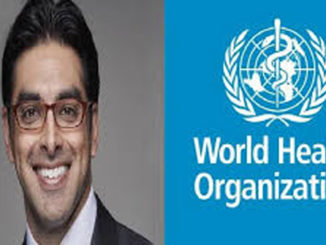
  • Indian-Origin Health Expert Anil Soni appointed First Chief of The WHO Foundation 

    Indian-Origin Health Expert Anil Soni appointed First Chief of The WHO Foundation 

    NEW YORK  (TIP): Indian-origin global health expert Anil Soni has been appointed as the first Chief Executive Officer of the newly launched The WHO Foundation, which works alongside the World Health Organization to address most pressing health challenges across the world. Mr Soni will assume his role as The WHO Foundation’s inaugural Chief Executive Officer on January 1 next year. In his new role, Mr Soni will accelerate the Foundation’s “work to invest in innovative, evidence-based initiatives that support WHO in delivering on its mission to ensure healthy lives and promote well-being for all,” the Foundation said in a press statement on Monday.

    The WHO Foundation, an independent grant-making agency headquartered in Geneva, was launched in May 2020 to work alongside the World Health Organization (WHO) and the global health community to address the world’s most pressing global health challenges.

    Mr Soni joins the Foundation from Viatris, a global healthcare company, where he served as Head of Global Infectious Diseases.

    WHO Director-General Dr Tedros Adhanom Ghebreyesus described Mr Soni as a “proven innovator” in global health who has spent two decades in service of communities affected by HIV/AIDS and other infectious diseases.

    “He earned my trust when he and his team at the Clinton Health Access Initiative worked side-by-side with the Ministry of Health in Ethiopia to expand access to treatment and strengthen the management of our health centers,” Mr Ghebreyesus said, adding that Soni has a “unique” set of skills that spans the public and private sectors, and his leadership of the Foundation will provide invaluable support to the mission of the WHO and the billions of people who depend on it. On his appointment, Mr Soni said the world is at a “critical juncture” for global public health.

    “After months of combating the COVID-19 pandemic, there is hope for several successful vaccine candidates. Beyond this crucial step, the path to recovery necessitates expanded investment in the many health priorities that have been compromised in recent months – from drops in vaccine coverage and HIV treatment to delays in cancer treatment,” he said, adding that The WHO Foundation represents a unique new opportunity for everyone in the world to play their part in tackling these challenges and in promoting global health, through a strong and vibrant WHO.

    Founder and Chairman of the Board of the WHO Foundation Professor Thomas Zeltner said Mr Soni is a “dynamic leader” with deep experience across all aspects of global public health.

    “From his work at Viatris where he has led the development and introduction of medicines to treat HIV/AIDS and tuberculosis, to his leadership of the Clinton Health Access Initiative, and his time at the Global Fund (to Fight AIDS, Tuberculosis and Malaria), he has demonstrated his ability to work across public, private, and nonprofit sectors and build successful new organizations from the ground up,” Mr Zeltner said.

    The WHO Foundation said Mr Soni is a “seasoned global health expert”, bringing over two decades of experience working across public, private, and nonprofit sectors to expand healthcare access in low and middle-income countries.

    “In addition to advisory roles with the Bill & Melinda Gates Foundation and the MDG Health Alliance, Soni joins the WHO Foundation with a strong track record of mobilizing resources and advocating for global health priorities, as demonstrated through his leadership of the Friends of the Global Fight in the United States,” the Foundation said.

    Mr Soni was closely involved in the early years of the Global Fund to Fight AIDS, Tuberculosis and Malaria, serving as the Advisor to the Executive Director from 2002-2004 and then as the Founding Executive Director of Friends of the Global Fight from 2004-2005.

    He served as the CEO of the Clinton Health Access Initiative, where he worked from 2005-2010, and oversaw the rapid expansion of the organization.

    He has been a senior advisor to the Bill & Melinda Gates Foundation and the MDG Health Alliance. He is an alumnus of McKinsey and Harvard College and serves on the board of The Marshall Project.

    As a separate legal entity, the WHO Foundation seeks to complement and strengthen the WHO”s efforts to address global health. It acts as a platform for new types of public-private engagement, while protecting the WHO”s neutrality and independence as the world’s leading international health authority.

    The Foundation said the COVID-19 Solidarity Response Fund for WHO, which WHO and the UN Foundation launched earlier in 2020, together with the Swiss Philanthropy Foundation, helped test the potential for broader support to WHO by raising USD 238 million in corporate and individual pledges for its and partners” COVID-19 response efforts.