Month: June 2021

  • New Zealand beat India to win inaugural World Test Championship

    New Zealand beat India to win inaugural World Test Championship

    SOUTHAMPTON (TIP): India’s revered superstars failed to dazzle on the ‘D-Day’ as New Zealand’s canny operators and their classy skipper Kane Williamson deservingly walked away with the inaugural World Test Championship title after a composed eight-wicket win in the final that exposed multiple frailties in Virat Kohli’s team.

    Just like that overcast morning at the Old Trafford two years back, India’s batsmen fluffed their morning lines against a familiar opposition, albeit with the red Dukes, and were skittled out for 170 on the best day for batting in a game marred by inclement weather.

    A target of 139 wasn’t going to be difficult and Williamson (52 not out), after a brilliant match as captain, played sublime drives in a short chase on a balmy reserve day which was used to compensate for two days of cricket being lost to rain.

    There was the trademark serene smile on his face which widened following a hug from his mate Ross Taylor (47 not out) in a very low-key celebration for a team that is high-profile in its own right.

    Senior off-spinner Ravichandran Ashwin’s two early wickets raised hopes of a twist in the tale but Williamson and Taylor doused them one patient stroke at a time. Perhaps the cricket Gods wanted a course correction for Williamson and his men, who were left high and dry during that evening at the Lord’s where twist of cruel fate and horrible rules robbed them off deserving glory in the 2019 World Cup.

    That was not to be the case on Wednesday when their bowlers choked India, who seemed to be in pursuit of a draw to lay their hands on the glittering mace.

    Williamson’s pacers completely rejected their idea and ensured that a World Cup had one winner and the deserving one at that.

    For Kohli, this is the third failure in big ICC events after the 2017 Champions Trophy and the 2019 World Cup.

    He might just have one more shot, which is the T20 World Cup this year, and failing to win that could warrant some changes in the team hierarchy. Mahendra Singh Dhoni is worshipped because of three ICC trophies and it was ironical that India’s abject surrender happened on the same date on which the revered former skipper won the Champions Trophy in the same country eight summers back.

    When India batted, it was only Rishabh Pant (41), who was ready to live and die by the sword while his seniors found it difficult to play the game of survival against the canniest of pace attacks.

    By tea, India had another batting disaster with only 170 runs in their second innings leaving New Zealand with a target that they were expected to chase.

    It was one of the worst batting performances on a good track with sun beating down.

    Williamson is probably one of the few captains who have now got the Indian team out for less than 250 in six consecutive innings, a testimony to his brilliant cricketing acumen and near the perfect execution of plans by his bowlers.

    Tim Southee (4/48) did the early damage with his swing bowling, Neil Wagner (1/44) bowled those hard “rib cage” overs coming round the stumps and Trent Boult (3/44), with his ability to bring it back into the left-hander, made for a brilliant few hours of Test cricket.

    And then there was India’s nemesis Kyle Jamieson (2/30), who got his “bunny” Kohli third time in three Tests and twice in one to put the icing on the cake.

    Pant fought for two and half hours for his 41 but it was more intent and less content as a cavalier devil may care approach didn’t get him too many runs.

    The catch that Henry Nicholls took while running backwards was as good as one would witness at this level.

    Pant’s dismissal did hamper India’s chances but before that an inspirational piece of captaincy from Williamson left an indelible mark.He got Wagner to come round the wicket to Jadeja and the left-arm “pounder” went wide enough to nearly cut the side crease and angled one for Jadeja to nick it behind the stumps.

    Pant’s approach of dealing with the New Zealand attack was better than just being in the shell, something that did more harm than good for Cheteshwar Pujara (15 off 80 balls).

     Before Pujara, the extra bounce outside the off-stump had the Indian skipper falling for it and BJ Watling got the easiest of catches in his final game for the Black Caps. Pujara’s abilities of grinding out bowlers have reached mythical proportions and once again he wasn’t looking to score.

    The pressure built and Jamieson fired one in with the angle. Pujara wanted to remove his bat but it seemed the ball tailed him and Taylor got a regulation catch.

    Ajinkya Rahane (15 off 40 balls) also didn’t last long and as it has happened with India often, their tail didn’t wag save for Mohammed Shami (13), who slashed three fours before Williamson cleverly deployed a “fly third-man” (neither short third-man nor the traditional third man) for the shot, which promptly landed in the fielder’s palms.

    It was a day when everything went haywire for India and poor captaincy made matters worse.                  Source: PTI

  • Sant Kabirdas Jayanti

    Sant Kabirdas Jayanti

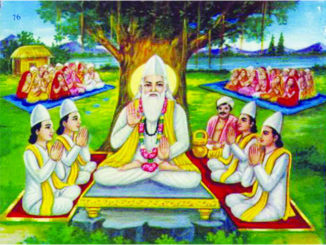
    Sant Kabirdas (1440-1518 circa) was a famous poet, saint and social reformer of India. His writings have greatly influenced the Bhakti movement. Kabir Panth which is a religious community recognizes him as its founder and its members are known as Kabir Panthis, the followers of Saint Kabirdas.

    His writings include Bijak, Sakhi Granth, Kabir Granthawali and Anurag Sagar. The major part of Kabir’s work was collected by the fifth Sikh Guru, Guru Arjan Dev, and incorporated into the Sikh scripture Guru Granth Sahib. The hallmark of Kabir’s work consists of his two line couplets, known as Kabir Ke Dohe.

    The birth anniversary of Sant Kabir is observed on Jyeshtha Purnima as per Hindu lunar calendar.

    Sant Kabir is considered to be one of the greatest poets as well as mystics ever born in India. He believed that human beings are equal and being one with God is the ultimate aim of every individual. His love and devotion towards the Supreme One clearly reflects in his poetry. The Holy Guru Granth Sahib contains over 500 verses by the great saint, Kabir. The verses or dohas of Guru Kabir are still read by people with awe and admiration. Read on to explore the biography of Sant Kabir further.

    Early Life

    As per the life history of Saint Kabir, he was born in 1398 AD. It is said that he was found floating on a lotus leaf in a tank in Benaras by a Muslim weaver. The weaver took the vulnerable child under his care and following the traditional manner, gave him the name of ‘Kabir’, meaning ‘the great one’. Even at a young age, Kabir displayed enormous spiritual talent.

    Meeting his Guru

    Kabir always wanted to become a disciple of Ramanand. However, since he was a Muslim, it was next to impossible for him to get initiation from a Hindu. So, he took recourse to a trick. Ramanand daily went to the bathing ghat for his pre-dawn ritual ablutions. Kabir lay on the steps of the ghat in such a way that Ramanand stepped on him. Shocked at this incident, he chanted ‘Rama! Rama!’. Kabir said that since he had received teachings from him, in the form of the words ‘Rama! Rama!’, he was Ramanand’s disciple. Impressed with the intelligence of Kabir, Ramanand took him as his disciple.

    Guru Kabir ke Dohe

    The hallmark of Kabir’s works consists of his two line couplets, known as the ‘Kabir ke Dohe’. The Dohas reflect the deep philosophical thinking of the poet saint.

    Philosophy

    Sant Kabir believed in the Vedantic concepts of atman. He always advocated the Impersonal Aspect of God (Nirguna) and therefore, was against idol worship. As per his view, all human beings are equal and the societal caste system that is so widely prevalent in our country is fallacious. He said that true guru is the one who can be attained through direct experience. The common ways of realizing God, like chanting, austerities, etc, are worthless.

    Teachings

    Kabir spent much of his time in the company of Hindu ascetics, saints and Muslim sufis. So he imbibed the tenets of both the religions and realized the best of both. Allah and Ram were but names of the same God. He was to be found neither in temples nor in mosques, neither in Benares nor in Mecca but only in the heart of a true devotee.

    Kabir’s philosophical tenets were extremely simple. He was known as the guiding spirit of the Bhakti Movement. He preached Bhakti or ‘Devotion’ through the medium of his ‘Dohas’. Kabir’s Dohas touched everybody’s heart and he was endeared by all. Following are the aspects on which kabir has expressed his ideas;

    Love

    Love for all was Kabir’s principal tenet. He emphasized that love was the only medium which could bind the entire human kind in an unbreakable bond of fraternity. Kabir detested the frivolities and rituals in Hinduism and Islam for, these could never bind together mankind. Hence he advised all to give up hatred and perpetuate love for one and all.

    God

    God was the focal point of Kabir’s religion and Kabir addressed him in different names. In his opinion God alone was Ram, Rahim, Govind, Allah, Khuda, Hari etc. But for Kabir, ‘Saheb’ was his favorite name. He said god was everywhere and His domain is unlimited. God was pure, sacred, existing, without form, light, endless and inseparatable. Hence God was all powerful and he could only be worshipped through love and devotion. In whatever name one addresses Him, God is one and has no second. Hence Kabir preached Monotheism.

    Teacher

    In Kabir’s dictum the Teacher or ‘Guru’ has been accorded the prime position. The teacher according to him was the incarnation of God. Kabirs had this realization only when he came in contact with Ramananda. It was the guidance of a teacher that led man in the proper direction and helped him in developing the right insight.

    The Path of Bhakti

    Kabir stressed that the only way to attain God was through the path of Bhakti. Intense love and devotion would surely lead one to the ultimate attainment of Godhood. Total submission at His feet helps one to reach him and this should be the ultimate goal of all was what Kabir emphasized. For this no rituals or ceremonies were needed, only purity of heart and unflinching devotion were the two essentials. Hence Kabir advised his followers to attain Godhood through the path of Bhakti.

    Soul

    Matters relating the soul were an integral part of Kabir’s spiritual messages. Soul according to him was life, breath and knowledge. It was a part of the ‘ultimate knowledge’. The soul itself was the creation and it also was the creator. It was also the knowledge and the knowledgeable. The soul was the creator of all things, it also was the destroyer. In Kabir’s opinion cows may be of different colours but milk was the same.

    Hence, though different ideas and thoughts may be merging together, soul remained the same. Soul was one, inseparable and self-creating. It was the greatest creation of God. Kabir propounded many different views on soul. Hence it became very difficult to have an exact defamation of the soul.

    Impermanence of the world

    Kabir asserted the impermanence of all things in the world. All living and non living things like insects, animals, trees, rivers, mountains and human beings are only temporary and all would cease to exist some day. He advised his followers not to lament the death of something which was bound to die. Hence he emphasized that in this impermanent world, the only truth and permanent reality was God, who could be attained thought Bhakti.

    Salvation

    Liberation or salvation was another contention of Kabir. Liberation implied freedom from the pangs of life and death. Liberation according to him was a state of “fearlessness”. By citing an example he said just as water flows out of a hole in a pot and mixes with the water outside, similarly, after death the individual soul moves out of the gross body to merge with the cosmic soul. This is liberation.

  • S&P cuts India’s FY22 growth forecast to 9.5%

    New Delhi (TIP): S&P Global Ratings on Thursday, June 24,  cut India’s growth forecast for the current fiscal to 9.5 per cent, from 11 per cent earlier, and warned of risk to the outlook from further waves of Covid pandemic. The agency lowered the growth outlook saying that a severe second Covid outbreak in April and May led to lockdowns imposed by states and sharp contraction in economic activity. “We forecast growth of 9.5 per cent this fiscal year from our March forecast of 11 per cent,” S&P said.

    Stating that permanent damage to private and public sector balance sheets would constrain growth over the next couple of years, it projected India’s growth at 7.8 per cent in the next fiscal ending March 31, 2023.

    “Further pandemic waves are a risk to the outlook given that only about 15 per cent of the population has received at least one vaccine dose so far, although vaccine supplies are expected to ramp up,” S&P said.

    Indian economy contracted by 7.3 per cent in fiscal 2020-21 as the country battled the first wave of Covid, as against a 4 per cent growth in 2019-20.

    GDP growth in the current fiscal was estimated to be in double digits initially, but a severe second wave of pandemic has led to various agencies cut growth projections.

    Earlier this month, the RBI also cut India’s growth forecast to 9.5 per cent for this fiscal, from 10.5 per cent estimated earlier.

    It said manufacturing and exports were less severely affected compared with 2020, but services were acutely disrupted. Consumption indicators such as vehicle sales fell sharply in May 2021 and consumer confidence remains downbeat.                 Source: PTI

  • 40% of over Rs 22,000 cr ‘defrauded’ by Mallya, Nirav,Choksi recovered: ED

    40% of over Rs 22,000 cr ‘defrauded’ by Mallya, Nirav,Choksi recovered: ED

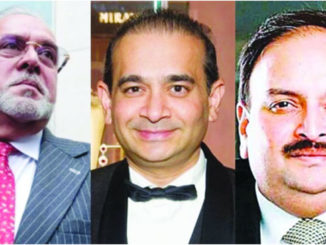
    New Delhi (TIP): About 40 percent of the money lost by banks in alleged frauds perpetrated by fugitive businessmen Nirav Modi, Mehul Choksi and Vijay Mallya has been recovered so far, the Enforcement Directorate (ED) said after the sale of attached shares worth over Rs 5,800 crore on Wednesday, June 23.

    According to the agency, the latest sale proceeds take the total value of recovery to Rs 9,041.5 crore, or 40 per cent of the over Rs 22,000 crore allegedly defrauded by the trio.

    Commenting on the development, Union Finance Minister Nirmala Sitharaman tweeted, “Fugitives & economic offenders will be actively pursued; their properties attached & dues recovered.”

    The three, who fled overseas as probe against them gathered pace, are being investigated by central investigative agencies such as the ED and the Central Bureau of Investigation (CBI) after they were alleged to have cheated banks, and these frauds have been categorised as among the country’s biggest criminal loan heist till date.

    The central agency gave the low-down on these two cases — the estimated Rs 13,000 crore fraud allegedly carried out by diamond trader Nirav Modi, his uncle Mehul Choksi and others in the Brady House branch of PNB in Mumbai and the about Rs 9,000 crore Kingfisher Airlines fraud triggered by Mallya — in a statement issued here.

    It said the three “defrauded” public sector banks by siphoning off the funds through their companies which resulted in total loss of over Rs 22,000 crore (Rs 22,585.83 crore in definite numbers) to a clutch of banks.

    The ED, empowered to probe such cases under criminal sections of the Prevention of Money Laundering Act (PMLA), went on to attach and seize total assets worth Rs 18,170.02 crore in these two cases that included Rs 969 crore worth of properties “located” abroad.

    “The quantum of the attached and seized assets represent 80.45 per cent of the total bank loss of Rs 22,585.83 crore,” the ED said.

    On Wednesday, out of these attached assets, the Debts Recovery Tribunal (DRT) on behalf of an SBI-led consortium that lent money to Mallya sold fresh shares worth Rs 5,824.50 crore of United Breweries Limited (UBL), the agency said.

    Source: PTI

  • Microsoft 2nd US firm to pass $2 trillion market cap

    Microsoft 2nd US firm to pass $2 trillion market cap

    San Francisco (tip): Tech giant Microsoft reached a $2 trillion market capitalisation in trading, joining a small group of global companies that have crossed that threshold — including Apple.

    Apple reached its own $2 trillion market cap back in August 2020.

    Despite hitting $2 trillion in intraday trading on Tuesday, Microsoft’s valuation was about $300 million shy of the high-water mark by the time markets closed, AppleInsider reported.

    Like Apple, Microsoft has benefitted from the work-from-home and remote education boom created as a result of the Covid-19 pandemic. Since March 2020, when lockdowns began, Microsoft’s stock has surged 64 per cent.

    Back in April, the company reported that its sales had risen 19 per cent year-over-year to $41.7 billion in the first quarter of 2020.

    As of writing, Apple’s market valuation standards at $2.24 trillion, the report said.

    Some analysts believe the Cupertino tech giant could become the first to hit a $3 trillion market cap within a few years. Along with the technology giants, oil company Saudi Aramco also once surpassed the $2 trillion mark. On Tuesday, its market valuation was $1.88 trillion.

    Source: IANS

  • Astronauts finish installing first solar arrays outside ISS

    Astronauts finish installing first solar arrays outside ISS

    Washington (TIP): Two astronauts onboard the International Space Station (ISS) has successfully completed the deployment of solar arrays, which will soak up the sun’s energy to provide electrical power for the numerous research and science investigations conducted every day, as well as the continued operations of the orbiting platform.

    NASA astronaut Shane Kimbrough and ESA (European Space Agency) astronaut Thomas Pesquet in their eighth spacewalk of the year outside the ISS deployed the new ISS Roll-Out Solar Array (iROSA) on the far end of the left (port) side of the station’s backbone truss structure.

    The new iROSA was delivered to the ISS by the SpaceX Dragon spacecraft early this month. A Kimbrough and Pesquet successfully unfolded the solar array, bolted it into place, and connected cables to the station’s power supply to complete deployment.

    In addition, the astronauts removed and stowed hardware in preparation for releasing the second iROSA from the flight support structure for installation.

    The pair will work toward the second solar array upgrade, this one on the P6 truss’ 4B power channel, during another spacewalk.

    The first pair of solar arrays were deployed in December 2000, with additional array pairs delivered in September 2006, June 2007, and March 2009. The first pair of solar arrays have provided continuous electrical power to the station for more than 20 years and are now showing signs of degradation, NASA said.

    Developed by space infrastructure company Redwire, the iROSA or “flex blanket” solar array, which is around 3,000 pounds, was loaded in Dragon’s unpressurised trunk.

    Each of SpaceX Dragon’s cargo launch missions will carry two arrays. Once installed, the six iROSA arrays will collectively produce over 120KW of power.

    According to Redwire, the new iROSA arrays will improve the ISS’s power generation by 20-30 per cent.

    Hubble telescope on halt after trouble

    with payload computer: NASA

    US Space agency NASA continues to work on the payload computer on the Hubble Space Telescope, which halted probably due to a degrading memory module.

    Hubble, which has been watching the universe over the past 30 years, faced trouble with its payload computer on June 13. An attempt to restart the computer failed on June 14, NASA said.

    “NASA continues to work on resolving an issue with the payload computer on the Hubble Space Telescope. The operations team will be running tests and collecting more information on the system to further isolate the problem. The science instruments will remain in a safe mode state until the issue is resolved. The telescope itself and science instruments remain in good health,” the space agency said in a statement.

    The agency’s initial findings pointed to a degrading computer memory module as the source of the computer halt. When the operations team attempted to switch to a back-up memory module, however, the command to initiate the back-up module failed to complete.

    Another attempt was conducted on both modules to obtain more diagnostic information while again trying to bring those memory modules online. However, those attempts were not successful, NASA said.

  • Bitcoin drops below US$30,000

    Bitcoin fell below US$30,000 for the first time since January, briefly erasing gains for the year and adding to losses sparked a day earlier when China’s central bank deepened a crackdown on cryptocurrencies.

    The world’s largest cryptocurrency dropped to US$28,600, its lowest since early January, after giving up gains made during Asian hours. Its fall also pressured smaller coins such as ether.

    Bitcoin tumbled 11per cent on Monday, its largest one-day drop in over a month, with losses of nearly 30per cent in the last week alone almost wiping out gains for the year-to-date. It was last down 2.3per cent at US$30,896.

    The sell-off was sparked by the People’s Bank of China urging China’s largest banks and payment firms to crack down harder on cryptocurrency trading, the latest tightening of restrictions on the sector by Beijing.

  • Competition Commission probes Google for alleged unfair biz ways

    The Competition Commission of India (CCI) has ordered a detailed probe against Google for alleged anti-competitive practices in the smart television operating systems market in the country.

    After assessing a complaint, the watchdog has reached the prima-facie view that Google is dominant in the relevant market for licensable smart TV device operating systems in India.

    In the order, the CCI said that prima-facie mandatory pre-installation of all the Google applications under Television App Distribution Agreement (TADA) amounts to imposition of unfair conditions on the smart TV device manufacturers.

    France sues Apple over developer contracts tied to App Store

    France is suing Apple over allegedly abusive contractual terms imposed on developers and startups that seek to sell their apps on the tech giant’s App Store, a spokesperson for the finance ministry’s consumer fraud watchdog told Reuters. France’s leading startup lobby France Digitale has joined the case, according to a court document seen by Reuters. The case will be heard at Paris’ commercial court on Sept. 17, a spokesperson for the court said. A spokesperson for Apple had no immediate comment.

  • Windows 11 now official, brings fresh interface, centrally-placed start menu

    Windows 11 now official, brings fresh interface, centrally-placed start menu

    Windows 11 is now official. Microsoft’s new Windows operating system has debuted nearly six years after the release of Windows 10 that took place in July 2015. The update, which is being called the “next generation” of Windows, comes with a massive redesign over its predecessor, starting from an all-new boot screen and startup sound to a centrally-placed Start menu and upgraded widgets. Windows 11 also removes elements including the annoying “Hi Cortana” welcome screen and Live Tiles. The Redmond, Washington-based company is essentially aiming to counter the likes of macOS and Chrome OS with its latest operating system.

    One of the most notable changes, which we already saw in a recently leaked ISO, that Windows 11 brings to the users currently running Windows 10 is the new interface. It starts with a fresh setup screen and continues to give a fresh look and feel across all core Windows elements. There are rounded corners on menus and windows that look similar to the recent iPadOS release. You’ll also see the Start menu at the centre that is aimed at providing a modern experience.

    It is for the first time, perhaps since the release of Windows NT 4.0 that was way back in 1996, when we are not seeing the Start menu on the left side — now located centrally. The transition of the Start menu also brings all the default icons such as Edge and File Explorer to the centre. This new positioning makes Windows 11 more familiar to people who use macOS or Chrome OS.

  • Online learning has changed the way students work

    Online learning has changed the way students work

    Palmerston North (TIP: As university students wait on their mid-year exam results, some will no doubt be thinking about more than just passing. Since COVID-19 pushed teaching and testing online last year, the issue of cheating has come into sharper focus.

    Recent reports of University of Auckland students allegedly cheating in online exams highlighted the potential for dishonesty in a trust-based system.

    But the problem also highlights a tension between cultures: the increasingly online world of higher education, and the everyday world of students.

    This has made “cheating” in exams a more complex and evolving question than it once was. It also has implications for the credibility and value of university education and how we perceive student learning.

    Traditionally, entry to university exams was controlled using student identity card photo checks. Set in large rooms, exams were invigilated to ensure students couldn’t communicate with each other in order to cheat.

    Everyone had their place, and what students could take into the room was described and restricted. Teachers set the exams, the students sat them, exams were marked and final grades are given — simple enough.

    COVID-19 changed all that. For institutions where “blended” (face-to-face and online) learning had already been integrated, the digital switch was not so dramatic.

  • Facebook launches podcasts, live audio service

    Facebook is launching podcasts and live audio streams in the US on Monday to keep users engaged on its platform and to compete with emerging rivals.

    Facebook says it is allowing public figures with verified accounts to start live audio rooms and invite anyone else to speak. A handful of podcasts will be available to people in the US at first and the company plans to add more down the line.

    CEO Mark Zuckerberg, who has appeared on the video streaming app Clubhouse in the past, hosted his own live audio room on his Facebook page last week.

    “Live Audio Rooms and podcasts rolling out in the US is just the beginning of our audio journey,” wrote Fidji Simo, head of the Facebook app, in a blog post Monday.

    “Looking ahead, we are working with creators who will use our audio tools to further develop and launch Soundbites — short-form, creative audio clips.”

    But podcasts and live audio have also been an outlet for racism, misinformation and extremist material. Live audio is particularly difficult to moderate, compared with traditional social media posts.

    Facebook, which announced its audio plans to push into audio streams in April, says its rules apply to live audio and podcasts and anyone can report offending material.

    “In addition, our broader integrity and safety work and the tools we have built for proactively and automatically identifying harmful content are great building blocks, but we plan to adapt tech and processes as we learn more,” the company said in a prepared statement. Source: AP

  • Modi and Kashmir: The story so far

    Modi and Kashmir: The story so far

    In politics, Jammu and Kashmir is a thorny issue. The issue of Jammu and Kashmir or the Kashmir issue as it commonly referred to is more or less a consequence of the British design of the partition of India in 1947.

    It was complicated by Pakistan’s invasion of Kashmir two months after the partition that led to merger of Jammu and Kashmir (that also included the Union Territory of Ladakh) with the Union of India, and the first India-Pakistan war.

    The war ended with a ceasefire line separating the two armies. This line became the Line of Control (LoC) that placed a huge part of Jammu and Kashmir and Ladakh under Pakistan’s occupation.

    However, LoC has not remained a constant through over seven decades. During 1950s and 1960s, China took advantage of the situation and captured Aksai Chin.

    Successive governments have tried to maintain status quo since then reiterating India’s claim on Pakistan-occupied Kashmir (PoK) and Gilgit-Baltistan. In 1990s, Parliament passed a resolution affirming India’s commitment to take back occupied territories of Jammu and Kashmir and Ladakh.

    This status quo policy changed under the Narendra Modi government.

    Two-and-a-half months into power, the Modi government stunned Pakistan by calling off diplomatic talks after its high commissioner met Kashmiri separatist leaders in Delhi ahead of official talks. It was a sharp departure from earlier approach. The Modi government accused Pakistan of interfering with internal affairs of India.

    The J&K govt: 2015-2016

    Election held in 2014 yielded a hung assembly.

    –              Ideological rivals, the Peoples Democratic Party (PDP) and the Bharatiya Janata Party (BJP) joined hands to form government.

    –              Mufti Muhammad Sayeed became the chief minister. He died in January 2016.

    –              His daughter Mehbooba Mufti became chief minister in April 2016.

    July 2016

    –              Terror outfit Hizbul Mujahideen’s top commander Burhan Wani was killed in an encounter with the security forces. Protests erupted across the Kashmir Valley leading to violent clashes with security forces, and imposition of curfew. Several people died. Curfew was lifted after over 50 days.

    September 2016

    –              This marked another major departure from status quo policy.

    –              Terrorists attacked the Uri army base,18 soldiers died.

    –              India carried out surgical strikes across the LoC in response.

    –              The government went public with the punitive action — a first in official record.

    Fall of Mehbooba government

    –              In June 2018, the BJP pulled out of the Mehbooba Mufti government.

    –              Mehbooba was accused of going lenient on trouble-makers in Kashmir.

    –              Mehbooba Mufti charged, in turn, the Modi government of adopting a ‘muscular policy’ in Kashmir as against status quoist ‘conciliatory policy’ adopted by previous governments.

    Clampdown on separatists—2016-2019

    –              The Modi government made a subtle change in policy towards the separatist leaders in Kashmir. They openly propagated anti-India views but they enjoyed perks and privileges from the government. This was questioned. By 2019, their security cover and financial assistance were gradually withdrawn. Their links to terror funding was investigated.

    February 2019: Pulwama attack and Balakot strike

    –              On February 14, a convoy of security forces was targeted at Pulwama in Kashmir killing 40 soldiers. The Modi government responded — in a reminder of the surgical strike of 2016 — with an air strike hitting a terror camp in Pakistan’s Khyber Pakhtunkhwa province.

    August 2019: The Kashmir decision

    –              The Modi government through an executive decision made Article 370 inoperative. Article 370 had a history and accorded special status to Jammu and Kashmir state. The decision stripped Jammu and Kashmir of its special status.

    –              The Modi government brought Jammu and Kashmir Reorganisation Bill, which split Ladakh from Jammu and Kashmir.

    –              Both units were made Union Territories. It was the first occasion when a state in India was turned into a Union Territory.

    –              Jammu and Kashmir was to have an assembly.

    –              The number of assembly constituencies was increased from 107 to 114 including 24 earmarked for PoK.

    –              Most mainstream leaders including former chief ministers Farooq Abdullah, his son Omar Abdullah and PDP chief Mehbooba Mufti were put under house arrest. Separatist leaders were arrested.

    DDC polls: 2020

    The government created a new elected body called the District Development Council for each of the 20 districts of Jammu and Kashmir. It was the first election since Jammu and Kashmir was stripped off the special status.

    Delimitation

    –              The increase in assembly seats in 2019 required delimitation of constituencies. It is a process of reorganising territorial boundaries of existing constituencies for election to various bodies.

    n             A delimitation commission under Justice (retired) Ranjana Desai was announced in early 2020. The process is underway and the commission was given an extension of one year in March this year.

                    Source: India Today

  • What J&K leaders said after meeting PM Modi

    What J&K leaders said after meeting PM Modi

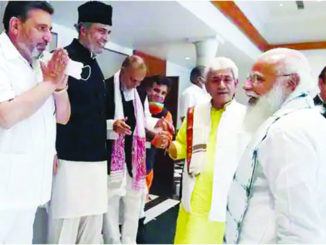
    New Delhi (TIP): Prime Minister Narendra Modi on Thursday, June 24, met political leaders from Jammu & Kashmir (J&K) for the first such engagement since the region was stripped of its semi-autonomous status and statehood on August 5, 2019. Here is what the leaders and their parties said after the meeting:

    Former chief minister Farooq Abdullah-led National Conference (NC) demanded the restoration of statehood and said they told Modi that the decisions taken in August 2019 were not in the interest of the people and should be reversed.

    NC leader Omar Abdullah said they sought the restoration of the J&K cadre of the all-India services, which was merged with the Arunachal, Goa, Mizoram, and Union Territories cadre. He added the Centre refused to discuss the restoration of special status claiming it was a “sub-judicial matter.” On delimitation, he said NC conveyed to Modi that it was not needed. “We told the Prime Minister that we do not stand with what was done on August 5, 2019. We are not ready to accept it. But we would not take the law into our hands. We will fight this in court,” he said.

    People Democratic Party leader Mehbooba Mufti said she highlighted the issue of “ongoing persecution” of Kashmiris and also asked Modi to resume dialogue with Pakistan “to boost trade and maintain peace in Kashmir”. She added the atmosphere has become “suffocating” in Kashmir. Mufti said she also spoke against the culture of booking people under the Unlawful Activities (Prevention) Act. She added she told Modi the government illegally abrogated J&K’s special status and conveyed to him they would get it restored legally through courts.

    J&K Congress unit chief Ghulam Ahmad Mir said Modi’s “body language” reflected there has been a backlash from the voters of the Bharatiya Janata Party over how the abrogation of the region’s special status was carried out.

    Former chief minister Ghulam Nabi Azad said Congress put forward five demands: immediate restoration of statehood, protection of land and jobs for the domiciles, return of Kashmiri Pandits, the release of political prisoners and assembly elections.

    Communist Party of India (Marxist) leader Mohammed Yousuf Tarigami said he told Modi it would have been wiser if this meeting was conducted before the nullification of Article 370. “We made it very clear Jammu & Kashmir is committed to remaining with India, but constitutional guarantees of Indian constitution should be given back.” Tarigami said there was “no assurance at all” regarding the fulfilment of the demands.

    J&K Panthers Party chief Bhim Singh said he demanded full statehood and elections and that a delimitation process should be initiated only after an elected government is in place. Singh added he also complained about the absence of representatives from Ladakh.

    People’s Conference leader Sajad Lone said there was a lot of “emotional bonding” between Modi and Kashmiri leaders and the meeting was held in a “cordial atmosphere.”

    Apni Party leader Altaf Bukhari said he also requested protection of land and jobs, improvement in infrastructure, and employment. He added Modi said delimitation would take place and this would be followed by the assembly elections.                 Source: HT

    Statehood, delimitation: Key takeaways from PM Modi-J&K leaders meet

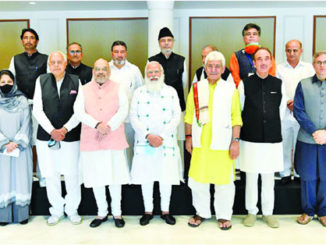
    Prime Minister Narendra Modi and home minister Amit Shah held discussions with representatives from several political outfits of Jammu and Kashmir in a meeting that lasted over three hours on Thursday. Fourteen prominent leaders from Jammu and Kashmir took part in the meeting. Lieutenant Governor of Jammu and Kashmir Manoj Sinha, National Security Advisor Shri Ajit Doval, MoS (PMO) Shri Jitender Singh and senior officials were also in attendance.

    This was the first meeting of its kind since the abrogation of Article 370 and the bifurcation of the erstwhile state into two Union territories in August 2019, where the following points were discussed.

    Emphasis on delimitation

    Both Prime Minister Narendra Modi and home minister Amit Shah stressed on delimitation and the subsequent elections that would follow a delimitation exercise. Soon after the conclusion of the meeting, PM Modi took to Twitter to convey that delimitation has to happen at a quick pace so that polls can happen and J&K gets an elected government that gives “strength to J&K’s development trajectory”. Amit Shah emphasised that the delimitation exercise and peaceful elections are important milestones in restoring statehood as promised in Parliament, the government said in a press release.

    Demand for statehood

    The leaders hailing from Jammu and Kashmir unanimously demanded the restoration of Kashmir’s statehood. People’s Conference leader Muzzafar Hussain Baig said, “All leaders demanded statehood. To which the PM said, the delimitation process should conclude first and then other issues will be addressed.”

    Elections

    The Prime Minister said during the meeting that the Union government was fully committed to the democratic process in Jammu and Kashmir and stressed conducting assembly elections similar to the District Development Council elections conducted last year. The Prime Minister also assured the representatives that an elected government cannot be substituted with a bureaucratic one.

    Aspirations of Kashmiri youth

    The Prime Minister talked to J&K leaders about the aspirations of the youth of Kashmir who, he said, are poised to provide political leadership in the coming years. ANI reported that PM Modi also discussed offering opportunities to the youth of J&K.

    Development projects

    Amit Shah credited J&K for coming a long way in terms of development. Around 90% saturation has been achieved in individual beneficiary Central Government schemes in J&K. Several major road projects, two new AIIMS, 7 new Medical Colleges have also been set up, according to the official press release. New industrial policy has been notified with a ?28,400 crore package to accelerate industrial growth with the aim of creating 4.5 lakh jobs, the release added.

  • McAfee antivirus software creator dead in Spanish prison

    McAfee antivirus software creator dead in Spanish prison

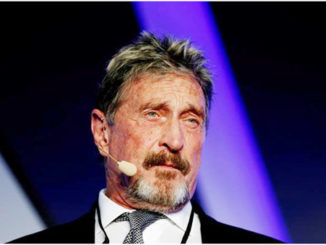
    Madrid (TIP): John McAfee, the creator of the McAfee antivirus software, has been found dead in his cell in a jail near Barcelona, a government official has said. Hours earlier, a Spanish court issued a preliminary ruling in favor of the 75-year-old tycoon’s extradition to the United States to face tax-related criminal charges. Security personnel at the Brians 2 penitentiary near the northeastern Spanish city tried to revive him, but the jail’s medical team finally certified his death, a statement from the regional Catalan government said. The statement didn’t identify McAfee by name, but said he was a 75-year-old U.S. citizen awaiting extradition to his country. A Catalan government source familiar with the event who was not authorised to be named in media reports confirmed to the AP  on Wednesday that the dead man was McAfee.

    Spain’s National Court on Monday ruled in favour of extraditing McAfee, who had argued in a hearing earlier this month that the charges against him were politically motivated and that he would spend the rest of his life in prison if he was returned to the U.S.

    The court’s ruling was made public on Wednesday and could be appealed. Any final extradition order would also need to get approval from the Spanish Cabinet.

    Tennessee prosecutors charged McAfee with evading taxes after failing to report income made from promoting cryptocurrencies while he did consultancy work, as well as income from speaking engagements and selling the rights to his life story for a documentary. The criminal charges carry a prison sentence of up to 30 years.

    The entrepreneur was arrested last October at Barcelona’s international airport. A judge ordered at that time that McAfee should be held in jail while awaiting the outcome of a hearing on extradition. (AP)

  • Do not provoke us again in Black Sea: Russia warns Britain

    Do not provoke us again in Black Sea: Russia warns Britain

    London/Moscow (TIP): Russia accused Britain on June 24 of spreading lies over a warship confrontation in the Black Sea and warned London that it would respond resolutely to any further provocative actions by the British navy off the coast of Russia-annexed Crimea.

    Russia summoned the British ambassador in Moscow for a formal diplomatic scolding after the warship breached what the Kremlin says are its territorial waters but which Britain and most of the world say belong to Ukraine.

    Britain said Russia was sowing inaccuracies and disputed Russia’s account, saying no warning shots had been fired and that no bombs had been dropped in the path of the Royal Navy destroyer Defender.

    Russia’s foreign ministry summoned Ambassador Deborah Bronnert to deliver a “tough demarche” – diplomatic jargon for a telling off – and spokeswoman Maria Zakharova accused London of “barefaced lies”.

    “We believe it was a deliberate and premeditated provocation,” Kremlin spokesman Dmitry Peskov said of the incident, in which Moscow said it fired warning shots and dropped bombs in the path of the British destroyer.

    “In the event of a repeat of unacceptable provocative action – if those actions go too far, no options can be ruled out in terms of legally defending Russia’s borders,” Peskov told reporters.

    The Black Sea, which Russia uses to project its power in the Mediterranean, has for centuries been a flashpoint between Russia and its competitors such as Turkey, France, Britain and the United States.

    Russia seized and annexed the Crimea peninsula from Ukraine in 2014 and considers areas around its coast to be Russian waters. Western countries deem the Crimea to be part of Ukraine and reject Russia’s claim to the seas around it.

    British Prime Minister Boris Johnson said the warship was acting in accordance with the law and had been in international waters.

    “The important point is that we don’t recognise the Russian annexation of Crimea,” he told reporters. “These are Ukrainian waters and it was entirely right to use them to go from A to B.” He also disagreed with the suggestion that relations with Russia were at an historic low. “I can remember times in my own lifetime when things have been far worse,” he said.

    Britain has also disputed the Russian version of events, with Foreign Secretary Dominic Raab saying: “No shots were fired at HMS Defender.”

    “The Royal Navy ship was conducting innocent passage through Ukrainian territorial waters,” he told reporters on a visit to Singapore: “We were doing so in accordance with international law and the Russian characterisation is predictably inaccurate.” Under international law of the sea, innocent passage permits a vessel to pass through another state’s territorial waters so long as this does not affect its security.

    BLACK SEA DISPUTE

    During its 2008 war with Georgia, Russia bristled at U.S. warships operating in the Black Sea, and in April the United States cancelled the deployment of two warships to the area.

    Both Russian President Vladimir Putin and U.S. President Joe Biden say relations between the two former Cold War foes are at a low point after disputes over spying, hacking, election meddling, Ukraine, Belarus and human rights.

    Ties between London and Moscow have been on ice since the 2018 poisoning with a Soviet-developed nerve agent known as Novichok of ex-double agent Sergei Skripal, a mole who betrayed hundreds of Russian agents to Britain’s MI6 foreign spy service. (Reuters)

  • Emotions run high as Hong Kong residents snap up final edition of Apple Daily

    Emotions run high as Hong Kong residents snap up final edition of Apple Daily

    Hong Kong (TIP): Hong Kong residents rushed in the early hours of June 24 to snap up copies of the final edition of pro-democracy newspaper Apple Daily, forced to end a 26-year run after getting embroiled in a national security crackdown. Emotions ran high as supporters of the paper, which has faced an unrelenting squeeze since its owner and staunch Beijing critic, Jimmy Lai, was arrested under the security law in August 2020, queued for their last copies just after midnight. “I couldn’t sleep well for the past few nights,” said Tse, 60, a former medical worker, who leaned on a cart to support herself as she queued outside a newspaper vendor in the working class district of Mong Kok.

    “I hope the reporters can stay true to their faith and keep working hard.”

    Queues stretched at newsstands across the city after an emotional final print run at the headquarters of the paper, which was forced to shut after authorities froze its assets in a national security investigation.

    “Thank you to all readers, subscribers, ad clients and Hong Kongers for 26 years of immense love and support,” the paper said in an online article.

    “Here we say good-bye, take care of yourselves.” Some staff expressed anger and frustration at the shutdown.

    “(After) today, there is no press freedom in Hong Kong … I cannot see any future in Hong Kong,” said Dickson Ng, 51, a designer at the paper.

    “I feel very disappointed and angry today. I don’t understand why our limited group, company, and the newspapers were forced to stop operating under such circumstances.”

    In anticipation of robust demand for its final print run, Apple Daily, which mixes pro-democracy views with celebrity gossip and investigations of those in power, printed 1 million copies, or more than 10 times its usual print run.

    The shutdown deals the most serious blow yet to Hong Kong’s media freedoms and could potentially destroy the city’s reputation as an open and free media hub after Beijing imposed the security law on the global financial centre last year, media advocacy groups say.

    Critics of the law say it is being used to crush dissent in the former British colony, an assertion authorities in Beijing and Hong Kong reject.

    Officials in Hong Kong and China have repeatedly said media freedoms are respected but are not absolute.

    Piling pressure on the beleaguered media group, broadcaster RTHK said the Science and Technology Park Corporation was reclaiming the land it leased to Apple Daily, citing multiple violations.

    Apple Daily could not be reached for comment.

    ‘EXTREME REGRET’

    Taiwan’s China policy-making Mainland Affairs Council issued a statement on Apple Daily’s closure saying it felt “extreme regret and solemnly condemned” that Hong Kong media has been unable to operate because of “political oppression” brought about by the national security law.

    The Chinese foreign ministry said rights and freedoms could not jeopardise national security.

    “I want to emphasise, Hong Kong is a society that has rule of law. Everyone is equal in front of the law, no one or no organisation is above the law,” a spokesperson for the ministry said. “All rights and freedom, including media freedom, cannot go beyond the bottom line of national security.” In Canada, Foreign Minister Marc Garneau said the forced closure of Apple Daily was a significant blow to freedom of press and speech in Hong Kong.

    Last week, 500 officers raided the newspaper’s headquarters, with live feeds showing authorities sifting through reporters’ notes and other journalistic material in scenes that drew international condemnation.

    Five executives were arrested and two – chief editor Ryan Law, 47, and Cheung Kim-hung, 59 – were charged with conspiracy to commit collusion with a foreign country and denied bail. On Wednesday, a 55-year-old columnist for the paper was also arrested under the national security law. (Reuters)

  • UK experts warn of miserable winter

    London (TIP): British scientists have warned of a “pretty miserable winter” in the UK this year due to new respiratory viruses likely to emerge, with further lockdowns a possibility. Professor Calum Semple, member of the government’s Scientific Advisory Group for Emergencies (SAGE), said that children and elderly people will be especially vulnerable to endemic viruses at the end of the year, Xinhua news agency reported.

    Describing it as the “fourth wave winter”, he said: “I suspect we’ll have a pretty miserable winter because the other respiratory viruses are going to come back.” (IANS)

    China to operationalise first electric train in Tibet, connecting Lhasa with NyingchiBeijing (TIP): China is all set to operationalise the first electric train in the remote Himalayan region of Tibet, connecting the provincial capital Lhasa with Nyingchi—a strategically located Tibetan border town close to India’s Arunachal Pradesh.

    The 435.5-km Lhasa-Nyingchi section of the Sichuan-Tibet Railway is expected to be inaugurated ahead of the centenary celebrations of the ruling Communist Party of China (CPC) on July 1, according to official media reports. The electricity transmission process has been completed and tested, Liu Yuxiang, Chief Engineer of the Lhasa-Nyingchi Railway, was quoted as saying by the state-run CCTV earlier. The Sichuan-Tibet Railway will be the second railway into Tibet after the Qinghai-Tibet Railway. It will go through the southeast of the Qinghai-Tibet Plateau, one of the world’s most geologically active areas.

    In November, Chinese President Xi Jinping had instructed officials to expedite construction of the new railway project, connecting Sichuan Province and Nyingchi in Tibet, saying the new rail line would play a key role in safeguarding the border stability. The Sichuan-Tibet Railway starts from Chengdu, capital of Sichuan Province, and travels through Ya’an and enters Tibet via Qamdo, shortening the journey from Chengdu to Lhasa from 48 hours to 13 hours. Nyingchi is prefecture level city of Medog which is adjacent to the Arunachal Pradesh border.

    China claims Arunachal Pradesh as part of South Tibet, which is firmly rejected by India. The India-China border dispute covers the 3,488-km-long Line of Actual Control (LAC). Qian Feng, director of the research department at the National Strategy Institute at Tsinghua University, told the official daily Global Times earlier that “If a scenario of a crisis happens at the China-India border, the railway will provide a great convenience for China’s delivery of strategic materials.”PTI

  • 751 bodies found at Indigenous school in Canada

    Regina (Canada) (TIP): The chief of an Indigenous nation in Canada said on June 24 investigators have found 751 unmarked graves at the site of a former residential school for Indigenous children — a discovery that follows last month’s report of 215 at another school.

    Chief Cadmusn Delmore of the Cowessess First Nation made the announcement at a news conference.

    Chief Bobby Cameron of the Federation of Sovereign Indigenous First Nations said he expects more graves will be found on residential school grounds across Canada.

    “This was a crime against humanity, an assault on First Nations,” he said.

    “We will not stop until we find all the bodies.”

    The bodies were discovered at the Marieval Indian Residential School, which operated from 1899 to 1997 where Cowessess is now located, about 87 miles east of Regina, the capital of Saskatchewan.

    Delorme said at one time the graves were marked but those who operated the school removed the markers.

    “We are treating this as a crime,” he said.

    The Cowessess and the Federation of Sovereign Indigenous First Nations, which represents Saskatchewan’s First Nations, said a day earlier that “the number of unmarked graves will be the most significantly substantial to date in Canada.”

    Last month the remains of 215 children, some as young as 3 years old, were found buried on the site of what was once Canada’s largest Indigenous residential school near Kamloops, British Columbia. (AP)

  • Pakistani court dismisses former PM Nawaz Sharif’s appeal against convictions in 2 corruption cases

    Pakistani court dismisses former PM Nawaz Sharif’s appeal against convictions in 2 corruption cases

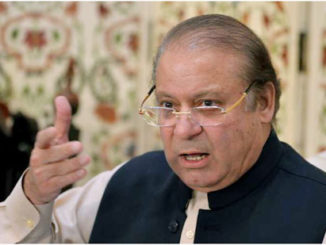
    Islamabad (TIP): A top Pakistani court on June 24 dismissed appeals by former Prime Minister Nawaz Sharif against his conviction in two corruption cases by an accountability court, as it described him as a “fugitive from law”.

    “There is nothing in the Constitution or the rules to compel the court to decide on merits of an appeal filed by an accused person who has chosen to be fugitive from justice and while remaining so decides to disobey or frustrate the orders, directions and process of the court from which he seeks justice,” the Islamabad High Court Bench said.

    A Bench comprising Justices Aamer Farooq and Mohsin Akhtar Kayani, in its nine-page judgment, said Sharif was a “fugitive from law hence has lost his right of audience before this court and we are left with no choice except to dismiss his appeal”. However, the court stated that Sharif can appeal for reinstatement of his pleas on return to the country. Sharif, 70, the Pakistan Muslim League Nawaz (PML-N) supremo, has been living in London since November 2019 after the Lahore High Court granted him permission to go abroad for four weeks for treatment.

    The three-time former prime minister—convicted in two corruption cases Avenfield properties and Al-Azizia Steel Mills—was declared a proclaimed offender in December 2019 by the Islamabad High Court after he failed to appear before it despite several warnings.

    Sharif, who resigned as Pakistan prime minister in 2017, had sought quashing of the sentences handed to him by the National Accountability Bureau (NAB) court in the two corruption cases in 2018.

    The court had reserved its verdict on Wednesday after hearing from the NAB Additional Prosecutor Jahanzeb Khan Bharwana.

    After dismissal of the pleas, the original sentence in the two cases have been reinstated.

    The accountability court had in 2018 sentenced Sharif to 10 years in prison for owning assets beyond known income and one year for not cooperating with NAB in the Avenfield case. His daughter, Maryam, was handed seven years imprisonment for abetment.

    In the same year, he was sentenced to seven years imprisonment in the Al-Azizia Steel Mills corruption case, where illegal investments were detected.

    Earlier, the Islamabad High Court has given multiple opportunities to Sharif to return to Pakistan and appear before the court to pursue his appeals.

    However, the former prime minister’s family has maintained that there is a health risk in travel.

    “[Nawaz] proceeded abroad and did not appear before this court despite [being] on bail and without any justification or basis, remained absent on a number of dates of hearing, hence this court was left with no option but to follow the procedure … and declared him as fugitive from law,” according to the judgement. (PTI)

  • Questions raised over Nepal Prez impartiality

    Kathmandu (TIP): Questioning the impartiality of President Bidya Devi Bhandari in the May 22 dissolution of the House of Representatives, lawyers representing petitioners against the move have argued that her actions make it clear that she didn’t want anybody except KP Sharma Oli as PM. A five-member Constitutional Bench began the hearing , starting with the writ filed by 146 lawmakers backing President Sher Bahadur Deuba’s claim to Prime Ministership. (PTI)

    Car bomb blast outside JuD chief’s house kills 3 in Lahore

    Lahore (TIP): A powerful car bomb went off outside the house of Mumbai terror attack mastermind and banned Jamat-ud-Dawa (JuD) chief Hafiz Saeed here on June 23, killing at least three persons and injuring over 20 others, the police said.

    The blast took place at a police picket outside Saeed’s residence at the BOR Society in Jauhar town.

    Inspector General of Police (Punjab) Inam Ghani said there could have been a “major loss” had there been no police picket outside the house of the high-profile personality, referring to Saeed. “Explosive material was installed in the car. There was a police picket outside the high-value target’s house. The car could not cross the police picket,” Ghani said, describing it as a “terror” act.

    The Counter Terrorism Department (CTD) has taken over the blast site and investigating from all aspects, he said.

    “The CTD will determine whether the blast was a suicide blast, if a device was used,” he said. Ghani also claimed that “hostile” intelligence agencies could be involved in this blast.

    The injured people have been shifted to the Jinnah Hospital where the condition of six of them is said to be critical. “The injured also include policemen. The condition of six injured of the 17 admitted to hospital is critical,” said Dr Yahya Sultan of Jinnah Hospital. It was a powerful blast that damaged a number of houses, shops and vehicles in the area. (PTI)

  • Nepal to resume domestic and international flights with restrictions

    Kathmandu (TIP): Nepal on June 23 announced to resume both domestic and international flights with restrictions and to limited destinations, weeks after the services were suspended due to the imposition of lockdown amidst the second wave of coronavirus infections.

    According to the Ministry of Civil Aviation, domestic flights will be allowed to operate with 50 per cent seat occupancy from July 1, while international flights will be operated from June 24 as per the safety protocol developed earlier by the government.

    “The government has also decided to resume regular international flights to and from Kathmandu in limited destinations. With the new decisions in place, Nepal Airlines and Qatar Airways will be allowed to operate two flights each a week in Kathmandu-Doha sector,” the statement issued by the ministry said.

    One flight has been allowed to operate between Kathmandu and New Delhi as per the new schedule, the statement said.

    Similarly, it has decided to allow four flights each a week in Kathmandu-Kuala Lumpur sector, Kathmandu-Istanbul sector, Kathmandu-Dammam and Kathmandu-Kuwait sectors.

    Among other sectors, one flight each a week in Kathmandu-Muscat, Kathmandu- Seoul, Kathmandu-Japan, Kathmandu-Chengdu and Kathmandu-Guangzhou sectors.

    The health authorities have relaxed prohibitory orders in Kathmandu valley since Wednesday with the decline in COVID-19 cases for the past two weeks.

    Till Wednesday, the total number of covid-19 cases in the country were 627,854, while the number of deaths due to the infection stood at 8,894, the Himalayan Times reported. (PTI)

  • Sri Lanka’s former PM Wickremesinghe returns to Parliament for record 9th time

    Colombo (TIP): Sri Lanka’s former Prime Minister Ranil Wickremesinghe on June 23 was sworn in as an MP for a record ninth consecutive time, creating history as the only politician in the country to have entered every Parliament since 1977. The United National Party (UNP), which Wickremesinghe has been leading since 1994, suffered a major setback at the 2020 parliamentary polls when the party faced its worst election defeat in history. Wickremesinghe’s UNP was routed with just 2 per cent of the vote and the Samagi Jana Balawegaya (SJB), the breakaway UNP faction, became the main Opposition group by winning 40 seats as opposed to UNP’s solitary seat. Although Wickremesinghe was a defeated candidate in the August 2020 parliamentary election, his entry to Parliament was made possible by the solitary seat the UNP won – through the list of appointed members based on the cumulative votes polled nationally.

    The 72-year-old four-time prime minister has now created history as the only parliamentarian to represent all parliaments since 1977. For 10 months Wickremesinghe resisted the move to return to Parliament. He said he was forced by the party rank and file to return as a parliamentarian. Speaking after taking the oath, Wickremesinghe blamed the government led by President Gotabaya Rajapaksa and Prime Minister Mahinda Rajapaksa for the current economic problems and advocated a return to an International Monetary Fund bailout programme. PTI

  • 46 years of Emergency: What India experienced in its darkest hour

    46 years of Emergency: What India experienced in its darkest hour

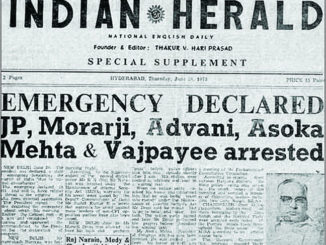
    On June 25 in 1975, emergency was declared in India, for a 21-month period by the then Prime Minister Indira Gandhi. On this day, Independent India experienced it’s darkest hour of the history.

    Officially issued by President Fakhruddin Ali Ahmed under Article 352 of the Constitution due to the prevailing “internal disturbance”, the Emergency was in effect from June 25, 1975, until its withdrawal on March 21, 1977.

    The order vested upon the Prime Minister the authority to rule by decree, allowing elections to be suspended and Freedom of Press was curtailed. Several human rights violations were reported in that time, including a forced mass-sterlisation campaign spearheaded by Indira’s son Sanjay Gandhi.

    The final decision to impose an Emergency was proposed by Indira Gandhi, agreed upon by the President, and thereafter ratified by the Cabinet and the Parliament (from July to August 1975), based on the rationale that there were imminent internal and external threats to the Indian state. The Emergency is considered to be one of the most controversial periods of independent India’s history.

    Union Home Minister Amit Shah on Friday remembered June 25 of 1975 and said that the Emergency was imposed in the nation to quell the voices against one family and termed it as a dark chapter in the history of independent India.

    Taking to Twitter, Shah said: “Emergency imposed to quell the voices against one family is a dark chapter in the history of independent India. Salute to the sacrifice of all the countrymen who fought relentlessly for the protection of the Constitution and democracy of the country while suffering the brutal tortures of the ruthless rule for 21 months.”

    Shah further said that on this day in 1975, in the selfishness and arrogance of power Congress killed the world’s largest democracy by imposing an Emergency on the country.

    “On this day in 1975, Congress killed the world’s largest democracy by imposing emergency on the country in the selfishness and arrogance of power. Innumerable Satyagrahis were imprisoned overnight and the press was locked. Taking away the fundamental rights of the citizens, made the Parliament and the court a mute spectator,” he added.

    46 years of Emergency in India

    In March–April 1974, a student agitation by the Bihar Chatra Sangharsh Samiti received the support of Gandhian socialist Jayaprakash Narayan, referred to as JP, against the Bihar government. In April 1974, in Patna, JP called for “total revolution,” asking students, peasants, and labour unions to non-violently transform Indian society.

    Raj Narain, who had been defeated in the 1971 parliamentary election by Indira Gandhi, lodged cases of election fraud and use of state machinery for election purposes against her in the Allahabad High Court. Shanti Bhushan fought the case for Narain. Indira Gandhi was also cross-examined in the High Court which was the first such instance for an Indian Prime Minister.

    On 12 June 1975, Justice Jagmohanlal Sinha of the Allahabad High Court found the prime minister guilty on the charge of misuse of government machinery for her election campaign. The court declared her election null and void and unseated her from her seat in the Lok Sabha. The court also banned her from contesting any election for an additional six years. Serious charges such as bribing voters and election malpractices were dropped and former PM was held responsible for misusing government machinery.

    Indira Gandhi challenged the High Court’s decision in the Supreme Court. Justice V. R. Krishna Iyer, on 24 June 1975, upheld the High Court judgement and ordered all privileges Gandhi received as an MP be stopped, and that she be debarred from voting. However, she was allowed to continue as Prime Minister pending the resolution of her appeal.

    Siddhartha Shankar Ray, the Chief Minister of West Bengal, proposed to the prime minister to impose an “internal emergency”. He drafted a letter for the President to issue the proclamation based on information Indira had received that “there is an imminent danger to the security of India being threatened by internal disturbances”.

    Later, President Fakhruddin Ali Ahmed declared a state of internal emergency upon the prime minister’s advice on the night of 25 June 1975, just a few minutes before the clock struck midnight.

    Invoking article 352 of the Indian Constitution, Indira Gandhi granted herself extraordinary powers and launched a massive crackdown on civil liberties and political opposition.

    Vijayaraje Scindia, Jayaprakash Narayan, Raj Narain, Morarji Desai, Charan Singh, Jivatram Kripalani, Atal Bihari Vajpayee, Lal Krishna Advani, Arun Jaitley, Satyendra Narayan Sinha, Gayatri Devi, the dowager queen of Jaipur, and other protest leaders were immediately arrested.

    Organisations like the Rashtriya Swayamsevak Sangh (RSS) and Jamaat-e-Islami, along with some political parties, were banned. Strong resistance was seen during the time of the emergency from the RSS and the Sikh community.

    On 18 January 1977, Gandhi called fresh elections for March and released all political prisoners, though the Emergency officially ended on 23 March 1977. The opposition Janata movement’s campaign warned Indians that the elections might be their last chance to choose between “democracy and dictatorship.”

    Historically a Congress stronghold, voters in Uttar Pradesh, turned against Gandhi and her party failed to win a single seat in the state. Also, Congress hit an all-time low in West Bengal.

    Opponents emphasised the issues of corruption in Congress and appealed to a deep desire by the voters for fresh leadership.

                    Source: India TV

  • ED raids former Maharashtra minister premises

    Nagpur (TIP): The Enforcement Directorate on Friday, June 25, conducted searches at the premises of NCP leader and former Maharashtra Home minister Anil Deshmukh in Nagpur and Mumbai. The raids were conducted as part of a money laundering probe against Deshmukh.

    Searchers are being carried out under provisions of the Prevention of Money Laundering Act (PMLA). The locations include the NCP leader’s residence in Nagpur.

    The agency had earlier registered a criminal case under the anti-money laundering law against Deshmukh and others last month after a recent CBI FIR. The ED case came about after the CBI first carried out a preliminary enquiry followed by filing a regular case on the orders of the Bombay High Court that asked it to look into the allegations of bribery made against Deshmukh by former Mumbai Police commissioner Param Bir Singh.

  • Jaisalmer : The golden city

    Jaisalmer : The golden city

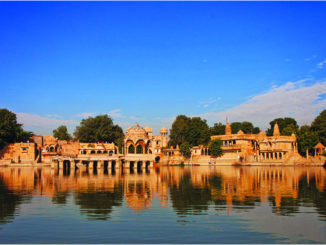
    If geology interests you, then Jaisalmer is where you need to journey. The Wood Fossil Park or Aakal is located about 15 kilometres away from the city. Here, one can discover and trace geologic tragedies that occurred in the Thar Desert 180 million years ago. The city of Jaisalmer also acts as the guard to western Rajasthan (and India’s) frontier. This ‘Golden City’ is located close to the Pakistan border and in close proximity to the Thar Desert. The city’s most prominent landmark is the Jaisalmer Fort, also called Sonar Qila (Golden Fort). Unlike most other forts in India, Jaisalmer Fort is not just a tourist attraction. It houses shops, hotels and ancient havelis (homes) where generations continue to live.

    Jaisalmer traces its inception to the 12th century. History tells us of Rawal Jaisal, the eldest heir of the Rawal of Deoraj, was passed over for the throne of Lodurva and a younger half-brother was crowned king. Rawal Jaisal went looking for a new location to set up his capital when he came across sage Eesul. The sage told him about Krishna’s prophecy which said that a descendant of his Yaduvanshi clan would found a new kingdom at this same spot. It was in 1156 that Rawal Jaisal constructed a mud fort, named it Jaisalmer after himself and declared it his capital.

    JAISALMER FORT

    Perched on top of a small hill, this large fort makes for a mesmerising sight. Also known as the Golden Fort, it is surrounded by a 30 foot high wall, and has over 99 bastions and some imposing gateways or pols. It has been inhabited for centuries, and encloses houses, handicraft shops, palaces, temples, hotels and restaurants, connected by cobble stone paths.

    The main square here is called the Dussehra Chowk, while the main palace is the Rajmahal. This seven-storey building was the residence of the former rulers. Its façade is embellished with stone carvings, while its interior houses the Jaisalmer Fort Palace Museum and Heritage Centre. The rooftop offers panoramic views of the city.

    JAIN TEMPLES

    This set of seven Jain temples lies inside the walls of the Jaisalmer Fort. They are connected to each other, and are all adorned with intricate carvings of mythological and dancing figures. These yellow sandstone temples were built between the 12th and the 16th centuries. They are dedicated to various tirthankaras. The largest of them, the Parsvanath Temple, is dedicated to the 22nd tirthankara.

    PATWON-KI-HAVELI

    This ornate haveli is among the most splendid in Jaisalmer. It consists of a set of five houses, which were built by five Jain merchant brothers in the 19th century. Their exterior is covered with intricate carvings. Inside, some of the walls are decorated with paintings and mirror work. The buildings comprise of a set of rooms, constructed around a central courtyard. There’s also a shop selling embroidered textiles and brocades.

    SAM SAND DUNES

    These shifting white sand dunes, located close to the village Sam, are a great way to explore the Thar desert. They are located 45 kilometres from Jaisalmer. The best way to explore the desert is through camel rides. The dunes look especially picturesque at sunset and sunrise.

    You can also stay here overnight to enjoy the campfires and folk music and dance performances held every evening. Rajasthan Tourism Development Corporation runs the Sam Dhani Resort on a hillock in front of the dunes. It has cottages and tents, which are perfect for a peaceful retreat.

    SALIM SINGH-KI-HAVELI

    This haveli was built by Salim Singh, the prime minister of Jaisalmer in the 19th century. Its most eye-catching feature is its beautiful arched roof with carved brackets shaped like peacocks, and pretty balconies below it. The haveli is also distinct because it’s been constructed entirely of stone, without the use of cement or mortar. A part of the haveli is still occupied, but it’s worth a visit primarily for its exquisitely designed exterior.

    BADA BAGH

    This garden, located on the outskirts of Jaisalmer, contains the cenotaphs of the Rajpur rulers. These are pyramidal and domed in shape, and have beautiful carved ceilings and equestrian statues of the rulers. Each chhatri also has inscribed tablets recording the death of the Maharawals. There’s also a set of windmills nearby, which make for a picturesque sight. There are several other attractions close to Bada Bagh. Amar Sagar consists of a beautifully-carved Jain temple located on the banks of a water reservoir. Lodhurva, the former capital of the Bhatti Rajputs, is now in ruins but it still has magnificent Jain temples with a gorgeous gateway. The main temple contains several beautiful sculptures and a silver image of Parsvanath, the 23rd tirthanakara.